WO2015019662A1 - Dispositif de détermination d'objet d'analyse et procédé de détermination d'objet d'analyse - Google Patents
Dispositif de détermination d'objet d'analyse et procédé de détermination d'objet d'analyse Download PDFInfo
- Publication number
- WO2015019662A1 WO2015019662A1 PCT/JP2014/058758 JP2014058758W WO2015019662A1 WO 2015019662 A1 WO2015019662 A1 WO 2015019662A1 JP 2014058758 W JP2014058758 W JP 2014058758W WO 2015019662 A1 WO2015019662 A1 WO 2015019662A1
- Authority
- WO
- WIPO (PCT)
- Prior art keywords
- utterance
- section
- negative
- conversation
- request
- Prior art date
- Legal status (The legal status is an assumption and is not a legal conclusion. Google has not performed a legal analysis and makes no representation as to the accuracy of the status listed.)
- Ceased
Links
Images


Classifications
-
- G—PHYSICS
- G06—COMPUTING OR CALCULATING; COUNTING
- G06F—ELECTRIC DIGITAL DATA PROCESSING
- G06F40/00—Handling natural language data
- G06F40/30—Semantic analysis
- G06F40/35—Discourse or dialogue representation
-
- G—PHYSICS
- G06—COMPUTING OR CALCULATING; COUNTING
- G06F—ELECTRIC DIGITAL DATA PROCESSING
- G06F40/00—Handling natural language data
- G06F40/20—Natural language analysis
- G06F40/205—Parsing
- G06F40/211—Syntactic parsing, e.g. based on context-free grammar [CFG] or unification grammars
-
- G—PHYSICS
- G10—MUSICAL INSTRUMENTS; ACOUSTICS
- G10L—SPEECH ANALYSIS TECHNIQUES OR SPEECH SYNTHESIS; SPEECH RECOGNITION; SPEECH OR VOICE PROCESSING TECHNIQUES; SPEECH OR AUDIO CODING OR DECODING
- G10L15/00—Speech recognition
- G10L15/28—Constructional details of speech recognition systems
- G10L15/30—Distributed recognition, e.g. in client-server systems, for mobile phones or network applications
-
- G—PHYSICS
- G10—MUSICAL INSTRUMENTS; ACOUSTICS
- G10L—SPEECH ANALYSIS TECHNIQUES OR SPEECH SYNTHESIS; SPEECH RECOGNITION; SPEECH OR VOICE PROCESSING TECHNIQUES; SPEECH OR AUDIO CODING OR DECODING
- G10L25/00—Speech or voice analysis techniques not restricted to a single one of groups G10L15/00 - G10L21/00
- G10L25/48—Speech or voice analysis techniques not restricted to a single one of groups G10L15/00 - G10L21/00 specially adapted for particular use
- G10L25/51—Speech or voice analysis techniques not restricted to a single one of groups G10L15/00 - G10L21/00 specially adapted for particular use for comparison or discrimination
- G10L25/63—Speech or voice analysis techniques not restricted to a single one of groups G10L15/00 - G10L21/00 specially adapted for particular use for comparison or discrimination for estimating an emotional state
-
- G—PHYSICS
- G06—COMPUTING OR CALCULATING; COUNTING
- G06Q—INFORMATION AND COMMUNICATION TECHNOLOGY [ICT] SPECIALLY ADAPTED FOR ADMINISTRATIVE, COMMERCIAL, FINANCIAL, MANAGERIAL OR SUPERVISORY PURPOSES; SYSTEMS OR METHODS SPECIALLY ADAPTED FOR ADMINISTRATIVE, COMMERCIAL, FINANCIAL, MANAGERIAL OR SUPERVISORY PURPOSES, NOT OTHERWISE PROVIDED FOR
- G06Q30/00—Commerce
- G06Q30/01—Customer relationship services
- G06Q30/015—Providing customer assistance, e.g. assisting a customer within a business location or via helpdesk
- G06Q30/016—After-sales
-
- G—PHYSICS
- G10—MUSICAL INSTRUMENTS; ACOUSTICS
- G10L—SPEECH ANALYSIS TECHNIQUES OR SPEECH SYNTHESIS; SPEECH RECOGNITION; SPEECH OR VOICE PROCESSING TECHNIQUES; SPEECH OR AUDIO CODING OR DECODING
- G10L15/00—Speech recognition
-
- G—PHYSICS
- G10—MUSICAL INSTRUMENTS; ACOUSTICS
- G10L—SPEECH ANALYSIS TECHNIQUES OR SPEECH SYNTHESIS; SPEECH RECOGNITION; SPEECH OR VOICE PROCESSING TECHNIQUES; SPEECH OR AUDIO CODING OR DECODING
- G10L25/00—Speech or voice analysis techniques not restricted to a single one of groups G10L15/00 - G10L21/00
- G10L25/27—Speech or voice analysis techniques not restricted to a single one of groups G10L15/00 - G10L21/00 characterised by the analysis technique
-
- H—ELECTRICITY
- H04—ELECTRIC COMMUNICATION TECHNIQUE
- H04M—TELEPHONIC COMMUNICATION
- H04M2201/00—Electronic components, circuits, software, systems or apparatus used in telephone systems
- H04M2201/40—Electronic components, circuits, software, systems or apparatus used in telephone systems using speech recognition
-
- H—ELECTRICITY
- H04—ELECTRIC COMMUNICATION TECHNIQUE
- H04M—TELEPHONIC COMMUNICATION
- H04M3/00—Automatic or semi-automatic exchanges
- H04M3/42—Systems providing special services or facilities to subscribers
- H04M3/50—Centralised arrangements for answering calls; Centralised arrangements for recording messages for absent or busy subscribers ; Centralised arrangements for recording messages
- H04M3/51—Centralised call answering arrangements requiring operator intervention, e.g. call or contact centers for telemarketing
Definitions
- the present invention relates to a conversation analysis technique.
- An example of a technology for analyzing conversation is a technology for analyzing call data.
- data of a call performed in a department called a call center or a contact center is analyzed.
- a contact center such a department that specializes in the business of responding to customer calls such as inquiries, complaints and orders regarding products and services.
- Patent Document 1 emotion recognition is performed on the voice of the person A in the conversation between the person A and the person B, and the result of the emotion recognition and the person B such as job title, position, age, gender, etc. There has been proposed a method for calculating the satisfaction level of the person A using a calculation algorithm corresponding to each type.
- Patent Document 2 emotion recognition is performed on a customer's voice in a conversation between a store clerk and a conversation, customer satisfaction is calculated from the emotion recognition result, and the recorded data of the conversation and customer satisfaction are calculated.
- Patent Document 3 proposes a method for determining whether one speaker is in an angry state using voice of a call as an input.
- each of the proposed methods as described above calculates the satisfaction level of one conversation participant (for example, a customer) or determines whether one conversation participant is in an angry state. I have not analyzed the cause of those feelings.
- the present invention has been made in view of such circumstances, and provides a technique for efficiently analyzing the cause of dissatisfaction of a conversation participant in a dissatisfied conversation while maintaining analysis accuracy.
- the dissatisfied conversation means a conversation in which at least one conversation participant expresses anger.
- the first aspect relates to an analysis object determination device.
- the analysis target determining apparatus is configured to obtain a requested utterance section representing a requested utterance of a first conversation participant among a plurality of conversation participants who perform the dissatisfied conversation from data corresponding to voice of the dissatisfied conversation.
- a desired section detecting unit for detecting a negative section detecting unit for detecting a negative utterance section representing a negative utterance of a second conversation participant different from the first conversation participant from the above data
- the section that begins with the time point obtained from the requested utterance section and ends with the time point obtained from the negative utterance section after the requested utterance section is the analysis target section of the cause of dissatisfaction of the first conversation participant in the dissatisfied conversation
- the second aspect relates to an analysis object determination method executed by at least one computer.
- the analysis target determination method includes a request utterance section representing a request utterance of a first conversation participant among a plurality of conversation participants who perform the dissatisfied conversation from data corresponding to voice of the dissatisfied conversation. And detecting a negative utterance section representing a negative utterance of a second conversation participant different from the first conversation participant from the data, and starting from a time point obtained from the desired utterance section in the data And determining a section whose end time is obtained from a negative utterance section after the requested utterance section as an analysis target section of the cause of dissatisfaction of the first conversation participant in the dissatisfied conversation.
- Another aspect of the present invention may be a program that causes at least one computer to execute the method of the second aspect, or a computer-readable recording medium that records such a program. May be.
- This recording medium includes a non-transitory tangible medium.
- FIG. 1 is a diagram conceptually illustrating a processing configuration example of an analysis target determining apparatus in the present embodiment.
- the analysis target determining apparatus 100 uses a request corresponding to a request utterance of a first conversation participant among a plurality of conversation participants who perform the dissatisfied conversation from data corresponding to the speech of the dissatisfied conversation.
- a desired section detecting unit 101 for detecting an utterance section a negative section detecting unit 102 for detecting a negative utterance section representing a negative utterance of a second conversation participant different from the first conversation participant from the data, and the above Dissatisfaction of the first conversation participant in the above-mentioned dissatisfied conversation, with the section starting from the point of time obtained from the requested utterance section and ending at the point of time obtained from the negative utterance section after the requested utterance section in the data
- an object determining unit 103 that determines an analysis target section of the cause.
- the analysis target determining apparatus 100 shown in FIG. 1 has, for example, the same hardware configuration as the call analysis server 10 in the detailed embodiment described later, and the program is processed in the same manner as the call analysis server 10. Each processing unit described above is realized.
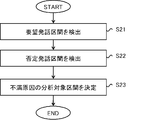
- FIG. 2 is a flowchart showing an operation example of the analysis target determining apparatus 100 in the present embodiment.
- the analysis target determination method in the present embodiment is executed by at least one computer such as the analysis target determination apparatus 100, and includes processing steps as shown in FIG. That is, the analysis target determination method detects a requested utterance section representing a requested utterance of the first conversation participant among a plurality of conversation participants who perform the dissatisfied conversation from data corresponding to the speech of the dissatisfied conversation (S21).
- a section having a start point and ending at a time point obtained from a negative utterance section after the requested utterance section is determined as an analysis target section of the cause of dissatisfaction of the first conversation participant in the dissatisfied conversation (S23). including. Note that the execution order of (S21) and (S22) may be reversed, and (S21) and (S22) may be executed in parallel.
- Dissatisfied conversation means a conversation in which at least one conversation participant has expressed anger as described above.
- Conversation means that two or more conversation participants talk with each other by expressing their intention by speaking a language.
- conversation participants can speak directly, such as at bank counters and cash registers at stores, and in remote conversations such as telephone conversations and video conferencing.
- a continuous area where one conversation participant is speaking in the voice of the conversation is referred to as an utterance or an utterance section.
- the utterance section is detected as a section in which the amplitude of a predetermined value or more continues in the speech waveform of the conversation participant.
- a normal conversation is formed from an utterance section, a silent section, etc. of each conversation participant.
- the utterance and the utterance section may be a sound section.
- a desired utterance section representing the requested utterance of the first conversation participant and a negative utterance section representing the negative utterance of the second conversation participant are detected from the data corresponding to the voice of the dissatisfied conversation.
- the data corresponding to the voice of the dissatisfied conversation may be voice data in which the dissatisfied conversation is recorded, or may be voice text data and occurrence time data acquired from the voice data by voice recognition processing.
- the request utterance is an utterance in which the first conversation participant states a request
- the negative utterance is an utterance in which the second conversation participant states denial.
- There are a plurality of methods for detecting the desired utterance interval and the negative utterance interval from data corresponding to the voice of the dissatisfied conversation Details of such a plurality of detection methods will be described later.
- the first conversation participant in the dissatisfied conversation is a section starting from a time point obtained from the requested utterance section and ending at a time point obtained from the negative utterance section after the requested utterance section. Is determined as the analysis target section of the cause of dissatisfaction.
- the time point obtained from the requested utterance section includes any time point in the requested utterance period such as the start time and end time, and a time point before or after a predetermined time (several seconds) from any time point in the requested utterance section. Is included.
- the time point obtained from the negative utterance interval is any time point in the negative utterance interval such as the start time or the end time, or a predetermined time (about several seconds) before or after a predetermined time from any time point in the negative utterance interval. Is included. However, in the present embodiment, it is desirable to determine only the above-mentioned section as the analysis target section, but this does not exclude adding an utterance section other than the above section to the analysis target section.
- the inventors of the present invention pay attention to the fact that a conversation pattern in which a conversation participant states a request and another conversation participant denies that request frequently appears in a dissatisfied conversation. It was found that there was a very high possibility that there was a cause of dissatisfaction with the conversation participants who made a request and denied in the pattern. Therefore, in the present embodiment, the section corresponding to the conversation pattern representing such a request and its denial in the data corresponding to the voice of the dissatisfied conversation is determined as the analysis target section of the cause of dissatisfaction.
- the negative utterance of the second conversation participant with respect to the request utterance of the first conversation participant occurs after the request utterance.
- the negative utterance section after the requested utterance section is selected as the negative utterance section for determining the analysis target section of the cause of dissatisfaction.
- the negative utterance section after the requested utterance section means a negative utterance section having a start time and an end time later than the start time of the requested utterance section, and the start time before the end time of the requested utterance section.
- the negative utterance section that it has is also included.
- a time point obtained from the requested utterance section is a start point
- a time point obtained from a negative utterance section after the request utterance section is a termination point.
- a section is selected.
- the analysis target is not only a large number of long talk sections but the possibility that the cause of dissatisfaction exists is high It can be. Furthermore, even if the analysis object is narrowed down in this way, the analysis accuracy can be maintained because the portion where the cause of dissatisfaction is highly likely is specified. Thereby, according to this embodiment, the efficiency of dissatisfaction cause analysis can be improved, maintaining analysis accuracy.
- a call between a customer and an operator in a contact center which is a call in which the customer expresses anger, corresponds to the above-mentioned dissatisfied conversation.
- the customer and the operator correspond to the above-described conversation participants, the customer corresponds to the first conversation participant, and the operator corresponds to the second conversation participant.
- the analysis target determination apparatus and the analysis target determination method described above are not limited to application to a contact center system that handles call data, and can be applied to various modes that handle conversation data.
- they can also be applied to in-house call management systems other than contact centers, and personal terminals such as PCs (Personal Computers), fixed telephones, mobile phones, tablet terminals, smartphones, etc.
- conversation data for example, data indicating conversation between a person in charge and a customer at a bank counter or a store cash register can be exemplified.
- a call means a call from when a call device held by a caller and a caller is connected to the call until the call is disconnected.
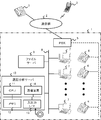
- FIG. 3 is a conceptual diagram showing a configuration example of the contact center system 1 in the first embodiment.
- the contact center system 1 in the first embodiment includes an exchange (PBX) 5, a plurality of operator telephones 6, a plurality of operator terminals 7, a file server 9, a call analysis server 10, and the like.
- the call analysis server 10 corresponds to the analysis target determination device 100 in the above-described embodiment.
- the exchange 5 is communicably connected to a call terminal such as a PC, a fixed phone, a mobile phone, a tablet terminal, or a smartphone used by a customer via the communication network 2.
- the communication network 2 is a public network such as the Internet or a PSTN (Public Switched Telephone Network), a wireless communication network, or the like.
- the exchange 5 is connected to each operator telephone 6 used by each operator of the contact center. The exchange 5 receives the call from the customer and connects the call to the operator telephone 6 of the operator corresponding to the call.
- Each operator uses an operator terminal 7.
- Each operator terminal 7 is a general-purpose computer such as a PC connected to a communication network 8 (LAN (Local Area Network) or the like) in the contact center system 1.
- LAN Local Area Network
- each operator terminal 7 records customer voice data and operator voice data in a call between each operator and the customer.
- the customer voice data and the operator voice data may be generated by being separated from the mixed state by predetermined voice processing. Note that this embodiment does not limit the recording method and the recording subject of such audio data.
- Each voice data may be generated by a device (not shown) other than the operator terminal 7.
- the file server 9 is realized by a general server computer.
- the file server 9 stores the call data of each call between the customer and the operator together with the identification information of each call.
- Each call data includes time information, a pair of customer voice data and operator voice data, and the like.
- Each voice data may include sounds input from the customer telephone 3 and the operator terminal 7 in addition to the voices of the customer and the operator.
- the file server 9 acquires customer voice data and operator voice data from another device (each operator terminal 7 or the like) that records each voice of the customer and the operator.
- the call analysis server 10 analyzes each call data stored in the file server 9 and outputs an analysis result according to the user's request.
- the call analysis server 10 may display it on its own display device, or may display the analysis result on a browser on the user terminal by the WEB server function.
- the call analysis server 10 according to the first embodiment determines the analysis target section of the cause of customer dissatisfaction from the call data of the dissatisfied call that the customer expressed dissatisfaction.
- the call analysis server 10 has a CPU (Central Processing Unit) 11, a memory 12, an input / output interface (I / F) 13, a communication device 14 and the like as a hardware configuration.
- the memory 12 is a RAM (Random Access Memory), a ROM (Read Only Memory), a hard disk, a portable storage medium, or the like.
- the input / output I / F 13 is connected to a device such as a keyboard or a mouse that accepts input of a user operation, or a device that provides information to the user such as a display device or a printer.
- the communication device 14 communicates with the file server 9 and the like via the communication network 8.
- the hardware configuration of the call analysis server 10 is not limited.
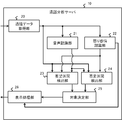
- FIG. 4 is a diagram conceptually illustrating a processing configuration example of the call analysis server 10 in the first embodiment.
- the call analysis server 10 includes a call data acquisition unit 20, a voice recognition unit 21, an anger emotion recognition unit 22, a desired section detection unit 23, a negative section detection unit 24, a target determination unit 25, a display processing unit 26, and the like.
- Each of these processing units is realized, for example, by executing a program stored in the memory 12 by the CPU 11. Further, the program may be installed from a portable recording medium such as a CD (Compact Disc) or a memory card, or another computer on the network via the input / output I / F 13 and stored in the memory 12. Good.
- CD Compact Disc
- the call data acquisition unit 20 acquires, from the file server 9, call data of a plurality of calls to be analyzed together with identification information of each call.
- the plurality of call data may be acquired by communication between the call analysis server 10 and the file server 9, or may be acquired via a portable recording medium.
- the voice recognition unit 21 performs voice recognition processing on each utterance section of each voice data of the operator and the customer included in the call data. Thereby, the voice recognition unit 21 acquires each voice text data and each utterance time data corresponding to the operator voice and the customer voice from the call data.
- the voice text data is character data in which a voice uttered by a customer or an operator is converted into text.
- Each utterance time data indicates the utterance time of each voice text data, and includes the start time and the end time of each utterance section in which each voice text data is obtained.
- a known technique may be used for the voice recognition process, and the voice recognition process itself and various voice recognition parameters used in the voice recognition process are not limited.
- the anger emotion recognition unit 22 performs anger emotion recognition processing for each utterance section of the customer voice data included in the call data.
- the anger emotion recognition unit 22 acquires prosodic feature information from the speech in each utterance section, and determines whether anger emotion is expressed in each utterance section of the customer using the prosodic feature information.
- the utterance interval in which the anger feeling is expressed is described as the anger utterance interval.
- the prosodic feature information for example, a fundamental frequency, voice power, or the like is used.
- the anger emotion recognition unit 22 may use other feature quantities such as word feature quantities without using prosodic feature quantities, or may use a combination of prosodic feature quantities and other feature quantities.
- the speech text data acquired by the speech recognition unit 21 may be used.
- a known method may be used for the anger emotion recognition process (see Patent Document 3), and the anger emotion recognition process itself is not limited.
- the anger emotion recognition unit 22 may determine whether each utterance section of the customer represents anger by using an identification model (identification function) such as SVM (Support Vector Machine). Specifically, the prosodic feature information of the utterance sections of “anger” and “normal” is given as learning data, and an identification model learned to discriminate between “anger” and “normal” is used as an anger emotion recognition unit. 22 may hold in advance.
- An identification model such as SVM (Support Vector Machine).
- SVM Serial Vector Machine
- a well-known machine learning technique and a well-known data identification (pattern recognition) technique may be used for the identification model learning technique and the data identification technique using the identification model.
- the anger emotion recognition unit 22 detects the customer's anger utterance section based on the determination as described above. As a result, the start time and end time of the anger utterance section are acquired.
- Each utterance section of the operator and the customer is detected from the voice data included in the call data acquired by the call data acquisition unit 20 before each recognition process of the voice recognition unit 21 and the anger emotion recognition unit 22 is executed. You may do it. By this detection, the start time and end time of each utterance section are acquired.
- the present embodiment does not limit the specific method for detecting the utterance section.
- the utterance section may be detected by the voice recognition process of the voice recognition unit 21. Further, the call data acquisition unit 20 may acquire information on the utterance section together with the call data.
- the desired section detector 23 and the negative section detector 24 correspond to the above-described desired section detector 101 and the negative section detector 102.
- the requested section detection unit 23 and the negative section detection unit 24 each process the call data (unsatisfied call data) determined by the anger emotion recognition unit 22 to include the anger speech section.
- the request section detection unit 23 Based on the anger utterance section detected by the anger emotion recognition section 22, the request section detection unit 23 includes the above-described customer utterance sections included in the request candidate section at a predetermined time position in the dissatisfied call. Detect the requested utterance section. In detecting the request utterance section, the request section detection unit 23 first determines a request candidate section based on the anger utterance section.
- the predetermined temporal position may be set in units of time, or may be set in units of the number of customer utterance sections.
- the reference time point in the anger utterance section for determining the temporal position in the dissatisfied call of the request candidate section is set to the start time, the end time, or any other time point in the anger utterance section.
- the reference time point for determining the temporal position of the request candidate section is one anger among the detected anger utterance sections.
- It may be an arbitrary position within the utterance section, or may be an arbitrary position within the section obtained by merging a plurality of anger utterance sections.
- the customer's request utterance that may be the cause of dissatisfaction is uttered before the anger utterance. Therefore, it is desirable that the start and end of the request candidate section be set for a predetermined time or a predetermined utterance section before the anger utterance section.
- the request section detection unit 23 determines whether or not a word or a word string included in the request expression list is included in the speech recognition result by the speech recognition unit 21 for each utterance section of the customer in the request candidate section. Based on the determination result, the desired utterance section can be detected. In this case, the requested section detection unit 23 determines an utterance section including a word or a word string included in the request expression list as a requested utterance section, and determines an utterance section that does not include the word or the word string as a requested utterance section. It can be determined that it is not. In the word or word string included in the request expression list, a plurality of words and phrases representing requests such as “want”, “want to do”, “can you do it” are set.
- the request section detection unit 23 holds a request expression list in advance. In addition, the request section detection unit 23 can make the determination using not only the speech recognition result by the speech recognition unit 21 but also the prosodic feature information of the request candidate section. For example, the requested section detection unit 23 may preferentially determine an utterance section in which the basic frequency of the ending is high as the requested utterance section.
- the requested section detection unit 23 can also detect the requested utterance section by the following method together with the above detection method or instead of the above detection method. That is, the requested section detection unit 23 has an identification model (identification function) such as SVM, and gives the speech recognition result (word feature amount information) of the customer's utterance section in the desired candidate section to the identification model. It can also be determined whether each utterance section is a requested utterance section. In this case, using the word feature amount information as the feature amount, the requested utterance interval which is a positive example and other utterance intervals which are negative examples are given as learning data, and the desired utterance interval and other utterance intervals are identified. The requested section detection unit 23 holds the learned identification model in advance.
- identification model identification function
- This identification model can also be described as a desired utterance model.
- the requested section detection unit 23 selects an utterance section that indicates a requested utterance score equal to or greater than a certain value based on the requested utterance score for each utterance section of the customer in the requested candidate section that is output from the requested utterance model. Determined as a section.
- the word feature amount information is associated with each phrase included in the speech text data extracted by the speech recognition unit 21 in advance and is held by the speech recognition unit 21, for example.
- the requested utterance model may be an identification model having word feature amount information and prosodic feature information as feature amounts. In this case, at least one of word feature amount information and prosodic feature information related to the customer's utterance section in the request candidate section is given as an input to the request utterance model.
- the negative section detection unit 24 is at a predetermined time position in the dissatisfied call with reference to at least one of the anger utterance section detected by the anger emotion recognition unit 22 and the desired utterance section detected by the request section detection unit 23.
- the negative utterance section is detected from the utterance sections of the operator included in the negative candidate section.
- the negative section detection unit 24 first determines a negative candidate section based on at least one of the anger utterance section and the requested utterance section.
- Information regarding a predetermined temporal position for determining a negative candidate section is held in advance by the negative section detection unit 24.
- the predetermined temporal position may be set in units of time, or may be set in units of the number of customer utterance sections.
- the negative candidate section may be set to be the same as the request candidate section.
- the operator's negative utterance included in the above-mentioned conversation pattern that frequently appears in dissatisfied calls is likely to be related to the customer's anger utterance.
- the operator's negative utterance can occur in a scene where the operator utters a negative word alone and a scene where the operator makes a negative response to the customer's request.
- the operator's negative utterance in response to the customer's request is more likely to be associated with the customer's anger utterance and include a cause of dissatisfaction than the operator's single negative utterance.
- the reference time point for determining the temporal position in the dissatisfied call in the negative candidate section is set in consideration of at least one of the angry utterance section and the requested utterance section. That is, the reference point is set at an arbitrary time point in the anger utterance interval, an arbitrary time point in the desired utterance interval, or an arbitrary time point in the interval derived from the anger utterance interval and the desired utterance interval.
- the reference time point for determining the temporal position of the negative candidate section is the detected plurality of anger utterance sections and detection It is set at an arbitrary position in the section derived from the plurality of requested utterance sections.
- the operator's negative utterance that is likely to include the cause of the dissatisfaction is before the customer's anger utterance section.
- the beginning of the negative candidate section is set before a predetermined time or a predetermined utterance section before the anger utterance section, and after a predetermined time or after the predetermined utterance section than the desired candidate section.
- the negative section detection unit 24 determines whether or not a word or a word string included in the negative expression list is included in the speech recognition result by the speech recognition unit 21 for each utterance section of the operator in the negative candidate section. Based on the determination result, the negative utterance section can be detected. In this case, the negative interval detection unit 24 determines an utterance interval including a word or word string included in the negative expression list as a negative utterance interval, and an utterance interval not including the word or word string is determined as a negative utterance interval. It can be determined that it is not. In the word or word string included in the negative expression list, a plurality of words representing negation such as “I do not do it” and “I cannot do it” are set.
- the negative section detection unit 24 holds a negative expression list in advance. Further, the negative section detection unit 24 can make the determination using not only the speech recognition result by the speech recognition unit 21 but also the prosodic feature information of the negative candidate section. For example, the negative interval detection unit 24 may preferentially determine an utterance interval with a low utterance speed as a negative utterance interval.
- the negative section detection unit 24 can also detect a negative utterance section by the following method together with the above detection method or instead of the above detection method. That is, the negative section detection unit 24 has an identification model (discriminant function) such as SVM, and gives the speech recognition result (word feature information) of the utterance section of the operator in the negative candidate section to this identification model. It can also be determined whether each utterance section is a negative utterance section. In this case, with the word feature quantity information as the feature quantity, a negative utterance section that is a positive example and another utterance section that is a negative example are given as learning data, and the negative utterance section and the other utterance sections are identified. The negative section detection unit 24 holds the learned identification model in advance.
- an identification model discriminant function
- This identification model can also be expressed as a negative utterance model.
- the negative interval detection unit 24 negatively utters an utterance interval indicating a negative utterance score equal to or greater than a certain value based on the negative utterance score regarding each utterance interval of the operator in the negative candidate interval output from the negative utterance model. Determined as a section.
- the word feature amount information is associated with each phrase included in the speech text data extracted by the speech recognition unit 21 in advance and is held by the speech recognition unit 21, for example.
- the negative utterance model may be an identification model having word feature amount information and prosodic feature information as feature amounts. In this case, at least one of word feature amount information and prosodic feature information related to the utterance section of the operator in the negative candidate section is given as an input to the negative utterance model.
- the object determining unit 25 corresponds to the object determining unit 103 described above.
- the object determination unit 25 is obtained from a negative utterance section that is detected by the negative section detector 24 and that is later than the desired utterance section, starting from the time point obtained from the desired utterance section detected by the request section detector 23. Determine the section that ends at the point in time and the analysis target section of the cause of customer dissatisfaction Further, the target determining unit 25 determines the start time of the requested utterance section when a plurality of requested utterance sections are detected by the desired section detecting section 23 and a plurality of negative utterance sections are detected by the negative section detecting section 24.
- the object determination unit 25 can determine the next analysis target section in the same manner as described above, based on the start time of the next desired utterance section. In a dissatisfied call, if the requested utterance interval and the negative utterance interval that are temporally adjacent to each other are separated by a predetermined time or more, the target determining unit 25 may not be a negative utterance for the customer's request. Since the possibility is high, the negative section may be excluded from the target for determining the analysis target section.
- the display processing unit 26 includes a drawing element representing the anger utterance section detected by the anger emotion recognition unit 22 and a drawing element representing the analysis target section determined by the target determination unit 25 for each dissatisfied call. Drawing data arranged according to time series is generated.
- the display processing unit 26 displays the analysis result screen on the display device connected to the call analysis server 10 via the input / output I / F 13 based on the drawing data. Further, the display processing unit 26 may have a WEB server function and display the drawing data on the WEB client device.
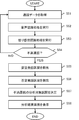
- FIG. 5 is a flowchart showing an operation example of the call analysis server 10 in the first embodiment.
- the call analysis server 10 is the execution subject of each processing step, but each of the above-described processing units included in the call analysis server 10 may be the execution subject.
- the call analysis server 10 acquires call data (S51). For example, the call analysis server 10 acquires one call data from a plurality of call data stored in the file server 9.
- the call analysis server 10 performs voice recognition processing on each utterance section of each voice data of the operator and the customer included in the acquired call data (S52).
- the specific processing content is as described for the voice recognition unit 21.
- the call analysis server 10 performs anger emotion recognition processing for each utterance section of the customer's voice data included in the acquired call data (S53). However, when the angry emotion recognition process does not use prosodic feature information but uses word feature amount information, the call analysis server 10 performs anger emotion recognition processing on the speech recognition result of (S52). Do.
- the specific processing content is as described for the anger emotion recognition unit 22. Through the recognition process, the call analysis server 10 detects the customer anger utterance section from the call data.
- the call analysis server 10 determines whether or not the call data is a dissatisfied call (S54). Specifically, the call analysis server 10 determines that the call data in which the anger utterance section is detected in (S53) is a dissatisfied call (S54; YES), and the call data in which the anger utterance section is not detected is dissatisfied. It determines with it not being a telephone call (S54; NO). The call analysis server 10 acquires other call data when the call data is not dissatisfied (S54; NO) (S51).
- the call analysis server 10 detects the requested utterance section from the customer utterance sections included in the request candidate section (S55). In (S55), the call analysis server 10 first determines a request candidate section based on the anger utterance section detected in (S53). The method for determining the request candidate section is as described for the request section detection unit 23. Further, the detection method of the requested utterance section is also as described for the requested section detection unit 23.
- the call analysis server 10 detects a negative utterance section from the utterance sections of the operator included in the negative candidate section (S56).
- the call analysis server 10 first determines a negative candidate section based on at least one of the anger utterance section detected in (S53) and the requested utterance section detected in (S55).
- the determination of the negative candidate section is as described for the negative section detection unit 24.
- the negative utterance section detection method is also as described for the negative section detection unit 24.
- the call analysis server 10 Based on the requested utterance section detected in (S55) and the negative utterance section detected in (S56), the call analysis server 10 starts from the time point obtained from the requested utterance section, and is later than the requested utterance section. A section whose end point is obtained from the negative utterance section is determined as an analysis target section of the cause of customer dissatisfaction (S57).
- the call analysis server 10 determines the start time of the requested utterance section and the start time Has the latest end time and end time, and has the latest end time in a negative utterance interval that has a start time earlier than the start time of the next desired utterance interval that is temporally adjacent to the desired utterance interval A period between the end time of the negative utterance section is determined as the analysis target section.
- the call analysis server 10 includes a drawing element representing an angry utterance section detected in (S53) and a drawing element representing an analysis target section determined in (S57) in each of the unsatisfied calls.
- the analysis result screens arranged along the time series are displayed (S58).
- the voice recognition process and the anger emotion recognition process are executed on the call data, and it is determined whether or not the call data is a dissatisfied call according to the result of the anger emotion recognition process. . Then, the requested utterance section and the negative utterance section are detected from the data corresponding to the voice of the dissatisfied call. The requested utterance section is detected from the customer utterance sections included in the requested candidate section in the dissatisfied call, and the negative utterance section is detected from the operator utterance sections included in the negative candidate section in the dissatisfied call. Is done.
- the request candidate section is determined to be a section that is highly likely to contain the requested utterance in relation to the anger utterance section, and the negative candidate section is denied in the time relation to at least one of the anger utterance section and the requested utterance section. It is determined that the segment is likely to include an utterance. Thereby, compared with the case where the target utterance section is detected from all the utterance sections, the requested utterance section and the negative utterance section can be detected efficiently and with high accuracy.
- the time point obtained from the requested utterance period starts, and the time period obtained from the negative utterance period later than the requested utterance period ends, and the cause of customer dissatisfaction in the dissatisfied call is analyzed. Determined as the target section.
- the target section As described above, according to the first embodiment, not all anger utterance sections representing the anger of the caller are analyzed, but a conversation section in which there is a high possibility that there is a cause of customer dissatisfaction, that is, the customer's anger Since only the section representing the conversation pattern in which the request is denied by the operator can be analyzed, the analysis efficiency can be improved while maintaining the analysis accuracy.
- the start ending time of the requested utterance interval, and a start end time and an end time later than the start end time is between the end time of the negative utterance section with the latest end time in the negative utterance section having the start time before the start time of the next request utterance section that is temporally adjacent to the requested utterance section. It is decided to the section.
- an operator's negative utterance that is likely to include a cause of dissatisfaction occurs after the customer's request utterance because it is an utterance that states a negative response to the customer's request.
- the analysis target section is determined from the negative utterance sections that are likely to include the cause of the dissatisfaction among the utterance sections representing the negative utterances of the operator, thereby improving the analysis efficiency.
- FIG. 6 is a diagram illustrating an example of a part of information of an operator and a customer utterance section included in the call data in the embodiment, a voice recognition result for each utterance section, and an anger recognition result for each utterance section.
- CU indicates a customer
- OP indicates an operator
- an utterance number is information for identifying an utterance section.
- the utterance section with the utterance number 107 is recognized as the angry utterance section.
- the call analysis server 10 determines a time point a predetermined time (40 seconds) before the start time (145.5 seconds) of the anger utterance section and the end time (146.5 seconds) of the anger utterance section.
- a time point after a predetermined time (10 seconds) is determined as a desired candidate section.
- the request candidate section is determined to be a section from the time point of 105.5 seconds to the time point of 156.5 seconds
- the call analysis server 10 determines the desired utterance section from the utterance section of the customer in the request candidate section. To detect.
- the call analysis server 10 determines the time point a predetermined time (30 seconds) before the start time (145.5 seconds) of the anger utterance interval and the end time (146 of the anger utterance interval). .5 seconds) to a time point after a predetermined time (20 seconds) is determined as a negative candidate section.
- the negative candidate section is determined as a section from the time of 115.5 seconds to the time of 166.5 seconds, and the call analysis server 10 determines the negative utterance section from the utterance section of the operator in the negative candidate section. To detect.
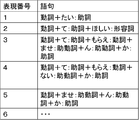
- FIG. 7 is a diagram showing an example of a request expression list in the embodiment.
- the call analysis server 10 (request section detection unit 23) holds such a request expression list and detects a desired utterance section using the request expression list.
- the speech recognition result of the customer utterance section of the utterance number 101 includes the phrase of the expression number 1 shown in FIG. 7, and the speech recognition result of the customer utterance section of the utterance number 105 is The phrase of expression number 2 shown in FIG. 7 is included. Therefore, the call analysis server 10 detects the utterance section with the utterance number 101 and the utterance section with the utterance number 105 as the requested utterance section.
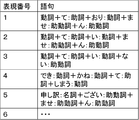
- FIG. 8 is a diagram showing an example of a negative expression list in the embodiment.
- the call analysis server 10 (negative section detector 24) holds such a negative expression list, and detects a negative utterance section using the negative expression list.
- the negative expression list in the example of FIG. 8 also includes an expression of apology, such as the expression number 5.
- the speech recognition result of the utterance section of the operator of the utterance number 102 includes the phrase of the expression number 5 shown in FIG. 8, and the speech recognition result of the utterance section of the operator of the utterance number 106.
- the call analysis server 10 determines the interval between the start time of the requested utterance section and the end time of the negative utterance section as the analysis target section of the cause of customer dissatisfaction. That is, the first analysis target is between the start time (124.1 seconds) of the requested utterance section of the utterance number 101 and the end time (131.1 seconds) of the negative utterance section of the utterance number 102. The second interval between the start time (135.8 seconds) of the requested utterance section of the utterance number 105 and the end time (145.0 seconds) of the negative utterance section of the utterance number 106 is determined as the section. To be analyzed.
- the negative expression list includes an expression of apology, and as a result, the utterance section with the utterance number 102 is detected as a negative utterance section.
- the negative expression list may not include an apology word, and the utterance section of the utterance number 102 may not be detected as a negative utterance section.
- the requested utterance section is detected from the desired candidate section, and the negative utterance section is detected from the negative candidate section.
- the detection of the requested utterance section and the negative utterance section may be performed for the entire dissatisfied call.
- the call analysis server 10 may not have the voice recognition unit 21 and the anger emotion recognition unit 22, and other devices may have the voice recognition unit 21 and the anger emotion recognition unit 22. In this case, the call analysis server 10 acquires each processing result of the voice recognition unit 21 and the anger emotion recognition unit 22 included in another device together with the call data. In this case, in the operation example shown in FIG. 5, (S52) and (S53) may be executed by a device other than the call analysis server 10.
- a request section detecting unit that detects a requested utterance section representing a requested utterance of a first conversation participant among a plurality of conversation participants who perform the dissatisfied conversation from data corresponding to voice of the unsatisfied conversation;
- a negative interval detection unit that detects a negative utterance interval representing a negative utterance of a second conversation participant different from the first conversation participant from the data;
- the first time in the dissatisfied conversation is a section starting from a time point obtained from the desired utterance section in the data and ending at a time point obtained from the negative utterance section after the desired utterance section.
- An object determination unit that determines an analysis target section of the cause of dissatisfaction of the conversation participant;
- An analysis object determination device comprising:
- the said object determination part is the start end of a request utterance area, when the several request
- a negative utterance section having a start time and a start time after the start time, and a start time before the start time of the next desired utterance section that is temporally adjacent to the desired utterance section.
- the interval between the end time of the negative utterance interval having the latest end time is determined as the analysis target interval.
- An anger emotion recognition unit that detects an angry speech section in which the anger emotion of the first conversation participant is expressed from the voice data of the dissatisfied conversation, Further comprising
- the request section detection unit includes the first conversation participant included in a request candidate section at a predetermined temporal position in the dissatisfied conversation based on the anger utterance section detected by the anger emotion recognition unit.
- the requested utterance section is detected from among the utterance sections.
- the negative interval detection unit is configured to perform a predetermined time interval in the dissatisfied conversation based on at least one of the anger utterance interval detected by the anger emotion recognition unit and the desired utterance interval detected by the request interval detection unit.
- the negative utterance section is detected from the utterance sections of the second conversation participant included in the negative candidate section at the position.
- the analysis target determination device according to attachment 1 or 2.
- a voice recognition unit that performs voice recognition on an arbitrary utterance section included in the voice data of the dissatisfied conversation, Further comprising Whether the request section detection unit includes a word or a word string included in the request expression list in the speech recognition result by the speech recognition unit for each utterance section of the first conversation participant in the request candidate section. Each is determined, and based on the determination result, the desired utterance section is detected, Whether the negative section detection unit includes a word or a word string included in the negative expression list as a result of speech recognition by the speech recognition unit for each utterance section of the second conversation participant in the request candidate section. Determining whether or not, and detecting the negative utterance interval based on the determination result, The analysis object determination device according to attachment 3.
- a voice recognition unit that performs voice recognition on an arbitrary utterance section included in the voice data of the dissatisfied conversation, Further comprising
- the requested section detecting unit gives a result of speech recognition by the speech recognition unit for each utterance section of the first conversation participant in the requested candidate section to the machine-learned requested utterance model, and the requested utterance model Based on the desired utterance score obtained from
- the negative section detection unit gives a result of speech recognition by the speech recognition unit for each utterance section of the second conversation participant in the negative candidate section to the machine-learned negative utterance model, and the negative utterance model Detecting the negative utterance interval based on the negative utterance score obtained from:
- the analysis object determination device according to appendix 3 or 4.
- the determination of the analysis target section includes a start time of the requested utterance section and a time after the start end time.
- (Appendix 8) Detecting an angry speech section in which the anger feeling of the first conversation participant appears from the voice data of the dissatisfied conversation, Further including The detection of the desired utterance interval is based on the detected anger utterance interval, and is included in the utterance interval of the first conversation participant included in the request candidate interval at a predetermined temporal position in the dissatisfied conversation. From the request utterance section, The detection of the negative utterance section is included in a negative candidate section at a predetermined temporal position in the dissatisfied conversation based on at least one of the detected anger utterance section and the detected desired utterance section. Detecting the negative utterance interval from the utterance intervals of the second conversation participant; The analysis object determination method according to appendix 6 or 7.
- Voice recognition is performed on an arbitrary utterance section included in the voice data of the dissatisfied conversation. Further including In the detection of the desired utterance section, whether or not a word or a word string included in a desired expression list is included in the result of the speech recognition for each utterance section of the first conversation participant in the request candidate section. Each is determined, and based on the determination result, the requested utterance section is detected, In the detection of the negative utterance section, whether or not a word or a word string included in the negative expression list is included in the result of the speech recognition for each utterance section of the second conversation participant in the request candidate section. Determining each, and detecting the negative utterance interval based on the determination result; The analysis object determination method according to attachment 8.
- Voice recognition is performed on an arbitrary utterance section included in the voice data of the dissatisfied conversation. Further including The detection of the desired utterance section is obtained from the desired utterance model by giving the result of speech recognition for each utterance section of the first conversation participant in the request candidate section to the machine-learned request utterance model. Based on the requested utterance score, the requested utterance section is detected, The detection of the negative utterance section is obtained from the negative utterance model by giving the result of speech recognition for each utterance section of the second conversation participant in the negative candidate section to a machine-learned negative utterance model. Detecting the negative utterance interval based on the negative utterance score; The analysis object determination method according to appendix 8 or 9.
Landscapes
- Engineering & Computer Science (AREA)
- Health & Medical Sciences (AREA)
- Audiology, Speech & Language Pathology (AREA)
- Computational Linguistics (AREA)
- Physics & Mathematics (AREA)
- General Health & Medical Sciences (AREA)
- Theoretical Computer Science (AREA)
- Multimedia (AREA)
- Acoustics & Sound (AREA)
- Human Computer Interaction (AREA)
- Psychiatry (AREA)
- Hospice & Palliative Care (AREA)
- Child & Adolescent Psychology (AREA)
- Signal Processing (AREA)
- General Physics & Mathematics (AREA)
- General Engineering & Computer Science (AREA)
- Artificial Intelligence (AREA)
- Telephonic Communication Services (AREA)
Abstract
Priority Applications (2)
| Application Number | Priority Date | Filing Date | Title |
|---|---|---|---|
| US14/909,187 US9875236B2 (en) | 2013-08-07 | 2014-03-27 | Analysis object determination device and analysis object determination method |
| JP2015530723A JP6327252B2 (ja) | 2013-08-07 | 2014-03-27 | 分析対象決定装置及び分析対象決定方法 |
Applications Claiming Priority (2)
| Application Number | Priority Date | Filing Date | Title |
|---|---|---|---|
| JP2013-163824 | 2013-08-07 | ||
| JP2013163824 | 2013-08-07 |
Publications (1)
| Publication Number | Publication Date |
|---|---|
| WO2015019662A1 true WO2015019662A1 (fr) | 2015-02-12 |
Family
ID=52461011
Family Applications (1)
| Application Number | Title | Priority Date | Filing Date |
|---|---|---|---|
| PCT/JP2014/058758 Ceased WO2015019662A1 (fr) | 2013-08-07 | 2014-03-27 | Dispositif de détermination d'objet d'analyse et procédé de détermination d'objet d'analyse |
Country Status (3)
| Country | Link |
|---|---|
| US (1) | US9875236B2 (fr) |
| JP (1) | JP6327252B2 (fr) |
| WO (1) | WO2015019662A1 (fr) |
Cited By (2)
| Publication number | Priority date | Publication date | Assignee | Title |
|---|---|---|---|---|
| JP2017156854A (ja) * | 2016-02-29 | 2017-09-07 | Kddi株式会社 | 感情分類によって文脈意味の理解精度を高める発話意味分析プログラム、装置及び方法 |
| WO2019180973A1 (fr) * | 2018-03-22 | 2019-09-26 | 株式会社Zaizen | Dispositif de génération d'informations de classification, procédé de production d'informations de classification et support d'enregistrement |
Families Citing this family (4)
| Publication number | Priority date | Publication date | Assignee | Title |
|---|---|---|---|---|
| JPH0729090Y2 (ja) | 1988-12-29 | 1995-07-05 | 株式会社リコー | 複写機の用紙反転装置 |
| US9953077B2 (en) * | 2015-05-29 | 2018-04-24 | International Business Machines Corporation | Detecting overnegation in text |
| US10311875B2 (en) * | 2016-12-22 | 2019-06-04 | Soundhound, Inc. | Full-duplex utterance processing in a natural language virtual assistant |
| US11734731B1 (en) * | 2020-03-18 | 2023-08-22 | State Farm Mutual Automobile Insurance Company | Customer effort evaluation in a contact center system |
Citations (5)
| Publication number | Priority date | Publication date | Assignee | Title |
|---|---|---|---|---|
| JP2007033754A (ja) * | 2005-07-26 | 2007-02-08 | Nec Corp | 音声監視システムと方法並びにプログラム |
| JP2009216840A (ja) * | 2008-03-07 | 2009-09-24 | Internatl Business Mach Corp <Ibm> | 2者間の対話の音声データを処理するシステム、方法およびプログラム |
| WO2010041507A1 (fr) * | 2008-10-10 | 2010-04-15 | インターナショナル・ビジネス・マシーンズ・コーポレーション | Système et procédé qui extraient une situation spécifique d’une conversation |
| JP2010175684A (ja) * | 2009-01-28 | 2010-08-12 | Nippon Telegr & Teleph Corp <Ntt> | 通話状態判定装置、通話状態判定方法、プログラム、記録媒体 |
| JP2010266522A (ja) * | 2009-05-12 | 2010-11-25 | Nippon Telegr & Teleph Corp <Ntt> | 対話状態分割装置とその方法、そのプログラムと記録媒体 |
Family Cites Families (14)
| Publication number | Priority date | Publication date | Assignee | Title |
|---|---|---|---|---|
| US6363145B1 (en) * | 1998-08-17 | 2002-03-26 | Siemens Information And Communication Networks, Inc. | Apparatus and method for automated voice analysis in ACD silent call monitoring |
| US7197132B2 (en) * | 2002-03-21 | 2007-03-27 | Rockwell Electronic Commerce Technologies, Llc | Adaptive transaction guidance |
| US20100332287A1 (en) * | 2009-06-24 | 2010-12-30 | International Business Machines Corporation | System and method for real-time prediction of customer satisfaction |
| US8463606B2 (en) * | 2009-07-13 | 2013-06-11 | Genesys Telecommunications Laboratories, Inc. | System for analyzing interactions and reporting analytic results to human-operated and system interfaces in real time |
| JP2011210100A (ja) | 2010-03-30 | 2011-10-20 | Seiko Epson Corp | 接客データ記録装置、接客データ記録方法およびプログラム |
| JP2011237957A (ja) | 2010-05-10 | 2011-11-24 | Seiko Epson Corp | 満足度算出装置、満足度算出方法およびプログラム |
| JP5708155B2 (ja) * | 2011-03-31 | 2015-04-30 | 富士通株式会社 | 話者状態検出装置、話者状態検出方法及び話者状態検出用コンピュータプログラム |
| US8694307B2 (en) * | 2011-05-19 | 2014-04-08 | Nice Systems Ltd. | Method and apparatus for temporal speech scoring |
| JP6341092B2 (ja) * | 2012-10-31 | 2018-06-13 | 日本電気株式会社 | 表現分類装置、表現分類方法、不満検出装置及び不満検出方法 |
| JPWO2014069076A1 (ja) * | 2012-10-31 | 2016-09-08 | 日本電気株式会社 | 会話分析装置及び会話分析方法 |
| WO2014069075A1 (fr) * | 2012-10-31 | 2014-05-08 | 日本電気株式会社 | Dispositif de détermination de conversation insatisfaisante et procédé de détermination de conversation insatisfaisante |
| US9460083B2 (en) * | 2012-12-27 | 2016-10-04 | International Business Machines Corporation | Interactive dashboard based on real-time sentiment analysis for synchronous communication |
| US9413891B2 (en) * | 2014-01-08 | 2016-08-09 | Callminer, Inc. | Real-time conversational analytics facility |
| US10469662B2 (en) * | 2014-06-09 | 2019-11-05 | Avaya Inc. | System and method for managing customer interactions in an enterprise |
-
2014
- 2014-03-27 WO PCT/JP2014/058758 patent/WO2015019662A1/fr not_active Ceased
- 2014-03-27 JP JP2015530723A patent/JP6327252B2/ja active Active
- 2014-03-27 US US14/909,187 patent/US9875236B2/en not_active Expired - Fee Related
Patent Citations (5)
| Publication number | Priority date | Publication date | Assignee | Title |
|---|---|---|---|---|
| JP2007033754A (ja) * | 2005-07-26 | 2007-02-08 | Nec Corp | 音声監視システムと方法並びにプログラム |
| JP2009216840A (ja) * | 2008-03-07 | 2009-09-24 | Internatl Business Mach Corp <Ibm> | 2者間の対話の音声データを処理するシステム、方法およびプログラム |
| WO2010041507A1 (fr) * | 2008-10-10 | 2010-04-15 | インターナショナル・ビジネス・マシーンズ・コーポレーション | Système et procédé qui extraient une situation spécifique d’une conversation |
| JP2010175684A (ja) * | 2009-01-28 | 2010-08-12 | Nippon Telegr & Teleph Corp <Ntt> | 通話状態判定装置、通話状態判定方法、プログラム、記録媒体 |
| JP2010266522A (ja) * | 2009-05-12 | 2010-11-25 | Nippon Telegr & Teleph Corp <Ntt> | 対話状態分割装置とその方法、そのプログラムと記録媒体 |
Cited By (3)
| Publication number | Priority date | Publication date | Assignee | Title |
|---|---|---|---|---|
| JP2017156854A (ja) * | 2016-02-29 | 2017-09-07 | Kddi株式会社 | 感情分類によって文脈意味の理解精度を高める発話意味分析プログラム、装置及び方法 |
| WO2019180973A1 (fr) * | 2018-03-22 | 2019-09-26 | 株式会社Zaizen | Dispositif de génération d'informations de classification, procédé de production d'informations de classification et support d'enregistrement |
| JP2019168483A (ja) * | 2018-03-22 | 2019-10-03 | 株式会社Zaizen | 分類情報生成装置、分類情報生成方法、およびプログラム |
Also Published As
| Publication number | Publication date |
|---|---|
| US20160203121A1 (en) | 2016-07-14 |
| US9875236B2 (en) | 2018-01-23 |
| JP6327252B2 (ja) | 2018-05-23 |
| JPWO2015019662A1 (ja) | 2017-03-02 |
Similar Documents
| Publication | Publication Date | Title |
|---|---|---|
| JP6341092B2 (ja) | 表現分類装置、表現分類方法、不満検出装置及び不満検出方法 | |
| JP6358093B2 (ja) | 分析対象決定装置及び分析対象決定方法 | |
| WO2014069076A1 (fr) | Dispositif d'analyse de conversation et procédé d'analyse de conversation | |
| US10771627B2 (en) | Personalized support routing based on paralinguistic information | |
| US9412371B2 (en) | Visualization interface of continuous waveform multi-speaker identification | |
| US9672829B2 (en) | Extracting and displaying key points of a video conference | |
| US20180113854A1 (en) | System for automatic extraction of structure from spoken conversation using lexical and acoustic features | |
| JP6327252B2 (ja) | 分析対象決定装置及び分析対象決定方法 | |
| US9711167B2 (en) | System and method for real-time speaker segmentation of audio interactions | |
| JP2017508188A (ja) | 適応型音声対話のための方法 | |
| CN107818798A (zh) | 客服服务质量评价方法、装置、设备及存储介质 | |
| JP6213476B2 (ja) | 不満会話判定装置及び不満会話判定方法 | |
| CN110674385A (zh) | 客服升级场景下匹配客服的方法及装置 | |
| CN114138960A (zh) | 用户意图识别方法、装置、设备及介质 | |
| US10522135B2 (en) | System and method for segmenting audio files for transcription | |
| CN114566187B (zh) | 操作包括电子装置的系统的方法、电子装置及其系统 | |
| JP6365304B2 (ja) | 会話分析装置及び会話分析方法 | |
| JP2020008690A (ja) | 抽出装置、抽出方法、およびプログラム | |
| US10938985B2 (en) | Contextual preferred response time alert | |
| WO2014069443A1 (fr) | Dispositif de détermination d'appel de réclamation et procédé de détermination d'appel de réclamation | |
| WO2014069444A1 (fr) | Dispositif de détermination de conversation insatisfaisante et procédé de détermination de conversation insatisfaisante |
Legal Events
| Date | Code | Title | Description |
|---|---|---|---|
| 121 | Ep: the epo has been informed by wipo that ep was designated in this application |
Ref document number: 14834767 Country of ref document: EP Kind code of ref document: A1 |
|
| ENP | Entry into the national phase |
Ref document number: 2015530723 Country of ref document: JP Kind code of ref document: A |
|
| WWE | Wipo information: entry into national phase |
Ref document number: 14909187 Country of ref document: US |
|
| NENP | Non-entry into the national phase |
Ref country code: DE |
|
| 122 | Ep: pct application non-entry in european phase |
Ref document number: 14834767 Country of ref document: EP Kind code of ref document: A1 |