WO2015060302A1 - ポリオール組成物 - Google Patents
ポリオール組成物 Download PDFInfo
- Publication number
- WO2015060302A1 WO2015060302A1 PCT/JP2014/077952 JP2014077952W WO2015060302A1 WO 2015060302 A1 WO2015060302 A1 WO 2015060302A1 JP 2014077952 W JP2014077952 W JP 2014077952W WO 2015060302 A1 WO2015060302 A1 WO 2015060302A1
- Authority
- WO
- WIPO (PCT)
- Prior art keywords
- group
- compound
- polyol
- polyol composition
- chain
- Prior art date
- Legal status (The legal status is an assumption and is not a legal conclusion. Google has not performed a legal analysis and makes no representation as to the accuracy of the status listed.)
- Ceased
Links
Classifications
-
- C—CHEMISTRY; METALLURGY
- C08—ORGANIC MACROMOLECULAR COMPOUNDS; THEIR PREPARATION OR CHEMICAL WORKING-UP; COMPOSITIONS BASED THEREON
- C08G—MACROMOLECULAR COMPOUNDS OBTAINED OTHERWISE THAN BY REACTIONS ONLY INVOLVING UNSATURATED CARBON-TO-CARBON BONDS
- C08G18/00—Polymeric products of isocyanates or isothiocyanates
- C08G18/06—Polymeric products of isocyanates or isothiocyanates with compounds having active hydrogen
- C08G18/28—Polymeric products of isocyanates or isothiocyanates with compounds having active hydrogen characterised by the compounds used containing active hydrogen
- C08G18/40—High-molecular-weight compounds
- C08G18/62—Polymers of compounds having carbon-to-carbon double bonds
- C08G18/6204—Polymers of olefins
- C08G18/6208—Hydrogenated polymers of conjugated dienes
-
- C—CHEMISTRY; METALLURGY
- C08—ORGANIC MACROMOLECULAR COMPOUNDS; THEIR PREPARATION OR CHEMICAL WORKING-UP; COMPOSITIONS BASED THEREON
- C08G—MACROMOLECULAR COMPOUNDS OBTAINED OTHERWISE THAN BY REACTIONS ONLY INVOLVING UNSATURATED CARBON-TO-CARBON BONDS
- C08G63/00—Macromolecular compounds obtained by reactions forming a carboxylic ester link in the main chain of the macromolecule
- C08G63/78—Preparation processes
- C08G63/82—Preparation processes characterised by the catalyst used
- C08G63/87—Non-metals or inter-compounds thereof
-
- C—CHEMISTRY; METALLURGY
- C08—ORGANIC MACROMOLECULAR COMPOUNDS; THEIR PREPARATION OR CHEMICAL WORKING-UP; COMPOSITIONS BASED THEREON
- C08F—MACROMOLECULAR COMPOUNDS OBTAINED BY REACTIONS ONLY INVOLVING CARBON-TO-CARBON UNSATURATED BONDS
- C08F8/00—Chemical modification by after-treatment
- C08F8/14—Esterification
-
- C—CHEMISTRY; METALLURGY
- C08—ORGANIC MACROMOLECULAR COMPOUNDS; THEIR PREPARATION OR CHEMICAL WORKING-UP; COMPOSITIONS BASED THEREON
- C08G—MACROMOLECULAR COMPOUNDS OBTAINED OTHERWISE THAN BY REACTIONS ONLY INVOLVING UNSATURATED CARBON-TO-CARBON BONDS
- C08G18/00—Polymeric products of isocyanates or isothiocyanates
- C08G18/06—Polymeric products of isocyanates or isothiocyanates with compounds having active hydrogen
- C08G18/08—Processes
- C08G18/10—Prepolymer processes involving reaction of isocyanates or isothiocyanates with compounds having active hydrogen in a first reaction step
-
- C—CHEMISTRY; METALLURGY
- C08—ORGANIC MACROMOLECULAR COMPOUNDS; THEIR PREPARATION OR CHEMICAL WORKING-UP; COMPOSITIONS BASED THEREON
- C08G—MACROMOLECULAR COMPOUNDS OBTAINED OTHERWISE THAN BY REACTIONS ONLY INVOLVING UNSATURATED CARBON-TO-CARBON BONDS
- C08G18/00—Polymeric products of isocyanates or isothiocyanates
- C08G18/06—Polymeric products of isocyanates or isothiocyanates with compounds having active hydrogen
- C08G18/28—Polymeric products of isocyanates or isothiocyanates with compounds having active hydrogen characterised by the compounds used containing active hydrogen
- C08G18/40—High-molecular-weight compounds
- C08G18/42—Polycondensates having carboxylic or carbonic ester groups in the main chain
-
- C—CHEMISTRY; METALLURGY
- C08—ORGANIC MACROMOLECULAR COMPOUNDS; THEIR PREPARATION OR CHEMICAL WORKING-UP; COMPOSITIONS BASED THEREON
- C08G—MACROMOLECULAR COMPOUNDS OBTAINED OTHERWISE THAN BY REACTIONS ONLY INVOLVING UNSATURATED CARBON-TO-CARBON BONDS
- C08G18/00—Polymeric products of isocyanates or isothiocyanates
- C08G18/06—Polymeric products of isocyanates or isothiocyanates with compounds having active hydrogen
- C08G18/28—Polymeric products of isocyanates or isothiocyanates with compounds having active hydrogen characterised by the compounds used containing active hydrogen
- C08G18/40—High-molecular-weight compounds
- C08G18/42—Polycondensates having carboxylic or carbonic ester groups in the main chain
- C08G18/4266—Polycondensates having carboxylic or carbonic ester groups in the main chain prepared from hydroxycarboxylic acids and/or lactones
- C08G18/4269—Lactones
- C08G18/4277—Caprolactone and/or substituted caprolactone
-
- C—CHEMISTRY; METALLURGY
- C08—ORGANIC MACROMOLECULAR COMPOUNDS; THEIR PREPARATION OR CHEMICAL WORKING-UP; COMPOSITIONS BASED THEREON
- C08G—MACROMOLECULAR COMPOUNDS OBTAINED OTHERWISE THAN BY REACTIONS ONLY INVOLVING UNSATURATED CARBON-TO-CARBON BONDS
- C08G18/00—Polymeric products of isocyanates or isothiocyanates
- C08G18/06—Polymeric products of isocyanates or isothiocyanates with compounds having active hydrogen
- C08G18/28—Polymeric products of isocyanates or isothiocyanates with compounds having active hydrogen characterised by the compounds used containing active hydrogen
- C08G18/67—Unsaturated compounds having active hydrogen
- C08G18/69—Polymers of conjugated dienes
-
- C—CHEMISTRY; METALLURGY
- C08—ORGANIC MACROMOLECULAR COMPOUNDS; THEIR PREPARATION OR CHEMICAL WORKING-UP; COMPOSITIONS BASED THEREON
- C08G—MACROMOLECULAR COMPOUNDS OBTAINED OTHERWISE THAN BY REACTIONS ONLY INVOLVING UNSATURATED CARBON-TO-CARBON BONDS
- C08G18/00—Polymeric products of isocyanates or isothiocyanates
- C08G18/06—Polymeric products of isocyanates or isothiocyanates with compounds having active hydrogen
- C08G18/70—Polymeric products of isocyanates or isothiocyanates with compounds having active hydrogen characterised by the isocyanates or isothiocyanates used
- C08G18/72—Polyisocyanates or polyisothiocyanates
- C08G18/74—Polyisocyanates or polyisothiocyanates cyclic
- C08G18/76—Polyisocyanates or polyisothiocyanates cyclic aromatic
- C08G18/7614—Polyisocyanates or polyisothiocyanates cyclic aromatic containing only one aromatic ring
- C08G18/7621—Polyisocyanates or polyisothiocyanates cyclic aromatic containing only one aromatic ring being toluene diisocyanate including isomer mixtures
-
- C—CHEMISTRY; METALLURGY
- C08—ORGANIC MACROMOLECULAR COMPOUNDS; THEIR PREPARATION OR CHEMICAL WORKING-UP; COMPOSITIONS BASED THEREON
- C08G—MACROMOLECULAR COMPOUNDS OBTAINED OTHERWISE THAN BY REACTIONS ONLY INVOLVING UNSATURATED CARBON-TO-CARBON BONDS
- C08G63/00—Macromolecular compounds obtained by reactions forming a carboxylic ester link in the main chain of the macromolecule
- C08G63/78—Preparation processes
- C08G63/82—Preparation processes characterised by the catalyst used
- C08G63/823—Preparation processes characterised by the catalyst used for the preparation of polylactones or polylactides
-
- C—CHEMISTRY; METALLURGY
- C08—ORGANIC MACROMOLECULAR COMPOUNDS; THEIR PREPARATION OR CHEMICAL WORKING-UP; COMPOSITIONS BASED THEREON
- C08K—Use of inorganic or non-macromolecular organic substances as compounding ingredients
- C08K5/00—Use of organic ingredients
- C08K5/49—Phosphorus-containing compounds
- C08K5/51—Phosphorus bound to oxygen
- C08K5/53—Phosphorus bound to oxygen bound to oxygen and to carbon only
Definitions
- a side reaction during urethanization is suppressed, a polyol composition capable of producing a polyurethane having good storage stability and physical properties, and the like, and the polyol composition is produced without performing an operation for removing the polymerization catalyst.
- the present invention relates to a method for producing a polyol composition.
- Polyol is a raw material compound such as polyurethane and polyester.
- polyester polyols have excellent physical properties, and are therefore used as raw materials for printing equipment rolls, conveying belts, elastomer members such as copying machine blades, and urethane fibers.
- Patent Document 1 discloses a composition obtained by adding 0.05 to 1000 ppm of a phosphoric acid compound such as a trialkyl phosphate to a polyester polyol.
- Patent Document 2 discloses that after adding water to a polyester polyol produced using a titanium-based catalyst and heating, a phosphorus compound having a specific structure has 0.01 to 2 moles of phosphorus atoms per mole of titanium atoms.
- a method for producing a polyester polyol composition comprising adding in an amount.
- Patent Document 3 states that a phosphorus compound having a specific structure is added to an ester polymer polyol produced using a titanium esterification catalyst so that the phosphorus atom is 1 mol or more per 1 mol of titanium atom.
- An ester-based polymer polyol composition having a suppressed urethanization reaction rate is disclosed.
- Patent Document 4 discloses that a polyester is produced by reacting an aliphatic dibasic acid with an aliphatic dial in the presence of a protonic strong acid catalyst such as phosphoric acid in an aromatic compound solvent. In this production, it is stated that the amount of the protonic strong acid catalyst used is preferably 0.01 to 5% by weight of the reaction product.
- Patent Document 5 discloses diphenyl phosphate, (R) -3,3′-bis [3,5-bis (trifluoromethyl) phenyl] -1,1′-binaphthyl-2,2′-diyl hydrogen phosphate, etc.
- a copolymer from at least one cyclic monomer selected from lactones, lactams, carbonates, lactides and glycolides, oxazolines, epoxides, cyclosiloxanes, which comprises reacting one or more cyclic monomers in the presence of a substituted phosphorus-containing compound of A method of manufacturing is disclosed.
- substituted phosphorus-containing compound is used in an amount of 1 to 3 moles relative to 1 mole of a hydroxyl group or thiol group in a polymerization initiator such as 3-phenyl 1-propanol or n-pentanol.
- Non-Patent Document 1 discloses a polyester polyol obtained by ring-opening polymerization of ⁇ -caprolactone or ⁇ -valerolactone using 1 mol of a diphenyl phosphate catalyst per 1 mol of a polymerization initiator such as 3-phenyl 1-propanol. is doing.
- a polymer in which a polymerization catalyst such as a phosphorus compound remains may cause a side reaction at the time of urethanization, or may cause a decrease in storage stability and physical properties of the resulting polyurethane.
- a polymerization catalyst such as a phosphorus compound
- An object of the present invention is to provide a polyol composition capable of producing a polyurethane having good storage stability and physical properties, in which side reactions during urethanization are suppressed, and the polyol without performing an operation for removing the polymerization catalyst. It is providing the manufacturing method of the polyol composition which manufactures a composition.
- a compound having active hydrogen and a compound having at least one selected from the group consisting of a carboxyl group, an ester group, and an acid halide group in an amount of 0.0001 to 1 mole part of the compound having active hydrogen A process for producing a polyol composition comprising reacting in the presence of 0.05 mole part of a phosphorus compound without using a metal-based polymerization catalyst.
- the production method according to [1], wherein the compound having active hydrogen is a compound represented by the formula (3).
- X 1 represents a polymer chain containing a repeating unit derived from a conjugated diene
- T represents a hydrogen atom or an organic group that can be substituted with a hydrogen atom.
- R 3 and R 4 each independently represent a hydrogen atom or an alkyl group, n represents any integer of 2 to 7, and R 3 or R 4 may be the same or May be different.
- the cyclic ester compound is at least one selected from the group consisting of ⁇ -caprolactone, ⁇ -butyrolactone and ⁇ -valerolactone.
- X represents a hydroxyl group or a mercapto group
- Y represents an oxygen atom or a sulfur atom
- R 1 and R 2 each independently represent a hydrogen atom or a substituent having 1 to 1 carbon atoms.
- 20 represents a hydrocarbon group
- R 1 and R 2 may be bonded directly or via an atom or functional group having two or more bonds to form a ring with Z 1 , Z 2 and P together.
- Z 1 and Z 2 each independently represent an oxygen atom or a nitrogen atom having a substituent.
- the polyol composition of the present invention it is possible to prevent excessive side reactions from proceeding during urethanization using isocyanate or the like. Moreover, according to the manufacturing method of the polyol composition which concerns on this invention, the polyol composition which concerns on this invention can be manufactured, without performing the removal operation of a polymerization catalyst. Furthermore, according to the polyol composition of the present invention, polyurethane having good storage stability and mechanical properties can be produced.
- the polyol composition of one embodiment according to the present invention contains a polyol.
- the polyol has a polyester chain, preferably has a polyconjugated diene chain and a polyester chain, and more preferably has a polybutadiene chain and a polyester chain.
- the ratio of the polyester chain in the polyol is not particularly limited, but is preferably 30% by mass or more.
- the mass ratio of the polyconjugated diene chain to the polyester chain is preferably 10/90 to 90/10.
- the polyol may contain other polymer chains such as polyether chain, polyacrylonitrile chain, polystyrene chain, acrylonitrile-styrene copolymer chain, if necessary.
- the polyol preferably has a structure having hydroxyl groups at both ends of the polymer chain.
- the polyol may have a functional group other than a hydroxyl group such as a double bond, an epoxy group, an aldehyde group, or an alkoxy group in the same molecule.
- the polyester chain is composed of a compound having a plurality of carboxyl groups such as a polyvalent carboxylic acid, a polyvalent carboxylic acid ester, a polyvalent carboxylic acid halide, a polyvalent carboxylic acid anhydride and a compound having a plurality of active hydrogens such as a polyhydric alcohol.
- ⁇ -caprolactone with an initiator composed of a polycondensation or a polycondensation of a compound having a carboxyl group and a hydroxyl group in one molecule polycondensation polyester
- an active hydrogen compound Some are made by ring-opening polymerization of cyclic ester compounds such as ⁇ -valerolactone (ring-opening polymerization polyester).
- the “carboxyl group” includes a carboxyl group, an ester group, an acid halide group, and an acid anhydride group.
- the compound having a plurality of carboxyl groups used in the production of the polycondensed polyester is one that is usually used in the production of the polyester.
- polycarboxylic acids such as succinic acid, glutaric acid, adipic acid, pimelic acid, fumaric acid and phthalic acid
- polyvalent carboxylic acid partial esters such as monomethyl adipic acid and monomethyl fumaric acid
- dimethyl adipic acid dimethyl fumaric acid
- Examples thereof include polyvalent carboxylic acid polyvalent esters such as dimethylphthalic acid
- polyvalent carboxylic acid halides such as adipic acid methyl ester chloride and adipic acid dichloride
- polyvalent carboxylic acid anhydrides such as phthalic anhydride and maleic anhydride.
- Compounds having a carboxyl group and a hydroxyl group in one molecule used in the production of the polycondensation polyester include hydroxycarboxylic acids such as glycolic acid, lactic acid and 4-hydroxybutanoic acid; ethyl glycolate, ethyl lactate and the like. Mention may be made of hydroxycarboxylic acid esters.
- the cyclic ester compound used in the production of the ring-opening polymerization type polyester is one that is usually used in the production of polyester.
- Cyclic ester compounds include lactones; 1,4-dioxane-2,5-dione, 3,6-dimethyl-1,4-dioxane-2,5-dione, 1,6-dioxasecane-2,7-dione And lactides. Of these, the compound represented by the formula (1) is preferable.
- R 3 and R 4 each independently represents a hydrogen atom or an alkyl group.
- alkyl group include methyl group, ethyl group, n-propyl group, isopropyl group, n-butyl group, isobutyl group, s-butyl group, t-butyl group and the like.
- n represents an integer of 2 to 7, and R 3 or R 4 may be the same or different.
- the compound represented by the formula (1) examples include ⁇ -butyrolactone, ⁇ -laurolactone, ⁇ -butyrolactone, ⁇ -caprolactone, ⁇ -methyl- ⁇ -valerolactone, ⁇ -caprolactone, and ⁇ -valero.
- Examples include lactone, ⁇ -methyl- ⁇ -caprolactone, ⁇ -methyl- ⁇ -caprolactone, ⁇ -methyl- ⁇ -caprolactone, ⁇ , ⁇ -dimethyl- ⁇ -caprolactone, and the like. Of these, ⁇ -caprolactone, ⁇ -butyrolactone, and ⁇ -valerolactone are preferred.
- These cyclic ester compounds can be used alone or in combination of two or more.
- the compound having active hydrogen used for the production of the polycondensation polyester is slightly different from the compound having active hydrogen used for the production of the ring-opening polymerization polyester.
- the active hydrogen is a hydrogen atom that can supply a hydrogen radical or a proton to the radical or anion.
- active hydrogen hydrogen atom in hydroxyl group (OH), hydrogen atom in amino group (NH 3 , NH 2 , NH), hydrogen atom in mercapto group (SH), hydrogen atom in carboxyl group (COOH), etc.
- a hydrogen atom in the hydroxyl group is preferred.
- the compound having active hydrogen used for producing the polycondensed polyester is a polyhydric alcohol.
- the polyhydric alcohol is not particularly limited as long as it has two or more hydroxyl groups. That is, a compound having at least two hydroxyl groups and another functional group can also be used as the polyhydric alcohol.
- polyhydric alcohol examples include ethylene glycol, diethylene glycol, triethylene glycol, 1,2-propylene glycol, dipropylene glycol, 1,3-propanediol, polyethylene glycol, polypropylene glycol, polybutylene glycol, polytetramethylene glycol, 1, 2-butanediol, 1,3-butanediol, 1,4-butanediol, neopentyl glycol, 1,5-pentanediol, 1,6-hexanediol, 1,10-decanediol, 1,12-dodecanediol , Spiroglycol, 1,4-cyclohexanedimethanol, 2,2,4,4-trimethylpentanediol, 3-methyl-1,5-pentanediol, cyclohexanediol, 4,4'-methylenebiscyclohexane Having two hydroxyl groups such as diol,
- the compound having active hydrogen used for producing the ring-opening polymerization polyester is not particularly limited as long as it has at least one active hydrogen.
- Examples thereof include the aforementioned polyhydric alcohols; compounds having at least one active hydrogen and a functional group capable of introducing a hydroxyl group or converting to a hydroxyl group.
- Examples of the compound having at least one active hydrogen and a functional group capable of introducing a hydroxyl group or capable of being converted into a hydroxyl group include 2-methoxyethanol, 2-acetoxyethanol, monoglycidylbisphenol, 2-methoxyethanethiol, 2-acetoxy Examples thereof include ethylamine, allyl alcohol, methoxypolyoxyethylene glycol, acetoxypolyoxypropylene glycol, trimethylsilyloxypolyoxybutylene glycol, and ethoxypolytetramethylene glycol.
- a functional group capable of introducing a hydroxyl group or capable of being converted into a hydroxyl group can introduce or convert a hydroxyl group into a hydroxyl group after completion of the ring-opening polymerization reaction. By doing in this way, the structure which has a hydroxyl group at the polymer chain terminal can be formed.
- a polyhydric alcohol is preferable as the compound having active hydrogen used for producing the polyester chain, such as hydroxylated conjugated diene polymer such as hydroxylated polyisoprene and hydroxylated polybutadiene, hydroxylated polyisobutylene and the like.
- Hydroxylated alkylenes are more preferred, and hydroxylated conjugated diene polymers are more preferred.
- the molecular weight of the hydroxylated alkylenes or hydroxylated conjugated diene polymer is preferably 500 to 20000, more preferably 1000 to 7000.
- hydroxylated conjugated diene polymer which is one of the compounds having active hydrogen
- a compound represented by the formula (3) is preferable.
- X 1 represents a polymer chain containing a repeating unit derived from a conjugated diene.
- the conjugated diene include 1,3-butadiene, isoprene and 1,3-pentadiene. Of these, 1,3-butadiene is preferred.
- the repeating unit derived from a conjugated diene may be a repeating unit obtained by 1,4-addition polymerization depending on the reaction conditions (hereinafter, referred to as a 1,4-structure. And repeating units obtained by 1,2-addition polymerization (hereinafter sometimes referred to as 1,2-structure), either of which may be used.
- the amount of the 1,2-structure is not particularly limited, but is preferably 50 mol% or more, more preferably 70 mol% or more, and more preferably 80 mol% or more with respect to all repeating units. Is more preferable.
- the repeating unit derived from the conjugated diene contains a double bond.
- the double bond may be converted to a single bond by a hydrogenation reaction.
- hydroxysilanes can be added to the double bond
- the double bond can be oxidized to be converted into an epoxy group
- a carboxylic acid can be added to the double bond to be converted into an ester group
- Mercapto alcohols may be added to the double bond.
- T represents a hydrogen atom or an organic group that can be substituted with a hydrogen atom, preferably a hydrogen atom.
- the organic group include an alkyl group such as a methyl group and an ethyl group, an alkenyl group such as an allyl group, an alkynyl group such as a propargyl group, an aryl group such as a phenyl group, an acyl group such as an acetyl group, and a silyl group such as a trimethylsilyl group. And so on.
- a hydroxyl group can be introduced at the end of the polymer chain.
- NISSO-PB registered trademark
- G-1000 manufactured by Nippon Soda Co., Ltd.
- NISSO-PB registered trademark
- G-2000 manufactured by Nippon Soda Co., Ltd.
- NISSO- PB registered trademark G-3000 (manufactured by Nippon Soda Co., Ltd.)
- GI-1000 manufactured by Nippon Soda Co., Ltd.
- NISSO-PB registered trademark of GI-2000 (Japan)
- Commercial products such as Soda Co., Ltd., NISSO-PB (registered trademark) GI-3000 (Nippon Soda Co., Ltd.), and PoIy bd R45HT (Idemitsu Kosan Co., Ltd.) can be used.
- a polyol having a polyester chain and a polyconjugated diene chain preferably a polyol having a polyester chain and a polybutadiene chain can be obtained.
- a phosphorus compound is used as a polymerization catalyst.
- the amount of the phosphorus compound present in the reaction system at the time of polymerization is 0.0001 to 0.05 mole part, more preferably 0.001 to 0.05 mole relative to 1 mole part of the compound having active hydrogen.
- the molar part more preferably 0.001 to 0.01 molar part.
- the amount of phosphorus compound is too small, the reaction rate is slow and it takes a long time to complete the reaction. If the reaction is carried out at a high temperature in order to solve this problem, a side reaction or the like occurs and the yield and purity of the product decrease. If the amount of the phosphorus compound is too large, it will have various effects in the subsequent process using the product or the resulting product, the target polymer could not be obtained, or the mechanical properties of the resulting polymer , Physical properties such as storage stability become inferior.
- the phosphorus compound used in the present invention is not particularly limited as long as it can catalytically accelerate the polymerization reaction.
- phosphoric acid monoester such as phosphoric acid and monophenyl phosphoric acid
- phosphoric acid diester such as diphenyl phosphoric acid
- phosphorous acid monoester such as phosphorous acid and monophenyl phosphorous acid, hypophosphorous acid, methylphosphonic acid, etc.
- Phosphonic acid phosphonic acid monoesters such as monophenylmethylphosphonic acid, phosphinic acids such as dimethylphosphinic acid, and thio derivatives thereof (one or all of oxygen atoms converted to sulfur atoms), amide derivatives (oxygen atoms) And a part of or all of these are substituted with nitrogen atoms, and the nitrogen atoms are substituted with hydrogen atoms or other organic groups).
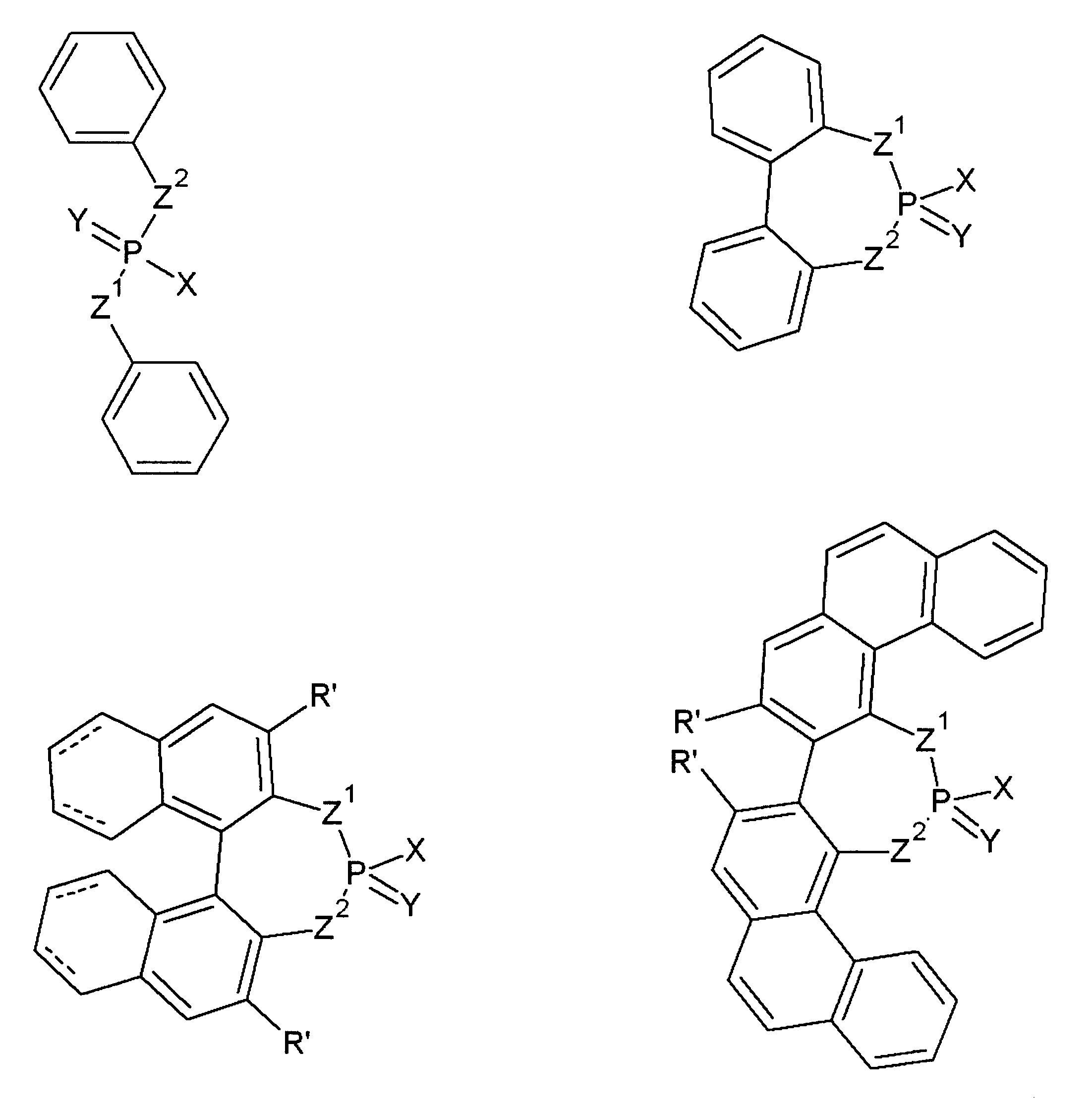
- the compound represented by Formula (2) is preferable.
- X represents a hydroxyl group or a mercapto group
- Y represents an oxygen atom or a sulfur atom
- R 1 and R 2 each independently have 1 to 20 carbon atoms which may have a hydrogen atom or a substituent.
- hydrocarbon group having 1 to 20 carbon atoms examples include methyl group, ethyl group, n-propyl group, isopropyl group, n-butyl group, s-butyl group, t-butyl group, isobutyl group, n-pentyl group, s -Pentyl group, t-pentyl group, pentyl group, neopentyl group, n-hexyl group, n-heptyl group, n-octyl group, n-decyl group, n-undecyl group, n-dodecyl group, n-tetradecyl group, Examples thereof include an n-octadecyl group, a phenyl group, a naphthyl group, a cyclopropyl group, and a cyclohexyl group.
- Examples of the substituent that the hydrocarbon group may have include a halogeno group, an alkoxy group, an alkylthio group, a mono- or dialkylamino group, an aryl group, a heterocyclic group, and an acyl group.
- Specific examples of the substituted hydrocarbon group having 1 to 20 carbon atoms include trifluoromethyl group, 2-chloroethyl group, 1-ethoxyethyl group, 2-methoxyethyl group, benzyl group, 2-pyridylmethyl group, methoxy Examples thereof include a methyl group, a methylthiomethyl group, a dimethylaminomethyl group, and an acetylmethyl group.
- R 1 and R 2 may be bonded directly or via an atom or functional group having two or more bonds, and Z 1 , Z 2 and P may be used to form a ring.
- Z 1 and Z 2 each independently represent an oxygen atom or a nitrogen atom having a substituent.
- the nitrogen atom having a substituent include (4-methylphenylsulfonyl) amino group, (4-trifluoromethylsulfonyl) amino group, (2-naphthylsulfonyl) amino group, and the like.
- Examples of the compound represented by the formula (2) include a compound represented by the following formula.
- R ′ is a hydrogen atom, phenyl group, 3,6-diphenylphenyl group, 2,4,6-trimethylphenyl group, 3,4,5-trimethylphenyl group, 2,4,6-triisopropylphenyl group, 3 , 5-bis (trifluoromethyl) phenyl group, 4-t-butyl, 2,6-diisopropylphenyl group, 4-t-butylphenyl group, 4-methoxyphenyl group, 4-nitrophenyl group, triphenylsilyl group , Diphenyl-t-butylsilyl group, 4-biphenyl group, 1-naphthyl group, 2-naphthyl group, 9-anthryl group, 9-phenanthryl.
- Specific examples of the compound represented by the formula (2) include dimethyl phosphate, diethyl phosphate, diisopropyl phosphate, di-n-butyl phosphate, diisobutyl phosphate, di-n-ethylhexyl phosphate, dilauryl phosphate.
- the polyol composition of one embodiment according to the present invention has a phosphorus element content of 1 to 1000 ppm, more preferably 1 to 100 ppm, and still more preferably 1 to 50 ppm.
- the content of phosphorus element can be measured by inductively coupled plasma optical emission spectrometry (ICP-AES).
- ICP-AES inductively coupled plasma optical emission spectrometry
- a polyurethane obtained by reacting a polyol composition having a high phosphorus element content with a polyisocyanate tends to have a low yield or purity, and tends to have poor physical properties.
- the production of a polyol composition having a low phosphorus element content has a low reaction rate and a difficulty in productivity.
- a by-product increases.
- the polyol composition according to one embodiment of the present invention is not particularly limited by the production method.
- the compound having active hydrogen and the compound having at least one selected from the group consisting of a carboxyl group, an ester group, and an acid halide group are subjected to metal-based polymerization in the presence of the phosphorus compound.
- a production method including reacting without using a catalyst is preferred.
- the compound having active hydrogen and the phosphorus compound are as described above.
- the compound having at least one selected from the group consisting of a carboxyl group, an ester group, and an acid halide group is the above-described compound having a plurality of carboxyl groups and a cyclic ester compound.
- a metal polymerization catalyst such as a titanium catalyst is generally used. However, in the production method of the present invention, this metal polymerization catalyst is not used.
- the reaction can be performed by any method such as a bulk polymerization method and a solution polymerization method.
- the reaction can be carried out by raising the temperature of the reaction raw material until the viscosity becomes such that the reaction raw material can be sufficiently stirred, but the temperature at which the reaction raw material volatilizes or the catalyst decomposes. It is preferable to avoid increasing the value to.
- the temperature during the reaction is preferably 50 ° C to 200 ° C, more preferably 80 ° C to 150 ° C.
- the reaction time can be appropriately set according to the scale of the reaction, the reaction temperature, the type and mass ratio of reaction raw materials, the type and amount of catalyst used, and is preferably 3 to 26 hours.
- the reaction may be performed by a continuous flow method or a batch method.
- the addition method of the compound having an active hydrogen and the compound having a carboxyl group is not particularly limited. Specifically, the compound having an active hydrogen and the compound having a carboxyl group are mixed and then collectively added to the reactor.
- a method of continuously or intermittently adding, a method of adding each of a compound having an active hydrogen and a compound having a carboxyl group to a reactor all at once, continuously, intermittently or alternately, etc. Can be mentioned.
- a compound having one type of carboxyl groups is added to the reactor at a time, and then a compound having other types of carboxyl groups is added continuously or intermittently.
- the method etc. can be mentioned.
- the reaction is usually terminated when a compound having a carboxyl group cannot be detected in the reaction solution.
- the method for quantifying the compound having a carboxyl group is not particularly limited. For example, methods for measuring the viscosity of reaction solutions, ultraviolet spectroscopy, infrared spectroscopy, near infrared spectroscopy, nuclear magnetic resonance spectroscopy, gas chromatography, liquid chromatography, gel permeation chromatography It can be quantified. Of these, gas chromatography or gel permeation chromatography is preferred.
- the reaction solution immediately after completion of the reaction can be used as it is in the next step. If necessary, the reaction liquid immediately after completion of the reaction may be evaporated under reduced pressure to remove volatile components, or a known purification treatment may be performed to increase the purity.
- the polyol composition according to the present invention can be suitably used as a raw material for a reaction for obtaining a polycarbonate by reacting with phosgene or the like, or a reaction for obtaining a polyurethane by reacting with a polyisocyanate.
- the polyurethane according to the present invention is obtained by reacting the polyol composition according to the present invention with an organic polyisocyanate.
- additives such as a chain extender can be added as necessary.
- the reaction can be performed by, for example, a prepolymer method or a one-shot method.
- the prepolymer method is a method in which the polyol composition according to the present invention and an organic polyisocyanate are first reacted to obtain a urethane prepolymer having a terminal isocyanate group, and this is reacted with a chain extender to obtain a polyurethane.
- the one-shot method is a method for obtaining a polyurethane by adding a polyol composition according to the present invention, an organic polyisocyanate and, if necessary, a chain extender to a reaction vessel almost simultaneously and reacting them.
- the organic polyisocyanate used in the present invention is not particularly limited as long as it is an organic compound having two or more isocyanate groups in one molecule.
- 4,4′-diphenylmethane diisocyanate (MDI) Polymeric MDI, 2,4-tolylene diisocyanate (2,4-TDI), 2,6-tolylene diisocyanate (2,6-TDI), hexamethylene diisocyanate (HDI), isophorone diisocyanate (IPDI), m-or p-phenylene diisocyanate, m-xylylene diisocyanate (XDI), p-xylylene diisocyanate, tetramethylxylene diisocyanate, ethylene-1,2-diisocyanate, tetramethylene-1,4-diisocyanate, trimethylhexamethylene dii Cyanate, naphthalene diisocyanate, norbornane diisocyanate,
- organic diisocyanates those in which two isocyanate groups in one molecule are in a resonance relationship are preferable from the viewpoints of pot life, good handleability, polyurethane mechanical strength, and the like.
- examples of organic diisocyanates in which two isocyanate groups in one molecule are in a resonance relationship include 2,4-tolylene diisocyanate (2,4-TDI) and 2,6-tolylene diisocyanate (2,6-TDI). Mention may be made of tolylene diisocyanate.
- 2,4-TDI and 2,6-TDI can each be used alone or together.
- the use ratio of 2,4-TDI / 2,6-TDI is preferably 55/45 to 100/0, more preferably 65/35 to 100/0, and still more preferably 85/15 to 100 on a mass basis. / 0.
- the amount of the organic polyisocyanate used in the urethanization reaction is not particularly limited, but the ratio of the number of moles of isocyanate groups in the organic polyisocyanate to the number of moles of active hydrogen in the polyol composition (R ratio value) is preferably It is set to 1 to 10, more preferably 2 to 5, and still more preferably 2.1 to 3.8.
- Examples of the chain extender used as necessary in the present invention include a low molecular weight polyhydric alcohol and a low molecular weight polyamine. Of these, low molecular weight polyhydric alcohols are preferred.
- Low molecular weight polyhydric alcohols include ethylene glycol, diethylene glycol, triethylene glycol, propylene glycol, dipropylene glycol, tripropylene glycol, 1,3-propanediol, 2-methyl-1,3-propanediol, 2-methyl- 2-propyl-1,3-propanediol, 2-butyl-2-ethyl-1,3-propanediol, 2-butyl-2-hexyl-1,3-propanediol, 1,2-butanediol, 1, 3-butanediol, 1,4-butanediol, 2,3-butanediol, 1,5-pentanediol, 2-methyl-2,4-pentanediol, 3-methyl-1,5-pentanediol, 2, 2,4-trimethyl-1,3-pentanediol, neopentyl glycol, 1, -Hexaned
- low molecular weight polyvalent amine examples include aromatic diamines such as 2,4-tolylenediamine, 2,6-tolylenediamine, xylylenediamine, and 4,4′-diphenylmethanediamine; ethylenediamine, 1,2-propylenediamine, 2,2-dimethyl-1,3-propanediamine, 1,3-pentanediamine, 2-methyl-1,5-pentanediamine, 2-butyl-2-ethyl-1,5-pentanediamine, 1,6- Aliphatic diamines such as hexanediamine, 2,2,4-trimethylhexanediamine, 2,4,4-trimethylhexanediamine, 1,8-octanediamine, 1,9-nonanediamine, 1,10-decanediamine; Amino-3-aminomethyl-3,5,5-trimethylcyclohexane, 4,4'-dicyclohexylmethane Min, isopropylidene cyclohexyl-4
- the amount of the chain extender used in the urethanization reaction is not particularly limited, but the organic polyisocyanate is based on the total number of moles of active hydrogen in the polyol composition and the number of moles of active hydrogen derived from the chain extender.
- the ratio of the number of moles of isocyanate groups derived is preferably 0.2 to 10, more preferably 0.5 to 1.25, and even more preferably 0.9 to 1.1. Set.
- the urethanization reaction can be carried out by raising the temperature of the reaction raw material until the viscosity becomes such that the reaction raw material can be sufficiently stirred.
- the specific temperature during the reaction is preferably room temperature to 200 ° C, more preferably 50 to 100 ° C. If the temperature during the reaction is too low, the progress of the reaction is slow and the time required for production tends to be long. If the temperature during the reaction is too high, side reactions may occur or the pot life may be shortened, making the molding process difficult.
- the urethanization reaction can be carried out without a solvent or in a solvent.
- the solvent is not particularly limited as long as it is inert to the reaction. Examples thereof include toluene, ethyl acetate, butyl acetate, methyl ethyl ketone, dimethylformamide, tetrahydrofuran and the like.
- a catalyst can be used in the urethanization reaction.
- the catalyst include tertiary amines such as dimethylethanolamine, triethylenediamine, tetramethylpropanediamine, tetramethylhexamethylenediamine, and dimethylcyclohexylamine; metals such as stannous octate, potassium octylate, and dibutyltin dilaurate A catalyst etc. can be mentioned.
- the amount of the catalyst used is preferably 1 to 1000 ppm, more preferably 5 to 500 ppm, based on the total amount of organic isocyanate, chain extender and polyol. When the amount of the catalyst used is too small, the reaction is slowed down and the time required for production becomes long. If the amount of the catalyst used is too large, the heat generation is intense and the reaction is difficult to control, and a gelled product may be formed or a colored polyurethane may be obtained.
- additives can be appropriately added to the polyurethane of the present invention as long as the effects of the present invention are not impaired.
- examples of other additives include flame retardants, deterioration inhibitors and plasticizers.
- the polyurethane according to the present invention can be used very advantageously in spandex, polyurethane elastomers, urethane foams, adhesives, synthetic leather, paints, sealing agents and the like.
- a test piece having a thickness of 50 mm ⁇ 50 mm ⁇ 2 mm was prepared.
- the mass W0 of the test piece was measured.
- the test piece was immersed in water at 23 ° C. for 24 hours.
- the water on the surface was wiped up from the water and the mass W1 of the test piece was measured.
- the ratio (water absorption) of the increased mass W1 ⁇ W0 due to immersion to the mass W0 before immersion was calculated.
- NISSO-PB G-1000 manufactured by Nippon Soda Co., Ltd.
- 1,2-structure / 1,4-structure molar ratio 90.0 / 10 0.0
- number average molecular weight (Mn) 2700
- hydroxyl value 72.5 (KOH mg / g)
- 140 g of ⁇ -caprolactone manufactured by Wako Pure Chemical Industries
- diphenyl phosphate manufactured by Tokyo Chemical Industry Co., Ltd.
- 0.002 mol part relative to 1 mol part of active hydrogen in polybutadiene was added, and the temperature was raised to 100 ° C., and 7 at 100 ° C. Stir for hours. Then, it cooled to 80 degreeC and took out from the flask, and the composition containing the polyester polyol A was obtained.
- Polyester polyol A has a number average molecular weight (Mn) of 6220, a weight average molecular weight (Mw) of 8100, a molecular weight distribution (Mw / Mn) of 1.302, and a mass ratio of polybutadiene chain / polycaprolactone chain of 40.5 / 59. .5.
- the amount of phosphorus element contained in the composition containing polyester polyol A was 35 ppm.
- polyurethane A The obtained 2 mm-thick sheet was peeled from the glass plate and annealed at 100 ° C. for 14 hours to obtain polyurethane A.
- the appearance of polyurethane A was light yellow and transparent.
- the evaluation results of polyurethane A are shown in Table 1.
- Example 2 A composition containing polyester polyol B was obtained in the same manner as in Example 1 except that the amount of diphenyl phosphate was changed to 0.14 g (0.004 mol part relative to 1 mol part of active hydrogen in polybutadiene). .
- Polyester polyol B has a number average molecular weight (Mn) of 6620, a weight average molecular weight (Mw) of 8890, a molecular weight distribution (Mw / Mn) of 1.344, and a mass ratio of polybutadiene chain / polycaprolactone chain of 40.0 / 60. 0.0. Further, the amount of phosphorus element contained in the composition containing polyester polyol B was 70 ppm.
- Polyurethane B was obtained in the same manner as in Example 1 except that a composition containing polyester polyol B was used instead of the composition containing polyester polyol A. The appearance of polyurethane B was brown and opaque. The evaluation results of polyurethane B are shown in Table 1.
- Example 3 The amount of polybutadiene (NISSO-PB G-1000) is 200 g, the amount of ⁇ -caprolactone is 281.7 g, and the amount of diphenyl phosphate is 2.82 g (0.04 mol based on 1 mol of active hydrogen in polybutadiene)
- the composition containing polyester polyol C was obtained in the same manner as in Example 1 except that the composition was changed to (Part).
- Polyester polyol C has a number average molecular weight (Mn) of 6425, a weight average molecular weight (Mw) of 8475, a molecular weight distribution (Mw / Mn) of 1.319, and a mass ratio of polybutadiene chain / polycaprolactone chain of 39.7 / 60. .3. Further, the amount of phosphorus element contained in the composition containing polyester polyol C was 730 ppm.
- Polyurethane C was obtained in the same manner as in Example 1 except that the composition containing polyester polyol C was used instead of the composition containing polyester polyol A. The appearance of polyurethane C was brown and opaque. The evaluation results of polyurethane C are shown in Table 1.
- Polyester polyol D has a number average molecular weight (Mn) of 4640, a weight average molecular weight (Mw) of 8080, a molecular weight distribution (Mw / Mn) of 1.743, and a mass ratio of polybutadiene chain / polycaprolactone chain of 44.6 / 55. .4. Moreover, the quantity of the phosphorus element contained in the composition containing the polyester polyol D was 15000 ppm.
- polyurethane D in the same manner as in Example 1 except that a composition containing polyester polyol D was used instead of a composition containing polyester polyol A, but a brown transparent viscous product was produced, A polyurethane could not be obtained.
- the polyol composition of the present invention it is possible to prevent excessive side reactions from proceeding during urethanization using isocyanate or the like. Moreover, according to the manufacturing method of the polyol composition which concerns on this invention, the polyol composition which concerns on this invention can be manufactured, without performing the removal operation of a polymerization catalyst. Furthermore, according to the polyol composition of the present invention, polyurethane having good storage stability and mechanical properties can be produced, which is industrially useful.
Landscapes
- Chemical & Material Sciences (AREA)
- Health & Medical Sciences (AREA)
- Chemical Kinetics & Catalysis (AREA)
- Medicinal Chemistry (AREA)
- Polymers & Plastics (AREA)
- Organic Chemistry (AREA)
- General Chemical & Material Sciences (AREA)
- Polyurethanes Or Polyureas (AREA)
- Polyesters Or Polycarbonates (AREA)
Abstract
Description
本願は、2013年10月24日に、日本に出願された特願2013-220784号に基づき優先権を主張し、その内容をここに援用する。
本発明の目的は、ウレタン化の際の副反応が抑制され、良好な保存安定性や物性を有するポリウレタンなどを製造することができるポリオール組成物、および重合触媒の除去操作を行うことなく前記ポリオール組成物を製造するポリオール組成物の製造方法を提供することである。
〔1〕活性水素を有する化合物と、カルボキシル基、エステル基、および酸ハライド基からなる群から選ばれる少なくともひとつを有する化合物とを、前記活性水素を有する化合物1モル部に対して0.0001~0.05モル部のリン化合物の存在下に、金属系重合触媒を用いずに、反応させることを含むポリオール組成物の製造方法。
〔2〕前記活性水素を有する化合物が式(3)で表される化合物である〔1〕に記載の製造方法。

(式(3)中、X1は共役ジエンに由来する繰り返し単位を含むポリマー鎖を表し、Tは、水素原子または水素原子に置換可能な有機基を表す。)
〔3〕前記共役ジエンが、ブタジエンである〔2〕に記載の製造方法。
〔5〕前記環状エステル化合物が、式(1)で表される化合物である〔4〕に記載の製造方法。

(式(1)中、R3およびR4はそれぞれ独立に水素原子またはアルキル基を表し、nは2~7のいずれかの整数を表し、R3同士またはR4同士は同一でもよいし相異してもよい。)
〔6〕環状エステル化合物が、ε-カプロラクトン、γ-ブチロラクトンおよびδ-バレロラクトンからなる群から選ばれる少なくともひとつである〔4〕に記載の製造方法。

(式(2)中、Xは水酸基またはメルカプト基を表し、Yは酸素原子または硫黄原子を表し、R1およびR2はそれぞれ独立に水素原子または置換基を有してもよい炭素数1~20の炭化水素基を表し、R1とR2は、直接または結合手を2以上有する原子または官能基を介して結合しZ1,Z2およびPを供にして環を形成してもよく、Z1およびZ2は、それぞれ独立に酸素原子または置換基を有する窒素原子を表す。)
〔9〕前記ポリオールが、さらにポリ共役ジエン鎖を有することを特徴とする前記〔8〕に記載のポリオール組成物。
〔10〕前記ポリ共役ジエン鎖がポリブタジエン鎖である、〔9〕に記載のポリオール組成物。
〔12〕前記〔8〕~〔10〕のいずれかひとつに記載のポリオール組成物と有機ポリイソシアネートとを反応させて得られるポリウレタン。
また、当該ポリオールは、ポリマー鎖の両末端に水酸基を有する構造のものであることが好ましい。当該ポリオールは、同一分子内に、二重結合、エポキシ基、アルデヒド基、アルコキシ基などの水酸基以外の官能基を有していてもよい。
重縮合系ポリエステルの製造に使用される一分子内にカルボキシル基類と水酸基とを有する化合物としては、グリコール酸、乳酸、4-ヒドロキシブタン酸などのヒドロキシカルボン酸;グリコール酸エチル、乳酸エチルなどのヒドロキシカルボン酸エステルを挙げることができる。

式(1)中、R3およびR4はそれぞれ独立に水素原子またはアルキル基を表す。アルキル基としては、メチル基、エチル基、n-プロピル基、イソプロピル基、n-ブチル基、イソブチル基、s-ブチル基、t-ブチル基などを挙げることができる。
式(1)中、nは2~7のいずれかの整数を表し、R3同士またはR4同士は同一でもよいし相異してもよい。
多価アルコールとしては、エチレングリコール、ジエチレングリコール、トリエチレングリコール、1,2-プロピレングリコール、ジプロピレングリコール、1,3-プロパンジオール、ポリエチレングリコール、ポリプロピレングリコール、ポリブチレングリコール、ポリテトラメチレングリコール、1,2-ブタンジオール、1,3-ブタンジオール、1,4-ブタンジオール、ネオペンチルグリコール、1,5-ペンタンジオール、1,6-ヘキサンジオール、1,10-デカンジオール、1,12-ドデカンジオール、スピログリコール、1,4-シクロヘキサンジメタノール、2,2,4,4-トリメチルペンタンジオール、3-メチル-1,5-ペンタンジオール、シクロヘキサンジオール、4,4’-メチレンビスシクロヘキサノール、4,4’-イソプロピリデンビス-シクロヘキサノール、2-(4-ヒドロキシメチルフェニル)エタノールなどの水酸基を2個有するもの;グリセリン、トリメチロールエタン、トリメチロールプロパン、トリメチロールオクタン、1,2,6-ヘキサントリオール、トリエタノールアミン、トリイソプロパノールアミン、トリアジン-2,4,6-トリオールなどの水酸基を3個有するもの;エリスリトール、ペンタエリスリトール、N,N,N”,N”-テトラキス(2-ヒドロキシエチル)テトラエチレンジアミンなどの水酸基を4個有するもの;ソルビトールなどの糖類アルコール;トリス(2-ヒドロキシエチル)シアヌレート;キシレンジオール、ビスフェノール類、水素化ビスフェノール類などの芳香族多価アルコール類;ポリ(2-メチル-1,3-プロピレンアジペート)ジオール、ポリ(1,4-ブチレンアジペート)ジオールなどの分岐鎖ポリアルキレンカーボネートジオール;ポリヒドロキシル化ポリイソプレン、ポリヒドロキシル化ポリブタジエン、ポリヒドロキシル化ポリイソブチレン;末端水酸基を有するポリラクチド、ポリ(3-ヒドロキシブチレート)、ポリ(3-ヒドロキバレレート)などのポリヒドロキシアルカノエート;デンプン、セルロース、キチン、キトサン、スクロース、デキストランなどの変性または未変性の多糖および小糖(単糖およびオリゴ糖)類;ポリ(4-ヒドロキシブチルメタクリレート)、ポリ(2-ヒドロキシエチルアクリレート)、ポリ(2-ヒドロキシエチルメタクリレート)、ポリ(メチルメタクリレート/2-ヒドロキシエチルメタクリレート)共重合体などのポリ(ヒドロキシアルキル(メタ)アクリレート)類;ポリ(4-ヒドロキシスチレン)、ポリ(4-ヒドロキシ-α-メチルスチレン)、ポリ(4-ヒドロキシスチレン/スチレン)共重合体、(4-ヒドロキシスチレン/メチルメタクリレート)共重合体などを挙げることができる。

式(3)中、X1は共役ジエンに由来する繰り返し単位を含むポリマー鎖を表す。
共役ジエンとしては、1,3-ブタジエン、イソプレン、1,3-ペンタジエンなどを挙げることができる。これらのうち、1,3-ブタジエンが好ましい。共役ジエンから誘導される繰り返し単位には、その反応条件により、1,4-付加重合して得られる繰り返し単位(以下、1,4-構造ということがある。該1,4-構造はトランス体とシス体を含む。)と、1,2-付加重合して得られる繰り返し単位(以下、1,2-構造ということがある。)があるが、そのいずれであってもよい。1,2-構造の量は、特に制限されないが、全繰り返した単位に対して、50モル%以上であるのが好ましく、70モル%以上であるのがより好ましく、80モル%以上であるのがさらに好ましい。共役ジエンに由来する繰り返し単位には二重結合が含まれている。該二重結合は水素付加反応によって単結合に転化されていてもよい。また該二重結合にヒドロキシシラン類を付加させたり、該二重結合を酸化させてエポキシ基に転化させたり、該二重結合にカルボン酸などを付加させてエステル基などに転化させたり、該二重結合にメルカプトアルコール類を付加させたりしていてもよい。
式(3)中、Tは、水素原子または水素原子に置換可能な有機基、好ましくは水素原子を表す。当該有機基としては、メチル基、エチル基などのアルキル基、アリル基などのアルケニル基、プロパルギル基などのアルキニル基、フェニル基などのアリール基、アセチル基などのアシル基、トリメチルシリル基などのシリル基などを挙げることができる。該有機基を、開環重合反応完了後に、水素原子に置き換えることによって、ポリマー鎖末端に水酸基を導入することができる。
活性水素を有する化合物として式(3)で表わされる化合物を用いると、ポリエステル鎖とポリ共役ジエン鎖とを有するポリオール、好ましくはポリエステル鎖とポリブタジエン鎖とを有するポリオールを得ることができる。
リン化合物の使用量は既に述べたとおりであるが、カルボキシル基類を有する化合物100重量部に対して0.01~1.00質量部の範囲内に設定してもよい。
これらの中、式(2)で表される化合物が好ましい。

炭素数1~20の炭化水素基としては、メチル基、エチル基、n-プロピル基、イソプロピル基、n-ブチル基、s-ブチル基、t-ブチル基、イソブチル基、n-ペンチル基、s-ペンチル基、t-ペンチル基、ペンチル基、ネオペンチル基、n-ヘキシル基、n-ヘプチル基、n-オクチル基、n-デシル基、n-ウンデシル基、n-ドデシル基、n-テトラデシル基、n-オクタデシル基、フェニル基、ナフチル基、シクロプロピル基、シクロヘキシル基などを挙げることができる。該炭化水素基に有し得る置換基としては、ハロゲノ基、アルコキシ基、アルキルチオ基、モノまたはジアルキルアミノ基、アリール基、ヘテロ環基、アシル基などを挙げることができる。置換基を有する炭素数1~20の炭化水素基の具体例としては、トリフルオロメチル基、2-クロロエチル基、1-エオトキシエチル基、2-メトキシエチル基、ベンジル基、2-ピリジルメチル基、メトキシメチル基、メチルチオメチル基、ジメチルアミノメチル基、アセチルメチル基などを挙げることができる。
R1とR2は、直接または結合手を2以上有する原子または官能基を介して結合しZ1,Z2およびPを供にして環を形成してもよい。
Z1およびZ2は、それぞれ独立に酸素原子または置換基を有する窒素原子を表す。置換基を有する窒素原子としては、(4-メチルフェニルスルホニル)アミノ基、(4-トリフルオロメチルスルホニル)アミノ基、(2-ナフチルスルホニル)アミノ基などが挙げられる。
リン元素の含有量は誘導結合プラズマ発光分析法(ICP-AES)により測定することができる。リン元素の含有量が多いポリオール組成物とポリイソシアネートとを反応させて得られるポリウレタンは、その収率または純度が低い傾向があり、物性に劣る傾向がある。リン元素の含有量が少ないポリオール組成物の製造は、反応速度が低く生産性に難がある。また、反応速度を高めるために高温度条件にすると副生成物が増える。
プレポリマー法は、本発明に係るポリオール組成物と有機ポリイソシアネートとをまず反応させて末端イソシアネート基を有するウレタンプレポリマーを得、これに鎖延長剤を反応させてポリウレタンを得る方法である。ワンショット法は、本発明に係るポリオール組成物と有機ポリイソシアネートと必要に応じて鎖延長剤とをほぼ同時に反応容器に添加して反応させてポリウレタンを得る方法である。
〔リン元素の含有量〕
標準溶液(原子吸光分析用リン標準液、1000mg/L、関東化学(株)社製)0.25gまたは試料0.25gをポリプロピレン製試料容器に採取し、N,N-ジメチルアセトアミド/酢酸イソアミル=1/1(容量比、共に和光純薬工業(株)社製)で全量を10gとしたサンプルを調製し、誘導結合プラズマ発光分光(ICP-AES)(サーモフィッシャーサイエンティフィック(株)社製、IRIS Interpid II XDLDUO)を測定し、波長213.618(nm)にて定量した。
試料0.03gをクロロホルム-dにて全量を1gとしたサンプルを調製し、1H-NMR(日本電子(株)社製、ECP500)を測定し、各ポリマー鎖に特徴的なピークの積分比より、ポリブタジエン鎖/ポリカプロラクトン鎖の質量比を決定した。
ゲルパーミエーションクロマトグラフィー(GPC)による測定に基づいて、標準ポリスチレンの分子量に換算して、分子量を決定した。
ドライエアーを流しておいた共栓付き三角フラスコにウレタン化反応液約3gを入れ、これにトルエン20mlと、ジブチルアミンのトルエン溶液20mlを加え、15分間撹拌した。次いで、2-プロパノール100mlを加え、これにブロムフェノールブルー指示薬を数滴加え、0.5M塩酸で滴定し、イソシアネート(NCO)基の定量分析を行った。
2mm厚のシート6枚を重ねて、AタイプおよびDタイプのデュロメータを用いて硬度Aおよび硬度Dを測定した。
JIS K 7312に準じて、5号ダンベル試験片を作成し、試験機(株式会社島津製作所社製、オートグラフAGS-J(5kN))を用いて、100%モジュラス(M100)、200%モジュラス(M200)、300%モジュラス(M300)、引張強度(TB、破断時の応力)および破断伸び(EB)を測定した。
50mm×50mm×2mm厚の試験片を作成した。該試験片の質量W0を測定した。試験片を23℃の水に24時間浸漬した。水から引き上げて表面の水を拭き取り、試験片の質量W1を測定した。浸漬前の質量W0に対する浸漬による増加質量W1-W0の割合(吸水率)を算出した。
セパラブルフラスコに、両末端にヒドロキシエチル基を有するポリブタジエン(NISSO-PB G-1000、日本曹達(株)社製、1,2-構造/1,4-構造のモル比=90.0/10.0、数平均分子量(Mn)=2700、水酸基価=72.5(KOHmg/g))100gと、ε-カプロラクトン(和光純薬工業(株)社製)140gを入れ、60℃に加温し、窒素雰囲気下で均一溶液とした。これにリン酸ジフェニル(東京化成工業(株)社製)0.07g(ポリブタジエン中の活性水素1モル部に対して0.002モル部)を加えて100℃に昇温し、100℃で7時間撹拌した。その後、80℃まで冷却し、フラスコから取り出して、ポリエステルポリオールAを含有する組成物を得た。ポリエステルポリオールAは、数平均分子量(Mn)が6220、重量平均分子量(Mw)が8100、分子量分布(Mw/Mn)が1.302、ポリブタジエン鎖/ポリカプロラクトン鎖の質量比が40.5/59.5であった。ポリエステルポリオールAを含有する組成物に含まれるリン元素の量は35ppmであった。
リン酸ジフェニルの量を0.14g(ポリブタジエン中の活性水素1モル部に対して0.004モル部)に変更した以外は実施例1と同じ方法でポリエステルポリオールBを含有する組成物を得た。ポリエステルポリオールBは、数平均分子量(Mn)が6620、重量平均分子量(Mw)が8890、分子量分布(Mw/Mn)が1.344、ポリブタジエン鎖/ポリカプロラクトン鎖の質量比が40.0/60.0であった。また、ポリエステルポリオールBを含有する組成物に含まれるリン元素の量は70ppmであった。
ポリブタジエン(NISSO-PB G-1000)の量を200g、ε-カプロラクトンの量を281.7g、およびリン酸ジフェニルの量を2.82g(ポリブタジエン中の活性水素1モル部に対して0.04モル部)に変更した以外は実施例1と同じ方法でポリエステルポリオールCを含有する組成物を得た。ポリエステルポリオールCは、数平均分子量(Mn)が6425、重量平均分子量(Mw)が8475、分子量分布(Mw/Mn)が1.319、ポリブタジエン鎖/ポリカプロラクトン鎖の質量比が39.7/60.3であった。また、ポリエステルポリオールCを含有する組成物に含まれるリン元素の量は730ppmであった。
セパラブルフラスコに、トルエン378.4g、ε-カプロラクトン94.6g、両末端にヒドロキシエチル基を有するポリブタジエン(NISSO-PB G-1000、日本曹達(株)社製、1,2-構造/1,4-構造のモル比=90.2/9.8、数平均分子量(Mn)=2700、水酸基価=70.7(KOHmg/g)70.0gおよびリン酸ジフェニル23.7g(ポリブタジエン中の活性水素1モル部に対して1モル部)を連続して添加した。添加終了後、室温で24時間撹拌した。得られたウレタン化反応液から揮発成分をエバポレーターで減圧留去して、ポリエステルポリオールDを含有する組成物を得た。
ポリエステルポリオールDは、数平均分子量(Mn)が4640、重量平均分子量(Mw)が8080、分子量分布(Mw/Mn)が1.743、ポリブタジエン鎖/ポリカプロラクトン鎖の質量比が44.6/55.4であった。また、ポリエステルポリオールDを含有する組成物に含まれるリン元素の量は15000ppmであった。

Claims (12)
- 活性水素を有する化合物と、
カルボキシル基、エステル基、および酸ハライド基からなる群から選ばれる少なくともひとつを有する化合物とを、
前記活性水素を有する化合物1モル部に対して0.0001~0.05モル部のリン化合物の存在下に、金属系重合触媒を用いずに、反応させることを含むポリオール組成物の製造方法。 - 前記活性水素を有する化合物が、式(3)で表される化合物である請求項1に記載の製造方法。

(式(3)中、X1は共役ジエンに由来する繰り返し単位を含むポリマー鎖を表し、Tは、水素原子または水素原子に置換可能な有機基を表す。) - 前記共役ジエンが、ブタジエンである請求項2に記載の製造方法。
- 前記カルボキシル基、エステル基および酸ハライド基からなる群から選ばれる少なくともひとつを有する化合物が、環状エステル化合物である請求項1~3のいずれかひとつに記載の製造方法。
- 前記環状エステル化合物が、式(1)で表される化合物である請求項4に記載の製造方法。
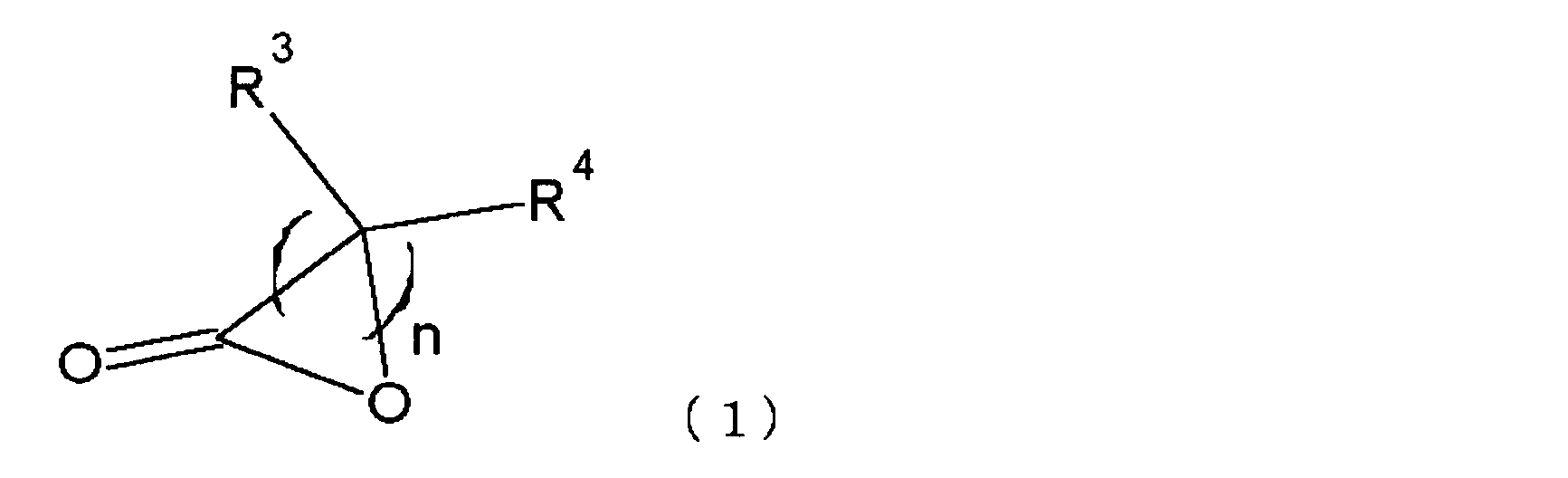
(式(1)中、R3およびR4はそれぞれ独立に水素原子またはアルキル基を表し、nは2~7のいずれかの整数を表し、R3同士またはR4同士は同一でもよいし相異してもよい。) - 前記環状エステル化合物が、ε-カプロラクトン、γ-ブチロラクトンおよびδ-バレロラクトンからなる群から選ばれる少なくともひとつである請求項4に記載の製造方法。
- 前記リン化合物が、式(2)で表される化合物である請求項1~6のいずれかひとつに記載の製造方法。

(式(2)中、Xは水酸基またはメルカプト基を表し、Yは酸素原子または硫黄原子を表し、R1およびR2はそれぞれ独立に水素原子または置換基を有してもよい炭素数1~20の炭化水素基を表し、R1とR2は、直接または結合手を2以上有する原子または官能基を介して結合しZ1,Z2およびPを供にして環を形成してもよく、Z1およびZ2は、それぞれ独立に酸素原子または置換基を有する窒素原子を表す。) - ポリエステル鎖を有するポリオールを含有し、金属系重合触媒を実質的に含有せず且つ重合触媒由来のリン元素の含有量が1~1000ppmである、ポリオール組成物。
- 前記ポリオールが、さらにポリ共役ジエン鎖を有することを特徴とする請求項8に記載のポリオール組成物。
- 前記ポリ共役ジエン鎖がポリブタジエン鎖である、請求項9に記載のポリオール組成物。
- 請求項8~10のいずれかひとつに記載のポリオール組成物と有機ポリイソシアネートとを反応させて得られるウレタンプレポリマー。
- 請求項8~10のいずれかひとつに記載のポリオール組成物と有機ポリイソシアネートとを反応させて得られるポリウレタン。
Priority Applications (5)
| Application Number | Priority Date | Filing Date | Title |
|---|---|---|---|
| US15/028,307 US10087279B2 (en) | 2013-10-24 | 2014-10-21 | Polyol Composition |
| KR1020167007484A KR101841856B1 (ko) | 2013-10-24 | 2014-10-21 | 폴리올 조성물 |
| JP2015543865A JP6145174B2 (ja) | 2013-10-24 | 2014-10-21 | ポリオール組成物 |
| EP14856067.5A EP3061781B1 (en) | 2013-10-24 | 2014-10-21 | Polyol composition |
| CN201480057232.9A CN105637011B (zh) | 2013-10-24 | 2014-10-21 | 多元醇组合物 |
Applications Claiming Priority (2)
| Application Number | Priority Date | Filing Date | Title |
|---|---|---|---|
| JP2013220784 | 2013-10-24 | ||
| JP2013-220784 | 2013-10-24 |
Publications (1)
| Publication Number | Publication Date |
|---|---|
| WO2015060302A1 true WO2015060302A1 (ja) | 2015-04-30 |
Family
ID=52992896
Family Applications (1)
| Application Number | Title | Priority Date | Filing Date |
|---|---|---|---|
| PCT/JP2014/077952 Ceased WO2015060302A1 (ja) | 2013-10-24 | 2014-10-21 | ポリオール組成物 |
Country Status (7)
| Country | Link |
|---|---|
| US (1) | US10087279B2 (ja) |
| EP (1) | EP3061781B1 (ja) |
| JP (1) | JP6145174B2 (ja) |
| KR (1) | KR101841856B1 (ja) |
| CN (1) | CN105637011B (ja) |
| TW (1) | TWI525119B (ja) |
| WO (1) | WO2015060302A1 (ja) |
Cited By (1)
| Publication number | Priority date | Publication date | Assignee | Title |
|---|---|---|---|---|
| JP2019156925A (ja) * | 2018-03-09 | 2019-09-19 | 三井化学株式会社 | ラミネート接着剤および包装材 |
Families Citing this family (4)
| Publication number | Priority date | Publication date | Assignee | Title |
|---|---|---|---|---|
| CN108164690A (zh) * | 2018-01-17 | 2018-06-15 | 南京工业大学 | 一种制备聚酯的方法 |
| US11225573B2 (en) * | 2018-02-26 | 2022-01-18 | Lubrizol Advanced Materials, Inc. | Thermoplastic polyurethane composition |
| JP7184615B2 (ja) * | 2018-11-30 | 2022-12-06 | 株式会社ダイセル | ポリウレタン |
| CN110183627B (zh) * | 2019-06-05 | 2021-06-25 | 万华化学集团股份有限公司 | 一种尼龙酸聚酯多元醇的制备方法及其产品 |
Citations (7)
| Publication number | Priority date | Publication date | Assignee | Title |
|---|---|---|---|---|
| JPS6023418A (ja) * | 1983-07-20 | 1985-02-06 | Daicel Chem Ind Ltd | 新規なラクトン重合体の製造方法 |
| JPS63128017A (ja) | 1986-11-19 | 1988-05-31 | Daicel Chem Ind Ltd | ポリエステルポリオ−ル |
| JPH05239201A (ja) | 1992-02-28 | 1993-09-17 | Kuraray Co Ltd | ポリエステルポリオール組成物の調製方法 |
| JPH05262858A (ja) * | 1992-03-18 | 1993-10-12 | Shiro Kobayashi | 新規なブロック共重合体及びその製造法 |
| JPH06256461A (ja) | 1993-03-01 | 1994-09-13 | Nippon Kayaku Co Ltd | 脂肪族ポリエステル及びその改質物の高純度品の製造方法 |
| JPH10259295A (ja) | 1997-03-18 | 1998-09-29 | Kuraray Co Ltd | エステル系高分子ポリオール組成物およびその製造方法 |
| JP2013513008A (ja) | 2009-12-08 | 2013-04-18 | アルケマ フランス | 少なくとも一つの環状モノマーからポリマーを製造する方法 |
Family Cites Families (16)
| Publication number | Priority date | Publication date | Assignee | Title |
|---|---|---|---|---|
| GB671077A (en) | 1948-11-06 | 1952-04-30 | Abraham Brothman | A process for the manufacture of methyl methacrylate starting from the lactide and/or linear polycondensation products of alpha-hydroxy isobutyric acid |
| US2914556A (en) | 1956-04-13 | 1959-11-24 | Union Carbide Corp | Preparation of lactone adducts |
| DE3230757A1 (de) * | 1982-08-18 | 1984-02-23 | Bayer Ag, 5090 Leverkusen | Verfahren zur herstellung von stabilisierten polyisocyanaten, stabilisierte polyisocyanate retardierter reaktivitaet und ihre verwendung zur polyurethanherstellung |
| JPS6196341A (ja) * | 1984-10-17 | 1986-05-15 | Kajima Corp | 冷暖房用熱エネルギ−の輸送方法 |
| JPS63117028A (ja) | 1986-11-05 | 1988-05-21 | Takemoto Oil & Fat Co Ltd | ブロツク共重合体の製造方法 |
| EP0266973A3 (en) | 1986-11-06 | 1990-01-10 | Thiokol Corporation | Pcp/htpb block copolymer and propellant binder prepared therefrom |
| US4853051A (en) * | 1986-11-06 | 1989-08-01 | Morton Thiokol, Inc. | Propellant binder prepared from a PCP/HTPB block polymer |
| GB9326511D0 (en) | 1993-12-29 | 1994-03-02 | Solvay Interox Ltd | Macromonomer preparation |
| US5512651A (en) * | 1994-07-29 | 1996-04-30 | Minnesota Mining And Manufacturing Company | Strong carboxylic acid functional polyurethane polymers and blends thereof used in magnetic recording media |
| JP2001192421A (ja) | 2000-01-07 | 2001-07-17 | Nippon Paint Co Ltd | 反応性重合体の製造方法およびそれを含む硬化性樹脂組成物 |
| US20060035989A1 (en) * | 2002-11-04 | 2006-02-16 | Noriaki Tokuyasu | Composition for flame-retardant flexible polyurethane foam |
| AU2003277675A1 (en) * | 2002-11-11 | 2004-06-03 | Central Glass Company, Limited | Vapor pressure depressant and use thereof |
| JP2004307583A (ja) | 2003-04-03 | 2004-11-04 | Japan Composite Co Ltd | ポリエステルポリオールの製造方法およびポリウレタン硬化物 |
| JP5842315B2 (ja) | 2008-12-01 | 2016-01-13 | 三菱化学株式会社 | ポリウレタンの製造方法及びそれから得られたポリウレタンの用途 |
| CN101993529A (zh) | 2009-08-11 | 2011-03-30 | 拜耳材料科技(中国)有限公司 | 用于淬灭聚酯多元醇中的活性杂质的淬灭剂及其用途 |
| JP2012017356A (ja) | 2010-07-06 | 2012-01-26 | Dic Corp | 熱硬化性ポリウレタン樹脂組成物及びそれを用いてなるポリウレタン成形物 |
-
2014
- 2014-10-21 EP EP14856067.5A patent/EP3061781B1/en active Active
- 2014-10-21 JP JP2015543865A patent/JP6145174B2/ja active Active
- 2014-10-21 KR KR1020167007484A patent/KR101841856B1/ko active Active
- 2014-10-21 CN CN201480057232.9A patent/CN105637011B/zh active Active
- 2014-10-21 WO PCT/JP2014/077952 patent/WO2015060302A1/ja not_active Ceased
- 2014-10-21 US US15/028,307 patent/US10087279B2/en active Active
- 2014-10-22 TW TW103136424A patent/TWI525119B/zh active
Patent Citations (7)
| Publication number | Priority date | Publication date | Assignee | Title |
|---|---|---|---|---|
| JPS6023418A (ja) * | 1983-07-20 | 1985-02-06 | Daicel Chem Ind Ltd | 新規なラクトン重合体の製造方法 |
| JPS63128017A (ja) | 1986-11-19 | 1988-05-31 | Daicel Chem Ind Ltd | ポリエステルポリオ−ル |
| JPH05239201A (ja) | 1992-02-28 | 1993-09-17 | Kuraray Co Ltd | ポリエステルポリオール組成物の調製方法 |
| JPH05262858A (ja) * | 1992-03-18 | 1993-10-12 | Shiro Kobayashi | 新規なブロック共重合体及びその製造法 |
| JPH06256461A (ja) | 1993-03-01 | 1994-09-13 | Nippon Kayaku Co Ltd | 脂肪族ポリエステル及びその改質物の高純度品の製造方法 |
| JPH10259295A (ja) | 1997-03-18 | 1998-09-29 | Kuraray Co Ltd | エステル系高分子ポリオール組成物およびその製造方法 |
| JP2013513008A (ja) | 2009-12-08 | 2013-04-18 | アルケマ フランス | 少なくとも一つの環状モノマーからポリマーを製造する方法 |
Non-Patent Citations (2)
| Title |
|---|
| MACROMOLECULES, vol. 44, 2011, pages 1999 - 2005 |
| See also references of EP3061781A4 |
Cited By (2)
| Publication number | Priority date | Publication date | Assignee | Title |
|---|---|---|---|---|
| JP2019156925A (ja) * | 2018-03-09 | 2019-09-19 | 三井化学株式会社 | ラミネート接着剤および包装材 |
| JP7137937B2 (ja) | 2018-03-09 | 2022-09-15 | 三井化学株式会社 | ラミネート接着剤および包装材 |
Also Published As
| Publication number | Publication date |
|---|---|
| TW201522407A (zh) | 2015-06-16 |
| US10087279B2 (en) | 2018-10-02 |
| EP3061781A1 (en) | 2016-08-31 |
| TWI525119B (zh) | 2016-03-11 |
| EP3061781B1 (en) | 2020-03-18 |
| CN105637011B (zh) | 2019-08-06 |
| KR101841856B1 (ko) | 2018-03-23 |
| KR20160046857A (ko) | 2016-04-29 |
| CN105637011A (zh) | 2016-06-01 |
| JP6145174B2 (ja) | 2017-06-07 |
| JPWO2015060302A1 (ja) | 2017-03-09 |
| US20160264713A1 (en) | 2016-09-15 |
| EP3061781A4 (en) | 2017-06-07 |
Similar Documents
| Publication | Publication Date | Title |
|---|---|---|
| JP6145174B2 (ja) | ポリオール組成物 | |
| JP5827745B2 (ja) | ポリウレタン | |
| CN103562264B (zh) | 聚碳酸酯多元醇的制造方法及使用该聚碳酸酯多元醇的聚氨酯 | |
| JP2019529657A (ja) | バイオ再生可能な高性能ポリエステルポリオール | |
| JP6578636B2 (ja) | 水性ポリウレタン樹脂エマルジョン組成物、該組成物を用いた合成皮革、人工皮革用表面処理剤 | |
| JP7425609B2 (ja) | ポリウレタン又はポリウレタンウレア、抗血栓性コーティング剤、抗血栓性医療用具、及び製造方法 | |
| JPH10273514A (ja) | ポリウレタン樹脂の製造法 | |
| JP5341594B2 (ja) | 脂環式ポリエステルポリオールおよびその製造方法 | |
| JP5071958B2 (ja) | 水性ポリウレタン組成物 | |
| US8431672B2 (en) | Method for manufacturing an isocyanate-terminated prepolymer, prepolymer obtained thereby, and polyurethane resin | |
| JP2018193412A (ja) | 生分解性を有する水性ポリウレタン樹脂エマルジョン組成物 | |
| JPH10251369A (ja) | ポリウレタン樹脂の製造方法 | |
| JP4045857B2 (ja) | ポリエステルカーボネートウレタン | |
| JPH05239201A (ja) | ポリエステルポリオール組成物の調製方法 | |
| JP6903895B2 (ja) | 熱硬化性ポリウレタンエラストマー形成性組成物 | |
| CN116710502B (zh) | 聚碳酸酯多元醇、其制造方法及其组合物 | |
| JP2003206331A (ja) | ポリウレタンの製造方法 | |
| JP2023153044A (ja) | ポリウレタン樹脂組成物、人工皮革、合成皮革、及び皮革用表面処理剤 | |
| JP2013525583A (ja) | ポリウレタンエラストマー、その製造方法およびその使用 | |
| CN107245142A (zh) | 一种聚碳酸酯多元醇及其制备方法与用途 |
Legal Events
| Date | Code | Title | Description |
|---|---|---|---|
| 121 | Ep: the epo has been informed by wipo that ep was designated in this application |
Ref document number: 14856067 Country of ref document: EP Kind code of ref document: A1 |
|
| ENP | Entry into the national phase |
Ref document number: 2015543865 Country of ref document: JP Kind code of ref document: A |
|
| ENP | Entry into the national phase |
Ref document number: 20167007484 Country of ref document: KR Kind code of ref document: A |
|
| REEP | Request for entry into the european phase |
Ref document number: 2014856067 Country of ref document: EP |
|
| WWE | Wipo information: entry into national phase |
Ref document number: 2014856067 Country of ref document: EP |
|
| WWE | Wipo information: entry into national phase |
Ref document number: 15028307 Country of ref document: US |
|
| NENP | Non-entry into the national phase |
Ref country code: DE |