WO2015080176A1 - 抗血栓性材料 - Google Patents
抗血栓性材料 Download PDFInfo
- Publication number
- WO2015080176A1 WO2015080176A1 PCT/JP2014/081306 JP2014081306W WO2015080176A1 WO 2015080176 A1 WO2015080176 A1 WO 2015080176A1 JP 2014081306 W JP2014081306 W JP 2014081306W WO 2015080176 A1 WO2015080176 A1 WO 2015080176A1
- Authority
- WO
- WIPO (PCT)
- Prior art keywords
- compound
- acid
- group
- polymer
- anionic
- Prior art date
- Legal status (The legal status is an assumption and is not a legal conclusion. Google has not performed a legal analysis and makes no representation as to the accuracy of the status listed.)
- Ceased
Links
- 0 C*c(cc1)ccc1OC Chemical compound C*c(cc1)ccc1OC 0.000 description 2
Classifications
-
- A—HUMAN NECESSITIES
- A61—MEDICAL OR VETERINARY SCIENCE; HYGIENE
- A61L—METHODS OR APPARATUS FOR STERILISING MATERIALS OR OBJECTS IN GENERAL; DISINFECTION, STERILISATION OR DEODORISATION OF AIR; CHEMICAL ASPECTS OF BANDAGES, DRESSINGS, ABSORBENT PADS OR SURGICAL ARTICLES; MATERIALS FOR BANDAGES, DRESSINGS, ABSORBENT PADS OR SURGICAL ARTICLES
- A61L33/00—Antithrombogenic treatment of surgical articles, e.g. sutures, catheters, prostheses, or of articles for the manipulation or conditioning of blood; Materials for such treatment
- A61L33/0005—Use of materials characterised by their function or physical properties
- A61L33/0011—Anticoagulant, e.g. heparin, platelet aggregation inhibitor, fibrinolytic agent, other than enzymes, attached to the substrate
- A61L33/0041—Anticoagulant, e.g. heparin, platelet aggregation inhibitor, fibrinolytic agent, other than enzymes, attached to the substrate characterised by the choice of an antithrombatic agent other than heparin
-
- A—HUMAN NECESSITIES
- A61—MEDICAL OR VETERINARY SCIENCE; HYGIENE
- A61L—METHODS OR APPARATUS FOR STERILISING MATERIALS OR OBJECTS IN GENERAL; DISINFECTION, STERILISATION OR DEODORISATION OF AIR; CHEMICAL ASPECTS OF BANDAGES, DRESSINGS, ABSORBENT PADS OR SURGICAL ARTICLES; MATERIALS FOR BANDAGES, DRESSINGS, ABSORBENT PADS OR SURGICAL ARTICLES
- A61L33/00—Antithrombogenic treatment of surgical articles, e.g. sutures, catheters, prostheses, or of articles for the manipulation or conditioning of blood; Materials for such treatment
- A61L33/0005—Use of materials characterised by their function or physical properties
- A61L33/0011—Anticoagulant, e.g. heparin, platelet aggregation inhibitor, fibrinolytic agent, other than enzymes, attached to the substrate
-
- A—HUMAN NECESSITIES
- A61—MEDICAL OR VETERINARY SCIENCE; HYGIENE
- A61L—METHODS OR APPARATUS FOR STERILISING MATERIALS OR OBJECTS IN GENERAL; DISINFECTION, STERILISATION OR DEODORISATION OF AIR; CHEMICAL ASPECTS OF BANDAGES, DRESSINGS, ABSORBENT PADS OR SURGICAL ARTICLES; MATERIALS FOR BANDAGES, DRESSINGS, ABSORBENT PADS OR SURGICAL ARTICLES
- A61L33/00—Antithrombogenic treatment of surgical articles, e.g. sutures, catheters, prostheses, or of articles for the manipulation or conditioning of blood; Materials for such treatment
- A61L33/0076—Chemical modification of the substrate
-
- A—HUMAN NECESSITIES
- A61—MEDICAL OR VETERINARY SCIENCE; HYGIENE
- A61L—METHODS OR APPARATUS FOR STERILISING MATERIALS OR OBJECTS IN GENERAL; DISINFECTION, STERILISATION OR DEODORISATION OF AIR; CHEMICAL ASPECTS OF BANDAGES, DRESSINGS, ABSORBENT PADS OR SURGICAL ARTICLES; MATERIALS FOR BANDAGES, DRESSINGS, ABSORBENT PADS OR SURGICAL ARTICLES
- A61L33/00—Antithrombogenic treatment of surgical articles, e.g. sutures, catheters, prostheses, or of articles for the manipulation or conditioning of blood; Materials for such treatment
- A61L33/06—Use of macromolecular materials
- A61L33/068—Use of macromolecular materials obtained otherwise than by reactions only involving carbon-to-carbon unsaturated bonds
-
- A—HUMAN NECESSITIES
- A61—MEDICAL OR VETERINARY SCIENCE; HYGIENE
- A61L—METHODS OR APPARATUS FOR STERILISING MATERIALS OR OBJECTS IN GENERAL; DISINFECTION, STERILISATION OR DEODORISATION OF AIR; CHEMICAL ASPECTS OF BANDAGES, DRESSINGS, ABSORBENT PADS OR SURGICAL ARTICLES; MATERIALS FOR BANDAGES, DRESSINGS, ABSORBENT PADS OR SURGICAL ARTICLES
- A61L2300/00—Biologically active materials used in bandages, wound dressings, absorbent pads or medical devices
- A61L2300/40—Biologically active materials used in bandages, wound dressings, absorbent pads or medical devices characterised by a specific therapeutic activity or mode of action
- A61L2300/42—Anti-thrombotic agents, anticoagulants, anti-platelet agents
-
- A—HUMAN NECESSITIES
- A61—MEDICAL OR VETERINARY SCIENCE; HYGIENE
- A61L—METHODS OR APPARATUS FOR STERILISING MATERIALS OR OBJECTS IN GENERAL; DISINFECTION, STERILISATION OR DEODORISATION OF AIR; CHEMICAL ASPECTS OF BANDAGES, DRESSINGS, ABSORBENT PADS OR SURGICAL ARTICLES; MATERIALS FOR BANDAGES, DRESSINGS, ABSORBENT PADS OR SURGICAL ARTICLES
- A61L2420/00—Materials or methods for coatings medical devices
- A61L2420/02—Methods for coating medical devices
Definitions
- the present invention relates to an antithrombotic material.
- Medical devices and instruments eg, artificial kidneys, artificial lungs, artificial blood vessels, artificial valves, stents, stent grafts, catheters, free thrombus capture devices, vascular endoscopes, sutures, blood circuits, tubes, cannulas, blood bags, Syringes and the like
- an inexpensive and long-established anticoagulant heparin or a derivative of heparin is used on the surface of the base material. Has been.
- Examples of a method for imparting heparin or a derivative of heparin to the surface of a substrate used for an antithrombotic material include, for example, immobilization by covalent bonding with a functional group introduced on the surface of the substrate used for an antithrombotic material (Patent Documents 1 to 3) and a method of immobilizing a positively charged cationic compound introduced on the surface of a base material used for an antithrombotic material by ionic bonding (Patent Documents 4 to 10). It is done.
- a method for imparting anti-thrombogenic compounds other than heparin or heparin derivatives to the surface of a base material used for anti-thrombotic materials a plurality of blood coagulation factors involved in blood coagulation reaction, particularly primary hemostasis
- a method is known in which a compound that inhibits both platelets involved in the stage and, for example, thrombin involved in the thrombus formation stage, is applied to the surface of the substrate.
- Patent Document 11 discloses a method of bringing a compound having an action of inhibiting a blood coagulation factor, that is, an antiplatelet adhesion performance and an antithrombin activation performance, into contact with the surface of a substrate in a solution state.
- Patent Document 12 discloses an example in which two types of compounds, a compound having antiplatelet adhesion performance and a compound having antithrombin activation performance, are used by fixing with radiation. An example is disclosed in which a compound having both antiplatelet adhesion performance and antithrombin activation performance is fixed with radiation and used.
- a method for imparting anti-thrombotic compounds other than heparin or a heparin derivative to the surface of a base material used as an antithrombotic material a plurality of blood coagulation factors involved in the blood coagulation reaction, particularly primary hemostasis
- a method of imparting to the surface of a substrate a compound that suppresses the adhesion of platelets involved in the stage include betaine compounds (Patent Documents 14 to 16).
- heparin or a derivative of heparin expresses high antithrombogenicity by binding to antithrombin III (hereinafter referred to as “ATIII”).
- ATIII antithrombin III
- antithrombogenicity is insufficient for blood lacking ATIII. I know that there is.
- an antithrombotic compound other than heparin or a heparin derivative to the surface of a substrate, it has an action of inhibiting blood coagulation factors, that is, both antiplatelet adhesion performance and antithrombin activation performance.
- blood coagulation factors that is, both antiplatelet adhesion performance and antithrombin activation performance.
- Patent Document 11 a method of bringing a compound into contact with the surface of a substrate in a solution state is disclosed (Patent Document 11), there is a concern that a compound having antithrombogenicity is eluted due to physical adsorption rather than covalent bonding to the surface of the substrate. It is difficult to develop high antithrombotic properties for a long period of time.
- the compound having antiplatelet adhesion performance described in Patent Document 12 and the compound having antithrombin activation performance, and both antiplatelet adhesion performance and antithrombin activation performance described in Patent Document 13 are combined. Since the compound does not have a functional group that is covalently bonded to the base material by a chemical reaction, it must be covalently bonded to the surface of the base material by irradiation. In this case, if the radiation dose is increased, the amount of compound immobilized increases as the amount of radical generation increases, but the structure changes due to the generation of radicals at unspecified sites of the compound and reaction with the substrate. In addition, a phenomenon in which the antithrombin activation performance is decreased is observed. In order to prevent the generation of radicals, there are a method of reducing the radiation dose or a method of adding a radical scavenger. However, in this case, it is not possible to expect an increase in the amount of immobilized compounds.
- Patent Documents 14 to 16 As a method for binding a compound having antithrombotic properties other than heparin or a heparin derivative to the surface of the base material, a method of imparting a betaine compound to the surface of the base material is disclosed (Patent Documents 14 to 16). Betaine compounds are known to inhibit platelet adhesion, but have not been reported to exhibit high antithrombotic properties for a long period of time and have antithrombin activation.
- the present invention provides an antithrombotic compound other than heparin or a derivative of heparin that is fixed to the base material, prevents elution of the antithrombotic compound from the base material, and exhibits high antithrombogenicity for a long period of time. It aims to provide an antithrombogenic material.
- the present invention provides that both an antithrombotic compound and a betaine compound of heparin or a heparin derivative are fixed to a base material to prevent elution of the antithrombotic compound from the base material, and a high anti-thrombosis property for a long period of time. It aims at providing the antithrombotic material which has thrombosis.
- XPS X-ray electron spectroscopy
- R 1 is a polymer containing as a constituent monomer a compound selected from the group consisting of ethylene glycol, propylene glycol, vinyl pyrrolidone, vinyl alcohol, vinyl caprolactam, vinyl acetate, styrene, methyl methacrylate, hydroxyethyl methacrylate, and siloxane.
- R 2 represents 4- (aminomethyl) benzenecarboximidamide or benzeneamidine
- R 3 represents methoxybenzenesulfonic acid amide
- A represents any covalent bond.
- the anti-thrombotic material according to (1) or (2) wherein the coating material includes at least one of a betaine compound, a cationic polymer, an anionic polymer, and an anionic compound and has an antithrombotic action.
- the coating material includes a betaine compound, and the compound represented by the general formula (I) and the betaine compound are each covalently bonded to the base material and have an antithrombotic action, (2) or (3) The antithrombotic material as described.
- the coating material includes at least one of a cationic polymer, an anionic polymer, and an anionic compound, the compound represented by the general formula (I), the cationic polymer, the anionic polymer, and an anionic property.
- the coating material includes at least one of a cationic polymer, an anionic polymer, and an anionic compound, and at least one of the cationic polymer, the anionic polymer, and the anionic compound is covalently bonded to the substrate.
- the compound represented by the general formula (I) is covalently bonded to any one of the cationic polymer, the anionic polymer, and the anionic compound, and has an antithrombotic action, (2) or (3) The antithrombogenic material described.
- the coating material includes a betaine compound and at least one of a cationic polymer, an anionic polymer, and an anionic compound, and at least one of the cationic polymer, the anionic polymer, and the anionic compound is:
- the compound represented by the general formula (I) and the betaine compound that are covalently bonded to the base material are each covalently bonded to any one of the cationic polymer, the anionic polymer, and the anionic compound.
- the antithrombotic material according to (2) or (3) which has an action.
- the antithrombotic material according to any one of (2) to (7), wherein the compound represented by the general formula (I) is a compound represented by the following general formula (II) to (V).
- n and o are integers of 0 to 4
- n is an integer of 3 to 1000
- n ′ is an integer of 3 to 1000
- X is a hydroxyl group or a thiol group.
- the cationic polymer is a polymer containing as a constituent monomer a compound selected from the group consisting of alkyleneimine, vinylamine, allylamine, lysine, protamine and diallyldimethylammonium chloride, and the anionic polymer is acrylic acid, A polymer comprising as a constituent monomer a compound selected from the group consisting of methacrylic acid, ⁇ -glutamic acid, ⁇ -glutamic acid and aspartic acid, and the anionic compound includes oxalic acid, malonic acid, succinic acid, fumaric acid, glutaric acid An antithrombotic material according to any one of (2) to (8), which is a compound selected from the group consisting of adipic acid, pimelic acid, suberic acid, azelaic acid, sebacic acid, malic acid, tartaric acid and citric acid .
- R 1 is a hydrophilic compound containing a compound selected from the group consisting of ethylene glycol, propylene glycol, vinyl pyrrolidone, vinyl alcohol, vinyl caprolactam, vinyl acetate, styrene, methyl methacrylate, hydroxyethyl methacrylate and siloxane as a constituent monomer.
- R 2 represents methoxybenzenesulfonic acid amide
- R 3 represents 4- (aminomethyl) benzenecarboxyimidamide or benzeneamidine
- A represents any covalent bond.
- (14) It has at least one of a cationic polymer, an anionic polymer and an anionic compound, and any one of the cationic polymer and the anionic polymer or the anionic compound is covalently bonded to a substrate.
- an antithrombotic compound and betaine represented by the following general formula (I) are covalently bonded to any one of the cationic polymer and the anionic polymer or the anionic compound, thereby providing an antithrombotic action.
- An antithrombotic material that demonstrates its performance.
- R 1 is a hydrophilic compound containing a compound selected from the group consisting of ethylene glycol, propylene glycol, vinyl pyrrolidone, vinyl alcohol, vinyl caprolactam, vinyl acetate, styrene, methyl methacrylate, hydroxyethyl methacrylate and siloxane as a constituent monomer.
- R 2 represents methoxybenzenesulfonic acid amide
- R 3 represents 4- (aminomethyl) benzenecarboxyimidamide or benzeneamidine
- A represents any covalent bond.
- the antithrombotic material of the present invention is capable of exhibiting high antithrombogenicity for a long period of time because the antithrombotic compound is easily immobilized on the surface of the base material, while the elution from the base material is suppressed. .
- the antithrombotic material of the present invention can be used for the treatment of patients with heparin-induced thrombocytopenia or patients with bleeding who are deficient in ATIII, and medical devices and instruments that require antithrombogenicity (for example, suitable for artificial kidney, artificial lung, artificial blood vessel, artificial valve, stent, stent graft, catheter, free thrombus capture device, blood vessel endoscope, suture thread, blood circuit, tubes, cannula, blood bag, syringe, etc.) Available.
- the antithrombogenic material of the present invention contains, as a constituent monomer, a compound selected from the group consisting of ethylene glycol, propylene glycol, vinyl pyrrolidone, vinyl alcohol, vinyl caprolactam, vinyl acetate, styrene, methyl methacrylate, hydroxyethyl methacrylate, and siloxane.
- a coating material comprising a polymer skeleton structure, a skeleton structure of 4- (aminomethyl) benzenecarboxyimidamide or benzeneamidine and a skeleton structure of methoxybenzenesulfonic acid amide, and a substrate whose surface is coated with the coating material.
- the coating material is covalently bonded to the substrate, and the peak ratio of the carbonyl group-derived component to the total component of the C1s peak measured by X-ray electron spectroscopy (hereinafter “XPS”) on the surface is 1.0 atom. This is more than a few percent It is characterized in.
- XPS X-ray electron spectroscopy
- antithrombogenicity is a property that blood does not coagulate on the surface in contact with blood, and inhibits blood coagulation that progresses by, for example, platelet aggregation or activation of blood coagulation factors typified by thrombin.
- the antithrombotic material is a material having antithrombogenicity, and is not particularly limited, but is not limited to medical devices and medical instruments (for example, an artificial kidney, an artificial lung, an artificial blood vessel, an artificial valve, Stents, stent grafts, catheters, free thrombus capture devices, vascular endoscopes, sutures, blood circuits, tubes, cannulas, blood bags, syringes, etc.). Since these medical devices and medical devices often come into contact with blood and blood coagulation tends to proceed on the surfaces of the medical devices and medical devices, it is necessary to use an antithrombotic material as the material.
- medical devices and medical instruments for example, an artificial kidney, an artificial lung, an artificial blood vessel, an artificial valve, Stents, stent grafts, catheters, free thrombus capture devices, vascular endoscopes, sutures, blood circuits, tubes, cannulas, blood bags, syringes, etc.
- “Substrate” refers to a substance that constitutes a surface to be coated with a coating material defined below among the materials constituting the antithrombogenic material.
- the material of the substrate in the present invention is not particularly limited.
- polyester polymer stretched porous polytetrafluoroethylene (hereinafter, “ePTFE”), polyurethane, polyether urethane, polyamide, vinyl chloride, polycarbonate Polystyrene, polyethylene, polypropylene, polymethylpentene, polymethyl methacrylate, and the like are preferable as the base material.
- ePTFE stretched porous polytetrafluoroethylene
- polyurethane polyether urethane
- polyamide vinyl chloride
- polycarbonate Polystyrene
- polyethylene polyethylene
- polypropylene polymethylpentene
- polymethyl methacrylate and the like
- a highly versatile polyester polymer is preferable as the base material of the antithrombotic material, and a polymer having at least an ester
- PET polyethylene terephthalate
- PET polytrimethylene terephthalate
- polybutylene terephthalate polyethylene naphthalate
- polybutylene naphthalate examples include polyethylene terephthalate (hereinafter referred to as “PET”), polytrimethylene terephthalate, polybutylene terephthalate, polyethylene naphthalate and polybutylene naphthalate.
- PET is highly versatile as a base material for antithrombotic materials. More preferred.
- the coating material is a material that covers at least a part of the surface of the substrate.
- the coating material is ethylene glycol, propylene glycol, vinyl pyrrolidone, vinyl alcohol, vinyl caprolactam, vinyl acetate, styrene, methyl.
- Skeletal structure of polymer containing as constituent monomer a compound selected from the group consisting of methacrylate, hydroxyethyl methacrylate and siloxane, skeletal structure of 4- (aminomethyl) benzenecarboximidamide or benzeneamidine, and skeletal structure of methoxybenzenesulfonic acid amide These three types of skeleton structures are included in the coating material.
- skeleton structures may be included in separate compounds, or may be compounds in which at least two skeleton structures are bonded by a covalent bond or an ionic bond. It is also possible to use a compound containing all the structures of a polymer skeleton structure, a skeleton structure of 4- (aminomethyl) benzenecarboximidamide or benzeneamidine and a skeleton structure of methoxybenzenesulfonic acid amide as a coating material for a long time. It is more preferable from the viewpoint of continuously developing high antithrombogenicity.
- the three types of skeleton structures preferably have a functional group selected from the group consisting of a hydroxyl group, a thiol group, an amino group, a carboxyl group, an aldehyde group, an isocyanate group, and a thioisocyanate group, It is more preferable to have an amino group or a carboxyl group, and it is even more preferable to have an amino group.
- the functional group is preferably contained in the polymer skeleton structure, and the functional group is more preferably present at the end of the polymer skeleton structure.
- the base material and the skeleton structure are disulfide bonds, amide bonds, ester bonds. Bonds such as a urethane bond and a bond by condensation reaction can be formed.
- anti-thrombogenic compounds other than heparin or heparin derivatives are used, and anti-platelet adhesion performance is particularly exhibited while exhibiting high anti-thrombogenicity for a long period of time while suppressing elution of the compound.
- the polymer is selected from the group consisting of ethylene glycol, propylene glycol, vinyl pyrrolidone, vinyl alcohol, vinyl caprolactam, vinyl acetate, styrene, methyl methacrylate, hydroxyethyl methacrylate, and siloxane. It has been found that the skeleton structure of a polymer containing a compound as a constituent monomer is important.
- the skeleton structure of the polymer may be a copolymer with another monomer or a modified body as long as the effects of the present invention are not hindered.
- the modified body as used herein refers to a polymer in which the repeating units of the monomers constituting the polymer are the same, but, for example, a part thereof undergoes radical decomposition, recombination, etc. by irradiation with radiation described later.
- the polymer skeleton structure may be a homopolymer or a copolymer as long as the above-described constituent monomers are used.
- the polymer when it is a copolymer, it may be any of a random copolymer, a block copolymer, a graft copolymer, or an alternating copolymer.
- the skeleton structure of the polymer may be linear or branched.
- the skeleton structure of the polymer is more preferably a skeleton structure of a hydrophilic polymer having a hydrophilic functional group and solubility in water.
- the homopolymer means a polymer compound obtained by polymerizing one kind of constituent monomer
- the copolymer means a polymer compound obtained by copolymerization of two or more kinds of monomers.
- the block copolymer is a copolymer having a molecular structure in which at least two kinds of polymers having different repeating units are connected by covalent bonds to form a long chain.
- a block constitutes a block copolymer.
- a compound having antithrombogenicity other than heparin or a derivative of heparin is used, and while exhibiting high antithrombogenicity for a long period of time while suppressing the elution of the compound, particularly antithrombin activity
- the skeleton structure of 4- (aminomethyl) benzenecarboxyimidamide or benzeneamidine and the skeleton structure of methoxybenzenesulfonic acid amide are important. It was.
- the skeleton structure of 4- (aminomethyl) benzenecarboximidamide is any of the skeleton structures represented by the following general formula (VI), and the skeleton structure of benzeneamidine is represented by the following general formula (VII):
- the skeleton structure of methoxybenzenesulfonic acid amide is any of the skeleton structures represented by the following general formula (VIII).
- R1 is a moiety linked to another skeleton structure.
- R2 is a moiety linked to other skeleton structure.
- R3 and R4 are moieties linked to other skeleton structures.
- a compound selected from the group consisting of ethylene glycol, propylene glycol, vinyl pyrrolidone, vinyl alcohol, vinyl caprolactam, vinyl acetate, styrene, methyl methacrylate, hydroxyethyl methacrylate, and siloxane used as a coating material is used as a constituent monomer.
- a compound containing all three types of structures including a skeleton structure of a polymer containing, a skeleton structure of 4- (aminomethyl) benzenecarboximidamide or benzeneamidine and a skeleton structure of methoxybenzenesulfonic acid amide, the following general formula (I It is preferable that it is a compound shown by this.
- A is more preferably an amide bond.
- R 1 is a polymer containing as a constituent monomer a compound selected from the group consisting of ethylene glycol, propylene glycol, vinyl pyrrolidone, vinyl alcohol, vinyl caprolactam, vinyl acetate, styrene, methyl methacrylate, hydroxyethyl methacrylate, and siloxane.
- R 2 represents methoxybenzenesulfonic acid amide
- R 3 represents 4- (aminomethyl) benzenecarboximidamide or benzeneamidine
- A represents any covalent bond.
- a polymer used as a coating material comprising as a constituent monomer a compound selected from the group consisting of ethylene glycol, propylene glycol, vinyl pyrrolidone, vinyl alcohol, vinyl caprolactam, vinyl acetate, styrene, methyl methacrylate, hydroxyethyl methacrylate and siloxane.
- the compound is particularly preferably a compound represented by the following general formulas (II) to (V).
- X is an amino group or a carboxyl group, and it is still more preferable that X is an amino group.
- m and o are integers of 0 to 4
- n is an integer of 3 to 1000
- n ′ is an integer of 3 to 1000
- n ⁇ n ′ is a hydroxyl group or a thiol group.
- X in the above formula may be included in any of the three types of skeleton structures, but there is a polymer skeleton structure having antiplatelet adhesion performance on the side close to the base material, which is in contact with blood.
- the skeleton structure of 4- (aminomethyl) benzenecarboxyimidamide or benzeneamidine and methoxybenzenesulfonic acid amide structure having antithrombin activation performance is present on the side of the skeleton, the latter skeleton structure captures thrombin more. It has been found that the performance of the anti-thrombogenicity can be improved and high antithrombotic properties can be expressed continuously for a long period of time. That is, the reactive functional group (X in the above formula) to be covalently bonded to the substrate is more preferably contained in the polymer skeleton structure.
- the base material and the coating material can be bonded such as a disulfide bond, an amide bond, an ester bond, a urethane bond, and a bond by a condensation reaction.
- the coating material in order to improve the coating amount of the coating material on the surface of the base material and to express high antithrombogenicity for a longer period of time, is a betaine compound, a cationic polymer, and an anionic polymer. It has also been found that it preferably comprises at least one of an anionic compound, and more preferably that the coating material comprises a betaine compound, a cationic polymer and at least one of an anionic polymer or an anionic compound.
- a betaine compound has a positive charge and a negative charge at positions that are not adjacent to each other in the same molecule, and a positively charged atom is not bonded with a dissociable hydrogen atom, and the molecule as a whole has a charge.
- it is not particularly limited as long as it is a compound partially containing a betaine compound, but carboxybetaine, sulfobetaine, and phosphobetaine are preferable.
- a carboxybetaine or sulfobetaine represented by the general formula (IX) or (X) is more preferable.
- X in the formula of general formula (IX) or (X) is an amino group or a carboxyl group, and X is more preferably an amino group.
- n any one of 1 to 4
- m represents an integer of 2 to 4
- n ′ represents an integer of 2 to 4
- m ′ represents an integer of 2 to 4
- X represents It represents a functional group selected from the group consisting of a hydroxyl group, a thiol group, an amino group, a carboxyl group, an aldehyde group, an isocyanate group, and a thioisocyanate group.
- the coating material develops a high antithrombotic property for a long period of time and is eluted in a body fluid such as blood from the viewpoint of safety. Therefore, it is preferable that the coating material is covalently bonded to the surface of the substrate. Since compounds having antithrombogenicity other than conventional heparin or heparin derivatives do not have a reactive functional group that covalently bonds to the surface of the substrate, they have been covalently bonded using, for example, a method typified by irradiation.
- the skeleton structure of 4- (aminomethyl) benzenecarboxyimidamide or benzeneamidine and the skeleton structure of methoxybenzenesulfonic acid amide, which have antithrombin activation performance are particularly structured by radicals.
- the antithrombin activation performance is reduced.
- covalent bonding can be carried out without using radiation by providing the compound in the coating material with a functional group reactive to the substrate.
- betaine compounds it is not preferable for betaine compounds to exhibit high antithrombogenic properties for a long period of time and to elute into body fluids such as blood from the viewpoint of safety. Therefore, it is preferable that the betaine compound is covalently bonded to the surface of the base material.
- the present inventors have intensively studied in order to further improve the antiplatelet adhesion performance in particular while expressing high antithrombogenicity for a long period of time while suppressing elution of the compound
- Important is the polymer backbone structure and betaine compound containing as constituent monomers a compound selected from the group consisting of ethylene glycol, propylene glycol, vinyl pyrrolidone, vinyl alcohol, vinyl caprolactam, vinyl acetate, styrene, methyl methacrylate, hydroxyethyl methacrylate and siloxane.
- ethylene glycol propylene glycol
- vinyl pyrrolidone vinyl alcohol
- vinyl caprolactam vinyl acetate
- styrene vinyl acetate
- styrene methyl methacrylate
- both the polymer backbone structure and the betaine compound when both the polymer backbone structure and the betaine compound are included, one of the polymer and the betaine compound is based. It has been found that both the antiplatelet adhesion performance and the antithrombin activation performance are greatly improved as compared to when bonded to the material.
- a cationic polymer and an anionic polymer or an anionic compound also exhibit high antithrombogenicity for a long period of time, and that it is eluted from a body fluid such as blood from the viewpoint of safety. Absent. Therefore, it is preferable that the cationic polymer and the anionic polymer or anionic compound are covalently bonded to the surface of the substrate.
- the covalent bond refers to a chemical bond generated by sharing electrons between atoms.
- it is a covalent bond of atoms, such as carbon, nitrogen, oxygen, sulfur, etc. which the surface of a coating material and a base material has, and may be a single bond or a multiple bond.
- the kind of covalent bond is not limited, For example, an amine bond, an azide bond, an amide bond, an imine bond etc. are mentioned. Among these, an amide bond is more preferable from the viewpoint of easy formation of a covalent bond and stability after bonding.
- an amide bond is formed between the coating material and the surface of the base material, so that the configuration of the coating material on the surface of the base material is optimized and the introduction amount remains low.
- the present inventors have found that high antithrombogenicity can be developed for a long period of time compared to the case where the coating material is covalently bonded by irradiation.
- the confirmation of the covalent bond can be determined from the fact that it does not elute even if it is washed with a solvent that dissolves the polymer.
- the order of appropriate covalent bonding of the coating material is not particularly limited, but the following describes a preferable covalent bonding method in order to develop high antithrombogenicity for a longer period of time.
- the coating material contains a betaine compound
- the compound represented by the general formula (I) is covalently bonded to the surface of the base material and is covalently bonded to the betaine compound.
- the betaine compound is covalently bonded to the substrate as a compound interposed between the compound represented by the general formula (I) and the substrate.
- a part of the compound represented by the general formula (I) may be covalently bonded to the surface of the substrate.
- the coating material in order to improve the coating amount of the coating material on the surface of the base material and to express high antithrombogenicity for a longer period of time, is composed of a cationic polymer and an anionic polymer or When at least one of the anionic compounds is included, the cationic polymer and any one of the anionic polymer or the anionic compound are covalently bonded to the surface of the substrate, and are represented by the general formula (I). It is preferable that the compound to be bonded is covalently bonded to the cationic polymer and any one of the anionic polymer or the anionic compound.
- the cationic polymer and any one of the anionic polymer or the anionic compound are covalently bonded to the substrate as a compound interposed between the compound represented by the general formula (I) and the substrate. Yes.
- a part of the compound represented by the general formula (I) may be covalently bonded to the surface of the substrate.
- the coating material includes a betaine compound, and a cationic polymer, and at least one of an anionic polymer or an anionic compound
- the cationic polymer and any one of the anionic polymer or the anionic compound are It is covalently bonded to the surface of the substrate, and the compound represented by the general formula (I) and the betaine compound are covalently bonded to the cationic polymer and any one of the anionic polymer and the anionic compound.
- the cationic polymer and any one of the anionic polymer or the anionic compound are a compound represented by the general formula (I) and a compound as a compound interposed between the betaine compound and the substrate. It is covalently bonded.
- the compound represented by the general formula (I) and a part of the betaine compound may be covalently bonded to the surface of the base material.
- the cationic polymer is a compound selected from the group consisting of alkyleneimine, vinylamine, allylamine, lysine, protamine, and diallyldimethylammonium chloride in order to develop high antithrombogenicity for a longer period of time.
- a polymer containing as a constituent monomer, and the anionic polymer is a polymer containing as a constituent monomer a compound selected from the group consisting of acrylic acid, methacrylic acid, ⁇ -glutamic acid, ⁇ -glutamic acid and aspartic acid.
- the compound consists of dicarboxylic acids such as oxalic acid, malonic acid, succinic acid, fumaric acid, glutaric acid, adipic acid, pimelic acid, suberic acid, azelaic acid, sebacic acid, malic acid, tartaric acid, dodecanedioic acid, and citric acid.
- dicarboxylic acids such as oxalic acid, malonic acid, succinic acid, fumaric acid, glutaric acid, adipic acid, pimelic acid, suberic acid, azelaic acid, sebacic acid, malic acid, tartaric acid, dodecanedioic acid, and citric acid.
- At least one of a cationic polymer and an anionic polymer or an anionic compound in order to improve the coating amount of the coating material on the surface of the base material and to express high antithrombogenicity for a longer period of time, at least one of a cationic polymer and an anionic polymer or an anionic compound Preferably, it contains both a cationic polymer and an anionic polymer or anionic compound.
- the cationic polymer is not particularly limited, but it is preferable to use a polyalkyleneimine because a branched polymer increases the coating amount due to a covalent bond with a base material or a coating material.
- a polyalkyleneimine examples include polyethyleneimine (hereinafter “PEI”), polypropyleneimine and polybutyleneimine, and further alkoxylated polyalkyleneimine. Among them, PEI is more preferable.
- PEI examples include “LUPASOL” (registered trademark) (manufactured by BASF) and “EPOMIN” (registered trademark) (manufactured by Nippon Shokubai Co., Ltd.). It may be a copolymer with a monomer or a modified product.
- the cationic polymer is not particularly limited, but may form a copolymer with other constituent monomers, such as ethylene glycol, propylene glycol, vinyl pyrrolidone, vinyl alcohol, vinyl caprolactam, vinyl acetate. And styrene, methyl methacrylate, hydroxyethyl methacrylate, siloxane, and the like.
- the amount of the constituent monomer forming the copolymer with the cationic polymer is too large, the coating amount due to the covalent bond with the base material or the coating material is reduced, so that the amount is preferably 10% by weight or less.
- the anionic polymer is not particularly limited. However, the higher the weight ratio of the anionic functional group, the greater the coating amount due to the covalent bond with the base material or the coating material, and therefore polyacrylic acid (hereinafter referred to as “PAA”). )) Or polymethacrylic acid, poly ⁇ -glutamic acid, poly ⁇ -glutamic acid, or polyaspartic acid is preferred, and PAA is more preferred.
- PAA examples include “polyacrylic acid” (manufactured by Wako Pure Chemical Industries, Ltd.) and the like, but may be a copolymer with other monomers as long as the effects of the present invention are not hindered. It may be a body.
- the anionic polymer is not particularly limited, but may form a copolymer with other constituent monomers, such as ethylene glycol, propylene glycol, vinyl pyrrolidone, vinyl alcohol, vinyl caprolactam, vinyl acetate. And styrene, methyl methacrylate, hydroxyethyl methacrylate, siloxane, and the like. If the amount of the constituent monomer that forms a copolymer with the anionic polymer is too large, the coating amount due to the covalent bond with the base material or the coating material decreases, so that the amount is preferably 10% by weight or less.
- the anionic compound is not particularly limited, but the higher the weight ratio of the anionic functional group, the greater the coating amount due to the covalent bond with the base material or the coating material. Therefore, oxalic acid, malonic acid, succinic acid , Fumaric acid, glutaric acid, adipic acid, pimelic acid, suberic acid, azelaic acid, sebacic acid, malic acid, tartaric acid and citric acid are preferred, and succinic acid is more preferred.
- the number average molecular weight of the coating material is preferably 1500 to 20000, and more preferably 2000 to 10,000.
- the number average molecular weight and the weight average molecular weight of the polymer can be measured by, for example, a gel permeation chromatography method or a light scattering method.
- the weight average molecular weight of the cationic polymer and the anionic polymer is preferably from 600 to 2,000,000, more preferably from 10,000 to 1,000,000.
- a compound selected from the group consisting of ethylene glycol, propylene glycol, vinyl pyrrolidone, vinyl alcohol, vinyl caprolactam, vinyl acetate, styrene, methyl methacrylate, hydroxyethyl methacrylate and siloxane on the outermost surface of the antithrombogenic material is constituted.
- the existence of the skeleton structure of the polymer containing as a monomer, the skeleton structure of 4- (aminomethyl) benzenecarboxyimidamide or benzeneamidine and the skeleton structure of methoxybenzenesulfonic acid amide is determined by time-of-flight secondary ion mass spectrometry (hereinafter, “TOF-SIMS”).
- the outermost surface of the antithrombotic material here refers to the depth from 1 to 3 nm from the measurement surface under the TOF-SIMS measurement conditions.
- a pulsed primary ion is irradiated on the outermost surface of the antithrombogenic material in an ultra-high vacuum, and the secondary ions released from the outermost surface of the antithrombogenic material obtain a certain kinetic energy to obtain a time-of-flight type.
- To the mass spectrometer Since a mass spectrum is obtained according to the mass of the secondary ion, information on the abundance can be obtained from the identification and peak intensity of the organic and inorganic substances present on the outermost surface of the antithrombogenic material.
- the skeleton structure of ethylene glycol or propylene glycol on the outermost surface of the antithrombotic material is a positive secondary ion 45 C 2 H 5 O + peak, 59 C 3 H 7 O + observed by TOF-SIMS. This is confirmed by at least one peak selected from the group consisting of a peak, 73 C 3 H 5 O 2 + peak, and 87 C 4 H 7 O 2 + peak.
- the skeletal structure of 4- (aminomethyl) benzenecarboximidamide on the outermost surface of the antithrombotic material is a 106 C 7 H 8 N + peak of a positive secondary ion observed by TOF-SIMS, 117 C 7 H 5 N 2 + peak, 134 C 8 H 10 N 2 + peak, 148 C 8 H 10 N 3 + peak, negative secondary ions 119 C 7 H 7 N 2 - of at least one selected from the group consisting of peaks confirmed by a peak of a skeleton of benzene amidine is 119 negative secondary ions observed by TOF-SIMS C 7 H 7 N 2 - confirmed by a peak of a skeleton methoxy benzenesulfonic acid amide, positive secondary 117 C 7 H 7 SO 3 + peak of ions, negative secondary ion 64 SO 2 - peak, 171 C 7 H 7 SO 3 - peak 1 6 C 7 H 8 SNO 3 - peak, 212 C 9 H 10 SNO 3 - is confirmed
- the cationic polymer is PEI
- the presence of PEI on the outermost surface of the antithrombotic material is the positive secondary ion 18 NH 4 + peak, 28 CH 2 N + peak observed by TOF-SIMS, This is confirmed by at least one peak selected from the group consisting of 43 CH 3 N 2 + peak, 70 C 4 H 8 N + peak, negative secondary ion 26 CN ⁇ peak and 42 CNO ⁇ peak.
- the anionic polymer is PAA
- the presence of PAA on the outermost surface of the anti-thrombotic material, 71 C 3 H 3 O 2 negative secondary ions observed by TOF-SIMS - is confirmed by the peak .
- the presence of PET is the positive secondary ion 76 C 6 H 4 + peak, 104 C 7 H 4 NO + peak, 105 C 7 H 5 observed by TOF-SIMS.
- O + peak, 149 C 8 H 5 O 3 + peak, negative secondary ion 76 C 6 N 4 - peak, 120 C 7 H 4 O 2 - peak, 121 C 7 H 5 O 2 - peak, 147 C 9 H 7 O 2 - peak, 165 C 8 H 5 O 4 - is confirmed in at least one peak selected from the group consisting of peaks.
- the anionic polymer is PAA
- the presence of a skeleton structure of 4- (aminomethyl) benzenecarboxyimidamide or benzeneamidine and a skeleton structure of methoxybenzenesulfonic acid amide with respect to PAA on the surface of the antithrombotic material There is a preferred range for the ratio.
- Negative second ion 71 C 3 H 3 O 2 for the presence of PAA is observed by TOF-SIMS - peak, 4- presence of (aminomethyl) benzene carboximidamide or benzene amidine skeleton structure observed by TOF-SIMS when a peak, the peak ratio, 119 C 7 H 7 N 2 - - is 119 negative secondary ions C 7 H 7 N 2 peaks / 71 C 3 H 3 O 2 - peak, 0.05 The above is preferable.
- the 2 - peak is preferably 0.5 or more.
- a compound having antithrombotic properties other than heparin or a heparin derivative is used for a long period of time, compared with the case where the coating material is covalently bonded by irradiation while suppressing elution of the compound.
- the peak existence ratio of the carbonyl group-derived component to the total component of the C1s peak (peak derived from carbon atom) measured by XPS on the surface of the antithrombotic material is preferably 1.0 atomic% or more.
- the peak abundance ratio of the carbonyl group-derived component to the total component of the C1s peak (peak derived from carbon atom) measured by XPS on the surface of the antithrombotic material is 1.0 atomic% or more.
- the coating material of the present invention since a sufficient amount of the coating material of the present invention is covalently bonded to the base material, it exhibits a high antithrombogenicity for a long period of time compared to the case where the coating material is covalently bonded by irradiation. be able to.
- the peak abundance ratio of the carbonyl group-derived component on the surface of the antithrombotic material can be determined by XPS.
- Apparatus ESCALAB 220iXL (manufactured by VG Scientific)
- the surface of the antithrombotic material here refers to the X electron escape angle under the XPS measurement conditions, that is, when the inclination of the detector with respect to the surface of the antithrombotic material is measured at 90 °, and is detected from the measurement surface.
- the depth is up to 10 nm.
- the base material may or may not contain a nitrogen atom.
- the atomic information on the surface of the antithrombotic material can be obtained from the binding energy value of the bound electrons in the substance obtained by irradiating the surface of the antithrombotic material with X-rays and measuring the energy of the photoelectrons generated.
- Information on the valence and the binding state can be obtained from the energy shift of the peak of the binding energy value. Furthermore, quantitative determination using the area ratio of each peak, that is, the existence ratio of each atom, valence, and bonding state can be calculated.
- the C1s peak indicating the presence of carbon atoms with respect to the total amount of atoms is seen in the vicinity of a binding energy value of 282 to 292 eV, and the C1s peak is mainly a carbon-hydrogen suggesting the presence of saturated hydrocarbons and the like.
- Division ratio C1s ratio ⁇ (division percent / 100) Equation 1
- Split ratio Abundance ratio of each split peak component (%)
- C1s ratio abundance ratio of carbon atoms to abundance of all atoms (%)
- Divided percent Ratio of each divided peak component in all components of C1s peak (%)
- the c3 component attributed to the C ⁇ O bond obtained by splitting the C1s peak indicates the presence of a carbonyl group in the present invention, and the ratio of the c3 component to the total components of the C1s peak, ie, in the present invention,
- the peak abundance ratio of the carbonyl group-derived component to the total component of the C1s peak measured by XPS on the surface of the antithrombotic material is preferably 1.0 atomic percent or more, more preferably 2.0 atomic percent or more. Even more preferably 0 atomic% or more.
- the peak abundance ratio of the component derived from the carbonyl group is less than 1.0 atomic%, the covalent bond due to the amide bond derived from the carbonyl group is small between the coating material and the surface of the substrate, and the coating amount of the coating material is small. Therefore, the desired antithrombogenicity cannot be obtained.
- the N1s peak indicating the presence of a nitrogen atom is seen in the vicinity of a binding energy value of 396 eV to 403 eV, and in the present invention, the area ratio of the N1s peak to all peak components is 1.0 to 12.0 atomic%. It was found that it is preferably 2.0 to 11.0 atomic percent, more preferably 3.0 to 10.0 atomic percent.
- the abundance ratio of nitrogen atoms to the abundance of all atoms is calculated by rounding off the second decimal place.
- the antithrombotic material of the present invention is a medical device and a medical device (for example, artificial kidney, artificial lung, artificial blood vessel, artificial valve, stent, stent graft, catheter, free thrombus capturing device, vascular endoscope, suture thread, blood circuit) , Tubes, cannulas, blood bags, syringes, etc.), but it is particularly preferable to use them as materials for free thrombus capture devices and artificial blood vessels.
- a medical device for example, artificial kidney, artificial lung, artificial blood vessel, artificial valve, stent, stent graft, catheter, free thrombus capturing device, vascular endoscope, suture thread, blood circuit
- the antithrombotic material of the present invention is used for a free thrombus capture device, it is preferable to use the antithrombotic material of the present invention for all the components of the free thrombus capture device, but the component for capturing the free thrombus Therefore, it is sufficient that at least the porous material is used as a base material and the porous material is coated with a coating material.
- the porous material as the base material is not particularly limited, and examples thereof include a porous film and a mesh, and a mesh is preferable because the uniformity of pores and opening sizes is higher.
- the material of the porous material is not particularly limited, but metals such as nickel-titanium alloys, polyurethane and polyester are preferably used, and polyester PET is more preferably used.
- the single yarn diameter of the fibers constituting the mesh is preferably 10 ⁇ m to 50 ⁇ m, and more preferably 20 ⁇ m to 40 ⁇ m.
- the mesh opening is preferably 10 ⁇ m to 200 ⁇ m, and more preferably 50 ⁇ m to 150 ⁇ m.
- the antithrombotic material of the present invention is used for an artificial blood vessel
- the structure which comprises the inner surface of the artificial blood vessel which is a base material is not specifically limited, For example, the fabric structure which consists of the warp and weft comprised by the monofilament, the multifilament, etc. is preferable.
- the material of the substrate is not particularly limited, but nylon, polyester, ePTFE, and the like are preferably used, and polyester-based PET is more preferably used.
- monofilaments and multifilaments having a single yarn diameter of 15 ⁇ m or less are preferable, and monofilaments and multifilaments having a single yarn diameter of 10 ⁇ m or less. Filaments are more preferred, and monofilaments and multifilaments having a single yarn diameter of 5 ⁇ m or less are even more preferred.
- the coating material may exist on the surface of the antithrombotic material in the thickness range of 1 to 600 nm. Preferably, it is 5 to 500 nm, more preferably 10 to 400 nm.
- the thickness of the coating material referred to here is, for example, the point where atoms derived from the coating material are observed in the vertical direction from the surface of the substrate using a scanning transmission electron microscope (hereinafter, “STEM”) described later. It is the distance from the start point to the end point, and is measured from the average value obtained from the thickness values of at least three points. Further, the presence on the surface refers to the presence of the coating material in a range including both the outer direction and the depth direction of the substrate from the surface of the substrate, starting from the surface of the substrate.
- the method for producing the antithrombotic material of the present invention is shown below.
- ethylene glycol, propylene glycol, vinyl pyrrolidone, vinyl alcohol, vinyl caprolactam, vinyl acetate A skeleton structure of a polymer containing a compound selected from the group consisting of styrene, methyl methacrylate, hydroxyethyl methacrylate and siloxane as a constituent monomer, a skeleton structure of 4- (aminomethyl) benzenecarboximidamide or benzeneamidine, and methoxybenzenesulfonic acid
- the target substrate may be added to a solution containing all of the coating material containing the amide skeleton structure, and the coating may be performed by coating either of the substrates on the surface of the substrate in advance.
- the surface of the substrate may be coated.
- solution containing all of the above coating material may contain a betaine compound.
- ethylene glycol, propylene glycol, vinyl pyrrolidone, vinyl alcohol, vinyl caprolactam is applied to the surface of the base material.
- a method of covalently bonding a coating material containing a benzenesulfonic acid amide skeleton structure to the surface of the substrate is more preferable.
- the solution containing all of the above coating material may contain a betaine compound.
- the betaine compound may be covalently bonded simultaneously with the coating material, or may be covalently bonded to the betaine compound and the substrate after the coating material is covalently bonded to the substrate.
- the method for covalently bonding the coating material to the surface of the substrate is not particularly limited, but the substrate is a functional group (for example, a hydroxyl group, a thiol group, an amino group, a carboxyl group, an aldehyde group, an isocyanate group, and a thioisocyanate).
- Etc. there is a method of covalently bonding with the coating material by a chemical reaction.
- a coating material having a hydroxyl group, a thiol group, an amino group, or the like may be covalently bonded, and a compound having a hydroxyl group, a thiol group, an amino group, or the like is used as the coating material.
- the method include covalent bonding to the surface of a substrate having a carboxyl group and the like after covalent bonding.
- the coating material which is an antithrombotic compound other than heparin or a derivative of heparin, will be described later by providing the functional group, but without particularly reducing the antithrombin activation performance, Covalent bonding to the surface became possible.
- the surface of the substrate and the coating material can be applied by a method of covalently bonding the coating material or by irradiating with radiation.
- a method of generating radicals and covalently bonding the surface of the substrate and the coating material by the recombination reaction There is a method of generating radicals and covalently bonding the surface of the substrate and the coating material by the recombination reaction.
- radicals generated by irradiation change the skeletal structure of 4- (aminomethyl) benzenecarboxyimidamide or benzeneamidine as a coating material and the skeletal structure of methoxybenzenesulfonic acid amide, thereby activating antithrombin.
- a method in which the coating material is covalently bonded to the substrate after the surface of the substrate is treated with plasma, corona or the like is more preferable.
- Polymer or anionic compound selected from the group consisting of oxalic acid, malonic acid, succinic acid, fumaric acid, glutaric acid, adipic acid, pimelic acid, suberic acid, azelaic acid, sebacic acid, malic acid, tartaric acid and citric acid More preferably, the first pre-process for covalently bonding the surface to the surface of the substrate is performed before the coating process.
- a first pre-process for covalently bonding a cationic polymer containing a compound selected from the group consisting of alkyleneimine, vinylamine, allylamine, lysine, protamine and diallyldimethylammonium chloride as a constituent monomer to the surface of the substrate was performed. Thereafter, it is more preferable to perform a coating step in which the coating material is covalently bonded to the cationic polymer after the second previous step in which the anionic polymer or the anionic compound is covalently bonded to the cationic polymer.
- the compound in order to develop high antithrombogenicity for a longer period of time, the compound is represented by the general formula (IX) or (X) before the first pre-process or the second pre-process.
- the betaine compound is covalently bonded to any one of a cationic polymer, an anionic polymer and an anionic compound, or the betaine compound represented by the general formula (IX) or (X) after the coating step is converted to a cationic polymer, It is preferably covalently bonded to any one of an anionic polymer and an anionic compound.
- the polyester-based polymer As the material of the substrate, there is no particular limitation, but a method of covalently bonding by an aminolysis reaction by contacting a coating material under heating conditions can also be used.
- the ester bond on the surface of the substrate can be hydrolyzed by acid and alkali treatment, and the carboxyl group generated on the surface of the substrate can be subjected to a condensation reaction to form a covalent bond.
- the coating material may be brought into contact with the surface of the substrate to cause the reaction, but may also be brought into contact with the coating material in a state dissolved in a solvent.
- the solvent water, alcohol and the like are preferable, but water is particularly preferable from the viewpoints of handleability and persistence.
- the step of hydrolyzing and oxidizing the ester bond on the surface of the substrate is important before the coating step.
- a method of treating with an acid or alkali and an oxidizing agent is preferably used.
- a sufficient amount of the coating material is not coated on the surface of the substrate by the method of treating with only acid or alkali. The reason for this is that in the method of treating with only an acid or alkali, a hydroxyl group and a carboxyl group produced by hydrolysis of an ester bond are mixed, and the condensation reaction with the amino group of the coating material does not proceed efficiently.
- a hydroxyl group is not preferred because it is known that complement is easily activated when it comes into contact with blood. That is, in order to increase the coating amount of the coating material without increasing the complement and increase the antithrombogenicity, a method of treating with an acid or alkali and an oxidizing agent is particularly preferably used.
- the present inventors have found that a method of treating with an acid and an oxidizing agent is optimal as a combination of the step of hydrolyzing and oxidizing the ester bond on the surface of the substrate with an acid or alkali and an oxidizing agent in the present invention. Moreover, after processing the surface of a base material with an alkali, you may process with an acid and an oxidizing agent.
- the type of acid used is not particularly limited.
- Inorganic acids such as phosphoric acid, hexafluoroantimonic acid, tetrafluoroboric acid, chromic acid and boric acid, methanesulfonic acid, ethanesulfonic acid, benzenesulfonic acid, p-toluenesulfonic acid, trifluoromethanesulfonic acid and polystyrenesulfone Sulfonic acids such as sodium acid, acetic acid, citric acid, formic acid, gluconic acid, carboxylic acids such as lactic acid, oxalic acid and tartaric acid, vinyl carboxylic acids such as ascorbic acid and meldrum acid, nucleic acids such as deoxyribonucleic acid and rib
- the type of base used is not particularly limited.
- alkali metal hydroxides such as lithium hydroxide, sodium hydroxide, potassium hydroxide, rubidium hydroxide and cesium hydroxide, tetramethyl hydroxide Tetraalkylammonium hydroxides such as ammonium and tetraethylammonium hydroxide, hydroxides of alkaline earth metals such as calcium hydroxide, strontium hydroxide, barium hydroxide, europium hydroxide and thallium hydroxide, guanidine compounds, diammines Examples thereof include hydroxides of ammine complexes such as silver (I) hydroxide and tetraammine copper (II) hydroxide, trimethylsulfonium hydroxide and diphenyliodonium hydroxide.
- lithium hydroxide, sodium hydroxide, potassium hydroxide, and the like are more preferable from the viewpoint of handleability and the like.
- the kind of the oxidizing agent used is not particularly limited, but for example, potassium nitrate, hypochlorous acid, chlorous acid, perchloric acid, halogen such as fluorine, chlorine, bromine and iodine, potassium permanganate, Permanganate such as sodium permanganate trihydrate, ammonium permanganate, silver permanganate, zinc permanganate hexahydrate, magnesium permanganate, calcium permanganate and barium permanganate, nitric acid Examples include peroxides such as cerium ammonium, chromic acid, dichromic acid, and hydrogen peroxide, torence reagents, and sulfur dioxide. Among them, the strength of oxidizing agents and the deterioration of antithrombotic materials can be appropriately prevented. Permanganate is more preferable from the viewpoint of being able to do so.
- a method of covalently bonding the coating material and the surface of the base material there is a method of performing a condensation reaction using, for example, a dehydrating condensation agent.
- the type of the dehydration condensing agent to be used is not particularly limited.
- the dehydration condensation agent may be used together with a dehydration condensation accelerator.
- the dehydration condensation accelerator used is not particularly limited.
- pyridine 4-dimethylaminopyridine (hereinafter “DMAP”), triethylamine, isopropylamine, 1-hydroxybenzotriazole and N-hydroxysuccinic acid.
- DMAP 4-dimethylaminopyridine
- Examples include imide.
- the coating material, the dehydration condensation agent and the dehydration condensation accelerator may be reacted in the form of a mixed aqueous solution, or may be added and reacted in order.
- ePTFE When ePTFE is used as the material of the base material, it is not particularly limited, but a method of functionalizing the surface of the base material with plasma or corona can be used.
- fluorine atoms present on the surface of the substrate are extracted using a fluororesin surface treatment agent and react with oxygen, hydrogen, water vapor, etc. in the air to form, for example, hydroxyl groups, carboxyl groups, carbonyl groups, etc.
- a method can also be used.
- a coating step in which a coating material, a cationic polymer, an anionic polymer or an anionic compound is covalently bonded to the surface of the ePTFE substrate, the first pre-step and the second pre-step A process can be performed.
- antiplatelet adhesion performance and antithrombin activation performance were used as indicators of antithrombogenicity.
- the antiplatelet adhesion performance is an index representing the degree to which the adhesion of platelets on the surface of the antithrombotic material is suppressed, and can be measured by the platelet adhesion rate shown in Evaluation 1 described later.
- the platelet adhesion rate is preferably less than 1.5%, more preferably less than 1.0%, even more preferably less than 0.05%, and even more preferably less than 0.03%. .
- the antithrombin activation performance is an index representing the degree to which thrombin activation is suppressed on the surface of the antithrombotic material, and can be measured by the thrombin activation ratio shown in Evaluation 2 described later.
- the thrombin activation ratio is preferably less than 40%, more preferably less than 30%, even more preferably less than 20%, and even more preferably less than 8%.
- the antithrombogenic material of the present invention is not coated with the base material interface as in the prior art, but the coating material also exists in the depth direction from the base material interface. It is preferable.
- the STEM includes detectors such as an energy dispersive X-ray spectrometer (hereinafter referred to as “EDX”) and an electron energy loss spectrometer (hereinafter referred to as “EELS”).
- EDX energy dispersive X-ray spectrometer
- EELS electron energy loss spectrometer
- the surface of the antithrombotic material here means up to a depth of 10 nm from the measurement surface measured by XPS, and the interface of the antithrombotic material is embedded at the time of sample preparation before measurement by STEM. It refers to the boundary with acrylic resin.
- Whether the coating material is present in the depth direction from the interface of the base material can be determined from, for example, STEM measurement. If atoms derived from the coating material are observed in the depth direction from the interface of the antithrombotic material, and atoms derived from the coating material are observed at a position deeper than the position where the atoms derived from the substrate are observed Good.
- the base material is polyester or ePTFE
- sulfur atoms derived from the coating material may be observed rather than positions where oxygen atoms or fluorine atoms derived from the base material are observed.
- the interface of a base material means the position of the depth direction where the atom derived from a base material was observed.
- the presence of atoms is determined by whether or not the peak intensity derived from each atom is recognized by subtracting the background in the spectrum obtained from the STEM measurement.
- atoms derived from the coating material at positions farther from the interface of the antithrombogenic material.
- the coating material is present at least in the depth direction from 15 to 200 nm from the interface of the substrate, ethylene glycol, propylene glycol, vinyl pyrrolidone, vinyl alcohol, vinyl caprolactam, vinyl acetate, styrene, methyl methacrylate, Including a skeleton structure of a polymer containing a compound selected from the group consisting of hydroxyethyl methacrylate and siloxane as a constituent monomer, a skeleton structure of 4- (aminomethyl) benzenecarboximidamide or benzeneamidine, and a skeleton structure of methoxybenzenesulfonic acid amide It was found that the coating material developed a high antithrombogenic property for a long period of time.
- the presence of atoms derived from the betaine compound is also preferably present in the depth direction from 15 to 200 nm from the surface of the substrate, and more preferably present in the depth direction from 20 to 100 nm. More preferably, it exists in a depth direction of 50 to 90 nm.
- the coating material is less than 15 nm, it is not preferable because the coating amount of the coating material is small.
- high antithrombogenicity can be expressed continuously for a long period of time, but degradation due to hydrolysis of the polyester-based substrate by acid or alkali and oxidizing agent is severe, and dynamics such as tensile strength of the substrate This is not preferable because the characteristics deteriorate.
- the coating material in a base material that is not a porous material or the like having pores, is preferably bonded to the depth direction of 15 to 200 nm, and more preferably the coating material is bonded to 50 to 100 nm. .
- Example 1 PET mesh (diameter: 27 ⁇ m, interfiber distance: 100 ⁇ m) as a base material is 5.0 wt% potassium permanganate (manufactured by Wako Pure Chemical Industries, Ltd.), 0.6 mol / L sulfuric acid (Wako Pure Chemical Industries, Ltd.) And the PET mesh was hydrolyzed and oxidized (hydrolysis and oxidation step). The aqueous solution after the reaction was removed and washed with 6N hydrochloric acid (manufactured by Wako Pure Chemical Industries, Ltd.) and distilled water.
- the PET mesh was mixed with 1.0 wt% compound A (the following general formula (XI)) which is a part of the coating material, and 2 mol equivalent of sodium hydroxide (compound manufactured by Wako Pure Chemical Industries, Ltd.). ) And 3 molar equivalents in an aqueous solution of DMT-MM (manufactured by Wako Pure Chemical Industries, Ltd.) and reacted at 30 ° C. for 2 hours to covalently bond Compound A to the PET mesh by a condensation reaction (coating process) . The aqueous solution after the reaction was removed and washed with distilled water.
- compound A the following general formula (XI)
- sodium hydroxide compound manufactured by Wako Pure Chemical Industries, Ltd.
- Platelet adhesion rate and thrombin activation ratio were evaluated. The results are shown in Table 1. As shown in Table 1, the platelet adhesion rate and the thrombin activation ratio were sufficiently low.
- Example 2 Except that Compound A was changed to Compound B (the following general formula (XII)), the same operation as in Example 1 was performed, and Compound B was covalently bonded to the PET mesh by a condensation reaction.
- Platelet adhesion rate and thrombin activation ratio were evaluated. The results are shown in Table 1. As shown in Table 1, the platelet adhesion rate and the thrombin activation ratio were sufficiently low.
- Platelet adhesion rate and thrombin activation ratio were evaluated. The results are shown in Table 1. As shown in Table 1, the platelet adhesion rate and the thrombin activation ratio were sufficiently low.
- Example 4 Except that Compound A was changed to Compound D (the following general formula (XIV)), the same operation as in Example 1 was performed, and Compound D was covalently bonded to the PET mesh by a condensation reaction.
- Platelet adhesion rate and thrombin activation ratio were evaluated. The results are shown in Table 1. As shown in Table 1, the platelet adhesion rate and the thrombin activation ratio were sufficiently low.
- Example 5 After performing the same operation as in Example 1 to hydrolyze and oxidize the PET mesh, the PET mesh was then added to 0.5 wt% DMT-MM, 5.0 wt% PEI (LUPASOL® P; BASF Corporation). And the PEI was covalently bonded to the PET mesh by a condensation reaction (first pre-process). The aqueous solution after the reaction was removed and washed with distilled water.
- the PET mesh was immersed in dimethylacetamide of 0.5 wt% DMT-MM, 40 wt% succinic anhydride (Wako Pure Chemical Industries, Ltd.) and reacted at 50 ° C. for 17 hours (second pre-process) ).
- the solution after the reaction was removed and washed with methanol or distilled water.
- Compound A was covalently bonded to the PET mesh by a condensation reaction. The aqueous solution after the reaction was removed and washed with distilled water.
- Platelet adhesion rate and thrombin activation ratio were evaluated. The results are shown in Table 1. As shown in Table 1, the platelet adhesion rate and the thrombin activation ratio were sufficiently low.
- Example 6 40 wt% succinic anhydride to 0.5 wt% PAA (Wako) Junyaku Kogyo Co., Ltd.), reaction at 50 ° C for 17 hours, reaction at 30 ° C for 2 hours, washing with methanol or distilled water sodium carbonate Except having changed to washing
- Platelet adhesion rate and thrombin activation ratio were evaluated. The results are shown in Table 1. As shown in Table 1, the platelet adhesion rate and the thrombin activation ratio were sufficiently low.
- Example 7 The same operation as in Example 6 was performed except that Compound A was changed to Compound E (the following general formula (XV)), and Compound E was covalently bonded to the PET mesh by a condensation reaction. The aqueous solution after the reaction was removed and washed with distilled water.
- Platelet adhesion rate and thrombin activation ratio were evaluated. The results are shown in Table 1. As shown in Table 1, the platelet adhesion rate and the thrombin activation ratio were sufficiently low.
- Platelet adhesion rate and thrombin activation ratio were evaluated. The results are shown in Table 1. As shown in Table 1, the thrombin activation ratio was low, but the platelet adhesion rate was high.
- Comparative Example 2 Except that Compound A was changed to Compound F (the following general formula (XVI)), the same operation as in Comparative Example 1 was performed, and Compound F was covalently bonded to the PET mesh. After the reaction, the aqueous solution was removed and washed with Triton-X100 (manufactured by Sigma-Aldrich), physiological saline or distilled water.
- Triton-X100 manufactured by Sigma-Aldrich
- Platelet adhesion rate and thrombin activation ratio were evaluated. The results are shown in Table 1. As shown in Table 1, the thrombin activation ratio was low, but the platelet adhesion rate was high.
- Comparative Example 3 Patent Document 12
- Compound A was changed to Compound F and Compound G (a copolymer of polyether and polysiloxane (F-3031 manufactured by Shin-Etsu Chemical Co., Ltd.)).
- Compound F and Compound G were covalently bonded.
- the aqueous solution was removed and washed with Triton-X100 (manufactured by Sigma-Aldrich), physiological saline or distilled water.
- Platelet adhesion rate and thrombin activation ratio were evaluated. The results are shown in Table 1. As shown in Table 1, although the platelet adhesion rate was low, the thrombin activation ratio was high, and in Patent Document 12, the performance as in the Examples could not be achieved.
- Platelet adhesion rate and thrombin activation ratio were evaluated. The results are shown in Table 1. As shown in Table 1, the platelet adhesion rate and the thrombin activation ratio were high.
- PET mesh (diameter: 27 ⁇ m, interfiber distance: 100 ⁇ m) as a base material is 5.0 wt% potassium permanganate (manufactured by Wako Pure Chemical Industries, Ltd.), 0.6 mol / L sulfuric acid (Wako Pure Chemical Industries, Ltd.) And the PET mesh was hydrolyzed and oxidized (hydrolysis and oxidation step). The aqueous solution after the reaction was removed and washed with 6N hydrochloric acid (manufactured by Wako Pure Chemical Industries, Ltd.) and distilled water.
- the PET mesh was immersed in an aqueous solution of 0.5 wt% DMT-MM (manufactured by Wako Pure Chemical Industries, Ltd.) and 5.0 wt% PEI (LUPASOL (registered trademark) P; manufactured by BASF) at 30 ° C. It was made to react for 2 hours, and PEI was covalently bonded to the PET mesh by a condensation reaction (first pre-process). The aqueous solution after the reaction was removed and washed with distilled water.
- DMT-MM manufactured by Wako Pure Chemical Industries, Ltd.
- PEI LPASOL (registered trademark) P; manufactured by BASF
- the PET mesh was immersed in an aqueous solution of 0.5 wt% DMT-MM and 0.5 wt% of Compound I (the following general formula (XVIII)) and reacted at 30 ° C. for 2 hours (second before Process).
- the solution after the reaction was removed and washed with an aqueous sodium carbonate solution or distilled water.
- n 0.4.
- Platelet adhesion rate and thrombin activation ratio were evaluated. The results are shown in Table 1. As shown in Table 1, the platelet adhesion rate and the thrombin activation ratio were sufficiently low.
- Example 9 Except that Compound A was changed to Compound B, the same operation as in Example 8 was performed, and Compound B was covalently bonded to the PET mesh by a condensation reaction.
- Platelet adhesion rate and thrombin activation ratio were evaluated. The results are shown in Table 1. As shown in Table 1, the platelet adhesion rate and the thrombin activation ratio were sufficiently low.
- Example 10 Except for changing Compound A to Compound C, the same operation as in Example 8 was performed, and Compound C was covalently bonded to the PET mesh by a condensation reaction.
- Platelet adhesion rate and thrombin activation ratio were evaluated. The results are shown in Table 1. As shown in Table 1, the platelet adhesion rate and the thrombin activation ratio were sufficiently low.
- Example 11 Except that Compound A was changed to Compound D, the same operation as in Example 8 was performed, and Compound D was covalently bonded to the PET mesh by a condensation reaction.
- Platelet adhesion rate and thrombin activation ratio were evaluated. The results are shown in Table 1. As shown in Table 1, the platelet adhesion rate and the thrombin activation ratio were sufficiently low.
- Example 12 Except that Compound I was changed to PAA (manufactured by Wako Pure Chemical Industries, Ltd.), the same operation as in Example 8 was performed, and Compound A was covalently bonded to the PET mesh by a condensation reaction. Next, the PET mesh was immersed in an aqueous solution of 0.5 wt% DMT-MM, 5.0 wt% Compound J (the following general formula (XIX)) and reacted at 30 ° C. for 2 hours. The solution after the reaction was removed and washed with distilled water.
- PAA manufactured by Wako Pure Chemical Industries, Ltd.
- Platelet adhesion rate and thrombin activation ratio were evaluated. The results are shown in Table 1. As shown in Table 1, the platelet adhesion rate and the thrombin activation ratio were sufficiently low.
- Example 13 Except that Compound J was changed to Compound K (the following general formula (XX)), the same operation as in Example 12 was performed, and Compound A and Compound K were covalently bonded to the PET mesh by a condensation reaction.
- Platelet adhesion rate and thrombin activation ratio were evaluated. The results are shown in Table 1. As shown in Table 1, the platelet adhesion rate and the thrombin activation ratio were sufficiently low.
- Example 14 Reaction of 0.5 wt% PAA aqueous solution with 40 wt% succinic anhydride (Wako Pure Chemical Industries, Ltd.) dimethylacetamide (Wako Pure Chemical Industries, Ltd.) solution at 30 ° C. for 2 hours and at 50 ° C. for 17 hours.
- the same operation as in Example 12 was performed except that the washing with an aqueous sodium carbonate solution or distilled water was changed to washing with methanol or distilled water, and the compound A and the compound J were covalently bonded to the PET mesh by a condensation reaction. It was.
- Platelet adhesion rate and thrombin activation ratio were evaluated. The results are shown in Table 1. As shown in Table 1, the platelet adhesion rate and the thrombin activation ratio were sufficiently low.
- Comparative Example 5 Except for changing Compound H to Compound H and Compound J, the same operation as in Comparative Example 4 was performed to covalently bond Compound H and Compound J to the PET mesh.
- Platelet adhesion rate and thrombin activation ratio were evaluated. The results are shown in Table 1. As shown in Table 1, the platelet adhesion rate was lower than that of Comparative Examples 1 and 2, but the thrombin activation ratio was higher than that of Comparative Examples 1 and 2.
- Comparative Example 6 Except for changing Compound H to Compound L (aminoethyl polyethylene glycol (SUNBRIGHT ME-020EA manufactured by NOF Corporation)), the same operation as in Comparative Example 5 was performed to covalently bond Compound L and Compound J to the PET mesh. It was.
- Platelet adhesion rate and thrombin activation ratio were evaluated. The results are shown in Table 1. As shown in Table 1, the platelet adhesion rate was lower than that of Comparative Examples 1 and 2, but the thrombin activation ratio was higher than that of Comparative Examples 1 and 2.
- Lactate dehydrogenase (hereinafter referred to as “Lactate dehydrogenase”) produced by destroying platelets according to the procedure described in LDH Cytotoxicity Detection kit (Takara Bio Inc.) after removing the mesh and rinsing with PBS ( ⁇ ) (Nissui Pharmaceutical Co., Ltd.) , “LDH”) activity.
- the number of adhering platelets was determined from a separately prepared calibration curve.
- Platelet adhesion rate (%) (platelet adhesion number after contact / platelet number of diluted human platelet-rich plasma) ⁇ 100 Formula 2
- the platelet adhesion rate which is the measurement result of Evaluation 1, is preferably as low as possible, preferably less than 1.5%, and more preferably 0.05% or less.
- Thrombin activation rate (%) [(At / Ab)] ⁇ 100 Formula 3 At: Absorbance of mesh solution Ab: Absorbance of blank solution
- the thrombin activation rate as a measurement result of Evaluation 2 is preferably as low as possible, preferably less than 40%, and more preferably 8% or less.
- a polymer backbone containing as a constituent monomer a compound selected from the group consisting of ethylene glycol, propylene glycol, vinyl pyrrolidone, vinyl alcohol, vinyl caprolactam, vinyl acetate, styrene, methyl methacrylate, hydroxyethyl methacrylate and siloxane A carbonyl group for all components of the C1s peak measured by X-ray electron spectroscopy (XPS) on the surface of a coating material containing a structure, a benzeneamidine skeleton structure, and a methoxybenzenesulfonic acid amide skeleton structure.
- XPS X-ray electron spectroscopy
- the peak ratio of the derived component is 1.0 atomic% or more, it is clear that the platelet adhesion rate and the thrombin activation ratio are decreased. Furthermore, it is clear that not only platelet adhesion but also the thrombin activation ratio is further reduced when a combination of betaine compounds, which have been conventionally considered to have no influence on the antithrombin activation performance, is used.
- the antithrombotic material of the present invention can be used in medical devices and medical instruments that require high antithrombogenic properties for a long period of time in the medical field.
Landscapes
- Health & Medical Sciences (AREA)
- Epidemiology (AREA)
- Hematology (AREA)
- Surgery (AREA)
- Life Sciences & Earth Sciences (AREA)
- Animal Behavior & Ethology (AREA)
- General Health & Medical Sciences (AREA)
- Public Health (AREA)
- Veterinary Medicine (AREA)
- Materials Engineering (AREA)
- Engineering & Computer Science (AREA)
- Chemical & Material Sciences (AREA)
- Materials For Medical Uses (AREA)
- Paints Or Removers (AREA)
Abstract
Description
(1) エチレングリコール、プロピレングリコール、ビニルピロリドン、ビニルアルコール、ビニルカプロラクタム、酢酸ビニル、スチレン、メチルメタクリレート、ヒドロキシエチルメタクリレート及びシロキサンからなる群から選択される化合物を構成モノマーとして含むポリマーの骨格構造、4-(アミノメチル)ベンゼンカルボキシイミダミド又はベンゼンアミジンの骨格構造及びメトキシベンゼンスルホン酸アミドの骨格構造を含む被覆材料と、上記被覆材料によって表面が被覆された基材と、を備え、上記被覆材料は、上記基材と共有結合し、表面におけるX線電子分光法(XPS)で測定したC1sピークの全成分に対するカルボニル基由来成分のピーク存在比率が1.0原子数%以上である、抗血栓性材料。
(2) 上記エチレングリコール、プロピレングリコール、ビニルピロリドン、ビニルアルコール、ビニルカプロラクタム、酢酸ビニル、スチレン、メチルメタクリレート、ヒドロキシエチルメタクリレート及びシロキサンからなる群から選択される化合物を構成モノマーとして含むポリマーの骨格構造、4-(アミノメチル)ベンゼンカルボキシイミダミド又はベンゼンアミジンの骨格構造及びメトキシベンゼンスルホン酸アミドの骨格構造は、以下の一般式(I)で示される化合物である、(1)記載の抗血栓性材料。

(3) 上記被覆材料は、ベタイン化合物、カチオン性ポリマー、アニオン性ポリマー及びアニオン性化合物の少なくとも1つを含み、抗血栓作用を有する、(1)又は(2)記載の抗血栓性材料。
(4) 上記被覆材料は、ベタイン化合物を含み、上記一般式(I)で示される化合物及び上記ベタイン化合物は、それぞれ上記基材と共有結合しており、抗血栓作用を有する、(2)又は(3)記載の抗血栓性材料。
(5) 上記被覆材料は、カチオン性ポリマー、アニオン性ポリマー及びアニオン性化合物の少なくとも1つを含み、上記一般式(I)で示される化合物、並びに、上記カチオン性ポリマー、アニオン性ポリマー及びアニオン性化合物の少なくとも1つは、それぞれ上記基材と共有結合しており、抗血栓作用を有する、(2)又は(3)記載の抗血栓性材料。
(6) 上記被覆材料は、カチオン性ポリマー、アニオン性ポリマー及びアニオン性化合物の少なくとも1つを含み、上記カチオン性ポリマー、アニオン性ポリマー及びアニオン性化合物の少なくとも1つは、上記基材と共有結合し、上記一般式(I)で示される化合物は、上記カチオン性ポリマー、アニオン性ポリマー及びアニオン性化合物のいずれか1つと共有結合しており、抗血栓作用を有する、(2)又は(3)記載の抗血栓性材料。
(7) 上記被覆材料は、ベタイン化合物、並びに、カチオン性ポリマー、アニオン性ポリマー及びアニオン性化合物の少なくとも1つを含み、上記カチオン性ポリマー、アニオン性ポリマー及び上記アニオン性化合物の少なくとも1つは、上記基材と共有結合し、上記一般式(I)で示される化合物及び上記ベタイン化合物は、それぞれ上記カチオン性ポリマー、アニオン性ポリマー及びアニオン性化合物のいずれか1つと共有結合しており、抗血栓作用を有する、(2)又は(3)記載の抗血栓性材料。
(8) 上記一般式(I)で示される化合物は、以下の一般式(II)~(V)で示される化合物である、(2)~(7)のいずれか記載の抗血栓性材料。
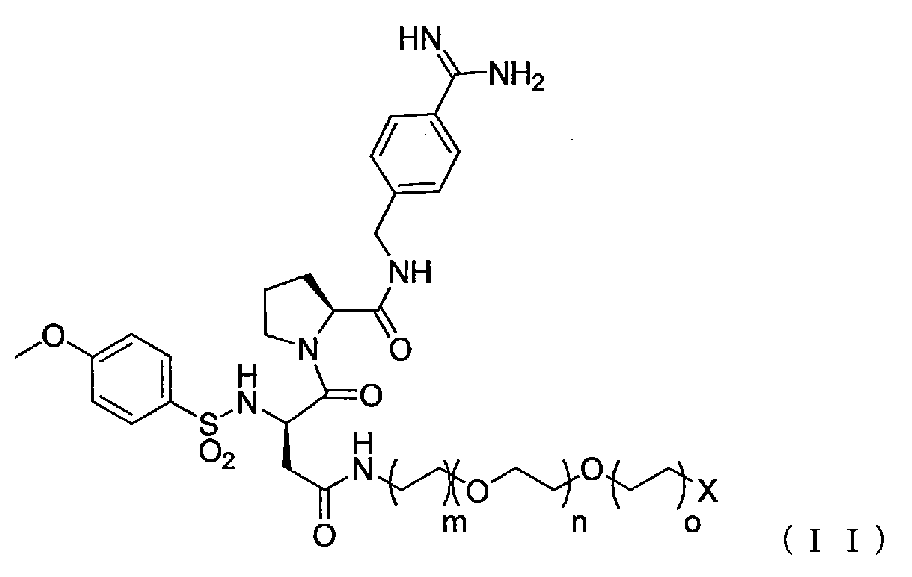
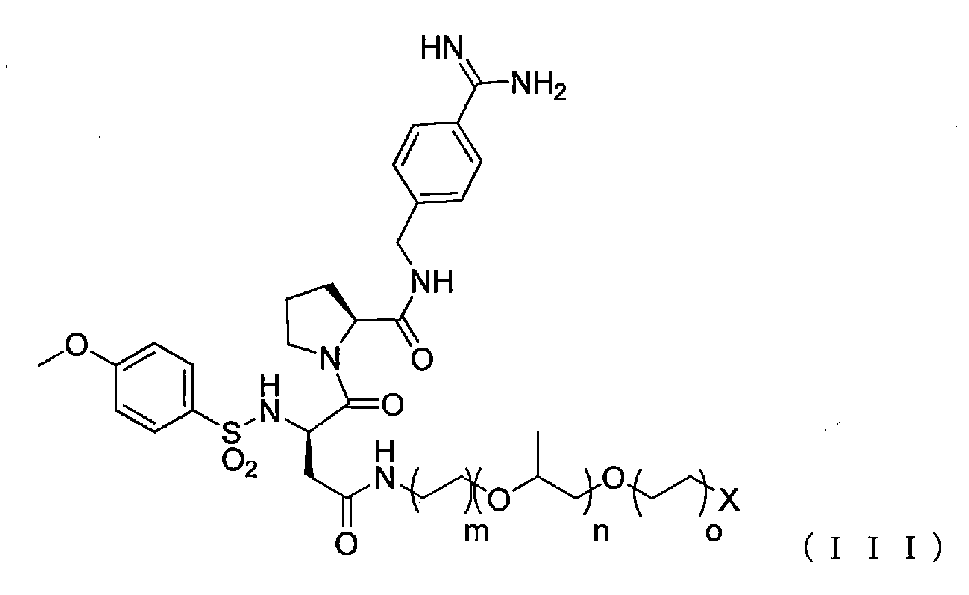
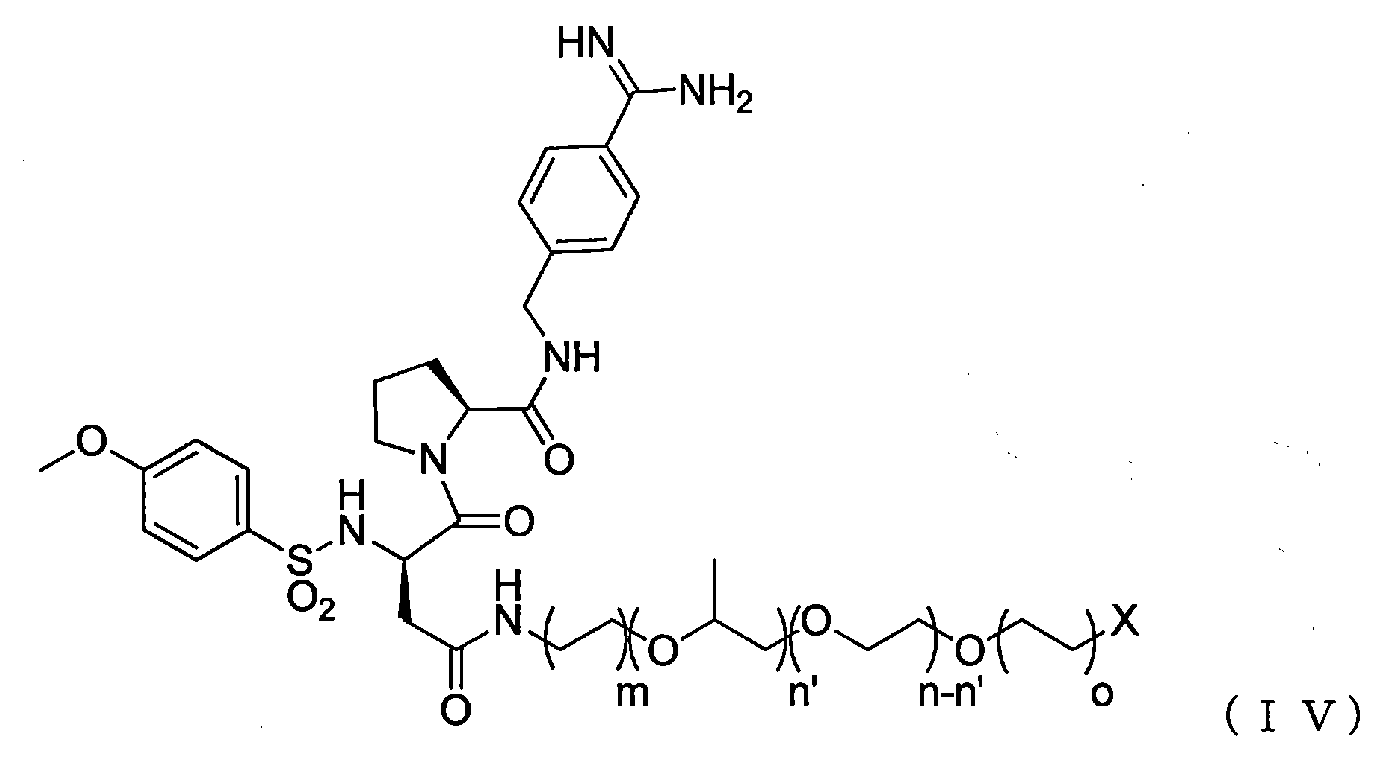
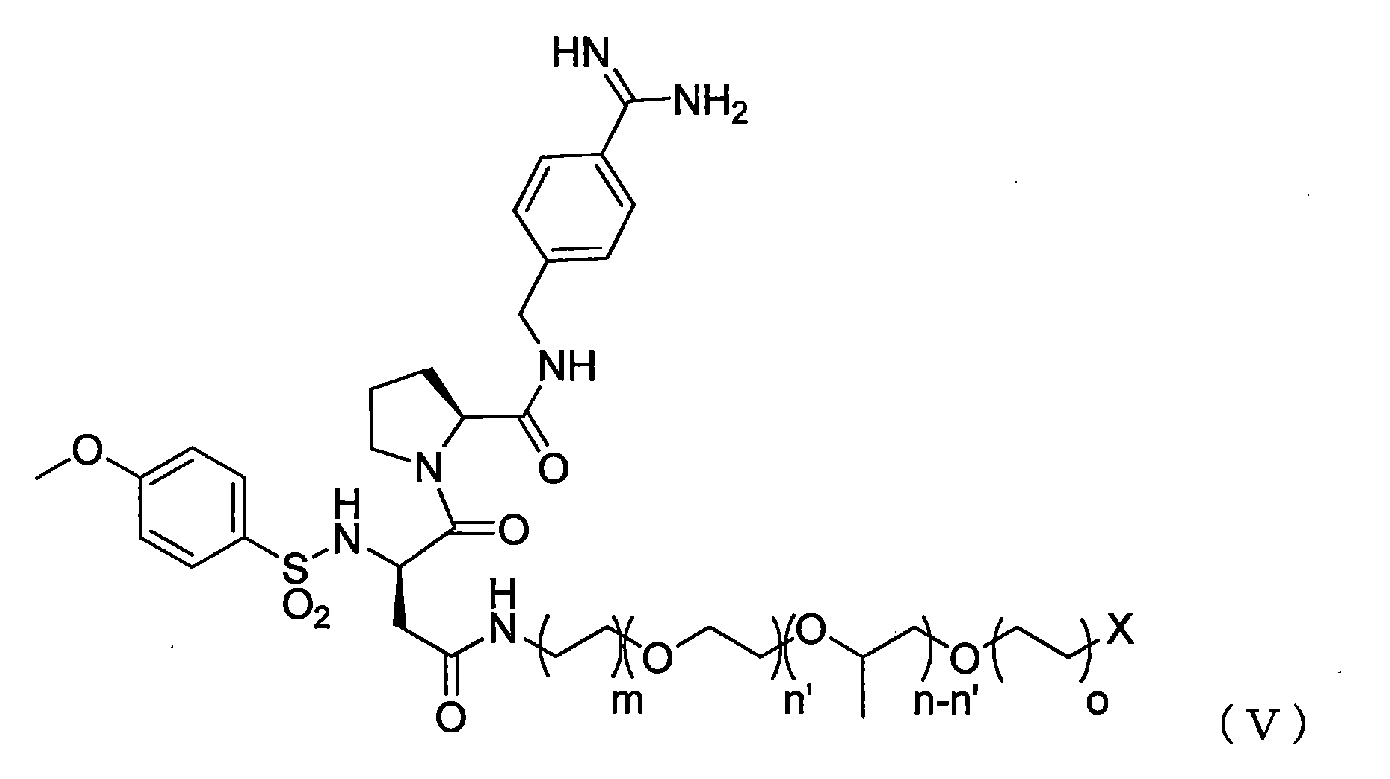
(9) 上記カチオン性ポリマーは、アルキレンイミン、ビニルアミン、アリルアミン、リジン、プロタミン及びジアリルジメチルアンモニウムクロライドからなる群から選択される化合物を構成モノマーとして含むポリマーであり、上記アニオン性ポリマーは、アクリル酸、メタクリル酸、α-グルタミン酸、γ-グルタミン酸及びアスパラギン酸からなる群から選択される化合物を構成モノマーとして含むポリマーであり、上記アニオン性化合物は、シュウ酸、マロン酸、コハク酸、フマル酸、グルタル酸、アジピン酸、ピメリン酸、スベリン酸、アゼライン酸、セバシン酸、リンゴ酸、酒石酸及びクエン酸からなる群から選択される化合物である、(2)~(8)のいずれか記載の抗血栓性材料。
(10) 上記被覆材料は、1~600nmの厚さで上記基材の表面に存在している、(1)~(9)のいずれか記載の抗血栓性材料。
(11) 上記被覆材料は、上記基材の界面から深さ方向15~200nmに存在する、(1)~(10)のいずれか記載の抗血栓性材料。
(12)エチレングリコール、プロピレングリコール、ビニルピロリドン、ビニルアルコール、ビニルカプロラクタム、酢酸ビニル、スチレン、メチルメタクリレート、ヒドロキシエチルメタクリレート及びシロキサンからなる群から選択される化合物を構成モノマーとして含むポリマーの骨格構造、ベンゼンアミジンの骨格構造及びメトキシベンゼンスルホン酸アミドの骨格構造を含む被覆材料と、上記被覆材料によって表面が被覆された基材と、を備え、上記被覆材料は、上記基材と共有結合し、表面におけるX線電子分光法(XPS)で測定したC1sピークの全成分に対するカルボニル基由来成分のピーク存在比率が1.0原子数%以上である、抗血栓性材料。
(13)以下の一般式(I)に示される抗血栓性化合物とベタインとが、基材に共有結合し、抗血栓作用を発揮する、抗血栓性材料。

(14)カチオン性ポリマーと、アニオン性ポリマー及びアニオン性化合物の少なくとも一つを有し、上記カチオン性ポリマーと、上記アニオン性ポリマー又は上記アニオン性化合物と、のいずれか1つが基材に共有結合し、以下の一般式(I)に示される抗血栓性化合物とベタインとが、上記カチオン性ポリマーと、上記アニオン性ポリマー又は上記アニオン性化合物と、のいずれか1つと共有結合し、抗血栓作用を発揮する、抗血栓性材料。
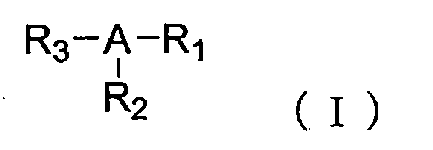


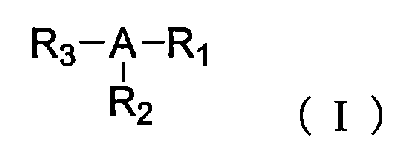
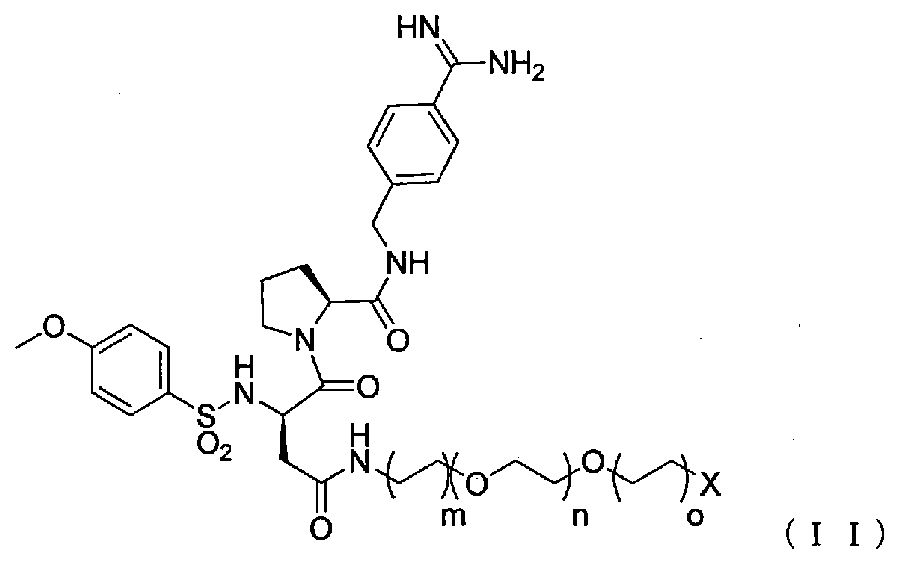
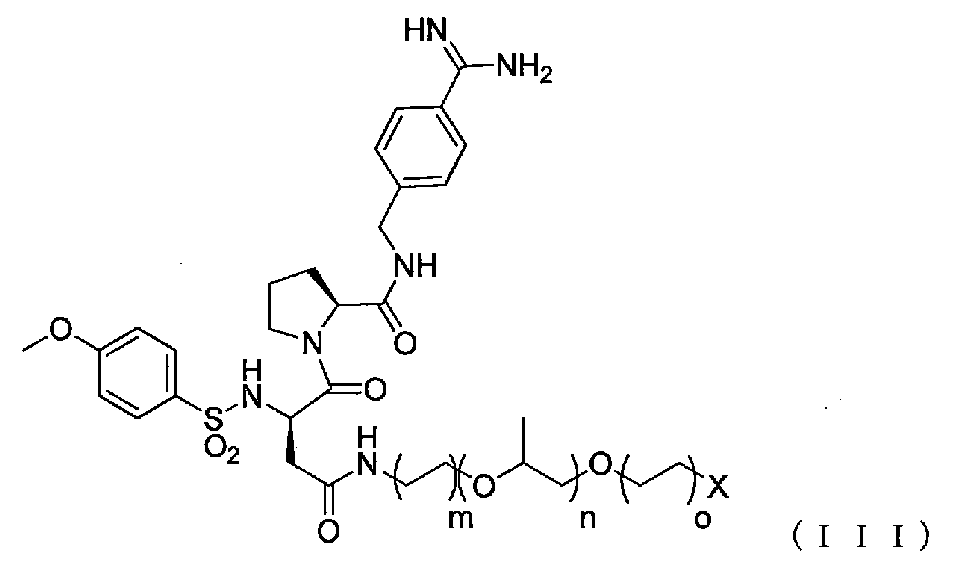
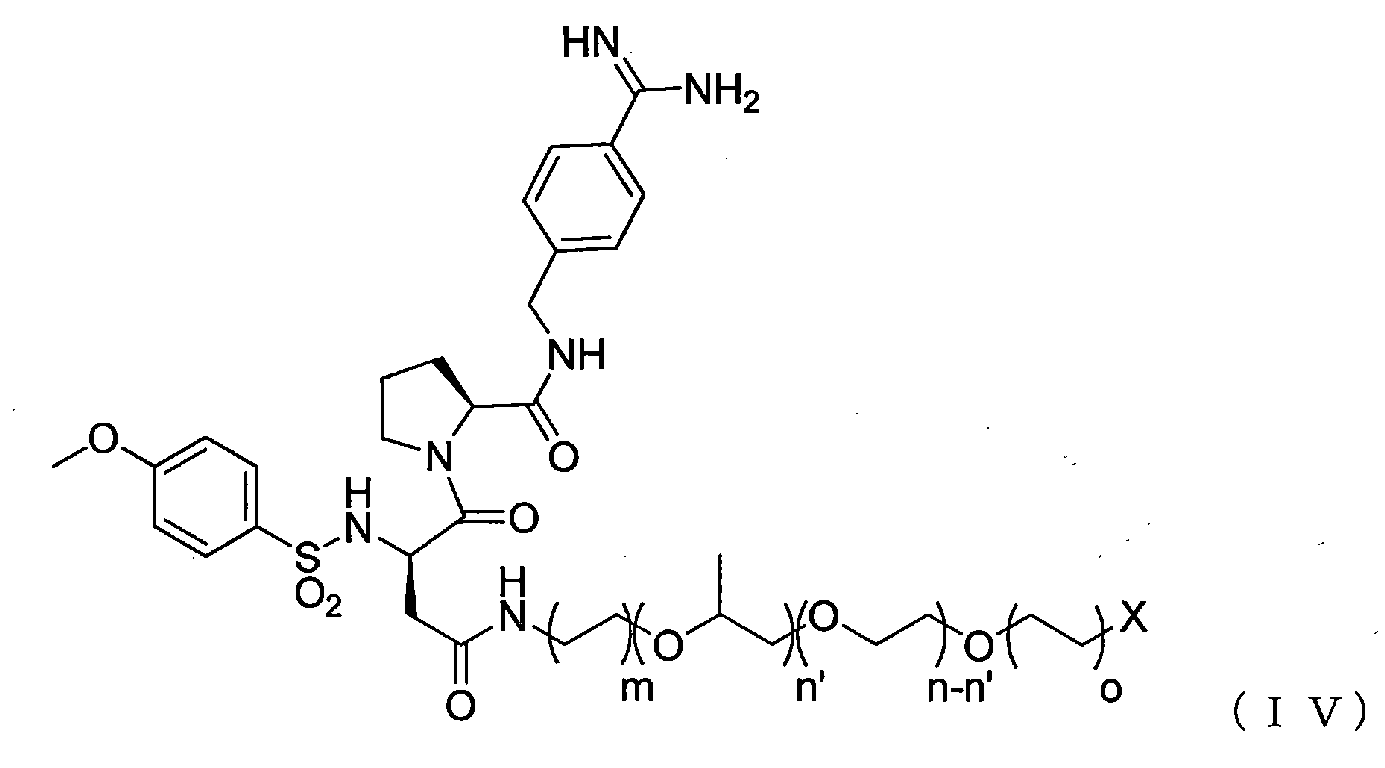

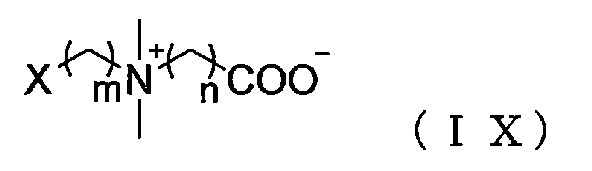
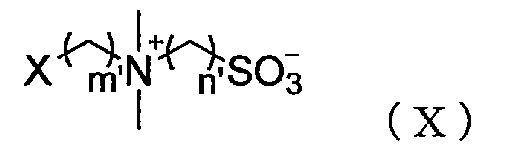
[測定条件]
装置 :TOF.SIMS5(ION-TOF社製)
1次イオン種 :Bi3 ++
2次イオン極性 :正及び負
質量範囲(m/z) :0~1500
ラスターサイズ :300μm四方
ピクセル数(1辺) :256ピクセル
後段加速 :10kV
測定真空度(試料導入前) :4×10⁻⁷Mpa
1次イオン加速電圧 :25kV
パルス幅 :10.5ns
バンチング :あり(高質量分解能測定)
帯電中和 :あり
[測定条件]
装置 :ESCALAB220iXL(VG Scientific社製)
励起X線 :monochromaticAlKα1,2線
(1486.6eV)
X線径 :1mm
X電子脱出角度 :90°(抗血栓性材料の表面に対する検出器の傾き)
分割ratio : 各分割ピーク成分の存在比率(%)
C1sratio : 全原子の存在量に対する炭素原子の存在比率(%)
分割percent : C1sピークの全成分における各分割ピーク成分の割合(%)
[測定条件]
装置 :電界放出型透過電子顕微鏡JEM-2100F(JEOL社製)
EELS検出器 :GIF Tridiem(GATAN社製)
EDX検出器 :JED-2300T(JEOL社製)
画像取得 :Digital Micrograph(GATAN社製)
試料調整 :超薄切片法(銅製マイクログリッドに懸架し、包埋樹脂はアクリル系樹脂を使用。)
加速電圧 :200kV
ビーム径 :直径0.7nm
エネルギー分解能 :約1.0eVFWHM
基材であるPETメッシュ(径:27μm、繊維間距離:100μm)を5.0重量%過マンガン酸カリウム(和光純薬工業株式会社製)、0.6mol/L硫酸(和光純薬工業株式会社製)の水溶液に浸漬し、60℃で3時間反応させてPETメッシュを加水分解及び酸化した(加水分解及び酸化する工程)。反応後の水溶液を除去し、6規定塩酸(和光純薬工業株式会社製)及び蒸留水で洗浄した。
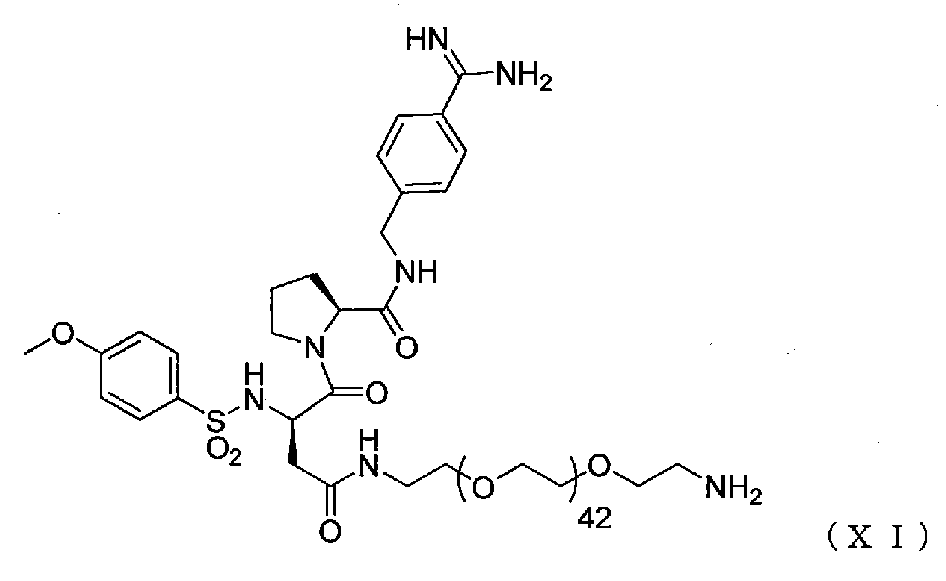
化合物Aを化合物B(以下の一般式(XII))に変更した以外は、実施例1と同様の操作を行い、PETメッシュに化合物Bを縮合反応により共有結合させた。
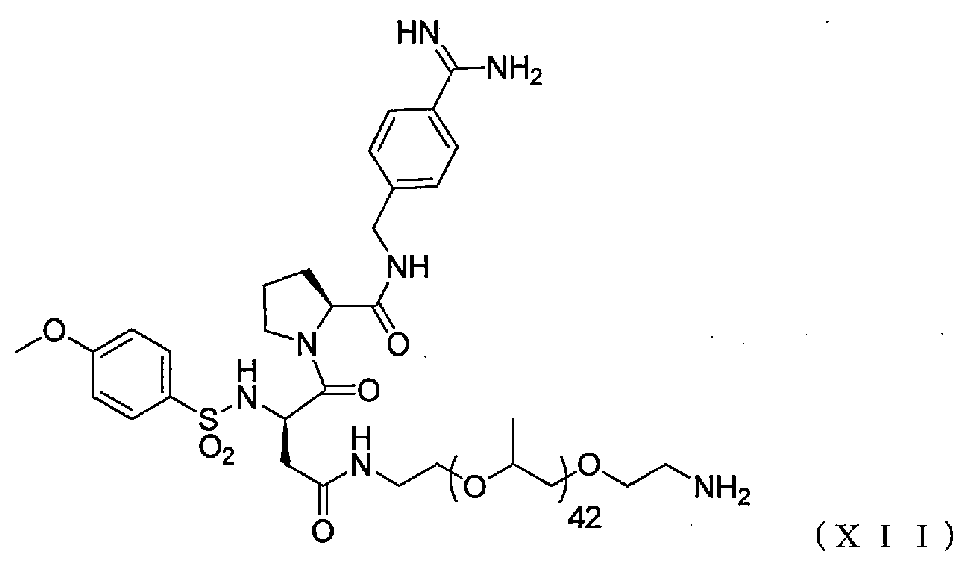
化合物Aを化合物C(以下の一般式(XIII))に変更した以外は、実施例1と同様の操作を行い、PETメッシュに化合物Cを縮合反応により共有結合させた。
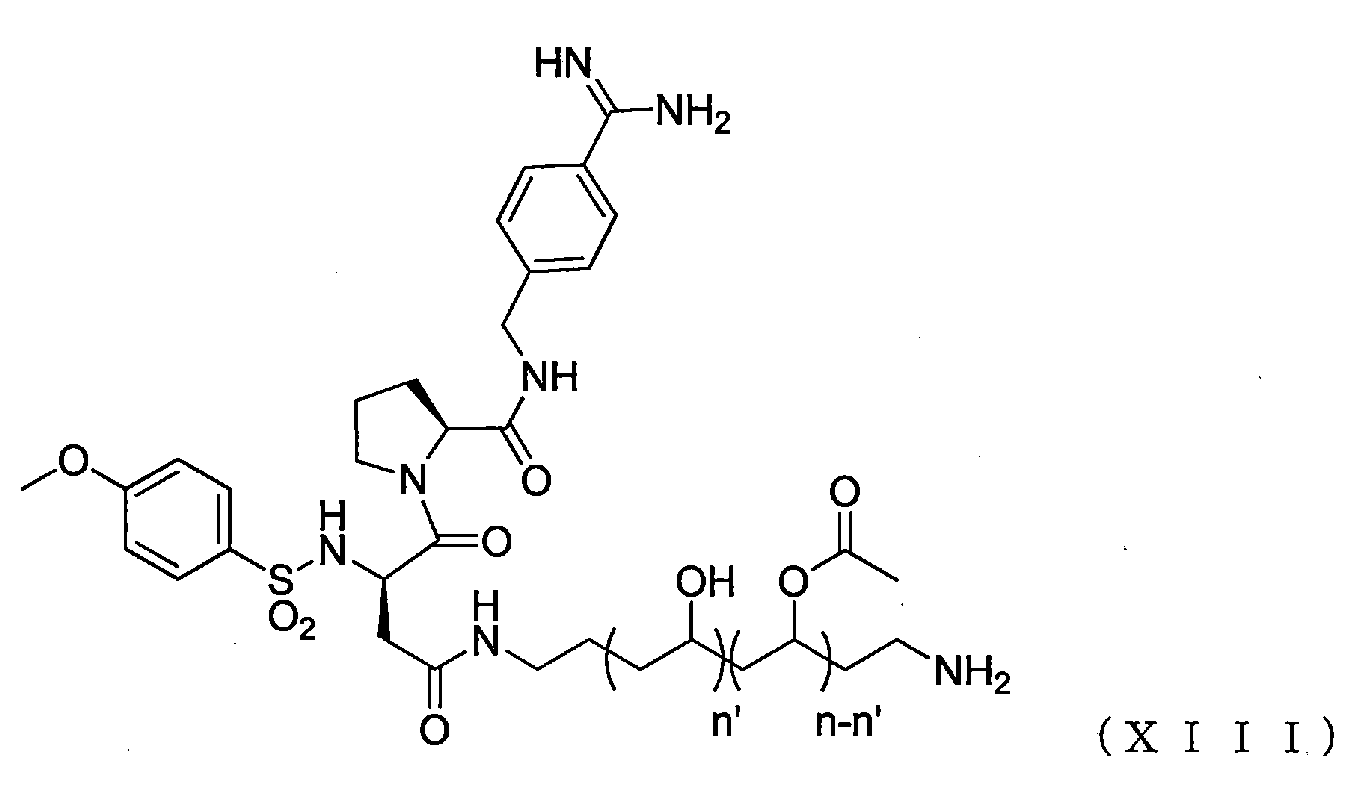
化合物Aを化合物D(以下の一般式(XIV))に変更した以外は、実施例1と同様の操作を行い、PETメッシュに化合物Dを縮合反応により共有結合させた。

実施例1と同様の操作を行い、PETメッシュを加水分解及び酸化した後、次いでPETメッシュを、0.5重量%DMT-MM、5.0重量%PEI(LUPASOL(登録商標) P;BASF社製)の水溶液に浸漬し、30℃で2時間反応させてPETメッシュにPEIを縮合反応により共有結合させた(第1の前工程)。反応後の水溶液を除去し、蒸留水で洗浄した。
40重量%無水コハク酸を0.5重量%PAA(和光)純薬工業株式会社製)に、50℃で17時間反応を30℃で2時間反応に、メタノールや蒸留水での洗浄を炭酸ナトリウム水溶液や蒸留水での洗浄に変更した以外は、実施例5と同様の操作を行い、化合物Aを縮合反応により共有結合させた。反応後の水溶液を除去し、蒸留水で洗浄した。
化合物Aを化合物E(以下の一般式(XV))に変更した以外は、実施例6と同様の操作を行い、PETメッシュに化合物Eを縮合反応により共有結合させた。反応後の水溶液を除去し、蒸留水で洗浄した。

PETメッシュを1.0重量%化合物Aの水溶液に浸漬し、5kGyのγ線を照射(JS-8500型コバルト60γ線照射装置;ノーディオン・インターナショナル社製)し共有結合させた(被覆工程)。反応後の水溶液を除去し、Triton-X100(シグマ-アルドリッチ社製)、生理食塩水や蒸留水で洗浄した。
化合物Aを化合物F(以下の一般式(XVI))に変更した以外は、比較例1と同様の操作を行い、PETメッシュに化合物Fを共有結合させた。反応後の水溶液を除去し、Triton-X100(シグマ-アルドリッチ社製)、生理食塩水や蒸留水で洗浄した。

化合物Aを化合物F及び化合物G(ポリエーテルとポリシロキサンとの共重合体(信越化学工業株式会社製F-3031))に変更した以外は、比較例1と同様の操作を行い、PETメッシュに化合物F及び化合物Gを共有結合させた。反応後の水溶液を除去し、Triton-X100(シグマ-アルドリッチ社製)、生理食塩水や蒸留水で洗浄した。
化合物Aを化合物H(以下の一般式(XVII))に変更した以外は、実施例1と同様の操作を行い、PETメッシュに化合物Hを共有結合させた。反応後の水溶液を除去し、蒸留水で洗浄した。
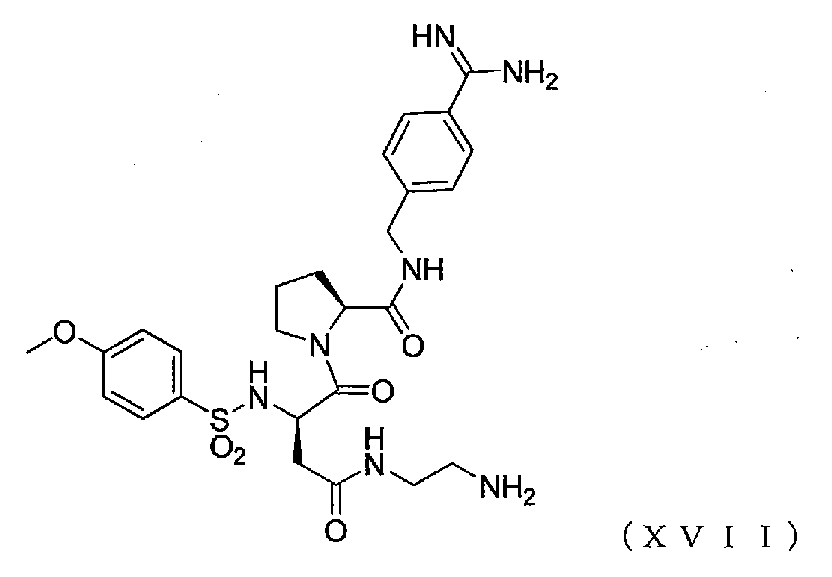
基材であるPETメッシュ(径:27μm、繊維間距離:100μm)を5.0重量%過マンガン酸カリウム(和光純薬工業株式会社製)、0.6mol/L硫酸(和光純薬工業株式会社製)の水溶液に浸漬し、60℃で3時間反応させてPETメッシュを加水分解及び酸化した(加水分解及び酸化する工程)。反応後の水溶液を除去し、6規定塩酸(和光純薬工業株式会社製)及び蒸留水で洗浄した。
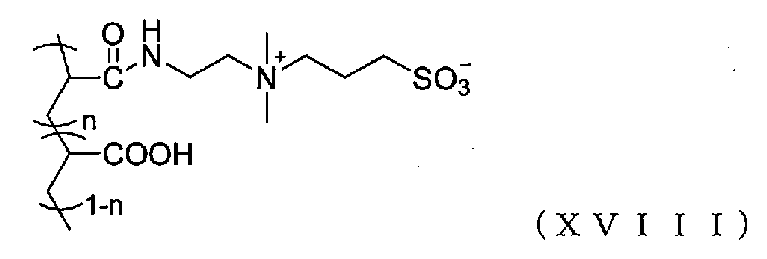
化合物Aを化合物Bに変更した以外は、実施例8と同様の操作を行い、PETメッシュに化合物Bを縮合反応により共有結合させた。
化合物Aを化合物Cに変更した以外は、実施例8と同様の操作を行い、PETメッシュに化合物Cを縮合反応により共有結合させた。
化合物Aを化合物Dに変更した以外は、実施例8と同様の操作を行い、PETメッシュに化合物Dを縮合反応により共有結合させた。
化合物IをPAA(和光純薬工業株式会社製)に変更した以外は、実施例8と同様の操作を行い、PETメッシュに化合物Aを縮合反応により共有結合させた。次いで、PETメッシュを0.5重量%DMT-MM、5.0重量%化合物J(以下の一般式(XIX))の水溶液に浸漬し、30℃で2時間反応させた。反応後の溶液を除去し、蒸留水で洗浄した。
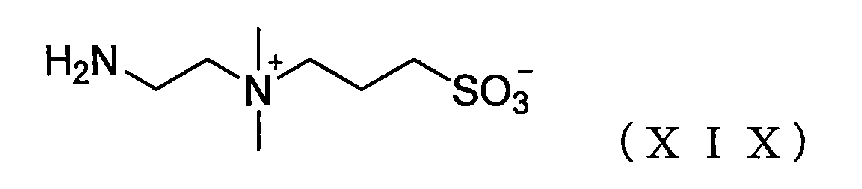
化合物Jを化合物K(以下の一般式(XX))に変更した以外は、実施例12と同様の操作を行い、PETメッシュに化合物Aと化合物Kを縮合反応により共有結合させた。
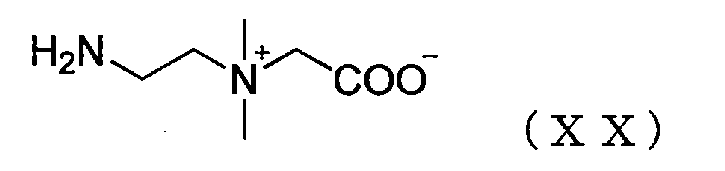
0.5重量%PAA水溶液を40重量%無水コハク酸(和光純薬工業株式会社製)ジメチルアセトアミド(和光純薬工業株式会社製)溶液に、30℃で2時間反応を50℃で17時間反応に、炭酸ナトリウム水溶液や蒸留水での洗浄をメタノールや蒸留水での洗浄に変更した以外は、実施例12と同様の操作を行い、PETメッシュに化合物Aと化合物Jを縮合反応により共有結合させた。
化合物Hを化合物H及び化合物Jに変更した以外は、比較例4と同様の操作を行い、PETメッシュに化合物H及び化合物Jを共有結合させた。
化合物Hを化合物L(アミノエチルポリエチレングリコール(日本油脂株式会社製SUNBRIGHT ME-020EA))に変更した以外は、比較例5と同様の操作を行い、PETメッシュに化合物L及び化合物Jを共有結合させた。
クエン酸加ヒト血液を20℃、1000rpmで15分間遠心分離し、ヒト多血小板血漿液を調製した。血小板数が1.2×10⁸個/mLとなるように生理食塩水(株式会社大塚製薬工場社製)で希釈し、希釈ヒト多血小板血漿液を得た。被覆材料を被覆した抗血栓性材料(例えばPETメッシュ)を1.0×1.0cmのサイズにカットし、マイクロチューブに入れてから6.0×107個の希釈血小板液を添加し、37℃で30分間振とうしながらインキュベートした。さらに、アデノシン二リン酸(シグマ-アルドリッチ社製)を20μL添加し、37℃で30分間振とうしながらインキュベートした。メッシュを取りだし、PBS(-)(ニッスイ製薬株式会社製)でリンスした後にLDH Cytotoxicity Detection kit(タカラバイオ株式会社製)に記載の操作手順に従って、血小板を破壊して生成した乳酸脱水素酵素(以下、「LDH」)の活性を測定した。別に作成した検量線から付着した血小板数を求めた。以下の式2に示すように、メッシュに接触させる前の希釈ヒト多血小板血漿液の血小板数に対する、接触した血小板数の割合を求め、血小板付着率とした。
血小板付着率(%)=(接触後の血小板付着数/希釈ヒト多血小板血漿液の血小板数)×100 ・・・式2
被覆材料を被覆した抗血栓性材料(例えばPETメッシュ)を1.0×1.0cmのサイズにカットし、マイクロチューブに入れてからPBS(-)で0.1U/mLに調製したトロンビン(Haematologic Technologies社製)溶液を500μL添加し、37℃で30分間振とうしながらインキュベートした。次いで、PBS(-)で400μmol/Lに調製したS-2238(積水メディカル株式会社製)溶液を500μL添加し、37℃で45分間振とうしながらインキュベートした。405nmの吸光度をマイクロプレートリーダ(MTP-300;コロナ電気株式会社製)で測定して、以下の式3に示すように、ブランク溶液の吸光度に対する、メッシュ溶液の吸光度の割合を求め、トロンビン活性化比率とした。
トロンビン活性化率(%) = [(At/Ab)]×100 ・・・式3
At : メッシュ溶液の吸光度
Ab : ブランク溶液の吸光度
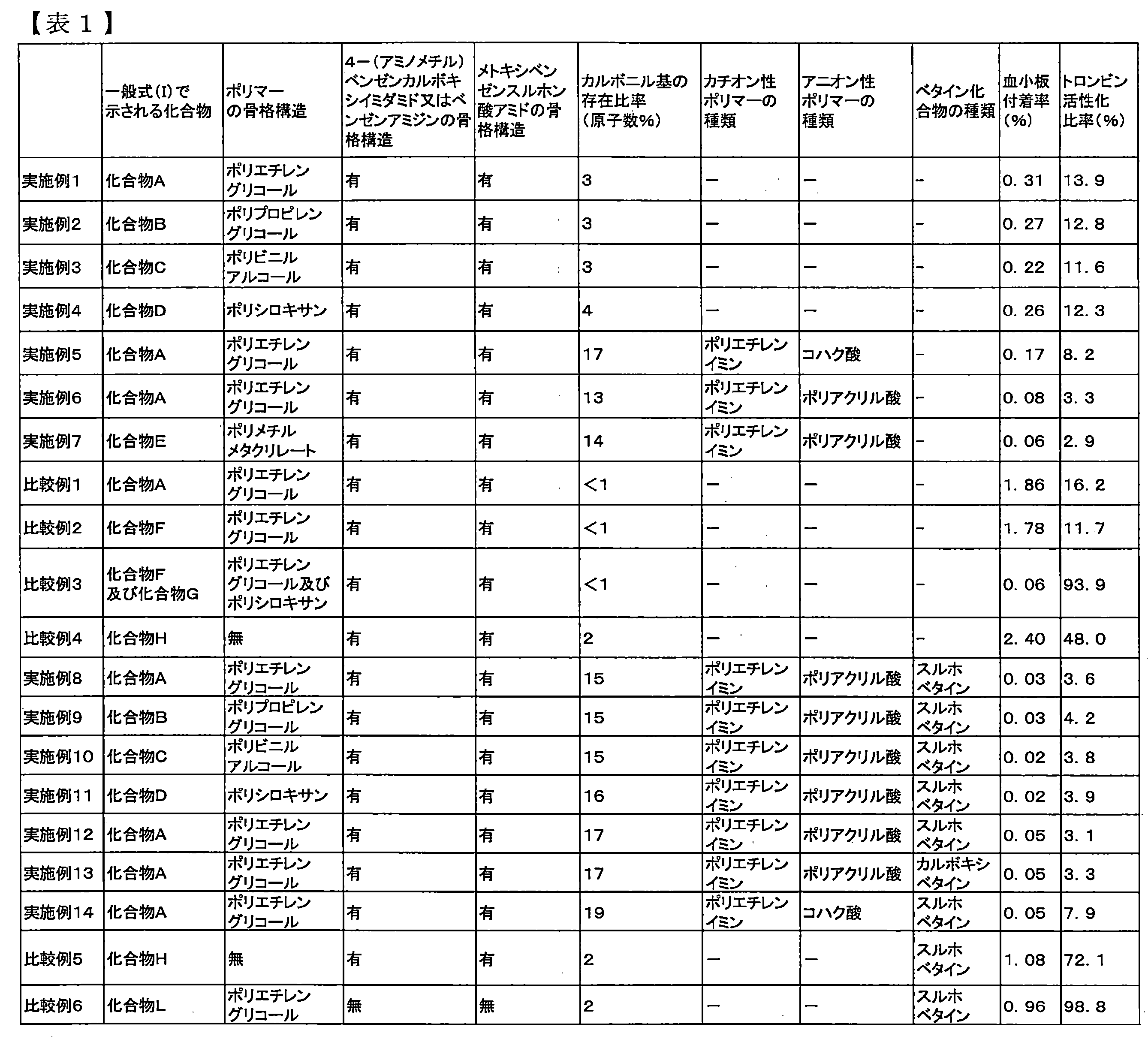
Claims (11)
- エチレングリコール、プロピレングリコール、ビニルピロリドン、ビニルアルコール、ビニルカプロラクタム、酢酸ビニル、スチレン、メチルメタクリレート、ヒドロキシエチルメタクリレート及びシロキサンからなる群から選択される化合物を構成モノマーとして含むポリマーの骨格構造、4-(アミノメチル)ベンゼンカルボキシイミダミド又はベンゼンアミジンの骨格構造及びメトキシベンゼンスルホン酸アミドの骨格構造を含む被覆材料と、前記被覆材料によって表面が被覆された基材と、を備え、
前記被覆材料は、前記基材と共有結合し、
表面におけるX線電子分光法(XPS)で測定したC1sピークの全成分に対するカルボニル基由来成分のピーク存在比率が1.0原子数%以上である、抗血栓性材料。 - 前記エチレングリコール、プロピレングリコール、ビニルピロリドン、ビニルアルコール、ビニルカプロラクタム、酢酸ビニル、スチレン、メチルメタクリレート、ヒドロキシエチルメタクリレート及びシロキサンからなる群から選択される化合物を構成モノマーとして含むポリマーの骨格構造、4-(アミノメチル)ベンゼンカルボキシイミダミド又はベンゼンアミジンの骨格構造及びメトキシベンゼンスルホン酸アミドの骨格構造は、以下の一般式(I)で示される化合物である、請求項1記載の抗血栓性材料。

- 前記被覆材料は、ベタイン化合物、カチオン性ポリマー、アニオン性ポリマー及びアニオン性化合物の少なくとも1つを含み、
抗血栓作用を有する、請求項1又は2記載の抗血栓性材料。 - 前記被覆材料は、ベタイン化合物を含み、
前記一般式(I)で示される化合物及び前記ベタイン化合物は、それぞれ前記基材と共有結合しており、
抗血栓作用を有する、請求項2又は3記載の抗血栓性材料。 - 前記被覆材料は、カチオン性ポリマー、アニオン性ポリマー及びアニオン性化合物の少なくとも1つを含み、
前記一般式(I)で示される化合物、並びに、前記カチオン性ポリマー、アニオン性ポリマー及びアニオン性化合物の少なくとも1つは、それぞれ前記基材と共有結合しており、
抗血栓作用を有する、請求項2又は3記載の抗血栓性材料。 - 前記被覆材料は、カチオン性ポリマー、アニオン性ポリマー及びアニオン性化合物の少なくとも1つを含み、
前記カチオン性ポリマー、アニオン性ポリマー及びアニオン性化合物の少なくとも1つは、前記基材と共有結合し、
前記一般式(I)で示される化合物は、前記カチオン性ポリマー、アニオン性ポリマー及びアニオン性化合物のいずれか1つと共有結合しており、
抗血栓作用を有する、請求項2又は3記載の抗血栓性材料。 - 前記被覆材料は、ベタイン化合物、並びに、カチオン性ポリマー、アニオン性ポリマー及びアニオン性化合物の少なくとも1つを含み、
前記カチオン性ポリマー、アニオン性ポリマー及び前記アニオン性化合物の少なくとも1つは、前記基材と共有結合し、
前記一般式(I)で示される化合物及び前記ベタイン化合物は、それぞれ前記カチオン性ポリマー、アニオン性ポリマー及びアニオン性化合物のいずれか1つと共有結合しており、
抗血栓作用を有する、請求項2又は3記載の抗血栓性材料。 - 前記一般式(I)で示される化合物は、以下の一般式(II)~(V)で示される化合物である、請求項2~7のいずれか一項記載の抗血栓性材料。
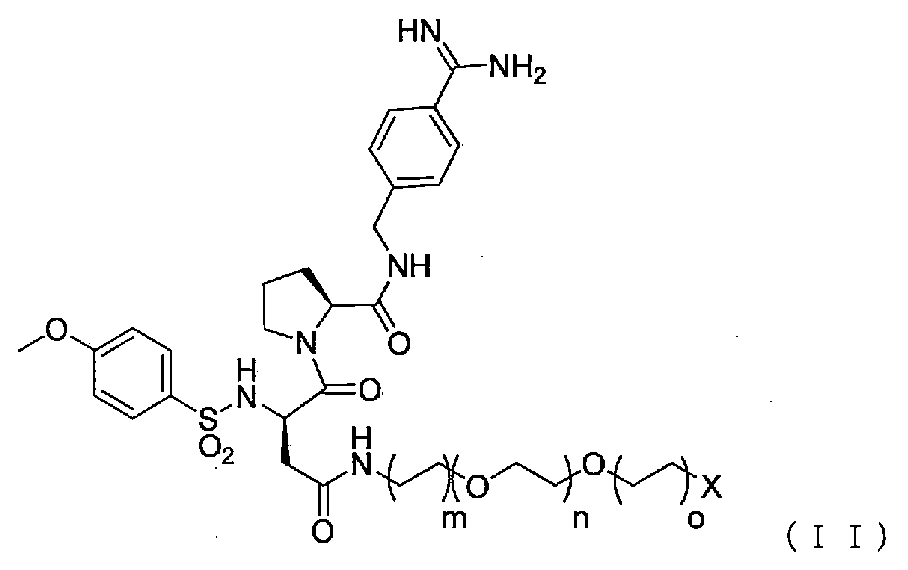
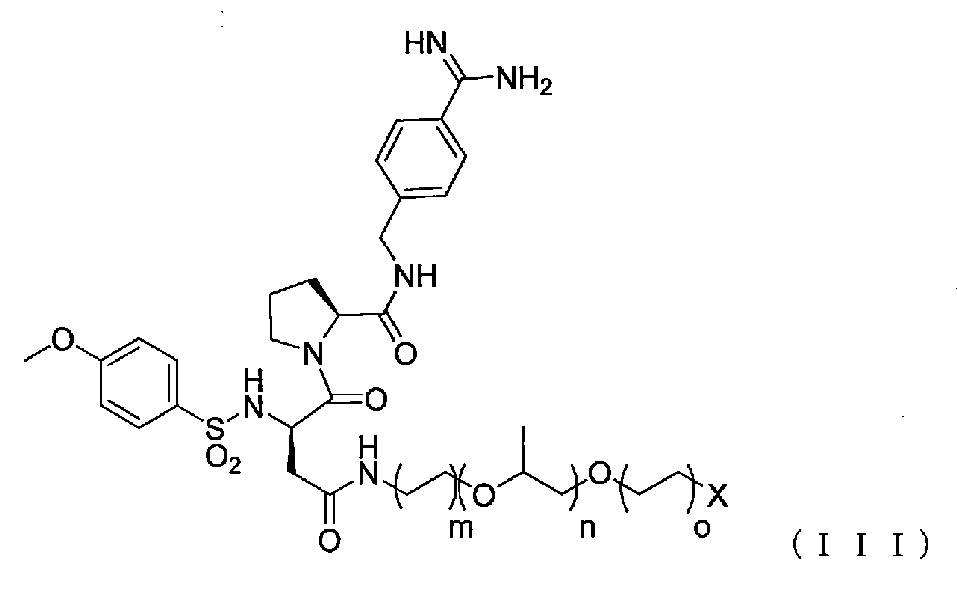
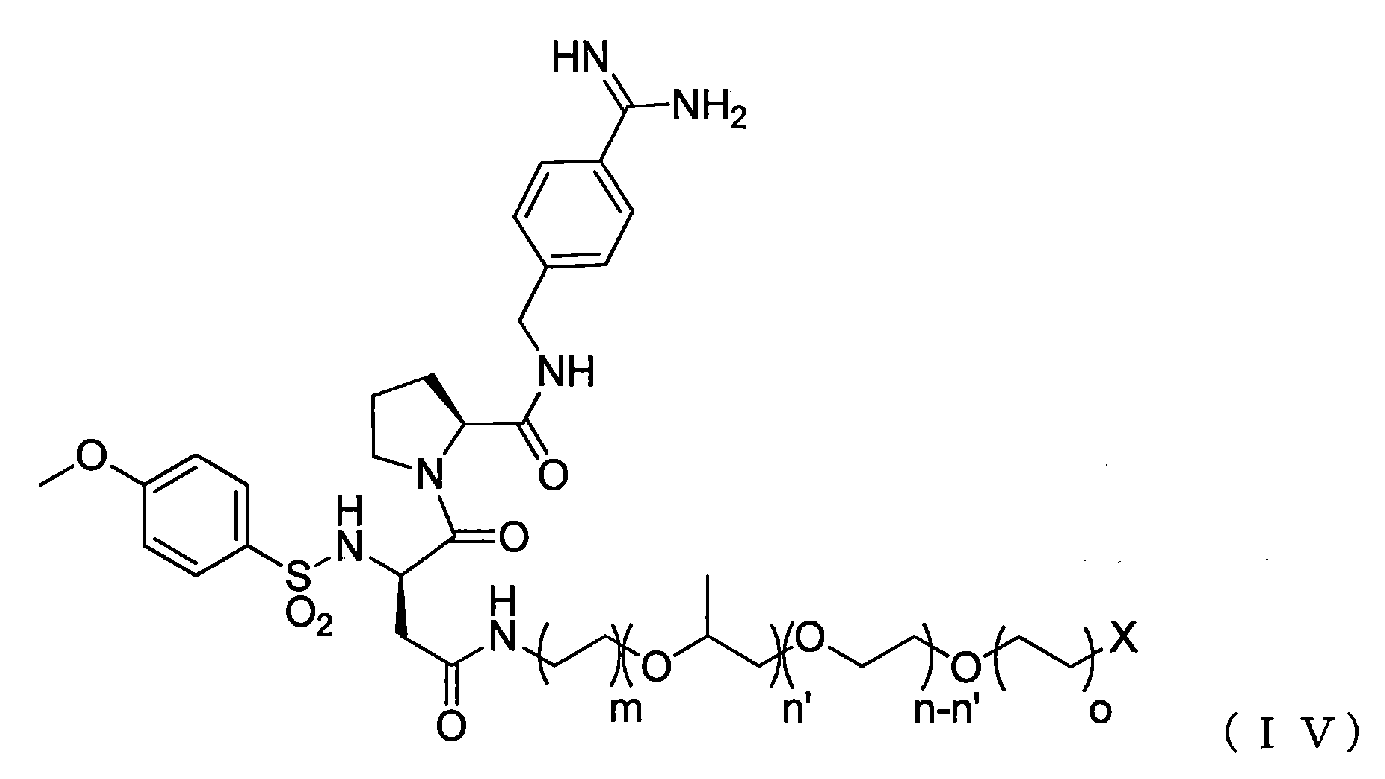
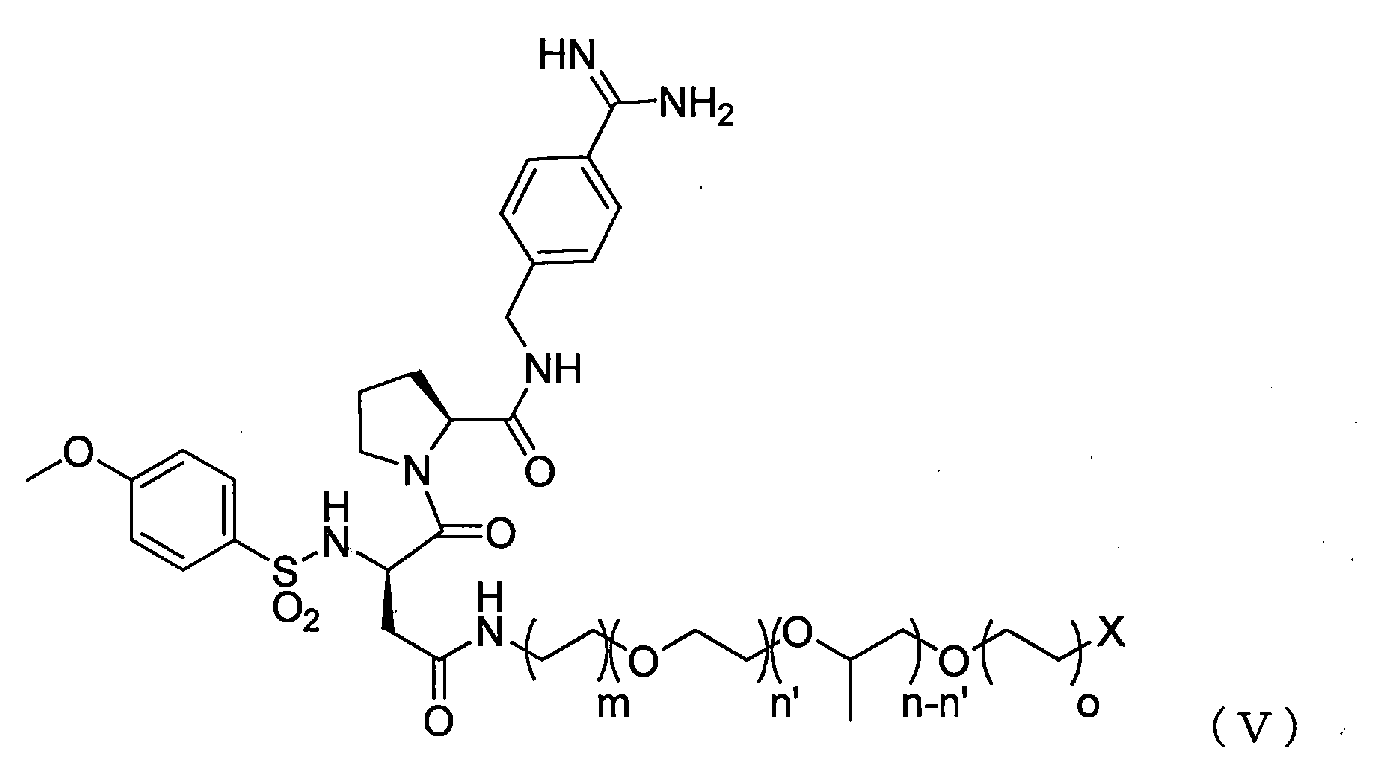
- 前記カチオン性ポリマーは、アルキレンイミン、ビニルアミン、アリルアミン、リジン、プロタミン及びジアリルジメチルアンモニウムクロライドからなる群から選択される化合物を構成モノマーとして含むポリマーであり、
前記アニオン性ポリマーは、アクリル酸、メタクリル酸、α-グルタミン酸、γ-グルタミン酸及びアスパラギン酸からなる群から選択される化合物を構成モノマーとして含むポリマーであり、
前記アニオン性化合物は、シュウ酸、マロン酸、コハク酸、フマル酸、グルタル酸、アジピン酸、ピメリン酸、スベリン酸、アゼライン酸、セバシン酸、リンゴ酸、酒石酸及びクエン酸からなる群から選択される化合物である、請求項2~8のいずれか一項記載の抗血栓性材料。 - 前記被覆材料は、1~600nmの厚さで前記基材の表面に存在している、請求項1~9のいずれか一項記載の抗血栓性材料。
- 前記被覆材料は、前記基材の界面から深さ方向15~200nmに存在する、請求項1~10のいずれか一項記載の抗血栓性材料。
Priority Applications (8)
| Application Number | Priority Date | Filing Date | Title |
|---|---|---|---|
| KR1020167010306A KR20160058902A (ko) | 2013-11-28 | 2014-11-27 | 항혈전성 재료 |
| US15/039,279 US20170157303A1 (en) | 2013-11-28 | 2014-11-27 | Anti-thrombotic material |
| EP14865433.8A EP3075400A4 (en) | 2013-11-28 | 2014-11-27 | Anti-thrombotic material |
| JP2014557939A JPWO2015080176A1 (ja) | 2013-11-28 | 2014-11-27 | 抗血栓性材料 |
| RU2016125452A RU2016125452A (ru) | 2013-11-28 | 2014-11-27 | Антитромботический материал |
| AU2014355413A AU2014355413B2 (en) | 2013-11-28 | 2014-11-27 | Anti-thrombotic material |
| CN201480064993.7A CN105744966A (zh) | 2013-11-28 | 2014-11-27 | 抗血栓性材料 |
| CA2927423A CA2927423A1 (en) | 2013-11-28 | 2014-11-27 | Anti-thrombotic material |
Applications Claiming Priority (4)
| Application Number | Priority Date | Filing Date | Title |
|---|---|---|---|
| JP2013246581 | 2013-11-28 | ||
| JP2013-246581 | 2013-11-28 | ||
| JP2014024626 | 2014-02-12 | ||
| JP2014-024626 | 2014-02-12 |
Publications (1)
| Publication Number | Publication Date |
|---|---|
| WO2015080176A1 true WO2015080176A1 (ja) | 2015-06-04 |
Family
ID=53199115
Family Applications (1)
| Application Number | Title | Priority Date | Filing Date |
|---|---|---|---|
| PCT/JP2014/081306 Ceased WO2015080176A1 (ja) | 2013-11-28 | 2014-11-27 | 抗血栓性材料 |
Country Status (9)
| Country | Link |
|---|---|
| US (1) | US20170157303A1 (ja) |
| EP (1) | EP3075400A4 (ja) |
| JP (1) | JPWO2015080176A1 (ja) |
| KR (1) | KR20160058902A (ja) |
| CN (1) | CN105744966A (ja) |
| AU (1) | AU2014355413B2 (ja) |
| CA (1) | CA2927423A1 (ja) |
| RU (1) | RU2016125452A (ja) |
| WO (1) | WO2015080176A1 (ja) |
Cited By (3)
| Publication number | Priority date | Publication date | Assignee | Title |
|---|---|---|---|---|
| CN106392341A (zh) * | 2016-11-07 | 2017-02-15 | 武汉华工激光工程有限责任公司 | 一种脆性材料打孔方法 |
| WO2019065947A1 (ja) * | 2017-09-29 | 2019-04-04 | 東レ株式会社 | ニッケルチタン合金を用いた抗血栓性医療材料 |
| US11000636B2 (en) | 2016-09-30 | 2021-05-11 | Toray Industries, Inc. | Copolymer and medical material containing the same |
Families Citing this family (9)
| Publication number | Priority date | Publication date | Assignee | Title |
|---|---|---|---|---|
| EP3106128B1 (en) * | 2014-02-12 | 2020-12-02 | Toray Industries, Inc. | Artificial blood vessel |
| JP6589993B2 (ja) * | 2016-09-09 | 2019-10-16 | 東レ株式会社 | 血液浄化用の材料 |
| JP6863295B2 (ja) * | 2016-10-07 | 2021-04-21 | 東レ株式会社 | 筒状織物 |
| EP3986346B8 (en) * | 2019-06-20 | 2024-03-20 | Solventum Intellectual Properties Company | Peel and place dressing for negative-pressure therapy |
| CN110548187A (zh) * | 2019-09-16 | 2019-12-10 | 生纳科技(上海)有限公司 | 一种即时穿刺透析型纳米纤维人工血管 |
| WO2021132663A1 (ja) * | 2019-12-26 | 2021-07-01 | 株式会社アルチザンラボ | 局所止血材の製造方法、及び局所止血材 |
| JP7829834B2 (ja) * | 2020-03-12 | 2026-03-16 | 東レ株式会社 | コーティング剤及びこれを用いた医療用材料 |
| CN111748053A (zh) * | 2020-05-18 | 2020-10-09 | 武汉杨森生物技术有限公司 | 一种抗凝血共聚物的制备方法及其应用 |
| CN111494725A (zh) * | 2020-07-02 | 2020-08-07 | 北京米道斯医疗器械股份有限公司 | 一种金属表面抗凝血层的制备方法及其应用 |
Citations (20)
| Publication number | Priority date | Publication date | Assignee | Title |
|---|---|---|---|---|
| JPS5463025A (en) | 1977-10-28 | 1979-05-21 | Kuraray Co Ltd | 2-methacryloxyethylphosphorylcholine |
| JPS6041947B2 (ja) | 1977-12-09 | 1985-09-19 | ユニチカ株式会社 | ポリエステル成形体表面に抗血栓性を付与する方法 |
| JPS6047287B2 (ja) | 1977-12-15 | 1985-10-21 | ユニチカ株式会社 | 抗血栓性ポリアミドの製造方法 |
| JPH10151192A (ja) | 1996-11-26 | 1998-06-09 | Toyobo Co Ltd | 抗血栓性組成物および医用材料 |
| JP2000279512A (ja) | 1999-03-30 | 2000-10-10 | Nof Corp | 医療用材料および製造方法 |
| JP3341503B2 (ja) | 1994-11-09 | 2002-11-05 | 東レ株式会社 | 抗血栓性医療材料およびそれを用いたカテーテル |
| JP3497612B2 (ja) | 1995-06-12 | 2004-02-16 | テルモ株式会社 | 医療用材料及びその製造方法 |
| JP2004525888A (ja) * | 2001-01-23 | 2004-08-26 | ヘモジュス ゲーエムベーハー | オリゴまたはポリアルキレングリコール結合トロンビン阻害剤 |
| JP3834602B2 (ja) | 1999-03-30 | 2006-10-18 | 独立行政法人産業技術総合研究所 | 抗血栓性多糖類をコーティングした高分子材料からなる医療用具 |
| JP2006291193A (ja) * | 2005-03-17 | 2006-10-26 | Toray Ind Inc | 改質基材およびその製造方法 |
| WO2008032758A1 (fr) | 2006-09-15 | 2008-03-20 | Toray Industries, Inc. | Substrat et procédé pour la production de celui-ci |
| JP4152075B2 (ja) | 1998-09-09 | 2008-09-17 | カルメダ アクチボラゲット | 表面改質物質を調整する新方法 |
| JP4273965B2 (ja) | 2001-06-05 | 2009-06-03 | 東洋紡績株式会社 | 抗血栓性組成物およびそれを有する医療用具 |
| JP2009225824A (ja) * | 2008-03-19 | 2009-10-08 | Toray Ind Inc | 基材およびその製造方法 |
| JP2010082067A (ja) * | 2008-09-30 | 2010-04-15 | Toray Ind Inc | 生体成分接触用途の膜の製造方法 |
| JP2010513074A (ja) | 2006-12-22 | 2010-04-30 | マンローラント・アーゲー | エンボス加工とともに行われる非加熱式フィルム貼付 |
| WO2012176861A1 (ja) | 2011-06-23 | 2012-12-27 | 東レ株式会社 | 医療材料 |
| WO2013038901A1 (ja) * | 2011-09-16 | 2013-03-21 | 日産化学工業株式会社 | 有機ケイ素化合物及びそれを含むシランカップリング剤 |
| JP5349873B2 (ja) | 2008-09-04 | 2013-11-20 | 大阪有機化学工業株式会社 | 医療用材料 |
| WO2014168197A1 (ja) * | 2013-04-12 | 2014-10-16 | 東レ株式会社 | 抗血栓性を有する人工血管 |
Family Cites Families (2)
| Publication number | Priority date | Publication date | Assignee | Title |
|---|---|---|---|---|
| WO2010065960A2 (en) * | 2008-12-05 | 2010-06-10 | Semprus Biosciences Corp. | Non-fouling, anti-microbial, anti-thrombogenic graft-from compositions |
| EP2352796A1 (en) * | 2008-12-05 | 2011-08-10 | Semprus Biociences Corporation | Layered non-fouling, antimicrobial, antithrombogenic coatings |
-
2014
- 2014-11-27 WO PCT/JP2014/081306 patent/WO2015080176A1/ja not_active Ceased
- 2014-11-27 JP JP2014557939A patent/JPWO2015080176A1/ja active Pending
- 2014-11-27 KR KR1020167010306A patent/KR20160058902A/ko not_active Ceased
- 2014-11-27 AU AU2014355413A patent/AU2014355413B2/en not_active Ceased
- 2014-11-27 CA CA2927423A patent/CA2927423A1/en not_active Abandoned
- 2014-11-27 CN CN201480064993.7A patent/CN105744966A/zh active Pending
- 2014-11-27 RU RU2016125452A patent/RU2016125452A/ru unknown
- 2014-11-27 EP EP14865433.8A patent/EP3075400A4/en not_active Withdrawn
- 2014-11-27 US US15/039,279 patent/US20170157303A1/en not_active Abandoned
Patent Citations (21)
| Publication number | Priority date | Publication date | Assignee | Title |
|---|---|---|---|---|
| JPS5463025A (en) | 1977-10-28 | 1979-05-21 | Kuraray Co Ltd | 2-methacryloxyethylphosphorylcholine |
| JPS6041947B2 (ja) | 1977-12-09 | 1985-09-19 | ユニチカ株式会社 | ポリエステル成形体表面に抗血栓性を付与する方法 |
| JPS6047287B2 (ja) | 1977-12-15 | 1985-10-21 | ユニチカ株式会社 | 抗血栓性ポリアミドの製造方法 |
| JP3341503B2 (ja) | 1994-11-09 | 2002-11-05 | 東レ株式会社 | 抗血栓性医療材料およびそれを用いたカテーテル |
| JP3497612B2 (ja) | 1995-06-12 | 2004-02-16 | テルモ株式会社 | 医療用材料及びその製造方法 |
| JPH10151192A (ja) | 1996-11-26 | 1998-06-09 | Toyobo Co Ltd | 抗血栓性組成物および医用材料 |
| JP4152075B2 (ja) | 1998-09-09 | 2008-09-17 | カルメダ アクチボラゲット | 表面改質物質を調整する新方法 |
| JP2000279512A (ja) | 1999-03-30 | 2000-10-10 | Nof Corp | 医療用材料および製造方法 |
| JP3834602B2 (ja) | 1999-03-30 | 2006-10-18 | 独立行政法人産業技術総合研究所 | 抗血栓性多糖類をコーティングした高分子材料からなる医療用具 |
| JP2004525888A (ja) * | 2001-01-23 | 2004-08-26 | ヘモジュス ゲーエムベーハー | オリゴまたはポリアルキレングリコール結合トロンビン阻害剤 |
| JP4461217B2 (ja) | 2001-01-23 | 2010-05-12 | イェナフィン ゲーエムベーハー | オリゴまたはポリアルキレングリコール結合トロンビン阻害剤 |
| JP4273965B2 (ja) | 2001-06-05 | 2009-06-03 | 東洋紡績株式会社 | 抗血栓性組成物およびそれを有する医療用具 |
| JP2006291193A (ja) * | 2005-03-17 | 2006-10-26 | Toray Ind Inc | 改質基材およびその製造方法 |
| WO2008032758A1 (fr) | 2006-09-15 | 2008-03-20 | Toray Industries, Inc. | Substrat et procédé pour la production de celui-ci |
| JP2010513074A (ja) | 2006-12-22 | 2010-04-30 | マンローラント・アーゲー | エンボス加工とともに行われる非加熱式フィルム貼付 |
| JP2009225824A (ja) * | 2008-03-19 | 2009-10-08 | Toray Ind Inc | 基材およびその製造方法 |
| JP5349873B2 (ja) | 2008-09-04 | 2013-11-20 | 大阪有機化学工業株式会社 | 医療用材料 |
| JP2010082067A (ja) * | 2008-09-30 | 2010-04-15 | Toray Ind Inc | 生体成分接触用途の膜の製造方法 |
| WO2012176861A1 (ja) | 2011-06-23 | 2012-12-27 | 東レ株式会社 | 医療材料 |
| WO2013038901A1 (ja) * | 2011-09-16 | 2013-03-21 | 日産化学工業株式会社 | 有機ケイ素化合物及びそれを含むシランカップリング剤 |
| WO2014168197A1 (ja) * | 2013-04-12 | 2014-10-16 | 東レ株式会社 | 抗血栓性を有する人工血管 |
Non-Patent Citations (1)
| Title |
|---|
| See also references of EP3075400A4 |
Cited By (5)
| Publication number | Priority date | Publication date | Assignee | Title |
|---|---|---|---|---|
| US11000636B2 (en) | 2016-09-30 | 2021-05-11 | Toray Industries, Inc. | Copolymer and medical material containing the same |
| EP3845573A1 (en) | 2016-09-30 | 2021-07-07 | Toray Industries, Inc. | Copolymer and medical material containing the same |
| CN106392341A (zh) * | 2016-11-07 | 2017-02-15 | 武汉华工激光工程有限责任公司 | 一种脆性材料打孔方法 |
| WO2019065947A1 (ja) * | 2017-09-29 | 2019-04-04 | 東レ株式会社 | ニッケルチタン合金を用いた抗血栓性医療材料 |
| US11253539B2 (en) | 2017-09-29 | 2022-02-22 | Toray Industries, Inc. | Antithrombotic medical material using nickel titanium alloy |
Also Published As
| Publication number | Publication date |
|---|---|
| RU2016125452A (ru) | 2018-01-10 |
| CN105744966A (zh) | 2016-07-06 |
| US20170157303A1 (en) | 2017-06-08 |
| CA2927423A1 (en) | 2015-06-04 |
| EP3075400A1 (en) | 2016-10-05 |
| EP3075400A4 (en) | 2017-07-19 |
| JPWO2015080176A1 (ja) | 2017-03-16 |
| AU2014355413B2 (en) | 2017-06-22 |
| KR20160058902A (ko) | 2016-05-25 |
| AU2014355413A1 (en) | 2016-05-12 |
Similar Documents
| Publication | Publication Date | Title |
|---|---|---|
| WO2015080176A1 (ja) | 抗血栓性材料 | |
| CA2928629C (en) | Antithrombotic material | |
| JP6788796B2 (ja) | 抗血栓性金属材料 | |
| US10251742B2 (en) | Artificial blood vessel | |
| JP2016220717A (ja) | 抗血栓性材料 | |
| CA2987236C (en) | Antithrombotic material | |
| JP7043936B2 (ja) | 抗血栓性材料 | |
| US11253539B2 (en) | Antithrombotic medical material using nickel titanium alloy | |
| JP2016220716A (ja) | 抗血栓性金属材料 |
Legal Events
| Date | Code | Title | Description |
|---|---|---|---|
| ENP | Entry into the national phase |
Ref document number: 2014557939 Country of ref document: JP Kind code of ref document: A |
|
| 121 | Ep: the epo has been informed by wipo that ep was designated in this application |
Ref document number: 14865433 Country of ref document: EP Kind code of ref document: A1 |
|
| ENP | Entry into the national phase |
Ref document number: 2927423 Country of ref document: CA |
|
| REEP | Request for entry into the european phase |
Ref document number: 2014865433 Country of ref document: EP |
|
| WWE | Wipo information: entry into national phase |
Ref document number: 2014865433 Country of ref document: EP |
|
| ENP | Entry into the national phase |
Ref document number: 20167010306 Country of ref document: KR Kind code of ref document: A |
|
| ENP | Entry into the national phase |
Ref document number: 2014355413 Country of ref document: AU Date of ref document: 20141127 Kind code of ref document: A |
|
| WWE | Wipo information: entry into national phase |
Ref document number: 15039279 Country of ref document: US |
|
| NENP | Non-entry into the national phase |
Ref country code: DE |
|
| ENP | Entry into the national phase |
Ref document number: 2016125452 Country of ref document: RU Kind code of ref document: A |