WO2015092939A1 - ゲル状洗浄料の製造方法 - Google Patents
ゲル状洗浄料の製造方法 Download PDFInfo
- Publication number
- WO2015092939A1 WO2015092939A1 PCT/JP2013/084366 JP2013084366W WO2015092939A1 WO 2015092939 A1 WO2015092939 A1 WO 2015092939A1 JP 2013084366 W JP2013084366 W JP 2013084366W WO 2015092939 A1 WO2015092939 A1 WO 2015092939A1
- Authority
- WO
- WIPO (PCT)
- Prior art keywords
- saturated
- alkyl group
- carbon atoms
- gel
- amine salt
- Prior art date
- Legal status (The legal status is an assumption and is not a legal conclusion. Google has not performed a legal analysis and makes no representation as to the accuracy of the status listed.)
- Ceased
Links
Images





Classifications
-
- C—CHEMISTRY; METALLURGY
- C11—ANIMAL OR VEGETABLE OILS, FATS, FATTY SUBSTANCES OR WAXES; FATTY ACIDS THEREFROM; DETERGENTS; CANDLES
- C11D—DETERGENT COMPOSITIONS; USE OF SINGLE SUBSTANCES AS DETERGENTS; SOAP OR SOAP-MAKING; RESIN SOAPS; RECOVERY OF GLYCEROL
- C11D11/00—Special methods for preparing compositions containing mixtures of detergents
- C11D11/0094—Process for making liquid detergent compositions, e.g. slurries, pastes or gels
-
- C—CHEMISTRY; METALLURGY
- C11—ANIMAL OR VEGETABLE OILS, FATS, FATTY SUBSTANCES OR WAXES; FATTY ACIDS THEREFROM; DETERGENTS; CANDLES
- C11D—DETERGENT COMPOSITIONS; USE OF SINGLE SUBSTANCES AS DETERGENTS; SOAP OR SOAP-MAKING; RESIN SOAPS; RECOVERY OF GLYCEROL
- C11D1/00—Detergent compositions based essentially on surface-active compounds; Use of these compounds as a detergent
- C11D1/02—Anionic compounds
- C11D1/04—Carboxylic acids or salts thereof
-
- C—CHEMISTRY; METALLURGY
- C11—ANIMAL OR VEGETABLE OILS, FATS, FATTY SUBSTANCES OR WAXES; FATTY ACIDS THEREFROM; DETERGENTS; CANDLES
- C11D—DETERGENT COMPOSITIONS; USE OF SINGLE SUBSTANCES AS DETERGENTS; SOAP OR SOAP-MAKING; RESIN SOAPS; RECOVERY OF GLYCEROL
- C11D1/00—Detergent compositions based essentially on surface-active compounds; Use of these compounds as a detergent
- C11D1/02—Anionic compounds
- C11D1/04—Carboxylic acids or salts thereof
- C11D1/06—Ether- or thioether carboxylic acids
-
- C—CHEMISTRY; METALLURGY
- C11—ANIMAL OR VEGETABLE OILS, FATS, FATTY SUBSTANCES OR WAXES; FATTY ACIDS THEREFROM; DETERGENTS; CANDLES
- C11D—DETERGENT COMPOSITIONS; USE OF SINGLE SUBSTANCES AS DETERGENTS; SOAP OR SOAP-MAKING; RESIN SOAPS; RECOVERY OF GLYCEROL
- C11D1/00—Detergent compositions based essentially on surface-active compounds; Use of these compounds as a detergent
- C11D1/02—Anionic compounds
- C11D1/04—Carboxylic acids or salts thereof
- C11D1/10—Amino carboxylic acids; Imino carboxylic acids; Fatty acid condensates thereof
-
- C—CHEMISTRY; METALLURGY
- C11—ANIMAL OR VEGETABLE OILS, FATS, FATTY SUBSTANCES OR WAXES; FATTY ACIDS THEREFROM; DETERGENTS; CANDLES
- C11D—DETERGENT COMPOSITIONS; USE OF SINGLE SUBSTANCES AS DETERGENTS; SOAP OR SOAP-MAKING; RESIN SOAPS; RECOVERY OF GLYCEROL
- C11D1/00—Detergent compositions based essentially on surface-active compounds; Use of these compounds as a detergent
- C11D1/88—Ampholytes; Electroneutral compounds
- C11D1/90—Betaines
-
- C—CHEMISTRY; METALLURGY
- C11—ANIMAL OR VEGETABLE OILS, FATS, FATTY SUBSTANCES OR WAXES; FATTY ACIDS THEREFROM; DETERGENTS; CANDLES
- C11D—DETERGENT COMPOSITIONS; USE OF SINGLE SUBSTANCES AS DETERGENTS; SOAP OR SOAP-MAKING; RESIN SOAPS; RECOVERY OF GLYCEROL
- C11D1/00—Detergent compositions based essentially on surface-active compounds; Use of these compounds as a detergent
- C11D1/88—Ampholytes; Electroneutral compounds
- C11D1/92—Sulfobetaines ; Sulfitobetaines
-
- C—CHEMISTRY; METALLURGY
- C11—ANIMAL OR VEGETABLE OILS, FATS, FATTY SUBSTANCES OR WAXES; FATTY ACIDS THEREFROM; DETERGENTS; CANDLES
- C11D—DETERGENT COMPOSITIONS; USE OF SINGLE SUBSTANCES AS DETERGENTS; SOAP OR SOAP-MAKING; RESIN SOAPS; RECOVERY OF GLYCEROL
- C11D1/00—Detergent compositions based essentially on surface-active compounds; Use of these compounds as a detergent
- C11D1/88—Ampholytes; Electroneutral compounds
- C11D1/94—Mixtures with anionic, cationic or non-ionic compounds
-
- C—CHEMISTRY; METALLURGY
- C11—ANIMAL OR VEGETABLE OILS, FATS, FATTY SUBSTANCES OR WAXES; FATTY ACIDS THEREFROM; DETERGENTS; CANDLES
- C11D—DETERGENT COMPOSITIONS; USE OF SINGLE SUBSTANCES AS DETERGENTS; SOAP OR SOAP-MAKING; RESIN SOAPS; RECOVERY OF GLYCEROL
- C11D17/00—Detergent materials or soaps characterised by their shape or physical properties
- C11D17/0008—Detergent materials or soaps characterised by their shape or physical properties aqueous liquid non soap compositions
- C11D17/003—Colloidal solutions, e.g. gels; Thixotropic solutions or pastes
-
- C—CHEMISTRY; METALLURGY
- C11—ANIMAL OR VEGETABLE OILS, FATS, FATTY SUBSTANCES OR WAXES; FATTY ACIDS THEREFROM; DETERGENTS; CANDLES
- C11D—DETERGENT COMPOSITIONS; USE OF SINGLE SUBSTANCES AS DETERGENTS; SOAP OR SOAP-MAKING; RESIN SOAPS; RECOVERY OF GLYCEROL
- C11D3/00—Other compounding ingredients of detergent compositions covered in group C11D1/00
- C11D3/16—Organic compounds
- C11D3/20—Organic compounds containing oxygen
- C11D3/2003—Alcohols; Phenols
- C11D3/2006—Monohydric alcohols
-
- C—CHEMISTRY; METALLURGY
- C11—ANIMAL OR VEGETABLE OILS, FATS, FATTY SUBSTANCES OR WAXES; FATTY ACIDS THEREFROM; DETERGENTS; CANDLES
- C11D—DETERGENT COMPOSITIONS; USE OF SINGLE SUBSTANCES AS DETERGENTS; SOAP OR SOAP-MAKING; RESIN SOAPS; RECOVERY OF GLYCEROL
- C11D3/00—Other compounding ingredients of detergent compositions covered in group C11D1/00
- C11D3/16—Organic compounds
- C11D3/20—Organic compounds containing oxygen
- C11D3/2003—Alcohols; Phenols
- C11D3/2065—Polyhydric alcohols
-
- C—CHEMISTRY; METALLURGY
- C11—ANIMAL OR VEGETABLE OILS, FATS, FATTY SUBSTANCES OR WAXES; FATTY ACIDS THEREFROM; DETERGENTS; CANDLES
- C11D—DETERGENT COMPOSITIONS; USE OF SINGLE SUBSTANCES AS DETERGENTS; SOAP OR SOAP-MAKING; RESIN SOAPS; RECOVERY OF GLYCEROL
- C11D3/00—Other compounding ingredients of detergent compositions covered in group C11D1/00
- C11D3/16—Organic compounds
- C11D3/20—Organic compounds containing oxygen
- C11D3/22—Carbohydrates or derivatives thereof
- C11D3/222—Natural or synthetic polysaccharides, e.g. cellulose, starch, gum, alginic acid or cyclodextrin
Definitions
- the present invention relates to a method of producing a gel-like detergent.
- washing agents are classified into solid, liquid and gel as appearance classification.
- the gel-like detergent gives a unique feel to the user and has high commercial value and marketability.
- a step of mixing ingredients such as a detergent composition and a gelling agent a step of stirring the mixture while heating to obtain a gel-like substance, a gel-like substance in a mold for molding It is known to include the steps of pouring and solidifying.
- Patent Document 1 uses a mold as a mold for forming a gel-like or semi-solid detergent containing an anionic surfactant and an amphoteric surfactant and a gelling agent of natural origin.
- the gel detergent has a high water content and the gelling agent is easily rotted, microorganisms such as bacteria are easily propagated, and it takes time to wash the mold to be reused.
- the production of the gel-like detergent has become inefficient.
- Patent Document 2 discloses using a cylinder as a molding die in a gel-like cleaning agent which combines a cleaning component and a polysaccharide. What kind of material is this container formed of? Is not disclosed.
- the present invention has been made in view of such a point, and by using a rubber-like composition as a mold for molding, it is not necessary to clean the mold for molding, and the number of man-hours is reduced and the productivity is high.
- An object of the present invention is to provide a method for producing a gel detergent.
- One embodiment according to the present invention is a step (A) of obtaining a gelled aqueous solution by heating and dissolving a gelling agent in water at 70 ° C. or more and 85 ° C. or less, adding a detergent composition to the gelled aqueous solution Heating and dispersing to obtain a melt (B), filling the melt in a rubber-like container for molding (C), cooling and solidifying the melt in the rubber-like container at room temperature (D), There is provided a method for producing a gel detergent comprising the step (E) of removing a rubbery container.
- the step (C) may have a filling rate of 33 g or more and 50 g or less per second.
- the remaining melt is further added to the opening of the rubbery container between the step (C) and the step (D).
- (F) may be included to remove by suction.
- the rubber-like container may have a projection on the opposite side of the opening in the method for producing a gel detergent according to any one of the above (1) to (3).
- the detergent composition is one or two selected from Group A and / or Group B shown below.
- the above may be contained, and the gelling agent may contain one or more selected from Group C shown below.
- R represents a saturated or unsaturated alkyl group having 12 to 22 carbon atoms
- M represents Na, K or an amine salt.
- A-2 Polyoxyethylene alkyl ether carboxylate salt (the carbon number of the alkyl group is 12-22, saturated or unsaturated)
- R is a saturated or unsaturated alkyl group having 12 to 22 carbon atoms
- n is an average of 1 to 20
- R 1 is a saturated alkyl group having 1 or 2 carbon atoms
- M is Na, K or an amine salt
- R is a saturated or unsaturated alkyl group having 12 to 22 carbon atoms
- R 2 is —H, —CH 3 or —CH 2 CH 2 COOM
- M is Na, K or an amine salt.
- R is a saturated or unsaturated alkyl group having 12 to 22 carbon atoms
- M is Na, K or an amine salt.
- R is a saturated or unsaturated alkyl group having 12 to 22 carbon atoms
- M is Na, K or an amine salt.
- R is a saturated or unsaturated alkyl group having 12 to 22 carbon atoms
- M is Na, K or an amine salt.
- R is a saturated or unsaturated alkyl group having 12 to 22 carbon atoms
- M is Na, K or an amine salt.
- R is a saturated or unsaturated alkyl group having 12 to 22 carbon atoms
- M is Na, K or an amine salt.
- R is a saturated or unsaturated alkyl group having 12 to 22 carbon atoms
- M is Na, K or an amine salt.
- R is a saturated or unsaturated alkyl group having 12 to 22 carbon atoms
- M is Na, K or an amine salt.
- R is a saturated or unsaturated alkyl group having 12 to 22 carbon atoms
- M is Na, K or an amine salt.
- Group C Gelling agent (C-1) Water-soluble polymer xyloglucan, guar gum, locust bean gum, agarose, carrageenan, gum arabic, sodium alginate, glucomannan, pectin (C-2) microorganism derived from plant or seaweed Water-soluble high molecular weight xanthan gum, duran gum, pullulan, curdlan, sodium hyaluronate produced by fermentation method
- the (A-1) carboxylate may contain a fatty acid potassium salt in the method for producing a gel detergent as described in the above (5).
- a polyoxyethylene alkyl ether carboxylate salt (where the carbon number of the alkyl group is 12-22, saturated or unsaturated) is a method for producing a gel detergent as described in the above (5), You may contain (A-2-1) or (A-2-2) shown below.
- R is a saturated or unsaturated alkyl group having 12 to 22 carbon atoms
- n is an average of 1 to 20
- M is Na, K or an amine salt
- R is a saturated or unsaturated alkyl group having 12 to 22 carbon atoms
- n is an average of 1 to 20
- M is Na, K or an amine salt.
- the gel detergent comprises one or more monohydric or polyhydric alcohols. May be
- step (B) About the manufacturing method of the gel-form detergent in any one of said (1) thru
- step (10) In the method for producing a gel-like detergent according to (8), in step (B), a step of obtaining a preparation while adding fatty acid potassium salt to a gelling aqueous solution and dispersing and degassing ((10) H) and a step (I) of obtaining a melt while dispersing and degassing a detergent composition other than fatty acid potassium salt to the preparation.
- a preferred embodiment of the method for producing a gel detergent of the present invention (hereinafter referred to as an embodiment) will be described in detail below.
- the same number is attached
- the detergent composition may contain one or more selected from Group A and / or Group B.
- the anionic surfactant (group A) is (A-1) carboxylate, (A-2) polyoxyethylene alkyl ether carboxylate (the carbon number of the alkyl group is 12-22, saturated or unsaturated) Or (A-3) sodium salt, potassium salt or amine salt of N-acylamino acid.
- R represents a saturated or unsaturated alkyl group having 12 to 22 carbon atoms
- M represents Na, K or an amine salt.
- the fatty acid used for the carboxylic acid salt is not particularly limited as long as it can be usually incorporated in a detergent, and the alkyl group is saturated, unsaturated, linear or branched having 8 to 22 carbon atoms Fatty acids and natural fats and oils.
- the saturated, unsaturated, linear or branched fatty acid having an alkyl group of 8 to 22 carbon atoms is, for example, capric acid, lauric acid, myristic acid, palmitic acid, stearic acid, eiconic acid, behenic acid, oleic acid, linoleic acid And linolenic acid, erucic acid, isopalmitic acid, isostearic acid and neodecanoic acid.
- Natural fats and oils may include, for example, coconut oil, palm oil, palm kernel oil, cottonseed oil, apricot kernel oil, avocado oil, olive oil, grape seed oil, corn oil.
- alkali agent used as a salt of carboxylate inorganic alkali such as sodium hydroxide, potassium hydroxide, sodium carbonate, potassium carbonate, L-arginine of basic amino acid, monoethanolamine, diethanolamine, triethanolamine, etc.
- organic alkyl polyhydric alcohol amines such as ethanolamine, aminomethylpropanol, aminoethylpropanediol, aminomethylpropanediol, diisopropanolamine, triisopropanolamine, and monoisopropanolamine. From the viewpoint of low temperature stability, potassium hydroxide and triethanolamine are preferred, and potassium hydroxide is more preferred.
- the fatty-acid potassium salt also called potassium soap ground is mention
- the fatty acid potassium salt is produced by a cooking method in which potassium hydroxide is added to natural fat and oil and heated, and it contains potassium laurate, potassium myristate and the like as main components, and is inevitably derived from the production method. It contains unreacted fats and oils, glycerin produced by decomposition, and the like.
- polyoxyethylene alkyl ether carboxylic acid salt (the carbon number of the alkyl group is 12-22, saturated or unsaturated), those represented by the following formula are preferable.
- R is a saturated or unsaturated alkyl group having 12 to 22 carbon atoms
- n is an average of 1 to 20
- R 1 is a saturated alkyl group having 1 or 2 carbon atoms
- M is Na, K or an amine salt
- polyoxyethylene alkyl ether carboxylate As the polyoxyethylene alkyl ether carboxylate, polyoxyethylene alkyl ether carboxylate is exemplified by addition polymerization of lauryl alcohol with 4 to 5 moles of ethylene oxide and reaction with monochloroacetic acid. Ru.
- polyoxyethylene alkyl ether carboxylates (A-2), (A-2-1) polyoxyethylene alkyl ether acetates represented by the following formula are preferable from the viewpoint of suppressing skin irritation.
- R is a saturated or unsaturated alkyl group having 12 to 22 carbon atoms
- n is an average of 1 to 20
- M is Na, K or an amine salt.
- polyoxyethylene alkyl ether carboxylates are hard water resistant, and are preferably represented by the following formula in that they exhibit preferable cleaning properties when used in combination with sodium laurate and sodium myristate.
- A-2-2 Polyoxyethylene alkyl ether propionate (alkyl group having 12 to 22 carbon atoms, saturated or unsaturated) is preferable.
- R is a saturated or unsaturated alkyl group having 12 to 22 carbon atoms
- n is an average of 1 to 20
- M is Na, K or an amine salt.
- sodium salt potassium salt or amine salt of (A-3) N-acylamino acid, those represented by the following formula are preferable.
- R is a saturated or unsaturated alkyl group having 12 to 22 carbon atoms
- R 2 is -H, -CH 3 or -CH 2 CH 2 COOM
- M is Na, K or an amine salt.
- A-3 Sodium salts, potassium salts or amine salts of N-acylamino acids are preferred in that they have mild detergency and are mildly irritating to the skin.
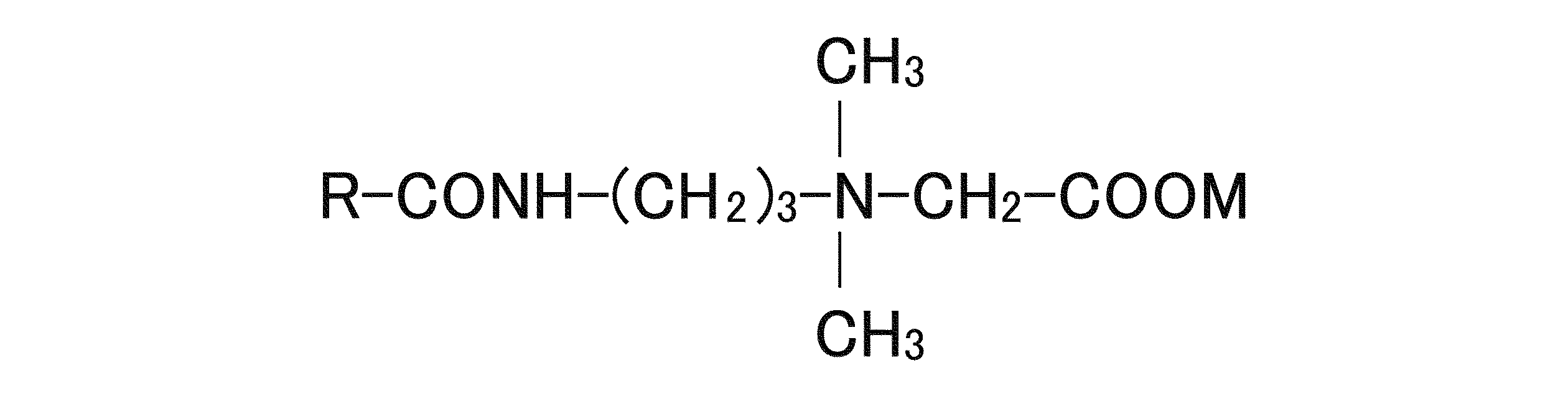
- Examples of the zwitterionic surfactant of (group B) include (B-1) to (B-8) represented by the following formulas. (B-1)
- R is a saturated or unsaturated alkyl group having 12 to 22 carbon atoms
- M is Na, K or an amine salt.
- R is a saturated or unsaturated alkyl group having 12 to 22 carbon atoms
- M is Na, K or an amine salt.
- R is a saturated or unsaturated alkyl group having 12 to 22 carbon atoms
- M is Na, K or an amine salt.
- R is a saturated or unsaturated alkyl group having 12 to 22 carbon atoms
- M is Na, K or an amine salt.
- R is a saturated or unsaturated alkyl group having 12 to 22 carbon atoms
- M is Na, K or an amine salt.
- R is a saturated or unsaturated alkyl group having 12 to 22 carbon atoms
- M is Na, K or an amine salt.
- R is a saturated or unsaturated alkyl group having 12 to 22 carbon atoms
- M is Na, K or an amine salt.
- R is a saturated or unsaturated alkyl group having 12 to 22 carbon atoms
- M is Na, K or an amine salt.
- the zwitterionic surfactant having a hydroxyl group is preferably contained in a gel detergent because it has an interaction with a water-soluble natural polymer and greatly contributes to gelation.
- alkylamidopropyl betaine shown in (B-6) is preferable from the viewpoints of low irritation to skin, hard water resistance, and excellent foaming power.
- 2-alkyl-N-carboxymethyl-N-hydroxyethyl imidazolinium betaine is more preferable from the viewpoint of excellent cleansing properties and foaming power and low eye membrane irritation.
- the gelling agent may contain one or more selected from Group C shown below.
- Group C Gelling agent (C-1) Water-soluble polymer xyloglucan, guar gum, locust bean gum, agarose, carrageenan, gum arabic, sodium alginate, glucomannan, pectin (C-2) microorganism derived from plant or seaweed Water-soluble high molecular weight xanthan gum, duran gum, pullulan, curdlan, sodium hyaluronate produced by fermentation method
- the gel detergent has a pH of 8 or more and 11 or less in terms of a 1% by weight aqueous solution from the viewpoint of mildness to skin, and therefore the gelling agent is alkali resistance, salt resistance and heat resistance Is preferred.
- the gelling agent is alkali resistance, salt resistance and heat resistance Is preferred.
- xyloglucan, guar gum, galazinean and locust bean cam from tamarind seed gum are water-soluble polymers of salt-resistant and heat-resistant gums, are also of plant origin, and are preferable from the viewpoint of environmental protection.
- the compounding amount of the gelling agent is preferably 0.1% by weight or more and 10% by weight or less, more preferably 1% by weight or more and 5% by weight or less, based on the total weight of the gel detergent. When it becomes less than 1% by weight, it becomes difficult to solidify into a gel, but when it exceeds 10% by weight, excessive firm solidification impairs the foamability of the gel detergent and foams easily when used. It does not stand and does not exert its detergency.
- a 1% by weight aqueous solution of the gelling agent with a viscosity of 5 mPa ⁇ s or more and 9000 mPa ⁇ s or less, more preferably 1000 mPa ⁇ s or more and 8000 mPa ⁇ s or less, still more preferably 2000 mPa ⁇ s or more and 6000 mPa ⁇ s or less is there. If it exceeds 5 mPa ⁇ s and ⁇ 9000 mPa ⁇ s, handling becomes difficult.
- a gel-like detergent improves foaming and foam properties and moisture retention on the skin and exhibits thickening by interaction with a gelling agent such as a water-soluble polymer. It is preferable to contain 2 or more types.
- the monohydric or polyhydric alcohol include, for example, monohydric alcohol with ethanol, propyl alcohol, isopropyl alcohol, isopentyl diol, propylene glycol, dipropylene glycol, 1.2 hexanediol, pentylene glycol, polyethylene glycol , (Molecular weight 400 to 7000), polypropylene glycol (molecular weight 400), diglycerin, 1.3 butylene glycol, glycerin, polyhydric alcohol such as inositol, sucrose, lactose, xylitol, maltitol, mannitol, maltose, sorbitol, fructose And sugars such as glucose, trehalose, erythritol, raffinose, lactitol, sultose, isosultose, starch syrup or sugar alcohols.
- the amount of the monohydric alcohol or polyhydric alcohol is preferably 2% by weight or more and 50% by weight or less, and more preferably 10% by weight or more, based on the total weight of the gel detergent, from the viewpoint of thickening and foaming. It is at most weight percent.
- the content of the saccharide or sugar alcohol is preferably 0.5% by weight or more and 50% by weight or less, more preferably 3% by weight or more and 30% by weight or less, based on the total weight of the gel detergent.
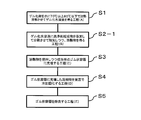
- FIG. 1 is a flow chart for explaining steps for carrying out the method for producing a gel detergent according to the first embodiment of the present invention.
- a gelling agent is dissolved in water by heating at 70 ° C. or more and 85 ° C. or less to obtain a gelled aqueous solution (step S1) (step S1).
- step S1 step S1
- step S2 step S2 of adding and dispersing to obtain a melt
- step S3 of filling the melt into a rubber-like container for molding while stirring
- melt filled in the rubber-like container It is carried out by performing a step (D) of cooling and solidifying the substance at room temperature (step S4) and a step (E) of removing the rubber-like container (step S5).
- step S1 the gelling agent is heated and dissolved in water at 70 ° C. or more and 85 ° C. or less to obtain a gelled aqueous solution.
- the gelation aqueous solution is obtained by heating the gelling agent at 70 ° C. to 85 ° C. for a predetermined time (for example, 15 minutes to 3 hours) to swell the gelling agent, and mixing and dissolving with water.
- FIG. 5 is a schematic cross-sectional view showing an example of a tank for carrying out the manufacturing method of the present invention. The gelling agent and water are charged, for example, in a tank 10 provided with a heater 11 shown in FIG.
- the stirring means 12 such as a stirring blade provided inside the tank 10
- the inside of the tank 10 is stirred, and the gelling aqueous solution 13 is uniformly mixed. If the heating temperature is less than 70 ° C., the dissolution of the gelling agent may be incomplete, while if it exceeds 85 ° C., the gelling agent may be denatured.
- step S1 When the gel detergent contains a monohydric or polyhydric alcohol, a monohydric or polyhydric alcohol is added in step S1, and the gel is dissolved by heating at 70 ° C. to 85 ° C. together with the gelling agent and water. An aqueous solution is obtained.
- step S2 the detergent composition is added to the aqueous gelation solution and dispersed to obtain a melt. It is preferable to carry out heating for a predetermined time (for example, 1 hour or more and 2 hours or less) so that the cleaning agent composition is uniformly dispersed in the gelling aqueous solution.
- the heating temperature can be appropriately set according to the melting point of the gelling agent and the cleaning agent composition. In general, the heating temperature is preferably equal to or higher than the melting point of the raw material having the highest melting temperature, and is preferably 65 ° C. or more and 85 ° C. or less in order to achieve both dissolution of the raw material and modification prevention of the gelling agent. .
- FIG. 2 is a flow chart for explaining steps for carrying out the method for producing a gel detergent according to the second embodiment of the present invention, in which a detergent composition is added to and dispersed in a gelling aqueous solution, In the step (B) of obtaining a melt, the detergent composition is added to the aqueous solution of gelation to disperse and degas, and this step is taken as a step (G) of obtaining a melt (step S2-1).
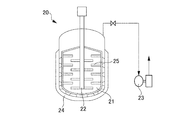
- FIG. 6 is a schematic cross-sectional view showing an example of a vacuum apparatus for carrying out the manufacturing method of the present invention.
- step S2-1 the aqueous gelation solution and the cleaning agent composition are charged into the vacuum chamber 21 and the jacket 24 provided with the stirring means 22 and the heating means of the vacuum device such as the stirring blade provided in the vacuum device 20 is operated.
- the inside of the vacuum device 20 is heated and stirred, and by operating the vacuum pump 23, the inside of the vacuum chamber 21 is decompressed or evacuated, and the melt is uniformly mixed while bubbles are removed.
- An anchor mixer equipped with a scraper 25 is desirable as the stirring means 22 of the vacuum device in order to eliminate deposits on the wall surface in the vacuum chamber 21 and stagnant material in the lower portion of the vacuum chamber 21.
- the stirring means 22 of the vacuum device is preferably such that a peripheral velocity of 5 m / sec or more and 25 m / sec or less can be obtained in order to mix a highly viscous melt. Moreover, it is preferable to make the inside of the vacuum device 20 a degree of vacuum of 15 KPa (abs) or more and 75 KPa (abs) or less from the viewpoint of the efficiency of bubble removal.
- the treatment time is to prevent the water loss in the melt 1 hour or more and 1.5 hours or less are preferable, and when heating, it is preferable to carry out stepwise.
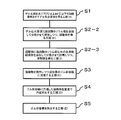
- FIG. 3 is a flow chart for explaining steps for carrying out the method for producing a gel-like detergent according to the third embodiment of the present invention, in which a detergent composition is added to and dispersed in a gelling aqueous solution, Step (H) (step S2-2) of obtaining a preparation while adding and dispersing fatty acid potassium salt in a gelled aqueous solution and degassing in the step (B) of obtaining a melt, potassium fatty acid as a preparation
- step (I) step S2-3) for obtaining a molten material.
- step S2-2 and step S2-3 are performed, and degassing twice It is preferable to do.
- the gel detergent of the present invention may contain, in addition to the gelling agent and the detergent composition, other components such as preservatives (eg, ethyl paraben, butyl paraben), powder (eg, powder, etc.) as long as the object of the present invention is not impaired.
- preservatives eg, ethyl paraben, butyl paraben
- powder eg, powder, etc.
- Components such as pigments, dyes, resins, etc., perfumes, moisturizers, physiologically active ingredients, salts, solvents, pearlescent agents, neutralizing agents, pH adjusters, enzymes and the like can be appropriately blended. From the viewpoint of the dispersibility of each component, these components are preferably blended in a melt in which the detergent composition is sufficiently dissolved in the gelling aqueous solution.
- the gel-like detergent contains gold foil
- the gold foil dispersed in an alcohol solvent is added to the melt, mixed and dispersed.
- step S3 the melt is stirred and filled into a rubber-like container for molding.
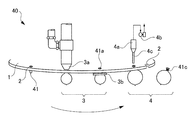
- FIG. 7A is a view showing a step (C) of filling the melt of the present invention into a rubber-like container for molding
- FIG. 7B is an enlarged view of the filling step (C).
- a plurality of notches 2 are provided at equal pitches, and a pouring portion 3 and a removing portion 4 are provided.
- the rotary table 1 With the rubber container 41 attached, the rotary table 1 intermittently rotates. At the notch 2 in front of the injection part 3, the rubber-like container 41 is attached.
- the injector 3 a is lowered to be in close contact with the upper surface of the rubber-like container 41, and the rubber-like container 41 is filled with a fixed amount of melt.
- the injector 3a ascends as it is filled, the molten material overflows from the rubbery container 41, so the opening 41a is bound by the binding member 41c by the binding device 3b attached to the outer peripheral portion of the rotary table 1. After that, the injector 3a rises. Further, the rubber-like container 41 filled with the melt inside is rotated, and is removed from the notch 2 at the removal unit 4.
- the rubber-like container 41 has the opening part 41a which fills a molten material, and the expansion part 41b expanded to substantially spherical shape or substantially elliptical shape.
- the material of the rubber-like container 41 is not particularly limited as long as it is generally used, such as natural latex and synthetic latex. By having a pattern that can be colored or transferred on the inside of the rubber-like container 41, it is possible to apply color or a pattern on the outside of the rubber-like cleaning agent.
- the filling amount of the melt is not particularly limited. For example, by setting the filling amount to 100 g, the rubber-like container is expanded into a substantially spherical shape having a diameter of 5 cm.
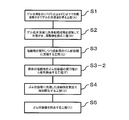
- FIG. 4 is a flow chart for explaining steps for carrying out the method for producing a gel detergent according to the fourth embodiment of the present invention. It is preferable to further include a step (F) (step S3-2) of removing the remaining molten material from the opening of the rubber container by suction between the step (C) and the step (D).
- step S3-2 the removal unit 4 of the filling device 40 is provided with a suction device 4a for removing the remaining molten material protruding from the rubber container 41 by suction from the opening 41a of the rubber container. It is preferable to have.
- the suction pump 4b of the suction device 4a sucks the gas in the suction nozzle 4c, thereby recovering the remaining molten material, and at the same time, the rubber-like container 41 can be removed from the notch 2 by the suction pressure.
- FIG. 7C is a cross-sectional view showing an example of a filling apparatus for filling a molten material for molding into a rubber-like container for molding in order to carry out the manufacturing method of the present invention.
- the filling device 40 raises and lowers the injector 3a by a cylindrical cam.
- a plunger 5 is slidably attached to the center of the injector 3 a, and the injector 3 a is moved up and down by the injector drive cam 7, and the plunger 5 is moved up and down by the plunger drive cam 6.
- the injector 3a is lowered by the injector drive cam 7 to contact the upper surface of the rotary table 1, and then the plunger 5 is pushed down by the plunger drive cam 6.
- the tank 8 of the filling device is mounted on the top of the filling device 40 and is filled with the melt to be filled.
- the melt flows into the injector 3 a from the tank 8 of the filling device having the stirring function via the pipe 9 and is filled into the rubbery container 41 by the descent of the plunger 5 a.
- the cam shaft 47 to which each cam is attached is driven by the motor 42 through the chain 43, and the rotary table 1 is rotated from the motor 42 through the chain 44, the intermittent drive device 45 and the chain 46.
- the melt it is preferable to cool the melt to 60 ° C. or more and 65 ° C. or less from the viewpoint of the filling property.
- the temperature is less than 60 ° C.
- the melt is likely to solidify and the filling property to the rubber-like container 41 is deteriorated.
- the temperature exceeds 65 ° C. the viscosity of the melt is decreased, and the weight variation of the gel detergent when filled. There is a risk of causing it.
- step S4 the molten material filled in the rubbery container 41 is cooled and solidified at room temperature.
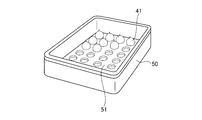
- FIG. 8 is a schematic view showing an example of an apparatus for cooling and solidifying a melt filled in a molding rubber-like container 41 for carrying out the manufacturing method of the present invention.
- the molten material filled in the rubber-like container 41 is stored in the holder 51 so that the bundled opening 41 a is at the bottom, and left at room temperature in the storage box 50.
- the time for cooling and solidification to about 1 day or more and 2 days or less, the molten material filled in the rubbery container 41 is solidified to the central portion and becomes a gel-like washed material.
- FIG. 9 is a view showing a step (E) of removing the rubber-like container of the present invention.
- the rubber container 41 is removed by rupturing the rubber container 41 with an instrument 61 having a tip such as a needle, and the gel detergent 62 in the rubber container 41 is taken out.
- the rubber-like container 41 is expanded into a substantially spherical shape or a substantially oval-spherical shape by the filling with the gel-like cleaning agent 62. Therefore, the surface of the rubber-like container 41 is damaged by generating small holes, and the rubber-like container 41 is easily ruptured. It will be done.
- the rubber-like container 41 has the projection part 41d on the opposite side of the opening part 41a.
- the outer surface of the gel cleaner 62 may be broken because the torn rubber film tries to shrink at a stretch.
- the rubber-like container 41 has the protrusion 41 d, the rubber film will contract gently as compared with the one without the protrusion 41 d, so that the rubber-like container 41 can be It can be burst.
- Example 1 ⁇ 1> Purified water 67.9% ⁇ 2> Glycerin 10.0% ⁇ 3> Dipropylene glycol 7.0% ⁇ 4> 1,2 hexane glycol 2.5% ⁇ 5> Xyloglucan (Glyroid 6C, / DSP Gokyo Food & Chemical Co., Ltd.) 0.8% ⁇ 6> Xanthan gum 0.2% ⁇ 7> lauric acid 5.9% ⁇ 8> Myristic acid 2.2% ⁇ 9> Palmitic acid 1.0% ⁇ 10> Stearic acid 0.4% ⁇ 11> Oleic acid 0.6% ⁇ 12> Caustic soda 1.5% 100.0% in total Preparation Method The components ⁇ 5> and ⁇ 6> were wetted and dispersed in a mixture of the components ⁇ 2> and ⁇ 3>, added to ⁇ 1>, heated to 85 ° C., stirred and dissolved (step S1).
- step S2 the components ⁇ 7> to ⁇ 12> were mixed, melted and stirred to obtain a homogeneous melt (step S2). Thereafter, while keeping the melt at 65 ° C. to 80 ° C., it is filled into a rubber-like container for molding while stirring (step S3), is left at room temperature (step S4), and the rubber-like container is removed with a toothpick. (Step S5), a gel detergent was obtained.
- Example 2 ⁇ 1> Purified water 48.4% ⁇ 2> Sorbitol 10.0% ⁇ 3> Propanediol 10.0% ⁇ 4> 1,2 hexane glycol 2.5% ⁇ 5> Xyloglucan (Glyloid 6C) 1.0% ⁇ 6> Xanthan gum 0.5% ⁇ 7> lauric acid 5.9% ⁇ 8> Myristic acid 2.2% ⁇ 9> Palmitic acid 1.0% ⁇ 10> Stearic acid 0.3% ⁇ 11> Oleic acid 0.6% ⁇ 12> Potassium hydroxide 2.60% ⁇ 13> lauric acid amidopropyl hydroxysulfobetaine solution (softazoline LSB / / Kawaken Fine Chemical Co., Ltd.) 15.0% 100.0% in total Preparation Method The components ⁇ 5> and ⁇ 6> were wetted and dispersed in a mixture of components ⁇ 2>- ⁇ 4>, added to ⁇ 1>, heated to 85 ° C., stirred and dissolved (
- step S2 the components ⁇ 7>- ⁇ 12> were mixed and heated to 75-85 ° C. to dissolve, and then the component ⁇ 13> was added and stirred to obtain a homogeneous melt (step S2). Thereafter, while keeping the melt at 75 ° C. to 80 ° C., it is filled into a rubber-like container for molding while stirring (step S3), is left at room temperature (step S4), and the rubber-like container is removed with a toothpick. (Step S5), a gel detergent was obtained.
- Example 3 ⁇ 1> Purified water 48.0% ⁇ 2> Dipropylene glycol 7.0% ⁇ 3> 1,2 hexane glycol 2.5% ⁇ 4> Xanthan gum 0.5% ⁇ 5> Carrageenan 2.0% ⁇ 6> Coconut oil fatty acid amidopropyl betaine liquid (Obazoline CAB30 / Toho Chemical Industry Co., Ltd.) 40.0% 100.0% in total Preparation method
- the components ⁇ 4> and ⁇ 5> were wetted and dispersed in the components ⁇ 2> and ⁇ 3>, added to ⁇ 1>, heated to 85 ° C., stirred and dissolved (step S1). Next, the component ⁇ 6> was mixed and stirred to obtain a homogeneous melt (step S2).
- Step S3 a gel detergent was obtained.
- Example 4 ⁇ 1> Purified water 58.5% ⁇ 2> Dipropylene glycol 7.0% ⁇ 3> 1,2 hexane glycol 2.5% ⁇ 4> Carrageenan 2.0% ⁇ 5> Polyoxyethylene lauryl ether sodium acetate (Neohyiteol ECL-30S / Daiichi Kogyo Seiyaku Co., Ltd.) 30.0% 100.0% in total Production method
- Component ⁇ 4> was wetted and dispersed in components ⁇ 2> and ⁇ 3>, added to ⁇ 1>, heated to 85 ° C., stirred and dissolved (step S1). Next, the component ⁇ 6> was mixed, and heated and stirred at 85 ° C.
- step S2 a homogeneous melt
- step S3 a rubber-like container for molding while stirring
- step S4 room temperature
- step S5 a gel detergent was obtained.
- Example 5 ⁇ 1> Purified water 59.5% ⁇ 2> 1, 2 hexane glycol 2.5% ⁇ 3> Xyloglucan (Glyloid 6C) 0.7% ⁇ 4> Xatatan gum 0.3% ⁇ 5> Kari-ishi Ken base (100%) 12.0% ⁇ 6> lauric acid amidopropyl hydroxy sulfobetaine solution (softazoline LSB / Kawaken Fine Chemical Co., Ltd.) 15.0% ⁇ 7> Glycerin 10.0% ⁇ 8> Citric acid dosage ⁇ 9> Citric acid sodium dosage 100.0% in total Production method The components ⁇ 3> and ⁇ 4> were wetted and dispersed in the component ⁇ 2>, added to ⁇ 1>, heated to 85 ° C., stirred and dissolved (step S1).
- step S2 components ⁇ 5> and ⁇ 6> are sequentially added, and stirred and dissolved while heating to 65-85 ° C., then components ⁇ 7>- ⁇ 9> are added to adjust pH to 10.0, uniform
- the resulting melt is obtained (step S2). Thereafter, while stirring, it was filled in a rubber-like container for molding (step S3), allowed to stand at room temperature (step S4), and removed with a toothpick (step S5) to obtain a gel detergent .
- Example 6 ⁇ 1> Purified water 36.5% ⁇ 2> Dipropylene glycol 10.0% ⁇ 3> 1,2 hexane glycol 2.5% ⁇ 4> Xanthan gum 0.5% ⁇ 5> Locust bean gum 0.5% ⁇ 6> Coconut oil fatty acid amidopropyl betaine liquid (Obazoline CAB30 / Toho Chemical Industry Co., Ltd.) 50.0% 100.0% in total Preparation method The components ⁇ 4> and ⁇ 5> were wetted and dispersed in the components ⁇ 2> and ⁇ 3>, added to ⁇ 1>, heated to 85 ° C., stirred and dissolved (step S1). Next, the component ⁇ 6> was mixed, and heated and stirred at 70 ° C.
- step S2 After, while stirring, it was filled in a rubber-like container for molding (step S3), allowed to stand at room temperature (step S4), and removed with a toothpick (step S5) to obtain a gel detergent .
Landscapes
- Chemical & Material Sciences (AREA)
- Life Sciences & Earth Sciences (AREA)
- Oil, Petroleum & Natural Gas (AREA)
- Engineering & Computer Science (AREA)
- Chemical Kinetics & Catalysis (AREA)
- Wood Science & Technology (AREA)
- Organic Chemistry (AREA)
- Health & Medical Sciences (AREA)
- Emergency Medicine (AREA)
- Dispersion Chemistry (AREA)
- Molecular Biology (AREA)
- Detergent Compositions (AREA)
- Cosmetics (AREA)
Abstract
Description

(A-2)ポリオキシエチレンアルキルエーテルカルボン酸塩(アルキル基の炭素数が12-22、飽和又は不飽和)


(B-2)

(B-3)

(B-4)

(B-5)

(B-6)

(B-7)

(B-8)

(C群)ゲル化剤
(C-1)植物又は海藻由来の水溶性高分子
キシログルカン、グアーガム、ローカストビーンガム、アガロース、カラギーナン、アラビアガム、アルギン酸ナトリウム、グルコマンナン、ペクチン
(C-2)微生物発酵法により産生される水溶性高分子
キサンタンガム、ジュランガム、プルラン、カードラン、ヒアルロン酸ナトリウム





(B-1)

(B-2)

(B-3)

(B-4)

(B-5)

(B-6)

(B-7)

(B-8)

(C群)ゲル化剤
(C-1)植物又は海藻由来の水溶性高分子
キシログルカン、グアーガム、ローカストビーンガム、アガロース、カラギーナン、アラビアガム、アルギン酸ナトリウム、グルコマンナン、ペクチン
(C-2)微生物発酵法により産生される水溶性高分子
キサンタンガム、ジュランガム、プルラン、カードラン、ヒアルロン酸ナトリウム
〈1〉精製水 67.9%
〈2〉グリセリン 10.0%
〈3〉ジプロピレングリコール 7.0%
〈4〉1,2ヘキサングリコール 2.5%
〈5〉キシログルカン(グリロイド6C、/DSP五協フード&ケミカル株式会社)0.8%
〈6〉キサンタンガム 0.2%
〈7〉ラウリン酸 5.9%
〈8〉ミリスチン酸 2.2%
〈9〉パルミチン酸 1.0%
〈10〉ステアリン酸 0.4%
〈11〉オレイン酸 0.6%
〈12〉苛性ソーダ 1.5%
合計 100.0%
製法
成分〈2〉、〈3〉混合物に、成分〈5〉、〈6〉を湿潤、分散させて、〈1〉に加え、85℃に加熱し、攪拌し、溶解した(ステップS1)。次に、成分〈7〉-〈12〉を混合、融解し、撹拌させ、均一なる溶融物を得た(ステップS2)。その後、溶融物を65℃~80℃に保ちながら、撹拌しつつ成形用のゴム状容器に充填し(ステップS3)、室温に静置し(ステップS4)、爪楊枝でゴム状容器を除去して(ステップS5)、ゲル状洗浄剤を得た。
〈1〉精製水 48.4%
〈2〉ソルビトール 10.0%
〈3〉プロパンジオール 10.0%
〈4〉1,2ヘキサングリコール 2.5%
〈5〉キシログルカン(グリロイド6C) 1.0%
〈6〉キサンタンガム 0.5%
〈7〉ラウリン酸 5.9%
〈8〉ミリスチン酸 2.2%
〈9〉パルミチン酸 1.0%
〈10〉ステアリン酸 0.3%
〈11〉オレイン酸 0.6%
〈12〉水酸化カリウム 2.60%
〈13〉ラウリン酸アミドプロピルヒドロキシスルホベタイン液(ソフタゾリンLSB//川研ファインケミカル株式会社) 15.0%
合計 100.0%
製法
成分〈2〉-〈4〉混合物に、成分〈5〉、〈6〉を湿潤、分散させて、〈1〉に加え、85℃に加熱し、攪拌し、溶解した(ステップS1)。次に、成分〈7〉-〈12〉を混合、75-85℃に加熱し溶解後、成分〈13〉を加えて撹拌し、均一なる溶融物を得た(ステップS2)。その後、溶融物を75℃~80℃に保ちながら、撹拌しつつ成形用のゴム状容器に充填し(ステップS3)、室温に静置し(ステップS4)、爪楊枝でゴム状容器を除去して(ステップS5)、ゲル状洗浄剤を得た。
〈1〉精製水 48.0%
〈2〉ジプロピレングリコール 7.0%
〈3〉1,2ヘキサングリコール 2.5%
〈4〉キサンタンガム 0.5%
〈5〉カラギーナン 2.0%
〈6〉ヤシ油脂肪酸アミドプロピルベタイン液(オバゾリンCAB30/東邦化学工業株式会社)40.0%
合計 100.0%
製法
成分〈2〉、〈3〉に成分〈4〉、〈5〉を湿潤、分散させて、〈1〉に加え、85℃に加熱し、攪拌し、溶解した(ステップS1)。次に、成分〈6〉を混合して撹拌し、均一なる溶融物を得た(ステップS2)。その後、溶融物を68℃~80℃に保ちながら、撹拌しつつ成形用のゴム状容器に充填し(ステップS3)、室温に静置し(ステップS4)、爪楊枝でゴム状容器を除去して(ステップS5)、ゲル状洗浄剤を得た。
〈1〉精製水 58.5%
〈2〉ジプロピレングリコール 7.0%
〈3〉1,2ヘキサングリコール 2.5%
〈4〉カラギーナン 2.0%
〈5〉ポリオキシエチレンラウリルエーテル酢酸ナトリウム(ネオハイテノールECL-30S/第一工業製薬株式会社)30.0%
合計 100.0%
製法
成分〈2〉、〈3〉に成分〈4〉を湿潤、分散させて、〈1〉に加え、85℃に加熱し、攪拌し、溶解した(ステップS1)。次に、成分〈6〉を混合して85℃に加熱、撹拌し、均一なる溶融物を得た(ステップS2)。その後、溶融物を60℃~75℃に保ちながら、撹拌しつつ成形用のゴム状容器に充填し(ステップS3)、室温に静置し(ステップS4)、爪楊枝でゴム状容器を除去して(ステップS5)、ゲル状洗浄剤を得た。
〈1〉精製水 59.5%
〈2〉1,2ヘキサングリコール 2.5%
〈3〉キシログルカン(グリロイド6C) 0.7%
〈4〉キサタンガム 0.3%
〈5〉カリ石ケン素地(100%) 12.0%
〈6〉ラウリン酸アミドプロピルヒドロキシスルホベタイン液(ソフタゾリンLSB/川研ファインケミカル株式会社)15.0%
〈7〉グリセリン 10.0%
〈8〉クエン酸 適量
〈9〉クエン酸Na 適量
合計 100.0%
製法
成分〈2〉に成分〈3〉、〈4〉を湿潤、分散させて、〈1〉に加え、85℃に加熱し、攪拌し、溶解した(ステップS1)。次に、成分〈5〉、〈6〉を順次加え、65-85℃に加熱しながら、攪拌溶解した後、成分〈7〉-〈9〉を加え、pHを10.0に調整し、均一なる溶融物を得た(ステップS2)。その後、撹拌しつつ成形用のゴム状容器に充填し(ステップS3)、室温に静置し(ステップS4)、爪楊枝でゴム状容器を除去して(ステップS5)、ゲル状洗浄剤を得た。
〈1〉精製水 36.5%
〈2〉ジプロピレングリコール 10.0%
〈3〉1,2ヘキサングリコール 2.5%
〈4〉キサンタンガム 0.5%
〈5〉ローカストビーンガム 0.5%
〈6〉ヤシ油脂肪酸アミドプロピルベタイン液(オバゾリンCAB30/東邦化学工業株式会社)50.0%
合計 100.0%
製法
成分〈2〉、〈3〉に成分〈4〉、〈5〉を湿潤、分散させて、〈1〉に加え、85℃に加熱し、攪拌し、溶解した(ステップS1)。次に、成分〈6〉を混合して70℃~85℃に加熱、撹拌し、均一なる溶融物を得た(ステップS2)。その後、撹拌しつつ成形用のゴム状容器に充填し(ステップS3)、室温に静置し(ステップS4)、爪楊枝でゴム状容器を除去して(ステップS5)、ゲル状洗浄剤を得た。
2 切欠き部
3 注入部
3a 注入器
3b 結束装置
4 取外し部
4a 吸引装置
4b 吸引ポンプ
4c 吸引ノズル
5 プランジヤー
6 プランジヤー駆動カム
7 注入器駆動カム
8 充填装置のタンク
9 パイプ
10 タンク
11 加熱器
12 撹拌手段
13 ゲル化水溶液
20 真空装置
21 真空釜
22 真空装置の撹拌手段
23 真空ポンプ
24 ジャケット
25 スクレーパー
40 充填装置
41 ゴム状容器
41a 開口部
41b 拡張部
41c 結束部材
41d 突起部
42 モーター
43、44、46 チエーン
45 間欠駆動装置
47 カム軸
50 収納箱
51 ホルダー
61 尖端を有する器具
62 ゲル状洗浄剤
Claims (10)
- ゲル化剤を水に70℃以上85℃以下で加熱溶解させてゲル化水溶液を得る工程(A)、
前記ゲル化水溶液に洗浄剤組成物を添加して分散させ、溶融物を得る工程(B)、
前記溶融物を成形用のゴム状容器に充填する工程(C)、
前記ゴム状容器に充填した前記溶融物を室温で冷却固化する工程(D)、
前記ゴム状容器を除去する工程(E)、
を備えることを特徴とするゲル状洗浄剤の製造方法。 - 前記溶融物を成形用のゴム状容器に充填する工程(C)は、秒速33g以上50g以下の充填速度で行うことを特徴とする請求項1に記載のゲル状洗浄剤の製造方法。
- 前記(C)工程と前記(D)工程の間に、さらに、残余の前記溶融物を前記ゴム状容器の開口部から吸引除去する工程(F)を含むことを特徴とする請求項1または2に記載のゲル状洗浄剤の製造方法。
- 前記ゴム状容器は、前記開口部の反対側に突起を有することを特徴とする請求項1ないし3のいずれか1項に記載のゲル状洗浄剤の製造方法。
- 前記洗浄剤組成物は、下記に示すA群及び/又はB群より選ばれる1種又は2種以上を含有し、
前記ゲル化剤は、下記に示すC群より選ばれる1種又は2種以上を含有することを特徴とする請求項1ないし4のいずれか1項に記載のゲル状洗浄剤の製造方法。
(A群)アニオン性界面活性剤
(A-1)カルボン酸塩

(A-2)ポリオキシエチレンアルキルエーテルカルボン酸塩(アルキル基の炭素数が12-22、飽和又は不飽和)

(A-3)N-アシルアミノ酸のナトリウム塩、カリウム塩又はアミン塩

(B群)両イオン性界面活性剤
(B-1)

(B-2)

(B-3)

(B-4)

(B-5)

(B-6)
(B-7)

(B-8)

(C群)ゲル化剤
(C-1)植物又は海藻由来の水溶性高分子
キシログルカン、グアーガム、ローカストビーンガム、アガロース、カラギーナン、アラビアガム、アルギン酸ナトリウム、グルコマンナン、ペクチン
(C-2)微生物発酵法により産生される水溶性高分子
キサンタンガム、ジュランガム、プルラン、カードラン、ヒアルロン酸ナトリウム - 前記(A-1)カルボン酸塩は、脂肪酸カリウム塩を含有することを特徴とする請求項5に記載のゲル状洗浄剤の製造方法。
- 前記(A-2)ポリオキシエチレンアルキルエーテルカルボン酸塩(アルキル基の炭素数が12-22、飽和又は不飽和)は、下記に示す(A-2-1)又は(A-2-2)を含有することを特徴とする請求項5に記載のゲル状洗浄剤の製造方法。
(A-2-1)ポリオキシエチレンアルキルエーテル酢酸塩

(A-2-2)ポリオキシエチレンアルキルエーテルプロピオン酸塩

- さらに、前記ゲル状洗浄剤は、1価又は多価アルコールを1種又は2種以上を含有することを特徴とする請求項1ないし7のいずれか1項に記載のゲル状洗浄剤の製造方法。
- 前記(B)工程において、
ゲル化水溶液に洗浄剤組成物を添加して分散させて脱気しつつ、溶融物を得る工程(G)であることを特徴とする請求項1ないし8のいずれか1項に記載のゲル状洗浄剤の製造方法。 - 前記(B)工程において、
前記ゲル化水溶液に脂肪酸カリウム塩を添加して分散させて脱気しつつ、調整物を得る工程(H)と、
前記調整物に前記脂肪酸カリウム塩以外の前記洗浄剤組成物を添加して分散させて脱気しつつ、前記溶融物を得る工程(I)であることを特徴とする請求項7に記載のゲル状洗浄剤の製造方法。
Priority Applications (8)
| Application Number | Priority Date | Filing Date | Title |
|---|---|---|---|
| CN201910738879.2A CN110499221A (zh) | 2013-12-20 | 2013-12-20 | 凝胶状清洁剂的制造方法 |
| KR1020167015997A KR102072833B1 (ko) | 2013-12-20 | 2013-12-20 | 겔상 세정료의 제조 방법 |
| EP13899808.3A EP3085762B1 (en) | 2013-12-20 | 2013-12-20 | Method for producing gel detergent |
| CN201910739084.3A CN110591827A (zh) | 2013-12-20 | 2013-12-20 | 凝胶状清洁剂的制造方法 |
| JP2015553321A JP6322214B2 (ja) | 2013-12-20 | 2013-12-20 | ゲル状洗浄料の製造方法 |
| ES13899808T ES2881233T3 (es) | 2013-12-20 | 2013-12-20 | Método de producción del detergente en gel |
| CN201380081777.9A CN105849246B (zh) | 2013-12-20 | 2013-12-20 | 凝胶状清洁剂的制造方法 |
| PCT/JP2013/084366 WO2015092939A1 (ja) | 2013-12-20 | 2013-12-20 | ゲル状洗浄料の製造方法 |
Applications Claiming Priority (1)
| Application Number | Priority Date | Filing Date | Title |
|---|---|---|---|
| PCT/JP2013/084366 WO2015092939A1 (ja) | 2013-12-20 | 2013-12-20 | ゲル状洗浄料の製造方法 |
Publications (1)
| Publication Number | Publication Date |
|---|---|
| WO2015092939A1 true WO2015092939A1 (ja) | 2015-06-25 |
Family
ID=53402331
Family Applications (1)
| Application Number | Title | Priority Date | Filing Date |
|---|---|---|---|
| PCT/JP2013/084366 Ceased WO2015092939A1 (ja) | 2013-12-20 | 2013-12-20 | ゲル状洗浄料の製造方法 |
Country Status (6)
| Country | Link |
|---|---|
| EP (1) | EP3085762B1 (ja) |
| JP (1) | JP6322214B2 (ja) |
| KR (1) | KR102072833B1 (ja) |
| CN (3) | CN110591827A (ja) |
| ES (1) | ES2881233T3 (ja) |
| WO (1) | WO2015092939A1 (ja) |
Cited By (5)
| Publication number | Priority date | Publication date | Assignee | Title |
|---|---|---|---|---|
| JP2014139307A (ja) * | 2012-12-22 | 2014-07-31 | Neige Corporation:Kk | ゲル状洗浄料の製造方法 |
| JP2021102600A (ja) * | 2019-12-25 | 2021-07-15 | 資生堂ホネケーキ工業株式会社 | ゲル状洗浄剤 |
| US11319566B2 (en) | 2017-04-14 | 2022-05-03 | Capsugel Belgium Nv | Process for making pullulan |
| US11576870B2 (en) | 2017-04-14 | 2023-02-14 | Capsugel Belgium Nv | Pullulan capsules |
| EP4508179A1 (de) * | 2022-04-13 | 2025-02-19 | Henkel AG & Co. KGaA | Verfahren zur herstellung einer waschmittelportionseinheit |
Families Citing this family (3)
| Publication number | Priority date | Publication date | Assignee | Title |
|---|---|---|---|---|
| CN113430077A (zh) * | 2021-08-04 | 2021-09-24 | 王盛龙 | 一种含酶洗衣凝胶球及其制备方法 |
| DE102022203707A1 (de) * | 2022-04-13 | 2023-10-19 | Henkel Ag & Co. Kgaa | Verfahren zur Herstellung einer Waschmittelportionseinheit |
| KR102571190B1 (ko) * | 2022-12-16 | 2023-08-28 | 권명주 | 클렌징 밤 조성물 및 이의 제조방법 |
Citations (4)
| Publication number | Priority date | Publication date | Assignee | Title |
|---|---|---|---|---|
| JPH11226103A (ja) * | 1998-02-13 | 1999-08-24 | Okamoto Ind Inc | 芳香を発散する装飾用物品 |
| JP2003253246A (ja) * | 2001-12-27 | 2003-09-10 | Sanyo Chem Ind Ltd | 水系ゲル成形体及びそれを使用した物品 |
| JP2013100305A (ja) | 2011-12-28 | 2013-05-23 | Neige Corporation:Kk | ゲル状、半固形状の洗浄料 |
| JP2013147455A (ja) | 2012-01-19 | 2013-08-01 | Cow Brand Soap Kyoshinsha Co Ltd | ゲル状洗浄料 |
Family Cites Families (22)
| Publication number | Priority date | Publication date | Assignee | Title |
|---|---|---|---|---|
| JP2634459B2 (ja) * | 1989-05-09 | 1997-07-23 | ポーラ化成工業株式会社 | 造形物内包石けんの成型方法 |
| JPH03119953A (ja) * | 1989-10-03 | 1991-05-22 | Mitsubishi Rayon Co Ltd | えび用処理剤及び処理方法 |
| JP3062854B2 (ja) * | 1992-07-23 | 2000-07-12 | 石川島播磨重工業株式会社 | 多層粉体成形法 |
| CN1099703A (zh) * | 1993-09-02 | 1995-03-08 | 王枫林 | 一种在蛋、瓜、果、果核、容器内塑造艺术造型的魔幻系列工艺品及制作方法 |
| JPH07102280A (ja) * | 1993-10-02 | 1995-04-18 | Sanei Gen F F I Inc | 粉末香料の製造法 |
| JPH0799920A (ja) * | 1993-10-05 | 1995-04-18 | Sanei Gen F F I Inc | 粉末風味料の製造法 |
| JPH0734687U (ja) * | 1993-12-06 | 1995-06-27 | 直行 井上 | ゴム製容器入り菓子 |
| JP3392980B2 (ja) * | 1995-04-10 | 2003-03-31 | 花王株式会社 | 水系ジェル状洗浄剤組成物 |
| JPH10250779A (ja) * | 1997-03-10 | 1998-09-22 | Asahi Denka Kogyo Kk | 伸縮性ゴム薄膜製容器から収納物を取り出す方法及びそれに使用する開封器 |
| JP2000025868A (ja) * | 1998-07-06 | 2000-01-25 | Katsuya Gomi | 食品を包装するための袋及びその使用方法 |
| US6362156B1 (en) * | 1998-12-16 | 2002-03-26 | Unilever Home & Personal Care, Usa, Division Of Conopco, Inc. | Pourable transparent/translucent liquid detergent composition with suspended particles |
| GB9900150D0 (en) * | 1999-01-05 | 1999-02-24 | Unilever Plc | Treatment for fabrics |
| JP2002348474A (ja) * | 2001-05-23 | 2002-12-04 | Dow Corning Toray Silicone Co Ltd | ポリオルガノシロキサンマイクロエマルジョン組成物および化粧料原料 |
| US7947766B2 (en) * | 2003-06-06 | 2011-05-24 | The Procter & Gamble Company | Crosslinking systems for hydroxyl polymers |
| CN100558278C (zh) * | 2008-09-11 | 2009-11-11 | 范社强 | 一种带有金属图案的水杯及其制作方法 |
| CN101357561B (zh) * | 2008-09-16 | 2010-06-09 | 范社强 | 一种带有立体图案的金属涂层的涂覆方法 |
| CN101947828A (zh) * | 2010-07-14 | 2011-01-19 | 金时代 | 乳胶板制造设备及乳胶板制造方法 |
| CN102275310B (zh) * | 2011-04-29 | 2013-05-08 | 江苏技术师范学院 | 聚合物基碳纤维复合材料的高压水罐成形装置及方法 |
| CN102218827B (zh) * | 2011-04-29 | 2013-11-06 | 江苏理工学院 | 聚合物基碳纤维复合材料的高压气罐成形装置和方法 |
| CN102352060A (zh) * | 2011-08-07 | 2012-02-15 | 冀州市振华橡塑制品厂 | 一种气象气球及其制备方法 |
| JP3183270U (ja) * | 2013-02-21 | 2013-05-09 | 有限会社富貴堂 | 多種混合菓子 |
| JP6249612B2 (ja) * | 2013-03-04 | 2017-12-20 | 株式会社みやびコスメティックス | 化粧料包装体 |
-
2013
- 2013-12-20 KR KR1020167015997A patent/KR102072833B1/ko active Active
- 2013-12-20 ES ES13899808T patent/ES2881233T3/es active Active
- 2013-12-20 EP EP13899808.3A patent/EP3085762B1/en active Active
- 2013-12-20 CN CN201910739084.3A patent/CN110591827A/zh active Pending
- 2013-12-20 JP JP2015553321A patent/JP6322214B2/ja active Active
- 2013-12-20 CN CN201380081777.9A patent/CN105849246B/zh active Active
- 2013-12-20 CN CN201910738879.2A patent/CN110499221A/zh active Pending
- 2013-12-20 WO PCT/JP2013/084366 patent/WO2015092939A1/ja not_active Ceased
Patent Citations (4)
| Publication number | Priority date | Publication date | Assignee | Title |
|---|---|---|---|---|
| JPH11226103A (ja) * | 1998-02-13 | 1999-08-24 | Okamoto Ind Inc | 芳香を発散する装飾用物品 |
| JP2003253246A (ja) * | 2001-12-27 | 2003-09-10 | Sanyo Chem Ind Ltd | 水系ゲル成形体及びそれを使用した物品 |
| JP2013100305A (ja) | 2011-12-28 | 2013-05-23 | Neige Corporation:Kk | ゲル状、半固形状の洗浄料 |
| JP2013147455A (ja) | 2012-01-19 | 2013-08-01 | Cow Brand Soap Kyoshinsha Co Ltd | ゲル状洗浄料 |
Cited By (6)
| Publication number | Priority date | Publication date | Assignee | Title |
|---|---|---|---|---|
| JP2014139307A (ja) * | 2012-12-22 | 2014-07-31 | Neige Corporation:Kk | ゲル状洗浄料の製造方法 |
| US11319566B2 (en) | 2017-04-14 | 2022-05-03 | Capsugel Belgium Nv | Process for making pullulan |
| US11576870B2 (en) | 2017-04-14 | 2023-02-14 | Capsugel Belgium Nv | Pullulan capsules |
| US11878079B2 (en) | 2017-04-14 | 2024-01-23 | Capsugel Belgium Nv | Pullulan capsules |
| JP2021102600A (ja) * | 2019-12-25 | 2021-07-15 | 資生堂ホネケーキ工業株式会社 | ゲル状洗浄剤 |
| EP4508179A1 (de) * | 2022-04-13 | 2025-02-19 | Henkel AG & Co. KGaA | Verfahren zur herstellung einer waschmittelportionseinheit |
Also Published As
| Publication number | Publication date |
|---|---|
| KR20160100303A (ko) | 2016-08-23 |
| ES2881233T3 (es) | 2021-11-29 |
| EP3085762A1 (en) | 2016-10-26 |
| EP3085762B1 (en) | 2021-06-16 |
| JP6322214B2 (ja) | 2018-05-09 |
| EP3085762A4 (en) | 2017-08-02 |
| CN110591827A (zh) | 2019-12-20 |
| CN105849246A (zh) | 2016-08-10 |
| JPWO2015092939A1 (ja) | 2017-03-16 |
| KR102072833B1 (ko) | 2020-02-03 |
| CN110499221A (zh) | 2019-11-26 |
| CN105849246B (zh) | 2019-08-16 |
Similar Documents
| Publication | Publication Date | Title |
|---|---|---|
| JP6322214B2 (ja) | ゲル状洗浄料の製造方法 | |
| JP6427540B2 (ja) | ゲル状の洗浄料 | |
| JP2013100305A5 (ja) | ||
| JP6975932B2 (ja) | ゲル状洗浄料の製造方法 | |
| JP5950373B2 (ja) | 枠練り石鹸の製造方法 | |
| JP5763310B2 (ja) | 枠練り石鹸及びその製造方法 | |
| TWI614334B (zh) | 黏性洗淨劑組成物 | |
| JP4370479B2 (ja) | 炭酸アルキレン希釈液及びパーマネントウェーブ1剤 | |
| HK40017648A (en) | Method for producing gel detergent | |
| HK40017649A (en) | Method for producing gel detergent | |
| JP2019048979A (ja) | 脂肪酸マグネシウム含有石鹸組成物及びその製造方法 | |
| JP6705587B2 (ja) | 流動性を有した脂肪酸ナトリウム石鹸の製造方法 | |
| JP2021050157A (ja) | 皮膚洗浄剤組成物 | |
| JP6268595B2 (ja) | クリーム状洗浄剤組成物 | |
| JP2022071947A (ja) | ゲル状洗浄剤作製キット | |
| JP4041762B2 (ja) | 透明ゲル状洗浄剤組成物 | |
| JP2015189674A (ja) | クリーム状洗浄剤組成物 | |
| JP2012131853A (ja) | 界面活性剤組成物の製造方法 |
Legal Events
| Date | Code | Title | Description |
|---|---|---|---|
| 121 | Ep: the epo has been informed by wipo that ep was designated in this application |
Ref document number: 13899808 Country of ref document: EP Kind code of ref document: A1 |
|
| ENP | Entry into the national phase |
Ref document number: 2015553321 Country of ref document: JP Kind code of ref document: A |
|
| ENP | Entry into the national phase |
Ref document number: 20167015997 Country of ref document: KR Kind code of ref document: A |
|
| NENP | Non-entry into the national phase |
Ref country code: DE |
|
| REEP | Request for entry into the european phase |
Ref document number: 2013899808 Country of ref document: EP |
|
| WWE | Wipo information: entry into national phase |
Ref document number: 2013899808 Country of ref document: EP |