WO2015125454A1 - 施策実施支援装置、施策実施支援方法および記録媒体 - Google Patents
施策実施支援装置、施策実施支援方法および記録媒体 Download PDFInfo
- Publication number
- WO2015125454A1 WO2015125454A1 PCT/JP2015/000694 JP2015000694W WO2015125454A1 WO 2015125454 A1 WO2015125454 A1 WO 2015125454A1 JP 2015000694 W JP2015000694 W JP 2015000694W WO 2015125454 A1 WO2015125454 A1 WO 2015125454A1
- Authority
- WO
- WIPO (PCT)
- Prior art keywords
- task
- reason
- failure
- assignment
- new
- Prior art date
- Legal status (The legal status is an assumption and is not a legal conclusion. Google has not performed a legal analysis and makes no representation as to the accuracy of the status listed.)
- Ceased
Links
Images







Classifications
-
- G—PHYSICS
- G06—COMPUTING OR CALCULATING; COUNTING
- G06Q—INFORMATION AND COMMUNICATION TECHNOLOGY [ICT] SPECIALLY ADAPTED FOR ADMINISTRATIVE, COMMERCIAL, FINANCIAL, MANAGERIAL OR SUPERVISORY PURPOSES; SYSTEMS OR METHODS SPECIALLY ADAPTED FOR ADMINISTRATIVE, COMMERCIAL, FINANCIAL, MANAGERIAL OR SUPERVISORY PURPOSES, NOT OTHERWISE PROVIDED FOR
- G06Q10/00—Administration; Management
- G06Q10/06—Resources, workflows, human or project management; Enterprise or organisation planning; Enterprise or organisation modelling
- G06Q10/063—Operations research, analysis or management
- G06Q10/0631—Resource planning, allocation, distributing or scheduling for enterprises or organisations
- G06Q10/06311—Scheduling, planning or task assignment for a person or group
-
- G—PHYSICS
- G06—COMPUTING OR CALCULATING; COUNTING
- G06F—ELECTRIC DIGITAL DATA PROCESSING
- G06F16/00—Information retrieval; Database structures therefor; File system structures therefor
- G06F16/90—Details of database functions independent of the retrieved data types
- G06F16/901—Indexing; Data structures therefor; Storage structures
- G06F16/9017—Indexing; Data structures therefor; Storage structures using directory or table look-up
-
- G—PHYSICS
- G06—COMPUTING OR CALCULATING; COUNTING
- G06F—ELECTRIC DIGITAL DATA PROCESSING
- G06F3/00—Input arrangements for transferring data to be processed into a form capable of being handled by the computer; Output arrangements for transferring data from processing unit to output unit, e.g. interface arrangements
- G06F3/01—Input arrangements or combined input and output arrangements for interaction between user and computer
- G06F3/048—Interaction techniques based on graphical user interfaces [GUI]
- G06F3/0481—Interaction techniques based on graphical user interfaces [GUI] based on specific properties of the displayed interaction object or a metaphor-based environment, e.g. interaction with desktop elements like windows or icons, or assisted by a cursor's changing behaviour or appearance
- G06F3/0482—Interaction with lists of selectable items, e.g. menus
-
- G—PHYSICS
- G06—COMPUTING OR CALCULATING; COUNTING
- G06Q—INFORMATION AND COMMUNICATION TECHNOLOGY [ICT] SPECIALLY ADAPTED FOR ADMINISTRATIVE, COMMERCIAL, FINANCIAL, MANAGERIAL OR SUPERVISORY PURPOSES; SYSTEMS OR METHODS SPECIALLY ADAPTED FOR ADMINISTRATIVE, COMMERCIAL, FINANCIAL, MANAGERIAL OR SUPERVISORY PURPOSES, NOT OTHERWISE PROVIDED FOR
- G06Q10/00—Administration; Management
- G06Q10/06—Resources, workflows, human or project management; Enterprise or organisation planning; Enterprise or organisation modelling
- G06Q10/063—Operations research, analysis or management
- G06Q10/0639—Performance analysis of employees; Performance analysis of enterprise or organisation operations
-
- G—PHYSICS
- G16—INFORMATION AND COMMUNICATION TECHNOLOGY [ICT] SPECIALLY ADAPTED FOR SPECIFIC APPLICATION FIELDS
- G16H—HEALTHCARE INFORMATICS, i.e. INFORMATION AND COMMUNICATION TECHNOLOGY [ICT] SPECIALLY ADAPTED FOR THE HANDLING OR PROCESSING OF MEDICAL OR HEALTHCARE DATA
- G16H20/00—ICT specially adapted for therapies or health-improving plans, e.g. for handling prescriptions, for steering therapy or for monitoring patient compliance
- G16H20/70—ICT specially adapted for therapies or health-improving plans, e.g. for handling prescriptions, for steering therapy or for monitoring patient compliance relating to mental therapies, e.g. psychological therapy or autogenous training
-
- G—PHYSICS
- G16—INFORMATION AND COMMUNICATION TECHNOLOGY [ICT] SPECIALLY ADAPTED FOR SPECIFIC APPLICATION FIELDS
- G16H—HEALTHCARE INFORMATICS, i.e. INFORMATION AND COMMUNICATION TECHNOLOGY [ICT] SPECIALLY ADAPTED FOR THE HANDLING OR PROCESSING OF MEDICAL OR HEALTHCARE DATA
- G16H40/00—ICT specially adapted for the management or administration of healthcare resources or facilities; ICT specially adapted for the management or operation of medical equipment or devices
- G16H40/60—ICT specially adapted for the management or administration of healthcare resources or facilities; ICT specially adapted for the management or operation of medical equipment or devices for the operation of medical equipment or devices
Definitions
- the present invention relates to a measure implementation support apparatus, a measure implementation support method, and a recording medium that support the implementation of a predetermined life improvement measure.
- Cognitive behavioral therapy As a methodology to correct the habit of thinking that concentrates on the worse one into a balanced idea by focusing on the facts and actions.
- intervening cognitive behavioral therapy has been reported to provide a therapeutic effect with a high remission rate.
- Cognitive behavioral therapy for insomnia is called CBT-I (Cognitive-Behavioral Therapeutic For Insomnia), and CBT-I tools such as Web services and self-care applications based on the CBT-I concept also exist.
- life improvement measures related to sleep hygiene include ⁇ Three meals ⁇ Aerobic exercise such as walking ⁇ Avoid nap in the afternoon ⁇ Take light for 30 minutes or more within 2 hours after getting up in the morning ⁇ Avoid caffeine intake for 6 hours before bedtime ⁇ 1 before bedtime Avoid smoking for hours • Avoid alcohol consumption for 4 hours before bedtime • Take a bath by 2 hours before bedtime • Avoid watching a power-on screen such as a television or personal computer for 1 hour before bedtime Etc.
- CBT-I the consultant is given daily life improvement measures as shown above as daily tasks, and through the implementation of these tasks, the habits that are not good for the sleep of the consultant are removed.
- daily tasks the habits that are not good for the sleep of the consultant are removed.
- counselors there are issues to be dealt with every day, so it is temporarily difficult, but if you can learn the right habits, you can expect the effect to last.
- Patent Document 1 obtains a correlation between a collected objective index related to sleep and a subjective index, and improves sleep based on the result. A system for making proposals is described.
- Patent Document 2 describes a system that provides warnings, guides, advices, messages that encourage the user, or proposes to update an action in order to help adhere to an arbitrary behavior program selected by the user. ing.
- CBT-I is known to be highly effective if the consultant has a high level of continuity to achieve the daily tasks given, but in reality, the consultant continues to achieve the daily tasks. There was a problem that it was difficult.
- Patent Document 2 describes that an action update is proposed as an ingenuity for implementing an action program imposed on a consultant, but what kind of action is updated is disclosed. Not.
- the present invention provides a measure implementation support apparatus, a measure implementation support method, and a measure execution support program that can increase the implementation rate and continuity of implementation of the life improvement measure given to the consultant. For the purpose.
- the measure implementation support apparatus applies the same life improvement measure to the identification information of the problem for implementing the predetermined life improvement measure and the identification information of the reason for failure predetermined for the issue.
- a task correspondence table storage means for storing a task correspondence table that at least associates identification information of other issues with specific actions according to the reason for the failure, and a designated task If the implementation of is not sufficient, the reason acquisition means for causing the user to select a failure reason corresponding to a predetermined failure reason for the task, identification information of the designated task, and the user And a new task selecting means for selecting a new task for implementing the same life improvement measure as the specified task based on the identification information of the reason for failure selected by, and the task correspondence table.
- the measure implementation support method provides the same life improvement for the identification information of the problem for implementing the predetermined life improvement measure and the identification information of the reason for failure predetermined for the problem.
- a task correspondence table that associates at least identification information of other tasks with specific actions according to the reason for the failure that is another task for implementing the measure is stored in advance in a predetermined storage means,
- the user is allowed to select a failure reason corresponding to the predetermined failure reason for the task, and the specified task identification information and the user Based on the identification information of the reason for failure selected by and the task correspondence table, a new task for implementing the same life improvement measures as the designated task is selected.
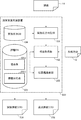
- FIG. 1 is a block diagram illustrating a configuration example of a measure implementation support apparatus according to the first embodiment of the present invention.
- the measure implementation support apparatus 100 illustrated in FIG. 1 includes an implementation status determination unit 101, a reason acquisition unit 102, a new task recommendation unit 103, an implementation status database (implementation status DB (Database)) 104, and an issue database (issue DB). ) 105.
- implementation status database implementation status database (implementation status DB (Database))
- issue database issue database
- the implementation status DB 104 stores information indicating the implementation status of the task currently given to the consultant.
- the implementation status DB 104 stores, for example, information in which date information, an issue ID (Identifier) for identifying an issue, and presence / absence of execution are associated with each other.
- the life improvement measure itself given to the consultant itself or the issue given to the consultant first in order to implement the life improvement measure is referred to as the highest task corresponding to the life improvement measure.
- the implementation status determination unit 101 determines the implementation status of the specified task.
- the implementation status determination unit 101 may determine, for example, whether or not the implementation of the designated issue is sufficient based on information indicating the implementation status of the designated issue stored in the implementation status DB 104. .
- the implementation status determination unit 101 is sufficient to implement the task according to the non-implementation rate and the number of times of the task indicated by information indicating the implementation status of the specified task stored in the implementation status DB 104. It may be determined whether or not.
- the implementation status determination unit 101 may determine the implementation status of each task and output the task ID of the task that has been determined that the implementation status is insufficient.
- the assignment DB 105 stores an assignment table 1051, a reason table 1052, and an assignment correspondence table 1053.
- the assignment table 1051 is an information table that holds information on the assignment in association with the assignment ID of the assignment handled by the measure implementation support apparatus 100 of the present embodiment.
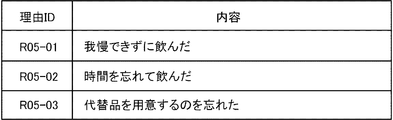
- the reason table 1052 is an information table that holds information on the reason for failure in association with a reason ID that identifies a possible reason for failure for the problem handled by the measure implementation support apparatus 100 of the present embodiment.
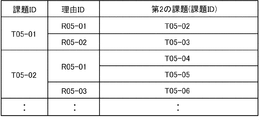
- the assignment correspondence table 1053 is an information table that holds the correspondence between assignments. More specifically, the assignment correspondence table 1053 includes the first assignment and the second assignment, which is another assignment with specific actions for implementing the same life improvement measures as the first assignment, It is an information table which matched the failure reason to which the said 2nd subject is applied.
- the assignment correspondence table 1053 may be information in which information on the second assignment is associated with the assignment ID of the first assignment and the reason ID of the reason for failure of the first assignment, for example.
- the deep excavation task is a second task that is dependent on the first task to be associated.
- the additional task is a second problem that is in parallel with the first problem to be associated. It can also be said that the additional task is a second task that is subordinate to the higher-level task of the first task to be associated.
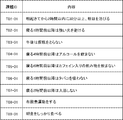
- FIG. 2 is an explanatory diagram showing an example of the top task.
- the two-digit number following T in the task ID represents the identification number for the life improvement measure
- the two-digit number after the hyphen is each item in the task group for implementing the life improvement measure.
- the number for identifying the assignment is shown.
- the assignment table 1051, the reason table 1052, and the assignment correspondence table 1053 may be provided for each life improvement measure.
- the reason acquisition unit 102 inquires and acquires the reason for failure of a task that has been determined to be insufficiently implemented (hereinafter referred to as a non-achieved task).
- the reason acquisition part 102 acquires the reason ID group matched with this task ID from the task correspondence table 1053, for example, with the task ID of the unachieved task as the task ID of the first task. Then, by using the acquired reason ID group as an option and causing the user to select a failure reason corresponding to the reason, the reason acquisition unit 102 determines the failure reason for the unachieved task (more specifically, the failure reason for the unachieved task). Information 12) to be obtained is acquired.
- the information 12 indicating the reason for failure is, for example, a reason ID.
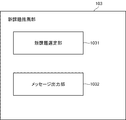
- FIG. 3 is a block diagram showing a more detailed configuration example of the new task recommendation unit 103.
- the new assignment recommendation unit 103 may include a new assignment selection unit 1031 and a message output unit 1032.
- the new task selection unit 1031 selects a new task according to the reason for failure of the unachieved task selected by the user.
- the new assignment selection unit 1031 acquires information on the second assignment that is associated with the assignment ID of the unachieved assignment and the acquired reason ID of the failure reason from the assignment correspondence table 1053, for example. Then, the new assignment selection unit 1031 may select at least one of the assignments specified by the acquired information on the second assignment as a new assignment corresponding to the reason for the failure of the unachieved assignment.
- the message output unit 1032 outputs a message 13 that recommends a new problem to the user.
- the message output unit 1032 may output, for example, a message indicating that the setting is recommended together with the content of the new assignment selected by the new assignment selection unit 1031 as the new assignment recommendation message 13.
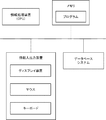
- the implementation status determination unit 101, the reason acquisition unit 102, and the new task recommendation unit 103 are realized by, for example, the hardware illustrated in FIG. It may be.
- each unit described above is realized by an information processing device such as a CPU (Central Processing Unit) that operates according to a program and an information input / output device such as a display device, a mouse, and a keyboard.
- the Moreover, the implementation status DB 104 and the assignment DB 105 are realized by a storage unit such as a memory or a database system as shown in FIG.
- the recording medium that stores the program readable by the CPU may be a non-volatile recording medium.
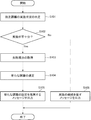
- FIG. 4 is a flowchart showing an example of the operation of this embodiment.
- the implementation status determination unit 101 determines the implementation status of the specified task (step S101).
- the reason acquisition unit 102 acquires the failure reason of the designated task from the user (Step S103).
- the new task selection unit 1031 selects a new task according to the acquired reason for failure (step S104).
- the message output unit 1032 When a new assignment is selected, the message output unit 1032 outputs a recommendation message 13 for the selected new assignment (step S105).
- the new task recommended here is added to one of the tasks for implementing the same life improvement measure as the non-achieved task, for example, after the user's consent.
- the new assignment selection unit 1031 may add the presented new assignment to one of the assignments given to the user without understanding from the user. In that case, the process of step S105 is omitted or replaced with a process of outputting a report message of the set task.
- the message output unit 1032 may output a message that prompts the continuation of the implementation of the subject (Step S106).
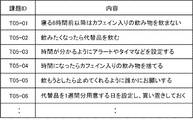
- FIG. 5 is an explanatory diagram showing an example of an assignment table 1051 stored in the assignment DB 105.
- FIG. 6 is an explanatory diagram showing an example of the reason table 1052 stored in the assignment DB 105.
- FIG. 7 is an explanatory diagram showing an example of the assignment correspondence table 1053 stored in the assignment DB 105.
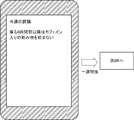
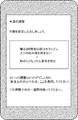
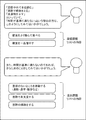
- 8A, 8B, and 8C are explanatory diagrams illustrating examples of user interfaces in this example.
- a task group having one of the life improvement measures given to the consultant based on cognitive behavioral therapy for insomnia as the highest task more specifically, the highest task and A part of the information table that holds the task ID of each task included in the task group including the subordinate tasks derived therefrom and the content of the task in association with each other is shown.
- the task ID T05-01 is the task ID of the life improvement measure that is the highest task in this example.
- the reason ID of each reason for failure included in the group of reasons for failure considered for one of the life improvement measures given to the consultant based on the cognitive behavioral therapy for insomnia And a part of an information table that holds the contents of failure reasons in association with each other.
- the two-digit number following R in the reason ID represents the identification number of the life improvement measure, which is the highest task in this example, and the two-digit number after the hyphen is each number in the failure reason group. Indicates the number for identifying the reason for failure.
- a part of the information table that stores the ID and the task ID of the second task corresponding to the reason for the failure in association with each other is shown.
- the assignment ID ⁇ T05-01 ⁇ of the assignment currently given as information 11 specifying the assignment is input to the implementation status determination unit 101.
- the implementation rate of the subject during the predetermined period is 1/7.
- the implementation status determination unit 101 refers to information indicating the implementation status of the subject from the implementation status DB 104 and determines that the implementation of the subject is insufficient.
- the implementation status determination unit 101 acquires a record indicating the implementation status of an assignment that matches the assignment ID input from the implementation status DB 104 for a predetermined period. Based on the acquired record group, the number of executions of the task during the period may be calculated. The implementation status determination unit 101 may determine that the implementation is insufficient when the implementation count is less than a predetermined threshold.
- the new task selection unit 1031 selects a new task according to the reason for failure acquired by the reason acquisition unit 102.
- the new assignment selection unit 1031 determines that the assignment ID of the unachieved assignment is T05-01 and the reason ID is R05-01 acquired by the reason acquisition unit 102 from the assignment correspondence table 1053 shown in FIG.
- the task ID ⁇ T05-02 ⁇ of the second task associated is obtained. Then, the task indicated by the acquired task ID of the second task is selected as a new task.
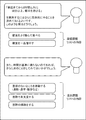
- FIG. 8C shows an example in which the “substitute product” included in the content of the obtained new problem is embodied as “barley tea” and then presented to the user. May be performed through the user.
- the new assignment selection unit 1031 or the message output unit 1032 includes a predetermined symbol or the like indicating the user-specified item in the content of the obtained new issue
- the user-specified item is embodied.
- a user-specified item input screen or the like may be provided to the user, and the user may be allowed to input a specific example that is set as the user-specified item.
- 9A and 9B are explanatory diagrams illustrating another example of a new problem.
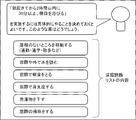
- the contents obtained from the two selected tasks are: “Don't drink caffeinated drinks after 6 hours before going to bed + Throw away caffeinated drinks when it ’s time”, “After 6 hours before going to bed “Don't drink caffeinated drink + ask someone to stop if you try to drink”.
- the content of the selected new assignment is presented by the recommendation message 13. In this way, an interaction is realized in which the content of an insufficiently implemented task is changed step by step depending on the reason for failure.
- the measure implementation support apparatus of the present embodiment holds a possible failure reason for each problem in association with the second problem to cope with it. Then, when acquiring information that indicates that the achievement of the task has failed, the user is selected from the possible reasons for failure for the task, and a new action with specific actions according to the reason for the failure is selected. A message recommending a specific task. Since the user has the interaction to easily specify the action for achieving the task when the user cannot achieve the task, the user can perform the task without much trouble. You can embody your actions and make life improvement measures easier. Therefore, the implementation rate and continuity of implementation of the given life improvement measures can be increased.
- FIG. 10 is a block diagram illustrating a configuration example of the measure implementation support apparatus according to the second embodiment of the present invention.
- the measure implementation support apparatus 200 shown in FIG. 10 has a new issue recommendation unit 103 as a new issue recommendation unit 203, and an issue DB 105. Is different from the problem DB 205.
- the assignment DB 205 stores a reason table 2052 and an assignment correspondence table 2053.
- the reason table 2052 is an information table that holds information on the reason for failure that can be considered for the problem handled by the measure implementation support apparatus 200 in association with the reason ID that identifies the reason for failure.
- the reason table 2052 of this embodiment holds information indicating the type of a new problem that can be set when the reason for failure is satisfied, as information on the reason for failure.
- the reason table 2052 may be, for example, an information table that stores a reason ID, a content of the reason for failure, and a deep digging flag and an additional flag as information indicating other types of problems that can be set.
- the deep digging flag is a flag that indicates whether or not a problem corresponding to the deep digging problem can be set as a new problem.
- the additional flag is a flag that indicates whether or not a task corresponding to the additional task can be set as a new task.
- the assignment correspondence table 2053 is an information table that combines the functions of the assignment correspondence table 1053 of the first embodiment and the functions of the assignment table 1051. That is, the assignment correspondence table 2053 is an information table that holds the correspondence between assignments together with information related to at least one assignment.
- the assignment correspondence table 2053 includes, for example, an assignment ID, a parent ID that is the assignment ID of the parent assignment of the assignment, the contents of the assignment, and the assignment for each of the assignments handled by the measure implementation support apparatus 200 of the present embodiment. May be information in which a failure reason of a parent task to which is applied is associated with information on a failure reason considered for the task.
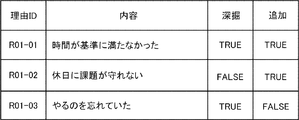
- FIG. 12 is an explanatory diagram showing an example of the reason table 2052 stored in the assignment DB 205.
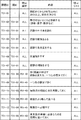
- FIG. 13 is an explanatory diagram showing an example of the assignment correspondence table 2053 stored in the assignment DB 205.
- the reason ID of each failure reason included in the failure reason group considered for one of the life improvement measures given to the consultant based on the cognitive behavioral therapy for insomnia An information table that holds the contents of the reason for failure, the deep digging flag and the additional flag as the type of the second problem in association with each other is shown. Also in this example, the two-digit number following R in the reason ID represents the identification number of the life improvement measure that is the highest task in this example, and the two-digit number after the hyphen is in the failure reason group. It represents a number for identifying each reason for failure.
- FIG. 13 shows, as an example of the task correspondence table 2053, a task ID of each task included in the task group in which one of the life improvement measures given to the consultant based on cognitive behavioral therapy for insomnia is the highest task.
- an information table that holds a parent ID, a reason selection, and a reason list in association with each other.
- the reason selection is information on the reason for failure of the parent task to which the task is applied.
- the reason list is information on the reason for failure that can be considered for the subject.
- the 2-digit number following T in the task ID represents the identification number of the life improvement measure that is the highest-level task in this example, and the 2-digit number after the hyphen is each number in the task group. The number for identifying the assignment is shown.
- FIG. 11 is a block diagram showing a more detailed configuration example of the new assignment recommendation unit 203.
- the new assignment recommendation unit 203 may include a new assignment selection unit 2031 and a message output unit 2032.
- the new task selection unit 2031 selects a new task according to the reason for failure of the unachieved task selected by the user, as in the first embodiment.
- the new assignment selection unit 2031 of the present embodiment creates a new assignment based on information indicating whether or not the second assignment type is registered in advance for the reason for failure acquired by the reason acquisition unit 102. Select a deeper issue that is subordinate to an unachieved issue and / or an additional issue that is the same issue as an unachieved issue.
- the message output unit 1032 outputs a new task recommendation message including the deep task list 231 that is a list of deep tasks and / or a list of additional tasks based on the selection result by the new task selection unit 2031.
- the new assignment selecting unit 2031 indicates the assignment having the unachieved assignment as a parent in the assignment correspondence table 2053.
- the one that meets the conditions is selected as a new deep drilling task (hereinafter referred to as a new deep drilling task).
- the new task selection unit 2031 creates a new task in which the task ID of the unachieved task is the parent ID and the acquired reason for failure is included in the reason selection as the deep task list 231. Selected for deep mining issues.
- the message output unit 2032 creates, for example, a list of selected new deep digging assignments to create a deep digging assignment list 231, and a recommendation message that recommends setting of assignments included in the created deep digging assignment list 231. May be output.
- the new assignment selecting unit 2031 selects a parent common to the unachieved assignment in the assignment correspondence table 2053. A task that meets the conditions is selected as a new task (hereinafter referred to as a new additional task). More specifically, the new assignment selection unit 2031 has an assignment that has the same parent ID as the parent ID of the non-achieved assignment, is not currently set, and the acquired failure reason is included in the reason selection. , Select new additional issues. Further, the message output unit 2032 may create a new assignment list 232 by listing the selected new additional assignments, and may output a recommendation message that recommends setting of assignments included in the additional assignment list 232, for example. .
- new assignment selection unit 2031 may perform the creation process of the deep assignment list 231 and the additional assignment list 232.
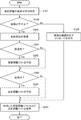
- FIG. 14 is a flowchart showing an example of the operation of the present embodiment.
- the same step number is attached
- the new task selection unit 2031 causes the deep flag and the additional flag associated with the acquired failure reason. Confirm.
- the new task selection unit 2031 determines the task ID of the unachieved task and the acquired failure. A new deep digging task is selected based on the reason and the task correspondence table 2053, and a deep digging task list 231 is created (step S202).
- the new task selection unit 2031 acquires the task ID of the unachieved task and the acquired task ID. A new additional assignment is selected based on the failure reason and the assignment correspondence table 2053, and an additional assignment list 232 is created (step S204).
- the message output unit 2032 presents the created deep digging task list 231 and the additional digging task list 232, and recommends messages that recommend setting the tasks included in the deep digging task list 231 as deep digging tasks, and the addition
- a recommendation message recommending that the assignments included in the assignment list 232 be set as additional assignments is output (step S205).
- FIG. 15 to FIG. 16 and FIG. 18 to FIG. 21 are explanatory diagrams showing examples of user interfaces in this example.
- the task ID ⁇ T01-01 ⁇ of the task currently given as the information 11 specifying the task is input to the implementation status determination unit 101.
- the implementation status determination unit 101 refers to the implementation status of the subject from the implementation status DB 104 and determines that the implementation of the issue is insufficient.
- the message output unit 2032 recommends the tasks in the created deep digging task list 231 together with a message that recommends materialization of the tasks.
- the message output unit 2032 creates the added assignment list 232 together with a message recommending addition of the assignment so that the user does not stick to one method. Recommend additional assignments.
- the new assignment selection unit 2031 implements these selected assignments as unachieved assignments. It may be set as one of defining specific actions for the purpose. In addition, if the selected task is selected from the deep-digging task list 231, the new task selection unit 2031 is regarded as one of the tasks that embody the action for implementing the unachieved task. It may be set. In addition, if the selected task is selected from the additional task list 232, the task may be set as one of the tasks that embody the action for performing the parent task of the unachieved task. . Thus, by clarifying the relationship between tasks, it is easy to determine whether another task should be executed instead of a certain task.
- the measure implementation support apparatus may include an input unit (not shown) that receives information indicating the implementation status.
- the task ID ⁇ T01-03, T01-04, T01-06 ⁇ of the task currently given as the information 11 specifying the task is input to the implementation status determination unit 101.
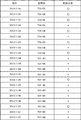
- the implementation status determination unit 101 calculates, for example, an implementation rate during a predetermined period of the designated task based on information indicating the implementation status of each task for each date as illustrated in FIG. It is determined that a task whose rate is equal to or less than a predetermined value is insufficiently implemented.
- the implementation status determination unit 101 determines that the non-implementation rate or the number of times of the designated issue is less than a predetermined threshold based on the information indicating the implementation status of the designated issue stored in the implementation status DB 104. If so, it may be determined that the implementation is insufficient, and if it is equal to or greater than a predetermined threshold, it may be determined that the implementation is sufficient.
- the reason acquisition unit 102 inquires of the user about the failure reason for each of the issues (non-achieved issues).
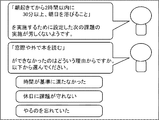
- the reason acquisition unit 102 may collectively inquire about the reasons for the failure. For example, the reason acquisition unit 102 acquires a reason list associated with each non-achieved task from the task correspondence table 2053 illustrated in FIG. Then, the failure reason included in the union of the acquired reason list may be used as an option for the failure reason of the non-achieved task group, and the failure reason corresponding to the user may be inquired (see FIG. 19). At this time, the user may select one reason for failure or may select all of the corresponding reasons.
- the reason acquisition unit 102 may, for example, inquire about the reason for failure of the top-level task when receiving information indicating that the top-level task has been insufficiently implemented. At this time, the reason acquisition unit 102 may inquire about the reason for failure of the subordinate task that has been determined to be insufficient if known, or may omit inquiries about the reason for failure of the subordinate task.
- a set of task ID and reason ID of the non-achieved task is further obtained as information 12 indicating the reason for failure.
- the new assignment selection unit 2031 sequentially takes out the combination of the assignment ID and reason ID of the non-achieved assignment, and based on the values of the deep digging flag and additional flag of the failure reason indicated by the reason ID, and the assignment ID of the non-achieved assignment
- the task IDs are registered in the deep task list 231 and the additional task list 232.
- the currently set issues and their parent issues are excluded.
- the remaining task ID ⁇ T01-02, T01-05, T01-07 ⁇ is registered in the additional task list 232.
- the new assignment selection unit 2031 takes out the next assignment ID and reason ID set ⁇ T01-04, R01-01 ⁇ .
- ID ⁇ T01-11, T01-12 ⁇ is acquired.
- the assignment IDs registered in the additional assignment list 232 are the same. Therefore, in the case of a non-achieved task having the same parent ID as the non-achieved task already processed, the registration process to the additional task list 232 is omitted.
- the new assignment selection unit 2031 takes out the last assignment ID and reason ID set ⁇ T01-06, R01-01 ⁇ .
- the message output unit 2032 presents the created deep digging task list 231 and the additional task list 232 together with the recommendation message to the user (see FIG. 20).
- the example using the content of the highest task for the message when presenting the deep digging task list 231 is shown in FIG. 20, it is also possible to use the content of each non-achieved task and the reason for failure. (See FIG. 21).
- a message prompting continuation is presented for a task that has been determined to be sufficient for implementation, but a new message is also provided for a task that has been determined to be sufficient for implementation.
- the reason acquisition unit 102 may inquire the user about whether there is an effect on a problem that is sufficiently implemented, and acquire the presence or absence of the effect.
- the message output unit 2032 prompts the continuation if there is an effect, and if there is no effect, the method similar to the method of creating the additional assignment list 232 Create a list of tasks with specific actions that are different from the tasks. Then, the message output unit 2032 may present a task in the generated list together with a message recommending a new task to replace the task (a task that has not been effective).
- the measure implementation support apparatus of the present invention may be incorporated in a CBT-I tool that accepts input of data related to sleep such as a sleep diary and analyzes the data to give a problem to the user.
- the implementation status determination unit 101 may analyze the input data and determine the implementation status of the task when the task corresponding to the life improvement measure related to the sleep schedule is set. Good.
- the implementation status determination unit 101 sets the bed earlier than planned. If the number of days entered is greater than or equal to a predetermined number of times, it may be determined that the subject is insufficiently implemented. Whether or not you are in bed earlier than scheduled can be determined, for example, by measuring the difference between the time you have entered the bed and the sleep time.
- the reason acquisition unit 102 may be a voluntary failure (such as entering intentionally early) or an involuntary failure. The user may be inquired about whether it is (because of getting sleepy and unable to endure) or forgetful failure (forgetting the task, forgetting the time, etc.).
- the new assignment selection unit 1031 and the new assignment selection unit 2031 do not select a new assignment, and the message output unit 2031 and the message output unit.
- a message explaining the intention of setting the task may be presented, such as 2032 is better aimed at the long-term effect than the short-term effect. If the failure continues for the same reason, it may be recommended to select a new task that embodies the action for performing the task in the same manner as in the above embodiments, and recommend its setting. Good.
- the reason for failure is involuntary failure or forgetful failure, a new method that specifically defines a device for waking up and a device for not forgetting by the same method as each of the above embodiments.
- the currently set issues are stored as history information together with the implementation status, reason for failure, presence / absence of effect, etc., for every predetermined period. You may do it.
- a task top task
- a life improvement measure such as “limited to bed time from XX hours to XX hours”
- the implementation status determination unit 101 gets out of the bed when the subject cannot sleep for a predetermined time regardless of whether or not the task is sufficiently performed.
- the predetermined state during the predetermined period indicates, for example, that the number of days in which the awakening during the predetermined period, the awakening in the early morning, or the difficulty of falling asleep during the predetermined period has occurred more than XX minutes is equal to or more than the predetermined number of times.
- the reason for failure may be “involuntary failure”.
- the implementation status determination unit 101 analyzes the data regarding the input sleep, and the execution of the currently set problem or the top-level problem is automatically performed. You may determine whether it is enough.
- the reason acquisition unit 102 is not limited to the problem corresponding to the life improvement measures related to the sleep schedule, and the reason for the failure of the unachieved task is any one of “involuntary failure”, “spontaneous failure”, and “forgetful failure”
- the user may be inquired as to whether this is true.
- the new task selection unit 1031 and the new task selection unit 2031 may determine whether to explain the intention to the user or to select a new task depending on the type of failure reason.
- the reason table 1052 and the reason table 2052 can be omitted.
- the reason acquisition unit 102 may inquire the user about the reason for failure based on the reason table 1052 and the reason table 2052, and determine which type of the failure reason is obtained.
- Such a configuration can be realized, for example, by providing a type column in the reason table 1052 and the reason table 2052.
- involuntary failures include -Even if you try not to take a nap, you lose the sleepiness.-Even if you try to take the morning sun for 30 minutes, you are only outside for about 20 minutes. However, he was drunk and forced to exercise and was exercising, but palpitations and shortness of breath were severely stopped and exercised, but his joints hurt and could not continue. ⁇ I was planning to have breakfast, but my appetite was not enough. Involuntary failures are motivated, but they are not the right way, difficult, or fail because they don't know how.
- the user of the present invention may be a consultant himself or a doctor who interacts with the consultant.
- the CBT-I tool functions as a self-check tool.
- the CBT-I tool functions as a support tool for a doctor or the like who interacts with the consultant.
- the operator When operated by a person other than the consultant, the operator (user) inputs the information obtained from the consultant into the CBT-I tool or consults the message displayed on the CBT-I tool screen. You can ask the reason why is insufficient, or propose a new problem.
- the measure support execution device does not recommend itself, but the new task selected in response to a request from the user.
- the information may be output.
- a new task information output unit (not shown) including the new task selection unit described above and an output unit that outputs information on the new task selected by the new task selection unit. ) May be provided.
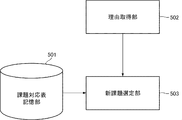
- FIG. 22 is a block diagram showing an outline of the present invention.
- the measure implementation support apparatus of the present invention includes an assignment correspondence table storage unit 501, a reason acquisition unit 502, and a new assignment selection unit 503.
- the assignment correspondence table storage unit 501 (for example, assignment DB 105, assignment DB 205) includes identification information of an assignment for implementing a predetermined life improvement measure and identification information of a reason for failure predetermined for the assignment.
- a task correspondence table that associates at least identification information of other tasks is stored.
- the other problem is a problem for implementing the same life improvement measure, and is a problem with specific actions according to the reason for the failure.
- the reason acquisition unit 502 (for example, the reason acquisition unit 102), when the implementation of the task is insufficient, sets the failure reason corresponding to the failure reason predetermined for the specified task to the user. To select.
- the new assignment selection unit 503 (for example, the new assignment selection unit 1031 and the new assignment selection unit 2031) is based on the identification information of the designated assignment, the identification information of the reason of failure selected by the user, and the assignment correspondence table. Select new issues to implement the same life improvement measures as the specified issues.
- the user can embody the action for performing the problem without much trouble, and improve the life. Since measures can be made easier, the implementation rate and continuity of implementation of given life improvement measures can be increased.
- the measure implementation support apparatus may include a reason table storage unit (for example, task DB 105, task DB 205) that stores a reason table in which information regarding the reason for failure is associated with identification information of the reason for failure.
- the reason acquisition unit may select a failure reason corresponding to the user by using a failure reason predetermined for the designated task based on the task correspondence table and the reason table. .
- the measure implementation support apparatus may include a message output unit (for example, message output unit 1032 and message output unit 2032) that outputs a message recommending a new issue selected by the new issue selection unit 503.
- a message output unit for example, message output unit 1032 and message output unit 2032
- the reason table storage unit may store a reason table including reason type information indicating the type of the reason for failure as information on the reason for failure.
- the failure reason types include involuntary failure, spontaneous failure, and forgetful failure
- the new task selection unit determines that the failure reason type selected by the user is involuntary failure. Or, in the case of forgetful failure, a new assignment is set.
- a message output part may output the message explaining the meaning of the designated subject, when the classification of the reason for failure selected by the user is spontaneous failure.
- the reason acquisition unit allows the user to select whether or not the specified task is effective when the specified task is sufficiently executed, and the new task selection unit performs the specified task sufficiently. If there is no effect, a new task for implementing the same life improvement measures as the designated task may be selected.
- the message output unit may output a message recommending that the new assignment selected by the new assignment selection unit be set in place of the designated assignment.
- the reason table storage unit may store a reason table including information indicating new problem types that can be set when the failure reason is satisfied, as information on the reason for failure.
- the new problem types include an additional problem that represents a problem that is in a parallel relationship with the associated problem, and a deep problem that represents a problem that is dependent on the associated problem.
- the assignment identification information and the identification information of the reason for failure are associated with other assignments that match the new assignment type permitted by the reason for failure.
- the new task selection department is a task for implementing the same life improvement measures as the specified task as a new task. You may select the additional task with respect to the task or the higher-order task of the designated task.
- (A) Identification information of the designated assignment
- (C) Assignment table (D) The type of the second problem permitted by the failure reason selected by the user.
- the measure implementation support apparatus may include an implementation status determination unit (for example, an implementation status determination unit 101) that determines the implementation status of the designated task.
- an implementation status determination unit for example, an implementation status determination unit 101
- the implementation status determination unit may determine the implementation status of the top task when the designated task is not the top task in the task group for implementing the same life improvement measure.
- the measure implementation support device is a measure implementation support device that supports the implementation of life improvement measures given to the consultant based on the concept of cognitive behavioral therapy for insomnia.
- an implementation status determination part may determine the implementation status of the predetermined
- the present invention is not limited to the use for supporting the implementation of life improvement measures given to a consultant based on the concept of cognitive behavioral therapy for insomnia, but for the use for supporting the implementation of predetermined measures for which no specific behavior has been established. Can also be suitably applied.
Landscapes
- Engineering & Computer Science (AREA)
- Business, Economics & Management (AREA)
- Human Resources & Organizations (AREA)
- Theoretical Computer Science (AREA)
- Health & Medical Sciences (AREA)
- Strategic Management (AREA)
- Economics (AREA)
- Entrepreneurship & Innovation (AREA)
- General Physics & Mathematics (AREA)
- Physics & Mathematics (AREA)
- General Business, Economics & Management (AREA)
- Development Economics (AREA)
- Educational Administration (AREA)
- Tourism & Hospitality (AREA)
- Marketing (AREA)
- General Engineering & Computer Science (AREA)
- Quality & Reliability (AREA)
- Game Theory and Decision Science (AREA)
- Operations Research (AREA)
- General Health & Medical Sciences (AREA)
- Primary Health Care (AREA)
- Databases & Information Systems (AREA)
- Medical Informatics (AREA)
- Biomedical Technology (AREA)
- Epidemiology (AREA)
- Public Health (AREA)
- Child & Adolescent Psychology (AREA)
- Developmental Disabilities (AREA)
- Psychology (AREA)
- Social Psychology (AREA)
- Hospice & Palliative Care (AREA)
- Software Systems (AREA)
- Psychiatry (AREA)
- Data Mining & Analysis (AREA)
- Human Computer Interaction (AREA)
- Medical Treatment And Welfare Office Work (AREA)
- Management, Administration, Business Operations System, And Electronic Commerce (AREA)
Abstract
Description
・三食しっかりとる
・歩行など有酸素運動をする
・午後の仮眠は避ける
・朝起きてから2時間以内に30分以上光を浴びる
・就床前6時間のカフェイン摂取は避ける
・就床前1時間の喫煙は避ける
・就床前4時間のアルコール摂取は避ける
・就床前2時間までに入浴する
・就床前1時間のテレビジョン装置、パーソナルコンピュータなど電源のついた画面を見ることは避ける
等が挙げられる。
・ベッドにいる時間を○○時~○○時に限る(睡眠制限)
・実際に眠れている時間だけ布団やベッドに居るようにする(睡眠制限)
・寝つけないときは離床する(刺激統制)
・ベッド以外の場所で寝てはならない
等が挙げられる。
・寝る前に軽く読書を行う
・寝る前に軽く音楽を聞く
・ぬるめのお風呂に入る
・寝る前に好きな香りを嗅ぐ
・筋弛緩トレーニングを行う
等が挙げられる。
図1は、本発明の第1の実施形態における施策実施支援装置の構成例を示すブロック図である。図1に示す施策実施支援装置100は、実施状況判定部101と、理由取得部102と、新課題推薦部103と、実施状況データベース(実施状況DB(Database))104と、課題データベース(課題DB)105とを備える。
また、実施状況判定部101は、複数の課題が指定された場合には、各課題の実施状況を判定し、実施状況が不十分であると判定した課題の課題IDを出力してもよい。
図10は、本発明の第2の実施形態の施策実施支援装置の構成例を示すブロック図である。図10に示す施策実施支援装置200は、図1に示す第1の実施形態の施策実施支援装置100と比べて、新課題推薦部103が新課題推薦部203となっている点と、課題DB105が課題DB205になっている点が異なる。
ただし、課題対応表2053において取得した課題IDのうち、理由選択欄がユーザが選択した失敗理由と一致しないものは除去する。本例の場合、取得された課題ID=T01-10は、その理由選択欄が「R01-03」となっており、ユーザが選択した失敗理由であるR01-01と一致しないため除外される。したがって、深掘課題リスト231には何も登録されない。
例えば、第2の実施形態において、理由取得部102が、実施が十分な課題に対して効果の有無をユーザに問い合わせ、効果の有無を取得してもよい。そして、メッセージ出力部2032が、理由取得部102によって取得された効果の有無に応じて、効果があれば継続を促し、効果がなければ追加課題リスト232を作成する方法と同様の方法により、当該課題とは異なる具体的な行動を伴う課題のリストを作成する。そして、メッセージ出力部2032が、生成されたリスト内の課題を当該課題(効果がなかった課題)に代わる新たな課題を推薦するメッセージとともに提示してもよい。
なお、同じ理由による失敗が続いていた場合には、上記各実施形態と同様の方法により、当該課題を実施するための行動を具体化した新たな課題を選定して、その設定を薦めてもよい。一方、失敗理由が非自発的失敗や忘却的失敗であった場合には、上記各実施形態と同様の方法により、起きているための工夫や忘れないための工夫を具体的に規定した新たな課題を選定して、その設定を薦めてもよい。なお、同じ理由による失敗が続いているか否かを判定するために、例えば、所定期間経過ごとに現在設定されている課題を、その実施状況や失敗理由や効果の有無等とともに履歴情報として記憶するようにしてもよい。
・昼寝しないでおこうとしても睡魔に負ける
・朝日を30分浴びようとしても20分くらいしか外にいない
・休暇はついつい定められた時間よりも寝過ぎてしまう
・お酒は飲まないはずだったが、誘われて無理矢理飲まされた
・運動したが、動悸・息切れが激しくやめた
・運動したが、関節が痛んで継続できなかった
・よく飲んでいたものに、実はカフェインが多く含まれていた
・朝食をとるつもりだったが、どうしても食欲がでなかった
などが挙げられる。非自発的失敗には、やる気はあるが、合う方法でなかったり、難しかったり、方法がわからないために失敗するといった特徴がある。
・その時間になっていることに気付かなかった
・いつもの癖で寝る前にお風呂に入ってしまった
・いつもの癖で地下を歩いてしまう
などが挙げられる。忘却的失敗には、課題を実施するときに、課題そのものを忘れていたり、やる時間だと気付かないために失敗するといった特徴がある。
・だめだと分かっていたが、寝る前にタバコを吸ってしまった
・ついついお酒に手を出してしまった
・寝る前にリラクゼーションすることになっていたが面倒くさくてしなかった
・見たいテレビがあって、寝る前だが見てしまった
などが挙げられる。自発的失敗には、やる意義を感じなくなったり、誘惑に負けたり、面倒くさくなったために、意図的に実施しないといった特徴がある。
(A)指定された課題の識別情報、
(B)ユーザが選択した失敗理由の識別情報、
(C)課題対応表、
(D)ユーザが選択した失敗理由が許可する第2課題の種類。
101 実施状況判定部
102 理由取得部
103、203 新課題推薦部
1031、2031 新課題選定部
1032、2032 メッセージ出力部
104 実施状況データベース(実施状況DB)
105、205 課題データベース(課題DB)
1051 課題表
1052、2052 理由表
1053、2053 課題対応表
501 課題対応表記憶部
502 理由取得部
503 新課題選定部
Claims (11)
- 所定の生活改善施策を実施するための課題の識別情報と、前記課題に対して予め定められている失敗理由の識別情報とに対して、前記生活改善施策を実施するための他の課題であって前記失敗理由に応じた具体的な行動を伴う他の課題の識別情報を少なくとも対応づけた課題対応表を記憶する課題対応表記憶手段と、
指定された課題の実施が不十分であった場合に、当該課題に対して予め定められている失敗理由の中から該当する失敗理由をユーザに選択させる理由取得手段と、
前記指定された課題の識別情報と、ユーザが選択した失敗理由の識別情報と、前記課題対応表とに基づいて、指定された課題と同じ生活改善施策を実施するための新たな課題を選定する新課題選定手段とを備えた
ことを特徴とする施策実施支援装置。 - 失敗理由の識別情報に対して、当該失敗理由に関する情報を対応づけた理由表を記憶する理由表記憶手段を備え、
理由取得手段は、課題対応表と、前記理由表とに基づいて、指定された課題に対して予め定められている失敗理由を選択肢にして、ユーザに該当する失敗理由を選択させる
請求項1に記載の施策実施支援装置。 - 新課題選定手段が選定した新たな課題を推薦するメッセージを出力するメッセージ出力手段を備えた
請求項1または請求項2に記載の施策実施支援装置。 - 理由表記憶手段は、失敗理由に関する情報として、当該失敗理由の種別を示す理由種別情報を含む理由表を記憶し、
前記失敗理由の種別には、非自発的失敗と、自発的失敗と、忘却的失敗とがあり、
新課題選定手段は、ユーザが選択した失敗理由の種別が非自発的失敗または忘却的失敗の場合に、新たな課題の選定を行い、
メッセージ出力手段は、ユーザが選択した失敗理由の種別が自発的失敗の場合に、指定された課題の意義を説明するメッセージを出力する
請求項3に記載の施策実施支援装置。 - 理由取得手段は、指定された課題の実施が十分であった場合に、指定された課題の効果の有無をユーザに選択させ、
新課題選定手段は、前記指定された課題が実施は十分であったが効果が認められない場合に、前記指定された課題と同じ生活改善施策を実施するための課題を選定し、
メッセージ出力手段は、前記新課題選定手段が選定した新たな課題を、前記指定された課題に代えて設定することを推薦するメッセージを出力する
請求項3または請求項4に記載の施策実施支援装置。 - 理由表記憶手段は、失敗理由に関する情報として、当該失敗理由に該当した場合に設定可能な新たな課題の種類を示す情報を含む理由表を記憶し、
前記新たな課題の種類には、対応づけられる課題と並列関係にある課題を表す追加課題と、対応づけられる課題と従属関係にある課題を表す深掘課題とが含まれ、
課題対応表には、課題の識別情報と、失敗理由の識別情報とに対して、当該失敗理由が許可する新たな課題の種類に合致する他の課題が対応づけられており、
新課題選定手段は、指定された課題の識別情報と、ユーザが選択した失敗理由の識別情報と、前記課題対応表と、ユーザが選択した失敗理由が許可する第2課題の種類とに基づいて、新たな課題として、指定された課題と同じ生活改善施策を実施するための課題であって、指定された課題に対する深掘課題または指定された課題の上位課題に対する追加課題を選定する
請求項1から請求項5のうちのいずれか1項に記載の施策実施支援装置。 - 指定された課題の実施状況を判定する実施状況判定手段を備えた
請求項1から請求項6のうちのいずれか1項に記載の施策実施支援装置。 - 実施状況判定手段は、指定された課題が、同じ生活改善施策を実施するための課題群における最上位課題でない場合に、前記最上位課題の実施状況を判定する
請求項7に記載の施策実施支援装置。 - 不眠症に対する認知行動療法の考え方に基づき相談者に与えられる生活改善施策の実施を支援する施策実施支援装置であって、
実施状況判定手段は、相談者の睡眠に関するデータに基づいて、睡眠スケジュールに関する生活改善施策を実施するための所定の課題の実施状況を判定する
請求項7または請求項8に記載の施策実施支援装置。 - 所定の生活改善施策を実施するための課題の識別情報と、前記課題に対して予め定められている失敗理由の識別情報とに対して、前記生活改善施策を実施するための他の課題であって前記失敗理由に応じた具体的な行動を伴う他の課題の識別情報を少なくとも対応づけた課題対応表を所定の記憶手段に予め記憶しておき、
指定された課題の実施が不十分であった場合に、当該課題に対して予め定められている失敗理由の中から該当する失敗理由をユーザに選択させ、
前記指定された課題の識別情報と、ユーザが選択した失敗理由の識別情報と、前記課題対応表とに基づいて、指定された課題と同じ生活改善施策を実施するための新たな課題を選定する
ことを特徴とする施策実施支援方法。 - 所定の記憶手段に記憶された課題対応表であって、所定の生活改善施策を実施するための課題の識別情報と、前記課題に対して予め定められている失敗理由の識別情報とに対して、前記生活改善施策を実施するための他の課題であって前記失敗理由に応じた具体的な行動を伴う他の課題の識別情報を少なくとも対応づけた課題対応表にアクセス可能なコンピュータに、
指定された課題の実施が不十分であった場合に、当該課題に対して予め定められている失敗理由の中から該当する失敗理由をユーザに選択させる処理、および
前記指定された課題の識別情報と、ユーザが選択した失敗理由の識別情報と、前記課題対応表とに基づいて、指定された課題と同じ生活改善施策を実施するための新たな課題を選定する処理
を実行させるための施策実施支援プログラムを記録するコンピュータ読み取り可能な記録媒体。
Priority Applications (3)
| Application Number | Priority Date | Filing Date | Title |
|---|---|---|---|
| JP2016503970A JP6212200B2 (ja) | 2014-02-19 | 2015-02-16 | 施策実施支援装置、施策実施支援方法および施策実施支援プログラム |
| EP15752823.3A EP3109820A4 (en) | 2014-02-19 | 2015-02-16 | Program-implementation assistance device, program-implementation assistance method, and recording medium |
| US15/117,247 US20160350687A1 (en) | 2014-02-19 | 2015-02-16 | Measure implementation supporting apparatus, measure implementation supporting method, and recording medium |
Applications Claiming Priority (2)
| Application Number | Priority Date | Filing Date | Title |
|---|---|---|---|
| JP2014-029710 | 2014-02-19 | ||
| JP2014029710 | 2014-02-19 |
Publications (1)
| Publication Number | Publication Date |
|---|---|
| WO2015125454A1 true WO2015125454A1 (ja) | 2015-08-27 |
Family
ID=53877977
Family Applications (1)
| Application Number | Title | Priority Date | Filing Date |
|---|---|---|---|
| PCT/JP2015/000694 Ceased WO2015125454A1 (ja) | 2014-02-19 | 2015-02-16 | 施策実施支援装置、施策実施支援方法および記録媒体 |
Country Status (4)
| Country | Link |
|---|---|
| US (1) | US20160350687A1 (ja) |
| EP (1) | EP3109820A4 (ja) |
| JP (1) | JP6212200B2 (ja) |
| WO (1) | WO2015125454A1 (ja) |
Cited By (5)
| Publication number | Priority date | Publication date | Assignee | Title |
|---|---|---|---|---|
| JP2019012524A (ja) * | 2017-06-30 | 2019-01-24 | ポーラ化成工業株式会社 | 肌状態、体状態又は心状態のケアに関する情報出力システム、情報出力プログラム及び情報出力方法 |
| JP2019012390A (ja) * | 2017-06-30 | 2019-01-24 | ポーラ化成工業株式会社 | 肌状態、体状態又は心状態のケアに関する情報出力システム、情報出力プログラム及び情報出力方法 |
| WO2019077898A1 (ja) * | 2017-10-17 | 2019-04-25 | Necソリューションイノベータ株式会社 | 睡眠改善支援システム、方法およびプログラム |
| JP2021135853A (ja) * | 2020-02-28 | 2021-09-13 | 積水化学工業株式会社 | 睡眠改善システム |
| WO2022024861A1 (ja) * | 2020-07-27 | 2022-02-03 | 株式会社Save Medical | 情報処理装置、情報処理方法及びプログラム |
Families Citing this family (5)
| Publication number | Priority date | Publication date | Assignee | Title |
|---|---|---|---|---|
| WO2014190083A1 (en) | 2013-05-21 | 2014-11-27 | Tomer Ben-Kiki | Systems and methods for providing on-line services |
| US10813584B2 (en) | 2013-05-21 | 2020-10-27 | Happify, Inc. | Assessing adherence fidelity to behavioral interventions using interactivity and natural language processing |
| US20190129941A2 (en) | 2013-05-21 | 2019-05-02 | Happify, Inc. | Systems and methods for dynamic user interaction for improving happiness |
| CN114830249A (zh) * | 2019-10-30 | 2022-07-29 | 幸福公司 | 用户与提升用户心理健康的在线服务的动态交互管理系统 |
| US20230109946A1 (en) * | 2021-10-12 | 2023-04-13 | Twill, Inc. | Apparatus for computer generated dialogue and task-specific nested file architecture thereof |
Citations (4)
| Publication number | Priority date | Publication date | Assignee | Title |
|---|---|---|---|---|
| JP2004021854A (ja) * | 2002-06-19 | 2004-01-22 | Omron Healthcare Co Ltd | 健康指導支援システム,サーバ,クライアント端末及び健康指導支援プログラム |
| JP2005209143A (ja) * | 2003-12-24 | 2005-08-04 | Kao Corp | 睡眠改善アドバイスプログラム |
| WO2006082706A1 (ja) * | 2005-02-07 | 2006-08-10 | Matsushita Electric Industrial Co., Ltd. | 健康管理支援装置 |
| JP2010092440A (ja) * | 2008-10-10 | 2010-04-22 | Sunnyhealth Co Ltd | ウェイトコントロール支援装置 |
Family Cites Families (3)
| Publication number | Priority date | Publication date | Assignee | Title |
|---|---|---|---|---|
| CN101375304A (zh) * | 2006-01-31 | 2009-02-25 | 松下电器产业株式会社 | 建议装置、建议方法、建议程序以及记录有建议程序的记录介质 |
| US20100099954A1 (en) * | 2008-10-22 | 2010-04-22 | Zeo, Inc. | Data-driven sleep coaching system |
| GB2471902A (en) * | 2009-07-17 | 2011-01-19 | Sharp Kk | Sleep management system which correlates sleep and performance data |
-
2015
- 2015-02-16 JP JP2016503970A patent/JP6212200B2/ja active Active
- 2015-02-16 EP EP15752823.3A patent/EP3109820A4/en not_active Withdrawn
- 2015-02-16 US US15/117,247 patent/US20160350687A1/en not_active Abandoned
- 2015-02-16 WO PCT/JP2015/000694 patent/WO2015125454A1/ja not_active Ceased
Patent Citations (4)
| Publication number | Priority date | Publication date | Assignee | Title |
|---|---|---|---|---|
| JP2004021854A (ja) * | 2002-06-19 | 2004-01-22 | Omron Healthcare Co Ltd | 健康指導支援システム,サーバ,クライアント端末及び健康指導支援プログラム |
| JP2005209143A (ja) * | 2003-12-24 | 2005-08-04 | Kao Corp | 睡眠改善アドバイスプログラム |
| WO2006082706A1 (ja) * | 2005-02-07 | 2006-08-10 | Matsushita Electric Industrial Co., Ltd. | 健康管理支援装置 |
| JP2010092440A (ja) * | 2008-10-10 | 2010-04-22 | Sunnyhealth Co Ltd | ウェイトコントロール支援装置 |
Non-Patent Citations (1)
| Title |
|---|
| See also references of EP3109820A4 * |
Cited By (10)
| Publication number | Priority date | Publication date | Assignee | Title |
|---|---|---|---|---|
| JP2019012524A (ja) * | 2017-06-30 | 2019-01-24 | ポーラ化成工業株式会社 | 肌状態、体状態又は心状態のケアに関する情報出力システム、情報出力プログラム及び情報出力方法 |
| JP2019012390A (ja) * | 2017-06-30 | 2019-01-24 | ポーラ化成工業株式会社 | 肌状態、体状態又は心状態のケアに関する情報出力システム、情報出力プログラム及び情報出力方法 |
| JP7129763B2 (ja) | 2017-06-30 | 2022-09-02 | ポーラ化成工業株式会社 | 肌状態、体状態又は心状態のケアに関する情報出力システム、情報出力プログラム及び情報出力方法 |
| JP7248385B2 (ja) | 2017-06-30 | 2023-03-29 | ポーラ化成工業株式会社 | 肌状態、体状態又は心状態のケアに関する情報出力システム、情報出力プログラム及び情報出力方法 |
| WO2019077898A1 (ja) * | 2017-10-17 | 2019-04-25 | Necソリューションイノベータ株式会社 | 睡眠改善支援システム、方法およびプログラム |
| JPWO2019077898A1 (ja) * | 2017-10-17 | 2020-10-22 | Necソリューションイノベータ株式会社 | 睡眠改善支援システム、方法およびプログラム |
| JP2021135853A (ja) * | 2020-02-28 | 2021-09-13 | 積水化学工業株式会社 | 睡眠改善システム |
| JP7417439B2 (ja) | 2020-02-28 | 2024-01-18 | 積水化学工業株式会社 | 睡眠改善システム |
| WO2022024861A1 (ja) * | 2020-07-27 | 2022-02-03 | 株式会社Save Medical | 情報処理装置、情報処理方法及びプログラム |
| JP2022023454A (ja) * | 2020-07-27 | 2022-02-08 | 株式会社Save Medical | 情報処理装置、情報処理方法及びプログラム |
Also Published As
| Publication number | Publication date |
|---|---|
| JPWO2015125454A1 (ja) | 2017-03-30 |
| JP6212200B2 (ja) | 2017-10-11 |
| US20160350687A1 (en) | 2016-12-01 |
| EP3109820A1 (en) | 2016-12-28 |
| EP3109820A4 (en) | 2017-07-19 |
Similar Documents
| Publication | Publication Date | Title |
|---|---|---|
| JP6212200B2 (ja) | 施策実施支援装置、施策実施支援方法および施策実施支援プログラム | |
| Oussedik et al. | Accountability: a missing construct in models of adherence behavior and in clinical practice | |
| Korpela et al. | How is leisure time interacting with nature related to the need for recovery from work demands? Testing multiple mediators | |
| Vieder et al. | Physician-patient interaction: what do elders want | |
| US20170263144A1 (en) | Methods, systems and user interfaces for behavioral learning | |
| Bennett et al. | How do hearing aid owners respond to hearing aid problems? | |
| WO2015116879A1 (en) | System and method for health assessment | |
| US20190035040A1 (en) | Method, Apparatus and System for Dynamic Analysis and Recommendations of Options and Choices based on User Provided Inputs | |
| JP2019068907A (ja) | 睡眠状態判定装置、睡眠状態判定方法、睡眠状態判定システムおよび睡眠状態判定プログラム | |
| US20150221233A1 (en) | Method and system for data collection | |
| JP7560083B2 (ja) | コンテンツ提供システム及びコンテンツ提供方法 | |
| Sankaran et al. | A grounded approach for applying behavior change techniques in mobile cardiac tele-rehabilitation | |
| Barua et al. | Modelling long term goals | |
| Evans et al. | The iPad project: introducing iPads into care homes in the UK to support digital inclusion | |
| Lancioni et al. | A technology-aided program for helping persons with Alzheimer’s disease perform daily activities | |
| Arnold et al. | Time matters: The role of recovery for daily mood trajectories at work | |
| Utz et al. | Maximizing the benefit of respite for dementia caregivers: a study protocol describing the development & evaluation of the Time for Living & Caring (TLC) intervention | |
| Mohadis et al. | Designing persuasive application to encourage physical activity at workplace among older workers | |
| Cho et al. | Adolescent self-reflection process through self-recording on multiple health metrics: qualitative study | |
| Laver et al. | Identifying sensory preferences in people with changes in cognition: The SPACE tool | |
| Eshelman | Socioeconomic status and social class as predictors of career adaptability and educational aspirations in high school students | |
| Garcia et al. | Reflective Healthcare Systems: micro-Cycle of Self-Reflection to empower users. | |
| Hardy et al. | Integrating psychological screening into reviews of patients with COPD | |
| CA3153344C (en) | SYSTEM AND METHOD FOR ASSESSING MENTAL HEALTH | |
| Gökçakan et al. | Smart Homes for the Elderly and the Role of Interior Designers |
Legal Events
| Date | Code | Title | Description |
|---|---|---|---|
| 121 | Ep: the epo has been informed by wipo that ep was designated in this application |
Ref document number: 15752823 Country of ref document: EP Kind code of ref document: A1 |
|
| WWE | Wipo information: entry into national phase |
Ref document number: 15117247 Country of ref document: US |
|
| ENP | Entry into the national phase |
Ref document number: 2016503970 Country of ref document: JP Kind code of ref document: A |
|
| NENP | Non-entry into the national phase |
Ref country code: DE |
|
| REEP | Request for entry into the european phase |
Ref document number: 2015752823 Country of ref document: EP |
|
| WWE | Wipo information: entry into national phase |
Ref document number: 2015752823 Country of ref document: EP |