WO2015128976A1 - Dispositif de stockage de données - Google Patents
Dispositif de stockage de données Download PDFInfo
- Publication number
- WO2015128976A1 WO2015128976A1 PCT/JP2014/054792 JP2014054792W WO2015128976A1 WO 2015128976 A1 WO2015128976 A1 WO 2015128976A1 JP 2014054792 W JP2014054792 W JP 2014054792W WO 2015128976 A1 WO2015128976 A1 WO 2015128976A1
- Authority
- WO
- WIPO (PCT)
- Prior art keywords
- memory module
- management unit
- volatile memory
- storage destination
- destination management
- Prior art date
- Legal status (The legal status is an assumption and is not a legal conclusion. Google has not performed a legal analysis and makes no representation as to the accuracy of the status listed.)
- Ceased
Links
Images







Classifications
-
- G—PHYSICS
- G06—COMPUTING OR CALCULATING; COUNTING
- G06F—ELECTRIC DIGITAL DATA PROCESSING
- G06F3/00—Input arrangements for transferring data to be processed into a form capable of being handled by the computer; Output arrangements for transferring data from processing unit to output unit, e.g. interface arrangements
- G06F3/06—Digital input from, or digital output to, record carriers, e.g. RAID, emulated record carriers or networked record carriers
- G06F3/0601—Interfaces specially adapted for storage systems
- G06F3/0628—Interfaces specially adapted for storage systems making use of a particular technique
- G06F3/0629—Configuration or reconfiguration of storage systems
- G06F3/0631—Configuration or reconfiguration of storage systems by allocating resources to storage systems
-
- G—PHYSICS
- G06—COMPUTING OR CALCULATING; COUNTING
- G06F—ELECTRIC DIGITAL DATA PROCESSING
- G06F11/00—Error detection; Error correction; Monitoring
- G06F11/07—Responding to the occurrence of a fault, e.g. fault tolerance
- G06F11/14—Error detection or correction of the data by redundancy in operations
- G06F11/1402—Saving, restoring, recovering or retrying
- G06F11/1415—Saving, restoring, recovering or retrying at system level
- G06F11/142—Reconfiguring to eliminate the error
-
- G—PHYSICS
- G06—COMPUTING OR CALCULATING; COUNTING
- G06F—ELECTRIC DIGITAL DATA PROCESSING
- G06F11/00—Error detection; Error correction; Monitoring
- G06F11/07—Responding to the occurrence of a fault, e.g. fault tolerance
- G06F11/14—Error detection or correction of the data by redundancy in operations
- G06F11/1402—Saving, restoring, recovering or retrying
- G06F11/1415—Saving, restoring, recovering or retrying at system level
- G06F11/142—Reconfiguring to eliminate the error
- G06F11/1428—Reconfiguring to eliminate the error with loss of hardware functionality
-
- G—PHYSICS
- G06—COMPUTING OR CALCULATING; COUNTING
- G06F—ELECTRIC DIGITAL DATA PROCESSING
- G06F11/00—Error detection; Error correction; Monitoring
- G06F11/07—Responding to the occurrence of a fault, e.g. fault tolerance
- G06F11/14—Error detection or correction of the data by redundancy in operations
- G06F11/1402—Saving, restoring, recovering or retrying
- G06F11/1415—Saving, restoring, recovering or retrying at system level
- G06F11/1441—Resetting or repowering
-
- G—PHYSICS
- G06—COMPUTING OR CALCULATING; COUNTING
- G06F—ELECTRIC DIGITAL DATA PROCESSING
- G06F12/00—Accessing, addressing or allocating within memory systems or architectures
- G06F12/02—Addressing or allocation; Relocation
- G06F12/08—Addressing or allocation; Relocation in hierarchically structured memory systems, e.g. virtual memory systems
- G06F12/0802—Addressing of a memory level in which the access to the desired data or data block requires associative addressing means, e.g. caches
- G06F12/0866—Addressing of a memory level in which the access to the desired data or data block requires associative addressing means, e.g. caches for peripheral storage systems, e.g. disk cache
-
- G—PHYSICS
- G06—COMPUTING OR CALCULATING; COUNTING
- G06F—ELECTRIC DIGITAL DATA PROCESSING
- G06F3/00—Input arrangements for transferring data to be processed into a form capable of being handled by the computer; Output arrangements for transferring data from processing unit to output unit, e.g. interface arrangements
- G06F3/06—Digital input from, or digital output to, record carriers, e.g. RAID, emulated record carriers or networked record carriers
- G06F3/0601—Interfaces specially adapted for storage systems
- G06F3/0602—Interfaces specially adapted for storage systems specifically adapted to achieve a particular effect
- G06F3/061—Improving I/O performance
-
- G—PHYSICS
- G06—COMPUTING OR CALCULATING; COUNTING
- G06F—ELECTRIC DIGITAL DATA PROCESSING
- G06F3/00—Input arrangements for transferring data to be processed into a form capable of being handled by the computer; Output arrangements for transferring data from processing unit to output unit, e.g. interface arrangements
- G06F3/06—Digital input from, or digital output to, record carriers, e.g. RAID, emulated record carriers or networked record carriers
- G06F3/0601—Interfaces specially adapted for storage systems
- G06F3/0602—Interfaces specially adapted for storage systems specifically adapted to achieve a particular effect
- G06F3/0614—Improving the reliability of storage systems
- G06F3/0619—Improving the reliability of storage systems in relation to data integrity, e.g. data losses, bit errors
-
- G—PHYSICS
- G06—COMPUTING OR CALCULATING; COUNTING
- G06F—ELECTRIC DIGITAL DATA PROCESSING
- G06F3/00—Input arrangements for transferring data to be processed into a form capable of being handled by the computer; Output arrangements for transferring data from processing unit to output unit, e.g. interface arrangements
- G06F3/06—Digital input from, or digital output to, record carriers, e.g. RAID, emulated record carriers or networked record carriers
- G06F3/0601—Interfaces specially adapted for storage systems
- G06F3/0628—Interfaces specially adapted for storage systems making use of a particular technique
- G06F3/0646—Horizontal data movement in storage systems, i.e. moving data in between storage devices or systems
- G06F3/0647—Migration mechanisms
-
- G—PHYSICS
- G06—COMPUTING OR CALCULATING; COUNTING
- G06F—ELECTRIC DIGITAL DATA PROCESSING
- G06F3/00—Input arrangements for transferring data to be processed into a form capable of being handled by the computer; Output arrangements for transferring data from processing unit to output unit, e.g. interface arrangements
- G06F3/06—Digital input from, or digital output to, record carriers, e.g. RAID, emulated record carriers or networked record carriers
- G06F3/0601—Interfaces specially adapted for storage systems
- G06F3/0668—Interfaces specially adapted for storage systems adopting a particular infrastructure
- G06F3/0671—In-line storage system
- G06F3/0683—Plurality of storage devices
- G06F3/0685—Hybrid storage combining heterogeneous device types, e.g. hierarchical storage, hybrid arrays
-
- H—ELECTRICITY
- H04—ELECTRIC COMMUNICATION TECHNIQUE
- H04L—TRANSMISSION OF DIGITAL INFORMATION, e.g. TELEGRAPHIC COMMUNICATION
- H04L45/00—Routing or path finding of packets in data switching networks
- H04L45/74—Address processing for routing
- H04L45/742—Route cache; Operation thereof
-
- G—PHYSICS
- G06—COMPUTING OR CALCULATING; COUNTING
- G06F—ELECTRIC DIGITAL DATA PROCESSING
- G06F2212/00—Indexing scheme relating to accessing, addressing or allocation within memory systems or architectures
- G06F2212/26—Using a specific storage system architecture
- G06F2212/261—Storage comprising a plurality of storage devices
-
- G—PHYSICS
- G06—COMPUTING OR CALCULATING; COUNTING
- G06F—ELECTRIC DIGITAL DATA PROCESSING
- G06F2212/00—Indexing scheme relating to accessing, addressing or allocation within memory systems or architectures
- G06F2212/28—Using a specific disk cache architecture
- G06F2212/285—Redundant cache memory
-
- G—PHYSICS
- G06—COMPUTING OR CALCULATING; COUNTING
- G06F—ELECTRIC DIGITAL DATA PROCESSING
- G06F2212/00—Indexing scheme relating to accessing, addressing or allocation within memory systems or architectures
- G06F2212/31—Providing disk cache in a specific location of a storage system
- G06F2212/313—In storage device
Definitions
- the present invention relates to a data storage device including a cache memory.
- a volatile memory module (an example of a cache memory) has been introduced into the memory system.
- the volatile memory module temporarily stores data in order to write data in parallel to a plurality of nonvolatile memory modules.
- the writing speed to the memory system may decrease or the system may stop.
- a path is determined by peer-to-peer communication in order to arbitrarily determine a path between many-to-many connected memory modules.
- An object of the present invention is to provide a many-to-many connection of memory modules without using a mechanism for centrally managing and controlling information such as data storage destinations and a crossbar switch circuit.
- a data storage device includes: A plurality of first memory modules for temporarily storing data; A first storage location manager provided in each first memory module; A plurality of second memory modules for storing data stored in each first memory module; A second storage destination management unit provided in each second memory module, The first memory module in which the first storage destination management unit provided in each first memory module and the second storage destination management unit provided in each second memory module communicate to store data Each time, determine the second memory module of the data transmission destination, Each of the first memory modules transmits data to the determined second memory module of the transmission destination.
- the path is determined by the storage destination management unit provided in each memory module. Therefore, it is not necessary to use a mechanism for managing and controlling information such as a data storage destination in a unified manner and a crossbar switch circuit.
- FIG. 1 is a configuration diagram of a memory system 10 according to a first embodiment.
- the figure which shows the volatile memory management table 1446. 5 is a flowchart showing the operation of the memory system 10.
- FIG. Explanatory drawing of the failure information collection process of the volatile memory module 11.
- FIG. The block diagram of a HELLO packet.
- FIG. 1 is a configuration diagram of a volatile memory module 11.
- FIG. 1 is a configuration diagram of a nonvolatile memory module 12.
- FIG. 3 is a configuration diagram of a V storage destination management unit 13.
- FIG. 3 is a configuration diagram of an NV storage destination management unit 14.
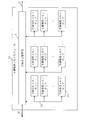
- FIG. 1 is a configuration diagram of a memory system 10 (data storage device) according to the first embodiment.
- the memory system 10 includes a plurality of volatile memory modules 11 (first memory modules) and a plurality of nonvolatile memory modules 12 (second memory modules).
- Each volatile memory module 11 includes a V storage destination management unit 13 (first storage destination management unit).
- Each nonvolatile memory module 12 includes an NV storage destination management unit 14 (second storage destination management unit).
- Each volatile memory module 11 is, for example, a DRAM (Dynamic Random Access Memory) module
- each nonvolatile memory module 12 is, for example, a flash memory module.
- Each volatile memory module 11 is connected to an external input bus 15. Each volatile memory module 11 distributes and temporarily stores data input via the external input bus 15. Each volatile memory module 11 and each nonvolatile memory module 12 are connected by an inter-memory module bus 16. Since the number of ports of each volatile memory module 11 and each nonvolatile memory module 12 is limited, not all volatile memory modules 11 and all nonvolatile memory modules 12 are connected. Each nonvolatile memory module 12 is connected to an external output bus 17. Each nonvolatile memory module 12 stores data transmitted from the volatile memory module 11 via the inter-memory module bus 16. Each nonvolatile memory module 12 outputs the stored data via the external output bus 17.
- the V storage destination management unit 13 has a nonvolatile memory management table 1346
- the NV storage destination management unit 14 has a volatile memory management table 1446.
- the V storage destination management unit 13 and the NV storage destination management unit 14 communicate with each other to update the nonvolatile memory management table 1346 and the volatile memory management table 1446 to determine a data transfer path.
- Each volatile memory module 11 transmits the temporarily stored data to the nonvolatile memory module 12 indicated by the determined data transfer path.
- the performance (data writing speed) of the memory system 10 may be reduced due to a failure of the volatile memory module 11 or the nonvolatile memory module 12.
- the memory system 10 includes the volatile memory module 11 and the nonvolatile memory module 12 redundantly. That is, a part of the plurality of volatile memory modules 11 and a part of the plurality of nonvolatile memory modules 12 are in a standby state for backup.
- FIG. 2 is a diagram showing the non-volatile memory management table 1346.
- the non-volatile memory management table 1346 has a non-volatile memory module number, failure information, and a connection request.
- the nonvolatile memory module number is an identifier of the nonvolatile memory module 12.
- the failure information is information indicating whether or not the nonvolatile memory module 12 has failed.
- the connection request is information indicating whether or not a connection request has been issued to the nonvolatile memory module 12.
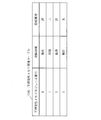
- FIG. 3 is a diagram showing the volatile memory management table 1446.
- the volatile memory management table 1446 has a volatile memory module number, failure information, the number of paths, and usage right assignment.
- the volatile memory module number is an identifier of the volatile memory module 11.
- the failure information is information indicating whether or not the volatile memory module 11 has failed.
- the number of paths is the number of non-failed nonvolatile memory modules 12 connected to the volatile memory module 11.
- the usage right grant is information indicating whether or not the connection request is permitted.
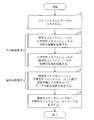
- FIG. 4 is a flowchart showing the operation of the memory system 10.
- S1 Data input process
- Data is input to the memory system 10. Then, data is input to each volatile memory module 11 via the external input bus 15, and the data is distributed and stored in each volatile memory module 11.
- the V storage location management unit 13 of each volatile memory module 11 collects failure information of the nonvolatile memory module 12.
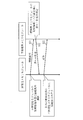
- FIG. 5 is an explanatory diagram of failure information collection processing of the nonvolatile memory module 12.
- the V storage destination management unit 13 of the volatile memory module 11 transmits a HELLO packet (survival confirmation message) to the NV storage destination management units 14 of all the connected nonvolatile memory modules 12 (1).
- the NV storage destination management unit 14 of the nonvolatile memory module 12 that has received the HELLO packet transmits a HELLO response packet to the V storage destination management unit 13 of the volatile memory module 11 (2).
- the V storage location management unit 13 of the volatile memory module 11 treats the non-volatile memory module 12 that has transmitted the HELLO response packet for the transmitted HELLO packet as operating (no failure).
- the V storage location management unit 13 of the volatile memory module 11 treats the nonvolatile memory module 12 that has not been transmitted within a predetermined time as not operating (failed). Then, the V storage location management unit 13 of the volatile memory module 11 updates the failure information in the nonvolatile memory management table 1346.
- the NV storage location management unit 14 of the nonvolatile memory module 12 collects failure information of the volatile memory module 11.
- FIG. 6 is an explanatory diagram of failure information collection processing of the volatile memory module 11.
- the NV storage destination management unit 14 of the nonvolatile memory module 12 transmits a HELLO packet to the V storage destination management units 13 of all the connected volatile memory modules 11 (1).
- the V storage destination management unit 13 of the volatile memory module 11 that has received the HELLO packet transmits a HELLO response packet to the NV storage destination management unit 14 of the nonvolatile memory module 12 (2).
- the NV storage destination management unit 14 of the non-volatile memory module 12 treats the volatile memory module 11 that has transmitted the HELLO response packet for the transmitted HELLO packet as operating (no failure).
- the NV storage destination management unit 14 of the nonvolatile memory module 12 treats the volatile memory module 11 that has not been transmitted within a predetermined time as not operating (failed). Then, the NV storage destination management unit 14 of the nonvolatile memory module 12 updates the failure information in the volatile memory management table 1446.
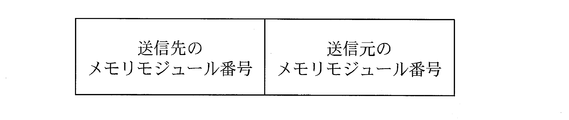
- FIG. 7 is a configuration diagram of a HELLO packet.
- the HELLO packet has a destination memory module number and a source memory module number.
- the memory module number of the transmission destination becomes the nonvolatile memory module number of the nonvolatile memory module 12 of the transmission destination, and the memory module of the transmission source The number becomes the volatile memory module number of the volatile memory module 11 of the transmission source.
- the memory module number of the transmission destination is the volatile memory module number of the volatile memory module 11 of the transmission destination, and the transmission source The memory module number is the non-volatile memory module number of the non-volatile memory module 12 that is the transmission source.
- FIG. 8 is a configuration diagram of the HELLO response packet.
- the HELLO response packet has a destination memory module number and a source memory module number. Since the memory module number of the transmission destination of the HELLO response packet and the memory module number of the transmission source are the same as in the case of the HELLO packet, description thereof is omitted.
- the first survival confirmation process in S2 and the second survival confirmation process in S3 are collectively referred to as a survival confirmation process.
- the V storage destination management unit 13 of the volatile memory module 11 in the standby state and the NV storage destination management unit 14 of the nonvolatile memory module 12 in the standby state perform the HELLO packet and the HELLO packet. Does not send a response packet.
- the V storage location management unit 13 of the volatile memory module 11 transmits a WAKEUP packet to the non-volatile memory module 12 in the standby state.
- the non-volatile memory module 12 in the standby state receives the WAKEUP packet
- the nonvolatile memory module 12 enters an operating state and transmits a HELLO packet and a HELLO response packet.
- the NV storage destination management unit 14 of the nonvolatile memory module 12 waits for a WAKEUP packet. Send to.
- the volatile memory module 11 in the standby state receives the WAKEUP packet, the volatile memory module 11 enters an operating state and transmits a HELLO packet and a HELLO response packet.
- the V storage destination management unit 13 of the volatile memory module 11 and the NV storage destination management unit 14 of the nonvolatile memory module 12 include failure information of the nonvolatile memory management table 1346, failure information of the volatile memory management table 1446, and The data transfer path is determined using the number of paths.
- FIG. 9 is an explanatory diagram of data transfer path determination processing.
- the V storage location management unit 13 of the volatile memory module 11 sequentially transmits a connection request packet (connection request message) to the nonvolatile memory module 12 indicating that the failure information in the nonvolatile memory management table 1346 is not failed. To do. For example, the V storage location management unit 13 of the volatile memory module 11 transmits connection request packets in ascending order of the nonvolatile memory module numbers. At this time, the V storage location management unit 13 of the volatile memory module 11 counts the number of nonvolatile memory modules 12 indicating that the failure information in the nonvolatile memory management table 1346 is not failed as the number of paths. Then, the V storage location management unit 13 of the volatile memory module 11 transmits the number of paths included in the connection request packet.
- the NV storage location management unit 14 of the nonvolatile memory module 12 transmits a connection response packet indicating permission or rejection for the connection request packet.
- the NV storage destination management unit 14 of the nonvolatile memory module 12 transmits a connection response packet (connection acknowledgment message) indicating permission to the connection request packet having the smallest number of paths among the received connection request packets, and the others.
- a connection response packet indicating rejection is transmitted. Note that connection request packets having the smallest number of paths may exist at the same rate.
- the NV storage destination management unit 14 of the nonvolatile memory module 12 transmits a connection response packet indicating permission to the connection request packet having the smallest volatile memory module number of the transmission source volatile memory module 11. .
- the NV storage location management unit 14 of the nonvolatile memory module 12 updates the number of paths in the volatile memory management table 1446 with the number of paths included in the received connection request packet.
- the NV storage destination management unit 14 of the nonvolatile memory module 12 updates the usage right assignment of the volatile memory management table 1446 according to the transmitted connection response packet.
- the V storage location management unit 13 of the volatile memory module 11 When receiving the connection response packet indicating permission, the V storage location management unit 13 of the volatile memory module 11 temporarily stops transmission of the connection request packet. On the other hand, when receiving the connection response packet indicating rejection, the V storage destination management unit 13 of the volatile memory module 11 transmits a connection request packet to the next nonvolatile memory module 12. When receiving the connection response packet, the V storage destination management unit 13 of the volatile memory module 11 updates the connection request in the nonvolatile memory management table 1346 for the nonvolatile memory module 12 that is the transmission source of the connection response packet. .
- connection response packet indicating permission when the connection request packet having a smaller number of paths is received, the connection response indicating permission is already displayed.
- a connection response packet (connection withdrawal message) indicating rejection is transmitted to the volatile memory module 11 that transmitted the packet.
- the NV storage destination management unit 14 of the nonvolatile memory module 12 transmits a connection response packet indicating permission to a connection request packet having a smaller number of paths.
- the V storage destination management unit 13 of the volatile memory module 11 that has received the connection response packet indicating rejection resumes transmission of the connection request packet that has been temporarily stopped.
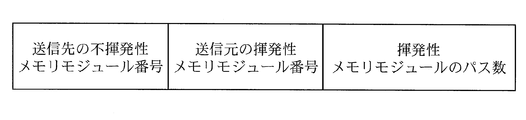
- FIG. 10 is a configuration diagram of a connection request packet.
- the connection request packet includes a transmission destination nonvolatile memory module number, a transmission source volatile memory module number, and a volatile memory module path number.
- the destination nonvolatile memory module number is the nonvolatile memory module number of the destination nonvolatile memory module 12.
- the transmission source volatile memory module number is the volatile memory module number of the transmission source volatile memory module 11.
- the number of passes of the volatile memory module is the number of passes of the volatile memory module 11 as the transmission source.
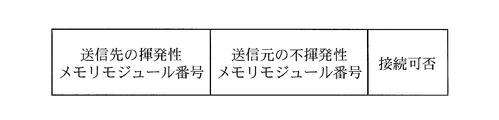
- FIG. 11 is a configuration diagram of a connection response packet.
- the connection response packet includes a transmission destination volatile memory module number, a transmission source nonvolatile memory module number, and whether or not connection is possible.
- the destination volatile memory module number is the volatile memory module number of the destination volatile memory module 11.
- the transmission source nonvolatile memory module number is the nonvolatile memory module number of the transmission source nonvolatile memory module 12.
- the connectability is information indicating permission or rejection.
- FIG. 12 is a diagram showing the relationship among the nonvolatile memory management table 1346, the volatile memory management table 1446, the connection request packet, and the connection response packet.
- the nonvolatile memory module 12 in which the failure information in the nonvolatile memory management table 1346 is an operation and the connection request is not yet selected is selected as the transmission destination of the connection request packet.
- the number of volatile memory module paths in the connection request packet is the number of nonvolatile memory modules 12 on which failure information in the nonvolatile memory management table 1346 is operating.
- As the number of paths in the volatile memory management table 1446 the number of paths of the volatile memory module in the connection request packet is set. Based on the set number of paths, it is determined whether to grant (permit) usage rights or not (reject) usage rights. The determined use right grant is reflected in the connection availability of the connection response packet.
- the connection request in the nonvolatile memory management table 1346 is updated for the nonvolatile memory module 12 that is the transmission source of the connection response packet.
- each volatile memory module 11 transfers the data temporarily stored in S1 to the nonvolatile memory module 12 that is the transmission source of the connection response packet indicating the permission received in S4.
- each volatile memory module 11 can transfer data in parallel.
- FIG. 13 is a configuration diagram of the volatile memory module 11.
- the volatile memory module 11 includes a V storage location management unit 13 and one or more volatile memory chips 111.
- the V storage location management unit 13 and each volatile memory chip 111 are connected by a volatile memory bus 112.
- the data input via the external input bus 15 is transmitted to the V storage destination management unit 13, transmitted to the volatile memory chip 111 via the volatile memory bus 112, and temporarily stored.
- the V storage destination management unit 13 sequentially executes the above-described survival confirmation process and path determination process to determine the transmission destination nonvolatile memory module 12.
- the V storage location management unit 13 reads data temporarily stored in the volatile memory chip 111 and transmits the data to the determined nonvolatile memory module 12 via the inter-memory module bus 16.
- FIG. 14 is a configuration diagram of the nonvolatile memory module 12.
- the nonvolatile memory module 12 includes an NV storage destination management unit 14 and one or more nonvolatile memory chips 121.
- the NV storage destination management unit 14 and each nonvolatile memory chip 121 are connected by a nonvolatile memory bus 122.
- the NV storage destination management unit 14 sequentially executes the above-described survival confirmation process and path determination process, and sets one volatile memory module 11 as the transmission source. Just decide.
- the data transmitted from the determined volatile memory module 11 is transmitted to the NV storage destination management unit 14, transmitted to the nonvolatile memory chip 121 via the nonvolatile memory bus 122, and stored.
- the NV storage destination management unit 14 reads the data stored in the nonvolatile memory chip 121 and outputs the data via the external output bus 17 in response to a request.
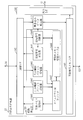
- FIG. 15 is a configuration diagram of the V storage destination management unit 13.
- the V storage location management unit 13 includes an input I / F 131, a communication I / F 132, a volatile memory I / F 133, and a path determination unit 134.
- the input I / F 131 is an interface for receiving data input from the external input bus 15.
- the communication I / F 132 is an interface for communicating with the NV storage destination management unit 14 via the inter-memory module bus 16.
- the volatile memory I / F 133 is an interface for transmitting and receiving data to and from the volatile memory chip 111.
- the route determination unit 134 is a function for executing the above-described survival confirmation processing and route determination processing.
- the route determination unit 134 includes a redundant memory activation unit 1341, a survival confirmation packet transmission unit 1342, a survival confirmation packet reception unit 1343, a connection request unit 1344, a connection permission confirmation unit 1345, a nonvolatile memory management table 1346, A timeout counter 1347.
- the redundant memory activation unit 1341 has a function of activating the nonvolatile memory module 12 in a standby state when a failure occurs in the nonvolatile memory module 12.
- the survival confirmation packet transmitting unit 1342, the survival confirmation packet receiving unit 1343, and the timeout counter 1347 are functions for executing the survival confirmation process.
- the connection request unit 1344, the connection permission confirmation unit 1345, and the nonvolatile memory management table 1346 are functions for executing a route determination process.
- the input I / F 131 transmits a survival confirmation processing start signal to the survival confirmation packet transmission unit 1342. At the same time, the input I / F 131 transmits data to the volatile memory I / F 133. When data is transmitted from the input I / F 131, the volatile memory I / F 133 writes the transmitted data to the volatile memory chip 111.
- the survival confirmation packet transmission unit 1342 When receiving the survival confirmation processing start signal from the input I / F 131, the survival confirmation packet transmission unit 1342 transmits a HELLO packet transmission signal to the communication I / F 132.
- the existence confirmation packet transmission unit 1342 transmits a count start signal to the timeout counter 1347 at the same time.
- the communication I / F 132 transmits the HELLO packet to all the connected nonvolatile memory modules 12.
- the timeout counter 1347 starts counting when it receives the count start signal.
- the time-out counter 1347 has the same number of counters as the connected non-volatile memory modules 12 and can count time for each connected non-volatile memory module 12.
- the communication I / F 132 When the communication I / F 132 receives the HELLO response packet from the nonvolatile memory module 12, the communication I / F 132 transmits a survival confirmation signal to the survival confirmation packet receiving unit 1343.
- the survival confirmation packet receiving unit 1343 transmits a count stop signal to the timeout counter 1347.
- the timeout counter 1347 stops the corresponding counter. The timeout counter 1347 simultaneously updates the failure information of the nonvolatile memory module 12 corresponding to the count stop signal in the nonvolatile memory management table 1346 to operation.
- the timeout counter 1347 sets a timeout when the counted value exceeds a predetermined value. When a timeout occurs, the timeout counter 1347 updates the failure information of the time-out nonvolatile memory module 12 in the nonvolatile memory management table 1346 to a failure. Further, the timeout counter 1347 transmits a redundant memory activation signal to the redundant memory activation unit 1341 when a timeout occurs. When the redundant memory activation unit 1341 receives the redundant memory activation signal, the redundant memory activation unit 1341 transmits a WAKEUP packet transmission signal to the communication I / F 132. When the communication I / F 132 receives the WAKEUP packet transmission signal, the communication I / F 132 transmits the WAKEUP packet to the non-volatile memory module 12 in the standby state.
- the timeout counter 1347 transmits a survival confirmation process completion signal to the connection request unit 1344 when all the counters are stopped.
- the communication I / F 132 transmits a HELLO packet reception signal to the survival confirmation packet receiving unit 1343.
- the survival confirmation packet receiving unit 1343 transmits a HELLO response packet generation signal to the survival confirmation packet transmitting unit 1342.
- the survival confirmation packet transmission unit 1342 transmits a HELLO response packet transmission signal to the communication I / F 132.
- the communication I / F 132 transmits the HELLO response packet to all the connected nonvolatile memory modules 12.
- connection request unit 1344 When the connection request unit 1344 receives the survival confirmation processing completion signal from the timeout counter 1347, the connection request unit 1344 updates all the connection requests in the nonvolatile memory management table 1346. From the nonvolatile memory management table 1346, the connection request unit 1344 selects the nonvolatile memory module 12 in which the failure information is active, the connection request has not been made, and the value of the nonvolatile memory module number is the smallest. A connection request packet transmission signal as a transmission destination is transmitted to the communication I / F 132. When the communication I / F 132 receives the connection request packet transmission signal from the connection request unit 1344, the communication I / F 132 transmits the connection request packet to the transmission destination nonvolatile memory module 12.
- connection permission confirmation unit 1345 When the communication I / F 132 receives the connection response packet from the inter-memory module bus 16, the communication I / F 132 transmits a connection response signal to the connection permission confirmation unit 1345.
- the connection permission confirmation unit 1345 Upon receiving a connection response signal from the communication I / F 132, the connection permission confirmation unit 1345 performs an operation according to the content of the signal.
- the connection permission confirmation unit 1345 transmits a write valid signal to the volatile memory I / F 133 when the connection is permitted.
- the connection permission confirmation unit 1345 transmits a re-request signal to the connection request unit 1344 when the connection is rejected.
- the connection permission confirmation unit 1345 updates the connection request for the corresponding nonvolatile memory module 12 in the nonvolatile memory management table 1346 to be completed.
- connection request unit 1344 When the connection request unit 1344 receives the re-request signal, the failure information is activated from the nonvolatile memory management table 1346, the connection request has not been made, and the value of the nonvolatile memory module number is the highest. A connection request is generated to the small nonvolatile memory module 12.
- the volatile memory I / F 133 reads data from the volatile memory chip 111 and transmits the data to the communication I / F 132 while receiving the write valid signal from the connection permission confirmation unit 1345.
- the communication I / F 132 receives data from the volatile memory I / F 211, the communication I / F 132 transmits the data to the nonvolatile memory module 12 via the inter-memory module bus 16.
- FIG. 16 is a configuration diagram of the NV storage destination management unit 14.
- the NV storage destination management unit 14 includes an output I / F 141, a communication I / F 142, a nonvolatile memory I / F 143, a path determination unit 144, and a write data transfer unit 145.
- the output I / F 141 is an interface for outputting data from the external output bus 17.
- the communication I / F 142 is an interface for communicating with the V storage destination management unit 13 via the inter-memory module bus 16.
- the nonvolatile memory I / F 143 is an interface for transmitting and receiving data to and from the nonvolatile memory chip 121.
- the route determination unit 144 is a function for executing the above-described survival confirmation processing and route determination processing.
- the write data transfer unit 145 is a function for controlling the writing of data transmitted from the volatile memory module 11 to the nonvolatile memory chip 121.
- the route determination unit 144 includes a redundant memory activation unit 1441, a survival confirmation packet transmission unit 1442, a survival confirmation packet reception unit 1443, a connection request response unit 1444, a connection permission determination unit 1445, and a volatile memory management table 1446. And a timeout counter 1447.
- the redundant memory activation unit 1441 is a function for activating the standby volatile memory module 11 when a failure occurs in the volatile memory module 11.
- a survival confirmation packet transmission unit 1442, a survival confirmation packet reception unit 1443, and a timeout counter 1447 are functions for executing a survival confirmation process.
- the connection request response unit 1444, the connection permission determination unit 1445, and the volatile memory management table 1446 are functions for executing a route determination process.
- the communication I / F 142 transmits a HELLO packet reception signal to the survival confirmation packet receiving unit 1443.
- the survival confirmation packet receiving unit 1443 transmits a HELLO response packet generation signal and a survival confirmation processing start signal to the survival confirmation packet transmitting unit 1442.
- the survival confirmation packet transmission unit 1442 transmits the HELLO response packet transmission signal to the communication I / F 142.
- the communication I / F 142 When the communication I / F 142 receives the HELLO response packet transmission signal, the communication I / F 142 transmits the HELLO response packet to all the connected volatile memory modules 11.
- the survival confirmation packet transmission unit 1442 receives a survival confirmation processing start signal from the survival confirmation packet reception unit 1443, the survival confirmation packet transmission unit 1442 transmits a HELLO packet transmission signal to the communication I / F 142.
- the survival confirmation packet transmission unit 1442 transmits a count start signal to the timeout counter 1447 at the same time.
- the communication I / F 142 receives the HELLO packet transmission signal
- the communication I / F 142 transmits the HELLO packet to all the connected volatile memory modules 11.
- the timeout counter 1447 starts counting when it receives the count start signal.
- the timeout counter 1447 has the same number of counters as the connected volatile memory modules 11, and can count the time for each connected volatile memory module 11.
- the communication I / F 142 transmits a survival confirmation signal to the survival confirmation packet receiving unit 1443.
- the survival confirmation packet receiving unit 1443 transmits a count stop signal to the timeout counter 1447.
- the timeout counter 1447 stops the corresponding counter.
- the timeout counter 1447 updates the failure information of the volatile memory module 11 corresponding to the count stop signal in the volatile memory management table 1446 to the operation.
- the timeout counter 1447 sets a timeout when the value being counted exceeds a predetermined value. When a timeout occurs, the timeout counter 1447 updates the failure information of the volatile memory module 11 that has timed out in the volatile memory management table 1446 to a failure. Further, the timeout counter 1447 transmits a redundant memory activation signal to the redundant memory activation unit 1441 when a timeout occurs. When the redundant memory activation unit 1441 receives the redundant memory activation signal, the redundant memory activation unit 1441 transmits a WAKEUP packet transmission signal to the communication I / F 142. When the communication I / F 142 receives the WAKEUP packet transmission signal, the communication I / F 142 transmits the WAKEUP packet to the volatile memory module 11 in the standby state.
- the communication I / F 142 When the communication I / F 142 receives the connection request packet from the inter-memory module bus 16, the communication I / F 142 transmits a connection request reception signal to the connection permission determination unit 1445.
- the connection permission determination unit 1445 Upon receiving the connection request reception signal from the communication I / F 142, the connection permission determination unit 1445 sets the number of paths of the volatile memory module 11 that is the transmission source of the connection request packet in the volatile memory management table 1446 to the number of paths of the connection request packet. Update.
- the connection permission determination unit 1445 determines that the volatile memory module 11 that is the transmission source of the connection request packet has the smallest number of paths and the smallest volatile memory module number in the volatile memory management table 1446. Check if it is.
- connection permission judgment unit 1445 transmits a connection permission signal to the connection request response unit 1444, and otherwise. Transmits a connection rejection signal to the connection request response unit 1444.
- the connection request response unit 1444 receives the connection permission signal from the connection permission determination unit 1445, the connection request response unit 1444 transmits a connection response packet transmission signal designating connection permission to the communication I / F 142.
- the connection request response unit 1444 receives the connection rejection signal from the connection permission determination unit 1445, the connection request response unit 1444 transmits a connection response packet transmission signal designating connection rejection to the communication I / F 142.
- the communication I / F 142 Upon receiving the connection response packet transmission signal from the connection request response unit 1444, the communication I / F 142 transmits the connection response packet to the volatile memory I / F 2 that is the transmission source of the connection request packet. If the connection permission determination unit 1445 has already transmitted a connection permission signal and then received a connection request reception signal that should be prioritized, the connection permission determination unit 1445 sends a connection rejection signal to the volatile memory module 11 that once transmitted the connection permission signal. It transmits to the connection request response part 1444. Then, the connection permission determination unit 1445 transmits a connection permission signal for the volatile memory module 11 that is the transmission source of the connection request packet to the connection request response unit 1444.
- the connection permission determination unit 1445 When transmitting a connection permission signal, the connection permission determination unit 1445 asserts a write valid signal to the write data transfer unit 145.
- the communication I / F 142 transfers the data to the write data transfer unit 145.
- the write data transfer unit 145 transfers data transferred from the communication I / F 142 to the nonvolatile memory I / F 122 while the write enable signal is asserted from the connection permission determination unit 1445.
- the write data transfer unit 145 discards the data transferred from the communication I / F 142 while the write enable signal is deasserted from the connection permission determination unit 1445.
- the nonvolatile memory I / F 122 writes data to the nonvolatile memory chip 121 when data is transferred from the write data transfer unit 145.
- the output I / F 141 When the output I / F 141 receives a data read request from the external output bus 17, the output I / F 141 transmits the read request to the nonvolatile memory I / F 122.
- the nonvolatile memory I / F 122 receives a read request from the output I / F 141, the nonvolatile memory I / F 122 reads data from the nonvolatile memory chip 121 and transmits the data to the output I / F 141.
- the output I / F 141 When receiving data from the nonvolatile memory I / F 122, the output I / F 141 transmits the data to the external output bus 17.
- each volatile memory module 11 and each nonvolatile memory module 12 autonomously determines a data transfer path by a 3WAY handshake. Therefore, it is not necessary to use a mechanism for managing and controlling information such as a data storage destination in a unified manner and a crossbar switch circuit. As a result, the entire memory system 10 does not become inoperable when a mechanism for managing and controlling information such as a data storage destination or a crossbar switch circuit fails.
- the volatile memory module 11 in the non-volatile memory module 12 is activated.
- the nonvolatile memory module 12 in the standby state is activated. Therefore, it is possible to prevent a decrease in performance when some volatile memory modules 11 and some nonvolatile memory modules 12 fail.
- the volatile memory module 11 and the non-volatile memory module 12 existing more than necessary can be set in a standby state, and unnecessary power consumption can be reduced.
- all transmission units described as “ ⁇ packet” include a “packet type” field for indicating a packet type.
- Each storage destination management unit determines the type of packet from the “packet type” field.
- the function described as “unit” may be realized by software, or may be realized by a circuit or a device.
- the software that realizes the function described as “ ⁇ unit” is a storage device (for example, nonvolatile memory module 12) in the memory system 10. And is read and executed by an arithmetic device (CPU or the like) included in the memory system 10.
Landscapes
- Engineering & Computer Science (AREA)
- Theoretical Computer Science (AREA)
- Physics & Mathematics (AREA)
- General Engineering & Computer Science (AREA)
- General Physics & Mathematics (AREA)
- Human Computer Interaction (AREA)
- Quality & Reliability (AREA)
- Computer Networks & Wireless Communication (AREA)
- Signal Processing (AREA)
- Computer Security & Cryptography (AREA)
- Data Exchanges In Wide-Area Networks (AREA)
- Hardware Redundancy (AREA)
Abstract
Priority Applications (4)
| Application Number | Priority Date | Filing Date | Title |
|---|---|---|---|
| US15/121,136 US10372361B2 (en) | 2014-02-27 | 2014-02-27 | Data storage device including multiple memory modules and circuitry to manage communication among the multiple memory modules |
| EP14883990.5A EP3113027A4 (fr) | 2014-02-27 | 2014-02-27 | Dispositif de stockage de données |
| PCT/JP2014/054792 WO2015128976A1 (fr) | 2014-02-27 | 2014-02-27 | Dispositif de stockage de données |
| JP2016504921A JP6141511B2 (ja) | 2014-02-27 | 2014-02-27 | データ記憶装置 |
Applications Claiming Priority (1)
| Application Number | Priority Date | Filing Date | Title |
|---|---|---|---|
| PCT/JP2014/054792 WO2015128976A1 (fr) | 2014-02-27 | 2014-02-27 | Dispositif de stockage de données |
Publications (1)
| Publication Number | Publication Date |
|---|---|
| WO2015128976A1 true WO2015128976A1 (fr) | 2015-09-03 |
Family
ID=54008345
Family Applications (1)
| Application Number | Title | Priority Date | Filing Date |
|---|---|---|---|
| PCT/JP2014/054792 Ceased WO2015128976A1 (fr) | 2014-02-27 | 2014-02-27 | Dispositif de stockage de données |
Country Status (4)
| Country | Link |
|---|---|
| US (1) | US10372361B2 (fr) |
| EP (1) | EP3113027A4 (fr) |
| JP (1) | JP6141511B2 (fr) |
| WO (1) | WO2015128976A1 (fr) |
Citations (5)
| Publication number | Priority date | Publication date | Assignee | Title |
|---|---|---|---|---|
| JPH05158797A (ja) * | 1991-12-06 | 1993-06-25 | Hitachi Ltd | 外部記憶サブシステム |
| JPH0720994A (ja) * | 1993-06-30 | 1995-01-24 | Hitachi Ltd | 記憶システム |
| JP2004192482A (ja) * | 2002-12-13 | 2004-07-08 | Hitachi Ltd | バックアップを特定するクラスタ型計算機システム及びクラスタ型ストレージシステム |
| JP2005043930A (ja) * | 2003-07-22 | 2005-02-17 | Hitachi Ltd | 記憶装置システム |
| JP2013532339A (ja) * | 2010-06-18 | 2013-08-15 | エルエスアイ コーポレーション | スケーラブルな記憶装置 |
Family Cites Families (12)
| Publication number | Priority date | Publication date | Assignee | Title |
|---|---|---|---|---|
| US5317752A (en) | 1989-12-22 | 1994-05-31 | Tandem Computers Incorporated | Fault-tolerant computer system with auto-restart after power-fall |
| EP0683456B1 (fr) | 1989-12-22 | 1998-07-22 | Tandem Computers Incorporated | Système de calculateur tolérant les fautes avec réintégration et arrêt d'ingence/reprise en ligne |
| US5295258A (en) | 1989-12-22 | 1994-03-15 | Tandem Computers Incorporated | Fault-tolerant computer system with online recovery and reintegration of redundant components |
| US5327553A (en) | 1989-12-22 | 1994-07-05 | Tandem Computers Incorporated | Fault-tolerant computer system with /CONFIG filesystem |
| US5603058A (en) | 1994-09-08 | 1997-02-11 | International Business Machines Corporation | Video optimized media streamer having communication nodes received digital data from storage node and transmitted said data to adapters for generating isochronous digital data streams |
| US5668948A (en) | 1994-09-08 | 1997-09-16 | International Business Machines Corporation | Media streamer with control node enabling same isochronous streams to appear simultaneously at output ports or different streams to appear simultaneously at output ports |
| US5761417A (en) | 1994-09-08 | 1998-06-02 | International Business Machines Corporation | Video data streamer having scheduler for scheduling read request for individual data buffers associated with output ports of communication node to one storage node |
| US5712976A (en) | 1994-09-08 | 1998-01-27 | International Business Machines Corporation | Video data streamer for simultaneously conveying same one or different ones of data blocks stored in storage node to each of plurality of communication nodes |
| JP2003162377A (ja) * | 2001-11-28 | 2003-06-06 | Hitachi Ltd | ディスクアレイシステム及びコントローラ間での論理ユニットの引き継ぎ方法 |
| JP2007323103A (ja) | 2006-05-30 | 2007-12-13 | Fujitsu Ltd | オンボード電源を備えたボード及びボードのリセット制御方法 |
| JP4849637B2 (ja) | 2007-08-31 | 2012-01-11 | ルネサスエレクトロニクス株式会社 | メモリカード及びメモリコントローラ |
| JP5404804B2 (ja) | 2009-05-25 | 2014-02-05 | 株式会社日立製作所 | ストレージサブシステム |
-
2014
- 2014-02-27 WO PCT/JP2014/054792 patent/WO2015128976A1/fr not_active Ceased
- 2014-02-27 JP JP2016504921A patent/JP6141511B2/ja not_active Expired - Fee Related
- 2014-02-27 EP EP14883990.5A patent/EP3113027A4/fr not_active Withdrawn
- 2014-02-27 US US15/121,136 patent/US10372361B2/en not_active Expired - Fee Related
Patent Citations (5)
| Publication number | Priority date | Publication date | Assignee | Title |
|---|---|---|---|---|
| JPH05158797A (ja) * | 1991-12-06 | 1993-06-25 | Hitachi Ltd | 外部記憶サブシステム |
| JPH0720994A (ja) * | 1993-06-30 | 1995-01-24 | Hitachi Ltd | 記憶システム |
| JP2004192482A (ja) * | 2002-12-13 | 2004-07-08 | Hitachi Ltd | バックアップを特定するクラスタ型計算機システム及びクラスタ型ストレージシステム |
| JP2005043930A (ja) * | 2003-07-22 | 2005-02-17 | Hitachi Ltd | 記憶装置システム |
| JP2013532339A (ja) * | 2010-06-18 | 2013-08-15 | エルエスアイ コーポレーション | スケーラブルな記憶装置 |
Non-Patent Citations (1)
| Title |
|---|
| See also references of EP3113027A4 * |
Also Published As
| Publication number | Publication date |
|---|---|
| US10372361B2 (en) | 2019-08-06 |
| EP3113027A4 (fr) | 2017-11-01 |
| EP3113027A1 (fr) | 2017-01-04 |
| US20170220286A1 (en) | 2017-08-03 |
| JP6141511B2 (ja) | 2017-06-07 |
| JPWO2015128976A1 (ja) | 2017-03-30 |
Similar Documents
| Publication | Publication Date | Title |
|---|---|---|
| US10110499B2 (en) | QoS in a system with end-to-end flow control and QoS aware buffer allocation | |
| US11792132B2 (en) | Technologies for aligning network flows to processing resources | |
| US9009648B2 (en) | Automatic deadlock detection and avoidance in a system interconnect by capturing internal dependencies of IP cores using high level specification | |
| US8204054B2 (en) | System having a plurality of nodes connected in multi-dimensional matrix, method of controlling system and apparatus | |
| US9397851B2 (en) | Directed route load/store packets for distributed switch initialization | |
| EP2605451B1 (fr) | Procédé de commutation de liaison de contrôleur de n ud, système processeur et n ud | |
| US20140204764A1 (en) | Qos in heterogeneous noc by assigning weights to noc node channels and using weighted arbitration at noc nodes | |
| JP2008228150A (ja) | スイッチ装置及びフレーム交換方法とそのプログラム | |
| US9213660B2 (en) | Receiver based communication permission token allocation | |
| KR20160054007A (ko) | 메모리 모듈 액세스 방법 및 장치 | |
| US11765037B2 (en) | Method and system for facilitating high availability in a multi-fabric system | |
| CN107273318A (zh) | 并行处理设备和通信控制方法 | |
| JP6141511B2 (ja) | データ記憶装置 | |
| US20230016684A1 (en) | Communications Method and Related Apparatus | |
| CN110581807A (zh) | 节点设备、路由方法及互联系统 | |
| CN104618121A (zh) | 交换器及服务器系统 | |
| CN115733721A (zh) | 网络管理设备、网络管理系统及网络管理方法 | |
| CN105743803A (zh) | 一种共享缓存的数据处理装置 | |
| JP2017092750A (ja) | 集線装置及び方法 |
Legal Events
| Date | Code | Title | Description |
|---|---|---|---|
| 121 | Ep: the epo has been informed by wipo that ep was designated in this application |
Ref document number: 14883990 Country of ref document: EP Kind code of ref document: A1 |
|
| ENP | Entry into the national phase |
Ref document number: 2016504921 Country of ref document: JP Kind code of ref document: A |
|
| WWE | Wipo information: entry into national phase |
Ref document number: 15121136 Country of ref document: US |
|
| NENP | Non-entry into the national phase |
Ref country code: DE |
|
| REEP | Request for entry into the european phase |
Ref document number: 2014883990 Country of ref document: EP |
|
| WWE | Wipo information: entry into national phase |
Ref document number: 2014883990 Country of ref document: EP |