WO2015129807A1 - Micro-aiguille - Google Patents
Micro-aiguille Download PDFInfo
- Publication number
- WO2015129807A1 WO2015129807A1 PCT/JP2015/055614 JP2015055614W WO2015129807A1 WO 2015129807 A1 WO2015129807 A1 WO 2015129807A1 JP 2015055614 W JP2015055614 W JP 2015055614W WO 2015129807 A1 WO2015129807 A1 WO 2015129807A1
- Authority
- WO
- WIPO (PCT)
- Prior art keywords
- acid
- microneedle
- arginine
- microneedles
- physiologically active
- Prior art date
- Legal status (The legal status is an assumption and is not a legal conclusion. Google has not performed a legal analysis and makes no representation as to the accuracy of the status listed.)
- Ceased
Links
Images



Classifications
-
- A—HUMAN NECESSITIES
- A61—MEDICAL OR VETERINARY SCIENCE; HYGIENE
- A61K—PREPARATIONS FOR MEDICAL, DENTAL OR TOILETRY PURPOSES
- A61K47/00—Medicinal preparations characterised by the non-active ingredients used, e.g. carriers or inert additives; Targeting or modifying agents chemically bound to the active ingredient
- A61K47/06—Organic compounds, e.g. natural or synthetic hydrocarbons, polyolefins, mineral oil, petrolatum or ozokerite
- A61K47/08—Organic compounds, e.g. natural or synthetic hydrocarbons, polyolefins, mineral oil, petrolatum or ozokerite containing oxygen, e.g. ethers, acetals, ketones, quinones, aldehydes, peroxides
- A61K47/12—Carboxylic acids; Salts or anhydrides thereof
-
- A—HUMAN NECESSITIES
- A61—MEDICAL OR VETERINARY SCIENCE; HYGIENE
- A61K—PREPARATIONS FOR MEDICAL, DENTAL OR TOILETRY PURPOSES
- A61K31/00—Medicinal preparations containing organic active ingredients
- A61K31/33—Heterocyclic compounds
- A61K31/395—Heterocyclic compounds having nitrogen as a ring hetero atom, e.g. guanethidine or rifamycins
- A61K31/41—Heterocyclic compounds having nitrogen as a ring hetero atom, e.g. guanethidine or rifamycins having five-membered rings with two or more ring hetero atoms, at least one of which being nitrogen, e.g. tetrazole
- A61K31/42—Oxazoles
- A61K31/422—Oxazoles not condensed and containing further heterocyclic rings
-
- A—HUMAN NECESSITIES
- A61—MEDICAL OR VETERINARY SCIENCE; HYGIENE
- A61K—PREPARATIONS FOR MEDICAL, DENTAL OR TOILETRY PURPOSES
- A61K31/00—Medicinal preparations containing organic active ingredients
- A61K31/33—Heterocyclic compounds
- A61K31/395—Heterocyclic compounds having nitrogen as a ring hetero atom, e.g. guanethidine or rifamycins
- A61K31/435—Heterocyclic compounds having nitrogen as a ring hetero atom, e.g. guanethidine or rifamycins having six-membered rings with one nitrogen as the only ring hetero atom
- A61K31/47—Quinolines; Isoquinolines
- A61K31/485—Morphinan derivatives, e.g. morphine, codeine
-
- A—HUMAN NECESSITIES
- A61—MEDICAL OR VETERINARY SCIENCE; HYGIENE
- A61K—PREPARATIONS FOR MEDICAL, DENTAL OR TOILETRY PURPOSES
- A61K31/00—Medicinal preparations containing organic active ingredients
- A61K31/33—Heterocyclic compounds
- A61K31/395—Heterocyclic compounds having nitrogen as a ring hetero atom, e.g. guanethidine or rifamycins
- A61K31/495—Heterocyclic compounds having nitrogen as a ring hetero atom, e.g. guanethidine or rifamycins having six-membered rings with two or more nitrogen atoms as the only ring heteroatoms, e.g. piperazine or tetrazines
- A61K31/505—Pyrimidines; Hydrogenated pyrimidines, e.g. trimethoprim
- A61K31/513—Pyrimidines; Hydrogenated pyrimidines, e.g. trimethoprim having oxo groups directly attached to the heterocyclic ring, e.g. cytosine
-
- A—HUMAN NECESSITIES
- A61—MEDICAL OR VETERINARY SCIENCE; HYGIENE
- A61K—PREPARATIONS FOR MEDICAL, DENTAL OR TOILETRY PURPOSES
- A61K31/00—Medicinal preparations containing organic active ingredients
- A61K31/557—Eicosanoids, e.g. leukotrienes or prostaglandins
- A61K31/5575—Eicosanoids, e.g. leukotrienes or prostaglandins having a cyclopentane, e.g. prostaglandin E2, prostaglandin F2-alpha
-
- A—HUMAN NECESSITIES
- A61—MEDICAL OR VETERINARY SCIENCE; HYGIENE
- A61K—PREPARATIONS FOR MEDICAL, DENTAL OR TOILETRY PURPOSES
- A61K31/00—Medicinal preparations containing organic active ingredients
- A61K31/70—Carbohydrates; Sugars; Derivatives thereof
- A61K31/715—Polysaccharides, i.e. having more than five saccharide radicals attached to each other by glycosidic linkages; Derivatives thereof, e.g. ethers, esters
- A61K31/726—Glycosaminoglycans, i.e. mucopolysaccharides
- A61K31/727—Heparin; Heparan
-
- A—HUMAN NECESSITIES
- A61—MEDICAL OR VETERINARY SCIENCE; HYGIENE
- A61K—PREPARATIONS FOR MEDICAL, DENTAL OR TOILETRY PURPOSES
- A61K38/00—Medicinal preparations containing peptides
- A61K38/16—Peptides having more than 20 amino acids; Gastrins; Somatostatins; Melanotropins; Derivatives thereof
- A61K38/17—Peptides having more than 20 amino acids; Gastrins; Somatostatins; Melanotropins; Derivatives thereof from animals; from humans
- A61K38/18—Growth factors; Growth regulators
- A61K38/1816—Erythropoietin [EPO]
-
- A—HUMAN NECESSITIES
- A61—MEDICAL OR VETERINARY SCIENCE; HYGIENE
- A61K—PREPARATIONS FOR MEDICAL, DENTAL OR TOILETRY PURPOSES
- A61K38/00—Medicinal preparations containing peptides
- A61K38/16—Peptides having more than 20 amino acids; Gastrins; Somatostatins; Melanotropins; Derivatives thereof
- A61K38/17—Peptides having more than 20 amino acids; Gastrins; Somatostatins; Melanotropins; Derivatives thereof from animals; from humans
- A61K38/19—Cytokines; Lymphokines; Interferons
- A61K38/193—Colony stimulating factors [CSF]
-
- A—HUMAN NECESSITIES
- A61—MEDICAL OR VETERINARY SCIENCE; HYGIENE
- A61K—PREPARATIONS FOR MEDICAL, DENTAL OR TOILETRY PURPOSES
- A61K38/00—Medicinal preparations containing peptides
- A61K38/16—Peptides having more than 20 amino acids; Gastrins; Somatostatins; Melanotropins; Derivatives thereof
- A61K38/17—Peptides having more than 20 amino acids; Gastrins; Somatostatins; Melanotropins; Derivatives thereof from animals; from humans
- A61K38/19—Cytokines; Lymphokines; Interferons
- A61K38/21—Interferons [IFN]
- A61K38/212—IFN-alpha
-
- A—HUMAN NECESSITIES
- A61—MEDICAL OR VETERINARY SCIENCE; HYGIENE
- A61K—PREPARATIONS FOR MEDICAL, DENTAL OR TOILETRY PURPOSES
- A61K38/00—Medicinal preparations containing peptides
- A61K38/16—Peptides having more than 20 amino acids; Gastrins; Somatostatins; Melanotropins; Derivatives thereof
- A61K38/17—Peptides having more than 20 amino acids; Gastrins; Somatostatins; Melanotropins; Derivatives thereof from animals; from humans
- A61K38/19—Cytokines; Lymphokines; Interferons
- A61K38/21—Interferons [IFN]
- A61K38/215—IFN-beta
-
- A—HUMAN NECESSITIES
- A61—MEDICAL OR VETERINARY SCIENCE; HYGIENE
- A61K—PREPARATIONS FOR MEDICAL, DENTAL OR TOILETRY PURPOSES
- A61K38/00—Medicinal preparations containing peptides
- A61K38/16—Peptides having more than 20 amino acids; Gastrins; Somatostatins; Melanotropins; Derivatives thereof
- A61K38/17—Peptides having more than 20 amino acids; Gastrins; Somatostatins; Melanotropins; Derivatives thereof from animals; from humans
- A61K38/22—Hormones
- A61K38/23—Calcitonins
-
- A—HUMAN NECESSITIES
- A61—MEDICAL OR VETERINARY SCIENCE; HYGIENE
- A61K—PREPARATIONS FOR MEDICAL, DENTAL OR TOILETRY PURPOSES
- A61K38/00—Medicinal preparations containing peptides
- A61K38/16—Peptides having more than 20 amino acids; Gastrins; Somatostatins; Melanotropins; Derivatives thereof
- A61K38/17—Peptides having more than 20 amino acids; Gastrins; Somatostatins; Melanotropins; Derivatives thereof from animals; from humans
- A61K38/22—Hormones
- A61K38/24—Follicle-stimulating hormone [FSH]; Chorionic gonadotropins, e.g. HCG; Luteinising hormone [LH]; Thyroid-stimulating hormone [TSH]
-
- A—HUMAN NECESSITIES
- A61—MEDICAL OR VETERINARY SCIENCE; HYGIENE
- A61K—PREPARATIONS FOR MEDICAL, DENTAL OR TOILETRY PURPOSES
- A61K38/00—Medicinal preparations containing peptides
- A61K38/16—Peptides having more than 20 amino acids; Gastrins; Somatostatins; Melanotropins; Derivatives thereof
- A61K38/17—Peptides having more than 20 amino acids; Gastrins; Somatostatins; Melanotropins; Derivatives thereof from animals; from humans
- A61K38/22—Hormones
- A61K38/26—Glucagons
-
- A—HUMAN NECESSITIES
- A61—MEDICAL OR VETERINARY SCIENCE; HYGIENE
- A61K—PREPARATIONS FOR MEDICAL, DENTAL OR TOILETRY PURPOSES
- A61K38/00—Medicinal preparations containing peptides
- A61K38/16—Peptides having more than 20 amino acids; Gastrins; Somatostatins; Melanotropins; Derivatives thereof
- A61K38/17—Peptides having more than 20 amino acids; Gastrins; Somatostatins; Melanotropins; Derivatives thereof from animals; from humans
- A61K38/22—Hormones
- A61K38/27—Growth hormone [GH], i.e. somatotropin
-
- A—HUMAN NECESSITIES
- A61—MEDICAL OR VETERINARY SCIENCE; HYGIENE
- A61K—PREPARATIONS FOR MEDICAL, DENTAL OR TOILETRY PURPOSES
- A61K38/00—Medicinal preparations containing peptides
- A61K38/16—Peptides having more than 20 amino acids; Gastrins; Somatostatins; Melanotropins; Derivatives thereof
- A61K38/17—Peptides having more than 20 amino acids; Gastrins; Somatostatins; Melanotropins; Derivatives thereof from animals; from humans
- A61K38/22—Hormones
- A61K38/28—Insulins
-
- A—HUMAN NECESSITIES
- A61—MEDICAL OR VETERINARY SCIENCE; HYGIENE
- A61K—PREPARATIONS FOR MEDICAL, DENTAL OR TOILETRY PURPOSES
- A61K47/00—Medicinal preparations characterised by the non-active ingredients used, e.g. carriers or inert additives; Targeting or modifying agents chemically bound to the active ingredient
- A61K47/06—Organic compounds, e.g. natural or synthetic hydrocarbons, polyolefins, mineral oil, petrolatum or ozokerite
- A61K47/16—Organic compounds, e.g. natural or synthetic hydrocarbons, polyolefins, mineral oil, petrolatum or ozokerite containing nitrogen, e.g. nitro-, nitroso-, azo-compounds, nitriles, cyanates
- A61K47/18—Amines; Amides; Ureas; Quaternary ammonium compounds; Amino acids; Oligopeptides having up to five amino acids
- A61K47/183—Amino acids, e.g. glycine, EDTA or aspartame
-
- A—HUMAN NECESSITIES
- A61—MEDICAL OR VETERINARY SCIENCE; HYGIENE
- A61K—PREPARATIONS FOR MEDICAL, DENTAL OR TOILETRY PURPOSES
- A61K9/00—Medicinal preparations characterised by special physical form
- A61K9/0012—Galenical forms characterised by the site of application
- A61K9/0019—Injectable compositions; Intramuscular, intravenous, arterial, subcutaneous administration; Compositions to be administered through the skin in an invasive manner
- A61K9/0021—Intradermal administration, e.g. through microneedle arrays or needleless injectors
-
- A—HUMAN NECESSITIES
- A61—MEDICAL OR VETERINARY SCIENCE; HYGIENE
- A61M—DEVICES FOR INTRODUCING MEDIA INTO, OR ONTO, THE BODY; DEVICES FOR TRANSDUCING BODY MEDIA OR FOR TAKING MEDIA FROM THE BODY; DEVICES FOR PRODUCING OR ENDING SLEEP OR STUPOR
- A61M37/00—Other apparatus for introducing media into the body; Percutany, i.e. introducing medicines into the body by diffusion through the skin
- A61M37/0015—Other apparatus for introducing media into the body; Percutany, i.e. introducing medicines into the body by diffusion through the skin by using microneedles
- A61M2037/0046—Solid microneedles
Definitions
- the present invention relates to a microneedle.
- transdermal administration of physiologically active substances can be administered even when the user has difficulty swallowing, and is a versatile administration because it does not require water.
- the method of transdermal administration of a physiologically active substance is an administration method that is easy for a user to handle because it can be easily administered even in situations where a medical worker is not in the vicinity, compared to an injection. is there.
- Examples of such a preparation for transdermal administration include a patch and a microneedle device.
- a conventional microneedle device is manufactured by coating a microprotrusion with a coating solution containing a physiologically active substance in a microneedle device having microprotrusions (Patent Document 1).
- self-dissolving microneedles include microneedles using a mixture of maltose and dextran as a main component material, and microneedles made of a water-soluble polymer such as sodium carboxymethylcellulose (Patent Documents 2 and 3).
- an object of the present invention is to provide a self-dissolving microneedle excellent in moldability and strength.
- microneedle containing a physiologically active substance, one or more amino acids selected from the group consisting of arginine and histidine, and an acid having a melting point of 40 ° C. or higher is moldable. And it discovered that it was excellent in intensity
- the acid is preferably one or more acids selected from the group consisting of citric acid, lactic acid, tartaric acid, succinic acid, phosphoric acid and aspartic acid, and one selected from the group consisting of citric acid, tartaric acid and aspartic acid. More preferred are the acids mentioned above.
- the amino acid is preferably arginine.
- the present invention also provides a method for producing the microneedle.
- the present invention also provides a microneedle comprising, on a substrate, a microneedle containing a physiologically active substance, one or more amino acids selected from the group consisting of arginine and histidine, and an acid having a melting point of 40 ° C. or higher.
- a microneedle comprising, on a substrate, a microneedle containing a physiologically active substance, one or more amino acids selected from the group consisting of arginine and histidine, and an acid having a melting point of 40 ° C. or higher.
- the present invention also provides a method for using the microneedle device, including the step of applying the microneedle device to the skin of a subject requiring administration of a physiologically active substance contained in the microneedle.
- the microneedle of the present invention is excellent in moldability and strength, has not only self-solubility, but also excellent storage stability of physiologically active substances.
- the microneedle of the present invention is a self-dissolving microneedle, a bioactive substance can be contained inside the microneedle, and the skin permeability of the bioactive substance is higher than that of a conventional microneedle. Even in the case where the microneedle is broken and remains on the skin at the time of use, it is highly reliable in terms of point, and the physical burden on the user can be reduced because it dissolves gradually.
- the microneedle of the present invention since it rapidly dissolves after puncturing the skin, the application time can be shortened compared with the conventional microneedle.
- the microneedle according to one embodiment of the present invention contains a physiologically active substance, one or more amino acids selected from the group consisting of arginine and histidine, and an acid having a melting point of 40 ° C. or higher.
- microneedle material among the components constituting the microneedle, components other than the physiologically active substance may be collectively referred to as “microneedle material”.
- Physiologically active substances that can be used in the present embodiment include not only low molecular compounds but also high molecular compounds such as peptides, proteins, DNA, RNA, and vaccines.
- the physiologically active substance include naltrexone, cetrorelix acetate, tartilelin, nafarelin acetate, prostaglandin A1, alprostadil, ⁇ -interferon, zolmitriptan, ⁇ -interferon, erythropoietin, follitropin ⁇ , follitropin Tropine ⁇ , G-CSF, GM-CSF, human chorionic gonadotropin, luteinizing hormone, salmon calcitonin, glucagon, GNRH antagonist, insulin, human growth hormone, filgrastin, heparin, low molecular weight heparin, somatropin, Examples include incretin and GLP-1 derivatives.
- the physiologically active substance may be
- the content of the physiologically active substance may be 0.1% by mass or more, 1% by mass or more, or 10% by mass or more based on the total mass of the microneedles. Further, the content of the physiologically active substance may be 90% by mass or less, 75% by mass or less, or 50% by mass or less based on the total mass of the microneedles.
- amino acids selected from the group consisting of arginine and histidine examples include L-arginine, D-arginine, L-histidine, and D-histidine.
- a preferred amino acid is L-arginine or L-histidine.
- the above amino acids may be used alone or in combination of two or more.
- amino acid may be used in a free form, a known acid addition salt may be used, or the salt may be used after desalting by a method well known to those skilled in the art. Good.
- amino acid a commercially available product may be used, or one synthesized by a chemical method may be used.
- the content of one or more amino acids selected from the group consisting of arginine and histidine can be 1 to 99% by mass based on the total mass of the microneedle, and is 5 to 95% by mass. It is preferably 10 to 90% by mass.
- the said content is corresponded to the total amount of the amino acid used for the microneedle.
- Examples of the acid having a melting point of 40 ° C. or higher that can be used in this embodiment include one or more acids selected from the group consisting of citric acid, lactic acid, tartaric acid, succinic acid, phosphoric acid, and aspartic acid. Specific examples of these acids are citric acid, L-lactic acid, D-lactic acid, L-tartaric acid, D-tartaric acid, succinic acid, phosphoric acid, L-aspartic acid and D-aspartic acid. In the microneedle according to the present embodiment, the acid may be used alone, or two or more kinds may be mixed and used. The acid having a melting point of 40 ° C.
- the or higher that can be used in the present embodiment may be an acid having a melting point of 50 ° C. or higher, or an acid having a melting point of 150 ° C. or higher.
- the melting point can be measured, for example, according to the description of the melting point measurement method of the 15th revised Japanese pharmacopoeia general test method.
- the content of the acid having a melting point of 40 ° C. or higher in the present embodiment can be 1 to 99% by mass, preferably 5 to 95% by mass, based on the total mass of the microneedles. More preferably, it is 90 mass%. In addition, when using 2 or more types of acids mixed, the said content is corresponded to the total amount of the acid used for the microneedle.
- the preferred molar ratio of acid to arginine varies depending on the type of acid.
- arginine it is preferable to use lactic acid, tartaric acid, citric acid, succinic acid, phosphoric acid or aspartic acid as the acid having a melting point of 40 ° C. or higher. In the case of such a combination, a microneedle having better moldability can be obtained.
- the acid is lactic acid
- the number of moles of arginine with respect to the number of moles of acid is preferably 0.5 to 4, and more preferably 0.5 to 3.
- the number of moles of arginine with respect to the number of moles of acid is preferably 0.5 to 6, and more preferably 0.5 to 5.
- the number of moles of arginine with respect to the number of moles of acid is preferably 0.5 to 9, and more preferably 0.5 to 8.
- the acid is succinic acid
- the number of moles of arginine with respect to the number of moles of acid is preferably 0.5 to 6, and more preferably 1 to 5.
- the acid is phosphoric acid, it is preferably from 0.5 to 9, more preferably from 2 to 5.
- the number of moles of arginine relative to the number of moles of acid is preferably 1 to 4.
- the number of moles of arginine relative to the number of moles of acid is within the above range, the moldability and strength of the microneedle are more excellent.
- the excellent moldability of the microneedle means that when the appearance of the molded microneedle is observed with a microscope, it maintains a uniform needle shape and a transparent amorphous microneedle. Means.
- the preferred molar ratio of acid to histidine varies depending on the type of acid.
- histidine is used as the amino acid
- tartaric acid, citric acid or aspartic acid is preferably used as the acid having a melting point of 40 ° C. or higher.
- the acid is tartaric acid
- the number of moles of histidine relative to the number of moles of acid is preferably 0.5 to 3, and more preferably 0.5 to 2.
- the acid is citric acid
- the number of moles of histidine relative to the number of moles of acid is preferably 0.5 to 4, and more preferably 0.5 to 2.
- the number of moles of histidine relative to the number of moles of acid is preferably 0.5 to 1.
- the number of moles of histidine relative to the number of moles of acid is within the above range, the moldability and strength of the microneedle are more excellent.
- the shape of the microneedle according to the present embodiment may be, for example, a polygonal pyramid shape such as a triangular pyramid or a quadrangular pyramid; a polygonal pyramid shape such as a triangular pyramid or a quadrangular pyramid; a conical shape; A conical shape is preferable because it is easy to puncture and can reduce pain during application.
- the microneedle according to the present embodiment is preferably amorphous. If the microneedles are amorphous, the strength tends to be excellent, and the solubility tends to increase.
- the length in the puncturing direction is preferably 10 ⁇ m to 2 mm, and more preferably 50 ⁇ m to 1 mm.
- the area of the surface in contact with the substrate is preferably preferably from 100 ⁇ 10000 2, a 200 ⁇ 5000 ⁇ m 2. Pain can be further reduced when the area of the surface in contact with the substrate is 10000 ⁇ m 2 or less.
- the microneedle of the present embodiment can be manufactured, for example, according to the following method.
- a microneedle mold is manufactured by a method well known to those skilled in the art.
- One or more amino acids selected from the group consisting of a physiologically active substance, arginine and histidine, and an acid having a melting point of 40 ° C. or higher are dissolved in an arbitrary amount of water and dropped into the template.
- the microneedles of this embodiment are produced by drying overnight at ° C.
- it is preferable to remove bubbles from the mold by using the mold after immersing it in water, degassing it under reduced pressure, and then taking it out.
- the template can be produced by a method well known to those skilled in the art.
- the material of the mold may be a metal or a nonmetal, for example.
- Examples of the non-metallic mold include silicone rubber.
- the microneedle of this embodiment is a mixture of a physiologically active substance, one or more amino acids selected from the group consisting of arginine and histidine, and an acid having a melting point of 40 ° C. or higher, and is heated to an appropriate temperature. It may be produced by pouring a liquid material ensuring fluidity into the mold or by casting and gradually cooling.
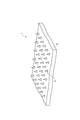
- the microneedle device 1 has a plurality of microneedles 3 arranged on a substrate 2 as shown in FIG.
- the number of the microneedles 3 can be arbitrarily set by those skilled in the art.
- the substrate 2 may be manufactured integrally with the microneedle 3, and in this case, the substrate 2 and the microneedle 3 are made of the same material.
- the microneedle device according to the present embodiment may further include an applicator.
- an applicator those well known to those skilled in the art can be used.
- microneedles of Examples, Comparative Examples, and Reference Examples were manufactured according to the following method.
- citric acid, lactic acid, tartaric acid, succinic acid, phosphoric acid, hydrochloric acid, glacial acetic acid, and aspartic acid are respectively anhydrous citric acid, L-lactic acid, L-tartaric acid, and succinic acid.
- Phosphoric anhydride, concentrated hydrochloric acid (37% by mass aqueous hydrogen chloride solution), glacial acetic acid and L-aspartic acid were used.
- L-arginine and L-histidine were used as arginine and histidine, respectively.
- a silicone rubber mold was immersed in water, degassed under reduced pressure, and taken out of the water. Next, an aqueous solution of an amino acid and an acid (additive concentration: 15 w / v%) was dropped onto the mold and dried at 37 ° C. overnight to obtain a microneedle. The obtained microneedle was evaluated by the following test.
- Microneedles were prepared from a combination of arginine and citric acid, a combination of arginine and hydrochloric acid, arginine alone or citric acid alone, and the appearances of the obtained microneedles were compared.
- FIG. 1 (a) A photograph of a microneedle prepared from a combination of arginine and citric acid, a combination of arginine and hydrochloric acid, arginine alone or citric acid alone is shown in FIG.
- the microneedle produced from the combination of arginine and citric acid (FIG. 1 (a)) was in a transparent amorphous state, had good moldability, and maintained a conical shape.
- the microneedles prepared from the combination of arginine and hydrochloric acid FIG. 1 (b)
- arginine alone FIG. 1 (c)
- citric acid alone FIG. 1 (d)
- Formability test (2) Using one or more amino acids selected from the group consisting of arginine and histidine and one or more acids selected from the group consisting of citric acid, lactic acid, tartaric acid, succinic acid, phosphoric acid, hydrochloric acid, glacial acetic acid and aspartic acid
- one or more amino acids selected from the group consisting of arginine and histidine and one or more acids selected from the group consisting of citric acid, lactic acid, tartaric acid, succinic acid, phosphoric acid, hydrochloric acid, glacial acetic acid and aspartic acid Thus, microneedles were manufactured by the above manufacturing method. Next, the state of the obtained microneedle was observed using a microscope, and it was evaluated whether or not salt crystals were precipitated and whether or not the microneedle could be molded.
- the skin permeability test was performed according to the following method.
- a microneedle device (Reference Example 1) was applied to human isolated skin using an applicator. Subsequently, the skin to which the microneedle device was applied was fixed to a Franz-type cell, the receptor liquid 24 hours later was collected, and the permeation amount was measured by measuring the concentration of edible red No. 40 by HPLC. Note that phosphate buffered saline (PBS) was used as the receptor solution in this test.
- PBS phosphate buffered saline
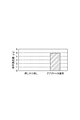
- the cumulative permeation amount of the physiologically active substance after 24 hours from the application was about 5 ⁇ g. It was confirmed that the individual microneedles rapidly dissolved, and the physiologically active substance (food red No. 40) contained in the microneedles was released, indicating sufficient skin permeability. On the other hand, when the microneedle is simply brought into contact with the skin without using the applicator (“no pressing” in FIG. 3), the microneedle does not penetrate the epidermis, and after 24 hours from the application, The accumulated permeation amount of the physiologically active substance was 0 ⁇ g.
- Shape stability test Observation of changes in shape when a 15% aqueous solution of a mixture of arginine and citric acid, maltose, polyvinylpyrrolidone (PVP-K12), polyvinylpyrrolidone (PVP-K90), pullulan or gelatin is dried at 40 ° C. did.
- PVP-K90 polyvinylpyrrolidone
- pullulan or gelatin were dried overnight at 40 ° C.
- a mixture of arginine and citric acid, maltose or polyvinylpyrrolidone In the microneedle prepared from PVP-K12), the shape of the microneedle did not change.
- a microneedle was manufactured by mixing an amino acid and an acid at the ratio shown in Table 2.
- a urethane sheet (trade name: Hypergel sheet hardness 50, Shore C hardness: 50) manufactured by Exeal Corporation is coated with an aluminum foil and applied using an applicator equipped with the obtained microneedle. Was evaluated whether it penetrates aluminum foil.
- microneedles prepared from a combination of arginine and citric acid is equivalent to microneedles prepared from polyvinylpyrrolidone (PVP-K12), although it is inferior to microneedles prepared from maltose. It was shown to have
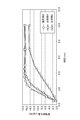
- the mass of the physiologically active substance contained in the microneedle was calculated in the same manner. A value obtained by dividing the mass of the obtained physiologically active substance by the mass of the physiologically active substance used in the production was recorded as “content of physiologically active substance (%) (50 ° C., 1 week)”.
- the results are shown in Table 6 and FIG.
- the microneedle of Example 1 had a high initial insulin content, and the insulin content value did not decrease even after storage for 1 week at 50 ° C.
- the microneedle of Comparative Example 1 had a high initial insulin content, the insulin content after storage for 1 week at 50 ° C. decreased to 65%.
- the microneedle of Comparative Example 2 had an initial insulin content of 50%, and the insulin content after storage for 1 week at 50 ° C. was 17%.
- the microneedle of Example 1 showed a high insulin content even after being stored at 50 ° C. for 1 week, which revealed that the bioactive substance has high stability.
- microneedles of Examples 1 to 6 had the necessary strength at the time of puncturing and could maintain the stability of the physiologically active substance high.
- the microneedles of Comparative Examples 3 and 4 were excellent in the stability of the physiologically active substance in the storage period of 50 ° C. and 1 week, but the content of the physiologically active substance was significantly reduced during the production of the microneedle.
- the results are shown in FIG.
- the microneedles of Reference Examples 15 and 16 reached a steady state when 3 minutes passed after immersion, and the value was about 17 ⁇ g / mL.
- the microneedle of Reference Example 17 reached a steady state when 7 minutes passed after immersion, and the value was about 15 ⁇ g / mL.
- the concentration is 17 ⁇ g / mL.
- the microneedles of Reference Examples 15 and 16 were able to elute the physiologically active substance more rapidly.
- Formability test (3) Naltrexone, arginine, histidine and citric acid were mixed at a mass ratio shown in Table 8 to prepare microneedles of Examples 7 and 8. The appearances of the microneedles of Examples 1 to 4 and 7 to 8 were compared.
- microneedles of Examples 1 to 4 and 7 to 8 were in a transparent amorphous state, had good moldability, and maintained a conical shape as in FIG. 1 (a).
- Strength test (3) A urethane sheet (trade name: Hypergel sheet hardness 50, Shore C hardness: 50, manufactured by Exeal Corporation) coated with an aluminum foil having a thickness of 12 ⁇ m and having a thickness of 0.5 mm was prepared.
- the microneedle device having 100 microneedles of Examples 1 to 8 is applied to the aluminum foil surface using an applicator (impact speed: 7 m / sec), the microneedle penetrates the aluminum foil. Was evaluated. Of the 100 microneedles, the number of penetrating aluminum foils was counted.
Landscapes
- Health & Medical Sciences (AREA)
- Life Sciences & Earth Sciences (AREA)
- Chemical & Material Sciences (AREA)
- Animal Behavior & Ethology (AREA)
- Veterinary Medicine (AREA)
- Public Health (AREA)
- General Health & Medical Sciences (AREA)
- Medicinal Chemistry (AREA)
- Pharmacology & Pharmacy (AREA)
- Epidemiology (AREA)
- Engineering & Computer Science (AREA)
- Proteomics, Peptides & Aminoacids (AREA)
- Bioinformatics & Cheminformatics (AREA)
- Gastroenterology & Hepatology (AREA)
- Zoology (AREA)
- Immunology (AREA)
- Endocrinology (AREA)
- Oil, Petroleum & Natural Gas (AREA)
- Chemical Kinetics & Catalysis (AREA)
- General Chemical & Material Sciences (AREA)
- Dermatology (AREA)
- Diabetes (AREA)
- Molecular Biology (AREA)
- Emergency Medicine (AREA)
- Reproductive Health (AREA)
- Medicinal Preparation (AREA)
Abstract
L'invention concerne une micro-aiguille qui contient: une substance bioactive; un ou plusieurs acides aminés choisis dans le groupe constitué par arginine et histidine; et un acide présentant un point de fusion d'au moins 40°C.
Priority Applications (1)
| Application Number | Priority Date | Filing Date | Title |
|---|---|---|---|
| JP2016505294A JP6211169B2 (ja) | 2014-02-27 | 2015-02-26 | マイクロニードル |
Applications Claiming Priority (2)
| Application Number | Priority Date | Filing Date | Title |
|---|---|---|---|
| JP2014036626 | 2014-02-27 | ||
| JP2014-036626 | 2014-02-27 |
Publications (1)
| Publication Number | Publication Date |
|---|---|
| WO2015129807A1 true WO2015129807A1 (fr) | 2015-09-03 |
Family
ID=54009121
Family Applications (1)
| Application Number | Title | Priority Date | Filing Date |
|---|---|---|---|
| PCT/JP2015/055614 Ceased WO2015129807A1 (fr) | 2014-02-27 | 2015-02-26 | Micro-aiguille |
Country Status (3)
| Country | Link |
|---|---|
| JP (1) | JP6211169B2 (fr) |
| TW (1) | TW201620508A (fr) |
| WO (1) | WO2015129807A1 (fr) |
Cited By (3)
| Publication number | Priority date | Publication date | Assignee | Title |
|---|---|---|---|---|
| WO2017179615A1 (fr) * | 2016-04-15 | 2017-10-19 | 富士フイルム株式会社 | Réseau de micro-aiguilles et procédé de fabrication d'un réseau de micro-aiguilles |
| WO2018224559A1 (fr) * | 2017-06-07 | 2018-12-13 | Lts Lohmann Therapie-Systeme Ag | Système à microaiguilles pour appliquer des analogues peptidiques similaires au glucagon |
| WO2020250210A1 (fr) * | 2019-06-10 | 2020-12-17 | University College Cork - National University Of Ireland, Cork | Microaiguilles et leurs procédés de fabrication |
Families Citing this family (3)
| Publication number | Priority date | Publication date | Assignee | Title |
|---|---|---|---|---|
| EP3416618A1 (fr) | 2016-02-19 | 2018-12-26 | ZP Opco, Inc. | Procédé pour obtenir rapidement des concentrations thérapeutiques de triptans pour le traitement de migraines |
| US11660264B2 (en) | 2017-08-23 | 2023-05-30 | Emergex USA Corporation | Method of rapidly achieving therapeutic concentrations of triptans for treatment of migraines and cluster headaches |
| US11660265B2 (en) | 2018-06-28 | 2023-05-30 | Emergex USA Corporation | Method of rapidly achieving therapeutic concentrations of triptans for treatment of migraines and cluster headaches |
Citations (3)
| Publication number | Priority date | Publication date | Assignee | Title |
|---|---|---|---|---|
| WO2013082427A1 (fr) * | 2011-11-30 | 2013-06-06 | 3M Innovative Properties Company | Dispositif à micro-aiguilles comprenant un agent thérapeutique peptidique et un acide aminé et ses procédés de fabrication et d'utilisation |
| WO2014126105A1 (fr) * | 2013-02-13 | 2014-08-21 | 久光製薬株式会社 | Composition de revêtement de micro-aiguille et dispositif à micro-aiguille |
| WO2014126104A1 (fr) * | 2013-02-13 | 2014-08-21 | 久光製薬株式会社 | Composition de revêtement de micro-aiguille et dispositif à micro-aiguille |
-
2015
- 2015-02-26 WO PCT/JP2015/055614 patent/WO2015129807A1/fr not_active Ceased
- 2015-02-26 JP JP2016505294A patent/JP6211169B2/ja active Active
- 2015-02-26 TW TW104106293A patent/TW201620508A/zh unknown
Patent Citations (3)
| Publication number | Priority date | Publication date | Assignee | Title |
|---|---|---|---|---|
| WO2013082427A1 (fr) * | 2011-11-30 | 2013-06-06 | 3M Innovative Properties Company | Dispositif à micro-aiguilles comprenant un agent thérapeutique peptidique et un acide aminé et ses procédés de fabrication et d'utilisation |
| WO2014126105A1 (fr) * | 2013-02-13 | 2014-08-21 | 久光製薬株式会社 | Composition de revêtement de micro-aiguille et dispositif à micro-aiguille |
| WO2014126104A1 (fr) * | 2013-02-13 | 2014-08-21 | 久光製薬株式会社 | Composition de revêtement de micro-aiguille et dispositif à micro-aiguille |
Cited By (7)
| Publication number | Priority date | Publication date | Assignee | Title |
|---|---|---|---|---|
| WO2017179615A1 (fr) * | 2016-04-15 | 2017-10-19 | 富士フイルム株式会社 | Réseau de micro-aiguilles et procédé de fabrication d'un réseau de micro-aiguilles |
| WO2018224559A1 (fr) * | 2017-06-07 | 2018-12-13 | Lts Lohmann Therapie-Systeme Ag | Système à microaiguilles pour appliquer des analogues peptidiques similaires au glucagon |
| CN110769812A (zh) * | 2017-06-07 | 2020-02-07 | Lts勒曼治疗系统股份公司 | 用于施用胰高血糖素样肽类似物的微针系统 |
| JP2020522354A (ja) * | 2017-06-07 | 2020-07-30 | エルテーエス ローマン テラピー−ジステーメ アーゲー | グルカゴン様ペプチドアナログを適用するためのマイクロニードルシステム |
| JP2023134783A (ja) * | 2017-06-07 | 2023-09-27 | エルテーエス ローマン テラピー-ジステーメ アーゲー | グルカゴン様ペプチドアナログを適用するためのマイクロニードルシステム |
| JP7788788B2 (ja) | 2017-06-07 | 2025-12-19 | エルテーエス ローマン テラピー-ジステーメ アーゲー | グルカゴン様ペプチドアナログを適用するためのマイクロニードルシステム |
| WO2020250210A1 (fr) * | 2019-06-10 | 2020-12-17 | University College Cork - National University Of Ireland, Cork | Microaiguilles et leurs procédés de fabrication |
Also Published As
| Publication number | Publication date |
|---|---|
| JPWO2015129807A1 (ja) | 2017-03-30 |
| JP6211169B2 (ja) | 2017-10-11 |
| TW201620508A (zh) | 2016-06-16 |
Similar Documents
| Publication | Publication Date | Title |
|---|---|---|
| JP6211169B2 (ja) | マイクロニードル | |
| JP6894455B2 (ja) | 治療剤の送達のためのマイクロアレイ、使用方法および製造方法 | |
| CN104066475B (zh) | 迅速溶解型微针 | |
| TWI625128B (zh) | Microneedle coating composition and microneedle device | |
| TW200528154A (en) | Composition and apparatus for transdermal delivery | |
| EP3035952B1 (fr) | Formules stables de peptides glucagon | |
| JP2016512754A5 (fr) | ||
| KR20120138235A (ko) | 마이크로 니들 디바이스 및 그 제조 방법 | |
| CN1678367A (zh) | 具有被涂覆的微突物的经皮药物传输装置 | |
| JP2021072884A (ja) | 薬剤組成物が塗布されたマイクロニードルアレイ | |
| CN103889497A (zh) | 微针熔着法 | |
| TWI659754B (zh) | Micro needle sheet | |
| JP5688752B2 (ja) | 経皮吸収製剤およびその製造方法 | |
| TW201832758A (zh) | 微針裝置之製造方法 | |
| JPWO2012115207A1 (ja) | マイクロニードルデバイス用生理活性非水組成物及びマイクロニードル上に付着している生理活性非水組成物 | |
| JPWO2012115208A1 (ja) | マイクロニードルデバイス用glp−1アナログ組成物 | |
| JP2024500424A (ja) | 不溶性の経皮マイクロニードルパッチ及びその調製方法並びに応用 | |
| JP2019508175A5 (fr) | ||
| TWI655953B (zh) | 含有基因重組型卵泡刺激激素之微針裝置 | |
| JP7008684B2 (ja) | マイクロニードルデバイス | |
| US20180153798A1 (en) | Stable Glucagon Peptide Formulations | |
| WO2017079611A1 (fr) | Formulations stables de peptide de glucagon | |
| JP6081215B2 (ja) | コーティング及びマイクロニードルデバイス | |
| TWI631965B (zh) | 微針裝置及其製造方法 | |
| CN110294684A (zh) | 含有普瑞巴林的组合物的制造方法以及含有普瑞巴林的组合物 |
Legal Events
| Date | Code | Title | Description |
|---|---|---|---|
| 121 | Ep: the epo has been informed by wipo that ep was designated in this application |
Ref document number: 15756103 Country of ref document: EP Kind code of ref document: A1 |
|
| ENP | Entry into the national phase |
Ref document number: 2016505294 Country of ref document: JP Kind code of ref document: A |
|
| NENP | Non-entry into the national phase |
Ref country code: DE |
|
| 122 | Ep: pct application non-entry in european phase |
Ref document number: 15756103 Country of ref document: EP Kind code of ref document: A1 |