WO2015133840A2 - 알콕시실릴기를 갖는 에폭시 화합물, 이의 제조 방법, 이를 포함하는 조성물, 경화물 및 이의 용도 - Google Patents
알콕시실릴기를 갖는 에폭시 화합물, 이의 제조 방법, 이를 포함하는 조성물, 경화물 및 이의 용도 Download PDFInfo
- Publication number
- WO2015133840A2 WO2015133840A2 PCT/KR2015/002138 KR2015002138W WO2015133840A2 WO 2015133840 A2 WO2015133840 A2 WO 2015133840A2 KR 2015002138 W KR2015002138 W KR 2015002138W WO 2015133840 A2 WO2015133840 A2 WO 2015133840A2
- Authority
- WO
- WIPO (PCT)
- Prior art keywords
- formula
- integer
- group
- epoxy
- epoxy compound
- Prior art date
- Legal status (The legal status is an assumption and is not a legal conclusion. Google has not performed a legal analysis and makes no representation as to the accuracy of the status listed.)
- Ceased
Links
- 0 CCC*(C)NC(C)CC Chemical compound CCC*(C)NC(C)CC 0.000 description 15
- OOWNNCMFKFBNOF-UHFFFAOYSA-N CC(C)(C)c1ccc(C(C)(C)C)cc1 Chemical compound CC(C)(C)c1ccc(C(C)(C)C)cc1 OOWNNCMFKFBNOF-UHFFFAOYSA-N 0.000 description 4
- RNVCVTLRINQCPJ-UHFFFAOYSA-N Cc(cccc1)c1N Chemical compound Cc(cccc1)c1N RNVCVTLRINQCPJ-UHFFFAOYSA-N 0.000 description 3
- URLKBWYHVLBVBO-UHFFFAOYSA-N Cc1ccc(C)cc1 Chemical compound Cc1ccc(C)cc1 URLKBWYHVLBVBO-UHFFFAOYSA-N 0.000 description 2
- GPWFRBGAWYSPEO-UHFFFAOYSA-N CO/C(/NOC)=N\OC Chemical compound CO/C(/NOC)=N\OC GPWFRBGAWYSPEO-UHFFFAOYSA-N 0.000 description 1
- IIJXOLXWHZDWDO-UHFFFAOYSA-N C[NH+](C([NH+](C)[NH-])OC)[NH-] Chemical compound C[NH+](C([NH+](C)[NH-])OC)[NH-] IIJXOLXWHZDWDO-UHFFFAOYSA-N 0.000 description 1
Classifications
-
- C—CHEMISTRY; METALLURGY
- C07—ORGANIC CHEMISTRY
- C07D—HETEROCYCLIC COMPOUNDS
- C07D303/00—Compounds containing three-membered rings having one oxygen atom as the only ring hetero atom
- C07D303/02—Compounds containing oxirane rings
- C07D303/12—Compounds containing oxirane rings with hydrocarbon radicals, substituted by singly or doubly bound oxygen atoms
-
- C—CHEMISTRY; METALLURGY
- C07—ORGANIC CHEMISTRY
- C07D—HETEROCYCLIC COMPOUNDS
- C07D303/00—Compounds containing three-membered rings having one oxygen atom as the only ring hetero atom
- C07D303/02—Compounds containing oxirane rings
- C07D303/12—Compounds containing oxirane rings with hydrocarbon radicals, substituted by singly or doubly bound oxygen atoms
- C07D303/18—Compounds containing oxirane rings with hydrocarbon radicals, substituted by singly or doubly bound oxygen atoms by etherified hydroxyl radicals
-
- C—CHEMISTRY; METALLURGY
- C07—ORGANIC CHEMISTRY
- C07F—ACYCLIC, CARBOCYCLIC OR HETEROCYCLIC COMPOUNDS CONTAINING ELEMENTS OTHER THAN CARBON, HYDROGEN, HALOGEN, OXYGEN, NITROGEN, SULFUR, SELENIUM OR TELLURIUM
- C07F7/00—Compounds containing elements of Groups 4 or 14 of the Periodic Table
- C07F7/02—Silicon compounds
- C07F7/08—Compounds having one or more C—Si linkages
- C07F7/18—Compounds having one or more C—Si linkages as well as one or more C—O—Si linkages
- C07F7/1804—Compounds having Si-O-C linkages
-
- C—CHEMISTRY; METALLURGY
- C09—DYES; PAINTS; POLISHES; NATURAL RESINS; ADHESIVES; COMPOSITIONS NOT OTHERWISE PROVIDED FOR; APPLICATIONS OF MATERIALS NOT OTHERWISE PROVIDED FOR
- C09D—COATING COMPOSITIONS, e.g. PAINTS, VARNISHES OR LACQUERS; FILLING PASTES; CHEMICAL PAINT OR INK REMOVERS; INKS; CORRECTING FLUIDS; WOODSTAINS; PASTES OR SOLIDS FOR COLOURING OR PRINTING; USE OF MATERIALS THEREFOR
- C09D183/00—Coating compositions based on macromolecular compounds obtained by reactions forming in the main chain of the macromolecule a linkage containing silicon, with or without sulfur, nitrogen, oxygen, or carbon only; Coating compositions based on derivatives of such polymers
- C09D183/04—Polysiloxanes
- C09D183/06—Polysiloxanes containing silicon bound to oxygen-containing groups
-
- C—CHEMISTRY; METALLURGY
- C09—DYES; PAINTS; POLISHES; NATURAL RESINS; ADHESIVES; COMPOSITIONS NOT OTHERWISE PROVIDED FOR; APPLICATIONS OF MATERIALS NOT OTHERWISE PROVIDED FOR
- C09J—ADHESIVES; NON-MECHANICAL ASPECTS OF ADHESIVE PROCESSES IN GENERAL; ADHESIVE PROCESSES NOT PROVIDED FOR ELSEWHERE; USE OF MATERIALS AS ADHESIVES
- C09J183/00—Adhesives based on macromolecular compounds obtained by reactions forming in the main chain of the macromolecule a linkage containing silicon, with or without sulfur, nitrogen, oxygen, or carbon only; Adhesives based on derivatives of such polymers
- C09J183/04—Polysiloxanes
- C09J183/06—Polysiloxanes containing silicon bound to oxygen-containing groups
-
- C—CHEMISTRY; METALLURGY
- C08—ORGANIC MACROMOLECULAR COMPOUNDS; THEIR PREPARATION OR CHEMICAL WORKING-UP; COMPOSITIONS BASED THEREON
- C08G—MACROMOLECULAR COMPOUNDS OBTAINED OTHERWISE THAN BY REACTIONS ONLY INVOLVING UNSATURATED CARBON-TO-CARBON BONDS
- C08G77/00—Macromolecular compounds obtained by reactions forming a linkage containing silicon with or without sulfur, nitrogen, oxygen or carbon in the main chain of the macromolecule
- C08G77/04—Polysiloxanes
- C08G77/14—Polysiloxanes containing silicon bound to oxygen-containing groups
Definitions
- the present invention relates to an epoxy compound having an alkoxysilyl group via a new spacer group exhibiting excellent heat resistance and improved brittleness, a process for its preparation, a composition comprising the same, a cured product and its use. More specifically, the present invention provides good heat resistance properties in composites, specifically low thermal expansion properties and high glass transition temperatures (including Tg leases that do not exhibit glass transition silver), improved brittleness and / or flame retardancy in cured products.
- the present invention relates to a new epoxy compound having a spacer between a core and an alkoxysilyl group, which does not require a separate silane coupling agent, a preparation method thereof, a composition comprising the same, a cured product, and a use thereof. '
- Epoxy resins have a much larger coefficient of thermal expansion, several times to several tens, than ceramic and metal materials. Therefore, when the epoxy resin is used together with the inorganic material or the metal material, the physical properties and workability of the part are significantly limited due to the different coefficients of thermal expansion of the epoxy resin and the inorganic material or the metal material. For example, during semiconductor packaging where silicon wafers and epoxy substrates are used adjacent to each other, there is a significant difference in the coefficient of thermal expansion (CTE-mi sniatch) between components, resulting in crack generation, warpage and peeling of the substrate. f) Product defects such as breakage of the substrate.
- CTE-mi sniatch coefficient of thermal expansion
- the size of the inorganic particles tends to decrease due to the miniaturization of the semiconductor structure, but the viscosity increase problem becomes more serious when a filler of 1 or less is used. And, when the inorganic particles having a large average particle diameter are used, the frequency of unfilling at the application site of the composition containing the resin and the inorganic particles increases.
- the CTE of the epoxy composite is greatly reduced, but still shows a high CTE compared to silicon chips and the like.
- the high CTE of current epoxy materials limits the production of highly integrated electronic components such as next-generation semiconductor substrates and PCBs. Therefore, low CTE to improve the heat resistance insufficient due to the high CTE of the conventional epoxy composite and There is a need for the development of epoxy composites having excellent glass transition temperature characteristics as well as improved brittleness.
- the improved heat resistance properties in the composite specifically low CTE and high.
- Epoxy compounds are provided having alkoxysilyl groups via spacer groups which exhibit glass transition silver, improved brittleness and / or good flame retardancy in the cured product.
- a manufacturing method is provided.
- an epoxy compound having an alkoxysilyl group via a spacer groupol exhibiting improved heat resistance in the composite, specifically low CTE and high glass transition temperature, improved brittleness and / or excellent flame resistance in the cured product there is provided an epoxy composition comprising a. Furthermore, according to another aspect of the present invention, a composite having an alkoxysilyl group via a spacer group exhibiting improved heat resistance properties, specifically low CTE and high glass transition temperature, improved brittleness and / or excellent flame retardancy in the cured product. A cured product of an epoxy composition comprising an epoxy compound is provided. In addition, according to another aspect of the present invention. According to one aspect of the invention. According to one aspect of the invention there is provided the use of an epoxy composition comprising an epoxy compound having an alkoxysilyl group via a spacer group. 15002138
- an epoxy compound having an alkoxysilyl group via a spacer wherein the core further comprises at least one substituent selected from the group consisting of hydrogen, a hydroxy group and an alkenyl group.
- the hydroxy group is independently selected from the group consisting of -OH, -0- (CH 2 ), -0H and-(C) ⁇ 0H, wherein 1 is an integer from 1 to 10.
- an epoxy compound having an alkoxysilyl group via a spacer According to the fourth opinion,
- an epoxy compound having an alkoxysilyl group via a spacer wherein the alkenyl group is of the general formula A5, A6, A7 or A8. .
- Epoxy compound having an alkoxysilyl group via a spacer according to any one of claims 1 to 4, wherein the core is triphenylmethane, binaphthalene, tetraphenylethane, aromatic amine, cycloaliphatic amine or novolak unit. This is provided. According to the sixth aspect,
- an epoxy compound having an alkoxysilyl group via a spacer wherein the core is selected from the group consisting of the following formulas AC to KC.
- K is a direct linkage, -CH 2 -or
- Ry is a straight or branched chain alkyl group of CI— CIO
- R is H or CI— C3 alkyl
- n is an integer of 2 or more
- L is lfc
- n is an integer of 1 or more
- n is an integer of 1 or more
- n is 0 or an integer of 1 or more
- n is an integer greater than or equal to
- N is an integer of 1 or more
- the cores of the formulas AC to CC are connected to the linking group LG1
- the formulas HC to The core of KC has an alkoxysilyl group via a spacer which is linked to the following linker LG
- Epoxy compounds are provided. ⁇
- the epoxy compound is provided with an epoxy compound having an alkoxysilyl group via a spacer, which is one of the following formulas AF to KF.
- At least two of the plurality of substituents A is the formula E1, at least one A is the formula A1 or A2, and if there is a residual substituent A, -OH, -0- (CH 2 ) ⁇ 0H (1 is an integer from 1 to 10), each independently selected from the group consisting of Formulas A5 and A6, wherein in Formulas HF to KF, at least two substituents A are at least one of Formula E2: At least one A is of formula A3 or A4, and if there is a residual substituent A, it is -H,-(CHs -OH l is an integer of 1 to 10), each independently from the group consisting of formulas A7 and A8 In formula CF, K is a direct linkage, ⁇ CH 2 -or
- Ry is a straight-chain or branched alkyl group of Cl-ClO, wherein in formula HF, Q is -CH 2- , -C (CH 3 ) 2- , -C (CF 3 ) 2 —, -S-, ⁇ S0 2 -again " And each R is independently H or C1-C3 alkyl.
- n is an integer of 2 or more.
- N is an integer of 1 or more when L is 1F
- n is an integer of 1 or more
- n 0 or an integer of 1 or more
- M is
- n is an integer greater than or equal to 2 :
- n is an integer greater than or equal to 1
- p is 1 or 2.
- alkyl and alkoxy groups may be straight linear or branched, cyclic Or may be acyclic, with or without at least one heteroatom selected from the group consisting of N, 0, S, and P,
- I is an integer from 1 to 10
- n 1 to 8.
- the epoxy compound of the formula (AF) to CF is connected to a linking group of the formula
- the epoxy compound of the formula HF to KF is provided with an epoxy compound having an alkoxysilyl group via a spacer, which is connected to the linking group of formula LG2.
- a second step of forming the intermediate product I and to 'any one of the epoxy compound of the formula AF to KF to by reacting an alkoxysilane of the formula R2 A method for producing an epoxy compound having an alkoxysilyl group via a spacer is provided.
- J is hydrogen, a hydroxyl group, a straight or branched chain alkyl group of C1 to C10 or an aromatic group of C6 to C10,
- CS K is a single bond (di rect l inkage), -C3 ⁇ 4- or
- Ry is a straight-chain or branched alkyl group of ci-cio, wherein in the above formula HS, Q is CH 2 ⁇ ⁇ -C (CH 3 ) 2 — , — C (CF 3 ) 2 —, — S—, _S0 2- , or
- R is independently H or C1-C3 alkyl
- n is an integer of 2 or more.
- N is an integer greater than or equal to 1 when L is lfs
- n is an integer of 1 or more
- n is 0 or an integer of 1 or more
- n is an integer greater than or equal to 2
- n is an integer of 1 or more
- X is CI, Br, I, -0-S0 2 -CH 3 , -0-S0 2 -CF 3. Or -0-
- At least two of the plurality of substituents D are the following formula E1, at least one D is -C CH 2 ) ⁇ 0H (wherein 1 is an integer of 1 to 10), and the remaining substituents If D is present, it may be -0H, and in Formulas HM1 to KM1, at least two of the plurality of substituents D are of Formula E2, and at least one D is-(CH 2 ) ⁇ 0H (wherein 1 is 1) To an integer of 10 to 10), and if there is a residual substituent D, it may be hydrogen, and in Formula AMI, J is hydrogen, a hydroxyl group, a straight or branched chain alkyl group of C1 to, or an aromatic group of C6 to C10, K is a single bond (direct inkage l) in,, -CH 2 - or (Rx is H black is a C1-C3 alkyl group),
- L is.
- Ry is a C1-C10 straight or branched alkyl group
- Q is -CH 2- , —C (CH 3 ) 2 _, -C (CF 3 ) 2- , -S-, -S0 2 _. or
- Each R is independently H or C1-C3 alkyl
- n is an integer of 1 or more
- n is an integer of 1 or more.
- n is 0 or an integer of 1 or more.
- n is an integer of 2 or more
- p is 1 or 2.
- At least one of to 3 ⁇ 4 is a C1-C6 linear, branched or cyclic alkoxy group, the remaining substituents are C1-C10 linear, branched or cyclic alkyl group, N, 0, S, And at least one hetero atom selected from the group consisting of P, m is an integer from 1 to 8)
- At least two of the multivalent substituents A are the following formula E1, at least one A is the formula A2, and if there is a residual substituent A, -0H,-()-((3 ⁇ 4)! — 0H (wherein 1 is an integer from 1 to 10),
- At least two of the plurality of substituents A are the following Formula E2, and at least one A is the following Formula A4, and if there is a residual substituent A, it is (CH 2 ) ⁇ 0H (wherein 1 is 1 to 1). Is an integer of 10), and in the above formula AF, J is hydrogen, a hydroxy group, a straight or branched chain alkyl group of C1 to C10 or an aromatic group of C6 to C10, and in the formula CF, K is a di rect l inkage,- CH 2 -or
- Ry is a straight-chain or branched alkyl group of ci-cio :
- Q is-(: 3 ⁇ 4-, -C (CH 3 ) 2- , -C (CF 3 ) 2 ⁇ , -S-,- S0 2 ⁇ or
- each R is independently H or C1-C3 alkyl
- n is an integer of 2 or more
- n is an integer of 1 or more
- n is an integer of 1 or more
- n is 0 or an integer of 1 or more
- n is an integer of 2 or more
- n is an integer greater than or equal to 1
- p is 1 or 2.
- At least one of to 3 ⁇ 4 is a linear, branched or cyclic alkoxy group having 1 to 6 carbon atoms, the rest is a linear, branched or cyclic alkyl group having 1 to 10 carbon atoms, N, May or may not have at least one hetero atom selected from the group consisting of 0, S, and P,
- 1 is an integer from 1 to 10
- n is an integer of 1 to 8)
- J in the formula AS is hydrogen. Hydroxy group, C1 to C10 straight or branched chain alkyl group or C6 to C10 aromatic group,
- K is a single bond (di rect l inkage), -CH 2 — or
- Each R is independently H or C1-C3 alkyl
- n is an integer of 2 or more. If L is lfs. n is an integer of 1 or more.
- n is an integer of 1 or more
- n is 0 ' or an integer of 1 or more
- n is an integer of 2 or more
- n is an integer of 1 or more
- X is CI, Br, I, — ⁇ — S0 2 -CH 3 , -0_S0 2 -CF 3 , or -0-
- At least two of the plurality of substituents D is the formula E1, at least one D is -CU rOH (wherein 1 is an integer of 1 to 10), if there is a residual substituent D, It may be — 0H, wherein in Formulas HM1 to KM1, at least two of the plurality of substituents D are of formula E2, wherein at least one D is — (CH 2 ) ⁇ 0H (wherein 1 is an integer from 1 to 10).
- ⁇ 0 is in the formula CM1 K is a single bond (di rect l inkage) -CH 2 -or (RH or CI ⁇ C3 alkyl)
- Ry is a C1-C10 straight or branched alkyl group.
- Q is — (3 ⁇ 4-, ⁇ C (C3 ⁇ 4) 2- , ⁇ C (CF 3 ) 2- , -S-, -S0 2 —, again
- Each R is independently H black is C1-C3 alkyl
- n is an integer of 2 or more
- n is an integer of 1 or more
- n is 0 or an integer of 1 or more.
- n is an integer greater than or equal to
- N is an integer of 1 or more
- p is 1 or 2.
- Y is CI, Br I, -O-SO2-CH3, -O-SO2-CF3, or-is S02-C 6 H 4 -C3 ⁇ 4, and is an integer of 8
- At least two of the plurality of substituents E are the following Formula E1, and at least one E is-(HCH ⁇ -CHCH r KH ⁇ where 1 is an integer of 1 to 10, m is 1 -OH,-(HCH 2 ),-0H (wherein 1 is an integer of 1 to 10), and -0- (CH 2 ) m -CH
- at least two of the plurality of substituents E are of Formula E2 E is (CH 2 ) ⁇ 0— (C3 ⁇ 4)
- Ry is a C1-C10 straight or branched alkyl group
- Q is -CH 2- , -C (CH 3 ) 2- , — C (CF 3 ) 2 — , -S_, _S0 2 — , and :
- R is independently H or CI— C3 alkyl
- n is an integer of 2 or more
- n is an integer of 1 or more.
- n is an integer of 1 or more
- n is 0 or an integer of 1 or more
- n is an integer greater than or equal to 2
- p is 1 or 2.
- At least one of to 3 ⁇ 4 is a linear, branched or cyclic alkoxy group of C1-C6 and the rest are independently a linear, branched or cyclic alkyl group of C1-C10, N, 0, S, And may have or may not have at least one hetero atom selected from the group consisting of P)
- At least two of the plurality of substituents A is the formula E1
- at least one A is the formula A1
- if there is a residual substituent A, -0H, — CKCH ⁇ !-OH (wherein 1 is an integer of 1 to 10), each independently selected from the group consisting of Formulas A5 and A6, wherein in Formulas HF to KF, at least two of the plurality of substituents A are Formula E2, and at least one A is a chemical formula A3, and, if there is a residual substituent A, -H,-(C3 ⁇ 4) i-0H, where 1 is an integer from 1 to 10.
- J is a hydrogen ⁇ hydroxy group, a straight or branched chain alkyl group of C1 to C10 or an aromatic group of C6 to C10, wherein in Formula CF, K is a direct linkage, -CH 2 -or (Rx is H or C1-C3 alkyl group),
- Q is -CH 2 ⁇ , -C (.C3 ⁇ 4) 2- , ⁇ C (CF 3 ) 2 ⁇ , -S_, -S0 2- , or R is independently H or C1-C3 alkyl,
- n is an integer of 2 or more
- n is an integer of 1 or more
- n is an integer of 1 or more
- n is 0 or an integer of 1 or more
- n is an integer greater than or equal to 2
- n is an integer of 1 or more
- p is 1 or 2.
- At least one of is a linear. Branched or cyclic alkoxy group having 1 to 6 carbon atoms, the rest is a linear, branched or cyclic alkyl group having 1 to 10 carbon atoms, N, 0 May have or may not have at least one heteroatom selected from the group consisting of S, and P,
- the first step is a "two bars the alkyl hydroxy compound is first banung. Thereafter, a method for producing an epoxy compound having an alkoxysilyl group via a spacer is provided, wherein the epichlorohydrin is added and reacted continuously in situ. According to point thirteen,
- the first step is performed through a spacer in which the starting material and the epichlorohydrin are reacted first, and then the alkylhydroxy compound is continuously added and reacted in situ.
- a method for producing an epoxy compound having an alkoxysilyl group is provided. According to my 14th opinion.
- the first step includes the step of reacting and reacting the starting material and the alkylhydroxy compound (1-la); .
- step (1-la) of the product as banung epi chlorohydrate is a method for producing an epoxy compound with step (l_2a) is performed in which, by an alkoxysilyl group via a spacer which is provided by the i banung.
- the first step comprises the steps of reacting the starting material and the epichlorohydrin (1-lb); And the semi-product of step (1-lb) with the alkylhydroxy compound.
- a method for producing an epoxy compound having an alkoxysilyl group via a spacer which is carried out by reacting (1 ⁇ 2b). According to the sixteenth opinion.
- an epoxy composition comprising an epoxy compound having an alkoxysilyl group via the spacer of any one of claims 1 to 9. According to view 17,
- the epoxy composition containing the epoxy compound of Claim 16 whose ratio of the total epoxy group: alkoxysilyl group of the epoxy compound contained in the said epoxy composition is 1: 5-20: 1 is provided. According to view 18,
- An epoxy composition further comprising at least one epoxy compound selected from the group consisting of glycidyl ether epoxy compounds, glycidyl based epoxy compounds, glycidyl amine epoxy compounds, and glycidyl ester epoxy compounds.
- the epoxy compound is bisphenol, biphenyl, naphthalene, benzene, thiodiphenol, fluorene, anthracene, isocyanurate, triphenylmethane, 1, 1, 2, 2-tetra as a core structure
- Epoxy compositions having phenylethane, tetraphenylmethane, 4, 4'-diaminodiphenylmethane, aminophenols, cycloaliphatic, aliphatic, or novolac units are provided. According to my 20th opinion,
- the epoxy compound, glycidyl ether type epoxy compound, glycidyl type epoxy compound, glycidylamine type epoxy compound having an alkoxysilyl group via the spacer based on the total weight of the epoxy compound compound, and the glycidyl-epoxy composition contains at least a kind of an epoxy compound Owt% to 99wt% selected from the group consisting of pyridyl ester-based epoxy compound, i. According to view 21,
- an inorganic particle as a filler Or an epoxy composition further comprising a fiber.
- the inorganic particle is at least one epoxy selected from the group consisting of at least one metal oxide selected from the group consisting of silica, zirconia, titania, alumina, silicon nitride and aluminum nitride, and silsesquioxane.
- a composition is provided. According to opinion 23,
- an epoxy composition further comprising inorganic particles is provided.
- An electronic material comprising the epoxy composition according to any one of items 16 to 24. According to view 26,
- a semiconductor device including the printed wiring board of the 29th aspect is provided. According to opinion 31,
- An adhesive comprising the epoxy composition of any of claims 16-24.
- a paint comprising the epoxy composition of any one of claims 16-24. According to 35th opinion,
- positioned at the 36th prepreg is provided. According to 38,
- a cured product o of an epoxy composition of any of claims 16 to 24 is provided. According to 39th opinion,
- cured material of Claim 38 WHEREIN The said hardened
- the cured product is a cured product of the epoxy composition does not exhibit a glass transition temperature of the higher or a glass transition temperature greater than 100 o C, is provided.
- Epoxy compositions comprising epoxy compounds are characterized in that, in composites and / or cured products, the improved heat resistance properties, ie, the CTE of the epoxy composites are reduced and do not exhibit a glass transition temperature rise or glass transition temperature (hereinafter referred to as 'Tg lease'). Effect. Furthermore, it exhibits improved brittleness due to the flexible spacer between the core and the alkoxysilyl group. Moreover, the alkoxysilyl group via the spacer group which concerns on this invention .
- the present invention provides improved heat resistance at the time of formation of the composite by curing the epoxy composition, specifically low CTE and high T g (including Tg lease), improved brittleness and / or good flame retardancy in the cured product and a separate silane coupling agent.
- composite refers to a cured product of a composition comprising an epoxy compound, a curing agent, and a filler (fibers and / or inorganic particles).
- the term “cured product” refers to a cured product of a composition comprising an epoxy compound and a curing agent, and is composed of a filler, an optional additional curing agent, an optional curing catalyst, and other additives in addition to the epoxy compound and the curing agent.
- a cured product of the composition comprising at least one selected from the group.
- Semi-rigids may include: In general, since the cured product reinforced with inorganic particles and / or fibers is called a composite, the cured product has a broader meaning than the composite, but the cured product reinforced with inorganic particles and / or fibers may have It may be understood in the same sense.
- the epoxy compound having an alkoxysilyl group via the spacer group according to the present invention exhibits low CTE and high glass transition temperature or Tg-less (less), thereby improving dimensional stability. Furthermore, the flexible spacer exhibits improved brittleness. Moreover, the hardened
- Epoxy compounds having alkoxysilyl groups via new spacer groups in accordance with one aspect of the present invention include alkoxysilyl via at least two epoxy groups and at least one spacer group in the core. Groups (hereinafter also referred to only as 'alkoxysilyl groups'), ie at least one alkoxysilyl group connected to the core via a spacer.
- the epoxy compound having an alkoxysilyl group via the spacer group may optionally additionally have in the core an algal subphase selected from the group consisting of hydrogen, hydroxy groups and alkenyl groups, ie at least one group:
- the epoxy group may be to the general formula E1 or E2, epoxy ⁇ 'compounds of the invention may comprise at least two said ⁇ or E2,
- the alkoxysilyl group via the spacer group may be selected from the group consisting of the following formulas Al, A2, A3 and A4.
- At least one of 3 ⁇ 4 is carbon number.
- An alkyl group of 10 is preferably an alkyl group with 1 to 5 carbon atoms, wherein the alkyl group and the alkoxy group may be linear or branched, may be cyclic or acyclic, and are selected from the group consisting of N, 0, S, and P. It may or may not have at least one hetero atom selected.
- 1 is an integer of 1-10, m is 1-8, Preferably it is an integer of 1-4. .
- the additional hydroxyl group may be independently selected from the group consisting of —OH, —0- (CH 2 ) 0H and ⁇ ((:) “0H, and any additional alkenyl group may be represented by Formula A5, A6, A7 or A8 Wherein 1 is an integer from 1 to 10.
- the core is understood to include not only structures represented by the following formulas AC to CC and HC to KC, but also represented by repeating units such as DC to GC.
- (KC) J in the formula AC is hydrogen, hydroxy group, C1 to C10 linear or branched alkyl group, or C6 to C10 aromatic group,
- K is a direct linkage, ⁇ CH 2 -or
- Q in the formula HC is -CH 2- , -C (C3 ⁇ 4) 2 2 , -C (CF 3 ) 2 —, -S-, -S0 2- , or Go.
- R is H or C1-C3 alkyl, in the formula DC, when L is lac to lfec.
- n is an integer of 2 or more,
- n is an integer of 1 or more.
- N is an integer of 1 or more
- n is 0 or an integer of 1 or more
- n is an integer greater than or equal to 2 c H
- n is an integer of 1 or more
- an upper limit of n value is 1000.
- the core selected from the group consisting of AC to: CC and HC to KC may have a dimer or more structure, and how about two or more cores are connected to the linking group (LG). Can be connected. If necessary, 1 to 1,000 core structures may be further connected.
- two or more identical cores selected from Formulas AC to CC may be connected to a linking group of Formula LG1
- two or more identical cores selected from Formulas HC to KC may be connected to a linking group of Formula LG2.
- the epoxy compound having an alkoxysilyl group via the new spacer group according to the present invention may be represented by the following formulas AF to KF.
- At least two of the plurality of substituents A are of the formula E1, at least one A is of the formula A1 or A2, and if there is a residual substituent A, it is -OH, -0- ( CH 2 ) ⁇ 0HO is an integer of 1 to 10), and each independently selected from the group consisting of Chemical Formulas A5 and A6.
- At least two of the plurality of substituents A are the formula E2, at least one A is the formula A3 or A4, and if there is a residual substituent A, -H,-( ⁇ , - ⁇ ⁇ is an integer of 1 to 10), and each independently selected from the group consisting of Formulas A7 and A8.
- J is hydrogen, a hydroxyl group, a straight or branched chain alkyl group of C1 to C10 or C6 to C10. Is an aromatic group of
- K is a single bond (di rect l inkage), -CH 2 -or (Rxfe H black is a CI- C3 alkyl group), L in the formula DF
- Ry is a straight or branched chain alkyl group of CI— CIO, wherein in formula HF, Q is —CH 2 _, -C (C3 ⁇ 4) 2- , -C (CF 3 ) 2 ⁇ , -S-, -S0 2 ⁇ , or
- R is each independently H or C1-C3 alkyl.
- n is an integer of 2 or more
- L is IF
- n is an integer of 1 or more
- n is an integer of 1 or more
- n is 0 or an integer of 1 or more
- n 2 or more
- n is an integer of 1 or more
- n 1 or 2.
- the upper limit of n value is 1000.
- an epoxy compound may be connected by the linking group (LG).
- the epoxy compounds of Formulas AF to CF may be a linking group of Formula LG1.
- the epoxy compounds of Formulas HF to KF may be connected to a linking group of Formula LG2.
- At least two of the plurality of substituents A of the epoxy compounds of Formulas AF to GF are of Formula E1, at least one is of Formula A1 or A2, and if there are residual substituents A, OH, -0- (CH ⁇ rOHU is an integer of 1 to 10), each independently selected from the group consisting of the formula A5 and A6. .
- At least two of the plurality of substituents A of the epoxy compound of Formulas HF to KF are the above.
- Formula E2 at least one of which is Formula A3 or A4 above, with the remaining substituent A.
- an epoxy composition comprising a novel epoxy compound according to any aspect of the invention described above.
- the total epoxy group: alkoxysilyl group ratio of the epoxy compound included in the epoxy composition in the composition including the new epoxy compound may be 1: 5 to 20: 1.
- alkoxy group is a monovalent group which is -OR (R is an alkyl group), which may be linear or branched.
- alkyl group refers to a monovalent hydrocarbon group, which may be straight or branched.
- each substituent may be independently selected.
- R1 to R3 of A1 may be the same or different.
- epoxy compounds having an alkoxysilyl group via a spacer group exhibit low CTE and high glass transition temperature or Tg-less in the composite of the composition including the same.
- the spacer group is a structure including "-(CH ⁇ rO—", and is a flexible spacer of a portion of the alkoxysilyl group bonded to the core when the alkoxysilyl group is connected to the core via such a structure.
- the spacer group With-(CH 2 ) i-0-, improved brittleness is indicated.
- a method for producing epoxy compound having alkoxysilyl group via spacer group of the above formulas AF to KF is provided. Specifically, the formulas AF to KF and the epoxy compound introduce at least two epoxy groups and at least one flexible spacer group into the starting material (first step), and then introduce an alkoxysilyl group into the hydroxy group at the terminal of the flexible spacer group.
- a method by the step (second step) of doing (hereinafter, referred to as 'method 1'); And introducing at least two epoxy groups and at least one flexible spacer group into the starting material (first step) , and then alkylating the hydroxy group at the ends of the flexible spacer group.
- each method is explained concretely.
- Method 1 (Introduction of Alkoxysilyl Group by Isocyanate Silane Coupling Agent)
- An epoxy compound having an alkoxysilyl group via the spacer group of the present invention first introduces at least two epoxy groups and at least one spacer group (alkylhydroxy group) into the starting material. (Step 1) and thereafter. It can be prepared by the method by the step of silylating the hydroxyl group at the terminal of the spacer group (second step).
- at least two epoxy groups and at least one flexible spacer are introduced into the starting material by reaction of the starting material of any one of Formulas AS to KS, an alkylhydroxy compound of Formula R1, and epichlorohydrin.
- the first step reaction of Method 1 may be carried out by (1) introducing a epoxy group and a flexible spacer group in a single step, and (2) introducing an epoxy group and a flexible spacer group in a separate step.
- the alkylhydroxy compound of the formula R1 is used for 1 equivalent of the hydroxy group and / or the amine group of the starting material of any one of Formulas AS to KS.
- the alkylhydroxy compound of the formula R1 and epichlorohydrin added in situ.
- the alkyl hydroxy compound and epachlorohydrin can be added or reacted in situ simultaneously or sequentially.
- the starting material When added sequentially, the starting material reacts with the alkylhydroxy compound first, followed by the addition of epichlorohydrin in situ; Or react the starting material and epichlorohydrin first and then.
- Intermediate I can be obtained by reacting by adding an alkylhydroxy compound in situ. The starting material and the alkylhydroxy compound are first reacted in that the epoxy compound generation control of the dimer or more is easy. It is preferred to react by adding epichlorohydrin in situ to obtain intermediate I.
- the first step reaction can also be carried out sequentially with the reaction with the alkylhydroxy compound and with the epichlorohydrin in separate and different steps.
- the amount of alkyl hydroxy compound and epichlorohydrin used for the starting material is the same as the amount used in a single step at the original position. Article.
- the epichlorohydrin may be used in excess to act as reactants and solvents.
- J is hydrogen, a hydroxyl group, a straight or branched chain alkyl group of C1 to C10 or an aromatic group of C6 to C10,
- CS K is a single bond (di rect l inkage), ⁇ C3 ⁇ 4- or
- Rx is H black is a C1-C3 alkyl group
- Ry is a C1-C10 linear or branched alkyl group
- Q is -CH 2- , -C (CH 3 ) 2- , -C (CF 3 ) 2- . -S-, -S0 2 — , or
- n is an integer of 2 or more
- L is lfs
- n is an integer of 1 or more
- n is an integer of 1 or more
- n is 0 or an integer of 1 or more
- the upper limit of n value is 1000.
- the alkylhydroxy compound may be represented by the following formula R1.
- X in formula R1 is CI, Br, I, -O-SO2-CH3, -O-SO2-CF3, or -0—
- S0 2 ⁇ C 6 H 4 -CH 3 and 1 is an integer from 1 to 10.
- At least two of the plurality of substituents D is El, the at least one D is-(CH 2 ) ⁇ 0H (wherein 1 is an integer of 1 to 10), and the remaining substituents If D, then it may be -0H.
- at least two of the plurality of substituents D are of the formula E2, at least one of D is-(C3 ⁇ 4) i-0H (wherein 1 is an integer of 1 to 10), and the remaining substituents D are If present, it may be hydrogen.
- J is hydrogen, a hydroxy group, a straight or branched chain alkyl group of C1 to C10 or an aromatic group of C6 to C10, and in Formula CM1, K is a single bond (direct l inkage), — C3 ⁇ 4 ⁇ or (Rx is H black is a C1-C3 alkyl group),
- Ry is a C1-C10 straight or branched alkyl group
- Q is-(3 ⁇ 4-, -C (CH 3 ) 2- , -C (CF 3 ) 2- , -S-, -S0 2 ⁇ , or
- n is an integer of 2 or more
- L is lDf
- n is an integer of 1 or more
- n is an integer of 1 or more
- N is an integer greater than or equal to 2.
- N is an integer of 1 or more
- p is 1 or 2.
- the upper limit of n value is 1000.
- the first stage reaction can be carried out in the presence of a base and any solvent.
- the intermediate product I of any one of Formulas AMI to KM1 is obtained by reacting at room temperature to 100 ° C. for 1 to 120 hours.
- the degree of reaction and the reaction time of the first step receiving depends on the kind of reactant, but, for example,
- KOH, NaOH, K 2 CO 3 , Na 2 CO 3 , KHC0 3 , NaHC0 3 , NaH, triethylamine and diisopropylethyl amine can be mentioned.
- These bases may be used alone or in combination of two or more of them.
- the base is preferably used in an amount of 1 to 5 equivalents based on 1 equivalent of the hydroxy group and / or amine group of the starting material in terms of reaction efficiency.
- the solvent may be optionally used if necessary.
- the solvent may not be used if the viscosity of the reactants at the reaction temperature is suitable for the reaction to proceed without the need for a separate solvent in the first step reaction.
- a separate solvent is not required, which can be easily determined by those skilled in the art.
- a solvent as a possible solvent, a semicoal water can be dissolved well, and any organic solvent can be used as long as it can be easily removed after the reaction without adversely affecting the reaction.
- acetonitrile, tetrahydrofuran (THF), MEKdnethyl ethyl ketone (DK), diethyl ethyl formamide (DMF), dimethyl sul foxide (DMS0), methylene chloride (MC), and H 2 O may be used.
- solvents may be used alone or in combination of two or more.
- the amount of the solvent is not particularly limited, and may be used in an appropriate amount within a range in which the reaction product is sufficiently dissolved and does not have an unexpected effect on the reaction, and a person skilled in the art may select appropriately.
- the reaction conditions of the first step are equally applicable to the case where the first step is performed in one step from the original position and in two separate steps.
- step 12 the intermediate product I of any of Formulas AMI to KM1 is reacted with an alkoxysilane of Formula R2 to alkoxysilylate the hydroxy group at the terminal of the flexible spacer group, thereby providing at least two epoxy groups and at least one An epoxy compound having an alkoxysilyl group via the spacer group according to the present invention having an alkoxysilyl group is obtained. Since the intermediate product I and the alkoxysilane react with each other in the equivalence ratio of the alkylhydroxy group and the alkoxysilane of the intermediate product I according to the stoichiometry, the alkoxysilane of the formula R2 is 0. Intermediate I is reacted with an alkoxysilane of the formula R2 to 1 to 5 equivalents.
- At least one of 3 ⁇ 4 to 3 ⁇ 4 is a C1-C6 alkoxy group, preferably a C1-C6 alkoxy group, and the rest is a C1-C10 alkyl group,.
- it is a C1-C5 alkyl group
- the alkoxy group and the alkyl group may be a straight chain branched chain, may be cyclic or acyclic, at least one selected from the group consisting of N, 0, S, and P It may or may not have a hetero atom.
- m is an integer of 1-8, Preferably it is an integer of 1-4.
- the reaction temperature and reaction time of the intermediate product I and the alkoxysilane depend on the reactants. For example, it may be from 1 hour to 72 hours at -20 o C to 120 o C.
- the reaction can be carried out in the presence of a base if necessary.
- the reaction proceeds without using a separate base, but the reaction rate is slow, and the reaction rate can be increased by using a base.
- the base examples include, but are not limited to, K 2 CO 3 , Na 2 CO 3 , HCOs, NaHC0 3 , triethylamine, diisopropylethylamine, and the like. These bases are two kinds of black alone The above can be used together.
- the base is preferably used in an amount of 1 to 5 equivalents based on 1 equivalent of the hydroxy group and / or amine group of the starting material in terms of reaction efficiency.
- the solvent may optionally be used as necessary.
- Claim is in step 2, when the viscosity of the reactants at the reaction temperature without the need for solvents suitable for the reaction is in progress, it is "not using the solvent. That is, enough to proceed to the heunhap and stirring of the reaction smoothly in the absence of a solvent, the viscosity of water decreases, it banung not to require a separate solvent, which can 'be determined the person skilled in the art readily.
- the reactant may be dissolved well, and any aprotic solvent (aprot ic solyent) may be used as long as it can be easily removed after the reaction without any adverse effect on reaction.
- aprotic solvent aprot ic solyent
- MEK methyl ethyl ketone
- DMF dimethyl formamide
- DMS0 dimethyl sul foxide
- MC methylene chloride
- the amount of the solvent to be used is not particularly limited, and may be used in an appropriate amount within a range in which the reactants are sufficiently dissolved and do not adversely affect the reaction, and a person skilled in the art may select appropriately in consideration of this.
- the semi-funging scheme of an epoxy compound having an alkoxysilyl group via a new spacer group according to the present invention using an epoxy compound of the triphenylmethane core of formula AC is as follows. [Reaction Scheme 1]
- the epoxy compound having an alkoxysilyl group via the spacer group of the present invention is first described. Introducing at least two narrow groups and at least one flexible spacer group into the starting material (first step), thereafter alkening the hydroxy group at the end of the flexible spacer group (second step) and the alkynyl group It may be prepared by the method by the step of silylation (third step).
- the first step of Method 2 is the same as the first step of Method 1.
- the intermediate I obtained in the first step is reacted with an alkene compound of the formula R3 to obtain an intermediate II.
- the hydroxyl group at the terminal of the flexible spacer group of the intermediate product I reacts with the alkene compound to introduce an alkenyl group.
- the hydroxyl group (0H) and / or the amine and alkene compound in the core may also be reacted.
- the alkenyl group of the alkenyl compound of the formula R3 is reacted with 1 equivalent to 1 equivalent of the hydroxy group and / or the amine group of the intermediate product I.
- the second stage reaction can be carried out in the presence of a base and any solvent.
- the second step can be reacted for 1 to 120 hours at room temperature to 100 o C in the presence of a base and any solvent.
- Y is a halide of CI, Br or I, — 0-S0 2 -CH 3 , -0-S0 2 -CF 3 , or -0-
- m is an integer from 1 to 8, preferably from 1 to 4.
- J in Formula AM2 is hydrogen, a hydroxyl group, a straight chain of C1 to C10 or; Branched alkyl or C6 to C10 aromatic group,
- K is a direct linkage, — CH 2 — again;
- M is Is a linear or branched alkyl group of C1-C10
- Q is -CH 2 —, -C (CH 3 ) 2- , -C (CF 3 ) 2 —, — S-, -S0 2 _, or
- each R is independently H or C—C3 alkyl.
- n is an integer of 2 or more
- L is lEf, n is an integer of 1 or more
- n is an integer of 1 or more
- n is 0 or an integer of 1 or more
- p is 1 or 2.
- the upper limit of n value is 1000.
- the reaction of the second stage reaction is also dependent on the type of reaction and reaction time, for example, reaction at room temperature (eg, 15 ° C. to 25 0 C) to 100 ° C. for 1 to 120 hours.
- bases that can be used include, but are not limited to, KOH. NaOH, NaH can be mentioned. These bases may be used alone or in combination of two or more of them.
- the base is preferably used in an amount of 1 to 5 equivalents based on 1 equivalent of the hydroxyl group and / or the amine group of the intermediate I in terms of reaction efficiency.
- the solvent may be optionally used as necessary.
- the solvent may not be used if the viscosity of the reaction product is suitable for the reaction to proceed at the reaction temperature without a separate solvent in the second step. That is, if the viscosity of the reaction product is low enough that the mixing and stirring of the reaction product can proceed smoothly without a solvent, a separate solvent is not required, which can be easily determined by those skilled in the art. If a solvent is used, the possible solvents can dissolve the semiungmul well.
- Any organic solvent can be used so long as it can be easily removed after the reaction without any adverse effect on the reaction, such as but not limited to acetonitrile, tetrahydrofuran (THF), MEKdnethyl ethyl ketone (DMF), DMF (dimethyl formami de). Dimethyl sul foxide (DMSO), methylene chloride (MC), H 2 O and the like can be used. These solvents may be used alone or in combination of two or more black.
- the amount of the solvent is not particularly limited and may be used in a suitable amount within a range in which the reaction product is sufficiently dissolved and does not adversely affect the reaction, and those skilled in the art may appropriately select it.
- the intermediate product of any one of Formulas AM2 to KM2 Alkenyl groups of intermediate II are alkoxysilyl as reaction of II and alkoxysilane.
- alkoxysilyl having at least two epoxy groups and at least one spacer according to one aspect of the present invention by alkoxysilylating and non-aqueous silylating the alkenyl group of the intermediate II in the presence of a solvent of platinum catalyst and memes.
- An epoxy compound having a group is obtained.
- the alkoxyl group of the formula R4 is 0 for 1 equivalent of the alkenyl group of the intermediate II. Repeat intermediate product II with alkoxysilane of formula R4 to 1 equivalent to 5 equivalents.
- HSiRiR 2 R 3 In the above formula R4, at least one of 3 ⁇ 4 to R 3 is a C1-C6 alkoxy group, preferably a C1-C3 alkoxy group and the rest are independently a C1-C10 alkyl group, preferably a C1-C5 alkyl group.
- the alkoxy group and the alkyl group may be linear or branched chain, cyclic or acyclic, N. 0, S. And it may or may not have at least one hetero atom selected from the group consisting of P.
- the reaction temperature £ and reaction time of the intermediate II and the alkoxysilane depend on the reactants, but may be, for example, 1 hour to 72 hours at ⁇ 20 ° C. to 120 ° C.
- the platinum catalyst is not limited thereto, and for example, a platinum catalyst of Pt0 2 or H 2 PtCl 6 (ChloropIat inic acid) may be used. Platinum catalyst is used in an amount of 4 to 0.05 equivalents of lxlC based on 1 equivalent of alkenyl group of the starting material. It is preferable in terms of reaction efficiency.
- the solvent may optionally be used as necessary. For example, a solvent may not be used if the viscosity of the reactants at the reaction temperature is suitable for the reaction to proceed without requiring a separate solvent.
- a separate solvent is not required, which can be easily determined by those skilled in the art.
- a solvent as a possible solvent, semiamulol can be dissolved well, and any aprotic solvent can be used as long as it can be easily removed after reaction without adversely affecting the reaction.
- any aprotic solvent can be used as long as it can be easily removed after reaction without adversely affecting the reaction.
- toluene acetonitrile
- THF tetrahydrofuran
- ME methyl ethyl ketone
- -DMFCdimethyl formami de dimethyl sul foxide
- MC methylene chloride
- reaction mixture of an epoxy compound having an alkoxysilyl group via a new spacer group according to the invention using an epoxy compound of the triphenylmethane core of formula AC is as follows:
- an epoxy composition comprising an epoxy compound having an alkoxysilyl group via a new spacer group provided by any aspect of the present invention.
- Any composition provided in the present invention is not limited to, for example, for electronic materials. It can be used in various applications such as semiconductor substrates, for example, IC substrates, buildup films, encapsulation materials (packaging materials), printed wiring boards, electronic components, adhesives, paints, composite materials, and the like.
- any composition provided in the present invention may be a curable composition comprising a curable composition and / or layering agent.
- Epoxy compositions according to any aspect described above and below of the present invention include epoxy compounds described above in any aspect of the present invention .
- any type and / or combination of epoxy compositions known in the art is included and which comprises the epoxy composition Hardener, It does not limit the kind and compounding ratio of hardening accelerator crab (catalyst), filler (for example, inorganic particle and / or fiber), other conventional epoxy compound, and other additives.
- epoxy compositions, cured products and / or. Composites may be used with various kinds of conventional epoxy compounds in terms of property control, depending on their application and / or use. Accordingly, the epoxy compound in the epoxy composition according to any aspect of the present invention described above and below will be via at least one new spacer group selected from the group consisting of the above formulas AF to KF according to one aspect of the invention.
- epoxy compounds having an alkoxysilyl group hereinafter referred to as 'the present invention and the epoxy compound'
- any kind of epoxy compound known in the art hereinafter, also referred to as a conventional epoxy compound
- a conventional epoxy compound any kind of epoxy compound known in the art (hereinafter, also referred to as a conventional epoxy compound) may also be included. .
- the conventional epoxy compound is not particularly limited and may be any epoxy compound known in the art, for example , a glycidyl ether epoxy compound, a glycidyl epoxy compound, a glycidylamine epoxy compound And at least one selected from the group consisting of glycidyl ester epoxy compounds.
- the conventional epoxy compound is bisphenol, biphenyl, naphthalene, benzene, thiodiphenol, fluorene (f hiorene), anthracene, isocyanurate, triphenylmethane, as a core structure.
- the epoxy compound of the present invention based on the total weight of the epoxy compound 1 to 100wt% and conventional epoxy compound 0 to 99wt%; For example, seen 10 to 100 wt% of the epoxy compound of the invention and 0 to 90 wt% of the conventional epoxy compound;
- the epoxy compound of the present invention 30 to 100wt% and the conventional epoxy compound 0 to 70wt%, for example, the epoxy compound of the present invention 50 to 100wt% and the conventional epoxy compound 0 to 50wt%, for example, Epoxy compounds of the invention less than 10 to 100wt and conventional epoxy compounds greater than 0 to 9 (t%; for example, less than 30 to 100wt% of epoxy compounds of the invention and more than 0 to 70wt% of conventional epoxy compounds; for example 50 to less than 100 wt% of epoxy compounds of the present invention and more than 0 to 50% of conventional epoxy compounds.
- any of the epoxy compositions of the present invention described above and below may further include layering agents (eg, inorganic particles and / or fibers).
- layering agents eg, inorganic particles and / or fibers.
- inorganic particles any inorganic particles conventionally known to be used for reinforcing the properties of epoxy resins may be used, including but not limited to silica (eg, including fused silica and crystalline silica), zirconia, titania At least one metal oxide selected from the group consisting of alumina, silicon nitride and aluminum nitride, and at least one selected from the group consisting of silsesquioxane may be used.
- the inorganic particles may be used alone or in combination of two or more thereof.
- fused silica can use either a crushed form or a spherical form, it is preferable to use a spherical form in order to raise the compounding quantity of fused silica and to suppress the raise of the melt viscosity of a molding material.
- the inorganic particles are not limited thereto, but the particle size is 0.5 nm to several tens in consideration of the use of the composite, specifically, the dispersibility of the inorganic particles. Inorganic particles (for example, 50 kPa to 100 kPa) may be used. Since the inorganic particles are dispersed in the epoxy compound, it is preferable to use the inorganic particles of the above sizes due to the difference in dispersibility according to the particle size. In addition, in order to raise the compounding quantity of an inorganic particle, it is preferable to mix
- the inorganic particles may be suitably added to the epoxy compound according to the appropriate viscosity and the use required for the reduction and application of the CTE of the epoxy composite, and the content of the inorganic particles may be solid content of the epoxy composition. 5 wt% to 95 wt%, for example 5 wt% to 90 wt%, for example 10 wt% to 90 wt%, based on the total weight of the epoxy cured product, 30 wt% to 95 wt%, for example 30 wt% to 90 wt%, for example, 5 wt% to 60 wt%, for example 10 wt% to 50 wt 3 ⁇ 4.
- the epoxy composition when used as a semiconductor encapsulant or the like, it is not limited thereto, but CTE.
- the content of the inorganic particles may be, for example, 30 wt% to 95 wt% (for example, based on the total weight of the epoxy cured product in the case of epoxy cured product) relative to the total weight of the solid content of the epoxy composition. 30 wt% to 90%.
- the content of the inorganic particles in consideration of the CTE value and the strength of the substrate is, for example, based on the weight of the total solid content of the epoxy composition And 5 wt% to 85 wt%, for example, 10 wt% to 80%, based on the total weight of the epoxy cured product.
- the size of the fiber is not particularly limited, and any kind and size of fibers generally used in the art may be used. have.
- the fiber is not limited thereto, but any fiber generally used for improving physical properties of the cured epoxy resin may be used. Specifically, glass fibers, organic fibers or mixtures thereof can be used.
- the term 'glass fiber' as used herein is used to mean not only glass fiber, but also glass fiber fabric, glass fiber nonwoven fabric, and the like.
- glass fibers include E glass fibers, T glass fibers, S glass fibers, NE glass fibers, D glass fibers, quartz glass fibers, and the like, for example, E or T Glass fiber can be mentioned as an example.
- E or T Glass fiber can be mentioned as an example.
- Liquid crystalline polyester fiber, polyethylene terephthalate fiber, wholly aromatic fiber, polybenzoxazole fiber, nylon fiber, polyethylene naphthalate fiber, polypropylene fiber, polyether sulfone fiber, polyvinyl At least one selected from the group consisting of leadenflora fibers, polyethylene sulfide fibers, and polymoether ether ketone fibers may be used alone or in combination of two or more thereof.
- the fiber content is 10 wt% to 90 wt%, for example 30 wt% to 70 wt%, based, for example, on the total amount of the cured product. , 35wt% to 70 ⁇ %.
- the resin content may be 10 wt% to 90 wt%, for example, 30 wt% to 70 wt%, and for example, 35 wt% to 70 wt%. It is preferable that the content of the fiber is in the above range in terms of heat resistance improvement and processability.
- the solid part except the total solidification fiber is normally called a resin component (resin content, R / C). Further, any containing the fibers.
- the epoxy composition of the present disclosure may further include inorganic particles, if necessary.
- the inorganic particles may be blended in an amount ranging from 1 wt% to 80 wt% based on the weight of the total resin content in consideration of improvement of physical properties and fairness.
- the type of inorganic particles that can be used is not particularly limited, any inorganic particles known in the art may be used, for example For example, the above-mentioned kinds of inorganic particles may be used.
- the epoxy composition of any aspect of the present invention described above and below may further include a curing agent.
- a curing agent any curing agent generally known as a curing agent for an epoxy compound may be used.
- the amine curing agent includes aliphatic amines, cycloaliphatic amines and aromatic amines.
- Other amines and modified polyamines can be used, and amine compounds containing two or more and primary amine groups can be used.
- amine curing agent examples include 4,4'-dimethylaniline (diamino diphenyl methane) (4,4'-Dimethylani 1 ine (diamino diphenyl methane, DAM or DDM), diamino di.phenylsulfone (diamino di phenyl sulfone (DDS), ' ni_phenylene diamine (m_pheny 1 ene diamine) at least one aromatic amine, diethylene triamine (DETA), diethylene tetramine (diethylene tetramine), Tri ethylene tetraamine (TETA), ni-xylene diamine (MXDA), methane diamine (MDA), N.N'— diethylenediamine (N , N'-diethylenedi amine, ⁇ , ⁇ '-DEDA) eu tetraethylene penta amine (t et r ae t hy 1 en
- “Menu” at least one member selected from the group consisting of butyl tolylene 0 min (hexamethylenediamine) Aliphatic amines, isophorone diamine (IPDI), N At least one selected from the group consisting of aminoethyl pyrazine (N— Aminoethyl piperazine, AEP), bis (4—amino 3-methylcyclonuxyl) methane (Bis (4-Amino 3-Methylcyclohexyl) Me thane, Larominc 260) And other amines such as cycloaliphatic amines and dicyandiamide (DICY), and modified amines such as polyamides and epoxides.
- IPDI isophorone diamine
- N At least one selected from the group consisting of aminoethyl pyrazine (N— Aminoethyl piperazine, AEP), bis (4—amino 3-methylcyclonuxyl) methane (Bis
- examples of the polyphenol curing agent include phenol novolak resins, cresol novolak resins, and the like. Bisphenol A novolak resin, xylene novolak resin, triphenyl novolak resin, biphenyl novolak resin, dicyclopentadiene novolak resin, naphthalene novolak resin and the like.
- examples of the acid anhydride curing agent include, but are not limited to, aliphatic acid anhydrides such as dodecenyl succinic anhydride (DDSA), poly azelaic poly anhydride, and nuxahydrophthalic anhydride.
- trimellitic anhydrides such as (hexahydrophthalic anhydride (HHPA), methyl tetrahydrophthalic anhydride.MeTHPA), methylnaclic anhydride, Trimellitic Anhydride (TMA), pyromellitic acid dianhydride (PMDA), benzophenonetetracarboxylic acid, aromatic acid anhydrides such as benzophenonetetracarboxylic dianhydride (BTDA), tetrabromophthalic anhydride (tetrabromophthalic anhydride (TBPA), chlorendic anhydride and halogen acid anhydrides such as ide).
- trimellitic anhydrides such as (hexahydrophthalic anhydride (HHPA), methyl tetrahydrophthalic anhydride.MeTHPA), methylnaclic anhydride, Trimellitic Anhydride (TMA), pyromellitic acid dianhydride (PMDA), benzophenonetetracarboxylic acid, aromatic acid an
- the degree of curing of the epoxy composite may be adjusted to the extent of reaction between the curing agent and the epoxy group, and the content of the curing agent may be adjusted based on the concentration of the epoxy group of the epoxy compound according to the desired degree of curing.
- the content of the curing agent is adjusted so that the epoxy equivalent / amine equivalent ratio is 0.5 to 2.0 and, for example, 0.8 to 1.5. It is preferable to use.
- the imidazoles described below are also commonly used as curing accelerators, but may also be used as single curing agents.
- imidazole When imidazole is used as a curing agent, it may be used in an amount of 0.1 to lOphr with respect to the epoxy compound.
- Any of the epoxy compositions of the present invention described above and below may further comprise optional curing accelerators (curing catalysts) as necessary to promote curing reactions.
- curing accelerator any catalyst known in the art to be generally used for curing an epoxy composition may be used, but is not limited thereto.
- imidazole, tertiary amine, fourth Curing accelerators such as quaternary ammonium, organic acid salts, Lewis acids, and phosphorus compounds may be used.
- dimethyl benzyl amine 2'methylimidazole (2MZ), 2-undecylimidazole, 2-ethyl-4-methylimidazole (2E4MZ), 2-phenylimidazole Imidazoles such as 1- (2-cyano ethyl) -2-alkyl group imidazole and 2-heptadecyl imidazole (heptadecyl imidazol e, 2HDI); Tertiary amine compounds such as benzyl dimethyl amine (BDMA), trisdimethylaminomethyl phenol (DMP-30), diazabicycloundecene (DBU) and triethylenediamine; Quaternary ammonium salts such as tetrabutylammonium bromide; Organic acid salts of DBU; Triphenylphosphine, compounds such as phosphoric ester, BF 3 - monoethylamine (BF 3 - MEA) Rua and the
- the compounding quantity of the said hardening accelerator is not specifically limited, This It may be used in combination in amounts generally used in the art.
- the epoxy compound may be 0.1 to 10 phr (part s per hundred resin, parts by weight per 100 parts by weight of epoxy compound), for example, 0.2 to 5 phr.
- the curing accelerator is preferably used in the above content in terms of curing reaction promoting effect and curing reaction rate control.
- the epoxy composition is a release agent, surface treatment agent, flame retardant, plasticizer, antimicrobial agent, leveling agent, antifoaming agent, colorant, stabilizer, culling agent, which is conventionally formulated for controlling the physical properties of the epoxy composition, in a range that does not impair the physical properties of the epoxy composition.
- Other additives such as viscosity modifiers, diluents, rubbers, thermoplastics and the like may also be blended as needed.
- rubber and / or thermoplastic resins may be added to any epoxy composition of the present invention to make it soluble in any composition according to the present invention.
- Thermoplastic resins and rubber-modified epoxy resins can be used that are generally known in the art.
- any rubber known in the art may be used as long as it is not dissolved in the solvent used in the composition and remains dispersed in the composition.
- These may be used alone or in combination of two or more.
- the average particle diameter in terms of property improvement is ⁇ .
- the range of ⁇ ⁇ to 1 is preferable, and the range of 0. zm to 0.6 / ⁇ is more preferable.
- the rubber particles are, for example, 0.5 wt% in consideration of physical properties based on the weight of the solid content of the epoxy composition.
- Thermoplastic resins include, but are not limited to, phenoxy resins, Polyvinyl acetal resin. Polyimide resin, polyamideimide resin, polyether sulfone resin, polysulfone resin and the like. These may be used alone or in combination of two or more.
- the thermoplastic resin may be, for example, 5 wt% to 60 wt% based on the weight of the solid content of the epoxy composition, in consideration of physical properties. Preferably from 3% to 50% by weight.
- epoxy composition refers to the epoxy compound of the present invention as well as other components constituting the epoxy composition as required, for example, any curing agent, curing accelerator (catalyst), It is understood that fillers (eg, inorganic particles and / or fibers), other conventional epoxy compounds, and other additives may be formulated as needed in the art, other than solvents, and therefore usually solvents in epoxy compositions. May optionally be used to suitably adjust the solids content and / or viscosity of the epoxy composition in view of the processability of the epoxy composition and the like.
- total weight of solids of the epoxy composition refers to the total weight of the components excluding the component increasing solvent constituting the epoxy composition.
- the electronic material is not limited thereto, but for example, a substrate, film, prepreg for semiconductor, or a laminated plate in which a metal layer is disposed on a base layer of the composition of the present invention, an encapsulating material (packaging) Materials) as well as electronic components such as printed wiring boards, etc. It can also be applied to various applications such as adhesives, paints, composite materials, etc.
- any composition comprising the epoxy compound of the present invention An electronic material comprising or consisting of is provided.
- the semiconductor device comprises a printed wiring board comprising, consisting essentially of or consisting of a composition comprising the epoxy compound of the present invention (eg, a semiconductor Device mounted) It may be a semiconductor device comprising a semiconductor device and / or a semiconductor packaging material.
- a cured product, adhesive, paint or composite material comprising, consisting essentially of or consisting of any epoxy composition provided in any aspect of the invention.
- a cured product comprising, consisting essentially of or consisting of the epoxy composition provided in any aspect of the invention described above.
- the epoxy composition provided in any aspect of the present invention is used as a cured product when it is actually applied, for example, as an electronic material, and includes an epoxy compound and a filler which is an inorganic component in the art.
- the cured product of the composition is generally referred to as a composite.
- the epoxy compound provided in one aspect of the present invention exhibits excellent heat resistance properties in the composite and / or excellent flame resistance in the cured product.
- the composite may have a low CTE, for example 50 ppm / o C or less, for example
- ppm / ° C or less For example, 30 ppm / o C or less. For example, 15 ppm / ° C or less, for example, 12 ppi / 0 C or less, for example, 10 ppm / o C or less, for example, 8 ppm / 0 C or less.
- a CTE of 6 ppm / 0 C or less, for example, 4 ppm / 0 C or less is shown. The smaller the CTE value is, the better the physical properties are, and the lower limit of the CTE is not particularly limited. E.g .
- any epoxy compound according to the invention as an epoxy compound comprising glass fibers as filler, e.g., E-glass and / or T-glass glass fibers, having a resin content of 30 wt% to 60 wt% (resin content of inorganic particles Complex, which may or may not be included), for example, 10 ppm / ° C. or less.
- 10 ppm / ° C. or less for example, 8 ppm / 0 C or less, for example, 6 ppm / 0 C or less, for example, 4 ppm / ° C or less Represents CTE.
- any epoxy compound according to the present invention as an epoxy compound, an inorganic particle as a filler for example.
- Complex comprising 60 to 80wt% of silica particles, for example 70 to 80wt% is, for 50ppm / o C or less, for example, 40ppm / ° C or less, for example, 30 ppm / ° C or less, for example, 20 ppm / ° C or less, for example, 15 ppm / ° C or less, for example. 10 ppm / o C or less.
- 8 ppm / 0 C or less for example, 6 ppm / ° C or less, for example, 4 ppm / ° C or less, CTE.
- the composite (cured product containing the filler) of the present invention the Tg is higher than 100 ° C, 'for example, more than 130 ° C, In addition, for example, 250 o C or more or may be less Tg- have.
- the larger the Tg value, the better the physical properties, and the upper limit of the Tg value is not particularly limited.
- the epoxy compound self-cured product according to the present invention (cured product containing no layering agent) has a CTE of 50 ppm / o C to 150 ppm / ° C.
- the value indicated by the range means each including not only the lower limit and the upper limit of the range, but also any lower range between the ranges and all the numbers belonging to the range.
- C1 to C10 are CI, C2, C3, C4, C5, C6, C7. . C8. It is understood to include both C9 and C10.
- the lower limit value or the upper limit value of the numerical range is not specified, and the smaller or larger the numerical value is, the more preferable.
- a CTE of 4 ppm / 0 C or less is 4, 3.5, 3, 2.7, 2 ,. It is understood to include all values in the range 1.4, 1, 0.5 ppm / ° C, and the like.
- (2) second step: alkoxysilylation 10 g of the intermediate product synthesized in the first step and THF were added to the two-necked flask and stirred. After that . 5.2 g of 3- (triethoxysilyl) propyl isocyanate and 2.7 g of diisopropylethylamine were added thereto and reacted at 65 0 C for 12 hours. After completion of reaction, purification was performed using ethyl acetate and nucleic acid. After removing the nucleic acid layer as a supernatant and completely drying it using a vacuum pump, an epoxy compound having a silyl group having [epoxy group]: [alkoxysilyl group] 2: 1 was obtained.
- Step 1 reaction to react the alkylhydroxy compound and epichlorohydrin to produce intermediate product I and step 2 reaction to react with alkoxysilane were carried out, and the concentration ratio of [epoxy group] to [alkoxysilyl group] was 3: 1.
- Phosphorus epoxy compound was obtained.
- the amount of reactants used in each synthesis step is shown in Table 1 below.
- Step 1 reaction to react the alkyl hydroxy compound and epichlorohydrin to produce intermediate product I and step 2 reaction to react with alkoxysilane were carried out so that the concentration ratio of [epoxy group]: [alkoxysilyl group] was 2: 1.
- An epoxy compound was obtained.
- the amount of reactants used in each synthesis stage "shown in the table below.
- Step 1 ⁇ R
- the reaction of epichlorohydrin was carried out to react the first step of reacting with the intermediate product I and the two-step reaction of reacting with an alkoxysilane to obtain an epoxy compound having a concentration ratio of 4: 1 to an epoxy group: alkoxysilyl group.
- the amount of reactants used in each synthesis step is shown in the table below.
- Step 1 ⁇ R
- Step 1 ⁇ R
- Step 1 ⁇ R
- crab step 1 introduction of spacer group and epoxy group
- the flask was charged with 10 g of intermediate II synthesized in the second step, 88 mg of Pt0 2 , 3.3 ⁇ 4 trisilane silane, and 250 ml of toluene and stirred at room temperature for 5 minutes. Thereafter, the reaction was carried out for 12 hours at a temperature of 80 ° C., and then filtered through a celite filter to remove the inorganic material. By evaporating and drying, toluene was removed and completely dried using a vacuum pump to obtain an epoxy compound having an epoxy group: alkoxysilyl group ratio of 2: 1.
- a glass fiber composite was prepared by immersing glass fiber (Nittobo glass fiber (Nittobo glass fiber fabric, T-glass)) in the epoxy mixture. The composite was then placed in a vacuum oven heated to 100 ° C. It removed and hardened
- an epoxy compound, a silica slurry (dispersion solution: methyl ethyl ketone solvent, silica average size 1) and polyvinyl acetal are dissolved in ⁇ , ⁇ -dimethylacetamide so that the solid content is 40%.
- curing agent was added and it mixed for further 30 minutes.
- the mixture was placed in a vacuum oven heated to 100 ° C. and the solvent was removed to cure to obtain an epoxy filler (inorganic particle) composite (5 (m ′′ ⁇ 5 ⁇ X 3 ′).
- the composites of Examples 1 to 10 not only show low CTE but also show no glass transition degree compared to the composites of Comparative Examples 1 and 2 (Tg-ess, TgL) and heat resistance were found to be improved.
Landscapes
- Chemical & Material Sciences (AREA)
- Organic Chemistry (AREA)
- Chemical Kinetics & Catalysis (AREA)
- Life Sciences & Earth Sciences (AREA)
- Engineering & Computer Science (AREA)
- Materials Engineering (AREA)
- Wood Science & Technology (AREA)
- Epoxy Resins (AREA)
- Compositions Of Macromolecular Compounds (AREA)
Abstract
본 발명은 복합체에서, 우수한 내열특성, 구체적으로는 낮은 열팽창특성 및 높은 유리전이온도(이는 유리 전이 온도를 나타내지 않는 Tg 리스를 포함함), 개선된 취성 및/또는 경화물에서 난연성을 나타내는, 코어와 알콕시실릴기 사이에 스페이서를 갖는 새로운 에폭시 화합물, 이의 제조방법, 이를 포함하는 조성물, 경화물 및 이의 용도에 관한 것이다. 본 발명에 의하면, 적어도 2개의 에폭시기, 적어도 하나의 알콕시실릴기 및 임의의 수소, 히드록시기 및/또는 알케닐기를 갖는, 스페이서 그룹을 경유한 알콕시실릴기를 갖는 에폭시 화합물; 스페이서기 및 에폭시기를 도입하는 단계, 및 알콕시실릴화 단계에 의한 상기 에폭시 화합물의 제조방법; 스페이서기 및 에폭시기를 도입하는 단계, 알케닐화 단계 및 알콕시실릴화 단계에 의한 상기 에폭시 화합물의 제조방법; 및 상기 에폭시 화합물을 포함하는 조성물; 이의 경화물; 및 용도가 제공된다. 본 발명에 의한 스페이서 그룹을 경유한 알콕시실릴기를 갖는 에폭시 화합물을 포함하는 에폭시 조성물은 복합체에서, 향상된 내열특성, 즉, CTE가 감소 및 유리전이온도 상승 또는 유리전이온도를 나타내지 않는(이하, 'Tg 리스'라 함) 효과를 나타낸다. 나아가, 개선된 취성(brittleness)을 나타낸다. 또한, 본 발명에 의한 스페이서 그룹을 경유한 알콕시실릴기를 갖는 에폭시 화합물을 포함하는 에폭시 조성물의 경화물은 알콕시실릴기의 도입에 의해, 우수한 난연성을 나타낸다.
Description
【명세서】
【발명의 명칭】 알콕시실릴기를 갖는 에폭시 화합물, 이의 제조 방법, 이를 포함하는 조성물, 경화물 및 이의 용도 .
【기술분야]
본 발명은 우수한 내열특성 및 개선된 취성 (br i tt leness)을 나타내는 새로운 스페이서 그룹을 경유한 알콕시실릴기를 갖는 에폭시 화합물, 이의 쎄조방법, 이를 포함하는 조성물, 경화물 및 이의 용도에 관한 것이다. 보다 상세하게, 본 발명은 복합체에서, 우수한 내열특성, 구체적으로는 낮은 열팽창특성 및 높은 유리전이온도 (이는 유리 전이 은도를 나타내지 않는 Tg 리스를 포함함), 개선된 취성 및 /또는 경화물에서 난연성을 나타내고, 별도의 실란커풀링제를 필요로 하지 않는, 코어와 알콕시실릴기 사이에 스페이서를 갖는 새로운 에폭시 화합물, 이의 제조방법, 이를 포함하는 조성물, 경화물 및 이의 용도에 관한 것이다. '
【발명의 배경이 되는 기술】
에폭시 수지는 세라믹재료 및 금속재료에 비하여 열팽창계수 값이 수배〜수십배 정도로 매우 크다. 따라서, 에폭시 수지가 무기재료 또는 금속재료와 함께 사용되는 경우에, 에폭시 수지와 무기재료 또는 금속재료의 서로 다른 열팽창계수로 인하여 부품의 물성 및 가공성이 현저하게 제한된다. 예를 들어 실리콘 웨이퍼와 에폭시 기판이 인접하여 사용되는 반도체 패키징 (packaging)시, 구성 성분간의 현저한 열팽창계수의 차이 (CTE-mi sniatch)로 인하여 크랙 생성, 기판의 휨 발생, 박리 (peel ing-of f ) , 기판 깨짐 등 제품불량이 발생한다. 이와 같은 에폭시 수지의 높은 CTE로 인한 재료의 치수변화 (dimens i onal change)로 인하여 차세대 반도체 기판, PCB(pr inted ci rcui t board) ,
패키징 (packaging) , 0TFT(0rgani c Thin Fi lm Trans i stor ) , 가요성 디스플레이 기판 ( f l exibl e di spl ay substrate) 등의 기술개발이 제한된다. 구체적으로, 현재 반도체 패키징에서는 세라믹 재료에 비해 매우 높은 CTE를 갖는 에폭시 수지로 인하여, 고집적화, 고미세화, 플렉서블화. 고성능화 등이 요구되는 차세대 부품의 설계에 어려움을 겪고 있다. 다시 말하자면, 에폭시 수지의. 높은 열팽창특성으로 인하여 부품 제조시, 블량이 발생할 뿐만 아니라 공정이 제한되고 부품의 설계 및 신뢰성 확보가 문제시된다. 따라서 , 전자.부품의 가공성 및 신뢰성 확보를 위해 에폭시 수지의 개선된 열팽창 특성이 요구된다. 현재까지 에폭시 수지의 열팽창계수를 감소시키기 위해서 일반적으로 ( 1) 에폭시 수지를 무기입자 (무기필러) 및 /또는 패브릭 ( fabr i c )과 복합화하거나 (2) CTE가 감소된 새로운 에폭시 수지를 설계하는 방법이 사용되어 왔다. 열팽창특성 개선을 위해 에폭시 수지와 실리카 입자를 복합화하는 경우에는 실리카 입자를 다량 사용해야만 CTE 감소 효과를 볼 수 있다. 그러나, 다량의 실리카 입자 층진으로 인하여 가공성 및 부품의 물성이 저하되는 문제가 수반된다. 즉, 다량의 무기입자로 인한 유동성 감소 및 협간 충진시 보이드 형성 둥이 문제시된다. 또한, 무기입자의 첨가로 인하여 재료의 점도가 급격하게 증가한다ᅳ 나아가, 반도체 구조의 미세화로 인하여 무기입자의 크기가 감소되는 경향이나, 1 이하의 필러를사용하면 점도증가 문제가 휠씬 심각해진다., 그리고 평균입경이 큰 무기입자를 사용하는 경우에는 수지와 무기입자를 포함하는 조성물의 적용부위에 미충진되는 빈도가 높아진다. 한편, 충진제로써 입자 대신 유리 섬유를 포함하는 조성물을 사용하는 경우에도, 에폭시 복합체의 CTE는 크게 감소되지만, 실리콘 칩 등에 비해 여전히 높은 CTE를 보인다. 상기한 바와 같이 현재의 에폭시 소재의 높은 CTE로 인하여 차세대 반도체 기판 및 PCB 등의 고집적된 전자부품의 제조가 제한된다. 따라서 종래 에폭시 복합체의 높은 CTE로 인한 부족한 내열특성을 개선하기 위한 낮은 CTE 및
높은 유리전이온도 특성뿐만 아니라 개선된 취성이 우수한 에폭시 복합체의 개발이 요구된다.
【발명의 내용】
【해결하고자 하는 과제】
본 발명의 일 견지에 의하면 , 복합체에서 향상된 내열특성 , 구체적으로는 낮은 CTE와 높은. 유리전이 은도, 개선된 취성 및 /또는 경화물에서 우수한 난연성을 나타내는 스페이서 그룹을 경유한 알콕시실릴기를 갖는 에폭시 화합물이 제공된다. 본 발명의 다른 견지에 의하면, 복합체에서 향상된 내열특성, 구체적으로는ᅵ낮은 CTE와 높은 유리전이 온도, 개선된 취성 및 /또는 경화물에서 우수한 난연성을 나타내는 스페이서 그룹을 경유한 알콕시실릴기를 갖는 에폭시 화합물의 제조방법이 제공된다. 본 발명의 또 다른 견지에 의하면, 복합체에서 향상된 내열특성, 구체적으로는 낮은 CTE와 높은 유리전이 온도, 개선된 취성 및 /또는 경화물에서 우수한 난연성을 나타내는 스페이서 그룹올 경유한 알콕시실릴기를 갖는 에폭시 화합물을 포함하는 에폭시 조성물이 제공된다. 나아가, 본 발명의 또 다른 견지에 의하면, 복합체에서 향상된 내열특성, 구체적으로는 낮은 CTE와 높은 유리전이 온도, 개선된 취성 및 /또는 경화물에서 우수한 난연성을 나타내는 스페이서 그룹을 경유한 알콕시실릴기를 갖는 에폭시 화합물을 포함하는 에폭시 조성물의 경화물이 제공된다. 또한, 본 발명의 다른 견지에 의하면, 본. 발명의 일 견지에 의한 스페이서 그룹을 경유한 알콕시실릴기를 갖는 에폭시 화합물을 포함하는 에폭시 조성물의 용도가 제공된다.
15002138
【과제의 해결 수단】
제 1견지에 의하면, :
코어에 적어도 2개의 하기 화학식 E1 또는 E2의 에폭시기; 및 하기 화학식 Al. A2, A3 및. A4로 구성되는 그룹으로부터 선택되며, 스페이서를 경유하여 코어에 연결되는 적어도 하나의 알콕시실릴기를 갖는, 스페이서를 경유한 알콕시실릴기를 갖는 에폭시 화합물이 제공된다.
[화학식 E1]

[화학식 E2]

[화학식 A1]
-0-(CH2)i-0-(CH2)m+2-SiRiR2R3 [화학식 A2]
-0-(CH2 ) rO-CONH(CH2)„,+2-S i RiR2 3 [화학식 A3]
-(CH2)rO-(CH2)m+2-Si iR2 3 [화학식 A4]
-(CH2), -0-CONH ( CH2 )m+2-Si R1R2R3
(상기 화학식 A1 내지 화학식 A4에서, 내지 중 적어도 하나는 탄소수 1 내지 6의 알콕시기이고, 나머지 치환기는 각각 탄소수 1 내지 10의 선형, 분지형 또는 고리형 알킬기이며, N , 0, S , 및 P로 구성되는 그룹으로부터 선택되는 적어도 하나의 해테로 원자를 갖거나 갖지 않을 수 있으며,
1은 1 내지 10의 정수이며, m은 1 내지 8의 정수이다) " 제 2견지에 의하면,
제 1견지에 있어서. 상기 코어에 수소, 히드록시기 및 알케닐기로 구성되는 그룹으로부터 선택되는 적어도 하나의 치환기를 추가로 포함하는, 스페이서를 경유한 알콕시실릴기를 갖는 에폭시 화합물이 제공된다. 제 3견지에 의하면/
제 2견지에 있어서, 상기 히드록시기는 -OH , -0-(CH2) ,-0H 및 -(C )厂 0H (식에서, 1은 1 내지 10의 정수이다)로 구성되는 그룹으로부터 독립적으로 선택되는, 스페이서를 경유한 알콕시실릴기를 갖는 에폭시 화합물이 제공된다. 제 4견지에 의하면,
제 2견지에 있어서, 상기 알케닐기는 하기 화학식 A5 , A6 , A7 또는 A8인, 스페이서를 경유한 알콕시실릴기를 갖는 에폭시 화합물이 제공된다. .
[화학식 A5]
ᅳ으 (CH2)广 0— (C¾)m-CH= C¾ [화학식 A6]
-으 (C¾)m-CH = C¾ ' [화학식 A7]
-(CH2) ,-0-(CH2)m-CH = CH2
[화학식 A8]
-(C¾)m-CH = CH2
(상기 화학식 A5 내지 A8에서, 1은 1 내지 10의 정수이며, m은 1 내지 8의 정수이다) 제 5견지에 의하면,
제 1견지 내지 제 4견지 중 어느 일 견지에 있어서, 상기 코어는 트리페닐메탄, 바이나프탈렌, 테트라페닐에탄, 방향족 아민, 지환족 아민 또는 노볼락 유니트인, 스페이서를 경유한 알콕시실릴기를 갖는 에폭시 화합물이 제공된다. 제 6견지에 의하면,
제 1견지 내지 제 5견지 중 어느 일 견지에 있어서, 상기 코어는 하기 화학식 AC 내지 KC로 구성되는 그룹으로부터 선택되는, 스페이서를 경유한 알콕시실릴기를 갖는 에폭시 화합물이 제공된다.
L

학식 CC에서 K는 단일결합 (direct linkage), -CH2- 또는

화학식 DC에서 L은

(1ac) (1 c)


며
 에서 Ry는 CI— CIO의 직쇄 또는 분지쇄 알킬기이며
-CH2- , ᅳ C(C¾)2ᅳ, ᅳ C(CF3)2ᅳ, -S- , -S02- ( 또는
CH. CH 3
CH, CH
3 이고, R은 H 혹은 CI— C3 알킬이며,
상기 화학식 DC에서, L이 lac 내지 lec인 경우에, n은 2 이상의 정수이며 L이 lfc인 경우에, n은 1 이상의 정수이며,
상기 화학식 EC에서, n은 1 이상의 정수이며,
상기 화학식 FC에서, n은 0 또는 1 이상의 정수이며,
상기 화학식 GC에서, M이

인 경우에, n은 이상의 정수이고,

M이 인 경우에, n은 1 이상의 정수이다)
제 7견지에 의하면,
제 6견지에 있어서, 상기 화학식 AC 내지 CC 및 HC 내지 KC로 구성된 그룹으로부터 선택되는 동일한 코어가 2 이상으로 반복되는 경우에 , 상기 화학식 AC 내지 CC의 코어는 연결기 LG1으로 연결되며, 상기 화학식 HC 내지 KC의 코어는 하기 연결기 LG 연결되는, 스페이서를 경유한 알콕시실릴기를 갖는
2
에폭시 화합물이 제공된다. ―
[화학식 LG1]

[화학식 LG2]

제 8견지에 의하면,
제 1견지 내지 제 7견지 중 어느 일 견지에 있어서,
상기 에폭시 화합물은 하기 화학식 AF 내지 KF 중 하나인, 스페이서를 경유한 알콕시실릴기를 갖는 에폭시 화합물이 제공된다.


(KF)
(상기 화학식 AF 내지 GF에서, 다수의 치환기 A 중 적어도 2개는 하기 화학식 E1이고, 적어도 하나의 A는 하기 화학식 A1 또는 A2이며, 잔류 치환기 A가 있으면, 이는 -OH, -0-(CH2)厂 0H(1은 1 내지 10의 정수이다), 하기 화학식 A5 및 A6로 구성되는 그룹으로부터 각각 독립적으로 선택되며, 상기 화학식 HF 내지 KF에서, 다수의 치환기 A 증 적어도 2개는 하기 화학식 E2이고, 적어도 하나의 A는 하기 화학식 A3 또는 A4이며, 잔류 치환기 A가 있으면, 이는 -H, -(CHs -OH l은 1 내지 10의 정수이다), 하기 화학식 A7 및 A8 로 구성되는 그룹으로부터 각각 독립적으로 선택되며, 화학식 CF에서 K는 단일결합 (direct linkage), ~CH2- 또는


(1A) (18)

^며 상기 화학식 GF에서, M은
이며


상기 화학식 DF에서, L이 1A 내지 1E인 경우에, n은 2 이상의 정수
L이 1F인 경우에 n은 1 이상의 정수이며,
상기 화학식 EF에서, n은 1 이상의 정수이며,
상기 화학식 FF에서, n은 0 또는 1 이상의 정수이며, 화학식 GF에서 , M이

인 경우에, n은 2 이상의 정수 고 :
M이
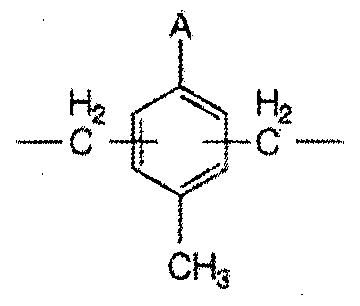 인 경우쎄 , n은 1 이상의 정수이며,
상기 화학식 GF에서, p는 1 또는 2이다.
[화학식 E1]

[화학식 E2]
 [화학식 Al]
-0-(CH2) rO-(CH2)m+2-SiRiR2R3 [화학식 A2]
-0-(CH2) 0-C0NH(CH2)m+2-SiRiR2R3
[화학식 A3]
-(CH2) 0-(CH2)m+2-SiRiR2R3
[화학식 A4]
-(CH2) rO-CONH(CH2)m+2-SiRiR2R3 .
(상기 화학식 A1 내지 화학식 A'4에서, 내지 중 적어도 하나는 탄소수 1 내지 6의 알콕시기이고, 나머지는 탄소수 1 내지 10의 알킬기이며, 상기 알킬기 및 알콕시기는 직쇄상 또는 분지쇄일 수 있고, 고리형 또는 비고리형일 수 있으며, N, 0, S, 및 P로 구성되는 그룹으로부터 선택되는 적어도 하나의 해테로 원자를 갖거나 갖지 않을 수 있고,
I은 1 내지 10의 정수이며,
m은 1 내지 8의 정수이다) .
[화학식 A5]
-0-(CH2) ,-0-(CH2)m-CH = CH2 '
[화학식 A6]
-0-(CH2)m-CH = CH2
[화학식 A7]
-(CH2) rO-(CH2)nrCH = CH2
[화학식 A8]
-(CH2)ra-CH = CH2
(상기 화학식 A5 내지 A8에서, 1은 1 내지 10의 정수이며,. Hi은 1 내지 8의 정수이다) ) 제 9견지에 의하면,
제 8견지에 있어서, 상기 화학식 AF 내지 CF 및 HF 내지 KF로 구성된 그룹으로부터 선택된 동일한 에폭시 화합물이 2개 이상 반복되는 경우에, 상기 화학식 AF 내지 CF의 에폭시 화합물은 하기 화학식 LG1의 연결기로 연결되고, 그리고 상기 화학식 HF 내지 KF의 에폭시 화합물은 하기 화학식 LG2의 연결기로 연결되는, 스페이서를 경유한 알콕시실릴기를 갖는 에폭시 화합물이 제공된다.
[화학식 LG1]

[화학식 LG2]

제 10견지에 의하면,
하기 화학식 AS 내지 KS 중 어느 하나의 출발물질과 하기 화학식 R1의 알킬히드록시 화합물 및 에피클로로히드린을 반응시켜서 AMI 내지 KM1 중 어느 하나의 중간생성물 I를 형성하는 제 1단계; 및
상기 중간생성물 I과 하기 화학식 R2의 알콕시실란을 반응시켜서 하기 화학식 AF 내지 KF 중 '어느 하나의 에폭시 화합물을 형성하는 제 2단계를
포함하는, 스페이서를 경유한 알콕시실릴기를 갖는 에폭시 화합물의 제조방법 ο 제공된다.


상기 화학식 HS 내지 KS에서, 치환기 a는 각각 수소이며,
상기 화학식 AS에서 J는 수소, 히드록시기, C1 내지 C10의 직쇄 또는 분지쇄 알킬기 또는 C6 내지 C10의 방향족기이며 ,
화학식 CS에서 K는 단일결합 (di rect l inkage) , -C¾- 또는

상기 화학식 DS에서 L은

(1as) (1bs)

이며 상기 화학식 GS에서, M은
며
 에서 Ry는 ci-cio의 직쇄 또는 분지쇄 알킬기이고, 상기 화학식 HS에서, Q는 CH2ᅳᅳ -C(CH3)2—, — C(CF3)2-, — S—, _S02-, 또는

상기 화학식 DS에서, L이 las 내지 les인 경우에, n은 2 이상의 정수이며
L이 lfs인 경우에ᅳ n은 1 이상의 정수이며ᅳ
상기 화학식 ES에서, n은 1 이상의 정수이며,
상기 화학식 FS에서, n은 0 또는 1 이상의 정수이며,
상기 화학식 GS에서, M이

경우에 n은 2 이상의 정수이고

M이 인 경우에 , n은 1 이상의 정수이며
상기 화학식 GS에서, p는 1 또는 2이다)
[화학식 R1]
0H-(CH2),-X
(상기 화학식 R1에서, X는 CI, Br, I, -0-S02-CH3, -0-S02-CF3. 또는 -0-
S02— C6¾— C¾이며, 1은 1 내지 10의 정수.이다)


(Ι-ΙΛΙΟ)

[I 롬^^ ^옫 ClZ00/ST0ZaM/X3d 0178CCI/S10Z OAV

(상기 화학식 AMI 내지 GM1에서, 다수의 치환기 D 증 적어도 2개는 하기 화학식 E1이고, 적어도 하나의 D는 -C CH2)厂 0H (식에서, 1은 1 내지 10의 정수이다)이며, 잔류 치환기 D가 있으면, 이는 -0H일 수 있으며, 상기 화학식 HM1 내지 KM1에서, 다수의 치환기 D 중 적어도 2개는 하기 화학식 E2이고, 적어도 하나의 D는 -(CH2)厂 0H (식에서, 1은 1 내지 10의 정수이다)이며, 잔류 치환기 D가 있으면, 이는 수소일 수 있으며 , 상기 화학식 AMI에서 J는 수소, 히드록시기, C1 내지 의 직쇄 또는 분지쇄 알킬기 또는 C6 내지 C10의 방향족기이며, 상기 화학식 CM1에서 K는 단일결합 (direct l inkage) , , -CH2- 또는
 (Rx는 H흑은 C1-C3 알킬기임)이며 ,
상기 화학식 DM1에서 L은 .

(1Df)
이며
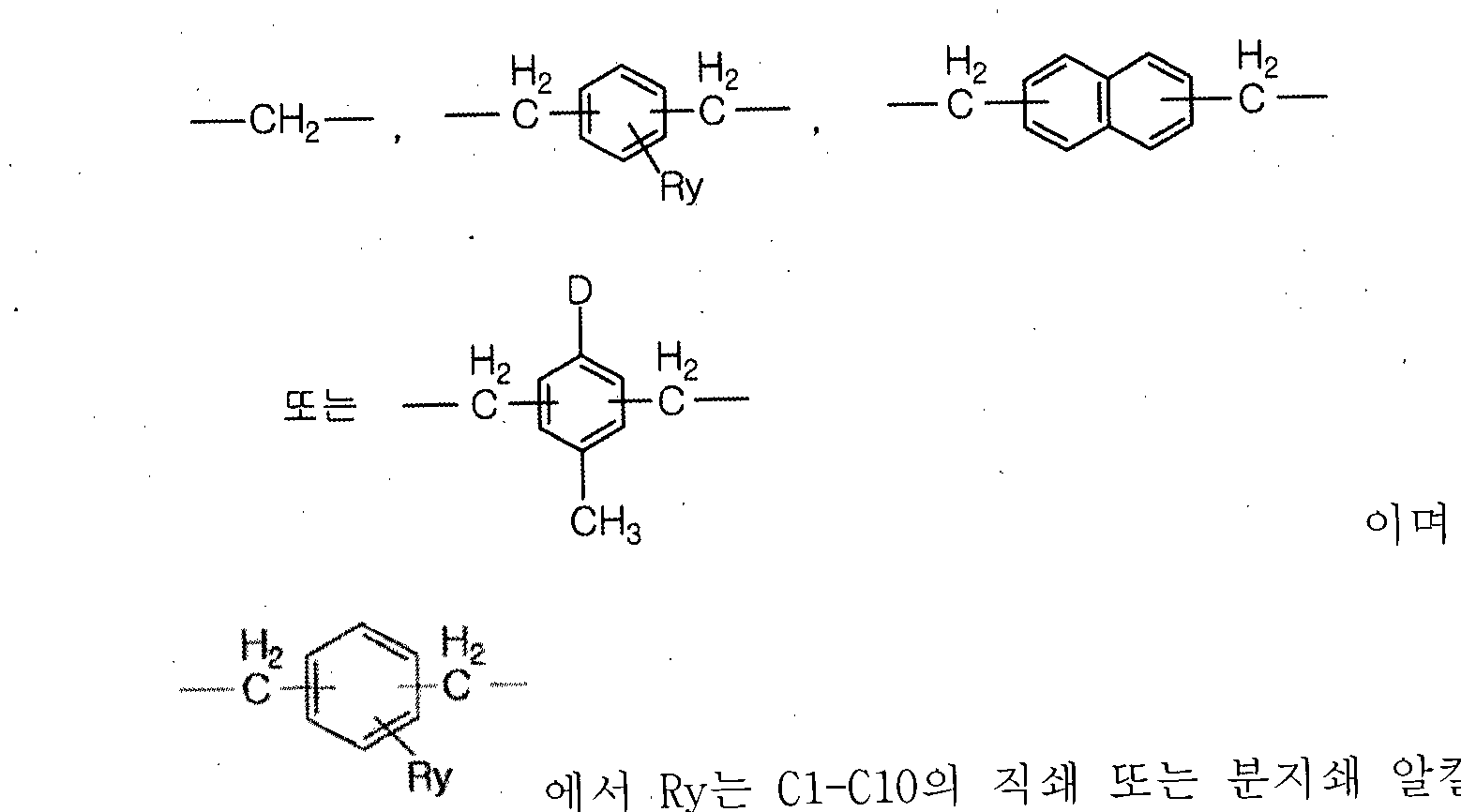 에서 Ry는 C1-C10의 직쇄 또는 분지쇄 알킬기이고,
상기 화학식 丽 1에서, Q는 -CH2-, — C(CH3)2_, -C(CF3)2-, -S-, -S02_. 또는
에서 Ry는 C1-C10의 직쇄 또는 분지쇄 알킬기이고,
상기 화학식 丽 1에서, Q는 -CH2-, — C(CH3)2_, -C(CF3)2-, -S-, -S02_. 또는

상기 화학식 DM1에서, L이 IDa 내지 IDe인 경우에, n은 2 이상의 정^이며,
L이 lDf인 경우에, n은 1 이상의 정수이며,
상기 화학식 EM1에서, n은 1 이상의 정수이며, .
상기 화학식 FM1에서, n은 0 또는 1 이상의 정수이며.
상기 화학식 GM1에서, M이

인 경우에 , n은 2 이상의 정수이고
M이
 ,
,
상기 화학식 GM1에서, p는 1 또는 2이다.
[화학삭 E1]
 [화학식 E2]

[화학식 R2]
0CN-(CH2)m+2-SiRiR2R3
(상기 화학식 R2에서, 내지 ¾중 적어도 하나는 C1-C6의 선형, 분지형 또는 고리형 알콕시기이고, 나머지 치환기는 C1-C10의 선형, 분지형 또는 고리형 알킬기이고, N , 0, S , 및 P로 구성되는 그룹으로부터 선택되는 적어도 하나의 헤테로 원자를 갖거나 갖지 않을 수 있으며, m는 1 내지 8의 정수이다)
[최종생성물
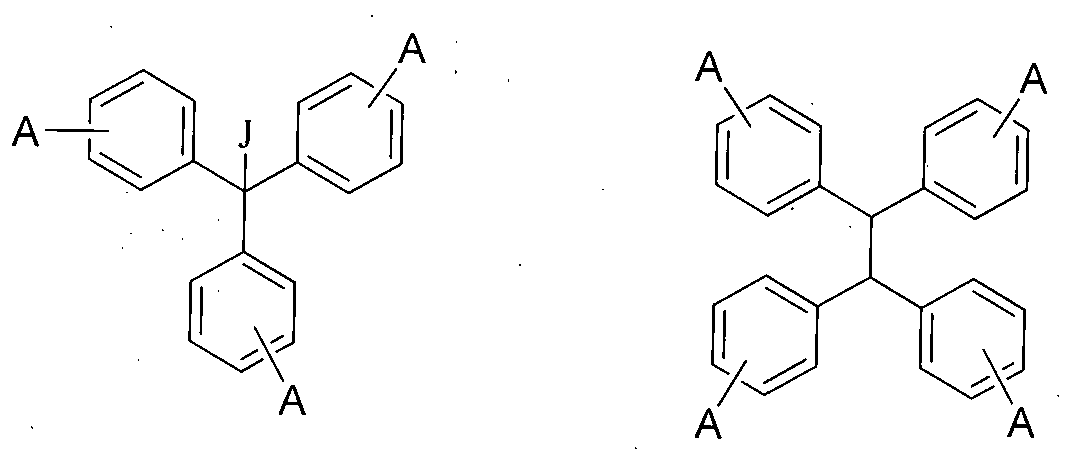


(KF)
(상기 화학식 AF 내지 GF에서, 다수꾀 치환기 A 중 적어도 2개는 하기 화학식 E1이고, 적어도 하나의 A는 하기 화학식 A2이며, 잔류 치환기 A가 있으면 이는 -0H , -()-((¾) !— 0H (식중, 1은 1 내지 10의 정수이다)이며,
상기 화학식 HF 내지 KF에서, 다수의 치환기 A 중 적어도 2개는 하기 화학식 E2이고, 적어도 하나의 A는 하기 화학식 A4이며, 잔류 치환기 A가 있으면 이는 (CH2)厂 0H(식중, 1은 1 내지 10의 정수이다)이며, 상기 화학식 AF에서 J는 수소, 히드록시기, C1 내지 C10의 직쇄 또는 분지쇄 알킬기 또는 C6 내지 C10의 방향족기이며, 화학식 CF에서 K는 단일결합 (d i rect l inkage) , -CH2- 또는

상기 화학식 DF에서 L은


이며 상기 화학식 GF에세 M은


L이 1F인 경우에 , n은 1 이상의 정수이며,
상가 화학식 EF에서, n은 1 이상의 정수이며,
상기 화학식 FF에서, n은 0 또는 1 이상의 정수이며,
상기 화학식 GF에서, Mᄋ

인 경우에 , n은 2 이상의 정수이고,
M이
 인 경우에, n은 1 이상의 정수이며
상기 화학식 GF에서, p는 1 또는 2이다.
[화학식 E1]

[화학식 A2]
-0- (CHs) , -0-CONH ( CH2)m+2-SiRiR2R3
[화학식 A4]
- ( CH2 ) , -0-CONH ( CH2 )m+2-S i RiR2R3
(상기 화학식 A2 및 화학식 A4에서, 내지 ¾중 적어도 하나는 탄소수 1 내지 6의 선형, 분지형 또는 고리형 알콕시기이고, 나머지는 탄소수 1 내지 10의 선형, 분지형 또는 고리형 알킬기이며, N , 0, S, 및 P로 구성되는 그룹으로부터 선택되는 적어도 하나의 헤테로 원자를 갖거나 갖지 않을 수 있고,
1은 1 내지 10의 정수이며,
m은 1 내지 8의 정수이다) 제 11견지에 의하면,
.하기 화학식 AS 내지 KS 중 어느 하나의 출발물질과 하기 화학식 R1의 알킬히드록시 화합물 및 에피클로로히드린을 원위치에서 반웅시켜서 AMI 내지 KM1 중 어느 하나의 중간쌩성물 I를 형성하는 제 1단계; 상기 증간생성물 I과 하기 화학식 R3의 알케닐 화합물을 반웅시켜서 하기 화학식 AM2 내지 KM2로 구성되는 그룹 증 어느 하나의 중간생성물 I I를 형성하는 제 2단계; 및
상기 증간생성물 I I와 하기 화학식 R4의 알콕시실란을 반응시켜서 하기 화학식 AF 내지 KF 중 어느 하나의 에폭시 화합물을 형성하는 제 3단계를 포함하는, 스페이서를 경유한 알콕시실릴기를 갖는 에폭시 화합물의 제조방법이 제공된다.
출발물질

(AS) (BS)


(KS)
상기 화학식 AS 내지 GS에서, 치환기 a는 각각 ᅳ 0H이며,
상기 화학삭 HS 내지 KS에서, 치환기 a는 각각 수소이며,
상기 화학식 AS에서 J는 수소. 히드록시기, C1 내지 C10의 직쇄 또는 분지쇄 알킬기 또는 C6 내지 C10의 방향족기이며,
화학식 CS에서 K는 단일결합 (di rect l inkage) , -CH2— 또는

상기 화학식 DS에서 L은


이며,
 에서 Ry는 C1-C10와 직쇄 또는 분지쇄 알킬기이고, 화학식 HS에서, Q는 -CH2-, -C(C¾)2-, -C(CF3)2-, -S-, —S02-, 또

상기 화학식 DS에서, L이 las 내지 les인 경우에, n은 2 이상의 정수이며
L이 lfs인 경우에. n은 1 이상의 정수이며.
상기 화학식 ES에서, n은 1 이상의 정수이며,
상기 화학식 FS에서, n은 0'또는 1 이상의 정수
상기 화학식 GS에서, M이

인 경우에. n은 2 이상의 정수이고,

M이 인 경우에,. n은 1 이상의 정수이며,
상기 화학식 GS에서, p는 1 또는 2이다)
[화학식 R1]
0H-(CH2),-X
(상기 화학식 R1에서, X는 CI, Br, I, —◦— S02-CH3, -0_S02-CF3, 또는 -0-
S02-C6H4-C¾이며, 1은 1 내지 10의 정수이다)


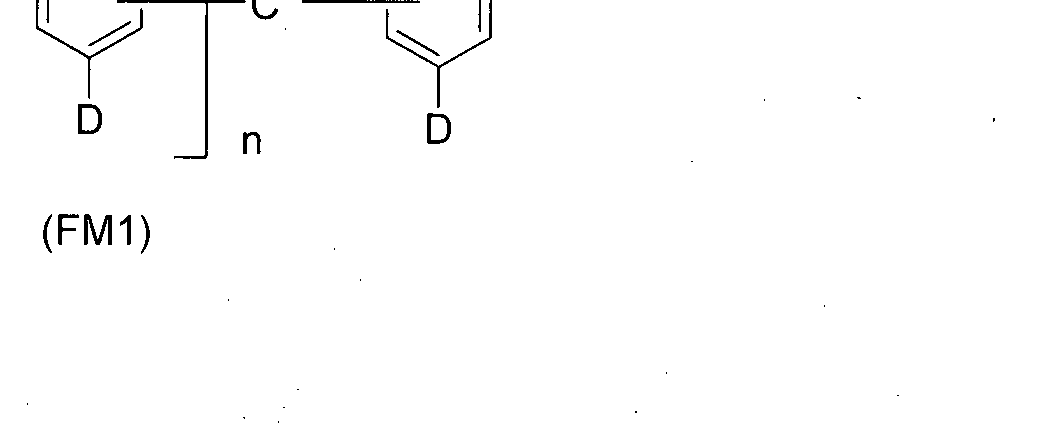


D

(KM 1 )
(상기 화학식 AMI 내지 GM1에서, 다수의 치환기 D 중 적어도 2개는 하기 화학식 E1이고, 적어도 하나의 D는 -C U rOH (식에서, 1은 1 내지 10의 정수이다)이며, 잔류 치환기 D가 있으면, 이는 — 0H일 수 있으며, 상기 화학식 HM1 내지 KM1에서, 다수의 치환기 D 중 적어도 2개는 하기 화학식 E2이고. 적어도 하나의 D는 -(CH2)厂 0H (식에서, 1은 1 내지 10의 정수이다)이며, 잔류 치환기 D가 있으면, 이는 수소일 수 있으며, 상기 화학식 AMI에서 J는 수소, 히드록시기, C1 내지 C10의 직쇄 또는 분지쇄 알킬기 또는 C6 내지 C10의 방향족기이며, 入 0이 화학식 CM1에서 K는 단일결합 (di rect l inkage) . -CH2- 또
 (R H혹은 CIᅳ C3 알킬기임)이며
상기 화학식 DM1에서 L은

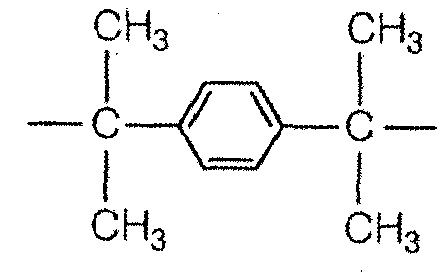
상기 화학식 DM1에서, L이 IDa 내지 IDe인 경우에, n은 2 이상의 정수이며,
L이 lDf인 경우에, n은 1 이상의 정수이며, ·
상 7ᅵ 화학식 EM1에서, n은 1 이상의 정수이며,
상기 화학식 FM1에서, n은 0 또는 1 이상의 정수이며,.
상기 화학식 GM1에서, M이
CB

인 경우에, n은 이상의 정수이고,

M이 인 경우에, n은 1 이상의 정수이며,
상기 화학식 GM1에서, p는 1 또는 2이다.
[화학식 E1]
 [화학식 E2]

[화학식 R3]
Y-(CH2)m-CH
(식중, Y는 CI, Br I, -O-SO2-CH3, -O-SO2-CF3, 또는 -으 S02-C6H4-C¾이고, 지 8의 정수이다)


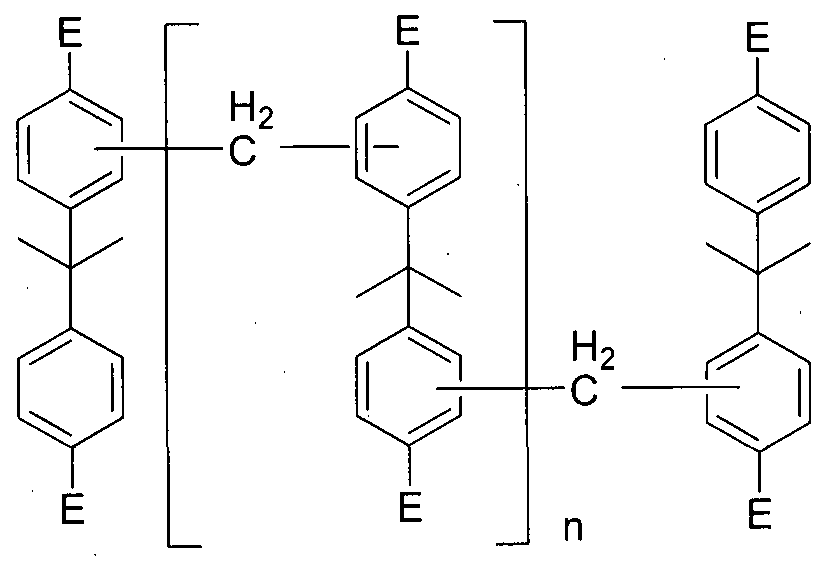


(KM 21 )
(상기 화학식 AM2 내지 GM2에서, 다수의 치환기 E 중 적어도 2개는 하기 화학식 E1이고, 적어도 하나의 E는 -(HCH^-CHCH r KH^식중, 1은 1 내지 10의 정수이며, m은 1 내지 8의 정수이다)이며, 잔류 치환기 E가 있으면, 아는 - OH , -(HCH2) ,— 0H (식중, 1은 1 내지 10의 정수이다), 및 -0-(CH2)m-CH=CH2(식중, in은 1 내지 8의 정수이다)로 구성되는 그룹으로부터 각각 독립적으로 선택되며, 상기 화학식 HM2 내지 KM2에서, 다수의 치환기 E 중 적어도 2개는 하기 화학식 E2이고ᅳ 적어도 하나의 E는 (CH2)广 0— (C¾)m-CH=CH2(식중, 1은 1 내지 10의 정수이며, m은 .1 내지 8의 정수이다)이며, 잔류 치환기 E가 있으면ᅳ 이는 수소, -(CH2)厂 0H (식중, 1은 1 내지 10의 정수이다), 또는 (C¾)m— CH=C¾(식중, ni은 1 내지 8의 정수이다)로 구성되는 그룹으로부터 각각 독립적으로 선택되며, 상기 화학식 AM2에서 J는 수소, 히드록시기, C1 내지 C10의 직쇄 또는 분지쇄 알킬기 또는 C6 내지 C10의 방향족기이며 , 상기 화학식 CM2에서 K는 단일결합 (di rect l inkage) , -CH2- 또는
 . (Rx는 H 혹은 C1-C3
상기 화학식 DM2에서 L은

(1Ef)
이며 상기 화학식 GM2에서, M은


상기 화학식 DM2에서, L이 lEa 내지 lEe인 경우에, n은 2 이상의 정수이며,
L이 lEf인 경우에, n은 1 이상의 정수이며.
상기 화학식 EM2에서, n은 1 이상의 정수이며,
상기 화학식 FM2에서 , n은 0 또는 1 이상의 정수이며
상기 화학식 GM2에서 ,
CH2— ' —

인 경우에, n은 2 이상의 정수 고
M이
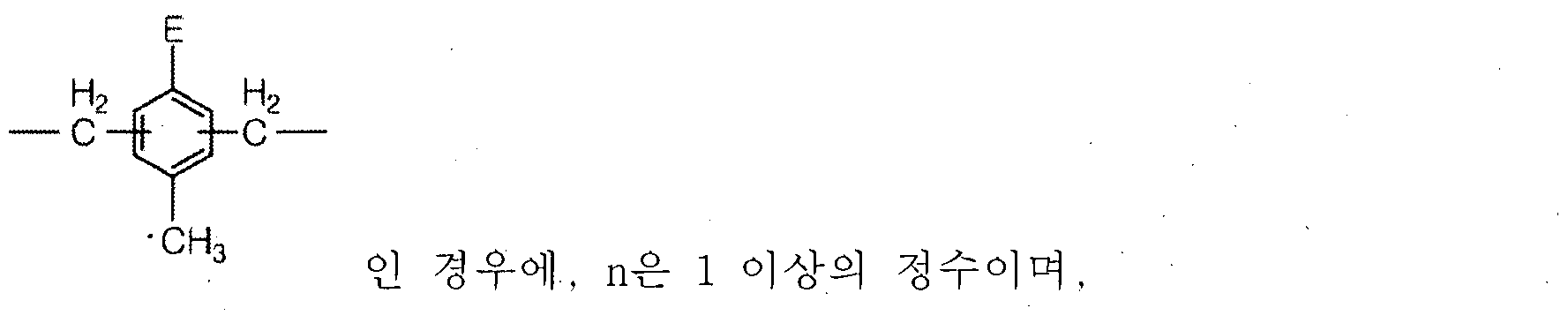
상기 화학식 GM2에서, p는 1 또는 2이다.
[화학식 E1]
 [화학식 E2]

[화학식 R4]
HSiRiR2R3
(상기 화학식 R4에서, 내지 ¾중 적어도 하나는 C1-C6의 선형, 분지형 또는 고리형 알콕시기이고 나머지는 독립적으로 C1-C10의 선형, 분지형 또는 고리형 알킬기이고, N , 0, S , 및 P로 구성되는 그룹으로부터 선택되는 적어도 하나의 헤테로 원자를 갖거나 갖지 않을 수 있다)
최종생성물


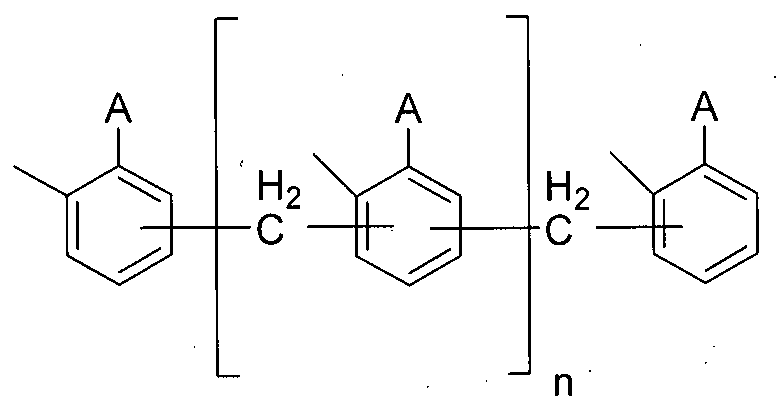


(상기 화학식 AF 내지 GF에서, 다수의 치환기 A 중 적어도 2개는 하기 화학식 E1이고, 적어도 하나의 A는 하기 화학식 A1이며, 잔류 치환기 A가 있으면 이는 -0H, — CKCH^!-OH (식중, 1은 1 내지 10의 정수이다), 하기 화학식 A5 및 A6로 구성되는 그룹으로부터 각각 독립적으로 선택되며, ― 상기 화학식 HF 내지 KF에서, 다수의 치환기 A 중 적어도 2개는 하기 화학식 E2이고, 적어도 하나의 A는 하기 화학식 A3이며, 잔류 치환기 A가 있으면 이는 -H, -(C¾)i-0H (식중, 1은 1 내지 10의 정수이다). 하기 화학식 A7 및 A8로 구성되는 그룹으로부터 각각 독립적으로 선택되며, 상기 화학식 AF에서 J는 수소ᅳ 히드록시기, C1 내지 C10의 직쇄 또는 분지쇄 알킬기 또는 C6 내지 C10의 방향족기이며,. 상기 화학식 CF에서 K는 단일결합 (direct linkage), -CH2- 또는
 (Rx는 H 혹은 C1-C3 알킬기임)이며,
상기 화학식 DF에서 L은

(1A) (1B)

상기 화학식 GF에서, M은
이며,
 C1-C10의 직쇄 또는 분지쇄 알킬기이고,
상기 화학식 HF에서, Q는 -CH2 ~ , -C(.C¾)2- , ᅳ C(CF3)2ᅳ, -S_ , -S02- , 또는
C1-C10의 직쇄 또는 분지쇄 알킬기이고,
상기 화학식 HF에서, Q는 -CH2 ~ , -C(.C¾)2- , ᅳ C(CF3)2ᅳ, -S_ , -S02- , 또는
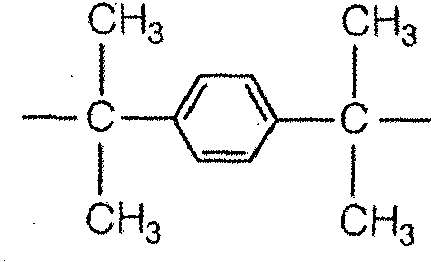 이고, R은 각각 독립적으로 H 혹은 C1-C3 알킬이며,
상기 화학식 DF에서, L이 1A 내지 IE인 경우에, n은 2 이상의 정수이며
L이 1F인 경우에 , n은 1 이상의 정수이며,
상기 화학식 EF에서 n은 1 이상의 정수이며,
상기 화학식 FF에서, n은 0 또는 1 이상의 정수이며,
상기 화학식 GF에서. M이

인 경우에 , n은 2 이상의 정수 고

상기 화학식 GF에서 p는 1 또는 2이다.
[화학식 E1] ᄋ
[화학식 Ε2]
 [화학식 Al]
-0- ( CH2 ) , -0- ( CH2 ) m+2-S i RiR2R3 [화학식 A3]
-(CH2) ,-0-(CH2)m+2-SiR1R2R3
(상기 화학식 Al 내지 화학식 A3에서, 내지 중 적어도 하나는 탄소수 1 내지 6의 선형 . 분지형 또는 고리형 알콕시기이고, 나머지는 탄소수 1 내지 10의 선형, 분지형 또는 고리형 알킬기이며, N , 0, S , 및 P로 구성되는 그룹으로부터 선택되는 적어도 하나의 해테로 원자를 갖거나 갖지 않을 수 있고,
1은 1 내지 10의 정수이며,
은 1 내지 8의 정수이다)
[화학식 A5]
-0-(CH2) ,-0-(CH2)m-CH = CH2
[화학식 A6] .
-0-(CH2)m-CH = CH2
[화학식 A7] . -(CH2) rO-(CH2)m-CH = CH2
[화학식 A8]
-(CH2)m-CH = CH2
(상기 화학식 A5 내지 A8에서, 1은 1 내지 10의 정수이며, m은 1 내지 8의 정수이다) ) 제 12견지에 의하면
제 10견지 또는 제 11견지에 있어서, 상기 제 1단계는 상 '괴 상기 알킬히드록시 화합물이 먼저 반웅되고. 그 후에, 원위치에서 연속하여 상기 에피클로로히드린을 첨가하여 반웅시키는, 스페이서를 경유한 알콕시실릴기를 갖는 에폭시 화합물의 제조방법이 제공된다. 제 13견지에 의하면,
제 10견지 또는 제 11견지에 있어서, 상기 제 1단계는 상기 출발물질과 상기 에피클로로히드린이 먼저 반응되고, 그 후에, 원위치에서 연속하여 상기 알킬히드록시 화합물을 첨가하여 반응시키는 스페이서를 경유한 알콕시실릴기를 갖는 에폭시 화합물의 제조방법이 제공된다. 제 14견지에 의하면.
제 10견지 또는 제 11견지에 있어서, 상기 제 1단계는 상기 출발물질과 상기 알킬히드록시 화합물을 반웅시 -기는 단계 ( 1-la) ; . 및 상기 단계 ( 1-la)의 반웅생성물과 에피클로로히드란을 반웅시키는 단계 ( l_2a)에 의해 행하여지는, 스페이서를 경유한 알콕시실릴기를 갖는 에폭시 화합물의 제조방법이 제공된다ᅵ. 제 15견지에 의하면,
제 10견지 또는 제 11견지에 있어서, 상기 제 1단계는 상기 출발물질과 상기 에피클로로히드린을 반응시키는 단계 ( 1-lb) ; 및 상기 단계 ( 1-lb)의 반웅생성물과 상기 알킬히드록시 화합물을. 반응시키는 단계 ( 1ᅳ 2b)에 의해 행하여지는, 스페이서를 경유한 알콕시실릴기를 갖는 에폭시 화합물의 제조방법이 제공된다. 제 16견지에 의하면 .
제 1견지 내지 제 9견지 중 어느 일 견지의 스페이서를 경유한 알콕시실릴기를 갖는 에폭시 화합물을 포함하는 에폭시 조성물이 제공된다.
제 17견지에 의하면,
제 16견지에 있어서, 상기 에폭시 조성물에 포함된 에폭시 화합물의 총 에폭시기:알콕시실릴기의 비율이 1 : 5 - 20 : 1인, 에폭시 화합물을 포함하는 에폭시 조성물이 제공된다. 제 18견지에 의하면,
제 16견지에 있어서 . 글리시딜에테르계 에폭시 화합물, 글리시딜계.에폭시 화합물, 글리시딜아민계 에폭시 화합물, 및 글리시딜에스테르계 에폭시 화합물로 구성되는 그룹으로부터 선택되는 적어도 일종의 에폭시 화합물을 추가로 포함하는 에폭시 조성물이 제공된다. 제 19견지에 의하면,
제 18견지에 있어서, 상기 에폭시 화합물은 코어구조로 비스페놀, 비페닐, 나프탈렌, 벤젠, 티오디페놀, 플루오렌, 안토라센, 이소시아누레이트, 트리페닐메탄, 1 , 1 , 2 , 2-테트라페닐에탄, 테트라페닐메탄, 4 , 4 ' - 디아미노디페닐메탄, 아미노페놀, 지환족, 지방족, 또는 노볼락 유니트를 갖는 에폭시 조성물이 제공된다. 제 20견지에 의하면,
제 18견지에 있어서, 에폭시 화합물의 총 중량을 기준으로 상기 스페이서를 경유한 알콕시실릴기를 갖는 에폭시 화합물 1 내지 100wt% 및 글리시딜에테르계 에폭시 화합물, 글리시딜계 에폭시 화합물, 글리시딜아민계 에폭시 화합물, 및 글리시딜에스테르계 에폭시 화합물로 구성되는 그룹으로부터 선택되는 최소 일종의 에폭시 화합물 Owt% 내지 99wt%를 포함하는 에폭시 조성물이 제공된다ᅵ . 제 21견지에 의하면,
제 16견지 내지 제 20견지 중 어느 일 견지에 있어서, 충전제로서 무기입자
또는 섬유를 추가로 포함하는 에폭시 조성물이 제공된다. 제.22견지에 의하면,
제 21견지에 있어서, 상기 무기입자는 실리카, 지르코니아, 티타니아, 알루미나, 질화규소 및 질화알루미늄으로 구성되는 그룹으로부터 선택되는 적어도 일종의 금속산화물, 및 실세스퀴옥산으로 구성되는 그룹으로부터 선택되는 적어도 일종인 에폭시 조성물이 제공된다. 제 23견지에 의하면,
제 21견지에 있어서, 상기 섬유는 E 유리섬유, T 유리섬유, S 유리섬유, NE 유리섬유, D 유리섬유, H 유리섬유, 및 석영으로 구성되는 그룹으로부터 선택되는 유리섬유 및 액정 폴리에스테르 섬유, 폴리에틸렌테레프탈레이트 섬유, 전방향족 섬유 폴리벤조윽사졸 섬유, 나일론 섬유, 폴리에틸렌 나프탈레이트 섬유, 폴리프로필렌 섬유, 폴리에테르 술폰 섬유, 폴리비닐리덴플로라이드 섬유, 폴리에틸렌 술파이드 섬유, 및 폴리에테르에테르케톤 섬유로 구성되는 그룹으로부터 선택되는 유기 '섬유로 구성되는 그룹으로부터 선택되는 적어도 일종인 에폭시 조성물이 제공된다. 제 24견지에 의하면,
제 21견지에 있어서, 섬유를 포함하는 경우에, 무기입자를 추가로 포함하는 에폭시 조성물아제공된다. . 제 25견지에 의하면,
. 제 16견지 내지 제 24견지 중 어느 일 견지의 에폭시 조성물을 포함하는 전자재료. 제 26견지에 의하면,
제 16견지 .내지 제 24견지 중 어느 일 견지의 에폭시 조성물을 포함하는
기판이 제공된다. 제 27견지에 의하면,
제 16견지 내지 제 24견지 중 어느 일 견지의 에폭시 조성물을 포함하는 필름이 제공된다. 제 28견지에 의하면,
제 16견지 내지 제 24견지 중 어느 일 견지의 에폭시 조성물로 이루어진 기재층 상에 금속충을 포함하는 적층판이 제공된다. 제 29견지에 의하면,
제 28견지의 적충판을 포함하는 인쇄배선판이 제공된다. 제 30견지에 의하면,
제 29견지의 인쇄배선판을 포함하는 반도체 장치가 제공된다. 제 31견지에 의하면,
제 16견지 내지 제 24견지 중 어느 일 견지의 에폭시 조성물을 포함하는 반도체 패키징 재료가 제공된다. 제 32견지에 의하면,
제 31견지의 반도쎄 패키징 재료를 포함하는 반도체 장치가 제공된다. 제 33견지에 의하면,
제 16견지 내지 제 24견지 중 어느 일 견지의 에폭시 조성물을 포함하는 접착제가 제공된다. ' 제 34견지에 의하면
제 16견지 내지 제 24견지 증 어느 일 견지의 에폭시 조성물을 포함하는 도료가 제공된다. 제 35견지에 의하면,
제 16견지 내지 제 24견지
복합재료가 제공된다. 제 36견지에 의하면,
제 16견지 내지 제 24견지 중 어느 일 견지의 에폭시 조성물을 포함하는 프리프레그가 제공된다. 제 37견지에 의하면,
제 36견지의 프리프레그에 금속층이 배치된 적층판이 제공된다. 제 38견지에 의하면,
제 16견지 내지 제 24견지 중 어느 일 견지의 에폭시 조성물의 경화물 o 제공된다. · 제 39견지에 의하면,
제 38견지에 있어서, 상기 경화물은 열팽창계수가 50ppn/oC이하인 에폭 조성물의 경화물이 제공된다. 제 40견지에 의하면 제 38견지에 있어서, 상기 경화물은 유리전이온도가 100oC 보다 높거나 유리전이온도를 나타내지 않는 에폭시 조성물의 경화물이 제공된다.
【발명의 효과]
본 발명에 의한 새로운 스페이서 그룹을 경유한 알콕시실릴기를 갖는. 에폭시 화합물을 포함하는 에폭시 조성물은 복합체 및 /또는 경화물에서, 향상된 내열특성, 즉, 에폭시 복합체의 CTE가 감소되고 유리전이온도 상승 또는 유리전이온도를 나타내지 않는 (이하, ' Tg 리스'라 함) 효과를 나타낸다. 나아가, 코어와 알콕시실릴기 사이의 플렉서블한 스페이서 ( flexi ble spacer )로 인하여 개선된 취성 (br i t t leness)을 나타낸다. 또한, 본 발명에 의한 스페이서 그룹을 경유한 알콕시실릴기를. 갖는 에폭시 화합물을 포함하는 에폭시 조성물의 경화물은 알콕시실릴기의 도입에 의해, 별도의 실란커플.링제를 사용하지 않으며, 우수한 난연성을 나타낸다. 더욱이, 본 발명에 의한 에폭시 조성물을 기판의 금속필름에 적용하는 경우에, 금속필름 표면의 작용기와 알콕시실릴기의 화학결합에 의해 금속필름에 대하여 우수한 접착력을 나타낸다.
【발명을 실시하기 위한 구체적인 내용】
본 발명은 에폭시 조성물의 경화에 의한 복합체 형성시에 개선된 내열특성, 구체적으로는 낮은 CTE 및 높은 Tg (Tg 리스 포함), 개선된 취성 및 /또는 경화물에서 우수한 난연성 그리고 별도의 실란커플링제를 필요로 하지 않은 새로운 스페이서 그룹을 경유한 알콕시실릴기를 갖는 에폭시 화합물; 이의 제조방법ᅳ 이를 포함하는 조성물, 경화물 및 이의 용도를 제공하는 것이다. 본 발명에서 "복합체"란 에폭시 화합물, 경화제 및 충전제 (섬유 및 /또는 무기입자)를 포함하는 조성물의 경화물을 말한다. 본 발명에서 "경화물' '이란 일반적인 의미로서 에폭시 화합물 및 경화제를 포함하는 조성물의 경화물을 말하는 것으로, 에폭시. 화합물 및 경화제 이외에 충전제, 임의의 추가적인 경화제, 임의의 경화촉매 및 기타 첨가제로 구성되는 그룹으로부터 선택되는 적어도 일종을 포함하는 조성물의 경화물을 말한다. 또한 상기 경화물은
반경화물을 포함할 수 있다: 일반적으로, 무기입자 및 /또는 섬유가 보강된 경화물을 복합체라 하므로, 경화물은 복합체보다 넓은 의미이지만, 무기입자 및 /또는 섬유가 보강된 경화물은 복합체와 동일한 의미로 이해될 수 있다. 본 발명에 의한 스페이서 그룹을 경유한 알콕시실릴기를 갖는 에폭시 화합물은 낮은 CTE 및 높은 유리전이온도 또는 Tg-리스 ( less)를 나타내며, 이에 따라 치수안정성이 향상된다. 나아가, 플렉서블한 스페이서에 의해, 개선된 취성을 나타낸다. 또한, 본 발명에 의한 스페이서 그룹을 경유한 알콕시실릴기를 갖는 에폭시 화합물을 포함하는 경화물은 우수한 난연성을 나타내며, 별도의 실란커플링제를 필요로 하지 않는다. 나아가, 본 발명에 의한 스.페이서 그룹을 경유한 알콕시실릴기를 갖는 에폭시 화합물은 화학적으로 처리된 금속필름, 예를 들어 동박 등에 적용시,. 에폭시 화합물의 알콕시실릴기가 금속표면의 -0H기 등과의 화학결합으로 금속필름과 우수한접착력을 나타낸다.
1. 스페이서 그룹을 경유한 알콕시실릴기를 갖는 에폭시 화합물 본 발명의 일 견지에 의한 새로운 스페이서 그룹을 경유한 알콕시실릴기를 갖는 에폭시 화합물은 코어에 적어도 2개의 에폭시기 및 적어도 하나의 스페이서 그룹올 경유한 알콕시실릴기 (이하, 단지 '알콕시실릴기 '라 하기도 한다), 즉 스페이서를 경유하여 코어에 연결되는 적어도 하나의 알콕시실릴기를 갖는다. · 나아가, 상기 스페이서 그룹을 경유한 알콕시실릴기를 갖는 에폭시 화합물은 상기 코어에 수소, 히드록시기 및 알케닐기로 구성되는 그룹으로부터 선택되는 알종 아상, 즉 적어도 하나의 그룹을 임의로 추가적으로 가질 수 있다:
상기 에폭시기는 하기 화학식 E1 또는 E2일 수 있으며 , 본 발명의 에폭入' 화합물은 상기 ΕΓ또는 E2을 적어도 2개 이상 포함할 수 있다,
[화학식 E1]

[화학식 E2]
 상기 스페이서 그룹을 경유한 알콕시실릴기는 하기 화학식 Al , A2 , A3 및 A4로 구성되는 그룹으로부터 선택될 수 있다.
[화학식 A1]
-0-(CH2) ,-0-(CH2)m+2-SiRiR2R3 [화학식 A2]
-0- ( CH2 ) , -0-C0NH ( CH2 ) m+2"S i RiR2R3 [화학식 A3].
-(CH2) 0-(CH2 )m+2-Si iR2R3 [화학식 A4]
-(CH2) ,-0-C0NH(CH2)m+2-SiRiR2 3 상기 화학식 Al 내지 화학식 A4에서, 내지 ¾중 적어도 하나는 탄소수
1 내지 6의 알콕시기, 바람직하게는 탄소수 1 내지 3의 알콕시기이고, 나머지 치환기는 각각 탄소수 1 내지 . 10의 알킬기ᅳ 바람직하게는 탄소수 1 내지 5와 알킬기이며, 상기 알킬기 및 알콕시기는 직쇄상 또는 분지쇄일 수 있고, 고리형 또는 비고리형일 수 있으며, N , 0, S , 및 P로 구성되는 그룹으로부터 선택되는 적어도 하나의 헤테로 원자를 갖거나 갖지 않을 수 있다.
1은 1 내지 10의 정수이며, m은 1 내지 8 , 바람직하게는 1 내지 4의 정수이다. . 상기 추가적인 히드록시기는 -OH , -0-(CH2) 0H 및 ᅳ((: )「 0H로 구성되는 그룹으로부터 독립적으로 선택될 수 있으며, 임의의 추가적인 알케닐기는 하기 화학식 A5 , A6 , A7 또는 A8일 수 있고, 상기 식에서, 1은 1 내지 10의 정수이다.
[화학식 A5]
-0-(CH2) 0-(CH2)m-CH = CH2 -
[화학식 A6]
-0-(CH2)m-CH = CH2
[화학식 A7]
-(CH2) ,-0-(CH2)m-CH = CH2
[화학식 A8]
-(CH2)m-CH = CH2 상기 화학식 A5 내지 A8에서, 1은 1 내지 10의 정수이며, ill은 1 내지 8, 바람직하게는 1 내지 4의 정수이다. 상기 코어는 트리페닐메탄, 바이나프탈렌, 테트라페닐에탄 등과 같은
방향족화합물, 방향족 아민, 지환족 아민, 또는 노볼락 유니트 등을 들 수 있다. 보다 구체적으로 상기 코어는 방향족 코어로서, 하기 화학식 AC 내지
KC로 구성되는 그룹으로부터 선택되는 일종일 수 있다. 본 발명에서 코어는 하기 화학식 AC 내지 CC와 HC 내지 KC와 같은 구조뿐만 아니라, DC 내지 GC와 같이 반복단위로 나타낸 경우를 포함하는 것으로 이해된다.

(FC)


(JO OH
(KC) 상기 화학식 AC에서 J는 수소, 히드록시기, C1 내지 C10의 직쇄 또는 분지쇄 알킬기 , 또는 C6 내지 C10의 방향족기이며 ,
CC에서 K는 단일결합 (direct linkage), ~CH2- 또는

화학식 DC에서 L은

(1ac) (1bc)


L이 He인 경우에, n은 1 이상의 정수이며.
상기 화학식 EC에세 n은 1 이상의 정수이며ᅳ
상기 화학식 FC에서, n은 0 또는 1 이상의 정수이며,
상기 화학식 GC에서, M이

M이 CH CH3 인 경우에. n은 1 이상의 정수이며,
상기 화학식 DC 내지 GC에서, n값의 상한선은 1000이다. 더욱이, 상기 스페이서 그룹을 경유한 알콕시실릴기를 갖는 에폭시 화합물에서, AC 내지: CC 및 HC 내지 KC로 구성된 그룹으로부터 선택되는 코어는 다이머 이상의 구조를 갖을 수 있으며, 어때 2이상의 코어는 연결기 (LG)로 연결될 수 있다. 필요에 따라, 1 내지 1 , 000개의 코어 구조가 추가로 연결될 수 있다. 구체적으로, 상기 화학식 AC 내지 CC로부터 선택된 2 이상의 동일한 코어는 하기 화학식 LG1의 연결기로 연결될 수 있으며, 그리고 상기 화학식 HC 내지 KC 로부터 선택된 2 이상의 동일한 코어는 하기 화학식 LG2의 연결기로 연결될 수 있다.
[화학식 LG1]

[화학식 LG2]
OH
구체적으로, 본 발명에 의한 새로운 스페이서 그룹을 경유한 알콕시실릴기를 갖는 에폭시 화합물은 하기 화학식 AF 내지 KF일 수 있다.


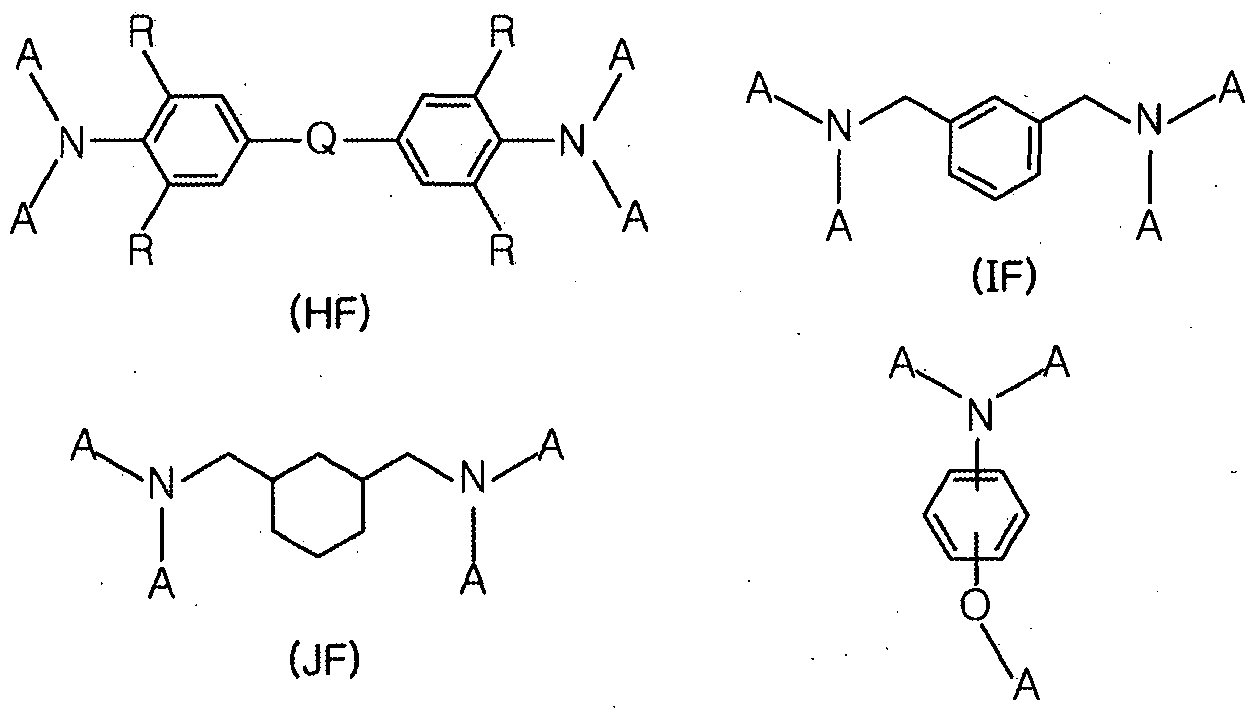
상기 화학식 AF 내지 GF의 에폭시 화합물에서, 다수의 치환기 A 중 적어도 2개는 상기 화학식 E1이고, 적어도 하나의 A는 상기 화학식 A1 또는 A2이며, 잔류 치환기 A가 있으면, 이는 -OH , -0-(CH2)广 0HO은 1 내지 10의 정수), 상기 화학식 A5 및 A6으로 구성되 그룹으로부터 각각 독립적으로 선택된다. 상기 화학식 HF 내지 KF의 에폭시 화합물에서, 다수의 치환기 A 중 적어도 2개는 상기 화학식 E2이고, 적어도 하나의 A는 상기 화학식 A3 또는 A4이며, 잔류 치환기 A가 있으면, 이는 -H , -(θ ,-ΟίΚ ΐ은 1 내지 10의 정수) , 상기 화학식 Α7 및 Α8로 구성되는 그룹으로부터 각각 독립적으로 선택된다ᅳ 상기 화학식 AF에서 J는 수소, 히드록시기, C1 내지 C10의 직쇄 또는 분지쇄 알킬기 또는 C6 내지 C10의 방향족기이며,
상기 화학식 CF에서 K는 단일결합 (di rect l inkage) , -CH2- 또는
 (Rxfe H 흑은 CI— C3 알킬기임 )이며, 상기 화학식 DF에서 L은

(1A) (18)

Λ }7} 화학식 GF M은

 에서 Ry는 CI— CIO의 직쇄 또는 분지쇄 알킬기이고, 상기 화학식 HF에서, Q는 -CH2_, -C(C¾)2-, -C(CF3)2ᅳ, -S-, -S02ᅳ, 또는

상기 화학식 DF에서, L이 1A 내지 1E인 경우에, n은 2이상의 정수이며 L이 IF인 경우에, n은 1 이상의 정수이며,
상기 화학식 EF에서, n은 1 이상의 정수이며,
화학식 FF에서, n은 0 또는 1이상의 정수이며,


인 경우에 n은 2이상의
인 경우에, n은 1 이상의 정수이며,

나아가, 상기 본 발명의 일 견지에 의한, 스페이서 그룹을 경유한 알콕시실릴기를 갖는 에폭시 화합물은 이를 포함하는 조성물의 복합체에서, 낮은 CTE 및 높은 유리전이온도 또는 Tg-리스 ( less)를 나타낸다.
즉, 본 발명에 있어서 스페이서 그룹은 "-(CH^ rO— "을 포함하는 구조로, 알콕시실릴기가 이러한 구조를 경유하여 코어에 연결되는 경우 알콕시실릴기 중 코어에 결합하는 부분의 플렉서블한 스페이서인 -(CH2) i-0- 에 의해서, 보다 개선된 취성을 나타낸다.
2. 스페이서 그룹을 경유한 알콕시실릴기를 갖는 에폭시 화합물의 제조방법 본 발명의 일 견지에 와한 상기 화학식 AF 내지 KF의 스페이서 그룹을 경유한 알콕시실릴기를 갖는 께폭시 화합물의 제조방법이 제공된다. 구체적으로, 상기 화학식 AF 내지 KF와 에폭시 화합물은 출발물질에 적어도 2개의 에폭시기와 적어도 하나의 플렉서블한 스페이서기를 도입하고 (제 1단계) , 그 후에, 플렉서블한 스페이서기 말단의 히드록시기에 알콕시실릴기를 도입하는 단계 (제 2단계)에 의한 방법 (이하, '방법 1 '이라 함) ; 및 출발물질에 적어도 2개의 에폭시기와 적어도 하나의 플렉서블한 스페이서기를 도입하고 (제 1·단계) , 그 후에, 플렉서블한 스페이서기 말단의 히드록시기를 알킬렌화하는
단계 (제 2단계) ; 및 알킬렌기에 알콕시실릴기를 도입하는 단계 (제 3단계)에 의한 방법 (이하, '방법 2 '라 함)의 2가지 방법으로 제조될 수 있다. 이하, 각각의 방법에 대하여 구체적으로 기술한다.
( 1) . 방법 1 (이소시아네이트 실란커플링제에 의한 알콕시실릴기의 도입) 본 발명의 스페이서 그룹을 경유한 알콕시실릴기를 갖는 에폭시 화합물은 먼저 출발물질에 적어도 2개의 에폭시기와 적어도 하나의 스페이서기 (알킬히드록시기)를 도입하는 단계 (제 1단계 ) 및 그 후에 . 스페이서기 말단의 히드록시기를 실릴화하는 단계 (제 2단계)에 의한 방법으로 제조될 수 있다. 제 1단계에서 하기 화학식 AS 내지 KS 중 어느 하나의 출발물질과 하기 화학식 R1의 알킬히드록시 화합물 및 에피클로로히드린의 반웅으로 출발물질에 적어도 2개의 에폭시기와 적어도 하나의 풀렉서블한 스페이서를 도입하여 중간생성물 I을 형성한다. 상기 방법 1의 제 1단계 반응은 ( 1)원위치에서 에폭시기와 플렉서블한 스페이서기를 단일단계로 도입하는 반응 및 (2)에폭시기와 플렉서블한 스페이서기를 별개의 다른 단계에서 도입하는 반웅으로 행할 수 있다.
[단일단계에 의한 제 1단계 반웅]
원위치에서 에폭시기와 블렉서블한 스페이서기를 단일단계로 도입하는 제 1단계 반웅에서, 하기 화학식 AS 내지 KS 중 어느 하나의 출발물질의 히드록시기 및 /또는 아민기 1 당량에 대하여 하기 화학식 R1의 알킬히드록시 화합물을 0.01 내지 10 당량이 되도록 그리고 에피클로로히드린이 1당량 내지 10당량이 되도록, 하기 화학식 R1의 알킬히드톡시 화합물과 에피클로로히드린을 원위치에 첨가하여 반웅시킨다. 제 1 단계에서 알킬히드록시 화합물과 에파클로로히드린은 동시에 또는 순차적으로 원위치에서 첨가하여 반응시킬 수
있다ᅳ 순차적으로 첨가되는 경우에, 출발물질과 알킬히드록시 화합물을 먼저 반응시키고 그 후에, 원위치에서 에피클로로히드린을 첨가하거나; 또는 출발물질과 에피클로히드린을 먼저 반웅시키고 그 후에. 원위치에서 알킬히드록시 화합물을 첨가하여 반응시켜서 반응시켜서 중간생성물 I을 얻을 수 있다. 다이머 이상의 에폭시화합물 생성 제어가 용이하다는 점에서, 출발물질과 알킬히드록시 화합물을 먼저 반응시키고 그 후에, . 원위치에서 에피클로로히드린을 첨가하여 반웅시켜서 중간생성물 I을 얻는 것이 바람직하다.
[1-1단계와 1-2단계의 별개의 단계에 의한 제 1단계 반응] ,
제 1단계 반웅은 또한, 알킬히드록시 화합물과의 반응과 에피클로로히드린과의 반응을 별개의 다른 단계로 순차적으로 행할 수도 있다. 이 경우에, ① 출발물질을 알킬히드록시 화합물과의 먼저 반웅시키는 단계 ( 1-la) 및 그 후에, 상기 단계 ( l-la)의 반응생성물과 에피클로로히드린을 반웅시키는 단계 ( l-2a)에 의해 행하여질 수 있거나, 또는 ② 출발물질을 에피클로로히드린과 먼저 반웅시키는 단계 ( 1-lb) 및 그 후에, 상기 단계 (1-lb)의 반웅생성물과 알킬히드톡시 화합물을 반웅시키는 단계 ( 1— 2b)에 의해 행하여질 수도 있다. 이때, 출발물질에 대한 알킬히드록시 화합물 및 에피클로로히드린의 사용양은 상기 원위치에서의 단일단계에서의 사용양과 같다. 제.1단계 반응 (단일단계 및 별개의 단계에 의한 경우 모두 포함)에서, 상기 에피클로로히드린은 반응물 및 용매로 작용하도록 과량 사용할 수도 있다.
[출발물질:

(CS)

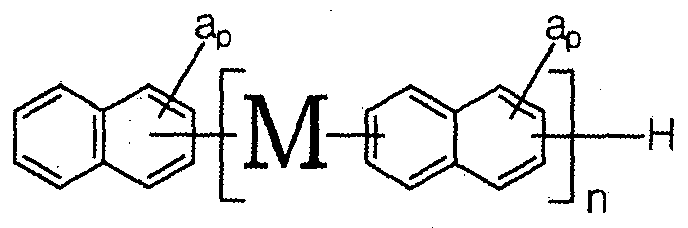

상기 화학식 HS 내지 KS에서, 치환기 a는 각각 수소이며,
상기 화학식 AS에서 J는 수소, 히드록시기, C1 내지 C10의 직쇄 또는 분지쇄 알킬기 또는 C6 내지 C10의 방향족기이며,
화학식 CS에서 K는 단일결합 (di rect l inkage) , ᅳ C¾- 또는

상기 화학식 DS에서 L은

(1as) (1bs)
 이며 상기 화학식 GS에서, M은


상기 화학식 ES에서, n은 1 이상의 정수이며,
상기 화학식 FS에서, n은 0 또는 1 이상의 정수이며
상기 화학식 GS에서, M이

상기 화학식 GS에서, p는 1 또는 2이다. 상기 화학식 DS ·
n값의 상한값은 1000이다. 상기 알킬히드록시 화합물은 하기 화학식 R1로 나타낼 수 있다.
[화학식 R1]
0H-(CH2),-X
상기 화학식 R1에서ᅳ X는 CI, Br, I, -O-SO2-CH3, -O-SO2-CF3, 또는 -0—
S02一 C6H4-CH3 이고 1은 1 내지 10의 정수이다.


(Ι-ΙΛΙΟ)
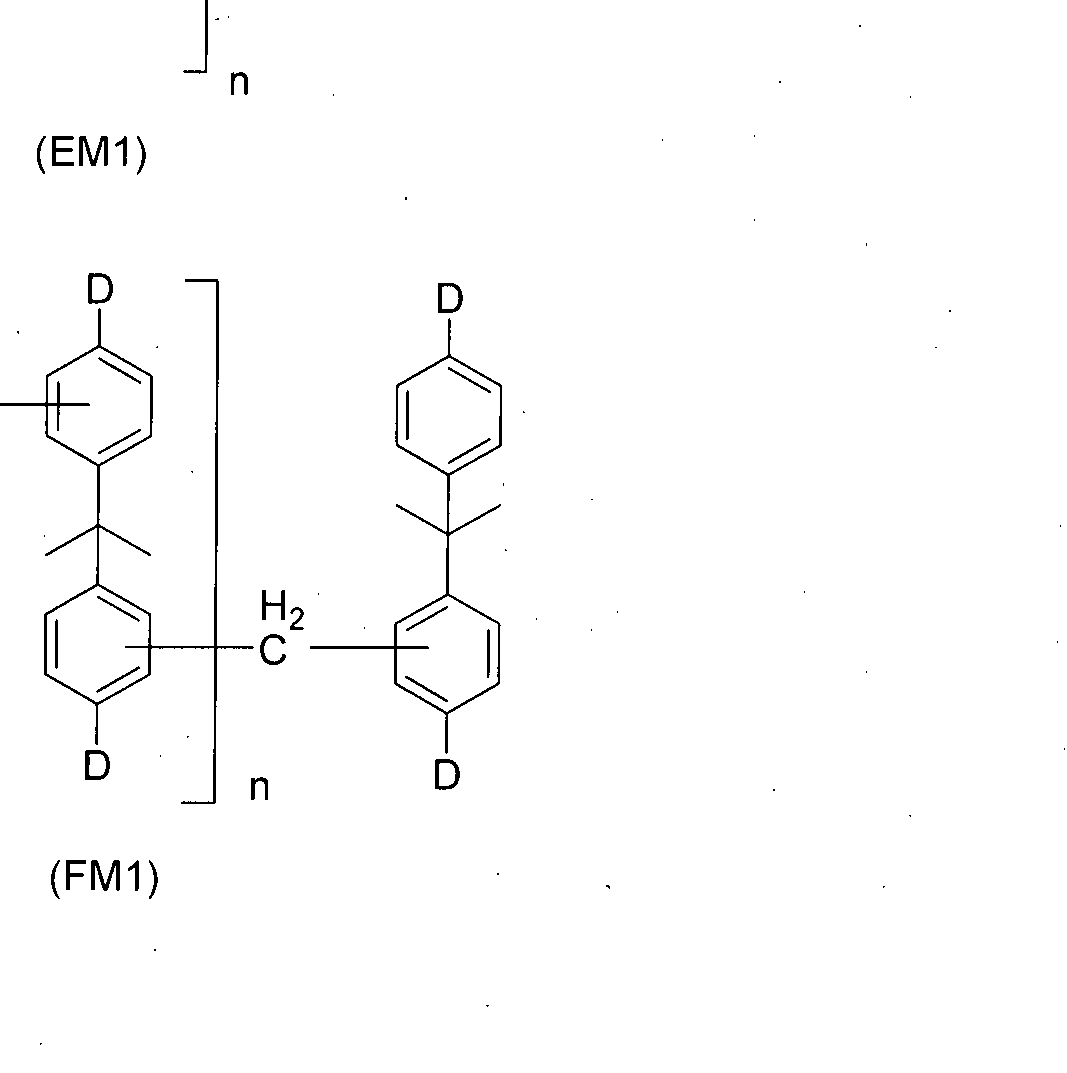
[I 튿^^ ^옫
ClZ00/ST0ZaM/X3d 0178CCI/S10Z OAV

(GM 1 )


상기 화학식 DM1에서 L은

(1 Df) 이며,
상기 화학식 GM1에서 , M은
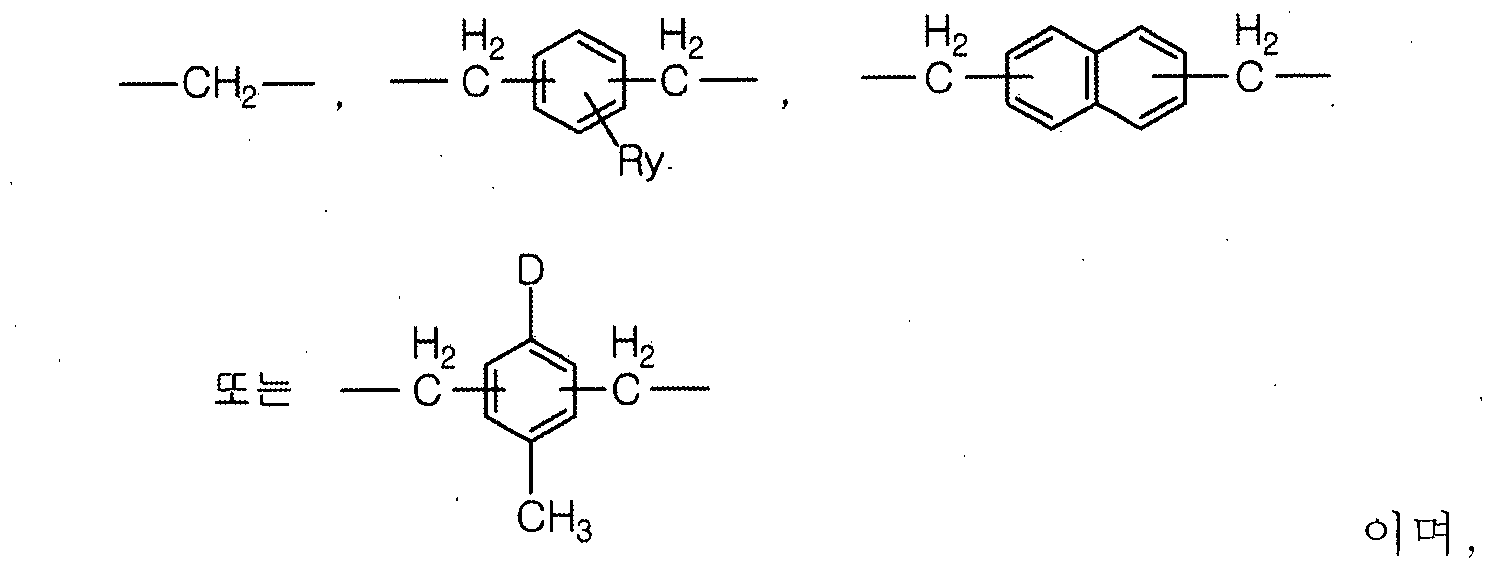


상기 화학삭 DM1에서, L이 IDa 내지 IDe인 경우에 , n은 2이상의 정수이며 L이 lDf인 경우에, n은 1 이상의 정수이며,
상기 화학식 EM1에서, n은 1 이상의 정수이며,
상기 화학식 FM1에서, 11은 0 또는 1 이상의 정수이며,
상기 화학식 GM1에서, M이

경우에 n은 2이상의 정수이고.

M이 인 경우에, n은 1 이상의 정수이며,
상기 화학식 GM1에서, p는 1 또는 2이다. 상기 화학식 DM1 내지 GM1에서 n값의 상한값은 1000이다. 제 1단계 반응은 염기 및 임의의 용매 존재하에서 행하여질 수 있다. 또한, 상기 제 1단계에서는 상온 내지 100oC로 1 내지 120시간 동안 반응시켜서 하기 화학식 AMI 내지 KM1 중 어느 하나의 중간생성물 I를 얻는다. 상기 제 1단계 받응의 반응은도 및 반응시간은 반응물의 종류에 따라 달라지지만, 예를 들어,
Λ ^"은 (예를 들어, 150C 내지 250O 내지 100oC로 .1 내지 120시간 동안 반응시킴으로써 중간생성물 I가 얻어진다ᅳ
사용 가능한 염기의 예로는 이로써 한정하는 것은 아니지만, 예를 들어
KOH, NaOH, K2C03 , Na2C03, KHC03 , NaHC03 , NaH, 트리에틸아민, 디이소프로필에틸 아민을 들 수 있다. 이들 염기는 단독으로 흑은 2가지 이상의 함께 사용될 수 있다. 염기는 상기 출발물질의 히드록시 그룹 및 /또는 아민 그룹 1당량에 대하여 1 당량 내지 5 당량으로 사용하는 것이 반웅효율 측면에서 좋다. 거] 1단계 반웅에서 용매는 필요에 따라 임의로 사용될 수 있다. 예를 들어, 제 1단계 반웅에서 별도의 용매 없이도 반웅온도에서 반응물의 점도가 반응이 진행되기에 적합하면 용매를 사용하지 않을 수 있다. 즉, 반웅물의 혼합 및 교반이 용매 없이 원활하게 진행될 수 있을 정도로 반응물의 점도가 낮아지면 별도의 용매를 필요로 하지 않으며, 이는 당업자가 용이하게 판단할 수 있다. 용매를 사용할 경우, 가능한 용매로는 반웅물을 잘 용해할 수 있으며, 반응에 어떠한 악영향을 미치지 않고 반응 후에 쉽게 제거될 수 있는 한 어떠한 유기용매가 사용될 수 있으며, 이로써 특히 한정하는 것은 아니지만, 예를 들어, 아세토니트릴, THF( tetra hydro fur an) , MEKdnethyl ethyl ketone) , DMF(diniethyl formamide) , DMS0(dimethyl sul foxide) , 메틸렌 클로라이드 (MC) , H20 등아사용될 수 있다. 이들 용매는 단독으로 혹은 2가지 이상이 함께 사용될 수 있다. 용매의 사용량은 특히 한정하는 것은 아니며, 반웅물이 충분히 용해되고 반웅에 바람작하지 않은 영향을 미치지 않는 범위에서 적합한 양으로 사용될 수 있으며, 이 기술분야의 기술자는 이를 고려하여 적합하게 선택할 수 있다. 상기한 제 1단계의 반응조건은 상기한 제 1단계를 원위치에서 일단계로 행하는 경우과 2가지의 별도의 단계로 행하는 경우에 모두 동일하게 적용된다. 저 12단계에서, 상기 화학식 AMI 내지 KM1 중 어느 하나의 중간생성물 I과 하기 화학식 R2의 알콕시실란을 반웅시켜 플렉서블한 스페이서기 말단의 히드록시기를 알콕시실릴화함으로써, 적어도 2개의 에폭시기 및 적어도 하나의
알콕시실릴기를 갖는 본 발명에 의한 스페이서 그룹을 경유한 알콕시실릴기를 갖는 에폭시 화합물이 얻어진다. 중간생성물 I과 알콕시실란은 중간생성물 I의 알킬히드록시기와 알콕시실란이 화학양론에 따라 당량비로 반웅하므로, 이를 고려하여 상기 중간생성물 I의 히드록시 그룹 1 당량에 대하여 하기 화학식 R2의 알콕시실란이 0. 1 당량 내지 5 당량이 되도록 중간생성물 I과 하기 화학식 R2의 알콕시실란을 반응시킨다.
[화학식 R2]
0CN-(CH2)m+2-SiRi 2R3 상기 화학식 R2에서, ¾ 내지 ¾중 적어도 하나는 C1-C6 알콕시기, 바람직하게는 C1-C6 알콕시기이고, 나머지는 C1-C10 알킬기, .바람직하게는 C1-C5 알킬기이고, 상기 알콕시기 및 알킬기는 직쇄 흑은 분지쇄일 수 있으며, 고리형 또는 비고리형일 수 있으며, N , 0, S , 및 P로 구성되는 그룹으로부터 선택되는 적어도 하나의 헤테로 원자를 갖거나 갖지 않을 수 있다. m는 1 내지 8의 정수, 바람직하게는 1 내지 4의 정수이다. 중간생성물 I과 알콕시실란의 반웅온도 및 반응시간은 반응물에 따라 다르지만,. 예를 들어, - 20oC 내지 120oC에서 1시간 내지 72시간일 수 있다. 상기 반응온도 및 반응시간으로 반응시킴으로써 , 원하는 반웅이 완료될 수 있다. 상기 반응은 필요에 따라 염기 존재하에 행할 수 있다. 별도의 염기를 사용하지 않아도 반응이 진행되지만, 반응속도가 느리며, 염기를 사용하여 반응속도를 빠르게 할 수 있다. 사용가능한 염기의 예로는 이로써 한정하는 것은 아니지만, 예를 들어 K2C03 , Na2C03 , HCOs , NaHC03 , 트리에틸아민, 디이소프로필에틸아민 등을 들 수 있다. 이들 염기는 단독으로 흑은 2가지
이상이 함께 사용될 수 있다. 염기는 출발물질의 히드록시 그룹 및 /또는 아민그룹 1당량에 대하여 1 당량 내지 5 당량으로 사용하는 것이 반웅효율 측면에서 좋다. 용매는 필요에 따라 임의로 사용될 수 있다. 예를 들어. 제 2 단계에서 별도의 용매 없이도 반응온도에서 반응물의 점도가 반응이 진행되기에 적합하면 용매를 사용하지 않을' 수 있다. 즉, 반응물의 흔합 및 교반이 용매 없이 원활하게 진행될 수 있을 정도로 반웅물의 점도가 낮아지면 별도의 용매를 필요로 하지 않으며, 이는 당업자가 용이하게 판단할 ' 수 있다. 용매를 사용할 경우에, 가능한 용매로는 반응물을 잘 용해할 수 있으며, 반웅에 어떠한 악영향을 미치지 않고 반응 후에 쉽게 제거될 수 있는 한 어떠한 비양성자성 용매 (aprot i c solyent )가 사용될 수 있다. 이로써 한정하는 것은 아니지만, 예를 들어, 를루엔, 아세토니트릴, THF( tetra hydro fur an) . MEK( methyl ethyl ketone) , DMF( dimethyl formamide) , DMS0( dimethyl sul foxide) , 메틸렌클로라이드 (MC) 등이 사용될 수 있다. 이들 용매는 단독으로 혹은 2가지 이상이 함께 사용될 수 있다. 용매의 사용양은 특히 한정하는 것은 아니며, 반응물이 충분히 용해되고 반응에 바람직하지 않은 영향을 미치지 않는 범위에서 적합한 양으로 사용돨 수 있으며, 이 기술분야의 기술자는 이를 고려하여 적합하게 선택할 수 있다. 예로서, 화학식 AC의 트리페닐메탄 코어의 에폭시 화합물을 이용한 본 발명에 의한 새로운 스페이서 그룹을 경유한 알콕시실릴기를 갖는 에폭시 화합물의 반웅스킴은 다음과 같다.
[반응스킴 1]

(2) 방법 2 (하이드로실릴화에 의한 알콕시실릴기의 도입)
본 발명의 스페이서 그룹을 경유한 알콕시실릴기를 갖는 에폭시 화합물은 먼저 . 출발물질에 적어도 2개의 쎄폭시기와 적어도 하나의 플렉서블한 스페이서기를 도입하는 단계 (제 1단계), 그 후에, 플렉서블한 스페이서기 말단의 히드록시기를 알켄화하는 단계 (제 2단계) 및 알케닐기를 알콕시실릴화하는 단계 (제 3단계)에 의한 방법으로 제조될 수 있다. 상기 방법 2의 제 1단계는 상기 방법 1의 제 1단계와 같다. 그 후ᅳ 제 1단계에서 얻어진 중간생성물 I을 하기 화학식 R3의 알켄화합물과 반웅시켜 중간생성물 I I를 얻는다. 제 2단계에서는 증간생성물 I의 플렉서블한 스페이서기 말단의 히드록시기가 알켄화합물과 반응하여 알케닐 그룹이 도입된다. 그러나, 제 2단계에서, 코어 중의 히드록시기 (0H) 및 /또는 아민과 알켄화합물이 또한 반웅될 수도 있다. 상기 제 2단계에서, 상기 중간생성물 I의 히드록시기 및 /또는 아민기 1당량에 대하여 하기 화학식 R3의 알케닐 화합물의 알케닐기가 1 내지 10 당량이 되도록 반응된다.
제 2단계 반응은 염기 및 임의의 용매 존재하에서 행하여질 수 있다. 상기 제 2단계는 염기 및 임의의 용매 존재하에서 상온 내지 100oC로 1 내지 120시간 동안 반웅시킬 수 있다.
[화학식 R3]
Y-(CH2)m-CH=CH2
(식중, Y는 CI, Br 또는 I의 할라이드, — 0-S02-CH3, -0-S02-CF3, 또는 -0-
S02-C6H4-C¾ 이고, m은 1 내지 8, 바람직하게는 1 내지 4의 정수이다.)

()CM21


(KM 21 )
상기 화학식 AM2 내지 GM2에서, 다수의 치환기 E 중 적어도 2개는 상기 화학식 E1이고, 적어도 하나는 -(Η Η^-Ο- Ή -αΚΉ^식중., 1은 1 내지 10의 정수이며, m은 1 내지 8, 바람직하게는 1 내지 4의 정수이다)이며, 잔류 치환기 E가 있으면, 이는 -OH , -0-(CH2)厂 0H (식증, 1은 1 내지 10의 정수이다) , 및 -으 (C¾)m-CH=CH2(식중, m은 1 내지 8, 바람직하게는 1 내지 4의 정수이다)로 구성되는 그룹으로부터 독립적으로 선택될 수 있다. 상기 화학식 HM2 내지. KM2에서, 다수의 치환기 E 중 적어도 2개는 상기 화학식 E2이고, 적어도 하나는 -(C¾)厂 0-(CH2)m— CH=CH2(식중, 1은 1 내지 10의 정수이며, m은 1 내지 8, 바람직하게는 1 내지 4의 정수이다)이며, 잔류 치환기 E가 있으면, 이는 수소, -(CH^-OH (식중, 1은 1 내지 10의 정수이다), 및 - (C¾)m— CH=CH2(식중, ill은 1 내지 8, 바람직하게는 1 내지 4의 정수이다)로 구성되는 그룹으로부터 독립적으로 선택될 수 있다.
상기 화학식 AM2에서 J는 수소, 히드록시기, C1 내지 C10의 직쇄 또; 분지쇄 알킬기 또는 C6 내지 C10의 방향족기이며,
학식 CM2에서 K는 단일결합 (direct linkage), — CH2- 또;

상기 화학식 DM2에서 L은

(1Ea) (1Eb)

(1Ef)
며 상기 화학식 GM2에서, M은
 에서 , Ry는 C1-C10의 직쇄 또는 분지쇄 알킬기이고, 상기 화학식 丽2에서, Q는 -CH2—, -C(CH3)2- , -C(CF3)2—, — S- , -S02_ , 또는

상기 화학식 DM2에서, L이 lEa 내지 lEe인 경우에, n은 2이상의 정수이며 L이 lEf인 경우에, n은 1 이상의 정수이며,
상기 화학식 EM2에서, n은 1 이상의 정수이며,
상기 화학식 FM2에서. n은 0 또는 1 이상의 정수이며,
상기 화학식 GM2에서, M이
경우에,
M

상기 화학식 GM2에서, p는 1 또는 2이다. 상기 화학식 DM2 내지 GM2에서,
n값의 상한값은 1000이다. 상기제 2단계 반웅의 반응은도 및 반웅시간은 반웅물의 종류에 따라 달라지지만, 예를 들어, 상온 (예를 들어, 15°C 내지 250C) 내지 100°C로 1 내지 120시간동안 반응시켜서 중간생성물 I I가 얻어진다. 사용 가능한 염기의 예로는 이로써 한정하는 것은 아니지만, 예를 들어 KOH . NaOH, NaH를 들 수 있다. 이들 염기는 단독으로 흑은 2가지 이상의 함께 사용될 수 있다. 염기는 상기 중간생성물 I의 히드록시기 및 /또는 아민기 1당량에 대하여 1 당량 내지 5 당량으로 사용하는 것이 반웅효율 측면에서 좋다. 게 2단계 반웅에서 용매는 필요에 따라 임의로 사용될 수 있다. 예를 들어, 제 2단계에서 별도의 용매 없이도 반웅온도에서 반웅물의 점도가 반응이 진행되기에 적합하면 용매를 사용하지 않을 수 있다. 즉, 반웅물의 흔합 및 교반이 용매 없이 원활하게 진행될 수 있을 정도로 반웅물의 점도가 낮아지면 별도의 용매를 필요로 하지 않으며, 이는 당업자가 용이하게 판단할 수 있다. 용매를 사용할 경우, 가능한 용매로는 반웅물을 잘 용해할 수 있으며. 반웅에 어떠한 악영향을 미치지 않고 반응 후에 쉽게 제거될 수 있는 한 어떠한 유기용매가 사용될 수 있으며 , 이로써 특히 한정하는 것은 아니지만, 예를 들어, 아세토니트릴 , THF(tetra hydro furan) , MEKdnethyl ethyl ketone) , DMF(dimethyl formami de) . DMS0( dimethyl sul foxide) , 메틸렌 클로라이드 (MC) , H20 등이 사용될 수 있다. 이들 용매는 단독으로 흑은 2가지 이상이 함께 사용될 수 있다. 용매의 사용량은 특히 한정하는 것은 아니며, 반웅물이 충분히 용해되고 반웅에 바람직하지 않은 영향을 미치지 않는 범위에서 적합한 양으로 사용될 수 있으며, 이 기술분야의 기술자는 이를 고려하여 적합하게 선택할 수 있다. 제 3 계에서는 상기 화학식 AM2 내지 KM2 중 어느 하나의 중간생성물
I I와 알콕시실란의 반웅으로 중간생성물 I I의 알케닐 그룹을 알콕시실릴한다. 구체적으로, 백금촉매 및 밈의의 용매존재하에서 상기 중간생성물 I I의 알케닐기를 · 알콕시실릴화 및 비가수성 실릴화하므로써 본 발명의 일 견지에 의한 적어도 2개의 에폭시기, 적어도 하나의 스페이서를 갖는 알콕시실릴기를 갖는 에폭시 화합물이 얻어진다. 중간생성물 I I과 알콕시실란은 중간생성물 I I의 알케닐 그룹과 알콕시실란이 화학양론에 따라 당량비로 반웅하므로, 이를 고려하여 상기 중간생성물 I I의 알케닐 그룹 1 당량에 대하여 하기 화학식 R4의 알콕시실관이 0. 1 당량 내지 5 당량이 되도록 중간생성물 I I와 하기 화학식 R4의 알콕시실란을 반웅시킨다.
[화학식 R4]
HSiRiR2R3 상기 화학식 R4에서, ¾ 내지 R3중 적어도 하나는 C1-C6 알콕시기, 바람직하게는 C1-C3 알콕시기이고 나머지는 독립적으로 C1-C10 알킬기, 바람직하게는 C1-C5 알킬기아고. 상기 알콕시기 및 알킬기는 직쇄 혹은 분지쇄일 수 있으며, 고리형 또는 비고리형일 수 있으며, N. 0, S . 및 P로 구성되는 그룹으로부터 선택되는 적어도 하나의 헤테로 원자를 갖거나 갖지 않을 수 있다. 상기 중간생성물 I I와 알콕시실란의 반웅온 £ 및 반웅시간은 반응물에 따라 다르지만, 예를 들어, - 20°C 내지 120°C에서 1시간 내지 72시간일 수 있다. 상기 반응온도 및 반응시간으로 반웅시킴으로써 , 원하는 반웅이 완료될 수 있다. 백금촉매로는 이로써 한정하는 것은 아니지만, 예를 들어, Pt02 또는 H2PtCl6(ChloropIat inic acid)의 백금촉매가 사용될 수 있다. 백금촉매는 출발물질의 알케닐 그룹 1 당량에 대하여 lxlC 4 내지 0.05 당량으로 사용하는
것이 반응효율 측면에서 바람직하다 . 용매는 필요에 따라 임의로 사용될 수 있다. 예를 들어, 별도의 용매 없이도 반웅온도에서 반응물의 점도가 반웅이 진행되기에 적합하면 용매를 사용하지 않을 수 있다. 즉 반옹물의 혼합 및 교반이 용매 없이 원활하게 진행될 수 있을 정도로 반응물의 점도가 낮아지면 별도의 용매를 필요로 하지 않으며, 이는 당업자가 용이하게 판단할 수 있다. 용매를 사용할 경우에, 가능한 용매로는 반웅물올 잘 용해할 수 있으며, 반응에 어떠한 악영향을 미치지 않고 반웅 후에 쉽게 제거될 수 있는 한 어떠한 비양성자성 용매 (aprot i c solvent )가 사용될 수 있다. 이로써 한정하는 것은 아니지만, 예를 들어, 를루엔, 아세토니트릴, THF( tetra hydro fur an) , ME ( methyl ethyl ketone) , -DMFCdimethyl formami de) , DMS0( dimethyl sul foxide) , 메틸렌 클로라이드 (MC) 등이 사용될 수 있다. 이들 용매는 단득으로 혹은 2가지 이상이 함께 사용될 수 있다. 용매의 사용양은 특히 한정하는 것은 아니며, 반웅물이 충분히 용해되고 반웅에 바람직하지 않은 영향을 미치지 않는 범위에서 적합한 양 및 /또는 농도로 사용될 수 있으며, 이 기술분야의 기술자는 이를 고려하여 적합하게 선택할 수 있다. 예로서, 화학식 AC의 트리페닐메탄 코어의 에폭시 화합물을 이용한 본 발명에 의한 새로운 스페이서 그룹을 경유한 알콕시실릴기를 갖는 에폭시 화합물의 반웅스킴은 다음과 같다:
[반응스킴 2]

3. 에폭시 조성물
본 발명의 또 다른 견지에 의하면, 상기 본 발명의 어떠한 견지에 의해 제공되는 새로운 스페이서 그룹을 경유한 알콕시실릴기를 갖는 에폭시 화합물을 포함하는 에폭시 조성물이 제공된다. 상기 본 발명에서 제공되는 어떠한 조성물은 전자재료용, 예를 들어, 이로써 한정하는 것은 아니자만. 반도체 기판, 예를 들어, IC 기판이나 빌드업 필름, 봉지재료 (패키징 재료), 프린트 배선기판, 전자부품, 접착제, 도료, 복합 재료 등 각종 용도로 사용될 수 있다. 또한, 상기 본 발명에서 제공되는 어떠한 조성물은 경화성 조성물 및 /또는 층전제를 포함하는 경화성 조성물일 수 있다. 본 발명의 상기한 및 후술하는 어떠한 견지에 의한 에폭시 조성물에는 에폭시 화합물로 본 발명의 어떠한 견지에 의한 상기. 화학식 AF 내지 KF로 구성되는 그룹으로부터 선택되는 적어도 하나의 새로운 에폭시 화합물을 포함하는 한, 종래 이 기술분야에 알려져 있는 어떠한 종류 및 /또는 배합의 에폭시 조성물이 포함되는 것으로 이해되며, 에폭시 조성물을 구성하는 경화제,
경화촉진게 (촉매) , 충전제 (예를 들어, 무기입자 및 /또는 섬유), 기타 통상의 에폭시 화합물 및 기타 첨가제의 종류 및 배합비를 한정하는 것은 아니다.
나아가, 이 기술분야에서, 에폭시 조성물, 경화물 및 /또는 . 복합체는 이들의 적용처 및 /또는 용도에 따라, 물성제어 측면에서 다양한 종류의 통상의 에폭시 화합물이 함께 사용될 수 있다. 따라서, 본 발명의 상기한 및 후술하는 어떠한 견지에 의한 에폭시 조성물에서 상기 에폭시 화합물로는 본 발명의 일 견지에 의한 상기 화학식 AF 내지 KF로 구성되는 그룹으로부터 선택되는 적어도 하나의 새로운 스페이서 그룹을 경유한 알콕시실릴기를 갖는 에폭시 화합물 (이하, '본 발명와 에폭시 화합물 '이라 함)뿐만 종래 이 기술분야에 알려져 있는 어떠한 종류의 에폭시 화합물 (이하, '종래의 에폭시 화합물 '이라 하기도 함)을 또한 포함할 수 있다. 상기 종래의 에폭시 화합물은 특히 한정하는 것은 아니며 종래 이 기술분야에 알려져 있는 어떠한 에폭시 화합물일 수 있으며, 예를 들어, 글리시딜에테르계 에폭시 화합물, 글리시딜계 에폭시 화합물, 글리시딜아민계 에폭시 화합물, 및 글리시딜에스테르계 에폭시 화합물로 구성되는 그룹으로부터 선택된 적어도 일종일 수 있다. 나아가, 상기 종래의 에폭시 화합물은 코어구조로 비스페놀, 비페닐, 나프탈렌, 벤젠, 티오디페놀, 플루오렌 ( f hiorene) , 안트라센, 이소시아누레이트, 트리페닐메탄,. 1,1,2,2-테트라페닐에탄, 테트라페닐메탄, 4 , 4 ' -디아미노디페닐메탄, 아미노페놀, 지환족, 지방족 또는 노볼락 유니트를 갖는 글리시딜에테르계 에폭시 화합물, 글리시딜계 에폭시 화합물, 글리시딜아민계 에폭시 화합물, 및 글리시딜 에스테르계 에폭시 화합물로 구성되는 그룹으로부터 선택된 적어도 일종일 수 있다. 이로써 한정하는 것은 아니지만 예를 들어, 본 발명의 일 견지에 의한 어떠한 에폭시 조성물은 에폭시 화합물의 총 중량을 기준으로 본 발명의 에폭시 화합물 1 내지 100wt% 및 종래의 에폭시 화합물 0 내지 99wt% ; 예를 들어, 본
발명의 에폭시 화합물 10 내지 100wt% 및 종래의 에폭시 화합물 0 내지 90wt% ; 예를 들어, 본 발명의 에폭시 화합물 30 내지 100wt% 및 종래의 에폭시 화합물 0 내지 70wt%, 예를 들어, 본 발명의 에폭시 화합물 50 내지 100wt% 및 종래의 에폭시 화합물 0 내지 50wt% , 예를 들어, 본 발명의 에폭시 화합물 10 내지 100wt 미만 및 종래의 에폭시 화합물 0 초과 내지 9( t%; 예를 들어, 본 발명의 에폭시 화합물 30 내지 100wt% 미만 및 종래의 에폭시 화합물 0 초과 내지 70wt% ; 예를 들어. 본 발명의 에폭시 화합물 50 내지 100wt% 미만 및 종래의 에폭시 화합물 0 초과 내지 50 %를 포함할 수 있다.
나아가, 상기한 그리고 후술하는 본 발명의 어떠한 견지의 에폭시 조성물에는 층전제 (예를 들어, 무기입자 및 /또는 섬유)가 또한 추가로 포함될 수 있다. 무기입자로는 종래 에폭시 수지의 물성을 보강하기 위해 사용되는 것으로 알려져 있는 어떠한 무기입자가 사용될 수 있으며 , 이로써 한정하는 것은 아니지만, 실리카 (예를 들어, 용융 실리카 및 결정성 실리카 포함) , 지르코니아, 티타니아, 알루미나, 질화규소 및 질화알루미늄으로 구성되는 그룹으로부터 선택되는 적어도 일종의 금속산화물, 및 실세스퀴옥산으로 구성되는 그룹으로부터 선택되는 적어도 일종이 사용될 수 있다ᅳ 상기 무기입자는 단독으로 또는 2종 이상의 흔합물로 사용될 수 있다. 실리카를 특히 다량 배합하는 경우에는, 용융 실리카를 이용하는 것이 바람직하다. 용융 실리카는 파쇄상이나 구상의 어느 쪽도 사용 가능하지만, 용융 실리카의 배합량을 높이고, 또한 성형 재료의 용융 점도의 상승을 억제하기 위해서는, 구상의 것을 아용하는 것이 바람직하다.
상기 무기입자로는 이로써 한정하는 것은 아니지만, 복합체의 사용용도, 구체적으로는 무기입자의 분산성 등을 고려하여, 입자크기가 0.5nm 내지 수십
(예를 들어, 50卿 내지 100卿)인 무기입자가 사용될 수 있다. 무기입자는 에폭시 화합물에 분산되므로 입자크기에 따른 분산성의 차이로 인하여 상기한 크기의 무기입자가 함께 사용되는 것이 바람직하다. 뿐만 아니라, 무기입자의 배합량을 높이기 위해서는, 무기입자의 입자 크기분포를 넓게 하여 배합하는 것이 바람직하다.
본 발명의 일 견지에 의한 에폭시 조성물에서 상기 에폭시 화합물에 대하여 무기입자는 에폭시 복합체의 CTE 감소 및 적용시 요구되는 적정한 점도 및 용도에 따라 적합하게 첨가할 수 있는데, 무기입자의 함량은 에폭시 조성물의 고형분의 총 중량을 기준으로 (에폭시 경화물의 경우에는 에폭시 경화물의 총 중량을 기준으로) 5wt% 내지 95wt% , 예를 들어, 5wt% 내지 90wt% , 예를 들어 10wt% 내지 90wt% , 예를 들어 , 30wt% 내지 95wt% , 예를 들어, 30wt% 내지 90wt% , 예를 들어 , 5wt% 내지 60wt% , 예를 들어, 10wt% 내지 50wt ¾ 수 있다. 보다 구체적으로, 일 예로서, 에폭시 조성물이 반도체 봉지재 등으로 사용되는 경우에는, 이로써 한정하는 것은 아니지만, CTE. 값과 재료 가공성을 고려하여 무기입자의 함량은 예를 들어, 에폭시 조성물의 고형분의 총 중량에 대하여 (에폭시 경화물의 경우에는 에폭시 경화물의 총 중량을 기준으로) 30wt% 내지 95wt% , 예를 들어, 30wt% 내지 90 %일 수 있다. 또한 일 예로서, 에폭시 조성물이 반도체 기판 등으로 사용되는 경우에는, 기판의 CTE 값과 강도 등을 고려하여 무기입자의 함량은 예를 들어, 에폭시 조성물의 총 고형분의 중량에 대하여 (에폭시 경화불의 경우에는 에폭시 경화물의 총 중량을 기준으로) 5w 내지 85wt% , 예를 들어, 10wt% 내지 80 %일 수 있다.
. 한편, 섬유가 충전제로 사용되는 경우에는, 주로 섬유에 에폭시 조성물에 함침하는 방식으로 복합화되므로 섬유의 크기 등이 특히 제한되지 않으며 , 이 기술분야에서 일반적으로 사용되는 어떠한 종류 및 치수의 섬유가 사용될 수 있다.
섬유로는 이로써 한정하는 것은 아니지만, 종래 에폭시 수지 경화물의 물성개선을 위해 사용되는 일반적인 어떠한 섬유가 사용될 수 있다. 구체적으로는 유리 섬유, 유기 섬유 또는 이들의 흔합물이 사용될 수 있다. 또한, 본 명세서에서 사용된 용어 '유리 섬유'는 유리 섬유뿐만 아니라, 유리 섬유직물, 유리 섬유 부직물 등을 포함하는 의미로 사용된다. 이로써 한정하는 것은 아니지만, 유리 섬유로는 E 유리섬유, T 유리섬유, S 유리섬유, NE 유리섬유, D 유리섬유, 석영 유리섬유 등의 유리 섬유를 예로 들 수 있으며, 예를 들어, E 또는 T 유리 섬유를 예로 들 수 있다. 유기 섬유로는 이로써 특별히 한정하는 것은 아니지만, 액정 폴리에스테르 섬유, 폴리에틸렌 테레프탈레이트 섬유, 전방향족 섬유, 폴리벤조옥사졸 섬유, 나일론 섬유, 폴리에틸렌 나프탈레이트 섬유, 폴리프로필렌 섬유, 폴리에테르 술폰 섬유, 폴리비닐리덴플로라아드 섬유, 폴리에틸렌 술파이드 섬유, 폴뫼에테르에테르케톤 섬유로 구성되는 그룹으로부터 선택된 적어도 일종이 단독으로 혹은 이종 이상이 함께 사용될 수 있다. 본 발명에 의한 어떠한 견지의 에폭시 조성물, 예를 들어, 유리섬유 복합체에서, 섬유의 함량은 경화물의 총 증량을 기준으로 10wt% 내지 90wt% , 예를 들어, 30wt% 내지 70wt% , 또한 예를 들어, 35wt% 내지 70\ %일 수 있다. 따라서, 레진 함량은 10wt% 내지 90wt% , 예를 들어 , 30wt% 내지 70wt% , 또한 예를 들어, 35wt% 내지 70wt 수 있다. 섬유의 함량이 상기 범위인 것이 내열성 향상 및 가공성 측면에서 바람직하다. 한편, 섬유를 포함하는 에폭시 조성물 경화물 등에서ᅳ 통상, 총 고형분 증 섬유를 제외한 고형분 부분은 레진 성분 ( res in content , R/C)으로 칭하여진다. 나아가, 상기 섬유를 포함하는 어떠한. 견지의 에폭시 조성물에는 또한, 필요에 따라, 무기입자가 추가로 포함될 수 있다. 이때 무기입자는 물성 향상 및 공정성을 고려하여, 총 레진 함량의 중량을 기준으로 lwt% 내지 80wt% 범위의 양으로 배합될 수 있다. 이때, 사용될 수 있는 무기입자의 종류는 특히 한정되지 않으며, 이 기술분야에 알려져 있는 어떠한 무기입자가 사용될 수 있으며, 예를
들어, 상기한, 무기입자의 종류가 사용될 수 있다. 한편, 상기한 그리고 후술하는 본 발명의 어떠한 견지의 에폭시 조성물에는 경화제가 추가로 포함될 수 있다. 상기 경화제로는 에폭시 화합물에 대한 경화제로 일반적으로 알려져 있는 어떠한 경화제가 사용될 수 있으며. 이로써 특히 한정하는 것은 아니지만, 예를 들어, 아민, 폴리페놀, 산무수물 등이 사용될 수 있다. 보다 구체적으로, 이로써 .한정하는 것은 아니지만, 아민 경화제로는 지방족 아민, 지환족 아민, 방향족 아민. 기타 아민 및 변성폴라아민을 사용할 수 있으며, 2개 이상와 일차 아민기를 포함하는 아민 화합물을 사용할 수 있다. 상기 아민 경화제의 구체적인 예로는 4,4'-디메틸아닐린 (디아미노 디페닐 메탄) (4,4'-Dimethylani 1 ine(diamino di phenyl methane, DAM 또는 DDM) , 디아미노 디.페닐설폰 (diamino di phenyl sulfone, DDS), 'ni_페닐렌 디아민 (m_pheny 1 ene diamine)으로 구성되는 그룹으로부터 선택된 1종 이상의 방향족 아민 , 디에틸렌트리아민 (diethylene triamine, DETA) , 디에틸렌테트라아민 (diethylene tetramine) , 트리에틸렌테트라아민 ( tr iethy lene tetramine, TETA) , ni-크실렌 디아민 (m_xylene diamine, MXDA) . 메탄 디아민 (methane diamine, MDA) , N.N'— 디에틸렌디아민 (N, N ' -diethylenedi amine , Ν,Ν' -DEDA)ᅳ 테트라에틸렌펜타아민 ( t et r ae t hy 1 enepent aam i ne , TEPA) , 및 핵 ! "메'틸렌디 0 민 (hexamethylenediamine) 으로 구성되는 그룹으로부터 선택된 적어도 1종 이상의 지방족 아민, 이소포론 디아민 (isophorone diamine, IPDI), N—아미노에틸 피레라진 (N— Aminoethyl piperazine, AEP), 비스 (4—아미노 3-메틸시클로핵실)메탄 (Bis(4-Amino 3- Methylcyclohexyl) Me thane, Larominc 260)으로 구성되는 그룹으로부터 선택된 1종 이상의 지환족아민, 디시안디아미드 (DICY) 등과 같은 기타 아민, 폴리아미드계. 에폭사이드계 등의 변성아민을 들 수 있다.
이로써 한정하는 것은 아니지만 폴리페놀 경화제의 예로는 페놀노볼락 수지, 크레졸 노볼락 수지,. 비스페놀 A 노볼락 수지, 자일렌 노볼락 수지, 트리 페닐 노볼락 수지, 비페닐 노볼락 수지, 디시클로펜타디엔 노볼락 수지, 나프탈렌 노볼락 수지 등을 들 수 있다. 이로써 한정하는 것은 아니지만, 산무수물 경화제의 예로는 도데세닐 숙신산 무수물 (dodecenyl succinic anhydride, DDSA), 폴리 아젤라익 폴리 안하이드리드 (poly azelaic poly anhydride)등과 같은 지방족 산무수물, 핵사하이드로프탈릭 안하이드리드 (hexahydrophthalic anhydride, HHPA) , 메틸 테트라하이드로프탈릭 안하이드리드 (methyl tetrahydrophthal ic anhydride. MeTHPA) , 메틸나딕 안하이드리드 (methylnaclic anhydride, 丽 A)등과 같은 지환족 산무수물, 트리멜리트 안하이드리드 (Trimellitic Anhydride, TMA), 피로멜리트산 디안하이드리드 (pyroniellitic acid dianhydr ide , PMDA) , 벤조페논테트라카르복시 산.디안하이드리드 (benzophenonetetracarboxylic dianhydr ide, BTDA) 등과 같은 방향족 산무수물, 테트라브로모프탈릭 안하이드리드 (tetrabromophthalic anhydride, TBPA) , 클로렌딕 안하이드리드 (chlorendic anhydride) 등과 같은 할로겐 산무수화물 등을 들 수 있다. 일반적으로 경화제와 에폭시기의 반웅 정도로 에폭시 복합체의 경화도를 조절할 수 있으며, 목적하는 경화도 범위에 따라 에폭시 화합물의 에폭시기의 농도를 기준으로 하여 경화제의 함량을 조절할 수 있다. 예를 들어, 아민 경화제가 사용되는 경우에는, 아민 경화제와 에폭시 그룹의 당량 반웅에서는 에폭시 당량 /아민 당량비가 0.5 내지 2.0이 되도록, 또한, 예를 들어, 0.8 내지 1.5이 되도록 경화제의 함량을 조절하여 사용하는 것이 바람직하다. 아민 경화제의 경우를 예로 하여 경화제의 배합량에 대하여 설명하였으나, 폴리페놀 경화제, 산무수물 경화제 및 본 명세서에 별도로 기재하지 않은 에폭시 화합물의 경화에 사용될 수 있는 어떠한 경화제 또한 원하는 경화도 범위에 따라
에폭시 조성물 중 총 에폭시기의 농도를 기준으로 하여 에폭시 작용기와 경화제의 반웅성 작용기의 화학반웅식에 따라 화학양론적 양으로 적합하게 배합하여 사용할 수 있으며. 이는 이 기술분야에서 일반적이다. 또한 하기에 기술된 이미다졸은 경화촉진제로 많이 사용되나, ―단독 경화제로도 사용될 수도 있다 . 이미다졸이 경화제로 사용되는 경우는 에폭시 화합물에 대하여 0. 1 ~ lOphr의 양으로 사용될 수 있다. 상기한 그리고 후술하는 본 발명의 어떠한 견자의 에폭시 조성물에는 경화반웅을 촉진하도록 임의의 경화촉진제 (경화촉매)가 필요에 따라 추가로 포함될 수 있다. 경화촉진제 (경화촉매)로는 이 기술분야에서 에폭시 조성물의 경화에 일반적으로 사용되는 것으로 알려져 있는 어떠한 촉매가 사용될 수 있으며, 이로써 한정하는 것은 아니지만, 예를 들어, 이미다졸, 제 3급 아민, 제 4급 암모늄, 유기산염, 루이스산, 인 화합물 등의 경화촉진제가사용될 수 있다. 보다 구체적으로, 예를 들어, 디메틸 벤질 아민, 2ᅳ메틸이미다졸 (2MZ) , 2-운데실이미다졸, 2-에틸 -4-메틸이미다졸 (2E4MZ) , 2-페닐이미다졸, 1-(2-시아노 에틸) -2-알킬기 이미다졸, 2-헵타데실이미다졸 (heptadecyl imidazol e , 2HDI ) 등의 이미다졸; 질디메틸아민 (benzyl dimethyl amine , BDMA) , 트리스디메틸아미노메틸 페놀 (DMP-30) , 디아자비시클로운데센 (DBU) 및 트리에틸렌디아민 등의 3급 아민 화합물; 테트라부틸암모늄브로마이드 등의 4급 암모늄염; DBU의 유기산염; 트리페닐포스핀, 인산에스테르 등의 인 화합물, BF3-모노에틸 아민 (BF3— MEA) 등과 같은 루아스산 등을 들 수 있으며, 이로써 한정하는 것은 아니다ᅳ 이들 경화촉진제는 이들의 마이크로 캡슐코팅 및 착염 형성 등으로 잠재화된 것을 사용할 수도 있다. 이들은 경화 조건에 따라 단독으로 사용할 수도 있고, 2종 이상을 병용할 수도 있다. 상기 경화 촉진제의 배합량은, 특히 한정하는 것은 아니며, 이
기술분야에서 일반적으로 사용되는 양으로 배합하여 사용할 수 있다. 예를 들어, 상기 에폭시 화합물에 대하여 0. 1 내지 10 phr (part s per hundred resin , 에폭시 화합물 100중량부당의 중량부), 예를 들어, 0.2 phr 내지 5 phr일 수 있다. 경화 촉진제는 경화반웅 촉진 효과 및 경화 반웅 속도 제어 측면에서 상기 함량으로 사용되는 것이 바람직하다. 상기 경화 촉진제를 상기 범위의 배합량으로 사용함으로써. 빠르게 경화가 진행되며 작업처리량의 향상을 기대할 수 있다. 상기 에폭시 조성물은 에폭시 조성물의 물성을 손상시키지 않는 범위,에서, 에폭시 조성물의 물성조절을 위해 통상적으로 배합되는 이형제, 표면 처리제, 난연제, 가소제, 항균제, 레벨링제, 소포제, 착색제, 안정제, 커풀링제. 점도조절제, 희석제, 고무, 열가소성 수지 등의 기타 첨가제가 또한 필요에 따라 배합될 수 있다. 예를 들어, 본 발명에 의한 어떠한 조성물에 가용성을 하기 위해, 본 발명의 어떠한 에폭시 조성물에 고무 및 /또는 열가소성 수지가 첨가될 수 있다. 열가소성 수지 및 고무-개질된 에폭시 수지는 이 기술분야에 일반적으로 알려져 있는 것이 사용될 수 있다. 고무로는 조성물에 사용되는 용매에 용해되지 않고 조성물에 분산된 상태를 유지하는 한 이 기술분야에 알려져 있는 어떠한 고무 가 사용될 수 있다. 이로써 제한하는 것은 아니지만, 고무의 종류로는 예를 들어, 아크릴로니트릴 부타디엔 고무, 부타디엔 고무, 아크릴 고무, 코어 쉘형 고무 입자, 가교 아크릴로니트릴 부타디엔 고무 입자, 가교 스티렌 부타디엔 고무 입자, 아크릴 고무 입자 등을 들 수 있다. 이들은 단독으로 또는 2종 이상이 함께 사용될 수 있다. 고무 입자 형태를 사용하는 경우 물성개선 측면에서 평균 입자 직경은 Ο . ΟΟδ ηι 내지 1 의 범위가 바람직하고, 0. zm 내지 0.6/ Π의 범위가 보다 바람직하다ᅳ 고무 입자는, 에폭시 조성물의 고형분의 중량을 기준으로, 물성을 고려하여 , 예를 들어 , 0.5 중량 % 내지 10 중량 %로 배합될 수 있다. 열가소성 수지로는 이로써 제한하는 것은 아니지만, 페녹시 수지,
폴리비닐아세탈 수지. 폴리이미드 수지, 폴리아미드이미드 수지, 폴리에테르 술폰 수지, 폴리술폰 수지 등을 들 수 있다. 이들은 단독으로 또는 2종 이상이 함께 사용될 수 있다. 열가소성 수지는 에폭시 조성물의 고형분의 중량을 기준으로, 물성을 고려하여, 예를 들어, 으 5 중량 % 내지 60 중량 % . 바람직하게는 3 중량 % 내지 50 중량 %로 배합될 수 있다.
상기한 바와 같이, 본 명세서에서 사용된 용어 "에폭시 조성물 "은 본 발명의 에폭시 화합물뿐만 아니라 필요에 따라 상기 에폭시 조성물을 구성하는 다른 구성성분, 예를 들어, 임의의 경화제, 경화촉진제 (촉매) , 충전제 (예를 들어, 무기입자 및 /또는 섬유) , 기타 통상의 에폭시 화합물 및 용매 이외의 이 기술분야에서 필요에 따라 배합되는 기타 첨가제를 포함할 수 있는 것으로 이해되며, 따라서 통상, 에폭시 조성물에서 용매는 에폭시 조성물의 공정성 등을 고려하여 에폭시 조성물의 고형분 함량 및 /또는 점도를 적합하게 조절하도록 임의로 사용될 수 있다. 한편, 본 발명에서 사용된 용어 "에폭시 조성물의 고형분의 총 중량' '이란 에폭시 조성물을 구성하는 성분 증 용매를 제외한 성분의 총 중량을 말한다. ' 상기 본 발명의 어떠한 견지에서 제공되는 어떠한 에폭시 조성물은 전자재료용으로 사용될 수 있다. 전자 재료는 이로써 한정하는 것은 아니지만, 예를 들어, 반도체용 가판, 필름, 프리프레그, 또는 본 발명의 조성물로 된 기재층에 금속층이 배치된 적층판, 봉지재료 (패키징 재료)뿐만 아니라, 인쇄 배선기판 등의 전자부품이다. 또한, 접착제, 도료 및 복합재료 등 각종 용도에 적용될 수 있다. 본 발명의 ,또 다른 견지에 의하면, 본 발명의 에폭시 화합물을 포함하는 어떠한 조성물을 포함하는 또는 이로 이루어진 전자재료가 제공된다. 나아가, 상기 전자재료를 포함하거나. 이로 필수적으로 구성되거나 또는 구성되는 반도체 장치가 또한 제공된다. 구체적으로 상기 반도체 장치는 본 발명의 에폭시 화합물을 포함하는 조성물을 포함하거나, 이로 필수적으로 구성되거나 또는 구성되는 인쇄배선판을 포함 (예를 들어, 반도체 소자 탑재)하는
반도체 장치 및 /또는 반도체 패키징 재료를 포함하는 반도체 장치일 수 있다. 또한, 상기 본 발명의 어떠한 견지에서 제공되는 어떠한 에폭시 조성물을 포함하거나, 필수적으로 구성되거나 또는 구성되는 경화물, 접착제 , 도료 또는 복합재료가 제공된다. 본 발명의 또 다른 견지에 의하면, 상기한 본 발명의 어떠한 견지에서 제공되는 에폭시 조성물을 포함하거나, 필수적으로 구성되거나 또는 구성되는 경화물이 제공된다. 상기 본 발명의 어떠한 견지에서 제공되는 에폭시 조성물은 실제 적용되는 경우에, 예를 들어, 전자재료 등으로 적용되는 경우에는 경화물로서 사용되며, 이 기술분야에서 에폭시 화합물과 무기 성분인 충전제를 포함하는 조성물의 경화물은 일반적으로 복합체로 칭하여진다. 상기한 본 발명의 일 견지에서 제공되는 에폭시 화합물은 복합체에서 우수한 내열특성 및 /또는 경화물에서 우수한 난연성을 나타낸다.
구체적으로, 복합체는 낮은 CTE , 예를 들어, 50ppm/oC 이하, 예를 들어,
40ppm/°C 이하. 예를 들어, 30ppm/oC 이하. 예를 .들어 , 15ppm/°C 이하, 예를 들어, 12ppi/0C 이하, 예를 들어, 10ppm/oC 이하, 예를 들어, 8ppin/0C 이하. 예를 들어, 6ppm/0C 이하, 예를 들어, 4ppm/0C 이하의 CTE를 나타낸다ᅳ CTE 값은 작을수록 물성이 우수한 것으로 CTE의 하한값을 특히 한정하는 것은 아니다. 예를 들어 . 에폭시 화합물로서 본 발명에 의한 어떠한 에폭시 화합물, 충전제로서 유리 섬유, 예를 들어 , E-글라스 및 /또는 T-글라스 유리 섬유를 포함하고, 레진 함량이 30wt% 내지 60wt% (레진 함량에는 무기입자가 포함될 수도 있고 포함되지 않을 수도 있음)인 복합체는 예를 들어, 10ppm/°C 이하. 예를 들어, 8ppm/0C 이하, 예를 들어 , 6ppm/0C 이하, 예를 들어 , 4ppm/°C 이하의
CTE를 나타낸다. 또한, 예를 들어, 에폭시 화합물로서 본 발명에 의한 어떠한 에폭시 화합물, 충전제로서 무기입자, 예를 들어. 실리카 입자를 60 내지 80wt%, 예를 들어 70 내지 80wt% 포함하는 복합체는 50ppm/oC 이하, 예를 들어, 40ppm/°C 이하, 예를 들어, 30 ppm/°C 이하, 예를 들어, 20ppm/°C 이하, 예를 들어, 15ppm/°C 이하, 예를 들어. 10ppm/oC 이하. 예를 들어, 8ppm/0C 이하, 예를 들어 , 6ppm/°C 이하, 예를 들어, 4ppm/°C 이하의 CTE를 나타낸다.
또한, 본 발명에 의한 복합체 (충전제를 포함하는 경화물)는 Tg가 100°C 보다 높으며,' 예를 들어, 130°C 이상, 또한, 예를 들어, 250oC 이상 또는 Tg- 리스일 수 있다. Tg 값은 클수록 물성이 우수한 것으로 Tg의 상한값을 특히 한정하는 것은 아니다. 한편, 본 발명에 의한 에폭시 화합물 자체 경화물 (층전제를 함유하지 않는 경화물)은 50ppm/oC 내지 150ppm/°C의 CTE를 갖는다.
본 명세서에서, 범위로 나타낸 값은 특히 달리 언급하지 않는 한 범위의 하한값과 상한값뿐만 아니라 범위 사이의 어떠한 하부 범위 및 그 범위에 속하는 모든 수를 각각 포함함을 의미한다. 예를 들어, C1 내지 C10은 CI, C2, C3, C4, C5, C6, C7..C8. C9, C10 모두를 포함하는 것으로 이해된다. 또한, 수치 범위 중 하한값 또는 상한값이 규정되지 않는 것은 수치가 작을수록 혹은 클수록 바람직한 것으로 특히 이들의 한계를 규정하지 않으며, 어떠한 값을 포함하는 것으로 이해된다. 예를 들어, 4ppm/0C 이하의 CTE는, 4, 3.5, 3, 2.7, 2,. 1.4, 1, 0.5 ppm/°C 등 범위 사이의 모든 값을 포함하는 것으로 이해된다.
이하, 실시예를 통하여 본 발명에 대하여 상세히 설명한다. 하기 실시예는 본 발명을 예시하는 것으로, 이로써 본 발명을 한정하는 것은 아니다. 합성예 1: 트라이페닐메탄계 에폭시 합성
(1) 제 1단계: 스페이서기 및 에폭시기의 도입
상온에서 2구 플라스크에 1,1,1-트리스 (4-히드록시페닐)에탄 (하기 구조식 AS) 25g, K2C03 22.5g, 테트라부틸 암모늄 아이오다이드 (TBAI) 3.0g, 아세톤 500ml 및 브로모 프로판올 11.3g을 첨가하고 24시간 환류하였다. 그 후, 상은으로 넁각하고 플라스크에 에피클로로히드린 45.3g, K2C03 50g을 넣고 추가로 24시간 환류하였다. 반응 종료 후 상온으로 넁각하고 필터하여 무기물을 제거하였다. 그 후, 증발기를 이용하여 아세톤을 제거하고 워커업한 후 진공펌프를 이용하여 완전히 건조한 후에 [에폭시기]: [히드록시 기 ] = 2 :1인 중간생성물을 얻었다.
[구조식 AS]

Ή NMR (400MHz, DMSO): δ= 6.93-6.80(m. 12H). 4.54(t, 1H, J=5.2Hz), 4.29— 4.26(m, 2H), 3.98(t, 2H, J=6.0Hz), 3.82-3.77 (m. 2H), 3.54(q, 2H, J=6.0Hz), .33-3.29(m, 2H) ,2.84— 2.82(m, 2H) , 2.70-2.68(m, 2H) , 2.03(s, 3H), 1.87- 1.80(ni, 2H)
(2)제 2 단계: 알콕시실릴화
2구 플라스크에 상기 제 1단계에서 합성한 중간생성물 10g과 THF를 넣어 교반하였다. 그 후. 3- (트리에록시실릴)프로필 이소시아네이트 5.2g 및 디이소프로필에틸아민 2.7g을 넣고 650C에서 12시간 동안 반응시켰다. 반웅 종결 후, 에틸아세테이트와 핵산을 이용하여 정제를 하였다. 상등액인 핵산층을 제거하고 진공펌프를 이용하여 완전히 건조한 후에, [에폭시기]: [알콕시실릴기] = 2:1인 실릴기를 갖는 에폭시 화합물을 얻었다.
¾匪 R (400MHz, DMS0): δ= 6.95-6.75 (m, 12H), 4.29-4.26(m, 2H) , 4.08-3.95 (m 4Η), 3.82-3.70(m, 8Η) , 3.32-3.28 (m, 2Η), 2.96-2.90(m, 2H), 2.84-2.81(m, ni, 2H), 2.70-2.66(m, 2H) , 2.03(s, 3H), 2.00—1.93(m, 2H) , 1.47-1.35(m, 2H) , 1.17-1.10(m, 9H), 0.55-0.48(m, 2H) 합성예 2: 테트라페닐에탄계 에폭시 합성 출발물질로 1,1, 2, 2-테트라 (4-히드록시페닐)에탄 (구조식 BS)을 사용한 것을 제외하고는, 상기한 합성예 1과 동일한 방법으로 진행하였다. 알킬히드록시 화합물 및 에피클로히드린을 반응시켜서 중간생성물 I를 생성하는 1단계 반웅 및 알콕시실란과 반웅시키는 2단계 반웅을 진행하여, [에폭시기] : [알콕시실릴기]의 농도 비율이 3 : 1인 에폭시 화합물을 얻었다. 각 합성 단계에서 사용한 반응물의 양은 아래 표 1과 같다.
[구조식 BS]


1단계 NMR:
¾ NMR (400MHz, DMS0): δ =7.31-7. ll(m, 8Η) , 6.68_6.55(m, 8Η), 4.57- 4.52(ιιι, 3Η), 4.28-4.25(m, 3Η) , 3.97(t, 2Η, J=6.0Hz), 3.83_3.77(m, 3H) 3.53(q, 2H, J=6.0Hz), 3.33-3.38 (m, 3H), 2.86-2.83(m, 3H), 2.69- 2.65(m, 3H), 1.88_1.80(m, 2H)
【표 2】 합성예 2의 2단계에서 사용한 반웅물 (reactant)사용량 (g)

2단계 丽:
¾ NMR (400MHz, DMS0): δ =7.31-7. ll(m, 8H) , 6.68-6.55(m, 8H) , 4.52(s, 2H), 4.28-4.25(ηι. 3H) , 4.08-3.95(m, 4H), 3.83-3.77(m, 9H), 3.33-3.28 (m, 3H), 2.96-2.83(m, 5H), 2.69-2.65(m, 3H), 2.01-1.93(m, 2H) , 1.49- 1.34(m, 2H), 1.20-1.12(m, 9H) . 0.55-0.49(m, 2H) 합성예 3: 바이나프탈렌계 에폭시 합성 출발물질로 바이나프탈렌계 화합물 (구조식 CS)을 사용한 것을 제외하고는, 상기한 합성예 1 과 동일한 방법으로 진행하였다. 알킬히드록시 화합물 및 에피클로히드린을 반웅시켜서 중간생성물 I를 생성하는 1단계 반웅 및 알콕시살란과 반웅시키는 2단계 반웅을 진행하여, [에폭시기] : [알콕시실릴기]
의 농도 비율이 3 : 1인 에폭시 화합물을 얻었다. 각 합성 단계에서 사용한 반응물의 양은 아래 표와 같다.
[ 조식 CS]
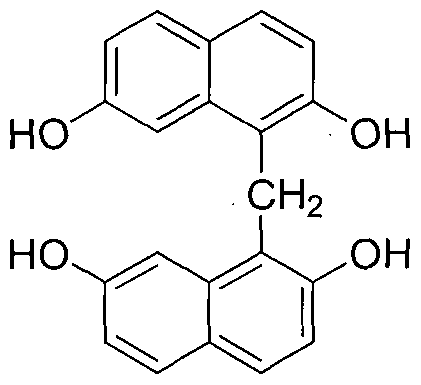
【표 3】 합성예 3의 1단계에서 사용한 반응물 (reactant)사용량 (g)

1단계 NMR:
¾ NMR (400MHz, DMS0): δ =7.78-7.66(m, 4H) , 7.34-7.25(m, 4H), 6.92- 6.89(m, 2H), 4.75 (s, 2H), 4.54(t, 1H, 5.2Hz), 4.30-4.25(m, 3H) , 3.99(t , 2H, 6.0Hz), 3.84-3.78(m, 3H) , 3.54(q, 2H, 6.0Hz), 3.36- 3.29(m, 3H), 2.86-2.81 (m, 3H) ' 2.69-2.66(m, 3H) , 1.88-1.87(m. 2H)
【표 4】 합성예 3의 2단계에서 사용한 반웅물 (reactant)사용량 (g)

2단계 NMR:
¾ NMR (400MHz, DMS0): δ =7.78-7.66 (m, 4H), 7.34-7.25(m, 4H) , 6.92- 6.89(m, 2Η), 4.75 (s, 2H) , 4.30-4.25(m, 3H) , 4.07-3.95(m, 4H) , 3.84-
3.70(111, 9H), 3.36-3.29(m, 3H) , 2.96-2.81(m, 5H), 2.69-2.66(m, 3H) , 2.00-1.93(m, 2H) , 1.49-1.34(m, 2H) , 1.20-1.12(m, 9H) , 0.55-0.49(m, 2H) 합성예 4: 페놀노블락게 에폭시 합성 출발물질로 페놀노블락 (구조식 DS)을 사용한 것을 제외하고는, 상기한 합성예 1과 동일한 방법으로 진행하였다. 알킬히드록시 화합물 및 에피클로히드린을 반응시켜서 중간생성물 I를 생성하는 1단계 반웅 및 알콕시실란과 반웅시키는 2단계 반웅을 진행하여 [에폭시기] : [알콕시실릴기] 의 농도 비율이 2 : 1인 에폭시 화합물을 얻었다. 각 합성 단계에서 사용한 반응물의 양은 "아래 표와 같다.
[구조식 DS]

【표 5】 합성예 4의 1단계에서 사용한 반응물 (reactant)사용량 (g)

1단계 NMR:
¾ NMR (400MHz, DMSO): δ=7.15-6.70 (in, 21.68H). 4.20-3.59 (m, 30.57H), 3.33ᅳ 3.25(m, 4.48H), 2.73— 2.59(m, 9.75H), 1.88ᅳ 1.79(ηι, 4.22H)
【표 6】 합성예 4의 2단계에서 사용한 반응불 (reactant)사용량 (g)
2단계 중간생성물 Γ 3- (트리에특시실릴)프 디이소프로.필에틸아민
(DM1) 로필 이소시아네이트
사용량 (g) 10g 5.0g 2.6g
2단계 NMR:
¾ NMR (400MHz , DMSO): δ=7.15-6.70(m, 21.68H), 4.20— 3.59(πι, 38.88H),
3.33-3.25(ιη, 10.14H), 2.73-2.59(m, 10.55H), 2.02-1.93(m, 4.13H). 1.49—1.34(m, 4.23H), 1.20-1.12(m, 22.01H). 0.55-0.49(m, 4.12H) 합성예 5 출발물질로 크레졸노볼락 (구조식 ES)을 사용한 것을 제외하고는, 상기한 합성 예 1과 동일한 방법으로 진행하였다. 알킬히드록시 화합물 및 에피클로히드린을 반응시켜서 중간생성물 I를 생성하는 1단계 반웅 및 알콕시실란과 반웅시키는 2단계 반응을 진행하여 [에폭시기] : [알콕시실릴기] 의 농도 비율이 4 : 1인 에폭시 화합물을 얻었다. 각 합성 단계에서 사용한 반웅물의 양은 아래 표와 같다.
[구조식 ES]


1단계 丽 R:
¾ NMR (400MHz, DMS0): 5=7.02-6.89 (m, 9.52H), 4.24-3.36(m, 16.20H)
3.26-3.08(ni, 2.08H), 2.84-2.40(m, 5.57H), 2.24-2.10(m, 11.31H)
2.03-1.79(m, 1.43H) ,
【표 8】 합성예 5와 2단계에서 사용한 반응물 (reactant)사용량 (g)

2단계 匪 R:
丽 R (400MHz, DMS0): δ=7.02-6.89(ιιι, 9.52Η), 4.24-3.36(m, 25.82H),
3.26-3.08(iii, 2.95H), 2.84-2.40(m, 5.91H), 2.24-2.10(m, 11.63H), 2.02-ᄂ 93(m, 1.44H), 1.49-1.34(m, 1.29H), 1.20-1.12(m, 7.00H), 0.55- 0.49(m, 1.12H) 합성예 6: 비스페놀 A노블락 에폭시 합성 출발물질로 비스페놀 A 노블락 (구조식 FS)을 사용한 것을 제외하고는, 상기한 합성 예 1과 동일한 방법으로 진행하였다. 알킬히드록시 화합물 및 에피클로히드린을 반응시켜서 중간생성물 I를 생성하는 1단계 반응 및 알콕시실란과 반웅시키는 2단계 반웅을 진행하여 [에폭시기] : [알콕시실릴기] 의 농도 비율이 4 .: 1인 에폭시 화합물을 얻었다. 각 합성 단계에서 사용한
반응물의 양은 아래 표와 같다..

【표 9】 합성예 6의 1단계에서 사용한 반웅물 (reactant)사용량 (g)

1단계 NMR:
¾ NMR (400MHz, DMS0): δ= 7.20-7.05 (m, 16.00H), 6.89-6.75(m 17.58H), 4.30—3.55(111, 65.58H), 3.39-3.21(m, 9.58H), 2.89-2.65 (m 19.21H), 1.62—1.20(111, 44.33H), 2.12-1.74(m, 4.84H)
【표 10】 합성예 6의 2단계에서 사용한 반웅물 (reactant)사용량 (g)

2단계 NMR:
¾ NMR (400MHz, DMS0): δ= 7.20-7.05(m. 16.00H), 6.89-6.75 (m
17.58H), 4.30-3.55(m, 76.91H), 3.39-3.21 (m, 13.02H), 2.89-2.65(m 19.21H), 2.18—1.98(m, 4.52H), 1.62-1.20(m, 62.11H), 0.67— 0.51(m 3.95H) 합성예 7: 나프탈렌 노블락에폭시 합성 출발물질로 나프탈렌 노블락 (구조식 GS)을 사용한 것을 제외하고는/ 상기한 합성 예 1과 동일한 방법으로 진행하였다. 알킬히드록시 화합물 및. 에피클로히드린을 반웅시켜서 중간생성물 I를 생성하는 1단계 반웅 및 알콕시실란과 반응시키는 2단계 반웅을 진행하여 [에폭시기] : [알콕시실릴기] 의 농도 비율이 4 : 1인 에폭시 화합물을 얻었다. 각 합성 단계에서 사용한 반응물의 양은 아래 표와 같다.
[구조식 GS]

【표 11】 합성예 7의 1단계에서 사용한 반응물 (reactant)사용량 (g)

1단계 丽 R:
¾ NMR (400MHz, DMS0): δ= 8.03-7.51(m, 11.99H), 7.39-6.85(m
15.43H), 4.40-3.50(m, 31.77H), 3.35-3.25(ηι, 4.30H), 2.85-2.65(m 10.11H), 1.90-1.80(m, 2.23H)
【표 12】 합성예 7의 2단계에서 사용한 반웅물 (reactant)사용량 (g)

2단계 NMR:
¾ NMR (400顧 z, DMS0): δ= 8.03-7.51(m, 11.99H), 7.39-6.85 (m, 16.01H) 4.40-3.50 (m, 39.97H), 3.35-3.25 (in., 6.82H), 2.85-2.65(m, 12.56H), 2.13—2.00(m, 2.06H), 1.69-1.38(m, 2.21H), 1.21-1.05(m, 11.88H), 0.68- 0.45(m, 1.92H) 합성예 8: 비스페놀아민계 에폭시 합성 출발물질로 비스페놀 아민 (구조식 HS)을 사용한 것을 제외하고는, 상기한 합성 예 1과 동일한 방법으로 진행하였다. 알킬히드록시 화합물 및 에피클로히드된을 반웅시켜서 중간생성물 I를 생성하는 1단계 반웅 및 알콕시실란과 반웅시키는 2단계 반응을 진행하여 [에폭시기] : [알콕시실릴기] 의 농도 비율이 3 : 1인 에폭시 화합물을 얻었다. 각 합성 단계에서 사용한 반웅물의 양은 아래 표와 같다. 조식 HS]

【표 13】 합성예 8의 1단계에서 사용한 반웅물 (reactant)사용량 (g)

¾ 匿 (400MHz, CDCls) : 5=7.12-7.08 (111, 4H) , 6.77— 6.74(m, 4Η) , 3.82 (s, 2Η), 3.80-3.62(m, 5Η) , 3.50-3.40(m, 5Η) , 3.22-3.16 (m, 3Η) , 2.81-2.78 (in, 3Η) , 2.60-2.58 (ιιι, 3Η) , 1.85-1.79(m, 2Η)
【표 14】 합성예 8의 2단계에서 사용한 반웅물 (reactant)사용량 (g)

2단계 丽 R:
¾ NMR (400MHz, CDC13): δ =7.12-7.08 (m, 4H) , 6.77-6.74(m, 4H), 3.82 (s, 2H), 4.00-3.42(m, 16H) , 3.22-3.16 (111, 5H) , 2.81—2.78 (m, 3H) , 2.60-2.58 11, 3H), 1.99-1.93(m, 2H), 1.49—1.34(m, 2H) , 1.20-1.12(m, 9H), 0.55-0.49(m, 2H) 합성예 9: 벤질아민계 에폭시 출발물질로 1, 3—비스 (아미노메틸) 벤젠 (구조식 IS)을 사용한 것을 제외하고는, 상기한 합성 예 1과 동일한 방법으로 진행하였다. 알킬히드록시 화합물 및 에피클로히드린을 반웅시켜서 중간생성물 I를 생성하는 1단계 반웅. ¾ 알콕시실란과 반응시키는 2단계 반응을 진행하여 [에폭시기] : [알콕시실릴기] 의 농도 비율이 3 : 1인 에폭시 화합물을 얻었다. 각 합성 단계에서 사용한 반웅물의 양은 아래 표와 같다. 조식 IS]
 【표 15】 합성예 9의 1단계에서 사용한 반웅물 (reactant)사용량 (g)

1단계 丽 R:
¾ NMR (400MHz, CDC13): 5=7.41-7.09 (m, 4H), 3.84-3.54 (m, 14H) 3.25-3. ll(m, 3H), 2.85-2.42(m, 6H), 1.85-1.79(m, 2H)
【표 16】 합성예 9의 2단계에서 사용한 반응물 (reactant)사용량 (g)

2단계 NMR:
¾ 丽 R (400MHz, CDC13) : 6=7.41-7.09 (m, 4H) , 3.99-3.54 (m, 20H) , 3.25—3.11(111, 5H), 2.85-2.42(m, 6H), 1.98-1.93(m, 2H) , 1.48-1.34(m, 2H), 1.18-1.12(m, 9H), 0.56-0.49(m, 2H) 합성예 10: 지환족아민계 에폭시 합성
출발물질로 1,3—비스 (아미노메틸)사이클로핵산 (구조식 JS)을 사용한 것을 제외하고는, 상기한 합성 예 1과 동일한 방법으로 진행하였다. 알킬히드록시 화합물 및 에피클로히드린을 반응시켜서 중간생성물 I를 생성하는 1단계 반웅 및 알콕시실란과 반응시키는 2단계 반웅을 진행하여 [에폭시기] : [알콕시실릴기] 의 농도 비율이 3 : 1인 에폭시 화합물을 얻었다. 각 합성 단계에서 사용한 반응물의 양은 아래 표와 같다. ■
조식 JS]

【표 17】 합성예 10의 1단계에서 사용한 반웅물 (reactant)사용량 (g)

1단계 NMR:
¾ NMR (400MHz, CDC13): δ =3.86-3.52 (m, 10H), 3.29-3.10(m, 3H)
2.86—2.40(m, 6H) , 2.62— 2.48(ηι, 4H) , 1.89-0.50 (m, 10H) , — 1.87— 1.79(ni 2H)
【표 18】 합성예 10의 2단계에서 사용한 반웅물 (reactant)사용량 (g)

2단계 NMR '
¾ 丽 R (400MHz, CDC13): 5 =3.86-3.52 (111, 16H) , 3.29-3.10(m, 3H) , 2.95-2.39 (ηι, 8H) , 2.62-2.48(m, 4H) , 1.89—0.50 (m, 10H) , 1.99-1.93(m 2H), 1.48-1.33(m, 2H) , 1.20-1.12 (m, 9H) , 0.56— 0.48 (111, 2H) 합성예 11:아미노페놀 에폭시 합성
출발물질로 4-아미노페놀 (구조식 KS)을 사용한 것을 제외하고는, 상기한 합성 . 예 1과 동일한 방법으로 진행하였다. 알킬히드록시 화합물 및 에피클로히드린을 반응시켜서 중간생성물 I를 생성하는 1단계 반응 및
알콕시실란과 반웅시키는 2단계 반웅을 진행하여 [에폭시기] : [알콕시실릴기] 의 농도 비율이 2 : 1인 에폭시 화합물을 얻었다. 각 합성 단계에서 사용한 반웅물의 양은 아래 표와 같다.
[구조식 KS]

【표 19】 합성예 11의 1단계에서 사용한 반웅물 (reactant)사용량 (g)

1단계 匪 R:
¾ NMR (400MHz, CDC13): δ =6.80-6.83(m, 2H), 6.62-6.69(m, 2H), 4.18- 4.14(m, 0.71H), 3.90-3.85(m, 2.73H), 3.69-3.55(m, 2.67H), 3.37- 3.27(m, 1.37H), 3.23-3.15(m, 0.67H), 2.82-2.79(m, 0.73H), 2.76- 2.73(m, 1.37H), 2.59-2.53(m, 0.72H), 1.85-1.79(m, 2.1H)
【표 20】 합성예 11의 2단계에서 사용한 반응물 (reactant)사용량 (g)

2단계 丽 R:
¾ 丽 R (400MHz, CDCls): 6=6.80-6.83(m, 2H), 6.62-6.69 (m, 2H) , 4.18-
4.14(m, 0.71H), 3.90-3.85(m, 2.73H), 3.69-3.55(m, 8.68H), 3.37-
3.27(111, 1.37H), 3.26-3.15(m, 2.67H), 2.82-2.79(m, 0.73H), 2.76- 2.73(ni, 1.37H), 2.59-2.53(m, 0.72H), 2.10-1.90(m, 2H), 1.47-1.34(m, 2H), 1.17-1.12(m, 9H), 0.55-0.49(m, 2H) 합성예 12: 트라이페닐메탄계 에폭시 합성
(1) 게 1단계: 스페이서기 및 에폭시기의 도입
상기한 합성예 1 과 동일한 방법으로 1단계 반응을 진행하여 에폭시 : 0H 비율이 2 : 1 인 중간생성물 I를 얻었다.
[구조식 AS]

(2)제 2 단계 : 알릴화
상온에서 2구 플라스크에 상기 제 1단계에서 합성한 중간생성물 I 10g, 알릴 브 로마이드 2.6g 및 THF 200ml를 넣고 교반하였다. 그 후, 여기에 H20 200ml에 소디 움히드록사이드 0.9g을 녹인 용액을 첨가하고 12시간 동안 교반하였다. 반응 종 료 후 증발기를 이용하여 THF를 제거하고 에틸 아세테이트 300ιιι1을 넣어 0와 함께 워크업하여 무기물을 제거하였다. 유기층에 MgS04를 넣어 남아있는 0를 제거한 후 셀라이트 필터로 여과하고 증발 및 건조시켜서 에폭시 : 알릴 비율이 2:1인 중간생성물 II을 얻었다.
¾ NMR (400MHz, CDC13): δ= 6.93-6.80(m, 12H) , 5.99-5.88(m, 1H), 5.38- 5.18(iii, 2H), 4.29-4.26(m, 2H), 4.00-3.95(m, 4H) , 3.82-3.77 (m, 2H) , 3.54(q, 2H, J=6.0Hz), 3.33-3.29(m, 2H) ,2.84-2.82(m, 2H), 2.70-2.68(m, 2H), 2.03(s,
3H), 1.87-1.80(m, 2H)
(3)제 3 단계: 알콕시실릴화
플라스크메 상기 제 2단계에서 합성한 중간생성물 II 10g, Pt0288mg, 트리에특시 실란 3.¾, 및 를루엔 250ml을 넣고 5분간 상온에서 교반 하였다. 그 후, 온도를 80oC로 하여 12시간 동안 반응시킨 후, 셀라이트 필터로 여과하여 무기물을 제거 하였다. 증발 및 건조시켜서 를루엔을 제거하고 진공 펌프를 이용하여 완전히 건 조시켜서 에폭시기 :알콕시실릴기 비율이 2 : 1 인 에폭시화합물을 얻었다.
¾ NMR (400MHz, CDC13): δ= 6.96-6.75(m, 12H) , 4.29-4.26(m, 2H) , 4.08-
3.94(m, 2H). 3.83-3.71(m, 8H), 3.36-3.25(m, 4H), 2.97-2.90(m, 2H), 2.86-
2.81(m, m, 2H), 2.70— 2.64(m, 2H), 2.02(s, 3H), 2.00— 1.93(m, 2H), 1.47-
1.35(m, 2H), 1.16-1. ll(ni, 9H), 0.57-0.48(m, 2H) 물성평가 :경화물 제조 및 내열특성 평가
1. 에폭시 복합체 제조
(1)에폭시 유리섬유 복합체 (경화물) 제조 하기 표 21의 조성으로, 에폭시 화합물, 및 실리카 슬러리 (고형분 함량 70wt%, 메틸에틸케톤용매, 실리카 평균 크기 1 )를 Ν,Ν- 다이메틸아세트아마이드에 고형분 함량이 40wt¾>이 되도록 녹인다. 이 흔합액을 1500 rpm의 속도로 1 시간 흔합한 후, 경화제를 넣고 추가로 50분간 더 흔합하였다. 그 후, 여기에, 마지막으로 경화촉매를 넣고 10분간 더 흔합하여 에폭시 흔합물을 얻었다. 상기 에폭시 혼합물에 유리섬유 (Nittobo사 유리섬유 (Nittobo사의 유리섬유 직물, T-glass)를 침지하여 유리섬유 복합물을 제조하였다. 그 후, 상기 복합물을 100°C로 가열된 진공 오븐에 넣어 용매를
제거한 다음에 경화시켜서 유리섬유 복합체 필름 (4隱 X16画 X0.1國)을 얻었다. (2) 에폭시 필러 복합체 (경화물)의 제조
하기 표 22의 조성으로, 에폭시 화합물, 실리카 슬러리 (분산용액 : 메틸에틸케톤 용매, 실리카 평균 크기 1 ) 및 폴리비닐아세탈을 Ν,Ν- 다이메틸아세트아마이드에 고형분 함량이 40 %이 되도록 녹인다. 이 흔합액을 1500 rpm의 속도로 1 시간 30분 혼합한 후, 경화제를 넣고 추가로 30분간 더 흔합하였다. 상기 흔합물을 100°C로 가열된 진공 오븐에 넣어 용매를 제거한 경화시켜서 에폭시 필러 (무기입자) 복합체 (5(m"x5國 X3醒)를 얻었다.
2. 내열 물성 평가 하기 표 21 및 22의 실시예에서 얻어진 경화물의 온도에 따른 치수변화를 열 -기계 분석기 (Thermo-mechanical Analysizer)를 이용하여 평가하여 하기 표에 나타내었다. 에폭시 유리섬유복합필름의 시편은 4χΐ6Χ0.1(ιιπιΟ의 크기로, 필러복합체의 시편은 5X5X3(画3)의 크기.로 제조하였다.
【표 21】 유리섬유 복합체의 배합 및 물성

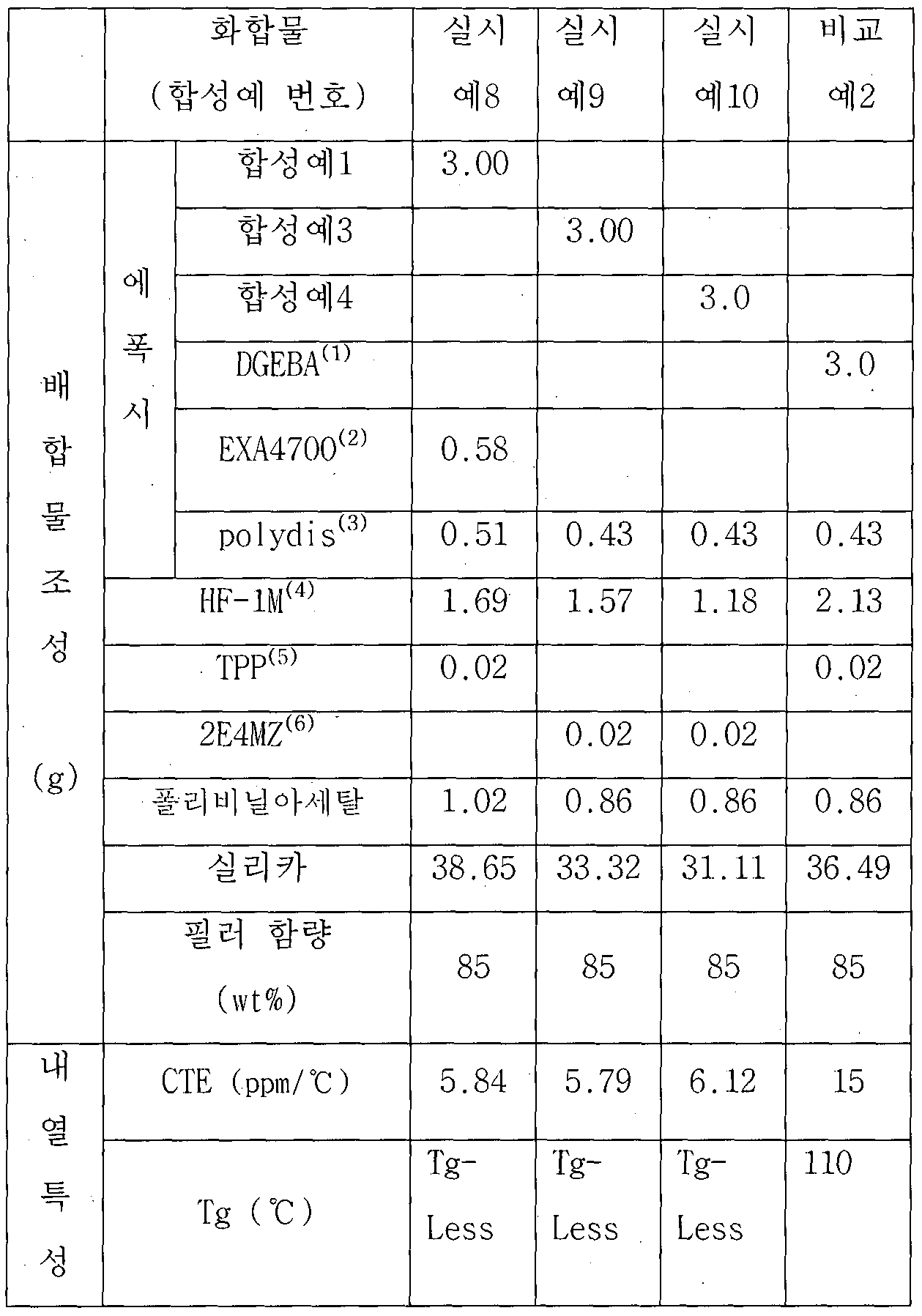
Claims
【특허청구범위】
【청구항 1]
코어에
적어도 2개의 하기 화학식 E1 또는 E2의 에폭시기; 및
하기 화학식 Al , A2 , A3 및 A4로 구성되는 그룹으로부터 선택되며, 스페이서를 경유하여 코어에 연결되는 적어도 하나의 알콕시실릴기를 갖는, 스페이서를 경유한 알콕시실릴기를 갖는 에폭시 화합물.
[화학식 E1]

[화학식 E2]

[화학식 A1]
-0— (CH2) rO-CCH^^-SiR^Rs
[화학식 A2]
-0- (CH2) , -0-C0NH(CH2)m+2-S i RiR2R3
[화학식 A3]
-(C¾)厂 0-(:(¾) 2ᅳ 1 [화학식 A4]
-((¾) , -0-C0NH ( CH2 ) m+2-S i ¾¾¾
(상기 화학식 A1 내지 화학식 A4에서, Ri 내지 ¾ 중 적어도 하나는 탄소수 1 내지 6의 알콕시기이고, 나머지 치환기는 각각 탄소수 1 내지 10의 선형 , 분지형 또는 고리형 알킬기이며, N , 0 , S , 및 P로 구성되는 그룹으로부터 선택되는 적어도 하나의 헤테로 원자를 갖거나 갖지 않을 수 있으며,
1은 1 내지 10의 정수이며, m은 1 내지 8의 정수이다)
【청구항 2】
제 1항에 있어서, 상기 코어에 수소, 히드록시기 및 알케닐기로 구성되는 그룹으로부터 선택되는 적어도 하나의 치환기를 추가로 포함하는, 스페이서를 경유한 알콕시실릴기를 갖는 에폭시 화합물.
[청구항 3】
제 2항에 있어서, 상기 히드록시기는 OH , -0-(CH2) !-0H 및 -(CH^ - 0H (식에서, 1은 1 내지 10의 정수이다)로 구성되는 그룹으로부터 독립적으로 선택되는, 스페이서를 경유한 알콕시실릴기를 갖는 에폭시 화합물.
【청구항 4】
제 2항에 있어세 상기 알케닐기는 하기 화학식 A5 , A6 , A7 또는 A8인, 스페이서를 경유한 알콕시실릴기를 갖는 에폭시 화합물.
[화학식 A5]
-0-(CH2) 1-0-(CH2)m-CH= CH2
[화학식 A6]
-0-(CH2)m-CH = CH2
[화학식 A7] .
-(CH2)厂 0-(CH2)ni-CH = CH2
[화학식 A8]
-(CH2)m-CH = CH2
(상기 화학식 A5 내지 A8에서, 1은 1 내지 10의 정수이며, m은 1 내지 8의 정수이다)
【청구항 5】
제 1.항 내지 제 4항 중 어느 한 항에 있어서, 상기 코어는 트리페닐메탄, 바이나프탈렌, 테트라페닐에탄, 방향족 아민, 지환족 아민 또는 노볼락 유니트인 스페이서를 경유한 알콕시실릴기를 갖는 에폭시 화합물.
【청구항 6】
제 1항 내지 제 5항 중 어느 한 항에 있어서, 상기 코어는 하기 화학식 AC 내지 KC로 구성되는 그룹으로부터 선택되는, 스페이서를 경유한 알콕시실릴기를 갖는 에폭시 화합물.

알킬기 , 또는 C6 내지 C10의 방향족기이며 ,
상기 화학식 CC에서 K는 단일결합 (direct linkage), -CH2- 또는
 (Rx는 H 훅은 C1-C3 알킬기임 )이며,
화학식 DC에서 L은

(1ac) (1bc)


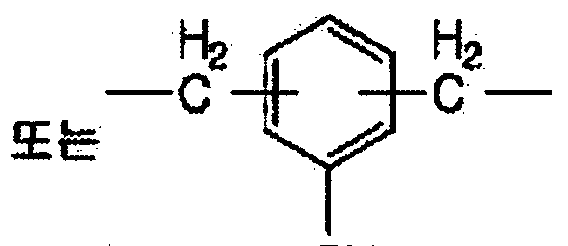
이며,
상기
 에서 Ry는 CI— CIO의 직쇄 또는 분지쇄 알킬기이며 화학식 HC에서 Q는 -CH2-, -C(C¾)2-, -C(CF3)2-, _S_, -S02-, 또

상기 화학식 DC에서, L이 lac 내지 lec인 경우에, n은 2 이상의 정수이며 L이 lfc인 경우에, n은 1 이상의 정수이며,
상기 화학식 EC에서, n은 1 이상의 정수이며,
상기 화학식 FC에서, n은 0또는 1 이상의 정수이며,
상기

안 경우에, n은
2 이상의 정수이고

제 6 f항에 있어서, 상기 화학식 AC 내지 (X 및 HC 내지 KC로 구성된 그룹으로부터 선택되는 동일한 코어가 2개 이상으로 반복되는 경우에, 상기
H
화학식 AC 내지 CC의 코어는 하기 연결기 LG1으로 연결되며, 상기 화학식 HC 내지 KC의 코어는 하기 연결기 LG2로 연결되는. 스페이서를 경유한 알콕시실릴기를 갖는 에폭시 화합물.
[화학식 LG1]

[화학식 LG2]

【청구항 8】
제 1항 내지 제 7항 중 어느 한 항에 있어서,
상기 에폭시 화합물은 하기 화학식 AF 내지 KF 중 하나인, 스페이서를 경유한 알콕시실릴기를 갖는 에폭시 화합물.


(상기 화학식 AF 내지 GF에서, 다수의 치환기 A 중 적어도 2개는 하기 화학식 E1이고, 적어도 하나의 A는 하기 화학식 A1 또는 A2이며, 잔류 치환기 A가 있으면, 이는 -0H, -Ο- Ή^,-ΟΙ Ι은 1 내지 10의 정수이다), 하기 화학식 Α5 및 Α6로 구성되는 그룹으로부터 각각 독립적으 S 선택되며, 상기 화학식 HF 내지 KF에서, 다수의 치환기 Α 중 적어도 2개는 하기 화학식 E2이고, 적어도 하나의 A는 하기 화학식 A3 또는 A4이며, 잔류 치환기 A가 있으면, 이는 -H, -(C¾)r0H(l은 1 내지 10의 정수이다), 하기 화학식 A7 및 A8 로 구성되는 그룹으로부터 각각 독립적으로 선택되몌 화학식 CF에서 K는 단일결합 (direct linkage), -CH2- 또


상기 화학식 EF에서, n은 1 이상의 정수이며,
상기 화학식 FF에서, n은 0 또는 1 이상의 정수이며,
상기 화학식 GF에서, M이

인 경우에 , n은 2 이상의 정수이고
M
 인 경우에 , n은 1 이상의 정수이며
상기 화학식 GF에서, p는 1 또는 2이다.
[화학식 E1]

[화학식 E2]
 [화학식 Al]
-0-(CH2)1-0-(CH2)m+2-SiRiR2R3 [화학식 A2]
-0-(CH2)rO-CONH(CH2)m+2-Si 1 2 3 [화학식 A3]
-(C¾)rO-(CH2)m+2— Si R2R3 [화학식 A4]
-(CH2), -0-CONH ( CH2 )m+2-Si iR2 3
(상기 화학식 Al 내지 화학식 M에서, 내지 R3 중 적어도 하나는 탄소수 1 내지 6의 알콕시기이고, 나머지는 탄소수 1 내지 10의 알킬기이며 , 상기 알킬기 및 알콕시기는 직쇄상 또는 분지쇄일 수 있고, 고리형 또는 비고리형일 수 있으며, N, 0, S, 및 P로 구성되는 그룹으로부터 선택되는 적어도 하나의 헤테로 원자를 갖거나 갖지 않을 수 있고,
1은 1 내지 10의 정수이며,
ill은 1 내지 8의 정수이다)
[화학식 A5]
-0-(CH2),-0-(CH2)m-CH=CH2
[화학식 A6]
-0-(CH2)m-CH = CH2
[화학식 A7]
-(CH2)rO-(CH2)m-CH = CH2
[화학식 A8]
-(CH2)m-CH = CH2
(상기 화학식 A5 내지 A8에서, 1은 1 내지 10의 정수이며, m은 1 내지 8의 정수이다) )
【청구항 9】 ^
제 8항에 있어서, 상기 화학식 AF .내지 CF 및 HF 내지 KF로 구성된 그룹으로부터 선택된 동일한 에폭시 화합물이 2개 이상 반복되는 경우에, 상기 화학식 AF 내지 CF의 에폭시 화합물은 하기 화학식 LG1의 연결기로 연결되고. 그리고 상기 화학식 HF 내지 KF의 에폭시 화합물은 하기 화학식 LG2의 연결기로 연결되는, 스페이서를 경유한 알콕시실릴기를 갖는 에폭시 화합물.
[화학식 LG1]

[화학식 LG2]

【청구항 10]
하기 화학식 AS 내지 KS 중 어느 하나의 출발물질과 하기 화학식 R1의 알킬히드록시 화합물 및 에피클로로히드린을 반응시켜서 AMI 내지 KM1 중 어느 하나의 중간생성물 I를 형성하는 제 1단계; 및
상기 중간생성물 I과 하기 화학식 R2의 알콕시실란을 반응시켜서 하기 화학식 AF 내지 KF 중 어느 하나의 에폭시 화합물을 형성하는 제 2단계를 포함하는,


135


(KS)
상기 화학식 AS 내지 GS에서, 치환기 a는 각각 -OH이며,
상기 화학식 HS 내지 KS에서, 치환기 a는 각각 수소이며,
상기 화학식 AS에서 J는 수소, 히드록시기, C1 내지 C10의 알킬기 또는 C6 내지 C10의 방향족기이며 ,
상기 화학식 CS에서 K는 단일결합 (direct linkage), -C¾- 또는
 (Rx는 H 혹은 C1-C3 알킬기임)이며,
상기 화학식 DS에서 L은

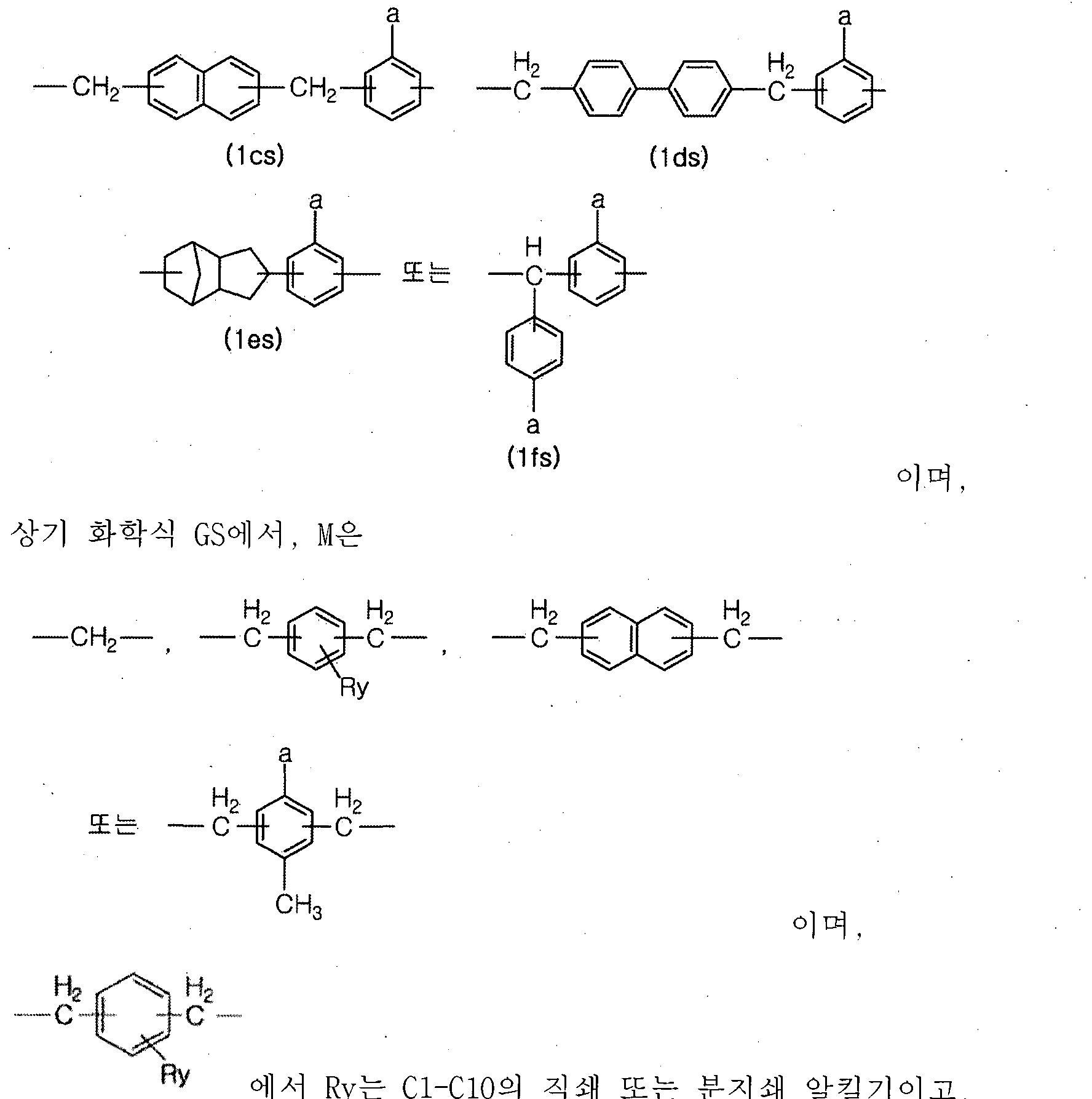
CH3 CH.
CH, Crt
이고, R은 각각 독립적으로 H 혹은 C1-C3 알킬이몌 상기 화학식 DS에서, L이 las 내지 les인 경우에, n은 2 이상의 정수이며
L이 lfs인 경우에 , n은 1 이상의 정수이며,
상기 화학식 ES에서, n은 1 이상의 정수이며,
상기 화학식 FS에서, n은 0 또는 1 이상의 정수이며,
상기 화학식 GS에

인 경우에 n은 2 이상의 정수이고
M이
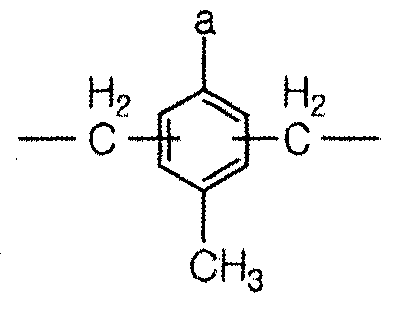 인 경우에, n은 1 이상의 정수이며,
상기 화학식 GS에서, p는 1 또는 2이다)
[화학식 R1]
0H-(CH2),-X
(상기 화학식 R1에서, X는 CI, Br, I, -0-S02-CH3, ᅳ으 S02-CF3, 또는 ᅳ으 S02-C6R
C¾이며, 1은 1 내지 10의 정수이다)
6 l


(1-ΙΛΙ0)

[I
CTZOO/SlOZaM/X3d 0178CCI/S10Z OAV

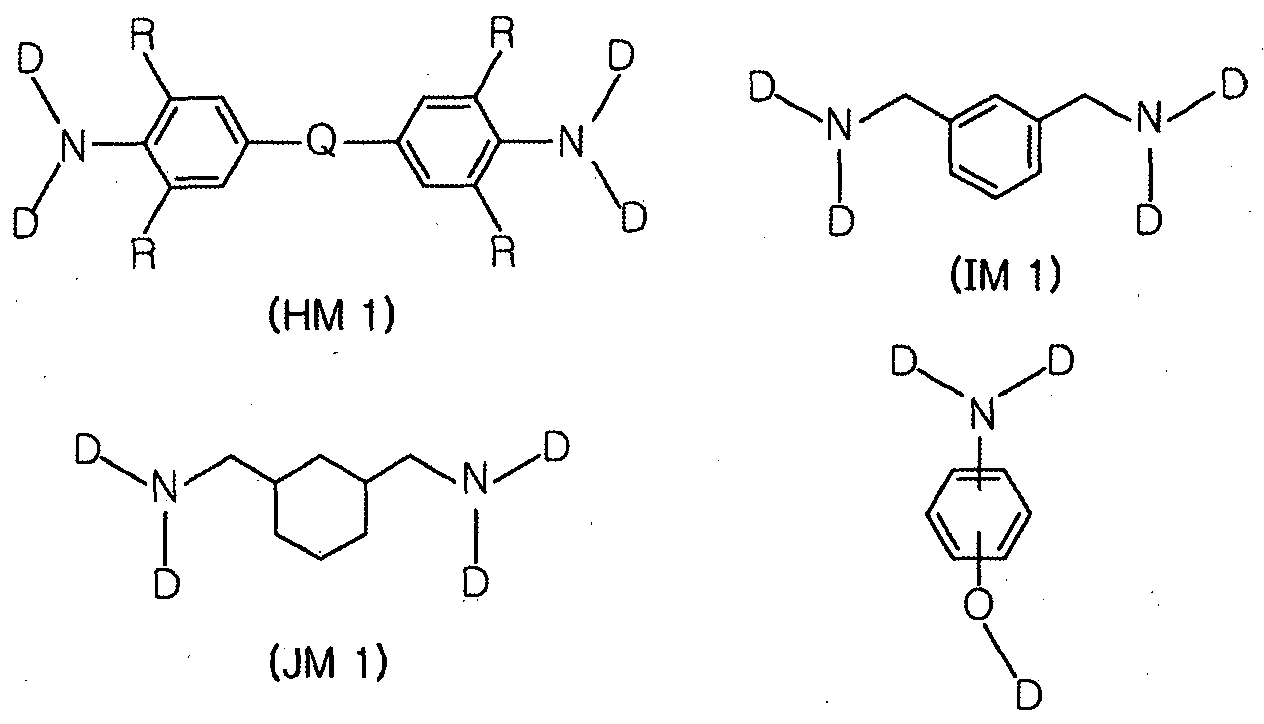
(KM 1 )
(상기 화학식 AMI 내지 GM1에서, 다수의 치환기 D 중 적어도 2개는 하기 화학식 E1이고, 적어도 하나의 D는 -0-(CH2)厂 0H (식에서. 1은 1 내지 10의 정수이다)이며, 잔류 치환기 D가 있으면 , 이는 -0H일 수 있으며 , 상기 화학식 HM1 내지 KM1에서, 다수의 치환기 D 중 적어도 2개는 하기 화학식 E2이고, 적어도 하나의 D는 -(CH^ rOH (식에서, 1은 1 내지 10의 정수이다)이며, 잔류 치환기 D가 있으면, 이는 수소일 수 있으며, 상기 화학식 AMI에서 J는 수소, 히드록시기ᅳ C1 내지 C10의 직쇄 또는 분지쇄 알킬기 또는 C6 내지 C10의 방향족기이며 . 상기 화학식 CM1에서 K는 단일결합 (di rect l inkage) , -CH2- 또는
 는 H 혹은 C1-C3 알킬기임)이며, 상기 화학식 DM1에서 L은

상기 화학식 GM1에서, M은


L^l lDf인 경우에, n은 1 이상의 정수이며,
상기 화학식 EM1에서, n은 1 이상의 정수이며,
상기 화학식 FM1에서, n은 0 또는 1 이상의 정수이며,
상기 화학식 GM1에서,

인 경우에, n은 2 이상의 정수이고,
M이
 인 경우에, n은 1 이상의 정수이며
상기 화학식 GM1에서 , p는 1 또는 2이다.
[화학식 E1]
 [화학식 E2]

)
[화학식 R2]

(상기 화학식 R2에서, Rr내지 중 적어도 하나는 C1-C6의 선형, 분지형 또는 고리형 알콕시기이고, 나머지 치환기는 C1-C10의 선형 . 분지형 또는 고리형 알킬기이고, N , 0 , S , 및 P로 구성되는 그룹으로부터 선택되는 적어도 하나의 헤테로 원자를 갖거나 갖지 않을 수 있으며 , m는 1 내지 8의 정수이다)


144


(KF)
(상기 화학식 AF 내지 GF에서, 다수의 치환기 A 중 적어도 2개는 하기 화학식 E1이고, 적어도 하나의 A는 하기 화학식 A2이며, 잔류 치환기 A가 있으면, 이는 -OH, -0-(CH2)厂 0H (식중, 1은 1 내지 10의 정수이다)이며ᅳ 상기 화학식 HF 내지 KF에서, 다수의 치환기 A 중 적어도 2개는 하기 화학식 E2이고, 적어도 하나의 A는 하기 화학식 A4이며, 잔류 치환기 A가 있으면, 이는 -H, -(QUrOH (식증 . "1은 1 내지 10의 정수이다)이며 , 상기 화학식 AF에서 J는 수소, 히드록시기, C1 내지 C10의 직쇄 또는 분지쇄 알킬기 또는 C6 내지 C10의 방향족기이며 .
상기 화학식 CF에서 K는 단일결합 (direct linkage), -CH2- 또는

(Rx는 H 혹은 CI— C3 알킬기임)이며,
상기 화학식 DF에서 L은

이며
상기 화학식 GF에서, M은
이며,
 에서 Ry는 C1-C10의 직쇄 또는 분지쇄 알킬기이고
화학식 HF에서, Q는 — CH2-, -C(CH3)2-, -C(CF3)2-, _Sᅳ, -S02 또
 이고, R은 각각 독립적으로 H 혹은 C1ᅳ C3 알킬이며, 상기 화학식 DF에서, L이 1A 내지 1E인 경우에 , n은 2 이상의 정수이며,
L이 1F인 경우에, n은 1 이상의 정수이며,
상기 화학식 EF에서, n은 1 이상의 정수이며ᅳ
상기 화학식 FF에서, n은 0 또는 1 이상의 정수이며,
상기 화학식 GF에서,

인 경우에 , n은 2 이상의 수이고,

상기 화학식 GF에서 p는 1 또는 2이다.
[화학식 E1]

[화학식 E2]
 [화학식 A2]
-0-(CH2) i-0-CONH(CH2)m+2-SiRiR2R3 「화학식 A4]
-(0¾) , -0-CONH ( CH2 ) m+2-S i ¾¾¾
(상기 화학식 A2 및 화학식 A4에서, 내지 R3중 적어도 하나는 탄소수 1 내지 6의 선형, 분지형 또는 고리형 알콕시기이고, 나머지는 독립적으로 탄소수 1 내지 10의 선형 , 분지형 또는 고리형 알킬기이며 , N , 0 , S , 및 P로 구성되는 그룹으로부터 선택되는 적어도 하나의 헤테로 원자를 갖거나 갖지 않을 수 있고, 1은 1 내지 10의 정수이며, ' m은 1 내지 8의 정수이다)
【청구항 11】
하기 화학식 AS 내지 KS 증 어느 하나의 출발물질과 하기 ,화학식 R1의 알킬히드록시 화합물 및 에피클로로히드린을 원위치에서 반응시켜서 AMI 내지 KM1 중 어느 하나의 증간생성물 I를 형성하는 제 1단계;
상기 중간생성물 I과 하기 화학식 R3의 알케닐 화합물을 반웅시켜서 하기 화학식 AM2 내지 KM2.로 구성되는 그룹 중 어느 하나의 중간생성물 I I를 형성하는 제 2단계 ; 및
상기 중간생성물 I I와 하기 화학식 R4의 알콕시실란을 반응시켜서 하기 화학식 AF 내지 KF 중 어느 하나의 에폭시 화합물을 형성하는 저 13단계를 포함하는, 스페이서를 경유한 알콕시실릴기를 갖는 에폭시 화합물의 제조방법.
[출발물질

(AS) (BS)


상기 화학식 HS 내지 KS에서, 치환기 a는 각각 수소이며,
상기 화학식 AS에서 J는 수소, 히드록시기, C1 내지 C10의 알킬기 또는 C6 내지 C10의 방향족기이며,
상기 화학식 CS에서 K는 단일결합 (direct l inkage) . _CH2
 (Rx는 H 혹은 C1-C3 알킬기임)이며,
상기 화학식 DS에서 L은

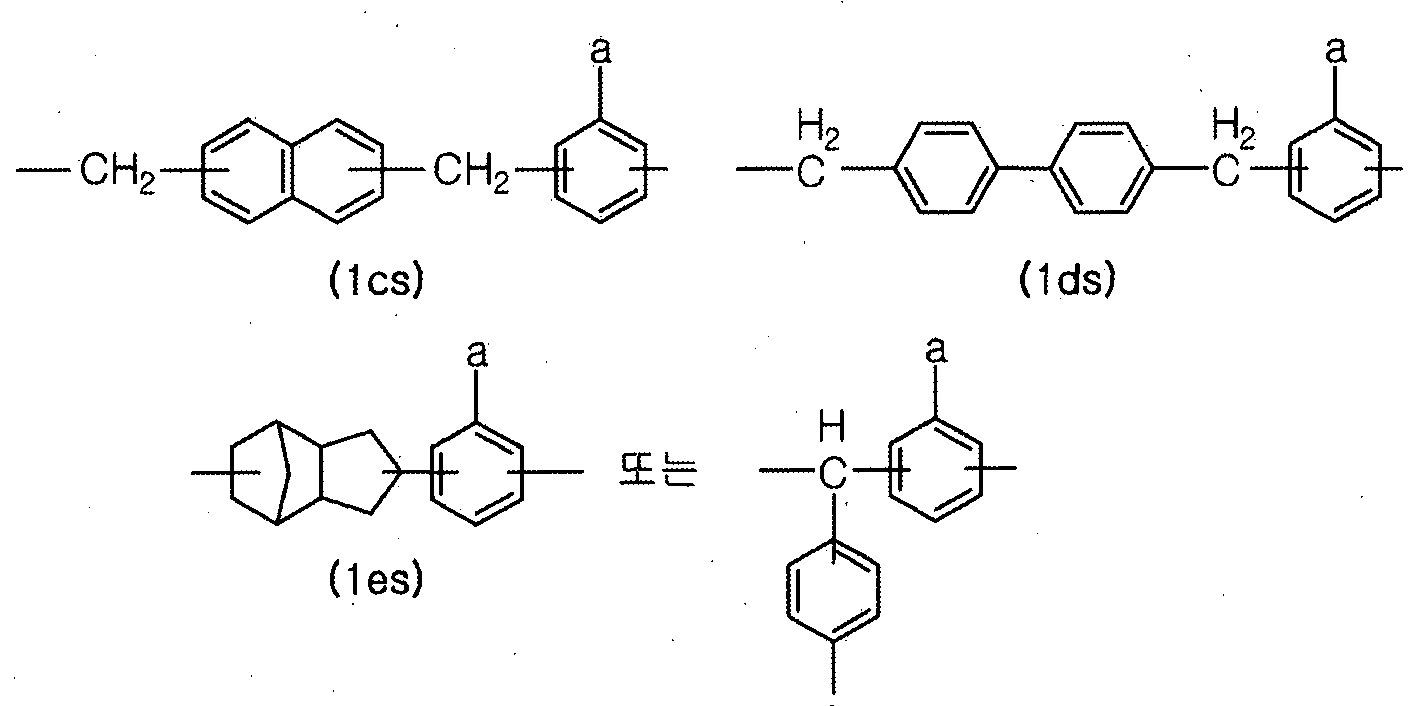
이며,
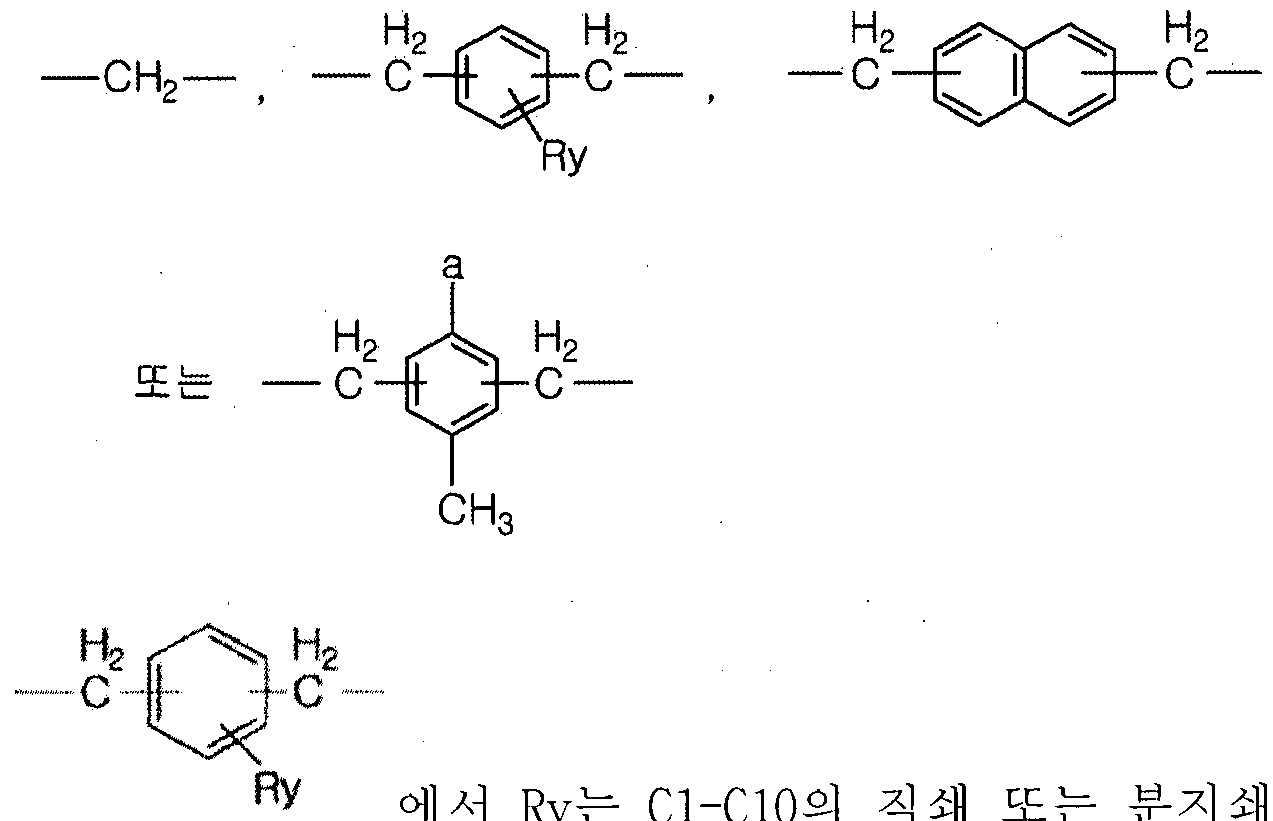
화학식 HS에서, Q는 -CH2-, -C(CH3)2-, -C(CF3)2-, -S-, -S02 또
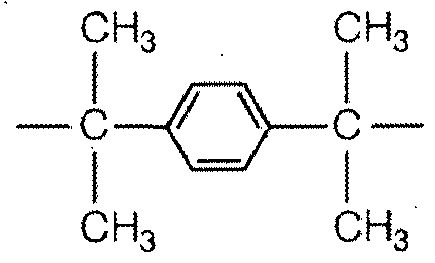 이고, R은 H혹은 C1-C3 알킬이며,
화학식 DS에서, L이 las 내지 les인 경우에 , n은 2 이상의 정수이며
L이 lfs인 경우에 , n은 1 이상의 정수이며,
상기 화학식 ES에서, n은 1 이상의 정수이며ᅳ
상기 화학삭 FS에서, n은 0 또는 1 이상의 정수이며
상기 화학식 GS에서, M이
CH,

인 경우에, n은 2 이상의 정수이고

M이 인 경우에 , n은 1 이상의 정수이며
상기 화학식 GS에서, p는 1 또는 2이다)
[화학식 R1]
0H-(CH2) ,-X
(상기 화학식 R1에서, X는 CI , Br , I -0-S02-CF3 , 또는 -0-S02-C6H4-
CH3이며, 1은 1 내지 10의 정수이다)
간생성물 I]


(CM1)


(GM 1 )

(상기 화학식 AMI 내지 GM1에서, 다수의 치환기 D 중 적어도 2개는 하기 화학식 El이고, 적어도 하나의 D는 -()-((:¾) ,— 0H (식에서, 1은 1 내지 10의 정수이다)이며, 잔류 치환기 D가 있으면 , 이는 -0H일 수 있으며 , 상기 화학식 HM1 내지 KM1에서, 다수의 치환기 D 중 적어도 2개는 하기 화학식 E2이고, 적어도 하나의 D는 -(CH2) !-0H (식에서, 1은 1 내지 10의 정수이다)이며, 잔류 치환기 D가 있으면 , 이는 수소일 수 있으며 , 상기 화학식 AMI에서 J는 수소, 히드록시기, C1 내지 C10의 직쇄 또는 분지쇄 알킬기 또는 C6 내지 C10의 방향족기이몌 상기 화학식 CM1에서 K는 단일결합 (direct l inkage) , _CH2- 또는
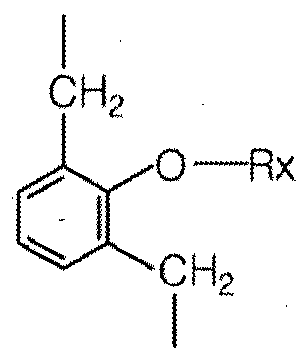 (Rx는 H 혹은 C1-C3 알킬기임)이며
상기 화학식 DM1에서 L은

(1Df)
져 상기 화학식 GM1에서, M은


L이 lDf인 경우에 , n은 1 이상의 정수이며,
상기 화학식 EM1에서, n은 1 이상의 정수이며, .
상기 화학식 FM1에서, n은 0 또는 1 이상의 정수이며,
상기 화학식 GM1에서, M이

인 경우에 , n은

상기 화학식 GM1에서, p는 1 또는 2이다.
[화학식 E1]
 [화학식 E2]

)
[화학식 R3]
Y-(CH2)„,-CH=CH2
(식중, Y는 CI, Br, I, -0-S02-CH3> -0一 S02_CF3, 또는 -()-S02— C6H4— C¾이고, m은 1 내지 8의.정수이다)
// 82soSSSMl


(KM 21 )
(상기 화학식 AM2 내지 GM2에서, 다수의 치환기 E 중 적어도 2개는 하기 화학식 E1이고, 적어도 하나의 E는 -0-(CH2)厂 0— (CH2)m-CH=CH2(식중, 1은 1 내지 10의 정수이며, m은 1 내지 8의 정수이다)이며, 잔류 치환기 E가 있으면, 이는 -0H , - 0-(CH2)厂 0H (식중 , 1은 1 내지 10의 정수이다) , 및 -0-(CH2)m-CH=CH2(식중, m은 1 내지 8의 정수이다)로 구성되는 그룹으로부터 각각 독립적으로 선택되며, . 상기 화학식 HM2 내지 KM2에서, 다수의 치환기 E 중 적어도 2개는 하기 화학식 E2이고. 적어도 하나의 E는 -(CH2)厂 0-(C¾)m-CH=CH2(식중, 1은 1 내지 .10의 정수이며, m은 1 내지 8의 정수이다)이며, 잔류 치환기 E가 있으면, 이는 수소, -(CH2)厂 0H (식중, 1은 1 내지 10의 정수이다) , 또는 (C¾)m-CH=CH2(식중, πι은 1 내지 8의 정수이다).로 구성되는 그룹으로부터 각각 독립적으로 선택되며, 상기 화학삭 ΑΜ2에서 J는 수소, 히드록시기, C1 내지 C10의 직쇄 또는 분지쇄 알킬기 또는 C6 내지 C10의 방향족기이며 , 상기 화학식 CM2에서 K는 단일결합 (di rect l inkage) , -CH2- 또는
 (Rx는 H 혹은 C1-C3 알킬기임)이며, 상기 화학식 DM2에서 L은

이며 상기 화학식 GM2에서, M은
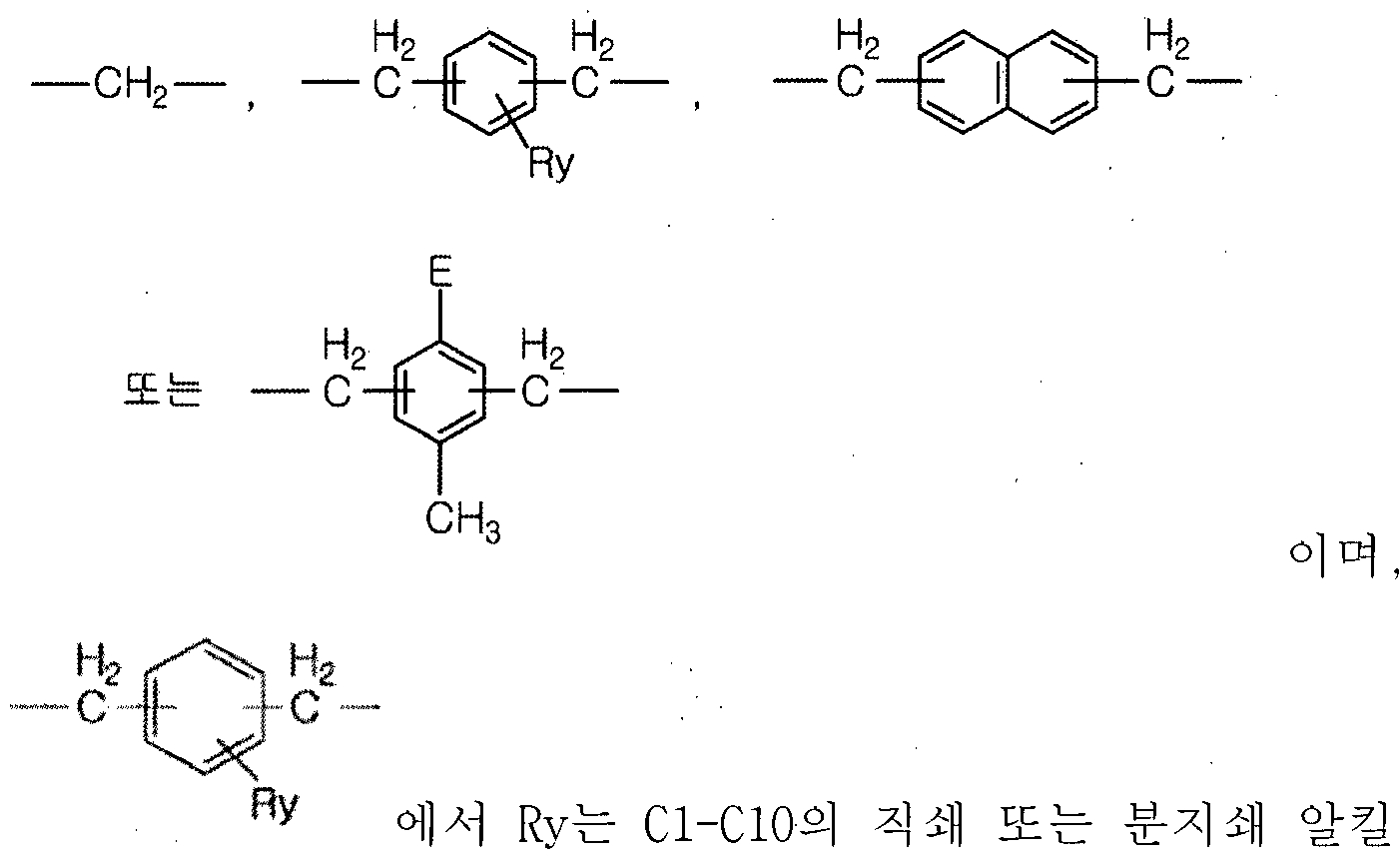

상기 화학식 EM2에서, n은 1 이상의 정수이며,
상기 화학식 FM2에서, n은 0 또는 1 이상의 정수이며,
상기 화학식 GM2에서, M이

인 경우에 , n은 2 이상의 정수이고,

M이 인 경우에 , n은 1 이상의 정수이며
상기 화학식 GM2에서, p는 1 또는 2이다.
[화학식 E1]
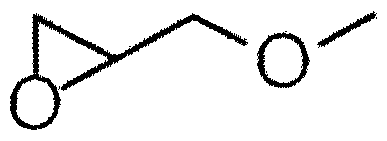 [화학식 E2]

[화학식 R4] .
(상기 화학식 R4에서, ¾ 내지 R3중 적어도 하나는 C1-C6의 선형, 분지형 또는 고리형 알콕시기이고 나머지는 독립적으로 C1-C10의 선형, 분지형 또는 고리형 알킬기이고, N , 0, S , 및 P로 구성되는 그룹으로부터 선택되는 적어도 하나의 해테로 원자를 갖거나 갖지 않을 수 있다)


163


(KF)
(상기 화학식 AF 내지 GF에서, 다수의 치환기 A 중 적어도 2개는 하기 화학식 E1이고, 적어도 하나의 A는 하기 화학식 A1 이며, 잔류 치환기 A가 있으면. 이는 -OH , -CKC^ -OH (식중, 1은 1 내지 10의 정수이다) , 하기 화학식 A5 및 A6로 구성되는 그룹으로부터 각각 독립적으로 선택되며, 상기 화학식 HF 내지 KF에서, 다수의 치환기 A 중 적어도 2개는 하기 화학식 E2이고, 적어도 하나의 A는 하기 화학식 A3 이며. 잔류 치환기 A가 있으면, 이는 -H , — (CH2)厂 0H (식중, 1은 1 내지 10의 정수이다) , 하기 화학식 A7 및 A8로 구성되는 그룹으로부터 각각 득립적으로 선택되며, 상기 화학식 AF에서 J는 수소, 히드록시기, C1 내지 C10의 직쇄 또는 분지쇄 알킬기 또는 C6 내지 C10의 방향족기이몌
상기 화학식 CF에서 K는 단일결합 (direct linkage), -CH2- 또는
 (Rx는 H 혹은 C1-C3 알킬기임)이며,
상기 화학식 DF에서 L은
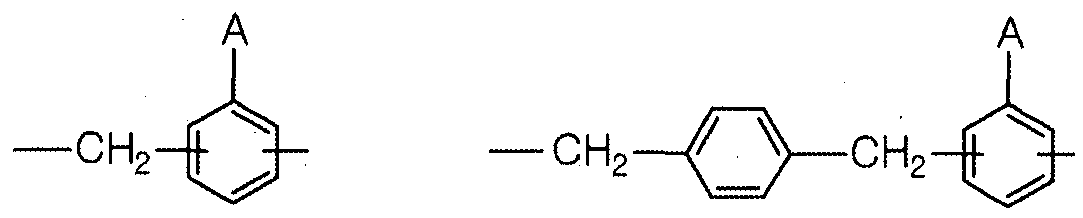
(1A) (1B)

상기 화학식 GF에서, M은

이며
 에서 Ry는 C1-C10의 직쇄 .또는 분지쇄 알킬기이고, 상기 화학식 HF에서. Q는 -(: -, -C(CH3)2-, -C(CF3)2-, -S-, -S02_,

상기 화학식 EF에서, n은 1 이상의 정수이며,
상기 화학식 FF에서. n은 0 또는 1 이상의 정수이며,
상기 화학식 GF에서, M이

인 경우에, n은 2 이상의 정수이고,
M이
 인 경우에, 11은 1 이상와 정수이며,
상기 화학식 GF에서, p는 1 또는 2이다.
[화학식 E1]
 [화학식 E2]

[화학식 A1]
-0-(CH2) ,-0-(CH2)m+2-SiR1R2R3
[화학식 A3]
-(CH2) 1-0-(CH2)m+2-SiRiR2R3
(상기 화학식 A1 및 화학식 A3에서. 내지 ¾중 적어도 하나는 탄소수 1 내지 6의 선형 , 분지형 또는 고리형 알콕시기이고, 나머지는 독립적으로 탄소수 1 내지 10의 선형, 분지형 또는 고리형 알킬기이며. N , 0, S , '및 P로 구성되는 그룹으로부터 선택되는 적어도 하나의 헤테로 원자를 갖거나 갖지 않을 수 있고, 1은 1 내지 10의 정수이며,
m은 1 내지 8의 정수이다)
[화학식 A5]
-0-(CH2) ,-0-(CH2)nrCH = CH2
[화학식 A6]
-0-(CH2)m-CH = CH2
[화학식 A7] ■ .
-(CH2) ,-0-(CH2)m-CH = CH2
[화학식 A8]
—((¾)„,— CH = CH2 '
(상기 화학식 A5 내지 A8에서. 1은 1 내지 10의 정수이며, m은 1 내지 8의 정수이다) )
【청구항 12】
제 10항 또는 제 11항에 있어서,
상기 제 1단계는 상기 출발물질과 상기 알킬히드록시 화합물이 먼저 반웅되고, 그 후에. 원위치에서 연속하여 상기 에피클로로히드린을 첨가하여 반웅시키는, 스페이서를 경유한 알콕시실릴기를 갖는 에폭시 화합물의 제조방법.
【청구항 13】
제 10항 또는 제 11항에 있어서ᅳ
상기 제 1단계는 상기 출발물질과 상기 에피클로로히드린이 먼저 반웅되고, 그 후에, 원위치에서 연속하여 상기 알킬히드록시 화합물을 첨가하여 반응시키는, 스페이서를 경유한 알콕시실릴기를 갖는 에폭시 화합물의 제조방법.
【청구항 14】 .
제 10항 또는 제 11항에 있어서,
상기 제 1단계는 상기 출발물질과 상기 알킬히드록시 화합물을 반응시키는 단계 ( l-la) ; 및 상기 단계 ( l-la)의 반응생성물과 에피클로로히드린을 반응시키는 단계 ( 1ᅳ 2a)에 의해 행하여지는. 스페이서를 경유한 알콕시실릴기를 갖는 에폭시 화합물의 제조방법 . '
【청구항 15]
제 10항 또는 제 11항에 있어서,
상기 제 1단계는 상기 출발물질과 상기 에피클로로히드린을 반웅시키는 단계 ( 1- lb) ; 및 상기 단계 ( 1-lb)의 반웅생성물과 상기 알킬히드록시 화합물을 반옹시키는 단계 ( l-2b)에 의해 행하여지는, 스페이사를 경유한 알콕시실릴기를 갖는 에폭시 화합물의 제조방법 .
【청구항 16】
제 1항 내지 제 9항 중 어느 한 항의 스페이서를 .경유한 알콕시실릴기를 갖는 에폭시 화합물을 포함하는 에폭시 조성물.
【청구항 17】.
제 16항에 있어서, 상기 에폭시ᅵ 조성물에 포함된 에폭시 화합물의 총 에폭시기 :알콕시실릴기의 비율은 1 : 5 ~ 0 : 1인., 에폭시 화합물을 포함하는 에폭시 조성물.
【청구항 18】
제 16항에 있어서, 글리시딜에테르계 에폭시 화합물. 글리시딜계 에폭시 화합물, 글리시딜아민계 에폭시 화합물, 및 글리시딜에스테르계 에폭시 화합물로 구성되는 그룹으로부터 선택되는 적어도 일종의 에폭시 화합물을 추가로 포함하는 에폭시 조성물.
【청구항 19】
제 18항에 있어서, 상기 에폭시 화합물은 코어구조로 비스페놀, 비페닐, 나프탈렌, 벤젠,. 티오디페놀, 플루오렌, 안트라센, 이소시아누레이트, 트리페닐메탄, 1,1,2,2-테트라페닐에탄, 테트라페닐메탄, 4 , 4 ' - 디아미노디페닐메탄, 아미노페놀, 지환족. 지방족. 또는 노볼락 유니트를 갖는 에폭시 조성물.
[청구항 20】
제 18항에 있어서, 에폭시 화합물의 총 중탈을 기준으로 상기 스페이서를 경유한 알콕시실릴기를 갖는 에폭시 화합물 1 내지 100wt% 및 글리시딜에테르계 에폭시 화합물, 글리시딜계 에폭시 화합물, 글리시딜아민계 에폭시 화합물ᅳ 및 글리시딜에스테르계. 에폭시 화합물로 구성되는 그룹으로부터 선택되는 최소 일종의 에폭시 화합물 Owt% 내지 99 %를 포함하는 에폭시 조성물.
【청구항 21】 . 제 16항 내지 제 20항 중 어느 한 항에 있어서, 충전제로서 무기입자 또는 섬유를 추가로 포함하는 에폭시 조성물. 、
【청구항 22】
제 21항에 있어서, 상기 무기입자는 실리카, 지르코니아, 티타니아, 알루미나, 질화규소 및 질화알루미늄으로 구성되는 그룹으로부터 선택되는 적어도 일종의 금속산화물, 및 실세스퀴옥산으로 구성되는 그룹으로부터 선택되는 적어도 일종인 에폭시 조성물. .
【청구항 23】
제 21항에 있어서, 상기 섬유는 E 유리섬유. T 유리섬유, S 유리섬유. NE 유리섬유, D 유리섬유. H 유리섬유, 및 석영으로 구성되는 그룹으로부터 선택되는 유리섬유 및 액정 폴리에스테르 섬유, 폴리에틸렌테레프탈레이트 섬유, 전방향족 섬유, 폴리벤조옥사졸 섬유, 나일론 섬유, 폴리에틸렌 나프탈레이트 섬유. 폴리프로필렌 섬유, 폴리에테르 술폰 섬유, 폴리비닐리덴플로라이드 섬유, 폴리에틸렌 술파이드 섬유, 및 폴리에테르에테르케톤 섬유로 구성되는 그룹으로부터 선택되는 유기 섬유로 구성되는 그룹으로부터 선택되는 적어도 일종인 에폭시 조성물.
【청구항 24】
제 21항에 있어서. 섬유를 포함하는 경우에 , 무기입자를 추가로 포함하는 에폭시 조성물.
[청구항 25】
제 16항 내지 제 24항 중 어느 한 항의 에폭시 조성물을 포함하는 전자재료.
【청구항 26】
제 16항 내지 제 24항 중 어느 한 항의 에폭시 조성물을 포함하는 기판. 【청구항 27]
제 16항 내지 제 24항 중 어느 한 항의 에폭시 조성물을 포함하는 필름. 【청구항 28]
제 16항 내지 제 24항 중 어느 한 항의 에폭시 조성물로 이루어진 기재층 상에 금속층을 포함하는 적충판.
【청구항 29】
제 28항의 적층판을 포함하는 인쇄배선판.
【청구항 30]
제 29항의 인쇄배선판을 포함하는 반도체 징 -치. [청구항 31】
제 16항 내지 제 24항 중 어느 한 항의 에폭시 조성물을 포함하는 반도체 패키징 재료.
【청구항 32】
제 31항의 반도체 패키징 재료를 포함하는 반도체 장치.
【청구항 33】 ·
제 16항 내지 제 24항 중 어느 한 항의 에폭시 조성물을 포함하는 접착제.
【청구항 34】
제 16항 내지 제 24항 중 어느 한 항의 에폭시 조성물을 포함하는 도료.
【청구항 35】
제 16항 내지 제 24항 중 어느 한 항의 에폭시 조성물을 포함하는 복합재료. 【청구항 36】
제 16항 내지 제 24항 중 어느 한 항의 에폭시 조성물을 포함하는 프리프레그.
【청구항 37】
제 36항의 프리프레그에 금속층이 배치된 적층판. 【청구항 38】
제 16항 내지 제 24항 중 어느 한 항의 에폭시 조성물의 경화물. 【청구항 39】
제 38항에 있어서, 상기 경화물은 열팽창계수가 50ppm/°C이하인 에폭시 조성물의 경화물.
【청구항 40】
제 38항에 있어서, 상기 경화물은 유리전이온도가 100oC 보다 높거나 유리전이온도를 나타내지 않는 에폭시 조성물의 경화물.
Applications Claiming Priority (4)
| Application Number | Priority Date | Filing Date | Title |
|---|---|---|---|
| KR10-2014-0026081 | 2014-03-05 | ||
| KR20140026081 | 2014-03-05 | ||
| KR10-2015-0028082 | 2015-02-27 | ||
| KR1020150028082A KR101749551B1 (ko) | 2014-03-05 | 2015-02-27 | 알콕시실릴기를 갖는 에폭시 화합물, 이의 제조 방법, 이를 포함하는 조성물, 경화물 및 이의 용도 |
Publications (2)
| Publication Number | Publication Date |
|---|---|
| WO2015133840A2 true WO2015133840A2 (ko) | 2015-09-11 |
| WO2015133840A3 WO2015133840A3 (ko) | 2015-10-29 |
Family
ID=54055966
Family Applications (1)
| Application Number | Title | Priority Date | Filing Date |
|---|---|---|---|
| PCT/KR2015/002138 Ceased WO2015133840A2 (ko) | 2014-03-05 | 2015-03-05 | 알콕시실릴기를 갖는 에폭시 화합물, 이의 제조 방법, 이를 포함하는 조성물, 경화물 및 이의 용도 |
Country Status (1)
| Country | Link |
|---|---|
| WO (1) | WO2015133840A2 (ko) |
Family Cites Families (4)
| Publication number | Priority date | Publication date | Assignee | Title |
|---|---|---|---|---|
| JP2007197518A (ja) * | 2006-01-24 | 2007-08-09 | Fujifilm Corp | エポキシ樹脂化合物、熱硬化性樹脂組成物、及び感光性組成物 |
| US8278401B2 (en) * | 2006-03-29 | 2012-10-02 | Henkel Ag & Co. Kgaa | Radiation or thermally curable barrier sealants |
| WO2014042491A1 (ko) * | 2012-09-17 | 2014-03-20 | 한국생산기술연구원 | 알콕시실릴기를 갖는 에폭시 화합물, 이의 제조 방법, 이를 포함하는 조성물, 경화물 및 이의 용도 |
| JP6153631B2 (ja) * | 2013-02-25 | 2017-06-28 | コリア インスティチュート オブ インダストリアル テクノロジー | アルコキシシリル基を有するエポキシ化合物、その製造方法、それを含む組成物と硬化物及びその用途 |
-
2015
- 2015-03-05 WO PCT/KR2015/002138 patent/WO2015133840A2/ko not_active Ceased
Also Published As
| Publication number | Publication date |
|---|---|
| WO2015133840A3 (ko) | 2015-10-29 |
Similar Documents
| Publication | Publication Date | Title |
|---|---|---|
| KR101655857B1 (ko) | 알콕시실릴기를 갖는 에폭시 화합물, 이의 제조 방법, 이를 포함하는 조성물과 경화물 및 이의 용도 | |
| KR101755323B1 (ko) | 신규한 에폭시 화합물, 이를 포함하는 혼합물, 조성물, 경화물, 이의 제조 방법, 및 이의 용도 | |
| KR101664948B1 (ko) | 알콕시실릴기를 갖는 새로운 노볼락 경화제, 이의 제조 방법, 이를 포함하는 조성물, 경화물 및 이의 용도 | |
| KR101596880B1 (ko) | 알콕시실릴기를 갖는 에폭시 화합물, 이의 제조 방법, 이를 포함하는 조성물, 경화물 및 이의 용도 | |
| KR101898526B1 (ko) | 알콕시실릴기를 갖는 에폭시 화합물, 이를 포함하는 조성물, 경화물, 이의 용도 및 알콕시실릴기를 갖는 에폭시 화합물의 제조방법 | |
| JP6664398B2 (ja) | 2つ以上のアルコキシシリル基を有する熱硬化性アルコキシシリル化合物、それを含む組成物、硬化物、及びその用途、並びにアルコキシシリル化合物の製造方法 | |
| KR101992845B1 (ko) | 알콕시실릴기를 갖는 에폭시 화합물, 이를 포함하는 조성물, 경화물, 이의 용도 및 알콕시실릴기를 갖는 에폭시 화합물의 제조방법 | |
| KR101863111B1 (ko) | 노볼락계 에폭시 화합물, 이의 제조 방법, 이를 포함하는 조성물, 경화물 및 이의 용도 | |
| KR101967155B1 (ko) | 알콕시실릴기를 갖는 에폭시 수지의 제조방법, 알콕시실릴기를 갖는 에폭시 수지, 이를 포함하는 조성물 및 이의 용도 | |
| KR101749551B1 (ko) | 알콕시실릴기를 갖는 에폭시 화합물, 이의 제조 방법, 이를 포함하는 조성물, 경화물 및 이의 용도 | |
| KR101456025B1 (ko) | 알콕시실릴기를 갖는 이소시아누레이트 에폭시 화합물, 이의 제조 방법 및 이를 포함하는 조성물과 경화물 및 이의 용도 | |
| KR101881815B1 (ko) | 알콕시실릴기 및 활성 에스테르기를 갖는 화합물, 이의 제조방법, 이를 포함하는 조성물 및 용도 | |
| WO2015126143A1 (ko) | 신규한 에폭시 화합물, 이를 포함하는 혼합물, 조성물, 경화물, 이의 제조 방법, 및 이의 용도 | |
| WO2015133840A2 (ko) | 알콕시실릴기를 갖는 에폭시 화합물, 이의 제조 방법, 이를 포함하는 조성물, 경화물 및 이의 용도 | |
| JP6918987B2 (ja) | アルコキシシリル基及び活性エステル基を有する化合物、その製造方法、それを含む組成物及び用途 | |
| WO2015105379A1 (ko) | 알콕시실릴기를 갖는 새로운 노볼락 경화제, 이의 제조 방법, 이를 포함하는 조성물, 경화물 및 이의 용도 | |
| JP6043602B2 (ja) | 樹脂組成物 | |
| JP4104119B2 (ja) | エポキシ樹脂、エポキシ樹脂組成物及びその硬化物 |
Legal Events
| Date | Code | Title | Description |
|---|---|---|---|
| 121 | Ep: the epo has been informed by wipo that ep was designated in this application |
Ref document number: 15757678 Country of ref document: EP Kind code of ref document: A2 |
|
| NENP | Non-entry into the national phase in: |
Ref country code: DE |
|
| 122 | Ep: pct application non-entry in european phase |
Ref document number: 15757678 Country of ref document: EP Kind code of ref document: A2 |