WO2015136875A1 - Dispositif de communication et procédé de contrôle de trafic - Google Patents
Dispositif de communication et procédé de contrôle de trafic Download PDFInfo
- Publication number
- WO2015136875A1 WO2015136875A1 PCT/JP2015/001044 JP2015001044W WO2015136875A1 WO 2015136875 A1 WO2015136875 A1 WO 2015136875A1 JP 2015001044 W JP2015001044 W JP 2015001044W WO 2015136875 A1 WO2015136875 A1 WO 2015136875A1
- Authority
- WO
- WIPO (PCT)
- Prior art keywords
- traffic control
- vxlan header
- control information
- vxlan
- header
- Prior art date
- Legal status (The legal status is an assumption and is not a legal conclusion. Google has not performed a legal analysis and makes no representation as to the accuracy of the status listed.)
- Ceased
Links
Images




Classifications
-
- H—ELECTRICITY
- H04—ELECTRIC COMMUNICATION TECHNIQUE
- H04W—WIRELESS COMMUNICATION NETWORKS
- H04W28/00—Network traffic management; Network resource management
- H04W28/02—Traffic management, e.g. flow control or congestion control
- H04W28/0268—Traffic management, e.g. flow control or congestion control using specific QoS parameters for wireless networks, e.g. QoS class identifier [QCI] or guaranteed bit rate [GBR]
-
- H—ELECTRICITY
- H04—ELECTRIC COMMUNICATION TECHNIQUE
- H04L—TRANSMISSION OF DIGITAL INFORMATION, e.g. TELEGRAPHIC COMMUNICATION
- H04L12/00—Data switching networks
- H04L12/28—Data switching networks characterised by path configuration, e.g. LAN [Local Area Networks] or WAN [Wide Area Networks]
- H04L12/46—Interconnection of networks
- H04L12/4641—Virtual LANs, VLANs, e.g. virtual private networks [VPN]
-
- H—ELECTRICITY
- H04—ELECTRIC COMMUNICATION TECHNIQUE
- H04W—WIRELESS COMMUNICATION NETWORKS
- H04W72/00—Local resource management
- H04W72/50—Allocation or scheduling criteria for wireless resources
- H04W72/54—Allocation or scheduling criteria for wireless resources based on quality criteria
- H04W72/542—Allocation or scheduling criteria for wireless resources based on quality criteria using measured or perceived quality
-
- H—ELECTRICITY
- H04—ELECTRIC COMMUNICATION TECHNIQUE
- H04W—WIRELESS COMMUNICATION NETWORKS
- H04W84/00—Network topologies
- H04W84/02—Hierarchically pre-organised networks, e.g. paging networks, cellular networks, WLAN [Wireless Local Area Network] or WLL [Wireless Local Loop]
- H04W84/04—Large scale networks; Deep hierarchical networks
- H04W84/042—Public Land Mobile systems, e.g. cellular systems
-
- H—ELECTRICITY
- H04—ELECTRIC COMMUNICATION TECHNIQUE
- H04W—WIRELESS COMMUNICATION NETWORKS
- H04W88/00—Devices specially adapted for wireless communication networks, e.g. terminals, base stations or access point devices
- H04W88/16—Gateway arrangements
Definitions
- the present disclosure relates to a communication device and a traffic control method.
- LTE Long Term Evolution
- data traffic by various real-time multimedia services such as web browsing, video streaming, online games, real-time video, etc. has increased explosively.
- Exceptional QoS Quality of Service
- QoS Quality of Service
- ToS Type of Service
- DSCP DiffServ Code Point
- CoS Class of Service
- ToS can set priority of 8 levels using 3 bits of ToS field in IP (Internet Protocol) header.
- IP Internet Protocol
- DSCP the same ToS field in the IP header is redefined as the DS field, and 64 levels of priority can be set using 6 bits.
- CoS has eight levels of priority set using 3 bits in the priority field in the VLAN tag of IEEE (The Institute of Electrical and Electronics Engineers, Inc.) 802.1Q VLAN (Virtual Local Area Network). it can.
- VLANs are used for network separation.
- the VLAN identifies each VLAN by a VLAN-ID which is a VLAN identifier.
- the VLAN-ID identifies up to 4095 VLANs using 12 bits in the VLAN tag.
- Patent Document 1 discloses a base station that can obtain a quality assurance of VoIP (Voice over Internet Protocol) in a mobile network and a router that aggregates the base stations.
- VoIP Voice over Internet Protocol
- a base station and a router are connected by a multilink group that transmits VoIP packets and a multilink group that transmits data packets other than VoIP. Then, the base station and the router divide the transmission line by referring to the ToS (Type ⁇ ⁇ ⁇ ⁇ of Service) area of the received packet, and transmit only the VoIP packet through the dedicated line. Thereby, even when a large amount of data packets are received, transmission delay of the VoIP packet can be prevented and VoIP quality can be guaranteed on the mobile network.
- ToS Type ⁇ ⁇ ⁇ ⁇ ⁇ of Service
- Patent Document 2 discloses a technique for improving the depletion of VLAN-ID in a large-scale data center.
- Patent Document 2 is a technology that improves the depletion of VLAN-ID in a cloud system that connects a plurality of cloud bases by connecting the cloud bases to each other via a VPN (Virtual Private Network). is there.
- VPN Virtual Private Network
- each cloud base is provided with a virtual machine, a transfer device, and a gateway device.
- the transfer device transfers the packet using the identification information based on the OpenFlow technique that is different from the VLAN-ID for identifying the VLAN assigned to each tenant.
- the gateway device transmits / receives a packet using the VLAN-ID to / from the VPN terminating device, and transmits / receives a packet to / from the transfer device using the other identification information.
- packet transmission / reception using VLAN-ID and packet transmission / reception not using VLAN-ID are separated, and a range where VLAN-IDs should be uniquely assigned is localized to improve VLAN-ID depletion.
- the mobile backhaul is required to be greatly evolved.
- eNodeB evolved Node B
- EPC Evolved Packet Core
- Patent Document 1 priority is assigned to the ToS field included in the IP header.
- This ToS field is 3 bits. In other words, only eight levels of priority can be set at maximum. Therefore, it is difficult to deal with services that require high reliability, high quality, and fine QoS control.
- the cloud system includes a cloud base network and a wide area network.
- the cloud base network other technologies such as Open Flow are used instead of the VLAN used so far.
- a VLAN is used for the wide area network. It has been disclosed to improve the depletion of VLAN-ID by localizing the range to which VLAN-ID is allocated. However, it is difficult to deal with priority control in fine units such as service types or specific user units.
- An exemplary embodiment of the present invention is to provide a communication apparatus and a traffic control method that can cope with a service that requires higher reliability, higher quality, or fine QoS control.
- the communication apparatus in the exemplary embodiment receives an input packet, and identifies a logical group / QoS identification that identifies QoS (Quality of Service) information including a logical group to which the input packet belongs and a priority type applied to the input packet. And a logical network number corresponding to the logical group is set in a VNI (VXLAN network identifier) field of a VXLAN (Virtual eXtensible Local Area network) header based on the logical group identified by the logical group / QoS identification unit and QoS information.
- VNI VXLAN network identifier
- VXLAN Virtual eXtensible Local Area network
- traffic control information including priority control corresponding to the QoS information is set in a predetermined field defined in the VXLAN header to generate a transmission VXLAN header, and the transmission VXLAN header is added to the input packet.
- VXLAN header added output packet When a VXLAN header addition means for outputting to the mobile backhaul and a VXLAN header addition input packet from the mobile backhaul are input, the reception VXLAN header added to the VXLAN header addition input packet is removed, and the VNI of the reception VXLAN header is removed.
- the logical network number set in the field the VXLAN header removing means for extracting the traffic control information set in the predetermined field defined in advance, the logical network number and the traffic extracted by the VXLAN header removing means Based on the control information, the VXLAN header removing unit performs traffic control including priority control and route separation on the packet from which the received VXLAN header has been removed, and outputs the output packet as an output packet.
- click control means characterized in that it comprises a.
- the traffic control method receives an input packet and identifies QoS (Quality of Service) information including a logical group to which the input packet belongs and a priority type applied to the input packet.
- QoS Quality of Service
- a logical network number corresponding to the logical group is set in a VNI (VXLAN Network Identifier) field of a VXLAN (Virtual eXtensible Local Area Network) header
- priority corresponding to the QoS information is set in a predetermined field of the VXLAN header.
- a traffic VXLAN header is generated by setting traffic control information including control, the transmission VXLAN header is added to the input packet and output to the mobile backhaul as a VXLAN header additional output packet, and the VXLAN header is transmitted from the mobile backhaul.
- Input additional input packet The received VXLAN header added to the VXLAN header added input packet is removed, the logical network number set in the VNI field of the received VXLAN header, and the predetermined field set in advance. Extract traffic control information, Based on the extracted logical network number and the traffic control information, the packet from which the received VXLAN header is removed is subjected to traffic control including priority control and route separation and output as an output packet.
- the exemplary embodiment of the present invention can easily cope with expansion of a mobile network, and can cope with high reliability, high quality, and fine-grained QoS control required for a real-time multimedia service.
- VXLAN Virtual eXtensible Local Area Network
- UDP User Datagram Protocol
- VNI VXLAN Network Identifier
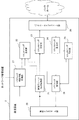
- FIG. 1 is a block diagram illustrating a configuration of a communication device according to a first exemplary embodiment.
- the communication device 1 of the first exemplary embodiment is configured to include a logical group / QoS identification unit 11, a VXLAN header addition unit 12, a VXLAN header removal unit 13, and a traffic control unit 14.
- the logical group / QoS identifying means 11 receives the input packet and identifies QoS (Quality of Service) information including the logical group to which the input packet belongs and the priority type.
- QoS Quality of Service
- the VXLAN header adding means 12 sets the information based on the logical group and QoS information identified by the logical group / QoS identifying means 11 in a VXLAN (Virtual eXtensible Local Area Network) header and generates a transmission VXLAN header.
- the VXLAN header adding means 12 sets a logical network number corresponding to a logical group in a VNI (VXLAN Network Identifier) field, and traffic control information including priority control corresponding to QoS information in a predetermined field of the VXLAN header. Set. Then, the VXLAN header adding unit 12 adds the generated transmission VXLAN header to the input packet and outputs it to the mobile backhaul as a VXLAN header added output packet.
- VNI VXLAN Network Identifier
- the VXLAN header removing unit 13 removes the received VXLAN header added to the VXLAN header added input packet.
- the VXLAN header removing unit 13 extracts the logical network number set in the VNI field of the received VXLAN header and the traffic control information set in a predetermined field defined in advance.
- the traffic control unit 14 Based on the logical network number extracted by the VXLAN header removing unit 13 and the traffic control information, the traffic control unit 14 performs traffic control including priority control and route separation on the packet from which the received VXLAN header is removed as an output packet. Output.
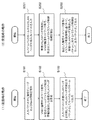
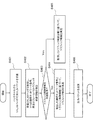
- FIG. 2 is a flowchart showing the operation of the communication device 1 of the first exemplary embodiment.
- the traffic control method is implemented by operating the communication device 1. Therefore, the description of the traffic control method in the first embodiment replaces the following description of the operation of the communication device 1.
- (1) in FIG. 2 is an operation at the time of packet transmission to the mobile backhaul of the communication device 1, and (2) is an operation at the time of packet reception from the mobile backhaul of the communication device 1.
- Operation at the time of packet transmission to the mobile backhaul of the communication device 1 is as follows.
- QoS Quality of Service
- traffic control information including a logical network number corresponding to the logical group and priority control corresponding to the QoS information is set to generate a transmission VXLAN header (S102).
- the logical network number is set in a VNI (VXLAN Network Identifier) field, and the traffic control information is set in a predetermined field of the VXLAN header.
- VNI VXLAN Network Identifier
- the transmission VXLAN header is added to the input packet, and the packet is output to the mobile backhaul as a VXLAN header addition output packet (S103).
- the operation when receiving a packet from the mobile backhaul of the communication device 1 is as follows.
- a VXLAN header addition input packet is input from the mobile backhaul (S201).
- the received VXLAN header added to the VXLAN header added input packet is removed.
- the logical network number set in the VNI field of the received VXLAN header and the traffic control information set in a predetermined field defined in advance are extracted (S202).
- the packet from which the received VXLAN header has been removed is subjected to traffic control including priority control and route separation and output as an output packet (S203).
- the network can be separated in units of VNI, and the mobile network can be easily expanded. Yes.
- the information required for traffic control is not defined in the current VXLAN standard, fine priority control based on a finer unit communication path is set by setting traffic control information in a predetermined field defined in advance. And quality control becomes possible. Therefore, it is possible to cope with high reliability, high quality, and fine QoS control required for the real-time multimedia service.
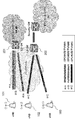
- FIG. 3 is a conceptual diagram showing the backhaul and core network of the mobile communication system related to this embodiment.
- the backhaul means a mobile backhaul.
- LTE is the mobile communication system related to this embodiment.
- a plurality of eNBs (eNode B) 100 that are radio base stations that support a radio interface for a mobile station (not shown) are geographically dispersed, and the backhaul 30 is a network that accommodates these eNBs 100 and connects to the core network 40. is there.
- L3-SW layer 3 switch
- EPC Evolved Packet Core
- a packet in which a VXLAN header is added to user data is transmitted and received using a predetermined protocol.
- the eNB 100 and the L3-SW 200 have a function of processing the VXLAN, and implement network separation and traffic control according to service and priority by using the VNI field of the VXLAN header and a predetermined field defined in advance.
- the communication device of this embodiment is the eNB 100 and also the L3-SW 200.
- a logical network number is set by grouping in an arbitrary unit such as a connected network unit, an application unit, a service type unit, a charging type unit, a user unit, or a priority unit. This enables routing control for a logical group to which the same VNI is applied from the radio base station to the core network device.
- traffic control information based on QoS information in a predefined field, it is possible to be aware of multiple services and priorities within the same VNI, and traffic according to services and priorities in the backhaul. Realize control.
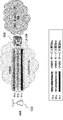
- FIG. 4 is a conceptual diagram illustrating a connection example in the backhaul of the mobile communication system according to the second exemplary embodiment.
- the figure shows an example in which VNI is set for each connected operator when applying RAN Sharing in which a radio base station is shared by a plurality of operators.
- eNB 101 handles calls connecting to EPC networks #A and #B
- eNB 102 handles calls connecting to EPC networks #A and #C
- eNB 103 handles calls connecting to EPC networks #C.
- the EPC network corresponds to each connected operator.
- Each eNB 101 to 103 receives VNI # A for the call of connected operator #A in the VNI field, VNI # B for the call of connected operator #B, and for the call of connected operator #C. Sets VNI # C to perform network separation.
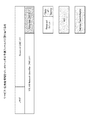
- FIG. 5 is a conceptual diagram showing another connection example in the backhaul of the mobile communication system of the second exemplary embodiment. This figure shows an example in which a service type is set as traffic control information in a predetermined field of the VXLAN header in order to be aware of a plurality of services within the same VNI.
- the eNB 100 sets information that can identify the service type of the call in the call of the connection operator #A in a predetermined field defined in advance.
- the L3-SW 200 executes traffic control corresponding to the set service type information.
- the traffic control corresponding to the service type information may be executed by a core network device higher than the L3-SW 200.
- VXLAN frame for executing the above-described control will be described.
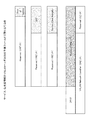
- FIG. 6 is a format diagram showing a VXLAN frame.
- This VXLAN format is the same as the current VXLAN standard discussed in IETF. That is, user data is encapsulated with an 8-byte VXLAN header and transmitted as a UDP packet.
- the VXLAN header is composed of an 8-bit flag part, a 24-bit spare field, a 24-bit VNI field, and an 8-bit spare field. Then, in this VNI field, a logical network number for separating the network and communication path under an arbitrary condition is set.
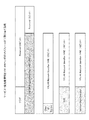
- FIG. 7 is a format diagram showing an example in which traffic control information is assigned to a spare field of the VXLAN header.
- priority information and service type information are set as traffic control information in an 8-bit reserved field following the VNI field.
- priority values (CoS) specified by IEEE802.1p
- QCI QoS Class Identifier
- 3GPP TS23.203, TS29.281
- Service Class Indicator is set as examples. .
- FIG. 8 is a format diagram showing an example of assigning traffic control information to another spare field of the VXLAN header. Here, an example is shown in which priority information and service type information are set as traffic control information in a 24-bit spare field following the flag.
- FIG. 9 is a format diagram showing an example of assigning traffic control information to the VNI field of the VXLAN header.
- priority information and service type information are set as traffic control information in part of a 24-bit VNI field.
- CoS CoS, QCI, and Service Class Indicator are shown as examples of setting information, the present invention is not limited to this, and arbitrarily defined information used as traffic control information may be used.
- FIG. 10 is a block diagram illustrating a configuration of the communication device 2 according to the second exemplary embodiment.
- the communication device 2 of the present embodiment is the eNB 100 in the conceptual diagram shown in FIG. 3 and also the L3-SW 200.
- FIG. 10 is a block diagram illustrating a configuration when the communication device 2 is assumed to be the eNB 100.
- the communication device 2 includes a logical group / QoS identification unit 21, a VXLAN header generation unit 22, and a VXLAN header addition unit 23 as a configuration on the packet transmission side to the backhaul. Further, the configuration on the side of receiving a packet from the backhaul includes a VXLAN header removal unit 24, a VXLAN header analysis unit 25, and a traffic control unit 26.
- the logical group / QoS identifying unit 11 in the first exemplary embodiment corresponds to the logical group / QoS identifying unit 21, and the VXLAN header adding unit 12 corresponds to the VXLAN header generating unit 22 and the VXLAN header adding unit 23.
- the VXLAN header removing unit 13 in the first exemplary embodiment corresponds to the VXLAN header removing unit 24 and the VXLAN header analyzing unit 25, and the traffic control unit 14 corresponds to the traffic control unit 26.
- the communication device 2 includes a wireless interface unit 28 that supports a communication interface with a mobile station, and a backhaul interface unit 29 that manages a communication interface with a core network device via a backhaul.
- the communication device 2 also includes a traffic control information acquisition unit 27 that is installed in the network and acquires information related to traffic control from a network management device that centrally manages the network status.
- the logical group / QoS identifying unit 21 receives the input packet from the wireless interface 28, and identifies the logical group to which the input packet belongs and the QoS information.
- the VNI of the VXLAN header and information set in a predetermined field are identified and extracted.
- the setting value assignment rules for the VNI and predetermined fields are specified in advance during network design.
- the logical group / QoS identifying unit 21 identifies and extracts information specified in advance from an input packet from a user identifier, a MAC (Media Access Control) address, a VLAN tag, an IP address, an IP header, and the like.
- MAC Media Access Control
- the VXLAN header generation unit 22 sets the value notified to the VNI and the predetermined field for the information notified from the logical group / QoS identification unit 21 according to the setting rule for the VNI and the predetermined field, and generates the VXLAN header. . That is, the VXLAN header generation unit 22 holds in advance information indicating the correspondence between the information identified and extracted by the logical group / QoS identification unit 21 and the values set in the VNI and the predetermined field.
- the VXLAN header generated by the VXLAN header generation unit 22 is also referred to as a transmission VXLAN header.
- the value grouped by the unit that performs routing control with the same rule from the radio base station to the core network device is set in the VNI as the logical network number.
- grouping may be performed in an arbitrary unit. For example, a network unit to be connected, an application unit, a service type unit, a charging type unit, a user unit, a priority unit, and an arbitrary combination unit thereof are assumed. Is done.
- priority information In the predetermined field defined in advance, priority information, service type information, and the like that allow different traffic control within a group that is route controlled within the same VNI are set as traffic control information.
- priority information and service type information CoS, QCI, Service Class Indicator, etc. are used as described above, but any newly defined information may be used.
- the VXLAN header addition unit 23 adds the transmission VXLAN header generated by the VXLAN header generation unit 22 to the packet to be transmitted, and outputs a VXLAN header addition output packet to the backhaul interface unit 29.
- the backhaul interface unit 29 supports, for example, the S1-u interface, performs communication according to a predetermined protocol with the opposing core network device via the backhaul, and transmits the packet with the VXLAN header added thereto. Send and receive.
- the VXLAN header removing unit 24 removes the VXLAN header from the VXLAN header added input packet received from the backhaul interface unit 29.
- the packet from which the VXLAN header has been removed is output to the traffic control unit 26, and the removed VXLAN header is output to the VXLAN header analysis unit 25.
- the VXLAN header removed from the VXLAN header added input packet is also referred to as a received VXLAN header.
- the VXLAN header analysis unit 25 extracts the logical network number set in the VNI field of the received VXLAN header to be analyzed, and priority information and service type information set in a predetermined field defined in advance.
- the VXLAN header analysis unit 25 outputs the extracted logical network number, priority information, service type information, and the like as traffic control information to the traffic control unit 26 in accordance with VNI and setting value assignment rules for predetermined fields.
- the traffic control unit 26 performs traffic control based on the traffic control information output from the VXLAN header analysis unit 25 on the packet output from the VXLAN header removal unit 24 and outputs the packet to the wireless interface unit 28 as an output packet.
- traffic control to be executed priority control, shaping, route separation, and the like are performed.
- the traffic control information acquisition unit 27 acquires information related to traffic control from a network management device (not shown).
- the network management device is a device installed in the network and connected to each device in the network to centrally manage the network status.
- the network management device is a device that grasps the usage status of the VNI in accordance with the status of network traffic, and issues a traffic control instruction to each device based on the status. For example, when it is desired to perform traffic control in units of VNI, the network management device grasps the traffic amount and route in units of VNI, and issues a traffic control instruction to each related device.
- the traffic control information acquisition unit 27 also has a function of grasping the traffic situation based on the packet processing amount of the own device and generating traffic control information based on the traffic situation. For example, control may be performed so that congestion is detected in an arbitrary unit and the VNI value and priority information set in accordance with the congestion status are changed.
- the traffic control information acquisition unit 27 outputs the traffic control information acquired from the network management apparatus or generated by itself to the VXLAN header generation unit 22 and the traffic control unit 26.
- the traffic control information acquisition unit 27 may be configured to acquire the traffic control information from the network management apparatus and generate the traffic control information by itself.
- the VXLAN header generation unit 22 changes the VNI value of the VXLAN header or a value set in a predetermined field based on the traffic control information received from the traffic control information acquisition unit 27. In this case, the VXLAN header generation unit 22 may set the value specified as the traffic control information as it is. Further, the VXLAN header generation unit 22 uses information indicating the correspondence between the information notified from the logical group / QoS identification unit 21 and the values set in the VNI and the predetermined field based on the value instructed as traffic control information. It may be configured to change as appropriate.
- the traffic control unit 26 executes traffic control based on the traffic control information received from the traffic control information acquisition unit 27 instead of the traffic control information output from the VXLAN header analysis unit 25. Further, the traffic control unit 26 may execute traffic control in consideration of the traffic control information received from the traffic control information acquisition unit 27 and the traffic control information output from the VXLAN header analysis unit 25.
- the information set in the VXLAN header is identified from the input packet or acquired by the traffic control information acquisition unit 27.
- the VNI and traffic control information may be notified from the core network side. It doesn't matter.
- dummy information may be set in the VXLAN header in the initial state, and information to be used may be notified when the core network side grasps and confirms the service contents.
- set the predetermined information corresponding to the application or service and notify the information corresponding to the changed application or service from the core network side when the application or service used by the user changes. It may be.
- a core network device When performing such control, a core network device (not shown) transmits a packet with update information attached to the VXLAN header.
- an update flag is attached to a flag part or an arbitrary bit defined in advance as information indicating that a notification of update information is included in the received VXLAN header.
- the logical network number to be updated is set in the VNI field, and the traffic control information to be updated is set in a predetermined field and notified.
- the VXLAN header analysis unit 25 recognizes that the notification is an update notification from the core network device when a predetermined update flag is attached to the received VXLAN header. In this case, the VXLAN header analysis unit 25 outputs the logical network number set in the VNI field and the traffic control information set in a predetermined field defined in advance to the VXLAN header generation unit 22 as header update information.
- the VXLAN header generation unit 22 determines the correspondence between the information notified from the logical group / QoS identification unit 21 and the information set in the transmission VXLAN header based on the header update information. Update.
- the above is the configuration of the communication device 2 in the present embodiment.
- the communication device 2 has been described on the assumption that the communication device 2 is the eNB 100 in the conceptual diagram illustrated in FIG. 3, but the communication device 2 may be the L3-SW 200.
- the communication device 2 is the L3-SW 200
- a core network interface unit is installed instead of the wireless interface unit 28 shown in FIG.
- the core network interface unit is configured to perform communication in accordance with a predetermined protocol with another core network device of the core network, for example, supporting the S5 interface.
- FIG. 11 is a flowchart showing an operation at the time of packet transmission to the backhaul of the communication device 2 of the second exemplary embodiment.
- the input packet is received from the wireless interface unit 28, and the logical group to which the input packet belongs and the QoS information are identified (S301).
- the VNI in the VXLAN header and information to be set in a predetermined field are identified and extracted.
- the traffic control information includes traffic control information acquired in response to an instruction from the network management apparatus and traffic control information acquired by itself.
- a transmission VXLAN header is generated based on the logical group identified in Step S301 and the QoS information (S303).
- a logical network number is set in the VNI of the transmission VXLAN header, and traffic control information is set in a predetermined field.
- a transmission VXLAN header is generated based on the acquired traffic control information (S304).
- the acquired traffic information may be used as it is, or the information indicating the correspondence relationship between the logical group identified in step S301, the QoS information, the VNI, and the value set in the predetermined field may be appropriately changed. It may be.
- the VXLAN header added output packet is output to the backhaul with a predetermined protocol (S306).
- FIG. 12 is a flowchart illustrating an operation when receiving a packet from the backhaul of the communication device 2 according to the second exemplary embodiment.
- the received VXLAN header added to the VXLAN header added input packet is removed. Then, the logical network number set in the VNI field of the received VXLAN header and the traffic control information set in a predetermined field defined in advance are extracted (S402).
- the traffic control information includes traffic control information acquired in response to an instruction from the network management apparatus and traffic control information acquired by itself.
- traffic control is performed on the packet from which the received VXLAN header is removed based on the logical network number extracted in step S402 and the priority control information ( S404).
- the traffic control information is acquired (S403, Yes)
- the traffic control is performed based on the acquired traffic control information (S405).
- traffic control may be executed in consideration of the acquired traffic control information and the information extracted in step S402.
- the mobile network communication device has a function of supporting VXLAN, sets a logical network number in the VNI field, and sets traffic control information in a predetermined field. It was configured as follows. Therefore, it is possible to separate networks and communication paths in units of VNI prepared for 24 bits, and it is possible to easily cope with expansion of mobile networks.
- traffic control information set in a predetermined field defined in advance makes it possible to make a difference in traffic even for the same VNI, and different traffic control can be performed finely even for the same VNI. it can. As a result, it is possible to cope with high reliability, high quality, and fine QoS control required for real-time multimedia services that will increase in the future.
- Non-transitory computer readable media include various types of tangible storage media (tangible storage medium).
- Examples of non-transitory computer-readable media include magnetic recording media (eg flexible disks, magnetic tapes, hard disk drives), magneto-optical recording media (eg magneto-optical discs), CD-ROMs (Read Only Memory), CD-Rs, CD-R / W, semiconductor memory (for example, mask ROM, PROM (Programmable ROM), EPROM (Erasable ROM), flash ROM, RAM (Random Access Memory)) are included.
- the program may also be supplied to the computer by various types of temporary computer-readable media. Examples of transitory computer readable media include electrical signals, optical signals, and electromagnetic waves.
- the temporary computer-readable medium can supply the program to the computer via a wired communication path such as an electric wire and an optical fiber, or a wireless communication path.
Landscapes
- Engineering & Computer Science (AREA)
- Computer Networks & Wireless Communication (AREA)
- Signal Processing (AREA)
- Computer Security & Cryptography (AREA)
- Quality & Reliability (AREA)
- Data Exchanges In Wide-Area Networks (AREA)
- Mobile Radio Communication Systems (AREA)
Abstract
Priority Applications (3)
| Application Number | Priority Date | Filing Date | Title |
|---|---|---|---|
| US15/122,525 US9877225B2 (en) | 2014-03-14 | 2015-02-27 | Communication device and traffic control method |
| EP15760902.5A EP3119045B1 (fr) | 2014-03-14 | 2015-02-27 | Dispositif de communication et procédé de contrôle de trafic |
| JP2016507336A JP6256591B2 (ja) | 2014-03-14 | 2015-02-27 | 通信装置およびトラフィック制御方法 |
Applications Claiming Priority (2)
| Application Number | Priority Date | Filing Date | Title |
|---|---|---|---|
| JP2014052349 | 2014-03-14 | ||
| JP2014-052349 | 2014-03-14 |
Publications (1)
| Publication Number | Publication Date |
|---|---|
| WO2015136875A1 true WO2015136875A1 (fr) | 2015-09-17 |
Family
ID=54071334
Family Applications (1)
| Application Number | Title | Priority Date | Filing Date |
|---|---|---|---|
| PCT/JP2015/001044 Ceased WO2015136875A1 (fr) | 2014-03-14 | 2015-02-27 | Dispositif de communication et procédé de contrôle de trafic |
Country Status (4)
| Country | Link |
|---|---|
| US (1) | US9877225B2 (fr) |
| EP (1) | EP3119045B1 (fr) |
| JP (1) | JP6256591B2 (fr) |
| WO (1) | WO2015136875A1 (fr) |
Cited By (5)
| Publication number | Priority date | Publication date | Assignee | Title |
|---|---|---|---|---|
| CN107222409A (zh) * | 2016-03-22 | 2017-09-29 | 华为技术有限公司 | 一种转发流量的方法及节点 |
| WO2018029853A1 (fr) | 2016-08-12 | 2018-02-15 | 富士通株式会社 | Station de base sans fil, dispositif sans fil, dispositif de commande sans fil, système de communication sans fil, procédé de communication, et terminal sans fil |
| WO2018030529A1 (fr) | 2016-08-12 | 2018-02-15 | 富士通株式会社 | Station de base sans fil, dispositif sans fil, dispositif de commande sans fil, système de communication sans fil, procédé de communication et terminal sans fil |
| US10171259B2 (en) | 2016-02-23 | 2019-01-01 | APRESIA Systems, Ltd. | Network system and relay device |
| JP2024545917A (ja) * | 2021-12-31 | 2024-12-13 | 華為技術有限公司 | Vxlanパケット伝送方法、ネットワークデバイス、およびシステム |
Families Citing this family (8)
| Publication number | Priority date | Publication date | Assignee | Title |
|---|---|---|---|---|
| US10826796B2 (en) | 2016-09-26 | 2020-11-03 | PacketFabric, LLC | Virtual circuits in cloud networks |
| US10778464B2 (en) * | 2018-04-20 | 2020-09-15 | Futurewei Technologies, Inc. | NSH encapsulation for traffic steering establishing a tunnel between virtual extensible local area network (VxLAN) tunnel end points (VTEPS) using a NSH encapsulation header comprising a VxLAN header whose VNI field has been replaced by an NSH shim |
| US10992654B2 (en) * | 2018-08-17 | 2021-04-27 | Cisco Technology, Inc. | Secure WAN path selection at campus fabric edge |
| CN110868357B (zh) * | 2018-08-27 | 2024-09-13 | 南京中兴新软件有限责任公司 | 网络流量控制方法、vtep设备和存储介质 |
| KR102952068B1 (ko) * | 2020-04-17 | 2026-04-13 | 삼성전자주식회사 | 소프트웨어 정의 네트워크 시스템에서 통신을 수행하는 방법 및 장치 |
| CN115550309A (zh) * | 2022-08-29 | 2022-12-30 | 紫光云技术有限公司 | 一种解决vpc互通地址重叠的方法 |
| CN116489074B (zh) * | 2023-05-08 | 2025-03-11 | 北京邮电大学 | 一种半自动段路由调度方法 |
| CN119211098A (zh) * | 2023-06-26 | 2024-12-27 | 中兴通讯股份有限公司 | Vxlan报文的传输控制方法、装置、设备及存储介质 |
Citations (2)
| Publication number | Priority date | Publication date | Assignee | Title |
|---|---|---|---|---|
| US20120155298A1 (en) * | 2010-12-20 | 2012-06-21 | Chen-Yui Yang | Method and apparatus for providing mapping management |
| JP2013225834A (ja) * | 2012-03-22 | 2013-10-31 | Nec Saitama Ltd | 無線基地局装置及びパケット送信制御方法 |
Family Cites Families (14)
| Publication number | Priority date | Publication date | Assignee | Title |
|---|---|---|---|---|
| KR100590772B1 (ko) * | 2003-12-26 | 2006-06-15 | 한국전자통신연구원 | 무선랜 구간에서 통신 품질을 보장하는 매체접속제어 장치및 방법 |
| JP4309321B2 (ja) * | 2004-09-28 | 2009-08-05 | 株式会社日立製作所 | ネットワークシステムの運用管理方法及びストレージ装置 |
| JP2009021916A (ja) | 2007-07-13 | 2009-01-29 | Hitachi Communication Technologies Ltd | 基地局およびパケット転送装置 |
| US8332723B2 (en) * | 2008-08-19 | 2012-12-11 | Lg Electronics Inc. | Transmitting/receiving system and method of processing data in the transmitting/receiving system |
| JP5679343B2 (ja) | 2012-02-07 | 2015-03-04 | 日本電信電話株式会社 | クラウドシステム、ゲートウェイ装置、通信制御方法、及び通信制御プログラム |
| US8923149B2 (en) * | 2012-04-09 | 2014-12-30 | Futurewei Technologies, Inc. | L3 gateway for VXLAN |
| US9094459B2 (en) | 2012-07-16 | 2015-07-28 | International Business Machines Corporation | Flow based overlay network |
| US8837476B2 (en) | 2012-09-07 | 2014-09-16 | International Business Machines Corporation | Overlay network capable of supporting storage area network (SAN) traffic |
| US9300580B2 (en) * | 2013-12-19 | 2016-03-29 | International Business Machines Corporation | Virtual machine network controller |
| US9350608B2 (en) * | 2014-01-10 | 2016-05-24 | Arista Networks, Inc. | Method and system for using virtual tunnel end-point registration and virtual network identifiers to manage virtual extensible local area network access |
| US9742881B2 (en) * | 2014-06-30 | 2017-08-22 | Nicira, Inc. | Network virtualization using just-in-time distributed capability for classification encoding |
| JP6369175B2 (ja) * | 2014-07-04 | 2018-08-08 | 富士通株式会社 | パケット処理装置、制御プログラム、及びパケット処理装置の制御方法 |
| WO2016018410A1 (fr) | 2014-07-31 | 2016-02-04 | Hewlett-Packard Development Company, Lp | Paquet d'encapsulation avec codage de la classe de service |
| US9858104B2 (en) * | 2014-09-24 | 2018-01-02 | Pluribus Networks, Inc. | Connecting fabrics via switch-to-switch tunneling transparent to network servers |
-
2015
- 2015-02-27 JP JP2016507336A patent/JP6256591B2/ja not_active Expired - Fee Related
- 2015-02-27 EP EP15760902.5A patent/EP3119045B1/fr not_active Not-in-force
- 2015-02-27 US US15/122,525 patent/US9877225B2/en not_active Expired - Fee Related
- 2015-02-27 WO PCT/JP2015/001044 patent/WO2015136875A1/fr not_active Ceased
Patent Citations (2)
| Publication number | Priority date | Publication date | Assignee | Title |
|---|---|---|---|---|
| US20120155298A1 (en) * | 2010-12-20 | 2012-06-21 | Chen-Yui Yang | Method and apparatus for providing mapping management |
| JP2013225834A (ja) * | 2012-03-22 | 2013-10-31 | Nec Saitama Ltd | 無線基地局装置及びパケット送信制御方法 |
Non-Patent Citations (2)
| Title |
|---|
| BEHCET SARIKAYA ET AL.: "Quality of Service Marking in Virtual extensible Local Area Network", IETF NETWORK WORKING GROUP, XP015096581, Retrieved from the Internet <URL:http://tools.ietf.org/pdf/draft-sarikaya-vxlan-qosmarking-00.pdf> [retrieved on 20150518] * |
| See also references of EP3119045A4 * |
Cited By (7)
| Publication number | Priority date | Publication date | Assignee | Title |
|---|---|---|---|---|
| US10171259B2 (en) | 2016-02-23 | 2019-01-01 | APRESIA Systems, Ltd. | Network system and relay device |
| CN107222409A (zh) * | 2016-03-22 | 2017-09-29 | 华为技术有限公司 | 一种转发流量的方法及节点 |
| WO2018029853A1 (fr) | 2016-08-12 | 2018-02-15 | 富士通株式会社 | Station de base sans fil, dispositif sans fil, dispositif de commande sans fil, système de communication sans fil, procédé de communication, et terminal sans fil |
| WO2018030529A1 (fr) | 2016-08-12 | 2018-02-15 | 富士通株式会社 | Station de base sans fil, dispositif sans fil, dispositif de commande sans fil, système de communication sans fil, procédé de communication et terminal sans fil |
| US10893459B2 (en) | 2016-08-12 | 2021-01-12 | Fujitsu Limited | Wireless base station, first wireless control apparatus, second wireless control apparatus, and wireless apparatus |
| US10993286B2 (en) | 2016-08-12 | 2021-04-27 | Fujitsu Limited | Wireless base station, wireless apparatus, wireless control apparatus, wireless communication system, communication method, and wireless terminal |
| JP2024545917A (ja) * | 2021-12-31 | 2024-12-13 | 華為技術有限公司 | Vxlanパケット伝送方法、ネットワークデバイス、およびシステム |
Also Published As
| Publication number | Publication date |
|---|---|
| EP3119045A1 (fr) | 2017-01-18 |
| EP3119045B1 (fr) | 2018-09-19 |
| EP3119045A4 (fr) | 2017-08-23 |
| JP6256591B2 (ja) | 2018-01-10 |
| US9877225B2 (en) | 2018-01-23 |
| JPWO2015136875A1 (ja) | 2017-04-06 |
| US20170070908A1 (en) | 2017-03-09 |
Similar Documents
| Publication | Publication Date | Title |
|---|---|---|
| JP6256591B2 (ja) | 通信装置およびトラフィック制御方法 | |
| US11463353B2 (en) | Methods and apparatus for use in providing transport and data center segmentation in a mobile network | |
| US8873398B2 (en) | Implementing EPC in a cloud computer with openflow data plane | |
| EP3474597B1 (fr) | Appareil de réseau de communication, système de réseau de communication et procédé d'un appareil de réseau de communication | |
| EP2751964B1 (fr) | Mise en oeuvre d'un coeur de paquet 3g dans un ordinateur en nuage au moyen de plans de commande et de données openflow | |
| EP2831733B1 (fr) | Mise en oeuvre d'epc dans un ordinateur en nuage à plan de données openflow | |
| JP6619815B2 (ja) | アクセス制御装置、システム、及び方法 | |
| US20200267623A1 (en) | Apparatus and method for controller and slice-based security gateway for 5g | |
| US9882819B2 (en) | Method and apparatus for controlling service quality in communication system, and communication apparatus | |
| CN113453284B (zh) | 一种服务质量Qos控制方法、设备及存储介质 | |
| CN106488512B (zh) | 基地台及其回程网络的带宽管理方法及系统 | |
| WO2017067007A1 (fr) | Procédé, dispositif et système de contrôle de la qualité de service | |
| US10541911B2 (en) | Method, apparatus, and system for deploying service flow forwarding function | |
| JP6179602B2 (ja) | アクセスネットワーク装置、管理装置、通信システム、情報通知方法、管理方法およびプログラム |
Legal Events
| Date | Code | Title | Description |
|---|---|---|---|
| 121 | Ep: the epo has been informed by wipo that ep was designated in this application |
Ref document number: 15760902 Country of ref document: EP Kind code of ref document: A1 |
|
| ENP | Entry into the national phase |
Ref document number: 2016507336 Country of ref document: JP Kind code of ref document: A |
|
| WWE | Wipo information: entry into national phase |
Ref document number: 15122525 Country of ref document: US |
|
| NENP | Non-entry into the national phase |
Ref country code: DE |
|
| REEP | Request for entry into the european phase |
Ref document number: 2015760902 Country of ref document: EP |
|
| WWE | Wipo information: entry into national phase |
Ref document number: 2015760902 Country of ref document: EP |