WO2015137339A1 - Catalyseur solide pour réaction d'isomérisation d'hydrure dans un milieu aqueux - Google Patents
Catalyseur solide pour réaction d'isomérisation d'hydrure dans un milieu aqueux Download PDFInfo
- Publication number
- WO2015137339A1 WO2015137339A1 PCT/JP2015/057015 JP2015057015W WO2015137339A1 WO 2015137339 A1 WO2015137339 A1 WO 2015137339A1 JP 2015057015 W JP2015057015 W JP 2015057015W WO 2015137339 A1 WO2015137339 A1 WO 2015137339A1
- Authority
- WO
- WIPO (PCT)
- Prior art keywords
- phosphoric acid
- oxide
- glucose
- group
- fructose
- Prior art date
- Legal status (The legal status is an assumption and is not a legal conclusion. Google has not performed a legal analysis and makes no representation as to the accuracy of the status listed.)
- Ceased
Links
Images




Classifications
-
- C—CHEMISTRY; METALLURGY
- C07—ORGANIC CHEMISTRY
- C07H—SUGARS; DERIVATIVES THEREOF; NUCLEOSIDES; NUCLEOTIDES; NUCLEIC ACIDS
- C07H3/00—Compounds containing only hydrogen atoms and saccharide radicals having only carbon, hydrogen, and oxygen atoms
- C07H3/02—Monosaccharides
-
- B—PERFORMING OPERATIONS; TRANSPORTING
- B01—PHYSICAL OR CHEMICAL PROCESSES OR APPARATUS IN GENERAL
- B01J—CHEMICAL OR PHYSICAL PROCESSES, e.g. CATALYSIS OR COLLOID CHEMISTRY; THEIR RELEVANT APPARATUS
- B01J21/00—Catalysts comprising the elements, oxides, or hydroxides of magnesium, boron, aluminium, carbon, silicon, titanium, zirconium, or hafnium
- B01J21/02—Boron or aluminium; Oxides or hydroxides thereof
- B01J21/04—Alumina
-
- B—PERFORMING OPERATIONS; TRANSPORTING
- B01—PHYSICAL OR CHEMICAL PROCESSES OR APPARATUS IN GENERAL
- B01J—CHEMICAL OR PHYSICAL PROCESSES, e.g. CATALYSIS OR COLLOID CHEMISTRY; THEIR RELEVANT APPARATUS
- B01J23/00—Catalysts comprising metals or metal oxides or hydroxides, not provided for in group B01J21/00
- B01J23/08—Catalysts comprising metals or metal oxides or hydroxides, not provided for in group B01J21/00 of gallium, indium or thallium
-
- B—PERFORMING OPERATIONS; TRANSPORTING
- B01—PHYSICAL OR CHEMICAL PROCESSES OR APPARATUS IN GENERAL
- B01J—CHEMICAL OR PHYSICAL PROCESSES, e.g. CATALYSIS OR COLLOID CHEMISTRY; THEIR RELEVANT APPARATUS
- B01J27/00—Catalysts comprising the elements or compounds of halogens, sulfur, selenium, tellurium, phosphorus or nitrogen; Catalysts comprising carbon compounds
- B01J27/14—Phosphorus; Compounds thereof
- B01J27/16—Phosphorus; Compounds thereof containing oxygen, i.e. acids, anhydrides and their derivates with N, S, B or halogens without carriers or on carriers based on C, Si, Al or Zr; also salts of Si, Al and Zr
-
- B—PERFORMING OPERATIONS; TRANSPORTING
- B01—PHYSICAL OR CHEMICAL PROCESSES OR APPARATUS IN GENERAL
- B01J—CHEMICAL OR PHYSICAL PROCESSES, e.g. CATALYSIS OR COLLOID CHEMISTRY; THEIR RELEVANT APPARATUS
- B01J27/00—Catalysts comprising the elements or compounds of halogens, sulfur, selenium, tellurium, phosphorus or nitrogen; Catalysts comprising carbon compounds
- B01J27/14—Phosphorus; Compounds thereof
- B01J27/16—Phosphorus; Compounds thereof containing oxygen, i.e. acids, anhydrides and their derivates with N, S, B or halogens without carriers or on carriers based on C, Si, Al or Zr; also salts of Si, Al and Zr
- B01J27/18—Phosphorus; Compounds thereof containing oxygen, i.e. acids, anhydrides and their derivates with N, S, B or halogens without carriers or on carriers based on C, Si, Al or Zr; also salts of Si, Al and Zr with metals other than Al or Zr
- B01J27/1802—Salts or mixtures of anhydrides with compounds of other metals than V, Nb, Ta, Cr, Mo, W, Mn, Tc, Re, e.g. phosphates, thiophosphates
- B01J27/1811—Salts or mixtures of anhydrides with compounds of other metals than V, Nb, Ta, Cr, Mo, W, Mn, Tc, Re, e.g. phosphates, thiophosphates with gallium, indium or thallium
-
- B—PERFORMING OPERATIONS; TRANSPORTING
- B01—PHYSICAL OR CHEMICAL PROCESSES OR APPARATUS IN GENERAL
- B01J—CHEMICAL OR PHYSICAL PROCESSES, e.g. CATALYSIS OR COLLOID CHEMISTRY; THEIR RELEVANT APPARATUS
- B01J35/00—Catalysts, in general, characterised by their form or physical properties
- B01J35/60—Catalysts, in general, characterised by their form or physical properties characterised by their surface properties or porosity
- B01J35/61—Surface area
- B01J35/613—10-100 m2/g
-
- B—PERFORMING OPERATIONS; TRANSPORTING
- B01—PHYSICAL OR CHEMICAL PROCESSES OR APPARATUS IN GENERAL
- B01J—CHEMICAL OR PHYSICAL PROCESSES, e.g. CATALYSIS OR COLLOID CHEMISTRY; THEIR RELEVANT APPARATUS
- B01J35/00—Catalysts, in general, characterised by their form or physical properties
- B01J35/60—Catalysts, in general, characterised by their form or physical properties characterised by their surface properties or porosity
- B01J35/61—Surface area
- B01J35/615—100-500 m2/g
-
- B—PERFORMING OPERATIONS; TRANSPORTING
- B01—PHYSICAL OR CHEMICAL PROCESSES OR APPARATUS IN GENERAL
- B01J—CHEMICAL OR PHYSICAL PROCESSES, e.g. CATALYSIS OR COLLOID CHEMISTRY; THEIR RELEVANT APPARATUS
- B01J35/00—Catalysts, in general, characterised by their form or physical properties
- B01J35/70—Catalysts, in general, characterised by their form or physical properties characterised by their crystalline properties, e.g. semi-crystalline
-
- B—PERFORMING OPERATIONS; TRANSPORTING
- B01—PHYSICAL OR CHEMICAL PROCESSES OR APPARATUS IN GENERAL
- B01J—CHEMICAL OR PHYSICAL PROCESSES, e.g. CATALYSIS OR COLLOID CHEMISTRY; THEIR RELEVANT APPARATUS
- B01J37/00—Processes, in general, for preparing catalysts; Processes, in general, for activation of catalysts
- B01J37/28—Phosphorising
-
- C—CHEMISTRY; METALLURGY
- C07—ORGANIC CHEMISTRY
- C07H—SUGARS; DERIVATIVES THEREOF; NUCLEOSIDES; NUCLEOTIDES; NUCLEIC ACIDS
- C07H1/00—Processes for the preparation of sugar derivatives
-
- B—PERFORMING OPERATIONS; TRANSPORTING
- B01—PHYSICAL OR CHEMICAL PROCESSES OR APPARATUS IN GENERAL
- B01J—CHEMICAL OR PHYSICAL PROCESSES, e.g. CATALYSIS OR COLLOID CHEMISTRY; THEIR RELEVANT APPARATUS
- B01J2235/00—Indexing scheme associated with group B01J35/00, related to the analysis techniques used to determine the catalysts form or properties
-
- B—PERFORMING OPERATIONS; TRANSPORTING
- B01—PHYSICAL OR CHEMICAL PROCESSES OR APPARATUS IN GENERAL
- B01J—CHEMICAL OR PHYSICAL PROCESSES, e.g. CATALYSIS OR COLLOID CHEMISTRY; THEIR RELEVANT APPARATUS
- B01J2235/00—Indexing scheme associated with group B01J35/00, related to the analysis techniques used to determine the catalysts form or properties
- B01J2235/05—Nuclear magnetic resonance [NMR]
-
- B—PERFORMING OPERATIONS; TRANSPORTING
- B01—PHYSICAL OR CHEMICAL PROCESSES OR APPARATUS IN GENERAL
- B01J—CHEMICAL OR PHYSICAL PROCESSES, e.g. CATALYSIS OR COLLOID CHEMISTRY; THEIR RELEVANT APPARATUS
- B01J2235/00—Indexing scheme associated with group B01J35/00, related to the analysis techniques used to determine the catalysts form or properties
- B01J2235/10—Infrared [IR]
-
- B—PERFORMING OPERATIONS; TRANSPORTING
- B01—PHYSICAL OR CHEMICAL PROCESSES OR APPARATUS IN GENERAL
- B01J—CHEMICAL OR PHYSICAL PROCESSES, e.g. CATALYSIS OR COLLOID CHEMISTRY; THEIR RELEVANT APPARATUS
- B01J2235/00—Indexing scheme associated with group B01J35/00, related to the analysis techniques used to determine the catalysts form or properties
- B01J2235/15—X-ray diffraction
Definitions
- the present invention relates to a solid catalyst that catalyzes a hydride isomerization reaction of glucose that functions in an aqueous medium, and use thereof.
- Lewis acid catalysts are widely applied to Friedel-Crafts alkylation / acyl reactions, various coupling reactions, polycondensation / rearrangement / isomerization / dehydration reactions, etc., most of which are carried out in organic solvents.
- a Lewis acid catalyst that functions without being decomposed in water is desired.
- Biomass is a renewable resource and has attracted attention as a new carbon source to replace crude oil.
- glucose is produced from many plant raw materials, and 5-hydroxymethylfurfural (HMF) obtained by dehydrating it is known to be a raw material for useful chemical substances such as furfuryl alcohol and tetrahydrofuran.
- HMF 5-hydroxymethylfurfural
- As a reaction for producing HMF from glucose first, a means for producing HMF by converting it into fructose by a hydride transfer reaction of glucose and dehydrating fructose is widely performed.
- Non-patent Document 1 Sn-containing beta zeolite is effective in producing fructose from an aqueous glucose solution. It has also been reported that HMF can be produced from glucose using a phosphate compound in which phosphoric acid is incorporated into a skeleton-forming component such as aluminum phosphate (Non-patent Document 2).
- the reaction using Sn-containing beta zeolite causes many side reactions, so that not only fructose and HMF but also many other products are produced, which is not a technique that can be used industrially.
- Sn has a safety problem and cannot be used for production of fructose used for food.
- Aluminum phosphate not only has low catalytic activity but also low fructose selectivity, making it difficult to apply as an industrial catalyst. Therefore, the subject of this invention is providing the new catalyst which can selectively catalyze the hydride isomerization reaction from the target glucose to fructose in water or aqueous solution.
- the conversion reaction from fructose to HMF proceeds satisfactorily with Brensted acid in the process of producing HMF from glucose
- the conversion reaction from glucose to fructose can be selectively performed, the whole is industrial. It can also be applied to foods such as fructose sweeteners. Therefore, the present inventor examined a solid catalyst capable of selectively proceeding conversion from glucose to fructose in an aqueous medium, and treated the surface of a Group 13 element oxide such as aluminum oxide with phosphoric acid. The catalyst thus obtained has been found to selectively advance the hydride isomerization reaction from glucose to fructose in an aqueous medium, thereby completing the present invention.
- the present invention provides the following [1] to [5].
- the phosphoric acid treatment is a treatment of a Group 13 element oxide in a phosphoric acid aqueous solution at 50 ° C. or lower.
- the Lewis acid amount of the Group 13 element oxide whose surface has been subjected to phosphoric acid treatment is the Lewis acid of the surface dehydrated group 13 element oxide which has not been subjected to phosphoric acid treatment in the state where the surface is hydrated.
- a method for producing fructose characterized in that the catalyst according to any one of [1] to [4] is allowed to act on glycose in water or in an aqueous solution.
- the catalyst of the present invention is useful as a solid catalyst having high selectivity for hydride isomerization reaction from glucose to fructose in water or an aqueous solution. According to the method of the present invention, fructose can be obtained with high selectivity from glucose by a reaction in water or an aqueous solution.
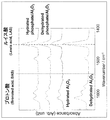
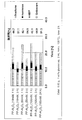
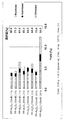
- the XRD spectrum of the aluminum oxide obtained in Reference Example 1 is shown. Showing a solid NMR (31 P MAS NMR) spectrum of the phosphating aluminum oxide. 2 shows FTIR spectra of aluminum oxide and phosphated aluminum oxide. The result of glucose to fructose conversion reaction using phosphoric acid-treated aluminum oxide is shown. The correlation between glucose conversion and fructose selectivity is shown. The result of glucose to fructose conversion reaction using phosphoric acid-treated aluminum oxide is shown. The result of glucose to fructose conversion reaction using phosphoric acid-treated aluminum oxide is shown. The result of glucose to fructose conversion reaction using phosphoric acid-treated aluminum oxide is shown.
- the catalyst of the present invention is a solid catalyst for hydride isomerization reaction from glucose to fructose in water or an aqueous solution composed of a Group 13 element oxide whose surface is subjected to phosphoric acid treatment.
- Examples of the Group 13 element oxide include aluminum oxide, gallium oxide, indium oxide, and thallium oxide.
- Examples of aluminum oxide include ⁇ -alumina, ⁇ -alumina, ⁇ -alumina, ⁇ -alumina, ⁇ -alumina, and boehmite, with ⁇ -alumina being particularly preferred.
- As the gallium oxide ⁇ -Ga 2 O 3, ⁇ -Ga 2 O 3, ⁇ -Ga 2 O 3, ⁇ -Ga 2 O 3, ⁇ -Ga 2 O 3 but may be mentioned, ⁇ -Ga 2 O 3 is more preferable.
- Indium oxide may be In 2 O 3
- thallium oxide may be Tl 2 O 3 .
- aluminum oxide is preferable in terms of availability.
- the phosphoric acid treatment on the surface of the group 13 element oxide may be performed by treating the group 13 element oxide with a phosphoric acid aqueous solution at 50 ° C. or less, for example. Specifically, the Group 13 element oxide may be stirred in a phosphoric acid aqueous solution at 50 ° C. or lower. If phosphoric acid treatment is performed at a high temperature, phosphorylation proceeds not only to the surface but also to the inside of the Group 13 element oxide, which is not preferable because the function as a Lewis acid catalyst is reduced. Here, it can be confirmed by solid-state NMR that only the surface is phosphorylated.
- the concentration of the phosphoric acid aqueous solution used may be 1 mM or more, preferably 1 mM to 100 mM, more preferably 10 mM to 100 mM.
- the molar ratio of the Group 13 element oxide and phosphoric acid used is not particularly limited as long as a part of the surface of the Group 13 element oxide is subjected to phosphoric acid treatment. In contrast, 0.0001 mol or more of phosphoric acid may be used, and 0.0001 to 1 mol is more preferable.
- the treatment temperature is preferably 50 ° C. or less, more preferably from 0 to 50 ° C., and more preferably from 10 to 40 ° C. because it is economical.
- the treatment time may be stirred for 5 minutes or more, preferably about 5 minutes to 48 hours, more preferably 15 minutes to 24 hours.
- the Group 13 element oxide whose surface is phosphoric acid-treated may be separated from the mixed solution by filtration or the like.
- phosphoric acid is immobilized on the surface of the group 13 element oxide.
- phosphoric acid is bound to the surface of the Group 13 element oxide, and phosphoric acid is considered to be bound as —OP ( ⁇ O) (OH) 2 .
- the bond can be confirmed by solid state NMR.
- the phosphoric acid treatment does not proceed inside the Group 13 element oxide. Note that the entire surface of the Group 13 element oxide does not need to be subjected to phosphoric acid treatment, and 0.00001 mol% or more of phosphoric acid may be fixed with respect to the Group 13 element oxide. It is preferable that ⁇ 0.003 mol% phosphoric acid is fixed, and more preferably 0.0003 to 0.0015 mol% phosphoric acid is fixed.
- the Group 13 element oxide whose surface is phosphorylated desirably has a surface phosphorylated and maintains a sufficient Lewis acid amount on the surface. Since the surface has a sufficient amount of Lewis acid and the surface is phosphorylated, the reaction from glucose to fructose proceeds selectively and side reactions can be suppressed.
- the Lewis acid amount on the surface of the solid catalyst of the present invention is 80% or more of the Lewis acid amount of the surface dehydrated group 13 element oxide that has not been subjected to phosphoric acid treatment, and further 85% when the surface is hydrated. It is preferable to maintain the above. More preferably, the Lewis acid amount is maintained at 80 to 95%, more preferably 85 to 95%.
- the Lewis acid amount can be measured by an FTIR spectrum of a sample on which pyridine is adsorbed.
- the Lewis acid amount was higher than that of the surface dehydrated product.
- the particle diameter of the Group 13 element oxide whose surface has been subjected to phosphoric acid treatment is not particularly limited, but is almost the same as that of the Group 13 element oxide particle as a raw material, and is preferably 0.1 to 100 ⁇ m, for example. 100 ⁇ m is more preferable, and 1 to 10 ⁇ m is more preferable.
- the group 13 element oxide whose surface is subjected to phosphoric acid treatment is a solid, and after use as a catalyst, it can be easily separated and recovered from the reaction mixture by filtration or the like, and can be reused. Useful as a catalyst.
- the group 13 element oxide whose surface has been subjected to phosphoric acid treatment is useful as a solid catalyst for hydride isomerization reaction from glucose to fructose in water or in an aqueous solution.
- the functionality in water or an aqueous solution is a function of catalyzing a reaction in water or an aqueous solution, and includes a case where the reaction is performed in an aqueous phase even in a mixed solution of water and an organic solvent. It is.
- few solid Lewis acid catalysts function in water or aqueous solutions.
- the catalyst of the present invention acts as a Lewis acid catalyst for the hydride isomerization reaction from glucose to fructose.
- the catalyst of the present invention is allowed to act on glucose in water or an aqueous solution, side reactions are suppressed, hydride isomerization reaction proceeds selectively, and fructose can be selectively produced.
- the concentration of glucose in the aqueous solution is not particularly limited, but is preferably 0.1 to 50% by mass, more preferably 0.1 to 20% by mass.
- the amount of the catalyst to be used is preferably 0.01 to 10 g, more preferably 0.1 to 1 g, per 1 g of glucose.
- the reaction temperature is preferably 50 to 180 ° C, more preferably 100 to 130 ° C.
- the reaction time is preferably 15 minutes to 24 hours, more preferably 30 minutes to 10 hours.
- fructose is selectively produced from glucose, the production rate of HMF is small, and other complicated side reactions are suppressed.
- This selectivity for fructose production is much better than when Sn-containing beta zeolite described in Non-Patent Document 1 or aluminum phosphate described in Non-Patent Document 2 is used.
- FIG. 1 shows the X-ray diffraction spectrum (XRD) of the obtained aluminum oxide
- Table 1 shows the BET specific surface area and the crystal phase by XRD.
- Al-200 to Al-1100 in the table indicate aluminum oxides obtained at a firing temperature of 200 to 1100 ° C., respectively.
- Example 1 (1) 5 g of the aluminum oxide produced in Reference Example 1 was stirred in 200 mL of a 0.1 M aqueous phosphoric acid solution at 25 ° C. for 24 hours. After filtration, it was dried to obtain 5.1 g of phosphoric acid-treated aluminum oxide. X-ray fluorescence analysis reveals that 5% by mass of phosphoric acid is contained.
- the Lewis acid amount of phosphoric acid-treated aluminum oxide (hydrated) maintained 88% of the acid amount of dehydrated aluminum oxide. Further, the Lewis acid amount of phosphoric acid-treated aluminum oxide (hydrated) was higher than that of phosphoric acid-treated aluminum oxide (dehydrated). Thus, since the amount of Lewis acid of the hydrated phosphated aluminum is sufficiently high, it has been found that the phosphated aluminum is useful as a Lewis acid catalyst in water or in an aqueous solution.
- Example 2 5 g of gallium oxide or indium oxide produced in Reference Example 2 was stirred at 25 ° C. for 24 hours in 200 mL of a 0.1 M aqueous phosphoric acid solution. After filtration, it was dried to obtain 4.5 g of phosphoric acid-treated gallium oxide or phosphoric acid-treated indium oxide.
- Example 3 0.02 g of glucose, 2 g of water and 0.05 g of phosphoric acid-treated aluminum oxide were put in a reaction vessel and stirred at 120 ° C. for 2 hours. The reaction solution was analyzed by high performance liquid chromatography. The result is shown in FIG. FIG. 4 also shows the results when aluminum oxide not subjected to phosphoric acid treatment is used as a catalyst.
- Al represents aluminum oxide, and the number behind it represents the firing temperature.
- 0.1MPP indicates 0.1M phosphoric acid treatment.
- FIG. 4 when using phosphoric acid-treated aluminum oxide, complex by-products (unknoun) are remarkably reduced, and fructose selectivity is remarkable. It has improved. Further, the correlation between the glucose conversion rate and the fructose selectivity is shown in FIG. FIG. 5 shows that the selectivity from glucose to fructose is significantly improved by using the catalyst of the present invention.
- Example 4 0.05 g of phosphoric acid-treated aluminum oxide (aluminium oxide calcined at 600 ° C., stirred at 10 ° C. to 100 mM phosphoric acid aqueous solution at 25 ° C. for 1 to 24 hours) was added to 1% by weight glucose aqueous solution, and 120 ° C. for 2 hours. Stir. The reaction solution was analyzed by high performance liquid chromatography. The result is shown in FIG. In the figure, the description in parentheses for PP-Al 2 O 3 indicates the conditions for the phosphoric acid treatment. In the figure, the selectivity indicates the fructose selectivity.
- FIG. 6 shows that high fructose selectivity was obtained even when the phosphating conditions of aluminum oxide were changed.
- Example 5 The reaction was performed in the same manner as in Example 4 except that the reaction temperature of glucose was changed from 120 ° C to 100 ° C. The result is shown in FIG. The symbols and selectivity in the figure are the same as in FIG. In addition, the sample of * in the figure has a glucose reaction time of 6 hours.
- the glucose reaction temperature showed high fructose selectivity even at 100 ° C. as in the case of 120 ° C.
- Example 6 Add 0.05 g of gallium oxide and indium oxide (sample calcined at 400 ° C.) and phosphoric acid-treated product (sample stirred with 100 mM phosphoric acid aqueous solution at 25 ° C. for 48 hours) to 1 mass% glucose aqueous solution (2 mL). , And stirred at 120 ° C. for 2 hours. The reaction solution was analyzed by high performance liquid chromatography. The results are shown in Table 4.
- the fructose selectivity is remarkably improved when the phosphoric acid-treated sample is used as compared with the case where gallium oxide and indium oxide not subjected to phosphoric acid treatment are used.
Landscapes
- Chemical & Material Sciences (AREA)
- Organic Chemistry (AREA)
- Engineering & Computer Science (AREA)
- Chemical Kinetics & Catalysis (AREA)
- Materials Engineering (AREA)
- Molecular Biology (AREA)
- General Health & Medical Sciences (AREA)
- Genetics & Genomics (AREA)
- Health & Medical Sciences (AREA)
- Biotechnology (AREA)
- Biochemistry (AREA)
- Life Sciences & Earth Sciences (AREA)
- Catalysts (AREA)
- Organic Low-Molecular-Weight Compounds And Preparation Thereof (AREA)
- Low-Molecular Organic Synthesis Reactions Using Catalysts (AREA)
- Saccharide Compounds (AREA)
Abstract
Priority Applications (4)
| Application Number | Priority Date | Filing Date | Title |
|---|---|---|---|
| EP15762249.9A EP3117902A4 (fr) | 2014-03-11 | 2015-03-10 | Catalyseur solide pour réaction d'isomérisation d'hydrure dans un milieu aqueux |
| JP2016507762A JP6444986B2 (ja) | 2014-03-11 | 2015-03-10 | 水媒体中ヒドリド異性化反応用固体触媒 |
| US15/124,939 US10336783B2 (en) | 2014-03-11 | 2015-03-10 | Solid catalyst for hydride isomerization reaction in an aqueous medium |
| CN201580012750.3A CN106102907B (zh) | 2014-03-11 | 2015-03-10 | 水介质中氢化物异构化反应用固体催化剂 |
Applications Claiming Priority (2)
| Application Number | Priority Date | Filing Date | Title |
|---|---|---|---|
| JP2014047270 | 2014-03-11 | ||
| JP2014-047270 | 2014-03-11 |
Publications (1)
| Publication Number | Publication Date |
|---|---|
| WO2015137339A1 true WO2015137339A1 (fr) | 2015-09-17 |
Family
ID=54071782
Family Applications (1)
| Application Number | Title | Priority Date | Filing Date |
|---|---|---|---|
| PCT/JP2015/057015 Ceased WO2015137339A1 (fr) | 2014-03-11 | 2015-03-10 | Catalyseur solide pour réaction d'isomérisation d'hydrure dans un milieu aqueux |
Country Status (5)
| Country | Link |
|---|---|
| US (1) | US10336783B2 (fr) |
| EP (1) | EP3117902A4 (fr) |
| JP (1) | JP6444986B2 (fr) |
| CN (1) | CN106102907B (fr) |
| WO (1) | WO2015137339A1 (fr) |
Families Citing this family (1)
| Publication number | Priority date | Publication date | Assignee | Title |
|---|---|---|---|---|
| CN108610311B (zh) * | 2018-05-30 | 2021-12-10 | 盐城工学院 | 一种薄水铝石低温催化葡萄糖制备5-羟甲基糠醛的方法 |
Citations (5)
| Publication number | Priority date | Publication date | Assignee | Title |
|---|---|---|---|---|
| JP2007196174A (ja) * | 2006-01-28 | 2007-08-09 | Osaka Industrial Promotion Organization | 不均一系リン酸ジルコニウム触媒、脱水反応方法、5−ヒドロキシメチルフルフラール製造方法、セルロース分解方法、及び不均一系リン酸ジルコニウム触媒の再生方法 |
| WO2012108472A1 (fr) * | 2011-02-08 | 2012-08-16 | 財団法人神奈川科学技術アカデミー | Oxyde de titane aqueux amorphe et catalyseur acide solide de lewis contenant cet oxyde |
| JP2013006142A (ja) * | 2011-06-23 | 2013-01-10 | Toshiba Corp | 植物系材料の加水分解用触媒及び糖類の製造方法 |
| WO2013030132A1 (fr) * | 2011-08-26 | 2013-03-07 | Centre National De La Recherche Scientifique (C.N.R.S) | Procede d'isomerisation du glucose en fructose |
| JP2013517288A (ja) * | 2010-01-15 | 2013-05-16 | カリフォルニア インスティチュート オブ テクノロジー | 糖の異性化 |
Family Cites Families (13)
| Publication number | Priority date | Publication date | Assignee | Title |
|---|---|---|---|---|
| US5139759A (en) * | 1991-12-19 | 1992-08-18 | Uop | Synthesis of zeolite beta |
| DE4238493C1 (de) | 1992-11-14 | 1994-04-21 | Degussa | Verfahren zur Herstellung von Acrolein und dessen Verwendung |
| US5985790A (en) * | 1994-12-07 | 1999-11-16 | Project Earth Industries, Inc. | Method of making acid contacted enhanced aluminum oxide adsorbent particle |
| EP0914199A1 (fr) | 1996-06-12 | 1999-05-12 | Project Earth Industries, Inc. | Systeme d'adsorbant ameliore mis en contact avec de l'acide et/ou de catalyseur et de liant |
| US6034017A (en) | 1998-04-06 | 2000-03-07 | Coastal Catalyst Technology, Inc. | Use of phosphrous to enhance the acid sites of FCC catalysts |
| KR100461758B1 (ko) * | 2002-09-16 | 2004-12-14 | 한국화학연구원 | 폐가스 중의 과불화화합물 분해제거용 촉매와 이를 이용한폐가스중의 과불화화합물 분해제거 방법 |
| US7916700B2 (en) * | 2004-06-30 | 2011-03-29 | Nokia Corporation | Dynamic service information for the access network |
| FR2882053B1 (fr) | 2005-02-15 | 2007-03-23 | Arkema Sa | Procede de deshydratation du glycerol en acrolene |
| EP1959022B1 (fr) * | 2005-11-30 | 2011-08-24 | Shinshu University | Detection d un leiomyosarcome uterin au moyen de lmp2 |
| US7977517B2 (en) | 2007-03-08 | 2011-07-12 | Virent Energy Systems, Inc. | Synthesis of liquid fuels and chemicals from oxygenated hydrocarbons |
| JP5635752B2 (ja) | 2009-09-25 | 2014-12-03 | 日本ケッチェン株式会社 | 水素化処理触媒の製造方法、並びに当該触媒を用いる炭化水素油の水素化処理方法 |
| ES2581324T5 (es) * | 2010-01-15 | 2019-11-28 | California Inst Of Techn | Isomerización de azúcares |
| US8642791B2 (en) * | 2011-12-07 | 2014-02-04 | Wisconsin Alumni Research Foundation | Lewis and bronsted-lowry acid-catalyzed production 5-hydroxymethylfurfural (HMF) from glucose |
-
2015
- 2015-03-10 EP EP15762249.9A patent/EP3117902A4/fr not_active Withdrawn
- 2015-03-10 WO PCT/JP2015/057015 patent/WO2015137339A1/fr not_active Ceased
- 2015-03-10 CN CN201580012750.3A patent/CN106102907B/zh not_active Expired - Fee Related
- 2015-03-10 US US15/124,939 patent/US10336783B2/en active Active
- 2015-03-10 JP JP2016507762A patent/JP6444986B2/ja not_active Expired - Fee Related
Patent Citations (5)
| Publication number | Priority date | Publication date | Assignee | Title |
|---|---|---|---|---|
| JP2007196174A (ja) * | 2006-01-28 | 2007-08-09 | Osaka Industrial Promotion Organization | 不均一系リン酸ジルコニウム触媒、脱水反応方法、5−ヒドロキシメチルフルフラール製造方法、セルロース分解方法、及び不均一系リン酸ジルコニウム触媒の再生方法 |
| JP2013517288A (ja) * | 2010-01-15 | 2013-05-16 | カリフォルニア インスティチュート オブ テクノロジー | 糖の異性化 |
| WO2012108472A1 (fr) * | 2011-02-08 | 2012-08-16 | 財団法人神奈川科学技術アカデミー | Oxyde de titane aqueux amorphe et catalyseur acide solide de lewis contenant cet oxyde |
| JP2013006142A (ja) * | 2011-06-23 | 2013-01-10 | Toshiba Corp | 植物系材料の加水分解用触媒及び糖類の製造方法 |
| WO2013030132A1 (fr) * | 2011-08-26 | 2013-03-07 | Centre National De La Recherche Scientifique (C.N.R.S) | Procede d'isomerisation du glucose en fructose |
Non-Patent Citations (1)
| Title |
|---|
| See also references of EP3117902A4 * |
Also Published As
| Publication number | Publication date |
|---|---|
| JPWO2015137339A1 (ja) | 2017-04-06 |
| US20170022238A1 (en) | 2017-01-26 |
| CN106102907A (zh) | 2016-11-09 |
| JP6444986B2 (ja) | 2018-12-26 |
| US10336783B2 (en) | 2019-07-02 |
| EP3117902A1 (fr) | 2017-01-18 |
| EP3117902A4 (fr) | 2017-11-15 |
| CN106102907B (zh) | 2019-05-10 |
Similar Documents
| Publication | Publication Date | Title |
|---|---|---|
| Jiménez-Morales et al. | Mesoporous tantalum oxide as catalyst for dehydration of glucose to 5-hydroxymethylfurfural | |
| Lima et al. | Dehydration of d-xylose into furfural catalysed by solid acids derived from the layered zeolite Nu-6 (1) | |
| Dias et al. | Exfoliated titanate, niobate and titanoniobate nanosheets as solid acid catalysts for the liquid-phase dehydration of D-xylose into furfural | |
| Jain et al. | Conversion of fructose, glucose and sucrose to 5-hydroxymethyl-2-furfural over mesoporous zirconium phosphate catalyst | |
| Russo et al. | Solid acids with SO 3 H groups and tunable surface properties: versatile catalysts for biomass conversion | |
| Ordomsky et al. | Glucose dehydration to 5-hydroxymethylfurfural over phosphate catalysts | |
| Jiménez-Morales et al. | Selective dehydration of glucose to 5-hydroxymethylfurfural on acidic mesoporous tantalum phosphate | |
| Dias et al. | Acidic cesium salts of 12-tungstophosphoric acid as catalysts for the dehydration of xylose into furfural | |
| Jiménez-Morales et al. | Production of 5-hydroxymethylfurfural from glucose using aluminium doped MCM-41 silica as acid catalyst | |
| Ordomsky et al. | Glucose Dehydration to 5‐Hydroxymethylfurfural in a Biphasic System over Solid Acid Foams | |
| Atanda et al. | Catalytic behaviour of TiO 2–ZrO 2 binary oxide synthesized by sol–gel process for glucose conversion to 5-hydroxymethylfurfural | |
| Raveendra et al. | Selective etherification of hydroxymethylfurfural to biofuel additives over Cs containing silicotungstic acid catalysts | |
| Rao et al. | Simple and green route for preparation of tin phosphate catalysts by solid-state grinding for dehydration of glucose to 5-hydroxymethylfurfural (HMF) | |
| Das et al. | Exploring the promotional effects of K, Sr, and Mg on the catalytic stability of red mud for the synthesis of glycerol carbonate from renewable glycerol | |
| Oliveira et al. | Limonene oxidation over V2O5/TiO2 catalysts | |
| Aellig et al. | When catalyst meets reactor: continuous biphasic processing of xylan to furfural over GaUSY/Amberlyst-36 | |
| RU2656104C2 (ru) | Катализатор, предназначенный для окислительного дегидрирования бутена с получением бутадиена, и способ его получения | |
| Sadaba et al. | Catalytic dehydration of xylose to furfural: vanadyl pyrophosphate as source of active soluble species | |
| Wei et al. | Fast pyrolysis of cellulose with solid acid catalysts for levoglucosenone | |
| Bhaumik et al. | Effects of careful designing of SAPO-44 catalysts on the efficient synthesis of furfural | |
| Ghodke et al. | Solvent free synthesis of coumarins using environment friendly solid acid catalysts | |
| US9045449B2 (en) | Method for the manufacture of furan compounds for renewable primary products | |
| Zhang et al. | The effect of P/Ta ratio on sorbitol dehydration over modified tantalum oxide by phosphoric acid | |
| EP2945738A1 (fr) | Catalyseur de déshydrogénation contenant du manganèse, son utilisation et son procédé de préparation | |
| Hua et al. | Preparation of solid acid catalyst packing AAO/SBA-15-SO3H and application for dehydration of xylose to furfural |
Legal Events
| Date | Code | Title | Description |
|---|---|---|---|
| 121 | Ep: the epo has been informed by wipo that ep was designated in this application |
Ref document number: 15762249 Country of ref document: EP Kind code of ref document: A1 |
|
| ENP | Entry into the national phase |
Ref document number: 2016507762 Country of ref document: JP Kind code of ref document: A |
|
| REEP | Request for entry into the european phase |
Ref document number: 2015762249 Country of ref document: EP |
|
| WWE | Wipo information: entry into national phase |
Ref document number: 2015762249 Country of ref document: EP |
|
| WWE | Wipo information: entry into national phase |
Ref document number: 15124939 Country of ref document: US |
|
| NENP | Non-entry into the national phase |
Ref country code: DE |
|
| WWE | Wipo information: entry into national phase |
Ref document number: IDP00201606801 Country of ref document: ID |