WO2015137366A1 - Procédé de production d'un hydrolysat de résine de polyester - Google Patents
Procédé de production d'un hydrolysat de résine de polyester Download PDFInfo
- Publication number
- WO2015137366A1 WO2015137366A1 PCT/JP2015/057069 JP2015057069W WO2015137366A1 WO 2015137366 A1 WO2015137366 A1 WO 2015137366A1 JP 2015057069 W JP2015057069 W JP 2015057069W WO 2015137366 A1 WO2015137366 A1 WO 2015137366A1
- Authority
- WO
- WIPO (PCT)
- Prior art keywords
- hydrolyzate
- pressure
- container
- resistant container
- hydrolysis
- Prior art date
- Legal status (The legal status is an assumption and is not a legal conclusion. Google has not performed a legal analysis and makes no representation as to the accuracy of the status listed.)
- Ceased
Links
Images





Classifications
-
- C—CHEMISTRY; METALLURGY
- C07—ORGANIC CHEMISTRY
- C07C—ACYCLIC OR CARBOCYCLIC COMPOUNDS
- C07C51/00—Preparation of carboxylic acids or their salts, halides or anhydrides
- C07C51/09—Preparation of carboxylic acids or their salts, halides or anhydrides from carboxylic acid esters or lactones
-
- C—CHEMISTRY; METALLURGY
- C08—ORGANIC MACROMOLECULAR COMPOUNDS; THEIR PREPARATION OR CHEMICAL WORKING-UP; COMPOSITIONS BASED THEREON
- C08J—WORKING-UP; GENERAL PROCESSES OF COMPOUNDING; AFTER-TREATMENT NOT COVERED BY SUBCLASSES C08B, C08C, C08F, C08G or C08H
- C08J11/00—Recovery or working-up of waste materials
- C08J11/04—Recovery or working-up of waste materials of polymers
- C08J11/10—Recovery or working-up of waste materials of polymers by chemically breaking down the molecular chains of polymers or breaking of crosslinks, e.g. devulcanisation
- C08J11/14—Recovery or working-up of waste materials of polymers by chemically breaking down the molecular chains of polymers or breaking of crosslinks, e.g. devulcanisation by treatment with steam or water
-
- C—CHEMISTRY; METALLURGY
- C08—ORGANIC MACROMOLECULAR COMPOUNDS; THEIR PREPARATION OR CHEMICAL WORKING-UP; COMPOSITIONS BASED THEREON
- C08J—WORKING-UP; GENERAL PROCESSES OF COMPOUNDING; AFTER-TREATMENT NOT COVERED BY SUBCLASSES C08B, C08C, C08F, C08G or C08H
- C08J2367/00—Characterised by the use of polyesters obtained by reactions forming a carboxylic ester link in the main chain; Derivatives of such polymers
- C08J2367/02—Polyesters derived from dicarboxylic acids and dihydroxy compounds
-
- Y—GENERAL TAGGING OF NEW TECHNOLOGICAL DEVELOPMENTS; GENERAL TAGGING OF CROSS-SECTIONAL TECHNOLOGIES SPANNING OVER SEVERAL SECTIONS OF THE IPC; TECHNICAL SUBJECTS COVERED BY FORMER USPC CROSS-REFERENCE ART COLLECTIONS [XRACs] AND DIGESTS
- Y02—TECHNOLOGIES OR APPLICATIONS FOR MITIGATION OR ADAPTATION AGAINST CLIMATE CHANGE
- Y02W—CLIMATE CHANGE MITIGATION TECHNOLOGIES RELATED TO WASTEWATER TREATMENT OR WASTE MANAGEMENT
- Y02W30/00—Technologies for solid waste management
- Y02W30/50—Reuse, recycling or recovery technologies
- Y02W30/62—Plastics recycling; Rubber recycling
Definitions
- the present invention relates to an apparatus for producing a hydrolyzate of a polyester-based resin, for example, a processing apparatus for obtaining raw material terephthalic acid from polyethylene terephthalate molded articles such as beverage bottles, films and sheets.
- Polyester resins are widely used for various applications because of their excellent properties.
- PET polyethylene terephthalate
- life-related materials such as fibers, films, and resins, especially as bottles for drinking water and carbonated drinks because of its excellent chemical stability.
- disposal of fibers, films, resin product waste, non-standard molded products, etc., which are generated in large quantities with increasing production and usage, is now becoming a major social problem, and resources are effective.
- a method for effectively recycling these polyester-based resin molded products is required. As such a recycling method, various methods such as material recycling and chemical recycling have been proposed.
- Material recycling has the problem that the quality deteriorates due to its heat history because it is recycled at a high temperature without decomposing the polyester resin.
- a component (impurity) other than the polyester-based resin is contained, it is difficult to completely remove the impurity, and there is a problem that the quality further deteriorates. Therefore, it is difficult to obtain the same quality as the polyester-based resin before recycling except in some cases (such as using the runner generated during injection molding as it is after pulverization).
- chemical recycling can generally be classified into four types: (1) conversion to raw materials, (2) conversion to reducing agents, (3) gas / oil conversion, and (4) thermal recycling.
- the use of raw materials is advantageous because a material having the same quality as that of the polyester resin before recycling can be obtained.
- Patent Document 1 as an example of making polyethylene terephthalate as a raw material, polyethylene terephthalate is decomposed to dimethyl terephthalate and further to terephthalic acid by ethylene glycol (EG) decomposition / methanol treatment, and again polycondensed with EG.
- EG ethylene glycol
- Patent Document 2 reports that terephthalic acid is obtained in 100% yield in 10 minutes when terephthalic acid is added to polyethylene terephthalate resin and hydrolyzed in hot water at 300 ° C.
- the to-be-processed object containing polyethylene terephthalate resin is exposed in the water vapor
- the said to-be-processed object is by the saturated water vapor
- a method is disclosed in which a polyethylene terephthalate resin contained therein is hydrolyzed to separate and collect ethylene glycol as a gas or liquid component and terephthalic acid as a solid component.
- Patent Document 1 has problems such as complicated operations and high costs, and a large amount of capital investment.
- the method of Patent Document 2 is a high temperature of 150 to 350 ° C. with no dicarboxylic acid added. It has been shown that when polyester is hydrolyzed in water, it cannot be sufficiently hydrolyzed, suggesting that dicarboxylic acid as a hydrolysis catalyst is indispensable for hydrolysis in high-temperature water.
- the method of Patent Document 3 has to prepare a pressure-resistant processing chamber provided with a stirring means inside and a cooling tower for recovering ethylene glycol, and the apparatus is large and there is room for improvement.
- a polyethylene terephthalate resin contains an impurity, there exists a problem that the quality of the collect
- Polyester resins use limited petroleum resources, and the establishment of chemical recycling technology for polyester resin waste is an urgent issue in order to build a society that can sustain its supply.
- an object of the present invention is to treat an object to be treated containing a polyester resin by chemical recycling technology without using a large-scale apparatus or cost, and without using a special hydrolysis catalyst.
- Another object of the present invention is to provide an apparatus for producing a hydrolyzate of a polyester resin that realizes a method for treating an object to be treated, capable of recovering the constituent materials of the above.
- the present inventors first exposed a hydrolyzed polyester resin molded article (object to be treated) to a water vapor atmosphere to obtain a first hydrolyzate, and this It has been found that the above-mentioned problem can be solved by having a two-step process of hydrolyzing the first hydrolyzate in hot water, and has completed the present invention.
- the present invention is achieved by the following (1) to (9).
- An object to be treated containing a polyester-based resin is exposed to a water vapor atmosphere to be hydrolyzed, and a first hydrolyzate for generating a first hydrolyzate, and the first hydrolyzate in hot water
- a second hydrolyzing part that further hydrolyzes the first hydrolyzate to produce a second hydrolyzate, the first hydrolyzate and the first hydrolyzate
- a pressure-resistant container that delimits the closed space and can store the object to be processed is provided, and the first hydrolysis section and the second hydrolysis section are defined inside the pressure-resistant container.
- the first hydrolysis unit is configured of a first container that is disposed inside the pressure-resistant container and can accommodate the object to be processed.
- the first container includes a hole that allows the first hydrolyzate to pass therethrough.
- Said (3) said 2nd hydrolysis part is comprised inside said pressure-resistant container, and is arrange
- the pressure-resistant container includes an inclined surface inclined along the height direction of the pressure-resistant container, and the first hydrolysis unit and the second hydrolysis unit are on the upper surface of the inclined surface.
- the manufacturing apparatus according to (2) defined.
- the pressure-resistant container includes a heater.
- the pressure-resistant container includes an inlet capable of injecting water into the pressure-resistant container.
- An apparatus for producing a hydrolyzate of a polyester resin comprises: a first hydrolyzing unit that generates a first hydrolyzate by subjecting an object to be treated containing a polyester resin to hydrolysis by exposing it to a water vapor atmosphere; The first hydrolyzate is placed in hot water and heated, and the first hydrolyzate is further hydrolyzed to produce a second hydrolyzate.
- the first hydrolyzing unit and the second hydrolyzing unit are realized in one continuous closed space.
- the polyester system resin in a processed material is decomposed with water vapor, and it oligomerizes.
- polyester resin which is used in a large amount and is difficult to process due to its amount, such as polyethylene terephthalate, polyethylene naphthalate, polybutylene terephthalate, polybutylene naphthalate or polytrimethylene terephthalate is used as the object to be treated.
- the constituent materials can be recovered with high quality without cost.
- the polyester-based resin is polyethylene terephthalate (PET)
- PET polyethylene terephthalate
- the first hydrolyzing unit cleaves a bond such as an ester bond of PET by hydrolysis, and an oligomer including an ethylene glycol unit and a terephthalic acid unit are obtained.
- the oligomer is hydrolyzed into ethylene glycol monomer units and terephthalic acid monomer units in hot water by the second hydrolysis unit, the ethylene glycol monomer units are dissolved in hot water, and the terephthalic acid monomer units are heated in hot water. It becomes possible to collect each in a high yield.
- the stirring means and the cooling tower described in Patent Document 3 are not required, and the cost is low. It is possible to process with high quality and high recovery rate.
- FIG. 1 is a flowchart for explaining a method for producing a hydrolyzate of a polyester resin of the present invention.
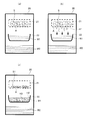
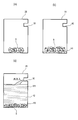
- 2 (a) to 2 (c) are diagrams for explaining a manufacturing method according to a preferred embodiment of the present invention.
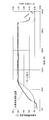
- FIG. 3 is a graph showing the heat history of the water vapor atmosphere temperature in the pressure-resistant vessel and the change in gauge pressure after putting the object to be processed into the pressure-resistant vessel and starting the experiment in the example.
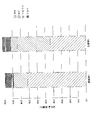
- FIG. 4 shows a hydrolyzate (solid) in the second container when 1 hour, 2 hours, 3 hours, and 5 hours have elapsed since the water vapor atmosphere temperature reached a constant temperature (about 206 ° C.) in the examples.
- FIG. 5 shows the composition of the hydrolyzate (solid) in the second container in 3 hours after the water vapor atmosphere temperature reached a constant temperature (about 206 ° C.) in Example 1 and Comparative Example 1. It is a graph which shows the result investigated by (1).
- FIG. 6 is a view for illustrating a first embodiment of the polyester resin hydrolyzate production apparatus of the present invention.
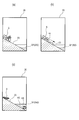
- FIG. 7 (a) to FIG. 7 (c) are views for showing a second embodiment of the polyester resin hydrolyzate production apparatus of the present invention.
- FIG. 8 (a) to FIG. 8 (c) are views for illustrating a third embodiment of the apparatus for producing a hydrolyzate of a polyester resin of the present invention.
- FIG. 9 (a) to FIG. 9 (c) are views for illustrating a fourth embodiment of the polyester resin hydrolyzate production apparatus of the present invention.
- FIG. 10 (a) to FIG. 10 (c) are views for illustrating a fifth embodiment of the apparatus for producing a hydrolyzate of a polyester resin of the present invention.
- the object to be treated (polyester-based resin molded product) containing the polyester-based resin used in the present invention is not particularly limited with respect to the type and raw materials other than the polyester-based resin contained therein, and is conventionally known or publicly used. It can be various processed objects.
- polyester resin for example, a thermoplastic resin having an ester bond site by a reaction (polycondensation) between a polyol component and a polycarboxylic acid component can be mentioned.
- the polyol component include ethylene glycol, 1, 3-trimethylene glycol, 1,4-butanediol, 2-methyl-1,3-propanediol, 1,5-pentanediol, neopentyl glycol, 2,2-dimethyl-1,3-propanediol, 1, 6-hexanediol, 3-methyl-1,5-pentanediol, 2-methyl-2,4-pentanediol, 1,7-heptanediol, 2,2-diethyl-1,3-propanediol, 2-methyl -2-propyl-1,3-propanediol, 2-methyl-1,6-hexanediol, 1,8-o Tandiol,
- polyether polyol examples include polyether diols such as polyethylene glycol obtained by ring-opening polymerization of ethylene oxide, propylene oxide, tetrahydrofuran and the like, polypropylene glycol, polytetramethylene glycol, and copolyether obtained by copolymerization thereof. Can be mentioned.
- examples of the polyol component include glycerin, trimethylolpropane, 1,2,4-butanetriol, 1,2,5-pentanetriol, 1,2,6-hexanetriol, pentaerythritol, dipentaerythritol, and the like.
- a trihydric or higher polyhydric alcohol may be used.
- polycarboxylic acid component examples include aromatic dicarboxylic acids such as terephthalic acid, isophthalic acid, phthalic acid, 2,6-naphthalenedicarboxylic acid, 1,4-naphthalenedicarboxylic acid, and 4,4′-biphenyldicarboxylic acid.
- aromatic dicarboxylic acids such as terephthalic acid, isophthalic acid, phthalic acid, 2,6-naphthalenedicarboxylic acid, 1,4-naphthalenedicarboxylic acid, and 4,4′-biphenyldicarboxylic acid.
- Aliphatic dicarboxylic acids such as oxalic acid, succinic acid, methyl succinic acid, glutaric acid, adipic acid, pimelic acid, azelaic acid, sebacic acid, 1,12-dodecanedioic acid, 1,14-tetradecanedioic acid, dimer acid;
- dicarboxylic acid components such as alicyclic dicarboxylic acids such as 1,4-cyclohexanedicarboxylic acid, 1,3-cyclohexanedicarboxylic acid, and 1,2-cyclohexanedicarboxylic acid.
- polycarboxylic acid component for example, 1,2,4-butanetricarboxylic acid, 1,2,5-hexanetricarboxylic acid, 1,2,4-cyclohexanetricarboxylic acid, trimellitic acid, pyromellitic acid, etc.
- a trivalent or higher polyvalent carboxylic acid may be used.
- the polycarboxylic acid component may be acid anhydrides or lower alkyl esters of these carboxylic acids.
- the polyol component and polycarboxylic acid component may be used alone or in combination of two or more.
- Biodegradable plastics such as polylactic acid, polybutylene succinate (PBS), polycaloplactone (PCL), polyhydroxyalkanoate (PHA), poly-3-hydroxybutyric acid (PHB) can also be used as the polyester resin.
- the polyester resin may be crosslinked with various crosslinking agents.
- the material to be treated containing the polyester-based resin in the present invention is not particularly limited, and various molded products, typically various molded products that have been used and should be reprocessed can be used. Examples thereof include fibers, films, sheets, bottles for drinking water and carbonated drinks, adhesive tapes, food trays, and the like.
- raw materials other than polyester resins such as various additives, depending on the form of use, but the present invention is not limited to the types of raw materials other than these polyester resins.
- raw materials other than polyester resins include known flame retardants, plasticizers, lubricants, colorants (pigments, dyes, etc.), ultraviolet absorbers, antioxidants, anti-aging agents, fillers, reinforcing agents, and antistatic agents. , Surfactants, tension modifiers, shrinkage inhibitors, fluidity modifiers, surface treatment agents, and the like.
- the various molded products can be laminates. That is, a laminate including a polyester resin layer and a layer other than the polyester resin may be used.
- a laminate of a polyester resin layer and a layer made of, for example, an acrylic adhesive, or a laminate provided with a release layer such as silicone In the present invention, even such a laminate can be treated.
- the ratio of the polyester resin in the object to be treated is, for example, 40% by mass or more, preferably 60% by mass or more.
- the object to be treated may be in the form as it is, but it has an appropriate size so that it can be efficiently decomposed into a hydrolyzate by the first step and the second step of the present invention described below. It is preferable to perform crushing or cutting and washing.
- the method for producing a hydrolyzate of a polyester resin according to the present invention includes a first step of obtaining a first hydrolyzate by subjecting an object to be treated containing a polyester resin to hydrolysis by exposing it to a water vapor atmosphere; And a second step of heating the first hydrolyzate in hot water to further hydrolyze the first hydrolyzate to obtain a second hydrolyzate.
- FIG. 1 is a flowchart for explaining a method for producing a hydrolyzate of a polyester resin of the present invention.
- the object to be treated is prepared, and the object to be treated is crushed or cut into an appropriate size as needed so that it can be efficiently decomposed into a hydrolyzate by the first step and the second step, and attached to the surface. Impurities and the like are removed by washing (steps S10 and S11).
- a two-stage hydrolysis reaction is performed on the workpiece by the first step and the second step (steps S12 and S13).
- first step an object to be treated containing a polyester resin is hydrolyzed by exposure to a steam atmosphere to obtain a first hydrolyzate.
- hydrolysis is a reaction in which when one bond is cleaved, the bond is ionically cleaved, and the H 2 O1 molecule is divided into H + and OH ⁇ and added to the cleavage position.
- the target first hydrolyzate and other impurities are separated by exposing the object to be treated to a water vapor atmosphere.
- disassembles and contains is made into a fluid state.
- the polyester-type resin contains the oligomer which decomposes
- the temperature (hereinafter, also referred to as “water vapor atmosphere temperature”) when the workpiece containing the polyester resin is exposed to the water vapor atmosphere is appropriately determined depending on the type of the polyester resin.
- the temperature is preferably 100 to 260 ° C, more preferably 120 to 260 ° C, still more preferably 140 to 260 ° C.
- the water vapor atmosphere temperature is preferably in the range of 150 to 260 ° C., for example, from the viewpoint of shortening the reaction time and melting point (melting point of polyethylene terephthalate: about 260 ° C.). More preferably, it is 180 to 260 ° C, and further preferably 200 to 260 ° C.
- the hydrolysis time is preferably, for example, 1 minute to 20 hours, more preferably 5 minutes to 10 hours.
- the molecular weight of the 1st hydrolyzate obtained can be reduced and the production
- the hydrolysis time is preferably in the range of, for example, 5 minutes to 20 hours, more preferably from the viewpoint of reducing the molecular weight and suppressing by-products. 10 minutes to 10 hours.
- the hydrolysis is preferably carried out under saturated steam pressure at the steam atmosphere temperature under pressure.
- the saturated water vapor pressure is, for example, preferably 0.4 to 5 MPa, and more preferably 1 to 5 MPa.
- the water vapor pressure is preferably increased along the saturated water vapor pressure curve, and such a step can prevent the polyester resin as the object to be treated from being carbonized or denatured.
- Various known means can be employed for the supply of water vapor.
- the polyester-based resin is polyethylene terephthalate
- the first hydrolyzate obtained in the first step includes an oligomer produced by the decomposition of polyethylene terephthalate (hereinafter, also simply referred to as “polyethylene terephthalate oligomer”). Including other intermediate products.
- the oligomer of polyethylene terephthalate is composed of, for example, 2 to 10 monomers (constituent units), and the weight average molecular weight of the oligomer is, for example, 200 to 1000.
- the viscosity of the first hydrolyzate obtained in the first step can be appropriately set depending on the type of the object to be treated and the degree of hydrolysis. Adjust the viscosity to such an extent that the first hydrolyzate can be passed through the hole of the first container on which the object is placed, and the first hydrolyzate and other impurities can be separated. Is preferred.
- An object to be treated containing a polyester resin is placed in a pressure-resistant container and placed in a first container having a hole that does not allow the object to be treated to pass through and allows the first hydrolyzate to pass through. Hydrolysis is preferably performed in this first container.
- the material of the first container is not particularly limited as long as it does not affect the reaction for obtaining the first hydrolyzate, but a container made of metal, ceramics or the like is used.
- the shape and size of the hole of the first container are not particularly limited as long as the object to be processed and the first hydrolyzate can be passed therethrough. Examples of the shape include a circle, a polygon, and an indeterminate shape, and the size (maximum length of pores) is preferably set as appropriate according to the viscosity of the first hydrolyzate.
- the first hydrolyzate is heated in hot water to further hydrolyze the first hydrolyzate to obtain a second hydrolyzate.
- the hydrolysis efficiency for obtaining the desired hydrolyzate can be increased, and water-soluble impurities mixed in the hydrolyzate can be extracted.
- the second hydrolyzate can be obtained with high purity.
- the second hydrolyzate is preferably a hydrolyzate containing a polyol component and a polycarboxylic acid component, which are constituent materials of the polyester resin. From the hydrolyzate containing the polyol component and the polycarboxylic acid component of the polyester-based resin, the polyol component and the polycarboxylic acid component can be recovered by a fractionation and purification process.
- the second step is preferably performed under pressure.
- the second step can be performed, for example, under the saturated water vapor pressure employed in the first step.
- the pressurizing condition is, for example, preferably 0.4 to 10 MPa, and more preferably 1 to 10 MPa.
- the temperature of hot water is preferably 150 to 300 ° C., for example, more preferably 180 to 300 ° C., and still more preferably 200 to 300 ° C.
- the heating time in hot water is, for example, preferably 1 minute to 20 hours, more preferably 5 minutes to 10 hours.
- the second hydrolyzate obtained in the second step is mostly ethylene glycol and terephthalic acid, which are constituent materials, and is otherwise hydrolyzed in the second step. It contains a small amount of polyethylene terephthalate oligomers and other intermediate products.
- the water-soluble ethylene glycol is dissolved in hot water, and the water-insoluble terephthalic acid is solid in the hot water and can be collected separately.
- the 1st hydrolyzate which passed the 1st container is accommodated in the 2nd container installed in the pressure-resistant container, and also hydrolyzes in hot water.
- the first hydrolyzate may be accommodated in a second container in which hot water has been put in advance, or hot water may be added to the first hydrolyzate in the second container. In either case, water may be used first instead of hot water, and then heated to become hot water having a temperature within the preferred range of the present invention. Furthermore, dew condensation water generated from water vapor can be used as a substitute for hot water.
- the material of the second container is not particularly limited as long as it does not affect the reaction for obtaining the second hydrolyzate, but a container made of metal, ceramics or the like is used.
- the polyester resin is polyethylene naphthalate
- the second hydrolyzate containing ethylene glycol and 2,6-naphthalenedicarboxylic acid is used.
- 1,4-butanediol and terephthalic acid are used.
- the second hydrolyzate containing 1,4-butanediol and 2,6-naphthalenedicarboxylic acid is used in the case of polytrimethylene terephthalate.
- a second hydrolyzate containing 1,3-propanediol and terephthalic acid can be obtained, and the polyol component and the polycarboxylic acid component can be separately recovered.
- the second hydrolyzate may be further purified by a known purification method, if necessary, and recovered after further increasing the purity.
- the second hydrolyzate after the second step includes a water-soluble hydrolyzate (for example, ethylene glycol) and a water-insoluble hydrolyzate (for example, terephthalic acid), as described above.
- the hydrolyzate is dissolved in hot water, and the water-insoluble hydrolyzate is not dissolved in hot water and becomes a solid (steps S14 and S17).
- the dissolved water-soluble hydrolyzate is subjected to a known purification treatment as necessary (step S15) and recovered (step S16).
- the solid water-insoluble hydrolyzate is similarly subjected to a known purification treatment as necessary (step S18) and recovered (step S19).
- the first step and the second step may be performed continuously as described below, or the first hydrolyzate obtained in the first step is once recovered and then this first step is recovered. You may employ
- the first step and the second step are continuously performed in a pressure resistant container.
- the pressure resistant container is preferably provided with a heater.
- the processing pressure and temperature in the first step and the second step can be arbitrarily adjusted. For example, as described above, an operation for increasing the water vapor along the saturated water vapor pressure curve can be easily performed. Note that the rise and fall of the pressure and temperature can be controlled by appropriately applying known control means.
- a first container provided with a hole that allows the first hydrolyzate to pass therethrough without passing an object to be processed in the pressure-resistant container, and a second container installed below the first container.
- the first process is performed on the workpiece in the first container, the first hydrolyzate that has passed through the first container is received by the second container, and the second hydrolyzate in the second container is subjected to the second process.
- a form in which two steps are performed is more preferable. According to this form, it becomes possible to process the processing object containing the polyester resin more simply, at low cost, with high quality and with a high recovery rate.
- FIG. 2 is a diagram for explaining the processing method according to the preferred embodiment of the present invention.
- the 1st container 21 and the 2nd container 22 are installed in the pressure-resistant container 20 provided with the heater (not shown).
- An object to be processed S is accommodated in the first container 21.
- hot water W1 is stored in the second container 22.
- Water W2 for generating water vapor is stored at the bottom of the pressure-resistant container 20.
- the steam may be supplied into the pressure-resistant container 20 by a steam generator provided outside (not shown).
- the first container 21 includes a hole A that does not allow the workpiece S to pass therethrough and allows the first hydrolyzate to pass therethrough.
- the object to be processed S is hydrolyzed to become the first hydrolyzate H1, and the first container 21 of the first container 21 as shown by the arrow.
- the dropped first hydrolyzate H1 is received in the hot water W1 in the second container 22 and is applied to the second step, whereby a second hydrolyzate is generated in the hot water W1.
- the water-soluble second hydrolyzate H2 when the second hydrolyzate includes a water-soluble hydrolyzate and a water-insoluble hydrolyzate, the water-soluble second hydrolyzate H2 is The water-insoluble second hydrolyzate H3 is not dissolved in the hot water W1 and becomes a solid. These second hydrolysates H2 and H3 are recovered by performing a known purification treatment as necessary.
- the workpiece S includes polyethylene terephthalate
- the water-soluble hydrolyzate contains ethylene glycol
- the water-insoluble hydrolyzate contains terephthalic acid.
- the high molecular weight residue S1 that has not been hydrolyzed in the first step remains without passing through the hole A.
- the first container 21 and the second container 22 are preferably made of metal that can sufficiently withstand the hydrolysis conditions of the first process and the second process.
- the first container 21 is a known punching metal or metal mesh. Etc. can be used.
- FIG. 6 shows a first embodiment of an apparatus for producing a hydrolyzate of a polyester resin according to the present invention.
- the parts of the pressure-resistant container 20, the first container 21, and the second container 22 are the same as those shown in FIG.
- the polyester resin hydrolyzate manufacturing apparatus includes at least a pressure-resistant container 20, a first container 21, and a second container 22.
- the pressure-resistant container 20 is formed of a material that can withstand a predetermined pressure, such as a metal such as stainless steel, and has a cylindrical shape, but the material and shape are not particularly limited.
- the pressure-resistant container 20 is provided with a lid (not shown), and when the operator opens the lid, the internal space of the pressure-resistant container 20 is exposed to the outside, and the object to be processed S, hot water, etc. are exposed to the internal space. It becomes possible to throw in.
- the pressure resistant container 20 may be provided with a discharge port through which water or the like can be discharged.
- the 1st container 21 exhibits the deep dish shape which can accommodate the to-be-processed object S, and the hole which does not allow the to-be-processed object S to pass through at least the bottom part and allows the 1st hydrolyzate H1 to pass through.
- Part A is provided.
- the first container 21 is fixed at an upper portion in the height direction in the internal space of the pressure-resistant container 20 by a support member (not shown) fixed to the inner wall of the pressure-resistant container 20.
- the material and shape of the first container 21 and the fixing position and fixing method in the pressure-resistant container 20 are not particularly limited.
- the hole A it is possible to form the hole A by adopting a known punching metal for the first container 21, but the material of the first container 21 is not limited to the punching metal, and other materials such as a wire mesh are used. A mesh material or a porous member can also be used.
- the number and shape of the holes A are not particularly limited.
- the second container 22 has a deep dish shape in which hot water W1 can be stored, and receives the first hydrolyzate H1 dropped from the first container 21.
- the second container 22 is fixed at a lower portion in the height direction in the internal space of the pressure resistant container 20 by a support member (not shown) fixed to the inner wall of the pressure resistant container 20.
- the material and shape of the second container 22 and the fixing position and fixing method in the pressure-resistant container 20 are not particularly limited.
- the pressure resistant container 20 is provided with a heater 30 and a valve 40, and is connected to a control device 50 for controlling the temperature and pressure inside the pressure resistant container 20.
- the control device 50 includes a temperature control unit 51 that controls the output of the heater 30 and a pressure control unit 52 that controls the operation of the valve 40.
- the amount of water vapor generated from the water W2 can be controlled by the temperature controller 51 controlling the output of the heater 30, and the processing pressure and temperature in the first step and the second step can be arbitrarily adjusted. can do.
- the pressure control unit 52 can control the opening / closing operation of the valve 40 to control the processing pressure in the first step and the second step more accurately, and in the case where the pressure becomes too high, Alternatively, the pressure can be lowered by opening the valve 40.
- the first container 21 is installed in the pressure resistant container 20, and unlike the first embodiment, the second container 22 is not installed.
- An object to be processed S is accommodated in the first container 21.
- Hot water W ⁇ b> 1 is stored at the bottom of the pressure resistant container 20.
- the hot water W1 also functions as water W2 that generates water vapor.
- the steam may be supplied into the pressure-resistant container 20 by a steam generator provided outside (not shown).
- the first container is provided with a hole A that allows the first hydrolyzate to pass through without passing the workpiece.
- the object to be processed S is hydrolyzed to become the first hydrolyzate H1, and the first container 21 of the first container 21 as shown by the arrow. Drop from hole A.
- the first hydrolyzate H1 that has fallen is received in the hot water W1 stored in the bottom of the pressure-resistant container 20, and is applied to the second step, whereby the second hydrolyzate is generated in the hot water W1.
- the water-soluble second hydrolyzate H2 is The water-insoluble second hydrolyzate H3 is not dissolved in the hot water W1 and becomes a solid.
- These second hydrolysates are subjected to a known purification treatment if necessary, and are collected separately.
- an inclined surface 23 is installed at the bottom of the pressure-resistant container 20, and unlike the embodiment described above, neither the first container 21 nor the second container 22 is installed.
- the workpiece S is disposed in the upper region of the inclined surface 23, and the hot water W ⁇ b> 1 is stored in the lower region of the inclined surface 23 at the bottom of the pressure-resistant container 20.
- the hot water W1 also functions as water W2 that generates water vapor.
- the steam may be supplied into the pressure-resistant container 20 by a steam generator provided outside (not shown).
- the inclined surface 23 only needs to be inclined along the height direction of the pressure-resistant container 20 as long as the workpiece S can be disposed on the upper surface and the hot water W1 can be stored.
- the position and the inclination angle inside the pressure resistant container 20 of the inclined surface 23 are not particularly limited.
- the workpiece S is hydrolyzed to become the first hydrolyzate H1, and the inclined surface 23 is slid as indicated by the arrow. Fall down.
- the lowered first hydrolyzate H1 is received in the hot water W1 stored in the lower region of the inclined surface 23, and is applied to the second step, whereby the second hydrolyzate is generated in the hot water W1.
- the water-soluble second hydrolyzate H2 is The water-insoluble second hydrolyzate H3 is not dissolved in the hot water W1 and becomes a solid.
- These second hydrolysates are subjected to a known purification treatment if necessary, and are collected separately.
- FIG. 9A a fourth embodiment of the manufacturing apparatus will be described with reference to FIG.
- the first container 21, the second container 22, and the inclined surface 23 are not installed in the present embodiment.
- the workpiece S is disposed at the bottom of the pressure resistant container 20.
- the hot water W1 and the water W2 are not stored in the pressure-resistant container 20 in advance.
- water vapor is supplied into the pressure-resistant container 20 by a water vapor generator (not shown) provided outside.
- the pressure vessel 20 is provided with a water inlet 60 through which water (or hot water) can be injected into the pressure vessel 20 at an arbitrary timing.
- water inlet 60 can also be installed in other embodiments.
- the second hydrolyzate includes a water-soluble hydrolyzate and a water-insoluble hydrolyzate
- the water-soluble second hydrolyzate H2 is dissolved in the hot water W1
- the water-insoluble hydrolyzate is water-insoluble.
- the second hydrolyzate H3 is not dissolved in the hot water W1 and becomes a solid.
- the 1st container 21, the 2nd container 22, and the inclined surface 23 are not installed similarly to 4th Embodiment.
- the to-be-processed object S and the hot water W1 are disposed at the bottom of the pressure-resistant container 20. However, at least a part of the workpiece S is exposed from the upper surface (water surface) of the hot water W1.
- the hot water W1 also functions as water W2 that generates water vapor.
- the steam may be supplied into the pressure-resistant container 20 by a steam generator provided outside (not shown).
- the portion exposed from the hot water W1 of the object to be processed S is exposed in the water vapor atmosphere, so that the first step is performed and hydrolyzed to obtain the first It becomes hydrolyzate H1.
- the first hydrolyzate H1 expands to fill the bottom of the pressure-resistant container 20 as indicated by an arrow, and is received in the hot water W1 stored in the bottom of the pressure-resistant container 20, and the second step. To produce a second hydrolyzate in hot water W1.
- the water-soluble second hydrolyzate H2 is The water-insoluble second hydrolyzate H3 is not dissolved in the hot water W1 and becomes a solid.
- These second hydrolysates are subjected to a known purification treatment if necessary, and are collected separately.
- the two regions described above are considered as a first hydrolysis unit (region for realizing the first step) and a second hydrolysis unit (region for realizing the second step) from the viewpoint of the device configuration.
- the first hydrolysis section is realized by the first container 21 in the first and second embodiments, and the upper portion (the portion where hot water W1 is not stored) of the upper surface of the inclined surface 23 in the third embodiment.
- the first hydrolysis section is not clearly defined, but is realized by a part of the internal space of the pressure-resistant container 20 in which a water vapor atmosphere exists. Therefore, the first hydrolysis section is not necessarily realized by a clear member or a defined space.
- the second hydrolysis section is the second container 22 in the first embodiment, the bottom of the pressure-resistant container 20 that stores the hot water W1 in the second and fifth embodiments, and the inclined surface 23 in the third embodiment. This is realized by the lower part of the upper surface (the part where hot water W1 is stored).
- the 2nd hydrolysis part does not necessarily exist in the inside of the pressure-resistant container 20 from the beginning of a process, but expresses after the hot water W1 is poured from the water injection port 60. To do. Therefore, the second hydrolysis portion is not necessarily realized by a clear member or a defined space.
- the “continuous one closed space” is realized by the single pressure-resistant container 20, but the realization method of the “continuous one closed space” is:
- the method of the embodiment is not limited.
- the area for realizing the first step is a space defined by one container
- the area for realizing the second step is a space defined by another container
- the space of these two containers is formed by a pipe or the like.
- a container that is completed by connecting can also be included in the manufacturing apparatus of the present invention. Therefore, “one continuous closed space” enables the production of a hydrolyzate of a polyester resin by performing the first step and the second step substantially continuously on the object to be processed.
- the first step and the second step are carried out substantially continuously. However, as long as there is no hindrance to the production of the hydrolyzate of the polyester-based resin, other additional steps and corresponding steps are taken between these two steps. It is permissible for such devices to intervene.
- Example 1 Using an apparatus as shown in FIG. 2, a polyethylene terephthalate adhesive tape was processed as an object to be processed.
- the pressure-sensitive adhesive tape is a pressure-sensitive adhesive tape using a polyethylene terephthalate film having a thickness of 35 ⁇ m and a weight average molecular weight of 20000, and an acrylic pressure-sensitive adhesive on one surface of the polyethylene terephthalate film at a rate of 25 g / m 2. The agent is applied.
- the pressure resistant container 20 provided with the heater (not shown), the 1st container 21, and the 2nd container 22 was prepared.
- the internal volume of the first container 21 was 10 liters, and 100 g of the adhesive tape was put into it. 100 ml of water was placed in the second container 22.
- Water W2 for generating water vapor is stored at the bottom of the pressure resistant container 20, and water vapor can be generated by a heater.
- the 1st container 21 is provided with the hole A which can let the 1st hydrolyzate produced in a 1st process pass, without letting a processed material pass.
- the hole A was made of a punching metal made of stainless steel, and the size of the hole was set to 1 mm square.
- the first step and the second step were continuously performed in the pressure-resistant container 20.
- the pressure-sensitive container 20 was hydrolyzed with a polyethylene terephthalate pressure-sensitive adhesive tape under the conditions of a steam atmosphere temperature of 206 ° C., a hot water W1 temperature of 206 ° C., and a saturated steam pressure.
- a steam atmosphere temperature in the pressure-resistant container reached 206 ° C., 1 hour, 2 hours, 3 hours, and 5 hours passed, the state of the adhesive tape was observed, the adhesive tape was taken out, and water was added by HPLC.
- the composition of the degradation product was examined.
- the HPLC analysis conditions are as follows.
- Analytical device Ultimate Fisher 3000 manufactured by Thermo Fisher Scientific Column: CAPCELLPAK (registered trademark) (4.6 mm ⁇ ⁇ 150 mm, 5 ⁇ m, manufactured by Shiseido Co., Ltd.)
- Eluent composition Formic acid aqueous solution / methanol gradient condition Flow rate: 1 mL / min Detector: DAD (diode array detector, 190 nm to 800 nm, 242 nm extraction) Column temperature: 40 ° C Injection volume: 5 ⁇ L
- FIG. 3 shows the water vapor atmosphere temperature and gauge in the pressure resistant container 20 at the time when 1 to 5 hours have elapsed since the start of the experiment by putting the workpiece into the pressure resistant container in order to perform the hydrolysis reaction. It is a graph which shows a pressure. 1 hour after the water vapor atmosphere temperature reaches a constant temperature (about 206 ° C.), the first hydrolyzate H1 of the polyethylene terephthalate adhesive tape is the first container 21 as shown by the arrow in FIG. All dropped from the hole A into the second container 22.
- the dropped first hydrolyzate H1 contained an oligomer of polyethylene terephthalate, and when the oligomer was measured by the GPC method (PMMA conversion), it had a weight average molecular weight of 650.
- the first hydrolyzate H1 is received in the hot water W1 of the second container 22, and as shown in FIG. 2 (c), the second step is performed under the same temperature and pressure conditions as described above. It was given to.
- FIG. 4 shows the composition of the hydrolyzate (solid) in the second container when 1 hour, 2 hours, 3 hours, and 5 hours have passed since the water vapor atmosphere temperature reached a constant temperature (about 206 ° C.). It is a graph which shows the result investigated by this.
- TPA indicates terephthalic acid.
- T represents a terephthalic acid unit
- E represents an ethylene glycol unit
- D represents a diethylene glycol unit
- the oligomer is considered to be formed by combining these units.
- ethylene glycol which is a water-soluble second hydrolyzate, cools the hot water W1 in the second container 22 after the second step, and performs distillation or the like. It can collect
- Example 1 (Comparative Example 1) In Example 1, Example 1 was repeated except that the first step was not performed and a polyethylene terephthalate pressure-sensitive adhesive tape as an object to be processed was put into the hot water W1 of the second container, and the water vapor after the hydrolysis reaction was performed. The hydrolyzate (solid) in the second container was recovered at the time when 3 hours had passed since the atmospheric temperature reached a constant temperature (about 206 ° C.), and the composition was examined by HPLC. The results are shown in FIG.
- terephthalic acid can be recovered with high quality from a molded article made of polyethylene terephthalate by the two-step process of the first and second processes in the present invention.
- the present invention provides a processing method and apparatus for an object to be processed, which can process an object to be processed containing a polyester resin without incurring a large-scale apparatus or cost, and can recover the constituent materials of the polyester resin with high quality. Therefore, chemical recycling technology can help build a society that can sustain a limited supply of petroleum resources.
Landscapes
- Chemical & Material Sciences (AREA)
- Organic Chemistry (AREA)
- Engineering & Computer Science (AREA)
- Oil, Petroleum & Natural Gas (AREA)
- Life Sciences & Earth Sciences (AREA)
- Sustainable Development (AREA)
- Health & Medical Sciences (AREA)
- Chemical Kinetics & Catalysis (AREA)
- Medicinal Chemistry (AREA)
- Polymers & Plastics (AREA)
- Separation, Recovery Or Treatment Of Waste Materials Containing Plastics (AREA)
Abstract
La présente invention se rapporte à un procédé de production d'un hydrolysat de résine de polyester comprenant les étapes consistant : à exposer, dans une première unité d'hydrolyse, un matériau devant être traité et comprenant une résine de polyester, à une atmosphère chargée de vapeur d'eau et à l'hydrolyser pour générer un premier hydrolysat ; et à chauffer, dans une seconde unité d'hydrolyse, et en le plaçant dans de l'eau chaude, le premier hydrolysat, puis à l'hydrolyser encore pour générer un second hydrolysat. La première unité d'hydrolyse et la seconde unité d'hydrolyse sont disposées à l'intérieur d'un espace fermé continu.
Applications Claiming Priority (2)
| Application Number | Priority Date | Filing Date | Title |
|---|---|---|---|
| JP2014-047631 | 2014-03-11 | ||
| JP2014047631A JP2015172114A (ja) | 2014-03-11 | 2014-03-11 | ポリエステル系樹脂の加水分解物の製造装置 |
Publications (1)
| Publication Number | Publication Date |
|---|---|
| WO2015137366A1 true WO2015137366A1 (fr) | 2015-09-17 |
Family
ID=54071809
Family Applications (1)
| Application Number | Title | Priority Date | Filing Date |
|---|---|---|---|
| PCT/JP2015/057069 Ceased WO2015137366A1 (fr) | 2014-03-11 | 2015-03-10 | Procédé de production d'un hydrolysat de résine de polyester |
Country Status (3)
| Country | Link |
|---|---|
| JP (1) | JP2015172114A (fr) |
| TW (1) | TW201540461A (fr) |
| WO (1) | WO2015137366A1 (fr) |
Cited By (1)
| Publication number | Priority date | Publication date | Assignee | Title |
|---|---|---|---|---|
| WO2016111289A1 (fr) * | 2015-01-06 | 2016-07-14 | 日東電工株式会社 | Procédé de production d'acide téréphtalique et procédé de production de poly(éthylène téréphtalate) recyclé |
Families Citing this family (4)
| Publication number | Priority date | Publication date | Assignee | Title |
|---|---|---|---|---|
| DE102020205094A1 (de) * | 2020-04-22 | 2021-10-28 | Fraunhofer-Gesellschaft zur Förderung der angewandten Forschung eingetragener Verein | Additivzusammensetzung sowie deren Verwendung, Kondensationspolymerzusammensetzung, Formmasse und hieraus hergestellte Formmassen und Formteile und deren Verwendung |
| CN120731244A (zh) * | 2023-03-03 | 2025-09-30 | 日东电工株式会社 | 聚酯系粘合剂原料的回收方法、再循环聚酯系粘合剂的制造方法、再循环聚酯系基材的制造方法及再循环聚酯系粘合带的制造方法 |
| WO2025033362A1 (fr) * | 2023-08-04 | 2025-02-13 | 株式会社ブリヂストン | Procédé de décomposition de caoutchouc réticulé |
| JPWO2025033361A1 (fr) * | 2023-08-04 | 2025-02-13 |
Citations (6)
| Publication number | Priority date | Publication date | Assignee | Title |
|---|---|---|---|---|
| JP2001335518A (ja) * | 2000-05-26 | 2001-12-04 | Kobe Steel Ltd | ポリエチレンテレフタレートの加水分解方法 |
| JP2003183507A (ja) * | 2001-12-20 | 2003-07-03 | Yamaken Plant Kk | アスファルト改質材、改質アスファルト及びアスファルト改質材の製造方法 |
| JP2003527363A (ja) * | 2000-03-17 | 2003-09-16 | ミラン シーレク、 | ポリエチレンテレフタレート廃棄物の化学的再利用方法 |
| WO2004041917A1 (fr) * | 2002-11-07 | 2004-05-21 | Matsushita Electric Works, Ltd. | Processus de depolymerisation |
| JP2008308416A (ja) * | 2007-06-13 | 2008-12-25 | Real Plastic Kk | ポリエチレンテレフタレート樹脂の分解回収方法 |
| JP2012219210A (ja) * | 2011-04-12 | 2012-11-12 | As R&D合同会社 | 低分子ポリマーの製造方法、その方法により得られる低分子ポリマー、その低分子ポリマーを用いた塗料、粉体塗料、接着剤、繊維及び不織布 |
-
2014
- 2014-03-11 JP JP2014047631A patent/JP2015172114A/ja active Pending
-
2015
- 2015-03-10 WO PCT/JP2015/057069 patent/WO2015137366A1/fr not_active Ceased
- 2015-03-11 TW TW104107808A patent/TW201540461A/zh unknown
Patent Citations (6)
| Publication number | Priority date | Publication date | Assignee | Title |
|---|---|---|---|---|
| JP2003527363A (ja) * | 2000-03-17 | 2003-09-16 | ミラン シーレク、 | ポリエチレンテレフタレート廃棄物の化学的再利用方法 |
| JP2001335518A (ja) * | 2000-05-26 | 2001-12-04 | Kobe Steel Ltd | ポリエチレンテレフタレートの加水分解方法 |
| JP2003183507A (ja) * | 2001-12-20 | 2003-07-03 | Yamaken Plant Kk | アスファルト改質材、改質アスファルト及びアスファルト改質材の製造方法 |
| WO2004041917A1 (fr) * | 2002-11-07 | 2004-05-21 | Matsushita Electric Works, Ltd. | Processus de depolymerisation |
| JP2008308416A (ja) * | 2007-06-13 | 2008-12-25 | Real Plastic Kk | ポリエチレンテレフタレート樹脂の分解回収方法 |
| JP2012219210A (ja) * | 2011-04-12 | 2012-11-12 | As R&D合同会社 | 低分子ポリマーの製造方法、その方法により得られる低分子ポリマー、その低分子ポリマーを用いた塗料、粉体塗料、接着剤、繊維及び不織布 |
Cited By (1)
| Publication number | Priority date | Publication date | Assignee | Title |
|---|---|---|---|---|
| WO2016111289A1 (fr) * | 2015-01-06 | 2016-07-14 | 日東電工株式会社 | Procédé de production d'acide téréphtalique et procédé de production de poly(éthylène téréphtalate) recyclé |
Also Published As
| Publication number | Publication date |
|---|---|
| JP2015172114A (ja) | 2015-10-01 |
| TW201540461A (zh) | 2015-11-01 |
Similar Documents
| Publication | Publication Date | Title |
|---|---|---|
| Paszun et al. | Chemical recycling of poly (ethylene terephthalate) | |
| WO2015137366A1 (fr) | Procédé de production d'un hydrolysat de résine de polyester | |
| JP5631970B2 (ja) | 分枝状ポリ(ヒドロキシ酸)およびその製造方法 | |
| WO2015137365A1 (fr) | Procédé de production d'hydrolysat de résine de polyester | |
| CN102414247B (zh) | 聚酯的合成方法及装置 | |
| EP3559081B1 (fr) | Polymère d'acide glycolique | |
| CN104755529B (zh) | 聚酯的制造装置及制造方法 | |
| WO2005044892A1 (fr) | Resine de polyethylene terephtalate | |
| JP2017052890A (ja) | オリゴマー再生物及びその製造方法 | |
| CN104114601B (zh) | 聚合物制造方法 | |
| JP5178189B2 (ja) | ポリエステル樹脂溶液の製造方法 | |
| CN202297439U (zh) | 蒸馏装置以及具有该蒸馏装置的丙烯醛除去装置 | |
| JP2009298935A (ja) | ラクチド及びポリ乳酸の合成方法及び装置 | |
| JP2017052891A (ja) | オリゴマー再生物 | |
| JP2017052892A (ja) | オリゴマー再生物の製造方法 | |
| JP6622800B2 (ja) | 副産物の含有量が低いポリ(トリメチレンテレフタレート)の連続製造方法 | |
| JP2016124841A (ja) | テレフタル酸の製造方法および再生ポリエチレンテレフタレートの製造方法 | |
| CN114829448A (zh) | 乙醇酸聚合物 | |
| JP7757241B2 (ja) | 成形体、その製造方法およびそれを用いたリサイクル方法 | |
| JP4279117B2 (ja) | ポリエステルの製造方法 | |
| JP4457654B2 (ja) | 脂肪族ポリエステルの製造方法 | |
| WO2016098764A1 (fr) | Procédé de production d'acide téréphtalique et procédé de production de téréphtalate de polyéthylène recyclé | |
| JP2005325259A (ja) | 脂肪族或いは脂環式ポリエステルの洗浄処理方法 | |
| JP2014214166A (ja) | ポリエステルの製造方法及び製造装置 | |
| JP2013185152A (ja) | 金属酸化物を触媒に用いるポリエステルの解重合方法、および当該解重合方法を用いたポリエステル原料の回収方法 |
Legal Events
| Date | Code | Title | Description |
|---|---|---|---|
| 121 | Ep: the epo has been informed by wipo that ep was designated in this application |
Ref document number: 15761153 Country of ref document: EP Kind code of ref document: A1 |
|
| NENP | Non-entry into the national phase |
Ref country code: DE |
|
| 122 | Ep: pct application non-entry in european phase |
Ref document number: 15761153 Country of ref document: EP Kind code of ref document: A1 |