WO2015141302A1 - Dispositif de traitement d'image, procédé de traitement d'image, et programme de traitement d'image - Google Patents
Dispositif de traitement d'image, procédé de traitement d'image, et programme de traitement d'image Download PDFInfo
- Publication number
- WO2015141302A1 WO2015141302A1 PCT/JP2015/052870 JP2015052870W WO2015141302A1 WO 2015141302 A1 WO2015141302 A1 WO 2015141302A1 JP 2015052870 W JP2015052870 W JP 2015052870W WO 2015141302 A1 WO2015141302 A1 WO 2015141302A1
- Authority
- WO
- WIPO (PCT)
- Prior art keywords
- abnormal
- image
- attention
- region
- images
- Prior art date
- Legal status (The legal status is an assumption and is not a legal conclusion. Google has not performed a legal analysis and makes no representation as to the accuracy of the status listed.)
- Ceased
Links
Images










Classifications
-
- G—PHYSICS
- G06—COMPUTING OR CALCULATING; COUNTING
- G06T—IMAGE DATA PROCESSING OR GENERATION, IN GENERAL
- G06T7/00—Image analysis
- G06T7/0002—Inspection of images, e.g. flaw detection
- G06T7/0012—Biomedical image inspection
-
- A—HUMAN NECESSITIES
- A61—MEDICAL OR VETERINARY SCIENCE; HYGIENE
- A61B—DIAGNOSIS; SURGERY; IDENTIFICATION
- A61B1/00—Instruments for performing medical examinations of the interior of cavities or tubes of the body by visual or photographical inspection, e.g. endoscopes; Illuminating arrangements therefor
- A61B1/00002—Operational features of endoscopes
- A61B1/00004—Operational features of endoscopes characterised by electronic signal processing
- A61B1/00009—Operational features of endoscopes characterised by electronic signal processing of image signals during a use of endoscope
- A61B1/000094—Operational features of endoscopes characterised by electronic signal processing of image signals during a use of endoscope extracting biological structures
-
- A—HUMAN NECESSITIES
- A61—MEDICAL OR VETERINARY SCIENCE; HYGIENE
- A61B—DIAGNOSIS; SURGERY; IDENTIFICATION
- A61B1/00—Instruments for performing medical examinations of the interior of cavities or tubes of the body by visual or photographical inspection, e.g. endoscopes; Illuminating arrangements therefor
- A61B1/00002—Operational features of endoscopes
- A61B1/00043—Operational features of endoscopes provided with output arrangements
- A61B1/00045—Display arrangement
- A61B1/0005—Display arrangement combining images e.g. side-by-side, superimposed or tiled
-
- A—HUMAN NECESSITIES
- A61—MEDICAL OR VETERINARY SCIENCE; HYGIENE
- A61B—DIAGNOSIS; SURGERY; IDENTIFICATION
- A61B1/00—Instruments for performing medical examinations of the interior of cavities or tubes of the body by visual or photographical inspection, e.g. endoscopes; Illuminating arrangements therefor
- A61B1/04—Instruments for performing medical examinations of the interior of cavities or tubes of the body by visual or photographical inspection, e.g. endoscopes; Illuminating arrangements therefor combined with photographic or television appliances
- A61B1/041—Capsule endoscopes for imaging
-
- A—HUMAN NECESSITIES
- A61—MEDICAL OR VETERINARY SCIENCE; HYGIENE
- A61B—DIAGNOSIS; SURGERY; IDENTIFICATION
- A61B5/00—Measuring for diagnostic purposes; Identification of persons
- A61B5/02—Detecting, measuring or recording for evaluating the cardiovascular system, e.g. pulse, heart rate, blood pressure or blood flow
- A61B5/02042—Determining blood loss or bleeding, e.g. during a surgical procedure
-
- A—HUMAN NECESSITIES
- A61—MEDICAL OR VETERINARY SCIENCE; HYGIENE
- A61B—DIAGNOSIS; SURGERY; IDENTIFICATION
- A61B5/00—Measuring for diagnostic purposes; Identification of persons
- A61B5/42—Detecting, measuring or recording for evaluating the gastrointestinal, the endocrine or the exocrine systems
- A61B5/4216—Diagnosing or evaluating gastrointestinal ulcers
-
- A—HUMAN NECESSITIES
- A61—MEDICAL OR VETERINARY SCIENCE; HYGIENE
- A61B—DIAGNOSIS; SURGERY; IDENTIFICATION
- A61B5/00—Measuring for diagnostic purposes; Identification of persons
- A61B5/42—Detecting, measuring or recording for evaluating the gastrointestinal, the endocrine or the exocrine systems
- A61B5/4222—Evaluating particular parts, e.g. particular organs
- A61B5/4255—Intestines, colon or appendix
-
- G—PHYSICS
- G06—COMPUTING OR CALCULATING; COUNTING
- G06T—IMAGE DATA PROCESSING OR GENERATION, IN GENERAL
- G06T7/00—Image analysis
- G06T7/0002—Inspection of images, e.g. flaw detection
- G06T7/0012—Biomedical image inspection
- G06T7/0014—Biomedical image inspection using an image reference approach
- G06T7/0016—Biomedical image inspection using an image reference approach involving temporal comparison
-
- G—PHYSICS
- G06—COMPUTING OR CALCULATING; COUNTING
- G06T—IMAGE DATA PROCESSING OR GENERATION, IN GENERAL
- G06T7/00—Image analysis
- G06T7/70—Determining position or orientation of objects or cameras
- G06T7/73—Determining position or orientation of objects or cameras using feature-based methods
-
- G—PHYSICS
- G06—COMPUTING OR CALCULATING; COUNTING
- G06T—IMAGE DATA PROCESSING OR GENERATION, IN GENERAL
- G06T7/00—Image analysis
- G06T7/90—Determination of colour characteristics
-
- A—HUMAN NECESSITIES
- A61—MEDICAL OR VETERINARY SCIENCE; HYGIENE
- A61B—DIAGNOSIS; SURGERY; IDENTIFICATION
- A61B2576/00—Medical imaging apparatus involving image processing or analysis
- A61B2576/02—Medical imaging apparatus involving image processing or analysis specially adapted for a particular organ or body part
-
- A—HUMAN NECESSITIES
- A61—MEDICAL OR VETERINARY SCIENCE; HYGIENE
- A61B—DIAGNOSIS; SURGERY; IDENTIFICATION
- A61B5/00—Measuring for diagnostic purposes; Identification of persons
- A61B5/42—Detecting, measuring or recording for evaluating the gastrointestinal, the endocrine or the exocrine systems
- A61B5/4222—Evaluating particular parts, e.g. particular organs
- A61B5/4233—Evaluating particular parts, e.g. particular organs oesophagus
-
- A—HUMAN NECESSITIES
- A61—MEDICAL OR VETERINARY SCIENCE; HYGIENE
- A61B—DIAGNOSIS; SURGERY; IDENTIFICATION
- A61B5/00—Measuring for diagnostic purposes; Identification of persons
- A61B5/42—Detecting, measuring or recording for evaluating the gastrointestinal, the endocrine or the exocrine systems
- A61B5/4222—Evaluating particular parts, e.g. particular organs
- A61B5/4238—Evaluating particular parts, e.g. particular organs stomach
-
- G—PHYSICS
- G06—COMPUTING OR CALCULATING; COUNTING
- G06T—IMAGE DATA PROCESSING OR GENERATION, IN GENERAL
- G06T2207/00—Indexing scheme for image analysis or image enhancement
- G06T2207/10—Image acquisition modality
- G06T2207/10016—Video; Image sequence
-
- G—PHYSICS
- G06—COMPUTING OR CALCULATING; COUNTING
- G06T—IMAGE DATA PROCESSING OR GENERATION, IN GENERAL
- G06T2207/00—Indexing scheme for image analysis or image enhancement
- G06T2207/10—Image acquisition modality
- G06T2207/10024—Color image
-
- G—PHYSICS
- G06—COMPUTING OR CALCULATING; COUNTING
- G06T—IMAGE DATA PROCESSING OR GENERATION, IN GENERAL
- G06T2207/00—Indexing scheme for image analysis or image enhancement
- G06T2207/10—Image acquisition modality
- G06T2207/10068—Endoscopic image
-
- G—PHYSICS
- G06—COMPUTING OR CALCULATING; COUNTING
- G06T—IMAGE DATA PROCESSING OR GENERATION, IN GENERAL
- G06T2207/00—Indexing scheme for image analysis or image enhancement
- G06T2207/30—Subject of image; Context of image processing
- G06T2207/30004—Biomedical image processing
- G06T2207/30101—Blood vessel; Artery; Vein; Vascular
-
- G—PHYSICS
- G16—INFORMATION AND COMMUNICATION TECHNOLOGY [ICT] SPECIALLY ADAPTED FOR SPECIFIC APPLICATION FIELDS
- G16H—HEALTHCARE INFORMATICS, i.e. INFORMATION AND COMMUNICATION TECHNOLOGY [ICT] SPECIALLY ADAPTED FOR THE HANDLING OR PROCESSING OF MEDICAL OR HEALTHCARE DATA
- G16H30/00—ICT specially adapted for the handling or processing of medical images
- G16H30/40—ICT specially adapted for the handling or processing of medical images for processing medical images, e.g. editing
Definitions
- the present invention relates to an image processing apparatus, an image processing method, and an image processing program for extracting a representative image from an image group acquired by imaging the inside of a lumen of a living body.
- an intraluminal image group acquired by imaging the lumen of a living body in chronological order using a medical observation device such as an endoscope or a capsule endoscope.
- a medical observation device such as an endoscope or a capsule endoscope.
- a technique for extracting an image in which a region of interest such as an abnormal region is captured as a representative image is known.
- the user can reduce the burden of observing a large amount of images in detail by observing the representative images extracted from the image group, and can perform an accurate and efficient diagnosis.
- Patent Document 1 attention areas are detected from a group of intraluminal images acquired in time series, and attentions that are adjacent in time series and have similar feature quantities are based on the detected feature quantities of the attention areas.
- the regions are classified as the same group, and from the attention regions classified into each group, the representative region of the group is selected based on the average value of the feature amount, and an image including the selected representative region is used as the representative image.
- An image processing apparatus for outputting is disclosed.
- the same region of interest is captured between adjacent intraluminal images in time series.
- the position, shape, and color of the region of interest may change greatly, or the same region of interest may disappear from the field of view or reappear.
- an abnormality that does not have a specific shape, such as floating bleeding is set as the attention area, the shape of the attention area often changes frequently.
- Patent Document 1 When the technique disclosed in Patent Document 1 is applied to such an intraluminal image group, attention areas whose positions, shapes, and colors greatly change are determined as different attention areas, and are classified into different groups. May end up. As a result, there is a possibility that images of interest in which the same region of interest is captured are continuously extracted as representative images.
- the present invention has been made in view of the above, and in the case where a representative image is extracted from a series of image groups acquired by imaging the inside of a lumen of a living body in chronological order, the same region of interest is It is an object of the present invention to provide an image processing apparatus, an image processing method, and an image processing program that can prevent a captured attention image from being continuously extracted as a representative image.
- an image processing apparatus is a region estimated as a detection target from a series of image groups acquired by sequentially imaging the inside of a lumen of a living body.
- Detecting means for detecting an attention image including an attention area and a global similarity calculation means for calculating a global similarity that is a similarity between areas including at least a region other than the attention area between different attention images;
- attention image group extraction means Based on the comparison between the global similarity or the discrimination parameter based on the global similarity and a threshold, attention image group extraction means for extracting the attention image group including the same attention area, and representative images are extracted from the attention image group And representative image extraction means.
- An image processing method is an image processing to be executed by a calculation unit included in a computer based on image data of a series of image groups acquired by sequentially imaging the inside of a lumen of a living body and recorded in a recording unit.
- a detection step of detecting an attention image including a region of interest from the series of images and a global similarity that is a similarity between at least regions other than the region of interest between different attention images is calculated.
- a global similarity calculation step and based on a comparison between the global similarity or a discrimination parameter based on the global similarity and a threshold value, an attention image group extraction step for extracting an attention image group including the same attention area;
- An image processing program includes at least the detection step for detecting a target image including a target region from a series of image groups acquired by sequentially capturing the inside of a lumen of a living body, and a different target image. Based on a comparison between a global similarity calculation step for calculating a global similarity that is a similarity between regions including a region other than the region of interest, and a threshold value and a determination parameter based on the global similarity or the global similarity An attention image group extraction step for extracting an attention image group including a region of interest and a representative image extraction step for extracting a representative image from the attention image group are executed by a computer.
- the attention image group is extracted based on the global similarity between the attention images. Therefore, the abnormal image in which the same abnormal region is reflected is used as the representative image. It is possible to suppress continuous extraction.
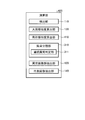
- FIG. 1 is a block diagram showing a configuration of an image processing apparatus according to Embodiment 1 of the present invention.
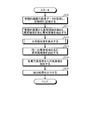
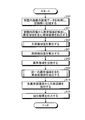
- FIG. 2 is a flowchart showing the operation of the image processing apparatus shown in FIG.
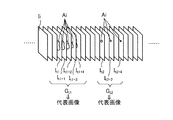
- FIG. 3 is a schematic diagram showing a series of intraluminal images acquired in chronological order.
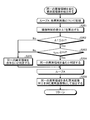
- FIG. 4 is a flowchart showing a global similarity calculation process executed by the global similarity calculation unit shown in FIG.
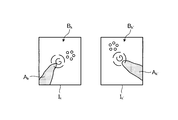
- FIG. 5 is a schematic diagram for explaining the global similarity calculation processing executed by the global similarity calculation unit shown in FIG.
- FIG. 6 is a schematic diagram for explaining the global similarity calculation process in Modification 1-1 of Embodiment 1 of the present invention.
- FIG. 7 is a block diagram illustrating a configuration of a calculation unit included in the image processing apparatus according to Embodiment 2 of the present invention.
- FIG. 8 is a flowchart showing the operation of the image processing apparatus according to the second embodiment of the present invention.
- FIG. 9 is a flowchart showing an abnormal image group extraction process executed by the abnormal image group extraction unit shown in FIG.
- FIG. 10 is a schematic diagram for explaining the abnormal image group extraction processing executed by the abnormal image group extraction unit shown in FIG.
- FIG. 11 is a block diagram illustrating a configuration of a calculation unit included in the image processing apparatus according to the second modification of the second embodiment of the present invention.
- FIG. 12 is a flowchart showing representative image extraction processing executed by the representative image extraction unit shown in FIG. FIG.
- FIG. 13 is a block diagram illustrating a configuration of a calculation unit included in the image processing apparatus according to Embodiment 3 of the present invention.
- FIG. 14 is a flowchart showing the operation of the image processing apparatus according to the third embodiment of the present invention.
- FIG. 15 is a flowchart showing an abnormal image group extraction process executed by the abnormal image group extraction unit shown in FIG.
- FIG. 16 is a block diagram illustrating another configuration example of the abnormality classification unit illustrated in FIG. 13.
- FIG. 17 is a block diagram illustrating still another configuration example of the abnormality classification unit illustrated in FIG. 13.
- FIG. 18 is a block diagram showing a configuration of a calculation unit provided in the image processing apparatus according to Embodiment 4 of the present invention.
- FIG. 19 is a flowchart showing the operation of the image processing apparatus according to the fourth embodiment of the present invention.
- FIG. 20 is a flowchart showing the abnormal image group extraction processing executed by the abnormal image group extraction unit shown in FIG.
- FIG. 21 is a block diagram illustrating a configuration of a calculation unit included in the image processing apparatus according to the fifth embodiment of the present invention.
- FIG. 22 is a flowchart showing the operation of the image processing apparatus according to the fifth embodiment of the present invention.
- FIG. 23 is a flowchart showing an abnormal image group extraction process executed by the abnormal image group extraction unit shown in FIG.
- FIG. 24 is a flowchart showing the abnormal image group extraction processing in Modification 5-3 of Embodiment 5 of the present invention.
- FIG. 1 is a block diagram showing an image processing apparatus according to Embodiment 1 of the present invention.
- the image processing apparatus 1 according to the first embodiment is detected as a detection target from a series of images acquired by sequentially imaging the inside of a lumen of a living body as a subject with a medical observation apparatus such as a capsule endoscope.
- This is an apparatus for extracting an image (attention image) group including an estimated attention area, and further extracting a representative image from the extracted attention image group.
- An image of a living body's lumen (also referred to as an intraluminal image) usually has pixel levels (pixel values) for wavelength components of R (red), G (green), and B (blue) at each pixel position. This is a color image.
- abnormal region such as bleeding, redness, after, or ulcer
- a representative image is extracted from a group of attention images (abnormal images) including these abnormal regions.
- the region is not limited to the abnormal region exemplified above.
- the image processing apparatus 1 corresponds to an intraluminal image captured by a control unit 10 that controls the operation of the entire image processing apparatus 1 and a medical observation apparatus such as a capsule endoscope.
- a control unit 10 that controls the operation of the entire image processing apparatus 1 and a medical observation apparatus such as a capsule endoscope.
- the control unit 10 is realized by hardware such as a CPU, and by reading various programs recorded in the recording unit 50, according to image data input from the image acquisition unit 20, signals input from the input unit 30, and the like. Instructions to each unit constituting the image processing apparatus 1 and data transfer are performed, and the overall operation of the image processing apparatus 1 is comprehensively controlled.
- the image acquisition unit 20 is appropriately configured according to the mode of the system including the capsule endoscope that images the inside of the subject.
- the image acquisition unit 20 detachably mounts the recording medium and records image data of the recorded image. It is comprised with the reader apparatus which reads.
- the image acquisition unit 20 includes a communication device connected to the server and performs data communication with the server. To obtain image data.
- the input unit 30 is realized by input devices such as a keyboard, a mouse, a touch panel, and various switches, for example, and outputs an input signal generated in response to an external operation on these input devices to the control unit 10.
- the display unit 40 is realized by a display device such as an LCD or an EL display, and displays various screens including intraluminal images under the control of the control unit 10.
- the recording unit 50 is realized by various IC memories such as ROM and RAM such as flash memory that can be updated and recorded, a hard disk built in or connected by a data communication terminal, or an information recording device such as a CD-ROM and its reading device.
- ROM and RAM such as flash memory that can be updated and recorded
- a hard disk built in or connected by a data communication terminal or an information recording device such as a CD-ROM and its reading device.
- the recording unit 50 operates the image processing apparatus 1 and causes the image processing apparatus 1 to execute various functions. Stores data used during execution. Specifically, the recording unit 50 detects abnormal regions such as bleeding, redness, after, and ulcer from the intraluminal image, and an abnormal image including the same abnormal region from an image including these abnormal regions (abnormal image).
- the image processing program 51 for causing the image processing apparatus 1 to execute image processing for extracting a group and extracting a representative image from each abnormal image group, a discrimination criterion used when detecting an abnormal region, and a representative image are extracted.
- the discriminant reference used at the time is stored.
- the calculation unit 100 is realized by hardware such as a CPU, and by reading the image processing program 51, extracts an abnormal image group including the same abnormal region from the intraluminal image, and extracts a representative image from each abnormal image group. Perform image processing.
- the calculation unit 100 detects a global similarity that is an overall similarity between different abnormal images from a detection unit 110 that detects an abnormal image including an abnormal region from a series of intraluminal image groups.
- a global similarity calculation unit 120 to calculate, an abnormal image group extraction unit 130 to extract an abnormal image group including the same abnormal region from the abnormal images detected by the detection unit 110 based on the global similarity, and each extracted
- a representative image extraction unit 140 that extracts a representative image from the abnormal image group.
- the detection unit 110 detects an abnormal region based on various feature amounts of the intraluminal image.
- an abnormal region is detected based on a color feature amount (color information) of an intraluminal image.
- abnormal areas such as bleeding, redness, and vascular abnormalities show a specific color in red
- abnormal areas such as ulcers and after show a specific color in white. Therefore, the detection unit 110 has each color component (R component, G component, B component) of the pixel value, and a value that is secondarily calculated by known conversion based on these color components (for example, calculated by YCbCr conversion).
- a region showing a specific color in the intraluminal image is detected using color feature values such as color difference, hue calculated by HSI conversion, saturation, G / R, B / G color ratio, etc.) Is an abnormal region. More specifically, based on the color feature values of various abnormal areas collected in advance, an abnormal area discrimination reference (color range) is created in advance and recorded in the recording unit 50. Then, when detecting an abnormal region from the intraluminal image, the discrimination criterion is read from the recording unit 50, the color feature amount is calculated for each pixel constituting the intraluminal image, and the color feature amount of each pixel is calculated. An abnormal region is detected from the intraluminal image by comparison with the discrimination criterion.
- color feature values such as color difference, hue calculated by HSI conversion, saturation, G / R, B / G color ratio, etc.
- the detection method of the abnormal region is not limited to the detection method described above, and various known methods can be applied as long as the abnormal region can be detected. For example, a method based on a feature space distance with a representative color feature amount may be used. Further, in the above description, the abnormal region is detected using the color feature amount in units of pixels constituting the intraluminal image, but the intraluminal image is divided into small regions based on edge information in the image, etc. An abnormal region may be detected using a color feature amount in units of small regions. Furthermore, an abnormal region may be detected using a shape feature amount other than a color feature amount or a texture feature amount.
- the global similarity calculation unit 120 calculates, as the global similarity, the similarity between regions including at least regions other than the abnormal region, that is, regions including the background of the abnormal region, between different abnormal images.
- the abnormal image group extraction unit 130 extracts, as one abnormal image group, images including the same abnormal region among the abnormal regions detected by the detection unit 110 based on the global similarity calculated by the global similarity calculation unit 120. Attention image group extraction means.
- the representative image extraction unit 140 extracts a representative image from each of the abnormal image groups including the same abnormal region.
- the method for extracting the representative image is not particularly limited, and the first image or the center image in the time series of the abnormal image group may be extracted as the representative image, or an abnormal region having high importance in image diagnosis is included.
- An abnormal image or an abnormal image with high visibility of the abnormal region may be extracted as a representative image.
- the importance and visibility of the abnormal region can be determined based on, for example, the color feature amount, shape feature amount, texture feature amount, and the like of the abnormal region.
- FIG. 2 is a flowchart showing the operation of the image processing apparatus 1.
- the image processing apparatus 1 acquires image data of a series of intraluminal images captured in chronological order via the image acquisition unit 20 and records them in the recording unit 50.
- the detection unit 110 sequentially reads the image data of the intraluminal image recorded in the recording unit 50, detects an abnormal region from each intraluminal image, and extracts an abnormal image including the abnormal region. . Specifically, the detection unit 110 reads out the abnormal region discrimination criterion recorded in advance in the recording unit 50, and compares the color feature amount of each pixel constituting each intraluminal image with this discrimination criterion. Detect abnormal areas.
- FIG. 3 is a schematic diagram showing a series of intraluminal images I i acquired in chronological order.
- the intraluminal image I i comprising abnormal region A i and abnormal image I i, the time-series image sequence consisting of only abnormal images I i arranged along the (imaging sequence), also an abnormal image sequence .
- the global similarity calculation unit 120 calculates the global similarity between adjacent abnormal images in the abnormal image sequence for each abnormal image extracted in step S11. For example, in the case of FIG. 3, abnormal images I t1 and I t1 + 1 , abnormal images I t1 + 1 and I t1 + 2 , abnormal images I t1 + 2 and I t1 + 3 , as adjacent abnormal images in the abnormal image sequence, Global similarity in each combination of abnormal images I t1 + 3 and I t1 + 4 , abnormal images I t1 + 4 and I t2 , abnormal images I t2 and I t2 + 2 , abnormal images I t2 + 2 and I t2 + 4 Is calculated.
- FIG. 4 is a flowchart showing a global similarity calculation process executed by the global similarity calculation unit 120 in step S12.
- FIG. 5 is a schematic diagram for explaining the global similarity calculation process.
- abnormal regions A k and A k ′ are detected from abnormal images I k and I k ′ (k and k ′ are natural numbers k ⁇ k ′) adjacent to each other in the abnormal image sequence.
- the global similarity calculation unit 120 uses, as the background area, the areas other than the abnormal areas A k and A k ′ , that is, non-abnormal areas from the abnormal images I k and I k ′.
- B k and B k ′ are extracted, respectively.
- global similarity calculation unit 120 calculates the background region, i.e. non-abnormal region B k, 'feature quantity c k of, c k' B k respectively.
- feature quantities c k and c k ′ statistics such as the average value or median value of the pixel values (luminance values and G component values) of the pixels constituting the non-abnormal areas B k and B k ′ , non-abnormal areas
- Color feature values of pixels constituting B k and B k ′ color difference calculated by YCbCr conversion using each value of R component, G component, and B component, hue, saturation, G / R calculated by HSI conversion) , B / G color ratio, etc.
- average value or median statistic non-abnormal region B k , B k ′ shape feature amount (area, circularity, etc.), non-abnormal region B k , B k
- a statistical value such as an average value or a median value of
- the global similarity calculation unit 120 calculates the global similarity s global given by the following equation (1) using the maximum value c max and the change amount ⁇ c of the feature amount.
- s global (c max ⁇ c) / c max (1)
- the maximum value c max of the feature amount of the feature amount is the maximum value that the feature amounts c k and c k ′ can take.
- the maximum value c max is 256.
- the maximum value c max is 1.
- the abnormal image group extraction unit 130 includes an abnormal image group including the same abnormal region based on the global similarity s global calculated in step S12 from the abnormal image extracted in step S11. To extract. Specifically, the abnormal image group extraction unit 130 determines abnormal images having a global similarity s global that is equal to or greater than a predetermined threshold as abnormal images including the same abnormal region. Conversely, abnormal images having a global similarity s global less than a predetermined threshold are determined as abnormal images that do not include the same abnormal region. Then, the abnormal image group extraction unit 130 extracts abnormal images including the same abnormal area as one abnormal image group.
- these abnormal images I t1 , I t1 + 1 , It1 + 2 , It1 + 3 , and It1 + 4 are one abnormal image group. Extracted as G t1 .
- the abnormal image It2 is not extracted as the same abnormal image group as the abnormal image It1 + 4 .
- abnormal images I t2 and I t2 + 2 and the abnormal images I t2 + 2 and I t2 + 4 respectively include the same abnormal region
- these abnormal images I t2 , I t2 + 2 , I t2 + 4 is extracted as one abnormal image group G t2 .
- the representative image extraction unit 140 extracts a representative image from each abnormal image group extracted in step S13.
- the number of representative images to be extracted may be a constant (for example, one from each abnormal image group) or may be determined according to the number of abnormal images included in the abnormal image group (for example, abnormal ⁇ times the number of images, 0 ⁇ ⁇ 1). In the latter case, when the number of representative images is less than one, at least one representative image is extracted.
- all abnormal images satisfying a predetermined criterion for example, abnormal images having a color feature amount equal to or larger than a predetermined threshold
- a predetermined criterion for example, abnormal images having a color feature amount equal to or larger than a predetermined threshold
- the method for extracting the representative image is not particularly limited.
- the top image or the center image in the time series order of each abnormal image group may be extracted as the representative image.
- an abnormal image with a strong red color of the abnormal region is preferentially extracted as a representative image
- an abnormal image with strong white color is preferentially extracted as a representative image.
- an abnormal image having a large area of the abnormal region or an abnormal image whose abnormal region is close to the center may be preferentially extracted as a representative image.
- step S15 the calculation unit 100 outputs information representing the representative image extracted from each abnormal image group in step S14 as a representative image extraction result.
- the recording unit 50 adds information (flag) indicating that the image is the representative image to the image data of the intraluminal image extracted as the representative image.
- the abnormal image group is extracted based on the global similarity between the regions including the background region in the abnormal image.
- the position, shape and color of the abnormal area greatly changed between the abnormal images, or the abnormal area was temporarily out of the field of view and the abnormal images were separated in time series,
- These abnormal images can be extracted as the same abnormal image group. Therefore, it is possible to suppress the abnormal images in which the same abnormal region is captured from being continuously extracted as the representative image. Therefore, by observing the representative image in which the number of extracted images is suppressed while covering all detected abnormalities, the user can perform an accurate and efficient diagnosis.
- the background area extracted from each abnormal image when calculating the global similarity may not be the entire non-abnormal area.
- an area (mucosal area) where the mucous membrane appears in the abnormal image may be extracted as a background area, and the global similarity between the mucosal areas may be calculated.
- the mucous membrane region can be extracted using a discrimination criterion created in advance.
- the discrimination criteria are color feature values of non-mucosal areas such as bleeding, residue, bubbles, halation, dark areas, etc. (values of R component, G component, B component of pixel values, values of these color components) Secondarily calculated based on known conversion (color difference calculated by YCbCr conversion, hue, saturation, color ratio of G / R, B / G, etc.
- FIG. 6 is a schematic diagram for explaining the global similarity calculation process (see step S12 in FIG. 2 and FIG. 4) in Modification 1-1.
- the global similarity calculation unit 120 reads out the discrimination criterion for discriminating the mucous membrane region from the recording unit 50, and compares the feature amount calculated for each pixel constituting the abnormal image with the discrimination criterion.
- the mucous membrane region is extracted.
- abnormal regions A k and A k ′ such as bleeding and unnecessary regions C k and C k ′ such as bubbles are detected.
- the mucosal regions D k and D k ′ excluding are extracted.
- the global similarity calculation unit 120 calculates the feature values c k and c k ′ using the mucosa regions D k and D k ′ as background regions (see step S102), and the maximum value c max and the change amount ⁇ c of the feature values. Is used to calculate the global similarity s global given by equation (1) (see steps S103 and S104).
- the global similarity between the mucous membrane regions between the abnormal images is calculated, so that it occurs locally like bleeding, residue, foam, halation, and dark part. It is possible to extract an abnormal image group including the same abnormal region while suppressing the influence caused by the phenomenon.
- the global similarity may be calculated based on the feature amount of the area including the abnormal area as well as the background area. Specifically, the global similarity may be calculated based on the feature amount of the entire abnormal image including the abnormal region and the non-abnormal region. Alternatively, the global similarity may be calculated from the entire abnormal image using the feature amount of a region excluding unnecessary regions (regions other than the detection target in diagnosis) such as residues, bubbles, halation, and dark parts. In any case, the global similarity may be calculated for regions including at least non-abnormal regions.
- Modification 1-3 of Embodiment 1 of the present invention will be described.
- the global similarity between abnormal images may be determined based on the type of organ shown in the abnormal image.
- a method for determining the global similarity based on the type of organ will be described.
- the type of organ shown in each abnormal image is determined.
- the type of organ can be determined using various known methods. In the following, as an example, a method disclosed in Japanese Patent Application Laid-Open No. 2006-288612 will be described.
- a numerical range of R, G, and B color components (color elements) in an image showing each organ (esophagus, stomach, small intestine, and large intestine) in the lumen is determined in advance.
- an average value of each of the R component, G component, and B component values of each pixel constituting the abnormal image is calculated, and compared with a predetermined numerical range of the color component of each organ.
- the organ shown in the abnormal image is the esophagus.
- the average value for each color component calculated for the abnormal image is within the numerical range of the stomach color component determined in advance
- the organ shown in the abnormal image is the stomach and within the numerical range of the color component of the small intestine If so, the organ shown in the abnormal image is the small intestine, and if it is within the numerical range of the color component of the large intestine, the organ shown in the abnormal image is determined as the large intestine.
- the global similarity calculation unit 120 determines the global similarity based on the organ type determined for each abnormal image. Specifically, if the types of organs are the same between adjacent abnormal images in the abnormal image sequence, the similarity is determined to be 1.0. On the other hand, when the types of organs are different between adjacent abnormal images in the abnormal image sequence, the similarity is determined to be 0.0.
- the type of organ may be determined by the user. Specifically, an average color of each of a series of intraluminal images is calculated by image processing in the calculation unit 100, and a color bar in which these average colors are arranged in the arrangement order of the intraluminal images (time-series order). Is generated and displayed on the display unit 40. An average color transition (boundary) on the color bar corresponds to an organ boundary in a series of intraluminal images. Therefore, when a signal for selecting a specific point on the color bar is input from the input unit 30 to the control unit 10 in response to a user operation on the input unit 30, the control unit 10 stores the lumen in the lumen corresponding to the point. The image number of the image is input to the calculation unit 100.
- the calculation unit 100 identifies the type of organ shown in each intraluminal image using the intraluminal image corresponding to the input image number as the boundary of the organ.
- the global similarity calculation unit 120 determines the global similarity based on the organ type of the intraluminal image in which the abnormal region is detected.
- Modification 1-4 of Embodiment 2 of the present invention will be described.
- the calculation unit 100 may perform organ type determination processing on the entire series of intraluminal images after acquiring the image data in step S10. Note that the organ type discriminating method is the same as in Modification 1-3, and automatic discrimination may be performed, or the user may discriminate manually.
- the calculation unit 100 performs the above-described processing of steps S11 to S14 (see FIG. 2) on the intraluminal image showing the organ to be examined (for example, the small intestine).
- the calculation unit 100 extracts an abnormal image by detecting an abnormal region for an intraluminal image in which an organ (for example, the esophagus, stomach, and large intestine) that is not the subject of examination is shown, and then, for example, A predetermined number of abnormal images (for example, a small number such as 10) are extracted in the order of increasing redness or increasing whiteness of the abnormal region, and output as a representative image.
- the intensity of redness can be expressed by the color ratio G / R, and the smaller the color ratio G / R, the stronger the redness.
- the intensity of white can be represented by the color ratios G / R and B / G, and the greater the color ratios G / R and B / G, the stronger the whiteness.
- the calculation unit 100 does not detect an abnormal region with respect to an intraluminal image in which an organ that is not the subject of examination is captured, and based on the color feature amount (color ratio and the like described above) of each intraluminal image.
- a predetermined number for example, a small number such as 10
- the calculation unit 100 does not have to extract a representative image from an intraluminal image in which an organ not to be examined is shown.
- FIG. 7 is a block diagram illustrating a configuration of a calculation unit included in the image processing apparatus according to Embodiment 2 of the present invention.
- the image processing apparatus according to the second embodiment includes a calculation unit 200 illustrated in FIG. 7 instead of the calculation unit 100 illustrated in FIG.
- the configuration and operation of each unit other than the calculation unit 200 are the same as those in the first embodiment.
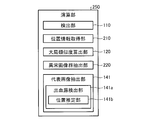
- the calculation unit 200 includes a detection unit 110, a position information acquisition unit 210, a global similarity calculation unit 120, an abnormal image group extraction unit 220, and a representative image extraction unit 140. Among these, the operations of the detection unit 110, the global similarity calculation unit 120, and the representative image extraction unit 140 are the same as those in the first embodiment.
- the position information acquisition unit 210 includes time series arrangement order (imaging order) of each abnormal image I i in a series of intraluminal images (see FIG. 3), an image number representing the arrangement order, or each abnormal image I i. Is acquired as time-series position information of the abnormal image I i .
- the imaging position of the intraluminal image (abnormal image) I i is estimated to be a position advanced by a distance i ⁇ v / F (mm) from the imaging start position (for example, in the oral cavity) of a series of intraluminal images. be able to. Also, the position of the capsule endoscope can be estimated in the same manner using the imaging time. Therefore, the arrangement order of the intraluminal images, the image number, and the imaging time can be handled as position information of the abnormal image I i .
- the abnormal image group extraction unit 220 extracts an abnormal image group including the same abnormal region based on the position information acquired by the position information acquisition unit 210 and the global similarity calculated by the global similarity calculation unit 120.
- FIG. 8 is a flowchart showing the operation of the image processing apparatus according to the second embodiment. Note that steps S10 and S11 shown in FIG. 8 are the same as those in the first embodiment (see FIG. 2).
- step S21 following step S11 the position information acquisition unit 210 acquires time-series position information of the abnormal image extracted in step S11. Specifically, the imaging time or arrangement order i of the abnormal image I i is acquired as position information.
- the global similarity calculation unit 120 calculates the global similarity between adjacent abnormal images in the abnormal image sequence.
- the method for calculating the global similarity is the same as that in the first embodiment (see FIGS. 4 and 5).
- the global similarity may be calculated in the same manner as in Modifications 1-1 to 1-3.
- the abnormal image group extraction unit 220 extracts an abnormal image group including the same abnormal region based on the positional information acquired in step S21 and the global similarity calculated in step S22.
- FIG. 9 is a flowchart showing the abnormal image group extraction processing executed by the abnormal image group extraction unit 220 in step S23.
- FIG. 10 is a schematic diagram for explaining the abnormal image group extraction processing.
- the abnormal image group extraction unit 220 executes the process of loop A for each abnormal image extracted in step S11.
- the abnormal image group extraction unit 220 sets an abnormal image I k ′ (k ′ is a natural number of k ⁇ k ′) adjacent to the abnormal image I k (k is a natural number) to be processed in the abnormal image sequence.
- the difference ⁇ T ( T (I k ′ ) ⁇ T (I k )) between the imaging times T (I k ) and T (I k ′ ) between the two images, ie, the elapsed time is calculated.
- the abnormal image group extraction unit 220 determines whether or not the imaging time difference ⁇ T calculated in step S201 is equal to or smaller than a predetermined threshold th1.
- the abnormal image group extraction unit 220 determines that the global similarity s global between the abnormal images I k and I k ′ is a predetermined threshold. It is determined whether or not it is greater than or equal to th2 (step S203).
- the abnormal image group extraction unit 220 determines that the abnormal image I k to be processed and the abnormal image I k ′ extracted next are the same abnormality. It is determined that the area is included (step S204).
- step S202 when the difference ⁇ T in imaging time is larger than the threshold th1 in step S202 (step S202: No), or when the global similarity s global is smaller than the threshold th2 in step S203 (step S203: No).
- the abnormal image group extraction unit 220 determines that the abnormal image I k to be processed and the abnormal image I k ′ extracted next do not include the same abnormal region (step S205). For example, in the case of FIG. 10, the difference ⁇ T3 the imaging time of the abnormal image I t1 + 4 abnormal image I t2 is is greater than the threshold value th1, is determined not to contain the same abnormal region.
- step S206 the abnormal image group extraction unit 220 extracts the abnormal images determined as having the same abnormal area as the same abnormal image group. Thereafter, the operation of the image processing apparatus returns to the main routine.
- step S201 a difference in the arrangement order i of the abnormal images I i may be calculated instead of the imaging time.
- step S202 it is determined whether or not the arrangement order difference is equal to or less than a predetermined threshold value.
- Steps S14 and S15 following step S22 are the same as those in the first embodiment (see FIG. 2).
- an abnormal image group including the same abnormal region is extracted based on time-series positional information and global similarity of abnormal images. Therefore, it is possible to prevent abnormal images that are significantly separated from each other from being extracted as the same abnormal image group.
- FIG. 11 is a block diagram illustrating a configuration of a calculation unit included in the image processing apparatus according to the second modification.
- the calculation unit 250 in the second modification includes a representative image extraction unit 141 instead of the representative image extraction unit 140 included in the calculation unit 200 (see FIG. 7) in the second embodiment.
- the configuration and operation of each unit of the calculation unit 250 other than the representative image extraction unit 141 are the same as those in the second embodiment.
- the representative image extraction unit 141 preferentially extracts, as a representative image, an abnormal image showing a bleeding source as an abnormal region having a high degree of importance from each of abnormal image groups including the same abnormal region. More specifically, the representative image extraction unit 141 includes a bleeding source detection unit 141a that detects a bleeding source from an abnormal image group in which an abnormal region of bleeding is reflected. The bleeding source detection unit 141a includes a position estimation unit 141b that estimates the position of the subject (organ) captured in the abnormal image in the lumen, that is, the imaging position of the abnormal image in the lumen.
- FIG. 12 is a flowchart showing representative image extraction processing executed by the representative image extraction unit 141 in step S14 shown in FIG.
- the representative image extraction unit 141 executes the process of loop B for each abnormal image group extracted in step S23.
- the number of representative images extracted from each abnormal image group is n.
- the representative image extraction unit 141 determines whether or not the same abnormal area included in the abnormal image group to be processed is bleeding. Specifically, in step S11 (see Embodiment 1), an abnormal region detected as indicating a specific color of red tone is determined as bleeding. Alternatively, whether or not the abnormal region is bleeding may be determined based on the color feature amount, shape feature amount, or texture feature amount of the abnormal region.
- the position estimation unit 141b uses the time-series position information (abnormal image capturing time or arrangement order) acquired by the position information acquisition unit 210 in step S21. Based on the acquired position information, the imaging position in the lumen of each abnormal image included in the abnormal image group is estimated (step S212).
- the bleeding source detection unit 141a detects a bleeding source image (an abnormal image in which the bleeding source is reflected). Specifically, from an abnormal image including an abnormal region with strong redness in the abnormal image group, an abnormal image whose imaging position in the lumen is the most upstream (in other words, the oldest abnormal image in time series) is bleeding. Detect as source image.
- the abnormal region with strong redness can be determined as a region where the value of the color ratio G / R is equal to or less than a predetermined threshold, for example.
- the threshold value of the color ratio G / R used at this time may be set to be stricter (smaller value) than the discrimination standard (color ratio G / R) used when detecting the abnormal area in step S11.
- step S214 the representative image extraction unit 141 extracts one bleeding source image detected in step S213 as a representative image.
- the representative image extraction unit 141 extracts the representative image by the number n minus 1 of the representative images extracted from the abnormal images (excluding the bleeding source image) including the abnormal region having a strong redness in the abnormal image group. Are extracted at random.
- step S216 the representative image extraction unit 141 determines whether n representative images have been extracted.
- the number of abnormal images including a strong reddish abnormal region is n or more, n representative images can be extracted from these abnormal images in total. In this case (step S216: Yes), the process proceeds to step S219.
- step S216 the representative image extraction unit 141 randomly extracts representative images from the remaining abnormal images that do not include a strong reddish abnormal region until the total number becomes n (step S217). Thereafter, the process proceeds to step S219.
- step S211 when the same abnormal region in the abnormal image group to be processed is not bleeding (step S211: No), the representative image extraction unit 141 performs n sheets from the abnormal image group in the same manner as in the first embodiment. The representative image is extracted (step S218). Thereafter, the process proceeds to step S219.
- step S219 the representative image extraction unit 141 adds information (flag) indicating that it is a representative image to the image data of the extracted n representative images.
- step S23 After executing loop B processing for all abnormal image groups extracted in step S23 (see FIG. 8), the operation of the image processing apparatus returns to the main routine.
- the bleeding source having a high importance in diagnosis is preferentially used as the representative image. Can be extracted.
- FIG. 13 is a block diagram illustrating a configuration of a calculation unit included in the image processing apparatus according to Embodiment 3 of the present invention.
- the image processing apparatus according to the third embodiment includes a calculation unit 300 illustrated in FIG. 13 instead of the calculation unit 100 illustrated in FIG.
- the configuration and operation of each unit other than the calculation unit 300 are the same as those in the first embodiment.
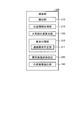
- the calculation unit 300 includes a detection unit 110, a position information acquisition unit 210, a global similarity calculation unit 120, an abnormality classification unit 310, an abnormal image group extraction unit 320, and a representative image extraction unit 140.
- the operations of the detection unit 110, the global similarity calculation unit 120, and the representative image extraction unit 140 are the same as those in the first embodiment.
- the operation of the position information acquisition unit 210 is the same as that in the second embodiment.
- the abnormality classification unit 310 is an attention area classification unit that classifies an abnormal area as an attention area according to the type of subject in the abnormal area.
- the abnormality classification unit 310 includes a continuous abnormality determination unit (continuity determination unit) 311 that determines whether or not an abnormal region is an abnormal region that continuously occurs in a series of intraluminal images.
- the continuous abnormality determination unit 311 determines that the abnormal region is an abnormal region that continuously occurs when the subject in the abnormal region has an abnormality such as floating bleeding or blood vessel abnormality.
- the types of abnormalities can be determined using a discrimination criterion created in advance.
- Discrimination criteria are known based on color feature values of abnormal regions such as floating bleeding and vascular abnormalities shown in the intraluminal image (the R component, G component, and B component values of the pixel values, and the values of these color components) Secondarily calculated values (color difference calculated by YCbCr conversion, hue, saturation, color ratio of G / R, B / G, etc.
- HSI conversion calculates shape feature values
- HOG shape feature values
- LBP feature distribution of texture features
- SVM support vector machine
- the abnormal image group extraction unit 320 uses the same abnormal region based on the position information acquired by the position information acquisition unit 210, the global similarity calculated by the global similarity calculation unit 120, and the classification result by the abnormality classification unit 310. An abnormal image group including is extracted.
- FIG. 14 is a flowchart showing the operation of the image processing apparatus according to the third embodiment. Note that steps S10 and S11 shown in FIG. 14 are the same as those in the first embodiment (see FIG. 2).
- step S31 following step S11 the position information acquisition unit 210 acquires time-series position information of the abnormal image extracted in step S11. Specifically, the arrangement order i or imaging time of the abnormal image I i is acquired as position information.
- the global similarity calculation unit 120 calculates the global similarity between adjacent abnormal images in the abnormal image sequence.
- the method for calculating the global similarity is the same as that in the first embodiment (see FIGS. 4 and 5).
- the global similarity may be calculated in the same manner as in Modifications 1-1 to 1-3.
- the abnormality classification unit 310 classifies each abnormal region detected in step 11. Specifically, the continuous abnormality determination unit 311 reads out a determination criterion for determining a continuously occurring abnormal region from the recording unit 50, and compares the feature amount calculated for the abnormal region to be processed with the determination criterion. Thus, the type of the subject in the abnormal area is determined, and it is determined whether or not the abnormal area is an abnormal area that continuously occurs according to the type of the subject. Specifically, if the subject in the abnormal region is a bleeding or blood vessel abnormality that floats, it is determined that the abnormal region is an abnormal region that occurs continuously.
- the abnormal image group extraction unit 320 uses the positional information acquired in step S31 and the global similarity calculated in step S32 based on the classification result in step S33, and includes an abnormality including the same abnormal region. Extract an image group.
- FIG. 15 is a flowchart showing the abnormal image group extraction processing executed by the abnormal image group extraction unit 320 in step S34.
- the abnormal image group extraction unit 320 executes the process of loop C for each abnormal image extracted in step S11.
- step S301 the abnormal image group extraction section 320, an abnormal image I j to be processed (j is a natural number), the abnormal image I j + n (n adjacent in the abnormal image sequence with respect to the abnormal image I j Is a natural number) to calculate a parameter s pos representing the proximity of the position.
- the parameter s pos is given by the following equation (2).
- s pos (N ⁇ n) / N (2)
- the value of the parameter s pos increases as the position of the subject captured in the abnormal images I j and I j + n in the lumen is closer (the smaller n is).
- step S31 when the imaging time of the abnormal image I i is acquired as the position information, the imaging time difference is substituted for the arrangement order difference n in Equation (2), and the parameter N is used instead.
- a parameter for normalizing the difference in imaging time By using a parameter for normalizing the difference in imaging time, a parameter representing the proximity of the position is calculated.
- the abnormal image group extracting unit 320 sets the global similarity s global and the position s pos representing the position proximity based on the classification result of the abnormal area in the abnormal image to be processed (see step S33), respectively.
- the weights w 1 and w 2 are determined so that the weight w 2 is relatively larger than the weight w 1 if the abnormal area in the abnormal image I j is an abnormal area continuously generated.
- the abnormal region in the abnormal image I j is not a continuous abnormal area generated, the weight w 1 with respect to the weight w 2 is a weight w 1 to be relatively large, w 2 are determined.
- the abnormal image group extraction unit 320 uses the weights w 1 and w 2 determined in step S302 to perform total discrimination in consideration of the global similarity s global and the parameter s pos indicating the position proximity.
- the parameter s total1 is calculated.
- the abnormal image group extraction unit 320 determines whether or not the total discrimination parameter s total1 is equal to or greater than a predetermined threshold th3.
- the total discrimination parameter s total1 is equal to or greater than the threshold th3 (step S304: Yes)
- the abnormal image group extraction unit 320 determines that the abnormal image I j to be processed and the abnormal image I j + n extracted next are the same. It is determined that the abnormal region is included (step S305).
- the total discrimination parameter s total is smaller than the threshold th3 (step S304: No)
- the abnormal image group extraction unit 320 outputs the abnormal image I j to be processed and the abnormal image I j + n extracted next. Are not included in the same abnormal area (step S306).
- step S307 the abnormal image group extraction unit 320 extracts the abnormal images determined as having the same abnormal area as the same abnormal image group. Thereafter, the operation of the image processing apparatus returns to the main routine.
- Steps S14 and S15 following step S34 are the same as those in the first embodiment (see FIG. 2).
- Embodiment 3 of the present invention when an abnormal image group including the same abnormal region is extracted based on time-series position information and global similarity of the abnormal image, the abnormal image is extracted. Since the weight of the global similarity and the position information is changed depending on whether or not the abnormal region in FIG. Is a continuously occurring abnormal region, it is possible to improve the extraction accuracy of an abnormal image group including the same abnormal region. It becomes possible.
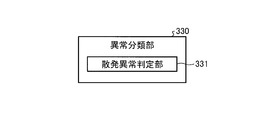
- FIG. 16 is a block diagram illustrating another configuration example of the abnormality classification unit 310 illustrated in FIG. 13.
- an abnormality classification unit 330 illustrated in FIG. 16 may be provided instead of the abnormality classification unit 310.
- the abnormality classification unit 330 includes a sporadic abnormality determination unit (sporadicity determination unit) 331 that determines whether the abnormal region is an abnormal region that occurs sporadically in a series of intraluminal images. If the subject in the abnormal region is abnormal such as redness, bleeding point, after, or ulcer, the sporadic abnormality determining unit 331 determines that the abnormal region is an abnormal region that occurs sporadically.
- the types of abnormalities such as redness, bleeding points, after, and ulcers can be determined using a discrimination criterion created in advance.
- the discrimination criteria are based on the color feature values of abnormal regions such as redness, bleeding points, after, and ulcers (values of R component, G component, and B component of the pixel value, and the values of these color components that appear in the intraluminal image. 2ndly calculated values by known conversion (color difference calculated by YCbCr conversion, hue, saturation, color ratio of G / R, B / G, etc.
- HSI conversion calculates shape feature amount ( Created by a learning device such as a support vector machine (SVM) based on the feature amount distribution of HOG, area, perimeter length, ferret diameter, etc.) and texture feature amount (LBP, simultaneous normal matrix, etc.) Record 50.
- SVM support vector machine
- the abnormality classification unit 330 classifies each abnormal region detected in step S11. Specifically, the sporadic abnormality determination unit 331 reads out a determination criterion for determining a sporadic abnormal region from the recording unit 50, and compares the feature amount calculated for the abnormal region to be processed with the determination criterion. Thus, the type of the subject in the abnormal area is determined, and whether or not the abnormal area is a sporadic abnormal area is determined according to the type of the subject.
- step S34 shown in FIG. 14 the abnormal image group extraction unit 320 calculates the position information acquired in step S31 and the global similarity calculated in step S32 based on the classification result by the abnormality classification unit 330. And extracting an abnormal image group including the same abnormal region.
- the abnormal image group extraction unit 320 sets the global similarity s global and the position s pos representing the position proximity based on the abnormal region classification result by the abnormality classification unit 330, respectively.
- the given weights w 1 and w 2 are determined.
- the weights w 1 and w 2 are determined so that the weight w 1 is relatively larger than the weight w 2 if the abnormal area in the abnormal image I j is an abnormal area that occurs sporadically.
- the weight w 1 as the weight w 2 is relatively large, w 2 are determined for the weights w 1.
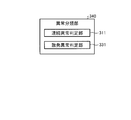
- FIG. 17 is a block diagram showing still another configuration example of the abnormality classification unit 310 shown in FIG.
- an abnormality classification unit 340 illustrated in FIG. 17 may be provided instead of the abnormality classification unit 310.
- the abnormality classification unit 340 includes a continuous abnormality determination unit 311 and a sporadic abnormality determination unit 331.
- the operation of continuous abnormality determination unit 311 is the same as that of Embodiment 3, and the operation of sporadic abnormality determination unit 331 is the same as that of Modification 3-1.
- the abnormality classification unit 340 classifies each abnormal region detected in step S11. Specifically, the continuous abnormality determination unit 311 determines whether or not the abnormal region to be processed is an abnormal region that continuously occurs in a series of intraluminal image groups. Further, the sporadic abnormality determination unit 331 determines whether or not the abnormal region to be processed is an abnormal region that occurs sporadically in a series of intraluminal image groups. As a result, the abnormal area is classified into a continuous abnormal area, a sporadic abnormal area, and other abnormal areas.
- step S34 shown in FIG. 14 the abnormal image group extraction unit 320 calculates the position information acquired in step S31 and the global similarity calculated in step S32 based on the classification result by the abnormality classification unit 340. And extracting an abnormal image group including the same abnormal region.
- the abnormal image group extraction unit 320 based on the classification result by the abnormality classification unit 340, weights respectively given to the global similarity s global and the parameter s pos representing the position proximity. Determine w 1 and w 2 .
- the weights w 1 and w 2 are determined so that the weight w 2 is relatively larger than the weight w 1 if the abnormal area in the abnormal image I j is an abnormal area continuously generated.
- the abnormal region in the abnormal image I j is equal sporadic abnormal region occurs, the weights w 1, w 2 as weighting w 1 is relatively large with respect to the weight w 2 is determined.
- the weights w 1 and w 2 are determined to be approximately the same.
- FIG. 18 is a block diagram showing a configuration of a calculation unit provided in the image processing apparatus according to Embodiment 4 of the present invention.
- the image processing apparatus according to the fourth embodiment includes a calculation unit 400 shown in FIG. 18 instead of the calculation unit 100 shown in FIG.
- the configuration and operation of each unit other than the calculation unit 400 are the same as those in the first embodiment.
- the calculation unit 400 includes a detection unit 110, a global similarity calculation unit 120, a local similarity calculation unit 410, an abnormality classification unit 310, an abnormal image group extraction unit 420, and a representative image extraction unit 140.
- the operations of the detection unit 110, the global similarity calculation unit 120, and the representative image extraction unit 140 are the same as those in the first embodiment (see FIG. 1).
- the operation of the abnormality classification unit 310 is the same as that in the third embodiment.
- the local similarity calculation unit 410 calculates the similarity between abnormal regions as the local similarity between adjacent abnormal images in the abnormal image sequence.
- the abnormal image group extraction unit 420 is based on the global similarity calculated by the global similarity calculation unit 120, the local similarity calculated by the local similarity calculation unit 410, and the classification result by the abnormality classification unit 310. An abnormal image group including an abnormal region is extracted.
- FIG. 19 is a flowchart showing the operation of the image processing apparatus according to the fourth embodiment. Note that steps S10 to S12 shown in FIG. 19 are the same as those in the first embodiment (see FIG. 2). For step S12, the global similarity may be calculated in the same manner as in the modified examples 1-1 to 1-3.
- step S41 following step S12 the local similarity calculation unit 410 calculates the local similarity between adjacent abnormal images in the abnormal image sequence.
- the method for calculating the local similarity is not particularly limited. As an example, when a corresponding point between abnormal images is extracted by a known method such as SIFT (Scale Invariant Feature Transform) and the abnormal region corresponds between two abnormal images, the local similarity is set to 1.0. On the other hand, if the abnormal region does not correspond between two abnormal images, the local similarity is set to 0.0.
- SIFT Scale Invariant Feature Transform
- the abnormality classification unit 310 classifies each abnormal region detected in step 11. That is, the continuous abnormality determination unit 311 reads out a determination criterion for determining a continuously occurring abnormal region from the recording unit 50, and the abnormal region is an abnormal region that continuously occurs based on the determination criterion. It is determined whether or not.
- the abnormal image group extraction unit 420 includes the same abnormal region using the global similarity calculated in step S12 and the local similarity calculated in step S41 based on the classification result in step S42. An abnormal image group is extracted.
- FIG. 20 is a flowchart showing the abnormal image group extraction processing executed by the abnormal image group extraction unit 420 in step S43.
- the abnormal image group extraction unit 420 executes the process of loop D for each abnormal image extracted in step S11.
- the abnormal image group extraction unit 420 assigns weights to the global similarity s global and the local similarity s local based on the abnormal region classification result in the abnormal image to be processed (see step S42).
- the abnormal image group extraction unit 420 uses the weights w 3 and w 4 determined in step S401 to obtain a total discrimination parameter s total2 that takes into account the global similarity s global and the local similarity s local. calculate.
- the abnormal image group extraction unit 420 determines whether or not the total discrimination parameter s total2 is equal to or greater than a predetermined threshold th4.
- the total determination parameter s total2 is equal to or greater than the threshold th4 (step S403: Yes)
- the abnormal image group extraction unit 420 determines that the abnormal image to be processed and the abnormal image extracted next include the same abnormal region. Determination is made (step S404).
- the total discrimination parameter s total2 is smaller than the threshold th4 (step S403: No)
- the abnormal image group extraction unit 420 determines that the abnormal image to be processed and the abnormal image extracted next are the same abnormal region. It determines with not including (step S405).
- step S406 the abnormal image group extraction unit 420 extracts the abnormal images determined as having the same abnormal area as the same abnormal image group. Thereafter, the operation of the image processing apparatus returns to the main routine.
- Steps S14 and S15 following step S43 are the same as in the first embodiment (see FIG. 2).
- the overall similarity of the abnormal image and the local region of the abnormal region are determined.
- the weights given to the respective similarities are changed, and based on these total discrimination parameters, it is determined whether or not two abnormal images include the same abnormal region. Therefore, the abnormal image group including the same abnormal region The extraction accuracy can be improved.
- the local similarity calculation unit 410 illustrated in FIG. 18 may calculate the local similarity by various methods other than the method described in the fourth embodiment.
- the local similarity calculation unit 410 first calculates a feature amount of an abnormal region included in each abnormal image.
- a statistical value such as an average value or median value of pixel values (luminance values and G component values) of pixels constituting each abnormal region, and a color feature amount (R component, pixel value) of the pixels constituting each abnormal region.
- the local similarity calculating unit 410 calculates a change amount .DELTA.c a of the above-described feature quantity. Then, using the maximum value c a (max) and variation .DELTA.c a feature quantity, and calculates the local similarity s local given by the following equation (5).
- s local (c a (max ) - ⁇ c a) / c a (max) ... (5)
- the maximum value c a (max) of the feature value is the maximum value that the feature value can take.
- the maximum value c a (max) is 256. Further, when the circularity is calculated as the feature amount, the maximum value c a (max) is 1.
- an abnormality classification unit 330 including only the sporadic abnormality determination unit 331 shown in FIG. It may be classified into two areas, ie, whether or not it is an area (see Modification 3-1).
- step S42 shown in FIG. 19 the abnormality classification unit 330 classifies each abnormal region detected in step S11. That is, the sporadic abnormality determination unit 331 reads out a discrimination criterion for determining the sporadic abnormal region from the recording unit 50, and whether the abnormal region is a sporadic abnormal region based on the discrimination criterion. Determine whether or not.
- step S43 shown in FIG. 19 the abnormal image group extraction unit 420, based on the classification result by the abnormality classification unit 330, the global similarity s global calculated in step S12 and the local similarity calculated in step S41. An abnormal image group including the same abnormal region is extracted using the similarity s local .
- the abnormal image group extraction unit 420 based on the abnormal region classification result by the abnormality classification unit 330, weights w given to the global similarity s global and the local similarity s local , respectively. 3, to determine the w 4.
- an abnormality classification unit 340 including a continuous abnormality determination unit 311 and a sporadic abnormality determination unit 331 shown in FIG. It is also possible to classify them into three types, ie, abnormal regions that occur regularly, abnormal regions that occur sporadically, or neither of them (see Modification 3-2).
- step S42 shown in FIG. 19 the abnormality classification unit 340 classifies each abnormal region detected in step S11. That is, the continuous abnormality determination unit 311 determines whether or not the abnormal region to be processed is an abnormal region that continuously occurs in a series of intraluminal image groups. Further, the sporadic abnormality determination unit 331 determines whether or not the abnormal region to be processed is an abnormal region that occurs sporadically in a series of intraluminal image groups.
- step S43 shown in FIG. 19 the abnormal image group extraction unit 420 determines the global similarity s global calculated in step S12 and the local similarity calculated in step S41 based on the classification result by the abnormality classification unit 340. An abnormal image group including the same abnormal region is extracted using the similarity s local .
- the abnormal image group extraction unit 420 determines the weights w 3 and w given to the global similarity s global and the local similarity s local based on the classification result by the abnormality classification unit 340, respectively. Determine 4 .
- FIG. 21 is a block diagram illustrating a configuration of a calculation unit included in the image processing apparatus according to the fifth embodiment of the present invention.
- the image processing apparatus according to the fifth embodiment includes a calculation unit 500 illustrated in FIG. 21 instead of the calculation unit 100 illustrated in FIG.
- the configuration and operation of each unit other than the calculation unit 500 are the same as those in the first embodiment.
- the calculation unit 500 includes a detection unit 110, a position information acquisition unit 210, a global similarity calculation unit 120, a local similarity calculation unit 410, an abnormality classification unit 340, an abnormal image group extraction unit 510, and a representative image extraction unit 140.
- the operations of the detection unit 110, the global similarity calculation unit 120, and the representative image extraction unit 140 are the same as those in the first embodiment (see FIG. 1).
- the operation of the position information acquisition unit 210 is the same as in the second embodiment (see FIG. 7).
- the operation of the local similarity calculation unit 410 is the same as that in the fourth embodiment or the modified example 4-1 (see FIG. 18).
- the operation of the abnormality classification unit 340 is the same as that of the modified example 3-2 (see FIG. 17).
- the abnormal image group extraction unit 510 includes the positional information acquired by the positional information acquisition unit 210, the global similarity calculated by the global similarity calculation unit 120, the local similarity calculated by the local similarity calculation unit 410, and the abnormality classification. Based on the classification result by the unit 340, an abnormal image group including the same abnormal region is extracted.
- FIG. 22 is a flowchart showing the operation of the image processing apparatus according to the fifth embodiment. Note that steps S10 and S11 shown in FIG. 14 are the same as those in the first embodiment (see FIG. 2).
- step S51 following step S11 the position information acquisition unit 210 acquires the imaging time or the arrangement order i of the abnormal images I i as time-series position information of the abnormal images extracted in step S11.
- the global similarity calculation unit 120 calculates a global similarity s global between adjacent abnormal images in the abnormal image sequence.
- the method of calculating the global similarity s global is the same as that in the first embodiment (see FIGS. 4 and 5).
- the global similarity s global may be calculated in the same manner as in the modified examples 1-1 to 1-3.
- the local similarity calculation unit 410 calculates a local similarity s local between adjacent abnormal images in the abnormal image sequence.
- the method for calculating the local similarity s local is the same as that in the fourth embodiment or the modified example 4-1 (see step S41 in FIG. 19).
- the abnormality classification unit 340 classifies each abnormal region detected in step 11.
- the method for classifying the abnormal region is the same as that in Modification 3-2. As a result, each abnormal region is classified into a continuously occurring abnormal region, a sporadic abnormal region, and other abnormal regions.
- step S55 the abnormal image group extraction unit 510, based on the classification result in step S54, the position information acquired in step S51, the global similarity s global calculated in step S52, and the calculation in step S53.
- An abnormal image group including the same abnormal region is extracted based on the local similarity s local .
- FIG. 23 is a flowchart showing the abnormal image group extraction processing executed by the abnormal image group extraction unit 510 in step S55.
- the abnormal image group extraction unit 510 performs a loop E process on each abnormal image extracted in step S11.
- the abnormal image group extraction unit 510 sets an abnormal image I k ′ (k ′ is a natural number where k ⁇ k ′) adjacent to the abnormal image I k (k is a natural number) to be processed in the abnormal image sequence.
- the difference ⁇ T ( T (I k ′ ) ⁇ T (I k )) between the imaging times T (I k ) and T (I k ′ ) between the two images, ie, the elapsed time is calculated.
- step S502 the abnormal image group extraction section 510, the classification result of the abnormal region in the abnormal image I k (see step S54) and determines whether it is continuous.
- the abnormal image group extraction unit 510 determines whether or not the difference ⁇ T in imaging time is equal to or less than a predetermined threshold th5 (step S503).
- the abnormal image group extraction unit 510 subsequently determines that the global similarity s global between the abnormal images I k and I k ′ is a predetermined threshold th6. It is determined whether or not this is the case (step S504).
- the abnormal image group extraction unit 510 detects that the abnormal image I k to be processed and the abnormal image I k ′ extracted next are the same abnormality. It is determined that the area is included (step S505).
- step S503 determines that the abnormal image I k to be processed and the abnormal image I k ′ extracted next do not include the same abnormal region (step S506).
- step S502 when the classification results are not continuous (step S502: No), the abnormal image group extraction unit 510 determines whether the classification results are sporadic (step S507).
- the abnormal image group extraction unit 510 determines whether or not the difference ⁇ T in imaging time is equal to or less than a predetermined threshold th7 (step S508).
- a predetermined threshold th7 is set longer than the threshold th5 in step S503.
- the abnormal image group extraction unit 510 subsequently determines that the local similarity s local between the abnormal images I k and I k ′ is a predetermined threshold th8. It is determined whether or not this is the case (step S509).
- the abnormal image group extraction unit 510 detects that the abnormal image I k to be processed and the abnormal image I k ′ extracted next are the same abnormality. It is determined that the area is included (step S505).
- step S508 when the imaging time difference ⁇ T is larger than the threshold th7 (step S508: No), or in step S509, the local similarity s local is smaller than the threshold th8 (step S509: No).
- the abnormal image group extraction unit 510 determines that the abnormal image I k to be processed and the abnormal image I k ′ extracted next do not include the same abnormal region (step S506).
- step S507 determines whether the imaging time difference ⁇ T is equal to or smaller than a predetermined threshold th9 (step S507).
- the threshold th9 is set to a value between the threshold th5 in step S503 and the threshold th7 in step S508. Is done.
- the abnormal image group extraction unit 510 subsequently determines that the global similarity s global between the abnormal images I k and I k ′ is a predetermined threshold th6. Whether the local similarity s local is equal to or greater than the predetermined threshold th8 is determined (step S511).
- the abnormal image group extraction unit 510 performs processing on the abnormal image to be processed. It is determined that I k and the abnormal image I k ′ extracted next include the same abnormal region (step S505).
- step S510 when the imaging time difference ⁇ T is larger than the threshold th9 in step S510 (step S510: No), or in step S511, the global similarity s global is smaller than the threshold th6 or the local similarity s local Is smaller than the threshold th8 (step S511: No), the abnormal image group extraction unit 510 determines that the abnormal image I k to be processed and the abnormal image I k ′ extracted next do not include the same abnormal region. Determination is made (step S506).
- the abnormal image group extraction unit 510 extracts abnormal images determined as having the same abnormal area as the same abnormal image group in step S512. Thereafter, the operation of the image processing apparatus returns to the main routine.
- Steps S14 and S15 following step S55 are the same as those in the first embodiment (see FIG. 2).
- the threshold for determining the imaging time difference ⁇ T is changed according to the type of the subject in the abnormal region, and the similarity determination between the abnormal images is performed. Since the similarity (overall similarity s global , local similarity s local ) used for is switched, it is possible to improve the extraction accuracy of abnormal image groups including the same abnormal region.
- all abnormal regions are continuously generated by adjusting the determination criteria used when the continuous abnormality determining unit 311 and the sporadic abnormality determining unit 331 determine the abnormal regions, respectively. It is good also as classifying into any one of the abnormal field and the abnormal field which occurs sporadically. In this case, steps S510 and S511 are omitted.
- step S502 shown in FIG. 23 if the abnormal region to be processed is not an abnormal region that continuously occurs (step S502: No), it is regarded as an abnormal region that occurs sporadically, and the process directly proceeds to step S508. Transition. In this case, steps S510 and S511 are omitted.
- step S507 if the abnormal area to be dealt with is not an abnormal area that occurs sporadically (step S507: No), it is regarded as an abnormal area that occurs continuously, and the process proceeds to step S503. In this case, steps S510 and S511 are omitted.
- step S55 shown in FIG. 22 the abnormal image group extraction unit 510 extracts an abnormal image group including the same abnormal region based on the total discrimination parameter using the position information, the global similarity, and the local similarity. May be.
- FIG. 24 is a flowchart showing an abnormal image group extraction process executed by the abnormal image group extraction unit 510 in Modification 5-3.
- the abnormal image group extraction unit 510 executes a process of loop F for each abnormal image extracted in step S11.
- a parameter representing the proximity of the position may be calculated based on the difference in imaging time.
- the abnormal image group extraction unit 510 based on the abnormal region classification result in the abnormal image to be processed (see step S54), the global similarity s global , the local similarity s local , and the position proximity
- the weights w 5 , w 6 , and w 7 are relatively large if the abnormal area in the abnormal image I j is continuously generated.
- the weight w 7 is relatively large, and between the weights w 5 and w 6 ,
- the weight w 5 is set to be relatively large.
- the weight w 7 is set to be relatively small, and the weight w 6 is set to be relatively large between the weights w 5 and w 6.
- the abnormal image group extraction unit 510 uses the weights w 5 , w 6 , and w 7 determined in step S522, and parameters indicating the global similarity s global , the local similarity s local, and the position proximity.
- a total discrimination parameter s total3 is calculated in consideration of s pos .
- abnormal image group extraction unit 510 determines whether or not total discrimination parameter s total3 is equal to or greater than a predetermined threshold th10.
- the abnormal image group extraction unit 510 determines that the abnormal image I j to be processed and the abnormal image I j + n extracted next are the same. It is determined that the abnormal region is included (step S525).
- the total discrimination parameter s total3 is smaller than the threshold th10 (step S524: No)
- the abnormal image group extraction unit 510 outputs the abnormal image I j to be processed and the abnormal image I j + n extracted next. Are not included in the same abnormal area (step S526).
- step S527 the abnormal image group extraction unit 510 extracts the abnormal images determined to have the same abnormal area as the same abnormal image group. Thereafter, the operation of the image processing apparatus returns to the main routine.
- the image processing apparatuses according to the first to fifth embodiments and the modifications described above can be realized by executing an image processing program recorded on a recording medium by a computer system such as a personal computer or a workstation. .
- a computer system such as a personal computer or a workstation.
- such a computer system is used by being connected to other computer systems, servers, and other devices via a public line such as a local area network (LAN), a wide area network (WAN), or the Internet. Also good.
- the image processing apparatuses according to Embodiments 1 to 5 and these modifications acquire various types of image data of intraluminal images via these networks, and various types of devices connected via these networks.
- the image processing result may be output to an output device (viewer, printer, etc.), or the image processing result may be stored in a storage device (recording medium and its reading device, etc.) connected via these networks.
- the present invention is not limited to the first to fifth embodiments and the modifications thereof, and various inventions can be made by appropriately combining a plurality of components disclosed in the embodiments and modifications. Can be formed. For example, some constituent elements may be excluded from all the constituent elements shown in each embodiment or modification, or may be formed by appropriately combining the constituent elements shown in different embodiments or modifications. May be.
Landscapes
- Health & Medical Sciences (AREA)
- Engineering & Computer Science (AREA)
- Life Sciences & Earth Sciences (AREA)
- Physics & Mathematics (AREA)
- Surgery (AREA)
- General Health & Medical Sciences (AREA)
- Medical Informatics (AREA)
- Nuclear Medicine, Radiotherapy & Molecular Imaging (AREA)
- Animal Behavior & Ethology (AREA)
- Veterinary Medicine (AREA)
- Biophysics (AREA)
- Pathology (AREA)
- Biomedical Technology (AREA)
- Heart & Thoracic Surgery (AREA)
- Public Health (AREA)
- Molecular Biology (AREA)
- Radiology & Medical Imaging (AREA)
- General Physics & Mathematics (AREA)
- Theoretical Computer Science (AREA)
- Computer Vision & Pattern Recognition (AREA)
- Optics & Photonics (AREA)
- Physiology (AREA)
- Quality & Reliability (AREA)
- Gastroenterology & Hepatology (AREA)
- Endocrinology (AREA)
- Signal Processing (AREA)
- Cardiology (AREA)
- Endoscopes (AREA)
- Closed-Circuit Television Systems (AREA)
- Instruments For Viewing The Inside Of Hollow Bodies (AREA)
- Image Analysis (AREA)
Abstract
L'invention concerne un dispositif de traitement d'image, et analogue, qui peut empêcher des images anormales, dans lesquelles la même région anormale est illustrée, d'être extraites de façon consécutive sous la forme d'une image représentative, dans un cas où une image représentative est extraite d'une série d'images acquises par capture d'images dans un ordre de séquence temporelle de l'intérieur d'une lumière d'un organisme. Un dispositif de traitement d'image (1) comprend : une unité de détection (110) qui détecte des images anormales, qui comprennent une région anormale, à partir d'une série d'images acquises par capture séquentielle d'images de l'intérieur de la lumière de l'organisme ; une unité de calcul de similarité globale (120) qui, parmi différentes images anormales, calcule une similarité générale qui est la similarité parmi des régions qui comprennent des régions autres que des régions anormales ; une unité d'extraction de groupe d'images anormales (130) qui extrait un groupe d'images anormales, dont les images comprennent la même région anormale, sur la base d'une comparaison entre une valeur de seuil et la similarité générale ou un paramètre de discrimination sur la base d'une telle similarité générale ; et une unité d'extraction d'image représentative (140) qui extrait une image représentative due groupe d'images anormales extrait.
Priority Applications (3)
| Application Number | Priority Date | Filing Date | Title |
|---|---|---|---|
| DE112015000972.8T DE112015000972T5 (de) | 2014-03-17 | 2015-02-02 | Bildverarbeitungsgerät, Bildverarbeitungsverfahren und Bildverarbeitungsprogramm |
| CN201580014177.XA CN106132266A (zh) | 2014-03-17 | 2015-02-02 | 图像处理装置、图像处理方法以及图像处理程序 |
| US15/267,544 US9959618B2 (en) | 2014-03-17 | 2016-09-16 | Image processing apparatus, image processing method, and computer-readable recording medium |
Applications Claiming Priority (2)
| Application Number | Priority Date | Filing Date | Title |
|---|---|---|---|
| JP2014-054126 | 2014-03-17 | ||
| JP2014054126A JP6196922B2 (ja) | 2014-03-17 | 2014-03-17 | 画像処理装置、画像処理方法、及び画像処理プログラム |
Related Child Applications (1)
| Application Number | Title | Priority Date | Filing Date |
|---|---|---|---|
| US15/267,544 Continuation US9959618B2 (en) | 2014-03-17 | 2016-09-16 | Image processing apparatus, image processing method, and computer-readable recording medium |
Publications (1)
| Publication Number | Publication Date |
|---|---|
| WO2015141302A1 true WO2015141302A1 (fr) | 2015-09-24 |
Family
ID=54144282
Family Applications (1)
| Application Number | Title | Priority Date | Filing Date |
|---|---|---|---|
| PCT/JP2015/052870 Ceased WO2015141302A1 (fr) | 2014-03-17 | 2015-02-02 | Dispositif de traitement d'image, procédé de traitement d'image, et programme de traitement d'image |
Country Status (5)
| Country | Link |
|---|---|
| US (1) | US9959618B2 (fr) |
| JP (1) | JP6196922B2 (fr) |
| CN (1) | CN106132266A (fr) |
| DE (1) | DE112015000972T5 (fr) |
| WO (1) | WO2015141302A1 (fr) |
Cited By (2)
| Publication number | Priority date | Publication date | Assignee | Title |
|---|---|---|---|---|
| CN109475278A (zh) * | 2016-07-25 | 2019-03-15 | 奥林巴斯株式会社 | 图像处理装置、图像处理方法和程序 |
| CN113674270A (zh) * | 2021-09-06 | 2021-11-19 | 深邦智能科技(青岛)有限公司 | 一种轮胎花纹一致性检测系统及其方法 |
Families Citing this family (20)
| Publication number | Priority date | Publication date | Assignee | Title |
|---|---|---|---|---|
| JP6339872B2 (ja) * | 2014-06-24 | 2018-06-06 | オリンパス株式会社 | 画像処理装置、内視鏡システム及び画像処理方法 |
| CN105992546B (zh) | 2015-01-21 | 2018-08-28 | Hoya株式会社 | 内窥镜系统 |
| US9576219B2 (en) * | 2015-07-14 | 2017-02-21 | ADANI Systems, Inc. | Method and system for detection of contraband narcotics in human digestive tract |
| JP6850225B2 (ja) * | 2017-09-01 | 2021-03-31 | 富士フイルム株式会社 | 医療画像処理装置、内視鏡装置、診断支援装置、及び、医療業務支援装置 |
| KR20190046530A (ko) * | 2017-10-26 | 2019-05-07 | 아주대학교산학협력단 | 캡슐내시경의 위치 추적 방법 및 장치 |
| US11026585B2 (en) * | 2018-06-05 | 2021-06-08 | Synaptive Medical Inc. | System and method for intraoperative video processing |
| JP7045453B2 (ja) * | 2018-06-19 | 2022-03-31 | オリンパス株式会社 | 内視鏡画像処理装置、内視鏡画像処理装置の作動方法およびプログラム |
| CN112584738B (zh) * | 2018-08-30 | 2024-04-23 | 奥林巴斯株式会社 | 记录装置、图像观察装置、观察系统、观察系统的控制方法及存储介质 |
| CN109977194B (zh) * | 2019-03-20 | 2021-08-10 | 华南理工大学 | 基于无监督学习的文本相似度计算方法、系统、设备及介质 |
| GB201906103D0 (en) * | 2019-05-01 | 2019-06-12 | Cambridge Entpr Ltd | Method and apparatus for analysing intracoronary images |
| JP6879520B2 (ja) * | 2019-08-28 | 2021-06-02 | サイバネットシステム株式会社 | 画像処理装置及び画像処理方法 |
| CN114521122A (zh) * | 2019-09-27 | 2022-05-20 | 富士胶片株式会社 | 图像处理装置、内窥镜系统及图像处理的工作方法 |
| CN110891129A (zh) * | 2019-11-13 | 2020-03-17 | 上海华力集成电路制造有限公司 | 扫描式电子显微镜晶圆照片拍摄方法及拍摄系统 |
| WO2021199152A1 (fr) | 2020-03-30 | 2021-10-07 | 日本電気株式会社 | Dispositif de traitement d'informations, procédé d'affichage, et support non transitoire lisible par ordinateur sur lequel est stocké un programme |
| EP4129151A4 (fr) * | 2020-03-31 | 2023-12-13 | NEC Corporation | Dispositif de traitement d'informations, procédé d'affichage, et support non transitoire lisible par ordinateur sur lequel est stocké un programme |
| WO2022059668A1 (fr) * | 2020-09-15 | 2022-03-24 | 富士フイルム株式会社 | Dispositif de traitement d'image médicale et procédé pour faire fonctionner un dispositif de traitement d'image médicale, et programme pour dispositif de traitement d'image médicale |
| CN113298724B (zh) * | 2020-12-31 | 2024-09-06 | 深圳北芯生命科技股份有限公司 | 图像处理方法 |
| US11138734B1 (en) | 2021-02-19 | 2021-10-05 | Vr Media Technology, Inc. | Hyperspectral facial analysis system and method for personalized health scoring |
| WO2023175916A1 (fr) * | 2022-03-18 | 2023-09-21 | オリンパスメディカルシステムズ株式会社 | Système d'assistance médicale et méthode d'affichage d'image |
| JP2024154762A (ja) * | 2023-04-19 | 2024-10-31 | ラピステクノロジー株式会社 | 画像処理装置及び撮像装置 |
Citations (4)
| Publication number | Priority date | Publication date | Assignee | Title |
|---|---|---|---|---|
| WO2006100808A1 (fr) * | 2005-03-22 | 2006-09-28 | Osaka University | Controleur d’affichage d’images pour endoscope a capsule |
| JP2006320650A (ja) * | 2005-05-20 | 2006-11-30 | Olympus Medical Systems Corp | 画像表示装置 |
| JP2010158308A (ja) * | 2009-01-06 | 2010-07-22 | Olympus Corp | 画像処理装置、画像処理方法および画像処理プログラム |
| JP2011024727A (ja) * | 2009-07-23 | 2011-02-10 | Olympus Corp | 画像処理装置、画像処理プログラムおよび画像処理方法 |
Family Cites Families (12)
| Publication number | Priority date | Publication date | Assignee | Title |
|---|---|---|---|---|
| AU2003270687B2 (en) * | 2002-09-13 | 2008-05-08 | Life Technologies Corporation | Interactive and automated tissue image analysis with global training database and variable-abstraction processing in cytological specimen classification and laser capture microdissection applications |
| CN101421745B (zh) * | 2004-04-15 | 2016-05-11 | 美国医软科技公司 | 空间-时间肿瘤检测,分割和诊断信息提取系统及方法 |
| US7756309B2 (en) * | 2005-07-27 | 2010-07-13 | Bioimagene, Inc. | Method and system for storing, indexing and searching medical images using anatomical structures of interest |
| JP5281826B2 (ja) * | 2008-06-05 | 2013-09-04 | オリンパス株式会社 | 画像処理装置、画像処理プログラムおよび画像処理方法 |
| JP5374078B2 (ja) * | 2008-06-16 | 2013-12-25 | オリンパス株式会社 | 画像処理装置、画像処理方法および画像処理プログラム |
| JP5374135B2 (ja) * | 2008-12-16 | 2013-12-25 | オリンパス株式会社 | 画像処理装置、画像処理装置の作動方法および画像処理プログラム |
| JP5492480B2 (ja) * | 2009-07-13 | 2014-05-14 | 日立アプライアンス株式会社 | モータ制御装置並びにこれを備えた氷破砕機,給水機及び冷蔵庫 |
| JP5959168B2 (ja) * | 2011-08-31 | 2016-08-02 | オリンパス株式会社 | 画像処理装置、画像処理装置の作動方法、及び画像処理プログラム |
| US8891881B2 (en) * | 2012-01-25 | 2014-11-18 | General Electric Company | System and method for identifying an optimal image frame for ultrasound imaging |
| JP5963480B2 (ja) * | 2012-03-08 | 2016-08-03 | オリンパス株式会社 | 画像要約装置及びプログラム |
| EP2823749A4 (fr) * | 2012-03-08 | 2016-07-20 | Olympus Corp | Dispositif de traitement d'image, programme, et procédé de traitement d'image |
| JP6371544B2 (ja) * | 2014-03-14 | 2018-08-08 | オリンパス株式会社 | 画像処理装置、画像処理方法、及び画像処理プログラム |
-
2014
- 2014-03-17 JP JP2014054126A patent/JP6196922B2/ja active Active
-
2015
- 2015-02-02 CN CN201580014177.XA patent/CN106132266A/zh active Pending
- 2015-02-02 WO PCT/JP2015/052870 patent/WO2015141302A1/fr not_active Ceased
- 2015-02-02 DE DE112015000972.8T patent/DE112015000972T5/de not_active Withdrawn
-
2016
- 2016-09-16 US US15/267,544 patent/US9959618B2/en active Active
Patent Citations (4)
| Publication number | Priority date | Publication date | Assignee | Title |
|---|---|---|---|---|
| WO2006100808A1 (fr) * | 2005-03-22 | 2006-09-28 | Osaka University | Controleur d’affichage d’images pour endoscope a capsule |
| JP2006320650A (ja) * | 2005-05-20 | 2006-11-30 | Olympus Medical Systems Corp | 画像表示装置 |
| JP2010158308A (ja) * | 2009-01-06 | 2010-07-22 | Olympus Corp | 画像処理装置、画像処理方法および画像処理プログラム |
| JP2011024727A (ja) * | 2009-07-23 | 2011-02-10 | Olympus Corp | 画像処理装置、画像処理プログラムおよび画像処理方法 |
Cited By (3)
| Publication number | Priority date | Publication date | Assignee | Title |
|---|---|---|---|---|
| CN109475278A (zh) * | 2016-07-25 | 2019-03-15 | 奥林巴斯株式会社 | 图像处理装置、图像处理方法和程序 |
| CN113674270A (zh) * | 2021-09-06 | 2021-11-19 | 深邦智能科技(青岛)有限公司 | 一种轮胎花纹一致性检测系统及其方法 |
| CN113674270B (zh) * | 2021-09-06 | 2023-11-14 | 深邦智能科技集团(青岛)有限公司 | 一种轮胎花纹一致性检测系统及其方法 |
Also Published As
| Publication number | Publication date |
|---|---|
| US20170004620A1 (en) | 2017-01-05 |
| JP6196922B2 (ja) | 2017-09-13 |
| CN106132266A (zh) | 2016-11-16 |
| DE112015000972T5 (de) | 2016-12-29 |
| US9959618B2 (en) | 2018-05-01 |
| JP2015173921A (ja) | 2015-10-05 |
Similar Documents
| Publication | Publication Date | Title |
|---|---|---|
| JP6196922B2 (ja) | 画像処理装置、画像処理方法、及び画像処理プログラム | |
| JP6371544B2 (ja) | 画像処理装置、画像処理方法、及び画像処理プログラム | |
| US10456009B2 (en) | Image processing apparatus, image processing method, and computer-readable recording medium | |
| US9959481B2 (en) | Image processing apparatus, image processing method, and computer-readable recording medium | |
| US10198811B2 (en) | Image processing apparatus, image processing method, and computer-readable recording medium | |
| JP6265588B2 (ja) | 画像処理装置、画像処理装置の作動方法、及び画像処理プログラム | |
| US10360474B2 (en) | Image processing device, endoscope system, and image processing method | |
| JP6552601B2 (ja) | 画像処理装置、画像処理装置の作動方法および画像処理プログラム | |
| US20190156483A1 (en) | Image processing apparatus and image processing method | |
| Ghosh et al. | A statistical feature based novel method to detect bleeding in wireless capsule endoscopy images | |
| Riaz et al. | Detecting melanoma in dermoscopy images using scale adaptive local binary patterns | |
| US8457376B2 (en) | Image processing apparatus, image processing method, and computer-readable recording medium | |
| Ghosh et al. | Automatic bleeding detection in wireless capsule endoscopy based on RGB pixel intensity ratio | |
| Ghosh et al. | An automatic bleeding detection technique in wireless capsule endoscopy from region of interest | |
| Ghosh et al. | A feature extraction scheme from region of interest of wireless capsule endoscopy images for automatic bleeding detection | |
| Ghosh et al. | Block based histogram feature extraction method for bleeding detection in wireless capsule endoscopy | |
| Fu et al. | Bleeding region detection in WCE images based on color features and neural network | |
| Ghosh et al. | An automatic bleeding detection scheme in wireless capsule endoscopy based on statistical features in hue space | |
| Kundu et al. | A histogram based scheme in YIQ domain for automatic bleeding image detection from wireless capsule endoscopy | |
| Law et al. | Color image processing in Hirschsprung's disease diagnosis | |
| Geurts et al. | Automated Quantitative Analysis of Microglia in Bright-Field Images of Zebrafish | |
| Bhargavi et al. | Exploring Filters in Color Segmentation for Detection of Duodenal Cysts in Wireless Capsule Endoscopy Images | |
| KR20240079994A (ko) | 민감도 설정이 가능한 인공지능 기반의 병변 검출 방법 및 장치 |
Legal Events
| Date | Code | Title | Description |
|---|---|---|---|
| 121 | Ep: the epo has been informed by wipo that ep was designated in this application |
Ref document number: 15764138 Country of ref document: EP Kind code of ref document: A1 |
|
| WWE | Wipo information: entry into national phase |
Ref document number: 112015000972 Country of ref document: DE |
|
| 122 | Ep: pct application non-entry in european phase |
Ref document number: 15764138 Country of ref document: EP Kind code of ref document: A1 |