WO2015145708A1 - Système de communication sans fil et dispositif de commande - Google Patents
Système de communication sans fil et dispositif de commande Download PDFInfo
- Publication number
- WO2015145708A1 WO2015145708A1 PCT/JP2014/059068 JP2014059068W WO2015145708A1 WO 2015145708 A1 WO2015145708 A1 WO 2015145708A1 JP 2014059068 W JP2014059068 W JP 2014059068W WO 2015145708 A1 WO2015145708 A1 WO 2015145708A1
- Authority
- WO
- WIPO (PCT)
- Prior art keywords
- terminal
- wireless
- data
- performance level
- communication
- Prior art date
- Legal status (The legal status is an assumption and is not a legal conclusion. Google has not performed a legal analysis and makes no representation as to the accuracy of the status listed.)
- Ceased
Links
Images







Classifications
-
- H—ELECTRICITY
- H04—ELECTRIC COMMUNICATION TECHNIQUE
- H04W—WIRELESS COMMUNICATION NETWORKS
- H04W36/00—Hand-off or reselection arrangements
- H04W36/24—Reselection being triggered by specific parameters
- H04W36/32—Reselection being triggered by specific parameters by location or mobility data, e.g. speed data
- H04W36/322—Reselection being triggered by specific parameters by location or mobility data, e.g. speed data by location data
-
- H—ELECTRICITY
- H04—ELECTRIC COMMUNICATION TECHNIQUE
- H04W—WIRELESS COMMUNICATION NETWORKS
- H04W36/00—Hand-off or reselection arrangements
- H04W36/24—Reselection being triggered by specific parameters
- H04W36/32—Reselection being triggered by specific parameters by location or mobility data, e.g. speed data
- H04W36/324—Reselection being triggered by specific parameters by location or mobility data, e.g. speed data by mobility data, e.g. speed data
-
- H—ELECTRICITY
- H04—ELECTRIC COMMUNICATION TECHNIQUE
- H04W—WIRELESS COMMUNICATION NETWORKS
- H04W28/00—Network traffic management; Network resource management
- H04W28/02—Traffic management, e.g. flow control or congestion control
- H04W28/06—Optimizing the usage of the radio link, e.g. header compression, information sizing, discarding information
-
- H—ELECTRICITY
- H04—ELECTRIC COMMUNICATION TECHNIQUE
- H04W—WIRELESS COMMUNICATION NETWORKS
- H04W72/00—Local resource management
- H04W72/12—Wireless traffic scheduling
Definitions
- the present invention relates to a radio communication technique in a radio communication system including at least a terminal, a radio station, and a gateway.
- Patent Document 1 discloses a method for controlling a communication session. Specifically, for a service that does not require real-time performance, data communication from start to end is divided into one or more communication sessions. The base station statistically collects the mobile station position and transmission power information, and stores the transmission power information as a database for each route from the map information. Then, the base station controls the communication session so that the communication session is performed where there is little propagation loss of radio waves and large transmission power is not required.
- Patent Document 1 describes a method for controlling a communication session when the propagation environment is poor, but only assumes a situation in which a mobile station communicates with one base station. For this reason, there is no description of what control is performed when the propagation environment is bad in a situation where the mobile station performs handover and communicates with a plurality of base stations.
- the present invention is a wireless communication apparatus that can perform communication between a radio station and a terminal in a good communication state when the terminal performs communication with a plurality of base stations while performing handover.
- An object is to provide a communication system, method and apparatus.
- a wireless communication system including a plurality of wireless stations that perform wireless communication with a terminal, a gateway connected to the plurality of wireless stations, and a control device connected to at least the plurality of wireless stations.
- a map creation unit that creates in advance a map indicating the relationship between the movement path of the terminal and information indicating the communication performance level between the terminal and the radio station;
- a scheduling unit that schedules data transmission to a terminal of a radio station, and a determination that determines whether or not the terminal exists at a position where the communication performance level is lower than a threshold when transmitting data to the terminal based on the map and scheduling
- a data holding unit that holds data and a plurality of wireless stations at a position where the communication performance level is higher than the threshold when it is determined that the terminal exists at a position where the communication performance level is lower than the threshold.
- a wireless station that is a connection destination of the terminal to be controlled has a control unit that controls to transmit the stored data.
- FIG. 1 is a diagram illustrating a configuration of a wireless communication system according to the first embodiment.
- the wireless communication system includes at least a gateway (11), a wireless station 1 (12), a wireless station 2 (14), and a control device for the wireless communication system. (16) and a terminal (17).
- the communication areas of the wireless station 1 (12) and the wireless station 2 are illustrated as a communication area 1 (13) and a communication area 2 (15), respectively. This indicates that the terminal moves from the communication area (13) of the wireless station 1 (12) to the communication area (15) of the wireless station 2 (14).
- the gateway (11) is connected to a server (19) such as a Web content server via the Internet (18).
- data from the server (19) to the terminal (17) is transmitted to the wireless station (12) or the wireless station 2 (14) via the gateway (11), and the wireless station performs wireless communication. Send data to the terminal.
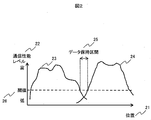
- the control device (16) is a map that shows the state of the communication performance level (22) with each wireless station with respect to the position (21) on the moving path of the terminal as shown in FIG. Create This map is created by collecting information on the communication performance level for several locations on the route, and interpolating using the information for the location where the information was collected for locations where information is not collected. The result is held in the map holding unit of the control device. The method for creating this map will be described later.
- the left curve (23) shows the state of the communication performance level when communicating with the wireless station 1
- the right curve (24) shows the state of the communication performance level when communicating with the wireless station 2.
- the control device sets a data holding section (25) that is not suitable for communication between the terminal and the wireless station in the map.
- the data holding section (25) is, for example, a section in which the communication performance level is lower than the threshold (26) preset in the communication performance level.
- the threshold (26) is set by the system operator.
- information on the position of the map is converted into information on time (162) as shown in FIG. 3 by estimating the average moving speed of the terminal.
- the time that the terminal is estimated to be in a location corresponding to the data holding section is defined as the data holding time (163), and the data addressed to the terminal sent from the server is held in the wireless station or gateway during the data holding time. Control to do.
- control is performed so that the data addressed to the terminal is transmitted from the handover destination radio station.
- the control device (16) also performs control of data retention in the gateway or the radio station.
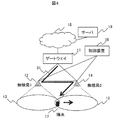
- FIG. 4 shows a data flow (31) from the gateway (11) to the terminal (17) when the data to the terminal is held by the wireless station in the wireless system of the present embodiment.
- the gateway (11) transmits the data addressed to the terminal (17) sent from the server to the wireless station 1 (12) currently transmitting to the terminal.
- the control device performs radio station transmission scheduling.
- the control device (16) Instructs the terminal to hold the data. If the terminal is handed over to the wireless station 2 while the wireless station 1 holds the data, the data addressed to the terminal is transferred to the wireless station 2 (14) to the wireless station 1 (12). Instruct to transfer. Then, the control device (16) performs control so that the wireless station 2 transmits data to the terminal after the end of the data holding time. By performing such control, it is possible to prevent data from being transmitted when the communication performance level between the radio station and the terminal is low, and to transmit data with a high communication performance level.
- the probability of transmission failure can be reduced, and as a result, radio resources can be effectively utilized.
- the control device does not wait for the handover of the terminal.
- data may be transmitted from the wireless station 1 to the wireless station 2 and the data addressed to the terminal may be retained until the data retention time ends at the wireless station 2.
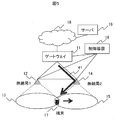
- FIG. 5 shows a data flow (41) in the case where the data addressed to the terminal is held not by the base station 1 (12) but by the gateway (11).
- the control device is also connected to the gateway.
- the gateway notifies the control device that it has received data for the terminal.
- the control device Upon receiving the notification, the control device performs transmission scheduling of the radio station to which the terminal is connected.
- the control device when it is determined that the time for transmitting data from the wireless station to the terminal is a time after the start time of the data holding time, the control device (16) sends the data to the terminal to the gateway (11). Instruct to retain the data.
- the gateway is controlled so that the data addressed to the terminal is transmitted to the wireless station after the handover.
- the control device does not wait for the handover of the terminal.
- the data may be transmitted from the gateway to the wireless station 2 to the terminal.
- Whether the data to the terminal is held by the wireless station or the gateway may be determined by the operator of the wireless system according to the application.
- the data to the terminal (17) is not directly passed through the wireless station (12) currently communicating with the terminal, but directly from the gateway (11), after the handover. 2 (14), the data transfer to the terminal handed over between the radio stations does not occur. Therefore, communication resources can be used efficiently.
- the map shown in FIG. 2 shows the relationship between the position of the terminal and the communication performance level between the terminal and the radio station.
- the communication performance level between the terminal and the radio station is, for example, the magnitude of the received power of the signal from the base station measured by the terminal, the CQI (Channel Quality Indicator) that is an indicator indicating the quality information of the downlink channel,
- the state of wireless communication between the terminal and the wireless station is represented by information such as the number of retransmission requests from the terminal.
- the communication performance level for example, the value of received power, CQI, or the number of retransmission requests may be converted into a numerical value.
- the result of comprehensively determining the state of wireless communication from the values for the two indices of received power and CQI is digitized, and the result of estimating the state of wireless communication using the numerical value is expressed as a communication performance level. Also good. What is necessary is just to comprise so that the magnitude
- the terminal is configured to transmit information related to the state of wireless communication and also feed back information related to the position of the terminal to the wireless station.
- Information on the position of the terminal can be obtained, for example, by utilizing GPS (Global Positioning System) or detecting the position using the principle of triangulation using a plurality of radio stations.
- GPS Global Positioning System
- the control device receives information on the communication performance level and position from the radio station, stores it in the memory in the control device, and creates the map shown in FIG. 2 using the statistical information.
- control device may be configured so as to hold error information with respect to the average value therein.
- the map may be created by measuring the communication performance level multiple times at a predetermined position prior to system operation.
- information may be collected by associating the communication performance level with the location information by using the GPS described above, and a map may be created using the statistical information.
- the present invention is particularly excellent in application to an environment in which a plurality of terminals are moving at a similar speed in a certain direction.
- a suitable example is the movement of terminals on a highway.
- a plurality of vehicles are moving at a speed within a certain range on a predetermined movement route. Therefore, the terminal moving with the vehicle can be regarded as moving along a route determined at a speed within a certain range. It is apparent that this embodiment can be applied to environments other than highways as long as a plurality of terminals can be regarded as moving at a similar speed in a certain direction.
- the terminal is configured to periodically feed back information on the communication performance level with the radio station, and the radio station obtains the information from the time when the information fed back from the terminal is received. What is necessary is just to comprise so that calculated time may be calculated. Or you may comprise so that a terminal may feed back together the information regarding a communication performance level, and the information regarding the time when the information was acquired.
- the control device receives the above information from the radio station and stores it in a memory in the control device.
- the control device is required to have a function for converting information relating to time into information relating to position, which will be described below.
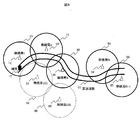
- a plurality of radio stations are arranged around the highway (61) that is the movement route of the terminal (17), and each radio station has a communication area (13, 15) as shown in FIG. , 52, 54, 56, 58, 60) will be described.
- a terminal (17) moving on the highway from the left side to the right side in FIG. 6 travels on the highway (61), and wirelessly transmits from the wireless station 1 (12) to the wireless station 2 (14). It is estimated that a handover is performed from the station 2 (14) to the radio station 3 (51) and from the radio station N (53) to the radio station N + 1 (55). Therefore, it is determined that the terminal that has handed over the radio stations in this order is moving from the left side to the right side in FIG.
- a terminal moving on the highway from the right side to the left side in FIG. 6 travels on the highway, so that the radio station N + 1 is transferred from the radio station N to the radio station N, the radio station 3 is transferred to the radio station 2, and the wireless station 2 is The terminal that is estimated to be handed over to the station 1 and handed over the radio stations in this order is determined to be moving from the right side to the left side of the road.
- handover is performed from the wireless station 1 (12) to the wireless station 101 (57) and from the wireless station 101 (57) to the wireless station 102 (59), Can be considered.
- the terminal location and moving speed are estimated using the history of handover of the terminal.
- FIG. 7 is a conceptual diagram showing a point where a handover is estimated to occur and a distance of a moving route of the terminal between the points.
- a handover occurrence point is measured a plurality of times in advance, and a position serving as an average point is calculated from the statistical information as a handover estimation point.
- the distance of the expressway between the handover estimated points is measured in advance, and this information is held in the control device.
- handover estimation in which a handover from the wireless station 2 to the wireless station 3 is estimated to occur from a handover estimated point 1 (71) where a handover from the wireless station 1 to the wireless station 2 is estimated to occur. It shows that the distance (74) to the point 2 (72) is AAAm.
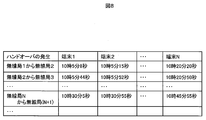
- FIG. 8 is an example of a table in which the control apparatus collects and summarizes information about when the terminal has performed handover from which radio station to which radio station.
- each wireless station notifies the control device of information related to handover.
- the terminal 1 is configured to notify the control device of the time when the terminal 1 performs handover from the wireless station 1 to the wireless station 2.
- the terminal 1 is configured to notify the control device of the time at which the terminal 1 is handed over from the wireless station 2 to the wireless station 3.
- the radio station notifies the control apparatus of the time.
- FIG. 8 Similar information is collected for other terminals traveling on the highway, for example, terminal 2 and terminal N, and the table shown in FIG. 8 is created.
- a handover from the wireless station 1 to the wireless station 2 occurs at 10: 5: 8
- a handover from the wireless station 2 to the wireless station 3 occurs at 10:05:44.
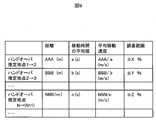
- the control device creates the table shown in FIG. 9 based on the information in FIG. 7 and the information in FIG.
- FIG. 9 is a diagram illustrating an example of a table summarizing the estimation results of the average moving speed and error range of the terminal obtained from the distance between the handover estimated points and the average value of the moving time between the handover estimated points in the first embodiment. It is.
- the table shown in FIG. 9 is created by the following method. From the information shown in FIG. 7, for example, it can be seen that the distance between the handover estimated point 1 and the handover estimated point 2 is AAAm.
- the average value of the time required for the terminal to move from the handover estimated point 1 to the handover estimated point 2 can be obtained from the information on the occurrence time of handover of the plurality of terminals described in the table shown in FIG. it can.
- the average travel time from the handover estimated point 1 to the handover estimated point 2 is a leap second.
- the average moving speed between the handover estimated point 1 and the handover estimated point 2 can be estimated as AAA / a [m / sec].
- the error range for the average moving speed can also be calculated based on the error information for the average calculated from the measurements of FIGS.
- the control device uses the time when the communication performance level information was acquired as the position information. Convert. Specifically, the time until the time when the communication performance level information is acquired is calculated based on the time when the terminal handover occurs. By multiplying the time by the average moving speed, the distance from the handover occurrence point is calculated, and the position of the terminal is estimated. Then, the map shown in FIG. 2 is created by associating the communication performance level information with the position information. Thus, the map shown in FIG. 2 can be created without using GPS or measuring the communication performance level at a predetermined position.
- a map showing the communication performance level with respect to the relative time from the handover occurrence time can be created by using the average moving speed of the terminal and setting it based on the time when the handover occurred.
- the terminals moving on the expressway are moving at almost the same speed within a certain time range. Therefore, using the map information created in the past shown in FIG. 2 and FIG. 3, the position or time when the communication performance level falls below the threshold, and the position or time for recovering the state are estimated. Specifically, scheduling of the radio station is performed, and the transmission time of data to the terminal is obtained. Next, using the data transmission time to the terminal and the map shown in FIG. 3, it is determined whether or not the data transmission time to the terminal corresponds to the data holding time. Estimate time above threshold. In addition, the difference between the data transmission time and the current time is multiplied by the average moving speed to estimate the distance that the terminal moves by the time of data transmission.
- the position of the terminal at the time of data transmission is estimated.
- the control device wirelessly transmits the data to the terminal at a time when the communication performance level exceeds the threshold or when the terminal exists at a position where the communication performance level exceeds the threshold. Instructs the station or gateway to hold the data to the terminal.
- the average moving speed of the terminal is calculated based on the position and time estimated to cause handover of the radio station, but the average moving speed of the terminal may be obtained using other methods.
- the average speed may be obtained by using information related to traffic such as traffic jam information, or by using a speed limit on a highway when there is no traffic jam.
- control device performs control so that the wireless station holds data.
- description will be given focusing on one terminal, but the wireless station may communicate with a plurality of terminals.
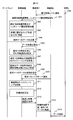
- the terminal 1 periodically notifies the currently connected wireless station 1 of the communication performance level (1300).
- the wireless station notifies the control device of information relating to the communication performance level and the time when the information was acquired as communication performance related information (1301).
- the radio station notifies the control apparatus of information related to the handover of the terminal (1301).
- the control device collects communication performance related information and handover related information from each wireless station (1302).
- the control device uses this information to create and update a map related to the communication performance level and time (1303).
- the wireless station 1 notifies the control device that the data to the terminal 1 has been received (1305).
- the control device estimates the current position of terminal 1 and the average moving speed (1306).
- the current position can be estimated in the same manner as described above using the handover occurrence time, the current time, and the average moving speed.
- the control apparatus performs scheduling of the wireless station 1 to which the terminal 1 is connected (1307), and determines that the transmission of the data to the terminal 1 is after the start time of the data holding time (1308).
- the wireless station 1 is instructed to hold data in the terminal 1 (1309).
- the radio station 2 notifies the control device of the handover of the terminal 1 (1310).
- the control device receives this notification and performs scheduling of the wireless station 2 (1311), and calculates a standby time for transmitting data to the terminal 1 after the end of the data holding time (1312).
- the control device instructs the wireless station 1 to transfer the data of the terminal 1 to the wireless station 2 and a waiting time until the transfer (1313).
- the wireless station 1 transfers the data of 1 to the terminal to the wireless station 2 after the end of the waiting time (1314).
- the wireless station 2 transmits the transferred data to the terminal 1 to the terminal 1 (1315).
- a function that equalizes the absolute time between the control device and the radio station may be implemented, and the time management may be performed using the time, and the time may be set between the control device and the radio station. It is also possible to configure such that the time management is performed at the relative time by providing the reference.
- FIG. 10 shows a sequence when it is determined that the transmission of the data to the terminal 1 is after the start time of the data holding time.
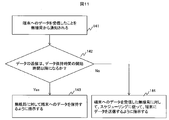
- FIG. 11 shows an operation flowchart of the control device for the determination. . In FIG. 11, operations overlapping with those in FIG. 10 are omitted.
- the control apparatus is notified from the wireless station that data for the terminal has been received from the gateway (141).
- the control device determines whether the data transmission is after the start time of the data holding time (142).
- the determination result is Yes, the wireless station is instructed to hold data to the terminal (143), and when the determination result is No, the wireless station that has received the data from the gateway to the terminal is controlled.
- the terminal is instructed to transmit data according to the scheduling determined by the apparatus (144).
- control device performs control so that data is held in the gateway.
- description will be given focusing on one terminal, but the wireless station may communicate with a plurality of terminals.
- the gateway receives data for the terminal 1, the gateway notifies the control device of the reception (2104). Upon receiving this notification, the control device estimates the current position of terminal 1 and the average moving speed (2105). Next, the control apparatus performs scheduling of the radio station 1 to which the terminal 1 is connected (2016), and when it is determined that the transmission of the data to the terminal 1 is after the start time of the data holding time (2107) The gateway is instructed to hold data in the terminal 1 (2108), and the gateway stores the data in the memory (2109). When the terminal is handed over to the radio station 2, the radio station 2 notifies the control device of the handover of the terminal 1 (2110).
- the control apparatus Upon receiving this notification, the control apparatus performs scheduling of the radio station 2 (2111), calculates a standby time for transmitting data to the terminal 1 after the data holding time ends from the created map, and waits (2112). ).
- the control device instructs the gateway to transmit the data to the terminal 1 to the wireless station 2 after the end of the standby time (2113).
- the gateway updates the forwarding table (2114), and transmits the data of terminal 1 to wireless station 2 (2115).
- the radio station 2 transmits data to the terminal 1 according to the scheduling of the control device (2116).
- FIG. 12 shows a sequence when it is determined that the transmission of the data to the terminal 1 is after the start time of the data holding time.
- the operation flow of the control apparatus for the determination is the same except that the notification target is changed from a wireless station to a gateway in FIG.
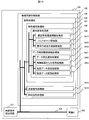
- the terminal 91 includes at least a wireless signal transmission / reception unit 92 that transmits and receives wireless signals, a wireless communication control unit 93 that controls wireless communication between the wireless station and the terminal, and an application control unit 94 that controls terminal applications. It is configured.
- the wireless signal transmission / reception unit 92, the wireless communication control unit 93, and the application control unit 94 are connected by a bus 95, and can exchange signals with each other.
- the wireless signal transmission / reception unit 92 transmits / receives a wireless signal to / from the wireless station.
- the wireless communication control unit 93 includes a feedback information creating unit 96 that creates feedback information to the wireless station.
- the feedback information creation unit 96 includes a CQI information creation unit 97 that creates Channel Quality Indicator (CQI) information to be fed back to the radio station, and a received power information creation unit 98 that creates information about the magnitude of received power. Is done.
- CQI Channel Quality Indicator
- the wireless station (100) controls a wired interface (103) serving as an interface to other devices connected to the wireless station by wire, a wireless signal transmission / reception unit (101) that performs wireless communication with the terminal, and the operation of the wireless station. And a bus (104) for connecting each functional block in the radio station. Included in the conversion of a signal received via the wired interface (103) into a wireless signal, in a wireless station, for example, conversion of a signal created by the wireless station operation control unit into a wireless signal, and a wireless signal transmission / reception unit The radio signal received by the antenna is converted into a digital signal by the radio signal transmitting / receiving unit (101).
- the radio station operation control unit (102) that controls the operation of the radio station includes a signal processing unit (105) that processes a signal that the radio station communicates with other devices, and the signal processing unit (105)
- a transmission signal processing unit (1015) that performs processing, a reception signal processing unit (1019) that processes received signals, and a control signal processing unit (106) that processes control signals are configured.
- the notification signal processing unit (107) includes a communication performance related information collecting unit (108) that collects information on the magnitude of received power and channel quality indicator (CQI) information included in the signal received by the wireless station from the terminal, A handover management unit (109) for managing the handover of the terminal, a signal generation and transmission processing unit (1017) for generating a signal for notifying the control device of the communication performance related information and the information related to the handover, and a transmission processing unit (1017) Consists of CQI) information included in the signal received by the wireless station from the terminal.
- a handover management unit (109) for managing the handover of the terminal
- a signal generation and transmission processing unit (1017) for generating a signal for notifying the control device of the communication performance related information and the information related to the handover
- the communication performance related information collection unit (108) has a function of calculating the measured time of the communication performance from the time when the wireless station receives the information related to the communication performance fed back from the terminal.
- the handover manager (109) manages the occurrence of terminal handover including the time.
- a signal for notifying the control device of information related to the handover of the terminal is generated by the signal generation and transmission processing unit (1017) together with information regarding the time at which the control is performed, and transmitted to the control device.
- the data retention related information processing unit (1010) is a data reception notification processing unit 10 (1018) that performs processing for notifying the control device that data has been received by the terminal, and control that processes a signal transmitted from the control device.
- Each processing unit may be configured to hold an internal memory, or may be configured to temporarily store data to be transmitted to a terminal or a handover destination of the terminal in the memory.
- processing unit which is a feature of the present invention, it may be configured to have a function equivalent to that of a general wireless station.
- the scheduling function for determining the schedule for transmitting data to the terminal is configured not to be installed in the radio station but to be provided in the control device. What is necessary is just to comprise so that data may be transmitted according to the instruction
- the control device by giving the control device a scheduling function, it is possible to perform scheduling in consideration of communication states of a plurality of radio stations managed by the control device.
- the radio station can simplify the function.
- scheduling is not performed only by the control device, but each wireless station is also equipped with a scheduling function, which is more sophisticated for data transmission to terminals whose communication performance level is higher than a threshold.
- the scheduling function may be distributed and implemented between the control device and the radio station, such as when scheduling is performed within the radio station.
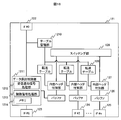
- the main function of the control device of the present embodiment is to understand the communication performance level in the wireless communication between the wireless station and the terminal in the movement path of the terminal, and a map representing the communication performance level with respect to the position as shown in FIG. Is to create. Further, a position that is lower than the threshold of the communication performance level preset by the system operator for the map is determined as a data holding section. Further, by estimating the average moving speed of the terminal and converting the communication performance level with respect to the terminal position to the communication performance level with respect to time based on the estimation result of the average moving speed, the data holding time is determined. is there.
- the control device After performing the above, as described with reference to FIGS. 10 to 12, the control device performs scheduling of the radio station to which the terminal is connected, and as a result, the data transmission time is the start time of the data holding time. If it is determined that it will be thereafter, the wireless station or gateway is instructed to hold data in the terminal. Then, control is performed so that data is transmitted from the wireless station to the terminal outside the data holding time. Therefore, the control device (110) includes a data control unit (111) that performs the above control, an interface (IF) (1118), and a bus (1119). Below, the data control part (111) especially relevant to a present Example is demonstrated.
- the data control unit includes a map management unit (115) that manages maps, a data retention control unit (1112) that controls data retention, and, as shown in FIG. 10 or FIG. It comprises a signal transmission / reception processing unit (1117) for processing a signal for performing communication with the gateway.
- the map management unit (115) includes a communication performance related information collection unit (116) that collects communication performance related information transmitted from a wireless station, and information on the location of the terminal, for example, GPS, in order to estimate the location of the terminal , Information related to handover, location history information collection unit (117) that collects information such as the history of handover and the time required to move between handover estimated points, and processes the signal that notifies the handover of the terminal notified from the radio station
- a map creation and update processing unit (1110) for appropriately performing update processing and a map holding unit (1111) for holding the created map are configured. It is.
- the data holding control unit (1112) includes a scheduling unit (1113) that performs scheduling of the radio station, a data holding determination unit (1114) that determines whether to hold the data, and the data holding control unit (1114) illustrated in FIGS. It comprises a standby time calculation unit (1115) that calculates the standby time described in the operation sequence, and a control signal generation unit (1116) that generates a control signal to be transmitted to a wireless station or a gateway.
- FIG. 16 is a configuration diagram of a gateway used in a wireless system in which data to the terminal is held by the gateway.
- the gateway includes an interface (IF) (122, 123, 124, 125), a buffer (126), an internal header addition unit (127), a transfer table (128), a switching unit (129), a table management unit (1210), and data holding It is comprised from a control part (1211).
- interface # 0 (IF # 0) (122) is an interface with the control device
- interface # 1 (IF # 1) (123) is an interface with the Internet
- interface # 2 (IF # 2) (124) to interface #n (IF # n) (125) are interfaces with the radio station.
- Data sent from the server via the Internet is input to the data holding control unit (1211).
- a reception notification signal processing unit (1212) that generates and transmits a signal for notifying the control device that the data to the terminal has been received, and from the control device instructing data holding It comprises a control signal processing unit (1213) for processing signals and a memory (1214) for storing data instructed to be held.
- the input data is input to the buffer (126) to add an internal header.
- the internal header is added to the data by the internal header adding unit (127) for adding the internal header in accordance with the transfer table (128) storing the information indicating the transfer destination, and the switching is performed by the switching unit (129).
- the table management unit (1210) that manages the information of the transfer table receives the information from the control device.
- the signal transmitted from the control device and instructing the change of the data transmission destination to the terminal is processed by the control signal processing unit (1213) and transmitted to the table management unit.
- the data held in the memory (1214) in accordance with an instruction from the control device is input to the buffer (126) to which the internal header is added, and after the internal header is added, it is directed to a predetermined radio station. Switched to output.
- the bus may be configured by including a central processing unit (CPU) as a processing unit, a memory as a storage unit, and an input / output unit as necessary.
- CPU central processing unit
- a program for operation is stored in a memory or the like, and is executed by the CPU as necessary to realize the above-described functions.
- the first embodiment even when a terminal performs communication with a plurality of radio stations while performing handover, it can be controlled to perform communication in a state where the communication performance level between the terminal and the radio station is good. Therefore, the frequency utilization efficiency of the wireless communication system can be improved. Furthermore, in the present embodiment, even when there is no function for notifying position information from the terminal and speed information to the wireless station, a position where the communication performance level is improved for the terminal is predicted, and the wireless station and the terminal are It is possible to provide a wireless communication system, method, and apparatus capable of performing communication between each other.
- Example 2 of the present invention will be described.
- the wireless communication system according to the first embodiment is suitable for use in a wireless communication with an environment in which a plurality of terminals travel in the same direction at a substantially equal moving speed, for example, a terminal moving on a highway, etc., on a certain route.
- a substantially equal moving speed for example, a terminal moving on a highway, etc.
- a map of the communication performance level and the position or time created by the control device based on the information on the communication performance level fed back by the terminal that has already moved along the same movement route and the information collected by the wireless station regarding the handover of the terminal. It is considered that information can be applied to terminals having the same average moving speed.
- the above information can be updated while being created based on information for a certain period of time collected from terminals and radio stations.
- the average moving speed of the terminal is significantly different from the average moving speed of the past terminal, there may occur a case where the map of the relationship between the communication performance level currently used by the control device and the time cannot be applied.
- a radio communication system for dealing with such a situation will be described.
- FIG. 17 is a map showing the error range (194) in addition to the average value (193) of the communication performance level between the wireless station and the plurality of terminals.
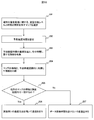
- the second embodiment as shown in FIG. 17, at least a part of the time not corresponding to the data holding time (195) is set as the predicted confirmation time (196), and this time is used to move the route from now on. Is determined to be suitable for the map indicating the relationship between the communication performance level (191) and the time (192) obtained from the past terminal.
- the control device estimates the route from which the terminal will move from the information of the handover of the terminal in the memory of the control device, and shows the relationship between the communication performance level and time created in the past with respect to the route.
- a map is selected (201).
- a prediction confirmation time is set for the map (202).
- the prediction confirmation time in this embodiment can be determined by the system operator, but it is desirable that the prediction confirmation time is long. In the present embodiment, when all the times other than the data holding time are set as the predicted confirmation time, the predicted confirmation time can be set to the longest time.
- the communication performance fed back from the terminal and information related to the time are collected from the wireless station (203).
- the control device uses the time when the terminal is handed over to the radio station that is currently communicating as a reference, information on the map indicating the relationship between the selected communication performance level and time, and information collected within the predicted confirmation time for the terminal. Are compared (204). Next, it is determined whether the information of the terminal matches the existing map information within the error range (205). If the information matches within the error range, the terminal can apply the selected map. It is determined that there is, and it is determined to perform communication using the communication method described in the first embodiment (206). If the error is out of the error range, the terminal determines that the selected map cannot be applied, and decides to perform communication without providing a data holding time (207).
- the terminal when it is determined that they match within the error range, the terminal can be determined to be a terminal that is moving on the route at the same average moving speed as the terminal used for creating the map used for the determination.
- Information collected by communication between the terminal and the wireless station may be stored in a memory as one of the map data.
- the average moving speed of the terminal is considered to be different from the average moving speed of the terminal in the map showing the relationship between the selected communication performance level and time.
- a new map may be created based on the obtained information indicating the relationship between the communication performance level and time.
- a plurality of maps showing the relationship between the communication performance level and the time are prepared, and information collected within the predicted confirmation time for the terminal is an error range.
- the operation of comparing whether or not they match may be performed on a plurality of maps.
- the wireless communication system As in the second embodiment, it is possible to confirm the suitability of the terminal with respect to the map used for the determination of the data retention time. Therefore, the terminal that shows an operation different from the operation predicted by the control device However, it is possible to provide a radio communication system, method and apparatus suitable for the terminal.
- the present embodiment is characterized in that the transmission method of the radio station is changed when it is out of the error range and when the terminal stays in the data holding section exceeds a predetermined threshold.
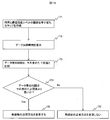
- the control device operates according to the operation flowchart shown in FIG.
- the control device newly creates a map showing the relationship between the time (162) and the communication performance level (161) as shown in FIG. 3 based on the information obtained by the terminal determined to be out of the error range (171). ).
- the time during which the communication performance level is equal to or lower than the predetermined threshold, that is, the data holding time is calculated (172).
- the calculated data retention time is compared with a predetermined upper limit value (173). As a result of the comparison, it is determined whether the calculated data retention time is longer than a predetermined upper limit value (174). If it is long, an operation of changing the transmission method of the related radio station is performed (175), and if it is short, the transmission method of the radio station is not changed (176).
- Changing the transmission method of the radio station is, for example, changing the antenna to be used by preparing a plurality of antennas having different directivities, or changing the beam pattern using the array antenna technology, or Various known techniques such as changing the transmission power of a radio station or transmitting a signal by linking two adjacent radio stations are applicable. In the present embodiment, among them, it is preferable to use a technique for improving the communication performance of the edge portion of the communication area of the wireless station.
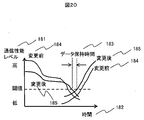
- the communication performance level of the portion corresponding to the edge of the communication area of two adjacent wireless stations can be improved by changing the transmission method of the wireless stations. For example, on a highway, it is possible to improve the communication performance level of a terminal in a vehicle that has been congested for a long time at a portion corresponding to the edge of the communication area. As a result, for example, as shown in FIG. 20, in the map showing the relationship between the communication performance level and the time, the data holding time (183) when the communication performance level is below the threshold can be shortened.
- the system operator determines the upper limit of the data retention time.
- the upper limit value of the data retention time is not limited to one, and may be configured to set a different value depending on the terminal. For example, in a terminal that can perform best effort communication, the upper limit of the data retention time is increased, and wireless communication is performed. For a terminal that guarantees a certain performance level, the upper limit of the data holding time may be set short. Also, different values may be set depending on the time zone during which communication is performed. Thus, it goes without saying that the upper limit of the data holding time may be variously changed according to the policy of the system operator.
- the wireless system may be configured to perform an operation of changing the transmission method of the related wireless station.
- the change in the transmission method of the wireless station is, for example, for some wireless resources such as changing only the wireless resource used for data transmission to the terminal where the upper limit of the data holding time is set short. Only the transmission method may be changed.
- the third embodiment of the present invention it can be prevented that the communication performance level between the terminal and the wireless station is in a bad state for a predetermined time or longer. Therefore, it is possible to provide a wireless communication system in which a wireless station and a terminal can communicate with each other with a good communication performance level within a certain period of time. Therefore, occurrence of timeout in communication can be reduced. According to such a system, for example, when a traffic jam occurs on an expressway, it is possible to avoid a situation in which the moving speed of the terminal is slow and a specific terminal is long in a state where the communication performance level is poor.
- the control device can be configured as one device separately from the radio station and the gateway. Further, the function of the control device may be incorporated inside any one of the radio stations, or the same function may be incorporated for each radio station, or the functions may be distributed among a plurality of radio stations. . Moreover, you may comprise so that the function of a control apparatus may be integrated in a gateway apparatus.
Landscapes
- Engineering & Computer Science (AREA)
- Computer Networks & Wireless Communication (AREA)
- Signal Processing (AREA)
- Mobile Radio Communication Systems (AREA)
Abstract
La présente invention a pour but de proposer un système de communication sans fil au moyen duquel, lorsqu'un terminal communique avec une pluralité de stations sans fil pendant un transfert intercellulaire, il est possible de réaliser une communication entre la station sans fil et le terminal dans une condition dans laquelle l'état de communication est bon. Le système de communication est commandé de façon à conserver des données lorsqu'une détermination est réalisée pendant la transmission de données au terminal quant au point de savoir si le terminal existe ou non à une position où le niveau de performances de communication est inférieur à un seuil et il est déterminé que le terminal existe à la position où le niveau de performances de communication est inférieur au seuil, et de façon à transmettre des données lorsque le terminal existe à une position où le niveau de performances de communication est supérieur au seuil.
Priority Applications (1)
| Application Number | Priority Date | Filing Date | Title |
|---|---|---|---|
| PCT/JP2014/059068 WO2015145708A1 (fr) | 2014-03-28 | 2014-03-28 | Système de communication sans fil et dispositif de commande |
Applications Claiming Priority (1)
| Application Number | Priority Date | Filing Date | Title |
|---|---|---|---|
| PCT/JP2014/059068 WO2015145708A1 (fr) | 2014-03-28 | 2014-03-28 | Système de communication sans fil et dispositif de commande |
Publications (1)
| Publication Number | Publication Date |
|---|---|
| WO2015145708A1 true WO2015145708A1 (fr) | 2015-10-01 |
Family
ID=54194297
Family Applications (1)
| Application Number | Title | Priority Date | Filing Date |
|---|---|---|---|
| PCT/JP2014/059068 Ceased WO2015145708A1 (fr) | 2014-03-28 | 2014-03-28 | Système de communication sans fil et dispositif de commande |
Country Status (1)
| Country | Link |
|---|---|
| WO (1) | WO2015145708A1 (fr) |
Cited By (2)
| Publication number | Priority date | Publication date | Assignee | Title |
|---|---|---|---|---|
| WO2022153636A1 (fr) * | 2021-01-13 | 2022-07-21 | 株式会社デンソー | Dispositif terminal, dispositif de station de base et dispositif de gestion de station de base |
| WO2024095735A1 (fr) * | 2022-11-01 | 2024-05-10 | 株式会社日立製作所 | Système de communication, dispositif de communication et procédé de communication |
Citations (3)
| Publication number | Priority date | Publication date | Assignee | Title |
|---|---|---|---|---|
| JP2004235681A (ja) * | 2003-01-28 | 2004-08-19 | Nissan Motor Co Ltd | 情報提供システム、センターシステム、情報提供方法及び移動情報通信端末 |
| JP2004289267A (ja) * | 2003-03-19 | 2004-10-14 | Matsushita Electric Ind Co Ltd | データ提供システム |
| WO2008120332A1 (fr) * | 2007-03-28 | 2008-10-09 | Pioneer Corporation | Système de distribution de contenu et son procédé de commande |
-
2014
- 2014-03-28 WO PCT/JP2014/059068 patent/WO2015145708A1/fr not_active Ceased
Patent Citations (3)
| Publication number | Priority date | Publication date | Assignee | Title |
|---|---|---|---|---|
| JP2004235681A (ja) * | 2003-01-28 | 2004-08-19 | Nissan Motor Co Ltd | 情報提供システム、センターシステム、情報提供方法及び移動情報通信端末 |
| JP2004289267A (ja) * | 2003-03-19 | 2004-10-14 | Matsushita Electric Ind Co Ltd | データ提供システム |
| WO2008120332A1 (fr) * | 2007-03-28 | 2008-10-09 | Pioneer Corporation | Système de distribution de contenu et son procédé de commande |
Cited By (4)
| Publication number | Priority date | Publication date | Assignee | Title |
|---|---|---|---|---|
| WO2022153636A1 (fr) * | 2021-01-13 | 2022-07-21 | 株式会社デンソー | Dispositif terminal, dispositif de station de base et dispositif de gestion de station de base |
| WO2024095735A1 (fr) * | 2022-11-01 | 2024-05-10 | 株式会社日立製作所 | Système de communication, dispositif de communication et procédé de communication |
| JP2024066150A (ja) * | 2022-11-01 | 2024-05-15 | 株式会社日立製作所 | 通信システム、通信装置、及び通信方法 |
| JP7844311B2 (ja) | 2022-11-01 | 2026-04-13 | 株式会社日立製作所 | 通信システム、通信装置、及び通信方法 |
Similar Documents
| Publication | Publication Date | Title |
|---|---|---|
| EP3591911B1 (fr) | Cadre de travail d'ingénierie de la circulation dans un réseau défini par logiciel | |
| US8594675B2 (en) | Multi-cell communication method and system of a mobile terminal, a micro base station, and a macro base station | |
| EP3198932B1 (fr) | Déclenchement d'émissions pilotes pour mesures de mobilité | |
| JP6765362B2 (ja) | サーバ装置及びその制御方法、並びにプログラム | |
| US8666435B2 (en) | Communication controller, communication control method and radio communication system | |
| US9949187B2 (en) | Mobile wireless terminal and control method | |
| US12414024B2 (en) | Reducing service disruption in handover scenarios | |
| WO2017080596A1 (fr) | Mécanisme d'optimisation de configuration de réseau de communication pour déplacer des éléments de communication | |
| US11533251B2 (en) | Method and system for dynamic traffic distribution and bi-casting in a hybrid network environment | |
| JP2005252623A (ja) | 通信端末及び情報提供装置並びにハンドオーバ処理方法 | |
| JP2002291015A (ja) | ハンドオーバ制御方法及び装置、並びに移動通信システム | |
| WO2018036609A1 (fr) | Régulation de trafic d'un dispositif de commande de véhicule | |
| WO2015071793A1 (fr) | Procédé permettant de faire fonctionner un réseau radio-cellulaire | |
| WO2014141453A1 (fr) | Système de communication radio, procédé de communication radio, et station radio | |
| CN111758280B (zh) | 网络接入节点及其方法 | |
| WO2015145708A1 (fr) | Système de communication sans fil et dispositif de commande | |
| JP6951530B2 (ja) | サーバ装置及びその制御方法、並びにプログラム | |
| EP4164194A1 (fr) | Procédé et appareil pour radiocommunication | |
| EP2667658A1 (fr) | Procédé pour réserver des ressources et équipement associé | |
| WO2016092616A1 (fr) | Système de fourniture de données | |
| JP5748615B2 (ja) | 通信装置 | |
| KR101289412B1 (ko) | 차량도착예측 알림 시스템 및 방법 | |
| CN101860992B (zh) | 控制基站以提供无线通信方法及其控制装置与通信系统 | |
| JP6419350B2 (ja) | 通信ネットワーク用の端末機器、当該端末機器を備えている車両、当該端末機器の動作方法、および、当該動作方法を実施するためのコンピュータプログラム | |
| CN109076429A (zh) | 通信方法、转发设备和终端设备 |
Legal Events
| Date | Code | Title | Description |
|---|---|---|---|
| 121 | Ep: the epo has been informed by wipo that ep was designated in this application |
Ref document number: 14887221 Country of ref document: EP Kind code of ref document: A1 |
|
| NENP | Non-entry into the national phase |
Ref country code: DE |
|
| 122 | Ep: pct application non-entry in european phase |
Ref document number: 14887221 Country of ref document: EP Kind code of ref document: A1 |
|
| NENP | Non-entry into the national phase |
Ref country code: JP |