WO2015152111A1 - Méthode rapide destinée à mesurer la cytotoxicité dans un système non-ir - Google Patents
Méthode rapide destinée à mesurer la cytotoxicité dans un système non-ir Download PDFInfo
- Publication number
- WO2015152111A1 WO2015152111A1 PCT/JP2015/059838 JP2015059838W WO2015152111A1 WO 2015152111 A1 WO2015152111 A1 WO 2015152111A1 JP 2015059838 W JP2015059838 W JP 2015059838W WO 2015152111 A1 WO2015152111 A1 WO 2015152111A1
- Authority
- WO
- WIPO (PCT)
- Prior art keywords
- compound
- group
- optionally substituted
- cells
- terpyridine
- Prior art date
- Legal status (The legal status is an assumption and is not a legal conclusion. Google has not performed a legal analysis and makes no representation as to the accuracy of the status listed.)
- Ceased
Links
Images
Classifications
-
- G—PHYSICS
- G01—MEASURING; TESTING
- G01N—INVESTIGATING OR ANALYSING MATERIALS BY DETERMINING THEIR CHEMICAL OR PHYSICAL PROPERTIES
- G01N33/00—Investigating or analysing materials by specific methods not covered by groups G01N1/00 - G01N31/00
- G01N33/48—Biological material, e.g. blood, urine; Haemocytometers
- G01N33/50—Chemical analysis of biological material, e.g. blood, urine; Testing involving biospecific ligand binding methods; Immunological testing
- G01N33/5005—Chemical analysis of biological material, e.g. blood, urine; Testing involving biospecific ligand binding methods; Immunological testing involving human or animal cells
- G01N33/5008—Chemical analysis of biological material, e.g. blood, urine; Testing involving biospecific ligand binding methods; Immunological testing involving human or animal cells for testing or evaluating the effect of chemical or biological compounds, e.g. drugs, cosmetics
- G01N33/5014—Chemical analysis of biological material, e.g. blood, urine; Testing involving biospecific ligand binding methods; Immunological testing involving human or animal cells for testing or evaluating the effect of chemical or biological compounds, e.g. drugs, cosmetics for testing toxicity
-
- C—CHEMISTRY; METALLURGY
- C07—ORGANIC CHEMISTRY
- C07D—HETEROCYCLIC COMPOUNDS
- C07D213/00—Heterocyclic compounds containing six-membered rings, not condensed with other rings, with one nitrogen atom as the only ring hetero atom and three or more double bonds between ring members or between ring members and non-ring members
- C07D213/02—Heterocyclic compounds containing six-membered rings, not condensed with other rings, with one nitrogen atom as the only ring hetero atom and three or more double bonds between ring members or between ring members and non-ring members having three double bonds between ring members or between ring members and non-ring members
- C07D213/04—Heterocyclic compounds containing six-membered rings, not condensed with other rings, with one nitrogen atom as the only ring hetero atom and three or more double bonds between ring members or between ring members and non-ring members having three double bonds between ring members or between ring members and non-ring members having no bond between the ring nitrogen atom and a non-ring member or having only hydrogen or carbon atoms directly attached to the ring nitrogen atom
- C07D213/60—Heterocyclic compounds containing six-membered rings, not condensed with other rings, with one nitrogen atom as the only ring hetero atom and three or more double bonds between ring members or between ring members and non-ring members having three double bonds between ring members or between ring members and non-ring members having no bond between the ring nitrogen atom and a non-ring member or having only hydrogen or carbon atoms directly attached to the ring nitrogen atom with hetero atoms or with carbon atoms having three bonds to hetero atoms with at the most one bond to halogen, e.g. ester or nitrile radicals, directly attached to ring carbon atoms
- C07D213/78—Carbon atoms having three bonds to hetero atoms, with at the most one bond to halogen, e.g. ester or nitrile radicals
- C07D213/79—Acids; Esters
-
- C—CHEMISTRY; METALLURGY
- C07—ORGANIC CHEMISTRY
- C07D—HETEROCYCLIC COMPOUNDS
- C07D401/00—Heterocyclic compounds containing two or more hetero rings, having nitrogen atoms as the only ring hetero atoms, at least one ring being a six-membered ring with only one nitrogen atom
- C07D401/14—Heterocyclic compounds containing two or more hetero rings, having nitrogen atoms as the only ring hetero atoms, at least one ring being a six-membered ring with only one nitrogen atom containing three or more hetero rings
-
- G—PHYSICS
- G01—MEASURING; TESTING
- G01N—INVESTIGATING OR ANALYSING MATERIALS BY DETERMINING THEIR CHEMICAL OR PHYSICAL PROPERTIES
- G01N21/00—Investigating or analysing materials by the use of optical means, i.e. using sub-millimetre waves, infrared, visible or ultraviolet light
- G01N21/62—Systems in which the material investigated is excited whereby it emits light or causes a change in wavelength of the incident light
- G01N21/63—Systems in which the material investigated is excited whereby it emits light or causes a change in wavelength of the incident light optically excited
- G01N21/64—Fluorescence; Phosphorescence
- G01N21/6408—Fluorescence; Phosphorescence with measurement of decay time, time resolved fluorescence
-
- G—PHYSICS
- G01—MEASURING; TESTING
- G01N—INVESTIGATING OR ANALYSING MATERIALS BY DETERMINING THEIR CHEMICAL OR PHYSICAL PROPERTIES
- G01N33/00—Investigating or analysing materials by specific methods not covered by groups G01N1/00 - G01N31/00
- G01N33/48—Biological material, e.g. blood, urine; Haemocytometers
- G01N33/50—Chemical analysis of biological material, e.g. blood, urine; Testing involving biospecific ligand binding methods; Immunological testing
- G01N33/5005—Chemical analysis of biological material, e.g. blood, urine; Testing involving biospecific ligand binding methods; Immunological testing involving human or animal cells
- G01N33/5008—Chemical analysis of biological material, e.g. blood, urine; Testing involving biospecific ligand binding methods; Immunological testing involving human or animal cells for testing or evaluating the effect of chemical or biological compounds, e.g. drugs, cosmetics
- G01N33/5011—Chemical analysis of biological material, e.g. blood, urine; Testing involving biospecific ligand binding methods; Immunological testing involving human or animal cells for testing or evaluating the effect of chemical or biological compounds, e.g. drugs, cosmetics for testing antineoplastic activity
-
- G—PHYSICS
- G01—MEASURING; TESTING
- G01N—INVESTIGATING OR ANALYSING MATERIALS BY DETERMINING THEIR CHEMICAL OR PHYSICAL PROPERTIES
- G01N33/00—Investigating or analysing materials by specific methods not covered by groups G01N1/00 - G01N31/00
- G01N33/48—Biological material, e.g. blood, urine; Haemocytometers
- G01N33/50—Chemical analysis of biological material, e.g. blood, urine; Testing involving biospecific ligand binding methods; Immunological testing
- G01N33/58—Chemical analysis of biological material, e.g. blood, urine; Testing involving biospecific ligand binding methods; Immunological testing involving labelled substances
- G01N33/582—Chemical analysis of biological material, e.g. blood, urine; Testing involving biospecific ligand binding methods; Immunological testing involving labelled substances with fluorescent label
Definitions
- the present invention relates to a novel compound for rapidly measuring cytotoxicity in a non-RI manner and a method for measuring cytotoxicity using the compound.
- immune cells such as NK cells and T cells are taken out from plasma and proliferated and / or activated outside the body, and then administered to a patient.
- the effect is mixed even with the same therapy.
- the reason for this is that in the process of proliferating and / or activating immune cells, there is no measurement of how much immune cells are proliferated and / or activated and have cytotoxic potential, or the proliferation and / or proliferation of immune cells. It may be administered to a patient with insufficient activation. As a result, patients may receive treatment that may be ineffective in some cases for more than half a year or more.
- a ⁇ -ray measurement method using [51Cr] sodium chromate is known in the RI system, and in non-RI systems, leakage of lactate dehydrogenase or terpyridine is known.
- a time-resolved fluorescence method using a derivative chelate is known (Patent Document 1, Non-Patent Document 1).
- the ⁇ -ray measurement method is not versatile because it is essential to use an RI facility capable of handling ⁇ -rays, making it difficult to handle in clinical settings.
- An object of the present invention is to provide a novel compound for measuring cytotoxicity that is accurate, reproducible, simple and rapid, and a method for measuring cytotoxicity using the compound.
- the present inventors have used the compound represented by the following formula (I), thereby reducing spontaneous leakage, reducing variation in values depending on the state of cells, and easily.
- the inventors have found that cytotoxicity can be measured, and have completed the present invention.
- R 1 represents a substituent
- R 2 and R 3 each represent an optionally substituted hydrocarbon group or an optionally substituted heterocyclic group
- Y represents a substituent
- n represents an integer of 0 to 3
- Z represents a single bond, —O—, —S—, —SO—, —SO 2 —, or —NR 4 —
- R 4 represents a hydrogen atom or a substituent
- A represents an optionally substituted C 1-6 alkylene group.
- a salt thereof hereinafter sometimes abbreviated as compound (I)).
- [3] An organic complex forming agent comprising the compound or salt thereof according to [1] or [2] above.
- a reagent for measuring the number of viable cells comprising the compound according to [1] or [2] above or a salt thereof.
- the reagent according to [4] above which is a reagent for measuring cytotoxicity.
- the reagent according to [4] above which is a reagent for measuring cell proliferation ability.
- a method for measuring cytotoxicity comprising a step of mixing a cell with the compound or salt thereof according to [1] or [2] above, and a step of forming a complex with a lanthanoid element and measuring fluorescence.
- the compound of the present invention introduces a specific substituent into the terpyridine skeleton, and increases the polarity of the chelate compound after degradation of esterase in the cell, thereby providing an accurate, highly reproducible and simple non-RI system. It is useful as a reagent for measuring cytotoxicity or a reagent for measuring cell proliferation.
- the measurement method of the present invention is non-RI, and can measure the cytotoxicity or cell proliferation ability of effector cells / target cell systems easily and rapidly. It is useful in the search for the activator and the like in clinical tests.
- the therapeutic effect can be enhanced by measuring the proliferation ability and / or activation ability of immune cells and confirming the therapeutic effect, and then administering to the patient.
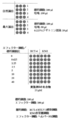
- FIG. 1 shows the arrangement of a 96-well plate in the measurement of cytotoxicity using the compound of the present invention (Example 8).
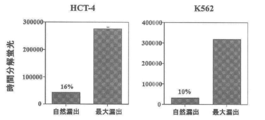
- FIG. 2 shows time-resolved fluorescence intensity in virus-infected cells HCT-4 and erythroblastoma HCT-4 and K562 using the compound of the present invention (Example 8).
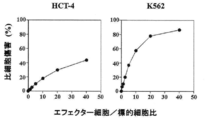
- FIG. 3 shows the results of measuring cytotoxicity using the compound of the present invention (Example 8).
- halogen atom include fluorine, chlorine, bromine and iodine.
- optionally substituted hydrocarbon group is, for example, “optionally substituted C 1-12 alkyl group”, “ optionally substituted C” unless otherwise specified.
- C 1-12 alkyl (group) unless otherwise specified, for example, methyl, ethyl, propyl, isopropyl, butyl, isobutyl, sec-butyl, tert-butyl, pentyl, isopentyl, Neopentyl, 1-ethylpropyl, hexyl, isohexyl, 1,1-dimethylbutyl, 2,2-dimethylbutyl, 3,3-dimethylbutyl, 2-ethylbutyl, heptyl, octyl, nonyl, decyl, undecyl, dodecyl .
- Examples of the “C 1-6 alkyl (group)” in the present specification include those having 1 to 6 carbon atoms in the “C 1-12 alkyl (group)”.
- C 2-12 alkenyl (group) is, for example, vinyl, propenyl, isopropenyl, 2-buten-1-yl, 4-penten-1-yl, unless otherwise specified, -Hexen-1-yl and the like.
- Examples of the “C 2-6 alkenyl (group)” in the present specification include those having 2 to 6 carbon atoms among the above “C 2-12 alkenyl (group)”.
- C 2-12 alkynyl (group) is, for example, 2-butyn-1-yl, 4-pentyn-1-yl, 5-hexyn-1-yl, unless otherwise specified. Etc.
- Examples of the “C 2-6 alkynyl (group)” in the present specification include those having 2 to 6 carbon atoms among the above “C 2-12 alkynyl (group)”.
- C 3-8 cycloalkyl (group) in the present specification includes, for example, cyclopropyl, cyclobutyl, cyclopentyl, cyclohexyl, cycloheptyl, cyclooctyl and the like.
- C 3-8 cycloalkenyl (group) is, for example, cyclopropenyl (eg, 2-cyclopropen-1-yl), cyclobutenyl (eg, 2-cyclobutene-), unless otherwise specified.
- 1-yl cyclopentenyl (eg, 1-cyclopenten-1-yl, 2-cyclopenten-1-yl, 3-cyclopenten-1-yl), cyclohexenyl (eg, 1-cyclohexen-1-yl, 2- Cyclohexen-1-yl, 3-cyclohexen-1-yl) and the like.
- C 7-14 aralkyl (group) is, for example, benzyl, phenethyl, 1-methyl-2-phenylethyl, diphenylmethyl, 1-naphthylmethyl, 2-naphthyl unless otherwise specified. And methyl, 2,2-diphenylethyl, 3-phenylpropyl, 4-phenylbutyl, 5-phenylpentyl and the like.
- examples of the “C 6-14 aryl (group)” include phenyl, 1-naphthyl, 2-naphthyl, 1-anthryl, 2-anthryl, and 9-anthryl unless otherwise specified. .
- C 1-12 alkoxy (group) unless otherwise specified, for example, methoxy, ethoxy, propoxy, isopropoxy, butoxy, isobutoxy, sec-butoxy, tert-butoxy, pentyloxy, Examples include hexyloxy, heptyloxy, octyloxy, nonyloxy, decyloxy, undecyloxy, and dodecyloxy. Examples of “C 1-6 alkoxy (group)” include those having 1 to 6 carbon atoms in “C 1-12 alkoxy (group)”.
- C 2-12 alkenyloxy (group) in the present specification includes, for example, vinyloxy, propenyloxy, isopropenyloxy and the like, unless otherwise specified.
- Examples of “C 2-6 alkenyloxy (group)” include those having 2 to 6 carbon atoms in “C 2-12 alkenyloxy (group)”.
- C 2-12 alkynyloxy (group) in the present specification includes, for example, 2-butynyloxy, 2-pentynyloxy, 5-hexynyloxy and the like, unless otherwise specified.
- Examples of “C 2-6 alkynyloxy (group)” include those having 2 to 6 carbon atoms in “C 2-12 alkynyloxy (group)”.
- C 3-8 cycloalkyloxy (group) is, for example, cyclopropyloxy, cyclobutyloxy, cyclopentyloxy, cyclohexyloxy, cycloheptyloxy, cyclooctyloxy and the like, unless otherwise specified. Is mentioned.
- C 3-8 cycloalkenyloxy (group) is, for example, cyclopropenyloxy (eg, 2-cyclopropenyloxy), cyclobutenyloxy (eg, 2-cyclohexenyloxy) unless otherwise specified. Cyclobutenyloxy), cyclopentenyloxy (eg, 1-cyclopentenyloxy, 2-cyclopentenyloxy, 3-cyclopentenyloxy), cyclohexenyloxy (eg, 1-cyclohexenyloxy, 2-cyclohexenyloxy, 3 -Cyclohexenyloxy) and the like.
- C 7-14 aralkyloxy (group) in the present specification includes, for example, benzyloxy, phenethyloxy and the like.
- C 6-14 aryloxy (group) in the present specification includes, for example, phenoxy, 1-naphthyloxy, 2-naphthyloxy and the like, unless otherwise specified.
- heterocycle-oxy (group) includes a hydroxy group substituted with “heterocycle (group)” described later.
- Preferable examples of the heterocyclic-oxy (group) include tetrahydropyranyloxy, thiazolyloxy, pyridyloxy, pyrazolyloxy, oxazolyloxy, thienyloxy, furyloxy and the like.
- C 1-6 alkylsulfanyl (group) is, for example, methylsulfanyl, ethylsulfanyl, propylsulfanyl, isopropylsulfanyl, butylsulfanyl, sec-butylsulfanyl, tert-butyl unless otherwise specified. And sulfanyl.
- C 2-6 alkenylsulfanyl (group) in the present specification includes, for example, vinylsulfanyl, propenylsulfanyl, isopropenylsulfanyl and the like, unless otherwise specified.
- C 1-6 alkylsulfonyl (group) is, for example, methylsulfonyl, ethylsulfonyl, propylsulfonyl, isopropylsulfonyl, butylsulfonyl, sec-butylsulfonyl, tert-butyl unless otherwise specified. And sulfonyl.
- examples of the “C 1-6 alkylene group” include methylene, ethylene, propylene, butylene, pentylene and hexylene.
- heterocycle (group) as a ring-constituting atom, one or two kinds selected from a nitrogen atom, a sulfur atom and an oxygen atom in addition to a carbon atom, 1 to 2 3 to 14 membered (monocyclic, bicyclic or tricyclic) heterocyclic group containing 4 heteroatoms, preferably (i) a 5 to 14 membered (preferably 5 to 10 membered) aromatic heterocyclic group (Ii) 3 to 8 membered non-aromatic heterocyclic group and the like.
- a 5- or 6-membered aromatic heterocyclic group or a 5- or 6-membered non-aromatic heterocyclic group is preferable.
- thienyl eg, 2-thienyl, 3-thienyl
- furyl eg, 2-furyl, 3-furyl
- pyridyl eg, 2-pyridyl, 3-pyridyl, 4-pyridyl
- Thiazolyl eg 2-thiazolyl, 4-thiazolyl, 5-thiazolyl
- oxazolyl eg 2-oxazolyl, 4-oxazolyl, 5-oxazolyl
- pyrrolyl Example: 1-pyrrolyl, 2-pyrrolyl, 3-pyrrolyl
- imidazolyl example: 1-imidazolyl, 2-imidazolyl, 4-imidazolyl
- pyrazolyl eg 1-pyrazolyl, 3-pyrazolyl, 4-pyrazolyl
- Triazolyl eg 1-imid
- pyrrolidinyl eg 1-pyrrolidinyl, 2-pyrrolidinyl, 3-pyrrolidinyl
- oxazolidinyl eg 2-oxazolidinyl
- imidazolinyl eg 1-imidazolinyl, 2-imidazolinyl, 4-imidazolinyl
- piperidinyl eg piperidino
- piperazinyl eg 1-piperazinyl, 2-piperazinyl
- morpholinyl eg 2-morpholinyl, 3-morpholinyl, morpholino
- thiomorpholinyl eg 2-thiomorpholinyl, Non-aromatic heterocyclic groups such as 3-thiomorpholinyl, thiomorpholino
- “optionally substituted C 1-6 alkylene group” for example, [Substituent group A] (1) a halogen atom; (2) hydroxy; (3) amino; (4) Nitro; (5) Cyano; (6) Halogen atom, hydroxy, amino, nitro, cyano, optionally halogenated C 1-6 alkyl, mono- or di-C 1-6 alkyl-amino, C 6-14 aryl, mono- or di -C 6-14 aryl-amino, C 3-8 cycloalkyl, C 1-6 alkoxy, C 1-6 alkoxy-C 1-6 alkoxy, C 1-6 alkylsulfanyl, C 1-6 alkylsulfinyl, C 1 -6 alkylsulfonyl, optionally esterified carboxyl, carbamoy
- optionally substituted C 3-8 cycloalkyl group “optionally substituted C 3-8 cycloalkenyl group”, “optionally substituted C 7-14 aralkyl group” , “ Optionally substituted C 6-14 aryl group” and “ optionally substituted heterocyclic group” include, for example, [Substituent group B] (1) Substituent group A; (2) optionally substituted C 1-6 alkyl; (3) optionally substituted C 2-6 alkenyl; (4) optionally substituted C 2-6 alkynyl; 1 to 5 substituents selected from the above may be substituted at each substitutable position, such as “C 3-8 cycloalkyl group”, “C 3-8 cycloalkenyl group”, “C 7-14 Examples thereof include “aralkyl group”, “C 6-14 aryl group”, and “heterocyclic group”. When a plurality of substituents are present, each substituent may be the same or different.
- substituent group B “optionally substituted C 1-6 alkyl”, “optionally substituted C 2-6 alkenyl”, “optionally substituted C 2-6 alkynyl group”
- substituent selected from the said substituent A group is mentioned, for example.
- the number of the substituent is 1 to the maximum number that can be substituted, more preferably 1 to 3.
- R 1 represents a substituent.
- R 1 is preferably an optionally substituted C 1-12 alkyl group or an optionally substituted C 1-12 alkoxy group.
- R 1 is more preferably (1) a hydroxy group, (2) formyl group, (3) C 1-6 alkyl-aminocarbonyl group (eg, ethylaminocarbonyl), and (4) hydroxy-C 1-6 alkoxy group (eg, hydroxyethoxy) C 1-6 alkyl optionally substituted with 1 to 3 substituents selected from (eg, methyl, ethyl, propyl) It is.
- R 2 and R 3 each represent a hydrocarbon group that may be substituted or a heterocyclic group that may be substituted.
- R 2 and R 3 are preferably a C 1-12 alkyl group.
- R 2 and R 3 are more preferably a C 1-6 alkyl group (eg, methyl, ethyl, propyl).
- Y represents a substituent.
- n represents an integer of 0 to 3. n is preferably 0.
- Z represents a single bond, —O—, —S—, —SO—, —SO 2 —, or —NR 4 — (R 4 represents a hydrogen atom or a substituent). Z is preferably a single bond or —O—.
- A represents an optionally substituted C 1-6 alkylene group.
- A is preferably methylene.
- Suitable compounds (I) include the following compounds.
- R 1 is (1) a hydroxy group, (2) formyl group, (3) C 1-6 alkyl-aminocarbonyl group (eg, ethylaminocarbonyl), and (4) hydroxy-C 1-6 alkoxy group (eg, hydroxyethoxy) C 1-6 alkyl (eg, methyl, ethyl, propyl) optionally substituted with 1 to 3 substituents selected from:
- R 2 and R 3 are C 1-6 alkyl groups (eg, methyl, ethyl, propyl)
- n is 0,
- Specific examples of the compound (I) include the compounds of Examples 1 to 9.
- examples of the salt include metal salts, ammonium salts, salts with organic bases, salts with inorganic acids, salts with organic acids, and the like.
- the metal salt include alkali metal salts such as sodium salt and potassium salt; alkaline earth metal salts such as calcium salt, magnesium salt and barium salt; aluminum salt and the like.
- the salt with an organic base include salts with trimethylamine, triethylamine, pyridine, ethanolamine, diethanolamine, triethanolamine and the like.
- Preferable examples of the salt with inorganic acid include salts with hydrochloric acid, hydrobromic acid, nitric acid, sulfuric acid, phosphoric acid and the like.
- the salt with organic acid include, for example, formic acid, acetic acid, trifluoroacetic acid, phthalic acid, fumaric acid, oxalic acid, tartaric acid, maleic acid, citric acid, succinic acid, malic acid, methanesulfonic acid, benzene And salts with sulfonic acid, p-toluenesulfonic acid and the like.
- the production intermediate obtained in the following production method can also be used for the next reaction without purification, but it can be used after isolation and purification from the reaction mixture by known techniques such as chromatography and recrystallization. Also good.
- Compound (I) of the present invention can be produced, for example, using the following method A and method B.
- compound (I) a compound represented by formula (Ia) wherein R 1 is an alkoxy group or a salt thereof (hereinafter also referred to as compound (Ia)) should be produced by the following method A or a method analogous thereto. Can do. [Method A]
- R 1 ′ and R 1 ′′ each represents an optionally substituted C 1-12 alkyl group
- X represents a halogen atom
- A has the same meaning as described above.
- R 2 and R 3 Is as defined above and is the same.
- X is preferably a chlorine atom.
- an O-substituted-2,2 ′: 6 ′, 2 ′′ -terpyridine-6,6 ′′ -dicarboxylate (hereinafter also referred to as compound (2)) is produced by reacting an electrophilic reagent.
- Compound 1 can be produced by a known method (P. Kadjane, C. Plata-Iglesias, R. Ziessel, L. J. Charbonniere, Dalton Trans. 2009, 5688-5700) or a method analogous thereto.
- alkali metal hydride include sodium hydride and potassium hydride.
- the electrophilic agent include methyl iodide and ethyl bromide.
- the amount of the electrophilic reagent to be used is generally about 1-3 mol, preferably about 1-2 mol, per 1 mol of compound (1).
- This step is performed in a solvent that does not adversely influence the reaction.
- the solvent that does not adversely influence the reaction include dimethylformamide, THF, diethyl ether and the like.
- the reaction temperature is generally about 0-100 ° C, preferably about 20-50 ° C.
- the reaction time is usually about 2 to 48 hours, preferably about 12 to 24 hours.
- the reaction time is usually about 10 to 48 hours, preferably about 12 to 36 hours.
- Compound (Ia) is produced by reacting compound (3) with a haloalkylalkoxylate derivative represented by formula (4) (hereinafter also referred to as compound (4)) in the presence of a base.
- the base include triethylamine, diisopropylethylamine, N, N-dimethyl-4-aminopyridine and the like.
- the amount of the base to be used is generally about 2 to 10 mol, preferably about 2 to 4 mol, per 1 mol of compound (3).
- Compound (4) may be a commercially available product, or can be produced from the corresponding starting material compound by a known method.
- the amount of compound (4) to be used is generally about 2 to 6 mol, preferably about 2 to 4 mol, per 1 mol of compound (3).
- This step is performed in a solvent that does not adversely influence the reaction.
- the solvent that does not adversely influence the reaction include dimethylformamide, THF and the like.
- the reaction temperature is usually about 0-100 ° C, preferably about 40-60 ° C.
- the reaction time is usually about 12 to 48 hours, preferably about 12 to 36 hours.
- the compound (1), compound (2) and compound (3) obtained by the above method A can be used in various acylation reactions, alkylation reactions, amidation reactions, oxidation reactions, reduction reactions, hydrolysis reactions, dehydration reactions, etc. It can be further derivatized by subjecting to a known reaction. Such a reaction can be carried out according to a method known per se or according thereto. Further, when the compound (1), the compound (2) and the compound (3) have a functional group such as a hydroxy group, the reaction can be carried out with appropriate protection. Such protecting groups and protecting / deprotecting reactions can be carried out by known protecting groups and methods (for example, “Protective Groups in Organic Synthesis, 3rd Ed.” (Theodora W. Greene, Peter G. M., Wiley-Interscience)). Wuts))).
- compound (I) a compound represented by formula (Ib) wherein R 1 is a hydroxymethyl group or a salt thereof (hereinafter also referred to as compound (Ib)) is produced by the following method B or a method analogous thereto. be able to. [Method B]
- a and X are as defined above.
- R 2 and R 3 are as defined above and are the same.
- X is preferably a chlorine atom.
- the reaction temperature is generally about 0-100 ° C, preferably about 20-40 ° C.
- the reaction time is usually about 2 to 48 hours, preferably about 12 to 24 hours.
- the methyl ester form of compound (5) is reduced with lithium aluminum hydride to produce the hydroxymethyl form of compound (5).
- the amount of lithium aluminum hydride to be used is generally about 1-3 mol, preferably about 1-2 mol, per 1 mol of compound (5).
- This step is performed in a solvent that does not adversely influence the reaction. Examples of the solvent that does not adversely influence the reaction include THF, diethyl ether and the like.
- the reaction temperature is usually about ⁇ 20 to 50 ° C., preferably about 0 to 20 ° C.
- the reaction time is usually about 1 to 12 hours, preferably about 3 to 5 hours.
- Process 3 By dissolving the hydroxymethyl form of compound (5) in pyridine and reacting with acetic anhydride, 2,2 ′: 6 ′, 2 ′′ -terpyridin-4′-ylmethyl acetate (hereinafter referred to as formula (6)) is obtained. , Compound (6)).
- the amount of pyridine to be used is generally about 1-10 L, preferably about 2-5 L, per 1 mol of compound (5).
- the amount of acetic anhydride to be used is generally about 1-10 mol, preferably about 1-2 mol, per 1 mol of compound (5).
- the reaction temperature is generally about 0-100 ° C, preferably about 20-40 ° C.
- the reaction time is usually about 2 to 48 hours, preferably about 12 to 24 hours.
- a pyridine oxide of compound (6) is produced by reacting compound (6) with a peroxide. This step is performed in a solvent that does not adversely influence the reaction. Examples of the solvent that does not adversely influence the reaction include dichloromethane, chloroform, carbon tetrachloride, 1,2-dichloroethane, chlorobenzene and the like.
- the reaction temperature is usually about ⁇ 20 to 50 ° C., preferably about 0 to 20 ° C.
- the reaction time is usually about 2 to 48 hours, preferably about 12 to 24 hours.
- the amount of the cyanating agent to be used is generally 2 to 10 mol, preferably about 4 to 5 mol, per 1 mol of compound (6).
- the reaction temperature is generally about 0-100 ° C, preferably about 20-40 ° C.
- the reaction time is usually about 2 to 48 hours, preferably about 12 to 24 hours.
- Step 6 By subjecting compound (7) to alkaline hydrolysis, 4 ′-(hydroxymethyl) -2,2 ′: 6 ′, 2 ′′ -terpyridine-6,6 ′′ -dicarboxylic acid represented by formula (8) ( Hereinafter, compound (8) is also produced. This step can be performed in the same manner as Step 2 of Method A above.
- Step 7) Compound (Ib) is produced by reacting compound (8) with compound (4) in the presence of a base. This step can be carried out in the same manner as Step 3 of Method A above.
- the compound of the present invention can form an organic complex with a lanthanoid element after degradation of esterase in the cell, and the number of living cells can be measured by measuring the fluorescence of the complex. What can be measured by the compound of the present invention is not limited to the number of living cells, and examples thereof include cytotoxicity and cell proliferation ability.
- the method for measuring the cytotoxicity of the present invention comprises a step of mixing a compound represented by formula (I) with a cell, and a step of forming a complex with a lanthanoid element and measuring fluorescence.
- the “cell” in the method of the present invention is a cell having cytotoxicity, and examples thereof include immune cells such as NK cells and T cells, and cancer cells such as leukemia cells.
- Examples of the “lanthanoid element” in the method of the present invention include europium, samarium, terbium and the like. Preferably, europium is used.
- the “surfactant” in the method of the present invention is appropriately selected from NP-40, Triton X-100, digitonin, CHAPS and the like. Digitonin is preferable.
- the fluorescence can be measured, for example, by time-resolved fluorescence measurement. Since the method for measuring the cytotoxicity of the present invention is more sensitive than the conventional cytotoxicity assay, the measurement time can be shortened.
- Target cells are incubated overnight in RPMI 1640 medium at 37 ° C., 5% CO 2 .
- Seed in RPMI 1640 medium to a concentration of 1 ⁇ 10 6 cells / mL, add the compound represented by formula (I) to a final concentration of 25 ⁇ M, and incubate at 37 ° C., 5% CO 2 for 15 minutes.
- the digitonin DMSO solution is prepared so that digitonin is dissolved in DMSO, water is immediately added, and the digitonin concentration is finally 0.0625%. 4). After mixing well and centrifuging, transfer the supernatant to a plate (96 wells, flat bottom) containing 250 ⁇ L of Eu solution. 5. After standing for 15 minutes, time-resolved fluorescence is measured with a PHERAstar microplate reader.
- Flash column chromatography is a silica gel C60 (50-200 ⁇ m) from Fuji Silysia Chemical Ltd or a CHROMATOREX DIOL (MB 100-40 / 75) with an eluent system as described in the experimental section. Made with. TLC was performed using either TLC Silic gel 60 F254 aluminum sheets (Merck) or silica gel F254 glass plates (Merck).
- NMR Nuclear magnetic resonance spectrum
- Hz Hertz J: Coupling constant
- HRMS High resolution mass spectrometry spectrum
- THF Tetrahydrofuran
- DMF N, N-dimethylformamide
- DMSO Dimethyl sulfoxide
- IPE Diisopropyl ether
- TEA Triethylamine
- BATDA Bis (Acetoxymethyl) 2,2 ′: 6 ′, 2 ′′ -terpyridine-6,6 ′′ -dicarboxylate
- Step 1 the reaction was performed using 2-acetoxyethyl bromide as the electrophilic reagent.
- the obtained crude product was purified by flash column chromatography (eluent: 50% n-hexane / ethyl acetate) to give diethyl 4 ′-(2-acetoxyethoxy) -2,2 ′: 6 ′, 2 "-Terpyridine-6,6" -dicarboxylate (494 mg, 41% yield) was obtained as an orange solid.
- Step 1 the reaction was performed using 2-oxo-2- (propylamino) ethoxymethyl bromide as an electrophilic reagent.
- the obtained crude product was purified by flash column chromatography (eluent: 50% n-hexane / ethyl acetate) to give diethyl 4 ′-(2-oxo-2- (propylamino) ethoxy) -2, 2 ′: 6 ′, 2 ′′ -terpyridine-6,6 ′′ -dicarboxylate (342 mg, 70% yield) was obtained as a white solid.
- Step 1 the reaction was performed using 3-((tetrahydro-2H-pyran-2-yl) oxy) propyl bromide as the electrophilic reagent.
- Step 1 the reaction was performed using 2- (2-acetoxyethoxy) ethyl bromide as the electrophilic reagent.
- the resulting crude product was purified by flash column chromatography (eluent: 50% n-hexane / ethyl acetate) to give diethyl 4 ′-(2- (2-acetoxyethoxy) ethoxy) -2,2 ′. : 6 ′, 2 ′′ -terpyridine-6,6 ′′ -dicarboxylate (60 mg, 9% yield) was obtained as an orange solid.
- Example 8 Bis (butyryloxymethyl) 4 ′-(hydroxymethyl) -2,2 ′: 6 ′, 2 ′′ -terpyridine-6,6 ′′ -dicarboxylate
- Lithium aluminum hydride (28 mg, 0.7 mmol) was added to a solution of the crude product (0.72 mmol) in tetrahydrofuran (7.2 mL) at 0 ° C. After stirring for 3 hours, the reaction mixture was added. Sodium sulfate 1 Hydrate was added, and the mixture was stirred at room temperature for 1 hour, the reaction mixture was filtered through a celite pad, the filtrate was concentrated under reduced pressure, the residue was dissolved in pyridine (3.6 mL), and acetic anhydride (0.
- Example 10 Measurement of cytotoxicity using a compound of the present invention (When performing time-resolved fluorescence assay (Eu assay: 1), it is necessary to monitor the amount of spontaneous leakage, the method is described below.) Histiocytoma U937 cells were cultured overnight at 37 ° C. and 5% CO 2 in 30 mL of RPMI 1640 medium, 30 mL of the culture was transferred to a 50 mL conical tube, and the number of cells was counted. The mixture was centrifuged at 1700 rpm and 4 ° C. for 5 minutes, the supernatant was discarded, and the cells were resuspended in RPMI 1640 medium to 1 ⁇ 10 6 cells / mL.
- 100 ⁇ L of the cell suspension was seeded in 6 wells of a 96 well flat bottom plate.
- 100 ⁇ L of RPMI1640 medium was added to the well for determining the spontaneous leakage amount, and 90 ⁇ L of RPMI1640 medium was added to the well for determining the maximum leakage amount.
- the plate was centrifuged at 500 rpm at room temperature for 2 minutes, and then incubated at 37 ° C. under 5% CO 2 for 30 minutes.
- 10 ⁇ L of freshly prepared 0.125% digitonin solution in 19% DMSO (mixed solution of 3 mg digitonin, 0.456 mL DMSO and 1.944 mL H 2 O) was added to each well to determine the maximum leakage.
- Example 11 Measurement of cytotoxicity using compounds of the present invention (time-resolved fluorescence assay (Eu assay: 1))
- (1) Preparation of target cells In 30 mL of RPMI1640 medium, the cell line HCT-4 cells derived from CSF of HAM patients infected with HTLV-1 were cultured overnight at 37 ° C. under 5% CO 2 conditions. The cells were measured and adjusted to 0.24 ⁇ 10 6 cells / mL so that the cells were 4.8 ⁇ 10 6 in 20 mL of the medium. The mixture was centrifuged at 1700 rpm and 4 ° C.
- the cells were resuspended in 4.8 ml of RPMI 1640 medium to 1 ⁇ 10 6 cells / mL.
- the cell suspension was transferred to three 15 mL conical tubes (B-1, B-2, B-3).
- 2.5 ⁇ L of DMSO was added to B-1, and 2.5 ⁇ L of 10 mM of the compound of Example 8 was added to B-2 and B-3.
- the mixture was allowed to stand at 37 ° C. for 15 minutes.
- the cells were washed three times with 5 mL of RPMI 1640 medium, centrifuged at 1700 rpm at 4 ° C.
- HCT-4 cell solution and K562 cell solution were added to a 96-well plate.
- the arrangement of the 96-well plate up to the above is as shown in FIG.
- the plate was centrifuged at 500 rpm for 2 minutes at room temperature and then incubated at 37 ° C. for 20 minutes.
- a 0.125% digitonin solution in 19% DMSO (3 mg digitonin, 0.456 mL DMSO and 1.944 mL H 2 O mixed solution) was prepared fresh and 10 ⁇ L of this was added to the wells to determine the maximum release. Each was added and mixed well, then incubated for an additional 20 minutes. After incubation, the cell suspension was mixed well again and centrifuged at 1700 rpm for 2 minutes at room temperature.
- the compound of the present invention is useful as a reagent for measuring cytotoxicity or cell proliferation ability.
- the reagent can be used to accurately and rapidly measure the cytotoxicity or cell proliferation ability, with high reproducibility.
- This application is based on Japanese Patent Application No. 2014-073475 for which it applied on March 31, 2014 in Japan, The content is altogether included in this specification.
Landscapes
- Health & Medical Sciences (AREA)
- Chemical & Material Sciences (AREA)
- Life Sciences & Earth Sciences (AREA)
- Engineering & Computer Science (AREA)
- Immunology (AREA)
- Biomedical Technology (AREA)
- Organic Chemistry (AREA)
- Molecular Biology (AREA)
- Urology & Nephrology (AREA)
- Hematology (AREA)
- General Health & Medical Sciences (AREA)
- Pathology (AREA)
- General Physics & Mathematics (AREA)
- Physics & Mathematics (AREA)
- Analytical Chemistry (AREA)
- Biochemistry (AREA)
- Toxicology (AREA)
- Food Science & Technology (AREA)
- Medicinal Chemistry (AREA)
- Cell Biology (AREA)
- Biotechnology (AREA)
- Microbiology (AREA)
- Bioinformatics & Cheminformatics (AREA)
- Tropical Medicine & Parasitology (AREA)
- Nuclear Medicine, Radiotherapy & Molecular Imaging (AREA)
- Pharmaceuticals Containing Other Organic And Inorganic Compounds (AREA)
- Measuring Or Testing Involving Enzymes Or Micro-Organisms (AREA)
- Pyridine Compounds (AREA)
- Investigating Or Analysing Materials By The Use Of Chemical Reactions (AREA)
- Plural Heterocyclic Compounds (AREA)
Abstract
Priority Applications (3)
| Application Number | Priority Date | Filing Date | Title |
|---|---|---|---|
| US15/301,256 US10175229B2 (en) | 2014-03-31 | 2015-03-30 | Rapid method for measuring cytotoxicity in non-RI system |
| EP15773753.7A EP3127899B1 (fr) | 2014-03-31 | 2015-03-30 | Méthode rapide destinée à mesurer la cytotoxicité dans un système non-ir |
| JP2016511857A JP6501271B2 (ja) | 2014-03-31 | 2015-03-30 | 非ri系における細胞障害能迅速測定法 |
Applications Claiming Priority (2)
| Application Number | Priority Date | Filing Date | Title |
|---|---|---|---|
| JP2014073475 | 2014-03-31 | ||
| JP2014-073475 | 2014-03-31 |
Publications (1)
| Publication Number | Publication Date |
|---|---|
| WO2015152111A1 true WO2015152111A1 (fr) | 2015-10-08 |
Family
ID=54240434
Family Applications (1)
| Application Number | Title | Priority Date | Filing Date |
|---|---|---|---|
| PCT/JP2015/059838 Ceased WO2015152111A1 (fr) | 2014-03-31 | 2015-03-30 | Méthode rapide destinée à mesurer la cytotoxicité dans un système non-ir |
Country Status (4)
| Country | Link |
|---|---|
| US (1) | US10175229B2 (fr) |
| EP (1) | EP3127899B1 (fr) |
| JP (1) | JP6501271B2 (fr) |
| WO (1) | WO2015152111A1 (fr) |
Citations (2)
| Publication number | Priority date | Publication date | Assignee | Title |
|---|---|---|---|---|
| EP0068875A2 (fr) * | 1981-07-01 | 1983-01-05 | EASTMAN KODAK COMPANY (a New Jersey corporation) | Chélates fluorescents et des réactifs marqués liants, spécifiquement préparés de ceux-ci |
| WO1990000550A1 (fr) * | 1988-07-08 | 1990-01-25 | Wallac Oy | Derives de la terpyridine |
Family Cites Families (10)
| Publication number | Priority date | Publication date | Assignee | Title |
|---|---|---|---|---|
| US4801722A (en) | 1981-07-01 | 1989-01-31 | Eastman Kodak Company | Coumarin chelates |
| US4670572A (en) | 1981-07-01 | 1987-06-02 | Eastman Kodak Company | Phenolic fluorescent labels |
| US4837169A (en) | 1981-07-01 | 1989-06-06 | Eastman Kodak Company | Polypyridine Fluorescent labels for immunoassay |
| US4637988A (en) | 1981-07-01 | 1987-01-20 | Eastman Kodak Company | Fluorescent labels for immunoassay |
| US4859777A (en) | 1981-07-01 | 1989-08-22 | Eastman Kodak Company | Terpyridine chelating agents |
| US4794191A (en) | 1981-07-01 | 1988-12-27 | Eastman Kodak Company | Fluorescent chelates |
| US5202423A (en) | 1988-07-08 | 1993-04-13 | Wallac Oy | Terpyridine derivatives |
| US5648270A (en) | 1995-02-06 | 1997-07-15 | Molecular Probes, Inc. | Methods of sensing with fluorescent conjugates of metal-chelating nitrogen heterocycles |
| EP2161339A1 (fr) | 2008-08-29 | 2010-03-10 | F. Hoffmann-La Roche Ag | ADCC dotée de cellules NK92 modifiées |
| FR2948371B1 (fr) * | 2009-07-21 | 2011-08-19 | Commissariat Energie Atomique | Composes utiles comme ligands des actinides, leur synthese et leurs utilisations |
-
2015
- 2015-03-30 EP EP15773753.7A patent/EP3127899B1/fr active Active
- 2015-03-30 US US15/301,256 patent/US10175229B2/en active Active
- 2015-03-30 WO PCT/JP2015/059838 patent/WO2015152111A1/fr not_active Ceased
- 2015-03-30 JP JP2016511857A patent/JP6501271B2/ja active Active
Patent Citations (2)
| Publication number | Priority date | Publication date | Assignee | Title |
|---|---|---|---|---|
| EP0068875A2 (fr) * | 1981-07-01 | 1983-01-05 | EASTMAN KODAK COMPANY (a New Jersey corporation) | Chélates fluorescents et des réactifs marqués liants, spécifiquement préparés de ceux-ci |
| WO1990000550A1 (fr) * | 1988-07-08 | 1990-01-25 | Wallac Oy | Derives de la terpyridine |
Non-Patent Citations (2)
| Title |
|---|
| BLOMBERG K. ET AL.: "Journal of Immunological Methods", vol. 193, no. 2, 1996, pages 199 - 206, XP055359262 * |
| HEMMILA I. ET AL.: "Di- and tetracarboxylate derivatives of pyridines, bipyridines and terpyridines as luminogenic reagents for time- resolved fluorometric determination of terbium and dysprosium", JOURNAL OF BIOCHEMICAL AND BIOPHYSICAL METHODS, vol. 26, no. 4, 1993, pages 283 - 90, XP025211400 * |
Also Published As
| Publication number | Publication date |
|---|---|
| JPWO2015152111A1 (ja) | 2017-04-13 |
| EP3127899B1 (fr) | 2019-05-08 |
| US20170016880A1 (en) | 2017-01-19 |
| EP3127899A1 (fr) | 2017-02-08 |
| JP6501271B2 (ja) | 2019-04-17 |
| US10175229B2 (en) | 2019-01-08 |
| EP3127899A4 (fr) | 2017-11-22 |
Similar Documents
| Publication | Publication Date | Title |
|---|---|---|
| JP6833896B2 (ja) | リジン特異的なデメチラーゼ−1の阻害剤 | |
| JP5932754B2 (ja) | c−fmsキナーゼの阻害剤 | |
| CN116375742A (zh) | 一种氮杂芳环衍生物及其组合物和药学上的应用 | |
| AU2018211214A1 (en) | Carm1 inhibitors and uses thereof | |
| BRPI0817843B1 (pt) | inibidores da quinase c-fms, composição farmacêutica que os compreende e processo para a fabricação da dita composição | |
| EA029497B1 (ru) | Производные бензимидазолона в качестве ингибиторов бромодомена | |
| MX2010010018A (es) | Nuevos derivados de carbazol inhibidores de hsp90, composiciones que los contienen y su uso. | |
| AU2017327954A1 (en) | Alkynyl-substituted heterocyclic compound, preparation method therefor and medical use thereof | |
| MX2007001025A (es) | Derivados de urea ciclicos sustituidos, su preparacion y su uso farmaceutico como inhibidores de quinasa. | |
| EP3221295A1 (fr) | Modulateurs de transport des monocarboxylates et leurs utilisations | |
| WO2014125408A2 (fr) | Dérivés de 1h-pyrrolopyridinone substitués en tant qu'inhibiteurs de kinase | |
| JP2013533318A (ja) | ヘテロアリールおよびその使用 | |
| WO2019022179A1 (fr) | Composé hétérocyclique | |
| TW202434561A (zh) | Ripk2抑制劑及其用途 | |
| AU2008314245A1 (en) | 5-cyano-thienopyridines for the treatment of tumors | |
| KR20210099622A (ko) | 거대고리 화합물 및 그의 용도 | |
| JP2012520859A (ja) | Shp90阻害性インダゾール誘導体、これらを含有する組成物、およびこれらの使用 | |
| CN116640157A (zh) | 一种mettl3抑制剂及其组合物及其在医药上的应用 | |
| JP5888702B2 (ja) | 抗癌活性化合物 | |
| JP6501271B2 (ja) | 非ri系における細胞障害能迅速測定法 | |
| CN116981458A (zh) | 具有四氢吲哚-1-甲酰胺作为bcl-2抑制剂的化合物 | |
| CN115919872B (zh) | 三环类化合物的用途及包含其的药物组合物 | |
| CN110511214A (zh) | 二胺基取代芳杂环类化合物及其制备方法和应用 | |
| JP2016540812A (ja) | 癌の治療用のfasn阻害剤として有用なイミダゾリン−5−オン誘導体 | |
| WO2012008508A1 (fr) | Composé hétérocyclique |
Legal Events
| Date | Code | Title | Description |
|---|---|---|---|
| 121 | Ep: the epo has been informed by wipo that ep was designated in this application |
Ref document number: 15773753 Country of ref document: EP Kind code of ref document: A1 |
|
| ENP | Entry into the national phase |
Ref document number: 2016511857 Country of ref document: JP Kind code of ref document: A |
|
| NENP | Non-entry into the national phase |
Ref country code: DE |
|
| WWE | Wipo information: entry into national phase |
Ref document number: 15301256 Country of ref document: US |
|
| REEP | Request for entry into the european phase |
Ref document number: 2015773753 Country of ref document: EP |
|
| WWE | Wipo information: entry into national phase |
Ref document number: 2015773753 Country of ref document: EP |