WO2015152128A1 - Précurseur d'acide aminé, acide aminé, et procédé de production d'acide aminé, et traceur de diagnostic par tomographie par émission de positons (tep) utilisant l'acide aminé - Google Patents
Précurseur d'acide aminé, acide aminé, et procédé de production d'acide aminé, et traceur de diagnostic par tomographie par émission de positons (tep) utilisant l'acide aminé Download PDFInfo
- Publication number
- WO2015152128A1 WO2015152128A1 PCT/JP2015/059862 JP2015059862W WO2015152128A1 WO 2015152128 A1 WO2015152128 A1 WO 2015152128A1 JP 2015059862 W JP2015059862 W JP 2015059862W WO 2015152128 A1 WO2015152128 A1 WO 2015152128A1
- Authority
- WO
- WIPO (PCT)
- Prior art keywords
- group
- ring
- branch
- radioisotope
- optionally
- Prior art date
- Legal status (The legal status is an assumption and is not a legal conclusion. Google has not performed a legal analysis and makes no representation as to the accuracy of the status listed.)
- Ceased
Links
- 0 *C(*)(*)Cc1ccccc1 Chemical compound *C(*)(*)Cc1ccccc1 0.000 description 4
- CGWOVDTWHMFDTQ-UHFFFAOYSA-N BCc1ccc(C)c(CB)c1 Chemical compound BCc1ccc(C)c(CB)c1 CGWOVDTWHMFDTQ-UHFFFAOYSA-N 0.000 description 1
- GNBLYAYYQDRKHX-UHFFFAOYSA-N BCc1ccc(CB)c(C)c1 Chemical compound BCc1ccc(CB)c(C)c1 GNBLYAYYQDRKHX-UHFFFAOYSA-N 0.000 description 1
- PFUDHZMBQPQGMG-LBPRGKRZSA-N C[C@](Cc1ccc(CF)c(C)c1)(C(O)=O)N Chemical compound C[C@](Cc1ccc(CF)c(C)c1)(C(O)=O)N PFUDHZMBQPQGMG-LBPRGKRZSA-N 0.000 description 1
- XHVBOBJONGOVBY-KGPNIALWSA-N Cc1c(CF)cc(C2(C3C2)[C@@]3(C(O)=O)N)cc1 Chemical compound Cc1c(CF)cc(C2(C3C2)[C@@]3(C(O)=O)N)cc1 XHVBOBJONGOVBY-KGPNIALWSA-N 0.000 description 1
- MAKOBTSKIIBFRT-CIPMJJFUSA-N Cc1cc(C2=C[C@]2(C(O)=O)/N=C/c2ccccc2)ccc1CF Chemical compound Cc1cc(C2=C[C@]2(C(O)=O)/N=C/c2ccccc2)ccc1CF MAKOBTSKIIBFRT-CIPMJJFUSA-N 0.000 description 1
- GWHJZXXIDMPWGX-UHFFFAOYSA-N Cc1ccc(C)c(C)c1 Chemical compound Cc1ccc(C)c(C)c1 GWHJZXXIDMPWGX-UHFFFAOYSA-N 0.000 description 1
Images

Classifications
-
- C—CHEMISTRY; METALLURGY
- C07—ORGANIC CHEMISTRY
- C07C—ACYCLIC OR CARBOCYCLIC COMPOUNDS
- C07C229/00—Compounds containing amino and carboxyl groups bound to the same carbon skeleton
- C07C229/02—Compounds containing amino and carboxyl groups bound to the same carbon skeleton having amino and carboxyl groups bound to acyclic carbon atoms of the same carbon skeleton
- C07C229/34—Compounds containing amino and carboxyl groups bound to the same carbon skeleton having amino and carboxyl groups bound to acyclic carbon atoms of the same carbon skeleton the carbon skeleton containing six-membered aromatic rings
- C07C229/36—Compounds containing amino and carboxyl groups bound to the same carbon skeleton having amino and carboxyl groups bound to acyclic carbon atoms of the same carbon skeleton the carbon skeleton containing six-membered aromatic rings with at least one amino group and one carboxyl group bound to the same carbon atom of the carbon skeleton
-
- A—HUMAN NECESSITIES
- A61—MEDICAL OR VETERINARY SCIENCE; HYGIENE
- A61K—PREPARATIONS FOR MEDICAL, DENTAL OR TOILETRY PURPOSES
- A61K51/00—Preparations containing radioactive substances for use in therapy or testing in vivo
- A61K51/02—Preparations containing radioactive substances for use in therapy or testing in vivo characterised by the carrier, i.e. characterised by the agent or material covalently linked or complexing the radioactive nucleus
- A61K51/04—Organic compounds
- A61K51/0404—Lipids, e.g. triglycerides; Polycationic carriers
- A61K51/0406—Amines, polyamines, e.g. spermine, spermidine, amino acids, (bis)guanidines
-
- C—CHEMISTRY; METALLURGY
- C07—ORGANIC CHEMISTRY
- C07C—ACYCLIC OR CARBOCYCLIC COMPOUNDS
- C07C309/00—Sulfonic acids; Halides, esters, or anhydrides thereof
- C07C309/63—Esters of sulfonic acids
- C07C309/72—Esters of sulfonic acids having sulfur atoms of esterified sulfo groups bound to carbon atoms of six-membered aromatic rings of a carbon skeleton
- C07C309/73—Esters of sulfonic acids having sulfur atoms of esterified sulfo groups bound to carbon atoms of six-membered aromatic rings of a carbon skeleton to carbon atoms of non-condensed six-membered aromatic rings
-
- C—CHEMISTRY; METALLURGY
- C07—ORGANIC CHEMISTRY
- C07B—GENERAL METHODS OF ORGANIC CHEMISTRY; APPARATUS THEREFOR
- C07B2200/00—Indexing scheme relating to specific properties of organic compounds
- C07B2200/07—Optical isomers
Definitions
- the present invention relates to an amino acid precursor, an amino acid, a production method thereof, and a PET diagnostic tracer using the amino acid.
- PET positron emission tomography
- Non-Patent Document 1 glucose metabolism [18 F] - fluoro-deoxy-glucose ([18 F] -FDG) is used as a tracer.
- L- [ 11 C] MET is a natural amino acid and has the property of being taken up by normal cells. For this reason, it has been pointed out that in PET diagnosis using L- [ 11 C] MET, the background increases and it is difficult to obtain sufficient detection sensitivity. In addition, since the physicochemical half-life of 11 C is as short as about 20 minutes, it is pointed out that the time from manufacture to use must be performed in a very short time, and the time margin at the PET diagnosis site is not sufficient. Yes.
- amino acids and their precursors can be used for other pharmaceutical raw materials. Therefore, in addition to the PET diagnostic tracer, it is desired to provide amino acids and precursors thereof that can be used for various pharmaceutical applications.
- An object of the present invention is to solve the above-mentioned problems.
- the object of the present invention is to suppress uptake into normal cells and to be selective for tumor cells even when used in a PET diagnostic tracer. It is to provide an amino acid and a precursor thereof, and a production method thereof.
- the present invention is a compound represented by the following formula (I):
- R 1 is C 1 -C 5 alkyl optionally having a branch or ring substituted with at least one group selected from the group consisting of a halogen atom which may be a radioisotope and a functional group having a leaving ability Group; C 2 -C 5 alkenyl optionally having a branch or ring substituted with at least one group selected from the group consisting of a halogen atom which may be a radioisotope and a functional group having a leaving ability Group; C 2 -C 5 alkynyl optionally having a branch or ring substituted with at least one group selected from the group consisting of a halogen atom which may be a radioisotope and a functional group having a leaving ability Group; C 1 -C 5 alkyl optionally having a branch or ring substituted with at least one group selected from the group consisting of a halogen atom which may be a radioisotope and a functional group having a leaving ability An oxy group;
- the compound represented by the above formula (I) is represented by the following formula (I ′):
- R 1 is A C 1 -C 5 alkyl group optionally substituted with a radioisotope 18 F, optionally having a branch or ring; A C 2 -C 5 alkenyl group optionally substituted by a radioisotope 18 F, optionally having a branch or ring; A C 2 -C 5 alkynyl group optionally substituted with a radioisotope 18 F, optionally having a branch or ring; A C 1 -C 5 alkyloxy group optionally substituted with a radioisotope 18 F and optionally having a branch or ring; A C 2 -C 8 alkoxyalkyloxy group optionally substituted by a radioisotope 18 F, optionally having a branch or ring; Substituted with a radioactive isotope 18 F, which may have a branched or cyclic C 2 ⁇ C 5 alkenyloxy group; or substituted with a radioactive isotop
- R 1 is A C 1 -C 5 alkyl group which may be branched or ring-substituted with a functional group capable of leaving; Replaced with a functional group having a leaving Hanareno, which may have a branched or cyclic C 2 ⁇ C 5 alkenyl group; A C 2 -C 5 alkynyl group optionally substituted with a functional group having a leaving ability, which may be branched or ringed; A C 1 -C 5 alkyloxy group optionally having a branch or ring, substituted with a functional group having a leaving ability; A C 2 -C 8 alkoxyalkyloxy group which may be branched or ring-substituted with a functional group capable of leaving; A C 2 -C 5 alkenyloxy group optionally substituted with a functional group having a leaving ability, or a branched or ring substituted with a functional group having a leaving ability; An optional
- the present invention also provides a compound represented by the following formula (II):
- R 1 is A C 1 -C 5 alkyl group optionally substituted with a halogen atom, which may be a radioisotope, and optionally having a branch or ring;
- a C 1 -C 5 alkyloxy group optionally substituted with a halogen atom, which may be a radioisotope, and optionally having a branch or ring;
- the compound represented by the above formula (II) has the following formula (II ′):
- R 1 is A C 1 -C 5 alkyl group optionally substituted with a radioisotope 18 F, optionally having a branch or ring; A C 2 -C 5 alkenyl group optionally substituted by a radioisotope 18 F, optionally having a branch or ring; A C 2 -C 5 alkynyl group optionally substituted with a radioisotope 18 F, optionally having a branch or ring; A C 1 -C 5 alkyloxy group optionally substituted with a radioisotope 18 F and optionally having a branch or ring; A C 2 -C 8 alkoxyalkyloxy group optionally substituted by a radioisotope 18 F, optionally having a branch or ring; Substituted with a radioactive isotope 18 F, which may have a branched or cyclic C 2 ⁇ C 5 alkenyloxy group; or substituted with a radioactive iso
- Y is a C 1 -C 3 alkyl group that contains the radioisotope 11 C and may form a branch or ring.
- the present invention also provides a method for producing a compound represented by the above formula (II), It is a method including the process of hydrolyzing the compound represented by the said formula (I).
- the hydrolysis step is performed under acidic conditions.
- the present invention also provides a compound represented by the above formula (II), wherein R 1 is A C 1 -C 5 alkyl group optionally substituted with a radioisotope 18 F, optionally having a branch or ring; A C 2 -C 5 alkenyl group optionally substituted by a radioisotope 18 F, optionally having a branch or ring; A C 2 -C 5 alkynyl group optionally substituted with a radioisotope 18 F, optionally having a branch or ring; A C 1 -C 5 alkyloxy group optionally substituted with a radioisotope 18 F and optionally having a branch or ring; A C 2 -C 8 alkoxyalkyloxy group optionally substituted by a radioisotope 18 F, optionally having a branch or ring; Substituted with a radioactive isotope 18 F, which may have a branched or cyclic C 2 ⁇ C 5 alkenyloxy group; or substitute
- the present invention it is possible to provide an amino acid and a precursor thereof, and a method for producing them, in which uptake into normal cells is suppressed and can be selectively taken up into tumor cells.
- the compound of the present invention can function, for example, as an amino acid transporter not involved in the glucose metabolism system, and when used as a PET diagnostic tracer, it can be avoided because the detection sensitivity is impaired due to an increase in background.
- the compound of the present invention can incorporate, for example, any radioisotope into its structure, it can provide a compound having a relatively long physicochemical half-life. Thereby, sufficient use time can be provided when using as a PET diagnostic tracer.
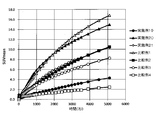
- FIG. 9 is a graph showing the evaluation of the function as a PET tracer for mice using the compounds of Examples 19 to 21 and Comparative Examples 1 to 4 performed in Example 22, respectively, and the tumor part of the mice after administration It is a graph which shows the change of the accumulation
- FIG. 7 is a graph showing the evaluation of the function as a PET tracer for mice using the compounds of Examples 19 to 21 and Comparative Examples 1 to 4 performed in Example 22, respectively, and the bladder portion of the mice after administration It is a graph which shows the change of the accumulation
- an alkyl group of C 1 to C n which may form a branch or a ring (where n is an integer) is any linear alkyl group having 1 to n carbon atoms, 3 to n carbon atoms It includes any branched alkyl group and any cyclic alkyl group having 3 to n carbon atoms.
- arbitrary linear alkyl groups having 1 to 5 carbon atoms include methyl, ethyl, n-propyl, n-butyl, and n-pentyl
- arbitrary branched alkyl groups having 3 to 5 carbon atoms Includes isopropyl, isobutyl, tert-butyl, isopentyl and the like
- examples of the cyclic alkyl group having 3 to 5 carbon atoms include cyclopropyl, cyclopentyl and the like.
- the term “having a branch or a ring substituted with at least one group selected from the group consisting of a halogen atom which may be a radioisotope and a functional group having a leaving ability” may be included.
- the “C 1 -C n alkyl group” (where n is an integer) means that at least one hydrogen atom constituting the C 1 -C n alkyl group which may have the above-mentioned branch or ring is a halogen atom and / or Alternatively, it refers to a C 1 -C n alkyl group which may be substituted with a functional group having a leaving ability.
- halogen atoms constituting the alkyl group include natural isotope fluorine atoms ( 19 F), chlorine atoms ( 35 Cl, 37 Cl), bromine atoms ( 79 Br, 81 Br), and iodine atoms ( 127 I), and radioisotope fluorine atoms ( 18 F), chlorine atoms ( 36 Cl, 38 Cl), bromine atoms ( 77 Br, 80 m Br, 80 Br, 82 Br), and iodine atoms ( 123 I, 124 I 131 I), and examples of the functional group having a leaving ability include a tosylate group, a mesylate group, a nonafluorobutanesulfonate group, a trifluoromethanesulfonate group, a fluorosulfonate group, and the like.
- C 1 -C n alkyl group optionally containing a radioisotope and optionally having a branch or a ring has the above-mentioned branch or ring.
- at least one carbon atom constituting also good C 1 ⁇ C n alkyl group has may be a carbon atom of a radioactive isotope (11 C), refers to a C 1 ⁇ C n alkyl group.
- C 2 -C n alkenyl group which may form a branch or a ring refers to any straight chain alkenyl group having 2 to n carbon atoms, 3 to n carbon atoms. It includes any branched alkenyl group and any cyclic alkenyl group having 3 to n carbon atoms.
- alkenyl group having 2 to 5 carbon atoms ethenyl, 1-propenyl, 2-propenyl, 1-butenyl, 2-butenyl, 1-pentenyl, 2-pentenyl, 3-pentenyl, 4-pentenyl
- branched alkenyl group having 3 to 5 carbon atoms include isopropenyl, 1-methyl-1-propenyl, 1-methyl-2-propenyl, 2-methyl-1-propenyl, 2-methyl -2-propenyl and the like
- examples of the cyclic alkenyl group having 3 to 5 carbon atoms include cyclobutenyl, cyclopentenyl and the like.
- C 2 -C n alkenyl group (where n is an integer) means that at least one hydrogen atom constituting the C 2 -C n alkenyl group optionally having a branch or a ring is a halogen atom and / or Alternatively, it refers to a C 2 -C n alkenyl group which may be substituted with a functional group having a leaving ability.
- halogen atoms constituting the alkenyl group include natural isotope fluorine atoms ( 19 F), chlorine atoms ( 35 Cl, 37 Cl), bromine atoms ( 79 Br, 81 Br), and iodine atoms ( 127 I), and radioisotope fluorine atoms ( 18 F), chlorine atoms ( 36 Cl, 38 Cl), bromine atoms ( 77 Br, 80 m Br, 80 Br, 82 Br), and iodine atoms ( 123 I, 124 I 131 I), and examples of the functional group having a leaving ability include a tosylate group, a mesylate group, a nonafluorobutanesulfonate group, a trifluoromethanesulfonate group, a fluorosulfonate group, and the like.
- C 2 -C n alkynyl group which may form a branch or a ring refers to any straight chain alkynyl group having 2 to n carbon atoms, 3 to n carbon atoms It includes any branched alkynyl group and any cyclic alkynyl group having 3 to n carbon atoms.
- the arbitrary linear alkynyl group having 2 to 5 carbon atoms includes ethynyl, 1-propynyl, 2-propynyl, 1-butynyl, 2-butynyl, 1-pentynyl, etc.
- Examples of the branched alkynyl group include 1-methyl-2-propynyl, and examples of the cyclic alkynyl group having 3 to 5 carbon atoms include cyclopropylethynyl and cyclobutylethynyl.
- the term “having a branch or a ring substituted with at least one group selected from the group consisting of a halogen atom which may be a radioisotope and a functional group having a leaving ability” may be included.
- the “C 2 -C n alkynyl group” (where n is an integer) means that at least one hydrogen atom constituting the C 2 -C n alkynyl group optionally having a branch or a ring is a halogen atom and / Alternatively, it refers to a C 2 -C n alkynyl group which may be substituted with a functional group having a leaving ability.
- halogen atoms constituting the alkynyl group include natural isotope fluorine atoms ( 19 F), chlorine atoms ( 35 Cl, 37 Cl), bromine atoms ( 79 Br, 81 Br), and iodine atoms ( 127 I), and radioisotope fluorine atoms ( 18 F), chlorine atoms ( 36 Cl, 38 Cl), bromine atoms ( 77 Br, 80 m Br, 80 Br, 82 Br), and iodine atoms ( 123 I, 124 I 131 I), and examples of the functional group having a leaving ability include a tosylate group, a mesylate group, a nonafluorobutanesulfonate group, a trifluoromethanesulfonate group, a fluorosulfonate group, and the like.
- C 1 -C n alkyloxy group which may form a branch or a ring refers to any linear alkyloxy group having 1 to n carbon atoms, 3 to n includes any branched-chain alkyloxy group and any cyclic alkyloxy group having 3 to n carbon atoms.
- the arbitrary linear alkyl group having 1 to 5 carbon atoms includes methoxy, ethoxy, n-propoxy, n-butoxy, and n-pentyloxy, and any branched alkyloxy group having 3 to 5 carbon atoms.
- isopropoxy, isobutyroxy, tert-butyroxy, isopentyloxy and the like can be mentioned, and examples of the cyclic alkyloxy group having 3 to 5 carbon atoms include cyclobutoxy, cyclopentyloxy and the like.
- C 1 -C n alkyloxy group (where n is an integer) means that at least one hydrogen atom constituting the C 1 -C n alkyloxy group which may have the above-mentioned branched or ring is a halogen atom. And / or a C 1 -C n alkyloxy group which may be substituted by a functional group having a leaving ability.
- halogen atoms constituting the alkyloxy group include natural isotope fluorine atoms ( 19 F), chlorine atoms ( 35 Cl, 37 Cl), bromine atoms ( 79 Br, 81 Br), and iodine atoms ( 127 I), and the radioisotope fluorine atom ( 18 F), chlorine atom ( 36 Cl, 38 Cl), bromine atom ( 77 Br, 80 m Br, 80 Br, 82 Br), and iodine atom ( 123 I, 124 I, 131 I), and examples of the functional group having a leaving ability include a tosylate group, a mesylate group, a nonafluorobutanesulfonate group, a trifluoromethanesulfonate group, and a fluorosulfonate group. .
- C 2 -C n alkoxyalkyloxy group which may form a branch or a ring refers to any linear alkoxyalkyloxy group having 2 to n carbon atoms, carbon number Including any branched alkoxyalkyloxy group having 3 to n and any cyclic alkoxyalkyloxy group having 4 to n carbon atoms, the carbon number represents the total number of carbon atoms in the alkoxyalkyloxy group.
- any linear alkoxyalkyloxy group having 2 to 5 carbon atoms includes methoxymethyloxy, ethoxymethyloxy, n-propoxymethyloxy, n-butoxymethyloxy, methoxyethyloxy, ethoxyethyloxy, n- Propoxyethyloxy, methoxypropyloxy, ethoxypropyloxy, etc. are mentioned, and arbitrary branched alkoxyalkyloxy groups having 3 to 5 carbon atoms include isopropoxymethyloxy, isopropoxyethyloxy, etc. Examples of the optional cyclic alkoxyalkyloxy group of 4 to 5 include cyclobutoxymethyloxy and the like.
- C 2 -C n alkoxyalkyloxy group (where n is an integer) represents at least one hydrogen atom constituting the C 2 -C n alkoxyalkyloxy group which may have the above-mentioned branch or ring, A C 2 -C n alkoxyalkyloxy group which may be substituted with a halogen atom and / or a functional group having a leaving ability.
- halogen atoms constituting the alkoxyalkyloxy group include natural isotope fluorine atom ( 19 F), chlorine atom ( 35 Cl, 37 Cl), bromine atom ( 79 Br, 81 Br), and iodine atom ( 127 I), and the radioisotope fluorine atom ( 18 F), chlorine atom ( 36 Cl, 38 Cl), bromine atom ( 77 Br, 80 m Br, 80 Br, 82 Br), and iodine atom ( 123 I, 124 I, 131 I), and examples of the functional group having a leaving ability include a tosylate group, a mesylate group, a nonafluorobutanesulfonate group, a trifluoromethanesulfonate group, and a fluorosulfonate group.
- C 2 -C n alkenyloxy group which may form a branch or a ring refers to any straight chain alkenyloxy group having 2 to n carbon atoms, 3 to n includes any branched-chain alkenyloxy group and any cyclic alkenyloxy group having 3 to n carbon atoms.
- any linear alkenyloxy group having 2 to 5 carbon atoms includes ethenyloxy, 1-propenyloxy, 2-propenyloxy, 1-butenyloxy, 2-butenyloxy, 1-pentenyloxy, 2-pentenyloxy, 3-
- Examples of the branched alkenyloxy group having 3 to 5 carbon atoms include isopropenyloxy, 1-methyl-1-propenyloxy, 1-methyl-2-propenyloxy, and the like.
- 2-methyl-1-propenyloxy, 2-methyl-2-propenyloxy and the like, and examples of the cyclic alkenyloxy group having 3 to 5 carbon atoms include cyclobutenyloxy, cyclopentenyloxy and the like.
- C 2 -C n alkenyloxy group (where n is an integer) is a group in which at least one hydrogen atom constituting the C 2 -C n alkenyloxy group optionally having a branch or ring is a halogen atom And / or a C 2 -C n alkenyloxy group which may be substituted by a functional group having a leaving ability.
- halogen atoms constituting the alkenyloxy group include natural isotope fluorine atoms ( 19 F), chlorine atoms ( 35 Cl, 37 Cl), bromine atoms ( 79 Br, 81 Br), and iodine atoms ( 127 I), and the radioisotope fluorine atom ( 18 F), chlorine atom ( 36 Cl, 38 Cl), bromine atom ( 77 Br, 80 m Br, 80 Br, 82 Br), and iodine atom ( 123 I, 124 I, 131 I), and examples of the functional group having a leaving ability include a tosylate group, a mesylate group, a nonafluorobutanesulfonate group, a trifluoromethanesulfonate group, and a fluorosulfonate group. .
- C 3 -C n alkynyloxy group which may form a branch or a ring refers to any straight chain alkynyloxy group having 3 to n carbon atoms, 4 to Including any branched alkynyloxy group of n and any cyclic alkynyloxy group having 4 to n carbon atoms.
- the arbitrary linear alkynyloxy group having 3 to 5 carbon atoms includes 2-propynyloxy, 3-butynyloxy, 2-butynyloxy, 2-pentynyloxy, etc., and any branched chain having 4 to 5 carbon atoms.
- Examples of the chain alkynyloxy group include 1-methyl-2-propynyloxy, and examples of the cyclic alkynyloxy group having 4 to 5 carbon atoms include cyclopropylethynyloxy and cyclobutylethynyloxy.
- C 2 -C n alkynyloxy group (where n is an integer) represents a halogen atom in which at least one hydrogen atom constituting the C 2 -C n alkynyloxy group which may have a branched or ring structure is a halogen atom And / or a C 2 -C n alkynyloxy group which may be substituted by a functional group having a leaving ability.
- halogen atom constituting the alkynyloxy group examples include a fluorine atom ( 19 F), a chlorine atom ( 35 Cl, 37 Cl), a bromine atom ( 79 Br, 81 Br), and an iodine atom ( 127 I), and the radioisotope fluorine atom ( 18 F), chlorine atom ( 36 Cl, 38 Cl), bromine atom ( 77 Br, 80 m Br, 80 Br, 82 Br), and iodine atom ( 123 I, 124 I, 131 I), and examples of the functional group having a leaving ability include a tosylate group, a mesylate group, a nonafluorobutanesulfonate group, a trifluoromethanesulfonate group, and a fluorosulfonate group. .
- protecting group is a group provided to prevent the amino group from being involved in a reaction occurring at any other position of the molecular structure with respect to the binding portion of the amino group in a given molecular structure.
- protecting groups include aryloxycarbonyl groups such as t-butoxycarbonyl (BOC), triphenylmethyl, alkoxycarbonyl, and benzyloxycarbonyl.
- aryl group examples include phenyl, naphthyl, anthryl, phenanthryl and the like.
- heteroaryl group examples include pyridyl, pyrrolyl, imidazolyl, benzoxazolyl, furyl, indolyl, benzothiophen-2-yl, thienyl, oxazolyl, thiazolyl, 3,4-methylenedioxyphenyl, 3, 4-Ethylenedioxyphenyl and tetrazolyl.
- halogen atom examples include a fluorine atom, a chlorine atom, a bromine atom, and an iodine atom.
- amino acid precursor The amino acid precursor of the present invention can be represented by the following formula (I):
- R 1 is C 1 -C 5 alkyl optionally having a branch or ring substituted with at least one group selected from the group consisting of a halogen atom which may be a radioisotope and a functional group having a leaving ability Group;
- C 2 -C 5 alkenyl optionally having a branch or ring substituted with at least one group selected from the group consisting of a halogen atom which may be a radioisotope and a functional group having a leaving ability Group;
- C 2 -C 5 alkynyl optionally having a branch or ring substituted with at least one group selected from the group consisting of a halogen atom which may be a radioisotope and a functional group having a leaving ability Group;
- C 1 -C 5 alkyl optionally having a branch or ring substituted with at least one group selected from the group consisting of a halogen atom which may be a radioisotope and a functional group having a leaving ability
- the compound represented by the above formula (I) is not necessarily limited, but includes, for example, each compound represented by the following formula.
- R 1 , R 2 , R 3 , X 1 , X 2 , and Y each independently represent the same group as defined above).
- R 1 , R 2 , R 3 , X 1 , X 2 , and Y each independently represent a group similar to the group defined above).
- the amino acid precursor of the formula (I ′) having such a structure can be converted into, for example, an amino acid that can be used in a PET diagnostic tracer as described later.
- the compound (amino acid precursor) represented by the above formula (I) can be synthesized by various methods.
- the compound represented by the formula (I) of the present invention is a compound represented by the following formula (III):
- R 1 , R 2 , X 1 , X 2 , and Y each independently represent the same group as defined above, and A 1 and A 2 are , Each independently (i) a hydrogen atom; or (ii) aryl group, where the aryl group is branched C 1 may be substituted in good and halogen atoms have ⁇ C 4 alkyl group, A C 1 -C 5 alkoxy group which may be branched and optionally substituted with a halogen atom, A halogen atom, a C 1 -C 4 alkyl group that may be branched and substituted with a halogen atom, a cyano group, —NR 10 R 11 (wherein R 10 and R 11 are each independently , A hydrogen atom or a C 1 -C 4 alkyl group optionally substituted with a halogen atom), a nitro group, a carbamoyl group, an N— (C 1 -
- optically active phase transfer catalyst that can be used in the alkylation reaction is not particularly limited, and a phase transfer catalyst known to those skilled in the art can be used.
- examples of the optically active phase transfer catalyst include Marukaka catalyst (registered trademark) (manufactured by Nagase Sangyo Co., Ltd.).
- the amount of the optically active phase transfer catalyst that can be used in the alkylation reaction is not particularly limited, and any amount can be set by those skilled in the art.
- the medium that can be used for the alkylation reaction is not necessarily limited, but examples thereof include benzene, toluene, xylene, mesitylene, ethyl ether, isopropyl ether, tetrahydrofuran, dioxane, ethyl acetate, isopropyl acetate, cyclopentyl methyl ether, and methyl t. -Butyl ether, as well as combinations thereof.
- the medium may be a two-phase medium of water and a medium that does not mix with water. The amount of medium used can be set arbitrarily by those skilled in the art.
- inorganic bases examples include lithium hydroxide, sodium hydroxide, potassium hydroxide, calcium hydroxide, rubidium hydroxide, cesium hydroxide, and combinations thereof. Any amount of the inorganic base can be set by those skilled in the art.
- R 1 , R 2 , R 3 , X 1 , X 2 , and Y each independently represent the same group as defined above, and Z 1 is ,
- a functional group having a leaving ability for example, a tosylate group, a mesylate group, a nonafluorobutanesulfonate group, a trifluoromethanesulfonate group, or a fluorosulfonate group).
- the medium that can be used for the reaction between the compound of formula (V) and the compound of formula (VI) is not necessarily limited.
- examples include ethyl, isopropyl acetate, cyclopentyl methyl ether, and methyl t-butyl ether, and combinations thereof.
- the amount of medium used can be set arbitrarily by those skilled in the art.
- inorganic bases that can be used in the reaction of the compound of formula (V) and the compound of formula (VI) include lithium hydroxide, sodium hydroxide, potassium hydroxide, calcium hydroxide, rubidium hydroxide, and cesium hydroxide. As well as combinations thereof. Any amount of the inorganic base can be set by those skilled in the art.
- R 1 , R 2 , X 1 , Y, A 1 and A 2 each independently represent a group similar to the group defined above, and Z 1 is A functional group having a leaving ability (for example, a tosylate group, a mesylate group, a nonafluorobutanesulfonate group, a trifluoromethanesulfonate group, or a fluorosulfonate group).
- a leaving ability for example, a tosylate group, a mesylate group, a nonafluorobutanesulfonate group, a trifluoromethanesulfonate group, or a fluorosulfonate group.
- the compound of the formula (VII) is also known per se and can be easily synthesized or obtained by those skilled in the art.
- optically active phase transfer catalyst that can be used in the alkylation reaction is not particularly limited, and a phase transfer catalyst known to those skilled in the art can be used.
- examples of the optically active phase transfer catalyst include Marukaka Catalyst (registered trademark) (manufactured by Nagase Sangyo Co., Ltd.).
- the amount of the optically active phase transfer catalyst that can be used in the alkylation reaction is not particularly limited, and any amount can be set by those skilled in the art.
- the medium that can be used for the alkylation reaction is not necessarily limited, but examples thereof include benzene, toluene, xylene, mesitylene, ethyl ether, isopropyl ether, tetrahydrofuran, dioxane, ethyl acetate, isopropyl acetate, cyclopentyl methyl ether, and methyl t. -Butyl ether, as well as combinations thereof.
- the medium may be a two-phase medium of water and a medium that does not mix with water. The amount of medium used can be set arbitrarily by those skilled in the art.
- inorganic bases examples include lithium hydroxide, sodium hydroxide, potassium hydroxide, calcium hydroxide, rubidium hydroxide, cesium hydroxide, and combinations thereof. Any amount of the inorganic base can be set by those skilled in the art.
- amino acid precursor represented by the formula (I) of the present invention can be produced.
- amino acids of the invention can be represented by the following formula (II):
- R 1 , X 1 , X 2 , and Y each independently represent the same group as defined above).
- R 1 , X 1 , X 2 , and Y each independently represent a group similar to the group defined above), and preferably has a three-dimensional structure.
- the amino acid of the formula (II ′) having such a structure can effectively function as an active ingredient of a PET diagnostic tracer as described later, for example.
- amino acid production method The amino acid represented by the formula (II) of the present invention can be produced, for example, by hydrolyzing the amino acid precursor represented by the formula (I) of the present invention.
- reaction conditions that can be used for the hydrolysis are not particularly limited, and hydrolysis conditions that can be generally used in amino acid production can be arbitrarily selected by those skilled in the art.
- PET diagnostic tracer contains an amino acid represented by the above formula (II).
- R 1 , X 1 , X 2 , and Y each independently represent a group similar to the group defined above), and preferably has a three-dimensional structure.
- R 1 is A C 1 -C 5 alkyl group optionally substituted with a radioisotope 18 F, optionally having a branch or ring; A C 2 -C 5 alkenyl group optionally substituted by a radioisotope 18 F, optionally having a branch or ring; A C 2 -C 5 alkynyl group optionally substituted with a radioisotope 18 F, optionally having a branch or ring; A C 1 -C 5 alkyloxy group optionally substituted with a radioisotope 18 F and optionally having a branch or ring; A C 2 -C 8 alkoxyalkyloxy group optionally substituted by a radioisotope 18 F, optionally having a branch or ring; Sub
- the amino acid of the above formula (II) can be used as it is, but ascorbic acid or the like may be added together if necessary.
- the addition amount in that case is not particularly limited, and a person skilled in the art can set an arbitrary amount ratio.
- the tracer of the present invention is administered, for example, intravenously to a subject requiring diagnosis immediately after the production of the amino acid of the above formula (II).
- the dose is not necessarily limited, and any dose can be selected by those skilled in the art.
- the scan time in PET diagnosis after administration is not particularly limited, and any scan time can be selected by those skilled in the art.
- the method and apparatus used for PET diagnosis are not particularly limited, and those known to those skilled in the art can be employed.
- PET diagnosis can be performed using the compound represented by the formula (II) of the present invention.
- the compound of the present invention is inhibited from being taken up by normal cells and can be selectively taken up by tumor cells.
- the compounds of the present invention are amino acid transporters that are not involved in the glucose metabolism system and may include radioisotopes having a relatively long physicochemical half-life. For this reason, in PET diagnosis, the time restriction at the time of diagnosis than before is eased, and the conventional disadvantage that the background increases can be improved.
- 3-Hydroxy-4-iodobenzoic acid was methyl esterified in the presence of a sulfuric acid catalyst and then reacted with chloromethyl methyl ether in the presence of potassium carbonate to protect the phenolic hydroxyl group with a methoxymethyl group. This was reduced with diisobutylaluminum hydride in a solvent of tetrahydrofuran, and the resulting alcohol was brominated via methanesulfonylation to obtain 3-methoxymethoxy-4-iodobenzylbromide.
- N-benzylidenealanine tert-butyl ester This is reacted with N-benzylidenealanine tert-butyl ester in the presence of (R) -Maruoka catalyst (registered trademark; manufactured by Nagase Sangyo Co., Ltd .; (CAS: 887938-70-7)), using an aqueous citric acid solution. N-benzylidene was deprotected to synthesize (S) - ⁇ -methyl- (3-methoxymethoxy-4-iodo) phenylalanine tert-butyl ester.
- Methyl 3-hydroxy-4-iodobenzoate was reacted with 1-fluoro-2-tosyloxyethane in the presence of potassium carbonate and reduced with diisobutylaluminum hydride in a tetrahydrofuran solvent. The resulting alcohol was then brominated with phosphorus tribromide to synthesize 3- (2-fluoroethoxy) -4-iodobenzyl bromide.
- (S) - ⁇ -methyl-tyrosine is methylesterified with thionyl chloride and reacted with di-tert-butyl dicarbonate in tetrahydrofuran in the presence of triethylamine to give (S) -N-tert-butoxycarbonyl- ⁇ -Methyl-tyrosine methyl ester was obtained. This is reacted with 1-fluoro-2-tosyloxyethane in the presence of potassium carbonate to give (S) -N-tert-butoxycarbonyl- ⁇ -methyl- ⁇ 4- (2-fluoroethyl) ⁇ Phenylalanine methyl ester was obtained.
- 4-Vinylbenzoic acid was methyl esterified with methyl iodide under basic conditions, and the vinyl group was converted to a hydroxyethyl group by hydroboration and hydroxylation.
- the hydroxyl group is fluorinated with N, N-diethylaminosulfur trifluoride, the ester is reduced with diisobutylaluminum hydride in tetrahydrofuran solvent, and the resulting benzyl alcohol is reacted with phosphorus tribromide in chloroform.
- 3-iodo-4- (2-fluoroethyl) benzyl bromide 3-iodo-4- (2-fluoroethyl) benzyl bromide.
- reaction solution was decompressed, tetrahydrofuran was distilled off, and 10 mL of water and 10 mL of MTBE were added thereto.
- the organic layer was separated, the aqueous layer was washed twice with 10 mL of MTBE, and 1 mL of 8N aqueous sodium hydroxide and 20 mL of MTBE were added to the aqueous layer, respectively.
- 3-Bromoterephthalic acid was reacted with copper iodide in a pyridine solvent to replace bromine with iodine to obtain 3-iodoterephthalic acid.
- This 3-iodoterephthalic acid was reduced with a borane dimethyl sulfide complex in a tetrahydrofuran solvent at 0 ° C. to obtain 3-iodo-1,4-bishydroxymethylbenzene.
- 4-Iodo-1,3-dimethylbenzene was subjected to radial bromination with N-bromosuccinimide in a cyclohexane solvent to obtain 4-iodo-1,3-bisbromomethylbenzene.
- This 4-iodo-1,3-bisbromomethylbenzene (0.51 g, 1.3 mmol) was subjected to the reaction by Maruoka catalyst (registered trademark) in the same manner as in Example 12, and the fluorination reaction and desorption at the benzyl position were performed.
- a protection reaction was performed, and the desired (S) - ⁇ -methyl- (4-iodo-3-fluoromethyl) phenylalanine (9.2 mg) was obtained by preparative purification by HPLC.
- 2-Iodo-phenylacetic acid was reduced with borane dimethyl sulfide complex in a tetrahydrofuran solvent to obtain 2- (2-iodophenyl) ethanol.
- This was reacted with bis (2-methoxyethyl) aminosulfur trifluoride in a chloroform solvent to fluorinate to obtain 2- (2-fluoroethyl) iodobenzene.
- This 2- (2-fluoroethyl) iodobenzene was reacted with paraformaldehyde in 47% bromic acid to carry out bromomethylation to obtain 2-bromo-3- (2-fluoroethyl) benzyl bromide.
- methyl 4- (2-hydroxyethyl) benzoate is allowed to react with 1,3-dibromo-1,3,5-triazine-2,4,6-trione in a 70% aqueous sulfuric acid solution.
- methyl 2,5-dibromo-4- (2-hydroxyethyl) benzoate This was protected with a methoxymethyl group by reaction with chloromethyl methyl ether in the presence of diisopropylethylamine in a toluene solvent.
- This 2,5-dibromo-4- (2-methoxymethoxyethyl) benzyl bromide was prepared using N of (R) -Marukaka catalyst (registered trademark; manufactured by Nagase Sangyo Co., Ltd .; (CAS: 887938-70-7)).
- -Asymmetric alkylation reaction of benzylidenealanine tert-butyl ester under phase transfer catalytic conditions is carried out. After completion of the reaction, the solvent is replaced with methanol, and concentrated hydrochloric acid is added to remove the benzylidene moiety and methoxymethyl group. Deprotection gave (S) - ⁇ -methyl- ⁇ 2,5-dibromo-4- (2-hydroxyethyl) ⁇ phenylalanine tert-butyl ester.
- Example 18 Compounds 1 to 21 shown below were synthesized according to Reference Examples 1 to 7 and Examples 1 to 17, respectively. The obtained compound and NMR spectrum are shown below.
- Cyclotron at (CYPRIS HW-12S manufactured by Sumitomo Heavy Industries, Industrial Co.), [18 O] from H 2 O, [18 F] F - was synthesized, anion exchange resin (SepPak Light Accell plus QMA anion exchange cartridge ; manufactured by Waters Co.) was used to remove the [18 O] H 2 O.
- anion exchange resin SepPak Light Accell plus QMA anion exchange cartridge ; manufactured by Waters Co.
- a solution containing [ 18 F] F ⁇ eluted from the cartridge is received in a reaction vessel, and a mixture of acetonitrile (700 ⁇ L) and 0.21 M potassium carbonate aqueous solution (200 ⁇ L) is mixed with Cryptofix 2.2.2 (Merck a solution of Millipore Japan Co.) (22 mg), in the same manner as described above was added to the reaction vessel through the cartridge, [18 F] of about 9.0GBq F - solution was prepared.
- the obtained solution was concentrated under reduced pressure at 100 ° C. for 5 minutes, then acetonitrile (1000 ⁇ L) was added, and azeotropic dehydration was performed at 100 ° C. for 6 minutes.
- the obtained [ 18 F] compound 7 was confirmed to have a radiochemical purity and a chemical purity by HPLC of 99.0% or more, respectively.
- This [ 18 F] compound 7 (0.013 mg) was dissolved in 2 mL of brine and subjected to the following PET experiment.
- Example 20 Synthesis of radioactive compound (2)
- (S) -N-tert-butoxycarbonyl- ⁇ -methyl- ⁇ 4- (2-tosyloxyethoxy) -3-iodo ⁇ phenylalanine tert-butyl ester (A) (12 mg) obtained in 18 was used.
- (S) -4- [ 18 F] fluoroethoxy-3-iodophenylalanine (0.016 mg) (hereinafter referred to as “[ 18 F] Compound 3”) was obtained in the same manner as Example 19.
- the obtained [ 18 F] compound 3 was confirmed to have a radiochemical purity and a chemical purity by HPLC of 99.0% or more, respectively.
- This [ 18 F] compound 3 (0.016 mg) was dissolved in 2 mL of saline and subjected to the following PET experiment.
- Example 21 Synthesis of radioactive compound (3)
- (S) -N-tert-butoxycarbonyl- ⁇ -methyl- ⁇ 4- (2-tosyloxyethyl) -3-iodo ⁇ phenylalanine tert-butyl ester (A) (12 mg) obtained in 18 was used.
- N-benzylidene (4-methoxymethoxy) phenylalanine tert-butyl ester (10.43 mg, 76% toluene solution) and (S) -Maruoka catalyst (8.1 mg, manufactured by Nagase Sangyo Co., Ltd.) as raw materials were added to anhydrous toluene. Then, 80% cesium hydroxide (1.6 g) was added dropwise under ice cooling. After stirring for 1 hour, [ 11 C] methyl iodide prepared at the time of use was bubbled into the reaction solution. After stirring at 0 ° C. for 10 minutes, it was quenched with water (1.0 mL).
- a 5N aqueous hydrochloric acid solution (0.5 mL) was added to the upper layer, and the mixture was heated at 100 ° C. for 5 minutes while bubbling nitrogen. After cooling the reaction solution, the aqueous layer was separated, water (0.4 mL) was added and re-extraction was performed. The resulting solution was fractionated by semi-preparative HPLC (Cosmosil HILIC (manufactured by Nacalai Tesque), 20 mm id x 250 mm) (sorting conditions: acetonitrile: 100 mM ammonium acetate (85:15 (volume ratio)). ), UV detector (230 nm), RI detector ( ⁇ -ray)).
- Example 22 PET experiment using radioactive compound
- LNZ308 human glioblastoma cell line (provided by Kyorin University)
- BALB / c nu / nu; Claire Japan 5 ⁇ 10 6 / 100 ⁇ L (sc)
- terpentine oil 50 ⁇ L (im)
- the compound obtained in Example 19 ([ 18 F] Compound 7), the compound obtained in Example 20 ([ 18 F] Compound 3), the compound obtained in Example 21 ([ 18 F] Compound 1), the compound obtained in Comparative Example 1 ([ 11 C] ⁇ -Me-Tyr), the compound obtained in Comparative Example 2 ([ 18 F] FET), the compound obtained in Comparative Example 3 ( Each of [ 11 C] ⁇ -Me-Phe) and the compound obtained in Comparative Example 4 ([ 11 C] MET) was needles placed in the tail vein based on a dose of 7.4 MBq / 100 ⁇ L. By administration.
- Example 19 As shown in FIG. 1 and FIG. 2, in particular, the compound obtained in Example 19 ([ 18 F] Compound 7) is administered to the bladder over time because a part thereof is excreted into the bladder after administration.
- the value of SUVmean increased (Fig. 2), and the tumor reached a plateau from about 3000 seconds after increasing gradually after administration. This indicates that the compound obtained in Example 19 ([ 18 F] Compound 7) accumulates in the tumor as a good PET tracer and stays without being excreted.
- the compound obtained in Example 20 shows an increase after administration to the tumor (FIG. 1), a gradual decrease tendency is observed, so the value of the SUV mean of the tumor is low. It was.
- a difference is observed in comparison with the bladder (FIG. 2), and it can be seen that it can be used as a PET tracer for tumor diagnosis.
- the “tumor / muscle” value was calculated by quantifying the maximum uptake value (SUVmax) in the tumor and normal muscle from an image created by adding data from 5 minutes to 90 minutes after administration. The obtained results are shown in Table 22.
- the present invention it is possible to provide an amino acid and a precursor thereof, and a method for producing them, in which uptake into normal cells is suppressed and can be selectively taken up into tumor cells.
- the compound of the present invention can incorporate any radioactive isotope into its structure, it can provide a compound having a relatively long physicochemical half-life. Thereby, it is useful as, for example, a PET diagnostic tracer or a building block of a pharmaceutical intermediate.
Landscapes
- Chemical & Material Sciences (AREA)
- Organic Chemistry (AREA)
- Health & Medical Sciences (AREA)
- Life Sciences & Earth Sciences (AREA)
- Biophysics (AREA)
- Molecular Biology (AREA)
- Proteomics, Peptides & Aminoacids (AREA)
- Physics & Mathematics (AREA)
- Medicinal Chemistry (AREA)
- Optics & Photonics (AREA)
- Pharmacology & Pharmacy (AREA)
- Epidemiology (AREA)
- Animal Behavior & Ethology (AREA)
- General Health & Medical Sciences (AREA)
- Public Health (AREA)
- Veterinary Medicine (AREA)
- Medicines Containing Antibodies Or Antigens For Use As Internal Diagnostic Agents (AREA)
- Organic Low-Molecular-Weight Compounds And Preparation Thereof (AREA)
Abstract
La présente invention se rapporte à un acide aminé empêché d'être incorporé dans des cellules normales et incorporé de manière sélective dans des cellules tumorales, même lorsqu'il est utilisé dans un traceur de diagnostic par tomographie par émission de positons (TEP). L'invention concerne également un précurseur d'acide aminé, un procédé de production de l'acide aminé, et un traceur de diagnostic par TEP, qui utilise l'acide aminé. L'acide aminé selon la présente invention est représenté par la formule (II). L'acide aminé selon la présente invention est, par exemple, utile en tant que traceur de diagnostic par TEP ou sous la forme d'un élément constitutif d'un intermédiaire pharmaceutique.
Priority Applications (1)
| Application Number | Priority Date | Filing Date | Title |
|---|---|---|---|
| JP2016511868A JPWO2015152128A1 (ja) | 2014-03-31 | 2015-03-30 | アミノ酸前駆体、アミノ酸およびその製造方法、ならびに該アミノ酸を用いたpet診断用トレーサー |
Applications Claiming Priority (2)
| Application Number | Priority Date | Filing Date | Title |
|---|---|---|---|
| JP2014073202 | 2014-03-31 | ||
| JP2014-073202 | 2014-03-31 |
Publications (1)
| Publication Number | Publication Date |
|---|---|
| WO2015152128A1 true WO2015152128A1 (fr) | 2015-10-08 |
Family
ID=54240451
Family Applications (1)
| Application Number | Title | Priority Date | Filing Date |
|---|---|---|---|
| PCT/JP2015/059862 Ceased WO2015152128A1 (fr) | 2014-03-31 | 2015-03-30 | Précurseur d'acide aminé, acide aminé, et procédé de production d'acide aminé, et traceur de diagnostic par tomographie par émission de positons (tep) utilisant l'acide aminé |
Country Status (2)
| Country | Link |
|---|---|
| JP (1) | JPWO2015152128A1 (fr) |
| WO (1) | WO2015152128A1 (fr) |
Cited By (3)
| Publication number | Priority date | Publication date | Assignee | Title |
|---|---|---|---|---|
| CN116768914A (zh) * | 2023-05-23 | 2023-09-19 | 中国原子能科学研究院 | 一种氟化荧光素衍生物及其制备方法 |
| WO2023195546A1 (fr) * | 2022-04-08 | 2023-10-12 | 三菱瓦斯化学株式会社 | Composé cyclique contenant un atome d'iode |
| WO2024214321A1 (fr) * | 2023-04-10 | 2024-10-17 | 三菱瓦斯化学株式会社 | Composé, composition, procédé d'expression d'effet de sensibilisation et procédé de production associé |
Citations (9)
| Publication number | Priority date | Publication date | Assignee | Title |
|---|---|---|---|---|
| FR2378746A1 (fr) * | 1977-01-28 | 1978-08-25 | Synthelabo | Derives d'acides a-amines |
| US4925651A (en) * | 1988-01-08 | 1990-05-15 | Kernforschungsanlage Juelich Gesellschaft Mit Beschrankter Haftung | Radiofluoro-tyrosine derivatives, the preparation and use thereof |
| JP2001500850A (ja) * | 1996-08-22 | 2001-01-23 | ワーナー―ランバート・コンパニー | 非―ペプチドボンベシン受容体アンタゴニスト |
| JP2003064046A (ja) * | 2001-06-04 | 2003-03-05 | Sumitomo Heavy Ind Ltd | 新造影剤、その前駆体、及び、製造方法 |
| JP2006516547A (ja) * | 2002-08-02 | 2006-07-06 | マリンクロッド・インコーポレイテッド | 放射性標識アミノ酸類似体、それらの製造および使用 |
| JP2009534381A (ja) * | 2006-04-19 | 2009-09-24 | ボード オブ リージェンツ オブ ザ ユニバーシティ オブ テキサス システム | 細胞画像化および治療のための組成物および方法 |
| JP2011505392A (ja) * | 2007-12-07 | 2011-02-24 | フォルシュングスツェントルム・ユーリッヒ・ゲゼルシャフト・ミット・ベシュレンクテル・ハフツング | L−3,4−ジヒドロキシ−6−[18F]フルオロ−フェニルアラニン及び2−[18F]フルオロ−L−チロシン及びそれらのα−メチル化誘導体の前駆体の製造方法、前駆体、この前駆体からのL−3,4−ジヒドロキシ−6−[18F]フルオロ−フェニルアラニン及び2−[18F]フルオロ−L−チロシン及びそれらのα−メチル化誘導体の製造方法 |
| US20110150767A1 (en) * | 2009-12-17 | 2011-06-23 | Wempe Michael F | Alpha-substituted and alpha-unsubstituted aromatic amino acid derivatives and compositions thereof for use to treat, diagnose, or monitor a medical condition |
| WO2013001088A1 (fr) * | 2011-06-30 | 2013-01-03 | Piramal Imaging Sa | Synthèse directe de composés de 18f-fluorométhoxy pour l'imagerie tep et utilisation de nouveaux précurseurs pour la radiosynthèse directe de dérivés protégés de o-([18f]fluorométhyl)tyrosine |
-
2015
- 2015-03-30 WO PCT/JP2015/059862 patent/WO2015152128A1/fr not_active Ceased
- 2015-03-30 JP JP2016511868A patent/JPWO2015152128A1/ja active Pending
Patent Citations (9)
| Publication number | Priority date | Publication date | Assignee | Title |
|---|---|---|---|---|
| FR2378746A1 (fr) * | 1977-01-28 | 1978-08-25 | Synthelabo | Derives d'acides a-amines |
| US4925651A (en) * | 1988-01-08 | 1990-05-15 | Kernforschungsanlage Juelich Gesellschaft Mit Beschrankter Haftung | Radiofluoro-tyrosine derivatives, the preparation and use thereof |
| JP2001500850A (ja) * | 1996-08-22 | 2001-01-23 | ワーナー―ランバート・コンパニー | 非―ペプチドボンベシン受容体アンタゴニスト |
| JP2003064046A (ja) * | 2001-06-04 | 2003-03-05 | Sumitomo Heavy Ind Ltd | 新造影剤、その前駆体、及び、製造方法 |
| JP2006516547A (ja) * | 2002-08-02 | 2006-07-06 | マリンクロッド・インコーポレイテッド | 放射性標識アミノ酸類似体、それらの製造および使用 |
| JP2009534381A (ja) * | 2006-04-19 | 2009-09-24 | ボード オブ リージェンツ オブ ザ ユニバーシティ オブ テキサス システム | 細胞画像化および治療のための組成物および方法 |
| JP2011505392A (ja) * | 2007-12-07 | 2011-02-24 | フォルシュングスツェントルム・ユーリッヒ・ゲゼルシャフト・ミット・ベシュレンクテル・ハフツング | L−3,4−ジヒドロキシ−6−[18F]フルオロ−フェニルアラニン及び2−[18F]フルオロ−L−チロシン及びそれらのα−メチル化誘導体の前駆体の製造方法、前駆体、この前駆体からのL−3,4−ジヒドロキシ−6−[18F]フルオロ−フェニルアラニン及び2−[18F]フルオロ−L−チロシン及びそれらのα−メチル化誘導体の製造方法 |
| US20110150767A1 (en) * | 2009-12-17 | 2011-06-23 | Wempe Michael F | Alpha-substituted and alpha-unsubstituted aromatic amino acid derivatives and compositions thereof for use to treat, diagnose, or monitor a medical condition |
| WO2013001088A1 (fr) * | 2011-06-30 | 2013-01-03 | Piramal Imaging Sa | Synthèse directe de composés de 18f-fluorométhoxy pour l'imagerie tep et utilisation de nouveaux précurseurs pour la radiosynthèse directe de dérivés protégés de o-([18f]fluorométhyl)tyrosine |
Non-Patent Citations (3)
| Title |
|---|
| JEW S. ET AL.: "Highly Enantioselective Synthesis of a-Alkyl-alanines via the Catalytic Phase-Transfer Alkylation of 2- Naphthyl Aldimine tert-Butyl Ester by Using O(9)- Allyl- N(1)-2',3',4'-trifluorobenzylhydro- cinchonidinium Bromide", J. ORG. CHEM., vol. 68, no. 11, 2003, pages 4514 - 4516, XP055228043, ISSN: 0022-3263 * |
| RAJAGOPAL S. ET AL.: "Synthesis of 14C-labeled alpha- methyl tyrosine", APPL. RADIAT. ISOT., vol. 43, no. 8, 1992, pages 979 - 987 * |
| WANG L. ET AL.: "Synthesis and in vitro evaluation of 18F labeled tyrosine derivatives as potential positron emission tomography (PET) imaging agents", BIOORG. MED. CHEM. LETT., vol. 20, 2010, pages 3482 - 3485, XP029213017, ISSN: 0960-894x * |
Cited By (4)
| Publication number | Priority date | Publication date | Assignee | Title |
|---|---|---|---|---|
| WO2023195546A1 (fr) * | 2022-04-08 | 2023-10-12 | 三菱瓦斯化学株式会社 | Composé cyclique contenant un atome d'iode |
| WO2024214321A1 (fr) * | 2023-04-10 | 2024-10-17 | 三菱瓦斯化学株式会社 | Composé, composition, procédé d'expression d'effet de sensibilisation et procédé de production associé |
| CN116768914A (zh) * | 2023-05-23 | 2023-09-19 | 中国原子能科学研究院 | 一种氟化荧光素衍生物及其制备方法 |
| WO2025033019A1 (fr) * | 2023-08-10 | 2025-02-13 | 三菱瓦斯化学株式会社 | Composé, composition, procédé d'expression d'effet sensibilisant et procédé de production |
Also Published As
| Publication number | Publication date |
|---|---|
| JPWO2015152128A1 (ja) | 2017-04-13 |
Similar Documents
| Publication | Publication Date | Title |
|---|---|---|
| KR101664855B1 (ko) | Psma-결합제 및 그의 용도 | |
| CN108558939B (zh) | 18f-标记的靶向psma的pet成像剂 | |
| JP5732198B2 (ja) | 放射性フッ素標識有機化合物の製造方法 | |
| WO2012161177A1 (fr) | Dérivé marqué pour le diagnostic par imagerie d'une tumeur | |
| AU2012251737A1 (en) | Radiolabeled amino acids for diagnostic imaging | |
| WO2015152128A1 (fr) | Précurseur d'acide aminé, acide aminé, et procédé de production d'acide aminé, et traceur de diagnostic par tomographie par émission de positons (tep) utilisant l'acide aminé | |
| CN1950329B (zh) | 放射性酪氨酸衍生物、其制造方法、其使用、正电子成像用标识剂和肿瘤的恶性度评价药剂 | |
| KR20120089846A (ko) | 4-플루오로글루타민의 단일 부분입체이성질체, 및 그의 제조 및 사용 방법 | |
| KR101842989B1 (ko) | 카보닐기를 갖는 알코올 용매를 이용한 플루오르화 화합물의 제조방법 | |
| JP5774687B2 (ja) | トリカルボニルテクネシウム−99mまたはレニウム−188標識サイクリックRGD誘導体、その製造方法及びそれを有効成分として含む新生血管関連疾患の診断または治療用薬学的組成物 | |
| TW202444713A (zh) | 靶向成纖維細胞活化蛋白的配體 | |
| CN117700479A (zh) | 靶向前列腺特异性膜抗原抑制剂、放射性标记物及其制备方法和应用 | |
| CN103221382B (zh) | 制备pet前体 | |
| Moon et al. | Synthesis of O-(3-[18F] fluoropropyl)-L-tyrosine (L-[18F] FPT) and its biological evaluation in 9L tumor bearing rat | |
| CN103797007A (zh) | 新合成方法 | |
| EP3722299A1 (fr) | Composé contre la douleur et son procédé de préparation | |
| WO2012025464A1 (fr) | Dérivés de fluorodeutériométhyl-tyrosine | |
| JP7386383B2 (ja) | ノルエピネフリン輸送体を標的とする化合物 | |
| KR101427292B1 (ko) | 허혈성 조직 영상을 위한 플루오르―18 표지 트리아자노난 유도체 또는 이의 약학적으로 허용가능한 염 | |
| JP5322527B2 (ja) | アポトーシスの検出に適した化合物 | |
| CN119118880A (zh) | 一种f-18标记的psma抑制剂及其制备方法与应用 | |
| CN118403059A (zh) | 一种p2x7受体抑制剂 | |
| JP2019085344A (ja) | 放射性フッ素標識化合物 | |
| CN102702126B (zh) | 一种可用于麻醉剂的化合物 | |
| HK1260813A1 (en) | 18f-labeled psma-targeted pet imaging agents |
Legal Events
| Date | Code | Title | Description |
|---|---|---|---|
| 121 | Ep: the epo has been informed by wipo that ep was designated in this application |
Ref document number: 15773006 Country of ref document: EP Kind code of ref document: A1 |
|
| ENP | Entry into the national phase |
Ref document number: 2016511868 Country of ref document: JP Kind code of ref document: A |
|
| NENP | Non-entry into the national phase | ||
| 122 | Ep: pct application non-entry in european phase |
Ref document number: 15773006 Country of ref document: EP Kind code of ref document: A1 |