WO2015163473A1 - Dispositif anti-vibrations - Google Patents
Dispositif anti-vibrations Download PDFInfo
- Publication number
- WO2015163473A1 WO2015163473A1 PCT/JP2015/062613 JP2015062613W WO2015163473A1 WO 2015163473 A1 WO2015163473 A1 WO 2015163473A1 JP 2015062613 W JP2015062613 W JP 2015062613W WO 2015163473 A1 WO2015163473 A1 WO 2015163473A1
- Authority
- WO
- WIPO (PCT)
- Prior art keywords
- elastic member
- gas
- outside air
- deterioration
- test
- Prior art date
- Legal status (The legal status is an assumption and is not a legal conclusion. Google has not performed a legal analysis and makes no representation as to the accuracy of the status listed.)
- Ceased
Links
Images








Classifications
-
- B—PERFORMING OPERATIONS; TRANSPORTING
- B01—PHYSICAL OR CHEMICAL PROCESSES OR APPARATUS IN GENERAL
- B01D—SEPARATION
- B01D53/00—Separation of gases or vapours; Recovering vapours of volatile solvents from gases; Chemical or biological purification of waste gases, e.g. engine exhaust gases, smoke, fumes, flue gases, aerosols
- B01D53/14—Separation of gases or vapours; Recovering vapours of volatile solvents from gases; Chemical or biological purification of waste gases, e.g. engine exhaust gases, smoke, fumes, flue gases, aerosols by absorption
-
- F—MECHANICAL ENGINEERING; LIGHTING; HEATING; WEAPONS; BLASTING
- F16—ENGINEERING ELEMENTS AND UNITS; GENERAL MEASURES FOR PRODUCING AND MAINTAINING EFFECTIVE FUNCTIONING OF MACHINES OR INSTALLATIONS; THERMAL INSULATION IN GENERAL
- F16F—SPRINGS; SHOCK-ABSORBERS; MEANS FOR DAMPING VIBRATION
- F16F1/00—Springs
- F16F1/36—Springs made of rubber or other material having high internal friction, e.g. thermoplastic elastomers
-
- F—MECHANICAL ENGINEERING; LIGHTING; HEATING; WEAPONS; BLASTING
- F16—ENGINEERING ELEMENTS AND UNITS; GENERAL MEASURES FOR PRODUCING AND MAINTAINING EFFECTIVE FUNCTIONING OF MACHINES OR INSTALLATIONS; THERMAL INSULATION IN GENERAL
- F16F—SPRINGS; SHOCK-ABSORBERS; MEANS FOR DAMPING VIBRATION
- F16F1/00—Springs
- F16F1/36—Springs made of rubber or other material having high internal friction, e.g. thermoplastic elastomers
- F16F1/38—Springs made of rubber or other material having high internal friction, e.g. thermoplastic elastomers with a sleeve of elastic material between a rigid outer sleeve and a rigid inner sleeve or pin, i.e. bushing-type
-
- F—MECHANICAL ENGINEERING; LIGHTING; HEATING; WEAPONS; BLASTING
- F16—ENGINEERING ELEMENTS AND UNITS; GENERAL MEASURES FOR PRODUCING AND MAINTAINING EFFECTIVE FUNCTIONING OF MACHINES OR INSTALLATIONS; THERMAL INSULATION IN GENERAL
- F16F—SPRINGS; SHOCK-ABSORBERS; MEANS FOR DAMPING VIBRATION
- F16F13/00—Units comprising springs of the non-fluid type as well as vibration-dampers, shock-absorbers, or fluid springs
- F16F13/04—Units comprising springs of the non-fluid type as well as vibration-dampers, shock-absorbers, or fluid springs comprising both a plastics spring and a damper, e.g. a friction damper
- F16F13/06—Units comprising springs of the non-fluid type as well as vibration-dampers, shock-absorbers, or fluid springs comprising both a plastics spring and a damper, e.g. a friction damper the damper being a fluid damper, e.g. the plastics spring not forming a part of the wall of the fluid chamber of the damper
- F16F13/08—Units comprising springs of the non-fluid type as well as vibration-dampers, shock-absorbers, or fluid springs comprising both a plastics spring and a damper, e.g. a friction damper the damper being a fluid damper, e.g. the plastics spring not forming a part of the wall of the fluid chamber of the damper the plastics spring forming at least a part of the wall of the fluid chamber of the damper
-
- F—MECHANICAL ENGINEERING; LIGHTING; HEATING; WEAPONS; BLASTING
- F16—ENGINEERING ELEMENTS AND UNITS; GENERAL MEASURES FOR PRODUCING AND MAINTAINING EFFECTIVE FUNCTIONING OF MACHINES OR INSTALLATIONS; THERMAL INSULATION IN GENERAL
- F16F—SPRINGS; SHOCK-ABSORBERS; MEANS FOR DAMPING VIBRATION
- F16F15/00—Suppression of vibrations in systems; Means or arrangements for avoiding or reducing out-of-balance forces, e.g. due to motion
- F16F15/02—Suppression of vibrations of non-rotating, e.g. reciprocating systems; Suppression of vibrations of rotating systems by use of members not moving with the rotating systems
- F16F15/04—Suppression of vibrations of non-rotating, e.g. reciprocating systems; Suppression of vibrations of rotating systems by use of members not moving with the rotating systems using elastic means
- F16F15/08—Suppression of vibrations of non-rotating, e.g. reciprocating systems; Suppression of vibrations of rotating systems by use of members not moving with the rotating systems using elastic means with rubber springs ; with springs made of rubber and metal
Definitions
- the present invention relates to a vibration isolator.
- vibration isolators have been developed for suppressing vibrations and transmission of engines provided in automobiles and the like.
- a vibration isolator generally referred to as an engine mount has a function of supporting and fixing an engine provided in an automobile or the like to a vehicle body frame and preventing vibrations of the engine from being transmitted to the vehicle body frame side.
- a vibration isolator similar to a dynamic vibration absorber has an effect of suppressing vibration by an engine by absorbing vibration of a predetermined frequency using resonance of a mass body.
- These vibration isolators include an elastic member that elastically connects between a vibrating body such as an engine or a mass body and a support body that supports the vibrating body such as a vehicle body frame.
- the elastic member provided in the vibration isolator has a small ratio between the dynamic spring constant and the static spring constant, has excellent vibration isolation characteristics over a wide range of vibration frequencies, and exhibits good vibration isolation over a wide temperature range. It is desirable to have durability that can withstand vibration. Therefore, as a material for the elastic member of the vibration isolator, it is common to use a rubber material that has these characteristics and is classified as a so-called “diene type” represented by natural rubber.
- Diene rubber which is used as a material for elastic members, has the property of being easily deteriorated by heat. In the practical environment of the vibration isolator, it deteriorates relatively early due to the action of oxygen in the air. In general, it is known to be hard and brittle. When the elastic member is hardened or embrittled in this way, the spring constant increases and the vibration isolation characteristics deteriorate or the durability deteriorates. In particular, in recent years, the environment in which anti-vibration devices are used has become smaller due to the downsizing of the engine room, a reduction in the wind flow in the engine room due to aerodynamic improvements, and increased demand for merchandise in emerging regions that are often high temperature environments. Tend to be harsh.
- Patent Document 1 discloses a first and second attachment bodies that are respectively attached to a portion to be attached, a rubber body that connects the first and second attachment bodies to each other, and an exposed portion of the rubber body that covers the exposed portion.
- Lifetime elastic structures have been proposed.
- the oxygen barrier film can be composed of a diene rubber group, an olefin rubber group, an oxygen low permeability rubber group, and an oxygen low permeability resin group (see paragraph 0029). It is disclosed that it is composed of carbon dioxide, helium, neon and argon (see paragraph 0038).
- an anti-vibration rubber main body that attenuates externally applied vibration and a vibration-proof rubber main body are arranged so as to cover the anti-vibration rubber main body, and a sealed space is formed between the anti-vibration rubber main body.
- An anti-vibration rubber structure comprising: an oxygen-blocking portion that blocks oxygen from entering the sealed space; and an oxidative degradation preventer that is sealed in the sealed space and prevents oxidative degradation of the anti-vibration rubber body.
- a rubber material such as NR powder, tire rubber chip, ethylene / propylene rubber composition chip, EPDM chip, ACM chip, CR powder, NBR powder is used as the oxidative degradation preventing body. (See paragraph 0103 etc.).
- the oxygen barrier film is composed of a diene rubber group, an olefin rubber group, an oxygen low permeability rubber group, or an oxygen low permeability resin group with low gas permeability to form a sealed space.
- the oxygen barrier film is made of a rubber material such as a diene rubber group, an olefin rubber group, an oxygen low permeability rubber group, etc.
- a rubber having low oxygen permeability is adopted, the oxygen barrier film An oxygen partial pressure difference is generated between the sealed space inside and the outside air outside. Then, due to this differential pressure, oxygen in the outside air continuously enters from the outside air side where the oxygen partial pressure is high to the sealed space side where the oxygen partial pressure is low while passing through the oxygen blocking film. Therefore, even if an inert gas such as nitrogen gas is sealed in the sealed space when the vibration isolator is manufactured, oxygen may gradually enter the sealed space in a high temperature environment where the vibration isolator is actually used. There is.
- an oxidation deterioration prevention body made of a rubber material is enclosed in a sealed space formed by an oxygen barrier film and a vibration-proof rubber main body.
- oxygen in the sealed space is absorbed by the oxidation deterioration preventing body or the oxidation deterioration preventing body itself is oxidized. It is described that the contact can be prevented, thereby preventing the oxidative deterioration of the anti-vibration rubber body more reliably.
- examples of the rubber material containing no waste rubber recycled powder or anti-aging agent are shown as the oxidative degradation preventing body.
- an oxidative degradation preventing body has a low oxygen absorption capacity. Therefore, in order to remove oxygen in the sealed space and oxygen penetrating through the oxygen blocking film and entering the sealed space, it is necessary to enclose a large amount of an oxidation degradation preventing body. Moreover, even if encapsulated in a large amount, the effect that the oxidation deterioration preventing body absorbs oxygen or the oxidation deterioration preventing body itself is oxidized is not necessarily high.
- an object of the present invention is to provide an anti-vibration device in which deterioration of an elastic member that connects a support and a vibrating body is suppressed even in a thermal environment in air, and a change in spring characteristics with time is small.
- the vibration isolator according to claim 1 connects the support and the vibrating body, and seals the elastic member mainly composed of diene rubber and the elastic member.
- An outside air blocking member that covers and blocks the contact between the elastic member and the outside air, and is enclosed in a sealed space defined by the outside air blocking member, and absorbs gas generated when the elastic member is thermally deteriorated.
- a gas absorber, and the gas absorber is made of a substance that does not generate at least one of a sulfur compound and carbon dioxide as a result of self-deterioration (to be exact, by heating the self: the same shall apply hereinafter). It is characterized by.
- absorbing gas means absorbing, adsorbing, decomposing, or altering gas.
- the elastic member can be prevented from coming into direct contact with oxygen in the outside air.
- the elastic member can absorb the gas generated by the thermal deterioration of the elastic member by providing the gas absorber, the gas that promotes the deterioration of the elastic member stays in the sealed space formed by the outside air blocking member. This can be suppressed, and the deterioration of the elastic member due to these gases can be effectively reduced.
- the gas absorber is made of a substance that does not generate at least one of a sulfur compound and carbon dioxide due to thermal degradation of itself, at least one of the sulfur compound and carbon dioxide that promotes deterioration of the elastic member is retained. Can be suppressed. Furthermore, the type of the gas absorber can be appropriately selected according to the type of gas generated by the elastic member, and the deterioration of the elastic member can be effectively suppressed by enclosing a small amount of the gas absorber. .
- the outside air blocking member has a supply hole for supplying inert gas to the sealed space and an exhaust hole for exhausting the space.
- the supply hole is connected to an inert gas supply device or an inert gas supply mechanism for supplying the inert gas.
- the inert gas is allowed to flow through the space formed between the elastic body and the outside air blocking member. Will be able to. Therefore, it becomes possible to exhaust volatile compounds such as sulfur compounds that volatilize from the elastic member and stay in the space by the inert gas, and oxygen that has entered the space to the outside of the space. . Therefore, it is possible to reduce the thermal deterioration of the elastic body caused by sulfur compounds volatilized from the elastic member and oxygen in the outside air, and it is possible to continuously suppress changes in physical properties and characteristics associated with the thermal deterioration of the elastic body. It becomes.
- the vibration isolator according to claim 3 is characterized in that the gas absorber absorbs at least one of a sulfur compound and carbon dioxide.
- the gas absorber absorbs a sulfur compound or carbon dioxide that has a strong action of promoting the deterioration of the elastic member, whereby the deterioration of the elastic member can be more effectively suppressed.
- the vibration isolator according to claim 4 is characterized in that the gas absorber absorbs at least one of a sulfur compound and carbon dioxide, and oxygen.
- the present invention it is possible to more effectively suppress the deterioration of the elastic member by absorbing the sulfur compound or carbon dioxide, which has a strong action of promoting the deterioration of the elastic member. Further, by absorbing oxygen, it is possible to suppress the elastic member from passing through the outside air blocking member and coming into contact with the oxygen in the outside air that has entered the sealed space or the oxygen existing in the sealed space. Therefore, even if the outside air blocking member is made of a material that does not necessarily have excellent oxygen permeability, deterioration of the elastic member can be greatly suppressed. Moreover, even if the volume of the sealed space is designed to be large, oxygen existing in the sealed space can be appropriately removed, so that the design restriction of the vibration isolator is reduced.
- the vibration isolator according to claim 5 is characterized in that the outside air blocking member has a raised portion that prevents surface contact between the main surface on the elastic member side and the outer surface of the elastic member.
- the outside air blocking member that stagnates due to the decrease in pressure is The raised portion prevents the main surface on the elastic member side and the outer surface of the elastic member from coming into close contact with each other. Therefore, oxygen in the outside air can be prevented from transferring from the outside air blocking member to the elastic member. As a result, it becomes possible to suppress deterioration of the elastic member which connects between a support body and a vibrating body over a long period of time.
- the present invention it is possible to provide a vibration isolator that suppresses deterioration of an elastic member that connects a support and a vibrating body even in an air-heat environment, and has little change over time in spring characteristics.
- FIG. 1 is a cross-sectional view of the vibration isolator according to the first embodiment of the present invention.
- the vibration isolator according to the present embodiment is one form of what is collectively referred to as an engine mount.
- the engine is fixed to the vehicle body frame, and vibrations generated due to periodic motions and the like during engine operation are transmitted to the vehicle body frame. This is a device that functions as an anti-vibration device that suppresses noise.
- the engine mount 1 has a substantially conical shape and is called a so-called liquid seal engine mount in which a working fluid is sealed.
- the engine mount 1 mainly includes a vehicle body side mounting member 10, an engine side mounting member 20, an elastic member 30, an outside air blocking member 40, and a gas absorber 60.
- a vehicle body side mounting member 10 attached to a vehicle body frame side structure (support) (not shown) and an engine side mounting member 20 attached to an engine side structure (vibration body) (not shown) are elastic. It is elastically connected via the body 30 and is capable of relative movement.
- the elastic member 30 that connects the vehicle body side mounting member 10 and the engine side mounting member 20 suppresses transmission of engine vibration to the vehicle body side due to the dynamic spring characteristics of the elastic member 30.
- the engine mount 1 is configured such that a working fluid is sealed in a sealed space (liquid chamber 50B) formed by the elastic member 30 and the diaphragm 70. In other words, the engine mount 1 is provided with a vibration-proof function due to viscous resistance associated with the flow of the enclosed working fluid.
- the vehicle body side mounting member 10 is a metal hard member and has a substantially cylindrical shape.
- the vehicle body side mounting member 10 mainly has a function of connecting the vehicle body frame side structure and the elastic member 30 to attach the engine mount 1 to the vehicle body frame (vehicle body side).
- the vehicle body side mounting member 10 has, on the upper side, a constricted portion 10a having a curved peripheral wall, and a collar portion 10b having a peripheral wall bent radially outward from the upper end of the constricted portion 10a. .
- the one end side of the elastic member 30 is vulcanized and bonded from the lower side of the vehicle body side mounting member 10 to the constricted portion 10a on the upper side.
- a vehicle body frame side structure (such as a bracket) (not shown) is coupled to the vehicle body side mounting member 10 on the side surface or bottom surface thereof, and the engine mount 1 is connected to the vehicle body frame side structure via such a vehicle body frame side structure. Fixedly supported by the body frame.
- the engine-side mounting member 20 is a metal hard member, and has an approximately cylindrical shape on the upper side and an approximately inverted truncated cone shape on the lower side.
- the engine-side mounting member 20 mainly has a function of connecting the engine-side structure and the elastic member 30 to attach the engine mount 1 to the engine (engine side).
- the engine side mounting member 20 is disposed above the vehicle body side mounting member 10 so as to be concentric with the engine side mounting member 20, and the other end side of the elastic member 30 is vulcanized and bonded to the lower side of the engine side mounting member 20.
- a screw hole 20 a is formed in the shaft core of the engine side mounting member 20 from the upper surface side.
- the engine-side attachment member 20 is fastened and fixed to an engine-side structure (not shown) (an engine bracket or the like) that is fixed to the engine via a bolt that is screwed into the screw hole 20a.
- the elastic member 30 is a thick rubber material and is molded into a dome shape.
- the elastic member 30 mainly supports the weight of the engine elastically and suppresses transmission of the engine vibration to the vehicle body side by the action of dynamic spring characteristics.
- the elastic member 30 is inserted into the vehicle body side mounting member 10 on the lower side, while the upper side extends to a position exposed above the open end of the vehicle side mounting member 10. And it arrange
- the ceiling portion 30a of the elastic member 30 is formed in a substantially concave shape in cross-sectional view with a depressed center side, and a sealed space (liquid chamber 50B) is formed below the concave ceiling portion 30a.
- the elastic member 30 has a groove-like constricted portion 30b that is open radially outward on the outer peripheral surface having a height substantially equal to the height of the outer peripheral edge of the ceiling portion 30a.
- the entire circumference of the lower end has a cylindrical portion that extends downward.
- the elastic member 30 is vulcanized and bonded so that the cylindrical portion is in close contact with the cylindrical inner wall of the vehicle body side mounting member 10, and is vulcanized and bonded so that the constricted portion 30 b is in close contact with the constricted portion 10 a of the vehicle body side mounting member 10. As a result, each is fixed to the vehicle body side mounting member 10.
- the elastic member 30 liquid-tightly partitions a sealed space (liquid chamber 50 ⁇ / b> B) formed inside the vehicle body side mounting member 10 and inside the cylindrical portion of the elastic member 30.
- the elastic member 30 is mainly composed of a diene rubber having a small ratio of the dynamic spring constant and the static spring constant, excellent vibration proofing over a wide range of vibration frequencies, and having both durability and cold resistance.
- the elastic member 30 includes a reinforcing material such as carbon black, silica (SiO), and calcium carbonate, a crosslinking agent, a processing aid, an antiaging agent, and the like as other components.
- the diene rubber include diene compounds such as natural rubber (NR), isoprene rubber (IR), butadiene rubber (BR), chloroprene rubber (CR), styrene butadiene rubber (SBR), and butadiene isoprene rubber (BIR).
- NR natural rubber
- IR isoprene rubber
- BR butadiene rubber
- CR chloroprene rubber
- SBR styrene butadiene rubber
- BIR butadiene isoprene rubber
- BIR butad
- the outside air blocking member 40 is formed in a dome shape with a substantially uniform thickness.
- the outside air blocking member 40 mainly has a function of covering the elastic member 30 in an airtight manner and blocking direct contact between the elastic member 30 and the outside air.
- the outside air blocking member 40 has a through hole in the center of the top, and the peripheral wall portion of the through hole is vulcanized and bonded to a fixed disk 42 that is a hard member.
- the fixed disc 42 is pressed and fixed to the engine side mounting member 20 from above by a nut screwed to a bolt (not shown).
- the lower end of the outside air blocking member 40 is vulcanized and bonded to the fixing ring 44, and the fixing ring 44 is externally fitted and fixed to the collar portion 12 b of the vehicle body side mounting member 10.
- the outside air blocking member 40 fixed at both ends in this way covers the elastic member 30 so that the lower surface of the outside air blocking member 40 is separated from the upper surface of the elastic member 30 as shown in FIG. Therefore, a sealed space (air chamber 50 ⁇ / b> A) is formed between the elastic member 30 and the outside air blocking member 40.
- a raised portion 40a is integrally formed on the lower surface (the main surface on the elastic member 30 side).
- the raised portion 40 a has a function of preventing surface contact between the outer surface of the elastic member 30 and the main surface of the outside air blocking member 40 on the elastic member 30 side.
- the raised portions 40 a are formed of ridges extending in the circumferential direction of the outside air blocking member 40, and a plurality of the raised portions 40 a are formed on the lower surface side of the outside air blocking member 40.
- the plurality of raised portions 40a are arranged in an annular shape concentric with the outside air blocking member 40 so that the length in the individual circumferential direction is shorter than the entire circumference, leaving a space between the raised portions 40a. .
- a plurality (three) of such annular rows are arranged in the radial direction of the outside air blocking member 40.
- the outside air blocking member 40 When the outside air blocking member 40 is formed of a flexible material having a relatively large gas permeability such as rubber, the outside air blocking member 40 is deformed by a differential pressure between the atmospheric pressure in the sealed space and the outside air pressure, and is an elastic member. 30 may come into contact with the main surface of the outside air blocking member 40 on the sealed space (air chamber 50A) side. This is because gas other than nitrogen gas is absorbed in the sealed space by the action of the gas absorber 60 and the like, and the nitrogen gas concentration becomes high, and the nitrogen partial pressure in the sealed space becomes higher than the outside air via the outside air blocking member 40. Is considered to be the cause.
- the raised portion 40a in the outside air blocking member 40 in this way, contact and adhesion between the lower surface of the outside air blocking member 40 and the upper surface of the elastic member 30 can be reduced even if the sealed space is decompressed.
- the outer surface of the elastic member 30 and the main surface of the outside air blocking member 40 on the sealed space side are in close contact with each other. Even when it arrives, the sealed space is not divided into a plurality of spaces by a plurality of raised portions 40a arranged in the radial direction, and the action of the gas absorber 60 described later extends over the entire sealed space.
- the raised portion 40a has a structure in which a space is left between the outside air blocking member 40 and the elastic member 30 when the outer surface of the elastic member 30 and the main surface on the sealed space side of the outside air blocking member 40 are in close contact with each other. Any structure can be used. Further, the thickness of the raised portion 40a may be changed stepwise from the base side of the outside air blocking member 40 or may be changed continuously. For example, the raised portion 40a can be formed by disposing point-like protrusions, radially extending ridges, etc. on the main surface of the base of the outside air blocking member 40, or having different thicknesses. The outside air blocking member 40 can be formed by the portion and the thin portion.
- the thickness, width, and length of the raised portion 40a depend on the material and thickness of the base of the outside air blocking member 40, the gas existing on one side of the outside air blocking member 40 on which the raised portion 40a is formed and the other surface. It is preferable that the outer surface of the elastic member 30 and the main surface of the outside air blocking member 40 on the side of the sealed space (air chamber 50A) are not contacted when a differential pressure is generated between the gas and the gas existing on the side. .
- the outside air blocking member 40 is made of a thin elastomer having flexibility.
- the outside air blocking member 40 is composed of, for example, a hard material (non-elastic material) such as a metal material or a resin material, or a flexible material (elastic material) such as a resin-based elastomer or a rubber-based elastomer. It may be.
- a hard material non-elastic material
- a flexible material elastic material
- it may be comprised with the independent material and member, and may be comprised with the some material and member combined.
- the material for the outside air blocking member 40 include, for example, hydrogenated acrylonitrile butadiene rubber (HNBR), butyl rubber (IIR), halogen, as a rubber material that has excellent heat deterioration resistance and is flexible and has a relatively good gas barrier property.
- HNBR hydrogenated acrylonitrile butadiene rubber
- IIR butyl rubber
- halogen a rubber material that has excellent heat deterioration resistance and is flexible and has a relatively good gas barrier property.
- Materials mainly composed of chlorinated butyl rubber (BIIR, CIIR), ethylene propylene rubber (EPDM), chlorinated polyethylene rubber (CM), acrylic rubber (AR), fluorine rubber (FKM), and the like can be applied.
- a resin material for example, polyamide such as nylon 6, nylon 6,6, nylon 6,10, nylon 11, nylon 12, etc., polyethylene, low density polyethylene, high density A material mainly composed of polyethylene, polypropylene, vinylidene chloride / vinyl chloride, ethylene / vinyl alcohol, ethylene / vinyl acetate random copolymer, non-plastic vinyl chloride resin, polycarbonate, or the like can be used.
- the sealed space is a space that is partitioned by the respective constituent members constituting the engine mount 1 and is formed so that the movement of fluid between the outside of the engine mount 1 and other spaces is significantly hindered.
- the sealed space includes an air chamber 50A and a liquid chamber 50B.
- the air chamber 50A is mainly a space where gas is present, which is airtightly partitioned by the elastic member 30 and the outside air blocking member 40.
- the gas present in the air chamber 50A is normally air that enters during assembly. Since the air chamber 50A is interposed between the elastic member 30 exposed above the open end of the vehicle body side mounting member 10 and the outside air blocking member 40 in contact with the outside air, oxygen that has entered from outside air is prevented from entering the outside air.
- the solid member does not move from 40 to the elastic member 30, and the contact between the elastic member 30 and oxygen is satisfactorily suppressed.
- the liquid chamber 50 ⁇ / b> B is mainly liquid-tightly divided by the elastic member 30, the vehicle body side mounting member 10, and the diaphragm 70.
- the periphery of the diaphragm 70 is fastened to the inner surface of the vehicle body side mounting member 10 with an airtight structure.
- the diaphragm 70 acts so that the pressure of the incompressible working fluid filled in the liquid chamber 50B does not change by following the deformation of the elastic member 30 due to engine vibration or the like.
- an orifice or the like is provided in the liquid chamber 50B, and has a function of attenuating the vibration of the elastic member 30 by the movement of the working fluid accompanying the deformation of the elastic member 30.
- the working fluid is a liquid mainly composed of silicone oil, ethylene glycol, propylene glycol or the like having a relatively low viscosity, heat resistance, cold resistance and the like.
- the gas absorber 60 includes a substance that absorbs gas generated when the elastic member 30 is thermally deteriorated. As shown in FIG. 1, the gas absorber 60 is enclosed in a sealed space (air chamber 50 ⁇ / b> A) partitioned by the elastic member 30 and the outside air blocking member 40. Many kinds of gases generated by the thermal degradation of the elastic member 30 react with the elastic member 30 mainly composed of a diene rubber to promote the deterioration of the elastic member 30. Therefore, by sealing the gas absorber 60 that absorbs the gas generated from the elastic member 30 in the sealed space (the air chamber 50A), such gas is removed from the sealed space, and the gas and the elastic member 30 that promote deterioration. I try to suppress contact with.
- the gas absorber 60 may be enclosed in the liquid chamber 50B in which the working fluid exists instead of the air chamber 50A or together with the air chamber 50A. This is because various gases generated by the elastic member 30 are dissolved in the working fluid on the liquid chamber 50B side and promote deterioration of the elastic member 30.
- Examples of the gas generated when the elastic member 30 is thermally deteriorated include carbon dioxide (carbon dioxide gas) and organic gas (organic component) (hereinafter, carbon dioxide and organic gas generated by the elastic member 30). Is sometimes referred to as a volatile compound).
- Organic gases are, for example, organic sulfur compounds or other compounds that do not contain sulfur “S” atoms in chemical structural formulas such as amines, alkyls, ketones, alcohols, etc. is there.
- organic gases include tetramethylthiourea, carbonyl sulfide, carbon disulfide, dimethyl sulfide, tetramethyl urea, diethylamine, trimethylamine, isobutene, toluene, xylene, ethylbenzene, cyclohexane, n-octane, ⁇ -methylstyrene, n-decane, 1-cyclohexyl-1-butene, n-undecane, n-dodecane, 3,7-dimethyl-1,3,6-octatriene, 1,5,9-trimethyl-1,5,9-cyclo Dodecatriene, cyclopropanecarboxylic acid-4-isopropylphenyl, 4-methyl-1- (1-methylethyl) cyclohexane, 1-methylene-3- (1-methylethyl) cyclohexane, n-hexane,
- the gas absorber 60 includes a substance that absorbs one or more of such gases that are generated when the elastic member 30 is thermally deteriorated, the gas absorber 60 is composed of a single substance and a plurality of substances. Any of the composition of the mixture may be used.
- the gas absorber 60 is made of a material that does not generate at least one of a sulfur compound and carbon dioxide due to thermal degradation of itself. That is, the gas absorber 60 is a substance having thermal stability that is not easily heat-degraded in a high-temperature environment, or a substance that does not substantially volatilize a sulfur compound or carbon dioxide even if heat-degraded in a high-temperature environment. It is composed of a material excluding rubber material. Sulfur compounds and carbon dioxide are gases that are particularly strong in promoting the deterioration of the elastic member 30 among the gases generated by the thermal deterioration of the elastic member 30.
- the gas absorber 60 in this way a substance that does not generate at least one of a sulfur compound and carbon dioxide, it is possible to prevent the amount of sulfur compound and carbon dioxide from being increased due to the introduction from the gas absorber 60. The deterioration of the elastic member 30 can be suppressed.
- the gas absorber 60 preferably has an action of absorbing at least one of a sulfur compound and carbon dioxide among these gases generated when the elastic member 30 is thermally deteriorated. More preferably, it has an action of absorbing water. By removing the sulfur compound and carbon dioxide from the sealed space, the deterioration of the elastic member 30 can be satisfactorily suppressed, and the performance of the elastic member 30 can be maintained over a long period of time.
- the gas absorber 60 has an action of absorbing at least one of carbonyl sulfide and carbon disulfide, among sulfur compounds. This is because these sulfur compounds easily form unintended re-crosslinking in the diene rubber molecules, and easily cause curing deterioration of the elastic member 30.
- the gas absorber 60 has an action of absorbing oxygen together with at least one of a sulfur compound and carbon dioxide generated when the elastic member 30 is thermally deteriorated.
- a gas absorber 60 With such a gas absorber 60, the oxygen in the outside air that has permeated the outside air blocking member 40 and entered the sealed space, or oxygen that has existed in the sealed space from the time of manufacture, is removed, thereby degrading the elastic member 30.
- gas generated with deterioration can be reduced. Therefore, the deterioration of the elastic member 30 can be more effectively suppressed.
- the type of gas generated when the elastic member 30 is thermally deteriorated is, for example, that the elastic member 30 or a test piece of the same quality is enclosed in a test container such as a vial, and the test container is used as an environment in which the elastic member 30 is used.
- the specimen can be accelerated and deteriorated by keeping it in a high temperature environment for a specified time, and then the gas in the test vessel can be collected and confirmed by composition analysis using gas chromatography mass spectrometry (GC-MS). It is. It is also possible to confirm whether or not the gas absorber 60 is made of a substance that does not generate at least one of a sulfur compound and carbon dioxide due to thermal degradation of the gas absorber 60 by the same method.
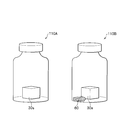
- a test container 110 ⁇ / b> A in which only the elastic member 30 or a test piece 30 s of the same quality as the elastic member 30 is enclosed, a test piece 30 s of the same quality as the elastic member 30 or the elastic member 30, and a gas absorber 60 are provided.
- Each of the sealed test containers 110B is prepared, and after the test pieces 30s are thermally deteriorated by holding the test containers 110A and 110B in a high temperature environment for a predetermined time, the gases in the test containers 110A and 110B are collected.
- composition analysis is performed by gas chromatography mass spectrometry (GC-MS) or the like, and the result of the test vessel 110B in which the gas absorber 60 is enclosed is compared with the result of the test vessel 110A in which the gas absorber 60 is not enclosed. Confirmation is possible.
- the gas absorber 60 has an action of absorbing at least one of a sulfur compound and carbon dioxide or oxygen by the same method. Specifically, for example, if it is confirmed that 50% of carbon dioxide and sulfur compounds are absorbed after the test piece 30s is thermally deteriorated at 80 ° C. for 16 hours, the gas absorber 60 is an elastic member. It can be determined that 30 has sufficient ability to suppress deterioration due to gas generated by its own thermal deterioration.
- gas absorber 60 for example, a commercially available gas absorbent with a name such as an organic gas absorbent, a sulfur gas absorbent, a carbon dioxide absorbent, or an oxygen absorbent can be used. Such commercially available gas absorbents may be used alone or in combination of two or more. However, the gas absorbents marketed under these names are those that do not exhibit a substantial absorption action for part of the sulfur-based gas, even the name of the sulfur-based gas absorbent. Since there are also substances that have an action of absorbing gases other than the types that are used, it is preferable to confirm in advance by carrying out the method for analysis and confirmation of the absorptivity of the substance.
- gas absorbents that can be used as the gas absorber 60 include “Kuraray Coal” (manufactured by Kuraray Chemical Co., Ltd.), “Purafil” (manufactured by JMS Co., Ltd.), “Long Fresh” ( “Toyobo Co., Ltd.”, “Celfine” (Toyobo Co., Ltd.), “Risolime” (Ast Co., Ltd.), “Ageless” (Mitsubishi Gas Chemical Co., Ltd.), “Vitalon” (Tokiwa Sangyo Co., Ltd.), “Tamotsu” (manufactured by Oe Chemical Co., Ltd.), “A-500HS” and the like series (manufactured by I.S.
- the composition and amount of the gas absorber 60 may be selected based on the type of gas generated from the elastic member 30 and the volume or mass of the elastic member 30. Further, the necessity and amount of absorption required for the gas absorber 60 to absorb oxygen may be selected based on the oxygen permeability of the outside air blocking member 40 and the amount of oxygen existing in the sealed space from the time of manufacture. For example, it is possible to manufacture the engine mount 1 by reducing the oxygen permeability of the outside air blocking member 40 and enclosing an inert gas in the sealed space in advance. The absorber 60 does not need to absorb oxygen.
- the gas absorber 60 As a form for enclosing the gas absorber 60 in a sealed space, it may be in a powder form, a particle form, a fiber form, etc., depending on the type of the gas absorber 60, Alternatively, it may be included in a gas-permeable parcel or the like. By adopting a form that is carried on a carrier or included in a parcel or the like, dispersion of the gas absorber 60 can be prevented, and the gas absorber 60 can be easily sealed or replaced.
- the present invention includes other mounts, dampers, supports, and the like that have an elastic member mainly composed of diene rubber and that connect the support and the vibrating body. It is possible to apply to various vibration isolators.
- Other anti-vibration devices include, for example, a block mount, a cylindrical mount, a dynamic damper, a liquid seal mount having a plurality of liquid chambers (such as a pressure receiving liquid chamber and an equilibrium liquid chamber), and actively displacing the volume of the liquid chamber.
- An active liquid seal mount provided with an actuator can be used.
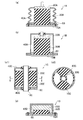
- FIG. 3 is a cross-sectional view of another embodiment of the vibration isolator according to the first embodiment of the present invention.
- A is a longitudinal sectional view of a vibration isolator in the form of a block mount having a resin cover
- (b) is a longitudinal sectional view of a vibration isolator in the form of a block mount having a metal cover
- (c1) is a cylindrical mount
- (C2) is a cross-sectional view of the vibration isolator in the form of a cylindrical mount (an end view taken along the line XX in (c2))
- (d) is an anti-vibration apparatus in the form of a dynamic damper. It is a longitudinal cross-sectional view of a vibration apparatus.
- the outside air blocking member 40 is made of rubber.
- the outside air blocking member 40 can be made of a material having a lower oxygen permeability.
- the oxygen permeability of the outside air blocking member 40 is extremely small, if the volume of the sealed space is also reduced, the oxygen absorption performance of the gas absorber 60 is almost unnecessary, and an inert gas such as nitrogen gas in the sealed space at the time of manufacture. If oxygen is enclosed, the oxygen absorption performance of the gas absorber 60 is unnecessary.
- the vibration isolator (block mount 1A) which concerns on other embodiment is an example in case the deformation amount of the elastic member 30A is small, and mainly with the 1st attachment member 10A, A second mounting member 20A, an elastic member 30A, an outside air blocking member 40A (resin cover), and a gas absorber 60 are provided.
- the first mounting member 10A and the second mounting member 20A are respectively attached to the support body or the vibration body via a member (not shown), and the elastic member 30A is interposed between the support body and the vibration body. It is provided to be elastically connected.
- the elastic member 30A mainly composed of diene rubber is covered with an outside air blocking member 40A made of a resin material having low oxygen permeability, and the contact between the elastic member 30A and the outside air is blocked, and the gas elastic member 30A A gas absorber 60 is sealed in a sealed space defined by the outside air blocking member 40A.
- the outside air blocking member 40A can also be constituted by a resin material having low flexibility. Therefore, it is possible to cope with oxygen intrusion from the outside by the external air blocking member 40A which is not only flexible but also has low gas permeability. Therefore, the oxygen absorption performance of the gas absorber 60 can be made unnecessary as described above.
- the vibration isolator (block mount 1B) according to another embodiment mainly includes a first mounting member 10B, a second mounting member 20B, and an elastic member 30B.
- An outside air blocking member 40B (metal cover) and a gas absorber 60 are provided.
- the block mount 1B includes an outside air blocking member 40B made of a metal material instead of the resin cover in the block mount 1A.
- a grommet that hermetically seals the sealed space is interposed in the sliding portion between the second mounting member 20B and the outside air blocking member 40B.
- the outside air blocking member 40B is made of a metal material having extremely low gas permeability, it is not necessary to cope with oxygen intrusion from the outside by optimizing the grommet structure. It is. Therefore, the oxygen absorption performance of the gas absorber 60 can be made unnecessary as described above.
- the vibration isolator (cylindrical mount 1C) according to another embodiment mainly includes a first mounting member 10C, a second mounting member 20C, An elastic member 30C, an outside air blocking member 40C, and a gas absorber 60 are provided.
- the first mounting member 10C forming a cylindrical outer cylinder and the second mounting member 20C forming an inner cylinder arranged concentrically with the outer cylinder are attached to a support body or a vibrating body.
- the elastic member 30C which is attached via a member (not shown) and is interposed between the outer cylinder and the inner cylinder, is provided so as to elastically connect the support body and the vibrating body. Then, as shown in FIG.
- the elastic member 30C in which the hole is penetrated in the axial direction of the outer cylinder and the inner cylinder is covered with an outside air blocking member 40C that seals the opening of the outer cylinder, The contact between the elastic member 30C and the outside air is blocked, and the gas absorber 60 is enclosed in a sealed space defined by the elastic member 30C and the outside air blocking member 40C.
- the vibration isolator (dynamic damper 1D) according to another embodiment mainly includes a support 10D, a mass body 20D, an elastic member 30D, and an outside air blocking member 40D. And a gas absorber 60.
- a mass body 20D that functions as a weight is attached to the other end of the elastic member 30D that is fixed at one end to the support 10D.
- the elastic member 30D is elastic between the support and the vibrating body. Are connected to each other.
- the elastic member 30D containing diene rubber as a main component is covered together with the mass body 20D by the outside air blocking member 40D fixed on the support so that the contact between the elastic member 30D and the outside air is blocked, thereby blocking the outside air.
- a gas absorber 60 is sealed in a sealed space partitioned by the member 40D.
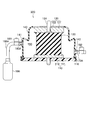
- FIG. 4 is a partial cross-sectional view of the vibration isolator according to the second embodiment of the present invention.
- the vibration isolator according to the first embodiment has a form of an engine mount that fixes and supports an engine provided in a vehicle such as an automobile.
- the anti-vibration device (engine mount) 200 has a function of fixing the engine to the vehicle body frame side to support its weight and suppressing the vibration of the engine from being transmitted to the vehicle body frame side.
- the engine mount 200 includes a vehicle body side mounting member 10 attached to a vehicle body frame side structure as a support body, an engine side mounting member 120 attached to the engine side structure as a vibrating body, a vehicle body side mounting member 110, and an engine side.
- An elastic member 130 that connects the mounting member 120 and an outside air blocking member 140 that covers the outer surface of the elastic member 130 so as to form a space (sealed space) 150 between the elastic member 130 and the elastic member 130 are provided.
- a gas absorber 60 (not shown) is sealed in the same manner as the engine mount 1.
- the outside air blocking member 140 includes a supply hole 141 and an exhaust hole 142.
- the supply hole 141 includes a supply side connection pipe 160, a supply side joint 162, a supply pipe 165, and a supply valve. 168 is connected, and an exhaust side connecting pipe 170, an exhaust side joint 172, and an exhaust valve 178 are connected to the exhaust hole 142.
- an inert gas supply device that supplies an inert gas or an inert gas supply mechanism that supplies an inert gas is connected to the supply hole 141 included in the outside air blocking member 140.
- the inert gas is supplied to the space 150 between the elastic member 130 and the outside air blocking member 140 from an inert gas supply device or an inert gas supply mechanism connected to the supply hole 141. To get.
- the inert gas is supplied to the space 150 between the elastic member 130 and the outside air blocking member 140, and the gas in the space is exhausted from the exhaust hole 142, so that the volatile compound volatilizes from the elastic member 130.
- the inert gas is, for example, nitrogen gas, carbon dioxide gas, helium gas, argon gas, etc., a mixed gas of these gases, or a mixed gas of these gases and oxygen, and a gas whose oxygen concentration is substantially lower than that of air. Etc.
- the vehicle body side attachment member 110 includes a vehicle body side upper attachment body 111 and a vehicle body side lower attachment body 112.
- the vehicle body side upper mounting body 111 is made of a hard material such as metal and has a disk shape.
- an elastic member 130 is vulcanized and bonded to the upper surface of the vehicle body side upper mounting body 111.
- a mounting bolt 114 is erected at the center of the lower surface of the vehicle body side upper mounting body 111, and a vehicle body side lower mounting body 112 is disposed below the vehicle body side upper mounting body 111. It arrange
- the vehicle body side lower attachment body 112 is made of a hard material such as resin, and has a disk-like shape having a larger diameter than the vehicle body side upper attachment body 111.
- a through hole is provided in the center of the vehicle body side lower mounting body 112, and the mounting bolt 114 provided on the lower surface of the vehicle body side upper mounting body 111 projects downward through the through hole.
- the engine mount 200 is fastened and fixed to a vehicle body frame side structure (support) (not shown), for example, a mount bracket, a vehicle body frame, and the like by the protruding mounting bolts 114.
- the engine side mounting body 120 includes an engine side lower mounting body 121 and an engine side upper mounting body 122.
- the engine-side lower attachment body 121 is made of a hard material such as metal and has a disk shape.
- an elastic member 130 is vulcanized and bonded to the lower surface of the engine-side lower attachment body 121.
- a through hole is provided in the center of the engine side lower mounting body 121, and a mounting bolt 124 is screwed into the through hole.
- the engine side upper mounting body 122 is mounted above the engine side lower mounting body 121. However, it arrange
- the engine-side upper mounting body 122 is made of a hard material such as metal and has a disk shape.
- a through-hole is provided at the center of the engine-side upper mounting body 122, and the mounting bolt 124 fixed to the engine-side lower mounting body 121 protrudes upward through the through-hole.
- the engine mount 200 is fastened and fixed to an unillustrated engine-side structure (vibrating body) such as an engine bracket by the protruding mounting bolts 124.
- the elastic member 130 is a columnar molded body made of an elastic material.
- the elastic member 130 is vulcanized and bonded to the vehicle body side upper mounting body 111 at one end and the engine side lower mounting body 121 at the other end, thereby connecting the vehicle body side mounting member 110 and the engine side mounting member 120 to the elastic member 130. It is elastically connected so that it can move relative to the other. Therefore, the vibration of the engine mounted on the engine side mounting member 120 side is designed to have a damping action by absorbing the kinetic energy by the elastic member 130.
- the material of the elastic member 130 is a diene rubber material that has a small ratio between the dynamic spring constant and the static spring constant and has good vibration durability and moldability. Specifically, the material of the elastic member 130 is the same as that of the elastic member 30 described above.
- the outside air blocking member 140 is a member for preventing direct contact between the elastic member 130 and the outside air containing oxygen, and is a thin molded body having a substantially cylindrical shape.
- the outside air blocking member 140 has a peripheral wall molded into a shape having a bend-like shape, and the lower end side fixed to the vehicle body side mounting member 110 has a larger diameter than the upper end side fixed to the engine side mounting member 120. It has a shape, and one end side is fixed over the entire circumference by being vulcanized and bonded to the outer peripheral surface of the engine-side upper mounting body 122.
- an annular fitting 116 is embedded along the circumferential direction on the other end side of the outside air blocking member 140, and the vehicle body side lower mounting body 112 is fitted inside the fitting 116.
- the other end of the outside air blocking member 140 is fixed to the vehicle body side lower attachment body 112. Therefore, a highly airtight space 150 is formed between the elastic member 130 and the outside air blocking member 140.
- the outside air blocking member 140 covers the outer surface of the elastic member 130 so as to form a space 150 over the entire circumference of the elastic member 130.
- the outside air blocking member 140 prevents direct contact between the elastic member 130 and outside air containing oxygen, and allows the outside air blocking member 140 to pass through the outside air blocking member 140 by leaving a space 150 on the inner surface side of the outside air blocking member 140.
- the invading oxygen is also prevented from transferring to the elastic member 130 between solids.
- the outside air blocking member 140 is made of an elastic material having flexibility, and specifically, can be composed of a rubber material or a resin material having good moldability and stretchability.
- the rubber material include, in addition to the diene rubber materials described above, hydrogenated acrylonitrile butadiene rubber (HNBR), butyl rubber (IIR), halogenated butyl rubber (BIIR, CIIR), and ethylene propylene rubber (EPDM). And materials mainly composed of chlorinated polyethylene rubber (CM), acrylic rubber (AR), fluoro rubber (FKM) and the like.
- the resin material examples include polyamide such as PA6, PA66, PA610, PA11, PA12, polyethylene, low density polyethylene, high density polyethylene, polypropylene, vinylidene chloride / vinyl chloride, ethylene / vinyl alcohol. And materials mainly composed of ethylene / vinyl acetate random copolymer, non-plastic vinyl chloride resin, polycarbonate and the like. From the viewpoint of further ensuring the stretchability of the outside air blocking member 140 and the fatigue durability associated with the stretch, a rubber material is preferable to the resin material.
- the outside air blocking member 140 has a supply hole 141 for supplying an inert gas to the space 150 between the elastic member 130 and the outside air blocking member 140.
- the supply hole 141 communicates the space between the elastic member 130 and the outside air blocking member 140 and the space outside the engine mount 200, and is a through hole that forms a gas flow path through which gas flows. Yes.
- the supply hole 141 is formed at a height that is separated from the lower end of the outside air blocking member 140 in the vertical direction.
- An inert gas supply device (not shown) for supplying an inert gas is connected to the supply hole 141.
- a supply side connection pipe 160 is joined to the supply hole 141, and a supply pipe 165 for supplying an inert gas to the supply side connection pipe 160 via a supply side joint 162.
- a supply valve 168 to which an inert gas supply device (not shown) is connected is attached to the other end of the supply pipe 165.
- the supply pipe 165 is a rubber pipe or the like having flexibility suitable for routing and low gas permeability that hardly leaks inert gas.
- the length of the supply pipe 165 is such that, for example, the supply valve 168 connected to one end of the supply pipe 165 can be pulled out of the vehicle mount from the actual use position of the engine mount 200 (installation position in the engine room of the vehicle). Dimensions.
- the supply valve 168 is a normally closed on-off valve composed of a valve stem 210, a valve core 212, a valve body 214, a rod 216, a coil spring 218, a cap 220, and the like, as shown in FIG. Yes.
- a gas flow path is formed which communicates the inlet of the inert gas closed by the cap 220 and the outlet to which the supply pipe 165 is connected.
- the passage is loaded with a valve core 212 having a through hole along the axial direction.
- a valve body 214 is fixed around the trunk, and a rod 216 having a disk-like pressed portion formed at the end on the inlet side is inserted.
- the valve body 214 can be reciprocated integrally with the rod 216 from a position where it contacts the end face of the outlet side of the valve core 212 to a position away from the valve core 212, and is biased toward the valve core 212 by the coil spring 218.
- the through hole of the valve core 212 is closed, and the gas flow path inside the valve stem 210 is blocked.
- the supply valve 168 is configured such that a gas supply device (not shown) that supplies an inert gas is connected to an inlet that is exposed when the cap 220 is removed.
- the gas supply device is provided with a projection-shaped base at an inert gas supply port.
- valve body 214 When the gas supply device is removed and the pressed portion of the rod 216 is opened, the valve body 214 returns to a position where it comes into contact with the end face on the outlet side of the valve core 212 by the restoring force of the coil spring 218, Operates to shut off the internal gas flow path again.
- the gas flow path leading to the supply hole 141 is openable and closable, and when the gas flow path is closed except when the inert gas is supplied, the gas flow path between the elastic member 130 and the outside air blocking member 140 is closed.
- the space 150 is cut off so as to be hermetically sealed. Therefore, the contact between the elastic member 130 and oxygen in the outside air can be constantly suppressed while enabling the supply of an inert gas.
- the outside air blocking member 140 has an exhaust hole 142 for exhausting the space 150 between the elastic member 130 and the outside air blocking member 140.
- the exhaust hole 142 communicates the space 150 between the elastic member 130 and the outside air blocking member 140 and the space outside the engine mount 200, and is a through hole that forms a gas flow path through which gas flows. ing.
- the exhaust hole 142 is formed so as to be positioned in the lower half of the outside air blocking member 140 in the vertical direction, preferably in the vicinity of the lower end.
- the exhaust hole 142 is provided with an open / close valve (exhaust valve 178) for exhausting the gas staying in the space 150 between the elastic member 130 and the outside air blocking member 140.
- an exhaust side connection pipe 170 is joined to the exhaust hole 142, and an exhaust valve 178 is connected to the exhaust side connection pipe 170 via an exhaust side joint 172.
- Inside the housing of the exhaust valve 178 there is formed a gas flow path that connects the exhaust hole 142 and the space outside the engine mount 200, and the gas flow path can reciprocate in the axial direction.
- a movable valve body is provided. Under normal pressure, the movable valve element is urged by a coil spring and is seated on a valve seat provided on the exhaust hole 142 side, thereby blocking the gas flow path.
- the movable valve body provided in the gas flow path is urged by a coil spring by the pressure in the space 150.
- the gas flow path inside the exhaust valve 178 is opened, and the space 150 between the elastic member 130 and the outside air blocking member 140 and the space outside the engine mount 200 are separated. It is designed to communicate.
- the pressure in the space 150 between the elastic member 130 and the outside air blocking member 140 is lower than the valve opening pressure, the movable valve body is seated on the valve seat provided on the exhaust hole 142 side by the restoring force of the coil spring. Then, the gas flow path inside the exhaust valve 178 is operated to be shut off again.
- the gas flow path formed by the exhaust hole 142 can be freely opened and closed, and between the elastic member 130 and the outside air blocking member 140 under a normal pressure lower than the valve opening pressure of the exhaust valve 178.
- the space 150 is cut off so as to be hermetically sealed. Therefore, when there is no gas supply to the space 150, the contact between the elastic member 130 and oxygen in the outside air can be constantly suppressed.
- the shape, number, and arrangement of the supply hole 141 and the exhaust hole 142 are not particularly limited, but the supply hole 141 and the exhaust hole 142 are positioned in a plan view of the engine mount 200. However, they are preferably formed at different positions, and more preferably formed one by one so as to be disposed at positions facing each other across the central axis of the engine mount 200.
- the supply hole portion 141 and the exhaust hole portion 142 in such an arrangement, the gas replacement rate of the space 150 between the elastic member 130 and the outside air blocking member 140 can be increased and stayed. It is possible to more efficiently reduce the concentration of oxygen and the volatile compounds volatilized from the elastic member 130.
- the exhaust hole 142 is formed so as to be positioned in the lower half of the vertical direction of the outside air blocking member 140, preferably in the vicinity of the lower end, whereas the supply hole 141 is as shown in FIG. Furthermore, it is preferable that the height of the engine mount 200 in the actual use direction (vertical direction in FIG. 4) is higher than the exhaust hole 142.
- the outside air blocking member 140 provided in the engine mount 200 restricts the movement of gas between the space 150 between the elastic member 130 and the outside air blocking member 140 and the outside of the engine mount 200, and It functions to prevent direct contact with the outside air it contains.
- volatile compounds such as sulfur compounds generated by the thermal deterioration of the elastic member 130 itself stay in the space 150 and promote the deterioration of the elastic member 130.
- the elastic member 130 made of a diene rubber material itself generates volatile compounds such as sulfur compounds (carbon disulfide, tetramethylthiourea, etc.) derived from decomposition of rubber molecules or vulcanization accelerators.
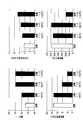
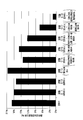
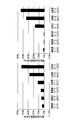
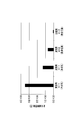
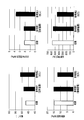
- the heat aging test results shown below show that the outside air blocking member 140 is used to prevent the elastic member 130 made of a diene rubber material from being deteriorated over a long period of time. This indicates that it is desirable to continuously or intermittently remove volatile compounds generated from the diene rubber material from the space 150 in addition to suppressing oxygen intrusion into the space.
- the elastic member 130 By exhausting while replacing, contact between the elastic member 130 and oxygen or a volatile compound is reduced, and deterioration of the elastic member 130 is continuously suppressed.
- the amount of volatile compounds that volatilize from the elastic member 130 increases depending on the heat history, but increases when the engine mount 200 is exposed to high temperatures in an actual use environment such as an engine room, and then gradually decreases. Show the trend. Therefore, for example, by repeatedly supplying and exhausting the inert gas at time intervals over a period of about 48 hours at 100 ° C. and about 1000 hours at 60 ° C., the elastic member 130 It is possible to suppress deterioration continuously.
- the engine mount 200 is housed in an engine room, and is fixed to a state in which the engine is suspended, as in a general engine mount.
- the supply pipe 165 is routed from the engine room to, for example, a position near the bonnet, and the supply valve 168 at the end of the supply pipe 165 is provided in the engine room. It is installed in advance so that it can be pulled out to the vicinity of the outside.
- an inert gas supply device that supplies an inert gas is connected to the supply hole 141. That is, for example, a gas supply port of a gas supply device for a nitrogen gas filled tire or the like is connected to the supply valve 168 that communicates with the supply hole 141, and the elastic member 130 and the outside air blocking member 140 are connected through the supply hole 141.
- An inert gas can be supplied to the space 150 between the two.
- the gas supply device corresponds to an American valve used in a tire or the like, and includes a protruding base at the gas supply port.
- the gas supply device When the gas supply device is connected to the inlet of the supply valve 168, the pressed portion at the end of the rod 216 is pushed by the protruding base of the gas supply port, and the valve body 214 fixed to the rod 216 is removed from the valve core 212. The gas flow path inside the valve stem 210 is opened. Then, the inert gas injected from the gas supply device sequentially flows through the gas flow path inside the valve stem 210 and the supply pipe 165, and between the elastic member 130 and the outside air blocking member 140 from the supply hole 141. The space 150 is supplied.
- the pressure in the space 150 between the elastic member 130 and the outside air blocking member 140 increases and reaches the valve opening pressure of the exhaust valve 178.
- the gas flow path is opened, and the gas in the space 150 is exhausted together with oxygen and volatile compounds remaining in the space 150 between the elastic member 130 and the outside air blocking member 140. That is, by injecting the inert gas, the gas in the space 150 between the elastic member 130 and the outside air blocking member 140 can be exhausted while being replaced with the inert gas, and oxygen remaining in the space 150 can be exhausted. It becomes possible to reduce the concentration of volatile compounds.
- an arbitrary amount of inert gas can be supplied to the space 150 between the elastic member 130 and the outside air blocking member 140 at an arbitrary time. It is easy to keep the oxygen concentration and volatile compound concentration in the space 150 continuously low by exhausting oxygen and volatile compounds in the space 150. Therefore, it is possible to continuously suppress deterioration caused by oxygen or a volatile compound that volatilizes from the elastic member 130 itself. Further, an advanced control mechanism that controls the opening and closing of the space 150 between the elastic member 130 and the outside air blocking member 140, an inert gas supply device is not permanently installed (always connected), or an oxygen absorbent or the like. The space 150 can be maintained in an inert gas atmosphere by a simple mechanism and operation without being enclosed in the space 150.
- the supply hole 141 is formed at a position higher than the exhaust hole 142, so that it volatilizes from the elastic member 130 and becomes a space.
- an inert gas such as nitrogen having a lower specific gravity
- oxygen and volatile compounds such as sulfur compounds staying inside 150 can be efficiently exhausted. Therefore, it is possible to further reduce the thermal deterioration of the elastic member 130 caused by volatile compounds such as sulfur compounds and oxygen, and the supply amount and supply frequency of the inert gas supplied to the space 150 through the supply holes 141. Can be reduced.
- the supply valve 168 is a valve of the same type as the tire valve provided in the vehicle, for example, an American-type valve, so that the inert gas for tires that is used more frequently is used. Can be diverted to supply to the space 150 between the elastic member 130 and the outside air blocking member 140. Therefore, there is an advantage that it is not necessary to newly install an inert gas supply device independently. Furthermore, since the exhaust hole 142 is communicated with the inside of the water tank or the like when the inert gas is exhausted, it is possible to collect the volatilized sulfur compound from the elastic member 130. It can be a high device.
- FIG. 5 is a partial cross-sectional view of the vibration isolator according to the third embodiment of the present invention.
- the vibration isolator according to the third embodiment has a form of an engine mount as in the above-described embodiment.
- the vibration isolator (engine mount) 300 includes a vehicle body side mounting member 110 attached to a vehicle body frame side structure as a support, an engine side mounting member 120 attached to the engine side structure as a vibration body, and a vehicle body side.
- the elastic member 130 which connects the attachment member 110 and the engine side attachment member 120, and the external air blocking member 140 which covers the outer surface of the elastic member 130 so as to form a space between the elastic member 130 are provided.
- the outside air blocking member 140 includes a supply hole 141 and an exhaust hole 142.
- the vibration isolator (engine mount 300) according to the third embodiment is different from the engine mount 200 described above in that an inert gas tank 190 that stores an inert gas in the supply hole 141 as an inert gas supply mechanism. And a first electromagnetic valve 181 that opens and closes a flow path for supplying inert gas, and a second electromagnetic valve 182 that opens and closes a flow path for discharging inert gas to the exhaust hole 142. It is a connected point.
- the engine mount 2 switches between opening and closing of the space 150 between the elastic member 130 and the outside air blocking member 140 by automatic control, and the gas in the space 150 between the elastic member 130 and the outside air blocking member 140 is inert gas.
- the exhaust gas can be exhausted while being always replaced.
- the first electromagnetic valve 181 and the inert gas tank 190 are connected to the supply hole 141. That is, as shown in FIG. 5, the supply-side connecting pipe 160A is joined to the supply hole 141, and the outlet of the first electromagnetic valve 181 is connected to the supply-side connecting pipe 160A.
- An inert gas tank 190 is connected to the inlet of the first electromagnetic valve 181 via a supply pipe 165A.
- the supply pipe 165A is a rubber pipe or the like having a low gas permeability that hardly leaks an inert gas, and has an appropriate length.
- the inert gas tank 190 is a container for storing a pressurized inert gas, for example, nitrogen gas, carbon dioxide gas, helium gas, argon gas, oxygen-free air, or the like.
- a pressurized inert gas for example, nitrogen gas, carbon dioxide gas, helium gas, argon gas, oxygen-free air, or the like.
- the supply port of the inert gas tank 190 and the supply hole 141 are communicated with the first electromagnetic valve 181 interposed therebetween, and the inert gas stored in the inert gas tank 190 is connected to the elastic member 130 and the outside air blocking member. 140 can be introduced into the space 50 between the two.
- the exhaust side connection pipe 170A is joined to the exhaust hole 142, and the exhaust side connection pipe 170A stays in the space 150 between the elastic member 130 and the outside air blocking member 140.
- a second electromagnetic valve 182 is provided for exhausting the gas being discharged. The outlet of the second electromagnetic valve 182 communicates with a space outside the engine mount 300 so that the gas in the space 150 between the elastic member 130 and the outside air blocking member 140 can be exhausted.
- the first solenoid valve 181 and the second solenoid valve 182 have, for example, an inlet through which gas is introduced and an outlet through which gas is discharged, and a gas flow path through which gas flows between the inlet and the outlet.
- This is a normally closed two-way solenoid valve for gas.
- the gas flow path is provided substantially perpendicular to the axis connecting the inlet and the outlet, and the inlet side and the outlet side are separated by a partition wall through which the valve port is penetrated.
- a plunger is provided above the valve opening substantially perpendicular to the axis connecting the inlet and the outlet, and a valve body is provided at the lower end of the plunger.
- the plunger is movable from a position where the valve body is in contact with a valve seat provided in the valve opening to a position where the plunger is separated from the plunger, and is biased toward the valve opening by a coil spring provided thereabove.
- a fixed core that constitutes a solenoid that drives opening and closing of the valve is provided above the plunger, and a coil is provided on the side, and the plunger is attracted in the valve opening direction by excitation of the coil.
- a control device (not shown) is connected to the first electromagnetic valve 181 and the second electromagnetic valve 182 via a control line.
- the first solenoid valve 181 and the second solenoid valve 182 are controlled to switch between opening and closing of the gas flow path according to the control input from the control device.
- the solenoid drive voltage is Not applied, the valve body is seated on the valve seat, and the gas flow path through which the gas flows is blocked.
- the valve body is separated from the valve seat and the gas flow path is opened.
- the opening control of the first electromagnetic valve 181 when the opening control of the first electromagnetic valve 181 is performed, the gas flow path between the inert gas tank 190 and the supply hole 141 is opened, and the inert gas tank 190 is pressurized. An inert gas is supplied to the space 150 between the elastic member 130 and the outside air blocking member 140.
- the opening control of the second electromagnetic valve 182 When the opening control of the second electromagnetic valve 182 is performed, the gas flow path between the exhaust hole 142 and the outside of the engine mount 300 is opened, and the gap between the elastic member 130 and the outside air blocking member 140 is opened.
- the space 150 is evacuated.
- the opening control of the first electromagnetic valve 181 and the second electromagnetic valve 182 by the control device can be performed at regular intervals based on the travel distance, elapsed time, etc. of the vehicle, with a time interval.
- the first electromagnetic valve 181 is periodically controlled from the inert gas tank 190 by opening control every time the travel distance of the vehicle reaches a predetermined distance or every time the elapsed time elapses. Can be supplied.
- the second electromagnetic valve 182 is controlled to open in synchronization with the opening control of the first electromagnetic valve 181, thereby allowing an inert gas to flow and a space 150 between the elastic member 130 and the outside air blocking member 140. Can be exhausted.
- the opening time and valve opening of the electromagnetic valve may be set based on the volume of the space 150 between the elastic member 130 and the outside air blocking member 140, the pressure of the inert gas, the mass of the elastic member 130, and the like.
- the temperature of the space 150 between the elastic member 130 and the outside air blocking member 140 and the outlet oxygen concentration are measured, and on the basis of the measured temperature and oxygen concentration, the valve opening / closing control, the opening degree, and the opening time control are performed. May be performed.
- the vibration isolator (engine mount 300) having such a configuration, by controlling the opening and closing of the electromagnetic valves 181 and 182, the space 150 formed between the elastic member 130 and the outside air blocking member 140 An inert gas can be passed through in a timely manner. Therefore, it becomes easy to exhaust volatile compounds such as sulfur compounds that volatilize from the elastic member 130 and stay inside the space 150 and oxygen that has entered the space 150 by the inert gas in a timely manner. It is possible to easily suppress the deterioration of the elastic member 130 due to the sulfur compound volatilized from the atmosphere and oxygen in the outside air.
- the inert gas tank 190 by providing the inert gas tank 190, it is possible to always supply the inert gas, and the space formed between the elastic member 130 and the outside air blocking member 140 is in a sealed state. Alternatively, the inert gas can be continuously circulated. Therefore, it is possible to more reliably suppress changes in physical properties and characteristics due to thermal degradation of the elastic member 130 caused by sulfur compounds volatilized from the elastic member 130 and oxygen in the outside air.
- the main body of the engine mount 300 and the inert gas supply device can both be mounted on the vehicle, and the inert gas is supplied from the outside of the vehicle. Without sequentially supplying the space 150, the space 150 between the elastic member 130 and the outside air blocking member 140 can be accurately maintained in an inert gas atmosphere.
- the first electromagnetic valve 181 and the second electromagnetic valve 182 to supply the inert gas and adjust the exhaust, it is possible to supply the pressurized inert gas in a gradual manner, and the elasticity. It is suitable for maintaining the suppression of deterioration of the member 130.
- the temperature of the space 150 and the outlet oxygen concentration between the elastic member 130 and the outside air blocking member 140 are measured, and when the temperature or oxygen concentration increases to a predetermined threshold or more, the inert gas is supplied and exhausted.
- the control is performed, the inert gas supply amount for suppressing the deterioration of the elastic member 130 can be further suppressed, and the capacity of the inert gas tank 190 can be reduced and the inert gas can be saved.
- the configuration of the vibration isolator according to the above embodiment can be variously changed and replaced without departing from the gist of the invention.
- the exhaust hole 142 may be provided with an open / close valve that can be switched by manual operation.
- One end of the exhaust pipe can be connected to the exhaust side connection pipe 170 joined to the exhaust hole 142 via an exhaust side joint 172, and such an exhaust on-off valve can be provided at the other end of the exhaust pipe. It is.
- the length of the exhaust pipe is the same as that of the supply pipe 165 so that the on-off valve can be pulled out of the vehicle from the actual use position of the engine mount, and the exhaust on-off valve together with the supply valve 168
- the supply and exhaust of the inert gas can be sequentially and reliably performed manually. Further, it is difficult to be affected by pressure relaxation by the flexible outside air blocking member 140, and it is possible to easily ensure high sealing performance on the exhaust hole 142 side.
- the vibration isolator can be changed to an appropriate shape such as a square shape or a cylindrical shape.
- the configuration of the vehicle body side mounting member 110 and the engine side mounting member 120 can be changed according to the form of the vibration isolator, and each can be configured to be a single member.
- the bonding position may be changed such that the outside air blocking member 140 is bonded to the attachment body to which the elastic member 130 is bonded.
- the supply side connection pipe 160 and the exhaust side connection pipe 170 are extended in a tubular shape from the periphery of the supply hole 141 and the exhaust hole 142 of the outside air blocking member 140 and integrated with a rubber material or a resin material. Can be molded.
- the supply side connection pipe 160 and the exhaust side connection pipe 170 may be metal pipes, and a rubber seat may be bonded to one end of the metal pipe or the like to join the outside air blocking member 140.
- the outside air blocking member 140 can be configured by a hard material (non-elastic material) such as a metal material or a resin material, or a combination of such a hard material and an elastic material, instead of the elastic material. Since the supply hole 141 and the exhaust hole 142 are provided, the gas inside the space 150 can be exhausted regardless of the gas permeability of the external air blocking member 140. Can be appropriately selected from a wide variety of material types. Moreover, the shape, member thickness, etc. of the external air blocking member 40 are not limited to those shown in the figure, and can be in an appropriate form.
- the vibration isolator can be applied to a body mount, a mission mount, a dynamic damper, and the like provided in the vehicle.
- the present invention can be applied to other than the vehicle without departing from the gist of the invention.
- the present invention can be applied to various industrial or household machines or various equipment, anti-vibration rubbers and vibration-isolating rubbers for railways, ships, aircraft, buildings, and the like.
- a diene rubber test piece was used to examine changes in physical properties due to thermal deterioration under forced air circulation.
- the diene rubber a rubber composed mainly of natural rubber, containing a carbon reinforcing material, a vulcanization accelerator, an anti-aging agent, etc., and vulcanized with sulfur was used.
- the deterioration test was performed in an air atmosphere using a forced circulation type heat aging tester (gear oven) defined in JIS K 6257.
- the deterioration temperature was 60 ° C. in Test 1-1, 80 ° C. in Test 1-2, 100 ° C. in Test 1-3, and the deterioration time was 1000 hours.
- FIG. 6 shows the physical properties of an undegraded (initial) test piece as a control.
- the higher the deterioration temperature the larger the amount of change in each physical property.
- the rubber material tended to become hard and brittle due to thermal deterioration. This result is within the range of conventional general knowledge, and it is considered that the deterioration reaction is promoted as the temperature is higher mainly by the action of oxygen and heat supplied into the tester.
- preliminary test 2 a diene rubber test piece was used to examine changes in physical properties due to thermal deterioration under nitrogen gas filling.
- a test piece similar to the preliminary test 1 was hung in the metal container so as not to touch the inner wall of the metal container, and the whole metal container was installed in the glove box.
- the inside of the glove box is replaced with nitrogen gas, and after confirming that the oxygen concentration in the glove box is 0.2% or less, the metal container is covered, and the test piece and nitrogen gas are placed in the metal container. Sealed.
- the volume of the metal container was about 250 cc per test piece. Subsequently, the sealed metal container was put in a gear oven to perform a deterioration test.
- the deterioration temperature was 60 ° C. in Test 2-1, 80 ° C. in Test 2-2, 100 ° C. in Test 2-3, and the deterioration time was 1000 hours. After the deterioration time, the physical properties of the four items were measured under test conditions according to each rule. The result is shown in FIG.
- FIG. 7 shows the physical properties of an undegraded (initial) test piece as a control.
- the amount of change in each physical property showed the same tendency as in the preliminary test 1 even in an environment without oxygen.
- the amount of change in hardness was smaller than that in Preliminary Test 1
- the amount of change in physical properties other than hardness was equal to or greater than that in Preliminary Test 1.
- the physical property change at relatively low temperatures of 60 ° C. and 80 ° C. tends to be large.
- FIG. 8 shows the physical properties of an undegraded (initial) test piece as a control.
- the amount of change in physical properties was clearly larger than in an environment where forced air was circulated and constantly exposed to new air. This result is also unpredictable from conventional general knowledge.
- the amount of oxygen in contact with the test piece is less oxygen compared to Test 3-1 in which air containing oxygen is constantly fed, although Test 3-2 in which air is sealed is smaller. The result appears to have accelerated the degradation reaction in the environment.
- the vertical axis represents the relative intensity of the GC-MS spectrum
- the horizontal axis represents the detected substance group.
- Such gas generation was also confirmed in several tests conducted by changing the conditions such as the type of diene rubber, anti-aging agent, vulcanization accelerator, and the amount of sulfur.
- the gas species to be used and the generation ratio for each gas species were not the same.
- the same tendency as the preliminary test 1 to the preliminary test 4 was confirmed.
- the material of the elastic member 30 is composed of a diene rubber mainly composed of natural rubber, like the rubber material, and contains a carbon reinforcing material, a vulcanization accelerator, an anti-aging agent, and the like, and is vulcanized with sulfur.
- the mass of the elastic member 30 was about 200 g.
- the initial static spring constant of the vibration isolator was about 210 N / mm, and the dynamic spring constant at 25 Hz was about 250 N / mm.
- Test 5-1 the test was performed with a vibration isolator and air sealed in a metal container having an internal volume of about 4000 cc.
- each vibration isolator was housed in a metal container one by one, and the entire metal container was installed in a glove box.
- the metal container was covered and sealed.
- the sealed metal container was put in a gear oven to perform a deterioration test.
- the dynamic spring constant and the static spring constant were measured after standing for 24 hours or more after the deterioration time, and the rate of change from the measured value before the deterioration test was calculated.
- the calculated rate of change of the dynamic spring constant and the static spring constant is shown in FIGS.
- Test 5-2 a vibration isolator and nitrogen gas were enclosed in a metal container. Test 5-2 was performed in the same manner as test 5-1, except that the gas to be replaced was replaced with nitrogen gas. The calculated rate of change of the dynamic spring constant and the static spring constant is shown in FIGS.
- Test 5-3 a vibration isolator and carbon dioxide-containing nitrogen gas (83% nitrogen and 17% carbon dioxide) were sealed in a metal container. Test 5-3 was performed in the same manner as Test 5-1, except that the gas to be replaced was replaced with nitrogen gas containing carbon dioxide (83% nitrogen and 17% carbon dioxide). The calculated rate of change of the dynamic spring constant and the static spring constant is shown in FIGS.
- Test 5-4 the vibration isolator and the air and gas absorber 60 were enclosed in a metal container. While the gas absorber 60 absorbs almost all types and almost all amounts of organic gases including sulfur compounds among the heat degradation gas of the elastic member 30 by the test according to [Preliminary test 4]. The carbon dioxide that hardly absorbs was selected, and the test was conducted with a sealed amount of 20 g. FIG. 10 shows the result of GC-MS when the gas that caused heat degradation was absorbed by this gas absorber. As the gas absorber 60, specifically, a gas absorbent (activated carbon) “Kuraray Coal GG4 / 8” (Kuraray Chemical Co., Ltd., 4-8 mesh) was used. Test 5-4 was conducted in the same manner as Test 5-1, except that the gas absorber 60 was enclosed. The calculated rate of change of the dynamic spring constant and the static spring constant is shown in FIGS.
- Test 5-5 as the gas absorber 60, substantially the entire amount of carbon dioxide and part of the organic gas out of the heat-deteriorated gas of the elastic member 30 was obtained as a result of the test according to [Preliminary test 4]. The one to be absorbed was selected, and the test was conducted with a sealed amount of 20 g. FIG. 11 shows the results of GC-MS when the gas that caused heat degradation was absorbed by this gas absorber.
- a gas absorbent “Lysolime” manufactured by AST Co., Ltd.
- Test 5-5 was performed in the same manner as Test 5-4, except that the gas absorber 60 to be used was replaced. The calculated rate of change of the dynamic spring constant and the static spring constant is shown in FIGS.
- Test 5-6 as a gas absorber 60, a part of carbon dioxide, substantially all kinds of sulfur compounds of almost all kinds of the heat degradation gas of the elastic member 30 according to the test according to [Preliminary test 4], And the thing which absorbs a part of organic gas was selected, and the test was conducted with a sealed amount of 20 g.
- FIG. 12 shows the results of GC-MS when the gas that caused heat degradation was absorbed by this gas absorber.
- the gas absorber 60 specifically, a gas absorbent “Purafil SP” (manufactured by JMS Co., Ltd.) was used. Test 5-6 was performed in the same manner as Test 5-4 except that the gas absorber 60 to be used was replaced. The calculated rate of change of the dynamic spring constant and the static spring constant is shown in FIGS.
- Test 5-7 an equal amount of the gas absorber used in Tests 5-5 and 5-6 mixed as a gas absorber 60 was tested in an enclosed amount of 20 g. Specifically, the gas absorber 60 was prepared by mixing the above-mentioned “lysolime” and “Purafil SP” in equal amounts. Test 5-7 was performed in the same manner as Test 5-4 except that the gas absorber 60 to be used was replaced. The calculated rate of change of the dynamic spring constant and the static spring constant is shown in FIGS.
- Test 5-8 as the gas absorber 60, substantially the entire amount of carbon dioxide, substantially the entire amount of sulfur compounds, and a part of the heat degradation gas of the elastic member 30 according to the test according to [Preliminary test 4]. An organic gas and one that absorbs oxygen were selected, and the test was conducted with a sealed amount of 20 g.
- FIG. 13 shows the results of GC-MS when the gas that caused heat degradation was absorbed by this gas absorber.
- a gas absorbent “A-2500HS” manufactured by I.S. O.
- Test 5-8 was performed in the same manner as Test 5-4, except that the gas absorber 60 to be used was replaced.
- the calculated rate of change of the dynamic spring constant and the static spring constant is shown in FIGS.
- the change in the spring characteristics of the vibration isolator can be reduced by removing the organic gas containing the sulfur compound. I understand. Further, comparing the results of Test 5-5 and Test 5-1, it can be seen that the change in the spring characteristics of the vibration isolator is further reduced by removing carbon dioxide. Also, comparing the results of Test 5-6 and Test 5-1, it can be seen that the change in spring characteristics of the vibration isolator is further reduced by removing carbon dioxide and sulfur compounds.
- a diene rubber test piece was used to examine changes in physical properties due to thermal deterioration under the gas absorber and air filling.
- the gas absorber 60 a gas absorbent “A-2500HS” having a function of absorbing carbon dioxide, a sulfur compound, and oxygen was used.
- the test piece was hung in the metal container so as not to touch the inner wall of the metal container, and the metal container was installed in the glove box.
- the gas absorber was accommodated in the metal container, the metal container was covered, and the rubber material test piece, air, and the gas absorber 60 were sealed in the metal container.
- the deterioration temperature was 60 ° C. in Test 6-1, 80 ° C. in Test 6-2, 100 ° C. in Test 6-3, and the deterioration time was 1000 hours.
- the physical properties of the four items were measured under test conditions according to each rule. The result is shown in FIG.
- FIG. 16 the physical properties of an undegraded (initial) test piece are shown as a control.
- the amount of change in each physical property is reduced at any deterioration temperature by enclosing a gas absorber 60 having a function of absorbing carbon dioxide, a sulfur compound and oxygen in a sealed space.
- a gas absorber 60 having a function of absorbing carbon dioxide, a sulfur compound and oxygen in a sealed space.
- the gas generated by the thermal degradation of the rubber material particularly carbon dioxide and sulfur compounds, promotes the degradation of the rubber material itself.
- the rubber material will deteriorate directly as a function of carbon dioxide even with conventional knowledge, it may indirectly contribute to the deterioration of the elastic member due to the action of altering the generated sulfur compound. Can be considered.
- Example 1 Next, as Example 1, the vibration isolator according to the example of the form of the liquid seal engine mount and the anti-vibration device according to the comparative example were used to evaluate the change in the spring characteristics due to the thermal deterioration under the air filling.
- the liquid ring engine mount shown in FIG. 1 in which the gas absorber 60 was sealed in a sealed space was used.
- the gas absorber 60 a gas absorber having a function of absorbing carbon dioxide, a sulfur compound and oxygen (gas absorbent “A-2500HS”) was used in an enclosed amount of 10 g.
- the outside air blocking member 40 provided in the vibration isolator was made of butyl rubber and had a thickness of 2 mm.
- the internal volume of the sealed space of this vibration isolator is about 70 cc.
- the material of the elastic member 30 is composed of a diene rubber mainly composed of natural rubber, like the rubber material, and contains a carbon reinforcing material, a vulcanization accelerator, an anti-aging agent, and the like, and is vulcanized with sulfur.
- the mass of the elastic member 30 was about 200 g.
- the initial static spring constant of the vibration isolator was about 210 N / mm, and the dynamic spring constant at 25 Hz was about 250 N / mm.
- the vibration isolator according to Example 1 and the anti-vibration apparatus according to Comparative Example 1 were each subjected to air using a forced circulation thermal aging tester (gear oven) defined in JIS K 6257. Performed under atmosphere.
- the deterioration temperature was 60 ° C. in Example 1-1 and Comparative Example 1-1, 80 ° C. in Example 1-2 and Comparative Example 1-2, and 100 ° C. in Example 1-3 and Comparative Example 1-3.
- the deterioration time was 2000 hours in all cases.
- the result of the spring constant change rate after the deterioration test is shown in FIG.
- the rate of change of the spring constant is a comparative example. It can be seen that the change in the spring characteristics is greatly reduced because the size is smaller than that of the vibration isolator according to FIG. From this result, it was confirmed that the vibration isolator according to the example hardly deteriorates the vibration isolating performance even in a thermal environment.
- Example 2 Next, as Example 2, using a vibration isolator according to an example of a block mount form and a vibration isolator according to a comparative example, a change in physical properties and a change in spring characteristics due to thermal deterioration under air filling are evaluated. did.
- Example 2 As the vibration isolator according to Example 2, a block mount in which air and a gas absorber 60 are sealed in the liquid chamber 50B from which the working fluid is removed in the engine mount shown in FIG. 1 was used.
- the gas absorber 60 a gas absorber having a function of absorbing carbon dioxide, a sulfur compound and oxygen (gas absorbent “A-2500HS”) was used in an enclosed amount of 10 g.
- the outside air blocking member 40 provided in the vibration isolator was made of butyl rubber and had a thickness of 2 mm.
- the internal volume of the sealed space of this vibration isolator is about 70 cc.
- the material of the elastic member 30 is composed of a diene rubber mainly composed of natural rubber, like the rubber material, and contains a carbon reinforcing material, a vulcanization accelerator, an anti-aging agent, and the like, and is vulcanized with sulfur.
- the mass of the elastic member 30 was about 200 g.
- the initial static spring constant of the vibration isolator was about 210 N / mm, and the dynamic spring constant at 25 Hz was about 250 N / mm.
- the engine mount 1 shown in FIG. 1 was used as a block mount, except that the outside air blocking member 40, the gas absorber 60, the diaphragm 70, and the working fluid were removed. Therefore, the material and mass of the elastic member 30 and the initial spring constant of the vibration isolator are the same as those in the second embodiment.
- the deterioration test was conducted using a forced circulation thermal aging tester (gear oven) defined in JIS K 6257 for each of the vibration isolator according to Example 2 and the vibration isolator according to Comparative Example 2. Went under.
- the deterioration temperature was 60 ° C. in Example 2-1 and Comparative Example 2-1, 80 ° C. in Example 2-2 and Comparative Example 2-2, and 100 ° C. in Example 2-3 and Comparative Example 2-3.
- the deterioration time was 2000 hours in all cases.
- the result of the spring constant change rate after the deterioration test is shown in FIG.
- the rate of change of the spring constant is related to the comparative example. It can be seen that the change in spring characteristics is greatly reduced because it is smaller than the vibration isolator. From this result, it was confirmed that even in a vibration isolator in the form of a block mount, the vibration isolating performance hardly deteriorates in a thermal environment.
- the springs in Comparative Examples 2-1 to 2-3 are compared. It can be seen that the rate of change of the constant has increased.
- Comparative Example 3 Next, as Comparative Example 3, a vibration isolator according to Comparative Example 3 in the form of a block mount was used to evaluate a change in physical properties and a change in spring characteristics due to thermal degradation under nitrogen gas filling.
- the liquid chamber 50B from which the working fluid has been removed is filled with nitrogen instead of air, and the gas absorber 60 is sealed without being sealed.
- An anti-vibration device similar to the anti-vibration device was used as a block mount.
- the deterioration test was performed in an air atmosphere using a forced circulation thermal aging tester (gear oven) defined in JIS K 6257 for the vibration isolator according to Comparative Example 3.
- the deterioration temperature was 60 ° C. in Comparative Example 3-1, 80 ° C. in Comparative Example 3-2, 100 ° C. in Comparative Example 3-3, and the deterioration time was 2000 hours.
- the result of the spring constant change rate after the deterioration test is shown in FIG.
- the deterioration temperature of Comparative Example 3-1 is a temperature close to the ambient temperature in the steady state in the actual use environment of the vibration isolator applied to an automobile or the like, but the rate of change of the dynamic spring constant is increased. This shows that it is not suitable for practical use.
- Example 4 the fatigue life of the elastic member 30 provided in the vibration isolator is evaluated using the vibration isolator according to Example 4 and the vibration isolator according to Comparative Example 4 in the form of a block mount. did.
- the vibration isolator according to Example 4 the same vibration isolator as that according to Example 2 in which the gas absorber 60 was enclosed was used.
- the vibration isolator according to Comparative Example 4 the same vibration isolator as that according to Comparative Example 2 from which the gas absorber 60 was removed was used.
- Example 4-1 and Comparative Example 4-1 an undegraded vibration isolator was used for the test.
- Example 4-2 and Comparative Example 4-2 the deterioration temperature was 100 ° C., and the deterioration time was 2000 hours.
- the anti-vibration device after thermal degradation was used for the test. Then, after repeating excitation at a predetermined frequency and vibration acceleration in an 80 ° C. atmosphere, the number of times of vibration until the elastic member 30 was broken was counted to obtain the number of durable breaks. The result is shown in FIG.
- FIG. 21 is a diagram showing the results of a heat aging test of a diene rubber material under forced nitrogen gas circulation.
- FIG. 22 is a figure which shows the result of the heat aging test in the nitrogen gas forced circulation of the diene rubber material performed using oxygen-containing nitrogen gas of oxygen concentration 2% whose oxygen concentration is lower than air.
- the heat aging test shown in FIG. 21 is the result of performing under nitrogen gas (oxygen concentration 0.2% or less) forced circulation.
- nitrogen gas oxygen concentration 0.2% or less
- “circulation” is used for convenience, but more specifically, in Reference Example 1, eight rubber test pieces (JIS No. 3 type) are installed in a 1000 cc metal container, and approximately 1 cc / min from one of the metal containers. Then, nitrogen gas (oxygen concentration of 0.2% or less) was sent in and exhausted from the other side.
- the deterioration temperature is 80 ° C., and the deterioration time is 1000 hours.
- the physical properties of an undegraded (initial) test piece are measured, and as Reference Example 2, the result under nitrogen gas sealing extracted from FIG.
- the heat aging test shown in FIG. 22 is the result of a heat aging test of a diene rubber material under nitrogen gas forced circulation using the same apparatus as the test equipment in the heat aging test shown in FIG.
- Reference Example 4 nitrogen gas having an oxygen concentration of approximately 2% is used, the deterioration temperature is 80 ° C., and the deterioration time is 1000 hours.
- Reference Example 3 the physical properties of an undegraded (initial) test piece were measured, and as Reference Example 3, the result of forced air circulation (which can be considered as a nitrogen gas mixed gas with an oxygen concentration of 20%) is also included. It shows.
- Reference Example 5 the result of the heat aging test under the forced circulation of the nitrogen gas (oxygen concentration of 0.2% or less) in FIG. 21 is also shown.
- the deterioration of the diene rubber material under the forced circulation of nitrogen gas is almost the same as the undegraded (initial) test piece in each physical property, and there is almost no deterioration. Recognize.
- the effect of forced circulation of nitrogen gas is clear in comparison with each physical property under nitrogen gas filling.
- volatile compounds such as sulfur compounds generated by the deterioration of the diene rubber itself are retained in the metal container in which the test piece is installed, thereby promoting the deterioration of the diene rubber.
- Degradation progresses despite the low oxygen environment, but under the forced circulation of nitrogen gas, the volatile compounds generated from the diene rubber are discharged out of the metal container, making it ideal that neither oxygen nor volatile compounds exist. This is to become an environment.
- the anti-vibration device according to the second embodiment and the anti-vibration device according to the third embodiment can surely obtain a deterioration suppressing effect particularly when the space 150 has a small capacity, such as an engine mount.
- a relatively small vibration isolator it is useful for continuously suppressing changes in physical properties and characteristics due to thermal deterioration of the elastic member.
Landscapes
- Engineering & Computer Science (AREA)
- General Engineering & Computer Science (AREA)
- Mechanical Engineering (AREA)
- Chemical & Material Sciences (AREA)
- Analytical Chemistry (AREA)
- General Chemical & Material Sciences (AREA)
- Oil, Petroleum & Natural Gas (AREA)
- Chemical Kinetics & Catalysis (AREA)
- Combustion & Propulsion (AREA)
- Physics & Mathematics (AREA)
- Acoustics & Sound (AREA)
- Aviation & Aerospace Engineering (AREA)
- Vibration Prevention Devices (AREA)
Abstract
La présente invention concerne un dispositif anti-vibrations permettant de minimiser la détérioration d'un élément élastique destiné à relier un corps de support et un corps vibrant, et permettant aux caractéristiques de ressort de ne varier que peu dans le temps. Un dispositif anti-vibrations (un support de moteur (1)) est doté : d'un élément élastique (30) destiné à relier un corps de support (par exemple, un châssis de corps ou analogue auquel un élément de fixation côté carrosserie (10) est fixé) et un corps vibrant (par exemple, un moteur ou analogue auquel un élément de fixation côté moteur (20) est fixé), l'élément élastique (30) ayant un caoutchouc à base de diène comme composant primaire; d'un élément de blocage d'air extérieur (40) destiné à couvrir l'élément élastique (30) et à empêcher le contact entre l'élément élastique (30) et l'air extérieur; et d'un corps d'absorption de gaz (60) scellé dans un espace étanche (50A) qui est cloisonné par l'élément de blocage d'air extérieur (40), le corps d'absorption de gaz (60) comprenant une substance qui absorbe le gaz produit par la détérioration thermique de l'élément élastique (30), et comprenant une substance qui ne produit pas de dioxyde de carbone et/ou un composé de soufre du fait de la détérioration thermique du corps d'absorption de gaz (60) lui-même.
Priority Applications (1)
| Application Number | Priority Date | Filing Date | Title |
|---|---|---|---|
| CN201580006786.0A CN105980734B (zh) | 2014-04-25 | 2015-04-24 | 防振装置 |
Applications Claiming Priority (4)
| Application Number | Priority Date | Filing Date | Title |
|---|---|---|---|
| JP2014092103 | 2014-04-25 | ||
| JP2014-092103 | 2014-04-25 | ||
| JP2014161600 | 2014-08-07 | ||
| JP2014-161600 | 2014-08-07 |
Publications (1)
| Publication Number | Publication Date |
|---|---|
| WO2015163473A1 true WO2015163473A1 (fr) | 2015-10-29 |
Family
ID=54332631
Family Applications (1)
| Application Number | Title | Priority Date | Filing Date |
|---|---|---|---|
| PCT/JP2015/062613 Ceased WO2015163473A1 (fr) | 2014-04-25 | 2015-04-24 | Dispositif anti-vibrations |
Country Status (2)
| Country | Link |
|---|---|
| CN (1) | CN105980734B (fr) |
| WO (1) | WO2015163473A1 (fr) |
Cited By (1)
| Publication number | Priority date | Publication date | Assignee | Title |
|---|---|---|---|---|
| CN119078486A (zh) * | 2024-10-25 | 2024-12-06 | 宁波精创汽车部件有限公司 | 一种汽车发动机快锁支架 |
Families Citing this family (4)
| Publication number | Priority date | Publication date | Assignee | Title |
|---|---|---|---|---|
| CN107632318A (zh) * | 2017-08-09 | 2018-01-26 | 中国原子能科学研究院 | 一种用于核素迁移研究的气氛控制系统 |
| CN107932926B (zh) * | 2017-10-26 | 2019-09-03 | 重庆达小丰机械有限公司 | 一种复合型衬套加工设备 |
| JP6683754B2 (ja) * | 2018-04-11 | 2020-04-22 | 本田技研工業株式会社 | 駆動源の支持構造 |
| CN113931972A (zh) * | 2021-11-09 | 2022-01-14 | 东台市海迅铁路配件有限公司 | 一种用于高速列车的防蠕变的橡胶隔振器结构 |
Citations (2)
| Publication number | Priority date | Publication date | Assignee | Title |
|---|---|---|---|---|
| JPH08230421A (ja) * | 1995-02-23 | 1996-09-10 | Yokohama Rubber Co Ltd:The | 空気入りタイヤおよび空気入りタイヤの空気充填方法 |
| JP2000104774A (ja) * | 1998-09-25 | 2000-04-11 | Kurashiki Kako Co Ltd | 長寿命弾性構造体 |
Family Cites Families (2)
| Publication number | Priority date | Publication date | Assignee | Title |
|---|---|---|---|---|
| US20090014930A1 (en) * | 2005-11-15 | 2009-01-15 | Fukoku Co., Ltd | Liquid sealed mount and method of assembling the same |
| JP5722582B2 (ja) * | 2010-09-28 | 2015-05-20 | 株式会社ブリヂストン | 空気ばね装置 |
-
2015
- 2015-04-24 CN CN201580006786.0A patent/CN105980734B/zh not_active Expired - Fee Related
- 2015-04-24 WO PCT/JP2015/062613 patent/WO2015163473A1/fr not_active Ceased
Patent Citations (2)
| Publication number | Priority date | Publication date | Assignee | Title |
|---|---|---|---|---|
| JPH08230421A (ja) * | 1995-02-23 | 1996-09-10 | Yokohama Rubber Co Ltd:The | 空気入りタイヤおよび空気入りタイヤの空気充填方法 |
| JP2000104774A (ja) * | 1998-09-25 | 2000-04-11 | Kurashiki Kako Co Ltd | 長寿命弾性構造体 |
Cited By (1)
| Publication number | Priority date | Publication date | Assignee | Title |
|---|---|---|---|---|
| CN119078486A (zh) * | 2024-10-25 | 2024-12-06 | 宁波精创汽车部件有限公司 | 一种汽车发动机快锁支架 |
Also Published As
| Publication number | Publication date |
|---|---|
| CN105980734B (zh) | 2017-10-13 |
| CN105980734A (zh) | 2016-09-28 |
Similar Documents
| Publication | Publication Date | Title |
|---|---|---|
| CN105980734B (zh) | 防振装置 | |
| KR101612374B1 (ko) | 액티브마운트 | |
| JP2010501804A5 (fr) | ||
| US8888079B2 (en) | Apparatus for improved vibration isolation | |
| JP5846939B2 (ja) | 流体封入式防振装置 | |
| JP6251175B2 (ja) | 液体封入式マウント | |
| US10352391B2 (en) | Vibration damper with a traction stop | |
| CN110192045A (zh) | 防振装置 | |
| US10907664B2 (en) | Self-cleaning mechanism for pneumatic central clutch release | |
| JP2009019709A (ja) | 防振装置 | |
| US7036804B2 (en) | Bi-state hydraulic mount with integral controller | |
| US6655667B1 (en) | Hydraulic damper bearing | |
| JP2000104774A (ja) | 長寿命弾性構造体 | |
| KR102169366B1 (ko) | 엔진마운트 | |
| KR20120029359A (ko) | 라인 요소 | |
| JP6297906B2 (ja) | 液封入式防振装置 | |
| JP2008082382A (ja) | 振動伝達抑制装置 | |
| JP4168445B2 (ja) | 防振用アクチュエータおよびそれを用いた能動型防振装置 | |
| KR20230036942A (ko) | 수격 방지기 | |
| JP4945142B2 (ja) | 液体封入型防振装置 | |
| JP2010223275A (ja) | 液入り防振装置 | |
| KR20090122020A (ko) | 차량용 쇽 업소버 | |
| JP5331605B2 (ja) | 防振装置の製造方法および防振装置 | |
| JP5893482B2 (ja) | 液封入式防振装置 | |
| JP2009138772A (ja) | 防振装置 |
Legal Events
| Date | Code | Title | Description |
|---|---|---|---|
| 121 | Ep: the epo has been informed by wipo that ep was designated in this application |
Ref document number: 15783015 Country of ref document: EP Kind code of ref document: A1 |
|
| NENP | Non-entry into the national phase |
Ref country code: DE |
|
| 122 | Ep: pct application non-entry in european phase |
Ref document number: 15783015 Country of ref document: EP Kind code of ref document: A1 |
|
| NENP | Non-entry into the national phase |
Ref country code: JP |