WO2015178399A1 - 醸造用種麹、醸造用麹及び醤油様調味料 - Google Patents
醸造用種麹、醸造用麹及び醤油様調味料 Download PDFInfo
- Publication number
- WO2015178399A1 WO2015178399A1 PCT/JP2015/064389 JP2015064389W WO2015178399A1 WO 2015178399 A1 WO2015178399 A1 WO 2015178399A1 JP 2015064389 W JP2015064389 W JP 2015064389W WO 2015178399 A1 WO2015178399 A1 WO 2015178399A1
- Authority
- WO
- WIPO (PCT)
- Prior art keywords
- soy sauce
- seed
- koji
- pea
- seasoning
- Prior art date
- Legal status (The legal status is an assumption and is not a legal conclusion. Google has not performed a legal analysis and makes no representation as to the accuracy of the status listed.)
- Ceased
Links
Classifications
-
- A—HUMAN NECESSITIES
- A23—FOODS OR FOODSTUFFS; TREATMENT THEREOF, NOT COVERED BY OTHER CLASSES
- A23L—FOODS, FOODSTUFFS OR NON-ALCOHOLIC BEVERAGES, NOT OTHERWISE PROVIDED FOR; PREPARATION OR TREATMENT THEREOF
- A23L27/00—Spices; Flavouring agents or condiments; Artificial sweetening agents; Table salts; Dietetic salt substitutes; Preparation or treatment thereof
- A23L27/50—Soya sauce
-
- A—HUMAN NECESSITIES
- A23—FOODS OR FOODSTUFFS; TREATMENT THEREOF, NOT COVERED BY OTHER CLASSES
- A23L—FOODS, FOODSTUFFS OR NON-ALCOHOLIC BEVERAGES, NOT OTHERWISE PROVIDED FOR; PREPARATION OR TREATMENT THEREOF
- A23L27/00—Spices; Flavouring agents or condiments; Artificial sweetening agents; Table salts; Dietetic salt substitutes; Preparation or treatment thereof
- A23L27/10—Natural spices, flavouring agents or condiments; Extracts thereof
-
- A—HUMAN NECESSITIES
- A23—FOODS OR FOODSTUFFS; TREATMENT THEREOF, NOT COVERED BY OTHER CLASSES
- A23L—FOODS, FOODSTUFFS OR NON-ALCOHOLIC BEVERAGES, NOT OTHERWISE PROVIDED FOR; PREPARATION OR TREATMENT THEREOF
- A23L27/00—Spices; Flavouring agents or condiments; Artificial sweetening agents; Table salts; Dietetic salt substitutes; Preparation or treatment thereof
- A23L27/20—Synthetic spices, flavouring agents or condiments
- A23L27/24—Synthetic spices, flavouring agents or condiments prepared by fermentation
-
- C—CHEMISTRY; METALLURGY
- C12—BIOCHEMISTRY; BEER; SPIRITS; WINE; VINEGAR; MICROBIOLOGY; ENZYMOLOGY; MUTATION OR GENETIC ENGINEERING
- C12N—MICROORGANISMS OR ENZYMES; COMPOSITIONS THEREOF; PROPAGATING, PRESERVING, OR MAINTAINING MICROORGANISMS; MUTATION OR GENETIC ENGINEERING; CULTURE MEDIA
- C12N1/00—Microorganisms; Compositions thereof; Processes of propagating, maintaining or preserving microorganisms or compositions thereof; Processes of preparing or isolating a composition containing a microorganism; Culture media therefor
- C12N1/14—Fungi; Culture media therefor
-
- A—HUMAN NECESSITIES
- A23—FOODS OR FOODSTUFFS; TREATMENT THEREOF, NOT COVERED BY OTHER CLASSES
- A23V—INDEXING SCHEME RELATING TO FOODS, FOODSTUFFS OR NON-ALCOHOLIC BEVERAGES AND LACTIC OR PROPIONIC ACID BACTERIA USED IN FOODSTUFFS OR FOOD PREPARATION
- A23V2002/00—Food compositions, function of food ingredients or processes for food or foodstuffs
-
- C—CHEMISTRY; METALLURGY
- C12—BIOCHEMISTRY; BEER; SPIRITS; WINE; VINEGAR; MICROBIOLOGY; ENZYMOLOGY; MUTATION OR GENETIC ENGINEERING
- C12R—INDEXING SCHEME ASSOCIATED WITH SUBCLASSES C12C - C12Q, RELATING TO MICROORGANISMS
- C12R2001/00—Microorganisms ; Processes using microorganisms
- C12R2001/645—Fungi ; Processes using fungi
- C12R2001/66—Aspergillus
Definitions
- the present invention relates to a brewing seed meal, a brewing meal and a soy sauce-like seasoning obtained without using any food containing allergic substances as raw materials.
- allergens In recent years, health hazards (hereinafter referred to as food allergies) caused by foods containing allergic substances (hereinafter referred to as allergens) are frequently observed throughout the world. Food allergies are caused by the body's immune system reacting to certain substances and components in food. Since there is currently no fundamental cure, not taking foods that contain allergens is the surest way to prevent food allergies. Because allergic symptoms can even be life threatening, it is essential for allergic patients to display ingredients that contain allergens in food.
- Soy sauce a traditional Japanese fermented seasoning and indispensable for the Japanese diet, is obtained by fermenting and brewing straw and salt made from soybeans and wheat as raw materials. Both are defined as foods containing allergens in Japan and Codex.
- allergens are thought to be reduced because the raw materials are decomposed by koji enzymes, but soy or wheat allergic patients could not use soy sauce depending on the degree of health impairment.
- Cereals containing gluten, such as wheat, in particular, are known to cause serious symptoms in celiac disease patients, and development of gluten-free foods is demanded all over the world.
- allergen-free allergen-containing food
- koji is produced using empty beans and fermented and matured by adding salt water (for example, see Patent Document 1) or koji using a mixture of mustard seeds and corn.
- Fermented and matured by adding salt water for example, see Patent Literature 2
- soy sauce-like seasoning production method mainly composed of millet see, for example, Patent Literature 3
- fermented seasoning using sesame seeds as raw materials
- a method for producing a soy sauce for example, see Patent Document 4
- a method for producing a fish soy sauce for example, see Patent Document 5
- a method for producing a soy sauce-like seasoning using tomato as a raw material for example, see Patent Document 6 are disclosed. ing.
- the seasoning liquid mainly composed of millet grains and the fermented seasoning liquid made from sesame seeds are difficult to obtain the raw materials at low cost and have a unique flavor, and it is difficult to use them as substitute seasonings for soy sauce.
- Fish soy sauce does not use soybeans or wheat, but it differs in flavor from normal soy sauce and is difficult to use as an alternative seasoning.
- the fish itself is considered to be an allergen-containing food, which is not suitable as an allergen-free soy sauce-like seasoning.
- Leguminous plant pea (Pisum sativum L.) has been widely cultivated since ancient times, and its seed pea is widely used around the world as a raw material for roasted beans, boiled beans, sardines, salads and stews, and snacks. Being eaten. Therefore, peas can be obtained inexpensively and stably as a food raw material. Peas are not designated as specific raw materials containing allergens specified in Japan and Codex, and foods made from peas should be taken safely by patients with allergies to soybeans and wheat. Is possible.
- Patent Document 7 As a technique for using peas as a raw material for fermented seasoning, a method for producing soy sauce using field pea as a raw material for filling is known (Patent Document 7).
- the present invention is intended to lighten soy sauce and not allergen-free, so field pea (pea) is used in place of soybeans and wheat, which are the usual serving ingredients.
- so field pea pea
- soybeans and wheat which are the usual serving ingredients.
- Seed koji is a microbial starter that is added to koji raw materials as a source of koji mold in the koji making process of soy sauce, miso, sake, mirin, etc.
- seed koji raw materials such as wheat bran and rice
- the spore grown on the spore is used. Since ancient times, it has been widely used as “sprouts”, and the technology of adding seed pods during koji making is indispensable to the brewing industry even today.
- Allergic symptoms can occur even with trace amounts of allergens, and in some cases, they may cause serious allergic symptoms such as anaphylactic shock and can be life threatening. Therefore, in order to produce allergen-free soy sauce, it is necessary to avoid carry-over of allergens derived not only from the main raw material but also from auxiliary raw materials such as the raw material for the seed meal used for the production of the seed meal.
- Wheat bran is used for the preparation of koji mold starter (seed meal) used for making general soy sauce koji.
- wheat bran is a portion of the wheat skin that occurs during the flour milling process, and contains a mixture of wheat seed seed coat, outer endosperm, germ and the like. Therefore, from the viewpoint of carry-over of allergen derived from wheat, there was a problem that it could not be used for allergen-free soy sauce.
- Soy sauce that does not use wheat as a raw material is provided for wheat allergy patients.
- brewed foods such as soy sauce, which uses seed meal using only soybean-derived materials and does not contain any wheat-derived components, are known (Patent Document 8).
- soy is designated as one of the 20 recommended labeling allergens under the Food Sanitation Act and one of the Codex labeling items established by the FAO / WHO Joint Food Standards Committee (Codex Committee). The purpose of obtaining soy sauce cannot be achieved.
- JP 2006-12002 A JP 2008-237183 A JP-A-8-196232 JP 2009-171959 A JP 2005-261349 A JP 2012-187096 A JP-A-53-56393 Japanese Patent No. 4908424
- the present invention has been made in view of the above circumstances, and in order to prevent carry-over of allergic substances derived from not only main ingredients but also auxiliary ingredients, foods containing allergic substances are not included in the main ingredients and auxiliary ingredients at all.
- a brewer's rice cake that can be used to produce a soy sauce-like seasoning that has the same flavor as soy sauce, and a brewer's rice cake that uses the brewer's rice cake, and
- the object is to provide a soy sauce-like seasoning using the brewing koji.
- An object of the present invention is to provide a brewer's rice bran capable of producing a seasoning, a brewer's rice cake using the brewer's rice cake, and a soy sauce-like seasoning using the brewer's rice cake.
- the present inventors have conducted extensive studies on seed raw material for producing wheat bran instead of wheat bran.As a result, surprisingly, by producing seed rice using peas as a raw material, allergen-free seed rice is produced. The knowledge that can be manufactured. And the brewing koji obtained using this allergen-free koji, the soy sauce-like seasoning obtained using the koji koji is a problem of carryover of allergic substances derived from the main ingredients and auxiliary ingredients The present invention was completed by finding that the soy sauce-like seasoning obtained had a flavor equivalent to or greater than that of general thick soy sauce.
- the present invention relates to a brewing seed meal obtained by inoculating a seed meal raw material with Aspergillus spp., Wherein the seed meal raw material is pea, and uses the brewing seed meal The soy sauce-like seasoning obtained using the brewing koji and the brewing koji.
- brewing seed meal, brewing meal and soy sauce-like seasoning of the present invention it is determined by 27 items of foods and codex which are defined not only in soybean and wheat allergy patients but also in Japan.
- a soy sauce alternative seasoning that can be used with peace of mind in applications such as seasoning during cooking or direct application to foods, even for consumers who are concerned about any of the eight types of food Can be provided.
- the brewing seed potato according to the present embodiment is a brewing seed cocoon obtained by inoculating gonococcus belonging to the genus Aspergillus into the seed cocoon raw material. It is a bean.
- the peas used in the present embodiment may be any varieties belonging to peas for classification, and examples include blue peas, yellow peas, red peas, sand peas, and snap peas.
- blue peas yellow peas
- red peas red peas
- sand peas and snap peas.
- hard varieties of blue pea and yellow pea it is preferable to use hard varieties of blue pea and yellow pea.
- the raw materials are treated for the purpose of sterilization and protein modification of the seeds.
- the raw material treatment method is preferably a method in which after crushing to an appropriate particle size, water is added, followed by pressure steaming or heat expansion treatment.
- the treatment conditions for pressure and temperature may be the same as for soybean.
- the most important quality index required for brewing seeds is the spore count (also called conidia count).
- the number of spores of the seed pod is large, the weight of the seed pod added to the pod can be reduced, and the manufacturing cost can be reduced.
- the peas used in the brewing seeds of the present invention are preferably cracked.
- an industrially usable crusher such as a crusher such as a roll crusher or a mill such as a hammer mill or a roll mill may be used.
- the particle size of the broken peas is preferably in the range of 100 to 6000 ⁇ m, more preferably in the range of 500 to 4000 ⁇ m, from the viewpoint of obtaining more spores. If the particle size is too large, the surface area becomes small, and the number of spores per weight of the seed pea pea is reduced, which is not preferable. On the other hand, if the particle size is too small, the particles are in close contact with each other and it is difficult for the koji mold to extend the mycelium, which is not preferable because the number of spores decreases.
- the particle size is measured directly using a ruler or a micrometer and confirmed, and using a sieve having an appropriate opening, the particles are classified according to particle size by particles passing through the sieve and particles not passing through the sieve. It is also possible.
- the mesh opening of the sieve the mesh number and the mesh opening ( ⁇ m) are defined in the Japanese Industrial Standard. For example, 500 ⁇ m corresponds to # 32 mesh, and 4000 ⁇ m corresponds to # 5 mesh.
- pea seed coat is further included as the seed meal raw material.
- the seed coat of peas refers to a thin skin having a thickness of about 0.1 mm covering cotyledons, radicles and shoots, depending on the variety.
- the use of pea seed coat as a raw material for soy seeds ensures an appropriate space between the raw material particles and can also form an appropriate environment for the growth of koji molds in terms of nutritional balance. This has the effect of increasing the number of Aspergillus spores.
- the seed coat of peas can use what is produced when crushing peas using a sieve etc., or what is marketed as a seed coat can be used. As a commercial item, Exafine2000 (made by Coscra) etc. are mentioned, for example.
- the amount of pea seed coat added is preferably 12.5 to 75.0 wt%, more preferably 12.5 to 67.5 wt%, More preferably, it is 12.5 to 32.5% by weight.
- the manufacturing method of the brewing seed vase of this embodiment is as follows.
- As the seed meal medium a mixture of the above-mentioned seed meal raw material (pea and / or pea seed coat) with water of 30 to 120% by weight based on the weight of the seed meal raw material is used as an autoclave or a known seed.
- a seed koji medium for producing a koji seed containing no wheat-derived components can be obtained. If the amount of water mixed is too small, protein denaturation will be insufficient, and the growth of koji mold will be poor.
- the amount is too large, the seed cake becomes a paste-like mass, and the dispersibility when used as the seed cake is impaired.
- About 30 to 50% by weight is appropriate as the moisture of the seed meal after sterilization treatment and cooling.
- the sterilization conditions may be as long as the raw material protein is appropriately denatured and the germs in the raw material are killed, and general sterilization conditions for brewing seeds such as 115 to 130 ° C. for 5 to 30 minutes can be used.
- Aspergillus oryzae used in the present embodiment Aspergillus oryzae, Aspergillus sojae, Aspergillus niger, Aspergillus tamaris, Aspergillus tasper Examples include Aspergillus awamori and Aspergillus saitoi, which are safe microorganisms that have been used for brewing soy sauce and miso since ancient times, and are frequently used in Japanese industries. Aspergillus oryzae or asper in terms of being a fungus Luz sojae is preferable.
- the amount of the original seed meal added to the seed culture medium is preferably 0.01 to 1% of the amount of solid components in the culture medium, especially around 0.1% in terms of seed seed growth, spore formation rate, and cost. Is appropriate. It is also possible to inoculate a suitable amount of gonococcal spore glycerol stock or freeze-dried powder.
- the seed culturing is performed in a solid seed culture medium under heating.
- the culture temperature is preferably 20 to 40 ° C.
- the culture time is arbitrary, but is preferably about 72 to 192 hours.
- the product temperature of the seed soot deposit changes with the progress of the seed soy production process, so the product temperature, pH, growth status of koji mold or other microorganisms, the concentration of the bacteria, and the main enzyme activity are measured and observed over time. If necessary, “care” is performed to replace the surface portion and the inner portion of the deposit.
- the method for confirming the number of spores of seed pods is to sample the appropriate amount of the seed pods obtained and suspend in sterile water containing about 0.01% of a surfactant such as Tween 80 to prepare a spore suspension.
- the number of spores per seed weight can be determined by dropping this onto Mr. Toma's blood cell counter and counting by microscopic observation in a conventional manner.
- the brewing koji according to the present embodiment is obtained by inoculating and cultivating the above-described brewing rice koji into peas.
- the raw material treatment is performed to denature the protein of soybeans before the production of soy sauce lees (sake making), but the peas used in this embodiment may also be treated in the same manner as soybeans. Is possible.
- a method widely used industrially there is a method in which after crushing to an appropriate particle size, pressure steaming or heat expansion treatment is performed.
- the treatment conditions for pressure and temperature may be the same as for soybean.
- the brewing of the brewing koji according to the present embodiment can be performed in the same manner as a normal soy sauce koji, except that the brewing koji of the present embodiment is used as an inoculum. And a method using a ventilating iron making apparatus widely used in industry are possible.
- the moisture and temperature of the peas subjected to the above raw material treatment are adjusted, and the spore (conidia) of the brewing seed pod of this embodiment is inoculated, and at 25 to 45 ° C. and 85 to 95% humidity, 12 to 240 hours. Cultivation can be obtained by culturing. Care is taken to adjust the temperature as needed during ironmaking.
- grains such as rice which does not contain an allergen, and powder-mixing, it can also be koji-made.
- the brewer's seed obtained by the present embodiment can be used as a brewer's seed for producing soy sauce, miso, sake, etc., as well as a seed for producing reagents, pharmaceutical enzymes, and the like.
- Soy sauce-like seasoning and its manufacturing method The soy sauce-like seasoning according to the present embodiment is obtained by charging the above-mentioned brewing koji with saline, fermenting and aging with lactic acid bacteria and yeast.
- “soy sauce-like seasoning” refers to a liquid seasoning used for the same purpose as “soy sauce” defined in the Japanese Agricultural Standards.
- labeling obligations and labeling recommended allergens based on the Food Sanitation Law and Codex labeling targets set by the FAO / WHO Joint Food Standards Committee (Codex Committee) are included in the main ingredients and auxiliary ingredients. It shall not contain any food containing allergens (allergens) specified for the item, or contain only a content that does not cause allergies.
- the soy sauce-like seasoning according to the present embodiment includes, without departing from the spirit of the present invention, fruit juice / vegetable juice, extracts, dashi, sugars, seasonings, liquors, fermented seasonings, sour seasonings, flavorings and the like.
- the raw materials may be mixed.
- allergens means 27 items of food (eggs, milk, wheat, buckwheat, peanuts, abalone, squid, how much (Shrimp, orange, crab, kiwifruit, beef, walnut, salmon, mackerel, soy, chicken, pork, matsutake, peach, banana, yam, apple, gelatin, sesame, cashew nuts) and Codex Seed foods (gluten-containing cereals such as wheat, rye, barley, oats, spelled wheat, their hybrids, and their products; crustaceans and their products; eggs and egg products; fish and fish products; peanuts, soybeans, Milk and dairy products (including lactose) Nuts and their products Consisting of sulfite or 10 mg / k sulfite Food, including more than.) A.
- the manufacturing method of the soy sauce-like seasoning according to this embodiment is as follows.
- the above-mentioned brewing koji is charged together with a salt solution of an appropriate concentration at a normal charging ratio in soy sauce brewing to obtain moromi.
- the salt concentration of the moromi soup may be a concentration that can sufficiently prevent the growth of harmful microorganisms during fermentation, and it varies depending on the charging temperature, but is preferably about 0.5 to 19%.
- soy sauce lactic acid bacteria Tetragenococcus halophilus
- soy sauce yeast Zaygosaccharomyces rouxii, Candida versatilis, etc.
- a good seasoning liquid with the aroma and taste of soy sauce is also obtained from the moromi obtained as described above, but the protein components are extracted, roughly purified, and concentrated from the raw materials that do not contain allergens during the preparation.
- the crudely purified protein obtained in this manner is added, the soluble total nitrogen (TN), free amino acids, and peptides of the seasoning liquid obtained after fermentation and ripening increase, and a good seasoning liquid comparable to high-quality soy sauce is obtained.
- purification protein derived from the raw material which does not contain an allergen For example, the thing derived from a pea, a potato, a corn, rice, etc. is mentioned.
- pea-derived proteins generally include Emvital E7 (trade name, manufactured by Emsland), PP-CS (trade name, manufactured by Organo Foodtech), and Nutraceys F85F (trade name, manufactured by Roquette). It is available.
- the addition amount of the pea-derived protein is preferably 5 to 100% by weight with respect to the brewing koji described above from the viewpoint of flavor and protein degradation rate.
- the obtained soy sauce-like seasoning may be clarified.
- conventionally known membrane treatment, diatomaceous earth filtration, centrifugation, aggregation method, sedimentation method and the like can be used without limitation.
- a taste component when adding a taste component to the seasoning liquid of the present embodiment, it is not particularly limited as long as it is a food that does not contain allergens, such as amino acids, yeast extracts, nucleic acids, organic acids, Protein hydrolysates, sugars, sugar beet sugar, vegetable extracts, meat extracts, fish sauce, liquors, mirin, alcohol, thickeners, emulsifiers, inorganic salts and the like may be added. These taste ingredients can be added alone or in combination.
- allergens such as amino acids, yeast extracts, nucleic acids, organic acids, Protein hydrolysates, sugars, sugar beet sugar, vegetable extracts, meat extracts, fish sauce, liquors, mirin, alcohol, thickeners, emulsifiers, inorganic salts and the like may be added.
- allergens such as amino acids, yeast extracts, nucleic acids, organic acids, Protein hydrolysates, sugars, sugar beet sugar, vegetable extracts, meat extracts, fish sauce, liquor
- the obtained soy sauce-like seasoning may be sterilized or sterilized.
- a heat sterilization process called burning is performed.
- the heating may be performed under the heating conditions that are performed in a known soy sauce production process.
- heating is performed at 80 to 85 ° C. for 20 to 60 minutes, or 110 to 120 ° C. for 5 to 20 seconds, followed by cooling.
- starch may be generated by heating, after standing for several days, the supernatant is separated from the starch to obtain a soy sauce-like seasoning.
- filtration and sterilization using a known MF membrane is performed to obtain a filtrate as a soy sauce-like seasoning.
- soy sauce-like seasoning of the present invention can be used in the same manner as Japanese soy sauce “soy sauce” and can be added to any food or drink.
- it can be used by adding to foods such as soup, sauce, ponzes, dressings, soups, sauces, side dishes.
- sugar alcohol included for imparting umami and mildness to the soy sauce-like seasoning of the present invention examples include arabitol, mannitol, erythritol, sorbitol, galactitol, threitol, xylitol, ribitol, iditol, boremitol, persitol, inositol. Quercitol and the like, and arabitol, mannitol, erythritol, sorbitol, and galactitol are particularly preferable. Moreover, as their content, 0.01 mg / mL or more is preferable.
- arabitol 2 mg / mL or more mannitol 2 mg / mL or more, erythritol 1 mg / mL or more, sorbitol 0.3 mg / mL or more, and galactitol 0.03 mg / mL or more are preferable for each sugar alcohol. These may be contained singly or in combinations of two or more.
- # 5 or higher indicates a portion that was separated by a # 5 mesh sieve and did not pass (particles larger than the sieve opening).
- # 8 or more and # 5 or less indicates particles that have passed the # 5 mesh but do not pass the # 8 mesh.
- the number of spores is about 1100 ⁇ 10 7 pieces / g, so that it can be said that peas are suitable for the seed material.
- the number of spores is significantly higher than when the peas are not cracked.Furthermore, by separating the particles of an appropriate particle size with a sieve, the number of spores is further increased, and the existing wheat bran Equally good seed pods could be obtained.
- the obtained pea fermented seasoning had an appearance and a flavor similar to those of a normal thick soy sauce, and was a preferable soy sauce-like seasoning in terms of taste. From the analysis values in Table 3, it was found that the components involved in taste were contained to the same extent as ordinary thick soy sauce. Moreover, it became clear that HEMF known as a characteristic fragrance
- the total nitrogen amount (TN) was 1.4 corresponding to JAS high-grade soy sauce in Prototype Example 1 charged with pea meal only (see Table 3).
- the value was 1.65 corresponding to JAS special grade soy sauce.
- glutamic acid which greatly contributes to the umami of soy sauce-like seasonings, also improved from 0.9 to 1.2.
- TN and glutamic acid were improved according to the amount, and the umami was felt significantly stronger.
- each of the prototype examples 1 and 4 has a fairly strong umami and soy sauce.
- the taste that seems to be soy sauce the fact that pH, the umami taste of glutamic acid, the organic acid produced by fermentation and ripening, and other pigment components produced by the Maillard reaction contribute to the soy sauce Conceivable.
- the aroma like soy sauce it is thought that the characteristic flavor component of soy sauce produced by fermentation including HEMF is included in an amount close to that of normal soybean wheat soy sauce.
- the umami became stronger.
- both prototype examples 1 and 4 seem to be soy sauce that is indistinguishable from normal soy sauce when blind tasting is performed”.
- 900 ⁇ L of the supernatant was further transferred to another microtube and concentrated to 200 ⁇ L or less with a centrifugal concentrator. Thereafter, a dry solid was obtained using a freeze dryer. Next, the dry solid was dissolved in 100 ⁇ L of anhydrous pyridine (manufactured by Wako Pure Chemical Industries, Ltd.) containing 20 mg / mL methoxyamine hydrochloride (manufactured by Sigma-Aldrich) and held at 30 ° C. with stirring for 90 minutes. Thereafter, 50 ⁇ L of N-methyl-N-trimethylsilyl-trifluoro-acetamide (manufactured by GL Sciences Inc.) was added and reacted at 37 ° C. for 30 minutes for trimethylsilylation to obtain a sample for gas chromatography mass spectrometry (GC / MS). .
- GC / MS gas chromatography mass spectrometry
- pea fermentation seasonings usually contain about 2 to 10 times more sugar alcohol than concentrated soy sauce.
- the fermented pea seasoning of the present invention has at least 2 mg / mL of arabitol, 2 mg / mL or more of mannitol, 1 mg / mL or more of erythritol, and 0.3 mg / mL or more of sorbitol.
- the galactitol was found to be contained at 0.03 mg / mL or more. Since these sugar alcohols are known to exhibit unique umami and mellowness, it is considered that they give favorable characteristics to the taste of pea fermentation seasonings.
- sugar alcohols can be added as food additives to those that are not derived from fermented peas. However, considering the recent needs for natural and additive-free peas, they are derived from fermented peas. It can be said that the sugar alcohol is preferably.
- the fermented pea seasoning of the present invention is obtained by fermenting and aging natural food materials (particularly foods such as peas that do not contain allergens) using seed meal produced from pea raw materials. A significant amount of pea-derived sugar alcohols can be incorporated without using additives.
- soy sauce-like seasoning was obtained. Furthermore, it became the seasoning which can give the unique umami
- the soy sauce-like seasoning in the present invention can be used in the same manner as soy sauce in conventional Japanese food applications, and can be used widely in Chinese and Western food applications, contributing to improving the quality of life of allergic patients. Be expected.
Landscapes
- Life Sciences & Earth Sciences (AREA)
- Engineering & Computer Science (AREA)
- Health & Medical Sciences (AREA)
- Chemical & Material Sciences (AREA)
- Biotechnology (AREA)
- Polymers & Plastics (AREA)
- Food Science & Technology (AREA)
- Nutrition Science (AREA)
- Genetics & Genomics (AREA)
- Wood Science & Technology (AREA)
- Bioinformatics & Cheminformatics (AREA)
- Organic Chemistry (AREA)
- Zoology (AREA)
- General Engineering & Computer Science (AREA)
- Microbiology (AREA)
- Tropical Medicine & Parasitology (AREA)
- Biochemistry (AREA)
- Virology (AREA)
- General Health & Medical Sciences (AREA)
- Biomedical Technology (AREA)
- Medicinal Chemistry (AREA)
- Mycology (AREA)
- Botany (AREA)
- Soy Sauces And Products Related Thereto (AREA)
- Seasonings (AREA)
- Micro-Organisms Or Cultivation Processes Thereof (AREA)
Abstract
主原料のみならず副原料に由来するアレルギー物質のキャリーオーバーを防止するべく、アレルギー物質を含有する食物を主原料及び副原料に一切含まないか又はアレルギーを発症しない程度の含有量しか含まず、醤油と同様の風味を備えた醤油様調味料の製造が可能な醸造用種麹、及び該醸造用種麹を使用した醸造用麹、並びに該醸造用麹を使用した醤油様調味料を提供する。 種麹原料にアスペルギルス属に属する麹菌を接種して得られた醸造用種麹であって、前記種麹原料がエンドウマメである醸造用種麹、該醸造用種麹を使用して得られた醸造用麹並びに該醸造用麹を使用して得られた醤油様調味料により解決する。
Description
本発明は、原材料としてアレルギー物質を含む食物を全く使用せずに得られる醸造用種麹、醸造用麹及び醤油様調味料に関する。
近年、世界中でアレルギー物質(以下、アレルゲンという)を含む食物に起因する健康危害(以下、食物アレルギーという)が散見されている。食物アレルギーは、食物に含まれるある種の物質・成分に対して体内の免疫システムが反応することにより生じる。現在のところ根本的な治療法が無いため、アレルゲンを含む食物を摂取しないことが、食物アレルギーを防ぐための最も確実な方法である。アレルギー症状は生命を脅かす可能性さえあるため、食物中に含まれるアレルゲンを含む原材料が表示されることが、アレルギー患者にとって欠かせない。
こうした背景を受け、1999年のFAO/WHO合同食品規格委員会(コーデックス委員会)総会においては、アレルゲンとして知られている8種の原材料を含む食品について、それを含む旨を表示することで合意され、加盟国において、各国の制度に適した具体的な表示方法を検討することが求められることになった。
日本国内では、過去の健康障害等の程度、頻度を考慮して、重篤なアレルギー症状を引き起こした実績のある特定の原材料25品目を含む場合、その原材料を表示することが当時厚生労働省により定められた(現在は消費者庁の管轄となり、義務表示7品目、推奨品目20品目の合計27品目が定められている)。
日本の伝統的な発酵調味料であり、日本の食生活に欠かせない醤油は、大豆と小麦とで作った麹と食塩水を原料として発酵・醸造することにより得られるが、大豆と小麦は共に日本国内・コーデックスにおいて、アレルゲンを含む食物として定められている。
醤油において、原材料は麹の酵素によって分解されているため、アレルゲンは減少していると考えられるものの、大豆または小麦のアレルギー患者は、健康障害の程度によっては醤油を使用することができなかった。特に小麦など、グルテンを含む穀類は、セリアック病患者に重篤な症状を引き起こすことが知られており、世界中でグルテンフリー食品の開発が求められている。このように、アレルゲンを含む食物を全く使用せず(以下、アレルゲンフリーという)に、醤油の味、香りを有する代替調味料が強く求められてきた。
醤油において、原材料は麹の酵素によって分解されているため、アレルゲンは減少していると考えられるものの、大豆または小麦のアレルギー患者は、健康障害の程度によっては醤油を使用することができなかった。特に小麦など、グルテンを含む穀類は、セリアック病患者に重篤な症状を引き起こすことが知られており、世界中でグルテンフリー食品の開発が求められている。このように、アレルゲンを含む食物を全く使用せず(以下、アレルゲンフリーという)に、醤油の味、香りを有する代替調味料が強く求められてきた。
こうした要望に応え、大豆および小麦を使用せず、空豆を用いて麹を製造し、塩水を加えて発酵熟成させる方法(例えば、特許文献1参照)や、マスタードシードとコーンの混合物を用いて麹を製造し、塩水を加えて発酵熟成させる方法(例えば、特許文献2参照)、雑穀を主体とした醤油様の調味液の製造方法(例えば、特許文献3参照)、荏胡麻を原料とした発酵調味料の製造方法(例えば、特許文献4参照)、魚醤油の製造方法(例えば、特許文献5参照)、トマトを原料とした醤油様調味料の製造方法(例えば、特許文献6参照)が開示されている。空豆は、アレルゲンを含む食物とはされていないが、地中海沿岸各地、北アフリカ、中央アジアにおいて空豆中毒症(Favism)を引き起こすことが問題視されている(例えば、非特許文献1参照)。また醤油様調味料とした後も、特有の空豆の風味を有するため、用途によっては醤油の代替とすることが難しい場合もある。マスタードシードとコーンの混合物を用いた方法では、香辛料原料であるマスタードシードに由来する風味が未だ残り、また旨味や香気も不足している。雑穀を主体とした調味液、荏胡麻を原料とした発酵調味液は、それぞれ原料を安価かつ安定的に入手することが難しく、特有の風味もあり、醤油の代替調味料とすることは難しい。魚醤油は大豆・小麦を使用していないが、通常の醤油とは風味が大きく異なり、代替調味料として使うことは難しい。また、種類によっては魚自体がアレルゲンを含む食物とされているため、アレルゲンフリーの醤油様調味料としては不適であった。
マメ科植物エンドウ(Pisum sativum L.)は古来より広く栽培され、その種子であるエンドウマメは、煎り豆や煮豆、うぐいす餡、サラダやシチューの具材、スナック菓子の原料などとして、世界中で広く食されている。そのためエンドウマメは、食品原料として安価かつ安定的に入手可能である。エンドウマメは、前述の日本国内およびコーデックスで指定されたアレルゲンを含む特定原材料に指定されておらず、エンドウマメを原料とした食品は、大豆や小麦に対するアレルギーを有する患者も安心して摂取することが可能である。
エンドウマメを発酵調味料の原料に用いる技術は、フィールド・ピーを盛込原料に使用した醤油の製造方法が知られている(特許文献7)。しかしながら、この発明は醤油の淡色化を目的とするものであって、アレルゲンフリーを目的とするものではないため、通常の盛込原料の大豆・小麦の代わりにフィールド・ピー(エンドウマメ)を用いるにとどまり、種麹の製造に使用される原料については言及されていない。
種麹とは、醤油、味噌、清酒、みりん等の製麹工程において、麹菌の供給源として製麹原料に添加する微生物スターターのことであり、一般的には小麦フスマや米などの種麹原料に麹菌を生育させ、胞子着生させたものを用いる。古来より「もやし」などと呼ばれて広く用いられており、製麹時に種麹を添加する技術は現代でも醸造産業に不可欠なものとなっている。
アレルギー症状は微量のアレルゲンでも発症し、場合によってはアナフィラキシーショックなどの重篤なアレルギー症状を惹起して生命を脅かす恐れがある。そのため、アレルゲンフリー醤油を製造するためには、主原料のみならず、種麹の製造に使用される種麹原料のような副原料に由来するアレルゲンのキャリーオーバーも避ける必要がある。
一般的な醤油麹の製麹に用いる麹菌スターター(種麹)の調製には、小麦フスマが使用されている。しかしながら小麦フスマは小麦粉の製粉工程中で生じる小麦の皮の部分であり、小麦種子の種皮、外胚乳、胚芽等の混在物を含む。そのため、小麦由来のアレルゲンのキャリーオーバーの観点から、アレルゲンフリー醤油に使用することができないという課題があった。
小麦アレルギー患者向けに、原料に小麦を使用しない醤油が提供されている。例えば、大豆由来原料のみを用いた種麹を用い、小麦由来成分を全く含まない醤油等の醸造食品が知られている(特許文献8)。しかしながら、大豆は食品衛生法に基づく表示推奨アレルゲン20品目及びFAO/WHO合同食品規格委員会(コーデックス委員会)が定めたコーデックスの表示対象品目の一つに指定されており、やはりアレルゲンフリー醤油を得る目的を達成することができない。
「Food allergy: adverse reactions to food and food additives」,Wiley-Blackwell,2003年,p.485
本発明は上記事情に鑑みてなされたものであり、主原料のみならず副原料に由来するアレルギー物質のキャリーオーバーを防止するべく、アレルギー物質を含有する食物を主原料及び副原料に一切含まないか又はアレルギーを発症しない程度の含有量しか含まず、醤油と同様の風味を備えた醤油様調味料の製造が可能な醸造用種麹、及び該醸造用種麹を使用した醸造用麹、並びに該醸造用麹を使用した醤油様調味料を提供することにある。
より具体的には、主原料のみならず副原料に由来するアレルギー物質のキャリーオーバーを防止するべく、食品衛生法に基づく表示義務及び表示推奨アレルゲン並びにFAO/WHO合同食品規格委員会(コーデックス委員会)が定めたコーデックスの表示対象品目に指定されている食物を主原料及び副原料に一切含まないか又はアレルギーを発症しない程度の含有量しか含まず、醤油と同様の風味を備えた醤油様調味料の製造が可能な醸造用種麹、及び該醸造用種麹を使用した醸造用麹、並びに該醸造用麹を使用した醤油様調味料を提供することにある。
本発明者らは、上記課題を解決するため、小麦フスマに代わる種麹製造原料について鋭意検討を重ねた結果、意外にも、エンドウマメを原料として種麹を製造することにより、アレルゲンフリー種麹を製造することができるとの知見を得た。そして、このアレルゲンフリー種麹を使用して得られた醸造用麹、その醸造用麹を使用して得られた醤油様調味料が、主原料及び副原料に由来するアレルギー物質のキャリーオーバーの問題を解決し、かつ、得られた醤油様調味料が、一般的な濃口醤油と同等若しくは同等以上の風味を有していることを見出し、本発明を完成させた。
すなわち本発明は、種麹原料にアスペルギルス属に属する麹菌を接種して得られた醸造用種麹であって、前記種麹原料がエンドウマメである醸造用種麹、該醸造用種麹を使用して得られた醸造用麹並びに該醸造用麹を使用して得られた醤油様調味料に関する。
本発明の醸造用種麹、醸造用麹及び醤油様調味料によれば、大豆や小麦のアレルギー患者だけでなく、日本国内で定められている27品目の食物や、コーデックスで定められている8種の食物の、いずれかのアレルギーが気になる消費者であっても、調理時の味付けや、直接食品につけたりかけたりする等の用途に安心して用いることができる醤油の代替調味料を提供することができる。
1.醸造用種麹及びその製造方法
本実施形態に係る醸造用種麹は、種麹原料にアスペルギルス属に属する麹菌を接種して得られた醸造用種麹であって、前記種麹原料が、エンドウマメである。
本実施形態に係る醸造用種麹は、種麹原料にアスペルギルス属に属する麹菌を接種して得られた醸造用種麹であって、前記種麹原料が、エンドウマメである。
本実施形態に使用されるエンドウマメは、分類上エンドウに属する品種であればいずれでもよく、例えば、青エンドウ、黄エンドウ、赤エンドウ、サヤエンドウ、スナップエンドウなどが挙げられる。醤油に近い品質の調味液を得るためには、硬莢種の青エンドウ、黄エンドウなどを用いるのが好ましい。
醸造用種麹の製造の前に、殺菌および種麹原料のタンパク質変性を目的として原料処理を行う。原料処理の方法は、適切な粒度に割砕した後、水を加え、加圧蒸煮や加熱膨化処理する方法が好ましい。圧力や温度の処理条件は大豆に準じればよい。
醸造用種麹において求められる最も重要な品質指標は、胞子数(分生子数とも呼ばれる)である。胞子着生が良好で、種麹重量あたりの胞子数が多いほど、製麹時の麹菌の生育が旺盛となり、麹における酵素生産量が高まる。したがって、仕込んだ諸味の糖やアミノ酸量が多くなり、乳酸菌や酵母の生育が良好になるとともに、醤油や味噌など最終製品における味や香りの面でも良好な結果が得られる。また、種麹の胞子数が多ければ、麹に添加する種麹の重量を減らすこともでき、製造コストの低減も可能となる。
本発明の醸造用種麹に使用されるエンドウマメは、割砕されていることが好ましい。割砕の方法としては、ロールクラッシャー等のクラッシャー類や、ハンマーミル、ロールミル等のミル類等の工業的に使用可能な割砕機を使用すればよい。
割砕されたエンドウマメの粒度は、より多くの胞子を得る観点から、100~6000μmの範囲であることが好ましく、500~4000μmの範囲であることがより好ましい。粒度が大きすぎると、表面積が小さくなり、種麹原料のエンドウマメの重量あたりの胞子数が少なくなるため好ましくない。一方、粒度が小さすぎると、粒子同士が密着して麹菌が菌糸を伸ばすのが難しくなり、胞子数が少なくなるため好ましくない。なお、前記粒度については、定規やマイクロメーターを用いて直接計測し、確認することの他、適切な目開きを有する篩を使って、篩を通過した粒子と通過しない粒子で粒度ごとに分別することも可能である。篩の目開きにおいて、メッシュ番号と目開き(μm)については日本工業規格で定義されており、例えば、500μmは#32メッシュ、4000μmは#5メッシュに相当する。
前記種麹原料として、さらに、エンドウマメの種皮を含むことが好ましい。エンドウマメの種皮は、品種にもよるが、子葉、幼根及び幼芽を覆う厚さ約0.1mmの薄皮のことを指す。エンドウマメと共に、エンドウマメの種皮を種麹原料として用いることにより、原料粒子の間に適度な空間が確保されるとともに、栄養バランスの面においても麹菌の生育に適切な環境を形成することができ、麹菌の胞子数が多くなるという効果を奏する。なお、エンドウマメの種皮は、エンドウマメを割砕した際に生じるものを篩などを用いて取り分けたり、種皮として市販されているものを使用することができる。市販品としては、例えば、Exafine2000(Cosucra社製)などが挙げられる。
前記エンドウマメの種皮の添加量は、より多くの胞子を得る観点から、12.5~75.0重量%であることが好ましく、12.5~67.5重量%であることがより好ましく、12.5~32.5重量%であることがさらに好ましい。
本実施形態の醸造用種麹の製造方法は以下のとおりである。種麹の培地としては、上述した種麹原料(エンドウマメ及び/又はエンドウマメの種皮)に、種麹原料の重量に対し30~120%重量の水を混合したものを、オートクレーブや公知の種麹製造機等で蒸気殺菌処理し、次いで冷却することにより、培地に小麦由来成分を全く含有しない種麹製造用の種麹培地を得ることができる。水の混合量は、少なすぎるとタンパク質の変性が不十分となり、麹菌の生育が不良となる。一方、多すぎると種麹がペースト状の固まりとなり、種麹として使用する際の分散性が損なわれるので好ましくない。殺菌処理・冷却後の種麹の水分としては、30~50重量%程度が適切である。また、殺菌条件は原料タンパク質が適度に変性し、原料中の雑菌が死滅すれば良く、115~130℃で5~30分間等、醸造用種麹で一般的な殺菌条件を用いることができる。
本実施形態で使用する麹菌としては、アスペルギルス・オリゼ(Aspergillus oryzae)、アスペルギルス・ソーヤ(Aspergillus sojae)、アスペルギルス・ニガー(Aspergillus niger)、アスペルギルス・タマリ(Aspergillus tamarii)、アスペルギルス・カワチ(Aspergillus kawachii)、アスペルギルス・アワモリ(Aspergillus awamori)、アスペルギルス・サイトイ(Aspergillus saitoi)などを挙げることができるが、古来より醤油や味噌などの醸造に利用されてきた安全な微生物であり、わが国の産業において利用頻度の高い菌である点で、アスペルギルス・オリゼまたはアスペルギルス・ソーヤが好ましい。
種麹培地への元種麹の添加量としては、培地中の固体成分量の0.01~1%が好ましく、特に0.1%前後が、種麹の成育、胞子形成率、コストの面で適当である。また、麹菌胞子のグリセロールストックや、凍結乾燥粉末などを適量接種することも可能である。
種麹の培養は、固体種麹培地で、加温下に行われる。その培養温度は好ましくは20~40℃であり、また、培養時間は任意であるが、好ましくは72~192時間程度である。種麹製造工程の進行と共に種麹堆積物の品温は変化するので、品温、pH、麹菌あるいはその他の微生物の成育状態、その菌濃度、主要酵素活性などを経時的に測定、観察し、必要により、堆積物の表面部分と内部部分を置換する「手入」を行う。
種麹の胞子数の確認方法は、得られた種麹を適量サンプリングし、Tween80などの界面活性剤を0.01%程度含有した滅菌水に懸濁し、胞子懸濁液を調製する。これをトーマ氏の血球計数板に滴下し顕微鏡観察によって常法によりカウントすることにより、種麹重量あたりの胞子数がわかる。その他、同様の目的で用いられる、粒子数の自動計測装置等を使用することも可能である。
2.醸造用麹及びその製麹方法
本実施形態に係る醸造用麹は、上述した醸造用種麹をエンドウマメに接種及び培養して得られたものである。
本実施形態に係る醸造用麹は、上述した醸造用種麹をエンドウマメに接種及び培養して得られたものである。
通常、醤油麹の製造(製麹)の前に、大豆のタンパク質を変性させるために原料処理を行うが、本実施形態で使用されるエンドウマメも、大豆と同様の方法で原料処理することが可能である。工業的に広く行われている方法として、適切な粒度に割砕した後、加圧蒸煮や加熱膨化処理する方法などが挙げられる。圧力や温度の処理条件は大豆に準じればよい。
本実施形態に係る醸造用麹の製麹は、種菌に本実施形態の醸造用種麹を使用する以外は、通常の醤油麹と同様に行うことができ、伝統的な板蓋(麹蓋)による製麹や、工業的に広く行われている通風製麹装置を用いた方法などが可能である。上記原料処理を行ったエンドウマメの水分と温度を調整し、本実施形態の醸造用種麹の胞子(分生子)を接種し、25~45℃、湿度85~95%で、12~240時間培養して麹を得ることができる。製麹の途中で適宜、温度の調節のために手入れを行う。また、アレルゲンを含まない米などの穀物を添加し、粉合わせした後、製麹することもできる。
本実施形態により得られる醸造用種麹は、醤油、味噌、清酒等を製造するための醸造用種麹のほか、試薬、医薬用酵素等を製造するための種麹等として用いることもできる。
3.醤油様調味料及びその製造方法
本実施形態に係る醤油様調味料は、上述の醸造用麹を食塩水で仕込み、乳酸菌と酵母により発酵及び熟成させて得られる。
本実施形態に係る醤油様調味料は、上述の醸造用麹を食塩水で仕込み、乳酸菌と酵母により発酵及び熟成させて得られる。
本実施形態における「醤油様調味料」とは、日本農林規格に定める「しょうゆ」と同様の用途で用いられる液体調味料をいう。但し、本発明の目的に基づき、主原料及び副原料に、食品衛生法に基づく表示義務及び表示推奨アレルゲン並びにFAO/WHO合同食品規格委員会(コーデックス委員会)が定めたコーデックスの表示対象品目に指定されている、アレルギー物質(アレルゲン)を含む食物を一切含まないか又はアレルギーを発症しない程度の含有量しか含まないものとする。本実施形態に係る醤油様調味料には、本発明の趣旨を逸脱しない限り、果汁・野菜汁、エキス類、だし類、糖類、調味料、酒類、発酵調味料、酸味料、香料等の副原料が混合されていてもよい。
ここで、「アレルギー物質(アレルゲン)を含む食物」とは、2014年3月現在、日本国内で定められている27品目の食物(卵、乳、小麦、そば、落花生、あわび、いか、いくら、えび、オレンジ、かに、キウイフルーツ、牛肉、くるみ、さけ、さば、大豆、鶏肉、豚肉、まつたけ、もも、バナナ、やまいも、りんご、ゼラチン、ごま、カシューナッツ)およびコーデックスで定められている8種の食物(グルテンを含む穀類として小麦、ライ麦、大麦、オート麦、スペルト小麦、それらの雑種、およびそれらの製品。甲殻類およびその製品。卵および卵製品。魚および魚製品。落花生、大豆、およびそれらの製品。乳類および乳製品(ラクトースを含む)。木の実及びその製品。亜硫酸塩から成る、あるいは亜硫酸塩を10mg/kg以上含む食品。)である。
本実施形態に係る醤油様調味料の製造方法は以下のとおりである。上述した醸造用麹を醤油醸造における通常の仕込み割合にて適当濃度の食塩水とともに仕込み、諸味を得る。諸味液汁の食塩濃度は、発酵中に危害微生物の生育を充分に阻止できる濃度であればよく、仕込み温度にもよって変わるが0.5~19%程度が好ましい。適宜、諸味に醤油乳酸菌(Tetragenococcus halophilus)と醤油酵母(Zygosaccharomyces rouxiiやCandida versatilis等)を添加して、乳酸発酵と酵母発酵を行う。醤油醸造の常法に従い15~35℃で適宜攪拌しながら3~6ヶ月間、あるいは、既知の低塩高温分解法に従い35~55℃で適宜攪拌しながら1日~2ヶ月間、発酵熟成を行ない、醤油の風味を有した熟成諸味を得る。
上記のように仕込んで得た諸味からも、醤油の香りと旨味を有した良好な調味液が得られるが、仕込みの際に、アレルゲンを含まない原料からタンパク質成分を抽出・粗精製・濃縮して得られた粗精製タンパク質を添加すると、発酵・熟成後に得られる調味液の可溶性総窒素(TN)や遊離アミノ酸、ペプチドが増加し、さらに高品質の醤油に匹敵する良好な調味液となる。アレルゲンを含まない原料由来の粗精製タンパク質であれば特に限定されないが、例えば、エンドウマメ、じゃがいも、とうもろこし、米等に由来するものが挙げられる。この中でも、エンドウマメ由来のタンパク質が好ましい。エンドウマメ由来のタンパク質としては、例えば、Emvital E7(商品名、Emsland社製)、PP-CS(商品名、オルガノフードテック社製)、Nutralys F85F(商品名、Roquette社製)などが一般的に入手可能である。エンドウマメ由来タンパク質の添加量としては、風味やタンパク分解率の面から、上述した醸造用麹に対し5~100重量%が好ましい。
熟成諸味から固形分を除去し、清澄な醤油様の発酵液を得る方法としては、ナイロンなどの合成繊維でできた濾布で諸味を包み、加圧する厚揚げ方式や、濾過板と圧搾板に張った濾布の中に諸味を入れ、圧縮空気等で加圧するフィルタープレス方式等の周知の方法を用いることができる。
得られた醤油様調味料は、清澄化を行ってもよい。清澄化方法は、制限なく従来公知の膜処理、珪藻土ろ過、遠心分離、凝集法、沈降法などを用いることができる。
醤油様調味料として味を調えるために、本実施形態の調味液に呈味成分を添加する場合は、アレルゲンを含まない食物であれば特に限定されず、アミノ酸、酵母エキス、核酸、有機酸、タンパク質加水分解物、糖類、甜菜糖、野菜エキス類、肉エキス類、魚醤、酒類、みりん、アルコール、増粘剤、乳化剤、無機塩類などを添加してもよい。これら呈味成分は、単独または組み合わせて添加することができる。
得られた醤油様調味料は、殺菌または除菌を行ってもよい。殺菌の場合は、火入れと呼ばれる加熱殺菌工程を経る。火入れは公知の醤油製成過程で行なわれている加熱条件を用いればよい。好ましくは80~85℃で20~60分間、もしくは110~120℃で5~20秒間加熱し、その後冷却する。加熱によって澱が生じることがあるため、数日間静置した後、澱から上清を分離して醤油様調味料が得られる。また、除菌の場合は、公知のMF膜によるろ過・除菌等を行い、ろ過物を醤油様調味料として得る。
本発明の醤油様調味料は、日本農林規格の「しょうゆ」と同様の使い方ができ、また任意の飲食品に配合することができる。例えば、つゆ、たれ、ぽんず、ドレッシング、スープ、ソース、惣菜のもと等の食品に添加して用いることができる。
本発明の醤油様調味料に旨味やまろやかさを付与するために含まれる糖アルコールとしては、例えば、アラビトール、マンニトール、エリスリトール、ソルビトール、ガラクチトール、スレイトール、キシリトール、リビトール、イジトール、ボレミトール、ペルセイトール、イノシトール、ケルシトール等が挙げられるが、特にアラビトール、マンニトール、エリスリトール、ソルビトール、ガラクチトールが好ましい。また、それらの含有量としては、0.01mg/mL以上が好ましい。より具体的には、それぞれの糖アルコールについて、アラビトール2mg/mL以上、マンニトール2mg/mL以上、エリスリトール1mg/mL以上、ソルビトール0.3mg/mL以上、ガラクチトール0.03mg/mL以上が好ましい。これらはそれぞれ単独で含有されてもよいし、2以上の組み合わせで含有されてもよい。
以下、実施例により本発明をさらに具体的に説明する。ただし、本発明の技術的範囲は、それらの例により何ら限定されるものではない。
1.割砕粒度の異なるエンドウマメを用いた種麹の調製
(1)エンドウマメの割砕
青エンドウマメ(カナダ産)を、ミルトン特A型(丸六製粉機社製)を用いて割砕した。これを試験用のステンレス篩(東京スクリーン社製)を用いて粒度ごとに分別し、種麹原料とした。
(1)エンドウマメの割砕
青エンドウマメ(カナダ産)を、ミルトン特A型(丸六製粉機社製)を用いて割砕した。これを試験用のステンレス篩(東京スクリーン社製)を用いて粒度ごとに分別し、種麹原料とした。
(2)種麹の調製
容量150mLの三角フラスコに、4gの種麹原料を入れ、3.2mLの水道水を添加し、よく混合した。開口部に綿栓をし、オートクレーブで121℃、30分間滅菌した。放冷後、麹菌の元種麹を0.1g接種し、均一に攪拌した。これを30℃で4日間静置培養した。
容量150mLの三角フラスコに、4gの種麹原料を入れ、3.2mLの水道水を添加し、よく混合した。開口部に綿栓をし、オートクレーブで121℃、30分間滅菌した。放冷後、麹菌の元種麹を0.1g接種し、均一に攪拌した。これを30℃で4日間静置培養した。
(3)胞子数の測定
得られた種麹を2gサンプリングし、20mLの0.01%Tween80を含有した水を加え、激しく攪拌・懸濁した。この懸濁液をスポイトで取り、トーマ氏血球計数板に滴下して顕微鏡観察によって胞子数を計測した。なお、胞子数が多すぎる場合は、検鏡前に適宜希釈を行った。結果を表1に示す。ここで、「割砕なし、篩なし」はこれらの処理を行わない丸豆のエンドウマメを示す。「割砕あり、篩なし」は前記の割砕を行ったものを篩で分別せず全量使用したことを示す。「#5以上」は#5メッシュの篩で分別し、通過しなかった(篩の目開きより粒子が大きい)部分を示す。「#8以上、#5以下」は、#5メッシュを通過した粒子のうち、#8メッシュを通過しないものを示す。
得られた種麹を2gサンプリングし、20mLの0.01%Tween80を含有した水を加え、激しく攪拌・懸濁した。この懸濁液をスポイトで取り、トーマ氏血球計数板に滴下して顕微鏡観察によって胞子数を計測した。なお、胞子数が多すぎる場合は、検鏡前に適宜希釈を行った。結果を表1に示す。ここで、「割砕なし、篩なし」はこれらの処理を行わない丸豆のエンドウマメを示す。「割砕あり、篩なし」は前記の割砕を行ったものを篩で分別せず全量使用したことを示す。「#5以上」は#5メッシュの篩で分別し、通過しなかった(篩の目開きより粒子が大きい)部分を示す。「#8以上、#5以下」は、#5メッシュを通過した粒子のうち、#8メッシュを通過しないものを示す。

表1に示すように、エンドウマメを種麹原料に使用した場合であっても、良好な胞子形成が認められた。一般的な種麹原料である小麦フスマを使用した場合、胞子数は約1100×107個/gであることから、エンドウマメは種麹原料に適しているといえる。特に、エンドウマメを割砕した場合には胞子数が割砕しない場合より顕著に多くなり、さらに、篩によって適切な粒度の粒子を分別することで、さらに胞子数が高まり、既存の小麦フスマと同等に良好な種麹を得ることができた。
2.エンドウマメ種皮の添加量の検討
エンドウマメ種麹を調製するにあたり、エンドウマメ種皮の添加量が種麹の胞子数に及ぼす影響について、下記の要領で検討を行った。すなわち、前記1で得られた割砕エンドウマメ(割砕あり、篩なし)とエンドウマメ種皮(商品名Exafine2000、Cosucra社製)を適量混合し、合計4gとなるように三角フラスコに入れた。これを用いて実施例1と同様の方法で種麹を調製し、胞子数を計測した。
エンドウマメ種麹を調製するにあたり、エンドウマメ種皮の添加量が種麹の胞子数に及ぼす影響について、下記の要領で検討を行った。すなわち、前記1で得られた割砕エンドウマメ(割砕あり、篩なし)とエンドウマメ種皮(商品名Exafine2000、Cosucra社製)を適量混合し、合計4gとなるように三角フラスコに入れた。これを用いて実施例1と同様の方法で種麹を調製し、胞子数を計測した。
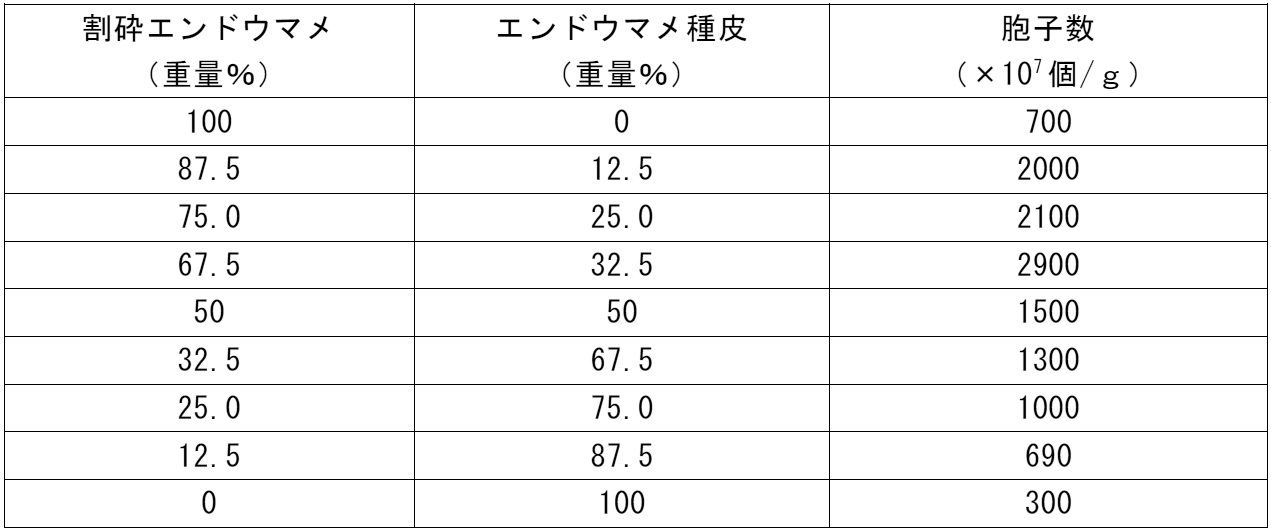
表2に示すように、割砕エンドウマメにエンドウマメ種皮を混合すると、その添加量に応じて胞子数が多くなり、種麹の品質が向上した。但し、エンドウマメ種皮の添加量が割砕エンドウマメの添加量を超えると徐々に胞子数が少なくなり、エンドウマメ種皮のみでは、胞子数は少なくなった。これらの結果から、適切な量のエンドウマメ種皮を割砕エンドウマメに添加することによって、良好な種麹が得られることが判明した。
3.エンドウマメ発酵調味料の調製
(1)調製方法
エンドウマメ(カナダ産、黄エンドウマメ)1.5kgをミルトン特A型(丸六製粉機社製)で割砕し、1Lの水を加えて混合し、オートクレーブで121℃で3分間蒸煮した。放置して40℃以下まで冷ました後、前記1で得られた割砕エンドウマメ(割砕あり、篩なし)を使用して製造したエンドウマメ種麹2gを混合し、板蓋に載せて恒温恒湿機内(温度30℃、湿度95%)で3日間製麹した(試作例1)。また、エンドウマメに対し20%重量のα化米粉を混合してから前記1で得られた割砕エンドウマメ(割砕あり、篩なし)を使用して製造したエンドウマメ種麹を植菌した試験区も調製した(試作例2)。製麹中、麹菌の生育に応じて手入れを行った。得られた麹に2Lの食塩水を加え、よく攪拌し、諸味とした。このとき諸味の食塩濃度は17%w/vであった。諸味は通常の濃口醤油と同様の仕込み管理を行い、乳酸発酵と酵母発酵を経て熟成させた。仕込んでから6ヶ月後に、ナイロン製の濾布に諸味を入れ、おもりを載せて圧搾を行った。さらに、醤油製造の定法にしたがって珪藻土濾過、火入れ、オリ引きを行い、エンドウマメ発酵調味料(試作例1、2)を得た。
(1)調製方法
エンドウマメ(カナダ産、黄エンドウマメ)1.5kgをミルトン特A型(丸六製粉機社製)で割砕し、1Lの水を加えて混合し、オートクレーブで121℃で3分間蒸煮した。放置して40℃以下まで冷ました後、前記1で得られた割砕エンドウマメ(割砕あり、篩なし)を使用して製造したエンドウマメ種麹2gを混合し、板蓋に載せて恒温恒湿機内(温度30℃、湿度95%)で3日間製麹した(試作例1)。また、エンドウマメに対し20%重量のα化米粉を混合してから前記1で得られた割砕エンドウマメ(割砕あり、篩なし)を使用して製造したエンドウマメ種麹を植菌した試験区も調製した(試作例2)。製麹中、麹菌の生育に応じて手入れを行った。得られた麹に2Lの食塩水を加え、よく攪拌し、諸味とした。このとき諸味の食塩濃度は17%w/vであった。諸味は通常の濃口醤油と同様の仕込み管理を行い、乳酸発酵と酵母発酵を経て熟成させた。仕込んでから6ヶ月後に、ナイロン製の濾布に諸味を入れ、おもりを載せて圧搾を行った。さらに、醤油製造の定法にしたがって珪藻土濾過、火入れ、オリ引きを行い、エンドウマメ発酵調味料(試作例1、2)を得た。
(2)一般成分分析
醤油の一般成分は、しょうゆ試験法(財団法人、日本醤油研究所編、昭和60年(1985年)3月1日発行)記載の方法に従い分析を行った。HEMF(甘いカラメル様の香り)等の香気成分は、ガスクロマトグラフィー法(Journal of Agricultural and Food Chemistry Vol.39,934(1991)参照)にて分析定量した。結果を表3に示す。なお、対照として大豆と小麦を原料に使用した通常の濃口醤油市販品(キッコーマン社製)を分析した。
醤油の一般成分は、しょうゆ試験法(財団法人、日本醤油研究所編、昭和60年(1985年)3月1日発行)記載の方法に従い分析を行った。HEMF(甘いカラメル様の香り)等の香気成分は、ガスクロマトグラフィー法(Journal of Agricultural and Food Chemistry Vol.39,934(1991)参照)にて分析定量した。結果を表3に示す。なお、対照として大豆と小麦を原料に使用した通常の濃口醤油市販品(キッコーマン社製)を分析した。

得られたエンドウマメ発酵調味料は、通常の濃口醤油のような外観と風味を有し、呈味性の面でも好ましい醤油様調味料となった。表3の分析値から、呈味に関与する成分が通常の濃口醤油と同程度に含有されていることがわかった。また、醤油の香りの特徴香成分として知られるHEMFも充分量含有されていることが明らかとなった。
4.エンドウマメタンパク質を添加したエンドウマメ発酵調味料の調製
(1)調製方法
上記試作例1と同様に種麹の調製及び製麹を行った。得られたエンドウマメ麹とエンドウマメタンパク質(Emsland社製)を重量比で90:10(試作例3)、80:20(試作例4)、50:50(試作例5)の割合で混合し、上記3(1)と同様に仕込み、発酵熟成させた後、圧搾、火入れを行い、エンドウマメ発酵調味料(試作例3~5)を得た。
(1)調製方法
上記試作例1と同様に種麹の調製及び製麹を行った。得られたエンドウマメ麹とエンドウマメタンパク質(Emsland社製)を重量比で90:10(試作例3)、80:20(試作例4)、50:50(試作例5)の割合で混合し、上記3(1)と同様に仕込み、発酵熟成させた後、圧搾、火入れを行い、エンドウマメ発酵調味料(試作例3~5)を得た。
(2)一般成分分析
上記3(2)と同様に分析を行った結果を表4に示す。
上記3(2)と同様に分析を行った結果を表4に示す。

全窒素量(TN)については、エンドウマメ麹のみで仕込んだ試作例1ではJAS上級規格醤油に相当する1.4であったが(表3参照)、表4の結果から、仕込み時にエンドウマメタンパク質を加えた試作例3では、JAS特級規格醤油に相当する1.65となった。また、醤油様調味料の旨味に寄与が大きいグルタミン酸についても、0.9から1.2に向上した。さらに、エンドウマメタンパク質の添加量を増やすことによって、その量に応じてTNとグルタミン酸が向上し、旨味が顕著に強く感じられた。一方、近年は加工用原料として使用する場合に色の淡い醤油のニーズが高まっているが、エンドウマメを原料とした場合に色が淡くなり、米(表3参照)やエンドウマメタンパク質(表4参照)を加えることでさらに色が淡い醤油様調味料が得られることがわかった。エンドウマメタンパク質にも特定アレルゲンが含まれていないため、その添加により、アレルゲンフリー醤油様調味料としての特長を有したまま、旨味や色などの品質を向上させることが可能になった。
5.官能評価
各試験品の官能評価は、訓練され識別能力を有するパネル5名により、前述の試作例1と試作例4の味と香りについて、旨味および醤油らしさの強度をセマンティック・ディファレンシャル法で評価した。試作例1および4を原液のまま、内容を明かさずブラインドで提示し、香りを嗅いだ後、0.2mLを喫食することで比較を行った。評定尺度は下記の基準に従い、パネリスト間の平均評定を算出した。
(評定尺度)
1.かなり弱く感じられるか、ほとんど感じられない
2.やや弱く感じられる
3.感じられる
4.やや強く感じられる
5.かなり強く感じられる
各試験品の官能評価は、訓練され識別能力を有するパネル5名により、前述の試作例1と試作例4の味と香りについて、旨味および醤油らしさの強度をセマンティック・ディファレンシャル法で評価した。試作例1および4を原液のまま、内容を明かさずブラインドで提示し、香りを嗅いだ後、0.2mLを喫食することで比較を行った。評定尺度は下記の基準に従い、パネリスト間の平均評定を算出した。
(評定尺度)
1.かなり弱く感じられるか、ほとんど感じられない
2.やや弱く感じられる
3.感じられる
4.やや強く感じられる
5.かなり強く感じられる
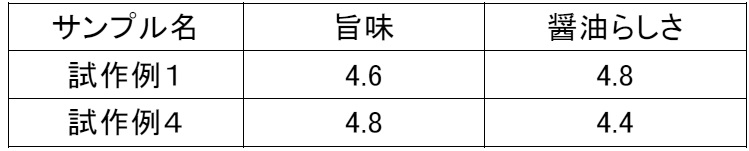
表5の官能評価結果より、試作例1、4のいずれも、かなり強い旨味と、醤油らしさを有することが分かる。醤油らしい味に関しては、pH、グルタミン酸の旨味、発酵・熟成により生じた有機酸、その他メイラード反応によって生じた色素成分などが通常の大豆小麦醤油と近い量含まれていることが寄与していると考えられる。また、醤油らしい香りに関しては、HEMFをはじめとして、発酵で生み出される醤油の特徴的な香気成分が通常の大豆小麦醤油と近い量含まれていることが寄与していると考えられる。さらに、エンドウマメタンパク質を添加した試作例4では、より旨味が強まることが確認された。なお、パネルのコメントとして、「試作例1も4もブラインドテイスティングを行うと、通常醤油と区別がつかないほど醤油らしい」というコメントがあった。
6.糖アルコールの抽出と誘導体化
(1)実験方法
各試料2μLをそれぞれマイクロチューブに移し、メタノール:水:クロロホルム(5:2:2)の混合溶液1000μLと、内部標準物質として0.2mg/mLのリビトール(和光純薬工業社製)60μLを加え、撹拌した。撹拌後、16,000×g、4℃で3分間遠心分離を行い、その上清900μLを回収し、別のマイクロチューブに移した。そこに400μLの蒸留水を加え、撹拌し、再度同様の遠心分離を行った。その上清をさらに別のマイクロチューブに900μL移し、遠心濃縮機で200μL以下になるまで濃縮した。その後、凍結乾燥機を用いて乾固体を得た。次に、乾固体を20mg/mLのメトキシアミン塩酸塩(シグマ・アルドリッチ社製)を含む無水ピリジン(和光純薬工業社製)100μLに溶解し、30℃で90分間撹拌しながら保持した。その後、50μLのN-メチルーN-トリメチルシリル-トリフルオロ-アセトアミド(ジーエルサイエンス社製)を加え、37℃、30分間反応させトリメチルシリル化を行い、ガスクロマトグラフィー質量分析(GC/MS)用サンプルとした。
(1)実験方法
各試料2μLをそれぞれマイクロチューブに移し、メタノール:水:クロロホルム(5:2:2)の混合溶液1000μLと、内部標準物質として0.2mg/mLのリビトール(和光純薬工業社製)60μLを加え、撹拌した。撹拌後、16,000×g、4℃で3分間遠心分離を行い、その上清900μLを回収し、別のマイクロチューブに移した。そこに400μLの蒸留水を加え、撹拌し、再度同様の遠心分離を行った。その上清をさらに別のマイクロチューブに900μL移し、遠心濃縮機で200μL以下になるまで濃縮した。その後、凍結乾燥機を用いて乾固体を得た。次に、乾固体を20mg/mLのメトキシアミン塩酸塩(シグマ・アルドリッチ社製)を含む無水ピリジン(和光純薬工業社製)100μLに溶解し、30℃で90分間撹拌しながら保持した。その後、50μLのN-メチルーN-トリメチルシリル-トリフルオロ-アセトアミド(ジーエルサイエンス社製)を加え、37℃、30分間反応させトリメチルシリル化を行い、ガスクロマトグラフィー質量分析(GC/MS)用サンプルとした。
(2)GC/MS分析
GC/MS分析は7890A-5975C(アジレントテクノロジーズ社製)を使用し、標準品として、アラビトール、マンニトール、エリスリトール、ソルビトール、ガラクチトール(いずれも和光純薬工業社製)を同様に誘導体化して測定し、得られた検量線から定量を行った。装置条件は以下のとおりとした。
カラム : CP-SIL 8CB-MS
(30mm × 0.25mm、アジレント・テクノロジー社製)
昇温条件: 80℃ 2分保持後、80~320℃、15℃/分、320℃ 6分保持
キャリアガス及び流量: ヘリウムガス、1mL/分
注入温度: 230℃
GC/MS分析は7890A-5975C(アジレントテクノロジーズ社製)を使用し、標準品として、アラビトール、マンニトール、エリスリトール、ソルビトール、ガラクチトール(いずれも和光純薬工業社製)を同様に誘導体化して測定し、得られた検量線から定量を行った。装置条件は以下のとおりとした。
カラム : CP-SIL 8CB-MS
(30mm × 0.25mm、アジレント・テクノロジー社製)
昇温条件: 80℃ 2分保持後、80~320℃、15℃/分、320℃ 6分保持
キャリアガス及び流量: ヘリウムガス、1mL/分
注入温度: 230℃

表6の結果から、エンドウマメ発酵調味料では通常濃口醤油より約2~10倍の糖アルコールが含有されていることがわかった。具体的には、本発明のエンドウマメ発酵調味料は、少なくとも、前記アラビトールが2mg/mL以上、前記マンニトールが2mg/mL以上、前記エリスリトールが1mg/mL以上、前記ソルビトールが0.3mg/mL以上、前記ガラクチトールが0.03mg/mL以上含まれていることがわかった。これらの糖アルコールは独特の旨味やまろやかさを呈することが知られているため、エンドウマメ発酵調味料の味にも好ましい特長を与えていると考えられる。
これらの糖アルコール類は発酵原料であるエンドウマメ由来ではないものを食品添加物として配合することもできるが、近年の天然志向、無添加志向のニーズを考慮すれば、発酵原料であるエンドウマメ由来の糖アルコールであることが好ましいと言える。本発明のエンドウマメ発酵調味料は、エンドウマメ原料で製造した種麹を用いて天然の食品素材(特に、アレルゲンを含まないエンドウマメのような食物)を原料として発酵・熟成させることにより、食品添加物を使用することなく、エンドウマメ由来の糖アルコール類を著量含有させることができる。
以上の結果より、エンドウマメ、さらに必要によりアレルゲンを含まない食物由来の粗精製タンパク質を加えて発酵・熟成させることで、アレルギー物質を含む食物を全く使用せずに、醤油の好ましい味と香りを有する醤油様調味料が得られた。さらに、通常醤油よりも著量含有する糖アルコールによる独特の旨味やコクを付与できる調味料となった。本発明における醤油様調味料は、従来の和食用途においても醤油と同様に使用することが可能であり、また中華や洋食用途などにも幅広く使用でき、アレルギー患者の食生活のQOL向上に寄与すると期待される。
Claims (9)
- 種麹原料にアスペルギルス属に属する麹菌を接種して得られた醸造用種麹であって、
前記種麹原料が、エンドウマメである、醸造用種麹。 - 前記エンドウマメが、割砕されたエンドウマメである、請求項1に記載の醸造用種麹。
- 前記割砕されたエンドウマメの粒度が、500~4000μmの範囲である、請求項2に記載の醸造用種麹。
- 前記種麹原料として、さらに、エンドウマメの種皮を含む、請求項1から3のいずれか1項に記載の醸造用種麹。
- 前記エンドウマメの種皮の添加量が12.5~75.0重量%の範囲である、請求項4項に記載の醸造用種麹。
- 請求項1から5のいずれか1項に記載の醸造用種麹をエンドウマメに接種及び培養して得られた醸造用麹。
- 請求項6に記載の醸造用麹を食塩水で仕込み、乳酸菌と酵母により発酵及び熟成させて得られた醤油様調味料。
- 仕込み時にアレルゲン(食品衛生法に基づく表示義務及び表示推奨アレルゲン並びにFAO/WHO合同食品規格委員会(コーデックス委員会)が定めたコーデックスのアレルゲン表示対象品目に指定されている食物)を含まない食物由来の粗精製タンパク質が添加された、請求項7記載の醤油様調味料。
- アラビトール、マンニトール、エリスリトール、ソルビトール及びガラクチトールからなる群から選択された1または複数成分を含有する醤油様調味料であって、
前記アラビトールが2mg/mL以上、
前記マンニトールが2mg/mL以上、
前記エリスリトールが1mg/mL以上、
前記ソルビトールが0.3mg/mL以上、
前記ガラクチトールが0.03mg/mL以上である、
請求項7又は8に記載の醤油様調味料。
Priority Applications (3)
| Application Number | Priority Date | Filing Date | Title |
|---|---|---|---|
| CN201580025727.8A CN106459878B (zh) | 2014-05-21 | 2015-05-20 | 酿造用种曲、酿造用曲及酱油样调味料 |
| US15/312,463 US10609943B2 (en) | 2014-05-21 | 2015-05-20 | Koji starter for fermentation, koji for fermentation, and seasoning |
| EP15795519.6A EP3147350B1 (en) | 2014-05-21 | 2015-05-20 | Method for producing koji starter for fermentation, koji for fermentation, and soy sauce-like seasoning |
Applications Claiming Priority (2)
| Application Number | Priority Date | Filing Date | Title |
|---|---|---|---|
| JP2014-105709 | 2014-05-21 | ||
| JP2014105709A JP5702014B1 (ja) | 2014-05-21 | 2014-05-21 | 醸造用種麹、醸造用麹及び醤油様調味料 |
Publications (1)
| Publication Number | Publication Date |
|---|---|
| WO2015178399A1 true WO2015178399A1 (ja) | 2015-11-26 |
Family
ID=52875906
Family Applications (1)
| Application Number | Title | Priority Date | Filing Date |
|---|---|---|---|
| PCT/JP2015/064389 Ceased WO2015178399A1 (ja) | 2014-05-21 | 2015-05-20 | 醸造用種麹、醸造用麹及び醤油様調味料 |
Country Status (5)
| Country | Link |
|---|---|
| US (1) | US10609943B2 (ja) |
| EP (1) | EP3147350B1 (ja) |
| JP (1) | JP5702014B1 (ja) |
| CN (1) | CN106459878B (ja) |
| WO (1) | WO2015178399A1 (ja) |
Families Citing this family (13)
| Publication number | Priority date | Publication date | Assignee | Title |
|---|---|---|---|---|
| JP5702014B1 (ja) | 2014-05-21 | 2015-04-15 | キッコーマン株式会社 | 醸造用種麹、醸造用麹及び醤油様調味料 |
| CN106579302A (zh) * | 2016-12-22 | 2017-04-26 | 王林臣 | 一种阿拉伯糖增色酱油 |
| JP7038509B2 (ja) * | 2017-09-13 | 2022-03-18 | 宝酒造株式会社 | チーズ風味調味料の製造方法、並びに、加工食品の製造方法 |
| CN109123600B (zh) * | 2018-11-06 | 2021-08-03 | 成都大学 | 发酵型烤肉酱调料及其制备方法 |
| BR112021010809A2 (pt) * | 2018-12-11 | 2021-08-31 | Roquette Freres | Isolado proteico com baixo teor de sódio |
| JP6821205B2 (ja) * | 2019-04-19 | 2021-01-27 | 岸 雄一郎 | 味噌又は醤油の製造方法 |
| CN112753993A (zh) * | 2019-11-01 | 2021-05-07 | 丸庄食品工业股份有限公司 | 新式黑豆酱油制曲方法 |
| CN111317122A (zh) * | 2020-03-19 | 2020-06-23 | 千禾味业食品股份有限公司 | 一种草菇风味调味酱及其酿造工艺 |
| WO2021215485A1 (ja) * | 2020-04-21 | 2021-10-28 | 味の素株式会社 | 醤油様調味料の製造方法 |
| CN111329035A (zh) * | 2020-04-28 | 2020-06-26 | 泸州忆家香食品有限公司 | 一种酱油调味料 |
| CN113142542A (zh) * | 2021-02-25 | 2021-07-23 | 仇俊鹏 | 一种以谷物为原料的发酵型调味酱、制备方法及应用 |
| CN118141083A (zh) * | 2024-04-22 | 2024-06-07 | 威海浦源食品有限公司 | 一种营养强化型鱼露及其加工方法 |
| CN119234998A (zh) * | 2024-09-29 | 2025-01-03 | 毕壹夫 | 一种提高酱油质量的多菌种及其酿造工艺 |
Citations (5)
| Publication number | Priority date | Publication date | Assignee | Title |
|---|---|---|---|---|
| JPS5356393A (en) * | 1976-10-28 | 1978-05-22 | Kikkoman Corp | Preparation of soy sauce |
| WO2007058061A1 (ja) * | 2005-11-17 | 2007-05-24 | Kikkoman Corporation | 醸造用種麹、醸造用麹、及び醸造食品、並びにその製造法 |
| JP2009171959A (ja) * | 2007-12-25 | 2009-08-06 | Asanuma Shoyuten:Kk | 麹、醗酵調味料及びその製造方法 |
| JP2014110771A (ja) * | 2012-12-05 | 2014-06-19 | Kikkoman Corp | 醤油様調味料 |
| JP5702014B1 (ja) * | 2014-05-21 | 2015-04-15 | キッコーマン株式会社 | 醸造用種麹、醸造用麹及び醤油様調味料 |
Family Cites Families (7)
| Publication number | Priority date | Publication date | Assignee | Title |
|---|---|---|---|---|
| JPS59227270A (ja) * | 1983-06-06 | 1984-12-20 | Ajinomoto Co Inc | だし入り醤油又は液体調味料の製造法 |
| JPH01243961A (ja) * | 1988-03-24 | 1989-09-28 | Ajinomoto Co Inc | 調味料の製造法 |
| JP4395608B2 (ja) * | 2004-10-29 | 2010-01-13 | 株式会社高橋商店 | 空豆を原料とした調味料 |
| JP4559344B2 (ja) * | 2004-11-12 | 2010-10-06 | 花王株式会社 | 液体調味料 |
| JP4716369B2 (ja) * | 2006-03-22 | 2011-07-06 | キッコーマン株式会社 | 粉末醤油、糖低減化醤油、および糖低減化醤油の製造法 |
| JP4928349B2 (ja) * | 2007-05-15 | 2012-05-09 | 花王株式会社 | 液体調味料 |
| JP5832836B2 (ja) * | 2011-09-14 | 2015-12-16 | 株式会社スギヨ | 醤油様調味料及びその製造方法 |
-
2014
- 2014-05-21 JP JP2014105709A patent/JP5702014B1/ja active Active
-
2015
- 2015-05-20 CN CN201580025727.8A patent/CN106459878B/zh active Active
- 2015-05-20 US US15/312,463 patent/US10609943B2/en active Active
- 2015-05-20 WO PCT/JP2015/064389 patent/WO2015178399A1/ja not_active Ceased
- 2015-05-20 EP EP15795519.6A patent/EP3147350B1/en active Active
Patent Citations (5)
| Publication number | Priority date | Publication date | Assignee | Title |
|---|---|---|---|---|
| JPS5356393A (en) * | 1976-10-28 | 1978-05-22 | Kikkoman Corp | Preparation of soy sauce |
| WO2007058061A1 (ja) * | 2005-11-17 | 2007-05-24 | Kikkoman Corporation | 醸造用種麹、醸造用麹、及び醸造食品、並びにその製造法 |
| JP2009171959A (ja) * | 2007-12-25 | 2009-08-06 | Asanuma Shoyuten:Kk | 麹、醗酵調味料及びその製造方法 |
| JP2014110771A (ja) * | 2012-12-05 | 2014-06-19 | Kikkoman Corp | 醤油様調味料 |
| JP5702014B1 (ja) * | 2014-05-21 | 2015-04-15 | キッコーマン株式会社 | 醸造用種麹、醸造用麹及び醤油様調味料 |
Non-Patent Citations (1)
| Title |
|---|
| See also references of EP3147350A4 * |
Also Published As
| Publication number | Publication date |
|---|---|
| US10609943B2 (en) | 2020-04-07 |
| JP2015216916A (ja) | 2015-12-07 |
| EP3147350B1 (en) | 2020-12-09 |
| JP5702014B1 (ja) | 2015-04-15 |
| CN106459878A (zh) | 2017-02-22 |
| US20170119035A1 (en) | 2017-05-04 |
| EP3147350A4 (en) | 2017-10-25 |
| CN106459878B (zh) | 2019-12-10 |
| EP3147350A1 (en) | 2017-03-29 |
Similar Documents
| Publication | Publication Date | Title |
|---|---|---|
| JP5702014B1 (ja) | 醸造用種麹、醸造用麹及び醤油様調味料 | |
| US11673924B2 (en) | Pea proteins with improved flavour, production method, and industrial uses | |
| JP5576265B2 (ja) | 発酵成分 | |
| JP6353903B2 (ja) | 唐辛子味噌の製造方法及びその製造方法により製造された唐辛子味噌 | |
| JP2022531891A (ja) | 菌糸化された増量組成物の製造方法 | |
| RU2693610C1 (ru) | Способ приготовления рисовой пасты с острым стручковым перцем и приготовленная таким способом рисовая паста с острым стручковым перцем. | |
| JP2014110771A (ja) | 醤油様調味料 | |
| CN113163823A (zh) | 含丹贝酱料的制造方法及通过该方法制造的酱料 | |
| JP2009171959A (ja) | 麹、醗酵調味料及びその製造方法 | |
| JP6068068B2 (ja) | 液体調味料 | |
| JP5101727B2 (ja) | 醤油様調味料 | |
| KR20120001875A (ko) | 참깨간장의 제조방법 | |
| WO2013073249A1 (ja) | 醤油様調味料 | |
| JP2018134106A (ja) | 醤油様調味料 | |
| JP5976313B2 (ja) | 醤油様調味料の製造方法 | |
| JP2019129802A (ja) | 豆ボディ構造体の可溶化物を含有する食品組成物及びその製造方法 | |
| KR20190057927A (ko) | 불포화지방산 함량이 강화된 양조간장 및 이의 제조방법 | |
| JP4783947B2 (ja) | 調味料の製造方法及び調味料 | |
| JP4567415B2 (ja) | 大豆紅麹およびその製造法 | |
| WO2016060149A1 (ja) | 低pH醤油 | |
| KR101751753B1 (ko) | 저염 건조 민들레 비빔밥 및 그의 제조방법 | |
| KR101762002B1 (ko) | 콩식초의 제조방법 및 그로부터 수득되는 콩식초 | |
| JP2015012811A (ja) | チキンエキス含有スープ | |
| TW200529766A (en) | Miso-type food and process for producing the same | |
| JPH01257440A (ja) | 大豆ペースト含有食品 |
Legal Events
| Date | Code | Title | Description |
|---|---|---|---|
| 121 | Ep: the epo has been informed by wipo that ep was designated in this application |
Ref document number: 15795519 Country of ref document: EP Kind code of ref document: A1 |
|
| WWE | Wipo information: entry into national phase |
Ref document number: 15312463 Country of ref document: US |
|
| NENP | Non-entry into the national phase |
Ref country code: DE |
|
| REEP | Request for entry into the european phase |
Ref document number: 2015795519 Country of ref document: EP |
|
| WWE | Wipo information: entry into national phase |
Ref document number: 2015795519 Country of ref document: EP |