WO2015186341A1 - Système de traitement d'image, procédé de traitement d'image et support de mémorisation de programme - Google Patents
Système de traitement d'image, procédé de traitement d'image et support de mémorisation de programme Download PDFInfo
- Publication number
- WO2015186341A1 WO2015186341A1 PCT/JP2015/002768 JP2015002768W WO2015186341A1 WO 2015186341 A1 WO2015186341 A1 WO 2015186341A1 JP 2015002768 W JP2015002768 W JP 2015002768W WO 2015186341 A1 WO2015186341 A1 WO 2015186341A1
- Authority
- WO
- WIPO (PCT)
- Prior art keywords
- background model
- image
- moving object
- input
- processing time
- Prior art date
- Legal status (The legal status is an assumption and is not a legal conclusion. Google has not performed a legal analysis and makes no representation as to the accuracy of the status listed.)
- Ceased
Links
Images



Classifications
-
- G—PHYSICS
- G06—COMPUTING OR CALCULATING; COUNTING
- G06V—IMAGE OR VIDEO RECOGNITION OR UNDERSTANDING
- G06V10/00—Arrangements for image or video recognition or understanding
- G06V10/70—Arrangements for image or video recognition or understanding using pattern recognition or machine learning
- G06V10/82—Arrangements for image or video recognition or understanding using pattern recognition or machine learning using neural networks
-
- G—PHYSICS
- G06—COMPUTING OR CALCULATING; COUNTING
- G06T—IMAGE DATA PROCESSING OR GENERATION, IN GENERAL
- G06T7/00—Image analysis
- G06T7/20—Analysis of motion
- G06T7/215—Motion-based segmentation
-
- G—PHYSICS
- G06—COMPUTING OR CALCULATING; COUNTING
- G06T—IMAGE DATA PROCESSING OR GENERATION, IN GENERAL
- G06T7/00—Image analysis
- G06T7/20—Analysis of motion
- G06T7/246—Analysis of motion using feature-based methods, e.g. the tracking of corners or segments
- G06T7/251—Analysis of motion using feature-based methods, e.g. the tracking of corners or segments involving models
-
- G—PHYSICS
- G06—COMPUTING OR CALCULATING; COUNTING
- G06T—IMAGE DATA PROCESSING OR GENERATION, IN GENERAL
- G06T7/00—Image analysis
- G06T7/70—Determining position or orientation of objects or cameras
-
- G—PHYSICS
- G06—COMPUTING OR CALCULATING; COUNTING
- G06V—IMAGE OR VIDEO RECOGNITION OR UNDERSTANDING
- G06V10/00—Arrangements for image or video recognition or understanding
- G06V10/20—Image preprocessing
- G06V10/28—Quantising the image, e.g. histogram thresholding for discrimination between background and foreground patterns
-
- G—PHYSICS
- G06—COMPUTING OR CALCULATING; COUNTING
- G06V—IMAGE OR VIDEO RECOGNITION OR UNDERSTANDING
- G06V20/00—Scenes; Scene-specific elements
- G06V20/50—Context or environment of the image
- G06V20/52—Surveillance or monitoring of activities, e.g. for recognising suspicious objects
-
- H—ELECTRICITY
- H04—ELECTRIC COMMUNICATION TECHNIQUE
- H04N—PICTORIAL COMMUNICATION, e.g. TELEVISION
- H04N7/00—Television systems
- H04N7/18—Closed-circuit television [CCTV] systems, i.e. systems in which the video signal is not broadcast
-
- G—PHYSICS
- G06—COMPUTING OR CALCULATING; COUNTING
- G06T—IMAGE DATA PROCESSING OR GENERATION, IN GENERAL
- G06T2207/00—Indexing scheme for image analysis or image enhancement
- G06T2207/10—Image acquisition modality
- G06T2207/10016—Video; Image sequence
-
- G—PHYSICS
- G06—COMPUTING OR CALCULATING; COUNTING
- G06T—IMAGE DATA PROCESSING OR GENERATION, IN GENERAL
- G06T2207/00—Indexing scheme for image analysis or image enhancement
- G06T2207/10—Image acquisition modality
- G06T2207/10024—Color image
-
- G—PHYSICS
- G06—COMPUTING OR CALCULATING; COUNTING
- G06T—IMAGE DATA PROCESSING OR GENERATION, IN GENERAL
- G06T2207/00—Indexing scheme for image analysis or image enhancement
- G06T2207/20—Special algorithmic details
- G06T2207/20076—Probabilistic image processing
-
- G—PHYSICS
- G06—COMPUTING OR CALCULATING; COUNTING
- G06T—IMAGE DATA PROCESSING OR GENERATION, IN GENERAL
- G06T2207/00—Indexing scheme for image analysis or image enhancement
- G06T2207/20—Special algorithmic details
- G06T2207/20081—Training; Learning
-
- G—PHYSICS
- G06—COMPUTING OR CALCULATING; COUNTING
- G06T—IMAGE DATA PROCESSING OR GENERATION, IN GENERAL
- G06T2207/00—Indexing scheme for image analysis or image enhancement
- G06T2207/20—Special algorithmic details
- G06T2207/20084—Artificial neural networks [ANN]
-
- G—PHYSICS
- G06—COMPUTING OR CALCULATING; COUNTING
- G06T—IMAGE DATA PROCESSING OR GENERATION, IN GENERAL
- G06T2207/00—Indexing scheme for image analysis or image enhancement
- G06T2207/30—Subject of image; Context of image processing
- G06T2207/30196—Human being; Person
-
- G—PHYSICS
- G06—COMPUTING OR CALCULATING; COUNTING
- G06T—IMAGE DATA PROCESSING OR GENERATION, IN GENERAL
- G06T2207/00—Indexing scheme for image analysis or image enhancement
- G06T2207/30—Subject of image; Context of image processing
- G06T2207/30232—Surveillance
Definitions
- Some aspects according to the present invention relate to an image processing system, an image processing method, and a program storage medium.
- the moving body is not limited to an object that continues to move among objects reflected in an image, and includes a case where the moving body temporarily stops (also referred to as stationary / staying).
- the moving object refers to all objects reflected in a portion other than the portion considered as the background in the image.
- a person or a vehicle that is general as a monitoring target in video surveillance does not always move, but a stationary state such as temporary stop or parking occurs. For this reason, it is important in applications such as video surveillance that detection is possible even when temporarily stopped.
- a background subtraction method is known as one method for detecting a moving object (see, for example, Non-Patent Document 1 and Non-Patent Document 2).
- the background subtraction method is a method in which an image stored as a background is compared with an image photographed by a camera, and an area having a difference is extracted as a moving object.
- accurate background extraction at the time of analysis is required. This is because if the data at the start of observation is simply used as a fixed background, many false detections will occur due to the influence of the background change accompanying changes in the environment, such as changes in lighting. .
- Non-Patent Document 1 discloses a method of applying the background difference method while sequentially updating the background.
- Patent Document 1 discloses a method of analyzing a motion in a scene using a plurality of background models having different time widths. In this method, a long-term background model analyzed in a long range and a short-term background model analyzed in a short range are created. And if the moving object is not detected by the background difference based on the short-term background model and the moving object is detected by the background difference based on the long-term background model for a predetermined number of times, it is assumed that a temporary stationary object exists, The stationary object is detected as a moving object.
- Non-Patent Document 1 in a method of performing a difference between an image to be analyzed and a background image (also referred to as “background difference”) while sequentially updating the background image, movement of a person, a vehicle, or the like
- a background image also referred to as “background difference”
- the analysis time length is extended to detect temporary stationary objects, it becomes more susceptible to background changes due to external noise such as lighting fluctuations. There arises a problem of misdetecting many.
- Patent Document 1 is intended to detect a temporary stationary object, it is assumed that a background difference based on a long-term background model can represent a true background when an observed image is acquired. For this reason, in an environment where the background changes from moment to moment, such as lighting fluctuations, it is difficult to sufficiently prevent false detection because the difference between the long-term background model and the true background at the time of observation image acquisition is large. .
- Some aspects of the present invention have been made in view of the above-described problems, and an object thereof is to provide an image processing system, an image processing method, and a program storage medium for suitably detecting a moving object. .
- One image processing system is an input to several image frames at different times among a plurality of image frames constituting a video, and any one selected from image frames at a processing time.
- Input means for receiving an input as to whether the moving object is a pixel or a moving object, and a learning means for learning a parameter for detecting the moving object based on the input. Is provided.
- One image processing system includes an input unit that receives an input of a plurality of image frames having different shooting times, a first background model generated based on an image frame at a processing time, and the first background.
- One image processing method is an input to a plurality of image frames at different times among a plurality of image frames constituting a video, and any one selected from among image frames at a processing time.
- One image processing method includes a step of receiving input of a plurality of image frames having different shooting times, a first background model generated based on the image frames at the processing time, and the first background model. Using the second background model that is less affected by the image frame at the processing time and the third background model that is less affected by the image frame at the processing time than the second background model.
- the computer performs the step of detecting the moving object by performing the convolution calculation at least once using the value of the background model of the neighboring region.
- One program according to the present invention is an input to several image frames at different times among a plurality of image frames constituting a video, and one or more selected arbitrary ones of image frames at a processing time
- a computer receives a process for receiving an input as to whether a pixel is a moving object or a pixel that does not reflect a moving object, and a process for learning parameters for detecting the moving object based on the input.
- One program according to the present invention includes a process for receiving an input of a plurality of image frames having different shooting times, a first background model generated based on an image frame at the processing time, and the first background model.
- the computer is caused to execute a process of detecting a moving object by performing convolution calculation at least once using the value of the background model.
- “part”, “means”, “apparatus”, and “system” do not simply mean physical means, but “part”, “means”, “apparatus”, “system”. This includes the case where the functions possessed by "are realized by software. Further, even if the functions of one “unit”, “means”, “apparatus”, and “system” are realized by two or more physical means or devices, two or more “parts” or “means”, The functions of “device” and “system” may be realized by a single physical means or device.
- an image processing system an image processing method, and a program storage medium for suitably detecting a moving body.
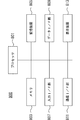
- FIG. 1 is a functional block diagram illustrating a schematic configuration of an image processing system according to a first embodiment.
- 1 is a functional block diagram illustrating a schematic configuration of an image processing system according to a first embodiment.
- 5 is a flowchart illustrating a processing flow of the image processing system illustrated in FIG. 4.
- 6 is a flowchart illustrating a processing flow of the image processing system illustrated in FIG. 5.
- FIG. 6 is a block diagram showing a hardware configuration capable of mounting the image processing system shown in FIGS. 4 and 5. It is a functional block diagram which shows schematic structure of the image processing system which concerns on 2nd Embodiment. It is a functional block diagram which shows schematic structure of the image processing system which concerns on 2nd Embodiment.
- the present embodiment relates to an image processing system for detecting a moving body that repeatedly moves and temporarily stays, such as a person and a car, from a video imaged by an imaging device such as a camera.
- the image processing system according to the present embodiment suitably detects a moving object such as a person or a car even when the environment changes from moment to moment, such as illumination fluctuations.
- the image processing system generates three background models created based on the image frames at each time cut out from the video, and these background models are generated.
- These three background models have different time widths (time widths to be analyzed) at which a plurality of image frames that are the basis of the background models are captured.
- these three background models are referred to as a long-term background model, a medium-term background model, and a short-term background model.
- the image processing system uses the CNN (Convolution Neural Network, also referred to as a convolutional neural network) as a nonlinear function to determine the moving body region.
- the method includes (1) a phase of learning (supervised learning) a moving body detection model (parameter) for discriminating a moving body, and (2) a phase of detecting a moving body using the generated moving body detection model. , Is divided into two.
- the image processing system receives, from the user, designation of a pixel in the moving body region and a pixel in the background region with respect to the input image frame at each shooting time as correct answer data.
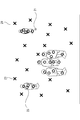
- FIG. 2 shows a screen example of a GUI (Graphical User Interface) screen that receives designation of a pixel in the moving object region and a pixel in the background region.
- GUI Graphic User Interface
- a cursor 21 is displayed on the image frame 20.
- the user operates the cursor 21 with a pointing device such as a mouse to place an icon 23 in the background area and an icon 25 in the moving body area where a person is captured. Note that the user does not need to specify whether all the pixels of the image frame 20 are moving object areas or background areas.
- the image processing system generates a CNN moving body detection model using the pixels that have been designated as the moving body region or the background region.
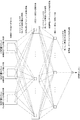
- FIG. 3 shows a specific example of a CNN that can be used by the image processing system according to the present embodiment.
- a pixel position where it is desired to determine whether or not it is a moving object
- an image of 5 pixels ⁇ 5 pixels centered on the pixel position is obtained as a difference image between the short-term background model and the medium-term background model.
- the difference image between the short-term background model and the long-term background model, and the difference image between the medium-term background model and the long-term background model are extracted.
- a is a parameter determined for each pixel of the image obtained by the eight types of filters, and is determined by supervised learning.
- the generated 3 pixel ⁇ 3 pixel ⁇ 8 image corresponds to a node of the neural network.
- an image of 1 pixel ⁇ 1 pixel is obtained. 15 sheets are generated. Then, the above f (x) is applied to the pixel value x in each image.
- the parameter a included in f (x) is a parameter determined for each pixel of an image obtained by 15 types of filters, as in the above case, and is determined by the supervised learning.
- the generated 1 pixel ⁇ 1 pixel ⁇ 15 image corresponds to a node of the neural network.
- f (x) is applied to the one value.
- the parameter a included in f (x) is a parameter determined for the value obtained by the one filter, as in the above case, and is determined by the supervised learning.
- a value obtained by such processing is assumed to be a moving object likelihood v.
- the determination as to whether or not it is a moving body is made by comparing v with a predetermined threshold T. If v ⁇ T, the pixel position to be processed is determined to be a moving object, and if v ⁇ T, it is determined to be a background region.
- the value of the threshold T is a predetermined parameter.
- parameters used for CNN such as parameter a and T are estimated by supervised learning and stored in a moving object detection parameter dictionary described later.
- learning parameters it is easy to correctly detect the movement of a specific moving object such as a person or a car without using a background model with a time width that makes it easy to detect the movement, such as a tree shake due to wind.
- the image processing system stably detects a moving object such as a person or a car even under an environment affected by background changes caused by external noise such as illumination fluctuations and wind. it can.
- 8 and 15 intermediate images are generated from the difference images of the three background models, and the final moving object likelihood v is calculated. It is not limited to.
- the number of background model difference images to be input may be four or more, and the number of intermediate images may be larger or smaller.
- FIG. 4 shows a system configuration of an image processing system 100 that performs learning related to generation of a moving object detection model (parameter) for moving object detection.
- FIG. 5 shows a system configuration of an image processing system 200 that detects a moving object using the generated moving object detection model. Note that the image processing systems 100 and 200 according to FIGS. 4 and 5 may be realized on the same device or different devices.
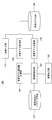
- the image processing system 100 includes an image input unit 110, a region specification unit 120, a background model acquisition unit 130, a background model update unit 140, a background model database (DB) 150, a background model distance calculation unit 160, and a moving object detection model construction unit. 170 and a moving object detection parameter dictionary 180.
- the image input unit 110 receives input of image frames constituting a video, that is, image frames having different shooting times, from an imaging device such as a camera (not shown).
- the image frame may be a monochrome image or a color image.
- the image frame contains one value for each pixel.
- the image frame has three values (for example, color representation such as RGB and YCbCr) in each pixel.
- the image frame may have a value of 4 or more for each pixel, such as distance information obtained by a TOF (Time of Flight) camera.
- TOF Time of Flight
- the area designating unit 120 provides the user with a GUI for inputting correct data for the image frame, and in response to the input from the user, the moving object area and the background for the pixels included in the image frame. Specify the area.
- a specific example of the display screen displayed on the display device by the area designating unit 120 is as shown in FIG.
- the area designating unit 120 can prepare correct data (distinguishing between the moving body area and the background area) for the pixel selected by the user in the image frame.
- the moving body area and the background area are specified as points at various positions on the screen, as can be seen from the pixel.
- learning data having diversity can be generated even with a small number of inputs, and learning efficiency is improved.
- the designation of the moving body region and the background region is performed on images at various times. Thereby, more diverse learning data (correct answer data) is generated, and learning efficiency is improved.
- the background model acquisition unit 130 reads the image frame input from the image input unit 110 and the three background models of the short-term background model, the medium-term background model, and the long-term background model stored in the background model DB 150.
- the background model DB 150 stores a plurality of background models including a short-term background model, a medium-term background model, and a long-term background model having different time widths of the image frames taken as analysis sources.
- various types of background models are conceivable.
- an image format similar to an image frame input from the image input unit 110 can be used.
- the background model is a monochrome image, one value is included for each pixel, and if the background model is a color image, three values are included for each pixel.
- the background model can also be a distribution function for each pixel that indicates the likelihood of the pixel value of each image frame that is the source for each pixel.
- the distribution function may be a histogram, for example, or may be a distribution function based on the sum of a plurality of Gaussians.
- the short-term background model, the medium-term background model, and the long-term background model have different time widths of the original image frame shooting time, and the time width is in the order of the short-term background model, the medium-term background model, and the long-term background model. become longer.
- the short-term background model it may be possible to adopt the image frame input from the image input unit 110 as it is as the short-term background model. In that case, the background model DB 150 may not manage the short-term background model.
- the background model update unit 140 takes into account the image frame at the processing time (the image frame at the latest time) from the image frame at the processing time acquired by the background model acquisition unit 130 and the background model stored in the background model DB 150. A background model, a medium-term background model, and a long-term background model are generated. The generated background model is stored in the background model DB 150.
- the short-term background model, the medium-term background model, and the long-term background model have different time widths of the original image frames.
- the long-term background model is the longest from the image frame captured in the shortest time width from the processing time
- the long-term background model is from the image frame captured in the longer time width. Each is generated from an image frame photographed in the time width.
- an average value or mode value of pixel values may be taken for an image frame for a time width determined for each background model.
- the background model is a distribution function for each pixel
- a distribution function of pixel values of each image frame included in the time width may be generated.
- the short-term background model, the medium-term background model, and the long-term background model are described as having different time widths of the original image frames, but the present invention is not limited to this.
- the short-term background model, the medium-term background model, and the long-term background model are background models with different magnitudes of the influence of the image frame at the processing time (newest time). That is, the short-term background model has the greatest influence of the image frame at the processing time, and the long-term background model has the least influence of the image frame at the processing time.
- the concept of update coefficient is introduced, and the update coefficient when updating the background model using the image frame input from the image input unit 110 is set as the short-term background model, the medium-term background model, and the long-term background model. You may make it change with a background model.
- a is a constant not less than 0 and not more than 1, and takes different values for the short-term background model, the medium-term background model and the long-term background model. If the constants of the short-term background model, the medium-term background model, and the long-term background model are a 1 , a 2 , and a 3 ,
- the inter-background model distance calculation unit 160 calculates a distance value that indicates the difference between the three background models acquired by the background model acquisition unit 130 as a numerical value for each pixel. Specifically, for each pixel, the distance between the short-term background model and the medium-term background model, the distance between the short-term background model and the long-term background model, the distance between the medium-term background model and the long-term background model, 160 calculates each.
- the inter-background model distance calculation unit 160 calculates the difference value or difference vector of the pixel values of each pixel and then calculates the absolute value or size as the distance. It is possible.
- the background model has a plurality of values for each pixel, for example, in the case of a color image format such as RGB, YCbCr, HSV, etc., after calculating a difference value for each value, the absolute value of the difference value is calculated. It is also conceivable that the sum of values is the distance of each pixel.
- the pixel values of the two neighboring neighboring images extracted are 2 respectively. It may be considered as one vector, and the distance between vectors of the two vectors or the normalized correlation r may be calculated. In this case, for example, in the case of calculating a distance from a neighboring 3 ⁇ 3 image in a monochrome image format background model, a distance between 9-dimensional vectors is calculated. Further, when calculating the distance from the neighboring 5 ⁇ 5 image in the RGB color image, the distance between the 75-dimensional (5 ⁇ 5 ⁇ 3) vectors is calculated.
- 1-r can be used as a value indicating distance in order to convert to a distance scale.
- the distance may be calculated after pre-processing the neighboring partial image with an edge enhancement filter or the like.
- the inter-background model distance calculation unit 160 uses a histogram distance calculation method such as the area of the common part of the two histograms or the batcha rear distance. The distance between models can be calculated.
- the background model distance calculation unit 160 has been described as calculating the distance for each pixel, but the present invention is not limited to this. For example, it is also possible to use a method of dividing the image into meshes that are units of several areas and calculating the distance for each mesh unit. The distance may take a negative value.
- the short-term background model, the medium-term background model, and the long-term background model may be in different formats.
- the short-term background model may be an image format
- the medium-term background model may be a distribution function for each pixel.
- a method for calculating the distance for example, a normal distribution histogram having a predetermined standard deviation is generated around the pixel value held in the short-term background model. Then, it is conceivable to adopt a method of calculating the distance by regarding the histogram as a distribution function in the short-term background model and comparing the histogram with the histogram of the medium-term background model.
- the distance is obtained by comparing the medium-term background model of the image format generated as a set of the average values with the short-term background model. It is also possible to calculate.
- a random value may be set as an initial value. Thereafter, the likelihood of a moving object is calculated using CNN in the N pixels.
- v i is an estimation result (moving body likelihood) indicating whether the pixel x i is a moving body region or a background region.
- the following evaluation value S is considered.
- the evaluation value S becomes smaller as the CNN estimation result is closer to the correct data. Therefore, the CNN parameters may be obtained by using a gradient method such as a stochastic descent method so that S is as small as possible.
- the method for generating correct data by the region designating unit 120 is performed by the user at a random position. In such a method, there is a case where the learning data is not sufficient and the estimation accuracy of the specific portion is deteriorated. Therefore, after generating a moving body detection model by performing learning using the correct data provided by the region specifying unit 120, the correct data is additionally provided with respect to the low estimation accuracy by looking at the estimation result. You may be made to repeat learning again using.
- the moving object detection parameter generated by the moving object detection model construction unit 170 by such processing is stored in the moving object detection parameter dictionary 180.
- the image processing system 200 includes an image input unit 210, a background model acquisition unit 220, a background model update unit 230, a background model DB 240, a background model distance calculation unit 250, a moving body detection unit 260, a moving body detection parameter dictionary 270, and results.
- An output unit 280 is included.
- the functions of the image input unit 210, the background model acquisition unit 220, the background model update unit 230, the background model DB 240, the inter-background model distance calculation unit 250, and the moving object detection parameter dictionary 270 are respectively the image input unit 110 and the background. Since it is the same as the model acquisition unit 130, the background model update unit 140, the background model DB 150, the background model distance calculation unit 160, and the moving object detection parameter dictionary 180, description thereof will be omitted.
- the moving object detection unit 260 determines whether or not the object is a moving object based on CNN that is a moving object detection model using parameters stored in the moving object detection parameter dictionary 270. Since the specific method for detecting the moving body has been described above with reference to FIG. 3, the description thereof is omitted here.
- the moving object detection unit 260 detects a moving object that is stationary using a moving object detection model that uses parameters stored in the moving object detection parameter dictionary 270, and the moving object that is moving is detected as a medium-term background model. You may make it detect based on the difference with a short-term background model.
- the result output unit 280 outputs information on the moving body obtained by the moving body detection unit 260.
- various output methods are conceivable, for example, a binary image in which the moving body area is set to 1 and the other areas are set to 0 can be output.
- the moving object detection unit 260 can detect a moving object that is moving and a moving object that is temporarily stationary.
- the pixel value of a pixel detected as a moving body that is moving is 1, the pixel value of a pixel that is detected as a temporarily moving body is 2, and the other pixel values are 0.
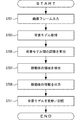
- FIG. 6 is a flowchart showing a process flow of the image processing system 100
- FIG. 7 is a flowchart showing a process flow of the image processing system 200.
- Each processing step to be described later can be executed in any order or in parallel as long as there is no contradiction in processing contents, and other steps can be added between the processing steps. good. Further, a step described as a single step for convenience can be executed by being divided into a plurality of steps, and a step described as being divided into a plurality of steps for convenience can be executed as one step.
- the image input unit 110 receives an input of a new image frame (image frame at the processing time) (S601). Further, the region designating unit 120 displays a display screen illustrated in a specific example in FIG. 2 to receive input of correct data for the input image frame, and one or more pixels at random positions in the image frame. In response to this, the user receives designation as a moving body area or a background area (S603). With this designation, the area designation unit 120 generates correct answer data indicating whether or not the area is a moving body area.
- acceptance of input by the image input unit 110 is performed for a predetermined number of image frames at different times.
- the predetermined number is arbitrary, may be determined in advance, or may be designated by the user.
- the background model acquisition unit 130 reads the short-term background model, medium-term background model, and long-term background model stored in the background model DB 150 (S605).
- the inter-background model distance calculation unit 160 for each pixel, the distance between the short-term background model and the medium-term background model, the distance between the medium-term background model and the long-term background model, and the short-term background model and the long-term background model Is calculated (S607).
- the moving body detection model construction unit 170 applies the CNN to the pixels for which correct data is prepared for each background model calculated by the inter-background model distance calculation unit 160 so that the evaluation value S becomes small. Is obtained (S609). That is, a moving body detection model is constructed by learning.
- the image processing system 100 displays the moving object detection result of the sample data on the display screen using the learned moving object detection model.
- the image processing system 100 during the display, as a reliability for the mobile detection result may be displayed in the vicinity of the moving object area detected the above-mentioned estimation result (moving body likeness) v i. Or, depending on the value of v i, it may be displayed as a heat map. Specifically, the image processing system 100 may display red as the value of v i is higher and blue as the value of v i is lower. In this way, the person visually determines the moving object detection result based on the learned moving object detection model. If the moving object detection accuracy by the moving object detection model is sufficient (Yes in S611), the moving object detection model construction unit 170 outputs the calculated parameters to the moving object detection parameter dictionary 180 (S613).
- the area designating unit 120 uses the display screen shown in FIG. The user receives an input as to whether or not it is a moving body area (S615). Thereafter, the process returns to S605 to construct a moving object detection model using new correct answer data.
- the image input unit 210 receives an input of a new image frame (image frame at the processing time) (S701).
- the background model acquisition unit 220 reads the short-term background model, the medium-term background model, and the long-term background model stored in the background model DB 240 (S703).
- the inter-background model distance calculation unit 250 for each pixel, the distance between the short-term background model and the medium-term background model, the distance between the medium-term background model and the long-term background model, and the short-term background model and the long-term background model Is calculated (S705).
- the moving object detection unit 260 uses the parameters generated by the image processing system 100 stored in the moving object detection parameter dictionary 270 as inputs, and the distance between the background models calculated by the inter-background model distance calculation unit 250 as an input. It is determined whether or not each pixel is an area in which a moving object appears (S707).
- the result output unit 280 outputs the detection result (S709).
- the background model update unit 230 updates each background model using the image frame input from the image input unit 210, and stores the updated background model in the background model DB 240 (S711).
- the computer 800 includes a processor 801, a memory 803, a storage device 805, an input interface (I / F) unit 807, a data I / F unit 809, a communication I / F unit 811, and a display device 813. Including.
- the processor 801 controls various processes of the image processing systems 100 and 200 by executing a program stored in the memory 803.
- the processes related to the image input unit 110, the region specification unit 120, the background model acquisition unit 130, the background model update unit 140, the background model distance calculation unit 160, and the moving object detection model construction unit 170 illustrated in FIG. It can be realized as a program that is temporarily stored in the memory 803 and that mainly operates on the processor 801.
- the processing related to the image input unit 210, the background model acquisition unit 220, the background model update unit 230, the background model distance calculation unit 250, the moving object detection unit 260, and the result output unit 280 illustrated in FIG. can be realized as a program that is temporarily stored in the memory 803 and that mainly operates on the processor 801.
- the memory 803 is a storage medium such as a RAM (Random Access Memory).
- the memory 803 temporarily stores a program code of a program executed by the processor 801 and data necessary for executing the program.
- the storage device 805 is a non-volatile storage medium such as a hard disk or flash memory.
- the storage device 805 can store various data including an operating system, various programs for realizing the functions of the image processing systems 100 and 200, background model DBs 150 and 240, and moving object detection parameter dictionaries 180 and 270, and the like.
- Programs and data stored in the storage device 805 are referred to by the processor 801 by being loaded into the memory 803 as necessary.
- the input I / F unit 807 is a device for receiving input from the user. For example, on the display screen as shown in FIG. 2 provided by the area specifying unit 120, a user operation for specifying whether the area is a background area or a moving body area is input by the input I / F unit 807.
- Specific examples of the input I / F unit 807 include a keyboard, a mouse, and a touch panel.
- the input I / F unit 807 may be connected to the computer 800 via an interface such as a USB (Universal Serial Bus).
- USB Universal Serial Bus
- the data I / F unit 809 is a device for inputting data from the outside of the computer 800. Specific examples of the data I / F unit 809 include a drive device for reading data stored in various storage devices. The data I / F unit 809 may be provided outside the computer 800. In this case, the data I / F unit 809 is connected to the computer 800 via an interface such as a USB.
- the communication I / F unit 811 is a device for data communication with an external device of the computer 800, for example, a photographing device (video camera, surveillance camera, digital camera) or the like by wire or wireless.
- the communication I / F unit 811 may be provided outside the image processing system 100. In that case, the communication I / F unit 811 is connected to the computer 800 via an interface such as a USB.
- the display device 813 is a device for displaying, for example, a display screen for designating the background region / moving body region illustrated in FIG. 2, a detection result of the moving body output by the result output unit 280, and the like.
- Specific examples of the display device 813 include a liquid crystal display and an organic EL (Electro-Luminescence) display.
- the display device 813 may be provided outside the computer 800. In that case, the display device 813 is connected to the computer 800 via, for example, a display cable.
- the image processing systems 100 and 200 according to the present embodiment detect the moving body by the CNN using the differences among the short-term background model, the medium-term background model, and the long-term background model.
- the image processing systems 100 and 200 detect the moving body by the CNN using the differences among the short-term background model, the medium-term background model, and the long-term background model.
- learning for example, a background model with a time width that is easy to detect a moving object such as a person or a car without using a background model with a time width that is easy to detect movement due to, for example, a tree shake by the wind.
- a background model with a time width that is easy to detect movement due to, for example, a tree shake by the wind.
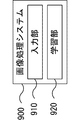
- FIG. 9 is a block diagram illustrating a functional configuration of the image processing system 900 according to the present embodiment.
- the image processing system 900 includes an input unit 910 and a learning unit 920.
- the input unit 910 is an input for several image frames at different times among a plurality of image frames constituting the video, and for any one or more selected pixels of the image frames at the processing time, An input is received as to whether the pixel is a moving object or a pixel that does not reflect a moving object.
- the learning unit 920 learns a parameter for detecting the moving body based on the input from the input unit 910 as to whether the pixel is a pixel that shows the moving body or a pixel that does not show the moving body.
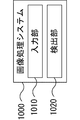
- the image processing system 1000 includes an input unit 1010 and a detection unit 1020.
- the input unit 1010 receives input of a plurality of image frames having different shooting times.
- the detection unit 1020 includes a first background model generated based on the image frame at the processing time, a second background model that is less affected by the image frame at the processing time than the first background model, and a second background
- the moving object is detected by performing convolution calculation at least once using the value of the background model in the vicinity region of the target pixel using the third background model that is less affected by the image frame at the processing time than the model.
- the image processing system 900 and the image processing system 1000 according to the present embodiment can suitably detect a moving body.
- An image processing system comprising: an input unit that receives an input indicating whether the pixel is a moving object or a pixel that does not show a moving object; and a learning unit that learns a parameter for detecting the moving object based on the input.
- (Appendix 2) A first background model generated based on the image frame at the processing time; a second background model that is less affected by the image frame at the processing time than the first background model; and the second background model. And calculating means for calculating a difference between the third background model and the third background model having a smaller influence of the image frame at the processing time than the first background model based on the input.
- the image processing system according to supplementary note 1, wherein parameters for detecting a moving object are learned using the second background model and the third background model.
- the learning means learns the parameters used in a detection model for detecting a moving body by performing one or more convolution calculations using a value of a background model in a neighborhood region of the one or more pixels.
- the image processing system according to attachment 2.
- the input means for receiving the input of a plurality of image frames having different shooting times, the first background model generated based on the image frame at the processing time, and the influence of the image frame at the processing time than the first background model Using the value of the background model in the vicinity region of the target pixel, using the second background model having a smaller value and the third background model having a smaller influence of the image frame at the processing time than the second background model.
- An image processing system comprising detection means for detecting a moving object by performing convolution calculation one or more times.
- Appendix 6 The image processing system according to appendix 5, wherein the first background model, the second background model, and the third background model differ in the time width of the imaging time of the image frame considered.
- Appendix 7 The image processing system according to appendix 5 or appendix 6, wherein an image frame at the processing time is used as the first background model.
- Appendix 10 The image according to appendix 8 or appendix 9, wherein the parameter used in the detection model for detecting the moving body is learned by performing at least one convolution calculation using the value of the background model in the neighborhood region of the one or more pixels. Processing method.
- Appendix 11 The image processing method according to any one of appendices 8 to 10, wherein the convolution calculation and a threshold value to be compared with a value obtained as a result of the convolution calculation are learned as the parameter.
- Appendix 14 The image processing method according to appendix 12 or appendix 13, wherein an image frame at the processing time is used as the first background model.
- Appendix 17 The program according to appendix 15 or appendix 16, wherein the parameter used in the detection model for detecting a moving object is learned by performing at least one convolution calculation using a value of a background model in the neighborhood region of the one or more pixels. .
- Appendix 20 The program according to appendix 19, wherein the first background model, the second background model, and the third background model differ in the time width of the image capturing time taken into consideration.
- Appendix 21 The program according to appendix 19 or appendix 20, wherein an image frame at the processing time is used as the first background model.
Landscapes
- Engineering & Computer Science (AREA)
- Theoretical Computer Science (AREA)
- Multimedia (AREA)
- General Physics & Mathematics (AREA)
- Physics & Mathematics (AREA)
- Computer Vision & Pattern Recognition (AREA)
- Evolutionary Computation (AREA)
- Signal Processing (AREA)
- Databases & Information Systems (AREA)
- General Health & Medical Sciences (AREA)
- Medical Informatics (AREA)
- Software Systems (AREA)
- Computing Systems (AREA)
- Artificial Intelligence (AREA)
- Health & Medical Sciences (AREA)
- Image Analysis (AREA)
- Closed-Circuit Television Systems (AREA)
Abstract
Priority Applications (7)
| Application Number | Priority Date | Filing Date | Title |
|---|---|---|---|
| US15/314,572 US11003961B2 (en) | 2014-06-03 | 2015-06-02 | Image processing system, image processing method, and program storage medium |
| JP2016525694A JP6547744B2 (ja) | 2014-06-03 | 2015-06-02 | 画像処理システム、画像処理方法及びプログラム |
| US16/289,745 US20190236418A1 (en) | 2014-06-03 | 2019-03-01 | Image processing system, image processing method, and program storage medium |
| US18/139,111 US20230410493A1 (en) | 2014-06-03 | 2023-04-25 | Image processing system, image processing method, and program storage medium |
| US18/236,747 US12361700B2 (en) | 2014-06-03 | 2023-08-22 | Image processing and object detecting system, image processing and object detecting method, and program storage medium |
| US18/236,772 US12340575B2 (en) | 2014-06-03 | 2023-08-22 | Vehicle detecting system, vehicle detecting method, and program storage medium |
| US19/234,637 US20250308227A1 (en) | 2014-06-03 | 2025-06-11 | Image processing and object detecting system, image processing and object detecting method, and program storage medium |
Applications Claiming Priority (2)
| Application Number | Priority Date | Filing Date | Title |
|---|---|---|---|
| JP2014-115205 | 2014-06-03 | ||
| JP2014115205 | 2014-06-03 |
Related Child Applications (2)
| Application Number | Title | Priority Date | Filing Date |
|---|---|---|---|
| US15/314,572 A-371-Of-International US11003961B2 (en) | 2014-06-03 | 2015-06-02 | Image processing system, image processing method, and program storage medium |
| US16/289,745 Continuation US20190236418A1 (en) | 2014-06-03 | 2019-03-01 | Image processing system, image processing method, and program storage medium |
Publications (1)
| Publication Number | Publication Date |
|---|---|
| WO2015186341A1 true WO2015186341A1 (fr) | 2015-12-10 |
Family
ID=54766424
Family Applications (1)
| Application Number | Title | Priority Date | Filing Date |
|---|---|---|---|
| PCT/JP2015/002768 Ceased WO2015186341A1 (fr) | 2014-06-03 | 2015-06-02 | Système de traitement d'image, procédé de traitement d'image et support de mémorisation de programme |
Country Status (3)
| Country | Link |
|---|---|
| US (6) | US11003961B2 (fr) |
| JP (6) | JP6547744B2 (fr) |
| WO (1) | WO2015186341A1 (fr) |
Cited By (5)
| Publication number | Priority date | Publication date | Assignee | Title |
|---|---|---|---|---|
| JP2020170500A (ja) * | 2019-04-02 | 2020-10-15 | 三星電子株式会社Samsung Electronics Co.,Ltd. | エゴモーション情報推定装置及び方法 |
| JP2021124953A (ja) * | 2020-02-05 | 2021-08-30 | 株式会社電制 | 学習処理装置および学習処理方法、物体検出装置および物体検出方法、ならびに、プログラム |
| JP2023515523A (ja) * | 2020-02-26 | 2023-04-13 | マジック リープ, インコーポレイテッド | 位置特定正確度のためのバッファを伴うクロスリアリティシステム |
| WO2025159020A1 (fr) * | 2024-01-26 | 2025-07-31 | 国立大学法人九州工業大学 | Appareil de traitement d'image, procédé de traitement d'image, et programme de traitement d'image |
| JP2025535169A (ja) * | 2022-12-26 | 2025-10-22 | 北京字跳▲網▼絡技▲術▼有限公司 | ビデオ処理方法、装置、機器及び媒体 |
Families Citing this family (12)
| Publication number | Priority date | Publication date | Assignee | Title |
|---|---|---|---|---|
| GB201601660D0 (en) * | 2016-01-29 | 2016-03-16 | Global Surface Intelligence Ltd | System and method for earth observation and analysis |
| EP3565259A1 (fr) * | 2016-12-28 | 2019-11-06 | Panasonic Intellectual Property Corporation of America | Procédé de distribution de modèle tridimensionnel, procédé de réception de modèle tridimensionnel, dispositif de distribution de modèle tridimensionnel, et dispositif de réception de modèle tridimensionnel |
| US10579908B2 (en) * | 2017-12-15 | 2020-03-03 | Google Llc | Machine-learning based technique for fast image enhancement |
| JP2019109709A (ja) * | 2017-12-18 | 2019-07-04 | 株式会社東芝 | 画像処理装置、画像処理方法およびプログラム |
| JP7208713B2 (ja) * | 2018-02-13 | 2023-01-19 | キヤノン株式会社 | 画像解析装置および画像解析方法 |
| CN108709494B (zh) * | 2018-03-26 | 2019-12-13 | 中国民航大学 | 一种白光干涉信号背景光强实时分离方法 |
| KR20200054367A (ko) * | 2018-11-05 | 2020-05-20 | 현대자동차주식회사 | 객체 검출 장치 및 그 방법 |
| CN110232359B (zh) * | 2019-06-17 | 2021-10-01 | 中国移动通信集团江苏有限公司 | 滞留物检测方法、装置、设备及计算机存储介质 |
| US20220201295A1 (en) * | 2020-12-21 | 2022-06-23 | Electronics And Telecommunications Research Institute | Method, apparatus and storage medium for image encoding/decoding using prediction |
| TWI891951B (zh) * | 2021-01-06 | 2025-08-01 | 日商發那科股份有限公司 | 圖像處理裝置 |
| CN116762098A (zh) * | 2021-02-15 | 2023-09-15 | 富士通株式会社 | 判定方法、判定程序、以及信息处理装置 |
| CN117795972A (zh) | 2021-08-04 | 2024-03-29 | 三星电子株式会社 | 用于视频序列的帧稳定的方法和电子设备 |
Citations (6)
| Publication number | Priority date | Publication date | Assignee | Title |
|---|---|---|---|---|
| JPH10285581A (ja) * | 1997-04-04 | 1998-10-23 | Fujitsu Ltd | 自動監視装置 |
| JP2008257693A (ja) * | 2007-04-05 | 2008-10-23 | Mitsubishi Electric Research Laboratories Inc | シーン中に置き去りにされた物体を検出する方法 |
| JP2012059224A (ja) * | 2010-09-13 | 2012-03-22 | Toshiba Corp | 移動物体追跡システムおよび移動物体追跡方法 |
| JP2012257173A (ja) * | 2011-06-10 | 2012-12-27 | Canon Inc | 追尾装置、追尾方法及びプログラム |
| JP2013065151A (ja) * | 2011-09-16 | 2013-04-11 | Sony Corp | 画像処理装置、画像処理方法、および、プログラム |
| JP2013125529A (ja) * | 2011-12-16 | 2013-06-24 | Panasonic Corp | 画像領域抽出装置、画像領域抽出方法、および画像領域抽出プログラム |
Family Cites Families (39)
| Publication number | Priority date | Publication date | Assignee | Title |
|---|---|---|---|---|
| FR2244745B1 (fr) | 1973-09-26 | 1977-05-27 | Ugine Kuhlmann | |
| US6324532B1 (en) * | 1997-02-07 | 2001-11-27 | Sarnoff Corporation | Method and apparatus for training a neural network to detect objects in an image |
| JP4068485B2 (ja) | 2002-09-30 | 2008-03-26 | 株式会社東芝 | 画像合成方法、画像合成装置、画像合成プログラム |
| US7203360B2 (en) * | 2003-04-09 | 2007-04-10 | Lee Shih-Jong J | Learnable object segmentation |
| US7295700B2 (en) * | 2003-10-24 | 2007-11-13 | Adobe Systems Incorporated | Object extraction based on color and visual texture |
| JP4516448B2 (ja) * | 2005-02-25 | 2010-08-04 | 株式会社デンソーアイティーラボラトリ | 領域抽出装置及び領域抽出方法 |
| US7676081B2 (en) * | 2005-06-17 | 2010-03-09 | Microsoft Corporation | Image segmentation of foreground from background layers |
| US7724954B2 (en) * | 2005-11-14 | 2010-05-25 | Siemens Medical Solutions Usa, Inc. | Method and system for interactive image segmentation |
| JP4993678B2 (ja) | 2006-10-04 | 2012-08-08 | 一般財団法人電力中央研究所 | 対話型動画像監視方法、対話型動画像監視装置および対話型動画像監視プログラム |
| EP2188759A1 (fr) | 2007-03-05 | 2010-05-26 | Fotonation Vision Limited | Recherche et détection de visage dans un dispositif d'acquisition d'images numériques |
| JP5127390B2 (ja) * | 2007-10-12 | 2013-01-23 | キヤノン株式会社 | 信号処理装置、信号処理方法、プログラム |
| BRPI1008024A2 (pt) | 2009-02-10 | 2016-03-15 | Thomson Licensing | produção de superfície fosca de vídeo com base em propagação de restrição de primeiro plano-segundo plano |
| JP2011059898A (ja) | 2009-09-08 | 2011-03-24 | Fujifilm Corp | 画像解析装置、画像解析方法およびプログラム |
| JP5075924B2 (ja) | 2010-01-13 | 2012-11-21 | 株式会社日立製作所 | 識別器学習画像生成プログラム、方法、及びシステム |
| MX2012009579A (es) | 2010-02-19 | 2012-10-01 | Toshiba Kk | Sistema de rastreo de objetos en movimiento y metodo de rastreo de objetos en movimiento. |
| US8655069B2 (en) * | 2010-03-05 | 2014-02-18 | Microsoft Corporation | Updating image segmentation following user input |
| JP5505936B2 (ja) | 2010-11-05 | 2014-05-28 | オムロン株式会社 | 画像処理ユニット、および画像処理プログラム |
| US8760464B2 (en) | 2011-02-16 | 2014-06-24 | Apple Inc. | Shape masks |
| US8620026B2 (en) * | 2011-04-13 | 2013-12-31 | International Business Machines Corporation | Video-based detection of multiple object types under varying poses |
| JP5713790B2 (ja) * | 2011-05-09 | 2015-05-07 | キヤノン株式会社 | 画像処理装置、画像処理方法、及びプログラム |
| JP2013058063A (ja) * | 2011-09-08 | 2013-03-28 | Chuo Electronics Co Ltd | 画像処理装置、方法、プログラム、および監視システム |
| US8873852B2 (en) * | 2011-09-29 | 2014-10-28 | Mediatek Singapore Pte. Ltd | Method and apparatus for foreground object detection |
| US9111147B2 (en) * | 2011-11-14 | 2015-08-18 | Massachusetts Institute Of Technology | Assisted video surveillance of persons-of-interest |
| US9202281B2 (en) * | 2012-03-17 | 2015-12-01 | Sony Corporation | Integrated interactive segmentation with spatial constraint for digital image analysis |
| US8917934B2 (en) | 2012-06-14 | 2014-12-23 | International Business Machines Corporation | Multi-cue object detection and analysis |
| TWI559236B (zh) * | 2012-06-20 | 2016-11-21 | 原相科技股份有限公司 | 適用於影像處理的更新背景方法 |
| JP2014059691A (ja) | 2012-09-18 | 2014-04-03 | Sony Corp | 画像処理装置および方法、並びにプログラム |
| US9852511B2 (en) | 2013-01-22 | 2017-12-26 | Qualcomm Incoporated | Systems and methods for tracking and detecting a target object |
| KR102026717B1 (ko) | 2013-02-08 | 2019-10-04 | 삼성전자 주식회사 | 사진 촬영 가이드 방법 및 이를 구현하는 휴대 단말 |
| JP5989251B2 (ja) * | 2013-09-12 | 2016-09-07 | 三菱電機株式会社 | 操作入力装置及び方法、並びにプログラム及び記録媒体 |
| JP6588102B2 (ja) | 2015-03-20 | 2019-10-09 | ベンタナ メディカル システムズ, インコーポレイテッド | 画像セグメンテーションのためのシステム及び方法 |
| US9542751B2 (en) | 2015-05-08 | 2017-01-10 | Qualcomm Incorporated | Systems and methods for reducing a plurality of bounding regions |
| US10586102B2 (en) | 2015-08-18 | 2020-03-10 | Qualcomm Incorporated | Systems and methods for object tracking |
| US10192129B2 (en) | 2015-11-18 | 2019-01-29 | Adobe Systems Incorporated | Utilizing interactive deep learning to select objects in digital visual media |
| US11568627B2 (en) | 2015-11-18 | 2023-01-31 | Adobe Inc. | Utilizing interactive deep learning to select objects in digital visual media |
| US9773196B2 (en) | 2016-01-25 | 2017-09-26 | Adobe Systems Incorporated | Utilizing deep learning for automatic digital image segmentation and stylization |
| US11132533B2 (en) * | 2017-06-07 | 2021-09-28 | David Scott Dreessen | Systems and methods for creating target motion, capturing motion, analyzing motion, and improving motion |
| US11282208B2 (en) | 2018-12-24 | 2022-03-22 | Adobe Inc. | Identifying target objects using scale-diverse segmentation neural networks |
| US11631234B2 (en) | 2019-07-22 | 2023-04-18 | Adobe, Inc. | Automatically detecting user-requested objects in images |
-
2015
- 2015-06-02 US US15/314,572 patent/US11003961B2/en active Active
- 2015-06-02 WO PCT/JP2015/002768 patent/WO2015186341A1/fr not_active Ceased
- 2015-06-02 JP JP2016525694A patent/JP6547744B2/ja active Active
-
2019
- 2019-03-01 US US16/289,745 patent/US20190236418A1/en not_active Abandoned
- 2019-06-05 JP JP2019105217A patent/JP6813055B2/ja active Active
-
2020
- 2020-12-17 JP JP2020209692A patent/JP7252188B2/ja active Active
-
2022
- 2022-06-07 JP JP2022091955A patent/JP7447932B2/ja active Active
-
2023
- 2023-04-25 US US18/139,111 patent/US20230410493A1/en not_active Abandoned
- 2023-08-22 US US18/236,747 patent/US12361700B2/en active Active
- 2023-08-22 US US18/236,772 patent/US12340575B2/en active Active
- 2023-12-25 JP JP2023217630A patent/JP7639883B2/ja active Active
-
2025
- 2025-02-19 JP JP2025024658A patent/JP2025072653A/ja active Pending
- 2025-06-11 US US19/234,637 patent/US20250308227A1/en active Pending
Patent Citations (6)
| Publication number | Priority date | Publication date | Assignee | Title |
|---|---|---|---|---|
| JPH10285581A (ja) * | 1997-04-04 | 1998-10-23 | Fujitsu Ltd | 自動監視装置 |
| JP2008257693A (ja) * | 2007-04-05 | 2008-10-23 | Mitsubishi Electric Research Laboratories Inc | シーン中に置き去りにされた物体を検出する方法 |
| JP2012059224A (ja) * | 2010-09-13 | 2012-03-22 | Toshiba Corp | 移動物体追跡システムおよび移動物体追跡方法 |
| JP2012257173A (ja) * | 2011-06-10 | 2012-12-27 | Canon Inc | 追尾装置、追尾方法及びプログラム |
| JP2013065151A (ja) * | 2011-09-16 | 2013-04-11 | Sony Corp | 画像処理装置、画像処理方法、および、プログラム |
| JP2013125529A (ja) * | 2011-12-16 | 2013-06-24 | Panasonic Corp | 画像領域抽出装置、画像領域抽出方法、および画像領域抽出プログラム |
Cited By (8)
| Publication number | Priority date | Publication date | Assignee | Title |
|---|---|---|---|---|
| JP2020170500A (ja) * | 2019-04-02 | 2020-10-15 | 三星電子株式会社Samsung Electronics Co.,Ltd. | エゴモーション情報推定装置及び方法 |
| JP7431025B2 (ja) | 2019-04-02 | 2024-02-14 | 三星電子株式会社 | エゴモーション情報推定装置及び方法 |
| JP2021124953A (ja) * | 2020-02-05 | 2021-08-30 | 株式会社電制 | 学習処理装置および学習処理方法、物体検出装置および物体検出方法、ならびに、プログラム |
| JP7453668B2 (ja) | 2020-02-05 | 2024-03-21 | 電制コムテック株式会社 | 学習処理装置および学習処理方法、物体検出装置および物体検出方法、ならびに、プログラム |
| JP2023515523A (ja) * | 2020-02-26 | 2023-04-13 | マジック リープ, インコーポレイテッド | 位置特定正確度のためのバッファを伴うクロスリアリティシステム |
| JP7586918B2 (ja) | 2020-02-26 | 2024-11-19 | マジック リープ, インコーポレイテッド | 位置特定正確度のためのバッファを伴うクロスリアリティシステム |
| JP2025535169A (ja) * | 2022-12-26 | 2025-10-22 | 北京字跳▲網▼絡技▲術▼有限公司 | ビデオ処理方法、装置、機器及び媒体 |
| WO2025159020A1 (fr) * | 2024-01-26 | 2025-07-31 | 国立大学法人九州工業大学 | Appareil de traitement d'image, procédé de traitement d'image, et programme de traitement d'image |
Also Published As
| Publication number | Publication date |
|---|---|
| JP2021051783A (ja) | 2021-04-01 |
| US20230394809A1 (en) | 2023-12-07 |
| US20250308227A1 (en) | 2025-10-02 |
| JP6547744B2 (ja) | 2019-07-24 |
| JP2022122984A (ja) | 2022-08-23 |
| US11003961B2 (en) | 2021-05-11 |
| US20230410493A1 (en) | 2023-12-21 |
| US20230394808A1 (en) | 2023-12-07 |
| US20170206441A1 (en) | 2017-07-20 |
| JP7447932B2 (ja) | 2024-03-12 |
| JP2025072653A (ja) | 2025-05-09 |
| JP7252188B2 (ja) | 2023-04-04 |
| JP2019145174A (ja) | 2019-08-29 |
| JPWO2015186341A1 (ja) | 2017-05-25 |
| JP2024042703A (ja) | 2024-03-28 |
| JP7639883B2 (ja) | 2025-03-05 |
| JP6813055B2 (ja) | 2021-01-13 |
| US12340575B2 (en) | 2025-06-24 |
| US12361700B2 (en) | 2025-07-15 |
| US20190236418A1 (en) | 2019-08-01 |
Similar Documents
| Publication | Publication Date | Title |
|---|---|---|
| JP7639883B2 (ja) | 画像処理システム、画像処理方法及びプログラム | |
| CN107529650B (zh) | 闭环检测方法、装置及计算机设备 | |
| US11450114B2 (en) | Information processing apparatus, information processing method, and computer-readable storage medium, for estimating state of objects | |
| US9247155B2 (en) | Method and system for robust scene modelling in an image sequence | |
| US9460349B2 (en) | Background understanding in video data | |
| JP6024658B2 (ja) | 物体検出装置、物体検出方法及びプログラム | |
| CN110033481A (zh) | 用于进行图像处理的方法和设备 | |
| JP6652051B2 (ja) | 検出システム、検出方法及びプログラム | |
| JP4999794B2 (ja) | 静止領域検出方法とその装置、プログラム及び記録媒体 | |
| CN114511661A (zh) | 图像渲染方法、装置、电子设备及存储介质 | |
| KR20210134252A (ko) | 이미지 안정화 방법, 장치, 노변 기기 및 클라우드 제어 플랫폼 | |
| CN110910445A (zh) | 一种物件尺寸检测方法、装置、检测设备及存储介质 | |
| JP2014203133A (ja) | 画像処理装置、画像処理方法 | |
| CN110807818A (zh) | 基于关键帧的rgb-dslam方法和装置 | |
| CN110300253B (zh) | 图像处理装置和方法及存储指令的存储介质 | |
| JP6292613B2 (ja) | 背景抽出装置、主成分分析装置及び主成分分析プログラム | |
| GB2616321A (en) | Method and device for image shadow detection and removal | |
| JP6162492B2 (ja) | 動体検出装置、動体検出方法及び制御プログラム | |
| JP6362939B2 (ja) | 検出装置、検出方法及び制御プログラム | |
| JP2021026311A (ja) | 画像処理装置、画像処理方法、およびプログラム |
Legal Events
| Date | Code | Title | Description |
|---|---|---|---|
| 121 | Ep: the epo has been informed by wipo that ep was designated in this application |
Ref document number: 15803121 Country of ref document: EP Kind code of ref document: A1 |
|
| ENP | Entry into the national phase |
Ref document number: 2016525694 Country of ref document: JP Kind code of ref document: A |
|
| WWE | Wipo information: entry into national phase |
Ref document number: 15314572 Country of ref document: US |
|
| NENP | Non-entry into the national phase |
Ref country code: DE |
|
| 122 | Ep: pct application non-entry in european phase |
Ref document number: 15803121 Country of ref document: EP Kind code of ref document: A1 |