WO2015194673A1 - Procédé, programme informatique et dispositif d'aide à la prescription de médicaments - Google Patents
Procédé, programme informatique et dispositif d'aide à la prescription de médicaments Download PDFInfo
- Publication number
- WO2015194673A1 WO2015194673A1 PCT/JP2015/067804 JP2015067804W WO2015194673A1 WO 2015194673 A1 WO2015194673 A1 WO 2015194673A1 JP 2015067804 W JP2015067804 W JP 2015067804W WO 2015194673 A1 WO2015194673 A1 WO 2015194673A1
- Authority
- WO
- WIPO (PCT)
- Prior art keywords
- user
- prescription
- terminal
- data
- pharmacy
- Prior art date
- Legal status (The legal status is an assumption and is not a legal conclusion. Google has not performed a legal analysis and makes no representation as to the accuracy of the status listed.)
- Ceased
Links
Images





Classifications
-
- G—PHYSICS
- G16—INFORMATION AND COMMUNICATION TECHNOLOGY [ICT] SPECIALLY ADAPTED FOR SPECIFIC APPLICATION FIELDS
- G16H—HEALTHCARE INFORMATICS, i.e. INFORMATION AND COMMUNICATION TECHNOLOGY [ICT] SPECIALLY ADAPTED FOR THE HANDLING OR PROCESSING OF MEDICAL OR HEALTHCARE DATA
- G16H10/00—ICT specially adapted for the handling or processing of patient-related medical or healthcare data
- G16H10/60—ICT specially adapted for the handling or processing of patient-related medical or healthcare data for patient-specific data, e.g. for electronic patient records
-
- G—PHYSICS
- G06—COMPUTING OR CALCULATING; COUNTING
- G06F—ELECTRIC DIGITAL DATA PROCESSING
- G06F21/00—Security arrangements for protecting computers, components thereof, programs or data against unauthorised activity
- G06F21/60—Protecting data
- G06F21/62—Protecting access to data via a platform, e.g. using keys or access control rules
- G06F21/6218—Protecting access to data via a platform, e.g. using keys or access control rules to a system of files or objects, e.g. local or distributed file system or database
- G06F21/6245—Protecting personal data, e.g. for financial or medical purposes
-
- G—PHYSICS
- G06—COMPUTING OR CALCULATING; COUNTING
- G06Q—INFORMATION AND COMMUNICATION TECHNOLOGY [ICT] SPECIALLY ADAPTED FOR ADMINISTRATIVE, COMMERCIAL, FINANCIAL, MANAGERIAL OR SUPERVISORY PURPOSES; SYSTEMS OR METHODS SPECIALLY ADAPTED FOR ADMINISTRATIVE, COMMERCIAL, FINANCIAL, MANAGERIAL OR SUPERVISORY PURPOSES, NOT OTHERWISE PROVIDED FOR
- G06Q30/00—Commerce
- G06Q30/06—Buying, selling or leasing transactions
-
- G—PHYSICS
- G06—COMPUTING OR CALCULATING; COUNTING
- G06Q—INFORMATION AND COMMUNICATION TECHNOLOGY [ICT] SPECIALLY ADAPTED FOR ADMINISTRATIVE, COMMERCIAL, FINANCIAL, MANAGERIAL OR SUPERVISORY PURPOSES; SYSTEMS OR METHODS SPECIALLY ADAPTED FOR ADMINISTRATIVE, COMMERCIAL, FINANCIAL, MANAGERIAL OR SUPERVISORY PURPOSES, NOT OTHERWISE PROVIDED FOR
- G06Q30/00—Commerce
- G06Q30/06—Buying, selling or leasing transactions
- G06Q30/0601—Electronic shopping [e-shopping]
- G06Q30/0633—Managing shopping lists, e.g. compiling or processing purchase lists
-
- G—PHYSICS
- G06—COMPUTING OR CALCULATING; COUNTING
- G06Q—INFORMATION AND COMMUNICATION TECHNOLOGY [ICT] SPECIALLY ADAPTED FOR ADMINISTRATIVE, COMMERCIAL, FINANCIAL, MANAGERIAL OR SUPERVISORY PURPOSES; SYSTEMS OR METHODS SPECIALLY ADAPTED FOR ADMINISTRATIVE, COMMERCIAL, FINANCIAL, MANAGERIAL OR SUPERVISORY PURPOSES, NOT OTHERWISE PROVIDED FOR
- G06Q30/00—Commerce
- G06Q30/06—Buying, selling or leasing transactions
- G06Q30/0601—Electronic shopping [e-shopping]
- G06Q30/0633—Managing shopping lists, e.g. compiling or processing purchase lists
- G06Q30/0637—Managing shopping lists, e.g. compiling or processing purchase lists requiring approval before final submission, e.g. parental approval
-
- G—PHYSICS
- G16—INFORMATION AND COMMUNICATION TECHNOLOGY [ICT] SPECIALLY ADAPTED FOR SPECIFIC APPLICATION FIELDS
- G16H—HEALTHCARE INFORMATICS, i.e. INFORMATION AND COMMUNICATION TECHNOLOGY [ICT] SPECIALLY ADAPTED FOR THE HANDLING OR PROCESSING OF MEDICAL OR HEALTHCARE DATA
- G16H20/00—ICT specially adapted for therapies or health-improving plans, e.g. for handling prescriptions, for steering therapy or for monitoring patient compliance
- G16H20/10—ICT specially adapted for therapies or health-improving plans, e.g. for handling prescriptions, for steering therapy or for monitoring patient compliance relating to drugs or medications, e.g. for ensuring correct administration to patients
-
- G—PHYSICS
- G16—INFORMATION AND COMMUNICATION TECHNOLOGY [ICT] SPECIALLY ADAPTED FOR SPECIFIC APPLICATION FIELDS
- G16H—HEALTHCARE INFORMATICS, i.e. INFORMATION AND COMMUNICATION TECHNOLOGY [ICT] SPECIALLY ADAPTED FOR THE HANDLING OR PROCESSING OF MEDICAL OR HEALTHCARE DATA
- G16H40/00—ICT specially adapted for the management or administration of healthcare resources or facilities; ICT specially adapted for the management or operation of medical equipment or devices
- G16H40/20—ICT specially adapted for the management or administration of healthcare resources or facilities; ICT specially adapted for the management or operation of medical equipment or devices for the management or administration of healthcare resources or facilities, e.g. managing hospital staff or surgery rooms
Definitions
- the present invention relates to a pharmaceutical prescription support method for controlling whether or not to access a medication history via a communication network, and a pharmaceutical prescription support method for controlling whether or not to access a medication history via a communication network.
- the present invention relates to a pharmaceutical prescription support computer program for controlling access to a medication history by causing a computer to execute, and a prescription support apparatus for controlling whether or not to access a medication history via a communication network.
- a patient who receives a prescription from a medical institution such as a hospital can submit the prescription to a pharmacy freely selected by the patient and purchase the medicine.
- the pharmacist checks the prescription and dispenses.
- a technology has been known in which a patient history database is stored on a server, and the history of each patient can be checked by accessing the medication history database stored on the server from a terminal installed in each pharmacy through a communication network. ing.
- patient identification information such as the patient's name is input from a terminal installed in the pharmacy.
- the patient's medication history is displayed on a terminal installed in the pharmacy (see, for example, Patent Document 1).
- pharmacies can freely select pharmacies and may use various pharmacies. It is desirable that the pharmacist of the pharmacy who has received the prescription also confirms and dispenses medicines that have been dispensed in other pharmacies in the past. On the other hand, since each patient's medication history is personal information, the pharmacist should not be able to freely view the medication history at any time, but should be able to refer to it under certain conditions where there is a high need to refer to the medication history. Is desirable.
- This disclosed technique proposes a technique that allows a pharmacist to refer to each patient's medication history under certain conditions.
- a pharmaceutical prescription support method realized by one aspect of the disclosed technology is a pharmaceutical prescription support method for a server that controls whether or not to access a medication history via a communication network, wherein the server is a user terminal Receiving user data from the user, receiving prescription drug data from the user terminal, and receiving the user data and the prescription drug data, a database in which an individual and the individual's medication history are associated with each other An access permission / inhibition identifier indicating whether or not the pharmacy terminal can access the user's medication history corresponding to the user data is set to an identifier meaning access, and a processing end signal from the pharmacy terminal. A receiving step, and upon receipt of the processing end signal, the access enable / disable identifier is set to be inaccessible. To perform the steps of change in identifier to taste, the.
- the pharmaceutical prescription support method realized by one aspect of the disclosed technology is a pharmaceutical prescription support method for a server that controls whether or not to access a medication history via a communication network
- the server includes a user terminal Receiving the user data from the user terminal, receiving the prescription drug data from the user terminal, and receiving a process start signal from the pharmacy terminal.
- the computer program for supporting drug prescription realized by one aspect of the disclosed technique controls the access to the medication history by causing the computer to execute each step of the method for supporting prescription of medicine described above.
- the pharmaceutical prescription support apparatus realized by one aspect of the disclosed technology is a pharmaceutical prescription support apparatus that receives a prescription via a communication network, and receives user data and prescription drug data from a user terminal.
- a receiving unit a storage unit storing a database in which an individual and the individual's taking history are linked, and the user data and prescription drug data are received, the user data is included in the database.
- a control unit that sets an access permission identifier indicating whether or not the user's medication history can be accessed from the pharmacy terminal to an identifier meaning access, and the receiving unit receives a process end signal from the pharmacy terminal. Upon receipt of the processing end signal, the control unit changes the access permission identifier to an identifier meaning that access is impossible. .
- the pharmaceutical prescription support apparatus realized by one aspect of the disclosed technology is a pharmaceutical prescription support apparatus that receives a prescription via a communication network, and receives user data and prescription drug data from a user terminal.
- a storage unit storing a database associated with the individual and the individual's medication history, and a user's medication history corresponding to the user data in the database
- a control unit capable of changing an access permission identifier indicating whether or not access is possible, the receiving unit receives a processing start signal and a processing end signal from the pharmacy terminal, and the control unit receives the processing start signal
- the access permission identifier is set to an identifier indicating that access is possible, and when the processing end signal is received, the access permission identifier is not accessible. To change the identifier, which means.
- the access permission identifier that indicates whether or not the medication history can be accessed from the pharmacy terminal satisfies a predetermined condition.
- FIG. 1 is a configuration diagram illustrating an example of a pharmaceutical prescription support system according to the present disclosure.
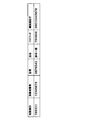
- FIG. 2 is a diagram illustrating an example of a database stored in the designated pharmacy information storage unit in the user terminal of the present disclosure.
- FIG. 3 is a diagram illustrating an example of a database stored in the user information storage unit in the user terminal according to the present disclosure.
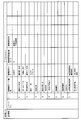
- FIG. 4 is a diagram illustrating an example of a database stored in the prescription information storage unit of the present disclosure.
- FIG. 5 is a diagram illustrating an example of a database stored in the prescription information storage unit of the present disclosure, and illustrates a continuation of FIG.
- FIG. 6 is a diagram illustrating an example of a registered user information database stored in a registered user information storage unit in the server of the present disclosure.
- FIG. 1 is a configuration diagram illustrating an example of a pharmaceutical prescription support system according to the present disclosure.
- FIG. 2 is a diagram illustrating an example of a database stored in the designated pharmacy information storage unit in the user terminal of
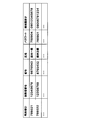
- FIG. 7 is a diagram illustrating an example of a database of registered pharmacist information stored in a registered pharmacist information storage unit in the server of the present disclosure.
- FIG. 8 is a diagram illustrating an example of a database stored in the medication history information storage unit in the server of the present disclosure.
- FIG. 9 is a diagram illustrating an example of a database stored in the browsing authority control information storage unit in the server of the present disclosure.
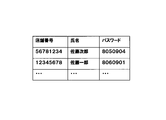
- FIG. 10 is a diagram illustrating an example of a database stored in the pharmacist information storage unit in the pharmacy terminal of the present disclosure.
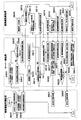
- FIG. 11 is a processing flowchart of the pharmaceutical prescription support system of the present disclosure.
- FIG. 12 is a diagram illustrating an example of a reception processing screen of the pharmacy terminal according to the present disclosure.
- FIG. 13 is a diagram illustrating an example of a medication history information display screen of the pharmacy terminal according to the present disclosure.
- FIG. 1 is a configuration diagram illustrating an example of a pharmaceutical prescription support system according to the present disclosure.
- the pharmaceutical prescription support system includes a user terminal 1, a server 2, and a pharmacy terminal 4.
- the user terminal 1 and the pharmacy terminal 4 are connected to the server 2 via the communication network N, respectively.
- the user terminal 1 is a terminal operated by a user who has received a prescription prescribed from a medical institution such as a hospital.
- the user terminal 1 may be a portable terminal that can be carried by the user, for example.
- the user terminal 1 may be used by a patient using a hospital, for example, or may be used by a guardian of the patient.
- the pharmacy terminal 4 is a terminal installed in the pharmacy.
- the user terminal 1 includes a two-dimensional code reading unit 11, a decoding unit 12, a manual input unit 13, a camera input unit 14, a designated pharmacy information storage unit 15, a display unit 16, a data transmission / reception unit 17, a control unit 18, and a prescription information storage. Unit 19 and user information storage unit 20.
- the two-dimensional code reading unit 11 reads the two-dimensional code written on the prescription. This two-dimensional code is a symbolized part or all of the information described in the prescription.
- the decoding unit 12 decodes the two-dimensional code and converts it into electronic information.
- the manual input unit 13 is an input unit for manually inputting prescription information, such as an operation button or a touch panel.
- the camera input unit 14 takes a prescription without a two-dimensional code.
- the two-dimensional code reading unit 11, the manual input unit 13, or the camera input unit 14 is a means for acquiring data described in the prescription, and may be provided with at least one of them.
- the designated pharmacy information storage unit 15 stores pharmacy data as pharmacy information designated by the user. Information on the designated pharmacy is input from any one of the two-dimensional code reading unit 11, the manual input unit 13, the camera input unit 14, and the data transmission / reception unit 17. Information on the designated pharmacy may be received via the communication network N from the Internet or from a database stored in the server 2.
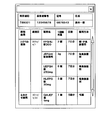
- FIG. 2 is a diagram illustrating an example of a database stored in the designated pharmacy information storage unit 15.
- the designated pharmacy information storage unit 15 stores a store name, a company name, a FAX number, a telephone number, an IP address, a closed date, and a closed time as pharmacy data. Information for uniquely identifying the pharmacy is stored. As long as it is included, it is not limited to these items.
- the display unit 16 displays the read prescription information and the data transmission / reception result with the server 2.
- the data transmission / reception unit 17 performs data transmission / reception with the server 2 and the pharmacy terminal 4.
- the control unit 18 controls these processes.
- the user information storage unit 20 stores user information used for authentication and the like when using this system. User information is input from any one of the two-dimensional code reading unit 11, the manual input unit 13, the camera input unit 14, and the data transmission / reception unit 17.
- FIG. 3 is a diagram illustrating an example of a database stored in the user information storage unit 20.
- the user information storage unit 20 stores a user ID, an insurer number, a symbol, a name, a password, and a terminal identifier as user data. Information for uniquely identifying the user or the user terminal Is included, and is not limited to these items.
- the prescription information storage unit 19 stores the read prescription information and prescription information as a result of transmission / reception with the server 2.
- 4 and 5 are diagrams illustrating examples of databases stored in the prescription information storage unit 19.
- the database includes basic data and prescription drug data. Data is stored in association with the user ID. 4 and 5 represent databases created based on a prescription issued once for a single patient. When the prescription is issued once, the basic data in FIG. 4 and the prescription drug data in FIG. 5 are created.
- the prescription drug data in FIG. 5 is information subsequent to the basic data in FIG. 4, and the databases in FIG. 4 and FIG. 5 are stored together as one database.
- This database is an example of a database stored when prescription information is read by a two-dimensional code printed on the prescription.
- the two-dimensional code printed on the prescription includes basic data and prescription drug data, and the basic data and prescription drug data included in the two-dimensional code are stored in this database.
- Record No. indicates a major classification of items, for example, record No. 1 is a medical institution record. 5 is a doctor record, No. 5; 11 is a patient name record. 12 is a patient sex record, No. 12; 13 is the patient birth date record, No. 13; 14 is a patient partial burden classification record, No. 14; 21 is an insurance type record. 22 is an insurer number record.
- Reference numeral 61 represents a drug application record.
- the medical institution record classification further includes subcategory items such as medical institution code type, medical institution code, medical institution prefecture code, and medical institution name.
- the medical institution code type records a predetermined number such that 1 is medical department, 3 is dentistry, and 6 is visit.
- the medical institution code is a receipt submission code
- the medical institution prefecture code is a number assigned to each prefecture
- the name of the medical institution is a kanji for the name of the medical institution.
- the basic data items are not limited to this.
- Prescription drug data is stored separately for each drug listed in the prescription. Record No. 51 is the prescription delivery date.
- 101 is a dosage form record.
- 111 is a usage record; 201 is a medicine record.
- Reference numeral 281 denotes a medicine supplement record. Each record has further sub-category items.
- Prescription drug data items are not limited to this.
- some data may be acquired by manual input or OCR reading.
- the 201 drug record has a description such as “ABCD tablet”, but the alphabet part “ABCD” actually contains a specific product name of the drug.
- the trade name here may include a registered trademark. Similar descriptions in other drawings are interpreted in the same manner.
- the server 2 includes a data transmission / reception unit 21, a control unit 22, a prescription information storage unit 23, a user authentication unit 24, a registered user information storage unit 29, a pharmacist authentication unit 25, a registered pharmacist information storage unit 30, and a dose history information storage unit. 26, a browsing authority control information storage unit 27, and an OCR analysis unit 28.
- the server 2 functions as a pharmaceutical prescription support apparatus that receives a prescription via the communication network N.
- the data transmission / reception unit 21 performs data transmission / reception with the user terminal 1 and the pharmacy terminal 4.
- the control unit 22 controls the entire process.
- the browsing authority control information storage unit 27 is rewritten.
- the prescription information storage unit 23 accumulates prescription information sent from the user terminal 1.
- the database recorded in the prescription information storage unit 23 is the same as that shown in FIGS.
- the registered user information storage unit 29 stores a list of users who use the system.
- FIG. 6 shows an example of a registered user information database stored in the registered user information storage unit 29.
- the registered user information database stores, as registered user data, a user ID, an insurer number, a symbol, a name, a password, and a terminal identifier for each user.
- the registered user data is not limited to these items as long as the user can be specified.
- the user authentication unit 24 checks the user data received from the user terminal 1 against a database stored in the registered user information storage unit 29, and the user who has transmitted information from the user terminal 1 Check whether the user is a registered user.
- the registered pharmacist information storage unit 30 stores a list of pharmacists who use this system.
- FIG. 7 is a diagram illustrating an example of a database of registered pharmacist information stored in the registered pharmacist information storage unit 30.
- the registered pharmacist information database stores, as registered pharmacist data, the store number, name, and password of the store to which each pharmacist belongs.
- the registered pharmacist data only needs to be able to identify the pharmacist, and the items are not limited to these.
- the pharmacist authentication unit 25 is a pharmacist in which the pharmacist whose information is transmitted from the pharmacy terminal 4 is registered by comparing the pharmacist data received from the pharmacy terminal 4 with a database stored in the registered pharmacist information storage unit 30. Check whether or not.
- the medication history information storage unit 26 accumulates information on the past medication history of the patient.
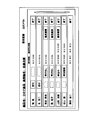
- FIG. 8 is a diagram illustrating an example of a database stored in the medication history information storage unit 26.
- the medication history information stores, for each patient, a medicine that has been dispensed in the past by a dispensing pharmacy and purchased by a user as past medication history information, and includes information on the dispensed pharmacy, date and time, and medication name.
- the user ID, the dispensing pharmacy name, the dispensing date, the drug name, the single dose, the number of days, and the dosage method are stored.
- the browsing authority control information storage unit 27 stores control information of authority to browse the medication history information.
- FIG. 9 is a diagram illustrating an example of a database stored in the browsing authority control information storage unit 27.
- an access permission / inhibition identifier indicating whether or not access from the pharmacy terminal 4 is permitted is stored as permission information.
- the access permission identifier may be “1” when access from the pharmacy terminal 4 is permitted, and may be “0” when access is not permitted.
- the rewriting of the access permission / inhibition identifier is controlled and executed by the control unit 22.
- the OCR analysis unit 28 analyzes the camera-captured image of the prescription transmitted from the user terminal 1 and replaces it with electronic information.
- the OCR analysis unit 28 may be omitted if the user terminal 1 does not include the camera input unit 14.
- the pharmacy terminal 4 includes a data transmission / reception unit 41, a control unit 43, a prescription information storage unit 44, a display unit 42, and a pharmacist information storage unit 45.
- the data transmission / reception unit 41 performs data transmission / reception with the user terminal 1.
- the control unit 43 performs overall control of processing.
- the prescription information storage unit 44 stores prescription information sent from the user terminal 1.
- the database recorded in the prescription information storage unit 44 is the same as that shown in FIGS.
- the display unit 42 displays the received prescription information.
- the pharmacist information storage unit 45 accumulates information for authenticating the pharmacist with this system.
- FIG. 10 is an example of a database stored in the pharmacist information storage unit 45.
- the pharmacist information storage unit 45 stores a store number, a name, and a password as pharmacist data.
- the pharmacist information storage unit 45 is not limited to these items as long as information for uniquely identifying the pharmacist is included.
- FIG. 11 is a diagram illustrating an example of a processing flow of the pharmaceutical prescription support system of the present disclosure. Here, an example in which prescription information is read by the two-dimensional code reading unit 11 of the user terminal 1 is shown.
- the control unit 18 reads out the pharmacy data of the designated pharmacy from the designated pharmacy information storage unit 15 in addition to the electronic data, reads out the user data from the user information storage unit 20, prescription information, pharmacy data, and user Data is transmitted from the data transmitter / receiver 17 to the server 2 (step S802).
- the data transmitter / receiver 21 of the server 2 receives the prescription information, pharmacy data, and user data (step S803).
- Prescription information, pharmacy data, and user data may be transmitted and / or received separately, or may be transmitted and / or received simultaneously as a set of data in one communication.
- the communication network N is set in the communication state.
- the control unit 18 transmits prescription information, pharmacy data, and user data to the server 2.
- the user authentication unit 24 authenticates whether the user is registered based on the user data. Here, whether or not the user ID and password of the received user data match the user ID stored in the registered user information database, and the password associated with the user ID It is verified whether or not they match (step S805). If registered and matched (Yes in step S805), the prescription information is accumulated in the prescription information storage unit 23 together with the user data (step S806). On the other hand, if not registered (No in step S805), the data transmission / reception unit 21 transmits user authentication failure information to the user terminal 1 (step S807), and the user terminal 1 transmits the user authentication failure information. The data transmitter / receiver 17 receives the data (step S808).
- the terminal user ID and password are accepted. This is, for example, a general user authentication of a PC.
- the application starts operation.
- the control unit 43 reads pharmacist data from the pharmacist information storage unit 45, and transmits and receives the pharmacist data. The data is transmitted from the unit 41 to the server 2 (step S809).
- the data transmission / reception unit 21 receives the pharmacist data transmitted from the pharmacy terminal 4, and the control unit 22 verifies whether or not the pharmacist is registered in the pharmacist authentication unit 25 (step S810).
- the data transmitter / receiver 21 transmits the result to the pharmacy terminal 4 (step S811).
- the verification as to whether or not it is registered determines whether or not the received pharmacist data matches the registered pharmacist data stored in the registered pharmacist database in the registered pharmacist information storage unit 30.
- the data transmission / reception unit 41 receives the verification result as to whether or not the pharmacist is registered, the control unit 43 verifies the authentication result (step S812), and only when the pharmacist is registered (step S812). (Yes in S812), the prescription accumulation information in the server 2 is periodically confirmed (step S813).
- the control unit 43 transmits the pharmacist data including the pharmacy data to the server 2 using the data transmission / reception unit 41, and the control unit 22 inspects the prescription information storage unit 23 to process an unprocessed prescription for the pharmacy. It is confirmed whether information is accumulated (step S814). Whether or not the data is unprocessed may be determined by, for example, storing the data storage time in the database in association with the prescription, and determining whether or not the data is stored after the previously confirmed time.
- step S814 If not accumulated (No in step S814), the result is transmitted to the data transmitting / receiving unit 41 of the pharmacy terminal 4, and the control unit 43 performs step S813 again after a predetermined time. On the other hand, when it has been accumulated (Yes in step S814), the control unit 43 transmits a prescription information request corresponding to the server 2 (step S815).
- the data transmission / reception unit 21 receives the reception completion signal (processing start signal), and the control unit 22 stores it in the permission information column of the corresponding user in the browsing authority control information in the browsing authority control information storage unit 27. Is changed to a state meaning browsing permission, and a reception completion signal is transmitted to the user terminal 1 (step S820).
- the prescription information is confirmed, and when there is no stock, the acceptance may be refused.
- the acceptance process is performed in the pharmacy terminal 4 in this way.
- the server 2 when the server 2 receives the processing start signal, the server 2 performs processing different from that along with the change of the browsing authority control information.
- the processing start signal is not limited to the reception completion signal, and may be any signal that triggers the server 2 to perform different processing along with the change of the browsing authority control information when the server 2 receives the processing start signal.
- the server 2 includes a state database that associates each user with the reception state of the user for each pharmacy.
- the server 2 registers the user data received in step S803, for example, the user ID in the state database, associates it with the user ID, and receives the reception completion signal in step S820, the control unit 22 uses the data. Change the state database so that the person's state is accepted.
- the pharmacy terminal 4 periodically reads this state database and displays the state on the display unit 42.
- the data transmitting / receiving unit 17 receives the reception completion signal, and notifies the user that the reception is completed on the display unit 16 (step S821).
- the server 2 when the server 2 receives the reception completion signal (processing start signal), the browsing authority control information is changed to a state that means browsing permission.
- the server 2 changes the prescription drug data and the basic data or the user.
- the received data When at least one of the data is received, the received data may be regarded as a processing start signal, and the browsing authority control information may be changed to a state that means browsing permission.
- Basic data and user data are user data including personal information for identifying a patient, respectively, and the change of the viewing authority control information is executed when at least the user data and prescription drug data are received.
- the server 2 receives the prescription drug data, the basic data, and the user data, it proceeds to a step of authenticating whether it is a registered user as described in step S805.
- the reception can be said to be a reception of a signal that triggers a change in the browsing authority control information and a different process.
- the pharmacy starts dispensing work based on the accepted prescription.
- the pharmacist views the user's medication history. Specifically, when the pharmacist operates the pharmacy terminal 4 and performs an input for browsing, for example, a medication history, the control unit 43 transmits a medication history information request to the server 2 using the data transmission / reception unit 41 (steps). S822). Input to the pharmacy terminal 4 is performed from an input unit (not shown) controlled by the control unit 43.
- the control unit 22 refers to the viewing authority control information storage unit 27, and the access permission identifier is received from the pharmacy terminal 4. It is confirmed whether it is an identifier that permits access (step S825). If it is “permitted” (Yes in step S825), that is, in the example of the database of the browsing authority control information storage unit 27, only when the permitted information part is “1”, the dosing history The user's medication history information in the information storage unit 26 is read, and the user's medication history information is transmitted to the pharmacy terminal 4 using the data transmission / reception unit 21 (step S824). The data transmitting / receiving unit 41 of the pharmacy terminal 4 receives this, and the control unit 43 displays the user's medication history information using the display unit 42 (step S826).
- the control unit 43 uses the data transmission / reception unit 41 to send a call signal to the server 2 in order to call the user to get to the pharmacy. (Step S827).
- the data transmitter / receiver 21 receives the calling signal and transmits the patient calling signal to the user terminal 1 (step S828).
- the control unit 22 determines that the state of the user is being called in the state database in which each user included in the server 2 is associated with the reception state of the user. Change the state database to be The pharmacy terminal 4 periodically reads this state database and displays the state on the display unit 42.
- the user terminal 1 receives the patient call signal at the data transmission / reception unit 17, and displays that the control unit 18 is being called from the pharmacy on the display unit 16 (step S829).
- the user knows that dispensing has been completed and brings the original prescription to the pharmacy where appropriate to pick up the drug.
- a pharmacist will respond and give you the drug in exchange for the original prescription.
- the prescription information including the prescription drug data actually dispensed in step S830 is not transmitted to the server 2, and the two-dimensional code of the prescription information including the prescription drug data actually dispensed is delivered to the user when the medicine is delivered to the user.
- the user reads the two-dimensional code printed on the dispensing specification from the two-dimensional code reading unit 11 of the user terminal 1 and stores it in the prescription information storage unit 19 as medication history information. Information may be transmitted to update the medication history information storage unit 26.
- the server 2 receives a medication history information request from the pharmacy terminal 4 after step S831, that is, after the browsing authority control information storage unit 27 is changed to “0”, the pharmacy terminal 4 accesses the medication history information. Can not do it.
- the control unit 22 determines that the state of the user is completed in the state database in which each user included in the server 2 is associated with the reception state of the user. Change the state database to be The pharmacy terminal 4 periodically reads this state database and displays the state on the display unit 42.
- a display for confirming whether the user agrees to the disclosure of the medication history information is displayed on the display unit 16 on the user terminal 1, and an input indicating that the user agrees to the disclosure of the medication history information on the user terminal 1
- the server 2 may change the browsing authority control information.
- steps S822 to S826 are executed in the same manner.
- the processing of step S830 and step S831 is executed in the same manner. That is, the pharmaceutical prescription support method described here is such that the pharmacy terminal and the user terminal communicate with the server via the communication network, and access to the data of the medication history of the individual stored in the server from the pharmacy terminal.
- a method for supporting prescription of pharmaceuticals in the server that controls whether or not to use the server, wherein the server receives a user consent signal from the user terminal, and when the server receives the user consent signal, the use Setting an access permission identifier indicating whether or not the pharmacy terminal can access the data of the user's medication history, an step of receiving a process end signal from the pharmacy terminal, and the process end When the signal is received, the access permission identifier is changed to an identifier meaning that access is impossible.
- Tsu to run and up is a pharmaceutical prescription support method.
- the pharmaceutical prescription support apparatus described here can be configured by the server 2 described above, and is a pharmaceutical prescription support apparatus that communicates with a pharmacy terminal and a user terminal via a communication network, and is used from the user terminal.
- a receiving unit that receives a user consent signal, a storage unit that stores a database in which an individual and the individual's medication history are linked, and whether or not the user's medication history data can be accessed from the pharmacy terminal
- a control unit that can change an access permission identifier indicating that the receiving unit receives a processing end signal from the pharmacy terminal, and the control unit receives the user consent signal when the receiving unit receives the user consent signal.
- FIG. 12 is a diagram showing an example of a screen displayed on the pharmacy terminal 4 in steps S818, S819, S822, and S827.
- the “dosing history” button indicates that the user's taking history information is displayed when pressed.
- the “dosing history” button may be always displayed and visualized so that it can be pressed at any time.
- the server 2 confirms whether the user's dosing history information viewing authority is “permitted”, and if it is “permitted”, that is, in the database of the viewing authority control information storage unit 27. For example, only when the permission information portion is “1”, the user's medication history information may be displayed.
- the “dosing history” button checks whether the pharmacy terminal 4 is authorized to view the taking history information of the user at regular intervals, and “permit”. In this case, the button may be displayed so that it can be pressed.
- the pharmacy terminal 4 periodically reads the state database stored in the server 2 and displays the state on the display unit 42, but the examination of the authority to view the history of medication taken at regular intervals is displayed on the pharmacy terminal 4
- the status information to be displayed may be replaced with the display information update timing.
- FIG. 13 is a diagram showing an example of a screen displayed on the pharmacy terminal 4 in step S826, and is a display image of the user's medication history information.
- the medication history displays the name of the dispensing pharmacy, the date and time, and the name of each drug.
- the medication history information storage unit 26 and the browsing authority control information storage unit 27 when the user sends prescription information to the pharmacy and accepts the dispensing, permission to browse the medication history, which is privacy information, is permitted. With regard to the information, it is possible to present the person who can view it for a limited period of time without any special user action.
- the disclosed technology instead of the conventional method of managing the medication history using paper media, it is possible to manage the medication history electronically using, for example, a smartphone application. Become.
- the patient's medication history can be accessed from the pharmacy terminal, and the medication history can be stored in the user terminal and the user terminal can be directly viewed by the pharmacist. It becomes unnecessary.
- the medication history can be confirmed from the pharmacy terminal
- the pharmacist can refer to the patient's medication history without delivering the user terminal storing the letter and the medication history to the pharmacy.
- the administration history is managed by the server so that it can be viewed from the pharmacy.
- the history of taking which is privacy information
- it is possible to control the timing of end of browsing of the dosing history by controlling whether or not access to the dosing history is performed by the server.
- User terminal 2 Server (pharmaceutical prescription support device) 4 Pharmacy terminal 11 Two-dimensional code reading unit 12 Decoding unit 13 Manual input unit 14 Camera input unit 15 Designated pharmacy information storage unit 16 Display unit 17 Data transmission / reception unit 18 Control unit 19 Prescription information storage unit 20 User information storage unit 21 Data transmission / reception Unit 22 Control unit 23 Prescription information storage unit 24 User authentication unit 25 Pharmacist authentication unit 26 Dosing history information storage unit 27 Browsing authority control information storage unit 28 OCR analysis unit 29 Registered user information storage unit 30 Registered pharmacist information storage unit 41 Data Transmission / reception unit 42 Display unit 43 Control unit 44 Prescription information storage unit 45 Pharmacist information storage unit N Communication network
Landscapes
- Engineering & Computer Science (AREA)
- Business, Economics & Management (AREA)
- Health & Medical Sciences (AREA)
- Accounting & Taxation (AREA)
- Finance (AREA)
- General Business, Economics & Management (AREA)
- General Health & Medical Sciences (AREA)
- Theoretical Computer Science (AREA)
- Medical Informatics (AREA)
- Physics & Mathematics (AREA)
- General Physics & Mathematics (AREA)
- Epidemiology (AREA)
- Marketing (AREA)
- Economics (AREA)
- Development Economics (AREA)
- Public Health (AREA)
- Primary Health Care (AREA)
- Strategic Management (AREA)
- Bioethics (AREA)
- Biomedical Technology (AREA)
- Chemical & Material Sciences (AREA)
- Bioinformatics & Cheminformatics (AREA)
- Medicinal Chemistry (AREA)
- Software Systems (AREA)
- General Engineering & Computer Science (AREA)
- Computer Security & Cryptography (AREA)
- Computer Hardware Design (AREA)
- Databases & Information Systems (AREA)
- Medical Treatment And Welfare Office Work (AREA)
Abstract
L'invention concerne un procédé d'aide à la prescription de médicaments permettant à un serveur (2) de commander l'autorisation d'accès à un historique de dosage par l'intermédiaire d'un réseau de communication (N), dans lequel le serveur (2) exécute les étapes consistant : à recevoir des données utilisateur et des données de médicaments prescrits provenant d'un terminal utilisateur (1) ; à définir, lorsque les données utilisateur et les données de médicaments prescrits sont reçues, un identifiant d'accessibilité indiquant l'autorisation d'accès, à partir d'un terminal de pharmacie (4), à l'historique de dosage d'un utilisateur correspondant aux données utilisateur provenant d'une base de données dans laquelle un individu et l'historique de dosage sont mis en corrélation, l'identifiant signifiant que l'accès est autorisé ; à recevoir un signal de fin de traitement provenant du terminal de pharmacie (4) ; et à modifier, lorsque le signal de fin de traitement est reçu, l'identifiant d'accessibilité en un identifiant signifiant que l'accès n'est pas autorisé.
Priority Applications (2)
| Application Number | Priority Date | Filing Date | Title |
|---|---|---|---|
| EP15810188.1A EP3101619A4 (fr) | 2014-06-20 | 2015-06-19 | Procédé, programme informatique et dispositif d'aide à la prescription de médicaments |
| US15/253,195 US20160371459A1 (en) | 2014-06-20 | 2016-08-31 | Medicine prescription support method, medicine prescription supporting computer program, and medicine prescription support apparatus |
Applications Claiming Priority (2)
| Application Number | Priority Date | Filing Date | Title |
|---|---|---|---|
| JP2014127317A JP5693773B1 (ja) | 2014-06-20 | 2014-06-20 | 医薬品処方支援方法、医薬品処方支援用コンピュータプログラムおよび医薬品処方支援装置 |
| JP2014-127317 | 2014-06-20 |
Related Child Applications (1)
| Application Number | Title | Priority Date | Filing Date |
|---|---|---|---|
| US15/253,195 Continuation US20160371459A1 (en) | 2014-06-20 | 2016-08-31 | Medicine prescription support method, medicine prescription supporting computer program, and medicine prescription support apparatus |
Publications (1)
| Publication Number | Publication Date |
|---|---|
| WO2015194673A1 true WO2015194673A1 (fr) | 2015-12-23 |
Family
ID=52830824
Family Applications (1)
| Application Number | Title | Priority Date | Filing Date |
|---|---|---|---|
| PCT/JP2015/067804 Ceased WO2015194673A1 (fr) | 2014-06-20 | 2015-06-19 | Procédé, programme informatique et dispositif d'aide à la prescription de médicaments |
Country Status (4)
| Country | Link |
|---|---|
| US (1) | US20160371459A1 (fr) |
| EP (1) | EP3101619A4 (fr) |
| JP (1) | JP5693773B1 (fr) |
| WO (1) | WO2015194673A1 (fr) |
Families Citing this family (8)
| Publication number | Priority date | Publication date | Assignee | Title |
|---|---|---|---|---|
| TWI654618B (zh) * | 2016-03-31 | 2019-03-21 | 宏達國際電子股份有限公司 | 醫藥管理方法及醫藥管理裝置 |
| JP2018169815A (ja) * | 2017-03-30 | 2018-11-01 | Phcホールディングス株式会社 | 患者情報表示装置、患者情報表示方法、および、患者情報表示プログラム |
| CN110692103A (zh) * | 2017-06-08 | 2020-01-14 | 沟口智 | 系统的登录方法 |
| JP6619113B1 (ja) * | 2018-09-11 | 2019-12-11 | 株式会社データ ホライゾン | 服薬情報提供装置、服薬情報提供方法、およびコンピュータプログラム |
| JP2020086833A (ja) * | 2018-11-22 | 2020-06-04 | 株式会社フリービットEparkヘルスケア | 薬局業務支援システム |
| US11983749B2 (en) * | 2019-11-25 | 2024-05-14 | Breckenridge Capital Llc | System and method for automating electronic pharmaceutical transactions |
| JP7509582B2 (ja) * | 2020-06-07 | 2024-07-02 | 株式会社カケハシ | 薬剤交付後の服薬指導を継続的に行うための装置、方法及びプログラム |
| US12561644B2 (en) | 2023-03-22 | 2026-02-24 | Express Scripts Strategic Development, Inc. | Smart order scheduling leveraging real-time fulfillment site capacity data |
Citations (5)
| Publication number | Priority date | Publication date | Assignee | Title |
|---|---|---|---|---|
| JP2003281277A (ja) * | 2002-03-19 | 2003-10-03 | Kazuteru Ono | 医療データベースプロバイド方法、およびシステム |
| JP2007156889A (ja) * | 2005-12-06 | 2007-06-21 | Canon Inc | 情報処理装置及び情報処理方法及びコンピュータプログラム |
| JP2008004060A (ja) * | 2006-06-21 | 2008-01-10 | Yoshinobu Kanai | 院外・院内薬局向け待ち合わせ順位情報の待合室及び携帯端末への表示方法、インターネット配信、携帯端末への待ち順番指定又は調剤完了時点での個別呼出方法 |
| JP2011128825A (ja) * | 2009-12-17 | 2011-06-30 | Oki Electric Industry Co Ltd | 処方箋発行システム、並びに、当該処方箋発行システムに用いる管理機関用サーバ及び自動取引装置 |
| JP2011221623A (ja) * | 2010-04-06 | 2011-11-04 | Kakimori Suri | 在宅診療支援システム及び方法 |
Family Cites Families (3)
| Publication number | Priority date | Publication date | Assignee | Title |
|---|---|---|---|---|
| JP2005135207A (ja) * | 2003-10-31 | 2005-05-26 | Raira:Kk | 薬局支援システム |
| US20060004588A1 (en) * | 2004-06-30 | 2006-01-05 | Mohan Ananda | Method and system for obtaining, maintaining and distributing data |
| US20150019238A1 (en) * | 2013-07-15 | 2015-01-15 | Verizon Patent And Licensing Inc. | Prescription/medication monitoring and fraud detection system |
-
2014
- 2014-06-20 JP JP2014127317A patent/JP5693773B1/ja active Active
-
2015
- 2015-06-19 EP EP15810188.1A patent/EP3101619A4/fr not_active Withdrawn
- 2015-06-19 WO PCT/JP2015/067804 patent/WO2015194673A1/fr not_active Ceased
-
2016
- 2016-08-31 US US15/253,195 patent/US20160371459A1/en not_active Abandoned
Patent Citations (5)
| Publication number | Priority date | Publication date | Assignee | Title |
|---|---|---|---|---|
| JP2003281277A (ja) * | 2002-03-19 | 2003-10-03 | Kazuteru Ono | 医療データベースプロバイド方法、およびシステム |
| JP2007156889A (ja) * | 2005-12-06 | 2007-06-21 | Canon Inc | 情報処理装置及び情報処理方法及びコンピュータプログラム |
| JP2008004060A (ja) * | 2006-06-21 | 2008-01-10 | Yoshinobu Kanai | 院外・院内薬局向け待ち合わせ順位情報の待合室及び携帯端末への表示方法、インターネット配信、携帯端末への待ち順番指定又は調剤完了時点での個別呼出方法 |
| JP2011128825A (ja) * | 2009-12-17 | 2011-06-30 | Oki Electric Industry Co Ltd | 処方箋発行システム、並びに、当該処方箋発行システムに用いる管理機関用サーバ及び自動取引装置 |
| JP2011221623A (ja) * | 2010-04-06 | 2011-11-04 | Kakimori Suri | 在宅診療支援システム及び方法 |
Non-Patent Citations (1)
| Title |
|---|
| See also references of EP3101619A4 * |
Also Published As
| Publication number | Publication date |
|---|---|
| EP3101619A4 (fr) | 2017-02-01 |
| JP2016006600A (ja) | 2016-01-14 |
| EP3101619A1 (fr) | 2016-12-07 |
| US20160371459A1 (en) | 2016-12-22 |
| JP5693773B1 (ja) | 2015-04-01 |
Similar Documents
| Publication | Publication Date | Title |
|---|---|---|
| JP5693773B1 (ja) | 医薬品処方支援方法、医薬品処方支援用コンピュータプログラムおよび医薬品処方支援装置 | |
| US20090287502A1 (en) | E-PatientLink | |
| JP5817178B2 (ja) | 服薬管理システム、服薬管理サービスを提供する方法、及び、服薬管理プログラム | |
| JP6043461B1 (ja) | 服薬履歴管理方法、服薬履歴管理装置、および、服薬履歴管理プログラム | |
| JP6444702B2 (ja) | 調剤情報管理システム | |
| JP2023106534A (ja) | 配送手配装置、薬局側端末、配送手配プログラム、及び記録媒体 | |
| US20140303992A1 (en) | System and method of assisting prescription treatment fulfillment | |
| JP6606209B2 (ja) | 薬剤服用支援システム、薬剤服用支援方法及びプログラム | |
| JP2018032106A (ja) | 処方情報提供システム | |
| KR20200114239A (ko) | 전자 처방전 전송 시스템 | |
| JP5940723B1 (ja) | 投薬支援システム | |
| JP6545446B2 (ja) | 処方箋情報送信システム、患者情報管理サーバ、情報送信方法及びプログラム | |
| JP6545440B2 (ja) | 処方箋受付支援方法、処方箋受付支援用コンピュータプログラムおよび処方箋受付支援装置 | |
| KR101602778B1 (ko) | 처방전 전달 시스템 및 전달 방법 | |
| JP2024085321A (ja) | 処方せん医薬品用遠隔自動販売システム | |
| JP6301288B2 (ja) | 薬剤服用支援システム、薬剤服用支援方法及びプログラム | |
| KR101632054B1 (ko) | 모바일 단말기를 이용한 의약품 정보 조회서비스 제공시스템 및 방법 | |
| JP7361559B2 (ja) | お薬情報閲覧システム、中継サーバおよび医療機関端末 | |
| KR20140014871A (ko) | 전자 처방전 서버, 클라이언트 단말기 및 방법 | |
| US20200118658A1 (en) | System and method for transferring and populating pharmacy data into a mobile application | |
| US12548653B2 (en) | Medical system and computer program | |
| JP2016095682A (ja) | 処方箋データを管理するためのシステム、サーバ装置およびプログラム | |
| KR101725434B1 (ko) | 고객 요청 정보를 서비스 제공업체 단말에 제공하는 방법 및 그 시스템 | |
| US20240038355A1 (en) | Method for providing a client with an information regarding main characteristics of a pharmaceutical product and/or an analogue thereof followed by dispensing thereof in an automated pharmacy store using at least one hardware processor and a memory for storing computer-executable instructions or a mobile application, and a system for performing said method | |
| JP2024135112A (ja) | 処方箋管理システム |
Legal Events
| Date | Code | Title | Description |
|---|---|---|---|
| 121 | Ep: the epo has been informed by wipo that ep was designated in this application |
Ref document number: 15810188 Country of ref document: EP Kind code of ref document: A1 |
|
| REEP | Request for entry into the european phase |
Ref document number: 2015810188 Country of ref document: EP |
|
| WWE | Wipo information: entry into national phase |
Ref document number: 2015810188 Country of ref document: EP |
|
| NENP | Non-entry into the national phase |
Ref country code: DE |