WO2015198532A1 - 車載映像システム、映像転送システム、映像転送方法及び映像転送プログラム - Google Patents
車載映像システム、映像転送システム、映像転送方法及び映像転送プログラム Download PDFInfo
- Publication number
- WO2015198532A1 WO2015198532A1 PCT/JP2015/002737 JP2015002737W WO2015198532A1 WO 2015198532 A1 WO2015198532 A1 WO 2015198532A1 JP 2015002737 W JP2015002737 W JP 2015002737W WO 2015198532 A1 WO2015198532 A1 WO 2015198532A1
- Authority
- WO
- WIPO (PCT)
- Prior art keywords
- communication terminal
- vehicle
- image
- unit
- person
- Prior art date
- Legal status (The legal status is an assumption and is not a legal conclusion. Google has not performed a legal analysis and makes no representation as to the accuracy of the status listed.)
- Ceased
Links
Images





Classifications
-
- G—PHYSICS
- G06—COMPUTING OR CALCULATING; COUNTING
- G06V—IMAGE OR VIDEO RECOGNITION OR UNDERSTANDING
- G06V20/00—Scenes; Scene-specific elements
- G06V20/50—Context or environment of the image
- G06V20/56—Context or environment of the image exterior to a vehicle by using sensors mounted on the vehicle
-
- G—PHYSICS
- G08—SIGNALLING
- G08G—TRAFFIC CONTROL SYSTEMS
- G08G1/00—Traffic control systems for road vehicles
- G08G1/005—Traffic control systems for road vehicles including pedestrian guidance indicator
-
- B—PERFORMING OPERATIONS; TRANSPORTING
- B60—VEHICLES IN GENERAL
- B60R—VEHICLES, VEHICLE FITTINGS, OR VEHICLE PARTS, NOT OTHERWISE PROVIDED FOR
- B60R11/00—Arrangements for holding or mounting articles, not otherwise provided for
- B60R11/04—Mounting of cameras operative during drive; Arrangement of controls thereof relative to the vehicle
-
- B—PERFORMING OPERATIONS; TRANSPORTING
- B60—VEHICLES IN GENERAL
- B60R—VEHICLES, VEHICLE FITTINGS, OR VEHICLE PARTS, NOT OTHERWISE PROVIDED FOR
- B60R21/00—Arrangements or fittings on vehicles for protecting or preventing injuries to occupants or pedestrians in case of accidents or other traffic risks
-
- G—PHYSICS
- G01—MEASURING; TESTING
- G01C—MEASURING DISTANCES, LEVELS OR BEARINGS; SURVEYING; NAVIGATION; GYROSCOPIC INSTRUMENTS; PHOTOGRAMMETRY OR VIDEOGRAMMETRY
- G01C21/00—Navigation; Navigational instruments not provided for in groups G01C1/00 - G01C19/00
- G01C21/26—Navigation; Navigational instruments not provided for in groups G01C1/00 - G01C19/00 specially adapted for navigation in a road network
- G01C21/34—Route searching; Route guidance
- G01C21/36—Input/output arrangements for on-board computers
- G01C21/3667—Display of a road map
- G01C21/3676—Overview of the route on the road map
-
- G—PHYSICS
- G06—COMPUTING OR CALCULATING; COUNTING
- G06F—ELECTRIC DIGITAL DATA PROCESSING
- G06F3/00—Input arrangements for transferring data to be processed into a form capable of being handled by the computer; Output arrangements for transferring data from processing unit to output unit, e.g. interface arrangements
- G06F3/01—Input arrangements or combined input and output arrangements for interaction between user and computer
- G06F3/011—Arrangements for interaction with the human body, e.g. for user immersion in virtual reality
- G06F3/013—Eye tracking input arrangements
-
- G—PHYSICS
- G06—COMPUTING OR CALCULATING; COUNTING
- G06T—IMAGE DATA PROCESSING OR GENERATION, IN GENERAL
- G06T1/00—General purpose image data processing
-
- G—PHYSICS
- G06—COMPUTING OR CALCULATING; COUNTING
- G06T—IMAGE DATA PROCESSING OR GENERATION, IN GENERAL
- G06T7/00—Image analysis
- G06T7/10—Segmentation; Edge detection
- G06T7/13—Edge detection
-
- G—PHYSICS
- G08—SIGNALLING
- G08G—TRAFFIC CONTROL SYSTEMS
- G08G1/00—Traffic control systems for road vehicles
- G08G1/16—Anti-collision systems
- G08G1/166—Anti-collision systems for active traffic, e.g. moving vehicles, pedestrians, bikes
-
- G—PHYSICS
- G06—COMPUTING OR CALCULATING; COUNTING
- G06T—IMAGE DATA PROCESSING OR GENERATION, IN GENERAL
- G06T2207/00—Indexing scheme for image analysis or image enhancement
- G06T2207/10—Image acquisition modality
- G06T2207/10004—Still image; Photographic image
Definitions
- the present invention relates to an in-vehicle image system, an image transfer system, an image transfer method, and an image transfer program, and more particularly, to an in-vehicle image system, an image transfer system, an image transfer method, and an in-vehicle image transfer program for transmitting an image obtained by photographing the surroundings of a vehicle with a camera. .
- Patent Document 1 it is considered that a sensor provided in the navigation device detects a pedestrian and notifies the pedestrian's mobile phone that it is dangerous.
- Patent Document 1 the danger is notified by sound or vibration, but the approach of the vehicle and the approaching direction are not transmitted as information, so the user of the mobile phone or the smartphone is concrete about the danger. There was a problem that it was difficult to take appropriate measures.
- an object of the present invention is to provide an in-vehicle system capable of notifying a user of a communication terminal of specific danger contents.
- the in-vehicle video system includes an imaging unit that captures an image of the periphery of a vehicle, an information processing unit that identifies a person and a communication terminal in an image captured by the imaging unit, and the image that is captured by the imaging unit.
- a communication unit that transmits to the communication terminal.
- the video transfer system includes an imaging unit that captures an image of the periphery of a vehicle, an information processing unit that identifies a person and a communication terminal in an image captured by the imaging unit, and the image that is captured by the imaging unit.
- An in-vehicle video system including a communication unit that transmits to a communication terminal, and a communication terminal.
- the communication terminal includes display means for displaying an image transmitted from the in-vehicle video system in the foreground.
- the video transfer method includes an imaging unit that captures an image of the periphery of a vehicle, an information processing unit that identifies a person and a communication terminal in an image captured by the imaging unit, and the image that is captured by the imaging unit.
- an in-vehicle video system including a communication unit that transmits to a communication terminal, the surroundings in the vehicle are imaged, the person and the communication terminal in the image captured by the imaging unit are identified, and the image captured by the imaging unit is transmitted to the communication terminal. Send.
- the video transfer program of the present invention includes an information processing step for identifying a person and a communication terminal in an image captured by an image capturing unit, and an image captured by the image capturing unit from the communication unit identified in the image. A communication step of transmitting to the terminal.
- an image of the surroundings of the vehicle can be transmitted to a communication terminal that is captured in the image, so that a person who is watching the communication terminal is alerted with specific content. it can.
- FIG. 1 is a block diagram schematically showing a functional configuration of the in-vehicle video system according to the present embodiment.
- FIG. 2 is a figure which shows the example of application of the vehicle-mounted image system of this Embodiment.
- the in-vehicle video system 1 identifies a communication terminal that appears in the captured image, and transmits the captured image to the identified communication terminal 4 via the base station device 2 and the network 3. Realize video transfer system.
- the in-vehicle video system 1 includes a camera 10, an information processing unit 11, a communication unit 12, a positioning unit 13, an input unit 14, a display unit 15, and an acoustic output unit 16.
- the camera 10 images the surroundings of the vehicle in a state where the in-vehicle video system 1 is mounted on the vehicle, and outputs the captured image data to the information processing unit 11.
- the camera 10 preferably includes a CCD element or a CMOS element and a lens. Further, the camera 10 may be arranged at a location different from the in-vehicle video system main body and transmit the imaging data to the in-vehicle video system 1 by wired or wireless communication.
- the information processing unit 11 is connected to the camera 10, the communication unit 12, the positioning unit 13, the input unit 14, the display unit 15, and the sound output unit 16 by wire or wirelessly, receives signals, performs information processing, and processes results. Is output.
- the information processing unit 11 includes an image processing unit 11a, a course determination unit 11b, a terminal processing unit 11c, and a navigation unit 11d.
- the information processing unit 11 includes, for example, a CPU and a memory.
- the image processing unit 11a processes image data around the vehicle imaged by the camera 10, identifies the presence of a person and a communication terminal in the image data, and outputs the identified result to the terminal processing unit 11c and the communication unit 12. . Specifically, the image processing unit 11a performs image detection processing such as edge detection and pattern matching, and identifies the presence of a person and a communication terminal in the image data.
- the image processing unit 11a determines the positional relationship and the angular relationship between the person in the image data and the communication terminal, and determines whether the person is watching the communication terminal.
- the course determination unit 11b determines the traveling path of the vehicle based on information from the navigation unit 11d. Specifically, the course judging unit 11b judges in real time whether the course of the vehicle is a left turn, a right turn or a straight turn. Further, the course determination unit 11b determines in real time whether or not the road on which the current vehicle is traveling is a road having a narrower width than a predetermined value.
- the terminal processing unit 11c acquires the location information and identification information of the external communication terminal (for example, ICCID: IC Card Identifier of SIM card or UIM card or uid: user identifier of mobile phone) via the communication unit 12 and the external network. Then, the terminal processing unit 11c identifies the communication terminal in the image obtained by imaging the surroundings of the vehicle from the position information acquired from the positioning unit 13 and the traveling route of the vehicle acquired from the route determination unit 11b. And the captured image is transmitted to the identified communication terminal via the communication unit 12 and the external network.
- ICCID IC Card Identifier of SIM card or UIM card or uid: user identifier of mobile phone
- the navigation unit 11d stores the map information, calculates the route from the coordinate information obtained by the positioning unit 13 and the destination information set based on the information input from the input unit 14, and calculates the map, the current position
- the route information is output to the display unit 15.
- the map information preferably includes information such as road coordinates, directions, widths, and intersections.
- the communication unit 12 communicates with a communication terminal via a base station and a network by wireless communication.
- the communication unit 12 includes an antenna, an amplifier, a frequency conversion circuit, a demodulator, and a modulator.
- the communication unit 12 receives the radio signal, performs amplification, frequency conversion, and demodulation on the received signal, and outputs the obtained digital signal to the information processing unit 11.
- the communication unit 12 modulates, frequency converts, and amplifies the digital signal output from the information processing unit 11 and transmits a radio signal via the antenna.
- the communication unit 12 is a CDMA (Code Division Multiple Access) wireless communication system or OFDM (Standard) defined by a standard such as 3G (3rd Generation), LTE (Long Term Evolution), or Mobile WiMAX (Mobile Worldwide Interoperability for Microwave Access).
- OFDM Code Division Multiple Access
- 3G Third Generation
- LTE Long Term Evolution
- Mobile WiMAX Mobile Worldwide Interoperability for Microwave Access
- orthogonal frequency-division multiplexing Communicates with the base station using a wireless communication method, and transmits and receives data over the network in the upper layer.
- the positioning unit 13 measures the current position and outputs position information to the information processing unit 11.
- the positioning unit 13 includes a GPS (Global Positioning System).
- the positioning unit 13 may measure the position from a WiFi (WirelessWireFidelity) beacon signal and the position information of the WiFi access point, or may measure the position by combining GPS.
- the positioning unit 13 can also increase the accuracy of position measurement by combining one or more of a vehicle speed sensor, a steering rudder angle sensor, a gyro sensor, and an acceleration sensor with the above-described configuration.
- the input unit 14 receives input of information by human operation and outputs it to the information processing unit 11.
- the input unit 14 is configured by combining one or a plurality of buttons, knobs, and touch panels.
- the input unit 14 may be configured by a remote control device separated from the in-vehicle video system 1. In this case, it is preferable that the remote control device communicates with the in-vehicle video system 1 by wireless communication.
- Information may be input by voice input instead of operation. In this case, it can be realized by using a microphone for inputting sound and analyzing the sound data in the information processing unit 11.
- the display unit 15 displays image information and text information output from the information processing unit 11.
- the display unit 15 is configured by a liquid crystal display.
- the display unit 15 may be configured by a liquid crystal display integrated with the input unit 14 configured by a touch panel.
- the display unit 15 may be configured by an organic EL display or a plasma display.
- the sound output unit 16 generates sound by converting the audio signal output from the information processing unit 11 into physical vibration.
- the sound output unit 16 includes a speaker and an amplifier.
- 3 to 6 are diagrams showing examples of image processing of the in-vehicle video system according to the present embodiment.
- the image processing unit 11a of the in-vehicle video system 1 identifies whether or not a person walking while gazing at the communication terminal, that is, a person who is walking (Texting While Walking) exists in the captured image.
- the image processing unit 11a performs edge detection on the image output from the camera 10.
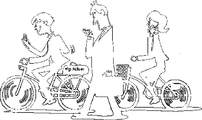
- FIG. 3 is a photograph showing an example of an image captured by the camera 10.
- the image processing unit 11a detects an edge that is a boundary of an object in the image by using an algorithm that specifies a location where the brightness of the digital image changes sharply with respect to the image of FIG.
- FIG. 4 is a diagram showing an example of image data subjected to edge detection.
- the image processing unit 11a performs pattern matching after the edge detection, and cuts out a region that matches the pattern of the upper body of the person. For example, the image processing unit 11a scans the image shown in FIG. 4 for an area that matches or approximates the template pattern having the shape of a person. Then, the image processing unit 11a cuts out an area that matches or approximates the template pattern of the person's shape.
- FIG. 5 is a diagram illustrating an example of cut out image data.
- the image processing unit 11a performs edge detection and pattern matching on the cut-out image data, and detects a region that matches or approximates the pattern of the person's head and communication terminal. Specifically, the image processing unit 11a scans the pattern of the person's head and the communication terminal while changing the inclination angle of the pattern with respect to the X-axis, the Y-axis, and the image data.
- the image processing unit 11a determines the presence / absence of a person walking and walking from the relationship between the position and angle of the pattern of the person's head and the communication terminal for the matched pattern.
- the image processing unit 11a calculates the range of the line of sight from the angle of the head (face). Then, the image processing unit 11a determines that there is a person walking and walking when the communication terminal is on the extension of the line of sight. Further, the range of the line-of-sight angle is preferably determined from the viewing angle. In general, the visual field of one person is about 60 degrees on the upper side with one eye and about 70 degrees on the lower side. When considering the length of the face, both eyes are at the center height.
- FIG. 6 is a diagram illustrating an example of determination in the cut out image data.
- the image processing unit 11a has a pattern on the extension of the line of sight obtained from the face angle and the field of view of the pattern-matched human image in the image captured around the vehicle.
- a matching communication terminal it is determined that a person is gazing at the communication terminal, and the captured image is transmitted to the communication terminal, thereby prompting a pedestrian who is not aware of the approach of the vehicle. Can do.
- pattern matching is performed for pedestrians, but similar processing can be performed for an example in which a communication terminal is operated while riding a bicycle. In this case, it can be realized by preparing a template pattern of a person riding a bicycle and performing pattern matching. Similarly, pattern matching can be performed on a stroller, a wheelchair, and a person who is walking while pushing a walking aid for elderly people. Similar processing can be performed for an example in which a driver of a car is operating a communication terminal.
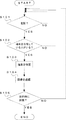
- FIG. 7 is a flowchart showing the operation when the vehicle turns left in the in-vehicle video system of the present embodiment.
- the course determination unit 11b uses the map unit, the coordinate information, the route information, the vehicle speed sensor, the steering angle sensor, the gyro sensor, and the acceleration sensor from the navigation unit 11d to determine whether the vehicle turns to the left. Judge. If the vehicle turns left, the process proceeds to S102. If the vehicle does not turn left, the process of S101 is repeated.
- the image processing unit 11a determines whether there is a person watching the communication terminal in the image captured by the camera 10. If the image processing unit 11a determines that there is a person watching the communication terminal, the process proceeds to S103. If the image processing unit 11a determines that there is no person watching the communication terminal, the process proceeds to S101. Return to processing.
- the terminal processing unit 11c identifies the identification information of the communication terminal shown in the image captured by the camera 10, and proceeds to the process of S104.
- the communication unit 12 transmits the image captured by the camera 10 to the communication terminal specified in S103, and the process proceeds to S105.
- the navigation unit 11d determines whether or not the vehicle has arrived at the destination. If the vehicle has not arrived at the destination, the process returns to S101. If the vehicle has arrived at the destination, the process ends.
- the in-vehicle video system further includes a route determination unit 11b that determines a route along which the vehicle travels. Based on the determination of the route determination unit 11b, the vehicle turns left and the person and the vehicle When it is determined that the vehicle is approaching, the captured image is transmitted to the communication terminal, so that a pedestrian who is not aware of the approach of the vehicle can be alerted at a place where the vehicle and the pedestrian cross like an intersection.
- a pedestrian can be alerted by performing the same process for a right turn.
- the left turn and the right turn may be determined at the same time or in order.
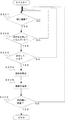
- FIG. 8 is a flowchart showing an operation when traveling on a narrow street in the in-vehicle video system of the present embodiment.
- the course determination unit 11b determines whether the road on which the vehicle travels is narrower than a predetermined width using the map information, coordinate information, and route information from the navigation unit 11d. If the road on which the vehicle travels is a road narrower than the predetermined width, the process proceeds to S202. If the road on which the vehicle travels is a road wider than the predetermined width, the process of S201 is repeated.
- the image processing unit 11a determines whether there is a person watching the communication terminal in the image captured by the camera 10. If the image processing unit 11a determines that there is a person watching the communication terminal, the process proceeds to S203. If the image processing unit 11a determines that there is no person watching the communication terminal, the process proceeds to S201. Return to processing.
- the image processing unit 11a determines whether or not the person watching the communication terminal is walking. If the image processing unit 11a determines that the person watching the communication terminal is walking, the process proceeds to S204, and the image processing unit 11a determines that the person watching the communication terminal is not walking. If so, the process returns to S201.
- the terminal processing unit 11c specifies the identification information of the communication terminal shown in the image captured by the camera 10, and the process proceeds to S205.
- the communication unit 12 transmits the image captured by the camera 10 to the communication terminal specified in S204, and the process proceeds to S206.
- the navigation unit 11d determines whether or not the vehicle has arrived at the destination. If the vehicle has not arrived at the destination, the process returns to S201. If the vehicle has arrived at the destination, the process ends.
- the in-vehicle video system further includes a route determination unit 11b that determines a route along which the vehicle travels, and pays attention to the communication terminal on a narrow road based on the determination of the route determination unit 11b.
- a route determination unit 11b determines a route along which the vehicle travels, and pays attention to the communication terminal on a narrow road based on the determination of the route determination unit 11b.
- the captured image is transmitted to the communication terminal, so that the vehicle is not aware of the approach of the vehicle in a place where the vehicle and the pedestrian approach, such as a narrow street. Can call attention.
- the navigation unit and the information processing unit may be the same CPU and memory, or may be separate.
- it may be configured to be added to an existing navigation system.
- the direction in which the camera captures images can be applied in addition to capturing in front of the vehicle. For example, when a camera that captures the back of the vehicle is installed and the vehicle moves backward, the captured image is transmitted to the person operating the communication terminal behind the vehicle in conjunction with the camera that captures the back. Also good.
- a camera that captures the side of the vehicle may be installed, and an image captured in a direction corresponding to the case where the vehicle turns right or left may be transmitted to a person operating the communication terminal.
- judgment of right turn or left turn, judgment of traveling on a narrow street, and judgment of reverse travel may be combined so as to judge simultaneously or sequentially.
- each operation of the in-vehicle video system according to the present embodiment can be performed by hardware or software such as ASIC (Application Specific Specific Integrated Circuit). Further, part of the processing may be performed by software, and the rest may be performed by hardware.
- a computer system having one or a plurality of CPUs (Central Processing Unit) such as a microprocessor may be executed.
- CPUs Central Processing Unit
- Non-transitory computer readable media include various types of tangible storage media (tangible storage medium).
- non-transitory computer-readable media are magnetic recording media (eg flexible disks, magnetic tapes, hard disk drives), magneto-optical recording media (eg magneto-optical disks), CD-ROMs (Compact Disc Read-Only Memory), CD-ROMs.
- magnetic recording media eg flexible disks, magnetic tapes, hard disk drives
- magneto-optical recording media eg magneto-optical disks
- CD-ROMs Compact Disc Read-Only Memory
- CD-ROMs Compact Disc Read-Only Memory
- the program may also be supplied to the computer by various types of temporary computer-readable media. Examples of transitory computer readable media include electrical signals, optical signals, and electromagnetic waves.
- the temporary computer-readable medium can supply the program to the computer via a wired communication path such as an electric wire and an optical fiber, or a wireless communication path.
- the present invention can be applied to an in-vehicle image system, an image transfer system, an image transfer method, and an image transfer program, and in particular, an in-vehicle image system, an image transfer system, an image transfer method, and Applicable to in-vehicle video transfer program.
Landscapes
- Engineering & Computer Science (AREA)
- General Physics & Mathematics (AREA)
- Physics & Mathematics (AREA)
- Theoretical Computer Science (AREA)
- Remote Sensing (AREA)
- Radar, Positioning & Navigation (AREA)
- Mechanical Engineering (AREA)
- General Engineering & Computer Science (AREA)
- Automation & Control Theory (AREA)
- Computer Vision & Pattern Recognition (AREA)
- Human Computer Interaction (AREA)
- Multimedia (AREA)
- Traffic Control Systems (AREA)
- Image Processing (AREA)
- Image Analysis (AREA)
- Navigation (AREA)
Abstract
通信端末の使用者に具体的な危険の内容を通知すること 本発明にかかる車載映像システム(1)は、車両の周囲を撮像するカメラ(10)と、撮像した画像内の人物及び通信端末を識別する情報処理部(11)と、撮像した画像を通信端末に送信する通信部(12)とを備える。車載映像システム(1)は、撮像した画像内に写る通信端末を特定し、基地局装置及びネットワークを介して、特定した通信端末に撮像した画像を送信することにより、映像転送システムを実現する。
Description
本発明は車載映像システム、映像転送システム、映像転送方法及び映像転送プログラムに関し、特に車両の周囲をカメラで撮影した映像を送信する車載映像システム、映像転送システム、映像転送方法及び車載映像転送プログラムに関する。
近年、ナビゲーションシステムなどの車載システムを用いて交通事故を防止するシステムが提案されている。
例えば、特許文献1には、ナビゲーション装置に設けられたセンサが歩行者を検知し、歩行者の携帯電話機に危険であることを報知することが考えられている。
しかしながら、特許文献1に記載された注意喚起システムでは、危険の内容が十分に伝わらないという課題があった。
具体的には、特許文献1では、音や振動により危険を報知しているが、車が接近すること及び接近する方向は情報として伝わらないので、携帯電話機やスマートフォンの使用者は危険に対する具体的な対応をとることが難しいという課題があった。
上記課題に鑑み、本発明は、通信端末の使用者に具体的な危険の内容を通知することのできる車載システムを提供することを目的としている。
本発明の車載映像システムは、車両の周囲を撮像する撮像部と、前記撮像部が撮像した画像内の人物及び通信端末を識別する情報処理部と、前記撮像部が撮像した画像を識別した前記通信端末に送信する通信部と、を備える。
本発明の映像転送システムは、車両の周囲を撮像する撮像部と、前記撮像部が撮像した画像内の人物及び通信端末を識別する情報処理部と、前記撮像部が撮像した画像を識別した前記通信端末に送信する通信部を備える車載映像システムと、通信端末と、を有し、前記通信端末は、前記車載映像システムから送信された画像を最前面で表示する表示手段を有する。
本発明の映像転送方法は、車両の周囲を撮像する撮像部と、前記撮像部が撮像した画像内の人物及び通信端末を識別する情報処理部と、前記撮像部が撮像した画像を識別した前記通信端末に送信する通信部を備える車載映像システムにおいて、車両内の周囲を撮像し、前記撮像部が撮像した画像内の人物及び通信端末を識別し、撮像部が撮像した画像を前記通信端末に送信する。
本発明の映像転送プログラムは、撮像部が撮像した画像内の人物及び通信端末を識別する情報処理ステップと、前記撮像部が撮像した画像を、通信部から、前記画像内で識別された前記通信端末に送信する通信ステップを備える。
本実施の形態によれば、車両の周囲を撮像した画像を、画像内に写る通信端末に送信することができるので、通信端末を注視している人物に具体的な内容で注意を促すことができる。
以下、図面を参照して、本発明の実施の形態について説明する。図1は、本実施の形態にかかる車載映像システムの機能構成を模式的に示すブロック図である。また、図2は、本実施の形態の車載映像システムの適用例を示す図である。図2に示すように、車載映像システム1は、撮像した画像内に写る通信端末を特定し、基地局装置2及びネットワーク3を介して、特定した通信端末4に撮像した画像を送信することにより、映像転送システムを実現している。
図1に示すように車載映像システム1は、カメラ10と、情報処理部11と、通信部12と、測位部13と、入力部14と、表示部15と、音響出力部16とを備える。
カメラ10は、車載映像システム1が車両に搭載された状態で、車両の周囲を撮像し、撮像した画像データを情報処理部11に出力する。カメラ10はCCD素子またはCMOS素子、及びレンズを備えるものが好適である。またカメラ10は車載映像システム本体と異なる場所に配置し、有線または無線通信等により撮像データを車載映像システム1に送信する構成であっても良い。
情報処理部11は、カメラ10、通信部12、測位部13、入力部14、表示部15、及び音響出力部16と、有線または無線で接続し、信号を受け付け、情報処理を行い、処理結果を出力する。具体的には、情報処理部11は、画像処理部11aと、進路判断部11bと、端末処理部11cと、ナビゲーション部11dを有する。情報処理部11は、例えば、CPU及びメモリから構成される。
画像処理部11aは、カメラ10が撮像した車両の周囲の画像データを処理し、画像データ内の人物及び通信端末の存在を識別し、識別した結果を端末処理部11c及び通信部12に出力する。具体的には、画像処理部11aは、エッジ検出及びパターンマッチング等による画像検出処理を行い、画像データ内の人物及び通信端末の存在を識別する。
また、画像処理部11aは、画像データ内の人物と通信端末との位置関係、角度関係を判定し、人物が通信端末を注視しているか否か判断する。
進路判断部11bは、ナビゲーション部11dからの情報に基づき、車両の走行進路の判断を行う。具体的には、進路判断部11bは、車両の進路が左折、右折、直進のいずれであるかをリアルタイムで判断する。また、進路判断部11bは、現在の車両が走行している道路が、所定の値より幅の狭い道路であるか否かをリアルタイムで判断する。
端末処理部11cは、通信部12及び外部ネットワークを介して、外部の通信端末の位置情報及び識別情報(例えばSIMカードまたはUIMカードのICCID:IC Card Identifierや携帯電話のuid:user identifier)を取得する、そして、端末処理部11cは、測位部13から取得した位置情報及び進路判断部11bから取得した車両の走行の進路から、車両の周囲を撮像した画像内に写っている通信端末の識別情報を特定し、通信部12及び外部ネットワークを介して、撮像した画像を特定した通信端末に送信する。
ナビゲーション部11dは、地図情報を記憶し、測位部13により得られた座標情報と、入力部14から入力された情報に基づき設定された目的地情報とから、経路を算出し、地図、現在位置及び経路情報を表示部15に出力する。地図情報には、道路の座標、方向、幅、交差点などの情報が含まれているのが好適である。
通信部12は、無線通信により基地局及びネットワークを介して通信端末と通信を行う。具体的には通信部12は、アンテナ、アンプ、周波数変換回路、復調器、変調器を備える。そして通信部12は、無線信号を受信し、受信した信号に増幅、周波数変換及び復調を行い、得られたデジタル信号を情報処理部11に出力する。また、通信部12は、情報処理部11から出力されたデジタル信号を、変調、周波数変換及び増幅を行い、アンテナを介して無線信号を送信する。例えば、通信部12は、3G(3rd Generation)、LTE(Long Term Evolution)またはモバイルWiMAX(Mobile Worldwide Interoperability for Microwave Access)等の規格で規定されたCDMA(Code Division Multiple Access)無線通信方式またはOFDM(orthogonal frequency-division multiplexing)無線通信方式を用いて基地局と通信を行い、上位レイヤにてネットワークを介してデータの送受信を行う。
測位部13は、現在の位置を測定し、情報処理部11に位置情報を出力する。例えば、測位部13は、GPS(Global Positioning System)で構成される。また測位部13はWiFi(Wireless Fidelity)のビーコン信号と、WiFiアクセスポイントの位置情報から位置を測定しても良いし、GPSを組み合わせて位置を測定しても良い。また測位部13は、上述の構成に、さらに車速センサ、ステアリング舵角センサ、ジャイロセンサ、加速度センサの一つまたは複数を組み合わせて位置測定の精度を上げることもできる。
入力部14は、人の操作による情報の入力を受け付け情報処理部11に出力する。例えば、入力部14は、ボタン、ツマミ、タッチパネルの一つまたは複数を組み合わせて構成される。また入力部14は、車載映像システム1と分離したリモートコントロール装置で構成しても良い。この場合、リモートコントロール装置は無線通信により車載映像システム1と通信を行うのが好適である。また、操作の代わりに音声入力により情報の入力を行っても良い。この場合、音声を入力するためのマイクを用い、情報処理部11において、音声データの解析を行うことにより、実現することが可能である。
表示部15は、情報処理部11より出力された画像情報及び文字情報を表示する。例えば、表示部15は、液晶ディスプレイで構成される。また表示部15はタッチパネルで構成される入力部14と一体化した液晶ディスプレイで構成しても良い。また表示部15は、有機ELディスプレイまたはプラズマディスプレイで構成しても良い。
音響出力部16は、情報処理部11より出力された音声信号を物理振動に変換して音を発する。例えば、音響出力部16は、スピーカー及びアンプより構成される。
次に、撮像した画像内に人物及び通信端末が存在するか否か判断する画像処理について説明する。図3~6は、本実施の形態の車載映像システムの画像処理の例を示す図である。
車載映像システム1の画像処理部11aは、撮像した画像内に、通信端末を注視しながら歩いている人物、すなわち歩きスマホ(Texting While Walking)をしている人物が存在するか否か識別する。
具体的には画像処理部11aは、カメラ10より出力された画像に対してエッジ検出を行う。図3はカメラ10が撮像した画像の一例を示す写真図である。例えば、画像処理部11aは、図3の画像に対してデジタル画像の明るさが鋭敏に変化している箇所を特定するアルゴリズムを用い、画像内の対象物の境界であるエッジを検出する。図4はエッジ検出を行った画像データの一例を示す図である。
画像処理部11aは、エッジ検出後に、パターンマッチングを行い、人物の上半身のパターンに一致する領域を切り出す。例えば、画像処理部11aは、図4の画像に対して、人物の形状のテンプレートパターンと一致または近似する領域が存在するかスキャンする。そして、画像処理部11aは、人物の形状のテンプレートパターンと一致または近似する領域を切り出す。図5は切り出した画像データの一例を示す図である。
そして、画像処理部11aは、切り出した画像データに対して、エッジ検出及びパターンマッチングを行い、人物の頭及び通信端末のパターンに一致または近似する領域を検出する。具体的には、画像処理部11aは、画像データに対して、X軸、Y軸、及び画像データに対するパターンの傾斜角度を変化させて人物の頭及び通信端末のパターンを、スキャンする。
そして、画像処理部11aは、マッチしたパターンについて、人物の頭と通信端末のパターンの位置及び角度の関係から歩きスマホしている人物の存在の有無を判断する。
例えば、画像処理部11aは、頭(顔)の角度から視線の範囲を算出する。そして画像処理部11aは、視線の延長上に通信端末がある場合に、歩きスマホしている人物がいると判断する。また、視線の角度の範囲は、視野角度から決めるのが好適である。一般に人間の視野は、片目では上側で約60度、下側に約70度であり、また顔の縦の長さを考えたとき、中央の高さに両目がある。したがって、パターンマッチングした頭の長軸(すなわち首と頭頂とを結ぶ軸)の中心からの垂線を基準視線とし、基準視線から上側60度、下側70度の角度範囲を視線とするのが好適である。図6は、切り出した画像データにおける判定の例を示す図である。
このように、本実施の形態の車載映像システムは、画像処理部11aにおいて、車両の周囲を撮像した画像において、パターンマッチした人物画像の顔の角度及び視野から求められる視線の延長上に、パターンマッチした通信端末が位置する場合に、人物が通信端末を注視していると判断して、撮像した画像を通信端末に送信することにより、車両の接近に気づいていない歩行者に注意を促すことができる。
なお、上述の説明では歩行者に対してパターンマッチングを行っているが、自転車に乗って通信端末を操作している例についても同様の処理を行うことができる。この場合、自転車に乗った人物のテンプレートパターンを用意し、パターンマッチングを行うことにより実現できる。同様にベビーカー、車椅子、老人向けの歩行補助具を押しながら歩行している人物についてもパターンマッチングを行うことは可能である。また、自動車の運転者が通信端末を操作している例についても同様の処理を行うことができる。
次に、画像の処理を行い、通信端末に画像を送信する条件の例について説明する。まず、車両が左折する場合に通信端末に画像を送信する例について説明する。図7は、本実施の形態の車載映像システムにおける車両左折時の動作を示すフロー図である。
S101において、進路判断部11bは、ナビゲーション部11dから地図情報、座標情報、経路情報、車速センサ、ステアリング舵角センサ、ジャイロセンサ、加速度センサの1つあるいは複数を用いて、車両が左折するか否か判断する。そして、車両が左折する場合、S102に進み、車両が左折しない場合、S101の処理を繰り返す。
S102において、画像処理部11aは、カメラ10が撮像した画像内に通信端末を注視している人物がいるか否か判断する。そして、画像処理部11aが、通信端末を注視している人物がいると判断した場合、S103に進み、画像処理部11aが、通信端末を注視している人物がいないと判断した場合、S101の処理に戻る。
S103において、端末処理部11cは、カメラ10が撮像した画像内に写っている通信端末の識別情報を特定し、S104の処理に進む。S104において、通信部12は、S103において特定した通信端末にカメラ10が撮像した画像を送信し、S105の処理に進む。
S105において、ナビゲーション部11dは、車両が目的地に到着したか否か判断する。そして車両が目的地に到着していない場合、S101の処理に戻り、車両が目的地に到着した場合、処理を終了する。
このように、本実施の形態の車載映像システムは、車両が走行する進路を判断する進路判断部11bを更に備え、進路判断部11bの判断に基づいて、車両が左折することにより人物と車両が接近すると判断した場合、撮像した画像を通信端末に送信することにより、交差点のように車両と歩行者とが交差する場所において、車両の接近に気づいていない歩行者に注意を促すことができる。
なお、上記説明では、左折の例について説明しているが、右折についても同様の処理を行うことにより、歩行者に注意を促すことができる。また、左折と右折を同時に判断、または順に判断して処理を行っても良い。
次に、車両が細街路を走行する場合に、通信端末に画像を送信する例について説明する。図8は、本実施の形態の車載映像システムにおける細街路を走行する場合の動作示すフロー図である。
S201において、進路判断部11bは、ナビゲーション部11dから地図情報、座標情報、経路情報を用いて、車両が走行する道が所定の幅より狭い道路であるか否か判断
する。そして、車両が走行する道が所定の幅より狭い道路である場合、S202に進み、車両が走行する道が所定の幅より広い道路である場合、S201の処理を繰り返す。
する。そして、車両が走行する道が所定の幅より狭い道路である場合、S202に進み、車両が走行する道が所定の幅より広い道路である場合、S201の処理を繰り返す。
S202において、画像処理部11aが、カメラ10が撮像した画像内に通信端末を注視している人物がいるか否か判断する。そして、画像処理部11aが、通信端末を注視している人物がいると判断した場合、S203に進み、画像処理部11aが、通信端末を注視している人物がいないと判断した場合、S201の処理に戻る。
S203において、画像処理部11aは、通信端末を注視している人物が歩行しているか否か判断する。そして、画像処理部11aが、通信端末を注視している人物が歩行していると判断した場合、S204に進み、画像処理部11aが、通信端末を注視している人物が歩行していない判断した場合、S201の処理に戻る。
S204において、端末処理部11cは、カメラ10が撮像した画像内に写っている通信端末の識別情報を特定し、S205の処理に進む。S205において、通信部12は、S204において特定した通信端末にカメラ10が撮像した画像を送信し、S206の処理に進む。
S206において、ナビゲーション部11dは、車両が目的地に到着したか否か判断する。そして車両が目的地に到着していない場合、S201の処理に戻り、車両が目的地に到着した場合、処理を終了する。
このように、本実施の形態の車載映像システムは、車両が走行する進路を判断する進路判断部11bを更に備え、進路判断部11bの判断に基づいて、幅の狭い道路で通信端末に注視しながら歩いている人物の存在がいると判断した場合、撮像した画像を通信端末に送信することにより、細い街路のように車両と歩行者とが接近する場所において、車両の接近に気づいていない歩行者に注意を促すことができる。
なお、本発明は上記実施の形態に限られたものではなく、趣旨を逸脱しない範囲で適宜変更することが可能である。例えば、ナビゲーション部と情報処理部とは同一のCPU、メモリとしても良いし、別個としても良い。例えば、既存のナビゲーションシステムに付加する構成とすることも可能である。
また、カメラが撮像する方向は車両の前方を撮影する以外にも適用できる。例えば、車両の後方を撮影するカメラを設置し、車両が後進する場合に、後方を撮影するカメラと連動して、車両の後方で通信端末を操作している人に撮影した画像を送信しても良い。また、車両の側方を撮影するカメラを設置し、車両が右折または左折する場合に対応する方向で撮影した画像を、通信端末を操作している人に送信しても良い。
また、右折、左折の判断と、細い街路を走行の判断と、後進の判断とは、同時または順に判断するように組み合わせても良い。
また、本実施の形態の車載映像システムの各動作については、ASIC(Application Specific Integrated Circuit)等のハードウェアまたはソフトウェアで実施できる。また、処理の一部をソフトウェアで実施し、それ以外をハードウェアで実施することとしても良い。ソフトウェアで実施する際には、マイクロプロセッサ等の1つあるいは複数のCPU(Central Processing Unit)を有するコンピュータシステムに機能ブロックの処理に関するプログラムを実行させればよい。これらのプログラムは、様々なタイプの非一時的なコンピュータ可読媒体(non-transitory computer readable medium)を用いて格納され、コンピュータに供給することができる。非一時的なコンピュータ可読媒体は、様々なタイプの実体のある記録媒体(tangible storage medium)を含む。非一時的なコンピュータ可読媒体の例は、磁気記録媒体(例えばフレキシブルディスク、磁気テープ、ハードディスクドライブ)、光磁気記録媒体(例えば光磁気ディスク)、CD-ROM(Compact Disc Read Only Memory)、CD-R、CD-R/W、DVD-ROM(Digital Versatile Disc Read Only Memory)、DVD-R(DVD Recordable)、DVD-R DL(DVD-R Dual Layer)、DVD-RW(DVD ReWritable)、DVD-RAM、DVD+R、DVR+R DL、DVD+RW、BD-R(Blu-ray(登録商標) Disc Recordable)、BD-RE(Blu-ray (登録商標) Disc Rewritable)、BD-ROM、半導体メモリ(例えば、マスクROM、PROM(Programmable ROM)、EPROM(Erasable PROM)、フラッシュROM、RAM(random access memory))を含む。また、プログラムは、様々なタイプの一時的なコンピュータ可読媒体(transitory computer readable medium)によってコンピュータに供給されてもよい。一時的なコンピュータ可読媒体の例は、電気信号、光信号、及び電磁波を含む。一時的なコンピュータ可読媒体は、電線及び光ファイバ等の有線通信路、又は無線通信路を介して、プログラムをコンピュータに供給できる。
この出願は、2014年6月26日に出願された日本出願特願2014-131282を基礎とする優先権を主張し、その開示の全てをここに取り込む。
本発明は車載映像システム、映像転送システム、映像転送方法及び映像転送プログラムに適用が可能であり、特に車両の周囲をカメラで撮影した映像を送信する車載映像システム、映像転送システム、映像転送方法及び車載映像転送プログラムに適用が可能である。
1 車載映像システム
2 基地局装置
3 ネットワーク
10 カメラ
11 情報処理部
11a 画像処理部
11b 進路判断部
11c 端末処理部
11d ナビゲーション部
12 通信部
13 測位部
14 入力部
15 表示部
16 音響出力部
2 基地局装置
3 ネットワーク
10 カメラ
11 情報処理部
11a 画像処理部
11b 進路判断部
11c 端末処理部
11d ナビゲーション部
12 通信部
13 測位部
14 入力部
15 表示部
16 音響出力部
Claims (7)
- 車両の周囲を撮像する撮像部と、
前記撮像部が撮像した画像内の人物及び通信端末を識別する情報処理部と、
前記撮像部が撮像した画像を識別した前記通信端末に送信する通信部と、
を備える車載映像システム。 - 前記情報処理部は、前記撮像部が撮像した画像において前記人物が前記通信端末を注視する位置関係であるか否か判断し、
前記通信部は、前記情報処理部において、前記画像において前記人物が前記通信端末を注視していると判断した場合、前記撮像部が撮像した画像を前記通信端末に送信することを特徴とする請求項1に記載の車載映像システム。 - 前記情報処理部は、前記撮像部が撮像した画像において、エッジ検出を行い、エッジ検出を行った画像と、人物及び通信端末の形状とのパターンマッチングを行い、パターンマッチした人物画像の顔の角度及び視野から求められる視線の延長上に、パターンマッチした通信端末が位置する場合に、前記人物が前記通信端末を注視していると判断することを特徴とする請求項2に記載の車載映像システム。
- 前記情報処理部は、車両が走行する進路を判断する進路判断部を更に備え、
前記情報処理部は、前記進路判断部が判断した進路に基づいて、前記人物と前記車両が接近しているか否かと、前記撮像部が撮像した画像内において通信端末を注視している人物が歩行しているか否か、を判断し、
前記通信部は、前記情報処理部において、前記人物が歩行しておりかつ前記車両が接近すると判断した場合、前記撮像部が撮像した画像を前記通信端末に送信する請求項1から3のいずれかに記載の車載映像システム。 - 車両の周囲を撮像する撮像部と、前記撮像部が撮像した画像内の人物及び通信端末を識別する情報処理部と、前記撮像部が撮像した画像を識別した前記通信端末に送信する通信部を備える車載映像システムと、
通信端末と、を有し、
前記通信端末は、前記車載映像システムから送信された画像を最前面で表示する表示手段を有することを特徴とする映像転送システム。 - 車両の周囲を撮像する撮像部と、前記撮像部が撮像した画像内の人物及び通信端末を識別する情報処理部と、前記撮像部が撮像した画像を識別した前記通信端末に送信する通信部を備える車載映像システムにおいて、
車両内の周囲を撮像し、前記撮像部が撮像した画像内の人物及び通信端末を識別し、撮像部が撮像した画像を前記通信端末に送信する映像転送方法。 - 撮像部が撮像した画像内の人物及び通信端末を識別する情報処理ステップと、
前記撮像部が撮像した画像を、通信部から、前記画像内で識別された前記通信端末に送信する通信ステップを備える映像転送プログラム。
Priority Applications (3)
| Application Number | Priority Date | Filing Date | Title |
|---|---|---|---|
| EP15812089.9A EP3163552A4 (en) | 2014-06-26 | 2015-05-29 | Vehicle-mounted imaging system, image transfer system, image transfer method and image transfer program |
| CN201580026021.3A CN106415694A (zh) | 2014-06-26 | 2015-05-29 | 车载影像系统、影像传送系统、影像传送方法以及影像传送程序 |
| US15/391,629 US20170109591A1 (en) | 2014-06-26 | 2016-12-27 | On-vehicle video system, video transfer system, video transfer method, and video transfer program |
Applications Claiming Priority (2)
| Application Number | Priority Date | Filing Date | Title |
|---|---|---|---|
| JP2014131282A JP6337646B2 (ja) | 2014-06-26 | 2014-06-26 | 車載映像システム、映像転送システム、映像転送方法及び映像転送プログラム |
| JP2014-131282 | 2014-06-26 |
Related Child Applications (1)
| Application Number | Title | Priority Date | Filing Date |
|---|---|---|---|
| US15/391,629 Continuation US20170109591A1 (en) | 2014-06-26 | 2016-12-27 | On-vehicle video system, video transfer system, video transfer method, and video transfer program |
Publications (1)
| Publication Number | Publication Date |
|---|---|
| WO2015198532A1 true WO2015198532A1 (ja) | 2015-12-30 |
Family
ID=54937644
Family Applications (1)
| Application Number | Title | Priority Date | Filing Date |
|---|---|---|---|
| PCT/JP2015/002737 Ceased WO2015198532A1 (ja) | 2014-06-26 | 2015-05-29 | 車載映像システム、映像転送システム、映像転送方法及び映像転送プログラム |
Country Status (5)
| Country | Link |
|---|---|
| US (1) | US20170109591A1 (ja) |
| EP (1) | EP3163552A4 (ja) |
| JP (1) | JP6337646B2 (ja) |
| CN (1) | CN106415694A (ja) |
| WO (1) | WO2015198532A1 (ja) |
Families Citing this family (13)
| Publication number | Priority date | Publication date | Assignee | Title |
|---|---|---|---|---|
| JP6958366B2 (ja) * | 2018-01-10 | 2021-11-02 | トヨタ自動車株式会社 | 画像配信装置、画像配信方法および画像配信プログラム |
| US11122237B2 (en) | 2018-06-05 | 2021-09-14 | Axon Enterprise, Inc. | Systems and methods for redaction of screens |
| CN112602130B (zh) * | 2018-08-24 | 2023-11-21 | 松下控股株式会社 | 步行者装置、通信装置以及信息分发方法 |
| CN109334566B (zh) * | 2018-08-31 | 2022-01-25 | 阿波罗智联(北京)科技有限公司 | 用于提供车外反馈的方法、装置、设备和存储介质 |
| EP3621310A1 (en) * | 2018-09-10 | 2020-03-11 | Panasonic Intellectual Property Corporation of America | Video transmitting device, video transmitting method, and program |
| JP7216507B2 (ja) * | 2018-09-14 | 2023-02-01 | パナソニックホールディングス株式会社 | 歩行者装置、移動体誘導システムおよび移動体誘導方法 |
| JP7151449B2 (ja) * | 2018-12-14 | 2022-10-12 | トヨタ自動車株式会社 | 情報処理システム、プログラム、及び情報処理方法 |
| JP7345128B2 (ja) * | 2019-05-20 | 2023-09-15 | パナソニックIpマネジメント株式会社 | 歩行者装置および交通安全支援方法 |
| US11328154B2 (en) * | 2019-08-06 | 2022-05-10 | Marcelo Alonso MEJIA COBO | Systems and methods of increasing pedestrian awareness during mobile device usage |
| JP7482644B2 (ja) * | 2020-02-17 | 2024-05-14 | 本田技研工業株式会社 | システム、プログラム、及び情報処理方法 |
| JP7623105B2 (ja) * | 2020-03-31 | 2025-01-28 | 株式会社小松製作所 | 作業機械および検出方法 |
| JP7548108B2 (ja) * | 2021-04-06 | 2024-09-10 | トヨタ自動車株式会社 | 情報処理装置、プログラム及び情報処理方法 |
| TWI910503B (zh) * | 2023-11-30 | 2026-01-01 | 智易科技股份有限公司 | 用於記錄具有感測器的車輛的車輛軌跡系統及方法 |
Citations (6)
| Publication number | Priority date | Publication date | Assignee | Title |
|---|---|---|---|---|
| JP2002260162A (ja) * | 2001-03-02 | 2002-09-13 | Mitsubishi Heavy Ind Ltd | 交通情報提供システム |
| JP2006031443A (ja) * | 2004-07-16 | 2006-02-02 | Denso Corp | 衝突回避通知システム |
| JP2006163637A (ja) * | 2004-12-03 | 2006-06-22 | Fujitsu Ten Ltd | 運転支援装置 |
| JP2009223845A (ja) * | 2008-03-19 | 2009-10-01 | Hitachi Ltd | 車載通信装置 |
| JP2011068260A (ja) * | 2009-09-25 | 2011-04-07 | Toyota Motor Corp | 車両接近通報装置 |
| JP2011180693A (ja) * | 2010-02-26 | 2011-09-15 | Npo E-Jikei Network Promotion Institute | 防犯カメラシステム |
Family Cites Families (8)
| Publication number | Priority date | Publication date | Assignee | Title |
|---|---|---|---|---|
| JP2005209028A (ja) * | 2004-01-23 | 2005-08-04 | Matsushita Electric Ind Co Ltd | 携帯端末装置及び衝突危険判定報知方法 |
| DE102008002322A1 (de) * | 2008-06-10 | 2009-12-17 | Robert Bosch Gmbh | Tragbare Vorrichtung mit Warnsystem und Verfahren |
| US8229663B2 (en) * | 2009-02-03 | 2012-07-24 | GM Global Technology Operations LLC | Combined vehicle-to-vehicle communication and object detection sensing |
| CN102096803B (zh) * | 2010-11-29 | 2013-11-13 | 吉林大学 | 基于机器视觉的行人安全状态识别系统 |
| JP2012178127A (ja) * | 2011-02-28 | 2012-09-13 | Sanyo Electric Co Ltd | 注意喚起システム及び注意喚起装置 |
| DE102011076112A1 (de) * | 2011-05-19 | 2012-11-22 | Bayerische Motoren Werke Aktiengesellschaft | Verfahren und Vorrichtung zum Erkennen eines möglichenKollisionsobjektes |
| JP2014048732A (ja) * | 2012-08-29 | 2014-03-17 | Mitsubishi Motors Corp | 交通監視システム |
| CN103617747B (zh) * | 2013-11-07 | 2016-03-23 | 北京智谷睿拓技术服务有限公司 | 信息处理方法及车载终端、手持设备 |
-
2014
- 2014-06-26 JP JP2014131282A patent/JP6337646B2/ja active Active
-
2015
- 2015-05-29 WO PCT/JP2015/002737 patent/WO2015198532A1/ja not_active Ceased
- 2015-05-29 CN CN201580026021.3A patent/CN106415694A/zh active Pending
- 2015-05-29 EP EP15812089.9A patent/EP3163552A4/en not_active Ceased
-
2016
- 2016-12-27 US US15/391,629 patent/US20170109591A1/en not_active Abandoned
Patent Citations (6)
| Publication number | Priority date | Publication date | Assignee | Title |
|---|---|---|---|---|
| JP2002260162A (ja) * | 2001-03-02 | 2002-09-13 | Mitsubishi Heavy Ind Ltd | 交通情報提供システム |
| JP2006031443A (ja) * | 2004-07-16 | 2006-02-02 | Denso Corp | 衝突回避通知システム |
| JP2006163637A (ja) * | 2004-12-03 | 2006-06-22 | Fujitsu Ten Ltd | 運転支援装置 |
| JP2009223845A (ja) * | 2008-03-19 | 2009-10-01 | Hitachi Ltd | 車載通信装置 |
| JP2011068260A (ja) * | 2009-09-25 | 2011-04-07 | Toyota Motor Corp | 車両接近通報装置 |
| JP2011180693A (ja) * | 2010-02-26 | 2011-09-15 | Npo E-Jikei Network Promotion Institute | 防犯カメラシステム |
Non-Patent Citations (1)
| Title |
|---|
| See also references of EP3163552A4 * |
Also Published As
| Publication number | Publication date |
|---|---|
| US20170109591A1 (en) | 2017-04-20 |
| EP3163552A1 (en) | 2017-05-03 |
| JP6337646B2 (ja) | 2018-06-06 |
| JP2016009431A (ja) | 2016-01-18 |
| EP3163552A4 (en) | 2017-06-21 |
| CN106415694A (zh) | 2017-02-15 |
Similar Documents
| Publication | Publication Date | Title |
|---|---|---|
| JP6337646B2 (ja) | 車載映像システム、映像転送システム、映像転送方法及び映像転送プログラム | |
| CN108680173B (zh) | 电子装置、电子装置的控制方法及计算机可读记录介质 | |
| US20190221115A1 (en) | Roadside device, method of controlling roadside device and non-transitory storage medium | |
| JP2022520544A (ja) | 車両インテリジェント運転制御方法及び装置、電子機器並びに記憶媒体 | |
| CN111681455B (zh) | 电子装置的控制方法、电子装置以及记录介质 | |
| JP2017516063A (ja) | ナビゲーション方法及び装置 | |
| JP6106495B2 (ja) | 検出装置、制御方法、プログラム及び記憶媒体 | |
| CN105185137B (zh) | 电子装置、电子装置的控制方法及计算机可读记录介质 | |
| KR20150144681A (ko) | 전자 장치 및 그의 제어 방법 | |
| JP2012128748A (ja) | 車両運転支援装置 | |
| US10609510B2 (en) | Mobile electronic apparatus, mobile electronic apparatus control method, a non-transitory computer readable recording medium, for providing warnings to a user of the apparatus based on the location of the electronic apparatus | |
| JP6760898B2 (ja) | 情報処理装置及び情報処理システム | |
| JP2015210584A (ja) | 画像処理装置 | |
| KR20180123553A (ko) | 이동체 주위 표시 방법 및 이동체 주위 표시 장치 | |
| JP6293817B2 (ja) | 携帯電子機器、制御システム、携帯電子機器制御方法及び携帯電子機器制御プログラム | |
| WO2014115239A1 (ja) | 信号機認識装置、制御方法、プログラム及び記憶媒体 | |
| JP2019046371A (ja) | 交通標識を認識する車両制御装置及びその方法 | |
| JP2016219024A (ja) | 信号機認識装置、制御方法、プログラム及び記憶媒体 | |
| KR102299501B1 (ko) | 전자 장치, 전자 장치의 제어 방법 및 컴퓨터 판독 가능한 기록 매체 | |
| JP2015185018A (ja) | 判別装置、制御方法、プログラム及び記憶媒体 | |
| KR102371620B1 (ko) | 전자 장치, 전자 장치의 제어 방법 및 컴퓨터 판독 가능한 기록 매체 | |
| JP2020034461A (ja) | 提供装置、提供方法、及び提供プログラム |
Legal Events
| Date | Code | Title | Description |
|---|---|---|---|
| 121 | Ep: the epo has been informed by wipo that ep was designated in this application |
Ref document number: 15812089 Country of ref document: EP Kind code of ref document: A1 |
|
| NENP | Non-entry into the national phase |
Ref country code: DE |
|
| REEP | Request for entry into the european phase |
Ref document number: 2015812089 Country of ref document: EP |
|
| WWE | Wipo information: entry into national phase |
Ref document number: 2015812089 Country of ref document: EP |