WO2016047637A1 - 新規な寿命延長剤、該寿命延長剤を用いた寿命延長方法、新規なデュアルオキシダーゼ活性化剤、デュアルオキシダーゼの活性化方法、寿命延長剤の製造、及びデュアルオキシダーゼ活性化剤の製造 - Google Patents
新規な寿命延長剤、該寿命延長剤を用いた寿命延長方法、新規なデュアルオキシダーゼ活性化剤、デュアルオキシダーゼの活性化方法、寿命延長剤の製造、及びデュアルオキシダーゼ活性化剤の製造 Download PDFInfo
- Publication number
- WO2016047637A1 WO2016047637A1 PCT/JP2015/076796 JP2015076796W WO2016047637A1 WO 2016047637 A1 WO2016047637 A1 WO 2016047637A1 JP 2015076796 W JP2015076796 W JP 2015076796W WO 2016047637 A1 WO2016047637 A1 WO 2016047637A1
- Authority
- WO
- WIPO (PCT)
- Prior art keywords
- pyrroloquinoline quinone
- life
- dual oxidase
- salt
- life extension
- Prior art date
- Legal status (The legal status is an assumption and is not a legal conclusion. Google has not performed a legal analysis and makes no representation as to the accuracy of the status listed.)
- Ceased
Links
Images



Classifications
-
- C—CHEMISTRY; METALLURGY
- C07—ORGANIC CHEMISTRY
- C07D—HETEROCYCLIC COMPOUNDS
- C07D471/00—Heterocyclic compounds containing nitrogen atoms as the only ring hetero atoms in the condensed system, at least one ring being a six-membered ring with one nitrogen atom, not provided for by groups C07D451/00 - C07D463/00
- C07D471/02—Heterocyclic compounds containing nitrogen atoms as the only ring hetero atoms in the condensed system, at least one ring being a six-membered ring with one nitrogen atom, not provided for by groups C07D451/00 - C07D463/00 in which the condensed system contains two hetero rings
- C07D471/04—Ortho-condensed systems
-
- A—HUMAN NECESSITIES
- A61—MEDICAL OR VETERINARY SCIENCE; HYGIENE
- A61K—PREPARATIONS FOR MEDICAL, DENTAL OR TOILETRY PURPOSES
- A61K31/00—Medicinal preparations containing organic active ingredients
- A61K31/33—Heterocyclic compounds
- A61K31/395—Heterocyclic compounds having nitrogen as a ring hetero atom, e.g. guanethidine or rifamycins
- A61K31/435—Heterocyclic compounds having nitrogen as a ring hetero atom, e.g. guanethidine or rifamycins having six-membered rings with one nitrogen as the only ring hetero atom
- A61K31/47—Quinolines; Isoquinolines
- A61K31/4738—Quinolines; Isoquinolines ortho- or peri-condensed with heterocyclic ring systems
- A61K31/4745—Quinolines; Isoquinolines ortho- or peri-condensed with heterocyclic ring systems condensed with ring systems having nitrogen as a ring hetero atom, e.g. phenantrolines
-
- A—HUMAN NECESSITIES
- A61—MEDICAL OR VETERINARY SCIENCE; HYGIENE
- A61P—SPECIFIC THERAPEUTIC ACTIVITY OF CHEMICAL COMPOUNDS OR MEDICINAL PREPARATIONS
- A61P39/00—General protective or antinoxious agents
-
- A—HUMAN NECESSITIES
- A61—MEDICAL OR VETERINARY SCIENCE; HYGIENE
- A61P—SPECIFIC THERAPEUTIC ACTIVITY OF CHEMICAL COMPOUNDS OR MEDICINAL PREPARATIONS
- A61P43/00—Drugs for specific purposes, not provided for in groups A61P1/00-A61P41/00
Definitions
- the present invention relates to a novel life extension agent, a life extension method using the life extension agent, a novel dual oxidase activator, a method for activating a dual oxidase, production of a life extension agent, and production of a dual oxidase activator About.
- caloric restriction has been known as a method for prolonging the life span of any species. Caloric restriction increases the average and / or maximum life span in a wide range of different organisms including yeast, annelids, guppy, spiders, drosophila, hamsters, rats, mice.
- calorie restriction refers to limiting the total calories derived from carbohydrates, lipids, or proteins to levels that are 25% to 60% lower than the calories of freely fed control animals.
- caloric restriction in addition to the extension of lifespan, the onset of aging-related diseases is similarly delayed, thereby obtaining a healthier life for a longer period.
- caloric restriction is known to delay kidney disease, autoimmune disease, and diabetes.
- caloric restriction also reduces age-related neuronal loss in mouse models of Parkinson's disease and Alzheimer's disease. It has also been shown to reduce cancer risk in mammals and to enhance DNA repair in skin and other tissues after exposure to ultraviolet light.
- resveratrol is known to be effective in mice fed a high-fat diet with polyphenols contained in grape skins. At this time, it is said that the sirtuin gene is activated.
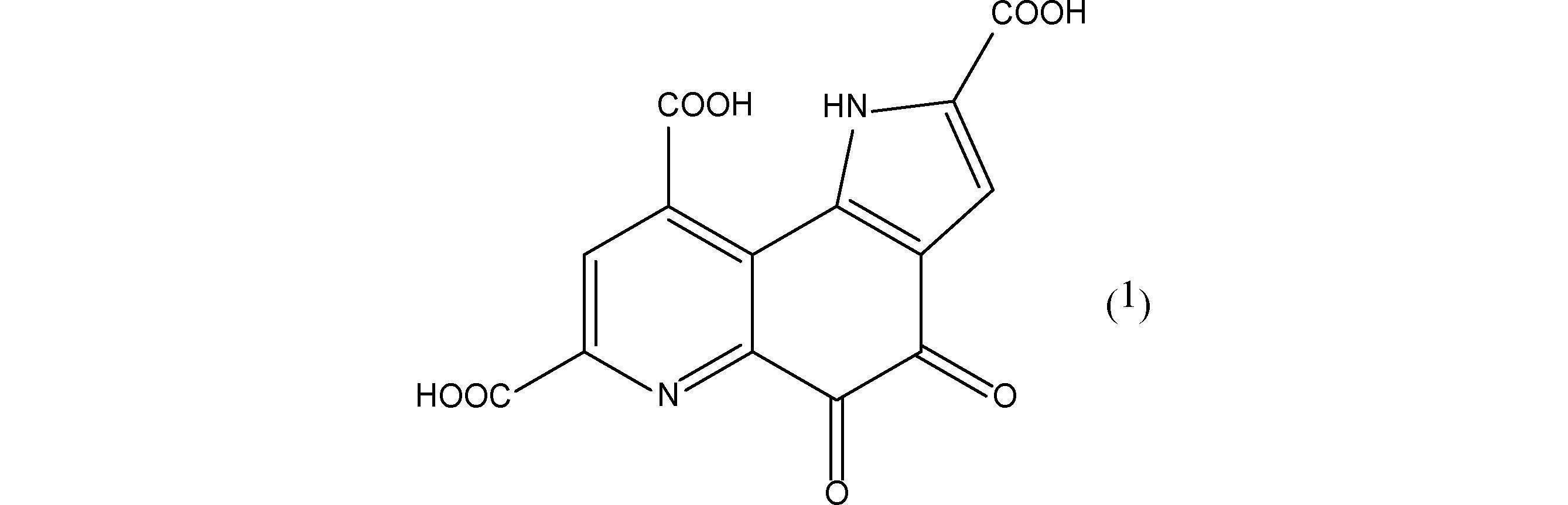
- Pyrroloquinoline quinone (hereinafter also referred to as “PQQ”) is a compound represented by the following structural formula, and has attracted attention as a useful substance for health supplements, cosmetics and the like.
- PQQ Pyrroloquinoline quinone reacts with an amino acid to produce imidazolylquinone (Non-patent Document 3), and there is some aspect of stability.
- the present invention uses the above-mentioned PQQ to provide a novel life extension agent, a life extension method using the life extension agent, a novel dual oxidase activator, a dual oxidase activation method, production of a life extension agent, and dual
- the object is to provide the production of an oxidase activator.
- the present inventors diligently studied the influence of PQQ on the living body, particularly the influence on the life of the living body. In general, it is believed that when active oxygen is generated, the living body is subjected to oxidative stress, leading to aging and shortening of life.
- a protein capable of producing reactive oxygen (ROS) As a protein capable of producing reactive oxygen (ROS), a dual oxidase that is NADPH oxidase is known. According to the conventional knowledge that active oxygen accelerates aging, activation of dual oxidase is considered to cause aging and shortening of life.
- ROS reactive oxygen
- a life extension agent comprising pyrroloquinoline quinone and / or a derivative of the pyrroloquinoline quinone.
- each R independently represents a hydrogen atom or a substituent having 1 to 10 carbon atoms
- R ′ represents one to 1 carbon atoms.
- the pyrroloquinoline quinone sodium salt is 2 ⁇ 9.1 ⁇ 0.2 °, 10.3 ⁇ 0.2 °, 13.8 ⁇ 0.2 °, 24.0 as measured by Cu K ⁇ radiation measurement in powder X-ray diffraction.
- the dual oxidase activator according to [9] comprising a crystal exhibiting ⁇ 0.2 °.
- [8] A method for activating a dual oxidase using the dual oxidase activator according to any one of [11].
- a novel life extension agent a life extension method using the life extension agent, a novel dual oxidase activator, a dual oxidase activation method, production of a life extension agent, and a dual oxidase activator
- the manufacture of can be provided.
- 6 is a graph showing the results of life tests in Examples 1 to 4 and Comparative Example 1.
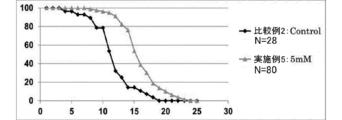
- 6 is a graph showing the results of life tests in Examples 1 to 4 and Comparative Example 1. It is a graph which shows the result of the life test in Example 5 and Comparative Example 2.
- 6 is a graph showing the results of a life test in Comparative Examples 3 to 4.
- the present embodiment a mode for carrying out the present invention (hereinafter referred to as “the present embodiment”) will be described in detail.
- the present invention is not limited to this, and various modifications can be made without departing from the gist thereof. Is possible.
- the life extending agent of this embodiment contains pyrroloquinoline quinone and / or a derivative of the pyrroloquinoline quinone. According to the life extending agent of the present embodiment, it is possible to extend the life, prevent diseases associated with aging, and use a strong pharmacological action and a high risk of side effects. An effective life extension effect can be obtained.
- life extension refers to life extension induced by ingestion of the substance of the present invention.
- the dual oxidase activator of the present embodiment includes pyrroloquinoline quinone and / or a derivative of the pyrroloquinoline quinone.
- SKN-1 corresponding to Nrf2 of nematode is activated via p38 mitogen-activated protein kinase (p38MAPK) cascade. I understood.
- Nrf2 is a transcription factor having a basic leucine zipper motif that exists in mammals. Nrf2 is expressed in a wide range of organs and is usually present in the cytoplasm by binding to the Keap1 protein, but it is an electrophilic substance. It is transferred into the nucleus by stimulation of oxidative stress and forms a heterodimer with a small Maf protein to induce expression of genes related to detoxification and antioxidant. With this transcriptional activation, the Nrf2 complex binds to an antioxidant response element (ARE) that is commonly present in the promoter region of the target gene cluster. So far, analysis of Nrf2-deficient mice suggests that activation of Nrf2 contributes to suppression of carcinogenesis, liver injury, lung injury, inflammation and the like.
- ARE antioxidant response element
- genes targeted for transcription of the stress-responsive transcription factor Nrf2 include GCLM, GCLC, GSR, GSTA1, GPX1, GPX4, HMOX1, NQO1, SRXN1, SQSTM1, SOD1, UGT1A6, NOS2, NOS3, and PTGS2. It is done.
- Glutamate cysteine ligase is also known as ⁇ -glutamylcysteine synthetase and is the first rate-limiting enzyme for glutathione (GSH) synthesis. This enzyme consists of two subunits: a heavy catalytic subunit (GCLC) and a light regulatory subunit (GCLM). Overexpression of GCLC or GCLM in Drosophila extends life span without affecting the rate of oxygen consumption.
- GSR glutathione reductase
- GSR glutathione reductase
- GSSG oxidized glutathione disulfide
- GSTA1 encodes alpha-class glutathione S-transferase, which detoxifies electrophilic compounds including carcinogens, therapeutics, environmental toxins and products of oxidative stress by conjugation with GSH Works in In addition to metabolizing bilirubin and certain anticancer drugs in the liver, ⁇ -class glutathione S-transferase exhibits glutathione peroxidase activity, thereby protecting cells from reactive oxygen species and peroxidation products.
- GPX1 glutathione peroxidase, an endogenous antioxidant enzyme responsible for removing toxic reactive oxygen species, hydrogen peroxide (H 2 O 2 ) and synthetic organic peroxide, using GSH as an electron donor Code.
- GPX4 encodes phospholipid hydroperoxide glutathione peroxidase, an endogenous antioxidant enzyme that has the same activity as GPX1, but has the additional ability to remove fatty acid hydroperoxides and cholesterol hydroperoxides, which are metabolic toxins.
- SOD1 encodes a soluble form of copper zinc superoxide dismutase (CuZnSOD1), an endogenous antioxidant enzyme involved in the catalytic removal of reactive superoxide radicals (O 2 ⁇ ).
- HMOX1 encodes heme oxygenase (HO-1), an inducible isoform of the first and rate-limiting enzyme of heme degradation.
- HO-1 also has a strong antioxidant function and anti-inflammatory function. Induction of HO-1 protects against cytotoxicity of oxidative stress and apoptotic cell death.
- NQO1 A member of the NAD (P) H dehydrogenase (quinone) family and encodes a cytoplasmic two-electron reductase. Altered expression of this protein has been observed in many tumors and is also associated with Alzheimer's disease (AD).
- SRXN1 an important molecule that is transcriptionally regulated by Nrf2 in protection against oxidative damage in the lung.
- Nrf2 When signal transduction involved in Nrf2 activation is reduced by gene knockout in mouse individuals or RNAi in cultured cell lines, the expression of SRNX1 is decreased.
- Computer analysis of the 5′-promoter flanking region of SRXN1 identified multiple highly conserved antioxidant response elements (AREs). Reporter and chromatin immunoprecipitation assays demonstrated that ARE1 at position -228 is important for the transcriptional response by Nrf2. Attenuation of SRXN1 expression by RNAi increased poison sensitivity to H 2 O 2 , while overexpression of SRXN1 protected from H 2 O 2 mediated cell death in vitro.
- UGT1A6 encodes UDP-glucuronosyltransferase, an enzyme of the glucuronidation pathway that converts small lipophilic molecules such as steroids, bilirubin, hormones and drugs into water-soluble excretable metabolites.
- the enzyme encoded by this gene is active on phenolic and planar compounds.
- Nitric oxide is a reactive free radical that acts as a biological mediator in several processes, including neurotransmission and antimicrobial and antitumor activity. This gene encodes an inducible nitric oxide synthase (iNOS) that is highly expressed in the liver.
- iNOS inducible nitric oxide synthase
- NOS3 encodes endothelium-derived NOS (eNOS), which is responsible for the production of nitric oxide necessary for vasodilation; it is abnormally regulated by inflammatory conditions and aging.
- eNOS endothelium-derived NOS
- PTGS2 Prostaglandin endoperoxide synthase (PTGS), also known as cyclooxygenase 2 (COX2), is a key enzyme in prostaglandin biosynthesis and acts as both a dioxygenase and a peroxidase.
- PTGS has two isozymes (constitutive PTGS1 and inducible PTGS2) that differ in their regulation of expression and tissue distribution. It has been suggested that PTGS2 is responsible for prostanoid biosynthesis involved in inflammation and mitogenesis.
- activation refers to up-regulation of a specific factor.
- Upregulation also refers to, for example, the expression or activity of one or more genes and the resulting protein (s) encoded by those genes in response to a signal or agent. Refers to increasing.
- the substituent having 1 to 10 carbon atoms represented by R is not particularly limited, and examples thereof include alkyl and allyl. Among these, alkyl is preferable from the viewpoint of synthesis.
- the substituent having 1 to 10 carbon atoms represented by R may contain an oxygen atom, a nitrogen atom, a hydrogen atom, a sulfur atom, or a phosphorus atom in addition to the carbon atom.
- oxidized pyrroloquinoline quinone a compound in which R is all hydrogen atoms is referred to as oxidized pyrroloquinoline quinone.
- the salt of the oxidized pyrroloquinoline quinone is not particularly limited, and examples thereof include tricarboxylic acid, tricarboxylic acid di-salt, tricarboxylic acid mono-salt, and tricarboxylic acid tri-salt.
- the salt include, but are not limited to, alkali metal salts such as lithium salt, sodium salt and potassium salt; alkaline earth metal salts such as calcium salt, strontium salt and barium salt; ammonium salt and alkylammonium salt And salts with such cationic compounds.
- one or more R are preferably hydrogen atoms.
- a compound in which one or more R is a hydrogen atom forms a salt in the solution and becomes ionic, so that the water solubility tends to be improved as compared with the tricarboxylic acid form.
- oxidized pyrroloquinoline quinone oxidized pyrroloquinoline quinone
- oxidized pyrroloquinoline quinone monosodium oxidized pyrroloquinoline quinone disodium
- oxidized pyrroloquinoline examples thereof include alkali metal salts of oxidized pyrroloquinoline quinone such as quinone trisodium, oxidized pyrroloquinoline quinone dipotassium, oxidized pyrroloquinoline quinone tripotassium.
- oxidized pyrroloquinoline quinone sodium salts such as oxidized pyrroloquinoline quinone monosodium, oxidized pyrroloquinoline quinone disodium, oxidized pyrroloquinoline quinone trisodium are preferable.
- the compound represented by the general formula (2) or a salt thereof is a derivative of pyrroloquinoline quinone.
- the substituent having 1 to 10 carbon atoms represented by R ′ is not particularly limited, and examples thereof include an acetyl group, an ethoxy group, a ketoalkyl group, and a hydroxyalkyl group. Among these, an acetyl group and a ketoalkyl group are preferable from the viewpoint of stability.
- the substituent having 1 to 10 carbon atoms represented by R ′ may contain an oxygen atom, a nitrogen atom, a hydrogen atom, a sulfur atom, or a phosphorus atom in addition to the carbon atom.
- the salt of the compound represented by the general formula (2) is not particularly limited, and examples thereof include tricarboxylic acid, tricarboxylic acid di-salt, tricarboxylic acid mono-salt, and tricarboxylic acid tri-salt.
- the salt include, but are not limited to, alkali metal salts such as lithium salt, sodium salt and potassium salt; alkaline earth metal salts such as calcium salt, strontium salt and barium salt; ammonium salt and alkylammonium salt And salts with such cationic compounds.
- R ' is an acetyl group or an ethoxy group, Tricarboxylic acid, Tricarboxylic acid disodium salt, Tricarboxylic acid trisodium salt, Examples include tricarboxylic acid dipotassium salt and tricarboxylic acid tripotassium salt.
- a pyrroloquinoline quinone derivative represented by the following general formula (4) or a salt thereof (hereinafter also referred to as “acetone adduct”) is preferable.
- acetone adduct a pyrroloquinoline quinone derivative represented by the following general formula (4) or a salt thereof
- the compound in which R is all hydrogen atoms is referred to as a reduced pyrroloquinoline quinone formed by reducing an acid value type pyrroloquinoline quinone.
- the salt of reduced pyrroloquinoline quinone is not particularly limited, and examples thereof include tricarboxylic acid, tricarboxylic acid di-salt, tricarboxylic acid mono-salt, and tricarboxylic acid tri-salt.
- the salt examples include, but are not limited to, alkali metal salts such as lithium salt, sodium salt and potassium salt; alkaline earth metal salts such as calcium salt, strontium salt and barium salt; ammonium salt and alkylammonium salt And salts with such cationic compounds.
- one or more R are preferably hydrogen atoms.
- a compound in which at least one R is a hydrogen atom forms a salt in the solution and becomes ionic, so that the water solubility tends to be improved as compared with the tricarboxylic acid form.
- reduced pyrroloquinoline quinone For example, reduced pyrroloquinoline quinone; reduced pyrroloquinoline quinone monosodium, reduced pyrroloquinoline quinone disodium, reduced pyrroloquinoline
- alkali metal salts of reduced pyrroloquinoline quinone such as quinone trisodium, reduced pyrroloquinoline quinone dipotassium, and reduced pyrroloquinoline quinone tripotassium.
- reduced pyrroloquinoline quinone disodium such as reduced pyrroloquinoline quinone monosodium, reduced pyrroloquinoline quinone disodium, and reduced pyrroloquinoline quinone trisodium is preferable.
- the compound represented by the general formula (1) has two quinones, it easily reacts with amino acids, and is known to form imidazoloquinone by forming a heterocyclic ring by the reaction with amino acids.
- the compound represented by the general formula (2) or (3) has one or zero quinone, it tends to hardly react with an amino acid. Therefore, even when mixed with an amino acid at a high temperature, pyrroloquinoline quinone and its derivatives are less likely to decrease and tend to be more stable. Since many amino acids are contained in culture media, foods, pharmaceuticals, etc., it is preferable that pyrroloquinoline quinone and its derivatives are less likely to react with amino acids. Moreover, it exists in the tendency for the lifetime extension effect to improve more by using the compound represented by the said General formula (2) or (3) which is hard to react with an amino acid.
- the phenolic hydroxyl group of the compound represented by the general formula (2) is easily oxidized to quinone by oxygen in the air. Therefore, among the compounds represented by the general formulas (1), (2), and (3), the compound represented by the general formula (2) is more preferable from the viewpoint of the life extension effect, and the general formula (4) Is more preferable.
- the pyrroloquinoline quinone sodium salt represented by the general formula (1) is 2 ⁇ 9.1 ⁇ 0.2 °, 10.3 ⁇ 0.2 °, 13.8 by Cu—K ⁇ radiation measurement in powder X-ray diffraction. Crystals exhibiting ⁇ 0.2 ° and 24.0 ⁇ 0.2 ° are preferred. By using such a pyrroloquinoline quinone sodium salt, the stability tends to be further improved. Such a crystal can be obtained by, for example, the method described in Table 2011/007633.
- the “pyrroloquinoline quinone sodium salt” means pyrroloquinoline quinone monosodium salt, pyrroloquinoline quinone disodium salt, and pyrroloquinoline quinone trisodium salt.
- Method for producing pyrroloquinoline quinone and derivatives thereof Although it does not specifically limit as a manufacturing method of pyrroloquinoline quinone, For example, the method of organic-chemical synthesis
- a derivative of pyrroloquinoline quinone specifically an ester of pyrroloquinoline quinone or a salt of pyrroloquinoline quinone can be synthesized according to a conventional method using the pyrroloquinoline quinone thus obtained as a starting material.
- the pyrroloquinoline quinone and derivatives thereof can be separated and purified from the reaction solution by a usual method such as column chromatography, recrystallization method, or solvent extraction method.
- various means such as elemental analysis, NMR spectrum, IR spectrum, and mass spectrometry are used for identification.
- Life extension agent or dual oxidase activator can be used as food, functional food, medicine or quasi-drug for human or animal use.
- the functional food here means foods taken for the purpose of maintaining health or supplementing nutrition instead of dietary foods such as health foods, nutritional supplements, functional nutritional foods, and nutrition insurance foods.
- Specific forms include, but are not limited to, capsules, tablets, chewable tablets, drinks and the like.
- the life extension agent or dual oxidase activator can be used by methods such as oral administration, injection, and skin absorption.
- the life extension agent or the dual oxidase activator can be mixed with other substances in the form of hard capsules, soft capsules or tablets.
- a life extension agent or a dual oxidase activator can also be used as a drink, a drip solution, and an injection solution using the high water solubility.
- life extenders or dual oxidase activators can be mixed with emulsions and blended into cosmetic creams and cakes, or mixed with rice and wheat flour and used in foods that utilize them. it can.
- a method of mixing in a culture medium can be mentioned.
- a life extension agent or dual oxidase activator is dissolved in a medium containing peptone, cholesterol, and inorganic ions rich in amino acids, and the life extension agent is applied to nematodes via the E. coli that grows in that state.
- the dual oxidase activator can be absorbed orally or percutaneously absorbed from the medium.
- the amount to be mixed in the medium is preferably 1 to 100 mM, more preferably 1 to 20 mM, still more preferably 1 to 15 mM, and more preferably 1 to 5 mM.
- the dosage When using a life extension agent or dual oxidase activator on animals, the dosage varies depending on the target animal.
- the target animal is a human
- the dosage varies depending on various factors such as the disease applied, the age, sex or weight of the patient, the severity of symptoms, and the route of administration.
- the subject animal is a human
- it is typically 0.25 to 1000 mg, preferably 1 to 250 mg, more preferably 10 to 100 mg of a life extension agent or Nrf2 activity per day for an adult weighing about 60 kg.
- An agent is administered.
- the life extension agent or Nrf2 activator can be administered once or multiple times per day.
- the life extension method of the present embodiment uses the above life extension agent, and preferably uses the compound represented by the above general formulas (1), (2), and (3) or a salt thereof.
- the life extension effect is effective for eukaryotes, preferably animals.
- the life can be extended, and further, organisms can be protected from aging-related diseases.
- the method include, but are not particularly limited to, for example, a method in which the life extension agent is administered to an animal or a patient for the purpose of treatment or treatment by the method described in [Use] above. That is, a method of extending the life of the subject or animal by administering the life extension agent to the subject or animal, more specifically, the subject or animal. A method of activating dual oxidase by administering the life extension agent to extend the life of the subject or the animal.
- animal or “patient” can be used for vertebrates such as birds, fish and mammals, and invertebrates such as insects and nematodes.
- life extension method of the present embodiment is a treatment method, humans are excluded from target animals.
- treatment includes the following, but is not particularly limited.
- A preventing the occurrence of a disease state in a mammal, specifically if such a mammal is susceptible to the disease state but has not yet been diagnosed as affected;
- B suppressing the disease state, eg, stopping the progression thereof; and / or
- reducing the disease state eg, causing the regression of the disease state to a desired end point.
- Treatment also includes recovery of disease symptoms (eg, relief of pain or discomfort), and such recovery may or may not have a direct effect on the disease (eg, cause, transmission, manifestation, etc.).
- the dual oxidase activation method of this embodiment uses pyrroloquinoline quinone and / or a derivative of the pyrroloquinoline quinone (dual oxidase activator), preferably, the above general formulas (1), (2), and ( The compound represented by 3) or a salt thereof is used.
- Specific methods are not particularly limited, and examples thereof include a method of using (administering) the dual oxidase activator to animals by the method described in the above [Use].
- the dual oxidase activation method is effective in suppressing diseases due to aging as well as a life extension effect. More specifically, it is effective for all diseases in which aging is considered as a risk factor. Examples of such diseases include, but are not limited to, Alzheimer, Parkinson's disease, myocardial infarction, diabetes and the like.
- the dual oxidase activation method is used to prevent or treat a disease or disorder associated with dual oxidase expression and / or function and Nrf2 expression and / or function.
- the disease or disorder includes those associated with abnormal expression and / or function of a dual oxidase mutant or normal dual oxidase, or a Nrf2 mutant or normal Nrf2.
- Nrf2 is a transcription factor that responds to the redox state of adults or cells and up-regulates a series of antioxidant genes and cytoprotective enzymes that constitute defense against oxidative stress. Regulating Nrf2 is important in the treatment of diseases or disorders associated with oxidative stress.
- the target diseases and disorders of the present embodiment are not particularly limited.
- chronic obstructive pulmonary disease COPD
- multiple sclerosis multiple sclerosis
- liver diseases or disorders e.g., gastrointestinal diseases or disorders, diabetes, autoimmunity Diseases or disorders related to immunity, immunodeficiencies (eg AIDS), neurological diseases or disorders, diseases or disorders of neurodegeneration, diseases or disorders or conditions related to oxidative stress, eye diseases (eg age-related macular Degeneration, cataract, photoretinopathy, retinopathy of prematurity), skin disease, asthma, arteriosclerosis, chronic inflammatory disease or condition (eg, vasculitis, pulmonary bronchitis, rheumatoid arthritis, osteoarthritis) , Hepatitis, pancreatitis, dermatitis, esophagitis, ulcerative colitis, Crohn's disease, conjunctivitis, etc.), nerve repair and paralysis, neuroendocrine differentiation, inflammatory diseases, muscle diseases or disorders, diseases related to
- cancer refers to any malignant tumor, particularly a malignant tumor that occurs in the lung, kidney or thyroid. Cancer manifests as a “tumor” or tissue that contains malignant cells of the cancer.
- tumors include but are not limited to fibrosarcoma, myxosarcoma, liposarcoma, chondrosarcoma, osteogenic sarcoma, chordoma, hemangiosarcoma, endothelial sarcoma, lymphangiosarcoma, lymphatic endothelial sarcoma, synovial tumor, Mesothelioma, Ewing tumor, leiomyosarcoma, rhabdomyosarcoma, colon cancer, pancreatic cancer, breast cancer, ovarian cancer, prostate cancer, squamous cell cancer, basal cell cancer, adenocarcinoma, sweat gland cancer, sebaceous gland cancer, papillary cancer, Papillary adenocarcinom
- cancer As used herein, “cancer”, “neoplasm” and “tumor” are used interchangeably and refer to a malignant transformation that becomes pathological to a host organism, either in the singular or plural form. Means the cell being received.
- Primary cancer cells ie cells obtained near the site of malignant transformation
- the definition of cancer cell as used herein includes not only primary cancer cells, but also any cells derived from cancer cell ancestry. This includes metastasized cancer cells, and in vitro cultures and cell lines derived from cancer cells.
- a “clinically detectable” tumor is detected based on tumor volume by procedures such as CAT scan, nuclear magnetic resonance imaging, X-ray, ultrasound, or palpation
- procedures such as CAT scan, nuclear magnetic resonance imaging, X-ray, ultrasound, or palpation
- Neurological disease or disorder means any nervous and / or visual system disease or disorder. “Neurological diseases or disorders” are located in the central nervous system (brain, brainstem and cerebellum), peripheral nervous system (including cranial nerves) and autonomic nervous system (some of which are both central and peripheral nervous system) ) Related diseases or disorders.
- Neurological diseases or disorders include, but are not limited to, acquired epilepsy aphasia; acute disseminated encephalomyelitis; adrenoleukodystrophy; age-related macular degeneration; corpus callosum deficiency; agnosia; Icardi syndrome; Alzheimer's disease; Vascular dementia; Amyotrophic lateral sclerosis; Anencephaly; Angelman syndrome; Hemangioma; Anoxia; Aphasia; Apraxia; Arachnoid cyst; Arnold Chiari malformation; arteriovenous malformation; Asperger syndrome; telangiectasia ataxia; attention deficit hyperactivity disorder; autism; autonomic dysfunction; back pain; Batten's disease; Benign essential blepharospasm; benign lesion; muscular atrophy; benign intracranial hypertension; binswanger disease; blepharospasm; Bloch-Sulzberger syndrome; brachial plexus injury; brain abscess; Brain tumors (including glioblastom
- PQQ disodium salt used in this example, BioPQQ manufactured by Mitsubishi Gas Chemical was used.
- Wako Pure Chemical reagents were used unless otherwise specified.
- UV-visible spectrum analysis The UV-visible spectrum was measured using a UV spectrum meter UV1800 manufactured by Shimadzu.
- PQQ analysis PQQ sodium salt was analyzed under the following analysis conditions. PQQ concentration and purity were measured by high performance liquid chromatography under the following conditions. (Measurement condition) Apparatus: Shimadzu Corporation, high performance liquid chromatography, LC-2010 Column: YMC-Pack ODS-A, 150 ⁇ 4.6 mm D. Measurement temperature: 40 ° C Detection: Absorbance at 259 nm Eluent: 30 mM acetic acid / 70 mM ammonium acetate (pH 5.1) Elution rate: 1.5 mL / min
- the mass ratio of PQQ and Na contained in the PQQ sodium salt was determined from the concentration of PQQ and Na contained in the above solution. If this substance amount ratio was 2.0 ⁇ 0.2, it was judged as PQQ disodium salt, and if it was 3.0 ⁇ 0.2, it was judged as PQQ trisodium salt.
- the solid obtained by filtration was mixed with 120 g of 25% by mass NaOH aqueous solution and 30 g of water to obtain an aqueous solution having a pH of 10.8.
- the obtained aqueous solution was heated to 70 ° C. and allowed to stand overnight, and then the precipitated solid was filtered, washed with 2-propanol, and further washed with 400 mL of ethanol.
- the obtained solid, 500 mL of water, and 41.5 g of NaOH were mixed to obtain an aqueous solution having a pH of 10.3.
- the resulting aqueous solution was left at 70 ° C. overnight. Thereafter, the aqueous solution was cooled with ice, and the precipitated solid was filtered and washed with 2-propanol.
- IPQ trisodium salt of imidazoloquinone
- Test sample concentrate 1 was adjusted so that the content of pyrroloquinoline quinone disodium salt was 30 mM.
- the test sample concentrate 1 was used by autoclave sterilization.
- the addition amount of the test sample concentrate 1 is such that the concentration of pyrroloquinoline quinone disodium salt in the medium solution is 0 mM (Comparative Example 1), 0.1 mM (Example 1), 1.0 mM (Example 2), It adjusted so that it might become 3.0 mM (Example 3) and 5.0 mM (Example 4). Cool further until the surface temperature of the flask reaches 40-41 ° C., add 14 mL of the medium solution to a 6 cm diameter polystyrene petri dish, cool to room temperature, and add a petri dish having a medium containing pyrroloquinoline quinone disodium salt of different concentrations. Produced.
- test sample concentrate 1 was added to the E. coli solution cultured in the LB medium (Luria-Bertani ⁇ broth) so that the concentrations of the above prepared petri dish medium and pyrroloquinoline quinone disodium salt were the same.
- the obtained Escherichia coli solution 100 ⁇ L was drawn so as to draw a circle having a diameter of about 2 cm in the center of the petri dish. This petri dish was stored at room temperature and used for the following nematode test 2 to 4 days after preparation.
- FIGS. 1 and 2 the higher the concentration of pyrroloquinoline quinone disodium salt, the longer the average lifespan.
- shaft of FIG.1 and 2 shows the survival rate of a nematode
- a horizontal axis shows the breeding days (lifetime) after reaching an adult
- foot of a graph shows a standard deviation. 1 and 2 indicate the number of nematodes at the time of the test. The same applies to FIGS. 3 and 4 below.
- Example 5 comparative example 2: acetone adduct
- the acetone adduct produced in Production Example 2, sodium bicarbonate of the same weight, and sterilized water were mixed to obtain test sample concentrate 2.
- Test sample concentrate 2 was adjusted so that the content of the acetone adduct was 30 mM.
- Example 1 except that the addition amount of test sample concentrate 2 was adjusted so that the concentration of the acetone adduct in the medium solution was 0 mM (Comparative Example 2) and 5.0 mM (Example 5). By the same operation, a petri dish having media containing different concentrations of acetone adducts was produced. Thereafter, a life test was conducted in the same manner as in Example 1. The result is shown in FIG.
- the average lifetime tends to be extended by including the acetone adduct.
- IPQ trisodium salt The IPQ trisodium salt prepared in Production Example 3 and water were mixed to obtain a test sample concentrate 3. Test sample concentrate 3 was adjusted so that the content of IPQ trisodium salt was 30 mM. The test sample concentrate 3 was used by autoclave sterilization.
- Example 1 except that the amount of test sample concentrate 3 was adjusted so that the concentration of IPQ trisodium salt in the medium solution was 0 mM (Comparative Example 3) and 5.0 mM (Comparative Example 4).
- Petri dishes having culture media containing different concentrations of IPQ trisodium salt were prepared by the same operation as described above. Thereafter, a life test was conducted in the same manner as in Example 1. The result is shown in FIG. In FIG. 4, the data of Example 4 are also shown.
- Example 8 Stability of reduced PQQ
- Reduced PQQ was added to sterilized water to prepare a 30 mM dispersion. This was added so that it might become 5 mM in the said composition for evaluation, and the petri dish was produced. A storage test was conducted at 30 degrees for 3 days, and LC analysis and UV spectrum analysis were performed. The reduced form changes to PQQ under neutral conditions. Therefore, the reduction state can be confirmed by detecting PQQ by LC analysis, dissolving it with dimethyl sulfoxide, and measuring the UV spectrum. As a result of confirming the state of reduced PQQ in the agar medium in this way, 86% of all PQQs maintained the reduced state.
- Example 1-5 E. coli colonies in the petri dish used in Example 1-5 were taken out and extracted and analyzed in the same manner as the medium analysis. The test substance was also detected as a major component from E. coli used for the test.
- IPQ amino acids in peptone
- IPQ has a small effect of extending the life, and it can be seen that PQQ is an active ingredient. Further, it was found that IPQ that is easily generated by using an acetone adduct was not observed, and the stability was improved.
- Example 14 and Example 17 the life-extension effect by PQQ was not observed in the strains with reduced function of the bli-3 gene.
- the life span was extended by adding PQQ, and a phenotype that did not cause a life extension was rescued by PQQ.
- the bli-3 gene is a gene that is useful for realizing longevity. In other words, it can be said that PQQ activates dual oxidase.
- the nematode bli-3 gene corresponds to the mammalian DUOX1 gene and the DUOX2 gene.
- nsy-1 (ky400) and pmk-3 (ok169) mutants are strains in which the activities of ASK-1 / MAPKKKK and p38 / MAPK are reduced, respectively.
- PQQ activates the dual oxidase encoded by the upstream bli-3. Thereafter, ROS produced from the activated dual oxidase activates SKN-1 / NRF-2 via activation of the p38 MAPK cascade.
- ROS active oxygen
- the dual oxidase activated by PQQ enhances the biological defense response and contributes to the life extension.
- active oxygen ROS
- ROS active oxygen
- an antioxidant is effective for preventing aging of the living body.
- PQQ not as an antioxidant, surprisingly extends life by enhancing the action of active oxygen producing enzymes.
- the life extension agent and dual oxidase activator of the present invention have industrial applicability in applications such as foods, feeds, and pharmaceuticals.
Landscapes
- Health & Medical Sciences (AREA)
- Chemical & Material Sciences (AREA)
- Organic Chemistry (AREA)
- General Health & Medical Sciences (AREA)
- Public Health (AREA)
- Veterinary Medicine (AREA)
- Medicinal Chemistry (AREA)
- Animal Behavior & Ethology (AREA)
- Life Sciences & Earth Sciences (AREA)
- Pharmacology & Pharmacy (AREA)
- Epidemiology (AREA)
- Nuclear Medicine, Radiotherapy & Molecular Imaging (AREA)
- Chemical Kinetics & Catalysis (AREA)
- General Chemical & Material Sciences (AREA)
- Bioinformatics & Cheminformatics (AREA)
- Engineering & Computer Science (AREA)
- Toxicology (AREA)
- Pharmaceuticals Containing Other Organic And Inorganic Compounds (AREA)
Abstract
Description
〔1〕
ピロロキノリンキノン及び/又は該ピロロキノリンキノンの誘導体を含む、寿命延長剤。
〔2〕
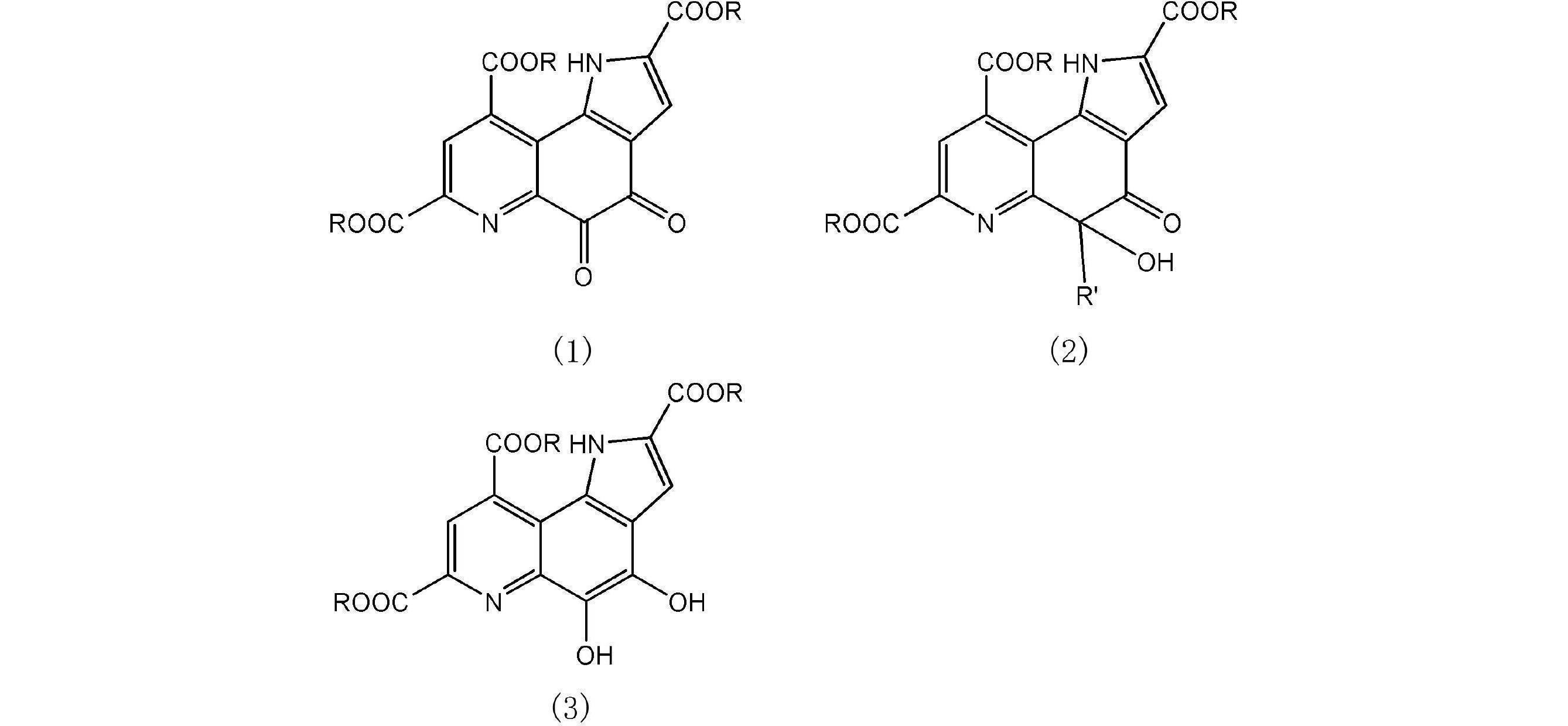
前記ピロロキノリンキノン及び前記ピロロキノリンキノンの誘導体が、下記一般式(1)、(2)、若しくは(3)で表される化合物又はその塩である、〔1〕に記載の寿命延長剤。
〔3〕
前記ピロロキノリンキノンの誘導体が、ピロロキノリンキノンナトリウム塩を含む、〔1〕又は〔2〕に記載の寿命延長剤。
〔4〕
前記ピロロキノリンキノンナトリウム塩が、粉末X線回折におけるCu Kα放射線測定で、2θ 9.1±0.2°、10.3±0.2°、13.8±0.2°、24.0±0.2°を示す結晶を含む、〔3〕に記載の寿命延長剤。
〔5〕
〔1〕~〔4〕のいずれか1項に記載の寿命延長剤を使用する、寿命延長方法。
〔6〕
被検対象者又は動物に対し、前記寿命延長剤を投与することにより、前記被検対象者又は前記動物の寿命を延長する、〔5〕に記載の寿命延長方法。
〔7〕
被検対象者又は動物に対し、前記寿命延長剤を投与することにより、デュアルオキシダーゼを活性化し、前記被検対象者又は前記動物の寿命を延長する、〔5〕又は〔6〕に記載の寿命延長方法。
〔8〕
ピロロキノリンキノン及び/又は該ピロロキノリンキノンの誘導体を含む、デュアルオキシダーゼ活性化剤。
〔9〕
前記ピロロキノリンキノン及び前記ピロロキノリンキノンの誘導体が、下記一般式(1)、(2)、若しくは(3)で表される化合物又はその塩である、〔8〕に記載のデュアルオキシダーゼ活性化剤。

〔10〕
前記ピロロキノリンキノンの誘導体が、ピロロキノリンキノンナトリウム塩を含む、〔8〕又は〔9〕に記載のデュアルオキシダーゼ活性化剤。
〔11〕
前記ピロロキノリンキノンナトリウム塩が、粉末X線回折におけるCu Kα放射線測定で、2θ 9.1±0.2°、10.3±0.2°、13.8±0.2°、24.0±0.2°を示す結晶を含む、〔9〕に記載のデュアルオキシダーゼ活性化剤。
〔12〕
〔8〕~〔11〕のいずれか1項に記載のデュアルオキシダーゼ活性化剤を使用する、デュアルオキシダーゼの活性化方法。
〔13〕
寿命延長剤の製造のための、ピロロキノリンキノン及び/又は該ピロロキノリンキノンの誘導体の使用。
〔14〕
デュアルオキシダーゼの活性化により被対象者又は動物の寿命を延長する寿命延長剤の製造のための、ピロロキノリンキノン及び/又は該ピロロキノリンキノンの誘導体の使用。
〔15〕
デュアルオキシダーゼ活性化剤の製造のための、ピロロキノリンキノン及び/又は該ピロロキノリンキノンの誘導体の使用。
本実施形態の寿命延長剤は、ピロロキノリンキノン及び/又は該ピロロキノリンキノンの誘導体を含む。本実施形態の寿命延長剤によれば、寿命延長が可能になり、老化に伴う疾患を防止することが可能となり、強力な薬理作用を有して副作用の危険性が高いものを使用しなくとも、有効な寿命延長効果を得ることができる。
また、本実施形態のデュアルオキシダーゼ活性化剤は、ピロロキノリンキノン及び/又は該ピロロキノリンキノンの誘導体を含む。
以下、寿命延長剤、及び、デュアルオキシダーゼ活性化剤において用いられ得るピロロキノリンキノン及び/又は該ピロロキノリンキノンの誘導体について詳細に説明する。ピロロキノリンキノン及びその誘導体としては、特に限定されないが、例えば、下記一般式(1)、(2)、若しくは(3)で表される化合物又はその塩が挙げられる。
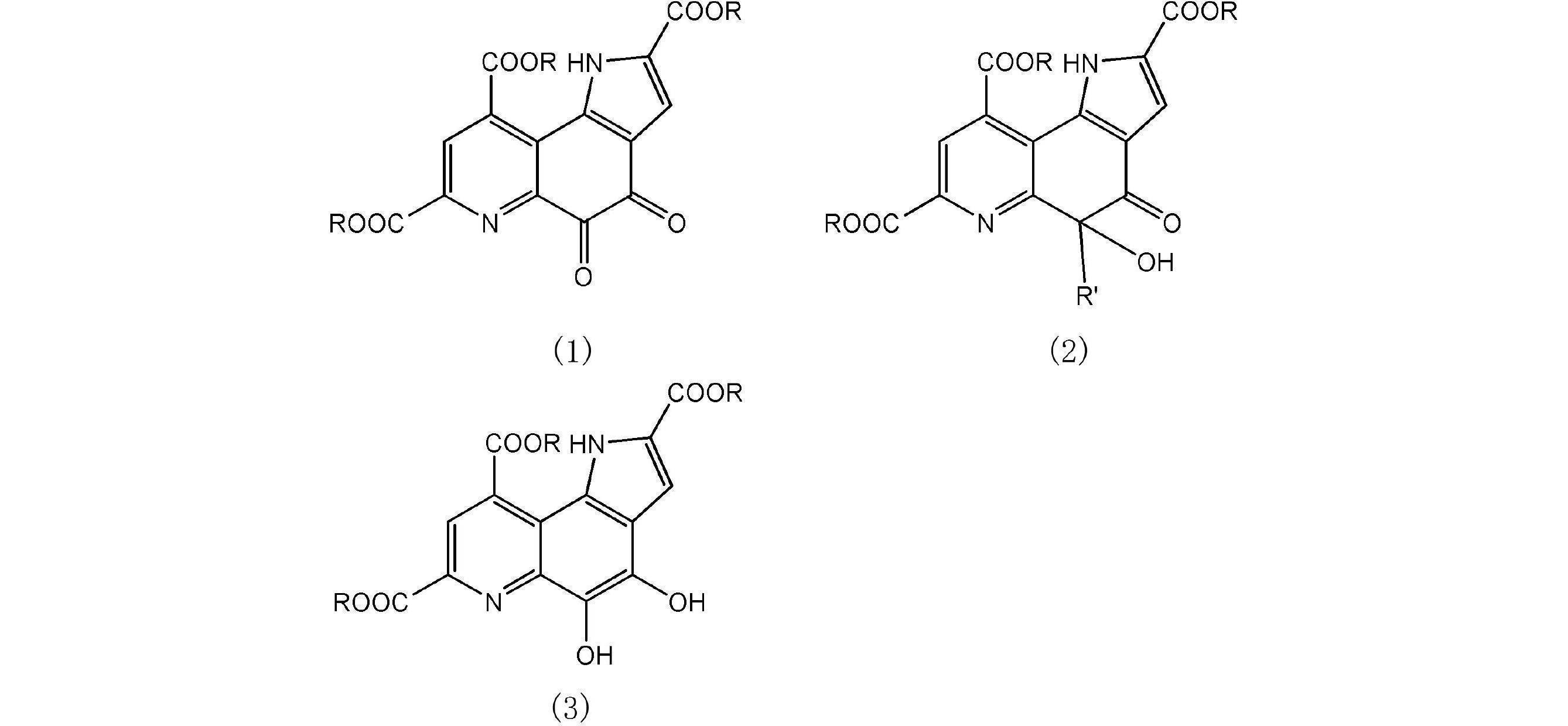
上記一般式(1)中、Rが全て水素原子である化合物は、酸化型ピロロキノリンキノンという。該酸化型ピロロキノリンキノンの塩としては、特に限定されないが、例えば、トリカルボン酸、トリカルボン酸ジ塩、トリカルボン酸モノ塩、トリカルボン酸トリ塩が挙げられる。塩としては、特に限定されないが、例えば、リチウム塩、ナトリウム塩、カリウム塩のようなアルカリ金属塩;カルシウム塩、ストロンチウム塩、バリウム塩のようなアルカリ土類金属塩;アンモニウム塩、アルキルアンモニウム塩のようなカチオン性化合物との塩が挙げられる。
上記一般式(2)で表される化合物又はその塩は、ピロロキノリンキノンの誘導体である。R’で示される炭素原子数1~10の置換基としては、特に限定されないが、例えば、アセチル基、エトキシ基、ケトアルキル基、ヒドロキシアルキル基が挙げられる。この中でも、安定性の観点から、アセチル基、ケトアルキル基が好ましい。なお、R’で示される炭素原子数1~10の置換基は、炭素原子以外に酸素原子、窒素原子、水素原子、硫黄原子、リン原子を含んでもよい。

上記一般式(3)中、Rが全て水素原子である化合物は、酸価型ピロロキノリンキノンが還元されてできた還元型ピロロキノリンキノンという。還元型ピロロキノリンキノンの塩としては、特に限定されないが、例えば、トリカルボン酸、トリカルボン酸ジ塩、トリカルボン酸モノ塩、トリカルボン酸トリ塩が挙げられる。塩としては、特に限定されないが、例えば、リチウム塩、ナトリウム塩、カリウム塩のようなアルカリ金属塩;カルシウム塩、ストロンチウム塩、バリウム塩のようなアルカリ土類金属塩;アンモニウム塩、アルキルアンモニウム塩のようなカチオン性化合物との塩が挙げられる。
上記一般式(1)で表されるピロロキノリンキノンナトリウム塩は、粉末X線回折におけるCu-Kα放射線測定で2θ 9.1±0.2°、10.3±0.2°、13.8±0.2°、24.0±0.2°を示す結晶であることが好ましい。このようなピロロキノリンキノンナトリウム塩を用いることにより、安定性がより向上する傾向にある。このような結晶は、例えば再表2011/007633に記載の方法により得ることができる。なお、「ピロロキノリンキノンナトリウム塩」とは、ピロロキノリンキノンモノナトリウム塩、ピロロキノリンキノンジナトリウム塩、及びピロロキノリンキノントリナトリウム塩を意味する。
ピロロキノリンキノンの製造方法としては、特に限定されないが、例えば、有機化学的に合成する方法又は発酵法が挙げられる。このなかで発酵法とは、例えば、メタノール資化性を有し、かつロロキノリンキノンを生産する能力を有する細菌を、炭素源としてメタノールを使用して培養することによりPQQを製造する方法である。
本実施形態は、寿命延長剤の製造のための、ピロロキノリンキノン及び/又は該ピロロキノリンキノンの誘導体の使用、デュアルオキシダーゼの活性化により被対象者又は動物の寿命を延長する寿命延長剤の製造のための、ピロロキノリンキノン及び/又は該ピロロキノリンキノンの誘導体の使用、デュアルオキシダーゼ活性化剤の製造のための、ピロロキノリンキノン及び/又は該ピロロキノリンキノンの誘導体の使用を含む。
本実施形態の寿命延長方法は、上記寿命延長剤を使用し、好ましくは上記一般式(1)、(2)、及び(3)で表される化合物又はその塩を使用する。本発明で寿命延長効果は、真核生物に有効であり、好ましくは動物である。
(a)哺乳動物において病態が生じることを予防するステップ、具体的にはそのような哺乳動物が病態を罹患しやすいが、罹患しているとまだ診断されていない場合;
(b)病態を抑制するステップ、例えばその進行を止めるステップ;及び/又は
(c)病態を軽減するステップ、例えば病態の退行を所望の終点に至るまで生じさせるステップ、を含む哺乳動物における病態の処置を含む。治療は、疾患の症状の回復(例えば疼痛又は不快感の緩和)も含み、そのような回復は、疾患に直接効果を与える又は与えない場合がある(例えば原因、伝染、発現など)。
本実施形態のデュアルオキシダーゼ活性化方法は、ピロロキノリンキノン及び/又は該ピロロキノリンキノンの誘導体(デュアルオキシダーゼ活性化剤)を使用し、好ましくは、上記一般式(1)、(2)、及び(3)で表される化合物又はその塩を使用する。
PQQジナトリウム塩の粉末X線回折におけるCu Kα放射線測定を以下に示す条件で測定した。その結果、2θ 9.1°、10.3°、13.8°、24.0°を示す結晶であった。
(測定条件)
装置 :株式会社リガク製RINT2000
X線 :Cu/管電圧40kV/管電流100mA
入射スリット :2/3°
散乱スリット :2/3°
受光スリット :0.3mm
スキャンスピード:4.000°/min
サンプリング幅 :0.02
紫外可視スペクトルは、UVスペクトルメーター島津製UV1800を用いて測定した。
PQQナトリウム塩の分析は以下の分析条件で行った。PQQ濃度、及び純度を、高速液体クロマトグラフィーにより以下に示す条件で測定した。
(測定条件)
装置 : 島津製作所、高速液体クロマトグラフィー、LC-2010
カラム :YMC-Pack ODS-A、150x4.6mm I.D.
測定温度:40℃
検出 :259nmにおける吸光度
溶離液 :30mM 酢酸/70mM 酢酸アンモニウム (pH5.1)
溶出速度:1.5mL/min
PQQジナトリウム塩(三菱瓦斯化学製BioPQQ)5gと水1Lとを混合し、得られた水溶液を70℃に加温した。この水溶液に対し、アスコルビン酸50gと水0.2Lとを含む混合液を混合した。得られた水溶液を70℃で3日反応させた後、2N塩酸を10mL加え2時間反応させた。その後、室温に戻し、水溶液中に析出した固体をろ過し、2N塩酸、エタノールで洗った。得られた固体を減圧乾燥して、下記一般式(4)で表される還元型ピロロキノリンキノン固体3.6gを得た。

PQQジナトリウム塩(三菱瓦斯化学製BioPQQ)11.2gと水1Lとを混合し、水酸化ナトリウムを加え、pH9の水溶液を得た。得られた水溶液に、アセトン200g加えると、水溶液は20分には赤から薄い黄色に変色した。変色後の水溶液に塩酸を加え、pHを2.5とした。この水溶液から溶媒を留去して全体の重量が400gになるまで濃縮した。濃縮した水溶液中に析出した黄色い固体を減圧乾燥して、下記一般式(5)で表されるピロロキノリンキノンのアセトン付加体の個体8.01gを得た。
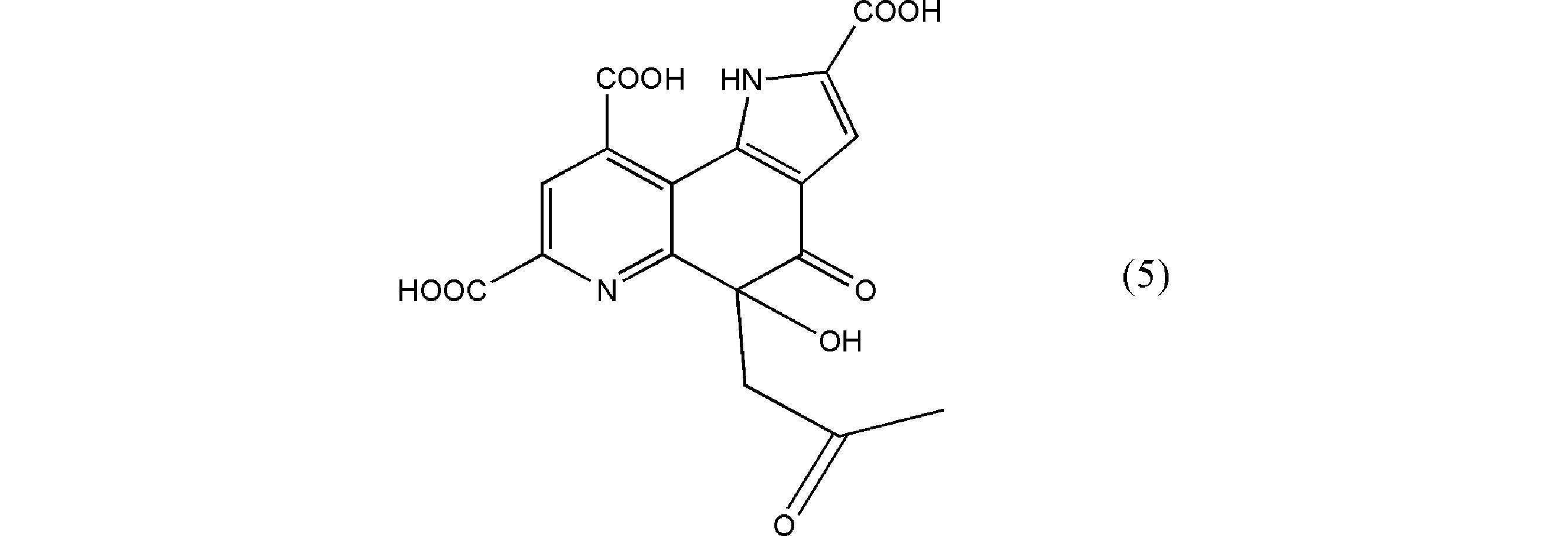
PQQジナトリウム塩(三菱瓦斯化学製BioPQQ)100gとグリシン200gと水0.5Lとを混合し、pH4.8の水溶液を得た。得られた水溶液を30分攪拌したところ、泡が出て水溶液は固まった。得られた混合物を70℃に加熱して、3日反応させた。その後、混合物に10質量%NaCl水を1000g加え、固体を濾過した。濾過で得られた固体に25質量%NaOH水120gと水30gとを混合し、pH10.8の水溶液を得た。得られた水溶液を70℃に加温して一晩放置後、析出した固体を濾過し、2-プロパノールで洗い、さらにエタノール400mLで洗った。得られた固体と水500mLとNaOH41.5gとを混合し、pH10.3の水溶液を得た。得られた水溶液を、70℃で一晩静置した。その後、水溶液を氷で冷やし、析出した固体を濾過し、2-プロパノールで洗浄した。得られた固体を70℃で減圧乾燥して、65.8gの固体を得た。得られた固体をLC,Naイオン分析により分析し、下記一般式(6)で表されるイミダゾロキノン(以下、IPQと記すことがある)のトリナトリウム塩であることが確認された。

〔寿命試験〕
〔線虫用培地の作製〕
ピロロキノリンキノンジナトリウムを水と水酸化ナトリウムとを混合し、pH6の試験サンプル濃縮液1を得た。
(シンクロナイズ(年齢の調整))
実験開始時の線虫個体の年齢を同期させるため、産卵させたあと親虫を取り除き、孵化させて一定時間の期間一様に育てた個体を使用した。具体的には、シャーレに5匹ずつ、adult(抱卵している個体)を選んで移し、20℃で2時間放置(産卵期間)し、親虫を取り除いた。その後、20℃で72時間放置し、1シャーレあたり10~20匹となったところで寿命試験を開始した。1シャーレあたり10~20匹という低密度で飼育することで、エサの不足や排泄物の蓄積に由来する影響を減少させた。
シャーレ内の個体を毎日新しいシャーレに移し替えた。スコアシートに日付、生存数、死亡数、行方不明数などの情報を記録した。保管時はシャーレにパラフィルムをまいた。自発的な行動がみられず、振動刺激や接触刺激を与えても全く反応がみられなかった場合を死亡と判断した。また、線虫がシャーレ外へ逃走したり、壁面で乾燥したり、培地の隙間から潜り込んだりするなどの理由で行方不明になることがしばしば起こるため、行方不明数を記録し、データからは除外した。また、ある種の変異体において頻出する自分の子供が体内で羽化して死亡する個体をBAG、脱腸などにより個体が死亡する個体を破裂と記録し、テータからは除外した。培地中のピロロキノリンキノンジナトリウム塩の濃度を変えて測定した結果を図1及び2に示す。
製造例2で作製したアセトン付加体と、同重量の炭酸水素ナトリウムと、滅菌水とを混合し、試験サンプル濃縮液2を得た。試験サンプル濃縮液2は、アセトン付加体の含有量が30mMになるように調整した。
製造例3で作製したIPQトリナトリウム塩と水とを混合し、試験サンプル濃縮液3を得た。試験サンプル濃縮液3は、IPQトリナトリウム塩の含有量が30mMになるように調整した。また、試験サンプル濃縮液3は、オートクレーブ滅菌により使用した。
寿命試験に使用したシャーレ中の還元型ピロロキノリンキノン、ピロロキノリンキノンのアセトン付加体、及びIPQトリナトリウム塩の安定性を液体クロマトグラフィー分析(LC分析)によって評価した。その結果を表1に示す。なお、液体クロマトグラフィー分析は、上記したものに従って行うことができる。
還元型PQQを滅菌水に加え、30mMの分散液を作製した。これを前記の評価用組成において5mMになるように添加してシャーレを作製した。30度で3日保存試験を行い、LC分析、およびUVスペクトル分析を行った。還元型は中性条件ではPQQに変化する。そのため、LC分析によりPQQを検出し、それをジメチルスルホキシドで溶解しUVスペクトルを測定することで還元状態を確認できる。このようにして寒天培地中の還元型PQQの状態を確認した結果、全PQQのうち86%が還元状態を維持していた。

線虫の変異体を使用することでPQQがどのように働いているかを知ることができる。実施例4で調製したPQQ5mMを含む培地を用いて、シャーレを複数作製した。作製したシャーレを用いて、表2に示す各変異体で上記実施例1と同様に寿命延長試験を行った。その結果を以下の表2にまとめる。相対的な効果としてPQQを添加しない場合を100として示す。なお、表2は成体に成長したのちの、5mMPQQにおける寿命延長を示す。

Claims (15)
- ピロロキノリンキノン及び/又は該ピロロキノリンキノンの誘導体を含む、寿命延長剤。
- 前記ピロロキノリンキノン及び前記ピロロキノリンキノンの誘導体が、下記一般式(1)、(2)、若しくは(3)で表される化合物又はその塩である、請求項1に記載の寿命延長剤。

(上記一般式(1)、(2)、及び(3)中、Rは、各々独立して、水素原子又は炭素原子数1~10の置換基を示し、R’は、炭素原子数1~10の置換基を示す。) - 前記ピロロキノリンキノンの誘導体が、ピロロキノリンキノンナトリウム塩を含む、請求項1又は2に記載の寿命延長剤。
- 前記ピロロキノリンキノンナトリウム塩が、粉末X線回折におけるCu Kα放射線測定で、2θ 9.1±0.2°、10.3±0.2°、13.8±0.2°、24.0±0.2°を示す結晶を含む、請求項3に記載の寿命延長剤。
- 請求項1~4のいずれか1項に記載の寿命延長剤を使用する、寿命延長方法。
- 被検対象者又は動物に対し、前記寿命延長剤を投与することにより、前記被検対象者又は前記動物の寿命を延長する、請求項5に記載の寿命延長方法。
- 被検対象者又は動物に対し、前記寿命延長剤を投与することにより、デュアルオキシダーゼを活性化し、前記被検対象者又は前記動物の寿命を延長する、請求項5又は6に記載の寿命延長方法。
- ピロロキノリンキノン及び/又は該ピロロキノリンキノンの誘導体を含む、デュアルオキシダーゼ活性化剤。
- 前記ピロロキノリンキノン及び前記ピロロキノリンキノンの誘導体が、下記一般式(1)、(2)、若しくは(3)で表される化合物又はその塩である、請求項8に記載のデュアルオキシダーゼ活性化剤。
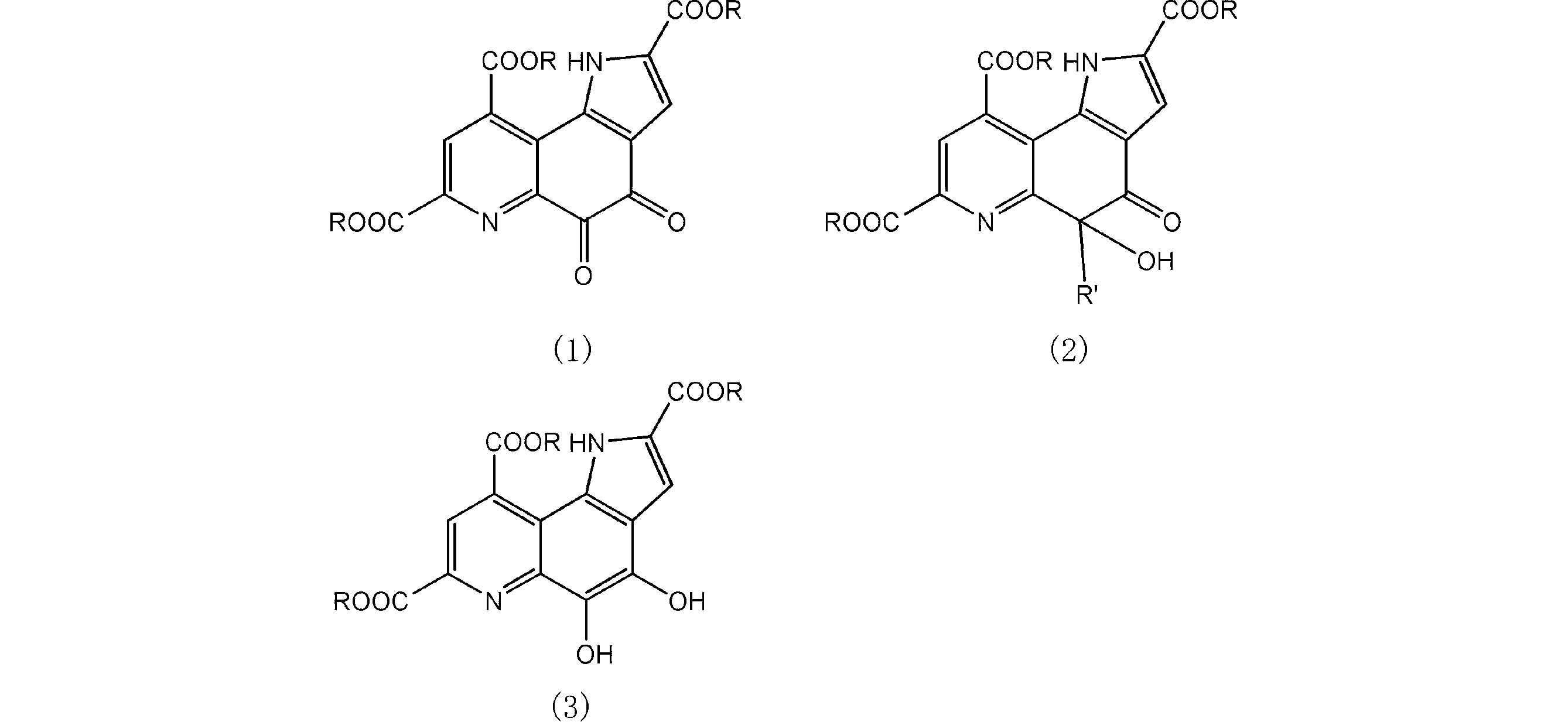
(上記一般式(1)、(2)、及び(3)中、Rは、各々独立して、水素原子又は炭素原子数1~10の置換基を示し、R’は、炭素原子数1~10の置換基を示す。) - 前記ピロロキノリンキノンの誘導体が、ピロロキノリンキノンナトリウム塩を含む、請求項8又は9に記載のデュアルオキシダーゼ活性化剤。
- 前記ピロロキノリンキノンナトリウム塩が、粉末X線回折におけるCu Kα放射線測定で、2θ 9.1±0.2°、10.3±0.2°、13.8±0.2°、24.0±0.2°を示す結晶を含む、請求項9に記載のデュアルオキシダーゼ活性化剤。
- 請求項8~11のいずれか1項に記載のデュアルオキシダーゼ活性化剤を使用する、デュアルオキシダーゼの活性化方法。
- 寿命延長剤の製造のための、ピロロキノリンキノン及び/又は該ピロロキノリンキノンの誘導体の使用。
- デュアルオキシダーゼの活性化により被対象者又は動物の寿命を延長する寿命延長剤の製造のための、ピロロキノリンキノン及び/又は該ピロロキノリンキノンの誘導体の使用。
- デュアルオキシダーゼ活性化剤の製造のための、ピロロキノリンキノン及び/又は該ピロロキノリンキノンの誘導体の使用。
Priority Applications (4)
| Application Number | Priority Date | Filing Date | Title |
|---|---|---|---|
| US15/512,895 US10053459B2 (en) | 2014-09-22 | 2015-09-18 | Life-extending agent, life extension method using the life-extending agent, novel dual oxidase activator, method for activating dual oxidase, production of life-extending agent, and production of dual oxidase activator |
| EP15843935.6A EP3199154A4 (en) | 2014-09-22 | 2015-09-18 | Novel life-prolonging agent, life-prolonging method making use of same, novel dual oxidase activator, method for activating dual oxidase, manufacture of life-prolonging agent, and manufacture of dual oxidase activator |
| CN201580051221.4A CN107106554A (zh) | 2014-09-22 | 2015-09-18 | 新型寿命延长剂、使用该寿命延长剂的寿命延长方法、新型双氧化酶活化剂、双氧化酶活化剂的活化方法、寿命延长剂的制造、以及双氧化酶活化剂的制造 |
| JP2016550325A JP6609261B2 (ja) | 2014-09-22 | 2015-09-18 | 新規な寿命延長剤、該寿命延長剤を用いた寿命延長方法、新規なデュアルオキシダーゼ活性化剤、デュアルオキシダーゼの活性化方法、寿命延長剤の製造、及びデュアルオキシダーゼ活性化剤の製造 |
Applications Claiming Priority (2)
| Application Number | Priority Date | Filing Date | Title |
|---|---|---|---|
| JP2014-193034 | 2014-09-22 | ||
| JP2014193034 | 2014-09-22 |
Publications (1)
| Publication Number | Publication Date |
|---|---|
| WO2016047637A1 true WO2016047637A1 (ja) | 2016-03-31 |
Family
ID=55581162
Family Applications (1)
| Application Number | Title | Priority Date | Filing Date |
|---|---|---|---|
| PCT/JP2015/076796 Ceased WO2016047637A1 (ja) | 2014-09-22 | 2015-09-18 | 新規な寿命延長剤、該寿命延長剤を用いた寿命延長方法、新規なデュアルオキシダーゼ活性化剤、デュアルオキシダーゼの活性化方法、寿命延長剤の製造、及びデュアルオキシダーゼ活性化剤の製造 |
Country Status (5)
| Country | Link |
|---|---|
| US (1) | US10053459B2 (ja) |
| EP (1) | EP3199154A4 (ja) |
| JP (1) | JP6609261B2 (ja) |
| CN (1) | CN107106554A (ja) |
| WO (1) | WO2016047637A1 (ja) |
Cited By (5)
| Publication number | Priority date | Publication date | Assignee | Title |
|---|---|---|---|---|
| JP2018083790A (ja) * | 2016-11-25 | 2018-05-31 | 三菱瓦斯化学株式会社 | オートファジー誘導剤 |
| JP2019503401A (ja) * | 2016-02-04 | 2019-02-07 | 南京舒鵬生物科技有限公司Nanjing Shupeng Lifescience Co., Ltd | ピロロキノリンキノン、その誘導体及び/又は塩の乾燥症候群における使用ならびに医薬組成物 |
| WO2019235306A1 (ja) * | 2018-06-05 | 2019-12-12 | 三菱瓦斯化学株式会社 | 飲料、飲料の製造方法又は組み合わせ |
| JP2023068716A (ja) * | 2021-11-04 | 2023-05-18 | 三菱瓦斯化学株式会社 | ピロロキノリンキノンの微量分析方法 |
| JP2024511529A (ja) * | 2021-04-02 | 2024-03-13 | 南京舒鵬生物科技有限公司 | キノン化合物及びその薬学的使用 |
Families Citing this family (6)
| Publication number | Priority date | Publication date | Assignee | Title |
|---|---|---|---|---|
| US10131661B2 (en) * | 2015-01-19 | 2018-11-20 | Mitsubishi Gas Chemical Company, Inc. | High-solubility acetone-added pyrroloquinoline quinone salt |
| EP3739334B1 (en) * | 2018-01-12 | 2022-07-27 | Mitsubishi Gas Chemical Company, Inc. | A method for quantitative analysis of pyrroloquinoline quinone or a salt thereof |
| MX2020011109A (es) * | 2018-04-20 | 2020-11-11 | Adisseo France Sas | Aditivo para piensos para animales de granja. |
| EP4012403B1 (en) * | 2019-03-20 | 2024-12-18 | Mitsubishi Gas Chemical Company, Inc. | Method for analyzing pyrroloquinoline quinone |
| JP7723387B2 (ja) * | 2019-06-28 | 2025-08-14 | 国立大学法人広島大学 | 雌の抗老化剤 |
| WO2022095809A1 (zh) * | 2020-11-03 | 2022-05-12 | 广州君赫生物科技有限公司 | 影响saicar表达量的化合物的新应用 |
Citations (3)
| Publication number | Priority date | Publication date | Assignee | Title |
|---|---|---|---|---|
| JPH06128259A (ja) * | 1992-10-14 | 1994-05-10 | Mitsubishi Gas Chem Co Inc | 新規なピロロピリドシンノリン化合物 |
| WO2007034852A1 (ja) * | 2005-09-22 | 2007-03-29 | Kaneka Corporation | 延命用組成物及び寿命を延長する方法 |
| WO2011007633A1 (ja) * | 2009-07-16 | 2011-01-20 | 三菱瓦斯化学株式会社 | ピロロキノリンキノンのナトリウム塩結晶 |
Family Cites Families (7)
| Publication number | Priority date | Publication date | Assignee | Title |
|---|---|---|---|---|
| JP2004345954A (ja) * | 2003-01-30 | 2004-12-09 | Institute Of Physical & Chemical Research | ピロロキノリンキノンからなるビタミンおよびその用途 |
| AU2005316295B2 (en) | 2004-12-17 | 2012-03-22 | Alan B. Cash | Method for extending lifespan and delaying the onset of age-related disease |
| CA2649315A1 (en) * | 2006-04-10 | 2007-10-25 | Mitsubishi Gas Chemical Company, Inc. | Brain function-improving agent, and functional food containing the improving agent |
| CN101317849A (zh) * | 2007-06-20 | 2008-12-10 | 复旦大学附属中山医院 | 一种防治阿尔茨海默病或衰老的药物组合物 |
| CN101851234A (zh) * | 2009-04-03 | 2010-10-06 | 上海日馨生物科技有限公司 | 吡咯喹啉醌锂盐衍生物及其制备方法 |
| JP2011246442A (ja) * | 2010-04-28 | 2011-12-08 | Rohto Pharmaceutical Co Ltd | 光老化抑制剤および皮膚菲薄化抑制剤 |
| JP5979376B2 (ja) * | 2010-11-26 | 2016-08-24 | 三菱瓦斯化学株式会社 | 溶解性の高いピロロキノリンキノン塩及びその製造方法 |
-
2015
- 2015-09-18 JP JP2016550325A patent/JP6609261B2/ja active Active
- 2015-09-18 CN CN201580051221.4A patent/CN107106554A/zh active Pending
- 2015-09-18 WO PCT/JP2015/076796 patent/WO2016047637A1/ja not_active Ceased
- 2015-09-18 US US15/512,895 patent/US10053459B2/en active Active
- 2015-09-18 EP EP15843935.6A patent/EP3199154A4/en not_active Withdrawn
Patent Citations (3)
| Publication number | Priority date | Publication date | Assignee | Title |
|---|---|---|---|---|
| JPH06128259A (ja) * | 1992-10-14 | 1994-05-10 | Mitsubishi Gas Chem Co Inc | 新規なピロロピリドシンノリン化合物 |
| WO2007034852A1 (ja) * | 2005-09-22 | 2007-03-29 | Kaneka Corporation | 延命用組成物及び寿命を延長する方法 |
| WO2011007633A1 (ja) * | 2009-07-16 | 2011-01-20 | 三菱瓦斯化学株式会社 | ピロロキノリンキノンのナトリウム塩結晶 |
Non-Patent Citations (5)
| Title |
|---|
| "Supplement de Kenko wa Te ni Hairunoka PQQ", KASSEI SANSO HOGO KINO, 24 December 2013 (2013-12-24), XP009501204, Retrieved from the Internet <URL:http://dietary-supplement.blog.jp/archives/3843119.html> [retrieved on 20151027] * |
| KAZUO MUKAI ET AL.: "Kangengata Pyrroloquinoline Quinone (PQQH2) no Ko Sanka Kassei no Hyoka", VITAMINS, vol. 87, no. 4, 2013, pages 247, XP009501203 * |
| LIFE EXTENSION, PQQ CAPSULE WITH BIO PQQ, 10 MG, 30 VEGGIE CAPSULE, 12 March 2012 (2012-03-12), XP055420105, Retrieved from the Internet <URL:http://jp.iherb.com/Life-Extension-PQQ-Caps-with-BioPQQ-10-mg-30-Veggie-Caps/25980> [retrieved on 20151117] * |
| See also references of EP3199154A4 * |
| YUJI NAITO: "Ko Karei Iryo - Shindan to Chiryo no Saizensen Ko Sanka Supplement no Erabikata", MODERN PHYSICIAN, vol. 26, no. 4, 15 April 2006 (2006-04-15), pages 547 - 550, XP009501206 * |
Cited By (9)
| Publication number | Priority date | Publication date | Assignee | Title |
|---|---|---|---|---|
| JP2019503401A (ja) * | 2016-02-04 | 2019-02-07 | 南京舒鵬生物科技有限公司Nanjing Shupeng Lifescience Co., Ltd | ピロロキノリンキノン、その誘導体及び/又は塩の乾燥症候群における使用ならびに医薬組成物 |
| JP2018083790A (ja) * | 2016-11-25 | 2018-05-31 | 三菱瓦斯化学株式会社 | オートファジー誘導剤 |
| WO2019235306A1 (ja) * | 2018-06-05 | 2019-12-12 | 三菱瓦斯化学株式会社 | 飲料、飲料の製造方法又は組み合わせ |
| JPWO2019235306A1 (ja) * | 2018-06-05 | 2021-06-17 | 三菱瓦斯化学株式会社 | 飲料、飲料の製造方法又は組み合わせ |
| JP7327395B2 (ja) | 2018-06-05 | 2023-08-16 | 三菱瓦斯化学株式会社 | 飲料、飲料の製造方法又は組み合わせ |
| JP2024511529A (ja) * | 2021-04-02 | 2024-03-13 | 南京舒鵬生物科技有限公司 | キノン化合物及びその薬学的使用 |
| JP7774324B2 (ja) | 2021-04-02 | 2025-11-21 | 南京舒鵬生物科技有限公司 | キノン化合物及びその薬学的使用 |
| JP2023068716A (ja) * | 2021-11-04 | 2023-05-18 | 三菱瓦斯化学株式会社 | ピロロキノリンキノンの微量分析方法 |
| JP7788071B2 (ja) | 2021-11-04 | 2025-12-18 | 三菱瓦斯化学株式会社 | ピロロキノリンキノンの微量分析方法 |
Also Published As
| Publication number | Publication date |
|---|---|
| JP6609261B2 (ja) | 2019-11-20 |
| US20170291898A1 (en) | 2017-10-12 |
| US10053459B2 (en) | 2018-08-21 |
| EP3199154A4 (en) | 2018-02-28 |
| EP3199154A1 (en) | 2017-08-02 |
| CN107106554A (zh) | 2017-08-29 |
| JPWO2016047637A1 (ja) | 2017-06-29 |
Similar Documents
| Publication | Publication Date | Title |
|---|---|---|
| JP6609261B2 (ja) | 新規な寿命延長剤、該寿命延長剤を用いた寿命延長方法、新規なデュアルオキシダーゼ活性化剤、デュアルオキシダーゼの活性化方法、寿命延長剤の製造、及びデュアルオキシダーゼ活性化剤の製造 | |
| JP6383377B2 (ja) | 化合物、組成物およびそれらを作製する方法 | |
| US20160287621A1 (en) | Biological production of nad precursors and analogs | |
| US10765660B2 (en) | Agent containing flavonoid derivatives for treating cancer and inflammation | |
| KR20210145298A (ko) | 신경근 질환, 신경 퇴행성 질환, 자가면역 질환, 발달 질환, 진탕, 안구 건조증, 및/또는 대사 질환의 dnp 및 dnp 프로드럭 치료 | |
| Wang et al. | Synthesis, characterization and anti-diabetic therapeutic potential of novel aminophenol-derivatized nitrilotriacetic acid vanadyl complexes | |
| EP3241824B1 (en) | Trifluoroacethydrazide compound as well as preparation method thereof and application thereof in preparing a medicament | |
| CN115974854A (zh) | 苯酚基烯基苯酞吡唑酮类化合物及其制备方法和用途 | |
| US20120270821A1 (en) | CDK5 Inhibitors and Therapeutic Uses Thereof | |
| CN114478450A (zh) | 苄氧基苯酞类化合物、其制备方法和用途 | |
| Araldi et al. | Development of novel fluorinated polyphenols as selective inhibitors of DYRK1A/B kinase for treatment of neuroinflammatory diseases including Parkinson’s disease | |
| CN105188688A (zh) | 用于在非造血性细胞中诱导促红细胞生成素(epo)介导的产生血红蛋白表达和线粒体生物合成的组合物和方法 | |
| Kade et al. | Effect of oral administration of diphenyl diselenide on antioxidant status, and activity of delta aminolevulinic acid dehydratase and isoforms of lactate dehydrogenase, in streptozotocin-induced diabetic rats | |
| EP4509121A1 (en) | Enampt increasing agent, sirtuin activation or expression enhancer, nad+ increasing agent, and senescent cell inhibitor | |
| KR20210055172A (ko) | 신규 세스퀴테르펜 유도체 (3) 및 이의 용도 | |
| JP7403446B2 (ja) | オートファジー活性化剤 | |
| JP6949363B2 (ja) | ドーパミン産生促進剤 | |
| US8778996B2 (en) | Method of treating a human being for a class of neurological defects and seizure disorders | |
| US9056091B1 (en) | Composition for regulation of liver X receptor | |
| RU2534525C1 (ru) | Гликозидные производные 1,2-дитиол-3-тиона или 1,2-дитиол-3-она и лекарственные средства на их основе | |
| Babincová et al. | Dopamine mediated iron release from ferritin is enhanced at higher temperatures: Possible implications for fever-induced Parkinson's disease | |
| Touraud | Phosphorylated resveratrol as a protein aggregation suppressor in vitro and in vivo | |
| CN120682240A (zh) | 苯丙素取代酯型儿茶素及其制备方法和应用 | |
| CN117143027A (zh) | 3-苄氧基-6-羟苯基哒嗪类化合物及其制备方法和用途 | |
| EP2538931B1 (en) | Products and methods |
Legal Events
| Date | Code | Title | Description |
|---|---|---|---|
| 121 | Ep: the epo has been informed by wipo that ep was designated in this application |
Ref document number: 15843935 Country of ref document: EP Kind code of ref document: A1 |
|
| ENP | Entry into the national phase |
Ref document number: 2016550325 Country of ref document: JP Kind code of ref document: A |
|
| WWE | Wipo information: entry into national phase |
Ref document number: 15512895 Country of ref document: US |
|
| NENP | Non-entry into the national phase |
Ref country code: DE |
|
| REEP | Request for entry into the european phase |
Ref document number: 2015843935 Country of ref document: EP |
|
| WWE | Wipo information: entry into national phase |
Ref document number: 2015843935 Country of ref document: EP |