WO2016052647A1 - 樹脂発泡シート及び樹脂発泡成形品の製造方法 - Google Patents
樹脂発泡シート及び樹脂発泡成形品の製造方法 Download PDFInfo
- Publication number
- WO2016052647A1 WO2016052647A1 PCT/JP2015/077805 JP2015077805W WO2016052647A1 WO 2016052647 A1 WO2016052647 A1 WO 2016052647A1 JP 2015077805 W JP2015077805 W JP 2015077805W WO 2016052647 A1 WO2016052647 A1 WO 2016052647A1
- Authority
- WO
- WIPO (PCT)
- Prior art keywords
- resin foam
- resin
- foam molded
- sheet
- molded product
- Prior art date
- Legal status (The legal status is an assumption and is not a legal conclusion. Google has not performed a legal analysis and makes no representation as to the accuracy of the status listed.)
- Ceased
Links
- AKAGXGBQEKFWHD-UHFFFAOYSA-N CC(C)=C(C)CCN=O Chemical compound CC(C)=C(C)CCN=O AKAGXGBQEKFWHD-UHFFFAOYSA-N 0.000 description 1
Images



Classifications
-
- C—CHEMISTRY; METALLURGY
- C08—ORGANIC MACROMOLECULAR COMPOUNDS; THEIR PREPARATION OR CHEMICAL WORKING-UP; COMPOSITIONS BASED THEREON
- C08J—WORKING-UP; GENERAL PROCESSES OF COMPOUNDING; AFTER-TREATMENT NOT COVERED BY SUBCLASSES C08B, C08C, C08F, C08G or C08H
- C08J9/00—Working-up of macromolecular substances to porous or cellular articles or materials; After-treatment thereof
- C08J9/04—Working-up of macromolecular substances to porous or cellular articles or materials; After-treatment thereof using blowing gases generated by a previously added blowing agent
-
- B—PERFORMING OPERATIONS; TRANSPORTING
- B29—WORKING OF PLASTICS; WORKING OF SUBSTANCES IN A PLASTIC STATE IN GENERAL
- B29C—SHAPING OR JOINING OF PLASTICS; SHAPING OF MATERIAL IN A PLASTIC STATE, NOT OTHERWISE PROVIDED FOR; AFTER-TREATMENT OF THE SHAPED PRODUCTS, e.g. REPAIRING
- B29C44/00—Shaping by internal pressure generated in the material, e.g. swelling or foaming ; Producing porous or cellular expanded plastics articles
- B29C44/34—Auxiliary operations
- B29C44/36—Feeding the material to be shaped
- B29C44/46—Feeding the material to be shaped into an open space or onto moving surfaces, i.e. to make articles of indefinite length
- B29C44/50—Feeding the material to be shaped into an open space or onto moving surfaces, i.e. to make articles of indefinite length using pressure difference, e.g. by extrusion or by spraying
- B29C44/507—Feeding the material to be shaped into an open space or onto moving surfaces, i.e. to make articles of indefinite length using pressure difference, e.g. by extrusion or by spraying extruding the compound through an annular die
-
- B—PERFORMING OPERATIONS; TRANSPORTING
- B29—WORKING OF PLASTICS; WORKING OF SUBSTANCES IN A PLASTIC STATE IN GENERAL
- B29C—SHAPING OR JOINING OF PLASTICS; SHAPING OF MATERIAL IN A PLASTIC STATE, NOT OTHERWISE PROVIDED FOR; AFTER-TREATMENT OF THE SHAPED PRODUCTS, e.g. REPAIRING
- B29C44/00—Shaping by internal pressure generated in the material, e.g. swelling or foaming ; Producing porous or cellular expanded plastics articles
- B29C44/02—Shaping by internal pressure generated in the material, e.g. swelling or foaming ; Producing porous or cellular expanded plastics articles for articles of definite length, i.e. discrete articles
- B29C44/04—Shaping by internal pressure generated in the material, e.g. swelling or foaming ; Producing porous or cellular expanded plastics articles for articles of definite length, i.e. discrete articles consisting of at least two parts of chemically or physically different materials, e.g. having different densities
-
- B—PERFORMING OPERATIONS; TRANSPORTING
- B29—WORKING OF PLASTICS; WORKING OF SUBSTANCES IN A PLASTIC STATE IN GENERAL
- B29C—SHAPING OR JOINING OF PLASTICS; SHAPING OF MATERIAL IN A PLASTIC STATE, NOT OTHERWISE PROVIDED FOR; AFTER-TREATMENT OF THE SHAPED PRODUCTS, e.g. REPAIRING
- B29C44/00—Shaping by internal pressure generated in the material, e.g. swelling or foaming ; Producing porous or cellular expanded plastics articles
- B29C44/34—Auxiliary operations
- B29C44/56—After-treatment of articles, e.g. for altering the shape
- B29C44/5627—After-treatment of articles, e.g. for altering the shape by mechanical deformation, e.g. crushing, embossing, stretching
- B29C44/5636—After-treatment of articles, e.g. for altering the shape by mechanical deformation, e.g. crushing, embossing, stretching with the addition of heat
-
- B—PERFORMING OPERATIONS; TRANSPORTING
- B29—WORKING OF PLASTICS; WORKING OF SUBSTANCES IN A PLASTIC STATE IN GENERAL
- B29C—SHAPING OR JOINING OF PLASTICS; SHAPING OF MATERIAL IN A PLASTIC STATE, NOT OTHERWISE PROVIDED FOR; AFTER-TREATMENT OF THE SHAPED PRODUCTS, e.g. REPAIRING
- B29C48/00—Extrusion moulding, i.e. expressing the moulding material through a die or nozzle which imparts the desired form; Apparatus therefor
- B29C48/16—Articles comprising two or more components, e.g. co-extruded layers
-
- B—PERFORMING OPERATIONS; TRANSPORTING
- B29—WORKING OF PLASTICS; WORKING OF SUBSTANCES IN A PLASTIC STATE IN GENERAL
- B29C—SHAPING OR JOINING OF PLASTICS; SHAPING OF MATERIAL IN A PLASTIC STATE, NOT OTHERWISE PROVIDED FOR; AFTER-TREATMENT OF THE SHAPED PRODUCTS, e.g. REPAIRING
- B29C49/00—Blow-moulding, i.e. blowing a preform or parison to a desired shape within a mould; Apparatus therefor
- B29C49/22—Blow-moulding, i.e. blowing a preform or parison to a desired shape within a mould; Apparatus therefor using multilayered preforms or parisons
-
- B—PERFORMING OPERATIONS; TRANSPORTING
- B29—WORKING OF PLASTICS; WORKING OF SUBSTANCES IN A PLASTIC STATE IN GENERAL
- B29C—SHAPING OR JOINING OF PLASTICS; SHAPING OF MATERIAL IN A PLASTIC STATE, NOT OTHERWISE PROVIDED FOR; AFTER-TREATMENT OF THE SHAPED PRODUCTS, e.g. REPAIRING
- B29C49/00—Blow-moulding, i.e. blowing a preform or parison to a desired shape within a mould; Apparatus therefor
- B29C49/42—Component parts, details or accessories; Auxiliary operations
- B29C49/48—Moulds
- B29C49/48185—Moulds with more than one separate mould cavity
-
- B—PERFORMING OPERATIONS; TRANSPORTING
- B29—WORKING OF PLASTICS; WORKING OF SUBSTANCES IN A PLASTIC STATE IN GENERAL
- B29C—SHAPING OR JOINING OF PLASTICS; SHAPING OF MATERIAL IN A PLASTIC STATE, NOT OTHERWISE PROVIDED FOR; AFTER-TREATMENT OF THE SHAPED PRODUCTS, e.g. REPAIRING
- B29C51/00—Shaping by thermoforming, i.e. shaping sheets or sheet like preforms after heating, e.g. shaping sheets in matched moulds or by deep-drawing; Apparatus therefor
- B29C51/02—Combined thermoforming and manufacture of the preform
-
- B—PERFORMING OPERATIONS; TRANSPORTING
- B32—LAYERED PRODUCTS
- B32B—LAYERED PRODUCTS, i.e. PRODUCTS BUILT-UP OF STRATA OF FLAT OR NON-FLAT, e.g. CELLULAR OR HONEYCOMB, FORM
- B32B1/00—Layered products having a non-planar shape
-
- B—PERFORMING OPERATIONS; TRANSPORTING
- B32—LAYERED PRODUCTS
- B32B—LAYERED PRODUCTS, i.e. PRODUCTS BUILT-UP OF STRATA OF FLAT OR NON-FLAT, e.g. CELLULAR OR HONEYCOMB, FORM
- B32B27/00—Layered products comprising a layer of synthetic resin
-
- B—PERFORMING OPERATIONS; TRANSPORTING
- B32—LAYERED PRODUCTS
- B32B—LAYERED PRODUCTS, i.e. PRODUCTS BUILT-UP OF STRATA OF FLAT OR NON-FLAT, e.g. CELLULAR OR HONEYCOMB, FORM
- B32B27/00—Layered products comprising a layer of synthetic resin
- B32B27/06—Layered products comprising a layer of synthetic resin as the main or only constituent of a layer, which is next to another layer of the same or of a different material
- B32B27/065—Layered products comprising a layer of synthetic resin as the main or only constituent of a layer, which is next to another layer of the same or of a different material of foam
-
- B—PERFORMING OPERATIONS; TRANSPORTING
- B32—LAYERED PRODUCTS
- B32B—LAYERED PRODUCTS, i.e. PRODUCTS BUILT-UP OF STRATA OF FLAT OR NON-FLAT, e.g. CELLULAR OR HONEYCOMB, FORM
- B32B5/00—Layered products characterised by the non- homogeneity or physical structure, i.e. comprising a fibrous, filamentary, particulate or foam layer; Layered products characterised by having a layer differing constitutionally or physically in different parts
- B32B5/18—Layered products characterised by the non- homogeneity or physical structure, i.e. comprising a fibrous, filamentary, particulate or foam layer; Layered products characterised by having a layer differing constitutionally or physically in different parts characterised by features of a layer of foamed material
-
- B—PERFORMING OPERATIONS; TRANSPORTING
- B32—LAYERED PRODUCTS
- B32B—LAYERED PRODUCTS, i.e. PRODUCTS BUILT-UP OF STRATA OF FLAT OR NON-FLAT, e.g. CELLULAR OR HONEYCOMB, FORM
- B32B5/00—Layered products characterised by the non- homogeneity or physical structure, i.e. comprising a fibrous, filamentary, particulate or foam layer; Layered products characterised by having a layer differing constitutionally or physically in different parts
- B32B5/22—Layered products characterised by the non- homogeneity or physical structure, i.e. comprising a fibrous, filamentary, particulate or foam layer; Layered products characterised by having a layer differing constitutionally or physically in different parts characterised by the presence of two or more layers which are next to each other and are fibrous, filamentary, formed of particles or foamed
- B32B5/32—Layered products characterised by the non- homogeneity or physical structure, i.e. comprising a fibrous, filamentary, particulate or foam layer; Layered products characterised by having a layer differing constitutionally or physically in different parts characterised by the presence of two or more layers which are next to each other and are fibrous, filamentary, formed of particles or foamed at least two layers being foamed and next to each other
-
- C—CHEMISTRY; METALLURGY
- C08—ORGANIC MACROMOLECULAR COMPOUNDS; THEIR PREPARATION OR CHEMICAL WORKING-UP; COMPOSITIONS BASED THEREON
- C08J—WORKING-UP; GENERAL PROCESSES OF COMPOUNDING; AFTER-TREATMENT NOT COVERED BY SUBCLASSES C08B, C08C, C08F, C08G or C08H
- C08J9/00—Working-up of macromolecular substances to porous or cellular articles or materials; After-treatment thereof
- C08J9/0061—Working-up of macromolecular substances to porous or cellular articles or materials; After-treatment thereof characterized by the use of several polymeric components
-
- C—CHEMISTRY; METALLURGY
- C08—ORGANIC MACROMOLECULAR COMPOUNDS; THEIR PREPARATION OR CHEMICAL WORKING-UP; COMPOSITIONS BASED THEREON
- C08J—WORKING-UP; GENERAL PROCESSES OF COMPOUNDING; AFTER-TREATMENT NOT COVERED BY SUBCLASSES C08B, C08C, C08F, C08G or C08H
- C08J9/00—Working-up of macromolecular substances to porous or cellular articles or materials; After-treatment thereof
- C08J9/0066—Use of inorganic compounding ingredients
-
- C—CHEMISTRY; METALLURGY
- C08—ORGANIC MACROMOLECULAR COMPOUNDS; THEIR PREPARATION OR CHEMICAL WORKING-UP; COMPOSITIONS BASED THEREON
- C08J—WORKING-UP; GENERAL PROCESSES OF COMPOUNDING; AFTER-TREATMENT NOT COVERED BY SUBCLASSES C08B, C08C, C08F, C08G or C08H
- C08J9/00—Working-up of macromolecular substances to porous or cellular articles or materials; After-treatment thereof
- C08J9/04—Working-up of macromolecular substances to porous or cellular articles or materials; After-treatment thereof using blowing gases generated by a previously added blowing agent
- C08J9/12—Working-up of macromolecular substances to porous or cellular articles or materials; After-treatment thereof using blowing gases generated by a previously added blowing agent by a physical blowing agent
- C08J9/14—Working-up of macromolecular substances to porous or cellular articles or materials; After-treatment thereof using blowing gases generated by a previously added blowing agent by a physical blowing agent organic
- C08J9/141—Hydrocarbons
-
- C—CHEMISTRY; METALLURGY
- C08—ORGANIC MACROMOLECULAR COMPOUNDS; THEIR PREPARATION OR CHEMICAL WORKING-UP; COMPOSITIONS BASED THEREON
- C08J—WORKING-UP; GENERAL PROCESSES OF COMPOUNDING; AFTER-TREATMENT NOT COVERED BY SUBCLASSES C08B, C08C, C08F, C08G or C08H
- C08J9/00—Working-up of macromolecular substances to porous or cellular articles or materials; After-treatment thereof
- C08J9/22—After-treatment of expandable particles; Forming foamed products
-
- C—CHEMISTRY; METALLURGY
- C08—ORGANIC MACROMOLECULAR COMPOUNDS; THEIR PREPARATION OR CHEMICAL WORKING-UP; COMPOSITIONS BASED THEREON
- C08J—WORKING-UP; GENERAL PROCESSES OF COMPOUNDING; AFTER-TREATMENT NOT COVERED BY SUBCLASSES C08B, C08C, C08F, C08G or C08H
- C08J9/00—Working-up of macromolecular substances to porous or cellular articles or materials; After-treatment thereof
- C08J9/36—After-treatment
-
- B—PERFORMING OPERATIONS; TRANSPORTING
- B29—WORKING OF PLASTICS; WORKING OF SUBSTANCES IN A PLASTIC STATE IN GENERAL
- B29C—SHAPING OR JOINING OF PLASTICS; SHAPING OF MATERIAL IN A PLASTIC STATE, NOT OTHERWISE PROVIDED FOR; AFTER-TREATMENT OF THE SHAPED PRODUCTS, e.g. REPAIRING
- B29C48/00—Extrusion moulding, i.e. expressing the moulding material through a die or nozzle which imparts the desired form; Apparatus therefor
- B29C48/001—Combinations of extrusion moulding with other shaping operations
- B29C48/0012—Combinations of extrusion moulding with other shaping operations combined with shaping by internal pressure generated in the material, e.g. foaming
-
- B—PERFORMING OPERATIONS; TRANSPORTING
- B29—WORKING OF PLASTICS; WORKING OF SUBSTANCES IN A PLASTIC STATE IN GENERAL
- B29C—SHAPING OR JOINING OF PLASTICS; SHAPING OF MATERIAL IN A PLASTIC STATE, NOT OTHERWISE PROVIDED FOR; AFTER-TREATMENT OF THE SHAPED PRODUCTS, e.g. REPAIRING
- B29C48/00—Extrusion moulding, i.e. expressing the moulding material through a die or nozzle which imparts the desired form; Apparatus therefor
- B29C48/001—Combinations of extrusion moulding with other shaping operations
- B29C48/0022—Combinations of extrusion moulding with other shaping operations combined with cutting
-
- B—PERFORMING OPERATIONS; TRANSPORTING
- B29—WORKING OF PLASTICS; WORKING OF SUBSTANCES IN A PLASTIC STATE IN GENERAL
- B29C—SHAPING OR JOINING OF PLASTICS; SHAPING OF MATERIAL IN A PLASTIC STATE, NOT OTHERWISE PROVIDED FOR; AFTER-TREATMENT OF THE SHAPED PRODUCTS, e.g. REPAIRING
- B29C48/00—Extrusion moulding, i.e. expressing the moulding material through a die or nozzle which imparts the desired form; Apparatus therefor
- B29C48/03—Extrusion moulding, i.e. expressing the moulding material through a die or nozzle which imparts the desired form; Apparatus therefor characterised by the shape of the extruded material at extrusion
- B29C48/07—Flat, e.g. panels
- B29C48/08—Flat, e.g. panels flexible, e.g. films
-
- B—PERFORMING OPERATIONS; TRANSPORTING
- B29—WORKING OF PLASTICS; WORKING OF SUBSTANCES IN A PLASTIC STATE IN GENERAL
- B29C—SHAPING OR JOINING OF PLASTICS; SHAPING OF MATERIAL IN A PLASTIC STATE, NOT OTHERWISE PROVIDED FOR; AFTER-TREATMENT OF THE SHAPED PRODUCTS, e.g. REPAIRING
- B29C48/00—Extrusion moulding, i.e. expressing the moulding material through a die or nozzle which imparts the desired form; Apparatus therefor
- B29C48/03—Extrusion moulding, i.e. expressing the moulding material through a die or nozzle which imparts the desired form; Apparatus therefor characterised by the shape of the extruded material at extrusion
- B29C48/09—Articles with cross-sections having partially or fully enclosed cavities, e.g. pipes or channels
- B29C48/10—Articles with cross-sections having partially or fully enclosed cavities, e.g. pipes or channels flexible, e.g. blown foils
-
- B—PERFORMING OPERATIONS; TRANSPORTING
- B29—WORKING OF PLASTICS; WORKING OF SUBSTANCES IN A PLASTIC STATE IN GENERAL
- B29C—SHAPING OR JOINING OF PLASTICS; SHAPING OF MATERIAL IN A PLASTIC STATE, NOT OTHERWISE PROVIDED FOR; AFTER-TREATMENT OF THE SHAPED PRODUCTS, e.g. REPAIRING
- B29C48/00—Extrusion moulding, i.e. expressing the moulding material through a die or nozzle which imparts the desired form; Apparatus therefor
- B29C48/03—Extrusion moulding, i.e. expressing the moulding material through a die or nozzle which imparts the desired form; Apparatus therefor characterised by the shape of the extruded material at extrusion
- B29C48/09—Articles with cross-sections having partially or fully enclosed cavities, e.g. pipes or channels
- B29C48/11—Articles with cross-sections having partially or fully enclosed cavities, e.g. pipes or channels comprising two or more partially or fully enclosed cavities, e.g. honeycomb-shaped
-
- B—PERFORMING OPERATIONS; TRANSPORTING
- B29—WORKING OF PLASTICS; WORKING OF SUBSTANCES IN A PLASTIC STATE IN GENERAL
- B29C—SHAPING OR JOINING OF PLASTICS; SHAPING OF MATERIAL IN A PLASTIC STATE, NOT OTHERWISE PROVIDED FOR; AFTER-TREATMENT OF THE SHAPED PRODUCTS, e.g. REPAIRING
- B29C48/00—Extrusion moulding, i.e. expressing the moulding material through a die or nozzle which imparts the desired form; Apparatus therefor
- B29C48/25—Component parts, details or accessories; Auxiliary operations
- B29C48/30—Extrusion nozzles or dies
- B29C48/32—Extrusion nozzles or dies with annular openings, e.g. for forming tubular articles
-
- B—PERFORMING OPERATIONS; TRANSPORTING
- B29—WORKING OF PLASTICS; WORKING OF SUBSTANCES IN A PLASTIC STATE IN GENERAL
- B29C—SHAPING OR JOINING OF PLASTICS; SHAPING OF MATERIAL IN A PLASTIC STATE, NOT OTHERWISE PROVIDED FOR; AFTER-TREATMENT OF THE SHAPED PRODUCTS, e.g. REPAIRING
- B29C48/00—Extrusion moulding, i.e. expressing the moulding material through a die or nozzle which imparts the desired form; Apparatus therefor
- B29C48/25—Component parts, details or accessories; Auxiliary operations
- B29C48/78—Thermal treatment of the extrusion moulding material or of preformed parts or layers, e.g. by heating or cooling
- B29C48/86—Thermal treatment of the extrusion moulding material or of preformed parts or layers, e.g. by heating or cooling at the nozzle zone
- B29C48/865—Heating
-
- B—PERFORMING OPERATIONS; TRANSPORTING
- B29—WORKING OF PLASTICS; WORKING OF SUBSTANCES IN A PLASTIC STATE IN GENERAL
- B29C—SHAPING OR JOINING OF PLASTICS; SHAPING OF MATERIAL IN A PLASTIC STATE, NOT OTHERWISE PROVIDED FOR; AFTER-TREATMENT OF THE SHAPED PRODUCTS, e.g. REPAIRING
- B29C48/00—Extrusion moulding, i.e. expressing the moulding material through a die or nozzle which imparts the desired form; Apparatus therefor
- B29C48/25—Component parts, details or accessories; Auxiliary operations
- B29C48/92—Measuring, controlling or regulating
-
- B—PERFORMING OPERATIONS; TRANSPORTING
- B29—WORKING OF PLASTICS; WORKING OF SUBSTANCES IN A PLASTIC STATE IN GENERAL
- B29K—INDEXING SCHEME ASSOCIATED WITH SUBCLASSES B29B, B29C OR B29D, RELATING TO MOULDING MATERIALS OR TO MATERIALS FOR MOULDS, REINFORCEMENTS, FILLERS OR PREFORMED PARTS, e.g. INSERTS
- B29K2077/00—Use of PA, i.e. polyamides, e.g. polyesteramides or derivatives thereof, as moulding material
-
- B—PERFORMING OPERATIONS; TRANSPORTING
- B29—WORKING OF PLASTICS; WORKING OF SUBSTANCES IN A PLASTIC STATE IN GENERAL
- B29K—INDEXING SCHEME ASSOCIATED WITH SUBCLASSES B29B, B29C OR B29D, RELATING TO MOULDING MATERIALS OR TO MATERIALS FOR MOULDS, REINFORCEMENTS, FILLERS OR PREFORMED PARTS, e.g. INSERTS
- B29K2105/00—Condition, form or state of moulded material or of the material to be shaped
- B29K2105/04—Condition, form or state of moulded material or of the material to be shaped cellular or porous
-
- B—PERFORMING OPERATIONS; TRANSPORTING
- B29—WORKING OF PLASTICS; WORKING OF SUBSTANCES IN A PLASTIC STATE IN GENERAL
- B29K—INDEXING SCHEME ASSOCIATED WITH SUBCLASSES B29B, B29C OR B29D, RELATING TO MOULDING MATERIALS OR TO MATERIALS FOR MOULDS, REINFORCEMENTS, FILLERS OR PREFORMED PARTS, e.g. INSERTS
- B29K2105/00—Condition, form or state of moulded material or of the material to be shaped
- B29K2105/04—Condition, form or state of moulded material or of the material to be shaped cellular or porous
- B29K2105/045—Condition, form or state of moulded material or of the material to be shaped cellular or porous with open cells
-
- B—PERFORMING OPERATIONS; TRANSPORTING
- B29—WORKING OF PLASTICS; WORKING OF SUBSTANCES IN A PLASTIC STATE IN GENERAL
- B29K—INDEXING SCHEME ASSOCIATED WITH SUBCLASSES B29B, B29C OR B29D, RELATING TO MOULDING MATERIALS OR TO MATERIALS FOR MOULDS, REINFORCEMENTS, FILLERS OR PREFORMED PARTS, e.g. INSERTS
- B29K2995/00—Properties of moulding materials, reinforcements, fillers, preformed parts or moulds
- B29K2995/0037—Other properties
- B29K2995/0063—Density
-
- B—PERFORMING OPERATIONS; TRANSPORTING
- B29—WORKING OF PLASTICS; WORKING OF SUBSTANCES IN A PLASTIC STATE IN GENERAL
- B29L—INDEXING SCHEME ASSOCIATED WITH SUBCLASS B29C, RELATING TO PARTICULAR ARTICLES
- B29L2031/00—Other particular articles
- B29L2031/30—Vehicles, e.g. ships or aircraft, or body parts thereof
- B29L2031/3005—Body finishings
-
- B—PERFORMING OPERATIONS; TRANSPORTING
- B29—WORKING OF PLASTICS; WORKING OF SUBSTANCES IN A PLASTIC STATE IN GENERAL
- B29L—INDEXING SCHEME ASSOCIATED WITH SUBCLASS B29C, RELATING TO PARTICULAR ARTICLES
- B29L2031/00—Other particular articles
- B29L2031/712—Containers; Packaging elements or accessories, Packages
-
- B—PERFORMING OPERATIONS; TRANSPORTING
- B32—LAYERED PRODUCTS
- B32B—LAYERED PRODUCTS, i.e. PRODUCTS BUILT-UP OF STRATA OF FLAT OR NON-FLAT, e.g. CELLULAR OR HONEYCOMB, FORM
- B32B2250/00—Layers arrangement
- B32B2250/02—2 layers
-
- B—PERFORMING OPERATIONS; TRANSPORTING
- B32—LAYERED PRODUCTS
- B32B—LAYERED PRODUCTS, i.e. PRODUCTS BUILT-UP OF STRATA OF FLAT OR NON-FLAT, e.g. CELLULAR OR HONEYCOMB, FORM
- B32B2250/00—Layers arrangement
- B32B2250/22—All layers being foamed
-
- B—PERFORMING OPERATIONS; TRANSPORTING
- B32—LAYERED PRODUCTS
- B32B—LAYERED PRODUCTS, i.e. PRODUCTS BUILT-UP OF STRATA OF FLAT OR NON-FLAT, e.g. CELLULAR OR HONEYCOMB, FORM
- B32B2266/00—Composition of foam
- B32B2266/02—Organic
- B32B2266/0214—Materials belonging to B32B27/00
- B32B2266/0257—Polyamide
-
- B—PERFORMING OPERATIONS; TRANSPORTING
- B32—LAYERED PRODUCTS
- B32B—LAYERED PRODUCTS, i.e. PRODUCTS BUILT-UP OF STRATA OF FLAT OR NON-FLAT, e.g. CELLULAR OR HONEYCOMB, FORM
- B32B2266/00—Composition of foam
- B32B2266/06—Open cell foam
-
- B—PERFORMING OPERATIONS; TRANSPORTING
- B32—LAYERED PRODUCTS
- B32B—LAYERED PRODUCTS, i.e. PRODUCTS BUILT-UP OF STRATA OF FLAT OR NON-FLAT, e.g. CELLULAR OR HONEYCOMB, FORM
- B32B2307/00—Properties of the layers or laminate
- B32B2307/30—Properties of the layers or laminate having particular thermal properties
-
- B—PERFORMING OPERATIONS; TRANSPORTING
- B32—LAYERED PRODUCTS
- B32B—LAYERED PRODUCTS, i.e. PRODUCTS BUILT-UP OF STRATA OF FLAT OR NON-FLAT, e.g. CELLULAR OR HONEYCOMB, FORM
- B32B2307/00—Properties of the layers or laminate
- B32B2307/70—Other properties
- B32B2307/718—Weight, e.g. weight per square meter
-
- B—PERFORMING OPERATIONS; TRANSPORTING
- B32—LAYERED PRODUCTS
- B32B—LAYERED PRODUCTS, i.e. PRODUCTS BUILT-UP OF STRATA OF FLAT OR NON-FLAT, e.g. CELLULAR OR HONEYCOMB, FORM
- B32B2307/00—Properties of the layers or laminate
- B32B2307/70—Other properties
- B32B2307/72—Density
-
- B—PERFORMING OPERATIONS; TRANSPORTING
- B32—LAYERED PRODUCTS
- B32B—LAYERED PRODUCTS, i.e. PRODUCTS BUILT-UP OF STRATA OF FLAT OR NON-FLAT, e.g. CELLULAR OR HONEYCOMB, FORM
- B32B2307/00—Properties of the layers or laminate
- B32B2307/70—Other properties
- B32B2307/732—Dimensional properties
- B32B2307/734—Dimensional stability
-
- B—PERFORMING OPERATIONS; TRANSPORTING
- B32—LAYERED PRODUCTS
- B32B—LAYERED PRODUCTS, i.e. PRODUCTS BUILT-UP OF STRATA OF FLAT OR NON-FLAT, e.g. CELLULAR OR HONEYCOMB, FORM
- B32B2439/00—Containers; Receptacles
- B32B2439/02—Open containers
-
- B—PERFORMING OPERATIONS; TRANSPORTING
- B32—LAYERED PRODUCTS
- B32B—LAYERED PRODUCTS, i.e. PRODUCTS BUILT-UP OF STRATA OF FLAT OR NON-FLAT, e.g. CELLULAR OR HONEYCOMB, FORM
- B32B2439/00—Containers; Receptacles
- B32B2439/40—Closed containers
-
- B—PERFORMING OPERATIONS; TRANSPORTING
- B32—LAYERED PRODUCTS
- B32B—LAYERED PRODUCTS, i.e. PRODUCTS BUILT-UP OF STRATA OF FLAT OR NON-FLAT, e.g. CELLULAR OR HONEYCOMB, FORM
- B32B2439/00—Containers; Receptacles
- B32B2439/70—Food packaging
-
- B—PERFORMING OPERATIONS; TRANSPORTING
- B32—LAYERED PRODUCTS
- B32B—LAYERED PRODUCTS, i.e. PRODUCTS BUILT-UP OF STRATA OF FLAT OR NON-FLAT, e.g. CELLULAR OR HONEYCOMB, FORM
- B32B2605/00—Vehicles
- B32B2605/003—Interior finishings
-
- B—PERFORMING OPERATIONS; TRANSPORTING
- B32—LAYERED PRODUCTS
- B32B—LAYERED PRODUCTS, i.e. PRODUCTS BUILT-UP OF STRATA OF FLAT OR NON-FLAT, e.g. CELLULAR OR HONEYCOMB, FORM
- B32B2605/00—Vehicles
- B32B2605/08—Cars
-
- C—CHEMISTRY; METALLURGY
- C08—ORGANIC MACROMOLECULAR COMPOUNDS; THEIR PREPARATION OR CHEMICAL WORKING-UP; COMPOSITIONS BASED THEREON
- C08J—WORKING-UP; GENERAL PROCESSES OF COMPOUNDING; AFTER-TREATMENT NOT COVERED BY SUBCLASSES C08B, C08C, C08F, C08G or C08H
- C08J2201/00—Foams characterised by the foaming process
- C08J2201/02—Foams characterised by the foaming process characterised by mechanical pre- or post-treatments
- C08J2201/03—Extrusion of the foamable blend
-
- C—CHEMISTRY; METALLURGY
- C08—ORGANIC MACROMOLECULAR COMPOUNDS; THEIR PREPARATION OR CHEMICAL WORKING-UP; COMPOSITIONS BASED THEREON
- C08J—WORKING-UP; GENERAL PROCESSES OF COMPOUNDING; AFTER-TREATMENT NOT COVERED BY SUBCLASSES C08B, C08C, C08F, C08G or C08H
- C08J2203/00—Foams characterized by the expanding agent
- C08J2203/14—Saturated hydrocarbons, e.g. butane; Unspecified hydrocarbons
-
- C—CHEMISTRY; METALLURGY
- C08—ORGANIC MACROMOLECULAR COMPOUNDS; THEIR PREPARATION OR CHEMICAL WORKING-UP; COMPOSITIONS BASED THEREON
- C08J—WORKING-UP; GENERAL PROCESSES OF COMPOUNDING; AFTER-TREATMENT NOT COVERED BY SUBCLASSES C08B, C08C, C08F, C08G or C08H
- C08J2205/00—Foams characterised by their properties
- C08J2205/04—Foams characterised by their properties characterised by the foam pores
- C08J2205/052—Closed cells, i.e. more than 50% of the pores are closed
-
- C—CHEMISTRY; METALLURGY
- C08—ORGANIC MACROMOLECULAR COMPOUNDS; THEIR PREPARATION OR CHEMICAL WORKING-UP; COMPOSITIONS BASED THEREON
- C08J—WORKING-UP; GENERAL PROCESSES OF COMPOUNDING; AFTER-TREATMENT NOT COVERED BY SUBCLASSES C08B, C08C, C08F, C08G or C08H
- C08J2377/00—Characterised by the use of polyamides obtained by reactions forming a carboxylic amide link in the main chain; Derivatives of such polymers
- C08J2377/02—Polyamides derived from omega-amino carboxylic acids or from lactams thereof
-
- C—CHEMISTRY; METALLURGY
- C08—ORGANIC MACROMOLECULAR COMPOUNDS; THEIR PREPARATION OR CHEMICAL WORKING-UP; COMPOSITIONS BASED THEREON
- C08J—WORKING-UP; GENERAL PROCESSES OF COMPOUNDING; AFTER-TREATMENT NOT COVERED BY SUBCLASSES C08B, C08C, C08F, C08G or C08H
- C08J2377/00—Characterised by the use of polyamides obtained by reactions forming a carboxylic amide link in the main chain; Derivatives of such polymers
- C08J2377/06—Polyamides derived from polyamines and polycarboxylic acids
-
- C—CHEMISTRY; METALLURGY
- C08—ORGANIC MACROMOLECULAR COMPOUNDS; THEIR PREPARATION OR CHEMICAL WORKING-UP; COMPOSITIONS BASED THEREON
- C08J—WORKING-UP; GENERAL PROCESSES OF COMPOUNDING; AFTER-TREATMENT NOT COVERED BY SUBCLASSES C08B, C08C, C08F, C08G or C08H
- C08J2425/00—Characterised by the use of homopolymers or copolymers of compounds having one or more unsaturated aliphatic radicals, each having only one carbon-to-carbon double bond, and at least one being terminated by an aromatic carbocyclic ring; Derivatives of such polymers
- C08J2425/02—Homopolymers or copolymers of hydrocarbons
- C08J2425/04—Homopolymers or copolymers of styrene
- C08J2425/08—Copolymers of styrene
-
- C—CHEMISTRY; METALLURGY
- C08—ORGANIC MACROMOLECULAR COMPOUNDS; THEIR PREPARATION OR CHEMICAL WORKING-UP; COMPOSITIONS BASED THEREON
- C08J—WORKING-UP; GENERAL PROCESSES OF COMPOUNDING; AFTER-TREATMENT NOT COVERED BY SUBCLASSES C08B, C08C, C08F, C08G or C08H
- C08J2467/00—Characterised by the use of polyesters obtained by reactions forming a carboxylic ester link in the main chain; Derivatives of such polymers
- C08J2467/02—Polyesters derived from dicarboxylic acids and dihydroxy compounds
Definitions
- the present invention relates to a method for producing a resin foam sheet and a resin foam molded article, and more specifically, a resin foam sheet having a resin foam layer formed of a polyamide-based resin composition, and external processing of such a resin foam sheet.
- the present invention relates to a method for producing a resin foam molded product.
- a resin foam sheet obtained by extrusion foaming a resin composition containing a general-purpose polystyrene resin (GPPS) as a main component is also called polystyrene paper (PSP) or the like, and is used for various applications.
- Polystyrene paper is widely used as a raw material for resin foam molded products having a three-dimensional shape such as food trays in addition to being used as flat resin foam molded products that have been processed to have a predetermined contour shape.
- a material called a raw roll obtained by winding a long strip-shaped resin foam sheet into a roll is usually used as a raw material.
- the resin foam-molded product is produced by a method of simply punching a resin foam sheet fed from the raw fabric roll, or punching after giving a three-dimensional shape by thermoforming.
- the resin foam molded article follows the surface shape of the mold by preheating the resin foam sheet by heating it with a radiant heater, etc., and the resin foam sheet softened by the preheating process. Forming the resin foam sheet so as to form a product shape, and cutting the resin foam sheet along the contour shape of the product to cut out the resin foam molded product from the resin foam sheet. It is produced by a method that is carried out in order.
- resin foam sheet not only a sheet of a resin foam layer such as PSP but also a type in which a resin foam layer and a resin film layer are laminated and integrated is known. Further, as this type of resin foam sheet, not only a resin foam layer formed of a polystyrene resin composition mainly composed of GPPS but also a polyamide resin composition as shown in Patent Document 1 below. What has the formed resin foam layer is known.
- the resin foam molded article manufactured by the above method is usually required to have little variation in shape and the like.
- the conventional resin foam molded article has a problem that it is difficult to satisfy the above demands when a resin foam sheet having a resin foam layer formed of a polyamide resin composition is used as a raw material. Yes. Therefore, the present invention has an object to solve such a problem.
- the present inventor has intensively studied to solve the above problems, and the above problem is that, since the resin foam sheet is usually in a dry state when the outer shape is processed, the water absorption rate is increased after the outer shape processing.
- the resin foam sheet in which the resin foam layer is formed by the polyamide-based resin composition having a higher water absorption rate than that of a general resin is likely to cause an increase in the shape of the resin foam molded product. It has been found that it appears remarkably easily, and the present invention has been completed.
- the resin foam sheet according to the present invention for solving the above problems is a resin foam sheet provided with a resin foam layer and used for forming a resin foam molded article, wherein the resin foam layer is a polyamide-based resin. It is a resin foam sheet comprising a composition and containing 30% or more of water with respect to the equilibrium water absorption at a temperature of 23 ° C. and a relative humidity of 60%.
- the manufacturing method of the resin foam molded product which concerns on this invention for solving the said subject is a resin foam molded product which manufactures a resin foam molded product by externally processing the resin foam sheet provided with the resin foam layer.
- a method of manufacturing wherein a resin foam sheet in which the resin foam layer is formed of a polyamide-based resin composition is used, and the resin foam layer has an equilibrium at a temperature of 23 ° C. and a relative humidity of 60%.
- This is a method for producing a resin foam molded article, in which the outer shape processing is performed in a state where the moisture content is 30% or more with respect to the water absorption rate.
- the resin foam layer formed of the polyamide-based resin composition contains moisture in a state close to an equilibrium water absorption rate in a so-called standard state. Therefore, according to the present invention, the change in the water absorption rate of the resin foam layer before and after the outer shape processing is small, and the change in the outer shape of the resin foam molded product accompanying the change in the water absorption rate can be suppressed.
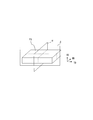
- FIG. 2B is a cross-sectional view taken along line II in FIG. 2A.
- FIG. 3B is a cross-sectional view taken along line II-II in FIG.
- Fig. 4B is a cross-sectional view taken along line III-III in Fig. 4a. It is the schematic diagram which showed the point which measures the average bubble diameter of a resin foam sheet.
- the resin foam sheet according to the present invention is useful for a resin foam molded article having a flat shape such as a flat sheet and a flat board. Moreover, the resin foam sheet according to the present invention is useful for forming a resin foam molded article having a three-dimensional shape such as a tray formed by thermoforming a flat sheet or a box assembled using a flat board.
- the resin foam sheet according to the present invention is a resin foam sheet provided with a resin foam layer and used for forming a resin foam molded article, wherein the resin foam layer is made of a polyamide-based resin composition and has a temperature of 23 ° C., It contains 30% or more of water with respect to the equilibrium water absorption at 60% relative humidity.
- the resin foam sheet according to the present invention has at least one resin foam layer, and the resin foam layer is formed of a polyamide-based resin composition. And as mentioned above, when the resin foam sheet according to the present invention has an equilibrium water absorption rate of 100% at a temperature of 23 ° C. and a relative humidity of 60% of the resin foam layer, 30% or more of the water is contained in the resin foam layer. Is included. Below, the manufacturing method of a resin foam sheet or a resin foam molded product is demonstrated by taking as an example the case where a resin foam sheet is used for thermoforming at the point which tends to exhibit the effect of this invention more notably.
- thermoformed resin foam sheet is formed of a single resin foam layer.
- the resin foam sheet 100 in this embodiment is formed in a long band shape as shown in FIG.
- the resin foam sheet 100 (hereinafter also simply referred to as “foam sheet”) in the present embodiment, the resin foam layer is formed of a polyamide-based resin composition.
- the polyamide-based resin composition of the present embodiment contains a polyamide-based resin (A) as a main component, and further contains a component (B) for foaming and various additives (C).
- the polyamide-based resin used for forming the foamed sheet may be either a single condensation polymerization type or a co-condensation polymerization type. If the polyamide-based resin is of a single condensation polymerization type, for example, polyamide 6 obtained by ring-opening polymerization of ⁇ -caprolactam, polyamide 11 obtained by ring-opening polymerization of undecane lactam, and ring-opening polymerization of lauryl lactam The resulting polyamide 12 can be used.
- polyamide-based resin is of a copolycondensation type
- polyamides 4 and 6 obtained by condensation polymerization of tetramethylenediamine and adipic acid
- polyamide 6T obtained by condensation polymerization of hexamethylenediamine and terephthalic acid, obtained by condensation polymerization of hexamethylenediamine and isophthalic acid
- Polyamide 6I obtained
- polyamide 9T obtained by condensation polymerization of nonanediamine and terephthalic acid
- polyamide 5MT obtained by condensation polymerization of methylpentadiamine and terephthalic acid
- polyamide 6 obtained by condensation polymerization of caprolactam and lauryllactam It can be, and the like 12.
- the polyamide-based resin may be a so-called aromatic polyamide as long as it is a copolycondensation type, and poly-p-phenylene terephthalamide, m-phenylene obtained by condensation polymerization of p-phenylenediamine and terephthalic acid.
- Poly-m-phenylene isophthalamide obtained by condensation polymerization of diamine and isophthalic acid can be used.
- polyamide resins may be contained alone or in combination of two or more in the polyamide resin composition.
- the content of the polyamide resin in the polyamide resin composition is usually 50% by mass or more.
- the content of the polyamide resin in the polyamide resin composition is preferably 75% by mass or more, and particularly preferably 90% by mass or more.
- the said polyamide-type resin composition may contain resin other than the said polyamide-type resin as needed.
- the resin other than the polyamide resin that can be contained in the polyamide resin composition include, for example, polystyrene resin, polyethylene resin, polypropylene resin, polyethylene terephthalate resin, polybutylene terephthalate resin, polyethylene naphthalate resin, polycarbonate resin, and the like. Is mentioned.
- the proportion of the other resin in the total resin component of the polyamide resin composition is usually more than 0% by mass and 50% by mass or less.
- the proportion of the other resin is preferably 10% by mass or less. It is more preferable that the amount is not more than mass%.
- (B) Foaming component examples of the component for foaming the resin as described above include a foaming agent (B1) and a cell nucleating agent (B2).
- (B1) Foaming agent As the foaming agent, the same foaming agent as used in extrusion foaming of general resins can be used.
- the blowing agent include hydrocarbons such as propane, normal butane, isobutane, normal pentane, isopentane, and hexane, ketones such as acetone, methyl ethyl ketone, and acetylacetone, ethers such as dimethyl ether, methyl chloride, and ethyl chloride. Examples thereof include halogenated hydrocarbons, inorganic gases such as carbon dioxide, nitrogen and air.
- the blowing agent is preferably any of normal butane, isobutane, dimethyl ether, and carbon dioxide.
- As content of this foaming agent in the said polyamide-type resin composition it is preferable that they are 0.5 mass part or more and 10 mass parts or less with respect to 100 mass parts of all the resin components contained in a polyamide-type resin composition.
- Bubble nucleating agent As the bubble nucleating agent, those commonly used can be adopted.
- the cell nucleating agent include talc, mica, silica, diatomaceous earth, alumina, titanium oxide, zinc oxide, magnesium oxide, magnesium hydroxide, aluminum hydroxide, calcium hydroxide, potassium carbonate, calcium carbonate, magnesium carbonate, and sulfuric acid.
- Inorganic compounds such as potassium, barium sulfate, sodium hydrogen carbonate and glass beads; organic compounds such as polytetrafluoroethylene, azodicarbonamide, a mixture of sodium hydrogen carbonate and citric acid; and inert gases such as nitrogen.
- the bubble nucleating agent is preferably talc.
- a bubble nucleating agent may be used individually by 1 type, or may mix and use 2 or more types.
- the addition amount of the cell nucleating agent in the polyamide resin composition is preferably 0.01 parts by mass or more and 10 parts by mass or less with respect to 100 parts by mass of all resin components contained in the polyamide resin composition.
- additives those conventionally used for processing thermoplastic resins may be appropriately added as necessary.
- the additives include weathering agents, light stabilizers, ultraviolet absorbers, antioxidants, pigments, dyes, flame retardants, crystal nucleating agents, crystallization retarders, plasticizers, lubricants, surfactants, and dispersants. , Fillers, reinforcing agents, antistatic agents and the like.
- the foam sheet of the present embodiment can be produced by extruding and foaming a polyamide-based resin composition containing the above materials into a sheet form from an extruder or the like. More specifically, for example, a compound prepared by dry blending all materials except the foaming agent at a predetermined ratio or a compound compounded into a full compound is prepared, and this compound is attached to a circular die or a flat die. And the mixture is melt-kneaded in the extruder and the foaming agent is pressed in the middle of the extruder, and the foaming agent is added to the melt-kneaded composition to further melt-knead.
- the foamed sheet can be obtained by carrying out the extrusion and foaming of the obtained melt-kneaded material into a sheet shape from a die slit of a circular die or a flat die.
- Such a foam sheet is usually produced continuously by an extruder and produced as a long strip. And the elongate strip-like foam sheet extrusion-foamed from the die slit is wound up in a roll shape, and it is set as the raw fabric roll for thermoforming.
- the raw roll is used for production of a resin foam molded product by laminating a film on one side or both sides of a foamed sheet, or subjecting the roll to thermoforming as it is.
- the thermoforming is usually performed by any one of vacuum forming, pressure forming, vacuum / pressure forming, press forming, match mold forming, and the like.
- a punching process using a Thomson blade mold or a punching press is applied to the foam sheet formed with the product shape, and the foam sheet is separated into a product (resin foam molded product) and a punch bar Is done. That is, the foam sheet according to the present embodiment is provided with a three-dimensional shape by thermoforming and an outline shape by punching as outer shape processing.
- thermoforming there is a step of heating the foam sheet in advance so that the foam sheet is softened and easily deformed and the pressure of the bubbles in the foam sheet is increased so that the thickness of the foam sheet is not excessively reduced.
- new foaming is generated in the cell membrane by the foaming agent remaining in the foamed sheet, and the foaming is called “secondary foaming” in a sense that is different from foaming at the time of extrusion.
- the surface of the foamed sheet becomes the highest temperature and the softened state. In thermoforming, the foamed sheet in such a state is pressed against the mold.
- the foamed sheet is usually covered with a plastic bag that is dust-free immediately after being wound up in a roll shape in succession to extrusion foaming from the die slit as described above.
- a foam sheet made of polyamide resin is less likely to be secondarily foamed than a foam sheet made of polystyrene resin or the like. Therefore, the polyamide resin foam sheet is preferably stored in an airtight state in order to prevent the foaming agent from dissipating and to make secondary foaming easier.
- the polyamide-based resin is used by sufficiently drying to prevent thermal deterioration, and further, the moisture contained in the resin is vaporized and dissipated at the same time as the molten resin at a high temperature is discharged from the die.
- the foam sheet immediately after extrusion foaming usually contains almost no moisture.
- the moisture content of the foam sheet is set between the sheet production process by the extrusion foaming and the molding process by the thermoforming in order to prevent the above-described external shape change from occurring in the resin foam molded product.
- the foamed sheet is made to contain 30% or more of moisture with respect to the equilibrium water absorption rate at a temperature of 23 ° C. and a relative humidity of 60% in the water absorption step. That is, in the present embodiment, the foamed sheet was produced by a sheet production process for producing a foamed sheet having a water content of less than 30% with respect to the equilibrium water absorption at a temperature of 23 ° C.
- the sheet production process A water absorption step is performed in which the foamed sheet absorbs water and the water content is set to 30% or more of the equilibrium water absorption rate, and the outer shape is applied to the foamed sheet after the water absorption step.
- thermoforming since thermoforming is performed on the foamed sheet in the above-described state, it is possible to suppress water absorption of the resin foam molded product after thermoforming. Therefore, in the method for producing a resin foam molded product of the present embodiment, a resin foam molded product that hardly changes its outer shape can be obtained.
- the moisture content of the foam sheet to be externally processed is preferably 40% or more, preferably 60% or more with respect to the equilibrium water absorption rate. More preferably, it is particularly preferably 75% or more.
- the raw roll is stored in a heated / humidified environment (for example, 30 ° C. to 50 ° C., relative humidity 50% to relative humidity 95%), You may implement so that water absorption may be accelerated
- a heated / humidified environment for example, 30 ° C. to 50 ° C., relative humidity 50% to relative humidity 95%)
- the degree of water absorption tends to be different between the outer periphery and the outer periphery.
- the intermediate portion between the inner peripheral portion and the outer peripheral portion of the raw fabric roll contains moisture compared to the inner peripheral portion and the outer peripheral portion. The amount tends to be low. Therefore, it is preferable that the water absorption step includes a rewinding step of rewinding the original fabric roll and a step of loosening the original fabric roll to provide a gap between the foam sheets.
- the foam sheet should be evaluated by the Karl Fischer titration method (moisture vaporization method) described in JIS K0068: 2001 (Method for measuring moisture of chemical products). You can check with Specifically, the moisture content of the foamed sheet can be confirmed by the following method.
- Moisture content measurement method A sample of about 70 mg is taken from the foam sheet. The sample is set in a Karl Fischer moisture measuring device CA-200 and a moisture vaporizer VA-236S manufactured by Mitsubishi Chemical Analytech Co., Ltd., and the moisture content is measured. Aquamicron AX and Aquamicron CXU manufactured by API Corporation are used as the anolyte and catholyte at the time of measurement, respectively.
- the measurement temperature is 230 ° C.
- the carrier gas is nitrogen and the flow rate is 250 mL / min.
- Sampling of the sample from the foamed sheet and measurement of the water content are performed three times.
- the blank test only with the container which does not put a sample is implemented twice, and the average value of the obtained moisture content is calculated
- the moisture content of each sample is calculated by subtracting the moisture content obtained in the blank test from the moisture content obtained by measuring the sample.
- the water absorption rate of the foam sheet can be confirmed by the following method. (How to find water absorption) Divide the moisture content of the sample by the mass of the sample to obtain the moisture ratio (% by mass).
- the moisture ratio is determined for each of the three samples, and the arithmetic average value is defined as the water absorption rate (mass%) of the foam sheet.
- the equilibrium water absorption rate of the foamed sheet at a temperature of 23 ° C. and a relative humidity of 60% was determined by measuring the mass of the foamed sheet every 24 hours while leaving the foamed sheet at a temperature of 23 ° C. and a relative humidity of 60%. It can be determined by measuring the amount of water in the same manner as described above when it is within 0.1%.
- the equilibrium water absorption at a temperature of 23 ° C. and a relative humidity of 60% of the polyamide-based resin is publicly known. For example, 3.5 mass% for polyamide 6; About 1.5% by mass.
- the thickness of the foam sheet is usually 0.5 mm or more and 3.0 mm or less.
- the basis weight of the foamed sheet is usually 100 g / m 2 or more and 1000 g / m 2 or less.
- the foamed sheet preferably has an open cell ratio of a certain level or more in order to promptly perform the water absorption step.
- the foamed sheet preferably has a lower open cell ratio in view of workability in thermoforming and the strength of a resin foam molded product obtained by thermoforming.
- the open cell ratio of the foamed sheet is preferably 5% or more and 60% or less, more preferably 10% or more and 40% or less, and particularly preferably 15% or more and 30% or less.
- the open cell ratio can be measured as follows. (Continuous bubble rate measurement method) A plurality of test pieces of 25 mm length ⁇ 25 mm width are cut out from the foam sheet. Five test specimens having a thickness of about 25 mm are produced by stacking the cut specimens so that there is no space.
- the outer dimension of the obtained specimen is measured to 1/100 mm using a “Digimatic Caliper” manufactured by Mitutoyo Corporation, and the apparent volume (cm 3 ) is determined.
- the volume (cm 3 ) of the specimen is obtained by the 1-1 / 2-1 atmospheric pressure method using an air comparison type hydrometer 1000 type (manufactured by Tokyo Science Co., Ltd.).
- the open cell ratio (%) is calculated by the following formula, the arithmetic average value of the open cell ratios of the five test specimens is obtained, and the average value is used as the open cell ratio of the foam sheet.
- the measurement is carried out in a JIS K7100-1999 symbol 23/50, grade 2 environment after storing the specimen for 16 hours in a JIS K7100-1999 symbol 23/50, grade 2 environment.
- the average cell diameter of the foam sheet is preferably from 100 ⁇ m to 1000 ⁇ m, more preferably from 100 ⁇ m to 800 ⁇ m, and further preferably from 100 ⁇ m to 600 ⁇ m.
- the average cell diameter of the foam sheet can be measured by the following test method.
- the foam sheet FS has a surface (surface ⁇ in FIG. 5) that is perpendicular to the sheet surface and parallel to the extrusion direction (MD: Machine ⁇ ) at the center in the width direction and is perpendicular to the sheet surface and the extrusion direction. 5 is cut along a plane (plane ⁇ in FIG. 5) parallel to the width direction (TD: Transverse Direction) perpendicular to the surface, and the cross section is S-3000N manufactured by Hitachi, Ltd. or manufactured by Hitachi High-Technologies Corporation. The image is magnified 18 to 20 times (in some cases 200 times) at S-3400N.
- the photograph taken is printed in a quarter size of A4 paper, and the number of bubbles existing on a 60 mm straight line drawn on the printed photograph is about 10 to 20 so that the number of bubbles is about 10-20. Adjust the magnification with an electron microscope.
- Four images of cross-sectional photographs parallel to the MD are printed on A4 paper.
- An arbitrary straight line is drawn on the printed photograph along a direction parallel to the MD and a sheet thickness direction (VD: Vertical direction) perpendicular to the direction.
- VD Vertical direction
- four images of a cross-section photograph parallel to TD are printed on A4 paper, and arbitrary along the direction parallel to TD and the sheet thickness direction (VD) perpendicular to the direction on the printed photograph.
- the length of all straight lines is 60 mm in principle, and the average chord length (t) of bubbles in each direction (MD, TD, VD) using the following formula (1) from the number of bubbles existing on these lines Is calculated.
- Average chord length t (mm) 60 / (number of bubbles ⁇ photo magnification) (1)
- VD sheet thickness direction
- the number of bubbles of 30 mm or 20 mm is counted and converted to the number of bubbles of 60 mm.
- Arbitrary straight lines should avoid bubbles from touching only at the contacts. If there is a bubble that touches only at the contact point, this bubble is also included in the bubble count.
- the measurement is performed at 3 locations each using 2 photos per direction, for a total of 6 locations.
- the magnification of the photograph is obtained by measuring the scale bar on the photograph to 1/100 mm with “Digimatic Caliper” manufactured by Mitutoyo Corporation and using the following formula (2).
- Magnification of photograph Scale bar measured value (mm) / Scale bar display value (mm) (2)
- the bubble diameter D in each direction is calculated by following Formula (3).
- D (mm) t / 0.616 (3)
- Average bubble diameter (mm) (DMD ⁇ DTD ⁇ DVD) 1/3 (4)
- DMD Bubble diameter of MD (mm)
- DTD Bubble diameter of TD (mm) DVD: VD bubble diameter (mm)
- the polyamide resin contained in the foamed sheet is preferably a resin having crystallinity.
- the foamed sheet can prevent thermal deformation and the like because the polyamide-based resin contained therein is crystallized.
- the degree of crystallinity of the polyamide resin contained in the foamed sheet is preferably 10% or more. Whether the polyamide-based resin has crystallinity can be confirmed using a differential scanning calorimeter (for example, trade name “DSC7000X” manufactured by Hitachi High-Tech Science Co., Ltd.). That is, it can be confirmed that the polyamide-based resin has crystallinity when the polyamide-based resin shows an endotherm accompanying melting and an exotherm accompanying crystallization.
- the crystallinity degree of the polyamide-type resin in a foam sheet can also be confirmed using a differential scanning calorimeter apparatus.
- the crystallinity of the polyamide-based resin can be measured by the method described in JIS K7122: 2012 “Method for measuring the transition heat of plastic”.
- the sampling method and temperature conditions are as follows. About 5 mg of the sample is filled so that there is no gap in the bottom of the aluminum measurement container, the temperature is lowered from 30 ° C. to ⁇ 40 ° C. under a nitrogen gas flow rate of 20 mL / min, and held for 10 minutes. A DSC curve is obtained when the temperature is raised to 290 ° C.
- Crystallinity (%) (Q (J / g) / ⁇ Hf (J / g) ⁇ 100
- the theoretical heat of fusion ( ⁇ Hf) of the complete crystal of the polyamide-based resin is approximately 200 to 300 J / g although it varies depending on the type of resin (reference value of ⁇ Hf, PA6: 230 J / g, PA11: 244 J / g).
- PA12 245 J / g
- PA66 226 J / g
- PA69 257 J / g
- PA610 254 J / g
- PA612 258 J / g. Therefore, the foam sheet preferably exhibits a crystallization heat amount of 20 J / g or more when measured as described above, regardless of the type of polyamide-based resin used, and is 30 J / g or more. It is more preferable to show the amount of heat of crystallization.
- the resin foam molded product formed by the foamed sheet is not particularly limited, and various products can be considered.
- the problem which arises by a dimensional change is easy to become clear, so that a resin foam molded product is large.
- the effect that the dimensional change can be suppressed becomes more remarkable when the resin foam molded product is relatively large.
- the resin foam molded article of the present embodiment has excellent heat resistance and mechanical strength due to the polyamide-based resin.
- a resin foam molded article that is preferably produced by the method of the present embodiment because it is relatively large and exhibits the effect of dimensional change remarkably and has a strong demand for light weight and mechanical strength
- a dash Examples thereof include automotive interior materials used for boards, door panels, ceiling materials, seats, and the like.
- a resin foam molded article that is preferably manufactured by the method of the present embodiment because of strong demands regarding dimensional stability, lightness, chemical resistance, oil resistance, heat resistance, and the like for example, an automobile engine Car parts that are installed in the room.
- the said food container is also mentioned as a resin foam molded article that is preferably produced by the method of this embodiment.
- a tray or the like can be given as the resin foam molded article that is preferably produced by the method of the present embodiment because there is a strong demand for dimensional stability, lightness, and shock-absorbing property. Examples of what is collected in the tray include a motor and a rotor for the motor.
- the container that accommodates the motor and the rotor is likely to receive a strong local force due to a collision of a rotating shaft when the motor and the rotor are conveyed.
- the resin foam molded article produced by the method of the present embodiment is preferably used for the above-mentioned purposes because it is superior in strength compared to general-purpose foam molded articles such as polystyrene resin foam molded articles.
- the dimensional change rate of the resin foam molded product used in the above applications is preferably 1% or less at room temperature and 3% or less at 150 ° C. or less.
- the food container is a container with a lid, it is more preferable that the food container is produced by the method of this embodiment. This will be described below.
- Container body such as a container with a lid in which the lid body is fitted inside the container body, a container with a lid in which the lid body is fitted outside the container body, or a container with a lid in which the lid body is fitted inside and outside the container body.
- a lidded container of a type in which a lid is fitted to the lid if the outer shape of the container body or the lid changes, the lid cannot be fitted to the container body or the lid fitted to the container body is excessive. There is a risk that it will become difficult to come off, or the lid fitted to the container body will become too easy to come off.
- the resin foam molded product produced by the foamed sheet includes a container body and a lid body fitted to the container body.
- the container with a lid provided is preferable, and the container body of the container with a lid is particularly preferable.
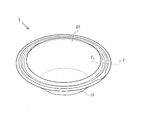
- FIG. 2a shows a resin foam molded product used as a range-up container or the like.
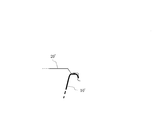
- FIG. 2b shows a fitting state between the container body 10 and the lid 20 in the lidded container 1 shown in FIG. 2a, and is a diagram showing a cross-sectional view taken along line II in FIG. 2a.
- This figure shows a container 1 with a lid (hereinafter also referred to as “first container 1 with a lid”) in which a lid 20 is fitted into the container body 10.
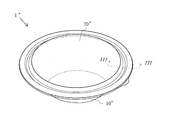
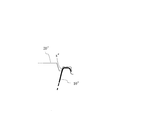
- 3a shows a container 1 ′ with a lid (hereinafter also referred to as “second container 1 ′ with a lid”) in which a lid 20 ′ is fitted to the container body 10 ′.
- FIG. 1 shows a resin foam molded product used as a range-up container or the like.
- FIG. 2b shows a fitting state between the container body 10 and the lid 20 in the lidded container 1 shown in FIG. 2a, and is a diagram showing a cross-sectional view taken along line II
- FIG. 4a shows a lidded container 1 ′′ (hereinafter also referred to as “third lidded container 1 ′′”) in which a lid 20 ′′ is fitted inside and outside the container body 10 ′′, and FIG. It is the figure which showed the III-III arrow cross section in FIG. 4a.
- the lid 20 of the first lidded container 1 is usually manufactured such that the size of the portion that fits into the opening of the container body 10 is slightly larger than the opening of the container body 10. Thereby, the container 1 with a 1st lid can make a strong pressure act on the contact part of the container main body 10 shown with the code
- lidded containers such as the first lidded container 1 and the third lidded container 1 ′′ are widely used for the purpose of containing foods containing a large amount of liquid such as stew. .
- this type of container with a lid when the container body contracts, it may be difficult to attach and detach the lid to the container body. Further, when the container body is deformed in this kind of lidded container, the pressure acting on the contact portions x, x ′′ is insufficient, and the liquid may easily leak out of the container when the liquid is contained. There is.
- the resin foam molded article of the present embodiment exhibits an excellent effect by setting its specific aspect to the container body of the lidded container exemplified above.
- the second lid-equipped container 1 ′ has an advantage that the lid body 20 ′ can be easily attached to and detached from the container main body 10 ′ although the sealing performance is inferior to the first lid-equipped container 1 or the like.
- the lid body 20 ′ may be easily detached from the container body 10 ′ more than necessary. Therefore, the secondary effect exhibited when the container body is excellent in dimensional stability is exhibited even when the resin foam molded product is the second lidded container 1 ′.
- the extruded foam sheet is exemplified as the resin foam sheet for thermoforming in that the resin foam molded article as described above can be efficiently produced by continuous thermoforming, but the thickness is suitable for thermoforming.
- the sheet-like bead foam molded body having the same can be used for thermoforming as the extruded foam sheet of the present embodiment.
- a sheet-like foam sliced and cut out from a thick bead foam molded body or board foam molded body can be used for thermoforming as in the extruded foam sheet of the present embodiment.
- the resin foam sheet for thermoforming is composed of a single resin foam layer is taken as an example.
- the resin foam sheet having a plurality of resin foam layers or one or more resin foam layers is used.
- a type in which one or more resin film layers are laminated is also within the range intended as the resin foam sheet of the present invention.
- the resin foam sheet of this embodiment is a type provided with two or more resin foam layers made of a polyamide-based resin composition, all the resin foam layers are at a temperature of 23 ° C. and a relative humidity of 60%. It is not necessary to have a water content of 30% or more with respect to the equilibrium water absorption, and it is sufficient that at least one layer having such a water content is provided.
- the resin foam sheet for thermoforming is exemplified as the resin foam sheet in that the effect of the present invention is more easily exhibited, but the resin foam sheet of the present invention is flat. It can also be used to form resin foam molded products such as flexible sheets and boards. That is, even if it is a flat resin foam molded product, it is demanded that there is no dimensional change after external processing, as is the case with a resin foam molded product to which a three-dimensional shape is given by thermoforming.
- a resin foam sheet used for forming a resin foam molded article is also a range intended as the resin foam sheet of the present invention.
- seat and a board, is also a thing of the range intended as a manufacturing method of the resin foam molded product of this invention.
- Example 1 As the polyamide-based resin, polyamide 6 (manufactured by Unitika Ltd., trade name “A1030BRT”; density 1.13 g / cm 3 ) was prepared. The polyamide 6 was used after being dehumidified and dried at 120 ° C. for 4 hours in advance.
- PET polyethylene terephthalate
- SMA1000P styrene / maleic anhydride copolymer
- a cooling mandrel (diameter 205 mm, length 400 mm) was placed. Cooling was circulated in the cooling mandrel and the extruder was set to a predetermined temperature. The compound was supplied to a hopper of the extruder and melt-kneaded in the extruder.
- butane was press-fitted from the middle of the extruder barrel as a foaming agent and added to the melt-kneaded product, and further melt-kneaded.
- the resin temperature at the time of extrusion was set to 230 ° C., and the polyamide-based resin composition in a molten state was extruded and foamed from the die slit of the circular die at a discharge rate of 40 kg / h to form a cylindrical foam.
- the cylindrical foam was expanded in diameter by the cooling mandrel and taken up by a take-up machine disposed further downstream than the cooling mandrel.
- the outer peripheral surface of the cooling mandrel was brought into sliding contact with the inner peripheral surface of the foam to cool the foam, and the cylindrical foam was cut along the extrusion direction on the downstream side of the cooling mandrel. Then, the cylindrical foam was formed into a flat belt shape and wound into a roll by the take-up machine.
- the density of the obtained foamed sheet was 0.24 g / cm 3 , the basis weight was 200 g / m 2 , and the open cell ratio was 20.0%.
- the moisture content of the foamed sheet was measured immediately after production, the moisture content was 0.24% by mass.
- the obtained foamed sheet was cut into 330 mm ⁇ 330 mm and left for 168 hours under conditions of 23 ° C. and relative humidity of 60%. At that time, the water content of the foamed sheet was 3.8% by mass. (It contained 100% of water for the equilibrium water absorption at a temperature of 23 ° C. and a relative humidity of 60%.)
- the foamed sheet was reheated and thermoformed to produce a resin foam molded product. This resin foam molded article was allowed to stand for 168 hours at 23 ° C. and 60% relative humidity. As a result, the dimensional change rate immediately after molding of the resin foam molded product was 0.41%.
- thermoforming was performed as follows. That is, the four ends of the foam sheet were clamped and introduced into a preheating furnace in which the upper and lower heater temperatures were set to 330 ° C. The foamed sheet was heated in this heating furnace for 7 seconds, and then the foamed sheet was introduced into a press molding machine to perform molding. At this time, the mold used was an aluminum mold that was surface-treated with a polytetrafluoroethylene resin coat. The foamed sheet was molded with the mold, and a rectangular box-shaped resin foam molded product having an opening and a bottom portion with a size of 50 (length) ⁇ 50 (width) mm and a depth of 30 mm was produced.
- the dimensional change rate of the resin foam molded product was calculated as follows. (Dimensional change rate measurement method) Vertical (bottom), horizontal (bottom), and depth immediately after molding in a concave resin foam molded product with an opening and a bottom having a size of 50 (vertical) x 50 (horizontal) mm and a depth of 30 mm Are measured (L1, L2, L3). Thereafter, the resin foam molded product is allowed to stand for 168 hours at 23 ° C. and a relative humidity of 60%, and the vertical (bottom portion), horizontal (bottom portion), and height dimensions (L3, L4, L5) are measured. .
- the absolute value (A, B, C) of each dimensional change rate is obtained from the following formula, and the average value is defined as the dimensional change rate of the resin foam molded product.
- Absolute value (%) of vertical (bottom) change rate
- Absolute value B (%) of lateral (bottom) rate of change
- Absolute value of depth change rate C (%)
- Dimensional change rate of molded product (%) (A + B + C) / 3
- Example 2 The same as in Example 1 except that a foamed sheet adjusted to have a water content of 2.5 mass% (65.8% with respect to the equilibrium water absorption at a temperature of 23 ° C. and a relative humidity of 60%) was used. Thermoforming was performed to produce a rectangular box-shaped resin foam molded product, and the dimensional change rate was determined. The foam sheet was cut out to 330 mm ⁇ 330 mm, and the moisture content was adjusted to 2.5 mass% by adjusting the time for holding in an environment of 23 ° C. and a relative humidity of 60%. The square box-shaped resin foam molded article obtained by thermoforming this foamed sheet had a dimensional change rate of 0.61% immediately after molding.
- Example 3 The same as in Example 1 except that a foamed sheet adjusted to have a water content of 1.7% by mass (44.7% with respect to the equilibrium water absorption at a temperature of 23 ° C. and a relative humidity of 60%) was used. Thermoforming was performed to produce a rectangular box-shaped resin foam molded product, and the dimensional change rate was determined. The foam sheet was cut out to 330 mm ⁇ 330 mm, and then the time for keeping it in an environment of 23 ° C. and a relative humidity of 60% was adjusted so that the water content was 1.7% by mass. The square box-shaped resin foam molded product obtained by thermoforming this foamed sheet had a dimensional change rate of 0.75% immediately after molding.
- Example 4 The same as in Example 1 except that the foamed sheet was adjusted so that the water content was 1.2% by mass (31.6% with respect to the equilibrium water absorption at a temperature of 23 ° C. and a relative humidity of 60%). Thermoforming was performed to produce a rectangular box-shaped resin foam molded product, and the dimensional change rate was determined. The foam sheet was cut out to 330 mm ⁇ 330 mm, and the moisture content was adjusted to 1.2 mass% by adjusting the holding time in an environment of 23 ° C. and a relative humidity of 60%. The square box-shaped resin foam molded product obtained by thermoforming this foamed sheet had a dimensional change rate of 0.85% immediately after molding.
- Example 5 Polyamide 6,6 (trade name “E2046” manufactured by Unitika Ltd .: density 1.14 g / cm 3 ) was used as the polyamide resin, and styrene / maleic anhydride with respect to 100 parts by mass of the resin (polyamide 6,6).
- Example 1 except that the amount of the copolymer (SMA1000P) used was changed to 1.2 parts by mass instead of 0.3 parts by mass, and the resin temperature during extrusion was changed to 280 ° C. instead of 230 ° C. Similarly, a foam sheet was produced. The obtained foamed sheet was thermoformed in a state of water content of 3.0% by mass (100% with respect to the equilibrium water absorption rate at a temperature of 23 ° C.
- Example 6 The foamed sheet produced in Example 5 was adjusted so that the water content was 2.0% by mass (66.7% with respect to the equilibrium water absorption at a temperature of 23 ° C. and a relative humidity of 60%). This was thermoformed in the same manner as in Examples 1 to 5 to produce a rectangular box-shaped resin foam molded product.
- the rectangular box-shaped resin foam molded article obtained by thermoforming this foamed sheet had a dimensional change rate of 0.33% with respect to immediately after molding.
- Example 7 The foamed sheet produced in Example 5 was adjusted so that the water content was 1.1% by mass (36.7% with respect to the equilibrium water absorption at a temperature of 23 ° C. and a relative humidity of 60%). This was thermoformed in the same manner as in Examples 1 to 5 to produce a rectangular box-shaped resin foam molded product.
- the rectangular box-shaped resin foam molded product obtained by thermoforming this foamed sheet had a dimensional change rate of 0.68% immediately after molding.
- Example 8 Amorphous polyamide (trade name “CX-2600” manufactured by Unitika Ltd .: density 1.11 g / cm 3 ) was used as the polyamide resin, and styrene / anhydrous with respect to 100 parts by mass of the resin (amorphous polyamide).
- a foamed sheet was produced in the same manner as in 1. The obtained foamed sheet was thermoformed in a state where the water content was 2.0% by mass (100% with respect to the equilibrium water absorption rate at a temperature of 23 ° C.
- Example 9 As the polyamide resin, polyamide 6 (trade name “A1030BRT” manufactured by Unitika Ltd.) and amorphous polyamide (trade name “CX-2600” manufactured by Unitika Ltd.) are mass ratio of 5: 5 (“A1030BRT”: “CX”). -2600 "), and the amount of styrene / maleic anhydride copolymer (SMA1000P) used for 100 parts by mass of the resin was changed to 0.8 parts by mass instead of 0.3 parts by mass.
- SMA1000P styrene / maleic anhydride copolymer
- Example 1 (Comparative Example 1) Implemented except that a foam sheet was used in which the moisture content was maintained at 0.24% by mass immediately after production (6.3% relative to the equilibrium water absorption rate at a temperature of 23 ° C. and a relative humidity of 60%). Thermoforming was performed in the same manner as in Example 1 to produce a rectangular box-shaped resin foam molded article, and the dimensional change rate was obtained.
- the square box-shaped resin foam molded product obtained by thermoforming this foamed sheet had a dimensional change rate of 1.90% immediately after molding.
- Example 2 Thermoforming was performed in the same manner as in Example 5 except that a foamed sheet having a moisture content of 0.48% by mass (16.0% with respect to the equilibrium water absorption at a temperature of 23 ° C. and a relative humidity of 60%) was used. A rectangular box-shaped resin foam molded article was prepared and the rate of dimensional change was determined. The square box-shaped resin foam molded product obtained by thermoforming this foamed sheet had a dimensional change rate of 1.18% immediately after molding.
- Thermoforming conditions The following table shows the sheet heating conditions before molding when the foamed sheets produced in Examples 1, 5, and 8-9 were thermoformed to produce the resin foam molded articles of each Example and Comparative Example.
- the heater temperature is a set value
- the sheet surface temperature is measured with “Thermolabel 5E-125” (trade name) and “Thermolabel 5E-170” (trade name) manufactured by NOF Corporation. Value.
- the resin foam molded product (square box) obtained in each Example and Comparative Example was held for 22 hours in an environment of 120 ° C., and left for 1 hour in a place where the temperature was 23 ° C. and the relative humidity was 60%. The degree was evaluated (heat resistance test 1). Also, the degree of thermal deformation after holding the resin foam molded product (square box) in an environment of 150 ° C. for 22 hours and leaving it in a place where the temperature is 23 ° C. and the relative humidity is 60% was evaluated (heat resistance test). 2). In the evaluation, the degree of deformation was measured in the same manner as the dimensional change rate before and after water absorption. The results are shown in the following table together with the evaluation results so far.
Landscapes
- Chemical & Material Sciences (AREA)
- Engineering & Computer Science (AREA)
- Mechanical Engineering (AREA)
- Materials Engineering (AREA)
- Chemical Kinetics & Catalysis (AREA)
- Health & Medical Sciences (AREA)
- Medicinal Chemistry (AREA)
- Polymers & Plastics (AREA)
- Organic Chemistry (AREA)
- Manufacturing & Machinery (AREA)
- Inorganic Chemistry (AREA)
- Manufacture Of Porous Articles, And Recovery And Treatment Of Waste Products (AREA)
- Laminated Bodies (AREA)
- Compositions Of Macromolecular Compounds (AREA)
Abstract
Description
ポリスチレンペーパーは、所定の輪郭形状となるように外形加工されてフラットな形状の樹脂発泡成形品として利用される他に食品トレーなどといった立体形状を有する樹脂発泡成形品の原材料として広く用いられている。
この種の樹脂発泡成形品を製造する際には、通常、長尺帯状の樹脂発泡シートをロール状に巻き取った原反ロールと呼ばれるものが原材料として用いられる。
具体的には、樹脂発泡成形品は、該原反ロールから繰り出した樹脂発泡シートを単に打抜加工したり、熱成形によって立体形状を付与した後に打抜加工したりする方法によって作製されている。
熱成形を行う場合、樹脂発泡成形品は、樹脂発泡シートを輻射加熱ヒーターなどで加熱して軟化させる予備加熱工程と、該予備加熱工程で軟化させた樹脂発泡シートを成形型の表面形状に追従するように変形させて当該樹脂発泡シートに製品形状を形成させる成形工程と、該樹脂発泡シートを製品の輪郭形状に沿って切断して該樹脂発泡シートから樹脂発泡成形品を切り出す切断工程とを順に実施するような方法によって作製されている。
なお、この種の樹脂発泡シートとしては、PSPのような樹脂発泡層単独のシートのみならず、樹脂発泡層と樹脂フィルム層とが積層一体化されたタイプのものが知られている。
また、この種の樹脂発泡シートとしては、GPPSを主成分としたポリスチレン系の樹脂組成物で樹脂発泡層を形成させたものだけでなく、下記特許文献1に示すようにポリアミド系樹脂組成物によって形成された樹脂発泡層を有するものが知られている。
しかし、従来の樹脂発泡成形品は、ポリアミド系樹脂組成物によって形成された樹脂発泡層を有する樹脂発泡シートを原材料として採用すると、上記のような要望を満足させることが難しいという問題を有している。
そこで、本発明は、このような問題を解決することを課題としている。
従って、本発明によれば、外形加工前後における樹脂発泡層の吸水率の変化が少なく、当該吸水率の変化に伴う樹脂発泡成形品の外形変化を抑制することができる。
また、本発明に係る樹脂発泡シートは、フラットシートを熱成形したトレーやフラットボードを使って組立てた箱などの立体形状を有する樹脂発泡成形品の形成に有用なものである。
本発明に係る樹脂発泡シートは、樹脂発泡層が備えられ、樹脂発泡成形品の形成に用いられる樹脂発泡シートであって、前記樹脂発泡層は、ポリアミド系樹脂組成物からなり、温度23℃、相対湿度60%における平衡吸水率に対して30%以上の水分を含んでいる。
即ち、本発明に係る樹脂発泡シートは、少なくとも一つの樹脂発泡層を有するものであり、該樹脂発泡層がポリアミド系樹脂組成物によって形成されたものである。
そして、上記のように本発明に係る樹脂発泡シートは、前記樹脂発泡層の温度23℃、相対湿度60%における平衡吸水率を100%とした際に、30%以上の水分が前記樹脂発泡層に含まれているものである。
以下においては、本発明の効果をより顕著に発揮させ易い点において樹脂発泡シートが熱成形に用いられる場合を例にして樹脂発泡シートや樹脂発泡成形品の製造方法について説明する。
また、以下においては、熱成形用の樹脂発泡シートが単一の樹脂発泡層により構成されている場合を例にして本発明の実施の形態について説明する。
本実施形態における樹脂発泡シート100は、図1に示すように長尺帯状に形成されている。
本実施形態における樹脂発泡シート100(以下、単に「発泡シート」ともいう)は、前記樹脂発泡層がポリアミド系樹脂組成物によって形成されている。
本実施形態の前記ポリアミド系樹脂組成物は、ポリアミド系樹脂(A)を主成分とし、さらに、発泡のための成分(B)、及び、各種添加剤(C)を含有している。
前記発泡シートの形成に用いるポリアミド系樹脂としては、単独縮重合型のものでも、共縮重合型のものであっても良い。
前記ポリアミド系樹脂は、単独縮重合型のものであれば、例えば、ε-カプロラクタムの開環重合によって得られるポリアミド6、ウンデカンラクタムの開環重合によって得られるポリアミド11、ラウリルラクタムの開環重合によって得られるポリアミド12などとすることができる。
また、前記ポリアミド系樹脂は、共縮重合型のものであれば、テトラメチレンジアミンとアジピン酸との縮重合によって得られるポリアミド4,6、ヘキサメチレンジアミンとアジピン酸との縮重合によって得られるポリアミド6,6、ヘキサメチレンジアミンとセバシン酸との縮重合によって得られるポリアミド6,10、ヘキサメチレンジアミンとテレフタル酸との縮重合によって得られるポリアミド6T、ヘキサメチレンジアミンとイソフタル酸との縮重合によって得られるポリアミド6I、ノナンジアミンとテレフタル酸との縮重合によって得られるポリアミド9T、メチルペンタジアミンとテレフタル酸との縮重合によって得られるポリアミド5MT、カプロラクタムとラウリルラクタムとの縮重合によって得られるポリアミド6,12などとすることができる。
さらに、前記ポリアミド系樹脂は、共縮重合型のものであれば、いわゆる芳香族ポリアミドでも良く、p-フェニレンジアミンとテレフタル酸との縮重合によって得られるポリ-p-フェニレンテレフタルアミド、m-フェニレンジアミンとイソフタル酸との縮重合によって得られるポリ-m-フェニレンイソフタルアミドなどとすることができる。
前記ポリアミド系樹脂組成物におけるポリアミド系樹脂の含有量は、通常、50質量%以上である。
前記ポリアミド系樹脂組成物における該ポリアミド系樹脂の含有量は、75質量%以上であることが好ましく、90質量%以上であることが特に好ましい。
前記ポリアミド系樹脂組成物に含有させることができるポリアミド系樹脂以外の他樹脂としては、例えば、ポリスチレン樹脂、ポリエチレン樹脂、ポリプロピレン樹脂、ポリエチレンテレフタレート樹脂、ポリブチレンテレフタレート樹脂、ポリエチレンナフタレート樹脂、ポリカーボネート樹脂等が挙げられる。
前記ポリアミド系樹脂組成物の全樹脂成分に占める当該他樹脂の割合は、通常、0質量%を超え50質量%以下である
他樹脂の前記割合は、10質量%以下であることが好ましく、5質量%以下であることがより好ましい。
上記のような樹脂を発泡させるための成分としては、発泡剤(B1)ならびに気泡核剤(B2)などが挙げられる。
前記発泡剤としては、一般的な樹脂の押出発泡において用いられている発泡剤と同様のものを採用することができる。
該発泡剤としては、例えば、プロパン、ノルマルブタン、イソブタン、ノルマルペンタン、イソペンタン、ヘキサン等の炭化水素類、アセトン、メチルエチルケトン、アセチルアセトンなどのケトン類、ジメチルエーテルなどのエーテル類、メチルクロライド、エチルクロライド等のハロゲン化炭化水素類、二酸化炭素、窒素、空気等の無機ガス類などが挙げられる。
これらの中でも発泡剤は、ノルマルブタン、イソブタン、ジメチルエーテル、二酸化炭素の何れかであることが好ましい。
前記ポリアミド系樹脂組成物における該発泡剤の含有量としては、ポリアミド系樹脂組成物に含まれる全樹脂成分100質量部に対して0.5質量部以上10質量部以下であることが好ましい。
前記気泡核剤は、広く一般に用いられているものを採用することができる。
前記気泡核剤としては、例えば、タルク、マイカ、シリカ、珪藻土、アルミナ、酸化チタン、酸化亜鉛、酸化マグネシウム、水酸化マグネシウム、水酸化アルミニウム、水酸化カルシウム、炭酸カリウム、炭酸カルシウム、炭酸マグネシウム、硫酸カリウム、硫酸バリウム、炭酸水素ナトリウム、ガラスビーズなどの無機化合物;ポリテトラフルオロエチレン、アゾジカルボンアミド、炭酸水素ナトリウムとクエン酸の混合物などの有機化合物;窒素などの不活性ガスなどが挙げられる。
本実施形態においては、前記気泡核剤がタルクであることが好ましい。
なお、気泡核剤は、一種単独で用いても、二種以上を混合して併用してもよい。
前記ポリアミド系樹脂組成物における該気泡核剤の添加量としては、ポリアミド系樹脂組成物に含まれる全樹脂成分100質量部に対して0.01質量部以上10質量部以下であることが好ましい。
前記添加剤としては、従来から熱可塑性樹脂の加工に用いられているものを適宜必要に応じて含有させれば良い。
前記添加剤としては、例えば、耐候剤、光安定剤、紫外線吸収剤、酸化防止剤、顔料、染料、難燃剤、結晶核剤、結晶化遅延剤、可塑剤、滑剤、界面活性剤、分散剤、充填剤、補強剤、帯電防止剤などが挙げられる。
より詳しくは、例えば、前記発泡剤を除いたすべての材料を所定の比率でドライブレンドした配合物、又は、フルコンパウンド化した配合物を用意し、この配合物をサーキュラーダイやフラットダイなどを装着した押出機に供給し、該押出機内で前記配合物を溶融混練するとともに該押出機の途中において前記発泡剤を圧入し、溶融混練された前記配合物に前記発泡剤を加えてさらに溶融混練を実施して、得られた溶融混練物をサーキュラーダイやフラットダイのダイスリットからシート状に押出発泡させることで前記発泡シートを得ることができる。
そして、ダイスリットから押出発泡された長尺帯状の発泡シートは、ロール状に巻き取られて熱成形用の原反ロールとされる。
該熱成形は、通常、真空成形、圧空成形、真空・圧空成形、プレス成形、マッチモールド成形などの内の何れかの方法で実施される。
該熱成形後は、トムソン刃型やパンチングプレスを用いた打抜加工が製品形状の形成された発泡シートに対して施され、該発泡シートが製品(樹脂発泡成形品)と抜き桟とに分離される。
即ち、本実施形態に係る発泡シートには、外形加工として熱成形による立体形状の賦与と、打抜加工による輪郭形状の賦与とが実施される。
該工程では発泡シート内に残存している発泡剤によって気泡膜に新たな発泡が生じ、該発泡は、押出時の発泡と区別する意味で「2次発泡」と呼ばれている。
この発泡シートを加熱する工程では、発泡シートの表面が最も高温となって最も軟化した状態となる。
そして、熱成形に際しては、このような状態の発泡シートが成形型に圧接される。
従って、発泡シートに異物が付着したりしていると、該異物が単に発泡シート上に載っているだけのものであっても熱成形後の発泡シートに対して食い込んだ状態になって取り除くことが不可能になる。
そのようなことから、通常、発泡シートは、前記のようにダイスリットからの押出発泡に連続してロール状に巻き取られた後は、速やかに埃除けのポリ袋が被せられたりしている。
また、一般的にポリアミド系樹脂製の発泡シートは、ポリスチレン樹脂製の発泡シートなどに比べて2次発泡し難い。
そのため発泡剤の散逸を防止して少しでも2次発泡し易くする意味においてポリアミド系樹脂製の発泡シートは、気密性を保った状態で保管されることが好ましい。
ここで、押出発泡の際、ポリアミド系樹脂は熱劣化を防ぐために十分に乾燥して使用し、さらに高温の溶融状態の樹脂をダイスから吐出すると同時に樹脂に含まれる水分が気化逸散するため、押出発泡直後の発泡シートは、通常、水分が殆ど含まれていない。
そして、前記のような理由から気密性を保った状態で保管された発泡シートは、熱成形時においても水分が低い状態に維持されている。
そうすると、熱成形後の樹脂発泡成形品は、常温常湿の環境下に置かれることで平衡吸水率に達するまで吸水してしまい該吸水によって外形変化を起こしてしまうことになる。
そして、本実施形態においては、該吸水工程によって発泡シートを温度23℃、相対湿度60%における平衡吸水率に対して30%以上の水分を含んだ状態にさせる。
即ち、本実施形態においては、発泡シートの温度23℃、相対湿度60%における平衡吸水率に対する水分含有量が30%未満の発泡シートを作製するシート作製工程と、該シート作製工程で得られた発泡シートに吸水させて前記水分含有量を平衡吸水率の30%以上とする吸水工程とを実施し、該吸水工程後の発泡シートに対して外形加工を実施する。
本実施形態においては、上記のような状態の発泡シートに熱成形が実施されることになるため、熱成形後の樹脂発泡成形品が吸水することを抑制させることができる。
そのため、本実施形態の樹脂発泡成形品の製造方法においては、外形変化を起こし難い樹脂発泡成形品を得ることができる。
なお、このような効果をより顕著に発揮させる上において、外形加工される発泡シートの水分含有量は、前記平衡吸水率に対して40%以上であることが好ましく、60%以上であることがより好ましく、75%以上であることが特に好ましい。
ただし、その場合は発泡シートが所定の水分を含有するまでに長い時間を要する。
そのため、前記吸水工程は、このような方法に代えて、原反ロールを加熱・加湿環境下(例えば、30℃~50℃、相対湿度50%~相対湿度95%)に保管し、発泡シートの吸水を促進させるようにして実施してもよい。
なお、原反ロールは、金属や樹脂のような非透湿性でできた巻芯に巻き取られているような場合、当該原反ロールが広幅で大径なものになるほど、巻芯に近い部分と外周部とで吸水の度合いが異なり易い。
また、巻芯が無い場合や、巻芯が透湿性を有する場合などにおいても、原反ロールの内周部と外周部との間の中間部は、内周部や外周部に比べて水分含有量が低いものになり易い。
従って、前記吸水工程は、原反ロールを巻き替える巻替工程や原反ロールを緩めて発泡シート間に隙間を設ける工程を含んでいることが好ましい。
具体的には、発泡シートの水分量は、以下のような方法で確認することができる。
(水分量測定方法)
発泡シートから約70mgの試料を採取する。
該試料を(株)三菱化学アナリテック社製カールフィッシャー水分測定装置CA-200及び水分気化装置VA-236Sにセットして水分量を測定する。
測定時の陽極液、陰極液にはそれぞれ(株)エーピーアイ コーポレーション製アクアミクロンAX、アクアミクロンCXUを使用する。
測定温度は230℃とする。
キャリアガスは窒素を用い、その流量は250mL/minとする。
発泡シートからの試料の採取、及び、水分量の測定は3回実施する。
また、試料を入れない容器だけでのブランク試験を2回実施し、得られた水分量の平均値を求める。
試料を測定して得られた水分量の値からブランク試験で得られた水分量の値を差し引いて各試料の水分量を算出する。
発泡シートの吸水率は、以下のような方法で確認することができる。
(吸水率の求め方)
試料の水分量を試料の質量で除して水分割合(質量%)を求める。
該水分割合を3つの試料それぞれについて求め、算術平均値を発泡シートの吸水率(質量%)とする。
発泡シートの温度23℃、相対湿度60%における平衡吸水率は、発泡シートを温度23℃、相対湿度60%下に静置しながら24時間おきに発泡シートの質量を測定し、質量変化が±0.1%以内となった時点で上記と同様に水分量を測定して求めることができる。
なお、ポリアミド系樹脂の温度23℃、相対湿度60%における平衡吸水率は公知であり、例えば、ポリアミド6で3.5質量%、ポリアミド6,6で2.5質量%、ポリアミド6,10で1.5質量%程度である。
前記発泡シートの坪量は、通常、100g/m2以上1000g/m2以下である。
一方で、前記発泡シートは、熱成形における作業性や熱成形によって得られる樹脂発泡成形品の強度などを考えると連続気泡率が低い方が好ましい。
前記発泡シートの連続気泡率は、5%以上60%以下であることが好ましく、10%以上40%以下であることがより好ましく、15%以上30%以下であることが特に好ましい。
ここで、連続気泡率は次のようにして測定することができる。
(連続気泡率測定方法)
発泡シートから、縦25mm×横25mmの試験片を複数枚切り出す。
切り出した試験片を空間があかないよう重ね合わせて厚み約25mmの試験体を5個作製する。
得られた試験体の外寸を、ミツトヨ社製「デジマチックキャリパ」を用いて、1/100mmまで測定し、見掛けの体積(cm3)を求める。
次に、空気比較式比重計1000型(東京サイエンス社製)を用いて、1-1/2-1気圧法により試験体の体積(cm3)を求める。
下記式により連続気泡率(%)を計算し、5つの試験体の連続気泡率の算術平均値を求め、該平均値を発泡シートの連続気泡率とする。
なお、測定は、試験体をJIS K7100-1999 記号23/50、2級の環境下で16時間保管した後、JIS K7100-1999 記号23/50、2級の環境下で実施する。
また、空気比較式比重計は、標準球(大28.96cc 小8.58cc)にて補正する。
連続気泡率(%)=100×(見かけ体積-空気比較式比重計測定体積)/見かけ体積
気泡の数が少ない発泡シートは、気泡数の多いものに比べて気泡膜が厚くなるため断熱性や緩衝性に劣るものとなる。
一方で、発泡シートの平均気泡径が小さすぎると、発泡シート内に存在する気泡の数が多大なものになる。
発泡シートに含まれている気泡の数が多くなりすぎると、気泡膜の厚みが薄くなりすぎて気泡膜に破れが生じ易くなるため、発泡シートは機械強度に劣るものとなる。
そのようなことから発泡シートの平均気泡径は、100μm以上1000μm以下が好ましく、100μm以上800μm以下がより好ましく、100μm以上600μm以下がさらに好ましい。
(平均気泡径測定方法)
図5に示すように、発泡シートFSを幅方向中央部において、シート面に垂直で押出方向(MD:Machine Direction)に平行する面(図5の面α)と、シート面に垂直で押出方向に直交する幅方向(TD:Transverse Direction)に平行する面(図5の面β)に沿って切断し、断面を走査電子顕微鏡(株)日立製作所製S-3000Nまたは(株)日立ハイテクノロジーズ製S-3400Nにて18~20倍(場合によっては200倍)に拡大して撮影する。このとき、撮影した写真をA4用紙の1/4の大きさに印刷し、印刷した写真の上に描いた60mmの直線上に存在する気泡の数が10~20個程度となるように前記の電子顕微鏡での拡大倍率を調整する。
MDに平行する断面の写真をA4用紙上に4画像印刷する。
この印刷した写真上にMDに平行する方向と、該方向対して垂直となるシート厚み方向(VD:Vertical direction)とに沿って任意の直線を引く。
また、TDに平行する断面の写真をA4用紙上に4画像印刷し、この印刷した写真上にTDに平行する方向と、該方向対して垂直となるシート厚み方向(VD)とに沿って任意の直線を引く。
全ての直線の長さは、原則的に60mmとし、これらの直線上に存在する気泡数から下記式(1)を使って各方向(MD、TD、VD)における気泡の平均弦長(t)を算出する。
平均弦長 t(mm)=60/(気泡数×写真の倍率)・・・(1)
ただし、発泡シートの厚みが薄く、VD(シート厚み方向)に60mm長さ分の気泡数が数えられない場合は、30mm又は20mm分の気泡数を数えて60mm分の気泡数に換算する。任意の直線はできる限り気泡が接点でのみ接しないようにする。接点でのみ接してしまう気泡がある場合はこの気泡も気泡数に含める。計測は1方向につき2枚の写真を用いて、それぞれ3箇所、計6箇所とする。
写真の倍率は写真上のスケールバーを株式会社ミツトヨ製「デジマチックキャリパ」にて1/100mmまで計測し、下記式(2)により求める。
写真の倍率=スケールバー実測値(mm)/スケールバーの表示値(mm)・・・(2)
そして次式(3)により各方向における気泡径Dを算出する。
D(mm)=t/0.616・・・(3)
さらにそれらの積の3乗根を発泡シートの平均気泡径とする。
平均気泡径(mm)=(DMD×DTD×DVD)1/3・・・(4)
DMD:MDの気泡径(mm)
DTD:TDの気泡径(mm)
DVD:VDの気泡径(mm)
発泡シートは、含有するポリアミド系樹脂が結晶化していることで、熱変形などを防止することができる。
発泡シートに含まれるポリアミド系樹脂の結晶化度は、10%以上であることが好ましい。
該ポリアミド系樹脂が結晶性を有することは、示差走査熱量計装置(例えば、株式会社 日立ハイテクサイエンス製、商品名「DSC7000X」)を用いて確認することができる。
即ち、ポリアミド系樹脂が融解にともなう吸熱や結晶化にともなう発熱を示すことによって該ポリアミド系樹脂が結晶性を有することを確認することができる。
また、発泡シートにおけるポリアミド系樹脂の結晶化度も示差走査熱量計装置を用いて確認することができる。
具体的には、ポリアミド系樹脂の結晶化度は、JIS K7122:2012「プラスチックの転移熱測定方法」に記載されている方法で測定できる。但し、サンプリング方法・温度条件に関しては以下の通りとする。
試料をアルミニウム製測定容器の底にすきまのないよう試料を約5mg充てんして、窒素ガス流量20mL/minのもと、30℃から-40℃まで降温した後10分間保持し、-40℃から290℃まで昇温(1st Heating)、10分間保持後290℃から-40℃まで降温(Cooling)、10分間保持後-40℃から290℃まで昇温(2nd Heating)した時のDSC曲線を得る。なお、全ての昇温・降温は速度10℃/minで行い、基準物質はアルミナを用いる。
結晶化熱量から算出される結晶化度とは、Cooling過程にみられる結晶化ピークの面積から求められる結晶化熱量Q(J/g)を該ポリアミド系樹脂の完全結晶の理論融解熱量ΔHf(J/g)で除して求められる割合である。結晶化熱量は装置付属の解析ソフトを用い、高温側のベースラインからDSC曲線が離れる点と、そのDSC曲線が再び低温側のベースラインへ戻る点とを結ぶ直線と、DSC曲線に囲まれる部分の面積から算出される。
つまり、結晶化度は次式より求められる。
結晶化度(%)=(Q(J/g)/ΔHf(J/g)×100
そのようなことから発泡シートは、使用されているポリアミド系樹脂の種類によらず、上記のような測定を行った際に20J/g以上の結晶化熱量を示すことが好ましく、30J/g以上の結晶化熱量を示すことがより好ましい。
なお、樹脂発泡成形品は、大型のものほど寸法変化によって生じる問題が顕在化し易い。
言い換えれば、樹脂発泡成形品が比較的大型のものである方が寸法変化を抑制できるという効果が顕著になる。
また、本実施形態の樹脂発泡成形品は、ポリアミド系樹脂によって優れた耐熱性と機械的強度を有する。
比較的大型で寸法変化に係る効果が顕著に発揮されるとともに軽量性や機械的強度に対する要望が強いことから本実施形態の方法によって作製されることが好ましい樹脂発泡成形品としては、例えば、ダッシュボード、ドアパネル、天井材及び座席シートなどに使用される自動車用内装材などが挙げられる。
また、寸法安定性、軽量性、耐薬品性、耐油性及び、耐熱性などに関する要望が強いことから本実施形態の方法によって作製されることが好ましい樹脂発泡成形品としては、例えば、自動車のエンジンルーム内に装着される自動車用部品などが挙げられる。
なお、樹脂発泡成形品として比較的小型であっても、収容した食品を電子レンジで加熱するための食品収容用容器などの樹脂発泡成形品は、寸法安定性、軽量性、耐油性、ガスバリア性及び、耐熱性に対する要望が強い。
そのため、前記食品収容用容器も本実施形態の方法によって作製されることが好ましい樹脂発泡成形品として挙げられる。
また、寸法安定性、軽量性、及び緩衝性などに関する要望が強いことから本実施形態の方法によって作製されることが好ましい前記樹脂発泡成形品としては、例えば、トレーなどが挙げられる。
前記トレーに収用するものとしては、例えば、モーターやモーター用のローターなどが挙げられる。
前記モーターや前記ローターを収容する容器は、前記モーターや前記ローターを搬送する際に回転軸が衝突するなどして局所的に強い力を受けやすい。
本実施形態の方法によって作製される樹脂発泡成形品は、ポリスチレン樹脂発泡成形品などの汎用の発泡成形品に比べて強度において優ることから上記のような用途に用いられることが好ましい。
上記のような用途で用いられる樹脂発泡成形品の寸法変化率は、常温では1%以下、150℃以下では3%以下が好ましい。
特に食品収容用容器が蓋付容器である場合には、本実施形態の方法によって作製されることがより好ましいものとなる。
この点について以下に説明する。
そのため、外形変化が生じ難いという本発明の効果を有効に発揮させ易い点において、前記発泡シートによって作製される樹脂発泡成形品は、容器本体と、該容器本体に嵌着される蓋体とを備えた蓋付容器であることが好ましく、該蓋付容器の容器本体であることが特に好ましい。
図2aは、レンジアップ容器などとして用いられる樹脂発泡成形品について示したものである。
図2bは、図2aに示した蓋付容器1における容器本体10と蓋体20との嵌合状況を示したもので図2aにおけるI-I線矢視断面の様子を示した図である。
この図には、容器本体10に蓋体20が内嵌合される蓋付容器1(以下「第1蓋付容器1」ともいう)が示されている。
また、図3aは、容器本体10’に蓋体20’が外嵌合される蓋付容器1’ (以下「第2蓋付容器1’」ともいう)を示したもので、図3bは、図3aにおけるII-II線矢視断面を示した図である。
さらに、図4aは、容器本体10”に蓋体20”が内外嵌合される蓋付容器1” (以下「第3蓋付容器1”」ともいう)を示したもので、図4bは、図4aにおけるIII-III線矢視断面を示した図である。
なお、第1蓋付容器1の蓋体20は、通常、容器本体10の開口部にはまり込む部分の大きさが容器本体10の開口部よりも僅かに大きくなるように作製される。
このことにより第1蓋付容器1は、図2aに符号xで示した容器本体10と蓋体20との当接部に強い圧力を作用させることができる。
また、第3蓋付容器1”についても第1蓋付容器1と同様に容器本体10”と蓋体20”との当接部x”に強い圧力を作用させることができる。
そのため、第1蓋付容器1や第3蓋付容器1”のような蓋体が内嵌合される蓋付容器は、シチューなどの液体を多く含む食品を収容する目的において広く用いられている。
この種の蓋付容器において容器本体が収縮すると該容器本体への蓋体の着脱が困難になるおそれがある。
また、この種の蓋付容器において容器本体が変形すると前記当接部x,x”に作用する圧力が不十分となって液体を収容させた際に該液体が容器外に漏れ出し易くなるおそれがある。
このようなことから、本実施形態の樹脂発泡成形品は、その具体的な態様を、上記に例示した蓋付容器の容器本体とすることで優れた効果を発揮する。
一方、前記第2蓋付容器1’は、第1蓋付容器1などに比べて密閉性が劣るものの容器本体10’に対する蓋体20’の着脱が容易であるという利点を有する。
該第2蓋付容器1’においては、容器本体が変形すると蓋体20’が必要以上に容器本体10’から外れ易くなってしまうおそれを有する。
従って、容器本体が寸法安定性に優れることで発揮される2次的な効果は、樹脂発泡成形品が第2蓋付容器1’である場合においても発揮される。
また、厚手のビーズ発泡成形体やボード発泡成形体からスライスして切り出されたシート状の発泡体についても本実施形態の押出発泡シートと同じく熱成形に利用することができる。
なお、本実施形態の樹脂発泡シートが、ポリアミド系樹脂組成物からなる樹脂発泡層を2層以上備えているタイプのものである場合、全ての樹脂発泡層が温度23℃、相対湿度60%における平衡吸水率に対して30%以上の水分含有量となっている必要はなく、少なくともこのような水分含有量の層が1以上備えられていればよい。
即ち、平坦な樹脂発泡成形品であっても、外形加工後に寸法変化等が生じないことが求められているのは、熱成形によって立体形状が付与された樹脂発泡成形品と同じであり、平坦な樹脂発泡成形品の形成に利用される樹脂発泡シートも本発明の樹脂発泡シートとして意図する範囲である。
また、フラットなシートやボードといった樹脂発泡成形品を製造する製造方法も、本発明の樹脂発泡成形品の製造方法として意図する範囲のものである。
(実施例1)
ポリアミド系樹脂として、ポリアミド6(ユニチカ社製、商品名「A1030BRT」; 密度1.13g/cm3)を用意した。
該ポリアミド6は、予め120℃にて4時間除湿乾燥を行って使用した。
この樹脂(ポリアミド6)100質量部に対し、スチレン・無水マレイン酸共重合体(CRAY VALLEY社製、商品名「SMA1000P」)が0.3質量部、タルク粉末のポリエチレンテレフタレート(PET)によるマスターバッチ(タルク40%、PET 60% ; テラボウ社製、商品名「PET-F40-1」)が2.5質量部となるように配合し、これらの配合物をタンブラーミキサーにて混合した。
直径70mmの円環状スリットで、且つ、スリット幅が0.6mmのサーキュラーダイを単軸押出機(口径65mm、L/D=34)の先端にセットし、さらにこのサーキュラーダイの押出方向前方に円筒状の冷却用マンドレル(直径205mm、長さ400mm)を配置した。
該冷却用マンドレル内に冷却を循環させるとともに前記押出機を所定の温度に設定し、該押出機のホッパーに前記配合物を供給して押出機内で溶融混練した。
また、押出機バレルの途中から発泡剤としてブタンを圧入し前記溶融混練物に加えてさらに溶融混練を実施した。
押出時の樹脂温度を230℃に設定し、前記サーキュラーダイのダイスリットから溶融状態のポリアミド系樹脂組成物を吐出量40kg/hにて押出発泡させ、円筒状の発泡体を形成させた。
この円筒状の発泡体を前記冷却用マンドレルによって拡径し、該冷却用マンドレルよりもさらに下流側に配した引取機によって引き取らせた。
そして、冷却用マンドレルの外周面を前記発泡体の内周面に摺接させて発泡体を冷却するとともに冷却用マンドレルの下流側において該円筒状発泡体を押出方向に沿って切断した。
そして、円筒状発泡体を平坦な帯状にして前記引取機によりロール状に巻き取らせた。
得られた発泡シートの密度は0.24g/cm3、坪量は200g/m2、連続気泡率は20.0%であった。
得られた発泡シートを330mm×330mmに裁断し、23℃、相対湿度60%の条件下で168時間放置した。
その際、発泡シートの水分量は3.8質量%であった。(温度23℃、相対湿度60%における平衡吸水率に対して100%の水分を含んでいた。)
この発泡シートを再加熱して熱成形を行い樹脂発泡成形品を作製した。
この樹脂発泡成形品を23℃、相対湿度60%下で168時間放置した。
結果、樹脂発泡成形品の成形直後に対する寸法変化率は0.41%であった。
すなわち、発泡シートの4端をクランプして、上下のヒーター温度が330℃に設定された予熱用の加熱炉に導入した。
この加熱炉にて7秒間発泡シートを加熱し、次いでこの発泡シートをプレス成形機に導入して成形を実施した。
このとき、成形型はポリテトラフロロエチレン樹脂コートによる表面処理が施されたアルミ製の金型を用いた。
発泡シートを該成形型で成形し、開口部および底面部の大きさが50(縦)×50(横)mm、深さが30mmの角箱状の樹脂発泡成形品を作製した。
(寸法変化率測定方法)
開口部および底面部の大きさが50(縦)×50(横)mm、深さが30mmの凹状の樹脂発泡成形品における、成形直後の縦(底面部)、横(底面部)、深さの寸法(L1、L2、L3)を測定する。
その後、樹脂発泡成形品を23℃、相対湿度60%下で168時間放置し、放置後の縦(底面部)、横(底面部)、高さの寸法(L3、L4、L5)を測定する。
下記式よりそれぞれの寸法変化率の絶対値(A、B、C)を求め、その平均値を樹脂発泡成形品の寸法変化率とする。
縦(底面部)の変化率の絶対値A(%)=|100×((L3-L1)/L1)|
横(底面部)の変化率の絶対値B(%)=|100×((L4-L2)/L2)|
深さの変化率の絶対値C(%)=|100×((L5-L3)/L3)|
成形品の寸法変化率(%)=(A+B+C)/3
水分含有量が2.5質量%(温度23℃、相対湿度60%における平衡吸水率に対して65.8%)となるように調節した発泡シートを用いたこと以外は実施例1と同様に熱成形を実施して角箱状の樹脂発泡成形品を作製し、寸法変化率を求めた。
なお、発泡シートは、330mm×330mmに切り出した後、23℃、相対湿度60%の環境下に保持する時間を調節してその水分量が2.5質量%となるようにした。
この発泡シートを熱成形して得られた角箱状の樹脂発泡成形品は、成形直後に対する寸法変化率が0.61%であった。
水分含有量が1.7質量%(温度23℃、相対湿度60%における平衡吸水率に対して44.7%)となるように調節した発泡シートを用いたこと以外は実施例1と同様に熱成形を実施して角箱状の樹脂発泡成形品を作製し、寸法変化率を求めた。
なお、発泡シートは、330mm×330mmに切り出した後、23℃、相対湿度60%の環境下に保持する時間を調節してその水分量が1.7質量%となるようにした。
この発泡シートを熱成形して得られた角箱状の樹脂発泡成形品は、成形直後に対する寸法変化率が0.75%であった。
水分含有量が1.2質量%(温度23℃、相対湿度60%における平衡吸水率に対して31.6%)となるように調節した発泡シートを用いたこと以外は実施例1と同様に熱成形を実施して角箱状の樹脂発泡成形品を作製し、寸法変化率を求めた。
なお、発泡シートは、330mm×330mmに切り出した後、23℃、相対湿度60%の環境下に保持する時間を調節してその水分量が1.2質量%となるようにした。
この発泡シートを熱成形して得られた角箱状の樹脂発泡成形品は、成形直後に対する寸法変化率が0.85%であった。
ポリアミド系樹脂として、ポリアミド6,6(ユニチカ社製、商品名「E2046」:密度1.14g/cm3)を用いたこと、この樹脂(ポリアミド6,6)100質量部に対するスチレン・無水マレイン酸共重合体(SMA1000P)の使用量を0.3質量部に代えて1.2質量部としたこと、並びに、押出時の樹脂温度を230℃に代えて280℃とした以外は実施例1と同様に発泡シートを作製した。
得られた発泡シートを水分量が3.0質量%(温度23℃、相対湿度60%における平衡吸水率に対して100%)の状態で熱成形を行い樹脂発泡成形品を作製した。
この樹脂発泡成形品を23℃、相対湿度60%下で168時間放置した。
結果、樹脂発泡成形品の成形直後に対する寸法変化率は0.26%であった。
実施例5で作製した発泡シートを、水分含有量が2.0質量%(温度23℃、相対湿度60%における平衡吸水率に対して66.7%)となるように調節した。
これを実施例1~5と同様に熱成形し、角箱状の樹脂発泡成形品を作製した。
この発泡シートを熱成形して得られた角箱状の樹脂発泡成形品は、成形直後に対する寸法変化率が0.33%であった。
実施例5で作製した発泡シートを、水分含有量が1.1質量%(温度23℃、相対湿度60%における平衡吸水率に対して36.7%)となるように調節した。
これを実施例1~5と同様に熱成形し、角箱状の樹脂発泡成形品を作製した。
この発泡シートを熱成形して得られた角箱状の樹脂発泡成形品は、成形直後に対する寸法変化率が0.68%であった。
ポリアミド系樹脂として、非晶性ポリアミド(ユニチカ社製、商品名「CX-2600」:密度1.11g/cm3)を用いたこと、この樹脂(非晶性ポリアミド)100質量部に対するスチレン・無水マレイン酸共重合体(SMA1000P)の使用量を0.3質量部に代えて0.8質量部としたこと、並びに、押出時の樹脂温度を230℃に代えて220℃とした以外は実施例1と同様に発泡シートを作製した。
得られた発泡シートを水分量が2.0質量%(温度23℃、相対湿度60%における平衡吸水率に対して100%)の状態で熱成形を行い樹脂発泡成形品を作製した。
この樹脂発泡成形品を23℃、相対湿度60%下で168時間放置した。
結果、樹脂発泡成形品の成形直後に対する寸法変化率は0.13%であった。
ポリアミド系樹脂として、ポリアミド6(ユニチカ社製、商品名「A1030BRT」と非晶性ポリアミド(ユニチカ社製、商品名「CX-2600」)とを5:5の質量比(「A1030BRT」:「CX-2600」)でブレンドして用いたこと、この樹脂100質量部に対するスチレン・無水マレイン酸共重合体(SMA1000P)の使用量を0.3質量部に代えて0.8質量部としたこと以外は実施例1と同様に発泡シートを作製した。
得られた発泡シートを水分量が3.2質量%(温度23℃、相対湿度60%における平衡吸水率に対して100%)の状態で熱成形を行い樹脂発泡成形品を作製した。
この樹脂発泡成形品を23℃、相対湿度60%下で168時間放置した。
結果、樹脂発泡成形品の成形直後に対する寸法変化率は0.35%であった。
水分含有量が製造直後の0.24質量%(温度23℃、相対湿度60%における平衡吸水率に対して6.3%)のままの状態を維持させた発泡シートを用いたこと以外は実施例1と同様に熱成形を実施して角箱状の樹脂発泡成形品を作製し、寸法変化率を求めた。
この発泡シートを熱成形して得られた角箱状の樹脂発泡成形品は、成形直後に対する寸法変化率が1.90%であった。
水分含有量が0.48質量%(温度23℃、相対湿度60%における平衡吸水率に対して16.0%)の状態の発泡シートを用いたこと以外は実施例5と同様に熱成形を実施して角箱状の樹脂発泡成形品を作製し、寸法変化率を求めた。
この発泡シートを熱成形して得られた角箱状の樹脂発泡成形品は、成形直後に対する寸法変化率が1.18%であった。
実施例1、5、8-9で作製された発泡シートの諸特性を測定した結果を下記の表に示す。

実施例1、5、8-9で作製された発泡シートを熱成形して各実施例、比較例の樹脂発泡成形品を作製した際の成形前のシート加熱条件を下記の表に示す。
なお、ヒーター温度は、設定値であり、シート表面温度は、日油技研工業社製「サーモラベル5E-125」(商品名)、及び、「サーモラベル5E-170」(商品名)で測定された値である。

各実施例、比較例で得られた樹脂発泡成形品(角箱)を120℃の環境下で22時間保持し、温度23℃、相対湿度60%の場所に1時間放置した後の熱変形の度合いを評価した(耐熱性試験1)。
また、樹脂発泡成形品(角箱)を150℃の環境下で22時間保持し、温度23℃、相対湿度60%の場所に1時間放置した後の熱変形の度合いを評価した(耐熱性試験2)。
評価は、吸水前後の寸法変化率と同様にして変形度合いを測定した。
結果を、これまでの評価結果とともに下記の表に示す。

Claims (8)
- 樹脂発泡層が備えられ、樹脂発泡成形品の形成に用いられる樹脂発泡シートであって、
前記樹脂発泡層は、ポリアミド系樹脂組成物からなり、温度23℃、相対湿度60%における平衡吸水率に対して30%以上の水分を含んでいる樹脂発泡シート。 - 前記樹脂発泡層を示差走査熱量分析した際に観察される結晶化熱量が20J/g以上である請求項1記載の樹脂発泡シート。
- 樹脂発泡層が備えられている樹脂発泡シートを外形加工して樹脂発泡成形品を製造する樹脂発泡成形品の製造方法であって、
前記樹脂発泡層がポリアミド系樹脂組成物によって形成されている樹脂発泡シートを用い、且つ、
前記樹脂発泡層が、該樹脂発泡層の温度23℃、相対湿度60%における平衡吸水率に対して30%以上の水分を含んでいる状態で前記外形加工を実施する樹脂発泡成形品の製造方法。 - 前記外形加工が熱成形を伴う外形加工であり、立体形状を有する樹脂発泡成形品を作製する請求項3記載の樹脂発泡成形品の製造方法。
- 製造する前記樹脂発泡成形品が、収容した食品を電子レンジで加熱するための食品収容用容器である請求項3又は4記載の樹脂発泡成形品の製造方法。
- 製造する前記樹脂発泡成形品が、自動車用内装材である請求項3又は4記載の樹脂発泡成形品の製造方法。
- 製造する前記樹脂発泡成形品が、自動車のエンジンルーム内に装着される自動車用部品である請求項3又は4記載の樹脂発泡成形品の製造方法。
- 製造する前記樹脂発泡成形品が、トレーである請求項3又は4記載の樹脂発泡成形品の製造方法。
Priority Applications (6)
| Application Number | Priority Date | Filing Date | Title |
|---|---|---|---|
| US15/323,774 US20170157814A1 (en) | 2014-09-30 | 2015-09-30 | Resin expanded sheet and method for producing resin expanded molded article |
| KR1020177005120A KR101917615B1 (ko) | 2014-09-30 | 2015-09-30 | 수지 발포 시트 및 수지 발포 성형품의 제조 방법 |
| CN201580045800.8A CN106604955B (zh) | 2014-09-30 | 2015-09-30 | 树脂发泡片材和树脂发泡成形品的制造方法 |
| EP15847785.1A EP3202829B1 (en) | 2014-09-30 | 2015-09-30 | Use of a resin expanded sheet, and method for producing a resin expanded molded article |
| JP2016552134A JP6248210B2 (ja) | 2014-09-30 | 2015-09-30 | 樹脂発泡シート及び樹脂発泡成形品の製造方法 |
| US16/704,170 US20200108531A1 (en) | 2014-09-30 | 2019-12-05 | Resin expanded sheet and method for producing resin expanded molded article |
Applications Claiming Priority (2)
| Application Number | Priority Date | Filing Date | Title |
|---|---|---|---|
| JP2014-200882 | 2014-09-30 | ||
| JP2014200882 | 2014-09-30 |
Related Child Applications (2)
| Application Number | Title | Priority Date | Filing Date |
|---|---|---|---|
| US15/323,774 A-371-Of-International US20170157814A1 (en) | 2014-09-30 | 2015-09-30 | Resin expanded sheet and method for producing resin expanded molded article |
| US16/704,170 Division US20200108531A1 (en) | 2014-09-30 | 2019-12-05 | Resin expanded sheet and method for producing resin expanded molded article |
Publications (1)
| Publication Number | Publication Date |
|---|---|
| WO2016052647A1 true WO2016052647A1 (ja) | 2016-04-07 |
Family
ID=55630671
Family Applications (1)
| Application Number | Title | Priority Date | Filing Date |
|---|---|---|---|
| PCT/JP2015/077805 Ceased WO2016052647A1 (ja) | 2014-09-30 | 2015-09-30 | 樹脂発泡シート及び樹脂発泡成形品の製造方法 |
Country Status (7)
| Country | Link |
|---|---|
| US (2) | US20170157814A1 (ja) |
| EP (1) | EP3202829B1 (ja) |
| JP (1) | JP6248210B2 (ja) |
| KR (1) | KR101917615B1 (ja) |
| CN (1) | CN106604955B (ja) |
| TW (1) | TWI643755B (ja) |
| WO (1) | WO2016052647A1 (ja) |
Cited By (3)
| Publication number | Priority date | Publication date | Assignee | Title |
|---|---|---|---|---|
| JP2018053079A (ja) * | 2016-09-28 | 2018-04-05 | 積水化成品工業株式会社 | 樹脂発泡シート、樹脂複合体、樹脂複合体の製造方法 |
| JP2018053080A (ja) * | 2016-09-28 | 2018-04-05 | 積水化成品工業株式会社 | 樹脂発泡シート及び樹脂発泡成形品の製造方法 |
| JPWO2023054542A1 (ja) * | 2021-09-30 | 2023-04-06 |
Families Citing this family (1)
| Publication number | Priority date | Publication date | Assignee | Title |
|---|---|---|---|---|
| EP3632970B1 (de) * | 2018-10-04 | 2022-04-27 | Basf Se | Verfahren zur kontinuierlichen herstellung eines teilkristallinen thermoplastischen polymerschaums |
Citations (7)
| Publication number | Priority date | Publication date | Assignee | Title |
|---|---|---|---|---|
| JPH05261806A (ja) * | 1992-03-18 | 1993-10-12 | Unitika Ltd | ポリアミド二軸延伸フィルムの製造方法 |
| JPH0642746U (ja) * | 1992-11-05 | 1994-06-07 | 積水化成品工業株式会社 | 食品容器 |
| JPH0847978A (ja) * | 1994-08-08 | 1996-02-20 | Asahi Chem Ind Co Ltd | 耐熱性ロール状フィルム及びその製造法 |
| JP2000086800A (ja) * | 1998-09-14 | 2000-03-28 | Sekisui Plastics Co Ltd | ポリアミド系樹脂発泡体及びその製造方法 |
| WO2004006991A1 (ja) * | 2002-07-12 | 2004-01-22 | Kuraray Co., Ltd. | 多孔質膜 |
| JP2007069103A (ja) * | 2005-09-06 | 2007-03-22 | Nagoya Oil Chem Co Ltd | マスキング材 |
| JP2014114405A (ja) * | 2012-12-12 | 2014-06-26 | Toray Ind Inc | 芳香族ポリアミド多孔質フィルムの製造方法および芳香族ポリアミド多孔質フィルム |
Family Cites Families (10)
| Publication number | Priority date | Publication date | Assignee | Title |
|---|---|---|---|---|
| US3152054A (en) * | 1962-07-16 | 1964-10-06 | Du Pont | Process for treatment of polycaprolactam articles |
| US3451974A (en) * | 1965-12-01 | 1969-06-24 | Du Pont | Process for moisture conditioning of nylon |
| JP3717942B2 (ja) * | 1996-04-05 | 2005-11-16 | 株式会社カネカ | 含水ポリオレフィン系樹脂組成物、それからなる予備発泡粒子、その製造法および発泡成形品 |
| JP4352706B2 (ja) * | 2003-01-14 | 2009-10-28 | 日本精工株式会社 | 動力伝達に適した樹脂歯車 |
| GB0500985D0 (en) * | 2005-01-18 | 2005-02-23 | Zotefoams Plc | Polyamide foams, process to make them and applications thereof |
| JP2008200206A (ja) * | 2007-02-19 | 2008-09-04 | Seiko Instruments Inc | 生体情報測定システム、生体情報測定用送信機及び生体情報測定用受信機 |
| FR2960545B1 (fr) * | 2010-05-28 | 2014-11-28 | Rhodia Operations | Polyamide modifie sulfonate aux proprietes barrieres ameliorees |
| EP2626377B1 (en) * | 2010-10-08 | 2018-10-24 | Mitsubishi Gas Chemical Company, Inc. | Polyamide resin moulding and process |
| JP5801072B2 (ja) * | 2011-03-16 | 2015-10-28 | バンドー化学株式会社 | 発泡歯車 |
| JP5703249B2 (ja) | 2012-03-08 | 2015-04-15 | 積水化成品工業株式会社 | ポリアミド系樹脂発泡シート及びその製造方法 |
-
2015
- 2015-09-30 CN CN201580045800.8A patent/CN106604955B/zh active Active
- 2015-09-30 KR KR1020177005120A patent/KR101917615B1/ko not_active Expired - Fee Related
- 2015-09-30 US US15/323,774 patent/US20170157814A1/en not_active Abandoned
- 2015-09-30 EP EP15847785.1A patent/EP3202829B1/en active Active
- 2015-09-30 WO PCT/JP2015/077805 patent/WO2016052647A1/ja not_active Ceased
- 2015-09-30 JP JP2016552134A patent/JP6248210B2/ja active Active
- 2015-09-30 TW TW104132060A patent/TWI643755B/zh active
-
2019
- 2019-12-05 US US16/704,170 patent/US20200108531A1/en not_active Abandoned
Patent Citations (7)
| Publication number | Priority date | Publication date | Assignee | Title |
|---|---|---|---|---|
| JPH05261806A (ja) * | 1992-03-18 | 1993-10-12 | Unitika Ltd | ポリアミド二軸延伸フィルムの製造方法 |
| JPH0642746U (ja) * | 1992-11-05 | 1994-06-07 | 積水化成品工業株式会社 | 食品容器 |
| JPH0847978A (ja) * | 1994-08-08 | 1996-02-20 | Asahi Chem Ind Co Ltd | 耐熱性ロール状フィルム及びその製造法 |
| JP2000086800A (ja) * | 1998-09-14 | 2000-03-28 | Sekisui Plastics Co Ltd | ポリアミド系樹脂発泡体及びその製造方法 |
| WO2004006991A1 (ja) * | 2002-07-12 | 2004-01-22 | Kuraray Co., Ltd. | 多孔質膜 |
| JP2007069103A (ja) * | 2005-09-06 | 2007-03-22 | Nagoya Oil Chem Co Ltd | マスキング材 |
| JP2014114405A (ja) * | 2012-12-12 | 2014-06-26 | Toray Ind Inc | 芳香族ポリアミド多孔質フィルムの製造方法および芳香族ポリアミド多孔質フィルム |
Non-Patent Citations (1)
| Title |
|---|
| See also references of EP3202829A4 * |
Cited By (4)
| Publication number | Priority date | Publication date | Assignee | Title |
|---|---|---|---|---|
| JP2018053079A (ja) * | 2016-09-28 | 2018-04-05 | 積水化成品工業株式会社 | 樹脂発泡シート、樹脂複合体、樹脂複合体の製造方法 |
| JP2018053080A (ja) * | 2016-09-28 | 2018-04-05 | 積水化成品工業株式会社 | 樹脂発泡シート及び樹脂発泡成形品の製造方法 |
| JPWO2023054542A1 (ja) * | 2021-09-30 | 2023-04-06 | ||
| WO2023054542A1 (ja) * | 2021-09-30 | 2023-04-06 | 旭化成株式会社 | ポリアミド系樹脂発泡粒子、ポリアミド系樹脂組成物、及び製造方法 |
Also Published As
| Publication number | Publication date |
|---|---|
| JP6248210B2 (ja) | 2017-12-13 |
| CN106604955A (zh) | 2017-04-26 |
| EP3202829A1 (en) | 2017-08-09 |
| JPWO2016052647A1 (ja) | 2017-04-27 |
| US20200108531A1 (en) | 2020-04-09 |
| TWI643755B (zh) | 2018-12-11 |
| KR20170032458A (ko) | 2017-03-22 |
| US20170157814A1 (en) | 2017-06-08 |
| EP3202829A4 (en) | 2018-06-13 |
| TW201617215A (zh) | 2016-05-16 |
| KR101917615B1 (ko) | 2018-11-12 |
| EP3202829B1 (en) | 2020-01-29 |
| CN106604955B (zh) | 2019-06-18 |
Similar Documents
| Publication | Publication Date | Title |
|---|---|---|
| JP6248210B2 (ja) | 樹脂発泡シート及び樹脂発泡成形品の製造方法 | |
| JP5649175B2 (ja) | ポリスチレン系樹脂積層発泡シートからなる容器を容器本体として用いた内嵌合容器 | |
| JP5898552B2 (ja) | ポリスチレン系樹脂発泡シート及びポリスチレン系樹脂製の成形容器 | |
| JP6715149B2 (ja) | 樹脂発泡シート及び樹脂発泡成形品の製造方法 | |
| KR20240012495A (ko) | 공압출 시트 | |
| JP7010782B2 (ja) | ポリスチレン系樹脂積層発泡シート及び容器 | |
| JP6892297B2 (ja) | ポリスチレン系樹脂積層発泡シート、及びポリスチレン系樹脂多層発泡シート | |
| JP7183284B2 (ja) | リッドフィルムを含む包装容器およびその製造方法 | |
| JP4616042B2 (ja) | ポリプロピレン系樹脂積層発泡体及びその成形品 | |
| JP4976530B2 (ja) | ポリプロピレン系樹脂積層発泡体及びその成形品 | |
| JP7637578B2 (ja) | 発泡シート、発泡シート成形体およびその製造方法 | |
| TWI915396B (zh) | 熱塑性樹脂發泡體、熱塑性樹脂發泡片材、熱塑性樹脂積層發泡片材、熱塑性樹脂發泡體的製造方法、熱塑性樹脂積層發泡片材的製造方法、熱塑性樹脂發泡成形體、熱塑性樹脂積層發泡片材成形體、食品包裝容器、熱塑性樹脂發泡成形體的製造方法及熱塑性樹脂積層發泡片材成形體的製造方法 | |
| JP7496678B2 (ja) | ポリスチレン系樹脂発泡シート及び容器 | |
| CN112166143B (zh) | 包含无机粒子的发泡片及其制造方法 | |
| JP6466248B2 (ja) | 熱成形用ポリスチレン系樹脂発泡シート | |
| KR102275884B1 (ko) | 습도 안정성이 우수한 냉간 성형용 나일론 필름 | |
| JP6208445B2 (ja) | 熱成形シート積層用ポリプロピレン系延伸フィルム | |
| KR102625496B1 (ko) | 적층 발포 시트 | |
| JP2002309027A (ja) | 熱可塑性樹脂発泡シート及び発泡成形体 | |
| JP2025151858A (ja) | ポリエチレン系樹脂発泡シート | |
| JP2007131766A (ja) | ポリプロピレン系樹脂発泡シート、ポリプロピレン系樹脂積層発泡シートおよびそれらを熱成形して得られる容器 | |
| JP2025144912A (ja) | 発泡シート、発泡成形体、及び、発泡シートの製造方法 | |
| JP2007023091A (ja) | 熱成形シ−ト用一軸延伸ポリプロピレンフィルム | |
| JP2014198436A (ja) | 積層発泡シート、及び、食品用容器 | |
| JP2007125797A (ja) | ポリプロピレン系樹脂多層発泡シートおよびその成形体 |
Legal Events
| Date | Code | Title | Description |
|---|---|---|---|
| 121 | Ep: the epo has been informed by wipo that ep was designated in this application |
Ref document number: 15847785 Country of ref document: EP Kind code of ref document: A1 |
|
| ENP | Entry into the national phase |
Ref document number: 2016552134 Country of ref document: JP Kind code of ref document: A |
|
| WWE | Wipo information: entry into national phase |
Ref document number: 15323774 Country of ref document: US |
|
| REEP | Request for entry into the european phase |
Ref document number: 2015847785 Country of ref document: EP |
|
| WWE | Wipo information: entry into national phase |
Ref document number: 2015847785 Country of ref document: EP |
|
| ENP | Entry into the national phase |
Ref document number: 20177005120 Country of ref document: KR Kind code of ref document: A |
|
| NENP | Non-entry into the national phase |
Ref country code: DE |