WO2016072117A1 - 情報処理装置、制御方法、および記憶媒体 - Google Patents
情報処理装置、制御方法、および記憶媒体 Download PDFInfo
- Publication number
- WO2016072117A1 WO2016072117A1 PCT/JP2015/072053 JP2015072053W WO2016072117A1 WO 2016072117 A1 WO2016072117 A1 WO 2016072117A1 JP 2015072053 W JP2015072053 W JP 2015072053W WO 2016072117 A1 WO2016072117 A1 WO 2016072117A1
- Authority
- WO
- WIPO (PCT)
- Prior art keywords
- information
- interaction
- sensitivity value
- unit
- sensitivity
- Prior art date
- Legal status (The legal status is an assumption and is not a legal conclusion. Google has not performed a legal analysis and makes no representation as to the accuracy of the status listed.)
- Ceased
Links
Images



















Classifications
-
- G—PHYSICS
- G06—COMPUTING OR CALCULATING; COUNTING
- G06Q—INFORMATION AND COMMUNICATION TECHNOLOGY [ICT] SPECIALLY ADAPTED FOR ADMINISTRATIVE, COMMERCIAL, FINANCIAL, MANAGERIAL OR SUPERVISORY PURPOSES; SYSTEMS OR METHODS SPECIALLY ADAPTED FOR ADMINISTRATIVE, COMMERCIAL, FINANCIAL, MANAGERIAL OR SUPERVISORY PURPOSES, NOT OTHERWISE PROVIDED FOR
- G06Q30/00—Commerce
- G06Q30/02—Marketing; Price estimation or determination; Fundraising
-
- G—PHYSICS
- G06—COMPUTING OR CALCULATING; COUNTING
- G06Q—INFORMATION AND COMMUNICATION TECHNOLOGY [ICT] SPECIALLY ADAPTED FOR ADMINISTRATIVE, COMMERCIAL, FINANCIAL, MANAGERIAL OR SUPERVISORY PURPOSES; SYSTEMS OR METHODS SPECIALLY ADAPTED FOR ADMINISTRATIVE, COMMERCIAL, FINANCIAL, MANAGERIAL OR SUPERVISORY PURPOSES, NOT OTHERWISE PROVIDED FOR
- G06Q20/00—Payment architectures, schemes or protocols
- G06Q20/04—Payment circuits
-
- G—PHYSICS
- G06—COMPUTING OR CALCULATING; COUNTING
- G06F—ELECTRIC DIGITAL DATA PROCESSING
- G06F16/00—Information retrieval; Database structures therefor; File system structures therefor
-
- G—PHYSICS
- G06—COMPUTING OR CALCULATING; COUNTING
- G06F—ELECTRIC DIGITAL DATA PROCESSING
- G06F16/00—Information retrieval; Database structures therefor; File system structures therefor
- G06F16/20—Information retrieval; Database structures therefor; File system structures therefor of structured data, e.g. relational data
- G06F16/24—Querying
- G06F16/245—Query processing
- G06F16/2457—Query processing with adaptation to user needs
- G06F16/24575—Query processing with adaptation to user needs using context
-
- G—PHYSICS
- G06—COMPUTING OR CALCULATING; COUNTING
- G06F—ELECTRIC DIGITAL DATA PROCESSING
- G06F21/00—Security arrangements for protecting computers, components thereof, programs or data against unauthorised activity
- G06F21/60—Protecting data
- G06F21/62—Protecting access to data via a platform, e.g. using keys or access control rules
- G06F21/6218—Protecting access to data via a platform, e.g. using keys or access control rules to a system of files or objects, e.g. local or distributed file system or database
- G06F21/6245—Protecting personal data, e.g. for financial or medical purposes
- G06F21/6263—Protecting personal data, e.g. for financial or medical purposes during internet communication, e.g. revealing personal data from cookies
-
- G—PHYSICS
- G06—COMPUTING OR CALCULATING; COUNTING
- G06Q—INFORMATION AND COMMUNICATION TECHNOLOGY [ICT] SPECIALLY ADAPTED FOR ADMINISTRATIVE, COMMERCIAL, FINANCIAL, MANAGERIAL OR SUPERVISORY PURPOSES; SYSTEMS OR METHODS SPECIALLY ADAPTED FOR ADMINISTRATIVE, COMMERCIAL, FINANCIAL, MANAGERIAL OR SUPERVISORY PURPOSES, NOT OTHERWISE PROVIDED FOR
- G06Q30/00—Commerce
- G06Q30/06—Buying, selling or leasing transactions
- G06Q30/0601—Electronic shopping [e-shopping]
- G06Q30/0609—Qualifying participants for shopping transactions
-
- G—PHYSICS
- G06—COMPUTING OR CALCULATING; COUNTING
- G06Q—INFORMATION AND COMMUNICATION TECHNOLOGY [ICT] SPECIALLY ADAPTED FOR ADMINISTRATIVE, COMMERCIAL, FINANCIAL, MANAGERIAL OR SUPERVISORY PURPOSES; SYSTEMS OR METHODS SPECIALLY ADAPTED FOR ADMINISTRATIVE, COMMERCIAL, FINANCIAL, MANAGERIAL OR SUPERVISORY PURPOSES, NOT OTHERWISE PROVIDED FOR
- G06Q30/00—Commerce
- G06Q30/06—Buying, selling or leasing transactions
- G06Q30/08—Auctions
-
- G—PHYSICS
- G06—COMPUTING OR CALCULATING; COUNTING
- G06Q—INFORMATION AND COMMUNICATION TECHNOLOGY [ICT] SPECIALLY ADAPTED FOR ADMINISTRATIVE, COMMERCIAL, FINANCIAL, MANAGERIAL OR SUPERVISORY PURPOSES; SYSTEMS OR METHODS SPECIALLY ADAPTED FOR ADMINISTRATIVE, COMMERCIAL, FINANCIAL, MANAGERIAL OR SUPERVISORY PURPOSES, NOT OTHERWISE PROVIDED FOR
- G06Q40/00—Finance; Insurance; Tax strategies; Processing of corporate or income taxes
- G06Q40/03—Credit; Loans; Processing thereof
-
- G—PHYSICS
- G06—COMPUTING OR CALCULATING; COUNTING
- G06Q—INFORMATION AND COMMUNICATION TECHNOLOGY [ICT] SPECIALLY ADAPTED FOR ADMINISTRATIVE, COMMERCIAL, FINANCIAL, MANAGERIAL OR SUPERVISORY PURPOSES; SYSTEMS OR METHODS SPECIALLY ADAPTED FOR ADMINISTRATIVE, COMMERCIAL, FINANCIAL, MANAGERIAL OR SUPERVISORY PURPOSES, NOT OTHERWISE PROVIDED FOR
- G06Q40/00—Finance; Insurance; Tax strategies; Processing of corporate or income taxes
- G06Q40/08—Insurance
-
- G—PHYSICS
- G06—COMPUTING OR CALCULATING; COUNTING
- G06Q—INFORMATION AND COMMUNICATION TECHNOLOGY [ICT] SPECIALLY ADAPTED FOR ADMINISTRATIVE, COMMERCIAL, FINANCIAL, MANAGERIAL OR SUPERVISORY PURPOSES; SYSTEMS OR METHODS SPECIALLY ADAPTED FOR ADMINISTRATIVE, COMMERCIAL, FINANCIAL, MANAGERIAL OR SUPERVISORY PURPOSES, NOT OTHERWISE PROVIDED FOR
- G06Q50/00—Information and communication technology [ICT] specially adapted for implementation of business processes of specific business sectors, e.g. utilities or tourism
-
- G—PHYSICS
- G01—MEASURING; TESTING
- G01D—MEASURING NOT SPECIALLY ADAPTED FOR A SPECIFIC VARIABLE; ARRANGEMENTS FOR MEASURING TWO OR MORE VARIABLES NOT COVERED IN A SINGLE OTHER SUBCLASS; TARIFF METERING APPARATUS; MEASURING OR TESTING NOT OTHERWISE PROVIDED FOR
- G01D9/00—Recording measured values
Definitions
- the present disclosure relates to an information processing device, a control method, and a storage medium.
- Patent Document 1 discloses a technique for obtaining an emotion parameter indicating the degree of emotion based on biological information such as heart rate and blood pressure, and converting it into a one-dimensional emotion currency.
- the value of a product can have individual value even if it is the same product as well as the function and design of the product.
- the present disclosure proposes an information processing apparatus, a control method, and a storage medium that can quantify the sensibility value of an object based on the interaction between objects.
- the detection unit that detects information related to the interaction between the first object and the second object, the sensitivity value of the first object, and
- An information processing system comprising: a generation unit capable of generating a sensitivity value of each of the second objects.
- a control method includes the ability to generate a sensitivity value for each second object.
- the computer is configured to detect the information related to the interaction between the first object and the second object, and to detect the information on the first object based on the information related to the interaction.
- a storage medium storing a program for functioning as a generation unit capable of generating a sensitivity value and a sensitivity value of the second object is proposed.
- FIG. 5th application example It is a figure which shows the data example which extracted the data used for the sensitivity value calculation from the data example of the interaction evaluation value shown in FIG. It is a figure explaining the whole structure of the realistic sensation reproduction system by the 5th application example. It is a block diagram which shows an example of a structure of the reproduction information generation apparatus by the 5th application example. It is a flowchart which shows the reproduction information generation process by the 5th application example. It is a figure explaining the object recognition by the 5th application example. It is a figure which shows the example of data of interaction evaluation by a 5th application example. It is a figure which shows the data example which extracted the data used for Kansei value calculation from the data example of interaction evaluation shown in FIG.
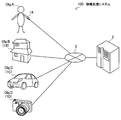
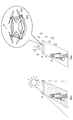
- FIG. 1 An overview of Information Processing System According to an embodiment of the present disclosure will be described with reference to FIG.
- all persons and things are defined as objects, and each object (Obj.A to Obj.D) has an interaction (interaction) between objects.
- a sensing device 1 (10A to 10D) for detection is provided.
- a person Obj.A is equipped with a sensing device 1A realized by a wearable device such as a watch-type device.
- the house Obj.B is provided with a sensing device 1B capable of detecting opening / closing of a door, entry / exit of a person, repair of a house, and the like.
- the vehicle Obj.C is provided with a sensing device 1C that can detect the travel distance, the number of times of use, the politeness of driving, the car wash, and the like.
- the camera Obj.D is provided with a sensing device 1D capable of detecting the usage time, storage state, subject type, water wetting, impact, number of maintenances, and the like.
- the interaction detected by the sensing device 1 is transmitted to the sensitivity server 2 via the network 3.
- each interaction performed by a person Obj.A with respect to a house Obj.B, a car Obj.C, and a camera Obj.D (opening / closing, repairing, driving, storage, etc.) is performed on the sensing devices 1A to 10D.
- each of the person-side sensing device 1A and the house-side sensing device 1B performs the respective interaction (interaction performed to another object, other object). Interaction) is detected.
- the detected interaction is not limited to an interaction between a person and an object, and an interaction between an object and an object can also be detected.
- the sensitivity server 2 accumulates the interaction received from the sensing device 1 and analyzes it to calculate the sensitivity value of each object.
- the sensitivity value calculated by the sensitivity server 2 is used in various services. Since the necessary sensitivity values may differ depending on the nature of the service, the sensitivity server 2 sends an evaluation value obtained by quantifying the evaluation of each interaction to each service, and the service side performs an interaction evaluation by a predetermined calculation method. The sensitivity value may be calculated based on the value.
- a sensitivity value that is a new index obtained by quantifying the value of each object based on the interaction between objects is obtained. Can be provided. The usefulness of such sensitivity values will be described below as the background of the present disclosure.
- the “sensibility value” of people / things can be defined as correlating with the history of every interaction, regardless of whether people / things (including services) are distinguished.
- This embodiment proposes a sensitivity value obtained by quantifying a pseudo “sensitivity value” of a person / thing from the above viewpoint.
- Kansei values are expressed as multi-dimensional vectors, so it is possible to use the vectors by dropping the dimensions or making them simple scalar values so that they can be handled easily, and optimizing them for each service or product.
- Sensitivity value is an indicator of a new value economy, and is expected to become an economic concept that is paired with money in the future. Therefore, Kansei values are stored (accumulated), exchange media (functions that mediate the exchange of goods A and goods B), and a measure of the value of people and goods (all goods and services are given sensitivity values, The value is expected to be determined by money and sensitivity.
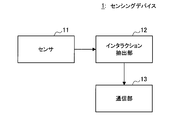
- FIG. 2 is a block diagram illustrating an example of the configuration of the sensing device 1 according to the present embodiment. As shown in FIG. 2, the sensing device 1 includes a sensor 11, an interaction extraction unit 12, and a communication unit 13.
- the sensor 11 has a function of detecting an interaction between objects.
- the sensor 11 includes, for example, a humidity sensor, a temperature sensor, a vibration sensor, an infrared sensor, a camera, a tactile sensor, a gyro sensor, an illuminance sensor, a human sensor, an atmospheric sensor (for example, a dust sensor, a contaminant sensor), a speed sensor, and a count value.
- a humidity sensor for example, a humidity sensor, a temperature sensor, a vibration sensor, an infrared sensor, a camera, a tactile sensor, a gyro sensor, an illuminance sensor, a human sensor, an atmospheric sensor (for example, a dust sensor, a contaminant sensor), a speed sensor, and a count value.
- the interaction extraction unit 12 functions as a detection unit that detects information related to the interaction between the first object and the second object based on the sensing data output from the sensor 11. For example, the interaction extraction unit 12 can extract interactions such as the number of times of opening / closing the door, the impact / strength at the time of opening / closing, and the entry / exit of a person based on sensing data of a sensor that detects opening / closing of the door.
- the interaction extraction unit 12 uses the sensing data of the sensor to detect that the target object is disassembled, reset processing is performed, failure symptoms are improved (no error), parts are replaced, and the like. Based on this, it is possible to extract an interaction such as repair / maintenance of the target object.
- the interaction extraction unit 12 detects a distance measurement value, an engine frequency measurement value, a tire replacement frequency, a brake timing, dirt, position information, a fuel addition frequency, and the like. Based on the sensing data, it is possible to extract interactions such as the travel distance, the number of uses, the politeness of driving, the car wash, and the like of the target object.
- the interaction extraction unit 12 uses the sensing data of a sensor that detects activation time, activation timing, mounting state, ambient air, humidity, temperature, water wetting, impact, etc. Interactions such as storage status can be extracted.
- the communication unit 13 transmits information related to the interaction extracted by the interaction extraction unit 12 to the sensitivity server 2 via the network 3.
- the sensing device 1 described above includes a microcomputer having a CPU (Central Processing Unit), a ROM (Read Only Memory), a RAM (Random Access Memory), and a nonvolatile memory. Control.
- CPU Central Processing Unit
- ROM Read Only Memory
- RAM Random Access Memory
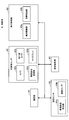
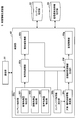
- FIG. 3 is a block diagram showing an example of the configuration of the sensitivity server 2 according to the present embodiment.
- the sensitivity server 2 includes a communication unit 21, a control unit 20, an object DB 22, and a sensitivity information DB 24.
- the communication unit 21 receives information related to interaction (hereinafter also referred to as interaction information) from the sensing device 1 mounted / mounted on each object (person, thing) via the network. Further, the communication unit 21 transmits the interaction value stored in the sensitivity information DB 24 or the sensitivity value calculated by the sensitivity value calculation unit 20e in response to a request from the external device.
- interaction information information related to interaction
- the communication unit 21 transmits the interaction value stored in the sensitivity information DB 24 or the sensitivity value calculated by the sensitivity value calculation unit 20e in response to a request from the external device.
- the control unit 20 controls each component of the sensitivity server 2.
- the control unit 20 is realized by a microcomputer that includes a CPU, a ROM, a RAM, and a nonvolatile memory. Furthermore, the control unit 20 according to the present embodiment functions as an interaction storage control unit 20a, an evaluation unit 20b, an object management unit 20c, a related object search unit 20d, and a sensitivity value calculation unit 20e.
- the interaction storage control unit 20a controls to store the interaction information received from the sensing device 1 mounted / mounted on the object in the sensitivity information DB 24.
- the evaluation unit 20b evaluates the interaction stored in the sensitivity information DB 24.
- the interaction evaluation method is not particularly limited, for example, the evaluation unit 20b calculates and evaluates based on a criterion defined by some evaluation index for the object that has interacted / received, and specifically, ⁇ 1.0 to 1.0. Give a score of.
- the evaluation result is stored in the sensitivity information DB 24 in association with the interaction.
- the object management unit 20c performs management such as registration, change, and deletion of information related to objects stored in the object DB 22.
- the related object search unit 20d searches the object DB 22 and the sensitivity information DB 24 as related objects for other objects that have interacted with the object ID requested from the external device.
- the sensitivity value calculation unit 20e calculates the sensitivity value of the object based on the evaluation value of the interaction information stored in the sensitivity information DB 24. A specific method for calculating the sensitivity value will be described later.
- the object DB (database) 22 is a storage unit that stores an object ID of each object.
- the object DB 22 stores various information related to the object such as a product name, a product type, a manufacturer name (or manufacturer ID), a model number, and a manufacturing date and time.
- the sensibility information DB 24 is a storage unit that stores interaction between objects and evaluation of the interaction.
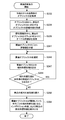
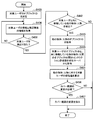
- FIG. 4 is a sequence diagram showing operation processing of the information processing system 100 according to the present embodiment.
- step S103 the interaction extraction unit of the sensing device 1A 12 acquires the interaction, and transmits the acquired interaction to the sensibility server 2 by the communication unit 13 in the subsequent step S106.
- step S109 the interaction extraction unit 12 of the sensing device 1B acquires the interaction, and in the subsequent step S112, the acquired interaction is transmitted to the sensitivity server 2 by the communication unit 13.
- the interaction is acquired by both objects and transmitted to the Kansei server 2.
- step S115 the interaction storage control unit 20a of the sensitivity server 2 stores the interaction transmitted from each sensing device 1 in the sensitivity information DB 24, and in the subsequent step S118, the evaluation unit 20b performs the interaction evaluation.
- the interaction evaluation by the evaluation unit 20b is also stored in the sensitivity information DB 24 in association with the interaction.
- step S121 the sensitivity value calculation unit 20e of the sensitivity server 2 calculates the sensitivity value of the object based on the interaction evaluation as necessary.
- the operation processing according to this embodiment has been described above.
- the sensitivity value of the object calculated based on the interaction history collected by the sensitivity server 2 of this embodiment can be used in various services as a new index indicating the value of the object.
- various service systems using sensitivity values according to the present embodiment will be described with reference to a plurality of application examples.
- the sensitivity value of an individual is used as creditworthiness information. It is also possible to visualize the individual's creditworthiness on various scales by filtering according to specific conditions (time and object attributes) from the history of interaction with the object with which the individual has been involved. For example, in the past it was a bad person who hit the thing, but now it is a good person who handles things carefully, and personal computers are handled carefully but getting on the car makes the handling rough. Also appears in the sensitivity value.
- FIG. 5 is a diagram for explaining the overall configuration of the personal credit information providing system 101 according to the first application example.
- the personal credit information providing system 101 includes a personal credit information providing server 4 and a sensitivity server 2.
- Sensitivity server 2 receives interaction information from user Obj.A, user Obj.A, who is a member of personal credit information provision system 101, and from house Obj.B, car Obj.C, and camera Obj.D, which the user is interacting with. get.
- the user acquires the credit information of user Obj.A.
- the user sends the personal credit information providing server 4 to the user Obj.A ID (that is, the object ID) and, if necessary, the period (for example, start time, end time) and related objects.
- a search condition such as an attribute (for example, a product category or manufacturer name) is specified, and a request is made to display the credit information of the user Obj.A.
- the personal credit information providing server 4 acquires a sensitivity value from the sensitivity server 2 based on the ID of the user Obj.A and a search condition (period, related object attribute, etc.) in response to a request from the user. At this time, the sensitivity values of the related objects (house Obj.B, car Obj.C, camera Obj.D) that have interacted with the user Obj.A can also be acquired.
- the personal credit information providing server 4 provides the user Obj.A's creditworthiness information to the user based on the acquired sensitivity value.
- search conditions such as a period and related object attributes are not specified
- comprehensive credit information of user Obj.A is displayed.
- the credit information of the user Obj.A for the designated period is displayed.
- the related object attribute is designated, the creditworthiness information corresponding to the interaction with the object matching the designated object attribute among the objects related to the user Obj.A is displayed.
- the sensitivity value may be displayed as the creditworthiness value as it is, or may be visualized by graphing or line charting.
- the user may not be subscribed to the same personal credit information providing system 101 as the user Obj.A, and may acquire the credit information of the user Obj.A using, for example, a credit sales company.
- the management server (not shown) of the credit sales company accesses the personal credit information providing server 4 of the personal credit information providing system 101 and acquires the credit information of the user Obj.A.
- FIG. 6 is a block diagram showing an example of the configuration of the personal credit information providing server 4 according to this embodiment.
- the personal credit information providing server 4 includes a control unit 40, a communication unit 41, and a product / user information DB (database) 42.
- the communication unit 41 is connected to a user terminal (not shown) via a network and receives a request from the user or transmits credit information to the user in response to the request.
- the communication unit 41 is connected to the sensitivity server 2 via a network, and acquires the sensitivity value of the target object and the sensitivity value of the related object.
- the control unit 40 controls each configuration of the personal credit information providing server 4.
- the control unit 40 is realized by a microcomputer including a CPU, a ROM, a RAM, and a nonvolatile memory. Furthermore, the control unit 40 according to the present embodiment functions as a related product search unit 40a, a sensitivity value request unit 40b, a result generation unit 40c, a display control unit 40d, and an object management unit 40e.
- the related product search unit 40a searches the product / user information DB 42 for products related to the survey target person specified by the user.
- the product related to the survey subject is, for example, a product associated with the survey subject in advance as a product owned by the survey subject.
- the sensitivity value requesting unit 40b requests the sensitivity server 2 for the sensitivity value of the survey target person specified by the user. Specifically, the sensibility value requesting unit 40b specifies the object ID of the survey target person and the search condition (period, related object attribute, related object object ID, etc.) if there are search conditions, and the communication unit 41. To the sentiment server 2 via the search condition (period, related object attribute, related object object ID, etc.) if there are search conditions, and the communication unit 41. To the sentiment server 2 via
- the result generation unit 40c generates a result of the creditworthiness survey of the survey target person based on the sensitivity value of the survey target person acquired from the sensitivity server 2 by the sensitivity value requesting unit 40b. Specifically, for example, the result generation unit 40c generates a result screen indicating the creditworthiness information of the survey target person.
- the display control unit 40d controls to display the result screen generated by the result generation unit 40c on the requesting user terminal. For example, the display control unit 40d controls to transmit information for displaying the result screen to the user terminal via the communication unit 41.
- the object management unit 40e performs management such as registration, change, and deletion of information related to a product / user (an example of an object) stored in the product / user information DB.
- the product / user information DB 42 is a storage unit that stores information about products / users.
- a user is a user who is registered as a member in the personal credit information providing system 101, for example.
- the product / user information includes the object ID of each product / user.
- the configuration of the personal credit information providing server 4 according to this application example has been described above. Since the configuration of the sensitivity server 2 included in the personal credit information providing system 101 has been described with reference to FIG. 3, the description thereof is omitted here.
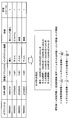
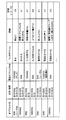
- FIG. 7 is a diagram showing a data example of the object DB 22 of the sensitivity server 2 according to the first application example.
- the object DB 22 of the sensitivity server 2 stores an object ID for identifying each object, an object type, a manufacturer ID, a model number, a serial number, and a manufacturing date (object generation date) in association with each other. Yes.
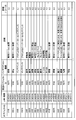
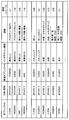
- FIG. 8 is a diagram illustrating a data example of the sensitivity information DB 24 of the sensitivity server 2 according to the first application example.
- the sensitivity information DB 24 stores information related to the interaction that occurs between the objects. As described above, when an interaction occurs between objects, the interaction is detected in both objects.
- a data string of interaction information generated in each object is generated for each object.
- the partner object when the interaction occurs in the data string is referred to as a related object.
- the sensitivity information DB 24 of the sensitivity server 2 is associated with the object ID of the object in which the interaction has occurred, the date / time of the interaction, the related object ID, the interaction type, the details of the interaction, and the interaction evaluation value. It is remembered.
- the person with the object ID: 18000555 performs an interaction “driving” on the car with the object ID: 5505 on June 21, 2000, and The details are “access / brake operation: polite, handle operation: slow”, and the interaction evaluation value 1 is given.
- an automobile with object ID: 5505 receives an interaction “driving” from a person with object ID: 18000555 on June 21, 2000, and the details of the interaction are “fuel consumption: good, brake consumption” : Small ”, and an interaction evaluation value of 1 is given. In this way, an interaction performed from one object to the other object can be detected on both the one object side and the other object side.
- the interaction of driving is performed by the person sitting in the driver's seat. It is detected that the car has been driven.
- care interaction includes, for example, recording of vibrations and voices detected by the sensor 11 provided in the house, images of cameras (an example of the sensor 11) provided in various parts of the house, and sensors worn by the user It can be detected that the landlord has cared for the house based on the operation analysis from 11 and based on the record reference to the registered remodeling company server.
- FIG. 9 is a flowchart showing a credit ranking display process according to the first application example.
- the range of the survey target person is designated by the user.
- a request for a creditworthiness survey of the target person is made to the personal credit information providing server 4 from the user terminal.
- the sensitivity value requesting unit 40b of the personal credit information providing server 4 requests the sensitivity value of the target person from the sensitivity server 2 based on the object ID of the target person.
- the object ID of the target person may be specified by the user, or may be acquired from the product / user information DB 42. Alternatively, on the sensitivity server 2 side, the object ID of the target person may be acquired from the object DB 22 according to the name of the target person specified by the personal credit information providing server 4.
- the sensitivity value calculation unit 20e of the sensitivity server 2 calculates the sensitivity value based on the interaction evaluation value associated with the object ID of the designated target person. For example, the sensitivity value calculation unit 20e calculates the total sensitivity value of the target person based on the sum of the interaction evaluation values between the target person and other objects. Alternatively, the sensibility value calculation unit 20e may calculate the total sensibility value of the target person based on the average value of the interaction evaluation values between the target person and other objects, or after performing weighting according to the age, Alternatively, the total sensitivity value may be calculated from the average value.
- step S215 the result generation unit 40c of the personal credit information providing server 4 regards the sensitivity values as creditworthiness and sorts the target persons. , Generate credit rating ranking screen. At this time, the result generation unit 40c generates a ranking screen based on the total creditworthiness of the target person.
- FIG. 10 shows an example of the credit rating ranking screen.
- the survey subjects are displayed in the order based on the individual's total creditworthiness.
- the ranking screen 45 includes, for example, target person information fields 46a, 46b, and 46c, and the target person information fields 46a, 46b, and 46c are arranged in descending order of creditworthiness.
- Each of the target person information fields 46a, 46b, and 46c includes a name of the target person and a star display indicating a ranking according to the creditworthiness.
- numerical values of creditworthiness that is, sensitivity values
- the target person information fields 46a, 46b, and 46c numerical values of creditworthiness (that is, sensitivity values) that are the basis of ranking may be displayed.
- the creditworthiness information for each object attribute of the target person ⁇ is displayed.
- the display of creditworthiness information for each object attribute will be described later with reference to FIGS.
- the name 462 of the target person included in the target person information column 46c is selected, the creditworthiness information for each age of the target person ⁇ is displayed.
- the display of creditworthiness information for each age will be described later with reference to FIGS.
- step S218, the display control unit 40d controls to display the result (ranking screen) generated by the result generation unit 40c on the requesting user terminal.
- FIG. 11 is a flowchart showing the credit information display processing for each object attribute according to the first application example. As shown in FIG. 11, first, in step S223, the personal credit information providing server 4 requests a sensitivity value from the sensitivity server 2 based on the object ID of the subject.
- the related object search unit 20d of the sensitivity server 2 acquires the object ID (related object ID) of the related product linked to the object ID of the target person.
- the related product linked to the object ID of the target person indicates another object (also referred to as a related object) in which an interaction has occurred with the target person.
- the related object search unit 20d based on the object attribute included in the search condition specified by the user, among the other objects that have interacted with the target person, the specified object attribute (that is, the object (Type) may be searched.
- step S229 the sensitivity value calculation unit 20e of the sensitivity server 2 acquires the interaction evaluation value associated with the related object ID from the sensitivity information DB 24.
- step S231 the sensitivity value calculation unit 20e calculates the sensitivity value of the related product based on the interaction evaluation value of the related product.
- the sensitivity value calculated here is a relative sensitivity value between the target person and the related product.
- an example of calculating the sensitivity value of the related product will be described with reference to FIG.
- FIG. 12 is a diagram for explaining the calculation of the relative sensitivity value of the subject person with respect to the house according to the first application example.
- the sensibility value calculation unit 20e based on the extracted interaction information, is obtained by dividing the initial evaluation value by the diameter and multiplying by a predetermined weighting factor, and each maintenance (care)
- the relative sensibility values of the subject and the house are calculated by summing the evaluation values obtained by dividing the evaluation values by the maintenance intervals and multiplying them by a predetermined weighting factor.
- the result generating unit 40c of the personal credit information providing server 4 is acquired from the Kansei server 2 by the Kansei value requesting unit 40b in Step S237.
- the relative sensitivity value of the related product is regarded as creditworthiness, and a display screen of creditworthiness information for each object attribute is generated.
- the display control unit 40d controls to display a display screen of the generated credit information for each object attribute on the requesting user terminal.
- FIG. 13 shows an example of a display screen of creditworthiness information for each object attribute.
- the credit information display screen 47 for each object attribute shown in FIG. 13 is a screen that changes when an arrow 461 included in the target person information column 46c of the ranking screen 45 shown in FIG. A relative sensitivity value based on an interaction evaluation value between ⁇ and another object is displayed as creditworthiness.
- a creditworthiness information display screen 47b for the car attribute and a creditworthiness information display screen 47c for the camera attribute can be displayed.
- the creditworthiness may be graphed or the like, and advice corresponding to the creditworthiness is also displayed. In this way, for example, when searching for a homestay, a room share, or a car sharing partner, in addition to the total creditworthiness of the other party, what is the creditworthiness (how to handle the goods) of what attributes individually You can know if it is.
- FIG. 14 is a flowchart showing the credit age display process. As shown in FIG. 14, first, in step S243, the personal credit information providing server 4 requests a sensitivity value from the sensitivity server 2 based on the object ID of the subject.
- step S246 the related object search unit 20d of the sensitivity server 2 acquires the object ID (related object ID) of the related product linked to the object ID of the target person.
- the related product linked to the object ID of the target person indicates another object (also referred to as a related object) in which an interaction has occurred with the target person.
- step S249 the sensitivity value calculation unit 20e divides the interaction from the subject for each related object ID by age, and acquires the evaluation value for each age of the subject.
- the sensitivity value calculation unit 20e calculates sensitivity values for each age between the target person and related objects based on the evaluation value. At this time, the sensitivity value calculation unit 20e may acquire the evaluation value for each age based on the sum, average value, weighted sum / average value, etc. of the interaction evaluation values for each age.
- step S254 the sensibility value calculation unit 20e adds the sensibility values of each age of the subject to obtain a total sensibility value.
- step S260 the result generation unit 40c of the personal credit information providing server 4 is obtained from the sensitivity server 2 by the sensitivity value requesting unit 40b. Considering the sensibility value as creditworthiness, a display screen of creditworthiness information by age of the target person is generated. And the display control part 40d controls to display the display screen of the produced credit information of the target person according to age on the requesting user terminal.
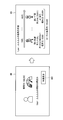
- FIG. 15 shows an example of a display screen of the creditworthiness information of each subject by age group.
- the creditworthiness information display screen 48 shown on the left side of FIG. 15 is a screen that is transitioned when the name 462 of the target person included in the target person information field 46c of the ranking screen 45 shown in FIG. The current creditworthiness of ⁇ is displayed.
- the chronological table display button 481 on the creditworthiness information display screen 48 is selected, the screen transitions to a creditworthiness information display screen 49 classified by age shown on the right side of FIG.
- the creditworthiness (total creditworthiness by age) of all the objects of the subject for each age is displayed.
- the creditworthiness information display screen 49 by age it is not limited to the creditworthiness with respect to all the goods for every age as shown in FIG. 15, You may display the creditworthiness according to the age for every object attribute.
- the personal credit information providing system 101 has been described above.
- the person's creditworthiness ranking is displayed.
- this application example is not limited to this, and for example, a creditworthiness ranking in which people and goods are mixed may be displayed.
- a creditworthiness ranking in which people and goods are mixed may be displayed.
- searching for a helper destination if the survey target is designated as “helper”, people and things (robots) can be ranked together.
- the sensitivity value according to the present embodiment can be used as a criterion for the reliability of the user (exhibitor) who has submitted.
- the sensitivity value can be converted into a value called “sensitivity value” and used.
- the reliability of the seller and the politeness of handling can be determined by referring to the sensitivity value based on the interaction evaluation value with the thing other than the exhibited item, You can determine whether you are always a messy person.
- FIG. 16 is a diagram illustrating the overall configuration of the auction system 102 according to the second application example. As shown in FIG. 16, the auction system 102 includes an auction server 5 and a sensitivity server 2.
- Sensitivity server 2 acquires interaction information from user Obj.A, user Obj.A, who is a member of auction system 102, house Obj.B, car Obj.C, and camera Obj.D, which the user is constantly interacting with.
- the user Obj.A and the user shown in FIG. 16 register as members in the auction system 102, they are registered in association with their unique IDs. Further, when the user Obj.A puts a product on the auction system 102, the user Obj.A transmits an object ID unique to the product to the auction server 5.
- the auction server 5 requests the sensitivity server 2 for the sensitivity value of the object based on the object ID of the exhibited object. At this time, the auction server 5 also requests the sensitivity server 2 for the sensitivity value of the user Obj.A who is the exhibitor of the object.
- the object is a product having a specific model number or product name
- information on other exhibited products having the same model number or product name is acquired from the product / user information DB 42 (see FIG. 6) of the auction server 5 and acquired.
- a sensitivity value may be requested from the sensitivity server 2 based on the object ID of the product.
- the acquisition of the sensibility value to the sensibility server 2 by the auction server 5 may be performed when a new product is exhibited, or when the user of the auction service considers the product to be purchased, This may be performed when a product is designated for the server 5.
- the auction server 5 considers the sensitivity value as the creditworthiness of the product (eg, politeness, cherished, thoughtfulness, etc.) based on the acquired sensitivity value, and sorts it in the order of the sensitivity value. Products that have been handled carefully and products that have the user's feelings can be displayed at the top.
- the sensitivity value as the creditworthiness of the product (eg, politeness, cherished, thoughtfulness, etc.) based on the acquired sensitivity value, and sorts it in the order of the sensitivity value. Products that have been handled carefully and products that have the user's feelings can be displayed at the top.
- FIG. 17 is a block diagram showing an example of the configuration of the auction server 5 according to this embodiment.
- the auction server 5 includes a control unit 50, a communication unit 51, and a product / user information DB 52.
- the communication unit 51 is connected to a user terminal (not shown) via a network and receives a request from the user, or transmits an exhibition product or an exhibitor's sensitivity value to the user in response to the request. To do.
- the communication unit 41 is connected to the sensitivity server 2 via a network, and acquires the sensitivity value of the target object and the sensitivity value of the related object.
- the control unit 50 controls each component of the auction server 5. Further, the control unit 50 is realized by a microcomputer including a CPU, a ROM, a RAM, and a nonvolatile memory. Furthermore, the control unit 50 according to the present embodiment functions as a related product search unit 50a, a sensitivity value request unit 50b, a result generation unit 50c, a display control unit 50d, and an object management unit 50e.
- the related product search unit 50a searches the product / user information DB 42 for products related to the survey target product.
- the product related to the survey target product is, for example, a product having the same model number and name as the survey target product.
- the sensitivity value request unit 50b requests the sensitivity server 2 for the sensitivity value of the product to be investigated. Specifically, the sensitivity value requesting unit 50b sends the object ID of the survey target product, the object ID of the related product when there is a related product, and the object ID of the exhibitor of the survey target product via the communication unit 51. It transmits to the sensitivity server 2.
- the result generation unit 50c generates the result of the sensitivity value survey of the survey target product based on the sensitivity value of the survey target product acquired from the sensitivity server 2 by the sensitivity value request unit 50b. Specifically, for example, the result generation unit 50c generates a result screen indicating the sensitivity value of the survey target product.
- the display control unit 50d controls to display the result screen generated by the result generation unit 50c on the user terminal. For example, the display control unit 50d controls to transmit information for displaying the result screen to the user terminal via the communication unit 41.
- the object management unit 50e performs management such as registration, change, and deletion of information related to a product / user (an example of an object) stored in the product / user information DB.
- the product / user information DB 52 is a storage unit that stores information about products / users.
- the user is a user who is registered as a member in the auction system 102, for example.
- the product / user information includes the object ID of each product / user.
- FIG. 18 shows a data example of the exhibition product information stored in the product / user information DB 52.
- an exhibition ID for identifying each exhibited product in the product / user information DB 52, an exhibition ID for identifying each exhibited product, a type ID, an object ID of the product, an object ID of the exhibitor, an exhibition date / time, an auction end date / time, a current price, and a bid list.
- product descriptions are stored in association with each other.
- the configuration of the auction server 5 according to this application example has been described above. Since the configuration of the sensitivity server 2 included in the auction system 102 has been described with reference to FIG. 3, description thereof is omitted here.
- FIG. 19 is a diagram illustrating a data example of the sensitivity information DB 24 of the sensitivity server 2 according to the second application example.
- the sensitivity information DB 24 stores information related to the interaction that occurs between the objects.
- the object ID of the object in which the interaction has occurred, the date and time of the interaction, the related object ID, the interaction type, the details of the interaction, and the interaction evaluation value are stored in association with each other.
- the interaction is extracted from both objects and evaluated by the evaluation unit 20b.
- the interaction evaluation values extracted by both of these objects are the same value, but this application example is not limited to this, and may be different evaluation values.
- an interaction “operation” performed by a user object ID: 1930213
- a digital camera object ID: 384
- the user who performed the operation takes care of the camera and carefully operates the camera.
- a negative evaluation is performed such that the operation is forcibly performed or the camera is placed violently, and different evaluations may occur depending on the direction of interaction.
- the details of the interaction such as driving politeness and roughness are analyzed based on sensing data detected by sensors mounted on an accelerator pedal, a brake pedal, and a steering wheel.
- the evaluation value of the driving interaction is obtained so that the input values of the accelerator, the brake, and the steering wheel operation are included in the evaluation function and are in the range of -1.0 to 1.0.
- the interaction of camera operations includes the force with which the camera's shutter button is pressed, the speed of turning the dials / number of times of overturning, the impact when placing the camera, and the impact received by the main body when it is in a bag etc. Is detected by a sensor.
- the evaluation unit 20b weights each value based on sensing data detected by the sensor and calculates an evaluation value. Further, the evaluation unit 20b normalizes the calculated value in a range of ⁇ 1.0 to 1.0.
- the storage interaction of the camera or the like is extracted by sensing the temperature, humidity, and dustiness (which can be detected by the dust sensor) of the storage location, and the evaluation unit 20b determines these values during the storage period. Based on the amount of change, the storage condition for the camera or the like is quantified. Further, the evaluation value may be calculated by weighting each parameter. The evaluation unit 20b normalizes the calculated value in a range of ⁇ 1.0 to 1.0.
- FIG. 20 is a flowchart showing a list display process according to the sensitivity value of the exhibited product according to the second application example. As shown in FIG. 20, first, in step S303, the user designates an exhibition item to be investigated.
- step S306 the sensitivity value request unit 50b of the auction server 5 searches the product / user information DB 52 for the product specified by the user.
- the related product search unit 50a may also search for products (other exhibited products with the same model number or name) related to the searched product information.
- step S309 the sensitivity value requesting unit 50b requests the sensitivity server 2 for the sensitivity value of the subject based on the object ID of each product.
- step S312 the sensitivity value calculation unit 20e of the sensitivity server 2 calculates a sensitivity value based on the interaction evaluation value associated with the object ID of the designated product.
- step S318 the result generation unit 50c of the auction server 5 sorts the products in order of the sensitivity values, and ranks the exhibited products according to the sensitivity values. Generate a screen. At this time, the result generation unit 40c generates a ranking screen based on the total sensitivity value (absolute sensitivity value) of the target product.
- FIG. 21 shows an example of a list display screen corresponding to the sensitivity value of the exhibited product.
- the survey target products are displayed in the order based on the total sensitivity value (absolute sensitivity value) of each product.
- the survey target products include listed products (related products) having the same model number and name as the listed products in addition to the listed products designated by the user. Thus, the user can know the sensitivity values of the same type of listed products in addition to the designated listed product.
- the list display screen 55 includes, for example, target product information columns 56a, 56b, and 56c, and the target product information columns 56a, 56b, and 56c are arranged in descending order of sensitivity values.
- Each of the target product information fields 56a, 56b, and 56c includes an exhibitor name of the target product and a star display indicating ranking according to the sensitivity value.
- sensitivity values that are the basis for ranking may be displayed.
- step S321 the display control unit 50d controls to display the result (list display screen) generated by the result generation unit 50c on the requesting user terminal.
- FIG. 22 is a flowchart showing a detailed information display process related to the sensitivity value of the exhibited product according to the second application example.
- the personal credit information providing server 4 acquires the object ID of the exhibited product from the exhibited ID and requests the sensitivity server 2 for the sensitivity value of the exhibited product.
- step S336 the sensibility value calculation unit 20e of the sensibility server 2 acquires the detailed contents (product type, manufacturer, date of manufacture, etc.) of the object corresponding to the object ID of the product from the object DB 22.
- step S339 the sensitivity value calculation unit 20e filters all of the interaction evaluation values of the target product by filtering the product object ID from the sensitivity information DB 24 (see FIG. 23).
- step S341 the sensitivity value calculation unit 20e classifies all the interaction evaluation values of the acquired target products for each related object ID.
- the related object ID is an object that has interacted with the target product, and usually corresponds to the owner of the target product.
- step S344 the sensitivity value calculation unit 20e selects one related object ID.
- step S347 a relative sensitivity value between the selected related object ID and the target product is calculated. That is, the sensitivity value calculation unit 20e calculates an interaction evaluation value with the related object ID selected in S344 among the evaluation values classified for each related object ID in S341.
- step S352 the sensitivity value calculation unit 20e calculates the absolute sensitivity value of the target product based on all the interaction evaluation values of the target product acquired in S339.
- the sensitivity value calculation unit 20e calculates the absolute sensitivity value of the target product based on all the interaction evaluation values of the target product acquired in S339.
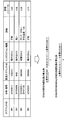
- FIG. 23 is a diagram for explaining the calculation of the relative / absolute sensitivity value of the exhibited product according to the second application example. As shown in FIG. 23, first, all interaction information related to the exhibited product is acquired from the sensitivity information DB 24 by filtering with the exhibited product (object ID: 384).
- the sensitivity value calculation unit 20e calculates an absolute sensitivity value of the product and a sensitivity value (relative sensitivity value) for each related object ID (object IDs: 1930213, 4649, 5930884) based on the acquired interaction information.
- the related object ID is an object ID of a past owner (owner) of the product.
- the absolute sensitivity value of a product is the total number of sensitivity values based on the interaction history of the product so far. Specifically, as shown in FIG. 23, for example, the absolute sensitivity value of the product is calculated by the sum of the average value for each interaction type multiplied by the weight a corresponding to the interaction type (operation, storage).
- the relative sensitivity value of a product is a sensitivity value based on an interaction history for each owner of the product.
- FIG. 23 shows, as an example, a formula for calculating a relative sensitivity value between an object ID: 5930884 (one owner) and a digital camera (object ID: 384).
- the interaction history the third and fourth lines in the data example shown in FIG. 23
- the interaction type operation, storage
- the relative sensitivity value between the product and the related object ID is calculated by the sum of the product multiplied by the weight a corresponding to ().
- the result generation unit 50c of the auction server 5 has related object IDs as detailed information regarding the sensitivity values of the products acquired from the sensitivity server 2 by the sensitivity value requesting unit 50b.
- a screen is generated that displays the relative sensitivity value for each age, the main interaction content, and the absolute sensitivity value (total sensitivity value) of the product.
- the display control unit 50d controls to display the generated detailed information display screen on the requesting user terminal.
- FIG. 24 shows an example of a detailed information display screen regarding the sensitivity value of the exhibited product.
- the detailed information display screen 57 of the exhibited product shown in FIG. 24 is a screen that is transitioned when an arrow 561 included in the target product information field 46a of the list display screen 55 shown in FIG.
- the detailed information regarding the sensitivity value of the product exhibited by ⁇ is displayed.
- the relative sensitivity values (0.92, -0.56, 0.80) for each successive owner of the products exhibited by the exhibitor XX are shown in chronological order.
- the total sensitivity value (absolute sensitivity value) of the product is displayed. Thereby, the user can grasp
- FIG. 25 is a flowchart showing a display process of detailed information related to the sensitivity value of the exhibitor. As shown in FIG. 25, first, in step S363, the personal credit information providing server 4 acquires the exhibitor's object ID from the exhibition ID, and requests the sensitivity server 2 for the sensitivity value of the exhibitor.
- step S366 the sensibility value calculation unit 20e of the sensibility server 2 acquires the detailed contents (name, gender, age, etc.) of the object corresponding to the exhibitor's object ID from the object DB 22.
- step S369 the sensitivity value calculation unit 20e filters the seller's object ID from the sensitivity information DB 24 to obtain all the seller's interaction evaluation values (interaction information history so far).
- step S371 the sensitivity value calculation unit 20e classifies all the acquired interaction evaluation values of the exhibitor for each related object ID.
- the related object ID is an object having an interaction relationship with the target person, and usually corresponds to an article owned by the exhibitor or other exhibited items that the exhibitor has exhibited.
- the sensitivity value calculation unit 20e calculates a sensitivity value (relative sensitivity value) for each related object, calculates a total value (absolute sensitivity value), and transmits it to the auction server 5.
- the result generation unit 50c of the auction server 5 includes, as detailed information related to the seller's sensitivity value acquired from the sensitivity server 2 by the sensitivity value request unit 50b, the relative sensitivity value for each related object ID, the main interaction contents, and the seller.
- a screen is displayed that displays the absolute sensitivity value (total sensitivity value).
- the display control unit 50d controls to display the generated detailed information display screen on the requesting user terminal.
- the total sensitivity value (absolute sensitivity value) of the exhibitor may be the sum of the sensitivity values (relative sensitivity values) for each related object, may be an average value, or may be an interaction type. It may be calculated by adding and averaging the evaluation values after weighting each time.
- FIG. 26 shows an example of a detailed information display screen related to the sensitivity value of the exhibitor.
- the seller's detailed information display screen 58 shown in FIG. 26 is a screen that is transitioned to when the seller's name 562 included in the target product information field 46c of the list display screen 55 shown in FIG.
- Detailed information about the sensitivity values of ⁇ is displayed.
- the relative sensitivity values ( ⁇ 0.32, 0.12, and ⁇ 0.3) of each item of the exhibitor ⁇ are displayed, and the total sensitivity value (absolute) of the exhibitor is also displayed. Sensitivity value) is displayed.
- the user can be a person who takes care of things on a daily basis, or is usually messy, by looking at the sensitivity value of the seller's reliability and the careful handling of the goods, You can determine if you are a person. Before making a successful bid for an item for sale, it is possible to know the human nature by looking at the sensitivity value of the exhibitor.
- the detailed information display screen 58 may display other information (age, gender, etc.) set to be disclosed by the exhibitor as exhibitor information.
- the auction system 102 according to the second application example has been described above.
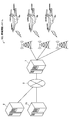
- FIG. 27 is a diagram illustrating the overall configuration of the environment adjustment system 103 according to the third application example.
- the environment adjustment system 103 includes a moving body 6 that changes a user's surrounding environment following the user, and an environment adjustment server 7 that controls the moving body 6.
- the environment adjustment server 7 communicates with the moving body 6 via an access point or the like, and performs movement control or the like of the moving body 6.
- the moving body 6 may be a plurality of moving bodies 6a to 6c, and can be moved with base stations installed outdoors as base points.
- the environment adjustment server 7 is connected to the sensibility server 2 and the heat map server 75 via the network 3 and acquires information necessary for movement control of the moving body 6.
- the environment adjustment server 7 can acquire the user's sensitivity value from the sensitivity server 2 and perform environment adjustment control according to the sensitivity value.
- the environment adjustment server 7 can provide a more comfortable environment for the user by causing the user to follow the moving body 6 and locally changing the surrounding environment according to the user's emotion.
- the moving body 6 is realized by a small flying drone as shown in FIG. 27, and can follow the moving user and fly.
- FIG. 28 is a diagram for explaining an example of environment adjustment by the moving body 6 of this application example. As shown in FIG. 28, for example, the moving body 6 flies following the user while moving and functions as a parasol or a parasol so that rain or direct sunlight does not hit the user. The surrounding environment can be changed.
- the moving body 6 can also expand a cover range as needed. For example, as shown in FIG. 28, the cover range can be expanded by expanding the plate member 651 in a circular shape from the center of the moving body 6.
- the moving body 6 is not limited to the flying object shown in FIG. 27, and may be, for example, a robot-type moving body that moves on the ground and follows the user, or a water moving body.
- FIG. 29 is a diagram illustrating an example of the configuration of the moving body 6 according to this application example.
- the moving body 6 includes a communication unit 61, an object sensor 62, a moving body control unit 63, an environment sensor 64, and a deformation control unit 65.
- the communication unit 61 exchanges data with the environment adjustment server 7. For example, the communication unit 61 transmits the sensor information acquired by the object sensor 62 and the environment sensor 64 to the environment adjustment server 7, and receives control information including instructions for movement control and deformation control from the environment adjustment server 7.
- the object sensor 62 is a detection unit that acquires information about the tracking object.
- the following object corresponds to a user who moves outdoors, for example.
- the object sensor 62 includes, for example, a camera 62a, an infrared camera 62b, a wireless signal receiving unit 62c, or a microphone array 62d, and acquires information about the user.
- the moving body control unit 63 has a function of controlling the movement of the moving body 6.
- the moving body control unit 63 includes a power drive unit 63a and an attitude control unit 63b.
- the power drive unit 63 a is realized by, for example, a propeller, wheels, and walking legs, and drives the target user to follow the control according to the control of the moving body control unit 63.
- the posture control unit 63b detects the posture of the moving body 6 using a gyro sensor or the like, and controls the power driving unit 63a to adjust the inclination and altitude of the moving body 6.
- the mobile body control unit 63 according to the present disclosure can locally change the user's surrounding environment by controlling the flight path and altitude of the mobile body 6 so that the mobile body 6 avoids rain and awning of the user, for example. it can.
- the environment sensor 64 is a detection unit that acquires information about the surrounding environment. Specifically, the environment sensor 64 acquires the environment information using, for example, a latitude / longitude positioning unit 64a or an altitude sensor 64b. In addition, the specific example of the environmental sensor 64 is not limited to this, Furthermore, you may have a temperature sensor, a humidity sensor, etc. as needed.
- the deformation control unit 65 performs control to deform the shape of the moving body 6 so as to expand the cover range for avoiding rain and awning.
- the mobile unit 6 described above includes a microcomputer having a CPU (Central Processing Unit), a ROM (Read Only Memory), a RAM (Random Access Memory), and a nonvolatile memory. Control.
- CPU Central Processing Unit
- ROM Read Only Memory
- RAM Random Access Memory
- FIG. 30 is a block diagram illustrating an example of the configuration of the environment adjustment server 7. As illustrated in FIG. 30, the environment adjustment server 7 includes a communication unit 71, a control unit 70, and a user DB 72.
- the communication unit 71 transmits / receives data to / from an external device. Specifically, for example, the communication unit 71 receives object information and environment information from the moving body 6 and transmits control information for controlling movement of the moving body 6 to the moving body 6. The communication unit 71 also acquires predetermined data from the sensitivity server 2 and the heat map server 75 via the network 3.
- the control unit 70 controls each configuration of the environment adjustment server 7. Specifically, the control unit 70 controls the moving body 6 to follow the target user and change the surrounding environment of the target user according to the user's emotion.
- the control unit 70 is realized by a microcomputer that includes a CPU, a ROM, a RAM, and a nonvolatile memory.
- control unit 70 includes a user setting management unit 70a, an object detection unit 70b, an emotion estimation unit 70c, an environment information acquisition unit 70d, a heat map generation / acquisition unit 70e, a sensitivity value calculation unit 70f, and a moving body control unit. Functions as 70g.
- the user setting management unit 70a performs management such as registration, change, and deletion of user information of the system.
- the user information includes, for example, a user name, identification number, face image, age, gender, hobby / preference, home address, work place, behavior pattern, and the like.
- the object detection unit 70b detects a person around the moving body 6 or an object possessed by the person based on the object sensor information transmitted from the moving body 6.
- the target object detection unit 70b can detect a target user by analyzing a captured image transmitted from the moving body 6 and collating it with a face image of the user who has been registered in the user DB 72. it can.
- the target object detection part 70b can also detect a target user based on the identification information of the user which the mobile body 6 received from wireless communication apparatuses, such as a smart band with which the user was mounted
- the emotion estimation unit 70c estimates the emotion of the target user detected by the target object detection unit 70b. Specifically, for example, the emotion estimation unit 70c estimates the emotion of the target user based on the biological information (pulse, body temperature, amount of sweat, brain waves, etc.) of the target user.
- the biological information is acquired by the smart band worn by the user, transmitted to the mobile body 6, and further transmitted from the mobile body 6 to the environment adjustment server 7.
- the emotion estimation unit 70c can also estimate the emotion of the target user based on the attributes (gender, age, height, weight, personality, occupation, etc.), hobbies / preferences, and surrounding environment of the target user.
- the environment information acquisition unit 70d acquires information on the surrounding environment from the moving body 6 via the communication unit 71. Specifically, the environment information acquisition unit 70d acquires data (latitude and longitude, altitude, etc.) detected by the environment sensor 64 of the moving body 6 as environment information.
- the environment information acquisition unit 70d may acquire surrounding terrain information, building information, and the like as environment information from a predetermined server in accordance with the position (latitude / longitude information) of the moving body 6.
- the heat map generation / acquisition unit 70e generates an emotion heat map in which emotions are geographically mapped based on the estimation result of the emotion estimation unit 70c and the environment information output from the environment information acquisition unit 70d. More specifically, the heat map generation / acquisition unit 70e generates an emotion heat map indicating what kind of emotions are present at which locations based on the emotion estimation results of a plurality of users.
- the heat map generation / acquisition unit 70e generates an environmental heat map around the current location of the target user based on the environmental information (latitude / longitude, altitude, terrain information, building information, etc.) output from the environmental information acquisition unit 70d. To do.
- the heat map generated in this way may be stored in the heat map server 75 on the network, or may be stored in a storage unit (not shown) of the environment adjustment server 7. Also, the heat map can be updated periodically.
- the heat map generation / acquisition unit 70e can also generate an integrated heat map that integrates the emotion heat map and the environmental heat map.
- the sensitivity value calculation unit 70f calculates the sensitivity value (that is, the relative sensitivity value) of the target user detected by the target object detection unit 70b with respect to personal belongings or a person (related object) who is present. Specifically, the sensitivity value calculation unit 70f acquires an interaction evaluation value associated with the object ID of the target user from the sensitivity server 2, and based on the interaction evaluation value, the relative sensitivity for each related object of the target user. Calculate the value.
- an interaction evaluation such as frequent maintenance of the watch possessed by the target user and an interaction evaluation stored in a dedicated case are stored in the sensitivity server 2, and the sensitivity value calculation unit 70f Obtains the interaction evaluation of the target user and calculates the sensitivity value.
- the formula for calculating the sensibility value is not particularly limited. For example, each interaction with the specific object (related object) of the target user is classified for each interaction type, and a weighting function corresponding to the interaction type is used to calculate all the interactions with the specific object. Evaluations may be averaged.
- the object ID of the target user can be acquired from the user DB 72.
- the moving body control unit 70h determines an area where the environment should be changed in the route along which the target user moves, and the moving body 6 uses the surroundings of the user. Control to change the environment.
- the determination of the area where the environment should be changed is made based on, for example, whether the value of the integrated heat map is higher than a predetermined threshold. In this way, by using an integrated heat map in which the emotion heat map and the environmental heat map are integrated, the moving body 6 is made to follow the target user when passing through a place where the target user moves, for example, where it is easily wet with rain. By avoiding rain, the surrounding environment of the target user can be locally changed, and the target user can be in a comfortable state.
- the moving body control unit 70 h obtains the sensitivity value for the personal belongings of the target user and the person with whom it is acquired (important thought). It is also possible to perform control such as expanding the cover range by the moving body 6 or covering the target user with priority over the target user according to the degree).
- each device included in this application example has been specifically described above.
- the sensitivity value is calculated by the sensitivity value calculation unit 70f of the environment adjustment server 7.
- the sensitivity value may be calculated on the sensitivity server 2 side.
- FIG. 31 is a flowchart showing the environment adjustment process. As shown in FIG. 31, first, in step S403, the environment adjustment server 7 acquires the target user's current location and destination environment information and destination arrival time information.
- step S406 the emotion estimation unit 70c of the environment adjustment server 7 acquires user attributes, hobbies / preferences, biometric information, and the like.
- the emotion estimation unit 70c estimates the user's emotion. That is, the emotion estimation unit 70c estimates what emotion the user will have in the current environment on the route from the current location to the destination based on the user's attributes, hobbies / preferences, or biological information. can do. For example, the fact that the user is a woman in her thirties and is carrying a parasol from the past is extracted from past behavior history, conversations, writing, etc., and the purchase history of sunscreen and parasol is extracted from the purchase history Then, it is presumed that the woman has a feeling of fear (unpleasant feeling) against ultraviolet rays, direct sunlight, and sunburn.
- fear unpleasant feeling
- step S412 the control unit 70 of the environment adjustment server 7 determines whether or not an environment change is necessary based on the estimation result. Specifically, for example, when the user has a feeling of fear (uncomfortable feeling) about ultraviolet rays, direct sunlight, or sunburn, the weather at the current location or the destination is clear and direct If the environment is exposed to sunlight, it is determined that environmental changes are necessary.
- fear uncomfortable feeling
- step S415 the mobile body control unit 70g controls the mobile body 6 so as to change the surrounding environment of the target user. Specifically, the mobile body control unit 70g causes the mobile body 6 to follow the target user, and avoids rain and flies at a position to be awned so as to change the environment around the target user.
- step S418, the environment adjustment server 7 determines whether or not the user has arrived at the destination.
- the environment adjustment operation ends.
- the moving body control unit 70g controls the moving body 6 to return to a predetermined base station.
- step S421 the environment adjustment server 7 uses the object detection unit 70b and the environment information acquisition unit 70d to determine the current location information of the user and the current location. Environmental information is acquired and S415 is repeated.
- the cover range changing process of the moving body 6 will be described with reference to FIG.
- the cover range can be changed based on the sensitivity value of the target user. This makes it possible to perform environmental adjustments according to the feelings of the target user, such as preferentially covering things that are important to the target user on a daily basis, or covering people important to the target user.
- FIG. 32 is a flowchart showing the range changing process. As shown in FIG. 32, first, in step S433, the sensitivity value calculation unit 70f of the environment adjustment server 7 determines the object ID of the target user.
- step S436 the surrounding information of the moving body 6 is sensed by the object sensor 62 and the environment sensor 64, and information on the target user and information on the surrounding environment are acquired.
- step S439 S436 is repeated until the determined target user can be detected.
- step S442 the target object detection unit 70b moves with another object (stroller, luggage, etc.) moving with the target user or with the target user. Detect moving people.
- the sensitivity value calculation unit 70f acquires the detected object ID of another object or person.
- object IDs also referred to as related object IDs
- the sensitivity server 2 is inquired based on the analysis result of the captured image acquired by the camera 62a of the moving body 6, It may be searched from the object DB 22 by the related object search unit 20d.
- the sensitivity value calculation unit 70f specifies the object ID of the target user and the object ID of another object or person moving with the target user, and sets the object ID between the target user and the other object or person.
- An interaction evaluation value is acquired from the sensitivity server 2.
- the interaction evaluation value is normalized by, for example, an evaluation value of an action such as conversation from the target user to another person, mail, or storage, maintenance, wearing, appreciation, etc. from the target user to the object from ⁇ 1.0 to 1.0. It is a thing.
- FIG. 33 and 34 a specific example of interaction evaluation data used for the sensitivity value calculation will be described with reference to FIGS. 33 and 34.
- FIG. 33 is a diagram showing an example of interaction evaluation data according to this application example.
- FIG. 33 is an example of interaction evaluation used when the moving body 6 functions as an umbrella, for example.
- object ID: 70007 object ID: 70007
- object ID: 70008 object ID: 70008
- the mobile body control unit 70g acquires an interaction evaluation value as shown in FIG.
- the interaction evaluation example shown in FIG. 33 includes an evaluation value of the interaction when an interaction such as conversation, e-mail, contact outside the workplace occurs, for example.
- Evaluation of conversation interaction is based on the user's utterance tone during conversation by voice recognition, and the familiarity based on the conversation content (whether personal content other than work was also spoken in this case) understood by speech recognition and syntax analysis. It is evaluated by the degree, the degree of smile of the user based on the image analysis, the number of times when both eyes based on the image recognition are matched.
- the evaluation of the mail interaction is performed using the degree of familiarity of the mail text based on the syntax analysis, the degree of clumping, the number of mails, and the like.
- the evaluation of contact interaction outside the workplace detected whether the interaction was inside or outside the workplace with location information or other sensors, and spent time outside the workplace, time spent nearby, or conversation was conducted The case is evaluated based on conversation interaction evaluation.
- the target user (object ID: 70007) calls the mobile unit 6, the target user (object ID: 70007) is a colleague at work (object ID), depending on the weighting of the evaluation according to the type of interaction when calculating the sensitivity value. : 70008) Since it can be seen from the height of the calculated sensitivity value, the mobile body control unit 70g controls the mobile body 6 to cover the work colleagues who are with the target user. To do.
- FIG. 34 is a diagram showing another data example of the interaction evaluation according to this application example.
- FIG. 34 is an example of interaction evaluation used when the mobile unit 6 functions as a parasol, for example.
- Situation is strong when the target user (object ID: 8165) is an antique that is a treasure for him and wears a watch (object ID: 80075) handed over from his father. Assume a case. This watch is important for the target user, and there is a desire to cover it over its own body (do not want to be exposed to direct sunlight).
- the 34 includes an evaluation value of the interaction when an interaction such as storage, maintenance, wearing, care, and appreciation occurs, for example.
- the evaluation is determined by the light intensity (darkness degree), humidity, temperature, average value of these values and the degree of keeping constant.
- the evaluation is extremely high because a dedicated case is used.
- the evaluation was further weighted and the other storage periods were even higher (usually 0.3, but 1, 2 rows) The eyes are 0.5).
- the evaluation at the time of storage will decrease, so the procedure at the time of storage will also affect the evaluation.
- the storage period lasts for a long time, and there is no attachment, so the evaluation may be lowered, but this watch is important for the user, so the time factor at the time of storage Is not affected.
- the maintenance is evaluated by a predetermined index of the maintenance content, a professional evaluation of the maintenance, or another objective ranking index. For example, in the case of content such as complete overhaul and maintenance at shops that have been used so far, the evaluation will be high.
- the evaluation of wearing is evaluated according to the importance and speciality of an event (such as going out) where the user goes out wearing a watch. For example, in the case of special events that do not normally go, the evaluation of wearing a watch is high. On the other hand, if you participate in a press event that is held many times a year, your rating of wearing a watch will be low. In addition, the luminous intensity, temperature, humidity at the time of wearing, the degree of proximity to others, etc. also affect the evaluation value.
- the interaction of the care is evaluated by analyzing, for example, a video of whether each part has been disassembled and cared for along the care process.
- Appraisal is evaluated based on the time during which the watch is being watched and the facial expression of the user at that time, and the appreciation interaction is detected according to the degree of happiness, the degree of relaxation by brain waves, and the like. Further, if the user's action during appreciation, for example, explicitly telling a friend that the person is a keepsake is detected by voice recognition of the conversation, syntactic analysis, etc., the evaluation is high.
- the sensitivity value calculation unit 70f calculates the user's feelings about the thing or the feelings embedded in the thing as a sensitivity value based on the interaction evaluation with the thing worn by the user. Then, the mobile body control unit 70g determines the importance of the wristwatch worn by the user based on the sensitivity value, and controls the mobile body 6 to cover the wristwatch from direct sunlight in preference to the target user. To do.
- the sensitivity value calculation unit 70f calculates the sensitivity value of the target user for another object / person.
- the formula for calculating the sensibility value is not particularly limited. For example, each interaction with the specific object (related object) of the target user is classified for each interaction type, and a weighting function corresponding to the interaction type is used to calculate all the interactions with the specific object. You may average evaluation (refer following formula 1).
- the above formula 1 is a case where a sensitivity value is calculated based on an interaction evaluation value between humans, and a weighting function TW (t) of the elapsed time with respect to the evaluation value is used.
- t specifies the interaction time (or evaluation time), and weights depending on how much time has passed since the interaction was performed. This is because in the case of the relationship between human beings, the recent interaction is more important than the past interaction.
- step S454 the moving body control unit 70g determines whether or not the cover range needs to be changed based on the sensitivity value calculated by the sensitivity value calculation unit 70f. Specifically, when the relative sensitivity value of the target user with respect to another object / person is higher than the threshold value, the moving body control unit 70g covers the other object / person with the target user or with priority over the target user. Judge to do.
- step S457 the moving body control unit 70g instructs the moving body 6 to change the cover range.
- Telepresence System a case where the sensitivity value is used when setting a privacy level in the telepresence system 104 that controls communication at a remote location will be described with reference to FIGS. .
- FIG. 35 is a diagram for explaining the overall configuration of the telepresence system 104 according to the fourth application example.
- the telepresence system 104 connects a plurality of spaces (for example, rooms R1 and R2), and provides a video in one space to the other, so that a user in a remote space Can communicate with each other.
- the telepresence system 1 acquires the state of the user A existing in the room R1 with a high-resolution camera and a microphone array provided in the room R1, and displays the display unit 82a-2 provided in the room R2 and Output from the speaker.
- the telepresence system 104 acquires the state of the user B existing in the room R2 with a high-resolution camera and a microphone array provided in the room R2, and uses the display unit 82a-1 and the speaker provided in the room R1. Output.
- each other's state is captured by a high-resolution camera and provided to the other party, so that even remote users can communicate with each other more realistically.
- a means for controlling the privacy of the user is also required.
- the privacy level in the telepresence can be automatically set according to the other party, so that the privacy can be kept moderate. Specifically, by masking the video to be provided to the other party according to the set privacy level, the communication is turned off in response to the user's request that a part of the video in the room is not shown. It can respond without cutting.
- the sensitivity value which is a predetermined index indicating the humanity and reliability of the other party, is used for setting the privacy level.
- the telepresence system 104 sets the privacy level of the user A to the user B low, and Increase the area.
- the telepresence system 104 sets a high privacy level for the user B of the user A, and Control to reduce the area or turn off communication.
- the control of the area of the video image (the captured image of user A) to the other party performed according to the set privacy level is realized by masking the video image with a predetermined means.
- the video masking means for example, an image is superimposed on a public video (a captured image of the user A), and at least a part of the public video is hidden, so that the privacy of the user A can be kept moderate.
- a shoji image is used as an example of the superimposed image.
- the shoji is a device that can be opened and closed by moving left and right, so that the intention of the person who operated it can be retained.
- the privacy level is set as a virtual shoji opening of such shoji images. That is, when the privacy level is lowered, the opening is increased, and when the privacy level is increased, the opening is decreased.
- the opening degree (privacy level) of the shoji image may be shared between the communication source and the communication destination. Thereby, the user A can intuitively grasp how much his / her privacy level is set by looking at the opening degree of the shoji image displayed on the display unit 82a-1.
- FIG. 36 is a diagram for explaining a display example of a shoji image according to this application example.
- a display unit 82a, a camera 82b, and a microphone array 82c are provided on the wall surface.
- the display unit 82a actually has a shoji on the wall of the room R1, and the remote room R2 is present next to the screen 82a.
- the wall surface of the room R2 and the lower end of the display unit 82a are arranged close to the floor.
- the camera 82b and the microphone array 82c are installed above the display part 82a as an example.
- the captured image 821 transmitted from the room R2 and a shoji image 822 that masks the captured image 821 are displayed on the display unit 82a.
- the shoji image 822 is superimposed on the captured image 821, and the opening degree is adjusted according to the privacy level.
- the shoji image 822 is used as an example of the privacy control means.
- this application example is not limited to this, and for example, a curtain, a roll curtain, a gourd, a blind, a frosted glass, a liquid crystal shutter, etc. Images may be used as well.
- the privacy control means is a curtain image, a roll curtain image, a treat image, or a blind image
- the privacy level is set as its opening
- it is a frosted glass image or a liquid crystal shutter the privacy level is set as its transparency.
- data transmission / reception in the room R1 is controlled by a first communication control device (not shown), and data transmission / reception in the room R2 is controlled by a second communication control device (not shown).
- the first and second communication control devices are connected via a network and transmit / receive data to / from each other.
- FIG. 37 is a block diagram showing an example of the configuration of the communication control device 8 according to the fourth application example.
- the communication control device 8 controls transmission / reception of data in a space connected by the telepresence system 1.
- the communication control device 8 includes a control unit 80, a communication unit 81, a telepresence unit 82, various sensors 83, a calendar / clock unit 85, and a storage unit 87.
- the control unit 80 controls each component of the communication control device 8.
- the control unit 80 is realized by a microcomputer including a CPU, a ROM, a RAM, and a nonvolatile memory. Specifically, the control unit 80 functions as an opponent user information acquisition unit 80a, a sensitivity value calculation unit 80b, an opening setting unit 80c, a telepresence control unit 80d, a gesture detection unit 80e, and an emotion information acquisition unit 80f.
- the partner user information acquisition unit 80a acquires information regarding the partner user of the communication destination.
- the sensitivity value calculation unit 80b acquires the interaction evaluation value associated with the partner user from the sensitivity server 2 based on the object ID of the partner user, and calculates the sensitivity value of the partner user.
- the object ID of the partner user may be acquired by the partner user information acquisition unit 80a, may be acquired by inquiring a specific server, or may be registered in the storage unit 87 in advance.
- the sensitivity value calculation unit 80b outputs the calculated sensitivity value of the other user to the opening setting unit 80c.
- the opening setting unit 80c sets a privacy level corresponding to the other user as the opening. Specifically, the opening degree setting unit 80c has a lower privacy level, that is, a virtual shoji opening degree, as the partner user can be trusted according to the sensitivity value calculated by the sensitivity value calculation unit 80b. Set larger.
- the telepresence control unit 80d controls the telepresence unit 82 to realize telepresence between the target space and the communication destination space. Specifically, the telepresence control unit 80d performs control so that the captured image captured by the camera 82b of the telepresence unit 82 and the sound collected by the microphone array 82c are transmitted from the communication unit 81 to the communication control apparatus of the communication destination. To do. At this time, the telepresence control unit 80d performs control so as to mask the captured image in accordance with the opening set by the opening setting unit 80c.
- the telepresence control unit 80d may perform processing for superimposing a shoji image on the captured image according to the set opening, and may transmit the processed image to the communication destination or may be set The opening degree may be transmitted to the communication destination together with the captured image.
- the telepresence control unit 80d controls the display unit 82a to display the captured image 821 received from the communication control apparatus that is the communication destination, and similarly controls the speaker 82d to reproduce the received audio.
- the telepresence control unit 80d adjusts the position of the shoji image 822 to be superimposed on the captured image 821 according to the opening set by the opening setting unit 80c.
- the gesture detection unit 80e detects the user's gesture based on the depth information acquired by the depth sensor 83a included in the various sensors 83. For example, a gesture for opening / closing a shoji is detected. Thereby, the user can arbitrarily change the opening degree of the shoji image 822.
- the emotion information acquisition unit 80f is based on biological information detected by a biological sensor 83d described later, facial expression detected from a captured image acquired by a visible light camera, and conversation content detected from voice acquired by a microphone. Estimate user emotion and obtain emotion information.
- the communication unit 81 transmits / receives data to / from an external device.
- the communication unit 81 controls the communication control device of the communication destination according to the control of the telepresence control unit 80d, the captured image captured by the camera 82b of the telepresence unit 82, the voice collected by the microphone array 82c, the opening degree The opening degree set by the setting unit 80c is transmitted.
- the communication unit 81 receives a captured image and sound acquired in the communication destination space from the communication control device of the communication destination.
- the communication unit 81 connects to the sensitivity server 2 and acquires an interaction evaluation value associated with the object ID of the target user.
- the various sensors 83 include a plurality of sensors that acquire environment information of the target space, user behavior information existing in the target space, emotion information, and the like.
- the various sensors 83 according to the present embodiment include a depth sensor 83a, a person sensor 83b, a behavior sensor 83c, a biological sensor 83d, a position information acquisition unit 83e, an altitude sensor 83f, an air pollution sensor 83g, and a temperature / humidity sensor. 83h, noise sensor 83i and the like.
- the telepresence unit 82 includes a display unit 82a, a camera 82b, a microphone array 82c, and a speaker 82d.
- the display unit 82a displays a captured image 821 of the communication destination space and a shoji image 822 that is superimposed according to the opening set by the opening setting unit 80c.
- the speaker 82d outputs the sound of the communication destination space.
- the speaker 82d may output at a volume corresponding to the opening set by the opening setting unit 80c.
- the camera 82b images the target space (communication source space), and the captured image is transmitted to the communication control device of the communication destination.
- the microphone array 82c picks up sound in the target space, and the sound data is transmitted to the communication control device of the communication destination.
- the calendar / clock unit 85 acquires the current date and time, and outputs the acquired date and time information to the control unit 80.
- the storage unit 87 stores various processing programs executed by the control unit 80 and data used in the various processing, for example, user attribute information and object ID.
- the communication control device 8 has been described above.
- the communication control device 8 is not limited to each configuration described above.
- the communication control device 8 may include a physical obstacle that includes a physical obstacle portion and is installed so as to cover the display portion 82a as an example of a means for masking an image according to a privacy level.
- the calculation of the sensitivity value may be performed on the sensitivity server 2 side instead of the sensitivity value calculation unit 80b of the communication control device 8.
- each communication control device 8 that controls each space connected by telepresence is connected via a network
- the telepresence system according to the present disclosure is not limited to this, for example, Communication in each space may be controlled by one server.
- the server has each functional configuration included in the control unit 80 of the communication control device 8 shown in FIG.
- the telepresence unit 82 and various sensors 83 are provided in each space.
- FIG. 38 is a flowchart showing telepresence control processing according to this application example. As shown in FIG. 38, first, in step S503, the telepresence control unit 80d of the communication control device 8 that is the communication source performs connection processing with the communication control device that is the communication destination.
- step S506 the opening setting unit 80c of the communication control device 8 sets the opening of the shoji. Details of the opening degree setting control will be described later with reference to FIG.
- the telepresence control unit 80d acquires the captured image (video) and audio of the user transmitted to the communication destination by the camera 82b and the microphone array 82c, and sets the acquired captured image and audio to the set opening degree. Control to mask according to. Specifically, for example, the telepresence control unit 80d may perform processing for superimposing a shoji image on the captured image according to the set opening, and may transmit the processed image to the communication destination or may be set The opening degree may be transmitted to the communication destination together with the captured image.
- step S512 the telepresence control unit 80d outputs the image and sound received from the communication control apparatus of the communication destination from the display unit 82a and the speaker 82d in a state where the image and sound are masked according to the set opening degree. Control.
- the telepresence control unit 80d ends communication with the communication destination.
- FIG. 39 is a flowchart showing an opening setting operation process according to this application example. As shown in FIG. 39, first, in step S523, the opening setting unit 80c of the communication control device 8 sets the shoji opening to an initial state registered in advance.
- step S526 the sensitivity value calculation unit 80b acquires the object ID of the other user.
- the object ID of the partner user can be acquired from the communication control apparatus of the communication destination by the partner user information acquisition unit 80a.
- the sensitivity value calculation unit 80b acquires the interaction evaluation value associated with the object ID of the partner user from the sensitivity server 2 in step S532. To do.
- step S535 the sensitivity value calculation unit 80b calculates a sensitivity value based on the acquired interaction evaluation value.
- the calculation of the interaction evaluation value and the sensitivity value acquired from the sensitivity server 2 will be specifically described with reference to FIGS. 40 to 41.
- FIG. 40 to 41 the sensitivity value calculation unit 80b calculates a sensitivity value based on the acquired interaction evaluation value.
- FIG. 40 is a diagram showing an example of interaction evaluation data according to this application example.
- the data example shown in FIG. 40 is an interaction evaluation associated with the object ID of the designated partner user (here, user B) acquired by the sensitivity value calculation unit 80b from the sensitivity server 2.
- the sensitivity value calculation unit 80b performs only interaction evaluation from the other user (here, user B, object ID 5505) with respect to another object (related object) from the accumulated data of past interaction evaluation shown in FIG. To extract the sensitivity value.
- FIG. 41 shows a data example in which the data used for the sensitivity value calculation is extracted from the data example of the interaction evaluation value shown in FIG.
- an interaction such as “seen / see, throw an object / throw, make a phone call” is detected by an object or a sensing device mounted / mounted around the object.
- an interaction such as “seen / see, throw an object / throw, make a phone call” is detected by an object or a sensing device mounted / mounted around the object.
- the user B is in the room from the operation history of the television.
- an interaction such that the user B is watching the television / the television is being watched by the user B is detected.
- the user B when it is detected that the user B is picking up the handset of the telephone from the analysis result of the captured image of the camera sensor installed in the telephone or the room, the user B makes a telephone call from the operation history of the telephone. If an event is detected, an interaction such as making a call is detected. Furthermore, when it is detected that an impact is applied to the telephone by the vibration sensor attached to the telephone, or when a sound of pulling the cord by the microphone attached to the telephone is detected, the cord is An interaction such as a call being made while being pulled is detected.
- the sensitivity value Q1 is calculated by the following equation 2, for example.
- Equation 2 the sensitivity value Q1 is calculated by multiplying the sum of the evaluation values for each interaction type by a coefficient corresponding to the interaction type, and dividing the sum of all interaction types by the total number of interactions.
- Equation 3 is obtained by applying the interaction evaluation shown in FIG. 41 to Equation 1 above.
- the sensitivity value calculation unit 80b can obtain the sensitivity value Q1 of the user B as shown in the above equation 3.
- the calculated sensitivity value of the other user represents the reliability of the other user.
- the telepresence system 104 it is safe even if the communication partner is a reliable person even if the privacy is lowered, but if it is an unreliable person, the privacy of the user can be kept moderate by increasing the privacy. it can. Therefore, the use of the sensitivity value representing the reliability of the other user is effective.
- the opening is output to the telepresence controller 80d.
- FIG. 42 is a diagram illustrating the overall configuration of the realistic reproduction system 105 according to this application example.
- the realistic reproduction system 105 includes a reproduction information generation device 9 that generates realistic reproduction information from acquired content data, and a viewer (when reproducing content data based on the realistic reproduction information).
- the user has a reproduction control device 95 that reproduces the sense of presence when content data is generated.
- the reproduction information generating device 9 and the reproduction control device 95 can be connected via a network.
- the reproduction information generation device 9 uses a sensitivity value, which is a predetermined index indicating feelings and relationships with respect to the subject of the content data creator (eg, a photographer), to provide an abstract for adding a new effect representing the feeling toward the subject. Generate realistic presence reproduction information.
- the reproduction control device 95 Based on the realistic reproduction information associated with the content data, the reproduction control device 95 performs device control, image effects, and so on to reproduce the realism (context) at the time of generating the content data when reproducing the content data. Generate audio effects. Since the realistic reproduction information is abstracted, the reproduction control device 95 can perform reproduction processing according to the characteristics of the available devices and the effects that can be generated.
- FIG. 43 is a block diagram showing an example of the configuration of the reproduction information generation device 9 according to this application example.
- the reproduction information generation device 9 includes a control unit 90, a communication unit 91, a content storage unit 92, and a realistic reproduction information storage unit 93.
- the control unit 90 controls each component of the reproduction information generating device 9.
- the control unit 90 is realized by a microcomputer including a CPU, a ROM, a RAM, and a nonvolatile memory.
- the control unit 90 includes a content analysis unit 90a, a content additional information extraction unit 90b, a weather / location detailed information search unit 90c, a subject recognition unit 90d, a sensitivity value acquisition unit 90e, a realistic feeling reproduction information generation unit 90f, It also functions as a storage control unit 90g.
- the content analysis unit 90a performs image analysis and audio analysis on content data such as moving images.
- the content data may be stored in the content storage unit 92 or may be received via the communication unit 91.
- the content analysis unit 90a includes an image feature amount extraction unit 901, a vibration feature amount extraction unit 902, and an audio feature amount extraction unit 903.
- the image feature amount extraction unit 901 has a function of extracting an image feature amount based on image analysis.
- the vibration feature amount extraction unit 902 has a function of extracting a vibration feature amount based on image analysis.
- the voice feature quantity extraction unit 903 has a function of extracting voice feature quantities based on voice analysis. These feature amounts may be extracted for each frame of the moving image or may be extracted for each predetermined number of frames.
- the content additional information extraction unit 90b extracts additional information from the content data.
- the additional information is information stored at the time of generation of the content data (at the time of shooting in the case of moving images). For example, the date information (capture date in the case of moving images), time information, position information (latitude) Longitude, altitude), and other sensor information acquired at the time of content data generation.
- the weather / location detailed information search unit 90c searches for the weather detailed information and the location detailed information of the content generation location based on the date / time and location of the content data extracted by the content additional information extraction unit 90b.
- Detailed weather information includes weather, temperature, humidity, wind direction, wind power, rainfall, and the like.
- the detailed location information includes a station name, a facility name, a place name, a building type, and the like.
- the detailed weather / location information search unit 90c searches for detailed information on such weather / location by accessing a search server (such as a reverse geocoding system or an event calendar server) on the network.
- a search server such as a reverse geocoding system or an event calendar server
- the subject recognition unit 90d recognizes the subject of the content data based on the image feature amount extracted by the image feature amount extraction unit 901 of the content analysis unit 90a or the audio feature amount extracted by the audio feature amount extraction unit 903. .
- the sensitivity value acquisition unit 90e acquires the sensitivity values between the content data generator (photographer in the case of a moving image) and the subject. Specifically, the sensitivity value acquisition unit 90e requests the sensitivity server 2 to acquire a sensitivity value based on the object ID of the creator and the object ID of the subject. When the evaluation of the interaction between the creator and the subject is transmitted from the sensitivity server 2, the sensitivity value acquisition unit 90e generates the relative sensitivity value of the creator with respect to the subject (generated for the subject based on the interaction evaluation). Index indicating how the person feels). The sensitivity value may be calculated by the sensitivity server 2. In this case, the sensitivity value acquisition unit 90 e acquires the calculated sensitivity value from the sensitivity server 2 via the communication unit 91.
- the creator's object ID may be embedded as metadata in the content data and extracted by the content additional information extraction unit 90b.
- the object ID of the subject may be embedded as metadata in the content data and extracted by the content additional information extraction unit 90b.
- the object ID of the subject may be acquired based on the feature amount of the subject recognized by the subject recognition unit 90d.
- the association between the subject feature quantity and the object ID may be stored in a storage unit (not shown) of the reproduction information generation device 9 or may be stored in the object DB 22 of the sensitivity server 2.
- the sensitivity value acquisition unit 90e can acquire the object ID of the subject by transmitting the subject feature amount to the sensitivity server 2.
- the realistic sensation reproduction information generation unit 90f generates information for giving the viewer (user) a sense of reality (context) of the content data when reproducing the content data.
- the storage control unit 90g may embed the realistic sensation reproduction information generated by the realistic sensation reproduction information generation unit 90f in the content data stored in the content storage unit 92, or may be associated with the content data as a separate file. You may preserve
- the communication unit 91 transmits / receives data to / from an external device.
- the communication unit 91 is connected to the sensitivity server 2 and receives an interaction evaluation value corresponding to the object ID.
- the communication unit 91 is connected to the reproduction control device 95 and transmits content data in which realistic reproduction information is embedded, or content data and realistic reproduction information associated with the content data.
- the content storage unit 92 stores content data.
- the content data to be stored may be received by the communication unit 91.
- the realistic reproduction information storage unit 93 stores the realistic reproduction information generated as a separate file in association with the content data.
- FIG. 44 is a flowchart showing reproduction information generation processing according to this application example.
- step S603 the sensitivity value acquisition unit 90e acquires the first frame of the moving image.
- the sensitivity value acquisition unit 90e acquires the subject recognition result of the target frame from the subject recognition unit 90d.
- the subject recognition unit 90d performs subject recognition in the frame based on the image feature amount extracted by the image analysis of the target frame. For example, as shown in FIG. 45, a frame 97 of a moving image generated by shooting by the photographer P is subjected to image analysis, and subjects S1, S2, and S3 are recognized.
- step S609 the sensitivity value acquisition unit 90e acquires an object ID corresponding to the subject of the target frame recognized by the subject recognition unit 90d.
- the sensitivity value acquisition unit 30e transmits the photographer's object ID and subject attributes to the sensitivity server 2 in step S612.
- the sensitivity value acquisition unit 90e receives the object ID candidate of the subject from the sensitivity server 2.
- the related object search unit 20 d searches for related objects that are the same as or similar to the attributes of the subject from, for example, objects having a history of interaction with the photographer, and generates reproduction information using the object ID as a candidate.
- a reply is sent to the device 9.
- step S621 when there are a plurality of object ID candidates returned from the sensitivity server 2 (“Yes” in S618), in step S621, the sensitivity value acquisition unit 90e selects one object ID corresponding to the subject from the plurality of candidates. To do.
- step S624 the sensitivity value acquisition unit 90e transmits the object ID of the subject to the sensitivity server 2.
- the sensitivity value acquisition unit 90e acquires the relative sensitivity value between the photographer and the subject, and stores the acquired relative sensitivity value in association with the position of the subject in the frame.
- the relative sensitivity value between the shadow person and the subject may be calculated by the sensitivity server 2, or the sensitivity value acquisition unit 90e may calculate the relative sensitivity value based on the interaction evaluation between the photographer and the subject received from the sensitivity server 2. Also good.
- step S609 when there is another subject in the target frame (“Yes” in S630), the processing from step S609 is repeated.
- the photographer P father, father, object ID: 105384093
- the subject S2 child, object ID: 15122014
- the subject S3 toy, object ID: 101960
- the relative sensitivity value indicating the emotion or feeling of the object ID: 312039) is acquired.
- FIG. 46 is a diagram showing an example of interaction evaluation data according to this embodiment.
- the interaction evaluation shown in FIG. 46 is an interaction evaluation returned from the sensitivity server 2 based on the photographer's object ID specified by the sensitivity value acquisition unit 90e and the object ID of each subject.
- the photographer P performed on the wife (object ID: 105384093) of the subject S1 on December 24, 2013. Is given a rating of 0.7.
- the wife of the subject S1 interacted with the photographer P (object ID: 312039) who received an accessory on December 24, 2013.
- the rating is 1.00. In this way, an interaction performed from one object to the other object can be detected on both the one object side and the other object side.
- the types of interaction detected include storage, skinship, conversation, play, etc., as shown in FIG. 46, in addition to the above gifts.
- the interaction of gifts includes, for example, credit card usage history, online shopping purchase history, e-mail and social media content, recognition of images captured by cameras in rooms and objects, and sound from microphones in rooms and objects. It is detected from the recognition etc.
- the interaction evaluation of the gift is performed by the evaluation unit 20b of the sensitivity server 2.
- the evaluation unit 20b can determine the degree of inspiration according to the ratio of the present amount to the usual purchase history and income of the person who gave the gift, the positive degree to the present based on the conversation recognition with the store clerk, the browsing time of the Web page at the time of online purchase The degree of seriousness based on time is extracted from the page transition until the item is selected, and each of these values is given a predetermined weight, and normalized to -1.0 to 1.0 to obtain an evaluation value.
- the evaluation unit 20b weights the storage location, the humidity of the storage location, the amount of dust in the atmosphere, etc., normalizes it to -1.0 to 1.0, and sets it as an evaluation value.
- the evaluation unit 20b weights various indexes acquired from the smile level by smile recognition, the laughter voice by voice recognition and the content of conversation, and normalizes it to -1.0 to 1.0 to obtain an evaluation value.
- conversation interaction is detected based on, for example, voice recognition, voice tone, analysis of contents written in mail or social media (syntax analysis, semantic analysis), and the like.
- the evaluation unit 20b determines the positive / negative degree of the conversation content using words, contexts, voice tones, and the like included in the conversation. Since the total sum of evaluation changes depending on the number of words and the conversation content, finally, Normalize to 1.0 to 1.0 to make the evaluation value.
- the play interaction is detected based on, for example, confirmation of connection between the proximity wireless communication chip provided on the toy and the proximity wireless communication chip attached to the child, movements of the acceleration sensors of the two, and the like. If it is not possible to recognize “play” from the connection confirmation and movement, if the other object is a toy, the toy is for play, so that it is recognized as an interaction of “play”.
- the evaluation unit 20b obtains an evaluation value for the child's toy based on the measurement result of the interaction time between the two and detection of laughter or laughter based on the captured image or voice.
- the evaluation value when viewed from the toy side may be obtained by measuring how roughly it has been handled based on the data of the acceleration sensor, or whether it has deviated from the original usage as a toy. Even if an infant is handling a toy roughly, the evaluation value when viewed from the toy is low, but if the partner is an infant at the stage of obtaining the final sensitivity value, the evaluation value viewed from the toy The evaluation value can be adjusted by reducing or correcting the weighting coefficient.
- FIG. 47 is a diagram illustrating a data example in which data used for sensitivity value calculation is extracted from the interaction evaluation data example illustrated in FIG. 46. As shown in FIG. 47, the interaction evaluation between the photographer (object ID: 312039) and each of the subjects S1 to S3 (object IDs: 105384093, 15122014, 101960) is extracted.
- the sensitivity value acquisition unit 90e calculates the relative sensitivity value between the photographer and the subject, for example, the sum of the evaluations of the target subjects, or the sum of the evaluations of the target subjects after multiplying the weighting factor for each interaction type of the target subjects, Alternatively, it is obtained by an average value obtained by dividing the sum by the number of interactions.
- the sensitivity value acquisition unit 90e calculates the sensitivity value of the entire frame. Specifically, for example, the sum of the relative sensitivity values of each subject in the frame, or an average obtained by dividing the sum by the number of subjects.
- step S636 the sensitivity value acquisition unit 90e stores the sensitivity value of the target frame (the relative sensitivity value of each subject and the sensitivity value of the entire frame).
- step S639 the frame to be processed is advanced by one. If there is still a new frame (“Yes” in S642), the processing from step S606 is repeated.
- the relative sensitivity value between each subject and the photographer is calculated.
- the present disclosure is not limited to this, and the absolute sensitivity value of each subject may be calculated as necessary.
- a relative sensitivity value between subjects may be calculated.
- the absolute sensitivity value of each subject is the sum of all the interaction evaluations of the subject, or the sum of all the evaluations of the target subject multiplied by the weighting factor for each interaction type, or the sum is divided by the number of interactions It is obtained from the average value.
- the relative sensitivity value between subjects is the sum of the interaction evaluations between subjects, or the sum of the interaction evaluations between subjects multiplied by the weighting factor for each interaction type, or the average value obtained by dividing the sum by the number of interactions Is required.
- FIG. 1 the reproduction method can be freely determined according to the characteristics of the device provided on the reproduction side based on the abstract presence reproduction information generated by the reproduction information generation device 9.
- FIG. 48 is a block diagram showing an example of the configuration of the playback control device 95 according to this application example.
- the playback control device 95 includes a content acquisition unit 951, a realistic reproduction information acquisition unit 952, a realistic reproduction effect identification unit 953, an image effect generation unit 954, an audio effect generation unit 955, and a device control unit 956.
- the content acquisition unit 951 acquires content data to be reproduced.
- the content acquisition unit 951 acquires content data from the cloud (for example, the content storage unit 92 of the reproduction information generation device 9).
- the presence reproduction information acquisition unit 952 acquires the presence reproduction information corresponding to the content data to be reproduced. For example, realistic reproduction information is assumed to be embedded in content data or stored in the cloud as a separate file from the content data.
- the realism reproduction effect specifying unit 953 is based on the realism reproduction information acquired by the realism reproduction information acquisition unit 952 and the characteristics of the device provided on the playback side. Specific context). Examples of the device provided on the reproduction side include a television device that outputs images and sounds, an air conditioner device, a scent spray device, a vibration device, a lighting device, and a blower device.
- the image effect generation unit 954 generates an image effect for reproducing the presence according to the instruction of the presence reproduction effect specifying unit 953.
- the audio effect generation unit 955 generates an audio effect for reproducing the presence according to the instruction of the presence reproduction effect specifying unit 953.
- the device control unit 956 controls various devices in accordance with instructions from the realistic sensation reproduction effect specifying unit 953 to give the user (viewer) a sense of realism.
- the decoding unit 957 decodes the content data acquired by the content acquisition unit 951 and outputs it to the content output control unit 958.
- Content output control unit 958 outputs the content data decoded by decoding unit 957. Specifically, for example, the content output control unit 958 controls to reproduce from the television device when the content data is a moving image. Further, the content output control unit 958 reproduces a moving image together with the image effect generated by the image effect generation unit 954, or outputs the audio effect generated by the audio effect generation unit 955.
- the realistic sensation reproduction information includes a relative sensitivity value indicating the photographer's feelings and feelings about the subject. Providing a new appreciation experience such as what the photographer feels about the subject and what the photographer feels by viewing the playback side according to the relative sensitivity value can do.
- FIG. 49 is a flowchart showing a reproduction process using a sensitivity value according to this application example.
- the realistic reproduction effect specifying unit 953 acquires the sensitivity value T of the entire current reproduction frame.
- the sensitivity value T of the entire reproduction frame can be acquired from the presence reproduction information acquired by the presence reproduction information acquisition unit 952.
- the sensitivity value T of the entire reproduction frame corresponds to the sensitivity value of the entire target frame described in step S633 of FIG.
- step S656 the realistic sensation reproduction effect specifying unit 953 determines whether or not the difference between the sensitivity value T ′ of the entire previous frame and the sensitivity value T of the entire current frame is greater than or equal to a predetermined value.
- step S659 the realistic sensation reproduction effect specifying unit 953 determines whether or not the minimum application time of the device control is exceeded. This is to avoid switching the device control in a short time.
- the realistic reproduction effect specifying unit 953 performs device control so as to perform device control according to the value of the sensitivity value T in step S662.
- Section 956 is instructed. For example, physical effects corresponding to the sensitivity values, such as generation of vibration, smoke emission, and illumination change, are performed.
- step S665 the realistic sensation reproduction effect specifying unit 953 determines whether or not the minimum application time of the image effect has been exceeded. This is to avoid switching the image effect in a short time.
- the realistic reproduction effect specifying unit 953 applies the effect of the entire image corresponding to the value of the sensitivity value T in step S668.
- the image effect generation unit 954 is instructed to do so.
- the effect of the entire image is, for example, an effect of making the entire tone of the image brighter or making the color of the image a little red.
- step S671 the realistic sensation reproduction effect identifying unit 953 determines whether or not the minimum application time of BGM (Background Music) has been exceeded. This is to prevent the BGM from being switched in a short time.
- BGM Background Music
- step S674 when the minimum application time of BGM has been exceeded (“Yes” in S671), in step S674, the realistic effect reproduction effect specifying unit 953 reproduces the BGM according to the value of the sensitivity value T so as to reproduce the BGM.
- the generation unit 955 is instructed. For example, when the sensitivity value T is high, a pleasant and bright BGM is reproduced, and when the sensitivity value T is low, a dark BGM is reproduced.
- the realistic sensation reproduction effect specifying unit 953 acquires the sensitivity value for each subject recognized from the current playback frame and the position on the screen of each subject (that is, the position within the frame).
- the sensitivity value for each subject is a photographer's relative sensitivity value for each subject included in the realistic reproduction information.
- step S680 the realistic sensation reproduction effect specifying unit 953 instructs the image effect generation unit 954 to select an image effect or a superimposed image corresponding to the type and sensitivity value of the subject, and further, the selected image effect. Is controlled to instruct the content output control unit 958 to display at a position corresponding to the subject.
- the image effect arranged to correspond to each subject according to the sensitivity value will be described with reference to FIG.
- the realism reproduction effect specifying unit 953 performs image effects E1 to E3 as shown in the frame 99 shown in the right of FIG. 50 according to the relative sensitivity values of the subjects S1, S2, and S3 recognized from the frame 98 shown in the left of FIG. E3 is arranged corresponding to each of the subjects S1 to S3. For example, when the subject S1 is a mother, the subject S2 is a child, and the subject S3 is a toy, an image effect for a family or a child is selected. If the relative sensitivity value is high, a bright and bright image effect is selected.
- the arrangement corresponding to the subject includes, for example, arranging the subject around the subject so as not to overlap the subject. As a result, the feeling that the photographer was taking, the atmosphere at the time of shooting, and the like are represented by the newly added effects, and the realism at the time of shooting is reproduced.
- step S683 If the video has not been played back to the end position (“No” in step S683), the processes of S653 to S680 are repeated.
- Such sensitivity values can be used for the personal credit information providing system 101, the auction system 102, the environment adjustment system 103, the telepresence system 104, and the realistic reproduction system 105, for example.
- the interaction information may be accumulated, and the evaluation and sensitivity value may be calculated each time it is accumulated, or the interaction information accumulated and the sensitivity value may be calculated when necessary.
- this technique can also take the following structures.
- An information processing system comprising: (2)
- the generation unit includes an absolute sensitivity value based on information related to an interaction between one object and a plurality of other objects, and information related to an interaction between the one object and a specific object.
- the information processing system according to (1), wherein a relative value can be generated.
- the information processing system includes: A storage control unit for storing information related to the interaction in the storage unit in association with the first object and the second object; In the above (1) or (2), the generation unit generates a sensitivity value of the specific object based on a history of information related to the interaction associated with the specific object stored in the storage unit. The information processing system described. (4) When the first object is a person and the second object is a thing, the generation unit can detect the sensitivity value of the first object and the second object based on information related to the interaction.
- the information processing system according to any one of (1) to (3), wherein the sensibility values of each object can be generated.
- the detection unit according to any one of (1) to (4), wherein when an interaction occurs between the first object and the second object, the detection unit detects information related to bidirectional interaction, respectively.
- the information processing system includes: 6.
- the information processing system includes: 7.
- the information processing system includes: An environment adjustment server that performs environment adjustment control according to a sensitivity value of an object attached to the target user or the target user when the surrounding environment of the target user is adjusted by a moving body that moves following the target user.
- the information processing system according to any one of (1) to (7), comprising: (9)
- the information processing system includes: When the privacy level is automatically set according to the sensitivity value of the user of the communication destination device, and the video of the user of the communication source device is transmitted to the communication destination device, the communication source device according to the automatically set privacy level
- the information processing system according to any one of (1) to (8), further including a communication control device that controls to mask the video of the user.
- the information processing system includes: A reproduction information generating apparatus that generates abstract realistic reproduction information based on a sensitivity value of a subject extracted from content data, and controls to store the generated realistic reproduction information in association with the content data.
- the information processing system according to any one of (1) to (9), comprising: (11) Detecting information related to the interaction between the first object and the second object; Based on information related to the interaction, it is possible to generate a sensitivity value of the first object and a sensitivity value of the second object, respectively. Including a control method.
- SYMBOLS 100 Information processing system 101 Personal credit information provision system 102 Auction system 103 Environmental adjustment system 104 Telepresence system 105 Realism reproduction system 1 Sensing device 11 Sensor 12 Interaction extraction part 13 Communication part 2 Kansei server 20 Control part 20a Interaction memory control part 20b Evaluation unit 20c Object management unit 20d Related object search unit 20e Sensitivity value calculation unit 21 Communication unit 22 Object DB 24 Kansei Information DB DESCRIPTION OF SYMBOLS 3 Network 4 Personal credit information provision server 5 Auction server 6 Mobile body 7 Environment adjustment server 8 Communication control apparatus 9 Reproduction information generation apparatus 95 Reproduction control apparatus
Landscapes
- Engineering & Computer Science (AREA)
- Business, Economics & Management (AREA)
- Theoretical Computer Science (AREA)
- Accounting & Taxation (AREA)
- Finance (AREA)
- Physics & Mathematics (AREA)
- General Physics & Mathematics (AREA)
- Strategic Management (AREA)
- General Business, Economics & Management (AREA)
- Development Economics (AREA)
- Economics (AREA)
- Marketing (AREA)
- General Health & Medical Sciences (AREA)
- Health & Medical Sciences (AREA)
- Databases & Information Systems (AREA)
- General Engineering & Computer Science (AREA)
- Entrepreneurship & Innovation (AREA)
- Bioethics (AREA)
- Data Mining & Analysis (AREA)
- Game Theory and Decision Science (AREA)
- Technology Law (AREA)
- Medical Informatics (AREA)
- Computer Hardware Design (AREA)
- Computer Security & Cryptography (AREA)
- Software Systems (AREA)
- Computational Linguistics (AREA)
- Human Resources & Organizations (AREA)
- Primary Health Care (AREA)
- Tourism & Hospitality (AREA)
- Management, Administration, Business Operations System, And Electronic Commerce (AREA)
Abstract
Description
1.本開示の一実施形態による情報処理システムの概要
2.基本構成および動作処理
2-1.センシングデバイス
2-2.感性サーバ
2-3.動作処理
3.応用例
3-1.個人信用情報提供システム
3-2.オークションシステム
3-3.環境調整システム
3-4.テレプレゼンスシステム
3-5.臨場感再現システム
4.まとめ
まず、本開示の一実施形態による情報処理システム100の概要を図1に示して説明する。図1に示すように、本実施形態による情報処理システム100では、人や物全てをオブジェクトと定義し、各オブジェクト(Obj.A~Obj.D)には、オブジェクト間のインタラクション(相互作用)を検出するためのセンシングデバイス1(10A~10D)が設けられている。例えば人Obj.Aには、時計型デバイス等のウェアラブルデバイスにより実現されたセンシングデバイス1Aが装着されている。また、家Obj.Bには、扉の開閉や、人の出入り、家の修繕等を検出可能なセンシングデバイス1Bが設けられている。また、車Obj.Cには、走行距離や、使用回数、運転の丁寧さ、洗車等を検出可能なセンシングデバイス1Cが設けられている。また、カメラObj.Dには、使用時間、保管状態、被写体の種別、水濡れ、衝撃、メンテナンス回数等を検出可能なセンシングデバイス1Dが設けられている。
近年、新自由主義市場原理に基づくグローバル経済が行きすぎ、成熟社会では新しい価値経済の指標が求められている。具体的には、新しいモノづくりにおけるモノの「感性価値」について議論されている。一般的には、作り手によりモノに込められたこだわりや思想、背景、技術などを感性価値と称し、これを活かした地域の取り組みが行われている。また、ユーザが愛着を持ってモノを扱ったことは、目には見えないモノの特別な価値となり、貨幣価値以上の価値が生まれることもある。しかしながら、従来、このような「感性価値」を情報科学の領域で用いることは行われていなかった。
<2-1.センシングデバイス>
図2は、本実施形態によるセンシングデバイス1の構成の一例を示すブロック図である。図2に示すように、センシングデバイス1は、センサ11、インタラクション抽出部12、および通信部13を有する。
センサ11は、オブジェクト間のインタラクションを検知する機能を有する。センサ11は、例えば湿度センサ、温度センサ、振動センサ、赤外線センサ、カメラ、触覚センサ、ジャイロセンサ、照度センサ、人感センサ、大気センサ(例えば埃センサ、汚染物質センサ)、速度センサ、回数計測値等により実現される。
インタラクション抽出部12は、センサ11から出力されたセンシングデータに基づいて、第1のオブジェクトと、第2のオブジェクトとの間のインタラクションに関連する情報を検出する検出部として機能する。例えば、インタラクション抽出部12は、扉の開閉を検知するセンサのセンシングデータに基づいて、扉の開閉回数や、開閉時の衝撃/強さ、人の出入りといったインタラクションを抽出することができる。
通信部13は、インタラクション抽出部12により抽出されたインタラクションに関連する情報を、ネットワーク3を介して感性サーバ2に送信する。
図3は、本実施形態による感性サーバ2の構成の一例を示すブロック図である。図3に示すように、感性サーバ2は、通信部21、制御部20、オブジェクトDB22、および感性情報DB24を有する。
通信部21は、ネットワークを介して各オブジェクト(人、物)に装着/搭載されたセンシングデバイス1から、インタラクションに関連する情報(以下、インタラクション情報とも称する)を受信する。また、通信部21は、外部装置からの要求に応じて、感性情報DB24に格納されているインタラクション評価、または感性値算出部20eにより算出した感性値を送信する。
制御部20は、感性サーバ2の各構成を制御する。また、制御部20は、CPU、ROM、RAM、および不揮発性メモリを備えたマイクロコンピュータにより実現される。さらに、本実施形態による制御部20は、インタラクション記憶制御部20a、評価部20b、オブジェクト管理部20c、関連オブジェクト検索部20d、および感性値算出部20eとして機能する。
オブジェクトDB(データベース)22は、各オブジェクトのオブジェクトIDを格納する記憶部である。また、オブジェクトDB22には、オブジェクトIDの他、商品名、商品種類、メーカー名(またはメーカーID)、型番、製造日時等の、オブジェクトに関する多々の情報が格納されている。
感性情報DB24は、オブジェクト間のインタラクションや、インタラクションの評価を格納する記憶部である。
次に、本実施形態による情報処理システム100の動作処理について図4を参照して説明する。図4は、本実施形態による情報処理システム100の動作処理を示すシーケンス図である。
<3-1.個人信用情報提供システム>
まず、第1の応用例として、感性値を信用力(信頼度)とみなして個人信用情報提供システム101で利用する場合について、図5~図15を参照して説明する。
次に、個人信用情報提供システム101に含まれる個人信用情報提供サーバ4の構成について図6を参照して説明する。
通信部41は、ネットワークを介して利用者の端末(不図示)と接続し、利用者からの要求を受信したり、要求に応じて信用情報を利用者に送信したりする。また、通信部41は、ネットワークを介して感性サーバ2と接続し、対象オブジェクトの感性値や、関連オブジェクトの感性値を取得する。
制御部40は、個人信用情報提供サーバ4の各構成を制御する。また、制御部40は、CPU、ROM、RAM、および不揮発性メモリを備えたマイクロコンピュータにより実現される。さらに、本実施形態による制御部40は、関連商品検索部40a、感性値要求部40b、結果生成部40c、表示制御部40d、およびオブジェクト管理部40eとして機能する。
商品・ユーザ情報DB42は、商品・ユーザに関する情報を記憶する記憶部である。ユーザとは、例えば個人信用情報提供システム101に会員登録されたユーザである。また、商品・ユーザ情報には、各商品・ユーザのそれぞれのオブジェクトIDが含まれる。
次に、個人信用情報提供システム101で利用する感性値を算出するために用いられる感性サーバ2のオブジェクトDB22のデータ例、および感性情報DB24のデータ例について、図7、図8を参照して説明する。
続いて、個人信用情報提供システム101の表示処理について図9~図15を参照して説明する。
図9は、第1の応用例による信用ランキングの表示処理を示すフローチャートである。図9に示すように、まず、ステップS203において、利用者により調査対象者の範囲が指定される。具体的には、利用者端末から、対象者の信用力調査依頼が個人信用情報提供サーバ4に対して行われる。
図11は、第1の応用例によるオブジェクト属性毎の信用力情報の表示処理を示すフローチャートである。図11に示すように、まず、ステップS223において、個人信用情報提供サーバ4は、対象者のオブジェクトIDに基づいて、感性サーバ2に対して感性値を要求する。
図14は、信用力の年代表示処理を示すフローチャートである。図14に示すように、まず、ステップS243において、個人信用情報提供サーバ4は、対象者のオブジェクトIDに基づいて、感性サーバ2に対して感性値を要求する。
次に、第2の応用例として、感性値を、出品者の信頼度や、出品商品に込められた思い、扱われた方の丁寧さ等を示すものとみなしてオークションシステム102で利用する場合について、図16~図26を参照して説明する。
次に、オークションシステム102に含まれるオークションサーバ5の構成について図17を参照して説明する。
通信部51は、ネットワークを介して利用者の端末(不図示)と接続し、利用者からの要求を受信したり、要求に応じて出品商品や出品者の感性値を利用者に送信したりする。また、通信部41は、ネットワークを介して感性サーバ2と接続し、対象オブジェクトの感性値や、関連オブジェクトの感性値を取得する。
制御部50は、オークションサーバ5の各構成を制御する。また、制御部50は、CPU、ROM、RAM、および不揮発性メモリを備えたマイクロコンピュータにより実現される。さらに、本実施形態による制御部50は、関連商品検索部50a、感性値要求部50b、結果生成部50c、表示制御部50d、およびオブジェクト管理部50eとして機能する。
商品・ユーザ情報DB52は、商品・ユーザに関する情報を記憶する記憶部である。ユーザとは、例えばオークションシステム102に会員登録されたユーザである。また、商品・ユーザ情報には、各商品・ユーザのそれぞれのオブジェクトIDが含まれる。
次に、オークションシステム102で利用する感性値を算出するために用いられる感性サーバ2の感性情報DB24のデータ例について、図19を参照して説明する。なお、本応用例において用いられるオブジェクトDB22のデータ例は、図7に示す例と同様のため、ここでの説明は省略する。
続いて、オークションシステム102の表示処理について図20~図26を参照して説明する。
図20は、第2の応用例による出品商品の感性値に応じたリスト表示処理を示すフローチャートである。図20に示すように、まず、ステップS303において、利用者により調査対象の出品商品が指定される。
図22は、第2の応用例による出品商品の感性値に関する詳細情報の表示処理を示すフローチャートである。図22に示すように、まず、ステップS333において、個人信用情報提供サーバ4は、出品IDから出品商品のオブジェクトIDを取得し、感性サーバ2に対して出品商品の感性値を要求する。
図25は、出品者の感性値に関する詳細情報の表示処理を示すフローチャートである。図25に示すように、まず、ステップS363において、個人信用情報提供サーバ4は、出品IDから出品者のオブジェクトIDを取得し、感性サーバ2に対して出品者の感性値を要求する。
次に、第3の応用例として、感性値を、移動するユーザの周囲環境を局所的に調整する環境調整システム103で利用する場合について、図27~図34を参照して説明する。
次に、本応用例による環境調整システム103に含まれる移動体6および環境調整サーバ7の構成について順次説明する。なお、感性サーバ2の構成は、図3を参照して既に説明したので、ここでの説明は省略する。
図29は、本応用例による移動体6の構成の一例を示す図である。図29に示すように、移動体6は、通信部61、対象物センサ62、移動体制御部63、環境センサ64、および変形制御部65を有する。
図30は、環境調整サーバ7の構成の一例を示すブロック図である。図30に示すように、環境調整サーバ7は、通信部71、制御部70、およびユーザDB72を有する。
次に、本応用例による動作処理について、図31、図32を参照して説明する。
図31は、環境調整処理を示すフローチャートである。図31に示すように、まず、ステップS403において、環境調整サーバ7は、対象ユーザの現在地および目的地の環境情報と、目的地到着時刻情報を取得する。
次に、移動体6のカバー範囲の変更処理について図32を参照して説明する。本応用例では、対象ユーザの感性値に基づいて、カバー範囲を変更することが可能である。これにより、日頃から対象ユーザが大切にしている物を優先してカバーしたり、対象ユーザにとって大事な人もカバーしたり等、対象ユーザの気持ちに応じた環境調整を行うことが可能となる。
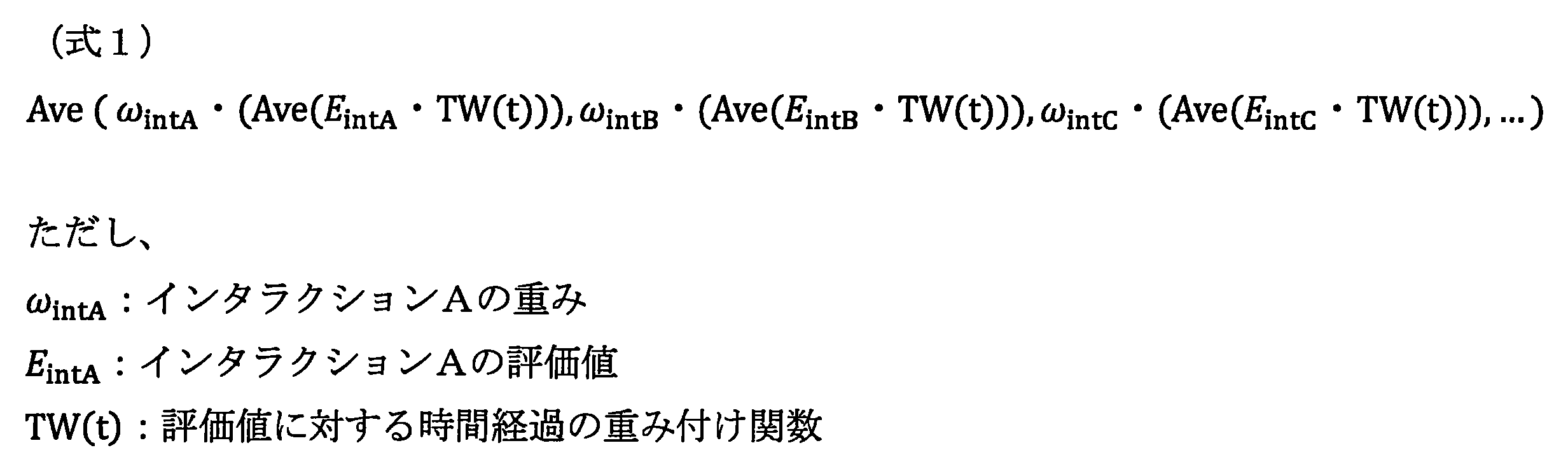
次に、第4の応用例として、感性値を、遠隔地の通信を制御するテレプレゼンスシステム104におけるプライバシーレベルの設定を行う際に利用する場合について、図35~図41を参照して説明する。
続いて、テレプレゼンスシステム104に含まれる通信制御装置の構成について図37を参照して説明する。図37は、第4の応用例による通信制御装置8の構成の一例を示すブロック図である。通信制御装置8は、テレプレゼンスシステム1で結ばれる空間におけるデータの送受信を制御する。
制御部80は、通信制御装置8の各構成を制御する。制御部80は、CPU、ROM、RAM、および不揮発性メモリを備えたマイクロコンピュータにより実現される。具体的には、制御部80は、相手ユーザ情報取得部80a、感性値算出部80b、開度設定部80c、テレプレゼンス制御部80d、ジェスチャー検出部80e、および感情情報取得部80fとして機能する。
通信部81は、外部装置とデータの送受信を行う。例えば通信部81は、通信先の通信制御装置に対して、テレプレゼンス制御部80dの制御に従い、テレプレゼンス部82のカメラ82bで撮像した撮像画像や、マイクアレイ82cで収音した音声、開度設定部80cで設定された開度等を送信する。また、通信部81は、通信先の通信制御装置から、通信先の空間で取得された撮像画像および音声を受信する。
各種センサ83は、対象空間の環境情報、対象空間に存在するユーザの行動情報、および感情情報等を取得する複数のセンサを含む。具体的には、本実施形態による各種センサ83は、深度センサ83a、人物センサ83b、行動センサ83c、生体センサ83d、位置情報取得部83e、高度センサ83f、大気汚染センサ83g、および気温・湿度センサ83h、騒音センサ83i等を含む。
テレプレゼンス部82は、表示部82a、カメラ82b、マイクアレイ82c、およびスピーカ82dを有する。表示部82aは、図36に示すように、通信先の空間の撮像画像821と、開度設定部80cにより設定された開度に応じて重畳される障子画像822とを表示する。また、スピーカ82dは、通信先の空間の音声を出力する。この際、スピーカ82dは、開度設定部80cにより設定された開度に応じた音量で出力してもよい。カメラ82bは、対象空間(通信元の空間)を撮像し、撮像画像は通信先の通信制御装置に送信される。マイクアレイ82cは、対象空間の音声を収音し、音声データは通信先の通信制御装置に送信される。
カレンダー・時計部85は、現在の日時を取得し、取得した日時情報を制御部80に出力する。
記憶部87は、制御部80により実行される各種処理のプログラムや、各種処理で利用されるデータ、例えばユーザの属性情報やオブジェクトID等を記憶する。
次に、本応用例によるテレプレゼンスシステム104の動作処理について具体的に説明する。
図38は、本応用例によるテレプレゼンス制御処理を示すフローチャートである。図38に示すように、まず、ステップS503において、通信元の通信制御装置8のテレプレゼンス制御部80dは、通信先の通信制御装置との接続処理を行う。
続いて、図38のステップS506に示す障子の開度設定について具体的に説明する。図39は、本応用例による開度設定の動作処理を示すフローチャートである。図39に示すように、まず、ステップS523において、通信制御装置8の開度設定部80cは、障子開度を予め登録した初期状態に設定する。
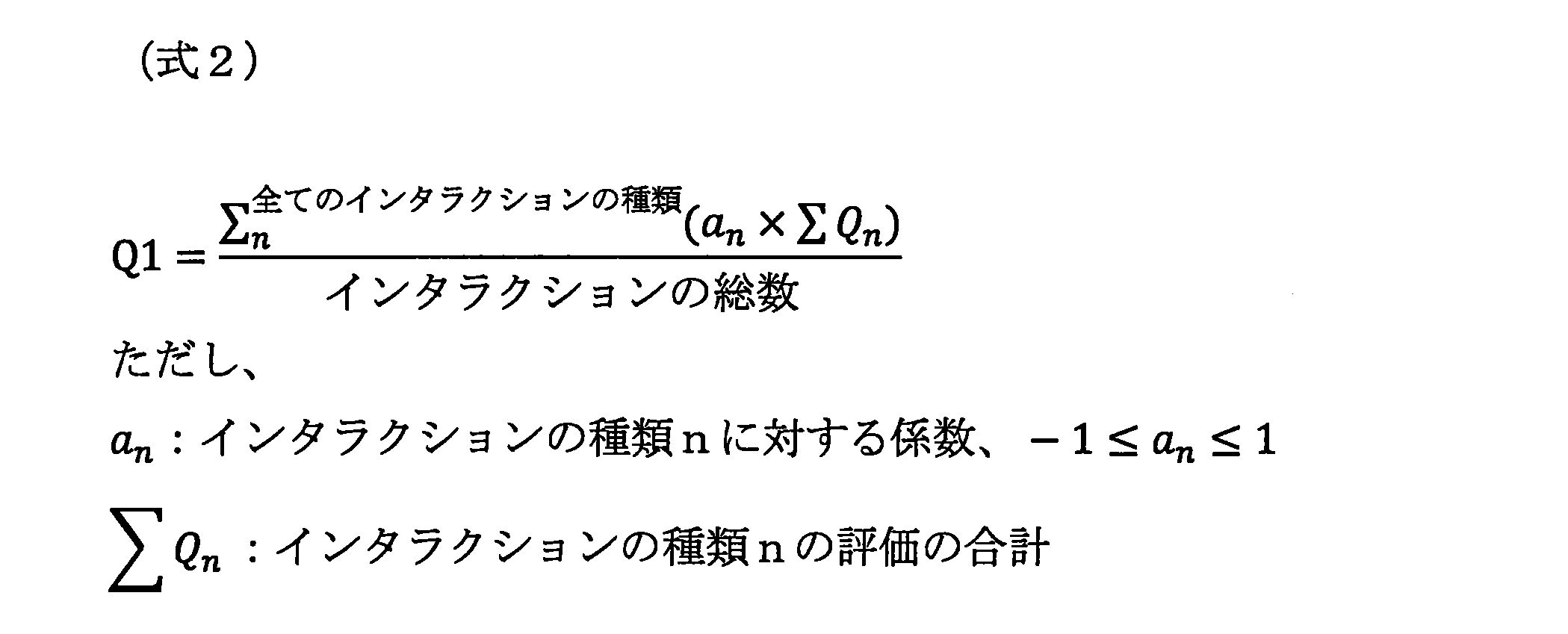

次に、第5の応用例として、既存の動画を再生する場合に感性値を利用して、撮影者や被写体の関係性に基づく新たな演出を加える臨場感再現システム105について、図42~図50を参照して説明する。
次に、再現情報生成装置9の構成および動作処理について、図43~図47を参照して説明する。
図43は、本応用例による再現情報生成装置9の構成の一例を示すブロック図である。図43に示すように、再現情報生成装置9は、制御部90、通信部91、コンテンツ記憶部92、および臨場感再現情報記憶部93を有する。
次に、再現情報生成装置9による再現情報生成処理について、図44を参照して説明する。図44は、本応用例による再現情報生成処理を示すフローチャートである。
続いて、再生制御装置95の構成および動作処理について、図48~図50を参照して説明する。再生側では、再現情報生成装置9により生成された抽象化された臨場感再現情報に基づいて、再生側が備えるデバイスの特性に応じて自由に再現方法を決めることができる。
図48は、本応用例による再生制御装置95の構成の一例を示すブロック図である。図48に示すように、再生制御装置95は、コンテンツ取得部951、臨場感再現情報取得部952、臨場感再現効果特定部953、画像エフェクト生成部954、音声エフェクト生成部955、デバイス制御部956、デコード部957、およびコンテンツ出力制御部958を有する。
次に、再生制御装置95による再生処理について、図49を参照して説明する。臨場感再現情報には、上述したように、被写体に対する撮影者の感情や気持ちを示す相対的感性値が含まれている。再生側において当該相対的感性値に応じた演出を行うことで、撮影者が被写体に対してどのような思いを持っているのか、撮影者の気持ちになって鑑賞するといった新たな鑑賞体験を提供することができる。
上述したように、本開示の実施形態による情報処理システムでは、オブジェクト間のインタラクションに基づいてオブジェクトの感性価値を数値化することを可能とする。具体的には、モノとユーザの間のインタラクションを計測して具体的な多次元のベクトル値としてモノやユーザに紐付けてサーバに履歴を保管することで、モノに紐づく感性値、利用者に紐づく感性値、また両者間の相対的な感性値を算出することができるようになる。
(1)
第1のオブジェクトと、第2のオブジェクトとの間のインタラクションに関連する情報を検出する検出部と、
前記インタラクションに関連する情報に基づき、前記第1のオブジェクトの感性値および前記第2のオブジェクトの感性値をそれぞれ生成可能な生成部と、
を備える、情報処理システム。
(2)
前記生成部は、一のオブジェクトと、他の複数のオブジェクトとの間のインタラクションに関連する情報に基づく絶対的感性数値と、前記一のオブジェクトと、特定のオブジェクトとの間のインタラクションに関連する情報に基づく相対的価値とを生成可能である、前記(1)に記載の情報処理システム。
(3)
前記情報処理システムは、
前記インタラクションに関連する情報を、前記第1のオブジェクトと前記第2のオブジェクトにそれぞれ関連付けて記憶部に記憶する記憶制御部をさらに備え、
前記生成部は、前記記憶部に記憶された特定のオブジェクトに関連付けられた前記インタラクションに関連する情報の履歴に基づき、当該特定のオブジェクトの感性値を生成する、前記(1)または(2)に記載の情報処理システム。
(4)
前記生成部は、前記第1のオブジェクトが人であって、前記第2のオブジェクトが物である場合も、前記インタラクションに関連する情報に基づいて、前記第1のオブジェクトの感性値および前記第2のオブジェクトの感性値をそれぞれ生成可能である、前記(1)~(3)のいずれか1項に記載の情報処理システム。
(5)
前記検出部は、前記第1のオブジェクトと前記第2のオブジェクト間でインタラクションが発生した際、双方向のインタラクションに関連する情報をそれぞれ検出する、前記(1)~(4)のいずれか1項に記載の情報処理システム。
(6)
前記情報処理システムは、
前記感性値を個人の信用力とみなして個人信用情報を提供する信用情報提供サーバを備える、前記(1)~(5)のいずれか1項に記載の情報処理システム。
(7)
前記情報処理システムは、
前記感性値を出品者の信頼度、または出品商品の価値とみなして、出品者または出品商品の感性値を提供する商取引サーバを備える、前記(1)~(6)のいずれか1項に記載の情報処理システム。
(8)
前記情報処理システムは、
対象ユーザに追従して移動する移動体により前記対象ユーザの周囲環境を調整する際に、前記対象ユーザまたは前記対象ユーザに付随するオブジェクトの感性値に応じて、環境調整制御を行う環境調整サーバを備える、前記(1)~(7)のいずれか1項に記載の情報処理システム。
(9)
前記情報処理システムは、
通信先装置のユーザの感性値に応じてプライバシーレベルを自動設定し、前記通信先装置に通信元装置のユーザの映像を送信する際に、前記自動設定されたプライバシーレベルに応じて前記通信元装置のユーザの映像をマスクするよう制御する通信制御装置を備える、前記(1)~(8)のいずれか1項に記載の情報処理システム。
(10)
前記情報処理システムは、
コンテンツデータから抽出された被写体の感性値に基づいて、抽象化された臨場感再現情報を生成し、生成された臨場感再現情報を前記コンテンツデータに関連付けて記憶するよう制御する再現情報生成装置を備える、前記(1)~(9)のいずれか1項に記載の情報処理システム。
(11)
第1のオブジェクトと、第2のオブジェクトとの間のインタラクションに関連する情報を検出することと、
前記インタラクションに関連する情報に基づき、前記第1のオブジェクトの感性値および前記第2のオブジェクトの感性値をそれぞれ生成可能なことと、
を含む、制御方法。
(12)
コンピュータを、
第1のオブジェクトと、第2のオブジェクトとの間のインタラクションに関連する情報を検出する検出部と、
前記インタラクションに関連する情報に基づき、前記第1のオブジェクトの感性値および前記第2のオブジェクトの感性値をそれぞれ生成可能な生成部と、
として機能させるための、プログラムが記憶された、記憶媒体。
101 個人信用情報提供システム
102 オークションシステム
103 環境調整システム
104 テレプレゼンスシステム
105 臨場感再現システム
1 センシングデバイス
11 センサ
12 インタラクション抽出部
13 通信部
2 感性サーバ
20 制御部
20a インタラクション記憶制御部
20b 評価部
20c オブジェクト管理部
20d 関連オブジェクト検索部
20e 感性値算出部
21 通信部
22 オブジェクトDB
24 感性情報DB
3 ネットワーク
4 個人信用情報提供サーバ
5 オークションサーバ
6 移動体
7 環境調整サーバ
8 通信制御装置
9 再現情報生成装置
95 再生制御装置
Claims (12)
- 第1のオブジェクトと、第2のオブジェクトとの間のインタラクションに関連する情報を検出する検出部と、
前記インタラクションに関連する情報に基づき、前記第1のオブジェクトの感性値および前記第2のオブジェクトの感性値をそれぞれ生成可能な生成部と、
を備える、情報処理システム。 - 前記生成部は、一のオブジェクトと、他の複数のオブジェクトとの間のインタラクションに関連する情報に基づく絶対的感性数値と、前記一のオブジェクトと、特定のオブジェクトとの間のインタラクションに関連する情報に基づく相対的価値とを生成可能である、請求項1に記載の情報処理システム。
- 前記情報処理システムは、
前記インタラクションに関連する情報を、前記第1のオブジェクトと前記第2のオブジェクトにそれぞれ関連付けて記憶部に記憶する記憶制御部をさらに備え、
前記生成部は、前記記憶部に記憶された特定のオブジェクトに関連付けられた前記インタラクションに関連する情報の履歴に基づき、当該特定のオブジェクトの感性値を生成する、請求項1に記載の情報処理システム。 - 前記生成部は、前記第1のオブジェクトが人であって、前記第2のオブジェクトが物である場合も、前記インタラクションに関連する情報に基づいて、前記第1のオブジェクトの感性値および前記第2のオブジェクトの感性値をそれぞれ生成可能である、請求項1に記載の情報処理システム。
- 前記検出部は、前記第1のオブジェクトと前記第2のオブジェクト間でインタラクションが発生した際、双方向のインタラクションに関連する情報をそれぞれ検出する、請求項1に記載の情報処理システム。
- 前記情報処理システムは、
前記感性値を個人の信用力とみなして個人信用情報を提供する信用情報提供サーバを備える、請求項1に記載の情報処理システム。 - 前記情報処理システムは、
前記感性値を出品者の信頼度、または出品商品の価値とみなして、出品者または出品商品の感性値を提供する商取引サーバを備える、請求項1に記載の情報処理システム。 - 前記情報処理システムは、
対象ユーザに追従して移動する移動体により前記対象ユーザの周囲環境を調整する際に、前記対象ユーザまたは前記対象ユーザに付随するオブジェクトの感性値に応じて、環境調整制御を行う環境調整サーバを備える、請求項1に記載の情報処理システム。 - 前記情報処理システムは、
通信先装置のユーザの感性値に応じてプライバシーレベルを自動設定し、前記通信先装置に通信元装置のユーザの映像を送信する際に、前記自動設定されたプライバシーレベルに応じて前記通信元装置のユーザの映像をマスクするよう制御する通信制御装置を備える、請求項1に記載の情報処理システム。 - 前記情報処理システムは、
コンテンツデータから抽出された被写体の感性値に基づいて、抽象化された臨場感再現情報を生成し、生成された臨場感再現情報を前記コンテンツデータに関連付けて記憶するよう制御する再現情報生成装置を備える、請求項1に記載の情報処理システム。 - 第1のオブジェクトと、第2のオブジェクトとの間のインタラクションに関連する情報を検出することと、
前記インタラクションに関連する情報に基づき、前記第1のオブジェクトの感性値および前記第2のオブジェクトの感性値をそれぞれ生成可能なことと、
を含む、制御方法。 - コンピュータを、
第1のオブジェクトと、第2のオブジェクトとの間のインタラクションに関連する情報を検出する検出部と、
前記インタラクションに関連する情報に基づき、前記第1のオブジェクトの感性値および前記第2のオブジェクトの感性値をそれぞれ生成可能な生成部と、
として機能させるための、プログラムが記憶された、記憶媒体。
Priority Applications (7)
| Application Number | Priority Date | Filing Date | Title |
|---|---|---|---|
| CN202210044035.XA CN114461062A (zh) | 2014-11-07 | 2015-08-04 | 信息处理系统、控制方法和计算机可读存储介质 |
| CN201580059299.0A CN107111359B (zh) | 2014-11-07 | 2015-08-04 | 信息处理系统、控制方法和计算机可读存储介质 |
| JP2016557469A JP6561996B2 (ja) | 2014-11-07 | 2015-08-04 | 情報処理装置、制御方法、および記憶媒体 |
| US15/522,834 US11010726B2 (en) | 2014-11-07 | 2015-08-04 | Information processing apparatus, control method, and storage medium |
| EP15856779.2A EP3217349A4 (en) | 2014-11-07 | 2015-08-04 | Information processing device, control method, and storage medium |
| US17/226,626 US11640589B2 (en) | 2014-11-07 | 2021-04-09 | Information processing apparatus, control method, and storage medium |
| US18/174,392 US20230230053A1 (en) | 2014-11-07 | 2023-02-24 | Information processing apparatus, control method, and storage medium |
Applications Claiming Priority (2)
| Application Number | Priority Date | Filing Date | Title |
|---|---|---|---|
| JP2014-227004 | 2014-11-07 | ||
| JP2014227004 | 2014-11-07 |
Related Child Applications (2)
| Application Number | Title | Priority Date | Filing Date |
|---|---|---|---|
| US15/522,834 A-371-Of-International US11010726B2 (en) | 2014-11-07 | 2015-08-04 | Information processing apparatus, control method, and storage medium |
| US17/226,626 Continuation US11640589B2 (en) | 2014-11-07 | 2021-04-09 | Information processing apparatus, control method, and storage medium |
Publications (1)
| Publication Number | Publication Date |
|---|---|
| WO2016072117A1 true WO2016072117A1 (ja) | 2016-05-12 |
Family
ID=55908849
Family Applications (1)
| Application Number | Title | Priority Date | Filing Date |
|---|---|---|---|
| PCT/JP2015/072053 Ceased WO2016072117A1 (ja) | 2014-11-07 | 2015-08-04 | 情報処理装置、制御方法、および記憶媒体 |
Country Status (5)
| Country | Link |
|---|---|
| US (3) | US11010726B2 (ja) |
| EP (1) | EP3217349A4 (ja) |
| JP (3) | JP6561996B2 (ja) |
| CN (2) | CN107111359B (ja) |
| WO (1) | WO2016072117A1 (ja) |
Cited By (20)
| Publication number | Priority date | Publication date | Assignee | Title |
|---|---|---|---|---|
| WO2018116552A1 (ja) * | 2016-12-20 | 2018-06-28 | ソニー株式会社 | 情報処理装置および情報処理方法 |
| JP2018169930A (ja) * | 2017-03-30 | 2018-11-01 | 株式会社ゼンリンデータコム | 情報提供システム及び情報提供方法 |
| JP2019109620A (ja) * | 2017-12-15 | 2019-07-04 | ヤフー株式会社 | 推定装置、推定方法、及び推定プログラム |
| JP2019109621A (ja) * | 2017-12-15 | 2019-07-04 | ヤフー株式会社 | 推定装置、推定方法、及び推定プログラム |
| WO2019146205A1 (ja) * | 2018-01-23 | 2019-08-01 | ソニー株式会社 | 情報処理装置、情報処理方法、および記録媒体 |
| JP2019537110A (ja) * | 2016-11-12 | 2019-12-19 | グーグル エルエルシー | 電子的コミュニケーションに含めるためのグラフィカル要素の決定 |
| JP2020154870A (ja) * | 2019-03-20 | 2020-09-24 | ヤフー株式会社 | 選択装置、選択方法及び選択プログラム |
| JP2020529680A (ja) * | 2017-08-08 | 2020-10-08 | Line株式会社 | 通話中の感情を認識し、認識された感情を活用する方法およびシステム |
| US11303590B2 (en) | 2016-09-20 | 2022-04-12 | Google Llc | Suggested responses based on message stickers |
| JP2022116917A (ja) * | 2021-01-29 | 2022-08-10 | 株式会社 みずほ銀行 | 認証システム、認証方法及び認証プログラム |
| US11418471B2 (en) | 2015-12-21 | 2022-08-16 | Google Llc | Automatic suggestions for message exchange threads |
| US11451499B2 (en) | 2017-06-15 | 2022-09-20 | Google Llc | Embedded programs and interfaces for chat conversations |
| US11502975B2 (en) | 2015-12-21 | 2022-11-15 | Google Llc | Automatic suggestions and other content for messaging applications |
| US11574470B2 (en) | 2017-05-16 | 2023-02-07 | Google Llc | Suggested actions for images |
| US11700134B2 (en) | 2016-09-20 | 2023-07-11 | Google Llc | Bot permissions |
| JPWO2023233490A1 (ja) * | 2022-05-30 | 2023-12-07 | ||
| US12235889B2 (en) | 2022-08-26 | 2025-02-25 | Google Llc | Device messages provided in displayed image compilations based on user content |
| JP2025056784A (ja) * | 2023-09-26 | 2025-04-08 | ソフトバンクグループ株式会社 | システム |
| WO2026004420A1 (ja) * | 2024-06-26 | 2026-01-02 | 株式会社豊田中央研究所 | 情報処理システム、情報処理方法及びプログラム |
| JP7799121B1 (ja) * | 2025-06-12 | 2026-01-14 | 株式会社サイバーエージェント | 画像編集装置、画像編集方法、およびプログラム |
Families Citing this family (20)
| Publication number | Priority date | Publication date | Assignee | Title |
|---|---|---|---|---|
| US10788235B2 (en) * | 2014-11-07 | 2020-09-29 | Sony Corporation | Control system, control method, and storage medium |
| US20160219931A1 (en) * | 2015-01-30 | 2016-08-04 | Suraaj Doshi | System and Apparatus to Effect Behavioral Change |
| KR20160109242A (ko) * | 2015-03-10 | 2016-09-21 | 한국전자통신연구원 | 객체 중심의 서비스 제공 장치 및 방법 |
| CN107924544B (zh) * | 2015-08-05 | 2022-04-15 | 索尼公司 | 信息处理系统和信息处理方法 |
| JP6909961B2 (ja) | 2017-04-21 | 2021-07-28 | パナソニックIpマネジメント株式会社 | 表示方法、プログラム、及び、表示システム |
| US11057332B2 (en) * | 2018-03-15 | 2021-07-06 | International Business Machines Corporation | Augmented expression sticker control and management |
| JP7080079B2 (ja) * | 2018-03-19 | 2022-06-03 | 本田技研工業株式会社 | 情報提供装置およびその制御方法 |
| KR20190131163A (ko) * | 2018-05-16 | 2019-11-26 | 현대자동차주식회사 | 감정 지도 작성 방법, 감정 지도 장치 및 감정 지도 작성 장치를 포함한 차량 |
| US20200068169A1 (en) * | 2018-08-21 | 2020-02-27 | Richard Dean Nehrboss | Methods and Subsystems for Utilizing Home Safety Sensors within a Telepresence Platform |
| US20220027513A1 (en) * | 2018-12-05 | 2022-01-27 | Sony Corporation | Information processing device, information processing method, and information processing program |
| CN111290001A (zh) * | 2018-12-06 | 2020-06-16 | 杭州海康威视数字技术股份有限公司 | 一种基于gps坐标的目标统筹方法、装置及设备 |
| CN110647046B (zh) * | 2019-09-29 | 2022-08-02 | 青岛海尔科技有限公司 | 基于智能家居操作系统的路线更新方法及装置 |
| JP2021117840A (ja) * | 2020-01-28 | 2021-08-10 | トヨタ自動車株式会社 | 情報処理装置、情報処理方法、及び、プログラム |
| WO2021177183A1 (ja) * | 2020-03-05 | 2021-09-10 | 日本電気株式会社 | 監視装置、監視システム、監視方法およびプログラム記録媒体 |
| JP7127096B2 (ja) * | 2020-10-14 | 2022-08-29 | ヤフー株式会社 | 情報処理装置、情報処理方法及び情報処理プログラム |
| JP2022160956A (ja) | 2021-04-07 | 2022-10-20 | トヨタ自動車株式会社 | 情報処理装置、情報処理システム、情報処理方法、及び端末装置 |
| SE545609C2 (en) * | 2022-02-04 | 2023-11-14 | Assa Abloy Ab | Alerting a difference in user sentiment of a user using a door |
| CN121920982A (zh) * | 2022-06-24 | 2026-04-24 | 张青霞 | 基于云服务的智能型立体停车设备 |
| WO2024075344A1 (ja) * | 2022-10-05 | 2024-04-11 | パナソニックIpマネジメント株式会社 | 映像出力方法、映像出力システム及びプログラム |
| WO2024084736A1 (ja) * | 2022-10-18 | 2024-04-25 | パナソニックIpマネジメント株式会社 | 映像出力方法、映像出力システム及びプログラム |
Citations (5)
| Publication number | Priority date | Publication date | Assignee | Title |
|---|---|---|---|---|
| JPH11259129A (ja) * | 1998-03-09 | 1999-09-24 | Yamaha Motor Co Ltd | 自律移動体の制御方法 |
| JP2002077592A (ja) * | 2000-04-13 | 2002-03-15 | Fuji Photo Film Co Ltd | 画像処理方法 |
| JP2006140747A (ja) * | 2004-11-11 | 2006-06-01 | Nippon Telegr & Teleph Corp <Ntt> | 映像コミュニケーション装置および映像コミュニケーション装置の制御方法 |
| JP2007213324A (ja) * | 2006-02-09 | 2007-08-23 | Nissan Motor Co Ltd | 運転評価サポートシステムおよび運転評価データ算出方法 |
| JP2008015585A (ja) * | 2006-07-03 | 2008-01-24 | National Institute Of Information & Communication Technology | 生活タスク支援システム |
Family Cites Families (68)
| Publication number | Priority date | Publication date | Assignee | Title |
|---|---|---|---|---|
| US7728715B2 (en) * | 1996-01-23 | 2010-06-01 | En-Gauge, Inc. | Remote monitoring |
| JPH10289006A (ja) * | 1997-04-11 | 1998-10-27 | Yamaha Motor Co Ltd | 疑似感情を用いた制御対象の制御方法 |
| US6230111B1 (en) * | 1998-08-06 | 2001-05-08 | Yamaha Hatsudoki Kabushiki Kaisha | Control system for controlling object using pseudo-emotions and pseudo-personality generated in the object |
| US6347261B1 (en) * | 1999-08-04 | 2002-02-12 | Yamaha Hatsudoki Kabushiki Kaisha | User-machine interface system for enhanced interaction |
| US6604091B2 (en) * | 1999-09-10 | 2003-08-05 | Yamaha Hatsudoki Kabushiki Kaisha | Interactive artificial intelligence |
| US20020023034A1 (en) * | 2000-03-31 | 2002-02-21 | Brown Roger G. | Method and system for a digital automated exchange |
| CN1283428C (zh) * | 2000-03-31 | 2006-11-08 | 索尼公司 | 机器人设备、控制机器人设备动作的方法 |
| US7106887B2 (en) | 2000-04-13 | 2006-09-12 | Fuji Photo Film Co., Ltd. | Image processing method using conditions corresponding to an identified person |
| WO2001084407A1 (en) * | 2000-04-27 | 2001-11-08 | Nec Corporation | Environment information simulation system, device, and method, and recorded medium |
| JP2002049385A (ja) * | 2000-08-07 | 2002-02-15 | Yamaha Motor Co Ltd | 音声合成装置、疑似感情表現装置及び音声合成方法 |
| TWI221574B (en) * | 2000-09-13 | 2004-10-01 | Agi Inc | Sentiment sensing method, perception generation method and device thereof and software |
| US6774811B2 (en) * | 2001-02-02 | 2004-08-10 | International Business Machines Corporation | Designation and opportunistic tracking of valuables |
| US7685059B2 (en) * | 2001-03-30 | 2010-03-23 | Roger G. Brown | Method and system for a digital automated exchange |
| JP4266552B2 (ja) * | 2001-10-16 | 2009-05-20 | 日本電気株式会社 | ロボット装置及びその制御方法 |
| US7452268B2 (en) * | 2002-08-07 | 2008-11-18 | Sony Computer Entertainment America Inc. | System and method for modifying actions of a group of characters via group interactions |
| JP2005124909A (ja) | 2003-10-24 | 2005-05-19 | Sony Corp | 感情情報提示方法、感情情報表示装置及び情報コンテンツの検索方法 |
| WO2007017853A1 (en) * | 2005-08-08 | 2007-02-15 | Nice Systems Ltd. | Apparatus and methods for the detection of emotions in audio interactions |
| KR100825719B1 (ko) * | 2005-12-09 | 2008-04-29 | 한국전자통신연구원 | 복수의 감정 생성 로봇 및 로봇에서 복수의 감정 생성 방법 |
| TWI311067B (en) * | 2005-12-27 | 2009-06-21 | Ind Tech Res Inst | Method and apparatus of interactive gaming with emotion perception ability |
| EP2008199A4 (en) * | 2006-03-31 | 2011-06-29 | Imagini Holdings Ltd | SYSTEM AND METHOD FOR SEGMENTING AND IDENTIFICATION OF DATA RECORDS ON THE BASIS OF PROFILE MATCH BY MEANS OF MULTIMEDIA QUESTION |
| KR100850352B1 (ko) * | 2006-09-26 | 2008-08-04 | 한국전자통신연구원 | 상태 정보를 이용하여 감성을 표현하기 위한 지능형 로봇의감성 표현 장치 및 그 방법 |
| JP4963640B2 (ja) * | 2006-10-10 | 2012-06-27 | キヤノン株式会社 | 物体情報取得装置及び方法 |
| EP1956528B1 (en) * | 2007-02-08 | 2018-10-03 | Samsung Electronics Co., Ltd. | Apparatus and method for expressing behavior of software robot |
| US20090006242A1 (en) * | 2007-06-29 | 2009-01-01 | Conopco Inc, D/B/A Unilever | Automated auctioning method for market evaluation |
| US8442832B2 (en) * | 2008-12-08 | 2013-05-14 | Electronics And Telecommunications Research Institute | Apparatus for context awareness and method using the same |
| JP4985722B2 (ja) * | 2009-07-23 | 2012-07-25 | 三菱電機株式会社 | 空気調和機 |
| US8818882B2 (en) * | 2009-08-24 | 2014-08-26 | Visa International Service Association | Alias identity and reputation validation engine |
| US20110161218A1 (en) * | 2009-09-22 | 2011-06-30 | Cortera, Inc. | Credit reporting interface |
| US20130246097A1 (en) * | 2010-03-17 | 2013-09-19 | Howard M. Kenney | Medical Information Systems and Medical Data Processing Methods |
| FR2959208B1 (fr) * | 2010-04-22 | 2012-05-25 | Eurl Jmdtheque | Engin gyropendulaire a propulsion compensatoire et collimation de gradient fluidique multi-milieux multimodal a decollage et atterrissage vertical |
| US20120011007A1 (en) * | 2010-07-07 | 2012-01-12 | At&T Intellectual Property I, L.P. | Mobile Payment Using DTMF Signaling |
| CN103154953A (zh) * | 2010-09-30 | 2013-06-12 | 阿弗科迪瓦公司 | 测量具有上网功能的应用程序的情感数据 |
| US8380607B2 (en) * | 2010-12-17 | 2013-02-19 | Indiana University Research And Technology Corporation | Predicting economic trends via network communication mood tracking |
| JP5658597B2 (ja) * | 2011-03-03 | 2015-01-28 | 大阪瓦斯株式会社 | 省エネ行動評価システム |
| US9317860B2 (en) * | 2011-03-08 | 2016-04-19 | Bank Of America Corporation | Collective network of augmented reality users |
| US8768812B2 (en) * | 2011-05-02 | 2014-07-01 | The Boeing Company | System, method and computer-readable storage medium for valuing a performance option |
| US20120284154A1 (en) * | 2011-05-04 | 2012-11-08 | Jeffrey Creighton | Articles Of Manufacture, Education Billing Management Methods, Education Billing Management Systems, Education Enrollment Systems, And Education Enrollment Methods |
| US20120290470A1 (en) * | 2011-05-11 | 2012-11-15 | Samsung Electro-Mechanics Company, Ltd. | Payment systems and methods for providing wireless power transfer |
| US20120311032A1 (en) * | 2011-06-02 | 2012-12-06 | Microsoft Corporation | Emotion-based user identification for online experiences |
| WO2013006559A2 (en) * | 2011-07-01 | 2013-01-10 | Stoneware, Inc. | Method and apparatus for application costing for service provisioning |
| US8719277B2 (en) * | 2011-08-08 | 2014-05-06 | Google Inc. | Sentimental information associated with an object within a media |
| US20130046555A1 (en) * | 2011-08-16 | 2013-02-21 | Roderick A. Hyde | Devices and methods for recording information on a subject's body |
| US9772270B2 (en) * | 2011-08-16 | 2017-09-26 | Elwha Llc | Devices and methods for recording information on a subject's body |
| US20130060624A1 (en) * | 2011-09-07 | 2013-03-07 | Elwha LLC, a limited liability company of the State of Delaware | Computational systems and methods for regulating information flow during interactions |
| US20130085954A1 (en) * | 2011-09-29 | 2013-04-04 | The Boeing Company | System and method for identifying a qualified candidate |
| WO2013111144A2 (en) * | 2011-11-04 | 2013-08-01 | Vserv Digital Services Pvt.Ltd. | System for inserting services in a software application |
| DE102011056940A1 (de) * | 2011-12-22 | 2013-06-27 | Bauhaus Universität Weimar | Verfahren zum Betrieb einer mehrfachberührungsfähigen Anzeige und Vorrichtung mit einer mehrfachberührungsfähigen Anzeige |
| EP2798592A4 (en) * | 2011-12-29 | 2015-06-17 | Intel Corp | METHOD AND SYSTEM FOR MOBILE TRADE WITH REAL-TIME SHOPPING SUPPORT |
| KR20130084543A (ko) * | 2012-01-17 | 2013-07-25 | 삼성전자주식회사 | 사용자 인터페이스 제공 장치 및 방법 |
| US20130238471A1 (en) * | 2012-03-06 | 2013-09-12 | Nintendo Of America Inc. | Systems and/or methods involving linked manufacturer serial numbers and unique identifiers applied to products |
| US20130246192A1 (en) * | 2012-03-13 | 2013-09-19 | Nokia Corporation | System for enabling and incentivizing advertisements in crowdsourced video services |
| US20130275320A1 (en) * | 2012-04-16 | 2013-10-17 | Google Inc. | Identifying Prospective Employee Candidates via Employee Connections |
| US9424721B2 (en) * | 2012-04-18 | 2016-08-23 | Square, Inc. | Point-of-sale system |
| US20130325706A1 (en) * | 2012-06-01 | 2013-12-05 | Dadesystems, Llp | System, method, apparatus, and computer program product for improved payment processing |
| US20130332201A1 (en) * | 2012-06-12 | 2013-12-12 | Peter L. Hagelstein | Data acquisition apparatus configured to acquire data for insurance purposes, and related systems and methods |
| US9886493B2 (en) * | 2012-09-28 | 2018-02-06 | The Regents Of The University Of California | Systems and methods for sensory and cognitive profiling |
| US9721263B2 (en) * | 2012-10-26 | 2017-08-01 | Nbcuniversal Media, Llc | Continuously evolving symmetrical object profiles for online advertisement targeting |
| US20140172677A1 (en) * | 2012-12-13 | 2014-06-19 | Creditera, LLC | Providing combined access to business and personal credit information |
| US8606599B1 (en) * | 2013-01-03 | 2013-12-10 | Medidata Solutions, Inc. | Apparatus and method for executing tasks |
| US20140222526A1 (en) * | 2013-02-07 | 2014-08-07 | Augmedix, Inc. | System and method for augmenting healthcare-provider performance |
| EP2988275A4 (en) * | 2013-04-16 | 2016-11-30 | Sony Corp | INFORMATION PROCESSING DEVICE AND INFORMATION PROCESSING METHOD, DISPLAY DEVICE AND DISPLAY METHOD AND INFORMATION PROCESSING SYSTEM |
| JP5617971B2 (ja) * | 2013-08-01 | 2014-11-05 | 株式会社日立製作所 | 組織コミュニケーション可視化システム |
| US9993386B2 (en) * | 2013-11-29 | 2018-06-12 | Louis G. RACETTE | Instrumentation absolute value differential amplifier circuit and applications |
| US9799159B2 (en) * | 2014-02-14 | 2017-10-24 | Igt Canada Solutions Ulc | Object detection and interaction for gaming systems |
| US10150043B2 (en) * | 2014-03-11 | 2018-12-11 | Microsoft Technology Licensing, Llc | Interactive smart beads |
| US20150348200A1 (en) * | 2014-06-03 | 2015-12-03 | Christopher T. Fair | Systems and methods for facilitating communication and investment |
| CN104071342B (zh) * | 2014-07-03 | 2016-01-27 | 国家电网公司 | 带电清除异物无人机防护罩 |
| KR20160015972A (ko) * | 2014-08-01 | 2016-02-15 | 엘지전자 주식회사 | 웨어러블 디바이스 및 그 제어 방법 |
-
2015
- 2015-08-04 JP JP2016557469A patent/JP6561996B2/ja not_active Expired - Fee Related
- 2015-08-04 CN CN201580059299.0A patent/CN107111359B/zh active Active
- 2015-08-04 US US15/522,834 patent/US11010726B2/en not_active Expired - Fee Related
- 2015-08-04 CN CN202210044035.XA patent/CN114461062A/zh active Pending
- 2015-08-04 EP EP15856779.2A patent/EP3217349A4/en not_active Ceased
- 2015-08-04 WO PCT/JP2015/072053 patent/WO2016072117A1/ja not_active Ceased
-
2019
- 2019-07-12 JP JP2019130648A patent/JP6822527B2/ja active Active
-
2021
- 2021-01-07 JP JP2021001196A patent/JP7001181B2/ja active Active
- 2021-04-09 US US17/226,626 patent/US11640589B2/en active Active
-
2023
- 2023-02-24 US US18/174,392 patent/US20230230053A1/en not_active Abandoned
Patent Citations (5)
| Publication number | Priority date | Publication date | Assignee | Title |
|---|---|---|---|---|
| JPH11259129A (ja) * | 1998-03-09 | 1999-09-24 | Yamaha Motor Co Ltd | 自律移動体の制御方法 |
| JP2002077592A (ja) * | 2000-04-13 | 2002-03-15 | Fuji Photo Film Co Ltd | 画像処理方法 |
| JP2006140747A (ja) * | 2004-11-11 | 2006-06-01 | Nippon Telegr & Teleph Corp <Ntt> | 映像コミュニケーション装置および映像コミュニケーション装置の制御方法 |
| JP2007213324A (ja) * | 2006-02-09 | 2007-08-23 | Nissan Motor Co Ltd | 運転評価サポートシステムおよび運転評価データ算出方法 |
| JP2008015585A (ja) * | 2006-07-03 | 2008-01-24 | National Institute Of Information & Communication Technology | 生活タスク支援システム |
Non-Patent Citations (2)
| Title |
|---|
| AKI KAWAMURA ET AL.: "An Activity Evaluation by Introducing Feature Vector for Complex Sensor Data in a Ubiquitous Environment", DAI 2 KAI FORUM ON DATA ENGINEERING AND INFORMATION MANAGEMENT -DEIM 2010- RONBUNSHU [ ONLINE, 25 May 2010 (2010-05-25), XP055278752 * |
| See also references of EP3217349A4 * |
Cited By (32)
| Publication number | Priority date | Publication date | Assignee | Title |
|---|---|---|---|---|
| US11502975B2 (en) | 2015-12-21 | 2022-11-15 | Google Llc | Automatic suggestions and other content for messaging applications |
| US11418471B2 (en) | 2015-12-21 | 2022-08-16 | Google Llc | Automatic suggestions for message exchange threads |
| US11700134B2 (en) | 2016-09-20 | 2023-07-11 | Google Llc | Bot permissions |
| US11303590B2 (en) | 2016-09-20 | 2022-04-12 | Google Llc | Suggested responses based on message stickers |
| JP2019537110A (ja) * | 2016-11-12 | 2019-12-19 | グーグル エルエルシー | 電子的コミュニケーションに含めるためのグラフィカル要素の決定 |
| CN110114786A (zh) * | 2016-12-20 | 2019-08-09 | 索尼公司 | 信息处理装置和信息处理方法 |
| WO2018116552A1 (ja) * | 2016-12-20 | 2018-06-28 | ソニー株式会社 | 情報処理装置および情報処理方法 |
| JP7140252B2 (ja) | 2016-12-20 | 2022-09-21 | ソニーグループ株式会社 | 情報処理装置、情報処理方法および情報処理プログラム |
| JP2021185537A (ja) * | 2016-12-20 | 2021-12-09 | ソニーグループ株式会社 | 情報処理装置、情報処理方法および情報処理プログラム |
| JPWO2018116552A1 (ja) * | 2016-12-20 | 2019-10-24 | ソニー株式会社 | 情報処理装置および情報処理方法 |
| JP2018169930A (ja) * | 2017-03-30 | 2018-11-01 | 株式会社ゼンリンデータコム | 情報提供システム及び情報提供方法 |
| US11574470B2 (en) | 2017-05-16 | 2023-02-07 | Google Llc | Suggested actions for images |
| US11451499B2 (en) | 2017-06-15 | 2022-09-20 | Google Llc | Embedded programs and interfaces for chat conversations |
| JP2022020659A (ja) * | 2017-08-08 | 2022-02-01 | Line株式会社 | 通話中の感情を認識し、認識された感情を活用する方法およびシステム |
| JP2020529680A (ja) * | 2017-08-08 | 2020-10-08 | Line株式会社 | 通話中の感情を認識し、認識された感情を活用する方法およびシステム |
| JP2019109621A (ja) * | 2017-12-15 | 2019-07-04 | ヤフー株式会社 | 推定装置、推定方法、及び推定プログラム |
| JP2019109620A (ja) * | 2017-12-15 | 2019-07-04 | ヤフー株式会社 | 推定装置、推定方法、及び推定プログラム |
| JP7469044B2 (ja) | 2018-01-23 | 2024-04-16 | ソニーグループ株式会社 | 情報処理装置、情報処理方法、および記録媒体 |
| WO2019146205A1 (ja) * | 2018-01-23 | 2019-08-01 | ソニー株式会社 | 情報処理装置、情報処理方法、および記録媒体 |
| JPWO2019146205A1 (ja) * | 2018-01-23 | 2021-01-07 | ソニー株式会社 | 情報処理装置、情報処理方法、および記録媒体 |
| US11868405B2 (en) | 2018-01-23 | 2024-01-09 | Sony Corporation | Information processor, information processing method, and recording medium |
| JP2020154870A (ja) * | 2019-03-20 | 2020-09-24 | ヤフー株式会社 | 選択装置、選択方法及び選択プログラム |
| JP7175810B2 (ja) | 2019-03-20 | 2022-11-21 | ヤフー株式会社 | 選択装置、選択方法及び選択プログラム |
| JP7176019B2 (ja) | 2021-01-29 | 2022-11-21 | 株式会社 みずほ銀行 | 認証システム、認証方法及び認証プログラム |
| JP2022116917A (ja) * | 2021-01-29 | 2022-08-10 | 株式会社 みずほ銀行 | 認証システム、認証方法及び認証プログラム |
| JPWO2023233490A1 (ja) * | 2022-05-30 | 2023-12-07 | ||
| WO2023233490A1 (ja) * | 2022-05-30 | 2023-12-07 | 日本電信電話株式会社 | 情報処理装置、算出方法及び算出プログラム |
| JP7750407B2 (ja) | 2022-05-30 | 2025-10-07 | Ntt株式会社 | 情報処理装置、算出方法及び算出プログラム |
| US12235889B2 (en) | 2022-08-26 | 2025-02-25 | Google Llc | Device messages provided in displayed image compilations based on user content |
| JP2025056784A (ja) * | 2023-09-26 | 2025-04-08 | ソフトバンクグループ株式会社 | システム |
| WO2026004420A1 (ja) * | 2024-06-26 | 2026-01-02 | 株式会社豊田中央研究所 | 情報処理システム、情報処理方法及びプログラム |
| JP7799121B1 (ja) * | 2025-06-12 | 2026-01-14 | 株式会社サイバーエージェント | 画像編集装置、画像編集方法、およびプログラム |
Also Published As
| Publication number | Publication date |
|---|---|
| US11010726B2 (en) | 2021-05-18 |
| CN107111359A (zh) | 2017-08-29 |
| JP6561996B2 (ja) | 2019-08-21 |
| JPWO2016072117A1 (ja) | 2017-08-17 |
| US20230230053A1 (en) | 2023-07-20 |
| JP7001181B2 (ja) | 2022-01-19 |
| JP2021061053A (ja) | 2021-04-15 |
| US20170330160A1 (en) | 2017-11-16 |
| JP6822527B2 (ja) | 2021-01-27 |
| CN114461062A (zh) | 2022-05-10 |
| US20210233042A1 (en) | 2021-07-29 |
| CN107111359B (zh) | 2022-02-11 |
| EP3217349A4 (en) | 2018-03-28 |
| US11640589B2 (en) | 2023-05-02 |
| JP2019204529A (ja) | 2019-11-28 |
| EP3217349A1 (en) | 2017-09-13 |
Similar Documents
| Publication | Publication Date | Title |
|---|---|---|
| JP7001181B2 (ja) | 情報処理システム、制御方法、およびプログラム | |
| US20250106364A1 (en) | Personalized Keyword Log | |
| JP7126709B2 (ja) | 折りたたみ式仮想現実装置 | |
| US20210097281A9 (en) | Systems and methods for using persistent, passive, electronic information capturing devices | |
| JP6111932B2 (ja) | 行動支援装置、行動支援方法、プログラム、および記憶媒体 | |
| US20200004291A1 (en) | Wearable apparatus and methods for processing audio signals | |
| CN110304067B (zh) | 作业支援系统、信息处理方法及存储介质 | |
| JP2005315802A (ja) | ユーザ支援装置 | |
| CN109690686A (zh) | 用于分析图像的可穿戴装置和方法 | |
| CN110996796A (zh) | 信息处理设备、方法和程序 | |
| CN117541321B (zh) | 一种基于虚拟数字人的广告制作发布方法及系统 | |
| JP2011215964A (ja) | サーバ装置、クライアント装置、コンテンツ推薦方法及びプログラム | |
| JP6631628B2 (ja) | 情報処理装置、情報処理方法、およびプログラム | |
| KR20200066280A (ko) | 접이식 가상현실 장비 | |
| US11289084B2 (en) | Sensor based semantic object generation | |
| US12579765B2 (en) | Defining and modifying context aware policies with an editing tool in extended reality systems | |
| CN105845144A (zh) | 一种实现动物声音与形态翻译功能的智能健康管理系统 | |
| US20240071378A1 (en) | Authoring context aware policies through natural language and demonstrations | |
| JP7219546B2 (ja) | 物件検索システム | |
| JP7692124B1 (ja) | 情報提示システム、情報提示方法、及び情報提示プログラム | |
| JP7733696B2 (ja) | 情報処理システム | |
| WO2025018301A1 (ja) | 制御システム | |
| WO2025028399A1 (ja) | 行動制御システム及び情報処理システム | |
| CN121614038A (zh) | 一种基于ai智能体与元宇宙的远程个性化服务系统及方法 |
Legal Events
| Date | Code | Title | Description |
|---|---|---|---|
| 121 | Ep: the epo has been informed by wipo that ep was designated in this application |
Ref document number: 15856779 Country of ref document: EP Kind code of ref document: A1 |
|
| ENP | Entry into the national phase |
Ref document number: 2016557469 Country of ref document: JP Kind code of ref document: A |
|
| REEP | Request for entry into the european phase |
Ref document number: 2015856779 Country of ref document: EP |
|
| WWE | Wipo information: entry into national phase |
Ref document number: 15522834 Country of ref document: US |
|
| NENP | Non-entry into the national phase |
Ref country code: DE |