WO2016103630A1 - エポキシ樹脂組成物 - Google Patents
エポキシ樹脂組成物 Download PDFInfo
- Publication number
- WO2016103630A1 WO2016103630A1 PCT/JP2015/006241 JP2015006241W WO2016103630A1 WO 2016103630 A1 WO2016103630 A1 WO 2016103630A1 JP 2015006241 W JP2015006241 W JP 2015006241W WO 2016103630 A1 WO2016103630 A1 WO 2016103630A1
- Authority
- WO
- WIPO (PCT)
- Prior art keywords
- epoxy resin
- resin composition
- tep
- aromatic polyamine
- type epoxy
- Prior art date
- Legal status (The legal status is an assumption and is not a legal conclusion. Google has not performed a legal analysis and makes no representation as to the accuracy of the status listed.)
- Ceased
Links
Images


Classifications
-
- C—CHEMISTRY; METALLURGY
- C08—ORGANIC MACROMOLECULAR COMPOUNDS; THEIR PREPARATION OR CHEMICAL WORKING-UP; COMPOSITIONS BASED THEREON
- C08G—MACROMOLECULAR COMPOUNDS OBTAINED OTHERWISE THAN BY REACTIONS ONLY INVOLVING UNSATURATED CARBON-TO-CARBON BONDS
- C08G59/00—Polycondensates containing more than one epoxy group per molecule; Macromolecules obtained by polymerising compounds containing more than one epoxy group per molecule using curing agents or catalysts which react with the epoxy groups
- C08G59/18—Macromolecules obtained by polymerising compounds containing more than one epoxy group per molecule using curing agents or catalysts which react with the epoxy groups ; e.g. general methods of curing
- C08G59/40—Macromolecules obtained by polymerising compounds containing more than one epoxy group per molecule using curing agents or catalysts which react with the epoxy groups ; e.g. general methods of curing characterised by the curing agents used
- C08G59/44—Amides
- C08G59/46—Amides together with other curing agents
-
- C—CHEMISTRY; METALLURGY
- C08—ORGANIC MACROMOLECULAR COMPOUNDS; THEIR PREPARATION OR CHEMICAL WORKING-UP; COMPOSITIONS BASED THEREON
- C08G—MACROMOLECULAR COMPOUNDS OBTAINED OTHERWISE THAN BY REACTIONS ONLY INVOLVING UNSATURATED CARBON-TO-CARBON BONDS
- C08G59/00—Polycondensates containing more than one epoxy group per molecule; Macromolecules obtained by polymerising compounds containing more than one epoxy group per molecule using curing agents or catalysts which react with the epoxy groups
- C08G59/18—Macromolecules obtained by polymerising compounds containing more than one epoxy group per molecule using curing agents or catalysts which react with the epoxy groups ; e.g. general methods of curing
- C08G59/20—Macromolecules obtained by polymerising compounds containing more than one epoxy group per molecule using curing agents or catalysts which react with the epoxy groups ; e.g. general methods of curing characterised by the epoxy compounds used
- C08G59/32—Epoxy compounds containing three or more epoxy groups
- C08G59/3227—Compounds containing acyclic nitrogen atoms
-
- C—CHEMISTRY; METALLURGY
- C07—ORGANIC CHEMISTRY
- C07C—ACYCLIC OR CARBOCYCLIC COMPOUNDS
- C07C317/00—Sulfones; Sulfoxides
- C07C317/26—Sulfones; Sulfoxides having sulfone or sulfoxide groups and nitrogen atoms, not being part of nitro or nitroso groups, bound to the same carbon skeleton
- C07C317/32—Sulfones; Sulfoxides having sulfone or sulfoxide groups and nitrogen atoms, not being part of nitro or nitroso groups, bound to the same carbon skeleton with sulfone or sulfoxide groups bound to carbon atoms of six-membered aromatic rings of the carbon skeleton
-
- C—CHEMISTRY; METALLURGY
- C07—ORGANIC CHEMISTRY
- C07C—ACYCLIC OR CARBOCYCLIC COMPOUNDS
- C07C39/00—Compounds having at least one hydroxy or O-metal group bound to a carbon atom of a six-membered aromatic ring
- C07C39/12—Compounds having at least one hydroxy or O-metal group bound to a carbon atom of a six-membered aromatic ring polycyclic with no unsaturation outside the aromatic rings
- C07C39/15—Compounds having at least one hydroxy or O-metal group bound to a carbon atom of a six-membered aromatic ring polycyclic with no unsaturation outside the aromatic rings with all hydroxy groups on non-condensed rings, e.g. phenylphenol
-
- C—CHEMISTRY; METALLURGY
- C08—ORGANIC MACROMOLECULAR COMPOUNDS; THEIR PREPARATION OR CHEMICAL WORKING-UP; COMPOSITIONS BASED THEREON
- C08G—MACROMOLECULAR COMPOUNDS OBTAINED OTHERWISE THAN BY REACTIONS ONLY INVOLVING UNSATURATED CARBON-TO-CARBON BONDS
- C08G59/00—Polycondensates containing more than one epoxy group per molecule; Macromolecules obtained by polymerising compounds containing more than one epoxy group per molecule using curing agents or catalysts which react with the epoxy groups
- C08G59/18—Macromolecules obtained by polymerising compounds containing more than one epoxy group per molecule using curing agents or catalysts which react with the epoxy groups ; e.g. general methods of curing
- C08G59/20—Macromolecules obtained by polymerising compounds containing more than one epoxy group per molecule using curing agents or catalysts which react with the epoxy groups ; e.g. general methods of curing characterised by the epoxy compounds used
- C08G59/32—Epoxy compounds containing three or more epoxy groups
- C08G59/3236—Heterocylic compounds
- C08G59/3245—Heterocylic compounds containing only nitrogen as a heteroatom
-
- C—CHEMISTRY; METALLURGY
- C08—ORGANIC MACROMOLECULAR COMPOUNDS; THEIR PREPARATION OR CHEMICAL WORKING-UP; COMPOSITIONS BASED THEREON
- C08G—MACROMOLECULAR COMPOUNDS OBTAINED OTHERWISE THAN BY REACTIONS ONLY INVOLVING UNSATURATED CARBON-TO-CARBON BONDS
- C08G59/00—Polycondensates containing more than one epoxy group per molecule; Macromolecules obtained by polymerising compounds containing more than one epoxy group per molecule using curing agents or catalysts which react with the epoxy groups
- C08G59/18—Macromolecules obtained by polymerising compounds containing more than one epoxy group per molecule using curing agents or catalysts which react with the epoxy groups ; e.g. general methods of curing
- C08G59/40—Macromolecules obtained by polymerising compounds containing more than one epoxy group per molecule using curing agents or catalysts which react with the epoxy groups ; e.g. general methods of curing characterised by the curing agents used
- C08G59/50—Amines
- C08G59/5033—Amines aromatic
-
- C—CHEMISTRY; METALLURGY
- C08—ORGANIC MACROMOLECULAR COMPOUNDS; THEIR PREPARATION OR CHEMICAL WORKING-UP; COMPOSITIONS BASED THEREON
- C08G—MACROMOLECULAR COMPOUNDS OBTAINED OTHERWISE THAN BY REACTIONS ONLY INVOLVING UNSATURATED CARBON-TO-CARBON BONDS
- C08G59/00—Polycondensates containing more than one epoxy group per molecule; Macromolecules obtained by polymerising compounds containing more than one epoxy group per molecule using curing agents or catalysts which react with the epoxy groups
- C08G59/18—Macromolecules obtained by polymerising compounds containing more than one epoxy group per molecule using curing agents or catalysts which react with the epoxy groups ; e.g. general methods of curing
- C08G59/40—Macromolecules obtained by polymerising compounds containing more than one epoxy group per molecule using curing agents or catalysts which react with the epoxy groups ; e.g. general methods of curing characterised by the curing agents used
- C08G59/50—Amines
- C08G59/504—Amines containing an atom other than nitrogen belonging to the amine group, carbon and hydrogen
-
- C—CHEMISTRY; METALLURGY
- C08—ORGANIC MACROMOLECULAR COMPOUNDS; THEIR PREPARATION OR CHEMICAL WORKING-UP; COMPOSITIONS BASED THEREON
- C08G—MACROMOLECULAR COMPOUNDS OBTAINED OTHERWISE THAN BY REACTIONS ONLY INVOLVING UNSATURATED CARBON-TO-CARBON BONDS
- C08G59/00—Polycondensates containing more than one epoxy group per molecule; Macromolecules obtained by polymerising compounds containing more than one epoxy group per molecule using curing agents or catalysts which react with the epoxy groups
- C08G59/18—Macromolecules obtained by polymerising compounds containing more than one epoxy group per molecule using curing agents or catalysts which react with the epoxy groups ; e.g. general methods of curing
- C08G59/40—Macromolecules obtained by polymerising compounds containing more than one epoxy group per molecule using curing agents or catalysts which react with the epoxy groups ; e.g. general methods of curing characterised by the curing agents used
- C08G59/50—Amines
- C08G59/56—Amines together with other curing agents
-
- C—CHEMISTRY; METALLURGY
- C08—ORGANIC MACROMOLECULAR COMPOUNDS; THEIR PREPARATION OR CHEMICAL WORKING-UP; COMPOSITIONS BASED THEREON
- C08G—MACROMOLECULAR COMPOUNDS OBTAINED OTHERWISE THAN BY REACTIONS ONLY INVOLVING UNSATURATED CARBON-TO-CARBON BONDS
- C08G59/00—Polycondensates containing more than one epoxy group per molecule; Macromolecules obtained by polymerising compounds containing more than one epoxy group per molecule using curing agents or catalysts which react with the epoxy groups
- C08G59/18—Macromolecules obtained by polymerising compounds containing more than one epoxy group per molecule using curing agents or catalysts which react with the epoxy groups ; e.g. general methods of curing
- C08G59/40—Macromolecules obtained by polymerising compounds containing more than one epoxy group per molecule using curing agents or catalysts which react with the epoxy groups ; e.g. general methods of curing characterised by the curing agents used
- C08G59/62—Alcohols or phenols
- C08G59/621—Phenols
-
- C—CHEMISTRY; METALLURGY
- C08—ORGANIC MACROMOLECULAR COMPOUNDS; THEIR PREPARATION OR CHEMICAL WORKING-UP; COMPOSITIONS BASED THEREON
- C08L—COMPOSITIONS OF MACROMOLECULAR COMPOUNDS
- C08L63/00—Compositions of epoxy resins; Compositions of derivatives of epoxy resins
Definitions
- the present invention relates to an epoxy resin composition having excellent thermal characteristics during curing and a novel inclusion compound.
- a resin composition containing a glycidylamine type epoxy resin and an aromatic polyamine is often used as a matrix resin for a fiber-reinforced composite material because the cured product has excellent heat resistance and elastic modulus.
- aromatic polyamines are known to have a slow cross-linking reaction, so they are often used in combination with curing accelerators such as tertiary amines, Lewis acid complexes, onium salts, imidazoles, and phenol compounds. .
- TGDDM tetraglycidyldiaminodiphenylmethane
- diethyltoluenediamine diethyltoluenediamine
- 4,4′-DDS 4,4′-diaminodiphenylsulfone
- 3,3′-diaminodiphenylsulfone (hereinafter also referred to as 3,3′-DDS) aromatic polyamine curing agent (43.4 parts by mass (ratio by mass: 70:15:15)) and curing acceleration
- 3,3′-DDS 3,3′-diaminodiphenylsulfone
- an epoxy resin composition for fiber-reinforced composite material comprising 1.0 part by mass of 4-tert-butylcatechol (TBC) is known.
- An object of the present invention is to provide an epoxy resin composition containing a phenol compound that has a curing accelerating effect even when a low-reactivity curing agent is used and can reduce the amount of the curing agent used.
- 1,1,2,2-tetrakis (4-hydroxyphenyl) ethane (hereinafter referred to as “1,1,2,2-tetrakis (4-hydroxyphenyl) ethane”) as a composition containing a glycidylamine type epoxy resin and an aromatic polyamine. , which may be abbreviated as TEP), the inventors have found that the above problems can be solved, and have completed the present invention.
- the present invention (1) an epoxy resin composition containing a glycidylamine type epoxy resin, an aromatic polyamine, and 1,1,2,2-tetrakis (4-hydroxyphenyl) ethane; (2) The epoxy resin composition according to (1), wherein the aromatic polyamine and 1,1,2,2-tetrakis (4-hydroxyphenyl) ethane form an inclusion compound, (3) The epoxy resin composition according to (1) or (2), wherein the aromatic polyamine is 4,4′-diaminodiphenylsulfone and / or 3,3′-diaminodiphenylsulfone, (4) The epoxy resin composition according to (1) or (2), wherein the glycidylamine type epoxy resin is a tri- or higher functional glycidylamine type epoxy resin, (5) The epoxy resin composition according to (4), wherein the tri- or higher functional glycidylamine-type epoxy resin is N, N, N ′, N′-tetraglycidyl 4,4′-diaminodiphen
- Inclusion comprising (A) 4,4′-diaminodiphenylsulfone and / or 3,3′-diaminodiphenylsulfone and (B) 1,1,2,2-tetrakis (4-hydroxyphenyl) ethane Relates to compounds.
- the epoxy resin composition of the present invention When using the epoxy resin composition of the present invention, it is possible to reduce the amount of heat during curing and lower the curing temperature, so that it can be cured with less energy compared to an epoxy resin composition to which no TEP is added, Further, a cured product having physical properties equivalent to those of the prior art can be efficiently obtained with a curing agent in an amount less than the stoichiometric amount.
- the epoxy resin composition of the present invention containing an aromatic polyamine clathrated with TEP is more stable than one epoxy resin composition containing an aromatic polyamine not clathrated with TEP. Is excellent.
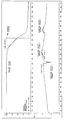
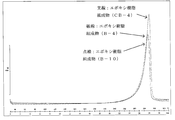
- thermogravimetry and the differential scanning calorimetry (it may be called TG-DSC) of the clathrate compound (A-1). It is a figure which shows the result of having measured TG-DSC of the inclusion compound (A-2). It is a figure which shows the result of having performed the differential scanning calorimetry (it may be called DSC) of the epoxy resin composition (B-1), (B-5), and (CB-1). It is a figure which shows the result of having measured DSC of the epoxy resin composition (B-4), (B-10), and (CB-4).
- the glycidylamine type epoxy resin is not particularly limited as long as it is a compound having a glycidylamino group or a glycidylimino group in the molecule, and specific examples thereof include the compounds shown below. Since the obtained cured product is excellent in mechanical properties, heat resistance, environment resistance, and the like, a tri- or higher functional glycidylamine type epoxy resin is preferable, and tetraglycidyldiaminodiphenylmethane is more preferable.
- the epoxy resin composition of the present invention may contain an epoxy resin having two or more epoxy groups in one molecule (hereinafter also referred to as “polyfunctional epoxy resin”). it can.
- the epoxy resin means a prepolymer before curing, and includes monomers and oligomers.
- Novolak type epoxy resins such as phenol novolak type epoxy resins and orthocresol novolak type epoxy resins obtained by epoxidizing novolak resins obtained by condensation or cocondensation with aliphatic aldehyde compounds such as acetaldehyde and propionaldehyde in the presence of an acidic catalyst ;
- the aromatic polyamine used in the epoxy resin composition of the present invention has a structure in which an amino group having active hydrogen is directly bonded to an aromatic ring, and two or more active hydrogens of these amino groups are present in one molecule It is.
- 4,4′-methylenedianiline, 4,4′-methylenebis (2-methylaniline), 4,4′-methylenebis (2-ethylaniline), 4,4′-methylenebis (2-isopropyl) Aniline 4,4'-methylenebis (2-chloroaniline), 4,4'-methylenebis (2,6-dimethylaniline), 4,4'-methylenebis (2,6-diethylaniline), 4,4 ' -Methylenebis (2-isopropyl-6-methylaniline), 4,4'-methylenebis (2-ethyl-6-methylaniline), 4,4'-methylenebis (2-bromo-6-ethylaniline), 4,4 '-Methylenebis (N-methylaniline), 4,4'-methylenedianiline, 4,4
- 4,4′-diaminodiphenylmethane and / or 3,3′-diaminodiphenylmethane are preferably used because of their high heat resistance and low melting point. Moreover, these can be used individually by 1 type or in mixture of 2 or more types.
- the epoxy resin composition of the present invention contains TEP and an aromatic polyamine, but these can be used as one component, respectively, and an aromatic polyamine clathrated with TEP can also be used.
- TEP and aromatic polyamine are not particularly limited as long as they interact with weak bonds such as hydrogen bonds to form a crystal lattice, and include salts.
- Preferred examples of the aromatic polyamine used include 4,4′-diaminodiphenylmethane and 3,3′-diaminodiphenylmethane.
- the ratio of the TEP and the aromatic polyamine forming the clathrate compound is not particularly limited as long as the clathrate compound can be formed, but the aromatic polyamine is 0.1 to 5.0 moles with respect to 1 mole of TEP. It is preferably 0.5 to 3.0 mol. It is possible to further contain a third component as the clathrate compound. In that case, the third component is preferably 40 mol% or less, more preferably 10 mol% or less, based on the total amount of the clathrate compound. In particular, it is most preferable that the third component is not included.
- the clathrate compound used in the present invention can be obtained in high yield by directly mixing or kneading TEP and aromatic polyamine, or mixing in a solvent.
- a solvent When using a solvent, it can be obtained by adding TEP and aromatic polyamine to the solvent, followed by heat treatment or heat reflux treatment with stirring as necessary, followed by precipitation.
- Methanol and ethyl acetate can be used preferably.
- Formation of the clathrate compound can be confirmed by TG-DSC, infrared absorption spectrum (IR), XRD, solid state NMR spectrum, X-ray structural analysis, and the like.
- the composition of the clathrate compound and its ratio can be confirmed by thermal analysis, 1 H-NMR spectrum, high performance liquid chromatography (HPLC), elemental analysis and the like.
- additive ingredients Furthermore, if necessary, various known curing agents, curing accelerators, plasticizers, extenders, fillers, reinforcing agents, pigments, flame retardants, thickeners, modifiers, release agents, etc. Additives can be blended.
- the glycidylamine type epoxy resin is preferably in the range of 10 to 100% by weight, more preferably in the range of 10 to 60% by weight, and more preferably in the range of 20 to A range of 50% by weight is preferred. If it is less than 10% by weight, the self-adhesion may be insufficient or the heat resistance may be poor.
- the amount of the aromatic polyamine used in the present invention is preferably in the range of 1.0 to 40.0 parts by weight and more preferably in the range of 4.0 to 28.0 parts by weight with respect to 100 parts by weight of the epoxy resin. .
- the amine curing agent is used in such an amount that the active hydrogen equivalent (stoichiometric amount) is the same as the epoxy equivalent of the epoxy resin, but the stoichiometric amount or less in the epoxy resin composition of the present invention.
- the amount of TEP used in the present invention is preferably in the range of 0.1 to 10 mol, more preferably in the range of 0.3 to 2.0, with respect to 1 mol of the aromatic polyamine contained in the epoxy resin composition.
- the aromatic polyamine and TEP form an inclusion compound, the blending ratio is a ratio corresponding to the inclusion ratio.
- the epoxy resin composition of the present invention comprises a glycidylamine type epoxy resin, an aromatic polyamine, TEP and other components as required, or a glycidylamine type epoxy resin, an inclusion compound of an aromatic polyamine and TEP, and if necessary
- the other components are mixed and mixed or kneaded at room temperature so that each component is sufficiently dispersed.
- a stirrer such as a kneader may be used, a spatula or the like may be used, and the mixture may be heated and melted at a temperature at which no thickening or gelation occurs so that a sufficient mixed state is formed. Good.
- the cured product of the present invention is a product obtained by curing the epoxy resin composition by heat treatment.
- the curing temperature depends on the components to be mixed and the purpose, but is preferably in the range of 120 to 320 ° C.
- the reaction temperature exceeds 320 ° C, the epoxy resin itself has a structure different from the intended one due to the self-opening reaction, and the mechanical properties such as glass transition temperature and elastic modulus may be lowered.
- the reaction temperature is less than 120 ° C., the addition reaction may not proceed sufficiently.
- the reaction time is usually in the range of 2 to 12 hours.
- a plurality of epoxy resins and curing agents can be used in combination to obtain a curing temperature and physical properties according to the purpose.
- the epoxy resin composition of the present invention can be suitably used for production of a prepreg or a fiber-reinforced composite material in combination with reinforcing fibers.
- a prepreg can be prepared by dissolving the epoxy resin composition used as a matrix resin in a solvent such as methyl ethyl ketone or methanol to lower the viscosity and impregnating the reinforcing fiber (wet method), or by lowering the viscosity of the matrix resin by heating. It can be produced by a known method such as a hot melt method (dry method) for impregnating reinforcing fibers.
- the epoxy resin composition of the present invention can be used for applications such as adhesives, semiconductor encapsulants, laminated boards for printed wiring boards, varnishes, powder paints, casting materials, inks, in addition to prepregs and fiber reinforced composite materials. It can be preferably used.
- thermogravimetric measurement device product name: TGA-DSC1, manufactured by METTLER TOLEDO
- nitrogen purge nitrogen flow rate 50 mL / min
- Min measured in the measurement temperature range of room temperature to 500 ° C.
- DSC differential scanning calorimetry
- Example 1 200 ml of ethyl acetate was added to 40.0 g of TEP (product name: TEP-DF, manufactured by Asahi Organic Materials Co., Ltd.) and stirred, and a solution of 49.9 g of 4,4′-DDS and 100 ml of ethyl acetate was added thereto at room temperature. The solution was added dropwise and stirred for 3 hours after the addition. After cooling, filtration and vacuum drying were performed to obtain an inclusion compound (A-1) of TEP and 4,4′-DDS (molar ratio 1: 2) in a yield of 91.4%. TG-DSC was measured for the obtained (A-1), and the result is shown in FIG. From FIG. 1, it was found that the release temperature of 4,4′-DDS was 241.2 ° C.
- TEP product name: TEP-DF, manufactured by Asahi Organic Materials Co., Ltd.
- Example 2 20 ml of ethyl acetate was added to 4.00 g of TEP and stirred, and a solution of 4.99 g of 3,3′-DDS and 20 ml of ethyl acetate was added dropwise thereto at room temperature. After the addition, the mixture was stirred for 3 hours under reflux. After cooling, filtration and vacuum drying were performed to obtain an inclusion compound (A-2) of TEP and 3,3′-DDS (molar ratio 1: 2) in a yield of 90.4%. TG-DSC was measured for the obtained (A-2), and the result is shown in FIG. From FIG. 2, it was found that the release temperature of 4,4′-DDS was 245.7 ° C.
- Example 7 to [Example 12] 2.5 g of TGDDM, 4,4′-DDS or 3,3′-DDS, and TEP were kneaded at a blending ratio shown in Table 2 for 10 minutes at room temperature, and epoxy resin compositions (B-5) to (B- 10) was prepared.
- the epoxy resin composition to which TEP is added has a lower curing start temperature, peak temperature of reaction heat, and calorie than an epoxy resin composition to which nothing is added, It was found that the amount of decrease in the amount of heat becomes particularly large as the amount of addition increases. That is, the epoxy resin composition of the present invention can be cured at a lower temperature and with a smaller amount of energy. Further, it has been clarified that the curing reaction proceeds even with the addition of a curing agent of less than the stoichiometric amount (4 to 28 phr).
- the obtained epoxy resin compositions (B-3), (B-9), and (CB-3) are stored at 40 ° C., and the number of days until the solidification is visually confirmed is measured. Was evaluated. The results are shown in Table 4.
Landscapes
- Chemical & Material Sciences (AREA)
- Organic Chemistry (AREA)
- Health & Medical Sciences (AREA)
- Chemical Kinetics & Catalysis (AREA)
- Medicinal Chemistry (AREA)
- Polymers & Plastics (AREA)
- Epoxy Resins (AREA)
Priority Applications (5)
| Application Number | Priority Date | Filing Date | Title |
|---|---|---|---|
| US15/525,537 US20170349696A1 (en) | 2014-12-22 | 2015-12-15 | Epoxy resin composition |
| EP15872204.1A EP3243856A1 (de) | 2014-12-22 | 2015-12-15 | Epoxidharzzusammensetzung |
| JP2016565898A JPWO2016103630A1 (ja) | 2014-12-22 | 2015-12-15 | エポキシ樹脂組成物 |
| CN201580060900.8A CN107075086A (zh) | 2014-12-22 | 2015-12-15 | 环氧树脂组合物 |
| KR1020177013641A KR20170072288A (ko) | 2014-12-22 | 2015-12-15 | 에폭시 수지 조성물 |
Applications Claiming Priority (2)
| Application Number | Priority Date | Filing Date | Title |
|---|---|---|---|
| JP2014259256 | 2014-12-22 | ||
| JP2014-259256 | 2014-12-22 |
Publications (1)
| Publication Number | Publication Date |
|---|---|
| WO2016103630A1 true WO2016103630A1 (ja) | 2016-06-30 |
Family
ID=56149696
Family Applications (1)
| Application Number | Title | Priority Date | Filing Date |
|---|---|---|---|
| PCT/JP2015/006241 Ceased WO2016103630A1 (ja) | 2014-12-22 | 2015-12-15 | エポキシ樹脂組成物 |
Country Status (8)
| Country | Link |
|---|---|
| US (1) | US20170349696A1 (de) |
| EP (1) | EP3243856A1 (de) |
| JP (1) | JPWO2016103630A1 (de) |
| KR (1) | KR20170072288A (de) |
| CN (1) | CN107075086A (de) |
| MA (1) | MA41308A (de) |
| TW (1) | TW201623432A (de) |
| WO (1) | WO2016103630A1 (de) |
Families Citing this family (4)
| Publication number | Priority date | Publication date | Assignee | Title |
|---|---|---|---|---|
| TWI847997B (zh) | 2018-08-17 | 2024-07-11 | 德商漢高股份有限及兩合公司 | 液體壓縮成型或封裝組合物 |
| GB2580087B (en) * | 2018-12-20 | 2022-09-07 | Hexcel Composites Ltd | Improved thermocurable moulding process |
| WO2022186101A1 (ja) * | 2021-03-02 | 2022-09-09 | 帝人株式会社 | 熱硬化性樹脂用硬化剤組成物、エポキシ樹脂組成物および繊維強化複合材料 |
| KR102888116B1 (ko) * | 2025-02-25 | 2025-11-20 | 시원글로벌 주식회사 | 저온 경화성이 우수한 에폭시 포장 조성물 및 이를 함유하는 박층 콘크리트 포장 방법 |
Citations (3)
| Publication number | Priority date | Publication date | Assignee | Title |
|---|---|---|---|---|
| JPH1171449A (ja) * | 1996-12-27 | 1999-03-16 | Nippon Soda Co Ltd | エポキシ樹脂用硬化剤・硬化促進剤及びエポキシ樹脂組成物 |
| JP2009191231A (ja) * | 2008-02-18 | 2009-08-27 | Sekisui Chem Co Ltd | 電子部品接合用接着剤 |
| JP2010215863A (ja) * | 2009-03-18 | 2010-09-30 | Sekisui Chem Co Ltd | 電子部品用接着剤 |
Family Cites Families (6)
| Publication number | Priority date | Publication date | Assignee | Title |
|---|---|---|---|---|
| EP1520867A3 (de) * | 1996-12-27 | 2008-04-30 | Nippon Soda Co., Ltd. | Epoxidharzhärter, Härtungsbeschleuniger und Epoxidharzzusammensetzung |
| CN1286875C (zh) * | 2001-11-07 | 2006-11-29 | 东丽株式会社 | 纤维强化复合材料用环氧树脂组合物、纤维强化复合材料的制法以及纤维强化复合材料 |
| JP5669289B2 (ja) * | 2008-05-23 | 2015-02-12 | 新日鉄住金化学株式会社 | 新規エポキシ樹脂及びその製造方法、該エポキシ樹脂を必須成分とするエポキシ樹脂組成物及び該エポキシ樹脂を必須成分とする硬化物 |
| CN102574988B (zh) * | 2009-10-16 | 2014-05-14 | 日本曹达株式会社 | 环氧固化树脂形成用组合物及其固化物 |
| KR101732539B1 (ko) * | 2010-04-09 | 2017-05-24 | 주식회사 케이씨씨 | 유리전이온도가 높은 분체도료 조성물 |
| JP2014185115A (ja) * | 2013-03-25 | 2014-10-02 | Nippon Soda Co Ltd | 新規な包接化合物 |
-
2015
- 2015-12-14 MA MA041308A patent/MA41308A/fr unknown
- 2015-12-15 WO PCT/JP2015/006241 patent/WO2016103630A1/ja not_active Ceased
- 2015-12-15 US US15/525,537 patent/US20170349696A1/en not_active Abandoned
- 2015-12-15 KR KR1020177013641A patent/KR20170072288A/ko not_active Ceased
- 2015-12-15 CN CN201580060900.8A patent/CN107075086A/zh active Pending
- 2015-12-15 EP EP15872204.1A patent/EP3243856A1/de not_active Withdrawn
- 2015-12-15 JP JP2016565898A patent/JPWO2016103630A1/ja not_active Withdrawn
- 2015-12-17 TW TW104142547A patent/TW201623432A/zh unknown
Patent Citations (3)
| Publication number | Priority date | Publication date | Assignee | Title |
|---|---|---|---|---|
| JPH1171449A (ja) * | 1996-12-27 | 1999-03-16 | Nippon Soda Co Ltd | エポキシ樹脂用硬化剤・硬化促進剤及びエポキシ樹脂組成物 |
| JP2009191231A (ja) * | 2008-02-18 | 2009-08-27 | Sekisui Chem Co Ltd | 電子部品接合用接着剤 |
| JP2010215863A (ja) * | 2009-03-18 | 2010-09-30 | Sekisui Chem Co Ltd | 電子部品用接着剤 |
Also Published As
| Publication number | Publication date |
|---|---|
| CN107075086A (zh) | 2017-08-18 |
| US20170349696A1 (en) | 2017-12-07 |
| JPWO2016103630A1 (ja) | 2017-08-10 |
| MA41308A (fr) | 2017-11-14 |
| EP3243856A1 (de) | 2017-11-15 |
| TW201623432A (zh) | 2016-07-01 |
| KR20170072288A (ko) | 2017-06-26 |
Similar Documents
| Publication | Publication Date | Title |
|---|---|---|
| JP5475223B2 (ja) | 一液型シアネート−エポキシ複合樹脂組成物、その硬化物及びその製造方法、並びにそれを用いた封止用材料及び接着剤 | |
| JP5415947B2 (ja) | 一液型シアネート−エポキシ複合樹脂組成物 | |
| JP5934245B2 (ja) | 硬化性組成物 | |
| JP7012012B2 (ja) | 新規ホスホニウム化合物 | |
| JP6077496B2 (ja) | 一成分エポキシ樹脂組成物中の硬化剤としてのアミンおよびポリマーフェノールならびにそれらの使用 | |
| US20120077943A1 (en) | Low Temperature Curable Epoxy Compositions | |
| TW201200535A (en) | Curable compositions | |
| WO2016103630A1 (ja) | エポキシ樹脂組成物 | |
| JP2015212399A (ja) | エポキシ樹脂組成物 | |
| TW201136974A (en) | Adducts based on divinylarene oxides | |
| JP7038565B2 (ja) | 熱硬化性エポキシ樹脂組成物、接着剤、エポキシ樹脂硬化物、塩、及び硬化剤 | |
| JP6620981B2 (ja) | 熱硬化性成形材料、その製造方法および半導体封止材 | |
| TWI912549B (zh) | 硬化性樹脂組成物、清漆、硬化物、硬化物的製造方法 | |
| JP7202136B2 (ja) | N-アルキル置換アミノピリジン・フタル酸塩及びそれを含むエポキシ樹脂組成物 | |
| CN104768998B (zh) | 可固化环氧树脂组合物 | |
| WO2016117298A1 (ja) | 包接化合物の結晶多形、それを含有する硬化性組成物、及び硬化物 | |
| JP7465926B2 (ja) | エポキシ樹脂、その製造方法、それを含むエポキシ組成物及びその用途 | |
| JP7166525B2 (ja) | エポキシ樹脂組成物 | |
| JP6251407B2 (ja) | 包接化合物の結晶、その製造方法及び硬化性樹脂組成物 | |
| US20240166796A1 (en) | Epoxy resin for semiconductor adhesive, preparing method thereof and composition comprising the same | |
| JP2022013418A (ja) | ベンゾオキサジン化合物含有混合物、これを含む硬化性組成物および該硬化性組成物を硬化させてなる硬化物 | |
| WO2025249317A1 (ja) | 硬化剤、硬化性組成物、硬化物及び硬化物の製造方法 | |
| WO2022004596A1 (ja) | ベンゾオキサジン化合物含有混合物、これを含む硬化性組成物および該硬化性組成物を硬化させてなる硬化物 | |
| JP2014162854A (ja) | 樹脂組成物及び硬化物 | |
| JP2022013415A (ja) | ベンゾオキサジン化合物含有混合物の製造方法 |
Legal Events
| Date | Code | Title | Description |
|---|---|---|---|
| 121 | Ep: the epo has been informed by wipo that ep was designated in this application |
Ref document number: 15872204 Country of ref document: EP Kind code of ref document: A1 |
|
| ENP | Entry into the national phase |
Ref document number: 2016565898 Country of ref document: JP Kind code of ref document: A |
|
| WWE | Wipo information: entry into national phase |
Ref document number: 15525537 Country of ref document: US |
|
| REEP | Request for entry into the european phase |
Ref document number: 2015872204 Country of ref document: EP |
|
| ENP | Entry into the national phase |
Ref document number: 20177013641 Country of ref document: KR Kind code of ref document: A |
|
| NENP | Non-entry into the national phase |
Ref country code: DE |