WO2016105164A1 - Procédé de prise en charge de la connectivité pour une communication d2d et dispositif sans fil - Google Patents
Procédé de prise en charge de la connectivité pour une communication d2d et dispositif sans fil Download PDFInfo
- Publication number
- WO2016105164A1 WO2016105164A1 PCT/KR2015/014267 KR2015014267W WO2016105164A1 WO 2016105164 A1 WO2016105164 A1 WO 2016105164A1 KR 2015014267 W KR2015014267 W KR 2015014267W WO 2016105164 A1 WO2016105164 A1 WO 2016105164A1
- Authority
- WO
- WIPO (PCT)
- Prior art keywords
- wireless device
- communication
- information
- resource pool
- necessary data
- Prior art date
- Legal status (The legal status is an assumption and is not a legal conclusion. Google has not performed a legal analysis and makes no representation as to the accuracy of the status listed.)
- Ceased
Links
Images






Classifications
-
- H—ELECTRICITY
- H04—ELECTRIC COMMUNICATION TECHNIQUE
- H04W—WIRELESS COMMUNICATION NETWORKS
- H04W4/00—Services specially adapted for wireless communication networks; Facilities therefor
- H04W4/70—Services for machine-to-machine communication [M2M] or machine type communication [MTC]
-
- H—ELECTRICITY
- H04—ELECTRIC COMMUNICATION TECHNIQUE
- H04W—WIRELESS COMMUNICATION NETWORKS
- H04W72/00—Local resource management
- H04W72/04—Wireless resource allocation
-
- H—ELECTRICITY
- H04—ELECTRIC COMMUNICATION TECHNIQUE
- H04W—WIRELESS COMMUNICATION NETWORKS
- H04W72/00—Local resource management
- H04W72/04—Wireless resource allocation
- H04W72/044—Wireless resource allocation based on the type of the allocated resource
- H04W72/0446—Resources in time domain, e.g. slots or frames
-
- H—ELECTRICITY
- H04—ELECTRIC COMMUNICATION TECHNIQUE
- H04W—WIRELESS COMMUNICATION NETWORKS
- H04W72/00—Local resource management
- H04W72/12—Wireless traffic scheduling
-
- H—ELECTRICITY
- H04—ELECTRIC COMMUNICATION TECHNIQUE
- H04W—WIRELESS COMMUNICATION NETWORKS
- H04W72/00—Local resource management
- H04W72/20—Control channels or signalling for resource management
-
- H—ELECTRICITY
- H04—ELECTRIC COMMUNICATION TECHNIQUE
- H04W—WIRELESS COMMUNICATION NETWORKS
- H04W76/00—Connection management
- H04W76/10—Connection setup
Definitions
- the present invention relates to wireless communication.
- 3GPP LTE long term evolution
- UMTS Universal Mobile Telecommunications System
- OFDMA orthogonal frequency division multiple access
- SC-FDMA single carrier-frequency division multiple access
- LTE-A 3GPP LTE-Advanced
- device-to-device communication is a distributed communication technology in which adjacent wireless nodes directly transmit traffic.
- a wireless node such as a mobile phone, can discover other physically adjacent wireless nodes on its own, establish a communication session, and send traffic.
- D2D communication such as Bluetooth or WiFi Direct supports direct communication between wireless nodes without the support of a base station.
- D2D communication is possible in which scheduling for D2D communication is managed by a base station.
- the D2D communication managed by the base station may reduce traffic overload problems by distributing traffic concentrated at the base station.
- D2D communication between wireless nodes may be performed with a relatively low transmission power as the distance between wireless nodes is closer.
- the base station checks the D2D communication state and manages a resource pool, there is a limitation that it is difficult to directly monitor the D2D communication link that performs communication at low power.
- the present invention provides a method and a wireless device for supporting connectivity for D2D communication.
- one disclosure of the present specification may support connectivity of device-to-device (D2D) communication between a first wireless device and a second wireless device.
- the method includes: receiving, by a third wireless device, information about a resource pool available for D2D communication from a base station; The first wireless device and the second wireless device may transmit information on a resource pool that may be used for D2D communication between the first wireless device and the second wireless device, based on the received information. Transmitting to the device; And when the third wireless device detects the release of the D2D communication link between the first wireless device and the second wireless device, performing a procedure for providing necessary data to the second wireless device. have.
- D2D device-to-device
- the third wireless device may be located in a cell coverage extension area of the base station, and the first wireless device and the second wireless device may be located in an outer area of the cell coverage extension area.
- Information about the resource pool may be repeatedly received from the base station on a plurality of subframes.
- the procedure for providing necessary data to the second wireless device may include receiving the required data from the first wireless device before the D2D communication link between the first wireless device and the second wireless device is released; And transmitting the received necessary data to the second wireless device.
- the procedure for providing necessary data to the second wireless device may include: a fourth that is adjacent to the second wireless device and receives the necessary data before the D2D communication link between the first wireless device and the second wireless device is released; Searching for a wireless device; And when the fourth wireless device is found, transmitting a control signal for instructing the second wireless device to transmit the necessary data to the fourth wireless device.
- the procedure for providing necessary data to the second wireless device may include determining whether the data request message reaches the fourth wireless device having the necessary data when the second wireless device broadcasts a data request message. Making; And when the data request message does not reach the fourth wireless device, transmitting a power adjustment signal to the second wireless device to instruct to increase the transmission power of the data request message.
- the procedure for providing necessary data to the second wireless device may include: determining whether a fourth wireless device having the necessary data is located in an area where information on the resource pool cannot be directly received from the base station; Updating the resource pool so that a D2D communication link can be connected between the second wireless device and the fourth wireless device when the fourth wireless device is located in an area where the information on the resource pool cannot be received; And transmitting the updated resource pool to the second wireless device.
- the procedure for providing necessary data to the second wireless device may include: receiving a priority for devices that will support connectivity of D2D communication from the second wireless device; And transmitting the necessary data to the second wireless device when the device corresponds to the device to provide connectivity support according to the priority.
- the scheduling assignment After transmitting the information on the resource pool, when the third wireless device detects a collision of a scheduling assignment for D2D communication between the first wireless device and the second wireless device, the scheduling assignment Regenerating the resource pools so that they do not collide; And transmitting, by the third wireless device, the regenerated resource pool to one or more wireless devices of the first wireless device and the second wireless device.
- the apparatus includes a Radio Frequency (RF) unit and a processor to control the RF unit, the processor to control the RF unit to receive a resource pool available for D2D communication from a base station; Controlling the RF unit to forward the resource pool to the first wireless device and the second wireless device; And when the release of the D2D communication link between the first wireless device and the second wireless device is detected, a procedure for providing necessary data to the second wireless device may be performed.
- RF Radio Frequency
- 1 is an exemplary view showing a wireless communication system.
- FIG. 2 shows a structure of a radio frame according to FDD in 3GPP LTE.
- 3 is an exemplary diagram illustrating a resource grid for one uplink or downlink slot in 3GPP LTE.
- 5A is an illustration of cell coverage extension.
- 5B is an exemplary diagram illustrating an example of transmitting a bundle of downlink channels.
- D2D device to device
- FIG. 8 illustrates an example of a D2D communication system in which a plurality of wireless devices are distributed.
- FIG. 9 illustrates an example in which a hidden DAD supports connectivity of D2D communication.
- FIG 10 shows another example in which the hidden DAD supports the connectivity of D2D communication.
- FIG 11 shows an example in which the hidden DAD supports connectivity of D2D communication.
- FIG 13 shows another example in which the hidden DAD supports the connectivity of the D2D communication.
- FIG. 14 illustrates an example in which the DAD supports connectivity of D2D communication in a PNC region.
- 16 illustrates an example in which the DAD supports connectivity of D2D communication in the ONC region.
- FIG 17 illustrates an example in which the DAD supports connectivity of D2D communication in the ONC region.
- FIG. 19 is a block diagram illustrating a D2D communication support system in which the present invention is implemented.
- 3GPP 3rd Generation Partnership Project
- LTE long term evolution
- LTE-Avanced 3rd Generation Partnership Project LTE-A
- first and second may be used to describe various components, but the components should not be limited by the terms. The terms are used only for the purpose of distinguishing one component from another.
- first component may be referred to as the second component, and similarly, the second component may also be referred to as the first component.
- BS base station
- eNodeB evolved-nodeb
- eNB evolved-nodeb
- BTS base transceiver
- the wireless device may be fixed or mobile, and may be referred to in other terms such as user equipment (UE), mobile station (MS), user terminal (UT), subscriber station (SS), and mobile terminal (MT). Can be called.
- UE user equipment
- MS mobile station
- UT user terminal
- SS subscriber station
- MT mobile terminal
- 1 is an exemplary view showing a wireless communication system.
- a wireless communication system includes at least one base station 10.
- Each base station 10 provides a communication service for a particular geographic area (generally called a cell) 10a, 10b, 10c.
- the wireless device 20 typically belongs to one cell, and a cell to which the wireless device belongs is called a serving cell.
- a base station that provides a communication service for a serving cell is called a serving BS. Since the wireless communication system is a cellular system, there are other cells adjacent to the serving cell. Another cell adjacent to the serving cell is called a neighbor cell.
- a base station that provides communication service for a neighbor cell is called a neighbor BS. The serving cell and the neighbor cell are relatively determined based on the wireless device.
- downlink means communication from the base station 10 to the wireless device 20
- uplink means communication from the wireless device 20 to the base station 10.
- the transmitter may be part of the base station 10 and the receiver may be part of the wireless device 20.
- the transmitter may be part of the wireless device 20 and the receiver may be part of the base station 10.
- the radio frame illustrated in FIG. 2 may refer to section 5 of 3GPP TS 36.211 V10.4.0 (2011-12) "Evolved Universal Terrestrial Radio Access (E-UTRA); Physical Channels and Modulation (Release 10)".
- E-UTRA Evolved Universal Terrestrial Radio Access
- Physical Channels and Modulation Release 10
- a radio frame includes 10 subframes, and one subframe includes two slots. Slots in a radio frame are numbered from 0 to 19 slots.
- the time taken for one subframe to be transmitted is called a transmission time interval (TTI).
- TTI may be referred to as a scheduling unit for data transmission.
- one radio frame may have a length of 10 ms
- one subframe may have a length of 1 ms
- one slot may have a length of 0.5 ms.
- the structure of the radio frame is merely an example, and the number of subframes included in the radio frame or the number of slots included in the subframe may be variously changed.
- one slot may include a plurality of orthogonal frequency division multiplexing (OFDM) symbols. How many OFDM symbols are included in one slot may vary depending on a cyclic prefix (CP).
- OFDM orthogonal frequency division multiplexing
- 3 is 3GPP In LTE An exemplary diagram showing a resource grid for one uplink or downlink slot.
- an uplink slot includes a plurality of orthogonal frequency division multiplexing (OFDM) symbols in a time domain and includes N RB resource blocks (RBs) in a frequency domain.
- RB resource blocks
- the number of resource blocks (RBs), that is, N RBs may be any one of 6 to 110.
- the RB is also called a physical resource block (PRB).
- a resource block is a resource allocation unit and includes a plurality of subcarriers in one slot. For example, if one slot includes 7 OFDM symbols in the time domain and the resource block includes 12 subcarriers in the frequency domain, one resource block includes 7 ⁇ 12 resource elements (REs). It may include.
- the number of subcarriers in one OFDM symbol can be used to select one of 128, 256, 512, 1024, 1536 and 2048.
- a resource grid for one uplink slot may be applied to a resource grid for a downlink slot.
- the system information is divided into a master information block (MIB) and a plurality of system information blocks (SIB).
- the MIB contains the most important physical layer information of the cell.
- SIB includes information used to evaluate whether the wireless device 20 is allowed to access the cell, and also includes other types of scheduling information of the SIB.
- the second type of SIB (SIB Type 2) contains common and shared channel information.
- SIB Type 3 contains cell reselection information primarily associated with the serving cell.
- a fourth type of SIB (SIB type 4) includes frequency information of a serving cell and intra frequency information of a neighbor cell associated with cell reselection.
- the fifth type of SIB includes information on another E-UTRA frequency and information on inter frequencies of neighboring cells related to cell reselection.
- a sixth type of SIB includes information on UTRA frequency and information on a UTRA neighbor cell related to cell reselection.
- a seventh type of SIB includes information on GERAN frequencies related to cell reselection.
- the MIB is delivered to the wireless device 20 on the PBCH.
- SIB SIB Type 1
- DL-SCH of the first type
- Other types of SIBs are delivered to the wireless device on the PDSCH through a System Information message.
- 5A is an illustration of cell coverage extension.
- CE Coverage Extension or Coverage Enhancement
- the base station 10 transmits a downlink channel to the wireless device 20 located in the coverage extension area, the wireless device 20 has difficulty in receiving it. .
- 5B illustrates an example of transmitting a bundle of downlink channels.
- the base station 10 transmits a downlink channel (eg, PBCH, PDCCH, PDSCH) to various subframes (eg, N frames) to the wireless device 20 located in the coverage extension region.
- a downlink channel eg, PBCH, PDCCH, PDSCH
- subframes eg, N frames
- Subframes are repeatedly transmitted.
- downlink channels repeated on the various subframes are referred to as a bundle of downlink channels.
- the wireless device 20 may increase a decoding success rate by receiving a bundle of downlink channels on various subframes and decoding a portion or the whole of the bundle.
- D2D communication expected to be introduced in the next generation communication system will be described below.
- D2D Device to Device
- D2D device to device
- the first wireless device 20-1 may serve as a repeater for the second wireless device 20-2 and the third wireless device 20-3.
- the fourth wireless device 20-4 may serve as a repeater for the fifth wireless device 20-5 and the sixth wireless device 20-6 which are far from the cell center.
- a link between wireless devices used for the D2D communication is also called sidelink.
- Physical channels used for the sidelinks are as follows.
- PSSCH Physical Sidelink Shared Channel
- PSCCH Physical Sidelink Control Channel
- PSCH Physical Sidelink Discovery Channel
- PSBCH Physical Sidelink Broadcast Channel
- the first wireless device 20-1 and the second wireless device 20-2 establish a connection with the base station 10, respectively (S110).
- the first wireless device 20-1 and the second wireless device 20-2 may establish an RRC connection.
- the first wireless device 20-1 and the second wireless device 20-2 receive a system information block (SIB) broadcasted by the base station 10 (S120).
- SIB system information block
- the SIB may include information about a resource pool related to D2D communication.
- Information about the resource pool associated with the D2D communication may be classified into SIB type 18 and SIB type 19.
- the SIB type 18 indicates a network supporting a D2D communication procedure and may include resource configuration information for D2D communication. SIB type 18 may include the following fields.
- commRxPool indicates resources allowed to the wireless device to receive D2D communication in the RRC_IDLE state and the RRC_CONNECTED state.
- commSyncConfig indicates a resource allowed to the wireless device to send or receive synchronization information.
- commTxPoolExceptional indicates the resources allowed to the wireless device to send D2D communication in the exceptional state.
- commTxPoolNormalCommon indicates a resource allowed to the wireless device to transmit D2D communication in the RRC_CONNECTED state or the RRC_IDLE state during the D2D transmission through the frequency except the primary.
- the SIB type 19 indicates a network supporting a D2D communication procedure and may include resource configuration information related to D2D direct discovery. SIB type 19 may include the following fields.
- discInterFreqList indicates adjacent frequencies supported for D2D direct search notification.
- discRxPool indicates resources allowed to the wireless device to receive the D2D direct discovery notification in the RRC_ILE state and the RRC_CONNECTED state.
- discSyncConfig indicates a resource allowed to the wireless device to transmit or receive synchronization information.
- discTxPoolCommon indicates resources allowed to the wireless device to send the D2D direct discovery notification in the RRC_IDLE state.
- plmn-IdentityList is a list of PLMN identifiers for adjacent frequencies indicated by the carrier frequency.
- Plmn-Index is an index associated with an entry of the plmn-IdentityList field.
- the first wireless device 20-1 performs discovery for identifying another device based on the information about the resource pool included in the received SIB (S130). More specifically, the first wireless device 20-1 may broadcast a D2D discovery notification including its identification information and a synchronization signal. The second wireless device 20-2 may establish a D2D communication link by receiving the D2D discovery notification broadcast by the first wireless device 20-1 (S140).
- the first wireless device 20-1 requests the base station 10 to allocate a resource for transmitting data to the second wireless device 20-2 (S150).
- the base station 10 allocates resources for transmitting data to the first wireless device 20-1 (S160).
- the first wireless device 20-1 transmits data to the second wireless device 20-2 on the basis of the resources allocated by the base station 10 (S170).
- FIG. 8 illustrates an example of a D2D communication system in which a plurality of wireless devices are distributed.
- a plurality of wireless devices 20-1, 20-2, 20-3, 20-4, 20-5, and 70 may be distributed in the D2D communication system.
- the first radio device 20-1 and the second radio device 20-2 are active radio devices connecting the base station 10 as a serving cell.
- the first wireless device 20-1 and the second wireless device 20-2 may be allocated resources for D2D communication from the base station 10 and perform D2D communication in the allocated resource region.
- an area in which the wireless device can connect the base station 10 as a serving cell is referred to as an in network coverage (INC).
- the wireless device located in the INC area is called an INC wireless device.
- the INC may be understood to correspond to the basic coverage area illustrated in FIG. 5A.
- the first wireless device 20-1 and the second wireless device 20-2 located in the INC region may perform normal cell detection and random access channel (RACH) procedures.
- the first wireless device 20-1 and the second wireless device 20-2 receive a wireless device identifier (for example, a Cell-Radio Network Temporary Identifier (C-RNTI)) from the base station 10 and receive downlink. Receive and uplink transmission can be performed.
- a wireless device identifier for example, a Cell-Radio Network Temporary Identifier (C-RNTI)
- the third wireless device 20-3 and the fourth wireless device 20-4 are in a state capable of receiving only a message broadcast by the base station 10.
- the base station 10 is in a state in which the uplink signals transmitted by the third wireless device 20-3 and the fourth wireless device 20-4 cannot normally be received.
- the wireless device may receive only a message broadcast by the base station 10, and the base station 10 may receive an ONC-B (Outside Network Coverage except Broadcast) area in which the uplink signal of the wireless device cannot be normally received. It is called.
- a wireless device located in the ONC-B area but not in the INC area is called an ONC-B wireless device.
- the ONC-B region corresponds to the extended coverage region illustrated in FIG. 5A.
- the base station 10 may not know the existence of the third wireless device 20-3 and the fourth wireless device 20-4 located in the ONC-B area. Accordingly, in order to support D2D communication of ONC-B wireless devices, the base station 10 may broadcast information about a resource pool that ONC-B wireless devices can use in D2D communication. Upon receiving the broadcast message, the ONC-B wireless devices may arbitrarily select a resource region to be used for D2D signal transmission within the received resource pool. In addition, the ONC-B may perform D2D communication using a randomly selected resource.
- D2D communication may be performed between the second wireless device 20-2 and the third wireless device 20-3.
- D2D communication performed between a wireless device located in an INC area and a wireless device located in an ONC-B area is referred to as D2D communication in a PNC (Partial Network Coverage) environment.
- PNC Partial Network Coverage
- the fifth wireless device 20-5 and the sixth wireless device 70 are not able to receive any type of downlink from the base station 10.
- the base station 10 is in a state in which no form of uplink can be received from the fifth radio device 20-5 and the seventh radio device 70.
- an area in which any type of downlink or uplink cannot be established between the wireless device and the base station 10 is called an outside network coverage (ONC).
- ONC wireless device A wireless device located in the ONC area but not in the ONC-B and INC areas is called an ONC wireless device.
- resource block or subframe allocation statistics, power level measurement for each resource, and resources used for the D2D communication by the base station 10 are used. Information such as the number of wireless devices to be monitored.
- the D2D communication can be performed at a lower power as the wireless device is located in the boundary region of the cell or closer to the wireless devices performing D2D communication. . Therefore, even when the base station 10 checks the D2D communication state and manages the resource pool, it may be difficult to directly monitor the D2D communication link that performs communication at low power.
- the D2D communication system may support connectivity of D2D communication in which a wireless device having a D2D communication capability is performed between other wireless devices.
- a wireless device supporting connectivity of D2D communication performed between other wireless devices is called a D2D Assisting Device (DAD).
- D2D D2D Assisting Device
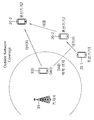
- FIG. 9 illustrates an example in which a hidden DAD supports connectivity of D2D communication.
- the first wireless device 20-1 and the second wireless device 20-2 are performing D2D communication without knowing the existence of the DAD 100.
- the first wireless device 20-1 transmits data to the second wireless device 20-2
- the second wireless device 20-2 transmits the data to the first wireless device 20-. Assume that you are receiving data from 1).
- the DAD 100 monitors the D2D communication between the first wireless device 20-1 and the second wireless device 20-2.
- the second wireless device 20-2 broadcasts a data request message. do.
- the broadcasted data request message is standardized in a predetermined message format and transmitted to an unspecified receiver.
- the predetermined message format may be defined by being scrambled with a predetermined Radio Network Temporary Identifier (RNTI) and / or a Virtual Caller IDentifier (VCID), accompanied by a predetermined pilot pattern, or including predetermined receiver information.
- RNTI Radio Network Temporary Identifier
- VCID Virtual Caller IDentifier
- the DAD 100 Upon receiving the broadcasted data request message, the DAD 100 transmits necessary data to the second wireless device 20-2 on behalf of the first wireless device 20-1. Necessary data transmitted by the DAD 100 has been received from the first wireless device 20-1 before the D2D communication link between the first wireless device 20-1 and the second wireless device 20-2 is released. May transmit to the second wireless device 20-2.
- the DAD 100 may support the connectivity of the D2D communication in a hidden state so that the second wireless device 20-2 may continuously receive data.
- FIG 10 shows another example in which the hidden DAD supports the connectivity of D2D communication.
- the first wireless device 20-1 and the second wireless device 20-2 perform D2D communication without knowing the existence of the DAD 100.
- the first wireless device 20-1 transmits data to the second wireless device 20-2
- the second wireless device 20-2 transmits the data to the first wireless device 20-. Assume that you are receiving data from 1).
- the DAD 100 monitors the D2D communication between the first wireless device 20-1 and the second wireless device 20-2.
- the DAD 100 associates with the first wireless device 20-1. 2 The D2D communication link between the wireless devices 20-2 is detected.
- the DAD 100 Upon detecting release of the D2D communication link, the DAD 100 transmits necessary data to the second wireless device 20-2 on behalf of the first wireless device 20-1. Therefore, the DAD 100 may support the connectivity of the D2D communication in a hidden state so that the second wireless device 20-2 may continuously receive data.
- 11 shows the non-hidden DAD D2D An example of supporting communication connectivity is shown.
- the first wireless device 20-1 and the second wireless device 20-2 perform D2D communication in a state in which the presence of the DAD 100 is known.
- the first wireless device 20-1 transmits data to the second wireless device 20-2
- the second wireless device 20-2 transmits the data to the first wireless device 20-. Assume that you are receiving data from 1).
- the DAD 100 monitors the D2D communication between the first wireless device 20-1 and the second wireless device 20-2.
- the second wireless device 20-2 transmits a DAD to transmit a data request message.
- the second wireless device 20-2 may collect information related to a connection state of one or more additionally connected DADs 100.
- the second wireless device 20-2 may determine the priority of one or more connected DADs 100 according to the quality of the collected connection state.
- priority is the priority of one or more DADs 100 to provide connection support for D2D communication to the wireless device. As such, priority may be provided to the DAD 100.
- the DAD 100 may determine whether it should intervene in a situation in which connection support for D2D communication is required based on the provided priority.
- the second wireless device 20-2 may determine the DAD 100 to transmit the data request message according to the determined priority.
- the second wireless device 20-2 transmits a data request message to the determined DAD 100.
- the DAD 100 Upon receiving the data request message, the DAD 100 transmits necessary data to the second wireless device 20-2 on behalf of the first wireless device 20-1. Therefore, the DAD 100 may support the connectivity of the D2D communication in the unhidden state so that the second wireless device 20-2 may continuously receive data.
- the first wireless device 20-1 and the second wireless device 20-2 perform D2D communication in a state in which the presence of the DAD 100 is known.
- the first wireless device 20-1 transmits data to the second wireless device 20-2
- the second wireless device 20-2 transmits the data to the first wireless device 20-.
- the DAD 100 does not hold data received by the second wireless device 20-2, but the other wireless device adjacent to the second wireless device 20-2 may use the second wireless device 20-2. Assume that) holds the data it is receiving.
- the DAD 100 monitors the D2D communication between the first wireless device 20-1 and the second wireless device 20-2.
- the second wireless device 20-2 broadcasts a data request message. do.
- the DAD 100 requests that the second wireless device 20-2 request data.
- a power adjustment signal for instructing to increase the transmission power of the message is transmitted to the second wireless device 20-2.
- the second wireless device 20-2 Upon receiving the power adjustment signal, the second wireless device 20-2 increases the transmission power and broadcasts the data request message again.
- the second wireless device 20-2 may receive necessary data from another wireless device that receives the data request message. Therefore, the DAD 100 may support the connectivity of the D2D communication in the unhidden state so that the second wireless device 20-2 may continuously receive data.
- FIG. 13 shows that the hidden DAD D2D Another example of supporting communication connectivity is shown.
- the first wireless device 20-1 and the second wireless device 20-2 perform D2D communication in a state in which the presence of the DAD 100 is known.
- the first wireless device 20-1 transmits data to the second wireless device 20-2
- the second wireless device 20-2 transmits the data to the first wireless device 20-.
- the DAD 100 does not hold the data received by the second wireless device 20-2
- the third wireless device 20-3 receives the second wireless device 20-2. Assume you have data.
- the third wireless device 20-3 is located in an area where it is not possible to directly receive information about a resource pool from the base station 10.
- the DAD 100 monitors the D2D communication between the first wireless device 20-1 and the second wireless device 20-2.
- the second wireless device 20-2 broadcasts a data request message. do.
- the DAD 100 updates the information about the resource pool so that the D2D communication link can be connected between the third wireless device 20-3 and the second wireless device 20-2. To be sent).
- the second wireless device 20-2 broadcasts the data request message again based on the updated information about the resource pool.
- the third wireless device 20-3 receiving the data request message connects the D2D communication link with the second wireless device 20-2.
- the second wireless device 20-2 receives necessary data from the third wireless device 20-3.
- the DAD 100 When the DAD 100 is located in the INC area or moved into the INC area, the DAD 100 reports information about the updated resource pool to the base station 10. Therefore, the DAD 100 may support the connectivity of the D2D communication in the unhidden state so that the second wireless device 20-2 may continuously receive data.
- the third wireless device 20-3 transmits data to the second wireless device 20-2, and the second wireless device 20-2 transmits data from the third wireless device 20-3. Assume you are receiving data.
- the DAD 100 monitors the D2D communication between the second wireless device 20-2 and the third wireless device 20-3.
- the DAD 100 receives necessary data from the third wireless device 20-3.
- the DAD 100 transmits necessary data received from the third wireless device 20-3 back to the second wireless device 20-2. That is, the DAD 100 performs an operation similar to a proxy.
- the user of the second wireless device 20-2 does not know that the D2D communication link with the third wireless device 20-3 is released and continues to receive data from the third wireless device 20-3. It can be seen that it is receiving.
- the DAD 100 transmits a control signal to another wireless device to instruct another wireless device to continuously transmit necessary data to the second wireless device 20-2.
- the other wireless device receives the necessary data from the third wireless device 20-3 before the D2D communication link between the second wireless device 20-2 and the third wireless device 20-3 is not released. It may be a wireless device, but is not limited thereto. Therefore, the DAD 100 may support the connectivity of the D2D communication so that the second wireless device 20-2 may continuously receive data.
- the second wireless device 20-2 transmits data to the third wireless device 20-3, and the third wireless device 20-3 transmits data from the second wireless device 20-2. Assume you are receiving data.
- the first DAD 100 monitors the D2D communication between the second wireless device 20-2 and the third wireless device 20-3.
- the third wireless device 20-3 When the third wireless device 20-3 moves and the D2D communication link is released, the third wireless device 20-3 broadcasts a data request message.
- the third wireless device 20-3 may broadcast a data request message using information on the resource pool previously received from the base station 10.
- the first DAD 100 Since the third wireless device 20-3 is out of the coverage area of the first DAD 100, the first DAD 100 has an adjacent second DAD 200 as the third wireless device 20-3. To the second DAD 200, identification information of the third wireless device 20-3, data information that was being transmitted to the third wireless device 20-3, and the third wireless device so as to provide connection support to the second DAD 200. Send information on the resource pool associated with (20-3).
- the DAD 100 may support the connectivity of the D2D communication so that the second wireless device 20-2 may continuously receive data.
- the fifth wireless device 20-5 tries to transmit data to the sixth wireless device 70, and the sixth wireless device 70 receives data from the fifth wireless device 20-5.
- the sixth wireless device 70 receives data from the fifth wireless device 20-5.
- the DAD 100 forwards the information on the resource pool previously received from the base station to the fifth wireless device 20-5.
- the DAD 100 may forward information on a resource pool according to a request of the fifth wireless device 20-5.
- the DAD 100 is not limited thereto, and the DAD 100 may transmit the fifth wireless device 20-5.
- the D2D communication state between the sixth wireless device 70 and actively forward information about the resource pool are not limited thereto.
- the fifth wireless device 20-5 broadcasts a D2D discovery notification based on the received information about the resource pool.
- the sixth wireless device 70 receives the D2D discovery notification of the broadcasted fifth wireless device 20-5, and connects the D2D communication link with the fifth wireless device 20-5.
- the fifth wireless device 20-5 and the sixth wireless device 70 transmit and receive data using the connected D2D communication link.
- the fifth wireless device 20-5 attempts to transmit data to the sixth wireless device 70, but allocates scheduling between the fifth wireless device 20-5 and the sixth wireless device 70. It is assumed that (Scheduling Assignment, SA) is collided so that a D2D communication link cannot be established.
- SA Service Assignment
- the DAD 100 detects a collision of a scheduling assignment SA between the fifth radio device 20-5 and the sixth radio device 70.
- the DAD 100 may prevent a scheduling assignment (SA) from colliding between the fifth radio device 20-5 and the sixth radio device 70 based on information on a resource pool previously received from the base station 10. Regenerate information about resource pools. DAD 100 broadcasts information about the regenerated resource pool.
- SA scheduling assignment
- the fifth wireless device 20-5 located in the coverage area of the DAD 100 receives the information about the regenerated resource pool and broadcasts a D2D discovery notification based on the received information about the resource pool.
- the sixth wireless device 70 receives the D2D discovery notification of the broadcasted fifth wireless device 20-5, and connects the D2D communication link with the fifth wireless device 20-5.
- the fifth wireless device 20-5 and the sixth wireless device 70 transmit and receive data using the connected D2D communication link.
- the DAD 100 When the DAD 100 is moved to the INC area, the DAD 100 reports the information on the D2D communication between the fifth radio device 20-5 and the sixth radio device 70 to the base station 10. In detail, the DAD 100 transmits information on movement of the fifth radio device 20-5 and the sixth radio device 70, information on a scheduling allocation (SA) collision, and information on a regenerated resource pool. You may report to (10).
- SA scheduling allocation
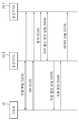
- the DAD 100 receives information about a resource pool available for D2D communication from the base station 10 (S210).
- the DAD 100 may be located in the ONC-B area of the base station 10, but is not limited thereto.
- the DAD 100 transmits information on a resource pool that can be used for D2D communication between the first wireless device and the second wireless device to the first wireless device and the second wireless device based on the received information (S220).
- the first wireless device and the second wireless device may be located in the ONC area of the base station 10, but is not limited thereto.
- the DAD 100 determines whether a release of the D2D communication link between the first wireless device and the second wireless device is detected (S230). As a result of determination, when the D2D communication link between the first wireless device and the second wireless device is released, the DAD 100 performs a procedure for providing necessary data to the second wireless device (S240). More specifically, the DAD 100 receives necessary data from the first wireless device before the D2D communication link between the first wireless device and the second wireless device is released. The DAD 100 may transmit the received necessary data to the second wireless device.
- the DAD 100 searches for a third wireless device that is adjacent to the second wireless device and has received necessary data before the D2D communication link between the first wireless device and the second wireless device is released. When the third wireless device is found, the DAD 100 may transmit a control signal for instructing the second wireless device to transmit the necessary data to the third wireless device.
- the DAD 100 determines whether the data request message reaches the third wireless device that holds the necessary data. When the data request message does not reach the third wireless device, the DAD 100 may transmit a power adjustment signal to the second wireless device to instruct to increase the transmission power of the data request message.
- the DAD 100 determines whether the third wireless device having the necessary data is located in an area where the information on the resource pool cannot be directly received from the base station 10. As a result of the determination, when the third wireless device is located in an area where it cannot receive information about the resource pool, the resource pool is updated so that the D2D communication link can be connected between the second wireless device and the third wireless device. The DAD 100 may transmit the updated resource pool to the second wireless device. In addition, the DAD 100 may report the information about the updated resource pool to the base station 10.
- the DAD 100 receives a priority for devices that will support the connectivity of the D2D communication from the second wireless device.
- the DAD 100 may transmit the necessary data to the second wireless device when the DAD 100 corresponds to a device to provide connectivity support according to the received priority.
- the DAD 100 may regenerate the resource pool so that the scheduling assignment does not collide.
- the DAD 100 may transmit the regenerated resource pool to one or more wireless devices of the first wireless device and the second wireless device.
- the DAD 100 may report the information about the regenerated resource pool to the base station 10.
- FIG. 19 is a block diagram illustrating a D2D communication support system in which the present invention is implemented.
- the DAD 100 includes a processor 101, a memory 102, and an RF unit 103.
- the memory 102 is connected to the processor 101 and stores various information for driving the processor 101.
- the RF unit 103 is connected to the processor 101 and transmits and / or receives a radio signal.
- the processor 101 implements the proposed functions, procedures and / or methods in accordance with the present invention. In the above-described embodiment, the operation of the DAD 100 may be implemented by the processor 101.
- the wireless device 20 includes a processor 21, a memory 22, and an RF unit 23.
- the memory 22 is connected to the processor 21 and stores various information for driving the processor 21.
- the RF unit 23 is connected to the processor 21 to transmit and / or receive a radio signal.
- the processor 21 implements the proposed functions, processes and / or methods.
- the processors 101 and 21 may include an application-specific integrated circuit (ASIC), other chipsets, logic circuits, and / or data processing devices.
- the memories 102 and 22 may include read-only memory (ROM), random access memory (RAM), flash memory, memory cards, storage media, and / or other storage devices.
- the RF unit 103 and 23 may include a baseband circuit for processing a radio signal.
- the above-described technique may be implemented as a module (process, function, etc.) for performing the above-described function.
- the module may be stored in memory and executed by a processor.
- the memory may be internal or external to the processor and may be coupled to the processor by various well known means.
Landscapes
- Engineering & Computer Science (AREA)
- Computer Networks & Wireless Communication (AREA)
- Signal Processing (AREA)
- Mobile Radio Communication Systems (AREA)
Abstract
Un aspect de la présente invention concerne un procédé de prise en charge de la connectivité pour une communication de dispositif à dispositif (D2D) entre un premier dispositif sans fil et un second dispositif sans fil. Le procédé peut comprendre les étapes suivantes : un troisième dispositif sans fil reçoit d'une station de base des informations sur un groupe de ressources pouvant être utilisé pour une communication D2D ; sur la base des informations reçues, le troisième dispositif sans fil transmet au premier dispositif sans fil et au second dispositif sans fil des informations sur une ressource pouvant être utilisée pour une communication D2D entre le premier dispositif sans fil et le second dispositif sans fil ; et le troisième dispositif sans fil exécute une procédure de fourniture des données nécessaires au second dispositif sans fil lorsque la déconnexion de la liaison de communication D2D entre le premier dispositif sans fil et le deuxième dispositif sans fil est détectée.
Priority Applications (2)
| Application Number | Priority Date | Filing Date | Title |
|---|---|---|---|
| US15/536,116 US10187769B2 (en) | 2014-12-24 | 2015-12-24 | Connectivity supporting method for D2D communication and wireless device |
| CN201580071057.3A CN107113900B (zh) | 2014-12-24 | 2015-12-24 | D2d通信的连接支持方法和无线设备 |
Applications Claiming Priority (2)
| Application Number | Priority Date | Filing Date | Title |
|---|---|---|---|
| US201462096547P | 2014-12-24 | 2014-12-24 | |
| US62/096,547 | 2014-12-24 |
Publications (1)
| Publication Number | Publication Date |
|---|---|
| WO2016105164A1 true WO2016105164A1 (fr) | 2016-06-30 |
Family
ID=56151080
Family Applications (1)
| Application Number | Title | Priority Date | Filing Date |
|---|---|---|---|
| PCT/KR2015/014267 Ceased WO2016105164A1 (fr) | 2014-12-24 | 2015-12-24 | Procédé de prise en charge de la connectivité pour une communication d2d et dispositif sans fil |
Country Status (3)
| Country | Link |
|---|---|
| US (1) | US10187769B2 (fr) |
| CN (1) | CN107113900B (fr) |
| WO (1) | WO2016105164A1 (fr) |
Cited By (1)
| Publication number | Priority date | Publication date | Assignee | Title |
|---|---|---|---|---|
| CN106993338A (zh) * | 2017-03-31 | 2017-07-28 | 联想(北京)有限公司 | 一种信号处理方法及装置 |
Families Citing this family (5)
| Publication number | Priority date | Publication date | Assignee | Title |
|---|---|---|---|---|
| US10412706B2 (en) * | 2015-05-15 | 2019-09-10 | Kyocera Corporation | Establishing data relay operation between a relay user equipment (relay-UE) device and an out-of-coverage user equipment (UE) device |
| US10129828B2 (en) * | 2015-12-14 | 2018-11-13 | Apple Inc. | ROHC-based link estimation and power saving in VoLTE |
| KR101692259B1 (ko) * | 2016-06-28 | 2017-01-17 | 애니파이 주식회사 | Wi-Fi 다이렉트 멀티그룹 네트워크 상에서 통신을 위한 방법, 장치 및 컴퓨터 판독 가능한 기록 매체 |
| JP6808032B2 (ja) * | 2017-05-25 | 2021-01-06 | 京セラ株式会社 | リレー無線端末及び無線端末 |
| WO2019084734A1 (fr) * | 2017-10-30 | 2019-05-09 | Oppo广东移动通信有限公司 | Procédé d'attribution de ressources, dispositif côté réseau et dispositif de terminal |
Citations (1)
| Publication number | Priority date | Publication date | Assignee | Title |
|---|---|---|---|---|
| WO2014104627A1 (fr) * | 2012-12-30 | 2014-07-03 | 엘지전자 주식회사 | Appareil et procédé de réalisation d'une communication de dispositif à dispositif dans un système de communications sans fil |
Family Cites Families (7)
| Publication number | Priority date | Publication date | Assignee | Title |
|---|---|---|---|---|
| US20090029645A1 (en) * | 2007-07-25 | 2009-01-29 | Teenay Wireless, Inc. | Multi-Tier Backhaul Network System with Traffic Differentiation and Advanced Processing Capabilities and Methods Therefor |
| WO2010034349A1 (fr) * | 2008-09-26 | 2010-04-01 | Nokia Siemens Networks Oy | Signalisation de commande dans un système de support de connexions relayées |
| US20140010209A1 (en) * | 2010-08-27 | 2014-01-09 | Nokia Corporation | Methods and apparatuses for facilitating quality of service control |
| CN103179575A (zh) * | 2011-12-23 | 2013-06-26 | 中兴通讯股份有限公司 | 一种邻近设备通信的方法和系统、网络侧设备和用户设备 |
| EP2874428B1 (fr) * | 2012-07-12 | 2019-09-04 | LG Electronics Inc. | Procédé et appareil pour mettre en uvre une communication de dispositif à dispositif dans un système de communication sans fil |
| CN106165524B (zh) * | 2014-01-29 | 2020-01-07 | 交互数字专利控股公司 | 用于设备到设备发现或通信的资源选择 |
| WO2016008149A1 (fr) * | 2014-07-18 | 2016-01-21 | Sony Corporation | Titre de l'invention |
-
2015
- 2015-12-24 CN CN201580071057.3A patent/CN107113900B/zh active Active
- 2015-12-24 US US15/536,116 patent/US10187769B2/en active Active
- 2015-12-24 WO PCT/KR2015/014267 patent/WO2016105164A1/fr not_active Ceased
Patent Citations (1)
| Publication number | Priority date | Publication date | Assignee | Title |
|---|---|---|---|---|
| WO2014104627A1 (fr) * | 2012-12-30 | 2014-07-03 | 엘지전자 주식회사 | Appareil et procédé de réalisation d'une communication de dispositif à dispositif dans un système de communications sans fil |
Non-Patent Citations (4)
| Title |
|---|
| LG ELECTRONICS ET AL.: "Enhancements for Efficient Relaying Operations''.", R1-133386, 3GPP TSG-RAN WG1 MEETING #74, 10 August 2013 (2013-08-10), Barcelona, Spain * |
| MOTOROLA MOBILITY: "E-PDCCH Search Space", R1-133117, 3GPP TSG-RAN WG1 MEETING #74, 10 August 2013 (2013-08-10), Barcelona, Spain * |
| OH, SUNG - MIN ET AL.: "Resource Allocation Scheme for D2D Communications in Multi- Cell Environments", THE JOURNAL OF KOREAN INSTITUTE OF COMMUNICATIONS AND INFORMATION SCIENCES, vol. 39, no. 10, 31 October 2014 (2014-10-31), pages 601 - 609, Retrieved from the Internet <URL:http://www.dbpia.co.kr/Journal/ArticleDetail/NODE02492789> * |
| SAMSUNG: "Discussion on Relay Functionality for D2D Group Communication", RL-133118, 3GPP TSG RAN WG1 MEETING #74, 10 August 2013 (2013-08-10), Barcelona, Spain * |
Cited By (1)
| Publication number | Priority date | Publication date | Assignee | Title |
|---|---|---|---|---|
| CN106993338A (zh) * | 2017-03-31 | 2017-07-28 | 联想(北京)有限公司 | 一种信号处理方法及装置 |
Also Published As
| Publication number | Publication date |
|---|---|
| CN107113900A (zh) | 2017-08-29 |
| US20170366919A1 (en) | 2017-12-21 |
| CN107113900B (zh) | 2020-08-14 |
| US10187769B2 (en) | 2019-01-22 |
Similar Documents
| Publication | Publication Date | Title |
|---|---|---|
| WO2022211388A1 (fr) | Procédé et appareil de communication pour un équipement utilisateur à capacité réduite dans un système de communication sans fil | |
| WO2017171284A1 (fr) | Procédé de détermination de synchronisation de transmission dans un ue v2x | |
| WO2018143713A1 (fr) | Procédé de fonctionnement et appareil de réseau et terminal de prise en charge de mobilité de terminal dans un système de communication sans fil | |
| WO2016126136A1 (fr) | Procédé et système de découverte d'ue dans un réseau d2d | |
| WO2018131935A1 (fr) | Procédé de communication sans fil basé sur une proximité et équipement utilisateur | |
| WO2016032201A2 (fr) | Procédé de relais de communication dans un système de communication sans fil et dispositif destiné à réaliser ce dernier | |
| WO2013125873A1 (fr) | Procédé et dispositif d'accès initial dans un système de communication sans fil | |
| WO2017007280A1 (fr) | Procédé de synchronisation d'équipement utilisateur dans un système de communication sans fil et équipement utilisateur utilisant le procédé | |
| WO2017192006A2 (fr) | Procédé de transmission de signaux exécuté par un terminal dans un système de communications sans fil, et terminal utilisant ledit procédé | |
| WO2018030809A1 (fr) | Procédé de réception de signal de radiorecherche dans un nb-iot et procédé de réalisation d'une procédure d'accès aléatoire dans un nb-iot | |
| WO2018070845A1 (fr) | Procédé de transmission de signal de synchronisation de liaison latérale exécuté par un terminal dans un système de communications sans fil, et terminal utilisant ledit procédé | |
| WO2011162565A2 (fr) | Procédé et dispositif pour transmettre des données de liaison montante dans un système de connexion sans fil | |
| WO2011162572A2 (fr) | Communication coopérative entre des terminaux dans un système de communication sans fil prenant en charge la technologie "multi-radio access technology" | |
| WO2011084027A2 (fr) | Procédé de communication de données au moyen de porteuses composantes dans un système de communication mobile auquel est appliqué un procédé d'agrégation de porteuses et appareil associé | |
| WO2012078000A2 (fr) | Procédé d'accès entre un terminal et une station de base dans un système de communication sans fil, et appareil correspondant | |
| WO2021187933A1 (fr) | Procédé et dispositif de commande de nœud de relais | |
| WO2017043903A1 (fr) | Procédé et appareil permettant de réaliser une vérification d'interdiction d'accès pour un accès à priorité élevée dans un système de communication sans fil | |
| WO2013008966A1 (fr) | Procédé et appareil pour l'allocation de ressources en vue de la transmission de données sur la liaison montante sur un terminal coopératif, dans un système de connexion sans fil prenant en charge une procédure de coopération d'un terminal client | |
| WO2016043565A1 (fr) | Procédé d'obtention de synchronisation en liaison descendante et appareil mtc | |
| WO2020209657A1 (fr) | Procédé permettant d'effectuer une communication de liaison latérale, et dispositif associé | |
| WO2020091389A1 (fr) | Procédé et appareil pour réaliser une re-sélection de cellule dans un système de communication mobile de prochaine génération fonctionnant dans une bande de fréquence sans licence | |
| WO2015005751A1 (fr) | Procédé et dispositif pour émettre un signal de découverte de dispositif à dispositif d'un terminal entre stations de base d'un système de communication cellulaire sans fil | |
| WO2017126950A1 (fr) | Procédé de fonctionnement entre un véhicule et tout (v2x) réalisé par un terminal dans un système de communication sans fil et terminal l'utilisant | |
| WO2018131972A1 (fr) | Procédé destiné à un terminal transmettant des liaisons latérales dans un système de communication sans fil, et terminal utilisant ledit procédé | |
| WO2023249472A1 (fr) | Résolution de conflit pour mobilité conditionnelle dans un système de communication sans fil |
Legal Events
| Date | Code | Title | Description |
|---|---|---|---|
| 121 | Ep: the epo has been informed by wipo that ep was designated in this application |
Ref document number: 15873691 Country of ref document: EP Kind code of ref document: A1 |
|
| WWE | Wipo information: entry into national phase |
Ref document number: 15536116 Country of ref document: US |
|
| NENP | Non-entry into the national phase |
Ref country code: DE |
|
| 122 | Ep: pct application non-entry in european phase |
Ref document number: 15873691 Country of ref document: EP Kind code of ref document: A1 |