WO2016111602A2 - 신규 유기 화합물 및 이를 포함하는 근적외선 형광 조영제, 그리고 조영제의 나노입자화 방법 - Google Patents
신규 유기 화합물 및 이를 포함하는 근적외선 형광 조영제, 그리고 조영제의 나노입자화 방법 Download PDFInfo
- Publication number
- WO2016111602A2 WO2016111602A2 PCT/KR2016/000236 KR2016000236W WO2016111602A2 WO 2016111602 A2 WO2016111602 A2 WO 2016111602A2 KR 2016000236 W KR2016000236 W KR 2016000236W WO 2016111602 A2 WO2016111602 A2 WO 2016111602A2
- Authority
- WO
- WIPO (PCT)
- Prior art keywords
- ethyl
- benzo
- dimethyl
- methoxy
- cyclohex
- Prior art date
- Legal status (The legal status is an assumption and is not a legal conclusion. Google has not performed a legal analysis and makes no representation as to the accuracy of the status listed.)
- Ceased
Links
- 0 CC*1c2ccc(cc(C)cc3)c3c2C(C)(C)C1=CC=C(CC(C1)c(cc2)ccc2O)C([N-])=C1C=CC(C1(C)C)=*(CC)c(cc2)c1c1c2cc(*)cc1 Chemical compound CC*1c2ccc(cc(C)cc3)c3c2C(C)(C)C1=CC=C(CC(C1)c(cc2)ccc2O)C([N-])=C1C=CC(C1(C)C)=*(CC)c(cc2)c1c1c2cc(*)cc1 0.000 description 4
- SRAOTLFJTJGCBW-UHFFFAOYSA-N CC(CC1)=CC=C1C(O)=O Chemical compound CC(CC1)=CC=C1C(O)=O SRAOTLFJTJGCBW-UHFFFAOYSA-N 0.000 description 1
- IRCKNBUZFBRZNE-UHFFFAOYSA-N CC1(C)c2c(ccc(OC)c3)c3ccc2N=C1C Chemical compound CC1(C)c2c(ccc(OC)c3)c3ccc2N=C1C IRCKNBUZFBRZNE-UHFFFAOYSA-N 0.000 description 1
- GAMSSMZJKUMFEY-UHFFFAOYSA-N OC(c(cc1)ccc1SSc(cc1)ccc1C(O)=O)=O Chemical compound OC(c(cc1)ccc1SSc(cc1)ccc1C(O)=O)=O GAMSSMZJKUMFEY-UHFFFAOYSA-N 0.000 description 1
Images


Classifications
-
- C—CHEMISTRY; METALLURGY
- C07—ORGANIC CHEMISTRY
- C07D—HETEROCYCLIC COMPOUNDS
- C07D209/00—Heterocyclic compounds containing five-membered rings, condensed with other rings, with one nitrogen atom as the only ring hetero atom
- C07D209/56—Ring systems containing three or more rings
- C07D209/58—[b]- or [c]-condensed
- C07D209/60—Naphtho [b] pyrroles; Hydrogenated naphtho [b] pyrroles
-
- C—CHEMISTRY; METALLURGY
- C07—ORGANIC CHEMISTRY
- C07D—HETEROCYCLIC COMPOUNDS
- C07D403/00—Heterocyclic compounds containing two or more hetero rings, having nitrogen atoms as the only ring hetero atoms, not provided for by group C07D401/00
- C07D403/02—Heterocyclic compounds containing two or more hetero rings, having nitrogen atoms as the only ring hetero atoms, not provided for by group C07D401/00 containing two hetero rings
- C07D403/06—Heterocyclic compounds containing two or more hetero rings, having nitrogen atoms as the only ring hetero atoms, not provided for by group C07D401/00 containing two hetero rings linked by a carbon chain containing only aliphatic carbon atoms
-
- A—HUMAN NECESSITIES
- A61—MEDICAL OR VETERINARY SCIENCE; HYGIENE
- A61K—PREPARATIONS FOR MEDICAL, DENTAL OR TOILETRY PURPOSES
- A61K49/00—Preparations for testing in vivo
- A61K49/001—Preparation for luminescence or biological staining
- A61K49/0013—Luminescence
- A61K49/0017—Fluorescence in vivo
- A61K49/0019—Fluorescence in vivo characterised by the fluorescent group, e.g. oligomeric, polymeric or dendritic molecules
- A61K49/0021—Fluorescence in vivo characterised by the fluorescent group, e.g. oligomeric, polymeric or dendritic molecules the fluorescent group being a small organic molecule
- A61K49/0032—Methine dyes, e.g. cyanine dyes
- A61K49/0034—Indocyanine green, i.e. ICG, cardiogreen
-
- A—HUMAN NECESSITIES
- A61—MEDICAL OR VETERINARY SCIENCE; HYGIENE
- A61K—PREPARATIONS FOR MEDICAL, DENTAL OR TOILETRY PURPOSES
- A61K49/00—Preparations for testing in vivo
- A61K49/001—Preparation for luminescence or biological staining
- A61K49/0013—Luminescence
- A61K49/0017—Fluorescence in vivo
- A61K49/005—Fluorescence in vivo characterised by the carrier molecule carrying the fluorescent agent
- A61K49/0052—Small organic molecules
-
- A—HUMAN NECESSITIES
- A61—MEDICAL OR VETERINARY SCIENCE; HYGIENE
- A61K—PREPARATIONS FOR MEDICAL, DENTAL OR TOILETRY PURPOSES
- A61K49/00—Preparations for testing in vivo
- A61K49/001—Preparation for luminescence or biological staining
- A61K49/0063—Preparation for luminescence or biological staining characterised by a special physical or galenical form, e.g. emulsions, microspheres
- A61K49/0065—Preparation for luminescence or biological staining characterised by a special physical or galenical form, e.g. emulsions, microspheres the luminescent/fluorescent agent having itself a special physical form, e.g. gold nanoparticle
-
- A—HUMAN NECESSITIES
- A61—MEDICAL OR VETERINARY SCIENCE; HYGIENE
- A61K—PREPARATIONS FOR MEDICAL, DENTAL OR TOILETRY PURPOSES
- A61K49/00—Preparations for testing in vivo
- A61K49/001—Preparation for luminescence or biological staining
- A61K49/0063—Preparation for luminescence or biological staining characterised by a special physical or galenical form, e.g. emulsions, microspheres
- A61K49/0069—Preparation for luminescence or biological staining characterised by a special physical or galenical form, e.g. emulsions, microspheres the agent being in a particular physical galenical form
- A61K49/0089—Particulate, powder, adsorbate, bead, sphere
- A61K49/0091—Microparticle, microcapsule, microbubble, microsphere, microbead, i.e. having a size or diameter higher or equal to 1 micrometer
- A61K49/0093—Nanoparticle, nanocapsule, nanobubble, nanosphere, nanobead, i.e. having a size or diameter smaller than 1 micrometer, e.g. polymeric nanoparticle
-
- A—HUMAN NECESSITIES
- A61—MEDICAL OR VETERINARY SCIENCE; HYGIENE
- A61K—PREPARATIONS FOR MEDICAL, DENTAL OR TOILETRY PURPOSES
- A61K49/00—Preparations for testing in vivo
- A61K49/04—X-ray contrast preparations
-
- A—HUMAN NECESSITIES
- A61—MEDICAL OR VETERINARY SCIENCE; HYGIENE
- A61K—PREPARATIONS FOR MEDICAL, DENTAL OR TOILETRY PURPOSES
- A61K49/00—Preparations for testing in vivo
- A61K49/04—X-ray contrast preparations
- A61K49/0409—Physical forms of mixtures of two different X-ray contrast-enhancing agents, containing at least one X-ray contrast-enhancing agent which is not a halogenated organic compound
- A61K49/0414—Particles, beads, capsules or spheres
- A61K49/0423—Nanoparticles, nanobeads, nanospheres, nanocapsules, i.e. having a size or diameter smaller than 1 micrometer
-
- B—PERFORMING OPERATIONS; TRANSPORTING
- B82—NANOTECHNOLOGY
- B82Y—SPECIFIC USES OR APPLICATIONS OF NANOSTRUCTURES; MEASUREMENT OR ANALYSIS OF NANOSTRUCTURES; MANUFACTURE OR TREATMENT OF NANOSTRUCTURES
- B82Y15/00—Nanotechnology for interacting, sensing or actuating, e.g. quantum dots as markers in protein assays or molecular motors
-
- C—CHEMISTRY; METALLURGY
- C07—ORGANIC CHEMISTRY
- C07D—HETEROCYCLIC COMPOUNDS
- C07D209/00—Heterocyclic compounds containing five-membered rings, condensed with other rings, with one nitrogen atom as the only ring hetero atom
- C07D209/56—Ring systems containing three or more rings
-
- C—CHEMISTRY; METALLURGY
- C07—ORGANIC CHEMISTRY
- C07D—HETEROCYCLIC COMPOUNDS
- C07D403/00—Heterocyclic compounds containing two or more hetero rings, having nitrogen atoms as the only ring hetero atoms, not provided for by group C07D401/00
- C07D403/02—Heterocyclic compounds containing two or more hetero rings, having nitrogen atoms as the only ring hetero atoms, not provided for by group C07D401/00 containing two hetero rings
- C07D403/10—Heterocyclic compounds containing two or more hetero rings, having nitrogen atoms as the only ring hetero atoms, not provided for by group C07D401/00 containing two hetero rings linked by a carbon chain containing aromatic rings
-
- C—CHEMISTRY; METALLURGY
- C09—DYES; PAINTS; POLISHES; NATURAL RESINS; ADHESIVES; COMPOSITIONS NOT OTHERWISE PROVIDED FOR; APPLICATIONS OF MATERIALS NOT OTHERWISE PROVIDED FOR
- C09B—ORGANIC DYES OR CLOSELY-RELATED COMPOUNDS FOR PRODUCING DYES, e.g. PIGMENTS; MORDANTS; LAKES
- C09B23/00—Methine or polymethine dyes, e.g. cyanine dyes
- C09B23/0008—Methine or polymethine dyes, e.g. cyanine dyes substituted on the polymethine chain
- C09B23/0016—Methine or polymethine dyes, e.g. cyanine dyes substituted on the polymethine chain the substituent being a halogen atom
-
- C—CHEMISTRY; METALLURGY
- C09—DYES; PAINTS; POLISHES; NATURAL RESINS; ADHESIVES; COMPOSITIONS NOT OTHERWISE PROVIDED FOR; APPLICATIONS OF MATERIALS NOT OTHERWISE PROVIDED FOR
- C09B—ORGANIC DYES OR CLOSELY-RELATED COMPOUNDS FOR PRODUCING DYES, e.g. PIGMENTS; MORDANTS; LAKES
- C09B23/00—Methine or polymethine dyes, e.g. cyanine dyes
- C09B23/0008—Methine or polymethine dyes, e.g. cyanine dyes substituted on the polymethine chain
- C09B23/0033—Methine or polymethine dyes, e.g. cyanine dyes substituted on the polymethine chain the substituent being bound through a sulfur atom
-
- C—CHEMISTRY; METALLURGY
- C09—DYES; PAINTS; POLISHES; NATURAL RESINS; ADHESIVES; COMPOSITIONS NOT OTHERWISE PROVIDED FOR; APPLICATIONS OF MATERIALS NOT OTHERWISE PROVIDED FOR
- C09B—ORGANIC DYES OR CLOSELY-RELATED COMPOUNDS FOR PRODUCING DYES, e.g. PIGMENTS; MORDANTS; LAKES
- C09B23/00—Methine or polymethine dyes, e.g. cyanine dyes
- C09B23/0066—Methine or polymethine dyes, e.g. cyanine dyes the polymethine chain being part of a carbocyclic ring,(e.g. benzene, naphtalene, cyclohexene, cyclobutenene-quadratic acid)
-
- C—CHEMISTRY; METALLURGY
- C09—DYES; PAINTS; POLISHES; NATURAL RESINS; ADHESIVES; COMPOSITIONS NOT OTHERWISE PROVIDED FOR; APPLICATIONS OF MATERIALS NOT OTHERWISE PROVIDED FOR
- C09B—ORGANIC DYES OR CLOSELY-RELATED COMPOUNDS FOR PRODUCING DYES, e.g. PIGMENTS; MORDANTS; LAKES
- C09B23/00—Methine or polymethine dyes, e.g. cyanine dyes
- C09B23/02—Methine or polymethine dyes, e.g. cyanine dyes the polymethine chain containing an odd number of >CH- or >C[alkyl]- groups
- C09B23/08—Methine or polymethine dyes, e.g. cyanine dyes the polymethine chain containing an odd number of >CH- or >C[alkyl]- groups more than three >CH- groups, e.g. polycarbocyanines
- C09B23/086—Methine or polymethine dyes, e.g. cyanine dyes the polymethine chain containing an odd number of >CH- or >C[alkyl]- groups more than three >CH- groups, e.g. polycarbocyanines more than five >CH- groups
Definitions
- the present invention relates to novel organic compounds, near-infrared fluorescence contrast agents, and methods for nanoparticulation of contrast agents.
- a disease In treating a disease, it is important to detect morphological and functional changes caused by the disease in vivo at an early stage of the disease. Particularly when treating cancer, the location and size of the tumor is a significant determinant of effective treatment design.
- Known methods for this purpose include biopsy by perforation and imaging diagnostic methods such as X-ray imaging, MRI, ultrasound imaging and the like. Biopsy is effective for final diagnosis, but at the same time puts the test subject on a heavy burden and is not suitable for tracking time-lapse changes within the lesion. X-ray imaging and MRI inevitably expose test subjects to radiation and electromagnetic waves.
- conventional imaging methods require a long time for complicated manipulation, measurement, and diagnosis.
- most of the equipment used for this purpose has difficulty applying this method during operation.
- One of the imaging modalities is fluorescence imaging (Lipspn R. L. et al., J. Natl. Cancer Inst., 26, 1-11 (1961)).
- a contrast agent a material that emits fluorescence by exposure to excitation light having a specific wavelength is used. Accordingly, the body is exposed to excitation light outside the body, and the fluorescence emitted from the fluorescent contrast medium in the body is sensed.
- the fluorescence contrast agent may be a porphyrin compound, such as, for example, hematoporphyrin that accumulates in the tumor, which is used in photodynamic therapy (PDT).
- PDT photodynamic therapy
- Other examples are photoprine and benzoporphyrin (see Lipspn R.L. et al., Supra, Meng T.S. et al., SPIE, 1641, 90-98 (1992), WO84 / 04665, etc.). These compounds are originally used for PDT because they are required for PDT and are phototoxic. After all, these are not preferred diagnostic agents.
- cyanine compounds include indocyanine green (hereinafter abbreviated as ICG), which is used to measure liver function and heart rate, as described by Haglund M.M. et al, Neurosurgery, 35, 930 (1994), Li, X. et al., SPIE, 2389, 789-797 (1995). Cyanine compounds exhibit absorption in the near infrared region (700-1300 nm).
- Near-infrared light indicates high transmittance through living tissue, which can pass through a skull about 10 mm in size. For this reason, interest in clinical medicine has gradually increased.
- optical CT technology using optical transmission of a medium has been steadily interested in the clinical field as a novel technology. This is because near infrared light can pass through the living body and can be used to monitor oxygen concentration and circulation in the body.
- Cyanine compounds emit fluorescence in the near infrared region. Fluorescence in this region can pass through living tissue and offers potential as a fluorescence contrast agent. Various cyanine compounds have been recently developed and attempted as fluorescent contrast agents (International Patent Publication No. 1996-17628).
- An object of the present invention is to provide a novel compound having an absorption wavelength and a light emission wavelength in the near infrared region.
- the present invention relates to a compound represented by the following formula (1) or a salt thereof.
- R 1 are each independently -Br, -SO 3 H Or -OMe;
- R 2 is -R 5, or Wherein R 5 is —H, —CO 2 H, a C 1 to C 3 alkyl group, or a C 1 to C 4 alkylester group;
- Each R 3 is independently selected from —SO 3 H, —CO 2 H, or —Me;
- R 4 is -Cl or -SR 6, wherein R 6 is , or being);
- n 0-4.
- the present invention also relates to a near-infrared fluorescent contrast agent comprising the compound of Formula 1 or a pharmaceutically acceptable salt thereof as an active ingredient.
- novel compounds according to the present invention have an advantage of having longer absorption wavelengths and light emission wavelengths than conventional indocianin green (ICG) compounds. Therefore, the contrast agent including the novel compound according to the present invention has the advantage of excellent permeability through the biological tissue, and having an excellent image depth when used as a contrast agent, it is possible to detect the lesion of the deep part of the living body.
- ICG indocianin green
- FIG. 7 is a schematic diagram of a method for preparing a near-infrared fluorescent contrast agent according to an embodiment of the present invention.
- FIG. 8 is a TEM photograph of nanocore-shell particles prepared according to Preparation Example 1.
- FIG. 9 shows absorption and emission wavelengths of the nano-near infrared contrast agent prepared according to Preparation Example 1.
- Figure 10 shows the normalized intensity (normalized intensity) of the nano near infrared contrast agent prepared according to Preparation Examples 1-4.
- Figure 13 is a nano-infrared contrast agent prepared according to Preparation Example 1 was inserted into the chicken breast with a tip high, fluorescence analysis using a photo-acoustic spectroscopy device.
- the present invention relates to a compound represented by the following formula (1) or a salt thereof.
- R 1 are each independently -Br, -SO 3 H Or -OMe;
- R 2 is -R 5, or Wherein R 5 is —H, —CO 2 H, a C 1 -C 3 alkyl group or a C 1 -C 4 alkylester group;
- Each R 3 is independently selected from —SO 3 H, —CO 2 H, or —Me;
- R 4 is -Cl or -SR 6, wherein R 6 is , or being);
- n 0-4.
- R 4 When R 4 is -SR 6 , R 2 is or And R 3 may be -Me.
- R 1 When R 4 is -Cl, R 1 may be -OMe, R 2 is or Can be.
- Formula 1 is 2-((E) -2-((E) -2-chloro-3-((E) -2- (3-ethyl-1,1-dimethyl-7-sulfo-1H) -Benzo [e] indo-l-2 (3H) -ylidene) ethylidene) -5- (4- (methoxycarbonyl) phenyl) cyclohex-1-enyl) vinyl) -3-ethyl-1, 1-dimethyl-1H-benzo [e] indoleum-7-sulfonate;
- the above-mentioned compounds of the present invention have an absorption wavelength of 830 nm or more, preferably 855 nm or more, and an emission wavelength of 860 nm, preferably 890 nm or more.
- the compound represented by Formula 1 according to the present invention can be prepared by various methods, for example, it can be prepared according to the following formulas 1 to 6.
- the present invention relates to a near-infrared fluorescent contrast agent comprising the compound of Formula 1 or a pharmaceutically acceptable salt thereof as an active ingredient.
- the near-infrared fluorescent contrast medium of the present invention refers to a contrast agent that emits fluorescence in the near infrared region.
- the near-infrared fluorescent contrast agent of the present invention may contain the compound of formula 1 or a pharmaceutically acceptable salt thereof alone or in combination.
- Pharmaceutically acceptable salts thereof include, but are not limited to, ammonium salts, potassium salts, iodine salts, and the like.
- the near infrared fluorescence contrast agent of the present invention may be a near infrared fluorescence contrast agent for tumor imaging or for angiography.
- the near-infrared fluorescence contrast medium of the present invention comprises a core comprising the compound or a pharmaceutically acceptable salt thereof in solution; And particles of a core-cell structure comprising a cell comprising a lipid.
- the size of the nano core-cell particles may be 10nm to 500nm, more preferably 10nm to 100nm, when the nanometerized particles, the fluorescent intensity increases when targeted to cancer cells (EPR, enhanced permeability and retention, photo-beaching is reduced, there is an advantage that shows excellent optical properties.
- the core-cell particles may have a size of 10 nm to 500 nm.
- the compound of Formula 1 included in the near-infrared fluorescence contrast medium of the present invention has a longer absorption wavelength and light emission wavelength than conventionally known materials, the image depth can be further increased when the contrast agent is used, and diagnosis and surgery of deep cancer cells or tissues can be performed. There are advantages to it.
- the contrast agent may contain the compound of Formula 1 or a pharmaceutically acceptable salt thereof suspended or dissolved in a solvent such as injectable distilled water, pharmacological saline, Ringer's solution.
- pharmaceutically acceptable additives such as carriers, excipients and the like can be added.
- Such additives include pharmacologically acceptable electrolytes, buffers, detergents and materials for adjusting osmotic pressure and materials that improve stability and solubility (eg cyclodextrins, liposomes, etc.).
- various additives generally used in the related art may be used.
- the near-infrared fluorescence contrast agent of the present invention is preferably prepared through a sterilization process when intended for pharmaceutical use.
- the present invention comprises the steps of dissolving the compound represented by the formula (1) or a pharmaceutically acceptable salt thereof in an organic solvent; Preparing the emulsion by adding the obtained lysate dropwise to an aqueous solution containing lipids having a primary amine group, and removing the organic solvent from the emulsion to prepare nanocore-cell particles; And treating the prepared nanocore-cell particles with sulfo-succinimidyl 4- (N-maleimidomethyl) cyclohexane-1-carboxylate (Sulfo-SMCC).
- sulfo-succinimidyl 4- (N-maleimidomethyl) cyclohexane-1-carboxylate Sulfo-SMCC
- the compound represented by the formula (1) or a pharmaceutically acceptable salt thereof is dissolved in an organic solvent. This is because the compound represented by the formula (1) is hardly soluble in water.
- the organic solvent is preferably a volatile organic solvent, because it is easy to remove the solvent later.
- the volatile organic solvent may be, for example, but not limited to methanol, ethanol, acetone, acetonitrile, dichloromethanol, propanol, carbon tetrachloride, chloromethyl, DMSO, DMF, THF or mixtures thereof.
- the resulting lysate is then added dropwise to an aqueous solution in which lipids having a primary amine group are dispersed to prepare an emulsion, and an organic solvent is removed from the emulsion to prepare nanocore-cell particles.
- the lipid having the primary amine group may be, for example, phospholipid, more specifically DPPC 1,2-Didecanoyl-sn-glycero-3-phosphocholine), DEPE (1,2-Dierucoyl-sn-glycero-3- phosphoethanolamine), DLPE (1,2-Dilauroyl-sn-glycero-3-phosphoethanolamine), DMPE (1,2-Dimyristoyl-sn-glycero-3-phosphoethanolamine), DOPE (1,2-Dipalmitoyl-sn-glycero-3 It may be one or more selected from the group consisting of -phosphoethanolamine), DSPE (1,2-Distearoyl-sn-glycero-3-phosphoethanolamine), POPE (1-Palmitoyl-2-oleoyl-sn-glycero-3-phosphoethanolamine).
- the reason why the lipid should have a primary amine group is to introduce antibodies, peptides, and the like that are specific to cancer cells
- the size of the nanocore-cell particles is preferably 10 nm to 500 nm, more preferably 10 nm to 100 nm.
- the fluorescent intensity is increased (EPR, enhanced permeability and retention), and photo-beaching is reduced, which has the advantage of excellent optical properties.
- the surface of the prepared nanocore-cell particles is modified with at least one of maleimide group, carboxyl group or azide group.
- the surface modification is sulfo-succinimidyl 4- (N-maleimidomethyl) cyclohexane-1-carboxylate (sulfo-SMCC), 3,6,9-trioxadodec-11-yne-1- All mesylate and 11-azido-3,6,9, -trioxa-1-undecanol mesylate.
- the contrast agent may be administered to the living body by injection, spray or application, intravenous (vein, arterial), oral, intraperitoneal, transdermal, subcutaneous, intraocular or bronchial.
- the formulation is administered intravenously in the form of an aqueous formulation, emulsion or suspension.
- Administration of the near-infrared fluorescence contrast agent of the present invention is not particularly limited to enabling inspection of the site where the administration is finally diagnosed. It is suitably adjusted according to the kind of compound which emits near-infrared fluorescence used, the age, weight, and target organ of a subject. Typically, the dosage is 0.1-100 mg / kg body weight, preferably 0.5-20 mg / kg body weight, in the amount of the compound.
- the contrast agent of the present invention can be suitably used in various animals except humans. Dosage forms, routes, and dosages are suitably determined by the weight of the target animal and the disease state.
- the near-infrared fluorescence contrast agent of the present invention is generally administered to a detection target, and the detection target is exposed to excitation light from an excitation light source. Thereafter, the fluorescence from the near infrared fluorescence contrast agent caused by the excitation light is detected by a fluorescence detector.
- the wavelength for excitation varies depending on the near-infrared fluorescence contrast agent used, and the compound of the present invention has excellent biotransmittance as it effectively emits fluorescence in the near-infrared region.
- 1,1,2-trimethyl-1H-benzo [e] indole-7-sulfonic acid 100 mg, 0.346 mmol
- iodoethane 0.279 ml, 3.46 mmol
- K 2 CO 3 in dimethylformamide (1 ml).
- 48 mg, 0.346 mmol was added and the mixture was stirred at 100 ° C. for 6 hours.
- the stirred solution was cooled to room temperature, then concentrated in vacuo, and the concentrated solution was recrystallized from ethanol to give 3-ethyl-1,1,2-trimethyl-1H-benzo [e] indolium-7-sulfonate (190 mg, 0.429 mmol) was obtained.
- the obtained compound was used for the next reaction without further purification.
- dec-7-en-8-yl trifluoromethanesulfonate (1.00 g, 3.47 mmol) dissolved in 1,4-dioxane (17 ml), CsF (1.58 g, 10.4 mmol) and PdCl 2 (dppf) -CH 2 Cl 2 addition (142 mg, 0.173 mmol) were added and then heated at 90 ° C. for 3 hours. After the reaction solution was concentrated in vacuo, the concentrate was dissolved in ethyl acetate, and the dissolved solution was filtered through Celite.
- Methyl 4- (1,4-dioxaspiro [4.5] decan-8-yl) benzoate (675 mg, 2.44 mmol) dissolved in tetrahydrofuran (12 mL) was dissolved in 1 M hydrochloric acid (6.11 ml, 6.11 mmol). Dropwise at room temperature. The reaction solution was stirred at room temperature for 39 hours and then concentrated in vacuo. The resulting solution was dissolved in ethyl acetate and washed with a saturated aqueous sodium hydrogen carbonate solution. The separated organic layer was dried over sodium sulfate and then concentrated in vacuo.
- Phosphoryl trichloride (0.161 ml, 1.72 mmol) was slowly added dropwise to anhydrous dimethylformamide (0.167 ml, 2.15 mmol) cooled to 0 ° C.
- the reaction solution was stirred at room temperature for 30 minutes and then a solution of methyl 4- (4-oxocyclohexyl) benzoate (100 mg, 0.431 mmol) diluted in dimethylformamide (2.15 ml) was added dropwise to the reaction solution.
- the reaction solution is stirred at 55 ° C. for 2 hours and then poured into an ice-water mixture. After the mixture was stirred at room temperature for 24 hours, the resulting precipitate was filtered and washed with water and diisopropyl ether.
- the concentrated solution was diluted with dichloromethane (13.9 ml), and then 1,8-diazabicyclo [5.4.0] undec-7-ene (1.694 ml, 11.24 mmol) was added to the diluent.
- the reaction solution was stirred at 50 ° C. for 3 hours, cooled to room temperature, and extracted three times with an aqueous 2 M sodium monophosphate solution.
- the combined aqueous layers were again extracted twice with dichloromethane, and the organic layers were combined, dried over anhydrous sodium sulfate, and concentrated in vacuo.
- 4,4'-disulfanediyldibenzoic acid 200 mg, 0.653 mmol was dissolved in dimethylformamide (6.5 ml) and then 1-ethyl-3- (3-dimethylaminopropyl) carbodiimide hydrochloride (375 mg , 1.96 mmol), hydroxybenzotriazole (300 mg, 1.96 mmol) and 4-dimethylaminopyridine (7.98 mg, 0.065 mmol) were added.
- the reaction solution was stirred at 0 ° C. for 30 minutes, after which tertbutyl-2-aminoethylcarbamate (314 mg, 1.96 mmol) was added, followed by stirring at room temperature for 3 days.
- reaction solution was diluted with ethyl acetate, washed successively with 10% aqueous citric acid solution, saturated aqueous sodium bicarbonate solution and brine, and then concentrated in vacuo.
- the obtained solid was washed with ethyl acetate to give a white solid, tert-butyl N- [2-[[4-[[4- [2- (tert-butoxycarbonylamino) ethylcarbamoyl] phenyl] disulfanyl] benzoyl] amino ] Ethyl] carbamate (349 mg, 0.591 mmol, 90%) was obtained.
- reaction solution was concentrated in vacuo, water and ethyl acetate were added to the concentrate, and then acidified to pH 4 with 2N hydrochloric acid.
- the separated organic layer was washed with brine, dried over sodium sulfate and concentrated in vacuo to yield 2- (4-mercaptobenzaamido) ethylcarbamate (218 mg, 0.736 mmol) as a white solid.
- the compound obtained was used in the next step without further purification.
- the compound F according to Example 6 is located in the core, the lipid is located in the cell, the hydrophobic group of the lipid is toward the core, and the hydrophilic group is outward (see the center figure in FIG. 7) It has a particle diameter of about 50 nm (see FIG. 8).
- sulfo-succinimidyl 4- (N-maleimidomethyl) cyclohexane-1-carboxylate was treated with about 6.874 mM.
- the maleimide chemical reactor can easily form a covalent bond with a thiol group (-SH), thereby easily introducing a desired antibody, peptide, or the like on the surface.
- a cancer cell specific antibody is introduced into a maleimide chemical reactor to prepare a nano near infrared contrast agent.
- the absorption wavelength and the emission wavelength of the nano near infrared contrast agent prepared according to the present preparation are shown in FIG. 9.
- a contrast agent was prepared by dissolving the compound H itself according to Example 8 in various organic solvents, without making nanocore-cell particles.
- the compound according to the present invention has a light absorption and emission wavelength in the long wavelength range, can be used to increase the depth of imaging when used as a contrast agent, it is possible to diagnose deep tissue (deep tissue imaging) I could confirm it.
- the compound according to the present invention exhibits a higher quantum efficiency, and has better optical properties It was analyzed.
- Normalized intensity of the contrast agent prepared in Preparation Examples 1 to 4 was measured. Normalize intensity is a measure of the degree of weakening of the luminescence intensity since it means the intensity of the fluorescence emitted after a period of time compared to the intensity of the fluorescence emitted for the first time under continuous light irradiation. As a result of the experiment, it was confirmed that the photocatalytic phenomenon was reduced (photo-bleaching inhibition) in the contrast agent prepared according to Preparation Example 1 than in Preparation Examples 2 to 4 (see FIG. 10).
- the nano near-infrared contrast agent prepared according to Preparation Example 1 was inserted into the chicken breast with a tip (see FIG. 12), and fluorescence analysis was performed using a photo-acoustic spectrometer (Visualsonics, Vevo 3100). According to the contrast performance of the contrast medium (contrast at 10mm or more) was confirmed (see Fig. 13).
Landscapes
- Health & Medical Sciences (AREA)
- Chemical & Material Sciences (AREA)
- Organic Chemistry (AREA)
- Engineering & Computer Science (AREA)
- Life Sciences & Earth Sciences (AREA)
- General Health & Medical Sciences (AREA)
- Animal Behavior & Ethology (AREA)
- Epidemiology (AREA)
- Public Health (AREA)
- Veterinary Medicine (AREA)
- Biomedical Technology (AREA)
- Nanotechnology (AREA)
- Inorganic Chemistry (AREA)
- Molecular Biology (AREA)
- Crystallography & Structural Chemistry (AREA)
- Indole Compounds (AREA)
- Medicines Containing Antibodies Or Antigens For Use As Internal Diagnostic Agents (AREA)
- Organic Low-Molecular-Weight Compounds And Preparation Thereof (AREA)
Abstract
본 발명은 신규 유기 화합물 및 이를 포함하는 근적외선 형광 조영제, 그리고 이들의 나노입자화 방법에 관한 것이다.
Description
본 발명은 신규 유기 화합물 및 이를 포함하는 근적외선 형광 조영제, 그리고 조영제의 나노입자화 방법에 관한 것이다.
질병을 치료하는 데 있어서, 질병의 초기 단계에 생체내의 질병으로 인해 야기되는 형태학적이고 기능적인 변화를 탐지하는 것이 중요하다. 특히 암을 치료할 때, 종양의 부위와 크기는 효과적인 치료 설계의 상당히 중요한 결정 요인이다. 이러한 목적으로 공지된 방법은 천공 등에 의한 생체검사 및 X-선 영상, MRI, 초음파 영상 등과 같은 영상화 진단법이 있다. 생체검사는 최종 진단에는 효과적이나, 동시에 시험 피검자를 큰 부담에 놓이게 하며, 병소 내의 시간-경과 변화를 추적하는 데 적합하지 않다. X-선 영상 및 MRI는 방사선 및 전자기파에 시험 피검자를 부득이하게 노출시킨다. 또한, 상기 언급된 바와 같이 종래의 영상화 진단법은 복잡한 조작과 측정 및 진단에 장시간을 필요로 한다. 또한, 상기 목적으로 사용되는 대부분의 장비는 조작하는 동안에 이러한 방법을 적용하는 데 어려움이 있다.
영상 진단법 중 하나는 형광 영상화이다(Lipspn R. L. et al., J. Natl. Cancer Inst., 26, 1-11 (1961)). 이 방법은 조영제로서, 특정 파장을 가지는 여기 광에 노출시켜 형광을 방출하는 물질을 사용하였다. 이에, 신체는 체외에서 여기 광에 노출되며, 체내의 형광 조영제로부터 방출되는 형광이 감지된다.
상기 형광 조영제는 예를 들어, 종양에 축적되는 헤마토포르피린과 같은 포르피린 화합물일 수 있으며, 이는 광역학적 치료법 (PDT)에 사용된다. 다른 예로는 포토프린과 벤조포르피린이 있다(Lipspn R.L. et al., 상기 문헌, Meng T.S. et al., SPIE, 1641, 90-98 (1992), WO84/04665 등 참조). 상기 화합물들은 PDT에 요구되는 것이기 때문에 원래 PDT에 사용되며, 광독성을 가진다. 결국, 이들은 바람직한 진단 제제가 아니다.
반면, 플루오레스세인, 플루오레스카민 및 리보플라빈과 같은 공지된 형광 염료를 사용한 망막 순환 미세혈관조영법이 공지되어 있다(미국등록특허 제4,945,239호). 상기 형광 염료는 400 내지 600 nm의 가시 광선 영역에서 형광을 방출한다. 이 영역에서, 생체 조직을 통한 광 투과도는 매우 낮으며, 신체의 깊숙한 부분의 병소의 탐색은 거의 불가능하다.
또한, 형광 조영제로서, 시아닌 화합물의 사용은 인도시아닌 그린(이하, 약어 ICG로 나타냄)을 포함하고, 이는 간 기능 및 심장의 박동을 측정하는 데 사용되며, 이는 문헌 [Haglund M.M. et al, Neurosurgery, 35, 930 (1994), Li, X. et al., SPIE, 2389, 789-797 (1995)]에 기재되어 있다. 시아닌 화합물은 근적외광 영역 (700 내지 1300 nm)에서 흡수를 나타낸다.
근적외광은 생체 조직을 통한 고투과도를 나타내며, 이는 약 10 mm 크기의 두개골을 통과할 수 있다. 이로 인해, 임상 의약에 있어서의 관심이 점차 증대되어 왔다.
예를 들어, 매질의 광학 투과성을 이용한 광학 CT 기술은 신규 기술로서 임상 분야에서 꾸준하게 관심이 있어 왔다. 이는 근적외광이 생체를 통과할 수 있고, 체내의 산소 농도 및 순환을 모니터링하는 데 사용될 수 있기 때문이다.
시아닌 화합물은 근적외선 영역에서 형광을 방출한다. 이 영역에서의 형광은 생체 조직을 통과할 수 있으며, 형광 조영제로서의 잠재력을 제공한다. 다양한 시아닌 화합물이 최근 발달되어 왔으며, 형광 조영제로서 시도되어 왔다(국제특허공보 제1996-17628호).
그러나, 물에서 충분한 용해도를 가지고, 생체에서 안전할 뿐 아니라 병든 조직과 정상 조직을 구별해 내는 능력 (표적 부위를 영상화하여 선별)을 가지는 제제는 존재하지 않는다.
본 발명의 목적은 근적외선 영역대의 흡수파장과 발광파장을 갖는 신규 화합물을 제공하는 것이다.
본 발명의 또 다른 목적은 물에서 충분한 용해도를 가지면서, 생체 내에서 안전할 뿐만 아니라, 표적 부위를 영상화하여 선별하는 능력을 가지는 조영제를 제공하는 것이다.
본 발명은 하기 화학식 1로 표시되는 화합물 또는 그의 염에 관한 것이다.

상기 식 중,
R1은 각각 독립적으로 -Br, -SO3H 또는 -OMe로부터 선택되고;
R2는 -R5,
 또는
 이며(이 때, R5는 -H, -CO2H, C1~C3 알킬기, 또는 C1~C4 알킬에스테르기임);
R3는 각각 독립적으로 -SO3H, -CO2H, 또는 -Me로부터 선택되고;
R4는 -Cl 또는 -S-R6이고(이 때, R6는  ,
 또는
 임);
n은 0 내지 4이다.
또한, 본 발명은 상기 화학식 1의 화합물 또는 그의 제약상 허용 가능한 염을 유효성분으로 포함하는 근적외선 형광 조영제에 관한 것이다.
본 발명에 따른 신규 화합물은 기존의 인도시아닌 그린(ICG) 화합물 보다 장파장의 흡수파장과 발광파장을 가지는 장점이 있다. 따라서 본 발명에 따른 신규 화합물을 포함하는 조영제는 생물학적 조직을 통과하는 투과성이 우수하고, 조영제로 이용시 우수한 영상 심도를 가져 생체의 깊숙한 부분의 병소의 검출이 가능하다는 장점이 있다.
도 1 내지 6은 본 발명의 일 실시예에 따른 화학식 1로 표시되는 화합물의 합성식을 나타낸 것이다.
도 7은 본 발명의 일 구현예에 따른 근적외선 형광 조영제 제조 방법의 모식도이다.
도 8은 제조예 1에 따라 제조된 나노 코어-쉘 입자의 TEM 사진이다.
도 9는 제조예 1에 따라 제조된 나노 근적외선 조영제의 흡수파장 및 발광파장을 나타낸 것이다.
도 10은 제조예 1 내지 4에 따라 제조된 나노 근적외선 조영제의 노말라이즈 인텐시티(nomalized intensity)를 나타낸 것이다.
도 11은 제조예 1 및 4에 따라 제조된 나노 근적외선 조영제의 물에 대한 분산성 평가 결과를 나타낸 것이다.
도 12는 제조예 1에 따라 제조된 나노 근적외선 조영제를 닭 가슴살에 팁으로 꽂아 놓은 사진이다.
도 13은 제조예 1에 따라 제조된 나노 근적외선 조영제를 닭 가슴살에 팁으로 꽂아 높고, 광음향(photo-acoustic) 분광장치를 활용하여 형광 분석한 결과이다.
이하, 본 발명을 상세히 설명하기로 한다. 다만, 본 발명은 다양한 형태로 변경되어 구현될 수 있으며, 여기에서 설명하는 구현예에 한정되는 것은 아니다.
본 발명은 하기 화학식 1로 표시되는 화합물 또는 그의 염에 관한 것이다.
[화학식 1]

상기 식 중,
R1은 각각 독립적으로 -Br, -SO3H 또는 -OMe로부터 선택되고;
R2는 -R5,
 또는
 이며(이 때, R5는 -H, -CO2H, C1~C3 알킬기 또는 C1~C4 알킬에스테르기임);
R3는 각각 독립적으로 -SO3H, -CO2H또는 -Me로부터 선택되고;
R4는 -Cl 또는 -S-R6이고(이 때, R6는  ,
 또는
 임);
n은 0 내지 4이다.
상기 R4가 -S-R6일 때, R2는 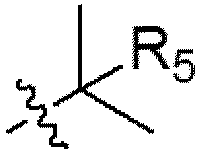 또는
 일 수 있으며, R3는 -Me일 수 있다.
상기 R4가 -Cl일 때, R1는 -OMe일 수 있고, R2는  또는
 일 수 있다.
바람직하게, 상기 화학식 1은 2-((E)-2-((E)-2-클로로-3-((E)-2-(3-에틸-1,1-디메틸-7-설포-1H-벤조[e]인도-l-2(3H)-일리덴)에틸리덴)-5-(4-(메톡시카보닐)페닐)시클로헥스-1-에닐)비닐)-3-에틸-1,1-디메틸-1H-벤조[e]인돌륨-7-술포네이트;
7-브로모-2-((E)-2-((E)-3-((E)-2-(7-브로모-3-에틸-1,1-디메틸-1H-벤조[e]인돌-2(3H)-일리덴)에틸리덴)-2-클로로-5-(4-(메톡시카보닐)페닐)시클로헥스-1-에닐)비닐)-3-에틸-1,1-디메틸-1H-벤조[e]인돌륨 아이오다이드;
2-((E)-2-((E)-2-클로로-3-((E)-2-(3-에틸-7-메톡시-1,1-디메틸-1H-벤조[e]인돌-2(3H)-일리덴)에틸리덴)-5-(4-(메톡시카보닐)페닐)시클로헥스-1-에닐)비닐)-3-에틸-7-메톡시-1,1-디메틸-1H-벤조[e]인돌륨 아이오다이드;
2-((E)-2-((E)-2-클로로-3-((E)-2-(3-에틸-1,1-디메틸-7-술포-1H-벤조[e]인돌-2(3H)-일리덴)에틸리덴)-5-(1-메톡시-2-메틸-1-옥소프로판-2-일)시클로헥스-1-에닐)비닐)-3-에틸-1,1-디메틸-1H-벤조[e]인돌륨-7-술포네이트;
7-브로모-2-((E)-2-((E)-3-((E)-2-(7-브로모-3-에틸-1,1-디메틸-1H-벤조[e]인돌-2(3H)-일리덴)에틸리덴)-2-클로로-5-(1-메톡시-2-메틸-1-옥소프로판-2-일)시클로헥스-1-에닐)비닐)-3-에틸-1,1-디메틸-1H-벤조[e]인돌륨 아이오다이드;
2-((E)-2-((E)-2-클로로-3-((E)-2-(3-에틸-7-메톡시-1,1-디메틸-1H-벤조[e]인돌-2(3H)-일리덴)에틸리덴)-5-(1-메톡시-2-메틸-1-옥소프로판-2-일)시클로헥스-1-에닐)비닐)-3-에틸-7-메톡시-1,1-디메틸-1H-벤조[e]인돌륨 아이오다이드;
2-((E)-2-((E)-2-(4-카르복시페닐티오)-3-((E)-2-(3-에틸-1,1-디메틸-7-술포-1H-벤조[e]인돌-2(3H)-일리덴)에틸리덴)-5-(1-메톡시-2-메틸-1-옥소프로판-2-일)시클로헥스-1-에닐)비닐)-3-에틸-1,1-디메틸-1H-벤조[e]인돌륨-7-술포네이트;
4-((E)-6-((E)-2-(3-에틸-7-메톡시-1,1-디메틸-1H-벤조[e]인돌-2(3H)-일리덴)에틸리덴)-2-((E)-2-(3-에틸-7-메톡시-1,1-디메틸-1H-벤조[e]인돌륨-2-일)비닐)-4-(1-메톡시-2-메틸-1-옥소프로판-2-일)시클로헥스-1-에닐티오)벤조에이트;
2-((E)-2-((E)-2-(4-(2-아미노에틸카바모일)페닐티오)-3-((E)-2-(3-에틸-7-메톡시-1,1-디메틸-1H-벤조[e]인돌-2(3H)-일리덴)에틸리덴)-5-(1-메톡시-2-메틸-1-옥소프로판-2-일)시클로헥스-1-에닐)비닐)-3-에틸-7-메톡시-1,1-디메틸-1H-벤조[e]인돌륨 아이오다이드;
3-에틸-2-((E)-2-((E)-3-((E)-2-(3-에틸-7-메톡시-1,1-디메틸-1H-벤조[e]인돌-2(3H)-일리덴)에틸리덴)-2-(4-(2-이소티오시안토에틸카바모일)페닐티오)-5-(1-메톡시-2-메틸-1-옥소프로판-2-일)시클로헥스-1-에닐)비닐)-7-메톡시-1,1-디메틸-1H-벤조[e]인돌륨 아이오다이드;
2-((E)-2-((E)-2-(4-(2-아미노에틸카바모일)페닐티오)-3-((E)-2-(3-에틸-7-메톡시-1,1-디메틸-1H-벤조[e]인돌-2(3H)-일리덴)에틸리덴)시클로헥스-1-에닐)비닐)-3-에틸-7-메톡시-1,1-디메틸-1H-벤조[e]인돌륨 아이오다이드;
3-에틸-2-((E)-2-((E)-3-((E)-2-(3-에틸-7-메톡시-1,1-디메틸-1H-벤조[e]인돌-2(3H)-일리덴)에틸리덴)-2-(4-(2-이소티오시안토에틸카바모일)페닐티오)-5-(1-메톡시-2-메틸-1-옥소프로판-2-일)시클로헥스-1-에닐)비닐)-7-메톡시-1,1-디메틸-1H-벤조[e]인돌륨 아이오다이드;
2-((E)-2-((E)-2-(4-(2-아미노에틸카바모일)페닐티오)-3-((E)-2-(3-에틸-7-메톡시-1,1-디메틸-1H-벤조[e]인돌-2(3H)-일리덴)에틸리덴)시클로헥스-1-에닐)비닐)-3-에틸-7-메톡시-1,1-디메틸-1H-벤조[e]인돌륨 아이오다이드; 및
2-((E)-2-((E)-2-(4-(2-아미노에틸카바모일)페닐티오)-5-터트-부틸-3-((E)-2-(3-에틸-7-메톡시-1,1-디메틸-1H-벤조[e]인돌-2(3H)-일리덴)에틸리덴)시클로헥스-1-에닐)비닐)-3-에틸-7-메톡시-1,1-디메틸-1H-벤조[e]인돌륨 아이오다이드로 이루어진 군으로부터 선택된 것일 수 있다.
[표 1]


상기 표에서 확인하실 수 있는 바와 같이, 본 발명의 상기 언급된 화합물은 흡수파장이 830nm 이상, 바람직하게는 855nm 이상이고, 발광파장은 860nm, 바람직하게는 890nm 이상을 갖는다.
한편, 상기 본 발명에 따른 화학식 1로 표시되는 화합물은 다양한 방법으로 제조될 수 있는데, 예를 들어, 하기 합성식 1 내지 6에 따라 제조될 수 있다.
[합성식 1]

[합성식 2]

[합성식 3]

[합성식 4]

[합성식 5]

[합성식 6]

다른 구현예에서, 본 발명은 상기 화학식 1의 화합물 또는 약제학적 허용 가능한 그의 염을 유효성분으로 포함하는 근적외선 형광 조영제에 관한 것이다.
본 발명의 근적외선 형광 조영제는 근적외선 영역에서 형광을 방출하는 조영제를 의미한다.
본 발명의 근적외선 형광 조영제는 화학식 1의 화합물 또는 약제학적 허용 가능한 그의 염을 단독으로 또는 조합하여 함유될 수 있다. 약제학적 허용 가능한 그의 염에는 암모늄 염, 칼륨 염, 요오드 염 등이 있으나, 이것으로 본 발명이 제한되는 것은 아니다.
본 발명의 근적외선 형광 조영제는 종양 영상화용이거나 혈관 조영법용인 근적외선 형광 조영제일 수 있다.
본 발명의 근적외선 형광 조영제는 용액 상에서 상기 화합물 또는 약학적으로 허용 가능한 그의 염을 포함하는 코어; 및 지질을 포함하는 셀을 포함하는 코어-셀 구조의 입자를 포함하는 것이 바람직하다.
이 때, 나노 코어-셀 입자의 크기는 10nm 내지 500nm, 보다 바람직하게는 10nm 내지 100nm일 수 있는데, 이렇게 입자를 나노미터화 한 경우, 암세포에 타게팅 되었을 때 형광 인텐시티가 증가하고(EPR, enhanced permeability and retention)이 있고, 광분해 현상(photo-beaching)이 줄어들어, 우수한 광학적 성질을 나타내는 장점이 있다.
상기 코어-셀 입자의 크기가 10nm 내지 500nm일 수 있다.
본 발명의 근적외선 형광 조영제에 포함되는 화학식 1의 화합물은 종래 공지된 물질보다 긴 흡수파장 및 발광파장을 갖기 때문에, 조영제로 사용시 영상 심도를 보다 높일 수 있고, 깊이 있는 암세포나 조직을 진단 및 수술할 수 있는 장점이 있다.
한편, 상기 조영제는 상기 화학식 1의 화합물 또는 그의 제약상 허용가능한 염을 주사용 증류수, 약리 식염수, 링거 용액 등과 같이 용매 중에 현탁되거나 용해하여 포함 할 수 있다. 필요한 경우, 담체, 부형제 등과 같은 제약상 허용가능한 첨가제가 첨가될 수 있다. 이러한 첨가제는 약리학적으로 허용가능한 전해질, 완충액, 세정제 및 삼투압 조절용 물질 및 안정성과 용해도를 개선시키는 물질 (예를 들어, 시클로덱스트린, 리포솜 등)을 포함한다. 또한 관련 분야에서 일반적으로 사용되는 다양한 첨가제가 사용될 수 있다. 본 발명의 근적외선 형광 조영제는 바람직하게는 제약학적 용도로 의도될 때 살균 과정을 통하여 제조된다.
또 다른 구현예에서, 본 발명은 상기 화학식 1로 표현되는 화합물 또는 약학적으로 허용 가능한 그의 염을 유기 용매에 용해시키는 단계; 얻어진 용해물을 1차 아민기를 갖는 지질이 분산된 수용액에 적가하여 에멀젼을 제조하고, 에멀젼으로부터 유기 용매를 제거하여 나노 코어-셀 입자를 제조하는 단계; 및 제조된 나노 코어-셀 입자를 술포-석시니미딜 4-(N-말레이미도메틸)시클로헥산-1-카복실레이트 (Sulfo-SMCC)로 처리하는 단계를 포함하는 근적외선 형광 조영제의 제조방법에 관한 것이다.
상기 제조방법을 단계별로 상세히 설명하면 다음과 같다.
우선, 화학식 1로 표현되는 화합물 또는 약학적으로 허용 가능한 그의 염을 유기 용매에 용해시킨다. 이는 본 발명은 화학식 1로 표시되는 화합물이 물에 잘 녹지 않기 때문이다.
상기 유기 용매는 휘발성 유기 용매를 사용하는 것이 바람직하며, 그 이유는 추후에 용매를 제거하기 용이하기 때문이다. 휘발성 유기 용매는 예를 들어, 메탄올, 에탄올, 아세톤, 아세토니트릴, 디클로로메탄올, 프로판올, 사염화탄소, 클로로메틸, DMSO, DMF, THF 또는 이들의 혼합물일 수 있으나 이에 제한되는 것은 아니다.
그 다음, 얻어진 용해물을 1차 아민기를 갖는 지질이 분산된 수용액에 적가하여 에멀젼을 제조하고, 에멀젼으로부터 유기 용매를 제거하여 나노 코어-셀 입자를 제조한다.
상기 1차 아민기를 갖는 지질은 예를 들어, 인지질일 수 있고, 보다 구체적으로 DPPC 1,2-Didecanoyl-sn-glycero-3-phosphocholine), DEPE(1,2-Dierucoyl-sn-glycero-3-phosphoethanolamine), DLPE(1,2-Dilauroyl-sn-glycero-3-phosphoethanolamine), DMPE(1,2-Dimyristoyl-sn-glycero-3-phosphoethanolamine), DOPE(1,2-Dipalmitoyl-sn-glycero-3-phosphoethanolamine), DSPE(1,2-Distearoyl-sn-glycero-3-phosphoethanolamine), POPE(1-Palmitoyl-2-oleoyl-sn-glycero-3-phosphoethanolamine)로 이루어진 군으로부터 선택된 하나 이상인 것일 수 있다. 지질이 1차 아민기를 갖어야 하는 이유는 암세포에 특이적 인지 가능한 항체, 펩타이드 등을 화학적 결합을 통해 도입하기 위함이다.
상기 나노 코어-셀 입자의 크기는 10nm 내지 500nm인 것이 바람직하고, 10nm 내지 100nm인 것이 보다 바람직하다. 이렇게 입자를 나노미터화 한 경우, 암세포에 타게팅 되었을 때 형광 인텐시티가 증가하고(EPR, enhanced permeability and retention)이 있고, 광분해 현상(photo-beaching)이 줄어들어, 우수한 광학적 성질을 나타내는 장점이 있다.
그 다음, 제조된 나노 코어-셀 입자의 표면을 말레이미드기, 카르복실기 또는 아자이드기 중 하나 이상으로 개질시킨다. 이 때, 표면 개질은 술포-석시니미딜 4-(N-말레이미도메틸)시클로헥산-1-카복실레이트(sulfo-SMCC), 3,6,9-트리옥사도데크-11-아인-1-올 메실레이트 및 11-아지도-3,6,9,-트리옥사-1-운데카놀 메실레이트로 이루어진 군으로부터 선택된 하나 이상의 개질제로 처리되는 것일 수 있다.
한편, 상기 조영제는 주사, 분무 또는 도포, 정맥내 (정맥, 동맥), 경구, 복강내, 경피, 피하내, 낭내 또는 기관지내로 생체에 투여될 수 있다. 바람직하게는 제제는 혈관내에 수성 제제, 유제 또는 현탁제의 형태로 투여된다.
본 발명의 근적외선 형광 조영제의 투여는 투여가 최후 진단되는 부위의 검사를 가능케 하는 것에 특히 제한되지는 않는다. 사용되는 근적외선 형광을 방출하는 화합물의 종류, 피검자의 나이, 체중 및 표적 기관 등에 따라 적절하게 조절된다. 전형적으로, 투여량은 상기 화합물의 양으로 0.1-100 mg/kg 체중, 바람직하게는 0.5-20 mg/kg 체중이다.
본 발명의 조영제는 인간을 제외한 다양한 동물에 적절하게 사용될 수 있다. 투여 형태, 경로 및 투여량은 표적 동물의 체중 및 질환 상태에 따라 적합하게 결정된다.
본 발명의 근적외선 형광 조영제는 일반적으로 검출 표적에 투여되고, 검출 표적은 여기 광원으로부터의 여기 광에 노출된다. 이후, 상기 여기 광에 의해 야기되는 근적외선 형광 조영제로부터의 형광은 형광 검출기로 검출된다. 여기용 파장은 사용되는 근적외선 형광 조영제에 따라 다양한데, 본원발명의 상기 화합물은 근적외선 영역에서 형광을 효과적으로 방출하는 바, 우수한 생체투과능을 갖는다.
<실시예 1>
2-((E)-2-((E)-2-클로로-3-((E)-2-(3-에틸-1,1-디메틸-7-설포-1H-벤조[e]인도-l-2(3H)-일리덴)에틸리덴)-5-(4-(메톡시카보닐)페닐)시클로헥스-1-에닐)비닐)-3-에틸-1,1-디메틸-1H-벤조[e]인돌륨-7-술포네이트
[화합물 A]

1-1: 1,1,2-트리메틸-1H-벤조[e]인돌-7-술폰산의 합성

1,1,2-트리메틸-1H-벤조[e]인돌(1.00 g, 4.78 mmol) 및 황산 (3.69 ml, 69.3 mmol)의 혼합액을 140 ℃에서 1시간 동안 교반하였다. 교반액을 상온으로 냉각한 후, 얼음-물 혼합액에 붓고, 6 N NaOH 수용액을 이용하여 pH 3으로 조절하였다. 생성된 고체를 여과한 후, 물과 Et2O로 세척하였다. 얻어진 고체를 진공 건조하여 흰색고상의 1,1,2-트리메틸-1H-벤조 [e]인돌-7-술폰산 (682 mg, 2.36 mmol, 49.3%)을 수득하였다.
1H-NMR (DMSO-d6, Varian 400 MHz): δ1.63 (6H, s), 2.62 (3H, d, J=6.4 Hz), 7.78 (1H, d, J=8.4 Hz), 7.87 (1H, d, J=8.4 Hz), 8.14-8.18 (1H, m), 8.21 (1H, d, J=8.8 Hz), 8.32 (1H, s).
1-2 : 3-에틸-1,1,2-트리메틸-1H-벤조[e]인돌륨-7-술포네이트의 합성

디메틸포름아미드(1 ml)에 1,1,2-트리메틸-1H-벤조[e]인돌-7-술폰산(100 mg, 0.346 mmol), 아이오도에탄 (0.279 ml, 3.46 mmol) 및 K2CO3(48 mg, 0.346 mmol)을 투입한 후, 이 혼합액을 100 ℃에서 6시간 동안 교반하였다. 교반액을 실온으로 냉각한 다음, 진공 농축하고, 농축된 액을 에탄올로 재결정하여 3-에틸-1,1,2-트리메틸-1H-벤조[e]인돌륨-7-술포네이트(190 mg, 0.429 mmol)를 수득하였다. 수득한 화합물은 별도의 정제 없이 다음 반응에 사용하였다.
1H-NMR (DMSO-d6, Varian 400 MHz): δ 1.50 (3H, t, J=7.2 Hz), 1.75 (6H, s), 2.92 (3H, s), 4.61 (2H, q, J=7.3 Hz), 7.95 (1H, d, J=8.4 Hz), 8.15 (1H, d, J=8.8 Hz), , 8.32-8.37 (2H, m), 8.41 (1H, s).
1-3: 1,4-다이옥사스피로[4.5]데크-7-엔-8-일 트리플루오로메탄술포네이트의 합성

테트라히드로퓨란 (20 ml)에 1,4-다이옥사스피로[4.5]데칸-8-온 (2.00 g, 12.8 mmol)을 용해한 후 -78 ℃로 냉각하고, 1.06 M 리튬 비스(트리메틸실릴)아마이드/테트라히드로퓨란 용액 (14.5 ml, 15.4 mmol)을 적가하였다. 상기 반응액을 -78 ℃에서 2 시간 동안 교반한 후, 테트라히드로퓨란 (10 ml)에 용해한 1,1,1-트리플루오로-N페닐-N-(트리플루오로메틸술포닐)메탄술폰아마이드 (4.80 g, 13.5 mmol) 용액을 -78 ℃에서 적가하였다. 반응액을 0 ℃까지 서서히 승온한 후, 0 ℃에서 2 시간 동안 교반하였다. 그 다음 반응액에 물을 투입한 후, 에틸아세테이트로 추출하였다. 분리된 유기층을 포화 NaCl 수용액으로 세척하고, 황산나트륨으로 건조한 후, 진공 농축하였다. 농축액을 실리카겔 컬럼크로마토그라피로 정제하여 (헥산:에틸아세테이트=9:1) , 황색 오일 상의 1,4-다이옥사스피로[4.5]데크-7-엔-8-일 트리플루오로메탄술포네이트 (3.55 g, 12.3 mmol, 96%)를 수득하였다.
1H-NMR (CDCl3, Varian 400 MHz): δ 1.91 (2H, t, J=6.6 Hz), 2.40-2.42 (2H, m), 2.53-2.56 (2H, m), 3.99 (4H, s), 5.65-5.67 (1H, m).
1-4: 메틸 4-(1,4-다이옥사스피로[4.5]데크-7-엔-8-일)벤조에이트의 합성

1,4-다이옥세인 (17 ml)에 용해한 1,4-다이옥사스피로[4.5]데크-7-엔-8-일 트리플루오로메탄술포네이트 (1.00 g, 3.47 mmol)에 CsF (1.58 g, 10.4 mmol) 및 PdCl2(dppf)-CH2Cl2 첨가물 (142 mg, 0.173 mmol)을 투입한 후, 90 ℃에서 3 시간 동안 가열하였다. 반응액을 진공 농축한 후, 농축액을 에틸아세테이트에 용해하고, 용해한 액을 세라이트(Celite)를 통해 여과하였다. 여과된 액을 다시 진공 농축한 후, 농축된 액을 실리카겔 컬럼크로마토그라피로 정제(헥산:에틸아세테이트=4:1)하여, 흰색 고상의 메틸 4-(1,4-다이옥사스피로[4.5]데크-7-엔-8-일)벤조에이트(697 mg, 2.54 mmol, 73.2%)를 수득하였다..
1H-NMR (CDCl3, Varian 400 MHz): δ1.94 (2H, t, J=6.4 Hz), 2.48-2.52 (2H, m), 2.66-2.70 (2H, m), 3.91 (3H, s), 4.03 (4H, s), 6.00-6.13 (1H, m), 7.45 (2H, d, J=8.4 Hz), 7.97 (2H, d, J=6.0 Hz).
1-5: 메틸 4-(1,4-다이옥사스피로[4.5]데칸-8-일)벤조에이트의 합성

에틸아세테이트와 메탄올의 혼합액 (25.5 mL, 1:2)에 메틸 4-(1,4-다이옥사스피로[4.5]데크-7-엔-8-일)벤조에이트 (697 mg, 2.54 mmol) 및 10%의 Pd/C (174 mg)을 투입한 후, 45 psi 압력의 수소 대기 하에서 3 시간 동안 실온에서 교반하였다. 반응액을 셀라이트를 통해 용해한 후, 여과액을 진공 농축하여 회색 고상의 메틸 4-(1,4-다이옥사스피로[4.5]데칸-8-일)벤조에이트 (675 mg, 2.44 mmol, 96%)를 수득하였다. 수득한 화합물은 별도의 정제 없이 다음 반응에 사용하였다.
1H-NMR (CDCl3, Varian 400 MHz): δ1.66-1.88 (8H, m), 2.60-2.65 (1H, m), 3.90 (3H, s), 3.99 (4H, s), 7.31 (2H, d, J=8.0 Hz), 7.96 (2H, d, J=8.0 Hz).
1-6: 메틸 4-(4-옥소시클로헥실)벤조에이트의 합성

테트라히드로퓨란 (12 mL)에 용해한 메틸 4-(1,4-다이옥사스피로[4.5]데칸-8-일)벤조에이트 (675 mg, 2.44 mmol)에 1 M 염산 (6.11 ml, 6.11 mmol)을 실온에서 적가하였다. 반응액을 실온에서 39시간 동안 교반한 후, 진공 농축하였다. 농축액에 에틸아세테이트로 용해한 뒤, 포화 탄산수소나트륨 수용액으로 세척하였다. 분리된 유기층을 황산나트륨으로 건조한 후, 진공 농축하였다. 농축된 액을 실리카겔 컬럼크로마토그라피로 정제 (헥산:에틸아세테이트=4:1)하여 흰색 고상의 메틸 4-(4-옥소시클로헥실)벤조에이트 (352 mg, 1.52 mmol, 62.1%)를 수득하였다.
1H-NMR (CDCl3, Varian 400 MHz): δ1.91-2.02 (2H, m), 2.20-2.26 (2H, m), 2.50-2.56 (4H, m), 3.09 (1H, t, J=12.2 Hz), 3.91 (3H, s), 7.32 (2H, d, J=8.0 Hz), 8.00 (2H, d, J=8.0 Hz).
1-7: (E)-메틸 4-(4-클로로-3-포밀-5-(하이드록시메틸렌)시클로헥스-3-에닐)벤조에이트의 합성

0 ℃로 냉각된 무수 디메틸포름아미드 (0.167 ml, 2.15 mmol)에 포스포릴 트리클로라이드 (0.161 ml, 1.72 mmol)를 천천히 적가하였다. 반응액을 실온에서 30분간 교반한 후 디메틸포름아미드 (2.15 ml)에 희석한 메틸 4-(4-옥소시클로헥실)벤조에이트 (100 mg, 0.431 mmol) 용액을 상기 반응액에 적가하였다. 이 반응액을 55 ℃에서 2시간 동안 교반한 후 얼음-물 혼합액에 붓는다. 혼합액을 실온에서 24시간 동안 교반한 후, 생성된 침전물을 여과하고, 물과 디이소프로필에테르로 세척하였다. 얻어진 고체를 진공 건조하여 노란색 고체의 (E)-메틸 4-(4-클로로-3-포밀-5-(하이드록시메틸렌)시클로헥스-3-에닐)벤조에이트 (50 mg, 0.163 mmol, 37.9%)를 수득하였다.
1H-NMR: (DMSO-d6, Varian 400 MHz): δ2.35-2.42 (2H, m), 2.73-2.94 (3H, m), 3.85 (3H, s), 7.46 (2H, d, J=8.0 Hz), 7.91 (2H, d, J=8.0 Hz), 11.05 (1H, s).
1-8: (E)-N-(((E)-2-클로로-5-(4-(메톡시카보닐)페닐)-3-((페닐아미노)메틸렌)시클로헥스-1-에닐)메틸렌)벤젠아미늄 클로라이드의 합성

에탄올 (0.3 ml)과 디메틸포름아미드 (0.2 ml)에 용해한 (E)-메틸 4-(4-클로로-3-포밀-5-(하이드록시메틸렌)시클로헥스-3-에닐)벤조에이트 (50 mg, 0.163 mmol) 용액을 0 ℃로 냉각한 후, 진한 염산 (0.120 ml, 1.39 mmol)을 적가하였다. 상기 반응액에 아닐린 (0.033 ml, 0.359 mmol)을 0 ℃에서 적가한 후, 0 ℃에서 30분간 교반하였다. 상기 반응액을 얼음-물 혼합물에 부은 후 생성된 고체를 여과하고, 물과 디이소프로필에테르로 세척하였다. 여과한 고체를 진공 건조하여 보라색 고체인 (E)-N-(((E)-2-클로로-5-(4-(메톡시카보닐)페닐)-3-((페닐아미노)메틸렌)시클로헥스-1-에닐)메틸렌)벤젠아미늄 클로라이드 (69.8 mg, 0.141 mmol, 87%)를 수득하였다.
1H-NMR (DMSO-d6, Varian 400 MHz): δ2.73 (2H, t, J=13.2 Hz), 3.16 (1H, t, J=11.6 Hz), 3.25 (2H, d, J=14.8 Hz), 3.66 (1H, brs), 3.87 (3H, s), 7.25-7.30 (2H, m), 7.44-7.48 (4H, m), 7.54-7.59 (4H, m), 7.68 (2H, d, J=7.6 Hz), 8.01 (2H, d, J=7.6 Hz), 8.62 (2H, s), 11.29(1H, brs).
1-9: 2-((E)-2-((E)-2-클로로-3-((E)-2-(3-에틸-1,1-디메틸-7-술포-1H-벤조[e]인돌-2(3H)-일리덴)에틸리덴)-5-(4-(메톡시카보닐)페닐)시클로헥스-1-에닐)비닐)-3-에틸-1,1-디메틸-1H-벤조[e]인돌륨-7-술포네이트의 합성

에탄올 (0.8 ml)에 용해한 (E)-N-(((E)-2-클로로-5-(4-(메톡시카보닐)페닐)-3-((페닐아미노)메틸렌)시클로헥스-1-에닐)메틸렌)벤젠아미늄 클로라이드 (20 mg, 0.041 mmol) 및 3-에틸-1,1,2-트리메틸-1H-벤조[e]인돌륨-7-술포네이트 (54 mg, 0.122 mmol)의 용액에 초산나트륨 (13 mg, 0.162 mmol)을 첨가한 후, 이 용액을 90 ℃에서 3시간 동안 가열하였다. 반응액을 진공 농축한 후, 농축액을 실리카겔 컬럼크로마토그라피로 정제하여 (디클로로메탄:메탄올:초산=4:1:0.05) 짙은 청색 고체인 2-((E)-2-((E)-2-클로로-3-((E)-2-(3-에틸-1,1-디메틸-7-술포-1H-벤조[e]인돌-2(3H)-일리덴)에틸리덴)-5-(4-(메톡시카보닐)페닐)시클로헥스-1-에닐)비닐)-3-에틸-1,1-디메틸-1H-벤조[e]인돌륨-7-술포네이트 (21.9 g, 0.024 mmol, 59.7%)를 수득하였다.
<실시예 2>
7-브로모-2-((E)-2-((E)-3-((E)-2-(7-브로모-3-에틸-1,1-디메틸-1H-벤조[e]인돌-2(3H)-일리덴)에틸리덴)-2-클로로-5-(4-(메톡시카보닐)페닐)시클로헥스-1-에닐)비닐)-3-에틸-1,1-디메틸-1H-벤조[e]인돌륨 아이오다이드
[화합물 B]

2-1: 7-브로모-3-에틸-1,1,2-트리메틸-1H-벤조[e]인돌륨 아이오다이드의 합성

아세토니트릴 (1 ml)에 용해한 7-브로모-1,1,2-트리메틸-1H-벤조[e]인돌 (300 mg, 1.04 mmol) 과 아이오도에탄 (0.252 ml, 3.12 mmol) 혼합액을 11시간 동안 90 ℃로 가열하였다. 반응액을 실온으로 냉각 후 생성된 고체를 여과하고, 아세토니트릴과 Et2O로 세척하여 회색 고상의 7-브로모-3-에틸-1,1,2-트리메틸-1H-벤조[e]인돌륨 아이오다이드 (343 mg, 0.772 mmol, 74.2%)를 수득하였다.
1H-NMR (DMSO-d6, Varian 400 MHz): δ1.50 (3H, t, J=7.2 Hz), 1.75 (6H, s), 2.93 (3H, s), 4.61 (2H, q, J=7.2 Hz), 7.88 (1H, d, J=8.8 Hz), 8.23 (1H, d, J=9.2 Hz), 8.30 (1H, d, J=8.8 Hz), 8.36 (1H, d, J=9.2 Hz), 8.55 (1H, s).
2-2.7-브로모-2-((E)-2-((E)-3-((E)-2-(7-브로모-3-에틸-1,1-디메틸-1H-벤조[e]인돌-2(3H)-일리덴)에틸리덴)-2-클로로-5-(4-(메톡시카보닐)페닐)시클로헥스-1-에닐)비닐)-3-에틸-1,1-디메틸-1H-벤조[e]인돌륨 아이오다이드의 합성

에탄올 (0.811 ml)에 용해한 (E)-N-(((E)-2-클로로-5-(4-(메톡시카보닐)페닐)-3-((페닐아미노)메틸렌)시클로헥스-1-에닐)메틸렌)벤젠아미늄 클로라이드 (0.02 g, 0.041 mmol) 및 7-브로모-3-에틸-1,1,2-트리메틸-1H-벤조[e]인돌륨, (40 mg, 0.089 mmol)의 용액에 초산나트륨 (9.98 mg, 0.122 mmol)을 첨가한 후 이 용액을 90 ℃에서 3시간 동안 가열하였다. 반응액을 진공 농축한 후, 농축액을 실리카겔 컬럼크로마토그라피로 정제하여 (디클로로메탄:메탄올:초산=95:5) 짙은 청색 고체인 7-브로모-2-((E)-2-((E)-3-((E)-2-(7-브로모-3-에틸-1,1-디메틸-1H-벤조[e]인돌-2(3H)-일리덴)에틸리덴)-2-클로로-5-(4-(메톡시카보닐)페닐)시클로헥스-1-에닐)비닐)-3-에틸-1,1-디메틸-1H-벤조[e]인돌륨 아이오다이드 (32.5 mg, 0.032 mmol, 78%)를 수득하였다.
1H-NMR (DMSO-d6, Varian 400 MHz): δ1.26 (6H, t, J=6.8 Hz), 1.91 (12H, s), 2.73 (2H, t, J=13.6 Hz), 3.15-3.20 (2H, m), 3.85 (3H, s), 4.28-4.34 (4H, m), 6.37 (2H, d, J=14.4 Hz) , 7.64 (2H, d, J=8.0 Hz), 7.72 (2H, d, J=9.2 Hz), 7.79 (2H, d, J=8.8 Hz), 7.98 (2H, d, J=8.4 Hz), 8.07 (2H, d, J=8.8 Hz), 8.25 (2H, d, J=9.2 Hz), 8.34, (2H, s), 8.41 (2H, d, J=14.0 Hz).
<실시예 3>
2-((E)-2-((E)-2-클로로-3-((E)-2-(3-에틸-7-메톡시-1,1-디메틸-1H-벤조[e]인돌-2(3H)-일리덴)에틸리덴)-5-(4-(메톡시카보닐)페닐)시클로헥스-1-에닐)비닐)-3-에틸-7-메톡시-1,1-디메틸-1H-벤조[e]인돌륨 아이오다이드 - 합성식 1, 2 참조
[화합물 C]

3-1: 6-메톡시나프탈렌-2-아민의 합성

탈기된 DMSO (1.7 ml)에 2-브로모-6-메톡시나프탈렌 (200 mg, 0.844 mmol), 소듐 아자이드 (110 mg, 1.69 mmol), 프롤린 (126 mg, 1.10 mmol), 구리(I) 산화물 (121 mg, 0.844 mmol)를 투입하고 이 혼합액을 100 ℃에서 11 시간 동안 가열하였다. 반응액을 실온으로 냉각 후 에틸아세테이트와 물을 투입하였다. 혼합물을 여과하여 고체를 제거한 후 여과된 액을 층 분리하였다. 분리된 유기층을 포화 탄산수소나트륨 수용액과 염수로 세척하고 황산나트륨으로 건조한 후, 진공 농축하였다. 농축한 액을 실리카겔 컬럼크로마토그라피로 정제하여 (헥산:에틸아세테이트=2:1) 주황색 고체의 6-메톡시나프탈렌-2-아민 (77.9 g, 0.450 mmol, 53.3%)을 수득하였다.
1H-NMR (CDCl3, Varian 400 MHz): δ3.73 (2H, brs), 3.88 (3H, s), 6.93-6.97 (2H, m), 7.04-7.08 (2H, m), 7.51 (1H, d, J=8.8 Hz), 7.57 (1H, d, J=8.8 Hz)
3-2: (6-메톡시나프탈렌-2-일)하이드라진하이드로클로라이드의 합성

6-메톡시나프탈렌-2-아민 (300 mg, 1.732 mmol)과 물 (5.6 ml) 진한 염산 (2.17 ml, 26.0 mmol)의 혼합액을 -6 ℃로 냉각하고 물 (1.3 ml)애 용해한 소듐 나이트라이트(137 mg, 1.99 mmol)를 투입하였다. 이 반응액을 0 ℃에서 45분간 교반한 후 진한 염산에 용해한 주석(II) 클로라이드 (657 mg, 3.46 mmol) 용액을 서서히 적가하였다. 반응액을 서서히 실온으로 온도를 상승시킨 후 생성된 고체를 여과하고, 물과 터트-부틸 메틸 에테르로 세척하였다. 얻어진 고체를 진공 건조하여 회색 고상의 (6-메톡시나프탈렌-2-일)하이드라진하이드로클로라이드 (32 mg, 1.42 mmol, 82%)를 수득하였다.
1H-NMR (DMSO-d6, Varian 400 MHz): δ3.84 (3H, s), 7.14 (1H, dd, J=8.8, 2.4 Hz), 7.20 (1H, d, J=9.6 Hz), 7.26 (2H, s), 7.65 (1H, d, J=8.8 Hz), 7.75 (1H, d, J=8.8 Hz), 8.40 (1H, brs), 10.31 (3H, brs).
3-3: 7-메톡시-1,1,2-트리메틸-1H-벤조[e]인돌의 합성

초산 (1 ml)에 용해한 (6-메톡시나프탈렌-2-일)하이드라진하이드로클로라이드 (100 mg, 0.445 mmol) 용액에 3-메틸부탄-2-온 (58 mg, 0.668 mmol)과 초산나트륨 (73 mg, 0.89 mmol)을 투입한 후, 이 혼합액을 110 ℃에서 2 시간 동안 가열하였다. 실온으로 냉각 후, 반응액을 톨루엔으로 희석하고 다시 재농축하여 잔여 초산을 제거하였다. 농축한 액을 실리카겔 컬럼크로마토그라피로 정제하여 (헥산:에틸아세테이트=2:1), 갈색 고상의 7-메톡시-1,1,2-트리메틸-1H-벤조[e]인돌 (67 mg, 0.280 mmol, 62.9%)를 수득하였다.
1H-NMR (CDCl3, Varian 400 MHz): δ1.52 (6H, s), 2.37 (3H, s), 3.93 (3H, s), 7.21-7.26 (2H, m), 7.72-7.77 (2H, m), 7.92 (1H, d, J=9.2 Hz).
3-4: 3-에틸-7-메톡시-1,1,2-트리메틸-1H벤조[e]인돌륨 아이오다이드의 합성

아세토니트릴 (2.1 ml)과 에틸 아이오다이드 (0.507 ml, 6.27 mmol), 7-메톡시-1,1,2-트리메틸-1H-벤조[e]인돌 (500 mg, 2.09 mmol)의 혼합액을 12 시간 동안 환류한 후, 실온으로 냉각하였다. 반응액에 아세토니트릴 (2 ml)과 에틸에테르 (약 10 ml)을 투입한 후, 생성된 고체을 여과하고, 에틸아세테이트로 세척하여, 백색 고상의 3-에틸-7-메톡시-1,1,2-트리메틸-1H벤조[e]인돌륨 아이오다이드 (733 mg, 1.85 mmol, 89%)를 수득하였다.
1H-NMR (DMSO-d6, Varian 400 MHz): δ1.49 (3H, t, J=7.2 Hz), 1.73 (6H, s), 2.90 (3H, s), 3.94 (3H, s), 4.59 (2H, q, J=7.2 Hz), 7.42 (1H, dd, J=9.2, 1.2 Hz), 7.65 (1H, s), 8.09 (1H, d, J=8.8 Hz), 8.17 (1H, d, J=8.8 Hz), 8.30 (1H, d, J=9.2 Hz).
3-5: 2-((E)-2-((E)-2-클로로-3-((E)-2-(3-에틸-7-메톡시-1,1-디메틸-1H-벤조[e]인돌-2(3H)-일리덴)에틸리덴)-5-(4-(메톡시카보닐)페닐)시클로헥스-1-에닐)비닐)-3-에틸-7-메톡시-1,1-디메틸-1H-벤조[e]인돌륨 아이오다이드의 합성

에탄올 (4 ml)에 용해한 (E)-N-(((E)-2-클로로-5-(4-(메톡시카보닐)페닐)-3-((페닐아미노)메틸렌)시클로헥스-1-에닐)메틸렌)벤젠아미늄 클로라이드 (100 mg, 0.203 mmol) 및 3-에틸-7-메톡시-1,1,2-트리메틸-1H-벤조[e]인돌륨 아이오다이드 (176 mg, 0.446 mmol) 용액에 초산나트륨 (50 mg, 0.608 mmol)을 첨가한 후 이 용액을 90 ℃에서 3시간 동안 가열하였다. 반응액을 진공 농축한 후, 농축액을 실리카겔 컬럼크로마토그라피로 정제하여 (디클로로메탄:메탄올:초산=95:5) 짙은 청색 고체인 2-((E)-2-((E)-2-클로로-3-((E)-2-(3-에틸-7-메톡시-1,1-디메틸-1H-벤조[e]인돌-2(3H)-일리덴)에틸리덴)-5-(4-(메톡시카보닐)페닐)시클로헥스-1-에닐)비닐)-3-에틸-7-메톡시-1,1-디메틸-1H-벤조[e]인돌륨 아이오다이드 (162 mg, 0.174 mmol, 86%)를 수득하였다.
1H-NMR (DMSO-d6, Varian 400 MHz): δ1.26 (3H, t, J=7.0 Hz), 1.90 (12H, s), 2.68-2.74 (2H, m), 3.10-3.17 (3H, m), 3.85 (3H, s), 3.87 (6H, s), 4.26-4.33 (4H, m), 6.31 (2H, d, J=14.0 Hz), 7.29 (2H, dd, J=9.2, 2.4 Hz), 7.48 (2H, d, J=2.0 Hz), 7.65 (4H, dd, J=17.6, 8.4 Hz), 7.96 and 7.98 (2H, ABq, JAB=6.2 Hz), 8.20 (2H, d, J=9.2 Hz), 8.37 (2H, d, J=14.4 Hz).
<실시예 4> 2-((E)-2-((E)-2-클로로-3-((E)-2-(3-에틸-1,1-디메틸-7-술포-1H-벤조[e]인돌-2(3H)-일리덴)에틸리덴)-5-(1-메톡시-2-메틸-1-옥소프로판-2-일)시클로헥스-1-에닐)비닐)-3-에틸-1,1-디메틸-1H-벤조[e]인돌륨-7-술포네이트 - 합성식 3 참조
[화합물 D]

4-1: 메틸 2-(8-하이드록시-1,4-다이옥사스피로[4.5]데칸-8-일)-2-메틸프로파네이트의 합성

테트라히드로퓨란 (40 mL)로 희석한 디이소프로필아민 (6.98 ml, 49.0 mmol) 용액을 -78 ℃로 냉각한 후, 2.5 M n-BuLi (19.6 ml, 49.0 mmol)을 천천히 적가하였다. 이 반응액에 메틸 이소부티레이트 (1.12 ml, 9.79 mmol)를 첨가한 후 -78 ℃에서 20분간 교반하였다. 테트라히드로퓨란 (9 ml)에 희석한 1,4-다이옥사스피로[4.5]데칸-8-온 (1.53 g, 9.79 mmol) 용액을 -78 ℃에서 반응액에 첨가한 후, 다시 3시간 동안 -78 ℃에서 교반하였다. 반응액에 포화 암모늄클로라이드 수용액을 첨가한 후, 에틸아세테이트로 추출하였다. 분리된 유기층을 염수로 세척하고, 무수황산나트륨으로 건조한 다음, 진공 농축하였다. 농축한 액을 실리카겔 컬럼 크로마토그라피로 정제하여 (헥산:에틸아세테이트=3:2) 황색 오일 상의 메틸 2-(8-하이드록시-1,4-다이옥사스피로[4.5]데칸-8-일)-2-메틸프로파네이트 (1.53 g, 5.91 mmol, 60.4%)를 수득하였다.
1H-NMR (CDCl3, Varian 400 MHz): δ1.25 (6H, s), 1.50-1.59 (4H, m), 1.72-1.79 (1H, m), 1.88-2.05 (3H, m), 2.52 (1H, t, J=6.8 Hz), 3.72 (3H, s), 3.91-3.97 (4H, m).
4-2: 메틸 2-메틸-2-(1,4-다이옥사스피로[4.5]데크-7-엔-8-일)프로파네이트의 합성

메틸 2-(8-하이드록시-1,4-다이옥사스피로[4.5]데칸-8-일)-2-메틸프로파네이트 (1.53 g, 5.91 mmol)과 피리딘 (59 ml)의 혼합액을 0 ℃로 냉각한 후, 티오닐 클로라이드 (2.46 ml, 33.7 mmol)을 천천히 적가하였다. 이 반응액을 실온에서 14시간 교반한 후, 물-얼음 혼합액에 붓고, 디클로로메탄으로 추출하였다. 분리된 유기층을 염수로 세척하고, 무수 황산나트륨으로 건조하고, 진공 농축하였다. 농축한 액을 실리카겔 컬럼크로마토그라피로 정제하여, (헥산:에틸아세테이트=7:3) 주황색 오일 상의 메틸 2-메틸-2-(1,4-다이옥사스피로[4.5]데크-7-엔-8-일)프로파네이트 (1.15 g, 4.79 mmol, 81%)를 수득하였다.
1H-NMR (CDCl3, Varian 400 MHz): δ1.32 (6H, s), 1.75 (2H, t, J=6.4 Hz), 2.14-2.18 (2H, m), 2.30-2.35 (2H, m), 3.67 (3H, s), 3.95-4.00 (4H, m), 5.50 (1H, s).
4-3: 메틸 2-메틸-2-(4-옥소시클로헥스-2-에닐)프로파네이트의 합성

아세톤 (12.5 ml)과 물 (1.4 ml)에 용해한 메틸 2-메틸-2-(1,4-다이옥사스피로[4.5]데크-7-엔-8-일)프로파네이트 (1.00 g, 4.16 mmol) 용액에 피리디늄p-톨루엔술포네이트 (1.46 g, 5.83 mmol)을 투입한 후, 이 반응액을 100 ℃에서 3일간 교반하였다. 반응액을 진공 농축한 후, 농축액을 에틸아세테이트로 희석한 후, 물과 염수로 세척하였다. 분리된 유기층을 황산나트륨로 건조하고, 진공 농축하였다. 농축된 액을 디클로로메탄 (13.9 ml)로 희석한 후, 희석액에 1,8-디아자바이시클로[5.4.0]언데크-7-엔 (1.694 ml, 11.24 mmol)을 투입하였다. 이 반응액을 50 ℃에서 3시간 동안 교반한 후, 상온으로 냉각하고, 2 M 제1인산나트륨 수용액으로 3회 추출하였다. 합친 수용액 층을 다시 디클로로메탄으로 2회 추출한 후, 유기층을 합하여 무수 황산나트륨으로 건조하고, 진공 농축하였다. 농축된 액을 실리카겔 컬럼크로마토그라피로 정제하여 (헥산:에틸아세테이트=4:1) 황색 오일상의 메틸 2-메틸-2-(4-옥소시클로헥스-2-에닐)프로파네이트 (290 mg, 1.48 mmol, 35.5%)를 수득하였다.
1H-NMR (CDCl3, Varian 400 MHz): δ1.21 (3H, s), 1.30 (3H, s), 1.72-1.83 (1H, m), 1.99-2.02 (1H, m), 2.38 (1H, td, J=15.4, 4.8 Hz), 2.50-2.58 (1H, m), 2.78-2.86 (1H, m), 3.72 (3H, s), 6.05 (1H, dd, J=10.4, 1.6 Hz), 6.82 (1H, d, J=10.4 Hz).
4-4: 메틸 2-메틸-2-(4-옥소시클로헥실)프로파네이트의 합성

메틸 2-메틸-2-(4-옥소시클로헥스-2-에닐)프로파네이트 (290 mg, 1.48 mmol), 10% Pd/C (30 mg) 및 테트라히드로퓨란 (15 ml) 혼합액을 수소 대기하 (1 atm) 실온에서 밤새 교반하였다. 반응액을 셀라이트를 통해 여과하고, 에틸아세테이트로 세척하였다. 여과된 액을 진공 농축하고, 농축한 액을 실리카겔 컬럼크로마토그라피로 정제하여 (헥산:에틸아세테이트=4:1), 백색 고상의 메틸 2-메틸-2-(4-옥소시클로헥실)프로파네이트 (269 mg, 1.36 mmol, 92%)를 수득하였다.
1H-NMR (CDCl3, Varian 400 MHz): δ1.15 (6H, s), 1.42-1.56 (2H, m), 1.86-1.92 (2H, m), 2.04-2.10 (1H, m), 2.28-2.42 (4H, m), 3.67 (3H, s).
4-5: (E)-메틸 2-(4-클로로-3-포밀-5-(하이드록시메틸렌)시클로헥스-3-에닐)-2-메틸프로파네이트의 합성

0 ℃로 냉각된 무수 디메틸포름아미드 (0.525 ml, 6.78 mmol)에 포스포릴 트리클로라이드 (0.506 ml, 5.43 mmol)를 천천히 적가하였다. 반응액을 실온에서 30분간 교반한 후, 디메틸포름아미드 (6.8 ml)에 희석한 메틸 2-메틸-2-(4-옥소시클로헥실)프로파네이트 (269 mg, 1.36 mmol) 용액을 상기 반응액에 적가하였다. 이 반응액을 55 ℃에서 2시간 동안 교반한 후, 얼음-물 혼합액에 붓는다. 혼합액을 실온에서 24시간 동안 교반한 후, 생성된 침전물을 여과하고, 물로 세척하였다. 얻어진 고체를 진공 건조하여, 노란색 고체의 (E)-메틸 2-(4-클로로-3-포밀-5-(하이드록시메틸렌)시클로헥스-3-에닐)-2-메틸프로파네이트 (292 mg, 1.07 mmol, 79%)를 수득하였다.
1H-NMR (DMSO-d6, Varian 400 MHz): δ1.14 (6H, s), 1.67-1.86 (3H. m), 2.61 (2H, d, J=15.2 Hz), 3.61 (3H, s), 11.01 (1H, d, J=12.4 Hz).
4-6: (E)-N-(((E)-2-클로로-5-(1-메톡시-2-메틸-1-옥소프로판-2-일)-3-((페닐아미노)메틸렌)시클로헥스-1-에닐)메틸렌)벤젠아미늄 클로라이드의 합성

에탄올 (2 ml)과 디메틸포름아미드 (1.3 ml)에 용해한 (E)-메틸 2-(4-클로로-3-포밀-5-(하이드록시메틸렌)시클로헥스-3-에닐)-2-메틸프로파네이트 (292 mg, 1.07 mmol) 용액에 0 ℃로 냉각한 후, 진한 염산 (0.791 ml, 9.11 mmol)을 적가하였다. 상기 반응액에 아닐린 (0.215 ml, 2.36 mmol)을 0 ℃에서 적가한 후, 이 반응액을 0 ℃에서 30분간 교반하였다. 상기 반응액을 얼음-물 혼합물에 부은 후 생성된 고체를 여과하고, 물과 디이소프로필에테르로 세척하였다. 여과한 고체를 진공 건조하여, 보라색 고체인 (E)-N-(((E)-2-클로로-5-(1-메톡시-2-메틸-1-옥소프로판-2-일)-3-((페닐아미노)메틸렌)시클로헥스-1-에닐)메틸렌)벤젠아미늄 클로라이드 (483 mg, 1.05 mmol, 98%)를 수득하였다.
1H-NMR (DMSO-d6, Varian 400 MHz): δ1.31 (6H, s), 2.00-2.05 (1H, m), 2.24 (2H, t, J=13.8 Hz), 2.97 (2H, d, J=14.4 Hz), 3.69 (3H, s), 7.27-7.35 (2H, m), 7.46-7.50 (4H, m), 7.57-7.59 (4H, m), 8.53 (2H, brs).
4-7: 2-((E)-2-((E)-2-클로로-3-((E)-2-(3-에틸-1,1-디메틸-7-술포-1H-벤조[e]인돌-2(3H)-일리덴)에틸리덴)-5-(1-메톡시-2-메틸-1-옥소프로판-2-일)시클로헥스-1-에닐)비닐)-3-에틸-1,1-디메틸-1H-벤조[e]인돌륨-7-술포네이트의 합성

에탄올 (4.4 ml)에 용해한 (E)-N-(((E)-2-클로로-5-(1-메톡시-2-메틸-1-옥소프로판-2-일)-3-((페닐아미노)메틸렌)시클로헥스-1-에닐)메틸렌)벤젠아미늄 클로라이드 (100 mg, 0.218 mmol)과 3-에틸-1,1,2-트리메틸-1H-벤조[e]인돌륨-7-술포네이트 (276 mg, 0.871 mmol) 용액에 초산나트륨 (54 mg, 0.653 mmol)을 투입하고 3시간 동안 환류하였다. 반응액을 진공 농축하고 농축한 액을 실리카겔 컬럼크로마토그라피로 정제하여 (디클로로메탄:메탄올:초산=95:5:0.05) 짙은 청색 고체인 2-((E)-2-((E)-2-클로로-3-((E)-2-(3-에틸-1,1-디메틸-7-술포-1H-벤조[e]인돌-2(3H)-일리덴)에틸리덴)-5-(1-메톡시-2-메틸-1-옥소프로판-2-일)시클로헥스-1-에닐)비닐)-3-에틸-1,1-디메틸-1H-벤조[e]인돌륨-7-술포네이트 (43.8 mg, 0.044 mmol, 20.2%)를 수득하였다.
1H-NMR (DMSO-d6, Varian 400 MHz): δ1.33 (6H, s), 1.39 (6H, t, J=7.0 Hz), 1.95 (12H, s), 2.05-2.09 (1H, m), 2.32 (2H, t, J=14.0 Hz), 2.83 (2H, d, J=13.2 Hz), 3.70 (3H, s), 4.35-4.42 (4H, m), 6.32 (2H, d, J=14.4 Hz), 7.79 (2H, d, J=8.8 Hz), 7.85 (2H, d, J=8.8 Hz), 8.18 (2H, d, J=8.8 Hz), 8.27-8.29 (4H, m), 8.38 (2H, d, J=14.0 Hz).
<실시예 5>
7-브로모-2-((E)-2-((E)-3-((E)-2-(7-브로모-3-에틸-1,1-디메틸-1H-벤조[e]인돌-2(3H)-일리덴)에틸리덴)-2-클로로-5-(1-메톡시-2-메틸-1-옥소프로판-2-일)시클로헥스-1-에닐)비닐)-3-에틸-1,1-디메틸-1H-벤조[e]인돌륨 아이오다이드 - 합성식 3 참조
[화합물 E]

에탄올 (4.35 ml)에 용해한 (E)-N-(((E)-2-클로로-5-(1-메톡시-2-메틸-1-옥소프로판-2-일)-3-((페닐아미노)메틸렌)시클로헥스-1-에닐)메틸렌)벤젠아미늄 클로라이드 (100 mg, 0.218 mmol) 및 7-브로모-3-에틸-1,1,2-트리메틸-1H-벤조[e]인돌륨 아이오다이드 (213 mg, 0.479 mmol) 용액에 초산나트륨 (54 mg, 0.653 mmol)을 투입하고 3시간 동안 환류하였다. 반응액을 진공 농축하고 농축한 액을 실리카겔 컬럼크로마토그라피로 정제하여 (디클로로메탄:메탄올=95:5) 짙은 청색 고체인 7-브로모-2-((E)-2-((E)-3-((E)-2-(7-브로모-3-에틸-1,1-디메틸-1H-벤조[e]인돌-2(3H)-일리덴)에틸리덴)-2-클로로-5-(1-메톡시-2-메틸-1-옥소프로판-2-일)시클로헥스-1-에닐)비닐)-3-에틸-1,1-디메틸-1H-벤조[e]인돌륨 아이오다이드 (102 mg, 0.102 mmol, 46.9%)를 수득하였다.
1H-NMR (DMSO-d6, Varian 400 MHz): δ1.33 (6H, s), 1.37 (6H, t, J=7.2 Hz), 1.94 (12H, s), 2.04 (1H, t, J=12.2 Hz), 2.32 (2H, t, J=14.0 Hz), 2.83 (2H, d, J=13.2 Hz), 3.70 (3H, s), 4.35-4.48 (4H, m), 6.34 (2H, d, J=14.4 Hz), 7.76 (2H, d, J=8.8 Hz), 7.86 (2H, d, J=8.8 Hz), 8.12 (2H, d, J=9.2 Hz), 8.28 (2H, d, J=9.2 Hz), 8.36-8.39 (4H, m).
<실시예 6>
2-((E)-2-((E)-2-클로로-3-((E)-2-(3-에틸-7-메톡시-1,1-디메틸-1H-벤조[e]인돌-2(3H)-일리덴)에틸리덴)-5-(1-메톡시-2-메틸-1-옥소프로판-2-일)시클로헥스-1-에닐)비닐)-3-에틸-7-메톡시-1,1-디메틸-1H-벤조[e]인돌륨 아이오다이드 - 합성식 3 참조
[화합물 F]

에탄올 (22 ml)에 용해한 (E)-N-(((E)-2-클로로-5-(1-메톡시-2-메틸-1-옥소프로판-2-일)-3-((페닐아미노)메틸렌)시클로헥스-1-에닐)메틸렌)벤젠아미늄 클로라이드 (0.1 g, 0.218 mmol)과 3-에틸-7-메톡시-1,1,2-트리메틸-1H-벤조[e]인돌륨 아이오다이드 (946 mg, 2.394 mmol) 용액에 초산나트륨 (268 mg, 3.27 mmol)을 투입하고, 3시간 동안 환류하였다. 반응액을 진공 농축하고 농축한 액을 실리카겔 컬럼크로마토그라피로 정제하여 (디클로로메탄:메탄올=95:5) 짙은 청색 고체인 2-((E)-2-((E)-2-클로로-3-((E)-2-(3-에틸-7-메톡시-1,1-디메틸-1H-벤조[e]인돌-2(3H)-일리덴)에틸리덴)-5-(1-메톡시-2-메틸-1-옥소프로판-2-일)시클로헥스-1-에닐)비닐)-3-에틸-7-메톡시-1,1-디메틸-1H-벤조[e]인돌륨 아이오다이드 (859 mg, 0.956 mmol, 88%)를 수득하였다.
1H-NMR (DMSO-d6, Varian 400 MHz): δ1.33 (6H, s), 1.37 (6H, t, J=7.0 Hz), 1.93 (12H, s), 2.00-2.07 (1H, m), 2.30 (2H, t, J=13.8 Hz), 2.81 (2H, d, J=13.2 Hz), 3.70 (3H, s), 3.91 (6H, s), 4.35-4.40 (4H, m), 6.28 (2H, d, J=14.4 Hz), 7.33 (2H, dd, J=8.8, 1.6 Hz), 7.52 (2H, s), 7.75 (2H, d, J=11.2 Hz), 8.01 (2H, d, J=8.8 Hz), 8.24 (2H, d, J=9.6 Hz), 8.33 (2H, d, J=10.4 Hz).
<실시예 7>
2-((E)-2-((E)-2-(4-카르복시페닐티오)-3-((E)-2-(3-에틸-1,1-디메틸-7-술포-1H-벤조[e]인돌-2(3H)-일리덴)에틸리덴)-5-(1-메톡시-2-메틸-1-옥소프로판-2-일)시클로헥스-1-에닐)비닐)-3-에틸-1,1-디메틸-1H-벤조[e]인돌륨-7-술포네이트 - 합성식 4 참조
[화합물 G]

디메틸포름아미드 (1.2 ml)에 용해한 2-((E)-2-((E)-2-클로로-3-((E)-2-(3-에틸-1,1-디메틸-7-술포-1H-벤조[e]인돌-2(3H)-일리덴)에틸리덴)-5-(1-메톡시-2-메틸-1-옥소프로판-2-일)시클로헥스-1-에닐)비닐)-3-에틸-1,1-디메틸-1H-벤조[e]인돌륨-7-술포네이트 (100 mg, 0.115 mmol) 용액에 4-메르캅토벤조산 (28.3 mg, 0.184 mmol)을 투입한 후, 이 혼합액을 상온에서 밤새 교반하였다. 반응액을 진공 농축한 후, 얻어진 고체에 에탄올을 투입한 후, 상온에서 교반하였다. 고체를 여과하고, 에탄올로 세척하여 짙은 청색 고체인 2-((E)-2-((E)-2-(4-카르복시페닐티오)-3-((E)-2-(3-에틸-1,1-디메틸-7-술포-1H-벤조[e]인돌-2(3H)-일리덴)에틸리덴)-5-(1-메톡시-2-메틸-1-옥소프로판-2-일)시클로헥스-1-에닐)비닐)-3-에틸-1,1-디메틸-1H-벤조[e]인돌륨-7-술포네이트 (92 mg, 0.093 mmol, 81%)를 수득하였다.
1H-NMR (DMSO-d6, Varian 400 MHz): δ1.34-1.38 (12H, m), 1.66, 1.75 (12H, s, s), 2.10-2.20 (1H, m), 2.38 (2H, t, J=13.6 Hz), 2.90 (2H, d, J=13.2 Hz), 3.73 (3H, s), 4.30-4.40 (4H, m), 6.34 (2H, d, J=14.8 Hz), 7.46 (2H, d, J=8.4 Hz), 7.74 (2H, d, J=8.8 Hz), 7.80 (2H, d, J=8.8 Hz), 7.92 (2H, d, J=8.4 Hz), 8.14 (2H, d, J=8.8 Hz), 8.19 (2H, d, J=8.8 Hz), 8.24 (2H, s), 8.68 (2H, d, J=14.0 Hz).
<실시예 8>
4-((E)-6-((E)-2-(3-에틸-7-메톡시-1,1-디메틸-1H-벤조[e]인돌-2(3H)-일리덴)에틸리덴)-2-((E)-2-(3-에틸-7-메톡시-1,1-디메틸-1H-벤조[e]인돌륨-2-일)비닐)-4-(1-메톡시-2-메틸-1-옥소프로판-2-일)시클로헥스-1-에닐티오)벤조에이트 - 합성식 4 참조
[화합물 H]

디메틸포름아미드 (0.6 ml)에 용해한 2-((E)-2-((E)-2-클로로-3-((E)-2-(3-에틸-7-메톡시-1,1-디메틸-1H-벤조[e]인돌-2(3H)-일리덴)에틸리덴)-5-(1-메톡시-2-메틸-1-옥소프로판-2-일)시클로헥스-1-에닐)비닐)-3-에틸-7-메톡시-1,1-디메틸-1H-벤조[e]인돌륨 아이오다이드 (100 mg, 0.111 mmol) 용액에 4-메르캅토벤조산 (51.4 mg, 0.334 mmol)을 투입한 후, 이 혼합액을 상온에서 밤새 교반하였다. 반응액을 진공 농축한 후, 농축한 액을 실리카겔 컬럼크로마토그라피로 정제하여 (디클로로메탄:메탄올=97:3) 짙은 청색 고체인 4-((E)-6-((E)-2-(3-에틸-7-메톡시-1,1-디메틸-1H-벤조[e]인돌-2(3H)-일리덴)에틸리덴)-2-((E)-2-(3-에틸-7-메톡시-1,1-디메틸-1H-벤조[e]인돌륨-2-일)비닐)-4-(1-메톡시-2-메틸-1-옥소프로판-2-일)시클로헥스-1-에닐티오)벤조에이트 (85.3 mg, 0.096 mmol, 86%)를 수득하였다.
1H-NMR (DMSO-d6, Varian 400 MHz): δ1.30 (6H, t, J=7.2 Hz), 1.33 (6H, s), 1.59, 1.68 (12H, s, s), 2.05-2.11 (1H, m), 2.32 (2H, t, J=13.8 Hz), 2.84 (2H, d, J=13.6 Hz), 3.69 (3H, s), 3.85 (6H, s), 4.25-4.35 (4H, m), 6.26 (2H, d, J=14.4 Hz), 7.23 (2H, dd, J=9.2, 2.4 Hz), 7.40 (2H, d, J=8.4 Hz), 7.45 (2H, d, J=2.4 Hz), 7.66 (2H, d, J=8.8 Hz), 7.86 (2H, d, J=8.4 Hz), 7.93 (2H, d, J=8.8 Hz), 8.12 (2H, d, J=9.2 Hz), 8.60 (2H, d, J=14.8 Hz).
<실시예 9>
2-((E)-2-((E)-2-(4-(2-아미노에틸카바모일)페닐티오)-3-((E)-2-(3-에틸-7-메톡시-1,1-디메틸-1H-벤조[e]인돌-2(3H)-일리덴)에틸리덴)-5-(1-메톡시-2-메틸-1-옥소프로판-2-일)시클로헥스-1-에닐)비닐)-3-에틸-7-메톡시-1,1-디메틸-1H-벤조[e]인돌륨 아이오다이드 - 합성식 5 참조
[화합물 I]

9-1: 터트-부틸 2-아미노에틸카바메이트의 합성

디클로로메탄 (50 ml)에 희석한 에틸렌디아민 (11.32 ml, 168 mmol) 용액에 디클로로메탄 (400 ml)에 용해한 BOC2O (6.49 ml, 27.9 mmol) 용액을 6 시간 동안 실온에서 적가하였다. 상기 반응액을 24시간 동안 실온에서 교반한 후 진공 농축하였다. 농축된 액을 2 M 탄산나트륨 수용액 (300 ml)에 희석한 후, 디클로로메탄 (300 ml)으로 2회 추출하였다. 합친 유기층을 황산마그네슘으로 건조하고 진공 농축하여 무색 오일 상의 터트-부틸 2-아미노에틸카바메이트 (4.28 g, 26.7 mmol, 96%)를 수득하였다.
1H-NMR (CDCl3, Varian 400 MHz): δ1.16 (2H, brs), 1.45 (9H, s), 2.80 (2H, t, J=5.8 Hz), 3.15-3.23 (2H, m), 4.88 (1H, brs).
9-2: 4,4'-디술판디닐 디벤조산의 합성

95% 에탄올에 요오드를 포화되도록 용해한 후 에탄올 (32 ml)에 용해한 4-메르캅토벤조산 (500 mg, 3.24 mmol) 용액에 천천히 실온에서 적가하였다. 반응이 진행됨에 따라 요오드의 적갈색이 사라지면서 결정이 생성되며, 반응액의 노란색이 더 이상 사라지지 않을 때까지 요오드를 계속 첨가하였다. 생성된 고체를 여과하고, 에탄올로 세척하였다. 여과한 결정을 50 ℃에서 진공 건조하여 희색 고체의 4,4'-디술판디일디벤조산 (413 mg, 1.348 mmol, 41.6%)를 수득하였다.
1H-NMR (DMSO-d6, Varian 400 MHz): δ7.64 (4H, d, J=7.6 Hz), 7.93 (4H, d, J=8.0 Hz), 13.06 (2H, s).
9-3: 터트-부틸 N-[2-[[4-[[4-[2-(터트-부톡시카보닐아미노)에틸카바모일]페닐]디술파닐]벤조일]아미노]에틸]카바메이트의 합성

4,4'-디술판디일디벤조산 (200 mg, 0.653 mmol)을 디메틸포름아미드 (6.5 ml)에 용해한 후, 1-에틸-3-(3-디메틸아미노프로필)카보디imide 하이드로클로라이드 (375 mg, 1.96 mmol), 하이드록시벤조트리아졸 (300 mg, 1.96 mmol), 4-디메틸아미노피리딘 (7.98 mg, 0.065 mmol)을 투입하였다. 이 반응액을 0 ℃에서 30분간 교반한 후 터트부틸-2-아미노에틸카바메이트 (314 mg, 1.96 mmol)을 투입하고 실온에서 3일간 교반하였다. 반응액을 에틸아세테이트로 희석한 후, 10% 시트르산 수용액, 포화 탄산수소나트륨 수용액, 염수로 차례로 세척한 후 진공 농축하였다. 얻어진 고체를 에틸아세테이트로 씻어 백색 고체인 터트-부틸 N-[2-[[4-[[4-[2-(터트-부톡시카보닐아미노)에틸카바모일]페닐]디술파닐]벤조일]아미노]에틸]카바메이트 (349 mg, 0.591 mmol, 90%)를 수득하였다.
1H-NMR (DMSO-d6, Varian 400 MHz): δ1.35 (18H, s), 3.04-3.10 (4H, m), 3.07 (4H, q, J=6.0 Hz), 3.26 (4H, q, J=5.9 Hz), 6.89 (2H, t, J=5.4 Hz), 7.60 (4H, d, J=8.4 Hz), 7.82 (4H, d, J=8.0 Hz), 8.44-8.53 (2H, m).
9-4: 2-(4-메르캅토벤자아미도)에틸카바메이트의 합성
터트-부틸 N-[2-[[4-[[4-[2-(터트-부톡시카보닐아미노)에틸카바모일]페닐]디술파닐]벤조일]아미노]에틸]카바메이트 (200 mg, 0.339 mmol)을 에탄올 (3.4 ml)과 테트라히드로퓨란 (3.4 ml)에 용해한 후 0 ℃에서 NaBH4 (51.2 mg, 1.354 mmol)을 소분하여 투입하였다. 반응액을 실온으로 상승한 후 2시간 동안 교반하였다. 반응액을 진공 농축한 후, 농축액에 물과 에틸아세테이트를 투입한 후, 2 N 염산를 이용하여 pH 4로 산성화하였다. 분리된 유기층을 염수로 세척하고 황산나트륨으로 건조한 후, 진공 농축하여 백색 고체인 2-(4-메르캅토벤자아미도)에틸카바메이트 (218 mg, 0.736 mmol)를 수득하였다. 얻어진 화합물은 별도의 정제 과정 없이 다음 단계에 사용하였다.
1H-NMR (DMSO-d6, Varian 400 MHz): δ1.37 (9H, s), 3.08 (2H, q, J=6.0 Hz), 3.26 (2H, q, J=6.3 Hz), , 5.76 (1H, d, J=13.2 Hz), 6.91-6.93 (1H, m), 7.35 (2H, d, J=8.4 Hz), 7.70 (2H, d, J=8.0 Hz), 8.34-8.40 (1H, m).
9-5: N-(2-아미노에틸)-4-메르캅토벤즈아마이드 하이드로클로라이드의 합성

디클로로메탄 (6.8 ml)에 용해한 터트-부틸 2-(4-메르캅토벤자아미도)에틸카바메이트 (200 mg, 0.675 mmol) 용액에 4 M HCl/1,4-디옥산 용액(시그마-알드리치, 0.843 ml, 3.37 mmol)을 0 ℃에서 적가하였다. 이 반응액을 실온에서 5시간 동안 교반한 후 진공 농축하였다. 잔류 고체에 에틸에테르 (5 ml) 투입한 후, 고체를 여과하고, 에틸에테르로 세척하여 희색 고체인 N-(2-아미노에틸)-4-메르캅토벤즈아마이드 하이드로클로라이드 (138 mg, 0.593 mmol, 88%)를 수득하였다.
1H-NMR (DMSO-d6, Varian 400 MHz): δ2.87 (2H, q, J=5.9 Hz), 3.49 (2H, q, J=6.0 Hz), 5.85 (1H, s), 7.38 (2H, d, J=8.4 Hz), 7.77 (2H, d, J=8.4 Hz), 7.95 (3H, brs), 8.65 (1H, s).
9-6: 2-((E)-2-((E)-2-(4-(2-아미노에틸카바모일)페닐티오)-3-((E)-2-(3-에틸-7-메톡시-1,1-디메틸-1H-벤조[e]인돌-2(3H)-일리덴)에틸리덴)-5-(1-메톡시-2-메틸-1-옥소프로판-2-일)시클로헥스-1-에닐)비닐)-3-에틸-7-메톡시-1,1-디메틸-1H-벤조[e]인돌륨 아이오다이드의 합성

디메틸포름아미드 (1.3 ml)에 용해한 2-((E)-2-((E)-2-클로로-3-((E)-2-(3-에틸-7-메톡시-1,1-디메틸-1H-벤조[e]인돌-2(3H)-일리덴)에틸리덴)-5-(1-메톡시-2-메틸-1-옥소프로판-2-일)시클로헥스-1-에닐)비닐)-3-에틸-7-메톡시-1,1-디메틸-1H-벤조[e]인돌륨 아이오다이드 (240 mg, 0.267 mmol) 용액에 N-(2-아미노에틸)-4-메르캅토벤즈아마이드 하이드로클로라이드 (62.1 mg, 0.267 mmol)와 4-디메틸아미노피리딘 (32.6 mg, 0.267 mmol)을 투입한 후, 이 혼합액을 실온에서 1시간 동안 교반하였다. 반응액을 진공 농축한 후, 농축한 액을 아미노 실리카겔 컬럼크로마토그라피로 정제하여 (디클로로메탄:메탄올=98:2 to 95:5) 짙은 청색 고체인 2-((E)-2-((E)-2-(4-(2-아미노에틸카바모일)페닐티오)-3-((E)-2-(3-에틸-7-메톡시-1,1-디메틸-1H-벤조[e]인돌-2(3H)-일리덴)에틸리덴)-5-(1-메톡시-2-메틸-1-옥소프로판-2-일)시클로헥스-1-에닐)비닐)-3-에틸-7-메톡시-1,1-디메틸-1H-벤조[e]인돌륨 아이오다이드 (247 mg, 0.233 mmol, 87%)를 수득하였다.
1H-NMR (DMSO-d6, Varian 400 MHz): δ1.32-1.37 (12H, m), 1.65, 1.72 (12H, s, s), 2.01-2.13 (2H, m), 2.35 (3H, t, J=13.6 Hz), 2.61 (2H, t, J=6.4 Hz), 2.86 (2H, d, J=13.6 Hz), 3.17-2.21 (2H, m), 3.72 (3H, s), 3.89 (6H, s), 4.30-4.40 (4H, m), 6.29 (2H, d, J=14.4 Hz), 7.27 (2H, dd, J=9.2, 2.4 Hz), 7.41 (2H, d, J=8.4 Hz), 7.49 (2H, d, J=2.4 Hz), 7.70 (2H, d, J=8.8 Hz), 7.81 (2H, d, J=8.4 Hz), 7.97 (2H, d, J=9.2 Hz), 8.16 (2H, d, J=9.6 Hz), 8.33 (1H, t, J=5.2 Hz), 8.66 (2H, d, J=14.4 Hz).
<실시예 10>
3-에틸-2-((E)-2-((E)-3-((E)-2-(3-에틸-7-메톡시-1,1-디메틸-1H-벤조[e]인돌-2(3H)-일리덴)에틸리덴)-2-(4-(2-이소티오시안토에틸카바모일)페닐티오)-5-(1-메톡시-2-메틸-1-옥소프로판-2-일)시클로헥스-1-에닐)비닐)-7-메톡시-1,1-디메틸-1H-벤조[e]인돌륨 아이오다이드 - 합성식 6 참조
[화합물 J]

디메틸포름아미드 (1 mL)에 용해한 2-((E)-2-((E)-2-(4-(2-아미노에틸카바모일)페닐티오)-3-((E)-2-(3-에틸-7-메톡시-1,1-디메틸-1H-벤조[e]인돌-2(3H)-일리덴)에틸리덴)-5-(1-메톡시-2-메틸-1-옥소프로판-2-일)시클로헥스-1-에닐)비닐)-3-에틸-7-메톡시-1,1-디메틸-1H-벤조[e]인돌륨 아이오다이드 (46 mg, 0.049 mmol) 용액에 디(1H-이미다졸-1-일)메탄티온 (18 mg, 0.099 mmol)을 실온에서 투입하고 반응액을 30분간 실온에서 교반하였다. 반응액을 진공 농축하고 농축한 액을 실리카겔 컬럼크로마토그라피로 정제하여 (디클로로메탄:메탄올=97:3 to 95:5) 짙은 청색 고체인 3-에틸-2-((E)-2-((E)-3-((E)-2-(3-에틸-7-메톡시-1,1-디메틸-1H-벤조[e]인돌-2(3H)-일리덴)에틸리덴)-2-(4-(2-이소티오시안토에틸카바모일)페닐티오)-5-(1-메톡시-2-메틸-1-옥소프로판-2-일)시클로헥스-1-에닐)비닐)-7-메톡시-1,1-디메틸-1H-벤조[e]인돌륨 아이오다이드 (24.6 mg, 0.022 mmol, 45.3%)를 수득하였다.
1H-NMR (DMSO-d6, Varian 400 MHz): δ1.34 (6H, t, J=7.2 Hz), 1.37 (6H, s), 1.64, 1.72 (12H, s, s), 2.08-2.16 (1H, m), 2.36 (2H, t, J=14.4 Hz), 2.92 (2H, d, J=18.8 Hz), 3.43-3.48 (2H, m), 3.72 (3H, s), 3.70-3.77 (2H, m), 3.89 (6H, s), 4.28-4.38 (4H, m), 6.29 (2H, d, J=14.4 Hz), 7.27 (2H, dd, J=9.2, 2.4 Hz), 7.44 (2H, d, J=8.0 Hz), 7.48 (2H, d, J=2.4 Hz), 7.69 (2H, d, J=9.2 Hz), 7.82 (2H, d, J=8.8 Hz), 7.97 (2H, d, J=8.8 Hz), 8.14 (2H, d, J=9.6 Hz), 8.63-8.68 (3H, m).
<실시예 11>
2-((E)-2-((E)-2-(4-(2-아미노에틸카바모일)페닐티오)-3-((E)-2-(3-에틸-7-메톡시-1,1-디메틸-1H-벤조[e]인돌-2(3H)-일리덴)에틸리덴)시클로헥스-1-에닐)비닐)-3-에틸-7-메톡시-1,1-디메틸-1H-벤조[e]인돌륨 아이오다이드
[화합물 K]

11-1: (E)-2-클로로-3-(하이드록시메틸렌)시클로헥스-1-엔카브알데하이드의 합성

0 ℃로 냉각된 포스포릴 트리클로라이드 (11.4 ml, 122 mmol)에 디메틸포름아미드 (11.8 ml, 153 mmol) 천천히 적가한 후, 반응액을 실온에서 30분간 교반하였다. 상기 반응액에 디메틸포름아미드 (61 ml)에 희석한 시클로헥사논 (3 g, 30.6 mmol)을 적가한 후, 55 ℃에서 2시간 동안 교반하였다. 반응액을 실온으로 냉각한 후, 얼음-물 혼합액에 붓고, 실온에서 24시간 동안 교반하였다. 생성된 고체를 여과한 후, 물과 디이소프로필에테르로 세척하여 황색 고체인 (E)-2-클로로-3-(하이드록시메틸렌)시클로헥스-1-엔카브알데하이드 (3.07 g, 17.8 mmol, 58.2%)를 수득하였다.
1H-NMR (CDCl3, Varian 400 MHz): δ1.55-1.62 (2H, m), 2.20-2.50 (4H, m), 3.35 (1H, s), 7.53 (1H, s), 10.09 (1H, s), 10.85 (1H, s).
11-2: (E)-N-(((E)-2-클로로-3-((페닐아미노)메틸렌)시클로헥스-1-에닐)메틸렌)벤젠아미늄 클로라이드의 합성

에탄올 (35.6 ml)과 디메틸포름아미드 (23.7 ml)에 (E)-2-클로로-3-(하이드록시메틸렌)시클로헥스-1-엔카브알데하이드 (3.07 g, 17.8 mmol) 용액에 0 ℃로 냉각한 후, 진한 염산 (13.1 ml, 151 mmol)을 적가하였다. 상기 반응액에 아닐린 (4.87 ml, 53.4 mmol)을 0 ℃에서 적가한 후, 이 반응액을 0 ℃에서 30분간 교반하였다. 상기 반응액을 얼음-물 혼합물에 부은 후 생성된 고체를 여과하고, 물과 디이소프로필에테르로 세척하였다. 여과한 고체를 진공 건조하여 보라색 고체인 (E)-N-(((E)-2-클로로-3-((페닐아미노)메틸렌)시클로헥스-1-에닐)메틸렌)벤젠아미늄 클로라이드 (6.69 g, 18.6 mmol)를 수득하였다. 얻어진 고체를 별도의 정제 없이 다음 단계에 사용하였다.
1H-NMR (DMSO-d6, Varian 400 MHz): δ1.82-1.90 (2H, m), 2.72-2.78 (4H, m), 7.25-7.92 (3H, m), 7.47 (4H, t, J=8.0 Hz), 7.60 (4H, d, J=8.0 Hz), 8.56 (2H, s).
11-3: 2-((E)-2-((E)-2-클로로-3-((E)-2-(3-에틸-7-메톡시-1,1-디메틸-1H-벤조[e]인돌-2(3H)-일리덴)에틸리덴)시클로헥스-1-에닐)비닐)-3-에틸-7-메톡시-1,1-디메틸-1H-벤조[e]인돌륨 아이오다이드의 합성

에탄올 (5.6 ml)에 용해한 (E)-N-(((E)-2-클로로-3-((페닐아미노)메틸렌)시클로헥스-1-에닐)메틸렌)벤젠아미늄 클로라이드 (100 mg, 0.278 mmol)과 3-에틸-7-메톡시-1,1,2-트리메틸-1H-벤조[e]인돌륨 아이오다이드 (242 mg, 0.612 mmol) 용액에 초산나트륨 (68.5 mg, 0.835 mmol)을 투입하고 3시간 동안 환류하였다. 반응액을 진공 농축하고 농축한 액을 실리카겔 컬럼크로마토그라피로 정제하여 (디클로로메탄 100%에서 디클로로메탄:메탄올=20:1) 짙은 청색 고체인 2-((E)-2-((E)-2-클로로-3-((E)-2-(3-에틸-7-메톡시-1,1-디메틸-1H-벤조[e]인돌-2(3H)-일리덴)에틸리덴)시클로헥스-1-에닐)비닐)-3-에틸-7-메톡시-1,1-디메틸-1H-벤조[e]인돌륨 아이오다이드 (240 mg, 0.300 mmol)를 수득하였다. 얻어진 화합물은 별도의 추가 정제 과정 없이 다음 단계에 사용하였다.
1H-NMR (DMSO-d6, Varian 400 MHz): δ1.36 (6H, t, J=7.0 Hz), 1.85-1.93 (2H, m), 1.93 (12H, s), 2.72-2.78 (4H, m), 3.91 (6H, s), 4.32-4.40 (4H, m), 6.33 (2H, d, J=14.0 Hz), 7.32 (2H, dd, J=9.2, 2.8 Hz), 7.52 (2H, d, J=2.8 Hz), 7.73 (2H, d, J=9.2 Hz), 8.00 (2H, d, J=8.8 Hz), 8.23 (2H, d, J=8.8 Hz), 8.34 (2H, d, J=14.8 Hz)
11-4: 2-((E)-2-((E)-2-(4-(2-아미노에틸카바모일)페닐티오)-3-((E)-2-(3-에틸-7-메톡시-1,1-디메틸-1H-벤조[e]인돌-2(3H)-일리덴)에틸리덴)시클로헥스-1-에닐)비닐)-3-에틸-7-메톡시-1,1-디메틸-1H-벤조[e]인돌륨 아이오다이드의 합성

디메틸포름아미드 (6 ml)에 용해한 2-((E)-2-((E)-2-클로로-3-((E)-2-(3-에틸-7-메톡시-1,1-디메틸-1H-벤조[e]인돌-2(3H)-일리덴)에틸리덴)시클로헥스-1-에닐)비닐)-3-에틸-7-메톡시-1,1-디메틸-1H-벤조[e]인돌륨 아이오다이드 (240 mg, 0.300 mmol)용액에 N-(2-아미노에틸)-4-메르캅토벤즈아마이드 하이드로클로라이드 (69.9 mg, 0.300 mmol)와 4-디메틸아미노피리딘 (32.7 mg, 0.3 mmol)을 투입한 후, 이 혼합액을 실온에서 1시간 동안 교반하였다. 반응액을 진공 농축한 후, 농축한 액을 아미노 실리카겔 컬럼크로마토그라피로 정제하여 (디클로로메탄 100%에서 디클로로메탄:메탄올=20:1) 짙은 청색 고체인 2-((E)-2-((E)-2-(4-(2-아미노에틸카바모일)페닐티오)-3-((E)-2-(3-에틸-7-메톡시-1,1-디메틸-1H-벤조[e]인돌-2(3H)-일리덴)에틸리덴)시클로헥스-1-에닐)비닐)-3-에틸-7-메톡시-1,1-디메틸-1H-벤조[e]인돌륨 아이오다이드 (122 mg, 0.147 mmol, 48.8%)를 수득하였다.
1H-NMR (DMSO-d6, Varian 400 MHz): δ1.33 (6H, t, J=7.0 Hz), 1.69 (12H, s), 1.93-2.00 (2H, m), 2.59 (2H, t, J=6.6 Hz), 2.68-2.75 (4H, m), 3.12-3.20 (2H, m), 3.89 (6H, s), 4.27-4.35 (4H, m), 6.34 (2H, d, J=14.8 Hz), 7.27 (2H, d, J=11.6 Hz), 7.40 (2H, d, J=8.4 Hz), 7.48 (2H, s), 7.68 (2H, d, J=8.8 Hz), 7.81 (2H, d, J=8.4 Hz), 7.96 (2H, d, J=9.2 Hz), 8.15 (2H, d, J=9.2 Hz), 8.30-8.36 (1H, m), 8.67 (2H, d, J=14.4 Hz).
<실시예 12>
2-((E)-2-((E)-2-(4-(2-아미노에틸카바모일)페닐티오)-5-터트-부틸-3-((E)-2-(3-에틸-7-메톡시-1,1-디메틸-1H-벤조[e]인돌-2(3H)-일리덴)에틸리덴)시클로헥스-1-에닐)비닐)-3-에틸-7-메톡시-1,1-디메틸-1H-벤조[e]인돌륨 아이오다이드
[화합물 L]

12-1: (E)-5-터트-부틸-2-클로로-3-(하이드록시메틸렌)시클로헥스-1-엔카브알데하이드의 합성

0 ℃로 냉각된 포스포릴 트리클로라이드 (4.83 ml, 51.9 mmol)에 디메틸포름아미드 (5.02 ml, 64.8 mmol)를 천천히 적가한 후, 반응액을 실온에서 30분간 교반하였다. 상기 반응액에 디메틸포름아미드 (30 ml)에 희석한 4-터트-부틸시클로헥사논 (2 g, 12.97 mmol)을 적가한 후, 55 ℃에서 2시간 동안 교반하였다. 반응액을 실온으로 냉각한 후, 얼음-물 혼합액에 붓고, 실온에서 24시간 동안 교반하였다. 생성된 고체를 여과한 후, 물과 디이소프로필에테르로 세척하여 황색 고체인 (E)-5-터트-부틸-2-클로로-3-(하이드록시메틸렌)시클로헥스-1-엔카브알데하이드 (2.71 g, 11.85 mmol, 91%)를 수득하였다.
1H-NMR (DMSO-d6, Varian 400 MHz): δ0.90 (9H, s), 1.21 (1H, tt, J=12.2, 3.8 Hz), 1.76 (2H, dd, J=15.6, 12.4 Hz), 2.75 (2H, d, J=14.8 Hz), 10.86 (1H, s)
12-2: (E)-N-(((E)-5-터트-부틸-2-클로로-3-((페닐아미노)메틸렌)시클로헥스-1-에닐)메틸렌)벤젠아미늄 클로라이드의 합성

에탄올 (23.6 ml)과 디메틸포름아미드 (15.7 ml)에 (E)-5-터트-부틸-2-클로로-3-(하이드록시메틸렌)시클로헥스-1-엔카브알데하이드 (2.7 g, 11.8 mmol) 용액에 0 ℃로 냉각한 후, 진한 염산 (13.1 ml, 151 mmol)을 적가하였다. 상기 반응액에 아닐린 (3.23 ml, 35.4 mmol)을 0℃에서 적가한 후, 이 반응액을 0 ℃에서 30분간 교반하였다. 상기 반응액을 얼음-물 혼합물에 부은 후, 생성된 고체를 여과하고, 물과 디이소프로필에테르로 세척하였다. 여과한 고체를 진공 건조하여 보라색 고체인 (E)-N-(((E)-5-터트-부틸-2-클로로-3-((페닐아미노)메틸렌)시클로헥스-1-에닐)메틸렌)벤젠아미늄 클로라이드 (3.0 g, 7.22 mmol, 61.2%)를 수득하였다.
1H-NMR (DMSO-d6, Varian 400 MHz): δ1.07 (9H, s), 1.49 (2H, t, J=12.8 Hz), 2.16 (2H, t, J=14.0 Hz), 3.05 (2H, d, J=15.2 Hz), 7.28 (2H, t, J=7.2 Hz), 7.48 (4H, t, J=7.8 Hz), 7.52-7.60 (4H, m), 8.52 (2H, brs), 11.23 (1H, brs).
12-3: 2-((E)-2-((E)-5-터트-부틸-2-클로로-3-((E)-2-(3-에틸-7-메톡시-1,1-디메틸-1H-벤조[e]인돌-2(3H)-일리덴)에틸리덴)시클로헥스-1-에닐)비닐)-3-에틸-7-메톡시-1,1-디메틸-1H-벤조[e]인돌륨 아이오다이드의 합성

에탄올 (4.8 ml)에 용해한 (E)-N-(((E)-5-터트-부틸-2-클로로-3-((페닐아미노)메틸렌)시클로헥스-1-에닐)메틸렌)벤젠아미늄 클로라이드 (100 mg, 0.241 mmol) 과 3-에틸-7-메톡시-1,1,2-트리메틸-1H-벤조[e]인돌륨 아이오다이드 (209 mg, 0.530 mmol) 용액에 초산나트륨 (59.2 mg, 0.722 mmol)을 투입하고 3시간 동안 환류하였다. 반응액을 진공 농축하고 농축한 액을 실리카겔 컬럼크로마토그라피로 정제하여 (디클로로메탄 100%에서 디클로로메탄:메탄올=20:1) 짙은 청색 고체인 2-((E)-2-((E)-5-터트-부틸-2-클로로-3-((E)-2-(3-에틸-7-메톡시-1,1-디메틸-1H-벤조[e]인돌-2(3H)-일리덴)에틸리덴)시클로헥스-1-에닐)비닐)-3-에틸-7-메톡시-1,1-디메틸-1H-벤조[e]인돌륨 아이오다이드 (254 mg, 0.297 mmol)를 수득하였다. 얻어진 화합물은 별도의 추가 정제 과정 없이 다음 단계에 사용하였다.
1H-NMR (DMSO-d6, Varian 400 MHz): δ1.09 (9H, s), 1.37 (6H, t, J=7.0 Hz), 1.93 (12H, s), 2.21 (2H, t, J=14.0 Hz), 2.97 (3H, d, J=12.8 Hz), 3.91 (6H, s), 4.35-4.42 (4H, m), 6.34 (2H, d, J=14.0 Hz), 7.32 (2H, dd, J=9.2, 2.8 Hz), 7.52 (2H, d, J=2.4 Hz), 7.73 (2H, d, J=8.8 Hz), 8.00 (2H, d, J=8.8 Hz), 8.23 (2H, d, J=9.6 Hz), 8.34 (2H, d, J=14.8 Hz)
12-4: 2-((E)-2-((E)-2-(4-(2-아미노에틸카바모일)페닐티오)-5-터트-부틸-3-((E)-2-(3-에틸-7-메톡시-1,1-디메틸-1H-벤조[e]인돌-2(3H)-일리덴)에틸리덴)시클로헥스-1-에닐)비닐)-3-에틸-7-메톡시-1,1-디메틸-1H-벤조[e]인돌륨 아이오다이드의 합성

디메틸포름아미드 (6 ml)에 용해한 2-((E)-2-((E)-5-터트-부틸-2-클로로-3-((E)-2-(3-에틸-7-메톡시-1,1-디메틸-1H-벤조[e]인돌-2(3H)-일리덴)에틸리덴)시클로헥스-1-에닐)비닐)-3-에틸-7-메톡시-1,1-디메틸-1H-벤조[e]인돌륨 아이오다이드 (254 mg, 0.297 mmol) 용액에 N-(2-아미노에틸)-4-메르캅토벤즈아마이드 하이드로클로라이드 (69.1 mg, 0.297 mmol)와 4-디메틸아미노피리딘 (36.3 mg, 0.297 mmol)을 투입한 후, 이 혼합액을 실온에서 1시간 동안 교반하였다. 반응액을 진공 농축한 후, 농축한 액을 아미노 실리카겔 컬럼크로마토그라피로 정제하여 (디클로로메탄 100%에서, 디클로로메탄:메탄올=20:1) 짙은 청색 고체인 2-((E)-2-((E)-2-(4-(2-아미노에틸카바모일)페닐티오)-5-터트-부틸-3-((E)-2-(3-에틸-7-메톡시-1,1-디메틸-1H-벤조[e]인돌-2(3H)-일리덴)에틸리덴)시클로헥스-1-에닐)비닐)-3-에틸-7-메톡시-1,1-디메틸-1H-벤조[e]인돌륨 아이오다이드 (74 mg, 0.083 mmol, 28.1%)를 수득하였다.
1H-NMR (DMSO-d6, Varian 400 MHz): δ1.13 (9H, s), 1.33 (6H, t, J=7.0 Hz), 1.69, 1.72 (12H, s, s), 2.23-2.32 (2H, m), 3.02 (2H, d, J=13.6 Hz), 3.15-3.20 (2H, m), 3.89 (6H, s), 4.30-4.40 (4H, m), 6.35 (2H, d, J=14.0 Hz), 7.27 (2H, dd, J=9.0, 2.2 Hz), 7.40 (2H, d, J=8.4 Hz), 7.48 (2H, d, J=2.4 Hz), 7.68 (2H, d, J=9.2 Hz), 7.81 (2H, d, J=8.4 Hz), 7.96 (2H, d, J=8.8 Hz), 8.15 (2H, d, J=8.8 Hz), 8.31 (1H, t, J=5.2 Hz), 8.67 (2H, d, J=14.8 Hz).
제조예 1 - 나노 근적외선 조영제로의 제조
실시예 8에 따른 화합물 H 2mg을 유기용매 THF 5mL에 분산시키고, 이를 지질 10mg이 용해되어 있는 용액 100mL에 서서히 적가 (0.1mg/sec)하는 방식으로 혼성화를 일으킨 다음, 30분 이상 균일한 혼합을 유도하였다. 그 후, 음파처리(sonication) 10분 후, 증발기(evaporator)를 이용하여 유기 용매를 급작스럽게 제거 하여 나노 코어-셀 입자를 제조하였다.
제조된 코어-셀 입자는 실시예 6에 따른 화합물 F가 코어에, 지질이 셀에 위치하고, 지질의 소수성기는 코어쪽을 향하고, 친수성기는 바깥쪽을 향해 있으며, (도 7의 가운데 그림 참조), 약 50nm의 입자 지름을 갖는다(도 8 참조).
제조된 나노 코어-셀 입자 표면에 말레이미드 화학 반응기를 도입하기 위하여, 술포-석시니미딜 4-(N-말레이미도메틸)시클로헥산-1-카복실레이트 (Sulfo-SMCC)를 6.874 mM 정도 처리하였다. 말레이미드 화학 반응기는 티올기 (-SH)와 공유결합을 쉽게 형성할 수 있어, 표면에 원하는 항체, 펩타이드 등을 쉽게 도입할 수 있게 된다.
그 다음, 암세포 특이적 인지 및 결합을 유도하기 위하여, 말레이미드 화학 반응기에 암세포 특이 항체를 도입하여, 나노 근적외선 조영제를 제조한다. 본 제조예에 따라 제조된 나노 근적외선 조영제의 흡수파장 및 발광파장은 도 9에 나타내었다.
제조예 2
나노 코어-셀 입자로 제조하지 않고, 실시예 8에 따른 화합물 H의 자체를 다양한 유기 용매에 녹인 조영제를 제조하였다.
제조예 3
실시예 8에 따른 화합물 H를 덱스트란 고분자에 도입시켜 조영제를 제조하였다(DEX-dye).
제조예 4
실시예 8에 따른 화합물 H를 SiO2에 도입시켜 조영제를 제조하였다(SiO2 NP-dye).
실험예 1 - 제조예 2에 따른 조영제의 광학적 성질 평가
제조예 2에서 제조된 조영제의 흡수강도, 흡수파장, 발광파장 및 양자 효율(Φf, quantum yield)을 표 2에 나타내었다.
[표 2]

상기 표 2에서 확인할 수 있는 바와 같이, 본 발명에 따른 화합물은 장파장 영역대 흡광 및 발광 파장을 가져, 조영제로 이용시 영상 심도를 보다 높일 수 있으며, 깊이 있는 조직의 진단(deep tissue imaging)이 가능함을 확인할 수 있었다.
또한, 현재 임상에 적용되고 있는 종래 인도시아닌 그린계 형광 조영제의 경우 2.58의 양자효율(Φf)을 가짐에 비해, 본 발명에 따른 화합물은 이보다 높은 양자효율을 나타내, 보다 우수한 광학적 성질을 가지는 것으로 분석되었다.
실험예 2 - 제조예 1에 따른 조영제의 광학적 성질 평가
제조예 1의 나노 근적외선 조영제의 흡수강도, 흡수파장, 발광파장 및 양자 효율(Φf, quantum yield)을 측정하여, 표 3에 나타내었다. 하기 표 3에서 확인할 수 있는 바와 같이 나노 코어-셀 입자를 포함하는 조영제의 경우, 나노 입자로 제조하지 않은 제조예 2에 비해 양자 효율은 증가함을 확인할 수 있었다.
[표 3]

실험예 3 - 나노 근적외선 조영제의 광 안전성 평가
제조예 1 내지 4에서 제조된 조영제의 노말라이즈 인텐시티(nomalized intensity)를 측정하였다. 노말라이즈 인텐시티는 지속적인 빛 조사 하에서 최초 발광되는 형광물질의 세기 대비 시간이 지난 후 발광되는 형광물질의 세기를 의미하므로 발광세기가 약해지는 정도에 대한 척도이다. 실험 결과, 제조예 1에 따라 제조된 조영제의 경우 제조예 2 내지 4의 경우 보다 더 광분해 현상이 감소(photo-bleaching 억제)됨을 확인할 수 있었다(도 10 참조),
실험예 4 - 나노 근적외선 조영제의 용매 안전성 평가
제조예 1 및 4에 따라 제조된 나노 근적외선 조영제의 분산성을 UV-VIS 스펙트럼 분석을 통해 평가한 결과, 나노 근적외선 조영제의 경우, 물에 오랫동안 잘 분산됨을 확인할 수 있었다(도 11 참조).
실험예 5 - 나노 근적외선 조영제의 영상심도 평가
제조예 1에 따라 제조된 나노 근적외선 조영제를 닭가슴살에 팁으로 꽂아 놓고(도 12 참조), 광음향(photo-acoustic) 분광장치(Visualsonics사, Vevo 3100 제품)를 이용한 형광 분석을 실시한 결과 본원발명에 따른 조영제의 조영능(10mm 이상에서 조영)를 확인할 수 있었다(도 13 참조).
Claims (16)
- 하기 화학식 1로 표시되는 화합물 또는 그의 염:[화학식 1]
 상기 식 중,R1은 각각 독립적으로 -Br, -SO3H 또는 -OMe로부터 선택되고;R2는 -R5,또는
 이며(이 때, R5는 -H, -CO2H, C1~C3 알킬기, 또는 C1~C4 알킬에스테르기임);
 R3는 각각 독립적으로 -SO3H, -CO2H, 또는 -Me로부터 선택되고;R4는 -Cl 또는 -S-R6이고(이 때, R6는,
 또는
 임);
 n은 0 내지 4이다.
- 제 1항에 있어서,상기 R4가 -S-R6인 것을 특징으로 하는 화합물 또는 그의 염.
- 제 2항에 있어서,상기 R2가또는
 인 것을 특징으로 하는 화합물 또는 그의 염.

- 제 3항에 있어서,상기 R3가 -Me인 것을 특징으로 하는 화합물 또는 그의 염.
- 제 1항에 있어서,상기 R4가 -Cl인 것을 특징으로 하는 화합물 또는 그의 염.
- 제 5항에 있어서,상기 R1이 -OMe인 것을 특징으로 하는 화합물 또는 그의 염.
- 제 5항에 있어서,상기 R2가또는
 인 것을 특징으로 하는 화합물 또는 그의 염.

- 제 1항에 있어서,상기 화학식 1의 화합물 또는 그의 염이2-((E)-2-((E)-2-클로로-3-((E)-2-(3-에틸-1,1-디메틸-7-설포-1H-벤조[e]인도-l-2(3H)-일리덴에틸리덴)-5-(4-(메톡시카보닐)페닐)시클로헥스-1-에닐)비닐)-3-에틸-1,1-디메틸-1H-벤조[e]인돌륨-7-술포네이트;7-브로모-2-((E)-2-((E)-3-((E)-2-(7-브로모-3-에틸-1,1-디메틸-1H-벤조[e]인돌-2(3H)-일리덴)에틸리덴)-2-클로로-5-(4-(메톡시카보닐)페닐)시클로헥스-1-에닐)비닐)-3-에틸-1,1-디메틸-1H-벤조[e]인돌륨 아이오다이드;2-((E)-2-((E)-2-클로로-3-((E)-2-(3-에틸-7-메톡시-1,1-디메틸-1H-벤조[e]인돌-2(3H)-일리덴)에틸리덴)-5-(4-(메톡시카보닐)페닐)시클로헥스-1-에닐)비닐)-3-에틸-7-메톡시-1,1-디메틸-1H-벤조[e]인돌륨 아이오다이드;2-((E)-2-((E)-2-클로로-3-((E)-2-(3-에틸-1,1-디메틸-7-술포-1H-벤조[e]인돌-2(3H)-일리덴)에틸리덴)-5-(1-메톡시-2-메틸-1-옥소프로판-2-일)시클로헥스-1-에닐)비닐)-3-에틸-1,1-디메틸-1H-벤조[e]인돌륨-7-술포네이트;7-브로모-2-((E)-2-((E)-3-((E)-2-(7-브로모-3-에틸-1,1-디메틸-1H-벤조[e]인돌-2(3H)-일리덴)에틸리덴)-2-클로로-5-(1-메톡시-2-메틸-1-옥소프로판-2-일)시클로헥스-1-에닐)비닐)-3-에틸-1,1-디메틸-1H-벤조[e]인돌륨 아이오다이드;2-((E)-2-((E)-2-클로로-3-((E)-2-(3-에틸-7-메톡시-1,1-디메틸-1H-벤조[e]인돌-2(3H)-일리덴)에틸리덴)-5-(1-메톡시-2-메틸-1-옥소프로판-2-일)시클로헥스-1-에닐)비닐)-3-에틸-7-메톡시-1,1-디메틸-1H-벤조[e]인돌륨 아이오다이드;2-((E)-2-((E)-2-(4-카르복시페닐티오)-3-((E)-2-(3-에틸-1,1-디메틸-7-술포-1H-벤조[e]인돌-2(3H)-일리덴)에틸리덴)-5-(1-메톡시-2-메틸-1-옥소프로판-2-일)시클로헥스-1-에닐)비닐)-3-에틸-1,1-디메틸-1H-벤조[e]인돌륨-7-술포네이트;4-((E)-6-((E)-2-(3-에틸-7-메톡시-1,1-디메틸-1H-벤조[e]인돌-2(3H)-일리덴)에틸리덴)-2-((E)-2-(3-에틸-7-메톡시-1,1-디메틸-1H-벤조[e]인돌륨-2-일)비닐)-4-(1-메톡시-2-메틸-1-옥소프로판-2-일)시클로헥스-1-에닐티오)벤조에이트;2-((E)-2-((E)-2-(4-(2-아미노에틸카바모일)페닐티오)-3-((E)-2-(3-에틸-7-메톡시-1,1-디메틸-1H-벤조[e]인돌-2(3H)-일리덴)에틸리덴)시클로헥스-1-에닐)비닐)-3-에틸-7-메톡시-1,1-디메틸-1H-벤조[e]인돌륨 아이오다이드;3-에틸-2-((E)-2-((E)-3-((E)-2-(3-에틸-7-메톡시-1,1-디메틸-1H-벤조[e]인돌-2(3H)-일리덴)에틸리덴)-2-(4-(2-이소티오시안토에틸카바모일)페닐티오)-5-(1-메톡시-2-메틸-1-옥소프로판-2-일)시클로헥스-1-에닐)비닐)-7-메톡시-1,1-디메틸-1H-벤조[e]인돌륨 아이오다이드;2-((E)-2-((E)-2-(4-(2-아미노에틸카바모일)페닐티오)-3-((E)-2-(3-에틸-7-메톡시-1,1-디메틸-1H-벤조[e]인돌-2(3H)-일리덴)에틸리덴)시클로헥스-1-에닐)비닐)-3-에틸-7-메톡시-1,1-디메틸-1H-벤조[e]인돌륨 아이오다이드; 및2-((E)-2-((E)-2-(4-(2-아미노에틸카바모일)페닐티오)-5-터트-부틸-3-((E)-2-(3-에틸-7-메톡시-1,1-디메틸-1H-벤조[e]인돌-2(3H)-일리덴)에틸리덴)시클로헥스-1-에닐)비닐)-3-에틸-7-메톡시-1,1-디메틸-1H-벤조[e]인돌륨 아이오다이드로 이루어진 군으로부터 선택된 것을 특징으로 하는 화합물.
- 제 1항 내지 제 8항 중 어느 한 항의 화합물 또는 약학적으로 허용 가능한 그의 염을 유효성분으로 포함하는 근적외선 형광 조영제.
- 제 9항에 있어서,조영제가 종양 영상화용인 근적외선 형광 조영제.
- 제 9항에 있어서,조영제가 혈관조영법용인 근적외선 형광 조영제.
- 제 1항 내지 제 8항 중 어느 한 항의 화합물 또는 약학적으로 허용 가능한 그의 염을 포함하는 코어; 및 지질을 포함하는 셀을 포함하는 코어-셀 구조의 입자를 포함하고,상기 코어-셀 입자의 크기가 10nm 내지 500nm인 것을 특징으로 하는 근적외선 형광 조영제의 제조방법.
- 제 1항 내지 제 8항 중 어느 하나의 화합물 또는 약학적으로 허용 가능한 그의 염을 유기 용매에 용해시키는 단계;얻어진 용해물을 1차 아민기를 갖는 지질이 분산된 수용액에 적가하여 에멀젼을 제조하고, 에멀젼으로부터 유기 용매를 제거하여 나노 코어-셀 입자를 제조하는 단계; 및제조된 나노 코어-셀 입자의 표면을 말레이미드기, 카르복실기 또는 아자이드기 중 하나 이상으로 개질시키는 단계를 포함하는 근적외선 형광 조영제의 제조방법.
- 제 13항에 있어서,상기 나노 코어-셀 입자의 크기가 10nm 내지 500nm인 것을 특징으로 하는 근적외선 형광 조영제의 제조방법.
- 제 13항에 있어서,상기 지질이 DPPC(1,2-didecanoyl-sn-glycero-3-phosphocholine), DEPE(1,2-dierucoyl-sn-glycero-3-phosphoethanolamine), DLPE(1,2-dilauroyl-sn-glycero-3-phosphoethanolamine), DMPE(1,2-dimyristoyl-sn-glycero-3-phosphoethanolamine), DOPE(1,2-dipalmitoyl-sn-glycero-3-phosphoethanolamine), DSPE(1,2-distearoyl-sn-glycero-3-phosphoethanolamine), POPE(1-palmitoyl-2-oleoyl-sn-glycero-3-phosphoethanolamine)로 이루어진 군으로부터 선택된 하나 이상인 것을 특징으로 하는 근적외선 형광 조영제의 제조방법.
- 제 13항에 있어서,상기 표면 개질 단계가 술포-석시니미딜 4-(N-말레이미도메틸)시클로헥산-1-카복실레이트(sulfo-SMCC), 3,6,9-트리옥사도데크-11-아인-1-올 메실레이트, 및 11-아지도-3,6,9-트리옥사-1-운데카놀 메실레이트로 이루어진 군으로부터 선택된 하나 이상의 개질제로 처리되는 것을 특징으로 하는 근적외선 형광 조영제의 제조방법.
Priority Applications (2)
| Application Number | Priority Date | Filing Date | Title |
|---|---|---|---|
| US15/542,454 US10494343B2 (en) | 2015-01-09 | 2016-01-11 | Organic compound, near-infrared fluorescent constant medium containing same, and method for nano-granulating constant medium |
| CN201680005443.7A CN107207433A (zh) | 2015-01-09 | 2016-01-11 | 新的有机化合物,含有该化合物的近红外荧光造影剂以及用于制备纳米颗粒化造影剂的方法 |
Applications Claiming Priority (2)
| Application Number | Priority Date | Filing Date | Title |
|---|---|---|---|
| KR1020150003415A KR20160086481A (ko) | 2015-01-09 | 2015-01-09 | 신규 유기 화합물 및 이를 포함하는 근적외선 형광 조영제, 그리고 조영제의 나노입자화 방법 |
| KR10-2015-0003415 | 2015-01-09 |
Publications (2)
| Publication Number | Publication Date |
|---|---|
| WO2016111602A2 true WO2016111602A2 (ko) | 2016-07-14 |
| WO2016111602A3 WO2016111602A3 (ko) | 2016-10-13 |
Family
ID=56356561
Family Applications (1)
| Application Number | Title | Priority Date | Filing Date |
|---|---|---|---|
| PCT/KR2016/000236 Ceased WO2016111602A2 (ko) | 2015-01-09 | 2016-01-11 | 신규 유기 화합물 및 이를 포함하는 근적외선 형광 조영제, 그리고 조영제의 나노입자화 방법 |
Country Status (4)
| Country | Link |
|---|---|
| US (1) | US10494343B2 (ko) |
| KR (1) | KR20160086481A (ko) |
| CN (1) | CN107207433A (ko) |
| WO (1) | WO2016111602A2 (ko) |
Families Citing this family (5)
| Publication number | Priority date | Publication date | Assignee | Title |
|---|---|---|---|---|
| KR20190136341A (ko) | 2018-05-30 | 2019-12-10 | 부산대학교 산학협력단 | 신호 대 배경비 향상을 위한 전하 균형 형광 조영제 및 이를 이용한 영상화 방법 |
| IL287989B2 (en) * | 2019-05-13 | 2025-07-01 | Bracco Imaging Spa | Modified cyanine dyes and their conjugates |
| KR102034113B1 (ko) | 2019-06-13 | 2019-10-18 | 나우비젼 주식회사 | 종양특이성을 증가시킨 신장배출형 형광 조영제 및 이를 이용한 영상화 방법 |
| KR20210085483A (ko) | 2019-12-30 | 2021-07-08 | 나우비젼 주식회사 | 혈청내 안정성을 증가시킨 근적외선 형광 조영제 |
| CN114957300A (zh) * | 2022-04-24 | 2022-08-30 | 华南理工大学 | 一种检测过氧化氢的近红外二区荧光探针及其制备方法与应用 |
Family Cites Families (6)
| Publication number | Priority date | Publication date | Assignee | Title |
|---|---|---|---|---|
| US5576443A (en) * | 1993-05-26 | 1996-11-19 | Sterling Diagnostic Imaging, Inc. | Thioheterocyclic near-infrared absorbing dyes |
| JP2000095758A (ja) * | 1998-09-18 | 2000-04-04 | Schering Ag | 近赤外蛍光造影剤および蛍光造影方法 |
| US6165671A (en) | 1999-12-30 | 2000-12-26 | Eastman Kodak Company | Laser donor element |
| JP2003261464A (ja) * | 2002-03-07 | 2003-09-16 | Fuji Photo Film Co Ltd | 近赤外蛍光造影剤および蛍光造影法 |
| US6790590B2 (en) * | 2003-01-27 | 2004-09-14 | Kodak Polychrome Graphics, Llp | Infrared absorbing compounds and their use in imageable elements |
| JP5539962B2 (ja) | 2008-04-25 | 2014-07-02 | ノースウェスタン、ユニバーシティ | コレステロールを隔離するのに適したナノ構造体 |
-
2015
- 2015-01-09 KR KR1020150003415A patent/KR20160086481A/ko not_active Ceased
-
2016
- 2016-01-11 US US15/542,454 patent/US10494343B2/en not_active Expired - Fee Related
- 2016-01-11 WO PCT/KR2016/000236 patent/WO2016111602A2/ko not_active Ceased
- 2016-01-11 CN CN201680005443.7A patent/CN107207433A/zh active Pending
Also Published As
| Publication number | Publication date |
|---|---|
| WO2016111602A3 (ko) | 2016-10-13 |
| US20180327357A1 (en) | 2018-11-15 |
| CN107207433A (zh) | 2017-09-26 |
| KR20160086481A (ko) | 2016-07-20 |
| US10494343B2 (en) | 2019-12-03 |
Similar Documents
| Publication | Publication Date | Title |
|---|---|---|
| WO2021137665A1 (ko) | Hsp90 억제제로서의 1,2,3-트리아졸 유도체 화합물 및 이의 용도 | |
| WO2020153774A1 (ko) | 항체-페이로드 컨쥬게이트 제조용 화합물, 이의 용도 | |
| WO2010126178A1 (ko) | 신규한 클로린 e6-엽산 결합 화합물, 이의 제조방법 및 이를 함유하는 암 치료용 약학적 조성물 | |
| WO2020085767A1 (ko) | 암세포 사멸 조성물 및 이의 용도 | |
| WO2017146400A1 (en) | Compound and composition for detecting phosgene and diethyl chlorophosphate | |
| WO2021137646A1 (ko) | 피롤로벤조디아제핀 유도체 및 이의 리간드-링커 접합체 | |
| WO2017010852A1 (ko) | 염료 화합물 | |
| WO2016163727A9 (ko) | 황화수소 검출용 방사성 프로브 | |
| WO2020141923A9 (ko) | 안전성이 향상된 피롤로벤조디아제핀 이량체 화합물 및 이의 용도 | |
| WO2017014601A1 (ko) | 인돌리지노[3,2-c]퀴놀린계 형광 프로브 | |
| WO2015064786A1 (ko) | 생체 분자 표지를 위한 시아닌 염료 및 그 제조방법 | |
| WO2021215624A1 (ko) | 신규의 2-아릴티아졸 유도체 또는 이의 염, 이의 제조방법, 및 이를 함유하는 약학 조성물 | |
| WO2009096667A4 (ko) | 신규한 퀴나졸린-2,4-디온 유도체 및 이를 함유하는 뇌신경질환 예방 및 치료용 의약 조성물 | |
| WO2021066573A1 (ko) | 신규 화합물 및 이의 자가면역질환 치료 용도 | |
| WO2023136712A1 (ko) | 황화수소 검출용 이중-방식 프로브 및 이의 용도 | |
| WO2012081893A2 (ko) | 신규한 3-인돌리논 유도체 및 이를 포함하는 조성물 | |
| WO2021251756A1 (ko) | N-아실히드라존 유도체-표지자 접합체 및 이를 포함하는 약학적 조성물 | |
| WO2023182871A1 (ko) | 3-페닐이속사졸 유도체 및 이를 유효성분으로 함유하는 안질환 예방 또는 치료용 약학 조성물 | |
| WO2023163536A1 (ko) | 신규 항체 약물 접합체 | |
| WO2021010731A1 (ko) | 벤조퓨란계 n-아실히드라존 유도체 및 이를 포함하는 약학적 조성물 | |
| WO2026089560A1 (ko) | 신규한 근적외선 형광체 화합물 및 이의 용도 | |
| WO2021201488A1 (ko) | 혈전영상을 위한 방사성의약품 및 조성물 | |
| WO2022103149A1 (ko) | 신규한 카바졸 유도체 및 이를 유효성분으로 포함하는 암의 예방 또는 치료용 약학적 조성물 | |
| WO2015115796A1 (ko) | 페길레이션된 7-디하이드로콜레스테롤 유도체 | |
| WO2021201451A1 (ko) | 항체가 표면에 결합된 지질-광열 나노입자를 포함하는 암 치료용 약학적 조성물 |
Legal Events
| Date | Code | Title | Description |
|---|---|---|---|
| 121 | Ep: the epo has been informed by wipo that ep was designated in this application |
Ref document number: 16735223 Country of ref document: EP Kind code of ref document: A2 |
|
| WWE | Wipo information: entry into national phase |
Ref document number: 15542454 Country of ref document: US |
|
| NENP | Non-entry into the national phase |
Ref country code: DE |
|
| 122 | Ep: pct application non-entry in european phase |
Ref document number: 16735223 Country of ref document: EP Kind code of ref document: A2 |