WO2016139936A1 - Catalyseur de reformage à la vapeur, procédé de reformage à la vapeur utilisant celui-ci et réacteur de reformage à la vapeur - Google Patents
Catalyseur de reformage à la vapeur, procédé de reformage à la vapeur utilisant celui-ci et réacteur de reformage à la vapeur Download PDFInfo
- Publication number
- WO2016139936A1 WO2016139936A1 PCT/JP2016/001112 JP2016001112W WO2016139936A1 WO 2016139936 A1 WO2016139936 A1 WO 2016139936A1 JP 2016001112 W JP2016001112 W JP 2016001112W WO 2016139936 A1 WO2016139936 A1 WO 2016139936A1
- Authority
- WO
- WIPO (PCT)
- Prior art keywords
- steam reforming
- ceria
- composite oxide
- oxide
- reforming catalyst
- Prior art date
- Legal status (The legal status is an assumption and is not a legal conclusion. Google has not performed a legal analysis and makes no representation as to the accuracy of the status listed.)
- Ceased
Links
Images



Classifications
-
- B—PERFORMING OPERATIONS; TRANSPORTING
- B01—PHYSICAL OR CHEMICAL PROCESSES OR APPARATUS IN GENERAL
- B01J—CHEMICAL OR PHYSICAL PROCESSES, e.g. CATALYSIS OR COLLOID CHEMISTRY; THEIR RELEVANT APPARATUS
- B01J23/00—Catalysts comprising metals or metal oxides or hydroxides, not provided for in group B01J21/00
- B01J23/38—Catalysts comprising metals or metal oxides or hydroxides, not provided for in group B01J21/00 of noble metals
- B01J23/54—Catalysts comprising metals or metal oxides or hydroxides, not provided for in group B01J21/00 of noble metals combined with metals, oxides or hydroxides provided for in groups B01J23/02 - B01J23/36
- B01J23/56—Platinum group metals
- B01J23/63—Platinum group metals with rare earths or actinides
-
- B—PERFORMING OPERATIONS; TRANSPORTING
- B01—PHYSICAL OR CHEMICAL PROCESSES OR APPARATUS IN GENERAL
- B01J—CHEMICAL OR PHYSICAL PROCESSES, e.g. CATALYSIS OR COLLOID CHEMISTRY; THEIR RELEVANT APPARATUS
- B01J37/00—Processes, in general, for preparing catalysts; Processes, in general, for activation of catalysts
- B01J37/02—Impregnation, coating or precipitation
- B01J37/03—Precipitation; Co-precipitation
-
- C—CHEMISTRY; METALLURGY
- C01—INORGANIC CHEMISTRY
- C01B—NON-METALLIC ELEMENTS; COMPOUNDS THEREOF; METALLOIDS OR COMPOUNDS THEREOF NOT COVERED BY SUBCLASS C01C
- C01B3/00—Hydrogen; Gaseous mixtures containing hydrogen; Separation of hydrogen from mixtures containing it; Purification of hydrogen; Reversible storage of hydrogen
- C01B3/02—Production of hydrogen; Production of gaseous mixtures containing hydrogen
- C01B3/32—Production of hydrogen; Production of gaseous mixtures containing hydrogen by reaction of gaseous or liquid organic compounds with gasifying agents, e.g. water, carbon dioxide or air
- C01B3/34—Production of hydrogen; Production of gaseous mixtures containing hydrogen by reaction of gaseous or liquid organic compounds with gasifying agents, e.g. water, carbon dioxide or air by reaction of hydrocarbons with gasifying agents
- C01B3/38—Production of hydrogen; Production of gaseous mixtures containing hydrogen by reaction of gaseous or liquid organic compounds with gasifying agents, e.g. water, carbon dioxide or air by reaction of hydrocarbons with gasifying agents using catalysts
- C01B3/40—Production of hydrogen; Production of gaseous mixtures containing hydrogen by reaction of gaseous or liquid organic compounds with gasifying agents, e.g. water, carbon dioxide or air by reaction of hydrocarbons with gasifying agents using catalysts characterised by the catalyst
-
- Y—GENERAL TAGGING OF NEW TECHNOLOGICAL DEVELOPMENTS; GENERAL TAGGING OF CROSS-SECTIONAL TECHNOLOGIES SPANNING OVER SEVERAL SECTIONS OF THE IPC; TECHNICAL SUBJECTS COVERED BY FORMER USPC CROSS-REFERENCE ART COLLECTIONS [XRACs] AND DIGESTS
- Y02—TECHNOLOGIES OR APPLICATIONS FOR MITIGATION OR ADAPTATION AGAINST CLIMATE CHANGE
- Y02P—CLIMATE CHANGE MITIGATION TECHNOLOGIES IN THE PRODUCTION OR PROCESSING OF GOODS
- Y02P20/00—Technologies relating to chemical industry
- Y02P20/50—Improvements relating to the production of bulk chemicals
- Y02P20/52—Improvements relating to the production of bulk chemicals using catalysts, e.g. selective catalysts
Definitions
- the present disclosure relates to a steam reforming catalyst, a steam reforming method using the same, and a steam reforming reaction apparatus, and more specifically, a method for reforming a fuel composed of hydrocarbons with steam, a catalyst used therefor, and its
- the present invention relates to a steam reforming reaction apparatus including a catalyst.
- ethanol obtained from biomass has attracted attention as a carbon neutral, particularly CO 2 neutral fuel.
- ethanol has a small calorific value, and in order to be used as a fuel for an internal combustion engine such as an automobile, it is desirable to use a part or all of it reformed to hydrogen, carbon monoxide or the like.
- Patent Document 1 uses a hydrocarbon-based raw fuel for a fuel cell as a fuel gas.
- a reforming catalyst for reforming wherein an active component composed of at least one of Ru, Rh, and Ni using a hydroxide as a precursor is highly dispersed and Al 2 O 3 , ZrO 2 , CeO 2 , Nd 2
- a reforming catalyst is disclosed which is supported on a support composed of one or more of O 3 , La 2 O 3 , Pr 2 O 3 and the like.
- the reforming catalyst disclosed in Patent Document 1 does not have sufficient suppression of coking under conditions where the molar ratio (S / C) of water vapor to carbon is low.
- Patent Document 1 discloses a carrier containing a composite oxide in which ceria and alumina are both dispersed on the nm scale, and a long-period periodic table 8 on the carrier.
- a steam reforming catalyst containing at least one metal element belonging to Groups 10 to 10 is disclosed. According to the description of the publication, coking is unlikely to occur even in an environment where oxygen gas is not present or in a condition where the molar ratio (S / C) of water vapor to carbon is low, and oxygen-containing hydrocarbons are efficiently reformed with water vapor. It is possible to generate hydrogen.
- the present disclosure has been made in view of the above-described problems of the prior art, and coking is not easily caused even in an environment where oxygen gas is not present or in a condition where the molar ratio of water vapor to carbon (S / C) is low,
- a steam reforming catalyst that retains high activity even when exposed to high temperatures and can efficiently reform a fuel composed of hydrocarbons with steam, and steam reforming of a fuel composed of hydrocarbons using the steam reforming catalyst It is an object to provide a quality method and a steam reforming reaction apparatus.
- a steam reforming catalyst for reforming a fuel comprising hydrocarbons with steam is a composite oxide containing alumina, ceria and zirconia, and a rare earth oxide other than ceria. And a support and at least one first metal element selected from the group consisting of platinum group metals supported on the composite oxide support.
- the surface composition of aluminum of the composite oxide support is 1.5 times or more of the aluminum composition of the entire composite oxide support.
- a method for steam reforming a fuel comprising a hydrocarbon comprises contacting the fuel comprising a hydrocarbon with the steam reforming catalyst of the first aspect in the presence of steam. .
- the steam reforming reaction apparatus includes the steam reforming catalyst of the first aspect.
- coking is unlikely to occur even in an environment where oxygen gas is not present or in a condition where the molar ratio (S / C) of water vapor to carbon is low, and even when exposed to high temperatures. It is possible to maintain high activity and generate hydrogen by efficiently reforming a fuel composed of hydrocarbons with steam.
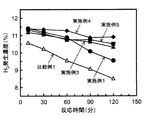
- FIG. 1A is a graph showing the steam reforming reaction activity of a fuel composed of hydrocarbons (E20 fuel) for the monolith catalysts obtained in Examples 1-2 and Comparative Examples 1-3.
- FIG. 1B is a graph showing the steam reforming reaction activity of a fuel composed of hydrocarbons (E20 fuel) for the monolith catalysts obtained in Examples 1, 3 to 5 and Comparative Example 1.
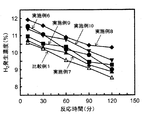
- FIG. 1C is a graph showing the steam reforming reaction activity of the fuel (E20 fuel) composed of hydrocarbons for the monolith catalysts obtained in Examples 6 to 10 and Comparative Example 1.
- FIG. 1A is a graph showing the steam reforming reaction activity of a fuel composed of hydrocarbons (E20 fuel) for the monolith catalysts obtained in Examples 1-2 and Comparative Examples 1-3.
- FIG. 1B is a graph showing the steam reforming reaction activity of a fuel composed of hydrocarbons (E20 fuel) for the monolith catalysts obtained in Examples 1, 3 to 5 and Comparative Example 1.
- FIG. 1C is a graph showing the steam
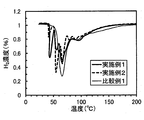
- FIG. 2A is an H 2 -TPR spectrum (a graph showing the relationship between the H 2 concentration in the output gas and the temperature) of the steam reforming catalyst obtained in Examples 1-2 and Comparative Example 1 in the initial state
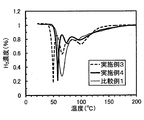
- FIG. 2B is an H 2 -TPR spectrum (a graph showing the relationship between the H 2 concentration in the output gas and the temperature) of the steam reforming catalyst obtained in Examples 3 to 4 and Comparative Example 1 in the initial state
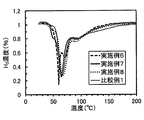
- FIG. 2C is an H 2 -TPR spectrum (a graph showing the relationship between the H 2 concentration in the output gas and the temperature) of the steam reforming catalyst obtained in Examples 6 to 8 and Comparative Example 1 in the initial state.
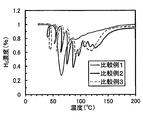
- FIG. 2D is an H 2 -TPR spectrum (a graph showing the relationship between the H 2 concentration in the output gas and the temperature) of the steam reforming catalyst obtained in Comparative Examples 1 to 3 in the initial state
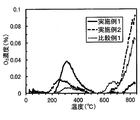
- FIG. 3A is an O 2 -TPD spectrum (a graph showing the relationship between the O 2 concentration in the output gas and the temperature) of the steam reforming catalyst obtained in Examples 1-2 and Comparative Example 1 in the initial state
- FIG. 3B is an O 2 -TPD spectrum (a graph showing the relationship between the O 2 concentration in the output gas and the temperature) of the steam reforming catalyst obtained in Examples 3 to 5 and Comparative Example 1 in the initial state.
- FIG. 3A is an O 2 -TPD spectrum (a graph showing the relationship between the O 2 concentration in the output gas and the temperature) of the steam reforming catalyst obtained in Examples 1-2 and Comparative Example 1 in the initial state
- FIG. 3B is an O 2 -TPD spectrum (a graph showing the relationship between the O 2 concentration in the output gas and the temperature) of the steam reforming catalyst
- 3C is an O 2 -TPD spectrum (a graph showing the relationship between the O 2 concentration in the output gas and the temperature) of the steam reforming catalyst obtained in Examples 6 to 8 and Comparative Example 1 in the initial state.
- FIG. 3D is an O 2 -TPD spectrum of the steam reforming catalyst obtained in Examples 9 to 10 and Comparative Example 1 in an initial state (a graph showing the relationship between the O 2 concentration in the output gas and the temperature)
- FIG. 3E is an O 2 -TPD spectrum (a graph showing the relationship between the O 2 concentration in the output gas and the temperature) of the steam reforming catalyst obtained in Comparative Examples 1 to 3 in the initial state.
- the present inventors have obtained a composite oxide support containing alumina, ceria and zirconia, and a rare earth oxide other than ceria such as praseodymium oxide, and the composite oxide support supported on the composite oxide support. And at least one first metal element selected from the group consisting of platinum group metals, and the surface composition (at%) of aluminum of the composite oxide support is set to the aluminum composition of the entire support.
- a steam reforming catalyst for reforming a fuel comprising hydrocarbons with steam is a composite oxide containing alumina, ceria and zirconia, and a rare earth oxide other than ceria. And a support and at least one first metal element selected from the group consisting of platinum group metals supported on the composite oxide support.
- the surface composition of aluminum of the composite oxide support is 1.5 times or more of the aluminum composition of the entire composite oxide support.
- the surface composition of aluminum of the composite oxide support is provided by X-ray photoelectron spectroscopy, and the surface composition of aluminum of the composite oxide support and the composition of aluminum of the whole composite oxide support are at%. May be defined.
- the rare earth oxide other than ceria may be at least one selected from the group consisting of praseodymium oxide, neodymium oxide, samarium oxide, gadolinium oxide, terbium oxide, dysprosium oxide, and ytterbium oxide.
- the rare earth oxide other than ceria may be at least one of praseodymium oxide, terbium oxide, and ytterbium oxide.
- the content of ceria in the composite oxide support may be 50 to 95% by mass.
- ceria in the composite oxide support and at least one kind of rare earth oxides other than zirconia and ceria may form a solid solution in which at least a part thereof is in solid solution with each other.
- the ceria in the composite oxide support and at least one of zirconia, praseodymium oxide, terbium oxide, and ytterbium oxide may form a solid solution in which at least some of them are in solid solution.
- the first metal element may be rhodium.
- the steam reforming catalyst may further include at least one second metal element selected from the group consisting of alkaline earth metals supported on the composite oxide support.
- the second metal element may be at least one selected from the group consisting of magnesium, strontium, and barium.
- a method for steam reforming a fuel comprising a hydrocarbon comprises contacting the fuel comprising a hydrocarbon with the steam reforming catalyst of the first aspect in the presence of steam. .
- the fuel may be a mixed fuel of ethanol and gasoline.
- the steam reforming reaction apparatus includes the steam reforming catalyst of the first aspect.
- the present inventors speculate as follows. That is, in the steam reforming catalyst of the present disclosure, even if at least one first metal element selected from platinum group metal elements that are supported metal elements is oxidized during the steam reforming reaction, In the composite oxide, ceria or a solid solution containing ceria (ceria and at least one of rare earth oxides other than zirconia and ceria (more preferably, praseodymium oxide, terbium oxide, and ytterbium oxide) are in solid solution with each other. Therefore, it is presumed that oxygen on the surface of the catalyst is absorbed by these, and the first metal element is reduced to a metal state exhibiting high catalytic activity to increase the catalytic activity.
- ceria and a solid solution containing ceria solid solution in which ceria and at least one of rare earth oxides other than zirconia and ceria (more preferably praseodymium oxide, terbium oxide, and ytterbium oxide) are in solid solution with each other
- grain growth is easier in a reducing atmosphere such as a steam reforming reaction than in an oxidizing atmosphere.
- ceria and alumina that do not form a solid solution with each other, or a solid solution and alumina containing ceria.
- ceria and solid solutions containing ceria are more likely to grow in a reducing atmosphere such as a steam reforming reaction than in an oxidizing atmosphere, and tend to grow at 600 ° C. or higher. Inferred.
- the carrier contains alumina, ceria and zirconia, and a rare earth oxide other than ceria (more preferably, at least one of praseodymium oxide, terbium oxide, and ytterbium oxide), and
- a composite oxide support in which the surface composition of aluminum as measured by X-ray photoelectron spectroscopy (XPS) of the support is 1.5 times or more of the aluminum composition (at%) of the entire support, such a composite oxide support is used.
- the composite oxide support is loaded with at least one second metal element selected from the group consisting of alkaline earth metals.
- the reason why the higher activity is maintained is not necessarily clear, but the present inventors speculate as follows. That is, at least one second metal element selected from the group consisting of alkaline earth metals undergoes a solid phase reaction with alumina in the composite oxide support. This suppresses at least one first metal element selected from the group consisting of platinum group metals, which are supported metal elements, from solid-state reacting with alumina to be in an oxidized state.
- One metal element is likely to be reduced to a metal state exhibiting high activity, and it is assumed that the catalytic activity is kept higher. Further, it is presumed that the catalytic activity is kept higher because the heat resistance of the alumina itself is increased and the barrier effect is improved.
- At least one second metal element selected from the group consisting of alkaline earth metals reacts with strong acid spots on the alumina surface to eliminate the acid spots. For this reason, the caulking which progresses on an acid point becomes difficult to occur, and even if it exposes to high temperature, it is guessed that a higher activity is hold
- coking is unlikely to occur even in an environment where oxygen gas is not present or in a condition where the molar ratio (S / C) of water vapor to carbon is low, and maintains high activity even when exposed to high temperatures, and hydrocarbons It is possible to generate hydrogen by efficiently reforming a fuel composed of a kind with steam.
- the steam reforming catalyst of the present disclosure is selected from the group consisting of a composite oxide support containing alumina, ceria and zirconia, and a rare earth oxide other than ceria, and a platinum group metal supported on the composite oxide support. At least one first metal element, wherein the composite oxide support has an aluminum surface composition (at%, atomic%) determined by X-ray photoelectron spectroscopy (XPS) measurement. It is a catalyst for reforming a fuel composed of hydrocarbons with water vapor, which is 1.5 times or more the aluminum composition (at%) of the entire support.
- XPS X-ray photoelectron spectroscopy
- the composite oxide support in the steam reforming catalyst of the present disclosure contains alumina (Al 2 O 3 ), ceria (CeO 2 ) and zirconia (ZrO 2 ), and a rare earth oxide other than ceria, and
- the surface composition (at%) of aluminum by X-ray photoelectron spectroscopy (XPS) measurement of the composite oxide support needs to be 1.5 times or more of the aluminum composition (at%) of the entire composite oxide support. .
- the surface composition (at%) of aluminum as measured by X-ray photoelectron spectroscopy (XPS) of such a composite oxide support is less than 1.5 times the aluminum composition (at%) of the entire composite oxide support, It is difficult to suppress grain growth at high temperatures of ceria or a solid solution containing ceria.
- the surface composition (at%) of aluminum by X-ray photoelectron spectroscopy (XPS) measurement of such a composite oxide support the aluminum composition (at%) of the entire composite oxide support is from the viewpoint of the effect of suppressing grain growth. It is preferably 1.8 times or more, and more preferably 2.0 times or more.
- the “aluminum surface” refers to a surface layer within a range of 5 nm or less from the outermost surface of the composite oxide support.
- a composite is obtained by X-ray photoelectron spectroscopy (XPS) using an XPS (photoelectron spectrometer). It can be determined by a method of measuring the surface of the oxide support.
- XPS X-ray photoelectron spectroscopy
- Al K ⁇ monoochrome
- the method for measuring the aluminum composition (at%) of the entire composite oxide support is not particularly limited.
- the amount of aluminum used (preparation amount, at%) at the time of manufacturing the composite oxide support is composite oxidized.
- the method of making the aluminum composition (at%) of the entire material carrier can be mentioned.
- the composition (at%) can also be calculated using the composition ratio of each metal of the composite oxide support.
- the composition (at%) of the aluminum element as the average value of the entire composite oxide support can be calculated by analyzing the composition with an ICP (high frequency plasma emission analyzer: ICP: Inductively Coupled Plasma).
- XRF X-ray Fluorescence Analysis
- ICP post-inductively coupled plasma
- EDX energy dispersive X-ray detector
- HR-TEM high resolution transmission
- Type electron microscope high resolution transmission
- FE-STEM field emission-scanning transmission electron microscope
- the ratio of the surface composition (at%) of aluminum by X-ray photoelectron spectroscopy (XPS) measurement of the composite oxide support to the composition (at%) of aluminum of the entire composite oxide support [(composite oxide support The surface composition of aluminum (at%) measured by X-ray photoelectron spectroscopy (XPS) / (composition of aluminum of the entire complex oxide support (at%))] is obtained as described above.
- the ratio (the measured XPS value (at%) of the composite oxide support surface (at%)) with respect to the composition (at%) of (for example, the amount of aluminum used (charged amount, at%)) can be obtained.
- the content of ceria (CeO 2 ) in the composite oxide support is preferably 50 to 95% by mass, and preferably 60 to 90% by mass. It is more preferable that If the content of ceria in such a composite oxide support is less than the lower limit, the platinum group metal is less likely to be in a metal state, and the catalytic activity tends to decrease. On the other hand, if the upper limit is exceeded, ceria or ceria is included. The solid solution tends to grow and the heat resistance tends to decrease.
- the content of alumina (Al 2 O 3 ) in the composite oxide support is preferably 2 to 40% by mass. More preferably, it is ⁇ 20% by mass. If the content of alumina in such a composite oxide support is less than the lower limit, ceria or a solid solution containing ceria tends to grow and heat resistance tends to decrease. On the other hand, if the upper limit is exceeded, a platinum group metal Tends to be in a metal state and the catalytic activity tends to decrease.
- the content of zirconia (ZrO 2 ) in the composite oxide support is preferably 1 to 40% by mass. More preferably, it is mass%. If the content of zirconia in such a composite oxide support is less than the lower limit, a solid solution containing ceria and zirconia tends to grow and the heat resistance tends to decrease. It becomes difficult for the metal to be in a metal state, and the catalytic activity tends to decrease.
- the composite oxide support according to the steam reforming catalyst of the present disclosure may further contain a rare earth oxide other than ceria (hereinafter also simply referred to as “other rare earth oxide”). is necessary.
- other rare earth oxides include scandium (Sc), yttrium (Y), lanthanum (La), praseodymium (Pr), neodymium (Nd), promethium (Pm), samarium (Sm), and europium (Eu).
- Rare earth elements other than cerium such as gadolinium (Gd), terbium (Tb), dysprosium (Dy), holmium (Ho), erbium (Er), thulium (Tm), ytterbium (Yb), lutetium (Lu)
- Ce cerium
- Gd gadolinium
- Tb terbium
- Dy dysprosium
- Ho holmium
- Er erbium
- Tm thulium
- Yb ytterbium
- Lu lutetium
- These other rare earth oxides may be used alone or in combination of two or more.
- the content of such other rare earth oxides is based on the total amount (100% by mass) of the composite oxide support from the viewpoint of high catalytic activity and prevention of catalyst deterioration in the steam reforming reaction of fuels composed of hydrocarbons.
- the content is preferably 1 to 40% by mass, and more preferably 2 to 20% by mass.
- alumina comprising alumina, ceria and zirconia and a rare earth oxide other than ceria
- the composite oxide support is “alumina. , Ceria and zirconia and rare earth oxides other than ceria "or mainly composed of the aforementioned” alumina, ceria and zirconia and rare earth oxides other than ceria ". It means that other components are included as long as they are not impaired. As such other components, other metal oxides and additives used as a carrier for this type of application can be used.
- the content of “alumina, ceria and zirconia and rare earth oxides other than ceria” in the support is preferably 10 to 100% by mass with respect to 100% by mass of the total mass of the support, and 50 to 100%. More preferably, it is mass%. If the content of “alumina, ceria and zirconia and rare earth oxides other than ceria” in such a support is less than the lower limit, the effects of the present disclosure tend not to be sufficiently obtained.
- the metal oxide used as another component that can be contained in such a support within a range not impairing the effects of the present disclosure may be a metal oxide that can be used as a support for a steam reforming catalyst.
- a metal oxide that can be used as a support for a steam reforming catalyst.
- magnesium (Mg) calcium (Ca), strontium (Sr), barium (Ba), scandium (Sc), vanadium from the viewpoint of thermal stability and catalytic activity of the support.
- Metal oxides such as alkali metals such as (V), alkaline earth metals, and transition metals, mixtures of these metal oxides, solid solutions of these metal oxides, and composite oxides of these metals are used as appropriate. be able to.
- ceria in the composite oxide support zirconia and other rare earth oxides (more preferably praseodymium oxide, terbium oxide, and It is preferable that at least one of the ytterbium oxides forms a solid solution in which at least a part thereof is in solid solution (hereinafter, simply referred to as “solid solution containing ceria”).
- solid solution containing such ceria a solid solution in which ceria and at least one of zirconia and other rare earth oxides (more preferably, praseodymium oxide, terbium oxide, and ytterbium oxide) are in solid solution with each other) is platinum.
- the action of reducing the first metal element made of a group metal from an oxide state to a metal state, and an environment in which no oxygen gas is present or a molar ratio of water vapor to carbon (S / C) is a steam reforming catalyst that is sufficiently resistant to coking even under low conditions, maintains high activity even when exposed to high temperatures, and can efficiently reform a fuel comprising hydrocarbons with steam. It can be.
- the solid solution containing ceria include ceria-zirconia solid solution, ceria-other rare earth oxide solid solution, and ceria-zirconia-other rare earth oxide solid solution.
- a part of ceria and at least one of zirconia and other rare earth oxides are in solid solution with each other.
- a steam reforming catalyst having such a composite oxide support is a catalyst that is higher in a steam reforming reaction of a fuel composed of hydrocarbons at a high temperature. It tends to show activity. The reason for this is not necessarily clear, but the present inventors speculate as follows.
- such a composite oxide includes ceria having a low solid phase reactivity with a platinum group metal or a solid solution containing ceria (ceria, zirconia and other rare earth oxides (more preferably praseodymium oxide, terbium oxide, And at least one of ytterbium oxide) is included in the solid solution), and the first metal element made of the platinum group metal is oxidized and exposed to a high temperature of 600 ° C. or higher. It is presumed that the catalytic activity is increased because the solid-state reaction with the composite oxide does not proceed easily and is reduced to a metal state exhibiting high catalytic activity without being stabilized in the oxide state.
- the first metal element composed of the complex oxide and the platinum group metal exhibits a strong interaction, and the first metal element composed of the platinum group metal on the complex oxide support even at a high temperature of 600 ° C. or higher. It is presumed that the catalytic activity is increased because the grain growth of the catalyst is suppressed.
- ceria and solid solution containing ceria usually grow more easily in reducing atmosphere such as steam reforming reaction than oxidizing atmosphere, but ceria and alumina or solid solution containing ceria and alumina that do not solidly dissolve each other.
- the catalytic activity is increased because it acts as a barrier against each other and the grain growth of the complex oxide at high temperatures is suppressed, and the grain growth of the first metal element supported thereon is also suppressed.
- the action of reducing the first metal element composed of the platinum group metal from an oxide state to a metal state is also expressed in ceria, but ceria is zirconia and other rare earth oxides (more preferably praseodymium oxide, oxidation oxide). Terbium and ytterbium oxide) are more effectively expressed when a solid solution is formed in solid solution with each other.
- the composite oxide used in the present disclosure at least a part of ceria and at least one of zirconia and other rare earth oxides (more preferably praseodymium oxide, terbium oxide, and ytterbium oxide) It is preferable to form solid solutions that are solid-solved with each other.
- the steam reforming catalyst of the present disclosure exhibits higher catalytic activity in the steam reforming reaction of fuels composed of hydrocarbons.
- the composite oxide support used in the present disclosure can be produced, for example, by the following method. First, from an aqueous solution in which an aluminum compound, a cerium compound and a zirconium compound and a rare earth compound other than the cerium compound are dissolved or a solution containing water, an alumina precursor, a ceria precursor and a zirconia precursor, and a rare earth other than the ceria precursor An oxide precursor (hereinafter, also simply referred to as “other rare earth oxide precursor”) is deposited as a precipitate. At this time, all of the compounds may be blended at the same time, or may be blended in order as appropriate, or the precursor precipitates may be individually obtained and mixed.
- rare earth compounds other than the cerium compound include scandium (Sc), yttrium (Y), lanthanum (La), praseodymium (Pr), neodymium (Nd), and promethium.
- Praseodymium compounds, neodymium compounds, samarium compounds Gadolinium compound, terbium compound, dysprosium compound, ytterbium compound are preferred, praseodymium compounds, terbium compounds, ytterbium compounds are more preferable, praseodymium compounds are particularly preferred.
- These other rare earth compounds may be used alone or in combination of two or more.
- a ceria precursor and at least one of a zirconia precursor and another rare earth oxide precursor are used as a precipitate. It is preferable to deposit at the same time because at least a part thereof forms a solid solution.
- the aluminum compound cerium compound, zirconium compound and other rare earth compounds, salts such as sulfates, nitrates, chlorides and acetates are generally used.
- the solvent for dissolving the salt include water and alcohols.
- a mixture of aluminum hydroxide, nitric acid and water can be used as an aqueous solution containing aluminum nitrate.
- the precursor precipitate can be precipitated by adding an alkaline solution to the aqueous solution or a solution containing water to adjust the pH of the solution.
- each precursor is added by instantly adding an alkaline solution and vigorously stirring, or by adding a hydrogen peroxide solution or the like to adjust the pH at which each precursor starts to precipitate, and then adding an alkaline solution or the like.
- Body precipitates can be deposited almost simultaneously.
- the alkaline solution is added over time, for example, over 10 minutes to increase the neutralization time, or the pH of the solution is monitored and adjusted stepwise to the pH at which each precursor precipitates. Or by adding a buffer solution so that the pH of the solution is maintained at a pH at which the precipitate of each precursor precipitates (or Vice versa).
- the alkaline solution examples include ammonia water, an aqueous solution or an alcohol solution in which ammonium carbonate, sodium hydroxide, potassium hydroxide, sodium carbonate and the like are dissolved.
- ammonia water, an aqueous solution of ammonium carbonate or an alcohol solution is preferable because it volatilizes when the composite oxide is fired.
- the pH of the alkaline solution is preferably 9 or more.
- the precursor precipitate thus obtained is aged and then baked to obtain the composite oxide support according to the present disclosure.
- the precursor precipitate when the precursor precipitate is aged, dissolution and reprecipitation of the precipitate are promoted by heating heat, and the resulting composite oxide particles can be grown.
- a complex oxide composed of crystallites having high crystallinity and an appropriate particle size can be obtained.
- the aging temperature is preferably room temperature or higher, more preferably 80 ° C. to 250 ° C., still more preferably 100 to 200 ° C., and particularly preferably 100 to 150 ° C.
- the aging temperature is less than the lower limit, the aging effect is small, and the time required for aging tends to be long.
- the upper limit when the upper limit is exceeded, the water vapor pressure becomes extremely high, so a more expensive pressure vessel is required and manufactured. Cost tends to be high.
- a pressure-resistant sealed container such as an autoclave under a hydrothermal condition under a high temperature and pressure of 100 ° C. or higher.
- the precipitate can be fired in the air.
- the firing temperature is preferably 300 to 800 ° C.
- the firing temperature is less than the lower limit, the resulting composite oxide tends to lack stability as a carrier, and when the upper limit is exceeded, the specific surface area of the composite oxide tends to decrease.
- XPS X-ray photoelectron spectroscopy
- carrier is not limited to the said embodiment.
- the solution containing the precursor precipitate may be heated as it is to evaporate the solvent to dry the precipitate, and then fired.
- the drying of the precipitate is preferably performed at the aging temperature.
- the steam reforming catalyst of the present disclosure includes such a composite oxide support and at least one first metal element selected from the group consisting of platinum group metals supported thereon.
- a platinum group metal ruthenium (Ru), rhodium (Rh), palladium (Pd), osmium (Os), iridium (Ir) and platinum (Pt) supported on the carrier. It is necessary to contain at least one first metal element selected from the group consisting of:
- the at least one first metal element selected from the group consisting of the platinum group metals rhodium (Rh) from the viewpoint of exhibiting high catalytic activity in the steam reforming reaction of fuels composed of hydrocarbons. Is more preferable.
- the 1st metal element which belongs to the said platinum group may be used individually by 1 type, or may use 2 or more types together.
- the amount of the first metal element supported is not particularly limited, and may be supported as appropriate according to the target design.
- the supported amount of the first metal element is preferably 0.1 to 20 parts by mass with respect to 100 parts by mass of the composite oxide support in terms of metal.
- the amount of the first metal element supported is more preferably 0.5 to 10 parts by mass from the viewpoint of catalyst performance and cost.
- the particle diameter (average particle diameter) of the first metal element thus supported on the carrier is preferably 1 to 100 nm (more preferably 2 to 50 nm). When the particle diameter of the first metal element is less than the lower limit, it tends to be difficult to be in a metal state. On the other hand, when the particle diameter exceeds the upper limit, the amount of active sites tends to be remarkably reduced.
- the composite oxide support (or the composite oxide support is used in a cordierite honeycomb or the like in a solution containing the compound of the first metal element at a predetermined concentration).
- examples thereof include a method in which a catalyst carrier-supporting base material coated on a base material is dipped to impregnate the composite oxide support with a solution containing a predetermined amount of the first metal element, and this is fired.
- the solution containing the compound of the first metal element is not particularly limited, but a salt solution of the first metal element can be used.
- a platinum salt is used as the salt of the first metal element Platinum (Pt) acetate, carbonate, nitrate, ammonium salt, citrate, dinitrodiammine salt and the like or their complexes.
- Pt Platinum
- dinitrodiammine salt is preferable.
- rhodium salt is used as the salt of the first metal element, for example, rhodium (Rh) acetate, carbonate, nitrate, ammonium salt, citrate, dinitrodiammine salt, or a complex solution thereof is used.
- the solvent is not particularly limited, and examples thereof include a solvent that can be dissolved in an ionic form such as water (preferably pure water such as ion-exchanged water and distilled water).
- the concentration of the first metal element salt solution is not particularly limited, but is preferably 0.001 to 0.5 mol / L as the first metal element salt ion.
- the method for supporting the first metal element on the carrier using the salt solution of the first metal element is not particularly limited.
- the solution of the salt of the first metal element is used.
- Known methods such as a method of impregnating the carrier with the carrier and a method of adsorbing and supporting the salt solution of the first metal element on the carrier can be appropriately employed.
- the composite oxide support may be used in the form of powder such as pellets, or the composite oxide support is used in advance by being fixed to a known base material such as a cordierite honeycomb base material by coating or the like. May be.
- the firing temperature is preferably 200 to 600 ° C.
- the firing temperature is less than the lower limit, the compound of the first metal element is not sufficiently thermally decomposed and becomes difficult to be in a metal state, so that the activity tends to be lowered. There is a tendency that the catalytic activity in the steam reforming reaction of the fuel composed of hydrocarbons is reduced due to grain growth of the first metal element.
- the firing time is preferably from 0.1 to 100 hours. When the firing time is less than the lower limit, the compound of the first metal element is not sufficiently thermally decomposed and becomes difficult to be in a metal state, so that the activity tends to be low. This is not effective, leading to an increase in cost for preparing the catalyst.
- the steam reforming catalyst of the present disclosure a group consisting of an alkaline earth metal (magnesium (Mg), calcium (Ca), strontium (Sr), barium (Ba), etc.) supported on the composite oxide support. It is preferable to further comprise at least one second metal element selected from: Thereby, the heat resistance of the steam reforming catalyst of the present disclosure is improved, and higher activity is maintained even when exposed to high temperatures.
- an alkaline earth metal magnesium (Mg), calcium (Ca), strontium (Sr), barium (Ba), etc.
- At least one second metal element selected from the group consisting of alkaline earth metals supported on the composite oxide support magnesium and strontium from the viewpoint of being hard to react with solid solution with ceria or a solid solution containing ceria.
- At least one selected from the group consisting of barium is preferred.
- the amount of the second metal element supported is not particularly limited, and may be supported as appropriate according to the target design.
- the supported amount of the second metal element is preferably 0.0005 to 0.5 mol, and preferably 0.001 to 0.1 mol with respect to 100 g of the composite oxide carrier, in terms of metal. More preferred.
- the amount of the second metal element supported is less than the lower limit, the heat resistance tends not to be improved.
- the upper limit is exceeded, the first metal element is adversely affected and the catalytic activity tends to decrease. It is in.
- a composite oxide carrier (or the first metal element) in which the first metal element is supported in a solution containing the compound of the second metal element at a predetermined concentration.
- a solution containing a predetermined amount of the second metal element by immersing a catalyst carrier-supporting base material in which a composite oxide carrier supporting the metal element is fixed on a base material such as a cordierite honeycomb.
- a method of impregnating a complex oxide carrier on which a metal element is supported and firing the same is used.
- the solution containing the compound of the second metal element is not particularly limited, but a salt solution of the second metal element can be used.
- a magnesium salt as the salt of the second metal element
- a strontium salt for example, acetate, nitrate, citrate, malate, hydroxide, chloride, bromide, iodide of strontium (Sr) can be mentioned.
- acetates and nitrates are preferred from the viewpoints of high solubility in water, easy handling, and no halogen remaining after firing.
- a barium salt for example, barium (Ba) acetate, citrate, malate, hydroxide, chloride, bromide, iodide can be mentioned, Of these, acetate is preferred from the viewpoints of high solubility in water, easy handling, and no halogen remaining after firing.
- the solvent is not particularly limited, and examples thereof include a solvent that can be dissolved in an ionic form such as water (preferably pure water such as ion-exchanged water and distilled water).
- the concentration of the second metal element salt solution is not particularly limited, but is preferably 0.01 to 1.0 mol / L as the second metal element salt ion.
- the method for supporting the second metal element on the carrier on which the first metal element is supported using the salt solution of the second metal element is not particularly limited.
- a method of impregnating a carrier carrying the first metal element with a solution of the second metal element salt, adsorbing the salt solution of the second metal element onto the carrier carrying the first metal element A known method such as a method of supporting can be appropriately employed.
- the composite oxide carrier on which the first metal element is supported may be used in the form of powder such as pellets, or may be used by being immobilized on a known substrate such as a cordierite honeycomb substrate. Also good.
- the firing temperature is preferably 200 to 600 ° C.
- the firing temperature is less than the lower limit, the compound of the second metal element is not sufficiently thermally decomposed, and the undecomposed second metal element compound covers the first metal element, so that the catalytic activity is lowered.
- the upper limit is exceeded, the first metal element grows even if the compound of the second metal element is thermally decomposed, so that the catalytic activity tends to decrease.
- the firing time is preferably from 0.1 to 100 hours.
- the compound of the second metal element is not sufficiently thermally decomposed, and the undecomposed second metal element compound covers the first metal element, so that the catalytic activity is lowered.
- the upper limit is exceeded, no further effect is obtained, leading to an increase in cost for preparing the catalyst.
- the form of the steam reforming catalyst of the present disclosure is not particularly limited.
- the steam reforming catalyst can be in the form of a honeycomb-shaped monolith catalyst, a pellet-shaped pellet catalyst, or the like. It can also be set as the form arrange
- a method for producing such a steam reforming catalyst is not particularly limited, but a known method can be appropriately employed.
- a pellet-shaped steam reforming catalyst is formed by forming the catalyst into a pellet.
- a method for obtaining a steam reforming catalyst having a form coated (fixed) on the catalyst base by coating the catalyst base with a catalyst may be appropriately employed.
- Such a catalyst substrate is not particularly limited, and is appropriately selected depending on, for example, the use of the obtained steam reforming catalyst.
- the honeycomb monolith substrate, pellet substrate, plate substrate A material or the like is preferably employed.
- the material of such a catalyst base material is not particularly limited.
- a base material made of ceramics such as cordierite, silicon carbide, mullite, or a base material made of metal such as stainless steel containing chromium and aluminum. Is preferably employed.
- Such a steam reforming catalyst of the present disclosure is used to reform a fuel composed of hydrocarbons with steam, and has high catalytic activity in a steam reforming reaction of the fuel composed of hydrocarbons. It is shown.
- the steam reforming method of the fuel comprising the hydrocarbons of the present disclosure is a method for generating hydrogen by bringing the fuel comprising the hydrocarbons into contact with the steam reforming catalyst of the present disclosure in the presence of steam.
- the steam reforming reaction apparatus used in such a steam reforming method is not particularly limited as long as it includes the steam reforming catalyst of the present disclosure, and has been conventionally used, such as a fixed bed flow type reaction apparatus and a fluidized bed type reaction apparatus.
- a known catalytic reactor can be used.
- the fuel comprising the hydrocarbons is not particularly limited, and examples of the hydrocarbons include those containing alkanes, alkenes, alkynes, aromatic compounds, alcohols, aldehydes, and the like. Include methane, ethane, propane, butane, pentane, hexane, heptane, octane, nonane, decane, etc., linear or branched saturated aliphatic hydrocarbons, cyclohexane, methylcyclohexane, cyclooctane, etc. Examples thereof include gaseous or liquid hydrocarbons such as hydrocarbons, monocyclic or polycyclic aromatic hydrocarbons.
- hydrocarbons composed of such hydrocarbons include hydrocarbons such as methane, ethane, ethylene, propane, and butane, mixed gases of these two or more, city gas, natural gas, petroleum gas, Gas fuel such as coal gas, generator gas, water gas, blast furnace gas, petroleum cracking gas, etc., liquid fuel such as gasoline, light oil, kerosene, diesel oil, methanol, ethanol, etc., and mixtures of two or more of these gas fuel and liquid fuel Fuel (a mixed fuel of two or more kinds of gaseous fuels, a mixed fuel of two or more kinds of liquid fuels, a mixed fuel of at least one kind of gaseous fuel and at least one kind of liquid fuel).
- hydrocarbons such as methane, ethane, ethylene, propane, and butane
- mixed gases of these two or more city gas, natural gas, petroleum gas, Gas fuel such as coal gas, generator gas, water gas, blast furnace gas, petroleum cracking gas, etc., liquid fuel such as gasoline, light oil, kerosene
- biomass fuel made of hydrocarbons such as ethanol, gasoline, diesel fuel, natural gas, hydrocarbon gas, biodiesel, etc.
- the mixed fuel of ethanol and gasoline can be used, for example.
- ethanol has a high octane number, so by mixing gasoline with a low octane number (for example, in the range of 30 to 85) and ethanol, an octane number in the range of 80 to 100 equivalent to that of ordinary gasoline fuel is used.
- ethanol has a high octane number, so by mixing gasoline with a low octane number (for example, in the range of 30 to 85) and ethanol, an octane number in the range of 80 to 100 equivalent to that of ordinary gasoline fuel is used.
- the steam reforming of the present disclosure is easy to handle because it is liquid at room temperature, has high safety, has high affinity with water (steam), and is easily available.
- the method is preferably applied to natural gas, methanol, ethanol, and a mixed fuel of ethanol and gasoline, and more preferably applied to a mixed fuel of ethanol and ethanol and gasoline.
- the fuel and steam comprising the hydrocarbons may be supplied independently to the reactor, or after mixing them in advance, You may supply.
- the mixing ratio of the fuel composed of hydrocarbons and water vapor is not particularly limited.
- the molar ratio (S / C) of water vapor to carbon is 0.2. Is preferably ⁇ 2, more preferably 0.4 ⁇ 1.
- the temperature of the reforming reaction is preferably 250 to 650 ° C., more preferably 350 to 600 ° C.
- the steam reforming catalyst of the present disclosure the fuel consisting of hydrocarbons has been reformed even at a low temperature of 400 ° C. or lower, which has been conventionally difficult to steam reform the fuel consisting of hydrocarbons. It becomes possible to make it.
- a steam reforming reaction apparatus includes the steam reforming catalyst according to the present disclosure.
- the steam reforming reaction apparatus of the present disclosure only needs to include the steam reforming catalyst of the present disclosure, and other configurations are not particularly limited, and the configuration of a known steam reforming reaction device is appropriately used. be able to.
- the steam reforming catalyst of the present disclosure is capable of efficiently generating hydrogen by contacting a fuel composed of hydrocarbons in the presence of steam, and therefore the steam reforming reaction of the present disclosure.
- the apparatus has a configuration that makes it possible to efficiently contact a fuel composed of hydrocarbons in the presence of steam with the steam reforming catalyst of the present disclosure. It is preferable to further include a container capable of holding the fuel composed of hydrocarbons and the steam reforming catalyst below, and disposing the steam reforming catalyst of the present disclosure in the container.
- a steam reforming reaction apparatus a conventionally known catalytic reaction apparatus such as a fixed bed flow reaction apparatus or a fluidized bed reaction apparatus can be used.
- Example 1 0.2 mol (75.1 g) of aluminum nitrate nonahydrate and 0.047 mol (20.6 g) of praseodymium nitrate hexahydrate were added to 2000 ml of ion-exchanged water and stirred for 5 minutes with a propeller stirrer. Dissolved. The solution was stirred by adding the concentration of CeO 2 in terms of 28% by weight of the aqueous cerium nitrate solution 262 g (corresponding to 0.43 mol in terms of CeO 2) 5 minutes.
- aqueous solution in which 0.068 mol (18.1 g) of zirconyl nitrate dihydrate was dissolved in 30 g of ion-exchanged water was added to the mixed aqueous solution, followed by stirring for 5 minutes.
- 189 g of 25% by mass ammonia water was added and stirred for 10 minutes to obtain an aqueous solution containing a precipitate.
- This aqueous solution was heat-treated under a pressure of 2 atm and a temperature condition of 120 ° C. for 2 hours to age the precipitate.
- the aged aqueous solution containing the precipitate is heated to 400 ° C. at a heating rate of 100 ° C./hour, further calcined at 400 ° C. for 5 hours, and then calcined at 600 ° C. for 5 hours to obtain a composite oxide powder.
- A was prepared.
- the obtained composite oxide powder A is composed of 10.2% by mass of alumina, 73.4% by mass of ceria, 8.3% by mass of zirconia, and 8.1% by mass of praseodymium oxide.
- the surface area was about 100 m 2 / g.
- ceria sol binder (“U-15” manufactured by Taki Chemical Co., Ltd., solid content concentration of 15% by mass) is added to 100 g of the obtained composite oxide powder A, and the slurry is mixed for 20 minutes with a wet attritor. Got.
- the slurry was applied to a cordierite honeycomb monolith substrate (400 cells / square inch) having a diameter of 23 mm ⁇ length of 25 mm and a volume of 10.4 ml at a rate of 240 g per 1 L of the substrate (coat). After that, firing was performed at 500 ° C. for 3 hours to obtain a catalyst carrier-supporting base material A on which a carrier made of a ceria-zirconia-alumina-praseodymium oxide composite oxide was supported.
- rhodium nitrate solution in which rhodium is dissolved is impregnated into the ceria-zirconia-alumina-praseodymium oxide composite oxide carrier supported on the catalyst carrier supporting substrate A, and rhodium is supported by a selective adsorption method. After that, it is calcined in the atmosphere at a temperature condition of 500 ° C. for 3 hours to support rhodium on the carrier, and a steam reforming catalyst in a form supported on a monolith substrate (rhodium / ceria-zirconia-alumina- Praseodymium oxide composite oxide carrier) was obtained.
- the supported amount of rhodium per liter of monolith substrate was 4.8 g (/ L).
- the resulting steam reforming catalyst supported on the monolith substrate was used as a monolith catalyst sample.
- Example 2 0.2 mol (75.1 g) of aluminum nitrate nonahydrate and 0.047 mol (20.7 g) of neodymium nitrate hexahydrate were added to 2000 ml of ion-exchanged water and stirred for 5 minutes with a propeller stirrer. Dissolved. The solution was stirred by adding the concentration of CeO 2 in terms of 28% by weight of the aqueous cerium nitrate solution 262 g (corresponding to 0.43 mol in terms of CeO 2) 5 minutes.
- aqueous solution in which 0.068 mol (18.1 g) of zirconyl nitrate dihydrate was dissolved in 30 g of ion-exchanged water was added to the mixed aqueous solution, followed by stirring for 5 minutes.
- 189 g of 25% by mass ammonia water was added and stirred for 10 minutes to obtain an aqueous solution containing a precipitate.
- This aqueous solution was heat-treated under a pressure of 2 atm and a temperature condition of 120 ° C. for 2 hours to age the precipitate.
- the aged aqueous solution containing the precipitate is heated to 400 ° C. at a heating rate of 100 ° C./hour, further calcined at 400 ° C. for 5 hours, and then calcined at 600 ° C. for 5 hours to obtain a composite oxide powder.
- B was prepared.
- the obtained composite oxide powder B is composed of 10.2% by mass of alumina, 73.4% by mass of ceria, 8.4% by mass of zirconia, and 8.0% by mass of neodymium oxide.
- the surface area was about 100 m 2 / g.
- a cordierite honeycomb monolith substrate is composed of a ceria-zirconia-alumina-neodymium oxide composite oxide in the same manner as in Example 1.
- a catalyst carrier-supporting base material B on which a carrier is supported is obtained.
- rhodium is supported on the carrier, and a steam reforming catalyst (rhodium / ceria-zirconia) is supported on a monolith substrate.
- -Alumina-neodymium oxide composite oxide support) was obtained.
- the supported amount of rhodium per liter of monolith substrate was 4.8 g (/ L).
- the resulting steam reforming catalyst supported on the monolith substrate was used as a monolith catalyst sample.
- Example 3 In the same manner as in Example 1, a rhodium / ceria-zirconia-alumina-praseodymium oxide composite oxide carrier supported on a monolith substrate was prepared. This rhodium / ceria-zirconia-alumina-praseodymium oxide composite oxide support was impregnated with a predetermined amount of an aqueous solution in which magnesium acetate tetrahydrate was dissolved, dried in air at 110 ° C. for 16 hours, A steam reforming catalyst (rhodium-magnesium / ceria-zirconia-alumina-praseodymium oxide composite oxide) in a form in which magnesium is supported on the support by calcining at 500 ° C.
- the supported amount of rhodium per liter of monolith substrate was 4.8 g (/ L), and the supported amount of magnesium was 0.024 mol (/ L).
- the resulting steam reforming catalyst supported on the monolith substrate was used as a monolith catalyst sample.
- Example 4 A steam reforming catalyst supported on a monolith substrate in the same manner as in Example 3 except that an aqueous solution in which strontium acetate is dissolved is used instead of an aqueous solution in which magnesium acetate tetrahydrate is dissolved.
- (Rhodium-strontium / ceria-zirconia-alumina-praseodymium oxide composite oxide support) was prepared.
- the supported amount of rhodium per liter of monolith substrate was 4.8 g (/ L), and the supported amount of strontium was 0.024 mol (/ L).
- the resulting steam reforming catalyst supported on the monolith substrate was used as a monolith catalyst sample.
- Example 5 A steam reforming catalyst supported on a monolith substrate in the same manner as in Example 3 except that an aqueous solution in which barium acetate was dissolved was used instead of an aqueous solution in which magnesium acetate tetrahydrate was dissolved.
- (Rhodium-barium / ceria-zirconia-alumina-praseodymium oxide composite oxide support) was prepared.
- the supported amount of rhodium per liter of monolith substrate was 4.8 g (/ L), and the supported amount of barium was 0.024 mol (/ L).
- the resulting steam reforming catalyst supported on the monolith substrate was used as a monolith catalyst sample.
- Example 6 0.2 mol (75.1 g) of aluminum nitrate nonahydrate and 0.047 mol (21.1 g) of samarium nitrate hexahydrate were added to 2000 ml of ion-exchanged water and stirred for 5 minutes with a propeller stirrer. Dissolved. The solution was stirred by adding the concentration of CeO 2 in terms of 28% by weight of the aqueous cerium nitrate solution 262 g (corresponding to 0.43 mol in terms of CeO 2) 5 minutes.
- aqueous solution in which 0.068 mol (18.1 g) of zirconyl nitrate dihydrate was dissolved in 30 g of ion-exchanged water was added to the mixed aqueous solution, followed by stirring for 5 minutes.
- 189 g of 25% by mass ammonia water was added and stirred for 10 minutes to obtain an aqueous solution containing a precipitate.
- This aqueous solution was heat-treated under a pressure of 2 atm and a temperature condition of 120 ° C. for 2 hours to age the precipitate.
- the aged aqueous solution containing the precipitate is heated to 400 ° C. at a heating rate of 100 ° C./hour, further calcined at 400 ° C. for 5 hours, and then calcined at 600 ° C. for 5 hours to obtain a composite oxide powder.
- C was prepared.
- the obtained composite oxide powder C is composed of 10.2% by mass of alumina, 73.2% by mass of ceria, 8.3% by mass of zirconia, and 8.3% by mass of samarium oxide.
- the surface area was about 100 m 2 / g.
- a cordierite honeycomb monolith substrate is made of a ceria-zirconia-alumina-samarium oxide composite oxide in the same manner as in Example 1.
- a catalyst carrier-supporting base material C on which a carrier is supported is obtained.
- rhodium is supported on the carrier, and the steam reforming catalyst (rhodium / ceria-zirconia) is supported on a monolith substrate.
- -Alumina-samarium oxide composite oxide support) was obtained.
- the supported amount of rhodium per liter of monolith substrate was 4.8 g (/ L).
- the resulting steam reforming catalyst supported on the monolith substrate was used as a monolith catalyst sample.
- Example 7 0.2 mol (75.1 g) of aluminum nitrate nonahydrate and 0.047 mol (21.4 g) of gadolinium nitrate hexahydrate were added to 2000 ml of ion-exchanged water and stirred for 5 minutes with a propeller stirrer. Dissolved. The solution was stirred by adding the concentration of CeO 2 in terms of 28% by weight of the aqueous cerium nitrate solution 262 g (corresponding to 0.43 mol in terms of CeO 2) 5 minutes.
- aqueous solution in which 0.068 mol (18.1 g) of zirconyl nitrate dihydrate was dissolved in 30 g of ion-exchanged water was added to the mixed aqueous solution, followed by stirring for 5 minutes.
- 189 g of 25% by mass ammonia water was added and stirred for 10 minutes to obtain an aqueous solution containing a precipitate.
- This aqueous solution was heat-treated under a pressure of 2 atm and a temperature condition of 120 ° C. for 2 hours to age the precipitate.
- the aged aqueous solution containing the precipitate is heated to 400 ° C. at a heating rate of 100 ° C./hour, further calcined at 400 ° C. for 5 hours, and then calcined at 600 ° C. for 5 hours to obtain a composite oxide powder.
- D was prepared.
- the obtained composite oxide powder D is composed of 10.2% by mass of alumina, 73.0% by mass of ceria, 8.3% by mass of zirconia, and 8.5% by mass of gadolinium oxide.
- the surface area was about 100 m 2 / g.
- a cordierite honeycomb monolith substrate is composed of a ceria-zirconia-alumina-gadolinium oxide composite oxide in the same manner as in Example 1.
- a catalyst carrier-supporting substrate D on which a carrier is supported is obtained.
- rhodium is supported on the carrier, and a steam reforming catalyst (rhodium / ceria-zirconia) supported on a monolith substrate.
- -Alumina-gadolinium oxide composite oxide support was obtained.
- the supported amount of rhodium per liter of monolith substrate was 4.8 g (/ L).
- the resulting steam reforming catalyst supported on the monolith substrate was used as a monolith catalyst sample.
- Example 8 0.2 mol (75.1 g) of aluminum nitrate nonahydrate and 0.047 mol (21.5 g) of terbium nitrate hexahydrate were added to 2000 ml of ion-exchanged water and stirred for 5 minutes with a propeller stirrer. Dissolved. The solution was stirred by adding the concentration of CeO 2 in terms of 28% by weight of the aqueous cerium nitrate solution 262 g (corresponding to 0.43 mol in terms of CeO 2) 5 minutes.
- aqueous solution in which 0.068 mol (18.1 g) of zirconyl nitrate dihydrate was dissolved in 30 g of ion-exchanged water was added to the mixed aqueous solution, followed by stirring for 5 minutes.
- 189 g of 25% by mass ammonia water was added and stirred for 10 minutes to obtain an aqueous solution containing a precipitate.
- This aqueous solution was heat-treated under a pressure of 2 atm and a temperature condition of 120 ° C. for 2 hours to age the precipitate.
- the aged aqueous solution containing the precipitate is heated to 400 ° C. at a heating rate of 100 ° C./hour, further calcined at 400 ° C. for 5 hours, and then calcined at 600 ° C. for 5 hours to obtain a composite oxide powder.
- E was prepared.
- the obtained composite oxide powder E is composed of 10.2% by mass of alumina, 72.9% by mass of ceria, 8.3% by mass of zirconia, and 8.6% by mass of terbium oxide.
- the surface area was about 100 m 2 / g.
- a cordierite honeycomb monolith substrate is made of a ceria-zirconia-alumina-terbium oxide composite oxide in the same manner as in Example 1.
- a catalyst carrier-supporting substrate E on which a carrier is supported is obtained.
- rhodium is supported on the carrier, and a steam reforming catalyst (rhodium / ceria-zirconia) is supported on a monolith substrate.
- -Alumina-terbium oxide composite oxide support was obtained.
- the supported amount of rhodium per liter of monolith substrate was 4.8 g (/ L).
- the resulting steam reforming catalyst supported on the monolith substrate was used as a monolith catalyst sample.
- Example 9 0.2 mol (75.1 g) of aluminum nitrate nonahydrate and 0.047 mol (21.6 g) of dysprosium nitrate hexahydrate were added to 2000 ml of ion-exchanged water and stirred for 5 minutes with a propeller stirrer. Dissolved. The solution was stirred by adding the concentration of CeO 2 in terms of 28% by weight of the aqueous cerium nitrate solution 262 g (corresponding to 0.43 mol in terms of CeO 2) 5 minutes.
- aqueous solution in which 0.068 mol (18.1 g) of zirconyl nitrate dihydrate was dissolved in 30 g of ion-exchanged water was added to the mixed aqueous solution, followed by stirring for 5 minutes.
- 189 g of 25% by mass ammonia water was added and stirred for 10 minutes to obtain an aqueous solution containing a precipitate.
- This aqueous solution was heat-treated under a pressure of 2 atm and a temperature condition of 120 ° C. for 2 hours to age the precipitate.
- the aged aqueous solution containing the precipitate is heated to 400 ° C. at a heating rate of 100 ° C./hour, further calcined at 400 ° C. for 5 hours, and then calcined at 600 ° C. for 5 hours to obtain a composite oxide powder.
- F was prepared.
- the obtained composite oxide powder F is composed of 10.1% by mass of alumina, 72.8% by mass of ceria, 8.3% by mass of zirconia, and 8.8% by mass of dysprosium oxide.
- the surface area was about 100 m 2 / g.
- a cordierite honeycomb monolith substrate is made of a ceria-zirconia-alumina-dysprosium oxide composite oxide in the same manner as in Example 1.
- a catalyst carrier-supporting substrate F on which a carrier is supported is obtained, and further, a steam reforming catalyst (rhodium / ceria-zirconia) in a form in which rhodium is supported on the carrier and supported on a monolith substrate in the same manner as in Example 1.
- -Alumina-dysprosium oxide composite oxide support was obtained.
- the supported amount of rhodium per liter of monolith substrate was 4.8 g (/ L).
- the resulting steam reforming catalyst supported on the monolith substrate was used as a monolith catalyst sample.
- Example 10 0.2 mol (75.1 g) of aluminum nitrate nonahydrate and 0.047 mol (21.3 g) of ytterbium nitrate pentahydrate were added to 2000 ml of ion-exchanged water and stirred for 5 minutes with a propeller stirrer. Dissolved. The solution was stirred by adding the concentration of CeO 2 in terms of 28% by weight of the aqueous cerium nitrate solution 262 g (corresponding to 0.43 mol in terms of CeO 2) 5 minutes.
- aqueous solution in which 0.068 mol (18.1 g) of zirconyl nitrate dihydrate was dissolved in 30 g of ion-exchanged water was added to the mixed aqueous solution, followed by stirring for 5 minutes.
- 189 g of 25% by mass ammonia water was added and stirred for 10 minutes to obtain an aqueous solution containing a precipitate.
- This aqueous solution was heat-treated under a pressure of 2 atm and a temperature condition of 120 ° C. for 2 hours to age the precipitate.
- the aged aqueous solution containing the precipitate is heated to 400 ° C. at a heating rate of 100 ° C./hour, further calcined at 400 ° C. for 5 hours, and then calcined at 600 ° C. for 5 hours to obtain a composite oxide powder.
- G was prepared.
- the obtained composite oxide powder G is composed of 10.1% by mass of alumina, 72.5% by mass of ceria, 8.2% by mass of zirconia, and 9.2% by mass of ytterbium oxide.
- the surface area was about 100 m 2 / g.
- a cordierite honeycomb monolith substrate is made of a ceria-zirconia-alumina-ytterbium oxide composite oxide in the same manner as in Example 1.
- a catalyst carrier-supporting substrate G on which a carrier is supported is obtained.
- rhodium is supported on the carrier, and a steam reforming catalyst (rhodium / ceria-zirconia) is supported on a monolith substrate.
- -Alumina-ytterbium oxide composite oxide support was obtained.
- the supported amount of rhodium per liter of monolith substrate was 4.8 g (/ L).
- the resulting steam reforming catalyst supported on the monolith substrate was used as a monolith catalyst sample.
- aqueous solution containing a precipitate.
- This aqueous solution was heat-treated under a pressure of 2 atm and a temperature condition of 120 ° C. for 2 hours to age the precipitate.
- Oxide powder H was prepared.
- the obtained composite oxide powder H was composed of 11.1% by mass of alumina, 79.8% by mass of ceria and 9.1% by mass of zirconia, and the specific surface area was about 100 m 2 / g. It was.
- a cordierite honeycomb monolith substrate is made of a ceria-zirconia-alumina composite oxide in the same manner as in Example 1.
- a comparative catalyst carrier-supporting substrate H on which a comparative carrier is supported is obtained.
- rhodium is supported on the carrier, and the comparative steam reformer is supported on a monolith substrate.
- Catalyst rhodium / ceria-zirconia-alumina composite oxide support
- the supported amount of rhodium per liter of monolith substrate was 4.8 g (/ L).
- the comparative steam reforming catalyst in a form supported on the obtained monolith substrate was used as a comparative monolith catalyst sample.
- the obtained composite oxide powder J is composed of 10.2% by mass of alumina, 73.4% by mass of ceria, 8.3% by mass of zirconia, and 8.1% by mass of praseodymium oxide.
- the surface area was about 150 m 2 / g.
- a cordierite honeycomb monolith substrate was coated with a ceria-zirconia-alumina-praseodymium composite in the same manner as in Example 1.
- a comparative catalyst carrier-supporting base material J on which a comparative carrier made of an oxide was supported was obtained. Further, in the same manner as in Example 1, rhodium was supported on the carrier, and the carrier was supported on a monolith base material.
- a comparative steam reforming catalyst (rhodium / ceria-zirconia-alumina-praseodymium oxide composite oxide support) was obtained. The supported amount of rhodium per liter of monolith substrate was 4.8 g (/ L). The comparative steam reforming catalyst in a form supported on the obtained monolith substrate was used as a comparative monolith catalyst sample.
- the aqueous solution containing the precipitate is centrifuged to remove the precipitate, and the precipitate is dried in a temperature atmosphere at 150 ° C. for 16 hours, and then calcined at 600 ° C. for 5 hours, thereby comparing the composite oxide powder.
- K was prepared.
- the obtained composite oxide powder K is composed of 10.2% by mass of alumina, 73.4% by mass of ceria, 8.4% by mass of zirconia and 8.0% by mass of neodymium oxide.
- the surface area was about 150 m 2 / g.
- a ceria-zirconia-alumina-neodymium oxide composite was applied to a cordierite honeycomb monolith substrate in the same manner as in Example 1 by using the comparative composite oxide powder K obtained instead of the composite oxide powder A.
- a comparative catalyst carrier-supporting base material K on which a comparative carrier made of an oxide was supported was obtained. Further, in the same manner as in Example 1, rhodium was supported on the carrier, and the carrier was supported on a monolith base material.
- a comparative steam reforming catalyst (rhodium / ceria-zirconia-alumina-neodymium oxide composite oxide support) was obtained. The supported amount of rhodium per liter of monolith substrate was 4.8 g (/ L). The comparative steam reforming catalyst in a form supported on the obtained monolith substrate was used as a comparative monolith catalyst sample.
- E20 fuel containing 20% by volume of ethanol was prepared by mixing ethanol (anhydrous) and commercial gasoline at a volume ratio of 20:80.
- E20 fuel and ion-exchanged water are used for a CO 2 (14%) / N 2 mixed gas with a gas flow rate of 4.6 L / min using a liquid pump, respectively, at 0.67 mL / min and 0.54 mL / min.
- a model gas used in the activity test and the durability test was prepared by adding and vaporizing at a flow rate. At this time, the water vapor / carbon ratio (S / C) was 0.93, and the gas flow rate was 5.4 L / min.
- the monolith catalyst samples obtained in Examples 1 to 10 and the comparative monolith catalyst samples obtained in Comparative Examples 1 to 3 were filled in stainless steel reaction tubes each having an inner diameter of 23.5 mm.
- a fixed bed flow reactor was installed.
- the model gas was supplied to the monolith catalyst, and held for about 1 hour in the order of the catalyst bed temperatures of 600 ° C., 500 ° C., and 400 ° C., respectively.
- the catalyst bed temperature was set to 550 ° C. and held for 120 minutes.
- the hydrogen (H 2 ) generation concentration at that time was measured by a gas chromatograph method, and the change with time was examined.
- FIGS. 1A to 1C Graphs showing the steam reforming reaction activity of fuels composed of hydrocarbons (E20 fuel) for the monolith catalysts obtained in Examples 1 to 10 and Comparative Examples 1 to 3 are shown in FIGS. 1A to 1C.
- H 2 generation for each reaction time (minute) shown in FIGS. 1A to 1C Considering that the reaction time of 10 minutes is almost the initial state in concentration, the monolith catalysts of Examples 1 to 10 have the reforming reaction activity in the initial state superior to the comparative monolith catalysts of Comparative Examples 1 to 3. It was confirmed that
- the monolith catalysts of Examples 1 to 10 have both high E20 fuel steam reforming reaction activity in the initial state and their durability.
- the monolith catalysts of Examples 3 to 5 It was confirmed that the durability was extremely high, and it was confirmed that the catalyst activity was sufficiently excellent.
- the temperature was raised to 0 ° C., and the mixture gas (A) was supplied at 50 mL / min and maintained at 300 ° C. for 20 minutes.
- the mixed gas (A) is used to cool the catalyst until the bed temperature of the catalyst reaches room temperature, and then the gas species (B) is switched to a gas (B) made of Ar (100% by volume), so that the gas (B) is 50 mL / A supply process (purge process) was performed for 30 minutes at a supply speed of 1 minute.
- the supply gas species is switched to a mixed gas (C) composed of H 2 (1% by volume) / Ar (remainder), and the mixed gas (C) is supplied at a supply rate of 50 mL / min for 5 minutes, and then mixed.
- FIG. 2A shows the H 2 -TPR spectrum (a graph showing the relationship between the H 2 concentration in the output gas and the temperature) of the steam reforming catalyst obtained in Examples 1 and 2 and Comparative Example 1 in the initial state
- FIG. H 2 -TPR spectrum of the steam reforming catalyst obtained in Examples 3 to 4 and Comparative Example 1 in the initial state (a graph showing the relationship between the H 2 concentration in the output gas and the temperature)
- FIG. 2C shows the initial state H 2 -TPR spectrum of the steam reforming catalyst obtained in Examples 6 to 8 and Comparative Example 1 (a graph showing the relationship between H 2 concentration in the output gas and temperature)
- FIG. 2D shows Comparative Example 1 in the initial state.
- H 2 -TPR spectrum (a graph showing the relationship between H 2 concentration in the output gas and temperature) of the steam reforming catalyst obtained in (1) to (3).
- H 2 -TPR test H 2 consumption was observed in the temperature range of about 40 ° C. to about 200 ° C. This is considered to be due to the reduction of Rh oxidized in the pre-oxidation treatment.
- Table 2 shows the results of calculating the H 2 consumption amount and the H 2 consumption center temperature. Note that with H 2 consumption core temperature is a temperature at which the H 2 50% of the total H 2 consumption is consumed.
- Rh which is a platinum group metal
- the fact that Rh, which is a platinum group metal, tends to be in a metal state effective for steam reforming reaction activity is a cause of high performance in the initial state. It is thought that it is one of.
- a treatment (purging treatment) was performed at 600 ° C. for 10 minutes, followed by cooling with Ar gas until the bed temperature of the catalyst reached room temperature of 200 ° C.
- heating was performed at 200 ° C. for 20 minutes while supplying O 2 gas (O 2 : 100% by volume) at 20 mL / min, and then the catalyst was cooled to room temperature with O 2 gas. Thereafter, the supply gas species was switched to Ar gas (Ar: 100% by volume), and a process of supplying Ar gas at a supply rate of 20 mL / min for 30 minutes (purge process) was performed.
- FIG. 3A shows an O 2 -TPD spectrum (a graph showing the relationship between the O 2 concentration in the output gas and the temperature) of the steam reforming catalyst obtained in Examples 1-2 and Comparative Example 1 in the initial state
- FIG. 3C shows the initial state
- O 2 -TPD spectrum of the steam reforming catalyst obtained in Examples 6 to 8 and Comparative Example 1 shows Example 9 in the initial state.
- FIG. 3E shows Comparative Examples 1 to 3 in the initial state.
- O 2 -TPD spectrum of the steam reforming catalyst (outgoing gas O 2 Is a graph) showing a relationship between the degree and temperature.
- O 2 -TPD test two O 2 desorption peaks were observed at a low temperature range of about 150 ° C. to about 500 ° C. and a high temperature range of about 550 ° C. or higher.
- the O 2 desorption peak on the high temperature side is considered to be oxygen release from the crystal grains of the composite oxide.
- the steam reforming catalysts of Examples 1, 3 to 5 and 8 are It was confirmed that a large amount of oxygen was released from the complex oxide support on the low temperature side. Furthermore, it was confirmed that the steam reforming catalyst of Example 2 released a large amount of oxygen from the composite oxide support on the high temperature side. Therefore, the steam reforming catalysts of Examples 1 to 10 are considered to be the cause of high durability performance because the carbonaceous material on which the oxygen released from the crystal particles of the composite oxide support is deposited is oxidized and removed. It is done.
- coking is not easily caused even in an environment where oxygen gas is not present or in a condition where the molar ratio (S / C) of water vapor to carbon is low, and even when exposed to high temperatures.
- High activity can be maintained, and hydrogen can be generated by efficiently reforming a fuel composed of hydrocarbons with steam.
- the steam reforming catalyst of the present disclosure has high catalytic activity in the steam reforming reaction of fuels composed of hydrocarbons, is excellent in coking resistance, and exhibits high activity even when exposed to high temperatures.
- a fuel composed of hydrocarbons is used in such an internal combustion engine, it is useful as a catalyst or the like when reforming this with steam to generate hydrogen.
Landscapes
- Chemical & Material Sciences (AREA)
- Chemical Kinetics & Catalysis (AREA)
- Organic Chemistry (AREA)
- Engineering & Computer Science (AREA)
- Materials Engineering (AREA)
- Health & Medical Sciences (AREA)
- General Health & Medical Sciences (AREA)
- Combustion & Propulsion (AREA)
- Inorganic Chemistry (AREA)
- Catalysts (AREA)
- Hydrogen, Water And Hydrids (AREA)
Abstract
L'invention concerne un catalyseur de reformage à la vapeur pour le reformage d'un combustible formé à partir d'hydrocarbures au moyen de vapeur d'eau, qui comporte : un support d'oxyde composite qui contient de l'alumine, de l'oxyde de cérium, de la zircone et un oxyde des terres rares autres que l'oxyde de cérium; et au moins un premier élément métallique, qui est supporté par le support d'oxyde composite et est choisi dans le groupe constitué par les métaux du groupe du platine. La composition d'aluminium de la surface du support d'oxyde composite est supérieure ou égale à 1,5 fois celle du support d'oxyde composite entier.
Applications Claiming Priority (4)
| Application Number | Priority Date | Filing Date | Title |
|---|---|---|---|
| JP2015041300 | 2015-03-03 | ||
| JP2015-041300 | 2015-03-03 | ||
| JP2016-033101 | 2016-02-24 | ||
| JP2016033101A JP6725994B2 (ja) | 2015-03-03 | 2016-02-24 | 水蒸気改質触媒、それを用いた水蒸気改質方法、及び水蒸気改質反応装置 |
Publications (1)
| Publication Number | Publication Date |
|---|---|
| WO2016139936A1 true WO2016139936A1 (fr) | 2016-09-09 |
Family
ID=56848909
Family Applications (1)
| Application Number | Title | Priority Date | Filing Date |
|---|---|---|---|
| PCT/JP2016/001112 Ceased WO2016139936A1 (fr) | 2015-03-03 | 2016-03-02 | Catalyseur de reformage à la vapeur, procédé de reformage à la vapeur utilisant celui-ci et réacteur de reformage à la vapeur |
Country Status (1)
| Country | Link |
|---|---|
| WO (1) | WO2016139936A1 (fr) |
Cited By (1)
| Publication number | Priority date | Publication date | Assignee | Title |
|---|---|---|---|---|
| CN116786117A (zh) * | 2023-07-10 | 2023-09-22 | 中自环保科技股份有限公司 | 一种天然气水蒸气重整催化剂及制备方法 |
Citations (8)
| Publication number | Priority date | Publication date | Assignee | Title |
|---|---|---|---|---|
| JPH06198175A (ja) * | 1992-12-28 | 1994-07-19 | Toyota Central Res & Dev Lab Inc | 触媒組成物およびその製造方法 |
| JP2003238113A (ja) * | 2002-02-18 | 2003-08-27 | Nissan Motor Co Ltd | 燃料改質方法および燃料改質装置 |
| JP2006036556A (ja) * | 2004-07-22 | 2006-02-09 | Toyota Central Res & Dev Lab Inc | 無機酸化物、排気浄化用触媒担体及び排気浄化用触媒 |
| JP2007000703A (ja) * | 2005-06-21 | 2007-01-11 | Mitsubishi Heavy Ind Ltd | 改質触媒及び改質触媒の製造方法、燃料電池システム |
| JP2007054685A (ja) * | 2005-08-22 | 2007-03-08 | Toda Kogyo Corp | 水性ガスシフト反応用の触媒 |
| JP2010528834A (ja) * | 2007-05-31 | 2010-08-26 | コーニング インコーポレイテッド | 自己熱改質による水素生成のための触媒、その製造方法と使用方法 |
| JP2010207782A (ja) * | 2009-03-12 | 2010-09-24 | Toyota Central R&D Labs Inc | 水蒸気改質触媒、それを用いた水蒸気改質方法、および水蒸気改質反応装置 |
| JP2011517552A (ja) * | 2008-03-13 | 2011-06-16 | バイオイーコン インターナショナル ホールディング エヌ.ブイ. | 無機溶融塩水和物中で多糖類を転化する方法 |
-
2016
- 2016-03-02 WO PCT/JP2016/001112 patent/WO2016139936A1/fr not_active Ceased
Patent Citations (8)
| Publication number | Priority date | Publication date | Assignee | Title |
|---|---|---|---|---|
| JPH06198175A (ja) * | 1992-12-28 | 1994-07-19 | Toyota Central Res & Dev Lab Inc | 触媒組成物およびその製造方法 |
| JP2003238113A (ja) * | 2002-02-18 | 2003-08-27 | Nissan Motor Co Ltd | 燃料改質方法および燃料改質装置 |
| JP2006036556A (ja) * | 2004-07-22 | 2006-02-09 | Toyota Central Res & Dev Lab Inc | 無機酸化物、排気浄化用触媒担体及び排気浄化用触媒 |
| JP2007000703A (ja) * | 2005-06-21 | 2007-01-11 | Mitsubishi Heavy Ind Ltd | 改質触媒及び改質触媒の製造方法、燃料電池システム |
| JP2007054685A (ja) * | 2005-08-22 | 2007-03-08 | Toda Kogyo Corp | 水性ガスシフト反応用の触媒 |
| JP2010528834A (ja) * | 2007-05-31 | 2010-08-26 | コーニング インコーポレイテッド | 自己熱改質による水素生成のための触媒、その製造方法と使用方法 |
| JP2011517552A (ja) * | 2008-03-13 | 2011-06-16 | バイオイーコン インターナショナル ホールディング エヌ.ブイ. | 無機溶融塩水和物中で多糖類を転化する方法 |
| JP2010207782A (ja) * | 2009-03-12 | 2010-09-24 | Toyota Central R&D Labs Inc | 水蒸気改質触媒、それを用いた水蒸気改質方法、および水蒸気改質反応装置 |
Cited By (2)
| Publication number | Priority date | Publication date | Assignee | Title |
|---|---|---|---|---|
| CN116786117A (zh) * | 2023-07-10 | 2023-09-22 | 中自环保科技股份有限公司 | 一种天然气水蒸气重整催化剂及制备方法 |
| CN116786117B (zh) * | 2023-07-10 | 2025-12-16 | 中自科技股份有限公司 | 一种天然气水蒸气重整催化剂及制备方法 |
Similar Documents
| Publication | Publication Date | Title |
|---|---|---|
| JP6725994B2 (ja) | 水蒸気改質触媒、それを用いた水蒸気改質方法、及び水蒸気改質反応装置 | |
| JP5263677B2 (ja) | アンモニア分解触媒、それを用いたアンモニア分解方法、およびアンモニア分解反応装置 | |
| JP7664843B2 (ja) | 酸素貯蔵用のセリア含有混合酸化物 | |
| WO2018098064A1 (fr) | Catalyseur pour reformage à la vapeur à haute température | |
| CN107427822A (zh) | 核‑壳载体、其制造方法、使用该核‑壳载体的排气净化催化剂、其制造方法和使用所述排气净化催化剂净化排气的方法 | |
| JP7161972B2 (ja) | 改質触媒及びそれを用いた燃料改質方法 | |
| JP5515635B2 (ja) | 貴金属担持炭化ケイ素粒子とその製造方法及びそれを含有する触媒並びにその製造方法 | |
| JP2010279911A (ja) | 水素製造用触媒、その触媒の製造方法およびその触媒を用いた水素の製造方法 | |
| JP2011224428A (ja) | 多孔質触媒および多孔質触媒の製造方法 | |
| JP5207139B2 (ja) | 水蒸気改質触媒、それを用いた水蒸気改質方法、および水蒸気改質反応装置 | |
| Zhao et al. | Control of the size of Pd nanoparticles by pre-precipitation for anti-sintering three-way catalysts | |
| JP5574222B2 (ja) | Co酸化触媒及びそれを用いた排ガス浄化方法 | |
| JP2012061398A (ja) | 水素製造用触媒、その触媒の製造方法およびその触媒を用いた水素の製造方法 | |
| JP2013017913A (ja) | 水蒸気改質触媒及び該触媒を用いた水素製造方法 | |
| JP2010094625A (ja) | 排気ガス浄化用触媒 | |
| WO2015151477A1 (fr) | Catalyseur de reformage à la vapeur, procédé de reformage à la vapeur l'utilisant et réacteur de reformage à la vapeur | |
| JP2012061399A (ja) | 水素製造用触媒、その触媒の製造方法およびその触媒を用いた水素の製造方法 | |
| JP2007000703A (ja) | 改質触媒及び改質触媒の製造方法、燃料電池システム | |
| JP4435750B2 (ja) | 排ガス浄化用触媒及びその製造方法 | |
| JP6700637B2 (ja) | 水蒸気改質触媒及びその製造方法 | |
| JP4514419B2 (ja) | 炭化水素部分酸化用触媒、その製造方法および水素含有ガスの製造方法 | |
| WO2022158473A1 (fr) | Catalyseur, procédé et dispositif de reformage de carburant | |
| JP2022112020A (ja) | 燃料改質触媒、燃料改質方法および燃料改質装置 | |
| EP2177258B1 (fr) | Catalyseur de purification des gaz d'échappement | |
| JP5394280B2 (ja) | 水素製造用改質触媒及びその製造方法、並びに該触媒を用いた水素製造方法 |
Legal Events
| Date | Code | Title | Description |
|---|---|---|---|
| 121 | Ep: the epo has been informed by wipo that ep was designated in this application |
Ref document number: 16758634 Country of ref document: EP Kind code of ref document: A1 |
|
| NENP | Non-entry into the national phase |
Ref country code: DE |
|
| 122 | Ep: pct application non-entry in european phase |
Ref document number: 16758634 Country of ref document: EP Kind code of ref document: A1 |