WO2016143566A1 - 透視可能な積層体、それを備えた透明スクリーン、およびそれを備えた画像投影装置 - Google Patents
透視可能な積層体、それを備えた透明スクリーン、およびそれを備えた画像投影装置 Download PDFInfo
- Publication number
- WO2016143566A1 WO2016143566A1 PCT/JP2016/055942 JP2016055942W WO2016143566A1 WO 2016143566 A1 WO2016143566 A1 WO 2016143566A1 JP 2016055942 W JP2016055942 W JP 2016055942W WO 2016143566 A1 WO2016143566 A1 WO 2016143566A1
- Authority
- WO
- WIPO (PCT)
- Prior art keywords
- laminate
- see
- transparent
- resin film
- image
- Prior art date
- Legal status (The legal status is an assumption and is not a legal conclusion. Google has not performed a legal analysis and makes no representation as to the accuracy of the status listed.)
- Ceased
Links
Images

Classifications
-
- G—PHYSICS
- G02—OPTICS
- G02B—OPTICAL ELEMENTS, SYSTEMS OR APPARATUS
- G02B27/00—Optical systems or apparatus not provided for by any of the groups G02B1/00 - G02B26/00, G02B30/00
- G02B27/01—Head-up displays
- G02B27/0101—Head-up displays characterised by optical features
-
- B—PERFORMING OPERATIONS; TRANSPORTING
- B32—LAYERED PRODUCTS
- B32B—LAYERED PRODUCTS, i.e. PRODUCTS BUILT-UP OF STRATA OF FLAT OR NON-FLAT, e.g. CELLULAR OR HONEYCOMB, FORM
- B32B17/00—Layered products essentially comprising sheet glass, or glass, slag, or like fibres
- B32B17/06—Layered products essentially comprising sheet glass, or glass, slag, or like fibres comprising glass as the main or only constituent of a layer, next to another layer of a specific material
- B32B17/10—Layered products essentially comprising sheet glass, or glass, slag, or like fibres comprising glass as the main or only constituent of a layer, next to another layer of a specific material of synthetic resin
- B32B17/10005—Layered products essentially comprising sheet glass, or glass, slag, or like fibres comprising glass as the main or only constituent of a layer, next to another layer of a specific material of synthetic resin laminated safety glass or glazing
- B32B17/1055—Layered products essentially comprising sheet glass, or glass, slag, or like fibres comprising glass as the main or only constituent of a layer, next to another layer of a specific material of synthetic resin laminated safety glass or glazing characterized by the resin layer, i.e. interlayer
- B32B17/10614—Layered products essentially comprising sheet glass, or glass, slag, or like fibres comprising glass as the main or only constituent of a layer, next to another layer of a specific material of synthetic resin laminated safety glass or glazing characterized by the resin layer, i.e. interlayer comprising particles for purposes other than dyeing
-
- B—PERFORMING OPERATIONS; TRANSPORTING
- B32—LAYERED PRODUCTS
- B32B—LAYERED PRODUCTS, i.e. PRODUCTS BUILT-UP OF STRATA OF FLAT OR NON-FLAT, e.g. CELLULAR OR HONEYCOMB, FORM
- B32B17/00—Layered products essentially comprising sheet glass, or glass, slag, or like fibres
- B32B17/06—Layered products essentially comprising sheet glass, or glass, slag, or like fibres comprising glass as the main or only constituent of a layer, next to another layer of a specific material
- B32B17/10—Layered products essentially comprising sheet glass, or glass, slag, or like fibres comprising glass as the main or only constituent of a layer, next to another layer of a specific material of synthetic resin
- B32B17/10005—Layered products essentially comprising sheet glass, or glass, slag, or like fibres comprising glass as the main or only constituent of a layer, next to another layer of a specific material of synthetic resin laminated safety glass or glazing
- B32B17/1055—Layered products essentially comprising sheet glass, or glass, slag, or like fibres comprising glass as the main or only constituent of a layer, next to another layer of a specific material of synthetic resin laminated safety glass or glazing characterized by the resin layer, i.e. interlayer
- B32B17/10761—Layered products essentially comprising sheet glass, or glass, slag, or like fibres comprising glass as the main or only constituent of a layer, next to another layer of a specific material of synthetic resin laminated safety glass or glazing characterized by the resin layer, i.e. interlayer containing vinyl acetal
-
- B—PERFORMING OPERATIONS; TRANSPORTING
- B32—LAYERED PRODUCTS
- B32B—LAYERED PRODUCTS, i.e. PRODUCTS BUILT-UP OF STRATA OF FLAT OR NON-FLAT, e.g. CELLULAR OR HONEYCOMB, FORM
- B32B17/00—Layered products essentially comprising sheet glass, or glass, slag, or like fibres
- B32B17/06—Layered products essentially comprising sheet glass, or glass, slag, or like fibres comprising glass as the main or only constituent of a layer, next to another layer of a specific material
- B32B17/10—Layered products essentially comprising sheet glass, or glass, slag, or like fibres comprising glass as the main or only constituent of a layer, next to another layer of a specific material of synthetic resin
- B32B17/10005—Layered products essentially comprising sheet glass, or glass, slag, or like fibres comprising glass as the main or only constituent of a layer, next to another layer of a specific material of synthetic resin laminated safety glass or glazing
- B32B17/10807—Making laminated safety glass or glazing; Apparatus therefor
- B32B17/10899—Making laminated safety glass or glazing; Apparatus therefor by introducing interlayers of synthetic resin
- B32B17/10935—Making laminated safety glass or glazing; Apparatus therefor by introducing interlayers of synthetic resin as a preformed layer, e.g. formed by extrusion
-
- E—FIXED CONSTRUCTIONS
- E06—DOORS, WINDOWS, SHUTTERS, OR ROLLER BLINDS IN GENERAL; LADDERS
- E06B—FIXED OR MOVABLE CLOSURES FOR OPENINGS IN BUILDINGS, VEHICLES, FENCES OR LIKE ENCLOSURES IN GENERAL, e.g. DOORS, WINDOWS, BLINDS, GATES
- E06B3/00—Window sashes, door leaves, or like elements for closing wall or like openings; Layout of fixed or moving closures, e.g. windows in wall or like openings; Features of rigidly-mounted outer frames relating to the mounting of wing frames
- E06B3/66—Units comprising two or more parallel glass or like panes permanently secured together
-
- E—FIXED CONSTRUCTIONS
- E06—DOORS, WINDOWS, SHUTTERS, OR ROLLER BLINDS IN GENERAL; LADDERS
- E06B—FIXED OR MOVABLE CLOSURES FOR OPENINGS IN BUILDINGS, VEHICLES, FENCES OR LIKE ENCLOSURES IN GENERAL, e.g. DOORS, WINDOWS, BLINDS, GATES
- E06B3/00—Window sashes, door leaves, or like elements for closing wall or like openings; Layout of fixed or moving closures, e.g. windows in wall or like openings; Features of rigidly-mounted outer frames relating to the mounting of wing frames
- E06B3/70—Door leaves
-
- E—FIXED CONSTRUCTIONS
- E06—DOORS, WINDOWS, SHUTTERS, OR ROLLER BLINDS IN GENERAL; LADDERS
- E06B—FIXED OR MOVABLE CLOSURES FOR OPENINGS IN BUILDINGS, VEHICLES, FENCES OR LIKE ENCLOSURES IN GENERAL, e.g. DOORS, WINDOWS, BLINDS, GATES
- E06B5/00—Doors, windows, or like closures for special purposes; Border constructions therefor
-
- G—PHYSICS
- G02—OPTICS
- G02B—OPTICAL ELEMENTS, SYSTEMS OR APPARATUS
- G02B5/00—Optical elements other than lenses
- G02B5/02—Diffusing elements; Afocal elements
-
- G—PHYSICS
- G02—OPTICS
- G02B—OPTICAL ELEMENTS, SYSTEMS OR APPARATUS
- G02B5/00—Optical elements other than lenses
- G02B5/02—Diffusing elements; Afocal elements
- G02B5/0205—Diffusing elements; Afocal elements characterised by the diffusing properties
- G02B5/0236—Diffusing elements; Afocal elements characterised by the diffusing properties the diffusion taking place within the volume of the element
- G02B5/0242—Diffusing elements; Afocal elements characterised by the diffusing properties the diffusion taking place within the volume of the element by means of dispersed particles
-
- G—PHYSICS
- G02—OPTICS
- G02B—OPTICAL ELEMENTS, SYSTEMS OR APPARATUS
- G02B5/00—Optical elements other than lenses
- G02B5/02—Diffusing elements; Afocal elements
- G02B5/0205—Diffusing elements; Afocal elements characterised by the diffusing properties
- G02B5/0257—Diffusing elements; Afocal elements characterised by the diffusing properties creating an anisotropic diffusion characteristic, i.e. distributing output differently in two perpendicular axes
-
- G—PHYSICS
- G03—PHOTOGRAPHY; CINEMATOGRAPHY; ANALOGOUS TECHNIQUES USING WAVES OTHER THAN OPTICAL WAVES; ELECTROGRAPHY; HOLOGRAPHY
- G03B—APPARATUS OR ARRANGEMENTS FOR TAKING PHOTOGRAPHS OR FOR PROJECTING OR VIEWING THEM; APPARATUS OR ARRANGEMENTS EMPLOYING ANALOGOUS TECHNIQUES USING WAVES OTHER THAN OPTICAL WAVES; ACCESSORIES THEREFOR
- G03B21/00—Projectors or projection-type viewers; Accessories therefor
- G03B21/54—Accessories
- G03B21/56—Projection screens
- G03B21/60—Projection screens characterised by the nature of the surface
-
- G—PHYSICS
- G03—PHOTOGRAPHY; CINEMATOGRAPHY; ANALOGOUS TECHNIQUES USING WAVES OTHER THAN OPTICAL WAVES; ELECTROGRAPHY; HOLOGRAPHY
- G03B—APPARATUS OR ARRANGEMENTS FOR TAKING PHOTOGRAPHS OR FOR PROJECTING OR VIEWING THEM; APPARATUS OR ARRANGEMENTS EMPLOYING ANALOGOUS TECHNIQUES USING WAVES OTHER THAN OPTICAL WAVES; ACCESSORIES THEREFOR
- G03B21/00—Projectors or projection-type viewers; Accessories therefor
- G03B21/54—Accessories
- G03B21/56—Projection screens
- G03B21/60—Projection screens characterised by the nature of the surface
- G03B21/62—Translucent screens
-
- H—ELECTRICITY
- H04—ELECTRIC COMMUNICATION TECHNIQUE
- H04N—PICTORIAL COMMUNICATION, e.g. TELEVISION
- H04N5/00—Details of television systems
- H04N5/74—Projection arrangements for image reproduction, e.g. using eidophor
-
- B—PERFORMING OPERATIONS; TRANSPORTING
- B32—LAYERED PRODUCTS
- B32B—LAYERED PRODUCTS, i.e. PRODUCTS BUILT-UP OF STRATA OF FLAT OR NON-FLAT, e.g. CELLULAR OR HONEYCOMB, FORM
- B32B2264/00—Composition or properties of particles which form a particulate layer or are present as additives
- B32B2264/10—Inorganic particles
- B32B2264/107—Ceramic
-
- B—PERFORMING OPERATIONS; TRANSPORTING
- B32—LAYERED PRODUCTS
- B32B—LAYERED PRODUCTS, i.e. PRODUCTS BUILT-UP OF STRATA OF FLAT OR NON-FLAT, e.g. CELLULAR OR HONEYCOMB, FORM
- B32B2307/00—Properties of the layers or laminate
- B32B2307/40—Properties of the layers or laminate having particular optical properties
- B32B2307/412—Transparent
-
- B—PERFORMING OPERATIONS; TRANSPORTING
- B32—LAYERED PRODUCTS
- B32B—LAYERED PRODUCTS, i.e. PRODUCTS BUILT-UP OF STRATA OF FLAT OR NON-FLAT, e.g. CELLULAR OR HONEYCOMB, FORM
- B32B2605/00—Vehicles
- B32B2605/006—Transparent parts other than made from inorganic glass, e.g. polycarbonate glazings
-
- B—PERFORMING OPERATIONS; TRANSPORTING
- B60—VEHICLES IN GENERAL
- B60J—WINDOWS, WINDSCREENS, NON-FIXED ROOFS, DOORS, OR SIMILAR DEVICES FOR VEHICLES; REMOVABLE EXTERNAL PROTECTIVE COVERINGS SPECIALLY ADAPTED FOR VEHICLES
- B60J1/00—Windows; Windscreens; Accessories therefor
- B60J1/02—Windows; Windscreens; Accessories therefor arranged at the vehicle front, e.g. structure of the glazing, mounting of the glazing
-
- B—PERFORMING OPERATIONS; TRANSPORTING
- B60—VEHICLES IN GENERAL
- B60J—WINDOWS, WINDSCREENS, NON-FIXED ROOFS, DOORS, OR SIMILAR DEVICES FOR VEHICLES; REMOVABLE EXTERNAL PROTECTIVE COVERINGS SPECIALLY ADAPTED FOR VEHICLES
- B60J1/00—Windows; Windscreens; Accessories therefor
- B60J1/08—Windows; Windscreens; Accessories therefor arranged at vehicle sides
Definitions
- the present invention relates to a transparent laminate suitably used for a projection-type image display transparent screen.
- the present invention also relates to a transparent screen provided with the see-through laminate and an image projection apparatus provided with the see-through laminate.
- laminated glass-type laminates have been used as durable transparent members.
- Laminated glass type laminates are widely used as window glass for vehicles such as automobiles, aircrafts, buildings, and the like because glass fragments are less likely to scatter even when damaged by external impact.
- an interlayer film for laminated glass is provided between at least a pair of glasses are used.
- an interlayer film for laminated glass for example, a polyvinyl butyral interlayer film and an ethylene-vinyl acetate copolymer interlayer film are generally known, and a vinyl chloride resin interlayer film is also being studied.
- a transmissive screen laminate that can be easily attached when water is applied to a substrate to be bonded such as glass or plastic plate, and can be peeled off without leaving a light diffusion layer on the substrate to be bonded.
- a substrate to be bonded such as glass or plastic plate
- a transmission type screen arranged in the order of Fresnel lens sheet / lenticular lens sheet / light diffusion sheet, wherein the light diffusion sheet is a laminated glass having an intermediate resin film layer between two glass plates Has been proposed (see Patent Document 4).
- a transmission screen having a transparent thin film layer containing diamond fine particles having a median diameter of 0.01 to 1 ⁇ m obtained by oxidizing a nanodiamond having a graphite phase obtained by an exposure method has been proposed (Patent Literature). 5).
- Patent Documents 1 to 6 have the following technical problems.
- the screen described in Patent Document 1 is applied to a transparent partition or the like of a show window or event space, the uneven portion is worn away with use, so that the image clarity and transparency are inferior, and the performance can be maintained for a long time. Therefore, there is a technical problem that the durability is inferior.
- the film screen described in Patent Document 2 is cloudy in order to remove hot spots, has a technical problem of low light transmittance, and poor image clarity and transparency.
- the screen of patent document 2 uses any one kind of transparent material selected from the group of polyester, an acryl, and a polycarbonate, there also exists a technical subject that it is inferior to durability.
- the transmission type screen laminate described in Patent Document 3 includes an adhesive layer premised on being pasted on a substrate such as glass, there is a technical problem that it is inferior in image clarity and transparency.
- the transmissive screen lens sheet described in Patent Document 4 has a technical problem that it is inferior in image clarity and transparency because the lens sheet is arranged on a laminated glass.
- the nanodiamond particles used for the transparent screen described in Patent Document 5 have a technical problem that there are many processing steps and production efficiency and production cost are inferior.
- paragraph [0133] of Patent Document 5 a laminated glass-type transmission screen is described, but the center plane average roughness SRa of the glass substrate is not taken into consideration, and has sufficient image clarity and transparency. A transmission screen cannot be obtained.
- the transparent light diffuser described in Patent Document 6 has a technical problem that it is difficult to produce a screen with high image clarity and transparency because the light scattering intensity of highly refractive particles is too high.
- the inventors of the present invention have a transparent laminate (matching) comprising an intermediate resin film and two transparent substrates sandwiching the intermediate resin film.
- the intermediate resin film contains a specific amount of fine particles having a specific average diameter, and the center surface average roughness SRa of the transparent base material which is the outermost surface of the laminate is within a specific range. It has been found that the above technical problems can be solved by adjusting.
- a transparent laminate comprising an intermediate resin film and two transparent substrates sandwiching the intermediate resin film,
- the intermediate resin film comprises a resin and fine particles having an average diameter of 1 nm to 100 ⁇ m of 0.0001 to 15% by mass with respect to the resin;
- a see-through laminate in which the center surface average roughness SRa of the outermost surfaces on both sides of the laminate is 0.05 to 5.5 nm.
- the fine particles include zirconium oxide, titanium oxide, aluminum oxide, magnesium oxide, cerium oxide, barium titanate, barium sulfate, calcium carbonate, silica, aluminum, silver, platinum, gold, titanium, nickel, Preferably, it is selected from the group consisting of tin, indium, diamond, tin-cobalt alloy, zinc sulfide, metal-coated mica, metal-coated glass, acrylic beads, and styrene beads.
- the fine particles have a content of 0.001 to 2% by mass with respect to the resin and have an average diameter of 10 nm to 5 ⁇ m.
- the total light transmittance of the laminate is 65% or more.
- the laminate has a haze value of 35% or less.
- the image clarity of the laminate is preferably 70% or more.
- the thickness of the laminate is 10 ⁇ m to 100 mm.
- the laminate preferably further includes a transparent substrate.
- an intermediate resin film for use in the above-described transparent laminate, wherein the intermediate resin film has an image clarity of 50% or more.
- a vehicle member including the above-described laminated body that can be seen through.
- a residential member provided with the above-described transparent laminate.
- a reflective transparent screen provided with the above-described transparent body.
- transmissive transparent screen provided with the above-described transparent laminate.
- an image projecting device comprising the above-described see-through laminate and a projecting device.
- the see-through laminate according to the present invention can provide a projection-type image display transparent screen having a wide viewing angle and excellent image clarity and transparency.
- the see-through laminate according to the present invention includes an intermediate resin film and two transparent substrates that sandwich the intermediate resin film.
- the laminate can be suitably used as a transparent screen, and a clear image can be formed on the laminate without impairing image clarity and transparency.
- the intermediate resin film having a light diffusion function is sandwiched between two transparent base materials and is not exposed to the outside. Therefore, the intermediate resin film is hardly affected from the outside, and the laminate is excellent in durability.
- the said laminated body may further be provided with other layers, such as an antireflection layer, in the range which does not impair image clarity and transparency.
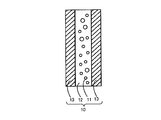
- FIG. 1 shows a schematic cross-sectional view in the thickness direction of one embodiment of a transparent laminate according to the present invention.
- the see-through laminate 10 includes an intermediate resin film 12 in which fine particles 11 are dispersed in a resin, and two transparent base materials 13 sandwiching the intermediate resin film 12.
- the see-through laminate according to the present invention can be used as it is as a transparent screen. Since a transparent screen is required not to impair transmission visibility, it is preferable that the laminate has high visible light transmittance and high image clarity and transparency.
- the term “transparent” is sufficient as long as the transparency can be realized according to the application, and includes “translucent”.
- the total light transmittance of the laminate is preferably 65% or more, more preferably 70% or more, still more preferably 80% or more, and even more preferably 85% or more. Further, the laminate has a haze value of preferably 35% or less, more preferably 1 to 25%, more preferably 1.5 to 20%, and still more preferably 2 to 15%. Particularly preferred is 2.5 to 10%. When the total light transmittance and haze value of the laminate are within the above ranges, the transparency is high and the transmission visibility can be further improved. In the present invention, the total light transmittance and haze value of the laminate can be measured in accordance with JIS-K-7361 and JIS-K-7136.
- the laminate has an image clarity of preferably 70% or more, more preferably 75% or more, still more preferably 80% or more, still more preferably 85% or more, and particularly preferably 90%. That's it.
- image clarity of the laminate is within the above range, an image that appears to be transmitted becomes extremely clear.
- the image clarity is a value of image definition (%) when measured with an optical comb width of 0.125 mm in accordance with JIS K7374.
- the thickness of the laminate is preferably 10 ⁇ m to 100 mm (100,000 ⁇ m), more preferably 50 ⁇ m to 50 mm (50000 ⁇ m), from the viewpoints of durability, application, productivity, handleability, and transportability.
- the thickness is preferably 100 ⁇ m to 10 mm (10000 ⁇ m).
- the “transparent laminate” includes various forms of molded products such as so-called films, sheets, plates (plate-shaped molded products).
- the intermediate resin film can be seen through and includes a resin and fine particles dispersed in the resin.
- the intermediate resin film having a light diffusion function diffuses the projection light emitted from the projection device anisotropically and sufficiently, thereby allowing the visibility of the diffused light and the transmitted light to be seen. It can be compatible with sex.
- the thickness of the intermediate resin film is preferably 5 ⁇ m to 1 mm (1000 ⁇ m), more preferably 10 ⁇ m to 800 ⁇ m, still more preferably 20 ⁇ m to 500 ⁇ m, and even more preferably 50 ⁇ m to 300 ⁇ m. If the thickness of the intermediate resin film is within the above range, the diffused light visibility is ensured by anisotropically and sufficiently diffusing the projection light emitted from the projection device while ensuring the transparency of the intermediate resin film. And the visibility of transmitted light can both be achieved.
- a highly transparent resin is preferably used in order to obtain a transparent body.
- Highly transparent resins include acrylic resins, acrylic urethane resins, polyester acrylate resins, polyurethane acrylate resins, epoxy acrylate resins, polyester resins, polyolefin resins, urethane resins, epoxy resins, and polycarbonate resins.
- thermoplastic resin such as vinyl resins, polysulfone resins, and fluorine resins, thermosetting resins, ionizing radiation curable resins, and the like can be used.
- a thermoplastic resin is preferable from the viewpoint of the moldability of the intermediate resin film, but is not particularly limited.
- thermoplastic resin acrylic resins, polyester resins, polyolefin resins, vinyl resins, polycarbonate resins, and polystyrene resins are preferably used.
- the ionizing radiation curable resin include acrylic, urethane, acrylic urethane, epoxy, and silicone resins.
- those having an acrylate-based functional group such as relatively low molecular weight polyester resins, polyether resins, acrylic resins, epoxy resins, urethane resins, alkyd resins, spiroacetal resins, polybutadiene resins, polythiol polyene resins, many Monofunctional monomers such as (meth) allylate oligomers or prepolymers of polyfunctional compounds such as monohydric alcohols, and reactive diluents such as ethyl (meth) acrylate, ethylhexyl (meth) acrylate, styrene, methylstyrene, N-vinylpyrrolidone
- polyfunctional monomers such as polymethylolpropane tri (meth) acrylate, hexanediol (meth) acrylate, tripropylene glycol di (meth) acrylate, diethylene glycol di (meth) acrylate Preferred are those containing a
- the ionizing radiation curable resin may be mixed with a thermoplastic resin and a solvent.
- thermosetting resins include phenolic resins, epoxy resins, silicone resins, melamine resins, urethane resins, urea resins, and the like. Among these, epoxy resins and silicone resins are preferable.
- an inorganic material or an organic material that can be atomized to a nano size or a micron size can be suitably used.
- the shape of the fine particles is not particularly limited, and a spherical shape, a flat shape, a cube, a rectangular parallelepiped, a flake shape, and an indefinite shape can be used.
- the average diameter of the fine particles is 0.1 nm to 100 ⁇ m, preferably 1 nm to 50 ⁇ m, more preferably 5 nm to 20 ⁇ m, still more preferably 10 nm to 10 ⁇ m, and particularly preferably 50 nm to 5 ⁇ m.
- the average diameter and the average aspect ratio are within the above ranges, when the laminate is used for a transparent screen, a sufficient scattering effect of the projection light can be obtained without impairing the transmission visibility. Can be projected.
- the average diameter of the fine particles was measured using a laser diffraction particle size distribution measuring apparatus (manufactured by Shimadzu Corporation, product number: SALD-2300).
- the average aspect ratio of the fine particles was calculated from an SEM (trade name: SU-1500, manufactured by Hitachi High-Technologies Corporation) image.
- Fine particles include zirconium oxide, titanium oxide, aluminum oxide, magnesium oxide, cerium oxide, barium titanate, barium sulfate, calcium carbonate, silica, diamond and other inorganic materials, aluminum, silver, platinum, gold, titanium , Nickel, tin, indium, tin-cobalt alloy, zinc sulfide, metal-coated mica, metal-coated glass and other inorganic materials such as acrylic resin beads and styrene resin beads Can be used. These fine particles can be used singly or in combination of two or more. These fine particles may be commercially available.
- the content of fine particles in the intermediate resin film is 0.0001 to 15% by mass, preferably 0.001 to 3% by mass, and more preferably 0.0015 to 2% by mass with respect to the resin. More preferably, it is 0.002 to 1% by mass, even more preferably 0.003 to 0.5% by mass, and particularly preferably 0.004 to 0.2% by mass. If the content of fine particles in the intermediate resin film is within the above range, diffusion can be achieved by anisotropically and sufficiently diffusing the projection light emitted from the projection device while ensuring transparency in the intermediate resin film. Both the visibility of light and the visibility of transmitted light can be achieved.
- a conventionally well-known additive may be added to the intermediate resin film within a range not impairing the transmission visibility and desired optical performance of the laminate.
- the additive include an antioxidant, a lubricant, an ultraviolet absorber, a dispersant, a dye, a compatibilizing agent, a nucleating agent, and a stabilizer.
- the two transparent substrates constituting the laminate are sandwiching the intermediate resin film and are located on the surface side of the laminate.
- the center surface average roughness SRa of the outermost surfaces on both sides of the laminate is 0.05 to 5.5 nm, preferably 0. .05 to 5.0 nm, more preferably 0.05 to 4.5 nm, still more preferably 0.05 to 2.5 nm, and still more preferably 0.05 to 1.0 nm.
- the center plane average roughness SRa on the outermost surfaces on both sides of the laminate is within the above range, when used as a transparent screen, the surface is smooth, so that high image clarity can be realized.
- the center surface average roughness SRa can be measured using a surface fine shape measuring instrument, for example, manufactured by Kosaka Laboratory Ltd., product number: Surfcorder ET4000A.
- the intermediate resin film is sandwiched between transparent substrates having an extremely smooth surface, so that it is difficult to obtain a smooth surface that is difficult to obtain when an intermediate resin film such as a resin molded product or an injection molded plate is used as it is as a transparent screen. Can be realized.
- the laminate may further include a transparent substrate via an adhesive layer as necessary on these transparent substrates in addition to the two transparent substrates sandwiching the intermediate resin film.
- the laminated body (multilayer laminated glass type laminated body) provided with the further transparent base material can be suitably used from a viewpoint of durability, a use, productivity, a handleability, and a conveyance property.
- the type of transparent substrate is not particularly limited, but from the viewpoint of durability, application, productivity, handleability, and transportability, it is transparent such as glass, polycarbonate resin, polyester resin, acrylic resin, etc. It is preferable to use a resin plate made of resin.
- the thickness of the transparent substrate is preferably 5 ⁇ m to 50 mm (50000 ⁇ m), more preferably 50 ⁇ m to 20 mm (20000 ⁇ m), from the viewpoint of durability, application, productivity, handleability, and transportability.
- the thickness is preferably 50 ⁇ m to 10 mm (10000 ⁇ m).
- the laminate may further include another resin film between the intermediate resin film and the two transparent substrates that sandwich the intermediate resin film.
- the layer structure of the laminate can be transparent substrate / other resin film / intermediate resin film / other resin film / transparent substrate.
- the other resin film can serve as an adhesive layer or an adhesive layer that improves the adhesion between the transparent substrate and the intermediate resin film.
- a polyvinyl butyral resin, an ethylene / vinyl acetate copolymer resin, or the like can be preferably used, and the same resin as the resin for forming the intermediate resin film can be used.
- the resin type of the other resin film may be the same as or different from the resin type of the intermediate resin film.
- the antireflection layer is a layer for preventing reflection on the outermost surface of the laminate and reflection from external light.
- the antireflection layer may be laminated on the surface side (viewer side) of the laminate, or may be laminated on both surfaces. In particular, when used as a transparent screen, it is preferably laminated on the viewer side.
- the antireflection layer is preferably formed using a resin that does not impair the transmission visibility and desired optical properties of the laminate.
- a resin curable by ultraviolet rays or an electron beam that is, an ionizing radiation curable resin, a mixture of an ionizing radiation curable resin and a thermoplastic resin and a solvent, and a thermosetting resin are used. Among these, ionizing radiation curable resins are particularly preferable.
- the method for forming the antireflection layer is not particularly limited, but is a method of pasting a coating film, a method of dry coating directly on a film substrate by vapor deposition or sputtering, gravure coating, micro gravure coating, bar coating, slide die coating. Methods such as wet coating such as coating, slot die coating, and dip coating can be used.
- the manufacturing method of the laminated body by this invention includes the process of forming an intermediate resin film, and the process of clamping an intermediate resin film with two transparent base materials.
- the intermediate resin film is formed by a known method such as an extrusion molding method, an injection molding method, a calender molding method, a blow molding method, a compression molding method, or a casting method comprising a kneading step and a film forming step. Can be processed.
- An extrusion method can be suitably used because of the wide range of film thickness that can be formed.
- the injection molding method can also be used suitably from a viewpoint of the moldability of a thick film sheet.
- each process of a manufacturing method is explained in full detail.
- mixing process is a process of kneading said resin and microparticles
- the kneading extruder includes a single-screw kneading extruder and a twin-screw kneading extruder, both of which can be used.
- the average value over the entire screw length of the twin-screw kneading extruder is preferably 3 to 1800 KPa, more preferably 6 to 1400 KPa, while applying the above-mentioned resin and fine particles. Is preferably kneaded to obtain a resin composition. If the shear stress is within the above range, the fine particles can be sufficiently dispersed in the resin. In particular, if the shear stress is 3 KPa or more, the dispersion uniformity of the fine particles can be further improved, and if it is 1800 KPa or less, the decomposition of the resin is prevented and bubbles are prevented from being mixed into the intermediate resin film. Can do.
- the shear stress can be set in a desired range by adjusting the twin-screw kneading extruder.
- a resin composition obtained by adding a resin (master batch) to which fine particles have been added in advance and a resin to which fine particles have not been added is kneaded using a twin-screw kneading extruder to obtain a resin composition. Also good.
- a resin (master batch) to which fine particles have been added in advance may be produced using a single-screw kneading extruder, and a master batch is produced using a generally known dispersant. You may do it.
- additives may be added to the resin composition as long as the transmission visibility of the laminate and the desired optical performance are not impaired.
- the additive include an antioxidant, a lubricant, an ultraviolet absorber, a dispersant, a dye, a compatibilizing agent, a nucleating agent, and a stabilizer.
- the twin-screw kneading extruder used in the kneading process is one in which two screws are inserted into a cylinder, and is configured by combining screw elements.
- a flight screw including at least a conveying element and a kneading element can be suitably used.
- the kneading element preferably contains at least one selected from the group consisting of a kneading element, a mixing element, and a rotary element.
- the film forming step is a step of forming a film of the resin composition obtained in the kneading step.
- the film forming method is not particularly limited, and a film made of the resin composition can be formed by a conventionally known method.
- the resin composition obtained in the kneading step is supplied to a melt extruder heated to a temperature equal to or higher than the melting point (Tm to Tm + 70 ° C.) to melt the resin composition.
- a melt extruder a single screw extruder, a twin screw extruder, a vent extruder, a tandem extruder, etc. can be used according to the objective.
- the melted resin composition is extruded into a sheet shape by a die such as a T die, and the extruded sheet material is rapidly cooled and solidified by a rotating cooling drum or the like, thereby forming a film.
- the film forming process is performed continuously with the above kneading process, the resin composition obtained in the kneading process is directly extruded into a sheet shape with a die in a molten state, and a film-shaped intermediate resin film is formed. It can also be molded.
- the film-shaped intermediate resin film obtained by the film forming step may be further uniaxially or biaxially stretched by a conventionally known method. By stretching the intermediate resin film, the strength of the intermediate resin film can be improved.
- the sandwiching step is a step of sandwiching the intermediate resin film obtained above between two transparent substrates.
- the intermediate resin film is cut into a required size, and put in a nylon bag provided with a tube connected to a vacuum pump while being sandwiched between transparent substrates.
- the nylon bag is put in an autoclave, and heated at a temperature higher than the glass transition temperature of the resin forming the intermediate resin film in a vacuum state inside the nylon bag.
- a laminated body temporarily bonded can be obtained by heating in vacuum.
- the temporarily bonded laminate is put into the autoclave again and heated at a temperature higher than the softening temperature of the resin forming the intermediate resin film while applying pressure. After cooling, a fully bonded laminate is obtained.
- a vehicle member according to the present invention includes the above-described transparent body.
- the member for vehicles may consist only of the above-mentioned see-through laminated body, and may further include an antireflection layer or the like.
- Examples of the vehicle member include a windshield and a side glass. Since the vehicle member includes the above-described transparent laminated body, a clear image can be displayed on the vehicle member without providing a separate screen.
- a residential member according to the present invention comprises the above-described laminated body that can be seen through.
- the housing member may be composed of only the above-described laminate that can be seen through, or may further include an antireflection layer or the like.
- Examples of the house member include a window glass of a house, a convenience store, a glass wall of a road surface store, and the like.
- a transparent screen according to the present invention comprises the above-described transparent body.
- the transparent screen may be composed of only the above-described transparent laminate, or may further include an antireflection layer or the like.
- the transparent screen may be a rear projection screen (transmission screen) or a front projection screen (reflection screen). That is, in the video display device including the transparent screen according to the present invention, the position of the light source may be on the viewer side with respect to the screen, or may be on the side opposite to the viewer.
- An image projection apparatus includes the above-described laminated body that can be seen through and a projection apparatus.
- the projection device is not particularly limited as long as it can project an image on a screen.
- a commercially available rear projector or front projector can be used.
- FIG. 2 shows a schematic diagram of an embodiment of a transparent screen and an image projector according to the present invention.
- the transparent screen 21 the see-through laminate 10 shown in FIG. 1 can be used as it is.
- the image projection device includes a transparent screen 21 and a projection device 23 ⁇ / b> A installed on the opposite side (rear side) of the viewer 22 with respect to the transparent screen 21.
- Projection light 24 ⁇ / b> A emitted from the projection device 23 ⁇ / b> A is incident from the back side of the transparent screen 21 and diffused anisotropically by the transparent screen 21, so that the viewer 22 can visually recognize the diffused light 25 ⁇ / b> A.
- the image projection device includes a transparent screen 21 and a projection device 23 ⁇ / b> B installed on the same side (front side) as the viewer 22 with respect to the transparent screen 21.
- the projection light 24B emitted from the projection device 23B is incident from the front side of the transparent screen 21 and diffused anisotropically by the transparent screen 21, so that the viewer 22 can visually recognize the diffused light 25B.
- the performance as a reflective screen can be evaluated by observing from the front of the screen, and the performance as a transmissive screen can be evaluated by observing from the back of the screen.
- evaluation criteria A: An extremely clear image could be visually recognized.
- the transmitted light intensity from ⁇ 85 degrees to +85 degrees was measured in steps of 1 degree with the incident angle of the light source kept at 0 degrees.
- the viewing angle was defined as a range where the transmitted light intensity was 0.001 or more in the measurement range.
- Example 1 (1) Intermediate resin film production process (kneading and film-forming process) 100 parts by mass of polyvinyl butyral powder (manufactured by Kuraray Co., Ltd., brand Mowital B30H) and 0.3 part by mass of zirconium oxide powder (average diameter: 11 nm, manufactured by Kanto Denka Kogyo Co., Ltd.) were uniformly mixed. The mixed powder was put into a hopper of a twin-screw kneading extruder (manufactured by Technobel Co., Ltd.) equipped with a T die and extruded at 180 ° C. to obtain an intermediate resin film having a thickness of 100 ⁇ m.
- a twin-screw kneading extruder manufactured by Technobel Co., Ltd.
- the laminated glass-type laminate temporarily bonded from the bag is taken out, heated in an autoclave at a pressure of 8 kg / cm 2 and a temperature higher than the softening temperature of the PVB resin (160 ° C.) for 2 hours, and completely laminated. Got the body.
- (3) Evaluation of transparent screen When the obtained laminate was used for a transparent screen as it was, the total light transmittance was 89%, the haze value was 14%, and it had sufficient transparency. Further, the image clarity was 94%, and the image seen through was very clear. Furthermore, as a result of visual evaluation of the image sharpness, it was possible to clearly see the image both from the front and from the rear, and in particular, from the rear, an extremely clear image could be seen.
- the viewing angle measured with a goniophotometer was ⁇ 24 degrees, and it was found that the viewing angle characteristics were excellent.
- Example 2 A laminate was produced in the same manner as in Example 1 except that two glass substrates (SRa: 0.06 nm, thickness: 2 mm) were used in the laminate production step.
- the total light transmittance was 89%
- the haze value was 13%
- it had sufficient transparency was 89%
- the image clarity was 96%
- the image seen through was very clear.
- the viewing angle measured with a goniophotometer was ⁇ 23 degrees, and it was found that the viewing angle characteristics were excellent.
- Example 3 A laminate was produced in the same manner as in Example 1 except that two glass substrates (SRa: 2.5 nm, thickness: 2 mm) were used in the laminate production step.
- the total light transmittance was 89%
- the haze value was 14%
- it had sufficient transparency was 89%
- the image clarity was 90%
- the image seen through was very clear.
- the viewing angle measured with a goniophotometer was ⁇ 24 degrees, and it was found that the viewing angle characteristics were excellent.
- Example 4 A laminate was produced in the same manner as in Example 1 except that two glass substrates (SRa: 4.5 nm, thickness: 2 mm) were used in the laminate production step.
- the total light transmittance was 89%
- the haze value was 14%
- it had sufficient transparency was 81%
- the image seen through was clear.
- the viewing angle measured with a goniophotometer was ⁇ 24 degrees, and it was found that the viewing angle characteristics were excellent.
- Example 5 (1) In the production process of the intermediate resin film, 14 parts by mass of dry silica particles (trade name: NHM-4N, hydrophobic, average diameter 90 nm, manufactured by Tokuyama Corporation) are added as fine particles, and the thickness of the intermediate resin film An intermediate resin film was produced in the same manner as in Example 1 except that the thickness was changed to 50 ⁇ m. As a result of measuring the center plane average roughness (SRa) in the range of 5 mm ⁇ 5 mm of the intermediate resin film, it was 6.2 nm and the image clarity was 55%. Subsequently, a laminate was produced in the same manner as in Example 1.
- SRa center plane average roughness
- the total light transmittance was 89%
- the haze value was 31%
- it had sufficient transparency was 88%
- the image seen through was clear.
- the viewing angle measured with a goniophotometer was ⁇ 31 degrees, and it was found that the viewing angle characteristics were excellent.
- Example 6 (1) In the production process of the intermediate resin film, in the same manner as in Example 1, except that 0.008 parts by mass of flaky aluminum fine particles (average diameter: 10 ⁇ m, aspect ratio: 300) having brilliant properties were added as fine particles. A resin film was prepared. As a result of measuring the center plane average roughness (SRa) in the 5 mm ⁇ 5 mm range of the intermediate resin film, it was 5.4 nm and the image clarity was 70%. Subsequently, a laminate was produced in the same manner as in Example 1. When the obtained laminate was used for a transparent screen as it was, the total light transmittance was 87%, the haze value was 4.3%, and it had sufficient transparency. Further, the image clarity was 94%, and the image seen through was very clear.
- SRa center plane average roughness
- Example 7 (1) In the production process of the intermediate resin film, in the same manner as in Example 1, except that 0.04 parts by mass of flaky aluminum fine particles (average diameter: 10 ⁇ m, aspect ratio: 300) having brilliancy were added as fine particles. A resin film was prepared. As a result of measuring the average roughness (SRa) in the 5 mm ⁇ 5 mm range of the intermediate resin film, it was 5.6 nm and the image clarity was 69%. Subsequently, a laminate was produced in the same manner as in Example 1. When the obtained laminate was used for a transparent screen as it was, the total light transmittance was 70%, the haze value was 17%, and it had sufficient transparency. Further, the image clarity was 94%, and the image seen through was very clear.
- SRa average roughness
- Example 8 (1) In the production process of the intermediate resin film, zirconium oxide powder (average diameter: 11 nm, manufactured by Kanto Denka Kogyo Co., Ltd.) 0.15 parts by mass and flaky aluminum fine particles (average diameter 10 ⁇ m, An intermediate resin film was produced in the same manner as in Example 1 except that 0.008 parts by mass of aspect ratio 300) was added. As a result of measuring the center plane average roughness (SRa) in the 5 mm ⁇ 5 mm range of the intermediate resin film, it was 5.6 nm and the image clarity was 68%. Subsequently, a laminate was produced in the same manner as in Example 1.
- SRa center plane average roughness
- the total light transmittance was 86%
- the haze value was 12%
- it had sufficient transparency was 86%
- the image clarity was 94%
- the image seen through was very clear.
- the viewing angle measured with a goniophotometer was ⁇ 23 degrees, and it was found that the viewing angle characteristics were excellent.
- Example 9 (1) In the production step of the intermediate resin film, in the same manner as in Example 1, except that 0.003 part by mass of flaky aluminum fine particles (average diameter: 1 ⁇ m, aspect ratio: 300) having glitter was added as fine particles. A resin film was prepared. As a result of measuring the average roughness (SRa) in the 5 mm ⁇ 5 mm range of the intermediate resin film, it was 5.2 nm and the image clarity was 72%. Subsequently, a laminate was produced in the same manner as in Example 1. When the obtained laminate was used for a transparent screen as it was, the total light transmittance was 89%, the haze value was 3.5%, and it had sufficient transparency. Further, the image clarity was 94%, and the image seen through was very clear.
- SRa average roughness
- Example 10 An intermediate resin film production process (kneading and film-forming process) In the production process of the intermediate resin film, polyethylene terephthalate resin (made by Bell Polyester Products, brand IFG8L) is used instead of polyvinyl butyral resin, the addition amount of zirconium oxide powder is changed to 0.1 parts by mass, and the extrusion temperature is 250 ° C. An intermediate resin film was produced in the same manner as in Example 1 except that it was changed to. As a result of measuring the average surface roughness (SRa) in the 5 mm ⁇ 5 mm range of the intermediate resin film, it was 4.8 nm and the image clarity was 77%.
- SRa average surface roughness
- PVB resin powder manufactured by Kuraray Co., Ltd., brand Mowital B30H
- T die manufactured by Technobel Co., Ltd.
- Another resin film was obtained.
- the laminated glass-type laminate temporarily bonded from the bag is taken out and heated in an autoclave at a pressure of 8 kg / cm 2 and a temperature higher than the softening temperature of the PVB resin (160 ° C.) for 2 hours to completely adhere the laminate.
- the total light transmittance was 88%
- the haze value was 6.9%
- it had sufficient transparency was .
- the image clarity was 94%
- the image seen through was very clear.
- the viewing angle measured with a goniophotometer was ⁇ 23 degrees, and it was found that the viewing angle characteristics were excellent.
- Example 1 (2) In the production process of the laminate, the intermediate resin film obtained in Example 1 was made of one glass substrate (SRa: 2.5 nm, thickness: 2 mm) using an acrylic resin-based adhesive. A laminated body was fabricated by pasting on one side at room temperature of 25 ° C. When the obtained laminate was used for a transparent screen as it was, the total light transmittance was 89%, the haze value was 14%, and it had sufficient transparency. Furthermore, as a result of visual evaluation of the image sharpness, it was possible to clearly see the image both from the front and from the rear. The viewing angle measured with a goniophotometer was ⁇ 24 degrees, and it was found that the viewing angle characteristics were excellent.
- the image clarity was 65%, and it was difficult to read the characters when the background characters were seen through the screen. Since the intermediate resin film is present in the outermost layer, the surface roughness SRa on one side of this screen was 5.8 nm.
- the screen in which the intermediate resin film is sandwiched between the glass substrates as in Example 1 is excellent in image clarity because the interface and the surface can be smoothed. However, the externally attached screen may have poor image clarity because the surface is rough. It became clear.
- the average surface roughness (SRa) in the 5 mm ⁇ 5 mm range of the intermediate resin film As a result of measuring the average surface roughness (SRa) in the 5 mm ⁇ 5 mm range of the intermediate resin film, it was 4.9 nm and the image clarity was 71%.
- the total light transmittance was 89%
- the haze value was 14%, and it had sufficient transparency.
- the viewing angle measured with a goniophotometer was ⁇ 24 degrees, and it was found that the viewing angle characteristics were excellent.
- the image clarity was 68%, and it was difficult to read the characters when the background characters were seen through the screen.
- the obtained plate-shaped molded product (acrylic plate) had a surface roughness SRa of 5.2 nm and image clarity of 66%.
- the total light transmittance was 88%
- the haze value was 16%, and it had sufficient transparency.
- the viewing angle measured with a goniophotometer was ⁇ 25 degrees, and it was found that the viewing angle characteristics were excellent.
- the image clarity was 66%, and when the characters on the background were seen through the screen, the characters were difficult to read.
- the total light transmittance was 88% and the image clarity was 85%. Furthermore, as a result of visual evaluation of the image sharpness, it was possible to visually recognize the image very clearly when viewed from behind, but the image quality of the projected image was poor and the projected image was unclear when viewed from the front. Met.
- the viewing angle measured with a goniophotometer was ⁇ 33 degrees, and it was found that the viewing angle characteristics were excellent. On the other hand, the haze value was 37%, the transparency was poor, and the screen was cloudy, so that the background characters could not be read clearly.
- the viewing angle measured with a goniophotometer was ⁇ 20 degrees, and it was found that the viewing angle characteristics were excellent.
- the projection image was poor in both the observation from the front and the observation from the rear, and the projected image was unclear. It was not applicable as a screen.
- Table 1 shows the details of the physical properties and performance evaluation results of the laminates and transparent screens prepared in Examples and Comparative Examples.
Landscapes
- Physics & Mathematics (AREA)
- General Physics & Mathematics (AREA)
- Engineering & Computer Science (AREA)
- Optics & Photonics (AREA)
- Civil Engineering (AREA)
- Structural Engineering (AREA)
- Multimedia (AREA)
- Signal Processing (AREA)
- Chemical & Material Sciences (AREA)
- Dispersion Chemistry (AREA)
- Optical Elements Other Than Lenses (AREA)
- Overhead Projectors And Projection Screens (AREA)
- Laminated Bodies (AREA)
- Projection Apparatus (AREA)
Abstract
Description
中間樹脂膜と、前記中間樹脂膜を挟持する2つの透明基材と、を備えてなる透視可能な積層体であって、
前記中間樹脂膜が、樹脂と、前記樹脂に対して0.0001~15質量%の、1nm~100μmの平均径を有する微粒子とを含んでなり、
前記積層体の両側の最表面の中心面平均粗さSRaが0.05~5.5 nmである、透視可能な積層体が提供される。
本発明による透視可能な積層体は、中間樹脂膜と、前記中間樹脂膜を挟持する2つの透明基材とを備えてなる。当該積層体は透明スクリーンとして好適に用いることができ、写像性および透明性を損なわずに当該積層体上に鮮明な映像を結像させることができる。また、光拡散機能を有する中間樹脂膜は、2つの透明基材により挟持されており、外部に露出していない。そのため、中間樹脂膜は外部からの影響を受け難く、積層体は耐久性に優れる。なお、当該積層体は、写像性および透明性を損なわない範囲で、反射防止層等の他の層をさらに備えてもよい。
中間樹脂膜は、透視可能であり、樹脂と、樹脂中に分散された微粒子とを含んでなる。積層体が透明スクリーンとして用いられた場合、光拡散機能を有する中間樹脂膜は投射装置から出射される投影光を異方的に十分に拡散させることで、拡散光の視認性と透過光の視認性とを両立することができる。
中間樹脂膜を形成する樹脂としては、透視可能な積層体を得るために、透明性の高い樹脂を用いることが好ましい。透明性の高い樹脂としては、アクリル系樹脂、アクリルウレタン系樹脂、ポリエステルアクリレート系樹脂、ポリウレタンアクリレート系樹脂、エポキシアクリレート系樹脂、ポリエステル系樹脂、ポリオレフィン系樹脂、ウレタン系樹脂、エポキシ系樹脂、ポリカーボネート系樹脂、セルロース系樹脂、アセタール系樹脂、ビニル系樹脂、ポリスチレン系樹脂、ポリアミド系樹脂、ポリイミド系樹脂、メラミン系樹脂、フェノール系樹脂、シリコーン系樹脂、ポリアリレート系樹脂、ポリビニルアルコール系樹脂、ポリ塩化ビニル系樹脂、ポリスルホン系樹脂、およびフッ素系樹脂等の熱可塑性樹脂、熱硬化性樹脂、ならびに電離放射線硬化性樹脂等を用いることができる。これらの中でも、熱可塑性樹脂を用いることが、中間樹脂膜の成形性の観点から好ましいが、特に制限されるものではない。熱可塑性樹脂としては、アクリル系樹脂、ポリエステル系樹脂、ポリオレフィン系樹脂、ビニル系樹脂、ポリカーボネート系樹脂、およびポリスチレン系樹脂を用いることが好ましく、ポリメタクリル酸メチル樹脂、ポリエチレンテレフタレート樹脂、ポリエチレンナフタレート樹脂、ポリプロピレン樹脂、シクロオレフィンポリマー樹脂、セルロースアセテートプロピオネート樹脂、ポリビニルブチラール樹脂、ポリカーボネート樹脂、およびポリスチレン樹脂を用いることがより好ましい。これらの樹脂は、1種単独または2種以上を組み合わせて用いることができる。電離放射線硬化型樹脂としては、アクリル系やウレタン系、アクリルウレタン系やエポキシ系、シリコーン系樹脂等が挙げられる。これらの中でも、アクリレート系の官能基を有するもの、例えば比較的低分子量のポリエステル樹脂、ポリエーテル樹脂、アクリル樹脂、エポキシ樹脂、ウレタン樹脂、アルキッド樹脂、スピロアセタール樹脂、ポリブタジェン樹脂、ポリチオールポリエン樹脂、多価アルコール等の多官能化合物の(メタ)アルリレート等のオリゴマー又はプレポリマー及び反応性希釈剤としてエチル(メタ)アクリレート、エチルヘキシル(メタ)アクリレート、スチレン、メチルスチレン、N-ビニルピロリドン等の単官能モノマー並びに多官能モノマー、例えば、ポリメチロールプロパントリ(メタ)アクリレート、ヘキサンジオール(メタ)アクリレート、トリプロピレングリコールジ(メタ)アクリレート、ジエチレングリコールジ(メタ)アクリレート、ペンタエリスリトールトリ(メタ)アクリレート、ジペンタエリスリトールヘキサ(メタ)アクリレート、1,6-ヘキサンジオールジ(メタ)アクリレート、ネオペンチルグリコールジ(メタ)アクリレート等を比較的多量に含有するものが好ましい。また、電離放射線硬化型樹脂は熱可塑性樹脂および溶剤と混合されたものであってもよい。熱硬化型樹脂としては、フェノール系樹脂、エポキシ系樹脂、シリコーン系樹脂、メラミン樹脂、ウレタン系樹脂、尿素樹脂等が挙げられる。これらの中でも、エポキシ系樹脂、シリコーン系樹脂が好ましい。
中間樹脂膜を形成する微粒子としては、ナノサイズまたはミクロンサイズに微粒化できる無機物または有機物を好適に用いることができる。微粒子の形状は特に限定されず、球状、扁平形状、立方体、直方体、薄片状、不定形のものを用いることができる。微粒子の平均径は、0.1nm~100μmであり、好ましくは1nm~50μmであり、さらに好ましくは5nm~20μmであり、さらにより好ましくは10nm~10μmであり、特に好ましくは50nm~5μmである。微粒子が薄片状である場合、平均アスペクト比(=薄片状微粒子の平均径/平均厚み)は、好ましくは3~800であり、より好ましくは4~700であり、さらに好ましくは5~600であり、さらにより好ましくは10~500である。平均径および平均アスペクト比が上記範囲内であると、積層体を透明スクリーン用として使用した場合に、透過視認性を損なわずに投影光の十分な散乱効果が得られることで、鮮明な映像を投影することができる。なお、本発明において、微粒子の平均径は、レーザー回折式粒子径分布測定装置((株)島津製作所製、品番:SALD-2300)を用いて測定した。また、微粒子の平均アスペクト比は、SEM((株)日立ハイテクノロジーズ製、商品名:SU-1500)画像より算出した。
中間樹脂膜は、積層体の透過視認性や所望の光学性能を損なわない範囲で、従来公知の添加剤を加えてもよい。添加剤としては、例えば、酸化防止剤、滑剤、紫外線吸収剤、分散剤、染料、相溶化剤、核剤および安定剤等が挙げられる。
積層体を構成する2つの透明基材は、中間樹脂膜を挟持するものであり、積層体の表面側に位置するものである。積層体の両側の最表面(透明基材が最表面となる場合、透明基材の最表面側の面)の中心面平均粗さSRaは、0.05~5.5nmであり、好ましくは0.05~5.0nmであり、より好ましくは0.05~4.5nmであり、さらに好ましくは0.05~2.5nmであり、さらにより好ましくは0.05~1.0nmである。積層体の両側の最表面の中心面平均粗さSRaが上記範囲内であれば、透明スクリーンとして用いた場合、表面が平滑なため、高い写像性を実現することができる。中心面平均粗さSRaは、表面微細形状測定器、たとえば(株)小坂研究所製、品番:サーフコーダET4000Aを用いて測定することができる。本発明においては、極めて平滑な表面を有する透明基材により中間樹脂膜を挟持することで、樹脂成形物や射出成形板等の中間樹脂膜をそのまま透明スクリーンとして用いた場合には得難い表面の平滑性を実現することができる。
当該積層体は、中間樹脂膜と、中間樹脂膜を挟持する2つの透明基材との間に、さらに他の樹脂膜を備えてもよい。例えば、当該積層体の層構成は、透明基材/他の樹脂膜/中間樹脂膜/他の樹脂膜/透明基材とすることができる。当該他の樹脂膜は、透明基材と中間樹脂膜の密着性を向上させる接着層または粘着層としての機能を果たすことができる。他の樹脂膜を形成する樹脂としては、ポリビニルブチラール樹脂、エチレン・酢酸ビニル共重合樹脂等を好適に用いることができ、上述の中間樹脂膜を形成する樹脂と同様の樹脂を用いることができる。また、他の樹脂膜の樹脂の種類は、中間樹脂膜の樹脂の種類と同一であっても良いし、異なっていてもよい。
反射防止層は、積層体の最表面での反射や、外光からの映りこみを防止するための層である。反射防止層は、積層体の表面側(視認者側)に積層されるものであってもよく、両面に積層されるものであってもよい。特に透明スクリーンとして用いる際には視認者側に積層するのが好ましい。反射防止層は、積層体の透過視認性や所望の光学特性を損なわないような樹脂を用いて形成することが好ましい。このような樹脂としては、例えば、紫外線・電子線によって硬化する樹脂、即ち、電離放射線硬化型樹脂、電離放射線硬化型樹脂に熱可塑性樹脂と溶剤を混合したもの、および熱硬化型樹脂を用いることができるが、これらの中でも電離放射線硬化型樹脂が特に好ましい。
本発明による積層体の製造方法は、中間樹脂膜を形成する工程と、中間樹脂膜を2つの透明基材により挟持する工程とを含むものである。中間樹脂膜を形成する工程は、混練工程と製膜工程からなる押出成形法、射出成形法、カレンダー成形法、ブロー成形法、圧縮成形法、キャスト法など公知の方法により、中間樹脂膜を成型加工できる。製膜可能な膜厚範囲の広さから、押出成形法を好適に用いることができる。また、厚膜シートの成形性の観点から、射出成形法を好適に用いることもできる。以下、製造方法の各工程について詳述する。
混練工程は、混練押出機を用いて、上記の樹脂と微粒子とを混錬し、樹脂組成物を得る工程である。混練押出機には単軸混練押出機と二軸混練押出機があり、どちらも使用することができる。二軸混錬押出機を用いる場合は、二軸混錬押出機のスクリュー全長にわたる平均値として、好ましくは3~1800KPa、より好ましくは6~1400KPaのせん断応力をかけながら、上記の樹脂と微粒子とを混錬して、樹脂組成物を得ることが好ましい。せん断応力が上記範囲内であれば、微粒子を樹脂中に十分に分散させることができる。特に、せん断応力が3KPa以上であれば、微粒子の分散均一性をより向上させることができ、1800KPa以下であれば、樹脂の分解を防ぎ、中間樹脂膜内に気泡が混入するのを防止することができる。せん断応力は、二軸混錬押出機を調節することで、所望の範囲に設定することができる。本発明においては、微粒子を予め添加した樹脂(マスターバッチ)と、微粒子を添加していない樹脂とを混合したものを、二軸混錬押出機を用いて混練して、樹脂組成物を得てもよい。上記は混練工程の一例であり、単軸混練押出機を用いて微粒子を予め添加した樹脂(マスターバッチ)を作製しても良く、一般的に知られている分散剤を使用しマスターバッチを作製しても良い。
製膜工程は、混練工程で得られた樹脂組成物を製膜する工程である。製膜方法は、特に限定されず、従来公知の方法により、樹脂組成物からなるフィルムを製膜することができる。例えば、混練工程で得られた樹脂組成物を、融点以上の温度(Tm~Tm+70℃)に加熱された溶融押出機に供給して、樹脂組成物を溶融する。溶融押出機としては、単軸押出機、二軸押出機、ベント押出機、タンデム押出機等を目的に応じて使用することができる。
挟持工程は、上記で得られた中間樹脂膜を2つの透明基材により挟持する工程である。例えば、中間樹脂膜を必要なサイズに裁断し、透明基材で挟んだ状態で真空ポンプに繋がるチューブが備えられたナイロンバッグに入れる。そのナイロンバッグをオートクレーヴに入れ、ナイロンバッグ内を真空にした状態で中間樹脂膜を形成する樹脂のガラス転移温度よりも高い温度で加熱する。真空中で加熱することで仮接着された積層体が得られる。仮接着された積層体を再びオートクレーヴに入れ、圧力をかけながら中間樹脂膜を形成する樹脂の軟化温度よりも高い温度で加熱する。降温後、完全に接着した積層体が得られる。
本発明による車両用部材は、上記の透視可能な積層体を備えてなる。車両用部材は、上記の透視可能な積層体のみからなるものでもよく、反射防止層等をさらに備えるものでもよい。車両用部材としては、フロントガラスやサイドガラス等が挙げられる。車両用部材は上記の透視可能な積層体を備えることで、別途のスクリーンを設けなくても、車両用部材上に鮮明な画像を表示させることができる。
本発明による住宅用部材は、上記の透視可能な積層体を備えてなる。住宅用部材は、上記の透視可能な積層体のみからなるものでもよく、反射防止層等をさらに備えるものでもよい。住宅用部材としては、住宅の窓ガラス、コンビニや路面店のガラス壁等を挙げることができる。住宅用部材は上記の透視可能な積層体を備えることで、別途のスクリーンを設けなくても、住宅用部材上に鮮明な画像を表示させることができる。
本発明による透明スクリーンは、上記の透視可能な積層体を備えてなる。透明スクリーンは、上記の透視可能な積層体のみからなるものでもよく、反射防止層等をさらに備えるものでもよい。
本発明による画像投影装置は、上記の透視可能な積層体と、投射装置とを備えてなる。投射装置とは、スクリーン上に映像を投射できるものであれば特に限定されず、例えば、市販のリアプロジェクタやフロントプロジェクタを用いることができる。
(1)平均径
レーザー回折式粒子径分布測定装置((株)島津製作所製、品番:SALD-2300)を用いて測定した。
(2)中心面平均粗さSRa
表面微細形状測定器((株)小坂研究所製、品番:サーフコーダET4000A)を用いて測定した。
(3)全光線透過率
濁度計(日本電色工業(株)製、品番:NDH-5000)を用い、JIS K7361-1に準拠して測定した。
(4)ヘイズ
濁度計(日本電色工業(株)製、品番:NDH-5000)を用い、JIS K7136に準拠して測定した。
(5)写像性
写像性測定器(スガ試験機(株)製、品番:ICM-1T)を用い、JIS K7374に準拠して、光学くし幅0.125mmで測定した時の像鮮明度(%)の値を写像性とした。像鮮明度の値が大きい程、透過写像性が高いことを示す。
(6)透明性
下記で作製した積層体の透明性を下記の基準に基づいて目視で評価した。
[評価基準]
○:透明性が優れていた。
×:透明性が劣っていた。
(7)画像鮮明性
透明スクリ-ンとして下記で作製した積層体を、法線方向に対して角度15度で50cm離れた位置から、オンキョーデジタルソリューションズ(株)製のモバイルLEDミニプロジェクターPP-D1Sを用いて画像を投影した。次に、スクリ-ンの面上に焦点が合うようにプロジェクターの焦点つまみを調整した後、スクリ-ンの前方(スクリーンに対してプロジェクターと同じ側、いわゆるフロントプロジェクション)1mおよび後方(スクリーンに対してプロジェクターと反対側、いわゆるリアプロジェクション)1mの2ヶ所からスクリ-ンに映し出された画像を目視で下記の評価基準により評価した。スクリ-ンの前方から観察することで反射型スクリーンとしての性能が評価でき、スクリーンの後方から観察することで透過型スクリーンとしての性能が評価できる。
[評価基準]
◎:極めて鮮明な画像を視認することができた。
○:鮮明な映像を視認することができた。
×:映像を視認できなかった。
×:映像を視認できなかった。
(8)視野角
変角光度計(日本電色工業(株)製、品番:GC5000L)を用いて測定した。光源の入射角を0度にセットし、測定ステージに何も置かない状態での0度方向への透過光強度を100とした。サンプル測定時は、光源の入射角は0度のまま、-85度から+85度までの透過光強度を1度刻みで測定した。測定範囲の中で、透過光強度が0.001以上ある範囲を視野角とした。
(1)中間樹脂膜の作製工程(混練・製膜工程)
ポリビニルブチラール粉末((株)クラレ製、銘柄Mowital B30H)100質量部と、酸化ジルコニウム粉末(平均径:11nm、関東電化工業(株)製)0.3質量部とを、均一に混合した。混合した粉末を、Tダイを備えた二軸混練押出機((株)テクノベル製)のホッパーに投入し、180℃で押し出して厚さ100μmの中間樹脂膜を得た。中間樹脂膜の5mm×5mm範囲の中心面平均粗さ(SRa)測定した結果、5.8nmであり、写像性は66%であった。
(2)積層体の作製工程(挟持工程)
得られた中間樹脂膜を12cm×12cmに裁断した後、2枚のガラス基材(SRa:0.45nm、厚さ:2mm)で挟持した。続いて、ナイロンバッグに入れ、真空ポンプでバッグ内を真空にしながら常圧のオートクレーヴにてポリビニルブチラール(PVB)樹脂のガラス転移温度よりも高い温度(本実施例においては80℃)で、2時間加熱した。その後、バッグから仮接着した合わせガラス型の積層体を取り出し、オートクレーヴにて圧力8kg/cm2、PVB樹脂の軟化温度よりも高い温度(160℃)で2時間加熱し、完全に接着した積層体を得た。
(3)透明スクリーンの評価
得られた積層体をそのまま透明スクリーンに用いたところ、全光線透過率は89%であり、ヘイズ値は14%であり、十分な透明性を有していた。また、写像性は94%であり、透過して見える像は極めて鮮明であった。さらに、画像鮮明性を目視で評価した結果、前方からの観察、後方からの観察ともに鮮明に映像を視認することができ、特に後方からの観察において極めて鮮明な画像を視認することができた。変角光度計にて測定した視野角は±24度であり、視野角特性に優れることが分かった。
(2)積層体の作製工程において、2枚のガラス基材(SRa:0.06nm、厚さ:2mm)を用いた以外は、実施例1と同様にして積層体を作製した。
得られた積層体をそのまま透明スクリーンに用いたところ、全光線透過率は89%であり、ヘイズ値は13%であり、十分な透明性を有していた。また、写像性は96%であり、透過して見える像は極めて鮮明であった。さらに、画像鮮明性を目視で評価した結果、前方からの観察、後方からの観察ともに鮮明に映像を視認することができ、特に後方からの観察において極めて鮮明な画像を視認することができた。変角光度計にて測定した視野角は±23度であり、視野角特性に優れることが分かった。
(2)積層体の作製工程において、2枚のガラス基材(SRa:2.5nm、厚さ:2mm)を用いた以外は、実施例1と同様にして積層体を作製した。
得られた積層体をそのまま透明スクリーンに用いたところ、全光線透過率は89%であり、ヘイズ値は14%であり、十分な透明性を有していた。また、写像性は90%であり、透過して見える像は極めて鮮明であった。さらに、画像鮮明性を目視で評価した結果、前方からの観察、後方からの観察ともに鮮明に映像を視認することができ、特に後方からの観察において極めて鮮明な画像を視認することができた。変角光度計にて測定した視野角は±24度であり、視野角特性に優れることが分かった。
(2)積層体の作製工程において、2枚のガラス基材(SRa:4.5nm、厚さ:2mm)を用いた以外は、実施例1と同様にして積層体を作製した。
得られた積層体をそのまま透明スクリーンに用いたところ、全光線透過率は89%であり、ヘイズ値は14%であり、十分な透明性を有していた。また、写像性は81%であり、透過して見える像は鮮明であった。さらに、画像鮮明性を目視で評価した結果、前方からの観察、後方からの観察ともに鮮明に映像を視認することができ、特に後方からの観察において極めて鮮明な画像を視認することができた。変角光度計にて測定した視野角は±24度であり、視野角特性に優れることが分かった。
(1)中間樹脂膜の作製工程において、微粒子として乾式シリカ粒子((株)トクヤマ製、商品名:NHM-4N、疎水性、平均径90nm)14質量部を添加し、かつ中間樹脂膜の厚さを50μmに変更した以外は実施例1と同様にして、中間樹脂膜を作製した。中間樹脂膜の5mm×5mm範囲の中心面平均粗さ(SRa)測定した結果、6.2nmであり、写像性は55%であった。続いて、実施例1と同様にして積層体を作製した。
得られた積層体をそのまま透明スクリーンに用いたところ、全光線透過率は89%であり、ヘイズ値は31%であり、十分な透明性を有していた。また、写像性は88%であり、透過して見える像は鮮明であった。さらに、画像鮮明性を目視で評価した結果、前方からの観察、後方からの観察ともに鮮明に映像を視認することができ、特に後方からの観察において極めて鮮明な画像を視認することができた。変角光度計にて測定した視野角は±31度であり、視野角特性に優れることが分かった。
(1)中間樹脂膜の作製工程において、微粒子として光輝性を有する薄片状のアルミニウム微粒子(平均径10μm、アスペクト比300)0.008質量部を添加した以外は実施例1と同様にして、中間樹脂膜を作製した。中間樹脂膜の5mm×5mm範囲の中心面平均粗さ(SRa)測定した結果、5.4nmであり、写像性は70%であった。続いて、実施例1と同様にして積層体を作製した。
得られた積層体をそのまま透明スクリーンに用いたところ、全光線透過率は87%であり、ヘイズ値は4.3%であり、十分な透明性を有していた。また、写像性は94%であり、透過して見える像は極めて鮮明であった。さらに、画像鮮明性を目視で評価した結果、前方からの観察、後方からの観察ともに鮮明に映像を視認することができ、特に前方からの観察において極めて鮮明な画像を視認することができた。変角光度計にて測定した視野角は±15度であり、視野角特性に優れることが分かった。
(1)中間樹脂膜の作製工程において、微粒子として光輝性を有する薄片状のアルミニウム微粒子(平均径10μm、アスペクト比300)0.04質量部を添加した以外は実施例1と同様にして、中間樹脂膜を作製した。中間樹脂膜の5mm×5mm範囲の中心面平均粗さ(SRa)測定した結果、5.6nmであり、写像性は69%であった。続いて、実施例1と同様にして積層体を作製した。
得られた積層体をそのまま透明スクリーンに用いたところ、全光線透過率は70%であり、ヘイズ値は17%であり、十分な透明性を有していた。また、写像性は94%であり、透過して見える像は極めて鮮明であった。さらに、画像鮮明性を目視で評価した結果、前方からの観察、後方からの観察ともに極めて鮮明に映像を視認することができた。変角光度計にて測定した視野角は±25度であり、視野角特性に優れることが分かった。
(1)中間樹脂膜の作製工程において、微粒子として酸化ジルコニウム粉末(平均径:11nm、関東電化工業(株)製)0.15質量部と光輝性を有する薄片状のアルミニウム微粒子(平均径10μm、アスペクト比300)0.008質量部とを添加した以外は実施例1と同様にして、中間樹脂膜を作製した。中間樹脂膜の5mm×5mm範囲の中心面平均粗さ(SRa)測定した結果、5.6nmであり、写像性は68%であった。続いて、実施例1と同様にして積層体を作製した。
得られた積層体をそのまま透明スクリーンに用いたところ、全光線透過率は86%であり、ヘイズ値は12%であり、十分な透明性を有していた。また、写像性は94%であり、透過して見える像は極めて鮮明であった。さらに、画像鮮明性を目視で評価した結果、前方からの観察、後方からの観察ともに極めて鮮明に映像を視認することができた。変角光度計にて測定した視野角は±23度であり、視野角特性に優れることが分かった。
(1)中間樹脂膜の作製工程において、微粒子として光輝性を有する薄片状のアルミニウム微粒子(平均径1μm、アスペクト比300)0.003質量部を添加した以外は実施例1と同様にして、中間樹脂膜を作製した。中間樹脂膜の5mm×5mm範囲の中心面平均粗さ(SRa)測定した結果、5.2nmであり、写像性は72%であった。続いて、実施例1と同様にして積層体を作製した。
得られた積層体をそのまま透明スクリーンに用いたところ、全光線透過率は89%であり、ヘイズ値は3.5%であり、十分な透明性を有していた。また、写像性は94%であり、透過して見える像は極めて鮮明であった。さらに、画像鮮明性を目視で評価した結果、前方からの観察、後方からの観察ともに鮮明に映像を視認することができ、特に前方からの観察において極めて鮮明な画像を視認することができた。変角光度計にて測定した視野角は±14度であり、視野角特性に優れることが分かった。
(1)中間樹脂膜の作製工程(混練・製膜工程)
中間樹脂膜の作製工程において、ポリビニルブチラール樹脂の代わりにポリエチレンテレフタレート樹脂(ベルポリエステルプロダクツ製、銘柄IFG8L)を用い、酸化ジルコニウム粉末の添加量を0.1質量部に変更し、押し出し温度を250℃に変更した以外は実施例1と同様にして、中間樹脂膜を作製した。中間樹脂膜の5mm×5mm範囲の中心面平均粗さ(SRa)測定した結果、4.8nmであり、写像性は77%であった。
(2)積層体の作製工程(挟持工程)
続いて、PVB樹脂粉末((株)クラレ製、銘柄Mowital B30H)を、Tダイを備えた二軸混練押し出し機((株)テクノベル製)のホッパーに投入し、180℃で押し出して厚さ100μmの他の樹脂膜(PVB樹脂膜)を得た。得られたPVB樹脂膜と中間樹脂膜を12cm×12cmに裁断した後、PVB樹脂膜/中間樹脂膜/PVB樹脂膜の順に積層した積層体を2枚のガラス基材(SRa:0.45nm、厚さ:2mm)で挟持した。続いて、ナイロンバッグに入れ、真空ポンプでバッグ内を真空にしながら常圧のオートクレーヴにてPVB樹脂のガラス転移温度よりも高い温度(本実施例においては80℃)で、2時間加熱した。その後、バッグから仮接着した合わせガラス型の積層体を取り出し、オートクレーヴにて圧力8kg/cm2、PVB樹脂の軟化温度よりも高い温度(160℃)で2時間加熱し、完全に接着した積層体を作製した。
(3)透明スクリーンの評価
得られた積層体をそのまま透明スクリーンに用いたところ、全光線透過率は88%であり、ヘイズ値は6.9%であり、十分な透明性を有していた。また、写像性は94%であり、透過して見える像は極めて鮮明であった。さらに、画像鮮明性を目視で評価した結果、前方からの観察、後方からの観察ともに鮮明に映像を視認することができ、特に後方からの観察において極めて鮮明な画像を視認することができた。変角光度計にて測定した視野角は±23度であり、視野角特性に優れることが分かった。
(2)積層体の作製工程において、実施例1で得られた中間樹脂膜を、アクリル樹脂系の粘着剤を用いて1枚のガラス基材(SRa:2.5nm、厚さ:2mm)の片面に室温25℃で貼り付けて積層体を作製した。
得られた積層体をそのまま透明スクリーンに用いたところ、全光線透過率は89%であり、ヘイズ値は14%であり、十分な透明性を有していた。さらに、画像鮮明性を目視で評価した結果、前方からの観察、後方からの観察ともに鮮明に映像を視認することができた。変角光度計にて測定した視野角は±24度であり、視野角特性に優れることが分かった。一方、写像性は65%であり、スクリーンを透かして背景の文字を見たときに文字が歪み読み取り難かった。なお、中間樹脂膜が最外層に存在しているため、このスクリーンの片側の表面粗さSRaは5.8nmであった。実施例1のように中間樹脂膜をガラス基材で挟持したスクリーンは、界面および表面を平滑にできるため写像性に優れるが、外貼りしたスクリーンは表面が粗いために写像性が低くなることが明らかとなった。
(1)中間樹脂膜の作製工程において、PETペレット((株)ベルポリエステル製、品番:IP121B)100質量部と、酸化ジルコニウム粉末(平均径:11nm、関東電化工業(株)製)0.3質量部とを、均一に混合した。混合した粉末を、Tダイを備えた二軸混練押し出し機((株)テクノベル製)のホッパーに投入し、270℃で押し出して厚さ100μmの中間樹脂膜を得た。中間樹脂膜の5mm×5mm範囲の中心面平均粗さ(SRa)測定した結果、4.9nmであり、写像性は71%であった。
得られた中間樹脂膜をそのまま透明スクリーンに用いたところ、全光線透過率は89%であり、ヘイズ値は14%であり、十分な透明性を有していた。さらに、画像鮮明性を目視で評価した結果、前方からの観察、後方からの観察ともに鮮明に映像を視認することができた。変角光度計にて測定した視野角は±24度であり、視野角特性に優れることが分かった。一方、写像性は68%であり、スクリーンを透かして背景の文字を見たときに文字が歪み読み取り難かった。
(1)中間樹脂膜の作製工程において、PMMAペレット(三菱レーヨン(株)製、品番:アクリペットVH)100質量部と、酸化ジルコニウム粉末(平均径:11nm、関東電化工業(株)製)0.01質量部とを、均一に混合した。混合した粉末を、ストランドダイスを備えた射出成形機((株)テクノベル製)のホッパーに投入し、250℃で押し出して、酸化ジルコニウム微粒子が分散されたPMMAペレットを得た。得られたペレットを、射出成形機(日精樹脂工業(株)製、型番:FNX-III)にて270℃で射出して、厚み4mmで縦横の長さが12cmの板状成形物を作製した。得られた板状成形物(アクリル板)の表面粗さSRaは5.2nmであり、写像性は66%であった。
得られた板状成形物をそのまま透明スクリーンに用いたところ、全光線透過率は88%であり、ヘイズ値は16%であり、十分な透明性を有していた。さらに、画像鮮明性を目視で評価した結果、後方からの観察において鮮明に映像を視認することができたが、前方からの観察においては画像は鮮明ではなかった。変角光度計にて測定した視野角は±25度であり、視野角特性に優れることが分かった。一方、写像性は66%であり、スクリーンを透かして背景の文字を見たときに文字が歪み読み取り難かった。
(2)積層体の作製工程において、2枚のガラス基材(SRa:6.3nm、厚さ:2mm)を用いた以外は、実施例1と同様にして積層体を作製した。
得られた積層体をそのまま透明スクリーンに用いたところ、全光線透過率は88%であり、ヘイズ値は16%であり、十分な透明性を有していた。さらに、画像鮮明性を目視で評価した結果、前方からの観察、後方からの観察ともに鮮明に映像を視認することができた。変角光度計にて測定した視野角は±25度であり、視野角特性に優れることが分かった。一方、写像性は65%であり、スクリーンを透かして背景の文字を見たときに文字が歪み読み取り難かった。
(1)中間樹脂膜の作製工程において、微粒子として乾式シリカ粒子((株)トクヤマ製、商品名:NHM-4N、疎水性、平均径90nm)18質量部を添加し、かつ中間樹脂膜の厚さを50μmに変更した以外は実施例1と同様にして、中間樹脂膜を作製した。続いて、実施例1と同様にして積層体を作製した。中間樹脂膜の5mm×5mm範囲の中心面平均粗さ(SRa)測定した結果、6.6nmであり、写像性は43%であった。
得られた積層体をそのまま透明スクリーンに用いたところ、全光線透過率は88%であり、写像性は85%であった。さらに、画像鮮明性を目視で評価した結果、後方からの観察においては極めて鮮明に映像を視認することができたが、前方からの観察においてはプロジェクター像の精細度が悪く、映し出した像が不鮮明であった。変角光度計にて測定した視野角は±33度であり、視野角特性に優れることが分かった。一方、ヘイズ値は37%であり、透明性が悪く、スクリーンが白濁していたため、背景の文字を鮮明に読み取ることができなかった。
(1)中間樹脂膜の作製工程において、微粒子として架橋アクリル樹脂ビーズ(平均径:40μm、積水化成品工業(株)製、品番:テクポリマーMBX-40)0.3質量部を添加した以外は実施例1と同様にして、中間樹脂膜を作製した。中間樹脂膜の5mm×5mm範囲の中心面平均粗さ(SRa)測定した結果、7.4nmであり、写像性は41%であった。続いて、実施例1と同様にして積層体を作製した。
得られた積層体をそのまま透明スクリーンに用いたところ、全光線透過率は87%であり、ヘイズ値は19%であり、写像性は81%であった。変角光度計にて測定した視野角は±20度であり、視野角特性に優れることが分かった。一方、画像鮮明性を目視で評価した結果、前方からの観察、後方からの観察ともにプロジェクター像の精細度が悪く、映し出した像が不鮮明であった。スクリーンとして適用できるものではなかった。

11 微粒子
12 中間樹脂膜
13 透明基材
21 透明スクリーン
22 視認者
23A、23B 投射装置
24A、24B 投影光
25A、25B 拡散光
Claims (14)
- 中間樹脂膜と、前記中間樹脂膜を挟持する2つの透明基材と、を備えてなる透視可能な積層体であって、
前記中間樹脂膜が、樹脂と、前記樹脂に対して0.0001~15質量%の、1nm~100μmの平均径を有する微粒子とを含んでなり、
前記積層体の両側の最表面の中心面平均粗さSRaが0.05~5.5nmである、透視可能な積層体。 - 前記微粒子が、酸化ジルコニウム、酸化チタン、酸化アルミニウム、酸化マグネシウム、酸化セリウム、チタン酸バリウム、硫酸バリウム、炭酸カルシウム、シリカ、アルミニウム、銀、プラチナ、金、チタン、ニッケル、スズ、インジウム、ダイヤモンド、スズ-コバルト合金、硫化亜鉛、金属被覆雲母、金属被覆ガラス、アクリル樹脂ビーズ、およびスチレン樹脂ビーズからなる群から選択される、請求項1に記載の透視可能な積層体。
- 前記微粒子が、前記樹脂に対して0.001~2質量%の含有量を有し、かつ10nm~5μmの平均径を有する、請求項1または2に記載の透視可能な積層体。
- 前記積層体の全光線透過率が65%以上である、請求項1~3のいずれか一項に記載の透視可能な積層体。
- 前記積層体のヘイズ値が35%以下である、請求項1~4のいずれか一項に記載の透視可能な積層体。
- 前記積層体の写像性が70%以上である、請求項1~5のいずれか一項に記載の透視可能な積層体。
- 前記積層体の厚さが10μm~100mmである、請求項1~6のいずれか一項に記載の透視可能な積層体。
- 前記積層体が透明基材をさらに備えてなる、請求項1~7のいずれか一項に記載の透視可能な積層体。
- 請求項1~8のいずれか一項に記載の透視可能な積層体に用いられる中間樹脂膜であって、前記中間樹脂膜の写像性が50%以上である、透視可能な中間樹脂膜。
- 請求項1~8のいずれか一項に記載の透視可能な積層体を備えた、車両用部材。
- 請求項1~8のいずれか一項に記載の透視可能な積層体を備えた、住宅用部材。
- 請求項1~8のいずれか一項に記載の透視可能な積層体を備えた、反射型透明スクリーン。
- 請求項1~8のいずれか一項に記載の透視可能な積層体を備えた、透過型透明スクリーン。
- 請求項1~8のいずれか一項に記載の透視可能な積層体と、投射装置とを備えた、画像投影装置。
Priority Applications (5)
| Application Number | Priority Date | Filing Date | Title |
|---|---|---|---|
| US15/555,624 US10585279B2 (en) | 2015-03-06 | 2016-02-26 | See-through layered body, transparent screen comprising same, and image projection device comprising same |
| CN201680006294.6A CN107517587A (zh) | 2015-03-06 | 2016-02-26 | 可透视的层叠体、具备该可透视的层叠体的透明屏幕、及具备该可透视的层叠体的图像投影装置 |
| EP16761537.6A EP3251831A4 (en) | 2015-03-06 | 2016-02-26 | See-through laminate, transparent screen provided with same, and image projection device provided with same |
| JP2016540064A JP6069596B1 (ja) | 2015-03-06 | 2016-02-26 | 透視可能な積層体、それを備えた透明スクリーン、およびそれを備えた画像投影装置 |
| US16/357,491 US10684472B2 (en) | 2015-03-06 | 2019-03-19 | See-through layered body, transparent screen comprising same, and image projection device comprising same |
Applications Claiming Priority (2)
| Application Number | Priority Date | Filing Date | Title |
|---|---|---|---|
| JP2015-044706 | 2015-03-06 | ||
| JP2015044706 | 2015-03-06 |
Related Child Applications (2)
| Application Number | Title | Priority Date | Filing Date |
|---|---|---|---|
| US15/555,624 A-371-Of-International US10585279B2 (en) | 2015-03-06 | 2016-02-26 | See-through layered body, transparent screen comprising same, and image projection device comprising same |
| US16/357,491 Division US10684472B2 (en) | 2015-03-06 | 2019-03-19 | See-through layered body, transparent screen comprising same, and image projection device comprising same |
Publications (1)
| Publication Number | Publication Date |
|---|---|
| WO2016143566A1 true WO2016143566A1 (ja) | 2016-09-15 |
Family
ID=56879997
Family Applications (1)
| Application Number | Title | Priority Date | Filing Date |
|---|---|---|---|
| PCT/JP2016/055942 Ceased WO2016143566A1 (ja) | 2015-03-06 | 2016-02-26 | 透視可能な積層体、それを備えた透明スクリーン、およびそれを備えた画像投影装置 |
Country Status (5)
| Country | Link |
|---|---|
| US (2) | US10585279B2 (ja) |
| EP (1) | EP3251831A4 (ja) |
| JP (1) | JP6069596B1 (ja) |
| CN (1) | CN107517587A (ja) |
| WO (1) | WO2016143566A1 (ja) |
Cited By (10)
| Publication number | Priority date | Publication date | Assignee | Title |
|---|---|---|---|---|
| CN107245227A (zh) * | 2017-06-20 | 2017-10-13 | 张家港康得新光电材料有限公司 | 透明投影膜、包括其的投影屏幕及透明投影膜的制备方法 |
| JP2018066976A (ja) * | 2016-10-18 | 2018-04-26 | セントラル硝子株式会社 | 合わせガラスからなる透明スクリーン |
| JP2018203570A (ja) * | 2017-06-05 | 2018-12-27 | 大日本印刷株式会社 | 合わせガラス製造方法 |
| WO2019194113A1 (ja) * | 2018-04-04 | 2019-10-10 | 積水化学工業株式会社 | 合わせガラス用中間膜及び合わせガラス |
| JPWO2019111825A1 (ja) * | 2017-12-05 | 2020-10-08 | 積水化学工業株式会社 | 画像表示システム、及び画像表示方法 |
| WO2021107061A1 (ja) * | 2019-11-28 | 2021-06-03 | 積水化学工業株式会社 | 合わせガラス用中間膜、合わせガラス、及び画像表示システム |
| US11642873B2 (en) | 2019-11-28 | 2023-05-09 | Sekisui Chemical Co., Ltd. | Interlayer film for laminated glass, laminated glass, and image display system |
| KR20240016275A (ko) | 2021-06-01 | 2024-02-06 | 세키스이가가쿠 고교가부시키가이샤 | 수지 필름, 접합 유리 및 스크린 |
| KR20240019122A (ko) | 2021-06-11 | 2024-02-14 | 세키스이가가쿠 고교가부시키가이샤 | 수지 필름, 접합 유리, 및 스크린 |
| KR20240021169A (ko) | 2021-06-11 | 2024-02-16 | 세키스이가가쿠 고교가부시키가이샤 | 수지 필름, 접합 유리, 및 스크린 |
Families Citing this family (10)
| Publication number | Priority date | Publication date | Assignee | Title |
|---|---|---|---|---|
| CN109153232B (zh) * | 2015-11-19 | 2021-06-08 | 科勒克斯有限责任公司 | 用于太阳天空模拟照明系统的分层面板结构 |
| KR101983522B1 (ko) * | 2015-12-02 | 2019-05-29 | 제이엑스티지 에네루기 가부시키가이샤 | 반사형 투명스크린 및 그것을 구비한 화상투영장치 |
| CN109298588A (zh) * | 2018-08-20 | 2019-02-01 | 陈琴 | 一种多层物理圆点结构的超高增益正投影像膜 |
| US11530478B2 (en) * | 2019-03-19 | 2022-12-20 | Applied Materials, Inc. | Method for forming a hydrophobic and icephobic coating |
| WO2021039859A1 (ja) * | 2019-08-29 | 2021-03-04 | Agc株式会社 | 映像表示システム |
| WO2021201040A1 (ja) * | 2020-03-31 | 2021-10-07 | 積水化学工業株式会社 | 合わせガラス用中間膜、及び合わせガラス |
| CN111752083A (zh) * | 2020-06-03 | 2020-10-09 | 烟台市谛源光科有限公司 | 一种透明的投影玻璃屏幕及其制备方法 |
| EP4284638A1 (en) * | 2021-01-26 | 2023-12-06 | Solutia Inc. | Light systems having a diffusive pvb interlayer |
| JP2022189700A (ja) * | 2021-06-11 | 2022-12-22 | 積水化学工業株式会社 | 樹脂フィルム、合わせガラス及びスクリーン |
| CN116442629B (zh) * | 2023-04-28 | 2024-01-26 | 深圳御光新材料有限公司 | 一种投影膜及其制造方法 |
Citations (7)
| Publication number | Priority date | Publication date | Assignee | Title |
|---|---|---|---|---|
| JPH08259279A (ja) * | 1995-01-23 | 1996-10-08 | Central Glass Co Ltd | 合せガラス及びその製造方法 |
| US20010005282A1 (en) | 1999-12-22 | 2001-06-28 | Kimoto Co., Ltd. | See-through light transmitting type screen |
| JP2004517372A (ja) * | 2001-01-18 | 2004-06-10 | サン−ゴバン グラス フランス | 積層ガラス製の投影スクリーン |
| JP2006244747A (ja) | 2005-03-01 | 2006-09-14 | Central Glass Co Ltd | ディスプレーパネル用基板及びその製造方法 |
| JP2007057906A (ja) * | 2005-08-25 | 2007-03-08 | Central Glass Co Ltd | 透過型スクリーン |
| EP1929367A1 (en) | 2005-08-29 | 2008-06-11 | Stewart Filmscreen Corporation | Polymer sheet for projection screen |
| JP2011113068A (ja) | 2009-11-30 | 2011-06-09 | Vision Development Co Ltd | ダイヤモンド微粒子を含有する透過型スクリーン |
Family Cites Families (33)
| Publication number | Priority date | Publication date | Assignee | Title |
|---|---|---|---|---|
| JPH07292155A (ja) | 1994-04-26 | 1995-11-07 | Kubota Corp | 樹脂組成物 |
| EP0895118B1 (en) * | 1997-01-20 | 2004-12-22 | Dai Nippon Printing Co., Ltd. | Rear projection screen |
| JP2001001455A (ja) * | 1999-06-21 | 2001-01-09 | Nitto Denko Corp | 樹脂基板 |
| EP1227070B1 (en) * | 1999-10-01 | 2011-04-06 | Sekisui Chemical Co., Ltd. | Intermediate film for laminated glass |
| JP4410391B2 (ja) * | 2000-06-22 | 2010-02-03 | ダイセル化学工業株式会社 | 積層フィルム |
| MXPA04010864A (es) | 2002-05-03 | 2005-01-25 | Du Pont | Estructura compuesta intercapas para laminar cristal con propiedades de difusion controladas a transmision elevada y proceso para fabricarla. |
| US6869185B2 (en) | 2002-10-16 | 2005-03-22 | Eastman Kodak Company | Display systems using organic laser light sources |
| KR100753340B1 (ko) | 2002-10-21 | 2007-08-30 | 최해용 | 전,후 양면 시청용 필름 스크린 |
| JP2005025142A (ja) * | 2003-07-04 | 2005-01-27 | Sony Corp | 光拡散シート、その製造方法及びスクリーン |
| JP2005052496A (ja) | 2003-08-06 | 2005-03-03 | Sharp Corp | 脱臭フィルター及びそれを用いた空気清浄用フィルターユニット及びそれを備えた空気調節装置 |
| JP4847329B2 (ja) * | 2004-08-10 | 2011-12-28 | 株式会社きもと | 透過型スクリーン |
| JP2006146019A (ja) | 2004-11-24 | 2006-06-08 | Fujimori Kogyo Co Ltd | スクリーン |
| WO2006057382A1 (ja) | 2004-11-29 | 2006-06-01 | Toyo Boseki Kabushiki Kaisha | 積層熱可塑性樹脂フィルムおよび積層熱可塑性樹脂フィルムロール |
| GB0602933D0 (en) * | 2006-02-14 | 2006-03-22 | Pilkington Automotive Ltd | Vehicle glazing |
| JP2008195569A (ja) | 2007-02-13 | 2008-08-28 | Kanto Denka Kogyo Co Ltd | アルミナ微粒子 |
| JPWO2008105380A1 (ja) * | 2007-02-28 | 2010-06-03 | 株式会社クラレ | フィルム及びそれからなる合わせガラス用中間膜 |
| JP5365048B2 (ja) | 2008-03-28 | 2013-12-11 | 日清紡ホールディングス株式会社 | 楕円状または針状ポリマー粒子およびその製造方法 |
| JP2009237507A (ja) * | 2008-03-28 | 2009-10-15 | Nisshinbo Holdings Inc | 拡散シート |
| JP2010222233A (ja) * | 2009-02-27 | 2010-10-07 | Central Glass Co Ltd | 断熱合わせガラス |
| JP5570305B2 (ja) * | 2009-11-06 | 2014-08-13 | 富士フイルム株式会社 | 熱線遮蔽材 |
| JP2012066481A (ja) * | 2010-09-24 | 2012-04-05 | Nippon Zeon Co Ltd | ハードコート層を有する積層フィルム、およびタッチパネル用積層フィルム |
| JP2013045031A (ja) * | 2011-08-26 | 2013-03-04 | Nippon Paper Industries Co Ltd | 防眩ハードコートフィルム |
| JP2013092582A (ja) * | 2011-10-24 | 2013-05-16 | National Institute Of Information & Communication Technology | 立体映像拡大投影装置 |
| JP2013171246A (ja) * | 2012-02-22 | 2013-09-02 | Ricoh Co Ltd | 超短焦点プロジェクター用リアスクリーン |
| JP6064406B2 (ja) * | 2012-07-26 | 2017-01-25 | 大日本印刷株式会社 | 光学積層体、偏光板及び画像表示装置 |
| JP2014052432A (ja) * | 2012-09-05 | 2014-03-20 | Dexerials Corp | 防汚体、表示装置、入力装置および電子機器 |
| JP2014102356A (ja) * | 2012-11-19 | 2014-06-05 | Suntechopt Co Ltd | 光学フィルムおよびその作製方法 |
| JP2014137539A (ja) | 2013-01-18 | 2014-07-28 | Mitsubishi Paper Mills Ltd | 透過型スクリーン積層体 |
| JP6107184B2 (ja) | 2013-02-04 | 2017-04-05 | 大日本印刷株式会社 | 防眩フィルム、偏光板、液晶パネルおよび画像表示装置 |
| JP2014153708A (ja) | 2013-02-06 | 2014-08-25 | Vision Development Co Ltd | 透明光拡散体及びこれを利用した透過型スクリーン |
| JP5924311B2 (ja) * | 2013-07-05 | 2016-05-25 | 大日本印刷株式会社 | 防眩フィルム、偏光板、液晶パネル、および画像表示装置 |
| JP2015102807A (ja) | 2013-11-27 | 2015-06-04 | トヨタ車体株式会社 | 車載用プロジェクタ装置 |
| CN106462048B (zh) * | 2014-04-14 | 2018-08-28 | 国立大学法人东京工业大学 | 透明屏幕用膜及其制造方法以及具备该透明屏幕用膜的透明屏幕 |
-
2016
- 2016-02-26 US US15/555,624 patent/US10585279B2/en not_active Expired - Fee Related
- 2016-02-26 WO PCT/JP2016/055942 patent/WO2016143566A1/ja not_active Ceased
- 2016-02-26 EP EP16761537.6A patent/EP3251831A4/en not_active Withdrawn
- 2016-02-26 CN CN201680006294.6A patent/CN107517587A/zh active Pending
- 2016-02-26 JP JP2016540064A patent/JP6069596B1/ja not_active Expired - Fee Related
-
2019
- 2019-03-19 US US16/357,491 patent/US10684472B2/en not_active Expired - Fee Related
Patent Citations (7)
| Publication number | Priority date | Publication date | Assignee | Title |
|---|---|---|---|---|
| JPH08259279A (ja) * | 1995-01-23 | 1996-10-08 | Central Glass Co Ltd | 合せガラス及びその製造方法 |
| US20010005282A1 (en) | 1999-12-22 | 2001-06-28 | Kimoto Co., Ltd. | See-through light transmitting type screen |
| JP2004517372A (ja) * | 2001-01-18 | 2004-06-10 | サン−ゴバン グラス フランス | 積層ガラス製の投影スクリーン |
| JP2006244747A (ja) | 2005-03-01 | 2006-09-14 | Central Glass Co Ltd | ディスプレーパネル用基板及びその製造方法 |
| JP2007057906A (ja) * | 2005-08-25 | 2007-03-08 | Central Glass Co Ltd | 透過型スクリーン |
| EP1929367A1 (en) | 2005-08-29 | 2008-06-11 | Stewart Filmscreen Corporation | Polymer sheet for projection screen |
| JP2011113068A (ja) | 2009-11-30 | 2011-06-09 | Vision Development Co Ltd | ダイヤモンド微粒子を含有する透過型スクリーン |
Cited By (15)
| Publication number | Priority date | Publication date | Assignee | Title |
|---|---|---|---|---|
| JP2018066976A (ja) * | 2016-10-18 | 2018-04-26 | セントラル硝子株式会社 | 合わせガラスからなる透明スクリーン |
| JP2018203570A (ja) * | 2017-06-05 | 2018-12-27 | 大日本印刷株式会社 | 合わせガラス製造方法 |
| CN107245227A (zh) * | 2017-06-20 | 2017-10-13 | 张家港康得新光电材料有限公司 | 透明投影膜、包括其的投影屏幕及透明投影膜的制备方法 |
| CN107245227B (zh) * | 2017-06-20 | 2020-01-21 | 张家港康得新光电材料有限公司 | 透明投影膜、包括其的投影屏幕及透明投影膜的制备方法 |
| JPWO2019111825A1 (ja) * | 2017-12-05 | 2020-10-08 | 積水化学工業株式会社 | 画像表示システム、及び画像表示方法 |
| JPWO2019194113A1 (ja) * | 2018-04-04 | 2021-02-25 | 積水化学工業株式会社 | 合わせガラス用中間膜及び合わせガラス |
| WO2019194113A1 (ja) * | 2018-04-04 | 2019-10-10 | 積水化学工業株式会社 | 合わせガラス用中間膜及び合わせガラス |
| WO2021107061A1 (ja) * | 2019-11-28 | 2021-06-03 | 積水化学工業株式会社 | 合わせガラス用中間膜、合わせガラス、及び画像表示システム |
| JPWO2021107061A1 (ja) * | 2019-11-28 | 2021-06-03 | ||
| US11642873B2 (en) | 2019-11-28 | 2023-05-09 | Sekisui Chemical Co., Ltd. | Interlayer film for laminated glass, laminated glass, and image display system |
| JP7684804B2 (ja) | 2019-11-28 | 2025-05-28 | 積水化学工業株式会社 | 合わせガラス用中間膜、合わせガラス、及び画像表示システム |
| KR20240016275A (ko) | 2021-06-01 | 2024-02-06 | 세키스이가가쿠 고교가부시키가이샤 | 수지 필름, 접합 유리 및 스크린 |
| KR20240017349A (ko) | 2021-06-01 | 2024-02-07 | 세키스이가가쿠 고교가부시키가이샤 | 수지 필름, 접합 유리, 및 스크린 |
| KR20240019122A (ko) | 2021-06-11 | 2024-02-14 | 세키스이가가쿠 고교가부시키가이샤 | 수지 필름, 접합 유리, 및 스크린 |
| KR20240021169A (ko) | 2021-06-11 | 2024-02-16 | 세키스이가가쿠 고교가부시키가이샤 | 수지 필름, 접합 유리, 및 스크린 |
Also Published As
| Publication number | Publication date |
|---|---|
| JPWO2016143566A1 (ja) | 2017-04-27 |
| EP3251831A1 (en) | 2017-12-06 |
| JP6069596B1 (ja) | 2017-02-01 |
| US20180045957A1 (en) | 2018-02-15 |
| US20190212555A1 (en) | 2019-07-11 |
| US10684472B2 (en) | 2020-06-16 |
| CN107517587A (zh) | 2017-12-26 |
| US10585279B2 (en) | 2020-03-10 |
| EP3251831A4 (en) | 2018-07-04 |
Similar Documents
| Publication | Publication Date | Title |
|---|---|---|
| JP6069596B1 (ja) | 透視可能な積層体、それを備えた透明スクリーン、およびそれを備えた画像投影装置 | |
| JP6138363B2 (ja) | シート状透明成型体、それを備えた透明スクリーン、およびそれを備えた画像投影装置 | |
| JP6563383B2 (ja) | 透明スクリーン用フィルムおよびその製造方法ならびにそれを備えた透明スクリーン | |
| JP5752834B1 (ja) | 透明スクリーン用フィルムおよびその製造方法ならびにそれを備えた透明スクリーン | |
| JP6815952B2 (ja) | 反射型透明スクリーンの製造方法 | |
| JP6133522B1 (ja) | 透明スクリーンおよびそれを備えた映像投影システム | |
| JP6266844B2 (ja) | シート状透明積層体、それを備えた透明スクリーン、およびそれを備えた映像投影システム | |
| WO2016093181A1 (ja) | 透明シート、それを備えた透明スクリーン、およびそれを備えた画像投影装置 | |
| JP6147932B2 (ja) | 透明フィルム、それを備えた透明スクリーン、およびそれを備えた画像投影装置 | |
| JP2017015824A (ja) | シート状透明積層体、それを備えた透明スクリーン、およびそれを備えた画像投影装置 | |
| WO2016190137A1 (ja) | 透明積層体、それを備えた透明スクリーン、およびそれを備えた映像投影システム | |
| KR20180120278A (ko) | 투명광 산란체, 그것을 구비한 반사형 투명 스크린, 및 그것을 구비한 영상 투영 시스템 | |
| JP6707462B2 (ja) | 透視可能な積層体、それを備えた反射型スクリーン、およびそれを備えた画像投影装置 |
Legal Events
| Date | Code | Title | Description |
|---|---|---|---|
| ENP | Entry into the national phase |
Ref document number: 2016540064 Country of ref document: JP Kind code of ref document: A |
|
| 121 | Ep: the epo has been informed by wipo that ep was designated in this application |
Ref document number: 16761537 Country of ref document: EP Kind code of ref document: A1 |
|
| REEP | Request for entry into the european phase |
Ref document number: 2016761537 Country of ref document: EP |
|
| WWE | Wipo information: entry into national phase |
Ref document number: 15555624 Country of ref document: US |
|
| NENP | Non-entry into the national phase |
Ref country code: DE |