WO2016152761A1 - ナトリウム二次電池用非水電解液およびナトリウム二次電池 - Google Patents
ナトリウム二次電池用非水電解液およびナトリウム二次電池 Download PDFInfo
- Publication number
- WO2016152761A1 WO2016152761A1 PCT/JP2016/058653 JP2016058653W WO2016152761A1 WO 2016152761 A1 WO2016152761 A1 WO 2016152761A1 JP 2016058653 W JP2016058653 W JP 2016058653W WO 2016152761 A1 WO2016152761 A1 WO 2016152761A1
- Authority
- WO
- WIPO (PCT)
- Prior art keywords
- group
- sodium
- secondary battery
- carbon atoms
- formula
- Prior art date
- Legal status (The legal status is an assumption and is not a legal conclusion. Google has not performed a legal analysis and makes no representation as to the accuracy of the status listed.)
- Ceased
Links
Classifications
-
- H—ELECTRICITY
- H01—ELECTRIC ELEMENTS
- H01M—PROCESSES OR MEANS, e.g. BATTERIES, FOR THE DIRECT CONVERSION OF CHEMICAL ENERGY INTO ELECTRICAL ENERGY
- H01M10/00—Secondary cells; Manufacture thereof
- H01M10/05—Accumulators with non-aqueous electrolyte
- H01M10/056—Accumulators with non-aqueous electrolyte characterised by the materials used as electrolytes, e.g. mixed inorganic/organic electrolytes
- H01M10/0564—Accumulators with non-aqueous electrolyte characterised by the materials used as electrolytes, e.g. mixed inorganic/organic electrolytes the electrolyte being constituted of organic materials only
- H01M10/0566—Liquid materials
- H01M10/0567—Liquid materials characterised by the additives
-
- H—ELECTRICITY
- H01—ELECTRIC ELEMENTS
- H01M—PROCESSES OR MEANS, e.g. BATTERIES, FOR THE DIRECT CONVERSION OF CHEMICAL ENERGY INTO ELECTRICAL ENERGY
- H01M10/00—Secondary cells; Manufacture thereof
- H01M10/05—Accumulators with non-aqueous electrolyte
- H01M10/052—Li-accumulators
-
- H—ELECTRICITY
- H01—ELECTRIC ELEMENTS
- H01M—PROCESSES OR MEANS, e.g. BATTERIES, FOR THE DIRECT CONVERSION OF CHEMICAL ENERGY INTO ELECTRICAL ENERGY
- H01M10/00—Secondary cells; Manufacture thereof
- H01M10/05—Accumulators with non-aqueous electrolyte
- H01M10/052—Li-accumulators
- H01M10/0525—Rocking-chair batteries, i.e. batteries with lithium insertion or intercalation in both electrodes; Lithium-ion batteries
-
- H—ELECTRICITY
- H01—ELECTRIC ELEMENTS
- H01M—PROCESSES OR MEANS, e.g. BATTERIES, FOR THE DIRECT CONVERSION OF CHEMICAL ENERGY INTO ELECTRICAL ENERGY
- H01M10/00—Secondary cells; Manufacture thereof
- H01M10/05—Accumulators with non-aqueous electrolyte
- H01M10/054—Accumulators with insertion or intercalation of metals other than lithium, e.g. with magnesium or aluminium
-
- H—ELECTRICITY
- H01—ELECTRIC ELEMENTS
- H01M—PROCESSES OR MEANS, e.g. BATTERIES, FOR THE DIRECT CONVERSION OF CHEMICAL ENERGY INTO ELECTRICAL ENERGY
- H01M10/00—Secondary cells; Manufacture thereof
- H01M10/05—Accumulators with non-aqueous electrolyte
- H01M10/056—Accumulators with non-aqueous electrolyte characterised by the materials used as electrolytes, e.g. mixed inorganic/organic electrolytes
- H01M10/0564—Accumulators with non-aqueous electrolyte characterised by the materials used as electrolytes, e.g. mixed inorganic/organic electrolytes the electrolyte being constituted of organic materials only
- H01M10/0566—Liquid materials
- H01M10/0568—Liquid materials characterised by the solutes
-
- H—ELECTRICITY
- H01—ELECTRIC ELEMENTS
- H01M—PROCESSES OR MEANS, e.g. BATTERIES, FOR THE DIRECT CONVERSION OF CHEMICAL ENERGY INTO ELECTRICAL ENERGY
- H01M10/00—Secondary cells; Manufacture thereof
- H01M10/05—Accumulators with non-aqueous electrolyte
- H01M10/056—Accumulators with non-aqueous electrolyte characterised by the materials used as electrolytes, e.g. mixed inorganic/organic electrolytes
- H01M10/0564—Accumulators with non-aqueous electrolyte characterised by the materials used as electrolytes, e.g. mixed inorganic/organic electrolytes the electrolyte being constituted of organic materials only
- H01M10/0566—Liquid materials
- H01M10/0569—Liquid materials characterised by the solvents
-
- H—ELECTRICITY
- H01—ELECTRIC ELEMENTS
- H01M—PROCESSES OR MEANS, e.g. BATTERIES, FOR THE DIRECT CONVERSION OF CHEMICAL ENERGY INTO ELECTRICAL ENERGY
- H01M4/00—Electrodes
- H01M4/02—Electrodes composed of, or comprising, active material
- H01M4/36—Selection of substances as active materials, active masses, active liquids
- H01M4/48—Selection of substances as active materials, active masses, active liquids of inorganic oxides or hydroxides
- H01M4/485—Selection of substances as active materials, active masses, active liquids of inorganic oxides or hydroxides of mixed oxides or hydroxides for inserting or intercalating light metals, e.g. LiTi2O4 or LiTi2OxFy
-
- H—ELECTRICITY
- H01—ELECTRIC ELEMENTS
- H01M—PROCESSES OR MEANS, e.g. BATTERIES, FOR THE DIRECT CONVERSION OF CHEMICAL ENERGY INTO ELECTRICAL ENERGY
- H01M4/00—Electrodes
- H01M4/02—Electrodes composed of, or comprising, active material
- H01M4/36—Selection of substances as active materials, active masses, active liquids
- H01M4/48—Selection of substances as active materials, active masses, active liquids of inorganic oxides or hydroxides
- H01M4/50—Selection of substances as active materials, active masses, active liquids of inorganic oxides or hydroxides of manganese
- H01M4/505—Selection of substances as active materials, active masses, active liquids of inorganic oxides or hydroxides of manganese of mixed oxides or hydroxides containing manganese for inserting or intercalating light metals, e.g. LiMn2O4 or LiMn2OxFy
-
- H—ELECTRICITY
- H01—ELECTRIC ELEMENTS
- H01M—PROCESSES OR MEANS, e.g. BATTERIES, FOR THE DIRECT CONVERSION OF CHEMICAL ENERGY INTO ELECTRICAL ENERGY
- H01M4/00—Electrodes
- H01M4/02—Electrodes composed of, or comprising, active material
- H01M4/36—Selection of substances as active materials, active masses, active liquids
- H01M4/48—Selection of substances as active materials, active masses, active liquids of inorganic oxides or hydroxides
- H01M4/52—Selection of substances as active materials, active masses, active liquids of inorganic oxides or hydroxides of nickel, cobalt or iron
- H01M4/525—Selection of substances as active materials, active masses, active liquids of inorganic oxides or hydroxides of nickel, cobalt or iron of mixed oxides or hydroxides containing iron, cobalt or nickel for inserting or intercalating light metals, e.g. LiNiO2, LiCoO2 or LiCoOxFy
-
- H—ELECTRICITY
- H01—ELECTRIC ELEMENTS
- H01M—PROCESSES OR MEANS, e.g. BATTERIES, FOR THE DIRECT CONVERSION OF CHEMICAL ENERGY INTO ELECTRICAL ENERGY
- H01M4/00—Electrodes
- H01M4/02—Electrodes composed of, or comprising, active material
- H01M4/36—Selection of substances as active materials, active masses, active liquids
- H01M4/58—Selection of substances as active materials, active masses, active liquids of inorganic compounds other than oxides or hydroxides, e.g. sulfides, selenides, tellurides, halogenides or LiCoFy; of polyanionic structures, e.g. phosphates, silicates or borates
- H01M4/583—Carbonaceous material, e.g. graphite-intercalation compounds or CFx
- H01M4/587—Carbonaceous material, e.g. graphite-intercalation compounds or CFx for inserting or intercalating light metals
-
- H—ELECTRICITY
- H01—ELECTRIC ELEMENTS
- H01M—PROCESSES OR MEANS, e.g. BATTERIES, FOR THE DIRECT CONVERSION OF CHEMICAL ENERGY INTO ELECTRICAL ENERGY
- H01M2300/00—Electrolytes
- H01M2300/0017—Non-aqueous electrolytes
- H01M2300/0025—Organic electrolyte
-
- H—ELECTRICITY
- H01—ELECTRIC ELEMENTS
- H01M—PROCESSES OR MEANS, e.g. BATTERIES, FOR THE DIRECT CONVERSION OF CHEMICAL ENERGY INTO ELECTRICAL ENERGY
- H01M2300/00—Electrolytes
- H01M2300/0017—Non-aqueous electrolytes
- H01M2300/0025—Organic electrolyte
- H01M2300/0028—Organic electrolyte characterised by the solvent
- H01M2300/0037—Mixture of solvents
-
- Y—GENERAL TAGGING OF NEW TECHNOLOGICAL DEVELOPMENTS; GENERAL TAGGING OF CROSS-SECTIONAL TECHNOLOGIES SPANNING OVER SEVERAL SECTIONS OF THE IPC; TECHNICAL SUBJECTS COVERED BY FORMER USPC CROSS-REFERENCE ART COLLECTIONS [XRACs] AND DIGESTS
- Y02—TECHNOLOGIES OR APPLICATIONS FOR MITIGATION OR ADAPTATION AGAINST CLIMATE CHANGE
- Y02E—REDUCTION OF GREENHOUSE GAS [GHG] EMISSIONS, RELATED TO ENERGY GENERATION, TRANSMISSION OR DISTRIBUTION
- Y02E60/00—Enabling technologies; Technologies with a potential or indirect contribution to GHG emissions mitigation
- Y02E60/10—Energy storage using batteries
Definitions
- the present invention relates to a non-aqueous electrolyte for a sodium secondary battery and a sodium secondary battery.
- Non-aqueous electrolyte is mentioned as electrolyte solution used for a sodium secondary battery.
- a sodium secondary battery using a non-aqueous electrolyte containing NaPF 6 and propylene carbonate has been reported.
- non-aqueous solvents include cyclic sulfones and cyclic sulfonate esters.
- Patent Document 1 there is no specific description of batteries using these solvents.
- a sodium secondary battery using the above electrolytic solution is required to have higher charge / discharge cycle characteristics.
- the objective of this invention is providing the electrolyte solution for sodium secondary batteries which provides the sodium secondary battery excellent in charging / discharging cycling characteristics, and this sodium secondary battery.
- a non-aqueous electrolyte for a sodium secondary battery comprising a sodium salt, a compound having a sulfur-oxygen bond, and a non-aqueous solvent, the compound having the sulfur-oxygen bond
- a nonaqueous electrolyte solution for sodium secondary batteries which is contained in a range of 0.05 wt% to 10 wt% with respect to the nonaqueous electrolyte solution.
- the non-aqueous electrolyte for a sodium secondary battery of the present invention is a non-aqueous electrolyte for a sodium secondary battery comprising a sodium salt, a compound having a sulfur-oxygen bond, and a non-aqueous solvent, wherein the sulfur-oxygen
- the compound having a bond is contained in the range of 0.05 wt% to 10 wt% with respect to the non-aqueous electrolyte.
- the nonaqueous electrolytic solution may be in a solution state (sol state) or in a gel state with poor fluidity. Moreover, the sol state and the gel state may be mixed.
- a gel 1 or more types chosen from the group which consists of a chemical crosslinking gel and a physical crosslinking gel are mentioned.
- sodium salt used in the non-aqueous electrolyte include NaPF 6 , NaBF 4 , NaClO 4 , Na (FSO 2 ) 2 N, Na (CF 3 SO 2 ) 2 N, and Na (C 2 F 5 SO 2 ). 2 N, NaCF 3 SO 3 , NaAsF 6 , NaSbF 6 , NaBC 4 O 8 , lower aliphatic carboxylic acid sodium salt, NaAlCl 4 , NaPO 2 F 2 , Na 2 PO 3 F, etc. You may mix and use a seed
- NaPF 6 , NaBF 4 , NaSbF 6 , Na (FSO 2 ) 2 N, Na (CF 3 SO 2 ) 2 N, Na (C 2 F 5 SO 2 ) 2 which are sodium salts containing fluorine. It is preferable to use at least one selected from the group consisting of N, NaCF 3 SO 3 and Na 2 PO 3 F, and NaPF 6 , NaBF 4 , Na (FSO 2 ) 2 N, Na (CF 3 SO 2 ) 2 N It is more preferable to use at least one selected from the group consisting of
- the sodium salt in the non-aqueous electrolyte may be partially insoluble or may be completely dissolved. Further, the sodium salt in the non-aqueous electrolyte is preferably 0.5 mol or more, more preferably 0.7 mol or more with respect to 1 L of the non-aqueous electrolyte from the viewpoint of conductivity. More preferably, it is 0.8 mol or more. Further, from the viewpoint of the solubility of the sodium salt in the non-aqueous electrolyte, the sodium salt is preferably 3.0 mol or less, and 2.5 mol or less with respect to 1 L of the non-aqueous electrolyte. More preferably, it is more preferably 2.0 mol or less, and particularly preferably 1.5 mol or less.
- examples of the non-aqueous solvent used in the non-aqueous electrolyte include cyclic carbonates such as propylene carbonate, ethylene carbonate, fluoroethylene carbonate, difluoroethylene carbonate, and vinylene carbonate; Chain carbonates such as dimethyl carbonate, diethyl carbonate, and ethyl methyl carbonate; Ethers such as 1,2-dimethoxyethane, 1,3-dimethoxypropane, pentafluoropropyl methyl ether, 2,2,3,3-tetrafluoropropyl difluoromethyl ether, tetrahydrofuran, 2-methyltetrahydrofuran; Esters such as methyl formate and methyl acetate; Lactones such as ⁇ -butyrolactone, ⁇ -valerolactone, ⁇ -valerolactone, ⁇ -caprolactone; Nitriles such as acetonitrile and butyroni
- the non-aqueous solvent used in the non-aqueous electrolyte preferably contains at least one selected from the group consisting of ethylene carbonate, fluoroethylene carbonate, propylene carbonate, and ⁇ -butyrolactone, and includes ethylene carbonate and / or propylene. More preferably, it contains carbonate, and more preferably contains propylene carbonate.
- Ethylene carbonate, fluoroethylene carbonate, propylene carbonate, and ⁇ -butyrolactone are non-aqueous solvents with high dielectric constant.
- non-aqueous solvent with high dielectric constant it has sulfur-oxygen bond contained in non-aqueous electrolyte.
- the solubility of the compound is improved.
- the high dielectric constant non-aqueous solvent is preferably 40% by weight or more, more preferably 50% by weight or more, and still more preferably 60% by weight with respect to the non-aqueous electrolyte. % By weight or more, particularly preferably 70% by weight or more.
- the high dielectric constant non-aqueous solvent is preferably 90% by weight or less with respect to the non-aqueous electrolyte.
- Examples of the compound having a bond contained in the nonaqueous electrolytic solution of the present invention include a sulfonic acid ester compound and a sulfoxide compound.
- the compound having — (S ⁇ O) — bond contained in the non-aqueous electrolyte of the invention is a compound represented by the following formula (A), a compound represented by the formula (B), or a formula (C). And at least one selected from the group consisting of the compound represented by formula (D).
- Formula (A) (Wherein R 1 is.
- Formula (B) (Wherein R 2 represents an optionally substituted alkyl group having 1 to 20 carbon atoms or an optionally substituted aryl group having 6 to 20 carbon atoms.
- R 3 represents a substituted group.
- R 2 represents an optionally substituted alkyl group having 1 to 20 carbon atoms or an optionally substituted aryl group having 6 to 20 carbon atoms.
- R 3 represents a substituted group.
- R 4 represents an alkylene group having 2 to 10 carbon atoms which may have a substituent.
- R 5 is, R 5 in.
- a plurality of aryl groups alkyl group or a substituted group ⁇ carbon atoms 6 have a 20 carbon atoms that may 1 be ⁇ 20 have a substituent They may be the same or different from each other.
- Examples of the alkyl group having 1 to 20 carbon atoms represented by R 1 in the formula (A) include a methyl group, an ethyl group, a propyl group, an isopropyl group, a butyl group, an isobutyl group, a sec-butyl group, and a tert-butyl group.
- Examples of the substituent that the alkyl group having 1 to 20 carbon atoms represented by R 1 in formula (A) may have include a fluorine atom, a chlorine atom, a bromine atom, an iodine atom, and a carbon atom having 1 to 20 carbon atoms. At least selected from the group consisting of an alkoxy group, an aryl group having 6 to 20 carbon atoms, an aryloxy group having 6 to 20 carbon atoms, an acyl group having 2 to 20 carbon atoms, an arylsulfonyl group having 6 to 20 carbon atoms, and a cyano group One substituent is mentioned.
- Examples of the aryl group having 6 to 20 carbon atoms represented by R 1 in the formula (A) include a phenyl group, a 1-naphthyl group, a 2-naphthyl group, a phenanthryl group, and an anthryl group.
- Examples of the substituent that the aryl group having 6 to 20 carbon atoms represented by R 1 in Formula (A) may have include, for example, a fluorine atom, a chlorine atom, a bromine atom, an iodine atom, and a carbon atom having 1 to 20 carbon atoms. From an alkyl group, an alkoxy group having 1 to 20 carbon atoms, an aryl group having 6 to 20 carbon atoms, an aryloxy group having 6 to 20 carbon atoms, an acyl group having 2 to 20 carbon atoms, and an arylsulfonyl group having 6 to 20 carbon atoms And at least one substituent selected from the group consisting of:
- Examples of the compound having a sulfur-oxygen bond represented by the formula (A) include methyl methanesulfonate, ethyl methanesulfonate, propyl methanesulfonate, isopropyl methanesulfonate, phenyl methanesulfonate, methyl ethanesulfonate, and ethanesulfone.
- the alkyl group having 1 to 20 carbon atoms or the aryl group having 6 to 20 carbon atoms represented by R 2 in the formula (B) is an alkyl group having 1 to 20 carbon atoms represented by R 1 in the formula (A). Or the thing similar to a C6-C20 aryl group is mentioned.
- the alkyl group having 1 to 20 carbon atoms or the aryl group having 6 to 20 carbon atoms represented by R 2 may have a substituent similarly to R 1 in the formula (A).
- the substituent that the alkyl group having 1 to 20 carbon atoms or the aryl group having 6 to 20 carbon atoms represented by R 2 may have, for example, the number of carbon atoms represented by R 1 in the formula (A), respectively.
- Examples thereof include the same substituents that the alkyl group having 1 to 20 or the aryl group having 6 to 20 carbon atoms may have.
- the alkyl group having 1 to 20 carbon atoms that the aryl group having 6 to 20 carbon atoms represented by R 2 may have may be substituted with a fluorine atom.
- Plural R 2 may be different from each other in same.
- the group represented by R 2 is preferably an aryl group having 6 to 20 carbon atoms, and more preferably an aryl group having 6 to 20 carbon atoms substituted with CF 3 .
- Examples of the alkylene group having 1 to 10 carbon atoms represented by R 3 in the formula (B) include a methylene group, an ethylene group, a propylene group, a butylene group, a pentylene group, a 2,2-dimethylpropylene group, a hexylene group, and a heptylene.
- Group, octylene group, nonylene group, decylene group and the like are preferable, and a methylene group is more preferable.
- Examples of the substituent that the alkylene group having 1 to 10 carbon atoms represented by R 3 in Formula (B) may have include, for example, a fluorine atom, a chlorine atom, a bromine atom, an iodine atom, and a carbon atom having 1 to 20 carbon atoms. At least selected from the group consisting of an alkoxy group, an aryl group having 6 to 20 carbon atoms, an aryloxy group having 6 to 20 carbon atoms, an acyl group having 2 to 20 carbon atoms, an arylsulfonyl group having 6 to 20 carbon atoms, and a cyano group One substituent is mentioned.
- Examples of the compound having a sulfur-oxygen bond represented by the formula (B) include methylene bis (methanesulfonate), methylenebis (ethanesulfonate), methylenebis (trifluoromethanesulfonate), ethylenebis (methanesulfonate), ethylenebis (ethanesulfonate), And ethylene bis (trifluoromethanesulfonate).
- the compound having a sulfur-oxygen bond represented by the formula (B) is preferably a compound represented by the following formula (E).
- Formula (E) (In the formula, Ar 1 represents an optionally substituted aryl group having 6 to 20 carbon atoms. A plurality of Ar 1 may be the same or different from each other.)
- Examples of the aryl group having 6 to 20 carbon atoms represented by Ar 1 in the formula (E) include the same aryl groups having 6 to 20 carbon atoms represented by R 2 .
- Examples of the substituent that the aryl group having 6 to 20 carbon atoms represented by Ar 1 in Formula (E) may have include, for example, a fluorine atom, a chlorine atom, a bromine atom, an iodine atom, and a carbon atom having 1 to 20 carbon atoms.
- the alkyl group having 1 to 20 carbon atoms that the aryl group having 6 to 20 carbon atoms represented by Ar 1 may have may be substituted with a fluorine atom.
- the group represented by Ar 1 is preferably an aryl group having 6 to 20 carbon atoms, more preferably an aryl group having 6 to 20 carbon atoms substituted with CF 3 .
- Examples of the compound having a sulfur-oxygen bond represented by the formula (E) include methylene bis (benzenesulfonate), methylenebis (4-fluorobenzenesulfonate), methylenebis (pentafluorobenzenesulfonate), methylenebis (4-methylbenzenesulfonate), Methylene bis (2-trifluoromethylbenzenesulfonate), methylenebis (4-trifluoromethylbenzenesulfonate), methylenebis (4-methoxybenzenesulfonate), methylenebis (2,4,6-trimethylbenzenesulfonate), methylenebis (1-naphthalenesulfonate) ), Methylene bis (2-naphthalene sulfonate) and the like.
- Examples of the alkylene group having 2 to 10 carbon atoms represented by R 4 in the formula (C) include an ethylene group, a propane-1,3-diyl group, a propene-1,3-diyl group, and a butane-1,3. -Diyl group, butane-1,4-diyl group, pentylene group, 2,2-dimethylpropylene group, hexylene group, heptylene group, octylene group, nonylene group, decylene group and the like.
- a propane-1,3-diyl group, a propene-1,3-diyl group, a butane-1,3-diyl group, and a butane-1,4-diyl group are preferable.
- Examples of the substituent that the alkylene group having 2 to 10 carbon atoms represented by R 4 in the formula (C) may have include a fluorine atom, a chlorine atom, a bromine atom, an iodine atom, and a carbon atom having 1 to 20 carbon atoms. At least selected from the group consisting of an alkoxy group, an aryl group having 6 to 20 carbon atoms, an aryloxy group having 6 to 20 carbon atoms, an acyl group having 2 to 20 carbon atoms, an arylsulfonyl group having 6 to 20 carbon atoms, and a cyano group One substituent is mentioned.
- Examples of the compound having a sulfur-oxygen bond represented by the formula (C) include 1,3-propane sultone, 1,3-propene sultone, 1,3-butane sultone, 1,4-butane sultone, 2-fluoro-1, Examples include 3-propane sultone and perfluoro-1,3-propane sultone.
- the alkyl group having 1 to 20 carbon atoms or the aryl group having 6 to 20 carbon atoms represented by R 5 is an alkyl group having 1 to 20 carbon atoms represented by R 1 in the formula (A). Or the thing similar to a C6-C20 aryl group is mentioned.
- the alkyl group having 1 to 20 carbon atoms or the aryl group having 6 to 20 carbon atoms represented by R 5 may have a substituent similarly to R 1 in the formula (A).
- the alkyl group or substituent which may be aryl groups have 6 to 20 carbon atoms of formula 1 to 20 carbon atoms represented by R 5 in (D), for example, R 1 in each formula (A) Examples thereof include those similar to the substituents that the alkyl group having 1 to 20 carbon atoms or the aryl group having 6 to 20 carbon atoms may have.
- a plurality of R 5 may be the same as or different from each other.
- Examples of the compound having a sulfur-oxygen bond having a structure represented by the formula (D) include dimethyl sulfoxide, ethyl methyl sulfoxide, diethyl sulfoxide and the like.
- the non-aqueous electrolyte of the present invention is used, it is considered that a coating film is formed on the positive electrode surface and / or the negative electrode surface, and the charge / discharge cycle characteristics can be improved efficiently.
- the compound having a sulfur-oxygen bond contained in the non-aqueous electrolyte of the present invention may be used alone or in combination of two or more.
- the content of the compound having a sulfur-oxygen bond in the nonaqueous electrolytic solution is 10% by weight or less based on the total weight of the nonaqueous electrolytic solution.
- the content of the compound having a sulfur-oxygen bond is preferably 5% by weight or less, more preferably 3% by weight or less, further preferably 2% by weight or less, and particularly preferably 1% by weight or less.
- the content of the compound having a sulfur-oxygen bond in the non-aqueous electrolyte is 0.05% by weight or more with respect to the total weight of the non-aqueous electrolyte.
- the content of the compound having a sulfur-oxygen bond is preferably 0.08% by weight or more, more preferably 0.1% by weight or more, and 0.2% by weight or more. Is more preferable, and 0.5% by weight or more is particularly preferable.
- the nonaqueous electrolytic solution used in the present invention can be obtained by adding, stirring and dissolving a nonaqueous solvent, a sodium salt and a compound having a sulfur-oxygen bond. In the dissolving step, the non-aqueous electrolyte may be heated as necessary.
- the non-aqueous electrolyte includes one or two surfactants such as trioctyl phosphate, diphenyl ether, ethyl octoate, and polyoxyethylene ethers having a perfluoroalkyl group. More than seeds may be added.
- the addition amount of the surfactant is preferably 5% by weight or less, more preferably 0.01 to 3% by weight based on the total weight of the electrolytic solution.
- a sodium secondary battery according to the present invention includes a positive electrode containing a sodium-containing compound that can be doped and dedoped with sodium ions as a positive electrode active material, a negative electrode having a negative electrode active material that can be doped and dedoped with sodium ions, A non-aqueous electrolyte. Usually, it further has a separator.
- a laminated body in which a negative electrode, a separator and a positive electrode are stacked or an electrode group obtained by winding or folding the laminated body is usually stored in a battery can or an aluminum laminate pack, and the electrode group is not It can be produced by impregnating with a water electrolyte.
- a cross section when the electrode group is cut in a direction perpendicular to the winding axis is a circle, an ellipse, a rectangle, a rectangle with rounded corners, or the like.
- the shape can be mentioned.
- examples of the shape of the battery include a paper shape, a coin shape, a cylindrical shape, and a square shape.
- a pressurizing step such as pressing may be performed in the direction perpendicular to the electrode surface after manufacture.
- the positive electrode has a sodium-containing compound capable of doping and dedoping sodium ions as the positive electrode active material.
- the positive electrode may be composed of a current collector and a positive electrode mixture containing the positive electrode active material supported on the current collector.
- the positive electrode mixture contains a conductive material and a binder as necessary in addition to the positive electrode active material.
- the positive electrode active material comprises a sodium-containing transition metal compound, and the sodium-containing transition metal compound can be doped and dedoped with sodium ions.
- Examples of the sodium-containing transition metal compound include the following compounds. That is, NaFeO 2 , NaMnO 2 , NaNiO 2 , NaCoO 2, NaMn 0.5 Ni 0.5 O 2, NaFe 0.5 Ni 0.5 O 2 , NaFe 1/3 Mn 1/3 Ni 1/3 O 2 and NaFe 0.4 Mn 0.3 Ni 0.3 O oxides represented by NaM 3 a1 O 2, such as 2 Na 0.44 Mn 1-a2 M 3 a2 O 2 oxide represented by, in Na 0.7 Mn 1-a2 M 3 a2 O 2.05 oxide expressed (M 3 is one or more transition metal elements, 0 ⁇ a1 ⁇ 1,0 ⁇ a2 ⁇ 1); Oxides represented by Na b1 M 4 c Si 12 O 30 such as Na 6 Fe 2 Si 12 O 30 and Na 2 Fe 5 Si 12 O 30 (M 4 is one or more transition metal elements, 2 ⁇ b1 ⁇ 6, 2 ⁇ c ⁇ 5); Na 2 Fe 2 Si 6 O 18 and Na 2 MnFeSi 6
- a composite metal oxide represented by the following formula (I) can be preferably used as the positive electrode active material among the sodium-containing transition metal compounds.
- a composite metal oxide represented by the following formula (I) as the positive electrode active material, the charge / discharge capacity of the battery can be improved.
- Na a M 1 b M 2 O 2 (I) (Here, M 1 represents one or more elements selected from the group consisting of Mg, Ca, Sr and Ba, and M 2 represents a group consisting of Mn, Fe, Co, Cr, V, Ti and Ni.
- a is a value in the range of 0.5 or more and 1.05 or less
- b is a value in the range of 0 or more and 0.5 or less
- a + b is 0.5 or more and 1 The value is in the range of 10 or less.
- a carbon material can be used as the conductive material.
- the carbon material include graphite powder, carbon black (for example, acetylene black, ketjen black, furnace black), fibrous carbon material (carbon nanotube, carbon nanofiber, vapor grown carbon fiber, etc.) and the like.
- the carbon material has a large surface area, and when added in a small amount in the electrode mixture, it is possible to improve the conductivity inside the resulting electrode and improve the charge / discharge efficiency and large current discharge characteristics.
- the proportion of the conductive material in the positive electrode mixture is 4 to 20 parts by weight with respect to 100 parts by weight of the positive electrode active material, and two or more kinds may be contained.
- binder used in the positive electrode mixture examples include a polymer of a fluorine compound and an addition polymer of a monomer containing an ethylenic double bond that does not contain a fluorine atom.
- the glass transition temperature of the binder is preferably -50 to 25 ° C. By setting the glass transition temperature within the above range, the flexibility of the obtained positive electrode can be improved, and a sodium secondary battery that can be used sufficiently even in a low temperature environment can be obtained.
- binder used in the positive electrode mixture include polytetrafluoroethylene, polychlorotrifluoroethylene, tetrafluoroethylene-perfluoroalkyl vinyl ether copolymer, ethylene-tetrafluoroethylene copolymer, ethylene-chlorotri Fluororesins such as fluoroethylene copolymers and tetrafluoroethylene-hexafluoropropylene copolymers; Vinylidene fluoride-hexafluoropropylene copolymer, vinylidene fluoride-tetrafluoroethylene copolymer, vinylidene fluoride-hexafluoropropylene-tetrafluoroethylene copolymer, vinylidene fluoride-pentafluoropropylene copolymer, fluoride Fluororubber such as vinylidene-pentafluoropropylene-tetrafluoroethylene copolymer, vinylidene fluor
- Methacrylic polymers such as polymethacrylic acid, polyalkylmethacrylate (the alkyl group has 1 to 20 carbon atoms in the alkyl moiety), methacrylic acid-alkyl methacrylate copolymers;
- Polyether polymers such as polyethylene oxide, polypropylene glycol, polytetramethylene oxide, polyethersulfone, ethylene oxide-propylene oxide copolymer, ethylene oxide-alkylene oxide copolymer; Polyvinyl alcohol (partially or completely saponified), ethylene-vinyl alcohol copolymer, polyvinylpyrrolidone, ethylene-vinyl acetate copolymer, ethylene-vinyl acetate-alkyl acrylate (the alkyl group has 1 carbon atom in the alkyl moiety) To 20) Olefin such as copolymer, ethylene-methacrylic acid copolymer, ethylene-acrylic acid copolymer, ethylene-alkyl
- the mixing ratio of the binder in the positive electrode mixture is usually 0.5 to 15 parts by weight, preferably 2 to 10 parts by weight with respect to 100 parts by weight of the positive electrode mixture.
- the positive electrode is manufactured, for example, by supporting a positive electrode mixture containing a positive electrode active material that can be doped and dedoped with sodium ions on a positive electrode current collector.
- a positive electrode active material, a conductive material, a binder and a solvent are kneaded to prepare a positive electrode mixture paste, and the obtained positive electrode mixture paste is collected into a current collector.
- coating to a body and drying is mentioned.
- the method for applying the positive electrode mixture paste to the current collector is not particularly limited.
- Examples thereof include a slit die coating method, a screen coating method, a curtain coating method, a knife coating method, a gravure coating method, and an electrostatic spray method.
- the drying performed after application may be performed by heat treatment, or may be performed by air drying, vacuum drying, or the like.
- the temperature is usually about 50 to 150 ° C.
- the pressing method include a mold press and a roll press.
- An electrode can be manufactured by the method mentioned above.
- the thickness of the positive electrode mixture is usually about 5 to 500 ⁇ m.
- Examples of the solvent used for the positive electrode mixture paste include organic solvents.
- the organic solvent may be either a polar solvent or a nonpolar solvent.
- Amides such as N-methyl-2-pyrrolidone, N, N-dimethylacetamide and N, N-dimethylformamide as polar solvents; Alcohols such as isopropyl alcohol, ethanol and methanol; Ethers such as propylene glycol dimethyl ether; Acetone, Examples include ketones such as methyl ethyl ketone and methyl isobutyl ketone.
- Examples of the nonpolar solvent include hexane and toluene.
- water can also be used as a solvent, and water is preferable in order to suppress the electrode manufacturing cost.
- the proportion of the positive electrode mixture component in the positive electrode mixture paste that is, the total proportion of the positive electrode active material, the conductive material and the binder in the positive electrode mixture paste is usually 40 to 40 from the viewpoint of the thickness of the electrode to be obtained and applicability. 70% by weight.
- examples of the current collector include conductors such as Al, Al alloy, Ni, and stainless steel, and Al is preferable because it can be easily processed into a thin film and is inexpensive.
- the shape of the current collector is, for example, a foil shape, a flat plate shape, a mesh shape, a net shape, a lath shape, a punching metal shape, an embossed shape, or a combination thereof (for example, a mesh flat plate). Is mentioned. Concavities and convexities may be formed on the surface of the current collector by etching.
- the sodium-containing transition metal oxide which is an example of the positive electrode active material, can be produced by firing a mixture of metal-containing compounds having a composition that can be used for the sodium-containing transition metal oxide used in the present invention by firing.
- the metal-containing compound containing the corresponding metal element can be produced by weighing and mixing so as to have a predetermined composition, and then firing the resulting mixture.
- M 1 where M 1 is as defined above
- a raw material containing M 1 may be added during mixing.
- Examples of the metal-containing compound that can be used to produce the sodium-containing transition metal compound used in the present invention include oxides and compounds that can be converted to oxides when decomposed and / or oxidized at high temperatures, such as hydroxides. , Carbonates, nitrates, halides or oxalates can be used.
- Examples of the sodium compound include one or more compounds selected from the group consisting of sodium hydroxide, sodium chloride, sodium nitrate, sodium peroxide, sodium sulfate, sodium bicarbonate, sodium oxalate and sodium carbonate. The hydrates can also be mentioned. From the viewpoint of handleability, sodium carbonate is more preferable.
- the manganese compound is preferably MnO 2
- the iron compound is preferably Fe 3 O 4
- the nickel compound is preferably Ni 2 O 3 .
- the mixture of metal-containing compounds can be obtained, for example, by obtaining a precursor of a metal-containing compound by the following precipitation method, and mixing the obtained precursor of the metal-containing compound and the sodium compound. Specifically, using a compound such as chloride, nitrate, acetate, formate, oxalate as a raw material of M 2 (where M 2 is as defined above), these are dissolved in water, A precipitate containing a precursor of a metal-containing compound can be obtained by contacting with a precipitant. Of these raw materials, chloride is preferred.
- these raw materials are added to acids such as hydrochloric acid, sulfuric acid, nitric acid, or aqueous solutions thereof. dissolved, it is also possible to obtain an aqueous solution containing M 2.
- the precipitant one or more compounds selected from the group consisting of lithium hydroxide, sodium hydroxide, potassium hydroxide, lithium carbonate, sodium carbonate, potassium carbonate, ammonium carbonate and urea can be used, One or more hydrates of the compound may be used, and the compound and hydrate may be used in combination. Moreover, it is preferable to dissolve these precipitants in water and use them in an aqueous solution.
- the concentration of the precipitating agent in the aqueous solution is about 0.5 to 10 mol / L, preferably about 1 to 8 mol / L.
- potassium hydroxide As a precipitant, More preferably, it is the potassium hydroxide aqueous solution which melt
- aqueous ammonia can also be mentioned as a precipitant of aqueous solution, and this and the aqueous solution of the said compound may be used together.
- the method of adding an aqueous solution containing M 2 to the aqueous solution of the precipitant is preferable from the viewpoint that the pH is easily maintained and the particle diameter is easily controlled.
- the pH tends to decrease, but the pH is adjusted to 9 or more, preferably 10 or more. while, it is preferable to add an aqueous solution containing M 2. This adjustment can also be performed by adding an aqueous solution of a precipitant.
- a precipitate can be obtained by the above contact.
- This precipitate contains a precursor of a metal-containing compound.
- Solid-liquid separation may be performed by any method, but from the viewpoint of operability, a method by solid-liquid separation such as filtration is preferably used, and a method of volatilizing the liquid by heating such as spray drying may be used. Moreover, you may perform washing
- the precipitate obtained after the solid-liquid separation may have an excessive component of the precipitant attached thereto, and the component can be reduced by washing.
- the washing liquid used for washing is preferably water, and a water-soluble organic solvent such as alcohol or acetone may be used.
- the drying may be performed by heat drying, and may be performed by air drying, vacuum drying, or the like.
- heat drying it is usually carried out at 50 to 300 ° C., preferably at about 100 to 200 ° C.
- the mixing method of the sodium compound and the precursor of the metal-containing compound may be either dry mixing or wet mixing, but dry mixing is preferable from the viewpoint of simplicity.
- the mixing apparatus include a stirring mixer, a V-type mixer, a W-type mixer, a ribbon mixer, a drum mixer, and a ball mill.
- the firing depends on the type of sodium compound to be used, it is usually carried out at a temperature of about 400 to 1200 ° C., preferably about 500 to 1000 ° C.
- the time for maintaining the temperature is usually 0.1 to 20 hours, preferably 0.5 to 10 hours.
- the rate of temperature rise to the temperature is usually 50 to 400 ° C./hour, and the rate of temperature fall from the temperature to room temperature is usually 10 to 400 ° C./hour.
- baking can be performed in the atmosphere of air
- the halide may play a role as a reaction accelerator (flux).
- the flux include NaF, MnF 3 , FeF 2 , NiF 2 , CoF 2 , NaCl, MnCl 2 , FeCl 2 , FeCl 3 , NiCl 2 , CoCl 2 , NH 4 Cl and NH 4 I.
- These fluxes may be hydrates.
- other metal-containing compounds include Na 2 CO 3 , NaHCO 3 B 2 O 3 and H 3 BO 3 .
- the sodium-containing transition metal compound used in the present invention is used as a positive electrode active material for a sodium secondary battery
- the sodium-containing transition metal compound obtained as described above is usually industrially used, such as a ball mill, a jet mill, and a vibration mill. It is preferable to pulverize using the apparatus to be used, and to wash, classify, etc. to adjust the particle size. Moreover, you may perform baking twice or more. Further, a surface treatment such as coating the particle surface of the sodium-containing transition metal compound with an inorganic substance containing Si, Al, Ti, Y or the like may be performed.
- a negative electrode that can be used in the sodium secondary battery of the present invention an electrode in which a negative electrode mixture containing a negative electrode active material is carried on a negative electrode current collector, a sodium metal or sodium alloy electrode that can be doped and dedoped with sodium ions, Can be used.
- a sodium metal or sodium alloy electrode that can be doped and dedoped with sodium ions
- the negative electrode active material in addition to the sodium metal or sodium alloy, natural graphite or artificial graphite, coke, carbon black, pyrolytic carbon, carbon fiber, which can be doped and dedoped with sodium ions, are widely used. , Carbon materials such as organic polymer compound fired bodies, and metals.
- the shape of the carbon material may be any of a flake shape such as natural graphite having a wide interphase, a spherical shape such as mesocarbon microbeads, a fibrous shape such as graphitized carbon fiber, or an aggregate of fine powder.
- the carbon material may play a role as a conductive material.
- the carbon material examples include non-graphitized carbon materials (hereinafter sometimes referred to as hard carbon) such as carbon black, pyrolytic carbons, carbon fibers, and fired organic materials.
- the hard carbon is preferably one having an interlayer distance d (002) by an X-ray diffraction method of 0.360 nm or more and 0.395 nm or less and a crystallite size Lc in the c-axis direction of 1.30 nm or less.
- the R value (ID / IG) obtained by Raman spectroscopy is preferably 1.07 or more and 3 or less.
- a Raman spectrum obtained by performing a Raman spectroscopic measurement by irradiating a laser having a wavelength of 532 nm (the vertical axis is the scattered light intensity in an arbitrary unit, and the horizontal axis is the Raman shift wave number (cm ⁇ 1 ).
- Examples of hard carbon include carbon microbeads made of non-graphitized carbon material, and specific examples include ICB (trade name: Nika beads) manufactured by Nippon Carbon Co., Ltd.
- the shape of the particles constituting the carbon material includes, for example, a flake shape such as natural graphite having a wide interphase, a spherical shape such as mesocarbon microbeads, a fibrous shape such as graphitized carbon fiber, or an aggregate shape of fine particles. Can be mentioned.
- the average particle diameter is preferably 0.01 ⁇ m or more and 30 ⁇ m or less, more preferably 0.1 ⁇ m or more and 20 ⁇ m or less.
- Examples of the metal used for the negative electrode active material include tin, lead, silicon, germanium, phosphorus, bismuth, and antimony.
- Examples of the alloy include an alloy composed of two or more metals selected from the group consisting of the metals, an alloy composed of two or more metals selected from the group consisting of the metals and transition metals, and Si— Zn, Cu 2 Sb, include alloys such as La 3 Ni 2 Sn 7. These metals and alloys are used as an electrode active material by being carried on a current collector in combination with a carbon material.
- oxides used for the negative electrode active material include Li 4 Ti 5 O 12 and Na 2 Ti 3 O 7 .
- sulfides include TiS 2 , NiS 2 , FeS 2 , Fe 3 S 4 and the like.
- the nitride include Na 3 ⁇ x M x N (where M is a transition metal element, 0 ⁇ x ⁇ 3) such as Na 3 N and Na 2.6 Co 0.4 N.
- These carbon materials, metals, oxides, sulfides, and nitrides that are negative electrode active materials may be used in combination, and may be crystalline or amorphous. From the viewpoint of cycle characteristics, it is preferable to use a carbon material as the negative electrode active material, and it is more preferable to use hard carbon.
- These carbon materials, metals, oxides, sulfides, and nitrides are mainly supported on current collectors and used as electrodes.
- the negative electrode mixture may contain a binder and a conductive material as necessary.
- Examples of the binder and the conductive material are the same as those used for the positive electrode mixture.
- the binder contained in the negative electrode mixture is preferably polyacrylic acid, sodium polyacrylate, lithium polyacrylate, potassium polyacrylate, polyethylene oxide, polypropylene oxide, ethylene oxide-propylene oxide copolymer, ethylene oxide-alkylene.
- Oxide copolymer carboxymethylcellulose, hydroxymethylcellulose, hydroxyethylcellulose, hydroxypropylcellulose, ethylene-vinyl acetate copolymer, styrene-butadiene copolymer, polyvinylidene fluoride, polytetrafluoroethylene, vinylidene fluoride-hexafluoropropylene copolymer Polymer, vinylidene fluoride-tetrafluoroethylene copolymer, vinylidene fluoride-hexafluoropropylene-tetrafluor And ethylene copolymers.
- the non-aqueous electrolyte More preferably, it swells in the non-aqueous electrolyte, and includes polyethylene oxide, polypropylene oxide, ethylene oxide-propylene oxide copolymer, ethylene oxide-alkylene oxide copolymer, polyvinylidene fluoride, vinylidene fluoride-hexafluoropropylene copolymer.
- examples thereof include a polymer, a vinylidene fluoride-tetrafluoroethylene copolymer, and a vinylidene fluoride-hexafluoropropylene-tetrafluoroethylene copolymer. These may be used alone or in combination of two or more.
- the ratio of the binder in the negative electrode mixture is usually 0.5 to 20 parts by weight, preferably 1 to 15 parts by weight, and more preferably 2 to 12 parts by weight with respect to 100 parts by weight of the negative electrode mixture. .
- Examples of the solvent used for the negative electrode mixture paste include the same solvents as those used for the positive electrode mixture paste.
- Examples of the negative electrode current collector include Al, Al alloy, Cu, Ni, and stainless steel, and Al is preferable because it is easy to process into a thin film and is inexpensive.
- the shape of the current collector is, for example, a foil shape, a flat plate shape, a mesh shape, a net shape, a lath shape, a punching metal shape, an embossed shape, or a combination thereof (for example, a mesh flat plate). Is mentioned. Concavities and convexities may be formed on the surface of the current collector by etching.
- Examples of the separator that can be used in the sodium secondary battery of the present invention include porous films, nonwoven fabrics, woven fabrics, and the like made of materials such as polyolefin resins such as polyethylene and polypropylene, fluororesins, and nitrogen-containing aromatic polymers. A material having a form can be used. Moreover, it is good also as a single layer or laminated separator which used 2 or more types of these materials. Examples of the separator include separators described in JP 2000-30686 A, JP 10-324758 A, and the like.
- the thickness of the separator is preferably as thin as possible as long as the mechanical strength is maintained in that the volume energy density of the battery is increased and the internal resistance is reduced. In general, the thickness of the separator is preferably about 5 to 200 ⁇ m, more preferably about 5 to 40 ⁇ m.
- the separator preferably has a porous film containing a thermoplastic resin. More preferably, the separator has a laminated porous film in which a heat resistant porous layer containing a heat resistant resin and a porous film containing a thermoplastic resin are laminated.
- a heat resistant porous layer containing a heat resistant resin and a porous film containing a thermoplastic resin are laminated.
- the thermal breakage of the secondary battery of the present invention It becomes possible to prevent more.
- the heat-resistant porous layer may be laminated on both surfaces of the porous film.
- a separator carrying a polymer compound in the non-aqueous electrolyte can be used.
- a method for supporting the polymer compound on the separator include a method in which a polymer solution in which the polymer compound is dissolved in a solvent is applied to the separator and dried.
- the solvent used for the polymer solution include the same solvents as those used for the negative electrode mixture paste.
- the mixture was placed in an alumina calcination vessel, then calcined by holding for six hours at 850 ° C. in an air atmosphere using an electric furnace and then cooled to room temperature to obtain a composite metal oxide C 1.
- a composite metal oxide C 1 When the powder X-ray diffraction analysis of the composite metal oxide C 1 was performed, it was found that it was attributed to the ⁇ -NaFeO 2 type crystal structure. Further, when the composition of the composite metal oxide C 1 is analyzed by ICP-AES, the molar ratio of Na: Ca: Fe: Ni: Mn is 0.99: 0.01: 0.4: 0.3: 0. 3.
- a positive electrode mixture paste was prepared using the composite metal oxide C 1 obtained as described above, acetylene black as a conductive material, vinylidene fluoride-tetrafluoroethylene copolymer as a binder solution, and NMP as a solvent. .
- a positive electrode mixture paste was obtained by stirring and mixing for a minute.
- the obtained positive electrode mixture paste was applied to a 20 ⁇ m thick aluminum foil using a doctor blade, dried at 60 ° C. for 2 hours, and then rolled using a roll press (SA-602, manufactured by Tester Sangyo Co., Ltd.)
- the positive electrode CE 1 was obtained by rolling at a pressure of 200 kN / m.
- a negative electrode mixture paste was obtained.
- the obtained negative electrode mixture paste was applied to an aluminum foil with a thickness of 20 ⁇ m using a doctor blade, dried at 60 ° C. for 2 hours, and then using a roll press (SA-602, manufactured by Tester Sangyo Co., Ltd.)
- a negative electrode AE 1 was obtained by rolling at a pressure of 100 kN / m.
- propylene carbonate during NaPF 6 / propylene carbonate solution (nonaqueous electrolytic solution), a 87.7 wt% against.
- the positive electrode CE 1 and the negative electrode AE 1 described above are laminated with a separator made of a polyethylene porous film (thickness 20 ⁇ m), which is a heat-resistant porous film containing a thermoplastic resin, and the obtained laminate is placed in an aluminum laminate pack.
- the sodium secondary battery 1 was manufactured by impregnating the non-aqueous electrolyte solution 1 into the laminate.
- the sodium secondary battery was assembled in a glove box under an argon atmosphere.
- Example 2> (Preparation of non-aqueous electrolyte 2 and manufacture of sodium secondary battery 2 using the same) Except that the weight ratio of 1.0 mol / L NaPF 6 / propylene carbonate solution (Kishida Chemical Co., Ltd.) and methylenebis (benzenesulfonate) (Wako Pure Chemical Industries, Ltd.) was set to 99.5: 0.5 A nonaqueous electrolytic solution 2 was prepared in the same manner as in Example 1, and a sodium secondary battery 2 using the nonaqueous electrolytic solution 2 was produced.
- Example 3> (Preparation of non-aqueous electrolyte 3 and manufacture of sodium secondary battery 3 using the same) Except that the weight ratio of 1.0 mol / L NaPF 6 / propylene carbonate solution (manufactured by Kishida Chemical Co., Ltd.) and methylene bis (benzenesulfonate) (manufactured by Wako Pure Chemical Industries, Ltd.) was 99.0: 1.0
- a nonaqueous electrolytic solution 3 was prepared in the same manner as in Example 1, and a sodium secondary battery 3 using the nonaqueous electrolytic solution 3 was produced.
- Example 4 (Preparation of non-aqueous electrolyte 4 and manufacture of sodium secondary battery 4 using the same) A non-aqueous electrolyte 4 was prepared in the same manner as in Example 3 except that methylene bis (2-trifluoromethylbenzene sulfonate) was used instead of methylene bis (benzene sulfonate), and a sodium secondary battery 4 using the non-aqueous electrolyte 4 was prepared. Manufactured.
- Example 5 (Preparation of non-aqueous electrolyte 5 and manufacture of sodium secondary battery 5 using the same) A nonaqueous electrolyte solution 5 was prepared in the same manner as in Example 3 except that methylbenzenesulfonate was used instead of methylenebis (benzenesulfonate), and a sodium secondary battery 5 using the nonaqueous electrolyte solution 5 was manufactured.
- Example 6> (Preparation of non-aqueous electrolyte 6 and manufacture of sodium secondary battery 6 using the same) A non-aqueous electrolyte 6 was prepared in the same manner as in Example 3 except that dimethyl sulfoxide was used instead of methylene bis (benzene sulfonate), and a sodium secondary battery 6 using the non-aqueous electrolyte 6 was manufactured.
- Example 7 (Production of sodium secondary battery 7) A sodium secondary battery 7 was produced in the same manner as in Example 1 except that only a 1.0 mol / L NaPF 6 / propylene carbonate solution (manufactured by Kishida Chemical Co., Ltd.) was used as the non-aqueous electrolyte.
- ⁇ Charge / discharge test> Before the charge / discharge test, a treatment (stabilization treatment) for stabilizing the operation of the sodium secondary batteries 1 to 7 was performed, and then a charge / discharge cycle test was performed.
- ⁇ Stabilization treatment> After constant current charging at a 0.05 C rate (current value for full charge in 20 hours) until the voltage reaches 3.2 V from the rest potential, it is set at 2. C at a 0.1 C rate (current value for full charge in 10 hours). One cycle of energization treatment for constant current discharge until reaching 0V was performed.
- a non-aqueous electrolyte for sodium secondary battery and a sodium secondary battery excellent in charge / discharge cycle characteristics can be provided, which is industrially useful.
Landscapes
- Chemical & Material Sciences (AREA)
- Chemical Kinetics & Catalysis (AREA)
- Electrochemistry (AREA)
- General Chemical & Material Sciences (AREA)
- Engineering & Computer Science (AREA)
- Inorganic Chemistry (AREA)
- Manufacturing & Machinery (AREA)
- Condensed Matter Physics & Semiconductors (AREA)
- Physics & Mathematics (AREA)
- General Physics & Mathematics (AREA)
- Materials Engineering (AREA)
- Secondary Cells (AREA)
- Battery Electrode And Active Subsutance (AREA)
Abstract
要約 ナトリウム塩と、硫黄-酸素結合を有する化合物と、非水溶媒とを含むナトリウム二次電池用非水電解液であり、硫黄-酸素結合を有する化合物の量が非水電解液に対して0.05重量%以上10重量%以下の範囲であるナトリウム二次電池用非水電解液と提供する。本発明によれば、充放電サイクル特性に優れたナトリウム二次電池用非水電解液およびナトリウム二次電池を提供することができ、工業的に有用である。
Description
本発明は、ナトリウム二次電池用非水電解液およびナトリウム二次電池に関する。
ナトリウム二次電池に用いられる電解液として、非水電解液が挙げられる。NaPF6及びプロピレンカーボネートを含む非水電解液を用いたナトリウム二次電池が報告されているおり、非水溶媒の例として環状スルホン、環状スルホン酸エステルが例示されている。しかしながら具体的にこれら溶媒を使用した電池については何らか記載はない(特許文献1)。
上記のような電解液を用いたナトリウム二次電池は、さらに高い充放電サイクル特性が求められる場合があった。本発明の目的は、充放電サイクル特性に優れたナトリウム二次電池を提供するナトリウム二次電池用電解液および該ナトリウム二次電池を提供することにある。
前記目的を達成するため、ナトリウム塩と、硫黄-酸素結合を有する化合物と、非水溶媒とを含むナトリウム二次電池用非水電解液であって、前記硫黄-酸素結合を有する化合物を、前記非水電解液に対して0.05重量%以上10重量%以下の範囲で含むナトリウム二次電池用非水電解液を提供する。
<非水電解液>
本発明のナトリウム二次電池用非水電解液は、ナトリウム塩と、硫黄-酸素結合を有する化合物と、非水溶媒とを含むナトリウム二次電池用非水電解液であって、前記硫黄-酸素結合を有する化合物を、前記非水電解液に対して0.05重量%以上10重量%以下の範囲で含む。
本発明のナトリウム二次電池用非水電解液は、ナトリウム塩と、硫黄-酸素結合を有する化合物と、非水溶媒とを含むナトリウム二次電池用非水電解液であって、前記硫黄-酸素結合を有する化合物を、前記非水電解液に対して0.05重量%以上10重量%以下の範囲で含む。
前記非水電解液は、溶液状態(ゾル状態)でもよく、流動性の乏しいゲル状態でもよい。また、ゾル状態とゲル状態とが混在していてもよい。ゲルは、化学架橋ゲル及び物理架橋ゲルからなる群より選ばれる1種以上が挙げられる。
<ナトリウム塩>
非水電解液に用いられるナトリウム塩としては、例えば、NaPF6、NaBF4、NaClO4、Na(FSO2)2N、Na(CF3SO2)2N、Na(C2F5SO2)2N、NaCF3SO3、NaAsF6、NaSbF6、NaBC4O8、低級脂肪族カルボン酸ナトリウム塩、NaAlCl4、NaPO2F2、Na2PO3Fなどが挙げられ、これらのうちの2種以上を混合して使用してもよい。これらの中でも、フッ素を含有するナトリウム塩である、NaPF6、NaBF4、NaSbF6、Na(FSO2)2N、Na(CF3SO2)2N、Na(C2F5SO2)2N、NaCF3SO3およびNa2PO3Fからなる群から選ばれる少なくとも1種を用いることが好ましく、NaPF6、NaBF4、Na(FSO2)2N、Na(CF3SO2)2Nからなる群から選ばれる少なくとも1種を用いることがより好ましい。
非水電解液に用いられるナトリウム塩としては、例えば、NaPF6、NaBF4、NaClO4、Na(FSO2)2N、Na(CF3SO2)2N、Na(C2F5SO2)2N、NaCF3SO3、NaAsF6、NaSbF6、NaBC4O8、低級脂肪族カルボン酸ナトリウム塩、NaAlCl4、NaPO2F2、Na2PO3Fなどが挙げられ、これらのうちの2種以上を混合して使用してもよい。これらの中でも、フッ素を含有するナトリウム塩である、NaPF6、NaBF4、NaSbF6、Na(FSO2)2N、Na(CF3SO2)2N、Na(C2F5SO2)2N、NaCF3SO3およびNa2PO3Fからなる群から選ばれる少なくとも1種を用いることが好ましく、NaPF6、NaBF4、Na(FSO2)2N、Na(CF3SO2)2Nからなる群から選ばれる少なくとも1種を用いることがより好ましい。
非水電解液におけるナトリウム塩は、一部が不溶な状態であってもよいし、全てが溶解していてもよい。また、非水電解液におけるナトリウム塩は、導電性の観点から、前記非水電解液1Lに対して、0.5モル以上であることが好ましく、0.7モル以上であることがより好ましく、0.8モル以上であることがさらに好ましい。また、非水電解液に対するナトリウム塩の溶解性の観点から、前記非水電解液1Lに対して、ナトリウム塩は、3.0モル以下であることが好ましく、2.5モル以下であることがより好ましく、2.0モル以下であることがさらに好ましく、1.5モル以下であることが特に好ましい。
<非水溶媒>
本発明において、非水電解液に用いられる非水溶媒としては、例えば、プロピレンカーボネート、エチレンカーボネート、フルオロエチレンカーボネート、ジフルオロエチレンカーボネート、ビニレンカーボネートなどの環状炭酸エステル類;
ジメチルカーボネート、ジエチルカーボネート、エチルメチルカーボネートなどの鎖状炭酸エステル類;
1,2-ジメトキシエタン、1,3-ジメトキシプロパン、ペンタフルオロプロピルメチルエーテル、2,2,3,3-テトラフルオロプロピルジフルオロメチルエーテル、テトラヒドロフラン、2-メチルテトラヒドロフランなどのエーテル類;
ギ酸メチル、酢酸メチルなどのエステル類;
γ-ブチロラクトン、γ-バレロラクトン、δ-バレロラクトン、ε-カプロラクトンなどのラクトン類;
アセトニトリル、ブチロニトリルなどのニトリル類;
N,N-ジメチルホルムアミド、N,N-ジメチルアセトアミド、N-メチル-2-ピロリドン、1,3-ジメチル-2-イミダゾリジノンなどのアミド類;
3-メチル-2-オキサゾリドンなどのカーバメート類;
を用いることができる。非水溶媒として、これらのうちの2種以上を混合して用いてもよい。
本発明において、非水電解液に用いられる非水溶媒としては、例えば、プロピレンカーボネート、エチレンカーボネート、フルオロエチレンカーボネート、ジフルオロエチレンカーボネート、ビニレンカーボネートなどの環状炭酸エステル類;
ジメチルカーボネート、ジエチルカーボネート、エチルメチルカーボネートなどの鎖状炭酸エステル類;
1,2-ジメトキシエタン、1,3-ジメトキシプロパン、ペンタフルオロプロピルメチルエーテル、2,2,3,3-テトラフルオロプロピルジフルオロメチルエーテル、テトラヒドロフラン、2-メチルテトラヒドロフランなどのエーテル類;
ギ酸メチル、酢酸メチルなどのエステル類;
γ-ブチロラクトン、γ-バレロラクトン、δ-バレロラクトン、ε-カプロラクトンなどのラクトン類;
アセトニトリル、ブチロニトリルなどのニトリル類;
N,N-ジメチルホルムアミド、N,N-ジメチルアセトアミド、N-メチル-2-ピロリドン、1,3-ジメチル-2-イミダゾリジノンなどのアミド類;
3-メチル-2-オキサゾリドンなどのカーバメート類;
を用いることができる。非水溶媒として、これらのうちの2種以上を混合して用いてもよい。
非水電解液に用いられる非水溶媒としては、エチレンカーボネート、フルオロエチレンカーボネート、プロピレンカーボネ-ト、γ-ブチロラクトンからなる群より選ばれる少なくとも1種を含むことが好ましく、エチレンカーボネートおよび/またはプロピレンカーボネ-トを含むことがより好ましく、プロピレンカーボネートを含むことがさらに好ましい。
エチレンカーボネート、フルオロエチレンカーボネート、プロピレンカーボネ-ト、γ-ブチロラクトンは高誘電率非水溶媒であり、高誘電率非水溶媒を用いることで、非水電解液に含まれる硫黄-酸素結合を有する化合物の溶解性が向上する。硫黄-酸素結合を有する化合物の溶解性の観点から、高誘電率非水溶媒は、非水電解液に対して40重量%以上が好ましく、より好ましくは50重量%以上であり、さらに好ましくは60重量%以上であり、特に好ましくは70重量%以上である。また、非水電解液のセパレータへの濡れ性の観点から、高誘電率非水溶媒は非水電解液に対して90重量%以下が好ましい。
<硫黄-酸素結合を有する化合物>
本発明の非水電解液に含まれる結合を有する化合物としては、たとえば、スルホン酸エステル化合物、スルホキシド化合物が挙げられる。発明の非水電解液に含まれる-(S=O)-結合を有する化合物は、以下の式(A)で表される化合物、式(B)で表される化合物、式(C)で表される化合物、及び式(D)で表される化合物からなる群より選ばれる少なくとも1種であることが好ましい。
式(A)
 (式中R1は、置換基を有していてもよい炭素数1~20のアルキル基または置換基を有していてもよい炭素数6~20のアリール基を表す。複数あるR1は互いに同一でも互いに異なっていてもよい。)
式(B)
 (式中R2は、置換基を有していてもよい炭素数1~20のアルキル基または置換基を有していてもよい炭素数6~20のアリール基を表す。R3は、置換基を有していてもよい炭素数1~10のアルキレン基を表す。複数あるR2は互いに同一でも互いに異なっていてもよい。)
本発明の非水電解液に含まれる結合を有する化合物としては、たとえば、スルホン酸エステル化合物、スルホキシド化合物が挙げられる。発明の非水電解液に含まれる-(S=O)-結合を有する化合物は、以下の式(A)で表される化合物、式(B)で表される化合物、式(C)で表される化合物、及び式(D)で表される化合物からなる群より選ばれる少なくとも1種であることが好ましい。
式(A)
式(B)
式(C)
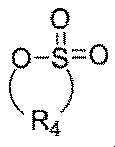 (式中R4は、置換基を有していてもよい炭素数2~10のアルキレン基を表す。)
式(D)
 (式中R5は、置換基を有していてもよい炭素数1~20のアルキル基または置換基を有していてもよい炭素数6~20のアリール基を表す。複数あるR5は互いに同一でも互いに異なっていてもよい。)
式(A)においてR1で表される炭素数1~20のアルキル基としては、例えば、メチル基、エチル基、プロピル基、イソプロピル基、ブチル基、イソブチル基、sec-ブチル基、tert-ブチル基、ペンチル基、2,2-ジメチルプロピル基、シクロペンチル基、ヘキシル基、シクロヘキシル基、ヘプチル基、2-メチルペンチル基、オクチル基、2-エチルヘキシル基、ノニル基、デシル基、ウンデシル基、ドデシル基、トリデシル基、テトラデシル基、ペンタデシル基、ヘキサデシル基、ヘプタデシル基、オクタデシル基、ノナデシル基、イコシル基等が挙げられる。
式(A)においてR1で表される炭素数1~20のアルキル基が有していてもよい置換基としては、例えばフッ素原子、塩素原子、臭素原子、ヨウ素原子、炭素数1~20のアルコキシ基、炭素数6~20のアリール基、炭素数6~20のアリールオキシ基、炭素数2~20のアシル基、炭素数6~20のアリールスルホニル基およびシアノ基からなる群から選ばれる少なくとも1つの置換基が挙げられる。
式(A)においてR1で表される炭素数6~20のアリール基としては、例えば、フェニル基、1-ナフチル基、2-ナフチル基、フェナントリル基、アントリル基等が挙げられる。
式(A)においてR1で表される炭素数6~20のアリール基が有していてもよい置換基としては、例えばフッ素原子、塩素原子、臭素原子、ヨウ素原子、炭素数1~20のアルキル基、炭素数1~20のアルコキシ基、炭素数6~20のアリール基、炭素数6~20のアリールオキシ基、炭素数2~20のアシル基および炭素数6~20のアリールスルホニル基からなる群から選ばれる少なくとも1つの置換基が挙げられる。
式(A)で表される硫黄-酸素結合を有する化合物としては、メタンスルホン酸メチル、メタンスルホン酸エチル、メタンスルホン酸プロピル、メタンスルホン酸イソプロピル、メタンスルホン酸フェニル、エタンスルホン酸メチル、エタンスルホン酸エチル、エタンスルホン酸プロピル、エタンスルホン酸イソプロピル、エタンスルホン酸フェニル、ベンゼンスルホン酸メチル、ベンゼンスルホン酸エチル、ベンゼンスルホン酸プロピル、ベンゼンスルホン酸イソプロピル、ベンゼンスルホン酸フェニル、p-トルエンスルホン酸メチル、p-トルエンスルホン酸エチル、p-トルエンスルホン酸プロピル、p-トルエンスルホン酸イソプロピル、p-トルエンスルホン酸フェニル、トリフルオロメタンスルホン酸メチル、トリフルオロメタンスルホン酸エチル、トリフルオロメタンスルホン酸プロピル、トリフルオロメタンスルホン酸イソプロピル、トリフルオロメタンスルホン酸フェニル、4-フルオロベンゼンスルホン酸メチル、4-フルオロベンゼンスルホン酸エチル、4-フルオロベンゼンスルホン酸プロピル、4-フルオロベンゼンスルホン酸イソプロピル、4-フルオロベンゼンスルホン酸フェニル、2-トリフルオロメチルベンゼンスルホン酸メチル、2-トリフルオロメチルベンゼンスルホン酸エチル、42-トリフルオロメチルベンゼンスルホン酸プロピル、2-トリフルオロメチルベンゼンスルホン酸イソプロピル、2-トリフルオロメチルベンゼンスルホン酸フェニル等が挙げられる。
式(B)においてR2で表される炭素数1~20のアルキル基または炭素数6~20のアリール基としては、式(A)においてR1で表される炭素数1~20のアルキル基または炭素数6~20のアリール基と同様のものが挙げられる。R2で表される炭素数1~20のアルキル基または炭素数6~20のアリール基は、式(A)におけるR1と同様に置換基を有していてもよい。R2で表される炭素数1~20のアルキル基または炭素数6~20のアリール基が有していてもよい置換基としては、例えばそれぞれ式(A)においてR1で表される炭素数1~20のアルキル基または炭素数6~20のアリール基が有していてもよい置換基と同様のものが挙げられる。R2で表される炭素数6~20のアリール基が有していてもよい炭素数1~20のアルキル基は、フッ素原子で置換されていてもよい。複数あるR2は互いに同一でも互いに異なっていてもよい。式(B)においてR2で表される基としては、炭素数6~20のアリール基が好ましく、CF3で置換された炭素数6~20のアリール基がより好ましい。
式(B)においてR3で表される炭素数1~10のアルキレン基としては、例えばメチレン基、エチレン基、プロピレン基、ブチレン基、ペンチレン基、2,2-ジメチルプロピレン基、ヘキシレン基、ヘプチレン基、オクチレン基、ノニレン基、デシレン基等が挙げられる。中でも、メチレン基、エチレン基が好ましく、メチレン基がより好ましい。
式(B)においてR3で表される炭素数1~10のアルキレン基が有していてもよい置換基としては、例えばフッ素原子、塩素原子、臭素原子、ヨウ素原子、炭素数1~20のアルコキシ基、炭素数6~20のアリール基、炭素数6~20のアリールオキシ基、炭素数2~20のアシル基、炭素数6~20のアリールスルホニル基およびシアノ基からなる群から選ばれる少なくとも1つの置換基が挙げられる。
式(B)で表される硫黄-酸素結合を有する化合物としてはメチレンビス(メタンスルホネート)、メチレンビス(エタンスルホネート)、メチレンビス(トリフルオロメタンスルホネート)、エチレンビス(メタンスルホネート)、エチレンビス(エタンスルホネート)、エチレンビス(トリフルオロメタンスルホネート)等が挙げられる。
式(B)で表される硫黄-酸素結合を有する化合物としては、下記の式(E)で表される化合物であることが好ましい。
式(E)
 (式中Ar1は、置換基を有していてもよい炭素数6~20のアリール基を表す。複数あるAr1は互いに同一でも異なっていてもよい。)
式(E)
式(E)においてAr1で表される炭素数6~20のアリール基としては、R2で表される炭素数6~20のアリール基と同様のものが挙げられる。
式(E)においてAr1で表される炭素数6~20のアリール基が有していてもよい置換基としては、例えばフッ素原子、塩素原子、臭素原子、ヨウ素原子、炭素数1~20のアルキル基、炭素数1~20のアルコキシ基、炭素数6~20のアリール基、炭素数6~20のアリールオキシ基、炭素数2~20のアシル基、炭素数6~20のアリールスルホニル基およびシアノ基からなる群から選ばれる少なくとも1つの置換基が挙げられる。Ar1で表される炭素数6~20のアリール基が有していてもよい炭素数1~20のアルキル基は、フッ素原子で置換されていてもよい。式(E)においてAr1で表される基としては、炭素数6~20のアリール基が好ましく、CF3で置換された炭素数6~20のアリール基がより好ましい。
式(E)で表される硫黄-酸素結合を有する化合物としては、メチレンビス(ベンゼンスルホネート)、メチレンビス(4-フルオロベンゼンスルホネート)、メチレンビス(ペンタフルオロベンゼンスルホネート)、メチレンビス(4-メチルベンゼンスルホネート)、メチレンビス(2-トリフルオロメチルベンゼンスルホネート)、メチレンビス(4-トリフルオロメチルベンゼンスルホネート)、メチレンビス(4-メトキシベンゼンスルホネート)、メチレンビス(2,4,6-トリメチルベンゼンスルホネート)、メチレンビス(1-ナフタレンスルホネート)、メチレンビス(2-ナフタレンスルホネート)等が挙げられる。
式(C)においてR4で表される炭素数2~10のアルキレン基としては、例えば、エチレン基、プロパン-1,3-ジイル基、プロペン-1,3-ジイル基、ブタン-1,3-ジイル基、ブタン-1,4-ジイル基、ペンチレン基、2,2-ジメチルプロピレン基、ヘキシレン基、ヘプチレン基、オクチレン基、ノニレン基、デシレン基等が挙げられる。中でも、プロパン-1,3-ジイル基、プロペン-1,3-ジイル基、ブタン-1,3-ジイル基、ブタン-1,4-ジイル基が好ましい。
式(C)においてR4で表される炭素数2~10のアルキレン基が有していてもよい置換基としては、例えばフッ素原子、塩素原子、臭素原子、ヨウ素原子、炭素数1~20のアルコキシ基、炭素数6~20のアリール基、炭素数6~20のアリールオキシ基、炭素数2~20のアシル基、炭素数6~20のアリールスルホニル基およびシアノ基からなる群から選ばれる少なくとも1つの置換基が挙げられる。
式(C)で表される硫黄-酸素結合を有する化合物としては、1,3-プロパンスルトン、1,3-プロペンスルトン、1,3-ブタンスルトン、1,4-ブタンスルトン、2-フルオロ-1,3-プロパンスルトン、パーフルオロ-1,3-プロパンスルトン等が挙げられる。
式(D)においてR5で表される炭素数1~20のアルキル基または炭素数6~20のアリール基としては、式(A)においてR1で表される炭素数1~20のアルキル基または炭素数6~20のアリール基と同様のものが挙げられる。R5で表される炭素数1~20のアルキル基または炭素数6~20のアリール基は、式(A)におけるR1と同様に置換基を有していてもよい。式(D)においてR5で表される炭素数1~20のアルキル基または炭素数6~20のアリール基が有していてもよい置換基としては、例えばそれぞれ式(A)においてR1で表される炭素数1~20のアルキル基または炭素数6~20のアリール基が有していてもよい置換基と同様のものが挙げられる。複数あるR5は互いに同一でも互いに異なっていてもよい。
式(D)で表される構造を有する硫黄-酸素結合を有する化合物としては、ジメチルスルホキシド、エチルメチルスルホキシド、ジエチルスルホキシド等が挙げられる。
本発明の非水電解液を用いれば、正極表面および/または負極表面に被膜が形成され、効率的に充放電サイクル特性を高めることができると考えられる。
本発明の非水電解液に含まれる硫黄-酸素結合を有する化合物は、単独で用いても2種以上を混合して用いてもよい。非水電解液における硫黄-酸素結合を有する化合物の含有量は、非水電解液総重量に対して10重量%以下である。該硫黄-酸素結合を有する化合物の含有量は、5重量%以下が好ましく、3重量%以下がより好ましく、2重量%以下がさらに好ましく、1重量%以下が特に好ましい。また、非水電解液における硫黄-酸素結合を有する化合物の含有量は、非水電解液総重量に対して0.05重量%以上である。充放電サイクル特性を高める観点から、該硫黄-酸素結合を有する化合物の含有量は、0.08重量%以上が好ましく、0.1重量%以上がより好ましく、0.2重量%以上であることがさらに好ましく、0.5重量%以上が特に好ましい。
<非水電解液の調製方法>
本発明に用いられる非水電解液は、非水溶媒、ナトリウム塩および硫黄-酸素結合を有する化合物を添加・攪拌し、溶解させることで得られる。溶解工程では、必要に応じて該非水電解液を加熱してもよい。
本発明に用いられる非水電解液は、非水溶媒、ナトリウム塩および硫黄-酸素結合を有する化合物を添加・攪拌し、溶解させることで得られる。溶解工程では、必要に応じて該非水電解液を加熱してもよい。
前記非水電解液には、セパレータとの濡れ性を高めるために、トリオクチルフォスフェート、ジフェニルエーテル、オクタン酸エチル、パーフルオロアルキル基を有するポリオキシエチレンエーテル類等の界面活性剤の1種または2種以上を添加してもよい。界面活性剤の添加量は、好ましくは電解液総重量に対して5重量%以下であり、より好ましくは0.01~3重量%である。
<ナトリウム二次電池>
本発明に係るナトリウム二次電池は、ナトリウムイオンをドープかつ脱ドープすることができるナトリウム含有化合物を正極活物質として含む正極と、ナトリウムイオンをドープかつ脱ドープできる負極活物質を有する負極と、前記非水電解液とを有する。通常、さらにセパレータを有する。
本発明に係るナトリウム二次電池は、ナトリウムイオンをドープかつ脱ドープすることができるナトリウム含有化合物を正極活物質として含む正極と、ナトリウムイオンをドープかつ脱ドープできる負極活物質を有する負極と、前記非水電解液とを有する。通常、さらにセパレータを有する。
ナトリウム二次電池は、通常、負極、セパレータおよび正極を積み重ねた積層体や、積層体を巻回または折りたたむことによって得られる電極群を、電池缶やアルミラミネートパック内に収納し、電極群に非水電解液を含浸させることによって、製造することができる。
ここでこの電極群の形状としては例えば、この電極群を巻回の軸に対して垂直方向に切断したときの断面が、円、楕円、長方形、角がとれたような長方形等となるような形状を挙げることができる。また、電池の形状としては、例えば、ペーパー型、コイン型、円筒型、角型などの形状を挙げることができる。
特に、アルミラミネートパックを用いたペーパー型、角型電池においては、形状を整える観点から、製造後に、電極面垂直方向に対してプレス等の加圧工程を経ることがある。
<正極>
本発明のナトリウム二次電池において、正極は、ナトリウムイオンをドープかつ脱ドープすることができるナトリウム含有化合物を正極活物質として有する。また、正極は、集電体と、集電体の上に担持された、上記正極活物質を含む正極合剤とから構成されてもよい。正極合剤は、上記正極活物質以外にも必要に応じて導電材やバインダーを含む。
本発明のナトリウム二次電池において、正極は、ナトリウムイオンをドープかつ脱ドープすることができるナトリウム含有化合物を正極活物質として有する。また、正極は、集電体と、集電体の上に担持された、上記正極活物質を含む正極合剤とから構成されてもよい。正極合剤は、上記正極活物質以外にも必要に応じて導電材やバインダーを含む。
<正極活物質>
本発明のナトリウム二次電池において、正極活物質は、ナトリウム含有遷移金属化合物からなり、該ナトリウム含有遷移金属化合物は、ナトリウムイオンをドープかつ脱ドープすることができる。
本発明のナトリウム二次電池において、正極活物質は、ナトリウム含有遷移金属化合物からなり、該ナトリウム含有遷移金属化合物は、ナトリウムイオンをドープかつ脱ドープすることができる。
前記ナトリウム含有遷移金属化合物としては、次の化合物を挙げることができる。
すなわち、NaFeO2、NaMnO2、NaNiO2、NaCoO2、NaMn0.5Ni0.5O2、NaFe0.5Ni0.5O2、NaFe1/3Mn1/3Ni1/3O2およびNaFe0.4Mn0.3Ni0.3O2等のNaM3 a1O2で表される酸化物Na0.44Mn1-a2M3 a2O2で表される酸化物、Na0.7Mn1-a2M3 a2O2.05で表される酸化物(M3は1種以上の遷移金属元素、0<a1<1、0≦a2<1);
Na6Fe2Si12O30およびNa2Fe5Si12O30等のNab1M4 cSi12O30で表される酸化物(M4は1種以上の遷移金属元素、2≦b1≦6、2≦c≦5);
Na2Fe2Si6O18およびNa2MnFeSi6O18等のNadM5 eSi6O18で表される酸化物(M5は1種以上の遷移金属元素、2≦d≦6、1≦e≦2);
Na2FeSiO6等のNafM6 gSi2O6で表される酸化物(M6は遷移金属元素、MgおよびAlからなる群より選ばれる1種以上の元素、1≦f≦2、1≦g≦2);
NaFePO4、NaMnPO4、Na3Fe2(PO4)3、Na3V2(PO4)2F3、Na1.5VOPO4F0.5、Na4Fe3(PO4)2P2O7、Na4Mn3(PO4)2P2O7、Na4Ni3(PO4)2P2O7、Na4Co3(PO4)2P2O7等のリン酸塩;
Na2FePO4F、Na2VPO4F、Na2MnPO4F、Na2CoPO4F、Na2NiPO4F等のフッ化リン酸塩;
NaFeSO4F、NaMnSO4F、NaCoSO4F、NaFeSO4F等のフッ化硫酸塩;
NaFeBO4、Na3Fe2(BO4)3等のホウ酸塩;
Na3FeF6、Na2MnF6等のNahM7F6で表されるフッ化物(M7は1種以上の遷移金属元素、2≦h≦3);
が挙げられる。
すなわち、NaFeO2、NaMnO2、NaNiO2、NaCoO2、NaMn0.5Ni0.5O2、NaFe0.5Ni0.5O2、NaFe1/3Mn1/3Ni1/3O2およびNaFe0.4Mn0.3Ni0.3O2等のNaM3 a1O2で表される酸化物Na0.44Mn1-a2M3 a2O2で表される酸化物、Na0.7Mn1-a2M3 a2O2.05で表される酸化物(M3は1種以上の遷移金属元素、0<a1<1、0≦a2<1);
Na6Fe2Si12O30およびNa2Fe5Si12O30等のNab1M4 cSi12O30で表される酸化物(M4は1種以上の遷移金属元素、2≦b1≦6、2≦c≦5);
Na2Fe2Si6O18およびNa2MnFeSi6O18等のNadM5 eSi6O18で表される酸化物(M5は1種以上の遷移金属元素、2≦d≦6、1≦e≦2);
Na2FeSiO6等のNafM6 gSi2O6で表される酸化物(M6は遷移金属元素、MgおよびAlからなる群より選ばれる1種以上の元素、1≦f≦2、1≦g≦2);
NaFePO4、NaMnPO4、Na3Fe2(PO4)3、Na3V2(PO4)2F3、Na1.5VOPO4F0.5、Na4Fe3(PO4)2P2O7、Na4Mn3(PO4)2P2O7、Na4Ni3(PO4)2P2O7、Na4Co3(PO4)2P2O7等のリン酸塩;
Na2FePO4F、Na2VPO4F、Na2MnPO4F、Na2CoPO4F、Na2NiPO4F等のフッ化リン酸塩;
NaFeSO4F、NaMnSO4F、NaCoSO4F、NaFeSO4F等のフッ化硫酸塩;
NaFeBO4、Na3Fe2(BO4)3等のホウ酸塩;
Na3FeF6、Na2MnF6等のNahM7F6で表されるフッ化物(M7は1種以上の遷移金属元素、2≦h≦3);
が挙げられる。
本発明において、正極活物質としては、前記ナトリウム含有遷移金属化合物の中でも、以下の式(I)で表される複合金属酸化物を好ましく用いることができる。以下の式(I)で表される複合金属酸化物を正極活物質として用いることで、電池の充放電容量を向上させることができる。
NaaM1 bM2O2 (I)
(ここで、M1は、Mg、Ca、SrおよびBaからなる群より選ばれる1種以上の元素を表し、M2は、Mn、Fe、Co、Cr、V、TiおよびNiからなる群より選ばれる1種以上の元素を表し、aは0.5以上1.05以下の範囲の値であり、bは0以上0.5以下の範囲の値であり、かつa+bは0.5以上1.10以下の範囲の値である。)
NaaM1 bM2O2 (I)
(ここで、M1は、Mg、Ca、SrおよびBaからなる群より選ばれる1種以上の元素を表し、M2は、Mn、Fe、Co、Cr、V、TiおよびNiからなる群より選ばれる1種以上の元素を表し、aは0.5以上1.05以下の範囲の値であり、bは0以上0.5以下の範囲の値であり、かつa+bは0.5以上1.10以下の範囲の値である。)
<導電材>
前記導電材としては、炭素材料を用いることができる。炭素材料として、黒鉛粉末、カーボンブラック(例えば、アセチレンブラック、ケッチェンブラック、ファーネスブラック等)、繊維状炭素材料(カーボンナノチューブ、カーボンナノファイバー、気相成長炭素繊維等)などを挙げることができる。上記炭素材料は、表面積が大きく、電極合剤中に少量添加されることにより、得られる電極内部の導電性を高め、充放電効率および大電流放電特性を向上させることも可能である。通常、正極合剤中の導電材の割合は、正極活物質100重量部に対して4~20重量部であり、2種以上含有してもよい。
前記導電材としては、炭素材料を用いることができる。炭素材料として、黒鉛粉末、カーボンブラック(例えば、アセチレンブラック、ケッチェンブラック、ファーネスブラック等)、繊維状炭素材料(カーボンナノチューブ、カーボンナノファイバー、気相成長炭素繊維等)などを挙げることができる。上記炭素材料は、表面積が大きく、電極合剤中に少量添加されることにより、得られる電極内部の導電性を高め、充放電効率および大電流放電特性を向上させることも可能である。通常、正極合剤中の導電材の割合は、正極活物質100重量部に対して4~20重量部であり、2種以上含有してもよい。
<バインダー>
前記正極合剤に用いられるバインダーとしては、例えば、フッ素化合物の重合体やフッ素原子を含まないエチレン性二重結合を含む単量体の付加重合体などが挙げられる。
前記正極合剤に用いられるバインダーとしては、例えば、フッ素化合物の重合体やフッ素原子を含まないエチレン性二重結合を含む単量体の付加重合体などが挙げられる。
前記バインダーのガラス転移温度は-50~25℃が好ましい。ガラス転移温度を上記範囲内とすることにより、得られる正極の柔軟性を向上させ、また、低温環境下においても十分使用可能なナトリウム二次電池を得ることができる。
前記正極合剤に用いられるバインダーの好ましい例としては、 ポリテトラフルオロエチレン、ポリクロロトリフルオロエチレン、テトラフルオロエチレン-パーフルオロアルキルビニルエーテル共重合体、エチレン-テトラフルオロエチレン共重合体、エチレン-クロロトリフルオロエチレン共重合体、テトラフルオロエチレン-ヘキサフルオロプロピレン共重合体等のフッ素樹脂;
フッ化ビニリデン-ヘキサフルオロプロピレン共重合体、フッ化ビニリデン-テトラフルオロエチレン共重合体、フッ化ビニリデン-ヘキサフルオロプロピレン-テトラフルオロエチレン共重合体、フッ化ビニリデン-ペンタフルオロプロピレン共重合体、フッ化ビニリデン-ペンタフルオロプロピレン-テトラフルオロエチレン共重合体、フッ化ビニリデン-パーフルオロメチルビニルエーテル-テトラフルオロエチレン共重合体、フッ化ビニリデン-クロロトリフルオロエチレン共重合体等のフッ素ゴム;
ポリアクリル酸、ポリアクリル酸アルカリ塩(ポリアクリル酸ナトリウム、ポリアクリル酸カリウム、ポリアクリル酸リチウム等)、ポリアクリル酸アルキル(アルキル部分の炭素数は1から20)、アクリル酸-アクリル酸アルキル(アルキル部分の炭素数は1から20)共重合体、ポリアクリロニトリル、アクリル酸-アクリル酸アルキル-アクリロニトリル共重合体、ポリアクリルアミド、アクリロニトリル-ブタジエン共重合体、アクリロニトリル-ブタジエン共重合体水素化物等のアクリル系ポリマー;
ポリメタクリル酸、ポリメタクリル酸アルキル(アルキル基はアルキル部分の炭素数は1から20)、メタクリル酸-メタクリル酸アルキル共重合体等のメタクリル系ポリマー;
ポリエチレンオキシド、ポリプロピレングリコール、ポリテトラメチレンオキシド、ポリエーテルスルホン、エチレンオキシド-プロピレンオキシド共重合体、エチレンオキシド-アルキレンオキシド共重合体等のポリエーテル系ポリマー;
ポリビニルアルコール(部分ケン化または完全ケン化)、エチレン-ビニルアルコール共重合体、ポリビニルピロリドン、エチレン-酢酸ビニル共重合体、エチレン-酢酸ビニル-アクリル酸アルキル(アルキル基はアルキル部分の炭素数は1から20)共重合体、エチレン-メタクリル酸共重合体、エチレン-アクリル酸共重合体、エチレン-メタクリル酸アルキル共重合体、エチレン-アクリル酸アルキル共重合体、エチレン-アクリロニトリル共重合体等のオレフィン系ポリマー;
アクリロニトリル-スチレン-ブタジエン共重合体、スチレン、アクリロニトリル共重合体、スチレン-ブタジエン共重合体、スチレン-ブタジエン共重合体水素化物等のスチレン含有ポリマーが挙げられる。
特に、ハロゲン化ビニリデン由来の構造単位を有する共重合体を用いた場合、正極合剤密度の高い電極が得られやすく、電池の体積エネルギー密度が向上するため好ましい。
フッ化ビニリデン-ヘキサフルオロプロピレン共重合体、フッ化ビニリデン-テトラフルオロエチレン共重合体、フッ化ビニリデン-ヘキサフルオロプロピレン-テトラフルオロエチレン共重合体、フッ化ビニリデン-ペンタフルオロプロピレン共重合体、フッ化ビニリデン-ペンタフルオロプロピレン-テトラフルオロエチレン共重合体、フッ化ビニリデン-パーフルオロメチルビニルエーテル-テトラフルオロエチレン共重合体、フッ化ビニリデン-クロロトリフルオロエチレン共重合体等のフッ素ゴム;
ポリアクリル酸、ポリアクリル酸アルカリ塩(ポリアクリル酸ナトリウム、ポリアクリル酸カリウム、ポリアクリル酸リチウム等)、ポリアクリル酸アルキル(アルキル部分の炭素数は1から20)、アクリル酸-アクリル酸アルキル(アルキル部分の炭素数は1から20)共重合体、ポリアクリロニトリル、アクリル酸-アクリル酸アルキル-アクリロニトリル共重合体、ポリアクリルアミド、アクリロニトリル-ブタジエン共重合体、アクリロニトリル-ブタジエン共重合体水素化物等のアクリル系ポリマー;
ポリメタクリル酸、ポリメタクリル酸アルキル(アルキル基はアルキル部分の炭素数は1から20)、メタクリル酸-メタクリル酸アルキル共重合体等のメタクリル系ポリマー;
ポリエチレンオキシド、ポリプロピレングリコール、ポリテトラメチレンオキシド、ポリエーテルスルホン、エチレンオキシド-プロピレンオキシド共重合体、エチレンオキシド-アルキレンオキシド共重合体等のポリエーテル系ポリマー;
ポリビニルアルコール(部分ケン化または完全ケン化)、エチレン-ビニルアルコール共重合体、ポリビニルピロリドン、エチレン-酢酸ビニル共重合体、エチレン-酢酸ビニル-アクリル酸アルキル(アルキル基はアルキル部分の炭素数は1から20)共重合体、エチレン-メタクリル酸共重合体、エチレン-アクリル酸共重合体、エチレン-メタクリル酸アルキル共重合体、エチレン-アクリル酸アルキル共重合体、エチレン-アクリロニトリル共重合体等のオレフィン系ポリマー;
アクリロニトリル-スチレン-ブタジエン共重合体、スチレン、アクリロニトリル共重合体、スチレン-ブタジエン共重合体、スチレン-ブタジエン共重合体水素化物等のスチレン含有ポリマーが挙げられる。
特に、ハロゲン化ビニリデン由来の構造単位を有する共重合体を用いた場合、正極合剤密度の高い電極が得られやすく、電池の体積エネルギー密度が向上するため好ましい。
前記正極合剤におけるバインダーの配合割合としては、正極合剤100重量部に対し、通常0.5~15重量部、好ましくは2~10重量部である。
<正極の製造方法>
正極は、例えば、ナトリウムイオンをドープかつ脱ドープできる正極活物質を含む正極合剤を、正極集電体に担持することで製造される。正極集電体に正極合剤を担持する方法としては、例えば、正極活物質、導電材、バインダーおよび溶媒を混練して正極合剤ペーストを作製し、得られた正極合剤ペーストを、集電体へ塗布、乾燥する方法が挙げられる。正極合剤ペーストを、集電体へ塗布する方法としては特に制限されない。例えば、スリットダイ塗工法、スクリーン塗工法、カーテン塗工法、ナイフ塗工法、グラビア塗工法、静電スプレー法等の方法が挙げられる。また、塗布後に行う乾燥は、熱処理によって行ってもよいし、送風乾燥、真空乾燥などにより行ってもよい。熱処理により乾燥を行う場合には、その温度は、通常50~150℃程度である。また、乾燥後にプレスを行ってもよい。プレス方法は、金型プレスやロールプレスなどの方法を挙げることができる。以上に挙げた方法により、電極を製造することができる。また、正極合剤の厚みは、通常5~500μm程度である。
正極は、例えば、ナトリウムイオンをドープかつ脱ドープできる正極活物質を含む正極合剤を、正極集電体に担持することで製造される。正極集電体に正極合剤を担持する方法としては、例えば、正極活物質、導電材、バインダーおよび溶媒を混練して正極合剤ペーストを作製し、得られた正極合剤ペーストを、集電体へ塗布、乾燥する方法が挙げられる。正極合剤ペーストを、集電体へ塗布する方法としては特に制限されない。例えば、スリットダイ塗工法、スクリーン塗工法、カーテン塗工法、ナイフ塗工法、グラビア塗工法、静電スプレー法等の方法が挙げられる。また、塗布後に行う乾燥は、熱処理によって行ってもよいし、送風乾燥、真空乾燥などにより行ってもよい。熱処理により乾燥を行う場合には、その温度は、通常50~150℃程度である。また、乾燥後にプレスを行ってもよい。プレス方法は、金型プレスやロールプレスなどの方法を挙げることができる。以上に挙げた方法により、電極を製造することができる。また、正極合剤の厚みは、通常5~500μm程度である。
前記正極合剤ペーストに用いられる溶媒としては、例えば、有機溶媒が挙げられる。有機溶媒は、極性溶媒、非極性溶媒のいずれでもよい。極性溶媒としてN-メチル-2-ピロリドン、N,N-ジメチルアセトアミド、N,N-ジメチルホルムアミドなどのアミド類;イソプロピルアルコール、エタノール、メタノールなどのアルコール類;プロピレングリコールジメチルエーテルなどのエーテル類;アセトン、メチルエチルケトン、メチルイソブチルケトンなどのケトン類などが挙げられる。非極性溶媒としてヘキサン、トルエンなどが挙げられる。また、溶媒として、水を用いることもでき、電極製造コストを抑えるためには水が好ましい。
前記正極合剤ペーストにおける正極合剤成分の割合、すなわち、正極合剤ペースト中の正極活物質、導電材およびバインダーの合計の割合は、得られる電極の厚み、塗布性の観点から、通常40~70重量%である。
前記正極において、集電体としては、Al、Al合金、Ni、ステンレスなどの導電体を挙げることができ、薄膜に加工しやすく、安価であるという点でAlが好ましい。集電体の形状としては、例えば、箔状、平板状、メッシュ状、ネット状、ラス状、パンチングメタル状およびエンボス状であるもの、ならびに、これらを組み合わせたもの(例えば、メッシュ状平板など)が挙げられる。集電体表面にエッチング処理により凹凸を形成させてもよい。
<正極活物質の製造方法>
正極活物質の一例であるナトリウム含有遷移金属酸化物は、焼成により本発明に用いられるナトリウム含有遷移金属酸化物となり得る組成を有する金属含有化合物の混合物を焼成することによって製造できる。具体的には、対応する金属元素を含有する金属含有化合物を所定の組成となるように秤量し混合した後に、得られた混合物を焼成することによって製造できる。例えば、好ましい金属元素比の一つであるNa:Mn:Fe:Ni=1:0.3:0.4:0.3で表される金属元素比を有するナトリウム含有遷移金属酸化物は、Na2CO3、MnO2、Fe3O4、Ni2O3の各原料を、Na:Mn:Fe:Niのモル比が1:0.3:0.4:0.3となるように秤量し、それらを混合し、得られた混合物を焼成することによって製造できる。ナトリウム含有遷移金属酸化物がM1(ここで、M1は前記と同義)を含有するときは、混合時に、M1を含有する原料を追加すればよい。
正極活物質の一例であるナトリウム含有遷移金属酸化物は、焼成により本発明に用いられるナトリウム含有遷移金属酸化物となり得る組成を有する金属含有化合物の混合物を焼成することによって製造できる。具体的には、対応する金属元素を含有する金属含有化合物を所定の組成となるように秤量し混合した後に、得られた混合物を焼成することによって製造できる。例えば、好ましい金属元素比の一つであるNa:Mn:Fe:Ni=1:0.3:0.4:0.3で表される金属元素比を有するナトリウム含有遷移金属酸化物は、Na2CO3、MnO2、Fe3O4、Ni2O3の各原料を、Na:Mn:Fe:Niのモル比が1:0.3:0.4:0.3となるように秤量し、それらを混合し、得られた混合物を焼成することによって製造できる。ナトリウム含有遷移金属酸化物がM1(ここで、M1は前記と同義)を含有するときは、混合時に、M1を含有する原料を追加すればよい。
本発明に用いられるナトリウム含有遷移金属化合物を製造するために用いることができる金属含有化合物としては、酸化物、ならびに高温で分解および/または酸化したときに酸化物になり得る化合物、例えば水酸化物、炭酸塩、硝酸塩、ハロゲン化物またはシュウ酸塩を用いることができる。ナトリウム化合物としては、水酸化ナトリウム、塩化ナトリウム、硝酸ナトリウム、過酸化ナトリウム、硫酸ナトリウム、炭酸水素ナトリウム、シュウ酸ナトリウムおよび炭酸ナトリウムからなる群より選ばれる1種以上の化合物を挙げることができ、これらの水和物を挙げることもできる。取り扱い性の観点で、より好ましくは炭酸ナトリウムである。マンガン化合物としてはMnO2が好ましく、鉄化合物としてはFe3O4が好ましく、ニッケル化合物としてはNi2O3が好ましい。また、これらの金属含有化合物は、水和物であってもよい。
金属含有化合物の混合物は、例えば以下の沈殿法により金属含有化合物の前駆体を得、得られた金属含有化合物の前駆体と前記ナトリウム化合物とを混合して得ることができる。
具体的には、M2(ここで、M2は前記と同義)の原料として、塩化物、硝酸塩、酢酸塩、ギ酸塩、シュウ酸塩等の化合物を用いて、これらを水に溶解し、沈殿剤と接触させることで金属含有化合物の前駆体を含有した沈殿物を得ることができる。これらの原料の中でも、塩化物が好ましい。また、水に溶解し難い原料を用いる場合、例えば、原料として、酸化物、水酸化物、金属材料を用いる場合には、これらの原料を、塩酸、硫酸、硝酸等の酸またはこれらの水溶液に溶解させて、M2を含有する水溶液を得ることもできる。
具体的には、M2(ここで、M2は前記と同義)の原料として、塩化物、硝酸塩、酢酸塩、ギ酸塩、シュウ酸塩等の化合物を用いて、これらを水に溶解し、沈殿剤と接触させることで金属含有化合物の前駆体を含有した沈殿物を得ることができる。これらの原料の中でも、塩化物が好ましい。また、水に溶解し難い原料を用いる場合、例えば、原料として、酸化物、水酸化物、金属材料を用いる場合には、これらの原料を、塩酸、硫酸、硝酸等の酸またはこれらの水溶液に溶解させて、M2を含有する水溶液を得ることもできる。
さらに、前記沈殿剤としては、水酸化リチウム、水酸化ナトリウム、水酸化カリウム、炭酸リチウム、炭酸ナトリウム、炭酸カリウム、炭酸アンモニウムおよび尿素からなる群より選ばれる化合物を1種以上用いることができ、該化合物の水和物を1種以上用いてもよく、化合物と水和物とを併用してもよい。また、これらの沈殿剤を水に溶かして、水溶液で用いることが好ましい。水溶液中の沈殿剤の濃度は、0.5~10モル/L程度、好ましくは、1~8モル/L程度である。また、沈殿剤としては水酸化カリウムを用いることが好ましく、より好ましくは、これを水に溶かした水酸化カリウム水溶液である。また、水溶液の沈殿剤として、アンモニア水を挙げることもでき、これと前記化合物の水溶液とを併用してもよい。
M2を含有する水溶液と沈殿剤との接触方法としては、M2を含有する水溶液に、沈殿剤または沈殿剤の水溶液を添加する方法、沈殿剤の水溶液に、M2を含有する水溶液を添加する方法、水に、M2を含有する水溶液および沈殿剤または沈殿剤の水溶液を添加する方法を挙げることができる。これらの添加時には、攪拌を伴うことが好ましい。また、上記の接触方法の中では、沈殿剤の水溶液に、M2を含有する水溶液を添加する方法が、pHを一定に保ちやすく、粒径を制御しやすい点で好ましい。この場合、沈殿剤の水溶液に、M2を含有する水溶液を添加していくに従い、そのpHが低下していく傾向にあるが、このpHが9以上、好ましくは10以上となるように調節しながら、M2を含有する水溶液を添加することが好ましい。また、この調節は、沈殿剤の水溶液を添加することによっても行うことができる。
上記の接触により、沈殿物を得ることができる。この沈殿物は、金属含有化合物の前駆体を含有する。
また、M2を含有する水溶液と沈殿剤との接触後は、通常、スラリーとなり、これを固液分離して、沈殿物を回収する。固液分離はいかなる方法によってもよいが、操作性の観点では、ろ過などの固液分離による方法が好ましく用いられ、噴霧乾燥などの加熱をして液体分を揮発させる方法を用いてもよい。また、回収された沈殿物について、洗浄、乾燥などを行ってもよい。固液分離後に得られる沈殿物には、過剰な沈殿剤の成分が付着していることもあり、洗浄により当該成分を減らすことができる。洗浄のときに用いる洗浄液は、水を用いることが好ましく、アルコール、アセトンなどの水溶性有機溶媒を用いてもよい。また、乾燥は、加熱乾燥によって行えばよく、送風乾燥、真空乾燥等によってもよい。加熱乾燥によって行う場合には、通常50~300℃で行い、100~200℃程度で行うのが好ましい。また、洗浄、乾燥は2回以上行ってもよい。
ナトリウム化合物と金属含有化合物の前躯体との混合方法としては、乾式混合、湿式混合のいずれによってもよいが、簡便性の観点では、乾式混合が好ましい。混合装置としては、攪拌混合機、V型混合機、W型混合機、リボン混合機、ドラムミキサーおよびボールミルを挙げることができる。また、焼成は、用いるナトリウム化合物の種類にもよるが、通常400~1200℃程度の温度で行えばよく、500~1000℃程度で行うのが好ましい。また、前記温度を保持する時間は、通常0.1~20時間であり、0.5~10時間であることが好ましい。前記温度までの昇温速度は、通常50~400℃/時間であり、前記温度から室温までの降温速度は、通常10~400℃/時間である。また、焼成は、大気、酸素、窒素、アルゴンまたはそれらの混合ガスの雰囲気下で行うことができるが、大気雰囲気下が好ましい。
金属含有化合物として、フッ化物、塩化物等のハロゲン化物等を適量用いることによって、生成する複合金属酸化物の結晶性、複合金属酸化物を構成する粒子の平均粒径を制御することができる。この場合、ハロゲン化物は、反応促進剤(フラックス)としての役割を果たす場合もある。フラックスとしては、例えばNaF、MnF3、FeF2、NiF2、CoF2、NaCl、MnCl2、FeCl2、FeCl3、NiCl2、CoCl2、NH4ClおよびNH4Iを挙げることができ、これらを混合物の原料(金属含有化合物)として、または、混合物に適量添加して用いることができる。また、これらのフラックスは、水和物であってもよい。
その他の金属含有化合物として、Na2CO3、NaHCO3B2O3およびH3BO3を挙げることができる。
その他の金属含有化合物として、Na2CO3、NaHCO3B2O3およびH3BO3を挙げることができる。
本発明に用いられるナトリウム含有遷移金属化合物をナトリウム二次電池用正極活物質として用いる場合、上記のようにして得られるナトリウム含有遷移金属化合物に、ボールミル、ジェットミル、振動ミル等の工業的に通常用いられる装置を用いて粉砕を行い、洗浄、分級等を行って、粒度を調節することが好ましい。また、焼成を2回以上行ってもよい。また、ナトリウム含有遷移金属化合物の粒子表面をSi、Al、Ti、Y等を含有する無機物質で被覆する等の表面処理をしてもよい。
<負極>
本発明のナトリウム二次電池で用いることができる負極としては、負極活物質を含む負極合剤を負極集電体に担持した電極、ナトリウムイオンをドープかつ脱ドープ可能なナトリウム金属またはナトリウム合金電極を用いることができる。負極活物質としては、前記のナトリウム金属またはナトリウム合金以外に、ナトリウムイオンをドープかつ脱ドープすることができる、相間が広い天然黒鉛または人造黒鉛、コークス類、カーボンブラック、熱分解炭素類、炭素繊維、有機高分子化合物焼成体などの炭素材料、金属、が挙げられる。炭素材料の形状としては、例えば上記相間の広い天然黒鉛のような薄片状、メソカーボンマイクロビーズのような球状、黒鉛化炭素繊維のような繊維状、または微粉末の凝集体などのいずれでもよい。ここで、炭素材料は、導電材としての役割を果たす場合もある。
本発明のナトリウム二次電池で用いることができる負極としては、負極活物質を含む負極合剤を負極集電体に担持した電極、ナトリウムイオンをドープかつ脱ドープ可能なナトリウム金属またはナトリウム合金電極を用いることができる。負極活物質としては、前記のナトリウム金属またはナトリウム合金以外に、ナトリウムイオンをドープかつ脱ドープすることができる、相間が広い天然黒鉛または人造黒鉛、コークス類、カーボンブラック、熱分解炭素類、炭素繊維、有機高分子化合物焼成体などの炭素材料、金属、が挙げられる。炭素材料の形状としては、例えば上記相間の広い天然黒鉛のような薄片状、メソカーボンマイクロビーズのような球状、黒鉛化炭素繊維のような繊維状、または微粉末の凝集体などのいずれでもよい。ここで、炭素材料は、導電材としての役割を果たす場合もある。
炭素材料としては、カーボンブラック、熱分解炭素類、炭素繊維、有機材料焼成体などの非黒鉛化炭素材料(以下、ハードカーボンともいうことがある。)を挙げることができる。ハードカーボンとしては、X線回折法による層間距離d(002)が0.360nm以上0.395nm以下であり、c軸方向の結晶子の大きさLcが1.30nm以下であるものが好ましい。またラマン分光測定より得られるR値(ID/IG)が1.07以上3以下であるものが好ましい。ここで、波長532nmのレーザーを照射して、ラマン分光測定を行うことにより得られるラマンスペクトル(縦軸は任意単位の散乱光強度であり、横軸はラマンシフト波数(cm-1)である。)において、横軸1300~1400cm-1の範囲および横軸1570~1620cm-1の範囲のそれぞれに1つずつピークを有し、該スペクトルの600~1740cm-1の波数範囲について、2つのローレンツ関数および1つのベースライン関数を用いてフィッティングを行って得られるフィッティング関数からベースライン関数を除去して得られるフィッティングスペクトルにおいて、横軸1300~1400cm-1の範囲における縦軸の最大値をID、横軸1570~1620cm-1の範囲における縦軸の最大値をIGとし、IDをIGで除して、R値(ID/IG)が得られる。
ハードカーボンとしては、例えば、非黒鉛化炭素材料からなるカーボンマイクロビーズを挙げることができ、具体的には、日本カーボン社製のICB(商品名:ニカビーズ)が挙げられる。炭素材料を構成する粒子の形状としては、例えば相間の広い天然黒鉛のような薄片状、メソカーボンマイクロビーズのような球状、黒鉛化炭素繊維のような繊維状、または微粒子の凝集体形状などが挙げられる。炭素材料を構成する粒子の形状が球状である場合、その平均粒径は好ましくは0.01μm以上30μm以下であり、より好ましくは0.1μm以上20μm以下である。
負極活物質に用いられる金属の例として、スズ、鉛、シリコン、ゲルマニウム、リン、ビスマス、アンチモンなどが挙げられる。合金の例としては、上記金属からなる群から選ばれる2種以上の金属からなる合金、上記金属と遷移金属からなる群から選ばれる2種以上の金属からなる合金が挙げられ、また、Si-Zn、Cu2Sb、La3Ni2Sn7などの合金が挙げられる。これらの金属、合金は炭素材料と併用して集電体に担持されて、電極活物質として用いられる。
負極活物質に用いられる酸化物の例としては、Li4Ti5O12、Na2Ti3O7等が挙げられる。硫化物の例としては、TiS2、NiS2、FeS2、Fe3S4等が挙げられる。窒化物の例としては、Na3N、Na2.6Co0.4N等のNa3-xMxN(但し、Mは遷移金属元素、0≦x≦3)等が挙げられる。
負極活物質であるこれらの炭素材料、金属、酸化物、硫化物、窒化物は、併用してもよく、結晶質または非晶質のいずれでもよい。サイクル特性の観点からは、負極活物質としては、炭素材料を用いることが好ましく、ハードカーボンを用いることがより好ましい。
これらの炭素材料、金属、酸化物、硫化物、窒化物は、主に、集電体に担持されて、電極として用いられる。
負極合剤は、必要に応じて、バインダー、導電材を含有してもよい。バインダー、導電材としては、上記正極合剤に用いられるものと同様のものを挙げることができる。
上記負極合剤に含まれるバインダーとしては、好ましくは、ポリアクリル酸、ポリアクリル酸ナトリウム、ポリアクリル酸リチウム、ポリアクリル酸カリウム、ポリエチレンオキシド、ポリプロピレンオキシド、エチレンオキシド-プロピレンオキシド共重合体、エチレンオキシド-アルキレンオキシド共重合体、カルボキシメチルセルロース、ヒドロキシメチルセルロース、ヒドロキシエチルセルロース、ヒドロキシプロピルセルロース、エチレン-酢酸ビニル共重合体、スチレン-ブタジエン共重合体、ポリフッ化ビニリデン、ポリテトラフルオロエチレン、フッ化ビニリデン-ヘキサフルオロプロピレン共重合体、フッ化ビニリデン-テトラフルオロエチレン共重合体、フッ化ビニリデン-ヘキサフルオロプロピレン-テトラフルオロエチレン共重合体等を挙げることができる。より好ましくは、前記非水電解液に膨潤するものであり、ポリエチレンオキシド、ポリプロピレンオキシド、エチレンオキシド-プロピレンオキシド共重合体、エチレンオキシド-アルキレンオキシド共重合体、ポリフッ化ビニリデン、フッ化ビニリデン-ヘキサフルオロプロピレン共重合体、フッ化ビニリデン-テトラフルオロエチレン共重合体、フッ化ビニリデン-ヘキサフルオロプロピレン-テトラフルオロエチレン共重合体が挙げられる。これらは単独でも2種以上を組み合わせて用いてもよい。
負極合剤におけるバインダーの割合としては、負極合剤100重量部に対し、通常0.5~20重量部であり、好ましくは1~15重量部であり、さらに好ましくは2~12重量部である。
負極合剤ペーストに用いられる溶媒としては、正極合剤ペーストに用いられる溶媒と同様のものが挙げられる。
負極集電体としては、Al、Al合金、Cu、Niおよびステンレスを挙げることができ、薄膜に加工しやすく、安価であるという点でAlが好ましい。集電体の形状としては、例えば、箔状、平板状、メッシュ状、ネット状、ラス状、パンチングメタル状およびエンボス状であるもの、ならびに、これらを組み合わせたもの(例えば、メッシュ状平板など)が挙げられる。集電体表面にエッチング処理により凹凸を形成させてもよい。
<セパレータ>
本発明のナトリウム二次電池で用いることができるセパレータとしては例えば、ポリエチレン、ポリプロピレンなどのポリオレフィン樹脂、フッ素樹脂、含窒素芳香族重合体などの材質からなる、多孔質フィルム、不織布、織布などの形態を有する材料を用いることができる。また、これらの材質を2種以上用いた単層または積層セパレータとしてもよい。セパレータとしては、例えば特開2000-30686号公報、特開平10-324758号公報等に記載のセパレータを挙げることができる。セパレータの厚みは、電池の体積エネルギー密度が上がり、内部抵抗が小さくなるという点で、機械的強度が保たれる限り薄いほど好ましい。セパレータの厚みは一般に、5~200μm程度が好ましく、より好ましくは5~40μm程度である。
本発明のナトリウム二次電池で用いることができるセパレータとしては例えば、ポリエチレン、ポリプロピレンなどのポリオレフィン樹脂、フッ素樹脂、含窒素芳香族重合体などの材質からなる、多孔質フィルム、不織布、織布などの形態を有する材料を用いることができる。また、これらの材質を2種以上用いた単層または積層セパレータとしてもよい。セパレータとしては、例えば特開2000-30686号公報、特開平10-324758号公報等に記載のセパレータを挙げることができる。セパレータの厚みは、電池の体積エネルギー密度が上がり、内部抵抗が小さくなるという点で、機械的強度が保たれる限り薄いほど好ましい。セパレータの厚みは一般に、5~200μm程度が好ましく、より好ましくは5~40μm程度である。
セパレータは、好ましくは、熱可塑性樹脂を含有する多孔質フィルムを有する。セパレータは、さらに好ましくは、耐熱樹脂を含有する耐熱多孔層と熱可塑性樹脂を含有する多孔質フィルムとが積層されてなる、積層多孔質フィルムを有する。二次電池においては、通常、正極-負極間の短絡等が原因で電池内に異常電流が流れた際に、電流を遮断して、過大電流が流れることをシャットダウンすることが重要である。したがってセパレータは、通常の使用温度を越えた場合に、できるだけ低温でシャットダウンする(セパレータが、熱可塑性樹脂を含有する多孔質フィルムを有する場合には、多孔質フィルムの微細孔を閉塞する。)ことおよびシャットダウンした後、ある程度の高温まで電池内の温度が上昇しても、その温度により破膜することなく、シャットダウンした状態を維持すること、換言すれば、耐熱性が高いことが求められる。セパレータとして、耐熱樹脂を含有する耐熱多孔層と熱可塑性樹脂を含有する多孔質フィルムとが積層されてなる積層多孔質フィルムを有するセパレータを用いることにより、本発明の二次電池の熱破膜をより防ぐことが可能となる。ここで、耐熱多孔層は、多孔質フィルムの両面に積層されていてもよい。
前記セパレータは、前記非水電解液における高分子化合物が担持されたものを用いることもできる。該高分子化合物をセパレータに担持する方法として、該高分子化合物が溶媒に溶解した高分子溶液をセパレータに塗布、乾燥する方法が挙げられる。高分子溶液に用いられる溶媒としては、前記負極合剤ペーストに用いられる溶媒と同様のものが挙げられる。高分子溶液をセパレータに塗布する方法は特に制限されないが、例えば、負極合剤ペーストを集電体へ塗布する方法と同様の方法が挙げられる。本手法で得られるセパレータに担持される該高分子化合物の割合は、セパレータ100重量部に対し、通常20~300重量部、好ましくは50~200重量部である。
以下、本発明を実施例によりさらに詳細に説明する。なお、ナトリウム含有遷移金属化合物およびハードカーボンの各種評価並びに非水電解液の粘度測定は以下の測定により行った。
1.ナトリウム含有遷移金属化合物およびハードカーボンの粉末X線回折測定
ナトリウム含有遷移金属化合物の粉末X線回折測定は株式会社リガク製RINT2500TTR型を用いて行った。測定は、ナトリウム含有遷移金属化合物を専用のホルダーに充填し、CuKα線源を用いて、回折角2θ=10~90°の範囲にて行い、粉末X線回折図形を得た。ハードカーボンについても上記と同様の操作にて粉末X線回折図形を得た。
ナトリウム含有遷移金属化合物の粉末X線回折測定は株式会社リガク製RINT2500TTR型を用いて行った。測定は、ナトリウム含有遷移金属化合物を専用のホルダーに充填し、CuKα線源を用いて、回折角2θ=10~90°の範囲にて行い、粉末X線回折図形を得た。ハードカーボンについても上記と同様の操作にて粉末X線回折図形を得た。
2.ナトリウム含有遷移金属化合物の組成分析
粉末を塩酸に溶解させた後、誘導結合プラズマ発光分析法(SII製、SPS3000、以下ICP-AESと呼ぶことがある。)を用いて測定した。
粉末を塩酸に溶解させた後、誘導結合プラズマ発光分析法(SII製、SPS3000、以下ICP-AESと呼ぶことがある。)を用いて測定した。
<製造例1>(複合金属酸化物C1および正極CE1の製造)
ポリプロピレン製ビーカー内で、蒸留水300mlに、水酸化カリウム44.88gを添加、攪拌し、水酸化カリウムを完全に溶解させ、水酸化カリウム水溶液(沈殿剤)を調製した。また、別のポリプロピレン製ビーカー内で、蒸留水300mlに、塩化鉄(II)四水和物21.21g、塩化ニッケル(II)六水和物19.02g、塩化マンガン(II)四水和物15.83gを添加、攪拌により溶解させ、鉄-ニッケル-マンガン含有水溶液を得た。沈殿剤を攪拌しながら、沈殿剤に鉄-ニッケル-マンガン含有水溶液を滴下することで、沈殿物が生成したスラリーを得た。次いで、該スラリーを、ろ過・蒸留水洗浄を行い、100℃で乾燥させて金属含有化合物の前躯体である沈殿物を得た。沈殿物と炭酸ナトリウムと水酸化カルシウムとをモル比でFe:Na:Ca=0.4:0.99:0.01となるようにして秤量した後、メノウ乳鉢を用いて乾式混合して混合物を得た。次いで、該混合物をアルミナ製焼成容器に入れ、電気炉を用いて大気雰囲気中850℃で6時間保持して焼成を行い、室温まで冷却し、複合金属酸化物C1を得た。複合金属酸化物C1の粉末X線回折分析を行うと、α-NaFeO2型の結晶構造に帰属されることがわかった。また、ICP-AESにより、複合金属酸化物C1の組成を分析すると、Na:Ca:Fe:Ni:Mnのモル比は0.99:0.01:0.4:0.3:0.3であった。そして、上記のようにして得られた複合金属酸化物C1、導電材としてアセチレンブラック、バインダー溶液としてフッ化ビニリデン-テトラフルオロエチレン共重合体、溶媒としてNMPを用いて正極合剤ペーストを作製した。複合金属酸化物C1:導電材:バインダー:NMP=90:5:5:100(重量比)の組成となるように秤量し、ディスパーマット(VMA-GETZMANN社製)を用い4,000rpm、5分間攪拌、混合することで、正極合剤ペーストを得た。得られた正極合剤ペーストを、厚さ20μmのアルミ箔にドクターブレードを用いて塗工し、60℃で2時間乾燥後、ロールプレス(SA-602、テスター産業株式会社製)を用いて、200kN/mの圧力で圧延することで正極CE1を得た。
ポリプロピレン製ビーカー内で、蒸留水300mlに、水酸化カリウム44.88gを添加、攪拌し、水酸化カリウムを完全に溶解させ、水酸化カリウム水溶液(沈殿剤)を調製した。また、別のポリプロピレン製ビーカー内で、蒸留水300mlに、塩化鉄(II)四水和物21.21g、塩化ニッケル(II)六水和物19.02g、塩化マンガン(II)四水和物15.83gを添加、攪拌により溶解させ、鉄-ニッケル-マンガン含有水溶液を得た。沈殿剤を攪拌しながら、沈殿剤に鉄-ニッケル-マンガン含有水溶液を滴下することで、沈殿物が生成したスラリーを得た。次いで、該スラリーを、ろ過・蒸留水洗浄を行い、100℃で乾燥させて金属含有化合物の前躯体である沈殿物を得た。沈殿物と炭酸ナトリウムと水酸化カルシウムとをモル比でFe:Na:Ca=0.4:0.99:0.01となるようにして秤量した後、メノウ乳鉢を用いて乾式混合して混合物を得た。次いで、該混合物をアルミナ製焼成容器に入れ、電気炉を用いて大気雰囲気中850℃で6時間保持して焼成を行い、室温まで冷却し、複合金属酸化物C1を得た。複合金属酸化物C1の粉末X線回折分析を行うと、α-NaFeO2型の結晶構造に帰属されることがわかった。また、ICP-AESにより、複合金属酸化物C1の組成を分析すると、Na:Ca:Fe:Ni:Mnのモル比は0.99:0.01:0.4:0.3:0.3であった。そして、上記のようにして得られた複合金属酸化物C1、導電材としてアセチレンブラック、バインダー溶液としてフッ化ビニリデン-テトラフルオロエチレン共重合体、溶媒としてNMPを用いて正極合剤ペーストを作製した。複合金属酸化物C1:導電材:バインダー:NMP=90:5:5:100(重量比)の組成となるように秤量し、ディスパーマット(VMA-GETZMANN社製)を用い4,000rpm、5分間攪拌、混合することで、正極合剤ペーストを得た。得られた正極合剤ペーストを、厚さ20μmのアルミ箔にドクターブレードを用いて塗工し、60℃で2時間乾燥後、ロールプレス(SA-602、テスター産業株式会社製)を用いて、200kN/mの圧力で圧延することで正極CE1を得た。
<製造例2>(炭素材料A1および負極AE1の製造)
日本カーボン社製のICB(商品名:ニカビーズ)を焼成炉に導入し、炉内をアルゴンガス雰囲気下とした後、アルゴンガスを毎分0.1L/g(炭素材料の重量)の割合で流通させながら、室温から毎分5℃の速度で1600℃まで昇温し、1600℃で1時間保持した後、冷却し、炭素材料A1を得た。炭素材料A1の粉末X線回折測定より、層間距離d(002)は0.368nmであり、c軸方向の結晶子の大きさLcは1.17nmであることが分かった。また、ラマン分光測定より得られるR値(ID/IG)は1.41であることが分かった。炭素材料A1、バインダーとしてポリフッ化ビニリデン(株式会社クレハ製、KFポリマー W#1300)、溶媒としてNMP(キシダ化学株式会社製)を用いて電極合剤ペーストを作製した。炭素材料A1:バインダー:NMP=90:10:100(重量比)の組成となるように秤量し、ディスパーマット(VMA-GETZMANN社製)を用い2,000rpm、10分間攪拌、混合することで、負極合剤ペーストを得た。得られた負極合剤ペーストを、厚さ20μmのアルミ箔にドクターブレードを用いて塗工し、60℃で2時間乾燥後、ロールプレス(SA-602、テスター産業株式会社製)を用いて、100kN/mの圧力で圧延することで負極AE1を得た。
日本カーボン社製のICB(商品名:ニカビーズ)を焼成炉に導入し、炉内をアルゴンガス雰囲気下とした後、アルゴンガスを毎分0.1L/g(炭素材料の重量)の割合で流通させながら、室温から毎分5℃の速度で1600℃まで昇温し、1600℃で1時間保持した後、冷却し、炭素材料A1を得た。炭素材料A1の粉末X線回折測定より、層間距離d(002)は0.368nmであり、c軸方向の結晶子の大きさLcは1.17nmであることが分かった。また、ラマン分光測定より得られるR値(ID/IG)は1.41であることが分かった。炭素材料A1、バインダーとしてポリフッ化ビニリデン(株式会社クレハ製、KFポリマー W#1300)、溶媒としてNMP(キシダ化学株式会社製)を用いて電極合剤ペーストを作製した。炭素材料A1:バインダー:NMP=90:10:100(重量比)の組成となるように秤量し、ディスパーマット(VMA-GETZMANN社製)を用い2,000rpm、10分間攪拌、混合することで、負極合剤ペーストを得た。得られた負極合剤ペーストを、厚さ20μmのアルミ箔にドクターブレードを用いて塗工し、60℃で2時間乾燥後、ロールプレス(SA-602、テスター産業株式会社製)を用いて、100kN/mの圧力で圧延することで負極AE1を得た。
<実施例1>
(非水電解液1の調製)
1.0mol/LのNaPF6/プロピレンカーボネート溶液(キシダ化学株式会社製)に、硫黄-酸素結合を有する化合物(メチレンビス(ベンゼンスルホネート)(和光純薬工業株式会社製))を(NaPF6/プロピレンカーボネート溶液):メチレンビス(ベンゼンスルホ酸)=99.9:0.1の重量比となるように添加・攪拌し、溶解させることで、非水電解液1を調製した。なお、プロピレンカーボネート(非水溶媒)は、NaPF6/プロピレンカーボネート溶液(非水電解液)中、対して87.7重量%である。
(ナトリウム二次電池の製造)
熱可塑性樹脂を含有する耐熱性多孔質フィルムであるポリエチレン多孔質フィルム(厚み20μm)からなるセパレータを挟んで前述の正極CE1と負極AE1を積層し、得られた積層体をアルミラミネートパック内に収納し、積層体に非水電解液1を含浸させることによって、ナトリウム二次電池1を製造した。
ナトリウム二次電池の組み立てはアルゴン雰囲気下のグローブボックス内で行った。
(非水電解液1の調製)
1.0mol/LのNaPF6/プロピレンカーボネート溶液(キシダ化学株式会社製)に、硫黄-酸素結合を有する化合物(メチレンビス(ベンゼンスルホネート)(和光純薬工業株式会社製))を(NaPF6/プロピレンカーボネート溶液):メチレンビス(ベンゼンスルホ酸)=99.9:0.1の重量比となるように添加・攪拌し、溶解させることで、非水電解液1を調製した。なお、プロピレンカーボネート(非水溶媒)は、NaPF6/プロピレンカーボネート溶液(非水電解液)中、対して87.7重量%である。
(ナトリウム二次電池の製造)
熱可塑性樹脂を含有する耐熱性多孔質フィルムであるポリエチレン多孔質フィルム(厚み20μm)からなるセパレータを挟んで前述の正極CE1と負極AE1を積層し、得られた積層体をアルミラミネートパック内に収納し、積層体に非水電解液1を含浸させることによって、ナトリウム二次電池1を製造した。
ナトリウム二次電池の組み立てはアルゴン雰囲気下のグローブボックス内で行った。
<実施例2>(非水電解液2の調製とそれを用いたナトリウム二次電池2の製造)
1.0mol/LのNaPF6/プロピレンカーボネート溶液(キシダ化学株式会社製)とメチレンビス(ベンゼンスルホネート)(和光純薬工業株式会社製)の重量比を99.5:0.5とした他は実施例1と同様の操作で非水電解液2を調製し、それを用いたナトリウム二次電池2を製造した。
1.0mol/LのNaPF6/プロピレンカーボネート溶液(キシダ化学株式会社製)とメチレンビス(ベンゼンスルホネート)(和光純薬工業株式会社製)の重量比を99.5:0.5とした他は実施例1と同様の操作で非水電解液2を調製し、それを用いたナトリウム二次電池2を製造した。
<実施例3>(非水電解液3の調製とそれを用いたナトリウム二次電池3の製造)
1.0mol/LのNaPF6/プロピレンカーボネート溶液(キシダ化学株式会社製)とメチレンビス(ベンゼンスルホネート)(和光純薬工業株式会社製)の重量比を99.0:1.0とした他は実施例1と同様の操作で非水電解液3を調製し、それを用いたナトリウム二次電池3を製造した。
1.0mol/LのNaPF6/プロピレンカーボネート溶液(キシダ化学株式会社製)とメチレンビス(ベンゼンスルホネート)(和光純薬工業株式会社製)の重量比を99.0:1.0とした他は実施例1と同様の操作で非水電解液3を調製し、それを用いたナトリウム二次電池3を製造した。
<実施例4>(非水電解液4の調製とそれを用いたナトリウム二次電池4の製造)
メチレンビス(ベンゼンスルホネート)に換えてメチレンビス(2-トリフルオロメチルベンゼンスルホネート)を用いた他は実施例3と同様の操作で非水電解液4を調製し、それを用いたナトリウム二次電池4を製造した。
メチレンビス(ベンゼンスルホネート)に換えてメチレンビス(2-トリフルオロメチルベンゼンスルホネート)を用いた他は実施例3と同様の操作で非水電解液4を調製し、それを用いたナトリウム二次電池4を製造した。
<実施例5>(非水電解液5の調製とそれを用いたナトリウム二次電池5の製造)
メチレンビス(ベンゼンスルホネート)に換えてメチルベンゼンスルホネートを用いた他は実施例3と同様の操作で非水電解液5を調製し、それを用いたナトリウム二次電池5を製造した。
メチレンビス(ベンゼンスルホネート)に換えてメチルベンゼンスルホネートを用いた他は実施例3と同様の操作で非水電解液5を調製し、それを用いたナトリウム二次電池5を製造した。
<実施例6>(非水電解液6の調製とそれを用いたナトリウム二次電池6の製造)
メチレンビス(ベンゼンスルホネート)に換えてジメチルスルホキシドを用いた他は実施例3と同様の操作で非水電解液6を調製し、それを用いたナトリウム二次電池6を製造した。
メチレンビス(ベンゼンスルホネート)に換えてジメチルスルホキシドを用いた他は実施例3と同様の操作で非水電解液6を調製し、それを用いたナトリウム二次電池6を製造した。
<比較例1>(ナトリウム二次電池7の製造)
非水電解液として1.0mol/LのNaPF6/プロピレンカーボネート溶液(キシダ化学株式会社製)のみを用いた他は実施例1と同様の操作でナトリウム二次電池7を製造した。
非水電解液として1.0mol/LのNaPF6/プロピレンカーボネート溶液(キシダ化学株式会社製)のみを用いた他は実施例1と同様の操作でナトリウム二次電池7を製造した。
<充放電試験>
充放電試験の前に、ナトリウム二次電池1から7の作動を安定化させる処置(安定化処置)を行った後、充放電サイクル試験を行った。
<安定化処置>
レストポテンシャルから3.2Vに達するまで、0.05Cレート(20時間で完全充電する電流値)で定電流充電を行った後、0.1Cレート(10時間で完全充電する電流値)で2.0Vに達するまで定電流放電する通電処置を1サイクル行った。さらに、3.8Vに達するまで0.05Cレートで定電流充電を行った後、0.1Cレートで2.0Vに達するまで定電流放電する通電処置を1サイクル行った。最後に、3.9Vに達するまで0.05Cレートで定電流-定電圧充電(0.02C電流値到達で充電終了)を行った後、0.1Cレートで2.0Vに達するまで定電流放電する通電処置を2サイクル行った。
充放電試験の前に、ナトリウム二次電池1から7の作動を安定化させる処置(安定化処置)を行った後、充放電サイクル試験を行った。
<安定化処置>
レストポテンシャルから3.2Vに達するまで、0.05Cレート(20時間で完全充電する電流値)で定電流充電を行った後、0.1Cレート(10時間で完全充電する電流値)で2.0Vに達するまで定電流放電する通電処置を1サイクル行った。さらに、3.8Vに達するまで0.05Cレートで定電流充電を行った後、0.1Cレートで2.0Vに達するまで定電流放電する通電処置を1サイクル行った。最後に、3.9Vに達するまで0.05Cレートで定電流-定電圧充電(0.02C電流値到達で充電終了)を行った後、0.1Cレートで2.0Vに達するまで定電流放電する通電処置を2サイクル行った。
<充放電サイクル試験>
ナトリウム二次電池1から7を用いて、以下の条件で充放電サイクル試験を行った。
室温下、3.9Vに達するまで0.2Cレートで定電流-定電圧充電(0.02C電流値到達で充電終了)を行った後、0.2Cレートで2.0Vに達するまで定電流放電する充放電試験を50サイクルまたは100サイクル行った。表1に、充放電サイクル試験前後での放電容量維持率(サイクル試験後0.2C放電容量/サイクル試験前0.2C放電容量×100(%))をサイクル特性として示す。
ナトリウム二次電池1から7を用いて、以下の条件で充放電サイクル試験を行った。
室温下、3.9Vに達するまで0.2Cレートで定電流-定電圧充電(0.02C電流値到達で充電終了)を行った後、0.2Cレートで2.0Vに達するまで定電流放電する充放電試験を50サイクルまたは100サイクル行った。表1に、充放電サイクル試験前後での放電容量維持率(サイクル試験後0.2C放電容量/サイクル試験前0.2C放電容量×100(%))をサイクル特性として示す。


本発明によれば、充放電サイクル特性に優れたナトリウム二次電池用非水電解液およびナトリウム二次電池を提供することができ、工業的に有用である。
Claims (14)
- ナトリウム塩と、硫黄-酸素結合を有する化合物と、非水溶媒とを含むナトリウム二次電池用非水電解液であり、硫黄-酸素結合を有する化合物の量が非水電解液に対して0.05重量%以上10重量%以下の範囲であるナトリウム二次電池用非水電解液。
- 非水溶媒が、エチレンカーボネート、フルオロエチレンカーボネート、プロピレンカーボネ-ト、γ-ブチロラクトンからなる群より選ばれる少なくとも1種である請求項1に記載されたナトリウム二次電池用非水電解液。
- 非水溶媒の量が、非水電解液に対して40重量%以上90重量%以下の範囲である請求項2に記載のナトリウム二次電池用非水電解液。
- 硫黄-酸素結合を有する化合物が、以下の式(A)で表される化合物、式(B)で表される化合物、式(C)で表される化合物及び式(D)で表される化合物からなる群より選ばれる少なくとも1種をである請求項1から3のいずれかに記載されたナトリウム二次電池用非水電解液。
式(A)
(式中R1は、置換基を有していてもよい炭素数1~20のアルキル基または置換基を有していてもよい炭素数6~20のアリール基を表す。複数あるR1は互いに同一でも互いに異なっていてもよい。)
式(B)
(式中R2は、置換基を有していてもよい炭素数1~20のアルキル基または置換基を有していてもよい炭素数6~20のアリール基を表す。R3は、置換基を有していてもよい炭素数1~10のアルキレン基を表す。複数あるR2は互いに同一でも互いに異なっていてもよい。)
式(C)
(式中R4は、置換基を有していてもよい炭素数2~10のアルキレン基を表す。)
式(D)
(式中R5は、置換基を有していてもよい炭素数1~20のアルキル基または置換基を有していてもよい炭素数6~20のアリール基を表す。複数あるR5は互いに同一でも互いに異なっていてもよい。)
- 式(B)で表される化合物が、以下の式(E)で表される化合物である請求項4に記載のナトリウム二次電池用非水電解液。
式(E)
(式中Ar1は、置換基を有していてもよい炭素数6~20のアリール基を表す。複数あるAr1は互いに同一でも互いに異なっていてもよい。)
- ナトリウム塩が、NaPF6、NaBF4、Na(FSO2)2N、Na(CF3SO2)2Nからなる群から選ばれる少なくとも1種を含むナトリウム塩である請求項1から3のいずれかに記載のナトリウム二次電池用非水電解液。
- ナトリウム塩が、NaPF6、NaBF4、Na(FSO2)2N、Na(CF3SO2)2Nからなる群から選ばれる少なくとも1種を含むナトリウム塩である請求項4に記載のナトリウム二次電池用非水電解液。
- ナトリウム塩が、NaPF6、NaBF4、Na(FSO2)2N、Na(CF3SO2)2Nからなる群から選ばれる少なくとも1種を含むナトリウム塩である請求項5に記載のナトリウム二次電池用非水電解液。
- ナトリウムイオンをドープかつ脱ドープできる正極活物質を有する正極と、ナトリウムイオンをドープかつ脱ドープできる負極活物質を有する負極と、請求項1から3のいずれかに記載されたナトリウム二次電池用非水電解液とを有するナトリウム二次電池。
- ナトリウムイオンをドープかつ脱ドープできる正極活物質を有する正極と、ナトリウムイオンをドープかつ脱ドープできる負極活物質を有する負極と、請求項4に記載されたナトリウム二次電池用非水電解液とを有するナトリウム二次電池。
- ナトリウムイオンをドープかつ脱ドープできる正極活物質を有する正極と、ナトリウムイオンをドープかつ脱ドープできる負極活物質を有する負極と、請求項5に記載されたナトリウム二次電池用非水電解液とを有するナトリウム二次電池。
- 負極が、負極活物質としてのハードカーボンと、バインダーとを有する請求項7に記載のナトリウム二次電池。
- 前記正極が正極活物質、導電材およびバインダーを有し、該正極活物質が以下の式(I)で示される請求項7に記載のナトリウム二次電池。
式(I)
NaaM1 bM2O2
(ここで、M1は、Mg、Ca、SrおよびBaからなる群より選ばれる1種以上の元素を表し、M2は、Mn、Fe、Co、Cr、V、TiおよびNiからなる群より選ばれる1種以上の元素を表し、aは0.5以上1.05以下の範囲の値であり、bは0以上0.5以下の範囲の値であり、かつa+bは0.5以上1.10以下の範囲の値である。) - 前記正極が正極活物質、導電材およびバインダーを有し、該正極活物質が以下の式(I)で示される請求項12に記載のナトリウム二次電池。
式(I)
NaaM1 bM2O2
(ここで、M1は、Mg、Ca、SrおよびBaからなる群より選ばれる1種以上の元素を表し、M2は、Mn、Fe、Co、Cr、V、TiおよびNiからなる群より選ばれる1種以上の元素を表し、aは0.5以上1.05以下の範囲の値であり、bは0以上0.5以下の範囲の値であり、かつa+bは0.5以上1.10以下の範囲の値である。)
Priority Applications (3)
| Application Number | Priority Date | Filing Date | Title |
|---|---|---|---|
| EP16768664.1A EP3276735B1 (en) | 2015-03-25 | 2016-03-18 | Nonaqueous electrolyte for sodium secondary battery and sodium secondary battery |
| US15/559,501 US10516187B2 (en) | 2015-03-25 | 2016-03-18 | Nonaqueous electrolyte for sodium secondary battery and sodium secondary battery |
| CN201680017165.7A CN107431246B (zh) | 2015-03-25 | 2016-03-18 | 钠二次电池用非水电解液和钠二次电池 |
Applications Claiming Priority (2)
| Application Number | Priority Date | Filing Date | Title |
|---|---|---|---|
| JP2015-062133 | 2015-03-25 | ||
| JP2015062133A JP6570858B2 (ja) | 2015-03-25 | 2015-03-25 | ナトリウム二次電池用非水電解液およびナトリウム二次電池 |
Publications (1)
| Publication Number | Publication Date |
|---|---|
| WO2016152761A1 true WO2016152761A1 (ja) | 2016-09-29 |
Family
ID=56978064
Family Applications (1)
| Application Number | Title | Priority Date | Filing Date |
|---|---|---|---|
| PCT/JP2016/058653 Ceased WO2016152761A1 (ja) | 2015-03-25 | 2016-03-18 | ナトリウム二次電池用非水電解液およびナトリウム二次電池 |
Country Status (5)
| Country | Link |
|---|---|
| US (1) | US10516187B2 (ja) |
| EP (1) | EP3276735B1 (ja) |
| JP (1) | JP6570858B2 (ja) |
| CN (1) | CN107431246B (ja) |
| WO (1) | WO2016152761A1 (ja) |
Families Citing this family (13)
| Publication number | Priority date | Publication date | Assignee | Title |
|---|---|---|---|---|
| WO2017119171A1 (ja) * | 2016-01-06 | 2017-07-13 | ソニー株式会社 | 非水系二次電池、並びに、非水系二次電池用の正極活物質及びその製造方法 |
| GB201907612D0 (en) * | 2019-05-29 | 2019-07-10 | Faradion Ltd | Non-aqueous electrolyte compositions |
| JP7270071B2 (ja) * | 2020-01-09 | 2023-05-09 | 株式会社日本触媒 | 組成物、スラリー、電極の製造方法及びアルカリ二次電池 |
| CN113871714B (zh) * | 2020-06-30 | 2025-03-25 | 张家港市国泰华荣化工新材料有限公司 | 一种钠离子电池的电解液及应用 |
| EP4340093A4 (en) | 2021-05-13 | 2025-10-15 | Central Glass Co Ltd | ELECTROLYTE SOLUTION FOR NON-AQUEOUS SODIUM-ION BATTERY, AND NON-AQUEOUS SODIUM-ION BATTERY AND METHOD FOR PRODUCING SAME |
| WO2022239813A1 (ja) | 2021-05-13 | 2022-11-17 | セントラル硝子株式会社 | 非水ナトリウムイオン電池用電解液、非水ナトリウムイオン電池、及び非水ナトリウムイオン電池の製造方法 |
| CN114649590B (zh) * | 2022-03-24 | 2025-09-09 | 湖南钠方新能源科技有限责任公司 | 一种电解液添加剂、电解液及钠离子电池 |
| JP7817054B2 (ja) * | 2022-04-07 | 2026-02-18 | Muアイオニックソリューションズ株式会社 | 非水系電解液、該非水系電解液を含む非水系電解液二次電池、及び化合物 |
| CN114927761B (zh) * | 2022-05-30 | 2025-09-23 | 珠海市赛纬电子材料股份有限公司 | 一种钠离子电池非水电解液和钠离子电池 |
| CN115133002B (zh) * | 2022-07-29 | 2023-05-16 | 湖北万润新能源科技股份有限公司 | 一种钠电池正极材料及其制备方法以及应用 |
| EP4605987A1 (en) * | 2022-10-18 | 2025-08-27 | Nanoramic, Inc. | Electrodes for energy storage device comprising copolymeric binder |
| EP4618220A1 (en) | 2022-11-11 | 2025-09-17 | Central Glass Company, Limited | Electrolytic solution for non-aqueous sodium ion batteries, non-aqueous sodium ion battery, and method for producing non-aqueous sodium ion battery |
| CN116495800B (zh) * | 2023-04-28 | 2025-01-24 | 楚能新能源股份有限公司 | 降低钠离子电池层状正极材料表面残碱含量的方法、钠离子电池正极材料及钠离子电池 |
Citations (4)
| Publication number | Priority date | Publication date | Assignee | Title |
|---|---|---|---|---|
| JP2009093839A (ja) * | 2007-10-04 | 2009-04-30 | Ube Ind Ltd | ベンゼンスルホン酸エステル、それを用いたリチウム二次電池用電解液、及びそれを用いたリチウム二次電池 |
| WO2010109889A1 (ja) * | 2009-03-27 | 2010-09-30 | 学校法人東京理科大学 | ナトリウムイオン二次電池 |
| WO2012017998A1 (ja) * | 2010-08-05 | 2012-02-09 | 和光純薬工業株式会社 | 非水系電解液、その製造法、及び該電解液を用いた非水系電解液電池 |
| JP2016027028A (ja) * | 2014-07-02 | 2016-02-18 | セントラル硝子株式会社 | イオン性錯体、非水電解液電池用電解液、非水電解液電池及びイオン性錯体の合成法 |
Family Cites Families (9)
| Publication number | Priority date | Publication date | Assignee | Title |
|---|---|---|---|---|
| CN100470915C (zh) * | 2005-11-10 | 2009-03-18 | 比亚迪股份有限公司 | 一种锂电池非水电解液 |
| KR100898857B1 (ko) * | 2006-08-25 | 2009-05-21 | 주식회사 엘지화학 | 비수전해액 및 이를 이용한 이차 전지 |
| EP2158635B1 (en) * | 2007-06-11 | 2013-07-31 | LG Chem, Ltd. | Non-aqueous electrolyte and secondary battery comprising the same |
| US9257720B2 (en) | 2010-08-05 | 2016-02-09 | Wako Pure Chemical Industries, Ltd. | Nonaqueous electrolyte solution and nonaqueous electrolyte battery using same |
| EP2827433B1 (en) | 2012-03-13 | 2019-09-25 | Envision AESC Energy Devices Ltd. | Secondary battery electrolyte and secondary battery using same |
| FR2993886B1 (fr) * | 2012-07-26 | 2014-08-01 | Renault Sa | Composes sulfonates specifiques utilisables comme solvant d'electrolyte pour batteries au lithium |
| CN104769765A (zh) * | 2012-11-08 | 2015-07-08 | 住友化学株式会社 | 钠二次电池 |
| CN106170886A (zh) * | 2014-04-03 | 2016-11-30 | 3M创新有限公司 | 用于锂离子电池的电解质添加剂 |
| CN106471000B (zh) | 2014-07-02 | 2019-04-19 | 中央硝子株式会社 | 离子性络合物、非水电解液电池用电解液、非水电解液电池及离子性络合物的合成法 |
-
2015
- 2015-03-25 JP JP2015062133A patent/JP6570858B2/ja active Active
-
2016
- 2016-03-18 EP EP16768664.1A patent/EP3276735B1/en active Active
- 2016-03-18 US US15/559,501 patent/US10516187B2/en not_active Expired - Fee Related
- 2016-03-18 CN CN201680017165.7A patent/CN107431246B/zh active Active
- 2016-03-18 WO PCT/JP2016/058653 patent/WO2016152761A1/ja not_active Ceased
Patent Citations (4)
| Publication number | Priority date | Publication date | Assignee | Title |
|---|---|---|---|---|
| JP2009093839A (ja) * | 2007-10-04 | 2009-04-30 | Ube Ind Ltd | ベンゼンスルホン酸エステル、それを用いたリチウム二次電池用電解液、及びそれを用いたリチウム二次電池 |
| WO2010109889A1 (ja) * | 2009-03-27 | 2010-09-30 | 学校法人東京理科大学 | ナトリウムイオン二次電池 |
| WO2012017998A1 (ja) * | 2010-08-05 | 2012-02-09 | 和光純薬工業株式会社 | 非水系電解液、その製造法、及び該電解液を用いた非水系電解液電池 |
| JP2016027028A (ja) * | 2014-07-02 | 2016-02-18 | セントラル硝子株式会社 | イオン性錯体、非水電解液電池用電解液、非水電解液電池及びイオン性錯体の合成法 |
Non-Patent Citations (1)
| Title |
|---|
| See also references of EP3276735A4 * |
Also Published As
| Publication number | Publication date |
|---|---|
| EP3276735B1 (en) | 2023-07-12 |
| US20180123170A1 (en) | 2018-05-03 |
| US10516187B2 (en) | 2019-12-24 |
| JP6570858B2 (ja) | 2019-09-04 |
| EP3276735A4 (en) | 2018-10-03 |
| CN107431246B (zh) | 2021-03-09 |
| EP3276735A1 (en) | 2018-01-31 |
| JP2016181467A (ja) | 2016-10-13 |
| CN107431246A (zh) | 2017-12-01 |
Similar Documents
| Publication | Publication Date | Title |
|---|---|---|
| JP6570858B2 (ja) | ナトリウム二次電池用非水電解液およびナトリウム二次電池 | |
| JP6242657B2 (ja) | ナトリウム二次電池およびナトリウム二次電池用非水電解液 | |
| WO2015125840A1 (ja) | ナトリウム二次電池 | |
| JP6473136B2 (ja) | ナトリウム二次電池用電極合材ペースト、ナトリウム二次電池用正極およびナトリウム二次電池 | |
| JP6396799B2 (ja) | 混合カソード材料 | |
| KR102183996B1 (ko) | 양극 활물질 및 그 제조방법, 상기 양극 활물질을 채용한 양극과 리튬 전지 | |
| JP6420252B2 (ja) | ナトリウム二次電池 | |
| KR102473532B1 (ko) | 양극 활물질 및 상기 양극 활물질을 채용한 양극과 리튬 전지 | |
| JP2018006164A (ja) | 蓄電デバイスの電極用チタン酸リチウム粉末および活物質材料、並びにそれを用いた蓄電デバイス | |
| KR20150131031A (ko) | 고전압 리튬 이온 배터리 | |
| WO2012128262A1 (ja) | ナトリウム二次電池電極およびナトリウム二次電池 | |
| CN102348640A (zh) | 硼酸锂系化合物的制备方法 | |
| AU2018204689B2 (en) | High power electrode materials | |
| US12218344B2 (en) | Nanoporous lithium vanadium fluorophosphate materials and cathodes for fast charging li-ion batteries | |
| KR20120117234A (ko) | 양극활물질, 그 제조방법 및 이를 채용한 양극 및 리튬전지 | |
| WO2018117635A1 (ko) | 금속이 도핑된 이차전지용 양극 활물질 제조용 코발트 전구체 | |
| US20160156028A1 (en) | Positive active material, lithium batteries including the positive active material, and method of preparing the positive active material | |
| JP6903360B2 (ja) | 正極活物質、それを用いた正極及び二次電池、並びに正極活物質の製造方法 | |
| JP2023519286A (ja) | 新しい固体硫化物電解質 | |
| US20240253991A1 (en) | Ternary substituted vanadium phosphate electrode material | |
| KR20120088280A (ko) | 리튬 이차 전지용 양극 활물질 및 이를 포함하는 리튬 이차 전지 | |
| JP5949199B2 (ja) | リチウムマンガン含有酸化物とその製造方法、リチウムイオン二次電池の正極活物質、およびリチウムイオン二次電池 | |
| JPH0831418A (ja) | リチウム二次電池正極材料およびニッケル酸リチウムの製造方法 |
Legal Events
| Date | Code | Title | Description |
|---|---|---|---|
| 121 | Ep: the epo has been informed by wipo that ep was designated in this application |
Ref document number: 16768664 Country of ref document: EP Kind code of ref document: A1 |
|
| REEP | Request for entry into the european phase |
Ref document number: 2016768664 Country of ref document: EP |
|
| WWE | Wipo information: entry into national phase |
Ref document number: 15559501 Country of ref document: US |
|
| NENP | Non-entry into the national phase |
Ref country code: DE |