WO2016189926A1 - Dispositif de traitement d'informations, procédé de traitement d'informations, programme de traitement d'informations, et système de traitement d'informations - Google Patents
Dispositif de traitement d'informations, procédé de traitement d'informations, programme de traitement d'informations, et système de traitement d'informations Download PDFInfo
- Publication number
- WO2016189926A1 WO2016189926A1 PCT/JP2016/057436 JP2016057436W WO2016189926A1 WO 2016189926 A1 WO2016189926 A1 WO 2016189926A1 JP 2016057436 W JP2016057436 W JP 2016057436W WO 2016189926 A1 WO2016189926 A1 WO 2016189926A1
- Authority
- WO
- WIPO (PCT)
- Prior art keywords
- information
- application
- information processing
- transmission
- devices
- Prior art date
- Legal status (The legal status is an assumption and is not a legal conclusion. Google has not performed a legal analysis and makes no representation as to the accuracy of the status listed.)
- Ceased
Links
Images




Classifications
-
- H—ELECTRICITY
- H04—ELECTRIC COMMUNICATION TECHNIQUE
- H04L—TRANSMISSION OF DIGITAL INFORMATION, e.g. TELEGRAPHIC COMMUNICATION
- H04L67/00—Network arrangements or protocols for supporting network services or applications
- H04L67/01—Protocols
- H04L67/10—Protocols in which an application is distributed across nodes in the network
- H04L67/1001—Protocols in which an application is distributed across nodes in the network for accessing one among a plurality of replicated servers
- H04L67/1004—Server selection for load balancing
- H04L67/101—Server selection for load balancing based on network conditions
-
- G—PHYSICS
- G08—SIGNALLING
- G08C—TRANSMISSION SYSTEMS FOR MEASURED VALUES, CONTROL OR SIMILAR SIGNALS
- G08C15/00—Arrangements characterised by the use of multiplexing for the transmission of a plurality of signals over a common path
- G08C15/06—Arrangements characterised by the use of multiplexing for the transmission of a plurality of signals over a common path successively, i.e. using time division
-
- H—ELECTRICITY
- H04—ELECTRIC COMMUNICATION TECHNIQUE
- H04Q—SELECTING
- H04Q9/00—Arrangements in telecontrol or telemetry systems for selectively calling a substation from a main station, in which substation desired apparatus is selected for applying a control signal thereto or for obtaining measured values therefrom
-
- H—ELECTRICITY
- H04—ELECTRIC COMMUNICATION TECHNIQUE
- H04Q—SELECTING
- H04Q2209/00—Arrangements in telecontrol or telemetry systems
- H04Q2209/80—Arrangements in the sub-station, i.e. sensing device
- H04Q2209/82—Arrangements in the sub-station, i.e. sensing device where the sensing device takes the initiative of sending data
- H04Q2209/826—Arrangements in the sub-station, i.e. sensing device where the sensing device takes the initiative of sending data where the data is sent periodically
Definitions
- the present invention relates to an information processing apparatus, an information processing method, an information processing program, and an information processing system.
- Patent Document 1 gives priority to sensor information in which the event detected by the sensor has a large influence on the sensor information distribution when determining the timing for transmitting the information detected by the sensor to the server or application device.
- a technique for transmitting is disclosed.
- a technique is disclosed in which a sensor node receives an event model from a server or an application device, and controls transmission timing based on a difference in sensor information detected by the sensor with respect to the event model.
- the transmission timing of information cannot be controlled based on the prediction of the server load so that the transmission of information is not congested.
- An object of the present invention is to provide a technique for solving the above-described problems.
- an information processing apparatus provides: The two or more devices using the scheduled transmission / reception number derived based on the information collection request received from the application and the predicted transmission / reception number predicted based on the history of information transmission from the two or more devices to the application Predicting means for predicting a load for transmitting information from the application to the application; Control means for controlling transmission timing for transmitting information from the two or more devices to the application so that the load is not more than a predetermined value based on a prediction result by the prediction means; Equipped with.
- an information processing method includes: The two or more devices using the scheduled transmission / reception number derived based on the information collection request received from the application and the predicted transmission / reception number predicted based on the history of information transmission from the two or more devices to the application Predicting a load for transmitting information from the application to the application; A control step for controlling transmission timing for transmitting information from the two or more devices to the application based on a prediction result in the prediction step; including.
- an information processing program provides: The two or more devices using the scheduled transmission / reception number derived based on the information collection request received from the application and the predicted transmission / reception number predicted based on the history of information transmission from the two or more devices to the application Predicting a load for transmitting information from the application to the application; A control step for controlling transmission timing for transmitting information from the two or more devices to the application based on a prediction result in the prediction step; Is executed on the computer.
- an information processing system provides: Two or more devices using the scheduled number of transmissions and receptions derived based on the information collection request received from the application and the predicted number of transmissions and receptions predicted based on the history of information transmission from two or more devices to the application Predicting means for predicting a load for transmitting information from the application to the application; Control means for controlling transmission timing for transmitting information from two or more of the devices to the application based on a prediction result by the prediction means, so that the load is a predetermined value or less;
- An information processing apparatus comprising: An application server having the application; The device; Equipped with.
- the transmission timing of information can be controlled based on the prediction of the server load so that the transmission of information is not congested.
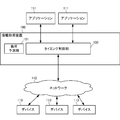
- the information processing apparatus 100 includes a load prediction unit 101 and a timing control unit 102.
- the information processing apparatus 100 is connected to the application 111 and also connected to two or more devices 113 via the network 112.
- the load prediction unit 101 uses the scheduled transmission / reception number derived based on the information collection request received from the application 111 and the predicted transmission / reception number predicted based on the history of information transmission from the two or more devices 113 to the application 111. Thus, a load for transmitting information from two or more devices 113 to the application 111 is predicted.
- the timing control unit 102 controls the transmission timing for transmitting information from the two or more devices 113 to the application 111 so that the load becomes a predetermined value or less based on the prediction result by the load prediction unit 101.
- the information transmission timing can be controlled based on the prediction of the load of the information processing apparatus 100 so that the information transmission is not congested. .
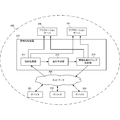
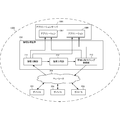
- FIG. 2 is a functional block diagram for explaining the configuration of the information processing system according to the present embodiment.
- the information processing system 200 of this embodiment includes two or more devices 201 to 203, a network 204, an information processing apparatus 205, and two or more application servers 206 and 207.
- the devices 201 to 203 are connected to the information processing apparatus 205 via the network 204, and the application servers 206 and 207 are connected to the information processing apparatus 205.
- the information processing apparatus 205 includes an information collection unit 211, a load prediction unit 212, and an information collection timing control unit 213.
- the information processing apparatus 205 is responsible for the function of the common service platform.
- the information collection unit 211 collects data sensed by the devices 201 to 203 at a timing instructed to the application servers 206 and 207, and transmits the collected data to the application servers 206 and 207 as collection information.
- the load predicting unit 212 predicts a load required for information transmission of the information processing apparatus 205 from registration information for periodically transmitting collected information to the application servers 206 and 207 or statistical past information.
- the registration information is information collection timing and the like
- the statistical past information is a history of information collection timing and a history of information processing executed in the information processing apparatus 205.
- the load prediction unit 212 makes a distribution prediction between the information collection time from the device and the information transmission time to the application server based on information collection from the device and information related to information transmission to the application server.
- the information collection timing control unit 213 determines the timing at which the predicted load of the information processing device 205 is leveled below a predetermined value in consideration of the load prediction result and the distributed prediction predicted by the load prediction unit 212. Further, the information collection timing control unit 213 instructs the timing to the devices 201 to 203 and the application servers 206 and 207. At this time, the information collection timing control unit 213 preferably instructs different information collection timings for each device.
- the information processing apparatus 205 collects information requested by two or more different applications from the devices 201 to 203 based on requests from the application servers 206 and 207.
- the information processing apparatus 205 periodically collects sensor data from the devices 201 to 203 based on requests from the application servers 206 and 207. Further, the information processing apparatus 205 transmits information collected from the devices 201 to 203 to the application servers 206 and 207.
- the information processing apparatus 205 performs the following using registration information or statistical past information for periodic data transmission to the application servers 206 and 207. That is, a dispersion prediction of the data collection time and the data transmission time is made from the registration information or statistical past information, and the data collection time from the device is leveled based on the prediction.
- the information processing apparatus 205 manages the scheduled number of transmissions / receptions per unit time up to a certain period ahead and information of nodes (devices and application servers) that desire information transmission / reception in the periodic processing. Furthermore, the information processing apparatus 205 analyzes the information collection timing designated for each application and for each of the devices 201 to 203 from the application servers 206 and 207, and updates the scheduled transmission / reception number and desired node information for each unit time.
- the information processing apparatus 205 can make a distributed prediction of information collection time and information transmission time.
- the information processing apparatus 205 can determine a new data collection timing that equalizes the predicted load per unit time for an application that desires periodic transmission and reception of information at a predetermined time. It becomes possible.
- the predetermined time means that the total value of the predicted number of transmissions / receptions estimated from past communication histories other than periodic communication and the planned number of transmissions / receptions by the period specified by the application servers 206 and 207 taking this into account is concentrated or constant. The time exceeds the threshold value.
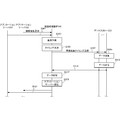
- FIG. 3 is a protocol diagram for explaining the operation of the information processing system of this embodiment.
- the information processing apparatus 205 receives an information collection request from the application servers 206 and 207 in step S301
- the information processing apparatus 205 performs load prediction processing in step S303.
- the information processing apparatus 205 determines the timing of information collection from the devices 201 to 203 based on the prediction result.
- the information processing apparatus 205 transmits the determined information collection timing to the devices 201 to 203.
- the devices 201 to 203 that have received the information collection timing perform data collection in consideration of this timing.
- Data is collected at a time specified by the data collection timing notified from the information processing apparatus 205. For example, it is collected at a timing such as “every hour at 0 minutes” or “every 15 minutes”.
- step S313 the devices 201 to 203 generate transmission information from the collected data.
- step S315 the devices 201 to 203 collect data according to the information collection timing received in step S307, and then transmit the information to the information processing apparatus.
- step S317 the information processing apparatus 205 that has received information from the devices 201 to 203 performs data processing.
- step S319 the information processing apparatus 205 generates transmission information to be transmitted to the application servers 206 and 207.
- step S321 the information processing apparatus 205 transmits the generated transmission information to the application servers 206 and 207.
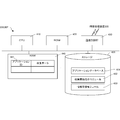
- FIG. 4 is a block diagram illustrating the hardware configuration of the application server according to the present embodiment.
- Each of the application servers 206 and 207 includes a CPU (Central Processing Unit) 410, a ROM (Read Only Memory) 420, a communication control unit 430, a RAM (Random Access Memory) 440, and a storage 450.
- CPU Central Processing Unit
- ROM Read Only Memory
- RAM Random Access Memory
- the CPU 410 is a central processing unit that reads various programs from the ROM 420 and the storage 450 into the RAM 440 and executes them to control the entire application servers 206 and 207.
- the ROM 420 is a read-only memory, and stores various parameters and the like in addition to a boot program to be executed first by the CPU 410.
- the RAM 440 is a random access memory, and stores collected data for each execution program and application.
- the storage 450 stores an application database 451, a collection start instruction module 452, and an information reception module 453.
- the application database 451 includes programs and data of two or more applications.
- the communication control unit 430 controls communication with the information processing apparatus 205.
- the collection start instruction module 452 is a program that instructs the information processing apparatus 205 to collect information from the devices 201 to 203.
- the information receiving module 453 is a program that receives information transmitted from the information processing apparatus 205.
- FIG. 5 is a block diagram illustrating a hardware configuration of the information processing apparatus according to the present embodiment.
- the information processing apparatus 205 includes a CPU 510, a ROM 520, a communication control unit 530, a RAM 540, and a storage 550.
- the CPU 510 is a central processing unit that reads various programs from the ROM 520 and storage 550 into the RAM 540 and executes them to control the entire information processing apparatus 205.
- the ROM 520 is a read-only memory, and stores various parameters and the like in addition to a boot program to be executed first by the CPU 510.
- the RAM 540 is a random access memory, and stores an execution program and parameters 541 received from the application servers 206 and 207, collected data 542 from the devices 201 to 203, a predicted load 543, and a predicted load threshold 544. Further, the RAM 540 stores current timing information 545, update timing information 546, and transmission data 547.
- the storage 550 stores a management database 551, an information collection module 552, a load prediction module 553, and an information collection timing control module 554.
- the communication control unit 530 controls communication with the devices 201 to 203 via the network 204 and communication with the application servers 206 and 207.
- the information collection module 552 is a program that collects information from the devices 201 to 203 and transmits the collected information to the application servers 206 and 207.
- the load prediction module 553 is a program that performs load prediction per unit time of the information processing apparatus 205.
- the information collection timing control module 554 is a program that determines a new information collection timing at which the predicted load per unit time becomes equal to or less than a predetermined value and is leveled.
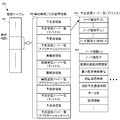
- FIG. 6 is a diagram illustrating a management table managed by the information processing apparatus according to the present embodiment.
- the information collection timing control unit 213 determines information collection timing based on data stored in the management database 551.
- the management database 551 includes a management table 601 as shown in FIG.
- the management table 601 includes management information 602 for each unit time.
- the management information 602 for each unit time includes a planned reception number, a planned reception node list (device), a planned transmission number, a planned transmission node list (application server), an actual reception number, and an actual reception node list (device). . Further, the management information 602 for each unit time includes the actual transmission number, the actual transmission node list (application server), the predicted reception number, the predicted reception node list (device), the predicted transmission number, and the predicted transmission node list (application server). Is included.
- the scheduled reception node list (device) 603 is a table representing a list of node identifiers of devices that are scheduled to receive information.
- node information 604 is stored for each node identifier.
- the node information 604 includes a node identifier, a periodic communication time interval, a minimum set time unit, a previous communication time, a next scheduled communication time, a data amount, and processing information.
- a similar node list table is also provided for the scheduled transmission node list, the actual reception node list, the actual transmission node list, the predicted reception node list, and the predicted transmission node list.
- FIG. 6 shows the scheduled transmission / reception number, actual transmission / reception number, predicted transmission / reception number, and node information for each unit time managed by the information processing apparatus 205.
- each node information is obtained separately.
- the management information 602 for each unit time is constantly updated.
- the unit time is, for example, one second.
- the management information 602 for each unit time includes, for example, the following (a) to (f).
- C Number of received records and node list: the number of sensor devices that have received sensor data at a corresponding time and a corresponding node identifier list.
- the node information 604 in FIG. 6 is information managed for each node identifier when the sensor devices 201 to 203 or the application servers 206 and 207 are nodes. Further, the node information 604 is collection instruction information notified from the application servers 206 and 207 to the information processing apparatus 205, communication results, and information determined from these information.
- the minimum set time unit is a unit that is set and utilized when the communication time is leveled by the information processing apparatus 205, for example. That is, when leveling the communication time by the information processing device 205, even if the communication time in seconds is specified, the target node may accept only minutes. In this case, the specification of the communication time in seconds is invalid, so if such information is known in advance, it is set and utilized.
- the load applied to the information processing apparatus 205 referred to in the present embodiment is the total of the “planned” transmission / reception number per unit time and the “forecast” transmission / reception number per unit time based on the requests from the application servers 206 and 207. Value.
- the “scheduled” transmission / reception number per unit time is the transmission / reception number of periodic communication.
- the “predicted” number of transmissions / receptions per unit time is estimated from past communication history, and results of periodic communication are excluded.
- the target of leveling is the “scheduled” transmission / reception number.
- the plurality of node information is stored on the memory of the information processing device 205 or the external storage device. Show identifiers in a finite list. Further, node information for each node identifier in the list may be managed separately thereafter, or a plurality of node identifiers or node information may be connected in a chain.
- FIG. 7 is a diagram for explaining initial information transmitted from the application servers 206 and 207 to the information processing apparatus 205 in the information processing system according to the present embodiment.
- the application servers 206 and 207 notify the information processing apparatus 205 in advance of initial information 700 necessary for information collection.
- the initial information 700 includes a CRC 701, collection instruction information 702, a transmission source (application server) 703, and a transmission destination (information processing apparatus) 704, as shown in FIG.
- the collection instruction information 702 is the parameter 541.
- the collection instruction information 702 includes the following (1) to (4). (1) The node identifier 721 of the application server itself. (2) A sensor data source 722 to be collected. (3) Collection method 723. (4) Transmission option 724.
- the above (1) to (3) are essential information, and (2) to (4) may be fixed values in the contract.
- the sensor data source 722 to be collected in (2) above may be specified by a node identifier of a sensor device (multiple designations), or may be specified by a sensor type and application range (location, time zone, etc.). Further, there is a case where the contract is fixed with the node identifier 721 of the application server itself (1).
- the collection method 723 in (3) above includes schedule communication, periodic communication, communication based on sensor data threshold determination, and on-demand communication.
- schedule communication a communication time schedule or a period, a reference time, and a periodic time interval are designated.
- periodic communication a periodic time interval or a reference time and a periodic time interval are designated.
- communication based on sensor data threshold determination a threshold and a determination method (above, below, less than, equal, etc.) are designated.
- the transmission option 724 in (4) above specifies whether or not cache data can be transmitted, only the latest collected data is transmitted, all data transmitted after the previous time, average value transmission of all data after the previous time, and the like. In this designation, a plurality of designations are possible, and a fixed value may be used in the contract. Also, in the transmission of all data after the previous time, it is possible to specify the compressed data transmission of all data after the previous time. Furthermore, a transmission priority (on-time priority, data priority, on-time and data priority, no designation) indicating whether to give priority to transmission time or transmission data content is specified.
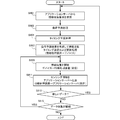
- FIG. 8 is a flowchart for explaining the operation of the information processing apparatus 205 according to this embodiment.
- step S801 when the information processing apparatus 205 receives the information collection request from the application servers 206 and 207, the information processing apparatus 205 performs load prediction processing in step S803.
- step S805 the information processing apparatus 205 generates information collection timing that causes the load to be equal to or less than a predetermined threshold value and level.
- step S807 the information processing apparatus 205 performs information collection timing determination and update processing, and notifies the devices 201 to 203 of the determined or updated information collection timing. Thereafter, in step S809, the information processing apparatus 205 performs information collection processing and collects data sensed by the devices 201 to 203 as information. Further, in step S811, the information processing apparatus 205 transmits information collected from the devices 201 to 203 to the application servers 206 and 207 that request the request.
- step S813 the information processing apparatus 205 determines whether a new request for information collection has been received. As a result of the determination in step S813, when a new information collection request is received, the information processing apparatus 205 proceeds to the process in step S801. If it is determined in step S813 that no new information collection request has been received, in step S815, the information processing apparatus 205 determines whether information collection is ongoing. As a result of the determination, when information collection is continuing, the information processing apparatus 205 proceeds to the process of step S809 and continues the process, and when the information collection is finished, the process is terminated.
- the load prediction is determined by the server configuration (distributed configuration, etc.), processing capability, service, data capacity, and the like.
- pattern analysis is performed to predict the load transition. For example, information such as seasons, days of the week, time zones, holidays, events, weather forecasts, etc., and the relationship between past communication histories and the like are obtained, and the load ahead for a certain period is predicted.
- the planned load in the former case where the scheduled communication time and the number of nodes are known is derived, and the total load combined with the predicted load in the latter case estimated from the past communication history in the past.
- the load ahead of a certain period is predicted by taking into account how much the actual load has changed relative to the load.
- the application servers 206 and 207 may set a timing change allowable range in the information processing apparatus 205 in advance, and the information processing apparatus 205 itself may determine permission to change the transmission time. In addition, the application servers 206 and 207 may determine whether or not a permission request for changing the information transmission time received from the information processing device 205 may be made based on the timing change allowable range set in advance in the application servers 206 and 207. . Then, the application servers 206 and 207 may return to the information processing apparatus 205 whether or not to permit permission to change the information transmission time.
- the information processing apparatus 205 determines that time correction based on prediction is necessary every time information is received from the devices 201 to 203, the information processing apparatus 205 includes an instruction to change the information collection timing in the reply information to the devices 201 to 203. May be.
- the information transmission timing change permission request for the application servers 206 and 207 may be included in the transmission information to the application servers 206 and 207.
- the permission request is included in the transmission information when the information processing apparatus 205 determines that the information transmission timing needs to be changed when transmitting information to the application servers 206 and 207 before the information transmission timing is changed. It is.
- the information transmission timing change instruction for the devices 201 to 203 and the information transmission timing change permission request for the application servers 206 and 207 may be performed in parallel. Further, it may be performed in order such that instructions are given to the devices 201 to 203 after permission from the application servers 206 and 207.
- the information processing apparatus 205 changes the information transmission timing. At this time, the information processing apparatus 205 changes the information transmission timing based on the information processing apparatus 205's determination based on information such as a changeable range set in advance in the information processing apparatus 205.
- the information collection timing and the information transmission time determination method may be implemented based on the scheduled transmission / reception number per unit time and the actual transmission / reception number per unit time.
- the scheduled number of transmissions / receptions per unit time is determined based on registration information between the devices 201 to 203 and the application servers 206 and 207 for the information processing apparatus 205.
- the actual number of transmission / receptions per unit time is determined based on the actual result of receiving or transmitting information.
- the periodic time or explicit time is set. .
- the case where the unit time is 1 minute will be described as an example of the planned number of transmissions / receptions and the number of actual transmissions / receptions per unit time.
- a value obtained by counting the number of devices or application servers scheduled to receive or transmit information at the same time registered in the registration information in a predetermined one minute is set.
- the actual transmission / reception number is set to a value obtained by counting the number of devices and application servers that have actually communicated at the same time in a predetermined one minute.
- the scheduled transmission / reception number and the actual transmission / reception number may be constantly managed and updated in the database of the information processing apparatus 205.
- the present embodiment it is possible to avoid the concentration of information transmission from the devices 201 to 203 to the application servers 206 and 207, and to realize congestion avoidance at the time of information collection in the information processing apparatus 205. Thereby, the predicted load of the information processing device 205 is leveled below a predetermined value, and an increase in load can be avoided.
- two application servers 206 and 207 are shown. However, one application server may be used, and three or more application servers having completely different purposes and services are connected to the information processing apparatus 205. May be.
- the three devices 201 to 203 are shown and described. However, the number of devices is arbitrary and may be two or four or more. These devices may be devices having completely different purposes and characteristics. Even when there is a single application, there is a possibility that congestion occurs in a general information processing apparatus when there are a plurality of devices. Congestion at the time of collection can be avoided.
- the communication application operating on the devices 201 to 203 may be able to change the data transmission timing in accordance with an instruction from the information processing apparatus 205 or the application servers 206 and 207.
- the information that can be instructed to the communication application operating on the devices 201 to 203 is the sensing data acquisition cycle time, the acquired sensing data transmission cycle time, and a reference value for transmission when an abnormal value is detected.
- the acquired sensing data may be transmitted at a time for a plurality of times by a set of sensing time and data value.
- the information processing apparatus 205 may obtain permission from the application servers 206 and 207 in advance to level the data transmission time for the application servers 206 and 207.
- FIG. 9 is a functional block diagram for explaining the configuration of the information processing system 900 according to the present embodiment.
- the information processing system 900 according to the present embodiment is different from the second embodiment in that the information processing apparatus 905 includes an information collection timing proposal unit 901 and an information collection timing notification unit 902. Since other configurations and operations are the same as those of the second embodiment, the same configurations and operations are denoted by the same reference numerals, and detailed description thereof is omitted.
- the information processing apparatus 905 does not determine the information collection timing. Instead, in this embodiment, the information processing apparatus 905 is configured to propose to the application servers 906 and 907 to collect information in a time zone in which the load of the information server 906 and 907 is small.
- the information processing system 900 includes devices 201 to 203, a network 204, an information processing apparatus 905, and application servers 906 and 907.
- the information processing apparatus 905 includes an information collection unit 211, a load prediction unit 212, an information collection timing proposal unit 901, and an information collection timing notification unit 902.
- FIG. 10 is a block diagram illustrating the hardware configuration of the application servers 906 and 907 according to the present embodiment.
- the application servers 906 and 907 include a CPU 410, a ROM 420, a communication control unit 430, a RAM 440, and a storage 450.
- the RAM 440 is a random access memory, and stores collected data for each application, timing change information 1042, and a permission / rejection flag 1043.
- the storage 450 stores an application database 451, a collection start instruction module 452, an information reception module 453, and a proposal examination module 1054.
- the proposal examination module 1054 is a program that examines whether or not to permit the information collection timing change received from the information processing apparatus 905 and transmits the examination result to the information processing apparatus 905.
- FIG. 11 is a block diagram illustrating a hardware configuration of the information processing apparatus 905 according to the present embodiment.
- the information processing apparatus 905 includes a CPU 510, a ROM 520, a communication control unit 530, a RAM 540, and a storage 550.
- the RAM 540 is a random access memory, and stores parameters 541 received from the application servers 906 and 907, collected data 542 from the devices 201 to 203, a predicted load 543, and a predicted load threshold 544. Further, the RAM 540 stores current timing information 545, update timing information 546, transmission data 547, and a timing change permission / rejection flag 1141.
- the storage 550 stores a management database 551, an information collection module 552, a load prediction module 553, an information collection timing control module 554, an information collection timing proposal module 1155, and a timing notification module 1156.
- the information collection timing proposal module 1155 proposes to the application server 906 to change the information collection timing.
- the timing notification module 1156 notifies the devices 201 to 203 of the change of the information collection timing.
- FIG. 12 is a flowchart for explaining the operation of the information processing apparatus 905 according to this embodiment. Hereinafter, only processing added to the processing described with reference to FIG. 8 will be described.
- step S1201 the information collection timing proposal unit 901 takes the load transition predicted by the load prediction unit 212 into consideration, and the future predicted load of the information processing device 905 is equal to or lower than a predetermined value and is leveled. Calculate the information collection timing.
- the information collection timing proposal unit 901 notifies the application servers 906 and 907 of information collection timing change proposals.
- step S1203 the information collection timing proposal unit 901 determines whether or not the application servers 906 and 907 have permitted a change to the calculated information collection timing.
- step S1203 If it is determined in step S1203 that the change is not permitted, the information processing apparatus 905 proceeds to the process in step S807.
- step S1205 the information collection timing notification unit 902 of the information processing apparatus 905 sends information to notify the devices 201 to 203 that information is collected at that timing. Update. Thereafter, the information processing apparatus 905 proceeds to the process of step S807.
- the information collection timing proposal unit 901 may transmit not only the information collection timing but also information related to charging to the application servers 906 and 907. For example, for the application servers 906 and 907 that originally collected information in a 10-minute cycle, instead of the information processing device 905 keeping the billing amount low, the load is expected to be relatively low. For example, an operation of proposing information collection is suggested. In this case, the application servers 906 and 907 determine whether or not to accept the proposal in consideration of the required charge amount and application quality.
- the transmission timing since the transmission timing is changed when the application servers 906 and 907 accept the change proposal, the transmission timing can be changed in consideration of the convenience of the application servers 906 and 907. Concentration of information transmission timing from the devices 201 to 203 to the application servers 906 and 907 can be reduced, and congestion reduction at the time of information collection in the information processing apparatus 905 can be realized. Thereby, the predicted load in the information processing device 905 is leveled to a predetermined value or less, and an increase in load can be avoided.
- FIG. 13 is a functional block diagram for explaining the configuration of the information processing system 1300 according to the present embodiment.
- the information processing system 1300 according to the present embodiment is different from the second embodiment in that one application server 1306 has two or more applications 1307 and 1308. Since other configurations and operations are the same as those of the second embodiment, the same configurations and operations are denoted by the same reference numerals, and detailed description thereof is omitted.
- the applications 1307 and 1308 independently make an information collection request to the information processing apparatus 205. Even in such a case, the same effect as in the second embodiment can be obtained.
- the information processing apparatuses 205 and 905 may be, for example, an M2M platform and an M2M Service Infrastructure defined in oneM2M that performs standardization on the Machine to Machine service.
- the M2M Service Infrastructure corresponds to IN (Infrastructure Node) in the oneM2M architecture, and has a CSE (Common Services Entity) that provides a common service function (CSF) group defined by oneM2M.
- the information processing devices 205 and 905 may be devices including a plurality of CSEs.
- the CSE that IN has is also referred to as IN (Infrastructure Node) -CSE.
- the network is, for example, a mobile communication network provided by a communication carrier, and may be an Underlying Network defined in oneM2M.
- a gateway device may be used as a device arranged between the information processing devices 205 and 905 and the devices 201 to 203.
- the gateway device is a mobile router, for example, and may be M2M2Gateway defined in oneM2M.
- M2M Gateway corresponds to MN (Middle Node) in the oneM2M architecture and has CSE.
- the CSE in the MN is also referred to as MN-CSE.
- the devices 201 to 203 are, for example, sensor devices, and may be M2M Device defined in oneM2M.
- M2M Device corresponds to ASN (Application Service Node) or ADN (Application Dedicated Node) in the oneM2M architecture, among which ASN has CSE.
- the CSE in the ASN is also referred to as ASN-CSE.
- the application servers 206, 207, 906, and 907 are servers that process a specific job, for example, and may be M2M Application Infrastructure defined in oneM2M.
- the application servers 206, 207, 906, and 907 may have an AE (Application Entity) in the oneM2M architecture.
- AE Application Entity
- an AE in the Infrastructure Domain defined by oneM2M and connected to the IN-CSE is also referred to as IN (Infrastructure Node) -AE.
- the present invention may be applied to a system composed of a plurality of devices, or may be applied to a single device.
- the present invention can also be applied to a case where an information processing program that implements the functions of the embodiments is supplied directly or remotely to a system or apparatus. Therefore, in order to realize the functions of the present invention on a computer, a program installed in the computer, a medium storing the program, and a WWW (World Wide Web) server that downloads the program are also included in the scope of the present invention. .
- at least a non-transitory computer readable medium storing a program for causing a computer to execute the processing steps included in the above-described embodiments is included in the scope of the present invention.
- the control means controls the transmission timing within a change allowable range of the transmission timing of information specified by the application.
- the information processing apparatus according to appendix 1 or 2. (Appendix 4)
- the control means instructs the device to change a transmission timing at which the device transmits information.
- the information processing apparatus according to any one of supplementary notes 1 to 3. (Appendix 5)
- Proposing means for proposing a change of the transmission timing to the application The control means controls the transmission timing when the application accepts the change proposal;
- the information processing apparatus according to appendix 5 The information processing apparatus according to appendix 5, wherein the proposing means proposes a discount for payment consideration to the application when the application requests permission to change the information collection timing.
- the predicting means further predicts a distribution of information collection time from the device and information transmission time to the application server based on information related to information collection from the device and information transmission to the application server,
- the control means controls the transmission timing so as to level the load based on the prediction of the load and the dispersion;
- the information processing apparatus according to any one of appendices 1 to 6.
- the prediction means predicts the load further considering the configuration, processing capability, and service and data capacity of the information processing apparatus;
- the information processing apparatus according to any one of appendices 1 to 7.
- the prediction means predicts the load by further considering information on seasons, days of the week, time zones, holidays, events, and weather forecasts as the information transmission history, The information processing apparatus according to any one of appendices 1 to 8.
- the predicting means predicts the load, taking into account how much the actual load has changed relative to the predicted load.
- the information processing apparatus according to any one of appendices 1 to 9.
Landscapes
- Engineering & Computer Science (AREA)
- Computer Networks & Wireless Communication (AREA)
- Physics & Mathematics (AREA)
- General Physics & Mathematics (AREA)
- Signal Processing (AREA)
- Computer And Data Communications (AREA)
- Arrangements For Transmission Of Measured Signals (AREA)
- Information Transfer Between Computers (AREA)
Abstract
Priority Applications (5)
| Application Number | Priority Date | Filing Date | Title |
|---|---|---|---|
| CN201680030860.7A CN107710294A (zh) | 2015-05-27 | 2016-03-09 | 信息处理设备、信息处理方法、信息处理程序和信息处理系统 |
| JP2017520264A JP6687023B2 (ja) | 2015-05-27 | 2016-03-09 | 情報処理装置、情報処理方法、情報処理プログラムおよび情報処理システム |
| US15/576,110 US20180139270A1 (en) | 2015-05-27 | 2016-03-09 | Information processing apparatus, information processing method, information processing program, and information process system |
| KR1020177036844A KR20180011220A (ko) | 2015-05-27 | 2016-03-09 | 정보 처리 장치, 정보 처리 방법, 정보 처리 프로그램 및 정보 처리 시스템 |
| EP16799635.4A EP3306584A4 (fr) | 2015-05-27 | 2016-03-09 | Dispositif de traitement d'informations, procédé de traitement d'informations, programme de traitement d'informations, et système de traitement d'informations |
Applications Claiming Priority (2)
| Application Number | Priority Date | Filing Date | Title |
|---|---|---|---|
| JP2015107859 | 2015-05-27 | ||
| JP2015-107859 | 2015-05-27 |
Publications (1)
| Publication Number | Publication Date |
|---|---|
| WO2016189926A1 true WO2016189926A1 (fr) | 2016-12-01 |
Family
ID=57393148
Family Applications (1)
| Application Number | Title | Priority Date | Filing Date |
|---|---|---|---|
| PCT/JP2016/057436 Ceased WO2016189926A1 (fr) | 2015-05-27 | 2016-03-09 | Dispositif de traitement d'informations, procédé de traitement d'informations, programme de traitement d'informations, et système de traitement d'informations |
Country Status (6)
| Country | Link |
|---|---|
| US (1) | US20180139270A1 (fr) |
| EP (1) | EP3306584A4 (fr) |
| JP (1) | JP6687023B2 (fr) |
| KR (1) | KR20180011220A (fr) |
| CN (1) | CN107710294A (fr) |
| WO (1) | WO2016189926A1 (fr) |
Cited By (6)
| Publication number | Priority date | Publication date | Assignee | Title |
|---|---|---|---|---|
| JP6388093B1 (ja) * | 2017-08-31 | 2018-09-12 | 三菱電機株式会社 | データ伝送装置、データ処理システムおよびデータ伝送方法 |
| WO2018180369A1 (fr) * | 2017-03-28 | 2018-10-04 | 日本電気株式会社 | Système de réseau de capteurs |
| JP2018174448A (ja) * | 2017-03-31 | 2018-11-08 | 富士通株式会社 | 通信装置、データ取得システム、データ取得制御方法 |
| EP3477917A1 (fr) * | 2017-10-24 | 2019-05-01 | Hitachi, Ltd. | Appareil et procédé de collecte de données |
| JP2020024515A (ja) * | 2018-08-06 | 2020-02-13 | 沖電気工業株式会社 | データ収集状況監視装置、データ収集状況監視方法、及び、データ収集状況監視システム |
| JP2020149627A (ja) * | 2019-03-15 | 2020-09-17 | ブラザー工業株式会社 | 管理装置、負荷軽減システム、管理装置の制御方法、および制御プログラム |
Families Citing this family (4)
| Publication number | Priority date | Publication date | Assignee | Title |
|---|---|---|---|---|
| CN111727590A (zh) * | 2018-03-02 | 2020-09-29 | 日本电气株式会社 | 控制装置、通信控制方法和程序 |
| JP7251532B2 (ja) | 2020-08-07 | 2023-04-04 | いすゞ自動車株式会社 | 架装情報変換装置 |
| JP7247990B2 (ja) * | 2020-08-07 | 2023-03-29 | いすゞ自動車株式会社 | 架装情報取得装置 |
| CN115994837B (zh) * | 2023-03-23 | 2023-06-30 | 河北雄安睿天科技有限公司 | 一种水务数据的管理系统及方法 |
Citations (4)
| Publication number | Priority date | Publication date | Assignee | Title |
|---|---|---|---|---|
| JP2007080190A (ja) * | 2005-09-16 | 2007-03-29 | Nec Corp | センサネットワークシステム、センサノード、センサ情報収集装置、事象観測方法、およびプログラム |
| JP2010114766A (ja) * | 2008-11-07 | 2010-05-20 | Univ Of Electro-Communications | 情報処理装置および方法、プログラム、並びに通信方法 |
| WO2012111255A1 (fr) * | 2011-02-14 | 2012-08-23 | パナソニック株式会社 | Procédé de radiomessagerie, système de radiomessagerie, dispositif de communication et nœud correspondant |
| WO2013094013A1 (fr) * | 2011-12-20 | 2013-06-27 | 三菱電機株式会社 | Système de communication et système de relevé de compteur automatique |
Family Cites Families (7)
| Publication number | Priority date | Publication date | Assignee | Title |
|---|---|---|---|---|
| JP2010076536A (ja) * | 2008-09-25 | 2010-04-08 | Toyota Motor Corp | 電子制御ユニット、インテリジェントセンサ、車両用制御システム、信号サンプリング方法 |
| EP2200230B1 (fr) * | 2008-12-16 | 2014-03-12 | Alcatel Lucent | Procédé et dispositif pour la réalisation d'un contrôle du trafic dans des réseaux de télécommunication |
| JP5430411B2 (ja) * | 2010-01-06 | 2014-02-26 | 株式会社Kddi研究所 | データ収集サーバ |
| EP2395701A1 (fr) * | 2010-06-10 | 2011-12-14 | France Telecom | Procédé de gestion de charge de trafic, réseau et dispositif |
| EP2672748B1 (fr) * | 2011-09-19 | 2017-04-05 | Huawei Technologies Co., Ltd. | Procédé de prédiction de charge, appareil et système de communication à commande d'économie d'énergie |
| JP6172649B2 (ja) * | 2012-12-19 | 2017-08-02 | インターナショナル・ビジネス・マシーンズ・コーポレーションInternational Business Machines Corporation | 情報処理装置、プログラム、及び、情報処理方法 |
| JP5818830B2 (ja) * | 2013-02-15 | 2015-11-18 | 株式会社Nttドコモ | 通信システム、制御装置、アプリケーションサーバ及びデバイス |
-
2016
- 2016-03-09 WO PCT/JP2016/057436 patent/WO2016189926A1/fr not_active Ceased
- 2016-03-09 CN CN201680030860.7A patent/CN107710294A/zh active Pending
- 2016-03-09 KR KR1020177036844A patent/KR20180011220A/ko not_active Ceased
- 2016-03-09 EP EP16799635.4A patent/EP3306584A4/fr not_active Withdrawn
- 2016-03-09 US US15/576,110 patent/US20180139270A1/en not_active Abandoned
- 2016-03-09 JP JP2017520264A patent/JP6687023B2/ja active Active
Patent Citations (4)
| Publication number | Priority date | Publication date | Assignee | Title |
|---|---|---|---|---|
| JP2007080190A (ja) * | 2005-09-16 | 2007-03-29 | Nec Corp | センサネットワークシステム、センサノード、センサ情報収集装置、事象観測方法、およびプログラム |
| JP2010114766A (ja) * | 2008-11-07 | 2010-05-20 | Univ Of Electro-Communications | 情報処理装置および方法、プログラム、並びに通信方法 |
| WO2012111255A1 (fr) * | 2011-02-14 | 2012-08-23 | パナソニック株式会社 | Procédé de radiomessagerie, système de radiomessagerie, dispositif de communication et nœud correspondant |
| WO2013094013A1 (fr) * | 2011-12-20 | 2013-06-27 | 三菱電機株式会社 | Système de communication et système de relevé de compteur automatique |
Non-Patent Citations (1)
| Title |
|---|
| See also references of EP3306584A4 * |
Cited By (12)
| Publication number | Priority date | Publication date | Assignee | Title |
|---|---|---|---|---|
| WO2018180369A1 (fr) * | 2017-03-28 | 2018-10-04 | 日本電気株式会社 | Système de réseau de capteurs |
| JPWO2018180369A1 (ja) * | 2017-03-28 | 2020-01-16 | 日本電気株式会社 | センサネットワークシステム |
| US11102123B2 (en) | 2017-03-28 | 2021-08-24 | Nec Corporation | Sensor network system |
| JP2018174448A (ja) * | 2017-03-31 | 2018-11-08 | 富士通株式会社 | 通信装置、データ取得システム、データ取得制御方法 |
| JP6388093B1 (ja) * | 2017-08-31 | 2018-09-12 | 三菱電機株式会社 | データ伝送装置、データ処理システムおよびデータ伝送方法 |
| WO2019043855A1 (fr) * | 2017-08-31 | 2019-03-07 | 三菱電機株式会社 | Dispositif de transmission de données, système de traitement de données et procédé de transmission de données |
| EP3477917A1 (fr) * | 2017-10-24 | 2019-05-01 | Hitachi, Ltd. | Appareil et procédé de collecte de données |
| US10819600B2 (en) | 2017-10-24 | 2020-10-27 | Hitachi, Ltd. | Data collection apparatus and data collection method |
| JP2020024515A (ja) * | 2018-08-06 | 2020-02-13 | 沖電気工業株式会社 | データ収集状況監視装置、データ収集状況監視方法、及び、データ収集状況監視システム |
| JP7131189B2 (ja) | 2018-08-06 | 2022-09-06 | 沖電気工業株式会社 | データ収集状況監視装置、データ収集状況監視方法、及び、データ収集状況監視システム |
| JP2020149627A (ja) * | 2019-03-15 | 2020-09-17 | ブラザー工業株式会社 | 管理装置、負荷軽減システム、管理装置の制御方法、および制御プログラム |
| JP7225967B2 (ja) | 2019-03-15 | 2023-02-21 | ブラザー工業株式会社 | 管理装置、負荷軽減システム、管理装置の制御方法、および制御プログラム |
Also Published As
| Publication number | Publication date |
|---|---|
| EP3306584A4 (fr) | 2019-01-09 |
| CN107710294A (zh) | 2018-02-16 |
| US20180139270A1 (en) | 2018-05-17 |
| KR20180011220A (ko) | 2018-01-31 |
| JP6687023B2 (ja) | 2020-04-22 |
| EP3306584A1 (fr) | 2018-04-11 |
| JPWO2016189926A1 (ja) | 2018-03-08 |
Similar Documents
| Publication | Publication Date | Title |
|---|---|---|
| JP6687023B2 (ja) | 情報処理装置、情報処理方法、情報処理プログラムおよび情報処理システム | |
| Chen et al. | Learning and management for Internet of Things: Accounting for adaptivity and scalability | |
| US11765645B2 (en) | Method and system for multi-access edge computing (MEC) selection and load balancing | |
| EP3854116B1 (fr) | Procédé de gestion de trafic par une fonction de plan d'utilisateur (upf), upf correspondant, fonction de gestion de session et fonction analytique de données de réseau | |
| CN105009475B (zh) | 考虑到用户设备(ue)移动性的用于准入控制和资源可用性预测的方法和系统 | |
| Nan et al. | Cost-effective processing for delay-sensitive applications in cloud of things systems | |
| JP6885403B2 (ja) | リソース管理装置、リソース管理方法及びプログラム | |
| KR20210108785A (ko) | 무선 통신 시스템에서 서비스를 선택하는 방법 및 장치 | |
| Cho et al. | Learning-based decentralized offloading decision making in an adversarial environment | |
| JP7095705B2 (ja) | ノード制御装置、計算処理システム、ノード制御方法、および、プログラム | |
| Liu et al. | Prediction-based mobile data offloading in mobile cloud computing | |
| Maan et al. | Deep Q-network based fog node offloading strategy for 5 G vehicular Adhoc Network | |
| US20140120930A1 (en) | Method, Apparatus, Computer Program Product and System for Communicating Predictions | |
| CN104995899A (zh) | 服务器负载管理 | |
| KR20150013978A (ko) | 모바일 네트워크에서의 sdn 기반 트래픽 데이터 제어 방법 및 장치 | |
| Wu et al. | Reinforcement learning for communication load balancing: approaches and challenges | |
| Al-Maitah et al. | An optimal storage utilization technique for IoT devices using sequential machine learning | |
| Wang et al. | Generative AI Based Dependency-Aware Task Offloading and Resource Allocation for UAV-Assisted IoV | |
| Mass et al. | Context-aware edge process management for mobile thing-to-fog environment | |
| Meuser | Data management in vehicular networks-relevance-aware networking for advanced driver assistance systems | |
| Chen et al. | Learning and management for Internet-of-Things: Accounting for adaptivity and scalability | |
| Neogy et al. | A reliable service discovery protocol using mobile agents in MANET | |
| JP2016111531A (ja) | モバイルネットワーク管理方法、及び、モバイルネットワーク管理システム | |
| Al-Kashoash | Optimization-based hybrid congestion alleviation | |
| Tran-Dang et al. | Fog resource aware framework for task offloading in IoT systems |
Legal Events
| Date | Code | Title | Description |
|---|---|---|---|
| 121 | Ep: the epo has been informed by wipo that ep was designated in this application |
Ref document number: 16799635 Country of ref document: EP Kind code of ref document: A1 |
|
| ENP | Entry into the national phase |
Ref document number: 2017520264 Country of ref document: JP Kind code of ref document: A |
|
| WWE | Wipo information: entry into national phase |
Ref document number: 15576110 Country of ref document: US |
|
| NENP | Non-entry into the national phase |
Ref country code: DE |
|
| ENP | Entry into the national phase |
Ref document number: 20177036844 Country of ref document: KR Kind code of ref document: A |
|
| WWE | Wipo information: entry into national phase |
Ref document number: 2016799635 Country of ref document: EP |