WO2016199907A1 - Agent thérapeutique pour plaie ou rugosité cutanée - Google Patents
Agent thérapeutique pour plaie ou rugosité cutanée Download PDFInfo
- Publication number
- WO2016199907A1 WO2016199907A1 PCT/JP2016/067416 JP2016067416W WO2016199907A1 WO 2016199907 A1 WO2016199907 A1 WO 2016199907A1 JP 2016067416 W JP2016067416 W JP 2016067416W WO 2016199907 A1 WO2016199907 A1 WO 2016199907A1
- Authority
- WO
- WIPO (PCT)
- Prior art keywords
- skin
- mass
- zinc
- wound
- zinc carbonate
- Prior art date
- Legal status (The legal status is an assumption and is not a legal conclusion. Google has not performed a legal analysis and makes no representation as to the accuracy of the status listed.)
- Ceased
Links
Images




Classifications
-
- A—HUMAN NECESSITIES
- A61—MEDICAL OR VETERINARY SCIENCE; HYGIENE
- A61K—PREPARATIONS FOR MEDICAL, DENTAL OR TOILETRY PURPOSES
- A61K33/00—Medicinal preparations containing inorganic active ingredients
- A61K33/24—Heavy metals; Compounds thereof
- A61K33/30—Zinc; Compounds thereof
-
- A—HUMAN NECESSITIES
- A61—MEDICAL OR VETERINARY SCIENCE; HYGIENE
- A61K—PREPARATIONS FOR MEDICAL, DENTAL OR TOILETRY PURPOSES
- A61K8/00—Cosmetics or similar toiletry preparations
- A61K8/18—Cosmetics or similar toiletry preparations characterised by the composition
- A61K8/19—Cosmetics or similar toiletry preparations characterised by the composition containing inorganic ingredients
- A61K8/27—Zinc; Compounds thereof
-
- A—HUMAN NECESSITIES
- A61—MEDICAL OR VETERINARY SCIENCE; HYGIENE
- A61K—PREPARATIONS FOR MEDICAL, DENTAL OR TOILETRY PURPOSES
- A61K9/00—Medicinal preparations characterised by special physical form
- A61K9/70—Web, sheet or filament bases ; Films; Fibres of the matrix type containing drug
-
- A—HUMAN NECESSITIES
- A61—MEDICAL OR VETERINARY SCIENCE; HYGIENE
- A61K—PREPARATIONS FOR MEDICAL, DENTAL OR TOILETRY PURPOSES
- A61K9/00—Medicinal preparations characterised by special physical form
- A61K9/70—Web, sheet or filament bases ; Films; Fibres of the matrix type containing drug
- A61K9/7007—Drug-containing films, membranes or sheets
-
- A—HUMAN NECESSITIES
- A61—MEDICAL OR VETERINARY SCIENCE; HYGIENE
- A61L—METHODS OR APPARATUS FOR STERILISING MATERIALS OR OBJECTS IN GENERAL; DISINFECTION, STERILISATION OR DEODORISATION OF AIR; CHEMICAL ASPECTS OF BANDAGES, DRESSINGS, ABSORBENT PADS OR SURGICAL ARTICLES; MATERIALS FOR BANDAGES, DRESSINGS, ABSORBENT PADS OR SURGICAL ARTICLES
- A61L15/00—Chemical aspects of, or use of materials for, bandages, dressings or absorbent pads
- A61L15/16—Bandages, dressings or absorbent pads for physiological fluids such as urine or blood, e.g. sanitary towels, tampons
- A61L15/22—Bandages, dressings or absorbent pads for physiological fluids such as urine or blood, e.g. sanitary towels, tampons containing macromolecular materials
-
- A—HUMAN NECESSITIES
- A61—MEDICAL OR VETERINARY SCIENCE; HYGIENE
- A61P—SPECIFIC THERAPEUTIC ACTIVITY OF CHEMICAL COMPOUNDS OR MEDICINAL PREPARATIONS
- A61P17/00—Drugs for dermatological disorders
- A61P17/02—Drugs for dermatological disorders for treating wounds, ulcers, burns, scars, keloids, or the like
-
- A—HUMAN NECESSITIES
- A61—MEDICAL OR VETERINARY SCIENCE; HYGIENE
- A61Q—SPECIFIC USE OF COSMETICS OR SIMILAR TOILETRY PREPARATIONS
- A61Q19/00—Preparations for care of the skin
Definitions
- the present invention relates to a skin wound or rough skin treatment agent and a medical device using the same.
- Zinc is the second most common metal in the human body, and it has long been known that zinc plays a role in dietary deficiency, including dermatitis, anorexia, alopecia and general growth disorders.
- Patent Document 1 states in claim 1 that “a physiologically active substance having wound healing promoting activity is blended with a substrate of a water-soluble polymer selected from gelatin, pectin, polyvinylpyrrolidone, polyvinyl alcohol, and sodium polyacrylate.
- Wound healing film preparation An embodiment in which an aluminum salt or a hardly soluble metal salt and / or a hardly soluble metal oxide is mixed as an adhesive used in a film preparation is described. Examples of the metal salt and / or metal oxide include zinc carbonate, oxidation Zinc and the like are described (paragraph [0026]).
- claim 1 describes that at least one acidic functional group selected from the group of carboxylic acid (salt) group, sulfonic acid (salt) group and phosphoric acid (salt) group is 0.01 to 5 mmol / a skin contact material comprising an acid-modified conjugated diene polymer containing g.
- the acid-modified conjugated diene polymer may contain a crosslinking agent for covalent bonding and a crosslinking agent for ionic bonding as a crosslinking agent, and the description of zinc carbonate and zinc oxide as the ionic crosslinking agent (paragraph [0022]) is there.
- JP 2004-161684 A Japanese Patent Application Laid-Open No. 2005-695
- a therapeutic agent for skin wounds that reach the dermis through the epidermis or deep wounds such as rough skin and rough skin.
- a skin wound or rough skin treatment agent comprising at least one selected from the group consisting of zinc sulfate, zinc chloride, zinc carbonate, zinc hydroxide, and zinc oxide, and may contain a pharmaceutically acceptable carrier (Hereafter, it may be called the therapeutic agent of this invention.).
- the zinc carbonate contains at least one selected from the group consisting of zinc carbonate, zinc carbonate hydroxide, and zinc carbonate hydroxide hydrate.
- the dissolution test means that the zinc carbonate hydroxide hydrate containing hydrozincite has a BET specific surface area of 10 to 150 m 2 / g, and the mass of zinc carbonate hydroxide hydrate containing the hydrozincite and physiological saline.
- the stirring time at 500 rpm using a rotor at a ratio of 1:50 and 37 ° C. is 3 hours.
- Zinc carbonate hydroxide hydrate containing hydrozincite represented by the composition formula described in any one of (6) to (8) above, wherein at least a part of SO 4 2- ion is substituted with carbonate ion
- zinc carbonate hydroxide hydrate containing hydrozincite containing 0.1% by mass or more and less than 1.5% by mass of sulfur as S, or at least a part of Cl ⁇ ions replaces carbonate ions.
- Zn 5 (CO 3 ) 2 (OH) 6 in the XRD diffraction peak of zinc carbonate hydroxide hydrate containing hydrozincite containing 0.05% by mass or more and less than 1% by mass of chlorine as Cl respectively.
- n 0 to is 6; a structure dominant, then the a-axis is 13.3 ⁇ 13.8, b axis 6.
- the ratio of the therapeutic agent and physiological saline is 0.1 g / L to 100 g / L
- the therapeutic agent for skin wound or rough skin according to any one of the above (6) to (9), wherein the zinc concentration in the physiological saline solution of the therapeutic agent is 0.045 g / L to 75 g / L.
- x is 0.005 to 0.1.
- the skin wound or rough skin treatment agent according to any one of (1) to (17), wherein the skin wound or rough skin is a skin wound or rough skin that reaches the dermis through the epidermis.
- the wound dressing is selected from the group consisting of a polyurethane film dressing material, a hydrocolloid dressing material, a polyurethane foam dressing material, an alginate dressing material, a hydrogel dressing material, a hydropolymer, a cellulose film, and a silk film.
- a zinc precipitate aqueous solution is reacted with an alkaline aqueous solution, preferably at a pH of 7.0 or more and less than 9.5 to obtain a precipitate formed.
- An inorganic antibacterial composition containing zinc oxide obtained by reacting an aqueous alkaline salt solution with an aqueous zinc salt solution and heat-treating the resulting precipitate at a temperature of 700 ° C. or higher.
- the chemical structure of zinc carbonate hydroxide hydrate containing hydrozincite is selected and added to the pharmaceutical composition using the Zn 2+ ion elution amount per surface area as an index, and the therapeutic effect of the pharmaceutical composition, particularly skin treatment How to promote the effect.
- a method of promoting the cosmetic effect of the cosmetic by selecting the chemical structure of zinc carbonate hydroxide hydrate containing hydrozincite using the elution amount of Zn 2+ ions per surface area as an index and adding it to the cosmetic.
- the skin wound or rough skin treatment agent of the present invention can regenerate skin or hair roots without causing inflammation. Therefore, the therapeutic agent of the present invention has a therapeutic effect on skin wounds or rough skin that do not reach the dermis through the epidermis, or has a therapeutic effect on skin wounds or rough skin that reaches the dermis through the epidermis, or through the epidermis. It has a therapeutic effect on skin wounds or rough skin with full-thickness skin defects leading to the dermis.
- FIG. 1 is an XRD (X-ray diffraction) chart of hydrozincite obtained by the production method of the preparation example of the present invention. It is a schematic diagram which shows a mode that the powder of the formulation example 1 was apply
- XRD X-ray diffraction
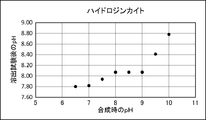
- FIG. 6A and 6B are photographs of normal skin at the same magnification, which were taken at the same timing as in FIG. 5, as the control in FIG. It is a schematic diagram explaining the healing process of a wound and a burn. It is a graph which shows the relationship between pH at the time of the synthesis
- the therapeutic agent of the present invention is a therapeutic agent comprising at least one selected from the group consisting of zinc sulfate, zinc chloride, zinc carbonate, zinc hydroxide and zinc oxide.
- Zinc carbonate is a carbonate of zinc used as an abbreviation for basic zinc carbonate or carbonate / zinc hydroxide.
- the chemical formula is ZnCO 3
- the composition is not stable and it is generally represented by the chemical formula 2ZnCO 3 .3Zn (OH) 2 .H 2 O which is typical in the industrial field.
- 2ZnCO 3 .3Zn (OH) 2 .H 2 O which is typical in the industrial field.
- Zinc carbonate is zinc carbonate, zinc carbonate hydroxide and / or zinc carbonate hydroxide hydrate, Zn 4-6 (CO 3 ) 1-3 (OH) 5-6 ⁇ nH 2 O Formula It is represented by (1), n is 0 to 6, and it may be represented by Zn 5 (CO 3 ) 2 (OH) 6 as a chemical formula.
- the therapeutic agent of the present invention is a therapeutic agent containing at least one selected from the group consisting of zinc sulfate, zinc chloride, zinc carbonate, zinc hydroxide, and zinc oxide.
- the therapeutic agent contains at least one selected from the group consisting of zinc and zinc carbonate hydroxide hydrate.
- the therapeutic agent of the present invention may use natural or commercially available zinc carbonate, zinc sulfate, zinc chloride, zinc hydroxide, zinc oxide, may be synthesized, or may be a mixture thereof. .
- Zinc oxide is described as a pharmaceutical in the Japanese Pharmacopoeia.
- the therapeutic agent of the present invention may be used after obtaining a precipitate produced by an alkaline precipitation method from an aqueous zinc salt solution.
- the reaction of Zn 2+ ions, (CO 3 ) 2 ⁇ ions, and OH ⁇ ions has a pH of preferably 6.5 or more and less than 9.5, more preferably 7.
- a precipitate obtained in a reaction field controlled to be not less than 0 and less than 9.5 is used as the therapeutic agent of the present invention. More preferably, it is a therapeutic agent for zinc carbonate hydroxide hydrate containing hydrozincite represented by the following formula (1).
- n is 0-6.
- precipitation occurs in a reaction field in which the reaction of Zn 2+ ions, (CO 3 ) 2 ⁇ ions, (SO 4 ) 2 ⁇ ions, and OH ⁇ ions is controlled to a pH of 7.0 or more and less than 9.5.
- the therapeutic agent of the present invention More preferably, it is a therapeutic agent for zinc carbonate hydroxide hydrate containing hydrozinkite represented by the following formula (2) and sulfur as 0.1 mass% or more and less than 1.5 mass%.
- Zn 4-6 ((1-x) CO 3 + x (SO 4 )) 1-3 (OH) 5-6 ⁇ nH 2 O (2)
- n is 0-6.
- x is 0.005 to 0.1.
- the present invention obtains a precipitate in a reaction field in which the reaction of Zn 2+ ions, (CO 3 ) 2- ions, Cl ⁇ ions, and OH ⁇ ions is controlled to a pH of 7.0 or more and less than 9.5.
- n is 0-6.
- x is 0.005 to 0.1.
- the therapeutic agent of the present invention preferably has a Zn 2+ ion elution amount of 0.1 ⁇ g / m 2 or more and a pH of 7.2 or more to less than 8.3 after a dissolution test by the stirring method described in Examples. More preferably, the Zn 2+ ion elution amount is 0.5 ⁇ g / m 2 , and the pH is 7.2 or more and less than 8.3. (Elution test by stirring method) The amount of Zn 2+ ion elution measured in this specification is determined by measuring the surface area of each sample produced by changing the pH during production in the same process as Formulation Example 2 in Examples described later by the BET method.
- the carbonic acid source used in the alkaline precipitation method is preferably a NaH (CO 3 ) aqueous solution, and the pH of the aqueous solution is preferably 6.5 or more and less than 9.5, more preferably 7.
- a zinc aqueous solution such as acidic zinc nitrate is dropped to form a precipitate, which is stirred for 10 to 30 hours, and then suction filtered or centrifuged. Solid-liquid separation by separation, washing with distilled water, and the like are performed, followed by vacuum drying to obtain zinc carbonate hydroxide hydrate containing hydrozinkite as a main component.
- the particle size of the obtained zinc carbonate hydroxide hydrate is not limited, and when used as a therapeutic agent, it can be adjusted to an appropriate particle size by a known method.
- the carbonic acid source, zinc source, and mineralizing material are not limited to those described above.
- the carbonate source includes (NH 4 ) CO 3 , Na 2 CO 3 , preferably an aqueous NaH (CO 3 ) solution, wherein the zinc source is selected from zinc sulfate, zinc chloride, zinc acetate, zinc nitrate,
- the use of NH 3 or an aqueous solution of NaOH can be mentioned as the chemical.
- the concentration ratio (molar ratio) between carbonic acid and zinc in the carbonic acid source and zinc source aqueous solution is preferably 2: 5, and the concentration of the zinc source aqueous solution is preferably in the range of 0.1 to 1M.
- the reaction temperature is 40 ° C. or lower, preferably 25 ° C.
- the obtained zinc carbonate hydroxide hydrate containing hydrozincite as a main component is mixed from the reaction product obtained by the precipitate formation reaction between the aqueous zinc salt solution and the aqueous alkaline solution, and raw materials, by-products and raw materials as unreacted materials. It is a mixture of impurities.
- FIG. 1 shows an XRD chart of hydrozincite produced by changing the pH conditions as shown in Formulation Example 2 by the production method of the Formulation Example in the present invention.
- an XRD apparatus D8 ADVANCE manufactured by Bruker Corporation was used.
- the b-axis is preferably 6.2 to 6.4, the c-axis is 5.25 to 5.5, and ⁇ is 94.9 to 97.5.
- Table 1 also shows that SO 4 2- ion produced by the production method described in Formulation Examples 3 and 4 is substituted with carbonate ion, so that S is 0.1% by mass or more and less than 1.5% by mass.
- the XRD diffraction results are shown as the relationship between the pH at the time of synthesis and the identified mineral phase together with the XRD diffraction results of the hydrozincite shown in the XRD chart of FIG.
- the production conditions in which hydrozincite is obtained as the main component varies depending on the type and concentration of the carbonic acid source and zinc source to be used. However, it is possible to find the optimum pH condition by producing the same pH by changing the pH conditions. it can.
- the main component means the most abundant component in the mixture, preferably 80% by mass or more, more preferably 95% by mass or more.
- a precipitate obtained by the above alkaline precipitation method is heat-treated at a temperature of 700 ° C. or higher, preferably 1000 ° C. to 1300 ° C. to obtain zinc oxide.
- the antibacterial effect is high as an inexpensive inorganic antibacterial agent that has the characteristics of excellent heat resistance, durability, and safety. It can be used by mixing with the skin wound or rough skin treatment agent of the present invention.
- Zinc oxide is highly irritating because it has a drying action and also has antibacterial properties. Therefore, when mixed and used in the zinc carbonate hydroxide hydrate containing the hydrozincite of the present invention, it is preferably 30% by mass or less, more preferably 10% by mass or less of the total metal zinc amount in terms of metal zinc amount.
- the pH of body fluids mainly composed of physiological saline is maintained at about 7.4 to 7.5, and the basic zinc carbonate mainly composed of hydrozinkite of the present invention is dissolved in physiological saline.
- a change in pH is expected due to the generation and elution of Zn 2+ ions.
- MMPs matrix metaproteases
- pH environment supplying Zn 2+ ions and / or (CO 3 ) 2 ⁇ ions.
- MMPs matrix metalloproteinases
- TIMPs tissue inhibitory metalloproteases
- MMPs have a zinc ion at the center, and a binding site for Zn 2+ ions exists in the active site. Regeneration of the epidermis is achieved by epidermal cells migrating from the wound edge or skin appendages (hair roots, sweat glands, etc.). Therefore, the binding of Zn 2+ ions from the zinc compound and MMPs causes destruction of the extracellular matrix and promotes epidermal cell migration.
- TIMPs are enzymes produced by fibroblasts, endothelial cells, etc., and have an inhibitory effect on MMPs. MMPs and TIMPs inhibit the collagen degradation of MMPs by forming a 1: 1 complex.
- the therapeutic agent for skin wound or rough skin of the present invention can promote cell migration by appropriately supplying zinc ions to the wound site, increase collagen accumulation, and promote wound healing.
- the pH environment that supplies zinc ions and / or carbonate ions it is possible to prevent further scars and other tissues from being formed and prevent the formation of scars. Life) can be expected to improve.
- the therapeutic agent of the present invention can be used as an additive for pharmaceutical compositions and an additive for cosmetics.
- the therapeutic agent of the present invention has no drying action and antibacterial properties compared to zinc oxide and is useful as an additive.
- zinc carbonate hydroxide hydrate containing hydrozincite whose Zn 2+ ion elution amount per surface area is 0.1 ⁇ g / m 2 or more and pH is 7.2 or more to less than 8.3
- the amount of Zn 2+ ions eluted per surface area is 0.1 ⁇ g / m 2 or more, and the carbonate containing hydrozincite having a pH of 7.2 or more and less than 8.3.
- the dissolution test refers to zinc carbonate hydroxide hydrate containing hydrozincite, SO 4 2- ion is substituted with carbonate ion, etc., so that S is 0.1 mass% or more and less than 1.5 mass%.
- the BET specific surface area of the Japanese product is 10 to 150 m 2 / g, zinc carbonate hydroxide hydrate containing hydrozincite, SO 4 2- ion is substituted with carbonate ion, etc.
- the therapeutic agent of the present invention may be a skin wound or rough skin treatment agent, and may contain a pharmaceutically acceptable carrier if necessary. Good.
- the carrier include organic solvents, inorganic solvents, specifically water, physiological saline, alcohol, polyhydric alcohol, or a mixture thereof.
- a thickener or the like may be added to process it into a gel or paste to improve the handleability.
- the carrier examples include hydrocarbons such as ⁇ -olefin oligomer, paraffin wax, ceresin, and microcrystalline wax, animal and vegetable oils such as persic oil, olive oil, beef tallow, mink oil, cetyl octanoate, isopropyl myristate, cetyl palmitate, etc.
- hydrocarbons such as ⁇ -olefin oligomer, paraffin wax, ceresin, and microcrystalline wax
- animal and vegetable oils such as persic oil, olive oil, beef tallow, mink oil, cetyl octanoate, isopropyl myristate, cetyl palmitate, etc.
- Synthetic esters jojoba oil, carnauba wax, candelilla wax, owl, beeswax and other natural animal and plant waxes, sorbitan stearate, polyoxyethylene glyceryl tristearate, polyoxyethylene lauryl ether, decaglyceryl trioleate, monolauric acid
- silicone oils such as sugar esters, dimethylpolysiloxane, and methylphenylpolysiloxane, and derivatives thereof.
- Fluorine resins such as perfluoropolyether, alcohols such as ethanol, 1, 3 -butylene glycol, propylene glycol, diglycerin, proteins such as carrageenan, xanthan gum, sodium carboxymethylcellulose, collagen, elastin, silk, cellulose, lactoferrin, and the like
- the hydrolyzate, silicic anhydride, nylon powder, polyalkyl acrylate, alumina, iron oxide and other powders may be used.
- oils are egg yolk oil, macadamia nut oil, cottonseed oil, avocado oil, Palm oil, palm oil, palm kernel oil, corn oil, peanut oil, beef tallow, carnauba wax.
- humectants include glycerin, sorbitol, polyethylene glycol, pyrrolidone carboxylic acid and its salt, collagen, 1,3-butylene glycol, hyaluronic acid and its salt, chondroitin sulfate and its salt, xanthan gum Etc.
- antioxidant examples include ascorbic acid, ⁇ -tocopherol, dibutylhydroxytoluene, parahydroxyanisole and the like.
- surfactant examples include sodium stearyl sulfate, diethanolamine cetyl sulfate, polyethylene glycol monostearate, ethylene glycol monostearate, polyoxyethylene hydrogenated castor oil, soybean lysophospholipid liquid, polyoxyethylene sorbitan monooleate, and the like.
- Examples of the preservative include inorganic pigments such as phenoxyethanol, ethyl paraben, butyl paraben, and zinc oxide.
- Examples of the anti-inflammatory agent include glycyrrhizic acid derivatives, salicylic acid derivatives, hinokitiol, zinc oxide, and allantoin.
- Examples of the whitening agent include placenta extract, glutathione, yukinoshita extract, ascorbic acid derivative, arbutin and the like.
- Examples of the blood circulation promoter include ⁇ -oryzanol and dextran sodium sulfate.
- Anti-seborrheic agents include sulfur and thianthol.
- Examples of the thickener include carboxyvinyl polymer.
- Examples of the pH adjuster include lactic acid, citric acid, malic acid, glycolic acid, sodium hydroxide, hydrotalcite and the like.
- the concentration of the therapeutic agent is not particularly limited, but the zinc concentration with respect to the total amount of the therapeutic agent can be exemplified as 0.000001 g / L to 10 g / L as metallic zinc.
- the solid content in the therapeutic agent is zinc carbonate hydroxide hydrate or hydrozincite (as Zn 5 (CO 3 ) 2 (OH) 6 .H 2 O), preferably 0.00000173 g / L to 17.3 g / L. It is. More preferably, it is 0.000173 g / L to 1.73 g / L. When the concentration is within this range, the therapeutic effect is high.
- the ratio of the therapeutic agent and physiological saline is 0.1 g / L to 100 g / L
- the therapeutic agent is represented by the above formulas (1) to (3)
- n When 0 (anhydrous), the zinc concentration relative to the total amount of the therapeutic agent is 45 mass% to 75 mass% as metallic zinc, and the zinc concentration in the physiological saline solution of the therapeutic agent is 0.045 g / L to 75 g / L. Certain skin wound or rough skin treatments are preferred.
- Medical device for treatment of skin wound or rough skin and wound dressing used therefor is not limited, but is effective in healing skin wound or rough skin that reaches the dermis through the epidermis.
- the therapeutic agent of the present invention can be applied to a skin wound or rough skin, and further can be a medical device for treating a skin wound or rough skin that is held in a closed environment by using a wound dressing.
- “applied to skin wound or rough skin” may be applied directly to the skin wound or rough skin, or may be applied to the skin around the skin wound or rough skin.
- a wound dressing is a medical device that maintains the skin wound or rough skin in a closed environment.
- the therapeutic agent of the present invention is applied to, contained in, or attached to a wound dressing, and the wound dressing to which the therapeutic agent of the present invention has been applied, contained, or attached to the skin wound or rough skin in a closed environment.
- maintain may be sufficient.
- the skin wound or rough skin treatment agent of the present invention and the medical device for skin wound or rough skin treatment include, but are not limited to, epidermal and dermal (all skin) defects. Can treat certain skin wounds or rough skin. This will be described with reference to the schematic diagram shown in FIG. FIG. 7A is a schematic diagram showing a cross section of the skin, and a skin wound or rough skin that reaches the dermis through the epidermis is indicated by 1.
- the therapeutic agent of the present invention is applied to the inner surface of the wound to protect the upper surface of the wound with a scab such as a scab or with a breathable banquet.
- epidermal cells grow on the inner surface of the wound as the wound heals.
- fibroblasts cover the wound as shown in C, and scar tissue develops and heals on the upper surface of the wound.
- the medical device of the present invention can provide an optimal environment for granulation growth and epithelial cell migration.
- D epidermal cells grow on the surface or inner surface of the wound as the wound heals.
- fibroblasts cover the wound as shown by E, and skin tissue develops and heals on the upper surface of the wound.
- Wound dressing Healing of skin wounds or rough skin may be cured in a dry environment or in a humid environment. When healing in a dry environment, nothing may be done as a wound dressing, but it is usually covered with a breathable wound dressing to protect the wound and rough skin. There are gauze, bandages and breathable film wound dressings.
- the therapeutic agent for skin wound or rough skin of the present invention is effective for treatment because it can be kept in a closed environment with a wound dressing and further maintained in a suitable moist environment. A great synergistic effect can be obtained by combining the therapeutic agent of the present invention, which is an inorganic material, with the wound dressing material, which is an organic material, and hybridizing the organic and inorganic materials.
- the therapeutic agent of the present invention when used, it can be used in the form of a powder when a physiological saline or the like is used as a solvent and when there is an exudate in the wound and the wound is moistened. If necessary, an intermediate thickened state or gel can be used.
- the therapeutic agent for skin wounds or rough skin of the present invention is a moist environment because the dosage form can be adjusted to a liquid or powder so that it can be kept in a closed environment with a wound dressing and further maintained in a moist state suitable for individual wounds. It is effective for the treatment.
- the therapeutic agent of the present invention When used together with a wound dressing material in any form of liquid or powder, tissue that hinders healing, such as scabs, is not formed, and it is possible to prevent scars from remaining, so that the patient's QOL ( Quality of life is high.
- the following wound dressings can also be used to provide a moist environment to promote wound healing.
- Polyurethane film and dressing materials Trade names, Tegaderm (manufactured by 3M), Opsound (manufactured by Smith & Nephew), IV3000 (manufactured by Smith & Nepnew), Bio Crucif (manufactured by Johnson & Johnson), etc. It can be illustrated. It is a polyurethane film dressing material that is a transparent film, one side of which forms an adhesive surface, which allows water vapor and oxygen to pass through and prevents the inside from being steamed. Used for wounds without bleeding, shallow pressure ulcers (redness only), water healing protection, pressure ulcer prevention, etc., but useful for sealing alginate coatings and hydrogels described below.
- Hydrocolloid dressing material Product names, duoactive (manufactured by Convatec), comfeel (manufactured by Coloplast), tegasorb (manufactured by 3M), absolute cure (manufactured by Nitto Medical) and the like can be exemplified. It is in the form of a sheet, and the outside forms a waterproof layer and the inside forms an adhesive surface containing hydrophilic colloid particles. There are various sizes and shapes, and the thickness is thick (duoactif, CGF) with polyurethane foam and cushioned, and very thin and flexible (manufactured by Duoactive ET). .
- Polyurethane foam dressing material There is a trade name, Hydrosite (manufactured by Smith & Nephew).
- Hydrosite manufactured by Smith & Nephew.
- the outermost polyurethane film is impervious to moisture and the innermost is non-sticking thin polyurethane, and a thick hydrophilic absorbent foam is sandwiched between them.
- the middle layer has high water absorption, absorbs leachate, retains moderate moisture, and maintains a moist environment on the wound surface. For this reason, it is used for wounds with a large amount of leachate.
- hydrocolloids When hydrocolloids are used in pressure ulcers with a large amount of exudate, they quickly dissolve and the surrounding skin may be excessively softened. In such cases, polyurethane is easier to use.
- the dressing material since the dressing material itself does not melt, the dressing material does not remain on the wound surface, and handling is very easy. Although it can be used for all skin defect wounds with fresh trauma, application to fingertip injury is preferred.
- the fingertips are usually easy to hit, and the wound on the wound due to fingertip damage is very painful.
- the dressing material itself has thickness and cushioning properties, and the impact when hitting is weakened.
- the dressing material itself is not sticky, so it needs to be fixed with banso, etc., but the skin is torn, as if the skin is very fragile and the skin rips like a paper paper wet with water You can just wrap it with a bandage without fixing it.
- Alginate coating material There are trade names, cult stats (manufactured by Convatec), sorb sun (manufactured by Alcare), algodame (manufactured by Medicon), and Clavio AG (manufactured by Kuraray).
- Alginate extracted from seaweed kombu (Sorbusan, calcium salt for Algodame, mixed calcium salt and sodium salt for cultstat) made into a fiber and made into non-woven fabric.
- Alginic acid absorbs water 15 to 20 times its own weight, but gels when it absorbs water containing sodium ions such as leachate. This gel maintains the moist environment of the wound surface. In addition, it has a very strong hemostatic effect.
- Hydrogel dressing material Product name, Geribalm (manufactured by Taketora), Newgel (manufactured by Johnson & Johnson), Intrasite (manufactured by Smith & Nephew), Granyugel (manufactured by Convatec), Clearsight (Japan Sigmax) Etc.). At first glance it looks like a “clear ointment”, but the hydrophilic polymer molecules form a cross-link, take a matrix structure and contain moisture. Different types of polymers, thickeners are added, and water content varies from product to product. The amount of water varies from 97% to about 60%. Usually, it is sealed with a film dressing.
- Hydropolymer There is a trade name, Thierle (Johnson & Johnson).
- the hydropolymer absorbent pad corresponding to the wound has the property that it absorbs the leachate and swells (increases in volume) in the direction of the leachate.
- the main component is a hydrophilic polyurethane foam containing a small amount of acrylic polymer. If there is a leachate, it expands in that direction. In other words, if this dressing is used for a depressed wound, it will protrude in accordance with the depressed shape and fit softly on the wound surface. It can be applied to wide and deep skin soft tissue defect wounds associated with postoperative surgical dehiscence and flap necrosis.
- Silk film Although silk fibroin has been used as raw silk, it is excellent in strength, biocompatibility, and biodegradability, and silk can be used as a scaffold material that promotes regeneration of teeth, bones, cartilage, ocular tissues, blood vessels, and the like. If silk film, non-woven fabric or the like is used as a wound dressing in combination with the skin wound or rough skin treatment agent of the present invention, it is considered effective for migration and proliferation of fibroblasts.
- a polyurethane film can be applied to the surface of the silk film to create a wet environment in a closed environment.
- reaction solution was subjected to solid-liquid separation by centrifugation, and the obtained solid was washed with water and centrifuged three times.
- the precipitate thus washed was vacuum-dried to obtain a hydrozincite having a composition range represented by formula (1).
- an aqueous zinc sulfate solution and an aqueous sodium hydroxide solution were added dropwise with stirring while maintaining the pH of the sodium bicarbonate solution at 9.0. After all the zinc sulfate aqueous solution was dropped, the reaction solution was stirred and cured for 16 hours. Thereafter, the reaction solution was subjected to solid-liquid separation by centrifugation, and the obtained solid was washed with water and centrifuged three times. The precipitate thus washed was vacuum-dried to obtain a hydrozincite having a composition range represented by formula (2).
- reaction solution was subjected to solid-liquid separation by centrifugation, and the obtained solid was washed with water and centrifuged three times.
- the precipitate thus washed was vacuum-dried to obtain a hydrozincite having a composition range represented by formula (3).
- a dissolution test was performed using reagent grade zinc white (zinc oxide). Although the amount of Zn 2+ ions eluted was sufficient, zinc oxide has a drying action and also has antibacterial properties, so it is highly irritating when used as a skin wound or rough skin treatment agent. When the elution test was performed using zinc hydroxide, the elution amount was a remarkably low value of less than 0.1 ⁇ g / m 2 .
- Example 1 Approximately 500 g of SD rats were sedated by intramuscular injection of 2% cederac (xylazine) at 0.2 mL / 500 g, and general anesthesia was performed with 2% sevoflurane inhalation anesthetic. After administration of xylocaine (lidocaine + 2% adrenaline) to the ventral part of the rat and local anesthesia, a 10-mm diameter full-thickness defect wound from the epidermis to the subcutaneous tissue was prepared, and 0.01 g of the powder of Formulation Example 1 was added. Then, it was applied to the created full-thickness defect wound (FIG. 2 left) and further covered with duoactive which is a medical wound dressing (FIG. 2 right).
- the wound at the time of production is shown by A in FIG. 3, and after being covered with the wound dressing and cured for 2 weeks, the healing state is shown by B in FIG. 3.
- the wound site was examined for healing and histological staining.
- the reepithelialization rate at the wound site was measured by the method shown in FIGS. 3 and 4 and was about 96%.
- it was covered only with the medical wound dressing material without using Formulation Example 1 it was about 78%. From this, it can be said that the application of the skin wound or rough skin treatment agent of the present invention is extremely effective for wound healing.
- the regenerated skin tissue was excised from the rat and stained with hematoxylin-eosin (HE). In the autologous skin (FIG.
- the treatment by applying the skin wound or rough skin treatment agent of the present invention can regenerate the hair root as well as the skin without causing inflammation. From this, the therapeutic agent of the present invention has a healing effect not only on the skin wound shown in the Examples but also on a similar wound caused by severe rough skin.
- Example 2 A full-thickness defect wound is prepared in the same manner as in Example 1, and each powder of Formulation Example 2 is applied to the prepared full-thickness defect wound and further covered with duoactive which is a medical wound dressing material.
- the therapeutic agent of the present invention having a re-epithelialization rate of 80 to 90% and a pH of 6.5 to less than 9.5 under production conditions is excellent in healing effect.
- Example 3 A full-layer defect wound is prepared in the same manner as in Example 1, and each powder of Formulation Examples 3 and 4 is applied to the prepared full-layer defect wound, and further covered with a duoactive that is a medical wound dressing.
- the therapeutic agent of the present invention having a re-epithelialization rate of 80 to 90% and a pH of 6.5 to less than 9.5 under production conditions is excellent in healing effect.
- Example 4 A hydrozincite having the composition range shown in Formula (1) obtained in Formulation Example 1 and zinc oxide obtained by firing this hydrozincite at a firing temperature of 1200 ° C. were mixed to obtain a formulation.
- tissue staining tissue staining, hematoxylin-eosin (HE) staining
- the method of tissue staining is wound site trimming (resection) ⁇ fixation with formalin ⁇ degreasing treatment (soaked in xylene for 24 hours) ⁇ dehydration treatment.
- ethanol is volatilized and removed by immersing in 70% ethanol for 12 hours, dehydrated with 80% ethanol, 90% ethanol, and 95.5% ethanol for 30 minutes each and washed twice with xylene.
- the sample was then embedded in paraffin ⁇ sections were prepared ⁇ HE stained.
- FIG. 5 shows the results of Example 1 in which the stained sample was sealed in a preparation and observed with a microscope. For comparison, normal skin was treated in the same manner and stained and observed, and the results are shown in FIG.
- Table 5 shows the results of evaluating the pH after the dissolution test and the wound healing effect (re-epithelialization rate, collagen regeneration, hair bulb regeneration, granulation formation) after 2 weeks obtained in Example 2. .
- the control was only coated with duoactive, a medical wound dressing material, without using a formulation example.
- Tables 6 and 7 below show pH after dissolution test and wound healing effect after 2 weeks obtained in Examples 3 and 4 (reepithelialization rate, collagen regeneration, hair bulb regeneration, granulation formation) ) Shows the results of evaluation.
- Tables 5 to 7 also show the control results for comparison.
- the hydrozincite of the present invention is clearly effective in the regenerated tissue, particularly in the appearance of collagen.
- the product of the present invention has a great synergistic effect on organic commercially available wound dressings by using the inorganic material which is the therapeutic agent of the present invention and hybridizing the organic and inorganic materials. It is considered that the wound healing ability is greatly improved.
- the evaluation methods shown in Tables 5 to 7 are evaluations based on the above measurement method in which the re-epithelialization rate is set to 1.
- the collagen was observed to have thick collagen fibers extending in one direction. It is an observation result about whether a hair bulb can be confirmed about a hair ball.
- Granulation is an evaluation of whether tissue composed of capillaries and fibroblasts is observed.
- Collagen For collagen, the thickness and orientation of collagen fibers were evaluated compared to healthy skin cells. Collagen thickness: x: fairly thin ⁇ : thin ⁇ : somewhat inferior ⁇ : comparable collagen orientation: x: messy ⁇ : considerably inferior ⁇ : somewhat inferior ⁇ : comparable degree of hair bulb: x: formation of hair bulb is observed Absent. (Triangle
- a hair bulb is formed.
- Double-circle Formation of a hair bulb is recognized notably.
- Double-circle Granulation is recognized notably.
- the therapeutic agent of the present invention has a therapeutic effect on skin wounds or rough skin that reach the dermis through the epidermis. Therefore, it is effective not only for such serious wounds or rough skin, but also for various kinds of large or small wounds or rough skin, and can be widely used as a wound medicine.
Landscapes
- Health & Medical Sciences (AREA)
- Life Sciences & Earth Sciences (AREA)
- Veterinary Medicine (AREA)
- Public Health (AREA)
- General Health & Medical Sciences (AREA)
- Animal Behavior & Ethology (AREA)
- Chemical & Material Sciences (AREA)
- Epidemiology (AREA)
- Engineering & Computer Science (AREA)
- Pharmacology & Pharmacy (AREA)
- Medicinal Chemistry (AREA)
- Bioinformatics & Cheminformatics (AREA)
- Inorganic Chemistry (AREA)
- Dermatology (AREA)
- Hematology (AREA)
- Materials Engineering (AREA)
- Birds (AREA)
- Chemical Kinetics & Catalysis (AREA)
- General Chemical & Material Sciences (AREA)
- Nuclear Medicine, Radiotherapy & Molecular Imaging (AREA)
- Organic Chemistry (AREA)
- Pharmaceuticals Containing Other Organic And Inorganic Compounds (AREA)
- Medicinal Preparation (AREA)
- Materials For Medical Uses (AREA)
- Cosmetics (AREA)
Abstract
Priority Applications (7)
| Application Number | Priority Date | Filing Date | Title |
|---|---|---|---|
| CN201680031330.4A CN107847522B (zh) | 2015-06-12 | 2016-06-10 | 皮肤创伤或皮肤粗糙治疗剂 |
| US15/735,640 US20180318343A1 (en) | 2015-06-12 | 2016-06-10 | Therapeutic agent for skin wound or rough skin |
| EP16807612.3A EP3308794B1 (fr) | 2015-06-12 | 2016-06-10 | Agent thérapeutique pour plaie ou rugosité cutanée |
| DK16807612.3T DK3308794T3 (da) | 2015-06-12 | 2016-06-10 | Terapeutisk middel til sår eller ru hud |
| KR1020207004417A KR102183402B1 (ko) | 2015-06-12 | 2016-06-10 | 피부 창상 또는 피부 거침 치료제 |
| KR1020177033833A KR20170139143A (ko) | 2015-06-12 | 2016-06-10 | 피부 창상 또는 피부 거침 치료제 |
| JP2017523723A JP6694431B2 (ja) | 2015-06-12 | 2016-06-10 | 皮膚創傷または皮膚荒れ治療剤 |
Applications Claiming Priority (4)
| Application Number | Priority Date | Filing Date | Title |
|---|---|---|---|
| JP2015119548 | 2015-06-12 | ||
| JP2015-119548 | 2015-06-12 | ||
| JP2016-042644 | 2016-03-04 | ||
| JP2016042644 | 2016-03-04 |
Publications (1)
| Publication Number | Publication Date |
|---|---|
| WO2016199907A1 true WO2016199907A1 (fr) | 2016-12-15 |
Family
ID=57503254
Family Applications (1)
| Application Number | Title | Priority Date | Filing Date |
|---|---|---|---|
| PCT/JP2016/067416 Ceased WO2016199907A1 (fr) | 2015-06-12 | 2016-06-10 | Agent thérapeutique pour plaie ou rugosité cutanée |
Country Status (7)
| Country | Link |
|---|---|
| US (1) | US20180318343A1 (fr) |
| EP (1) | EP3308794B1 (fr) |
| JP (1) | JP6694431B2 (fr) |
| KR (2) | KR20170139143A (fr) |
| CN (1) | CN107847522B (fr) |
| DK (1) | DK3308794T3 (fr) |
| WO (1) | WO2016199907A1 (fr) |
Cited By (4)
| Publication number | Priority date | Publication date | Assignee | Title |
|---|---|---|---|---|
| WO2018105739A1 (fr) * | 2016-12-09 | 2018-06-14 | Jfeミネラル株式会社 | Composition inorganique ayant d'excellentes propriétés de libération progressive d'ions zinc, et son procédé de production |
| WO2019230750A1 (fr) * | 2018-05-29 | 2019-12-05 | 学校法人 神野学園 | Composition topique |
| JP6814328B1 (ja) * | 2019-07-25 | 2021-01-13 | Jfeミネラル株式会社 | 骨再生剤およびその使用方法 |
| WO2021014994A1 (fr) | 2019-07-25 | 2021-01-28 | Jfeミネラル株式会社 | Agent de régénération osseuse et méthode d'utilisation dudit agent |
Families Citing this family (1)
| Publication number | Priority date | Publication date | Assignee | Title |
|---|---|---|---|---|
| CN116271185B (zh) * | 2023-04-03 | 2024-12-06 | 马应龙大健康有限公司 | 一种用于纸尿裤的抑菌液及其制备方法和应用 |
Citations (9)
| Publication number | Priority date | Publication date | Assignee | Title |
|---|---|---|---|---|
| WO2003082229A1 (fr) * | 2002-03-29 | 2003-10-09 | Shiseido Co., Ltd. | Poudre composite et produit cosmetique contenant cette poudre |
| JP2004269372A (ja) * | 2003-03-05 | 2004-09-30 | Toshiko Hori | 人体に塗布、付着させる組成物 |
| JP2004534560A (ja) * | 2001-01-18 | 2004-11-18 | ナワ−ハイルミッテル ゲーエムベーハー | 創傷用処置溶液および該溶液とともに用いられる包帯材 |
| JP2005515191A (ja) * | 2001-11-29 | 2005-05-26 | グレイストーン メディカル グループ、インコーポレイテッド | 創傷の治療及び使用する組成物 |
| JP2005524690A (ja) * | 2002-04-22 | 2005-08-18 | ザ プロクター アンド ギャンブル カンパニー | 水性界面活性剤組成物中に亜鉛含有物質を含むパーソナルケア組成物 |
| CN103479590A (zh) * | 2013-09-26 | 2014-01-01 | 曾春晖 | Zchh片剂的制备方法及zchh与抗生素合用逆转mrsa耐药性的方法 |
| CN103622885A (zh) * | 2013-09-13 | 2014-03-12 | 马应龙药业集团股份有限公司 | 具有祛痘印功效的护肤组合物、制剂及其制备方法 |
| JP2014511851A (ja) * | 2011-04-04 | 2014-05-19 | コロプラスト アクティーゼルスカブ | 接着パッチ |
| CN104546629A (zh) * | 2013-10-22 | 2015-04-29 | 罗鹏程 | 一种补水美白眼霜 |
Family Cites Families (10)
| Publication number | Priority date | Publication date | Assignee | Title |
|---|---|---|---|---|
| GB9503240D0 (en) * | 1995-02-20 | 1995-04-12 | Unilever Plc | Preparation |
| CN1337873A (zh) * | 1999-01-28 | 2002-02-27 | 株式会社资生堂 | 外用组合物 |
| JP2004161684A (ja) | 2002-11-13 | 2004-06-10 | Nitto Denko Corp | 生理活性物質含有創傷治癒用フィルム製剤 |
| JP2005006995A (ja) | 2003-06-20 | 2005-01-13 | Jsr Corp | 皮膚接触用材料、およびそれを用いた皮膚接触用テープ |
| GB0715198D0 (en) * | 2007-08-06 | 2007-09-12 | First Water Ltd | A Wound dressing |
| US8273333B2 (en) * | 2008-04-16 | 2012-09-25 | The Procter & Gamble Company | Non-lathering personal care composition in the form of an article |
| FR2954701B1 (fr) * | 2009-12-24 | 2012-02-03 | Carilene Lab | Compositions dermatologiques contenant une association de lipides peroxydes et de zinc et leurs utilisations notamment dans le traitement de l'herpes |
| US9351995B1 (en) * | 2011-04-29 | 2016-05-31 | Red Oax Holdings, LLC | Compositions and methods of enhancing wound healing |
| WO2014026161A1 (fr) * | 2012-08-10 | 2014-02-13 | Aquavit Pharmaceuticals, Inc. | Compositions de supplément de vitamines pour une injection |
| JP2015038014A (ja) * | 2013-07-19 | 2015-02-26 | パナソニック株式会社 | 薄片状粉末、薄片状粉末の製造方法および薄片状粉末を含有する化粧品 |
-
2016
- 2016-06-10 WO PCT/JP2016/067416 patent/WO2016199907A1/fr not_active Ceased
- 2016-06-10 KR KR1020177033833A patent/KR20170139143A/ko not_active Ceased
- 2016-06-10 EP EP16807612.3A patent/EP3308794B1/fr active Active
- 2016-06-10 KR KR1020207004417A patent/KR102183402B1/ko not_active Expired - Fee Related
- 2016-06-10 JP JP2017523723A patent/JP6694431B2/ja active Active
- 2016-06-10 DK DK16807612.3T patent/DK3308794T3/da active
- 2016-06-10 CN CN201680031330.4A patent/CN107847522B/zh not_active Expired - Fee Related
- 2016-06-10 US US15/735,640 patent/US20180318343A1/en not_active Abandoned
Patent Citations (9)
| Publication number | Priority date | Publication date | Assignee | Title |
|---|---|---|---|---|
| JP2004534560A (ja) * | 2001-01-18 | 2004-11-18 | ナワ−ハイルミッテル ゲーエムベーハー | 創傷用処置溶液および該溶液とともに用いられる包帯材 |
| JP2005515191A (ja) * | 2001-11-29 | 2005-05-26 | グレイストーン メディカル グループ、インコーポレイテッド | 創傷の治療及び使用する組成物 |
| WO2003082229A1 (fr) * | 2002-03-29 | 2003-10-09 | Shiseido Co., Ltd. | Poudre composite et produit cosmetique contenant cette poudre |
| JP2005524690A (ja) * | 2002-04-22 | 2005-08-18 | ザ プロクター アンド ギャンブル カンパニー | 水性界面活性剤組成物中に亜鉛含有物質を含むパーソナルケア組成物 |
| JP2004269372A (ja) * | 2003-03-05 | 2004-09-30 | Toshiko Hori | 人体に塗布、付着させる組成物 |
| JP2014511851A (ja) * | 2011-04-04 | 2014-05-19 | コロプラスト アクティーゼルスカブ | 接着パッチ |
| CN103622885A (zh) * | 2013-09-13 | 2014-03-12 | 马应龙药业集团股份有限公司 | 具有祛痘印功效的护肤组合物、制剂及其制备方法 |
| CN103479590A (zh) * | 2013-09-26 | 2014-01-01 | 曾春晖 | Zchh片剂的制备方法及zchh与抗生素合用逆转mrsa耐药性的方法 |
| CN104546629A (zh) * | 2013-10-22 | 2015-04-29 | 罗鹏程 | 一种补水美白眼霜 |
Non-Patent Citations (2)
| Title |
|---|
| DRUGS IN JAPAN : ETHICAL DRUGS 2009 EDITION, 2008, pages 2 - 3, XP009502951, ISBN: 978-4-8407-3863-7 * |
| See also references of EP3308794A4 * |
Cited By (9)
| Publication number | Priority date | Publication date | Assignee | Title |
|---|---|---|---|---|
| WO2018105739A1 (fr) * | 2016-12-09 | 2018-06-14 | Jfeミネラル株式会社 | Composition inorganique ayant d'excellentes propriétés de libération progressive d'ions zinc, et son procédé de production |
| CN110035762A (zh) * | 2016-12-09 | 2019-07-19 | 杰富意矿物股份有限公司 | 锌离子缓释性优异的无机组合物及其制造方法 |
| US10987380B2 (en) | 2016-12-09 | 2021-04-27 | Jfe Mineral Company, Ltd. | Hydrozincite containing zinc carbonate hydroxide hydrate and method of making |
| WO2019230750A1 (fr) * | 2018-05-29 | 2019-12-05 | 学校法人 神野学園 | Composition topique |
| US11872304B2 (en) | 2018-05-29 | 2024-01-16 | Jinno Institute | Topical composition |
| JP6814328B1 (ja) * | 2019-07-25 | 2021-01-13 | Jfeミネラル株式会社 | 骨再生剤およびその使用方法 |
| WO2021014994A1 (fr) | 2019-07-25 | 2021-01-28 | Jfeミネラル株式会社 | Agent de régénération osseuse et méthode d'utilisation dudit agent |
| KR20220018597A (ko) * | 2019-07-25 | 2022-02-15 | 제이에프이미네라르 가부시키가이샤 | 골 재생제 및 그 사용 방법 |
| KR102692145B1 (ko) | 2019-07-25 | 2024-08-05 | 제이에프이미네라르 가부시키가이샤 | 골 재생제 및 그 사용 방법 |
Also Published As
| Publication number | Publication date |
|---|---|
| EP3308794A1 (fr) | 2018-04-18 |
| JP6694431B2 (ja) | 2020-05-13 |
| EP3308794B1 (fr) | 2022-10-26 |
| JPWO2016199907A1 (ja) | 2018-03-29 |
| DK3308794T3 (da) | 2022-11-07 |
| KR20200019268A (ko) | 2020-02-21 |
| US20180318343A1 (en) | 2018-11-08 |
| EP3308794A4 (fr) | 2018-06-20 |
| CN107847522B (zh) | 2021-07-09 |
| KR20170139143A (ko) | 2017-12-18 |
| CN107847522A (zh) | 2018-03-27 |
| KR102183402B1 (ko) | 2020-11-26 |
Similar Documents
| Publication | Publication Date | Title |
|---|---|---|
| US11020427B2 (en) | Therapeutic agent for skin wound or rough skin | |
| JP6871947B2 (ja) | 亜鉛イオン徐放性に優れる塩化水酸化亜鉛およびその製造方法 | |
| JP6694431B2 (ja) | 皮膚創傷または皮膚荒れ治療剤 | |
| EP2617437B1 (fr) | Procédé d'utilisation d'une feuille d'hydrogel pour le traitement d'une plaie | |
| US5271943A (en) | Wound gel compositions containing sodium chloride and method of using them | |
| JP6806793B2 (ja) | 亜鉛イオン徐放性に優れる無機組成物およびその製造方法 | |
| KR20140097728A (ko) | 갑오징어 뼈 분말을 포함하는 상처 치료용 드레싱제 및 이의 제조방법 | |
| CN114173834B (zh) | 放疗副作用的生态生物学治疗 | |
| CN117815424A (zh) | 一种医用复合敷料及其制备方法 | |
| CN118338918A (zh) | 一种局部应用的生物活性涂料及其制备方法和应用 |
Legal Events
| Date | Code | Title | Description |
|---|---|---|---|
| 121 | Ep: the epo has been informed by wipo that ep was designated in this application |
Ref document number: 16807612 Country of ref document: EP Kind code of ref document: A1 |
|
| ENP | Entry into the national phase |
Ref document number: 20177033833 Country of ref document: KR Kind code of ref document: A |
|
| ENP | Entry into the national phase |
Ref document number: 2017523723 Country of ref document: JP Kind code of ref document: A |
|
| WWE | Wipo information: entry into national phase |
Ref document number: 15735640 Country of ref document: US |
|
| NENP | Non-entry into the national phase |
Ref country code: DE |
|
| WWE | Wipo information: entry into national phase |
Ref document number: 2016807612 Country of ref document: EP |