WO2016208404A1 - Dispositif et procédé de traitement d'informations, et programme - Google Patents
Dispositif et procédé de traitement d'informations, et programme Download PDFInfo
- Publication number
- WO2016208404A1 WO2016208404A1 PCT/JP2016/067193 JP2016067193W WO2016208404A1 WO 2016208404 A1 WO2016208404 A1 WO 2016208404A1 JP 2016067193 W JP2016067193 W JP 2016067193W WO 2016208404 A1 WO2016208404 A1 WO 2016208404A1
- Authority
- WO
- WIPO (PCT)
- Prior art keywords
- shooting
- image
- posture
- photographing
- photographed
- Prior art date
- Legal status (The legal status is an assumption and is not a legal conclusion. Google has not performed a legal analysis and makes no representation as to the accuracy of the status listed.)
- Ceased
Links
Images






Classifications
-
- G—PHYSICS
- G06—COMPUTING OR CALCULATING; COUNTING
- G06T—IMAGE DATA PROCESSING OR GENERATION, IN GENERAL
- G06T7/00—Image analysis
- G06T7/70—Determining position or orientation of objects or cameras
- G06T7/73—Determining position or orientation of objects or cameras using feature-based methods
- G06T7/74—Determining position or orientation of objects or cameras using feature-based methods involving reference images or patches
-
- G—PHYSICS
- G01—MEASURING; TESTING
- G01B—MEASURING LENGTH, THICKNESS OR SIMILAR LINEAR DIMENSIONS; MEASURING ANGLES; MEASURING AREAS; MEASURING IRREGULARITIES OF SURFACES OR CONTOURS
- G01B11/00—Measuring arrangements characterised by the use of optical techniques
- G01B11/002—Measuring arrangements characterised by the use of optical techniques for measuring two or more coordinates
-
- G—PHYSICS
- G01—MEASURING; TESTING
- G01B—MEASURING LENGTH, THICKNESS OR SIMILAR LINEAR DIMENSIONS; MEASURING ANGLES; MEASURING AREAS; MEASURING IRREGULARITIES OF SURFACES OR CONTOURS
- G01B11/00—Measuring arrangements characterised by the use of optical techniques
- G01B11/26—Measuring arrangements characterised by the use of optical techniques for measuring angles or tapers; for testing the alignment of axes
-
- G—PHYSICS
- G06—COMPUTING OR CALCULATING; COUNTING
- G06T—IMAGE DATA PROCESSING OR GENERATION, IN GENERAL
- G06T7/00—Image analysis
- G06T7/60—Analysis of geometric attributes
-
- G—PHYSICS
- G06—COMPUTING OR CALCULATING; COUNTING
- G06T—IMAGE DATA PROCESSING OR GENERATION, IN GENERAL
- G06T7/00—Image analysis
- G06T7/70—Determining position or orientation of objects or cameras
- G06T7/73—Determining position or orientation of objects or cameras using feature-based methods
-
- H—ELECTRICITY
- H04—ELECTRIC COMMUNICATION TECHNIQUE
- H04N—PICTORIAL COMMUNICATION, e.g. TELEVISION
- H04N23/00—Cameras or camera modules comprising electronic image sensors; Control thereof
- H04N23/60—Control of cameras or camera modules
-
- H—ELECTRICITY
- H04—ELECTRIC COMMUNICATION TECHNIQUE
- H04N—PICTORIAL COMMUNICATION, e.g. TELEVISION
- H04N23/00—Cameras or camera modules comprising electronic image sensors; Control thereof
- H04N23/90—Arrangement of cameras or camera modules, e.g. multiple cameras in TV studios or sports stadiums
-
- G—PHYSICS
- G06—COMPUTING OR CALCULATING; COUNTING
- G06T—IMAGE DATA PROCESSING OR GENERATION, IN GENERAL
- G06T2207/00—Indexing scheme for image analysis or image enhancement
- G06T2207/30—Subject of image; Context of image processing
- G06T2207/30244—Camera pose
Definitions
- the present technology relates to an information processing apparatus, method, and program, and more particularly, to an information processing apparatus, method, and program capable of estimating a shooting position and a shooting posture of a shot image under a wider range of conditions.
- Non-Patent Document 1 As a method for estimating the shooting position and shooting posture of such a shot image, there is a method using only an image, that is, an image-based method (for example, see Non-Patent Document 1).
- an image-based method for example, see Non-Patent Document 1
- this method when estimating a shooting position and a shooting posture in a three-dimensional space of a shot image to be processed, a shooting position and a shooting posture in which a shooting position in the three-dimensional space is different from a shooting image to be processed are known. Two captured images are required.
- the present technology has been made in view of such a situation, and makes it possible to estimate a shooting position and a shooting posture of a shot image under a wider range of conditions.
- An information processing method or program is taken at least with a first photographed image taken at a first photographing position and a first photographing posture, and at a second photographing position and a second photographing posture.
- An information processing method or program for estimating a shooting position and a shooting posture for a plurality of shot images including a second shot image and a third shot image shot at a third shooting position and a third shooting posture When the first shooting position and the first shooting posture and the second shooting position and the second shooting posture can be estimated in the reference space, the second shooting image and Estimating a relative positional relationship between the second shooting position and the third shooting position based on corresponding points in the common image that are included in each of the third shooting images, and The second shooting position and Based on the relative positional relationship between the third shooting position and the corresponding points in the common image that are included in the first shooting image and the third shooting image, respectively, the reference Estimating the first photographing position and the first photographing posture in the space, the second photographing position and the second photographing posture, and the
- the second captured image and the third captured image may have at least 5 or more common corresponding points.
- the relative relationship between the first captured position and the third captured position A relative positional relationship between the second imaging position and the third imaging position, and a relative relationship between the first imaging position and the third imaging position. Based on the general positional relationship, the first photographing position and the first photographing posture in the reference space, the second photographing position and the second photographing posture, and the third photographing position and the The third shooting posture can be estimated.
- the first photographed image and the third photographed image can have at least five or more common corresponding points.
- the estimation result of the third imaging posture based on the corresponding corresponding points included in the second captured image and the third captured image, respectively, and the first captured image and the third captured image, respectively.
- the third imaging posture in the reference space can be estimated based on at least one of the third imaging posture estimation results based on the common corresponding points included.
- the third imaging position in the reference space can be estimated based on the corresponding points in the common image.
- the first photographed image, the second photographed image, and the third photographed image can be images taken by different photographing units.
- the first photographed image, the second photographed image, and the third photographed image can be images photographed by the same photographing unit.
- Predetermined image processing can be further performed based on the third shooting position, the third shooting posture, and the third shooting image in the reference space.
- An information processing apparatus includes at least a first photographed image photographed at a first photographing position and a first photographing posture, and a first photographed image at a second photographing position and a second photographing posture.
- An information processing apparatus that estimates a shooting position and a shooting posture for a plurality of shot images including a second shooting image and a third shooting image shot at a third shooting position and a third shooting posture, When it is possible to estimate the first shooting position and the first shooting posture and the second shooting position and the second shooting posture in a reference space, the second shot image and the third shooting position can be estimated.
- a relative positional relationship estimation unit that estimates a relative positional relationship between the second photographing position and the third photographing position based on corresponding points in the common images that are respectively included in the captured images; , The second shooting position and the third shooting position Based on the relative positional relationship between the shadow positions and the corresponding points in the common images that are included in the first captured image and the third captured image, respectively, the first space in the reference space.
- a position and orientation estimation unit that estimates the first photographing position and the first photographing posture, the second photographing position and the second photographing posture, and the third photographing position and the third photographing posture. .
- image processing for estimating a shooting position and a shooting posture for a plurality of shot images including an image and a third shooting image shot at a third shooting position and a third shooting posture Are included in the second captured image and the third captured image, respectively, when the second captured position and the second captured posture can be estimated.
- a relative positional relationship between the second shooting position and the third shooting position is estimated based on corresponding points in the common image, and the second shooting position and the third shooting position are estimated.
- the present technology makes it possible to estimate a shooting position and a shooting posture when a predetermined shot image is shot based on shot images shot at different positions in space.
- the present technology can be applied to a smartphone, a digital camera, a personal computer, an image processing system that estimates a shooting position and a shooting posture of a shot image using a cloud.
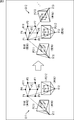
- feature points FP11-1 to FP17-1 corresponding to the parts P1 to P7 on the object H11 are detected from the photographed image PC11 taken at the position V11.
- the positions of the parts P1 to P7 on the reference space are known.
- feature points FP11-2 to FP17-2 corresponding to the parts P1 to P7 on the object H11 are detected from the captured image PC12 taken at the position V12. Further, feature points FP11-3 to FP17-3 corresponding to the parts P1 to P7 on the object H11 are detected from the photographed image PC13 taken at the position V13.
- the shooting position and shooting posture when shooting a shot image that is, the shooting position and shooting posture of the camera when shooting a shot image.
- the photographing position and photographing posture of the camera when the photographed image is photographed will be referred to as the photographing position and photographing posture of the photographed image.
- the shooting position and the shooting posture of the shot image are a shooting position and a shooting posture in a reference space serving as a predetermined reference.
- the shooting posture of the shot image is the posture of the camera when the shot image is shot, that is, the shooting direction by the camera.
- the reference space is a space in which a reference distance (scale) is arbitrarily set, for example, a distance between shooting positions when each of two specific shot images is shot is set to 1. Therefore, for example, if the distance between the shooting positions is set to the same value as the distance in the real space, the scale of the reference space becomes the same as the scale of the actual real space.
- the photographing position in the reference space is, for example, a coordinate position where a photographed image is photographed in a three-dimensional coordinate system having a predetermined position in the reference space as an origin.
- the shooting posture in the reference space is, for example, angle information indicating the shooting direction by the camera when shooting a shot image.
- the shooting posture is a roll angle, a pitch angle in the shooting direction of the camera with respect to a predetermined reference direction when each axis of the three-dimensional coordinate system of the reference space is set as a reference rotation axis (reference axis), And the yaw angle.
- the shooting position and shooting posture of a shot image refer to the shooting position and shooting posture in the reference space.
- the relative shooting position and shooting posture refer to the shooting position and shooting posture viewed from the shooting position and shooting posture of a predetermined shot image. Therefore, for example, the relative shooting positions are in a state where the scale in the reference space is unknown, that is, the direction in which the shooting position is located with respect to a predetermined position such as another shooting position is determined, but those positions It is assumed that the distance in the reference space is not fixed.
- the position of the object H11 in the reference space is unknown, and the shooting positions and shooting postures of multiple shot images are estimated in order. Is generally done.
- detection is first made from the photographed image PC11 photographed at the position V11 and the photographed image PC12 photographed at the position V12.
- the relative shooting position and shooting posture of the shot image are estimated from the positional relationship of the feature points.
- the position of the object H11 in the reference space is unknown, but if five or more feature points corresponding to each other are detected in the photographed image PC11 and the photographed image PC12, the photographed image PC11 and the photographed image PC12 are respectively displayed. It is possible to estimate the positional relationship of the camera at the time of shooting, that is, the relative shooting position and shooting posture of the two shot images.
- the position of the part of the subject where the corresponding feature point is detected more specifically, A relative position with respect to the photographing position can be estimated.
- a reference scale that is, a reference space scale is given, the shooting position and shooting posture of each shot image in the reference space and the position of the part of the subject are determined.
- the photographed image PC13 is photographed.
- the shooting position and the shooting posture in the reference space are determined.
- the image-based shooting position and shooting posture estimation method will be described in more detail.
- the image-based shooting position and shooting posture estimation method described above is also referred to as a four-point common estimation method.
- feature points corresponding to the same subject portion detected from a plurality of captured images are also referred to as corresponding points.
- corresponding points For example, in the example shown in FIG. 1, since the feature points FP11-1 to FP11-3 corresponding to the same part P1 are detected from each of the photographed image PC11 to the photographed image PC13, these correspond to each other.
- Feature points FP11-1 to FP11-3 are corresponding points.
- the photographing position and the photographing posture of an unknown photographed image can be estimated.
- a camera CA11, a camera CA12, and a camera CA13 are arranged in a three-dimensional space.
- the shooting position and shooting posture on the reference space of the shot image shot by the camera CA11 and the shooting position and shooting posture on the reference space of the shot image shot by the camera CA12 are known.
- the shooting position and the shooting posture on the reference space of the shot image shot by the camera CA13 are unknown.
- the captured image captured by the camera CA11 is also referred to as a captured image CA11.
- a captured image captured by the camera CA12 is also referred to as a captured image CA12
- a captured image captured by the camera CA13 is also referred to as a captured image CA13.
- each camera CA11 to CA13 has observed the four parts P11 to P14 of the subject whose positions in the reference space are known, so that four corresponding points that are common to each captured image can be obtained.
- the shooting position and shooting posture of the shot image CA13 can be estimated.
- the shooting positions and shooting postures of the shot image CA11 and the shot image CA12 in the reference space are known, the reference of the parts P11 to P14 of the subject observed in the shot image CA11 and the shot image CA12 The position in space is also known.
- arbitrary three parts are selected from the parts P11 to P14, the positions of the selected three parts on the reference space, and the positions of the feature points on the captured image CA13 corresponding to the three parts. From this relationship, the shooting position and shooting posture of the shot image CA13 in the reference space are estimated. At this time, four positions and postures are obtained as candidates for the shooting position and the shooting posture of the shot image CA13 in the reference space.
- Such an image-based shooting position and shooting posture estimation method (four-point common estimation method) is described in detail in, for example, “Complete-solution-classification-for-the-Perspective-Three-Point-Problem”.
- the corresponding points are generally detected by the following procedure.
- a case where a corresponding point is detected between the captured image A and the captured image B will be described.
- feature points are detected from the photographed images according to algorithms such as Harris corner and SIFT (Scale Invariant Feature Transform), and each feature point is an area around the feature point on the photographed image.
- SIFT Scale Invariant Feature Transform
- the distance between the feature amount of the feature point detected from the photographed image A and the feature amount of the feature point detected from the photographed image B is calculated, and a pair of feature points whose feature amount distance is equal to or less than the threshold is detected.
- the Such pairs of feature points are pairs in which images around the feature points are similar to each other.
- a characteristic feature pair is extracted from the detected feature point pairs.
- a feature point pair that is characteristic is a pair of feature points having a low degree of similarity between a pattern (texture) around the feature points constituting the pair and a pattern around other feature points. That is, in this process, feature point pairs extracted from repeated pattern portions on the photographed image are removed so that incorrect feature points are not associated with each other.
- feature point pairs that are considered to be geometrically and statistically valid are extracted, and each of the feature point pairs constituting the extracted feature point pairs is extracted.
- the feature points are corresponding points corresponding to each other, that is, feature points detected from the same part.
- the appearance of the subject H22 changes on the captured images captured by the cameras, and is reflected in common.
- the area of the portion of the subject H22 is also reduced.
- each of the photographed image PC21 to the photographed image PC23 is obtained by each of the camera CA21 to camera CA23, for example.
- the subject H21 and some or all of the subjects H31 to H33 that are buildings corresponding to the subject H22 are shown as subjects.
- the captured image PC21 captured by the camera CA21 includes subjects H31 to H33.
- the captured image PC22 captured by the camera CA22 adjacent to the camera CA21 also includes subjects H31 to H33.
- the appearance of each of the subjects H31 to H33 is significantly different from that in the captured image PC21.
- the subject H33 is not visible more than half.
- the photographed image PC21 and the photographed image PC23 are compared, the photographed image PC23 does not include the subject H33, and the subject H31 and the subject H32 are greatly different in appearance on the photographed image. Further, it can be seen that the captured image PC21 and the captured image PC23 have few regions where the same subject is captured.
- the photographing position and the photographing posture in the reference space may not be estimated depending on the positional relationship of the cameras.
- the shooting position and shooting posture of the shot image in the reference space can be estimated even under milder conditions. That is, the shooting position and shooting posture can be estimated under a wider range of shooting conditions.
- the shot image is shot in the reference space.
- the position and the shooting posture are estimated.
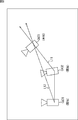
- the cameras CA31 to CA33 are arranged in the three-dimensional space, and the part P21 of the subject in the three-dimensional space is observed by these cameras CA31 to CA33.
- the feature points corresponding to the part P21 are corresponding points common to the captured images obtained by the cameras CA31 to CA33.
- the captured image obtained by the camera CA31 is also referred to as a captured image CA31
- the captured image obtained by the camera CA32 is also referred to as a captured image CA32
- the captured image obtained by the camera CA33 is also referred to as a captured image CA33.
- the photographed images CA32 and CA33 having five or more common corresponding points are captured.
- the relative photographing position and photographing posture when the image is photographed are estimated.
- the shooting position of the shot image CA33 is only relative to the shooting position of the shot image CA32 and is not a shooting position in the reference space.
- the reference space is determined based on the shooting posture of the shot image CA32 in the reference space and the relative shooting posture of the shot image CA33 with respect to the shot image CA32.
- the shooting posture of the shot image CA33 is determined.
- the shooting position of the shot image CA33 relative to the shooting position of the shot image CA32 that is, the direction in which the camera CA33 is viewed from the camera CA32 is calculated by estimation, the camera CA32, the camera CA33, and the reference space on the reference space This means that the relative positional relationship of the part P21 corresponding to the corresponding point is obtained.
- the triangle shape obtained by connecting the positions of the camera CA32, the camera CA33, and the part P21 is fixed, but the size (scale) of the triangle is not fixed.
- the camera CA33 is located on the straight line L11 and the direction in which the part P21 seen from the camera CA32 is located, but from the camera CA32 to the camera CA33 and the part P21. The distance is not fixed.
- the shooting position and shooting posture of the shot image CA31 in the reference space and the shooting position and shooting posture of the shot image CA32 are known, on the reference space of the part P21 corresponding to the corresponding point between those shot images The position of is also determined by estimation. Then, the shooting position of the shot image CA33 in the reference space is determined from the shot image CA32 and the part P21 whose shooting position in the reference space is known and the shooting position of the shot image CA33 relative to the shooting position of the shot image CA32. Can be estimated.
- the shooting position of the camera CA33 that is, the shot image CA33 is at a predetermined position on the straight line L11
- the projection position when the position P21 whose position on the reference space is known is projected on the shot image CA33
- the shooting An error from the position of the feature point (corresponding point) corresponding to the part P21 actually reflected on the image CA33 is calculated.
- the shooting position of the shot image CA33 when the error is minimized is the shooting position of the shot image CA33 in the reference space.
- the shooting positions and shooting postures of the shot image CA31 and the shot image CA32 may not be known at the stage of calculating the relative shooting position and shooting posture of the shot image CA33.
- the shot image CA31 and the shot image CA32 Any image can be used as long as the shooting position and the shooting posture in the reference space of these shot images can be estimated. That is, the captured image CA31 and the captured image CA32 may be anything that can finally estimate the captured position and orientation of the captured image CA33 in the reference space from the captured image CA31 to the captured image CA33.
- the shooting positions and shooting postures of these shot images may be estimated substantially simultaneously.
- the method for estimating the shooting position and the shooting posture of the shot image described with reference to FIG. 5 is particularly referred to as a one-point common estimation method.
- a shooting position and a shooting posture in a reference space having five or more common corresponding points with a shot image to be processed whose shooting position and shooting posture are to be estimated are known. If there is at least one image and there is at least one corresponding point that is common between the captured image to be processed and two or more captured images with known capturing positions and orientations in the reference space, the reference space It is possible to estimate the photographing position and the photographing posture of the photographed image to be processed.
- the conditions required for the one-point common estimation method are relatively looser than the conditions required for the four-point common estimation method described above. From this, it can be seen that the one-point common estimation method can estimate the photographing position and posture of the photographed image under a wider range of photographing conditions than the four-point common estimation method.
- the shooting position and shooting posture of the shot image CA33 may be estimated.
- the cameras CA31 to CA33 may be the same camera, or some or all of these cameras may be different cameras. For example, when one camera moves and photographs are taken at different positions at different times, the cameras CA31 to CA33 are the same camera.
- relative shooting positions and shooting postures with respect to each of the known shooting positions and shooting postures in the reference space of the two shooting images are estimated, and their relative positions are estimated.
- the shooting position and shooting posture of the shot image to be processed in the reference space may be estimated from the typical shooting position and shooting posture.
- parts corresponding to those in FIG. 5 are denoted by the same reference numerals, and description thereof will be omitted as appropriate.
- the shooting positions and postures of the cameras CA31 and CA32 in the reference space that is, the shooting positions and postures of the shot images CA31 and CA32 in the reference space are known. Further, the shooting position and the shooting posture of the camera CA33 in the reference space, that is, the shot image CA33, are unknown.
- the relative shooting position and shooting posture of the shooting image CA33 with respect to the shooting position and shooting posture of the shooting image CA32 are estimated.
- the camera CA33 is positioned on the straight line L11 when viewed from the camera CA32.
- the relative position of the captured image CA33 with respect to the captured position and orientation of the captured image CA31 based on the positional relationship between the corresponding points on the captured image CA31 and the corresponding points on the captured image CA33.
- a specific shooting position and shooting posture are estimated. As a result, it can be seen from the camera CA31 that the camera CA33 is positioned on the straight line L12.
- At least one of the relative shooting posture of the shooting image CA33 estimated from the shooting image CA32 and the shooting image CA33 and the relative shooting posture of the shooting image CA33 estimated from the shooting image CA31 and the shooting image CA33 is used.
- the shooting posture of the shot image CA33 on the reference space can also be determined.
- the shooting positions and shooting postures of these shot images CA31 and CA32 may not be known at the stage of calculating the relative shooting position and shooting posture of the shot image CA33 from the shot image CA31 or the shot image CA32.
- the captured image CA31 and the captured image CA32 are only required to be capable of estimating the shooting position and the shooting posture of these captured images. That is, the captured image CA31 and the captured image CA32 may be anything that can finally estimate the captured position and orientation of the captured image CA33 in the reference space from the captured image CA31 to the captured image CA33.
- the shooting positions and shooting postures of these shot images may be estimated substantially simultaneously.
- the method for estimating the shooting position and the shooting posture of the shot image described with reference to FIG. 6 will be particularly referred to as a zero common estimation method.
- a photographed image with a known photographing position and photographing posture in the reference space having five or more corresponding points in common with the photographed image to be processed whose photographing position and posture are to be estimated. If there are at least two or more, it is possible to estimate the shooting position and shooting posture of the shot image to be processed in the reference space.
- the conditions required for the zero common estimation method are relatively looser than the conditions required for the four-point common estimation method described above. From this, it can be seen that the zero point common estimation method can estimate the photographing position and posture of the photographed image under a wider range of photographing conditions than the four point common estimation method.
- the shooting position and shooting posture of the shot image CA33 in the reference space may be estimated.
- the cameras CA31 to CA33 may be the same camera, or some or all of the cameras may be different cameras.
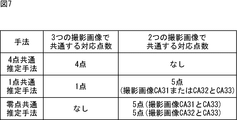
- the one-point common estimation method and the zero-point common estimation method which are position and orientation estimation methods to which the present technology is applied, as shown in FIG. It is possible to estimate a shooting position and a shooting posture of a shot image under a wide range of shooting conditions.
- the number of corresponding points common to two photographed images may be any number, but four or more corresponding points common to three photographed images are required.
- the number of corresponding points common to the three captured images only needs to be one, and instead, between the captured image to be processed and one other captured image. 5 or more common corresponding points are required.
- the one-point common estimation method can estimate the photographing position and the photographing posture of the photographed image in the reference space under a wider range of photographing conditions than the four-point common estimation method.
- the zero common point estimation method determines the shooting position and posture of the shot image in the reference space under a wider range of shooting conditions than the four-point common estimation method. Can be estimated.
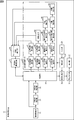
- FIG. 8 is a diagram illustrating a configuration example of an image processing apparatus to which the present technology is applied.
- the image processing apparatus 11 includes an image acquisition unit 21, a feature point detection unit 22, a corresponding point detection unit 23, a recording unit 24, a position / orientation calculation unit 25, a landmark position calculation unit 26, a nonlinear optimization unit 27, an input unit 28, A control unit 29, an image processing unit 30, a reproduction control unit 31, and a display unit 32 are included.
- the image acquisition unit 21 includes, for example, one or a plurality of cameras (imaging units), captures a captured image by capturing a surrounding subject, and supplies the captured image to the feature point detection unit 22 and the recording unit 24.
- the camera captures captured images at different positions at each time.
- one camera shoots as the camera CA31, shoots as the camera CA32, shoots as the camera CA33, and shoots sequentially at each position thereafter. Go.
- the image acquisition unit 21 includes a plurality of cameras
- the plurality of cameras are arranged at different positions, and each camera performs shooting at the same time or at different times.
- the image acquisition unit 21 includes a plurality of cameras including the cameras CA31 to CA33.
- the image acquisition unit 21 may be configured by a communication unit, and the image acquisition unit 21 may acquire a captured image from another device such as a server via a communication network or the like.
- the image acquisition unit 21 includes a plurality of cameras, and the shooting position and shooting posture of the camera when shooting a shot image are simply referred to as the shooting position and shooting posture of the shot image. .
- the feature point detection unit 22 detects a feature point from the captured image supplied from the image acquisition unit 21 and supplies the detection result to the corresponding point detection unit 23.
- the recording unit 24 includes, for example, a volatile or non-volatile memory, records the captured image supplied from the image acquisition unit 21, and uses the corresponding point detection result supplied from the corresponding point detection unit 23 as corresponding point information. Record.
- the recording unit 24 is supplied from the nonlinear optimization unit 27 on the reference space of the position of the corresponding point on the captured image and the actual subject part (hereinafter also referred to as a landmark) corresponding to the corresponding point. Is recorded as landmark information, and information indicating the shooting position and posture of the shot image in the reference space supplied from the nonlinear optimization unit 27 is recorded as position and posture information.
- the recording unit 24 outputs necessary information among various types of information such as recorded images, corresponding point information, landmark information, position and orientation information, the position and orientation calculation unit 25, the nonlinear optimization unit 27, or This is supplied to the image processing unit 30.
- the position / orientation calculation unit 25 calculates, for each captured image recorded in the recording unit 24, the capturing position and the capturing orientation of the captured image in the reference space, and supplies the calculation result to the landmark position calculating unit 26. .
- the position / orientation calculation unit 25 includes a corresponding image selection unit 41, a position / orientation calculation unit 42, a corresponding image selection unit 43, a position / orientation calculation unit 44, a reprojection unit 45, a corresponding image selection unit 46, a basic matrix calculation unit 47, and a relative position. It includes an attitude calculation unit 48, a position calculation unit 49, a corresponding image selection unit 50, a basic matrix calculation unit 51, a relative position / orientation calculation unit 52, a position calculation unit 53, and an attitude calculation unit 54.
- the corresponding image selection unit 41 selects the pair with the highest reliability among the pairs of captured images based on the corresponding point information recorded in the recording unit 24, and stores the corresponding point information of the pair as the recording unit 24. And is supplied to the position / orientation calculation unit 42.
- the reliability of a pair of captured images is, for example, the number of corresponding points, whether or not feature points of various distances are included, that is, the proportion of corresponding points that cannot be expressed by one projective transformation, combinations thereof, etc. Determined by. For example, the greater the number of corresponding points, the higher the reliability.
- the position / orientation calculation unit 42 calculates the shooting position and shooting posture of the shot image in the reference space based on the corresponding point information supplied from the corresponding image selection unit 41, and the calculation result and the corresponding point information are used as the landmark position. It supplies to the calculation part 26.
- the corresponding image selection unit 41 and the position / orientation calculation unit 42 calculate the shooting positions and the shooting postures of the first two shot images in the reference space in a state where none of the landmark positions on the reference space has been calculated. Is done.
- the corresponding image selection unit 43 selects a photographed image that satisfies the conditions required for the four-point common estimation method based on landmark information recorded in the recording unit 24. Also, the corresponding image selection unit 43 reads out landmark information used for calculation of the shooting position and shooting posture of the selected shot image from the recording unit 24 and supplies the landmark information to the position / orientation calculation unit 44.
- the position / orientation calculation unit 44 calculates the shooting position and shooting position candidates of the shot image in the reference space based on the landmark information supplied from the corresponding image selection unit 43, and re-projects the calculation result and the landmark information.
- the reprojection unit 45 determines the shooting position and shooting posture of the shot image in the reference space based on the calculation result supplied from the position / orientation calculation unit 44 and the landmark information, and the determination result is used as the landmark position calculation unit. 26.
- the corresponding image selection unit 43 to reprojection unit 45 calculate the shooting position and the shooting posture of the shot image in the reference space by the four-point common estimation method.
- the corresponding image selection unit 46 uses the one-point common estimation method to calculate the shooting position and the shooting posture of the shot image to be processed in the reference space based on the corresponding point information recorded in the recording unit 24. Select a landmark with a known image (camera) and position. Further, the corresponding image selection unit 46 reads the corresponding point information, the position / orientation information, and the landmark information from the recording unit 24 according to the selection result, and supplies them to the basic matrix calculation unit 47.
- the basic matrix calculation unit 47 calculates a basic matrix based on the corresponding point information supplied from the corresponding image selection unit 46, and outputs the calculation result, the corresponding point information, the position and orientation information, and the landmark information to the relative position and orientation. It supplies to the calculation part 48.
- the relative position / orientation calculation unit 48 calculates the relative shooting position and shooting posture of the shot image to be processed based on the basic matrix supplied from the basic matrix calculation unit 47, and the calculation result, corresponding point information, Position and orientation information and landmark information are supplied to the position calculation unit 49.
- the position calculation unit 49 determines the shooting position of the shot image in the reference space based on the calculation result of the relative shooting position and shooting posture supplied from the relative position and posture calculation unit 48, the position and posture information, and the landmark information.
- the calculation result of the shooting position and shooting posture of the shot image in the reference space and the corresponding point information obtained as a result are supplied to the landmark position calculation unit 26.
- the shooting position and the shooting posture of the shot image in the reference space are calculated by the one-point common estimation method.
- the corresponding image selection unit 50 is a captured image (camera) used to calculate the shooting position and the shooting posture of the shot image to be processed based on the corresponding point information recorded in the recording unit 24 by the zero point common estimation method. Select. Then, the corresponding image selection unit 50 reads corresponding point information and position / orientation information from the recording unit 24 according to the selection result, and supplies the information to the basic matrix calculation unit 51.
- the basic matrix calculation unit 51 calculates a basic matrix based on the corresponding point information supplied from the corresponding image selection unit 50, and supplies the calculation result, corresponding point information, and position / orientation information to the relative position / orientation calculation unit 52. .
- the relative position / orientation calculation unit 52 calculates the relative shooting position and shooting posture of the shot image to be processed based on the basic matrix supplied from the basic matrix calculation unit 51, and the calculation result, corresponding point information, and position The posture information is supplied to the position calculation unit 53.
- the position calculation unit 53 calculates the shooting position of the shot image in the reference space based on the relative shooting position and the calculation result of the shooting attitude supplied from the relative position and posture calculation unit 52 and the position and posture information.
- the posture calculation unit 54 is supplied with the shooting position and relative shooting posture of the shot image, the corresponding point information, and the position and posture information in the reference space.
- the posture calculation unit 54 determines the shooting posture of the shot image in the reference space based on the relative shooting posture and position / posture information of the shot image supplied from the position calculation unit 53, and the obtained reference space in the reference space is obtained as a result.
- the calculation result of the shooting position and shooting posture of the shot image and the corresponding point information are supplied to the landmark position calculation unit 26.
- the shooting position and the shooting posture of the shot image in the reference space are calculated by the zero common point estimation method.
- the landmark position calculation unit 26 calculates the shooting position and shooting posture of the shot image in the reference space supplied from the position / orientation calculation unit 42, the reprojection unit 45, the position calculation unit 49, or the posture calculation unit 54. Based on the above, the position of the landmark in the reference space is calculated. At this time, the landmark position calculation unit 26 acquires, from the recording unit 24 via the nonlinear optimization unit 27, position / orientation information indicating the shooting position and shooting posture of a known shot image, if necessary. , Used to calculate the landmark position. Further, the landmark position calculation unit 26 supplies the calculation result of the shooting position and shooting posture of the shot image in the reference space, the corresponding point information, and the calculation result of the landmark position to the nonlinear optimization unit 27.
- the nonlinear optimization unit 27 performs nonlinear processing based on the calculation result of the shooting position and shooting posture of the shot image in the reference space supplied from the landmark position calculation unit 26, the corresponding point information, and the calculation result of the landmark position. Optimization is performed to optimize the shooting position, shooting posture, and landmark position of the shot image in the reference space.
- the non-linear optimization unit 27 supplies the position and orientation information and landmark information obtained by the non-linear optimization to the recording unit 24 for recording.
- the input unit 28 includes, for example, a mouse, a button, a touch panel, and the like, and supplies an operation signal corresponding to the operation of the user or the like to the control unit 29.
- the control unit 29 controls the operation of the entire image processing apparatus 11 based on the operation signal supplied from the input unit 28. For example, the control unit 29 causes the position / orientation calculation unit 25 to calculate the shooting position and the shooting posture of the shot image in the reference space, or causes the image processing unit 30 to execute predetermined image processing.
- the image processing unit 30 performs predetermined image processing based on the captured image and the position / orientation information recorded in the recording unit 24 to generate a reproduction image that is a reproduction image.
- the reproduced image may be a moving image obtained from a captured image or a still image.
- the image processing unit 30 supplies the generated reproduction image to the reproduction control unit 31.
- the reproduction control unit 31 supplies the reproduction image supplied from the image processing unit 30 to the display unit 32 to reproduce the reproduction image.
- the display unit 32 includes a liquid crystal display, for example, and reproduces a reproduction image according to the control of the reproduction control unit 31.
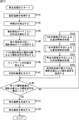
- the image processing apparatus 11 starts reproduction processing according to an instruction from the user or the like to generate and reproduce a reproduction image.
- the reproduction process by the image processing apparatus 11 will be described with reference to the flowchart of FIG.
- step S11 the image acquisition unit 21 acquires a plurality of photographed images and supplies them to the feature point detection unit 22 and the recording unit 24.
- the image acquisition unit 21 acquires a captured image by capturing a captured image at each position using a plurality of cameras.
- the recording unit 24 records the captured image supplied from the image acquisition unit 21.
- step S ⁇ b> 12 the feature point detection unit 22 detects a feature point from each of the plurality of captured images supplied from the image acquisition unit 21, and supplies the detection result to the corresponding point detection unit 23.
- the feature point detection unit 22 detects a feature point from the photographed image according to an algorithm such as Harris corner or SIFT, and extracts a feature amount from the photographed image for each feature point, and the position of the feature point on the photographed image and the feature point Are output as feature point detection results.
- an algorithm such as Harris corner or SIFT
- step S ⁇ b> 13 the corresponding point detection unit 23 detects a corresponding point for each pair of captured images based on the detection result of the feature points from each captured image supplied from the feature point detection unit 22, and the detection result is obtained. This is supplied to the recording unit 24. In addition, the recording unit 24 records the corresponding point detection result supplied from the corresponding point detection unit 23 as corresponding point information.
- the corresponding point detection unit 23 selects an arbitrary pair of photographed images, and selects a feature point pair whose feature amount distance is equal to or less than a threshold value between the paired photographed images.
- the corresponding point detection unit 23 extracts a characteristic feature pair from the detected feature point pairs, and further geometrically and statistically valid from the extracted feature point pairs. A pair of feature points is extracted, and the extracted feature point pair is set as a pair of corresponding points.
- the corresponding point detection unit 23 detects corresponding points for all combinations of two captured images for all the captured images acquired by the image acquisition unit 21.
- step S ⁇ b> 14 the corresponding image selection unit 41 selects the pair with the highest reliability among the pairs of captured images based on the corresponding point information recorded in the recording unit 24, and sets the corresponding point information of the pair.
- the data is read from the recording unit 24 and supplied to the position / orientation calculation unit 42.
- the reliability of a pair of captured images is, for example, the number of corresponding points, whether or not feature points of various distances are included, that is, the proportion of corresponding points that cannot be expressed by one projective transformation, combinations thereof, etc. Determined by. For example, the greater the number of corresponding points, the higher the reliability.
- the first two captured images to be processed are selected in a state where no position of the landmark in the reference space has been calculated yet.
- step S ⁇ b> 15 the position / orientation calculation unit 42 sets the shooting position and the shooting posture in the reference space when each shot image is shot with respect to the paired shot images based on the corresponding point information from the corresponding image selection unit 41.
- the calculation result and the corresponding point information are supplied to the landmark position calculation unit 26.
- the position / orientation calculation unit 42 calculates a basic matrix based on corresponding point information about two paired captured images, and decomposes the basic matrix, thereby obtaining two paired captured images.
- the relative shooting position and shooting posture when each is shot is calculated.
- the position / orientation calculation unit 42 appropriately sets the scale of the reference space, so that the calculated relative shooting position and the shooting posture of the two shot images are used on the reference space of the two shot images. Determine the shooting position and shooting posture.
- step S ⁇ b> 16 the landmark position calculation unit 26, based on the shooting positions and shooting posture calculation results of the two shot images and the corresponding point information supplied from the position / orientation calculation unit 42, the landmarks in the reference space. The position of is calculated.
- the landmark position calculation unit 26 calculates the position of the landmark by stereo vision or the like. Specifically, for example, for each corresponding point, a light ray vector connecting the camera viewpoint on the reference space and the corresponding point on the projection plane is calculated for two photographed images, and the light ray calculated for each of the two photographed images. The intersection of the vectors is the landmark position in the reference space. When the two ray vectors do not have an intersection, the position where the distance from the two ray vectors is the closest is the landmark position in the reference space.
- the landmark position calculation unit 26 supplies the calculation result of the landmark position, the calculation result of the shooting position and shooting posture of the shot image, and the corresponding point information to the non-linear optimization unit 27.
- step S17 the nonlinear optimization unit 27 performs nonlinear optimization based on the calculation result of the shooting position and shooting posture of the shot image from the landmark position calculation unit 26, the corresponding point information, and the calculation result of the landmark position. Do.
- the nonlinear optimization unit 27 projects the landmark on the projection plane corresponding to the captured image based on the position of the landmark on the reference space and the shooting position and shooting posture of the shot image in the reference space. Then, the nonlinear optimization unit 27 captures the captured image in the reference space so that an error between the projected position of the landmark on the projection plane and the projected position of the corresponding point corresponding to the landmark on the actual captured image becomes small. The position and shooting posture are adjusted with the position of the landmark in the reference space. Such a process for adjusting the shooting position and shooting posture of the shot image and the landmark position is also called bundle adjustment.
- the non-linear optimization unit 27 generates position / orientation information using the shooting position and shooting posture of the shot image adjusted by the nonlinear optimization as the shooting position and shooting posture of the shot image in the final reference space, and nonlinear optimization.
- the landmark information is generated from the landmark position adjusted by the above and the corresponding point information.
- the non-linear optimization unit 27 supplies the generated position / orientation information and landmark information to the recording unit 24 for recording.
- step S18 the control unit 29 determines whether or not the shooting position and the shooting posture when shooting the shot image are estimated for all the shot images.
- step S18 If it is determined in step S18 that the shooting positions and shooting postures of all the shot images have not yet been estimated, the process proceeds to step S19.
- step S19 the control unit 29 determines whether or not the shooting position and the shooting posture of the shot image are estimated by the four-point common estimation method.
- the control unit 29 operates the input unit 28 and specifies a four-point common estimation method based on an operation signal supplied from the input unit 28 when the photographing position and photographing posture estimation method of the photographed image is designated. To determine whether or not to estimate the shooting position and shooting posture of the shot image.
- step S19 when it is determined that the shooting position and the shooting posture of the shot image are estimated by the four-point common estimation method, the control unit 29 instructs the position / orientation calculation unit 25 to perform the estimation by the four-point common estimation method. The process proceeds to step S20.
- step S20 the image processing apparatus 11 performs a position / orientation estimation process using a four-point common estimation method, and calculates a shooting position and a shooting attitude of a captured image to be processed.
- the posture position information and landmark information of the photographed image from which the photographing position and the photographing posture are newly estimated are recorded in the recording unit 24.
- step S21 the control unit 29 uses the one-point common estimation method to determine the photographing position and the photographing position. It is determined whether or not the shooting posture is estimated.
- step S21 when it is determined that the shooting position and the shooting posture of the shot image are estimated by the one-point common estimation method, the control unit 29 instructs the position / orientation calculation unit 25 to perform the estimation by the one-point common estimation method. The process proceeds to step S22.
- step S22 the image processing apparatus 11 performs a position / orientation estimation process using a one-point common estimation method, and calculates a shooting position and a shooting attitude of a captured image to be processed.
- the posture position information and landmark information of the photographed image from which the photographing position and the photographing posture are newly estimated are recorded in the recording unit 24.
- Step S21 when it is determined that the shooting position and the shooting posture of the shot image are not estimated by the one-point common estimation method, the control unit 29 performs the estimation using the zero-point common estimation method to the position / orientation calculation unit 25.
- the process proceeds to step S23.
- step S23 the image processing apparatus 11 performs a position / orientation estimation process using a zero common point estimation method, and calculates an imaging position and an imaging attitude of the captured image to be processed. As a result, the posture position information and landmark information of the photographed image from which the photographing position and the photographing posture are newly estimated are recorded in the recording unit 24.
- step S18 When the position / orientation estimation process by the zero common estimation method is performed, the process returns to step S18, and the above-described process is repeated. Details of the position / orientation estimation process by the zero common point estimation method will be described later.
- step S24 the image processing unit 30 reads the shot images and position / orientation information from the recording unit 24, and reproduces the images. Is generated. Then, the image processing unit 30 supplies the generated reproduction image to the reproduction control unit 31.
- the image processing unit 30 sets the position between these cameras as the viewpoint position based on the captured images and the position and orientation information of two cameras arranged adjacent to each other in the reference space.
- a captured image is generated by image processing such as interpolation processing.
- the image processing unit 30 generates a reproduction image in which the captured image of the camera at each position, the newly generated captured image at each viewpoint position, and the like are reproduced in the order of the positions in the reference space. Thereby, for example, it is possible to obtain a reproduced image as if panning is being performed by the camera while the subject is stationary.
- the reproduced image is subjected to a reproduction process using the plurality of photographed images, the photographed images generated by the interpolation process or the like based on the positional relationship between the photographed positions in the reference space of the plurality of photographed images. Any image may be used as long as it is an image.
- step S25 the playback control unit 31 supplies the playback image supplied from the image processing unit 30 to the display unit 32 for playback, and the playback process ends.
- the image processing apparatus 11 selects any one of the four-point common estimation method, the one-point common estimation method, and the zero-point common estimation method, and uses the selected estimation method for the reference space of each captured image.
- the shooting position and shooting posture at are calculated.
- the shooting position and shooting posture of the shot image can be estimated under a wide range of shooting conditions.
- the shooting position and the shooting posture of the shot image can be estimated firmly and under a wider range of shooting conditions.
- the same estimation method may be selected for all the shot images, or the estimation method may be selected for each shot image.
- the estimation method may be selected based on whether a condition for performing each estimation method is satisfied.
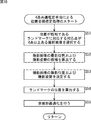
- step S ⁇ b> 51 the corresponding image selection unit 43 processes a captured image having four or more corresponding points corresponding to a landmark whose position in the reference space is known and whose shooting position and posture in the reference space are unknown. Select as a captured image.
- the corresponding image selection unit 43 selects a captured image to be processed based on the landmark information recorded in the recording unit 24. At this time, if there are a plurality of captured images that are candidates for processing, the corresponding image selection unit 43 corresponds to a landmark whose shooting position and shooting posture in the reference space are unknown and whose position in the reference space is known. The captured image with the largest number of corresponding points is selected as the captured image to be processed. As a result, a photographic image whose shooting position and posture in the reference space are unknown and that satisfies the conditions required for the four-point common estimation method is selected as a photographic image to be processed.
- the corresponding image selection unit 43 reads landmark information indicating the position of the landmark corresponding to the corresponding point on the photographed image to be processed from the recording unit 24 and supplies the landmark information to the position / orientation calculation unit 44.
- step S52 the position / orientation calculation unit 44 calculates a shooting position and a shooting posture candidate of the processing target shooting image in the reference space based on the landmark information from the corresponding image selection unit 43, and the calculation result;
- the landmark information is supplied to the reprojection unit 45.
- the position / orientation calculation unit 44 selects three corresponding points from among corresponding points corresponding to landmarks whose positions in the reference space are known in the captured image to be processed. Then, the position / orientation calculation unit 44 captures the photographed image to be processed in the reference space from the positions of the selected three corresponding points on the captured image and the positions of the landmarks corresponding to these corresponding points on the reference space. A candidate for position and shooting posture is calculated. Thereby, the four shooting positions and shooting postures of the shot image to be processed are obtained as candidates.
- step S53 the reprojection unit 45 determines the shooting position and the shooting posture of the shot image in the reference space based on the calculation result supplied from the position / orientation calculation unit 44 and the landmark information, and the determination result is used.
- the landmark position calculation unit 26 is supplied.
- the reprojection unit 45 selects one corresponding point that is not used in the process of step S52 from the corresponding points corresponding to the landmarks whose positions in the reference space are known in the captured image to be processed. Then, the reprojection unit 45, for each candidate of the photographing position and photographing posture of the photographed image to be processed, the candidate photographing position and photographing posture, and the position of the landmark corresponding to the selected one corresponding point, Then, the landmark is reprojected on the projection plane (captured image).
- the reprojection unit 45 determines a candidate in which the error between the projection position when the landmark is reprojected and the actual corresponding point position is the smallest in the photographing position in the reference space of the final photographed image to be processed. And determined as a shooting posture.
- step S54 and the processing in step S55 are then performed, and the position / orientation estimation processing by the four-point common estimation method is terminated.
- the process proceeds to step S18 in FIG.
- step S54 and step S55 is the same as the process of step S16 and step S17 of FIG. 9, the description is abbreviate
- step S54 and step S55 if there is a corresponding point that is common to other captured images whose shooting position and shooting posture in the reference space are known among the corresponding points detected from the captured image to be processed, For all such corresponding points, the landmark positions on the reference space corresponding to the corresponding points are calculated. Note that landmark positions are not calculated for corresponding points whose landmark positions have already been calculated.
- the landmark position calculation unit 26 corresponds to position / orientation information indicating the required shooting position and shooting posture of the shot image from the recording unit 24 via the nonlinear optimization unit 27 as necessary. Point information is acquired and a landmark position is calculated.
- the image processing apparatus 11 calculates the shooting position and the shooting posture of the shot image to be processed by the four-point common estimation method.
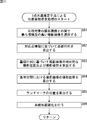
- step S ⁇ b> 81 the corresponding image selection unit 46 selects a photographed image whose photographing position and photographing posture are unknown based on the corresponding point information and position / orientation information recorded in the recording unit 24 as a processing target photographing image.
- the photographed image having the highest reliability among the photographed images to be processed and having the known photographing position and photographing posture is selected.
- a captured image having the highest reliability and a known capturing position and orientation is also referred to as a reference captured image.
- the captured image CA32 is the reference captured image.
- the corresponding image selection unit 46 reads the corresponding point information indicating the relationship between corresponding points between the captured image to be processed and the reference captured image, and the position and orientation information of the reference captured image from the recording unit 24, and calculates a basic matrix. To the unit 47. Note that the captured image to be processed and the reference captured image have at least five corresponding points corresponding to each other. However, for each of these five or more corresponding points, the positions of the landmarks corresponding to these corresponding points need not be known.
- the corresponding image selection unit 46 refers to the corresponding point information and the landmark information recorded in the recording unit 24, and selects a reference from the landmarks corresponding to the corresponding points detected from the captured image to be processed. Search for landmarks whose positions in space are known. Then, the corresponding image selection unit 46 reads out the landmark information indicating the position in the reference space of one or more landmarks obtained as a result of the search from the recording unit 24 and supplies it to the basic matrix calculation unit 47.
- the position of the landmark obtained by such a search is known, at least two photographed images with known photographing positions and photographing postures in the reference space have corresponding points corresponding to the landmarks. . Therefore, the corresponding points corresponding to the landmarks obtained by the search are in two or more photographed images whose photographing positions and postures are known and the photographed images to be processed.
- the part P21 is obtained as a search result of the landmark whose position in the reference space is known and the corresponding corresponding point is in the captured image CA33 to be processed. Since the part P21 is observed in the two photographed images CA31 and CA32 whose photographing positions and photographing postures are known in the reference space, the position of the part P21 in the reference space is known.
- the landmark obtained as a search result only needs to have a corresponding point corresponding to the landmark in the photographed image to be processed, and the corresponding point corresponding to the landmark does not necessarily need to be in the reference photographed image.
- step S82 the basic matrix calculation unit 47 is based on the corresponding point information supplied from the corresponding image selection unit 46, that is, the positional relationship between the corresponding points on the captured image to be processed and the corresponding points on the reference captured image.
- the basic matrix is calculated based on
- the basic matrix calculation unit 47 supplies the calculated basic matrix, corresponding point information, position and orientation information, and landmark information to the relative position and orientation calculation unit 48.
- step S83 the relative position / orientation calculation unit 48 calculates the relative photographing position and orientation of the processing target captured image with respect to the reference captured image based on the basic matrix supplied from the basic matrix calculation unit 47. That is, the relative positional relationship between the camera when the reference captured image is captured and the camera when the processing-target captured image is captured is calculated. For example, in step S83, processing similar to that in step S15 in FIG. 9 is performed. By this process, for example, in the example shown in FIG. 5, the relative shooting position and shooting posture of the shot image CA33 with respect to the shot image CA32 are calculated.
- the relative position / orientation calculating unit 48 supplies the calculated relative image capturing position and orientation of the captured image to be processed, corresponding point information, position / orientation information, and landmark information to the position calculating unit 49.
- step S84 the position calculation unit 49 converts the relative shooting position and shooting posture of the processing target shot image supplied from the relative position and posture calculation unit 48, the corresponding point information, the position and posture information, and the landmark information. Based on this, the photographing position in the reference space of the photographed image is calculated.
- the position calculation unit 49 projects a landmark, which is obtained as a result of the above-described search and whose position in the reference space indicated by the landmark information is known, onto a projection plane corresponding to the captured image to be processed. . Then, the position calculation unit 49 calculates the shooting position in the reference space of the shot image to be processed based on the projection position of the landmark and the position on the projection plane of the corresponding point corresponding to the landmark.
- the positions that can be the projection positions of the landmarks include the shooting position and shooting posture on the reference space of the reference shot image indicated by the position and orientation information, the relative shooting position and shooting posture of the shot image to be processed, the land It is determined from the position of the landmark indicated by the mark information.
- the position calculation unit 49 determines the shooting position of the shot image to be processed in the reference space so that the error between the projected position of the landmark and the position of the actual corresponding point corresponding to the landmark is minimized.
- the capturing position of the captured image to be processed in the reference space may be calculated by the least square method or the RANSAC (Random Sample Consensus) method.
- the shooting posture of the processing target shot image in the standard space is calculated from the shooting posture of the reference shooting image in the standard space and the relative shooting posture of the processing target shooting image with respect to the reference shooting image.
- the position calculation unit 49 supplies the landmark position calculation unit 26 with the calculation result and the corresponding point information of the shooting position and shooting posture of the shot image to be processed in the reference space.
- step S85 and step S86 are performed, and the position / orientation estimation processing by the one-point common estimation method ends, and the processing is the step of FIG. Proceed to S18.
- step S85 and step S86 is the same as the process of FIG.10 S54 and step S55, the description is abbreviate
- the image processing apparatus 11 calculates the shooting position and shooting posture of the shot image to be processed by the one-point common estimation method. As described above, when the one-point common estimation method is used, it is possible to estimate the shooting position and the shooting posture of the shot image more firmly and under a wider range of shooting conditions.
- the captured image used as the reference captured image may be a captured image that can finally estimate the capturing position and the capturing posture of the captured image to be processed in the reference space.
- step S ⁇ b> 111 the corresponding image selection unit 50 selects a photographed image whose photographing position and photographing posture are unknown based on the corresponding point information and position / orientation information recorded in the recording unit 24 as a photographed image to be processed. . Further, in step S111, the corresponding image selection unit 50 selects two captured images having a known shooting position and shooting posture in the reference space that have the highest reliability among the captured images to be processed.
- a captured image having the highest reliability and a known capturing position and orientation is also referred to as a reference captured image.
- the captured image CA33 is a captured image to be processed
- the captured image CA31 and the captured image CA32 are selected as reference captured images.
- the corresponding image selection unit 50 reads out corresponding point information indicating the relationship between corresponding points between the captured image to be processed and each reference captured image, and the position and orientation information of each reference captured image from the recording unit 24, and This is supplied to the matrix calculation unit 51. It is assumed that the captured image to be processed and each of the two reference captured images have at least five corresponding points corresponding to each other.
- step S112 the basic matrix calculation unit 51 calculates a basic matrix for the first reference captured image and the captured image to be processed based on the corresponding point information supplied from the corresponding image selection unit 50.
- the basic matrix calculation unit 51 supplies the calculated basic matrix, corresponding point information, and position / orientation information to the relative position / orientation calculation unit 52.
- step S ⁇ b> 113 the relative position / orientation calculation unit 52 calculates the relative imaging position and orientation of the processing target captured image with respect to the first reference captured image based on the basic matrix supplied from the basic matrix calculation unit 51. calculate. That is, the relative positional relationship between the camera when the first reference captured image is captured and the camera when the processing target captured image is captured is calculated.
- the relative position / orientation calculation unit 52 supplies the calculated relative imaging position and orientation of the captured image to be processed, corresponding point information, and position / orientation information to the position calculation unit 53.
- steps S112 and S113 processing similar to that in steps S82 and S83 in FIG. 11 is performed.
- step S114 and step S115 are performed thereafter. These processing is performed in step S112. Since this is the same as the processing in step S113, the description thereof is omitted. That is, in step S114 and step S115, the relative shooting position and shooting posture of the processing target shooting image with respect to the second reference shooting image are calculated.
- step S116 the position calculation unit 53 performs shooting in the reference space of the shot image to be processed based on the calculation result of the relative shooting position and shooting posture supplied from the relative position and posture calculation unit 52 and the position and posture information. Calculate the position.
- the position calculation unit 53 calculates the first reference in the standard space from the relative shooting position of the processing target shooting image with respect to the first reference shooting image and the position and orientation information of the first reference shooting image.
- a straight line connecting the shooting position of the shot image and the shooting position of the shot image to be processed is calculated as the first detection line.
- the position calculation unit 53 also creates a second straight line connecting the photographing position of the second reference photographed image in the standard space and the photographing position of the photographed image to be processed. It is calculated as a detection straight line.
- These two detection straight lines correspond to, for example, the straight line L11 and the straight line L12 shown in FIG.
- the position calculation unit 53 calculates the intersection position of the first detection line and the second detection line on the reference space, and sets the intersection position as the shooting position of the captured image to be processed in the reference space. .
- the position closest to those detection lines that is, the position with the shortest distance from these lines is calculated by the least square method.
- the position obtained as the calculation result is the shooting position of the shot image to be processed in the reference space.
- the reference photographed images may be three or more.
- a detection straight line is calculated for each reference photographed image, and the photographing position of the photographed image to be processed may be calculated by the least square method or the RANSAC method based on the detected straight line.
- the position calculation unit 53 captures the captured image of the processing target captured image in the standard space, the relative capturing posture of the processing target captured image calculated for each reference captured image, corresponding point information, The position / orientation information is supplied to the attitude calculation unit 54.
- step S ⁇ b> 117 the posture calculation unit 54, based on the relative shooting posture of the processing target captured image supplied from the position calculation unit 53 and the position / posture information of the reference shooting image, the processing target captured image in the reference space.
- the shooting posture is calculated.
- the orientation calculation unit 54 uses the position and orientation information of the first reference captured image and the relative captured orientation of the captured image to be processed with respect to the first reference captured image, and the captured image to be processed in the reference space.
- the shooting posture is calculated.
- the orientation calculation unit 54 calculates the processing target in the reference space from the position and orientation information of the second reference captured image and the relative captured orientation of the captured image to be processed with respect to the second reference captured image. The shooting posture of the shot image is calculated.
- the posture calculation unit 54 uses the at least one of the two shooting postures in the reference space calculated for the processing target shot image to determine the final shooting posture in the reference space of the processing target shot image. calculate.
- the shooting posture of the processing target shot image calculated for the reference shooting image having the shooting position closer to the shooting position of the processing target shooting image among the two reference shooting images is the final shooting posture. You may make it do. This is because a photographed image that is closer to the photographing position of the photographed image to be processed should have more corresponding points, and the photographing posture of the photographed image can be calculated with higher accuracy.
- an average value or a weighted addition value of the shooting postures of the processing target shooting images in the reference space calculated for two reference shooting images is the final shooting posture in the reference space of the processing target shooting images. You may do it.
- the posture calculation unit 54 displays the shooting position and shooting posture of the processing target shot image in the reference space and the corresponding point information as landmarks. This is supplied to the position calculation unit 26.
- step S118 and step S119 is performed, and the position / orientation estimation processing by the zero point common estimation method ends, and the processing is completed. Proceed to step S18 in FIG.
- step S118 and step S119 is the same as the process of FIG.10 S54 and step S55, the description is abbreviate
- the image processing apparatus 11 calculates the shooting position and the shooting posture of the shot image to be processed by the zero common point estimation method. As described above, if the zero common point estimation method is used, the shooting position and the shooting posture of the shot image can be estimated more firmly and under a wider range of shooting conditions.
- the shooting position of the reference shot image does not need to be known at the time of selecting the reference shot image, and the shot image that can calculate the shooting position and the shooting posture in the standard space is used as the reference shot image. May be. That is, the captured image used as the reference captured image may be a captured image that can finally estimate the capturing position and the capturing posture of the captured image to be processed in the reference space.
- or step S148 is the same as the process of step S11 thru
- step S149 the image processing apparatus 11 performs position and posture estimation processing using a four-point common estimation method.
- the processing in step S149 is the same as the processing in step S20 in FIG. 9, that is, the processing described with reference to FIG.
- the nonlinear optimization unit 27 holds the position and orientation information and landmark information estimated by the four-point common estimation method without supplying them to the recording unit 24.
- step S150 the image processing apparatus 11 performs position and orientation estimation processing using a one-point common estimation method.
- the processing in step S150 is the same as the processing in step S22 in FIG. 9, that is, the processing described with reference to FIG.
- the nonlinear optimization unit 27 holds the position and orientation information and landmark information estimated by the one-point common estimation method without supplying them to the recording unit 24.
- step S151 the image processing apparatus 11 performs position / orientation estimation processing using a zero common estimation method. Note that the processing in step S151 is the same as the processing in step S23 in FIG. 9, that is, the processing described with reference to FIG.
- the nonlinear optimization unit 27 holds the position and orientation information and landmark information estimated by the zero common estimation method without supplying them to the recording unit 24.
- steps S149 to S151 the same captured image is selected as a captured image to be processed, and the captured position and orientation of the captured image to be processed are calculated.
- step S152 the non-linear optimization unit 27 performs shooting that minimizes the reprojection error based on the shooting position, shooting posture, and landmark position of the shot image to be processed obtained in steps S149 to S151.
- the position and the shooting posture are adopted as the final shooting position and shooting posture of the shot image to be processed in the reference space.
- the nonlinear optimization unit 27 projects the landmark on the projection plane based on the landmark position obtained by each estimation method and the photographing position and posture of the photographed image to be processed. And an error between the corresponding point of the captured image corresponding to the landmark and the position on the projection plane.
- the nonlinear optimization unit 27 calculates an average value of errors calculated for each landmark as an evaluation value, and selects the estimation method with the smallest evaluation value among the estimation methods, that is, the estimation method with the smallest error.
- the nonlinear optimization unit 27 employs the shooting position and shooting posture of the processing target shot image obtained by the estimation method selected in this way as the final shooting position and shooting posture. As a result, among the estimation methods, the one in which the shooting position and the shooting posture are estimated with the highest accuracy is adopted.
- the nonlinear optimization unit 27 records the position and orientation information indicating the captured position and orientation of the captured image to be processed in the finally obtained reference space, and the landmark information calculated together with the position and orientation information. The data is supplied to the unit 24 and recorded.
- step S148 If it is determined in step S148 that the shooting positions and shooting postures of all the shot images have been estimated, then the processing in steps S153 and S154 is performed and the reproduction process ends. Since this is the same as the processing in step S24 and step S25 in FIG.
- the image processing apparatus 11 calculates the shooting position and the shooting posture of the shot image to be processed by each estimation method, and determines the final shooting position and the shooting position with the highest calculation accuracy from the calculation results. Adopt as posture. As a result, it is possible to estimate the shooting position and the shooting posture of the shot image to be processed with more robustness and high accuracy and under a wider range of shooting conditions.
- the shooting position and shooting posture of a shot image are calculated using three estimation methods, and the one with the highest calculation accuracy is selected.
- the shooting position and shooting of a shot image are selected using two or more different estimation methods.
- the posture may be calculated, and the one with the highest calculation accuracy may be selected.
- the series of processes described above can be executed by hardware or can be executed by software.
- a program constituting the software is installed in the computer.
- the computer includes, for example, a general-purpose personal computer capable of executing various functions by installing a computer incorporated in dedicated hardware and various programs.
- FIG. 14 is a block diagram illustrating a configuration example of hardware of a computer that executes the above-described series of processes by a program.
- a CPU Central Processing Unit
- ROM Read Only Memory
- RAM Random Access Memory
- An input / output interface 505 is further connected to the bus 504.
- An input unit 506, an output unit 507, a recording unit 508, a communication unit 509, and a drive 510 are connected to the input / output interface 505.
- the input unit 506 includes a keyboard, a mouse, a microphone, an image sensor, and the like.
- the output unit 507 includes a display, a speaker, and the like.
- the recording unit 508 includes a hard disk, a nonvolatile memory, and the like.
- the communication unit 509 includes a network interface or the like.
- the drive 510 drives a removable recording medium 511 such as a magnetic disk, an optical disk, a magneto-optical disk, or a semiconductor memory.
- the CPU 501 loads the program recorded in the recording unit 508 to the RAM 503 via the input / output interface 505 and the bus 504 and executes the program, for example. Is performed.
- the program executed by the computer (CPU 501) can be provided by being recorded in a removable recording medium 511 as a package medium, for example.
- the program can be provided via a wired or wireless transmission medium such as a local area network, the Internet, or digital satellite broadcasting.
- the program can be installed in the recording unit 508 via the input / output interface 505 by attaching the removable recording medium 511 to the drive 510. Further, the program can be received by the communication unit 509 via a wired or wireless transmission medium and installed in the recording unit 508. In addition, the program can be installed in the ROM 502 or the recording unit 508 in advance.
- the program executed by the computer may be a program that is processed in time series in the order described in this specification, or in parallel or at a necessary timing such as when a call is made. It may be a program for processing.
- the present technology can take a cloud computing configuration in which one function is shared by a plurality of devices via a network and is jointly processed.
- each step described in the above flowchart can be executed by one device or can be shared by a plurality of devices.
- the plurality of processes included in the one step can be executed by being shared by a plurality of apparatuses in addition to being executed by one apparatus.
- the present technology can be configured as follows.
- an information processing method for estimating a shooting position and a shooting posture for a plurality of shot images including a third shot image shot in a third shooting posture When it is possible to estimate the first shooting position and the first shooting posture and the second shooting position and the second shooting posture in a reference space, Based on corresponding points in the common image that are included in the second captured image and the third captured image, respectively, the relative relationship between the second captured position and the third captured position is determined.
- An information processing method including a step of estimating a posture.
- the relative relationship between the first captured position and the third captured position Further estimate the relative positional relationship, Based on the relative positional relationship between the second imaging position and the third imaging position, and the relative positional relationship between the first imaging position and the third imaging position. , Estimating the first shooting position and the first shooting posture, the second shooting position and the second shooting posture, and the third shooting position and the third shooting posture in the reference space.
- An intersection position between the first photographing position determined by a relative positional relationship between the position and the third photographing position and a second straight line connecting the third photographing positions, or the first straight line and The information processing method according to (3) or (4), wherein the third shooting position in the reference space is estimated by calculating a position closest to the second straight line.
- the estimation result of the third imaging posture based on the corresponding corresponding points included in the second captured image and the third captured image, respectively, and the first captured image and the third captured image, respectively.
- the third imaging posture in the reference space is estimated based on at least one of the third imaging posture estimation results based on the common corresponding points included. Any one of (3) to (5) The information processing method according to one item. (7) A relative positional relationship between the second shooting position and the third shooting position, and the first shooting image, the second shooting image, and the third shooting image, respectively, The information processing method according to (1) or (2), wherein the third imaging position in the reference space is estimated based on corresponding points in a common image. (8) The information processing according to any one of (1) to (7), wherein the first photographed image, the second photographed image, and the third photographed image are images photographed by different photographing units. Method.
- Method. (10) The predetermined image processing is further performed based on the third shooting position and the third shooting posture in the reference space, and the third shooting image.
- Information processing method. (11) Based on the positional relationship between the first photographing position, the second photographing position, and the third photographing position, the first photographed image, the second photographed image, and the third photographed image.
- the information processing method according to any one of (1) to (9), wherein reproduction processing using an image is further performed.
- an information processing device that estimates a shooting position and a shooting posture for a plurality of shot images including a third shot image shot in a third shooting posture, When it is possible to estimate the first shooting position and the first shooting posture and the second shooting position and the second shooting posture in a reference space, Based on corresponding points in the common image that are included in the second captured image and the third captured image, respectively, the relative relationship between the second captured position and the third captured position is determined.
- a relative positional relationship estimation unit for estimating the positional relationship; Relative positional relationship between the second shooting position and the third shooting position, and corresponding points in the common image that are included in the first shooting image and the third shooting image, respectively.
- An information processing apparatus comprising: a position and orientation estimation unit that estimates an orientation. (13) At least a first photographed image photographed at the first photographing position and the first photographing posture, a second photographed image photographed at the second photographing position and the second photographing posture, and a third photographing position.
- a computer that controls an image processing apparatus that estimates a shooting position and a shooting posture for a plurality of shot images including a third shot image shot in the third shooting posture.
- the relative relationship between the second captured position and the third captured position is determined.
- a program for executing a process including a step for estimating the posture.
- Image processing device 21 Image acquisition unit, 22 Feature point detection unit, 23 Corresponding point detection unit, 24 Recording unit, 25 Position and orientation calculation unit, 26 Landmark position calculation unit, 27 Nonlinear optimization unit, 30 Image processing unit, 46 corresponding image selection unit, 47 basic matrix calculation unit, 48 relative position and orientation calculation unit, 49 position calculation unit, 50 corresponding image selection unit, 51 basic matrix calculation unit, 52 relative position and orientation calculation unit, 53 position calculation unit, 54 posture Calculation unit
Landscapes
- Engineering & Computer Science (AREA)
- Physics & Mathematics (AREA)
- General Physics & Mathematics (AREA)
- Computer Vision & Pattern Recognition (AREA)
- Theoretical Computer Science (AREA)
- Multimedia (AREA)
- Signal Processing (AREA)
- Geometry (AREA)
- Length Measuring Devices By Optical Means (AREA)
- Image Analysis (AREA)
- Image Processing (AREA)
- Studio Devices (AREA)
Abstract
Priority Applications (2)
| Application Number | Priority Date | Filing Date | Title |
|---|---|---|---|
| JP2017525182A JP6662382B2 (ja) | 2015-06-23 | 2016-06-09 | 情報処理装置および方法、並びにプログラム |
| US15/565,845 US10600202B2 (en) | 2015-06-23 | 2016-06-09 | Information processing device and method, and program |
Applications Claiming Priority (2)
| Application Number | Priority Date | Filing Date | Title |
|---|---|---|---|
| JP2015-125359 | 2015-06-23 | ||
| JP2015125359 | 2015-06-23 |
Publications (1)
| Publication Number | Publication Date |
|---|---|
| WO2016208404A1 true WO2016208404A1 (fr) | 2016-12-29 |
Family
ID=57585081
Family Applications (1)
| Application Number | Title | Priority Date | Filing Date |
|---|---|---|---|
| PCT/JP2016/067193 Ceased WO2016208404A1 (fr) | 2015-06-23 | 2016-06-09 | Dispositif et procédé de traitement d'informations, et programme |
Country Status (3)
| Country | Link |
|---|---|
| US (1) | US10600202B2 (fr) |
| JP (1) | JP6662382B2 (fr) |
| WO (1) | WO2016208404A1 (fr) |
Cited By (4)
| Publication number | Priority date | Publication date | Assignee | Title |
|---|---|---|---|---|
| WO2020066069A1 (fr) * | 2018-09-26 | 2020-04-02 | クラリオン株式会社 | Dispositif d'estimation de position |
| WO2020137068A1 (fr) * | 2018-12-28 | 2020-07-02 | 株式会社Nttドコモ | Système d'estimation de position |
| WO2020137069A1 (fr) * | 2018-12-28 | 2020-07-02 | 株式会社Nttドコモ | Système d'estimation de position |
| WO2025069537A1 (fr) * | 2023-09-29 | 2025-04-03 | パナソニックIpマネジメント株式会社 | Procédé d'estimation de position, dispositif d'estimation de position et programme |
Families Citing this family (2)
| Publication number | Priority date | Publication date | Assignee | Title |
|---|---|---|---|---|
| GB201818357D0 (en) * | 2018-11-12 | 2018-12-26 | Forsberg Services Ltd | Locating system |
| US10949707B2 (en) | 2019-02-27 | 2021-03-16 | Here Global B.V. | Method, apparatus, and system for generating feature correspondence from camera geometry |
Citations (3)
| Publication number | Priority date | Publication date | Assignee | Title |
|---|---|---|---|---|
| JP2000041173A (ja) * | 1998-07-23 | 2000-02-08 | Mr System Kenkyusho:Kk | 視点位置姿勢の決定方法、カメラ装置、及び視点位置センサ |
| JP2013141049A (ja) * | 2010-03-24 | 2013-07-18 | Hitachi Ltd | 世界座標系データベースを利用したサーバ及び端末 |
| WO2014034035A1 (fr) * | 2012-08-31 | 2014-03-06 | 日本電気株式会社 | Dispositif d'estimation d'attitude de positionnement, procédé d'estimation d'attitude de positionnement, et programme d'estimation d'attitude de positionnement |
Family Cites Families (9)
| Publication number | Priority date | Publication date | Assignee | Title |
|---|---|---|---|---|
| JP3417377B2 (ja) * | 1999-04-30 | 2003-06-16 | 日本電気株式会社 | 三次元形状計測方法及び装置並びに記録媒体 |
| US20040222987A1 (en) * | 2003-05-08 | 2004-11-11 | Chang Nelson Liang An | Multiframe image processing |
| JP4926817B2 (ja) * | 2006-08-11 | 2012-05-09 | キヤノン株式会社 | 指標配置情報計測装置および方法 |
| US9151607B2 (en) * | 2010-05-31 | 2015-10-06 | University Of North Carolina At Charlotte | Dimensional measurement through a combination of photogrammetry and optical scattering |
| US8600192B2 (en) * | 2010-12-08 | 2013-12-03 | Cognex Corporation | System and method for finding correspondence between cameras in a three-dimensional vision system |
| JP6132275B2 (ja) * | 2012-07-02 | 2017-05-24 | パナソニックIpマネジメント株式会社 | サイズ測定装置及びサイズ測定方法 |
| JP6380881B2 (ja) * | 2012-07-31 | 2018-08-29 | Tianma Japan株式会社 | 立体画像表示装置、画像処理装置及び立体画像処理方法 |
| US10165255B2 (en) * | 2013-03-20 | 2018-12-25 | Trimble Inc. | Indoor navigation via multi-beam laser projection |
| US9247239B2 (en) * | 2013-06-20 | 2016-01-26 | Trimble Navigation Limited | Use of overlap areas to optimize bundle adjustment |
-
2016
- 2016-06-09 WO PCT/JP2016/067193 patent/WO2016208404A1/fr not_active Ceased
- 2016-06-09 US US15/565,845 patent/US10600202B2/en active Active
- 2016-06-09 JP JP2017525182A patent/JP6662382B2/ja active Active
Patent Citations (3)
| Publication number | Priority date | Publication date | Assignee | Title |
|---|---|---|---|---|
| JP2000041173A (ja) * | 1998-07-23 | 2000-02-08 | Mr System Kenkyusho:Kk | 視点位置姿勢の決定方法、カメラ装置、及び視点位置センサ |
| JP2013141049A (ja) * | 2010-03-24 | 2013-07-18 | Hitachi Ltd | 世界座標系データベースを利用したサーバ及び端末 |
| WO2014034035A1 (fr) * | 2012-08-31 | 2014-03-06 | 日本電気株式会社 | Dispositif d'estimation d'attitude de positionnement, procédé d'estimation d'attitude de positionnement, et programme d'estimation d'attitude de positionnement |
Cited By (9)
| Publication number | Priority date | Publication date | Assignee | Title |
|---|---|---|---|---|
| WO2020066069A1 (fr) * | 2018-09-26 | 2020-04-02 | クラリオン株式会社 | Dispositif d'estimation de position |
| US12103586B2 (en) | 2018-09-26 | 2024-10-01 | Faurecia Clarion Electronics Co., Ltd. | Position estimation apparatus |
| WO2020137068A1 (fr) * | 2018-12-28 | 2020-07-02 | 株式会社Nttドコモ | Système d'estimation de position |
| WO2020137069A1 (fr) * | 2018-12-28 | 2020-07-02 | 株式会社Nttドコモ | Système d'estimation de position |
| JPWO2020137069A1 (ja) * | 2018-12-28 | 2021-10-14 | 株式会社Nttドコモ | 位置推定システム |
| JPWO2020137068A1 (ja) * | 2018-12-28 | 2021-10-21 | 株式会社Nttドコモ | 位置推定システム |
| JP7085646B2 (ja) | 2018-12-28 | 2022-06-16 | 株式会社Nttドコモ | 位置推定システム |
| JP7153089B2 (ja) | 2018-12-28 | 2022-10-13 | 株式会社Nttドコモ | 位置推定システム |
| WO2025069537A1 (fr) * | 2023-09-29 | 2025-04-03 | パナソニックIpマネジメント株式会社 | Procédé d'estimation de position, dispositif d'estimation de position et programme |
Also Published As
| Publication number | Publication date |
|---|---|
| US10600202B2 (en) | 2020-03-24 |
| JPWO2016208404A1 (ja) | 2018-04-12 |
| JP6662382B2 (ja) | 2020-03-11 |
| US20180114339A1 (en) | 2018-04-26 |
Similar Documents
| Publication | Publication Date | Title |
|---|---|---|
| US9916689B2 (en) | Apparatus and method for estimating camera pose | |
| JP6662382B2 (ja) | 情報処理装置および方法、並びにプログラム | |
| JP6897563B2 (ja) | 画像処理装置と画像処理方法およびプログラム | |
| US8531505B2 (en) | Imaging parameter acquisition apparatus, imaging parameter acquisition method and storage medium | |
| CN112348863B (zh) | 图像对齐方法、图像对齐装置及终端设备 | |
| US20170076499A1 (en) | Markerless Multi-User, Multi-Object Augmented Reality on Mobile Devices | |
| JP2019075082A (ja) | 深度値推定を用いた映像処理方法及び装置 | |
| US20120162220A1 (en) | Three-dimensional model creation system | |
| US20150124059A1 (en) | Multi-frame image calibrator | |
| JP6503906B2 (ja) | 画像処理装置、画像処理方法および画像処理プログラム | |
| EP3818741A1 (fr) | Procédé, appareil et programme informatique pour réaliser une construction de modèle radio tridimensionnel | |
| WO2021136386A1 (fr) | Procédé de traitement de données, terminal et serveur | |
| WO2017022033A1 (fr) | Dispositif de traitement d'images, procédé de traitement d'images et programme de traitement d'images | |
| JP2023056466A (ja) | グローバル測位装置及び方法 | |
| EP3633606A1 (fr) | Dispositif de traitement d'informations, procédé de traitement d'informations et programme | |
| CN108492284B (zh) | 用于确定图像的透视形状的方法和装置 | |
| US10346949B1 (en) | Image registration | |
| TWI599987B (zh) | 點雲拼接系統及方法 | |
| JP6240706B2 (ja) | グラフマッチングおよびサイクル検出による自動モデル初期化を用いた線トラッキング | |
| JP5769248B2 (ja) | ステレオマッチング処理装置、ステレオマッチング処理方法、及び、プログラム | |
| WO2023166618A1 (fr) | Dispositif d'estimation de paramètres de caméra, procédé d'estimation de paramètres de caméra et support d'enregistrement lisible par ordinateur | |
| KR102802569B1 (ko) | 2차원 거리뷰 이미지들에 기반하여 생성된 3차원 지도에 ar 이미지들을 정합하는 방법 및 장치 그의 동작 방법 | |
| CN116964630A (zh) | 一种用于估计相对于空间区域的可能位姿的方法和图像处理装置 | |
| WO2013173383A1 (fr) | Procédés et appareil de traitement de flux d'image | |
| KR100871149B1 (ko) | 카메라 초점거리 추정 장치 및 방법 |
Legal Events
| Date | Code | Title | Description |
|---|---|---|---|
| 121 | Ep: the epo has been informed by wipo that ep was designated in this application |
Ref document number: 16814175 Country of ref document: EP Kind code of ref document: A1 |
|
| WWE | Wipo information: entry into national phase |
Ref document number: 15565845 Country of ref document: US |
|
| ENP | Entry into the national phase |
Ref document number: 2017525182 Country of ref document: JP Kind code of ref document: A |
|
| NENP | Non-entry into the national phase |
Ref country code: DE |
|
| 122 | Ep: pct application non-entry in european phase |
Ref document number: 16814175 Country of ref document: EP Kind code of ref document: A1 |