WO2017002244A1 - Appareil esclave, et procédé et programme de communication - Google Patents
Appareil esclave, et procédé et programme de communication Download PDFInfo
- Publication number
- WO2017002244A1 WO2017002244A1 PCT/JP2015/069049 JP2015069049W WO2017002244A1 WO 2017002244 A1 WO2017002244 A1 WO 2017002244A1 JP 2015069049 W JP2015069049 W JP 2015069049W WO 2017002244 A1 WO2017002244 A1 WO 2017002244A1
- Authority
- WO
- WIPO (PCT)
- Prior art keywords
- transmission
- frame
- priority frame
- communication
- low priority
- Prior art date
- Legal status (The legal status is an assumption and is not a legal conclusion. Google has not performed a legal analysis and makes no representation as to the accuracy of the status listed.)
- Ceased
Links
Images




Classifications
-
- H—ELECTRICITY
- H04—ELECTRIC COMMUNICATION TECHNIQUE
- H04L—TRANSMISSION OF DIGITAL INFORMATION, e.g. TELEGRAPHIC COMMUNICATION
- H04L12/00—Data switching networks
- H04L12/28—Data switching networks characterised by path configuration, e.g. LAN [Local Area Networks] or WAN [Wide Area Networks]
- H04L12/42—Loop networks
Definitions
- the present invention relates to transmission control of communication frames in a ring network.
- a control system In FA (Factory Automation) systems, there are many cases where a control system is configured by one master device and a plurality of slave devices.
- the master device transmits a communication frame including a command to the slave device for each slave device, and each slave device transmits a communication frame including a response to the command to the master device.
- control communication Transmission and reception of a communication frame including a command and a communication frame including a response between the master device and the slave device as described above are referred to as control communication.
- control communication Transmission and reception of a communication frame including a command and a communication frame including a response between the master device and the slave device as described above are referred to as control communication.
- the time until control communication makes a round between slave devices is called a communication cycle.
- the field network and the motion network may be configured by physically different lines, but the field network and the motion network may be configured by the same line for the purpose of reducing wiring.
- Communication performed in a field network is called field communication.
- Communication performed on the motion network is called motion communication.
- a field network and a motion network are configured on the same line, a master device and a plurality of slave devices are often connected by a line network or a ring network. For this reason, communication frames may compete at the communication port of the slave device.
- a motion communication frame (hereinafter referred to as a motion communication frame) competes with a field communication frame (hereinafter referred to as a field communication frame)
- motion communication with a shorter communication cycle may be delayed.
- motion communication cycle of motion communication cannot be satisfied.
- the motion communication frame can be preferentially transmitted by classifying the motion communication frame as a high priority frame and classifying the field communication frame as a low priority frame. Thereby, even if it is motion communication of a short communication cycle, motion communication can be completed within a communication cycle.
- Patent Document 1 discloses a method in which when a motion communication frame and a field communication frame compete with each other, the transmission of the field communication frame is interrupted, and after the transmission of the motion communication frame is completed, the field communication frame is retransmitted. Yes.
- Patent Document 2 compares the waiting time of a bus master that requires real-time processing with the scheduled time that a bus master other than the bus master occupies the shared bus, and preferentially shares it to the bus master that requires real-time processing.
- a method for assigning the right to use a bus is disclosed.
- the slave device sets a time during which the motion communication may be delayed (allowable delay time) from the communication cycle of the motion communication.
- the slave device determines whether or not the transmission of the field communication frame is completed within the allowable delay time.
- the slave device first completes the transmission of the field communication frame, and the motion communication frame is transmitted after the transmission of the field communication frame is completed.
- Patent Document 1 and the method of Patent Document 2 have a problem that a field communication frame that is a low priority frame cannot be efficiently transmitted.
- the main object of the present invention is to solve such a problem, and it is a main object to efficiently transmit a low priority frame while giving priority to transmission of a high priority frame.
- the slave device is A slave device included in a ring network including a master device and a plurality of slave devices, wherein a forward direction and a reverse direction are set as directions in which communication frames are transmitted from the plurality of slave devices to the master device.
- the high priority Deciding to transmit a frame from the first communication port, and transmitting the low priority frame from the first communication port after completing transmission of the high priority frame from the first communication port The low priority is either forward transmission or reverse transmission in which the low priority frame is transmitted from the second communication port before transmission of the high priority frame from the first communication port is completed.
- a transmission arbitration unit that determines whether to transmit a frame.
- the low priority frame when transmission of a high priority frame and transmission of a low priority frame compete, the low priority frame can be transmitted by reverse transmission. Therefore, according to the present invention, the transmission route of the low priority frame can be flexibly selected according to the transmission status of the high priority frame, and the low priority frame can be selected while giving priority to the transmission of the high priority frame. Frame transmission can also be performed efficiently.
- FIG. 3 is a diagram showing an operation outline of the slave device according to the first embodiment.
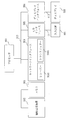
- FIG. 3 is a diagram illustrating a functional configuration example of a slave device according to the first embodiment.
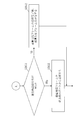
- FIG. 3 is a flowchart showing an operation example of a transmission arbitration unit according to the first embodiment.
- FIG. 3 is a flowchart showing an operation example of a transmission arbitration unit according to the first embodiment.
- FIG. 3 is a flowchart showing an operation example of a transmission arbitration unit according to the first embodiment.
- FIG. 3 is a flowchart showing an operation example of a transmission arbitration unit according to the first embodiment.
- FIG. FIG. 3 is a diagram illustrating a hardware configuration example of a slave device according to the first embodiment.
- FIG. *** Explanation of configuration *** FIG. 1 shows a network configuration example according to the present embodiment.
- a ring network 1000 including one master device 10 and a plurality of slave devices 100 will be described.
- the master device 10 and each slave device 100 have two communication ports.
- illustration of the slave device 100 between the slave device (S_H_1) 100 and the slave device (S_H_n) 100 is omitted, but between the slave device (S_H_1) 100 and the slave device (S_H_n) 100.
- illustration of the slave device 100 between the slave device (S_L_1) 100 and the slave device (S_L_m) 100 is also omitted, between the slave device (S_L_1) 100 and the slave device (S_L_m) 100, There are slave device (S_L_2) 100 to slave device (S_L_m ⁇ 1) 100.
- master device 10 transmits a communication frame including a command to a plurality of slave devices 100.
- the communication frame from the master device 10 is transferred in the order of the master device 10, the slave device (S_H_1) 100... Slave device (S_H_n) 100, the slave device (S_L_1) 100... Slave device (S_L_m) 100.
- Each slave device 100 transmits a communication frame including a response to the command from the master device 10.
- a forward direction and a reverse direction are set as directions in which communication frames are transmitted from slave device 100 to master device 10. As shown by the arrows in FIG. 1, the forward direction refers to a slave device (S_L_m) 100...
- the transfer direction of the order is the direction opposite to the transfer direction of the communication frame from the master device 10.
- the reverse direction is slave device (S_H_1) 100... Slave device (S_H_n) 100, slave device (S_L_1) 100... Slave device (S_L_m) 100, master device.
- the transfer direction is in the order of 10.
- each slave device 100 transmits a communication frame to master device 10 in principle in the forward direction.
- a communication frame for motion communication is called a motion communication frame
- a communication frame for field communication is called a field communication frame.
- the motion communication frame is handled as a high priority frame
- the field communication frame is handled as a low priority frame.
- a slave device (S_H_1) 100... Slave device (S_H_n) 100 belongs to a motion network.
- the slave device (S_L_1) 100... Slave device (S_L_m) 100 belongs to the field network.
- Slave device (S_H_1) 100... Slave device (S_H_n) 100 transmits a motion communication frame to master device 10.
- Slave device (S_L_1) 100... Slave device (S_L_m) 100 transmits a field communication frame to master device 10.
- Slave device (S_L_1) 100... The field communication frame transmitted from the slave device (S_L_m) 100 is transferred by the slave device (S_H_1) 100... Slave device (S_H_n) 100 and reaches the master device 10. For this reason, in the slave device (S_H_1) 100... Slave device (S_H_n) 100, contention between the transmission of the motion communication frame and the transmission of the field communication frame occurs.
- Conflict means that a motion communication frame transmission request and a field communication frame transmission request are duplicated.
- FIG. 3 shows an outline of the operation of the slave device 100 when the transmission of the motion communication frame and the transmission of the field communication frame compete.
- the motion communication frame is expressed as a high priority frame
- the field communication frame is expressed as a low priority frame.
- the slave device (S_H_1) 100 determines whether or not the transmission of the low priority frame 1 is completed within the delay allowable time of the high priority frame 1.
- the allowable delay time is an upper limit time during which transmission of the high priority frame 1 can be delayed.
- the slave device (S_H_1) 100 continues the transmission of the low priority frame 1, and the high priority is given after the transmission of the low priority frame 1 is completed. Frame 1 is transmitted.
- the slave device (S_H_1) 100 stops the transmission of the low priority frame 1 ((a) in FIG. 3), and the high priority frame 1 Start sending.
- FIG. 3A shows that the transmission of the low priority frame 1 is stopped when half of the low priority frame 1 is transmitted.
- Half of the low priority frame 1 transmitted before the transmission is stopped is denoted as low priority frame 1 (1/2).
- the master device 10 holds the low priority frame 1 (1/2) received from the slave device (S_H_1) 100 without discarding it.
- the slave device (S_H_1) 100 determines whether to transmit the remaining half of the low priority frame 1 by forward transmission or reverse transmission.
- the other half of the low priority frame 1 is denoted as low priority frame 1 (2/2).
- the forward transmission is a transmission mode in which the low priority frame 1 (2/2) is transmitted from the forward communication port after the transmission of the high priority frame 1 from the forward communication port is completed.
- the reverse transmission is a transmission form in which the low priority frame 1 (2/2) is transmitted from the reverse communication port before the transmission of the high priority frame from the forward communication port is completed.
- the slave device (S_H_1) 100 determines whether to transmit the low priority frame 1 (2/2) by forward transmission or reverse transmission in the following procedure.
- the slave device (S_H_1) 100 arrives at the master device 10 of the low priority frame 1 (2/2) and transmits the low priority frame 1 when the low priority frame 1 (2/2) is transmitted by forward transmission. It is determined which of the low-priority frame 1 (2/2) arrives at the master device 10 when 1 (2/2) is transmitted by reverse transmission. When the low priority frame 1 (2/2) is transmitted by the reverse transmission and the low priority frame 1 (2/2) arrives at the master device 10 early, the slave device (S_H_1) 100 Low priority frame 1 (2/2) is transmitted by reverse transmission. On the other hand, when the low priority frame 1 (2/2) is transmitted by the reverse transmission, the low priority frame 1 (2/2) arrives at the master device 10 early, or the forward transmission is performed in the reverse transmission.
- the slave device (S_H_1) 100 transmits the low priority frame 1 (2/2) by forward transmission.
- the slave device (S_H_1) 100 transmits the low priority frame 1 (2/2) by reverse transmission ((b) of FIG. 3).
- the low priority frame 1 (2/2) is transferred to the slave device (S_H_2) 100... Slave device (S_H_n) 100, the slave device (S_L_1) 100... Slave device (S_L_m) 100.
- the master device 10 is reached.
- the master device 10 combines the retained low priority frame 1 (1/2) and the low priority frame 1 (2/2) received from the slave device (S_L_m) 100 to obtain the original low priority. Restore frame 1.
- the slave device (S_H_1) 100 receives the low priority frame 2 addressed to the master device 10 while the high priority frame 1 is being transmitted. In this case, the slave device (S_H_1) 100 continues to transmit the high priority frame 1 from the forward communication port. Also, the slave device (S_H_1) 100 determines whether to transmit the low priority frame 2 by forward transmission or reverse transmission. Also in this case, the slave device (S_H_1) 100 reaches the master device 10 of the low priority frame 2 when the low priority frame 2 is transmitted by forward transmission, and transmits the low priority frame 2 by reverse transmission. It is determined which of the low-priority frame 2 and the arrival of the master device 10 when transmitted is earlier.
- the slave device (S_H_1) 100 transmits the low priority frame 2 by reverse transmission.
- the low priority frame 2 arrives at the master device 10 early, or the master device 10 of the low priority frame 2 is forward transmission or reverse transmission.
- the slave device (S_H_1) 100 transmits the low priority frame 2 by forward transmission.
- the slave device (S_H_1) 100 transmits the low priority frame 2 by reverse transmission ((c) of FIG. 3).
- Low priority frame 2 is transferred to slave device (S_H_2) 100... Slave device (S_H_n) 100, slave device (S_L_1) 100... Slave device (S_L_m) 100, and reaches master device 10.
- the high priority frame can reach the master device 10 by the completion of the high priority communication cycle T_H (motion communication communication cycle) ((f) in FIG. 3). Further, the low priority frame can reach the master device 10 by the completion of the low priority communication cycle T_L (field communication communication cycle) ((g) in FIG. 3).
- the network interface 101 transmits / receives a communication frame to / from the master apparatus 10 side line (forward direction line) via the network port 102.
- the network interface 104 transmits and receives communication frames to and from a line on the opposite side to the master device 10 (line in the reverse direction) via the network port 103.
- the network interface 101 transmits a communication frame received at the network port 103 from the network port 102 to the forward line.
- the network interface 101 transmits a communication frame generated by a communication frame generation unit 109 described later from the network port 102 to the forward line.
- the network interface 104 transmits a communication frame received by the network port 102 from the network port 103 to the reverse line.
- the network interface 104 transmits the communication frame generated by the communication frame generation unit 109 from the network port 103 to the reverse line.
- the network port 102 is connected to a forward line and transmits a communication frame in the forward direction.
- the network port 102 corresponds to an example of a first communication port.
- the network port 103 is connected to a line in the reverse direction, and transmits a communication frame in the reverse direction.
- the network port 103 corresponds to an example of a second communication port.
- the communication frame generation unit 109 generates a communication frame addressed to the master device 10. If the slave device 100 is a slave device for performing motion communication, the communication frame generation unit 109 generates a motion communication frame. If the slave device 100 is a slave device for performing field communication, the communication frame generation unit 109 generates a field communication frame.
- the network configuration information management unit 108 manages network configuration information that is information related to the network configuration of the ring network.
- the network configuration information includes, for example, information on the number of nodes interposed between the slave device 100 and the master device 10 in the forward direction and the number of nodes interposed between the slave device 100 and the master device 10 in the reverse direction. .
- the timer unit 107 supplies timer information to the transmission arbitration unit 106. Details of the timer information will be described later.
- the transmission arbitration unit 106 arbitrates between the communication frame addressed to the master device 10 generated by the communication frame generation unit 109 and the communication frame addressed to the master device 10 received from the network port 103. That is, the transmission arbitration unit 106 arbitrates between the high priority frame and the low priority frame when the transmission of the high priority frame and the transmission of the low priority frame compete.
- the slave device 100 slave device (S_H_1) 100... Slave device (S_H_n) 100 that performs motion communication performs transmission of a high priority frame and transmission of a low priority frame. Competing.
- the transmission arbitration unit 106 of the slave device 100 that performs motion communication arbitrates between the high priority frame generated by the communication frame generation unit 109 and the low priority frame received from the network port 103.
- the slave device 100 (slave device (S_L_1) 100... Slave device (S_L_m) 100) that performs field communication performs transmission of a high priority frame and transmission of a low priority frame. Competing. That is, the transmission arbitration unit 106 of the slave device 100 that performs field communication performs arbitration between the low priority frame generated by the communication frame generation unit 109 and the high priority frame received from the network port 103. 1 and FIG. 2 and the network configuration of FIG. 8, there is no contention between high priority frames and contention between low priority frames due to the nature of the network.
- the buffer 105 is a storage area for temporarily storing communication frames that the transmission arbitration unit 106 has suspended transmission.
- the transmission arbitration unit 106 confirms whether or not there is a transmission request for a communication frame (S201). That is, the transmission arbitration unit 106 checks whether a communication frame has been generated by the communication frame generation unit 109 and whether the communication frame has been received by the network interface 104.
- the transmission arbitration unit 106 checks whether the network interface 101 is transmitting a communication frame from the network port 102 (S202). On the other hand, when there is no transmission request in S201 (NO in S201), the transmission arbitration unit 106 repeats the determination in S201.
- the transmission arbitration unit 106 executes transmission of the communication frame requested for transmission (S204). That is, the transmission arbitration unit 106 transfers the communication frame generated by the communication frame generation unit 109 or the communication frame received by the network interface 104 to the network interface 101. Then, the transmission arbitration unit 106 causes the network interface 101 to transmit a communication frame from the network port 102.
- the network interface 101 If the network interface 101 is transmitting a communication frame from the network port 102 in S202 (YES in S202), has the transmission arbitration unit 106 generated a transmission request for a high priority frame during transmission of a low priority frame? Is confirmed (S203).
- the transmission arbitration unit 106 transmits the low priority currently being transmitted within the allowable delay time of the high priority frame. It is determined whether or not the transmission of the priority frame from the network port 102 is completed (S206). Details of the determination in S206 will be described later.
- the transmission arbitration unit 106 executes the process of S205.
- the process of S205 will be described later.
- the transmission arbitration unit 106 continues the transmission of the low priority frame, After the frame transmission is completed, it is determined to transmit the high priority frame from the network port 102 (S209). Thereafter, the transmission arbitration unit 106 returns the process to S201. Note that the high-priority frame whose transmission is suspended is accumulated in the buffer 105 until the transmission of the low-priority frame is completed. Also, the transmission arbitration unit 106 transfers the high priority frame in the buffer 105 to the network interface 101 when the transmission of the low priority frame is completed. Then, the transmission arbitration unit 106 causes the network interface 101 to transmit a high priority frame from the network port 102.
- the transmission arbitration unit 106 stops the transmission of the low priority frame and the high priority frame. Is determined to start transmission from the network port 102 (S207). That is, the transmission arbitration unit 106 instructs the network interface 101 to stop transmitting the low priority frame, and transfers the high priority frame to the network interface 101. Then, the transmission arbitration unit 106 causes the network interface 101 to transmit a high priority frame from the network port 102. The untransmitted portion of the low priority frame is stored in the buffer 105. Thereafter, the transmission arbitration unit 106 performs the process of S208, and details of S208 will be described later.
- the transmission arbitration unit 106 determines whether or not the low priority frame can be transmitted to the master apparatus 10 earlier when the low priority frame is transmitted by the reverse transmission than when the low priority frame is transmitted by the forward transmission. judge. Details of S2051 will be described later.
- the transmission arbitration unit 106 reverses the low priority frame. It is determined to transmit from the network port 103 which is the direction communication port (S2053). That is, the transmission arbitration unit 106 transfers the low priority frame to the network interface 104. Then, the transmission arbitration unit 106 causes the network interface 104 to transmit a low priority frame from the network port 103.
- the transmission arbitration unit 106 determines to transmit the low priority frame from the network port 102 after completing the transmission of the high priority frame (S2052).
- the low priority frame whose transmission is suspended is accumulated in the buffer 105 until the transmission of the high priority frame is completed.
- the transmission arbitration unit 106 transfers the low priority frame in the buffer 105 to the network interface 101 when the transmission of the high priority frame is completed. Then, the transmission arbitration unit 106 causes the network interface 101 to transmit a low priority frame from the network port 102.
- the transmission arbitration unit 106 is a network that is a required time from when the slave device 100 starts transmitting a low priority frame until the first bit of the low priority frame reaches the master device 10. Calculate the relay time.
- tp_n is a required time from when the slave device 100 transmits the low priority frame from the network port 102 until the low priority frame reaches the master device 10.
- tp_f be the time required for the slave device 100 to transmit the low priority frame from the network port 103 until the low priority frame reaches the master device 10.
- the transmission arbitration unit 106 determines the number of slave devices interposed between the slave device 100 and the master device 10 in the forward direction and the number of slave devices interposed between the slave device 100 and the master device 10 in the reverse direction. Can know. Further, the transmission arbitration unit 106 can know the presence or absence of the network switch from the network configuration information. Further, the transmission arbitration unit 106 can know from the network configuration information the time required for the relay processing in the other slave device 100 interposed between the master device 10 and the time required for the relay processing in the network switch. Further, the transmission arbitration unit 106 can know the network cable length between slave devices and the network cable length between network switches from the network configuration information.
- the timer information indicates a time t_c from when the transmission request for the low priority frame is generated until the transmission of the currently transmitted high priority frame is completed.
- the transmission arbitration unit 106 determines YES in S2051 when tp_f ⁇ tp_n + t_c. Also, the transmission arbitration unit 106 determines NO in S2051 when tp_f> tp_n + t_c.
- the transmission arbitration unit 106 may calculate the network relay time by the following method instead of calculating the network relay time using the network configuration information. For example, in the initialization phase, the master device 10 measures the network relay time to each slave device 100, and the network relay time between the master device 10 and each slave device 100 from the master device 10 is set to all slave devices. 100 is notified. Then, the transmission arbitration unit 106 calculates the network relay time in S2051 using the network relay time between the master device 10 and each slave device 100 notified from the master device 10.
- the transmission arbitration unit 106 uses the network configuration information input from the network configuration information management unit 108 and the timer information input from the timer unit 107 to make the determination in S206.
- the network configuration information is the same as described above.
- the timer information indicates the remaining time t_r of the communication cycle of motion communication.
- the transmission arbitration unit 106 calculates a time t_s until the transmission of the low priority frame currently being transmitted is completed.
- the transmission arbitration unit 106 can obtain the time t_s by dividing the data amount of untransmitted data in the low priority frame by the communication speed.
- the transmission arbitration unit 106 can transmit the high priority frame to the master device 10 before the completion of the communication cycle of the motion communication even if the transmission of the high priority frame is suspended. Determines YES in S206. On the other hand, if t_r ⁇ tp_n + t_s, if the transmission of the high priority frame is suspended, the high priority frame cannot be delivered to the master device 10 by the completion of the communication cycle of the motion communication. It is determined NO in S206.
- the transmission arbitration unit 106 determines whether or not the low priority frame can be made to reach the master device 10 earlier when the low priority frame is transmitted by the reverse transmission than when the low priority frame is transmitted by the forward transmission. judge. Details of S2081 will be described later.
- the transmission arbitration unit 106 sets the remaining low priority. It is determined that the second frame is transmitted from the network port 103, which is the reverse communication port (S2083). That is, the transmission arbitration unit 106 transfers the remaining low priority frames to the network interface 104. Then, the transmission arbitration unit 106 causes the network interface 104 to transmit the remaining low priority frames from the network port 103.
- the transmission arbitration unit 106 transmits the remaining low priority frames from the network port 102 after completing the transmission of the high priority frames. Determine (S2082). The remaining low priority frames whose transmission has been suspended are accumulated in the buffer 105 until the transmission of the high priority frame is completed. Also, the transmission arbitration unit 106 transfers the remaining low priority frames in the buffer 105 to the network interface 101 when transmission of the high priority frames is completed. Then, the transmission arbitration unit 106 causes the network interface 101 to transmit the remaining low priority frames from the network port 102.
- the network configuration information is the same as that described in S2051.
- the timer information indicates a time t_d from when the transmission of the low priority frame is interrupted until the transmission of the currently transmitted high priority frame is completed.
- tp_f ⁇ tp_n + t_d
- the transmission of the low priority frame from the network port 103 can cause the low priority frame to reach the master device 10 earlier, so the determination in S2081 is YES.
- tp_f> tp_n + t_d the transmission of the low priority frame from the network port 102 after the completion of the transmission of the high priority frame allows the low priority frame to reach the master device 10 earlier.
- the determination is NO.
- the transmission arbitration unit 106 may calculate the network relay time by the following method instead of calculating the network relay time using the network configuration information. For example, in the initialization phase, the master device 10 measures the network relay time to each slave device 100, and the network relay time between the master device 10 and each slave device 100 from the master device 10 is set to all slave devices. 100 is notified. Then, the transmission arbitration unit 106 calculates the network relay time in S ⁇ b> 2081 using the network relay time between the master device 10 and each slave device 100 notified from the master device 10.
- the low priority frame when transmission of a high priority frame and transmission of a low priority frame compete with each other, the low priority frame can be transmitted by reverse transmission. Therefore, according to the present embodiment, the transmission route of the low priority frame can be flexibly selected according to the transmission status of the high priority frame. Transmission of priority frames can also be performed efficiently. Accordingly, it is possible to suppress delay in the completion time of field communication while maintaining the real-time property of motion communication.
- the slave device 100 is a computer.
- the slave device 100 includes hardware such as a processor 901, an auxiliary storage device 902, a memory 903, a network interface 904, an input interface 905, and a display interface 906.
- the processor 901 is connected to other hardware via the signal line 910, and controls these other hardware.
- the input interface 905 is connected to the input device 907.
- the display interface 906 is connected to the display 908.
- the processor 901 is an IC (Integrated Circuit) that performs processing.
- the processor 901 is, for example, a CPU (Central Processing Unit), a DSP (Digital Signal Processor), or a GPU (Graphics Processing Unit).
- the auxiliary storage device 902 is, for example, a ROM (Read Only Memory), a flash memory, or an HDD (Hard Disk Drive).
- the memory 903 is, for example, a RAM (Random Access Memory).
- the buffer 105 and the network configuration information management unit 108 in FIG. 4 are realized by an auxiliary storage device 902, for example.
- the network interface 904 includes a receiver 9041 that receives data and a transmitter 9042 that transmits data.
- the network interface 904 corresponds to the network interface 101 and the network interface 104 in FIG.
- the network interface 904 is, for example, a communication chip or a NIC (Network Interface Card).
- the input interface 905 is a port to which the cable 911 of the input device 907 is connected.
- the input interface 905 is, for example, a USB (Universal Serial Bus) terminal.
- the display interface 906 is a port to which the cable 912 of the display 908 is connected.
- the display interface 906 is, for example, a USB terminal or an HDMI (registered trademark) (High Definition Multimedia Interface) terminal.
- the input device 907 is, for example, a mouse, a keyboard, or a touch panel.
- the display 908 is, for example, an LCD (Liquid Crystal Display).
- the auxiliary storage device 902 stores a program for realizing the functions of the transmission arbitration unit 106, the timer unit 107, and the communication frame generation unit 109 (collectively referred to as “unit”) in FIG. This program is loaded into the memory 903, read into the processor 901, and executed by the processor 901. Further, the auxiliary storage device 902 also stores an OS (Operating System). Then, at least a part of the OS is loaded into the memory 903, and the processor 901 executes a program that realizes the function of “unit” while executing the OS. Although one processor 901 is illustrated in FIG. 9, the slave device 100 may include a plurality of processors 901. A plurality of processors 901 may execute a program for realizing the function of “unit” in cooperation with each other.
- OS Operating System
- information, data, signal values, and variable values indicating the processing results of “unit” are stored in the memory 903, the auxiliary storage device 902, or a register or cache memory in the processor 901.
- a program for realizing the function of “part” is stored in a storage medium such as a magnetic disk, a flexible disk, an optical disk, a compact disk, a Blu-ray (registered trademark) disk, or a DVD.
- circuitry may be provided as “circuitry”. Further, “part” may be read as “circuit”, “process”, “procedure”, or “processing”. “Circuit” and “Circuitry” include not only the processor 901 but also other types of processing circuits such as a logic IC or GA (Gate Array) or ASIC (Application Specific Integrated Circuit) or FPGA (Field-Programmable Gate Array). It is a concept to include.
- GA Gate Array
- ASIC Application Specific Integrated Circuit
- FPGA Field-Programmable Gate Array
Landscapes
- Engineering & Computer Science (AREA)
- Computer Networks & Wireless Communication (AREA)
- Signal Processing (AREA)
- Small-Scale Networks (AREA)
Abstract
Un appareil esclave (100) détermine, dans le cas où la transmission d'une trame de priorité élevée à un appareil maître (10) entre en conflit avec la transmission d'une trame de faible priorité à l'appareil maître (10), de transmettre la trame de priorité élevée dans une direction vers l'avant. De plus, le dispositif esclave (100) : détermine s'il faut transmettre la trame de faible priorité dans la direction vers l'avant une fois achevée la transmission dans la direction vers l'avant de la trame de transmission de priorité élevée, ou dans une direction vers l'arrière opposée à la direction vers l'avant avant l'achèvement de la transmission de la trame de priorité élevée ; et transmet la trame de faible priorité dans la direction déterminée.
Priority Applications (2)
| Application Number | Priority Date | Filing Date | Title |
|---|---|---|---|
| PCT/JP2015/069049 WO2017002244A1 (fr) | 2015-07-01 | 2015-07-01 | Appareil esclave, et procédé et programme de communication |
| TW104125747A TW201703467A (zh) | 2015-07-01 | 2015-08-07 | 從設備與通訊方法以及通訊程式產品 |
Applications Claiming Priority (1)
| Application Number | Priority Date | Filing Date | Title |
|---|---|---|---|
| PCT/JP2015/069049 WO2017002244A1 (fr) | 2015-07-01 | 2015-07-01 | Appareil esclave, et procédé et programme de communication |
Publications (1)
| Publication Number | Publication Date |
|---|---|
| WO2017002244A1 true WO2017002244A1 (fr) | 2017-01-05 |
Family
ID=57609523
Family Applications (1)
| Application Number | Title | Priority Date | Filing Date |
|---|---|---|---|
| PCT/JP2015/069049 Ceased WO2017002244A1 (fr) | 2015-07-01 | 2015-07-01 | Appareil esclave, et procédé et programme de communication |
Country Status (2)
| Country | Link |
|---|---|
| TW (1) | TW201703467A (fr) |
| WO (1) | WO2017002244A1 (fr) |
Citations (5)
| Publication number | Priority date | Publication date | Assignee | Title |
|---|---|---|---|---|
| JPH06232886A (ja) * | 1993-02-08 | 1994-08-19 | Nippon Telegr & Teleph Corp <Ntt> | バッファ挿入型リングネットワークアクセス制御装置 |
| JPH08191328A (ja) * | 1995-01-09 | 1996-07-23 | Oki Electric Ind Co Ltd | 自動方路選択装置 |
| JP2006033319A (ja) * | 2004-07-15 | 2006-02-02 | Fujitsu Ltd | 光伝送システム |
| WO2012132264A1 (fr) * | 2011-03-28 | 2012-10-04 | パナソニック株式会社 | Répéteur, procédé de commande d'un répéteur, et programme |
| WO2013129526A1 (fr) * | 2012-02-29 | 2013-09-06 | 日本電気株式会社 | Nœud, réseau en anneau, méthode de transfert de paquets, et programme |
-
2015
- 2015-07-01 WO PCT/JP2015/069049 patent/WO2017002244A1/fr not_active Ceased
- 2015-08-07 TW TW104125747A patent/TW201703467A/zh unknown
Patent Citations (5)
| Publication number | Priority date | Publication date | Assignee | Title |
|---|---|---|---|---|
| JPH06232886A (ja) * | 1993-02-08 | 1994-08-19 | Nippon Telegr & Teleph Corp <Ntt> | バッファ挿入型リングネットワークアクセス制御装置 |
| JPH08191328A (ja) * | 1995-01-09 | 1996-07-23 | Oki Electric Ind Co Ltd | 自動方路選択装置 |
| JP2006033319A (ja) * | 2004-07-15 | 2006-02-02 | Fujitsu Ltd | 光伝送システム |
| WO2012132264A1 (fr) * | 2011-03-28 | 2012-10-04 | パナソニック株式会社 | Répéteur, procédé de commande d'un répéteur, et programme |
| WO2013129526A1 (fr) * | 2012-02-29 | 2013-09-06 | 日本電気株式会社 | Nœud, réseau en anneau, méthode de transfert de paquets, et programme |
Also Published As
| Publication number | Publication date |
|---|---|
| TW201703467A (zh) | 2017-01-16 |
Similar Documents
| Publication | Publication Date | Title |
|---|---|---|
| JP6275320B2 (ja) | 通信装置、通信方法及びプログラム | |
| JP2017068345A (ja) | バスシステム | |
| US20130007321A1 (en) | Requests and data handling in a bus architecture | |
| US9860841B2 (en) | Communications fabric with split paths for control and data packets | |
| CN113742075B (zh) | 基于云端分布式系统的任务处理方法、装置及系统 | |
| CN112445735A (zh) | 一种联邦学习数据传输方法、计算机设备、系统及存储介质 | |
| JP2005518578A (ja) | コンピュータ・システムの入出力ノードにおけるタグ付けおよび調停メカニズム | |
| CN102594640A (zh) | 使用发送和接收缓冲器实现的消息防丢失 | |
| JP6290761B2 (ja) | データ転送制御システム、データ転送制御方法、及び、データ転送制御プログラム | |
| JP4391819B2 (ja) | コンピュータ・システムの入出力ノード | |
| US10374981B1 (en) | Data transfer circuitry given multiple source elements | |
| JP2017135627A (ja) | 通信方法 | |
| RU159583U1 (ru) | Многопроцессорный модуль цифровой обработки сигналов | |
| JP4104939B2 (ja) | マルチプロセッサシステム | |
| WO2017002244A1 (fr) | Appareil esclave, et procédé et programme de communication | |
| KR20230016816A (ko) | 시스템 온 칩에서 기능 블록 간의 데이터 송수신을 위한 인터페이스 방법 및 이를 이용하는 시스템 온 칩 | |
| EP1271331A1 (fr) | Méthode de validation d'une communication entre tâches et système de traitement utilisant une telle méthode | |
| CN106372013A (zh) | 远程内存访问方法、装置和系统 | |
| WO2022124083A1 (fr) | Dispositif de communication, procédé de communication, et programme | |
| JP2009003633A (ja) | 情報処理装置 | |
| US9336172B2 (en) | Parallel computer system, data transfer device, and method for controlling parallel computer system for performing arbitration | |
| US20250265108A1 (en) | Communication device and communication method | |
| CN113900984B (zh) | 一种单节点与多节点互联和切换的电路和服务器 | |
| JP7207133B2 (ja) | 情報処理装置、同期装置及び情報処理装置の制御方法 | |
| JP2009098778A (ja) | ハブ装置 |
Legal Events
| Date | Code | Title | Description |
|---|---|---|---|
| 121 | Ep: the epo has been informed by wipo that ep was designated in this application |
Ref document number: 15897171 Country of ref document: EP Kind code of ref document: A1 |
|
| NENP | Non-entry into the national phase |
Ref country code: DE |
|
| 122 | Ep: pct application non-entry in european phase |
Ref document number: 15897171 Country of ref document: EP Kind code of ref document: A1 |
|
| NENP | Non-entry into the national phase |
Ref country code: JP |