WO2017002349A1 - 水性エマルジョン組成物 - Google Patents
水性エマルジョン組成物 Download PDFInfo
- Publication number
- WO2017002349A1 WO2017002349A1 PCT/JP2016/003070 JP2016003070W WO2017002349A1 WO 2017002349 A1 WO2017002349 A1 WO 2017002349A1 JP 2016003070 W JP2016003070 W JP 2016003070W WO 2017002349 A1 WO2017002349 A1 WO 2017002349A1
- Authority
- WO
- WIPO (PCT)
- Prior art keywords
- aqueous emulsion
- hydrogen atom
- group
- carbon atoms
- evaluation
- Prior art date
- Legal status (The legal status is an assumption and is not a legal conclusion. Google has not performed a legal analysis and makes no representation as to the accuracy of the status listed.)
- Ceased
Links
- 0 CC(CC*1)C(C2CCCCC2)=*1C1*C**C1 Chemical compound CC(CC*1)C(C2CCCCC2)=*1C1*C**C1 0.000 description 3
Classifications
-
- C—CHEMISTRY; METALLURGY
- C08—ORGANIC MACROMOLECULAR COMPOUNDS; THEIR PREPARATION OR CHEMICAL WORKING-UP; COMPOSITIONS BASED THEREON
- C08F—MACROMOLECULAR COMPOUNDS OBTAINED BY REACTIONS ONLY INVOLVING CARBON-TO-CARBON UNSATURATED BONDS
- C08F2/00—Processes of polymerisation
- C08F2/12—Polymerisation in non-solvents
- C08F2/16—Aqueous medium
- C08F2/22—Emulsion polymerisation
- C08F2/24—Emulsion polymerisation with the aid of emulsifying agents
- C08F2/30—Emulsion polymerisation with the aid of emulsifying agents non-ionic
-
- C—CHEMISTRY; METALLURGY
- C08—ORGANIC MACROMOLECULAR COMPOUNDS; THEIR PREPARATION OR CHEMICAL WORKING-UP; COMPOSITIONS BASED THEREON
- C08F—MACROMOLECULAR COMPOUNDS OBTAINED BY REACTIONS ONLY INVOLVING CARBON-TO-CARBON UNSATURATED BONDS
- C08F218/00—Copolymers of compounds having one or more unsaturated aliphatic radicals, each having only one carbon-to-carbon double bond, and at least one being terminated by an acyloxy radical of a saturated carboxylic acid, of carbonic acid or of a haloformic acid
- C08F218/02—Esters of monocarboxylic acids
- C08F218/04—Vinyl esters
- C08F218/08—Vinyl acetate
-
- C—CHEMISTRY; METALLURGY
- C08—ORGANIC MACROMOLECULAR COMPOUNDS; THEIR PREPARATION OR CHEMICAL WORKING-UP; COMPOSITIONS BASED THEREON
- C08F—MACROMOLECULAR COMPOUNDS OBTAINED BY REACTIONS ONLY INVOLVING CARBON-TO-CARBON UNSATURATED BONDS
- C08F261/00—Macromolecular compounds obtained by polymerising monomers on to polymers of oxygen-containing monomers as defined in group C08F16/00
- C08F261/02—Macromolecular compounds obtained by polymerising monomers on to polymers of oxygen-containing monomers as defined in group C08F16/00 on to polymers of unsaturated alcohols
- C08F261/04—Macromolecular compounds obtained by polymerising monomers on to polymers of oxygen-containing monomers as defined in group C08F16/00 on to polymers of unsaturated alcohols on to polymers of vinyl alcohol
-
- C—CHEMISTRY; METALLURGY
- C08—ORGANIC MACROMOLECULAR COMPOUNDS; THEIR PREPARATION OR CHEMICAL WORKING-UP; COMPOSITIONS BASED THEREON
- C08F—MACROMOLECULAR COMPOUNDS OBTAINED BY REACTIONS ONLY INVOLVING CARBON-TO-CARBON UNSATURATED BONDS
- C08F8/00—Chemical modification by after-treatment
-
- C—CHEMISTRY; METALLURGY
- C08—ORGANIC MACROMOLECULAR COMPOUNDS; THEIR PREPARATION OR CHEMICAL WORKING-UP; COMPOSITIONS BASED THEREON
- C08G—MACROMOLECULAR COMPOUNDS OBTAINED OTHERWISE THAN BY REACTIONS ONLY INVOLVING UNSATURATED CARBON-TO-CARBON BONDS
- C08G81/00—Macromolecular compounds obtained by interreacting polymers in the absence of monomers, e.g. block polymers
-
- C—CHEMISTRY; METALLURGY
- C08—ORGANIC MACROMOLECULAR COMPOUNDS; THEIR PREPARATION OR CHEMICAL WORKING-UP; COMPOSITIONS BASED THEREON
- C08K—Use of inorganic or non-macromolecular organic substances as compounding ingredients
- C08K5/00—Use of organic ingredients
- C08K5/04—Oxygen-containing compounds
- C08K5/09—Carboxylic acids; Metal salts thereof; Anhydrides thereof
- C08K5/092—Polycarboxylic acids
-
- C—CHEMISTRY; METALLURGY
- C08—ORGANIC MACROMOLECULAR COMPOUNDS; THEIR PREPARATION OR CHEMICAL WORKING-UP; COMPOSITIONS BASED THEREON
- C08L—COMPOSITIONS OF MACROMOLECULAR COMPOUNDS
- C08L31/00—Compositions of homopolymers or copolymers of compounds having one or more unsaturated aliphatic radicals, each having only one carbon-to-carbon double bond, and at least one being terminated by an acyloxy radical of a saturated carboxylic acid, of carbonic acid or of a haloformic acid; Compositions of derivatives of such polymers
- C08L31/02—Homopolymers or copolymers of esters of monocarboxylic acids
- C08L31/04—Homopolymers or copolymers of vinyl acetate
-
- C—CHEMISTRY; METALLURGY
- C08—ORGANIC MACROMOLECULAR COMPOUNDS; THEIR PREPARATION OR CHEMICAL WORKING-UP; COMPOSITIONS BASED THEREON
- C08L—COMPOSITIONS OF MACROMOLECULAR COMPOUNDS
- C08L33/00—Compositions of homopolymers or copolymers of compounds having one or more unsaturated aliphatic radicals, each having only one carbon-to-carbon double bond, and only one being terminated by only one carboxyl radical, or of salts, anhydrides, esters, amides, imides or nitriles thereof; Compositions of derivatives of such polymers
- C08L33/04—Homopolymers or copolymers of esters
- C08L33/06—Homopolymers or copolymers of esters of esters containing only carbon, hydrogen and oxygen, which oxygen atoms are present only as part of the carboxyl radical
- C08L33/10—Homopolymers or copolymers of methacrylic acid esters
- C08L33/12—Homopolymers or copolymers of methyl methacrylate
-
- C—CHEMISTRY; METALLURGY
- C08—ORGANIC MACROMOLECULAR COMPOUNDS; THEIR PREPARATION OR CHEMICAL WORKING-UP; COMPOSITIONS BASED THEREON
- C08L—COMPOSITIONS OF MACROMOLECULAR COMPOUNDS
- C08L35/00—Compositions of homopolymers or copolymers of compounds having one or more unsaturated aliphatic radicals, each having only one carbon-to-carbon double bond, and at least one being terminated by a carboxyl radical, and containing at least one other carboxyl radical in the molecule, or of salts, anhydrides, esters, amides, imides or nitriles thereof; Compositions of derivatives of such polymers
-
- C—CHEMISTRY; METALLURGY
- C09—DYES; PAINTS; POLISHES; NATURAL RESINS; ADHESIVES; COMPOSITIONS NOT OTHERWISE PROVIDED FOR; APPLICATIONS OF MATERIALS NOT OTHERWISE PROVIDED FOR
- C09D—COATING COMPOSITIONS, e.g. PAINTS, VARNISHES OR LACQUERS; FILLING PASTES; CHEMICAL PAINT OR INK REMOVERS; INKS; CORRECTING FLUIDS; WOODSTAINS; PASTES OR SOLIDS FOR COLOURING OR PRINTING; USE OF MATERIALS THEREFOR
- C09D131/00—Coating compositions based on homopolymers or copolymers of compounds having one or more unsaturated aliphatic radicals, each having only one carbon-to-carbon double bond, and at least one being terminated by an acyloxy radical of a saturated carboxylic acid, of carbonic acid, or of a haloformic acid; Coating compositions based on derivatives of such polymers
- C09D131/02—Homopolymers or copolymers of esters of monocarboxylic acids
- C09D131/04—Homopolymers or copolymers of vinyl acetate
-
- C—CHEMISTRY; METALLURGY
- C09—DYES; PAINTS; POLISHES; NATURAL RESINS; ADHESIVES; COMPOSITIONS NOT OTHERWISE PROVIDED FOR; APPLICATIONS OF MATERIALS NOT OTHERWISE PROVIDED FOR
- C09D—COATING COMPOSITIONS, e.g. PAINTS, VARNISHES OR LACQUERS; FILLING PASTES; CHEMICAL PAINT OR INK REMOVERS; INKS; CORRECTING FLUIDS; WOODSTAINS; PASTES OR SOLIDS FOR COLOURING OR PRINTING; USE OF MATERIALS THEREFOR
- C09D133/00—Coating compositions based on homopolymers or copolymers of compounds having one or more unsaturated aliphatic radicals, each having only one carbon-to-carbon double bond, and at least one being terminated by only one carboxyl radical, or of salts, anhydrides, esters, amides, imides, or nitriles thereof; Coating compositions based on derivatives of such polymers
- C09D133/04—Homopolymers or copolymers of esters
- C09D133/06—Homopolymers or copolymers of esters of esters containing only carbon, hydrogen and oxygen, the oxygen atom being present only as part of the carboxyl radical
- C09D133/10—Homopolymers or copolymers of methacrylic acid esters
- C09D133/12—Homopolymers or copolymers of methyl methacrylate
-
- C—CHEMISTRY; METALLURGY
- C09—DYES; PAINTS; POLISHES; NATURAL RESINS; ADHESIVES; COMPOSITIONS NOT OTHERWISE PROVIDED FOR; APPLICATIONS OF MATERIALS NOT OTHERWISE PROVIDED FOR
- C09D—COATING COMPOSITIONS, e.g. PAINTS, VARNISHES OR LACQUERS; FILLING PASTES; CHEMICAL PAINT OR INK REMOVERS; INKS; CORRECTING FLUIDS; WOODSTAINS; PASTES OR SOLIDS FOR COLOURING OR PRINTING; USE OF MATERIALS THEREFOR
- C09D5/00—Coating compositions, e.g. paints, varnishes or lacquers, characterised by their physical nature or the effects produced; Filling pastes
- C09D5/02—Emulsion paints including aerosols
-
- C—CHEMISTRY; METALLURGY
- C09—DYES; PAINTS; POLISHES; NATURAL RESINS; ADHESIVES; COMPOSITIONS NOT OTHERWISE PROVIDED FOR; APPLICATIONS OF MATERIALS NOT OTHERWISE PROVIDED FOR
- C09D—COATING COMPOSITIONS, e.g. PAINTS, VARNISHES OR LACQUERS; FILLING PASTES; CHEMICAL PAINT OR INK REMOVERS; INKS; CORRECTING FLUIDS; WOODSTAINS; PASTES OR SOLIDS FOR COLOURING OR PRINTING; USE OF MATERIALS THEREFOR
- C09D5/00—Coating compositions, e.g. paints, varnishes or lacquers, characterised by their physical nature or the effects produced; Filling pastes
- C09D5/02—Emulsion paints including aerosols
- C09D5/022—Emulsions, e.g. oil in water
-
- C—CHEMISTRY; METALLURGY
- C09—DYES; PAINTS; POLISHES; NATURAL RESINS; ADHESIVES; COMPOSITIONS NOT OTHERWISE PROVIDED FOR; APPLICATIONS OF MATERIALS NOT OTHERWISE PROVIDED FOR
- C09D—COATING COMPOSITIONS, e.g. PAINTS, VARNISHES OR LACQUERS; FILLING PASTES; CHEMICAL PAINT OR INK REMOVERS; INKS; CORRECTING FLUIDS; WOODSTAINS; PASTES OR SOLIDS FOR COLOURING OR PRINTING; USE OF MATERIALS THEREFOR
- C09D7/00—Features of coating compositions, not provided for in group C09D5/00; Processes for incorporating ingredients in coating compositions
- C09D7/40—Additives
- C09D7/65—Additives macromolecular
-
- C—CHEMISTRY; METALLURGY
- C09—DYES; PAINTS; POLISHES; NATURAL RESINS; ADHESIVES; COMPOSITIONS NOT OTHERWISE PROVIDED FOR; APPLICATIONS OF MATERIALS NOT OTHERWISE PROVIDED FOR
- C09J—ADHESIVES; NON-MECHANICAL ASPECTS OF ADHESIVE PROCESSES IN GENERAL; ADHESIVE PROCESSES NOT PROVIDED FOR ELSEWHERE; USE OF MATERIALS AS ADHESIVES
- C09J131/00—Adhesives based on homopolymers or copolymers of compounds having one or more unsaturated aliphatic radicals, each having only one carbon-to-carbon double bond, and at least one being terminated by an acyloxy radical of a saturated carboxylic acid, of carbonic acid, or of a haloformic acid; Adhesives based on derivatives of such polymers
- C09J131/02—Homopolymers or copolymers of esters of monocarboxylic acids
- C09J131/04—Homopolymers or copolymers of vinyl acetate
-
- C—CHEMISTRY; METALLURGY
- C09—DYES; PAINTS; POLISHES; NATURAL RESINS; ADHESIVES; COMPOSITIONS NOT OTHERWISE PROVIDED FOR; APPLICATIONS OF MATERIALS NOT OTHERWISE PROVIDED FOR
- C09J—ADHESIVES; NON-MECHANICAL ASPECTS OF ADHESIVE PROCESSES IN GENERAL; ADHESIVE PROCESSES NOT PROVIDED FOR ELSEWHERE; USE OF MATERIALS AS ADHESIVES
- C09J133/00—Adhesives based on homopolymers or copolymers of compounds having one or more unsaturated aliphatic radicals, each having only one carbon-to-carbon double bond, and at least one being terminated by only one carboxyl radical, or of salts, anhydrides, esters, amides, imides, or nitriles thereof; Adhesives based on derivatives of such polymers
- C09J133/04—Homopolymers or copolymers of esters
- C09J133/06—Homopolymers or copolymers of esters of esters containing only carbon, hydrogen and oxygen, the oxygen atom being present only as part of the carboxyl radical
- C09J133/10—Homopolymers or copolymers of methacrylic acid esters
- C09J133/12—Homopolymers or copolymers of methyl methacrylate
-
- C—CHEMISTRY; METALLURGY
- C09—DYES; PAINTS; POLISHES; NATURAL RESINS; ADHESIVES; COMPOSITIONS NOT OTHERWISE PROVIDED FOR; APPLICATIONS OF MATERIALS NOT OTHERWISE PROVIDED FOR
- C09J—ADHESIVES; NON-MECHANICAL ASPECTS OF ADHESIVE PROCESSES IN GENERAL; ADHESIVE PROCESSES NOT PROVIDED FOR ELSEWHERE; USE OF MATERIALS AS ADHESIVES
- C09J9/00—Adhesives characterised by their physical nature or the effects produced, e.g. glue sticks
-
- D—TEXTILES; PAPER
- D21—PAPER-MAKING; PRODUCTION OF CELLULOSE
- D21H—PULP COMPOSITIONS; PREPARATION THEREOF NOT COVERED BY SUBCLASSES D21C OR D21D; IMPREGNATING OR COATING OF PAPER; TREATMENT OF FINISHED PAPER NOT COVERED BY CLASS B31 OR SUBCLASS D21G; PAPER NOT OTHERWISE PROVIDED FOR
- D21H17/00—Non-fibrous material added to the pulp, characterised by its constitution; Paper-impregnating material characterised by its constitution
- D21H17/20—Macromolecular organic compounds
- D21H17/33—Synthetic macromolecular compounds
- D21H17/34—Synthetic macromolecular compounds obtained by reactions only involving carbon-to-carbon unsaturated bonds
- D21H17/36—Polyalkenyalcohols; Polyalkenylethers; Polyalkenylesters
-
- D—TEXTILES; PAPER
- D21—PAPER-MAKING; PRODUCTION OF CELLULOSE
- D21H—PULP COMPOSITIONS; PREPARATION THEREOF NOT COVERED BY SUBCLASSES D21C OR D21D; IMPREGNATING OR COATING OF PAPER; TREATMENT OF FINISHED PAPER NOT COVERED BY CLASS B31 OR SUBCLASS D21G; PAPER NOT OTHERWISE PROVIDED FOR
- D21H17/00—Non-fibrous material added to the pulp, characterised by its constitution; Paper-impregnating material characterised by its constitution
- D21H17/71—Mixtures of material ; Pulp or paper comprising several different materials not incorporated by special processes
- D21H17/72—Mixtures of material ; Pulp or paper comprising several different materials not incorporated by special processes of organic material
-
- D—TEXTILES; PAPER
- D21—PAPER-MAKING; PRODUCTION OF CELLULOSE
- D21H—PULP COMPOSITIONS; PREPARATION THEREOF NOT COVERED BY SUBCLASSES D21C OR D21D; IMPREGNATING OR COATING OF PAPER; TREATMENT OF FINISHED PAPER NOT COVERED BY CLASS B31 OR SUBCLASS D21G; PAPER NOT OTHERWISE PROVIDED FOR
- D21H19/00—Coated paper; Coating material
- D21H19/10—Coatings without pigments
- D21H19/14—Coatings without pigments applied in a form other than the aqueous solution defined in group D21H19/12
- D21H19/20—Coatings without pigments applied in a form other than the aqueous solution defined in group D21H19/12 comprising macromolecular compounds obtained by reactions only involving carbon-to-carbon unsaturated bonds
-
- D—TEXTILES; PAPER
- D21—PAPER-MAKING; PRODUCTION OF CELLULOSE
- D21H—PULP COMPOSITIONS; PREPARATION THEREOF NOT COVERED BY SUBCLASSES D21C OR D21D; IMPREGNATING OR COATING OF PAPER; TREATMENT OF FINISHED PAPER NOT COVERED BY CLASS B31 OR SUBCLASS D21G; PAPER NOT OTHERWISE PROVIDED FOR
- D21H19/00—Coated paper; Coating material
- D21H19/36—Coatings with pigments
- D21H19/44—Coatings with pigments characterised by the other ingredients, e.g. the binder or dispersing agent
- D21H19/56—Macromolecular organic compounds or oligomers thereof obtained by reactions only involving carbon-to-carbon unsaturated bonds
- D21H19/60—Polyalkenylalcohols; Polyalkenylethers; Polyalkenylesters
-
- D—TEXTILES; PAPER
- D21—PAPER-MAKING; PRODUCTION OF CELLULOSE
- D21H—PULP COMPOSITIONS; PREPARATION THEREOF NOT COVERED BY SUBCLASSES D21C OR D21D; IMPREGNATING OR COATING OF PAPER; TREATMENT OF FINISHED PAPER NOT COVERED BY CLASS B31 OR SUBCLASS D21G; PAPER NOT OTHERWISE PROVIDED FOR
- D21H21/00—Non-fibrous material added to the pulp, characterised by its function, form or properties; Paper-impregnating or coating material, characterised by its function, form or properties
- D21H21/14—Non-fibrous material added to the pulp, characterised by its function, form or properties; Paper-impregnating or coating material, characterised by its function, form or properties characterised by function or properties in or on the paper
-
- D—TEXTILES; PAPER
- D21—PAPER-MAKING; PRODUCTION OF CELLULOSE
- D21H—PULP COMPOSITIONS; PREPARATION THEREOF NOT COVERED BY SUBCLASSES D21C OR D21D; IMPREGNATING OR COATING OF PAPER; TREATMENT OF FINISHED PAPER NOT COVERED BY CLASS B31 OR SUBCLASS D21G; PAPER NOT OTHERWISE PROVIDED FOR
- D21H21/00—Non-fibrous material added to the pulp, characterised by its function, form or properties; Paper-impregnating or coating material, characterised by its function, form or properties
- D21H21/14—Non-fibrous material added to the pulp, characterised by its function, form or properties; Paper-impregnating or coating material, characterised by its function, form or properties characterised by function or properties in or on the paper
- D21H21/16—Sizing or water-repelling agents
-
- D—TEXTILES; PAPER
- D21—PAPER-MAKING; PRODUCTION OF CELLULOSE
- D21H—PULP COMPOSITIONS; PREPARATION THEREOF NOT COVERED BY SUBCLASSES D21C OR D21D; IMPREGNATING OR COATING OF PAPER; TREATMENT OF FINISHED PAPER NOT COVERED BY CLASS B31 OR SUBCLASS D21G; PAPER NOT OTHERWISE PROVIDED FOR
- D21H21/00—Non-fibrous material added to the pulp, characterised by its function, form or properties; Paper-impregnating or coating material, characterised by its function, form or properties
- D21H21/14—Non-fibrous material added to the pulp, characterised by its function, form or properties; Paper-impregnating or coating material, characterised by its function, form or properties characterised by function or properties in or on the paper
- D21H21/18—Reinforcing agents
-
- C—CHEMISTRY; METALLURGY
- C08—ORGANIC MACROMOLECULAR COMPOUNDS; THEIR PREPARATION OR CHEMICAL WORKING-UP; COMPOSITIONS BASED THEREON
- C08L—COMPOSITIONS OF MACROMOLECULAR COMPOUNDS
- C08L2201/00—Properties
- C08L2201/08—Stabilised against heat, light or radiation or oxydation
-
- C—CHEMISTRY; METALLURGY
- C08—ORGANIC MACROMOLECULAR COMPOUNDS; THEIR PREPARATION OR CHEMICAL WORKING-UP; COMPOSITIONS BASED THEREON
- C08L—COMPOSITIONS OF MACROMOLECULAR COMPOUNDS
- C08L2201/00—Properties
- C08L2201/52—Aqueous emulsion or latex, e.g. containing polymers of a glass transition temperature (Tg) below 20°C
-
- C—CHEMISTRY; METALLURGY
- C08—ORGANIC MACROMOLECULAR COMPOUNDS; THEIR PREPARATION OR CHEMICAL WORKING-UP; COMPOSITIONS BASED THEREON
- C08L—COMPOSITIONS OF MACROMOLECULAR COMPOUNDS
- C08L2205/00—Polymer mixtures characterised by other features
- C08L2205/03—Polymer mixtures characterised by other features containing three or more polymers in a blend
Definitions
- the present invention relates to an aqueous emulsion composition that is excellent in heat resistance, water resistance, hot water resistance, boiling water resistance, viscosity stability, and color resistance.
- an aqueous emulsion containing a vinyl acetate polymer resin obtained by polymerizing vinyl acetate using polyvinyl alcohol (hereinafter sometimes abbreviated as PVA) as a protective colloid is used for paper processing, woodworking and fiber processing.
- PVA polyvinyl alcohol
- a protective colloid is used for paper processing, woodworking and fiber processing.
- PVA polyvinyl alcohol
- a carboxy group-containing unsaturated monomer is widely used.
- the film obtained from the aqueous emulsion thus obtained has problems that the adhesion and water resistance are improved, but the heat resistance is poor, and the hot water resistance, boiling water resistance and the like are still insufficient. .
- Patent Document 1 proposes an emulsion adhesive containing a polyaldehyde capable of releasing an aldehyde group in an acidic medium.
- this method is excellent in water resistance, but the viscosity stability is still insufficient.
- Patent Document 2 proposes an emulsion obtained by copolymerizing a vinyl acetate monomer and N-methylolacrylamide. However, this method has insufficient water resistance at low temperatures and lacks viscosity stability.
- Patent Document 3 discloses emulsion modification (co) polymerization of vinyl acetate or vinyl acetate and (meth) acrylates using a modified PVA containing ethylene (hereinafter simply referred to as “ethylene-modified PVA”) as a protective colloid. It has been proposed to do. However, although these techniques certainly improve heat resistance and hot water resistance to some extent, they are still insufficient, and no satisfactory results have been obtained in terms of final adhesive strength and boiling water resistance.
- Patent Document 4 proposes that ethylene-modified PVA is used as a protective colloid and (co) polymer of carboxy group-containing unsaturated monomer or amide-modified PVA is used together when vinyl acetate is polymerized. However, this method is still insufficient in heat resistance.
- Patent Document 5 proposes an aqueous dispersion composed of polymer particles having an acetal or aldehyde functional group.
- the strength of the coating film obtained by this method is low, and the heat resistance is still insufficient.
- Patent Documents 1 and 2 strong acid, aluminum metal, or the like is added as a catalyst for the crosslinking reaction, and these promote the strength deterioration of the adhesion layer and the adherend such as wood and the adhesion layer (glue line). This is not preferable because it causes coloring.
- JP-A-8-60116 Japanese Patent Laid-Open No. 10-121017 JP 11-106727 A JP 2001-123138 A Special table 2003-517499 gazette
- an object of the present invention is to provide an aqueous emulsion composition that is excellent in heat resistance, water resistance, hot water resistance, boiling water resistance, viscosity stability, and color resistance.
- the inventors of the present invention contain an aqueous emulsion (D) and a cyclic acid anhydride (E), and the aqueous emulsion (D) is an ethylenically unsaturated monomer ( B) a polymer (X) having a polyvinyl alcohol resin (A) and water, and at least one of the polyvinyl alcohol resin (A) and the polymer (X) is represented by the following formula (I): And found that an aqueous emulsion composition having a structural unit derived from the monomer (C) represented by (II), (III) or (IV) in the main chain can solve the above-mentioned problems, and completed the present invention. It came to do.
- R 1 is a hydrogen atom, a linear alkyl group having 1 to 8 carbon atoms, or —CH 2 —COOM, where M is a hydrogen atom, a methyl group, an alkali metal, or an ammonium group; 2 and R 3 are the same or different and are an alkyl group having 1 to 8 carbon atoms or an alkylcarbonyl group having 2 to 8 carbon atoms, R 4 is a hydrogen atom or —COOM, where M is a hydrogen atom, methyl X represents — (CH 2 ) n —, —CO—NH— (CH 2 ) n —, —NH—CO— (CH 2 ) n —, —CO— (CH 2 ) N —, —CO—O— (CH 2 ) n —, —O—CO— (CH 2 ) n —, —NR 5 —CO— (CH 2 ) n —, or —CO—NR 5 — (CH 2 )
- a kill group and n is an integer of 0 to 8.
- R 1 , R 4 and X have the same meaning as above, R 6 is — (CH 2 —CH 2 ) m —, and m is an integer of 1 to 3).
- R 7 is a hydrogen atom or a linear alkyl group having 1 to 6 carbon atoms.
- R 8 and R 9 are the same or different and are a hydrogen atom or a linear alkyl group having 1 to 6 carbon atoms.
- the present invention can provide an aqueous emulsion composition having excellent heat resistance, water resistance, warm water resistance, boiling water resistance, viscosity stability, and color resistance.
- the aqueous emulsion composition of the present invention contains an aqueous emulsion (D) and a cyclic acid anhydride (E), and the aqueous emulsion (D) has a polymer having an ethylenically unsaturated monomer (B).
- (X) containing a polyvinyl alcohol resin (A) and water, and at least one of the polyvinyl alcohol resin (A) and the polymer (X) is represented by the following formulas (I), (II), ( It has a structural unit derived from the monomer (C) represented by III) or (IV) in the main chain.
- (meth) acryl is a general term for acrylic and methacrylic, and the same applies to similar expressions.
- R 1 is a hydrogen atom, a linear alkyl group having 1 to 8 carbon atoms, or —CH 2 —COOM, where M is a hydrogen atom, a methyl group, an alkali metal, or an ammonium group; 2 and R 3 are the same or different and are an alkyl group having 1 to 8 carbon atoms or an alkylcarbonyl group having 2 to 8 carbon atoms, R 4 is a hydrogen atom or —COOM, where M is a hydrogen atom, methyl X represents — (CH 2 ) n —, —CO—NH— (CH 2 ) n —, —NH—CO— (CH 2 ) n —, —CO— (CH 2 ) N —, —CO—O— (CH 2 ) n —, —O—CO— (CH 2 ) n —, —NR 5 —CO— (CH 2 ) n —, or —CO—NR 5 — (CH 2 )
- a kill group and n is an integer of 0 to 8.
- R 1 , R 4 and X have the same meaning as above, R 6 is — (CH 2 —CH 2 ) m —, and m is an integer of 1 to 3).
- R 7 is a hydrogen atom or a linear alkyl group having 1 to 6 carbon atoms.
- R 8 and R 9 are the same or different and are a hydrogen atom or a linear alkyl group having 1 to 6 carbon atoms.
- the aqueous emulsion composition of the present invention comprises, for example, an ethylenically unsaturated monomer (B) and the above formula (I), (II), (III) or (IV) in the presence of the polyvinyl alcohol resin (A). ) (1) to obtain an aqueous emulsion (D) by polymerizing (e.g., emulsion polymerization) the monomer (C), and the aqueous emulsion (D) and the cyclic acid anhydride (E). Can be produced by a production method comprising the step [2] of mixing the two.
- a polymer (X) and a PVA resin (PVA resin (A) are used by copolymerizing an ethylenically unsaturated monomer (B) and a monomer (C).
- An aqueous emulsion (D) containing A) and water is obtained.
- the aqueous emulsion (D) of the present invention is, for example, an emulsion polymerization in which an ethylenically unsaturated monomer (B) and a monomer (C) are generally performed in the presence of a PVA resin (A). Can be manufactured.
- the amount of the monomer (C) used is preferably 0.01 to 10% by mass and more preferably 0.05 to 5% by mass with respect to the ethylenically unsaturated monomer (B). .
- the temperature during the polymerization varies depending on the polymerization catalyst used, but is usually 20 to 100 ° C., preferably 40 to 90 ° C., and more preferably 50 to 90 ° C.
- the reaction time is not particularly limited and may be appropriately adjusted according to the blending amount of each component, the reaction temperature, and the like.
- the aqueous emulsion composition of the present invention has, for example, a structural unit derived from the monomer (C) represented by the above formula (I), (II), (III) or (IV) in the main chain.
- the cyclic acid anhydride (E) can be produced by a production method having a step [2 ′]. Conditions such as the amount of each component used and polymerization conditions in the step [1 '] and the step [2'] are the same as those in the steps [1] and [2].
- Examples of the linear alkyl group having 1 to 8 carbon atoms in R 1 include a methyl group, an ethyl group, an n-propyl group, an n-butyl group, an n-pentyl group, an n-hexyl group, and an n-heptyl group. N-octyl group, and a methyl group is preferable.
- Examples of the alkali metal represented by M in R 1 and R 4 include lithium, sodium, potassium, rubidium, cesium, and the like. Lithium, sodium, or potassium is preferable, and sodium or potassium is more preferable.
- Examples of the alkyl group having 1 to 8 carbon atoms in R 2 and R 3 include a methyl group, an ethyl group, an n-propyl group, an isopropyl group, an n-butyl group, an isobutyl group, a sec-butyl group, and a tert-butyl group.
- N-pentyl group isopentyl group, sec-pentyl group, neopentyl group, tert-pentyl group, 1-ethylpropyl group, n-hexyl group, isohexyl group, 1,1-dimethylbutyl group, 2,2-dimethylbutyl Group, 3,3-dimethylbutyl group, 2-ethylbutyl group, n-heptyl group, n-octyl group and the like.
- a group having 1 to 6 carbon atoms is preferable.
- Examples of the alkylcarbonyl group in R 2 and R 3 include an acetyl group, a propanoyl group, a butanoyl group, a pentanoyl group, a hexanoyl group, a heptanoyl group, an octanoyl group, and the like.
- An acetyl group, a propanoyl group, a butanoyl group, a pentanoyl group Or a hexanoyl group is preferable.
- X represents — (CH 2 ) n —, —CO—NH— (CH 2 ) n —, —NH—CO— (CH 2 ) n —, —CO— (CH 2 ) n —, —CO—O— ( CH 2 ) n —, —O—CO— (CH 2 ) n —, —NR 5 —CO— (CH 2 ) n —, or —CO—NR 5 — (CH 2 ) n —, and — (CH 2 ) n- is preferred.
- X is preferably 0, 1, 2, 3, 4, 5 or 6.
- Examples of the alkyl group having 1 to 4 carbon atoms in R 5 include a methyl group, an ethyl group, an n-propyl group, an isopropyl group, an n-butyl group, an isobutyl group, a sec-butyl group, and a tert-butyl group.
- M of R 6 is preferably 1, 2, and more preferably 1.
- Examples of the linear alkyl group having 1 to 6 carbon atoms in R 7 , R 8 and R 9 include those having 1 to 6 carbon atoms among the linear alkyl groups having 1 to 8 carbon atoms exemplified for R 1 . Things.
- the monomer (C) represented by the formula (I) or (II) is not particularly limited, and examples thereof include the following: Acetalized products of (meth) acrolein such as (meth) acrolein dimethyl acetal, (meth) acrolein diethyl acetal, 2-vinyl-1,3-dioxolane, 2-isopropenyl-1,3-dioxolane, 3-methyl-3- Acetalized products of 3-methyl-3-butenal such as butenal dimethyl acetal, 3-methyl-3-butenal diethyl acetal, 2- (2-methyl-2-propenyl) -1,3-dioxolane, 3- 3-butenal acetals such as butenal dimethyl acetal, 3-butenal diethyl acetal, 2- (2-propenyl) -1,3-dioxolane, 4-pentenal dimethyl acetal, 4-pentenal diethyl acetal, 4-Pen such
- the number of carbon atoms of the alkoxy group contained in each compound described above is preferably 1-6, and more preferably 1-4.
- the number of carbon atoms of the alkyl group of the alkyl (meth) acrylamide compound or alkyl (meth) acrylate is preferably 1 to 6, more preferably 1 to 4, and further preferably 1 to 2.
- the monomer (C) represented by the formula (III) or (IV) is not particularly limited, and examples thereof include the following: N-substituted unsaturated amides such as N-methylol (meth) acrylamide, N-methylol maleimide, N-methylol maleamic acid, N-methylol maleamic acid ester (eg, methyl N-methylol maleamic acid), methoxymethyl Alkoxymethyl group-containing (meth) acrylamides such as (meth) acrylamide, ethoxy (meth) methylacrylamide, butoxymethyl (meth) acrylamide; acrylamide / (meth) acrylamide glyoxylic acid, methyl acrylamide glyoxylate, butyl acrylamide glyoxylate, etc.
- Glyoxylic acid condensates and their ethers and esters.
- the aforementioned unsaturated monomer (C) may be used alone or in combination of two or more.
- the amount of the monomer (C) unit represented by the formula (I), (II), (III) or (IV) is the total amount of the ethylenically unsaturated monomer (B) unit.
- the content is preferably 0.01 to 10% by mass, and more preferably 0.05 to 5% by mass.
- the amount of the monomer (C) unit represented by the formula (I), (II), (III) or (IV) is 0.01% by mass or less, heat resistance, water resistance, hot water resistance And when boiling water resistance becomes inadequate and it is 10 mass% or more, superposition
- the ethylenically unsaturated monomer (B) used for copolymerization with the monomer (C) is not particularly limited as long as the effects of the present invention are not impaired.
- vinyl ester monomers (Meth) acrylic acid ester monomers, ⁇ , ⁇ -unsaturated mono- or dicarboxylic acid monomers, diene monomers, olefin monomers, (meth) acrylamide monomers, nitrile monomers Monomers, aromatic vinyl monomers, heterocyclic vinyl monomers, vinyl ether monomers, allyl monomers, polyfunctional acrylate monomers, and the like. These may be used alone or in combination of two or more. Among these, at least one unsaturated monomer selected from the group consisting of vinyl ester monomers and diene monomers is preferable, and vinyl ester monomers are more preferable.
- the vinyl ester monomer is not particularly limited.
- the (meth) acrylic acid ester monomer is not particularly limited.
- Examples include octadecyl, 2-hydroxyethyl (meth) acrylate, 2-methoxyethyl (meth) acrylate, 2- (dimethylamino) ethyl (meth) acrylate, and the like.
- the ⁇ , ⁇ -unsaturated mono- or dicarboxylic acid-based monomer is not particularly limited, and examples thereof include (meth) acrylic acid, crotonic acid, isocrotonic acid, citraconic acid, itaconic acid, maleic acid, maleic anhydride, fumaric acid. An acid etc. are mentioned.
- the diene monomer is not particularly limited, and examples thereof include conjugated dienes such as butadiene, isoprene and chloroprene.
- the olefin monomer is not particularly limited, and examples thereof include monoolefin compounds such as ethylene, propylene, 1-butene, and isobutene; halogens such as vinyl chloride, vinyl bromide, vinylidene chloride, vinyl fluoride, and vinylidene fluoride. And olefinic compounds.
- the (meth) acrylamide monomer is not particularly limited. For example, (meth) acrylamide, N-methyl (meth) acrylamide, N-ethyl (meth) acrylamide, N, N-dimethyl (meth) acrylamide, diacetone (Meth) acrylamide, N, N-dimethylaminopropyl (meth) acrylamide and the like can be mentioned.
- the nitrile monomer is not particularly limited, and examples thereof include (meth) acrylonitrile.
- the aromatic vinyl monomer is not particularly limited.
- styrene, ⁇ -methylstyrene, p-methylstyrene, chlorostyrene, ⁇ -butoxystyrene, vinylnaphthalene, vinylbiphenyl, 1-ethyl-2-vinyl Examples include benzene.
- it does not specifically limit as a heterocyclic vinyl type monomer For example, vinylpyrrolidone etc. are mentioned.
- the vinyl ether monomer is not particularly limited, and examples thereof include methyl vinyl ether, n-propyl vinyl ether, i-propyl vinyl ether, n-butyl vinyl ether, i-butyl vinyl ether, t-butyl vinyl ether, dodecyl vinyl ether, stearyl vinyl ether and the like. Can be mentioned.
- the allylic monomer is not particularly limited, and examples thereof include allyl acetate, allyl chloride, allyl sulfonate, diallyl phthalate, triallyl cyanurate, and triallyl isocyanurate.
- a polyfunctional acrylate-type monomer For example, a pentaerythritol triacrylate, a pentaerythritol tetraacrylate, a pentaerythritol hexaacrylate, a trimethylol propane triacrylate etc. are mentioned.
- vinyl compounds such as vinyl phosphonic acid, vinyl sulfonic acid and salts thereof can be used. These may be used alone or in combination of two or more.
- the degree of saponification of the PVA resin (A) used as a protective colloid in the present invention is usually 70 to 99.9 mol%, preferably 75 to 99.5 mol%.
- the degree of saponification degree is a value obtained by the method described in JIS K 6726 (1994).
- the PVA resin (A) may be unmodified PVA or modified PVA.
- modified PVA include a modified PVA having a structural unit derived from the monomer (C) represented by the above formula (I), (II), (III) or (IV) in the main chain; sulfonic acid group Anion-modified PVA such as modified PVA and carboxylic acid group-modified PVA; cation-modified PVA such as quaternary amine group-modified PVA; amide-modified PVA; acetoacetyl group-modified PVA; diacetone acrylamide-modified PVA; . These may be used alone or in combination of two or more.
- unmodified PVA modified PVA having a structural unit derived from the monomer (C) represented by the above formula (I), (II), (III) or (IV) in the main chain
- ethylene modified At least one PVA selected from the group consisting of PVA and anion-modified PVA such as carboxylic acid group-modified PVA is preferred.
- the content of the modifying group is not particularly limited, but may be 0.5 to 10 mol%.
- the viscosity average polymerization degree of the PVA-based resin (A) may be in a range generally used for emulsion polymerization, and is preferably from 300 to 4000.
- the degree of polymerization is 300 or more, sufficient stability at the time of emulsion polymerization is obtained, and when the degree of polymerization is 4000 or less, the solution viscosity at the time of emulsion polymerization does not become too high, and stirring and heat removal are easy. This is preferable because it can be performed.
- the degree of polymerization is a value determined by the method described in JIS K 6726 (1994).
- the intrinsic viscosity [ ⁇ ] (liter / liter) measured in water at 30 ° C. is used for the saponified PVA until the saponification degree is 99.5 mol% or more.
- the amount of the PVA resin (A) used is usually 2 to 20% by mass, preferably 3 to 10% by mass, based on the total amount of the ethylenically unsaturated monomer (B) (for example, vinyl acetate). It is. If it is less than 2% by mass, sufficient stability during emulsion polymerization may not be obtained, and if it exceeds 20% by mass, the water resistance, warm water resistance and boiling water resistance of the film using the resulting aqueous emulsion may decrease. In some cases, the temperature dependency of viscosity increases.
- the aqueous emulsion of the present invention may contain an alkali metal compound (F).
- the alkali metal compound (F) is not particularly limited as long as it contains an alkali metal (sodium, potassium, rubidium, cesium), and may be an alkali metal ion (f-1) itself, or a compound containing an alkali metal (f -2).
- the content of alkali metal compound (F) (in terms of alkali metal) can be appropriately selected according to the type of alkali metal compound used, but the content of alkali metal compound (F) (in terms of alkali metal) 100 to 15000 ppm is preferable, 120 to 12000 ppm is more preferable, and 150 to 8000 ppm is most preferable with respect to the total weight of the emulsion (in solid conversion).
- the content of the alkali metal compound (F) is lower than 100 ppm, the stability of the emulsion polymerization of the aqueous emulsion may be lowered.
- the content exceeds 15000 ppm the film made of the aqueous emulsion may be colored, which is not preferable.
- the content of the alkali metal compound (F) may be a value measured by an ICP emission analyzer.
- the compound (f-2) containing an alkali metal include weakly basic alkali metal compounds; strong basic alkali metal compounds (for example, alkali metal hydroxides, alkali metal alkoxides) and the like. Weakly basic alkali metal compounds are preferred. These alkali metal compounds may be used alone or in combination of two or more.
- Examples of weakly basic alkali metal compounds include alkali metal carbonates (for example, sodium carbonate, potassium carbonate, rubidium carbonate, cesium carbonate), alkali metal bicarbonates (for example, sodium bicarbonate, potassium bicarbonate, etc.), alkalis Metal phosphates (sodium phosphate, potassium phosphate, etc.), alkali metal carboxylates (sodium acetate, potassium acetate, cesium acetate, etc.), alkali metal sulfates (sodium sulfate, potassium sulfate, cesium sulfate, etc.), alkali metals Examples thereof include halide salts (cesium chloride, cesium iodide, potassium chloride, sodium chloride, etc.) and alkali metal nitrates (sodium nitrate, potassium nitrate, cesium nitrate, etc.).
- alkali metal carboxylates alkali metal carbonates, and alkali metal bicarbonates that can act as weak acid strong base salts upon dissociation are preferred from the viewpoint that the emulsion is basic, and alkali metal carboxylates. Is more preferable.
- strongly basic alkali metal compounds include alkali metal hydroxides (sodium hydroxide, potassium hydroxide), alkali metal alkoxides (sodium methoxide, sodium ethoxide, sodium propoxide, potassium methoxide, potassium ethoxy). And potassium propoxide).
- alkali metal compounds (F) By using these alkali metal compounds (F), it is possible to develop a buffering action against the pH change of the polymerization system of the aqueous emulsion of the present invention, and to proceed with emulsion polymerization stably.
- a surfactant In the emulsion polymerization, a surfactant, a polymerization initiator, a reducing agent, a buffering agent, a polymerization degree adjusting agent, and the like may be appropriately used as long as the effects of the present invention are not impaired.
- any of a nonionic surfactant, an anionic surfactant and a cationic surfactant may be used.
- the nonionic surfactant is not particularly limited.
- polyoxyethylene alkyl ether, polyoxyethylene alkyl phenyl ether, polyoxyethylene fatty acid ester, polyoxyalkylene alkyl ether, polyoxyethylene derivative, sorbitan fatty acid ester examples include polyoxyethylene sorbitan fatty acid ester, polyoxyethylene sorbitol fatty acid ester, glycerin fatty acid ester and the like.
- the anionic surfactant is not particularly limited, and examples thereof include alkyl sulfates, alkylaryl sulfates, alkyl sulfonates, hydroxyalkanol sulfates, sulfosuccinates, alkyl and alkylaryl polyethoxyalkanol sulfates and phosphates, and the like. Is mentioned. Although it does not specifically limit as a cationic surfactant, For example, an alkylamine salt, a quaternary ammonium salt, polyoxyethylene alkylamine etc. are mentioned.
- the usage-amount of surfactant is 2 mass% or less with respect to the whole quantity of an ethylenically unsaturated monomer (for example, vinyl acetate).
- an ethylenically unsaturated monomer for example, vinyl acetate.
- a catalyst that forms a radical usually used in emulsion polymerization can be used.
- Specific examples include hydrogen peroxide, potassium persulfate, ammonium persulfate, tert-butyl hydroperoxide, azobis- (2-amidinopropane) hydride, lauroyl peroxide, 2,2′-azobisisobutyronitrile, Examples thereof include ketone hydroperoxide.
- These polymerization initiators may be used alone or as a redox catalyst by an appropriate combination of a polymerization initiator and a reducing agent.
- the reducing agent examples include amines, ferrous salts (eg, ferrous sulfate, ferrous ammonium sulfate, ferrous pyrophosphate, etc.), sodium thiosulfate, sodium sulfite, sodium hyposulfite, sodium formaldehyde sulfoxylate, Examples include tartaric acid and its salts, ascorbic acid and its salts, erythorbic acid and its salts, and the like.
- the amount of the catalyst and, if necessary, the reducing agent to be added is usually 0.001 to 10% by mass with respect to the total amount of the ethylenically unsaturated monomer (for example, vinyl acetate).
- the whole amount may be added at the beginning of the polymerization, or a part of the catalyst and the reducing agent may be added as the polymerization proceeds.
- buffer examples include acids such as acetic acid, hydrochloric acid and sulfuric acid; bases such as ammonia, amine cargo soda, cargo potassium and calcium hydroxide; or alkali carbonates, phosphates and acetates.
- bases such as ammonia, amine cargo soda, cargo potassium and calcium hydroxide; or alkali carbonates, phosphates and acetates.
- polymerization degree regulator include mercaptans and alcohols.
- the solid content concentration contained in the aqueous emulsion (D) may be appropriately set according to the use, but is preferably 30 to 60% by mass.
- the aqueous emulsion (D) obtained by the above method contains a polymer (X) having an ethylenically unsaturated monomer (B), a PVA resin (A), and water.
- the content of the structural unit derived from the monomer (C) of the PVA resin (A) or the polymer (X) is derived from the vinyl ester unit, the vinyl alcohol unit and the monomer (C) of the PVA resin (A).
- the amount is preferably 0.005 to 10 mol%, more preferably 0.01 to 5 mol%, based on the total amount of the structural units or the total amount of structural units derived from the monomer (B).
- “having the structural unit derived from the monomer (C) represented by the formula (I), (II), (III) or (IV) in the main chain” means that the following formula (V), ( It means having a structural unit represented by VI), (VII) or (VIII) in the main chain.
- Each symbol in the formulas (V) to (VIII) is as described in the formulas (I) to (IV).
- the contents of the symbols are defined as Each formula may be the same or different as long as it does not exceed the specified range.
- R 1 , R 2 , R 3 , R 4 and X have the same meaning as described above.
- R 1 , R 4 , R 6 and X have the same meaning as above.
- R 1 , R 4 and R 7 have the same meaning as described above.
- R 1 , R 4 , R 8 and R 9 have the same meaning as described above.
- the aqueous emulsion composition of the present invention is obtained by the production method having the step [2] of mixing the aqueous emulsion (D) containing (A) and water with the cyclic acid anhydride (E).
- an ethylenically unsaturated monomer (B) is emulsion-polymerized in the presence of a polyvinyl alcohol resin (A) having a structural unit derived from the monomer (C) in the main chain.
- the aqueous emulsion composition of the present invention can also be obtained by the production method having the step [2 ′].
- the mixing method in the step [2] or [2 ′] is not particularly limited, and examples thereof include a method of adding the cyclic acid anhydride (E) to the aqueous emulsion (D) at room temperature.
- the mechanism of action of the cyclic acid anhydride (E) in the present invention is not clear, but it is presumed that the cyclic acid anhydride (E) itself acts as a crosslinking unit and also acts as an acid catalyst after ring opening. As a result, high heat resistance, water resistance, warm water resistance, boiling water resistance and high viscosity stability under milder conditions, and coloration of a film obtained using the composition can be realized.
- the cyclic acid anhydride (E) used in the present invention is not particularly limited.
- monocyclic acid anhydrides such as succinic anhydride, glutaric anhydride, adipic anhydride, pimelic anhydride, suberic anhydride, azelaic anhydride, sebacic anhydride, maleic anhydride, itaconic anhydride, etc .
- phthalic anhydride Trimellitic anhydride, pyromellitic anhydride, methylendomethylenetetrahydrophthalic anhydride, endotetramethylenetetrahydrophthalic anhydride, hexahydrophthalic anhydride, methylhexahydrophthalic anhydride, hydrophthalic anhydride, methyltetrahydrophthalic acid, cis- Bicyclic acid anhydrides such as 4-cyclohexene-1,2 dicarboxylic acid anhydride, methylbutenyltetrahydrophthalic an
- these cyclic acid anhydrides (E) may be modified as long as the effects of the present invention are not hindered.
- those modified with ammonia or those modified with imide may be used.
- Specific examples include ammonia-modified isobutylene / maleic anhydride copolymer, imidized isobutylene / maleic anhydride copolymer, and the like.
- These cyclic acid anhydrides (E) may be used alone or in combination of two or more.
- the amount of the cyclic acid anhydride (E) used is not particularly limited, but is preferably 0.05 to 50 parts by weight, more preferably 0.1 to 40 parts by weight, based on 100 parts by weight of the aqueous emulsion (D). 0.1 to 20 parts by mass is more preferable.
- the aqueous emulsion composition of the present invention can be used for coating, fiber processing and the like, as well as bonding applications such as woodworking and paper processing. You may add and use an antifoamer, a pH adjuster, a solvent, a pigment, dye, antiseptic
- the aqueous emulsion composition of the present invention may contain a hydrazine compound.
- the hydrazine compound is not particularly limited, and hydrazine, hydrazine hydrado, inorganic salts of hydrazine (for example, hydrochloric acid, sulfuric acid, nitric acid, sulfurous acid, phosphoric acid, thiocyanic acid, carbonic acid, etc.), organic salts of hydrazine (for example, formic acid, Oxalic acid, etc.), monosubstituted hydrazine such as methyl, ethyl, propyl, butyl, allyl, etc., symmetrical disubstituted such as 1,1-dimethyl, 1,1-diethyl, 4-n-butyl-metal, etc.
- inorganic salts of hydrazine for example, hydrochloric acid, sulfuric acid, nitric acid, sulfurous acid, phosphoric acid, thi
- aqueous emulsion of the present invention may contain a polyvalent isocyanate compound and an amine compound.
- the present invention includes embodiments in which the above configurations are combined in various ways within the technical scope of the present invention as long as the effects of the present invention are exhibited.
- Emulsion polymerization stability adhesiveness (normal, water resistant, warm water resistant, boiling water resistant), heat resistance, colorability during heat treatment, viscosity stability for aqueous emulsions and aqueous emulsion compositions obtained in Examples and Comparative Examples was evaluated by the method shown below.
- Hot water resistance Measured in a wet state after being immersed in water at 60 ° C. for 3 hours.
- Boiling water resistance After curing at 20 ° C. for 7 days, the test piece was immersed in boiling water for 4 hours, then dried in air at 60 ° C. for 20 hours, further immersed in boiling water for 4 hours, and then in room temperature water. It was soaked until cooled and measured in the wet state.
- Example 1 Synthesis of Em-1
- a 1 liter glass polymerization vessel equipped with a reflux condenser, a dropping funnel, a thermometer, and a nitrogen blowing port 300 g of ion exchange water, “PVA-117” (manufactured by Kuraray Co., Ltd., saponification degree 98.5 mol%, average polymerization) 1700) 20.7 g was charged and stirred at 95 ° C. for 2 hours to completely dissolve. Further, 0.2 g of sodium acetate (NaOAc) was added and mixed and dissolved. Next, this PVA aqueous solution was cooled, purged with nitrogen, heated to 60 ° C.
- NaOAc sodium acetate
- Example 2 An aqueous emulsion (Em-2) was obtained in the same manner as in Example 1 except that 5% by mass of acrolein diethyl acetal was used instead of acrolein dimethyl acetal.
- the material of Em-2 and the evaluation results of the polymerization stability are shown in Table 1.
- Example 3 An aqueous emulsion (Em-3) was obtained in the same manner as in Example 1 except that 8% by mass of N-2,2-dimethoxyethyl methacrylamide was used instead of acrolein dimethyl acetal.
- Table 1 shows the evaluation results of Em-3 material and polymerization stability. Using an aqueous emulsion composition in which 10 parts by mass of maleic anhydride as a cyclic acid anhydride (E) was added to 100 parts by mass of the aqueous emulsion Em-3, evaluation of adhesiveness under various conditions was performed according to the above method. Evaluation of heat resistance, evaluation of coloring resistance of the film, and evaluation of viscosity stability were performed. The obtained results are shown in Table 2.
- Example 4 An aqueous emulsion (Em-4) was obtained in the same manner as in Example 1 except that 1% by mass of 2- (2-methyl-2-propenyl) -1,3-dioxolane was used instead of acrolein dimethyl acetal.
- the material of Em-4 and the evaluation results of the polymerization stability are shown in Table 1.
- Adhesion under various conditions using the aqueous emulsion composition obtained by adding 0.1 part by weight of maleic anhydride as a cyclic acid anhydride (E) to 100 parts by weight of the aqueous emulsion Em-4 according to the above method. Evaluation, heat resistance evaluation, evaluation of coloring resistance of the film, and evaluation of viscosity stability. The obtained results are shown in Table 2.
- Example 5 An aqueous emulsion (Em-5) was obtained in the same manner as in Example 1, except that 0.05% by mass of 2- (6-heptenyl) -1,3-dioxolane was used instead of acrolein dimethyl acetal.
- the material of Em-5 and the evaluation results of the polymerization stability are shown in Table 1.
- Example 6 A 25% isobutylene / maleic anhydride copolymer (trade name: trade name: cyclic acid anhydride (E)) dissolved in 100 parts by weight of aqueous emulsion Em-5 so as to have a neutralization degree of 0.4.
- aqueous emulsion composition to which 4 parts by mass of ISOBAM (ISOBAM) 10 manufactured by Kuraray Co., Ltd. was added, the evaluation of adhesiveness under various conditions, the evaluation of heat resistance, and the color resistance of the film according to the above method Evaluation and viscosity stability were evaluated. The obtained results are shown in Table 2.
- ISOBAM ISOBAM
- Example 7 20 parts by mass of ammonia-modified isobutylene / maleic anhydride copolymer (trade name: Isoban 104 (ammonia-modified), manufactured by Kuraray Co., Ltd.) as a cyclic acid anhydride (E) is added to 100 parts by mass of the aqueous emulsion Em-5.
- aqueous emulsion composition according to the above-mentioned method, evaluation of adhesiveness under various conditions, evaluation of heat resistance, evaluation of coloring resistance of the film, and evaluation of viscosity stability were performed. The obtained results are shown in Table 2.
- Example 8 25% imidized isobutylene / maleic anhydride copolymer (commercial product) dissolved in 100 parts by weight of the above aqueous emulsion Em-5 in aqueous ammonia so as to have a neutralization degree of 0.6 as a cyclic acid anhydride (E) Name: Isoban 304 (Imidized Isoban), manufactured by Kuraray Co., Ltd.) Using an aqueous emulsion composition to which 4 parts by mass of an aqueous solution was added, adhesion evaluation under various conditions, heat resistance evaluation, film The color resistance and viscosity stability were evaluated. The obtained results are shown in Table 2.
- Example 9 Using the aqueous emulsion composition obtained by adding 1 part by mass of an ethylene / maleic anhydride alternating copolymer (manufactured by Sigma Aldrich) as a cyclic acid anhydride (E) to 100 parts by mass of the aqueous emulsion Em-5. According to the above, evaluation of adhesiveness under various conditions, evaluation of heat resistance, evaluation of coloring resistance of the film and evaluation of viscosity stability were performed. The obtained results are shown in Table 2.
- an ethylene / maleic anhydride alternating copolymer manufactured by Sigma Aldrich
- E cyclic acid anhydride
- Example 10 3 parts by mass of a partially esterified product of styrene / maleic acid copolymer (trade name: ARASTOR 703S, manufactured by Arakawa Chemical Industries, Ltd.) as a cyclic acid anhydride (E) is added to 100 parts by mass of the aqueous emulsion Em-5.
- a partially esterified product of styrene / maleic acid copolymer (trade name: ARASTOR 703S, manufactured by Arakawa Chemical Industries, Ltd.) as a cyclic acid anhydride (E) is added to 100 parts by mass of the aqueous emulsion Em-5.
- ARASTOR 703S manufactured by Arakawa Chemical Industries, Ltd.
- Example 11 Aqueous emulsion obtained by adding 1 part by mass of a methyl vinyl ether / maleic anhydride copolymer (trade name: AN-119, manufactured by ISP Japan Co., Ltd.) as a cyclic acid anhydride (E) to 100 parts by mass of the aqueous emulsion Em-5.
- a methyl vinyl ether / maleic anhydride copolymer trade name: AN-119, manufactured by ISP Japan Co., Ltd.
- E cyclic acid anhydride
- Ethylene-modified PVA1 degree of polymerization prepared according to the method described in Examples of Patent No. 477175 in a 1-liter glass polymerization vessel equipped with a reflux condenser, a dropping funnel, a thermometer, and a nitrogen inlet. (1700, degree of saponification 95 mol%, ethylene modification amount 5 mol%) 22.7 g was charged and stirred at 95 ° C. for 2 hours to completely dissolve. Further, 0.2 g of sodium acetate (NaOAc) was added and mixed and dissolved. Next, this PVA aqueous solution was cooled, purged with nitrogen, heated to 60 ° C.
- NaOAc sodium acetate
- Example 14 An aqueous emulsion (Em-8) was obtained in the same manner as in Example 1 except that 11% by mass of arylidene diacetate was used instead of acrolein dimethyl acetal.
- the material of Em-8 and the evaluation results of the polymerization stability are shown in Table 1.
- Using an aqueous emulsion composition obtained by adding 1 part by mass of succinic anhydride to 100 parts by mass of the aqueous emulsion Em-8 evaluation of adhesiveness under various conditions, evaluation of heat resistance, resistance of the film, Evaluation of coloring property and viscosity stability were performed. The obtained results are shown in Table 2.
- Example 15 (Synthesis of Em-9) In a stainless steel autoclave with an internal volume of 1.5 liters equipped with an irrigation type stirrer, 360 g of ion exchange water, polyvinyl alcohol “PVA-205” (manufactured by Kuraray Co., Ltd., saponification degree 88 mol%, average polymerization degree 500) 24.3 g And 2.9 g of “PVA-217” (manufactured by Kuraray Co., Ltd., saponification degree 88 mol%, average polymerization degree 1700) was stirred at 95 ° C. for 2 hours and completely dissolved. Further, 0.04 g of sodium acetate (NaOAc) was added.
- NaOAc sodium acetate
- Example 17 An aqueous emulsion (Em-12) was obtained in the same manner as in Example 16 except that 3% by mass of butoxymethylacrylamide was used instead of N-methylolacrylamide.
- the material of Em-12 and the evaluation results of the polymerization stability are shown in Table 1.
- Example 18 An aqueous emulsion (Em-13) was obtained in the same manner as in Example 16 except that 3% by mass of methyl acrylamide glycolate was used instead of N-methylolacrylamide.
- the material of Em-13 and the evaluation results of the polymerization stability are shown in Table 1.
- Adhesion under various conditions using an aqueous emulsion composition obtained by adding 0.5 parts by mass of phthalic anhydride as a cyclic acid anhydride (E) to 100 parts by mass of the aqueous emulsion Em-13 Evaluation, heat resistance evaluation, evaluation of coloring resistance of the film, and evaluation of viscosity stability. The obtained results are shown in Table 2.
- the polymerization temperature was maintained at 60 ° C. during the polymerization. After 4 hours, when the polymerization rate reached 50%, the polymerization was stopped by cooling. Next, unreacted vinyl acetate was removed under reduced pressure to obtain a methanol solution of polyvinyl acetate (PVAc).
- PVAc polyvinyl acetate
- the PVAc thus obtained was subjected to reprecipitation purification using acetone as a good solvent and hexane as a poor solvent five times and dried by vacuum drying. Thereafter, the obtained PVAc was dissolved in deuterated chloroform and subjected to 1 H-NMR measurement. As a result, the amount of modification was 0.6 mol%.
- the concentration of the PVAc methanol solution was adjusted to 30%, and the NaOH methanol solution (10% concentration) was adjusted so that the alkali molar ratio (number of moles of NaOH / number of moles of vinyl ester units in PVAc) was 0.01. Added and saponified.
- the obtained vinyl alcohol copolymer was washed with methanol. By the above operation, a vinyl alcohol copolymer having a polymerization degree of 1500 and a saponification degree of 92 mol% was obtained.
- Example 20 Synthesis of N-methylolacrylamide modified PVA
- a reactor equipped with a stirrer, nitrogen inlet, additive inlet and initiator inlet was charged with 2100 g of vinyl acetate, 525 g of methanol, and 27 g of N-methylolacrylamide as a comonomer, heated to 60 ° C. and then bubbled with nitrogen for 30 minutes. The system was replaced with nitrogen. The temperature in the reaction vessel was adjusted to 60 ° C., and 1.1 g of 2,2′-azobis (isobutyronitrile) was added to initiate polymerization. The polymerization temperature was maintained at 60 ° C. during the polymerization.
- the obtained PVAc was dissolved in deuterated chloroform and subjected to 1 H-NMR measurement. As a result, the amount of modification was 1 mol%.
- the concentration of the PVAc methanol solution was adjusted to 30%, and the NaOH methanol solution (10% concentration) was adjusted so that the alkali molar ratio (number of moles of NaOH / number of moles of vinyl ester units in PVAc) was 0.008.
- the obtained vinyl alcohol copolymer was washed with methanol. By the above operation, a vinyl alcohol copolymer having a polymerization degree of 1700 and a saponification degree of 88 mol% was obtained.
- Em-15 was obtained in the same manner as in Example 1 except that the N-methylolacrylamide-modified PVA was used in place of PVA-117 and acrolein dimethyl acetal was not used as the copolymerization monomer (C).
- the material of Em-15 and the evaluation results of the polymerization stability are shown in Table 1.
- Example 21 (Synthesis of acrolein dimethyl acetal modified PVA)
- a reactor equipped with a stirrer, nitrogen inlet, additive inlet and initiator inlet was charged with 2100 g of vinyl acetate, 288 g of methanol and 28 g of acrolein dimethyl acetal as a comonomer, heated to 60 ° C. and then bubbled with nitrogen for 30 minutes.
- the system was purged with nitrogen.
- the temperature in the reaction vessel was adjusted to 60 ° C., and 0.15 g of 2,2′-azobis (isobutyronitrile) was added to initiate polymerization.
- the polymerization temperature was maintained at 60 ° C. during the polymerization.
- the concentration of the PVAc methanol solution is adjusted to 20%, and the NaOH methanol solution (10% concentration) is adjusted so that the alkali molar ratio (number of moles of NaOH / number of moles of vinyl ester units in PVAc) is 0.03. Added and saponified.
- the obtained vinyl alcohol copolymer was washed with methanol. By the above operation, a vinyl alcohol copolymer having a polymerization degree of 1500 and a saponification degree of 98.5 mol% was obtained.
- Em-16 was obtained in the same manner as in Example 1 except that the acrolein dimethyl acetal-modified PVA was used instead of PVA-117, and 0.1% by mass of acrolein dimethyl acetal was used as the copolymerization monomer (C). .
- the materials of Em-16 and the evaluation results of the polymerization stability are shown in Table 1.
- Example 1 An aqueous emulsion (Em-18) was obtained in the same manner as in Example 12 except that 2- (6-heptenyl) -1,3-dioxolane was not used.
- the material of Em-18 and the evaluation results of the polymerization stability are shown in Table 1.
- evaluation of adhesiveness, evaluation of heat resistance, evaluation of color resistance and evaluation of viscosity stability under various conditions were performed according to the above-described methods. The obtained results are shown in Table 2.
- Emulsion Em-17 was prepared according to the contents described in Example 1 of Patent Document 1 (Japanese Patent Laid-Open No. 8-60116).
- the material of Em-17 and the evaluation results of the polymerization stability are shown in Table 1.
- Mowiol® 18-88 represents a partially hydrolyzed polyvinyl alcohol with a degree of hydrolysis of 88 mol%.
- 20% GABNA represents a 20% strength solution in which glutaric acid dialdehyde-bis sodium bisulfite is dissolved in water.
- the above method was evaluated according to the above method for adhesion, heat resistance, coloration resistance and viscosity stability under various conditions. The obtained results are shown in Table 2.
- Emulsion Em-19 was prepared according to the contents described in Example 1 of Patent Document 4 (Japanese Patent Laid-Open No. 2001-123138). The material of Em-19 and the evaluation results of the polymerization stability are shown in Table 1. Using Em-19, the above method was evaluated according to the above method for adhesion, heat resistance, coloration resistance, and viscosity stability under various conditions. The obtained results are shown in Table 2.
- Emulsion Em-20 was produced according to the contents described in Reference No. 5.2 of Example 5 of Patent Document 5 (Japanese Patent Publication No. 2003-517499). Using Em-20 with 10% hydrochloric acid added so that the pH is 2, according to the above method, evaluation of adhesion under various conditions, evaluation of heat resistance, evaluation of color resistance of the film, and viscosity stability Evaluation was performed. The obtained results are shown in Table 2.
- the aqueous emulsion composition of the present invention is excellent in heat resistance, excellent in water resistance, warm water resistance, and boiling water resistance, and can be used for paints, fiber processing, etc., as well as adhesive applications such as woodwork and paperwork.
Landscapes
- Chemical & Material Sciences (AREA)
- Organic Chemistry (AREA)
- Chemical Kinetics & Catalysis (AREA)
- Health & Medical Sciences (AREA)
- Polymers & Plastics (AREA)
- Medicinal Chemistry (AREA)
- Engineering & Computer Science (AREA)
- Wood Science & Technology (AREA)
- Materials Engineering (AREA)
- Life Sciences & Earth Sciences (AREA)
- Dispersion Chemistry (AREA)
- General Chemical & Material Sciences (AREA)
- Oil, Petroleum & Natural Gas (AREA)
- Compositions Of Macromolecular Compounds (AREA)
- Addition Polymer Or Copolymer, Post-Treatments, Or Chemical Modifications (AREA)
- Polymerisation Methods In General (AREA)
Abstract
本発明は、耐熱性、耐水性、耐温水性、耐沸騰水性、及び粘度安定性に優れるとともに、耐着色性に優れる水性エマルジョン組成物を提供する。本発明は、水性エマルジョン(D)と、環状酸無水物(E)とを含有し、前記水性エマルジョン(D)が、エチレン性不飽和単量体(B)を有する重合体(X)、ポリビニルアルコール系樹脂(A)及び水を含有し、前記ポリビニルアルコール系樹脂(A)又は前記重合体(X)の少なくともどちらか一方が、下記式(I)、(II)、(III)又は(IV)で表される単量体(C)由来の構造単位を主鎖中に有する、水性エマルジョン組成物に関する。
Description
本発明は、耐熱性、耐水性、耐温水性、耐沸騰水性、及び粘度安定性に優れるとともに、耐着色性に優れる水性エマルジョン組成物に関する。
従来、ポリビニルアルコール(以下、PVAと略記することがある)を保護コロイドとして用い、酢酸ビニルを重合して得られる酢酸ビニル系重合樹脂含有水性エマルジョンは、紙加工用、木工用及び繊維加工用の接着剤や塗料等に広く使用されている。中でも耐水性や接着性が要求される場合には、PVAを保護コロイドとして用い、カルボキシ基含有不飽和単量体を併用することが広く行われている。
しかしながら、このようにして得られる水性エマルジョンから得られる皮膜は、接着性や耐水性は向上するものの耐熱性に劣り、耐温水性、耐沸騰水性等が未だ不充分であるという問題点があった。
そこで、これらの問題点を解決するためにいくつかの解決策が提案されてきた(特許文献1~5)。例えば、特許文献1では、酸性媒体中でアルデヒド基を放出しうるポリアルデヒドを含有するエマルジョン接着剤が提案されている。しかしながら、この方法では耐水性に優れる反面、粘度安定性が未だ不十分であった。
特許文献2では、酢酸ビニルモノマーとN-メチロールアクリルアミドを共重合したエマルジョンが提案されている。しかしながら、この方法では低温での耐水性が不充分であるとともに粘度安定性にも欠けていた。
特許文献3には、エチレンを含有させた変性PVA(以下、単に「エチレン変性PVA」という。)を保護コロイドとして、酢酸ビニル、又は酢酸ビニルと(メタ)アクリル酸エステル類を乳化(共)重合することが提案されている。しかしながら、これらの技術は確かにある程度は耐熱性、耐温水性を改善するものの未だ不充分であり、また最終接着強度や耐沸騰水性に至っては全く満足すべき結果は得られていない。
特許文献4では、保護コロイドとしてエチレン変性PVAを用い、酢酸ビニルを重合する際にカルボキシ基含有不飽和単量体の(共)重合物又はアマイド変性PVAを併用することが提案されている。しかしながら、この方法でも、耐熱性において未だ不十分であった。
特許文献5では、アセタールまたはアルデヒド官能基を有するポリマー粒子からなる水性分散液が提案されている。しかしながら、この方法では得られる塗膜の強度が低く、耐熱性において未だ不十分であった。
また、特許文献1,2において、架橋反応の触媒として強酸、アルミニウム金属等が添加されており、これらが接着層、及び木材等の被着体の強度劣化を助長するとともに接着層(グルーライン)の着色を招くため、好ましくなかった。
従って、本発明の目的は、耐熱性、耐水性、耐温水性、耐沸騰水性、及び粘度安定性に優れるとともに、耐着色性に優れる水性エマルジョン組成物を提供することにある。
そこで、本発明者らは、鋭意検討を行った結果、水性エマルジョン(D)と、環状酸無水物(E)とを含有し、前記水性エマルジョン(D)が、エチレン性不飽和単量体(B)を有する重合体(X)、ポリビニルアルコール系樹脂(A)及び水を含有し、前記ポリビニルアルコール系樹脂(A)又は前記重合体(X)の少なくともどちらか一方が、下記式(I)、(II)、(III)又は(IV)で表される単量体(C)由来の構造単位を主鎖中に有する、水性エマルジョン組成物が上記課題を解決できることを見いだし、本発明を完成するに至った。


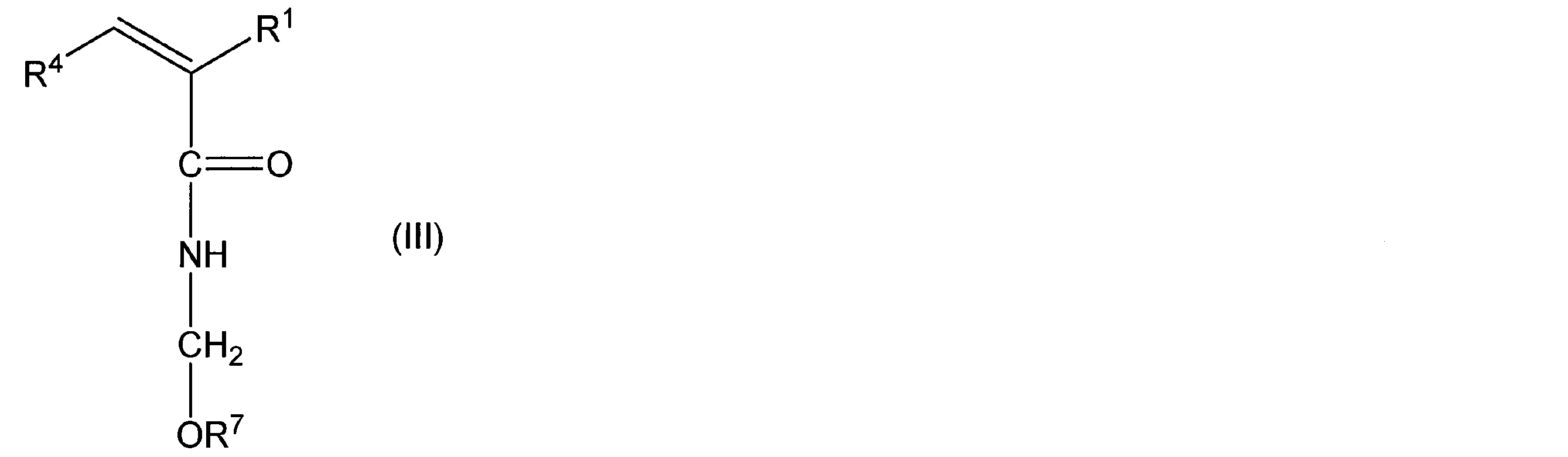
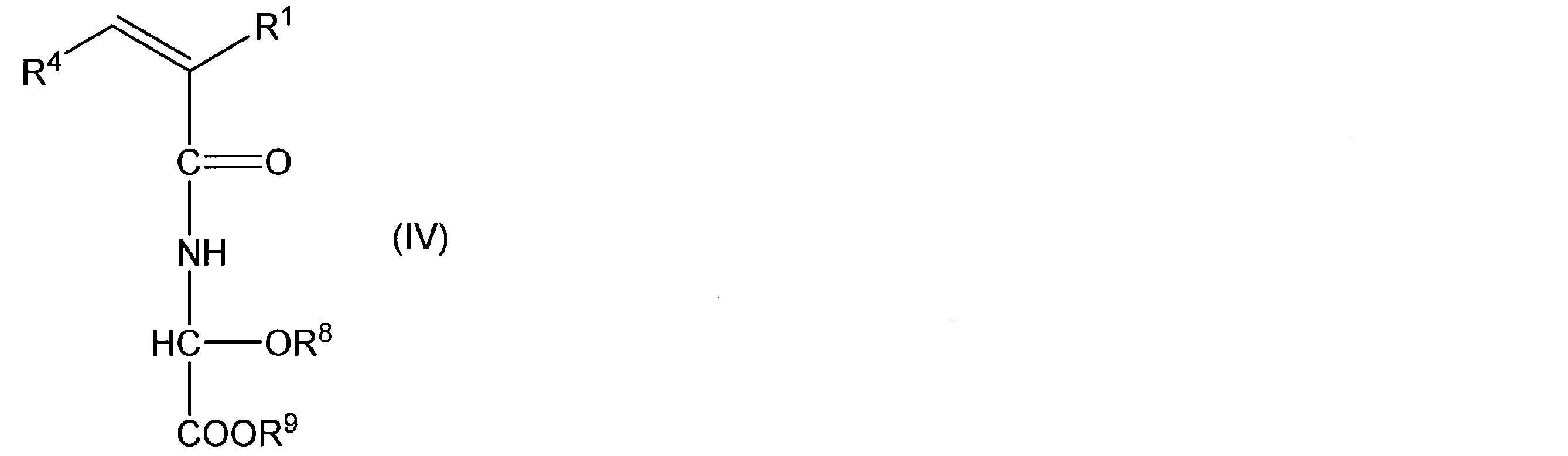
本発明は、耐熱性、耐水性、耐温水性、耐沸騰水性、及び粘度安定性に優れるとともに、耐着色性に優れる水性エマルジョン組成物を提供することができる。
以下、本発明を詳細に説明する。
本発明の水性エマルジョン組成物は、水性エマルジョン(D)と、環状酸無水物(E)とを含有し、前記水性エマルジョン(D)が、エチレン性不飽和単量体(B)を有する重合体(X)、ポリビニルアルコール系樹脂(A)及び水を含有し、前記ポリビニルアルコール系樹脂(A)又は前記重合体(X)の少なくともどちらか一方が、下記式(I)、(II)、(III)又は(IV)で表される単量体(C)由来の構造単位を主鎖中に有する。なお、この明細書において、(メタ)アクリルとは、アクリルとメタクリルの総称であり、これと類似の表現についても同様である。
本発明の水性エマルジョン組成物は、水性エマルジョン(D)と、環状酸無水物(E)とを含有し、前記水性エマルジョン(D)が、エチレン性不飽和単量体(B)を有する重合体(X)、ポリビニルアルコール系樹脂(A)及び水を含有し、前記ポリビニルアルコール系樹脂(A)又は前記重合体(X)の少なくともどちらか一方が、下記式(I)、(II)、(III)又は(IV)で表される単量体(C)由来の構造単位を主鎖中に有する。なお、この明細書において、(メタ)アクリルとは、アクリルとメタクリルの総称であり、これと類似の表現についても同様である。


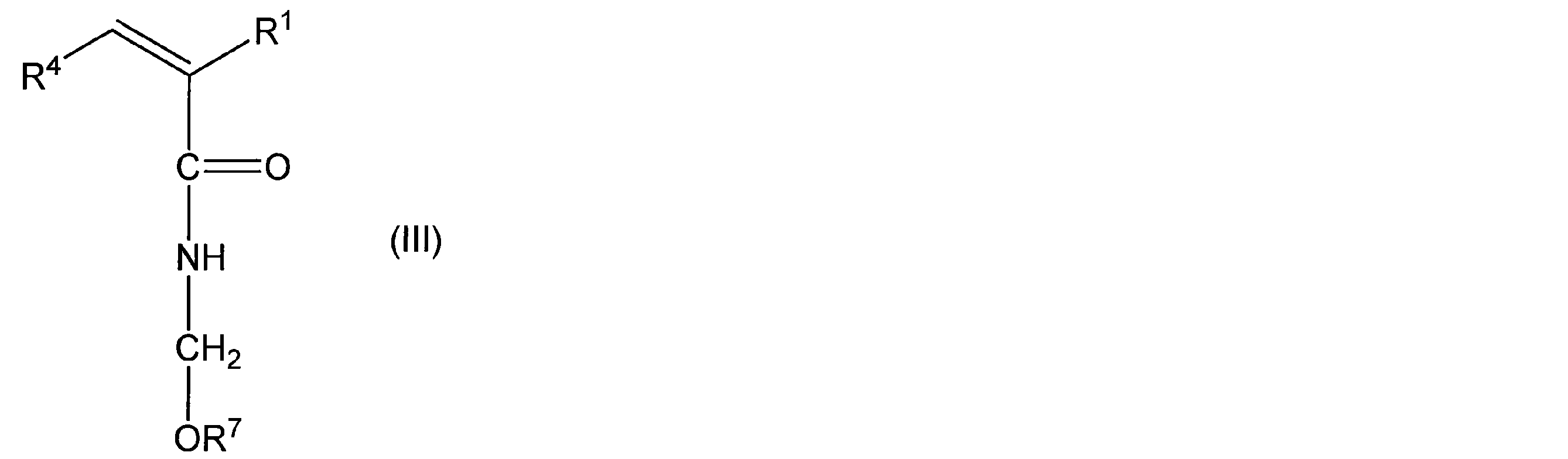

本発明の水性エマルジョン組成物は、例えば、ポリビニルアルコール系樹脂(A)の存在下、エチレン性不飽和単量体(B)と、上記式(I)、(II)、(III)又は(IV)で表される単量体(C)とを重合(例えば、乳化重合)して水性エマルジョン(D)を得る工程〔1〕と、前記水性エマルジョン(D)と環状酸無水物(E)とを混合する工程〔2〕を有する、製造方法によって製造できる。
工程〔1〕として、PVA系樹脂(A)を用い、エチレン性不飽和単量体(B)と単量体(C)とを共重合することで、重合体(X)、PVA系樹脂(A)及び水を含有する、水性エマルジョン(D)が得られる。本発明の水性エマルジョン(D)は、例えば、PVA系樹脂(A)の存在下、エチレン性不飽和単量体(B)と単量体(C)とを一般的に行われている乳化重合により製造することができる。単量体(C)の使用量は、エチレン性不飽和単量体(B)に対して0.01~10質量%であることが好ましく、0.05~5質量%であることがより好ましい。重合時の温度は、使用する重合触媒によって変わるが、通常20~100℃であり、好ましくは40~90℃であり、さらに好ましくは50~90℃である。反応時間は、特に制限されることはなく、各成分の配合量及び反応温度等に応じて適宜調整すればよい。
さらに、本発明の水性エマルジョン組成物は、例えば、上記式(I)、(II)、(III)又は(IV)で表される単量体(C)由来の構造単位を主鎖中に有するPVA系樹脂(A)の存在下、エチレン性不飽和単量体(B)を重合(例えば、乳化重合)して水性エマルジョン(D)を得る工程〔1’〕と、前記水性エマルジョン(D)と環状酸無水物(E)とを混合する工程〔2’〕を有する、製造方法によって製造できる。工程〔1’〕及び工程〔2’〕における各成分の使用量、重合条件等の条件は、工程〔1〕及び工程〔2〕と同様である。
式(I)~(IV)の各式の記号について、以下に説明する。本発明の異なる2以上の式(例えば、式(I)と式(IV))で使用される同一の記号(例えば、R1)について、該記号の内容は、規定された範囲を超えない限り、各式において同一であってもよく、異なっていてもよい。
R1における炭素数1~8の直鎖状のアルキル基としては、例えば、メチル基、エチル基、n-プロピル基、n-ブチル基、n-ペンチル基、n-ヘキシル基、n-ヘプチル基、n-オクチル基が挙げられ、メチル基が好ましい。R1及びR4におけるMで表されるアルカリ金属としては、例えば、リチウム、ナトリウム、カリウム、ルビジウム、セシウム等が挙げられ、リチウム、ナトリウム又はカリウムが好ましく、ナトリウム又はカリウムがより好ましい。
R2及びR3における炭素数1~8のアルキル基としては、例えば、メチル基、エチル基、n-プロピル基、イソプロピル基、n-ブチル基、イソブチル基、sec-ブチル基、tert-ブチル基、n-ペンチル基、イソペンチル基、sec-ペンチル基、ネオペンチル基、tert-ペンチル基、1-エチルプロピル基、n-ヘキシル基、イソヘキシル基、1,1-ジメチルブチル基、2,2-ジメチルブチル基、3,3-ジメチルブチル基、2-エチルブチル基、n-ヘプチル基、n-オクチル基等が挙げられ、これらのうち、炭素数1~6の基が好ましい。R2及びR3におけるアルキルカルボニル基としては、例えば、アセチル基、プロパノイル基、ブタノイル基、ペンタノイル基、ヘキサノイル基、ヘプタノイル基、オクタノイル基等が挙げられ、アセチル基、プロパノイル基、ブタノイル基、ペンタノイル基又はヘキサノイル基が好ましい。
Xは-(CH2)n-、-CO-NH-(CH2)n-、-NH-CO-(CH2)n-、-CO-(CH2)n-、-CO-O-(CH2)n-、-O-CO-(CH2)n-、-NR5-CO-(CH2)n-、又は-CO-NR5-(CH2)n-であり、-(CH2)n-が好ましい。
Xのnは0、1、2、3、4、5又は6が好ましい。
R5における炭素数1~4のアルキル基としては、例えば、メチル基、エチル基、n-プロピル基、イソプロピル基、n-ブチル基、イソブチル基、sec-ブチル基、tert-ブチル基が挙げられる。
R6のmは1、2が好ましく、1がより好ましい。
R7、R8及びR9における炭素数1~6の直鎖状のアルキル基としては、R1で例示した炭素数1~8の直鎖状のアルキル基のうち、炭素数1~6のものが挙げられる。
前記式(I)又は(II)で表される単量体(C)としては、特に限定されないが、例えば、以下のものが挙げられる;
(メタ)アクロレインジメチルアセタール、(メタ)アクロレインジエチルアセタール、2-ビニル-1,3-ジオキソラン、2-イソプロペニル-1,3-ジオキソラン等の(メタ)アクロレインのアセタール化物、3-メチル-3-ブテナールジメチルアセタール、3-メチル-3-ブテナールジエチルアセタール、2-(2-メチル-2-プロペニル)-1,3-ジオキソラン等の3-メチル-3-ブテナールのアセタール化物、3-ブテナールジメチルアセタール、3-ブテナールジエチルアセタール、2-(2-プロペニル)-1,3-ジオキソラン等の3-ブテナールのアセタール化物、4-ペンテナールジメチルアセタール、4-ペンテナールジエチルアセタール、2-(3-ブテニル)-1,3-ジオキソラン等の4-ペンテナールのアセタール化物、5-ヘキセナールジメチルアセタール、5-ヘキセナールジエチルアセタール、2-(5-ペンテニル)-1,3-ジオキソラン等の5-ヘキセナールのアセタール化物、6-ヘプテナールジメチルアセタール、6-ヘプテナールジエチルアセタール、2-(6-ヘキセニル)-1,3-ジオキソラン等の6-ヘプテナールのアセタール化物、7-オクテナールジメチルアセタール、7-オクテナールジエチルアセタール、2-(1-ヘプテニル)-1,3-ジオキソラン、2-(6-ヘプテニル)-1,3-ジオキソラン等の7-オクテナールのアセタール化物等のエチレン性不飽和二重結合を有する脂肪族アルデヒドのアセタール化物;
(メタ)アクロレインジメチルアセタール、(メタ)アクロレインジエチルアセタール、2-ビニル-1,3-ジオキソラン、2-イソプロペニル-1,3-ジオキソラン等の(メタ)アクロレインのアセタール化物、3-メチル-3-ブテナールジメチルアセタール、3-メチル-3-ブテナールジエチルアセタール、2-(2-メチル-2-プロペニル)-1,3-ジオキソラン等の3-メチル-3-ブテナールのアセタール化物、3-ブテナールジメチルアセタール、3-ブテナールジエチルアセタール、2-(2-プロペニル)-1,3-ジオキソラン等の3-ブテナールのアセタール化物、4-ペンテナールジメチルアセタール、4-ペンテナールジエチルアセタール、2-(3-ブテニル)-1,3-ジオキソラン等の4-ペンテナールのアセタール化物、5-ヘキセナールジメチルアセタール、5-ヘキセナールジエチルアセタール、2-(5-ペンテニル)-1,3-ジオキソラン等の5-ヘキセナールのアセタール化物、6-ヘプテナールジメチルアセタール、6-ヘプテナールジエチルアセタール、2-(6-ヘキセニル)-1,3-ジオキソラン等の6-ヘプテナールのアセタール化物、7-オクテナールジメチルアセタール、7-オクテナールジエチルアセタール、2-(1-ヘプテニル)-1,3-ジオキソラン、2-(6-ヘプテニル)-1,3-ジオキソラン等の7-オクテナールのアセタール化物等のエチレン性不飽和二重結合を有する脂肪族アルデヒドのアセタール化物;
N-(2,2-ジメトキシエチル)(メタ)アクリルアミド、N-(2,2-ジエトキシエチル)(メタ)アクリルアミド、N-(2,2-ジイソプロポキシエチル)(メタ)アクリルアミド、N-(2,2-ジブトキシエチル)(メタ)アクリルアミド、N-(2,2-ジ-t-ブトキシエチル)(メタ)アクリルアミド、N-(3,3-ジメトキシプロピル)(メタ)アクリルアミド、N-(3,3-ジエトキシプロピル)(メタ)アクリルアミド、N-(3,3-ジイソプロポキシプロピル)(メタ)アクリルアミド、N-(3,3-ジブトキシプロピル)(メタ)アクリルアミド、N-(3,3-ジ-t-ブトキシプロピル)(メタ)アクリルアミド、N-(4,4-ジメトキシブチル)(メタ)アクリルアミド、N-(4,4-ジエトキシブチル)(メタ)アクリルアミド、N-(4,4-ジイソプロポキシブチル)(メタ)アクリルアミド、N-(4,4-ジブトキシブチル)(メタ)アクリルアミド、N-(4,4-ジ-t-ブトキシブチル)(メタ)アクリルアミド、N-メチル-N-(2,2-ジメトキシエチル)(メタ)アクリルアミド、N-メチル-N-(2,2-ジエトキシエチル)(メタ)アクリルアミド、N-メチル-N-(2,2-ジイソプロポキシエチル)(メタ)アクリルアミド、N-メチル-N-(2,2-ジブトキシエチル)(メタ)アクリルアミド、N-メチル-N-(2,2-ジ-t-ブトキシエチル)(メタ)アクリルアミド等のジアルコキシアルキル(メタ)アクリルアミド系化合物;4-{(2,2-ジメトキシエチル)アミノ}-4-オキソ-2-ブテン酸、4-{(2,2-ジエトキシエチル)アミノ}-4-オキソ-2-ブテン酸、4-{(2,2-ジイソプロポキシエチル)アミノ}-4-オキソ-2-ブテン酸、4-{(2、2-ジブトキシエチル)アミノ}-4-オキソ-2-ブテン酸等の1分子中に2個のアルコキシ基を有するブテン酸類;5,5-ジメトキシ-3-オキソ-1-ペンテン、5,5-ジエトキシ-3-オキソ-1-ペンテン、5,5-ジイソプロポキシ-3-オキソ-1-ペンテン、5,5-ジブトキシ-3-オキソ-1-ペンテン等の1分子中に2個のアルコキシ基を有するペンテン類;4-{(2,2-ジメトキシエチル)アミノ}-4-オキソ-3-メチレン-ブタン酸、4-{(2,2-ジエトキシエチル)アミノ}-4-オキソ-3-メチレン-ブタン酸、4-{(2,2-ジイソプロポキシエチル)アミノ}-4-オキソ-3-メチレン-ブタン酸、4-{(2,2-ジブトキシエチル)アミノ}-4-オキソ-3-メチレン-ブタン酸等の1分子中に2個のアルコキシ基を有するブタン酸類;3-[N-(2,2-ジメトキシエチル)カルバモイル]プロペン酸、3-[N-(2,2-ジエトキシエチル)カルバモイル]プロペン酸、3-[N-(2,2-ジイソプロポキシエチル)カルバモイル]プロペン酸、3-[(N-2,2-ジブトキシエチル)カルバモイル]プロペン酸、3-[N-(2,2-ジ-t-ブトキシエチル)カルバモイル]プロペン酸等の1分子中に2個のアルコキシ基を有するプロペン酸系化合物;3-[N-(2,2-ジメトキシエチル)カルバモイル]プロペン酸メチル、3-[N-(2,2-ジエトキシエチル)カルバモイル]プロペン酸メチル、3-[N-(2,2-ジイソプロポキシエチル)カルバモイル]プロペン酸メチル、3-[N-(2,2-ジブトキシエチル)カルバモイル]プロペン酸メチル、3-[N-(2,2-ジ-t-ブトキシエチル)カルバモイル]プロペン酸メチル等の1分子中に2個のアルコキシ基を有するプロペン酸エステル系化合物;2,2-ジメトキシエチル(メタ)アクリレート、2,2-ジエトキシエチル(メタ)アクリレート、2,2-ジイソプロポキシエチルア(メタ)クリレート、2,2-ジブトキシエチル(メタ)アクリレート等のジアルコキシアルキル(メタ)アクリレートのアセタール化物等;又はアルキル(メタ)アクリルアミド系化合物、ブテン酸類のアセタール化物、ペンテン類のアセタール化物或いはブタン酸類のアセタール化物等の不飽和二重結合を有する脂肪族アルデヒドのアセタール化物。前記した各化合物に含まれるアルコキシ基の炭素数としては、1~6が好ましく、1~4がより好ましい。前記アルキル(メタ)アクリルアミド系化合物又はアルキル(メタ)アクリレートのアルキル基の炭素数としては、1~6が好ましく、1~4がより好ましく、1~2がさらに好ましい。
前記式(III)又は(IV)で表される単量体(C)としては、特に限定されないが、例えば、以下のものが挙げられる;
N-メチロール(メタ)アクリルアミド、N-メチロールマレイミド、N-メチロールマレインアミド酸、N-メチロールマレインアミド酸エステル(例えば、N-メチロールマレインアミド酸メチル)等のN-置換不飽和アミド類、メトキシメチル(メタ)アクリルアミド、エトキシ(メタ)メチルアクリルアミド、ブトキシメチル(メタ)アクリルアミド等のアルコキシメチル基含有(メタ)アクリルアミド;(メタ)アクリルアミドグリオキシル酸、アクリルアミドグリオキシル酸メチル、アクリルアミドグリオキシル酸ブチル、等のアクリルアミド/グリオキシル酸縮合物及びそのエーテルとエステル類。
N-メチロール(メタ)アクリルアミド、N-メチロールマレイミド、N-メチロールマレインアミド酸、N-メチロールマレインアミド酸エステル(例えば、N-メチロールマレインアミド酸メチル)等のN-置換不飽和アミド類、メトキシメチル(メタ)アクリルアミド、エトキシ(メタ)メチルアクリルアミド、ブトキシメチル(メタ)アクリルアミド等のアルコキシメチル基含有(メタ)アクリルアミド;(メタ)アクリルアミドグリオキシル酸、アクリルアミドグリオキシル酸メチル、アクリルアミドグリオキシル酸ブチル、等のアクリルアミド/グリオキシル酸縮合物及びそのエーテルとエステル類。
本発明の水性エマルジョンでは、前記した不飽和単量体(C)を1種単独で使用してもよく、2種以上を併用してもよい。
乳化重合において、上記式(I)、(II)、(III)又は(IV)で表される単量体(C)単位の使用量は、エチレン性不飽和単量体(B)単位の全量に対して0.01~10質量%であることが好ましく、0.05~5質量%であることがより好ましい。前記式(I)、(II)、(III)又は(IV)で表される単量体(C)単位の使用量が0.01質量%以下の場合、耐熱性、耐水性、耐温水性及び耐沸騰水性が不十分となり、10質量%以上の場合、重合が困難となる。
本発明において、単量体(C)との共重合に用いるエチレン性不飽和単量体(B)としては、本発明の効果を損なわない限り特に限定されないが、例えば、ビニルエステル系単量体、(メタ)アクリル酸エステル系単量体、α,β-不飽和モノ又はジカルボン酸系単量体、ジエン系単量体、オレフィン系単量体、(メタ)アクリルアミド系単量体、ニトリル系単量体、芳香族ビニル系単量体、複素環式ビニル系単量体、ビニルエーテル系単量体、アリル系単量体、多官能性アクリレート系単量体等が挙げられる。これらは1種単独又は2種以上を併用してもよい。これらのうち、ビニルエステル系単量体及びジエン系単量体からなる群から選ばれる少なくとも1種の不飽和単量体が好ましく、ビニルエステル系単量体がより好ましい。
ビニルエステル系単量体としては、特に限定されないが、例えば、蟻酸ビニル、酢酸ビニル、プロピオン酸ビニル、酪酸ビニル、イソ酪酸ビニル、ピバリン酸ビニル、バーサチック酸ビニル、桂皮酸ビニル、クロトン酸ビニル、デカン酸ビニル、ヘキサン酸ビニル、オクタン酸ビニル、イソノナン酸ビニル、トリメチル酢酸ビニル、4-tert-ブチルベンゼン酸ビニル、2-エチルヘキサン酸ビニル、カプロン酸ビニル、カプリル酸ビニル、ラウリン酸ビニル、パルミチン酸ビニル、ステアリン酸ビニル、オレイン酸ビニル、安息香酸ビニル等が挙げられ、工業的観点から、酢酸ビニルが特に好ましい。(メタ)アクリル酸エステル系単量体としては、特に限定されないが、例えば、(メタ)アクリル酸メチル、(メタ)アクリル酸エチル、(メタ)アクリル酸n-プロピル、(メタ)アクリル酸i-プロピル、(メタ)アクリル酸n-ブチル、(メタ)アクリル酸i-ブチル、(メタ)アクリル酸t-ブチル、(メタ)アクリル酸2-エチルヘキシル、(メタ)アクリル酸ドデシル、(メタ)アクリル酸オクタデシル、(メタ)アクリル酸2-ヒドロキシエチル、(メタ)アクリル酸2-メトキシエチル、(メタ)アクリル酸2-(ジメチルアミノ)エチル等が挙げられる。α,β-不飽和モノ又はジカルボン酸系単量体としては、特に限定されないが、例えば、(メタ)アクリル酸、クロトン酸、イソクロトン酸、シトラコン酸、イタコン酸、マレイン酸、無水マレイン酸、フマル酸等が挙げられる。ジエン系単量体としては、特に限定されないが、例えば、ブタジエン、イソプレン、クロロプレン等の共役ジエン類等が挙げられる。
オレフィン系単量体としては、特に限定されないが、例えば、エチレン、プロピレン、1-ブテン、イソブテン等のモノオレフィン化合物;塩化ビニル、臭化ビニル、塩化ビニリデン、フッ化ビニル、フッ化ビニリデン等のハロゲン化オレフィン化合物等が挙げられる。(メタ)アクリルアミド系単量体としては、特に限定されないが、例えば、(メタ)アクリルアミド、N-メチル(メタ)アクリルアミド、N-エチル(メタ)アクリルアミド、N,N-ジメチル(メタ)アクリルアミド、ジアセトン(メタ)アクリルアミド、N,N-ジメチルアミノプロピル(メタ)アクリルアミド等が挙げられる。ニトリル系単量体としては、特に限定されないが、例えば、(メタ)アクリルニトリル等が挙げられる。芳香族ビニル系単量体としては、特に限定されないが、例えば、スチレン、α-メチルスチレン、p-メチルスチレン、クロロスチレン、α-ブトキシスチレン、ビニルナフタレン、ビニルビフェニル、1-エチル-2-ビニルベンゼン等が挙げられる。複素環式ビニル系単量体としては、特に限定されないが、例えば、ビニルピロリドン等が挙げられる。ビニルエーテル系単量体としては、特に限定されないが、例えば、メチルビニルエーテル、n-プロピルビニルエーテル、i-プロピルビニルエーテル、n-ブチルビニルエーテル、i-ブチルビニルエーテル、t-ブチルビニルエーテル、ドデシルビニルエーテル、ステアリルビニルエーテル等が挙げられる。アリル系単量体としては、特に限定されないが、例えば、酢酸アリル、塩化アリル、スルホン酸アリル、フタル酸ジアリル、シアヌル酸トリアリル、イソシアヌル酸トリアリル等が挙げられる。多官能性アクリレート系単量体としては、特に限定されないが、例えば、ペンタエリスリトールトリアクリレート、ペンタエリスリトールテトラアクリレート、ペンタエリスリトールヘキサアクリレート、トリメチロールプロパントリアクリレート等が挙げられる。さらに、エチレン性不飽和単量体としては、ビニルホスホン酸、ビニルスルホン酸及びそれらの塩等のビニル化合物等も使用できる。これらは1種単独又は2種以上を併用してもよい。
本発明で保護コロイドとして使用するPVA系樹脂(A)のけん化度は、通常70~99.9モル%であり、好ましくは75~99.5モル%である。けん化度が70モル%未満では、保護コロイドとしての効果が乏しく安定な水性エマルジョンが得られない。一方、けん化度が99.9モル%を超えると、得られる水性エマルジョンの粘度の温度依存性が大きくなり、本発明の目的を達成できない。また、けん化度が上記範囲にあるPVA系樹脂であれば、けん化度の異なるものを組み合わせて使用してもよい。前記けん化度は、JIS K 6726(1994年)に記載の方法により求めた値である。
けん化度が上記範囲にあるPVA系樹脂(A)であれば、無変性PVAであってもよく、変性PVAであってもよい。変性PVAとしては、例えば、上記式(I)、(II)、(III)又は(IV)で表される単量体(C)由来の構造単位を主鎖中に有する変性PVA;スルホン酸基変性PVA、カルボン酸基変性PVA等のアニオン変性PVA;第4級アミン基変性PVA等のカチオン変性PVA;アミド変性PVA;アセトアセチル基変性PVA;ダイアセトンアクリルアミド変性PVA;エチレン変性PVA等が挙げられる。これらは1種単独で使用してもよく、2種以上を併用してもよい。これらのうち、無変性PVA、上記式(I)、(II)、(III)又は(IV)で表される単量体(C)由来の構造単位を主鎖中に有する変性PVA、エチレン変性PVA及びカルボン酸基変性PVA等のアニオン変性PVAからなる群から選ばれる少なくとも1種のPVAが好ましい。変性基の含有量は特に限定されないが、0.5~10モル%であってもよい。
前記PVA系樹脂(A)の粘度平均重合度(以下単に重合度と言うことがある)は、一般的に乳化重合に使用される範囲であればよく、300~4000が好ましい。重合度が300以上であることにより、乳化重合時の安定性が十分得られ、重合度が4000以下であることにより、乳化重合時の溶液粘度が高くなりすぎず、攪拌や除熱が容易に行えるため好ましい。前記重合度は、JIS K 6726(1994年)に記載の方法により求めた値である。具体的には、けん化度が99.5モル%未満の場合には、けん化度99.5モル%以上になるまでけん化したPVAについて、水中、30℃で測定した極限粘度[η](リットル/g)を用いて式により粘度平均重合度(P)を求めた。
P=([η]×104/8.29)(1/0.62)
P=([η]×104/8.29)(1/0.62)
前記PVA系樹脂(A)の使用量は、通常、エチレン性不飽和単量体(B)(例えば、酢酸ビニル)の全量に対して2~20質量%であり、好ましくは3~10質量%である。2質量%未満では、乳化重合時の安定性が十分に得られないことがあり、20質量%を超えると得られる水性エマルジョンを用いる皮膜の耐水性、耐温水性及び耐沸騰水性が低下したり、粘度の温度依存性が大きくなることがある。
また、本発明の水性エマルジョンは、アルカリ金属化合物(F)を含んでいてもよい。アルカリ金属化合物(F)としては、アルカリ金属(ナトリウム、カリウム、ルビジウム、セシウム)を含む限り特に限定されず、アルカリ金属イオン(f-1)そのものであってもよく、アルカリ金属を含む化合物(f-2)であってもよい。
アルカリ金属化合物(F)の含有量(アルカリ金属換算)は、用いられるアルカリ金属化合物の種類に応じて適宜選択することができるが、アルカリ金属化合物(F)の含有量(アルカリ金属換算)は、エマルジョン(固形換算)の全重量に対して、100~15000ppmが好ましく、120~12000ppmがより好ましく、150~8000ppmが最も好ましい。アルカリ金属化合物(F)の含有量が100ppmより低い場合、水性エマルジョンの乳化重合の安定性が低下することがあり、15000ppm超えると、水性エマルジョンからなる皮膜が着色するおそれがあるため好ましくない。なお、アルカリ金属化合物(F)の含有量は、ICP発光分析装置により測定した値であってもよい。
アルカリ金属を含む化合物(f-2)としては、具体的には、弱塩基性アルカリ金属化合物;強塩基性アルカリ金属化合物(例えば、アルカリ金属の水酸化物、アルカリ金属のアルコキシド)等が挙げられ、弱塩基性アルカリ金属化合物が好ましい。これらのアルカリ金属化合物は、1種単独で使用してもよく、2種以上を併用してもよい。
弱塩基性アルカリ金属化合物としては、例えば、アルカリ金属炭酸塩(例えば、炭酸ナトリウム、炭酸カリウム、炭酸ルビジウム、炭酸セシウム)、アルカリ金属重炭酸塩(例えば、炭酸水素ナトリウム、炭酸水素カリウム等)、アルカリ金属リン酸塩(リン酸ナトリウム、リン酸カリウム等)、アルカリ金属カルボン酸塩(酢酸ナトリウム、酢酸カリウム、酢酸セシウム等)、アルカリ金属硫酸塩(硫酸ナトリウム、硫酸カリウム、硫酸セシウム等)、アルカリ金属ハロゲン化物塩(塩化セシウム、ヨウ化セシウム、塩化カリウム、塩化ナトリウム等)、アルカリ金属硝酸塩(硝酸ナトリウム、硝酸カリウム、硝酸セシウム等)が挙げられる。これらのうち、エマルジョン内が塩基性を帯びる観点から、解離時に弱酸強塩基の塩として振舞える、アルカリ金属カルボン酸塩、アルカリ金属炭酸塩、アルカリ金属重炭酸塩が好ましく、アルカリ金属のカルボン酸塩がより好ましい。強塩基性アルカリ金属化合物としては、例えば、アルカリ金属の水酸化物(水酸化ナトリウム、水酸化カリウム)、アルカリ金属のアルコキシド(ナトリウムメトキシド、ナトリウムエトキシド、ナトリウムプロポキシド、カリウムメトキシド、カリウムエトキシド、カリウムプロポキシド等)等が挙げられる。
これらのアルカリ金属化合物(F)を用いることによって、本発明の水性エマルジョンの重合系のpH変化に対する緩衝作用を発現し、エマルジョン重合を安定に進めることができる。
また、乳化重合に際しては、本発明の効果を損なわない範囲で、界面活性剤、重合開始剤、還元剤、緩衝剤、重合度調節剤等を適宜使用してもよい。
界面活性剤としては、非イオン性界面活性剤、アニオン性界面活性剤及びカチオン性界面活性剤のいずれを使用してもよい。非イオン性界面活性剤としては、特に限定されないが、例えば、ポリオキシエチレンアルキルエーテル、ポリオキシエチレンアルキルフェニルエーテル、ポリオキシエチレン脂肪酸エステル、ポリオキシアルキレンアルキルエーテル、ポリオキシエチレン誘導体、ソルビタン脂肪酸エステル、ポリオキシエチレンソルビタン脂肪酸エステル、ポリオキシエチレンソルビトール脂肪酸エステル、グリセリン脂肪酸エステル等が挙げられる。アニオン性界面活性剤としては、特に限定されないが、例えば、アルキル硫酸塩、アルキルアリール硫酸塩、アルキルスルフォネート、ヒドロキシアルカノールのサルフェート、スルフォコハク酸エステル、アルキル又はアルキルアリールポリエトキシアルカノールのサルフェート及びホスフェート等が挙げられる。カチオン性界面活性剤としては、特に限定されないが、例えば、アルキルアミン塩、第四級アンモニウム塩、ポリオキシエチレンアルキルアミン等が挙げられる。界面活性剤の使用量は、エチレン性不飽和単量体(例えば、酢酸ビニル)の全量に対して2質量%以下であることが好ましい。界面活性剤の使用量が2質量%を超えると、耐水性、耐温水性及び耐沸騰水性が低下することがあるため好ましくない。
重合開始剤としては、乳化重合で通常用いられるラジカルを形成する触媒を用いることができる。具体例としては、過酸化水素、過硫酸カリウム、過硫酸アンモニウム、tert-ブチルヒドロパーオキサイド、アゾビス-(2-アミジノプロパン)ハイドクロライド、ラウロイルパーオキサイド、2,2’-アゾビスイソブチロニトリル、ケトンハイドロパーオキサイド等が挙げられる。これらの重合開始剤は重合開始剤単独で使用してもよく、重合開始剤と還元剤との適当な組合せによるレドックス触媒としても用いることができる。
還元剤としては、アミン、第一鉄塩(例えば、硫酸第一鉄、硫酸第一鉄アンモニウム、ピロリン酸第一鉄等)、チオ硫酸ナトリウム、亜硫酸ナトリウム、次亜硫酸ナトリウム、ホルムアルデヒドナトリウムスルホキシレート、酒石酸及びその塩類、アスコルビン酸及びその塩類、エリソルビン酸及びその塩類等が挙げられる。触媒及び必要に応じて添加する還元剤の使用量は、通常、エチレン性不飽和単量体(例えば、酢酸ビニル)の全量に対して0.001~10質量%である。触媒及び還元剤の添加方法は重合の初めに全量添加してもよいし、一部を添加し残りを重合の進行に伴って適宜添加してもよい。
緩衝剤としては、酢酸、塩酸、硫酸等の酸;アンモニア、アミン荷性ソーダ、荷性カリ、水酸化カルシウム等の塩基;又はアルカリ炭酸塩、リン酸塩、酢酸塩等が挙げられる。重合度調節剤としては、メルカプタン類、アルコール類等が挙げられる。
水性エマルジョン(D)中に含まれる固形分濃度は、用途に応じて適宜設定すればよいが、好ましくは30~60質量%である。
上記した方法で得られた水性エマルジョン(D)は、エチレン性不飽和単量体(B)を有する重合体(X)、PVA系樹脂(A)及び水を含有する。PVA系樹脂(A)又は重合体(X)の少なくともどちらか一方が、上記式(I)、(II)、(III)又は(IV)で表される単量体(C)由来の構造単位を主鎖中に有する。PVA系樹脂(A)又は重合体(X)の単量体(C)由来の構造単位の含有量は、PVA系樹脂(A)のビニルエステル単位、ビニルアルコール単位及び単量体(C)由来の構造単位の全量、又は単量体(B)由来の構造単位の全量に対して、0.005~10モル%であることが好ましく、0.01~5モル%であることがより好ましい。
また、「式(I)、(II)、(III)又は(IV)で表される単量体(C)由来の構造単位を主鎖中に有する」とは、下記式(V)、(VI)、(VII)又は(VIII)で表される構造単位を主鎖中に有することを意味する。式(V)~(VIII)の各記号は、式(I)~(IV)で説明したとおりである。式(V)~(VIII)において、異なる2以上の式(例えば、式(V)と式(VIII))で使用される同一の記号(例えば、R1)について、該記号の内容は、規定された範囲を超えない限り、各式において同一であってもよく、異なっていてもよい。
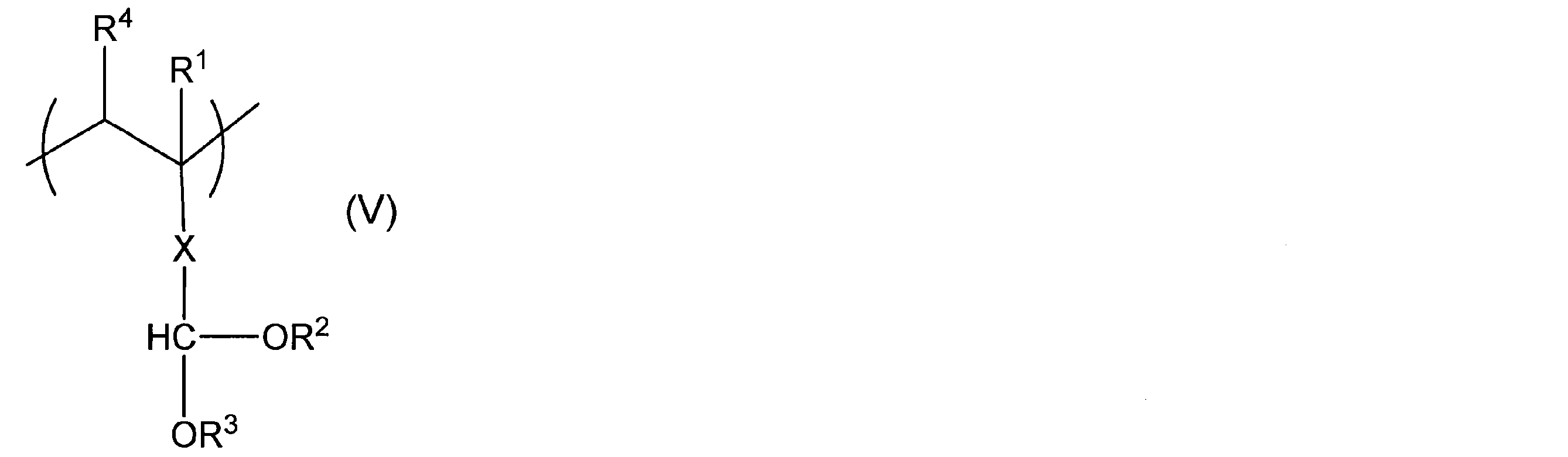
(式中、R1、R2、R3、R4及びXは、上記と同一意味を有する。)
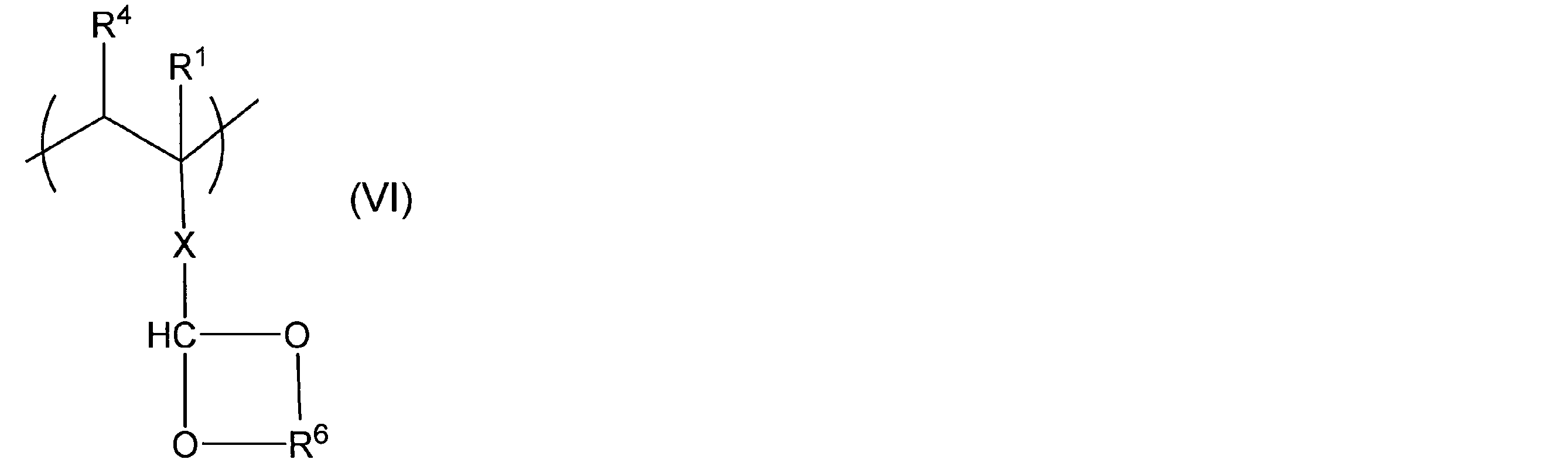
(式中、R1、R4、R6及びXは、上記と同一意味を有する。)
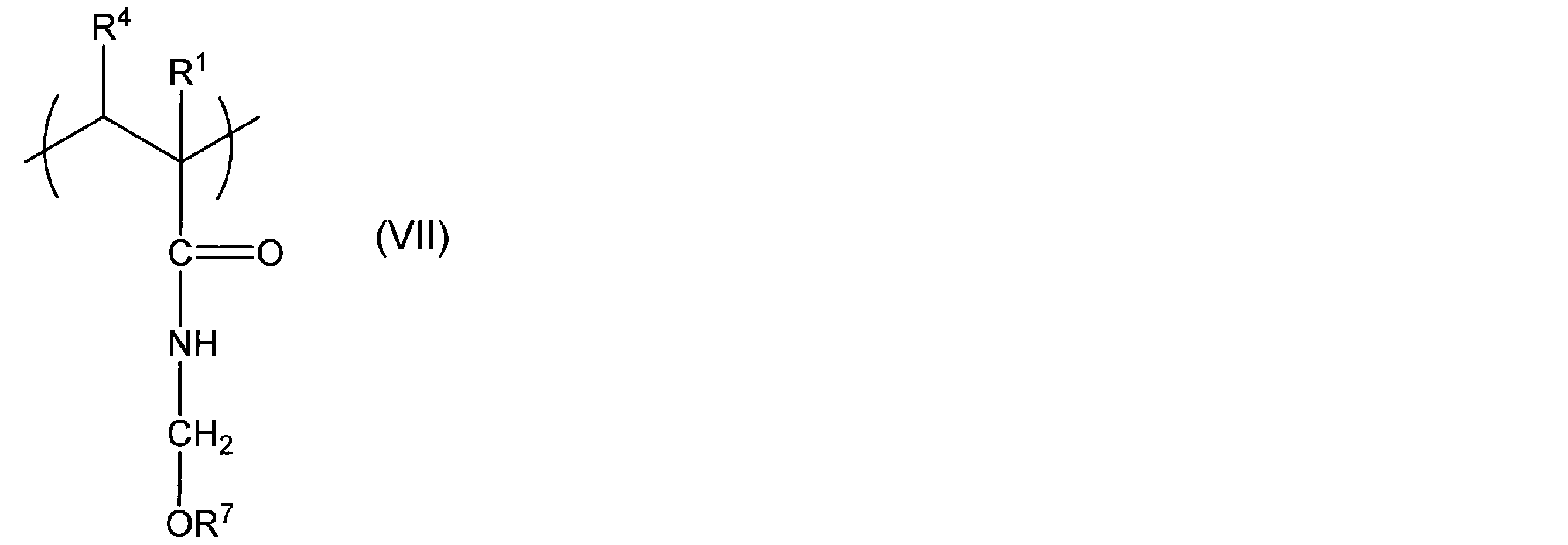
(式中、R1、R4及びR7は、上記と同一意味を有する。)
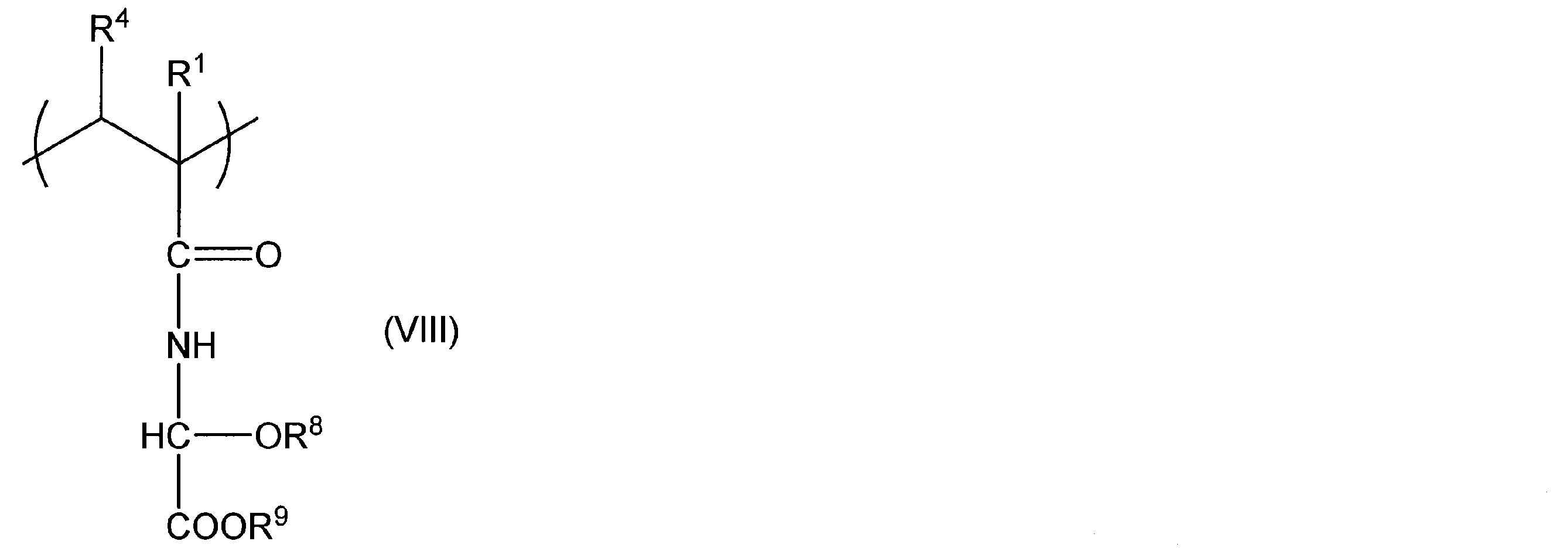
(式中、R1、R4、R8及びR9は、上記と同一意味を有する。)
PVA系樹脂(A)の存在下、エチレン性不飽和単量体(B)と単量体(C)とを共重合する工程〔1〕によって製造された、重合体(X)、PVA系樹脂(A)及び水を含有する水性エマルジョン(D)を、環状酸無水物(E)と混合する工程〔2〕を有する、製造方法によって、本発明の水性エマルジョン組成物が得られる。さらに、別の製造方法として、単量体(C)由来の構造単位を主鎖中に有するポリビニルアルコール系樹脂(A)の存在下、エチレン性不飽和単量体(B)を乳化重合して、重合体(X)、ビニルアルコール系樹脂(A)及び水を含有する水性エマルジョン(D)を得る工程〔1’〕と、前記水性エマルジョン(D)と環状酸無水物(E)とを混合する工程〔2’〕を有する製造方法によっても、本発明の水性エマルジョン組成物が得られる。工程〔2〕又は〔2’〕の混合の方法は、特に限定されず、例えば、室温で水性エマルジョン(D)に環状酸無水物(E)を添加する方法が挙げられる。
本発明における環状酸無水物(E)の作用機構は明らかではないが、環状酸無水物(E)それ自身が架橋ユニットとして働くとともに開環後酸触媒として作用すると推定される。その結果、より温和な条件下で高い耐熱性、耐水性、耐温水性、耐沸騰水性と高い粘度安定性、及び組成物を用いて得られる皮膜の着色性が実現可能となる。
本発明に使用する環状酸無水物(E)は、原則的には特に制限されない。例えば、無水コハク酸、無水グルタル酸、無水アジピン酸、無水ピメリン酸、無水スベリン酸、無水アゼライン酸、無水セバシン酸、無水マレイン酸、無水イタコン酸、等の単環型酸無水物;無水フタル酸、無水トリメリット酸、無水ピロメリット酸、メチルエンドメチレンテトラヒドロ無水フタル酸、エンドテトラメチレンテトラヒドロ無水フタル酸、ヘキサヒドロ無水フタル酸、メチルヘキサヒドロ無水フタル酸、無水ヒドロフタル酸、メチルテトラヒドロフタル酸、cis-4-シクロヘキセン-1,2ジカルボン酸無水物、メチルブテニルテトラヒドロ無水フタル酸、等の複環型酸無水物;エチレン/無水フタル酸共重合体、エチレン/無水マレイン酸共重合体、イソブチレン/無水マレイン酸共重合体、スチレン/無水マレイン酸共重合体、メチルビニルエーテル/無水フタル酸共重合体、メチルビニルエーテル/無水マレイン酸共重合体等の高分子環状無水物;それらの部分加水分解物;及び部分エステル化物等、従来知られている各種のものを用いることができる。また、これらの環状酸無水物(E)は、本発明の効果を妨げない限り変性されていてもよく、例えば、アンモニア変性されたもの、イミド変性されたものであってもよい。具体的には、アンモニア変性イソブチレン/無水マレイン酸共重合体、イミド化イソブチレン/無水マレイン酸共重合体等が挙げられる。これらの環状酸無水物(E)は1種単独で使用してもよく、2種以上を併用してもよい。
環状酸無水物(E)の使用量は、特に限定されないが、水性エマルジョン(D)100質量部に対して、0.05~50質量部が好ましく、0.1~40質量部がより好ましく、0.1~20質量部がさらに好ましい。
本発明の水性エマルジョン組成物は、木工用、紙加工用等の接着用途をはじめ、塗料、繊維加工等に使用でき、中でも接着用途が好適である。必要に応じて消泡剤、pH調整剤、溶剤、顔料、染料、防腐剤、増粘剤、架橋剤、可塑剤等を添加して使用してもよい。
また、耐水性を向上させるために、本発明の水性エマルジョン組成物にヒドラジン化合物を含んでいてもよい。ヒドラジン化合物としては、特に制限はなく、ヒドラジン、ヒドラジンヒドラード、ヒドラジンの無機塩類(例えば、塩酸、硫酸、硝酸、亜硫酸、リン酸、チオシアン酸、炭酸等)、ヒドラジンの有機塩類(例えば、ギ酸、シュウ酸等)、ヒドラジンのメチル、エチル、プロピル、ブチル、アリル等の一置換体、1,1-ジメチル,1,1-ジエチル、4-n-ブチル-メタル等の対称二置換体等が挙げられる。さらに、ジヒドラジンとして、シュウ酸ジヒドラジド、マロン酸ジヒドラジド、コハク酸ジヒドラジド、アジピン酸ジヒドラジド、アゼライン酸ジヒドラジド、セバシン酸ジヒドラジド、ドデカン二酸ジヒドラジド、マレイン酸ジヒドラジド、フマル酸ジヒドラジド、ジグリコール酸ジヒドラジド、酒石酸ジヒドラジド、リンゴ酸ジヒドラジド、イソフタル酸ジヒドラジド、テレフタル酸ジヒドラジド、ダイマー酸ジヒドラジド等、従来知られている各種のものを用いることができ、これらのヒドラジン化合物は、1種単独で用いてもよく、2種以上を併用してもよい。これらの中でも、特に、アジピン酸ジヒドラジドが好ましい。また、本発明の水性エマルジョンには、多価イソシアネート化合物、アミン化合物を含めてもよい。
本発明は、本発明の効果を奏する限り、本発明の技術的範囲内において、上記の構成を種々組み合わせた態様を含む。
次に、実施例を挙げて本発明をさらに具体的に説明するが、本発明はこれらの実施例により何ら限定されるものではなく、多くの変形が本発明の技術的思想内で当分野において通常の知識を有する者により可能である。なお、実施例、比較例中の「%」及び「部」は特に断りのない限り、それぞれ「質量%」及び「質量部」を表す。
実施例及び比較例で得られた水性エマルジョン及び水性エマルジョン組成物について、乳化重合安定性、接着性(常態、耐水、耐温水、耐沸騰水)、耐熱性、熱処理時の着色性、粘度安定性を以下に示す方法で評価した。
(1)乳化重合安定性の評価
実施例及び比較例で得られた水性エマルジョン500gを60メッシュの金網にてろ過し、ろ過残分を秤量し以下の通り評価した。
○:ろ過残分が1.0%以下である
△:ろ過残分が1.0%より大である
×:重合不安定となり粗粒化のためろ過できない
実施例及び比較例で得られた水性エマルジョン500gを60メッシュの金網にてろ過し、ろ過残分を秤量し以下の通り評価した。
○:ろ過残分が1.0%以下である
△:ろ過残分が1.0%より大である
×:重合不安定となり粗粒化のためろ過できない
(2)接着性評価(常態、耐水性、耐温水性、耐沸騰水性の評価)
〔接着条件〕
被着材:ツガ/ツガ(マサ目)
塗布量:150g/m2(両面塗布)
圧締条件:20℃、24時間、圧力10kg/cm2
〔測定条件〕
JIS K 6852(1994年)による圧縮剪断接着強度を測定した。
常態:20℃、7日間養生後そのままの状態で測定した。
耐水性:30℃の水に3時間浸漬した後、濡れたままの状態で測定した。
耐温水性:60℃の水に3時間浸漬した後、濡れたままの状態で測定した。
耐沸騰水性:20℃で7日間養生後、試験片を沸騰水中に4時間浸漬した後、60℃の空気中で20時間乾燥し、更に沸騰水中に4時間浸漬してから、室温の水中に冷めるまで浸し、濡れたままの状態で測定した。
〔接着条件〕
被着材:ツガ/ツガ(マサ目)
塗布量:150g/m2(両面塗布)
圧締条件:20℃、24時間、圧力10kg/cm2
〔測定条件〕
JIS K 6852(1994年)による圧縮剪断接着強度を測定した。
常態:20℃、7日間養生後そのままの状態で測定した。
耐水性:30℃の水に3時間浸漬した後、濡れたままの状態で測定した。
耐温水性:60℃の水に3時間浸漬した後、濡れたままの状態で測定した。
耐沸騰水性:20℃で7日間養生後、試験片を沸騰水中に4時間浸漬した後、60℃の空気中で20時間乾燥し、更に沸騰水中に4時間浸漬してから、室温の水中に冷めるまで浸し、濡れたままの状態で測定した。
(3)耐熱性評価
耐水性評価と同様の試料を作製し、以下の条件で処理を行い圧縮剪断接着強度を測定した。
〔測定条件〕
耐熱性:20℃、7日間養生後、80℃で1hr恒温槽にて加熱後、熱いままで測定した。
耐水性評価と同様の試料を作製し、以下の条件で処理を行い圧縮剪断接着強度を測定した。
〔測定条件〕
耐熱性:20℃、7日間養生後、80℃で1hr恒温槽にて加熱後、熱いままで測定した。
(4)皮膜の耐着色性の評価
実施例及び比較例で得られた水性エマルジョン組成物を20℃65%RH下でPETフィルム上に流延し、7日間乾燥させてPETフィルムから剥離し、500μmの乾燥皮膜を得た。この皮膜をステンレス製の金属型枠(20cm×20cmで幅1cmの金属枠)にクリップで固定し、ギアオーブンにて120℃で3時間加熱処理した場合の、皮膜の着色性を目視で以下の通り評価した。
○:着色がない
△:やや着色
×:黄色に着色
実施例及び比較例で得られた水性エマルジョン組成物を20℃65%RH下でPETフィルム上に流延し、7日間乾燥させてPETフィルムから剥離し、500μmの乾燥皮膜を得た。この皮膜をステンレス製の金属型枠(20cm×20cmで幅1cmの金属枠)にクリップで固定し、ギアオーブンにて120℃で3時間加熱処理した場合の、皮膜の着色性を目視で以下の通り評価した。
○:着色がない
△:やや着色
×:黄色に着色
(5)粘度安定性の評価
実施例及び比較例で得られた水性エマルジョン組成物の粘度をB型粘度計(40℃、20rpm)で粘度(η0)を測定した。その後40℃で1ヶ月間水性エマルジョンを静置した。静置後、再度B型粘度計(40℃、20rpm)で粘度(η30)を測定した。増粘倍率をη30/η0として定義し、下記の通り評価した。
◎:増粘倍率が1.5よりも小さい
○:増粘倍率が1.5以上、2.0以下
△:増粘倍率が2.0よりも大きく、3.0よりも小さい
×:増粘倍率が3.0以上
実施例及び比較例で得られた水性エマルジョン組成物の粘度をB型粘度計(40℃、20rpm)で粘度(η0)を測定した。その後40℃で1ヶ月間水性エマルジョンを静置した。静置後、再度B型粘度計(40℃、20rpm)で粘度(η30)を測定した。増粘倍率をη30/η0として定義し、下記の通り評価した。
◎:増粘倍率が1.5よりも小さい
○:増粘倍率が1.5以上、2.0以下
△:増粘倍率が2.0よりも大きく、3.0よりも小さい
×:増粘倍率が3.0以上
(実施例1)
(Em-1の合成)
還流冷却器、滴下ロート、温度計、窒素吹込口を備えた1リットルガラス製重合容器に、イオン交換水300g、「PVA-117」(株式会社クラレ製、けん化度98.5モル%、平均重合度1700)20.7gを仕込み95℃で2時間攪拌し、完全に溶解した。さらに、酢酸ナトリウム(NaOAc)を0.2g添加し、混合溶解した。次に、このPVA水溶液を冷却、窒素置換後、200rpmで撹拌しながら、60℃に昇温した後、酒石酸の10%水溶液4.4g及び5%過酸化水素水3g(初期仕込みの全単量体に対し、モル比でそれぞれ0.015)をショット添加後、酢酸ビニル28g及びアクロレインジメチルアセタール0.55gを仕込み重合を開始した。重合開始30分後に初期重合終了(酢酸ビニルの残存量が1%未満)を確認した。酒石酸の10%水溶液0.9g及び5%過酸化水素水3gをショット添加後、酢酸ビニル244g及びアクロレインジメチルアセタール4.98gを2時間にわたって連続的に添加し、重合温度を80℃に維持して重合を完結させ、固形分濃度48.4%のポリ酢酸ビニル系エマルジョン(酢酸ビニルの全量に対しアクロレインジメチルアセタール2質量%)が得られた。このエマルジョンの100質量部(固形分)に対して可塑剤としてフェノキシエタノール5質量部を添加混合した。得られたエマルジョン(Em-1)の重合安定性を評価したところ、ろ過残分が1.0%以下であった。Em-1の材料及び重合安定性の評価結果を表1に示す。
(Em-1の合成)
還流冷却器、滴下ロート、温度計、窒素吹込口を備えた1リットルガラス製重合容器に、イオン交換水300g、「PVA-117」(株式会社クラレ製、けん化度98.5モル%、平均重合度1700)20.7gを仕込み95℃で2時間攪拌し、完全に溶解した。さらに、酢酸ナトリウム(NaOAc)を0.2g添加し、混合溶解した。次に、このPVA水溶液を冷却、窒素置換後、200rpmで撹拌しながら、60℃に昇温した後、酒石酸の10%水溶液4.4g及び5%過酸化水素水3g(初期仕込みの全単量体に対し、モル比でそれぞれ0.015)をショット添加後、酢酸ビニル28g及びアクロレインジメチルアセタール0.55gを仕込み重合を開始した。重合開始30分後に初期重合終了(酢酸ビニルの残存量が1%未満)を確認した。酒石酸の10%水溶液0.9g及び5%過酸化水素水3gをショット添加後、酢酸ビニル244g及びアクロレインジメチルアセタール4.98gを2時間にわたって連続的に添加し、重合温度を80℃に維持して重合を完結させ、固形分濃度48.4%のポリ酢酸ビニル系エマルジョン(酢酸ビニルの全量に対しアクロレインジメチルアセタール2質量%)が得られた。このエマルジョンの100質量部(固形分)に対して可塑剤としてフェノキシエタノール5質量部を添加混合した。得られたエマルジョン(Em-1)の重合安定性を評価したところ、ろ過残分が1.0%以下であった。Em-1の材料及び重合安定性の評価結果を表1に示す。
(Em-1含有組成物の評価)
100質量部の前記水性エマルジョンEm-1に、環状酸無水物(E)として無水マレイン酸を1質量部添加した水性エマルジョン組成物を用いて、上記方法に従って、各種条件下での接着性の評価、耐熱性評価、皮膜の耐着色性の評価、及び粘度安定性の評価を行った。得られた結果を表2に示す。
100質量部の前記水性エマルジョンEm-1に、環状酸無水物(E)として無水マレイン酸を1質量部添加した水性エマルジョン組成物を用いて、上記方法に従って、各種条件下での接着性の評価、耐熱性評価、皮膜の耐着色性の評価、及び粘度安定性の評価を行った。得られた結果を表2に示す。
(実施例2)
アクロレインジメチルアセタールに代えてアクロレインジエチルアセタールを5質量%使用した以外は実施例1と同様にして水性エマルジョン(Em-2)を得た。Em-2の材料及び重合安定性の評価結果を表1に示す。100質量部の前記水性エマルジョンEm-2に、環状酸無水物(E)として無水マレイン酸5質量部を添加した水性エマルジョン組成物を用いて、上記方法に従って、各種条件下での接着性の評価、耐熱性評価、皮膜の耐着色性の評価及び水性エマルジョンの粘度安定性の評価を行った。得られた結果を表2に示す。
アクロレインジメチルアセタールに代えてアクロレインジエチルアセタールを5質量%使用した以外は実施例1と同様にして水性エマルジョン(Em-2)を得た。Em-2の材料及び重合安定性の評価結果を表1に示す。100質量部の前記水性エマルジョンEm-2に、環状酸無水物(E)として無水マレイン酸5質量部を添加した水性エマルジョン組成物を用いて、上記方法に従って、各種条件下での接着性の評価、耐熱性評価、皮膜の耐着色性の評価及び水性エマルジョンの粘度安定性の評価を行った。得られた結果を表2に示す。
(実施例3)
アクロレインジメチルアセタールに代えてN-2,2-ジメトキシエチルメタクリルアミドを8質量%使用した以外は実施例1と同様にして水性エマルジョン(Em-3)を得た。Em-3の材料及び重合安定性の評価結果を表1に示す。100質量部の前記水性エマルジョンEm-3に、環状酸無水物(E)として無水マレイン酸10質量部を添加した水性エマルジョン組成物を用いて、上記方法に従って、各種条件下での接着性の評価、耐熱性評価、皮膜の耐着色性の評価及び粘度安定性の評価を行った。得られた結果を表2に示す。
アクロレインジメチルアセタールに代えてN-2,2-ジメトキシエチルメタクリルアミドを8質量%使用した以外は実施例1と同様にして水性エマルジョン(Em-3)を得た。Em-3の材料及び重合安定性の評価結果を表1に示す。100質量部の前記水性エマルジョンEm-3に、環状酸無水物(E)として無水マレイン酸10質量部を添加した水性エマルジョン組成物を用いて、上記方法に従って、各種条件下での接着性の評価、耐熱性評価、皮膜の耐着色性の評価及び粘度安定性の評価を行った。得られた結果を表2に示す。
(実施例4)
アクロレインジメチルアセタールに代えて2-(2-メチル-2-プロペニル)-1,3-ジオキソランを1質量%使用した以外は実施例1と同様にして水性エマルジョン(Em-4)を得た。Em-4の材料及び重合安定性の評価結果を表1に示す。100質量部の前記水性エマルジョンEm-4に、環状酸無水物(E)として無水マレイン酸0.1質量部を添加した水性エマルジョン組成物を用いて、上記方法に従って、各種条件下での接着性の評価、耐熱性評価、皮膜の耐着色性の評価及び粘度安定性の評価を行った。得られた結果を表2に示す。
アクロレインジメチルアセタールに代えて2-(2-メチル-2-プロペニル)-1,3-ジオキソランを1質量%使用した以外は実施例1と同様にして水性エマルジョン(Em-4)を得た。Em-4の材料及び重合安定性の評価結果を表1に示す。100質量部の前記水性エマルジョンEm-4に、環状酸無水物(E)として無水マレイン酸0.1質量部を添加した水性エマルジョン組成物を用いて、上記方法に従って、各種条件下での接着性の評価、耐熱性評価、皮膜の耐着色性の評価及び粘度安定性の評価を行った。得られた結果を表2に示す。
(実施例5)
アクロレインジメチルアセタールに代えて2-(6-ヘプテニル)-1,3-ジオキソランを0.05質量%使用した以外は実施例1と同様にして水性エマルジョン(Em-5)を得た。Em-5の材料及び重合安定性の評価結果を表1に示す。100質量部の前記水性エマルジョンEm-5に、環状酸無水物(E)として無水マレイン酸0.1質量部を添加した水性エマルジョン組成物を用いて、上記方法に従って、各種条件下での接着性の評価、耐熱性評価、皮膜の耐着色性の評価及び粘度安定性の評価を行った。得られた結果を表2に示す。
アクロレインジメチルアセタールに代えて2-(6-ヘプテニル)-1,3-ジオキソランを0.05質量%使用した以外は実施例1と同様にして水性エマルジョン(Em-5)を得た。Em-5の材料及び重合安定性の評価結果を表1に示す。100質量部の前記水性エマルジョンEm-5に、環状酸無水物(E)として無水マレイン酸0.1質量部を添加した水性エマルジョン組成物を用いて、上記方法に従って、各種条件下での接着性の評価、耐熱性評価、皮膜の耐着色性の評価及び粘度安定性の評価を行った。得られた結果を表2に示す。
(実施例6)
100質量部の前記水性エマルジョンEm-5に、環状酸無水物(E)として中和度が0.4になるようにアンモニア水中で溶解した25%イソブチレン・無水マレイン酸共重合ポリマー(商品名:イソバン(ISOBAM)10、株式会社クラレ製)水溶液4質量部を添加した水性エマルジョン組成物を用いて、上記方法に従って、各種条件下での接着性の評価、耐熱性評価、皮膜の耐着色性の評価及び粘度安定性の評価を行った。得られた結果を表2に示す。
100質量部の前記水性エマルジョンEm-5に、環状酸無水物(E)として中和度が0.4になるようにアンモニア水中で溶解した25%イソブチレン・無水マレイン酸共重合ポリマー(商品名:イソバン(ISOBAM)10、株式会社クラレ製)水溶液4質量部を添加した水性エマルジョン組成物を用いて、上記方法に従って、各種条件下での接着性の評価、耐熱性評価、皮膜の耐着色性の評価及び粘度安定性の評価を行った。得られた結果を表2に示す。
(実施例7)
100質量部の前記水性エマルジョンEm-5に、環状酸無水物(E)としてアンモニア変性イソブチレン/無水マレイン酸共重合ポリマー(商品名:イソバン104(アンモニア変性)、株式会社クラレ製)20質量部を添加した水性エマルジョン組成物を用いて、上記方法に従って、各種条件下での接着性の評価、耐熱性評価、皮膜の耐着色性の評価及び粘度安定性の評価を行った。得られた結果を表2に示す。
100質量部の前記水性エマルジョンEm-5に、環状酸無水物(E)としてアンモニア変性イソブチレン/無水マレイン酸共重合ポリマー(商品名:イソバン104(アンモニア変性)、株式会社クラレ製)20質量部を添加した水性エマルジョン組成物を用いて、上記方法に従って、各種条件下での接着性の評価、耐熱性評価、皮膜の耐着色性の評価及び粘度安定性の評価を行った。得られた結果を表2に示す。
(実施例8)
100質量部の前記水性エマルジョンEm-5に、環状酸無水物(E)として中和度が0.6になるようにアンモニア水中で溶解した25%イミド化イソブチレン/無水マレイン酸共重合ポリマー(商品名:イソバン304(イミド化イソバン)、株式会社クラレ製)水溶液4質量部を添加した水性エマルジョン組成物を用いて、上記方法に従って、各種条件下での接着性の評価、耐熱性評価、皮膜の耐着色性の評価及び粘度安定性の評価を行った。得られた結果を表2に示す。
100質量部の前記水性エマルジョンEm-5に、環状酸無水物(E)として中和度が0.6になるようにアンモニア水中で溶解した25%イミド化イソブチレン/無水マレイン酸共重合ポリマー(商品名:イソバン304(イミド化イソバン)、株式会社クラレ製)水溶液4質量部を添加した水性エマルジョン組成物を用いて、上記方法に従って、各種条件下での接着性の評価、耐熱性評価、皮膜の耐着色性の評価及び粘度安定性の評価を行った。得られた結果を表2に示す。
(実施例9)
100質量部の前記水性エマルジョンEm-5に、環状酸無水物(E)としてエチレン/無水マレイン酸交互共重合体(Sigma Aldrich製)1質量部を添加した水性エマルジョン組成物を用いて、上記方法に従って、各種条件下での接着性の評価、耐熱性評価、皮膜の耐着色性の評価及び粘度安定性の評価を行った。得られた結果を表2に示す。
100質量部の前記水性エマルジョンEm-5に、環状酸無水物(E)としてエチレン/無水マレイン酸交互共重合体(Sigma Aldrich製)1質量部を添加した水性エマルジョン組成物を用いて、上記方法に従って、各種条件下での接着性の評価、耐熱性評価、皮膜の耐着色性の評価及び粘度安定性の評価を行った。得られた結果を表2に示す。
(実施例10)
100質量部の前記水性エマルジョンEm-5に、環状酸無水物(E)としてスチレン/マレイン酸共重合体の部分エステル化物(商品名:アラスター703S、荒川化学工業株式会社製)3質量部を添加した水性エマルジョン組成物を用いて、上記方法に従って、各種条件下での接着性の評価、耐熱性評価、皮膜の耐着色性の評価及び粘度安定性の評価を行った。得られた結果を表2に示す。
100質量部の前記水性エマルジョンEm-5に、環状酸無水物(E)としてスチレン/マレイン酸共重合体の部分エステル化物(商品名:アラスター703S、荒川化学工業株式会社製)3質量部を添加した水性エマルジョン組成物を用いて、上記方法に従って、各種条件下での接着性の評価、耐熱性評価、皮膜の耐着色性の評価及び粘度安定性の評価を行った。得られた結果を表2に示す。
(実施例11)
100質量部の前記水性エマルジョンEm-5に、環状酸無水物(E)としてメチルビニルエーテル/無水マレイン酸共重合体(商品名:AN-119、ISPジャパン株式会社製)1質量部を添加した水性エマルジョン組成物を用いて、上記方法に従って、各種条件下での接着性の評価、耐熱性評価、皮膜の耐着色性の評価及び粘度安定性の評価を行った。得られた結果を表2に示す。
100質量部の前記水性エマルジョンEm-5に、環状酸無水物(E)としてメチルビニルエーテル/無水マレイン酸共重合体(商品名:AN-119、ISPジャパン株式会社製)1質量部を添加した水性エマルジョン組成物を用いて、上記方法に従って、各種条件下での接着性の評価、耐熱性評価、皮膜の耐着色性の評価及び粘度安定性の評価を行った。得られた結果を表2に示す。
(実施例12)
(Em-6の合成)
還流冷却器、滴下ロート、温度計、窒素吹込口を備えた1リットルガラス製重合容器に、イオン交換水300g、特許4772175号の実施例に記載の方法に準じて作製したエチレン変性PVA1(重合度1700、けん化度95モル%、エチレン変性量5モル%)22.7gを仕込み95℃で2時間攪拌し、完全に溶解した。さらに、酢酸ナトリウム(NaOAc)を0.2g添加し、混合溶解した。次に、このPVA水溶液を冷却、窒素置換後、200rpmで撹拌しながら、60℃に昇温した後、酒石酸の10%水溶液4.4g及び5%過酸化水素水3g(初期仕込みの全単量体に対し、モル比でそれぞれ0.015)をショット添加後、酢酸ビニル30g及び2-(6-ヘプテニル)-1,3-ジオキソラン0.02gを仕込み重合を開始した。重合開始30分後に初期重合終了(酢酸ビニルの残存量が1%未満)を確認した。酒石酸の10%水溶液0.9g及び5%過酸化水素水3gをショット添加後、酢酸ビニル272g及び2-(6-ヘプテニル)-1,3-ジオキソラン0.14gを2時間にわたって連続的に添加し、重合温度を80℃に維持して重合を完結させ、固形分濃度49.1%のポリ酢酸ビニル系エマルジョン(酢酸ビニルの全量に対し2-(6-ヘプテニル)-1,3-ジオキソラン0.05質量%)が得られた。このエマルジョンの100質量部(固形分)に対して可塑剤としてフェノキシエタノール5質量部を添加混合した。得られたエマルジョン(Em-6)の重合安定性を評価したところ、ろ過残分が1.0%以下であった。Em-6の材料及び重合安定性の評価結果を表1に示す。
(Em-6の合成)
還流冷却器、滴下ロート、温度計、窒素吹込口を備えた1リットルガラス製重合容器に、イオン交換水300g、特許4772175号の実施例に記載の方法に準じて作製したエチレン変性PVA1(重合度1700、けん化度95モル%、エチレン変性量5モル%)22.7gを仕込み95℃で2時間攪拌し、完全に溶解した。さらに、酢酸ナトリウム(NaOAc)を0.2g添加し、混合溶解した。次に、このPVA水溶液を冷却、窒素置換後、200rpmで撹拌しながら、60℃に昇温した後、酒石酸の10%水溶液4.4g及び5%過酸化水素水3g(初期仕込みの全単量体に対し、モル比でそれぞれ0.015)をショット添加後、酢酸ビニル30g及び2-(6-ヘプテニル)-1,3-ジオキソラン0.02gを仕込み重合を開始した。重合開始30分後に初期重合終了(酢酸ビニルの残存量が1%未満)を確認した。酒石酸の10%水溶液0.9g及び5%過酸化水素水3gをショット添加後、酢酸ビニル272g及び2-(6-ヘプテニル)-1,3-ジオキソラン0.14gを2時間にわたって連続的に添加し、重合温度を80℃に維持して重合を完結させ、固形分濃度49.1%のポリ酢酸ビニル系エマルジョン(酢酸ビニルの全量に対し2-(6-ヘプテニル)-1,3-ジオキソラン0.05質量%)が得られた。このエマルジョンの100質量部(固形分)に対して可塑剤としてフェノキシエタノール5質量部を添加混合した。得られたエマルジョン(Em-6)の重合安定性を評価したところ、ろ過残分が1.0%以下であった。Em-6の材料及び重合安定性の評価結果を表1に示す。
(Em-6含有組成物の評価)
100質量部の前記水性エマルジョンEm-6に、環状酸無水物(E)として無水フタル酸を0.1質量部添加した水性エマルジョン組成物を用いて、上記方法に従って、各種条件下での接着性の評価、耐熱性評価、皮膜の耐着色性の評価及び粘度安定性の評価を行った。得られた結果を表2に示す。
100質量部の前記水性エマルジョンEm-6に、環状酸無水物(E)として無水フタル酸を0.1質量部添加した水性エマルジョン組成物を用いて、上記方法に従って、各種条件下での接着性の評価、耐熱性評価、皮膜の耐着色性の評価及び粘度安定性の評価を行った。得られた結果を表2に示す。
(実施例13)
(Em-7の合成)
還流冷却器、滴下ロート、温度計、窒素吹込口を備えた1リットルガラス製重合容器に、イオン交換水300g、特許4772175号の実施例に記載の方法に準じて作製したエチレン変性PVA2(重合度1700、けん化度90モル%、エチレン変性量2モル%)20.7gを仕込み95℃で2時間攪拌し、完全に溶解した。さらに、酢酸ナトリウム(NaOAc)を0.2g添加し、混合溶解した。次に、このPVA水溶液を冷却、窒素置換後、200rpmで撹拌しながら、60℃に昇温した後、酒石酸の10%水溶液4.4g及び5%過酸化水素水3g(初期仕込みの全単量体に対し、モル比でそれぞれ0.015)をショット添加後、酢酸ビニル28g及び2-(6-ヘプテニル)-1,3-ジオキソラン0.03gを仕込み重合を開始した。重合開始30分後に初期重合終了(酢酸ビニルの残存量が1%未満)を確認した。酒石酸の10%水溶液0.9g及び5%過酸化水素水3gをショット添加後、酢酸ビニル249g及び2-(6-ヘプテニル)-1,3-ジオキソラン0.25gを2時間にわたって連続的に添加し、重合温度を80℃に維持して重合を完結させ、固形分濃度47.2%のポリ酢酸ビニル系エマルジョン(酢酸ビニルの全量に対し2-(6-ヘプテニル)-1,3-ジオキソラン0.1質量%)が得られた。このエマルジョンの100質量部(固形分)に対して可塑剤としてフェノキシエタノール5質量部を添加混合した。得られたエマルジョン(Em-7)の重合安定性を評価したところ、ろ過残分が1.0%以下であった。Em-7の材料及び重合安定性の評価結果を表1に示す。
(Em-7の合成)
還流冷却器、滴下ロート、温度計、窒素吹込口を備えた1リットルガラス製重合容器に、イオン交換水300g、特許4772175号の実施例に記載の方法に準じて作製したエチレン変性PVA2(重合度1700、けん化度90モル%、エチレン変性量2モル%)20.7gを仕込み95℃で2時間攪拌し、完全に溶解した。さらに、酢酸ナトリウム(NaOAc)を0.2g添加し、混合溶解した。次に、このPVA水溶液を冷却、窒素置換後、200rpmで撹拌しながら、60℃に昇温した後、酒石酸の10%水溶液4.4g及び5%過酸化水素水3g(初期仕込みの全単量体に対し、モル比でそれぞれ0.015)をショット添加後、酢酸ビニル28g及び2-(6-ヘプテニル)-1,3-ジオキソラン0.03gを仕込み重合を開始した。重合開始30分後に初期重合終了(酢酸ビニルの残存量が1%未満)を確認した。酒石酸の10%水溶液0.9g及び5%過酸化水素水3gをショット添加後、酢酸ビニル249g及び2-(6-ヘプテニル)-1,3-ジオキソラン0.25gを2時間にわたって連続的に添加し、重合温度を80℃に維持して重合を完結させ、固形分濃度47.2%のポリ酢酸ビニル系エマルジョン(酢酸ビニルの全量に対し2-(6-ヘプテニル)-1,3-ジオキソラン0.1質量%)が得られた。このエマルジョンの100質量部(固形分)に対して可塑剤としてフェノキシエタノール5質量部を添加混合した。得られたエマルジョン(Em-7)の重合安定性を評価したところ、ろ過残分が1.0%以下であった。Em-7の材料及び重合安定性の評価結果を表1に示す。
(Em-7含有組成物の評価)
100質量部の前記水性エマルジョンEm-7に、環状酸無水物(E)として無水フタル酸を0.1質量部添加した水性エマルジョン組成物を用いて、上記方法に従って、各種条件下での接着性の評価、耐熱性評価、皮膜の耐着色性の評価及び粘度安定性の評価を行った。得られた結果を表2に示す。
100質量部の前記水性エマルジョンEm-7に、環状酸無水物(E)として無水フタル酸を0.1質量部添加した水性エマルジョン組成物を用いて、上記方法に従って、各種条件下での接着性の評価、耐熱性評価、皮膜の耐着色性の評価及び粘度安定性の評価を行った。得られた結果を表2に示す。
(実施例14)
アクロレインジメチルアセタールに変えてアリリデンジアセテートを11質量%使用した以外は実施例1と同様にして水性エマルジョン(Em-8)を得た。Em-8の材料及び重合安定性の評価結果を表1に示す。100質量部の前記水性エマルジョンEm-8に、無水コハク酸1質量部を添加した水性エマルジョン組成物を用いて、上記方法に従って、各種条件下での接着性の評価、耐熱性評価、皮膜の耐着色性の評価及び粘度安定性の評価を行った。得られた結果を表2に示す。
アクロレインジメチルアセタールに変えてアリリデンジアセテートを11質量%使用した以外は実施例1と同様にして水性エマルジョン(Em-8)を得た。Em-8の材料及び重合安定性の評価結果を表1に示す。100質量部の前記水性エマルジョンEm-8に、無水コハク酸1質量部を添加した水性エマルジョン組成物を用いて、上記方法に従って、各種条件下での接着性の評価、耐熱性評価、皮膜の耐着色性の評価及び粘度安定性の評価を行った。得られた結果を表2に示す。
(実施例15)
(Em-9の合成)
いかり型攪拌機を備えた内容量1.5リットルのステンレス型オートクレーブに、イオン交換水360g、ポリビニルアルコール「PVA-205」(株式会社クラレ製、けん化度88モル%、平均重合度500)24.3g及び「PVA-217」(株式会社クラレ製、けん化度88モル%、平均重合度1700)2.9gを仕込み95℃で2時間攪拌し、完全に溶解した。さらに、酢酸ナトリウム(NaOAc)を0.04g添加した。次に酢酸ビニル350g、アクロレインジメチルアセタール7.29gを仕込み、オートクレーブ内の空気をエチレンで充分に置換した。続いて10%アスコルビン酸水溶液19.5gを仕込み、攪拌下、重合温度を60℃に、エチレン圧を5.0MPaに昇圧した。1%過酸化水素水100gを8時間かけて均一に添加すると共に、酢酸ビニル117gとアクロレインジメチルアセタール2.44gを6時間かけて均一に添加した。エチレン圧は酢酸ビニル及びアクロレインジメチルアセタール添加終了まで5.0MPaを保った。触媒添加終了後に冷却して、消泡剤及びpH調整剤を添加し、水性エマルジョンを得た。得られたエマルジョン(Em-9)の重合安定性を評価したところ、ろ過残分が1.0%以下であった。Em-9の材料及び重合安定性の評価結果を表1に示す。
(Em-9の合成)
いかり型攪拌機を備えた内容量1.5リットルのステンレス型オートクレーブに、イオン交換水360g、ポリビニルアルコール「PVA-205」(株式会社クラレ製、けん化度88モル%、平均重合度500)24.3g及び「PVA-217」(株式会社クラレ製、けん化度88モル%、平均重合度1700)2.9gを仕込み95℃で2時間攪拌し、完全に溶解した。さらに、酢酸ナトリウム(NaOAc)を0.04g添加した。次に酢酸ビニル350g、アクロレインジメチルアセタール7.29gを仕込み、オートクレーブ内の空気をエチレンで充分に置換した。続いて10%アスコルビン酸水溶液19.5gを仕込み、攪拌下、重合温度を60℃に、エチレン圧を5.0MPaに昇圧した。1%過酸化水素水100gを8時間かけて均一に添加すると共に、酢酸ビニル117gとアクロレインジメチルアセタール2.44gを6時間かけて均一に添加した。エチレン圧は酢酸ビニル及びアクロレインジメチルアセタール添加終了まで5.0MPaを保った。触媒添加終了後に冷却して、消泡剤及びpH調整剤を添加し、水性エマルジョンを得た。得られたエマルジョン(Em-9)の重合安定性を評価したところ、ろ過残分が1.0%以下であった。Em-9の材料及び重合安定性の評価結果を表1に示す。
(Em-9含有組成物の評価)
100質量部の前記水性エマルジョンEm-9に、環状酸無水物(E)として無水グルタル酸を1質量部添加した水性エマルジョン組成物を用いて、上記方法に従って、各種条件下での接着性の評価、耐熱性評価、皮膜の耐着色性の評価及び粘度安定性の評価を行った。得られた結果を表2に示す。
100質量部の前記水性エマルジョンEm-9に、環状酸無水物(E)として無水グルタル酸を1質量部添加した水性エマルジョン組成物を用いて、上記方法に従って、各種条件下での接着性の評価、耐熱性評価、皮膜の耐着色性の評価及び粘度安定性の評価を行った。得られた結果を表2に示す。
(実施例16)
(Em-11の合成)
還流冷却器、滴下ロート、温度計、窒素吹込口を備えた1リットルガラス製重合容器に、イオン交換水300g、エチレン変性PVA1(重合度1700、けん化度95モル%、エチレン変性量5モル%)19.5gを仕込み95℃で2時間攪拌し、完全に溶解した。さらに、酢酸ナトリウム(NaOAc)を0.2g添加し、混合溶解した。次に、このPVA水溶液を冷却、窒素置換後、200rpmで撹拌しながら、60℃に昇温した後、酒石酸の10%水溶液4.4g及び5%過酸化水素水3g(初期仕込みの全単量体に対し、モル比でそれぞれ0.015)をショット添加後、酢酸ビニル26gを仕込み重合を開始した。重合開始30分後に初期重合終了(酢酸ビニルの残存量が1%未満)を確認した。酒石酸の10%水溶液0.9g及び5%過酸化水素水3gをショット添加後、酢酸ビニル234g及びN-メチロールアクリルアミド7.8gを2時間にわたって連続的に添加し、重合温度を80℃に維持して重合を完結させ、固形分濃度47.2%のポリ酢酸ビニル系エマルジョン(酢酸ビニル100の全量に対しN-メチロールアクリルアミド3質量%含有)が得られた。このエマルジョンの100質量部(固形分)に対して可塑剤としてフェノキシエタノール5質量部を添加混合した。得られたエマルジョン(Em-11)の重合安定性を評価したところ、ろ過残分が1.0%以下であった。Em-11の材料及び重合安定性の評価結果を表1に示す。
(Em-11の合成)
還流冷却器、滴下ロート、温度計、窒素吹込口を備えた1リットルガラス製重合容器に、イオン交換水300g、エチレン変性PVA1(重合度1700、けん化度95モル%、エチレン変性量5モル%)19.5gを仕込み95℃で2時間攪拌し、完全に溶解した。さらに、酢酸ナトリウム(NaOAc)を0.2g添加し、混合溶解した。次に、このPVA水溶液を冷却、窒素置換後、200rpmで撹拌しながら、60℃に昇温した後、酒石酸の10%水溶液4.4g及び5%過酸化水素水3g(初期仕込みの全単量体に対し、モル比でそれぞれ0.015)をショット添加後、酢酸ビニル26gを仕込み重合を開始した。重合開始30分後に初期重合終了(酢酸ビニルの残存量が1%未満)を確認した。酒石酸の10%水溶液0.9g及び5%過酸化水素水3gをショット添加後、酢酸ビニル234g及びN-メチロールアクリルアミド7.8gを2時間にわたって連続的に添加し、重合温度を80℃に維持して重合を完結させ、固形分濃度47.2%のポリ酢酸ビニル系エマルジョン(酢酸ビニル100の全量に対しN-メチロールアクリルアミド3質量%含有)が得られた。このエマルジョンの100質量部(固形分)に対して可塑剤としてフェノキシエタノール5質量部を添加混合した。得られたエマルジョン(Em-11)の重合安定性を評価したところ、ろ過残分が1.0%以下であった。Em-11の材料及び重合安定性の評価結果を表1に示す。
(Em-11含有組成物の評価)
100質量部の前記水性エマルジョンEm-11に、環状酸無水物(E)として無水フタル酸を0.5質量部添加した水性エマルジョン組成物を用いて、上記方法に従って、各種条件下での接着性の評価、耐熱性評価、皮膜の耐着色性の評価及び粘度安定性の評価を行った。得られた結果を表2に示す。
100質量部の前記水性エマルジョンEm-11に、環状酸無水物(E)として無水フタル酸を0.5質量部添加した水性エマルジョン組成物を用いて、上記方法に従って、各種条件下での接着性の評価、耐熱性評価、皮膜の耐着色性の評価及び粘度安定性の評価を行った。得られた結果を表2に示す。
(実施例17)
N-メチロールアクリルアミドに代えてブトキシメチルアクリルアミドを3質量%使用した以外は実施例16と同様にして水性エマルジョン(Em-12)を得た。Em-12の材料及び重合安定性の評価結果を表1に示す。100質量部の前記水性エマルジョンEm-12に、環状酸無水物(E)として無水フタル酸0.5質量部を添加した水性エマルジョン組成物を用いて、上記方法に従って、各種条件下での接着性の評価、耐熱性評価、皮膜の耐着色性の評価及び粘度安定性の評価を行った。得られた結果を表2に示す。
N-メチロールアクリルアミドに代えてブトキシメチルアクリルアミドを3質量%使用した以外は実施例16と同様にして水性エマルジョン(Em-12)を得た。Em-12の材料及び重合安定性の評価結果を表1に示す。100質量部の前記水性エマルジョンEm-12に、環状酸無水物(E)として無水フタル酸0.5質量部を添加した水性エマルジョン組成物を用いて、上記方法に従って、各種条件下での接着性の評価、耐熱性評価、皮膜の耐着色性の評価及び粘度安定性の評価を行った。得られた結果を表2に示す。
(実施例18)
N-メチロールアクリルアミドに代えてアクリルアミドグリコール酸メチルを3質量%使用した以外は実施例16と同様にして水性エマルジョン(Em-13)を得た。Em-13の材料及び重合安定性の評価結果を表1に示す。100質量部の前記水性エマルジョンEm-13に、環状酸無水物(E)として無水フタル酸0.5質量部を添加した水性エマルジョン組成物を用いて、上記方法に従って、各種条件下での接着性の評価、耐熱性評価、皮膜の耐着色性の評価及び粘度安定性の評価を行った。得られた結果を表2に示す。
N-メチロールアクリルアミドに代えてアクリルアミドグリコール酸メチルを3質量%使用した以外は実施例16と同様にして水性エマルジョン(Em-13)を得た。Em-13の材料及び重合安定性の評価結果を表1に示す。100質量部の前記水性エマルジョンEm-13に、環状酸無水物(E)として無水フタル酸0.5質量部を添加した水性エマルジョン組成物を用いて、上記方法に従って、各種条件下での接着性の評価、耐熱性評価、皮膜の耐着色性の評価及び粘度安定性の評価を行った。得られた結果を表2に示す。
(実施例19)
(2-(6-ヘプテニル)-1,3-ジオキソラン変性PVAの合成)
撹拌機、窒素導入口、添加剤導入口および開始剤添加口を備えた反応槽に酢酸ビニル2100g、メタノール286g、コモノマーとして2-(6-ヘプテニル)-1,3-ジオキソランを54g仕込み、60℃に昇温した後30分間窒素バブリングにより系中を窒素置換した。反応槽内の温度を60℃に調整し、2,2’-アゾビス(2,4-ジメチルバレロニトリル)1.9gを加えて重合を開始した。重合中は重合温度を60℃に維持した。4時間後に重合率が50%に達したところで冷却して重合を停止した。次いで、減圧下にて未反応の酢酸ビニルを除去し、ポリ酢酸ビニル(PVAc)のメタノール溶液を得た。こうして得られたPVAcを良溶媒としてアセトン、貧溶媒としてヘキサンを用いた再沈殿精製を5回行い、真空乾燥により乾燥させた。その後、得られたPVAcを重クロロホルムへ溶解して1H-NMRの測定を実施した結果、変性量は0.6モル%であった。上記PVAcのメタノール溶液の濃度を30%に調整し、アルカリモル比(NaOHのモル数/PVAc中のビニルエステル単位のモル数)が0.01となるようにNaOHメタノール溶液(10%濃度)を添加してけん化した。得られたビニルアルコール系共重合体はメタノールで洗浄した。以上の操作により重合度1500、けん化度92モル%のビニルアルコール系共重合体を得た。
(2-(6-ヘプテニル)-1,3-ジオキソラン変性PVAの合成)
撹拌機、窒素導入口、添加剤導入口および開始剤添加口を備えた反応槽に酢酸ビニル2100g、メタノール286g、コモノマーとして2-(6-ヘプテニル)-1,3-ジオキソランを54g仕込み、60℃に昇温した後30分間窒素バブリングにより系中を窒素置換した。反応槽内の温度を60℃に調整し、2,2’-アゾビス(2,4-ジメチルバレロニトリル)1.9gを加えて重合を開始した。重合中は重合温度を60℃に維持した。4時間後に重合率が50%に達したところで冷却して重合を停止した。次いで、減圧下にて未反応の酢酸ビニルを除去し、ポリ酢酸ビニル(PVAc)のメタノール溶液を得た。こうして得られたPVAcを良溶媒としてアセトン、貧溶媒としてヘキサンを用いた再沈殿精製を5回行い、真空乾燥により乾燥させた。その後、得られたPVAcを重クロロホルムへ溶解して1H-NMRの測定を実施した結果、変性量は0.6モル%であった。上記PVAcのメタノール溶液の濃度を30%に調整し、アルカリモル比(NaOHのモル数/PVAc中のビニルエステル単位のモル数)が0.01となるようにNaOHメタノール溶液(10%濃度)を添加してけん化した。得られたビニルアルコール系共重合体はメタノールで洗浄した。以上の操作により重合度1500、けん化度92モル%のビニルアルコール系共重合体を得た。
(Em-14の合成)
PVA-117に代えて上記2-(6-ヘプテニル)-1,3-ジオキソラン変性PVAを使用し、共重合モノマー(C)としてアクロレインジメチルアセタールを使用しないこと以外は実施例1と同様にしてEm-14を得た。Em-14の材料及び重合安定性の評価結果を表1に示す。
PVA-117に代えて上記2-(6-ヘプテニル)-1,3-ジオキソラン変性PVAを使用し、共重合モノマー(C)としてアクロレインジメチルアセタールを使用しないこと以外は実施例1と同様にしてEm-14を得た。Em-14の材料及び重合安定性の評価結果を表1に示す。
(Em-14含有組成物の評価)
100質量部の前記水性エマルジョンEm-14に、環状酸無水物(E)として無水フタル酸を1質量部添加した水性エマルジョン組成物を用いて、上記方法に従って、各種条件下での接着性の評価、耐熱性評価、皮膜の耐着色性の評価及び粘度安定性の評価を行った。得られた結果を表2に示す。
100質量部の前記水性エマルジョンEm-14に、環状酸無水物(E)として無水フタル酸を1質量部添加した水性エマルジョン組成物を用いて、上記方法に従って、各種条件下での接着性の評価、耐熱性評価、皮膜の耐着色性の評価及び粘度安定性の評価を行った。得られた結果を表2に示す。
(実施例20)
(N-メチロールアクリルアミド変性PVAの合成)
撹拌機、窒素導入口、添加剤導入口および開始剤添加口を備えた反応槽に酢酸ビニル2100g、メタノール525g、コモノマーとしてN-メチロールアクリルアミドを27g仕込み、60℃に昇温した後30分間窒素バブリングにより系中を窒素置換した。反応槽内の温度を60℃に調整し、2,2’-アゾビス(イソブチロニトリル)1.1gを加えて重合を開始した。重合中は重合温度を60℃に維持した。また重合中は重合反応液中の酢酸ビニルとN-メチロールアクリルアミドの比率が一定となるようにN-メチロールアクリルアミド10%メタノール溶液を逐次添加した。4時間後に重合率が50%に達したところで冷却して重合を停止した。停止までに添加したコモノマー溶液の総量は140mlであった。次いで、減圧下にて未反応の酢酸ビニルを除去し、ポリ酢酸ビニル(PVAc)のメタノール溶液を得た。こうして得られたPVAcを良溶媒としてアセトン、貧溶媒としてヘキサンを用いた再沈殿精製を5回行い、真空乾燥により乾燥させた。その後、得られたPVAcを重クロロホルムへ溶解して1H-NMRの測定を実施した結果、変性量は1モル%であった。上記PVAcのメタノール溶液の濃度を30%に調整し、アルカリモル比(NaOHのモル数/PVAc中のビニルエステル単位のモル数)が0.008となるようにNaOHメタノール溶液(10%濃度)を添加してけん化した。得られたビニルアルコール系共重合体はメタノールで洗浄した。以上の操作により重合度1700、けん化度88モル%のビニルアルコール系共重合体を得た。
(N-メチロールアクリルアミド変性PVAの合成)
撹拌機、窒素導入口、添加剤導入口および開始剤添加口を備えた反応槽に酢酸ビニル2100g、メタノール525g、コモノマーとしてN-メチロールアクリルアミドを27g仕込み、60℃に昇温した後30分間窒素バブリングにより系中を窒素置換した。反応槽内の温度を60℃に調整し、2,2’-アゾビス(イソブチロニトリル)1.1gを加えて重合を開始した。重合中は重合温度を60℃に維持した。また重合中は重合反応液中の酢酸ビニルとN-メチロールアクリルアミドの比率が一定となるようにN-メチロールアクリルアミド10%メタノール溶液を逐次添加した。4時間後に重合率が50%に達したところで冷却して重合を停止した。停止までに添加したコモノマー溶液の総量は140mlであった。次いで、減圧下にて未反応の酢酸ビニルを除去し、ポリ酢酸ビニル(PVAc)のメタノール溶液を得た。こうして得られたPVAcを良溶媒としてアセトン、貧溶媒としてヘキサンを用いた再沈殿精製を5回行い、真空乾燥により乾燥させた。その後、得られたPVAcを重クロロホルムへ溶解して1H-NMRの測定を実施した結果、変性量は1モル%であった。上記PVAcのメタノール溶液の濃度を30%に調整し、アルカリモル比(NaOHのモル数/PVAc中のビニルエステル単位のモル数)が0.008となるようにNaOHメタノール溶液(10%濃度)を添加してけん化した。得られたビニルアルコール系共重合体はメタノールで洗浄した。以上の操作により重合度1700、けん化度88モル%のビニルアルコール系共重合体を得た。
(Em-15の合成)
PVA-117に代えて上記N-メチロールアクリルアミド変性PVAを使用し、共重合モノマー(C)としてアクロレインジメチルアセタールを使用しないこと以外は実施例1と同様にしてEm-15を得た。Em-15の材料及び重合安定性の評価結果を表1に示す。
PVA-117に代えて上記N-メチロールアクリルアミド変性PVAを使用し、共重合モノマー(C)としてアクロレインジメチルアセタールを使用しないこと以外は実施例1と同様にしてEm-15を得た。Em-15の材料及び重合安定性の評価結果を表1に示す。
(Em-15含有組成物の評価)
100質量部の前記水性エマルジョンEm-15に、環状酸無水物(E)として無水フタル酸を1質量部添加した水性エマルジョン組成物を用いて、上記方法に従って、各種条件下での接着性の評価、耐熱性評価、皮膜の耐着色性の評価及び粘度安定性の評価を行った。得られた結果を表2に示す。
100質量部の前記水性エマルジョンEm-15に、環状酸無水物(E)として無水フタル酸を1質量部添加した水性エマルジョン組成物を用いて、上記方法に従って、各種条件下での接着性の評価、耐熱性評価、皮膜の耐着色性の評価及び粘度安定性の評価を行った。得られた結果を表2に示す。
(実施例21)
(アクロレインジメチルアセタール変性PVAの合成)
撹拌機、窒素導入口、添加剤導入口および開始剤添加口を備えた反応槽に酢酸ビニル2100g、メタノール288g、コモノマーとしてアクロレインジメチルアセタールを28g仕込み、60℃に昇温した後30分間窒素バブリングにより系中を窒素置換した。反応槽内の温度を60℃に調整し、2,2’-アゾビス(イソブチロニトリル)0.15gを加えて重合を開始した。重合中は重合温度を60℃に維持した。4時間後に重合率が30%に達したところで冷却して重合を停止した。次いで、減圧下にて未反応の酢酸ビニルを除去し、ポリ酢酸ビニル(PVAc)のメタノール溶液を得た。こうして得られたPVAcを良溶媒としてアセトン、貧溶媒としてヘキサンを用いた再沈殿精製を5回行い、真空乾燥により乾燥させた。その後、得られたPVAcを重クロロホルムへ溶解して1H-NMRの測定を実施した結果、変性量は1モル%であった。上記PVAcのメタノール溶液の濃度を20%に調整し、アルカリモル比(NaOHのモル数/PVAc中のビニルエステル単位のモル数)が0.03となるようにNaOHメタノール溶液(10%濃度)を添加してけん化した。得られたビニルアルコール系共重合体はメタノールで洗浄した。以上の操作により重合度1500、けん化度98.5モル%のビニルアルコール系共重合体を得た。
(アクロレインジメチルアセタール変性PVAの合成)
撹拌機、窒素導入口、添加剤導入口および開始剤添加口を備えた反応槽に酢酸ビニル2100g、メタノール288g、コモノマーとしてアクロレインジメチルアセタールを28g仕込み、60℃に昇温した後30分間窒素バブリングにより系中を窒素置換した。反応槽内の温度を60℃に調整し、2,2’-アゾビス(イソブチロニトリル)0.15gを加えて重合を開始した。重合中は重合温度を60℃に維持した。4時間後に重合率が30%に達したところで冷却して重合を停止した。次いで、減圧下にて未反応の酢酸ビニルを除去し、ポリ酢酸ビニル(PVAc)のメタノール溶液を得た。こうして得られたPVAcを良溶媒としてアセトン、貧溶媒としてヘキサンを用いた再沈殿精製を5回行い、真空乾燥により乾燥させた。その後、得られたPVAcを重クロロホルムへ溶解して1H-NMRの測定を実施した結果、変性量は1モル%であった。上記PVAcのメタノール溶液の濃度を20%に調整し、アルカリモル比(NaOHのモル数/PVAc中のビニルエステル単位のモル数)が0.03となるようにNaOHメタノール溶液(10%濃度)を添加してけん化した。得られたビニルアルコール系共重合体はメタノールで洗浄した。以上の操作により重合度1500、けん化度98.5モル%のビニルアルコール系共重合体を得た。
(Em-16の合成)
PVA-117に代えて上記アクロレインジメチルアセタール変性PVAを使用し、共重合モノマー(C)としてアクロレインジメチルアセタールを0.1質量%使用したこと以外は実施例1と同様にしてEm-16を得た。Em-16の材料及び重合安定性の評価結果を表1に示す。
PVA-117に代えて上記アクロレインジメチルアセタール変性PVAを使用し、共重合モノマー(C)としてアクロレインジメチルアセタールを0.1質量%使用したこと以外は実施例1と同様にしてEm-16を得た。Em-16の材料及び重合安定性の評価結果を表1に示す。
(Em-16含有組成物の評価)
100質量部の前記水性エマルジョンEm-16に、環状酸無水物(E)として無水フタル酸を1質量部添加した水性エマルジョン組成物を用いて、上記方法に従って、各種条件下での接着性の評価、耐熱性評価、皮膜の耐着色性の評価及び粘度安定性の評価を行った。得られた結果を表2に示す。
100質量部の前記水性エマルジョンEm-16に、環状酸無水物(E)として無水フタル酸を1質量部添加した水性エマルジョン組成物を用いて、上記方法に従って、各種条件下での接着性の評価、耐熱性評価、皮膜の耐着色性の評価及び粘度安定性の評価を行った。得られた結果を表2に示す。
(比較例1)
2-(6-ヘプテニル)-1,3-ジオキソラン使用しないこと以外は実施例12と同様にして水性エマルジョン(Em-18)を得た。Em-18の材料及び重合安定性の評価結果を表1に示す。前記水性エマルジョンEm-18を用いて、上記方法に従って、各種条件下での接着性の評価、耐熱性評価、皮膜の耐着色性の評価及び粘度安定性の評価を行った。得られた結果を表2に示す。
2-(6-ヘプテニル)-1,3-ジオキソラン使用しないこと以外は実施例12と同様にして水性エマルジョン(Em-18)を得た。Em-18の材料及び重合安定性の評価結果を表1に示す。前記水性エマルジョンEm-18を用いて、上記方法に従って、各種条件下での接着性の評価、耐熱性評価、皮膜の耐着色性の評価及び粘度安定性の評価を行った。得られた結果を表2に示す。
(比較例2)
100質量部の前記水性エマルジョンEm-18に、環状酸無水物(E)として無水フタル酸1質量部を添加した水性エマルジョン組成物を用いて、上記方法に従って、各種条件下での接着性の評価、耐熱性評価、皮膜の耐着色性の評価及び粘度安定性の評価を行った。得られた結果を表2に示す。
100質量部の前記水性エマルジョンEm-18に、環状酸無水物(E)として無水フタル酸1質量部を添加した水性エマルジョン組成物を用いて、上記方法に従って、各種条件下での接着性の評価、耐熱性評価、皮膜の耐着色性の評価及び粘度安定性の評価を行った。得られた結果を表2に示す。
(比較例3)
(Em-10の合成)
還流冷却器、滴下ロート、温度計、窒素吹込口を備えた1リットルガラス製重合容器に、イオン交換水300g、「PVA-117」(株式会社クラレ製、けん化度98.5モル%、平均重合度1700)19.5gを仕込み95℃で2時間攪拌し、完全に溶解した。さらに、酢酸ナトリウム(NaOAc)を0.2g添加し、混合溶解した。次に、このPVA水溶液を冷却、窒素置換後、200rpmで撹拌しながら、60℃に昇温した後、酒石酸の10%水溶液4.4g及び5%過酸化水素水3g(初期仕込みの全単量体に対し、モル比でそれぞれ0.015)をショット添加後、酢酸ビニル26gを仕込み重合を開始した。重合開始30分後に初期重合終了(酢酸ビニルの残存量が1%未満)を確認した。酒石酸の10%水溶液0.9g及び5%過酸化水素水3gをショット添加後、酢酸ビニル234g及びN-メチロールアクリルアミド2.6gを2時間にわたって連続的に添加し、重合温度を80℃に維持して重合を完結させ、固形分濃度47.2%のポリ酢酸ビニル系エマルジョン(酢酸ビニル100の全量に対しN-メチロールアクリルアミド1質量%含有)が得られた。このエマルジョンの100質量部(固形分)に対して可塑剤としてフェノキシエタノール5質量部を添加混合した。得られたエマルジョン(Em-10)の重合安定性を評価したところ、ろ過残分が1.0%以下であった。Em-10の材料及び重合安定性の評価結果を表1に示す。
(Em-10の合成)
還流冷却器、滴下ロート、温度計、窒素吹込口を備えた1リットルガラス製重合容器に、イオン交換水300g、「PVA-117」(株式会社クラレ製、けん化度98.5モル%、平均重合度1700)19.5gを仕込み95℃で2時間攪拌し、完全に溶解した。さらに、酢酸ナトリウム(NaOAc)を0.2g添加し、混合溶解した。次に、このPVA水溶液を冷却、窒素置換後、200rpmで撹拌しながら、60℃に昇温した後、酒石酸の10%水溶液4.4g及び5%過酸化水素水3g(初期仕込みの全単量体に対し、モル比でそれぞれ0.015)をショット添加後、酢酸ビニル26gを仕込み重合を開始した。重合開始30分後に初期重合終了(酢酸ビニルの残存量が1%未満)を確認した。酒石酸の10%水溶液0.9g及び5%過酸化水素水3gをショット添加後、酢酸ビニル234g及びN-メチロールアクリルアミド2.6gを2時間にわたって連続的に添加し、重合温度を80℃に維持して重合を完結させ、固形分濃度47.2%のポリ酢酸ビニル系エマルジョン(酢酸ビニル100の全量に対しN-メチロールアクリルアミド1質量%含有)が得られた。このエマルジョンの100質量部(固形分)に対して可塑剤としてフェノキシエタノール5質量部を添加混合した。得られたエマルジョン(Em-10)の重合安定性を評価したところ、ろ過残分が1.0%以下であった。Em-10の材料及び重合安定性の評価結果を表1に示す。
(Em-10の評価)
前記水性エマルジョンEm-10を用いて、上記方法に従って、各種条件下での接着性の評価、耐熱性評価、皮膜の耐着色性の評価及び水性エマルジョンの粘度安定性の評価を行った。得られた結果を表2に示す。
前記水性エマルジョンEm-10を用いて、上記方法に従って、各種条件下での接着性の評価、耐熱性評価、皮膜の耐着色性の評価及び水性エマルジョンの粘度安定性の評価を行った。得られた結果を表2に示す。
(比較例4)
100質量部の前記水性エマルジョンEm-10に、環状酸無水物(E)の代わりにAlCl3 1.5質量部を添加した水性エマルジョン組成物を用いて、上記方法に従って、各種条件下での接着性の評価、耐熱性評価、皮膜の耐着色性の評価及び粘度安定性の評価を行った。得られた結果を表2に示す。
100質量部の前記水性エマルジョンEm-10に、環状酸無水物(E)の代わりにAlCl3 1.5質量部を添加した水性エマルジョン組成物を用いて、上記方法に従って、各種条件下での接着性の評価、耐熱性評価、皮膜の耐着色性の評価及び粘度安定性の評価を行った。得られた結果を表2に示す。
(比較例5)
特許文献1(特開平8-60116号公報)の実施例1に記載された内容に従いエマルジョンEm-17を作製した。Em-17の材料及び重合安定性の評価結果を表1に示す。表1において、Mowiol(登録商標) 18-88は、88モル%の加水分解度の部分的に加水分解されたポリビニルアルコールを表す。表2において、20%GABNAは、水にグルタル酸ジアルデヒド-ビスナトリウム亜硫酸水素塩を溶解した20%濃度溶液を表す。Em-17を用いて、上記方法に上記方法に従って、各種条件下での接着性の評価、耐熱性評価、皮膜の耐着色性の評価及び粘度安定性の評価を行った。得られた結果を表2に示す。
特許文献1(特開平8-60116号公報)の実施例1に記載された内容に従いエマルジョンEm-17を作製した。Em-17の材料及び重合安定性の評価結果を表1に示す。表1において、Mowiol(登録商標) 18-88は、88モル%の加水分解度の部分的に加水分解されたポリビニルアルコールを表す。表2において、20%GABNAは、水にグルタル酸ジアルデヒド-ビスナトリウム亜硫酸水素塩を溶解した20%濃度溶液を表す。Em-17を用いて、上記方法に上記方法に従って、各種条件下での接着性の評価、耐熱性評価、皮膜の耐着色性の評価及び粘度安定性の評価を行った。得られた結果を表2に示す。
(比較例6)
特許文献4(特開2001-123138号公報)の実施例1に記載された内容に従いエマルジョンEm-19を作製した。Em-19の材料及び重合安定性の評価結果を表1に示す。Em-19を用いて、上記方法に上記方法に従って、各種条件下での接着性の評価、耐熱性評価、皮膜の耐着色性の評価及び粘度安定性の評価を行った。得られた結果を表2に示す。
特許文献4(特開2001-123138号公報)の実施例1に記載された内容に従いエマルジョンEm-19を作製した。Em-19の材料及び重合安定性の評価結果を表1に示す。Em-19を用いて、上記方法に上記方法に従って、各種条件下での接着性の評価、耐熱性評価、皮膜の耐着色性の評価及び粘度安定性の評価を行った。得られた結果を表2に示す。
(比較例7)
特許文献5(特表2003-517499号公報)の実施例5の参照番号5.2に記載された内容に従いエマルジョンEm-20を作製した。pHが2になるように10%塩酸を添加したEm-20を用いて、上記方法に従って、各種条件下での接着性の評価、耐熱性評価、皮膜の耐着色性の評価及び粘度安定性の評価を行った。得られた結果を表2に示す。
特許文献5(特表2003-517499号公報)の実施例5の参照番号5.2に記載された内容に従いエマルジョンEm-20を作製した。pHが2になるように10%塩酸を添加したEm-20を用いて、上記方法に従って、各種条件下での接着性の評価、耐熱性評価、皮膜の耐着色性の評価及び粘度安定性の評価を行った。得られた結果を表2に示す。
(比較例8)
100質量部の前記水性エマルジョンEm-10に、環状酸無水物(E)の代わりに30質量%の硫酸アルミニウム水溶液を5質量部を添加した水性エマルジョン組成物を用いて、上記方法に従って、各種条件下での接着性の評価、耐熱性評価、皮膜の耐着色性の評価及び粘度安定性の評価を行った。得られた結果を表2に示す。
100質量部の前記水性エマルジョンEm-10に、環状酸無水物(E)の代わりに30質量%の硫酸アルミニウム水溶液を5質量部を添加した水性エマルジョン組成物を用いて、上記方法に従って、各種条件下での接着性の評価、耐熱性評価、皮膜の耐着色性の評価及び粘度安定性の評価を行った。得られた結果を表2に示す。


本発明の水性エマルジョン組成物は、耐熱性に優れ、耐水性、耐温水性、及び耐沸騰水性にも優れ、木工用、紙工用等の接着用途をはじめ、塗料、繊維加工等に使用できる。
Claims (9)
- 水性エマルジョン(D)と、環状酸無水物(E)とを含有し、
前記水性エマルジョン(D)が、エチレン性不飽和単量体(B)を有する重合体(X)、ポリビニルアルコール系樹脂(A)、及び水を含有し、
前記ポリビニルアルコール系樹脂(A)又は前記重合体(X)の少なくともどちらか一方が、下記式(I)、(II)、(III)又は(IV)で表される単量体(C)由来の構造単位を主鎖中に有する、水性エマルジョン組成物。


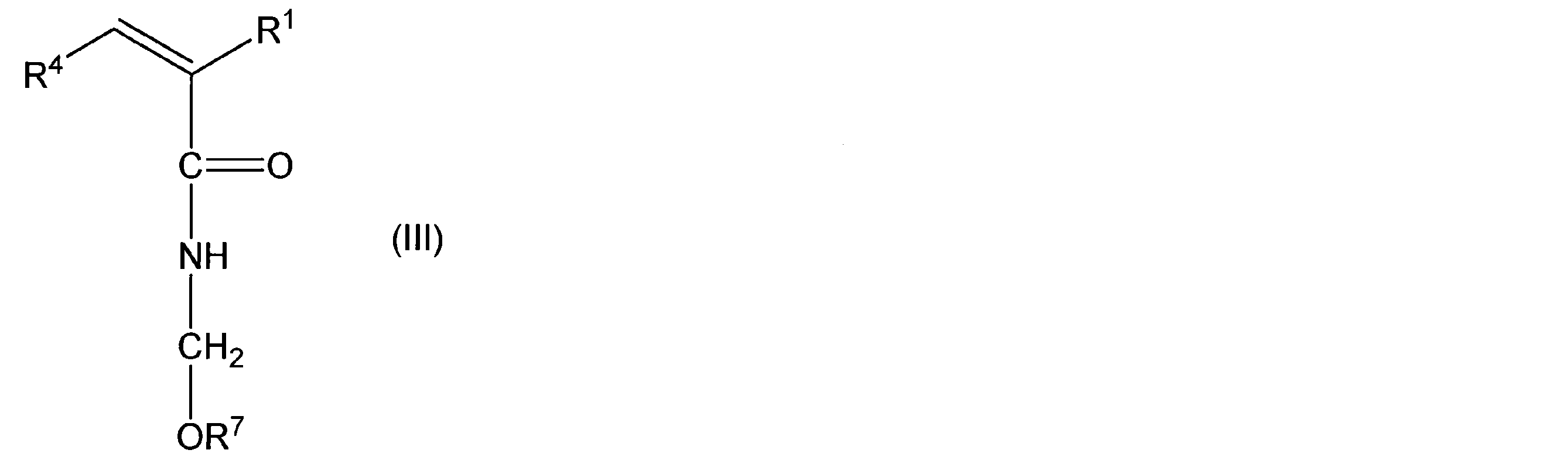
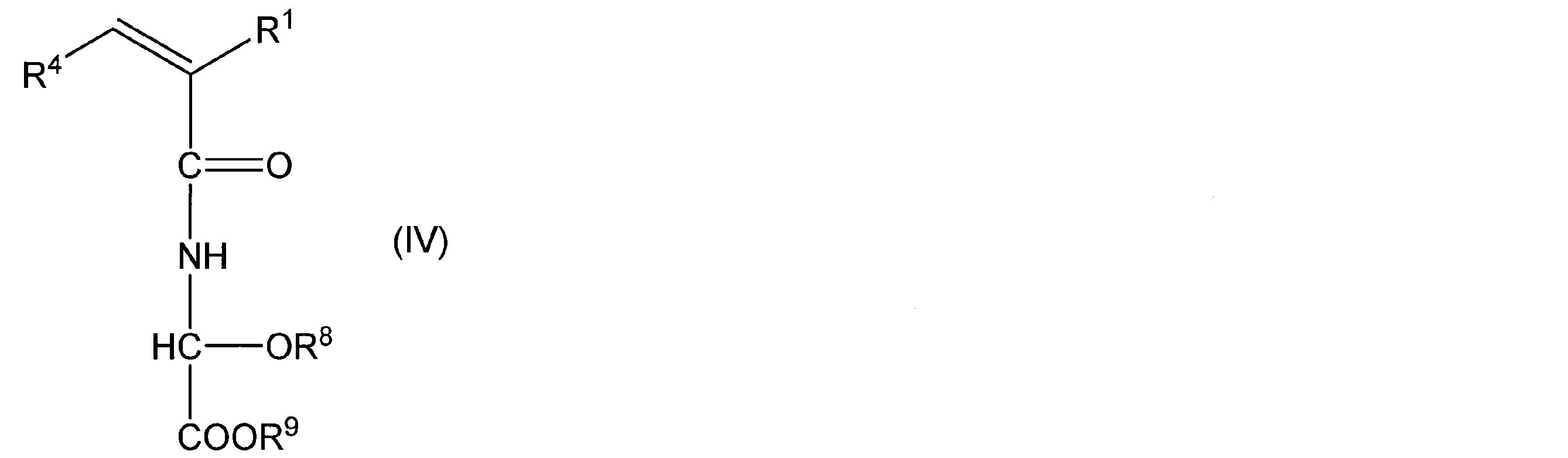
- 重合体(X)が式(I)、(II)、(III)又は(IV)で表される単量体(C)由来の構造単位を主鎖中に有する、請求項1に記載の水性エマルジョン組成物。
- 単量体(C)が式(II)又は式(III)で表される単量体である、請求項1又は2に記載の水性エマルジョン組成物。
- 式(II)においてXが-(CH2)n-である、又は式(III)においてR7が水素原子である、請求項1~3のいずれか1項に記載の水性エマルジョン組成物。
- エチレン性不飽和単量体(B)が、ビニルエステル系単量体及びジエン系単量体からなる群から選ばれる少なくとも1種である、請求項1~4のいずれか1項に記載の水性エマルジョン組成物。
- ポリビニルアルコール系樹脂(A)がさらにエチレン単位を有する、請求項1~5のいずれかに1項に記載の水性エマルジョン組成物。
- ポリビニルアルコール系樹脂(A)の存在下、エチレン性不飽和単量体(B)と、下記式(I)、(II)、(III)又は(IV)で表される単量体(C)とを乳化重合して、重合体(X)、ビニルアルコール系樹脂(A)及び水を含有する水性エマルジョン(D)を得る工程〔1〕と、前記水性エマルジョン(D)と環状酸無水物(E)とを混合する工程〔2〕を有する、請求項1に記載された水性エマルジョン組成物の製造方法。
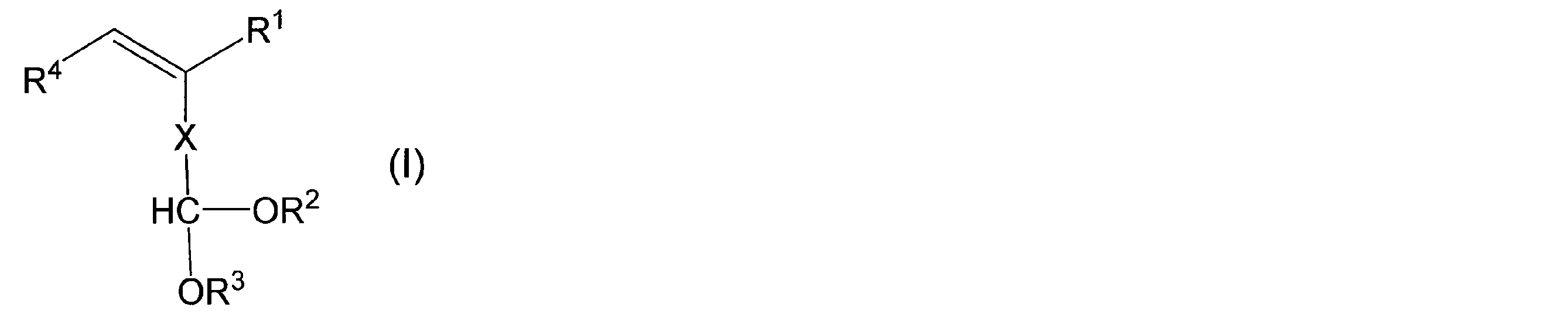

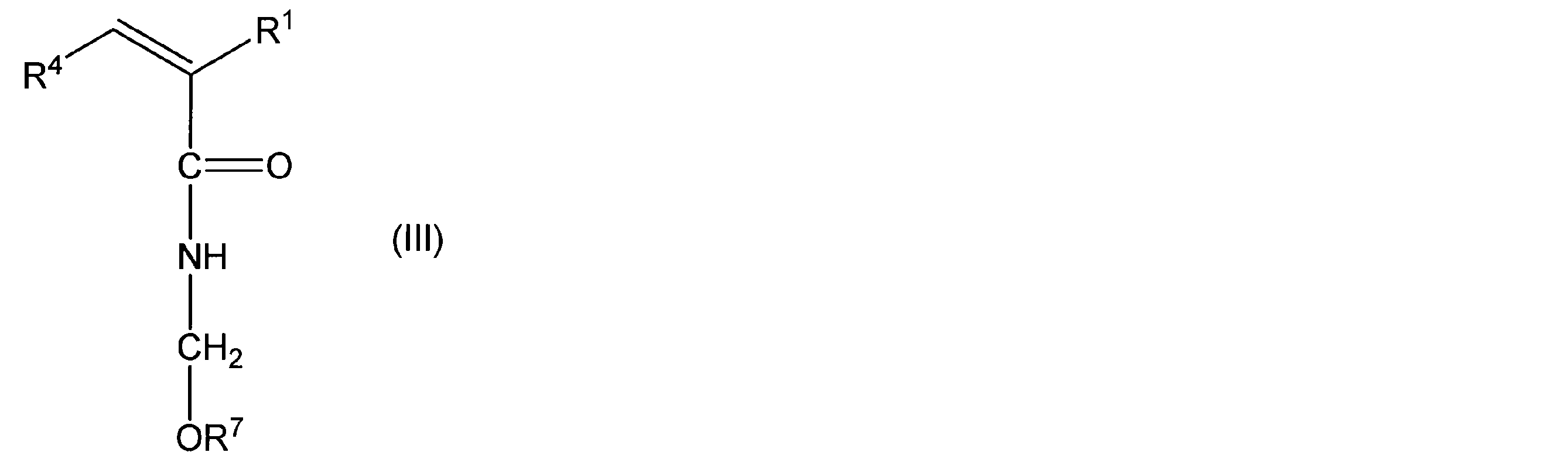
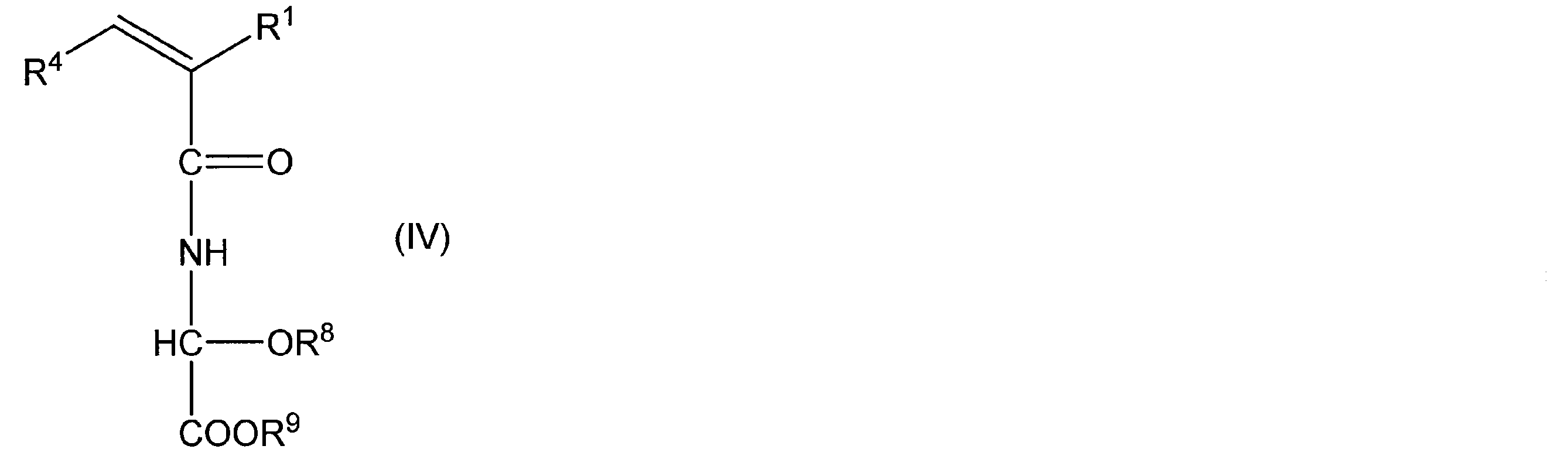
- 工程〔1〕における単量体(C)の使用量が、エチレン性不飽和単量体(B)の全量に対して0.01~10質量%である、請求項7に記載の水性エマルジョン組成物の製造方法。
- 下記式(I)、(II)、(III)又は(IV)で表される単量体(C)由来の構造単位を主鎖中に有するポリビニルアルコール系樹脂(A)の存在下、エチレン性不飽和単量体(B)を乳化重合して、重合体(X)、ポリビニルアルコール系樹脂(A)及び水を含有する水性エマルジョン(D)を得る工程〔1’〕と、前記水性エマルジョン(D)と環状酸無水物(E)とを混合する工程〔2’〕を有する、請求項1に記載された水性エマルジョン組成物の製造方法。


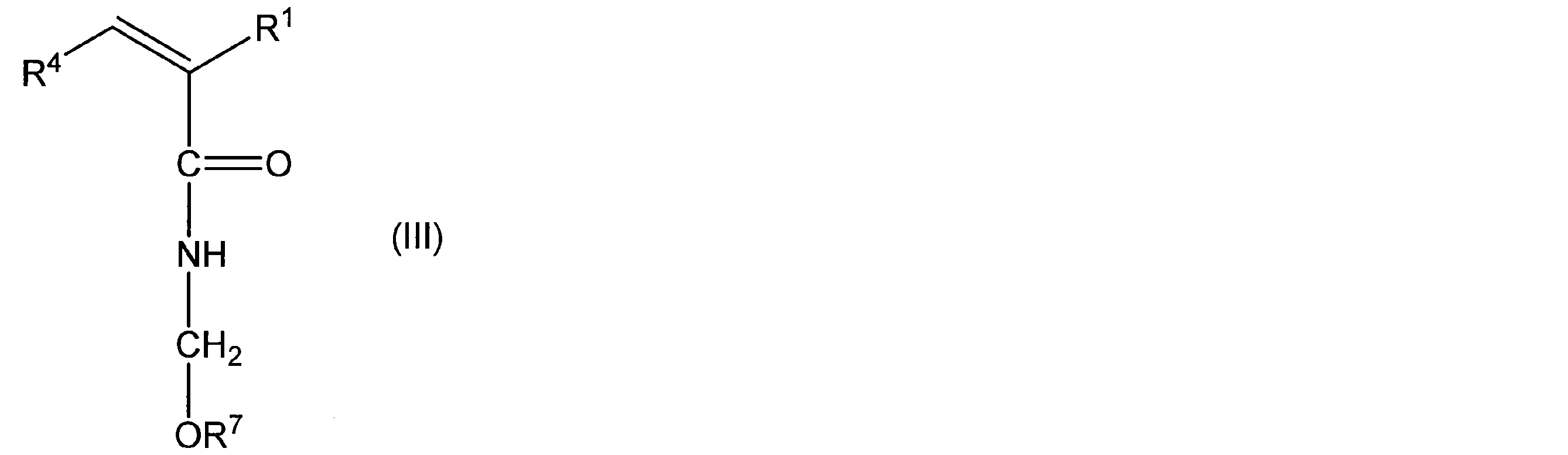
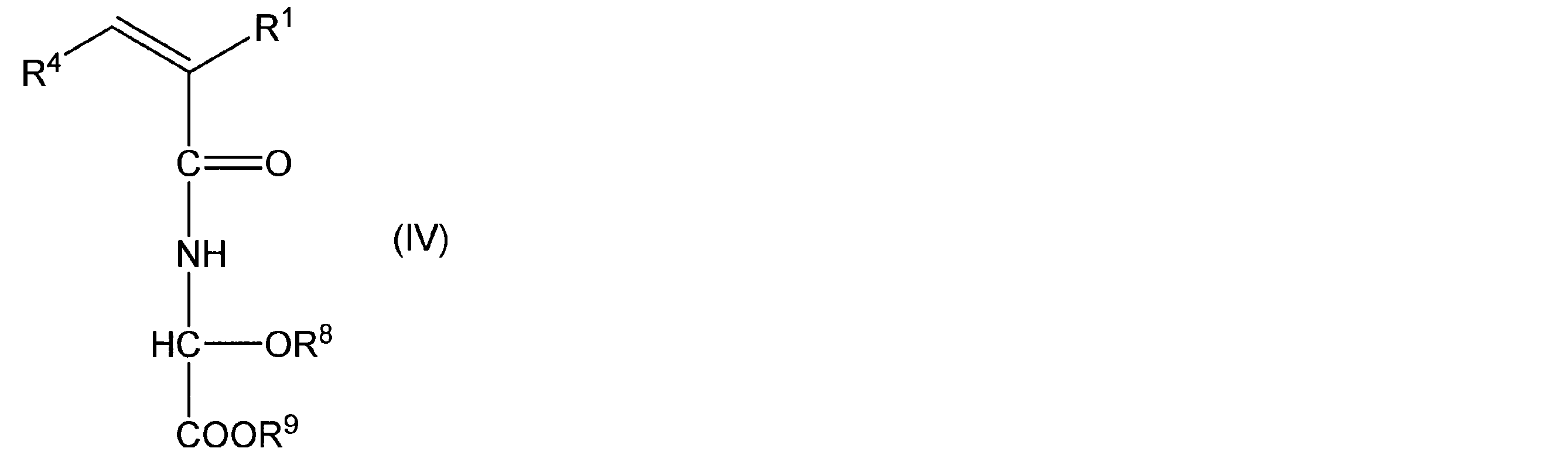
Priority Applications (4)
| Application Number | Priority Date | Filing Date | Title |
|---|---|---|---|
| EP16817460.5A EP3318580B1 (en) | 2015-06-30 | 2016-06-24 | Aqueous emulsion composition |
| CN201680038729.5A CN107735411B (zh) | 2015-06-30 | 2016-06-24 | 水性乳液组合物 |
| JP2017526176A JP6670309B2 (ja) | 2015-06-30 | 2016-06-24 | 水性エマルジョン組成物 |
| US15/739,911 US10844212B2 (en) | 2015-06-30 | 2016-06-24 | Aqueous emulsion composition |
Applications Claiming Priority (2)
| Application Number | Priority Date | Filing Date | Title |
|---|---|---|---|
| JP2015-132092 | 2015-06-30 | ||
| JP2015132092 | 2015-06-30 |
Publications (1)
| Publication Number | Publication Date |
|---|---|
| WO2017002349A1 true WO2017002349A1 (ja) | 2017-01-05 |
Family
ID=57608278
Family Applications (1)
| Application Number | Title | Priority Date | Filing Date |
|---|---|---|---|
| PCT/JP2016/003070 Ceased WO2017002349A1 (ja) | 2015-06-30 | 2016-06-24 | 水性エマルジョン組成物 |
Country Status (5)
| Country | Link |
|---|---|
| US (1) | US10844212B2 (ja) |
| EP (1) | EP3318580B1 (ja) |
| JP (1) | JP6670309B2 (ja) |
| CN (1) | CN107735411B (ja) |
| WO (1) | WO2017002349A1 (ja) |
Cited By (2)
| Publication number | Priority date | Publication date | Assignee | Title |
|---|---|---|---|---|
| JP2017014382A (ja) * | 2015-06-30 | 2017-01-19 | 株式会社クラレ | 水性エマルジョン組成物 |
| JP2019163377A (ja) * | 2018-03-19 | 2019-09-26 | 株式会社リコー | 組成物、硬化物、収容容器、像形成装置、及び像形成方法 |
Families Citing this family (9)
| Publication number | Priority date | Publication date | Assignee | Title |
|---|---|---|---|---|
| JP6558742B2 (ja) * | 2014-12-24 | 2019-08-14 | 株式会社クラレ | アルデヒド化合物の製造方法およびアセタール化合物 |
| US20180171207A1 (en) | 2015-06-17 | 2018-06-21 | Clariant International Ltd. | Water-Soluble Or Water-Swellable Polymers As Water Loss Reducers In Cement Slurries |
| ES2867526T3 (es) | 2016-12-12 | 2021-10-20 | Clariant Int Ltd | Uso de un polímero bioderivado en una composición cosmética, dermatológica o farmacéutica |
| US11384186B2 (en) | 2016-12-12 | 2022-07-12 | Clariant International Ltd | Polymer comprising certain level of bio-based carbon |
| EP3554644B1 (en) | 2016-12-15 | 2025-03-19 | Clariant International Ltd | Water-soluble and/or water-swellable hybrid polymer |
| EP3554643B1 (en) | 2016-12-15 | 2025-03-19 | Clariant International Ltd | Water-soluble and/or water-swellable hybrid polymer |
| US11339241B2 (en) | 2016-12-15 | 2022-05-24 | Clariant International Ltd. | Water-soluble and/or water-swellable hybrid polymer |
| ES3017507T3 (en) | 2016-12-15 | 2025-05-13 | Clariant Int Ltd | Water-soluble and/or water-swellable hybrid polymer |
| TWI812855B (zh) * | 2019-04-05 | 2023-08-21 | 日商可樂麗股份有限公司 | 水性乳液及使用其之接著劑 |
Citations (6)
| Publication number | Priority date | Publication date | Assignee | Title |
|---|---|---|---|---|
| JPS5250360A (en) * | 1975-10-21 | 1977-04-22 | Kuraray Co | Method of producing composite inorganic and organic sheettlike article |
| JPS5512173A (en) * | 1978-07-13 | 1980-01-28 | Kuraray Co Ltd | Preparation of modified polyvinyl alcohol |
| JPS62195036A (ja) * | 1985-12-24 | 1987-08-27 | エア・プロダクツ・アンド・ケミカルズ・インコ−ポレイテツド | ホルムアルデヒド不含酢酸ビニル/エチレン/aga共重合体 |
| JPH10231330A (ja) * | 1997-02-19 | 1998-09-02 | Kuraray Co Ltd | ビニルアルコール系重合体 |
| JP2005126544A (ja) * | 2003-10-23 | 2005-05-19 | Nippon Synthetic Chem Ind Co Ltd:The | アクリル系エマルジョン及びその用途 |
| JP2008184495A (ja) * | 2007-01-29 | 2008-08-14 | Kuraray Co Ltd | 架橋性水性分散液およびその製造方法、並びに接着剤およびコーティング剤 |
Family Cites Families (17)
| Publication number | Priority date | Publication date | Assignee | Title |
|---|---|---|---|---|
| DE4420484C2 (de) | 1994-06-11 | 1999-02-04 | Clariant Gmbh | Wäßriger Dispersionsklebstoff auf Polyvinylester-Basis, Verfahren zur Herstellung sowie dessen Verwendung |
| CN1155290A (zh) * | 1994-08-31 | 1997-07-23 | 汉克尔股份两合公司 | 物理和/或化学性凝固粘结剂 |
| JPH10121017A (ja) | 1996-10-16 | 1998-05-12 | Aica Kogyo Co Ltd | 接着剤 |
| NZ330371A (en) * | 1997-06-09 | 1999-10-28 | Kuraray Co | Aqueous emulsion system having as dispersant a polyvinyl alcohol polymer and the condensate of an alkali metal salt of an aromatic sulfonic acid |
| JPH11106727A (ja) | 1997-10-03 | 1999-04-20 | Showa Highpolymer Co Ltd | 紙管用接着剤およびこれを用いた紙管 |
| JPH11269235A (ja) * | 1998-03-20 | 1999-10-05 | Nippon Shokubai Co Ltd | アセタール基含有重合体およびその製法 |
| CA2291217C (en) | 1998-12-09 | 2004-09-21 | Kuraray Co., Ltd. | Vinyl alcohol polymer and its composition |
| JP4772175B2 (ja) | 1998-12-09 | 2011-09-14 | 株式会社クラレ | ビニルアルコール系重合体および組成物 |
| FR2787458A1 (fr) | 1998-12-16 | 2000-06-23 | Atochem Elf Sa | Systeme monocomposant stable au stockage filmifiant et reticulant a temperature ambiante |
| JP4488561B2 (ja) | 1999-10-26 | 2010-06-23 | コニシ株式会社 | 合成樹脂エマルジョン型接着剤 |
| DE10201164A1 (de) * | 2002-01-15 | 2003-08-14 | Bosch Gmbh Robert | Verfahren und Vorrichtung zur Erkennung einer Phase eines Viertakt-Ottomotors |
| DE10342858A1 (de) * | 2003-09-15 | 2005-04-21 | Basf Ag | Verwendung formaldehydfreier wässriger Bindemittel für Substrate |
| WO2007007578A1 (ja) * | 2005-07-13 | 2007-01-18 | Kuraray Co., Ltd | 水性分散液およびその製造方法、並びに組成物、接着剤およびコーティング剤 |
| JP5566011B2 (ja) * | 2007-07-18 | 2014-08-06 | 日本合成化学工業株式会社 | 水性合成樹脂エマルジョン、再乳化性エマルジョン粉末、及びそれを用いた接着剤組成物 |
| US8791198B2 (en) * | 2012-04-30 | 2014-07-29 | H.B. Fuller Company | Curable aqueous composition |
| WO2016013220A1 (ja) * | 2014-07-25 | 2016-01-28 | 株式会社クラレ | 水性エマルジョン |
| CN104277722B (zh) * | 2014-10-20 | 2016-04-13 | 常熟市鑫磊木业制造厂 | 木地板用粘结剂 |
-
2016
- 2016-06-24 US US15/739,911 patent/US10844212B2/en not_active Expired - Fee Related
- 2016-06-24 CN CN201680038729.5A patent/CN107735411B/zh not_active Expired - Fee Related
- 2016-06-24 JP JP2017526176A patent/JP6670309B2/ja not_active Expired - Fee Related
- 2016-06-24 WO PCT/JP2016/003070 patent/WO2017002349A1/ja not_active Ceased
- 2016-06-24 EP EP16817460.5A patent/EP3318580B1/en active Active
Patent Citations (6)
| Publication number | Priority date | Publication date | Assignee | Title |
|---|---|---|---|---|
| JPS5250360A (en) * | 1975-10-21 | 1977-04-22 | Kuraray Co | Method of producing composite inorganic and organic sheettlike article |
| JPS5512173A (en) * | 1978-07-13 | 1980-01-28 | Kuraray Co Ltd | Preparation of modified polyvinyl alcohol |
| JPS62195036A (ja) * | 1985-12-24 | 1987-08-27 | エア・プロダクツ・アンド・ケミカルズ・インコ−ポレイテツド | ホルムアルデヒド不含酢酸ビニル/エチレン/aga共重合体 |
| JPH10231330A (ja) * | 1997-02-19 | 1998-09-02 | Kuraray Co Ltd | ビニルアルコール系重合体 |
| JP2005126544A (ja) * | 2003-10-23 | 2005-05-19 | Nippon Synthetic Chem Ind Co Ltd:The | アクリル系エマルジョン及びその用途 |
| JP2008184495A (ja) * | 2007-01-29 | 2008-08-14 | Kuraray Co Ltd | 架橋性水性分散液およびその製造方法、並びに接着剤およびコーティング剤 |
Non-Patent Citations (1)
| Title |
|---|
| See also references of EP3318580A4 * |
Cited By (3)
| Publication number | Priority date | Publication date | Assignee | Title |
|---|---|---|---|---|
| JP2017014382A (ja) * | 2015-06-30 | 2017-01-19 | 株式会社クラレ | 水性エマルジョン組成物 |
| JP2019163377A (ja) * | 2018-03-19 | 2019-09-26 | 株式会社リコー | 組成物、硬化物、収容容器、像形成装置、及び像形成方法 |
| JP7024532B2 (ja) | 2018-03-19 | 2022-02-24 | 株式会社リコー | 組成物、硬化物、収容容器、像形成装置、及び像形成方法 |
Also Published As
| Publication number | Publication date |
|---|---|
| EP3318580B1 (en) | 2022-12-28 |
| JPWO2017002349A1 (ja) | 2018-04-12 |
| EP3318580A4 (en) | 2019-03-13 |
| JP6670309B2 (ja) | 2020-03-18 |
| CN107735411A (zh) | 2018-02-23 |
| US10844212B2 (en) | 2020-11-24 |
| EP3318580A1 (en) | 2018-05-09 |
| CN107735411B (zh) | 2020-11-06 |
| US20180186993A1 (en) | 2018-07-05 |
Similar Documents
| Publication | Publication Date | Title |
|---|---|---|
| JP6670309B2 (ja) | 水性エマルジョン組成物 | |
| KR101385069B1 (ko) | 분산 안정제 | |
| TWI669318B (zh) | 懸浮聚合用分散安定劑及乙烯系樹脂之製造方法 | |
| JP6913907B2 (ja) | ポリビニルアルコールの製造方法 | |
| JPWO2014171502A1 (ja) | ビニルアルコール系共重合体及びその製造方法 | |
| JP5463348B2 (ja) | 新規なポリビニルアルコール系重合体およびその製造方法 | |
| CN110753709A (zh) | 水性乳液和使用其的粘接剂 | |
| JP6247394B2 (ja) | 水性エマルジョン | |
| CN105637026B (zh) | 交联剂、交联高分子及化合物 | |
| CN108431129A (zh) | 水性乳液和使用其得到的粘接剂 | |
| KR101160713B1 (ko) | 초산비닐 수지계 에멀젼 및 그의 제조방법 | |
| JP6163122B2 (ja) | 乳化重合用安定剤及びその製造方法 | |
| JP6170632B2 (ja) | ビニルアルコール系共重合体及びそれを含有する組成物並びに乳化重合用分散安定剤 | |
| JP2008239848A (ja) | 接着剤 | |
| WO2019093315A1 (ja) | 水性エマルジョン、その製造方法及びその用途 | |
| JP6560038B2 (ja) | 水性エマルジョン組成物 | |
| JP2002194165A (ja) | 水性エマルジョン | |
| JP2004300193A (ja) | 水性エマルジョン | |
| TW201038693A (en) | Aqueous adhesive | |
| JP4416888B2 (ja) | 紙工用接着剤 | |
| JP2015034263A (ja) | 水性エマルジョン組成物及び乳化重合用安定剤 | |
| JP4628534B2 (ja) | 水性エマルジョン組成物 | |
| JP2017197606A (ja) | 水性エマルジョン組成物及びそれを用いた接着剤 | |
| JP4409112B2 (ja) | ポリ酢酸ビニル系樹脂エマルジョンの製造方法 | |
| JP2004300194A (ja) | 水性エマルジョンおよび接着剤 |
Legal Events
| Date | Code | Title | Description |
|---|---|---|---|
| 121 | Ep: the epo has been informed by wipo that ep was designated in this application |
Ref document number: 16817460 Country of ref document: EP Kind code of ref document: A1 |
|
| ENP | Entry into the national phase |
Ref document number: 2017526176 Country of ref document: JP Kind code of ref document: A |
|
| NENP | Non-entry into the national phase |
Ref country code: DE |
|
| WWE | Wipo information: entry into national phase |
Ref document number: 2016817460 Country of ref document: EP |