WO2017007036A1 - Procédé et équipement permettant de produire une bande d'acier laminée à froid - Google Patents
Procédé et équipement permettant de produire une bande d'acier laminée à froid Download PDFInfo
- Publication number
- WO2017007036A1 WO2017007036A1 PCT/JP2016/070755 JP2016070755W WO2017007036A1 WO 2017007036 A1 WO2017007036 A1 WO 2017007036A1 JP 2016070755 W JP2016070755 W JP 2016070755W WO 2017007036 A1 WO2017007036 A1 WO 2017007036A1
- Authority
- WO
- WIPO (PCT)
- Prior art keywords
- acid
- tank
- steel strip
- concentration
- cold
- Prior art date
- Legal status (The legal status is an assumption and is not a legal conclusion. Google has not performed a legal analysis and makes no representation as to the accuracy of the status listed.)
- Ceased
Links
Images



Classifications
-
- C—CHEMISTRY; METALLURGY
- C23—COATING METALLIC MATERIAL; COATING MATERIAL WITH METALLIC MATERIAL; CHEMICAL SURFACE TREATMENT; DIFFUSION TREATMENT OF METALLIC MATERIAL; COATING BY VACUUM EVAPORATION, BY SPUTTERING, BY ION IMPLANTATION OR BY CHEMICAL VAPOUR DEPOSITION, IN GENERAL; INHIBITING CORROSION OF METALLIC MATERIAL OR INCRUSTATION IN GENERAL
- C23G—CLEANING OR DE-GREASING OF METALLIC MATERIAL BY CHEMICAL METHODS OTHER THAN ELECTROLYSIS
- C23G1/00—Cleaning or pickling metallic material with solutions or molten salts
- C23G1/02—Cleaning or pickling metallic material with solutions or molten salts with acid solutions
- C23G1/08—Iron or steel
- C23G1/085—Iron or steel solutions containing HNO3
-
- C—CHEMISTRY; METALLURGY
- C21—METALLURGY OF IRON
- C21D—MODIFYING THE PHYSICAL STRUCTURE OF FERROUS METALS; GENERAL DEVICES FOR HEAT TREATMENT OF FERROUS OR NON-FERROUS METALS OR ALLOYS; MAKING METAL MALLEABLE, e.g. BY DECARBURISATION OR TEMPERING
- C21D8/00—Modifying the physical properties of ferrous metals or ferrous alloys by deformation combined with, or followed by, heat treatment
- C21D8/02—Modifying the physical properties of ferrous metals or ferrous alloys by deformation combined with, or followed by, heat treatment during manufacturing of plates or strips
- C21D8/0247—Modifying the physical properties of ferrous metals or ferrous alloys by deformation combined with, or followed by, heat treatment during manufacturing of plates or strips characterised by the heat treatment
- C21D8/0273—Final recrystallisation annealing
-
- C—CHEMISTRY; METALLURGY
- C21—METALLURGY OF IRON
- C21D—MODIFYING THE PHYSICAL STRUCTURE OF FERROUS METALS; GENERAL DEVICES FOR HEAT TREATMENT OF FERROUS OR NON-FERROUS METALS OR ALLOYS; MAKING METAL MALLEABLE, e.g. BY DECARBURISATION OR TEMPERING
- C21D8/00—Modifying the physical properties of ferrous metals or ferrous alloys by deformation combined with, or followed by, heat treatment
- C21D8/02—Modifying the physical properties of ferrous metals or ferrous alloys by deformation combined with, or followed by, heat treatment during manufacturing of plates or strips
- C21D8/0278—Modifying the physical properties of ferrous metals or ferrous alloys by deformation combined with, or followed by, heat treatment during manufacturing of plates or strips involving a particular surface treatment
-
- C—CHEMISTRY; METALLURGY
- C21—METALLURGY OF IRON
- C21D—MODIFYING THE PHYSICAL STRUCTURE OF FERROUS METALS; GENERAL DEVICES FOR HEAT TREATMENT OF FERROUS OR NON-FERROUS METALS OR ALLOYS; MAKING METAL MALLEABLE, e.g. BY DECARBURISATION OR TEMPERING
- C21D9/00—Heat treatment, e.g. annealing, hardening, quenching or tempering, adapted for particular articles; Furnaces therefor
- C21D9/46—Heat treatment, e.g. annealing, hardening, quenching or tempering, adapted for particular articles; Furnaces therefor for sheet metals
-
- C—CHEMISTRY; METALLURGY
- C21—METALLURGY OF IRON
- C21D—MODIFYING THE PHYSICAL STRUCTURE OF FERROUS METALS; GENERAL DEVICES FOR HEAT TREATMENT OF FERROUS OR NON-FERROUS METALS OR ALLOYS; MAKING METAL MALLEABLE, e.g. BY DECARBURISATION OR TEMPERING
- C21D9/00—Heat treatment, e.g. annealing, hardening, quenching or tempering, adapted for particular articles; Furnaces therefor
- C21D9/52—Heat treatment, e.g. annealing, hardening, quenching or tempering, adapted for particular articles; Furnaces therefor for wires; for strips ; for rods of unlimited length
- C21D9/54—Furnaces for treating strips or wire
- C21D9/56—Continuous furnaces for strip or wire
-
- C—CHEMISTRY; METALLURGY
- C22—METALLURGY; FERROUS OR NON-FERROUS ALLOYS; TREATMENT OF ALLOYS OR NON-FERROUS METALS
- C22C—ALLOYS
- C22C38/00—Ferrous alloys, e.g. steel alloys
-
- C—CHEMISTRY; METALLURGY
- C22—METALLURGY; FERROUS OR NON-FERROUS ALLOYS; TREATMENT OF ALLOYS OR NON-FERROUS METALS
- C22C—ALLOYS
- C22C38/00—Ferrous alloys, e.g. steel alloys
- C22C38/02—Ferrous alloys, e.g. steel alloys containing silicon
-
- C—CHEMISTRY; METALLURGY
- C22—METALLURGY; FERROUS OR NON-FERROUS ALLOYS; TREATMENT OF ALLOYS OR NON-FERROUS METALS
- C22C—ALLOYS
- C22C38/00—Ferrous alloys, e.g. steel alloys
- C22C38/04—Ferrous alloys, e.g. steel alloys containing manganese
-
- C—CHEMISTRY; METALLURGY
- C23—COATING METALLIC MATERIAL; COATING MATERIAL WITH METALLIC MATERIAL; CHEMICAL SURFACE TREATMENT; DIFFUSION TREATMENT OF METALLIC MATERIAL; COATING BY VACUUM EVAPORATION, BY SPUTTERING, BY ION IMPLANTATION OR BY CHEMICAL VAPOUR DEPOSITION, IN GENERAL; INHIBITING CORROSION OF METALLIC MATERIAL OR INCRUSTATION IN GENERAL
- C23G—CLEANING OR DE-GREASING OF METALLIC MATERIAL BY CHEMICAL METHODS OTHER THAN ELECTROLYSIS
- C23G1/00—Cleaning or pickling metallic material with solutions or molten salts
-
- C—CHEMISTRY; METALLURGY
- C23—COATING METALLIC MATERIAL; COATING MATERIAL WITH METALLIC MATERIAL; CHEMICAL SURFACE TREATMENT; DIFFUSION TREATMENT OF METALLIC MATERIAL; COATING BY VACUUM EVAPORATION, BY SPUTTERING, BY ION IMPLANTATION OR BY CHEMICAL VAPOUR DEPOSITION, IN GENERAL; INHIBITING CORROSION OF METALLIC MATERIAL OR INCRUSTATION IN GENERAL
- C23G—CLEANING OR DE-GREASING OF METALLIC MATERIAL BY CHEMICAL METHODS OTHER THAN ELECTROLYSIS
- C23G1/00—Cleaning or pickling metallic material with solutions or molten salts
- C23G1/02—Cleaning or pickling metallic material with solutions or molten salts with acid solutions
- C23G1/08—Iron or steel
-
- C—CHEMISTRY; METALLURGY
- C23—COATING METALLIC MATERIAL; COATING MATERIAL WITH METALLIC MATERIAL; CHEMICAL SURFACE TREATMENT; DIFFUSION TREATMENT OF METALLIC MATERIAL; COATING BY VACUUM EVAPORATION, BY SPUTTERING, BY ION IMPLANTATION OR BY CHEMICAL VAPOUR DEPOSITION, IN GENERAL; INHIBITING CORROSION OF METALLIC MATERIAL OR INCRUSTATION IN GENERAL
- C23G—CLEANING OR DE-GREASING OF METALLIC MATERIAL BY CHEMICAL METHODS OTHER THAN ELECTROLYSIS
- C23G3/00—Apparatus for cleaning or pickling metallic material
- C23G3/02—Apparatus for cleaning or pickling metallic material for cleaning wires, strips, filaments continuously
- C23G3/021—Apparatus for cleaning or pickling metallic material for cleaning wires, strips, filaments continuously by dipping
-
- C—CHEMISTRY; METALLURGY
- C23—COATING METALLIC MATERIAL; COATING MATERIAL WITH METALLIC MATERIAL; CHEMICAL SURFACE TREATMENT; DIFFUSION TREATMENT OF METALLIC MATERIAL; COATING BY VACUUM EVAPORATION, BY SPUTTERING, BY ION IMPLANTATION OR BY CHEMICAL VAPOUR DEPOSITION, IN GENERAL; INHIBITING CORROSION OF METALLIC MATERIAL OR INCRUSTATION IN GENERAL
- C23G—CLEANING OR DE-GREASING OF METALLIC MATERIAL BY CHEMICAL METHODS OTHER THAN ELECTROLYSIS
- C23G3/00—Apparatus for cleaning or pickling metallic material
- C23G3/02—Apparatus for cleaning or pickling metallic material for cleaning wires, strips, filaments continuously
- C23G3/027—Associated apparatus, e.g. for pretreating or after-treating
- C23G3/028—Associated apparatus, e.g. for pretreating or after-treating for thermal or mechanical pretreatment
-
- C—CHEMISTRY; METALLURGY
- C23—COATING METALLIC MATERIAL; COATING MATERIAL WITH METALLIC MATERIAL; CHEMICAL SURFACE TREATMENT; DIFFUSION TREATMENT OF METALLIC MATERIAL; COATING BY VACUUM EVAPORATION, BY SPUTTERING, BY ION IMPLANTATION OR BY CHEMICAL VAPOUR DEPOSITION, IN GENERAL; INHIBITING CORROSION OF METALLIC MATERIAL OR INCRUSTATION IN GENERAL
- C23G—CLEANING OR DE-GREASING OF METALLIC MATERIAL BY CHEMICAL METHODS OTHER THAN ELECTROLYSIS
- C23G3/00—Apparatus for cleaning or pickling metallic material
- C23G3/02—Apparatus for cleaning or pickling metallic material for cleaning wires, strips, filaments continuously
- C23G3/027—Associated apparatus, e.g. for pretreating or after-treating
- C23G3/029—Associated apparatus, e.g. for pretreating or after-treating for removing the pickling fluid from the objects
-
- C—CHEMISTRY; METALLURGY
- C21—METALLURGY OF IRON
- C21D—MODIFYING THE PHYSICAL STRUCTURE OF FERROUS METALS; GENERAL DEVICES FOR HEAT TREATMENT OF FERROUS OR NON-FERROUS METALS OR ALLOYS; MAKING METAL MALLEABLE, e.g. BY DECARBURISATION OR TEMPERING
- C21D8/00—Modifying the physical properties of ferrous metals or ferrous alloys by deformation combined with, or followed by, heat treatment
- C21D8/02—Modifying the physical properties of ferrous metals or ferrous alloys by deformation combined with, or followed by, heat treatment during manufacturing of plates or strips
- C21D8/0221—Modifying the physical properties of ferrous metals or ferrous alloys by deformation combined with, or followed by, heat treatment during manufacturing of plates or strips characterised by the working steps
- C21D8/0236—Cold rolling
-
- C—CHEMISTRY; METALLURGY
- C22—METALLURGY; FERROUS OR NON-FERROUS ALLOYS; TREATMENT OF ALLOYS OR NON-FERROUS METALS
- C22C—ALLOYS
- C22C38/00—Ferrous alloys, e.g. steel alloys
- C22C38/002—Ferrous alloys, e.g. steel alloys containing In, Mg, or other elements not provided for in one single group C22C38/001 - C22C38/60
-
- C—CHEMISTRY; METALLURGY
- C22—METALLURGY; FERROUS OR NON-FERROUS ALLOYS; TREATMENT OF ALLOYS OR NON-FERROUS METALS
- C22C—ALLOYS
- C22C38/00—Ferrous alloys, e.g. steel alloys
- C22C38/12—Ferrous alloys, e.g. steel alloys containing tungsten, tantalum, molybdenum, vanadium, or niobium
-
- C—CHEMISTRY; METALLURGY
- C22—METALLURGY; FERROUS OR NON-FERROUS ALLOYS; TREATMENT OF ALLOYS OR NON-FERROUS METALS
- C22C—ALLOYS
- C22C38/00—Ferrous alloys, e.g. steel alloys
- C22C38/16—Ferrous alloys, e.g. steel alloys containing copper
-
- C—CHEMISTRY; METALLURGY
- C22—METALLURGY; FERROUS OR NON-FERROUS ALLOYS; TREATMENT OF ALLOYS OR NON-FERROUS METALS
- C22C—ALLOYS
- C22C38/00—Ferrous alloys, e.g. steel alloys
- C22C38/18—Ferrous alloys, e.g. steel alloys containing chromium
Definitions
- the present invention relates to a manufacturing method and manufacturing equipment for a cold-rolled steel strip.
- the cold rolled steel sheet which is the material of automobile parts, has been strengthened and thinned (lightened), so that it is possible to reduce the weight of the automobile body and increase the strength at the same time. It has been.
- the cold-rolled steel sheet as the material is required to have excellent formability in addition to high strength.
- high-strength cold-rolled steel sheets containing a large amount of Si are subjected to normal cold-rolling when exposed to a severe corrosive environment such as a salt warm water immersion test or a combined cycle corrosion test that repeats wet-drying after electrodeposition coating.
- a severe corrosive environment such as a salt warm water immersion test or a combined cycle corrosion test that repeats wet-drying after electrodeposition coating.
- the coating film is easily peeled off compared to the steel plate and the corrosion resistance after coating is poor. For this reason, it has been difficult to use a high-strength cold-rolled steel sheet containing a large amount of Si for body applications that require painting.
- Patent Documents 1 and 2 as techniques for solving this problem.
- a steel sheet that has been continuously annealed is immersed in nitric acid and hydrochloric acid, or a mixed acid such as nitric acid and hydrofluoric acid, and then pickled.
- the cold-rolled steel strip was continuously passed through a production facility capable of performing the two-stage pickling as described above, and the cold-rolled steel strip was subjected to the two-stage pickling.
- the surface appearance quality of the cold-rolled steel strip produced at that time becomes inferior over time.
- the surface of the cold-rolled steel strip immediately after the first stage pickling process turns reddish brown due to some deposits, and this discoloration is not removed even in the second stage re-pickling process. I understood it.
- Such cold-rolled steel strips that are inferior in surface appearance quality, there are some that are inferior in chemical conversion treatment and corrosion resistance after coating in a severe corrosive environment.
- the present invention is capable of stably and continuously producing a cold-rolled steel strip that is excellent in both chemical conversion properties, post-coating corrosion resistance in harsh corrosive environments, and surface appearance quality.
- An object of the present invention is to provide a manufacturing method and manufacturing equipment for a cold-rolled steel strip.
- the surface appearance quality of the cold-rolled steel strip and the iron ion concentration in the mixed acid when the cold-rolled steel strip is subjected to the pickling with the mixed acid in the first stage (hereinafter simply referred to as “simply”). It was also found that there is a correlation with “Fe concentration”. Specifically, as the Fe concentration in the mixed acid is higher, the surface of the cold-rolled steel strip pickled with the mixed acid has a tendency to turn reddish brown.
- the summary structure is as follows. (1) After cold rolling, a step of continuously dipping the steel strip that has been annealed continuously in a mixed acid solution containing an oxidizing first acid and a non-oxidizing second acid; Thereafter, the steel strip is continuously dipped in an acid solution containing a non-oxidizing third acid and re-acidified; A method for producing a cold-rolled steel strip having The production of a cold-rolled steel strip, wherein the concentration of the first acid in the mixed acid solution is decreased and the concentration of the second acid is increased as the iron ion concentration in the mixed acid solution increases. Method.
- the above-mentioned second acid and / or the third acid is one or more selected from hydrochloric acid, sulfuric acid, phosphoric acid, pyrophosphoric acid, formic acid, acetic acid, citric acid, hydrofluoric acid, and oxalic acid
- the concentration of nitric acid is set in the range of 110 g / L to 188 g / L and the concentration of hydrochloric acid is set to the range of 4.5 g / L and 12.5 g / L or less.
- a first stock solution tank, a second stock solution tank, and a third stock solution tank that respectively contain a stock solution of an oxidizing first acid, a non-oxidizing second acid, and a non-oxidizing third acid.
- a first pipe, a second pipe, and a third pipe extending from the first stock solution tank, the second stock solution tank, and the third stock solution tank, respectively;
- the first pipe and the second pipe are connected, and the first acid supplied from the first stock solution tank and the second acid supplied from the second stock solution tank are mixed and stored.
- a circulating tank for the mixed acid solution Provided in the first pipe and the second pipe, respectively, for adjusting the supply amount of the first acid from the first stock solution tank and the supply amount of the second acid from the second pipe, respectively.
- a first valve and a second valve An acid solution circulation tank containing the third acid connected to the third pipe and supplied from the third stock solution tank; A mixed acid tank containing a mixed acid solution containing the first acid and the second acid; An acid bath containing an acid solution containing the third acid; Connecting the mixed acid solution circulation tank and the mixed acid tank, and at least two fourth pipes for circulating the mixed acid solution between the two, Connecting the acid liquid circulation tank and the acid tank, and at least two fifth pipes for circulating the acid liquid therebetween; After cold rolling, conveying the continuously annealed steel strip, through the mixed acid tank, through the acid tank in order to continuously immerse, A concentration meter for measuring the iron ion concentration in the mixed acid solution in the mixed acid tank; Supplying the first acid from the first stock solution tank as the iron ion concentration in the mixed acid solution increases by controlling the first valve and the second valve based on the output of the concentration meter. Change the supply amount of the second acid from the second stock solution tank to a small amount, change the concentration of the first acid in the
- a cold-rolled steel strip excellent in both chemical conversion properties, post-coating corrosion resistance in harsh corrosive environments, and surface appearance quality can be stably produced over a long period of time. It can be manufactured continuously.
- FIG. 1 It is a schematic diagram of the manufacturing equipment 100 of the cold-rolled steel strip in one Embodiment of this invention.
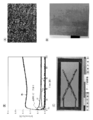
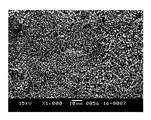
- A SEM image of coating surface
- B GDS analysis result
- C Image of sample after evaluation test of corrosion resistance after coating
- D Image of surface of sample.
- the manufacturing method of the cold-rolled steel strip according to one embodiment of the present invention is a method in which a continuously annealed steel strip after cold rolling is mixed into a mixed acid solution containing an oxidizing first acid and a non-oxidizing second acid. A step of continuously dipping and pickling, and then a step of continuously dipping the steel strip in an acid solution containing a non-oxidizing third acid and re- pickling.
- Si-containing oxides such as Si oxide (SiO 2 ) and Si—Mn complex oxide on the surface of the steel strip.
- Si-containing oxide is formed not only on the surface of the steel strip but also inside the base iron, it inhibits the etching properties of the surface of the steel strip during chemical conversion treatment (zinc phosphate treatment) that is performed as a base treatment for electrodeposition coating. Adversely affects the formation of a healthy chemical conversion coating.
- the temperature of the chemical conversion liquid has been lowered for the purpose of reducing the amount of sludge generated during chemical conversion and the running cost, and under the conditions that the reactivity of the chemical conversion liquid to the steel strip is significantly lower than conventional. A chemical conversion process is being made. Under such circumstances, the deterioration of the chemical conversion treatment appears more remarkably.
- the cold-rolled steel strip is continuously immersed in a mixed acid solution containing an oxidizing first acid and a non-oxidizing second acid,
- the Si-containing oxide layer on the surface is removed.
- the thickness of the Si-containing oxide layer varies depending on the steel strip components and annealing conditions (temperature, time, atmosphere), but is usually about 1 ⁇ m from the steel strip surface.
- oxidizing first acid is nitric acid.
- the reason why the first acid is necessary in the mixed acid solution is that among the Si-containing oxides, the Si—Mn-based composite oxide is easily dissolved in the acid, but the SiO 2 is hardly soluble, and thus is removed. This is because it is necessary to remove the Si-containing oxide on the surface of the steel strip together with the base iron with an oxidizing acid such as nitric acid.
- the concentration of nitric acid in the mixed acid solution is preferably set in the range of 110 g / L to 188 g / L.
- the concentration of nitric acid is more preferably 140 g / L or less, and more preferably 130 g / L or less.
- the non-oxidizing second acid can be one or more selected from hydrochloric acid, sulfuric acid, phosphoric acid, pyrophosphoric acid, formic acid, acetic acid, citric acid, hydrofluoric acid, and oxalic acid, and in particular hydrochloric acid, Sulfuric acid and hydrofluoric acid can be preferably used.
- the reason for using such a non-oxidizing acid is to suppress the formation of iron-based oxides that precipitate on the surface of the steel strip with the pickling with the oxidizing first acid.
- the concentration of the second acid in the mixed acid solution is preferably set in the range of more than 4.5 g / L and not more than 12.5 g / L. If it is 4.5 g / L or less, it is difficult to dissolve the iron-based oxide in the subsequent re-acid pickling step, and if it exceeds 12.5 g / L, the pickling weight loss per unit time is reduced and the steel strip surface layer is made of SiO. This is because there is a concern about the remaining of 2 . More preferably, it is 6.5 g to 8.5 g / L.
- the conditions that affect the amount of the Si-containing oxide are the composition of the steel strip and the annealing conditions, and considering these factors, a suitable pickling time for removing the Si-containing oxide is determined. Therefore, the concentration of nitric acid, the plate passing speed, and the length of the pickling equipment may be set so as to ensure this suitable pickling time.
- iron-based oxide refers to an iron-based oxide whose atomic concentration ratio of iron is 30% or more among elements other than oxygen constituting the oxide. This iron-based oxide exists on the surface of the steel strip with a non-uniform thickness, and is an oxide different from a natural oxide film that exists in a uniform and layered manner with a thickness of several nm.
- the iron-based oxide formed on the surface of the cold-rolled steel strip is amorphous based on the observation result with a transmission electron microscope (TEM) and the analysis result of the diffraction pattern (diffraction pattern) by electron beam diffraction. know.
- TEM transmission electron microscope
- non-oxidizing third acid examples include one or more selected from hydrochloric acid, sulfuric acid, phosphoric acid, pyrophosphoric acid, formic acid, acetic acid, citric acid, hydrofluoric acid, and oxalic acid.
- Sulfuric acid and hydrofluoric acid can be preferably used.
- hydrochloric acid is a volatile acid, so it is difficult for residues such as sulfate radicals to remain on the surface of the steel strip like sulfuric acid, and because the destruction effect of iron-based oxides by chloride ions is great. Is preferred.
- the second acid used in the pickling step and the third acid used in this step may be the same type of acid or different types of acids. However, it is preferable that they are the same kind of acid from the viewpoint that the production equipment can be shared.
- the concentration of the third acid in the acid solution is preferably set in the range of more than 4.5 g / L and not more than 12.5 g / L. If it is 4.5 g / L or less, it is difficult to dissolve the iron-based oxide, and if it exceeds 12.5 g / L, there is a concern that discoloration may occur due to the remaining acid solution on the steel strip surface layer. More preferably, it is 6.5 g to 8.5 g / L.
- the preferred pickling time for the re-pickling step is the amount of pickling required to remove the iron-based oxide generated in the first stage of pickling, the pickling efficiency determined by the acid composition, and the pickling length. And determined from In general, the acid temperature is about 30 to 60 ° C., and the pickling time is about 10 seconds.
- the cold-rolled steel strip that has been pickled and re- pickled as described above may be converted into a cold-rolled steel plate as a product plate through normal processing steps such as temper rolling and leveler processing. it can.
- the total pickling loss in the pickling step and the re-pickling step is preferably 8 g / m 2 or more. If the total pickling weight loss is 8 g / m 2 or more, Si-containing oxides and iron-based oxides hardly remain on the surface of the steel strip, so that higher chemical conversion property can be obtained.
- the cause is that the temperature of the mixed acid solution increases with the increase of the Fe concentration in the mixed acid. Therefore, in this embodiment, it is necessary to appropriately control the pickling speed, that is, the liquid temperature of the mixed acid, according to the Fe concentration in the mixed acid. Specifically, as the Fe concentration in the mixed acid solution increases, the concentration of the first acid (for example, nitric acid) in the mixed acid solution is lowered and the concentration of the second acid (for example, hydrochloric acid) is changed higher.
- the concentration of the first acid for example, nitric acid
- the concentration of the second acid for example, hydrochloric acid
- the temperature of the mixed acid solution within the range of 45 to 55 ° C. by such control of the acid concentration.
- the pickling loss per unit time is decreased, and there is a concern that SiO 2 may remain on the steel strip surface layer.
- the temperature exceeds 55 ° C. discoloration of the steel strip surface starts to occur.
- a mode in which the concentration of the first acid in the mixed acid solution is decreased and the concentration of the second acid is increased as the Fe concentration in the mixed acid solution increases is not particularly limited.
- the following method may be adopted. it can.
- the Fe concentration in fresh mixed acid that is not used for pickling steel strips is zero.
- the concentration of the first acid and the second acid in the fresh mixed acid is about the middle of the preferred range.
- the concentration of the first acid can be set to 132.5 g / L
- the concentration of the second acid can be set to 6.5 g / L.
- the Fe concentration in the mixed acid is measured over time.
- the Fe concentration may be measured constantly or intermittently at regular intervals.
- the Fe concentration is classified into several stages, and for each stage, the set concentrations of the first and second acids are determined in advance, and when the Fe concentration moves to the next stage, the first and second acids. Change the concentration. For example, when the Fe concentration in the mixed acid reaches 15 g / L, the concentration of the first acid can be changed to 125.0 g / L, and the concentration of the second acid can be changed to 7.5 g / L. Further, when the Fe concentration in the mixed acid reaches 20 g / L after a lapse of time, the concentration of the first acid is changed to 110.0 g / L and the concentration of the second acid is changed to 8.5 g / L. Can do.
- a relational expression between the Fe concentration and the set concentrations of the first and second acids is determined in advance, and as the Fe concentration in the mixed acid gradually increases, the first and first concentrations are gradually increased.
- the concentration of the two acids can also be changed.
- the timing of changing the acid concentration in the mixed acid and the value of the acid concentration at each stage are not particularly limited, and may be determined as appropriate in consideration of the steel strip composition, annealing conditions, and the like.
- the pickling speed is not increased and the liquid temperature of the mixed acid can be maintained in a suitable range.
- the pickling speed is not increased and the liquid temperature of the mixed acid can be maintained in a suitable range.
- the manufacturing facility 100 includes a water tank 10 for storing water, a mixed acid tank 12 for storing a mixed acid solution (nitric hydrochloric acid) containing nitric acid as a first acid and hydrochloric acid as a second acid, and a water tank for storing water. 14, an acid tank 16 that stores hydrochloric acid as a third acid, and a water tank 18 that stores water in this order.
- a mixed acid solution nitric hydrochloric acid
- the sheet passing equipment includes rolls 11, 13, 15, 17, and 19 that are respectively immersed in the five tanks, and a plurality of rolls 20 that are positioned above the respective tanks, and are continuously annealed after cold rolling. P can be conveyed and immersed in the order of the water tank 10, the mixed acid tank 12, the water tank 14, the acid tank 16, and the water tank 18.
- the manufacturing facility 100 includes a nitric acid stock solution tank 20 containing nitric acid as a first stock solution tank, and a hydrochloric acid stock solution tank 22 containing hydrochloric acid as a second stock solution tank and a third stock solution tank.
- a first pipe 24 extends from the nitric acid stock solution tank 20, and a second pipe 26 and a third pipe 28 extend from the hydrochloric acid stock solution tank 22.
- the mixed acid solution circulation tank 30 is connected to the first pipe 24 and the second pipe 26 and mixes and stores nitric acid supplied from the nitric acid stock solution tank 20 and hydrochloric acid supplied from the hydrochloric acid stock solution tank 22. .
- a first valve 32 is provided in the first pipe 24, and the supply amount of nitric acid from the nitric acid stock solution tank 20 can be adjusted.
- the second pipe 26 is provided with a second valve 34, and the supply amount of hydrochloric acid from the hydrochloric acid stock solution tank 22 can be adjusted.
- the acid solution circulation tank 40 is connected to the third pipe 28 and contains hydrochloric acid supplied from the hydrochloric acid stock solution tank 22.
- the third pipe is also provided with a valve, and the supply amount of hydrochloric acid from the hydrochloric acid stock solution tank 22 can be adjusted.
- the two fourth pipes 38 are pipes for connecting the mixed acid solution circulation tank 30 and the mixed acid tank 12 to circulate the mixed acid solution therebetween.
- Each of the two fourth pipes 38 is provided with a valve, and the circulation amount of the mixed acid solution can be adjusted by this valve.
- the mixed acid solution circulation tank 30 is provided with a heat exchanger 36, and the temperature of the mixed acid solution raised by the reaction heat can be lowered by this heat exchanger 36.
- the two fifth pipes 42 are pipes for connecting the acid solution circulation tank 40 and the acid tank 16 and circulating the hydrochloric acid solution therebetween.
- the two fifth pipes 42 are each provided with a valve, and the circulation amount of the hydrochloric acid solution can be adjusted by the valve.
- the acid solution circulation tank 40 is provided with a heat exchanger 44, and an increase in the temperature of the hydrochloric acid solution due to reaction heat can be suppressed by the heat exchanger 44.
- the manufacturing facility 100 has an Fe concentration meter 52 that measures the Fe concentration in the mixed acid solution in the mixed acid tank 12.
- Fe concentration in the mixed acid is detected by the Fe concentration meter 52 as needed.
- an analyzer that uses near infrared spectroscopy to irradiate the mixed acid solution with near infrared rays at a pitch of 1 minute and calculates the Fe concentration in the mixed acid solution from the change in spectrum after irradiation is used. be able to.
- the mixed acid solution provided to the Fe concentration meter 52 may be sampled from the mixed acid tank 12 as shown in FIG.
- the manufacturing facility 100 is also configured to sample the mixed acid from the circulation tank 30 and provide it to the Fe concentration meter 52. This is to measure the Fe concentration of a new mixed acid solution when the mixed acid solution in the circulation tank 30 is replaced.
- the control unit 54 controls the first valve 32 and the second valve 34 based on the output of the Fe concentration meter 52. Specifically, as the Fe concentration in the mixed acid solution increases, the amount of nitric acid supplied from the nitric acid stock solution tank 20 is decreased, and the amount of hydrochloric acid supplied from the hydrochloric acid stock solution tank 22 is changed to increase in the mixed acid solution. Change the concentration of nitric acid to low and the concentration of hydrochloric acid to high.
- the specific control method is as described above.
- the control unit 54 can be realized by a central processing unit (CPU) inside the computer.
- the manufacturing method of the present invention is not limited to this, and the operator is based on the measurement result by the Fe concentration meter 52.
- the first valve 32 and the second valve 34 may be adjusted.
- a waste liquid pipe 46 extends from the mixed acid liquid circulation tank 30, and a waste liquid pipe 48 extends from the acid liquid circulation tank 40 to send the waste liquid from each tank to the waste liquid pit 50.
- the waste liquid sent to the waste liquid pit is discarded through pH treatment and N 2 treatment.
- the upper limit of the allowable Fe concentration is preferably set to a value of 25 g / L or less. This is because when the Fe concentration in the nitric acid hydrochloric acid solution exceeds 25 g / L, the chemical conversion treatment property hardly suppresses the decrease even if the present invention is applied.
- nitric hydrochloric acid is sent from the mixed acid solution circulation tank 30 to the waste solution pit 50 and fresh nitric acid and hydrochloric acid are replenished from the stock solution tanks 20 and 22.
- the upper limit of the allowable Fe concentration in the nitric acid hydrochloric acid solution is more preferably set to a value of 15 g / L or less from the viewpoint of securing better chemical conversion properties.
- the lower limit of the allowable Fe concentration in the nitric acid hydrochloric acid solution is preferably set to 10 g / L or more.
- the waste liquid of hydrochloric acid from the acid liquid circulation tank 40 is not particularly limited, but is performed at a timing other than during operation after a certain period of use.
- the supply amount A of nitric acid from the nitric acid stock solution tank 20 to the mixed acid solution circulation tank 30 can be 0.8 to 1.6 m 3 / hr.
- the supply amount B of hydrochloric acid to the use circulation tank 30 can be set to 0.1 to 0.3 m 3 / hr.
- a and B change at the timing of changing the concentrations of nitric acid and hydrochloric acid.
- the circulation amount C in the mixed acid solution circulation tank 30 can be 25 to 90 m 3 / hr, and the waste solution amount D from the mixed acid solution circulation tank 30 can be 0 to 5 m 3 / hr.
- the supply amount E of hydrochloric acid from the hydrochloric acid stock solution tank 22 to the acid solution circulation tank 40 can be 1.0 to 2.0 m 3 / hr, and the circulation amount F in the acid solution circulation tank 40 Can be set to 25 to 90 m 3 / hr, and the waste liquid amount G from the acid solution circulation tank 40 can be set to 0 to 5 m 3 / hr. C, D, E, F, and G do not need to be changed during operation.
- the water tank 14 as in the present embodiment, it is possible to prevent the nitric acid hydrochloric acid taken out of the steel strip P from the mixed acid tank 12 from being mixed into the hydrochloric acid in the acid tank 16. Therefore, it is preferable because the iron-based oxide can be reliably removed by re-acid washing in the acid tank 16.
- the component composition of the cold-rolled steel strip to which the present invention is applied is not particularly limited, but it is preferable to contain 0.5 to 3.0% by mass of Si. Since Si can increase the strength of steel without significantly impairing workability, Si is an effective element for achieving high strength of steel, but it is an element that adversely affects chemical conversion properties and corrosion resistance after coating. is there. In order to increase the strength by adding Si, it is necessary to add 0.5% by mass or more. In addition, when Si is less than 0.5% by mass, the influence of deterioration of the chemical conversion treatment condition is small, so that the necessity of applying the present invention is low.
- Si is added in the range of 0.5 to 3.0% by mass.
- the range is preferably 0.8 to 2.5% by mass.
- Components other than Si can be allowed as long as they are in the composition range of a normal cold-rolled steel strip, and are not particularly limited. However, when the present invention is applied to a high-strength cold-rolled steel sheet having a tensile strength TS of 590 MPa or more used for an automobile body or the like, it preferably has the following component composition.
- C 0.01-0.30 mass%
- C is an element effective for increasing the strength of steel, and is also an element effective for generating retained austenite, bainite and martensite having a TRIP (Transformation Induced Plasticity) effect. is there.
- the said effect is acquired by 0.01 mass% or more addition.
- C is preferably added in the range of 0.01 to 0.30% by mass. More preferably, it is in the range of 0.10 to 0.20 mass%.
- Mn 1.0 to 7.5% by mass
- Mn is an element having an effect of enhancing the hardenability by solid solution strengthening of steel, enhancing hardenability, and promoting the formation of retained austenite, bainite, and martensite. Such an effect is exhibited when 1.0% by mass or more is added.
- Mn is preferably added in the range of 1.0 to 7.5% by mass. More preferably, it is in the range of 2.0 to 5.0% by mass.
- P 0.05% by mass or less
- P is an element that does not impair deep drawability for a large solid solution strengthening ability, and is an element effective for achieving high strength. In order to acquire the said effect, it is preferable to make it contain 0.005 mass% or more.
- the upper limit is preferably 0.05% by mass. More preferably, it is 0.02 mass% or less.
- S 0.01% by mass or less
- S is an impurity element inevitably mixed in steel, and is also a harmful component that precipitates as MnS and lowers the stretch flangeability of the steel sheet.
- S is preferably limited to 0.01% by mass or less, and more preferably 0.005% by mass or less. More preferably, it is 0.003 mass% or less. From the viewpoint of desulfurization cost, it is industrially 0.0001% by mass or more.
- Al 0.06% by mass or less
- Al is an element added as a deoxidizer in the steelmaking process, and is an element effective for separating non-metallic inclusions that reduce stretch flangeability as slag. , 0.01% by mass or more is preferable. However, excessive addition causes an increase in raw material cost, so the upper limit of Al is preferably 0.06% by mass. More preferably, it is in the range of 0.02 to 0.06% by mass.
- the balance other than the above components is Fe and inevitable impurities.
- the following components may optionally be included.
- Ti, Nb, and V form precipitates such as carbides and nitrides, increase the strength of the steel, and suppress the growth of ferrite to refine the structure, improving the formability, especially stretch flangeability. It is a useful element.
- the above effect can be obtained by adding 0.005% by mass or more of each element, and when it exceeds 0.3% by mass, the element is saturated. Therefore, Ti, Nb and V are preferably added in one or more kinds in the range of 0.005 to 0.3% by mass. More preferably, it is in the range of 0.005 to 0.2% by mass.
- Mo and Cr are elements that improve the hardenability of steel and promote the formation of bainite and martensite, thereby contributing to high strength.
- the said effect is acquired by addition of 0.005 mass% or more, respectively, and will be saturated when it exceeds 0.3 mass%. Therefore, it is preferable to add Mo and Cr in the range of 0.005 to 0.3% by mass, respectively. More preferably, it is in the range of 0.005 to 0.2% by mass.
- B is an element effective for enhancing the hardenability of the steel, so 0.001% by mass or more and 0.006% by mass or less can be added. More preferably, it is 0.002 mass% or less.
- Ni and Cu are effective elements for increasing the strength of steel, and can be added in the range of 0.001% by mass to 2.0% by mass, respectively.
- N is an element that most deteriorates the aging resistance of steel, and particularly when it exceeds 0.008% by mass, the deterioration of aging resistance becomes remarkable. Therefore, N is preferably as low as possible, and is preferably 0.008% by mass or less. More preferably, it is 0.006 mass% or less. Industrially, it becomes 0.001 mass% or more.
- Ca and REM are elements that have an effect of making the form of sulfide spheroid and are effective in improving stretch flangeability.
- the said effect is acquired by addition of 0.001 mass% or more, and when it exceeds 0.1 mass%, the cleanliness of steel will fall. Therefore, Ca and REM are preferably added in the range of 0.001 to 0.1% by mass, respectively.
- the concentration of nitric acid in the mixed acid was 132.5 g / L, and the concentration of hydrochloric acid was 6.5 g / L.
- the Fe concentration in the mixed acid at the start of operation was 0 g / L.
- the Fe concentration gradually increased during the operation, but the nitric acid concentration and hydrochloric acid concentration in the mixed acid were unchanged.
- concentration of hydrochloric acid in the re-pickling process was 3 g / L.
- a sample was taken from the steel strip that was pickled when the Fe concentration in the mixed acid solution reached 20 g / L, and then re- pickled, and was subjected to the following evaluation.
- the total pickling loss in the pickling step and the re-pickling step was 5.9 g / m 2 .
- the concentration of nitric acid in the mixed acid at the start of operation was 132.5 g / L, and the concentration of hydrochloric acid was 6.5 g / L.
- the Fe concentration in the mixed acid at the start of operation was 0 g / L. Since the Fe concentration gradually increased during the operation, the concentration of nitric acid was changed to 125.0 g / L and the concentration of hydrochloric acid was changed to 7.5 g / L when the Fe concentration in the mixed acid reached 15 g / L. Furthermore, when the Fe concentration in the mixed acid reached 20 g / L, the nitric acid concentration was changed to 110.0 g / L and the hydrochloric acid concentration was changed to 8.5 g / L.
- concentration of hydrochloric acid in the re-pickling process was 6 g / L.
- the total pickling loss in the pickling step and the re-pickling step was 21.3 g / m 2 .
- Chemical treatment conditions Using a degreasing agent manufactured by Nippon Parkerizing Co., Ltd .: FC-E2011, a surface conditioner: PL-X, and a chemical conversion treatment agent: Palbond PB-L3065 as a sample, the coating adhesion amount is 1.7-3. Chemical conversion treatment was performed to obtain 0 g / m 2 . Degreasing step: treatment temperature 40 ° C., treatment time 120 seconds Spray degreasing, surface conditioning step: pH 9.5, treatment temperature room temperature, treatment time 20 seconds Chemical conversion treatment step: chemical treatment solution temperature 35 ° C., treatment time 120 seconds
- the average crystal grain size was 6 ⁇ m in Comparative Example and 4 ⁇ m in Invention Example 1.
- Coating mass, 0.9 g / m 3 in Comparative Example was 2.5 g / m 3 in Inventive Example 1.
- the SEM image of the coating surface shows a comparative example in FIG. 2 (A) and invention example 1 in FIG. 3 (A).
- the Si peak in the surface layer was detected as shown in FIG. 2B in the comparative example, and the Si peak in the surface layer was not detected in Invention Example 1 as shown in FIG. 3B. From these results, it was found that Comparative Example was inferior in chemical conversion treatment, and Invention Example 1 was excellent in chemical conversion treatment.
- the test piece was sprayed with salt water (5 mass% NaCl aqueous solution: 35 ° C., relative humidity: 98%) ⁇ 2 hours ⁇ dry ( 60 ° C., relative humidity: 30%) ⁇ 2 hours ⁇ wet (50 ° C., relative humidity: 95%) ⁇ 2 hours as one cycle, this was subjected to a corrosion test repeated 90 cycles, then washed with water and dried Then, the tape peeling test was done about the cut collar part. The maximum total peel width of the cut buttock left and right was measured. If this maximum peeling total width is 6.0 mm or less, it can be evaluated that the post-coating corrosion resistance is good.
- FIG. 2C An image of the test piece after the tape peel test is shown in FIG. 2C for the comparative example and FIG. 3C for the invention example 1.
- the maximum peeling total width was 7.9 mm and the corrosion resistance after coating was poor
- the maximum peeling full width was 5.6 mm and the corrosion resistance after coating was good.
- FIG. 2 (D) An image of the surface of the sample is shown in FIG. 2 (D) for the comparative example, and FIG. 3 (D) for the invention example 1.
- the surface was changed to reddish brown, but in the inventive example 1, such discoloration did not occur and the surface appearance was good.
- the Fe concentration in the mixed acid at the start of operation was 5.0 g / L.
- the relationship between the concentration of nitric acid and the concentration of hydrochloric acid and the Fe concentration to ensure the necessary pickling loss is set by the following relational expressions (1) and (2), respectively, and the nitric acid concentration at the start is 132.
- the concentration of 5 g / L and hydrochloric acid was 5.5 g / L. Since the Fe concentration in the mixed acid gradually increased during the operation, the concentration of nitric acid and the concentration of hydrochloric acid were changed in accordance with the equations (1) and (2).
- any of the images chemical conversion crystals were observed uniformly.
- no surface Si peak was detected by GDS analysis. Therefore, it turned out that the invention example 2 is also excellent in chemical conversion treatment property.
- a cold-rolled steel strip excellent in both chemical conversion properties, post-coating corrosion resistance in harsh corrosive environments, and surface appearance quality can be stably produced over a long period of time. It can be manufactured continuously. Therefore, the cold-rolled steel strip manufactured by this invention can be used suitably for the strength member of a motor vehicle body, the member for household appliances, a building member, etc.
Landscapes
- Chemical & Material Sciences (AREA)
- Engineering & Computer Science (AREA)
- Materials Engineering (AREA)
- Mechanical Engineering (AREA)
- Metallurgy (AREA)
- Organic Chemistry (AREA)
- Chemical Kinetics & Catalysis (AREA)
- General Chemical & Material Sciences (AREA)
- Physics & Mathematics (AREA)
- Thermal Sciences (AREA)
- Crystallography & Structural Chemistry (AREA)
- Cleaning And De-Greasing Of Metallic Materials By Chemical Methods (AREA)
Abstract
La présente invention concerne un procédé permettant de produire une bande d'acier laminée à froid avec lequel une bande d'acier laminée à froid excellente en termes de tout ce qui concerne le caractère approprié pour des traitements chimiques, la résistance à la corrosion après revêtement dans des environnements corrosifs sévères, et la qualité d'aspect de surface peut être produite de façon stable en continu sur une longue période. Le procédé permettant de produire une bande d'acier laminée à froid selon la présente invention comprend une étape au cours de laquelle une bande d'acier obtenue par laminage à froid et recuit en continu ultérieur est immergée en continu dans une solution d'acide mixte contenant un premier acide, qui est oxydant, et un deuxième acide, qui n'est pas oxydant, pour décaper la bande d'acier, et une étape au cours de laquelle la bande d'acier est, par la suite, immergée en continu dans une solution acide contenant un troisième acide, qui n'est pas oxydant, pour décaper à nouveau la bande d'acier, le procédé étant caractérisé en ce que la concentration du premier acide dans la solution d'acide mixte et la concentration du deuxième acide dans cette dernière sont réduites et augmentées, respectivement, au fur et à mesure que la concentration en ions fer dans la solution d'acide mixte augmente.
Priority Applications (4)
| Application Number | Priority Date | Filing Date | Title |
|---|---|---|---|
| EP16821503.6A EP3321394B1 (fr) | 2015-07-08 | 2016-07-07 | Procédé et équipement permettant de produire une bande d'acier laminée à froid |
| JP2016553611A JP6041079B1 (ja) | 2015-07-08 | 2016-07-07 | 冷延鋼帯の製造方法及び製造設備 |
| US15/737,904 US20180298503A1 (en) | 2015-07-08 | 2016-07-07 | Method of producing cold rolled steel strip and production system for cold rolled steel strip |
| CN201680039032.XA CN107709620B (zh) | 2015-07-08 | 2016-07-07 | 冷轧钢带的制造方法及制造设备 |
Applications Claiming Priority (2)
| Application Number | Priority Date | Filing Date | Title |
|---|---|---|---|
| JP2015-137186 | 2015-07-08 | ||
| JP2015137186 | 2015-07-08 |
Publications (1)
| Publication Number | Publication Date |
|---|---|
| WO2017007036A1 true WO2017007036A1 (fr) | 2017-01-12 |
Family
ID=57685795
Family Applications (1)
| Application Number | Title | Priority Date | Filing Date |
|---|---|---|---|
| PCT/JP2016/070755 Ceased WO2017007036A1 (fr) | 2015-07-08 | 2016-07-07 | Procédé et équipement permettant de produire une bande d'acier laminée à froid |
Country Status (5)
| Country | Link |
|---|---|
| US (1) | US20180298503A1 (fr) |
| EP (1) | EP3321394B1 (fr) |
| JP (1) | JP6041079B1 (fr) |
| CN (1) | CN107709620B (fr) |
| WO (1) | WO2017007036A1 (fr) |
Cited By (3)
| Publication number | Priority date | Publication date | Assignee | Title |
|---|---|---|---|---|
| CN113737196A (zh) * | 2021-09-09 | 2021-12-03 | 本钢板材股份有限公司 | 一种节能的带钢酸洗机构 |
| WO2022201686A1 (fr) | 2021-03-26 | 2022-09-29 | Jfeスチール株式会社 | Procédé de production de tôle d'acier recuite et décapée |
| JP2024097644A (ja) * | 2023-01-06 | 2024-07-19 | Jfeスチール株式会社 | 焼鈍酸洗鋼板の製造方法 |
Families Citing this family (4)
| Publication number | Priority date | Publication date | Assignee | Title |
|---|---|---|---|---|
| CN112226775A (zh) * | 2020-09-16 | 2021-01-15 | 江苏华久辐条制造有限公司 | 一种冷轧钢酸洗工艺 |
| EP4282994A4 (fr) * | 2021-03-26 | 2024-07-24 | JFE Steel Corporation | Procédé de production de tôle d'acier recuite et décapée |
| WO2023053908A1 (fr) | 2021-09-30 | 2023-04-06 | Jfeスチール株式会社 | Tôle d'acier, élément et procédé de fabrication de tôle d'acier et élément |
| MX2024003586A (es) | 2021-09-30 | 2024-04-05 | Jfe Steel Corp | Lamina de acero, miembro y metodos para fabricarlos. |
Citations (7)
| Publication number | Priority date | Publication date | Assignee | Title |
|---|---|---|---|---|
| JPH05222558A (ja) * | 1992-02-14 | 1993-08-31 | Kawasaki Steel Corp | 表面光沢の優れるオーステナイト系ステンレス鋼の製造方法 |
| JPH05263279A (ja) * | 1992-03-19 | 1993-10-12 | Nisshin Steel Co Ltd | ステンレス鋼帯の脱スケール用硝フッ酸浴の管理方法およびその連続脱スケール装置 |
| JPH0617271A (ja) * | 1992-07-03 | 1994-01-25 | Kawasaki Steel Corp | 表面研摩性の優れるオーステナイト系ステンレス鋼の製造方法 |
| JPH10245687A (ja) * | 1997-03-07 | 1998-09-14 | Sumitomo Metal Ind Ltd | ステンレス鋼の酸洗方法 |
| JP2012132092A (ja) * | 2010-08-31 | 2012-07-12 | Jfe Steel Corp | 冷延鋼板の製造方法、冷延鋼板および自動車部材 |
| JP2012172181A (ja) * | 2011-02-21 | 2012-09-10 | Jfe Steel Corp | Si含有熱延鋼板とその製造方法および自動車部材 |
| JP2012188693A (ja) * | 2011-03-10 | 2012-10-04 | Jfe Steel Corp | Si含有冷延鋼板とその製造方法および自動車部材 |
Family Cites Families (3)
| Publication number | Priority date | Publication date | Assignee | Title |
|---|---|---|---|---|
| JP3021164U (ja) * | 1995-07-31 | 1996-02-16 | 太陽誘電株式会社 | 光情報媒体 |
| JP5835558B2 (ja) * | 2010-08-31 | 2015-12-24 | Jfeスチール株式会社 | 冷延鋼板の製造方法 |
| JP5919920B2 (ja) * | 2011-03-28 | 2016-05-18 | Jfeスチール株式会社 | Si含有冷延鋼板の製造方法及び装置 |
-
2016
- 2016-07-07 EP EP16821503.6A patent/EP3321394B1/fr active Active
- 2016-07-07 JP JP2016553611A patent/JP6041079B1/ja active Active
- 2016-07-07 CN CN201680039032.XA patent/CN107709620B/zh active Active
- 2016-07-07 US US15/737,904 patent/US20180298503A1/en not_active Abandoned
- 2016-07-07 WO PCT/JP2016/070755 patent/WO2017007036A1/fr not_active Ceased
Patent Citations (7)
| Publication number | Priority date | Publication date | Assignee | Title |
|---|---|---|---|---|
| JPH05222558A (ja) * | 1992-02-14 | 1993-08-31 | Kawasaki Steel Corp | 表面光沢の優れるオーステナイト系ステンレス鋼の製造方法 |
| JPH05263279A (ja) * | 1992-03-19 | 1993-10-12 | Nisshin Steel Co Ltd | ステンレス鋼帯の脱スケール用硝フッ酸浴の管理方法およびその連続脱スケール装置 |
| JPH0617271A (ja) * | 1992-07-03 | 1994-01-25 | Kawasaki Steel Corp | 表面研摩性の優れるオーステナイト系ステンレス鋼の製造方法 |
| JPH10245687A (ja) * | 1997-03-07 | 1998-09-14 | Sumitomo Metal Ind Ltd | ステンレス鋼の酸洗方法 |
| JP2012132092A (ja) * | 2010-08-31 | 2012-07-12 | Jfe Steel Corp | 冷延鋼板の製造方法、冷延鋼板および自動車部材 |
| JP2012172181A (ja) * | 2011-02-21 | 2012-09-10 | Jfe Steel Corp | Si含有熱延鋼板とその製造方法および自動車部材 |
| JP2012188693A (ja) * | 2011-03-10 | 2012-10-04 | Jfe Steel Corp | Si含有冷延鋼板とその製造方法および自動車部材 |
Cited By (5)
| Publication number | Priority date | Publication date | Assignee | Title |
|---|---|---|---|---|
| WO2022201686A1 (fr) | 2021-03-26 | 2022-09-29 | Jfeスチール株式会社 | Procédé de production de tôle d'acier recuite et décapée |
| CN113737196A (zh) * | 2021-09-09 | 2021-12-03 | 本钢板材股份有限公司 | 一种节能的带钢酸洗机构 |
| CN113737196B (zh) * | 2021-09-09 | 2023-05-26 | 本钢板材股份有限公司 | 一种节能的带钢酸洗机构 |
| JP2024097644A (ja) * | 2023-01-06 | 2024-07-19 | Jfeスチール株式会社 | 焼鈍酸洗鋼板の製造方法 |
| JP7800454B2 (ja) | 2023-01-06 | 2026-01-16 | Jfeスチール株式会社 | 焼鈍酸洗鋼板の製造方法 |
Also Published As
| Publication number | Publication date |
|---|---|
| JPWO2017007036A1 (ja) | 2017-07-06 |
| JP6041079B1 (ja) | 2016-12-07 |
| US20180298503A1 (en) | 2018-10-18 |
| EP3321394A4 (fr) | 2018-05-16 |
| CN107709620B (zh) | 2020-04-14 |
| EP3321394A1 (fr) | 2018-05-16 |
| EP3321394B1 (fr) | 2019-12-11 |
| CN107709620A (zh) | 2018-02-16 |
Similar Documents
| Publication | Publication Date | Title |
|---|---|---|
| JP6041079B1 (ja) | 冷延鋼帯の製造方法及び製造設備 | |
| JP6137089B2 (ja) | 冷延鋼板の製造方法および冷延鋼板の製造設備 | |
| JP5482968B2 (ja) | 酸洗後の鋼板表面の黄変防止方法 | |
| JP5729211B2 (ja) | 冷延鋼板の製造方法、冷延鋼板および自動車部材 | |
| CN103459673B (zh) | 含Si冷轧钢板的制造方法和装置 | |
| WO2013129295A1 (fr) | Tôle d'acier laminée à froid, à haute résistance et contenant du si, procédé de production associé et élément de véhicule | |
| JP2019026864A (ja) | 塗装後耐食性と耐遅れ破壊特性に優れた高強度冷延鋼板及びその製造方法 | |
| JP5896165B2 (ja) | 酸洗後の鋼板表面の黄変防止方法 | |
| JP6108028B2 (ja) | 冷延鋼板の製造方法 | |
| JP5682366B2 (ja) | Si含有冷延鋼板の製造方法 | |
| JP7126104B1 (ja) | 焼鈍酸洗鋼板の製造方法 | |
| JP4725374B2 (ja) | 成形性、化成処理性および塗装後耐食性に優れた高強度冷延鋼板およびその製造方法 | |
| JP6123754B2 (ja) | 化成処理性に優れるSi含有熱延鋼板およびその製造方法 | |
| WO2022201686A1 (fr) | Procédé de production de tôle d'acier recuite et décapée | |
| JP2007204816A (ja) | 深絞り性および塗装後耐食性に優れた冷延鋼板およびその製造方法 |
Legal Events
| Date | Code | Title | Description |
|---|---|---|---|
| ENP | Entry into the national phase |
Ref document number: 2016553611 Country of ref document: JP Kind code of ref document: A |
|
| 121 | Ep: the epo has been informed by wipo that ep was designated in this application |
Ref document number: 16821503 Country of ref document: EP Kind code of ref document: A1 |
|
| WWE | Wipo information: entry into national phase |
Ref document number: 15737904 Country of ref document: US |
|
| NENP | Non-entry into the national phase |
Ref country code: DE |