WO2017010382A1 - 筋強直性ジストロフィー治療薬 - Google Patents
筋強直性ジストロフィー治療薬 Download PDFInfo
- Publication number
- WO2017010382A1 WO2017010382A1 PCT/JP2016/070067 JP2016070067W WO2017010382A1 WO 2017010382 A1 WO2017010382 A1 WO 2017010382A1 JP 2016070067 W JP2016070067 W JP 2016070067W WO 2017010382 A1 WO2017010382 A1 WO 2017010382A1
- Authority
- WO
- WIPO (PCT)
- Prior art keywords
- erythromycin
- group
- myd
- myotonic dystrophy
- acid
- Prior art date
- Legal status (The legal status is an assumption and is not a legal conclusion. Google has not performed a legal analysis and makes no representation as to the accuracy of the status listed.)
- Ceased
Links
Images



Classifications
-
- A—HUMAN NECESSITIES
- A61—MEDICAL OR VETERINARY SCIENCE; HYGIENE
- A61K—PREPARATIONS FOR MEDICAL, DENTAL OR TOILETRY PURPOSES
- A61K31/00—Medicinal preparations containing organic active ingredients
- A61K31/70—Carbohydrates; Sugars; Derivatives thereof
- A61K31/7042—Compounds having saccharide radicals and heterocyclic rings
- A61K31/7048—Compounds having saccharide radicals and heterocyclic rings having oxygen as a ring hetero atom, e.g. leucoglucosan, hesperidin, erythromycin, nystatin, digitoxin or digoxin
-
- A—HUMAN NECESSITIES
- A61—MEDICAL OR VETERINARY SCIENCE; HYGIENE
- A61K—PREPARATIONS FOR MEDICAL, DENTAL OR TOILETRY PURPOSES
- A61K31/00—Medicinal preparations containing organic active ingredients
- A61K31/70—Carbohydrates; Sugars; Derivatives thereof
- A61K31/7042—Compounds having saccharide radicals and heterocyclic rings
- A61K31/7052—Compounds having saccharide radicals and heterocyclic rings having nitrogen as a ring hetero atom, e.g. nucleosides, nucleotides
-
- A—HUMAN NECESSITIES
- A61—MEDICAL OR VETERINARY SCIENCE; HYGIENE
- A61P—SPECIFIC THERAPEUTIC ACTIVITY OF CHEMICAL COMPOUNDS OR MEDICINAL PREPARATIONS
- A61P21/00—Drugs for disorders of the muscular or neuromuscular system
Definitions
- the present invention relates to a therapeutic agent for myotonic dystrophy.
- Myotonic dystrophy (Myotonic dystrophy, hereinafter sometimes abbreviated as “MyD”) is the most common muscular disease in adults. MyD is an autosomal dominant multi-organ disorder that affects the eyeball, heart, endocrine system, and central nervous system as well as skeletal and smooth muscles. Symptoms include muscle atrophy, muscle weakness, myotonia (myotonia), cataract, insulin There are a wide variety of subjects such as resistance, hypogonadism, cardiac conduction system disorders, anterior buns, and intellectual impairment (Non-Patent Document 1).
- MyD includes type I (MyD1) due to abnormal extension of the CTG repeat of the 3′UTR (3 ′ untranslated region) of the myotonin protein kinase (DMPK) gene (Non-Patent Documents 2-4), Zn finger protein 9 (ZNF9) There is type II (MyD2) due to abnormal extension of CCTG repeat sequence of gene intron 1 (Non-patent Document 5).
- a specific splicing regulator binds to a transcript (mRNA) having a repetitively elongated repeat sequence, and as a result, a splicing abnormality is caused by a lack of a splicing regulator necessary for normal splicing.
- Patent Document 1 discloses that 18 kinds of compounds such as gentian violet were able to suppress at least one splicing abnormality among genes in which splicing abnormality was observed in myotonic dystrophy. However, it is not disclosed that these compounds actually improved the symptoms of myotonic dystrophy. There is still no effective and safe treatment for myotonic dystrophy, and patients are currently receiving symptomatic treatment such as diet therapy according to various signs.
- the present invention provides a therapeutic agent for MyD that is capable of improving MyD symptoms by suppressing splicing abnormalities that cause MyD and increasing normal splicing products, and that is highly safe and can be administered for a long period of time.
- the task is to do.
- the present invention includes the following inventions in order to solve the above problems.
- Myotonic dystrophy treatment comprising at least one compound selected from the group consisting of erythromycin, clarithromycin and azithromycin, a pharmaceutically acceptable salt, hydrate, or prodrug thereof as an active ingredient medicine.
- the therapeutic agent for myotonic dystrophy according to [1] which improves myotonicity.
- DMPK myotonin protein kinase
- An effective amount of at least one compound selected from the group consisting of erythromycin, clarithromycin, and azithromycin, a pharmaceutically acceptable salt, solvate, or prodrug thereof is administered to a mammal
- a method for treating myotonic dystrophy characterized by comprising: [5] At least one compound selected from the group consisting of erythromycin, clarithromycin and azithromycin, a pharmaceutically acceptable salt, solvate, or prodrug thereof for use in the treatment of myotonic dystrophy .
- DMPK myotonin protein kinase
- a splicing abnormality inhibitor comprising a salt, solvate, or prodrug thereof as an active ingredient.
- the splicing abnormality inhibitor according to [6] which suppresses splicing abnormality of at least one gene selected from the group consisting of ATP2A1, CLCN1, INSR, DMD, MBNL1, and BIN1.
- the present invention it is possible to provide a highly safe MyD therapeutic agent that can improve MyD symptoms and can be administered for a long period of time. Moreover, the present invention can provide a splicing abnormality inhibitor that remarkably suppresses splicing abnormality caused by abnormal extension of myotonin protein kinase (DMPK) gene.
- DMPK myotonin protein kinase
- FIG. It is a figure which shows the result of having examined the effect of erythromycin with respect to RNA aggregate formation in MyD model cell. It is a figure which shows the result of having examined the effect of erythromycin with respect to the splicing abnormality of Atp2a1 gene in a MyD model cell, (A) is the result of electrophoresis of RT-PCR product, (B) is the ratio of the normal type in RT-PCR product.
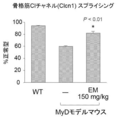
- FIG. It is a figure which shows the result of having examined the effect with respect to the splicing abnormality of the skeletal muscle chloride channel (Clcn1) gene in the quadriceps quadriceps muscle after administering erythromycin intraperitoneally to MyD model mouse for 8 days.
- Clcn1 skeletal muscle chloride channel
- the present invention relates to a treatment for myotonic dystrophy comprising as an active ingredient at least one compound selected from the group consisting of erythromycin, clarithromycin and azithromycin, a pharmaceutically acceptable salt, a solvate, or a prodrug thereof.
- erythromycin clarithromycin and azithromycin
- a pharmaceutically acceptable salt a pharmaceutically acceptable salt, a solvate, or a prodrug thereof.
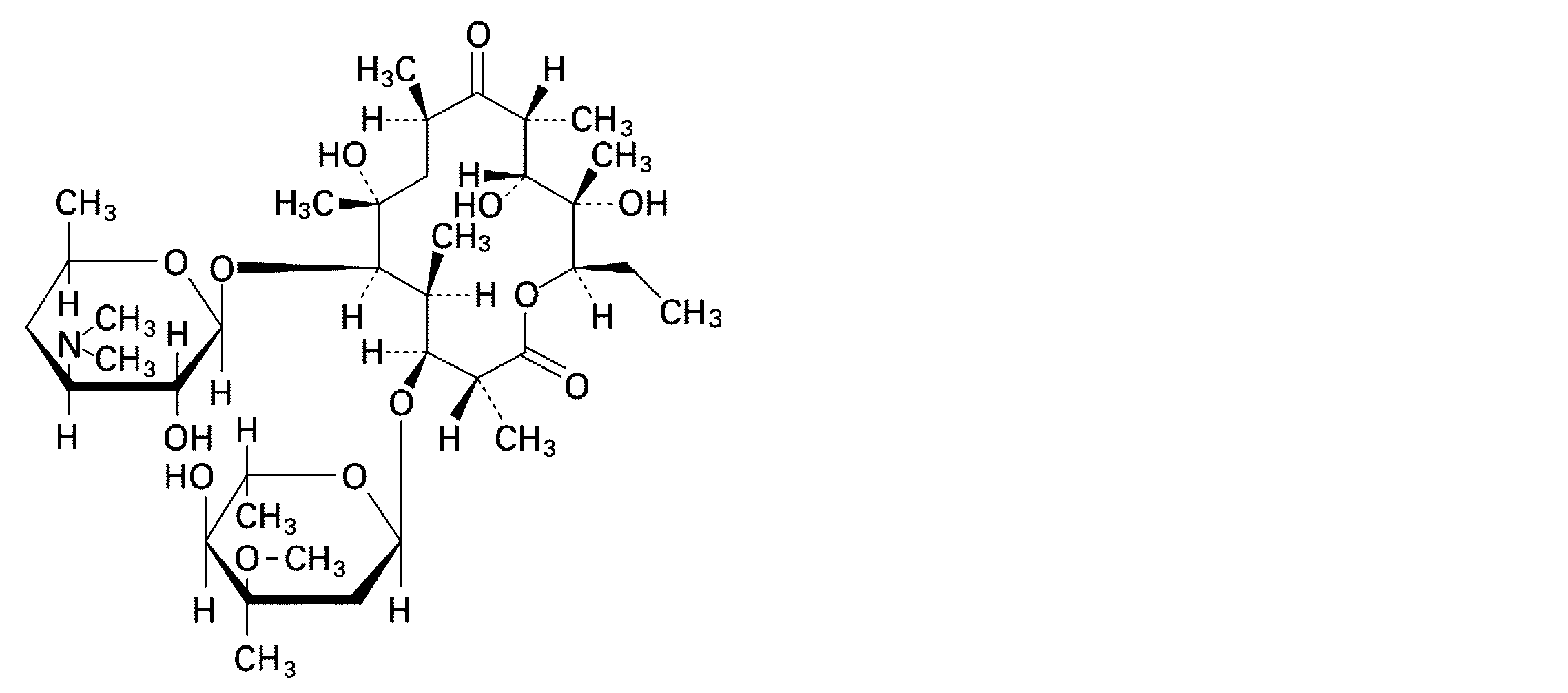
- Erythromycin is a 14-membered macrolide antibiotic that exhibits strong antibacterial activity mainly against Gram-positive bacteria, and was isolated and extracted from the culture solution of Streptomyces erythreus in 1952 by McGuire et al. Erythromycin has the following chemical structure, and the chemical names are (2R, 3S, 4S, 5R, 6R, 8R, 10R, 11R, 12S, 13R) -5- (3, 4, 6-Trideoxy-3-dimethylamino- ⁇ -D-xylo-hexopyranosyloxy) -3- (2, 6-dideoxy-3-Cmethyl-3-O-methyl- ⁇ -L-ribo-hexopyranosyloxy) -6, 11, 12-trihydroxy-2, 4, 6 8, 10, 12-hexamethyl-9-oxopentadecan-13-olide.
- Erythromycin is approved and sold as an ethical drug, and these erythromycins can be purchased and used in the present invention.
- a salt such as erythromycin stearate or erythromycin lactobionate or a prodrug such as erythromycin ethyl succinate is used as an active ingredient, and these can be suitably used as the erythromycin of the present invention. it can.
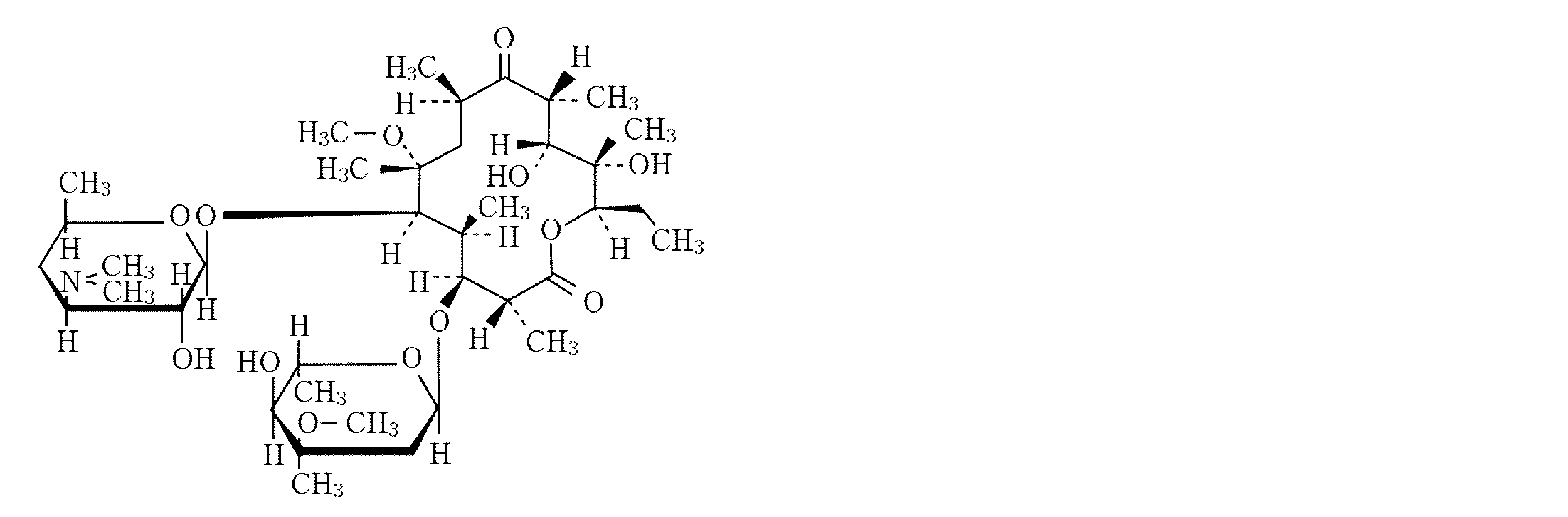
- Clarithromycin is a semi-synthetic macrolide antibiotic (6-O-methylerythromycin A) in which the 6-position hydroxyl group of the lactone ring of erythromycin is O-methylated. Due to its chemical structure, clarithromycin is more resistant to acid than erythromycin. It is said to be a stable substance.
- Clarithromycin has the following chemical structure, and the chemical names are (2R, 3S, 4S, 5R, 6R, 8R, 10R, 11R, 12S, 13R) -5- (3, 4, 6 -Trideoxy-3- dimethylamino- ⁇ -D-xylo-hexopyranosyloxy) -3- (2, 6-dideoxy-3-C-methyl-3-O-methyl- ⁇ -L-ribo-hexopyranosyloxy) -11, 12-dihydroxy-6-methoxy -2, 4, 6, 8, 10, 12-hexamethyl-9-oxopentadecan-13-olide. Clarithromycin is approved and marketed as an ethical drug, and these clarithromycins can be purchased and used in the present invention.
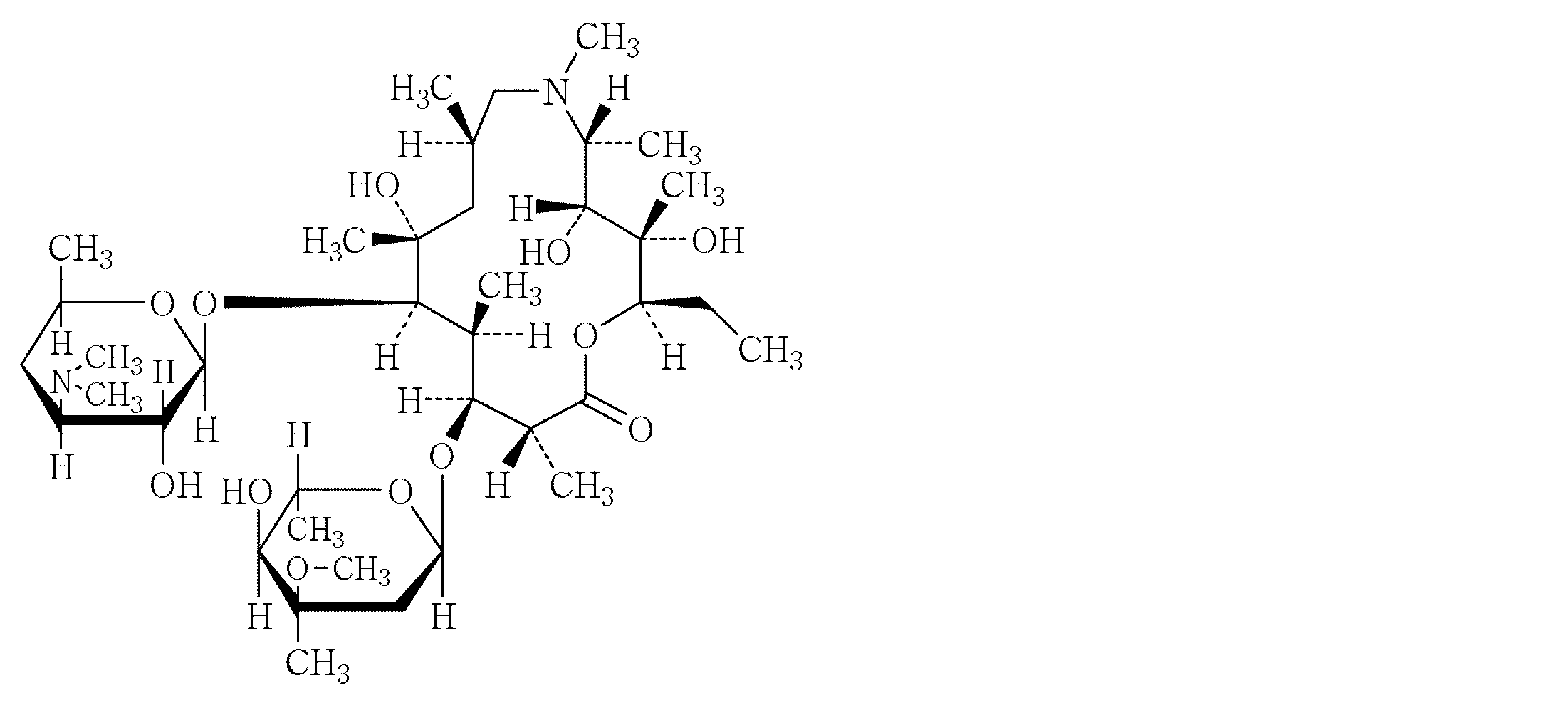
- Azithromycin is a 14-membered macrolide antibiotic derived from erythromycin.
- Azithromycin has the following chemical structure, and the chemical names are (2R, 3S, 4S, 5R, 6R, 8R, 11R, 12R, 13S, 14R) -5- (3, 4, 6-Trideoxy-3-dimethylamino- ⁇ -D-xylo-hexopyranosyloxy) -3- (2,6-dideoxy-3-C-methyl-3-O-methyl- ⁇ -L-ribo-hexopyranosyloxy) -10-aza-6, 12, -13-trihydroxy -2, 4, 6, 8, 10, 11, 13-heptamethylhexadecan-14-olide dihydrate.
- Azithromycin is approved and marketed as an ethical drug, and these azithromycins can be purchased and used in the present invention.
- Azithromycin is preferably used as a hydrate.
- Erythromycin, clarithromycin and azithromycin are orally administrable antibiotics and have already been used in clinical practice for many years, and thus safety for long-term administration has been established. Therefore, an inexpensive, tolerable and safe therapeutic agent can be provided for MyD patients.
- the pharmaceutically acceptable salt is not particularly limited as long as it maintains the efficacy of the active ingredient and does not adversely affect the human body.
- acetic acid, propionic acid, butyric acid, formic acid, trifluoroacetic acid Maleic acid, tartaric acid, citric acid, stearic acid, succinic acid, ethyl succinic acid, malonic acid, lactobionic acid, gluconic acid, glucoheptonic acid, benzoic acid, methanesulfonic acid, ethanesulfonic acid, 2-hydroxyethanesulfonic acid, benzenesulfone Acid, p-toluenesulfonic acid (tosylic acid), lauryl sulfuric acid, malic acid, aspartic acid, glutamic acid, adipic acid, cysteine, N-acetylcysteine, hydrochloric acid, hydrobromic acid, phosphoric acid, sulfuric acid, hydrochloric acid, hydrobro
- a prodrug means a compound that is converted to erythromycin, clarithromycin, or azithromycin by a reaction with an enzyme, gastric acid or the like under physiological conditions in vivo. Examples thereof include esters that undergo hydrolysis in vivo to release these compounds.
- the therapeutic agent of the present invention can effectively improve MyD symptoms.
- MyD includes type I (MyD1) in which an abnormal extension of the CTG repeat sequence of the 3′UTR of the myotonin protein kinase (DMPK) gene is observed, and an abnormal extension of the CCTG repeat sequence of the Zn finger protein 9 (ZNF9) gene intron 1
- MyD2 the recognized type II
- the therapeutic targets of the therapeutic agent of the present invention include, but are not limited to, all diseases diagnosed as MyD.
- it is type I (MyD1).
- Symptoms improved by the therapeutic agent of the present invention are not particularly limited.
- myotonia myotonia
- muscle atrophy muscle weakness
- cardiac lesion cardiac conduction disorder, myocardial disorder
- central nervous system symptoms central nervous system symptoms (cognitive symptoms, personality changes)
- Somnolence ocular symptoms
- endocrine abnormalities glucose intolerance, hyperlipidemia
- muscle tonicity muscle atrophy and muscle weakness
- muscle tonicity myotonia
- the therapeutic agent of the present invention can suppress splicing abnormality caused by abnormal growth of myotonin protein kinase (DMPK) gene.
- Splicing abnormality means that splicing, which is a process of removing introns from mRNA precursors and ligating exons, is not performed normally, and abnormal splicing products are generated.
- Suppressing splicing abnormalities means that the production of abnormal splicing products is partially or completely suppressed and the production of normal splicing products (normal mRNA) is increased.
- genes in which splicing abnormality is caused by abnormal elongation of DMPK gene include the genes shown in Table 1 below (Nakamori M, et al: ANN NEUROL 2013; 74: 862-872).
- the therapeutic agent of the present invention can be formulated by appropriately blending the above active ingredients with a pharmaceutically acceptable carrier and further additives.
- oral preparations such as tablets, coated tablets, pills, powders, granules, capsules, solutions, suspensions, emulsions; parenterals such as injections, infusions, suppositories, ointments, patches, etc. can do.
- What is necessary is just to set suitably about the mixture ratio of a carrier or an additive based on the range normally employ
- Carriers or additives that can be blended are not particularly limited.
- various carriers such as water, physiological saline, other aqueous solvents, aqueous or oily bases; excipients, binders, pH adjusters, disintegrants, absorption
- Various additives such as an accelerator, a lubricant, a colorant, a corrigent, and a fragrance are included.
- excipient examples include lactose, sucrose, D-mannitol, starch, crystalline cellulose, and light anhydrous silicic acid.
- binder examples include crystalline cellulose, sucrose, D-mannitol, dextrin, hydroxypropylcellulose, Examples thereof include polymer compounds such as hydroxypropylmethylcellulose and polyvinylpyrrolidone.
- lubricant examples include magnesium stearate, calcium stearate, talc, colloidal silica, and the like.
- disintegrant examples include starch and carboxy. Examples include methylcellulose, carboxymethylcellulose calcium, croscarmellose sodium, carboxymethyl starch sodium, etc.
- wetting agents include glycerin, butylene glycol, propylene glycol, Rubitoru, although triacetin and the like, but not limited to. If necessary, it may be coated with a coating agent (sucrose, gelatin, hydroxypropylcellulose, hydroxypropylmethylcellulose phthalate, etc.), or may be coated with two or more layers.
- a coating agent sucrose, gelatin, hydroxypropylcellulose, hydroxypropylmethylcellulose phthalate, etc.
- the active ingredient is dissolved or dispersed in an aqueous base such as physiological saline or an oil base acceptable for injection, and injected for intravenous, intramuscular or subcutaneous administration. do it.
- an aqueous base such as physiological saline or an oil base acceptable for injection
- additives such as a buffer, a pH adjuster, a tonicity agent, a solubilizing agent, a suspending agent, and a stabilizer can be appropriately added.
- examples of the aqueous base include infusion solutions such as physiological saline, water for injection, Ringer's solution, and the like.
- examples of the oil base include propylene glycol, polyethylene glycol, sesame oil, soybean oil, corn oil, peanut oil, cottonseed oil, olive oil, propylene glycol fatty acid ester and the like.
- examples of the buffer include phosphates, acetates, carbonates, citrates, borates, glutamates, epsilon aminocaproate, and buffer solutions such as Tris buffer.
- pH adjusters include inorganic acids such as hydrochloric acid, phosphoric acid, sulfuric acid, and carbonic acid, organic acids such as acetic acid, tartaric acid, lactic acid, citric acid, tartaric acid, and succinic acid, inorganic bases such as sodium hydroxide, and sodium citrate. And organic bases such as sodium tartrate.
- tonicity agents include inorganic salts such as sodium chloride, sugar alcohols such as D-mannitol, sorbitol, and xylitol, and sugars such as fructose, glucose, glass tose, ribose, xylose, mannose, maltotriose, and maltotetraose.
- Amino acids such as glycine and arginine.
- solubilizers include polyethylene glycol, propylene glycol, D-mannitol, benzyl benzoate, ethanol, trisaminomethane, cholesterol, triethanolamine, sodium carbonate, sodium citrate, lecithin, and nonionic ions such as polysorbate 80.
- Surfactant is mentioned.
- the suspending agent include surfactants such as stearyltriethanolamine, sodium lauryl sulfate, laurylaminopropionic acid, lecithin, glyceryl monostearate, polyvinyl alcohol, polyvinylpyrrolidone, sodium carboxymethylcellulose, methylcellulose, hydroxymethylcellulose.
- the stabilizer include albumin, globulin, gelatin, sorbitol, ethylene glycol, propylene glycol, ascorbic acid and the like.
- the therapeutic agent of the present invention can be applied to humans and other mammals (eg, rats, mice, rabbits, sheep, pigs, cattle, cats). , Dogs, monkeys, etc.).
- the daily dose of the pharmaceutical composition of the present invention is not particularly limited as long as it is an amount effective for MyD treatment and has few side effects.
- the daily dose of the pharmaceutical composition of the present invention is preferably set according to the daily dose of commercially available erythromycin, clarithromycin or azithromycin.
- the present invention provides an inhibitor of splicing abnormality caused by abnormal elongation of myotonin protein kinase (DMPK) gene.
- the splicing abnormality inhibitor of the present invention is the same as the therapeutic agent of the present invention, and at least one compound selected from the group consisting of erythromycin, clarithromycin and azithromycin, a pharmaceutically acceptable salt, solvate thereof, or These prodrugs can be used as active ingredients.
- genes whose splicing abnormality is suppressed by the splicing abnormality inhibitor of the present invention include the genes shown in Table 1 above. Among these, it is preferable to suppress splicing abnormalities such as ATP2A1, CLCN1, INSR, DMD, MBNL1, and BIN1, and it is preferable to suppress splicing abnormalities of ATP2A1 and CLCN1.
- the present invention includes the following inventions.
- a method of treating characteristic myotonic dystrophy At least one compound selected from the group consisting of erythromycin, clarithromycin and azithromycin, a pharmaceutically acceptable salt, solvate or prodrug thereof for use in the treatment of myotonic dystrophy.
- erythromycin Use of at least one compound selected from the group consisting of erythromycin, clarithromycin and azithromycin, a pharmaceutically acceptable salt, a solvate, or a prodrug thereof for the manufacture of a therapeutic agent for myotonic dystrophy .
- DMPK myotonin protein kinase
- Example 1 Effect of erythromycin on RNA aggregate formation in MyD model cells
- Erythromycin was allowed to act on MyD model cells, and the number of RNA aggregates was measured by the FISH (fluorescent in situ hybridization) method.
- MyD model cell As a MyD cell model, a cell (C2C12-DMPK800R, Nucleic Acids Research, 2014, 42 (10), 6591-6602) in which a DMPK gene region containing 800 CTG repeats was introduced into C2C12 cells was used.
- C2C12-DMPK800 was produced by the following procedure. That is, a plasmid (pLC16) containing a sequence in which 800 CTG is inserted into the 3 ′ untranslated region of the DMPK gene and a plasmid expressing PhiC31 integrase are both used as a mouse myoblast cell line C2C12 with Nucleofector (trade name, Lonza).
- Erythromycin “Erythrosine (registered trademark) for intravenous injection 500 mg (erythromycin lactobionate for injection)” (Abbott) was used as erythromycin. It was dissolved in 10 ml of ultrapure water and diluted with physiological saline to 15 mg / ml.
- RNA aggregates formed MyD model cells were cultured in a DMEM medium containing 10% FBS and penicillin / streptomycin under the conditions of 37 ° C. and 5% CO 2 .
- Erythromycin was added to the medium so as to be 0, 25, or 50 ⁇ M, and after 72 hours, it was fixed with 3% paraformaldehyde for 15 minutes at room temperature. After fixation, the plate was washed twice with PBS and then permeabilized with PBS containing 0.5% Triton X-100 for 5 minutes. Next, prehybridization treatment was carried out with 2 ⁇ SSC buffer containing 30% formamide for 10 minutes. Thereafter, hybridization was performed at 37 ° C.
- RNA aggregates in the nucleus was measured with a fluorescence microscope (Keyence PZ-9000).
- Example 2 Effect of erythromycin on splicing abnormality in MyD model cells. It was verified whether splicing abnormality in exon 22 of Atp2a1 gene was improved by allowing erythromycin to act on MyD model cells.
- Example 1 ⁇ Experimental materials and methods> (1) MyD model cell The same MyD model cell (C2C12-DMPK800R) as in Example 1 was used. (2) Erythromycin The same erythromycin as in Example 1 was used. (3) Quantification of splicing product Erythromycin was added to the medium of MyD model cells so that it might become 0, 25, 50 micromol, and total RNA was extracted 72 hours later using RNeasy Mini Plus Kit (trade name, Qiagen). As a control, normal RNA was extracted in the same manner using normal C2C12 cells cultured in a medium not containing erythromycin. Subsequently, cDNA was prepared using SuperScript III First Strand System (Invitrogen).
- Atp2a1 exon 22 RT primers were electrophoresed on a 2% agarose gel, stained with GelRed, and then the normal PCR product and the abnormal PCR product were each quantified with an image analyzer (Typhoon 9410, GE).
- FIGS. 2 (A) and (B) The results are shown in FIGS. 2 (A) and (B).
- (A) is the result of electrophoresis of the RT-PCR product
- (B) is a graph showing the proportion of normal type in the RT-PCR product. From FIG. 2 (A), normal C2C12 cells accounted for many normal types, and MyD model cells cultured in a medium not containing erythromycin had a higher proportion of abnormal types than normal types. It was shown that the addition of erythromycin to the medium significantly increased the proportion of normal type in MyD model cells and improved splicing abnormalities to the same extent as normal C2C12 cells.
- Example 3 Effect of intraperitoneal erythromycin administration in MyD model mice. Erythromycin was intraperitoneally administered to MyD model mice, and the effect on myotonic symptoms in quadriceps muscle and the splicing abnormality of skeletal muscle chloride channel (Clcn1) gene were verified.
- HSA LR mice Animals used HSA LR mice (transferred from Dr. Charles Thornton (University of Rochester) and bred at the laboratory animal facility of Osaka University) were used as MyD model mice.
- HSA LR mice are transgenic animals in which the hACTA gene (human gene constitutively expressed in muscle cells) 3′-side CTG repeats amplified 220 times are integrated into the genome, and CUG sequences are amplified in muscle cells. By expressing mRNA, symptoms of MyD appear (Science, 2000, 289 (5485), 1769-73).
- wild type mice FVB / NJcl mice, purchased from CLEA Japan
- Erythromycin “Erythrosine (registered trademark) for intravenous injection 500 mg (erythromycin lactobionate for injection)” (Abbott) was used as erythromycin. It was used by dissolving with physiological saline to 50 mg / ml.
- (3) Grouping and administration schedule Three groups were provided: an erythromycin-administered MyD group, a physiological saline-administered MyD group, and a control (wild-type mouse) group (each group n 3 ( ⁇ 1, ⁇ 2)). The dose of erythromycin was 150 mg / kg, and was administered once a day for 8 consecutive days. Saline was administered to the MyD group administered physiological saline once a day for 8 consecutive days. None was administered to the control (wild type mouse) group.
- Rv CACGGAACACAAAGGCACTG (SEQ ID NO: 4)
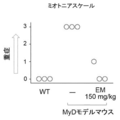
- Fig. 4 shows the analysis results of muscle tonicity.
- muscle tonicity was not detected in all three animals.
- muscle tonicity of severity 3 was detected in all three animals.
- erythromycin-administered MyD group one had a severity of 1 and the other two did not detect muscle tonicity. From these results, it was shown that splicing abnormality based on abnormal extension of CTG repeats was improved by erythromycin administration, and as a result, myotonic symptoms in MyD were improved.
- Example 4 Effect of oral administration of high-dose erythromycin in MyD model mice
- a high dose of erythromycin was orally administered to a MyD model mouse, and the effect on splicing abnormality of the skeletal muscle chloride channel (Clcn1) gene in quadriceps femoris was verified.
- Clcn1 skeletal muscle chloride channel
- Example 5 Effect of oral administration of normal dose erythromycin in MyD model mice.
- a normal dose of erythromycin was orally administered to MyD model mice, and the effect on myotonic symptoms in the quadriceps muscle and the splicing abnormality of the skeletal muscle chloride channel (Clcn1) gene were verified.
- Example 3 Animal used The same MyD model mouse (HSA LR mouse) and wild type mouse as in Example 3 were used.
- Erythromycin As in Example 4, “erythrosine (registered trademark) dry syrup W20% (erythromycin ethyl succinate dry syrup)” (Abbott) was used as erythromycin after being dissolved in pure water to 100 mg / ml. .
- (3) Grouping and administration schedule Three groups of erythromycin 50 mg / kg administration MyD group, physiological saline administration MyD group, and control (wild type mouse) group were provided (each group n 3). Administration was by gavage and was performed once a day for 21 consecutive days.
- Fig. 7 shows the analysis results of muscle tonicity.
- all 3 animals detected muscle tonicity of severity 3, but in the erythromycin 50 mg / kg-administered MyD group, 2 animals improved to severity 2 and 1 animal improved to severity 1.
Landscapes
- Health & Medical Sciences (AREA)
- Life Sciences & Earth Sciences (AREA)
- Veterinary Medicine (AREA)
- Chemical & Material Sciences (AREA)
- Medicinal Chemistry (AREA)
- Pharmacology & Pharmacy (AREA)
- Animal Behavior & Ethology (AREA)
- General Health & Medical Sciences (AREA)
- Public Health (AREA)
- Epidemiology (AREA)
- Molecular Biology (AREA)
- Engineering & Computer Science (AREA)
- Bioinformatics & Cheminformatics (AREA)
- Neurology (AREA)
- Orthopedic Medicine & Surgery (AREA)
- Physical Education & Sports Medicine (AREA)
- Chemical Kinetics & Catalysis (AREA)
- General Chemical & Material Sciences (AREA)
- Nuclear Medicine, Radiotherapy & Molecular Imaging (AREA)
- Organic Chemistry (AREA)
- Pharmaceuticals Containing Other Organic And Inorganic Compounds (AREA)
- Measuring Or Testing Involving Enzymes Or Micro-Organisms (AREA)
Abstract
Description
[1]エリスロマイシン、クラリスロマイシンおよびアジスロマイシンからなる群より選ばれる少なくとも1種の化合物、その薬学的に許容される塩、水和物、またはそれらのプロドラッグを有効成分とする筋強直性ジストロフィー治療薬。
[2]筋強直を改善する前記[1]に記載の筋強直性ジストロフィー治療薬。
[3]ミオトニンプロテインキナーゼ(DMPK)遺伝子異常伸長に起因するスプライシング異常を抑制する前記[1]または[2]に記載の筋強直性ジストロフィー治療薬。
[4]哺乳動物に対して、エリスロマイシン、クラリスロマイシンおよびアジスロマイシンからなる群より選ばれる少なくとも1種の化合物、その医薬上許容される塩、溶媒和物、またはそれらのプロドラッグの有効量を投与することを特徴とする筋強直性ジストロフィーの治療方法。
[5]筋強直性ジストロフィーの治療に用いるための、エリスロマイシン、クラリスロマイシンおよびアジスロマイシンからなる群より選ばれる少なくとも1種の化合物、その医薬上許容される塩、溶媒和物、またはそれらのプロドラッグ。
[6]ミオトニンプロテインキナーゼ(DMPK)遺伝子異常伸長に起因するスプライシング異常の抑制剤であって、エリスロマイシン、クラリスロマイシンおよびアジスロマイシンからなる群より選ばれる少なくとも1種の化合物、その医薬上許容される塩、溶媒和物、またはそれらのプロドラッグを有効成分とするスプライシング異常抑制剤。
[7]ATP2A1、CLCN1、INSR、DMD、MBNL1およびBIN1からなる群より選ばれる少なくとも1つの遺伝子のスプライシング異常を抑制する前記[6]に記載のスプライシング異常抑制剤。

本発明の医薬組成物の1日当たりの投与量は、MyDの治療に有効な量であって副作用の少ない量であれば特に限定されない。本発明の医薬組成物の1日当たりの投与量は、市販のエリスロマイシン、クラリスロマイシンまたはアジスロマイシンの1日当たりの投与量に準じて設定することが好ましい。
哺乳動物に対して、エリスロマイシン、クラリスロマイシンおよびアジスロマイシンからなる群より選ばれる少なくとも1種の化合物、その医薬上許容される塩、溶媒和物、またはそれらのプロドラッグの有効量を投与することを特徴とする筋強直性ジストロフィーの治療方法。
筋強直性ジストロフィーの治療に用いるための、エリスロマイシン、クラリスロマイシンおよびアジスロマイシンからなる群より選ばれる少なくとも1種の化合物、その医薬上許容される塩、溶媒和物、またはそれらのプロドラッグ。
筋強直性ジストロフィー治療薬を製造するための、エリスロマイシン、クラリスロマイシンおよびアジスロマイシンからなる群より選ばれる少なくとも1種の化合物、その医薬上許容される塩、溶媒和物、またはそれらのプロドラッグの使用。
哺乳動物に対して、エリスロマイシン、クラリスロマイシンおよびアジスロマイシンからなる群より選ばれる少なくとも1種の化合物、その医薬上許容される塩、溶媒和物、またはそれらのプロドラッグの有効量を投与することを特徴とするミオトニンプロテインキナーゼ(DMPK)遺伝子異常伸長に起因するスプライシング異常の抑制方法。
ミオトニンプロテインキナーゼ(DMPK)遺伝子異常伸長に起因するスプライシング異常の抑制に用いるための、エリスロマイシン、クラリスロマイシンおよびアジスロマイシンからなる群より選ばれる少なくとも1種の化合物、その医薬上許容される塩、溶媒和物、またはそれらのプロドラッグ。
ミオトニンプロテインキナーゼ(DMPK)遺伝子異常伸長に起因するスプライシング異常抑制剤を製造するための、エリスロマイシン、クラリスロマイシンおよびアジスロマイシンからなる群より選ばれる少なくとも1種の化合物、その医薬上許容される塩、溶媒和物、またはそれらのプロドラッグの使用。
MyDモデル細胞にエリスロマイシンを作用させ、FISH(fluorescent in situ hybridization)法にてRNA凝集体の数を測定した。
(1)MyDモデル細胞
MyD細胞モデルとして、C2C12細胞に800CTGリピートを含むDMPK遺伝子領域を導入した細胞(C2C12-DMPK800R、Nucleic Acids Research, 2014, 42(10), 6591-6602)を使用した。C2C12-DMPK800は以下の手順で作製した。すなわち、DMPK遺伝子3’非翻訳領域に800CTGを挿入した配列を含むプラスミド(pLC16)とPhiC31インテグラーゼを発現するするプラスミドとを、共にマウス筋芽細胞株C2C12にNucleofector(商品名、Lonza社)を用いてトランスフェクションした後、ピューロマイシンを添加した選択培地を用いて安定発現株を選択した。続いて、安定発現株にCreリコンビナーゼを発現するプラスミドをトランスフェクションし、ハイグロマイシンを添加した選択培地を用いて、800CUGの転写が誘導されるクローンを選択した。
エリスロマイシンとして「エリスロシン(登録商標)静注用500mg(注射用エリスロマイシンラクトビオン酸塩)」(アボット)を使用した。超純水10mlで溶解し、生理食塩水で15mg/mlとなるように希釈して使用した。
MyDモデル細胞は、10%FBS、ペニシリン/ストレプトマイシン含有DMEM培地を用いて、37℃、5%CO2条件下で培養した。培地にエリスロマイシンを0、25または50μMになるように添加し、72時間後に3%パラホルムアルデヒドで15分間室温にて固定した。固定後、PBSで2回洗浄した後に、0.5%TritonX-100含有PBSで5分間透過処理した。次に30%ホルムアミド含有の2×SSCバッファーで10分間プレハイブリダイゼーション処理した。その後、30%ホルムアミド、2μg/mL BSA、66μg/mL yeast tRNA、2mMバナジル複合体(vanadyl complex)、1ng/μL Texas Red CAG probe含有の2×SSCバッファーで37℃、1時間ハイブリダイゼーション処理した。30%ホルムアミド含有の2×SSCバッファーで42℃、30分間ポストハイブリダイゼーション処理した後に、1×SSCバッファーで1回洗浄し、その後にPBSで2回洗浄した。Vectashield with DAPI(商品名、Vector Laboratories社)を用いて固定した後、蛍光顕微鏡(Keyence PZ-9000)で核内のRNA凝集体の数を計測した。
結果を図1に示した。図1から明らかなように、エリスロマイシンを添加していない培地で培養したMyDモデル細胞では、RNA凝集体陽性細胞率が60%を超えていたが、エリスロマイシンを培地に添加することにより、RNA凝集体陽性細胞率は、用量依存的に有意に低下した。
MyDモデル細胞にエリスロマイシンを作用させ、Atp2a1遺伝子のexon 22におけるスプライシング異常が改善するか否かを検証した。
(1)MyDモデル細胞
実施例1と同じMyDモデル細胞(C2C12-DMPK800R)を使用した。
(2)エリスロマイシン
実施例1と同じエリスロマイシンを使用した。
(3)スプライシング産物の定量
MyDモデル細胞の培地に、エリスロマイシンを0、25、50μMとなるように添加し、72時間後にRNeasy Mini Plus Kit(商品名、Qiagen)を用いてtotal RNAを抽出した。コントロールとして、エリスロマイシンを含有しない培地で培養した正常C2C12細胞を用い、同様にtotal RNAを抽出した。続いて、SuperScript III First Strand Symthesis System(Invitrogen)を用いてcDNAを調製した。cDNAをRNaseH処理した後、以下のAtp2a1 exon 22 RTプライマーを用いてRT-PCRを行った。RT-PCR産物を2%アガロースゲルで電気泳動し、GelRedを用いて染色した後、イメージアナライザー(Typhoon 9410、GE)で正常型のPCR産物と異常型のPCR産物をそれぞれ定量した。
Atp2a1 exon 22 RTプライマー
Fw: GCTCATGGTCCTCAAGATCTCAC(配列番号1)
Rv: GGGTCAGTGCCTCAGCTTTG(配列番号2)
結果を図2(A)、(B)に示した。(A)はRT-PCR産物の電気泳動の結果であり、(B)はRT-PCR産物における正常型の割合を示すグラフである。図2(A)から、正常C2C12細胞では正常型が多数を占め、エリスロマイシンを含有しない培地で培養したMyDモデル細胞では異常型の比率が正常型より多かった。エリスロマイシンを培地に添加することにより、MyDモデル細胞における正常型の比率が有意に増加し、正常C2C12細胞と同程度まで、スプライシング異常が改善することが示された。
MyDモデルマウスにエリスロマイシンを腹腔内投与し、大腿四頭筋における筋強直症状に対する効果、および骨格筋クロライドチャネル(Clcn1)遺伝子のスプライシング異常に対する効果を検証した。
(1)使用動物
MyDモデルマウスとしてHSALRマウス(Dr. Charles Thornton(University of Rochester)より譲渡され、大阪大学の実験動物施設で繁殖させたもの)を使用した。HSALRマウスはhACTA遺伝子(筋細胞で恒常的に発現するヒト遺伝子)3’側CTG反復配列を220回に増幅したものをゲノム中に組み込んだトランスジェニック動物で、筋細胞でCUG配列が増幅したmRNAが発現することによって、MyDの症状が現れる(Science, 2000, 289(5485), 1769-73)。コントロールとして、野生型マウス(FVB/NJclマウス、日本クレアより購入)を使用した。実験には、8週齢の雌雄マウスを用いた。
エリスロマイシンとして「エリスロシン(登録商標)静注用500mg(注射用エリスロマイシンラクトビオン酸塩)」(アボット)を使用した。生理食塩水で50mg/mlになるように溶解して使用した。
(3)群分け、投与スケジュール
エリスロマイシン投与MyD群、生理食塩水投与MyD群、コントロール(野生型マウス)群の3群を設けた(各群n=3(♂1、♀2))。エリスロマイシンの投与量は150mg/kgとし、一日一回8日間連続投与した。生理食塩水投与MyD群には、生理食塩水を、一日一回8日間連続投与した。コントロール(野生型マウス)群には、何も投与しなかった。
最終投与の24時間後に、麻酔下にてマウス大腿四頭筋の電気的筋強直現象を針筋電図で解析した。具体的には、マウス大腿四頭筋へ10回以上針電極を刺入した時の電気的筋強直現象の発生頻度を次の4段階に分けて評価した。
重症度0:電気的筋強直現象が全くみられない。
重症度1:全体の50%未満に電気的筋強直現象がみられる。
重症度2:全体の50%以上、90%未満に電気的筋強直現象がみられる。
重症度3:電気的筋強直現象が90%以上みられる。
(5)スプライシング産物の定量
最終投与の24時間後に、マウスから大腿四頭筋を採取した。TRI Reagent(商品名、MRC)を用いてtotal RNAを抽出した後、SuperScript III First Strand Symthesis System(Invitrogen)を用いてcDNAを調製した。cDNAをRNaseH処理した後、以下のClcn1 exon 7a RTプライマーを用いてRT-PCRを行った。RT-PCR産物を2%アガロースゲルで電気泳動し、GelRedを用いて染色した後、イメージアナライザー(Typhoon 9410、GE)で正常型のPCR産物と異常型のPCR産物をそれぞれ定量し、RT-PCR産物における正常型の割合を算出した。統計解析にはt-testを用いた。
Clcn1 exon 7a RTプライマー
Fw: TGAAGGAATACCTCACACTCAAGG(配列番号3)
Rv: CACGGAACACAAAGGCACTG(配列番号4)
スプライシング異常の評価結果を図3に示した。コントロール群(図中WT)では、90%超のRT-PCR産物が正常型であったが、生理食塩水投与MyD群(図中-)では、正常型の割合が約60%に減少し、異常型RT-PCR産物の割合が増加していることが示された。エリスロマイシン投与MyD群では、正常型RT-PCR産物の割合が有意に増加したことから、エリスロマイシン投与によりClcn1遺伝子のスプライシング異常が改善されることが明らかになった。
MyDモデルマウスに高用量のエリスロマイシンを経口投与し、大腿四頭筋における骨格筋クロライドチャネル(Clcn1)遺伝子のスプライシング異常に対する効果を検証した。
(1)使用動物
実施例3と同じMyDモデルマウス(HSALRマウス)および野生型マウスを使用した。
(2)エリスロマイシン
エリスロマイシンとして「エリスロシン(登録商標)ドライシロップW20%(エリスロマイシンエチルコハク酸エステルドライシロップ)」(アボット)を使用した。純水で100mg/mlになるように溶解して使用した。
(3)群分け、投与スケジュール
エリスロマイシン300mg/kg投与MyD群、エリスロマイシン600mg/kg投与MyD群、エリスロマイシン900mg/kg投与MyD群、生理食塩水投与MyD群、コントロール(野生型マウス)群の5群を設けた(各群n=3)。投与は強制経口投与とし、一日一回5日間連続で行った。
(4)スプライシング産物の定量
最終投与日にマウスから大腿四頭筋を採取し、実施例3と同じ方法でRT-PCRを行い、正常型および異常型のスプライシング産物を定量し、RT-PCR産物における正常型の割合を算出した。統計解析にはt-testを用いた。
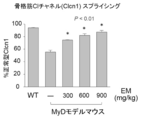
結果を図5に示した。図5から明らかなように、高用量エリスロマイシンの経口投与により、Clcn1遺伝子のスプライシング異常が、用量依存的に有意に改善されることが明らかになった。
MyDモデルマウスに通常用量のエリスロマイシンを経口投与し、大腿四頭筋における筋強直症状に対する効果、および骨格筋クロライドチャネル(Clcn1)遺伝子のスプライシング異常に対する効果を検証した。
(1)使用動物
実施例3と同じMyDモデルマウス(HSALRマウス)および野生型マウスを使用した。
(2)エリスロマイシン
実施例4と同じく、エリスロマイシンとして「エリスロシン(登録商標)ドライシロップW20%(エリスロマイシンエチルコハク酸エステルドライシロップ)」(アボット)を、純水で100mg/mlになるように溶解して使用した。
(3)群分け、投与スケジュール
エリスロマイシン50mg/kg投与MyD群、生理食塩水投与MyD群、コントロール(野生型マウス)群の3群を設けた(各群n=3)。投与は強制経口投与とし、一日一回21日間連続で行った。
(4)筋強直(ミオトニア)の測定
最終投与日に、麻酔下にてマウス大腿四頭筋の電気的筋強直現象を針筋電図で解析した。
(5)スプライシング産物の定量
最終投与日にマウスから大腿四頭筋を採取し、実施例3と同じ方法でRT-PCRを行い、正常型および異常型のスプライシング産物を定量した。統計解析にはt-testを用いた。
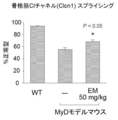
スプライシング異常の評価結果を図6に示した。図6から明らかなように、エリスロマイシン50mg/kg投与MyD群は生理食塩水投与MyD群と比較して、正常型RT-PCR産物の割合が有意に増加した。すなわち、通常用量(50mg/kg)のエリスロマイシンを21日間経口投与することにより、Clcn1遺伝子のスプライシング異常が改善されることが明らかになった。
Claims (7)
- エリスロマイシン、クラリスロマイシンおよびアジスロマイシンからなる群より選ばれる少なくとも1種の化合物、その薬学的に許容される塩、水和物、またはそれらのプロドラッグを有効成分とする筋強直性ジストロフィー治療薬。
- 筋強直を改善する請求項1に記載の筋強直性ジストロフィー治療薬。
- ミオトニンプロテインキナーゼ(DMPK)遺伝子異常伸長に起因するスプライシング異常を抑制する請求項1または2に記載の筋強直性ジストロフィー治療薬。
- 哺乳動物に対して、エリスロマイシン、クラリスロマイシンおよびアジスロマイシンからなる群より選ばれる少なくとも1種の化合物、その医薬上許容される塩、溶媒和物、またはそれらのプロドラッグの有効量を投与することを特徴とする筋強直性ジストロフィーの治療方法。
- 筋強直性ジストロフィーの治療に用いるための、エリスロマイシン、クラリスロマイシンおよびアジスロマイシンからなる群より選ばれる少なくとも1種の化合物、その医薬上許容される塩、溶媒和物、またはそれらのプロドラッグ。
- ミオトニンプロテインキナーゼ(DMPK)遺伝子異常伸長に起因するスプライシング異常の抑制剤であって、エリスロマイシン、クラリスロマイシンおよびアジスロマイシンからなる群より選ばれる少なくとも1種の化合物、その医薬上許容される塩、溶媒和物、またはそれらのプロドラッグを有効成分とするスプライシング異常抑制剤。
- ATP2A1、CLCN1、INSR、DMD、MBNL1およびBIN1からなる群より選ばれる少なくとも1つの遺伝子のスプライシング異常を抑制する請求項6に記載のスプライシング異常抑制剤。
Priority Applications (4)
| Application Number | Priority Date | Filing Date | Title |
|---|---|---|---|
| US15/743,622 US10500223B2 (en) | 2015-07-14 | 2016-07-07 | Therapeutic agent for myotonic dystrophy |
| CN201680041316.2A CN107847511B (zh) | 2015-07-14 | 2016-07-07 | 强直性肌营养不良治疗药 |
| JP2017528629A JP6460552B2 (ja) | 2015-07-14 | 2016-07-07 | 筋強直性ジストロフィー治療薬 |
| EP16824362.4A EP3323419B1 (en) | 2015-07-14 | 2016-07-07 | Erythromycin, clarithromycin and azithromycin for treatment of myotonic dystrophy |
Applications Claiming Priority (2)
| Application Number | Priority Date | Filing Date | Title |
|---|---|---|---|
| JP2015-140599 | 2015-07-14 | ||
| JP2015140599 | 2015-07-14 |
Publications (1)
| Publication Number | Publication Date |
|---|---|
| WO2017010382A1 true WO2017010382A1 (ja) | 2017-01-19 |
Family
ID=57757931
Family Applications (1)
| Application Number | Title | Priority Date | Filing Date |
|---|---|---|---|
| PCT/JP2016/070067 Ceased WO2017010382A1 (ja) | 2015-07-14 | 2016-07-07 | 筋強直性ジストロフィー治療薬 |
Country Status (5)
| Country | Link |
|---|---|
| US (1) | US10500223B2 (ja) |
| EP (1) | EP3323419B1 (ja) |
| JP (1) | JP6460552B2 (ja) |
| CN (1) | CN107847511B (ja) |
| WO (1) | WO2017010382A1 (ja) |
Cited By (1)
| Publication number | Priority date | Publication date | Assignee | Title |
|---|---|---|---|---|
| WO2019176864A1 (ja) * | 2018-03-12 | 2019-09-19 | 国立大学法人 岡山大学 | 筋ジストロフィー関連心筋症の治療又は予防剤 |
Families Citing this family (2)
| Publication number | Priority date | Publication date | Assignee | Title |
|---|---|---|---|---|
| CN112680407B (zh) * | 2019-10-17 | 2023-03-31 | 中国科学院分子细胞科学卓越创新中心 | 促进肌肉干细胞分化的化合物及其应用 |
| CN116763923B (zh) * | 2023-04-26 | 2025-08-26 | 浙江瀚维科技有限责任公司 | TDP1和Eltrombopag在治疗强直性肌营养不良2型中的应用 |
Citations (2)
| Publication number | Priority date | Publication date | Assignee | Title |
|---|---|---|---|---|
| JP2014502598A (ja) * | 2010-12-13 | 2014-02-03 | トーマス・ジュリアス・ボロディ | 胃および結腸製剤ならびにそれらを作製するための方法および使用するための方法 |
| WO2014102778A2 (en) * | 2012-12-24 | 2014-07-03 | Ramot At Tel-Aviv University Ltd. | Agents for treating genetic diseases resulting from nonsense mutations, and methods for identifying the same |
Family Cites Families (10)
| Publication number | Priority date | Publication date | Assignee | Title |
|---|---|---|---|---|
| US5760010A (en) * | 1995-01-01 | 1998-06-02 | Klein; Ira | Method of treating liver disorders with a macrolide antibiotic |
| US7189703B2 (en) * | 1998-01-09 | 2007-03-13 | Intracell, Llc | Treatment and diagnosis of alzheimer's disease |
| US20050137181A1 (en) * | 1999-03-17 | 2005-06-23 | Bonner Ernest L. | Method for treatment of reactive arthritis or bursitis |
| HRP20010301A2 (en) * | 2001-04-27 | 2001-12-31 | Pliva D D | New therapeutic indication for azithromycin in the treatment of non-infective inflammatory diseases |
| EP2560001B1 (en) * | 2006-09-21 | 2016-04-13 | University of Rochester | Compositions and methods related to protein displacement therapy for myotonic distrophy |
| US20100197650A1 (en) * | 2008-08-28 | 2010-08-05 | Forest Laboratories Holdings Ltd. | Compositions and methods of treatment comprising ceftaroline |
| CA2755976C (en) * | 2009-03-23 | 2020-04-07 | Ambit Biosciences Corporation | Methods of treatment using combination therapy |
| WO2011007866A1 (ja) | 2009-07-16 | 2011-01-20 | 国立大学法人名古屋大学 | 筋強直性ジストロフィー治療薬 |
| EP2380618A1 (en) * | 2010-04-26 | 2011-10-26 | PARI Pharma GmbH | Operating method for an aerosol delivery device and aerosol delivery device |
| US9662314B2 (en) * | 2011-10-21 | 2017-05-30 | Tufts Medical Center, Inc. | Compounds and methods for the treatment of muscular disease, and related screening methods |
-
2016
- 2016-07-07 WO PCT/JP2016/070067 patent/WO2017010382A1/ja not_active Ceased
- 2016-07-07 JP JP2017528629A patent/JP6460552B2/ja active Active
- 2016-07-07 EP EP16824362.4A patent/EP3323419B1/en active Active
- 2016-07-07 CN CN201680041316.2A patent/CN107847511B/zh active Active
- 2016-07-07 US US15/743,622 patent/US10500223B2/en active Active
Patent Citations (2)
| Publication number | Priority date | Publication date | Assignee | Title |
|---|---|---|---|---|
| JP2014502598A (ja) * | 2010-12-13 | 2014-02-03 | トーマス・ジュリアス・ボロディ | 胃および結腸製剤ならびにそれらを作製するための方法および使用するための方法 |
| WO2014102778A2 (en) * | 2012-12-24 | 2014-07-03 | Ramot At Tel-Aviv University Ltd. | Agents for treating genetic diseases resulting from nonsense mutations, and methods for identifying the same |
Non-Patent Citations (5)
| Title |
|---|
| COONROD A.L. ET AL.: "Reducing levels of toxic RNA with small molecules", ACS CHEMICAL BIOLOGY, vol. 8, no. 11, 2013, pages 2528 - 2537, XP055345510 * |
| MASANORI TAKAHASHI ET AL.: "Therapeutic development in myotonic dystrophy", CLINICAL NEUROLOGY, vol. 54, no. 12, 2014, pages 1077 - 1079, XP055345507 * |
| NAKAMORI M. ET AL.: "Oral administration of erythromycin decreases RNA toxicity in myotonic dystrophy", A NNALS OF CLINICAL AND TRANSLATIONAL NEUROLOGY, vol. 3, no. 1, pages 42 - 54, XP055345513 * |
| NAKAMORI M. ET AL.: "Stabilization of expanded (CTG) . (CAG) repeats by antisense oligonucleotides", MOLECULAR THERAPY, vol. 19, no. 12, 2011, pages 2222 - 2227, XP008153690 * |
| RONNBLOM A. ET AL.: "Gastric emptying in myotonic dystrophy", EUROPEAN JOURNAL OF CLINICAL INVESTIGATION, vol. 32, 2002, pages 570 - 574, XP055345505 * |
Cited By (1)
| Publication number | Priority date | Publication date | Assignee | Title |
|---|---|---|---|---|
| WO2019176864A1 (ja) * | 2018-03-12 | 2019-09-19 | 国立大学法人 岡山大学 | 筋ジストロフィー関連心筋症の治療又は予防剤 |
Also Published As
| Publication number | Publication date |
|---|---|
| JP6460552B2 (ja) | 2019-01-30 |
| CN107847511B (zh) | 2021-03-26 |
| US20180200277A1 (en) | 2018-07-19 |
| EP3323419A4 (en) | 2019-03-13 |
| US10500223B2 (en) | 2019-12-10 |
| EP3323419B1 (en) | 2021-04-07 |
| EP3323419A1 (en) | 2018-05-23 |
| JPWO2017010382A1 (ja) | 2018-06-14 |
| CN107847511A (zh) | 2018-03-27 |
Similar Documents
| Publication | Publication Date | Title |
|---|---|---|
| JP7503558B2 (ja) | 加齢関連炎症および障害を治療する、予防するまたは逆転させるための組成物および方法 | |
| JP2011120589A (ja) | 脱毛に関与する遺伝子の、siRNA転写後遺伝子サイレンシング | |
| TW201818935A (zh) | 治療肝臟疾病之方法 | |
| JP6460552B2 (ja) | 筋強直性ジストロフィー治療薬 | |
| JP6106671B2 (ja) | 粘膜治癒促進剤 | |
| CN111386264A (zh) | 用于治疗t-细胞急性淋巴细胞白血病的化合物、组合物和方法 | |
| WO2021263185A1 (en) | Use of oxygenated cholesterol sulfates for treating at least one of insulin resistance, diabetes, and prediabetes | |
| WO2009120700A2 (en) | Inhibition of dcps | |
| TW201620911A (zh) | 銜接子關聯激酶1之抑制劑、包含其之組成物、及其使用方法 | |
| WO2018155921A1 (ko) | 고시폴 및 펜포르민을 유효성분으로 포함하는 췌장암 예방 및 치료용 약학적 조성물 | |
| BR112015024760B1 (pt) | Oligonucleotídeo antissenso, composição farmacêutica e uso dos mesmos na prevenção e/ou tratamento de uma doença oftálmica | |
| CN114225035B (zh) | 环状RNA Cwc27下调剂在制备预防和/或治疗阿尔茨海默病的药物中的应用 | |
| AU2016360956A1 (en) | IL-34 antisense oligonucleotides and methods of using same | |
| WO2022055285A1 (ko) | 암의 기원 세포의 사멸용 약학적 조성물 | |
| CN114729363A (zh) | Il-34反义剂及其使用方法 | |
| KR102775781B1 (ko) | Acta2 억제제를 유효성분으로 포함하는 망막 또는 맥락막 질환 치료용 조성물 | |
| CN116763928A (zh) | miR-682在治疗或诊断糖尿病中的应用 | |
| CN112680407B (zh) | 促进肌肉干细胞分化的化合物及其应用 | |
| WO2011153209A2 (en) | Cd36 inhibition to control obesity and insulin sensitivity | |
| WO2011007866A1 (ja) | 筋強直性ジストロフィー治療薬 | |
| CN115974719B (zh) | 化合物、包括所述化合物的药物组合物及其用途 | |
| JP2026513538A (ja) | 回腸嚢炎を処置するためのsmad7阻害性アンチセンスオリゴヌクレオチド(aso)およびそれを使用する方法 | |
| WO2024063570A1 (ko) | 근긴장성 이영양증 단백질 키나아제를 표적화하는 세포투과성 펩티드 융합 안티센스 올리고뉴클레오티드 및 이의 용도 | |
| WO2024080509A1 (ko) | Igf-1 수용체 결합 압타머 및 이의 용도 | |
| WO2022154636A1 (ko) | Mir 145 억제제를 유효성분으로 포함하는 심근경색증의 치료용 조성물 |
Legal Events
| Date | Code | Title | Description |
|---|---|---|---|
| 121 | Ep: the epo has been informed by wipo that ep was designated in this application |
Ref document number: 16824362 Country of ref document: EP Kind code of ref document: A1 |
|
| ENP | Entry into the national phase |
Ref document number: 2017528629 Country of ref document: JP Kind code of ref document: A |
|
| WWE | Wipo information: entry into national phase |
Ref document number: 15743622 Country of ref document: US |
|
| NENP | Non-entry into the national phase |
Ref country code: DE |
|
| WWE | Wipo information: entry into national phase |
Ref document number: 2016824362 Country of ref document: EP |