WO2017018285A1 - 秘密計算システム、秘密計算装置、秘密計算方法、およびプログラム - Google Patents
秘密計算システム、秘密計算装置、秘密計算方法、およびプログラム Download PDFInfo
- Publication number
- WO2017018285A1 WO2017018285A1 PCT/JP2016/071221 JP2016071221W WO2017018285A1 WO 2017018285 A1 WO2017018285 A1 WO 2017018285A1 JP 2016071221 W JP2016071221 W JP 2016071221W WO 2017018285 A1 WO2017018285 A1 WO 2017018285A1
- Authority
- WO
- WIPO (PCT)
- Prior art keywords
- secret
- query
- secret sharing
- value
- sharing value
- Prior art date
- Legal status (The legal status is an assumption and is not a legal conclusion. Google has not performed a legal analysis and makes no representation as to the accuracy of the status listed.)
- Ceased
Links
Images


Classifications
-
- G—PHYSICS
- G06—COMPUTING OR CALCULATING; COUNTING
- G06F—ELECTRIC DIGITAL DATA PROCESSING
- G06F21/00—Security arrangements for protecting computers, components thereof, programs or data against unauthorised activity
- G06F21/30—Authentication, i.e. establishing the identity or authorisation of security principals
-
- G—PHYSICS
- G06—COMPUTING OR CALCULATING; COUNTING
- G06F—ELECTRIC DIGITAL DATA PROCESSING
- G06F21/00—Security arrangements for protecting computers, components thereof, programs or data against unauthorised activity
- G06F21/60—Protecting data
-
- G—PHYSICS
- G06—COMPUTING OR CALCULATING; COUNTING
- G06F—ELECTRIC DIGITAL DATA PROCESSING
- G06F21/00—Security arrangements for protecting computers, components thereof, programs or data against unauthorised activity
- G06F21/60—Protecting data
- G06F21/64—Protecting data integrity, e.g. using checksums, certificates or signatures
-
- G—PHYSICS
- G09—EDUCATION; CRYPTOGRAPHY; DISPLAY; ADVERTISING; SEALS
- G09C—CIPHERING OR DECIPHERING APPARATUS FOR CRYPTOGRAPHIC OR OTHER PURPOSES INVOLVING THE NEED FOR SECRECY
- G09C1/00—Apparatus or methods whereby a given sequence of signs, e.g. an intelligible text, is transformed into an unintelligible sequence of signs by transposing the signs or groups of signs or by replacing them by others according to a predetermined system
-
- H—ELECTRICITY
- H04—ELECTRIC COMMUNICATION TECHNIQUE
- H04L—TRANSMISSION OF DIGITAL INFORMATION, e.g. TELEGRAPHIC COMMUNICATION
- H04L9/00—Cryptographic mechanisms or cryptographic arrangements for secret or secure communications; Network security protocols
- H04L9/08—Key distribution or management, e.g. generation, sharing or updating, of cryptographic keys or passwords
- H04L9/0816—Key establishment, i.e. cryptographic processes or cryptographic protocols whereby a shared secret becomes available to two or more parties, for subsequent use
- H04L9/085—Secret sharing or secret splitting, e.g. threshold schemes
-
- H—ELECTRICITY
- H04—ELECTRIC COMMUNICATION TECHNIQUE
- H04L—TRANSMISSION OF DIGITAL INFORMATION, e.g. TELEGRAPHIC COMMUNICATION
- H04L2209/00—Additional information or applications relating to cryptographic mechanisms or cryptographic arrangements for secret or secure communication H04L9/00
- H04L2209/46—Secure multiparty computation, e.g. millionaire problem
-
- H—ELECTRICITY
- H04—ELECTRIC COMMUNICATION TECHNIQUE
- H04L—TRANSMISSION OF DIGITAL INFORMATION, e.g. TELEGRAPHIC COMMUNICATION
- H04L9/00—Cryptographic mechanisms or cryptographic arrangements for secret or secure communications; Network security protocols
- H04L9/08—Key distribution or management, e.g. generation, sharing or updating, of cryptographic keys or passwords
Definitions
- the present invention relates to information security technology applying cryptographic technology, and in particular, relates to secret calculation technology.
- VSS Verifiable secret sharing
- Non-Patent Document 1 There is a verifiable secret sharing method (VSS: Verifiable secret sharing) as a technique for detecting falsification of secret sharing values (for example, Non-Patent Document 1).
- the secret calculation device stores the secret sharing value of the target data that is the target of the secret calculation, and the secret calculation device uses the secret sharing value of these target data and corresponds to the input query or the secret sharing value of the query.
- An object of the present invention is to store a secret sharing value of target data to be subjected to secret calculation in a secret calculation device, and the secret calculation device uses the secret sharing value of these target data to input an input query or secret sharing of a query. It is to prevent fraud due to tampering when performing a secret calculation according to a value.
- the secret calculation device stores the secret sharing value of the target data that is the target of the secret calculation, and inputs a query requesting the secret calculation or the secret sharing value of the query.
- the secret computing device verifies the integrity of the secret sharing value of the target data and the integrity of the query or the secret sharing value of the query, and passes the integrity verification using the secret sharing value of the target data that passed the integrity verification.
- the secret calculation corresponding to the query or the secret sharing value of the query is performed to obtain the secret sharing value of the calculation result, and the secret sharing value of the calculation result is output.
- the secret sharing value of the target data that is the target of the secret calculation is stored in the secret calculation device, and the secret calculation device uses the secret sharing value of these target data and responds to the input query or the secret sharing value of the query.
- the secret calculation device uses the secret sharing value of these target data and responds to the input query or the secret sharing value of the query.
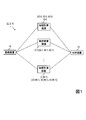
- FIG. 1 is a block diagram illustrating a functional configuration of a secret calculation system according to the embodiment.
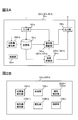
- FIG. 2A is a block diagram illustrating a functional configuration of the secret computing device according to the embodiment.
- FIG. 2B is a block diagram illustrating a functional configuration of the consistency verification unit according to the embodiment.
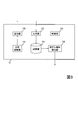
- FIG. 3 is a block diagram illustrating a functional configuration of the analyzer according to the embodiment.
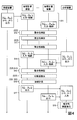
- FIG. 4 is a sequence diagram illustrating the processing of the embodiment.
- a secret calculation system includes a registration device that outputs a secret sharing value of target data to be a secret calculation, a plurality of secret calculation devices, and an analysis that requests a secret calculation using a secret sharing value of a query or a query Have the device.
- Each of the secret computing devices stores the secret sharing value of the target data sent from the registration device, and further receives the query or the secret sharing value of the query sent from the analysis device.
- the secret computing device verifies the integrity of the secret sharing value of the target data and the integrity of the query or the secret sharing value of the query, and passes the integrity verification using the secret sharing value of the target data that passed the integrity verification.
- the secret calculation corresponding to the query or the secret sharing value of the query is performed to obtain the secret sharing value of the calculation result, and the secret sharing value of the calculation result is output.
- the secret sharing value of the target data is falsified between the registration device, the registration device and the secret calculation device, or between the analysis device or the analysis device and the secret calculation device. Even if the secret sharing value is falsified, it is possible to prevent an unauthorized result from being output from the secret computing device due to the falsification.
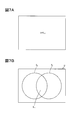
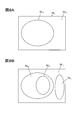
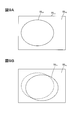
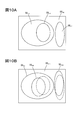
- the secret calculation device belonging to the “common part” of the “second set” including the query that has passed the above or the input of the secret sharing value of the query outputs the secret sharing value of the operation result.
- At least one of the “first set” and the “second set” may be a true subset of the “whole set” having a plurality of secret computing devices as elements. Thereby, it is possible to reduce the amount of processing when the integrity verification fails.
- “common part” is also a true subset of “whole set”.
- the secret calculation can be executed only with the secret calculation device of the true subset of the “whole set” (case 1), and the secret calculation is not performed unless the secret calculation device of the “whole set” cooperates.
- cases (case 2) where execution is not possible.
- the secret calculation can be performed only by the “common part”, but in the case of “Case 2”, the secret calculation cannot be performed only by the “common part”, and the consistency verification is performed.
- the secret computing device belonging to the “common part” has the secret sharing value of the target data of the secret computing device belonging to the “complementary set” of the “common part” (the set obtained by removing the “common part” from the “whole set”) and At least one of the query or the secret sharing value of the query may be restored.
- the secret sharing value of the target data and the secret sharing value of the query or query may be restored, or only the secret sharing value of the target data and the secret sharing value of the query or query are restored. May be. Thereby, even in the case of “Case 2”, the secret calculation can be performed only by the “common part”.
- the secret computing device belonging to the “common part” may output the secret sharing value of the operation result . Accordingly, calculation and communication of the secret sharing value of the calculation result can be prevented even though the necessary number of “secret sharing values of the calculation result” cannot be obtained.
- the number of elements of the “common part” is less than the number of secret sharing values necessary for restoring the operation result of the secret computing device belonging to the “common part”, storing the secret sharing value of the target data, and / or Alternatively, the query or the secret sharing value of the query may be input again, or the process may end with an error.
- the integrity verification performed by a plurality of secret computing devices fails, the “data” (the secret sharing value of the target data or the secret sharing value of the query or query) of any of those secret computing devices You can tell that it has been tampered with, but you don't know which "data” has been tampered with. Therefore, when the integrity verification of the secret sharing value of the target data in the “first subset” of the “whole set” fails, the true subset of the “first subset” is changed to a new “first part”. A recursive process for verifying the consistency of the secret sharing value of the target data may be performed as a “set”.
- the “first subset” may be divided into a plurality of true subsets, and each true subset may be a new “first subset”, or any true subset of the “first subset” Only a new “first subset” may be used.
- the integrity verification of the query or the secret sharing value of the query in the “second subset” of the “entire set” fails, the true subset of the “second subset” is changed to the new “first subset”.
- a recursive process for verifying the consistency of a query or a secret sharing value of a query as “two subsets” may be performed.
- the “second subset” may be divided into a plurality of true subsets, and each true subset may be a new “second subset”, or any true subset of the “second subset” Only a new “second subset” may be used.
- first set and / or “second set” can be efficiently identified.
- the consistency verification fails in the “third subset”, but the consistency verification passes in the new “third subset”, it is included in the “third subset” before the update.
- the “data” of the secret computing device that is not included in the new “third subset” is falsified. Therefore, a new consistency check is performed on a set excluding this secret computing device, and if it is passed, the set may be a “first set” and / or a “second set”.
- the number of elements of the “first set” and / or “second set” can be increased, and the number of secret computing devices belonging to the “common part” can be increased.
- the secret computing device may collectively perform the verification of the secret sharing value of the target data and the consistency of the query or the secret sharing value of the query. For example, consistency verification may be performed on information including a secret sharing value of target data and a query or a secret sharing value of a query. As a result, the consistency verification process can be made more efficient. In this case, consistency verification of information in which the information including the secret sharing value of the target data and the query or the secret sharing value of the query is disturbed may be performed. Accordingly, at least one of the target data and the query can be prevented from leaking in the process of consistency verification.
- the secret computing device obtains a composite value s of a plurality of arbitrary values obtained as a subset of the “whole set” (whole set or a true subset thereof), the function value of the combined value s is used as a coefficient, and the target data And a linear combination value [c] i of values including at least one of the secret sharing value and the query or the secret sharing value of the query, and the secret sharing value [d] i corresponding to the linear combination value [c] i Consistency verification may be performed by delivering to a computing device.
- the secret calculation system 1 of this embodiment includes a registration device 11, N secret calculation devices 12-1 to 12-(N ⁇ 1), and an analysis device 13.
- N is an integer greater than or equal to 2, for example, an integer greater than or equal to 3.
- the registration device 11 and the secret computing devices 12-1,..., 12- (N-1) are configured to be able to communicate through an insecure network such as the Internet.
- the secret computing devices 12-1,..., 12- (N-1) and the analyzing device 13 are configured to be able to communicate through an insecure network.
- an example in which there is one registration device 11 and one analysis device 13 is shown, but at least one of these may exist.
- the consistency verification unit 123-n includes, for example, an arbitrary value setting unit 1231-n, a synthesis unit 1232-n, a linear combination unit 1233-n, and a verification unit 1236-n.
- the consistency verification unit 123-n may further include a disturbance value setting unit 1234-n and a disturbance unit 1235-n.
- the secret computing device 12-n executes each process under the control of the control unit 120-n. Data obtained by each part of the secret computing device 12-n is stored in a temporary memory (not shown), read out as necessary, and used for each processing.
- the analysis device 13 includes a control unit 130, an analysis request unit 131, an output unit 132, an input unit 133, a storage unit 134, and a falsification detection restoration unit 135.
- Each device is, for example, a general-purpose or dedicated computer including a processor (hardware processor) such as a CPU (central processing unit) and a memory such as a random-access memory (RAM) and a read-only memory (ROM). It is configured by executing the program.
- the computer may include a single processor and memory, or may include a plurality of processors and memory.
- This program may be installed in a computer, or may be recorded in a ROM or the like in advance.
- some or all of the processing units are configured using an electronic circuit that realizes a processing function without using a program, instead of an electronic circuit (circuitry) that realizes a functional configuration by reading a program like a CPU. May be.
- An electronic circuit constituting one device may include a plurality of CPUs.
- the processing in this embodiment includes “registration processing”, “storage processing”, and “analysis processing”.
- registration processing “registration processing”
- storage processing “storage processing”
- analysis processing the processing of this embodiment will be described with reference to FIG.
- the registration device 11 secretly distributes each of the target data b 0 ,..., B M ⁇ 1 to be subjected to secret calculation, and N secret sharing values [b 0 ] 0 ,. 0 ] N ⁇ 1 ,..., [B M ⁇ 1 ] 0 ,..., [B M ⁇ 1 ] N ⁇ 1 are generated.
- M is an integer greater than or equal to 1 (for example, M is an integer greater than or equal to 2)
- Secret sharing in this embodiment is performed according to the (K, N) threshold secret sharing scheme.
- the original data plain text
- the information of the original data is obtained from the secret sharing value of K ⁇ 1 or less. I cannot get it at all.
- a specific example of the (K, N) threshold secret sharing scheme is Shamir's secret sharing scheme (for example, Reference 1 “A. Shamir,“ How to Share a Secret ”, Communications of the ACM, November 1979, Volume 22). , Number 11, pp.612-613.), Or a modified method thereof.
- the secret sharing values [b 0 ] n ,..., [B M ⁇ 1 ] n of the target data are input to the input unit 121-n of the secret computing device 12-n (FIG. 2A) and stored in the storage unit 122-n. (Step S11).
- the consistency verification may be performed by Non-Patent Document 1 or other known methods, or by a method described later.
- the tampering of the secret sharing values [b 0 ] n ,..., [B M ⁇ 1 ] n of the target data performed between the registration device 11 or the registration device 11 and the secret computing device 12-n is detected. Is done.
- Step S12 If this consistency verification is successful, [b 0 ] n ,..., [B M ⁇ 1 ] n are held in the storage unit 122-n. On the other hand, if the consistency verification fails, [b 0 ] n ,..., [B M ⁇ 1 ] n are deleted from the storage unit 122-n, and the process returns to step S11 or ends with an error. (Step S12).
- each secret computing device 12-n holds the secret sharing values [b 0 ] n ,..., [B M ⁇ 1 ] n of the target data in the storage unit 122-n.
- the analysis request unit 131 of the analysis device 13 generates and outputs a query for requesting a secret calculation or a secret sharing value of the query.
- the query may represent the contents of the calculation requesting the secret calculation, or may represent the data to be calculated.
- J is an integer of 1 or more.
- [Q 0 ] n ,..., [Q J ⁇ 1 ] n are input to the input unit 121-n of the secret computing device 12-n (FIG. 2A) and stored in the storage unit 122-n (step S14). .
- [q j ] n can be regarded as a secret sharing value to perform consistency verification.
- the secret calculation unit 124-n of the secret calculation device 12-n performs the integrity verification from the storage unit 122-n.
- [B 0 ] n ,..., [B M ⁇ 1 ] n and [q 0 ] n ,..., [Q J ⁇ 1 ] n are read.
- the secret calculation unit 124-n uses [b 0 ] n ,..., [B M ⁇ 1 ] n that has passed the consistency verification, and [q 0 ] n ,. 1 ]
- Secret calculation according to n is performed to obtain secret sharing values [r 0 ] n ,..., [R W ⁇ 1 ] n as operation results.
- W is an integer greater than or equal to 1 (for example, W is an integer greater than or equal to 2).
- a secret calculation with falsification detection for example, Reference 2 “Igarashi Univ., Koji Senda, Hiroki Hirota, Ryo Kikuchi,“ A highly efficient n ⁇ 2k-1 malicious model on secret-distribution-based multi-party computation. (See “In SCIS2013, 2013.”, etc.) to obtain a secret sharing value [r 0 ] n ,..., [R W ⁇ 1 ] n of the operation result. Tampering by K-1 or less secret computing devices 12-n in this calculation process can be detected here.
- this secret calculation is executed again or the process is terminated with an error. If tampering is not detected, the secret sharing values [r 0 ] n ,..., [R W ⁇ 1 ] n as the operation results are sent to the output unit 125-n (step S16).
- the secret sharing values [r 0 ] n ,..., [R W ⁇ 1 ] n of the calculation result are input to the input unit 133 of the analyzer 13 (FIG. 3) and stored in the storage unit 134.
- the falsification detection / restoration unit 135 performs falsification detection / restoration (see, for example, Reference 2), and restores and outputs the calculation results r 0 ,..., R W ⁇ 1 . Tampering between the secret computing device 12-n or the secret computing device 12-n and the analyzing device 13 is detected here. When tampering is detected, the process after step S16 is executed again or the process is terminated with an error. If tampering is not detected, calculation results r 0 ,..., R W ⁇ 1 are output (step S18).
- Y is an integer greater than or equal to 1
- I is an integer greater than K and less than or equal to N (N ⁇ I> K.
- N ⁇ I ⁇ 2), ⁇ 0,..., I ⁇ 1 ⁇ ⁇ ⁇ 0, ..., N-1 ⁇ is satisfied.
- the query or the secret sharing value [q 0 ] i ,..., [Q J ⁇ 1 ] i (Y J in this case).
- the arbitrary value setting unit 1231-i of the consistency verification unit 123-i of the secret computing device 12-i selects the arbitrary value s i .
- Examples of the arbitrary value s i are pseudo random numbers, random numbers, or constants.
- the arbitrary value s i is stored in the storage unit 122-i and sent to the output unit 125-i (step S1201).
- the arbitrary value s i is output from the output unit 125-i and delivered to another secret computing device 12-i ′ (where i′ ⁇ ⁇ 0,..., I ⁇ 1 ⁇ and i ′ ⁇ i) (step S1202).
- the arbitrary value s i ′ delivered from the other secret computing device 12-i ′ is input to the input unit 121-i and stored in the storage unit 122-i (step S1203).
- g ( ⁇ ) represents a function value of ( ⁇ ). As long as the composite value s is uniquely determined for the arbitrary values s 0 ,..., S I ⁇ 1 , any g (•) may be used.
- the composite value s is stored in the storage unit 122-i (step S1204).
- the linear combination value [c] i is stored in the storage unit 122-i (step S1205).
- the verification unit 1236-i outputs the secret sharing value [d] i corresponding to the linear combination value [c] i read from the storage unit 122-i.
- the linear combination value [c] i may be used as the secret sharing value [d] i
- the function value of [c] i may be used as the secret sharing value [d] i .
- the disturbance value setting unit 1234-i obtains the random number secret sharing value [R] i and the disturbance unit 1235-i random secret sharing value [R] i and linearly combined value as input [c] i, random secret variance [R] secret sharing value linear combination value [c] i was perturbed by i to obtain [d] i Also good.
- [C ⁇ R] i is a cR secret sharing value according to the (K, N) threshold secret sharing scheme.
- the secret sharing value [d] i is stored in the storage unit 122-i and sent to the output unit 125-i (step S1206).
- the secret sharing value [d] i is output from the output unit 125-i and is delivered to another secret computing device 12-i ′ (where i′ ⁇ ⁇ 0,..., I ⁇ 1 ⁇ and i ′ ⁇ i). (Step S1207).
- the secret sharing value [d] i ′ delivered from the other secret computing device 12-i ′ is input to the input unit 121-i and stored in the storage unit 122-i (step S1208).
- the verification unit 1236-n reads K secret sharing values [d] f (0) ,..., [D] f (K-1) from the storage unit 122-i, and performs other Igulation by Lagrange interpolation.
- the verification unit 1236-n receives [d] f (K) ,..., [D] f (N ⁇ 1) input from the storage unit 122-i in step S1208 and D f ( K) ,..., D f (N ⁇ 1) are read and compared.
- the verifying unit 1236-n determines [a 0 ] i ,. Y-1 ] Outputs a result indicating that the consistency verification of i has passed (step S1211).
- the verifying unit 1236-n determines whether [a 0 ] i ,..., [A Y ⁇ 1 ] i is consistent. A result indicating that the verification fails is output (step S1212).
- This specific example of consistency verification is efficient because consistency verification of [a 0 ] i ,..., [A Y ⁇ 1 ] i can be executed collectively. Also, when using the secret sharing value [d] i obtained by disturbing the linear combination value [c] i with the random secret sharing value [R] i , [a 0 ] i ,..., [A Y ⁇ 1 ] It is possible to prevent the restoration value information of i from leaking.
- the secret computing device belonging to the “common part” of the “first set” and the “second set” outputs the secret sharing value of the operation result.
- At least one of the “first set” and the “second set” may be a true subset of the “whole set” having a plurality of secret computing devices as elements.
- the secret calculation system 2 of this embodiment includes a registration device 11, N secret calculation devices 22-1,..., 22- (N ⁇ 1), and an analysis device 13.
- the processing of this embodiment also includes “registration processing”, “storage processing”, and “analysis processing”.
- registration processing “registration processing”
- storage processing “storage processing”
- analysis processing the processing of this embodiment will be described with reference to FIG.
- the registration device 11 and the secret calculation device 22-n execute the process of step S11 described in the first embodiment.
- [B M ⁇ 1 ] n consistency verification of the target data secret sharing values [b 0 ] n ,.
- this consistency verification fails, [b 0 ] n ,..., [B M ⁇ 1 ] n are not deleted from the storage unit 122-n.
- the consistency of the variance [b 0 ] v ( ⁇ ) ,..., [B M ⁇ 1 ] v ( ⁇ ) is verified.
- This is not limited to integrity verification method in the subset S 1.
- the set S 1 is selected, and consistency verification is performed on the selected true subset S 1 .
- Subset S 1 is selected according to predetermined criteria. It subset for subsets S 1 is may be a new subset S 1, to the complement of the subset S 1 is may be a new subset S 1, subset the union of the subset and the complement of the S 1 is may be a new subset S 1. A specific example will be described later.
- step S22 if the integrity verification does not pass even if the true subset S 1 is updated a predetermined number of times, if the integrity verification is performed on the predetermined true subset S 1 and all fail, or If the number of elements of the true subset S 1 is less than K, [b 0 ] n ,..., [B M ⁇ 1 ] n is deleted from the storage unit 122-n, and the process returns to step S11. Then, the process ends with an error (step S22).
- Step S22 Even in the storage process, the same consistency verification as step S22 may be performed periodically or at a predetermined opportunity.
- the secret sharing values [b 0 ] n ,..., [B M ⁇ 1 ] n of the target data are stored in the storage unit 122-n.
- step S23 the integrity verification does not pass even if the true subset S 1 is updated a predetermined number of times, if the integrity verification is performed on the predetermined true subset S 1 and all fail, or If the number of elements of the true subset S 1 is less than K, [b 0 ] n ,..., [B M ⁇ 1 ] n is deleted from the storage unit 122-n, and the process returns to step S11. Then, the process ends with an error (step S23).
- the analysis device 13 and the secret calculation device 22-n execute the process of step S14 described in the first embodiment.
- [Q 0 ] n ,..., [Q J ⁇ 1 ] n consistency verification is performed.
- [q 0 ] n ,..., [Q J ⁇ 1 ] n are not deleted from the storage unit 122-n.
- Subset S 2 is selected according to predetermined criteria.
- True subset may be a new subset S 2 of subset S 2, to the complement of the subset S 2 may be a new subset S 2, subset the union of the subset with complement of S 2 may be a new subset S 2.
- the query or the secret sharing value of the query is [q 0 ] n ,..., [Q J ⁇ 1 ] n is stored in the storage unit 122-n Retained.
- the integrity verification does not pass even if the true subset S 2 is updated a predetermined number of times, if the integrity verification is performed for the predetermined true subset S 2 and all fail, or pass If the number of elements in the true subset S 2 is less than K, [q 0 ] n ,..., [Q J ⁇ 1 ] n are deleted from the storage unit 122-n, and the process returns to step S14. Alternatively, the process ends with an error (step S25).
- step S 12 N pieces of secure computing apparatuses 22-0, ..., 22- (N- 1) is The same process as step S16 described in the first embodiment is performed (FIGS. 7A and 7B).
- a pass is consistent validation in subset S 1 at step S22 and S23, if the consistency verification of true subset S 2 was passed in step S25, the subset S 1
- the secret calculation unit 22- ⁇ (where ⁇ ⁇ 0,..., N ⁇ 1 ⁇ ) belonging to the “common part (S 12 )” with the true subset S 2 performs consistency verification.
- step S26 a secret calculation with tampering detection (for example, Reference 2) is used (step S26). Thereafter, the analysis device 13 and the secret calculation device 22-n execute the same processing as steps S17 and S18 described in the first embodiment. However, "intersection (S 12)" If the number of elements is equal to or greater than the number K of the secret sharing value required to restore the operation result only in step S26 in, S17, processing of S18 is executed, otherwise The process may be terminated with an error.
- the secret of the target data is set as a new “first subset (S 1 )” as a true subset of the “first subset (U or S 1 )” Recursive processing for verifying the consistency of the variance [b 0 ] v ( ⁇ ) ,..., [B M ⁇ 1 ] v ( ⁇ ) is performed.
- S 1 and S 2 are generalized to a subset S.
- the consistency verification unit 223-e ( ⁇ ) determines whether the continuation condition for the consistency verification is satisfied (step S2204). Examples of the continuation condition are “the number of updates of the subset S is not more than a predetermined number”, “consistency verification of the predetermined subset has not been completed”, and the like. If the consistency verification continuation condition is not satisfied, the consistency verification unit 223-e ( ⁇ ) terminates the process with an error (step S2208). On the other hand, when the consistency verification continuation condition is satisfied, the consistency verification unit 223-e ( ⁇ ) updates the set system SET by replacing the subset S with the true subset. For example, in the example of FIG.
- the consistency verification unit 223-e ( ⁇ ) has the number of elements
- of the subset S that has passed the consistency verification. N S determines whether or K (step S2206). If the number of elements
- step S2201 of the process of FIG. 6A is replaced with S2211
- step S2205 is replaced with step S2215.
- step S2215 the consistency verifying unit 223-e ( ⁇ ) sets the subset S to the union A + B of the true subset A ⁇ S of S and the true subset B ⁇ C S of S's complement C S. Replace with.
- the union A + B is a set obtained by shifting the subset S.
- SET: ⁇ SS 1-2 , SS 1-3 ⁇
- SS 1-2 is replaced with the union set SS 1-4
- SS 1-3 is Replaced by set SS 1-5 .
- SET: ⁇ SS 1-4 , SS 1-5 , SS 1-6 , SS 1-7 ⁇
- SS 1-4 is replaced with the union set SS 1-8
- SS 1-5 is replaced with union set SS 1-9
- SS 1-6 is replaced with union set SS 1-10
- SS 1-7 is replaced with union set SS 1-11 .
- the secret computing device belonging to the “common part” of the “first set” and the “second set” is the secret sharing value of the target data of the secret computing device belonging to the complement of the “common part” and Restore at least one of the query or the secret sharing value of the query and perform a secret calculation.
- the secret calculation system 3 of this embodiment includes a registration device 11, N secret calculation devices 32-1,..., 32- (N ⁇ 1), and an analysis device 13.
- the processing of this embodiment also includes “registration processing”, “storage processing”, and “analysis processing”.
- registration processing “registration processing”
- storage processing “storage processing”
- analysis processing the processing of this embodiment will be described with reference to FIG.
- registration process The registration device 11 and the secret calculation device 32-n execute the process of step S11 described in the first embodiment. Next, the secret computing device 32-n executes the process of step S22 described in the second embodiment.
- the secret computing device 32-n executes the process of step S23 described in the second embodiment.
- the analysis device 13 and the secret calculation device 22-n execute the process of step S14 described in the first embodiment.
- the secret computing device 32-n executes the process of step S25 described in the second embodiment.
- the secret computing device 32- ⁇ ′ uses these and restores [b 0 ] ⁇ ,..., [B M ⁇ 1 ] ⁇ and [q 0 ] ⁇ ,..., [Q J ⁇ 1 ] ⁇ by Lagrange interpolation. Then, it is stored in the storage unit 122- ⁇ ′ (step S35).
- a secret calculation with tampering detection for example, Reference 2 is used (step S36). Thereafter, the analysis device 13 and the secret calculation device 32-n execute the same processing as steps S17 and S18 described in the first embodiment. However, [r 0 ] ⁇ ,..., [R W ⁇ 1 ] ⁇ may be sent to the analyzer 13 or may not be sent.
- steps S35, S36, S17, and S18 are executed only when the number of elements of the “common part (S 12 )” is equal to or greater than the number K of secret sharing values necessary for restoring the operation result.
- the process may be terminated with an error.
- the secret calculation system 4 of this embodiment includes a registration device 11, N secret calculation devices 42-1,..., 42-(N ⁇ 1), and an analysis device 13.
- the processing of this embodiment also includes “registration processing”, “storage processing”, and “analysis processing”.
- registration processing “registration processing”
- storage processing “storage processing”
- analysis processing the processing of this embodiment will be described with reference to FIG.
- registration process The registration device 11 and the secret calculation device 42-n execute the processes of steps S11 and S12 described in the first embodiment. However, in this embodiment, the process of step S12 may be omitted.
- Storage process The secret computing device 42-n executes the process of step S13 described in the first embodiment. However, in this embodiment, the consistency verification process in step S13 may be omitted.
- the analysis device 13 and the secret calculation device 42-n execute the process of step S14 described in the first embodiment.
- the consistency verification unit 423-n summarizes the consistency verification for [b 0 ] n ,..., [B M ⁇ 1 ] n , [q 0 ] n , ..., [q J ⁇ 1 ] n. Do it.
- information including the secret sharing value of the target data and the query or the secret sharing value of the query may be verified for consistency of information. If this consistency verification is successful, [b 0 ] n ,..., [B M ⁇ 1 ] n , [q 0 ] n ,..., [Q J ⁇ 1 ] n are held in the storage unit 122-n.
- each device may exchange information via a portable recording medium.
- at least some of the devices may exchange information via a non-portable recording medium. That is, the combination which consists of a part of these apparatuses may be the same apparatus.
- each operation described above may be an operation on a finite field, an operation on an extension field, an operation on a ring, or an operation on another algebraic system. It may be.
- a secret calculation without a falsification detection function may be performed instead of the secret calculation with falsification detection.
- a computer-readable recording medium is a non-transitory recording medium. Examples of such a recording medium are a magnetic recording device, an optical disk, a magneto-optical recording medium, a semiconductor memory, and the like.
- This program is distributed, for example, by selling, transferring, or lending a portable recording medium such as a DVD or CD-ROM in which the program is recorded. Furthermore, the program may be distributed by storing the program in a storage device of the server computer and transferring the program from the server computer to another computer via a network.
- a computer that executes such a program first stores a program recorded on a portable recording medium or a program transferred from a server computer in its own storage device. When executing the process, this computer reads a program stored in its own recording device and executes a process according to the read program. As another execution form of the program, the computer may read the program directly from the portable recording medium and execute processing according to the program, and each time the program is transferred from the server computer to the computer. The processing according to the received program may be executed sequentially.
- the above-described processing may be executed by a so-called ASP (Application Service Provider) type service that does not transfer a program from the server computer to the computer but implements a processing function only by the execution instruction and result acquisition. Good.
- ASP Application Service Provider
- the processing functions of the apparatus are realized by executing a predetermined program on a computer, but at least a part of these processing functions may be realized by hardware.
Landscapes
- Engineering & Computer Science (AREA)
- Theoretical Computer Science (AREA)
- Computer Security & Cryptography (AREA)
- General Physics & Mathematics (AREA)
- Physics & Mathematics (AREA)
- Software Systems (AREA)
- Computer Hardware Design (AREA)
- General Engineering & Computer Science (AREA)
- General Health & Medical Sciences (AREA)
- Bioethics (AREA)
- Health & Medical Sciences (AREA)
- Computer Networks & Wireless Communication (AREA)
- Signal Processing (AREA)
- Storage Device Security (AREA)
Priority Applications (3)
| Application Number | Priority Date | Filing Date | Title |
|---|---|---|---|
| CN201680042855.8A CN107851164B (zh) | 2015-07-27 | 2016-07-20 | 秘密计算系统、秘密计算装置、秘密计算方法和存储介质 |
| US15/745,595 US10867018B2 (en) | 2015-07-27 | 2016-07-20 | Secure computation system, secure computation device, secure computation method, and program |
| EP16830390.7A EP3330880B1 (de) | 2015-07-27 | 2016-07-20 | Sicheres berechnungssystem, sichere berechnungsvorrichtung, sicheres berechnungsverfahren und programm |
Applications Claiming Priority (2)
| Application Number | Priority Date | Filing Date | Title |
|---|---|---|---|
| JP2015-147774 | 2015-07-27 | ||
| JP2015147774A JP6034927B1 (ja) | 2015-07-27 | 2015-07-27 | 秘密計算システム、秘密計算装置、およびプログラム |
Publications (1)
| Publication Number | Publication Date |
|---|---|
| WO2017018285A1 true WO2017018285A1 (ja) | 2017-02-02 |
Family
ID=57419916
Family Applications (1)
| Application Number | Title | Priority Date | Filing Date |
|---|---|---|---|
| PCT/JP2016/071221 Ceased WO2017018285A1 (ja) | 2015-07-27 | 2016-07-20 | 秘密計算システム、秘密計算装置、秘密計算方法、およびプログラム |
Country Status (5)
| Country | Link |
|---|---|
| US (1) | US10867018B2 (de) |
| EP (1) | EP3330880B1 (de) |
| JP (1) | JP6034927B1 (de) |
| CN (1) | CN107851164B (de) |
| WO (1) | WO2017018285A1 (de) |
Families Citing this family (27)
| Publication number | Priority date | Publication date | Assignee | Title |
|---|---|---|---|---|
| JP5957126B1 (ja) * | 2015-06-24 | 2016-07-27 | 日本電信電話株式会社 | 秘密計算装置、秘密計算方法、およびプログラム |
| MX2018010056A (es) | 2016-02-23 | 2019-01-21 | Nchain Holdings Ltd | Un metodo y sistema para asegurar software de computadora usando un cuadro hash distribuido y una cadena de bloques. |
| KR102753021B1 (ko) | 2016-02-23 | 2025-01-14 | 엔체인 홀딩스 리미티드 | 블록체인에서 교환을 구현하기 위한 토큰화 방법 및 시스템 |
| US10652014B2 (en) | 2016-02-23 | 2020-05-12 | nChain Holdings Limited | Determining a common secret for the secure exchange of information and hierarchical, deterministic cryptographic keys |
| CN109074580B (zh) | 2016-02-23 | 2022-09-30 | 区块链控股有限公司 | 在区块链上安全转移实体的方法和系统 |
| KR102777896B1 (ko) | 2016-02-23 | 2025-03-10 | 엔체인 홀딩스 리미티드 | 토큰화를 이용한 블록체인 기반 교환 방법 |
| JP6995762B2 (ja) | 2016-02-23 | 2022-01-17 | エヌチェーン ホールディングス リミテッド | ブロックチェーンからのデータのセキュアな抽出のための暗号方法及びシステム |
| MX2018010058A (es) | 2016-02-23 | 2019-01-21 | Nchain Holdings Ltd | Metodo y sistema para la transferencia eficiente de criptomoneda asociada con un pago de nomina en una cadena de bloques que lleva a un metodo y sistema de pago de nomina automatico con base en contratos inteligentes. |
| SG10202007907PA (en) | 2016-02-23 | 2020-09-29 | Nchain Holdings Ltd | Blockchain-implemented method for control and distribution of digital content |
| IL278834B2 (en) | 2016-02-23 | 2023-09-01 | Nchain Holdings Ltd | Automatic registration and management method for smart contracts based on 'block chain' |
| EP3754901A1 (de) | 2016-02-23 | 2020-12-23 | Nchain Holdings Limited | Blockchain-implementiertes zählsystem und verfahren zur verwendung bei der sicheren stimmabgabe und verteilung |
| SG11201805542TA (en) | 2016-02-23 | 2018-09-27 | Nchain Holdings Ltd | Secure multiparty loss resistant storage and transfer of cryptographic keys for blockchain based systems in conjunction with a wallet management system |
| JP7249148B2 (ja) | 2016-02-23 | 2023-03-30 | エヌチェーン ライセンシング アーゲー | ブロックチェーンベースユニバーサルトークン化システム |
| US12107952B2 (en) | 2016-02-23 | 2024-10-01 | Nchain Licensing Ag | Methods and systems for efficient transfer of entities on a peer-to-peer distributed ledger using the blockchain |
| GB2560274C (en) | 2016-02-23 | 2022-06-15 | Nchain Holdings Ltd | Personal device security using elliptic curve cryptography for secret sharing |
| CN109155036B (zh) | 2016-02-23 | 2023-05-23 | 区块链控股有限公司 | 用于经由区块链控制资产有关的动作的系统及方法 |
| WO2018034079A1 (ja) * | 2016-08-18 | 2018-02-22 | 日本電気株式会社 | 秘密計算システム、秘密計算方法、秘密計算装置、分散情報生成装置およびそれらの方法とプログラム |
| WO2019009180A1 (ja) * | 2017-07-05 | 2019-01-10 | 日本電信電話株式会社 | 秘密計算システム、秘密計算装置、秘密計算方法、プログラム、および記録媒体 |
| AU2018387969B2 (en) | 2017-12-18 | 2021-07-22 | Ntt, Inc. | Secret computation system and method |
| WO2020165931A1 (ja) | 2019-02-12 | 2020-08-20 | 日本電気株式会社 | 情報処理装置、秘密計算方法及びプログラム |
| US12143420B2 (en) * | 2019-11-28 | 2024-11-12 | Nec Corporation | Shuffling shares among nodes to detect incorrectness or frauds |
| US12160506B2 (en) * | 2019-11-28 | 2024-12-03 | Nec Corporation | Shuffling shares among nodes to detect incorrectness or frauds |
| JP7290177B2 (ja) * | 2020-01-20 | 2023-06-13 | 日本電信電話株式会社 | 秘密計算装置、秘密計算方法、およびプログラム |
| FI4109813T3 (fi) * | 2020-02-18 | 2024-10-31 | Univ Tokyo Science Found | Salausvarmennusjärjestelmä, päätelaite, palvelupalvelin sekä ohjelma |
| IL280057A (en) | 2021-01-10 | 2022-08-01 | Google Llc | Maintaining privacy in machine learning classification |
| US20220271933A1 (en) * | 2021-02-19 | 2022-08-25 | Samsung Electronics Co., Ltd. | System and method for device to device secret backup and recovery |
| JP7833352B2 (ja) * | 2022-05-31 | 2026-03-19 | 三菱重工業株式会社 | 監視システム、監視方法及びプログラム |
Citations (5)
| Publication number | Priority date | Publication date | Assignee | Title |
|---|---|---|---|---|
| US20120002811A1 (en) * | 2010-06-30 | 2012-01-05 | The University Of Bristol | Secure outsourced computation |
| US20120070000A1 (en) * | 2010-09-22 | 2012-03-22 | Alcatel-Lucent Usa Inc | Securing Two-Party Computation Against Malicious Adversaries |
| US20120233460A1 (en) * | 2011-03-09 | 2012-09-13 | Microsoft Corporation | Server-aided multi-party protocols |
| WO2014052113A1 (en) * | 2012-09-28 | 2014-04-03 | Alcatel Lucent | Input consistency verification for two-party secure function evaluation |
| JP2014137474A (ja) * | 2013-01-17 | 2014-07-28 | Nippon Telegr & Teleph Corp <Ntt> | 改ざん検知装置、改ざん検知方法、およびプログラム |
Family Cites Families (17)
| Publication number | Priority date | Publication date | Assignee | Title |
|---|---|---|---|---|
| US5625692A (en) * | 1995-01-23 | 1997-04-29 | International Business Machines Corporation | Method and system for a public key cryptosystem having proactive, robust, and recoverable distributed threshold secret sharing |
| DE60207691T2 (de) * | 2001-03-16 | 2006-07-06 | International Business Machines Corp. | Verfahren zur prüfbaren teilung eines geheimnisses in potentiell asynchronen netzwerken |
| US7187772B2 (en) * | 2001-08-31 | 2007-03-06 | Hewlett-Packard Development Company, L.P. | Anonymous transactions based on distributed processing |
| ES2568661T3 (es) * | 2006-11-07 | 2016-05-03 | Security First Corp. | Sistemas y métodos para distribuir y garantizar datos |
| WO2009093603A1 (ja) * | 2008-01-21 | 2009-07-30 | Nippon Telegraph And Telephone Corporation | 秘密計算システム |
| US8527758B2 (en) * | 2009-12-09 | 2013-09-03 | Ebay Inc. | Systems and methods for facilitating user identity verification over a network |
| US8964988B2 (en) * | 2010-07-23 | 2015-02-24 | Nippon Telegraph And Telephone Corporation | Secret sharing system, sharing apparatus, share management apparatus, acquisition apparatus, secret sharing method, program and recording medium |
| CN103309902A (zh) * | 2012-03-16 | 2013-09-18 | 多玩娱乐信息技术(北京)有限公司 | 一种社交网络中用户信息存储和查找的方法和装置 |
| WO2014007310A1 (ja) * | 2012-07-05 | 2014-01-09 | 日本電信電話株式会社 | 秘密分散システム、データ分散装置、分散データ変換装置、秘密分散方法、およびプログラム |
| JP6008316B2 (ja) * | 2012-08-24 | 2016-10-19 | パナソニックIpマネジメント株式会社 | 秘密分散装置および秘密分散プログラム |
| US9111071B2 (en) * | 2012-11-05 | 2015-08-18 | Sap Se | Expression rewriting for secure computation optimization |
| EP2904759B1 (de) * | 2013-01-08 | 2020-05-27 | Bar-Ilan University | Verfahren zur bereitstellung von wertpapieren mithilfe sicherer berechnungen |
| US9286488B2 (en) * | 2013-03-13 | 2016-03-15 | Northrop Grumman Systems Corporation | System and method for secure database queries |
| US9747456B2 (en) * | 2013-03-15 | 2017-08-29 | Microsoft Technology Licensing, Llc | Secure query processing over encrypted data |
| US10114851B2 (en) * | 2014-01-24 | 2018-10-30 | Sachet Ashok Shukla | Systems and methods for verifiable, private, and secure omic analysis |
| EP3218800B1 (de) * | 2014-11-12 | 2023-06-07 | David CEREZO SANCHEZ | Sichere mehrparteienberechnung auf kalkulationstabellen |
| WO2016178291A1 (ja) * | 2015-05-07 | 2016-11-10 | 日本電気株式会社 | 秘密計算データ利用システムと方法と装置並びにプログラム |
-
2015
- 2015-07-27 JP JP2015147774A patent/JP6034927B1/ja active Active
-
2016
- 2016-07-20 WO PCT/JP2016/071221 patent/WO2017018285A1/ja not_active Ceased
- 2016-07-20 EP EP16830390.7A patent/EP3330880B1/de active Active
- 2016-07-20 US US15/745,595 patent/US10867018B2/en active Active
- 2016-07-20 CN CN201680042855.8A patent/CN107851164B/zh active Active
Patent Citations (5)
| Publication number | Priority date | Publication date | Assignee | Title |
|---|---|---|---|---|
| US20120002811A1 (en) * | 2010-06-30 | 2012-01-05 | The University Of Bristol | Secure outsourced computation |
| US20120070000A1 (en) * | 2010-09-22 | 2012-03-22 | Alcatel-Lucent Usa Inc | Securing Two-Party Computation Against Malicious Adversaries |
| US20120233460A1 (en) * | 2011-03-09 | 2012-09-13 | Microsoft Corporation | Server-aided multi-party protocols |
| WO2014052113A1 (en) * | 2012-09-28 | 2014-04-03 | Alcatel Lucent | Input consistency verification for two-party secure function evaluation |
| JP2014137474A (ja) * | 2013-01-17 | 2014-07-28 | Nippon Telegr & Teleph Corp <Ntt> | 改ざん検知装置、改ざん検知方法、およびプログラム |
Non-Patent Citations (5)
| Title |
|---|
| KOJI CHIDA ET AL.: "Cloud Bussiness o Sasaeru Security Kiban Gijutsu", NTT GIJUTSU JOURNAL, vol. 26, no. 3, 1 March 2014 (2014-03-01), pages 67 - 70, XP 009501765 * |
| MASANORI SHIMURA ET AL.: "Relational Algebra in Multi-party Protocol to Enable Structual Operation in Secret Shared Databases", TRANSACTIONS OF INFORMATION PROCESSING SOCIETY OF JAPAN, vol. 51, no. 9, 15 September 2010 (2010-09-15), pages 1563 - 1578, XP 055350216 * |
| NAOTO KIRIBUCHI ET AL.: "Teisu Round Kanzen Icchi Kensaku no tameno Himitsu Keisan Protocol [Constant-rounds Secure Computation for Exact Match Retrieval]", 2014 NEN SYMPOSIUM ON CRYPTOGRAPHY AND INFORMATION SECURITY KOEN RONBUNSHU, 21 January 2014 (2014-01-21), pages 1 - 7, XP009508708 * |
| RYO KIKUCHI ET AL.: "Kaizan Kenchi Kinotsuki no Jitsuyoteki na Himitsu Keisan System MEVAL 2", 2015 NEN SYMPOSIUM ON CRYPTOGRAPHY AND INFORMATION SECURITY KOEN RONBUNSHU, 20 January 2015 (2015-01-20), pages 1 - 8 * |
| See also references of EP3330880A4 * |
Also Published As
| Publication number | Publication date |
|---|---|
| JP6034927B1 (ja) | 2016-11-30 |
| EP3330880A4 (de) | 2019-02-20 |
| JP2017028617A (ja) | 2017-02-02 |
| US20180225431A1 (en) | 2018-08-09 |
| EP3330880A1 (de) | 2018-06-06 |
| US10867018B2 (en) | 2020-12-15 |
| EP3330880B1 (de) | 2020-02-26 |
| CN107851164A (zh) | 2018-03-27 |
| CN107851164B (zh) | 2021-06-08 |
Similar Documents
| Publication | Publication Date | Title |
|---|---|---|
| JP6034927B1 (ja) | 秘密計算システム、秘密計算装置、およびプログラム | |
| JP7569602B2 (ja) | 分散協調を用いるスマートコントラクトの実行 | |
| JP7155437B2 (ja) | 暗号化されたネットワーク値の集約 | |
| Chen | Using algebraic signatures to check data possession in cloud storage | |
| EP3605944B1 (de) | Dokumentation von zeitstempeln in einer blockchain | |
| US12566997B2 (en) | Processing of machine learning modeling data to improve accuracy of categorization | |
| EP3239963B1 (de) | System zur erkennung geheimer fälschung, vorrichtung zur geheimen berechnung, verfahren zur erkennung geheimer fälschung und programm | |
| KR20160030874A (ko) | 행렬 인수분해에 기초한 등급 기여 사용자들에게로의 추천을 프라이버시-보호하기 위한 방법 및 시스템 | |
| JP2021515271A (ja) | コンピュータにより実施される投票処理およびシステム | |
| JP7201848B2 (ja) | 時間データの取得または操作を防止しながらネットワークデータのシーケンスを生成すること | |
| CN111556120A (zh) | 基于区块链的数据处理方法、装置、存储介质及设备 | |
| CN105009505A (zh) | 基于矩阵因子分解和岭回归的隐私保护推荐的方法和系统 | |
| Mishra et al. | Enabling efficient deduplication and secure decentralized public auditing for cloud storage: A redactable blockchain approach | |
| Bezuidenhout et al. | Permissionless blockchain systems as pseudo-random number generators for decentralized consensus | |
| Jiang et al. | Dordis: Efficient federated learning with dropout-resilient differential privacy | |
| JP2022177209A (ja) | 複数の集約サーバを使用してデータ操作を防止すること | |
| Zhao et al. | IB-IADR: Enabling identity-based integrity auditing and data recovery with fault localization for multicloud storage | |
| Ma et al. | Blockchain-based privacy-preserving federated learning for mobile crowdsourcing | |
| Alnajjar et al. | Mitigating MEV attacks with a two-tiered architecture utilizing verifiable decryption | |
| Tu et al. | Privacy‐Preserving Outsourced Auditing Scheme for Dynamic Data Storage in Cloud | |
| Chaudhary et al. | SeDe: Balancing Blockchain Privacy and Regulatory Compliance by Selective De-Anonymization | |
| Frisch et al. | A practical approach to estimate the min-entropy in PUFs | |
| Yang et al. | Ppct: privacy-preserving contact tracing using concise private set intersection cardinality | |
| Taiello et al. | Buffalo: A practical secure aggregation protocol for buffered asynchronous federated learning | |
| Rao et al. | Dynamic outsourced proofs of retrievability enabling auditing migration for remote storage security |
Legal Events
| Date | Code | Title | Description |
|---|---|---|---|
| 121 | Ep: the epo has been informed by wipo that ep was designated in this application |
Ref document number: 16830390 Country of ref document: EP Kind code of ref document: A1 |
|
| WWE | Wipo information: entry into national phase |
Ref document number: 15745595 Country of ref document: US |
|
| NENP | Non-entry into the national phase |
Ref country code: DE |
|
| WWE | Wipo information: entry into national phase |
Ref document number: 2016830390 Country of ref document: EP |