WO2017104227A1 - Appareil et procédé de traitement d'informations, et programme associé - Google Patents
Appareil et procédé de traitement d'informations, et programme associé Download PDFInfo
- Publication number
- WO2017104227A1 WO2017104227A1 PCT/JP2016/079119 JP2016079119W WO2017104227A1 WO 2017104227 A1 WO2017104227 A1 WO 2017104227A1 JP 2016079119 W JP2016079119 W JP 2016079119W WO 2017104227 A1 WO2017104227 A1 WO 2017104227A1
- Authority
- WO
- WIPO (PCT)
- Prior art keywords
- mode
- information processing
- processing apparatus
- sensor
- sensing data
- Prior art date
- Legal status (The legal status is an assumption and is not a legal conclusion. Google has not performed a legal analysis and makes no representation as to the accuracy of the status listed.)
- Ceased
Links
Images





Classifications
-
- G—PHYSICS
- G06—COMPUTING OR CALCULATING; COUNTING
- G06F—ELECTRIC DIGITAL DATA PROCESSING
- G06F1/00—Details not covered by groups G06F3/00 - G06F13/00 and G06F21/00
- G06F1/26—Power supply means, e.g. regulation thereof
- G06F1/32—Means for saving power
- G06F1/3203—Power management, i.e. event-based initiation of a power-saving mode
- G06F1/3206—Monitoring of events, devices or parameters that trigger a change in power modality
- G06F1/3231—Monitoring the presence, absence or movement of users
-
- G—PHYSICS
- G01—MEASURING; TESTING
- G01C—MEASURING DISTANCES, LEVELS OR BEARINGS; SURVEYING; NAVIGATION; GYROSCOPIC INSTRUMENTS; PHOTOGRAMMETRY OR VIDEOGRAMMETRY
- G01C21/00—Navigation; Navigational instruments not provided for in groups G01C1/00 - G01C19/00
- G01C21/10—Navigation; Navigational instruments not provided for in groups G01C1/00 - G01C19/00 by using measurements of speed or acceleration
- G01C21/12—Navigation; Navigational instruments not provided for in groups G01C1/00 - G01C19/00 by using measurements of speed or acceleration executed aboard the object being navigated; Dead reckoning
- G01C21/16—Navigation; Navigational instruments not provided for in groups G01C1/00 - G01C19/00 by using measurements of speed or acceleration executed aboard the object being navigated; Dead reckoning by integrating acceleration or speed, i.e. inertial navigation
-
- G—PHYSICS
- G01—MEASURING; TESTING
- G01C—MEASURING DISTANCES, LEVELS OR BEARINGS; SURVEYING; NAVIGATION; GYROSCOPIC INSTRUMENTS; PHOTOGRAMMETRY OR VIDEOGRAMMETRY
- G01C21/00—Navigation; Navigational instruments not provided for in groups G01C1/00 - G01C19/00
- G01C21/20—Instruments for performing navigational calculations
-
- G—PHYSICS
- G01—MEASURING; TESTING
- G01C—MEASURING DISTANCES, LEVELS OR BEARINGS; SURVEYING; NAVIGATION; GYROSCOPIC INSTRUMENTS; PHOTOGRAMMETRY OR VIDEOGRAMMETRY
- G01C21/00—Navigation; Navigational instruments not provided for in groups G01C1/00 - G01C19/00
- G01C21/26—Navigation; Navigational instruments not provided for in groups G01C1/00 - G01C19/00 specially adapted for navigation in a road network
-
- G—PHYSICS
- G06—COMPUTING OR CALCULATING; COUNTING
- G06F—ELECTRIC DIGITAL DATA PROCESSING
- G06F1/00—Details not covered by groups G06F3/00 - G06F13/00 and G06F21/00
- G06F1/26—Power supply means, e.g. regulation thereof
- G06F1/32—Means for saving power
-
- G—PHYSICS
- G06—COMPUTING OR CALCULATING; COUNTING
- G06F—ELECTRIC DIGITAL DATA PROCESSING
- G06F1/00—Details not covered by groups G06F3/00 - G06F13/00 and G06F21/00
- G06F1/26—Power supply means, e.g. regulation thereof
- G06F1/32—Means for saving power
- G06F1/3203—Power management, i.e. event-based initiation of a power-saving mode
- G06F1/3234—Power saving characterised by the action undertaken
- G06F1/3287—Power saving characterised by the action undertaken by switching off individual functional units in the computer system
-
- G—PHYSICS
- G08—SIGNALLING
- G08G—TRAFFIC CONTROL SYSTEMS
- G08G1/00—Traffic control systems for road vehicles
- G08G1/005—Traffic control systems for road vehicles including pedestrian guidance indicator
-
- H—ELECTRICITY
- H04—ELECTRIC COMMUNICATION TECHNIQUE
- H04M—TELEPHONIC COMMUNICATION
- H04M1/00—Substation equipment, e.g. for use by subscribers
-
- H—ELECTRICITY
- H04—ELECTRIC COMMUNICATION TECHNIQUE
- H04W—WIRELESS COMMUNICATION NETWORKS
- H04W4/00—Services specially adapted for wireless communication networks; Facilities therefor
- H04W4/02—Services making use of location information
- H04W4/025—Services making use of location information using location based information parameters
- H04W4/027—Services making use of location information using location based information parameters using movement velocity, acceleration information
-
- Y—GENERAL TAGGING OF NEW TECHNOLOGICAL DEVELOPMENTS; GENERAL TAGGING OF CROSS-SECTIONAL TECHNOLOGIES SPANNING OVER SEVERAL SECTIONS OF THE IPC; TECHNICAL SUBJECTS COVERED BY FORMER USPC CROSS-REFERENCE ART COLLECTIONS [XRACs] AND DIGESTS
- Y02—TECHNOLOGIES OR APPLICATIONS FOR MITIGATION OR ADAPTATION AGAINST CLIMATE CHANGE
- Y02D—CLIMATE CHANGE MITIGATION TECHNOLOGIES IN INFORMATION AND COMMUNICATION TECHNOLOGIES [ICT], I.E. INFORMATION AND COMMUNICATION TECHNOLOGIES AIMING AT THE REDUCTION OF THEIR OWN ENERGY USE
- Y02D30/00—Reducing energy consumption in communication networks
- Y02D30/70—Reducing energy consumption in communication networks in wireless communication networks
Definitions
- This disclosure relates to an information processing apparatus, an information processing method, and a program.
- Prior Document 1 discloses a method for reducing the amount of power consumption by controlling the number of detections of a sensor based on information on the detection accuracy of the sensor.
- the power consumption of the information processing device or sensor could not be reduced sufficiently.
- the sensor itself used is not changed. That is, even in a situation where the sensor cannot be used effectively, the sensor is continuously used and power is consumed.
- the present disclosure has been made in view of the above, and the present disclosure provides a new and improved information processing apparatus and information processing method capable of further reducing the power consumption of the information processing apparatus or sensor. And provide programs.
- an acquisition unit that acquires sensing data, and a mode change unit that changes a mode based on the sensing data, the acquisition unit acquires sensing data based on the change of the mode
- An information processing apparatus for changing the information is provided.
- obtaining sensing data, changing a mode based on the sensing data, and changing sensing data to be obtained based on the mode change An information processing method executed by a computer is provided.
- sensing data changing a mode based on the sensing data, and changing sensing data to be acquired based on the change of the mode, to a computer
- a program for realizing this is provided.
- FIG. 4 is a diagram showing modes 1 to 3 according to the present embodiment. It is a figure which shows the relationship between a mode, a sensor, and a processor. It is a figure which shows the structure of the information processing apparatus which concerns on this embodiment. It is a figure which shows the output content of the determination part in each mode. It is a flowchart which shows the operation
- Sensing data provided from various sensors is used for the determination process, and these sensors may be provided in an information processing apparatus that performs the determination process, or may be provided in an external device other than the information processing apparatus. In some cases.
- Sensing data provided from various sensors is used for the determination process, and these sensors may be provided in an information processing apparatus that performs the determination process, or may be provided in an external device other than the information processing apparatus.
- it is required to reduce the power consumption of the information processing apparatus or sensor.
- the capacity of the battery mounted on the device is inevitably reduced, and thus it is more important to reduce the power consumption.
- a data acquisition operation or a method of intermittently performing a determination process can be considered.
- determination processing cannot be performed due to lack of information for determination processing
- the latter method it may take a long time for the user to obtain a determination result. Therefore, the user's satisfaction may be reduced.
- Prior Art Document 1 discloses a method for reducing the amount of power consumption by controlling the number of detections of a sensor based on information on the detection accuracy of the sensor.
- the method of the prior art 1 cannot sufficiently reduce the power consumption of the information processing apparatus or sensor. For example, even if the number of detections of the sensor is controlled based on information on the detection accuracy of the sensor, the sensor itself used is not changed. That is, even in a situation where the sensor cannot be used effectively, the sensor is continuously used and power is consumed.
- the presenter of the present case has come up with the above circumstances and created the present disclosure. According to the present disclosure, it is possible to further reduce the power consumption of the information processing apparatus or the sensor.
- the present disclosure it is possible to further reduce the power consumption of the information processing apparatus or the sensor.
- FIG. 1 is a diagram illustrating an information processing apparatus 100 according to an embodiment of the present disclosure.
- the information processing apparatus 100 according to the present embodiment is a smartphone carried by a user, and determines the movement or movement means of the user based on sensing data.
- the fact that the information processing apparatus 100 is a smartphone is merely an example, and the information processing apparatus 100 may be an apparatus other than a smartphone.
- the information processing apparatus 100 may be realized as a mobile terminal such as a tablet PC (Personal Computer), a notebook PC, a portable game terminal, or a digital camera.
- tablet PC Personal Computer
- the information processing apparatus 100 may be realized as a fixed terminal such as a television receiver, a printer, a digital scanner, or a network storage, or an in-vehicle terminal such as a car navigation apparatus.
- the information processing apparatus 100 determines the movement of the user or the object or the moving means of the user using the sensing data.
- the determination of the movement of the user or the moving means will be mainly described.
- Sensing data used by the information processing apparatus 100 for determining a user's movement or the like may be acquired from a sensor included in the own apparatus or may be acquired from a sensor included in an external apparatus.
- the information processing apparatus 100 is a mobile device such as a smartphone
- the information processing apparatus 100 acquires sensing data from a sensor included in the own apparatus in a situation where the information processing apparatus 100 is carried by a user. The user's movement or the like may be determined.
- the information processing apparatus 100 is a stationary apparatus such as a television receiver
- the information processing apparatus 100 acquires sensing data from a sensor included in another apparatus carried by the user. The determination may be made.
- the sensor used in this embodiment is not particularly limited.
- the sensor used in this embodiment includes an acceleration sensor, a gyro sensor, a geomagnetic sensor, an atmospheric pressure sensor, a temperature sensor, a vibration sensor, a voice sensor, a heart rate sensor, a pulse wave sensor, a proximity sensor, an illuminance sensor, a pressure sensor, and a position.
- Sensors, sweating sensors, pH sensors, humidity sensors, infrared sensors, and the like that can capture physical changes, chemical changes, and the like caused by human movements can be included.
- the information processing apparatus 100 changes the mode stepwise based on a determination result such as a person's movement, and changes the sensing data acquired based on the mode.
- the mode according to the present embodiment will be described with reference to FIG.
- FIG. 2 is a diagram showing modes 1 to 3 according to the present embodiment. As shown in FIG. 2, in this embodiment, there are three types of modes (mode 1 to mode 3). Mode 1 is a mode corresponding to a state where the user is not moving or moving, such as a state where the user is sitting on a chair. Mode 2 is a mode corresponding to a state in which the user starts to move or moves or stops.
- Mode 3 is a mode corresponding to a state where the user is continuously moving or moving, such as when the user is moving in a car. Also, the mode applied when the user is in a state of being continuously stopped is also referred to as a first mode, and the mode applied when the user is in a state of being continuously moved is also referred to as a second mode. To do.
- the user's movement state can be classified into a plurality of modes such as mode 1 to mode 3, and the mode transitions in stages. More specifically, when a user who has not moved moves in a car, the mode transitions from mode 1 to mode 2 and further from mode 2 to mode 3 as shown in FIG. . In this case, the mode does not change from mode 1 to mode 3 without passing through mode 2, and of course, does not change from mode 3 to mode 1 without passing through mode 2.
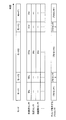
- FIG. 3 is a diagram illustrating a relationship among modes, sensors, and processors.
- mode transitions in the order of mode 1, mode 2, mode 3, mode 2, and mode 1 the sensor used in each mode, the sampling frequency of acquired sensing data, and mainly used
- An example of a processor is described.
- the information processing apparatus 100 uses more sensors in a mode close to a state where the user is moving than in a mode close to the state where the user is not moving.
- the information processing apparatus 100 uses only an acceleration sensor in mode 1 and mode 2, and also uses a barometric sensor and a geomagnetic sensor other than the acceleration sensor in mode 3.
- the sensor used in each mode is merely an example, and may be changed as appropriate.
- the information processing apparatus 100 can use a sensor suitable for the state of movement of the user and reduce the power consumption. More specifically, in the mode 1 and the mode 2, since the user is not moving or is in a state of just starting to move, the information processing apparatus 100 is sufficient even with only sensing data from the acceleration sensor. Judgment processing can be performed. Therefore, the information processing apparatus 100 can reduce power consumption as compared with a method in which the sensor used in each mode is not changed. On the other hand, when the mode is set to mode 3, since the user's movement or movement is continuous, the information processing apparatus 100 increases the number of sensors used or uses a sensor with higher power consumption. The user's movement and the like can be determined in more detail. Therefore, the information processing apparatus 100 can reduce the amount of power consumption or perform more detailed determination processing as compared with a method in which the sensor used in each mode is not changed.
- the information processing apparatus 100 changes the sampling frequency according to the mode. More specifically, the information processing apparatus 100 acquires sensing data at a higher sampling frequency in a mode close to a state where the user is moving than in a mode close to the state where the user is not moving. For example, the information processing apparatus 100 sets the sampling frequency in mode 1 to 8 Hz, which is relatively lower than in mode 2 and mode 3. Then, as the mode transitions to mode 2 and mode 3, the information processing apparatus 100 increases the sampling frequency stepwise to 16 Hz (mode 2) and 64 Hz (mode 3).
- the sampling frequency in each mode is merely an example, and may be changed as appropriate.
- the information processing apparatus 100 can set a sampling frequency suitable for the state of movement of the user, and can reduce power consumption. More specifically, since the user has not moved substantially in mode 1, the information processing apparatus 100 can sufficiently perform the determination process even if the sampling frequency is set low. Therefore, the information processing apparatus 100 can reduce power consumption compared to a method in which the sampling frequency is not changed in each mode. On the other hand, as the mode changes from mode 2 to mode 3, the user's movement or movement becomes continuous. Therefore, the information processing apparatus 100 increases the sampling frequency in stages, so that the user's movement in more detail. Etc. can be determined. Therefore, the information processing apparatus 100 can reduce the amount of power consumption or perform more detailed determination processing compared to a method in which the sampling frequency is not changed in each mode.
- the information processing apparatus 100 changes the processor to be used according to the mode. More specifically, the information processing apparatus 100 includes a plurality of processors having different processing capacities or power consumptions, and the information processing apparatus 100 is more capable of being operated by a user than in a mode close to a state in which the user is not moving. Use a more powerful processor in a mode that is close to moving. For example, the information processing apparatus 100 uses the processor 1 having a low processing capacity and low power consumption in the mode 1, the processor 2 having a higher processing capacity than the processor 1 in the mode 2, and the processor in the mode 3. A processor 3 having a processing capability higher than 2 is used.
- the information processing apparatus 100 can use a processor suitable for the state of movement of the user and reduce power consumption. More specifically, in mode 1, since the sampling frequency of sensing data is low, the information processing apparatus 100 can perform sufficient processing even using the processor 1 having low processing capability. On the other hand, since the sampling frequency of sensing data increases as the mode transitions to mode 2 and mode 3, the information processing apparatus 100 performs processing using the processor 2 or the processor 3 having high processing capability. In general, since the power consumption increases as the processing capacity of the processor increases, the information processing apparatus 100 can reduce the power consumption compared to a method in which the processor is not changed in each mode.
- the information processing apparatus 100 may change the setting of the processor or the like instead of changing the processor to be used according to the mode. More specifically, the information processing apparatus 100 changes the applied voltage of the processor, the operation clock, the filter coefficient, the trigger threshold, the data length setting in the FIFO (First-In First-Out) processing, and the like. May be. Thereby, even when the information processing apparatus 100 includes only one processor, the information processing apparatus 100 can reduce the power consumption by changing the setting of the processor according to the mode. Can do.
- FIFO First-In First-Out
- the information processing apparatus 100 changes a sensor to be used according to a determination result such as a user's movement. More specifically, the information processing apparatus 100 determines a user's movement or moving means, and activates a more effective sensor or stops an ineffective sensor according to the determination result. For example, when the information processing apparatus 100 determines that the user is moving on an elevator or an escalator, the user is highly likely to be indoors, and a GPS (Global Positioning System) sensor cannot receive a signal from a satellite. Since there is a possibility, the GPS sensor is stopped. In addition, when the information processing apparatus 100 determines that the user is riding a bicycle, noise due to wind noise is likely to be generated, and thus a plurality of voice recognition microphones (voice sensors) are activated.
- a determination result such as a user's movement. More specifically, the information processing apparatus 100 determines a user's movement or moving means, and activates a more effective sensor or stops an ineffective sensor according to the determination result. For example, when the information processing apparatus 100 determines that
- the information processing apparatus 100 uses the sensor suitable for the user's movement, the moving unit, or the environment where the user is placed based on the determination result, and does not use the unsuitable sensor according to the determination result. Compared with a method in which the sensor used is not changed, it is possible to reduce the amount of power consumption or to perform more detailed determination processing.
- the information processing apparatus 100 may change the setting of the sensor instead of changing the sensor to be used according to the determination result. More specifically, the information processing apparatus 100 may change the operation mode, resolution, sensitivity, range, or low-pass filter setting of the sensor according to the determination result. For example, when the information processing apparatus 100 determines that the accuracy of the determination result is low, the information processing apparatus 100 may increase the resolution of the sensor and repeat the determination process.
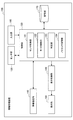
- FIG. 4 is a diagram illustrating a configuration of the information processing apparatus 100 according to the present embodiment.
- the information processing apparatus 100 includes a wireless communication unit 110, a control unit 120, a sensor unit 130, a display control unit 140, a display unit 150, an input unit 160, A storage unit 170.
- the wireless communication unit 110 communicates with an external device.
- the wireless communication unit 110 receives sensing data from an external device including a sensor.
- the wireless communication unit 110 transmits the control information provided from the sensor control unit 121 to an external device including the sensor, thereby enabling the information processing apparatus 100 to control the sensor of the external device.
- Control unit 120 The control unit 120 controls the overall processing of the information processing apparatus 100. More specifically, the control unit 120 controls not only the user's movement or movement means determination process, but also a process related to a call possessed by a smartphone, an imaging process by a camera, or a process related to mail. In the following, control of determination processing of the user's movement or moving means will be mainly described.
- the control unit 120 includes a sensor control unit 121, a mode control unit 122, a determination unit 123, and a processor control unit 124.
- the control unit 120 functions as an acquisition unit and a mode change unit.
- the sensor control unit 121 controls a sensor provided in the information processing apparatus 100 or a sensor provided in an external device. More specifically, the sensor control unit 121 determines the sensor to be used and the sampling frequency according to the mode, and controls each sensor. For example, the sensor control unit 121 controls each sensor according to the sensor and the sampling frequency shown in FIG.
- the sensor to be used is determined according to the determination result, and each sensor is controlled.
- the sensor control unit 121 may stop the GPS sensor when the state in which the user is not moving continues for a predetermined time or longer. Further, when the state in which the user is moving continues for a predetermined time or longer, the sensor control unit 121 may activate the GPS sensor. Further, when the state where the user is not walking or not running continues for a predetermined time or longer, the sensor control unit 121 may stop the pedometer (or a sensor that detects a walking action or a running action).
- the sensor control unit 121 assumes that the heart rate is constant and the heart rate is constant. The sensor may be stopped. In addition, the sensor control unit 121 may add or change a sensor used to increase the accuracy of the determination process. For example, when the likelihood of the determination result is low, the sensor control unit 121 activates the gyro sensor and uses the sensing data from the sensor to detect the user's posture or turn (rotation direction). The accuracy of the determination process may be increased.
- the sensor control unit 121 activates the gyro sensor, so that the user is stopped while sitting or standing. More detailed determination processing such as determining whether the vehicle is stopped may be made possible.
- the gyro sensor tends to have a relatively large amount of power consumption compared to other sensors. Therefore, the sensor control unit 121 does not always start a sensor with a large amount of power consumption such as a gyro sensor, but can reduce the power consumption by starting as necessary as described above. it can.
- the sensor control unit 121 uses the sensor suitable for the user's movement, the moving unit, or the environment where the user is placed based on the determination result, and does not use the unsuitable sensor. Compared with a method in which the sensor to be used is not changed, it is possible to reduce the amount of power consumption or to perform determination processing with higher accuracy.
- the mode control unit 122 controls the mode in the information processing apparatus 100. More specifically, the mode control unit 122 sets the mode to mode 1 when the determination unit 123 determines that the user has not moved or moved. Further, the mode control unit 122 changes the mode to mode 2 when the determination unit 123 determines that the user has started moving or has moved or stopped. Further, the mode control unit 122 changes the mode to mode 3 when the determination unit 123 determines that the user is continuously moving or moving. Further, as described above, the mode control unit 122 changes the mode step by step.
- the determination unit 123 includes processors 1 to 3 and determines a user's movement or movement means using sensing data. For example, when mode 1 is set, the determination unit 123 detects a user's movement based on the result of hardware processing by the processor 1. More specifically, the processor 1 calculates an acceleration vector in a three-dimensional space using accelerations in the X-axis, Y-axis, and Z-axis directions detected by the acceleration sensor. And the norm of the difference of the acceleration vector in two sampled different timings is calculated. Then, the processor 1 detects that the user has started to move based on the fact that the norm exceeds a predetermined threshold value.
- the determination unit 123 realizes these processes not by software but by hardware. More specifically, since the user is hardly moving or not moving in mode 1, the determination unit 123 does not perform complicated processing using software, but performs processing using only hardware. Do. As a result, it is possible to reduce the amount of power consumption used for software control. This control is merely an example, and software processing may also be performed in mode 1.
- the determination unit 123 determines a “class” corresponding to the user's movement or movement means based on the result of the software processing by the processor 2.
- the class in mode 2 includes, for example, two types of classes “Stay (not moving) / Not Stay (moving)” (hereinafter, the process of determining the two types of classes is “ This is referred to as “two-class determination processing”).
- the determination unit 123 acquires sensing data for 4 seconds from the acceleration sensor every 2 seconds, and extracts a feature amount of the sensing data. Then, the determination unit 123 performs the two-class determination process by inputting the feature amount to the determination model for the two-class determination process generated by machine learning.
- the processing performed in mode 2 is a two-class determination process to the last, and may be changed as appropriate. Further, the interval at which data acquisition is performed in mode 2 and the amount of data to be acquired are merely examples, and may be changed as appropriate.
- the determination unit 123 determines the class based on the result of the software processing by the processor 3.
- the classes in mode 3 include, for example, “Stay, Walk, Run, Upstays (up the stairs), Downstays (down the stairs), EscUP (on the rising escalator), EscDown (on the falling escalator) ), ElevUP (riding an elevator), ElevDown (riding an elevator), Train, Bus, Car, Bicycle ”are included (hereinafter referred to as the 13 classes).
- the determination process is referred to as “13 class determination process”).
- the determination unit 123 acquires sensing data for 5 seconds from each sensor every 5 seconds, and extracts a feature amount of the sensing data. And the determination part 123 performs 13 class determination processing by inputting the said feature-value to the determination model for 13 class determination processing produced
- the process performed in mode 3 is a 13-class determination process to the last, and may be changed as appropriate. Further, the interval at which data acquisition is performed in mode 3 and the amount of data to be acquired are merely examples, and may be changed as appropriate.
- FIG. 5 is a diagram illustrating an example of output contents of the determination unit 123 in each mode.
- the determination unit 123 may output the result of the class determination process in mode 3 and may not output the process result in mode 1 and mode 2.
- FIG. 5 is merely an example, and the determination unit 123 may output the processing result also in the mode 1 and the mode 2.
- the determination unit 123 may output the result of the 2-class determination process in mode 2.
- the processor control unit 124 controls the processor in the information processing apparatus 100. More specifically, the processor control unit 124 determines a processor to be mainly used according to the mode. For example, as shown in FIG. 3, the processor control unit 124 operates so that the processor 1 is mainly used in the mode 1 and operates mainly so that the processor 2 is used in the mode 2. In the operation, the processor 3 is mainly used.
- the number of processors used in each mode may not be one. For example, when mode 2 is set, not only processor 2 but also processor 1 may operate. When mode 3 is set, not only processor 3 but also processor 1 or processor 2 may operate.
- the sensor unit 130 generates sensing data by being controlled by the sensor control unit 121. More specifically, the sensor unit 130 is controlled by the sensor control unit 121 to detect a physical change or a chemical change caused by a user's movement and generate sensing data. The sensor unit 130 provides the generated sensing data to the control unit 120. As described above, the sensor unit 130 includes an acceleration sensor, a gyro sensor, a geomagnetic sensor, an atmospheric pressure sensor, a temperature sensor, a vibration sensor, a voice sensor, a heart rate sensor, a pulse wave sensor, a proximity sensor, an illuminance sensor, a pressure sensor, a position sensor, and sweating. A sensor, a pH sensor, a humidity sensor, an infrared sensor, or the like may be included.
- Display control unit 140 controls the display unit 150. More specifically, the content of information to be displayed on the display unit 150 is determined based on processing by the control unit 120, and the information is provided to the display unit 150.
- Display unit 150 The display unit 150 displays various information. More specifically, the display unit 150 is controlled by the display control unit 140 to display various types of information in various formats such as images, texts, graphs, etc., thereby visually displaying the information to the user. To be notified. Various kinds of information can include various contents.
- the input unit 160 receives input from the user. More specifically, the input unit 160 includes buttons, a touch panel, and the like, and receives input operations by the user using these. The input unit 160 provides information input by the user to the control unit 120.
- the storage unit 170 stores various types of information. More specifically, the storage unit 170 stores mode history information, sensor operation history information, processor operation history information, sensing data, a program used for class determination processing of the determination unit 123, and the like. To do.
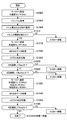
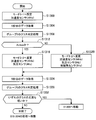
- FIG. 6 is a flowchart illustrating operations related to mode control, sensor control, and determination by the information processing apparatus 100 according to the present embodiment.
- the mode control unit 122 sets the mode to mode 1 (acceleration sensor: 8 Hz).
- the determination unit 123 acquires sensing data for one sample from the acceleration sensor.
- the processor 1 provided in the determination unit 123 calculates a vector of acceleration in the three-dimensional space using the sensing data of the acceleration sensor, and calculates a norm of a difference between the vector and the vector obtained by the previous sampling. Thereafter, a frequency that is not included in the frequency region that can be recognized as the user's movement is removed from the calculated norm by a band-pass filter (hereinafter referred to as “BPF” for convenience).
- BPF band-pass filter
- step S1016 the mode control unit 122 changes the mode to mode 2 (acceleration sensor: 16 Hz).
- step S1012 when the norm does not exceed the predetermined threshold (step S1012 / No), the process moves to step S1004.
- step S1020 the determination unit 123 acquires sensing data for 4 seconds from the acceleration sensor.
- step S1024 the determination unit 123 performs a 2-class determination process using the sensing data.
- step S1028 / Yes When the result of the 2-class determination process is Stay for five consecutive times (step S1028 / Yes), the process moves to step S1000, and the mode control unit 122 changes the mode from mode 2 to mode 1. . If the result of the two-class determination process is not Stay for 5 consecutive times (Step S1028 / No) and Not Stay for 2 consecutive times (Step S1032 / Yes), the mode control unit at Step S1036 122 changes the mode from mode 2 to mode 3 (acceleration sensor: 64 Hz, barometric pressure sensor: 8 Hz, geomagnetic sensor: 8 Hz). In step S1032, if the result of the two-class determination process is not Not Stay twice consecutively (step S1032 / No), the mode control unit 122 does not change the mode, and the process moves to step S1020.
- step S1040 the determination unit 123 acquires sensing data for 5 seconds from each sensor.
- step S1044 the determination unit 123 performs a 13 class determination process using the sensing data. As long as the result of the 13 class determination process does not become Stay for six consecutive times (step S1048 / No), the determination unit 123 continues the data acquisition (step S1040) and the 13 class determination process (step S1044) (FIG. 6). Then, the processing corresponding to step S1048 / No is described as “end” for convenience.)
- step S1048 when the result of the 13 class determination process is “Stay” for six consecutive times (step S1048 / Yes), the process moves to step S1016, and the mode control unit 122 changes the mode from mode 3 to mode. Change to 2.
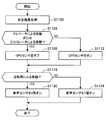
- FIG. 7 is a flowchart illustrating a sensor control operation according to the result of the class determination process performed by the determination unit 123.
- step S1100 the sensor control unit 121 acquires information related to the result of the class determination process from the determination unit 123. If it is determined that the user is moving on an elevator or escalator (step S1104 / Yes), the user is likely to be indoors, and the GPS sensor may not be able to receive a signal from the satellite. Therefore, in step S1108, the sensor control unit 121 stops the GPS sensor (if the GPS sensor is in a stopped state, the sensor control unit 121 keeps it stopped). If it is determined in step S1104 that the user is not moving on an elevator or escalator (step S1104 / No), in step S1112, the sensor control unit 121 activates the GPS sensor (the GPS sensor is activated). If it is in a state, leave it activated.)
- the sensor control unit 121 may perform voice recognition in step S1120 because the effect of noise from wind noise may be large. A plurality of microphones (voice sensors) are activated. If it is determined in step S1116 that the user is not moving on a bicycle (step S1116 / No), the sensor control unit 121 activates one voice recognition microphone (voice sensor) in step S1124. .
- the sensor control operation shown in FIG. 7 is merely an example, and may be changed as appropriate.
- control unit 120 or the display control unit 140 may control devices or functions other than the sensors according to the determination result. For example, when the state where the user is moving on a train or a car continues for a predetermined time or longer, it may be difficult to perform Wi-Fi (registered trademark) communication.
- the wireless communication performed by the unit 110 may be changed from Wi-Fi communication to cellular communication (4G mobile communication or the like). Thereby, the control unit 120 can reduce the power consumed for searching for an access point in Wi-Fi communication.
- the control part 120 can reduce the electric power consumed for the said process.
- the display control unit 140 displays the display (display unit). 150) may be stopped. Accordingly, the display control unit 140 can reduce power consumed for display by the display unit 150.
- each mode is hierarchized. More specifically, each mode according to the first modification may be divided into a plurality of layers. For example, mode 1 may be divided into two layers, mode 1-1 and mode 1-2. Of course, not only mode 1 but also mode 2 and mode 3 may be divided into a plurality of layers, and may be divided into, for example, three or more layers other than two layers. Thereby, the information processing apparatus 100 can set the sensor to be used, the sampling frequency of sensing data, and the processor to be used in more detail. For example, in the above embodiment, the sampling frequency of mode 1 is 8 Hz. However, in the first modification, mode 1 is divided into two layers of mode 1-1 and mode 1-2. The sampling frequency in mode 1 may be set to 1 Hz, and the sampling frequency in mode 1-2 may be set to 8 Hz.
- the 2-class determination process is performed in mode 2 and the 13-class determination process is performed in mode 3.
- the class determination process may also be hierarchized. .
- FIG. 8 is a diagram illustrating an example of a hierarchical class determination process in the first modification.
- the information processing apparatus 100 may apply one of the groups illustrated in FIG. 8 to the hierarchized mode. For example, group 1 may be applied to mode 3-1, and group 0 may be applied to mode 3-2. That is, the information processing apparatus 100 may perform the 13-class determination process in mode 3-2 after performing the 3-class determination process “Stay / On Foot / On Vehicle” in mode 3-1. Thereby, since the information processing apparatus 100 can perform the sensor control and the system control based on the determination result more finely, the information processing apparatus 100 has a more suitable sensor, sampling frequency or processor according to each mode. It becomes possible to make selections and make settings. Therefore, the power consumption of the information processing apparatus 100 or the sensor can be further reduced.
- FIG. 9 is a flowchart showing the operation of the information processing apparatus 100 when mode 1 is divided into two layers, mode 1-1 and mode 1-2.
- the mode control unit 122 sets the mode to mode 1-1 (acceleration sensor: 1 Hz).
- the determination unit 123 acquires sensing data for one sample from the acceleration sensor.
- the processor 1 included in the determination unit 123 calculates a vector of acceleration in the three-dimensional space using the sensing data, and calculates a norm of a difference between the vector and a vector obtained by the previous sampling.
- mode 1-1 unlike step S1008 in FIG. 6, the BPF does not remove frequencies that are not included in the frequency region that can be recognized as the user's movement.
- step S1216 the mode control unit 122 changes the mode to mode 1-2 (acceleration sensor: 8 Hz). If the norm does not exceed the predetermined threshold in step S1212 (step S1212 / No), the process moves to step S1204.
- step S1220 the determination unit 123 acquires sensing data for one sample from the acceleration sensor.
- step S1224 the processor 1 provided in the determination unit 123 calculates a norm, and for the norm, a frequency that is not included in a frequency region that can be recognized as a user's motion is removed by the BPF.
- step S1228 when the norm exceeds a predetermined threshold (step S1228 / Yes), the mode control unit 122 changes the mode to mode 2 (in FIG. 9, the processing corresponding to step S1228 / Yes is performed for convenience. "End”).
- step S1228 when the norm does not exceed the predetermined threshold (step S1228 / No) and the predetermined time has elapsed from the timing when the mode is set to 1-2 (step S1232 / Yes), the processing Moves to S1200, and the mode control unit 122 changes the mode from mode 1-2 to mode 1-1.
- step S1232 when the predetermined time has not elapsed from the timing when the mode is set to 1-2 (step S1232 / No), the mode control unit 122 does not change the mode, and the process moves to step S1220. To do.
- FIG. 10 is a flowchart showing the operation of the information processing apparatus 100 when mode 3 is divided into two layers of mode 3-1 and mode 3-2.
- group 2 in FIG. 8 is applied in mode 3-1
- group 0 is applied in mode 3-2.
- step S1300 of FIG. 10 the mode control unit 122 sets the mode to mode 3-1 (acceleration sensor: 16 Hz).
- step S1304 the determination unit 123 acquires sensing data for 5 seconds from the acceleration sensor.
- step S1316 the mode control unit 122 changes the mode to mode 3-2 (acceleration sensor: 16 Hz, barometric pressure sensor: 4 Hz).
- the fact that the class is Active means that the class is any one of “Walk / Run / Upstays / Downstays” as shown in FIG.
- the determination unit 123 can determine the vertical movement direction by acquiring sensing data from the atmospheric pressure sensor in addition to the acceleration sensor. That is, the determination unit 123 can determine not only Walk and Run, but also Upstays and Downstays. Of course, sensors other than the atmospheric pressure sensor may be added.
- step S1312 when it is determined that the class is not active, that is, the class is passive (step S1312 / No), the mode control unit 122 sets the mode to mode 3-2 (acceleration sensor: 64 Hz, barometric pressure sensor: 8Hz, geomagnetic sensor: 8Hz).
- the fact that the class is Passive means that the class is any one of “Stay / EscUP / EscDown / ElevUP / ElevDown / Train / Bus / Car / Bicicle” as shown in FIG.
- the determination unit 123 can determine these movement or movement means by acquiring sensing data from the atmospheric pressure sensor and the geomagnetic sensor in addition to the acceleration sensor. Of course, sensors other than the atmospheric pressure sensor and the geomagnetic sensor may be added.
- step S1324 the determination unit 123 acquires sensing data for 5 seconds from each sensor.
- step S1328 the determination unit 123 performs a class determination process for group 0. That is, the determination unit 123 performs a 13 class determination process using the sensing data. If the likelihood of any class is high in the 13 class determination process by the determination unit 123 (step S1332 / No), the result of the 13 class determination process is output. Thereafter, the determination unit 123 continues the data acquisition (step S1324) and the 13 class determination process (step S1328) (in FIG. 10, the process corresponding to step S1332 / No is described as “end” for convenience). ) If the likelihood of any class is low in step S1332 (step S1332 / Yes), the process moves to step S1300, and mode control unit 122 changes the mode from mode 3-2 to mode 3-1. .
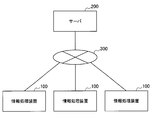
- FIG. 11 is a diagram illustrating a configuration of an information processing system according to the second modification.
- the information processing system according to the second modification includes an information processing apparatus 100, a server 200, and a network 300.
- the server 200 is connected to one or more information processing apparatuses 100 via a network 300, and the server 200 can have the same function as the determination unit 123 of the information processing apparatus 100. That is, the server 200 can perform the determination process for changing the mode or perform the class determination process using the sensing data provided from the information processing apparatus 100.
- the information processing apparatus 100 transmits sensing data to the server 200, and the server 200 uses the received sensing data to determine a determination process or class for mode change. A determination process is performed, and information regarding the result of the process is transmitted to the information processing apparatus 100.
- the information processing apparatus 100 that has received the information performs mode change, sensor change, sampling frequency change, sensor control, and the like. Thereby, the power consumption of the information processing apparatus or sensor can be further reduced.
- the server 200 may perform part of the determination process instead of the determination unit 123.
- the determination unit 123 of the information processing apparatus 100 performs processing for calculating a norm, applying a BPF, and comparing the norm with a predetermined threshold, and class determination in mode 2 and mode 3
- the server 200 may perform the process instead of the determination unit 123.
- the processing contents of the information processing apparatus 100 and the server 200 can be changed as appropriate. Thereby, for example, when the process by the server 200 is slow or when a failure occurs in the server 200, the information processing apparatus 100 may perform the determination process.
- the server 200 may transmit information related to the result of the determination process to a device other than the information processing device 100.
- the server 200 may transmit the information to an information device such as a robot provided in the user's home or company.
- the information device can perform an operation or a process according to the user's movement or moving means.
- a robot provided in the user's home acquires information that the user is on the train during a predetermined time period (for example, the nighttime period), and determines that the user is on the way home and starts the air conditioner. Etc. may be performed.
- the server 200 may link information related to the processing result to an SNS (Social Networking Service). Thereby, a user and other people can grasp a user's movement or movement means on SNS.
- SNS Social Networking Service
- the server 200 may improve an algorithm for determination processing. More specifically, the information processing apparatus 100 provides a feedback function to the determination processing performed by the server 200 or the information processing apparatus 100 to the user. The user uses the information processing apparatus 100 to feed back that the determination process is incorrect or correct. The information processing apparatus 100 transmits information regarding the determination process and feedback information to the server 200, and the server 200 uses the information to improve an algorithm for the determination process.
- the server 200 may improve an algorithm for determination processing for all users. Further, the server 200 may customize the algorithm for a specific user when similar content is frequently fed back from the specific user. Further, the server 200 may improve the algorithm based on user attributes (age, sex, height, weight, presence / absence of disability). After improving the algorithm, the server 200 provides the information processing apparatus 100 with a program for determination processing to which the algorithm is applied. Thereby, the malfunction of an algorithm can be eliminated and the determination process suitable for each user can be performed.
- the present disclosure can be applied to a monitoring system.
- the monitoring server in the monitoring system sets mode 1 when there is no suspicious person in the monitoring area, mode 2 when the suspicious person has entered the monitoring area, and the suspicious person continuously performs some work. This state is referred to as mode 3.
- the monitoring server changes the sensor to be used, the sampling frequency, the processor to be used, and the like according to the mode as in the present embodiment, and changes the sensor to be used according to the determination result of the suspicious person's movement.
- the monitoring server may grasp the characteristics of the suspicious object by increasing the number of sensors used.
- the monitoring server can reduce the power consumption of the device or the sensor as compared with the case where the sensor to be used, the sampling frequency, or the processor to be used is not changed.
- the present disclosure can also be applied to vending machines.
- the vending machine sets mode 1 when the user is not present near the own device, mode 2 when the user is present near the own device, and mode when the user is selecting the product of the own device. 3.
- the vending machine changes the sensor to be used, the sampling frequency, and the processor to be used according to the mode as described above, and changes the sensor to be used according to the determination result of the user's movement.
- the vending machine determines the user's attributes (gender, age, etc.) by increasing the number of sensors to be used, and recommends a product based on the determination result. Good.
- the vending machine can reduce power consumption of the device or the sensor as compared with a case where the sensor to be used, the sampling frequency, or the processor to be used is not changed. .
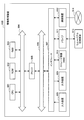
- FIG. 12 is a diagram illustrating a hardware configuration of the information processing apparatus 100 according to the present embodiment.
- the information processing apparatus 100 includes a CPU (Central Processing Unit) 901, a ROM (Read Only Memory) 902, a RAM (Random Access Memory) 903, and a host bus 904.
- the information processing apparatus 100 includes a bridge 905, an external bus 906, an interface 907, an input device 908, an output device 909, a storage device (HDD) 910, a drive 911, and a communication device 912.
- a CPU Central Processing Unit
- ROM Read Only Memory
- RAM Random Access Memory
- the information processing apparatus 100 includes a bridge 905, an external bus 906, an interface 907, an input device 908, an output device 909, a storage device (HDD) 910, a drive 911, and a communication device 912.
- HDMI storage device
- the CPU 901 functions as an arithmetic processing unit and a control unit, and controls the overall operation in the information processing apparatus 100 according to various programs. Further, the CPU 901 may be a microprocessor.
- the ROM 902 stores programs used by the CPU 901, calculation parameters, and the like.
- the RAM 903 temporarily stores programs used in the execution of the CPU 901, parameters that change as appropriate during the execution, and the like. These are connected to each other by a host bus 904 including a CPU bus.
- Each function of the control unit 120 is realized by the cooperation of the CPU 901, the ROM 902, and the RAM 903.
- the host bus 904 is connected to an external bus 906 such as a PCI (Peripheral Component Interconnect / Interface) bus via a bridge 905.
- an external bus 906 such as a PCI (Peripheral Component Interconnect / Interface) bus
- PCI Peripheral Component Interconnect / Interface
- the host bus 904, the bridge 905, and the external bus 906 are not necessarily configured separately, and these functions may be mounted on one bus.
- the input device 908 includes input means for inputting information such as a mouse, keyboard, touch panel, button, microphone, switch, and lever, and an input control circuit that generates an input signal based on the input by the user and outputs the input signal to the CPU 901. Etc.
- a user of the information processing apparatus 100 can input various data or instruct a processing operation to the information processing apparatus 100 by operating the input device 908.
- the output device 909 includes display devices such as a CRT (Cathode Ray Tube) display device, a liquid crystal display (LCD) device, an OLED (Organic Light Emitting Diode) device, and a lamp. Furthermore, the output device 909 includes an audio output device such as a speaker and headphones. The output device 909 outputs the played content, for example. Specifically, the display device displays various information such as reproduced video data as text or images. On the other hand, the audio output device converts reproduced audio data or the like into audio and outputs it.
- display devices such as a CRT (Cathode Ray Tube) display device, a liquid crystal display (LCD) device, an OLED (Organic Light Emitting Diode) device, and a lamp. Furthermore, the output device 909 includes an audio output device such as a speaker and headphones. The output device 909 outputs the played content, for example. Specifically, the display device displays various information such as reproduced video data as text or images. On the other hand, the audio output device
- the storage device 910 is a data storage device configured as an example of the storage unit 170 of the information processing apparatus 100 according to the present embodiment.
- the storage device 910 may include a storage medium, a recording device that records data on the storage medium, a reading device that reads data from the storage medium, a deletion device that deletes data recorded on the storage medium, and the like.
- the storage device 910 is composed of, for example, an HDD (Hard Disk Drive).
- the storage device 910 drives a hard disk and stores programs executed by the CPU 901 and various data.
- the drive 911 is a storage medium reader / writer, and is built in or externally attached to the information processing apparatus 100.
- the drive 911 reads information recorded in a removable storage medium 913 such as a mounted magnetic disk, optical disk, magneto-optical disk, or semiconductor memory, and outputs the information to the RAM 903.
- the drive 911 can also write information to the removable storage medium 913.
- the communication device 912 is a communication interface configured by a communication device for connecting to the communication network 914, for example.
- the function of the wireless communication unit 110 is realized by the communication device 912.
- the hardware configuration of the information processing apparatus 100 has been described above with reference to FIG. 12, the hardware of the server 200 in the second modification can be configured substantially the same as the information processing apparatus 100. Therefore, description of the hardware configuration of the server 200 is omitted.
- the information processing apparatus 100 can control each sensor based on the result of the class determination process.
- the information processing apparatus 100 may provide a user with a screen for setting related to the sensor control.
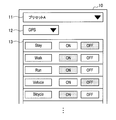
- FIG. 13 is a diagram illustrating an example of a setting screen for sensor control based on the result of the class determination process.
- a pull-down 11, pull-down 12, and switching button 13 are displayed on the screen 10 shown in FIG. 13, a pull-down 11, pull-down 12, and switching button 13 are displayed.
- the pull-down 11 is information for identifying sensor control settings.
- the user can select preset A, preset B, preset C, and the like by pull-down 11, use preset A as commuting settings, use preset B as work settings, and use preset C as presets. Can be used as a weekend setting. That is, the user can set sensor control for each application.
- the pull-down 12 is information for designating a sensor to be set.
- the user selects a sensor for setting by selecting a GPS sensor, a pedometer (or a sensor that detects walking or running), a voice recognition microphone (voice sensor), a heart rate sensor, or the like by using the pull-down 12. specify.
- the user may be able to specify other than the sensor by using the pull-down 12.
- the user may be able to specify a display (display unit 150) or notification (vibration or the like) by pull-down 12.
- the switch button 13 is a button for switching whether to activate or stop the sensor or the like specified in the pull-down 12 in each class. For example, as shown in FIG. 13, when the user sets “Stay: OFF”, the GPS sensor is stopped when it is determined that the user is not moving (Stay). When the user sets “Wail: ON”, the GPS sensor is activated when it is determined that the user is walking. As described above, the user can use the screen to select a use, a sensor, and a class and perform settings related to sensor control.
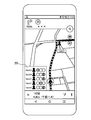
- FIG. 14 is a diagram illustrating an example of a screen displayed by the display unit 150 according to the present embodiment.
- FIG. 14 shows a screen when the route guidance application is activated, and information on the determination result is shown in an area 20 of the screen.
- the display unit 150 can display mode information corresponding to each user. For example, it is assumed that the left lamp among the three lamps displayed in the region 20 corresponds to mode 1, the middle lamp corresponds to mode 2, and the right lamp corresponds to mode 3. Accordingly, the user can recognize that friendA in FIG. 14 is in the mode 1 state, friendD is in the mode 2 state, and friendB, friendC, and friendE are in the mode 3 state.
- mode information corresponding to each user the user can estimate the operation performed by each user or the environment where each user is placed. For example, when the mode corresponding to a certain user is mode 3, it is estimated that the user is moving. Further, when the mode corresponding to a certain user goes back and forth between mode 1 or mode 2, it is estimated that the user is at home or at the office.
- the display unit 150 may display mode information corresponding to the user himself / herself. Thereby, for example, when the application is linked to the mode information of the user, the user can predict the operation of the application. More specifically, when the operation of the application is different in each mode, the user can predict the operation of the application by grasping the mode transition state, so that the application can be used more smoothly. Can do.
- the display unit 150 may display not only mode information but also class information (Walk, Run, Train, etc.). Thereby, the user can grasp in detail the movement or moving means of each user including himself.
- the information processing apparatus 100 changes the mode stepwise based on a determination result such as a person's movement, and the sensor to be used, the sampling frequency, Change the processor to be used. Further, the information processing apparatus 100 changes a sensor to be used according to a determination result such as a user's movement. Thereby, the information processing apparatus 100 according to the present embodiment can reduce the power consumption of the own apparatus or the sensor.
- each step in the operation of the information processing apparatus 100 does not necessarily have to be processed in time series in the order described as a flowchart.
- the steps described in FIG. 6, FIG. 7, FIG. 9, or FIG. 10 may be processed in an order different from the order described in the figure, or may be processed in parallel as appropriate.
- step S1104 and step S1116 described in FIG. 7 may be processed in different orders or in parallel.
- the information processing apparatus 100 may perform various processes using only the sensor provided in the external device without including the sensor unit 130.
- control unit 120 may embody part of the functions of the wireless communication unit 110, the sensor unit 130, the display control unit 140, the display unit 150, or the input unit 160.
- An acquisition unit for acquiring sensing data A mode change unit that changes the mode based on the sensing data, The acquisition unit changes sensing data to be acquired based on the change of the mode.
- Information processing device (2)
- the mode change unit changes the mode stepwise based on the sensing data.
- the mode changing unit changes the mode based on sensing data acquired from an acceleration sensor.
- the information processing apparatus according to any one of (1) and (2).
- the mode is a mode relating to the state of movement of the user or object.
- the mode is a first mode that is applied to the user apparatus when the user or the object is in a state where the user or the object is continuously stopped. Including a second mode applied to the device; The information processing apparatus according to (4). (6) The acquisition unit acquires more types of sensing data when the second mode is applied than when the first mode is applied; The information processing apparatus according to (5). (7) The acquisition unit acquires sensing data generated by a sensor having a larger amount of power consumption when the second mode is applied than when the first mode is applied; The information processing apparatus according to (5). (8) The acquisition unit changes a sampling frequency of the sensing data based on the mode. The information processing apparatus according to any one of (5) to (7).
- the acquisition unit increases the sampling frequency when the second mode is applied as compared to when the first mode is applied.
- the information processing apparatus according to (8).
- (10) A processor control unit configured to control a processor used for processing of the information processing apparatus based on the mode; The information processing apparatus according to any one of (5) to (9).
- (11) The processor control unit determines to use a processor having a higher processing capacity in the second mode than in the first mode.
- (12) A determination unit for determining a motion of a user or an object based on the sensing data; The information processing apparatus according to any one of (1) to (11).
- (13) The acquisition unit changes the sensing data acquired based on the determination result of the movement, The information processing apparatus according to (12).
Landscapes
- Engineering & Computer Science (AREA)
- Radar, Positioning & Navigation (AREA)
- Remote Sensing (AREA)
- General Physics & Mathematics (AREA)
- Physics & Mathematics (AREA)
- Theoretical Computer Science (AREA)
- Automation & Control Theory (AREA)
- General Engineering & Computer Science (AREA)
- Signal Processing (AREA)
- Computer Networks & Wireless Communication (AREA)
- Computer Hardware Design (AREA)
- Computing Systems (AREA)
- Telephone Function (AREA)
- User Interface Of Digital Computer (AREA)
- Power Sources (AREA)
Abstract
La présente invention a pour objet de réduire encore davantage la consommation d'énergie d'un appareil de traitement d'informations ou d'un capteur. L'invention concerne un appareil de traitement d'informations comprenant : une unité d'acquisition qui acquiert des données de détection ; et une unité de changement de mode qui change le mode en fonction des données de détection, l'unité d'acquisition modifiant les données de détection à acquérir en fonction d'un changement du mode.
Priority Applications (3)
| Application Number | Priority Date | Filing Date | Title |
|---|---|---|---|
| EP16875212.9A EP3392735A4 (fr) | 2015-12-18 | 2016-09-30 | Appareil et procédé de traitement d'informations, et programme associé |
| US15/779,981 US11029743B2 (en) | 2015-12-18 | 2016-09-30 | Information processing device and information processing method |
| JP2017556377A JP6868778B2 (ja) | 2015-12-18 | 2016-09-30 | 情報処理装置、情報処理方法およびプログラム |
Applications Claiming Priority (2)
| Application Number | Priority Date | Filing Date | Title |
|---|---|---|---|
| US201562269316P | 2015-12-18 | 2015-12-18 | |
| US62/269,316 | 2015-12-18 |
Publications (1)
| Publication Number | Publication Date |
|---|---|
| WO2017104227A1 true WO2017104227A1 (fr) | 2017-06-22 |
Family
ID=59056525
Family Applications (1)
| Application Number | Title | Priority Date | Filing Date |
|---|---|---|---|
| PCT/JP2016/079119 Ceased WO2017104227A1 (fr) | 2015-12-18 | 2016-09-30 | Appareil et procédé de traitement d'informations, et programme associé |
Country Status (4)
| Country | Link |
|---|---|
| US (1) | US11029743B2 (fr) |
| EP (1) | EP3392735A4 (fr) |
| JP (1) | JP6868778B2 (fr) |
| WO (1) | WO2017104227A1 (fr) |
Cited By (5)
| Publication number | Priority date | Publication date | Assignee | Title |
|---|---|---|---|---|
| WO2019142305A1 (fr) * | 2018-01-19 | 2019-07-25 | マクセル株式会社 | Système de rappel |
| WO2020230892A1 (fr) * | 2019-05-15 | 2020-11-19 | 株式会社Nttドコモ | Dispositif de traitement |
| WO2021130937A1 (fr) * | 2019-12-25 | 2021-07-01 | ソニーグループ株式会社 | Dispositif de traitement d'informations, programme et procédé |
| JPWO2021240771A1 (fr) * | 2020-05-29 | 2021-12-02 | ||
| JP2022152252A (ja) * | 2021-03-29 | 2022-10-12 | セイコーエプソン株式会社 | センサーモジュールおよび計測システム |
Families Citing this family (10)
| Publication number | Priority date | Publication date | Assignee | Title |
|---|---|---|---|---|
| US10999793B2 (en) * | 2016-07-18 | 2021-05-04 | Netgear, Inc. | Power management techniques for a power sensitive wireless device |
| US11184851B2 (en) | 2016-07-18 | 2021-11-23 | Netgear, Inc. | Power management techniques for a power sensitive wireless device |
| US11327496B2 (en) * | 2019-01-16 | 2022-05-10 | Ford Global Technologies, Llc | Vehicle path identification |
| JP7070495B2 (ja) * | 2019-04-18 | 2022-05-18 | カシオ計算機株式会社 | 電子機器、停止判定方法、および停止判定プログラム |
| KR102736216B1 (ko) * | 2019-08-16 | 2024-11-28 | 엘지전자 주식회사 | 로봇 시스템 및 그 작동방법 |
| CN113074724B (zh) * | 2021-03-26 | 2023-05-02 | 歌尔股份有限公司 | 运动时间计算方法、装置、设备及计算机可读存储介质 |
| WO2022251360A1 (fr) * | 2021-05-27 | 2022-12-01 | Tdk Corporation | Procédé et système de positionnement à conservation de ressources améliorée |
| US12172636B2 (en) | 2021-11-16 | 2024-12-24 | Ford Global Technologies, Llc | Vehicle path adjustment using a virtual boundary that is based on a shape of a vehicle body |
| US12296845B2 (en) | 2021-11-16 | 2025-05-13 | Ford Global Technologies, Llc | Vehicle path adjustment with control barrier function |
| US12228410B2 (en) * | 2022-06-14 | 2025-02-18 | Volvo Car Corporation | Localization for autonomous movement using vehicle sensors |
Citations (6)
| Publication number | Priority date | Publication date | Assignee | Title |
|---|---|---|---|---|
| JP2006323761A (ja) * | 2005-05-20 | 2006-11-30 | Toshiba Corp | 計算機装置、通信装置及びこれを用いた消費電力制御方法 |
| JP2012052936A (ja) * | 2010-09-02 | 2012-03-15 | Casio Comput Co Ltd | 測位装置、測位方法、及び、プログラム |
| JP2014061043A (ja) * | 2012-09-20 | 2014-04-10 | Casio Comput Co Ltd | 運動情報検出装置および運動情報検出方法、運動情報検出プログラム |
| WO2014085506A1 (fr) * | 2012-11-27 | 2014-06-05 | Rambus Inc. | Système à multiples rangs de mémoire et procédé de sélection de celui-ci |
| JP2014192735A (ja) * | 2013-03-27 | 2014-10-06 | Lapis Semiconductor Co Ltd | 半導体装置、電子機器、及び判断方法 |
| JP2015087201A (ja) * | 2013-10-30 | 2015-05-07 | 京セラ株式会社 | 電子機器 |
Family Cites Families (16)
| Publication number | Priority date | Publication date | Assignee | Title |
|---|---|---|---|---|
| US8082122B2 (en) * | 2006-12-12 | 2011-12-20 | Samsung Electronics Co., Ltd. | Mobile device having a motion detector |
| KR101261176B1 (ko) * | 2007-03-23 | 2013-05-09 | 퀄컴 인코포레이티드 | 멀티-센서 데이터 수집 및/또는 프로세싱 |
| CN101822094B (zh) * | 2007-10-12 | 2014-06-11 | 诺基亚公司 | 通过评估关于对等无线通信节点的信息变化来确定无线通信节点是否静止 |
| US20110215903A1 (en) * | 2010-03-04 | 2011-09-08 | Nokia Corporation | Apparatus and Associated Methods |
| US8706172B2 (en) * | 2010-10-26 | 2014-04-22 | Miscrosoft Corporation | Energy efficient continuous sensing for communications devices |
| JP2013042360A (ja) | 2011-08-16 | 2013-02-28 | Sony Corp | 情報処理装置、情報処理方法、及びプログラム |
| US9069553B2 (en) * | 2011-09-06 | 2015-06-30 | Marvell World Trade Ltd. | Switching tasks between heterogeneous cores |
| US8972180B1 (en) * | 2011-11-08 | 2015-03-03 | Marvell International Ltd. | Method and apparatus for managing multiple sensors in a navigation system |
| JP5774060B2 (ja) | 2013-06-27 | 2015-09-02 | 京セラ株式会社 | 電子機器及びシステム |
| JP6353198B2 (ja) | 2013-06-27 | 2018-07-04 | 京セラ株式会社 | 電子機器 |
| US10130843B2 (en) | 2013-05-17 | 2018-11-20 | Kyocera Corporation | Electronic device, control program, control method, and system |
| JP6312990B2 (ja) | 2013-06-20 | 2018-04-18 | 京セラ株式会社 | 携帯機器、並びに携帯機器の制御プログラム及び制御方法 |
| JP5800855B2 (ja) | 2013-05-17 | 2015-10-28 | 京セラ株式会社 | 携帯電子機器 |
| US9037199B1 (en) * | 2014-02-13 | 2015-05-19 | Google Inc. | Detecting transitions between physical activity |
| US9009516B1 (en) * | 2014-02-19 | 2015-04-14 | Google Inc. | Adjusting a power mode of a wearable computing device based on motion data |
| CN104391561B (zh) * | 2014-09-30 | 2018-01-26 | 英华达(上海)科技有限公司 | 穿戴式设备进行模式切换的方法及该穿戴式设备 |
-
2016
- 2016-09-30 WO PCT/JP2016/079119 patent/WO2017104227A1/fr not_active Ceased
- 2016-09-30 JP JP2017556377A patent/JP6868778B2/ja active Active
- 2016-09-30 US US15/779,981 patent/US11029743B2/en active Active
- 2016-09-30 EP EP16875212.9A patent/EP3392735A4/fr not_active Ceased
Patent Citations (6)
| Publication number | Priority date | Publication date | Assignee | Title |
|---|---|---|---|---|
| JP2006323761A (ja) * | 2005-05-20 | 2006-11-30 | Toshiba Corp | 計算機装置、通信装置及びこれを用いた消費電力制御方法 |
| JP2012052936A (ja) * | 2010-09-02 | 2012-03-15 | Casio Comput Co Ltd | 測位装置、測位方法、及び、プログラム |
| JP2014061043A (ja) * | 2012-09-20 | 2014-04-10 | Casio Comput Co Ltd | 運動情報検出装置および運動情報検出方法、運動情報検出プログラム |
| WO2014085506A1 (fr) * | 2012-11-27 | 2014-06-05 | Rambus Inc. | Système à multiples rangs de mémoire et procédé de sélection de celui-ci |
| JP2014192735A (ja) * | 2013-03-27 | 2014-10-06 | Lapis Semiconductor Co Ltd | 半導体装置、電子機器、及び判断方法 |
| JP2015087201A (ja) * | 2013-10-30 | 2015-05-07 | 京セラ株式会社 | 電子機器 |
Non-Patent Citations (1)
| Title |
|---|
| See also references of EP3392735A4 * |
Cited By (8)
| Publication number | Priority date | Publication date | Assignee | Title |
|---|---|---|---|---|
| WO2019142305A1 (fr) * | 2018-01-19 | 2019-07-25 | マクセル株式会社 | Système de rappel |
| WO2020230892A1 (fr) * | 2019-05-15 | 2020-11-19 | 株式会社Nttドコモ | Dispositif de traitement |
| JPWO2020230892A1 (fr) * | 2019-05-15 | 2020-11-19 | ||
| JP7316354B2 (ja) | 2019-05-15 | 2023-07-27 | 株式会社Nttドコモ | 処理装置 |
| WO2021130937A1 (fr) * | 2019-12-25 | 2021-07-01 | ソニーグループ株式会社 | Dispositif de traitement d'informations, programme et procédé |
| JPWO2021240771A1 (fr) * | 2020-05-29 | 2021-12-02 | ||
| JP7517416B2 (ja) | 2020-05-29 | 2024-07-17 | 日本電気株式会社 | 画像処理装置、画像処理方法、及びプログラム |
| JP2022152252A (ja) * | 2021-03-29 | 2022-10-12 | セイコーエプソン株式会社 | センサーモジュールおよび計測システム |
Also Published As
| Publication number | Publication date |
|---|---|
| EP3392735A4 (fr) | 2019-04-24 |
| EP3392735A1 (fr) | 2018-10-24 |
| US11029743B2 (en) | 2021-06-08 |
| US20180364787A1 (en) | 2018-12-20 |
| JP6868778B2 (ja) | 2021-05-12 |
| JPWO2017104227A1 (ja) | 2018-10-04 |
Similar Documents
| Publication | Publication Date | Title |
|---|---|---|
| JP6868778B2 (ja) | 情報処理装置、情報処理方法およびプログラム | |
| JP6777201B2 (ja) | 情報処理装置、情報処理方法及びプログラム | |
| CN108958633B (zh) | 分屏显示方法、装置、存储介质及电子设备 | |
| EP2778865B1 (fr) | Procédé de commande d'entrée et dispositif électronique le supportant | |
| JP6755332B2 (ja) | マルチデバイス充電ユーザインターフェース | |
| US10546582B2 (en) | Information processing device, method of information processing, and program | |
| RU2632153C2 (ru) | Способ, устройство и терминал для отображения виртуальной клавиатуры | |
| CN109284001B (zh) | 执行设备的功能的方法以及用于执行该方法的设备 | |
| CN102456141B (zh) | 用于识别用户背景的用户装置和方法 | |
| EP3139261A1 (fr) | Appareil de terminal d'utilisateur, système et son procédé de commande | |
| US20160246378A1 (en) | Systems and methods for providing context-sensitive haptic notification frameworks | |
| US10466786B2 (en) | Method and device for providing content | |
| CN107636683A (zh) | 利用加速计识别用户的活动的方法和装置 | |
| CN106878390B (zh) | 电子宠物互动控制方法、装置及可穿戴设备 | |
| KR20170049199A (ko) | 디스플레이 장치 및 디스플레이 장치의 화면 표시 제어 방법 | |
| CN107358953A (zh) | 语音控制方法、移动终端及存储介质 | |
| Williamson et al. | Multimodal mobile interactions: usability studies in real world settings | |
| US20160334880A1 (en) | Gesture recognition method, computing device, and control device | |
| CN107315519A (zh) | 驾驶状态下的os切换方法、装置及移动终端 | |
| JP6349727B2 (ja) | 処理システム、ウェアラブル装置、複数の電子機器の連携方法及びプログラム | |
| CN111314551A (zh) | 一种震动调节方法、装置、存储介质及移动终端 | |
| CN113497912A (zh) | 通过语音和视频定位的自动取景 | |
| US20180063283A1 (en) | Information processing apparatus, information processing method, and program | |
| CN114167984A (zh) | 设备控制方法、装置、存储介质及电子设备 | |
| CN106921802B (zh) | 音频数据的播放方法及装置 |
Legal Events
| Date | Code | Title | Description |
|---|---|---|---|
| 121 | Ep: the epo has been informed by wipo that ep was designated in this application |
Ref document number: 16875212 Country of ref document: EP Kind code of ref document: A1 |
|
| ENP | Entry into the national phase |
Ref document number: 2017556377 Country of ref document: JP Kind code of ref document: A |
|
| NENP | Non-entry into the national phase |
Ref country code: DE |
|
| WWE | Wipo information: entry into national phase |
Ref document number: 2016875212 Country of ref document: EP |