WO2017104414A1 - Procédé d'obtention de matériau actif d'électrode positive pour piles rechargeables lithium-ion - Google Patents
Procédé d'obtention de matériau actif d'électrode positive pour piles rechargeables lithium-ion Download PDFInfo
- Publication number
- WO2017104414A1 WO2017104414A1 PCT/JP2016/085520 JP2016085520W WO2017104414A1 WO 2017104414 A1 WO2017104414 A1 WO 2017104414A1 JP 2016085520 W JP2016085520 W JP 2016085520W WO 2017104414 A1 WO2017104414 A1 WO 2017104414A1
- Authority
- WO
- WIPO (PCT)
- Prior art keywords
- negative electrode
- silicon
- active material
- titanium oxide
- electrode active
- Prior art date
- Legal status (The legal status is an assumption and is not a legal conclusion. Google has not performed a legal analysis and makes no representation as to the accuracy of the status listed.)
- Ceased
Links
Images
Classifications
-
- C—CHEMISTRY; METALLURGY
- C01—INORGANIC CHEMISTRY
- C01B—NON-METALLIC ELEMENTS; COMPOUNDS THEREOF; METALLOIDS OR COMPOUNDS THEREOF NOT COVERED BY SUBCLASS C01C
- C01B33/00—Silicon; Compounds thereof
- C01B33/113—Silicon oxides; Hydrates thereof
- C01B33/12—Silica; Hydrates thereof, e.g. lepidoic silicic acid
-
- H—ELECTRICITY
- H01—ELECTRIC ELEMENTS
- H01M—PROCESSES OR MEANS, e.g. BATTERIES, FOR THE DIRECT CONVERSION OF CHEMICAL ENERGY INTO ELECTRICAL ENERGY
- H01M4/00—Electrodes
- H01M4/02—Electrodes composed of, or comprising, active material
- H01M4/36—Selection of substances as active materials, active masses, active liquids
-
- H—ELECTRICITY
- H01—ELECTRIC ELEMENTS
- H01M—PROCESSES OR MEANS, e.g. BATTERIES, FOR THE DIRECT CONVERSION OF CHEMICAL ENERGY INTO ELECTRICAL ENERGY
- H01M4/00—Electrodes
- H01M4/02—Electrodes composed of, or comprising, active material
- H01M4/36—Selection of substances as active materials, active masses, active liquids
- H01M4/48—Selection of substances as active materials, active masses, active liquids of inorganic oxides or hydroxides
-
- Y—GENERAL TAGGING OF NEW TECHNOLOGICAL DEVELOPMENTS; GENERAL TAGGING OF CROSS-SECTIONAL TECHNOLOGIES SPANNING OVER SEVERAL SECTIONS OF THE IPC; TECHNICAL SUBJECTS COVERED BY FORMER USPC CROSS-REFERENCE ART COLLECTIONS [XRACs] AND DIGESTS
- Y02—TECHNOLOGIES OR APPLICATIONS FOR MITIGATION OR ADAPTATION AGAINST CLIMATE CHANGE
- Y02E—REDUCTION OF GREENHOUSE GAS [GHG] EMISSIONS, RELATED TO ENERGY GENERATION, TRANSMISSION OR DISTRIBUTION
- Y02E60/00—Enabling technologies; Technologies with a potential or indirect contribution to GHG emissions mitigation
- Y02E60/10—Energy storage using batteries
Definitions
- the present invention relates to a method for producing a negative electrode active material for a secondary battery that exhibits excellent charge and discharge characteristics with high capacity, in which deterioration of the charge / discharge cycle is extremely suppressed when used as a negative electrode active material for a lithium ion secondary battery. .
- Non-aqueous electrolyte secondary batteries that use lithium compounds as negative electrodes have high voltage and high energy density.
- lithium metal is the subject of many researches as an active material for negative electrode due to its abundant battery capacity. Became.
- a lot of dendritic lithium is deposited on the surface of the negative electrode lithium during charging, so that the charge / discharge efficiency is reduced, or the dendritic lithium grows, causing a short circuit with the positive electrode.
- a carbon-based negative electrode that occludes and releases lithium has been used as a negative electrode active material instead of lithium metal.
- the carbon-based negative electrode has greatly contributed to the widespread use of lithium ion batteries by solving various problems of lithium metal.
- a lithium ion secondary battery using a carbon-based negative electrode has a substantially low battery capacity due to the porous structure of carbon.
- the theoretical capacity is about 372 mAh / g when the composition is LiC 6 . This is only about 10% compared to the theoretical capacity of lithium metal being 3860 mAh / g. Therefore, in spite of the existing problems of the metal negative electrode, research has been actively conducted to improve the battery capacity by introducing a metal such as lithium again into the negative electrode.
- the use of a material mainly composed of a metal that can be alloyed with lithium, such as Si, Sn, or Al, as the negative electrode active material has been studied.
- substances that can be alloyed with lithium, such as Si and Sn are accompanied by volume expansion during the alloying reaction with lithium, so that the metal material particles are pulverized, so that the contact between the metal material particles decreases.
- an electrically isolated active material is generated in the electrode, or metal material particles are detached from the electrode, resulting in an increase in internal resistance and a decrease in capacity. It has problems such as increasing the electrolyte decomposition reaction due to expansion.
- Patent Document 1 uses a material in which a silicon oxide having a gradient of silicon concentration is coated with titanium oxide as a negative electrode active material of a lithium ion secondary battery, thereby obtaining an electric field having high capacity and improved cycle characteristics. It is disclosed. Patent Document 2 proposes a material in which silicon oxide particles dispersed with silicon nanoparticles are coated with titanium oxide as a negative electrode material for a secondary battery. Furthermore, Non-Patent Document 1 discloses that a material in which silicon oxide is coated with anatase-type titanium oxide is used as a negative electrode material for a lithium ion battery.
- any known technique using a material obtained by coating titanium oxide on a silicon oxide compound has a certain degree of improvement in initial capacity and cycle characteristics, repeated charging and discharging are performed.
- the capacity that can be used reversibly decreases gradually, and cycle characteristics that can withstand practical use have not been obtained.
- it is a technique which is inferior in productivity as a manufacturing method and consequently requires high cost.
- An object of the present invention is to meet the demand, a method for producing a negative electrode active material for a secondary battery having high capacity and excellent charge / discharge characteristics with extremely low charge / discharge cycle deterioration and high productivity. Is to provide.
- the present inventors have found that when used as a negative electrode active material for a lithium ion secondary battery, the resulting secondary battery has extremely suppressed charge / discharge cycle deterioration. Furthermore, the present inventors have found a method for producing a negative electrode active material having high capacity and excellent charge / discharge characteristics with high productivity.
- the first aspect of the present invention is: A method for producing a negative electrode active material for a lithium ion secondary battery comprising a silicon-titanium oxide composite,
- the silicon-titanium oxide composite contained in the negative electrode active material for a lithium ion secondary battery is obtained by coating silicon oxide with titanium oxide,
- the silicon oxide is a) a hydrogen silsesquioxane polymer (HPSQ) obtained by subjecting a silicon compound represented by formula (1) to hydrolysis and condensation, and heat treatment under an inert gas atmosphere; b) containing silicon (Si), oxygen (O) and hydrogen (H); in the spectrum measured by c) infrared spectroscopy, derived from Si-O-Si bond in 820 ⁇ 920 cm intensity of peak 1 derived from Si-H bonds in the -1 (I 1) and 1000 ⁇ 1200 cm -1
- the ratio (I 1 / I 2 ) of the intensity (I 2 ) of peak 2 to be in the range of 0.01 to 0.35, d)
- each R is the same or different and is halogen, substituted or unsubstituted alkoxy having 1 to 10 carbon atoms, substituted or unsubstituted aryloxy having 6 to 20 carbon atoms, and substituted or unsubstituted 7 to 30 carbon atoms.
- a group selected from unsubstituted arylalkoxy provided that it is a substituted or unsubstituted alkoxy group having 1 to 10 carbon atoms, a substituted or unsubstituted aryloxy group having 6 to 20 carbon atoms, and 7 to 30 carbon atoms.
- any hydrogen may be substituted with a halogen.
- the lithium compound according to the first aspect of the present invention is characterized in that the silicon compound represented by the formula (1) is a trihalogenated silane or a trialkoxysilane. It is a manufacturing method of the negative electrode active material for secondary batteries.
- the hydrogen silsesquioxane polymer (HPSQ) is heat-treated in an inert gas atmosphere at a temperature of 600 ° C. to 950 ° C. It is a manufacturing method of the negative electrode active material for lithium ion secondary batteries as described in the 1st or 2nd aspect of invention.
- the hydrogen silsesquioxane polymer (HPSQ) is heat-treated in an inert gas atmosphere at a temperature of 650 ° C. to 900 ° C. It is a manufacturing method of the negative electrode active material for lithium ion secondary batteries as described in the 1st or 2nd aspect of invention.
- the coating of titanium oxide on the silicon oxide is heat-treated at a temperature range of 200 ° C. to 900 ° C. in an inert gas atmosphere.
- the titanium oxide coating on the silicon oxide is heat-treated in an inert gas atmosphere at a temperature range of 250 ° C. to 850 ° C.
- a negative electrode active material is reduced by coating titanium oxide on a silicon oxide having a new structure obtained directly from a fired product of a hydrogen silsesquioxane polymer (HPSQ) by heat treatment in an inert gas atmosphere.
- HPSQ hydrogen silsesquioxane polymer
- the lithium ion secondary battery obtained by using the negative electrode active material for a lithium ion secondary battery obtained by the production method of the present invention has a high capacity and excellent charge / discharge characteristics in which charge / discharge cycle deterioration is extremely suppressed. have.
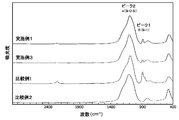
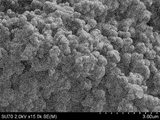
- the IR absorption spectrum figure of the silicon oxide manufactured by the Example and comparative example by infrared spectroscopy (IR). 2 is a microscopic (SEM) photograph of silicon oxide (1) produced in Example 1.
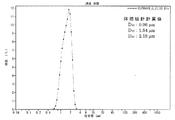
- FIG. 1 The particle size distribution measurement figure of the silicon oxide (1) manufactured in Example 1.
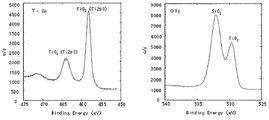
- FIG. 1 is a spectrum diagram of X-ray photoelectron spectroscopic analysis of the silicon-titanium oxide composite produced in Example 1.
- the hydrogen silsesquioxane polymer (HPSQ) used in the present invention is obtained by hydrolyzing and condensing a silicon compound represented by the formula (1).
- R is the same or different and is a group selected from halogen, hydrogen, substituted or unsubstituted alkoxy having 1 to 10 carbons, and substituted or unsubstituted aryloxy having 6 to 20 carbons It is. However, in the substituted or unsubstituted alkoxy group having 1 to 10 carbon atoms and the substituted or unsubstituted aryloxy group having 6 to 20 carbon atoms, any hydrogen may be substituted with a halogen.
- silicon compound represented by the formula (1) include the following compounds.
- trihalogenated silane such as trichlorosilane, trifluorosilane, tribromosilane, dichlorosilane, dihalogenated silane, tri-n-butoxysilane, tri-t-butoxysilane, tri-n-propoxysilane, tri-i-propoxysilane, Trialkoxysilanes and dialkoxysilanes such as di-n-butoxyethoxysilane, triethoxysilane, trimethoxysilane, and diethoxysilane, as well as aryloxysilanes or aryls such as triaryloxysilane, diaryloxysilane, and diaryloxyethoxysilane An oxyalkoxysilane is mentioned.
- trihalogenated silane or trialkoxysilane is preferable from the viewpoint of reaction and availability, and production cost, and trihalogenated silane is particularly preferable.
- These silicon compounds represented by the formula (1) may be used singly or in combination of two or more.
- the silicon compound represented by the formula (1) used in the present invention has high hydrolyzability and condensation reactivity, and not only can a hydrogen silsesquioxane polymer (HPSQ) be easily obtained, but also an inert gas. It is easy to control the Si—H bond amount of the silicon oxide obtained when heat treatment is performed in an atmosphere.
- HPSQ hydrogen silsesquioxane polymer
- the hydrolysis of the silicon compound represented by the formula (1) is carried out by a known method, for example, in a solvent such as alcohol or DMF, in the presence of an inorganic acid such as hydrochloric acid or an organic acid such as acetic acid, and water. Alternatively, it can be carried out under heating. Therefore, in addition to the hydrolyzate of the silicon compound represented by the formula (1), the reaction solution after hydrolysis may contain a solvent, an acid, water, and a substance derived therefrom.
- the silicon compound represented by the formula (1) may not be completely hydrolyzed, and a part thereof may remain.
- the condensation polymerization reaction of the hydrolyzate also partially proceeds.
- the degree to which the polycondensation reaction proceeds can be controlled by the hydrolysis temperature, hydrolysis time, acidity, and / or solvent, etc., for example, depending on the target silicon oxide as described later. Can be set.
- a method in which hydrolysis and condensation reaction are performed in parallel in the same condition in one reactor is more suitable.
- a silicon compound represented by the formula (1) is added to an acidic aqueous solution with stirring, and the temperature is -20 ° C to 50 ° C, preferably 0 ° C to 40 ° C, particularly preferably 10 ° C to 30 ° C.
- the reaction is carried out at a temperature of 0.5 to 20 hours, preferably 1 to 10 hours, particularly preferably 1 to 5 hours.
- acidity it is usually preferable to adjust to pH 6 or less, more preferably pH 3 or less.
- an organic acid or an inorganic acid can be used.
- the organic acid include formic acid, acetic acid, propionic acid, oxalic acid, and citric acid
- examples of the inorganic acid include hydrochloric acid, sulfuric acid, nitric acid, and phosphoric acid.
- Hydrochloric acid is preferred because it can be easily carried out by controlling the polycondensation reaction, and can be easily obtained, adjusted in pH, and treated after the reaction.
- the silicon oxide used in the present invention is obtained by heat-treating the hydrogen silsesquioxane polymer (HPSQ) obtained by the above method in an inert gas atmosphere.
- the “inert gas” referred to in the present invention is required to contain no oxygen, but it is sufficient that the generation of silicon dioxide is suppressed to an extent that does not adversely affect the effects of the present invention when heat treating HPSQ. (That is, the value of I 1 / I 2 only needs to be within the numerical range defined in the present invention.) Therefore, it is sufficient that oxygen is removed so that the “inert gas” can also achieve its purpose.
- the composition of the silicon oxide thus obtained is measured by elemental analysis, it contains silicon (Si), oxygen (O) and hydrogen (H), and has a general formula SiOxHy (1 ⁇ x ⁇ 1.8). , 0.01 ⁇ y ⁇ 0.4).
- x is in the range of 1 ⁇ x ⁇ 1.8, preferably 1.2 ⁇ x ⁇ 1.8, more preferably 1.3 ⁇ x ⁇ 1.7, it is easy to produce silicon oxide and sufficient Battery capacity is obtained.
- y is in the range of 0.1 ⁇ y ⁇ 0.4, preferably 0.1 ⁇ y ⁇ 0.3, the obtained secondary battery has good charge / discharge capacity and improved capacity retention. Has cycle characteristics.
- the silicon oxide used in the present invention has a peak 1 intensity (I 1 ) derived from the Si—H bond at 820 to 920 cm ⁇ 1 and 1000 to 1200 cm in the spectrum measured by infrared spectroscopy (IR).
- I 1 peak 1 intensity
- IR infrared spectroscopy
- the ratio (I 1 / I 2 ) of the intensity (I 2 ) of peak 2 derived from the Si—O—Si bond at ⁇ 1 is in the range of 0.01 to 0.35.
- the ratio (I 1 / I 2 ) between the intensity (I 1 ) of peak 1 and the intensity (I 2 ) of peak 2 is 0.01 to 0.35, preferably 0.01 to 0.30, more preferably When in the range of 0.03 to 0.20, due to the presence of an appropriate amount of Si—H bond, when the battery is used, deterioration of charge / discharge cycle is extremely suppressed, and high charge / discharge characteristics are exhibited. Can do.
- the silicon oxide used in the present invention is obtained by heat-treating the aforementioned hydrogen silsesquioxane polymer (HPSQ) in an inert gas atmosphere.
- HPSQ hydrogen silsesquioxane polymer
- the heat treatment needs to be performed in an inert gas atmosphere.
- silicon dioxide is generated, and thus a desired composition and Si—H bond amount cannot be obtained (as described above, the inert gas can achieve the object of the present invention).
- oxygen is removed.
- the inert gas include nitrogen, argon, helium and the like. These inert gases can be used without problems as long as they are of a generally used high purity standard.
- heat treatment can be performed in an atmosphere from which oxygen is removed by high vacuum without using an inert gas.
- the hydrogen silsesquioxane polymer begins to dehydrogenate Si—H bonds from around 600 ° C., and Si—Si bonds are generated.
- Si—Si bond is appropriately grown, it becomes an excellent Li storage site and becomes a source of high charge capacity.
- the heat treatment temperature that satisfies such conditions is from 600 ° C. to 950 ° C., preferably from 650 ° C. 900 ° C.
- the heat treatment time is not particularly limited, but is usually 30 minutes to 10 hours, preferably 1 to 8 hours.
- the silicon oxide used in the present invention is obtained by the above heat treatment, the elemental analysis results described above are in the range of SiOxHy (1 ⁇ x ⁇ 1.8, 0.01 ⁇ y ⁇ 0.4) and infrared spectroscopy. If the heat treatment conditions are appropriately selected so that the ratio (I 1 / I 2 ) of the intensity (I 1 ) of peak 1 and the intensity (I 2 ) of peak 2 by the method falls within the range of 0.01 to 0.35 good.
- the silicon oxide thus obtained is obtained by heat-treating the hydrogen silsesquioxane polymer (HPSQ) obtained by the synthesis method of the present invention as its shape, the scanning electron microscope shown in FIG. As is apparent from the SEM photograph, primary particles, which are spherical particles having a particle size of submicron, are further aggregated to form secondary aggregates having a particle size of several microns.
- HPSQ hydrogen silsesquioxane polymer
- the primary particles When the primary particles are small, when used as a negative electrode material for a lithium ion secondary battery, the stress during expansion and contraction that occurs when charging and discharging are repeated as a secondary battery is relieved, cycle deterioration is suppressed, and cycle characteristics are suppressed. It is effective for improvement. Further, having a complicated secondary aggregation structure makes the binding property with the binder good, and further exhibits excellent cycle characteristics.
- the silicon oxide used in the present invention has an appropriate particle size of submicron size and an appropriate specific surface area of 3 to 8 m 2 / g, it can be electrolyzed with an electrolytic solution even after coating with titanium oxide. It is considered that the effect of capacity reduction due to the film formation reaction with the liquid is small, and excellent cycle characteristics are obtained.
- the silicon oxide used in the present invention has a feature that the particle size distribution is very narrow. This narrow particle size distribution not only provides good handleability during titanium oxide coating and negative electrode production, but also makes it possible to increase the electrode density.
- the silicon-titanium oxide composite used in the present invention can be obtained by coating titanium oxide on the silicon oxide obtained by the above method.
- Various methods are used for coating. For example, there is a method in which silicon oxide is added to a suspension in which titanium oxide particles are suspended in a solvent, followed by filtration, drying, and heat treatment.
- the silicon oxide is suspended in an alkoxy titanium solution. After that, a condensation reaction is carried out to coat a titanium oxide film on the surface of the silicon oxide, followed by filtration, drying and heat treatment.
- alkoxytitanium used for the titanium oxide coating examples include tetraalkoxytitanium, aryloxytrialkoxytitanium, and diaryl dialkoxytitanium.
- Tetraalkoxy titanium is preferred, and specific examples include tetraoctoxy titanium, tetra n-butoxy titanium, tetra i-propoxy titanium, tetrakis (2-ethylhexyloxy) titanium and the like.
- the condensation reaction between the silicon oxide and the alkoxytitanium in the suspension is carried out in a known manner, for example, in a solvent such as alcohol or DMF, and in the presence of an inorganic acid such as hydrochloric acid or an organic acid such as acetic acid and water as necessary. It can be carried out at room temperature or under heating.
- the reaction conditions are ⁇ 20 ° C. to 50 ° C., preferably 0 ° C. to 40 ° C., particularly preferably 10 ° C. to 30 ° C., for 0.5 hours to 20 hours, preferably 1 hour to 10 hours with stirring.
- the reaction is particularly preferably carried out for 1 to 5 hours.
- the silicon oxide and the titanium titanium are used in a proportion of 0.1 to 10% by weight, preferably 0.2 to 8% by weight of titanium oxide in the final silicon-titanium oxide composite.
- the coating amount range is used.
- the silicon-titanium oxide composite used in the present invention is obtained by heat-treating the silicon-titanium oxide composite precursor obtained by the above method in an inert gas atmosphere.
- the heat treatment temperature at which high-capacity and excellent charge / discharge characteristics are exhibited, in which charge / discharge cycle deterioration is extremely suppressed is 200 ° C. to 900 ° C., preferably 250 ° C. to 850 ° C., more preferably 250 ° C. to 800 ° C.
- the heat treatment time is not particularly limited, but is usually 30 minutes to 10 hours, preferably 1 to 8 hours.
- the coating amount of titanium oxide is 0.1 to 10% by weight of titanium oxide in the final silicon-titanium oxide composite.
- the coverage is preferably 0.2 to 8% by weight.
- the following three actions can be considered as the action of the coated titanium oxide.
- the first is to impart conductivity to the active material. Although titanium oxide itself is an insulator, it becomes a conductor when electrons are injected into the conduction band by inserting lithium, and the electron conductivity on the surface of the active material can be greatly improved during charging.
- the second is to promote the delivery of lithium at the active material-electrolyte interface.
- the charging reaction of silicon oxide requires a large amount of energy for the reaction to proceed with the cleavage of the silicon-oxygen bond, but the active barrier at the electrolyte-active material interface is via titanium oxide that can be desorbed and inserted with lithium at a relatively low energy. Is reduced, and a smooth charge / discharge reaction can proceed.
- the third is the shape stabilization effect. Titanium oxide can be desorbed and inserted without causing structural changes. Therefore, the titanium oxide can be placed on the surface to stabilize the shape and suppress the decomposition reaction of the electrolytic solution due to the removal of the active material or the emergence of a new surface.
- the silicon oxide used in the present invention itself has a high charge / discharge cycle stability, but it is considered that coating with titanium oxide adds the above-described action to obtain a higher charge / discharge cycle stability. .
- the present invention provides a negative electrode active material for a lithium ion secondary battery comprising the silicon-titanium oxide composite obtained by the above-described method of the present invention.
- a material having a low electrical resistance of the electrode is required. Therefore, it is also an embodiment of the present invention to combine a carbon-based material with the silicon-titanium oxide composite.
- a method of compounding the carbon-based material with the silicon-titanium oxide composite by a mechanical fusion processing method such as mechanofusion or a vapor deposition method such as CVD (chemical vapor deposition) examples thereof include a method of dispersing a carbon-based material in the silicon-titanium oxide composite by a mechanical mixing method using a ball mill or a vibration mill.
- a carbon-based material precursor is mixed with the silicon-titanium oxide composite and heat-treated, whereby the silicon-titanium oxide composite is carbonized. It is also possible to combine a carbon-based material obtained by converting a system material precursor.
- carbon-based material used in the present invention include carbon-based materials such as graphite, carbon black, graphene, fullerene, carbon nanotube, carbon nanofoam, pitch-based carbon fiber, polyacrylonitrile-based carbon fiber, and amorphous carbon.
- the organic compound and polymer containing carbon which can be converted into a carbonaceous material by heat processing are mentioned.
- hydrocarbon gases such as methane, ethylene, propylene and acetylene
- sugars such as sucrose, glucose and cellulose
- glycols such as ethylene glycol, diethylene glycol, polyethylene glycol and propylene glycol
- phenol resin epoxy resin
- polyvinyl chloride examples include polyvinyl alcohol, polypyrrole, and petroleum pitch, coal tar pitch, and acetylene black.
- the composite ratio of the silicon-titanium oxide composite and the carbonaceous material is in the range of 5 to 90% by weight of the carbonaceous material with respect to the total amount of the silicon-titanium oxide composite and the carbonaceous material. Is preferred.
- the negative electrode in the lithium ion secondary battery manufactured according to the present invention is manufactured using a negative electrode active material containing the silicon-titanium oxide composite or the silicon-titanium oxide composite combined with the carbon-based material.
- a negative electrode active material formed by including the silicon-titanium oxide composite or the silicon-titanium oxide composite in which the carbon-based material is combined and a negative electrode mixed material including a binder in a certain shape. It may be molded, or may be manufactured by a method in which the negative electrode mixed material is applied to a current collector such as a copper foil.
- the method for forming the negative electrode is not particularly limited, and a known method can be used.
- a negative electrode material composition is prepared, and this is directly coated on a current collector such as a rod-like body, a plate-like body, a foil-like body or a net-like body mainly composed of copper, nickel, stainless steel, or the negative electrode material composition
- a negative electrode active material film cast on a support and peeled from the support is laminated on a current collector to obtain a negative electrode plate.
- the negative electrode of the present invention is not limited to the above-listed forms, and forms other than the listed forms are possible.
- binder those commonly used in the secondary battery, a Si-H bonds and interactions on the anode active material, COO - as long as having a functional group such as a group, either Can also be used, and examples thereof include carboxymethyl cellulose, polyacrylic acid, alginic acid, glucomannan, amylose, saccharose, and derivatives and polymers thereof, and respective alkali metal salts, as well as polyimide resins and polyimide amide resins. These binders may be used singly or as a mixture. Further, the binder is further improved in binding property with the current collector, improved in dispersibility, and improved in conductivity of the binder itself. A component imparting a function, for example, a styrene-butadiene rubber polymer or a styrene-isoprene rubber polymer may be added and mixed.
- the lithium ion secondary battery using the negative electrode active material comprising the silicon oxide of the present invention can be produced as follows. First, a positive electrode active material capable of reversibly inserting and extracting Li, a conductive additive, a binder and a solvent are mixed to prepare a positive electrode active material composition. Similarly to the negative electrode, the positive electrode active material composition is directly coated and dried on a metal current collector as usual, to prepare a positive electrode plate. It is also possible to produce a positive electrode by separately casting the positive electrode active material composition on a support and then laminating the film obtained by peeling from the support on a metal current collector. The method for forming the positive electrode is not particularly limited, and a known method can be used.
- any lithium-containing composite metal oxide that is generally used in the field of the secondary battery can be used.
- LiCoO 2 , LiMn x O 2x , and the like LiNi x-1 Mn x O 2x (x 1,2) Li 1-xy Co x Mn y O 2 (0 ⁇ x ⁇ 0.5,0 ⁇ y ⁇ 0.5).
- Specific examples of the complex oxide include LiMn 2 O 4 , LiCoO 2 , LiNiO 2 , and LiFeO 2 .
- V 2 O 5 , TiS, MoS, etc., which are compounds capable of oxidation / reduction of lithium, can also be used.
- Carbon black, graphite fine particles, etc. are used as conductive aids, and binders such as vinylidene fluoride / hexafluoropropylene copolymer, polyvinylidene fluoride (PVDF), polyacrylonitrile, polymethyl methacrylate, and polytetramethacrylate.
- PVDF polyvinylidene fluoride
- Fluorinated ethylene and a mixture thereof, styrene butadiene rubber-based polymer can be used, and N-methylpyrrolidone, acetone, water, etc. are used as a solvent.
- the content of the cathode active material, the conductive additive, the binder and the solvent is set to an amount that can be generally used in a lithium ion secondary battery.
- any separator that is generally used in lithium ion secondary batteries can be used.
- those that have low resistance to ion migration of the electrolyte or that have excellent electrolyte solution impregnation ability are preferred.
- it is a material selected from glass fiber, polyester, Teflon (registered trademark), polyethylene, polypropylene, polytetrafluoroethylene (PTFE), and a compound thereof, and may be a nonwoven fabric or a woven fabric. .
- a rollable separator made of a material such as polyethylene or polypropylene is used, and in the case of a lithium ion polymer battery, it has an excellent ability to impregnate an organic electrolyte.
- the method for forming the separator is not particularly limited, and a known method can be used. For example, it can be manufactured by the following method.
- the separator composition is directly coated on the electrode and dried to form a separator film, or the separator composition is supported.
- the separator film peeled off from the support after casting and drying on the body can be laminated on the electrode.
- the polymer resin is not particularly limited, and any material used for the binder of the electrode plate can be used.
- a vinylidene fluoride / hexafluoropropylene copolymer, polyvinylidene fluoride, polyacrylonitrile, polymethyl methacrylate and a mixture thereof can be used.
- electrolyte examples include propylene carbonate, ethylene carbonate, diethylene carbonate, ethyl methyl carbonate, methyl propyl carbonate, butylene carbonate, benzonitrile, acetonitrile, tetrahydrofuran, 2-methyltetrahydrofuran, ⁇ -butyrolactone, dioxolane, 4-methyldioxolane, N, N-dimethylformamide, dimethylacetamide, dimethyl sulfoxide, dioxane, 1,2-dimethoxyethane, sulfolane, dichloroethane, chlorobenzene, nitrobenzene, dimethyl carbonate, methyl isopropyl carbonate, ethyl propyl carbonate, dipropyl carbonate, dibutyl carbonate, diethylene glycol or diethyl ether Or a mixed solvent thereof such as LIPF 6 , LiBF 4 , LiSb 6 , LiAsF 6 , LiCl
- non-aqueous electrolytes and solid electrolytes can also be used.
- various ionic liquids to which lithium ions are added can be used, pseudo solid electrolytes in which ionic liquids and fine powders are mixed, lithium ion conductive solid electrolytes, and the like can be used.
- the electrolyte solution appropriately contains a compound that promotes stable film formation on the surface of the negative electrode active material.
- a compound that promotes stable film formation on the surface of the negative electrode active material for example, vinylene carbonate (VC), fluorobenzene, cyclic fluorinated carbonate [fluoroethylene carbonate (FEC), trifluoropropylene carbonate (TFPC), etc.], or chain fluorinated carbonate [trifluorodimethyl carbonate (TFDMC), Fluorinated carbonates such as trifluorodiethyl carbonate (TFDEC) and trifluoroethyl methyl carbonate (TFEMC) are effective. Particularly preferred is fluoroethylene carbonate (FEC).
- FEC When FEC is added, FEC is reductively decomposed on the negative electrode during the first charge to form decomposition products such as LiF and Li 2 CO 3 .
- decomposition product components are polymerized and stabilized on the surface of the negative electrode active material to form an excellent film.
- This coating is present stably even under severe charge / discharge environments, and is considered to promote the movement of lithium ions and also play a role of inhibiting the decomposition reaction of the electrolyte.
- the cyclic fluorinated carbonate and the chain fluorinated carbonate can also be used as a solvent, such as ethylene carbonate.
- a separator is disposed between the positive electrode plate and the negative electrode plate as described above to form a battery structure.
- a battery structure When such a battery structure is wound or folded and put into a cylindrical battery case or a rectangular battery case, an electrolyte is injected to complete a lithium ion secondary battery.
- the battery structure is laminated in a bicell structure, it is impregnated with an organic electrolyte, and the obtained product is put in a pouch and sealed to complete a lithium ion polymer battery.
- the silicon oxide formed by heat-treating the hydrogen silsesquioxane polymer (HPSQ) used in the present invention is infrared spectroscopy as compared with conventional silicon oxide.
- IR in the spectrum measured by (IR)
- the ratio of strength (I 2 ) (I 1 / I 2 ) is in the range of 0.01 to 0.35, and as shown in the elemental analysis values in Table 1, the general formula SiOxHy (1 ⁇ x ⁇ 1.
- a negative electrode active material comprising a silicon-titanium oxide composite in which the silicon oxide is coated with titanium oxide is used.
- the silicon oxide and silicon-titanium oxide composites prepared in Examples 1 to 5 and Comparative Examples 1 to 3 were subjected to various analyzes and evaluations.
- the measuring apparatus and measuring method used for various analyzes including “infrared spectroscopy measurement” in each example and comparative example, and “evaluation of battery characteristics” are as follows.
- Infrared spectroscopy measurement uses Nicolet iS5 FT-IR manufactured by Thermo Fisher Scientific as an infrared spectrometer, and transmission measurement by KBr method (resolution: 4 cm ⁇ 1 , number of scans: 16 times, data interval: 1.928 cm ⁇ 1 , detector at DTGS KBr), 820 ⁇ 920cm -1 intensity of peak 1 derived from Si-H bonds in the (I 1) and the peak 2 from Si-O-Si bond in 1000 ⁇ 1200 cm -1 Strength (I 2 ) was measured. Each peak intensity was obtained by connecting the start point and end point of the target peak with a straight line, partially correcting the baseline, and then measuring the height from the baseline to the peak top.
- elemental analysis For elemental composition analysis, after the sample powder is hardened into a pellet, the sample is irradiated with He ions accelerated to 2.3 MeV, and the energy spectrum of backscattered particles and the energy spectrum of forward-scattered hydrogen atoms are analyzed. Thus, the RBS (Rutherford backscattering analysis) / HFS (hydrogen forward scattering analysis) method was used to obtain a highly accurate composition value including hydrogen. The silicon, oxygen, and titanium contents were measured by RBS spectrum analysis, and the hydrogen content was measured by analysis using RBS and HFS spectra.
- RBS Rutherford backscattering analysis
- HFS hydrogen forward scattering analysis
- the measurement apparatus is Pelletron 3SDH manufactured by National Electrostatics Corporation. Incident ion: 2.3 MeV He, RBS / HFS simultaneous measurement, Incident angle: 75 deg. , Scattering angle: 160 deg. Sample current: 4 nA, beam diameter: 2 mm ⁇ .
- the titanium oxide coating layer was analyzed using an X-ray photoelectron spectrometer PHI Quanera SXM [ULVAC-PHI] with an AlK ⁇ monochromatic X-ray source, an output of 15 kV / 25 W, a beam diameter of 100 ⁇ m ⁇ , and Ti2p, O1s
- the binding state was identified from the peak position and peak shape.
- particle size distribution measurement The particle size distribution was measured by laser diffraction using a laser diffraction / scattering particle size analyzer (LS-230, manufactured by Beckman Coulter, Inc.) in which the sample powder was ultrasonically dispersed in pure water.
- BET specific surface area The BET specific surface area was measured by charging 1 g of the sample powder into the measuring cell, drying it at 250 ° C. for 2 hours using a mantle heater while purging with nitrogen gas, cooling to room temperature over 1 hour, Measured at
- the charge / discharge characteristics of a lithium ion secondary battery or the like using a negative electrode active material containing a silicon-titanium oxide composite produced according to the present invention were measured as follows. Using BTS2005W manufactured by Nagano Co., Ltd., a constant current charge is performed with respect to the Li electrode at a current of 100 mA per 1 g weight of the silicon-titanium oxide composite until reaching 0.001 V, and then the voltage of 0.001 V is maintained. However, constant voltage charging was performed until the current reached a current value of 20 mA or less per gram of active material.
- the charged cell was subjected to a constant current discharge until the voltage reached 1.5 V at a current of 100 mA per gram of active material after a rest period of about 30 minutes.
- the charge capacity was calculated from the integrated current value until the constant voltage charge was completed, and the discharge capacity was calculated from the integrated current value until the battery voltage reached 1.5V.
- the circuit was paused for 30 minutes.
- the charge / discharge cycle characteristics were also performed under the same conditions.
- the charge / discharge efficiency was the ratio of the discharge capacity to the initial (first charge / discharge cycle) charge capacity
- the capacity retention ratio was the ratio of the discharge capacity at the 100th charge / discharge cycle to the initial discharge capacity.
- Example 1 (Preparation of silicon oxide) After placing 20.0 g of the hydrogen silsesquioxane polymer (1) obtained in the same manner as in Synthesis Example 1 on an SSA-S grade alumina boat, the boat was placed in a vacuum purge tube furnace KTF43N1-VPS ( Set at Koyo Thermo System Co., Ltd., and the heat treatment conditions were argon gas (high purity argon gas 99.999%), supplying argon gas at a flow rate of 250 ml / min, at a rate of 4 ° C./min The silicon oxide was obtained by heating at 900 degreeC and baking at 900 degreeC for 1 hour.
- KTF43N1-VPS Set at Koyo Thermo System Co., Ltd.
- FIG. 1 shows the result of infrared spectroscopic measurement of the obtained silicon oxide (1), and Table 1 shows the result of elemental analysis.
- the recovered silicon-titanium oxide composite precursor powder was set in a vacuum purge tube furnace KTF43N1-VPS in the same manner as in the preparation of the silicon oxide, and argon gas was added at 250 ml / g under an argon gas atmosphere as heat treatment conditions. While supplying at a flow rate of 5 minutes, the temperature is increased at a rate of 4 ° C./minute and baked at 400 ° C. for 1 hour. Subsequently, pulverization with a mortar and classification with a stainless steel sieve were carried out to obtain 19.3 g of a powdery silicon-titanium oxide composite (1) having a maximum particle size of 32 ⁇ m. Table 1 shows the elemental analysis results of the silicon-titanium oxide composite (1).
- titanium in the silicon-titanium oxide composite (1) surface analysis was performed using an X-ray photoelectron spectrometer. As a result, it was confirmed that titanium was bonded to the surface as titanium oxide. confirmed.
- X-ray Photoelectron Spectroscopy The spectra of Ti2p and O1s are shown in FIG. The titanium content of the silicon-titanium oxide composite (1) measured by RBS elemental analysis was 2.9% by weight, which was equivalent to 4.9% by weight in terms of titanium oxide.
- the negative electrode sheet was pressed with a 2t small precision roll press (manufactured by Sank Metal). After pressing, an electrode was punched with a ⁇ 14.50 mm electrode punch punch HSNG-EP, and dried under reduced pressure at 80 ° C. for 16 hours in a glass tube oven GTO-200 (SIBATA) to prepare a negative electrode body.
- a 2t small precision roll press manufactured by Sank Metal.
- an electrode was punched with a ⁇ 14.50 mm electrode punch punch punch HSNG-EP, and dried under reduced pressure at 80 ° C. for 16 hours in a glass tube oven GTO-200 (SIBATA) to prepare a negative electrode body.
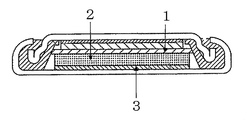
- a 2032 type coin battery having the structure shown in FIG. 4 was prepared.
- the negative electrode body as the negative electrode 1
- metallic lithium as the counter electrode 3
- a microporous polypropylene film as the separator 2
- ethylene carbonate and diethyl carbonate in which LiPF 6 was dissolved at a rate of 1 mol / L as the electrolyte solution 1: 1 (volume ratio) to which 5% by weight of fluoroethylene carbonate (FEC) was added to a mixed solvent was used.
- FEC fluoroethylene carbonate
- silicon oxide (2) was obtained using hydrogen silsesquioxane polymer (2) synthesized in Synthesis Example 2 instead of hydrogen silsesquioxane polymer (1). Subsequently, the same procedure as in Example 1 was performed, but the amount of tetraisopropoxytitanium added was reduced to half and the titanium oxide coating treatment was performed to obtain a silicon-titanium oxide composite (2).
- a negative electrode body was prepared in the same manner as in Example 1, and the battery characteristics of the lithium ion secondary battery were evaluated.
- Table 1 shows the elemental analysis results of the silicon oxide (2), the elemental analysis results of the silicon-titanium oxide composite (2), and the battery characteristic evaluation results. Further, the titanium content of the silicon-titanium oxide composite (2) was 1.5% by weight, which was equivalent to 2.4% by weight in terms of titanium oxide.
- Example 3 Preparation of silicon oxide was carried out in the same manner as in Example 1 except that the firing temperature in heat treatment was 700 ° C., to obtain silicon oxide (3) and silicon-titanium oxide composite (3).
- silicon-titanium oxide composite (3) a negative electrode body was prepared in the same manner as in Example 1, and the battery characteristics of the lithium ion secondary battery were evaluated.
- FIG. 1 shows the result of infrared spectroscopic measurement of silicon oxide (3)
- Table 1 shows the result of elemental analysis.
- Table 1 shows the elemental analysis results and battery characteristic evaluation results of the silicon-titanium oxide composite (3).
- Example 4 4.25 g of the silicon-titanium oxide composite (1) obtained in the same manner as in Example 1 and 0.5 g of acetylene black were added to 25 g of a 2 wt% aqueous solution of sodium alginate, and then stirred in the flask. A slurry-like composition was prepared by mixing for 15 minutes using a child. A negative electrode body was prepared in the same manner as in Example 1 except that the slurry composition was used, and the battery characteristics of the lithium ion secondary battery were evaluated.
- Example 5 A battery was prepared and evaluated in the same manner as in Example 1 except that the same negative electrode body as in Example 1 was used, and that fluoroethylene carbonate was not added to the electrolytic solution used in the production of the secondary battery.
- the battery characteristic evaluation results are shown in Table 1.
- Example 1 (Preparation of silicon oxide) Preparation of silicon oxide was performed in the same manner as in Example 1 except that the firing temperature in the heat treatment was 1100 ° C., to obtain silicon oxide (4).
- FIG. 1 shows the result of infrared spectroscopic measurement of the obtained silicon oxide (4), and Table 1 shows the result of elemental analysis.
- a lithium ion secondary battery was prepared in the same manner as in Example 1 except that the negative electrode body prepared from the silicon-titanium oxide composite (4) was used as the negative electrode body, and the battery characteristics were evaluated.
- the battery characteristic evaluation results are shown in Table 1.
- a negative electrode body was prepared after coating with titanium oxide in the same manner as in Example 1, and a lithium ion secondary was prepared in the same manner as in Example 1 except that the obtained negative electrode body was used.
- a battery was prepared and battery characteristics were evaluated. The battery characteristic evaluation results are shown in Table 1.
- silicon monoxide powder having a maximum particle size of 32 ⁇ m was obtained by classifying commercially available silicon monoxide (under 325 mesh manufactured by Aldrich) using a 32 ⁇ m stainless steel sieve.
- Table 1 shows the results of infrared spectroscopic measurement and elemental analysis of the silicon monoxide used. Except that the above silicon monoxide was used in place of the silicon oxide (1), a negative electrode body was prepared after titanium oxide coating was performed in the same manner as in Example 1, and the obtained negative electrode body was used in Examples. A lithium ion secondary battery was prepared in the same manner as in Example 1, and the battery characteristics were evaluated. The battery characteristic evaluation results are shown in Table 1.
- the titanium content of the silicon-titanium oxide composite was 2.9% by weight, which was equivalent to 4.9% by weight in terms of titanium oxide.
- the silicon oxide having an appropriate amount of Si—H bonds produced from the hydrogen silsesquioxane polymer (HPSQ) used in the present invention was coated with titanium oxide and both had initial capacity and Both the discharge capacity at the 100th time have a higher capacity than the conventional carbon-based negative electrode active material, and the capacity reduction is small, the capacity retention rate, that is, the charge / discharge cycle deterioration is extremely suppressed, and the cycle characteristics are excellent. Therefore, it can be evaluated that the negative electrode active material of the present invention can be practically used as a negative electrode material.
- the negative electrode active material (Comparative Example 3) prepared from the silicon oxide having a small Si—H bond shown in Comparative Example 1 or a titanium oxide-coated silicon oxide obtained by a method other than the present invention was used.
- the battery characteristics employing the negative electrode when compared with the battery characteristics produced under the same conditions as the negative electrode employing the negative electrode active material of the present invention, although the initial discharge capacity shows a certain value, the capacity decreases rapidly. Furthermore, it is a negative electrode active material that cannot exhibit the characteristics of conventional batteries, such as a lower capacity than that using a carbon-based negative electrode active material. Further, the battery characteristics using the negative electrode using the negative electrode active material prepared from the silicon oxide having too many Si—H bonds shown in Comparative Example 2 have good cycle characteristics, but the initial discharge capacity is extremely low. Poor utility.
- a negative electrode active material for a lithium ion secondary battery obtained by the method of the present invention and a negative electrode formed by using the negative electrode active material have excellent capacity and excellent charge / discharge characteristics.
- a lithium ion secondary battery having cycle characteristics can be obtained.
- the present invention is a useful technique in the field of batteries, particularly in the field of secondary batteries.
- Negative electrode material 2 Separator 3: Lithium counter electrode
Landscapes
- Chemical & Material Sciences (AREA)
- Inorganic Chemistry (AREA)
- Organic Chemistry (AREA)
- Chemical Kinetics & Catalysis (AREA)
- Electrochemistry (AREA)
- General Chemical & Material Sciences (AREA)
- Battery Electrode And Active Subsutance (AREA)
Abstract
L'invention porte sur un procédé d'obtention d'un matériau actif d'électrode négative, pour piles rechargeables lithium-ion contenant un corps composite d'oxyde de silicium et de titane, qui présente les caractéristiques décrites ci-dessous. Le corps composite d'oxyde de silicium et de titane est obtenu par enrobage d'oxyde de silicium par de l'oxyde de titane; (a) l'oxyde de silicium est obtenu par soumission d'un polymère de silsesquioxane d'hydrogène, qui est obtenu par réaction d'hydrolyse et de condensation d'un composé de silicium spécifique, à un traitement thermique dans une atmosphère de gaz inerte; (b) l'oxyde de silicium contient du silicium, de l'oxygène et de l'hydrogène; (c) l'oxyde de silicium possède un spectre infrarouge dans lequel le rapport d'intensité d'un pic 1 attribué à des liaisons Si-H sur un pic 2 attribué à des liaisons Si-O-Si est compris dans la plage de 0,01 à 0,35; (d) l'oxyde de silicium est représenté par la formule générale SiOxHy (dans laquelle 1 < x < 1,8 et 0,01 < y < 0,4).
Priority Applications (2)
| Application Number | Priority Date | Filing Date | Title |
|---|---|---|---|
| CN201680073785.2A CN108370034A (zh) | 2015-12-16 | 2016-11-30 | 锂离子二次电池用负极活性物质的制造方法 |
| JP2017555963A JP6645514B2 (ja) | 2015-12-16 | 2016-11-30 | リチウムイオン二次電池用負極活物質の製造方法 |
Applications Claiming Priority (2)
| Application Number | Priority Date | Filing Date | Title |
|---|---|---|---|
| JP2015-245382 | 2015-12-16 | ||
| JP2015245382 | 2015-12-16 |
Publications (1)
| Publication Number | Publication Date |
|---|---|
| WO2017104414A1 true WO2017104414A1 (fr) | 2017-06-22 |
Family
ID=59056388
Family Applications (1)
| Application Number | Title | Priority Date | Filing Date |
|---|---|---|---|
| PCT/JP2016/085520 Ceased WO2017104414A1 (fr) | 2015-12-16 | 2016-11-30 | Procédé d'obtention de matériau actif d'électrode positive pour piles rechargeables lithium-ion |
Country Status (4)
| Country | Link |
|---|---|
| JP (1) | JP6645514B2 (fr) |
| CN (1) | CN108370034A (fr) |
| TW (1) | TW201725772A (fr) |
| WO (1) | WO2017104414A1 (fr) |
Cited By (5)
| Publication number | Priority date | Publication date | Assignee | Title |
|---|---|---|---|---|
| JP2019121488A (ja) * | 2017-12-28 | 2019-07-22 | Jnc株式会社 | 二次電池負極用組成物並びにこれを用いた二次電池用負極及び二次電池 |
| JP2019178038A (ja) * | 2018-03-30 | 2019-10-17 | Jnc株式会社 | 球状水素ポリシルセスキオキサン微粒子及び球状ケイ素酸化物微粒子並びにこれらの製造方法 |
| WO2020003595A1 (fr) * | 2018-06-29 | 2020-01-02 | パナソニックIpマネジメント株式会社 | Batterie secondaire à électrolyte non aqueux |
| WO2023042028A1 (fr) * | 2021-09-17 | 2023-03-23 | 株式会社半導体エネルギー研究所 | Batterie secondaire et son procédé de production |
| CN117239105A (zh) * | 2023-11-14 | 2023-12-15 | 比亚迪股份有限公司 | 硅负极材料及其制备方法、负极极片、电池和用电设备 |
Citations (4)
| Publication number | Priority date | Publication date | Assignee | Title |
|---|---|---|---|---|
| JP2006190642A (ja) * | 2004-12-31 | 2006-07-20 | Ind Technol Res Inst | リチウム二次電池の負極材料およびその製造方法 |
| JP2008171813A (ja) * | 2007-01-05 | 2008-07-24 | Samsung Sdi Co Ltd | アノード活物質、その製造方法及びこれを採用したアノードとリチウム電池 |
| JP2011096455A (ja) * | 2009-10-28 | 2011-05-12 | Shin-Etsu Chemical Co Ltd | 非水電解質二次電池用負極材及びその製造方法並びにリチウムイオン二次電池 |
| WO2014002602A1 (fr) * | 2012-06-27 | 2014-01-03 | Jnc株式会社 | Matériau actif négatif pour batterie secondaire, procédé de fabrication de celui-ci, et électrode négative et batterie à ion lithium obtenues en l'utilisant |
Family Cites Families (4)
| Publication number | Priority date | Publication date | Assignee | Title |
|---|---|---|---|---|
| US4067954A (en) * | 1971-05-11 | 1978-01-10 | Deutsche Gold- Und Silber-Scheideanstalt Vormals Roessler | Process for the production of finely divided silicon dioxide having a large specific surface |
| JP5043317B2 (ja) * | 2005-08-05 | 2012-10-10 | 東レ・ダウコーニング株式会社 | 環状ジハイドロジェンポリシロキサン、ハイドロジェンポリシロキサン、それらの製造方法、シリカ系ガラス成形体およびその製造方法、光学素子およびその製造方法 |
| JP4666155B2 (ja) * | 2005-11-18 | 2011-04-06 | ソニー株式会社 | リチウムイオン二次電池 |
| EP2630684A4 (fr) * | 2010-10-22 | 2015-12-23 | Amprius Inc | Structures composites contenant des matériaux actifs poreux haute capacité contraints dans des enveloppes |
-
2016
- 2016-11-29 TW TW105139193A patent/TW201725772A/zh unknown
- 2016-11-30 CN CN201680073785.2A patent/CN108370034A/zh active Pending
- 2016-11-30 WO PCT/JP2016/085520 patent/WO2017104414A1/fr not_active Ceased
- 2016-11-30 JP JP2017555963A patent/JP6645514B2/ja not_active Expired - Fee Related
Patent Citations (4)
| Publication number | Priority date | Publication date | Assignee | Title |
|---|---|---|---|---|
| JP2006190642A (ja) * | 2004-12-31 | 2006-07-20 | Ind Technol Res Inst | リチウム二次電池の負極材料およびその製造方法 |
| JP2008171813A (ja) * | 2007-01-05 | 2008-07-24 | Samsung Sdi Co Ltd | アノード活物質、その製造方法及びこれを採用したアノードとリチウム電池 |
| JP2011096455A (ja) * | 2009-10-28 | 2011-05-12 | Shin-Etsu Chemical Co Ltd | 非水電解質二次電池用負極材及びその製造方法並びにリチウムイオン二次電池 |
| WO2014002602A1 (fr) * | 2012-06-27 | 2014-01-03 | Jnc株式会社 | Matériau actif négatif pour batterie secondaire, procédé de fabrication de celui-ci, et électrode négative et batterie à ion lithium obtenues en l'utilisant |
Cited By (12)
| Publication number | Priority date | Publication date | Assignee | Title |
|---|---|---|---|---|
| JP2019121488A (ja) * | 2017-12-28 | 2019-07-22 | Jnc株式会社 | 二次電池負極用組成物並びにこれを用いた二次電池用負極及び二次電池 |
| JP2019178038A (ja) * | 2018-03-30 | 2019-10-17 | Jnc株式会社 | 球状水素ポリシルセスキオキサン微粒子及び球状ケイ素酸化物微粒子並びにこれらの製造方法 |
| JP7052495B2 (ja) | 2018-03-30 | 2022-04-12 | Jnc株式会社 | 球状水素ポリシルセスキオキサン微粒子及び球状ケイ素酸化物微粒子並びにこれらの製造方法 |
| WO2020003595A1 (fr) * | 2018-06-29 | 2020-01-02 | パナソニックIpマネジメント株式会社 | Batterie secondaire à électrolyte non aqueux |
| CN112313826A (zh) * | 2018-06-29 | 2021-02-02 | 松下知识产权经营株式会社 | 非水电解质二次电池 |
| JPWO2020003595A1 (ja) * | 2018-06-29 | 2021-07-08 | パナソニックIpマネジメント株式会社 | 非水電解質二次電池 |
| JP7165913B2 (ja) | 2018-06-29 | 2022-11-07 | パナソニックIpマネジメント株式会社 | 非水電解質二次電池 |
| US12062789B2 (en) | 2018-06-29 | 2024-08-13 | Panasonic Intellectual Property Management Co., Ltd. | Non-aqueous electrolyte secondary battery |
| CN112313826B (zh) * | 2018-06-29 | 2024-11-01 | 松下知识产权经营株式会社 | 非水电解质二次电池 |
| WO2023042028A1 (fr) * | 2021-09-17 | 2023-03-23 | 株式会社半導体エネルギー研究所 | Batterie secondaire et son procédé de production |
| CN117239105A (zh) * | 2023-11-14 | 2023-12-15 | 比亚迪股份有限公司 | 硅负极材料及其制备方法、负极极片、电池和用电设备 |
| CN117239105B (zh) * | 2023-11-14 | 2024-02-27 | 比亚迪股份有限公司 | 硅负极材料及其制备方法、负极极片、电池和用电设备 |
Also Published As
| Publication number | Publication date |
|---|---|
| CN108370034A (zh) | 2018-08-03 |
| JP6645514B2 (ja) | 2020-02-14 |
| JPWO2017104414A1 (ja) | 2018-10-04 |
| TW201725772A (zh) | 2017-07-16 |
Similar Documents
| Publication | Publication Date | Title |
|---|---|---|
| KR101494715B1 (ko) | 리튬 이차 전지용 음극 활물질, 이의 제조 방법, 그리고 이를 포함하는 음극 및 리튬 이차 전지 | |
| US11027978B2 (en) | Silicon nanoparticle-containing hydrogen polysilsesquioxane, calcined product thereof, production method therefor, active material, negative electrode, and lithium ion battery | |
| JP6819676B2 (ja) | リチウムイオン二次電池用負極活物質の製造方法 | |
| US10770717B2 (en) | Composition for secondary battery negative electrode and negative electrode for secondary battery using the same and secondary battery | |
| WO2018131608A1 (fr) | Nanoparticules de silicium revêtues de polysilsesquioxane ou leur produit fritté, procédé de production associé, matériau actif d'électrode négative de batterie au lithium-ion, électrode négative de batterie au lithium-ion et batterie au lithium-ion | |
| JP6726394B2 (ja) | シリコンナノ粒子含有水素ポリシルセスキオキサン焼成物−金属酸化物複合体及びその製造方法、リチウムイオン電池用負極活物質、リチウムイオン電池用負極、及びリチウムイオン電池 | |
| JP6645514B2 (ja) | リチウムイオン二次電池用負極活物質の製造方法 | |
| JP6620812B2 (ja) | リチウムイオン二次電池用負極活物質およびその製造方法 | |
| JP6727558B2 (ja) | シリコンナノ粒子含有水素ポリシルセスキオキサン焼成物、リチウムイオン電池用負極活物質、リチウムイオン電池用負極、及びリチウムイオン電池 | |
| JP2019040806A (ja) | リチウムイオン電池用負極活物質、リチウムイオン電池用負極活物質の製造方法、リチウムイオン電池用負極、およびリチウムイオン電池 |
Legal Events
| Date | Code | Title | Description |
|---|---|---|---|
| 121 | Ep: the epo has been informed by wipo that ep was designated in this application |
Ref document number: 16875398 Country of ref document: EP Kind code of ref document: A1 |
|
| ENP | Entry into the national phase |
Ref document number: 2017555963 Country of ref document: JP Kind code of ref document: A |
|
| NENP | Non-entry into the national phase |
Ref country code: DE |
|
| 122 | Ep: pct application non-entry in european phase |
Ref document number: 16875398 Country of ref document: EP Kind code of ref document: A1 |