WO2017111176A1 - 化合物及び有機材料の製造方法 - Google Patents
化合物及び有機材料の製造方法 Download PDFInfo
- Publication number
- WO2017111176A1 WO2017111176A1 PCT/JP2016/088793 JP2016088793W WO2017111176A1 WO 2017111176 A1 WO2017111176 A1 WO 2017111176A1 JP 2016088793 W JP2016088793 W JP 2016088793W WO 2017111176 A1 WO2017111176 A1 WO 2017111176A1
- Authority
- WO
- WIPO (PCT)
- Prior art keywords
- compound
- atom
- group
- substituent
- asymmetric
- Prior art date
- Legal status (The legal status is an assumption and is not a legal conclusion. Google has not performed a legal analysis and makes no representation as to the accuracy of the status listed.)
- Ceased
Links
Images







Classifications
-
- C—CHEMISTRY; METALLURGY
- C08—ORGANIC MACROMOLECULAR COMPOUNDS; THEIR PREPARATION OR CHEMICAL WORKING-UP; COMPOSITIONS BASED THEREON
- C08F—MACROMOLECULAR COMPOUNDS OBTAINED BY REACTIONS ONLY INVOLVING CARBON-TO-CARBON UNSATURATED BONDS
- C08F12/00—Homopolymers and copolymers of compounds having one or more unsaturated aliphatic radicals, each having only one carbon-to-carbon double bond, and at least one being terminated by an aromatic carbocyclic ring
- C08F12/02—Monomers containing only one unsaturated aliphatic radical
- C08F12/04—Monomers containing only one unsaturated aliphatic radical containing one ring
- C08F12/14—Monomers containing only one unsaturated aliphatic radical containing one ring substituted by hetero atoms or groups containing heteroatoms
- C08F12/22—Oxygen
-
- B—PERFORMING OPERATIONS; TRANSPORTING
- B01—PHYSICAL OR CHEMICAL PROCESSES OR APPARATUS IN GENERAL
- B01J—CHEMICAL OR PHYSICAL PROCESSES, e.g. CATALYSIS OR COLLOID CHEMISTRY; THEIR RELEVANT APPARATUS
- B01J31/00—Catalysts comprising hydrides, coordination complexes or organic compounds
- B01J31/02—Catalysts comprising hydrides, coordination complexes or organic compounds containing organic compounds or metal hydrides
-
- B—PERFORMING OPERATIONS; TRANSPORTING
- B01—PHYSICAL OR CHEMICAL PROCESSES OR APPARATUS IN GENERAL
- B01J—CHEMICAL OR PHYSICAL PROCESSES, e.g. CATALYSIS OR COLLOID CHEMISTRY; THEIR RELEVANT APPARATUS
- B01J31/00—Catalysts comprising hydrides, coordination complexes or organic compounds
- B01J31/02—Catalysts comprising hydrides, coordination complexes or organic compounds containing organic compounds or metal hydrides
- B01J31/0234—Nitrogen-, phosphorus-, arsenic- or antimony-containing compounds
- B01J31/0235—Nitrogen containing compounds
- B01J31/0239—Quaternary ammonium compounds
-
- B—PERFORMING OPERATIONS; TRANSPORTING
- B01—PHYSICAL OR CHEMICAL PROCESSES OR APPARATUS IN GENERAL
- B01J—CHEMICAL OR PHYSICAL PROCESSES, e.g. CATALYSIS OR COLLOID CHEMISTRY; THEIR RELEVANT APPARATUS
- B01J31/00—Catalysts comprising hydrides, coordination complexes or organic compounds
- B01J31/02—Catalysts comprising hydrides, coordination complexes or organic compounds containing organic compounds or metal hydrides
- B01J31/06—Catalysts comprising hydrides, coordination complexes or organic compounds containing organic compounds or metal hydrides containing polymers
-
- B—PERFORMING OPERATIONS; TRANSPORTING
- B01—PHYSICAL OR CHEMICAL PROCESSES OR APPARATUS IN GENERAL
- B01J—CHEMICAL OR PHYSICAL PROCESSES, e.g. CATALYSIS OR COLLOID CHEMISTRY; THEIR RELEVANT APPARATUS
- B01J38/00—Regeneration or reactivation of catalysts, in general
-
- C—CHEMISTRY; METALLURGY
- C07—ORGANIC CHEMISTRY
- C07B—GENERAL METHODS OF ORGANIC CHEMISTRY; APPARATUS THEREFOR
- C07B53/00—Asymmetric syntheses
-
- C—CHEMISTRY; METALLURGY
- C07—ORGANIC CHEMISTRY
- C07B—GENERAL METHODS OF ORGANIC CHEMISTRY; APPARATUS THEREFOR
- C07B61/00—Other general methods
-
- C—CHEMISTRY; METALLURGY
- C07—ORGANIC CHEMISTRY
- C07C—ACYCLIC OR CARBOCYCLIC COMPOUNDS
- C07C249/00—Preparation of compounds containing nitrogen atoms doubly-bound to a carbon skeleton
- C07C249/02—Preparation of compounds containing nitrogen atoms doubly-bound to a carbon skeleton of compounds containing imino groups
-
- C—CHEMISTRY; METALLURGY
- C07—ORGANIC CHEMISTRY
- C07C—ACYCLIC OR CARBOCYCLIC COMPOUNDS
- C07C251/00—Compounds containing nitrogen atoms doubly-bound to a carbon skeleton
- C07C251/02—Compounds containing nitrogen atoms doubly-bound to a carbon skeleton containing imino groups
- C07C251/24—Compounds containing nitrogen atoms doubly-bound to a carbon skeleton containing imino groups having carbon atoms of imino groups bound to carbon atoms of six-membered aromatic rings
-
- C—CHEMISTRY; METALLURGY
- C07—ORGANIC CHEMISTRY
- C07D—HETEROCYCLIC COMPOUNDS
- C07D223/00—Heterocyclic compounds containing seven-membered rings having one nitrogen atom as the only ring hetero atom
- C07D223/14—Heterocyclic compounds containing seven-membered rings having one nitrogen atom as the only ring hetero atom condensed with carbocyclic rings or ring systems
-
- C—CHEMISTRY; METALLURGY
- C07—ORGANIC CHEMISTRY
- C07D—HETEROCYCLIC COMPOUNDS
- C07D317/00—Heterocyclic compounds containing five-membered rings having two oxygen atoms as the only ring hetero atoms
- C07D317/08—Heterocyclic compounds containing five-membered rings having two oxygen atoms as the only ring hetero atoms having the hetero atoms in positions 1 and 3
- C07D317/10—Heterocyclic compounds containing five-membered rings having two oxygen atoms as the only ring hetero atoms having the hetero atoms in positions 1 and 3 not condensed with other rings
- C07D317/14—Heterocyclic compounds containing five-membered rings having two oxygen atoms as the only ring hetero atoms having the hetero atoms in positions 1 and 3 not condensed with other rings with substituted hydrocarbon radicals attached to ring carbon atoms
- C07D317/28—Radicals substituted by nitrogen atoms
-
- C—CHEMISTRY; METALLURGY
- C07—ORGANIC CHEMISTRY
- C07D—HETEROCYCLIC COMPOUNDS
- C07D401/00—Heterocyclic compounds containing two or more hetero rings, having nitrogen atoms as the only ring hetero atoms, at least one ring being a six-membered ring with only one nitrogen atom
- C07D401/02—Heterocyclic compounds containing two or more hetero rings, having nitrogen atoms as the only ring hetero atoms, at least one ring being a six-membered ring with only one nitrogen atom containing two hetero rings
- C07D401/06—Heterocyclic compounds containing two or more hetero rings, having nitrogen atoms as the only ring hetero atoms, at least one ring being a six-membered ring with only one nitrogen atom containing two hetero rings linked by a carbon chain containing only aliphatic carbon atoms
-
- C—CHEMISTRY; METALLURGY
- C07—ORGANIC CHEMISTRY
- C07D—HETEROCYCLIC COMPOUNDS
- C07D471/00—Heterocyclic compounds containing nitrogen atoms as the only ring hetero atoms in the condensed system, at least one ring being a six-membered ring with one nitrogen atom, not provided for by groups C07D451/00 - C07D463/00
- C07D471/02—Heterocyclic compounds containing nitrogen atoms as the only ring hetero atoms in the condensed system, at least one ring being a six-membered ring with one nitrogen atom, not provided for by groups C07D451/00 - C07D463/00 in which the condensed system contains two hetero rings
- C07D471/10—Spiro-condensed systems
-
- C—CHEMISTRY; METALLURGY
- C07—ORGANIC CHEMISTRY
- C07D—HETEROCYCLIC COMPOUNDS
- C07D487/00—Heterocyclic compounds containing nitrogen atoms as the only ring hetero atoms in the condensed system, not provided for by groups C07D451/00 - C07D477/00
- C07D487/02—Heterocyclic compounds containing nitrogen atoms as the only ring hetero atoms in the condensed system, not provided for by groups C07D451/00 - C07D477/00 in which the condensed system contains two hetero rings
- C07D487/10—Spiro-condensed systems
-
- C—CHEMISTRY; METALLURGY
- C07—ORGANIC CHEMISTRY
- C07D—HETEROCYCLIC COMPOUNDS
- C07D519/00—Heterocyclic compounds containing more than one system of two or more relevant hetero rings condensed among themselves or condensed with a common carbocyclic ring system not provided for in groups C07D453/00 or C07D455/00
-
- C—CHEMISTRY; METALLURGY
- C08—ORGANIC MACROMOLECULAR COMPOUNDS; THEIR PREPARATION OR CHEMICAL WORKING-UP; COMPOSITIONS BASED THEREON
- C08F—MACROMOLECULAR COMPOUNDS OBTAINED BY REACTIONS ONLY INVOLVING CARBON-TO-CARBON UNSATURATED BONDS
- C08F12/00—Homopolymers and copolymers of compounds having one or more unsaturated aliphatic radicals, each having only one carbon-to-carbon double bond, and at least one being terminated by an aromatic carbocyclic ring
- C08F12/02—Monomers containing only one unsaturated aliphatic radical
- C08F12/04—Monomers containing only one unsaturated aliphatic radical containing one ring
- C08F12/14—Monomers containing only one unsaturated aliphatic radical containing one ring substituted by hetero atoms or groups containing heteroatoms
- C08F12/26—Nitrogen
-
- C—CHEMISTRY; METALLURGY
- C08—ORGANIC MACROMOLECULAR COMPOUNDS; THEIR PREPARATION OR CHEMICAL WORKING-UP; COMPOSITIONS BASED THEREON
- C08F—MACROMOLECULAR COMPOUNDS OBTAINED BY REACTIONS ONLY INVOLVING CARBON-TO-CARBON UNSATURATED BONDS
- C08F12/00—Homopolymers and copolymers of compounds having one or more unsaturated aliphatic radicals, each having only one carbon-to-carbon double bond, and at least one being terminated by an aromatic carbocyclic ring
- C08F12/02—Monomers containing only one unsaturated aliphatic radical
- C08F12/32—Monomers containing only one unsaturated aliphatic radical containing two or more rings
-
- C—CHEMISTRY; METALLURGY
- C08—ORGANIC MACROMOLECULAR COMPOUNDS; THEIR PREPARATION OR CHEMICAL WORKING-UP; COMPOSITIONS BASED THEREON
- C08F—MACROMOLECULAR COMPOUNDS OBTAINED BY REACTIONS ONLY INVOLVING CARBON-TO-CARBON UNSATURATED BONDS
- C08F12/00—Homopolymers and copolymers of compounds having one or more unsaturated aliphatic radicals, each having only one carbon-to-carbon double bond, and at least one being terminated by an aromatic carbocyclic ring
- C08F12/34—Monomers containing two or more unsaturated aliphatic radicals
- C08F12/36—Divinylbenzene
-
- C—CHEMISTRY; METALLURGY
- C08—ORGANIC MACROMOLECULAR COMPOUNDS; THEIR PREPARATION OR CHEMICAL WORKING-UP; COMPOSITIONS BASED THEREON
- C08F—MACROMOLECULAR COMPOUNDS OBTAINED BY REACTIONS ONLY INVOLVING CARBON-TO-CARBON UNSATURATED BONDS
- C08F212/00—Copolymers of compounds having one or more unsaturated aliphatic radicals, each having only one carbon-to-carbon double bond, and at least one being terminated by an aromatic carbocyclic ring
- C08F212/34—Monomers containing two or more unsaturated aliphatic radicals
- C08F212/36—Divinylbenzene
-
- C—CHEMISTRY; METALLURGY
- C08—ORGANIC MACROMOLECULAR COMPOUNDS; THEIR PREPARATION OR CHEMICAL WORKING-UP; COMPOSITIONS BASED THEREON
- C08F—MACROMOLECULAR COMPOUNDS OBTAINED BY REACTIONS ONLY INVOLVING CARBON-TO-CARBON UNSATURATED BONDS
- C08F8/00—Chemical modification by after-treatment
-
- B—PERFORMING OPERATIONS; TRANSPORTING
- B01—PHYSICAL OR CHEMICAL PROCESSES OR APPARATUS IN GENERAL
- B01J—CHEMICAL OR PHYSICAL PROCESSES, e.g. CATALYSIS OR COLLOID CHEMISTRY; THEIR RELEVANT APPARATUS
- B01J2231/00—Catalytic reactions performed with catalysts classified in B01J31/00
- B01J2231/40—Substitution reactions at carbon centres, e.g. C-C or C-X, i.e. carbon-hetero atom, cross-coupling, C-H activation or ring-opening reactions
- B01J2231/42—Catalytic cross-coupling, i.e. connection of previously not connected C-atoms or C- and X-atoms without rearrangement
-
- B—PERFORMING OPERATIONS; TRANSPORTING
- B01—PHYSICAL OR CHEMICAL PROCESSES OR APPARATUS IN GENERAL
- B01J—CHEMICAL OR PHYSICAL PROCESSES, e.g. CATALYSIS OR COLLOID CHEMISTRY; THEIR RELEVANT APPARATUS
- B01J2231/00—Catalytic reactions performed with catalysts classified in B01J31/00
- B01J2231/40—Substitution reactions at carbon centres, e.g. C-C or C-X, i.e. carbon-hetero atom, cross-coupling, C-H activation or ring-opening reactions
- B01J2231/46—C-H or C-C activation
-
- B—PERFORMING OPERATIONS; TRANSPORTING
- B01—PHYSICAL OR CHEMICAL PROCESSES OR APPARATUS IN GENERAL
- B01J—CHEMICAL OR PHYSICAL PROCESSES, e.g. CATALYSIS OR COLLOID CHEMISTRY; THEIR RELEVANT APPARATUS
- B01J2531/00—Additional information regarding catalytic systems classified in B01J31/00
- B01J2531/02—Compositional aspects of complexes used, e.g. polynuclearity
- B01J2531/0261—Complexes comprising ligands with non-tetrahedral chirality
-
- B—PERFORMING OPERATIONS; TRANSPORTING
- B01—PHYSICAL OR CHEMICAL PROCESSES OR APPARATUS IN GENERAL
- B01J—CHEMICAL OR PHYSICAL PROCESSES, e.g. CATALYSIS OR COLLOID CHEMISTRY; THEIR RELEVANT APPARATUS
- B01J2531/00—Additional information regarding catalytic systems classified in B01J31/00
- B01J2531/02—Compositional aspects of complexes used, e.g. polynuclearity
- B01J2531/0261—Complexes comprising ligands with non-tetrahedral chirality
- B01J2531/0263—Planar chiral ligands, e.g. derived from donor-substituted paracyclophanes and metallocenes or from substituted arenes
-
- B—PERFORMING OPERATIONS; TRANSPORTING
- B01—PHYSICAL OR CHEMICAL PROCESSES OR APPARATUS IN GENERAL
- B01J—CHEMICAL OR PHYSICAL PROCESSES, e.g. CATALYSIS OR COLLOID CHEMISTRY; THEIR RELEVANT APPARATUS
- B01J2531/00—Additional information regarding catalytic systems classified in B01J31/00
- B01J2531/02—Compositional aspects of complexes used, e.g. polynuclearity
- B01J2531/0261—Complexes comprising ligands with non-tetrahedral chirality
- B01J2531/0266—Axially chiral or atropisomeric ligands, e.g. bulky biaryls such as donor-substituted binaphthalenes, e.g. "BINAP" or "BINOL"
-
- B—PERFORMING OPERATIONS; TRANSPORTING
- B01—PHYSICAL OR CHEMICAL PROCESSES OR APPARATUS IN GENERAL
- B01J—CHEMICAL OR PHYSICAL PROCESSES, e.g. CATALYSIS OR COLLOID CHEMISTRY; THEIR RELEVANT APPARATUS
- B01J31/00—Catalysts comprising hydrides, coordination complexes or organic compounds
- B01J31/02—Catalysts comprising hydrides, coordination complexes or organic compounds containing organic compounds or metal hydrides
- B01J31/06—Catalysts comprising hydrides, coordination complexes or organic compounds containing organic compounds or metal hydrides containing polymers
- B01J31/061—Chiral polymers
Definitions
- Some aspects of the present invention relate to the synthesis of chiral polymers or resins and organic compounds utilized as their catalysts.
- Some embodiments of the present invention provide a technique that enables a compound having chirality to be produced at a low cost.
- the compound according to one aspect of the present invention includes a plurality of first parts, a second part, each of the plurality of first parts, and the second part, and at least a covalent bond.
- Each of the plurality of first portions has chirality, and a portion other than the linking group does not have a coordinating nitrogen atom.
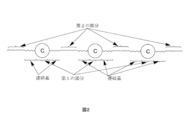
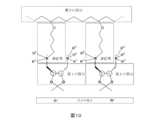
- FIG. 1 A typical schematic structure of the above compound is shown in FIG. 1 and FIG.
- each of the plurality of first parts having chirality is pendant to the second part via a linking group.
- the second portion may constitute a main chain of the polymer, and the structure shown in FIG. 1 may be further crosslinked via a crosslinking group.
- each of the plurality of first parts having chirality is coupled to the second part via a linking group, and each of the plurality of first parts is connected to the linking group.
- the second part as a single repeating unit, a plurality of the repeating units are connected to form a main chain. That is, in the structure shown in FIG. 2, the portion having chirality is a part of the main chain.
- the reason why it is preferable not to include a coordinating nitrogen atom other than the linking group is that the stereoselectivity tends to be lowered in an asymmetric reaction using the above compound as a catalyst as described later. This is because the steric influence due to the chirality of each of the plurality of first parts in the asymmetric reaction may be reduced by the coordination ability of the coordinating nitrogen atom.
- the coordinating nitrogen atom means a nitrogen atom having a high electron density of a lone pair on the nitrogen atom.
- a nitrogen atom is bonded to two carbon atoms, and further, no more than three bonds including the bond between the nitrogen atom and the carbon atom are bonded to atoms other than carbon and hydrogen.
- Examples are nitrogen atoms contained in pyridine, quinoline and the like.
- the nitrogen atom is affected by the influence of the oxygen atom.
- it is not regarded as a coordinating nitrogen atom because the electron density of the lone pair of atoms may decrease and the coordination properties of the nitrogen atom itself may decrease.
- the level of the antibonding orbital of the bond containing the hetero atom may be lowered.
- the coordinating nitrogen atom is the electron density of the lone pair of electrons on the nitrogen atom due to the antibonding orbit that has been reduced and the coordination property of the nitrogen atom itself may be reduced. Do not consider.
- the compound according to another aspect of the present invention includes a plurality of first parts, a second part, each of the plurality of first parts, and the second part, and at least one common
- Each of the plurality of first portions has chirality, and the chirality is selected from the group consisting of an asymmetric atom, axial asymmetry, planar asymmetry, and helix. It is characterized by being expressed in either.
- each of the plurality of first portions includes a first atom directly bonded to the asymmetric atom, and the linkage to the first atom
- each of the plurality of first portions has an axial asymmetric substituent that becomes axially asymmetric
- the linking group Is directly bonded to the second atom contained in the cyclic structure having a plurality of constituent atoms constituting the axial asymmetric substituent in common or the third atom contained in the axial asymmetric substituent.
- a bond between a fourth atom contained in the linking group and directly bonded to the second atom or the third atom and the second atom or the third atom is rotatable;
- the chirality When the chirality is expressed by surface asymmetry, it has a surface asymmetric substituent that becomes surface asymmetry,
- the linking group is directly bonded to the fifth atom contained in the planar asymmetric substituent, and the sixth atom contained in the linking group and directly bonded to the planar asymmetric substituent is bonded to the fifth atom.
- the bond between the atoms is rotatable, and when the chirality is expressed by a helix, the helix has a helix substituent, and the linking group is included in the helix substituent.
- the bond between the eighth atom and the seventh atom, which is directly bonded to an atom and contained in the linking group and directly bonded to the helical substituent, is rotatable.
- the axial asymmetric substituent, the planar asymmetric substituent, and the helical substituent are all free from a freely rotatable bond.
- the compound is an organic salt including a cation portion and an anion portion, further includes a third portion, the third portion is the anion portion, and the cation portion includes the plurality of first portions. And the second part and a linking group.
- each of the plurality of first portions preferably has a substituent having an asymmetric atom, axial asymmetry, plane asymmetry, or a helical structure.
- FIG. 3 shows an example of a compound according to one embodiment of the present invention containing an asymmetric atom.
- the example of the compound shown in FIG. 3 has a proline skeleton, the asymmetric atom is a carbon atom contained in the pyrrolidine ring, and the carbon atom is directly bonded to the nitrogen atom in the carboxyl group and the pyrrolidine ring. .
- the first part in the compound according to one embodiment of the present invention is a part including four atoms directly bonded to the carbon atom that makes the carbon atom asymmetric.
- the linking group is a part that couples the first part and the second part in which a plurality of carbon atoms are bonded together in the shortest time.
- the linking group includes a carbon atom bonded to the nitrogen atom directly bonded to the asymmetric carbon atom and directly bonded to the carbon atom included in the second portion from the carbon atom included in the pyrrolidine ring. The part up to the ester group.
- the second portion is formed by connecting a plurality of carbon atoms.
- the second portion of the compound according to one embodiment of the present invention is typically an element.
- the constituent atoms may be different from each other, and those constituent atoms may be bonded by a single bond or multiple bonds.
- the number of constituent atoms is preferably 20 or more.
- polymer compound pendant with the proline skeleton shown in FIG. 3 can be used as a catalyst containing no metal atom for the aldol reaction.
- the above-mentioned first atom is, for example, a nitrogen atom contained in the pyrrolidine ring skeleton in the compound illustrated in FIG.
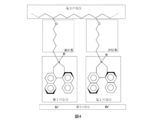
- FIG. 4 shows an example of a compound according to one embodiment of the present invention having a substituent that exhibits axial asymmetry.
- the compound illustrated in FIG. 4 is an organic salt having a binaphthyl group as a substituent that exhibits axial asymmetry.
- the first part refers to a part including an axially asymmetric substituent and a cyclic structure including at least two atoms constituting the axially asymmetric substituent in common.
- the reason for including the cyclic structure in the first portion having chirality is that the cyclic structure includes at least two atoms constituting the axial asymmetric substituent, so that the conformation of the axial asymmetric substituent is This is because it can be reflected in the annular structure.
- the conformation is substantially fixed or freely rotatable as in the first part of the compound illustrated in FIG. Preferably no bonds are included.
- the conformation is further fixed by setting it to 8 or less.
- a compound having an axial asymmetric substituent and a cyclic structure having a cyclic structure containing a plurality of atoms constituting the axial asymmetric substituent as shown in FIG. 4 is used as a catalyst for the asymmetric reaction, Since it is easier to obtain a high optical yield when the conformational change and the free rotation of the bond are restricted, the cyclic structure is particularly preferably composed of 7 or less atoms.
- the first portion specifically includes, in addition to the binaphthyl group, the 1-position carbon atom, the 1′-position carbon atom, the 2-position carbon atom, and the 2′-position in the binaphthyl skeleton.
- the 7-membered ring part which consists of the methylene group couple
- the linking group refers to a carbon atom directly bonded to the nitrogen atom to an oxygen atom directly bonded to the carbon atom of the second part.
- the second atom and the fourth atom are included in the 7-membered ring portion, respectively, and a nitrogen atom that is a cation center of an ammonium salt and a carbon atom of a linking group that is directly bonded to the nitrogen atom. It corresponds to.
- the compound illustrated in FIG. 4 is an organic salt, it contains bromide ions as a counter ion.
- the part, the linking group, and the second part that are contained without forming a covalent bond are used as the third part.
- the substituent R is an organic group which may have a substituent.
- FIG. 5 shows an example of a compound according to one embodiment of the present invention having a substituent that exhibits axial asymmetry.
- an organic salt having a binaphthyl group as a substituent that exhibits axial asymmetry.
- the first portion includes the axial asymmetric substituent and the axial asymmetry. It refers to a moiety that includes a cyclic structure that includes at least two atoms in common that constitute a substituent.
- the 1st carbon atom, 1′-position carbon atom, 2′-position carbon atom, 2′-position carbon atom, methylene group bonded to the 2-position carbon atom of the binaphthyl skeleton A 7-membered ring portion consisting of a methylene group bonded to a carbon atom at the 2 ′ position and a nitrogen atom which is the cation center of the organic salt.
- the linking group refers to from the oxygen atom directly bonded to the carbon atom at the 3-position of the binaphthyl skeleton to the oxygen atom directly bonded to the carbon atom of the second part.
- the reason for including an oxygen atom directly bonded to the carbon atom at the 3-position of the binaphthyl skeleton in the linking group is that the bond between the carbon atom at the 3-position of the binaphthyl skeleton and the oxygen atom directly bonded to the carbon atom is an axial asymmetric substitution This is because free rotation is possible almost without being affected by the conformation of the binaphthyl group which is the group.
- the third atom described above corresponds to the carbon atom at the 3-position of the binaphthyl skeleton, and the fourth atom described above corresponds to the oxygen atom of the linking group directly bonded to the carbon atom at the 3-position.
- the compound illustrated in FIG. 5 is an organic salt
- the compound includes bromide ions as a counter ion.
- the part, the linking group, and the second part that are contained without forming a covalent bond are used as the third part.
- the substituents R 1 and R 2 may be the same as or different from each other, and may be an organic group which may have a substituent. It is.
- FIG. 6 shows an example of a compound according to one embodiment of the present invention having a plurality of substituents that exhibit axial asymmetry.
- the compound includes two binaphthyl groups that are axially asymmetric substituents and a plurality of atoms constituting each of the two binaphthyl groups, and includes a carbon atom at the 1-position, a carbon atom at the 1-position, a 2-position Of carbon atoms, 2'-position carbon atoms, methylene groups bonded to the 2nd-position carbon atoms, methylene groups bonded to 2'-position carbon atoms, and nitrogen atoms that are the cation centers of the organic salts Has a 7-membered ring structure.
- the conformation is substantially fixed by the seven-membered ring structure.
- the nitrogen atom is commonly contained in the two seven-membered ring structures, and the moiety in which the conformation is substantially fixed in this way is the first in the compound according to some embodiments of the present invention. Is defined as the part. This first part also does not include a freely rotatable connection.
- the linking group indicates from the oxygen atom directly bonded to the carbon atom at the 6-position of the binaphthyl skeleton to the carbon atom of the benzene ring directly bonded to the carbon atom constituting the second portion.
- the reason for including an oxygen atom directly bonded to the carbon atom at the 6-position of the binaphthyl skeleton in the linking group is that the bond between the carbon atom at the 6-position of the binaphthyl skeleton and the oxygen atom directly bonded to the carbon atom is an axial asymmetric substitution This is because almost free rotation is possible without being strongly influenced by the conformation of the binaphthyl group which is the group.
- the third atom described above corresponds to the carbon atom at the 6-position of the binaphthyl skeleton, and the fourth atom described above corresponds to the oxygen atom contained in the linking group directly bonded to the carbon atom.
- the compound shown in FIG. 6 is an organic salt, it contains bromide ions as a counter ion.
- the part, the linking group, and the second part that are contained without forming a covalent bond are used as the third part.
- the substituent R is an organic group which may have a substituent.
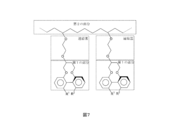
- FIG. 7 shows a compound according to one embodiment of the present invention, which includes a biphenyl group which is an axially asymmetric substituent and a plurality of atoms constituting the biphenyl group in common, and two benzenes of the biphenyl group. It has what has the cyclic structure containing the oxygen atom of the ortho position of the bond formed between the rings.
- the biphenyl group and the cyclic structure are defined as the first part, and the oxygen directly bonded to the second part constituting the main chain from the oxygen atom directly bonded to the cyclic structure Up to the atom is a linking group.
- the fourth atom and the second atom correspond to the oxygen atom directly bonded to the cyclic structure and the carbon atom included in the cyclic structure directly bonded to the oxygen atom, respectively. Yes.
- the substituents R 1 and R 2 in the compound illustrated in FIG. 7 may be the same as or different from each other, and may be an organic group that may have a substituent.
- the substituents R 1 and R 2 are not included in the first part I interpret it as a thing.
- FIG. 8 shows an example of a compound according to one embodiment of the present invention, which has a surface asymmetric substituent.
- the compound illustrated in FIG. 8 has a cyclophane structure as a plane asymmetric substituent and has optical activity because the conformation is fixed. Therefore, a 6-membered ring containing a nitrogen atom, which is a unit that expresses optical activity, and a portion consisting of 10 methylene chains connecting two opposing carbon atoms of the 6-membered ring are defined as the first portion. To do.
- the carbon atom of the amide group directly bonded to the 6-membered ring to the carbon atom directly bonded to the silicon atom which is the second part of the main chain is defined as a linking group.
- the fifth atom and the sixth atom described above are included in a 6-membered ring containing a nitrogen atom, respectively, and correspond to the carbon atom directly bonded to the amide group and the carbon atom of the amide group.
- the bond between these two carbon atoms can be freely rotated.
- the conformation of the amide group directly bonded to the cyclophane structure which is a plane asymmetric substituent is not substantially fixed to the cyclophane structure.
- the second portion of the compound illustrated in FIG. 8 has a branched siloxane structure.
- the second portion has a branched structure or a crosslinked structure. You may do it.
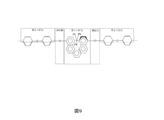
- FIG. 9 shows an example of a compound according to one embodiment of the present invention, which has a helical structure.
- the helical structure has a helicene skeleton having five benzene rings, and a phosphorus atom having two organic groups and coordinated to palladium is bonded to the helicene skeleton.
- the first part is defined as a phosphorus atom having the above-described helicene skeleton having a helical structure, palladium, and two organic groups coordinated to the palladium. That is, the part where the conformation is fixed to the helical structure is defined as the first part.
- the linking group is defined as an atom bonded to the first portion, and the second portion Is defined as a moiety bonded to the atom contained in the linking group.
- the seventh atom and the eighth atom described above are the two carbon atoms directly bonded to the oxygen atom which is the linking group among the carbon atoms forming the helicene skeleton, and the oxygen bonded directly to the two carbon atoms, respectively. Corresponds to an atom.
- the number of atoms does not correspond to the chain length, so it is compared with a compound having no cyclic structure in the second part. For this reason, only a series of bonds on one side are counted for the portion of the ring structure.
- the number of atoms between the oxygen atom of the linking group, the benzene ring bonded to the oxygen atom, and the oxygen atom directly bonded to the benzene ring in the second portion is 4 Consider it as an individual.
- a compound having an optically active moiety in the main chain may generally have a high molecular weight because of steric hindrance or the like, and therefore the first part having optical activity is connected via a linking group.
- the structure shown in FIG. 1 pendant to the main chain is more advantageous.
- FIG. 10 shows an example of a compound according to one embodiment of the present invention, which has two asymmetric centers.
- a portion including four atoms that make each of two asymmetric centers an asymmetric atom is defined as a first portion.
- a linking group is defined from one nitrogen atom directly bonded to the first portion to an oxygen atom directly bonded to the second portion.
- the structural unit having surface asymmetry includes, for example, a transcyclooctene structure and a ferrocenyl substituent, which may have a substituent, in addition to the above cyclophane structure.
- Etc. are exemplified.
- examples of the structural unit having a helical structure include proteins and nucleic acids in addition to those having the above-described helicene skeleton.
- each of the plurality of first portions preferably has a substituent having axial asymmetry.
- each of the plurality of first portions includes a binaphthyl group that expresses chirality due to axial asymmetry and a nitrogen atom, and a part of the binaphthyl group and the nitrogen atom are: It is preferable to constitute at least a part of the annular structure.
- the compound according to one aspect of the present invention connects a plurality of first parts, a second part, a third part, each of the plurality of first parts, and the second part. And a linking group containing at least one covalent bond, wherein the compound is an organic salt, and each of the plurality of first portions has chirality.
- a salt is used for the reaction using the compound as a catalyst.
- the third portion preferably does not form a covalent bond with the plurality of first portions, the second portion, and the linking group.
- the third part includes, for example, halide ions such as hydroxide ions, iodide ions, bromide ions, chloride ions and fluoride ions, tetrafluoroborates.
- halide ions such as hydroxide ions, iodide ions, bromide ions, chloride ions and fluoride ions, tetrafluoroborates.
- anion species such as acid ions, hexafluorophosphate ions, nitrate ions, sulfate ions, cyanide ions, phosphate ions, thiocyanate ions, and perchlorate ions.
- the organic salt is composed of a cation part and an anion part
- the third part is the anion part
- the cation part is the plurality of first parts, Preferably it contains 2 moieties and a linking group.
- a portion other than the linking group does not have a coordinating nitrogen atom.
- the portion other than the linking group does not have a coordinating nitrogen atom because, as described later, stereoselectivity is reduced in an asymmetric reaction using the compound as a catalyst. This is because there is a tendency. This is because the steric influence due to the chirality of each of the plurality of first parts in the asymmetric reaction may be reduced by the coordination ability of the coordinating nitrogen atom. .
- the coordinating nitrogen atom refers to a nitrogen atom having a high electron density of a lone pair on the nitrogen atom.
- a nitrogen atom is bonded to two carbon atoms, and further, no more than three bonds including the bond between the nitrogen atom and the carbon atom are bonded to atoms other than carbon and hydrogen.
- Examples are nitrogen atoms contained in pyridine, quinoline and the like.
- the level of the antibonding orbital of the bond containing the hetero atom may be lowered.
- the coordinating nitrogen atom may decrease the electron density of the lone pair on the nitrogen atom due to the stabilized antibonding orbital, and the coordination property of the nitrogen atom itself may decrease. Not considered.
- the compound is an organic salt including a cation part and an anion part
- the third part is the anion part
- the cation part is the plurality of first parts, It preferably includes a second portion and a linking group.
- each of the plurality of first portions preferably has a substituent having an asymmetric carbon atom, an axial asymmetry, a plane asymmetry, or a helical structure.
- Examples of the structural unit having axial asymmetry include an allenyl group which may have a substituent, a biphenyl group and a binaphthyl group in which two aromatic groups which may have a substituent are directly bonded, and the like. .
- Examples of the structural unit having surface asymmetry include a cyclophane structure, a transcyclooctene structure, and a ferrocenyl substituent which may have a substituent.
- Examples of the structural unit having a helical structure include a helical structure in which a plurality of aromatic rings or heterocyclic rings are bonded.
- the method for expressing chirality is preferably axial asymmetry, surface asymmetry or helical structure. This is because when a compound according to some embodiments of the present invention is used as a catalyst for an asymmetric reaction, the axial asymmetry, surface asymmetry, or helical structure can control the approach of the substrate to the catalyst in a wider space, This is because the optical yield may be easily improved.
- each of the plurality of first portions has a substituent having axial asymmetry.
- each of the plurality of first portions includes a binaphthyl group that expresses chirality due to axial asymmetry and a nitrogen atom, and a part of the binaphthyl group and the nitrogen atom are: It is preferable to constitute at least a part of the annular structure.
- the compound according to one aspect of the present invention connects a plurality of first parts, a second part, a third part, each of the plurality of first parts, and the second part.
- a linking group containing at least one covalent bond wherein the compound is an organic salt, and within 6 bonds counted from the bond containing the atom from the central atom of the cation or anion of the organic salt Are preferably free of coordinating nitrogen atoms.
- each of the plurality of first portions preferably has chirality.
- the coordinating nitrogen atom is not present within 5 or 4 bonds from the chiral center.
- the coordinating nitrogen atom in the above compound refers to a nitrogen atom having a high electron density of a lone electron pair on the nitrogen atom. Specifically, a nitrogen atom is bonded to two carbon atoms, and further, no more than three bonds including the bond between the nitrogen atom and the carbon atom are bonded to atoms other than carbon and hydrogen. Refers to the case. Examples are nitrogen atoms contained in pyridine, quinoline and the like.
- the heteroatom such as an oxygen atom having a higher electronegativity than a carbon atom
- a hydrogen atom at the position of two bonds including a nitrogen atom such as an amide group
- the level of the antibonding orbital of the bond containing the hetero atom may be lowered.
- the coordinating nitrogen atom is the electron density of the lone pair of electrons on the nitrogen atom due to the antibonding orbit that has been reduced and the coordination property of the nitrogen atom itself may be reduced. Do not consider.
- the plurality of first parts each having chirality are connected to the second part via the connecting group, for example, for a reaction using the compound as a catalyst.
- a salt is added or when a salt is generated as a result of the reaction, leakage of the plurality of first portions due to salt exchange or the like is suppressed, and a decrease in the chirality of the compound is suppressed.
- the second portion is preferably constituted by bonding of 20 or more constituent atoms.
- the second portion is preferably constituted by bonding of 30 or more constituent atoms.
- the second portion is preferably constituted by bonding of 50 or more constituent atoms to the second portion.
- the second portion is constituted by bonding of 100 or more constituent atoms to the second portion.
- the compound can be recovered by a simple operation such as filtration.
- the constituent atom is preferably a carbon atom.
- a carbon atom is generally chemically stable when bonded to a common hetero atom such as a nitrogen atom or an oxygen atom, or a hydrogen atom or a carbon atom, and thus can be applied to various functional materials.
- a metal atom is not included in the structural formula of the compound. Since metal atoms have an adverse effect on the living body and can cause a decrease in the performance of the device, there is an increasing demand for not containing metal atoms. Therefore, such characteristics may be preferred as compounds.
- any of the cation part and the anion part of the organic salt does not contain an ionic bond or is formed only by a covalent bond. Thereby, for example, deterioration due to salt exchange or the like in the presence of a solvent or the like can be suppressed.
- each of the plurality of first portions includes a binaphthyl group that expresses chirality due to axial asymmetry and a nitrogen atom, and a part of the binaphthyl group and the nitrogen atom are: It is preferable to constitute at least a part of the annular structure.
- the number of ring members is preferably 5 to 10. 6 and 7 are particularly preferable.
- each of the plurality of first portions preferably includes a cation center of an ammonium salt.
- a typical example of the cation center is a nitrogen atom having a positive charge.
- the linking group preferably connects the cation center and the second portion.
- the nitrogen atom is bonded to the 2-position carbon atom and the 2′-position carbon atom of the binaphthyl group via a first methylene group and a second methylene group, respectively.
- the nitrogen atom is further bonded to the first organic group and the second organic group in addition to the first methylene group and the second methylene group, and the linking group includes the first organic group.
- the linking group includes the first organic group.
- it is.
- the linking group preferably contains an oxygen atom.
- the linking group preferably includes the oxygen atom and a hydrocarbon group in which a plurality of carbon atoms are linked.
- the hydrocarbon group is preferably one in which 6 or more carbon atoms are linked.
- the second portion is preferably 8000 or more in terms of molecular weight.
- the second portion is preferably 8000 or more in terms of molecular weight.
- the second portion is preferably 10,000 or more in terms of molecular weight.
- the second part is preferably 15000 or more in terms of molecular weight.
- the second portion is preferably 20000 or more in terms of molecular weight.
- the second portion is preferably 25000 or more in terms of molecular weight.
- the second portion is preferably 30000 or more in terms of molecular weight.
- the second portion is preferably 30000 or more in terms of molecular weight.
- the second portion is preferably 40000 or more in terms of molecular weight.
- the second part is preferably 50000 or more in terms of molecular weight.
- the second portion is preferably 60000 or more in terms of molecular weight.
- the second portion is preferably 70000 or more in terms of molecular weight.
- the second portion is preferably 80000 or more in terms of molecular weight.
- the second portion is preferably 100,000 or more in terms of molecular weight.
- the second portion is preferably 150,000 or more in terms of molecular weight.
- the second portion is preferably 200000 or more in terms of molecular weight.
- the second portion is preferably 300,000 or more in terms of molecular weight.
- the insolubility with respect to the solvent is further improved. Due to such characteristics, for example, when any of the above compounds is used as a catalyst or the like for an organic reaction, the compound can be recovered by a simple operation such as filtration.
- the second portion preferably has a branched or crosslinked structure.
- Typical examples include those in which the main chains are linked by one or more covalent bonds and those having a network structure. By doing in this way, the insolubility with respect to a solvent further improves. Due to such characteristics, for example, when any of the above compounds is used as a reaction catalyst, the compound can be recovered by a simple operation such as post-reaction filtration, and can be reused after recovery. .
- the second portion includes a carbon atom in the main chain such as an alkyl chain, ether structure, polyoxyalkylene, and the like, which may have a substituent or a side chain group.
- Those containing an oxygen atom, those containing a carbon atom and a nitrogen atom in the main chain, such as polyethyleneimine which may have a substituent or a side chain group, a substituent or a side chain group Mainly a nylon structure that contains a hetero atom such as silicon other than carbon atom, oxygen atom and nitrogen atom in the main chain such as siloxane, etc., and may have a substituent or a side chain group
- a polyester structure which may have a substituent or a side chain group such as a polyethylene terephthalate or the like, a vinylon structure which may have a substituent or a side chain group in a main chain, a polyethylene terephthalate or the like Contained in main chain, substituent Includes an amide bond which may have
- the second part may contain an aromatic ring or a heterocyclic ring in the main chain.
- the second portion may include a hetero atom such as a sulfur atom or a phosphorus atom in the main chain.
- the difference in polarity between the plurality of first portions and the second portion increases, so that any one of the above compounds reacts.
- the reaction passes through a polar transition state, the reaction proceeds closer to the plurality of first portions each having chirality, and asymmetric expression Is advantageous.
- an organic salt structure may be used.
- a structure having an electron-accepting group or an electron-donating group such as a nitro group, a cyano group, a hydroxy group and an amino group which may have a substituent can be given.
- examples of the linking group include an aryl group, an alkyl chain, an amide bond, an ether bond, a thioether bond, a disulfide bond, an imide bond, a single bond or a double bond between a carbon atom and a nitrogen atom.
- a bond between a phosphorus atom and a carbon atom or a bond between a phosphorus atom and an oxygen atom may be included.
- the linking group may further contain an aryl group.
- the linking group includes an aryl group, and the aryl group is bonded to the second portion.
- any one of the carbon atoms of the alkyl chain constituting the second portion has a substituent.
- the substituent is an aryl group, the rigidity is increased, the insolubility is improved, and the compound can be easily recovered even after the compound is used as a reaction catalyst.
- Any of the above compounds can be used as a catalyst for inducing asymmetry. Catalysts that induce asymmetry are usually expensive, but by improving the insolubility of the compound as described above, the compound can be easily recovered or reused by filtration, etc., and the cost for carrying out the asymmetric synthesis is reduced. Is done.
- the method for producing an organic material according to one embodiment of the present invention includes a first step of causing an organic reaction using any one of the above compounds as a catalyst.
- the method for producing an organic material further includes a second step of recovering the compound after the first step.
- the method further includes a third step of reusing the compound recovered in the second step as a catalyst for causing an organic reaction.
- the method for producing an organic material according to another aspect of the present invention includes a first step of preparing a container or column filled with any of the above compounds, and the compound as a catalyst in the container or column. And a second step of causing an organic reaction to occur.
- a container or column filled with a catalyst as in this method for producing an organic material, the catalyst can be easily recovered or reused.
- a cylindrical shape or a groove shape is used suitably.
- a reaction reagent for the organic reaction or a solution of the reaction reagent is introduced from the first end of the container or the column, and the first end It is preferable to discharge from the second end on the opposite side.
- 1 is a typical compound according to one embodiment of the present invention.
- 1 is a typical compound according to one embodiment of the present invention.
- 1 is a typical compound according to one embodiment of the present invention.
- 1 is a typical compound according to one embodiment of the present invention.
- 1 is a typical compound according to one embodiment of the present invention.
- 1 is a typical compound according to one embodiment of the present invention.
- 1 is a typical compound according to one embodiment of the present invention.
- 1 is a typical compound according to one embodiment of the present invention.
- 1 is a typical compound according to one embodiment of the present invention.
- 1 is a typical compound according to one embodiment of the present invention.
- It is a figure which shows the schematic diagram of a flow reaction.
- the catalyst Cat-1 does not contain a metal atom in terms of chemical structure, and has a structure in which an onium salt having a plurality of binanaphthyl groups is pendant on a polymer chain.
- One of the plurality of binanaphthyl groups and the polymer chain are bonded to each other through at least one covalent bond or a side chain including an ether bond which is a kind of organic group.
- each of the two binaphthyl groups has an alkylene group such as a methylene group at the 2-position carbon atom and the 2′-position carbon atom,
- An alkylene group is bonded to a nitrogen atom and has a spiro structure.
- the nitrogen atom has four bonds and is the cation center of the onium salt.
- the side chain in which the onium salt moiety is interposed between the polymer chain is bonded to the binaphthyl group having no substituent such as an aryl group on the 3rd carbon atom or the 3'position carbon atom. Yes. Specifically, the side chain is bonded to the 6-position of the binaphthyl group that does not have a substituent such as an aryl group at the 3-position or the 3′-position.
- the onium salt of the catalyst according to some embodiments of the present invention and the polymer chain are linked by an organic group, and the organic group includes a plurality of carbon atoms.
- the side chain is a straight chain alkyl group with 6 carbon atoms linked.
- the alkyl chain is bonded to each of the binaphthyl group located on the onium salt side of the alkyl group and the phenyl group located on the polymer chain side of the alkyl group via an ether bond.
- a portion connecting a substituent that expresses chirality and a polymer chain is referred to as a linking group.
- the oxygen atom bonded to the 6-position carbon atom of the binaphthyl group skeleton is bonded to the alkyl atom bonded to the oxygen atom, and the alkyl group is bonded to the alkyl group via an ether bond.
- the term including a phenyl group bonded to a polymer chain is defined as a linking group (linker).
- the nitrogen atom at the cation center to the polymer chain is a minimum of 20 bonds including the bond between the nitrogen atom and the carbon atom bonded to the nitrogen atom.
- the atoms constituting the linking group Is 19 from the carbon atom bonded to the nitrogen atom to the carbon atom in the phenyl skeleton directly bonded to the polymer chain.
- the oxygen atom bonded to the benzene ring bonded to the polymer chain from the oxygen atom bonded to the 6-position carbon atom of the binaphthyl group skeleton is linked to 6 carbon atoms. Hydrocarbon group.
- the number of constituent atoms of the linking group is preferably 4 or more, and the number of carbon atoms of the hydrocarbon group contained in the linking group is preferably 3 or more. Furthermore, it is more preferable that the number of carbon atoms of the hydrocarbon group contained in the linking group is 6 or more.
- Cat-1 for example, is first synthesized by dividing into an I part and a II part, and an ammonium salt having two binaphthyl groups is synthesized by combining the I part and the II part.
- An ammonium salt can be bound to the polymer chain as at least part of the side chain.
- the part I can be synthesized by a synthesis process such as the following formula (2). Specifically, with respect to compound 1 having a methoxymethyl group (MOM group) as a protecting group at the 2-position and 2′-position of binaphthyl and having a bromine atom as a halogen atom at the 6-position of the binaphthyl group, 1.5 equivalents of a hexane solution of n-butyllithium in tetrahydrofuran is added dropwise at ⁇ 78 ° C., and the mixture is stirred at room temperature for 4 hours. Thereafter, 2 equivalents of pinacol isopropoxyboronate at ⁇ 78 ° C.
- MOM group methoxymethyl group
- This compound 2 was reacted with 12 equivalents of hydrogen peroxide and 3 equivalents of cesium carbonate in a mixed solvent of dichloromethane and ethanol at 35 ° C. for 2 hours to obtain a compound 3 having a hydroxy group at the 6-position of the binaphthyl group. With a yield of 88%.
- Compound 5 is dissolved in methylene chloride to prepare a methylene chloride solution of compound 5.
- 3 equivalents of triethylamine was added to this methylene chloride solution, 2.5 equivalents of trifluoromethanesulfonic anhydride was added dropwise at 0 ° C., and then stirred at room temperature for 1 hour, whereby the 2-position and 2′-position of the binaphthyl group were obtained.
- Compound 6 in which is converted to a trifluoromethylsulfonyl group gives a yield of 99% based on Compound 5.
- Compound 7 is dissolved in methylene chloride to prepare a methylene chloride solution of compound 7.
- Boron tribromide was added dropwise to the methylene chloride solution of Compound 7 at 0 ° C. and stirred at room temperature for 12 hours, whereby Compound 6 in which the 6-position methoxy group was converted to a deprotected hydroxy group was converted to Compound 8 A yield of 95% based on 7 is obtained.
- Compound 8 is dissolved in acetone to prepare an acetone solution of compound 8.
- an equivalent amount of potassium carbonate and 5 equivalents of 6-bromo-1-hexanol to an acetone solution of Compound 8 and stirring at 70 ° C. for 18 hours, an alkoxy group having a hydroxy group at the terminal at the 6-position of the binaphthyl group
- the compound 9 having a 6-hydroxyhexyl group is obtained with a yield of 85% based on the compound 8.
- a diethyl ether solution of compound 12 is prepared by dissolving compound 12 having a methoxymethyl group as a protecting group at the 2-position and 2′-position of the binaphthyl group in diethyl ether.
- compound 12 having a methoxymethyl group as a protecting group at the 2-position and 2′-position of the binaphthyl group in diethyl ether.
- 2.4 equivalents of a hexane solution of n-butyllithium is added dropwise at room temperature, and the mixture is stirred at room temperature for 4 hours. Thereafter, 3 equivalents of trimethoxyborane is added dropwise at ⁇ 78 ° C., and the mixture is stirred at room temperature for 12 hours.
- Compound 13 is dissolved in acetone, 10 equivalents of potassium carbonate and 10 equivalents of methyl iodide are added to the acetone solution of compound 13 and the mixture is stirred at 50 ° C. for 18 hours, whereby the 3-position and 3′-position of the binaphthyl group are obtained.
- Compound 14 having a methoxy group as an alkoxy group in each of them is obtained in a yield of 90% based on Compound 13.
- Compound 14 is dissolved in 1,4-dioxane to prepare a 1,4-dioxane solution of compound 14.
- Concentrated hydrochloric acid was added dropwise to the 1,4-dioxane solution at room temperature, and the mixture was stirred at 50 ° C. for 6 hours, whereby the methoxymethyl group as the protecting group at the 2-position and 2′-position of the binaphthyl group was deprotected, and the 2-position and Compound 15 in which the 2 ′ position is converted to a hydroxy group is obtained in 99% based on compound 14.
- Compound 15 is dissolved in methylene chloride to prepare a methylene chloride solution of compound 15. 6 equivalents of triethylamine was added to this methylene chloride solution, and 5.5 equivalents of trifluoromethanesulfonic anhydride was added dropwise at 0 ° C., followed by stirring at room temperature for 1 hour, whereby the 2-position and 2′-position of the binaphthyl group were obtained.
- Compound 16 in which is converted to a trifluoromethylsulfonyl group gives a yield of 99% based on Compound 15.
- Compound 16 is dissolved in dehydrated diethyl ether to prepare a diethyl ether solution of compound 16.
- a diethyl ether solution of compound 16 5 mol% of dichloro (1,3-bis (diphenylphosphino) propane) nickel (II) is added to compound 16, and 6 equivalents of methylmagnesium iodide are added at 0 ° C.
- the compound 17 having a methyl group which is an alkyl group at each of the 2-position and 2′-position of the binaphthyl group is obtained in a yield of 75% based on the compound 16. can get.
- Compound 17 is dissolved in methylene chloride to prepare a methylene chloride solution of compound 17.
- Boron tribromide was added dropwise to this methylene chloride solution of Compound 18 at 0 ° C. and stirred at room temperature for 12 hours to deprotect the 3-position and 3′-position alkoxy groups of the binaphthyl group. Is obtained in a yield of 95% based on compound 17.
- Compound 19 is dissolved in tetrahydrofuran to prepare a tetrahydrofuran solution of Compound 19.
- a tetrahydrofuran solution of Compound 19 5 mol% of tetrakis (triphenylphosphine) palladium (0) with respect to Compound 19, 3.5 equivalents of 1-bromo-3,4,5-trifluorobenzene with respect to Compound 19, and
- 34,5-trifluorophenyl groups which are aryl groups, were added to the 3-position and 3′-position of the binaphthyl group, respectively.
- the compound 20 which has is obtained.
- Compound 20 is dissolved in benzene to prepare a benzene solution of compound 20.
- benzene solution of Compound 20 To the benzene solution of Compound 20 is added 10 mol% 2,2-azobis (isobutylnitrile) and 2.3 equivalents of N-bromosuccinimide. By heating and refluxing this mixture for 4 hours, compound 21 having a bromomethyl group at the 2-position and 2′-position is obtained in a yield of 90% based on compound 20.
- the compound 11 corresponding to the I part of the formula (1) and the compound 21 corresponding to the II part are combined by the process shown in the following formula (4).
- Compound 11 and compound 21 at a molar ratio of 1: 1 are dissolved in acetonitrile to prepare an acetonitrile solution of compounds 11 and 21.
- Compound 22 which is a spiro quaternary ammonium compound having two binaphthyl groups is obtained by adding 2.5 equivalents of potassium carbonate to Compound 11 and 21 in acetonitrile and heating to reflux with stirring for 48 hours. Is obtained with a yield of 90% based on compound 11.
- Compound 24 is linked to the polymer chain by the process shown in the following formula (5).
- Compound 24 is dissolved in acetonitrile to prepare a dimethyl sulfoxide solution of compound 24.
- dimethyl sulfoxide solution of compound 24 2.5 equivalents of potassium carbonate and 1.2 equivalents of p-hydroxystyrene were added to compound 24, and the mixture was heated to reflux with stirring for 48 hours to have two binaphthyl groups.
- Compound 25 is dissolved in anisole to prepare anisole solution of compound 25.
- a copolymer is prepared by adding 10 mol% of 2,2-azobis (isobutylnitrile) with respect to compound 26 and 4 equivalents of styrene with respect to compound 25 to the anisole solution of compound 25 and heating and refluxing for 16 hours in a nitrogen stream. Cat-1 is obtained.
- Styrene may have a substituent on at least one of the two carbon atoms of the olefin moiety, and may have at least one substituent on benzene.
- styrene a monomer which has aryl groups other than benzene, such as a vinyl naphthalene derivative and vinyl anthracene which may have a substituent on an olefin or an aryl group, instead of styrene or in addition to styrene.
- aryl groups other than benzene such as a vinyl naphthalene derivative and vinyl anthracene which may have a substituent on an olefin or an aryl group, instead of styrene or in addition to styrene.
- a monomer having a plurality of polymerizable groups such as divinylbenzene may be added in place of styrene or in addition to styrene during the reaction for polymerizing compound 25.
- a catalyst having improved insolubility with respect to the solvent, such as Cat-2 shown in the following formula (6), in which the degree of crosslinking of Cat-1 is improved can be obtained.
- Cat-2 a polymer chain having a spiro-type quaternary ammonium as a catalyst center in a side chain is bonded through a crosslinking group composed mainly of a plurality of carbon atoms.
- Cat-3 which has only one binaphthyl group, has an alkyl group on the nitrogen atom which is the cation center of ammonium, and binds to a polymer chain via an organic group such as the alkyl group and an ether bond Will be described based on the following equation (7).
- a portion containing an alkyl group bonded to the nitrogen atom that is the cation center, and a phenyl group that is bonded to the alkyl group via an ether bond and bonded to a polymer chain It is defined as a linking group (linker) linking the cation center of the onium salt and the polymer chain.
- the nitrogen atom at the cation center to the polymer chain is a minimum of 12 bonds including the bond between the nitrogen atom and the carbon atom bonded to the nitrogen atom.
- the atoms constituting the linking group Is 11 from the carbon atom bonded to the nitrogen atom to the carbon atom in the phenyl skeleton directly bonded to the polymer chain.
- the oxygen atom bonded to the benzene ring bonded to the polymer chain from the oxygen atom bonded to the 6-position carbon atom of the binaphthyl group skeleton is linked to 6 carbon atoms. Hydrocarbon group.
- the number of constituent atoms of the linking group is preferably 4 or more, and the number of carbon atoms of the hydrocarbon group contained in the linking group is preferably 3 or more. Furthermore, it is more preferable that the number of carbon atoms of the hydrocarbon group contained in the linking group is 6 or more.
- Compound 21 having a bromomethyl group at each of the 2-position and 2′-position of the binaphthyl group, and 6 equivalents of 6-amino-1-hexanol, which is a primary amine having a hydroxy group at the terminal of Compound 21, and 3 equivalents Is added at a temperature of 50 ° C. for 5 hours to obtain a compound 26 in which an alkyl group is bonded to the terminal hydroxy group to a nitrogen atom in a yield of 62% based on the compound 21.
- Compound 27 is dissolved in acetonitrile to prepare an acetonitrile solution of compound 27.
- Hexyl bromide which is an alkyl halide, is added to this acetonitrile solution, and the mixture is heated to reflux with stirring for 24 hours.
- Compound 28 which is an ammonium salt having a binaphthyl group, an alkyl group, and an alkyl group having a halogen atom at the terminal, is obtained in a yield of 85% based on Compound 27.
- Compound 28 is dissolved in dimethyl sulfoxide to prepare a dimethyl sulfoxide solution of compound 28.
- dimethyl sulfoxide solution of compound 28 2.5 equivalents of potassium carbonate and 1.2 equivalents of p-hydroxystyrene were added to compound 28, and heated to reflux with stirring for 48 hours.
- Compound 29 is dissolved in anisole to prepare a toluene solution of compound 29.
- anisole solution of compound 29 10 mol% of 2,2-azobis (isobutylnitrile) with respect to compound 29 and 4 equivalents of styrene with respect to compound 29 were added, and the mixture was heated to reflux for 16 hours in a nitrogen stream. Cat-3 is obtained.
- a monomer having a plurality of polymerizable groups such as divinylbenzene may be added in place of styrene or in addition to styrene during the polymerization reaction of compound 29.
- a catalyst having improved insolubility with respect to a solvent such as Cat-4 represented by the following formula (8) with improved degree of crosslinking of Cat-3 can be obtained.
- Cat-4 is a 1-position carbon atom, a 1′-position carbon atom, a 2-position carbon atom, a 2′-position carbon atom, the 2-position and 2′-position, contained in the binaphthyl group skeleton of the binaphthyl group which is the catalyst center.
- An ammonium salt having a seven-membered ring structure composed of a methylene group and a nitrogen atom each bonded to a carbon atom at a position is bonded to a polymer chain via a crosslinking group composed mainly of a plurality of carbon atoms Yes.
- Cat-3 can also be synthesized by the following formula (9).
- compound 21 having a bromomethyl group at each of the 2-position and 2′-position of the binaphthyl group 1.5 equivalents of hexylamine which is a primary alkylamine and 3 equivalents of potassium carbonate are added to compound 21,
- the compound 30 which is a cyclic amine compound in which an alkyl group is bonded to a nitrogen atom and the 2-position and 2′-position methylene groups of the binaphthyl group are bonded to the nitrogen atom by stirring at 5 ° C. for 5 hours is based on the compound 21. A 70% yield is obtained.
- Compound 28 is dissolved in dimethyl sulfoxide to prepare a dimethyl sulfoxide solution of compound 28.
- dimethyl sulfoxide solution of compound 28 2.5 equivalents of potassium carbonate and 1.2 equivalents of p-hydroxystyrene were added to compound 28, and heated to reflux with stirring for 48 hours.
- a monomer having a plurality of polymerizable groups such as divinylbenzene may be added as a crosslinking agent in place of styrene or in addition to styrene.
- Cat-4 that is more insoluble in the solvent can be obtained.
- Compound 31 can also be synthesized by the route shown in the following formula (10).
- a N, N-dimethylformamide solution of Compound 21 was prepared, and 0.95 equivalents of 2-nitrobenzenesulfonamide and 4 equivalents of carbonic acid based on Compound 22 with respect to the N, N-dimethylformamide solution of Compound 21.
- a compound 33 in which a 2-nitrobenzenesulfonyl group, which is a kind of amino protecting group, is bonded to a nitrogen atom is obtained in a yield of 85%.
- Compound 31 can be further converted to compound 32 and compound 28 as shown in formula (9).
- Compound 31 can also be synthesized by the process shown in the following formula (11). With respect to an acetonitrile solution of Compound 21, 2-hexylamino-1-hexanol, which is a secondary amine having an alkyl group having a functional group such as a hydroxy group equivalent to 2 equivalents based on Compound 21, and 2. Compound 31 can be obtained in a yield of 87% by adding 5 equivalents of potassium carbonate and heating to reflux for 48 hours.
- Cat-6 can be obtained using the spiro-type quaternary ammonium compound 24 as a raw material and using the same method (Formula 13 below) as Formula 12.
- a polymer crosslinked as shown in the following formula (14) and having a hydroxyl group and a side chain You may use what has functional groups, such as an amino group. In this case, it may not be necessary to add a crosslinking agent.
- P in the following formula (14) represents a polymer.
- Examples of the polymer corresponding to P include carbon atoms and oxygen atoms in the main chain such as those having an alkyl chain which may have a substituent or a side chain group, polyoxyalkylene and the like, Those having an ether structure which may have a substituent or a side chain group, including a carbon atom and a nitrogen atom in the main chain, such as polyethyleneimine, and having a substituent or a side chain group Those having a good structure, including atoms of elements such as silicon other than carbon atoms, oxygen atoms and nitrogen atoms in the main chain such as siloxane, and having a substituent or a side chain group in the main chain Those having a good structure, nylon structures optionally having substituents or side chain groups, those having a vinylon structure optionally having substituents or side chain groups, substituents such as polyethylene terephthalate or the like May have side chain groups Those having a reester structure, those containing a plurality of amide bonds which
- Those having a functional group such as hydroxy in the ammonium salt at the center of the catalyst, such as compounds 22 and 31, include, for example, CP-X, which is a halogenated benzyl type polymer having a highly active halogen atom-carbon atom bond, and an amide group.
- CP-X which is a halogenated benzyl type polymer having a highly active halogen atom-carbon atom bond, and an amide group.
- a polymer such as CP-AMIDE having a halogen atom at the ⁇ -position of the carbonyl group and CP-COOH having a carboxyl group can be bound as a carrier.
- P represents a polymer chain.
- Examples of the polymer chain corresponding to P include carbon atoms and oxygen atoms in the main chain such as those having an alkyl chain which may have a substituent or a side chain group, and polyoxyalkylene. Having an ether structure which may have a substituent or a side chain group, including a carbon atom and a nitrogen atom in the main chain, such as polyethyleneimine, and having a substituent or a side chain group
- the main chain contains atoms of elements such as silicon other than carbon atoms, oxygen atoms and nitrogen atoms, such as siloxane, and has a substituent or side chain group in the main chain.
- Has a substituent or side chain group Those having a good polyester structure, those containing a plurality of amide bonds which may have a substituent in the main chain, and those having a structure which may have a substituent or a side chain group, a substituent or a side Examples include a polyimide structure which may have a chain group and a polysaccharide structure which may have a substituent or a side chain group.
- the bond between the main chain skeleton of the base and the polymer chain and the carbon atom in the benzene ring bonded to the polymer chain as shown in the following formula (16) is included. It may be preferred to use a polymer that is more than 7 bonds away as a carrier.
- an inorganic material such as silica and alumina as shown in the following formula 16 is used as a base material, such as a hydroxy group and an amino group.
- a material having a functional group may be used. In this case, it may not be necessary to add a crosslinking agent.
- linking group used for bonding from the organic polymer and inorganic matrix to the catalyst center examples include aryl groups, alkyl chains, amide bonds, ether bonds, thioether bonds, disulfide bonds, imide bonds, carbon atoms and nitrogen.
- a single bond or a double bond with an atom, a bond between a phosphorus atom and a carbon atom, or a bond between a phosphorus atom and an oxygen atom may be included.
- those containing one or two bonds among carbon-carbon bonds, carbon-oxygen atoms, and carbon-nitrogen atoms are preferred because they are chemically stable.
- Polymer P1 (50-100 mesh, 1.0 mmol / g OH) represented by the above formula (16) in 18 mg oil (sodium hydride content: 40%) in which sodium hydride is dispersed in tetrahydrofuran (THF) at room temperature And stir for 15 minutes. Then, a tetrahydrofuran solution of compound 35 (48 mg; 0.05 mmol) is added at room temperature and stirred at 40 ° C. for 12 hours. Then, Cat-7 is obtained by neutralizing the reaction solution with hydrobromic acid and performing filtration. Cat-7 includes a hydrocarbon group composed of 24 constituent atoms as a linking group and linked with 12 carbon atoms.
- the number of constituent atoms of the linking group is preferably 24 or more, Further, 30 or more is preferable, and 40 or more may be preferable.
- the compound 35 in which the chain lengths of the two substituents on the nitrogen atom at the cation center are different from each other is produced by a method similar to the method for synthesizing the compound 28 from the compound 21 of the above formula (7).
- the steric hindrance at the chiral center can be alleviated and the polymer can be easily bonded to a polymer.
- Compound 36 was prepared by adding 2 equivalents of 4-piperidineethanol and 2.5 equivalents of potassium carbonate to Compound 21 based on Compound 21 as shown in the following formula (20), and heating with stirring for 48 hours. By refluxing, a yield of 80% is obtained.
- Compound 36 can be pendant to the polymer by the method described above.
- a compound such as Compound 37 that is not an axially asymmetric chiral compound can also be bonded to a polymer.
- P2 100-200 mesh, 1.0 mmol / g Br
- Compound 37 (50 mg; 0.05 mmol) is then added and stirred at 40 ° C. for 12 hours. Thereafter, the reaction solution is neutralized with hydrobromic acid and filtered to obtain Cat-9.
- Compound 37 can be obtained by referring to the methods described in Syn Commun., 2010, 40, 266. and J. Am. Chem. Soc., 2003, 125, 11206.
- Cat-10 to Cat-13 represented by the following formula (22) can be synthesized using P1 or P2.
- FIG. 11 shows the division of the first part, the second part, the third part, and the linking group in Cat-13.
- a plurality of constituent atoms included in the binaphthyl group and the binaphthyl group skeleton that is an axially asymmetric substituent, the carbon atom at the 2-position of the binaphthyl group, the carbon atom at the 2′-position, and the carbon atom at the 2-position
- a portion containing a 7-membered ring composed of a methylene group directly bonded to a carbon atom at the 2 ′ position and a nitrogen atom directly bonded to the two methylene groups, and a 6-membered ring containing the nitrogen atom.
- the first part This is defined as the first part. This is because, like the compound exemplified in FIG. 6 above, the 7-membered ring and the 6-membered ring are affected by the steric influence of the binaphthyl group which is an axially asymmetric substituent, and the conformational movement is substantially limited. Because. Note that two trifluorophenyl groups bonded to the carbon atom at the 3rd position and the carbon atom at the 3 ′ position of the binaphthyl group skeleton are respectively between the carbon atom at the 3rd position and the carbon atom at the 3 ′ position. Since rotation is possible, it was not included in the first part.
- the linking group includes from the methylene group bonded to the carbon atom facing the nitrogen atom contained in the 6-membered ring to the carbon atom of the benzene ring bonded directly to the polymer chain P.
- the second part and the third part are the base polymer chain P and bromide ion, respectively.
- Cat-14 to Cat-17 represented by the following formula (23) can be synthesized using P-AMIDE.
- Cat-12 and Cat-16 have a substituent having a methoxy group having oxygen with small coordinating property on the nitrogen atom at the cation center as a substituent that is not a linking group.
- a coordinating nitrogen atom is present within 6 bonds counted from the bond containing the atom from the atom serving as the center of the cation or anion.
- a compound represented by the following formula (24) can be synthesized.
- Cat-18 it can be synthesized by the same method as the synthesis reaction of compound 28 shown in the above formula (7). Specifically, it is reacted with 4- (bromomethyl) pyridine instead of hexyl bromide, and further linked to P-1 by the same method as in the above formula (18).
- Cat-18 contains a coordinating nitrogen atom in the pyridine skeleton at the fifth bond counted from the bond containing the nitrogen atom from the nitrogen atom at the cation center.
- Cat-3, Cat-4, and Cat-5 described above are directly bonded to the nitrogen atom in the portion constituting the organic group linking the nitrogen atom that is the cation center of the ammonium salt and the polymer chain, and An alkylene group consisting of 6 carbon atoms bonded to an oxygen atom on a polystyrene phenyl group is linked, and another alkyl group on the nitrogen atom is also linked to 6 carbon atoms. is there. That is, you may have the alkyl group of the same chain length on the nitrogen atom of the cation center of ammonium salt.
- the chain length of the organic group that binds the nitrogen atom and the polymer chain is defined as the binaphthyl group and the nitrogen atom. It is preferable that the chain length of the linking group does not affect the cyclic structure formed by Specifically, the linking group that links the polymer chain and the nitrogen atom has a substituent or structure that includes the nitrogen atom to four or more bonds from the nitrogen atom at the cation center. It may be preferable.
- the reaction represented by the following formula (25) is a reaction in the presence of a base between a Schiff base and an alkyl halide having an alkyl group that may have a substituent such as an aryl group. An alkyl group is bonded to the.
- the yield, optical yield, and catalyst recovery rate in a batch reaction in a 50% KOH aqueous solution-toluene solvent system when Cat-1 to Cat-18 are used as catalysts will be described.
- the 50% KOH aqueous solution-toluene solvent system as a whole has a higher optical yield. This is considered to be because methylene chloride has a high polarity and is slightly dissolved in water, so that a reaction other than the asymmetric reaction field formed by Cat-1 to 18 occurs.
- Cat-1, Cat-2, Cat-3, Cat-4, Cat-5, Cat-6, Cat-7 and Cat-8 are highly insoluble, so they can be used as flow reaction catalysts by packing in columns. be able to.
- the flow reaction has an advantage that the catalyst can be repeatedly used without being recovered by an operation such as filtration.
- FIG. 12 shows a schematic diagram of the flow reaction of FIG.
- the two solutions are combined with each other via a T-shaped or Y-shaped mixer, so that a reaction solvent incompatible with each other such as toluene and aqueous potassium hydroxide or aqueous sodium hydroxide is obtained. Even when used, the reaction solvent can be smoothly introduced into the column.
- benzylidene amino ester or benzhydridene amino ester as shown in FIG. 12 can be used as the substrate.
- Table 3 shows the case where the same reaction system as shown in Table 2 is adopted.
- a compound represented by the following formula (26) can be used as the chiral center of the compound according to some embodiments of the present invention.
- the substituents R may be the same as or different from each other, and the substitution position can be appropriately determined.
- those having a spiro structure such as A and B, those having an axially asymmetric biphenyl skeleton such as C, D and G, and those having a polycyclic structure sharing at least one side such as F , H, and a hetero atom such as a phosphorus atom other than a nitrogen atom is a cation center.
- the compounds A to I can be bonded to a polymer chain by appropriately using the substituent R.
- the above A to I skeletons can be converted to alkyl chains, polyether chains, triazole structures, amide groups, thioamide groups, ester groups, thioester groups, carbamate groups, amine structures, sulfide structures, disulfides. It can be bonded to the polymer chain through a structure and an ether structure.
- each part constituting the compound according to the present invention such as the above-mentioned chiral center or cation center, polymer chain, linking group for linking the chiral center or cation center and the polymer chain, and the like, respectively, unless otherwise contrary to the gist of the present invention It is possible to select as appropriate, and a combination thereof is also selected as appropriate.
Landscapes
- Chemical & Material Sciences (AREA)
- Organic Chemistry (AREA)
- Chemical Kinetics & Catalysis (AREA)
- Health & Medical Sciences (AREA)
- Engineering & Computer Science (AREA)
- Materials Engineering (AREA)
- Medicinal Chemistry (AREA)
- Polymers & Plastics (AREA)
- General Chemical & Material Sciences (AREA)
- Emergency Medicine (AREA)
- Catalysts (AREA)
- Nitrogen Condensed Heterocyclic Rings (AREA)
- Organic Low-Molecular-Weight Compounds And Preparation Thereof (AREA)
- Low-Molecular Organic Synthesis Reactions Using Catalysts (AREA)
- Addition Polymer Or Copolymer, Post-Treatments, Or Chemical Modifications (AREA)
Abstract
Description
前記キラリティーが、不斉原子により発現している場合は、前記複数の第1の部分の各々は、前記不斉原子に直接結合した第1の原子を含み、前記第1の原子に前記連結基が直接結合し、前記キラリティーが、軸不斉により発現している場合は、前記複数の第1の部分の各々は、軸不斉となる軸不斉置換基を有し、前記連結基は、前記軸不斉置換基を構成する構成原子のうちの複数を共通に有する環状構造に含まれる第2の原子又は前記軸不斉置換基に含まれる第3の原子に直接結合しており、前記連結基に含まれ、前記第2の原子又は第3の原子に直接結合している第4の原子と前記第2の原子又は前記3の原子との間の結合は回転可能であり、前記キラリティーが、面不斉により発現している場合は、面不斉となる面不斉置換基を有し、前記連結基は前記面不斉置換基に含まれる第5の原子に直接結合し、前記連結基に含まれ、前記面不斉置換基に直接結合している第6の原子と前記第5の原子との間の結合は回転可能であり、前記キラリティーが、らせんにより発現している場合は、らせんとなるらせん置換基を有し、前記連結基は前記らせん置換基に含まれる第7の原子に直接結合し、前記連結基に含まれ、前記らせん置換基に直接結合している第8の原子と前記第7の原子との間の結合は回転可能であることを特徴とする。
前記軸不斉置換基、前記面不斉置換基及び前記らせん置換基は、いずれも自由回転可能な結合を含まないこと、を特徴とする。
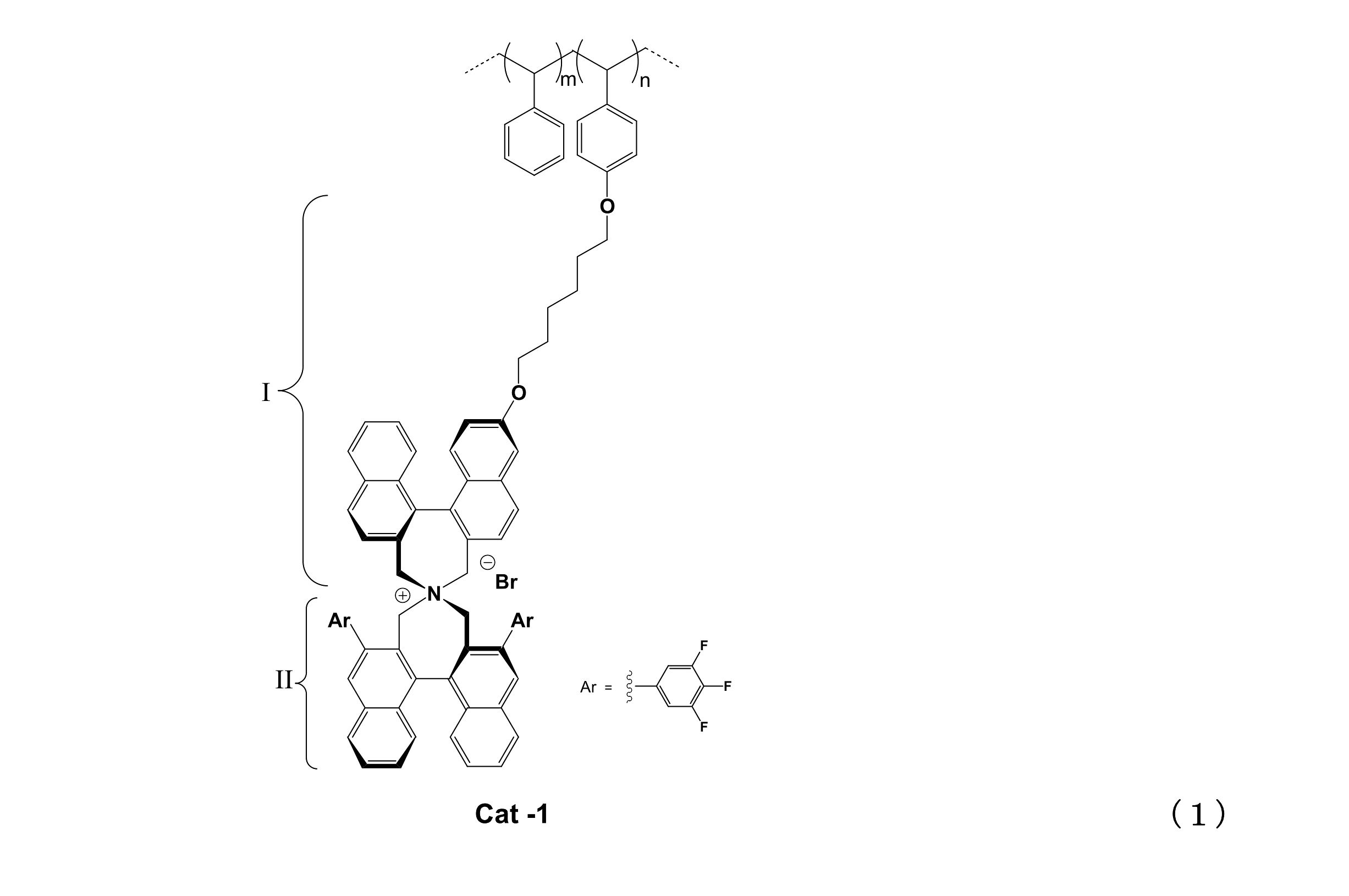


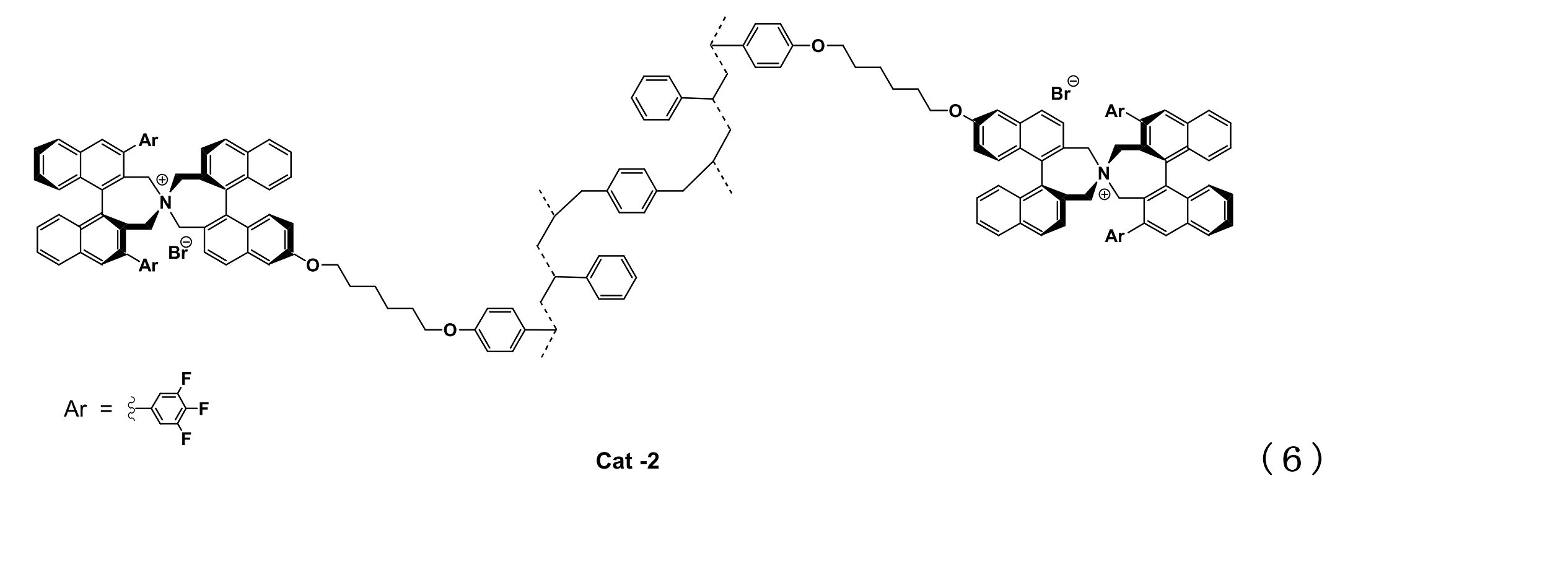
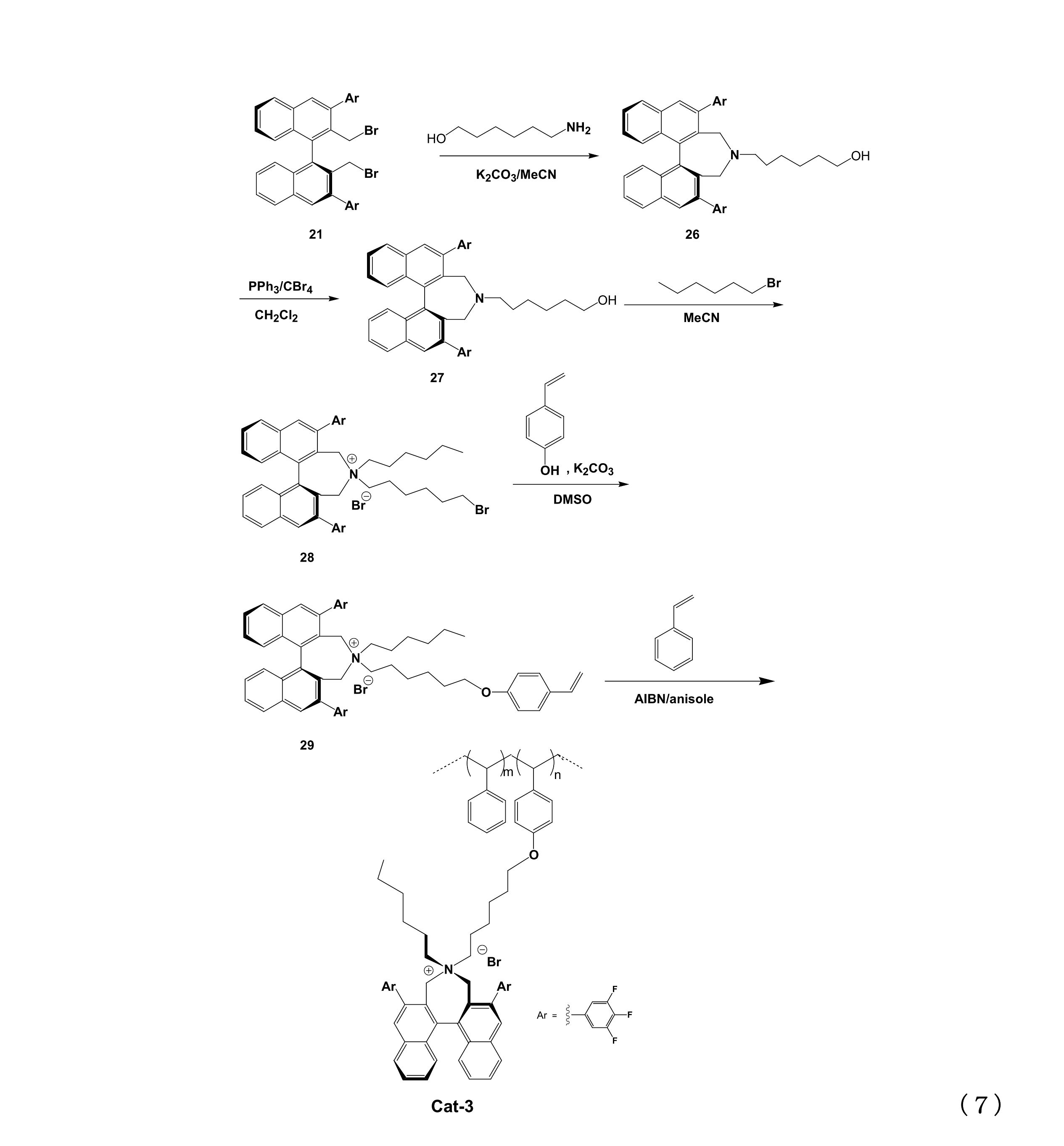
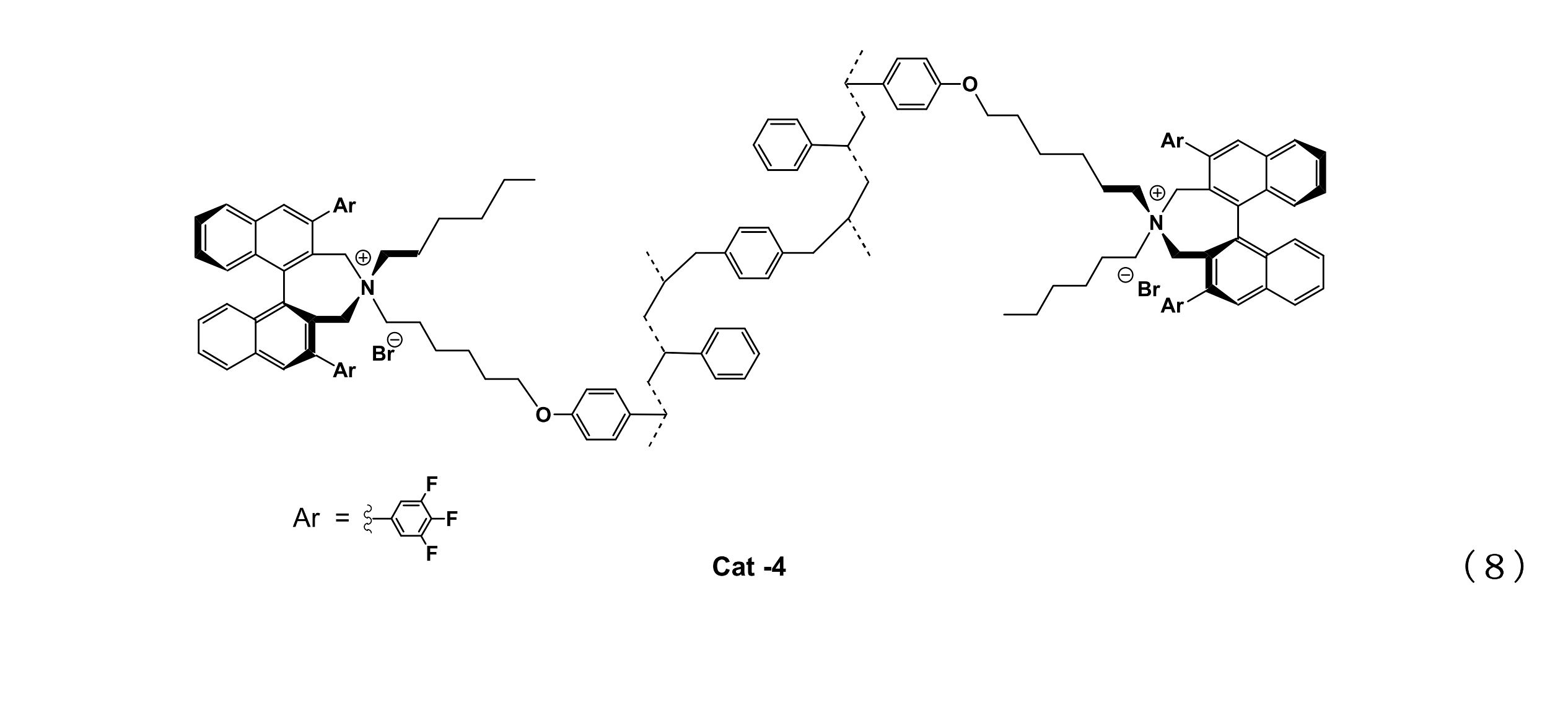


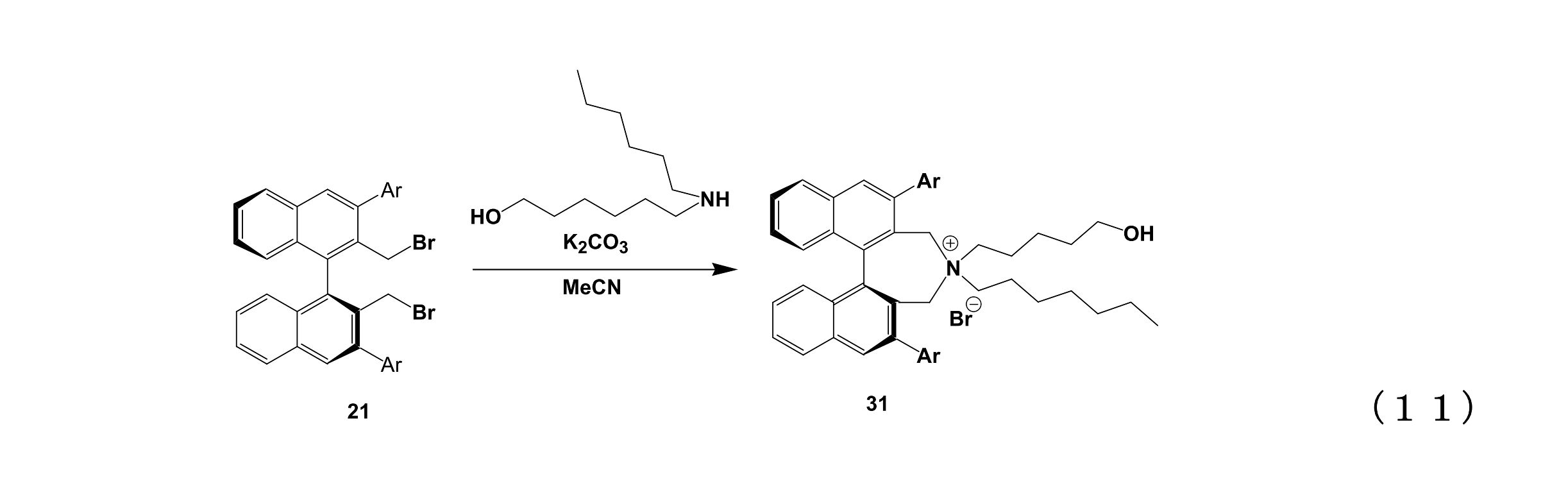
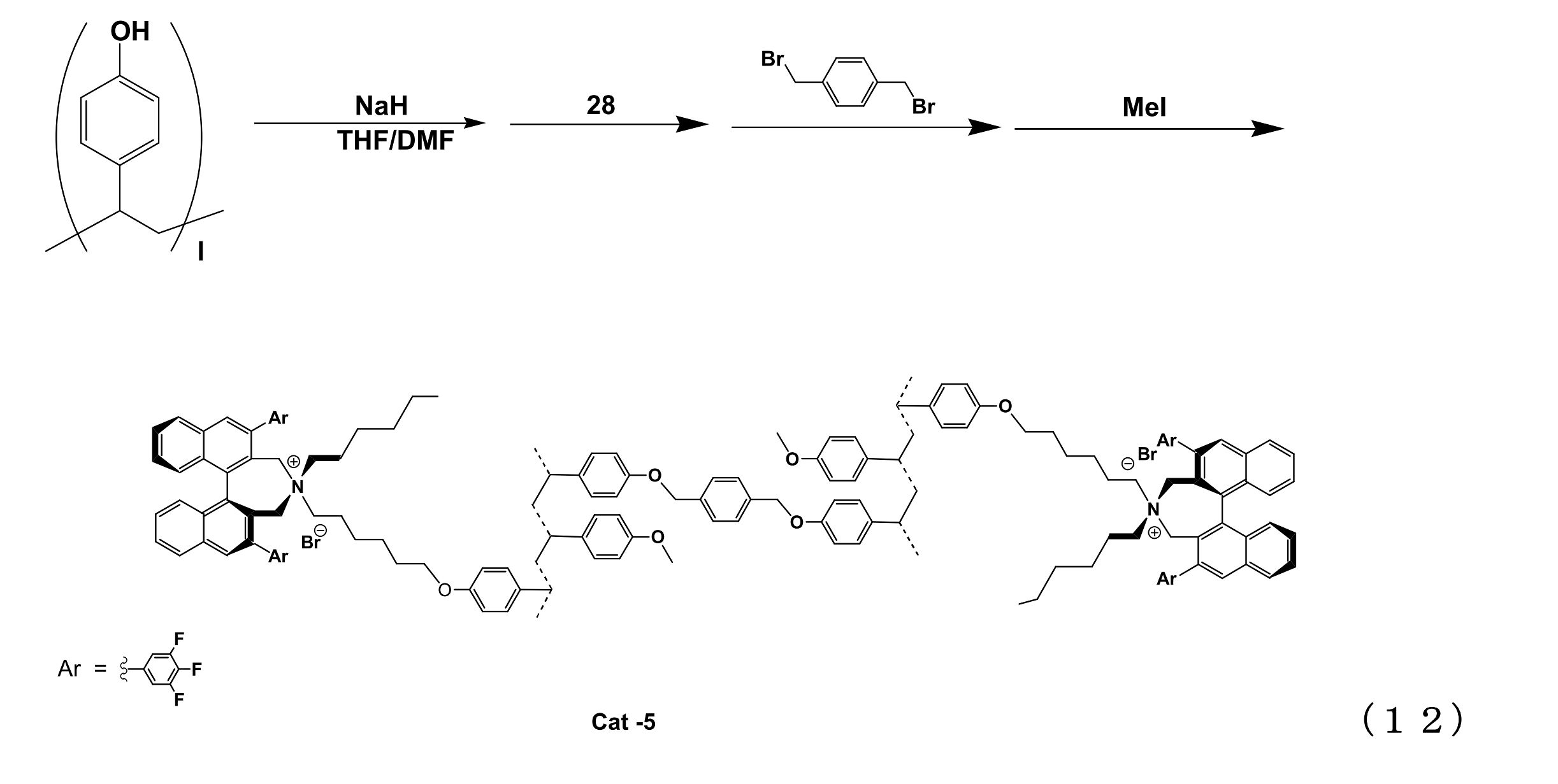
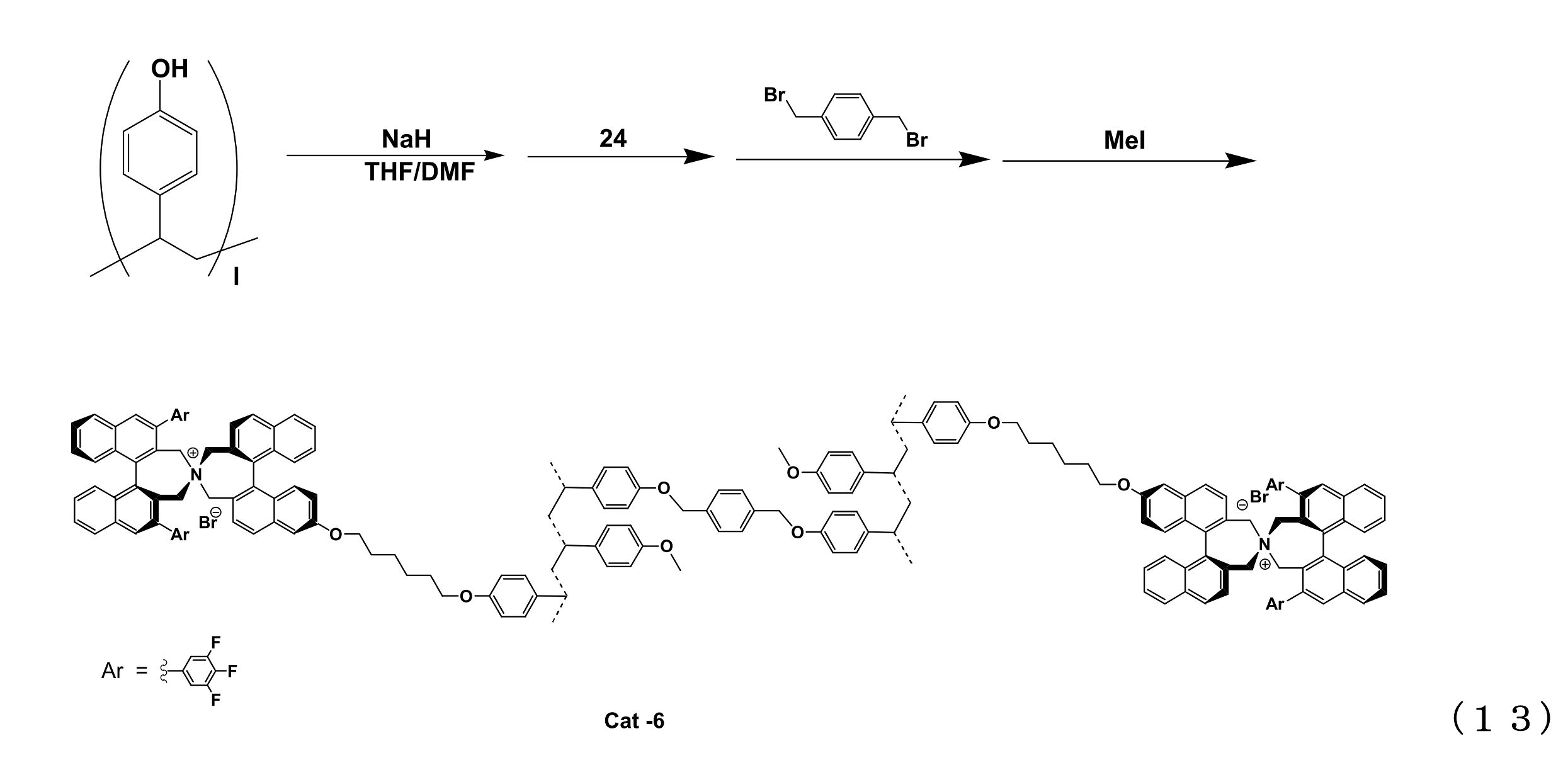




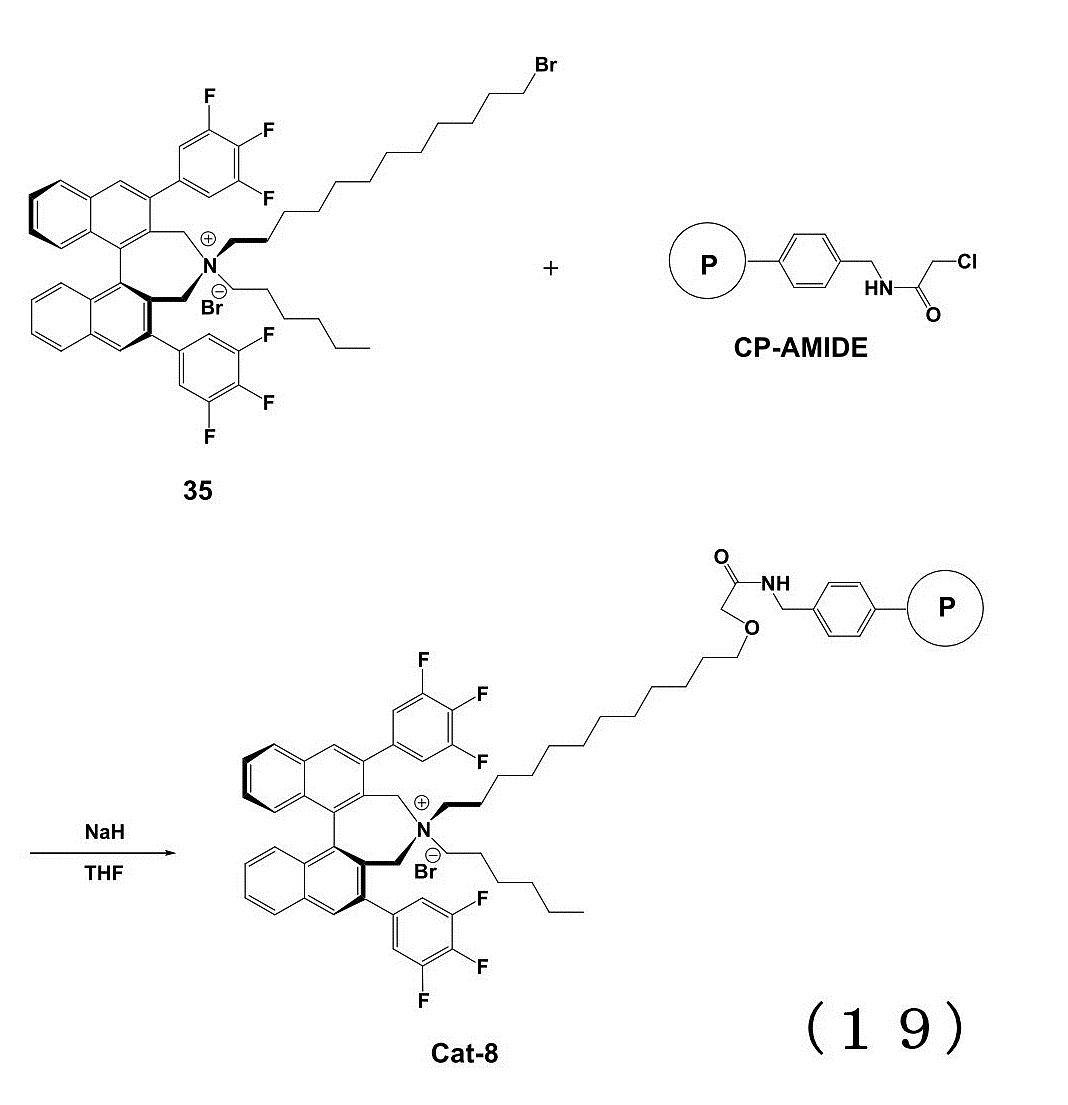
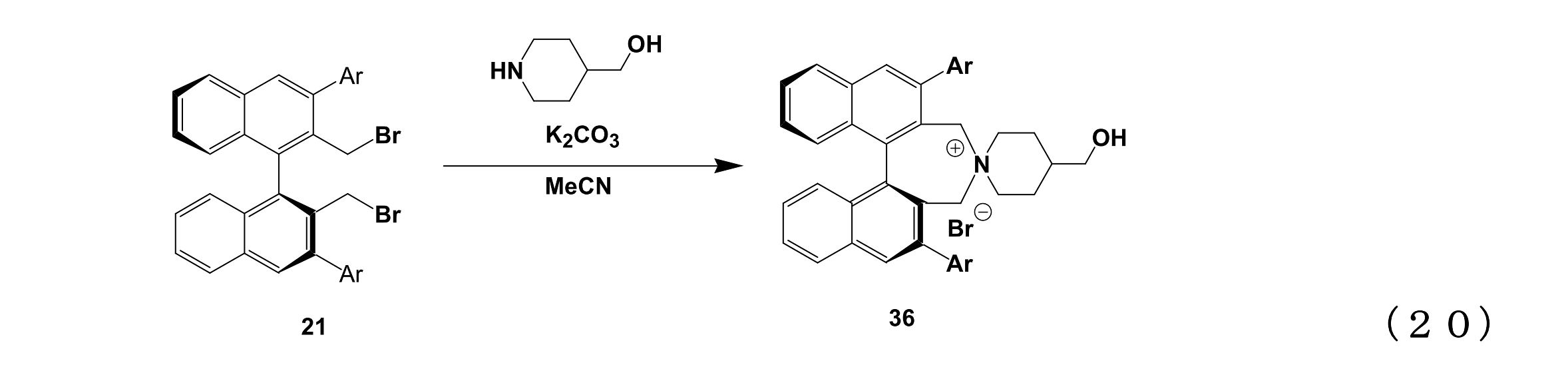


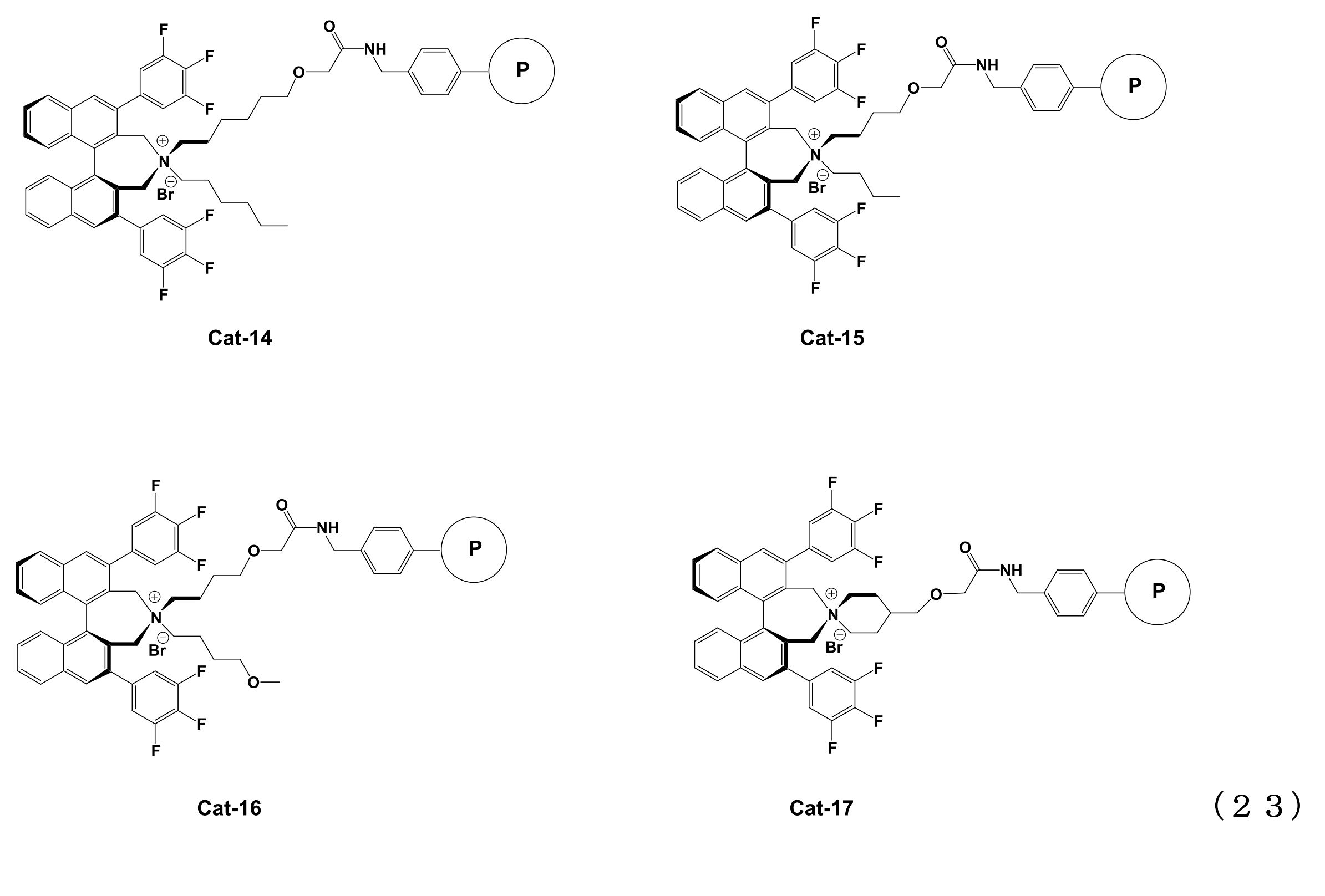


表2からも分かるように50%KOH水溶液―トルエン溶媒系のほうが全体として光学収率が高い。これは、塩化メチレンの極性が高く、若干水に溶解するために、Cat-1~18が形成する不斉反応場以外での反応が生起するためであると考えられる。

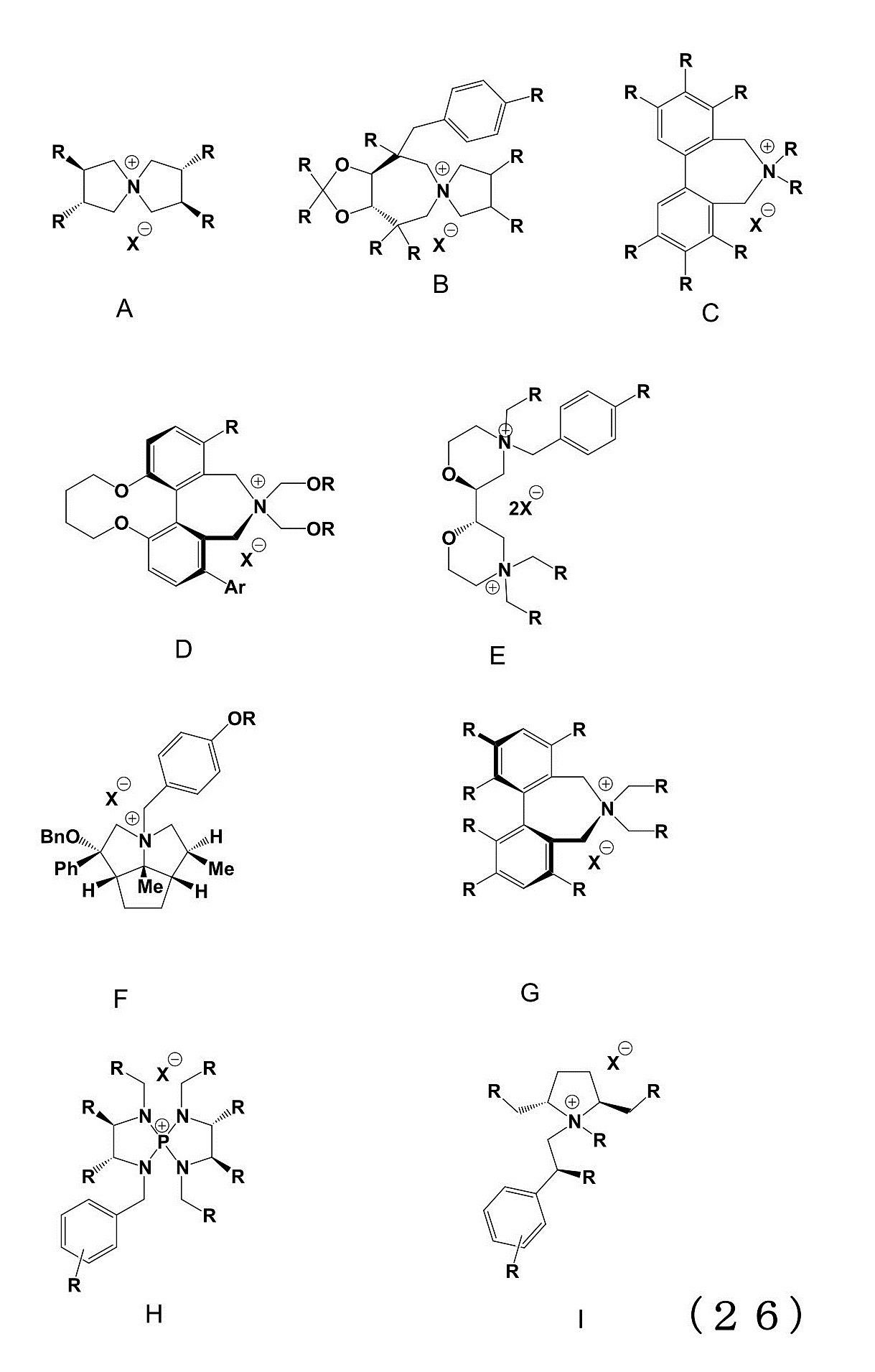
Claims (24)
- 複数の第1の部分と、
第2の部分と、
前記複数の第1の部分の各々と前記第2の部分とを連結し、且つ少なくとも1つの共有結合を含む連結基と、を含み、
前記複数の第1の部分の各々は、キラリティーを有し、
前記連結基以外の部分に配位性窒素原子を有しないこと、
を特徴とする化合物。 - 請求項1に記載の化合物において、
前記キラリティーが、不斉原子、軸不斉、面不斉及びらせんからなる群から選ばれるいずれかで発現しており、
前記キラリティーが、不斉原子により発現している場合は、前記複数の第1の部分の各々は、前記不斉原子に直接結合した第1の原子を含み、前記第1の原子に前記連結基が直接結合し、
前記キラリティーが、軸不斉により発現している場合は、前記複数の第1の部分の各々は、軸不斉となる軸不斉置換基を有し、前記連結基は、前記軸不斉置換基を構成する構成原子のうちの複数を共通に有する環状構造に含まれる第2の原子又は前記軸不斉置換基に含まれる第3の原子に直接結合しており、前記連結基に含まれ、前記第2の原子又は第3の原子に直接結合している第4の原子と前記第2の原子又は前記3の原子との間の結合は回転可能であり、
前記キラリティーが、面不斉により発現している場合は、面不斉となる面不斉置換基を有し、前記連結基は前記面不斉置換基に含まれる第5の原子に直接結合し、前記連結基に含まれ、前記面不斉置換基に直接結合している第6の原子と前記第5の原子との間の結合は回転可能であり、
前記キラリティーが、らせんにより発現している場合は、らせんとなるらせん置換基を有し、前記連結基は前記らせん置換基に含まれる第7の原子に直接結合し、前記連結基に含まれ、前記らせん置換基に直接結合している第8の原子と前記第7の原子との間の結合は回転可能であること、
を特徴とする化合物。 - 請求項2に記載の化合物において、
前記軸不斉置換基、前記面不斉置換基及び前記らせん置換基は、いずれも自由回転可能な結合を含まないこと、
を特徴とする化合物。 - 請求項1乃至3のいずれかに記載の化合物において、
前記化合物はカチオン部とアニオン部とを含む有機塩であり、
さらに第3の部分を含み、
前記第3の部分は前記アニオン部であり、
前記カチオン部は、前記複数の第1の部分、前記第2の部分及び連結基を含むこと、
を特徴とする化合物。 - 請求項2又は3に記載の化合物において、
前記複数の第1の部分の各々は、前記軸不斉置換基を有していること、
を特徴とする化合物。 - 請求項1乃至5のいずれかに記載の化合物において、
前記複数の第1の部分の各々は、前記キラリティーを発現するビナフチル基と窒素原子とを含み、
前記ビナフチル基の一部と前記窒素原子とは、環状構造の少なくとも一部を構成していること、
を特徴とする化合物。 - 請求項6に記載の化合物において、
前記窒素原子は、前記ビナフチル基の2位の炭素原子及び2'位の炭素原子とそれぞれ第1のメチレン基及び第2のメチレン基を介して結合しており、
前記窒素原子は、前記第1のメチレン基及び前記第2のメチレン基以外にさらに第1の有機基及び第2の有機基と結合しており、
前記連結基は前記第1の有機基を含んでいること、
を特徴とする化合物。 - 請求項1乃至7のいずれかに記載の化合物において、
前記複数の第1の部分の各々は、アンモニウム塩のカチオン中心を含むこと、
を特徴とする化合物。 - 請求項1乃至8のいずれかに記載の化合物において、
前記第2の部分は、20個以上の構成原子が結合することにより構成されていること、
を特徴とする化合物。 - 請求項1乃至9のいずれかに記載の化合物において、
前記第2の部分は50個以上の構成原子が結合することにより構成されていること、
を特徴とする化合物。 - 請求項9又は10に記載の化合物において、
前記構成原子は炭素原子であること、
を特徴とする化合物。 - 請求項1乃至11のいずれかに記載の化合物において、
前記化合物の構造式中に金属原子を含まないこと、
を特徴とする化合物。 - 請求項1乃至12のいずれかに記載の化合物において、
前記連結基は、少なくとも1つの酸素原子を含んでいること、
を特徴とする化合物。 - 請求項1乃至13のいずれかに記載の化合物において、
前記連結基は、前記少なくとも1つの酸素原子と複数の炭素原子が連結した炭化水素基と含むこと、
を特徴とする化合物。 - 請求項14に記載の化合物において、
前記炭化水素基は6個以上の炭素原子が連結したものであること、
を特徴とする化合物。 - 請求項1乃至14のいずれかに記載の化合物において、
前記第2の部分は、100個以上の構成原子が結合することにより構成されていること、
を特徴とする化合物。 - 請求項1乃至16のいずれかに記載の化合物において、
前記連結基はアリール基を含み、
前記アリール基が前記第2の部分に結合していること、
を特徴とする化合物。 - 請求項1乃至17のいずれかに記載の化合物において、
前記第2の部分は、分岐又は架橋構造を有していること、
を特徴とする化合物。 - 請求項1乃至18のいずれかに記載の化合物において、
前記化合物は、不斉を誘起する触媒であること、
を特徴とする化合物。 - 請求項1乃至19のいずれかに記載の化合物を触媒として用いて、
有機反応を生起させる第1の工程と、を含むこと、
特徴とする有機材料の製造方法。 - 請求項20に記載の有機材料の製造方法において、
さらに、前記第1の工程の後、前記化合物を回収する第2の工程を含むこと、
を特徴とする有機材料の製造方法。 - 請求項21に記載の有機材料の製造方法において、
さらに、前記第2の工程で回収した前記化合物を、有機反応を生起させる触媒として再利用する第3の工程を含むこと、
を特徴とする有機材料の製造方法。 - 請求項1乃至19のいずれかに記載の化合物を充填した容器又はカラムを用意する第1の第1の工程と、
前記容器又はカラム内で前記化合物を触媒とする有機反応を生起させる第2の工程と、を含むこと、
を特徴とする有機材料の製造方法。 - 請求項23に記載の有機材料の製造方法において、
前記第2の工程において、前記容器又はカラムの第1の端部から前記有機反応のための反応試剤又は反応試剤の溶液を導入し、前記第1の端部の反対側の第2の端部から排出すること、
を特徴とする有機材料の製造方法。
Priority Applications (4)
| Application Number | Priority Date | Filing Date | Title |
|---|---|---|---|
| JP2017558340A JP6867303B2 (ja) | 2015-12-25 | 2016-12-26 | 化合物及び有機材料の製造方法 |
| CN201680074944.0A CN108473628B (zh) | 2015-12-25 | 2016-12-26 | 化合物和有机材料的制造方法 |
| US15/780,396 US10730037B2 (en) | 2015-12-25 | 2016-12-26 | Compound and method for manufacturing organic material |
| EP16879060.8A EP3395843A4 (en) | 2015-12-25 | 2016-12-26 | COMPOUND AND METHOD FOR PRODUCING AN ORGANIC MATERIAL |
Applications Claiming Priority (2)
| Application Number | Priority Date | Filing Date | Title |
|---|---|---|---|
| JP2015-255310 | 2015-12-25 | ||
| JP2015255310 | 2015-12-25 |
Publications (1)
| Publication Number | Publication Date |
|---|---|
| WO2017111176A1 true WO2017111176A1 (ja) | 2017-06-29 |
Family
ID=59090593
Family Applications (1)
| Application Number | Title | Priority Date | Filing Date |
|---|---|---|---|
| PCT/JP2016/088793 Ceased WO2017111176A1 (ja) | 2015-12-25 | 2016-12-26 | 化合物及び有機材料の製造方法 |
Country Status (5)
| Country | Link |
|---|---|
| US (1) | US10730037B2 (ja) |
| EP (1) | EP3395843A4 (ja) |
| JP (1) | JP6867303B2 (ja) |
| CN (1) | CN108473628B (ja) |
| WO (1) | WO2017111176A1 (ja) |
Cited By (1)
| Publication number | Priority date | Publication date | Assignee | Title |
|---|---|---|---|---|
| CN118005531A (zh) * | 2023-05-11 | 2024-05-10 | 内蒙古大学 | 一种手性非天然氨基酸衍生物的合成方法 |
Families Citing this family (1)
| Publication number | Priority date | Publication date | Assignee | Title |
|---|---|---|---|---|
| CN117924173B (zh) * | 2024-03-21 | 2024-07-09 | 广东工业大学 | 苯胺季铵盐类手性相转移催化剂及其在氨基酸衍生物不对称烷基化催化中的应用 |
Citations (2)
| Publication number | Priority date | Publication date | Assignee | Title |
|---|---|---|---|---|
| JP2009235393A (ja) * | 2008-03-04 | 2009-10-15 | Nippon Soda Co Ltd | 光学活性4級アンモニウム担持ポリマーとその製造方法ならびに光学活性アミノ酸類の製造方法 |
| JP2012240959A (ja) | 2011-05-19 | 2012-12-10 | Nagoya Institute Of Technology | 光学活性β−アミノチオールまたは光学活性β−アミノスルホン酸誘導体の合成法 |
Family Cites Families (12)
| Publication number | Priority date | Publication date | Assignee | Title |
|---|---|---|---|---|
| US4767873A (en) * | 1985-09-13 | 1988-08-30 | The Trustees Of Columbia University In The City Of New York | Helical metallocene oligomers and a method for their preparation |
| DE19621510A1 (de) | 1996-05-29 | 1997-12-04 | Basf Ag | Dendritische stickstoffhaltige organische Verbindungen mit planar-chiralen oder axial-chiralen Endgruppen, ihre Herstellung und Verwendung |
| JP3892931B2 (ja) | 1997-03-11 | 2007-03-14 | 高砂香料工業株式会社 | 2個のビニル基を有する光学活性ホスフィン誘導体、それをモノマーとするポリマー、及びそれらの遷移金属錯体 |
| US6229052B1 (en) * | 1998-05-29 | 2001-05-08 | E. I. Du Pont De Nemours And Company | Hydroformylation of olefins using supported bis(phosphorus) ligands |
| WO2005007622A2 (ja) * | 2003-07-23 | 2005-01-27 | Tosoh Corporation | 光学活性四級アンモニウム塩、その製造法、並びにそれを用いた光学活性α−アミノ酸誘導体の製造方法 |
| JP4620592B2 (ja) * | 2003-10-24 | 2011-01-26 | 独立行政法人科学技術振興機構 | アルカリ処理固相担体を用いた不斉アルキル化合物の製造方法およびこの方法で用いられるアルカリ処理固相担体 |
| CN101146812B (zh) * | 2005-03-03 | 2013-10-16 | 日本曹达株式会社 | 光学活性铵盐化合物、其制造中间体和制造方法 |
| WO2008038578A1 (en) * | 2006-09-28 | 2008-04-03 | Nagase & Co., Ltd. | OPTICALLY ACTIVE QUATERNARY AMMONIUM SALT HAVING AXIAL ASYMMETRY, AND METHOD FOR PRODUCING α-AMINO ACID AND DERIVATIVE THEREOF BY USING THE SAME |
| JP5929767B2 (ja) * | 2011-02-18 | 2016-06-08 | 国立大学法人名古屋大学 | 窒素原子又は酸素原子を含む環構造を有する芳香族化合物の製造方法 |
| EP2690068B1 (en) * | 2011-03-23 | 2017-07-12 | Taimei Chemicals Co., Ltd. | Alumina composite, method for manufacturing alumina composite, and polymer composition containing alumina composite |
| PL215470B1 (pl) * | 2012-04-23 | 2013-12-31 | Politechnika Wroclawska | Symetryczny chiralny chlorek amoniowy oraz sposób jego wytwarzania |
| JP6233032B2 (ja) * | 2013-06-05 | 2017-11-22 | デクセリアルズ株式会社 | 光学活性化合物の製造方法 |
-
2016
- 2016-12-26 CN CN201680074944.0A patent/CN108473628B/zh not_active Expired - Fee Related
- 2016-12-26 US US15/780,396 patent/US10730037B2/en not_active Expired - Fee Related
- 2016-12-26 WO PCT/JP2016/088793 patent/WO2017111176A1/ja not_active Ceased
- 2016-12-26 JP JP2017558340A patent/JP6867303B2/ja active Active
- 2016-12-26 EP EP16879060.8A patent/EP3395843A4/en not_active Withdrawn
Patent Citations (2)
| Publication number | Priority date | Publication date | Assignee | Title |
|---|---|---|---|---|
| JP2009235393A (ja) * | 2008-03-04 | 2009-10-15 | Nippon Soda Co Ltd | 光学活性4級アンモニウム担持ポリマーとその製造方法ならびに光学活性アミノ酸類の製造方法 |
| JP2012240959A (ja) | 2011-05-19 | 2012-12-10 | Nagoya Institute Of Technology | 光学活性β−アミノチオールまたは光学活性β−アミノスルホン酸誘導体の合成法 |
Non-Patent Citations (8)
| Title |
|---|
| J. AM. CHEM. SOC., vol. 125, 2003, pages 11206 |
| J. KELLY ET AL.: "Some novel polymer-supported optically active phase transfer catalysts: 2. Use in displacement, reduction, epoxidation and addition reactions", POLYMER, vol. 25, 1984, pages 1499 - 1504, XP024114839 * |
| J. M. J. FRECHET ET AL.: "Some novel polymer- supported optically active phase transfer catalysts: 1. Synthesis", POLYMER, vol. 25, 1984, pages 1491 - 1498, XP024114838 * |
| MAURIZIO BENAGLIA ET AL.: "Polymer-Supported Organic Catalysts", CHEMICAL REVIEWS, vol. 103, no. 9, 2003, pages 3401 - 3429, XP055496362 * |
| NAOKI HARAGUCHI: "Synthesis of Polymer- Supported Chiral Catalyst and Its Application to Asymmetric Reactions", JAPANESE JOURNAL OF POLYMER SCIENCE AND TECHNOLOGY, vol. 67, no. 8, 2010, pages 447 - 464, XP055496869 * |
| NORIO KOBAYASHI: "Chiral na Gosei Kobunshi o Shokubai to suru Fusei Hanno", JOURNAL OF SYNTHETIC ORGANIC CHEMISTRY, vol. 39, no. 3, 1981, Japan, pages 181 - 191 * |
| See also references of EP3395843A4 |
| SYN COMMUN., vol. 40, 2010, pages 266 |
Cited By (1)
| Publication number | Priority date | Publication date | Assignee | Title |
|---|---|---|---|---|
| CN118005531A (zh) * | 2023-05-11 | 2024-05-10 | 内蒙古大学 | 一种手性非天然氨基酸衍生物的合成方法 |
Also Published As
| Publication number | Publication date |
|---|---|
| CN108473628B (zh) | 2020-12-22 |
| EP3395843A4 (en) | 2019-03-06 |
| JP6867303B2 (ja) | 2021-04-28 |
| US10730037B2 (en) | 2020-08-04 |
| EP3395843A1 (en) | 2018-10-31 |
| US20180353946A1 (en) | 2018-12-13 |
| CN108473628A (zh) | 2018-08-31 |
| JPWO2017111176A1 (ja) | 2018-10-11 |
Similar Documents
| Publication | Publication Date | Title |
|---|---|---|
| Li et al. | Post-synthetic modification of nonporous adaptive crystals of pillar [4] arene [1] quinone by capturing vaporized amines | |
| Huang et al. | Microporous 3D covalent organic frameworks for liquid chromatographic separation of xylene isomers and ethylbenzene | |
| Cao et al. | Ni-catalyzed cross-coupling of dimethyl aryl amines with arylboronic esters under reductive conditions | |
| Yuan et al. | Anion-driven conformational polymorphism in homochiral helical coordination polymers | |
| Wang | Organocatalyzed enantioselective desymmetrization of aziridines and epoxides | |
| Jiang et al. | Unlocking chiral sulfinimidoyl electrophiles: Asymmetric synthesis of sulfinamides catalyzed by anionic stereogenic-at-cobalt (III) complexes | |
| Skoch et al. | Phosphinoferrocene Ureas: Synthesis, structural characterization, and catalytic use in palladium-catalyzed cyanation of aryl bromides | |
| Mariconda et al. | Synthesis, characterization and catalytic behaviour of a palladium complex bearing a hydroxy-functionalized N-heterocyclic carbene ligand | |
| CN103408601B (zh) | 具有催化suzuki反应活性的异核双金属配合物及其制备方法 | |
| Ho et al. | Iso-Tellurazolium-N-Phenoxides: A Family of Te··· O Chalcogen-Bonding Supramolecular Building Blocks | |
| CN113527188A (zh) | 一种制备间位官能团化的吡啶化合物的方法 | |
| TW201609262A (zh) | 離子液體、加成物及其方法 | |
| Zhang et al. | Hydrophobic and metal-coordinated confinement effects trigger recognition and selectivity | |
| JP6867303B2 (ja) | 化合物及び有機材料の製造方法 | |
| Jia et al. | Two cadmium (II) complexes with oxazoline-based ligands as effective catalysts for C–N cross-coupling reactions | |
| Garcia-Valle et al. | Intramolecular C–F activation in Schiff-base alkali metal complexes | |
| Li et al. | Chiral polymer-mediated Pd@ MOF-808 for efficient sequential asymmetric reaction | |
| JP2010526063A (ja) | 炭素‐硫黄および炭素‐酸素カップリング反応用のポリ‐n‐複素環式カルベン遷移金属錯体およびn‐複素環式カルベン遷移金属錯体 | |
| Mysliwiec et al. | Stereoselective Wittig Olefination as a macrocyclization tool. synthesis of large carbazolophanes | |
| Nath et al. | Self-Assemblies of Solvates, Ionic Cocrystals, and a Salt Based on 4-{[(4-Nitrophenyl) carbamoyl] amino}-N-(pyrimidin-2-yl) benzene-1-sulfonamide: Study in the Solid and Solution States | |
| Mizuta et al. | Activity of N, N′-dialkyl-2-trifluoromethylthioimidazolium salts as phase-transfer catalyst for the alkylation of active methylene compounds | |
| CN100389107C (zh) | 一种制备己内酰胺的方法 | |
| Wang et al. | Synthesis of P‐Arylphosphinecarboxamide Derivatives by Addition of N‐Arylphosphinecarboxamides with Aryne Precursors | |
| Lux et al. | Iron-mediated dialkylation of alkenylarenes with benzyl bromides | |
| CN105713028A (zh) | 基于Cd-MOF的一种新型固态相转移催化剂、制备方法与应用 |
Legal Events
| Date | Code | Title | Description |
|---|---|---|---|
| 121 | Ep: the epo has been informed by wipo that ep was designated in this application |
Ref document number: 16879060 Country of ref document: EP Kind code of ref document: A1 |
|
| ENP | Entry into the national phase |
Ref document number: 2017558340 Country of ref document: JP Kind code of ref document: A |
|
| NENP | Non-entry into the national phase |
Ref country code: DE |
|
| WWE | Wipo information: entry into national phase |
Ref document number: 2016879060 Country of ref document: EP |
|
| ENP | Entry into the national phase |
Ref document number: 2016879060 Country of ref document: EP Effective date: 20180725 |