WO2017126523A1 - 麺様食品およびその製造法 - Google Patents
麺様食品およびその製造法 Download PDFInfo
- Publication number
- WO2017126523A1 WO2017126523A1 PCT/JP2017/001470 JP2017001470W WO2017126523A1 WO 2017126523 A1 WO2017126523 A1 WO 2017126523A1 JP 2017001470 W JP2017001470 W JP 2017001470W WO 2017126523 A1 WO2017126523 A1 WO 2017126523A1
- Authority
- WO
- WIPO (PCT)
- Prior art keywords
- noodle
- food
- producing
- dietary fiber
- food according
- Prior art date
- Legal status (The legal status is an assumption and is not a legal conclusion. Google has not performed a legal analysis and makes no representation as to the accuracy of the status listed.)
- Ceased
Links
Images
Classifications
-
- A—HUMAN NECESSITIES
- A23—FOODS OR FOODSTUFFS; TREATMENT THEREOF, NOT COVERED BY OTHER CLASSES
- A23L—FOODS, FOODSTUFFS OR NON-ALCOHOLIC BEVERAGES, NOT OTHERWISE PROVIDED FOR; PREPARATION OR TREATMENT THEREOF
- A23L7/00—Cereal-derived products; Malt products; Preparation or treatment thereof
- A23L7/10—Cereal-derived products
- A23L7/109—Types of pasta, e.g. macaroni or noodles
-
- A—HUMAN NECESSITIES
- A23—FOODS OR FOODSTUFFS; TREATMENT THEREOF, NOT COVERED BY OTHER CLASSES
- A23L—FOODS, FOODSTUFFS OR NON-ALCOHOLIC BEVERAGES, NOT OTHERWISE PROVIDED FOR; PREPARATION OR TREATMENT THEREOF
- A23L11/00—Pulses, i.e. fruits of leguminous plants, for production of food; Products from legumes; Preparation or treatment thereof
- A23L11/05—Mashed or comminuted pulses or legumes; Products made therefrom
- A23L11/07—Soya beans, e.g. oil-extracted soya bean flakes
-
- A—HUMAN NECESSITIES
- A23—FOODS OR FOODSTUFFS; TREATMENT THEREOF, NOT COVERED BY OTHER CLASSES
- A23L—FOODS, FOODSTUFFS OR NON-ALCOHOLIC BEVERAGES, NOT OTHERWISE PROVIDED FOR; PREPARATION OR TREATMENT THEREOF
- A23L19/00—Products from fruits or vegetables; Preparation or treatment thereof
- A23L19/10—Products from fruits or vegetables; Preparation or treatment thereof of tuberous or like starch containing root crops
- A23L19/115—Konjak; Konntaku
-
- A—HUMAN NECESSITIES
- A23—FOODS OR FOODSTUFFS; TREATMENT THEREOF, NOT COVERED BY OTHER CLASSES
- A23L—FOODS, FOODSTUFFS OR NON-ALCOHOLIC BEVERAGES, NOT OTHERWISE PROVIDED FOR; PREPARATION OR TREATMENT THEREOF
- A23L29/00—Foods or foodstuffs containing additives; Preparation or treatment thereof
- A23L29/015—Inorganic compounds
-
- A—HUMAN NECESSITIES
- A23—FOODS OR FOODSTUFFS; TREATMENT THEREOF, NOT COVERED BY OTHER CLASSES
- A23L—FOODS, FOODSTUFFS OR NON-ALCOHOLIC BEVERAGES, NOT OTHERWISE PROVIDED FOR; PREPARATION OR TREATMENT THEREOF
- A23L29/00—Foods or foodstuffs containing additives; Preparation or treatment thereof
- A23L29/20—Foods or foodstuffs containing additives; Preparation or treatment thereof containing gelling or thickening agents
- A23L29/206—Foods or foodstuffs containing additives; Preparation or treatment thereof containing gelling or thickening agents of vegetable origin
- A23L29/244—Foods or foodstuffs containing additives; Preparation or treatment thereof containing gelling or thickening agents of vegetable origin from corms, tubers or roots, e.g. glucomannan
-
- A—HUMAN NECESSITIES
- A23—FOODS OR FOODSTUFFS; TREATMENT THEREOF, NOT COVERED BY OTHER CLASSES
- A23L—FOODS, FOODSTUFFS OR NON-ALCOHOLIC BEVERAGES, NOT OTHERWISE PROVIDED FOR; PREPARATION OR TREATMENT THEREOF
- A23L33/00—Modifying nutritive qualities of foods; Dietetic products; Preparation or treatment thereof
- A23L33/10—Modifying nutritive qualities of foods; Dietetic products; Preparation or treatment thereof using additives
- A23L33/115—Fatty acids or derivatives thereof; Fats or oils
-
- A—HUMAN NECESSITIES
- A23—FOODS OR FOODSTUFFS; TREATMENT THEREOF, NOT COVERED BY OTHER CLASSES
- A23L—FOODS, FOODSTUFFS OR NON-ALCOHOLIC BEVERAGES, NOT OTHERWISE PROVIDED FOR; PREPARATION OR TREATMENT THEREOF
- A23L33/00—Modifying nutritive qualities of foods; Dietetic products; Preparation or treatment thereof
- A23L33/10—Modifying nutritive qualities of foods; Dietetic products; Preparation or treatment thereof using additives
- A23L33/17—Amino acids, peptides or proteins
- A23L33/185—Vegetable proteins
Definitions
- the present invention relates to a noodle-like food. More specifically, the present invention relates to a low-calorie noodle-like food having a texture close to that of noodles such as pasta made from general wheat flour.
- a seasoning for a diet obtained by adding a calcium hydroxide aqueous solution to a konjac paste kneaded with konjac flour and a seasoning material, further kneading, forming into a thread shape, and heating with warm water of 95 ° C. or higher.
- Konjac noodles have been proposed. Thereby, although it is a low calorie, it is supposed that the konjac noodles with high nutritional value, such as vitamins and minerals other than a calorie, and good flavor are obtained.
- Patent Document 2 proposes a konjac noodle produced by adding an alkaline coagulant to a konjac paste containing konjac flour, rice flour, and cellulose powder to form a noodle, and then producing it by a special production process. Thereby, it is said that konjac noodles having a noodle-like firmness and texture can be obtained.
- An object of the present invention is to provide a low-calorie noodle-like food that improves the above problems and has a quality close to that of noodles using wheat flour as a raw material and can be used as a diet food.
- the present invention includes the following configurations.
- a noodle-like food characterized in that at least a noodle string is formed by a heat irreversible polysaccharide gel, and insoluble dietary fiber and soy milk cream are contained in the noodle string.
- noodle-like food according to any one of (1) to (3), wherein the lipid / protein ratio of the soymilk cream is 1 or more in terms of mass
- noodle-like food is a pasta-like food
- (6) a) a step of mixing a polysaccharide that forms a heat irreversible gel, soy milk cream, insoluble dietary fiber and water; b) mixing the mixture and alkali to form a coagulum; c) forming the coagulum to form noodle strings; and d) a method for producing a noodle-like food, comprising the step of heating the noodle strings with a bowl to form a thermally irreversible polysaccharide gel; (7) The method for producing a noodle-like food according to (6), wherein step a) is carried out in a step of mixing insoluble dietary fiber after mixing the polysaccharide, soy milk cream and water
- a firm texture can be imparted to the current konjac noodles, and in particular, the “chewful feeling brought about by gluten formation” found in flour pasta can be imparted.
- the noodle-like food is eaten with pasta sauce, moisture transfer from the konjac can be suppressed and the flavor of the pasta sauce can be prevented from becoming watery.
- the odor of konjac can be masked, and a satisfactory noodle-like food with a rich flavor derived from cereals such as flour pasta can be obtained.
- eggs used as a binder for noodles can be made non-use.
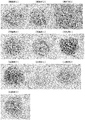
- FIG. 5 is a drawing-substituting photograph in which noodle strings of the pasta-like foods obtained in Examples 1 to 7 and Comparative Examples 1 to 4 were photographed.
- the noodle-like food of the present invention is characterized in that at least noodle strings are formed by heat irreversible polysaccharide gel, and insoluble dietary fiber and soy milk cream are contained in the noodle strings.
- noodle strings are formed by heat irreversible polysaccharide gel, and insoluble dietary fiber and soy milk cream are contained in the noodle strings.
- noodle food means a food having the same appearance as noodles mainly composed of flour such as wheat flour and rice flour.
- the noodles include pasta, Chinese noodles, udon, soba, hiyagigi, raw noodles, macaroni, ragman, rice noodles, quitiao, pho and the like.
- the noodle-like food of the present invention is particularly preferably pasta-like in terms of texture.
- the noodle-like food may be in any product form such as raw noodle type, boiled noodle type, frozen noodle type, fried noodle type, dry noodle type, freeze-dried noodle type and the like.
- the structure of the noodle strings is formed by a heat irreversible polysaccharide gel.
- the raw material polysaccharide for forming a heat irreversible polysaccharide gel and the material containing the polysaccharide include konjac flour and its main components, glucomannan, curdlan, alginic acid, alginate, low methoxyl pectin, locust Examples include bean gum, sodium hyaluronate, gellan gum and the like. Of these, konjac flour and glucomannan obtained by purifying the same are preferred in that the noodle-like food can be given more elasticity and firmness when the noodle-like food is made into a pasta-like flour.
- Soy milk cream The noodle-like food of the present invention is characterized in that soy milk cream is contained in the noodle strings. Soymilk cream has a higher lipid content than soymilk, and can also be referred to as a “soy emulsified composition”. Generally, fresh cream is produced by separating it from milk with a centrifuge, but as one aspect, soy milk cream is also made into a low specific gravity oil produced by further centrifuging soy milk obtained from, for example, whole soybeans. Although the thing obtained by collect
- soy milk cream can be prepared in advance in the mixing stage of each raw material, but such a process is not essential, and so long as the effects of the present invention are exerted, in the mixing stage of each raw material, for example, soy milk and fats and oils are added. It may be an embodiment in which the composition becomes the same as that containing soymilk cream after mixing by mixing with other raw materials such as heat irreversible polysaccharides and insoluble dietary fiber.
- the lower limit of the lipid content of the soymilk cream is preferably 35% by mass or more, more preferably 40% by mass or more in the dry matter.
- the upper limit is preferably 75% by mass or less, and more preferably 70% by mass or less.
- the protein content of the soymilk cream is preferably 15% by mass or more, more preferably 20% by mass or more in the dry matter.
- the upper limit is preferably 40% by mass or less, and more preferably 35% by mass or less.
- the lipid / protein content ratio of the soymilk cream is preferably 100% by mass or more, and more preferably 120% by mass or more.
- soymilk cream it is preferable that “lipophilic protein” is concentrated in the soy protein from the viewpoint of being richer and having a good flavor derived from soybeans.
- a soy protein raw material for example, a soy emulsified composition described in JP 2012-16348 A can be used.
- An index as to whether or not the lipophilic protein is concentrated can be estimated by obtaining an LCI value (Lipophilic Protein Properties Index) described in the publication.
- LCI value Lipophilic Protein Properties Index
- soymilk cream having an LCI value of 55% or more for example, “Nikuri Yume” (registered trademark) manufactured by Fuji Oil Co., Ltd. can be used.
- the noodle-like food of the present invention is characterized in that insoluble dietary fibers are contained in the noodle strings.
- the noodle strings can be finished with a dense texture.
- insoluble dietary fiber include beans such as soybeans such as okara, chitosan, cellulose, hemicellulose, sodium carboxymethylcellulose, glucan, lignin, wheat bran, wheat germ, oatmeal, cornmeal and the like.
- okara is particularly preferable in terms of good compatibility with soy milk cream and good flavor.
- the okara produced as a by-product when producing general soymilk or separated soybean protein can be used.
- the okara separated at the time of manufacture of the said soymilk cream, and the soymilk cream with an okara before separating okara from the said soymilk cream can also be used.
- the noodle strings have a soft texture, and the unique odor that is felt when using the above-mentioned general okara can be reduced, and a noodle-like food with a preferred flavor close to flour pasta can be obtained. .
- One aspect of producing the noodle-like food of the present invention is as follows: a) a step of mixing a polysaccharide that forms a heat irreversible gel, soy milk cream, insoluble dietary fiber, and water; b) a mixture of the mixture and alkali. A step of forming a coagulated product, c) a step of extruding the coagulated product to form a noodle string, and d) a step of heating the noodle string with a straw to form a thermally irreversible polysaccharide gel, It is a manufacturing method characterized by including. Hereinafter, this production mode will be specifically described.
- a polysaccharide that forms a heat irreversible gel, soy milk cream, insoluble dietary fiber and water are mixed.
- the mixing order of these raw materials is not particularly limited, as a preferred embodiment, the polysaccharide, soy milk cream and water are mixed and kneaded until a jelly is formed, and then insoluble dietary fiber is mixed into the kneaded product.
- the non-foaming type provides a noodle-like food with a stronger chewing feeling.
- the mixing ratio of the insoluble dietary fiber and the polysaccharide is preferably 1:99 to 20:80, more preferably 2:98 to 10:90 in terms of mass.
- the mixture obtained in the process a) and the alkali are mixed to form a coagulum. If the mixture is allowed to stand for about 3 to 5 minutes after mixing, the physical properties of the coagulated material are gathered, the elasticity (konnyaku) of the polysaccharide gel becomes strong, and the stiffness of the noodle strings can be obtained.
- the alkali is preferably mixed in a liquid state, and examples of the alkali include hydroxides of divalent metal ions such as calcium and magnesium. In general, calcium hydroxide is preferable.
- Noodle strings forming step The coagulum obtained in the step b) is formed to form noodle strings.
- the molding method is not particularly limited, and an appropriate molding method can be selected according to the type of noodle-like food to be obtained. For example, when obtaining a pasta-like food, an extrusion method may be used, and when obtaining a Chinese noodle-like food or a udon-like food, a cutting method may be used.
- step d) Heating and gelling step
- the noodle strings obtained in the step c) are heated with a straw to form a heat irreversible polysaccharide gel in the noodle strings.
- the time for boiling can be adjusted as appropriate, for example, 1 to 10 minutes.
- the noodle strings can be colored yellow to be pasta-like or Chinese noodle-like.
- a yellow pigment can be added as another raw material to impart yellowness to the noodle strings, and can be colored and processed into a pasta-like or Chinese noodle-like color tone. Coloring agents such as marigold and gardenia can be used as the yellow pigment.
- the noodle strings obtained in the step c) can be colored and processed by heating with onions together with onions.
- seasoning can be appropriately performed to a desired flavor by adding a flavoring material, a seasoning raw material, or the like as other raw materials.
- seasoning raw material include sugars, salts such as salt, sour seasonings, seasonings such as powdered stock, processed fats and oils such as butter, and the like.
- the noodle-like food of the present invention can be processed into a chilled noodle-like food by frying the noodle strings with oil after the step d). Further, after the step d), a step of frying the noodle strings with oil, passing through water, and further frying can be added.
- the noodle strings can be coated with oils and fats to prevent the noodle strings from sticking to each other, and the noodle skin can be tightened to enhance the texture.
- oiliness can be reduced by carrying out watering and lightly frying with oil so that a water
- a step of freezing the noodle strings can be added after the step d). Thereby, it can process into a frozen type noodle-like food.
- Example 1 As the soymilk cream, “No Kuri Yume” (manufactured by Fuji Oil Co., Ltd., solid content: 20%, protein content: 5.5%, oil / protein ratio: 2.2 in terms of mass) was used. A product obtained by drying okara produced as a by-product during tofu production was used as dry okara. 90 parts of hot water, 30 parts of soy milk cream, and 0.1 parts of powdered edible yellow pigment were combined with 5 parts of konjac powder as a heat irreversible polysaccharide gel and mixed while foaming with a whisk until a jelly shape was obtained. After standing for 1 hour, 5 parts of dry okara as insoluble dietary fiber was added to 125 parts of the mixture and mixed with a rubber spatula.
- Example 2 Change of raw material mixing means In Example 1, except that a whisk is used for mixing konjac flour, hot water and soy milk cream, a rubber spatula is used and mixing is performed without foaming. In the same manner, a noodle-like food was obtained.
- Example 3 Change of type of okara
- 5 parts of dried okara obtained from Fuji Oil Co., Ltd.
- 5 parts of dried okara obtained from Fuji Oil Co., Ltd.
- Example 2 Non-use of soy milk cream In Example 1, instead of adding 30 parts of soy milk cream, the total amount of hot water was 120 parts, and the noodle-like food was obtained in the same manner as in Example 1.
- Example 3 Replacement of soy milk cream with general soy milk
- 30 parts of soy milk cream instead of adding 30 parts of soy milk cream, 30 parts of commercially available soy milk was added, and the noodle-like food was obtained in the same manner as in Example 1. It was.
- the commercially available soymilk had a solid content of 9%, a protein content of 4.7%, and an oil / fat / protein ratio of 0.66 in terms of mass.
- Example 4 Change of type of insoluble dietary fiber 1 In Example 1, instead of adding 5 parts of dried okara, 5 parts of oatmeal was added, and the noodle-like food was obtained in the same manner as in Example 1.
- Example 5 Change 2 of the type of insoluble dietary fiber
- Example 1 instead of adding 5 parts of dried okara, 5 parts of corn meal was added, and the noodle-like food was obtained in the same manner as in Example 1.
- Example 6 Change 3 of insoluble dietary fiber type
- Example 1 instead of adding 5 parts of dried okara, 5 parts of wheat germ was added, and the noodle-like food was obtained in the same manner as in Example 1.
- Example 7 Change of type of insoluble dietary fiber 4
- Example 1 instead of adding 5 parts of dried okara, 5 parts of wheat bran was added, and the noodle-like food was obtained in the same manner as in Example 1.
- Test Example 1 Quality evaluation test of noodle strings
- the noodle-like food obtained in Examples 1 to 7 and Comparative Examples 1 to 5 has a texture (taste of noodles), mouthfeel (mellowness), flavor, and Sensory evaluation was performed using satisfaction as an evaluation item.
- Evaluation criteria are A: Very good, B: Good, C: Tolerable range, D: Slightly defective, E: Bad, Evaluated in 5 stages, and C or higher was evaluated as acceptable.
- As for the texture those that were stiff and felt a strong chewing feeling were evaluated as “very good”.
- As for the mouthfeel those that felt very mellow were rated as “very good”.
- the flavor the konjac odor was suppressed, and the scent close to flour pasta was evaluated as “very good”.
- the texture is quite different from conventional konjac pasta, rather close to the flour pasta. It was shown that the chewing feeling brought about by gluten formation of flour and a mild mouthfeel are imparted. In addition, in Examples, especially Examples 1 to 3, it was shown that the odor unique to konjac, which is a polysaccharide, was masked, and a rich flavor derived from grains such as wheat flour pasta was imparted. And it was shown that a noodle-like food with high satisfaction at the time of eating can be obtained by combining these effects. As another effect, in the examples, the target noodle-like food can be obtained without blending eggs normally used as binders in noodles, and it is shown that the use of eggs is unnecessary in the present invention. It was done.
- Test Example 2 Tasting test using pasta sauce
- Each of the noodle-like foods of Examples 1 to 7 and Comparative Example 1 was put on a plate, and then put on a commercial pasta sauce.
- the flavor of the pasta sauce gradually became watery. This is probably because the moisture derived from konjac in the noodle-like food gradually shifted to pasta sauce.
- none of these events occurred in the noodle-like foods of the examples, and the pasta sauce flavor could be maintained without change over time.
- the noodle-like food of the present invention can be replaced with conventional noodles such as pasta made from wheat flour. Moreover, since the noodle-like food has a firm texture and a rich flavor, satisfaction can be obtained. The noodle-like food is masked by the odor unique to konjac as a raw material, and the dilution of the sauce due to moisture transfer from the noodle strings is suppressed.
- the development of low-calorie noodle-like foods with a texture comparable to noodles made from wheat flour has been developed, not only for women who care about diet, It has great social significance in that it can expand the range of food choices for vegetarians, vegans, and foreigners who need to limit their intake, and can create food enjoyment and joy.
Landscapes
- Life Sciences & Earth Sciences (AREA)
- Chemical & Material Sciences (AREA)
- Polymers & Plastics (AREA)
- Health & Medical Sciences (AREA)
- Nutrition Science (AREA)
- Engineering & Computer Science (AREA)
- Food Science & Technology (AREA)
- Mycology (AREA)
- Dispersion Chemistry (AREA)
- Oil, Petroleum & Natural Gas (AREA)
- Proteomics, Peptides & Aminoacids (AREA)
- Inorganic Chemistry (AREA)
- Agronomy & Crop Science (AREA)
- Botany (AREA)
- Noodles (AREA)
- Preparation Of Fruits And Vegetables (AREA)
Abstract
Description
本発明は上記の問題を改良し、小麦粉を原料とする麺類に近い品質を有し、ダイエット食品として利用することもできる、低カロリーの麺様食品を提供することを課題とするものである。
(1)熱不可逆性の多糖類ゲルによって少なくとも麺線が形成されており、不溶性食物繊維及び豆乳クリームが該麺線中に含まれることを特徴とする、麺様食品、
(2)熱不可逆性の多糖類ゲルの原料がこんにゃく又はグルコマンナンである、前記(1)記載の麺様食品、
(3)不溶性食物繊維がオカラである、前記(1)又は(2)記載の麺様食品、
(4)豆乳クリームの脂質/蛋白質比が質量換算で1以上である、前記(1)~(3)の何れか1項記載の麺様食品、
(5)麺様食品がパスタ様食品である、前記(1)~(4)の何れか1項記載の麺様食品、
(6)a)熱不可逆性のゲルを形成する多糖類、豆乳クリーム、不溶性食物繊維及び水を混合する工程、
b)前記混合物とアルカリを混合し、凝固物を形成させる工程、
c)前記凝固物を成形して、麺線を形成させる工程、及び、
d)該麺線を茹で加熱して熱不可逆性の多糖類ゲルを形成させる工程
を含むことを特徴とする、麺様食品の製造法、
(7)工程a)が、該多糖類、豆乳クリーム及び水を混合してゼリー状にした後に、不溶性食物繊維を混合する工程で行われる、前記(6)記載の麺様食品の製造法、
(8)該多糖類、豆乳クリーム及び水の混合を起泡させて行う、前記(7)記載の麺様食品の製造法、
(9)該多糖類、豆乳クリーム及び水の混合を起泡させることなく行う、前記(7)記載の麺様食品の製造法、
(10)該不溶性食物繊維と該多糖類との混合比率が質量換算で1:99~20:80である、前記(6)~(9)の何れか1項記載の麺様食品の製造法、
(11)麺線を黄色系に着色させてパスタ様に着色加工する、前記(6)~(10)の何れか1項記載の麺様食品の製造法、
(12)前記d)工程の後に麺線を油で炒める工程を含む、チルドタイプである前記(6)~(11)の何れか1項記載の麺様食品の製造法、
(13)前記d)工程の後に麺線を油で炒めた後、水通しし、さらに炒める工程を含む、チルドタイプである前記(6)~(11)の何れか1項記載の麺様食品の製造法、
(14)前記d)工程の後に麺線を冷凍する工程を含む、冷凍タイプである前記(6)~(11)の何れか1項記載の麺様食品の製造法。
本発明の麺様食品の用語は、一般的な小麦粉や米粉等の穀粉を主原料とする麺類と同様の外観を有する食品を意味する。麺類としては、パスタ、中華麺、うどん、そば、ひやむぎ、素麺、マカロニ、ラグマン、ビーフン、クイティアオ、フォー等が挙げられる。本発明の麺様食品では、食感の点で特にパスタ様とするのが好ましい。
麺様食品は生麺タイプ、茹で麺タイプ、冷凍麺タイプ、油揚げ麺タイプ、乾麺タイプ、フリーズドライ麺タイプ等、いずれの製品形態であってもよい。
本発明の麺様食品は、熱不可逆性の多糖類ゲルによってその麺線の構造が形成されている。熱不可逆性の多糖類ゲルを形成するための原料の多糖類や該多糖類を含む素材としては、こんにゃく粉やその主成分であるグルコマンナン、カードラン、アルギン酸、アルギン酸塩、低メトキシルペクチン、ローカストビーンガム、ヒアルロン酸ナトリウム、ジェランガム等が挙げられる。これらのうち、特に麺様食品を小麦粉のパスタ様にした際に、弾力の強さやコシをより付与できる点で、こんにゃく粉やこれを精製したグルコマンナンが好ましい。
本発明の麺様食品は、豆乳クリームが該麺線中に含まれることを一つの特徴とする。
豆乳クリームは豆乳よりも脂質含量の高いものであり、「大豆乳化組成物」と称することもができる。一般に生クリームは牛乳から遠心分離機で分離して製造されるが、一態様として、それと同様に豆乳クリームも例えば、丸大豆から得た豆乳をさらに遠心分離することにより生成する低比重の油分に富むクリーム層を回収して得たものを使用することができるが、特にその製法は限定されるものではない。別の態様として、市販の豆乳、油脂、必要により乳化剤を加えて大豆乳化組成物としたものも麺線中に含めることができる。この場合、豆乳クリームは、各原料の混合段階で予め調製しておくことができるが、かかる工程は必須ではなく、本発明の効果が奏する限り、各原料の混合段階において、例えば豆乳と油脂を熱不可逆性の多糖類や不溶性食物繊維等の他の原料と一緒に混合することにより、混合後には豆乳クリームが含まれているのと同様の組成となる態様であっても良い。
本発明の麺様食品は、不溶性食物繊維が該麺線中に含まれることを一つの特徴とする。不溶性食物繊維が含まれることにより、麺線を高密な咀嚼感のある食感に仕上げることができる。不溶性食物繊維としては、大豆等の豆類のオカラ、キトサン、セルロース、ヘミセルロース、カルボキシメチルセルロースナトリウム、グルカン、リグニン、小麦ふすま、小麦胚芽、オートミール、コーンミール等が挙げられる。これらのうち、特に豆乳クリームとの相性が良く風味が良好となる点で、オカラが好ましい。
なお、不溶性食物繊維としてオカラを用いる場合には、一般的な豆乳や分離大豆蛋白を製造する際に副産物として生ずるオカラを用いることができる。
また前記豆乳クリームの製造時に分離したオカラや、前記豆乳クリームからオカラを分離する前の、オカラ入り豆乳クリームを用いることもできる。これにより麺線がふんわりとした食感となり、さらに前記の一般的なオカラを用いた場合に感じる特有の臭気を低減することができ、小麦粉パスタに近い好ましい風味の麺様食品を得ることができる。
熱不可逆性のゲルを形成する多糖類、豆乳クリーム、不溶性食物繊維及び水を混合する。これらの原料の混合順序は特に限定されないが、好ましい態様として、該多糖類、豆乳クリーム及び水を混合してゼリー状になるまで混練した後、該混練物に不溶性食物繊維を混合する。該多糖類、豆乳クリーム及び水を混合する際は、泡立て器で強く撹拌し、起泡させつつ行っても良いし、緩く撹拌して起泡させることなく行っても良い。起泡させないタイプではより咀嚼感が強い麺様食品が得られる。この際、不溶性食物繊維と該多糖類との混合比率は、質量換算で1:99~20:80が好ましく、2:98~10:90がより好ましい。
前記a)工程で得られた混合物とアルカリを混合し、凝固物を形成させる。混合後は3~5分程度静置しておくと凝固物の物性がまとまり、多糖類ゲルの弾性(こんにゃく質)が強くなり、麺線のコシを出すことができる。アルカリは液状で混合するのが好ましく、アルカリとしてはカルシウムやマグネシウム等の2価金属イオンの水酸化物が挙げられ、一般的には水酸化カルシウムが好ましい。
前記b)工程で得られた凝固物を成形して、麺線を形成させる。成形方法は特に限定されず、得ようとする麺様食品の種類に応じて適切な成形方法を選択できる。例えばパスタ様食品を得たい場合には、押出法を用いればよいし、中華麺様食品やうどん様食品を得たい場合には、切出法を用いればよい。
前記c)工程で得られた麺線を茹で加熱して、麺線中に熱不可逆性の多糖類ゲルを形成させる。茹で時間は適宜調整することができ、例えば1~10分間とすることができる。
本発明の麺様食品では、麺線を黄色系に着色させてパスタ様又は中華麺様に着色加工することができる。例えば工程a)においては、その他の原料として黄色色素を添加して麺線に黄色みを付与してパスタ様又は中華麺様の色調に着色加工することができる。黄色色素としてはマリーゴールドやクチナシ等の着色料を用いることができる。また、色素を用いない方法として、例えば前記c)工程で得られた麺線を玉ねぎと一緒に茹で加熱することにより着色加工することもできる。
工程a)においては、その他の原料として香料や調味原料等の添加により適宜所望の風味に調味加工することができる。調味原料としては、糖類、食塩等の塩類、酸味料、粉末だし等の調味料、バター等の加工油脂等が挙げられる。
本発明の麺様食品では、前記d)工程の後に麺線を油で炒めることにより、チルドタイプの麺様食品に加工することができる。またさらに、前記d)工程の後に麺線を油で炒めた後、水通しし、さらに炒める工程を付加することができる。
このように麺線を油で炒めることにより、麺線を油脂コーティングして麺線どうしのくっつきを防止でき、また麺肌が引き締まって食感を硬くすることができる。そして、水通ししてさらに水分を蒸発させる程度に油で軽く炒めることにより、油っぽさを低減することができる。これにより、麺線のくっつきが少ない食感の良好なチルドタイプの麺様食品に加工することができる。
本発明の麺様食品では、前記d)工程の後に麺線を冷凍する工程を付加することができる。これにより、冷凍タイプの麺様食品に加工することができる。
豆乳クリームとして「濃久里夢」(不二製油(株)製、固形分:20%、蛋白質含量:5.5%、油脂/蛋白質比:質量換算で2.2)を用いた。乾燥オカラとして豆腐製造時に副生するオカラを乾燥した製品を用いた。
熱不可逆性の多糖類ゲルとしてのこんにゃく粉5部に、湯90部と豆乳クリーム30部、粉末食用黄色色素0.1部を合わせてゼリー状になるまで泡立て器で起泡させつつ混合した。1時間静置した後、該混合物125部に不溶性食物繊維としての乾燥オカラ5部を加えてゴムべらで混和した。その後に水酸化カルシウム液25部(水:水酸化カルシウム=1:100(質量比)の液)を添加し、素早くゴムベラで練り上げた後、3~5分程度該混合物を寝かせ、凝固物を形成させた。
次に、該凝固物を押出製麺機で成形し、沸騰した湯で茹でた。茹で上がったら水を切り、オリーブ油をひいたフライパンで油炒めし、油を落とすために水通しし、さらに軽く水をとばす程度に炒めた。得られた麺線を冷蔵して小麦粉パスタ風の麺様食品を得た。
実施例1において、こんにゃく粉、湯および豆乳クリームの混合に泡立て器を使用する代わりにゴムべらを使用し、起泡させることなく混合する以外は実施例1と同様にして麺様食品を得た。
実施例1において、乾燥オカラ5部を添加する代わりに、豆乳クリーム製造時に副生するオカラ(不二製油(株)より入手)の乾燥品5部を加え、他は実施例1と同様にして麺様食品を得た。
こんにゃく粉および水酸化カルシウムを原料とした市販の糸状のこんにゃく(いわゆる「白滝」)を用意し、下記の品質評価に供した。
実施例1において、豆乳クリーム30部を添加する代わりに湯の全量を120部とし、他は実施例1と同様にして麺様食品を得た。
実施例1において、豆乳クリーム30部を添加する代わりに市販の豆乳30部を加え、他は実施例1と同様にして麺様食品を得た。市販の豆乳は固形分9%、蛋白質含量4.7%、油脂/蛋白質比が質量換算で0.66であった。
実施例1において、乾燥オカラ5部を添加せずに、他は実施例1と同様にして麺様食品を得た。
実施例1において、乾燥オカラ5部を添加する代わりに、オートミール5部を加え、他は実施例1と同様にして麺様食品を得た。
実施例1において、乾燥オカラ5部を添加する代わりに、コーンミール5部を加え、他は実施例1と同様にして麺様食品を得た。
実施例1において、乾燥オカラ5部を添加する代わりに、小麦胚芽5部を加え、他は実施例1と同様にして麺様食品を得た。
実施例1において、乾燥オカラ5部を添加する代わりに、小麦ふすま5部を加え、他は実施例1と同様にして麺様食品を得た。
実施例1~7及び比較例1~5で得られた麺様食品についての食感(麺のコシ)、口当たり(まろやかさ)、風味、喫食時の満足感を評価項目として官能評価を行った。評価基準は、
A:非常に良好, B:良好, C:許容範囲, D:やや不良、 E:不良
として、5段階で評価付けを行い、C以上を合格とした。
食感については、コシがあって強い咀嚼感を感じるものを「非常に良好」と評価した。
口当たりについては、非常にまろやかさを感じるものを「非常に良好」と評価した。
風味については、こんにゃく臭を抑えられ小麦粉パスタに近い香りを感じるものを「非常に良好」と評価した。
喫食時の満足感については、喫食したときに上記3つの評価項目を総合し、小麦粉パスタと同様で非常に満足感を得られるものを「非常に良好」と評価した。
この評価結果を表1にまとめた。また、実施例1~7および比較例1~4で得られた麺様食品の外観写真を図1に示した。

また実施例、特に実施例1~3については多糖類であるこんにゃく特有の臭いがマスキングされ、小麦粉パスタのような穀物由来のリッチな風味が付与されることが示された。
そしてこれらの効果が相俟って総合的に喫食時の満足感が高い麺様食品が得られることが示された。
また別の効果として、実施例では麺類に通常つなぎ材として使用される卵を配合しなくとも目的の麺様食品を得ることができており、本発明では卵の使用が不要であることが示された。
実施例1~7及び比較例1の麺様食品をそれぞれ皿に盛り、その上に市販のパスタソースをかけて食した。その結果、比較例1の麺様食品を食していると徐々にパスタソースの風味が水っぽくなってしまった。これは該麺様食品中のこんにゃく由来の水分がパスタソースに徐々に移行したためと考えられる。一方で実施例の麺様食品では何れもこのような事象は生じず、経時的な変化なくパスタソースの風味を維持することができていた。
Claims (12)
- 熱不可逆性の多糖類ゲルによって少なくとも麺線が形成されており、
不溶性食物繊維及び豆乳クリームが該麺線中に含まれることを特徴とする、
麺様食品。 - 豆乳クリームの脂質/蛋白質比が質量換算で1以上である、請求項1記載の麺様食品。
- 熱不可逆性の多糖類ゲルの原料がこんにゃく又はグルコマンナンである、請求項2記載の麺様食品。
- 不溶性食物繊維がオカラである、請求項3記載の麺様食品。
- 麺様食品がパスタ様食品である、請求項4記載の麺様食品。
- a)熱不可逆性のゲルを形成する多糖類、豆乳クリーム、不溶性食物繊維及び水を混合する工程、
b)前記混合物とアルカリを混合し、凝固物を形成させる工程、
c)前記凝固物を成形して、麺線を形成させる工程、及び、
d)該麺線を茹で加熱して熱不可逆性の多糖類ゲルを形成させる工程
を含むことを特徴とする、麺様食品の製造法。 - 該不溶性食物繊維と該多糖類との混合比率が質量換算で1:99~20:80である、請求項6記載の麺様食品の製造法。
- 工程a)が、該多糖類、豆乳クリーム及び水を混合してゼリー状にした後に、不溶性食物繊維を混合する工程で行われる、請求項7記載の麺様食品の製造法。
- 麺線を黄色系に着色させてパスタ様に着色加工する、請求項8記載の麺様食品の製造法。
- 前記d)工程の後に麺線を油で炒める工程を含む、チルドタイプである請求項7記載の麺様食品の製造法。
- 前記d)工程の後に麺線を油で炒めた後、水通しし、さらに炒める工程を含む、チルドタイプである請求項7記載の麺様食品の製造法。
- 前記d)工程の後に麺線を冷凍する工程を含む、冷凍タイプである請求項7記載の麺様食品の製造法。
Priority Applications (4)
| Application Number | Priority Date | Filing Date | Title |
|---|---|---|---|
| US16/071,079 US20210169107A1 (en) | 2016-01-19 | 2017-01-18 | Noodle-like food product and method for manufacturing same |
| JP2017562831A JP6784265B2 (ja) | 2016-01-19 | 2017-01-18 | 麺様食品およびその製造法 |
| CN201780007179.5A CN108601380B (zh) | 2016-01-19 | 2017-01-18 | 面条类食品及其制造法 |
| EP17741400.0A EP3406143A4 (en) | 2016-01-19 | 2017-01-18 | NUDE-LIKE FOOD PRODUCT AND METHOD FOR THE PRODUCTION THEREOF |
Applications Claiming Priority (2)
| Application Number | Priority Date | Filing Date | Title |
|---|---|---|---|
| JP2016008051 | 2016-01-19 | ||
| JP2016-008051 | 2016-01-19 |
Publications (1)
| Publication Number | Publication Date |
|---|---|
| WO2017126523A1 true WO2017126523A1 (ja) | 2017-07-27 |
Family
ID=59361731
Family Applications (1)
| Application Number | Title | Priority Date | Filing Date |
|---|---|---|---|
| PCT/JP2017/001470 Ceased WO2017126523A1 (ja) | 2016-01-19 | 2017-01-18 | 麺様食品およびその製造法 |
Country Status (5)
| Country | Link |
|---|---|
| US (1) | US20210169107A1 (ja) |
| EP (1) | EP3406143A4 (ja) |
| JP (1) | JP6784265B2 (ja) |
| CN (1) | CN108601380B (ja) |
| WO (1) | WO2017126523A1 (ja) |
Families Citing this family (5)
| Publication number | Priority date | Publication date | Assignee | Title |
|---|---|---|---|---|
| FR3094182B1 (fr) | 2019-03-26 | 2024-03-15 | Samain Daniel Francois Jean Marie | Procédé de préparation d’un solide alimentaire, solide alimentaire et ses utilisations |
| CN115052489B (zh) * | 2019-08-16 | 2024-09-13 | 营养与生物科学美国第四公司 | 包含不溶性α-1,3-葡聚糖的基于面粉和粗粉的食品产品 |
| CN111213831A (zh) * | 2020-03-17 | 2020-06-02 | 贝加尔 | 一种驼奶荞麦面条及其制作方法 |
| CN114794373A (zh) * | 2022-04-07 | 2022-07-29 | 集美大学 | 面条制品及其制备方法 |
| CN115677822A (zh) * | 2022-11-15 | 2023-02-03 | 山东禹王生态食业有限公司 | 一种吸水能力好的大豆分离蛋白及其生产工艺 |
Citations (15)
| Publication number | Priority date | Publication date | Assignee | Title |
|---|---|---|---|---|
| JPS6083564A (ja) * | 1983-10-11 | 1985-05-11 | Kazuo Hara | 成型食品 |
| JP2005253311A (ja) * | 2004-03-09 | 2005-09-22 | Carnival Cooker:Kk | 豆乳クリーム及びその製造方法並びに該豆乳クリームを使用した加工食品 |
| JP2007068461A (ja) * | 2005-09-07 | 2007-03-22 | Chojusystem Co | コンニャク製品の製造方法 |
| JP2008173037A (ja) * | 2007-01-17 | 2008-07-31 | House Foods Corp | 凝固食品及びその製造方法 |
| JP2008306951A (ja) * | 2007-06-12 | 2008-12-25 | Etf Kk | 麺状こんにゃくの製造方法 |
| JP2008306950A (ja) * | 2007-06-12 | 2008-12-25 | Etf Kk | 長期保存に適したこんにゃくの製造方法および保存食品 |
| JP2009089667A (ja) * | 2007-10-10 | 2009-04-30 | Karufa Chemical Kk | こんにゃくを用いたレトルト麺及びその製造方法 |
| JP2009528847A (ja) * | 2006-03-03 | 2009-08-13 | スペシャルティ プロテイン プロデューサーズ インコーポレイテッド | 大豆原料からの脂肪の分離方法および該方法によって製造した組成物 |
| JP2011110024A (ja) * | 2009-11-30 | 2011-06-09 | Kibun Foods Inc | 麺状食品 |
| JP2011120541A (ja) * | 2009-12-11 | 2011-06-23 | Kibun Foods Inc | 特殊形状を有する麺状食品 |
| JP2012016348A (ja) * | 2010-06-07 | 2012-01-26 | Fuji Oil Co Ltd | 減脂豆乳及び大豆乳化組成物、並びにそれらの製造法 |
| JP2012095577A (ja) * | 2010-11-01 | 2012-05-24 | Marudai Ohtsuya Shouten Co Ltd | ゲル状加工食品及びその製造方法 |
| JP2013143931A (ja) * | 2011-06-07 | 2013-07-25 | Fuji Oil Co Ltd | 風味の改善された大豆飲食品、並びにそれらの製造法 |
| JP2014233270A (ja) * | 2013-06-04 | 2014-12-15 | 不二製油株式会社 | 大豆蛋白質含有チーズ様食品 |
| JP2015223144A (ja) * | 2014-05-29 | 2015-12-14 | 茂木食品工業株式会社 | 食品残渣入りコンニャク及びその製造方法 |
Family Cites Families (3)
| Publication number | Priority date | Publication date | Assignee | Title |
|---|---|---|---|---|
| IL171989A0 (en) * | 2005-09-14 | 2009-02-11 | Ni Soy Ltd | Method for processing okara |
| CN103120288A (zh) * | 2013-03-09 | 2013-05-29 | 张孟宇 | 一种无糖低卡路里高纤维魔芋食品及其制作方法 |
| CN104855967A (zh) * | 2015-04-22 | 2015-08-26 | 劲膳美生物科技股份有限公司 | 肥胖、减脂手术非全营养配方食品 |
-
2017
- 2017-01-18 US US16/071,079 patent/US20210169107A1/en not_active Abandoned
- 2017-01-18 EP EP17741400.0A patent/EP3406143A4/en not_active Withdrawn
- 2017-01-18 CN CN201780007179.5A patent/CN108601380B/zh active Active
- 2017-01-18 WO PCT/JP2017/001470 patent/WO2017126523A1/ja not_active Ceased
- 2017-01-18 JP JP2017562831A patent/JP6784265B2/ja active Active
Patent Citations (15)
| Publication number | Priority date | Publication date | Assignee | Title |
|---|---|---|---|---|
| JPS6083564A (ja) * | 1983-10-11 | 1985-05-11 | Kazuo Hara | 成型食品 |
| JP2005253311A (ja) * | 2004-03-09 | 2005-09-22 | Carnival Cooker:Kk | 豆乳クリーム及びその製造方法並びに該豆乳クリームを使用した加工食品 |
| JP2007068461A (ja) * | 2005-09-07 | 2007-03-22 | Chojusystem Co | コンニャク製品の製造方法 |
| JP2009528847A (ja) * | 2006-03-03 | 2009-08-13 | スペシャルティ プロテイン プロデューサーズ インコーポレイテッド | 大豆原料からの脂肪の分離方法および該方法によって製造した組成物 |
| JP2008173037A (ja) * | 2007-01-17 | 2008-07-31 | House Foods Corp | 凝固食品及びその製造方法 |
| JP2008306951A (ja) * | 2007-06-12 | 2008-12-25 | Etf Kk | 麺状こんにゃくの製造方法 |
| JP2008306950A (ja) * | 2007-06-12 | 2008-12-25 | Etf Kk | 長期保存に適したこんにゃくの製造方法および保存食品 |
| JP2009089667A (ja) * | 2007-10-10 | 2009-04-30 | Karufa Chemical Kk | こんにゃくを用いたレトルト麺及びその製造方法 |
| JP2011110024A (ja) * | 2009-11-30 | 2011-06-09 | Kibun Foods Inc | 麺状食品 |
| JP2011120541A (ja) * | 2009-12-11 | 2011-06-23 | Kibun Foods Inc | 特殊形状を有する麺状食品 |
| JP2012016348A (ja) * | 2010-06-07 | 2012-01-26 | Fuji Oil Co Ltd | 減脂豆乳及び大豆乳化組成物、並びにそれらの製造法 |
| JP2012095577A (ja) * | 2010-11-01 | 2012-05-24 | Marudai Ohtsuya Shouten Co Ltd | ゲル状加工食品及びその製造方法 |
| JP2013143931A (ja) * | 2011-06-07 | 2013-07-25 | Fuji Oil Co Ltd | 風味の改善された大豆飲食品、並びにそれらの製造法 |
| JP2014233270A (ja) * | 2013-06-04 | 2014-12-15 | 不二製油株式会社 | 大豆蛋白質含有チーズ様食品 |
| JP2015223144A (ja) * | 2014-05-29 | 2015-12-14 | 茂木食品工業株式会社 | 食品残渣入りコンニャク及びその製造方法 |
Non-Patent Citations (1)
| Title |
|---|
| See also references of EP3406143A4 * |
Also Published As
| Publication number | Publication date |
|---|---|
| EP3406143A4 (en) | 2019-07-31 |
| CN108601380B (zh) | 2022-05-24 |
| JPWO2017126523A1 (ja) | 2018-11-08 |
| US20210169107A1 (en) | 2021-06-10 |
| CN108601380A (zh) | 2018-09-28 |
| EP3406143A1 (en) | 2018-11-28 |
| JP6784265B2 (ja) | 2020-11-11 |
Similar Documents
| Publication | Publication Date | Title |
|---|---|---|
| JP5874644B2 (ja) | 低たんぱくエビ、カニ蒲鉾様食品の製造法 | |
| JP6784265B2 (ja) | 麺様食品およびその製造法 | |
| JP5565612B2 (ja) | 低タンパク肉様食品の製造法 | |
| JP2010183922A (ja) | フラワーペースト | |
| JP2018130102A (ja) | ベジタリアン及びヴィーガン用代用肉の製造方法 | |
| JPWO2015108142A1 (ja) | 海老肉代替物及びその製造法 | |
| JP2005520531A (ja) | 大豆を主原料とする低脂肪で高タンパク質なスナックの製造方法 | |
| WO2023124799A1 (zh) | 植物金钱肚及其制备方法 | |
| JP2026042031A (ja) | 酵母プロテイン植物性肉及びその製造方法並びに応用 | |
| US20240251822A1 (en) | Meat-like protein composition, method for producing the same, meat-like food product including the same, additive composition, and use thereof | |
| WO2015060168A1 (ja) | 食品組成物 | |
| CN109788765A (zh) | 由蛋白质制成的干燥膨胀食品及其生产方法 | |
| JP4960335B2 (ja) | 餅食品 | |
| JP6796599B2 (ja) | ビーフン様米粉麺類の製造方法 | |
| TWI764738B (zh) | 非均質態的食用脂肪組合物及其製法 | |
| JP2009296953A (ja) | タンパク質粉末とデンプン粉末からなる粉末素材を用いた焼き菓子およびその製造方法 | |
| JP7461124B2 (ja) | 麺類生地の製造方法 | |
| CN114788547A (zh) | 一种大豆分离蛋白素丸子、制备方法和设备 | |
| JP3212303U (ja) | 柔らかくもっちり食感で栄養成分を含有する蒲鉾 | |
| JPWO2017047809A1 (ja) | 卵加工品の製造方法 | |
| JP2019024353A (ja) | 麺様食品及びその製造法 | |
| KR20170014148A (ko) | 전란을 이용한 어포 및 그의 제조방법 | |
| JP2017079657A (ja) | 中空状膨化食品の製造方法 | |
| KR20160083756A (ko) | 파보일드라이스 고형물의 제조방법 | |
| KR100540710B1 (ko) | 옥수수를 이용한 면류 |
Legal Events
| Date | Code | Title | Description |
|---|---|---|---|
| 121 | Ep: the epo has been informed by wipo that ep was designated in this application |
Ref document number: 17741400 Country of ref document: EP Kind code of ref document: A1 |
|
| NENP | Non-entry into the national phase |
Ref country code: DE |
|
| WWE | Wipo information: entry into national phase |
Ref document number: 2017562831 Country of ref document: JP |
|
| WWE | Wipo information: entry into national phase |
Ref document number: 2017741400 Country of ref document: EP |
|
| ENP | Entry into the national phase |
Ref document number: 2017741400 Country of ref document: EP Effective date: 20180820 |