WO2017128963A1 - 一种化合物及其应用以及一种铂类配合物及其脂质体 - Google Patents
一种化合物及其应用以及一种铂类配合物及其脂质体 Download PDFInfo
- Publication number
- WO2017128963A1 WO2017128963A1 PCT/CN2017/071114 CN2017071114W WO2017128963A1 WO 2017128963 A1 WO2017128963 A1 WO 2017128963A1 CN 2017071114 W CN2017071114 W CN 2017071114W WO 2017128963 A1 WO2017128963 A1 WO 2017128963A1
- Authority
- WO
- WIPO (PCT)
- Prior art keywords
- group
- platinum complex
- cooh
- platinum
- liposome
- Prior art date
- Legal status (The legal status is an assumption and is not a legal conclusion. Google has not performed a legal analysis and makes no representation as to the accuracy of the status listed.)
- Ceased
Links
- 0 CC(*NC(C)=O)C(*)=O Chemical compound CC(*NC(C)=O)C(*)=O 0.000 description 2
Images




Classifications
-
- A—HUMAN NECESSITIES
- A61—MEDICAL OR VETERINARY SCIENCE; HYGIENE
- A61P—SPECIFIC THERAPEUTIC ACTIVITY OF CHEMICAL COMPOUNDS OR MEDICINAL PREPARATIONS
- A61P35/00—Antineoplastic agents
-
- A—HUMAN NECESSITIES
- A61—MEDICAL OR VETERINARY SCIENCE; HYGIENE
- A61K—PREPARATIONS FOR MEDICAL, DENTAL OR TOILETRY PURPOSES
- A61K31/00—Medicinal preparations containing organic active ingredients
- A61K31/28—Compounds containing heavy metals
- A61K31/282—Platinum compounds
-
- A—HUMAN NECESSITIES
- A61—MEDICAL OR VETERINARY SCIENCE; HYGIENE
- A61K—PREPARATIONS FOR MEDICAL, DENTAL OR TOILETRY PURPOSES
- A61K31/00—Medicinal preparations containing organic active ingredients
- A61K31/74—Synthetic polymeric materials
- A61K31/80—Polymers containing hetero atoms not provided for in groups A61K31/755 - A61K31/795
-
- A—HUMAN NECESSITIES
- A61—MEDICAL OR VETERINARY SCIENCE; HYGIENE
- A61K—PREPARATIONS FOR MEDICAL, DENTAL OR TOILETRY PURPOSES
- A61K47/00—Medicinal preparations characterised by the non-active ingredients used, e.g. carriers or inert additives; Targeting or modifying agents chemically bound to the active ingredient
- A61K47/06—Organic compounds, e.g. natural or synthetic hydrocarbons, polyolefins, mineral oil, petrolatum or ozokerite
- A61K47/28—Steroids, e.g. cholesterol, bile acids or glycyrrhetinic acid
-
- A—HUMAN NECESSITIES
- A61—MEDICAL OR VETERINARY SCIENCE; HYGIENE
- A61K—PREPARATIONS FOR MEDICAL, DENTAL OR TOILETRY PURPOSES
- A61K9/00—Medicinal preparations characterised by special physical form
- A61K9/10—Dispersions; Emulsions
- A61K9/127—Synthetic bilayered vehicles, e.g. liposomes or liposomes with cholesterol as the only non-phosphatidyl surfactant
-
- C—CHEMISTRY; METALLURGY
- C07—ORGANIC CHEMISTRY
- C07C—ACYCLIC OR CARBOCYCLIC COMPOUNDS
- C07C233/00—Carboxylic acid amides
- C07C233/01—Carboxylic acid amides having carbon atoms of carboxamide groups bound to hydrogen atoms or to acyclic carbon atoms
- C07C233/45—Carboxylic acid amides having carbon atoms of carboxamide groups bound to hydrogen atoms or to acyclic carbon atoms having the nitrogen atom of at least one of the carboxamide groups bound to a carbon atom of a hydrocarbon radical substituted by carboxyl groups
- C07C233/46—Carboxylic acid amides having carbon atoms of carboxamide groups bound to hydrogen atoms or to acyclic carbon atoms having the nitrogen atom of at least one of the carboxamide groups bound to a carbon atom of a hydrocarbon radical substituted by carboxyl groups with the substituted hydrocarbon radical bound to the nitrogen atom of the carboxamide group by an acyclic carbon atom
- C07C233/47—Carboxylic acid amides having carbon atoms of carboxamide groups bound to hydrogen atoms or to acyclic carbon atoms having the nitrogen atom of at least one of the carboxamide groups bound to a carbon atom of a hydrocarbon radical substituted by carboxyl groups with the substituted hydrocarbon radical bound to the nitrogen atom of the carboxamide group by an acyclic carbon atom having the carbon atom of the carboxamide group bound to a hydrogen atom or to a carbon atom of an acyclic saturated carbon skeleton
-
- C—CHEMISTRY; METALLURGY
- C07—ORGANIC CHEMISTRY
- C07F—ACYCLIC, CARBOCYCLIC OR HETEROCYCLIC COMPOUNDS CONTAINING ELEMENTS OTHER THAN CARBON, HYDROGEN, HALOGEN, OXYGEN, NITROGEN, SULFUR, SELENIUM OR TELLURIUM
- C07F15/00—Compounds containing elements of Groups 8, 9, 10 or 18 of the Periodic Table
- C07F15/0006—Compounds containing elements of Groups 8, 9, 10 or 18 of the Periodic Table compounds of the platinum group
- C07F15/0086—Platinum compounds
- C07F15/0093—Platinum compounds without a metal-carbon linkage
-
- C—CHEMISTRY; METALLURGY
- C08—ORGANIC MACROMOLECULAR COMPOUNDS; THEIR PREPARATION OR CHEMICAL WORKING-UP; COMPOSITIONS BASED THEREON
- C08B—POLYSACCHARIDES; DERIVATIVES THEREOF
- C08B37/00—Preparation of polysaccharides not provided for in groups C08B1/00 - C08B35/00; Derivatives thereof
- C08B37/0006—Homoglycans, i.e. polysaccharides having a main chain consisting of one single sugar, e.g. colominic acid
- C08B37/0024—Homoglycans, i.e. polysaccharides having a main chain consisting of one single sugar, e.g. colominic acid beta-D-Glucans; (beta-1,3)-D-Glucans, e.g. paramylon, coriolan, sclerotan, pachyman, callose, scleroglucan, schizophyllan, laminaran, lentinan or curdlan; (beta-1,6)-D-Glucans, e.g. pustulan; (beta-1,4)-D-Glucans; (beta-1,3)(beta-1,4)-D-Glucans, e.g. lichenan; Derivatives thereof
- C08B37/0027—2-Acetamido-2-deoxy-beta-glucans; Derivatives thereof
- C08B37/003—Chitin, i.e. 2-acetamido-2-deoxy-(beta-1,4)-D-glucan or N-acetyl-beta-1,4-D-glucosamine; Chitosan, i.e. deacetylated product of chitin or (beta-1,4)-D-glucosamine; Derivatives thereof
-
- C—CHEMISTRY; METALLURGY
- C08—ORGANIC MACROMOLECULAR COMPOUNDS; THEIR PREPARATION OR CHEMICAL WORKING-UP; COMPOSITIONS BASED THEREON
- C08B—POLYSACCHARIDES; DERIVATIVES THEREOF
- C08B37/00—Preparation of polysaccharides not provided for in groups C08B1/00 - C08B35/00; Derivatives thereof
- C08B37/006—Heteroglycans, i.e. polysaccharides having more than one sugar residue in the main chain in either alternating or less regular sequence; Gellans; Succinoglycans; Arabinogalactans; Tragacanth or gum tragacanth or traganth from Astragalus; Gum Karaya from Sterculia urens; Gum Ghatti from Anogeissus latifolia; Derivatives thereof
- C08B37/0063—Glycosaminoglycans or mucopolysaccharides, e.g. keratan sulfate; Derivatives thereof, e.g. fucoidan
- C08B37/0072—Hyaluronic acid, i.e. HA or hyaluronan; Derivatives thereof, e.g. crosslinked hyaluronic acid (hylan) or hyaluronates
Definitions
- the present invention relates to the field of medicine, and in particular to a compound and its use, and a platinum complex and a liposome thereof.
- platinum anti-tumor drugs Since the American scientist B. Rosenborg accidentally discovered that cisplatin has anti-tumor activity in 1965, the synthetic application and research of platinum-based metal anticancer drugs have developed rapidly, compared with traditional cytotoxic antitumor drugs, platinum anti-tumor drugs.
- the mechanism of action of oncology drugs is unique. Its main target is DNA.
- platinum antitumor drugs enter the cell They are hydrolyzed to form positively charged hydrated platinum with high activity. Hydrated platinum reacts with nucleic acids and proteins to form interchain conjugates in DNA strands. , which leads to changes in the secondary structure of DNA, hinders transcription and replication of DNA, and ultimately leads to apoptosis.
- platinum ie, cisplatin, cis-1,1-cyclobutanedicarboxylic acid diamine platinum, carboplatin, cis-oxalic acid-(reverse)
- Platinum of the formula -(-)-1,2-cyclohexanediamine) is Oxaliplatin, Nedaplatin, Eptaplatin, Lobaplatin and the like.
- Platinum anti-tumor drugs have the characteristics of wide anti-cancer spectrum, strong activity and no cross-resistance. Statistics show that 70% to 80% of all chemotherapy regimens are platinum-based or platinum-based drugs. However, platinum-based anticancer drugs lack specificity for tumor cells.
- the toxic side effects It mainly includes nephrotoxicity, gastrointestinal toxicity (nausea, vomiting), bone marrow toxicity, neurotoxicity and ototoxicity, etc., and the concentration of the drug reaching the tumor site is low, which reduces the therapeutic effect, and the long-term application may also cause cancer cells to develop drug resistance. , thereby reducing the shortcomings of its chemotherapy.
- the prior art discloses a method of developing a platinum-based formulation in a manner in which a plurality of carriers carry a drug.
- Uchino et al. used a combination of cisplatin and carboxyl-rich polyethylene glycol-b-polyglutamic acid to prepare a micelle with a drug loading of 30 wt.% (NC-6004) has entered Phase II clinical studies [British] Journal of Cancer (2005) 93, 678-687], however, since the obtained micelles are formed by cross-linking between polyamino acid side chains, the lyophilized powder obtained by this method may be difficult to reconstitute after lyophilization. And the efficacy of the preparation is not improved.
- Access Pharmaceuticals combines the commonly used polymer HPMA with cisplatin to prepare AP5280.
- the tumor aggregation of AP5280 is 19 times that of cisplatin injection and significantly reduces the nephrotoxicity of cisplatin [J. Drug Target 10 (2002) 549 -556].
- These studies have shown that platinum compounds can bind to macromolecules through environmentally sensitive chemical bonds, thereby effectively reducing the toxicity of platinum drugs and improving efficacy.
- different environmentally sensitive chemical bonds are essential for the efficacy of platinum anticancer drugs because they can change the hydration rate of platinum compounds in the body. The faster the hydration rate of platinum compounds in the body, the stronger the antitumor effect. But at the same time, its toxicity is also greater.
- Poulomi Sengupta et al. combined the effect of cisplatin with cholesterol-maleic anhydride via monocarboxylato and O ⁇ Pt bonds, which is significantly better than the complex formed by the combination of cisplatin and macromolecules via stable dicarboxylato bonds, but it is also possible Produces greater toxicity.
- the researchers prepared platinum anti-tumor drugs into liposomes in order to change the body's distribution in vivo, reduce adverse reactions, and expand the scope of application.
- cisplatin As an example, its preparation into liposomes faces two major problems.
- the solubility of cisplatin in water is about 1 mg/mL at 4 °C.
- cisplatin can only prepare liposomes by passive drug loading, and can not carry out drug loading by pH gradient with reference to the already marketed doxorubicin liposome Doxil. These two reasons usually result in lower drug loading of cisplatin liposomes.
- SPI-077 developed by ALAZA, is a PEGylated liposome that is primarily heated.
- the preparation of SPI-077 is increased by a hydration temperature of 65 ° C to increase the solubility of cisplatin by about 8 mg / mL, but the drug loading of cisplatin long-circulating liposomes prepared by this method is still Very low, SPI-077 can only be released after the lipid bilayer is degraded by lipase. Therefore, there are few free drugs released from liposomes and entering the extracellular fluid of the tumor, resulting in a decrease in antitumor activity [Advanced Drug Delivery Reviews, 2013, 65(13-14): 1667-1685].
- the technical problem to be solved by the present invention is to provide a compound and its use, as well as a platinum complex and a liposome thereof.
- the compound provided by the invention can be used for the preparation of a platinum complex, and the liposome prepared by using the platinum complex prepared thereby not only significantly improves the antitumor activity, but also significantly reduces its toxicity, especially nephrotoxicity.
- the prepared liposome platinum complex has high encapsulation efficiency and drug loading amount, and the preparation process is simple and has the value of industrial application.
- the present invention provides platinum complexes of the structure shown in Formulas I-a to I-b:
- H attached at any C may be substituted by a substituent
- substituent is one or more of -NH 2 , -OH, -COOH, halogen or -Ar.
- R 4 is selected from -CH 2 -, Or removing 2 carboxyl groups of hyaluronic acid
- the present invention also provides platinum complexes of the structures of Formulas I-c to I-d:
- H attached at any C may be substituted by a substituent
- substituent is one or more of -NH 2 , -OH, -COOH, halogen or -Ar.
- R 6 is selected from -NH 2 , -(CH 2 ) 2 -COOH, -NH-CO-(CH 2 ) e CH 3 or -(CH 2 ) 4 NH-CO-(CH 2 ) 14 CH 3 .
- the present invention provides an amphiphilic compound of the structure shown in Formula II:
- H attached at any C may be substituted by a substituent
- substituent is one or more of -NH 2 , -OH, -COOH halogen or -Ar;
- R 2 and R 3 includes at least one -COOH.
- amphiphilic compounds provided by the present invention.
- R 1 is -C n H 2n+1 and R 2 is R 3 is -OH;
- R 1 is -C n H 2n+1 , and R 2 is R 3 is -OH;
- R 1 is -C n H 2n+1
- R 2 is R 3 is -C a H 2a+1 ;
- R 1 is -C n H 2n+1
- R 2 is R 3 is -C a H 2a+1 ;
- amphiphilic compound provided by the present invention is as shown in Formula II-a to Formula II-b:
- the platinum complex provided by the present invention is a platinum compound such as cisplatin, carboplatin, oxaliplatin, nedaplatin or lobaplatin (but not limited to the platinum drug) and a carboxyl group in an amphiphilic compound. It is prepared by combining a coordinate bond formed by an amide group.
- the present invention has no particular requirements for the reaction conditions, and various reaction conditions known in the art which can be used for the preparation of the platinum complex can be used.
- the amphiphilic compound used in the platinum complex of the formula Ia and the formula Ib of the present invention can be prepared by amidation reaction of a carboxyl group of a dibasic acid (anhydride) with an aliphatic amine (but not limited thereto, all of which can be formed) The synthetic reaction can be).
- the amphiphilic compound in the platinum complex of the formula Ic and the formula Id is a compound having a similar structure from a fatty acid chloride and an amino acid (such as glutamic acid, aspartic acid, lysine, but not limited thereto).
- the amidation reaction is prepared.
- the present invention has no particular requirements on the reaction conditions, and various reaction conditions known in the art can be used for the reaction of an amine with an acid, and an amine with an acid chloride to prepare an amide.
- the invention also provides a liposome of a platinum complex, comprising the platinum complex, the lipid membrane and/or the stabilizer provided by the invention; the ratio of the platinum complex and the lipid membrane is (99:1) ⁇ (1:99).
- the ratio is a mass ratio, a molar ratio or a volume ratio.
- the membrane material comprises a composition of phospholipid and/or cholesterol, wherein the mass fraction of the phospholipid in the membrane is from 1 part to 100 parts, and the mass part of the cholesterol is from 0 part to 60 parts.
- the phospholipid is egg yolk lecithin, soybean lecithin, hydrogenated soybean phospholipid, phosphatidylserine, phosphatidylinositol, phosphatidylethanolamine, phosphatidylglycerol, dilauroyl lecithin, and second meat.
- the present invention provides a medicament for treating cancer, including the liposome provided by the present invention.
- the platinum complexes and liposomes thereof provided by the present invention may also be prepared into existing dosage forms by adding suitable excipients and additives, such as injection solutions and freeze-dried powder injections, by using techniques well known in the art. , liposome suspensions, tablets, gels, implants, etc., for intravenous, local injection, implantation, inhalation, oral administration.
- suitable excipients and additives such as injection solutions and freeze-dried powder injections
- the present invention provides a compound of the formula II, which has good biocompatibility, and has a carboxyl group and an amide group capable of compounding with a platinum drug, and an unstable coordinate bond formed with the platinum drug can be increased.
- the rate of hydration of the drug in the body increases the efficacy.
- the platinum complex prepared by the compound provided by the present invention can be well combined with the membrane of the liposome, thereby increasing the encapsulation efficiency and drug loading of the liposome.
- the carboxyl group has pH sensitivity, and in a lower pH environment (such as tumor tissue), the carboxyl group tends to be deprotonated, which is favorable for promoting the drug in the tumor tissue.
- the release of the drug improves the efficacy of the drug. Tests have shown that the liposomes provided by the present invention are capable of reducing the toxic side effects of the drug and improving the drug effect.
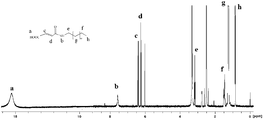
- Figure 1-a shows the nuclear magnetic spectrum of the amphiphilic compound of Example 1
- Figure 1-b shows the nuclear magnetic spectrum of the amphiphilic compound of Example 2
- Figure 1-c shows the nuclear magnetic spectrum of the amphiphilic compound of Example 3.
- Figure 1-d-1 shows the infrared spectrum of the amphiphilic compound of Example 4.
- Figure 1-d-2 shows the nuclear magnetic spectrum of the amphiphilic compound of Example 4.
- Figure 1-e shows the nuclear magnetic spectrum of the amphiphilic compound of Example 5.
- Figure 1-f shows the nuclear magnetic spectrum of the amphiphilic compound of Example 9
- Figure 1-g shows the nuclear magnetic spectrum of the amphiphilic compound of Example 10.
- Figure 1-h shows the nuclear magnetic spectrum of the amphiphilic compound of Example 11
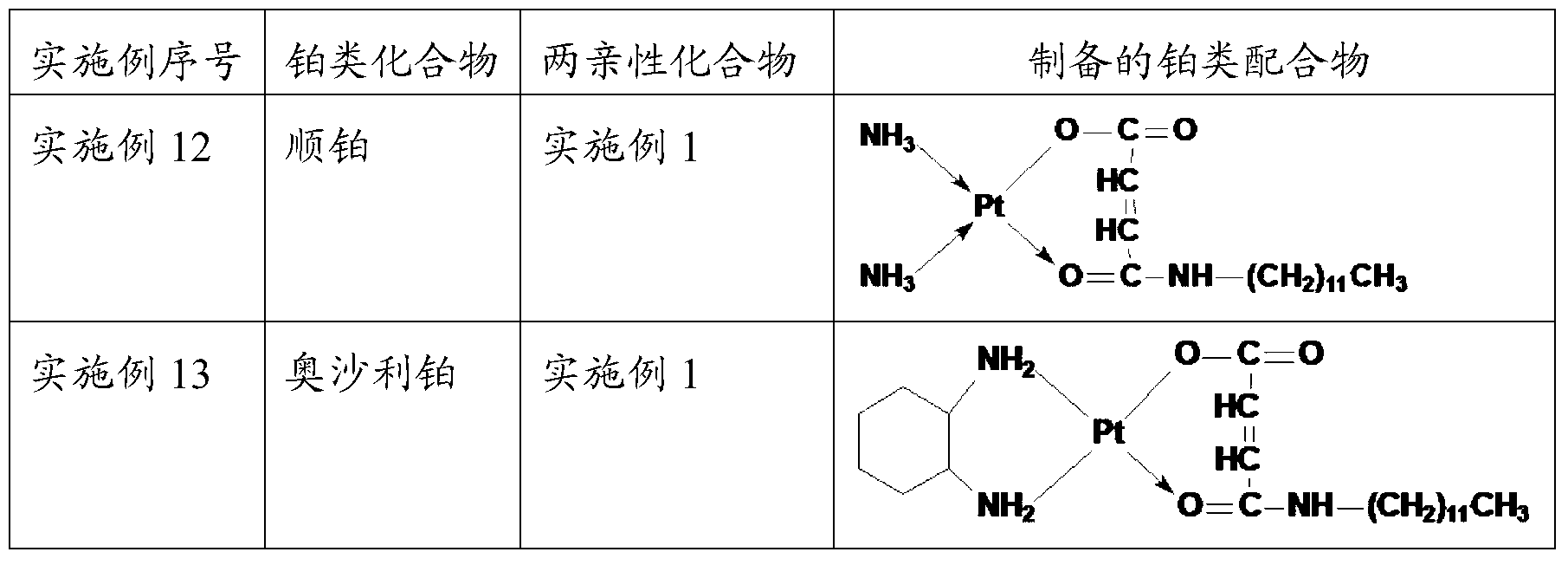
- Figure 2-1a shows an infrared spectrum detection spectrum of the platinum complex of Example 12;
- Figure 2-1b shows an infrared spectrum detection spectrum of the platinum complex of Example 13;
- Figure 2-3a shows an infrared spectrum detection spectrum of the platinum complex of Example 16
- Figure 2-3b shows an infrared spectrum detection spectrum of the platinum complex of Example 17
- Figure 2-4a shows an infrared spectrum detection spectrum of the platinum complex of Example 18
- Figure 2-4b shows an infrared spectrum detection spectrum of the platinum complex of Example 19;
- Figure 3 is a diagram showing the electron microscopy of liposomes prepared in Example 31;
- Figure 4 is a graph showing the particle size distribution of the liposome prepared in Example 31;
- Figure 5 shows the rate of change in body weight after administration of mice (10 mg/kg).
- Figure 6 shows the survival rate of mice.
- the present invention provides a compound and its use, as well as a platinum complex and a liposome thereof, and those skilled in the art can learn from the contents of the present invention and appropriately improve the process parameters. It is to be understood that all such alternatives and modifications are obvious to those skilled in the art and are considered to be included in the present invention.
- the method and application of the present invention have been described in the preferred embodiments, and it is obvious to those skilled in the art that the present invention can be carried out without departing from the scope, spirit and scope of the invention.
- the methods and applications of the text are modified or combined and modified to implement and apply the techniques of the present invention.
- the present invention provides platinum complexes of the structures of Formulas I-a to I-d:
- H attached at any C may be substituted by a substituent
- substituent is one or more of -NH 2 , -OH, -COOH, halogen or -Ar.
- -C n H 2n+1 or -C c H 2c+1 is an alkyl group, and n has a value of from 1 to 22.
- n has a value of 8-20.
- n is 8-18 or n is 12-18; in other embodiments, n is 14-16; in some embodiments, n is 15.
- the value of c and the value of n may be the same or different, and the value of c is 1 to 22.
- the value of c is 8-20.
- c is 8-18 or c is 12-18; in other embodiments, c is 14-16; in some embodiments, c is 15.
- the alkyl group is a linear alkyl group or a branched alkyl group; in some embodiments, it is a linear alkyl group.
- the alkyl group is a substituted or unsubstituted alkyl group.
- the substitution means that H attached to any C in the alkyl group may be substituted with a substituent which is one or more of -NH 2 , -OH, -COOH, halogen or -Ar.
- the number of substituents on any C is one or two.
- -C n H 2n+1 alkyl includes, but is not limited to, methyl (Me, -CH 3 ), ethyl (Et, -CH 2 CH 3 ), n-propyl (n-Pr, -CH) 2 CH 2 CH 3 ), isopropyl (i-Pr, -CH(CH 3 ) 2 ), n-butyl (n-Bu, -CH 2 CH 2 CH 2 CH 3 ), isobutyl (i-Bu) , -CH 2 CH(CH 3 ) 2 ), sec-butyl (s-Bu, -CH(CH 3 )CH 2 CH 3 ), tert-butyl (t-Bu, -C(CH 3 ) 3 ), positive Pentyl (-CH 2 CH 2 CH 2 CH 2 CH 3 ), 2-pentyl (-CH(CH 3 )CH 2 CH 2 CH 3 ), 3-pentyl (-CH(CH 2 CH 3 ) 2 ) , 2-
- -C n H 2n-1 or -C c H 2c-1 refers to an alkenyl group in which at least one position is in an unsaturated state, that is, one CC is a sp 2 double bond.
- the value of n is 2 to 22. In some embodiments, n has a value of 8-20. In other embodiments, n is 8-18 or n is 12-18; in other embodiments, n is 14-16; in some embodiments, n is 15.
- the value of c and the value of n may be the same or different, and the value of c is 2 to 22. In some embodiments, the value of c is 8-20.
- c is 8-18 or c is 12-18; in other embodiments, c is 14-16; in some embodiments, c is 15.
- the alkenyl group is a linear alkenyl group or a branched alkenyl group, and in some embodiments, it is a linear alkenyl group.
- the alkenyl group is a substituted or unsubstituted alkenyl group. H attached to any C in the substituted alkenyl group may be substituted with a substituent which is one or more of -NH 2 , -OH, -COOH, halogen or -Ar. The number of substituents on any C is one or two.
- -Ar-C n H 2n+1 means -C n H 2n+1 attached to a phenyl or aryl group
- -Ar-C n H 2n-1 means attached to a phenyl group or an aryl group.
- -C n H 2n-1 , -Ar-OC n H 2n+1 means -C n H 2n+1 linked to -Ar-O-, -Ar-OC n H 2n-1 means -Ar- O-phase-linked -C n H 2n-1 .
- -Ar-C c H 2c + 1 refers to a phenyl or -C c H aryl group connected 2c + 1
- -Ar-C c H 2c-1 refers to a phenyl or -C c H aryl group connected 2c-1
- -Ar-OC c H 2c+1 means -C c H 2c+1 linked to -Ar-O-
- -Ar-OC c H 2c-1 means attached to -Ar-O- -C c H 2c-1 .
- the -Ar- represents a monocyclic, bicyclic, and tricyclic carbocyclic ring system containing a 6-14 membered ring, and at least one ring system is aromatic, wherein each ring system comprises a 3-7 membered ring, Among them, there are two connection points connected to the rest of the molecule.
- -Ar- may be a phenylene group, a naphthyl group and an anthranylene group. And the -Ar- may be substituted or unsubstituted.
- -C b H 2b - or -C d H 2d - means an alkylene group, and b has a value of from 1 to 8. In some embodiments, b has a value of 1 to 6. In other embodiments, b is from 1 to 4; in other embodiments, b is from 2 to 4; the alkylene group is a linear or branched alkylene group; and the value of d and b are taken The values may be the same or different, and the values of d are 1 to 8. In some embodiments, d has a value of 1 to 6.
- d is from 1 to 4; in other embodiments, d is from 2 to 4; the alkylene group is a linear or branched alkylene group; in some embodiments, Linear alkylene.
- the alkylene group is a substituted or unsubstituted alkylene group.
- the substitution means that H attached to any C in the alkylene group may be substituted with a substituent which is one or more of -NH 2 , -OH, -COOH or -Ar.
- the number of substituents on any C is one or two.
- alkylene groups include, but are not limited to, methylene (-CH 2 -), ethylene (-CH 2 CH 2 -), n-propylene (-CH 2 CH 2 CH 2 -), Propylene (-C(CH 3 ) 2 -), n-butylene (-CH 2 CH 2 CH 2 CH 2 -), isobutylene, sec-butylene, tert-butylene, n-pentylene, 2-Asia Pentyl, 3-pentylene, 2-methyl-2-butylene, 3-methyl-2-butylene, 3-methyl-1-butylene, 2-methyl-1-butylene, positive Hexylene, 2-hexylene, 3-hexylene, 2-methyl-2-pentylene, 3-methyl-2-pentylene, 4-methyl-2-pentylene, 3-methyl -3-pentylene, 2-methyl-3-pentylene, 2,3-dimethyl-2-butylene, 3,3-dimethyl-2-butylene, n
- -C b H 2b-2 - or -C d H 2d-2 - means an alkenylene group in which at least one position is in an unsaturated state, that is, one CC is a sp 2 double bond.
- the value of b is 2 to 8.
- b has a value of 2-6.
- b is 2 to 4.
- the value of d and the value of b may be the same or different, and the value of d is 2 to 8.
- d has a value of 2-6. In other embodiments, d is from 2 to 4.
- the alkenyl group is a linear alkenylene group or a branched alkenylene group, and in some embodiments, it is a linear alkenylene group.
- the alkenylene group is a substituted or unsubstituted alkenylene group. H attached to any C in the substituted alkenylene group may be substituted with a substituent which is one or more of -NH 2 , -OH, -COOH or -Ar. The number of substituents on any C is one or two.
- -C d H 2d -NH 2 -C d H 2d-2 -NH 2 -C d H 2d is the amino (-NH 2) connected - or -C d H 2d -2 -; -C d H 2d -COOH, -C d H 2d-2 -COOH is -C d H 2d - or -C d H 2d-2 - linked to a carboxyl group (-COOH).
- R 4 is selected from -CH 2 -, Or removing 2 carboxyl groups of hyaluronic acid
- R 6 is selected from -NH 2 , -(CH 2 ) 4 NH 2 , -(CH) 2 -COOH or -(CH 2 ) 4 NH-CO-(CH 2 ) 14 CH 3 .
- the platinum complex provided by the invention is prepared by reacting a compound of formula II or a compound of formula III with a platinum compound; the platinum compound is cisplatin, carboplatin, oxaliplatin or nedaplatin, iriplatin, lobaplatin Wait.
- H attached at any C may be substituted by a substituent
- substituent is one or more of -NH 2 , -OH, -COOH, halogen or -Ar;
- R 2 and R 3 includes at least one -COOH.
- the molar ratio of the compound of formula II or formula III to the platinum compound is not more than 30:1.
- the molar ratio of the compound of Formula II or Formula III to Pt in the platinum compound is (1-8):1.
- the molar ratio of the compound of Formula II or Formula III to the Pt in the platinum compound is (1 to 5):1.
- the molar ratio of the compound of Formula II or Formula III to the Pt in the platinum compound is 1:1.
- the solvent used in the reaction for preparing the platinum complex is an aqueous medium.
- the aqueous medium is water or mannitol aqueous solution or sodium chloride aqueous solution or glycerin aqueous solution or sugar-containing aqueous solution or phosphate buffer solution (not limited thereto), and may also contain dimethyl group.
- the present invention provides an amphiphilic compound of the structure shown in Formula II:
- H attached at any C may be substituted by a substituent
- substituent is one or more of -NH 2 , -OH, -COOH, halogen or -Ar;
- R 2 and R 3 includes at least one -COOH.
- -C n H 2n+1 or -C a H 2a+1 is an alkyl group, and n has a value of from 1 to 22.
- n has a value of 8-20.
- n is 8-18 or n is 12-18; in other embodiments, n is 14-16; in some embodiments, n is 15.
- the value of a and the value of n may be the same or different, and the value of a is 1 to 22.
- a has a value of 8-20.
- a is 8-18 or a is 12-18; in other embodiments, a is 14-16; in some embodiments, a is 15.
- the alkyl group is a linear alkyl group or a branched alkyl group; in some embodiments, it is a linear alkyl group.
- the alkyl group is a substituted or unsubstituted alkyl group.
- the substitution means that H attached to any C in the alkyl group may be substituted with a substituent which is one or more of -NH 2 , -OH, -COOH or -Ar.
- the number of substituents on any C is one or two.
- -C n H 2n+1 alkyl includes, but is not limited to, methyl (Me, -CH 3 ), ethyl (Et, -CH 2 CH 3 ), n-propyl (n-Pr, -CH) 2 CH 2 CH 3 ), isopropyl (i-Pr, -CH(CH 3 ) 2 ), n-butyl (n-Bu, -CH 2 CH 2 CH 2 CH 3 ), isobutyl (i-Bu) , -CH 2 CH(CH 3 ) 2 ), sec-butyl (s-Bu, -CH(CH 3 )CH 2 CH 3 ), tert-butyl (t-Bu, -C(CH 3 ) 3 ), positive Pentyl (-CH 2 CH 2 CH 2 CH 2 CH 3 ), 2-pentyl (-CH(CH 3 )CH 2 CH 2 CH 3 ), 3-pentyl (-CH(CH 2 CH 3 ) 2 ) , 2-
- -C n H 2n-1 or -C a H 2a-1 refers to an alkenyl group in which at least one position is in an unsaturated state, that is, one CC is a sp 2 double bond.
- the value of n is 2 to 22. In some embodiments, n has a value of 8-20. In other embodiments, n is 8-18 or n is 12-18; in other embodiments, n is 14-16; in some embodiments, n is 15.
- the value of a and the value of n may be the same or different, and the value of a is 2 to 22. In some embodiments, a has a value of 8-20.
- a is 8-18 or a is 12-18; in other embodiments, a is 14-16; in some embodiments, a is 15.
- the alkenyl group is a linear alkenyl group or a branched alkenyl group, and in some embodiments, it is a linear alkenyl group.
- the alkenyl group is a substituted or unsubstituted alkenyl group. H attached to any C in the substituted alkenyl group may be substituted with a substituent which is one or more of -NH 2 , -OH, -COOH, halogen or -Ar. The number of substituents on any C is one or two.
- -Ar-C n H 2n+1 means -C n H 2n+1 attached to a phenyl or aryl group
- -Ar-C n H 2n-1 means attached to a phenyl group or an aryl group.
- -C n H 2n-1 , -Ar-OC n H 2n+1 means -C n H 2n+1 linked to -Ar-O-, -Ar-OC n H 2n-1 means -Ar- O-phase-linked -C n H 2n-1 .
- -Ar-C a H 2a+1 means -C a H 2a+1 attached to a phenyl or aryl group
- -Ar-C a H 2a-1 means -C a H attached to a phenyl or aryl group 2a-1
- -Ar-OC a H 2a+1 means -C a H 2a+1 linked to -Ar-O-
- -Ar-OC a H 2a-1 means attached to -Ar-O- -C a H 2a-1 .
- the -Ar- represents a monocyclic, bicyclic, and tricyclic carbocyclic ring system containing a 6-14 membered ring, and at least one ring system is aromatic, wherein each ring system comprises a 3-7 membered ring, Among them, there are two connection points connected to the rest of the molecule.
- -Ar- may be a phenylene group, a naphthyl group and an anthranylene group. And the -Ar- may be substituted or unsubstituted.
- -C m H 2m - means an alkylene group, and m has a value of from 1 to 8. In some embodiments, m has a value of 1 to 6. In other embodiments, m is from 1 to 4; in other embodiments, m is from 2 to 4; the alkylene group is a linear or branched alkylene group; in some embodiments, Linear alkylene.
- the alkylene group is a substituted or unsubstituted alkylene group.
- the substitution means that H attached to any C in the alkylene group may be substituted with a substituent which is one or more of -NH 2 , -OH, -COOH or -Ar.
- the number of substituents on any C is one or two.
- -C m H 2m -alkylene includes, but is not limited to, methylene (-CH 2 -), ethylene (-CH 2 CH 2 -), n-propylene (-CH 2 CH 2 CH 2 -), isopropylidene (-C(CH 3 ) 2 -), n-butylene (-CH 2 CH 2 CH 2 CH 2 -), isobutylene, sec-butylene, tert-butylene, Ortho Pentyl, 2-pentylene, 3-pentylene, 2-methyl-2-butylene, 3-methyl-2-butylene, 3-methyl-1-butylene, 2-methyl- 1-butylene, n-hexylene, 2-hexylene, 3-hexylene, 2-methyl-2-pentylene, 3-methyl-2-pentylene, 4-methyl-2-pentylene , 3-methyl-3-pentylene, 2-methyl-3-pentylene, 2,3-dimethyl-2-butylene, 3,3-di
- -C m H 2m-2 - refers to an alkenylene group in which at least one position is in an unsaturated state, that is, one CC is a sp 2 double bond.
- the value of n is 2 to 8. In some embodiments, n has a value of 2-6. In other embodiments, n is from 2 to 4.
- the alkenyl group is a linear alkenylene group or a branched alkenylene group, and in some embodiments, it is a linear alkenylene group.
- the alkenylene group is a substituted or unsubstituted alkenylene group.
- H attached to any C in the substituted alkenylene group may be substituted with a substituent which is one or more of -NH 2 , -OH, -COOH or -Ar.
- the number of substituents on any C is one or two.
- -C m H 2m -NH- or -C m H 2m-2 -NH- means -C m H 2m - or -C m H 2m-2 - linked to -NH-.
- H attached to any C may be substituted by one or two substituents
- substituent is -NH 2 or -COOH.
- R 2 and R 3 includes at least one -COOH.
- R 1 is -C n H 2n+1 and R 2 is R 3 is -OH;
- R 1 is -C n H 2n+1 ;
- R 2 is R 3 is -OH;
- R 1 is -C n H 2n+1
- R 2 is R 3 is -C a H 2a+1 ;
- R 1 is -C n H 2n+1
- R 2 is R 3 is -C a H 2a+1 ;
- the structure is:
- the platinum-based complex provided by the present invention can bind well to the membrane of the liposome, thereby increasing the encapsulation efficiency and the drug loading amount of the liposome. Moreover, after preparing the platinum complex with the compound provided by the invention, the carboxyl group has pH sensitivity, and in a lower pH environment (such as tumor tissue), the carboxyl group tends to be deprotonated, which is favorable for promoting the drug in the tumor tissue. The release of the drug improves the efficacy of the drug and reduces the side effects of the drug.
- the invention also provides a liposome of a platinum complex, comprising the platinum complex, the lipid membrane and/or the stabilizer provided by the invention; the ratio of the platinum complex and the lipid membrane is (99:1) ⁇ (1:99).
- the ratio is a mass ratio, a molar ratio or a volume ratio.
- the lipid membrane material comprises a composition of phospholipid and/or cholesterol, wherein the mass fraction of the phospholipid in the membrane is from 1 part to 100 parts, and the mass part of the cholesterol is from 0 part to 60 parts;
- the phospholipid is egg yolk lecithin, soybean lecithin, hydrogenated soybean phospholipid, phosphatidylserine, phosphatidylinositol, phosphatidylethanolamine, phosphatidylglycerol, dilauroyl lecithin, dimyristoyl egg Phospholipid, dipalmitoyl lecithin or distearoyl lecithin, dioleoylphosphatidylcholine, dilauroylphosphatidylglycerol, dimyristoylphosphatidylglycerol, dipalmitoylphosphatidylglycerol or distearoylphospholipid Any one or a combination of two or more of acylglycerol, dioleoylphosphatidylglycerol, phosphoacylglycerol, di-erucylphosphatidylglycerol, and PEGylated phospholipid.
- the liposome provided by the present invention or also includes a long circulating material.
- the long circulating materials used in the present invention are MPEG2000-DSPE, MPEG5000-DSPE, MPEG2000-DMPE, MPEG5000-DMPE, MPEG2000-DPPE, MPEG5000-DPPE and the like.
- the mass fraction of the long circulating material in the liposome provided by the invention is 0-50%.
- the liposome provided by the present invention may further comprise an antioxidant; the antioxidant used in the present invention is L-cysteine, ascorbic acid, dl-strontium-tocopherol, sodium sulfite, sodium metabisulfite or anhydrous sodium hydrogen sulfite.
- an antioxidant used in the present invention is L-cysteine, ascorbic acid, dl-strontium-tocopherol, sodium sulfite, sodium metabisulfite or anhydrous sodium hydrogen sulfite.
- the antioxidant has a mass fraction of not more than 20%.
- An isotonicity adjusting agent may be further added to the liposome provided by the present invention, and the isotonicity adjusting agent is a composition of any one or more of mannitol, sorbitol, glucose, sucrose or sodium chloride.
- the invention provides a method for preparing a liposome, which can adopt a film dispersion method, a reverse evaporation method or Double emulsion method, etc.
- the liposome is prepared by placing a membrane, an antioxidant, a long-circulating material in a round bottom flask, adding an appropriate amount of an organic solvent to dissolve, and adding an aqueous solution of the platinum complex provided by the present invention. , mechanical or ultrasonic homogenization to form W / O emulsion, rotary evaporation to remove organic solvent, forming a film on the wall of the container, injecting hydration medium, so that the membrane is hydrated for 1h ⁇ 2h, through the liposome extruder or evenly A novel platinum-like liposome having a uniform particle size is obtained, and the long-circulating material can also be added after the liposome is formed, stirred, and modified on the surface of the liposome.
- the liposome is prepared by taking a film, an antioxidant, a platinum-based compound and a long-circulating material provided by the present invention, and placing it in a round bottom flask, adding an appropriate amount of an organic solvent to dissolve, and rotating under reduced pressure.
- the organic solvent was removed by evaporation, a film was formed on the wall of the container, and a hydration medium was injected to hydrate the film for 1 h to 2 h, and the new platinum-like liposome was obtained by a liposome extruder or homogenization.
- the liposome is prepared by placing a membrane, an antioxidant, and a long-circulating material in a round bottom flask, adding an appropriate amount of an organic solvent to dissolve, adding the platinum complex provided by the present invention, and performing ultrasonication. Or mechanically homogenizing to form a W/O emulsion, removing some organic solvent by rotary evaporation under reduced pressure, injecting into a hydration medium, mechanically stirring to form W/O/W, and then removing the organic solvent by rotary evaporation under reduced pressure, passing through a liposome extruder or Homogenization gave novel platinum-based liposomes.
- the present invention also provides a medicament for treating cancer, comprising the liposome and preparation provided by the present invention.
- the medicament provided by the present invention can be used for the treatment of cancer, such as breast cancer, non-small cell lung cancer, testicular cancer, pancreatic cancer, rectal cancer, liver cancer, ovarian cancer or head and neck cancer.
- cancer such as breast cancer, non-small cell lung cancer, testicular cancer, pancreatic cancer, rectal cancer, liver cancer, ovarian cancer or head and neck cancer.
- the pharmaceutical preparations provided by the present invention are injections (suspension or lyophilized powder for injection), emulsions, submicroemulsions and the like.
- the test shows that the liposome provided by the invention can significantly increase the blood concentration of the platinum compound, prolong the residence time of the drug in the body, and can concentrate the platinum drug in the cancerous organ, thereby not only reducing the dosage and increasing the therapeutic effect. Moreover, it can reduce the toxic side effects of drugs and is suitable for the treatment of various tumor diseases.
- the present invention provides a compound of the formula II, which has good biocompatibility, and has a carboxyl group and an amide group capable of compounding with a platinum drug, and an unstable coordinate bond formed with the platinum drug can be increased.
- the rate of hydration of the drug in the body increases the efficacy.
- the platinum complex prepared by the compound provided by the invention can be well combined with the membrane of the liposome, thereby increasing the encapsulation efficiency and drug loading of the liposome.
- the carboxyl group has pH sensitivity, and in a lower pH environment (such as tumor tissue), the carboxyl group tends to be deprotonated, which is favorable for promoting the drug in the tumor tissue.
- the release further enhances the efficacy of the drug and reduces its side effects.
- the liposome provided by the present invention can significantly reduce the toxic side effects of the drug and improve the drug effect.
- the reagents or instruments used in the present invention are all commercially available, and are commercially available.
- the preparation method is as follows:
- Example 1 After adding 1.5 mmol of fatty amine (such as octadecylamine, hexadecylamine, tetradecylamine or dodecylamine) to 20 mL of chloroform, another 3.3 mmol of an acid anhydride (such as maleic anhydride or succinic anhydride) is dissolved in 20 mL of chloroform. After dissolving, the chloroform solution of the fatty amine is added to the acid anhydride solution, stirred for 30 minutes, filtered under reduced pressure, and the obtained product is washed successively with chloroform, acetone, and dried (molar ratio of 1:2) to obtain the above ( Example 1 - Example 5) Amphiphilic compound.
- the nuclear magnetic structure was characterized for the amphiphilic compound, and the results are shown in Figures 1-a to 1-e.
- the preparation method is:
- the preparation method is as follows:
- the water-washed material was oven-dried at 50 ° C, taken out, washed three times with a mixed solvent of petroleum ether: acetone: ethyl acetate (100:1:1), centrifuged, taken out, and dried under reduced pressure.
- the prepared compound was subjected to nuclear magnetic structure characterization, and the results are shown in Fig. 1-g.
- the preparation method is as follows:
- the preparation method comprises the following steps: adding an amphiphilic compound to water and stirring and dissolving under certain conditions, adding a platinum compound (molar ratio of the amphiphilic compound to the platinum compound: 1:1-10:1), heating and stirring for 12 hours, the reaction is obtained.
- the platinum complex is dried to obtain a solid powder of the platinum complex.
- the infrared detection spectrum is shown in Figure 2-1a to Figure 2-9b.
- the amphiphilic compound forms a complex with oxaliplatin.
- organic solvent chloroform or water-saturated ether or dichloromethane, methanol, ethanol or a mixed solvent of at least two solvents
- mechanical or ultrasonic homogenization to form W / O emulsion
- rotary evaporation to remove organic solvent
- Form a film on the wall of the container inject a hydration medium (physiological saline or 5% dextrose or water for injection or mannitol aqueous solution), and hydrate the film at 40 ° C (or 55 ° C) for 1 h to 2 h, through the liposome extruder Or micro-fluid homogenization to obtain platinum complex liposomes, adding long-circulation material and stirring at room temperature for 1 h, which
- the formulated amount of the membrane and the antioxidant, the long circulating material, and the platinum compound added in the formula amount are placed in a round bottom flask, dissolved in an appropriate amount of chloroform, and the organic solvent is removed by rotary evaporation under reduced pressure to form a film on the wall of the container.
- the hydration medium water for injection
- the membrane was hydrated at 40-55 ° C for 1 to 2 h, and homogenized by a liposome extruder to obtain a novel platinum-based liposome.
- the morphology of the platinum-containing complex liposome prepared by the present invention was observed by an electron microscope, and the particle size and distribution of the liposome were measured by a Zetasizer Nano ZS90 laser particle size analyzer.
- the encapsulation efficiency of the liposome produced by the present invention was calculated by the method provided by the Chinese Pharmacopoeia. The results are shown in Table 5:
- the novel platinum-based complex liposome preparation provided by the invention has a particle size of 90-150 nm, an encapsulation efficiency of 92-98%, and a drug loading of 8-30%. Unlike the liposomes reported in the prior literature and patents, the platinum liposome has the characteristics of high encapsulation efficiency, good stability and strong anticancer activity.
- the liposomes prepared by using commercially available cisplatin for injection and the samples of Examples 31, 33 and 36 were used as experimental materials, and the MCF-7, A549 and HEPG2 cells were digested with trypsin, and then centrifuged and collected. The cell suspension was adjusted and the cell count was adjusted to a concentration of 5-10 x 10 4 /mL. After the cell suspension was prepared, gently mix, add 100 ⁇ L per well, and place the inoculated cells in an incubator for 24 h, respectively, adding 1 ⁇ mol/L, 2 ⁇ mol/L, 4 ⁇ mol/L, 8 ⁇ mol/L, 16 ⁇ mol.
- liver cancer cells H22 with logarithmic growth were adjusted to a single cell concentration of (1-5) x 10 6 cells/mL.
- the H22 cell suspension was inoculated subcutaneously into the right axilla of the mouse, each 0.2 mL, and a subcutaneous inoculation model of the liver cancer H22 tumor strain was established.
- Tumor-bearing mice were randomly divided into 5 groups, 10 in each group, respectively, saline group, cisplatin control group for injection, and experimental group (platinum complex lipids provided in Examples 31, 33 and 36 of the present invention, respectively).
- the plastids were labeled in the group.
- the rats in each group were injected with normal saline, cisplatin control group and experimental group. They were administered once every three days and twice, and the dose was 2.5 mg/kg.
- the survival state of the mice was observed daily, and the mice were sacrificed on the 7th day after the administration, the tumor was taken out, the surface was washed with physiological saline, the filter paper was blotted, and the tumor inhibition rate was calculated, and the calculation method was as follows:
- Tumor inhibition rate (%) (average tumor weight of the control group - mean tumor weight of the test group) ⁇ average tumor weight of the control group ⁇ 100
- mice were randomly divided into groups, 5 rats in each group, which were blank control group, cisplatin control group for injection, liposomes prepared in Examples 31, 33 and 36, and the groups were labeled with tail vein injection.
- the liposomes prepared in the physiological saline, the commercially available cisplatin control group, and the examples 31, 33, and 36 were administered once, and the doses were 10 mg/kg and 20 mg/kg, respectively, after administration, daily.
- the survival state of the mice was observed, the body weight was weighed, and the survival rate of the mice was recorded.
- mice were randomly divided into 5 groups, 10 in each group, blank control group, respectively, examples Liposomes prepared in 31, 33, and 36, commercially available cisplatin control group for injection, labeling in the group, intravenous injection of physiological saline in each group, and liposome solutions prepared in Examples 31, 33, and 36, cisplatin
- the injection was administered once, and the dose was 10 mg/kg.
- the survival state of the mice was observed daily, and the mice were sacrificed on the 7th day after administration, and the urea nitrogen and creatinine values of the mice were measured, and the results are shown in Table 8:
- the experimental results show that the cisplatin complex liposome prepared by the present invention can significantly reduce the nephrotoxicity of cisplatin compared with the cisplatin injection.
Landscapes
- Health & Medical Sciences (AREA)
- Chemical & Material Sciences (AREA)
- Organic Chemistry (AREA)
- Life Sciences & Earth Sciences (AREA)
- General Health & Medical Sciences (AREA)
- Medicinal Chemistry (AREA)
- Pharmacology & Pharmacy (AREA)
- Veterinary Medicine (AREA)
- Public Health (AREA)
- Animal Behavior & Ethology (AREA)
- Epidemiology (AREA)
- Chemical Kinetics & Catalysis (AREA)
- General Chemical & Material Sciences (AREA)
- Nuclear Medicine, Radiotherapy & Molecular Imaging (AREA)
- Engineering & Computer Science (AREA)
- Dispersion Chemistry (AREA)
- Polymers & Plastics (AREA)
- Materials Engineering (AREA)
- Biochemistry (AREA)
- Molecular Biology (AREA)
- Oil, Petroleum & Natural Gas (AREA)
- Medicinal Preparation (AREA)
- Pharmaceuticals Containing Other Organic And Inorganic Compounds (AREA)
- Acyclic And Carbocyclic Compounds In Medicinal Compositions (AREA)
- Organic Low-Molecular-Weight Compounds And Preparation Thereof (AREA)
Abstract
Description




| 实施例序号 | 平均粒径(nm) | 包封率(%) |
| 28 | 130.1 | 94.1 |
| 29 | 132.2 | 92.7 |
| 30 | 112.6 | 92.8 |
| 31 | 101.9 | 93.1 |
| 32 | 113.7 | 92.7 |
| 33 | 98.45 | 96.3 |
| 34 | 108.7 | 95.3 |
| 35 | 112.1 | 94.4 |
| 36 | 102.6 | 97.2 |
| 37 | 106.1 | 92.9 |
| 实施例序号 | MCF-7 | A549 | HEPG2 |
| 注射用顺铂 | 16.9 | 8.92 | 7.19 |
| 实施例31 | 3.02 | 1.67 | 1.26 |
| 实施例33 | 4.11 | 2.19 | 3.28 |
| 实施例36 | 4.22 | 3.97 | 1.19 |
| 实施例序号 | 肿瘤重量(g) | 抑制率(%) |
| 生理盐水 | 1.220 | |
| 顺铂注射剂 | 0.661 | 45.8 |
| 实施例31 | 0.351 | 71.2 |
| 实施例33 | 0.338 | 72.3 |
| 实施例36 | 0.403 | 67.0 |
| 肌酐值(μmol·L-1) | 尿素氮(mmol·L-1) | |
| 生理盐水 | 69.66±16.38 | 8.77±1.68 |
| 注射用顺铂 | 134.96±26.24 | 13.49±0.85 |
| 实施例31 | 74.25±21.22 | 8.65±0.90 |
| 实施例33 | 77.82±27.47 | 7.95±1.23 |
| 实施例36 | 68.82±15.47 | 8.85±1.19 |
Claims (13)
- 式I-a~I-d所示结构的铂类配合物:
 R1选自-H、-CnH2n+1、-CnH2n-1、-Ar-CnH2n+1、-Ar-CnH2n-1、-Ar-O-CnH2n+1或-Ar-O-CnH2n-1,n=1~22;R4选自-CbH2b-、-CbH2b-2-、-Ar-CbH2b-、-Ar-CbH2b-2-、-Ar-O-CbH2b-、-Ar-O-CbH2b-2-或除去2个羧基的透明质酸,b=0~22;R5选自-H、-CcH2c+1、-CcH2c-1、-Ar-CcH2c+1、-Ar-CcH2c-1、-Ar-O-CcH2c+1、-Ar-O-CcH2c-1或除去1个氨基的壳聚糖,c=1~22;R6选自-NH2、-NH-CO-(CH2)eCH3、-CdH2d-NH2、-CdH2d-2-NH2、-CdH2d-COOH、-CdH2d-2-COOH或-CdH2d-NH-CO-(CH2)eCH3,d=1~8,e=1~21;x=0~10;其中,任意C上连接的H可以被取代基所取代;其中,所述取代基为-NH2、-OH、-COOH、卤素或-Ar中的一种或几种。
 - 根据权利要求1所述的铂类配合物,其特征在于,x=0~10;R1选自-H、-CnH2n+1或-CnH2n-1,n=8~20;R4选自-CbH2b-、-CbH2b-2-或除去2个羧基的透明质酸,b=1~10;R5选自-CcH2c+1、-CcH2c-1或除去1个氨基的壳聚糖,c=8~20;R6选自-NH2、-NH-CO-(CH2)eCH3、-CdH2d-NH2、-CdH2d-COOH或-(CH2)dNH-CO-(CH2)eCH3;d=1~6,e=8~20。
- 根据权利要求1所述的铂类配合物,其特征在于,x=0;R1为-CnH2n+1,n=8~18;R6为-(CH2)2-COOH、-CH2-COOH、-(CH2)4NH2、或-(CH2)4NH-CO-(CH2)14CH3。
- 根据权利要求1所述的铂类配合物,其特征在于,x=1~6;R1为-CnH2n+1,n=8~18,R6为-NH2。
- 根据权利要求1所述的铂类配合物,其特征在于,R4选自-CH2-、
 或除2个羧基的透明质酸;
 R5选自-CcH2c+1,c=12~18。
 - 根据权利要求1所述的铂类配合物,其特征在于,结构如式(1)~(22):其中y=7~17:


- 式II所示结构的两亲性化合物:
 R1选自-H、-CnH2n+1、-CnH2m-1、-Ar-CnH2n+1、-Ar-CnH2n-1、-Ar-O-CnH2n+1或-Ar-O-CnH2n-1,n=1~22;R2选自-CmH2m-、-CmH2m-2-、-CmH2m-NH-或-CmH2m-2-NH-,m=1~8;R3选自-OH、-CaH2a+1、-CaH2a-1、-Ar-CaH2a+1、-Ar-CaH2a-1、-Ar-O-CaH2a+1或-Ar-O-CaH2a-1,a=1~22;其中,任意C上连接的H可以被取代基所取代;其中,所述取代基为-NH2、-OH、-COOH、卤素或-Ar中的一种或几种;所述R2和R3的结构中至少包括1个-COOH。
 - 根据权利要求7所述的两亲性化合物,其特征在于,R1为-CnH2n+1,R2为R3为-OH;
 或R1为-CnH2n+1,R2为R3为-OH;
 或R1为-CnH2n+1,R2为R3为-CaH2a+1;
 或R1为-CnH2n+1,R2为R3为-CaH2a+1;
 n=8~18;m=2~6;a=8~18。
 - 根据权利要求7所述的两亲性化合物,其特征在于,其结构如式II-a~式II-b所示:

- 一种铂类配合物的脂质体,其特征在于,包括:权利要求1~6任一项所述的铂类配合物、脂质膜材和/或稳定剂;所述铂类配合物、脂质膜材比例为(99:1)~(1:99);所述比例为质量比、摩尔比或体积比。
- 根据权利要求10所述的脂质体,其特征在于,所述脂质膜材包括磷脂和/或胆固醇的组合物,膜材中磷脂的质量份为1份~100份,胆固醇的质量份为0份~60份。
- 根据权利要求10所述的脂质体,其特征在于,所述磷脂为蛋黄卵磷脂、大豆卵磷脂、氢化大豆磷脂、磷脂酰丝氨酸、磷脂酰肌醇、磷脂酰乙醇胺、磷脂酰甘油、二月桂酰卵磷脂、二肉豆蔻酰基卵磷脂、二棕榈酰基卵磷脂或二硬脂酰基卵磷脂、二油酰基磷脂酰胆碱、二月桂酰磷脂酰甘油、二肉豆蔻酰基磷脂酰甘油、二棕榈酰基磷脂酰甘油或二硬脂酰基磷脂酰甘油、二油酰基磷脂酰甘油、磷酸酰甘油、二芥酰磷脂酰甘油、PEG化磷脂等中的任一种或两者以上的组合物。
- 一种治疗癌症的药物,其特征在于,包括权利要求10~12任一项所述的脂质体。
Priority Applications (3)
| Application Number | Priority Date | Filing Date | Title |
|---|---|---|---|
| EP17743578.1A EP3409682B1 (en) | 2016-01-25 | 2017-01-13 | Compound and use thereof and platinum complex and lipidosome thereof |
| US16/072,614 US10730898B2 (en) | 2016-01-25 | 2017-01-13 | Compound and use thereof and platinum complex and lipidosome thereof |
| JP2018557176A JP6744429B2 (ja) | 2016-01-25 | 2017-01-13 | 化合物及びその応用、並びに白金錯体及びそのリポソーム |
Applications Claiming Priority (2)
| Application Number | Priority Date | Filing Date | Title |
|---|---|---|---|
| CN201610049404.9A CN106995465B (zh) | 2016-01-25 | 2016-01-25 | 一种化合物及其应用以及一种铂类配合物及其脂质体 |
| CN201610049404.9 | 2016-01-25 |
Publications (1)
| Publication Number | Publication Date |
|---|---|
| WO2017128963A1 true WO2017128963A1 (zh) | 2017-08-03 |
Family
ID=59397301
Family Applications (1)
| Application Number | Title | Priority Date | Filing Date |
|---|---|---|---|
| PCT/CN2017/071114 Ceased WO2017128963A1 (zh) | 2016-01-25 | 2017-01-13 | 一种化合物及其应用以及一种铂类配合物及其脂质体 |
Country Status (5)
| Country | Link |
|---|---|
| US (1) | US10730898B2 (zh) |
| EP (1) | EP3409682B1 (zh) |
| JP (1) | JP6744429B2 (zh) |
| CN (3) | CN110590855B (zh) |
| WO (1) | WO2017128963A1 (zh) |
Families Citing this family (6)
| Publication number | Priority date | Publication date | Assignee | Title |
|---|---|---|---|---|
| CN113018311A (zh) * | 2019-12-25 | 2021-06-25 | 沈阳药科大学 | 顺铂配合物以及顺铂配合物脂质体的制备方法 |
| WO2021183588A1 (en) * | 2020-03-10 | 2021-09-16 | Chung Yuan Christian University | Liposome composition and preparation method thereof |
| CN113801167B (zh) * | 2020-06-17 | 2024-11-22 | 沈阳药科大学 | 一种铂类配合物及其脂质体和应用 |
| CN114652680A (zh) * | 2020-12-24 | 2022-06-24 | 沈阳药科大学 | 制备脂质体的方法 |
| CN115233474B (zh) * | 2022-07-18 | 2023-07-07 | 苏州联胜化学有限公司 | 一种纯棉织物用色牢度提升剂及其制备方法 |
| CN118359666A (zh) * | 2024-03-12 | 2024-07-19 | 杭州佰因泰医药科技有限公司 | 一种四价顺铂前药及其脂质体与应用 |
Citations (2)
| Publication number | Priority date | Publication date | Assignee | Title |
|---|---|---|---|---|
| WO2014201376A2 (en) * | 2013-06-14 | 2014-12-18 | Invictus Oncology Pvt. Ltd. | Lipid-based platinum compounds and nanoparticles |
| CN104744563A (zh) * | 2013-12-27 | 2015-07-01 | 中国人民解放军军事医学科学院毒物药物研究所 | 端基具有亲脂性结构的线性脂肽、其制备方法及用途 |
Family Cites Families (18)
| Publication number | Priority date | Publication date | Assignee | Title |
|---|---|---|---|---|
| US2790779A (en) | 1953-07-27 | 1957-04-30 | Geigy Chem Corp | Rust preventive compositions containing monoamidocarboxylic acids |
| US2850387A (en) | 1955-01-27 | 1958-09-02 | Schwarz Lab Inc | Alpha-amino acid derivative and fats and oils containing same |
| EP0185225B1 (en) * | 1984-12-17 | 1990-01-03 | American Cyanamid Company | Platinum complexes of aliphatic tricarboxylic acid |
| JPS61249993A (ja) * | 1985-04-26 | 1986-11-07 | Tanabe Seiyaku Co Ltd | 新規有機白金錯体及びその製法 |
| IL79624A0 (en) | 1986-08-05 | 1986-11-30 | Yeda Res & Dev | Amphiphilic amides and films produced from these |
| JPH03200795A (ja) * | 1989-12-28 | 1991-09-02 | Nippon Kayaku Co Ltd | 脂質親和性白金錯体及びそれを含有する製剤 |
| EA002630B1 (ru) * | 1997-02-05 | 2002-08-29 | Фармация Энд Апджон Компани | Способ получения липидных комплексов или липосом водонерастворимого диаминоциклогександикарбоксилата платины |
| JP3181276B2 (ja) * | 1999-08-31 | 2001-07-03 | 科学技術振興事業団 | 樹枝状分岐構造を持つ両親媒性化合物 |
| ITMI20011483A1 (it) | 2001-07-11 | 2003-01-11 | Res & Innovation Soc Coop A R | Uso di composti come antagonisti funzionali ai recettori centrali deicannabinoidi |
| CN1298727C (zh) * | 2005-02-22 | 2007-02-07 | 昆明贵金属研究所 | 新型脂溶性铂(ⅱ)抗肿瘤配合物 |
| JP2006248978A (ja) * | 2005-03-10 | 2006-09-21 | Mebiopharm Co Ltd | 新規なリポソーム製剤 |
| JP5364381B2 (ja) * | 2006-12-08 | 2013-12-11 | 片山化学工業株式会社 | アンミン白金錯体を高濃度で内包するリポソームおよびその製造方法 |
| CA2751068A1 (en) * | 2009-01-31 | 2010-08-05 | Igf Oncology, Llc | Anti-cancer protein-platinum conjugates |
| CN102091036A (zh) * | 2011-01-10 | 2011-06-15 | 中国药科大学 | 一种含有抗肿瘤药物的复合脂质体及其制备方法和用途 |
| EP2800586A1 (en) * | 2012-01-03 | 2014-11-12 | Invictus Oncology Pvt. Ltd. | Ligand-targeted molecules and methods thereof |
| CN103570766B (zh) * | 2012-08-09 | 2016-04-13 | 浙江海昶生物医药技术有限公司 | 一种新型铂类脂质体制剂及其制备方法 |
| CN102924528B (zh) * | 2012-10-29 | 2015-04-15 | 东南大学 | 抗肿瘤二价铂配合物以及该配合物和其配体的制备方法 |
| CN103735509A (zh) * | 2013-12-27 | 2014-04-23 | 上海新亚药业有限公司 | 一种米铂脂质体及其制备方法 |
-
2016
- 2016-01-25 CN CN201910934603.1A patent/CN110590855B/zh active Active
- 2016-01-25 CN CN201910058896.1A patent/CN109678910B/zh active Active
- 2016-01-25 CN CN201610049404.9A patent/CN106995465B/zh active Active
-
2017
- 2017-01-13 EP EP17743578.1A patent/EP3409682B1/en active Active
- 2017-01-13 WO PCT/CN2017/071114 patent/WO2017128963A1/zh not_active Ceased
- 2017-01-13 US US16/072,614 patent/US10730898B2/en active Active
- 2017-01-13 JP JP2018557176A patent/JP6744429B2/ja active Active
Patent Citations (2)
| Publication number | Priority date | Publication date | Assignee | Title |
|---|---|---|---|---|
| WO2014201376A2 (en) * | 2013-06-14 | 2014-12-18 | Invictus Oncology Pvt. Ltd. | Lipid-based platinum compounds and nanoparticles |
| CN104744563A (zh) * | 2013-12-27 | 2015-07-01 | 中国人民解放军军事医学科学院毒物药物研究所 | 端基具有亲脂性结构的线性脂肽、其制备方法及用途 |
Non-Patent Citations (2)
| Title |
|---|
| ITOH, K. ET AL.: "Infrared reflection absorption and sum frequency generation spectroscopic study on the structures of the LB films of palmitoyl-L-and DL-ornithine and palmitoyl-L-and DL-lysine", VIBRATIONAL SPECTROSCOPY, vol. 29, no. 1, 5 July 2002 (2002-07-05), pages 197 - 203, XP055402264 * |
| SONG, JUAN ET AL.: "3-octadecylcarbamoylacrylic acid-cisplatin nanocomplexes for the development of novel liposome formulation", DRUG DELIVERY, vol. 23, no. 9, 19 April 2016 (2016-04-19), pages 3285 - 3293, XP055402248 * |
Also Published As
| Publication number | Publication date |
|---|---|
| EP3409682A1 (en) | 2018-12-05 |
| CN110590855B (zh) | 2023-05-12 |
| EP3409682A4 (en) | 2019-10-23 |
| US10730898B2 (en) | 2020-08-04 |
| US20190031696A1 (en) | 2019-01-31 |
| EP3409682B1 (en) | 2021-04-07 |
| CN110590855A (zh) | 2019-12-20 |
| JP6744429B2 (ja) | 2020-08-19 |
| CN106995465B (zh) | 2019-11-01 |
| CN106995465A (zh) | 2017-08-01 |
| CN109678910B (zh) | 2021-09-07 |
| CN109678910A (zh) | 2019-04-26 |
| JP2019504121A (ja) | 2019-02-14 |
Similar Documents
| Publication | Publication Date | Title |
|---|---|---|
| CN106995465B (zh) | 一种化合物及其应用以及一种铂类配合物及其脂质体 | |
| Zhang et al. | Self-delivering prodrug-nanoassemblies fabricated by disulfide bond bridged oleate prodrug of docetaxel for breast cancer therapy | |
| CN112494458B (zh) | 类甘油三酯前药静注自组装纳米粒的构建 | |
| CN105777770B (zh) | 一种饱和长链脂肪酸修饰的7-乙基-10-羟基喜树碱化合物及其长循环脂质体 | |
| CN103623416A (zh) | 靶向配体-peg-胆固醇/生育酚衍生物及其制备方法和应用 | |
| CN111484501A (zh) | 羟基喜树碱亚油酸酯小分子前药及其自组装纳米粒的构建 | |
| CN110433292B (zh) | 一种双靶向材料及其在药物传递中的应用 | |
| CN104971044A (zh) | 一种米托蒽醌雌激素靶向peg修饰脂质体及其应用 | |
| CN105748439A (zh) | 一种基于短链烷烃修饰的树状分子的pH响应型纳米递药系统及其制备方法和应用 | |
| JP2023507322A (ja) | がんの処置において有用なToll様受容体(「TLR」)アゴニストプロドラッグを含有する製剤化および/または共製剤化リポソーム組成物ならびにその方法 | |
| CN107753429A (zh) | 一种去甲斑蝥素肝靶向脂质体的制备及其冻干制剂的应用 | |
| CN108836937A (zh) | 顺铂纳米药物制剂、制备方法和应用 | |
| CN110506047A (zh) | 核酸导入用脂质衍生物 | |
| AU2019258590B2 (en) | Gemcitabine amphiphile prodrugs | |
| CN102002096A (zh) | 以生长抑素类似物为靶基团的两亲性化合物及其药剂学应用 | |
| CN105919935B (zh) | 索拉非尼药物脂质纳米混悬剂及其制备方法 | |
| CN109481400B (zh) | 一种肝靶向阿霉素/Bcl-2 siRNA共载纳米胶束及其制备方法和应用 | |
| CN115957344A (zh) | 一种共靶向肿瘤细胞和m2型巨噬细胞的载体和纳米递药系统及其制备方法 | |
| CN105693544B (zh) | 用于抗肿瘤药物递送的小分子材料及制备方法和应用 | |
| CN1743337B (zh) | 一种紫杉醇衍生物及其药物组合物 | |
| CN113801167B (zh) | 一种铂类配合物及其脂质体和应用 | |
| CN102552132A (zh) | 叶酸修饰顺铂靶向非离子表面活性剂泡囊及其制备方法 | |
| WO2019218857A1 (zh) | 一种多西他赛棕榈酸酯脂质体及其制备方法 | |
| CN113444250B (zh) | 一种含有聚谷氨酸基团的聚甘油脂肪酸酯衍生物及其合成方法和其在药物制剂中的应用 | |
| CN109574960A (zh) | 一种多西他赛衍生物及其制备方法和应用 |
Legal Events
| Date | Code | Title | Description |
|---|---|---|---|
| 121 | Ep: the epo has been informed by wipo that ep was designated in this application |
Ref document number: 17743578 Country of ref document: EP Kind code of ref document: A1 |
|
| ENP | Entry into the national phase |
Ref document number: 2018557176 Country of ref document: JP Kind code of ref document: A |
|
| NENP | Non-entry into the national phase |
Ref country code: DE |
|
| WWE | Wipo information: entry into national phase |
Ref document number: 2017743578 Country of ref document: EP |
|
| ENP | Entry into the national phase |
Ref document number: 2017743578 Country of ref document: EP Effective date: 20180827 |