WO2017130902A1 - Dispositif de traitement d'informations, procédé de traitement d'informations, et programme - Google Patents
Dispositif de traitement d'informations, procédé de traitement d'informations, et programme Download PDFInfo
- Publication number
- WO2017130902A1 WO2017130902A1 PCT/JP2017/002115 JP2017002115W WO2017130902A1 WO 2017130902 A1 WO2017130902 A1 WO 2017130902A1 JP 2017002115 W JP2017002115 W JP 2017002115W WO 2017130902 A1 WO2017130902 A1 WO 2017130902A1
- Authority
- WO
- WIPO (PCT)
- Prior art keywords
- information
- monitored
- person
- time zone
- candidate
- Prior art date
- Legal status (The legal status is an assumption and is not a legal conclusion. Google has not performed a legal analysis and makes no representation as to the accuracy of the status listed.)
- Ceased
Links
Images





Classifications
-
- G—PHYSICS
- G06—COMPUTING OR CALCULATING; COUNTING
- G06Q—INFORMATION AND COMMUNICATION TECHNOLOGY [ICT] SPECIALLY ADAPTED FOR ADMINISTRATIVE, COMMERCIAL, FINANCIAL, MANAGERIAL OR SUPERVISORY PURPOSES; SYSTEMS OR METHODS SPECIALLY ADAPTED FOR ADMINISTRATIVE, COMMERCIAL, FINANCIAL, MANAGERIAL OR SUPERVISORY PURPOSES, NOT OTHERWISE PROVIDED FOR
- G06Q50/00—Information and communication technology [ICT] specially adapted for implementation of business processes of specific business sectors, e.g. utilities or tourism
- G06Q50/10—Services
- G06Q50/26—Government or public services
- G06Q50/265—Personal security, identity or safety
-
- G—PHYSICS
- G06—COMPUTING OR CALCULATING; COUNTING
- G06F—ELECTRIC DIGITAL DATA PROCESSING
- G06F16/00—Information retrieval; Database structures therefor; File system structures therefor
- G06F16/20—Information retrieval; Database structures therefor; File system structures therefor of structured data, e.g. relational data
- G06F16/22—Indexing; Data structures therefor; Storage structures
-
- G—PHYSICS
- G06—COMPUTING OR CALCULATING; COUNTING
- G06Q—INFORMATION AND COMMUNICATION TECHNOLOGY [ICT] SPECIALLY ADAPTED FOR ADMINISTRATIVE, COMMERCIAL, FINANCIAL, MANAGERIAL OR SUPERVISORY PURPOSES; SYSTEMS OR METHODS SPECIALLY ADAPTED FOR ADMINISTRATIVE, COMMERCIAL, FINANCIAL, MANAGERIAL OR SUPERVISORY PURPOSES, NOT OTHERWISE PROVIDED FOR
- G06Q50/00—Information and communication technology [ICT] specially adapted for implementation of business processes of specific business sectors, e.g. utilities or tourism
- G06Q50/10—Services
- G06Q50/26—Government or public services
-
- G—PHYSICS
- G06—COMPUTING OR CALCULATING; COUNTING
- G06V—IMAGE OR VIDEO RECOGNITION OR UNDERSTANDING
- G06V20/00—Scenes; Scene-specific elements
- G06V20/40—Scenes; Scene-specific elements in video content
-
- G—PHYSICS
- G06—COMPUTING OR CALCULATING; COUNTING
- G06V—IMAGE OR VIDEO RECOGNITION OR UNDERSTANDING
- G06V20/00—Scenes; Scene-specific elements
- G06V20/40—Scenes; Scene-specific elements in video content
- G06V20/41—Higher-level, semantic clustering, classification or understanding of video scenes, e.g. detection, labelling or Markovian modelling of sport events or news items
-
- G—PHYSICS
- G06—COMPUTING OR CALCULATING; COUNTING
- G06V—IMAGE OR VIDEO RECOGNITION OR UNDERSTANDING
- G06V20/00—Scenes; Scene-specific elements
- G06V20/40—Scenes; Scene-specific elements in video content
- G06V20/46—Extracting features or characteristics from the video content, e.g. video fingerprints, representative shots or key frames
-
- G—PHYSICS
- G06—COMPUTING OR CALCULATING; COUNTING
- G06V—IMAGE OR VIDEO RECOGNITION OR UNDERSTANDING
- G06V40/00—Recognition of biometric, human-related or animal-related patterns in image or video data
- G06V40/10—Human or animal bodies, e.g. vehicle occupants or pedestrians; Body parts, e.g. hands
-
- G—PHYSICS
- G08—SIGNALLING
- G08B—SIGNALLING SYSTEMS, e.g. PERSONAL CALLING SYSTEMS; ORDER TELEGRAPHS; ALARM SYSTEMS
- G08B25/00—Alarm systems in which the location of the alarm condition is signalled to a central station, e.g. fire or police telegraphic systems
- G08B25/01—Alarm systems in which the location of the alarm condition is signalled to a central station, e.g. fire or police telegraphic systems characterised by the transmission medium
- G08B25/04—Alarm systems in which the location of the alarm condition is signalled to a central station, e.g. fire or police telegraphic systems characterised by the transmission medium using a single signalling line, e.g. in a closed loop
-
- H—ELECTRICITY
- H04—ELECTRIC COMMUNICATION TECHNIQUE
- H04N—PICTORIAL COMMUNICATION, e.g. TELEVISION
- H04N7/00—Television systems
- H04N7/18—Closed-circuit television [CCTV] systems, i.e. systems in which the video signal is not broadcast
- H04N7/181—Closed-circuit television [CCTV] systems, i.e. systems in which the video signal is not broadcast for receiving images from a plurality of remote sources
-
- G—PHYSICS
- G06—COMPUTING OR CALCULATING; COUNTING
- G06V—IMAGE OR VIDEO RECOGNITION OR UNDERSTANDING
- G06V20/00—Scenes; Scene-specific elements
- G06V20/50—Context or environment of the image
- G06V20/52—Surveillance or monitoring of activities, e.g. for recognising suspicious objects
-
- G—PHYSICS
- G06—COMPUTING OR CALCULATING; COUNTING
- G06V—IMAGE OR VIDEO RECOGNITION OR UNDERSTANDING
- G06V2201/00—Indexing scheme relating to image or video recognition or understanding
- G06V2201/07—Target detection
-
- G—PHYSICS
- G06—COMPUTING OR CALCULATING; COUNTING
- G06V—IMAGE OR VIDEO RECOGNITION OR UNDERSTANDING
- G06V2201/00—Indexing scheme relating to image or video recognition or understanding
- G06V2201/08—Detecting or categorising vehicles
-
- H—ELECTRICITY
- H04—ELECTRIC COMMUNICATION TECHNIQUE
- H04N—PICTORIAL COMMUNICATION, e.g. TELEVISION
- H04N7/00—Television systems
- H04N7/18—Closed-circuit television [CCTV] systems, i.e. systems in which the video signal is not broadcast
Definitions
- the present invention relates to a technology that supports planning of monitoring work.
- Patent Document 1 discloses a technique for identifying an area where a person to be tracked is likely to be located.
- Patent Document 2 and Patent Document 3 below, based on past crime data and past traffic / civil accident data, a time-space where a crime or an accident is likely to occur is predicted.
- a technology for supporting the planning of a police personnel assignment plan based on the spatiotemporal information is disclosed.
- Patent Document 4 discloses an alarm device provided in a monitoring area.
- the alarm device has a switch for outputting a signal notifying the occurrence of an incident, and when the switch is pressed by a victim, the time of pressing the switch or the monitoring area taken before that time. Analyze the image to identify the victim and the person of interest.
- Patent Document 5 when an event or a criminal that becomes a threat is detected by a monitoring device (a sensor or the like) provided in a building to be monitored, a video of a camera that monitors the position of the detected threat or the video is used.
- Additional information to be determined (information indicating how the criminal entered, information identifying the criminal, information about the victim, information about the criminal's movement, information indicating the direction of the criminal's movement, etc.)
- a technique for transmitting to a holding device is disclosed.
- Japanese Patent Application Laid-Open No. 2004-228561 discloses an apparatus that confirms a person requiring attention by video monitoring and provides real-time electronic information regarding the predicted position of the person to be watched in the building and the movement of the person to be watched in the building.
- An object of the present invention is to provide a technology that makes it possible to effectively arrange limited resources related to monitoring work.
- Spatiotemporal information acquisition means for acquiring high-risk spatiotemporal information indicating the spatial area and the time zone in which the possibility of an accident or the occurrence of a crime is high; Based on the high-risk spatiotemporal information, a video to be analyzed is identified from a plurality of videos generated by imaging each of a plurality of locations, the identified video is analyzed, and a monitoring target candidate Monitoring target candidate acquisition means for acquiring the information of; Based on the information of the monitoring target candidate, among the spatial region and time zone indicated by the high-risk time-space information, at least a spatial region to be monitored that is at least a part of the spatial region, or at least a time zone to be monitored A target space-time specifying means for specifying one; An information processing apparatus is provided.
- Computer Acquire high-risk spatiotemporal information indicating the space area and the time zone in which the possibility of an accident or crime is likely to occur Based on the high-risk spatiotemporal information, a video to be analyzed is identified from a plurality of videos generated by imaging each of a plurality of locations, the identified video is analyzed, and a monitoring target candidate Get information about Based on the information of the monitoring target candidate, among the spatial region and time zone indicated by the high-risk time-space information, at least a spatial region to be monitored that is at least a part of the spatial region, or at least a time zone to be monitored Identify one, An information processing method including the above is provided.
- Computer Spatio-temporal information acquisition means for acquiring high-risk spatio-temporal information indicating the spatial area and the time zone in which the possibility of an accident or the occurrence of a crime is high, Based on the high-risk spatiotemporal information, a video to be analyzed is identified from a plurality of videos generated by imaging each of a plurality of locations, the identified video is analyzed, and a monitoring target candidate Monitoring target candidate acquisition means for acquiring the information of Based on the information of the monitoring target candidate, among the spatial region and time zone indicated by the high-risk time-space information, at least a spatial region to be monitored that is at least a part of the spatial region, or at least a time zone to be monitored Target space-time specifying means for specifying one side, A program for functioning as a server is provided.
- Spatiotemporal information acquisition means for acquiring high-risk spatiotemporal information indicating the spatial area and the time zone in which the possibility of an accident or the occurrence of a crime is high; Based on the high-risk spatiotemporal information, an image to be analyzed is identified from among a plurality of images generated by imaging each of a plurality of locations, and the identified image is analyzed to generate an accident or crime Victim candidate information acquisition means for acquiring victim candidate information of Based on the victim candidate information, among the spatial region and time zone indicated by the high-risk time-space information, at least a spatial region to be monitored that is at least a part of the spatial region, or at least a time zone to be monitored A target space-time specifying means for specifying one; An information processing apparatus is provided.
- Computer Acquire high-risk spatiotemporal information indicating the space area and the time zone in which the possibility of an accident or crime is likely to occur Based on the high-risk spatiotemporal information, an image to be analyzed is identified from among a plurality of images generated by imaging each of a plurality of locations, and the identified image is analyzed to generate an accident or crime Information about potential victims of Based on the victim candidate information, among the spatial region and time zone indicated by the high-risk time-space information, at least a spatial region to be monitored that is at least a part of the spatial region, or at least a time zone to be monitored Identify one, An information processing method including the above is provided.
- Computer Spatio-temporal information acquisition means for acquiring high-risk spatio-temporal information indicating the spatial area and the time zone in which the possibility of an accident or the occurrence of a crime is high, Based on the high-risk spatiotemporal information, an image to be analyzed is identified from among a plurality of images generated by imaging each of a plurality of locations, and the identified image is analyzed to generate an accident or crime Victim candidate information acquisition means for acquiring victim candidate information of Based on the victim candidate information, among the spatial region and time zone indicated by the high-risk time-space information, at least a spatial region to be monitored that is at least a part of the spatial region, or at least a time zone to be monitored Target space-time specifying means for specifying one side, A program for functioning as a server is provided.
- each block diagram excluding the hardware configuration diagram, each block represents a functional unit configuration, not a hardware unit configuration.
- the information processing apparatus is a space that should be preferentially monitored, such as a person engaged in surveillance work for crimes and accidents, such as police officers and guards, and equipment operated by a person engaged in surveillance work. Present time to be monitored by area or priority.
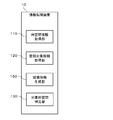
- FIG. 1 is a diagram conceptually illustrating a functional configuration of the information processing apparatus 10 according to the first embodiment.
- the information processing apparatus 10 includes a spatiotemporal information acquisition unit 110, a monitoring target candidate acquisition unit 120, and a target spatiotemporal identification unit 130.
- the spatiotemporal information acquisition unit 110 acquires high-risk spatiotemporal information indicating a spatial region and a time zone in which a possibility of an accident or a crime is high.
- the monitoring target candidate acquisition unit 120 specifies a video to be analyzed from a plurality of videos generated by imaging each of a plurality of places.
- the target spatiotemporal specifying unit 130 specifies at least one of a spatial region to be monitored or a time zone to be monitored, which is at least a part of the spatial region and time zone indicated by the high-risk spatiotemporal information. .
- high-risk spatiotemporal information that is, a video (a still image or a moving image) related to a spatial region and its time zone where there is a high possibility of occurrence of a crime or an accident (hereinafter also referred to as “high risk”).
- Image is analyzed, and information on a candidate for monitoring (details will be described later, a person or an object) is acquired.
- a spatial region to be monitored intensively or a time zone to be monitored intensively is specified from among the spatial regions and time zones indicated by the high-risk time-space information.
- This “space area to be monitored with priority or time zone to be monitored with priority” is presented on a display device (not shown).
- the information presented by the information processing apparatus 10 according to the present embodiment is effective for finite resources (human resources such as police officers and guards, physical resources such as drones and other mobile devices) engaged in monitoring work. This is useful information for planning a proper arrangement plan. For example, a person in charge of monitoring work can easily make a strategy of concentrating resources around a space area that should be monitored intensively, and concentrating resources around the time that should be monitored intensively. .
- the high-risk spatiotemporal information is used to narrow down the analysis target video from a large number of videos.
- Each functional component of the information processing apparatus 10 may be realized by hardware (for example, a hard-wired electronic circuit) that realizes each functional component, or a combination of hardware and software (for example: It may be realized by a combination of an electronic circuit and a program for controlling it).
- hardware for example, a hard-wired electronic circuit
- software for example: It may be realized by a combination of an electronic circuit and a program for controlling it.
- FIG. 2 is a diagram illustrating a hardware configuration of the information processing apparatus 10.
- the information processing apparatus 10 includes a bus 101, a processor 102, a memory 103, a storage 104, an input / output interface 105, and a communication interface 106.
- the bus 101 is a data transmission path for transmitting and receiving data.
- the processor 102, the memory 103, the storage 104, the input / output interface 105, and the communication interface 106 transmit / receive data to / from each other via the bus 101.
- the method of connecting the processors 102 and the like is not limited to bus connection.
- the processor 102 is an arithmetic processing device such as a CPU (Central Processing Unit) or a GPU (Graphics Processing Unit).
- the memory 103 is a memory such as a RAM (Random Access Memory) or a ROM (Read Only Memory).
- the storage 104 is a storage device such as an HDD (Hard Disk Drive), an SSD (Solid State Drive), or a memory card.
- the storage 104 may be a memory such as a RAM or a ROM.
- the input / output interface 105 is an interface for connecting the information processing apparatus 10 and the input / output device.
- the input / output interface 105 is connected to an input device such as a mouse and a keyboard, a display device such as a CRT (Cathode Ray Tube) display or an LCD (Liquid Crystal Display), a touch panel in which the input device and the display device are integrated.
- an input device such as a mouse and a keyboard
- a display device such as a CRT (Cathode Ray Tube) display or an LCD (Liquid Crystal Display)
- a touch panel in which the input device and the display device are integrated.
- the communication interface 106 is an interface for connecting the information processing apparatus 10 to a network such as the Internet and enabling communication with an external apparatus via the network.
- the information processing apparatus 10 is connected to the imaging apparatus 20 via a network.
- the information processing apparatus 10 may not be connected to the imaging apparatus 20.
- the imaging device 20 may be a camera fixed at a predetermined position such as a monitoring camera, or may be a mobile camera such as an in-vehicle camera or a wearable camera worn by a guard or a police officer. May be.
- the mobile camera has a function of acquiring its own position information (for example, a function of acquiring GPS (Global Positioning System) information and information of a base station to which the wireless communication belongs).
- GPS Global Positioning System
- the mobile camera acquires position information at that time and associates it with the generated video.
- the monitoring target candidate acquisition unit 120 can determine whether the video imaged by the mobile imaging device is the video image to be analyzed.
- the monitoring target candidate acquisition unit 120 determines whether the video to be analyzed depends on whether the position information associated with the video generated by the mobile imaging device is included in the spatial area of the high-risk spatiotemporal information. It can be determined whether or not the video.
- the storage 104 stores program modules that realize the functions of the above-described processing units of the information processing apparatus 10.
- the processor 102 implements the functions of the processing units corresponding to the program modules by executing the program modules.
- the processor 102 may execute the program modules after reading them onto the memory 103, or may execute them without reading them onto the memory 103.
- each program module may be stored in the memory 103.
- the information processing apparatus 10 may not include the storage 104.
- at least some of the plurality of imaging devices 20 in FIG. 2 may function as the information processing device 10.
- the imaging device 20 is an intelligent camera (for example, an IP camera or a network camera having an analysis function therein, which is also referred to as a smart camera) or the like, and each function (time-space information) of the information processing apparatus 10 described above.
- Memory and storage device for storing the program module of the acquisition unit 110, the monitoring target candidate acquisition unit 120, and the target space-time specifying unit 130), a processor for executing the program module, and an external device (for example, another imaging device 20) ) And a communication interface for communication.
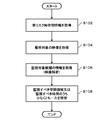
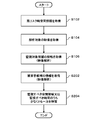
- FIG. 3 is a flowchart illustrating a flow of processing of the information processing apparatus 10 according to the first embodiment.
- the spatiotemporal information acquisition unit 110 acquires high-risk spatiotemporal information (S102).
- the spatiotemporal information acquisition unit 110 is stored in the storage 104 as a program module that implements the functions of Patent Document 2 and Patent Document 3, and the processor 102 executes the program to obtain a high-risk space-time. Predict and get.
- the spatiotemporal information acquisition unit 110 communicates with an external device that generates a high-risk spatiotemporal information by executing a program that implements the functions of Patent Document 2 and Patent Document 3, for example.
- High risk space-time information may be acquired from an external device.
- the method for generating the high-risk space-time information is not limited to the method disclosed in Patent Document 2 and Patent Document 3.
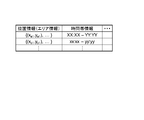
- FIG. 4 is merely an example, and the high-risk time-space information is not limited to this.
- the high-risk spatiotemporal information illustrated in FIG. 4 includes time zone information indicating the time zone together with position information (area information) where the possibility of occurrence of crimes and accidents increases.
- the time zone information may further include date information.
- GPS information or address information is set in the position information (area information).
- the position information is not limited to the example given here, and may be information indicating an area of a certain shape specified by coordinate information (for example, latitude and longitude) of three or more points.
- the high-risk spatiotemporal information may further include other information such as the type of risk (crime, traffic accident, traffic rule violation, etc.) that may occur and the probability of occurrence.
- the spatiotemporal information acquisition unit 110 is configured to be able to acquire, for example, high-risk spatiotemporal information by risk type (for example, by crime type, by traffic accident type, by traffic rule violation type). It may be.
- the monitoring target candidate acquisition unit 120 specifies and acquires the analysis target video based on the high-risk time-space information acquired in S102 (S104).
- the monitoring target candidate acquisition unit 120 is provided in the spatial region indicated by the high-risk spatiotemporal information with reference to a storage unit (eg, FIG. 5) that stores information indicating the position where each imaging device is provided. Or at least a part of the monitoring target area (imaging area) of the imaging device is specified in the spatial region indicated by the high-risk time-space information.
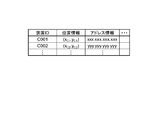
- FIG. 5 is a diagram illustrating information in a storage unit that stores position information of each imaging apparatus.
- the storage unit illustrated in FIG. 5 stores identification information (device ID) of each imaging device and position information of each imaging device in association with each other. Further, as illustrated in FIG.
- the storage unit may further store address information (for example, an IP (Internet Protocol) address) for the monitoring target candidate acquisition unit 120 to communicate with each imaging apparatus. . Further, for example, the storage unit may further store information on the monitoring target area of each imaging apparatus. In this case, the monitoring target candidate acquisition unit 120 determines whether or not at least a part of the monitoring target area of the imaging device is included in the spatial region indicated by the high-risk time-space information. This information can be used for determination.
- the information on the monitoring target area can be described by, for example, the area represented by a polygon and the coordinate information of the vertex position.
- FIG. 5 is merely an example, and the form of the storage unit that stores the position information of each imaging apparatus is not limited to this.
- the storage unit may be provided in the information processing apparatus 10 or may be provided in another apparatus that is communicably connected to the information processing apparatus 10.
- the monitoring target candidate acquisition unit 120 compares the position information included in the high-risk space-time information of FIG. 4 with the position information of the imaging device of FIG. An imaging device corresponding to a location in the vicinity of the spatial region is specified. Then, the monitoring target candidate acquisition unit 120 specifies the video of the specified imaging device as the video to be analyzed. Then, the monitoring target candidate acquisition unit 120 communicates with the imaging apparatus using the identified address information of the imaging apparatus, and acquires the analysis target video.
- the imaging device is a mobile imaging device whose position moves, such as an in-vehicle camera, a drone, or a wearable camera
- the position of the imaging device is measured by GPS or the like and stored in the storage unit. To do.
- information indicating the height and orientation of the mobile imaging device can be acquired, information on the area monitored by the imaging device can be obtained.
- the storage unit can further store information on the monitoring target area obtained using information such as the height and orientation of the mobile imaging device.
- the monitoring target candidate acquisition unit 120 is a current video, a past video (for example, a video of the same time zone of the previous day or one week ago), a video from a predetermined time (for example, one hour ago) to the current time, or The video from the time point specified through the input device to the present time is acquired as the video to be analyzed.
- the monitoring target candidate acquisition unit 120 may acquire the analysis target video based on the specified time information.
- Time information includes weekdays, weekends and holidays, specific time zones, and combinations of day and time zones (eg, weekday school hours), school holidays (eg summer holidays, winter holidays), etc. This is information indicating the salary date, pension payment date, etc.
- the monitoring target candidate acquisition unit 120 specifies and acquires the analysis target video based on conditions other than the above time (for example, season, weather, temperature, etc.) or by further adding conditions other than time. Also good.
- the condition for determining the video to be acquired as the analysis target by the monitoring target candidate acquisition unit 120 may be determined in advance or may be designated via the input device of the information processing apparatus 10 or the like.
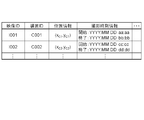
- FIG. 6 is a diagram illustrating an example of a storage unit that collects and manages video generated by each imaging apparatus.
- the identification information (video ID) of each video the identification information (device ID) of the imaging device that generated the video, its position information, and the shooting time information including the shooting start time and shooting end time. It is remembered.
- FIG. 6 is merely an example, and the form of the storage unit that collects and manages the video generated by each imaging apparatus is not limited thereto.
- the storage unit may be provided in the information processing apparatus 10 or may be provided in another apparatus that is communicably connected to the information processing apparatus 10.
- the monitoring target candidate acquisition unit 120 uses the identification information of the imaging device specified as described above using the position information included in the high-risk spatiotemporal information, or the position information and time information included in the high-risk spatiotemporal information as keys. As described above, the video to be analyzed can be specified and acquired from the storage unit illustrated in FIG.
- the monitoring target candidate acquisition unit 120 analyzes the acquired video and acquires information on the monitoring target candidate (S106).
- the “monitoring target candidate” includes a person who has caused a crime or an accident, a vehicle owned by the person, a person who may cause a crime or an accident, and a vehicle.
- the monitoring target candidate acquisition unit 120 identifies monitoring target candidates and generates information on the monitoring target candidates as in a specific example described later.
- the monitoring target candidate information may be simply the number of monitoring target candidates, or may include information related to a person or object specified as the monitoring target candidate.
- the spatiotemporal information acquisition unit 110 acquires at least high-risk spatiotemporal information related to crime. Based on the high-risk spatio-temporal information acquired here, the video to be analyzed is specified.
- the spatiotemporal information acquisition unit 110 may acquire high-risk spatiotemporal information related to a certain type of crime, and may specify a video to be analyzed according to the type.
- the monitoring target candidate acquisition unit 120 recognizes a person within a video range (imaging range of the imaging device) specified as an analysis target using, for example, a face or person recognition technology.
- the monitoring target candidate acquisition unit 120 recognizes a person who has entered the range of the analysis target video, a person who has left, a person who continues to stay, and the like. Then, the monitoring target candidate acquisition unit 120 collates the recognized person with the existing monitoring target.
- the person who needs monitoring is not particularly limited, for example, it is a person who has a criminal record, a person who is making arrangements, or a person who is listed as a monitoring target for some reason.
- the spatiotemporal information acquisition unit 110 acquires high-risk spatiotemporal information related to a specific type of crime
- the monitoring target candidate acquisition unit 120 uses the type of information on the existing person who needs monitoring. Can be narrowed down.
- the information of the person who needs to be monitored is registered in a predetermined storage unit (not shown), and this storage unit is provided in, for example, a police organization system. Then, the monitoring target candidate acquisition unit 120 identifies a corresponding person as a monitoring target candidate in the storage unit.
- the spatiotemporal information acquisition unit 110 acquires at least high-risk spatiotemporal information related to crime. Based on the high-risk spatio-temporal information acquired here, the video to be analyzed is specified.
- the spatiotemporal information acquisition unit 110 may acquire high-risk spatiotemporal information related to a certain type of crime, and may specify a video to be analyzed according to the type.
- the monitoring target candidate acquisition unit 120 analyzes the video when a person estimated to be the same is detected a predetermined number of times or a predetermined time at a predetermined range. The obtained characteristics of the person are specified as monitoring target candidates.
- the monitoring target candidate acquisition unit 120 uses, for example, an image recognition technique for tracking a person estimated to be the same, for example, the number of times a person estimated to be the same in the analysis target video is detected, or a detected time. It is possible to acquire information such as length. A person who has been detected many times can be said to be a person who frequently appears in the predetermined range. A person who has been detected for a long time can be said to be a person who deceives the predetermined range for a long time. Such a person may also be considered a suspicious person who may have a criminal preview. Therefore, the monitoring target candidate acquisition unit 120 identifies such a person as a monitoring target candidate based on the video analysis result.
- the monitoring target candidate acquisition unit 120 uses features that are predefined in association with the type of crime. Thus, the monitoring target candidate can be identified with high accuracy.
- the monitoring target candidate acquisition unit 120 analyzes the presence / absence of a person as described above based on the threshold value. It can be determined from the target video.
- the information such as the threshold value may be stored in advance in the storage 104 of FIG. 2, for example, or may be acquired via the input / output interface 105 or the communication interface 106 of FIG.
- the spatiotemporal information acquisition unit 110 acquires at least high-risk spatiotemporal information related to crime. Based on the high-risk spatio-temporal information acquired here, the video to be analyzed is specified.
- the spatiotemporal information acquisition unit 110 may acquire high-risk spatiotemporal information related to a certain type of crime, and may specify a video to be analyzed according to the type.
- the monitoring target candidate acquisition unit 120 is a two-wheeled or three-wheeled vehicle that is estimated to be the same, and the two-wheeled or three-wheeled vehicle that takes two people is within a predetermined range.
- the monitoring target candidate acquisition unit 120 uses, for example, an image recognition technique for tracking an object estimated to be the same, for example, the number of times that the vehicle estimated to be the same in the analysis target video is detected, or the detected time. It is possible to acquire information such as length.
- a vehicle with a large number of detected times can be said to be a vehicle that frequently appears in the predetermined range.
- a vehicle that has been detected for a long time can be said to be a vehicle that deceives the predetermined range for a long time.
- the monitoring target candidate acquisition unit 120 identifies such a vehicle as a monitoring target candidate based on the video analysis result.
- the spatiotemporal information acquisition unit 110 has acquired high-risk spatiotemporal information related to a specific type of crime
- the monitoring target candidate acquisition unit 120 uses features that are predefined in association with the type of crime.
- the monitoring target candidate can be identified with high accuracy.
- the monitoring target candidate acquisition unit 120 analyzes the presence / absence of the vehicle as described above based on the threshold value. It can be determined from the target video.
- the information such as the threshold value may be stored in advance in the storage 104 of FIG. 2, for example, or may be acquired via the input / output interface 105 or the communication interface 106 of FIG.
- the spatiotemporal information acquisition unit 110 acquires at least high-risk spatiotemporal information related to crime. Based on the high-risk spatio-temporal information acquired here, the video to be analyzed is specified.
- the spatiotemporal information acquisition unit 110 may acquire high-risk spatiotemporal information related to a certain type of crime, and may specify a video to be analyzed according to the type.
- the monitoring target candidate acquisition unit 120 recognizes a vehicle within a video range (imaging range of the imaging device) specified as an analysis target.
- the monitoring target candidate acquisition unit 120 uses each image within the range of the video to be analyzed (a vehicle that has entered the range of the video to be analyzed, a vehicle that has left, a vehicle that continues to stay, etc. ) And the monitoring object candidate acquisition part 120 specifies the owner of the recognized vehicle with reference to the memory
- This storage unit is provided in a local government system, for example.
- the monitoring target candidate acquisition unit 120 collates the specified owner with the existing monitoring target.
- the person who needs monitoring is not particularly limited, for example, it is a person who has a criminal record, a person who is making arrangements, or a person who is listed as a monitoring target for some reason.
- the monitoring target candidate acquisition unit 120 can narrow down data used for verification using the type.
- the information of the person who needs to be monitored is registered in a predetermined storage unit (not shown), and this storage unit is provided in, for example, a police organization system. Then, the monitoring target candidate acquisition unit 120 identifies a corresponding person as a monitoring target candidate in the storage unit.
- the spatiotemporal information acquisition unit 110 acquires at least high-risk spatiotemporal information related to traffic accidents and traffic accident violations.
- the spatiotemporal information acquisition unit 110 may acquire high-risk spatiotemporal information related to a certain type of traffic accident or traffic rule violation, and may specify a video to be analyzed according to the type.
- the monitoring target candidate acquisition unit 120 recognizes a vehicle in the range of the video specified as the analysis target (the imaging range of the imaging device).
- the monitoring target candidate acquisition unit 120 uses each image within the range of the video to be analyzed (a vehicle that has entered the range of the video to be analyzed, a vehicle that has left, a vehicle that continues to stay, etc.
- the monitoring target candidate acquisition unit 120 checks whether or not the recognized vehicle is a vehicle owned by a person who has caused a traffic accident or a person who violates traffic rules.
- the spatiotemporal information acquisition unit 110 acquires high-risk spatiotemporal information regarding a specific type of traffic accident or traffic rule violation
- the monitoring target candidate acquisition unit 120 uses the type of data to be used for verification. You can narrow down. Information on vehicles owned by the person who caused the traffic accident or the person who violated the traffic rules is registered in a predetermined storage unit (not shown), and this storage unit is provided in a system of a local government, for example. Yes.
- the monitoring object candidate acquisition part 120 specifies the applicable vehicle as a monitoring object candidate in the memory
- the monitoring target candidate acquisition unit 120 can receive input of information related to the crime currently being investigated, and can acquire information on the monitoring target candidate based on the information. For example, when the candidate of the monitoring target acquisition unit 120 acquires the method of the crime currently being investigated as input information, the monitoring target candidate acquisition unit 120 can obtain a profiling result with reference to a database storing information of existing criminals and arrangers. Specifically, the monitoring target candidate acquisition unit 120 can acquire information such as a person who has committed a crime using the same technique and the residence and activity time of the person as monitoring target candidate information.
- the target space-time specifying unit 130 based on the information of the monitoring target candidates acquired in S106, the space region to be monitored or the monitoring from the high-risk space region and time zone indicated by the high-risk space-time information At least one of the times to be specified is specified (S108).
- the monitoring target candidate acquisition unit 120 specifies a video at the current time or a video in the latest time range as an analysis target and acquires information on the monitoring target candidate from the video.
- the target spatio-temporal specifying unit 130 totals the number of pieces of information of the acquired monitoring target candidates in units of spatial areas indicated by the high risk spatiotemporal information. Then, the target spatio-temporal specifying unit 130 determines the priority of the spatial region that becomes a high risk in the same time zone according to the number of tabulations.
- the higher the priority is given to the spatial region, the higher the degree to be monitored.
- the target space-time specifying unit 130 specifies a space region to be monitored in descending order of priority within a range that can be handled by an operable resource.
- the information on the operable resource is not particularly limited, but is stored in a predetermined storage area of the information processing apparatus 10, for example.
- the target space-time specifying unit 130 may adjust the time during which the monitoring work is performed in a high-risk space area according to the number of tabulations. For example, the target space-time specifying unit 130 assigns a longer monitoring time to a space area with a larger number of monitoring target candidates, that is, with a higher potential risk.
- the monitoring target candidate acquisition unit 120 may display past images in the spatial region and time zone indicated by the high-risk time-space information (for example, images in the same spatial region and the same time zone the previous day or one week ago). It is assumed that the information is identified as an analysis target, and information on the monitoring target candidate is acquired from the video.
- the target spatio-temporal specifying unit 130 counts the number of pieces of information on the acquired monitoring target candidates for each spatial area and time zone indicated by the high-risk spatiotemporal information, for example. The total number obtained here is information indicating the temporal and spatial risk tendency indicated by the high-risk temporal and spatial information. Then, the target spatio-temporal specifying unit 130 adjusts the priority of the high-risk space area in the same time zone and the time for performing the monitoring work in the high-risk space area according to the total number.
- the monitoring target candidate acquisition unit 120 counts the number of monitoring target candidate information for each spatial region and time zone
- the target space-time specifying unit 130 counts the total number for each spatial region and time zone. Accordingly, the priority of the space area that becomes a high risk in the same time zone and the time for performing the monitoring work in the space area that becomes a high risk may be adjusted.
- the target space-time specifying unit 130 can adjust the space area to be monitored, the time zone to be monitored, and both using the information of the monitoring target candidates. Based on the adjusted information, the person in charge of the monitoring work can easily make a strategy related to the monitoring work.
- the present embodiment has the same functional configuration and hardware configuration as those of the first embodiment except for the following points.
- FIG. 7 is a diagram conceptually illustrating a functional configuration of the information processing apparatus 10 according to the second embodiment.
- the information processing apparatus 10 of this embodiment further includes a victim candidate information acquisition unit 140 in addition to the configuration of the first embodiment.
- the information processing apparatus 10 according to the present embodiment further stores a program that realizes a function of a victim candidate information acquisition unit 140 described later in the storage 104 of FIG.
- the processor 102 further realizes the function of the victim candidate information acquisition unit 140 by executing this program module.
- the victim candidate information acquisition unit 140 acquires information on victim candidates for accidents or crimes.
- the victim candidate information acquisition unit 140 can specify a victim candidate using template information of a typical victim of a crime or an accident, for example. This template information can be generated, for example, from statistics of crimes and accident victims that occurred in the past.
- the victim candidate information acquisition unit 140 refers to a template information storage unit (not shown) that stores the template information, and damages a person having characteristics that match the template information from the video identified as the analysis target. Specified as a candidate.
- “match” means that a certain degree of similarity is exhibited.
- the template information storage unit may be provided in the information processing apparatus 10 or may be provided in another apparatus that is communicably connected to the information processing apparatus 10.
- the victim candidate information acquisition unit 140 can narrow down and select victim candidates based on the monitoring candidate target information acquired by the monitoring target candidate acquisition unit 120.
- the target space-time specifying unit 130 uses the victim candidate information acquired by the victim candidate information acquisition unit 140 to adjust at least one of the space area to be monitored or the time zone to be monitored.
- FIG. 8 is a flowchart illustrating a flow of processing of the information processing apparatus 10 according to the second embodiment. In the following, differences from the processing in the first embodiment will be mainly described.
- the victim candidate information acquisition unit 140 identifies a victim candidate corresponding to the monitoring target candidate and acquires information on the victim candidate (S202).
- the person specified as the monitoring candidate target by the monitoring target candidate acquisition unit 120 is a person who has been snatched in the past.
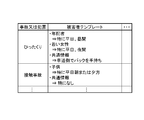
- the template information storage unit stores information as shown in FIG. 9, for example.
- FIG. 9 is a diagram illustrating an example of information stored in the template information storage unit. In the example of FIG. 9, template information indicating that snoring is easy for an elderly person to easily encounter damage particularly during weekday daytime, and that a young woman is likely to encounter damage particularly on weekday nights is stored.
- the victim candidate information acquisition unit 140 acquires template information related to snatching in FIG. 9 by identifying information on snatching victim candidates from the video to be analyzed. This victim candidate information may simply be the number determined to match the template information, or information related to the person identified as the victim candidate (age, gender, how to walk, or how to hold things) Etc.) may be included.
- the target space-time specifying unit 130 uses the monitoring target candidate information acquired in S106 and the victim candidate information acquired in S202 to at least one of a spatial region to be monitored or a time zone to be monitored.
- One is specified (S204).
- the target spatiotemporal specifying unit 130 adjusts the priority of the space area to be monitored or the length of time to be monitored according to the correspondence between the number of monitoring target candidates and the number of victim candidates. .
- the process of S106 and the process of S202 may be executed in parallel.
- only the process of S202 may be executed without executing the process of S106.
- the information processing apparatus 10 may not include the monitoring target candidate acquisition unit 120.
- the target spatio-temporal specifying unit 130 specifies, in S204, a space region or time zone in which the number of victim candidates (number of victim candidate information) obtained in S202 is large as a space region to be monitored or a time zone to be monitored. To do.
- the target space-time specifying unit 130 can specify a space region to be monitored or a time zone to be monitored based on the threshold value.
- the information such as the threshold value may be stored in advance in the storage 104 of FIG. 2, for example, or may be acquired via the input / output interface 105 or the communication interface 106 of FIG. By doing in this way, the person in charge can easily make a strategy related to monitoring work such as security and crime prevention activities, focusing on the space area or time zone specified based on the number of persons who can be victims.
- At least one of the spatial region to be monitored or the time zone to be monitored is adjusted using the victim candidate information.
- the space area which should be monitored intensively, or the time zone which should be intensively monitored can be specified more accurately. For example, even if the monitoring target candidate is specified, if there is no victim candidate, it can be determined that the possibility of an accident or a crime occurring is low. On the other hand, if both the monitoring target candidate and the victim candidate are detected in a close place, it can be determined that the possibility of an accident or a crime occurring is high.
- the information processing apparatus 10 accurately identifies the space area to be monitored and the time zone to be monitored according to the risk determined by the combination of the information of the monitoring target candidate and the information of the victim candidate. it can.
- the information processing apparatus 10 according to the present embodiment can determine a risk by specifying a real-time victim candidate from a video at the current time or a video in the latest time range. It is also possible to determine the risk by identifying the behavior tendency of the victim candidate from the past video.
- the present embodiment includes the same functional configuration and hardware configuration as those of the first and second embodiments except for the following points. In the following, an example based on the configuration of the first embodiment will be described.
- FIG. 10 is a diagram conceptually illustrating a functional configuration of the information processing apparatus 10 according to the third embodiment.
- the information processing apparatus 10 of the present embodiment further includes an environment information acquisition unit 150 in addition to the configuration of the first embodiment.
- the information processing apparatus 10 according to the present embodiment further stores in the storage 104 a program that realizes the function of the environment information acquisition unit 150 described later.
- the processor 102 further realizes the function of the environment information acquisition unit 150 by executing this program module.
- the environment information acquisition unit 150 generates environment information of an area included in the video based on the video specified as the analysis target or information specifying the location of the video.
- “environmental information” is information relating to environmental factors that may affect the probability of occurrence of an accident or crime.
- Specific examples of environmental information include, for example, information indicating the degree of congestion of people and vehicles, information indicating the flow of people and vehicles, information indicating the stopping status of vehicles, information indicating good / bad road prospects, Information that indicates whether or not the surrounding situation is difficult to understand because it is surrounded by a shield such as a tree, information that indicates whether or not there is a lighting fixture (whether or not there is sufficient brightness), etc. Is mentioned.
- the environmental information is not limited to the examples given here.
- environment information can be generated using information obtained by analyzing information accumulated from an in-vehicle drive recorder or the like. Specifically, it collects and aggregates information that the vehicle suddenly stepped on the brake, and whether or not sudden braking is often stepped on at that location (that is, whether or not it is a place where behavior that may lead to an accident is likely to occur). Can be generated as environment information.
- the target space-time specifying unit 130 of the present embodiment uses the environment information acquired by the environment information acquiring unit 150 to adjust at least one of the space area to be monitored or the time zone to be monitored.
- FIG. 11 is a flowchart illustrating a flow of processing of the information processing apparatus 10 according to the third embodiment. In the following, differences from the processing in the first embodiment will be mainly described.
- the environment information acquisition unit 150 acquires environment information based on the video specified as the analysis target, as shown in a specific example described later (S302).
- the process executed by the environment information acquisition unit 150 is not limited to a specific example described later.
- the environment information acquisition unit 150 analyzes a video and calculates a density (degree of congestion) per unit area of pedestrians and vehicles, a moving direction / moving speed (flow of vehicles and pedestrians), and the like.
- the environment information indicating the congestion state around the video range (the imaging range of the imaging device) is acquired. For example, it can be said that in places where people and vehicles are congested, there is a higher risk of accidents such as contact accidents than in places that are not congested. Also, in places where there are few people and vehicles, there are few people around and there is a high risk of crime.
- the environment information acquisition unit 150 acquires information indicating such a congestion state as environment information.
- the environment information acquisition unit 150 can also analyze the video and detect the presence or absence of a blind spot that induces a crime or an accident. For example, when there is an object that causes a blind spot, such as a planted tree, a fence of a private house, or a stopped vehicle, a blind spot is created by the object. When there is such a blind spot, a pedestrian may come out suddenly from the blind spot. That is, it can be said that a place where an object causing a blind spot exists has a higher risk of occurrence of a contact accident with a vehicle or another person than a place with no good prospect.
- a blind spot that induces a crime or an accident. For example, when there is an object that causes a blind spot, such as a planted tree, a fence of a private house, or a stopped vehicle, a blind spot is created by the object. When there is such a blind spot, a pedestrian may come out suddenly from the blind spot. That is, it can be said that a place where an object causing a blind spot
- the environment information acquisition unit 150 detects an object that causes a blind spot, such as a planted tree, a private house fence, or a parked vehicle, from the analysis target video, and the presence or absence of such an object or the number thereof. Is acquired as environmental information.
- the environment information acquisition unit 150 specifies the location of the video without analyzing the video.
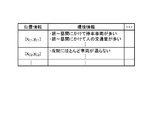
- Environmental information can be acquired based on the information. For example, as shown in FIG. 12, in the case where an environment information storage unit that stores location information and environment information in association with each other is prepared in advance, the environment information acquisition unit 150 may store the space area indicated by the high-risk time-space information.
- the environment information can be acquired from the environment information storage unit using the time zone. For example, it is assumed that the imaging device with the imaging device ID “C001” in FIG. 5 is identified based on the high-risk time-space information acquired in S102.
- the environment information acquisition unit 150 based on the position information corresponding to the image pickup apparatus "(x C1, y C1)", acquires environment information corresponding to the position information of Fig. 12 (x C1, y C1) can do.
- the position information “(x C1 , y C1 )” corresponding to the imaging device is “information specifying the location of the video”.
- the target space-time specifying unit 130 specifies the space area to be monitored or the time zone to be monitored using the information of the monitoring target candidate acquired in S106 and the environment information acquired in S302 (S304). For example, the target space-time specifying unit 130 uses the number of blind spots and the degree of congestion indicated by the environment information acquired in S302 as parameters, and the priority of the space area to be monitored and the time zone to be monitored (length of time). The spatial area to be monitored or the time to be monitored, which is specified based on the information of the monitoring target candidate acquired in S106, is adjusted using a predetermined mathematical expression for adjusting the). However, the process executed by the target space-time specifying unit 130 of the present embodiment is not limited to this example.
- the process of S106 and the process of S302 may be executed in parallel.
- only the process of S302 may be executed without executing the process of S106.
- the information processing apparatus 10 may not include the monitoring target candidate acquisition unit 120.
- the target space-time specifying unit 130 uses, for example, the number of blind spots and the degree of congestion indicated by the environmental information acquired in S302 as parameters, the priority of the spatial region to be monitored, and the time zone to be monitored (length of time).
- the space area to be monitored or the time zone to be monitored is specified using a predetermined mathematical formula for calculating ().
- the spatial region to be monitored or the time zone to be monitored is specified according to the environmental information extracted from the analysis target video or the preset environmental information. be able to. And based on the information specified here, the person in charge can easily make a strategy related to monitoring work such as security and crime prevention activities.
- the information processing apparatus 10 uses environmental information indicating the presence or absence of an object causing a blind spot or the number of such objects for processing for specifying a spatial region to be monitored or a time zone to be monitored. .
- the space area which should be monitored intensively, or the time zone which should be intensively monitored can be specified more accurately.
- the information processing apparatus 10 of the present embodiment may obtain the environmental information from the video at the current time or the video in the latest time range, or from the past video, Environmental information may be acquired by determining environmental trends.
- the present embodiment includes the same functional configuration and hardware configuration as those of the first to third embodiments except for the following points. In the following, an example based on the configuration of the first embodiment will be described.
- FIG. 13 is a diagram conceptually illustrating a functional configuration of the information processing apparatus 10 according to the fourth embodiment.
- the information processing apparatus 10 according to the present embodiment further includes a database generation unit 160 in addition to the configuration of the first embodiment.
- the information processing apparatus 10 according to the present embodiment further stores in the storage 104 a program that realizes the function of the database generation unit 160 described later.
- the processor 102 further realizes the function of the database generation unit 160 by executing this program module.
- the database generation unit 160 receives an input of the monitoring result corresponding to at least one of the space area to be monitored or the time zone to be monitored, and creates the database of the input result.
- the database generation unit 160 communicates with the input device of the information processing device 10 and other devices, and receives an input of monitoring results.
- the “result of monitoring work” is, for example, information such as the space area to be monitored specified by the target space-time specifying unit 130 or the number of persons who have performed monitoring work in the time zone to be monitored and the staying time, the space area The number of criminal candidates and victim candidates found in the area, or the number of accidents or crimes found in the space area.
- the database generation unit 160 accumulates the input information in the monitoring result database 162.
- the target space-time specifying unit 130 uses the database information generated and managed by the database generation unit 160 and uses the database result to determine the space area to be monitored or the time zone to be monitored. Adjust at least one. For example, it is assumed that the number of criminal candidates and victim candidates and the number of accidents or crimes do not change in a certain space area regardless of whether or not monitoring is performed and the length of monitoring time. Such a space area is considered to be a space area where there is little profit from monitoring work. On the other hand, it is assumed that the number of criminal candidates, victim candidates, and the number of accidents or crimes fluctuates more than a certain value depending on the presence or absence of monitoring work or the length of monitoring time in a certain space area.
- the target space-time specifying unit 130 can analyze the information accumulated in the monitoring result database 162 in this way and specify a more effective monitoring plan (a space area to be monitored and a time zone to be monitored). .
- the result of the monitoring work is made into a database, and the result made into the database is used in the process of specifying the space area to be monitored or the time zone to be monitored.
- the person in charge of monitoring work can devise a more effective arrangement plan according to the effect of the monitoring work actually obtained, for example.
- the information processing apparatus 10 has a functional configuration as shown in FIG. Further, the information processing apparatus 10 according to the present embodiment includes a hardware configuration as illustrated in FIG. 2 as in the embodiments.
- the spatiotemporal information acquisition unit 110 predicts a high-risk spatiotemporal information by using past crimes and accident occurrence histories, for example, as in Patent Document 2 and Patent Document 3, for example. To get.
- the spatiotemporal information acquisition unit 110 uses the characteristics of each spatial region as parameters for predicting a high-risk space-time (average traffic volume by time zone of people and vehicles, the number of blind spots existing in the spatial region, etc. ) May be further used.
- the spatiotemporal information acquisition unit 110 acquires the monitoring work result stored in the monitoring result database 162 as feedback information.
- the spatiotemporal information acquisition unit 110 further uses the acquired feedback information for the prediction processing of the high-risk spatiotemporal information.
- the monitoring result database 162 includes information such as the number of persons who have performed monitoring work and the staying time in the space area to be monitored or the time zone to be monitored, which is specified by the target space-time specifying unit 130, Information including the number of criminal candidates and victim candidates found in the space area or the number of accidents or crimes found in the space area is stored.
- the information stored in the monitoring result database 162 may indicate the actual risk result in the space-time predicted as “high risk”. That is, the information (feedback information) stored in the monitoring result database 162 can be used as a correction parameter for predicting (adjusting) the high-risk time-space more accurately.
- the feedback information acquired by the spatiotemporal information acquisition unit 110 is a part of information stored in the monitoring result database 162 (for example, information of a specified period (several weeks, months, etc.)). Alternatively, all information stored in the monitoring result database 162 may be used.
- the results of the monitoring work are stored in a database, and the results (feedback information) stored in the database are used as correction parameters for processing for predicting a high-risk time-space. According to the present embodiment, it is possible to predict the high-risk time-space more accurately using the result of actually performing the monitoring work.
- Spatiotemporal information acquisition means for acquiring high-risk spatiotemporal information indicating the spatial area and the time zone in which the possibility of an accident or the occurrence of a crime is high; Based on the high-risk spatiotemporal information, a video to be analyzed is identified from a plurality of videos generated by imaging each of a plurality of locations, the identified video is analyzed, and a monitoring target candidate Monitoring target candidate acquisition means for acquiring the information of; Based on the information of the monitoring target candidate, among the spatial region and time zone indicated by the high-risk time-space information, at least a spatial region to be monitored that is at least a part of the spatial region, or at least a time zone to be monitored A target space-time specifying means for specifying one; An information processing apparatus comprising: 2.
- the target space-time specifying means is: Using the victim candidate information, adjust at least one of the space area to be monitored or the time zone to be monitored, 1.
- the victim candidate information acquisition means includes: Selecting the victim candidate based on accident or crime information related to the information of the candidate for monitoring; 2.
- An environment information acquisition unit configured to acquire environment information of an area included in the video based on the specified video or information specifying a location of the video;
- the target space-time specifying means is: Adjusting at least one of the space area to be monitored or the time zone to be monitored using the environmental information; 1. To 3.
- the information processing apparatus according to any one of the above. 5).
- the target space-time specifying means is: Adjusting at least one of the spatial region to be monitored or the time zone to be monitored using the databased results; 5).
- the spatiotemporal information acquisition means includes Obtain the databased results as feedback information, Utilizing the acquired feedback information for prediction processing of a spatial region and a time zone in which the possibility of an accident or a crime is likely to occur, and acquiring the high-risk time-space information, 5).
- the monitoring target candidate acquisition means includes Recognizing a person within the specified video range, Collating the recognized person with the person in need of monitoring in the storage means for registering the information of the existing person in need of monitoring, Identifying a corresponding person as the monitoring target candidate in the storage means; 1. To 7. The information processing apparatus according to any one of the above. 9. The monitoring target candidate acquisition means includes As a result of analyzing the specified video, when a person estimated to be the same is detected at a predetermined range of locations a predetermined number of times or a predetermined time or more, the person is specified as the monitoring target candidate. 1. To 8. The information processing apparatus according to any one of the above. 10.
- the monitoring target candidate acquisition means includes As a result of analyzing the specified video, a two-wheeled or three-wheeled vehicle that is estimated to be the same, and detects a two-wheeled or three-wheeled vehicle that is riding two persons at a predetermined range or more for a predetermined time or more If the two-wheeled or three-wheeled vehicle is specified as the candidate for monitoring, 1.
- a two-wheeled or three-wheeled vehicle that is estimated to be the same, and detects a two-wheeled or three-wheeled vehicle that is riding two persons at a predetermined range or more for a predetermined time or more If the two-wheeled or three-wheeled vehicle is specified as the candidate for monitoring, 1.
- the information processing apparatus according to any one of the above. 11.
- the monitoring target candidate acquisition means includes Recognizing vehicles within the specified video range; Identify the owner of the recognized vehicle with reference to storage means for registering information including the owner of each vehicle; The identified owner is compared with the monitor required in the storage means for registering information of the existing monitor required, Identifying a corresponding person as the monitoring target candidate in the storage means; 1.
- the information processing apparatus includes Recognizing vehicles within the specified video range; Collating the recognized vehicle with the vehicle in the storage means for registering information on the vehicle owned by the person who caused the traffic accident or the person who violated the traffic rules, The corresponding vehicle is specified as the monitoring target candidate in the storage means. 1.
- the information processing apparatus according to any one of the above. 13.
- a video to be analyzed is identified from a plurality of videos generated by imaging each of a plurality of locations, the identified video is analyzed, and a monitoring target candidate Get information about Based on the information of the monitoring target candidate, among the spatial region and time zone indicated by the high-risk time-space information, at least a spatial region to be monitored that is at least a part of the spatial region, or at least a time zone to be monitored Identify one, Information processing method including the above.
- the computer is Obtain information on potential accident or crime victims, Using the victim candidate information, adjust at least one of the space area to be monitored or the time zone to be monitored, Further includes: Information processing method described in 1. 15.
- the computer is Selecting the victim candidate based on accident or crime information related to the information of the candidate for monitoring; Further includes: Information processing method described in 1. 16.
- the computer is Based on the information specifying the specified video or the location of the video, obtaining environmental information of the area included in the video, Adjusting at least one of the space area to be monitored or the time zone to be monitored using the environmental information; Further includes: To 15. The information processing method as described in any one of these. 17.
- the computer is Receiving an input of a monitoring result corresponding to at least one of the space region to be monitored or the time zone to be monitored, and creating the database of the input result; Further includes: To 16. The information processing method as described in any one of these. 18. The computer is Adjusting at least one of the spatial region to be monitored or the time zone to be monitored using the databased results; Further includes: Information processing method described in 1. 19. The computer is Obtain the databased results as feedback information, Utilizing the acquired feedback information for prediction processing of a spatial region and a time zone in which the possibility of an accident or a crime is likely to occur, and acquiring the high-risk time-space information, Further includes: Information processing method described in 1. 20.
- the computer is Recognizing a person within the specified video range, Collating the recognized person with the person in need of monitoring in the storage means for registering the information of the existing person in need of monitoring, Identifying a corresponding person as the monitoring target candidate in the storage means; Further includes: To 19. The information processing method as described in any one of these. 21.
- the computer is As a result of analyzing the specified video, when a person estimated to be the same is detected at a predetermined range of locations a predetermined number of times or a predetermined time or more, the person is specified as the monitoring target candidate. Further includes: To 20. The information processing method as described in any one of these. 22.
- the computer is As a result of analyzing the specified video, a two-wheeled or three-wheeled vehicle that is estimated to be the same, and detects a two-wheeled or three-wheeled vehicle that is riding two persons at a predetermined range or more for a predetermined time or more If the two-wheeled or three-wheeled vehicle is specified as the candidate for monitoring, Further includes: To 21. The information processing method as described in any one of these. 23.
- the computer is Recognizing vehicles within the specified video range; Identify the owner of the recognized vehicle with reference to storage means for registering information including the owner of each vehicle; The identified owner is compared with the monitor required in the storage means for registering information of the existing monitor required, Identifying a corresponding person as the monitoring target candidate in the storage means; Further includes: To 22. The information processing method as described in any one of these. 24. The computer is Recognizing vehicles within the specified video range; Collating the recognized vehicle with the vehicle in the storage means for registering information on the vehicle owned by the person who caused the traffic accident or the person who violated the traffic rules, The corresponding vehicle is specified as the monitoring target candidate in the storage means. Further includes: To 23. The information processing method as described in any one of these. 25.
- Computer Spatio-temporal information acquisition means for acquiring high-risk spatio-temporal information indicating the spatial area and the time zone in which the possibility of an accident or the occurrence of a crime is high, Based on the high-risk spatiotemporal information, a video to be analyzed is identified from a plurality of videos generated by imaging each of a plurality of locations, the identified video is analyzed, and a monitoring target candidate Monitoring target candidate acquisition means for acquiring the information of Based on the information of the monitoring target candidate, among the spatial region and time zone indicated by the high-risk time-space information, at least a spatial region to be monitored that is at least a part of the spatial region, or at least a time zone to be monitored Target space-time specifying means for specifying one side, Program to function as. 26.
- the computer Victim candidate information acquisition means for acquiring information on accident or crime victim candidates, Means for adjusting at least one of the space area to be monitored or the time zone to be monitored using the victim candidate information; For further functioning as 25.
- the program described in. 27. The computer, Means for selecting the victim candidate based on information on an accident or a crime related to the information of the candidate for monitoring; 26. for further functioning as The program described in. 28.
- the computer Environmental information acquisition means for acquiring environmental information of an area included in the video based on the specified video or information specifying the location of the video; Means for adjusting at least one of the spatial region to be monitored or the time zone to be monitored using the environmental information; For further functioning as 25.
- the computer Database forming means for receiving an input of a monitoring result corresponding to at least one of the space region to be monitored or the time zone to be monitored, and creating the database of the input result; For further functioning as 25. To 28. The program as described in any one of these. 30.
- the computer Means for adjusting at least one of the spatial region to be monitored or the time zone to be monitored using the databased results; 29 for further functioning as The program described in. 31.
- the computer Means for obtaining the databased results as feedback information; Means for acquiring the high-risk spatiotemporal information by using the acquired feedback information for a prediction process of a spatial region and a time zone in which a possibility of an accident or a crime is likely to occur, 29 for further functioning as The program described in. 32.
- the computer Means for recognizing a person within the specified video range; Means for collating the recognized person with the person in need of monitoring in the storage means for registering information of the person in need of existing monitoring; Means for identifying a corresponding person as the monitoring target candidate in the storage means; For further functioning as 25.
- the program as described in any one of these. 33.
- the computer As a result of analyzing the specified video, when a person estimated to be the same is detected in a predetermined range at a predetermined number of times or a predetermined time or more, a means for specifying the person as the monitoring target candidate; For further functioning as 25.
- the program as described in any one of these. 34.
- the computer As a result of analyzing the specified video, a two-wheeled or three-wheeled vehicle that is estimated to be the same, and detects a two-wheeled or three-wheeled vehicle that is riding two persons at a predetermined range or more for a predetermined time or more Means for identifying the two-wheeled or three-wheeled vehicle as the candidate for monitoring, To function as 25. To 33. The program as described in any one of these. 35.
- the computer Means for recognizing a vehicle within the range of the specified image; Means for identifying the owner of the recognized vehicle with reference to storage means for registering information including the owner of each vehicle; Means for collating the specified owner with the person in need of monitoring in the storage means for registering information of the person in need of existing monitoring; Means for identifying a corresponding person as the monitoring target candidate in the storage means; For further functioning as 25.
- the program as described in any one of these. 36.
- the computer Means for recognizing a vehicle within the range of the specified image; Means for collating the recognized vehicle with the vehicle of the storage means for registering information on the vehicle owned by the person who caused the traffic accident or the person who violated the traffic rules; Means for specifying the corresponding vehicle as the monitoring target candidate in the storage means; To function as 25. To 35. The program as described in any one of these. 37.
- Spatiotemporal information acquisition means for acquiring high-risk spatiotemporal information indicating the spatial area and the time zone in which the possibility of an accident or the occurrence of a crime is high; Based on the high-risk spatiotemporal information, an image to be analyzed is identified from among a plurality of images generated by imaging each of a plurality of locations, and the identified image is analyzed to generate an accident or crime Victim candidate information acquisition means for acquiring victim candidate information of Based on the victim candidate information, among the spatial region and time zone indicated by the high-risk time-space information, at least a spatial region to be monitored that is at least a part of the spatial region, or at least a time zone to be monitored A target space-time specifying means for specifying one; An information processing apparatus comprising: 38.
- Computer Acquire high-risk spatiotemporal information indicating the space area and the time zone in which the possibility of an accident or crime is likely to occur Based on the high-risk spatiotemporal information, an image to be analyzed is identified from among a plurality of images generated by imaging each of a plurality of locations, and the identified image is analyzed to generate an accident or crime Information about potential victims of Based on the victim candidate information, among the spatial region and time zone indicated by the high-risk time-space information, at least a spatial region to be monitored that is at least a part of the spatial region, or at least a time zone to be monitored Identify one, Information processing method including the above. 39.
- Computer Spatio-temporal information acquisition means for acquiring high-risk spatio-temporal information indicating the spatial area and the time zone in which the possibility of an accident or the occurrence of a crime is high, Based on the high-risk spatiotemporal information, an image to be analyzed is identified from among a plurality of images generated by imaging each of a plurality of locations, and the identified image is analyzed to generate an accident or crime.
- Victim candidate information acquisition means for acquiring victim candidate information of Based on the victim candidate information, among the spatial region and time zone indicated by the high-risk time-space information, at least a spatial region to be monitored that is at least a part of the spatial region, or at least a time zone to be monitored
- Target space-time specifying means for specifying one side, Program to function as.
Landscapes
- Engineering & Computer Science (AREA)
- Business, Economics & Management (AREA)
- Theoretical Computer Science (AREA)
- General Physics & Mathematics (AREA)
- Physics & Mathematics (AREA)
- Multimedia (AREA)
- Tourism & Hospitality (AREA)
- Human Resources & Organizations (AREA)
- Health & Medical Sciences (AREA)
- Primary Health Care (AREA)
- Strategic Management (AREA)
- General Health & Medical Sciences (AREA)
- General Business, Economics & Management (AREA)
- Economics (AREA)
- Marketing (AREA)
- Educational Administration (AREA)
- Development Economics (AREA)
- Software Systems (AREA)
- Computer Security & Cryptography (AREA)
- Human Computer Interaction (AREA)
- Computational Linguistics (AREA)
- General Engineering & Computer Science (AREA)
- Databases & Information Systems (AREA)
- Data Mining & Analysis (AREA)
- Emergency Management (AREA)
- Signal Processing (AREA)
- Alarm Systems (AREA)
- Closed-Circuit Television Systems (AREA)
- Management, Administration, Business Operations System, And Electronic Commerce (AREA)
Abstract
Selon l'invention, un dispositif de traitement d'informations (10) comprend : une unité d'acquisition d'informations spatiotemporelles (110) qui acquiert des informations spatiotemporelles de risque élevé indiquant une région spatiale avec une possibilité accrue de déroulement d'un accident ou de perpétration d'un crime, et une période temporelle correspondante ; une unité d'acquisition de cible de surveillance candidate (120) qui, en fonction des informations spatiotemporelles de risque élevé, identifie une vidéo à analyser, parmi une pluralité de vidéos produites par capture d'images de chaque emplacement d'une pluralité d'emplacements, et analyse la vidéo identifiée pour acquérir des informations concernant une cible de surveillance candidate ; et une unité d'identification d'espace et d'instant cibles (130) qui, en fonction des informations concernant la cible de surveillance candidate, identifie parmi la région spatiale et la période temporelle indiquées par les informations spatiotemporelles de risque élevé, au moins un élément parmi une région spatiale à surveiller constituant au moins une partie de la région spatiale indiquée par les informations spatiotemporelles de risque élevé, ou une période temporelle à surveiller.
Priority Applications (9)
| Application Number | Priority Date | Filing Date | Title |
|---|---|---|---|
| JP2017564235A JP6737290B2 (ja) | 2016-01-29 | 2017-01-23 | 情報処理装置、情報処理方法、及びプログラム |
| US16/073,457 US11494579B2 (en) | 2016-01-29 | 2017-01-23 | Information processing apparatus, information processing method, and program |
| US16/374,082 US10997422B2 (en) | 2016-01-29 | 2019-04-03 | Information processing apparatus, information processing method, and program |
| US17/471,900 US12183082B2 (en) | 2016-01-29 | 2021-09-10 | Information processing apparatus, information processing method, and program |
| US18/383,148 US12131547B2 (en) | 2016-01-29 | 2023-10-24 | Information processing apparatus, information processing method, and program |
| US18/383,183 US12223730B2 (en) | 2016-01-29 | 2023-10-24 | Information processing apparatus, information processing method, and program |
| US18/502,454 US12272145B2 (en) | 2016-01-29 | 2023-11-06 | Information processing apparatus, information processing method, and program |
| US18/502,390 US12299993B2 (en) | 2016-01-29 | 2023-11-06 | Information processing apparatus, information processing method, and program |
| US19/172,777 US20250285444A1 (en) | 2016-01-29 | 2025-04-08 | Information processing apparatus, information processing method, and program |
Applications Claiming Priority (2)
| Application Number | Priority Date | Filing Date | Title |
|---|---|---|---|
| JP2016-015713 | 2016-01-29 | ||
| JP2016015713 | 2016-01-29 |
Related Child Applications (3)
| Application Number | Title | Priority Date | Filing Date |
|---|---|---|---|
| US16/073,457 A-371-Of-International US11494579B2 (en) | 2016-01-29 | 2017-01-23 | Information processing apparatus, information processing method, and program |
| US16/374,082 Continuation US10997422B2 (en) | 2016-01-29 | 2019-04-03 | Information processing apparatus, information processing method, and program |
| US17/471,900 Continuation US12183082B2 (en) | 2016-01-29 | 2021-09-10 | Information processing apparatus, information processing method, and program |
Publications (1)
| Publication Number | Publication Date |
|---|---|
| WO2017130902A1 true WO2017130902A1 (fr) | 2017-08-03 |
Family
ID=59398051
Family Applications (1)
| Application Number | Title | Priority Date | Filing Date |
|---|---|---|---|
| PCT/JP2017/002115 Ceased WO2017130902A1 (fr) | 2016-01-29 | 2017-01-23 | Dispositif de traitement d'informations, procédé de traitement d'informations, et programme |
Country Status (3)
| Country | Link |
|---|---|
| US (5) | US11494579B2 (fr) |
| JP (3) | JP6737290B2 (fr) |
| WO (1) | WO2017130902A1 (fr) |
Cited By (6)
| Publication number | Priority date | Publication date | Assignee | Title |
|---|---|---|---|---|
| WO2019078101A1 (fr) * | 2017-10-18 | 2019-04-25 | 日本電気株式会社 | Dispositif de traitement d'informations, procédé de prédiction de risque, et programme |
| JP2019176377A (ja) * | 2018-03-29 | 2019-10-10 | 京セラドキュメントソリューションズ株式会社 | 監視システム |
| WO2020049980A1 (fr) * | 2018-09-06 | 2020-03-12 | Nec Corporation | Procédé permettant d'identifier des associés potentiels d'au moins une personne cible, et dispositif d'identification |
| WO2020050003A1 (fr) * | 2018-09-06 | 2020-03-12 | Nec Corporation | Procédé, dispositif d'identification et support lisible par ordinateur non transitoire pour la découverte d'associé potentiel multi-couche |
| WO2021131159A1 (fr) * | 2019-12-26 | 2021-07-01 | 株式会社日立ハイテク | Dispositif de mesure et procédé de mesure |
| US12175798B2 (en) * | 2019-01-18 | 2024-12-24 | Nec Corporation | Information processing device |
Families Citing this family (4)
| Publication number | Priority date | Publication date | Assignee | Title |
|---|---|---|---|---|
| JP7151449B2 (ja) * | 2018-12-14 | 2022-10-12 | トヨタ自動車株式会社 | 情報処理システム、プログラム、及び情報処理方法 |
| US12506846B2 (en) * | 2020-09-30 | 2025-12-23 | Nec Corporation | Image processing system, communication apparatus, and image processing method |
| JP7426421B2 (ja) * | 2022-01-24 | 2024-02-01 | 本田技研工業株式会社 | 情報処理装置、移動体、システム、情報処理方法、及びプログラム |
| JP7284842B1 (ja) * | 2022-02-17 | 2023-05-31 | 東芝エレベータ株式会社 | 乗客コンベア管理装置および乗客コンベア管理方法 |
Citations (7)
| Publication number | Priority date | Publication date | Assignee | Title |
|---|---|---|---|---|
| JP2009140264A (ja) * | 2007-12-06 | 2009-06-25 | Takenaka Komuten Co Ltd | 犯罪防止装置及び犯罪防止プログラム |
| JP2009244956A (ja) * | 2008-03-28 | 2009-10-22 | Takenaka Komuten Co Ltd | 犯罪リスク評価装置及び犯罪リスク評価プログラム |
| US20130057551A1 (en) * | 2007-10-01 | 2013-03-07 | David S. Ebert | Visual Analytics Law Enforcement Tools |
| JP2013131153A (ja) * | 2011-12-22 | 2013-07-04 | Welsoc Co Ltd | 自律型防犯警戒システム及び自律型防犯警戒方法 |
| JP2014215747A (ja) * | 2013-04-24 | 2014-11-17 | 株式会社日立製作所 | 追跡装置、追跡システム、及び、追跡方法 |
| US8949164B1 (en) * | 2011-09-08 | 2015-02-03 | George O. Mohler | Event forecasting system |
| JP2015139007A (ja) * | 2014-01-20 | 2015-07-30 | 株式会社竹中工務店 | 犯罪リスク値導出装置およびプログラム |
Family Cites Families (66)
| Publication number | Priority date | Publication date | Assignee | Title |
|---|---|---|---|---|
| US6028626A (en) * | 1995-01-03 | 2000-02-22 | Arc Incorporated | Abnormality detection and surveillance system |
| US6940998B2 (en) * | 2000-02-04 | 2005-09-06 | Cernium, Inc. | System for automated screening of security cameras |
| US8564661B2 (en) * | 2000-10-24 | 2013-10-22 | Objectvideo, Inc. | Video analytic rule detection system and method |
| JP2003085662A (ja) * | 2001-07-06 | 2003-03-20 | Rando Business:Kk | 防犯システム、防犯管理装置、防犯方法、防犯管理方法およびコンピュータプログラム |
| JP3801044B2 (ja) | 2001-07-26 | 2006-07-26 | 松下電工株式会社 | 防犯監視システム |
| JP2003141657A (ja) * | 2001-11-01 | 2003-05-16 | Takeshi Ikeda | 防犯システム |
| EP1563686B1 (fr) * | 2002-11-12 | 2010-01-06 | Intellivid Corporation | Procede et systeme pour la localisation et la surveillance de comportement d'objets multiples se depla ant a travers une pluralite de champ de vision |
| JP4349199B2 (ja) * | 2003-05-21 | 2009-10-21 | 株式会社日立製作所 | 時空間通信システム |
| US7999857B2 (en) * | 2003-07-25 | 2011-08-16 | Stresscam Operations and Systems Ltd. | Voice, lip-reading, face and emotion stress analysis, fuzzy logic intelligent camera system |
| WO2005079178A2 (fr) * | 2003-11-20 | 2005-09-01 | Richard Steven Trela | Systeme d'alerte de securite interieure antiterroriste grand public |
| US9311540B2 (en) * | 2003-12-12 | 2016-04-12 | Careview Communications, Inc. | System and method for predicting patient falls |
| JP4479267B2 (ja) * | 2004-02-18 | 2010-06-09 | 株式会社日立製作所 | 監視カメラ映像配信システム |
| US7280042B2 (en) * | 2004-03-24 | 2007-10-09 | Richard Steven Trela | Standoff security and real-time vendor verification system and apparatus |
| JP2005286619A (ja) * | 2004-03-29 | 2005-10-13 | Matsushita Electric Ind Co Ltd | 監視カメラシステム |
| JP3915805B2 (ja) * | 2004-08-31 | 2007-05-16 | 住友電気工業株式会社 | 駐車場におけるカメラ設置条件の自動決定方法及び装置 |
| US7571146B2 (en) * | 2005-04-04 | 2009-08-04 | Spadac, Inc. | Event, threat and result change detection system and method |
| JP2007025940A (ja) * | 2005-07-14 | 2007-02-01 | Fujifilm Holdings Corp | 防犯システム、防犯装置、防犯方法、及びプログラム |
| US20070112713A1 (en) * | 2005-11-10 | 2007-05-17 | Motorola, Inc. | Method and apparatus for profiling a potential offender of a criminal incident |
| JP2007183745A (ja) * | 2006-01-05 | 2007-07-19 | Hitachi Software Eng Co Ltd | 不動産情報提供システム |
| JP2007189518A (ja) * | 2006-01-13 | 2007-07-26 | Matsushita Electric Ind Co Ltd | 信号処理装置、撮像装置、ネットワークカメラシステム及び映像システム |
| JP4707579B2 (ja) * | 2006-02-16 | 2011-06-22 | 大阪瓦斯株式会社 | セキュリティシステム、及びセキュリティサービスに対する課金料金算出方法 |
| JP2007333423A (ja) * | 2006-06-12 | 2007-12-27 | Nec Corp | 安全なルートを案内するルート情報システム |
| US7886648B2 (en) * | 2006-10-07 | 2011-02-15 | Kevin Williams | Systems and methods for area denial |
| US8035686B2 (en) * | 2007-06-15 | 2011-10-11 | At&T Intellectual Property I, L.P. | STB/DVR video surveillance |
| JP2009049568A (ja) * | 2007-08-15 | 2009-03-05 | Fujifilm Corp | 通報方法および通報システム |
| JP4470992B2 (ja) * | 2007-12-05 | 2010-06-02 | セイコーエプソン株式会社 | 映像管理システム |
| US8559914B2 (en) * | 2008-01-16 | 2013-10-15 | M. Kelly Jones | Interactive personal surveillance and security (IPSS) system |
| JP2010136032A (ja) * | 2008-12-04 | 2010-06-17 | Hitachi Ltd | 映像監視システム |
| JP2010250775A (ja) * | 2009-04-20 | 2010-11-04 | Takenaka Komuten Co Ltd | 犯罪防止装置およびプログラム |
| TWI389559B (zh) * | 2009-08-14 | 2013-03-11 | Ind Tech Res Inst | 前景影像分離方法 |
| US8630820B2 (en) * | 2009-08-24 | 2014-01-14 | Strider, Inc. | Methods and systems for threat assessment, safety management, and monitoring of individuals and groups |
| US9357183B2 (en) * | 2010-03-17 | 2016-05-31 | The Cordero Group | Method and system for light-based intervention |
| US20110261202A1 (en) * | 2010-04-22 | 2011-10-27 | Boris Goldstein | Method and System for an Integrated Safe City Environment including E-City Support |
| JP5460462B2 (ja) * | 2010-05-19 | 2014-04-02 | 株式会社竹中工務店 | 犯罪防止装置およびプログラム |
| JP2012021851A (ja) * | 2010-07-13 | 2012-02-02 | Kyocera Corp | 携帯端末及び制御方法 |
| US9134399B2 (en) | 2010-07-28 | 2015-09-15 | International Business Machines Corporation | Attribute-based person tracking across multiple cameras |
| EP2614464A2 (fr) * | 2010-09-10 | 2013-07-17 | ATG Advanced Swiss Technology Group AG | Procédé de détection et d'analyse numérique de documents photographiques illégaux |
| US8836784B2 (en) * | 2010-10-27 | 2014-09-16 | Intellectual Ventures Fund 83 Llc | Automotive imaging system for recording exception events |
| US8831677B2 (en) * | 2010-11-17 | 2014-09-09 | Antony-Euclid C. Villa-Real | Customer-controlled instant-response anti-fraud/anti-identity theft devices (with true-personal identity verification), method and systems for secured global applications in personal/business e-banking, e-commerce, e-medical/health insurance checker, e-education/research/invention, e-disaster advisor, e-immigration, e-airport/aircraft security, e-military/e-law enforcement, with or without NFC component and system, with cellular/satellite phone/internet/multi-media functions |
| US9268964B1 (en) * | 2011-04-04 | 2016-02-23 | Symantec Corporation | Techniques for multimedia metadata security |
| US10313635B2 (en) * | 2011-05-12 | 2019-06-04 | Solink Corporation | Video analytics system for automated teller machine |
| JP2013065187A (ja) * | 2011-09-16 | 2013-04-11 | Nec Casio Mobile Communications Ltd | 防犯システム、情報処理装置、防犯システムの管理方法及びプログラム |
| WO2013074687A1 (fr) * | 2011-11-14 | 2013-05-23 | Optivon, Inc. | Procédé et système pour communiquer des informations associées à un incident et/ou à une situation d'urgence |
| US20140063239A1 (en) * | 2012-02-10 | 2014-03-06 | Visualant, Inc. | Area surveillance systems and methods |
| JP6055823B2 (ja) * | 2012-05-30 | 2016-12-27 | 株式会社日立製作所 | 監視カメラ制御装置及び映像監視システム |
| JP6151891B2 (ja) * | 2012-07-27 | 2017-06-21 | 株式会社リテールサポート | 防犯システム |
| WO2014058406A1 (fr) * | 2012-10-12 | 2014-04-17 | Golovatskyy Dmytriy Vasilyevich | Procédé d'identification d'une personne |
| KR101961258B1 (ko) * | 2013-03-12 | 2019-07-17 | 한화테크윈 주식회사 | 다채널 네트워크 카메라 감시 시스템 및 이의 구축 방법 |
| US9251692B2 (en) | 2013-03-15 | 2016-02-02 | Honeywell International Inc. | GPS directed intrusion system with data acquisition |
| JP6003752B2 (ja) * | 2013-03-22 | 2016-10-05 | 富士通株式会社 | 防犯装置、防犯方法及び防犯プログラム |
| US20140354820A1 (en) * | 2013-05-03 | 2014-12-04 | Daniel Danialian | System and method for live surveillance property monitoring |
| US9721166B2 (en) | 2013-05-05 | 2017-08-01 | Qognify Ltd. | System and method for identifying a particular human in images using an artificial image composite or avatar |
| US10275657B2 (en) * | 2013-06-28 | 2019-04-30 | Nec Corporation | Video surveillance system, video processing apparatus, video processing method, and video processing program |
| US9098956B2 (en) | 2013-09-26 | 2015-08-04 | Lytx, Inc. | Dynamic uploading protocol |
| US9336670B2 (en) | 2013-11-06 | 2016-05-10 | Nettalon Security Systems, Inc. | Method for remote initialization of targeted nonlethal counter measures in an active shooter suspect incident |
| WO2016051686A1 (fr) * | 2014-09-29 | 2016-04-07 | パナソニックIpマネジメント株式会社 | Dispositif de gestion de prévention du crime, procédé de gestion de prévention du crime, programme de commande, et système de gestion de prévention du crime |
| US10359511B2 (en) * | 2014-12-29 | 2019-07-23 | Sony Corporation | Surveillance apparatus having a radar sensor |
| US10133935B2 (en) | 2015-01-13 | 2018-11-20 | Vivint, Inc. | Doorbell camera early detection |
| TWI550421B (zh) * | 2015-03-06 | 2016-09-21 | 威聯通科技股份有限公司 | 視頻搜尋方法與系統 |
| JP2017049867A (ja) * | 2015-09-03 | 2017-03-09 | 日本電気株式会社 | 認証装置、防犯システム、認証方法およびプログラム |
| US20170069051A1 (en) * | 2015-09-08 | 2017-03-09 | Felix Houston Petitt, SR. | ATMS Bank Emergency Response System |
| US9945640B2 (en) | 2015-11-19 | 2018-04-17 | Philip Scott Lyren | Firearm system that tracks points of aim of a firearm |
| US10997422B2 (en) | 2016-01-29 | 2021-05-04 | Nec Corporation | Information processing apparatus, information processing method, and program |
| JP6885682B2 (ja) | 2016-07-15 | 2021-06-16 | パナソニックi−PROセンシングソリューションズ株式会社 | 監視システム、管理装置、及び監視方法 |
| EP3632100A4 (fr) | 2017-06-01 | 2020-06-03 | Gary Franklin Bart | Contrôle d'accès à l'aide d'une analyse vidéo |
| US20230409054A1 (en) | 2022-04-05 | 2023-12-21 | Colorblind Enterprises, Llc | Unmanned aerial vehicle event response system and method |
-
2017
- 2017-01-23 WO PCT/JP2017/002115 patent/WO2017130902A1/fr not_active Ceased
- 2017-01-23 US US16/073,457 patent/US11494579B2/en active Active
- 2017-01-23 JP JP2017564235A patent/JP6737290B2/ja active Active
-
2020
- 2020-07-16 JP JP2020122148A patent/JP6954420B2/ja active Active
-
2021
- 2021-09-30 JP JP2021160688A patent/JP2022008672A/ja active Pending
-
2023
- 2023-10-24 US US18/383,148 patent/US12131547B2/en active Active
- 2023-10-24 US US18/383,183 patent/US12223730B2/en active Active
- 2023-11-06 US US18/502,390 patent/US12299993B2/en active Active
-
2025
- 2025-04-08 US US19/172,777 patent/US20250285444A1/en active Pending
Patent Citations (7)
| Publication number | Priority date | Publication date | Assignee | Title |
|---|---|---|---|---|
| US20130057551A1 (en) * | 2007-10-01 | 2013-03-07 | David S. Ebert | Visual Analytics Law Enforcement Tools |
| JP2009140264A (ja) * | 2007-12-06 | 2009-06-25 | Takenaka Komuten Co Ltd | 犯罪防止装置及び犯罪防止プログラム |
| JP2009244956A (ja) * | 2008-03-28 | 2009-10-22 | Takenaka Komuten Co Ltd | 犯罪リスク評価装置及び犯罪リスク評価プログラム |
| US8949164B1 (en) * | 2011-09-08 | 2015-02-03 | George O. Mohler | Event forecasting system |
| JP2013131153A (ja) * | 2011-12-22 | 2013-07-04 | Welsoc Co Ltd | 自律型防犯警戒システム及び自律型防犯警戒方法 |
| JP2014215747A (ja) * | 2013-04-24 | 2014-11-17 | 株式会社日立製作所 | 追跡装置、追跡システム、及び、追跡方法 |
| JP2015139007A (ja) * | 2014-01-20 | 2015-07-30 | 株式会社竹中工務店 | 犯罪リスク値導出装置およびプログラム |
Cited By (19)
| Publication number | Priority date | Publication date | Assignee | Title |
|---|---|---|---|---|
| WO2019078101A1 (fr) * | 2017-10-18 | 2019-04-25 | 日本電気株式会社 | Dispositif de traitement d'informations, procédé de prédiction de risque, et programme |
| JP2019075017A (ja) * | 2017-10-18 | 2019-05-16 | 日本電気株式会社 | 情報処理装置、リスク予測方法、およびプログラム |
| JP2019176377A (ja) * | 2018-03-29 | 2019-10-10 | 京セラドキュメントソリューションズ株式会社 | 監視システム |
| JP7200493B2 (ja) | 2018-03-29 | 2023-01-10 | 京セラドキュメントソリューションズ株式会社 | 監視システム |
| JP2021536182A (ja) * | 2018-09-06 | 2021-12-23 | 日本電気株式会社 | マルチレイヤの潜在的な仲間を発見するための方法、識別装置及び識別プログラム |
| JP7188565B2 (ja) | 2018-09-06 | 2022-12-13 | 日本電気株式会社 | マルチレイヤの潜在的な仲間を発見するための方法、識別装置及び識別プログラム |
| WO2020049980A1 (fr) * | 2018-09-06 | 2020-03-12 | Nec Corporation | Procédé permettant d'identifier des associés potentiels d'au moins une personne cible, et dispositif d'identification |
| JP2020530970A (ja) * | 2018-09-06 | 2020-10-29 | 日本電気株式会社 | 少なくとも1人の対象人物の潜在的な提携者を特定するための方法、身元特定装置及びプログラム |
| WO2020050003A1 (fr) * | 2018-09-06 | 2020-03-12 | Nec Corporation | Procédé, dispositif d'identification et support lisible par ordinateur non transitoire pour la découverte d'associé potentiel multi-couche |
| US11250251B2 (en) | 2018-09-06 | 2022-02-15 | Nec Corporation | Method for identifying potential associates of at least one target person, and an identification device |
| US12175798B2 (en) * | 2019-01-18 | 2024-12-24 | Nec Corporation | Information processing device |
| US12183122B2 (en) | 2019-01-18 | 2024-12-31 | Nec Corporation | Information processing device |
| US12333862B2 (en) | 2019-01-18 | 2025-06-17 | Nec Corporation | Information processing device |
| CN114222529A (zh) * | 2019-12-26 | 2022-03-22 | 株式会社日立高新技术 | 计测装置及计测方法 |
| JP2021104160A (ja) * | 2019-12-26 | 2021-07-26 | 株式会社日立ハイテク | 計測装置及び計測方法 |
| JP7198196B2 (ja) | 2019-12-26 | 2022-12-28 | 株式会社日立ハイテク | 計測装置及び計測方法 |
| WO2021131159A1 (fr) * | 2019-12-26 | 2021-07-01 | 株式会社日立ハイテク | Dispositif de mesure et procédé de mesure |
| CN114222529B (zh) * | 2019-12-26 | 2023-11-14 | 株式会社日立高新技术 | 计测装置及计测方法 |
| US12361541B2 (en) | 2019-12-26 | 2025-07-15 | Hitachi High-Tech Corporation | Measurement apparatus and measurement method |
Also Published As
| Publication number | Publication date |
|---|---|
| US12299993B2 (en) | 2025-05-13 |
| JP6954420B2 (ja) | 2021-10-27 |
| JPWO2017130902A1 (ja) | 2018-11-22 |
| US20240054791A1 (en) | 2024-02-15 |
| US12223730B2 (en) | 2025-02-11 |
| US11494579B2 (en) | 2022-11-08 |
| US20240054790A1 (en) | 2024-02-15 |
| JP6737290B2 (ja) | 2020-08-05 |
| US12131547B2 (en) | 2024-10-29 |
| JP2020187781A (ja) | 2020-11-19 |
| US20250285444A1 (en) | 2025-09-11 |
| US20240071086A1 (en) | 2024-02-29 |
| JP2022008672A (ja) | 2022-01-13 |
| US20210192224A1 (en) | 2021-06-24 |
Similar Documents
| Publication | Publication Date | Title |
|---|---|---|
| JP6954420B2 (ja) | 情報処理装置、情報処理方法、及びプログラム | |
| US12183082B2 (en) | Information processing apparatus, information processing method, and program | |
| US10977917B2 (en) | Surveillance camera system and surveillance method | |
| US9792434B1 (en) | Systems and methods for security data analysis and display | |
| Peng et al. | Vehicle safety improvement through deep learning and mobile sensing | |
| Madhavi et al. | Traffic congestion detection from surveillance videos using deep learning | |
| US11579759B1 (en) | Systems and methods for security data analysis and display | |
| KR102356666B1 (ko) | 다중로그 데이터 기반의 공공안전 위험상황 감지, 예측, 대응 방법 및 장치 | |
| CN109804367A (zh) | 使用边缘计算的分布式视频存储和搜索 | |
| RU2714389C1 (ru) | Система спасения и способ спасения, и сервер, используемый для системы спасения и способа спасения | |
| JP2007048277A (ja) | バックトラック及び行動解析を用いる自動非対称性脅威検出 | |
| US10586130B2 (en) | Method, system and apparatus for providing access to videos | |
| US20220366575A1 (en) | Method and system for gathering information of an object moving in an area of interest | |
| US20240331395A1 (en) | Systems and methods for generating vehicle and/or individual navigation routes for the purpose of avoiding criminal activity | |
| Ashqar et al. | Vulnerable road user detection using smartphone sensors and recurrence quantification analysis | |
| US20180260401A1 (en) | Distributed video search with edge computing | |
| CN112580470A (zh) | 城市视觉感知方法、装置、电子设备和存储介质 | |
| Kannimuthu et al. | Certain investigation on significance of Internet of Things (IoT) and Big Data in vehicle tracking system | |
| KR20200067654A (ko) | 실종사고 초동대응 시스템 및 그 동작 방법 | |
| KR102777419B1 (ko) | 효과적인 모니터링을 위한 클라우드 서버 | |
| Yun et al. | Research Article A Before-and-After Study of a Collision Risk Detecting and Warning System on Local Roads | |
| CN121682625A (zh) | 一种风险预警方法和装置 | |
| CN115272951A (zh) | 重复报警优化处理方法、装置、计算机设备和存储介质 | |
| Roussou et al. | Integrating Telematics and Video-Based Recognition for Vehicle Behavior Analysis in Athens |
Legal Events
| Date | Code | Title | Description |
|---|---|---|---|
| 121 | Ep: the epo has been informed by wipo that ep was designated in this application |
Ref document number: 17744132 Country of ref document: EP Kind code of ref document: A1 |
|
| WWE | Wipo information: entry into national phase |
Ref document number: 2017564235 Country of ref document: JP |
|
| NENP | Non-entry into the national phase |
Ref country code: DE |
|
| 122 | Ep: pct application non-entry in european phase |
Ref document number: 17744132 Country of ref document: EP Kind code of ref document: A1 |