WO2017138184A1 - Floculant et procédé de traitement d'eau - Google Patents
Floculant et procédé de traitement d'eau Download PDFInfo
- Publication number
- WO2017138184A1 WO2017138184A1 PCT/JP2016/077635 JP2016077635W WO2017138184A1 WO 2017138184 A1 WO2017138184 A1 WO 2017138184A1 JP 2016077635 W JP2016077635 W JP 2016077635W WO 2017138184 A1 WO2017138184 A1 WO 2017138184A1
- Authority
- WO
- WIPO (PCT)
- Prior art keywords
- water
- flocculant
- polymer compound
- treated
- added
- Prior art date
- Legal status (The legal status is an assumption and is not a legal conclusion. Google has not performed a legal analysis and makes no representation as to the accuracy of the status listed.)
- Ceased
Links
Images


Classifications
-
- B—PERFORMING OPERATIONS; TRANSPORTING
- B01—PHYSICAL OR CHEMICAL PROCESSES OR APPARATUS IN GENERAL
- B01D—SEPARATION
- B01D21/00—Separation of suspended solid particles from liquids by sedimentation
- B01D21/01—Separation of suspended solid particles from liquids by sedimentation using flocculating agents
-
- C—CHEMISTRY; METALLURGY
- C02—TREATMENT OF WATER, WASTE WATER, SEWAGE, OR SLUDGE
- C02F—TREATMENT OF WATER, WASTE WATER, SEWAGE, OR SLUDGE
- C02F1/00—Treatment of water, waste water, or sewage
- C02F1/52—Treatment of water, waste water, or sewage by flocculation or precipitation of suspended impurities
-
- C—CHEMISTRY; METALLURGY
- C02—TREATMENT OF WATER, WASTE WATER, SEWAGE, OR SLUDGE
- C02F—TREATMENT OF WATER, WASTE WATER, SEWAGE, OR SLUDGE
- C02F1/00—Treatment of water, waste water, or sewage
- C02F1/52—Treatment of water, waste water, or sewage by flocculation or precipitation of suspended impurities
- C02F1/54—Treatment of water, waste water, or sewage by flocculation or precipitation of suspended impurities using organic material
- C02F1/56—Macromolecular compounds
Definitions
- the first invention relates to a flocculant and a water treatment method.
- the second invention relates to a method for preparing a solution-like water treatment chemical containing polyethyleneimine (PEI) and polyvinylpyrrolidone (PVP) as a single agent, and a water treatment method using this water treatment chemical.
- PEI polyethyleneimine
- PVP polyvinylpyrrolidone
- agglomeration and solid-liquid separation by adding an inorganic flocculant are widely performed.
- a large amount of inorganic flocculant is required, leading to an increase in the amount of sludge generated.
- the suspended solids (SS) concentration in the flocculated water is increased by adding a large amount of inorganic flocculant, the load on the subsequent sand filtration or membrane separation treatment will increase, resulting in deterioration or blockage of the treated water. This reduces the amount of treated water.
- an inorganic flocculant and a cationic polymer flocculant are used in combination (Patent Document 1), but the removal effect of organic substances such as biological metabolites is not sufficient. .
- membrane separation fouling is likely to occur when membrane separation processing using a microfiltration membrane, an ultrafiltration membrane, a reverse osmosis membrane, or the like is performed later.
- a liquid composition containing a plurality of active ingredients in a single agent (hereinafter referred to as a single agent chemical) is prepared by dissolving at least a liquid or a solid chemical in the same solvent (hereinafter referred to as a single agent treatment). It is widely used.
- a single agent chemical is prepared by dissolving at least a liquid or a solid chemical in the same solvent (hereinafter referred to as a single agent treatment). It is widely used.
- the advantage of single-agent chemicals is that the number of chemical injection pumps required for each chemical is reduced, and the blending ratio of multiple chemicals does not have to be adjusted by the amount of each chemical delivered. It is a reduction in cost and labor.
- the first invention can efficiently and without pH adjustment and a large amount of inorganic flocculant. It is an object of the present invention to provide a flocculant and a water treatment method capable of highly coagulating.
- the present inventor can solve the above-mentioned problem by using a polymer compound having a specific weak cationic amino group and a nonionic polymer compound in place of the conventional cationic polymer flocculant. I found out that I can do it.
- the gist of the first invention is as follows.
- the polymer compound having a weak cationic amino group includes one or more selected from the group consisting of polyethyleneimine, polyvinylamine, and dicyandiamide / formalin condensate. A characteristic flocculant.
- X represents an alkylene group having 1 or 2 carbon atoms which may have a substituent or a direct bond.
- R 1 and R 2 each independently represent a hydrogen atom or an alkyl group having 1 to 3 carbon atoms which may have a substituent.
- R 1 and R 2 may be bonded to each other to form a 5- to 7-membered lactam ring which may have a substituent.
- n represents an integer of 10 or more.
- R 3 represents an alkyl group having 1 to 3 carbon atoms which may have a substituent.
- n represents an integer of 10 or more.
- the nonionic polymer compound is added to the water to be treated, after the polymer compound having the weak cationic amino group is added, or the nonionic polymer compound is added.
- the water is characterized by adding a polymer compound having a weak cationic amino group or adding the polymer compound having a primary amino group and a nonionic polymer compound at the same time for coagulation treatment. Processing method.
- the flocculant contains a cationic polymer compound containing a quaternary ammonium base
- the water to be treated contains a cationic polymer compound containing the quaternary ammonium base.
- a water treatment method characterized by adding and aggregating the weakly cationic amino group-containing polymer compound and nonionic polymer compound after adding and aggregating.
- the flocculant includes an inorganic flocculant, and the polymer compound having a weak cationic amino group and a nonionic polymer compound are added to the water to be treated. Then, the inorganic flocculant is added and the flocculant is treated, or the polymer water having a weak cationic amino group, the nonionic polymer compound and the inorganic flocculant are added to the water to be treated.
- a water treatment method comprising adding and aggregating at the same time.
- a polymer compound having a weak cationic amino group such as polyethyleneimine (PEI), and polyvinylpyrrolidone (PVP) And other nonionic polymer compounds. Gelation may occur when polyethyleneimine (PEI) and polyvinylpyrrolidone (PVP) are treated as a single agent.
- the second invention aims to provide a method for preparing PEI and PVP as a single agent without gelation, and a water treatment method using this single agent.
- the present inventor in the preparation of a single agent containing PEI and PVP, from the relationship between the molecular weight of PEI and PVP and the relationship between the concentration of PEI and PVP, the relationship between the molecular weight and concentration that do not gel when both are mixed. It has been found that the above-mentioned problems can be solved by using PEI and PVP.
- the gist of the second invention is as follows.
- PEI polyethyleneimine
- PVP polyvinylpyrrolidone
- a water treatment method comprising adding water treatment chemical prepared by the method for preparing water treatment chemical according to any one of [18] to [20] to water to be treated.
- a cationic polymer compound containing a quaternary ammonium base is added to the water to be treated for aggregation treatment, and then the water treatment chemical is added for aggregation treatment.
- the water to be treated contains an organic substance and turbidity, and the water treatment chemical is added to the water to be treated for aggregation treatment, followed by solid-liquid separation.
- a water treatment method characterized by:
- the first invention is a flocculant for efficiently aggregating organic matter and turbidity contained in various industrial wastewater, domestic wastewater or biologically treated water of the wastewater, or surface water, groundwater and other treated water,
- the present invention relates to a water treatment method using the flocculant.
- the flocculant and water treatment method of the first invention are effective methods for flocculation treatment of water to be treated, which has a particularly high pH and high alkalinity, and in which the flocculation effect tends to decrease with conventional flocculants.
- organic matter and turbidity contained in the water to be treated can be converted into agglomerated flocs by an inorganic flocculant. While making it easy to be taken in and removing the fine colloid generated by adding the inorganic flocculant, the water quality of the flocculated water can be improved.
- a high coagulation effect can be exerted on the water to be treated having a high pH and a high alkalinity without adjusting the pH or adding a large amount of an inorganic coagulant. For this reason, it is possible to reduce the chemical cost, reduce the amount of sludge generation, further reduce the load of the subsequent treatment, prevent the membrane contamination of the subsequent membrane separation treatment, and perform stable and efficient water treatment. Become.
- PEI polyethyleneimine
- PVP polyvinylpyrrolidone
- FIG. 6 is a phase diagram of gel sol-liquid when mixing the same amount of PEI / PVP in Example 6-1. It is the photograph at the time of evaluation by the test tube inversion method in Example 6-1.
- FIG. 6 is a phase diagram of gel sol-liquid at the time of mixing PVP (K-30) / PEI (P-1000) in Example 6-2.
- FIG. 6 is a phase diagram of gel sol-liquid at the time of mixing PVP (K-15) / PEI (IP250) in Example 6-3.
- the first invention provides a flocculant containing a polymer compound having a weak cationic amino group and a nonionic polymer compound in the agglomeration treatment of the water to be treated containing organic matter and turbidity (hereinafter referred to as “amine”). -It may be referred to as "nonionic flocculant”) to solve the problem of the first invention.
- the weakly cationic amino group in the first invention refers to a primary amino group, a secondary amino group, and a tertiary amino group.
- an inorganic flocculant may be further added to perform the flocculant treatment.
- the aggregation treatment may be performed by adding a cationic polymer compound containing a quaternary ammonium base before or simultaneously with the addition of the amine / nonionic flocculant.
- Either the polymer compound having a weak cationic amino group or the nonionic polymer compound may be added first, or they may be added simultaneously.
- a polymer compound having a weak cationic amino group and a nonionic polymer compound are added separately, they are supplied as separate drugs.
- the polymer compound having a weak cationic amino group and the nonionic polymer compound are supplied as a single agent. It is preferable. In particular, it is desirable to add these as a mixed aqueous solution to the water to be treated because the chemical injection equipment can be reduced in the coagulation equipment.
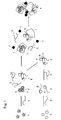
- FIG. 1 is a schematic diagram for explaining the action mechanism of the flocculant of the first invention
- the flocculant treatment mechanism by the flocculant of the first invention will be described.
- a nonionic polymer compound (B) is bonded to an organic substance (A) contained in the water to be treated, for example, a polysaccharide contained in a biological metabolite via a hydrogen bond, and the combined substance (C) is Arise.
- the polymer compound (D) having a weak cationic amino group and the conjugate (C) are further bonded through hydrogen bonds to form a conjugate (E).
- the polymer compound (D) having a weak cationic amino group also binds to the suspended matter (F) contained in the water to be treated by electrostatic interaction.
- the binding of the polymer compound (D) having a weak cationic amino group to the turbidity (F) is performed under the condition of pH 9 or less, with the weak cationic property of the polymer compound (D) having a weak cationic amino group. Occurs when the amino group has a charge and exhibits sufficient electrostatic interaction with the suspended matter (F). Therefore, in the case of high pH, as shown in the following 3), a cationic polymer compound containing a quaternary ammonium base is added, and aggregation by a cationic polymer compound (G) containing a quaternary ammonium base is performed. It is preferable to use the effect.
- the combined product (E) and the combined product (H) each serve as a nucleus, and when the iron-based inorganic flocculant is added, the combined product (E) and the combined product (H) are easily incorporated into the iron floc (I). By adding the iron-based inorganic flocculant, an iron floc is generated and a fine iron colloid (J) is also generated.
- Fine iron colloid (J) is difficult to separate in the subsequent precipitation, pressure flotation and filtration, and causes clogging of the membrane in the subsequent membrane treatment.
- the polymer compound (D) having a weak cationic amino group crosslinks the iron floc (I) and the iron colloid (J) to form a coarse floc (K) and to form a fine iron colloid. Can be removed.
- the water to be treated that is subject to agglomeration treatment includes various industrial wastewaters including organic matter and turbidity, domestic wastewater, biologically treated water of the wastewater, surface water, groundwater, and the like.
- biologically treated water is particularly desirable.
- the water quality is water to be treated having a pH of 6 to 11 and an alkalinity of 100 mg / L as CaCO 3 or higher, for example, 100 to 5,000 mg / L as CaCO 3 , the coagulation effect by the flocculant of the first invention is further remarkable. Can get to.
- the polymer compound having a weak cationic amino group may be a polymer compound having any amino group from a primary amino group (primary amino group) to a tertiary amino group (tertiary amino group).
- branched polyethyleneimine having a primary amino group linear polyethyleneimine, polyvinylamine, polyallylamine, polyvinylamidine, polylysine, chitosan, polyamidoamine dendrimer, dicyandiamide having secondary and tertiary amino groups -Formalin condensate and the like.
- polyethyleneimine and polyvinylamine are preferred because of the high amino group content per weight of the polymer compound having a primary amino group.
- the molecular weight of the polymer compound having a weak cationic amino group is preferably 200 to 10,000,000, particularly 1,000 to 4,000,000. If the molecular weight is smaller than this range, the coagulation effect tends to be inferior, and if the molecular weight is larger, there is a possibility of clogging the subsequent film when remaining.
- the molecular weight of the polymer compound having a weak cationic amino group is the value of the number average molecular weight determined by the viscosity method or the boiling point increase method.
- the polymer compound having a weak cationic amino group may be used alone or in combination of two or more.
- the amount of the polymer compound having a weak cationic amino group added to the water to be treated depends on the quality of the water to be treated, the type of the polymer compound having a weak cationic amino group to be used, and the amine / nonionic flocculant. It varies depending on whether or not the coagulant is used in combination and the quality of treated water required.
- the amount of the polymer compound having a weak cationic amino group added to the water to be treated is preferably in the range of 0.5 to 10 mg / L as the amount of the active ingredient.
- Nonionic polymer compound is a compound having an alkylene oxide group or a compound having an alcoholic hydroxyl group, except for an acrylamide polymer that does not provide the effect of the first invention, as shown in Comparative Example 1-3 below.
- a compound having a carbonyl group and having a structure in which a carbon atom of the carbonyl group is bonded to a nitrogen atom hereinafter sometimes referred to as “CO—N structure”.
- Examples of the compound having an alkylene oxide group include polyethylene glycol, polypropylene glycol, polyoxyethylene (POE) -polyoxypropylene (POP) block copolymer, polyoxyethylene alkyl ether, polyoxyethylene allyl ether, polyoxyethylene. Examples include phenyl ether, sorbitan fatty acid ester, polyoxyethylene sorbitan fatty acid ester, and polyoxyethylene fatty acid ester. Among these, ethylene glycol and propylene such as polyethylene glycol, polyoxyethylene (POE) -polyoxypropylene (POP) block copolymer, etc. due to the high content of alkylene oxide groups per weight of the compound having an alkylene oxide group. A copolymer with glycol is preferred.
- Examples of the compound having an alcoholic hydroxyl group include polyvinyl alcohol.
- the CO—N structure of the compound having a CO—N structure is preferably a structure represented by the following formula (1) or (2).
- Examples of such a compound having a CO—N structure include polyvinyl pyrrolidone, polyvinyl piperidone, polyvinyl caprolactam, poly (2-ethyl-2-oxazoline), poly (2-methyl-2-oxazoline), polyvinyl acetamide, polyvinyl And formamide.
- X represents an alkylene group having 1 or 2 carbon atoms which may have a substituent or a direct bond
- R 1 and R 2 each independently have a hydrogen atom or a substituent.
- R 1 and R 2 may be bonded to each other to form a 5- to 7-membered lactam ring which may have a substituent.
- n represents an integer of 10 or more.
- R 3 represents an alkyl group having 1 to 3 carbon atoms which may have a substituent.
- n represents an integer of 10 or more.
- the molecular weight of the nonionic polymer compound is preferably 4,000 to 1,000,000, particularly 6,000 to 100,000. If the molecular weight is smaller than this range, the coagulation effect tends to be inferior, and if the molecular weight is larger, there is a possibility of clogging the subsequent film when remaining.
- the molecular weight of the nonionic polymer compound is a value of a number average molecular weight measured by a viscosity method.
- Nonionic polymer compounds may be used alone or in combination of two or more. Only one type of compound having an alkylene oxide group may be used, only one type of compound having an alcoholic hydroxyl group may be used, or only one type of compound having a CO—N structure may be used. You may use together 1 type, or 2 or more types of the compound which has an alkylene oxide group, and 1 type or 2 or more types of the compound which has an alcoholic hydroxyl group. One or more compounds having an alkylene oxide group may be used in combination with one or more compounds having a CO—N structure. One or more compounds having an alcoholic hydroxyl group and one or more compounds having a CO—N structure may be used in combination. One or more compounds having an alkylene oxide group, one or more compounds having an alcoholic hydroxyl group, and one or more compounds having a CO—N structure may be used in combination.
- the amount of nonionic polymer compound added to the water to be treated depends on the quality of the water to be treated, the type of nonionic polymer compound to be used, whether or not a coagulant other than the amine / nonion flocculant is used, and the required treatment water It depends on the water quality.
- the amount of the nonionic polymer compound added to the water to be treated is preferably in the range of 0.1 to 20 mg / L as the amount of the active ingredient.
- the nonionic polymer compound may be added to the water to be treated simultaneously with the polymer compound having a weak cationic amino group, or may be added separately. When added separately, a nonionic polymer compound may be added and then a polymer compound having a weak cationic amino group may be added, or a nonionic property may be added after adding a polymer compound having a weak cationic amino group. A polymer compound may be added. When a polymer compound having a weak cationic amino group and a nonionic polymer compound are added at the same time, it is preferably used as a combined amine-nonion flocculant.
- the amine / nonionic flocculant is used as a single agent, it is preferable to include a polymer compound having a weak cationic amino group and a nonionic polymer compound within this range.
- Inorganic flocculant It is preferable to use an iron-based or aluminum-based inorganic flocculant capable of forming flocs in a wide pH range including a high pH range of pH 4 to 14 as an inorganic flocculant together with an amine nonionic flocculant.
- the iron-based inorganic flocculant include ferric chloride, ferric sulfate, polyferric chloride, and polyferric sulfate.
- Examples of the aluminum-based inorganic flocculant include polyaluminum chloride and aluminum sulfate.
- Ferric chloride which is an iron-based inorganic flocculant, is preferable in terms of the aggregating effect and cost. These inorganic flocculants may be used individually by 1 type, and 2 or more types may be mixed and used for them.
- the amount of the inorganic flocculant added to the water to be treated varies depending on the quality of the water to be treated, the kind of the inorganic flocculant used, the quality of the water to be treated, and the like.
- the amount of the inorganic flocculant added to the water to be treated is preferably in the range of 2 to 100 mg / L as the active ingredient amount.
- the inorganic flocculant may be added to the water to be treated simultaneously with the amine / nonion flocculant, or may be added separately. When the amine nonionic flocculant and the inorganic flocculant are added at the same time, they may be used as a single agent.
- a cationic polymer compound containing a quaternary ammonium base has a strong cationic group and can maintain charge neutralization ability even for high pH treated water such as pH 9 or higher, and thus is particularly effective. Is.
- the addition of a cationic polymer compound containing a quaternary ammonium base after the addition of the amine / nonion flocculant or at the same time reduces the aggregation effect of the amine / nonion flocculant. Therefore, it is not preferable.
- After adding a cationic polymer compound containing a quaternary ammonium base to the water to be treated mix uniformly by stirring with a line mixer or a stirring blade and wait for 30 seconds or more, and then add the amine / nonionic flocculant. It is desirable to add.
- Examples of the cationic polymer compound containing a quaternary ammonium base include polydiallyldimethylammonium salts such as poly (diallyldimethylammonium chloride) and poly (2-dimethylaminoethyl methacrylate). From the viewpoint of drug cost, polydiallyldimethylammonium salt is preferred.
- the molecular weight of the cationic polymer compound containing a quaternary ammonium base is preferably 10,000 to 10,000,000, particularly 100,000 to 10,000,000. If the molecular weight is smaller than this range, the coagulation effect tends to be inferior, and if the molecular weight is larger, there is a possibility of clogging the subsequent film when remaining.
- the molecular weight of the cationic polymer compound containing a quaternary ammonium base is a value of a number average molecular weight measured by a viscosity method.
- the cationic polymer compound containing a quaternary ammonium base may be used alone or in combination of two or more.
- the amount of cationic polymer compound containing a quaternary ammonium base added to the water to be treated depends on the quality of the water to be treated, the type of cationic polymer compound containing the quaternary ammonium base to be used, and the required treated water. It depends on the water quality.
- the addition amount of the cationic polymer compound containing a quaternary ammonium base to the water to be treated is preferably in the range of 0.1 to 10 mg / L as the active ingredient amount.
- solid-liquid separation method of the agglomerated treated water there is no particular limitation on the solid-liquid separation method of the agglomerated treated water, and any method of precipitation treatment, pressurized flotation treatment, filtration, and membrane separation can be employed.
- the flocculant of the first invention it is possible to highly agglomerate organic matter and turbidity in the water to be treated. Therefore, when performing membrane separation as solid-liquid separation, or further using solid-liquid separated water as a reverse osmosis membrane Even in the case of separation, membrane contamination can be prevented and stable treatment can be performed over a long period of time.
- the method for preparing a water treatment chemical of the second invention is a method for preparing a solution water treatment chemical containing polyethyleneimine (PEI) and polyvinylpyrrolidone (PVP) as a single agent.
- PEI polyethyleneimine
- PVP polyvinylpyrrolidone
- the operation mechanism according to the second invention is as follows.
- Polyethyleneimine (PEI) and polyvinylpyrrolidone (PVP) interact through hydrogen bonds, and an aqueous solution containing PEI and PVP is gelled with a specific molecular weight combination and a specific concentration.
- the combination of molecular weight and concentration that does not cause gelation of the aqueous solution is visually confirmed by, for example, the test tube inversion method, so that gelation of a single agent chemical containing PEI and PVP can be performed using a small amount of chemical solution. It can be easily determined whether or not it occurs.
- test tube inversion method PEI and PVP of a specific molecular weight are placed in a test tube so as to have a predetermined concentration, and are stirred and mixed to make a uniform solution. After standing at a constant temperature for a certain period of time, the test tube is inverted. To check for gelation.
- the standing time is preferably set appropriately in the range of 10 minutes to 24 hours.
- the temperature at the time of standing may be adjusted according to the environment in which the prepared one-component chemical is used, and is preferably in the range of 0 to 50 ° C.
- Judgment criteria are as follows. When the container used as the test tube is turned upside down, the state in which the chemical solution does not flow down from the bottom surface of the container is determined as “gelation”. A substance whose viscosity increases and all chemicals flow over time is determined to be “solation”. All the liquid chemicals immediately flow down is defined as “liquid”, and this “liquid” is determined as “not gelled”.
- the chemical solution in which gelation has occurred is unsuitable as a one-part chemical because it cannot be fed by a general chemical injection pump such as a diaphragm pump.
- the chemical solution that has formed a sol is highly viscous and easily changes to a gel state due to changes in the temperature of the chemical solution (especially in a low temperature state). is there.
- test tube inversion method As a method for discriminating gelation, there is a falling ball method in addition to the test tube inversion method.
- the test tube inversion method is desirable because it can be easily implemented without the need for special equipment.
- the container used as a test tube is not particularly limited as long as it is a transparent container that can seal a chemical solution. It is desirable to use a bottomed cylindrical glass or plastic container (with a lid) having a volume of 5 to 100 mL.
- the water treatment chemical preparation method of the second invention is carried out by the following method.
- ⁇ Operation method I ⁇ A plurality of PEI aqueous solutions and PVP aqueous solutions having different molecular weights are prepared, and the PEI aqueous solution and the PVP aqueous solution are mixed so that the PEI concentration and the PVP concentration are equal. The presence or absence of gelation of the mixed solution is determined by a test tube inversion method.
- a one-part chemical is prepared with a combination that does not cause gelation and becomes a liquid.
- a mixed solution is prepared by changing various mixing ratios of the PEI aqueous solution and the PVP aqueous solution. The presence or absence of gelation of each mixed solution is determined by the test tube inversion method.
- a one-agent chemical is prepared at a mixing ratio that does not cause gelation and becomes a liquid.
- ⁇ Operation method IV ⁇ When the mixing ratio of PEI and PVP is determined, a plurality of types of PEI and PVP having different molecular weights are prepared, and mixed liquids are prepared in different combinations. The presence or absence of gelation of each mixed solution is determined by the test tube inversion method.
- a molecular diagram of PEI and PVP and a phase diagram of gel sol-liquid are prepared, a region where gelation does not occur and a liquid region is obtained.
- a molecular diagram of PEI and PVP and a phase diagram of gel sol-liquid are prepared, a region where gelation does not occur and a liquid region is obtained.
- the molecular weight of PEI is preferably 200 to 10,000,000, particularly 1,000 to 4,000,000. When the molecular weight is smaller than this range, the aggregation effect tends to be inferior. If the molecular weight is larger than this range, there is a possibility of clogging the subsequent film when remaining.
- the molecular weight of PVP is preferably 4,000 to 1,000,000, particularly 6,000 to 150,000. When the molecular weight is smaller than this range, the aggregation effect tends to be inferior. If the molecular weight is larger than this range, there is a possibility of clogging the subsequent film when remaining.
- the molecular weight of PEI and PVP is the value of the number average molecular weight measured by the viscosity method.
- the total concentration of PEI and PVP in the one-pack chemical to be prepared is preferably in the range of 5 to 40% by weight.
- the molecular weight and concentration of PEI and PVP in the molecular weight range described above are used in the weight ratio range and the total concentration range, so that the molecular weight and concentration are not gelled. It is preferable to employ a combination.
- the monolithic chemical prepared by the second invention is useful as a flocculant in the water treatment method of the second invention, and makes the chemical injection operation efficient as a monolithic chemical in which PEI and PVP are united. Can do.
- the water treatment method of the second invention performs water treatment using the water treatment chemical prepared by the water treatment chemical preparation method of the second invention.
- this water treatment chemical (hereinafter sometimes referred to as “PEI / PVP monolithic chemical” or “PEI / PVP monolithic chemical of the second invention”) is used as a flocculant to remove organic matter and turbidity. This is effective when coagulating the water to be treated.
- an inorganic flocculant may be further added for agglomeration treatment.
- a cationic polymer compound containing a quaternary ammonium base may be added and aggregated before adding the PEI / PVP monolithic chemical to the water to be treated.
- the action mechanism of the coagulation treatment with the PEI / PVP monolithic chemical of the second invention is the same as in the first invention.
- the action mechanism of the aggregation treatment with the PEI / PVP monolithic chemical of the second invention is that the nonionic polymer compound (B) in the explanation of the action mechanism of the first invention is “PVP” and has a weak cationic amino group.
- the polymer compound (D) is described by replacing “PEI”.
- the water to be treated in the water treatment method of the second invention is the same as the water to be treated in the first invention described above, and the preferable ones are also the same.
- PEI / PVP monolithic chemicals depends on the quality of the water to be treated, the presence / absence of coagulation agents other than PEI / PVP monolithic chemicals, and the required quality of the treated water. It is preferable.
- a preferred mixing weight ratio PEI: PVP 1: 4 to .0 so that the PEI active ingredient amount is in the range of 0.5 to 10 mg / L and the PVP active ingredient amount is in the range of 0.1 to 20 mg / L. It is preferred to add PEI / PVP monolithic chemicals prepared in the range of 05, especially 1: 2 to 0.1.
- an iron-based or aluminum-based inorganic flocculant capable of forming flocs in a wide pH range including a high pH range of pH 4 to 14 is used as an inorganic flocculant together with PEI / PVP monolithic chemicals. It is preferable.
- the inorganic flocculant is the same as the inorganic flocculant used in the first invention described above, and preferred ones are also the same.
- An inorganic flocculant may be used individually by 1 type, and 2 or more types may be mixed and used for it.
- the preferable addition amount of the inorganic flocculant to the water to be treated is also the same as in the first invention.
- the inorganic flocculant may be added to the water to be treated simultaneously with the PEI / PVP monolithic chemical, or may be added separately.
- the PEI / PVP monolithic chemical and the inorganic flocculant may be further combined into a single agent.
- ⁇ Cationic polymer compound containing a quaternary ammonium base It is preferable to add a cationic polymer compound containing a quaternary ammonium base before adding the PEI / PVP monolithic chemical to the water to be treated.
- a cationic polymer compound containing a quaternary ammonium base has a strong cationic group and can maintain charge neutralization ability even for high pH treated water such as pH 9 or higher, and thus is particularly effective. Is.
- a cationic polymer compound containing a quaternary ammonium base it is not preferable to add a cationic polymer compound containing a quaternary ammonium base after or simultaneously with the addition of the PEI / PVP monolithic chemical.
- a cationic polymer compound containing a quaternary ammonium base is added to the water to be treated, the mixture is uniformly mixed by stirring with a line mixer or a stirring blade, etc., and after waiting for 30 seconds or more, the PEI / PVP It is desirable to add medicinal chemicals.
- the cationic polymer compound containing a quaternary ammonium base is the same as the cationic polymer compound containing a quaternary ammonium base in the first invention described above, and is preferably a cationic polymer compound containing a quaternary ammonium base. The same applies to the preferred molecular weight and the preferred amount added to the water to be treated.
- the cationic polymer compound containing a quaternary ammonium base may be used alone or in combination of two or more.
- the water treatment method of the second invention is carried out, for example, by adding the PEI / PVP monolithic chemical of the second invention to the water to be treated and aggregating it, followed by solid-liquid separation.
- solid-liquid separation method of the agglomerated treated water there is no particular limitation on the solid-liquid separation method of the agglomerated treated water, and any method of precipitation treatment, pressurized flotation treatment, filtration, and membrane separation can be employed.
- the water treatment method of the second invention by using the PEI / PVP monolithic chemical of the second invention as a flocculant, organic matter and turbidity in the water to be treated can be highly agglomerated, Even when membrane separation is performed as solid-liquid separation or when solid-liquid separation water is further subjected to reverse osmosis membrane separation, membrane contamination is prevented and stable treatment is possible for a long period of time.
- To-be-treated water A Sodium bicarbonate was added to the biologically treated water of the waste water of Factory A so as to be 0.08% by weight, and the alkalinity was adjusted to about 500 mg / L as CaCO 3 (pH 9.0).
- Water to be treated B To the biologically treated water of the waste water of Factory B, sodium bicarbonate was added to 0.08% by weight, and the alkalinity was adjusted to about 500 mg / L as CaCO 3 (pH 8.6).
- To-be-treated water C To the biologically treated water of the waste water of Factory C, sodium hydrogen carbonate was added to 0.08% by weight, and the alkalinity was adjusted to about 500 mg / L as CaCO 3 (pH 9.0).
- Water to be treated D To the biologically treated water of the waste water of Factory D, sodium bicarbonate was added to 0.08% by weight, and the alkalinity was adjusted to about 500 mg / L as CaCO 3 (pH 9.2).
- To-be-treated water E To the biologically treated water of the waste water of factory E, sodium bicarbonate was added so as to be 0.08% by weight, and the alkalinity was equivalent to about 500 mg / L as CaCO 3 (pH 8.5).
- Polyethyleneimine Branched polyethyleneimine having a molecular weight of 2,000,000, 25,000, 10,000, 2,000, 1,800, 600, or 400
- Polyvinylamine Polyvinylamine (molecular weight 5,000,000)
- Dicyandiamide / formalin condensate represented by the following formula (A) (molecular weight 10,000)
- Nonionic polymer compound Polyethylene glycol having a molecular weight of 400,000, 20,000, 10,000, 6,000, or 4,000 (molecular weight 400,000)
- PVP polyvinylpyrrolidone (molecular weight 40,000)
- PVA polyvinyl alcohol (molecular weight 20,000)
- PEO Poly (2-ethyl-oxazoline) (molecular weight 50,000)
- POE / POP / POE polyoxyethylene (POE) -polyoxypropylene (POP) -polyoxyethylene (POE) triblock copolymer (pluronic type nonionic surfactant, POE / POP molar ratio: 30/7, (Molecular weight 9,000)
- Bridge 700 polyoxyethylene (100) stearyl ether (molecular weight 5,000)
- PAA polyacrylamide (molecular weight 40,000)
- Twin 85 Polyoxyethylene sorbitan trioleate (molecular weight 2,000)
- the SFF value indicates the contamination index of the polymer organic matter
- the MFF value indicates the contamination index of the fine particles.
- the MF value represents the time required for 300 mL of the measurement sample to pass through a nitrocellulose membrane (hereinafter referred to as MF membrane) having an effective membrane area of 3.0 cm 2 and a pore diameter of 0.45 ⁇ m under a reduced pressure of ⁇ 67 kPa.
- MF membrane nitrocellulose membrane
- the MF membrane was set in a suction filtration apparatus, and after measuring the permeation time T0 of the soluble polymer substance and fine particle-free reference water 150 mL under a reduced pressure of ⁇ 67 kPa, the first water passing time T1 of the measurement sample (150 mL), Measure the second water passage time T2.
- Example 1-1 While 500 mL of water to be treated A was placed in a beaker and stirred at 150 rpm, poly (diallyldimethylammonium chloride) having a molecular weight of 300,000 was added to 2 mg / L and stirred for 2 minutes. Thereafter, branched polyethyleneimine having a molecular weight of 25,000 was added to 3.5 mg / L, and polyethylene glycol (PEG) having a molecular weight of 400,000 was added to 1.8 mg / L, followed by stirring for 2 minutes. . Thereafter, ferric chloride as a component was added to 20 mg / L and stirred for 6 minutes, and then the pH during the agglutination reaction was measured.
- poly (diallyldimethylammonium chloride) having a molecular weight of 300,000 was added to 2 mg / L and stirred for 2 minutes. Thereafter, branched polyethyleneimine having a molecular weight of 25,000 was added to 3.5 mg / L, and
- the aggregation treatment was performed by stirring for 6 minutes at 50 rpm. The average size of flocs generated by the aggregation treatment was measured visually.
- the water after the aggregation treatment was filtered through a filter paper having a pore diameter of 7 ⁇ m to perform solid-liquid separation. The SFF value, MFF value, and MF value were measured for this filtered water.
- Example 1-2 Instead of PEG having a molecular weight of 400,000, PEG having a molecular weight of 20,000 was used. Others are the same as Example 1-1.
- Example 1-3 Instead of PEG having a molecular weight of 400,000, PEG having a molecular weight of 10,000 was used. Others are the same as Example 1-1.
- Example 1-4 Instead of PEG with a molecular weight of 400,000, PEG with a molecular weight of 6,000 was used. Others are the same as Example 1-1.
- Example 1-5 Instead of PEG with a molecular weight of 400,000, PEG with a molecular weight of 4,000 was used. Others are the same as Example 1-1.
- Example 1-6 Instead of PEG having a molecular weight of 400,000, polyvinylpyrrolidone (PVP) having a molecular weight of 40,000 was used. Others are the same as Example 1-1.
- PVP polyvinylpyrrolidone
- Example 1-7 Polyvinyl alcohol (PVA) having a molecular weight of 20,000 was used instead of PEG having a molecular weight of 400,000. Others are the same as Example 1-1.
- PVA polyvinyl alcohol
- Example 1-8> instead of PEG having a molecular weight of 400,000, poly (2-ethyl-2-oxazoline) (PEO) having a molecular weight of 50,000 was used. Others are the same as Example 1-1.
- Example 1-9 Instead of PEG having a molecular weight of 400,000, a POE / POP / POE triblock copolymer having a molecular weight of 9,000 was used. Others are the same as Example 1-1.
- Example 1-10> Instead of PEG having a molecular weight of 400,000, polyoxyethylene (100) stearyl ether (bridge 700) having a molecular weight of 5,000 was used. Others are the same as Example 1-1.
- Example 1-11> Instead of branched polyethyleneimine having a molecular weight of 25,000, polyvinylamine having a molecular weight of 5,000,000 was used. Others are the same as Example 1-1.
- Example 1-1 ⁇ Reference Example 1-1> Instead of PEG having a molecular weight of 400,000, polyoxyethylene sorbitan trioleate (twin 85) having a molecular weight of 2,000 was used. Others are the same as Example 1-1.
- Table 1 shows the results of Examples 1-1 to 1-11, Comparative Examples 1-1 to 1-3, and Reference Example 1-1.
- the molecular weight of the nonionic polymer compound to be added is preferably at least 4,000 or more.
- Nonionic polymer compounds include PEG, polyvinyl pyrrolidone, polyvinyl alcohol, polyethyloxazoline (Examples 1-1 to 1-8), POE / POP / POE triblock copolymer and bridge 700 (Example 1). 9, 1-10) are also effective for nonionic surfactants.
- polyacrylamide (Comparative Example 1-3) shows the same SFF value, MFF value, and MF value as in the case where the nonionic polymer compound was not added (Comparative Example 1-2), and the effect was Absent. A sufficient effect was not observed with Twin 85 (Reference Example 1-1), which is a nonionic surfactant. This is presumably because the molecular weight was less than 4,000, and the action of binding with organic substances in the water to be treated was weakened.
- poly (diallyldimethylammonium chloride) having a molecular weight of 300,000 was added to 1.5 mg / L and stirred for 2 minutes. Thereafter, branched polyethyleneimine having a molecular weight of 25,000 was added to 5 mg / L, and polyethylene glycol (
- the aggregation treatment was performed by stirring for 6 minutes at 50 rpm. The average size of flocs generated by the aggregation treatment was measured visually.
- the water after the aggregation treatment was filtered through a filter paper having a pore diameter of 7 ⁇ m to perform solid-liquid separation. The SFF value, MFF value, and MF value were measured for this filtered water.
- Example 2-2 Poly (diallyldimethylammonium chloride) was not added. Others are the same as in Example 2-1.
- Table 2 shows the results of Examples 2-1 and 2-2 and Comparative Examples 2-1 and 2-2.
- Example 3-1 While 500 mL of water to be treated C was put in a beaker and stirred at 150 rpm, poly (diallyldimethylammonium chloride) having a molecular weight of 300,000 was added to 1.8 mg / L and stirred for 2 minutes. Thereafter, branched polyethyleneimine having a molecular weight of 25,000 was added to 2 mg / L, and polyethylene glycol (PEG) having a molecular weight of 20,000 was added to 1 mg / L, followed by stirring for 2 minutes. Thereafter, ferric chloride as a component was added to 20 mg / L and stirred for 6 minutes, and then the pH during the agglutination reaction was measured.
- poly (diallyldimethylammonium chloride) having a molecular weight of 300,000 was added to 1.8 mg / L and stirred for 2 minutes. Thereafter, branched polyethyleneimine having a molecular weight of 25,000 was added to 2 mg / L, and polyethylene glyco
- the aggregation treatment was performed by stirring for 6 minutes at 50 rpm. The average size of flocs generated by the aggregation treatment was measured visually.
- the water after the aggregation treatment was filtered through a filter paper having a pore diameter of 7 ⁇ m to perform solid-liquid separation. The SFF value, MFF value, and MF value were measured for this filtered water.
- Example 3-2> Instead of a branched polyethyleneimine having a molecular weight of 25,000, a branched polyethyleneimine having a molecular weight of 2,000 was used. Others are the same as in Example 3-1.
- Example 3-3 Instead of branched polyethyleneimine having a molecular weight of 25,000, branched polyethyleneimine having a molecular weight of 2,000,000 was used. Others are the same as in Example 3-1.
- Example 3-4 While 500 mL of water to be treated B was put in a beaker and stirred at 150 rpm, poly (diallyldimethylammonium chloride) having a molecular weight of 300,000, branched polyethyleneimine having a molecular weight of 25,000, and PEG having a molecular weight of 20,000 were respectively obtained. 1.8 mg / L, 2 mg / L, and 1 mg / L were simultaneously added and stirred for 2 minutes. Thereafter, ferric chloride as a component was added to 20 mg / L and stirred for 6 minutes, and then the pH during the agglutination reaction was measured. Further, the aggregation treatment was performed by stirring for 6 minutes at 50 rpm.
- the average size of flocs generated by the aggregation treatment was measured visually.
- the water after the aggregation treatment was filtered through a filter paper having a pore diameter of 7 ⁇ m to perform solid-liquid separation.
- the SFF value, MFF value, and MF value were measured for this filtered water.
- Example 4-1 While 500 mL of water to be treated D was placed in a beaker and stirred at 150 rpm, poly (diallyldimethylammonium chloride) having a molecular weight of 300,000 was added to 2.5 mg / L and stirred for 2 minutes. Thereafter, branched polyethyleneimine having a molecular weight of 10,000 was added to 5 mg / L, and polyethylene glycol (PEG) having a molecular weight of 20,000 was added to 5 mg / L, followed by stirring for 2 minutes. Thereafter, ferric chloride as a component was added to 20 mg / L and stirred for 6 minutes, and then the pH during the agglutination reaction was measured.
- poly (diallyldimethylammonium chloride) having a molecular weight of 300,000 was added to 2.5 mg / L and stirred for 2 minutes. Thereafter, branched polyethyleneimine having a molecular weight of 10,000 was added to 5 mg / L, and polyethylene glycol (PEG
- the aggregation treatment was performed by stirring for 6 minutes at 50 rpm. The average size of flocs generated by the aggregation treatment was measured visually.
- the water after the aggregation treatment was filtered through a filter paper having a pore diameter of 7 ⁇ m to perform solid-liquid separation. The SFF value, MFF value, and MF value were measured for this filtered water.
- Example 4-2 Instead of a branched polyethyleneimine having a molecular weight of 10,000, a branched polyethyleneimine having a molecular weight of 1,800 was used. Others are the same as in Example 4-1.
- Example 4-3 Instead of a branched polyethyleneimine having a molecular weight of 10,000, a branched polyethyleneimine having a molecular weight of 600 was used. Others are the same as in Example 4-1.
- Example 4-4> Instead of a branched polyethyleneimine having a molecular weight of 10,000, a branched polyethyleneimine having a molecular weight of 300 was used. Others are the same as in Example 4-1.
- Table 4 shows the results of Examples 4-1 to 4-4 and Comparative Examples 4-1 to 4-2.
- a branched polyethyleneimine having a molecular weight of less than 2,000 exhibits the same aggregation performance as that of a branched polyethyleneimine having a molecular weight of 10,000 (Examples 4-1 to 4-4-4).
- PEG polyethylene glycol
- the coagulation performance is worse than when neither polyethyleneimine nor PEG is added (Comparative Examples 4-1 to 4-2).
- PEG does not exhibit an aggregating effect at all unless a polymer compound having a primary amino group is present, but rather acts to deteriorate the quality of the agglomerated water.
- Example 5-1 While 500 mL of water to be treated E was put in a beaker and stirred at 150 rpm, poly (diallyldimethylammonium chloride) having a molecular weight of 300,000 was added to 1.5 mg / L and stirred for 2 minutes. Thereafter, dicyandiamide-formalin condensate (DCD-HCHO) having a molecular weight of 10,000 is added to 2.5 mg / L, and polyvinylpyrrolidone (PVP) having a molecular weight of 40,000 is added to 2.5 mg / L. And stirred for 2 minutes.
- DCD-HCHO dicyandiamide-formalin condensate
- PVP polyvinylpyrrolidone
- ferric chloride as a component was added to 20 mg / L and stirred for 6 minutes, and then the pH during the agglutination reaction was measured. Further, the aggregation treatment was performed by stirring for 6 minutes at 50 rpm. The average size of flocs generated by the aggregation treatment was measured visually. The water after the aggregation treatment was filtered through a filter paper having a pore diameter of 7 ⁇ m to perform solid-liquid separation. The SFF value, MFF value, and MF value were measured for this filtered water.
- Example 5-4 the water to be treated E was filtered through a filter paper having a pore diameter of 7 ⁇ m without performing the aggregation treatment, and solid-liquid separation was performed.
- the SFF value, MFF value, and MF value were measured for this filtered water.
- the dicyandiamide-formalin condensate having secondary and tertiary amino groups also exhibits the same aggregation performance as that of polyethyleneimine having primary amino groups (Example 5-1).
- PVP pyrrolidone
- the MFF value is worse than when neither dicyandiamide / formalin condensate and PVP are added (Comparative Examples 5-2 to 5-5) 3).
- PVP does not exhibit an aggregating effect at all unless a polymer compound having secondary and tertiary amino groups is present.
- IP2M molecular weight 2,000,000, manufactured by BASF
- P-1000 molecular weight 70,000, manufactured by Nippon Shokubai Co., Ltd.
- IP250 molecular weight 25,000, manufactured by BASF
- SP-200 molecular weight 10,000, manufactured by Nippon Shokubai Co., Ltd.
- ⁇ PVP> K-85N K value 83-87, molecular weight 900,000, manufactured by Nippon Shokubai Co., Ltd.
- K-30 K value 27-33, molecular weight 100,000, manufactured by Nippon Shokubai Co., Ltd.
- K-15 K value 16, molecular weight 10,000, manufactured by ISP
- PVP5000 molecular weight 4000-6000, manufactured by Polysciences
- the K value of polyvinyl pyrrolidone is a value that correlates with the molecular weight of polyvinyl pyrrolidone, and is calculated from the relative viscosity ⁇ rel (25 ° C) to water of the polyvinyl pyrrolidone aqueous solution measured by a capillary viscometer, using the following Fickencher formula.
- Example 6-1 Under the conditions of compositions 1-1 to 1-16 shown in Table 6, a one-agent chemical containing 10% by weight of PEI and 10% by weight of PVP was prepared.
- Fig. 3 shows a photograph of a chemical solution prepared under the conditions of composition 1-5 to 1-8 when 2 minutes have passed since the inversion by the test tube inversion method.
- Example 6-2 Under the conditions of composition 1-6 in which gelation occurred in Example 6-1, a single agent chemical was prepared by changing each concentration of PEI (P-1000) and PVP (K-30).
- Table 7 shows the following. Gelation occurs in a one-pack chemical (composition 2-3) containing 10% by weight of PEI (P-1000) and 10% by weight of PVP (K-30). However, if each concentration of PEI and PVP is reduced, PEI And PVP can be kept in a liquid state even if they are treated as a single agent.
- the concentrations of PEI and PVP can be freely set within the range of the region where the single agent chemical maintains the liquid state.
- the concentration of PVP K-30
- the concentration of PVP K-30
- Example 6-3> Under the conditions of composition 1-11 in which gelation occurred in Example 6-1, a single agent chemical was prepared by changing each concentration of PEI (IP250) and PVP (K-15).
- Table 8 shows the following. As in Example 6-2, if the concentrations of PEI (IP250) and PVP (K-15) are reduced, the liquid state can be maintained even if PEI and PVP are combined into one agent. Compared to Example 6-2, since the combination of PEI and PVP having different molecular weights, the concentration of PEI and PVP that can maintain the liquid state of the single agent chemical can be set high.
- the concentrations of PEI and PVP can be freely set within the range of the region where the single agent chemical maintains the liquid state.
- the water to be treated and other flocculants used in Experiment 7 are as follows.
- ⁇ Treatment water> Sodium bicarbonate was added to the biologically treated water of factory A wastewater so as to be 0.08% by weight, and the alkalinity was adjusted to about 500 mg / L as CaCO 3 (pH 8.6).
- Example 7-1 While 500 mL of water to be treated was placed in a beaker and stirred at 150 rpm, poly (diallyldimethylammonium chloride) having a molecular weight of 300,000 was added to 1 mg / L and stirred for 2 minutes. Thereafter, 20 mg of a monolithic chemical (P-1000 4 wt%, K-30 2 wt% aqueous solution, composition 2-18) was added and stirred for 2 minutes. Then, after adding inorganic flocculant as a component so that it might become 20 mg / L and stirring for 6 minutes, pH at the time of agglutination reaction was measured. Further, the aggregation treatment was performed by stirring for 6 minutes at 50 rpm.
- a monolithic chemical P-1000 4 wt%, K-30 2 wt% aqueous solution, composition 2-18
- the average size of flocs generated by the aggregation treatment was measured visually.
- the water after the aggregation treatment was filtered through a filter paper having a pore diameter of 7 ⁇ m to perform solid-liquid separation.
- the SFF value, MFF value, and MF value were measured for this filtered water.
- Example 7-1 Immediately after adding P-1000 to 1.6 mg / L instead of a single agent (P-1000 4 wt%, K-30 2 wt% aqueous solution, composition 2-18), K-30 Each chemical was added separately by adding to a concentration of 0.8 mg / L. Others are the same as in Example 7-1.
- Example 7-2> Instead of the single agent chemical used in Comparative Example 7-1 (P-1000 10 wt%, K-30 5 wt% aqueous solution, composition 2-8), a combination of molecular weights that does not cause gelation at the same concentration 8 mg of a certain chemical agent (IP-250 10 wt%, K-15 5 wt% aqueous solution, composition 3-15) was added. Others are the same as in Example 7-1.
- Comparative Example 7-1 PEI and PVP were not added due to gelation of a single agent chemical, and thus the SFF value was very high.
- the MF film was blocked during the measurement, so the MFF value and the MF value could not be measured.
- a single-agent chemical Example 7-1 that does not cause gelation by changing the concentration
- the SFF value was significantly reduced, and the MFF value and MF value could be measured.
- the floc diameter increased and the floc sedimentation was improved.
- the effect of the single agent chemical was almost the same as when PEI and PVP were added separately (Reference Example 7-1).
- Example 7-2 Even when the combination of PEI and PVP molecular weight was changed and a one-part chemical that did not cause gelation was added (Example 7-2), although a change in floc diameter was observed, it was almost the same as Example 7-1. Equivalent flocculated water quality (SFF value, MFF value, MF value) was obtained.
Landscapes
- Chemical & Material Sciences (AREA)
- Life Sciences & Earth Sciences (AREA)
- Hydrology & Water Resources (AREA)
- Engineering & Computer Science (AREA)
- Environmental & Geological Engineering (AREA)
- Water Supply & Treatment (AREA)
- Organic Chemistry (AREA)
- Chemical Kinetics & Catalysis (AREA)
- Separation Of Suspended Particles By Flocculating Agents (AREA)
Abstract
L'invention concerne un floculant qui permet un traitement de floculation à haut niveau et efficace d'eau à traiter contenant une matière organique et une matière en suspension, notamment de l'eau à traiter ayant un pH élevé et une alcalinité élevée sans nécessiter d'ajustement de pH ou une grande quantité d'un floculant inorganique. L'invention concerne également un procédé de traitement d'eau. Un floculant selon l'invention contient un composé polymère ayant un groupe amino cationique faible et un composé polymère non-ionique. Le composé polymère non-ionique est constitué d'un ou plusieurs composés choisis parmi le groupe constitué d'un composé ayant un groupe oxyde alkylène, un composé ayant un groupe hydroxyle alcoolique, et un composé (à l'exclusion d'un polymère acrylamide) qui a un groupe carbonyle et une structure dans laquelle un atome de carbone dans le groupe carbonyle est lié à un atome d'azote.
Applications Claiming Priority (4)
| Application Number | Priority Date | Filing Date | Title |
|---|---|---|---|
| JP2016-023796 | 2016-02-10 | ||
| JP2016023796A JP6115661B1 (ja) | 2016-02-10 | 2016-02-10 | 水処理方法 |
| JP2016042000A JP6115665B1 (ja) | 2016-03-04 | 2016-03-04 | 水処理薬品の調製方法および水処理方法 |
| JP2016-042000 | 2016-03-04 |
Publications (1)
| Publication Number | Publication Date |
|---|---|
| WO2017138184A1 true WO2017138184A1 (fr) | 2017-08-17 |
Family
ID=59562956
Family Applications (1)
| Application Number | Title | Priority Date | Filing Date |
|---|---|---|---|
| PCT/JP2016/077635 Ceased WO2017138184A1 (fr) | 2016-02-10 | 2016-09-20 | Floculant et procédé de traitement d'eau |
Country Status (2)
| Country | Link |
|---|---|
| TW (1) | TW201741250A (fr) |
| WO (1) | WO2017138184A1 (fr) |
Families Citing this family (2)
| Publication number | Priority date | Publication date | Assignee | Title |
|---|---|---|---|---|
| JP6901032B1 (ja) * | 2020-07-02 | 2021-07-14 | 栗田工業株式会社 | 緑液処理剤 |
| CN118851378B (zh) * | 2024-08-08 | 2025-03-18 | 山东大学 | 一种用于盾构施工的高效絮凝剂及其制备方法 |
Citations (6)
| Publication number | Priority date | Publication date | Assignee | Title |
|---|---|---|---|---|
| JPS48102080A (fr) * | 1972-03-08 | 1973-12-21 | ||
| US3951792A (en) * | 1972-03-30 | 1976-04-20 | Gaf Corporation | Flocculation of suspended solids |
| JPS5621609A (en) * | 1979-07-28 | 1981-02-28 | Dai Ichi Kogyo Seiyaku Co Ltd | New type coagulant composition and coagulating treatment |
| JPS57132509A (en) * | 1981-02-09 | 1982-08-16 | Kurita Water Ind Ltd | Flocculation treatment of suspension |
| JPH0938700A (ja) * | 1995-07-31 | 1997-02-10 | Nippon Shokubai Co Ltd | 有機汚泥の処理法 |
| JPH1085797A (ja) * | 1996-09-13 | 1998-04-07 | Ebara Corp | 汚泥の脱水剤及び脱水方法 |
-
2016
- 2016-09-20 WO PCT/JP2016/077635 patent/WO2017138184A1/fr not_active Ceased
- 2016-10-03 TW TW105131920A patent/TW201741250A/zh unknown
Patent Citations (6)
| Publication number | Priority date | Publication date | Assignee | Title |
|---|---|---|---|---|
| JPS48102080A (fr) * | 1972-03-08 | 1973-12-21 | ||
| US3951792A (en) * | 1972-03-30 | 1976-04-20 | Gaf Corporation | Flocculation of suspended solids |
| JPS5621609A (en) * | 1979-07-28 | 1981-02-28 | Dai Ichi Kogyo Seiyaku Co Ltd | New type coagulant composition and coagulating treatment |
| JPS57132509A (en) * | 1981-02-09 | 1982-08-16 | Kurita Water Ind Ltd | Flocculation treatment of suspension |
| JPH0938700A (ja) * | 1995-07-31 | 1997-02-10 | Nippon Shokubai Co Ltd | 有機汚泥の処理法 |
| JPH1085797A (ja) * | 1996-09-13 | 1998-04-07 | Ebara Corp | 汚泥の脱水剤及び脱水方法 |
Also Published As
| Publication number | Publication date |
|---|---|
| TW201741250A (zh) | 2017-12-01 |
Similar Documents
| Publication | Publication Date | Title |
|---|---|---|
| RU2326722C2 (ru) | Способ применения водорастворимых полимеров в мембранном биологическом реакторе | |
| TWI459997B (zh) | 膜分離方法及膜分離裝置 | |
| JP7311951B2 (ja) | 水処理方法および水処理装置 | |
| JP5867532B2 (ja) | 水処理用分散剤及び水処理方法 | |
| JP5037002B2 (ja) | 高分子凝集剤を用いた汚泥の凝集脱水処理方法及び廃水の凝集沈殿処理方法 | |
| JP6115661B1 (ja) | 水処理方法 | |
| WO2017138184A1 (fr) | Floculant et procédé de traitement d'eau | |
| CN104023808B (zh) | 海水处理方法 | |
| JP2010131469A (ja) | 膜分離処理方法 | |
| JP6115665B1 (ja) | 水処理薬品の調製方法および水処理方法 | |
| JP2019188338A (ja) | 水処理方法及び水処理装置 | |
| WO2011016482A1 (fr) | Procédé pour retirer une substance provoquant une diminution de vitesse d'écoulement dans un processus de boue activée à séparation par membrane | |
| JP2001213968A (ja) | 水溶性ポリマーの溶解方法及び溶解装置 | |
| JP6303945B2 (ja) | 膜分離活性汚泥処理における固液分離方法 | |
| JP2012210613A (ja) | 排水の処理方法 | |
| CN103201224B (zh) | 用于改进膜生物反应器系统的方法 | |
| JP2020058964A (ja) | 膜用水処理薬品及び膜処理方法 | |
| TWI589532B (zh) | 改良薄膜生物反應器系統之方法 | |
| JP2010082593A (ja) | 水処理方法及び有機凝結剤 | |
| JPH11277094A (ja) | 汚泥添加剤およびその使用方法 | |
| JPH10140000A (ja) | アルキレンオキシド重合体の分散液およびその製造方法 |
Legal Events
| Date | Code | Title | Description |
|---|---|---|---|
| 121 | Ep: the epo has been informed by wipo that ep was designated in this application |
Ref document number: 16889885 Country of ref document: EP Kind code of ref document: A1 |
|
| NENP | Non-entry into the national phase |
Ref country code: DE |
|
| 122 | Ep: pct application non-entry in european phase |
Ref document number: 16889885 Country of ref document: EP Kind code of ref document: A1 |