WO2017141019A1 - Dermal antiseptic compositions - Google Patents
Dermal antiseptic compositions Download PDFInfo
- Publication number
- WO2017141019A1 WO2017141019A1 PCT/GB2017/050381 GB2017050381W WO2017141019A1 WO 2017141019 A1 WO2017141019 A1 WO 2017141019A1 GB 2017050381 W GB2017050381 W GB 2017050381W WO 2017141019 A1 WO2017141019 A1 WO 2017141019A1
- Authority
- WO
- WIPO (PCT)
- Prior art keywords
- skin
- fluorescein
- composition according
- alcohol
- dermal
- Prior art date
- Legal status (The legal status is an assumption and is not a legal conclusion. Google has not performed a legal analysis and makes no representation as to the accuracy of the status listed.)
- Ceased
Links
Classifications
-
- A—HUMAN NECESSITIES
- A01—AGRICULTURE; FORESTRY; ANIMAL HUSBANDRY; HUNTING; TRAPPING; FISHING
- A01N—PRESERVATION OF BODIES OF HUMANS OR ANIMALS OR PLANTS OR PARTS THEREOF; BIOCIDES, e.g. AS DISINFECTANTS, AS PESTICIDES OR AS HERBICIDES; PEST REPELLANTS OR ATTRACTANTS; PLANT GROWTH REGULATORS
- A01N47/00—Biocides, pest repellants or attractants, or plant growth regulators containing organic compounds containing a carbon atom not being member of a ring and having no bond to a carbon or hydrogen atom, e.g. derivatives of carbonic acid
- A01N47/40—Biocides, pest repellants or attractants, or plant growth regulators containing organic compounds containing a carbon atom not being member of a ring and having no bond to a carbon or hydrogen atom, e.g. derivatives of carbonic acid the carbon atom having a double or triple bond to nitrogen, e.g. cyanates, cyanamides
- A01N47/42—Biocides, pest repellants or attractants, or plant growth regulators containing organic compounds containing a carbon atom not being member of a ring and having no bond to a carbon or hydrogen atom, e.g. derivatives of carbonic acid the carbon atom having a double or triple bond to nitrogen, e.g. cyanates, cyanamides containing —N=CX2 groups, e.g. isothiourea
- A01N47/44—Guanidine; Derivatives thereof
-
- A—HUMAN NECESSITIES
- A01—AGRICULTURE; FORESTRY; ANIMAL HUSBANDRY; HUNTING; TRAPPING; FISHING
- A01N—PRESERVATION OF BODIES OF HUMANS OR ANIMALS OR PLANTS OR PARTS THEREOF; BIOCIDES, e.g. AS DISINFECTANTS, AS PESTICIDES OR AS HERBICIDES; PEST REPELLANTS OR ATTRACTANTS; PLANT GROWTH REGULATORS
- A01N31/00—Biocides, pest repellants or attractants, or plant growth regulators containing organic oxygen or sulfur compounds
- A01N31/02—Acyclic compounds
-
- A—HUMAN NECESSITIES
- A61—MEDICAL OR VETERINARY SCIENCE; HYGIENE
- A61K—PREPARATIONS FOR MEDICAL, DENTAL OR TOILETRY PURPOSES
- A61K31/00—Medicinal preparations containing organic active ingredients
- A61K31/13—Amines
- A61K31/155—Amidines (), e.g. guanidine (H2N—C(=NH)—NH2), isourea (N=C(OH)—NH2), isothiourea (—N=C(SH)—NH2)
-
- A—HUMAN NECESSITIES
- A61—MEDICAL OR VETERINARY SCIENCE; HYGIENE
- A61K—PREPARATIONS FOR MEDICAL, DENTAL OR TOILETRY PURPOSES
- A61K8/00—Cosmetics or similar toiletry preparations
- A61K8/18—Cosmetics or similar toiletry preparations characterised by the composition
- A61K8/30—Cosmetics or similar toiletry preparations characterised by the composition containing organic compounds
- A61K8/33—Cosmetics or similar toiletry preparations characterised by the composition containing organic compounds containing oxygen
- A61K8/34—Alcohols
-
- A—HUMAN NECESSITIES
- A61—MEDICAL OR VETERINARY SCIENCE; HYGIENE
- A61K—PREPARATIONS FOR MEDICAL, DENTAL OR TOILETRY PURPOSES
- A61K8/00—Cosmetics or similar toiletry preparations
- A61K8/18—Cosmetics or similar toiletry preparations characterised by the composition
- A61K8/30—Cosmetics or similar toiletry preparations characterised by the composition containing organic compounds
- A61K8/49—Cosmetics or similar toiletry preparations characterised by the composition containing organic compounds containing heterocyclic compounds
- A61K8/4973—Cosmetics or similar toiletry preparations characterised by the composition containing organic compounds containing heterocyclic compounds with oxygen as the only hetero atom
- A61K8/498—Cosmetics or similar toiletry preparations characterised by the composition containing organic compounds containing heterocyclic compounds with oxygen as the only hetero atom having 6-membered rings or their condensed derivatives, e.g. coumarin
-
- A—HUMAN NECESSITIES
- A61—MEDICAL OR VETERINARY SCIENCE; HYGIENE
- A61L—METHODS OR APPARATUS FOR STERILISING MATERIALS OR OBJECTS IN GENERAL; DISINFECTION, STERILISATION OR DEODORISATION OF AIR; CHEMICAL ASPECTS OF BANDAGES, DRESSINGS, ABSORBENT PADS OR SURGICAL ARTICLES; MATERIALS FOR BANDAGES, DRESSINGS, ABSORBENT PADS OR SURGICAL ARTICLES
- A61L2/00—Disinfection or sterilisation of materials or objects, in general; Accessories therefor
- A61L2/16—Disinfection or sterilisation of materials or objects, in general; Accessories therefor using chemical substances
- A61L2/18—Liquid substances
-
- A—HUMAN NECESSITIES
- A61—MEDICAL OR VETERINARY SCIENCE; HYGIENE
- A61L—METHODS OR APPARATUS FOR STERILISING MATERIALS OR OBJECTS IN GENERAL; DISINFECTION, STERILISATION OR DEODORISATION OF AIR; CHEMICAL ASPECTS OF BANDAGES, DRESSINGS, ABSORBENT PADS OR SURGICAL ARTICLES; MATERIALS FOR BANDAGES, DRESSINGS, ABSORBENT PADS OR SURGICAL ARTICLES
- A61L2/00—Disinfection or sterilisation of materials or objects, in general; Accessories therefor
- A61L2/26—Accessories
- A61L2/28—Devices for testing the effectiveness or completeness of sterilisation or disinfection, e.g. indicators which change colour
-
- A—HUMAN NECESSITIES
- A61—MEDICAL OR VETERINARY SCIENCE; HYGIENE
- A61Q—SPECIFIC USE OF COSMETICS OR SIMILAR TOILETRY PREPARATIONS
- A61Q17/00—Barrier preparations; Preparations brought into direct contact with the skin for affording protection against external influences, e.g. sunlight, X-rays or other harmful rays, corrosive materials, bacteria or insect stings
- A61Q17/005—Antimicrobial preparations
-
- A—HUMAN NECESSITIES
- A61—MEDICAL OR VETERINARY SCIENCE; HYGIENE
- A61Q—SPECIFIC USE OF COSMETICS OR SIMILAR TOILETRY PREPARATIONS
- A61Q19/00—Preparations for care of the skin
- A61Q19/10—Washing or bathing preparations
-
- A—HUMAN NECESSITIES
- A61—MEDICAL OR VETERINARY SCIENCE; HYGIENE
- A61L—METHODS OR APPARATUS FOR STERILISING MATERIALS OR OBJECTS IN GENERAL; DISINFECTION, STERILISATION OR DEODORISATION OF AIR; CHEMICAL ASPECTS OF BANDAGES, DRESSINGS, ABSORBENT PADS OR SURGICAL ARTICLES; MATERIALS FOR BANDAGES, DRESSINGS, ABSORBENT PADS OR SURGICAL ARTICLES
- A61L2103/00—Materials or objects being the target of disinfection or sterilisation
- A61L2103/05—Living organisms or biological materials
Definitions
- the invention relates to dermal antiseptic compositions for disinfecting the skin that comprise fluorescein or a derivative thereof.
- Such compositions may be advantageously used as surgical hand scrubs, preoperative skin preparations, disinfectants for use during surgery, hygenic handwashes and general skin cleansing.
- the compositions are particularly useful for assessing whether or not good aseptic washing techniques have been followed.
- HCAI Healthcare Associated Infections
- NHS National Health Service
- Social hand washing is considered to be of particular importance in preventing HCAIs and guidance is given whereby healthcare professionals and visitors to clinical establishments are required to perform a hand wash before beginning a work shift; preparing, handling or eating food; donning gloves; carrying out clean/aseptic procedures; entering/leaving clinical areas (and particularly isolation cubicles); preparing/giving medications; or using a computer keyboard in a clinical area.
- Health care professionals are also required to perform a social hand wash after the end of a work shift; any patient contact; bed making, visiting the toilet, removal of gloves, handling laundry or waste; removing gloves; preparing/giving medications; or using a computer keyboard in a clinical area.
- Some of the leading dermal antiseptic compositions which are used in the applications discussed above, comprise an antibacterial agent with a biguanide functional group formulated in an alcohol-based solution.
- examples of surgical hand scrubs include AVAGARDTM products from 3M, HYDREX products (Ecolabs), Virusan theatre-grade Hand Sanitizer, CHLORAPREP ® (Carefusion), HiBi ® Liquid Hand Rub + (Molnycke Healthcare). Many of these surgical hand scrubs may be also used for general hand hygiene by healthcare workers and others.
- dermal antiseptic compositions formulated in an alcohol-based solution that are not necessarily used within an operating theatre include Reynard Moisturising Antibacterial Hand Gels (Reynard Health Supplies) and Virusan products (Virusafe).
- Examples of dermal antiseptic compositions used to disinfect patients undergoing surgery include CHLORAPREP ® products (Carefusion) and HYDREX products (Ecolabs).
- a problem associated with dermal antiseptic compositions used for social hand cleaning is that such compositions are typically colourless and/or are rapidly washed from the hands without leaving a visible trace. This represents a problem because, once a person has passed through a washing area, it is not easy to check whether or not that person has complied with washing procedures and whether or not they represent a subsequent infection risk.
- a dermal antiseptic composition comprising:
- an antimicrobial agent comprising a biguanide functional group
- the antimicrobial agent comprising a biguanide functional group comprises less than about 2% of the composition by weight
- skin antiseptic compositions we mean products that generally have efficacy against pathogenic microorganisms that may be found on the skin. Such products include surgical scrubs, preoperative skin preparations, healthcare personnel handwashes, food handler handwashes, products for skin wounds, general skin cleaning products, and general population handwashes. Other uses will become apparent to those skilled in the art and are intended to be within the scope of this invention.
- compositions may contain a single antimicrobial agent or may comprise a mixture of agents that are considered "active ingredients".
- microorganism we mean pathogenic organisms and infective agents, including bacteria, viruses, blue-green algae, fungi, yeast, mycoplasmids, protozoa, parasites and algae.
- the compositions have efficacy against bacteria and may be bactericidal or bacteriostatic.
- bactericidal as used herein means the killing of microorganisms.
- bacteriostatic as used herein means inhibiting the growth of microorganisms, which can be reversible under certain conditions.
- Antimicrobial agents with a Biguanide Functional Group Antimicrobial agents with a Biguanide Functional Group.
- the present invention concerns dermal antiseptic compositions that contain an antimicrobial agent with a biguanide functional group.
- antimicrobial agents examples include chlorhexidine, polyaminopropyl biguanide (PAPB), polihexanide, and alexidine.
- PAPB polyaminopropyl biguanide
- alexidine alexidine
- bisbiguanides for use in dermal antiseptic compositions include alexidine and chlorhexidine.
- Alexidine has the IUPAC name l, l '-(l,6-Hexanediyl)bis ⁇ 2-[N'-(2- ethylhexyl)carbamimidoyl]guanidine ⁇
- Chlorhexidine is a cationic bisbiguanide with the IUPAC name: N,N""1,6- Hexanediylbis[N'-(4-chlorophenyl)(imidodicarbonimidic diamide)] and has the following chemical formula:
- Chlorhexidine, and salts thereof, are antimicrobial and are particularly effective against Gram-positive and Gram-negative organisms, facultative anaerobes, aerobes, and yeasts. It is particularly effective against Gram-positive bacteria (in concentrations > 1 ⁇ g/l).
- chlorhexidine salts dissociate and release the positively charged chlorhexidine cation.
- the cation has a bactericidal effect by binding to bacterial cell walls and causing cell lysis. At low concentrations of chlorhexidine, this results in a bacteriostatic effect; at high concentrations, membrane disruption results in cell death.
- Chlorhexidine and salts thereof are widely used as a disinfectant (including in dermal antiseptic compositions for disinfection of the skin and hands), cosmetics (additive to creams, toothpaste, deodorants, and antiperspirants), and pharmaceutical products (e.g. a preservative in eye drops, an active substance in wound dressings and in antiseptic mouthwashes).
- a chlorhexidine salt e.g., the dihydrochloride, diacetate, gluconate or di gluconate.
- Most preferred antimicrobial agents for use in compositions according to the invention are chlorhexidine gluconate and/or chlorhexidine digluconate.
- Chlorhexidine is commonly used as a disinfectant and is typically found at a concentration of between about 0.5 and 2% in alcohol-based dermal antiseptic compositions. Fluorescein and derivates thereof
- Fluorescein is a fluorophore which is commonly used in microscopy. It is also known as a colour additive (D&C Yellow no. 7). The disodium salt form of fluorescein is known as uranine or D&C Yellow no. 8.
- Fluorescein has the molecule formula (I):
- Fluorescein has an absorption maximum at 494 nm and emission maximum of 521 nm (in water) and also has an isosbestic point (equal absorption for all pH values) at 460 nm.
- fluorescein, and salts thereof are used in dermal antiseptic compositions according to the invention.
- derivatives of fluorescein may be used.
- fluorescein derivatives we mean dyes that comprise a substituted or unsubstituted fluorone group of formula II.
- fluorescein examples include Fluorescein isothiocyanate (FITC), Fluorescein amidite (FAM), carboxyfluorescein, erythrosine, rhodamine, Merbromin and Rose Bengal and Eosin.
- FITC Fluorescein isothiocyanate
- FAM Fluorescein amidite
- carboxyfluorescein examples include carboxyfluorescein, erythrosine, rhodamine, Merbromin and Rose Bengal and Eosin.
- fluorescein for use according to the invention include: Fluorescein isothiocyanate (FITC)
- Fluorescein and derivatives thereof have a number of uses in biochemical research (microscopy, probe labelling etc) and are also used as a tracer for assisting air/sea rescue (where the dye is released in the water by a stranded person to improve their chances of being spotted by rescuers).
- Fluorescein and its derivatives are also used commercially in health care applications and advantageously regulatory approval has been granted for topical use in humans.
- Fluorescein sodium (the sodium salt of fluorescein), is used extensively as a diagnostic tool in ophthalmology and optometry, where topical fluorescein is used in the diagnosis of corneal abrasions, corneal ulcers and herpetic corneal infections.
- fluorescein and derivatives thereof had good solubility in solutions containing 2% or less chlorhexidine and about 60-75%(v/v) alcohol as typically found in the commercial products discussed above. They therefore realised, provided fluorescein could be used at a concentration that did not discolour skin, that fluorescein and derivatives thereof may be advantageously used to supplement alcohol-based compositions despite the fact that a skilled person would have expected fluorescein and derivatives thereof to precipitate out of such solutions and/or have poor fluorescence.
- Fluorescein and derivatives thereof may be advantageously used in compositions according to the invention because it is autoclavable; does not photobleach easily in daylight (i.e. it doesn't need special storage conditions and will continue to work on skin until it is washed off -unlike most fluorophores); it is one of the few fluorophores that excites and emits in the visible wavelength (making visualisation easier); and fluorescein is FDA approved and non-toxic for clinical/human use.
- compositions according to the invention comprise an alcohol-based solvent.
- alcohol-based solvent we mean a base solvent that may be about 30-85% by volume (v/v) alcohol in water.
- the solvent may contain between about 30 and 85 % by volume of an alcohol. It is preferred that it contains between about 50 and 80 % by volume of an alcohol and more preferred that it contains between about 60 and 75 % by volume of an alcohol.
- Preferred alcohols for use as solvents in compositions according to the invention include isopropyl alcohol (IP A), ethanol, DEB and Propan-l-ol.
- the solvent comprises about 60-75% of isopropyl alcohol (IP A).
- Isopropyl alcohol IUPAC name 2-propanol
- the solvent comprises about 70% by volume of isopropyl alcohol (IP A) or ethanol.
- IP A isopropyl alcohol
- compositions according to the invention are an antimicrobial agent comprising a biguanide functional group, fluorescein or a derivate thereof, an alcohol and water.
- compositions according to the invention may be formulated as commercial products which will further comprise a number of components such as emollients, fragrance, liquid carriers, thickening agents and other excipients.
- compositions may be formulated to include moisturising agents (e.g. glycols, polyethylene or monodocosyl ether).
- moisturising agents e.g. glycols, polyethylene or monodocosyl ether.
- compositions may include an emollient (which may be chosen from glycerine, glycerol laurate, PEG Lanolin series, Peg Stearate series, Glycerol Cocoate, cyclomethicone, dimethicone, Glycols (mono and poly), dimethicone polyols, lactyl lactate, Isopropyl myrisate, Isopropyl isostesate and PEG 7 Glycerol Cocoate).
- an emollient which may be chosen from glycerine, glycerol laurate, PEG Lanolin series, Peg Stearate series, Glycerol Cocoate, cyclomethicone, dimethicone, Glycols (mono and poly), dimethicone polyols, lactyl lactate, Isopropyl myrisate, Isopropyl isostesate and PEG 7 Glycerol Cocoate).
- the composition may be thickened or formulated as a gel.
- Such compositions may comprise a thickener selected from Hydroxyethyl cellulose type, methyl cellulose and hydroxyl propyl cellulose.
- compositions according to the invention are suitable for washing the skin of a subject. It will be appreciated that the compositions may also be used to wash equipment and work surfaces.
- compositions are formulated as liquids or gels.
- the antimicrobial agent with a Biguanide Functional Group is a bisguanidine.
- the bisguanidine is chlorhexidine or derivatives thereof. It is most preferred that the agent is chlorhexidine or a salt thereof.
- Preferred salts include the dihydrochloride, diacetate, and digluconate salts of the chlorhexidine cation. The exact concentration of chlorhexidine required will depend on the intended use of the composition. Alcohol-based washes frequently require concentrations of chlorhexidine of up to about 2% by weight (e.g. 1.5, 2.0. 2.5 or 2.75% chlorhexidine), more preferably the composition comprises 2.0% or less by weight. Preferred compositions comprise about 0.5%, 1.0% or 2.0% chlorhexidine.
- fluorescein and derivatives thereof are used in contrast to many traditional dyes, it is not absorbed, therefore does not have systemic activity and is known to be toxicologically safe (it is already approved for use with humans).
- Fluorescein is yellow in colour. However the inventors were surprised to establish at a preferred concentration of Fluorescein that;
- the fluorescein or derivative thereof is preferably used at a concentration for which the dye is not visible when viewed by the naked eye but becomes visible when illuminated by a blue/cyan light at 470 or 495nm and preferably viewed through a yellow or orange filter.
- concentration of fluorescein or a derivative thereof in a composition according to the invention is from 0.0001 to 0.1% by weight, preferably from 0.001 to 0.075%) by weight and more preferably at concentrations between 0.0025 to 0.05%> by weight.
- concentrations of fluorescein are 0.005% and 0.01%.
- the composition according to the invention comprises between 0.5 - 2.0 % chlorhexadine in a 60-75% alcohol based solvent and compries between 0.001 to 0.075% fluorescein or a derivative thereof.
- composition according to the invention comprises between 0.5 - 2.0 % chlorhexadine gluconate or chlorhexadine digluconate in a 60-75% ethanol or IPA based solvent and comprises between 0.0025 to 0.05% fluorescein or a salt thereof.
- fluorescein or a derivative thereof may be added to known dermal antiseptic products that are alcohol based and comprise about 2% or less by weight of an antimicrobial agent with a biguanide functional group to form a composition according to the invention.
- fluorescein or a derivative thereof may be added to AVAGARDTM products from 3M, HYDREX products (Ecolabs), Virusan theatre-grade Hand Sanitizer, CHLORAPREP ® (Carefusion), HiBi ® Liquid Hand Rub + (Molnycke Healthcare), Reynard Moisturising Antibacterial Hand Gels (Reynard Health Supplies) and Virusan products (Virusafe).
- a method of cleaning the skin of a subject or cleaning a surface comprising washing the subject's skin or washing the surface with a composition according to the first aspect of the invention.
- composition according to the first aspect of the invention for cleaning the skin of a subject or cleaning a surface.
- a composition according to the first aspect of the invention as a surgical hand scrub, a product for use in preoperative skin preparation, a product for disinfecting a patient's skin during surgery, a handwash, a product for cleaning dermal wounds or a product for general skin cleansing.
- a method of checking whether or not good aseptic technique has been used when cleaning the skin of a subject or cleaning a surface comprising:
- step (c) observing to what extent the washed skin or surface fluoresces wherein good aseptic technique has been used in step (a) if all, or substantially all, of the observed skin or surface fluoresces and poor aseptic technique has been used in step (a) if significant areas of the observed skin or surface fail to fluoresce.
- compositions according to the invention may advantageously be used to clean the skin or a surface by following good practice hygiene guidelines (e.g. those issued by the NHS in the United Kingdom).
- fluorescein or a derivative thereof may be added to known dermal antiseptic compositions (e.g. AVAGARDTM products from 3M, HYDREX products (Ecolabs), Virusan theatre-grade Hand Sanitizer, CHLORAPREP ® (Carefusion), HiBi ® Liquid Hand Rub + (Molnycke Healthcare), Reynard Moisturising Antibacterial Hand Gels (Reynard Health Supplies) and Virusan products (Virusafe) to make a composition according to the first aspect of the invention.
- the composition may be used to clean the skin or a surface by following the manufacturer's instructions for those known compositions.
- the skin or surface that has been cleaned with the composition may be illuminated with light at a wave length of 460-500nm and preferably illuminated with light at a wave length of about 470nm or 495nm.
- the skin or surface is then observed to visualise any fluorescence caused by the fluorescein or a derivative thereof coating the skin or surface. It is preferred that the skin or surface is observed through a filter (preferably a yellow or orange filter) which will optimally visualise any fluorescence caused by the fluorescein or a derivative thereof coating the skin or surface.
- the method of the fifth aspect of the invention may be employed in a variety of situations.
- the method may be employed to wash patients undergoing surgery.
- the composition according to the invention is applied directly onto the skin using sterile swabs or dedicated single use applicators.
- a suitable mobile light source may be used to illuminate the washed skin and the surgeon or other member of theatre staff may observe the extent of fluorescence (preferably using a mobile filter screen or glasses/googles fitted with yellow/orange filters).
- sterile drapes are placed over the patient enduring a sterile surgical field. It will be appreciated that the preparation of a patient's skin with an antimicrobial agent is an essential part of sterile surgical technique.
- compositions according to the invention obviate this problem.
- operating theatre staff may use compositions according to the invention to ensure they have applied good aseptic technique when they wash in advance of entering the operating theatre.
- a staff member should clean their skin with a composition according to the invention.
- a suitable light source e.g. one fixed in the wash area used by theatre staff
- the surgeon or other member of theatre staff may observe the extent of fluorescence (e.g. by holding their hands in front of a filter screen mounted in front of the light source and observing fluorescence).
- compositions according to the invention may be used to check whether or not staff, patients and visitors are following hospital guidelines on a hospital ward or observing good hygiene procedures in other situations (e.g. in nursing homes, food manufacturing sites etc).
- a person should clean their skin with a composition according to the invention.
- a suitable light source e.g. one fixed near the wash basins used by the person may be used to illuminate the washed skin and the surgeon or other member of theatre staff may observe the extent of fluorescence (preferably by holding their hands in front of a filter screen mounted in front of the light source and observing fluorescence).
- compositions according to the invention may be formulated as alcohol-based gels and used to check whether or not an individual is following hospital guidelines on a hospital ward or observing good hygiene procedures in other situations (e.g. in nursing homes, food manufacturing sites etc).
- a person may carry a small dispenser of the composition (e.g. in the pocket or attached to a belt) and dispense gel onto their hands when cleaning is required.
- a suitable light source e.g. with a small torch that may also be carried on the person
- compositions according to the invention are advantageously colourless in normal light and therefore do no discolour/stain the skin or surface. This means that a surgeon or anaesthetist will easily be able to observe whether or not any clinically relevant change occurs in the skin.
- Conventional techniques e.g. the use of iodine based solutions
- fluorescein and derivatives thereof are safe to use and will not permanently adhere to the skin, surface or clothing and the like.
- the invention will be further illustrated with reference to the following figures, in which:
- Figure 1 is a graph illustrating that chlorohexidine reduces fluorescence from fluorescein at concentrations of fluorescein below 1% in an aqueous solution).
- Figure 2 represents graphs illustrating fluorescence from fluorescein at concentrations of 0.01% or 0.005% fluorescein in varying concentration of IP A (a) and (b), propan-l-ol, (c) and (d), DEB (e) and (f); and ethanol (g) and (h); and concentrations of 0%, 0.5% or 2% chlorohexidine.
- Figure 3 represents photographs illustrating how compositions according to the invention may be used to visualise how well a cleaning solution will cover skin.
- Figure 4 represents graphs illustrating the results of Shelf-life experiments for compositions according to the invention at simulated shelf-lives of 12 months (figure 4a and 4b) and 24 months (fig 4c).
- Example 1 Testing whether or not fluorescein or a derivative thereof may be usefully combined with an antimicrobial agent comprising a biguanide functional group
- Sodium fluorescein powder and a stock solution of 20% chlorhexidine in water were purchased from Sigma (F6377 and C9394 respectively).
- a 2% fluorescein stock solution was prepared in water or alcohol as appropriate. Stock solutions were serially diluted to double their final concentration. A ⁇ aliquot of fluorescein and chlorhexidine stock solutions were then pipetted into a 96-well plate with black plastic walls to achieve the desired concentration.
- the 96-well plate prepared as described above was shaken briefly in a plate reader to ensure solutions were fully mixed.
- the gain of the plate was taken by the plate reader for each plate and the resultant gain was set for each reading to ensure that the fluorescence of the plate was accurately read with the fluorescence being neither too low to detect nor above the limit of detection.
- Each well was excited at 485nm and the emission was read at 520nm. Data output was in the form of an excel spreadsheet. Plates were prepared in triplicate and the standard deviation calculated for each data point.
- a stock solution of 1% sodium fluorescein (Sigma- Aldrich F6377) was made up in ethanol.
- Test solutions with a final concentration of 0.1, 0.05, 0.01, 0.005, 0.001 and 0.0005 fluorescein were made by serial dilution in ethanol.
- a Flashlight (emitting light at 470nm wavelength) was used to illuminate surfaces and skin to which compositions were applied and the illuminated surface was viewed with yellow/orange tinted glasses.
- Photographs were taken with and without an orange filter applied to a camera (Canon EOS 600D).
- Sponges were soaked with each test solution and applied to a person's arm by applying 3-5 coats of solution to an area of the arm. Different test solutions were applied to discrete areas of the arm in a randomised order. The person applying the test solutions wore the tinted glasses in order that they could see where each application was been made.
- Table 1 summarises the results obtained when various concentrations of fluorescein solution were coated on the skin and then visualised with the naked eye or as described in 2.1.2.
- a concentration of between about 0.001 and 0.005% fluorescein would be particularly useful in compositions according to the invention. This is for two reasons. First, around these concentrations, fluorescein cannot be seen with the naked eye (and therefore won't result in unsightly staining of the skin or worse still mask clinical signs in the skin). Second, at around these concentrations, the marker can be usefully visualised to check if the skin had been adequately cleaned (by observing if there is comprehensive coverage of the skin by the composition) by illuminating with light at a wavelength of 470nm and preferably observed through an orange/yellow tinted filter.
- Example 3 Skin Testing of a Composition According to the Invention
- fluorescein and derivatives thereof could be advantageously combined with an antimicrobial agent comprising a biguanide functional group and establishing optimal concentrations of fluorescein and derivatives thereof, the inventors proceeded to make and test a composition according to the present invention.
- a composition according to the invention was made by obtaining HYDREX CLEAR ® handwash, (manufactured by Ecolab) and adding fluorescein (Sodium salt, Sigma- Aldrich) to it to make a stock solution of 1% fluorescein in Hydrex ® Clear.
- Test solutions with a final concentration of 0.1, 0.05, 0.01, 0.005, 0.001 and 0.0005 fluorescein were made by serial dilution in HYDREX CLEAR ® handwash.
- Figure 3 represents photographs illustrating how compositions according to the invention may be used to visual how well a cleaning solution will cover skin.
- the arm is shown without illumination with the 470nm flashlight and without use of a yellow filter.
- the dots represent (from elbow to hand) decreasing concentrations of fluorescein (0.1%, 0.05%, 0.01%, 0.005%, 0.001% and 0.0001%) It can be seen that compositions with up to 0.01% fluorescein remain colourless when visualised under natural light. However this can be contrasted with the bottom photograph which shows the same arm illuminated with the 470nm flashlight and photographed through the yellow filter. The bottom photograph illustrates that test solutions with a concentration of greater than about 0.001%) fluorescein may be observed to visualise coverage of solutions applied to the skin.
- compositions comprising between about 0.001 and 0.01%> fluorescein are particularly useful because the compositions cannot be seen with the naked eye (and therefore don't result in unsightly staining of the skin or worse still mask clinical signs in the skin), but can be visualised (i.e. to check the skin had been adequately cleaned by being comprehensively covered by the composition) when illuminated with light at a wavelength of 470nm and preferably observed through orange/yellow tinted glasses.
- Chlorhexidine dissolved in ethanol at 0.5, 2 and 4% was supplemented with 0, 0.005, 0.01 and 1% Fluorescein as described in 3.1.1 and a ⁇ sample was plated onto agar plates using a spiral plater (Spiral Biotech). Ethanol was allowed to evaporate and then 50 ⁇ 1 of Asoo of 1.0 (10 7 CFU/ml) S. aureus was spread over each combination in triplicate.
- a composition according to the present invention was made by supplementing Hydrex clear with 0.006% fluorescein.
- the composition was incubated at 40°C and 60 °C for 105 and 60 days respectively to test twelve month shelf life (figure 4a and 4b). All samples meet EN1040 in a test completed by RSSL (Reading Scientific Services Ltd, Reading Science Centre, Whiteknights Campus, Pepper Lane, Reading, RG6 6LA) independently against S. aureus and P. aeruginosa.
- RSSL Reading Scientific Services Ltd, Reading Science Centre, Whiteknights Campus, Pepper Lane, Reading, RG6 6LA
- the same samples were also measured for fluorescence after incubation and in all cases no measurable difference was observed in fluorescence intensity compared to a control at the same concentration of fluorescein made up fresh.
- compositions according to the invention have good shelf-life.
Landscapes
- Health & Medical Sciences (AREA)
- Life Sciences & Earth Sciences (AREA)
- General Health & Medical Sciences (AREA)
- Veterinary Medicine (AREA)
- Public Health (AREA)
- Animal Behavior & Ethology (AREA)
- Epidemiology (AREA)
- Engineering & Computer Science (AREA)
- Wood Science & Technology (AREA)
- Environmental Sciences (AREA)
- Dermatology (AREA)
- Birds (AREA)
- Zoology (AREA)
- Dentistry (AREA)
- Chemical & Material Sciences (AREA)
- Agronomy & Crop Science (AREA)
- Pest Control & Pesticides (AREA)
- Plant Pathology (AREA)
- Pharmacology & Pharmacy (AREA)
- Medicinal Chemistry (AREA)
- General Chemical & Material Sciences (AREA)
- Emergency Medicine (AREA)
- Chemical Kinetics & Catalysis (AREA)
- Cosmetics (AREA)
Abstract
The present invention relates to dermal antiseptic compositions comprising an antimicrobial agent comprising a biguanide functional group; fluorescein or a derivative thereof; and an alcohol-based solvent. The antimicrobial agent may be chlorhexidine or a salt thereof and may comprise less than about 2% of the composition by weight.
Description
DERMAL ANTISEPTIC COMPOSITIONS
The invention relates to dermal antiseptic compositions for disinfecting the skin that comprise fluorescein or a derivative thereof. Such compositions may be advantageously used as surgical hand scrubs, preoperative skin preparations, disinfectants for use during surgery, hygenic handwashes and general skin cleansing. The compositions are particularly useful for assessing whether or not good aseptic washing techniques have been followed.
Good hygiene standards require that the skin is kept free of pathogenic levels of microorganisms. Furthermore the increase in the prevalence of antibiotic resistant bacteria has made it increasingly important to ensure that optimal aseptic procedures are followed by the public in general (for instance in social care environments such as nurseries, schools or care homes for the elderly) and most particularly in clinical environments.
One area where dermal antiseptic compositions are required is in the operating theatre. It is essential that the skin of both the patient and surgical staff are free of pathogens that could cause an infection in the patient undergoing surgery. Theatre staff utilise surgical hand scrubs and perform strict washing routines in an attempt to prevent the patient acquiring an infection. Furthermore antiseptic compositions are used on the patient (preoperatively and during surgery) to try to ensure that microorganisms on the patient's own skin cannot colonise the surgical wound.
Another area in which good hygiene is important is in connection with maintaining clean hands. It is routine practice for healthcare workers, people working in the catering industry or for any person working in a sterile environment to ensure that their hands have been thoroughly cleaned before they touch an object or subject that could be detrimentally affected by any pathogenic microorganisms that may be on a person's hands. Hand hygiene is considered to be essential for controlling Healthcare Associated Infections (HCAI) and there are strict guidelines in the National Health Service (NHS) in the United Kingdom with regards hand washing procedures and also in other health care environments around the world. NHS requirements include procedures covering social hand washing, hygienic hand washing and surgical hand washing. Social hand washing is considered to be of particular importance in preventing HCAIs and guidance is given whereby healthcare professionals and visitors to clinical establishments are required to perform a hand wash before beginning a work shift; preparing, handling or eating food; donning gloves; carrying out clean/aseptic procedures;
entering/leaving clinical areas (and particularly isolation cubicles); preparing/giving medications; or using a computer keyboard in a clinical area. Health care professionals are also required to perform a social hand wash after the end of a work shift; any patient contact; bed making, visiting the toilet, removal of gloves, handling laundry or waste; removing gloves; preparing/giving medications; or using a computer keyboard in a clinical area.
Some of the leading dermal antiseptic compositions, which are used in the applications discussed above, comprise an antibacterial agent with a biguanide functional group formulated in an alcohol-based solution. For instance examples of surgical hand scrubs include AVAGARD™ products from 3M, HYDREX products (Ecolabs), Virusan theatre-grade Hand Sanitizer, CHLORAPREP® (Carefusion), HiBi®Liquid Hand Rub + (Molnycke Healthcare). Many of these surgical hand scrubs may be also used for general hand hygiene by healthcare workers and others. Other examples of dermal antiseptic compositions formulated in an alcohol-based solution that are not necessarily used within an operating theatre include Reynard Moisturising Antibacterial Hand Gels (Reynard Health Supplies) and Virusan products (Virusafe). Examples of dermal antiseptic compositions used to disinfect patients undergoing surgery include CHLORAPREP® products (Carefusion) and HYDREX products (Ecolabs).
There are a number of problems associated with current dermal antiseptic compositions. First, it is not easy for a person washing their own (e.g. their hands) or a patient's skin to be sure that they have adequately cleaned the skin. For instance, despite best endeavours, a patch of skin may have been missed and could be harbouring a pathogen that could unwittingly contaminate an object or subject (for instance a patient undergoing surgery) and increase the risk of infection. The industry has attempted to address this by including dyes in dermal antiseptic compositions that are used on patients undergoing surgery and which would be otherwise colourless. For instance CHLORAPREP® (Carefusion) and HYDREX products (Ecolabs) are available with, and without, dyes in their formulation. The inclusion of such dyes makes it possible to demarcate the areas of skin to which the antiseptic has been exposed. However the dyes known to the art leave residual skin discolouration and this staining makes assessing skin perfusion problematic and may lead to delayed diagnosis of hypoperfusion and the risk skin necrosis. It should be noted that iodine, which is commonly used in surgery to disinfect a patient's skin, is already coloured and its coverage may be easily observed. This has
the advantage that coverage may be easily monitored. However the use of iodine causes significant staining and makes it very difficult to assess the pallor of the skin.
A problem associated with dermal antiseptic compositions used for social hand cleaning is that such compositions are typically colourless and/or are rapidly washed from the hands without leaving a visible trace. This represents a problem because, once a person has passed through a washing area, it is not easy to check whether or not that person has complied with washing procedures and whether or not they represent a subsequent infection risk.
It is therefore an object of the present invention to obviate disadvantages associated with known dermal antiseptic compositions and provide compositions for disinfecting the skin which do not have the disadvantages associated with known disinfectants and which may be advantageously used to visualise the extent to which cleaning or disinfection has been successfully achieved.
According to a first aspect of the present invention there is provided a dermal antiseptic composition comprising:
an antimicrobial agent comprising a biguanide functional group;
Fluorescein or a derivate thereof;
an alcohol-based solvent; and
wherein the antimicrobial agent comprising a biguanide functional group comprises less than about 2% of the composition by weight
By "dermal antiseptic compositions" we mean products that generally have efficacy against pathogenic microorganisms that may be found on the skin. Such products include surgical scrubs, preoperative skin preparations, healthcare personnel handwashes, food handler handwashes, products for skin wounds, general skin cleaning products, and general population handwashes. Other uses will become apparent to those skilled in the art and are intended to be within the scope of this invention.
The compositions may contain a single antimicrobial agent or may comprise a mixture of agents that are considered "active ingredients".
By "microorganism" we mean pathogenic organisms and infective agents, including bacteria, viruses, blue-green algae, fungi, yeast, mycoplasmids, protozoa, parasites and algae.
In preferred embodiments the compositions have efficacy against bacteria and may be bactericidal or bacteriostatic. The term "bactericidal" as used herein means the killing of microorganisms. The term "bacteriostatic" as used herein means inhibiting the growth of microorganisms, which can be reversible under certain conditions.
Antimicrobial agents with a Biguanide Functional Group.
The present invention concerns dermal antiseptic compositions that contain an antimicrobial agent with a biguanide functional group.

Examples of such antimicrobial agents include chlorhexidine, polyaminopropyl biguanide (PAPB), polihexanide, and alexidine.
In one embodiment the dermal antiseptic composition may comprise bisbiguanide antimicrobial agents of the generic formula:
R1 R2 N.C(: R6) H.C(: H) H.CH2 X-(CH2)3 H.C(: H) H.C(: R7) R3 R4 V
Examples of bisbiguanides for use in dermal antiseptic compositions include alexidine and chlorhexidine.
Alexidine has the IUPAC name l, l '-(l,6-Hexanediyl)bis{2-[N'-(2- ethylhexyl)carbamimidoyl]guanidine}


Chlorhexidine, and salts thereof, are antimicrobial and are particularly effective against Gram-positive and Gram-negative organisms, facultative anaerobes, aerobes, and yeasts. It is particularly effective against Gram-positive bacteria (in concentrations > 1 μg/l).
At physiological pH, chlorhexidine salts dissociate and release the positively charged chlorhexidine cation. The cation has a bactericidal effect by binding to bacterial cell walls and causing cell lysis. At low concentrations of chlorhexidine, this results in a bacteriostatic effect; at high concentrations, membrane disruption results in cell death.
Chlorhexidine and salts thereof are widely used as a disinfectant (including in dermal antiseptic compositions for disinfection of the skin and hands), cosmetics (additive to creams, toothpaste, deodorants, and antiperspirants), and pharmaceutical products (e.g. a preservative in eye drops, an active substance in wound dressings and in antiseptic mouthwashes). Such products primarily comprise a chlorhexidine salt (e.g., the dihydrochloride, diacetate, gluconate or di gluconate).
Most preferred antimicrobial agents for use in compositions according to the invention are chlorhexidine gluconate and/or chlorhexidine digluconate.
Chlorhexidine is commonly used as a disinfectant and is typically found at a concentration of between about 0.5 and 2% in alcohol-based dermal antiseptic compositions.
Fluorescein and derivates thereof
Fluorescein is a fluorophore which is commonly used in microscopy. It is also known as a colour additive (D&C Yellow no. 7). The disodium salt form of fluorescein is known as uranine or D&C Yellow no. 8.
Fluorescein has the molecule formula (I):

Fluorescein has an absorption maximum at 494 nm and emission maximum of 521 nm (in water) and also has an isosbestic point (equal absorption for all pH values) at 460 nm.
In a preferred embodiment fluorescein, and salts thereof, are used in dermal antiseptic compositions according to the invention. However in other embodiments a skilled person will appreciate that derivatives of fluorescein may be used. By "fluorescein derivatives" we mean dyes that comprise a substituted or unsubstituted fluorone group of formula II.
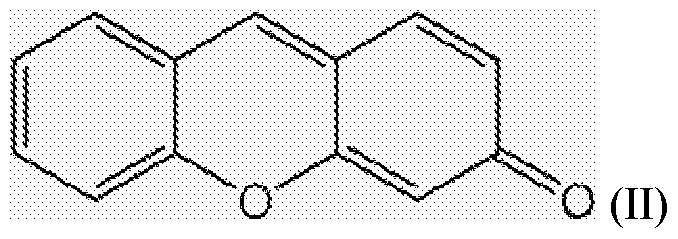
Examples of such derivatives of fluorescein include Fluorescein isothiocyanate (FITC), Fluorescein amidite (FAM), carboxyfluorescein, erythrosine, rhodamine, Merbromin and Rose Bengal and Eosin.
Preferred derivatives of fluorescein for use according to the invention include:
Fluorescein isothiocyanate (FITC)

Carboxyfluorescein:
Eosin Y


Fluorescein and derivatives thereof have a number of uses in biochemical research (microscopy, probe labelling etc) and are also used as a tracer for assisting air/sea rescue (where the dye is released in the water by a stranded person to improve their chances of being spotted by rescuers).
Fluorescein and its derivatives are also used commercially in health care applications and advantageously regulatory approval has been granted for topical use in humans. "Fluorescein sodium" (the sodium salt of fluorescein), is used extensively as a diagnostic tool in ophthalmology and optometry, where topical fluorescein is used in the diagnosis of corneal abrasions, corneal ulcers and herpetic corneal infections.
The inventors realised that certain types of dye exist that may be added to dermal antiseptic compositions to visualise how well the compositions coated the skin or a surface that do not discolour the skin in daylight, but which may be visualised when observed at specific wavelengths of light. This inspired them to test the suitability of a number of different dyes. However they established that many of these dyes where unsuitable for inclusion in alcohol- based dermal antiseptic compositions. As was the case for most dyes they found that fluorescein and derivatives thereof had poor solubility in aqueous solutions containing less than 2% chlorhexidine. They also noted from the state of the art (e.g. Doody et al. (2000) Anal. Chem 72(1) p227-233) that increasing the concentration of alcohol to around 70% results in reduced fluorescence from Fluorescein. This, and the fact it is known to have a yellow colour, lead the inventors to conclude that fluorescein would be a poor choice for inclusion in dermal antiseptic compositions comprising 2% or less chlorhexidine and would be a particularly poor choice for inclusion in the products contemplated above which comprising 2% or less
chlorhexidine typically in about 70% alcohol-based solvent. They were about to discount even testing fluorescein and derivatives thereof for use in dermal antiseptic compositions containing an antimicrobial agent comprising a biguanide functional group, but did decided to proceed (see Example 1). To their surprise they found that fluorescein and derivatives thereof had good solubility in solutions containing 2% or less chlorhexidine and about 60-75%(v/v) alcohol as typically found in the commercial products discussed above. They therefore realised, provided fluorescein could be used at a concentration that did not discolour skin, that fluorescein and derivatives thereof may be advantageously used to supplement alcohol-based compositions despite the fact that a skilled person would have expected fluorescein and derivatives thereof to precipitate out of such solutions and/or have poor fluorescence.
Fluorescein and derivatives thereof may be advantageously used in compositions according to the invention because it is autoclavable; does not photobleach easily in daylight (i.e. it doesn't need special storage conditions and will continue to work on skin until it is washed off -unlike most fluorophores); it is one of the few fluorophores that excites and emits in the visible wavelength (making visualisation easier); and fluorescein is FDA approved and non-toxic for clinical/human use.
Solvent
Compositions according to the invention comprise an alcohol-based solvent. By "alcohol-based solvent" we mean a base solvent that may be about 30-85% by volume (v/v) alcohol in water.
The solvent may contain between about 30 and 85 % by volume of an alcohol. It is preferred that it contains between about 50 and 80 % by volume of an alcohol and more preferred that it contains between about 60 and 75 % by volume of an alcohol.
Preferred alcohols for use as solvents in compositions according to the invention include isopropyl alcohol (IP A), ethanol, DEB and Propan-l-ol.
In preferred embodiments the solvent comprises about 60-75% of isopropyl alcohol (IP A). Isopropyl alcohol (IUPAC name 2-propanol) has the molecular formula C3H8O or C3H7OH or CH3CHOHCH3.
In other preferred embodiments the solvent comprises about 70% by volume of isopropyl alcohol (IP A) or ethanol.
Other Components of the Composition
The primary ingredients of compositions according to the invention are an antimicrobial agent comprising a biguanide functional group, fluorescein or a derivate thereof, an alcohol and water.
It will be appreciated in some embodiments (e.g. hand washes or gels for general or social use) that compositions according to the invention may be formulated as commercial products which will further comprise a number of components such as emollients, fragrance, liquid carriers, thickening agents and other excipients.
For instance some compositions may be formulated to include moisturising agents (e.g. glycols, polyethylene or monodocosyl ether).
Other compositions may include an emollient (which may be chosen from glycerine, glycerol laurate, PEG Lanolin series, Peg Stearate series, Glycerol Cocoate, cyclomethicone, dimethicone, Glycols (mono and poly), dimethicone polyols, lactyl lactate, Isopropyl myrisate, Isopropyl isostesate and PEG 7 Glycerol Cocoate).
In some embodiments, the composition may be thickened or formulated as a gel. Such compositions may comprise a thickener selected from Hydroxyethyl cellulose type, methyl cellulose and hydroxyl propyl cellulose.
Preferred Compositions According to the Invention
Compositions according to the invention are suitable for washing the skin of a subject. It will be appreciated that the compositions may also be used to wash equipment and work surfaces.
Preferred compositions are formulated as liquids or gels.
It is preferred that the antimicrobial agent with a Biguanide Functional Group is a bisguanidine. Preferably the bisguanidine is chlorhexidine or derivatives thereof. It is most preferred that the agent is chlorhexidine or a salt thereof. Preferred salts include the dihydrochloride, diacetate, and digluconate salts of the chlorhexidine cation.
The exact concentration of chlorhexidine required will depend on the intended use of the composition. Alcohol-based washes frequently require concentrations of chlorhexidine of up to about 2% by weight (e.g. 1.5, 2.0. 2.5 or 2.75% chlorhexidine), more preferably the composition comprises 2.0% or less by weight. Preferred compositions comprise about 0.5%, 1.0% or 2.0% chlorhexidine.
As discussed herein the inventors found that a number of dyes appeared to interact with components of conventional dermal antiseptic compositions to result in components and/or dye precipitating out of solution. The inventors found this was the case when they tested fluorescein with a composition comprising 0.5-2% chlorhexidine in an aqueous solvent, but were surprised to find (despite the state of the art) that fluorescence occurred and there was no precipitation when the composition was alcohol-based.
A particular advantage of the use of fluorescein and derivatives thereof is that, in contrast to many traditional dyes, it is not absorbed, therefore does not have systemic activity and is known to be toxicologically safe (it is already approved for use with humans).
Fluorescein is yellow in colour. However the inventors were surprised to establish at a preferred concentration of Fluorescein that;
(a) on exposure to light of a suitable wavelength (e.g. 470 or 495 nm), a clear distinction could be made between treated and untreated skin; and
(b) under ambient light conditions the Fluorescein was not visible to the naked eye.
The fluorescein or derivative thereof is preferably used at a concentration for which the dye is not visible when viewed by the naked eye but becomes visible when illuminated by a blue/cyan light at 470 or 495nm and preferably viewed through a yellow or orange filter. The inventors have found that these conditions are achieved when the concentration of fluorescein or a derivative thereof in a composition according to the invention is from 0.0001 to 0.1% by weight, preferably from 0.001 to 0.075%) by weight and more preferably at concentrations between 0.0025 to 0.05%> by weight. Examples of preferred concentrations of fluorescein are 0.005% and 0.01%.
In preferred embodiments the composition according to the invention comprises between 0.5 - 2.0 % chlorhexadine in a 60-75% alcohol based solvent and compries between 0.001 to 0.075% fluorescein or a derivative thereof.
In a more preferred embodiment the composition according to the invention comprises between 0.5 - 2.0 % chlorhexadine gluconate or chlorhexadine digluconate in a 60-75% ethanol or IPA based solvent and comprises between 0.0025 to 0.05% fluorescein or a salt thereof.
In most preferred embodiments the inventors have established that fluorescein or a derivative thereof may be added to known dermal antiseptic products that are alcohol based and comprise about 2% or less by weight of an antimicrobial agent with a biguanide functional group to form a composition according to the invention. For instance the inventors have found that fluorescein or a derivative thereof may be added to AVAGARD™ products from 3M, HYDREX products (Ecolabs), Virusan theatre-grade Hand Sanitizer, CHLORAPREP® (Carefusion), HiBi®Liquid Hand Rub + (Molnycke Healthcare), Reynard Moisturising Antibacterial Hand Gels (Reynard Health Supplies) and Virusan products (Virusafe).
Uses of Compositions according to the Invention
According to a second aspect of the invention there is provided a method of cleaning the skin of a subject or cleaning a surface comprising washing the subject's skin or washing the surface with a composition according to the first aspect of the invention.
According to a third aspect of the invention there is provided a use of a composition according to the first aspect of the invention for cleaning the skin of a subject or cleaning a surface.
According to a fourth aspect of the invention there is provided a use of a composition according to the first aspect of the invention as a surgical hand scrub, a product for use in preoperative skin preparation, a product for disinfecting a patient's skin during surgery, a handwash, a product for cleaning dermal wounds or a product for general skin cleansing.
According to a fifth aspect of the invention there is provided a method of checking whether or not good aseptic technique has been used when cleaning the skin of a subject or cleaning a surface, comprising:
(a) washing the subject's skin or surface with a composition according to the first aspect of the invention;
(b) illuminating the washed skin or surface with a light at a wave length of 460-500nm; and
(c) observing to what extent the washed skin or surface fluoresces wherein good aseptic technique has been used in step (a) if all, or substantially all, of the observed skin or surface fluoresces and poor aseptic technique has been used in step (a) if significant areas of the observed skin or surface fail to fluoresce.
Compositions according to the invention may advantageously be used to clean the skin or a surface by following good practice hygiene guidelines (e.g. those issued by the NHS in the United Kingdom).
It will be appreciated that in preferred embodiments fluorescein or a derivative thereof may be added to known dermal antiseptic compositions (e.g. AVAGARD™ products from 3M, HYDREX products (Ecolabs), Virusan theatre-grade Hand Sanitizer, CHLORAPREP® (Carefusion), HiBi®Liquid Hand Rub + (Molnycke Healthcare), Reynard Moisturising Antibacterial Hand Gels (Reynard Health Supplies) and Virusan products (Virusafe) to make a composition according to the first aspect of the invention. When this is the case the composition may be used to clean the skin or a surface by following the manufacturer's instructions for those known compositions.
Once cleaning/washing has been completed the skin or surface that has been cleaned with the composition may be illuminated with light at a wave length of 460-500nm and preferably illuminated with light at a wave length of about 470nm or 495nm. The skin or surface is then observed to visualise any fluorescence caused by the fluorescein or a derivative thereof coating the skin or surface.
It is preferred that the skin or surface is observed through a filter (preferably a yellow or orange filter) which will optimally visualise any fluorescence caused by the fluorescein or a derivative thereof coating the skin or surface.
It will be appreciated that a good aseptic technique has been employed in the washing step if all, or substantially all, of the skin or surface fluoresces. However there will have been inadequate cleaning if any area of the skin or surface does not fluoresce. When this is the case cleaning will need to be repeated.
The method of the fifth aspect of the invention may be employed in a variety of situations.
In a preferred embodiment the method may be employed to wash patients undergoing surgery. The composition according to the invention is applied directly onto the skin using sterile swabs or dedicated single use applicators. Once washing has been completed a suitable mobile light source may be used to illuminate the washed skin and the surgeon or other member of theatre staff may observe the extent of fluorescence (preferably using a mobile filter screen or glasses/googles fitted with yellow/orange filters). Once coverage of the skin is checked and the skin has dried, sterile drapes are placed over the patient enduring a sterile surgical field. It will be appreciated that the preparation of a patient's skin with an antimicrobial agent is an essential part of sterile surgical technique. The predominant agents know to the art in the United Kingdom are iodine or chlorhexidine based products containing dyes to visualise coverage (chlorhexidine is colourless). Effective coverage can be observed by the naked eye agents when such products are used. However the iodine or added dyes leave residual skin discolouration. This staining makes assessing skin perfusion problematic and may lead to delayed diagnosis of hypoperfusion and the risk skin necrosis. Accordingly many surgeons consider the discolouring of the skin to be a disadvantage. Compositions according to the invention obviate this problem.
In another preferred embodiment operating theatre staff may use compositions according to the invention to ensure they have applied good aseptic technique when they wash in advance of entering the operating theatre. When this is the case a staff member should clean their skin with a composition according to the invention. Once cleaning has been completed a
suitable light source (e.g. one fixed in the wash area used by theatre staff) may be used to illuminate the skin and the surgeon or other member of theatre staff may observe the extent of fluorescence (e.g. by holding their hands in front of a filter screen mounted in front of the light source and observing fluorescence).
In a further embodiment compositions according to the invention may be used to check whether or not staff, patients and visitors are following hospital guidelines on a hospital ward or observing good hygiene procedures in other situations (e.g. in nursing homes, food manufacturing sites etc). When this is the case a person should clean their skin with a composition according to the invention. Once cleaning has been completed a suitable light source (e.g. one fixed near the wash basins used by the person may be used to illuminate the washed skin and the surgeon or other member of theatre staff may observe the extent of fluorescence (preferably by holding their hands in front of a filter screen mounted in front of the light source and observing fluorescence).
In a further embodiment compositions according to the invention may be formulated as alcohol-based gels and used to check whether or not an individual is following hospital guidelines on a hospital ward or observing good hygiene procedures in other situations (e.g. in nursing homes, food manufacturing sites etc). When this is the case a person may carry a small dispenser of the composition (e.g. in the pocket or attached to a belt) and dispense gel onto their hands when cleaning is required. Once cleaning has been completed a suitable light source (e.g. with a small torch that may also be carried on the person) may be used to visualise fluorescence.
It will be appreciated that preferred compositions according to the invention are advantageously colourless in normal light and therefore do no discolour/stain the skin or surface. This means that a surgeon or anaesthetist will easily be able to observe whether or not any clinically relevant change occurs in the skin. Conventional techniques (e.g. the use of iodine based solutions) have the disadvantage in that they can mask significant skin changes.
It will also be appreciated that fluorescein and derivatives thereof are safe to use and will not permanently adhere to the skin, surface or clothing and the like.
The invention will be further illustrated with reference to the following figures, in which:
Figure 1: is a graph illustrating that chlorohexidine reduces fluorescence from fluorescein at concentrations of fluorescein below 1% in an aqueous solution).
Figure 2: represents graphs illustrating fluorescence from fluorescein at concentrations of 0.01% or 0.005% fluorescein in varying concentration of IP A (a) and (b), propan-l-ol, (c) and (d), DEB (e) and (f); and ethanol (g) and (h); and concentrations of 0%, 0.5% or 2% chlorohexidine.
Figure 3: represents photographs illustrating how compositions according to the invention may be used to visualise how well a cleaning solution will cover skin.
Figure 4: represents graphs illustrating the results of Shelf-life experiments for compositions according to the invention at simulated shelf-lives of 12 months (figure 4a and 4b) and 24 months (fig 4c).
Example 1: Testing whether or not fluorescein or a derivative thereof may be usefully combined with an antimicrobial agent comprising a biguanide functional group
Preliminary experiments initially suggested that fluorescein would not be a good candidate dye for use in making a composition according to the first aspect of the invention. It will be seen from Figure 1 that addition of 0.5% chlorohexidine reduced the fluorescence produced by fluorescein in water for concentrations up to about 0.1% fluorescein. The inventors noticed precipitation occurred when chlorohexidine and fluorescein were mixed and came to the conclusion that this was the cause of the reduction in fluorescence. This finding appeared to support the findings of Bright et al. (2012) Cornea 31(12) pl480-1488) who found that PHMB (a biguanide disinfectant according to the invention) adversely interacts with Fluorescein.
The signal improved at concentrations higher than 1% fluorescein. However fluorescein was found to discolour skin at concentrations higher than 1% fluorescein. This meant that useful fluorescence only appeared to be possible at unusable concentrations of fluorescein and the inventors were tempted to discount using fluorescein.
This initial conclusion was further supported by the fact that Doody et al. (2000) Anal. Chem 72(1) p227-233) reported that increasing the concentration of ethanol to around 70% results in reduced fluorescence from Fluorescein. Accordingly the inventors suspected that the signal from fluorescein would be even worse if an alcohol was used as a solvent. Nevertheless the inventors decided to conduct experiments with fluorescein and these experiments generated the surprising data reported below.
1.1 Methods
1.1.1 Preparation of a Composition According to the Invention
Sodium fluorescein powder and a stock solution of 20% chlorhexidine in water were purchased from Sigma (F6377 and C9394 respectively). A 2% fluorescein stock solution was prepared in water or alcohol as appropriate. Stock solutions were serially diluted to double their final concentration. A ΙΟΟμΙ aliquot of fluorescein and chlorhexidine stock solutions were then pipetted into a 96-well plate with black plastic walls to achieve the desired concentration.
1.1.2 Visualization of Fluorescein
The 96-well plate prepared as described above was shaken briefly in a plate reader to ensure solutions were fully mixed. The gain of the plate was taken by the plate reader for each plate and the resultant gain was set for each reading to ensure that the fluorescence of the plate was accurately read with the fluorescence being neither too low to detect nor above the limit of detection. Each well was excited at 485nm and the emission was read at 520nm. Data output was in the form of an excel spreadsheet. Plates were prepared in triplicate and the standard deviation calculated for each data point.
1.2 Results
Initial experiments were conducted starting with chlorohexdine in aqueous solutions which were then diluted with increasing amounts of alcohol. It will be seen from Figure 2 that below about 20-30% alcohol there was poor fluorescence when fluorescein (at concentrations that would not cause visible discoloration) was mixed with concentrations of chlorohexidine that are typically used in conventional dermal antiseptic compositions which are based on an alcohol solvent. This contrasted with the fluorescence that occurred in the absence of chlorhexidine. These initial results confirmed the inventor's original assumption that a combination of fluorescein and chlorohexidine would be a poor choice.
However the inventors continued to increase the concentration of alcohol and found that at concentrations of alcohol (e.g. of IP A, propan-l-ol, DEB or ethanol) of greater than 30% and particularly around 60-75%) alcohol that fluorescein (at concentrations that do not cause discoloration) may be usefully combined with solutions comprising 2% or less chlorohexidine (see figure 2). These results lead the inventors to the surprising conclusion that fluorescein and derivatives thereof may be combined with conventional dermal antiseptic compositions to form compositions according to the present invention.
Example 2: Skin testing to establish optimal concentrations of fluorescein for use in compositions according to the invention
Having established, that antimicrobial agents comprising a biguanide functional group in alcohol-based solvents may be combined with fluorescein, the inventors went on to establish whether or not alcohol-based solutions comprising fluorescein could be visualised on the skin.
2.1 Methods
2.1.1 Preparation of a Composition According to the Invention
A stock solution of 1% sodium fluorescein (Sigma- Aldrich F6377) was made up in ethanol.
Test solutions with a final concentration of 0.1, 0.05, 0.01, 0.005, 0.001 and 0.0005 fluorescein were made by serial dilution in ethanol.
2.1.2 Visualization of Fluorescein
A Flashlight (emitting light at 470nm wavelength) was used to illuminate surfaces and skin to which compositions were applied and the illuminated surface was viewed with yellow/orange tinted glasses.
Photographs were taken with and without an orange filter applied to a camera (Canon EOS 600D).
2.1.3 Application to the Skin
Sponges were soaked with each test solution and applied to a person's arm by applying 3-5 coats of solution to an area of the arm. Different test solutions were applied to discrete areas of the arm in a randomised order. The person applying the test solutions wore the tinted glasses in order that they could see where each application was been made.
2.2 Results
Table 1 summarises the results obtained when various concentrations of fluorescein solution were coated on the skin and then visualised with the naked eye or as described in 2.1.2.
Table 1:

The inventors appreciated that a concentration of between about 0.001 and 0.005% fluorescein would be particularly useful in compositions according to the invention. This is for two reasons. First, around these concentrations, fluorescein cannot be seen with the naked eye (and therefore
won't result in unsightly staining of the skin or worse still mask clinical signs in the skin). Second, at around these concentrations, the marker can be usefully visualised to check if the skin had been adequately cleaned (by observing if there is comprehensive coverage of the skin by the composition) by illuminating with light at a wavelength of 470nm and preferably observed through an orange/yellow tinted filter.
Example 3: Skin Testing of a Composition According to the Invention
Having established that fluorescein and derivatives thereof could be advantageously combined with an antimicrobial agent comprising a biguanide functional group and establishing optimal concentrations of fluorescein and derivatives thereof, the inventors proceeded to make and test a composition according to the present invention.
3.1 Methods
3.1.1 Preparation of a Composition According to the Invention
A composition according to the invention was made by obtaining HYDREX CLEAR® handwash, (manufactured by Ecolab) and adding fluorescein (Sodium salt, Sigma- Aldrich) to it to make a stock solution of 1% fluorescein in Hydrex® Clear.
Test solutions with a final concentration of 0.1, 0.05, 0.01, 0.005, 0.001 and 0.0005 fluorescein were made by serial dilution in HYDREX CLEAR ® handwash.
3.1.2 Visualization of Fluorescein
The methods described in 2.1.2 were employed.
3.1.3 Application to the Skin
The methods described in 2.1.3 were employed.
3.2 Results
Figure 3 represents photographs illustrating how compositions according to the invention may be used to visual how well a cleaning solution will cover skin.
In the top photograph the arm is shown without illumination with the 470nm flashlight and without use of a yellow filter. The dots represent (from elbow to hand) decreasing concentrations of fluorescein (0.1%, 0.05%, 0.01%, 0.005%, 0.001% and 0.0001%) It can be seen that compositions with up to 0.01% fluorescein remain colourless when visualised under natural light. However this can be contrasted with the bottom photograph which shows the same arm illuminated with the 470nm flashlight and photographed through the yellow filter. The bottom photograph illustrates that test solutions with a concentration of greater than about 0.001%) fluorescein may be observed to visualise coverage of solutions applied to the skin.
It will be appreciated that compositions comprising between about 0.001 and 0.01%> fluorescein are particularly useful because the compositions cannot be seen with the naked eye (and
therefore don't result in unsightly staining of the skin or worse still mask clinical signs in the skin), but can be visualised (i.e. to check the skin had been adequately cleaned by being comprehensively covered by the composition) when illuminated with light at a wavelength of 470nm and preferably observed through orange/yellow tinted glasses.
Example 4: Effect of Fluorescein on the antimicrobial activity of dermal antiseptic compositions
Chlorhexidine dissolved in ethanol at 0.5, 2 and 4% was supplemented with 0, 0.005, 0.01 and 1% Fluorescein as described in 3.1.1 and a ΙΟΟμΙ sample was plated onto agar plates using a spiral plater (Spiral Biotech). Ethanol was allowed to evaporate and then 50μ1 of Asoo of 1.0 (107 CFU/ml) S. aureus was spread over each combination in triplicate.
No bacteria; growth was observed at all. These data indicate that the Fluorescein does not inactivate the antimicrobial agent in dermal antiseptic agents at concentrations relevant to the invention.
Example 5: Shelf-life Investigations
A composition according to the present invention was made by supplementing Hydrex clear with 0.006% fluorescein. The composition was incubated at 40°C and 60 °C for 105 and 60 days respectively to test twelve month shelf life (figure 4a and 4b). All samples meet EN1040 in a test completed by RSSL (Reading Scientific Services Ltd, Reading Science Centre, Whiteknights Campus, Pepper Lane, Reading, RG6 6LA) independently against S. aureus and P. aeruginosa. The same samples were also measured for fluorescence after incubation and in all cases no measurable difference was observed in fluorescence intensity compared to a control at the same concentration of fluorescein made up fresh.
Samples were also incubated at 40°C for 210 days to test two year shelf life (figure 4c), after incubation, the samples were again not altered in fluorescence intensity.
These data demonstrate that compositions according to the invention have good shelf-life.
Claims
1. A dermal antiseptic composition comprising:
an antimicrobial agent comprising a biguanide functional group; fluorescein or a derivative thereof; and
an alcohol-based solvent;
wherein the antimicrobial agent comprising a biguanide functional group comprises less than about 2% of the composition by weight.
2. The dermal antiseptic composition according to claim 1 wherein the antimicrobial agent comprising a biguanide functional group is chlorhexidine or a salt thereof.
3. The dermal antiseptic composition according to claim 2 wherein the composition comprises about 0.5-2.0% by weight of chlorhexidine or a salt thereof.
4. The dermal antiseptic composition according to any preceding claim wherein the fluorescein or a derivative thereof is sodium salt of fluorescein.
5. The dermal antiseptic composition according any preceding claim comprising between 0.0025 and 0.05% by weight of fluorescein.
6. The dermal antiseptic composition according to any preceding claim wherein the alcohol-based solvent comprises 30-80% alcohol by volume.
7. The dermal antiseptic composition according to any preceding claim wherein the alcohol-based solvent comprises 60-75% alcohol by volume.
8. The dermal antiseptic composition according to any preceding claim wherein the solvent comprises about 70% by volume of isopropyl alcohol or ethanol.
9. A dermal antiseptic composition according to any preceding claim comprising between 0.5 - 2.0 % chlorhexidine or a salt thereof and between 0.001 to 0.075% fluorescein or a derivative thereof in a 60-75% alcohol based solvent.
10. A dermal antiseptic composition according to any preceding claim comprising between 0.5 - 2.0 % chlorhexadine gluconate or chlorhexadine digluconate and between 0.0025 to 0.05% fluorescein or a derivative thereof in a 60-75% isopropyl alcohol or ethanol. based solvent.
11. The dermal antiseptic composition according to claim 1 comprising 0.0025 to 0.05% fluorescein or a derivative thereof added to a dermal antiseptic product selected from the group comprising AVAGARD™ products from 3M, HYDREX products (Ecolabs), Virusan theatre- grade Hand Sanitizer, CHLORAPREP® (Carefusion), HiBi®Liquid Hand Rub + (Molnycke Healthcare), Reynard Moisturising Antibacterial Hand Gels (Reynard Health Supplies) and Virusan products (Virusafe).
12. Use of a dermal antiseptic composition according to any preceding claim as a surgical hand scrub, for use in preoperative skin preparation, a product for disinfecting a patient's skin during surgery, a handwash, a product for cleaning dermal wounds or a product for general skin cleansing.
13. A method of checking whether or not good aseptic technique has been used when cleaning the skin of a subject or cleaning a surface, comprising:
(a) washing the subject's skin or surface with a composition according to claim 1 ;
(b) illuminating the washed skin or surface with a light at a wave length of 460-500nm; and
(c) observing to what extent the illuminated skin or surface fluoresces
wherein a good aseptic technique has been used in step (a) if all of the observed skin or surface fluoresces and poor aseptic technique has been used in step (a) if significant areas of the observed skin or surface fail to fluoresce.
14. The method according to claim 13 wherein the skin is illuminated with a blue light.
15. The method according to claim 13 or 14 wherein the skin is illuminated with light with a wavelength of 470nm.
16. The method according to any one of claims 13 - 15 wherein the illuminated skin is observed through an orange or yellow filter.
17. The method according to any one of claims 13 - 16 for checking whether or not a good aseptic technique is being used by operating theatre staff when preparing a patient for surgery or dealing with a patient during surgery.
18. The method according to any one of claims 13 - 16 for checking whether or not a good aseptic technique is being used by staff or visitors in a clinical environment when the staff or visitors are cleaning their hands.
Applications Claiming Priority (2)
| Application Number | Priority Date | Filing Date | Title |
|---|---|---|---|
| GB1602658.5 | 2016-02-15 | ||
| GBGB1602658.5A GB201602658D0 (en) | 2016-02-15 | 2016-02-15 | Compositions |
Publications (1)
| Publication Number | Publication Date |
|---|---|
| WO2017141019A1 true WO2017141019A1 (en) | 2017-08-24 |
Family
ID=55697711
Family Applications (1)
| Application Number | Title | Priority Date | Filing Date |
|---|---|---|---|
| PCT/GB2017/050381 Ceased WO2017141019A1 (en) | 2016-02-15 | 2017-02-14 | Dermal antiseptic compositions |
Country Status (2)
| Country | Link |
|---|---|
| GB (1) | GB201602658D0 (en) |
| WO (1) | WO2017141019A1 (en) |
Cited By (2)
| Publication number | Priority date | Publication date | Assignee | Title |
|---|---|---|---|---|
| CN110755287A (en) * | 2019-11-29 | 2020-02-07 | 北京来先生物医药科技有限公司 | Fluorescein nanoparticle hand sanitizer and preparation method thereof |
| CN116803265A (en) * | 2022-12-20 | 2023-09-26 | 深圳市力合云记新材料有限公司 | Easy-to-identify disinfectant wipes and preparation methods and applications thereof |
Citations (5)
| Publication number | Priority date | Publication date | Assignee | Title |
|---|---|---|---|---|
| WO1999059405A1 (en) * | 1998-05-18 | 1999-11-25 | West Agro, Inc. | Improved film-forming compositions for protecting animal skin |
| DE20011416U1 (en) * | 2000-03-27 | 2001-02-22 | Conrad, Christian, 78247 Hilzingen | Test kit for visualizing hand disinfection |
| US20080108674A1 (en) * | 2006-05-01 | 2008-05-08 | Enturia, Inc. | Cationic antiseptic and dye formulation |
| WO2008060355A2 (en) * | 2006-10-03 | 2008-05-22 | Allegiance Corporation | Color change surgical prep solution |
| WO2014151331A1 (en) * | 2013-03-15 | 2014-09-25 | Carefusion 2200, Inc. | Tinted antiseptic solutions having improved stability |
-
2016
- 2016-02-15 GB GBGB1602658.5A patent/GB201602658D0/en not_active Ceased
-
2017
- 2017-02-14 WO PCT/GB2017/050381 patent/WO2017141019A1/en not_active Ceased
Patent Citations (5)
| Publication number | Priority date | Publication date | Assignee | Title |
|---|---|---|---|---|
| WO1999059405A1 (en) * | 1998-05-18 | 1999-11-25 | West Agro, Inc. | Improved film-forming compositions for protecting animal skin |
| DE20011416U1 (en) * | 2000-03-27 | 2001-02-22 | Conrad, Christian, 78247 Hilzingen | Test kit for visualizing hand disinfection |
| US20080108674A1 (en) * | 2006-05-01 | 2008-05-08 | Enturia, Inc. | Cationic antiseptic and dye formulation |
| WO2008060355A2 (en) * | 2006-10-03 | 2008-05-22 | Allegiance Corporation | Color change surgical prep solution |
| WO2014151331A1 (en) * | 2013-03-15 | 2014-09-25 | Carefusion 2200, Inc. | Tinted antiseptic solutions having improved stability |
Cited By (3)
| Publication number | Priority date | Publication date | Assignee | Title |
|---|---|---|---|---|
| CN110755287A (en) * | 2019-11-29 | 2020-02-07 | 北京来先生物医药科技有限公司 | Fluorescein nanoparticle hand sanitizer and preparation method thereof |
| CN116803265A (en) * | 2022-12-20 | 2023-09-26 | 深圳市力合云记新材料有限公司 | Easy-to-identify disinfectant wipes and preparation methods and applications thereof |
| CN116803265B (en) * | 2022-12-20 | 2026-04-07 | 深圳市力合云记新材料有限公司 | Easily identifiable disinfectant wipes, their preparation methods and applications |
Also Published As
| Publication number | Publication date |
|---|---|
| GB201602658D0 (en) | 2016-03-30 |
Similar Documents
| Publication | Publication Date | Title |
|---|---|---|
| DE69923695T2 (en) | TOPICAL-DERMAL ANTIMICROBIAL COMPOSITIONS | |
| US6723689B1 (en) | Emollient alcohol skin disinfecting formulation | |
| DK2293668T3 (en) | ANTIMICROBIAL COMPOSITIONS AND METHODS FOR USE | |
| ES2383039T3 (en) | Disinfectant composition that includes glycerol monoalkyl ethers and bispyridinioalkanes and their use as a skin antiseptic | |
| US20100003198A1 (en) | Antimicrobial Topical and Other Preparations Containing Fluorescent or Illumination Dye and Tracer Agents or Compounds | |
| BR112020014234A2 (en) | COMPOSITIONS, KITS, METHODS AND USES FOR CLEANING, DISINFECTION, STERILIZATION AND / OR TREATMENT | |
| Lachapelle | Antiseptics and disinfectants | |
| US20190046679A1 (en) | Hygiene Compliance Method, Use and System | |
| Nye et al. | Small animal patient preoperative preparation: a review of common antiseptics, comparison studies, and resistance | |
| JP5542817B2 (en) | Gentle, non-irritating, non-alcoholic skin antiseptic | |
| WO2017141019A1 (en) | Dermal antiseptic compositions | |
| ES2445034T3 (en) | Compositions for hygienic hand disinfection and hand sanitizer washing | |
| JPH0769956A (en) | Glutaraldehyde composition | |
| EP1786391A1 (en) | Antimicrobial skin composition comprising a biguanide or a quaternium compound | |
| US20090042870A1 (en) | Antimicrobial Composition | |
| EP3206492B1 (en) | Blue dyed chlorhexidine antimicrobial composition for skin disinfection | |
| RU2726981C2 (en) | Skin disinfectant composition | |
| WO2021024485A1 (en) | Halal disinfectant liquid | |
| Paulson | Chlorhexidine gluconate | |
| US20250205133A1 (en) | Washing and/or disinfecting agents and method of using same | |
| JPWO2007061028A1 (en) | Gel composition for sterilization | |
| KR20040098400A (en) | Healthcare hand,skinwashing compositions | |
| ES2875746T3 (en) | Colored hydroalcoholic solutions of chlorhexidine, their manufacturing processes and their uses | |
| WO2023101653A1 (en) | Detergent compositions for cleaning in the cosmetic and pharmaceutical industry | |
| JPH1135403A (en) | Rubbing type germicidal disinfectant |
Legal Events
| Date | Code | Title | Description |
|---|---|---|---|
| 121 | Ep: the epo has been informed by wipo that ep was designated in this application |
Ref document number: 17707943 Country of ref document: EP Kind code of ref document: A1 |
|
| NENP | Non-entry into the national phase |
Ref country code: DE |
|
| 122 | Ep: pct application non-entry in european phase |
Ref document number: 17707943 Country of ref document: EP Kind code of ref document: A1 |