WO2017141966A1 - ストレス評価方法 - Google Patents
ストレス評価方法 Download PDFInfo
- Publication number
- WO2017141966A1 WO2017141966A1 PCT/JP2017/005527 JP2017005527W WO2017141966A1 WO 2017141966 A1 WO2017141966 A1 WO 2017141966A1 JP 2017005527 W JP2017005527 W JP 2017005527W WO 2017141966 A1 WO2017141966 A1 WO 2017141966A1
- Authority
- WO
- WIPO (PCT)
- Prior art keywords
- stress
- mice
- tci
- acute
- room
- Prior art date
- Legal status (The legal status is an assumption and is not a legal conclusion. Google has not performed a legal analysis and makes no representation as to the accuracy of the status listed.)
- Ceased
Links
Images


Classifications
-
- G—PHYSICS
- G01—MEASURING; TESTING
- G01N—INVESTIGATING OR ANALYSING MATERIALS BY DETERMINING THEIR CHEMICAL OR PHYSICAL PROPERTIES
- G01N33/00—Investigating or analysing materials by specific methods not covered by groups G01N1/00 - G01N31/00
- G01N33/48—Biological material, e.g. blood, urine; Haemocytometers
- G01N33/50—Chemical analysis of biological material, e.g. blood, urine; Testing involving biospecific ligand binding methods; Immunological testing
Definitions
- the present invention relates to a method for evaluating stress felt by humans and animals, and a method using 1,2,3,4-tetrahydrocyclopenta [b] indole as a stress marker.
- Patent Document 1 mentions the degree of stress relief felt during massage. Here, the point which uses cortisol as a stress marker is disclosed.
- Patent Document 2 discloses that dehydroandrosterone sulfate, 17-ketosteroid sulfate, and dehydroepiandrosterone can be stress markers as stress markers.
- cortisol has an anti-stress factor that counteracts stress, and therefore, it has been pointed out as a problem that it is difficult to use as a quantitative index in a unified manner.
- Patent Document 3 discloses that dehydroepiandrosterone is used as an index as a stress marker.
- Patent Document 4 discloses a method for stably measuring cortisol as an index of stress because stress evaluation with cortisol is unstable.
- Patent Document 5 discloses that chromogranin A, which is known as a tumor marker, can be used as a stress marker, and the coffee bean extract has an effect of suppressing the secretion of chromogranin A.
- cortisol which is known as a stress marker, may not have a constant expression during stress, and is unstable as an index. In addition, acute stress and chronic stress could not be distinguished.
- the stress evaluation method according to the present invention is characterized by using 1,2,3,4-tetrahydrocyclopenta [b] indole represented by formula (1) as an index.
- 1,2,3,4-tetrahydrocyclopenta [b] indole is always expressed when acute stress is applied, the stress state can be reliably grasped. In addition, when the stress becomes steady, the expression becomes zero. Therefore, it can be determined that the patient is in a chronic stress state using as an index that it does not appear at all.
- TCI 1,2,3,4-tetrahydrocyclopenta [b] indole
- TCI When animals (at least mammals) feel stress, they produce TCI, which is observed in the blood.
- an analyzer such as GC / HPLC or GCMS / HPLC-MS which can qualitatively determine the target component.
- the behavioral abnormality is an official standard in the case of humans (“International Classification of Diseases” (ICD-10) of WHO (World Health Organization) or “DSM-IV” of the American Psychiatric Association). ).
- ICD-10 International Classification of Diseases
- DSM-IV the American Psychiatric Association
- the evaluation may be performed by a test such as an elevated plus maze test.
- an acute stress state is a state that falls immediately after a stress is applied and that disappears within a short time when the stress is eliminated.
- Chronic stress is a condition that occurs due to repeated or continuous stress for a certain period of time, and it does not recover even if the stress is relieved with any indefinite complaints to the body (at least for a certain period of time) Even if there is no sign of recovery).
- description will be made based on examples.
- mice As an example, an experiment using a mouse was performed.
- a mouse a ddY male mouse (purchased from Nippon SLC Co., Ltd.) having a body weight of about 20-25 g (4 weeks old) was used. Normal breeding of mice was performed at a room temperature of 24 ⁇ 1 ° C. under a light / dark cycle every 12 hours (from 7 am to 7 pm, lighting), and 8 mice / gauge were used. Feed (MF (trade name), oriental yeast) and water were ingested freely.
- MF trade name
- mice were subjected to Specific Alternation of Rhythm in temperature (SART) to be in a chronic stress state.
- SART Specific Alternation of Rhythm in temperature
- a mouse breeding cage is prepared in both a breeding room at room temperature of 24 ° C. (hereinafter “room temperature breeding room”) and an animal breeding chamber having a temperature of 4 ° C. (hereinafter referred to as “cold breeding room”).
- room temperature breeding room a breeding room temperature breeding room
- an animal breeding chamber having a temperature of 4 ° C. hereinafter referred to as “cold breeding room”.
- mice were moved between the cages every hour, and stress was applied by exposure to changes in environmental temperature for 7 days from 16:00 to 9:00 in the next morning in a 4 ° C chamber. added.
- the room temperature room and the room temperature room were switched according to the SART stress loading method until 11:00 in the morning of the experiment.
- Figure 1 shows the progress of the SART stress loading method.
- Room A is a room-temperature breeding room and Room B is a cold room.
- the mouse is moved between both chambers for each cage.
- the line in the figure represents the movement of the rearing cage.
- the number written at the turning point of the line is the time.
- Mice that are switched between room temperature room (Room A) and cold room room (Room B) every hour from 9:00 to 16:00 every day are left in the cold room (Room B) from 16:00 to 9:00 the next morning. Is done.
- Chronic stress is created by exposure to such temperature changes for 7 days (SART stress). Mice subjected to SART stress are called “chronic stress mice”.
- Non-stressed mice Mice that did not give stress are called “non-stressed mice”. In addition, some non-stressed mice were given acute stress by being left in the low temperature breeding room Room B of FIG. 1 for 1 hour. Such a mouse subjected to acute stress is referred to as “acute stress mouse”. Non-stressed mice moved between gauges on the same schedule as the SART stress in order to remove the stress element accompanying the movement. Of course, this movement was designed not to cause stress due to temperature.
- a silica monolith (diameter: 2.9 mm, length: 10 mm, containing an adsorbent, GL Sciences Inc.) for chronic stress mice, acute stress mice, and non-stress mice, and GC / MS / TD (Shimadzu Corporation: GC-2010, GCMS-Q2010Plus, OPTIC-4) was used for analysis.
- Figure 2 shows the results.
- the horizontal axis is time (minute: min), and the vertical axis is intensity (no unit).
- cold1-1, cold2-1, and cold3-1 are acute stress mice.
- control2-1, control2-2, control3-1, and control1-2 are all non-stressed mice.
- cortisol When stress is applied, cortisol is expressed in humans, but mice have few enzymes necessary for biosynthesis of cortisol. Therefore, when stress is applied, cholesterol (Cholest-5-en-3-ol) that should become cortisol is expressed.
- FIG. 3 is an enlarged view of a part of FIG. A peak equivalent to 156 mz in this portion (indicated by an arrow in FIG. 3) was expressed in all three mice in the acute stress mice (cold1-1, cold2-1, cold3-1), and non-stressed mice The substance which did not express was confirmed. And it was confirmed that TCI corresponds to this part.
- TCI is a substance that is reliably expressed in acute stress mice, it can be used as a stress marker.
- TCI can be detected from saliva, it is easy to observe in time series how much stress is caused by the applied load.
- FIG. 4 shows the results of analyzing blood of acute stress mice and chronic stress mice.
- TCI is observed at a peak portion of 156 mz surrounded by a square.
- Acute stress mice expressed TCI, but chronic stress mice did not express TCI.
- mice loaded with SART stress are in a chronic stress state and their behavioral pattern is clearly different from non-stressed mice ("Anxiety-Like Behavior in Eleveed Plus-Maze Test in Repeated Cold-Stressed Mice") , Taeko Hata et al, Jpn. J. Pharmacol. 85, 189-196 (2001)).
- the stress evaluation method using this will be explained more specifically.
- the stress marker (TCI) according to the present invention can also be used for humans. However, it is more suitable to know the animal's stress state.
- This step can be said to be a step of examining the presence or absence of behavioral abnormalities to be examined.
- the body fluid to be examined blood is desirable if blood can be collected
- the expression of TCI is examined by GC / MS. This step may be referred to as a step of checking whether or not TCI is expressed in the test object.
- an anti-TCI antibody (a monoclonal antibody or a polyclonal antibody) may be used, and ELISA (Enzyme-Linked Immuno) may be used. (Sorbent Assay) may be used. Moreover, EIA (Enzyme immunoassay) and RIA (Radioimmunoassay) can be used.
- the anti-TCI antibody can be obtained by a known ordinary method. In addition, a method that can specifically detect TCI may be used.
- TCI expression is observed without any behavioral abnormality, it is determined that the patient is in an acute stress state. Further, when no abnormal behavior is observed and no TCI expression is observed, it can be determined that the subject is not particularly stressed, that is, is in a relaxed state.
- the stress evaluation method using the stress marker (TCI) according to the present invention can be used as a guideline for determining whether or not there is an acute stress and whether or not the patient is in a chronic stress state.
- the stress evaluation method according to the present invention is extremely objective to determine whether a stress-free state, an acute stress state, or a chronic stress state using the presence / absence of behavioral abnormality and the presence / absence of expression of a stress marker TCI. Therefore, it is possible to objectively evaluate the stress state of a strange animal. Of course, the human stress state can also be objectively evaluated.
Landscapes
- Life Sciences & Earth Sciences (AREA)
- Health & Medical Sciences (AREA)
- Engineering & Computer Science (AREA)
- Molecular Biology (AREA)
- Biomedical Technology (AREA)
- Chemical & Material Sciences (AREA)
- Hematology (AREA)
- Immunology (AREA)
- Urology & Nephrology (AREA)
- Cell Biology (AREA)
- Microbiology (AREA)
- Biotechnology (AREA)
- Food Science & Technology (AREA)
- Medicinal Chemistry (AREA)
- Physics & Mathematics (AREA)
- Analytical Chemistry (AREA)
- Biochemistry (AREA)
- General Health & Medical Sciences (AREA)
- General Physics & Mathematics (AREA)
- Pathology (AREA)
- Investigating Or Analysing Biological Materials (AREA)
Abstract
従来ストレスマーカーとして知られているコルチゾールは、ストレス中の発現が一定しない場合があり、指標とするには不安定であった。また、急性ストレスと慢性ストレスの区別ができなかった。 検査対象に、式(1)に示す1,2,3,4-テトラヒドロシクロペンタ[b]インドールが発現している場合は、急性ストレス状態であると判断することを特徴とするストレス評価方法。
Description
本発明は、人や動物が感じるストレスを評価する方法で、ストレスマーカーとして1,2,3,4-テトラヒドロシクロペンタ[b]インドールを用いる方法に関する。
ストレスはさまざまな外的要因によって引き起こされるもので、心身障害に至る原因となる場合もある。したがって、過度のストレスに陥っている場合は、ストレスを緩和する必要がある。しかし、ストレスは、外的要因に対する感じ方の個人差もあり、ストレスの感じ方を客観的に評価する方法が検討されてきた。
特許文献1には、マッサージをした際に感じるストレス緩和の程度について言及されている。ここでは、ストレスマーカーとしてコルチゾールを用いる点が開示されている。
特許文献2には、ストレスマーカーとして、デヒドロアンドロステロンサルフェート、17-ケトステロイドサルフェート、デヒドロエピアンドロステロンがストレスマーカーになり得ることが開示されている。なお、特許文献2では、コルチゾールは、ストレスを打ち消すアンチストレス因子が存在するため、一元的に定量指標としにくかった点が課題として挙げられている。
特許文献3には、ストレスマーカーとしてデヒドロエピアンドロステロンを指標とすることが開示されている。
特許文献4では、コルチゾールでのストレス評価は不安定であるので、安定的にコルチゾールをストレスの指標として測定するための方法が開示されている。
また、特許文献5には、腫瘍マーカーとして知られているクロモグラニンAがストレスマーカーとして利用でき、コーヒー豆の抽出物がクロモグラニンAの分泌を抑制する効果がある点が開示されている。
特許文献2、3、4が開示しているように、ストレスマーカーとして知られているコルチゾールは、ストレス中の発現が一定しない場合があり、指標とするには不安定であった。また、急性ストレスと慢性ストレスの区別ができなかった。
本発明は上記の課題に鑑みて想到されたので、ストレスに対して安定して発現する物質をストレスマーカーとし、ストレスを評価できるようにしたものである。より具体的に本発明に係るストレスの評価方法は、式(1)に示す1,2,3,4-テトラヒドロシクロペンタ[b]インドールを指標とすることを特徴とする。
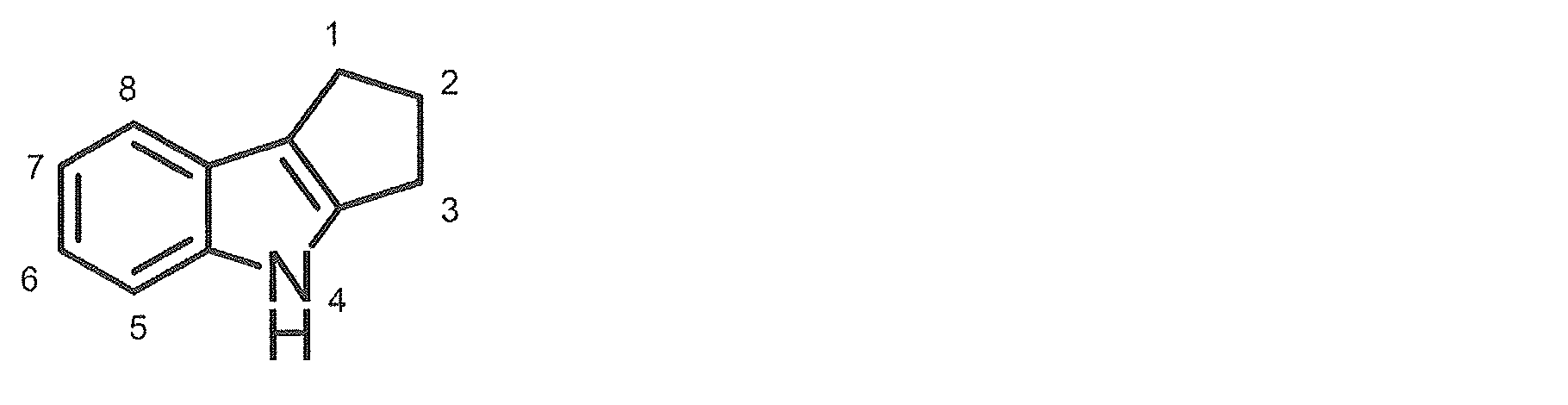
1,2,3,4-テトラヒドロシクロペンタ[b]インドールは、急性のストレスがかかると、必ず発現するので、ストレス状態を確実に把握することができる。また、ストレスが定常化すると、発現がゼロになる。したがって、全く発現しないことを指標として、慢性ストレス状態であることを判断できる。
以下に本発明に係るストレス評価方法について図面および実施例を示し説明を行う。なお、以下の説明は、本発明の一実施形態および一実施例を例示するものであり、本発明が以下の説明に限定されるものではない。以下の説明は本発明の趣旨を逸脱しない範囲で改変することができる。
本発明に係るストレス評価方法では、ストレスマーカーとして、1,2,3,4-テトラヒドロシクロペンタ[b]インドール(以後「TCI」と呼ぶ。)を用いる。
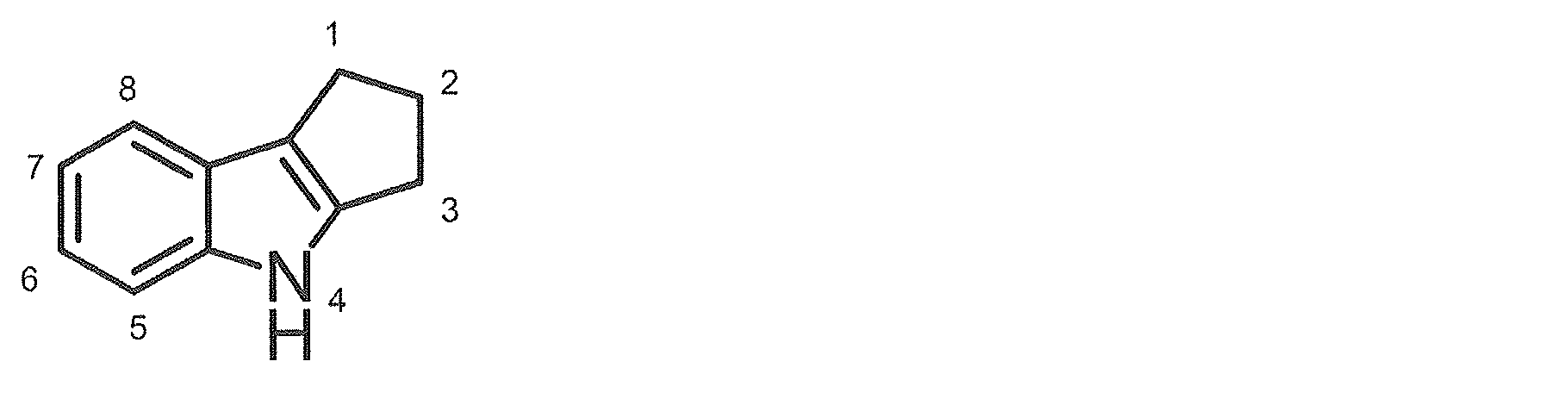
動物(少なくとも哺乳類)はストレスを感じるとTCIを産生し、血中にそれが観測される。TCIの測定には、GC/HPLCまたはGCMS/HPLC-MSなど目的成分を分離し定性定量が可能な分析装置を用いて測定することが望ましい。
また、本発明において、行動異常とは、ヒトの場合は公的な基準(WHO(世界保健機関)の国際疾病分類である「ICD-10」若しくは、米国精神医学会の「DSM-IV」など)に基づいて行ってもよい。動物の場合は、他の個体との比較や、以前の行動からの変化などで判断できる。小動物の場合は、高架式十字迷路試験などの試験によって評価を行ってもよい。
また、本明細書において、急性ストレス状態とは、ストレスを与えられた直後から陥る状態で、ストレスが解消されると、短時間内に消失するストレス状態である。また、慢性ストレス状態とは、一定期間の間ストレスを繰り返しまたは継続的に受けたために陥る状態で、身体に何らかの不定愁訴をともない、ストレスが解消されても、回復しない(少なくとも一定期間の間観察しても回復の兆しが見られない)状態をいう。以下実施例に基づいて説明する。
実施例として、マウスを用いた実験を行った。マウスは、体重約20-25g(4週齢)のddY系雄性マウス(日本エスエルシー株式会社より購入)を使用した。マウスの通常飼育は室温24±1℃、12時間毎の明暗サイクル(午前7時から午後7時,点灯)下で行い、8匹/1ゲージとした。飼料(MF(商品名)、オリエンタル酵母)及び水は自由に摂取させた。
一部のマウスについては、Specific alternation of rhythm in temperature(SART)を施し、慢性ストレス状態にした。具体的には、室温24℃の飼育室(以下「常温飼育室」)と庫内温度4℃の動物飼育用チャンバー(以下「低温飼育室」)の両方にマウス飼育用ケージを用意し、毎日9時から16時までの間は1時間ごとにマウスを両ケージ間に移し変え、16時から翌朝9時までは4℃のチャンバー内で飼育するという環境温度変化に7日間曝すことによりストレスを加えた。実験当日の朝11時までSARTストレスの負荷方法に従って常温飼育室と低温室温室の入れ替えを行った。
図1にSARTストレスの負荷方法についての経過図を示す。RoomAは常温飼育室で、RoomBは低温飼育室である。マウスはケージ毎両室間を移動させられる。図中のラインは飼育用ケージの移動を表している。またラインの折れ曲がり点に記載している数字は時刻である。毎日9時から16時までの1時間毎に常温飼育室(RoomA)と低温飼育室(RoomB)の間を入れ替えられたマウスは、16時から翌朝の9時まで低温飼育室(RoomB)に放置される。このような温度変化に7日間曝されること(SARTストレス)で、慢性ストレス状態を生み出している。SARTストレスを与えたマウスを「慢性ストレスマウス」と呼ぶ。
ストレスを与えなかったマウスは、「非ストレスマウス」と呼ぶ。また、一部の非ストレスマウスには、図1の低温飼育室RoomBに1時間放置することで、急性ストレスを与えた。このように急性ストレスを与えたマウスを、「急性ストレスマウス」と呼ぶ。なお、非ストレスマウスは、移動に伴うストレスの要素を除去するために、SARTストレスと同様のスケジュールで、ゲージ間の移動を行った。もちろん、この移動によっても温度によるストレスはないようにした。
上記のように、慢性ストレスマウスと、急性ストレスマウスと、非ストレスマウスに対して、シリカモノリス(直径2.9mm長さ10mm,吸着材含有、ジーエルサイエンス社)で血液を採取し、GC/MS/TD(島津製作所:GC-2010、GCMS-Q2010Plus,OPTIC-4)を用いて分析を行った。
図2には、結果を示す。横軸は時間(分:min)であり、縦軸は強度(無単位)である。cold1-1、cold2-1、cold3-1は急性ストレスマウスである。また、control2-1、control2-2、control3-1、control1-2はすべて非ストレスマウスである。
ストレスを与えると、人ではコルチゾールが発現するとされているが、マウスはコルチゾールを生合成するために必要な酵素をほとんど持っていない。したがって、ストレスが与えられた際には、コルチゾールになるはずのコレステロール(Cholest-5-en-3-ol)が発現する。
図2では、急性ストレスマウス3匹(cold1-1、cold2-1、cold3-1)のうち、cold1-1とcold2-1には、コレステロールが発現したが、cold3-1には発生しなかった。一方、非ストレスマウスについては、4匹中4匹ともほとんどコレステロールの発現は認められなかった。
図3は、図2の一部の区間を抜き出して拡大したものである。この部分のちょうど156mzに相等するピーク(図3中に矢印で示した。)は、急性ストレスマウス(cold1-1、cold2-1、cold3-1)には、3匹とも発現し、非ストレスマウスには、発現しない物質が確認できた。そして、この部分に相当するのがTCIであることが確認された。
すなわち、TCIは、急性ストレスマウスに確実に発現する物質であるので、ストレスマーカーとして利用することができる。
TCIは唾液中からも検出することができるので、与える負荷によってどの程度のストレスが生じるかを時系列で観測することが容易である。
図4には、急性ストレスマウスと慢性ストレスマウスの血液を分析した結果を示す。ここでは、TCIは四角で囲った156mzのピーク部分に観測される。急性ストレスマウスは、TCIが発現しているが、慢性ストレスマウスにはTCIが発現していなかった。
SARTストレスを負荷したマウスは慢性ストレス状態にあり、その行動パターンは明らかに非ストレスマウスと異なることがすでに報告されている(”Anxiety-Like Behavior in Elevated Plus-Maze Test in Repeatedly Cold-Stressed Mice”,Taeko Hata etal,Jpn.J.Pharmacol.85,189-196(2001))。
つまり、TCIの発現を観察することで、急性ストレスを受けているか否かがわかり、行動が異常であってTCIが消失していることを観察することで、慢性ストレス状態になっているか否かを判断することができる。
このことを利用したストレス評価法について、より具体的に説明する。本発明に係るストレスマーカー(TCI)は、ヒトに対しても使用することができる。しかし、動物のストレス状態を知るのにより適している。
まず、検査対象の行動に異常が見られるか否かを観察する。ここで行動異常か否かは、高架式十字迷路試験といった試験方法でかなり客観的に知ることが出来る。また、一箇所にじっとしていて、行動が停止気味もしくは緩慢になっている若しくは、同一行動を際限なく繰り返すといった観察結果であってもよい。もちろん、これ以外の他の方法を用いても良い。この工程は、検査対象の行動異常の有無を調べる工程と言って良い。
次に検査対象の体液(血液採取が可能であれば血液が望ましい。)を採取する。そして、GC/MSで、TCIの発現を調べる。この工程は、検査対象にTCIが発現しているか否かを調べる工程といってよい。
ここでTCIの発現には、GC/MSやLC/MS以外に、抗TCI抗体(モノクロナール抗体であってもよいし、ポリクロナール抗体であってもよい)を利用し、ELISA(Enzyme-Linked Immuno Sorbent Assay)で検出してもよい。また、EIA(Enzyme immunoassay)やRIA(Radioimmunoassay)を利用することができる。なお、抗TCI抗体は、公知の常法によって得られる。また、その他にTCIを特異的に検出できる方法を用いてもよい。
その結果、行動異常が見られずに、TCIの発現が見られる場合は、急性ストレス状態にあると判断する。また、行動異常が見られずに、TCIの発現が見られない場合は、特にストレスを受けていない、つまりリラックスした状態であると判断できる。
一方、行動異常が見られ、なお、TCIの発現が見られない場合は、慢性ストレス状態にあると判断できる。
なお、検査対象の行動異常の有無を調べる工程はなくてもよい。TCIの発現が検知された時点で、少なくとも急性ストレス状態であると判断できるからである。
以上のように、本発明に係るストレスマーカー(TCI)を利用したストレス評価方法は、急性ストレスの有無と、慢性ストレス状態になっているか否かの判断指針とすることができる。
本発明に係るストレスの評価方法は、行動の異常の有無とストレスマーカーであるTCIの発現の有無を利用してストレスのない状態なのか、急性ストレス状態なのか、慢性ストレス状態なのかを極めて客観的に評価することができるので、物言わぬ動物のストレス状態を客観的に評価することができる。もちろん、ヒトのストレス状態も客観的に評価することができる。
Claims (2)
- 検査対象に、式(1)に示す1,2,3,4-テトラヒドロシクロペンタ[b]インドールが発現している場合は、急性ストレス状態であると判断することを特徴とするストレス評価方法。

- 前記検査対象の行動異常の有無を調べる工程を有し、
前記行動異常が認められ、さらに前記1,2,3,4-テトラヒドロシクロペンタ[b]インドールが発現していない場合は、慢性ストレス状態であると判断することを特徴とするストレス評価方法。
Priority Applications (1)
| Application Number | Priority Date | Filing Date | Title |
|---|---|---|---|
| JP2018500156A JP6757037B2 (ja) | 2016-02-15 | 2017-02-15 | ストレス評価方法 |
Applications Claiming Priority (2)
| Application Number | Priority Date | Filing Date | Title |
|---|---|---|---|
| JP2016-026406 | 2016-02-15 | ||
| JP2016026406 | 2016-02-15 |
Publications (1)
| Publication Number | Publication Date |
|---|---|
| WO2017141966A1 true WO2017141966A1 (ja) | 2017-08-24 |
Family
ID=59625872
Family Applications (1)
| Application Number | Title | Priority Date | Filing Date |
|---|---|---|---|
| PCT/JP2017/005527 Ceased WO2017141966A1 (ja) | 2016-02-15 | 2017-02-15 | ストレス評価方法 |
Country Status (2)
| Country | Link |
|---|---|
| JP (1) | JP6757037B2 (ja) |
| WO (1) | WO2017141966A1 (ja) |
Citations (3)
| Publication number | Priority date | Publication date | Assignee | Title |
|---|---|---|---|---|
| JP2010523556A (ja) * | 2007-04-05 | 2010-07-15 | アンドレイ・アレクサンドロビッチ・イワシェンコ | 置換された2,3,4,5−テトラヒドロ−1h−ピリド[4,3−b]インドール、その製造のための方法及び使用 |
| WO2014177680A1 (en) * | 2013-05-03 | 2014-11-06 | Salion Gmbh | In vitro method for the early detection of a potential inflammation, in particular associated with rejection of a transplant, a neurodegenerative disorder or a depression |
| US20150266821A1 (en) * | 2010-02-04 | 2015-09-24 | Radius Health, Inc. | Selective androgen receptor modulators |
-
2017
- 2017-02-15 WO PCT/JP2017/005527 patent/WO2017141966A1/ja not_active Ceased
- 2017-02-15 JP JP2018500156A patent/JP6757037B2/ja active Active
Patent Citations (3)
| Publication number | Priority date | Publication date | Assignee | Title |
|---|---|---|---|---|
| JP2010523556A (ja) * | 2007-04-05 | 2010-07-15 | アンドレイ・アレクサンドロビッチ・イワシェンコ | 置換された2,3,4,5−テトラヒドロ−1h−ピリド[4,3−b]インドール、その製造のための方法及び使用 |
| US20150266821A1 (en) * | 2010-02-04 | 2015-09-24 | Radius Health, Inc. | Selective androgen receptor modulators |
| WO2014177680A1 (en) * | 2013-05-03 | 2014-11-06 | Salion Gmbh | In vitro method for the early detection of a potential inflammation, in particular associated with rejection of a transplant, a neurodegenerative disorder or a depression |
Non-Patent Citations (2)
| Title |
|---|
| FUNAKAMI, YOSHINORI ET AL.: "Effect of the alphal-adrenoceptor Agonist Phenylephrine on SART Stress-induced Orthostatic Hypotension in Rats", BIOPSYCHOSOCIAL MEDICINE, vol. 4, no. 13, 2010, pages 1 - 9, XP021082041 * |
| JIN-HYUNG ET AL.: "Roles of Indole as an Interspecies and terkingdom Signaling Molecule", TRENDS IN MICROBIOLOGY, vol. 11, 23 January 2015 (2015-01-23), pages 707 - 718, XP055542300 * |
Also Published As
| Publication number | Publication date |
|---|---|
| JPWO2017141966A1 (ja) | 2018-12-06 |
| JP6757037B2 (ja) | 2020-09-16 |
Similar Documents
| Publication | Publication Date | Title |
|---|---|---|
| Piras et al. | Self-awareness in Mild Cognitive Impairment: Quantitative evidence from systematic review and meta-analysis | |
| Balk et al. | Timing of retinal neuronal and axonal loss in MS: a longitudinal OCT study | |
| Santos et al. | Distinct parameters of the basophil activation test reflect the severity and threshold of allergic reactions to peanut | |
| Bashir et al. | Increased severity of the CHIMERA model induces acute vascular injury, sub-acute deficits in memory recall, and chronic white matter gliosis | |
| Muñoz et al. | Work-related asthma: diagnosis and prognosis of immunological occupational asthma and work-exacerbated asthma | |
| JP2018004657A5 (ja) | ||
| Al Washali et al. | Prevalence and associated risk factors of diabetic peripheral neuropathy among diabetic patients in national center of diabetes in Yemen | |
| MX2022011632A (es) | Anticuerpos contra mucina 17 y usos de los mismos. | |
| Kumar et al. | A comparative study of skin prick test versus serum-specific IgE measurement in Indian patients with bronchial asthma and allergic rhinitis | |
| BR112016023170A2 (pt) | biomarcadores para avaliação de hiv | |
| Bousquet et al. | Effect of smoking on symptoms of allergic rhinitis | |
| Bajoriuniene et al. | Th17 response to Dermatophagoides pteronyssinus is related to late-phase airway and systemic inflammation in allergic asthma | |
| Craig et al. | Sensitivity of acute flaccid paralysis surveillance in Nigeria (2006-2015) | |
| WO2017141966A1 (ja) | ストレス評価方法 | |
| Pignatti et al. | Nasal blown secretion evaluation in specific occupational nasal challenges | |
| Coni et al. | Influence of age and gender on sensor-based functional measures: A factor analysis approach | |
| Sookrung et al. | Concordance of skin prick test and serum-specific IgE to locally produced component-resolved diagnostics for cockroach allergy | |
| BR112013030646A2 (pt) | uso diagnóstico de pró-somatostatina | |
| Khowaja et al. | Impact of temperature variation on acute myocardial infarction in Karachi, Pakistan | |
| Akotet et al. | Performances of malaria Pf/Pan rapid test device Acon®(Pf HRP2/pan aldolase) and malaria Pf rapid test device Acon®(Pf HRP2) for the diagnosis of malaria in adults and children living in Gabon, central Africa | |
| Taraldsen et al. | Quantification of Outdoor Mobility by Use of Accelerometer‐Measured Physical Behaviour | |
| Biswas et al. | A study on the dangerous outbreak of chikungunya in Chittagong, including a limited survey around that city of Bangladesh | |
| Seys et al. | Validation of the Skin Prick Automated Test (SPAT) Cut‐Off Value in Birch Pollen and House Dust Mite Allergic Rhinitis Patients | |
| Kavsak et al. | Canadian Institutes of Health Research dissemination grant on high-sensitivity cardiac troponin | |
| TWI836259B (zh) | 用於推估個體對於SARS-CoV-2的免疫能力的方法 |
Legal Events
| Date | Code | Title | Description |
|---|---|---|---|
| 121 | Ep: the epo has been informed by wipo that ep was designated in this application |
Ref document number: 17753222 Country of ref document: EP Kind code of ref document: A1 |
|
| WWE | Wipo information: entry into national phase |
Ref document number: 2018500156 Country of ref document: JP |
|
| NENP | Non-entry into the national phase |
Ref country code: DE |
|
| 122 | Ep: pct application non-entry in european phase |
Ref document number: 17753222 Country of ref document: EP Kind code of ref document: A1 |