WO2017159633A1 - シラン化合物、ゴム組成物およびタイヤ - Google Patents
シラン化合物、ゴム組成物およびタイヤ Download PDFInfo
- Publication number
- WO2017159633A1 WO2017159633A1 PCT/JP2017/010030 JP2017010030W WO2017159633A1 WO 2017159633 A1 WO2017159633 A1 WO 2017159633A1 JP 2017010030 W JP2017010030 W JP 2017010030W WO 2017159633 A1 WO2017159633 A1 WO 2017159633A1
- Authority
- WO
- WIPO (PCT)
- Prior art keywords
- group
- integer
- silane compound
- rubber
- alkyl group
- Prior art date
- Legal status (The legal status is an assumption and is not a legal conclusion. Google has not performed a legal analysis and makes no representation as to the accuracy of the status listed.)
- Ceased
Links
- 0 C[*+]C(C)C(CC1C2)C2C2C1C1C3OC3C2C1 Chemical compound C[*+]C(C)C(CC1C2)C2C2C1C1C3OC3C2C1 0.000 description 6
- INNPJHURSTYQGM-UHFFFAOYSA-N C=SC(CC1)C2C1CC1OC1C2 Chemical compound C=SC(CC1)C2C1CC1OC1C2 INNPJHURSTYQGM-UHFFFAOYSA-N 0.000 description 1
- UFRRNGYZRVZFNA-UHFFFAOYSA-N C=SCCC(CC1C2)C2C2C1C1C3OC3C2C1 Chemical compound C=SCCC(CC1C2)C2C2C1C1C3OC3C2C1 UFRRNGYZRVZFNA-UHFFFAOYSA-N 0.000 description 1
- IFECIAMRMCTEME-UHFFFAOYSA-N C=[S+]CCC(C1)C2C(CC3OC3C3)C3C1C2 Chemical compound C=[S+]CCC(C1)C2C(CC3OC3C3)C3C1C2 IFECIAMRMCTEME-UHFFFAOYSA-N 0.000 description 1
- AMQOEFLIWDSRDD-UHFFFAOYSA-N CC(C(C1)C2C(CC3OC3C3)C3C1C2)[S+]=C Chemical compound CC(C(C1)C2C(CC3OC3C3)C3C1C2)[S+]=C AMQOEFLIWDSRDD-UHFFFAOYSA-N 0.000 description 1
- QJORMZWEXQYDFH-UHFFFAOYSA-O [SH2+]C(CC1)C2C1C1C3OC3C2C1 Chemical compound [SH2+]C(CC1)C2C1C1C3OC3C2C1 QJORMZWEXQYDFH-UHFFFAOYSA-O 0.000 description 1
Images
Classifications
-
- C—CHEMISTRY; METALLURGY
- C07—ORGANIC CHEMISTRY
- C07F—ACYCLIC, CARBOCYCLIC OR HETEROCYCLIC COMPOUNDS CONTAINING ELEMENTS OTHER THAN CARBON, HYDROGEN, HALOGEN, OXYGEN, NITROGEN, SULFUR, SELENIUM OR TELLURIUM
- C07F7/00—Compounds containing elements of Groups 4 or 14 of the Periodic Table
- C07F7/02—Silicon compounds
- C07F7/08—Compounds having one or more C—Si linkages
- C07F7/0803—Compounds with Si-C or Si-Si linkages
- C07F7/081—Compounds with Si-C or Si-Si linkages comprising at least one atom selected from the elements N, O, halogen, S, Se or Te
- C07F7/0812—Compounds with Si-C or Si-Si linkages comprising at least one atom selected from the elements N, O, halogen, S, Se or Te comprising a heterocyclic ring
-
- C—CHEMISTRY; METALLURGY
- C07—ORGANIC CHEMISTRY
- C07F—ACYCLIC, CARBOCYCLIC OR HETEROCYCLIC COMPOUNDS CONTAINING ELEMENTS OTHER THAN CARBON, HYDROGEN, HALOGEN, OXYGEN, NITROGEN, SULFUR, SELENIUM OR TELLURIUM
- C07F7/00—Compounds containing elements of Groups 4 or 14 of the Periodic Table
- C07F7/02—Silicon compounds
- C07F7/08—Compounds having one or more C—Si linkages
- C07F7/18—Compounds having one or more C—Si linkages as well as one or more C—O—Si linkages
- C07F7/1804—Compounds having Si-O-C linkages
-
- B—PERFORMING OPERATIONS; TRANSPORTING
- B60—VEHICLES IN GENERAL
- B60C—VEHICLE TYRES; TYRE INFLATION; TYRE CHANGING; CONNECTING VALVES TO INFLATABLE ELASTIC BODIES IN GENERAL; DEVICES OR ARRANGEMENTS RELATED TO TYRES
- B60C1/00—Tyres characterised by the chemical composition or the physical arrangement or mixture of the composition
-
- C—CHEMISTRY; METALLURGY
- C07—ORGANIC CHEMISTRY
- C07F—ACYCLIC, CARBOCYCLIC OR HETEROCYCLIC COMPOUNDS CONTAINING ELEMENTS OTHER THAN CARBON, HYDROGEN, HALOGEN, OXYGEN, NITROGEN, SULFUR, SELENIUM OR TELLURIUM
- C07F7/00—Compounds containing elements of Groups 4 or 14 of the Periodic Table
- C07F7/02—Silicon compounds
- C07F7/08—Compounds having one or more C—Si linkages
- C07F7/18—Compounds having one or more C—Si linkages as well as one or more C—O—Si linkages
-
- C—CHEMISTRY; METALLURGY
- C08—ORGANIC MACROMOLECULAR COMPOUNDS; THEIR PREPARATION OR CHEMICAL WORKING-UP; COMPOSITIONS BASED THEREON
- C08K—Use of inorganic or non-macromolecular organic substances as compounding ingredients
- C08K3/00—Use of inorganic substances as compounding ingredients
-
- C—CHEMISTRY; METALLURGY
- C08—ORGANIC MACROMOLECULAR COMPOUNDS; THEIR PREPARATION OR CHEMICAL WORKING-UP; COMPOSITIONS BASED THEREON
- C08K—Use of inorganic or non-macromolecular organic substances as compounding ingredients
- C08K3/00—Use of inorganic substances as compounding ingredients
- C08K3/18—Oxygen-containing compounds, e.g. metal carbonyls
- C08K3/20—Oxides; Hydroxides
- C08K3/22—Oxides; Hydroxides of metals
-
- C—CHEMISTRY; METALLURGY
- C08—ORGANIC MACROMOLECULAR COMPOUNDS; THEIR PREPARATION OR CHEMICAL WORKING-UP; COMPOSITIONS BASED THEREON
- C08K—Use of inorganic or non-macromolecular organic substances as compounding ingredients
- C08K3/00—Use of inorganic substances as compounding ingredients
- C08K3/34—Silicon-containing compounds
- C08K3/36—Silica
-
- C—CHEMISTRY; METALLURGY
- C08—ORGANIC MACROMOLECULAR COMPOUNDS; THEIR PREPARATION OR CHEMICAL WORKING-UP; COMPOSITIONS BASED THEREON
- C08K—Use of inorganic or non-macromolecular organic substances as compounding ingredients
- C08K5/00—Use of organic ingredients
- C08K5/54—Silicon-containing compounds
-
- C—CHEMISTRY; METALLURGY
- C08—ORGANIC MACROMOLECULAR COMPOUNDS; THEIR PREPARATION OR CHEMICAL WORKING-UP; COMPOSITIONS BASED THEREON
- C08K—Use of inorganic or non-macromolecular organic substances as compounding ingredients
- C08K5/00—Use of organic ingredients
- C08K5/54—Silicon-containing compounds
- C08K5/5403—Silicon-containing compounds containing no other elements than carbon or hydrogen
-
- C—CHEMISTRY; METALLURGY
- C08—ORGANIC MACROMOLECULAR COMPOUNDS; THEIR PREPARATION OR CHEMICAL WORKING-UP; COMPOSITIONS BASED THEREON
- C08K—Use of inorganic or non-macromolecular organic substances as compounding ingredients
- C08K5/00—Use of organic ingredients
- C08K5/54—Silicon-containing compounds
- C08K5/541—Silicon-containing compounds containing oxygen
- C08K5/5415—Silicon-containing compounds containing oxygen containing at least one Si—O bond
-
- C—CHEMISTRY; METALLURGY
- C08—ORGANIC MACROMOLECULAR COMPOUNDS; THEIR PREPARATION OR CHEMICAL WORKING-UP; COMPOSITIONS BASED THEREON
- C08K—Use of inorganic or non-macromolecular organic substances as compounding ingredients
- C08K5/00—Use of organic ingredients
- C08K5/54—Silicon-containing compounds
- C08K5/541—Silicon-containing compounds containing oxygen
- C08K5/5435—Silicon-containing compounds containing oxygen containing oxygen in a ring
-
- C—CHEMISTRY; METALLURGY
- C08—ORGANIC MACROMOLECULAR COMPOUNDS; THEIR PREPARATION OR CHEMICAL WORKING-UP; COMPOSITIONS BASED THEREON
- C08K—Use of inorganic or non-macromolecular organic substances as compounding ingredients
- C08K5/00—Use of organic ingredients
- C08K5/54—Silicon-containing compounds
- C08K5/548—Silicon-containing compounds containing sulfur
-
- C—CHEMISTRY; METALLURGY
- C08—ORGANIC MACROMOLECULAR COMPOUNDS; THEIR PREPARATION OR CHEMICAL WORKING-UP; COMPOSITIONS BASED THEREON
- C08L—COMPOSITIONS OF MACROMOLECULAR COMPOUNDS
- C08L21/00—Compositions of unspecified rubbers
-
- C—CHEMISTRY; METALLURGY
- C08—ORGANIC MACROMOLECULAR COMPOUNDS; THEIR PREPARATION OR CHEMICAL WORKING-UP; COMPOSITIONS BASED THEREON
- C08L—COMPOSITIONS OF MACROMOLECULAR COMPOUNDS
- C08L7/00—Compositions of natural rubber
-
- C—CHEMISTRY; METALLURGY
- C08—ORGANIC MACROMOLECULAR COMPOUNDS; THEIR PREPARATION OR CHEMICAL WORKING-UP; COMPOSITIONS BASED THEREON
- C08K—Use of inorganic or non-macromolecular organic substances as compounding ingredients
- C08K3/00—Use of inorganic substances as compounding ingredients
- C08K3/18—Oxygen-containing compounds, e.g. metal carbonyls
- C08K3/20—Oxides; Hydroxides
- C08K3/22—Oxides; Hydroxides of metals
- C08K2003/2296—Oxides; Hydroxides of metals of zinc
-
- C—CHEMISTRY; METALLURGY
- C08—ORGANIC MACROMOLECULAR COMPOUNDS; THEIR PREPARATION OR CHEMICAL WORKING-UP; COMPOSITIONS BASED THEREON
- C08K—Use of inorganic or non-macromolecular organic substances as compounding ingredients
- C08K2201/00—Specific properties of additives
- C08K2201/014—Additives containing two or more different additives of the same subgroup in C08K
Definitions
- the present invention relates to a silane compound, a rubber composition containing the silane compound, and a tire. More specifically, a low-polarity silane compound having high reactivity with organic polymer materials such as rubber and high affinity with low-polarity polymer materials, a rubber composition comprising the same, and Regarding tires.
- a silane compound having a reactive functional group and a hydrolyzable group is a silane coupling agent for improving the dispersibility between an organic polymer material such as rubber and an inorganic material such as silica in a rubber composition.
- an organic polymer material such as rubber
- an inorganic material such as silica in a rubber composition.
- silane compounds have been used as adhesive aids for improving adhesion to inorganic materials such as glass in adhesive compositions and sealant compositions.
- such a silane compound has a substituent such as a mercapto group, a polysulfide group, an amino group or an epoxy group as a reactive functional group highly reactive with an organic polymer material such as rubber, and silica or As a hydrolyzable group having high reactivity with an inorganic material such as glass, it has a substituent such as an alkoxysilyl group.
- a substituent such as a mercapto group, a polysulfide group, an amino group or an epoxy group
- JP-A-8-259736 Patent Document 1 discloses a polysulfide-based silane coupling agent.
- JP-A-11-335381 Patent Document 2 discloses a silane compound having an amino group as a reactive functional group and a methoxy group as a hydrolyzable group.
- JP-A-8-259736 Japanese Patent Laid-Open No. 11-335381
- the reactive functional group possessed by the silane compound disclosed in Patent Documents 1 and 2 has a high polarity, and when mixed with a low-polarity polymer material, the affinity between the silane compound and the organic polymer material decreases. There was a tendency for poor dispersion and poor mixing.
- the affinity between the silane compound and the organic polymer material tends to decrease, and the adhesiveness to the inorganic material tends to decrease.
- the present invention has been made in view of the above problems.
- the main object of the present invention is to provide a reactive functional group having a high reactivity with an organic polymer material such as rubber and a low polarity, and a hydrolyzable group having a high reactivity with an inorganic material such as silica or glass. It is providing the silane compound which has.
- the silane compound of the present invention is represented by the following general formula (1).
- R 1 and R 2 each independently represent hydrogen or an alkyl group, but R 1 and R 2 may form a bridged structure represented by — (CH 2 ) e —
- R 3 and R 4 each independently represent hydrogen or an alkyl group, but R 3 and R 4 may form a crosslinked structure represented by — (CH 2 ) f —
- R 5 is hydrogen or an alkyl group
- R 6 is an alkoxy group or an amino group substituted with one or more alkyl groups
- b is preferably an integer of 0 to 3.
- c is preferably an integer of 1 to 5.
- the rubber composition of the present invention is characterized by comprising the silane compound of the present invention, an elastomeric polymer, and an inorganic material.
- silane compound represented by following General formula (2) where X is an integer from 2 to 20, o and o ′ are each independently an integer of 1 to 10, p and q are each independently an integer of 1 to 3, R 11 and R 13 are each independently an amino group substituted with an alkoxy group or one or more alkyl groups, R 12 and R 14 are each independently hydrogen or an alkyl group. )
- the content of the silane compound of the present invention in the rubber composition is preferably 0.1 to 30 parts by mass with respect to 100 parts by mass of the elastomeric polymer.
- the tire of the present invention is characterized by comprising the rubber composition of the present invention.
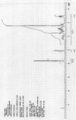
- FIG. 1 shows a 1 H-NMR chart of silane compound 1 synthesized in Example 1.
- the silane compound of the present invention is represented by the following general formula (1). Since the silane compound of the present invention has high reactivity and has a low-polarity reactive functional group and a hydrolyzable group, even when mixed with a low-polarity polymer material, the dispersion failure or Mixing failure does not occur, and it can be suitably used as a constituent component of a silane coupling agent or a rubber composition. Moreover, it can be used conveniently also as a structural component of an adhesive composition or a sealing agent composition.
- a and b are each independently an integer of 0 to 5, more preferably an integer of 0 to 3, further preferably 0 or 1, particularly preferably 1. is there.
- c is 2 or more, b is independently selected.
- c is an integer of 0 to 10, more preferably an integer of 1 to 5, and still more preferably an integer of 1 to 3.
- d is an integer of 0 to 30, more preferably an integer of 0 to 10, and still more preferably an integer of 0 to 5.
- n is an integer of 1 to 3.
- R 1 and R 2 each independently represent hydrogen or an alkyl group, but R 1 and R 2 form a crosslinked structure represented by — (CH 2 ) e —. May be.
- e is an integer of 1 to 5, more preferably an integer of 1 to 3.
- R 3 and R 4 each independently represent hydrogen or an alkyl group, but R 3 and R 4 form a crosslinked structure represented by — (CH 2 ) f —. May be.
- f is an integer of 1 to 5, more preferably an integer of 1 to 3.
- R 3 and R 4 are each independently selected.
- b is 2 or more
- R 4 is independently selected.
- R 4 is present in an amount of 2 or more.
- R 3 can form a crosslinked structure with any one R 4 and the other R 4 is hydrogen or an alkyl group.
- R 5 is hydrogen or an alkyl group, more preferably an alkyl group having 1 to 30 carbon atoms, still more preferably an alkyl group having 1 to 20 carbon atoms, and specifically, a methyl group Ethyl group, propyl group, isopropyl group, butyl group, isobutyl group, tert-butyl group, pentyl group, cyclopentyl group, hexyl group and cyclohexyl group.
- R 5 is preferably hydrogen, a methyl group or an ethyl group.
- at least one R 5 is an alkyl group.
- d 2 or more in the general formula (1), R 5 is independently selected.
- each R 6 is independently a hydrolyzable group, and (i) an alkoxy group, more preferably an alkoxy group having 1 to 30 carbon atoms, and still more preferably 1 to 20 carbon atoms.
- examples of the alkoxy group include a methoxy group, an ethoxy group, a propoxy group, an isopropoxy group, a butoxy group, and an isobutoxy group.
- a methoxy group or an ethoxy group is preferable, from the viewpoint of safety.
- the amino group substituted with one or more alkyl groups include N-methylamino group, N, N-dimethylamino group, N-ethylamino group, N, N-diethylamino group, and N-isopropylamino group.
- an N-methylamino group or an N-ethylamino group is preferable.
- the alkoxy group and the amino group may be bonded to silicon (Si) through a linking group such as a hydrocarbon group.
- R 7 is hydrogen or an alkyl group, more preferably an alkyl group having 1 to 30 carbon atoms, still more preferably an alkyl group having 1 to 20 carbon atoms.
- R 7 includes a methyl group, an ethyl group, a propyl group, an isopropyl group, a butyl group, an isobutyl group, a tert-butyl group, a pentyl group, a cyclopentyl group, a hexyl group, and a cyclohexyl group.
- a methyl group And the ethyl group is preferred.
- silane compounds described above the following silane compounds are particularly preferable.
- the silane compound according to the present invention causes an alicyclic epoxy compound having an unsaturated group and a silane compound such as trimethoxysilane or triethoxysilane to undergo a hydrosilylation reaction in the presence of a hydrosilylation catalyst. Can be obtained.
- An alicyclic epoxy compound having an unsaturated group generates, for example, 5-vinyl-2-norbornene (VNB) by Diels-Alder reaction of 1,4-butadiene and cyclopentadiene, and further, VNB and 1,4 Reaction with butadiene to produce 2-ethenyl-1,2,3,4,4a, 5,8,8a-octahydro-1,4-methanonaphthalene (hereinafter sometimes referred to as “VNBB”). It can be obtained by reacting it with a peracid such as peracetic acid.
- VNBB 5-vinyl-2-norbornene
- Silane compounds such as trimethoxysilane and triethoxysilane that are reacted with an alicyclic epoxy compound having an unsaturated group can be obtained, for example, by reacting a corresponding halosilane with an alcohol or an amine.
- the amount of peracid used for the synthesis of the alicyclic epoxy compound is 0.1 to 1.8 mol with respect to 1.00 mol of the alicyclic hydrocarbon compound having an unsaturated group such as VNBB to be reacted. It is preferably 0.5 to 1.5 mol.
- the hydrosilylation catalyst is a catalyst that causes an addition reaction between an aliphatic unsaturated group (alkenyl group, diene group, etc.) in one raw material compound and a silicon-bonded hydrogen atom (that is, SiH group) in the other raw material compound.
- the hydrosilylation catalyst include a platinum group metal catalyst such as a platinum group metal simple substance or a compound thereof.
- platinum group metal-based catalyst conventionally known ones can be used. Specific examples thereof include finely divided platinum metal adsorbed on a support such as silica, alumina or silica gel, platinous chloride, chloroplatinic acid, chlorination.
- Examples thereof include an alcohol solution of platinic acid hexahydrate, a palladium catalyst, and a rhodium catalyst.
- a palladium catalyst examples thereof include an alcohol solution of platinic acid hexahydrate, a palladium catalyst, and a rhodium catalyst.
- Speier catalyst H 2 PtCl 6 ⁇ H 2 O
- Rh catalysts such as Rh catalysts, etc., are preferred, but those containing platinum as the platinum group metal are preferred, and the hydrosilylation catalyst may be used alone or in combination of two or more.
- the addition amount of the hydrosilylation catalyst may be an effective amount that can promote the above addition reaction, and is usually 0.1 ppm (mass basis, hereinafter the same) to the total amount of the raw material compounds in terms of the platinum group metal amount.
- the range is preferably 1% by mass, and more preferably in the range of 1 to 500 ppm. If the addition amount is within this range, the addition reaction is likely to be sufficiently promoted, and the addition reaction rate is likely to increase with an increase in the addition amount, which is economically advantageous.
- a solvent such as toluene is placed in a flask having an atmospheric pressure of nitrogen, and a transition metal catalyst solution such as chloroplatinic acid isopropanol solution is injected.
- a transition metal catalyst solution such as chloroplatinic acid isopropanol solution
- an epoxidized product of VNBB is put, immersed in an oil bath, heated (for example, the bath temperature is set to about 80 ° C.), and a silane compound such as triethoxysilane is dropped therein.
- the bath temperature is preferably 20 to 120 ° C.
- a solvent such as toluene is placed in a flask having an atmospheric pressure of nitrogen, and a transition metal catalyst solution such as chloroplatinic acid isopropanol solution is injected.
- a transition metal catalyst solution such as chloroplatinic acid isopropanol solution
- an epoxidized product of 5-vinyl-2-norbornene (hereinafter referred to as “VNB” in some cases) is put, immersed in an oil bath, heated (for example, the bath temperature is set to about 80 ° C.), and the like.
- a silane compound such as triethoxysilane is added dropwise thereto.
- the bath temperature is preferably 20 to 120 ° C.
- the epoxidized product of VNB can be obtained by reacting VNB with a peracid such as peracetic acid, and VNB can be obtained by the Diels-Alder reaction of 1,4-butadiene and cyclopentadiene.
- a solvent such as toluene is placed in a flask having an atmospheric pressure of nitrogen, and a transition metal catalyst solution such as chloroplatinic acid isopropanol solution is injected.
- a transition metal catalyst solution such as chloroplatinic acid isopropanol solution
- an epoxidized product of 5-vinyl-2-cyclohexene (hereinafter sometimes referred to as “VCH”) is put, immersed in an oil bath and heated (for example, the bath temperature is set to about 80 ° C.).
- a silane compound such as triethoxysilane is added dropwise thereto. At this time, the bath temperature is preferably 20 to 120 ° C.
- the epoxidized product of VCH can be obtained by reacting VCH with a peracid such as peracetic acid, and VCH can be obtained by reacting butadienes with a Diels-Alder reaction.
- a solvent such as toluene is placed in a flask having an atmospheric pressure of nitrogen, and a transition metal catalyst solution such as a chloroplatinic acid IPA solution is injected.
- a transition metal catalyst solution such as a chloroplatinic acid IPA solution
- VDMON 2-ethenyl-1,2,3,4,4a, 5,8,8a-octahydro-1,4,5,8-dimethananaphthalene
- the epoxidized product of VGMON can be obtained by reacting VGMON with peracid such as peracetic acid, and VGMON can be obtained by reacting VNB with cyclopentadiene.
- silane compound satisfying the general formula (1) When a silane compound satisfying the general formula (1) is synthesized by the above method, the following silane compounds can be synthesized as impurities.
- silane coupling agent Since the silane compound of the present invention has a reactive functional group exhibiting high activity while being low in polarity, even when used in combination with a polymer material that does not have a polar group or the like, Since it has excellent affinity (dispersibility) and can maintain reactivity with the polymer material, it can be suitably used as a component of the silane coupling agent.
- the silane compound of this invention can be used suitably as a structural component of a rubber composition.
- the rubber composition contains the silane compound of the present invention, the hardness, tensile properties and viscoelastic properties of the rubber composition can be improved.
- the rubber composition of the present invention can comprise a silane compound represented by the general formula (1), an elastomeric polymer, and an inorganic material.
- the content of the silane compound represented by the general formula (1) is preferably 0.1 to 30 parts by mass, and more preferably 1 to 20 parts by mass with respect to 100 parts by mass of the elastomeric polymer.
- the elastomeric polymer is a generally known natural polymer or synthetic polymer, and is not particularly limited as long as it has a glass transition point of room temperature (25 ° C.) or lower, that is, an elastomer. There may be.
- any rubber that has been conventionally used can be used.
- natural rubber isoprene rubber, butadiene Rubber, 1,2-butadiene rubber, styrene-butadiene rubber, isoprene-butadiene rubber, styrene-isoprene-butadiene rubber, ethylene-propylene-diene rubber, halogenated butyl rubber, halogenated isoprene rubber, halogenated isobutylene copolymer, chloroprene rubber, butyl rubber And diene rubbers such as halogenated isobutylene-p-methylstyrene rubber, nitrile rubber, chloroprene rubber, butyl rubber, ethylene-propylene rubber (EPDM, EPM), ethylene-butene rubber (BBM), chlorosulfonated poly Examples thereof include olefin
- thermoplastic elastomer such as polyolefin-based elastomeric polymer, polyvinyl chloride-based elastomeric polymer, polyurethane-based elastomeric polymer, polyester-based elastomeric polymer or polyamide-based elastomeric polymer.
- thermoplastic elastomer such as polyolefin-based elastomeric polymer, polyvinyl chloride-based elastomeric polymer, polyurethane-based elastomeric polymer, polyester-based elastomeric polymer or polyamide-based elastomeric polymer.
- these can be used individually or as arbitrary blends.
- Preferred elastomeric polymers are natural rubber, butadiene rubber, nitrile rubber, silicone rubber, isoprene rubber, styrene-butadiene rubber, isoprene-butadiene rubber, styrene-isoprene-butadiene rubber, ethylene-propylene-diene rubber, halogenated butyl rubber, halogenated Isoprene rubber, halogenated isobutylene copolymer, chloroprene rubber, butyl rubber and halogenated isobutylene-p-methylstyrene rubber, more preferably natural rubber, butyl rubber, isoprene rubber, styrene butadiene rubber, butadiene rubber and other diene rubbers .
- the weight average molecular weight of the elastomeric polymer is preferably 1,000 to 3,000,000, more preferably 10,000 to 1,000,000.
- the glass transition temperature (Tg) of the elastomeric polymer is preferably 25 ° C. or lower, and more preferably 0 ° C. or lower.
- Tg is a glass transition point measured by differential scanning calorimetry (DSC-Differential Scanning Calorimetry).
- the temperature raising rate is preferably 10 ° C./min.
- examples of the inorganic material include silica, carbon black, calcium carbonate, titanium oxide clay, clay and talc. Among these, since the mechanical properties and heat resistance can be further improved, silica and / or It is preferable to use carbon black.
- the addition amount of the inorganic material is preferably 0.1 to 500 parts by mass, and more preferably 1 to 300 parts by mass with respect to 100 parts by mass of the elastomeric polymer.
- the rubber composition of the present invention preferably contains another silane compound.
- the content of the other silane compound is preferably 0.1 to 10 parts by mass, more preferably 0.3 to 5 parts by mass with respect to 100 parts by mass of the elastomeric polymer.
- silane compounds examples include silane compounds represented by the following general formula (2).
- X is an integer of 2 to 20, preferably an even number of 2 to 8.
- O and o ′ are each independently an integer of 1 to 10, preferably an integer of 1 to 5.
- p and q are each independently an integer of 1 to 3.
- R 11 and R 13 are each independently a hydrolyzable group, and (i) an alkoxy group, more preferably an alkoxy group having 1 to 30 carbon atoms, still more preferably an alkoxy group having 1 to 20 carbon atoms, Or (ii) an amino group substituted with one or more alkyl groups, more preferably an amino group substituted with one or more alkyl groups having 1 to 30 carbon atoms, more preferably one or more alkyl groups having 1 to 20 carbon atoms. An amino group substituted with a group. Specific examples of the alkoxy group and the like are as described above.
- R 12 and R 14 are each independently hydrogen or an alkyl group, more preferably an alkyl group having 1 to 30 carbon atoms, still more preferably an alkyl group having 1 to 20 carbon atoms, specifically, Examples include methyl group, ethyl group, propyl group, isopropyl group, butyl group, isobutyl group, tert-butyl group, pentyl group, cyclopentyl group, hexyl group and cyclohexyl group. Among these, methyl group and ethyl Groups are preferred.
- a commercially available silane compound satisfying the general formula (2) may be used, and examples thereof include Si-69 and Si-75 manufactured by Evonik.
- the rubber composition preferably contains 1 to 15% by mass of the other silane compound represented by the general formula (2) with respect to 100 parts by mass of the total amount of silica contained in the rubber composition. It is preferably 12% by mass, and more preferably 3-10% by mass.
- silane compound represented by the general formula (2) In addition to the silane compound represented by the general formula (2), a silane compound having the following structure can be used.
- the rubber composition is a silica reinforcing agent, a reinforcing agent such as carbon black, a vulcanizing agent such as sulfur and zinc oxide, a cross-linking agent, a vulcanization accelerator, a cross-linking accelerator, and a vulcanization accelerating assistant as long as the effect is not impaired.
- Additives such as agents, anti-aging agents, softeners, various oils, antioxidants, anti-aging agents, fillers and plasticizers may be included.
- the silica reinforcing agent is not particularly limited, and examples thereof include dry method white carbon, wet method white carbon, colloidal silica, and precipitated silica. Among these, wet method white carbon mainly containing hydrous silicic acid is preferable. These silica reinforcing agents can be used alone or in combination of two or more in an amount of 10 to 300 parts by weight.
- the specific surface area of these silicas is not particularly limited, but is usually 10 to 400 m 2 / g, preferably 20 to 300 m 2 / g, more preferably 120 to 190 m 2 / g in terms of nitrogen adsorption specific surface area (BET method). In some cases, improvements in reinforcement, wear resistance, heat generation and the like are sufficiently achieved and suitable.
- the nitrogen adsorption specific surface area is a value measured by the BET method according to ASTM D3037-81.
- Carbon black is appropriately selected and used depending on the application. Generally, carbon black is classified into hard carbon and soft carbon based on the particle diameter. Soft carbon has low reinforcement to rubber, and hard carbon has strong reinforcement to rubber. In the rubber composition of the present invention, it is preferable to use hard carbon having particularly strong reinforcement. It may be contained in an amount of 10 to 250 parts by weight, preferably 20 to 200 parts by weight, more preferably 30 to 50 parts by weight, based on 100 parts by weight of the elastomeric polymer.
- Examples of the anti-aging agent include hindered phenol-based, aliphatic and aromatic hindered amine-based compounds, and 0.1 to 10 parts by weight, more preferably 1 to 10 parts by weight based on 100 parts by weight of the elastomeric polymer. It is preferable to add 5 parts by weight.
- Examples of the antioxidant include butylhydroxytoluene (BHT) and butylhydroxyanisole (BHA). It is preferable to add 0.1 to 10 parts by weight, more preferably 1 to 5 parts by weight with respect to 100 parts by weight of the elastomeric polymer.
- the colorant examples include titanium dioxide, zinc oxide, ultramarine, bengara, lithopone, lead, cadmium, iron, cobalt, aluminum, hydrochloride, sulfate, and other inorganic pigments, azo pigments, copper phthalocyanine pigments, and the like. It is preferable to add 0.1 to 10 parts by weight, more preferably 1 to 5 parts by weight with respect to 100 parts by weight of the elastomeric polymer.
- vulcanizing agents include powdered sulfur, precipitated sulfur, highly dispersible sulfur, surface-treated sulfur, insoluble sulfur, dimorpholine disulfide, alkylphenol disulfide, and other sulfur-based vulcanizing agents, zinc white, magnesium oxide, resurge, p. -Quinonedioxam, p-dibenzoylquinonedioxime, tetrachloro-p-benzoquinone, poly-p-dinitrobenzene, methylenedianiline and the like.
- Vulcanizing aids include fatty acids such as acetyl acid, propionic acid, butanoic acid, stearic acid, acrylic acid, maleic acid, zinc acetylate, zinc propionate, zinc butanoate, zinc stearate, zinc acrylate, maleic acid
- fatty acids such as acetyl acid, propionic acid, butanoic acid, stearic acid, acrylic acid, maleic acid, zinc acetylate, zinc propionate, zinc butanoate, zinc stearate, zinc acrylate, maleic acid
- zinc such as fatty acid zinc and zinc oxide.
- Vulcanization accelerators include thiurams such as tetramethylthiuram disulfide (TMTD) and tetraethylthiuram disulfide (TETD), aldehydes and ammonia such as hexamethylenetetramine, guanidines such as diphenylguanidine, and dibenzothiazyl disulfide (DM). ) And the like, and cyclohexylbenzothiazylsulfenamide type.
- TMTD tetramethylthiuram disulfide
- TETD tetraethylthiuram disulfide
- aldehydes and ammonia such as hexamethylenetetramine
- guanidines such as diphenylguanidine
- DM dibenzothiazyl disulfide
- DM dibenzothiazyl disulfide
- the compounding agent and the additive can be used as a rubber composition by kneading with a known rubber kneader, for example, a roll, a Banbury mixer, a kneader, etc., and vulcanizing under arbitrary conditions.
- a known rubber kneader for example, a roll, a Banbury mixer, a kneader, etc.
- the addition amounts of these compounding agents and additives can be set to conventional general compounding amounts as long as the object of the present invention is not violated.
- a tire can be produced by a conventionally known method using the rubber composition.
- a tire can be produced by extruding the rubber composition and then molding it using a tire molding machine, followed by heating and pressurizing using a vulcanizer.
- Example 1 Degassing the system while putting a stirrer bar in a 300 mL three-necked flask equipped with a Dim funnel, ball stopper, and dropping funnel connected to the synthesis vacuum line of silane compound 1 and heating with a dryer using the vacuum line- Nitrogen replacement was repeated 10 times to obtain a normal pressure nitrogen atmosphere.
- the oil bath was removed from the flask and allowed to stand at room temperature.
- the solvent was depressurizingly distilled and the 37.85g silane compound 1 was obtained (yield 93%).
- the structure of the obtained silane compound 1 was confirmed by 1 H-NMR and 13 C-NMR measurements. As a result, the introduction rate of silane was 100%, and disappearance of the vinyl group was confirmed. It was confirmed that it was obtained.
- the NMR chart is shown in FIG.
- Example 2 A rubber composition and a rubber sheet were produced in the same manner as in Example 1 except that the silane compound 1 was not contained and the content of the other silane compound A was changed to 4.2 parts by mass.
- JIS-A hardness Six rubber sheets obtained in Example 1 were stacked, and JIS-A hardness was measured according to JIS K6353 (issued in 2012). The rubber sheets obtained in Comparative Examples 1 and 2 were measured in the same manner. The measurement results are shown in Table 1.
Landscapes
- Chemical & Material Sciences (AREA)
- Organic Chemistry (AREA)
- Health & Medical Sciences (AREA)
- Chemical Kinetics & Catalysis (AREA)
- Medicinal Chemistry (AREA)
- Polymers & Plastics (AREA)
- Engineering & Computer Science (AREA)
- Mechanical Engineering (AREA)
- Compositions Of Macromolecular Compounds (AREA)
- Tires In General (AREA)
Priority Applications (4)
| Application Number | Priority Date | Filing Date | Title |
|---|---|---|---|
| EP17766633.6A EP3444256B1 (de) | 2016-03-14 | 2017-03-13 | Silanverbindung, kautschukzusammensetzung und reifen |
| CN201780013970.7A CN109071573B (zh) | 2016-03-14 | 2017-03-13 | 硅烷化合物、橡胶组合物以及轮胎 |
| KR1020187024751A KR102332756B1 (ko) | 2016-03-14 | 2017-03-13 | 실란 화합물, 고무 조성물 및 타이어 |
| US16/084,413 US10899778B2 (en) | 2016-03-14 | 2017-03-13 | Silane compound, rubber composition and tire |
Applications Claiming Priority (2)
| Application Number | Priority Date | Filing Date | Title |
|---|---|---|---|
| JP2016049690A JP6625453B2 (ja) | 2016-03-14 | 2016-03-14 | シラン化合物、ゴム組成物およびタイヤ |
| JP2016-049690 | 2016-03-14 |
Publications (1)
| Publication Number | Publication Date |
|---|---|
| WO2017159633A1 true WO2017159633A1 (ja) | 2017-09-21 |
Family
ID=59851898
Family Applications (1)
| Application Number | Title | Priority Date | Filing Date |
|---|---|---|---|
| PCT/JP2017/010030 Ceased WO2017159633A1 (ja) | 2016-03-14 | 2017-03-13 | シラン化合物、ゴム組成物およびタイヤ |
Country Status (6)
| Country | Link |
|---|---|
| US (1) | US10899778B2 (de) |
| EP (1) | EP3444256B1 (de) |
| JP (1) | JP6625453B2 (de) |
| KR (1) | KR102332756B1 (de) |
| CN (1) | CN109071573B (de) |
| WO (1) | WO2017159633A1 (de) |
Cited By (3)
| Publication number | Priority date | Publication date | Assignee | Title |
|---|---|---|---|---|
| CN111801151A (zh) * | 2018-11-07 | 2020-10-20 | 川崎重工业株式会社 | 酸性气体吸收材料及其制造方法 |
| EP3431470B1 (de) * | 2016-03-14 | 2021-01-06 | JXTG Nippon Oil & Energy Corporation | Epoxidverbindung, härtbare zusammensetzung, gehärtetes produkt, verfahren zur herstellung von epoxidverbindung und reaktives verdünnungsmittel |
| CN115916884A (zh) * | 2020-06-18 | 2023-04-04 | 引能仕株式会社 | 硅烷偶联剂组合物和包含其的橡胶组合物 |
Families Citing this family (3)
| Publication number | Priority date | Publication date | Assignee | Title |
|---|---|---|---|---|
| JP7493457B2 (ja) * | 2018-12-26 | 2024-05-31 | Eneos株式会社 | シラン化合物およびその組成物 |
| CN113924334B (zh) * | 2019-06-10 | 2024-08-16 | 引能仕株式会社 | 包含硅烷化合物和蛋白质变性剂而成的硅烷偶联剂组合物、以及包含该硅烷偶联剂组合物的橡胶组合物 |
| US12570835B2 (en) | 2020-06-18 | 2026-03-10 | Eneos Materials Corporation | Silane coupling agent composition and rubber composition comprising same |
Citations (6)
| Publication number | Priority date | Publication date | Assignee | Title |
|---|---|---|---|---|
| JPS54107999A (en) * | 1978-02-14 | 1979-08-24 | Japan Atom Energy Res Inst | Transparent thermosetting resin composition |
| JPS6296495A (ja) * | 1985-08-05 | 1987-05-02 | デグツサ・アクチエンゲゼルシヤフト | エポキシ化有機ケイ素化合物の製造法、およびエポキシシランからなる異性体混合物 |
| JP2005010476A (ja) * | 2003-06-19 | 2005-01-13 | Konica Minolta Medical & Graphic Inc | 光熱写真画像形成材料 |
| JP2005008870A (ja) * | 2003-05-22 | 2005-01-13 | Jsr Corp | 変性共役ジエン系重合体の製造方法およびゴム組成物 |
| JP2006052310A (ja) * | 2004-08-11 | 2006-02-23 | Kansai Paint Co Ltd | ポリシロキサン複合重合体粒子の製造方法 |
| CN1966577A (zh) * | 2006-11-02 | 2007-05-23 | 南京工业大学 | 由钛基晶须增强的聚醚醚酮耐磨复合材料及其制备方法 |
Family Cites Families (8)
| Publication number | Priority date | Publication date | Assignee | Title |
|---|---|---|---|---|
| US5534599A (en) * | 1995-03-10 | 1996-07-09 | The Goodyear Tire & Rubber Company | Tire with silica reinforced rubber tread |
| JPH11335381A (ja) | 1998-05-22 | 1999-12-07 | Nitto Boseki Co Ltd | 耐熱耐水性向上シランカップリング剤 |
| JP2001131189A (ja) * | 1999-11-08 | 2001-05-15 | Yokohama Rubber Co Ltd:The | 安定フリーラジカル化合物およびそれを含むゴム組成物 |
| ES2254847T3 (es) * | 2001-08-06 | 2006-06-16 | Degussa Ag | Compuestos de organosilicio. |
| EP1479698B1 (de) | 2003-05-22 | 2008-05-14 | JSR Corporation | Verfahren zur Herstellung eines modifizierten, konjugierten Dienpolymers und dieses enthaltende Elastomerzusammensetzung |
| US8217107B2 (en) * | 2007-03-27 | 2012-07-10 | Momentive Performance Materials Inc. | Rapid deep-section cure silicone compositions |
| JP2009269981A (ja) | 2008-05-02 | 2009-11-19 | Yokohama Rubber Co Ltd:The | ゴム組成物 |
| JP2013216612A (ja) * | 2012-04-09 | 2013-10-24 | Daiso Co Ltd | 新規な構造を有する含硫黄有機珪素化合物とその製造方法 |
-
2016
- 2016-03-14 JP JP2016049690A patent/JP6625453B2/ja active Active
-
2017
- 2017-03-13 EP EP17766633.6A patent/EP3444256B1/de active Active
- 2017-03-13 CN CN201780013970.7A patent/CN109071573B/zh not_active Expired - Fee Related
- 2017-03-13 KR KR1020187024751A patent/KR102332756B1/ko not_active Expired - Fee Related
- 2017-03-13 US US16/084,413 patent/US10899778B2/en not_active Expired - Fee Related
- 2017-03-13 WO PCT/JP2017/010030 patent/WO2017159633A1/ja not_active Ceased
Patent Citations (6)
| Publication number | Priority date | Publication date | Assignee | Title |
|---|---|---|---|---|
| JPS54107999A (en) * | 1978-02-14 | 1979-08-24 | Japan Atom Energy Res Inst | Transparent thermosetting resin composition |
| JPS6296495A (ja) * | 1985-08-05 | 1987-05-02 | デグツサ・アクチエンゲゼルシヤフト | エポキシ化有機ケイ素化合物の製造法、およびエポキシシランからなる異性体混合物 |
| JP2005008870A (ja) * | 2003-05-22 | 2005-01-13 | Jsr Corp | 変性共役ジエン系重合体の製造方法およびゴム組成物 |
| JP2005010476A (ja) * | 2003-06-19 | 2005-01-13 | Konica Minolta Medical & Graphic Inc | 光熱写真画像形成材料 |
| JP2006052310A (ja) * | 2004-08-11 | 2006-02-23 | Kansai Paint Co Ltd | ポリシロキサン複合重合体粒子の製造方法 |
| CN1966577A (zh) * | 2006-11-02 | 2007-05-23 | 南京工业大学 | 由钛基晶须增强的聚醚醚酮耐磨复合材料及其制备方法 |
Non-Patent Citations (3)
| Title |
|---|
| CRIVELLO, JAMES V. ET AL.: "Synthesis and Cationic Photopolymerization of Novel Monomers Based on Dicyclopentadiene", CHEMISTRY OF MATERIALS, vol. 12, no. 12, 2000, pages 3674 - 3680, XP055420453 * |
| GAILIUNAS, I. ET AL.: "Oxidation of alkenylalkoxysilanes by hydroperoxides, catalyzed by molybdenum and vanadium compounds", ZHURNAL OBSHCHEI KHIMII, vol. 49, no. 8, 1979, pages 1798 - 1801, XP009512518, ISSN: 0044-460X * |
| See also references of EP3444256A4 * |
Cited By (3)
| Publication number | Priority date | Publication date | Assignee | Title |
|---|---|---|---|---|
| EP3431470B1 (de) * | 2016-03-14 | 2021-01-06 | JXTG Nippon Oil & Energy Corporation | Epoxidverbindung, härtbare zusammensetzung, gehärtetes produkt, verfahren zur herstellung von epoxidverbindung und reaktives verdünnungsmittel |
| CN111801151A (zh) * | 2018-11-07 | 2020-10-20 | 川崎重工业株式会社 | 酸性气体吸收材料及其制造方法 |
| CN115916884A (zh) * | 2020-06-18 | 2023-04-04 | 引能仕株式会社 | 硅烷偶联剂组合物和包含其的橡胶组合物 |
Also Published As
| Publication number | Publication date |
|---|---|
| EP3444256A1 (de) | 2019-02-20 |
| EP3444256B1 (de) | 2022-05-04 |
| KR20180126463A (ko) | 2018-11-27 |
| US20190085003A1 (en) | 2019-03-21 |
| EP3444256A4 (de) | 2019-09-18 |
| JP2017165659A (ja) | 2017-09-21 |
| CN109071573B (zh) | 2021-06-25 |
| KR102332756B1 (ko) | 2021-11-29 |
| US10899778B2 (en) | 2021-01-26 |
| CN109071573A (zh) | 2018-12-21 |
| JP6625453B2 (ja) | 2019-12-25 |
Similar Documents
| Publication | Publication Date | Title |
|---|---|---|
| JP6625453B2 (ja) | シラン化合物、ゴム組成物およびタイヤ | |
| JPWO2018143380A1 (ja) | トレッド用ゴム組成物及び空気入りタイヤ | |
| TW200916519A (en) | Process for preparing rubber compositions and articles made therefrom | |
| KR102793862B1 (ko) | 실란 화합물 및 그 조성물 | |
| WO2017146103A1 (ja) | シラン化合物ならびに、これを含んでなるゴム組成物、シーリング剤組成物、接着剤組成物およびタイヤ | |
| WO2017188411A1 (ja) | 含硫黄シラン化合物およびこの合成方法、ゴム組成物、タイヤ、接着剤組成物、ならびにシーリング剤組成物 | |
| JP2018108935A (ja) | シラン化合物 | |
| JP4386958B2 (ja) | 硫黄含有共役ジオレフィン系共重合体ゴム及びそれを含むゴム組成物 | |
| KR102713668B1 (ko) | 실란 화합물 및 단백질 변성제를 포함하여 이루어지는 실란 커플링제 조성물, 및 그것을 포함하는 고무 조성물 | |
| WO2016181678A1 (ja) | シランカップリング剤、シーリング剤組成物、接着剤組成物、ゴム組成物およびタイヤ | |
| JP2023134560A (ja) | 含硫黄シラン化合物およびその組成物 | |
| JP2018108936A (ja) | シランカップリング剤、シーリング剤組成物、接着剤組成物、ゴム組成物およびタイヤ | |
| JP7731881B2 (ja) | シランカップリング剤組成物およびそれを含むゴム組成物 | |
| JP7733011B2 (ja) | ゴム組成物、ゴム組成物の製造方法及びタイヤ | |
| JPH1135735A (ja) | ゴム組成物 | |
| JP2003519236A (ja) | 官能化シランをベースとする化合物、それらの製造方法及びゴム材料の分野におけるそれらの使用 | |
| JP6384338B2 (ja) | オルガノポリシロキサン、ゴム用配合剤、ゴム組成物及びタイヤ | |
| JP2021054992A (ja) | タイヤ用ゴム組成物および空気入りタイヤ | |
| JP2020132822A (ja) | シラン化合物および石油樹脂を含んでなるゴム組成物 | |
| JP6497115B2 (ja) | タイヤ用ゴム組成物 | |
| JP6520096B2 (ja) | タイヤトレッド用ゴム組成物 | |
| JP2021054998A (ja) | タイヤ用ゴム組成物および空気入りタイヤ | |
| JP2021055000A (ja) | タイヤ用ゴム組成物および空気入りタイヤ | |
| WO2024071407A1 (ja) | シラン化合物およびそれを含む組成物 | |
| WO2022255360A1 (ja) | シランカップリング剤組成物およびそれを含むゴム組成物 |
Legal Events
| Date | Code | Title | Description |
|---|---|---|---|
| ENP | Entry into the national phase |
Ref document number: 20187024751 Country of ref document: KR Kind code of ref document: A |
|
| NENP | Non-entry into the national phase |
Ref country code: DE |
|
| WWE | Wipo information: entry into national phase |
Ref document number: 2017766633 Country of ref document: EP |
|
| ENP | Entry into the national phase |
Ref document number: 2017766633 Country of ref document: EP Effective date: 20181015 |
|
| 121 | Ep: the epo has been informed by wipo that ep was designated in this application |
Ref document number: 17766633 Country of ref document: EP Kind code of ref document: A1 |