WO2017160124A2 - Vecteur d'expression recombinante permettant de produire un vaccin contre un norovirus - Google Patents
Vecteur d'expression recombinante permettant de produire un vaccin contre un norovirus Download PDFInfo
- Publication number
- WO2017160124A2 WO2017160124A2 PCT/KR2017/002945 KR2017002945W WO2017160124A2 WO 2017160124 A2 WO2017160124 A2 WO 2017160124A2 KR 2017002945 W KR2017002945 W KR 2017002945W WO 2017160124 A2 WO2017160124 A2 WO 2017160124A2
- Authority
- WO
- WIPO (PCT)
- Prior art keywords
- soluble
- water
- protein
- norovirus
- expression vector
- Prior art date
- Legal status (The legal status is an assumption and is not a legal conclusion. Google has not performed a legal analysis and makes no representation as to the accuracy of the status listed.)
- Ceased
Links
Images





Classifications
-
- C—CHEMISTRY; METALLURGY
- C07—ORGANIC CHEMISTRY
- C07K—PEPTIDES
- C07K5/00—Peptides containing up to four amino acids in a fully defined sequence; Derivatives thereof
- C07K5/04—Peptides containing up to four amino acids in a fully defined sequence; Derivatives thereof containing only normal peptide links
- C07K5/10—Tetrapeptides
-
- C—CHEMISTRY; METALLURGY
- C12—BIOCHEMISTRY; BEER; SPIRITS; WINE; VINEGAR; MICROBIOLOGY; ENZYMOLOGY; MUTATION OR GENETIC ENGINEERING
- C12N—MICROORGANISMS OR ENZYMES; COMPOSITIONS THEREOF; PROPAGATING, PRESERVING, OR MAINTAINING MICROORGANISMS; MUTATION OR GENETIC ENGINEERING; CULTURE MEDIA
- C12N15/00—Mutation or genetic engineering; DNA or RNA concerning genetic engineering, vectors, e.g. plasmids, or their isolation, preparation or purification; Use of hosts therefor
- C12N15/09—Recombinant DNA-technology
- C12N15/63—Introduction of foreign genetic material using vectors; Vectors; Use of hosts therefor; Regulation of expression
- C12N15/70—Vectors or expression systems specially adapted for E. coli
-
- C—CHEMISTRY; METALLURGY
- C12—BIOCHEMISTRY; BEER; SPIRITS; WINE; VINEGAR; MICROBIOLOGY; ENZYMOLOGY; MUTATION OR GENETIC ENGINEERING
- C12N—MICROORGANISMS OR ENZYMES; COMPOSITIONS THEREOF; PROPAGATING, PRESERVING, OR MAINTAINING MICROORGANISMS; MUTATION OR GENETIC ENGINEERING; CULTURE MEDIA
- C12N9/00—Enzymes; Proenzymes; Compositions thereof; Processes for preparing, activating, inhibiting, separating or purifying enzymes
Definitions
- the present invention relates to a recombinant expression vector for producing a water-soluble norovirus vaccine, and more particularly, the present invention relates to a recombinant expression vector for producing a water-soluble norovirus vaccine antigen and efficiently inducing self-assembly into virus like particles. It relates to a water-soluble norovirus vaccine production method using the same.
- Norovirus is a global causative agent of gastroenteritis and kills more than 200,000 children under 5 years of age in developing countries.
- Noroviruses belonging to the Caliciviridae family are membrane-free viruses and are about 30 to 40 nm in diameter. It consists of 7.6 kbp long single-stranded (+) RNAs and has three open reading frames (ORFs).
- ORF2 is encoded by the major structural protein VP1, which forms the norovirus
- ORF3 is encoded by the VP2 protein, but is not directly involved in structure formation.
- VP1 is a total of 59 kDa in size and forms a dimer.
- the VP1 protein consists of two domains, the S domain (S domain) acts to form a structure, the P domain (P domain) is involved in the actual immune response.
- VLP Virus-Like Particles
- VLPs are highly complex and sophisticated constructs that specifically express viral structural proteins to exhibit a structure similar in appearance to wild-type viruses. Because of its similar structure to wild-type virus, it can induce a high immune response in the body and can stimulate both T-cell and B-cell immune pathways.
- the complexity of the structure is that it is very difficult to create a complete VLP.
- Norovirus VLPs are mainly known to be produced in baculovirus-insect cells and are also known to produce VLPs in yeast.
- VLP vaccine production method using insects has the advantage that the structure of the VLP is sophisticated, but there is a problem that the production cost is high, the production efficiency is low.
- the production of VLP using yeast is also a high cost and low efficiency method compared to the E. coli production system.
- E. coli only reported that the structural protein (VP1) was soluble in water, and it was not known that VLP was formed.
- E. coli expression systems are known to be difficult to produce elaborately folded proteins because of the rapid cell division of E. coli itself and no post-translation modification. If norovirus VLPs derived from E. coli can be developed, it is expected that low-cost vaccines can be supplied compared to vaccines using other expression systems.
- the present inventors have intensively tried to provide a method for producing a large amount of water-soluble norovirus VLP having biological activity in Escherichia coli, and thus, a fusion protein that enhances the water-soluble expression of the protein in Escherichia coli was coupled to the N-terminus of the norovirus VP1 protein.
- a fusion protein that enhances the water-soluble expression of the protein in Escherichia coli was coupled to the N-terminus of the norovirus VP1 protein.
- An object of the present invention is a water-soluble noro comprising a gene encoding a protein that promotes water-soluble expression of a target protein, a gene encoding 1 to 6 histidines, a gene encoding a protein cleavage site and a norovirus-derived VP1 gene sequence. It is to provide a recombinant expression vector for the production of viral vaccines.
- Still another object of the present invention is to provide a host cell transformed with the recombinant expression vector for producing the water-soluble norovirus vaccine.
- Still another object of the present invention is to (a) a gene encoding a protein that promotes water soluble expression of a target protein, a gene encoding 1 to 6 histidines, a gene encoding a protein cleavage site and a norovirus derived VP1 gene sequence
- Producing a recombinant expression vector for producing a water-soluble norovirus vaccine comprising: (b) introducing the expression vector into a host cell to produce a transformant, and (c) culturing the transformant to produce a recombinant fusion protein.
- the present invention is to solve the above-described problems, genes encoding proteins that promote the water-soluble expression of the target protein, genes encoding 1 to 6 histidines, genes encoding protein cleavage recognition site and norovirus-derived VP1
- a recombinant expression vector for the production of a water soluble norovirus vaccine comprising a gene sequence is provided.
- expression vector is a linear or circular DNA molecule consisting of fragments encoding a target protein operably linked to additional fragments provided for transcription of the expression vector. Such additional fragments include promoter and termination code sequences. Expression vectors also include one or more origins of replication, one or more selection markers, and the like. Expression vectors are generally derived from plasmid or viral DNA or contain elements of both.
- target protein is a protein that a person of ordinary skill in the art intends to produce in large quantities, and means any protein capable of expression in a host cell by inserting a polynucleotide encoding the protein into a recombinant expression vector.
- protein that promotes the water soluble expression of a protein refers to a peptide that is reported to be able to express the fusion protein in water soluble form and refers to glutathione S transferase (GST), maltose binding protein, ubiquitin, taoredoxin, and the like. This includes, but is not limited to the present invention can be used without limitation as long as it is a generally known water-soluble expression promoting protein.
- the protein for promoting the water-soluble expression of the target protein may be selected from hRBD, LysRS or fusion protein of hRBD and LysRS.
- hRBD human RNA binding domain
- human aminoacyl tRNA synthetase N-terminal domain refers to an N-terminal domain to which RNA binds in a human-derived aminoacyl tRNA synthetase domain. , which is not present in the tRNA synthetase of Escherichia coli or yeast, and is small in size but has a function of interacting with RNA, in particular, the hRBD of the present invention refers to the N-terminal domain of human-derived LysRS.
- lysyl tRNA synthetase or “lysyl tRNA synthetase” is a member of an aminoacyl tRNA synthetase, which in some mammals modulates the various functions of the proteins that make up the aminoacyl tRNA synthetase. To form macromolecular complexes that act as molecular reservoirs.
- fusion protein or “recombinant protein” refers to a protein in which another protein is linked or another amino acid sequence is added to the N-terminus or C-terminus of the original protein sequence of interest.
- the hRBD may be an amino acid sequence represented by SEQ ID NO: 1.
- the LysRS may be a LysRS-derived peptide sequence represented by SEQ ID NO: 3.
- the hRBD and LysRS fusion protein may be an amino acid sequence represented by SEQ ID NO: 5.
- the gene encoding the 1 to 6 histidine may be represented by SEQ ID NO: 7.
- the protein cleavage enzyme may be TEV, and specifically, the sequence encoding the TEV recognition site may be represented by SEQ ID NO: 8.
- the present invention also provides a host cell transformed with the expression vector.
- transformation means that DNA is introduced into a host such that the DNA is replicable as an extrachromosomal factor or by chromosomal integration completion.
- Method for transforming the expression vector according to the present invention is electroporation (electrophoration), calcium phosphate (CaPO 4 ) method, calcium chloride (CaCl 2 ) method, microinjection (microinjection), polyethylene glycol (PEG) method, DEAE-dex It may include, but is not limited to, the Tran method, the cationic liposome method or the lithium acetate-DMSO method.
- the host cell is preferably a high DNA introduction efficiency, a host cell having a high expression efficiency of the introduced DNA, and any microorganism including prokaryotic and eukaryotic may be used.
- the host cell may be E. coli .
- the invention also includes (a) a gene encoding a protein that promotes water soluble expression of a desired protein, a gene encoding 1 to 6 histidines, a gene encoding a protein cleavage site and a norovirus derived VP1 gene sequence Producing a recombinant expression vector for producing a water-soluble norovirus vaccine, (b) introducing the expression vector into a host cell to produce a transformant, and (c) culturing the transformant to express the recombinant fusion protein. It provides a water-soluble norovirus vaccine production method comprising the step of inducing and obtaining it.
- the recombinant expression vector of the present invention and a method for producing norovirus vaccines using the same can effectively produce norovirus VLP vaccines in E. coli, as well as structurally sophisticated VLPs, thereby producing low-cost and high-efficiency norovirus VLP vaccines. It became.
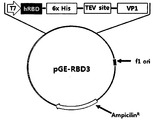
- Figure 1 is a schematic diagram showing the structure of a recombinant expression vector for the production of water-soluble norovirus according to an embodiment of the present invention.
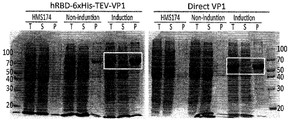
- FIG. 2 is a result of confirming the water solubility of the expressed VP1 protein according to an embodiment of the present invention by SDS-PAGE.
- A was incubated for 3 hours at 37 ° C after overexpression
- B was incubated for one day at 16 ° C after overexpression, and in each case, the left panel showed the result of the expression of VP1 (69 kDa) in which hRBD was recombined.
- Right panel is the result of control VP1 (59 kDa).
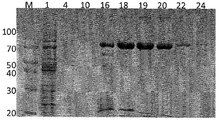
- FIG. 3 is a chromatogram result of purifying and confirming VP1 protein expressed according to an embodiment of the present invention through nickel affinity chromatography.
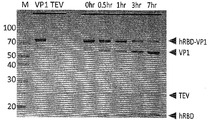
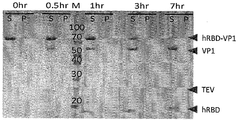
- Figure 5 shows the results confirmed by SDS-PAGE after cutting the norovirus VP1 using TEV protein cleavage enzyme.
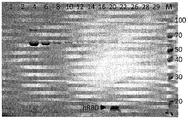
- Figure 6 is a chromatogram (A) and SDS-PAGE (B) showing the results of the size exclusion chromatography to purify the VLP formed after cleavage with TEV protein cleavage enzyme.
- FIG. 8 shows the results of ELISA experiments on insect cell-derived VLP (A) and E. coli-derived VLP (B).
- Norovirus VLP production from Norovirus Hu / GII.4 / Hiroshima / 55/2005 / JPN was used to produce VLPs through Escherichia coli, and the VP1 gene was provided by the International Vaccine Institute (IVI).
- the pGE-RBD3 vector was used as an expression vector, and the above vector was prepared by replacing and editing the gene that specifies only the RNA binding domain portion of LysRS instead of the LysRS gene in the pGE-LysRS3 vector.
- pGE-RBD3 vector was digested by treatment with Xba I and Kpn I restriction enzymes, and a polynucleotide sequence (SEQ ID NO: 2) encoding six histidine tags (Histag) encoding hRBD (SEQ ID NO: 1) in the truncated expression vector.
- the polynucleotide sequence (SEQ ID NO: 7), the polynucleotide sequence encoding the TEV recognition sequence (ENLYFQ) (SEQ ID NO: 8), and the polynucleotide sequence encoding the VP1 (SEQ ID NO: 9) DNA fragments were inserted (FIG. 1).
- the recombinant plasmid thus completed was transformed into E. coli host HMS174.
- the initial culture for expressing the protein was incubated at 37 ° C. in 3 ml LB medium containing 50 ⁇ g / ml ampicillin for one day, and then, 1 ml of E. coli cultured the previous day in 15 ml LB medium containing the same concentration of ampicillin was added.
- both the control VP1 and the recombinant VP1 were expressed insoluble at 37 ° C. (FIG. 2A), but when expressed at 16 ° C., about 90% of the control VP1 was expressed in the insoluble form, whereas VP1 was expressed significantly improved in water solubility compared to the control VP1 and the amount of expression was also significantly increased than the control VP1 (Fig. 2B). From this, hRBD was found to be a suitable fusion partner to enhance the water solubility of VP1 protein expression in E. coli.
- Proteins identified as water soluble were purified by nickel (Ni) affinity chromatography.
- Ni nickel affinity chromatography
- 500 ml of E. coli was finally expressed and harvested and purified. Specifically, it was first equilibrium with A buffer [50 mM Tris-HCl (pH 7.5), 300 mM sodium chloride, 10% glycerol, 2 mM 2-mercaptoethanol, Triton X-100 0.05%, and 10 mM imidazole] and equilibrium Sample protein was purified using one Ni-NTA column resin (GE Healthcare Life Sciences, Little Chalfont, Buckinghamshire, UK).
- the concentration of purified protein was quantified using BSA (Amresco, Solon, OH, USA), and as a result, 5.38 mg / ml of VP1 protein was obtained.
- the purified VP1 protein was mixed at 30% glycerol in a 1: 1 ratio and stored at -20 ° C.
- FIG. 3 The result of confirming the purified VP1 by nickel affinity chromatography is shown in FIG. 3, and the result of confirming the purification through SDS-PAGE is shown in FIG. 4.
- the protein expressed and purified above was confirmed to be appropriately cleaved by TEV protein cleavage enzyme (AcTEV Protease, Cat. 12575-015, Invitrogen life technology).
- the experiment was conducted at 25 ° C., and the fusion partner protein was gradually cleaved at intervals of 0, 0.5, 1, 3, and 7 hours.
- the purified VP1 protein was 0, 0.5
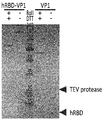
- VP1 protein is generally present in the form of dimers (dimers), it is known that each dimer gathers to form a VLP.
- SDS-PAGE was performed using VP1 cleaved with TEV protein cleavage enzyme and non-cleaved VP1 (hRBD-VP1) at 16 ° C. to confirm whether the VP1 protein expressed in E. coli was also dimerized.
- VP1 was mixed with the SDS loading dye to which DTT was added or removed, and the samples were loaded by boiling or not and then compared to the SDS-PAGE gel.
- Biochemical analysis was performed to determine whether the dimers of VP1 protein cleaved with TEV protein cleavage enzymes form VLPs. Specifically, size exclusion chromatography was performed at 4 ° C. through a Superdex-200 analytical gel-filtration column.
- the fusion protein was cleaved overnight at 4 ° C. using AcTEV protein cleavage enzyme the day before.
- the column was subjected to an equilibrium with a buffer [Ammonium acetate 250 mM (pH 6.0)], and after completion of the equilibrium, the VP1 sample from which the fusion partner protein was cleaved was loaded and purified. After purification, calibration was performed using ferritin (440 kDa), aldolase (158 kDa), cornalbumin (75 kDa), ovalbumin (44 kDa), and blue dextran 2000 (GE Healthcare). The molecular weight of the protein indicated by the peak was determined.
- the norovirus VLP had a molecular weight of 10 MDa and the maximum purification limit of the column used by us was 800 kDa, so that it would be purified from Void when the VLP was properly formed.
- the high peak of Void norovirus VLP was found (Fig. 6A), and the purified and harvested fractions were confirmed by SDS-PAGE. It could be confirmed (FIG. 6B).
- the hRBD cut by TEV protein cleavage enzyme was also purified by chromatography.
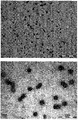
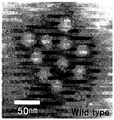
- the VP1 protein purified from Void was observed by electron microscopy to confirm the formation of VLP.
- Purified norovirus VLPs were first raised on a copper grid for 1 minute and then stained for 15 seconds using 2% uranyl acetate. The pretreated sample was dried at room temperature for 30 minutes and then photographed using a transmission electron microscopy (TEM, Transmission electron microscopy; JEM-1011, JEOL, Japan). The experiment was conducted by the Research Support Department of the Medical Life Research Institute, Yonsei University College of Medicine.
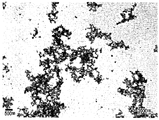
- VLP As a result, as shown in FIG. 7, it was confirmed that the purified VP1 protein forms VLP (FIG. 7A).
- the diameter of the identified VLP was 34 nm and was similar to that of the norovirus VLP and wild type norovirus (FIG. 7B) produced using the baculovirus-insect cell expression system.
- VP1 to which hRBD was fused without protein cleavage with TEV protein cleavage enzyme was able to confirm aggregation without forming VLP (FIG. 7C).
- mice experiments were performed 6 weeks old BALB / c (Orient-bio) and inoculated twice (day 1, day 21). Groups (n 3) were divided for E. coli-derived VLPs and baculovirus-insect-derived VLPs, and each group was mixed with 5 ⁇ g of protein adjuvant (ImjectTM Alum adjuvant, Thermo SCIENTIFIC, 40 ⁇ g). Inoculated through. Mice inoculated with PBS and ammonium acetate were used as controls.
- protein adjuvant ImjectTM Alum adjuvant, Thermo SCIENTIFIC, 40 ⁇ g
- Enzyme-linked immunosorbent assay for the determination of antigen-antibody cross-reactivity between baculovirus-insect cell VLPs and E. coli VLPs and sera against E. coli VLPs and baculovirus-insect cell VLPs from animal experiments It was.
- 100 ⁇ l / well was coated in 96-can Nunc plate (Thermo Fisher Scientific) with insect cell-derived VLP and E. coli-derived VLP at a concentration of 2 ⁇ g / ml and stored at 4 ° C. for one day. Plates were washed three times using PBS-T containing 0.05% Tween 20 in PBS and then blocked for 1 hour at room temperature with PBS containing 1% BSA to block coating of other proteins. Next, the plate was washed three times with PBS-T again, and 100 ⁇ l / well of serum obtained by inoculating mouse-derived VLP and E. coli-derived VLP, respectively, was reacted at room temperature for 1 hour.
- E. coli-derived VLP was coated on the first compartment of a 96-can Nunc plate (Thermo Fisher Scientific), and then diluted in 1/2 of the remaining wells, and coated at room temperature for 5 hours.
- Each well was washed with a wash buffer [PBS, 0.05% Tween 20 (PBS-T)] and then blocked with PBS containing 1% BSA. Blocking proceeded at 4 ° C. for one day.
- 100 ⁇ l of biotin attached Type 2 HBGA (Glycotech, USA, Cat.01-034) was added to each well and reacted at room temperature for 1 hour 30 minutes. .
- each well was washed, and 100 ⁇ l of streptavidin-attached HRP (Horseradish peroxidase; Thermo scientific, Cat. 21124) was added to each well at a concentration of 2 mg / ml. Reacted for hours. And 150 ⁇ l of 3,3 ', 5,5'-tetramethylbenzidinine (TMB) solution (BD Biosciences) was added to each well and developed for 20 minutes at room temperature. After development, the colorimetric reaction was stopped via 50 ⁇ l / well of 2 NH 2 SO 4 (Blue to yellow) and absorbance (OD) at 450 nm was measured by an enzyme-linked immunosorbent assay (ELISA) reader. .
- HRP horseradish peroxidase
- BD Biosciences 3,3 ', 5,5'-tetramethylbenzidinine
Landscapes
- Chemical & Material Sciences (AREA)
- Health & Medical Sciences (AREA)
- Life Sciences & Earth Sciences (AREA)
- Genetics & Genomics (AREA)
- Organic Chemistry (AREA)
- Engineering & Computer Science (AREA)
- Bioinformatics & Cheminformatics (AREA)
- Wood Science & Technology (AREA)
- Zoology (AREA)
- Biomedical Technology (AREA)
- Biotechnology (AREA)
- General Engineering & Computer Science (AREA)
- Molecular Biology (AREA)
- General Health & Medical Sciences (AREA)
- Biochemistry (AREA)
- Biophysics (AREA)
- Microbiology (AREA)
- Medicinal Chemistry (AREA)
- Plant Pathology (AREA)
- Physics & Mathematics (AREA)
- Proteomics, Peptides & Aminoacids (AREA)
- Medicines Containing Antibodies Or Antigens For Use As Internal Diagnostic Agents (AREA)
- Preparation Of Compounds By Using Micro-Organisms (AREA)
- Micro-Organisms Or Cultivation Processes Thereof (AREA)
Abstract
La présente invention concerne un vecteur d'expression recombinante permettant de produire un vaccin hydrosoluble contre un norovirus et un procédé d'utilisation de celui-ci pour produire un vaccin hydrosoluble contre un norovirus. Selon la présente invention, le vecteur d'expression recombinante et son procédé d'utilisation pour produire un vaccin contre un norovirus peuvent permettre non seulement de produire efficacement un vaccin à PPV anti-norovirus à partir d'E. coli, mais également de produire un vaccin à PPV anti-norovirus peu coûteux et hautement efficace en permettant la production d'une PPV à structure délicate.
Applications Claiming Priority (4)
| Application Number | Priority Date | Filing Date | Title |
|---|---|---|---|
| KR10-2016-0032451 | 2016-03-18 | ||
| KR20160032451 | 2016-03-18 | ||
| KR10-2017-0033689 | 2017-03-17 | ||
| KR1020170033689A KR101914779B1 (ko) | 2016-03-18 | 2017-03-17 | 노로 바이러스 백신을 생산하기 위한 재조합 발현 벡터 |
Publications (2)
| Publication Number | Publication Date |
|---|---|
| WO2017160124A2 true WO2017160124A2 (fr) | 2017-09-21 |
| WO2017160124A3 WO2017160124A3 (fr) | 2018-08-02 |
Family
ID=59851614
Family Applications (1)
| Application Number | Title | Priority Date | Filing Date |
|---|---|---|---|
| PCT/KR2017/002945 Ceased WO2017160124A2 (fr) | 2016-03-18 | 2017-03-17 | Vecteur d'expression recombinante permettant de produire un vaccin contre un norovirus |
Country Status (1)
| Country | Link |
|---|---|
| WO (1) | WO2017160124A2 (fr) |
Cited By (2)
| Publication number | Priority date | Publication date | Assignee | Title |
|---|---|---|---|---|
| CN116375886A (zh) * | 2023-05-09 | 2023-07-04 | 郑州市第六人民医院(郑州市结核病防治所) | 一种诺如病毒vp1融合蛋白及表达方法 |
| US20240084310A1 (en) * | 2020-06-01 | 2024-03-14 | Inthera Inc. | Recombinant expression vector for production of encapsulin-based vaccine and method for manufacturing the same |
Family Cites Families (4)
| Publication number | Priority date | Publication date | Assignee | Title |
|---|---|---|---|---|
| KR100890579B1 (ko) * | 2002-08-19 | 2009-04-27 | 프로테온 주식회사 | Rna 결합 단백질의 유전자를 융합파트너로 이용한재조합 단백질의 제조방법 |
| US20110318779A1 (en) * | 2007-12-24 | 2011-12-29 | Nutrex Technology Co., Ltd. | Process for producing recombinant protein using novel fusion partner |
| CA2804501C (fr) * | 2010-07-06 | 2021-01-26 | Novartis Ag | Compositions immunogenes derivees d'un norovirus et methodes |
| KR101360375B1 (ko) * | 2011-08-19 | 2014-02-10 | 연세대학교 산학협력단 | 수용성 bmp-2를 생산하는 재조합 대장균 및 이를 이용한 수용성 bmp-2의 제조방법 |
-
2017
- 2017-03-17 WO PCT/KR2017/002945 patent/WO2017160124A2/fr not_active Ceased
Cited By (2)
| Publication number | Priority date | Publication date | Assignee | Title |
|---|---|---|---|---|
| US20240084310A1 (en) * | 2020-06-01 | 2024-03-14 | Inthera Inc. | Recombinant expression vector for production of encapsulin-based vaccine and method for manufacturing the same |
| CN116375886A (zh) * | 2023-05-09 | 2023-07-04 | 郑州市第六人民医院(郑州市结核病防治所) | 一种诺如病毒vp1融合蛋白及表达方法 |
Also Published As
| Publication number | Publication date |
|---|---|
| WO2017160124A3 (fr) | 2018-08-02 |
Similar Documents
| Publication | Publication Date | Title |
|---|---|---|
| KR101914779B1 (ko) | 노로 바이러스 백신을 생산하기 위한 재조합 발현 벡터 | |
| CN115043948B (zh) | 一种猴痘病毒特异性融合蛋白抗原及其制备方法和应用 | |
| CN111303255B (zh) | 一种covid-19-s-rbd病毒样颗粒、疫苗及其制备方法 | |
| CN116143938A (zh) | 一种covid-19亚单位疫苗及其制备方法与应用 | |
| WO2021035325A1 (fr) | Réceptacle protéique, polynucléotide, vecteur, cassette d'expression, cellule, procédé de production du réceptacle, procédé d'identification de pathogènes ou de diagnostic de maladies, utilisation du réceptacle et d'une trousse de diagnostic | |
| CN115160411A (zh) | 一种非洲猪瘟病毒优势抗原的筛选、制备及应用 | |
| CN109867727B (zh) | 一种flagellin-fiber2融合蛋白、其制备方法和应用 | |
| CN111518174B (zh) | 优化的非洲猪瘟CD2v蛋白及其高效表达方法和应用 | |
| CN112679584B (zh) | 一种猪瘟抗原表位肽及其用途 | |
| CN118702781B (zh) | 一种抗原组合及其应用 | |
| CN104211785B (zh) | 鸭坦布苏病毒e蛋白第三结构域重组蛋白及其应用 | |
| CN110845584B (zh) | 一种猪瘟病毒囊膜蛋白寡聚蛋白体及其制备方法和应用 | |
| US11591630B2 (en) | Peptide for enhancing expression efficiency of target protein, and fusion protein comprising same | |
| CN108776225A (zh) | 猪细小病毒VLPs抗体检测试剂盒及其制备方法、应用 | |
| CA2816401C (fr) | Generation de particules de type virus antigeniques par des liaisons proteine-proteine | |
| CN102680699B (zh) | 鉴别i群禽腺病毒感染的elisa检测方法 | |
| CN102174091B (zh) | 截短表达鸭瘟病毒重组囊膜gI蛋白及其制备方法与应用 | |
| KR102100813B1 (ko) | C형 간염바이러스 유래 융합 단백질 및 이를 포함하는 진단키트 | |
| CN114933639B (zh) | 非洲猪瘟病毒p72N抗原表位蛋白及其制备方法和用途 | |
| KR20210061075A (ko) | 일본 뇌염 바이러스 비구조단백질 1을 발현하는 형질전환 대장균, 상기 형질전환 대장균으로부터 일본 뇌염 바이러스 비구조단백질 1의 분리정제 방법 및 일본 뇌염 바이러스 비구조단백질 1의 용도 | |
| CN101085812A (zh) | 一种sars冠状病毒多肽抗原及其应用 | |
| CN102827292A (zh) | 一种融合蛋白TgMEP及其制备方法和应用 | |
| CN121494944B (zh) | 一种马尔堡gp蛋白突变体、dna分子、重组载体及其应用 | |
| CN116144677B (zh) | 隐孢子虫cgd6_2310蛋白质作为卵囊壁外壁标记蛋白质的应用 | |
| CN117567591B (zh) | 一种用于研究Tmem247蛋白的新型鼠源Tmem247抗体制备方法和应用 |
Legal Events
| Date | Code | Title | Description |
|---|---|---|---|
| NENP | Non-entry into the national phase |
Ref country code: DE |
|
| 121 | Ep: the epo has been informed by wipo that ep was designated in this application |
Ref document number: 17767025 Country of ref document: EP Kind code of ref document: A2 |
|
| 122 | Ep: pct application non-entry in european phase |
Ref document number: 17767025 Country of ref document: EP Kind code of ref document: A2 |