WO2017163447A1 - Système de traitement d'informations, dispositif de traitement d'informations et procédé de traitement d'informations - Google Patents
Système de traitement d'informations, dispositif de traitement d'informations et procédé de traitement d'informations Download PDFInfo
- Publication number
- WO2017163447A1 WO2017163447A1 PCT/JP2016/074482 JP2016074482W WO2017163447A1 WO 2017163447 A1 WO2017163447 A1 WO 2017163447A1 JP 2016074482 W JP2016074482 W JP 2016074482W WO 2017163447 A1 WO2017163447 A1 WO 2017163447A1
- Authority
- WO
- WIPO (PCT)
- Prior art keywords
- execution
- information processing
- information
- unit
- responsibility
- Prior art date
- Legal status (The legal status is an assumption and is not a legal conclusion. Google has not performed a legal analysis and makes no representation as to the accuracy of the status listed.)
- Ceased
Links
Images











Classifications
-
- G—PHYSICS
- G06—COMPUTING OR CALCULATING; COUNTING
- G06F—ELECTRIC DIGITAL DATA PROCESSING
- G06F9/00—Arrangements for program control, e.g. control units
- G06F9/06—Arrangements for program control, e.g. control units using stored programs, i.e. using an internal store of processing equipment to receive or retain programs
- G06F9/46—Multiprogramming arrangements
- G06F9/48—Program initiating; Program switching, e.g. by interrupt
- G06F9/4806—Task transfer initiation or dispatching
- G06F9/4843—Task transfer initiation or dispatching by program, e.g. task dispatcher, supervisor, operating system
- G06F9/4881—Scheduling strategies for dispatcher, e.g. round robin, multi-level priority queues
-
- G—PHYSICS
- G06—COMPUTING OR CALCULATING; COUNTING
- G06F—ELECTRIC DIGITAL DATA PROCESSING
- G06F9/00—Arrangements for program control, e.g. control units
- G06F9/06—Arrangements for program control, e.g. control units using stored programs, i.e. using an internal store of processing equipment to receive or retain programs
- G06F9/46—Multiprogramming arrangements
- G06F9/50—Allocation of resources, e.g. of the central processing unit [CPU]
- G06F9/5061—Partitioning or combining of resources
- G06F9/5066—Algorithms for mapping a plurality of inter-dependent sub-tasks onto a plurality of physical CPUs
-
- G—PHYSICS
- G06—COMPUTING OR CALCULATING; COUNTING
- G06F—ELECTRIC DIGITAL DATA PROCESSING
- G06F9/00—Arrangements for program control, e.g. control units
- G06F9/06—Arrangements for program control, e.g. control units using stored programs, i.e. using an internal store of processing equipment to receive or retain programs
- G06F9/30—Arrangements for executing machine instructions, e.g. instruction decode
- G06F9/38—Concurrent instruction execution, e.g. pipeline or look ahead
- G06F9/3836—Instruction issuing, e.g. dynamic instruction scheduling or out of order instruction execution
-
- G—PHYSICS
- G06—COMPUTING OR CALCULATING; COUNTING
- G06F—ELECTRIC DIGITAL DATA PROCESSING
- G06F9/00—Arrangements for program control, e.g. control units
- G06F9/06—Arrangements for program control, e.g. control units using stored programs, i.e. using an internal store of processing equipment to receive or retain programs
- G06F9/46—Multiprogramming arrangements
- G06F9/50—Allocation of resources, e.g. of the central processing unit [CPU]
- G06F9/5005—Allocation of resources, e.g. of the central processing unit [CPU] to service a request
- G06F9/5027—Allocation of resources, e.g. of the central processing unit [CPU] to service a request the resource being a machine, e.g. CPUs, Servers, Terminals
-
- H—ELECTRICITY
- H04—ELECTRIC COMMUNICATION TECHNIQUE
- H04L—TRANSMISSION OF DIGITAL INFORMATION, e.g. TELEGRAPHIC COMMUNICATION
- H04L67/00—Network arrangements or protocols for supporting network services or applications
- H04L67/01—Protocols
- H04L67/02—Protocols based on web technology, e.g. hypertext transfer protocol [HTTP]
Definitions
- the present invention relates to an information processing system, an information processing apparatus, and an information processing method, and more particularly, to an information processing system, an information processing apparatus, and an information processing method for executing an application in a distributed manner.
- a main CPU that manages the plurality of CPUs.
- the main CPU performs processes such as process division, allocation of divided processes to each CPU, switching of divided processes, control of memory access, and access control of input / output data.
- processes such as process division, allocation of divided processes to each CPU, switching of divided processes, control of memory access, and access control of input / output data.
- the main CPU performs processes such as process division, allocation of divided processes to each CPU, switching of divided processes, control of memory access, and access control of input / output data.
- processes performed by the main CPU are concentrated, and an overhead occurs due to a processing delay. When overhead occurs, it becomes difficult to ensure the performance of the device controller.
- Patent Document 1 discloses a data processing system for executing an application by distributing processing to a plurality of devices connected to each other via a communication line.
- This data processing system refers to a script code that describes the contents of data processing when executing an application, decomposes the data processing into a plurality of unit processes, assigns each unit process to a plurality of devices, and assigns each device. Execute the process.
- an object of the present invention is to enable an application to be distributed and executed without generating overhead of distributed processing.
- An information processing system is an information processing system including a plurality of information processing apparatuses that distribute and execute an application having a plurality of execution files via a network, and the plurality of information processing apparatuses Each of the plurality of information processing apparatuses, and an input unit that receives an input of the execution instruction of the application, and the execution responsibility of each of the plurality of execution files when the input unit receives the input of the execution instruction
- An application division setting unit that generates first execution responsibility assignment information indicating each of the execution files and an information processing apparatus to which the execution duties of each of the execution files are assigned, and the first execution A transmission unit for transmitting responsibility assignment information to the network; and other included in the plurality of information processing devices from the network
- a receiving unit that receives second execution responsibility assignment information that is generated by the information processing device and indicates each of the execution files and the information processing device to which the execution duties of each of the execution files are assigned; and the first execution duty
- An application division execution unit that refers to allocation information or the second execution responsibility assignment information, and executes an execution
- An information processing apparatus is an information processing apparatus used as one of a plurality of information processing apparatuses that distribute and execute an application having a plurality of execution files via a network, An input unit that receives an input of an execution instruction of an application, and when the input unit receives an input of the execution instruction, each execution responsibility of the plurality of execution files is assigned to any of the plurality of information processing apparatuses
- a transmission unit that transmits to a network, and is generated from the network by another information processing device included in the plurality of information processing devices, A receiving unit that receives second execution responsibility assignment information indicating each of the execution files and an information processing apparatus to which the execution duties of each of the execution files are assigned; and the first execution responsibility assignment information or the second And an application division execution unit that executes an execution file to which an execution responsibility is assigned to the own apparatus among the plurality of execution files with reference
- An information processing method is an information processing method performed by an information processing apparatus used as one of a plurality of information processing apparatuses that distribute and execute an application having a plurality of execution files via a network.
- An execution responsibility of each of the plurality of execution files is assigned to any of the plurality of information processing apparatuses, and an information processing device to which the execution duties of each of the execution files and each of the execution files is assigned.
- the execution responsibility assignment information is generated, the execution responsibility assignment information is transmitted to the network, and the execution responsibility assignment information is referred to, and the execution file in which the execution responsibility is assigned to the own device among the plurality of execution files It is characterized by performing.
- the execution responsibility of an execution file constituting an application is assigned to an information processing apparatus connected to the network in advance, and each information processing apparatus executes only the assigned execution file.
- Applications can be distributed and executed without causing overhead.
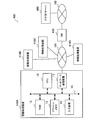
- FIG. 1 is a schematic diagram of an information processing system according to Embodiments 1 to 3.
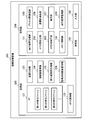
- FIG. 2 is a block diagram schematically showing a functional configuration of the information processing apparatus according to Embodiment 1.
- FIG. 6 is a schematic diagram showing a first example of AP attached information in Embodiment 1.
- FIG. 6 is a schematic diagram illustrating a first example of connection device information according to Embodiment 1.
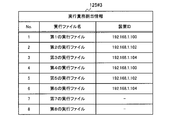
- FIG. 6 is a schematic diagram illustrating a first example of execution responsibility assignment information according to Embodiment 1.
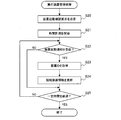
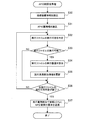
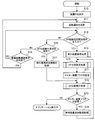
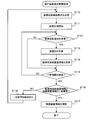
- FIG. 3 is a flowchart illustrating an overall processing procedure of the information processing apparatus according to the first embodiment. 3 is a flowchart showing execution device management processing in the first embodiment. 6 is a flowchart showing AP division setting processing in the first embodiment.
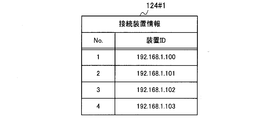
- FIG. 6 is a schematic diagram illustrating a second example of connection device information according to Embodiment 1.
- FIG. 6 is a schematic diagram showing a second example of AP-attached information in Embodiment 1.
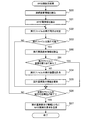
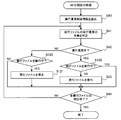
- FIG. 3 is a flowchart showing AP division execution processing in the first embodiment.
- 6 is a schematic diagram illustrating a second example of execution responsibility assignment information according to Embodiment 1.
- FIG. 4 is a flowchart showing processing of a first executable file in the first embodiment.
- 10 is a flowchart showing processing of a second executable file in the first embodiment.
- FIG. 10 is a block diagram schematically showing a functional configuration of an information processing device in a second embodiment. 10 is a flowchart illustrating an overall processing procedure of the information processing apparatus according to the second embodiment.
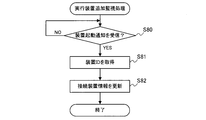
- FIG. 10 is a flowchart illustrating execution device addition monitoring processing in the second embodiment.
- 6 is a schematic diagram illustrating an example of connection device information according to Embodiment 2.
- FIG. 10 is a flowchart illustrating AP division setting processing according to the second embodiment.
- 10 is a schematic diagram illustrating an example of execution responsibility assignment information in Embodiment 2.
- FIG. 10 is a flowchart showing AP division execution processing in the second embodiment.
- FIG. 11 is a block diagram schematically showing a functional configuration of an information processing device in a third embodiment.
- 10 is a schematic diagram illustrating an example of monitoring connection device information according to Embodiment 3.
- FIG. 14 is a flowchart illustrating execution device addition monitoring processing of an execution device monitoring unit according to Embodiment 3.
- FIG. 10 is a flowchart showing AP division execution processing in the third embodiment. 12 is a schematic diagram illustrating an example of execution responsibility assignment information in Embodiment 3.
- FIG. 10 is a schematic diagram of an information processing system according to a fourth embodiment.
- FIG. 10 is a block diagram schematically showing a functional configuration of an information processing device in a fourth embodiment.
- 10 is a schematic diagram illustrating an example of AP attached information in Embodiment 4.
- FIG. FIG. 16 is a schematic diagram illustrating an example of execution responsibility assignment information in the fourth embodiment.
- FIG. 10 is a schematic diagram of an information processing system according to a fifth embodiment.
- FIG. 10 is a block diagram schematically showing a functional configuration of an information processing device in a fifth embodiment.
- FIG. 16 is a schematic diagram illustrating an example of AP attached information in the fifth embodiment.
- FIG. 16 is a schematic diagram illustrating an example of execution responsibility assignment information in the fifth embodiment.
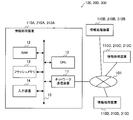
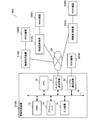
- FIG. 1 is a schematic diagram of an information processing system 100 according to the first embodiment.
- the information processing system 100 includes a plurality of information processing apparatuses 110A to 110D, and distributes and executes an application (hereinafter referred to as AP) having a plurality of execution files.
- AP application
- the information processing apparatus 110 is connected to a LAN 101 as a network, and data communication is possible between a plurality of information processing apparatuses 110.
- the LAN 101 is a local area network built in a home and may or may not be connected to the Internet.
- the hardware configuration of the information processing device 110 includes a processor such as a CPU 10, a network communication device 11, a storage device such as a RAM (Random Access memory) 12 and a flash memory 13, and an input.
- a device 14 and a bus 15 are provided.
- the CPU 10 expands the AP in the RAM 12 and executes it.
- the network communication device 11 performs data communication with the information processing device 110 via the LAN 101.
- the RAM 12 is a volatile memory that is accessed by the CPU 10.
- the flash memory 13 is a non-volatile memory that stores the AP.
- the input device 14 receives an instruction from the user. For example, the input device 14 receives an input of a start setting start request as an AP execution instruction from the user. Specifically, the input device 14 includes a button or a remote control light receiving unit.
- the bus 15 connects the CPU 10, the network communication device 11, the RAM 12, the flash memory 13, and the input device 14, and enables transmission / reception of data in the connected portion.
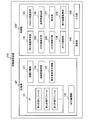
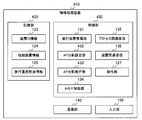
- FIG. 2 is a block diagram schematically showing a functional configuration of the information processing apparatus 110 according to the first embodiment.
- the information processing apparatus 110 includes a storage unit 120, a control unit 130, a communication unit 140, and an input unit 150.
- the storage unit 120 stores information and programs necessary for processing of the information processing apparatus 110.
- the storage unit 120 stores AP 121, AP attached information 122, device ID information 123, connection device information 124, and execution responsibility assignment information 125.
- the AP 121 is composed of a plurality of execution files.
- the execution file is a file that the CPU 10 can directly read into the RAM 12 and execute.
- the AP 121 includes a plurality of execution files obtained by converting a program written in a high-level language such as C language or Java language into an execution format.
- the AP 121 realizes one or a plurality of functions when a plurality of execution files operate in cooperation.
- HEMS Home Energy Management System
- HEMS has a function of acquiring and displaying the operating state of home appliances, a function of automatically driving according to a life schedule, and the like. These functions are realized by executing execution files such as a communication program, a display program, a schedule program, a device management program, and an operation management program.
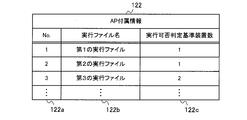
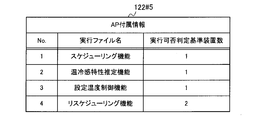
- the AP attached information 122 indicates an execution file that constitutes the AP 121 and an execution condition for executing the execution file.
- FIG. 3 is a schematic diagram illustrating an example of the AP attached information 122.
- the AP attached information 122 is information in a table format having a No column 122a, an execution file name column 122b, and an execution availability determination reference device number column 122c.
- the No column 122a stores an identification number for identifying each row included in the AP attached information 122.
- the executable file name column 122b stores an executable file name as executable file identification information for identifying the executable file constituting the AP 121.
- the executability determination reference device number column 122c stores the executability determination reference device number that is a condition for executing the execution file.
- the execution possibility determination reference device number is the number of devices necessary for executing the execution file. For example, when the number of information processing apparatuses 110 connected to the LAN 101 is equal to or greater than the number of execution permission determination reference apparatuses, the corresponding execution file can be executed.
- the AP 121 and the AP attached information 122 are stored in advance in the flash memory 13, for example.
- the device ID information 123 indicates a device ID that is device identification information of the information processing device 110 itself.
- the device ID may be, for example, an IP (Internet Protocol) address or a MAC (Media Access Control) address.
- the device ID may be unique identification information generated by a predetermined algorithm.
- the connection device information 124 indicates the device ID of the information processing device 110 connected to the LAN 101.
- FIG. 4 is a schematic diagram illustrating an example of the connection device information 124.
- the connection device information 124 is information in a table format having a No column 124a and a device ID column 124b.
- the No column 124 a stores an identification number for identifying each row included in the connection device information 124.
- the device ID column 124b stores the device ID of the information processing device 110 connected to the LAN 101.
- the connection device information 124 is stored in the RAM 12 or the flash memory 13.
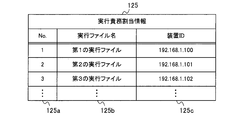
- the execution responsibility assignment information 125 indicates the information processing apparatus 110 having the responsibility to execute for each execution file.
- FIG. 5 is a schematic diagram illustrating an example of the execution responsibility assignment information 125.
- the execution responsibility assignment information 125 is information in a table format having a No column 125a, an execution file name column 125b, and a device ID column 125c.
- the No column 125 a stores an identification number for identifying each row included in the execution responsibility assignment information 125.
- the execution file name column 125b stores the execution file names of the execution files that constitute the AP 121.
- the device ID column 125c stores the device ID of the information processing device 110 that is responsible for executing the execution file identified by the execution file name column 125b.
- the execution responsibility assignment information 125 is stored in the RAM 12 or the flash memory 13.
- the execution responsibility assignment information 125 is generated by the own device and stored in the storage unit 120, and is generated and transmitted by the other information processing device 110, and is received by the communication unit 140. May be stored in the storage unit 120.
- the execution responsibility assignment information 125 generated by the own apparatus and stored in the storage unit 120 is referred to as first execution responsibility assignment information, and is generated by another information processing apparatus 110 and stored in the storage unit 120.
- the execution responsibility assignment information 125 may be referred to as second execution responsibility assignment information.
- control unit 130 controls the processing of the information processing apparatus 110.
- the control unit 130 includes an execution device management unit 131, an AP division setting unit 132, an AP division execution unit 133, an AP interface control unit (hereinafter referred to as API / F control unit) 134, an inter-process communication unit 135, An inter-device communication unit 136 and an operation unit 137 are provided.
- API / F control unit AP interface control unit
- the execution apparatus management unit 131 acquires the apparatus ID of the own apparatus, and stores the apparatus ID information 123 indicating the acquired apparatus ID in the storage unit 120.
- the execution device management unit 131 detects the information processing device 110 connected to the LAN 101 and acquires a unique device ID held by each information processing device 110. Then, the execution device management unit 131 generates connection device information 124 as shown in FIG. 4 and stores it in the storage unit 120.
- the connection device information 124 includes the device ID of the own device indicated by the device ID information 123.
- the AP division setting unit 132 sets the execution duties of each of the plurality of execution files included in the AP to a plurality of pieces of information constituting the information processing system 100. Assign to any of the processing devices 110. For example, the AP division setting unit 132 determines whether or not an executable file with the executable file name written in the AP attached information 122 is executable, and the execution responsibility of the executable file determined to be executable is registered in the connection device information 124. Assigned to the existing information processing apparatus 110. Then, as shown in FIG. 5, the AP division setting unit 132 generates execution responsibility assignment information 125 indicating the execution file and the information processing apparatus 110 to which the execution responsibility of the execution file is assigned.
- the first execution file is executed by the information processing apparatus 110 having the apparatus ID 192.168.1.100
- the second execution file is the apparatus
- the third execution file is executed by the information processing apparatus 110 having the device ID 192.168.1.102, and is executed by the information processing apparatus 110 having the ID 192.168.1.101.
- the AP division execution unit 133 refers to the execution responsibility assignment information 125, acquires the execution file assigned to the own device from the flash memory 13, and executes it.
- the API / F control unit 134 determines the information processing apparatus 110 that is executing another executable file when a process execution request for the other executable file is generated during the processing of the executable file being executed. If the information processing apparatus 110 that is executing another execution file is its own apparatus, the API / F control unit 134 sends a process request to the other execution file via the inter-process communication unit 135. Send communication request. If the information processing apparatus 110 that is executing another execution file is another information processing apparatus 110, the API / F control unit 134 transmits another information processing apparatus via the inter-device communication unit 136 and the communication unit 140. An inter-device communication request that is a process execution request is transmitted to 110.
- the inter-process communication unit 135 transmits / receives data between executable files executed by the same information processing apparatus 110. For example, there is a method of using a message queue or shared memory supported by an OS (Operating System) as data transmission / reception for inter-process communication.
- OS Operating System
- the inter-device communication unit 136 performs data transmission / reception between execution files executed by other information processing apparatuses 110 via the communication unit 140.
- data transmission / reception for inter-device communication there is a method of using a network socket supported by the OS.
- the operation unit 137 detects an instruction input to the input unit 150. For example, the operation unit 137 detects a button press if the input device 14 functioning as the input unit 150 is a button, and detects a remote control signal if the input device 14 is a remote control light receiving unit. When the information processing apparatus 110 does not include the input device 14, the operation unit 137 detects an AP activation setting start command received by the network communication device 11 that functions as the communication unit 140. By detecting these, the operation unit 137 receives an AP activation setting start operation from the user.
- the communication unit 140 communicates with another information processing apparatus 110 via the LAN 101.
- the communication unit 140 functions as a transmission unit that transmits information to the LAN 101 and a reception unit that receives information from the LAN 101.
- the input unit 150 receives an instruction input from the user.
- the input unit 150 receives an input of an AP execution instruction.
- the storage unit 120 of the information processing apparatus 110 described above can be realized by the CPU 10 illustrated in FIG. 1 using the RAM 12 or the flash memory 13.
- the control unit 130 can be realized by the CPU 10 reading the program stored in the flash memory 13 into the RAM 12 and executing it.
- the communication unit 140 can be realized by the CPU 10 using the network communication device 11.
- the input unit 150 can be realized by the CPU 10 using the input device 14.
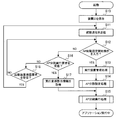
- FIG. 6 is a flowchart showing an overall processing procedure of the information processing apparatus 110 according to the first embodiment.
- the main processing after the information processing apparatus 110 is activated will be described with reference to FIG.
- the execution device management unit 131 When the information processing device 110 is activated, the execution device management unit 131 acquires a device ID unique to the information processing device 110 that is the device itself, and generates device ID information 123 indicating the acquired device ID. Then, the execution device management unit 131 stores the generated device ID information 123 in the storage unit 120 (S10). For example, when the device ID is an IP address or a MAC address, the execution device management unit 131 can acquire the device ID from the communication unit 140.
- the execution device management unit 131 uses a broadcast notification means such as multicast to the information processing device 110 connected to the LAN 101 to notify the communication unit 140 of the activation notification together with the device ID acquired in step S10. Transmit (S11).
- the control unit 130 waits for the activation setting start operation of the AP 121 from the user (S12), waits for the reception of the AP division execution request from the other information processing apparatus 110 (S16), and other information.
- the system waits for an apparatus activation confirmation request from the processing apparatus 110 (S18).
- step S12 when the operation unit 137 detects an input of a start setting start operation of the AP 121 from the user (YES in S12), the process proceeds to step S13.
- step S13 the execution device management unit 131 performs execution device management processing.
- the execution apparatus management unit 131 causes the communication unit 140 to transmit an apparatus activation confirmation request to the information processing apparatus 110 connected to the LAN 101, and an activation notification from the information processing apparatus 110 that has received the apparatus activation confirmation request.
- the execution device management unit 131 detects the information processing device 110 connected to the LAN 101 and generates connection device information 124 indicating the device ID of the detected information processing device 110.
- the AP division setting unit 132 performs AP division setting processing (S14).
- the AP division setting unit 132 determines whether or not the executable file can be executed, and assigns the execution responsibility of the executable file determined to be executable to any of the information processing apparatuses 110 detected in step S13.
- the responsibility assignment information 125 is generated and stored in the storage unit 120.
- the AP division setting unit 132 causes the communication unit 140 to transmit an AP division execution request together with the generated execution responsibility assignment information 125 to all the information processing apparatuses 110 detected in step S13.
- the AP division execution unit 133 performs AP division execution processing (S15).
- the AP division execution unit 133 refers to the execution responsibility assignment information 125 stored in the storage unit 120 and executes all the execution files assigned to the own device (S15).
- the information processing apparatus 110 is executing the AP 121.
- step S13 and step S14 is executed only by the information processing apparatus 110 that has received an AP activation setting start operation from the user as a master apparatus.
- the information processing apparatus 110 other than the master apparatus refers to the execution responsibility assignment information 125 sent from the master apparatus as a slave apparatus, as shown in steps S16 to S18 and step S15 below.
- the executable file assigned to the own device is executed.
- step S16 when the communication unit 140 receives an AP division execution request from another information processing apparatus 110 as a master apparatus (Yes in S16), the process proceeds to step S17.
- step S ⁇ b> 17 the AP division execution unit 133 acquires the execution responsibility assignment information 125 transmitted together with the AP division execution request, and stores it in the storage unit 120. Then, the process proceeds to step S15.
- step S18 when the communication unit 140 receives a device activation confirmation request from another information processing device 110 as a master device (Yes in S18), the process proceeds to step S11, and the communication unit requests such a request. Is not received (No in S18), the process proceeds to step S12.
- FIG. 7 is a flowchart showing the execution device management process performed in step S13 of FIG.
- the execution device management unit 131 causes the communication unit 140 to transmit a device activation confirmation request to the information processing device 110 connected to the LAN 101 using a broadcast notification unit such as multicast ( S20).
- a broadcast notification unit such as multicast
- the execution device management unit 131 initializes the connection device information 124 and deletes all rows, and then uses the device ID information 123.
- the device ID of the device shown is stored in the connection device information 124. If the connection device information 124 is not stored in the storage unit 120, the execution device management unit 131 generates the connection device information 124 that stores the device ID of the own device indicated by the device ID information 123.
- the storage unit 120 stores it.
- the execution device management unit 131 starts time measurement (S21) and confirms reception of the activation notification from the other information processing device 110 (S22).
- step S22 if the communication unit 140 has received the activation notification (Yes in S22), the process proceeds to step S23. If the communication unit 140 has not received the activation notification (No in S22), the process proceeds to step S23. Proceed to S25.
- step S23 the execution device management unit 131 acquires the device ID transmitted together with the activation notification. Then, the execution device management unit 131 updates the connection device information 124 by storing the device ID acquired in step S23 in the connection device information 124.
- step S25 the execution device management unit 131 determines whether or not a predetermined time has elapsed. When the predetermined time has elapsed (Yes in S25), the execution device management unit 131 ends the execution device management process. If the predetermined time has not elapsed (No in S25), the process proceeds to step S22. As described above, the execution device management unit 131 performs execution device management processing for a certain period of time to detect the information processing device 110 connected to the LAN 101.
- FIG. 8 is a flowchart showing the AP division setting process performed in step S14 of FIG.
- the AP division setting unit 132 reads the connection device information 124 and the AP attached information 122 from the storage unit 120 (S30, S31).
- the AP division setting unit 132 generates, in the storage unit 120, the execution responsibility assignment information 125 in the initial state where the execution responsibility of the execution file is not assigned to the information processing apparatus 110, and stores it in the storage unit 120.
- the AP division setting unit 132 identifies one executable file that has not yet been determined to be executable among the executable files stored in the AP attached information 122, and determines whether or not the identified executable file is executable. (S32).
- the connection device information 124 read in step S30 is the connection device information 124 # 1 shown in FIG. 9, and the AP attached information 122 read in step S31 is shown in FIG.
- the AP division setting unit 132 determines that each of the first to seventh execution files is executable, and determines that the eighth execution file is not executable. If it is determined that the specified executable file can be executed (Yes in S33), the process proceeds to step S34, and if it is determined that the specified executable file cannot be executed (No in S33). The process proceeds to step S36.
- step S ⁇ b> 34 the AP division setting unit 132 assigns the execution responsibility of the executable file determined to be executable to one of the information processing apparatuses 110. For example, the AP division setting unit 132 selects the information processing device 110 that executes the execution file determined to be executable from the information processing devices 110 identified by the device ID stored in the connection device information 124. Thus, the execution responsibility of the execution file is assigned to the selected information processing apparatus 110. For example, when the information processing apparatus 110 is already allocated to the execution file, the AP division setting unit 132 executes the execution responsibility allocation information 125 so that the processing loads of the information processing apparatuses 110 are equalized. The information processing apparatus 110 with a small allocation of execution responsibilities is preferentially selected.
- the AP division setting unit 132 selects in order from the information processing apparatus 110 with the smallest number of execution duties assigned so that the number of execution duties assigned becomes equal. When the number of execution responsibilities assigned is the same, the AP division setting unit 132 selects the execution responsibilities assigned in ascending order of identification numbers stored in the No column 124a of the connected device information 124, for example. Any information processing device 110 may be selected from the information processing devices 110 having the same number. When the information processing apparatus 110 is not yet assigned to the execution file, the AP division setting unit 132 arbitrarily selects the information processing apparatus 110 from the information processing apparatuses 110 registered in the connection apparatus information 124. To do. In this case, the AP division setting unit 132 may select any information processing apparatus 110, for example, by selecting in order from the smallest identification number stored in the No column 124a of the connection apparatus information 124.
- the AP division setting unit 132 stores the device ID of the information processing apparatus 110 to which the execution duties are assigned in the execution duty assignment information 125 in association with the specified execution file. Then, the execution responsibility assignment information 125 is updated (S35).
- step S36 the AP division setting unit 132 determines whether or not execution of all the executable files has been determined. If there is an executable file that has not yet been determined to be executable (No in S36), the process proceeds to step S32, and if it is determined that all the executable files are executable (Yes in S36). ), The process proceeds to step S37.
- step 37 the AP division setting unit 132 sends an AP division execution request together with the execution responsibility assignment information 125 to the information processing device 110 identified by the device ID registered in the connection device information 124. Send it. Then, the AP division setting process ends.
- FIG. 11 is a flowchart showing the AP division execution process performed in step S15 of FIG.
- the AP division execution unit 133 reads the execution responsibility assignment information 125 from the storage unit 120 (S40).
- the AP division execution unit 133 identifies one of the execution files included in the read execution responsibility assignment information 125 and has not yet been determined whether or not there is an execution responsibility. It is determined whether or not the own apparatus has an execution responsibility for the executed file (S41). For example, the AP division execution unit 133 compares the device ID indicated by the device ID information 123 stored in the storage unit 120 with the device ID corresponding to the execution file identified from the execution responsibility assignment information 125. If the device IDs match, it is determined that the specified execution file has the responsibility for execution. For example, the execution responsibility assignment information 125 read from the storage unit 120 is the execution responsibility assignment information 125 # 1 shown in FIG.
- the AP division execution unit 133 determines that there is an execution responsibility for the first execution file and the fifth execution file. In FIG. 12, the information processing apparatus 110 has no execution responsibility for the eighth execution file because the corresponding apparatus ID is indefinite.
- step S42 If it is determined that there is an execution responsibility for the identified executable file (Yes in S42), the process proceeds to step S43, and if it is determined that there is no execution responsibility for the identified executable file (No in S42). The process proceeds to step S44.
- step S43 the AP division execution unit 133 acquires the specified execution file from the AP 121 of the storage unit 120 and executes it. Then, the process proceeds to step S44.
- step S44 the AP division execution unit 133 determines whether or not the determination of whether or not there is an execution responsibility has been completed for all execution files included in the read execution responsibility assignment information 125. If there is an execution file that has not yet been determined whether or not there is an execution responsibility (No in S44), the process proceeds to step S41. (Yes in S44), the AP division execution process ends.
- the inter-execution file communication process of the API / F control unit 134 will be described with reference to FIGS. 13 and 14.
- communication processing between the first execution file and the second execution file is taken as an example, but all execution files can be communicated by the same communication processing.
- FIG. 13 is a flowchart showing the processing of the first executable file.
- the AP division execution unit 133 requests execution of the B001 function of the second execution file, for example, in the processing of the first execution file (S50).
- the API / F control unit 134 reads the device ID information 123 and the execution responsibility assignment information 125 from the storage unit 120 (S51).
- the API / F control unit 134 refers to the read device ID information 123 and execution responsibility assignment information 125 to determine whether or not the own device has the execution responsibility of the second execution file (S52). ). For example, the API / F control unit 134 compares the device ID indicated by the device ID information 123 with the device ID corresponding to the second execution file acquired from the execution responsibility assignment information 125, and the device ID is determined. If they match, the device having the execution responsibility of the second execution file is the same as the device having the execution responsibility of the first execution file. In other words, it is determined that the device has the execution responsibility of the second execution file. To do. If the own apparatus has the execution responsibility for the second executable file (Yes in S53), the process proceeds to step S54, and if the other information processing apparatus 110 has the execution obligation for the second execution file ( The process proceeds to step S57.
- step S54 the API / F control unit 134 transmits an execution request for the B001 function to the second execution file via the inter-process communication unit 135 (S54).
- the API / F control unit 134 waits for the B001 function calculation result, and when the B001 function of the second execution file is executed, the B001 function is transmitted via the inter-process communication unit 135. A value is received as a function calculation result (S55).
- the API / F control unit 134 gives the calculation result of the B001 function received from the inter-process communication unit 135 to the AP division execution unit 133, whereby the AP division execution unit 133 acquires the calculation result of the B001 function (S56). ).
- step S53 If it is determined in step S53 that the other information processing apparatus 110 is responsible for executing the second executable file (No in S53), the process proceeds to step S57.
- step S57 the API / F control unit 134 acquires the device ID corresponding to the second execution file from the execution responsibility assignment information 125. Then, the API / F control unit 134 sends an inter-device communication request that is an execution request for the B001 function to the information processing device 110 that is responsible for executing the second execution file, via the inter-device communication unit 136. Is transmitted (S58).
- the API / F control unit 134 When the API / F control unit 134 transmits an execution request for the B001 function, the API / F control unit 134 waits for the calculation result of the B001 function. When the B001 function of the second execution file is executed, the API / F control unit 134 passes the communication unit 140 and the inter-device communication unit 136. Then, the value as the calculation result of the B001 function is received (S59). Then, the process proceeds to step S56.
- FIG. 14 is a flowchart showing processing of the second executable file.
- the API / F control unit 134 waits for a function execution request from another execution file via the inter-process communication unit 135 ( S61) and a function execution request from another execution file via the communication unit 140 and the inter-device communication unit 136 are waited (S63).
- step S62 the API / F control unit 134 sets an inter-process communication flag in the storage unit 120.
- step S64 the API / F control unit 134 causes the AP division execution unit 133 to execute the B001 function (S64). Then, the process proceeds to step S65.
- step S65 the API / F control unit 134 determines whether or not the inter-process communication flag is set. If the inter-process communication flag is set (Yes in S65), the process proceeds to step S66. If the inter-process communication flag is not set (No in S65), the process proceeds to step S67.
- step S66 the API / F control unit 134 transmits the calculation result of the B001 function to the first execution file via the inter-process communication unit 135.
- step S67 the API / F control unit 134 transmits the calculation result of the B001 function to the information processing apparatus 110 having the responsibility for executing the first execution file to the communication unit 140 via the inter-device communication unit 136.
- the information processing apparatus 110 having the responsibility for executing the first executable file is also referred to as a first information processing apparatus
- the information processing apparatus 110 having the execution responsibility for the second execution file is also referred to as a second information processing apparatus.
- the information processing apparatus 110 having the responsibility for executing the first executable file is the same as the information processing apparatus 110 having the responsibility for executing the second execution file
- the execution of the first execution file and the second execution file is executed.
- the information processing apparatus having the responsibility is also referred to as a first information processing apparatus.
- the information processing apparatus 110 serving as the master apparatus assigns the execution responsibility of the execution file constituting the AP to the information processing apparatus 110 connected to the LAN 101.
- Each information processing apparatus 110 can execute APs in a distributed manner without causing overhead due to the distributed processing by executing only the assigned execution file. Therefore, even in the device cooperation system configured with the information processing apparatus 110 equipped with a low-performance CPU, an immediate response to apparatus operation and real-time information display are possible.
- the device cooperation system can be realized without the processing at the AP failing.
- the information processing system 200 includes a plurality of information processing apparatuses 210A to 210D.
- the information processing apparatus 210 when it is not necessary to distinguish each of the information processing apparatuses 210A to 210D, they are referred to as the information processing apparatus 210.
- the hardware configuration of the information processing apparatus 210 in the second embodiment is the same as the hardware configuration of the information processing apparatus 110 in the first embodiment shown in FIG.
- FIG. 15 is a block diagram schematically showing a functional configuration of the information processing apparatus 210 according to the second embodiment.
- the information processing apparatus 210 includes a storage unit 120, a control unit 230, a communication unit 140, and an input unit 150.
- the information processing apparatus 210 in the second embodiment is configured in the same manner as the information processing apparatus 110 in the first embodiment except for the control unit 230.
- the control unit 230 controls processing of the information processing apparatus 210.
- the control unit 230 includes an execution device management unit 131, an AP division setting unit 232, an AP division execution unit 233, an API / F control unit 134, an inter-process communication unit 135, an inter-device communication unit 136, and an operation unit. 137 and an execution device monitoring unit 238.
- the control unit 230 in the second embodiment is configured similarly to the control unit 130 in the first embodiment except for the AP division setting unit 232, the AP division execution unit 233, and the execution device monitoring unit 238.
- the AP division setting unit 232 determines whether or not the executable file having the executable file name written in the AP attached information 122 can be executed, and information on the execution responsibility of the executable file determined to be executable is registered in the connection device information 124. Assigned to the processing device 210. When the information processing apparatus 210 is newly connected to the LAN 101 after assigning the execution responsibility of the execution file to the information processing apparatus 210, the AP division setting unit 232 according to the second embodiment assigns the execution responsibility of the execution file again. .
- the AP division execution unit 233 refers to the execution responsibility assignment information 125, acquires the execution file with the execution responsibility assigned to the own apparatus from the flash memory 13, and executes it.
- the AP division execution unit 233 according to the second embodiment executes the newly assigned execution file when the execution responsibility of the execution file is newly assigned during execution of the execution file assigned to the own device. .
- the execution device monitoring unit 238 detects the information processing device 210 newly connected to the LAN 101 during AP execution, acquires a unique device ID held by the newly connected information processing device 210, and connects to the connection device information 124. Update.
- the master device in other words, the execution device monitoring unit 238 of the information processing device 210 that has received the AP activation setting start operation from the user performs the processing as described above.
- FIG. 16 is a flowchart illustrating an overall processing procedure of the information processing apparatus 210 according to the second embodiment.
- the same processes as those shown in FIG. 6 are denoted by the same reference numerals as those in FIG.
- steps S10 to S13 and steps S16 to S18 in FIG. 16 are the same as those in FIG. However, after step S13, the process proceeds to step S70, and after step S17, the process proceeds to step S72.
- step S70 the AP division setting unit 232 performs AP division setting processing. Details of the processing here will be described with reference to FIG. Next, the execution device monitoring unit 238 sets a master device flag in the storage unit 120 (S71).
- the AP division execution unit 233 performs AP division execution processing (S72). Details of the processing here will be described with reference to FIG. Next, the execution device monitoring unit 238 determines whether or not a master device flag is set in the storage unit 120 (S73). If the master device flag is set (Yes in S73), the process proceeds to step S74. If the master device flag is not set (No in S73), the AP is being executed.
- step S74 the execution device monitoring unit 238 performs execution device addition monitoring processing.
- the process proceeds to step S70, and the AP division setting process is performed again.
- FIG. 17 is a flowchart showing the execution device addition monitoring process performed in step S74 of FIG.
- the execution device monitoring unit 238 checks whether or not the communication unit 140 has received a startup notification that the information processing device 210 notifies when starting up (S80). In other words, the execution device monitoring unit 238 checks whether or not an activation notification has been received after the execution device management process in step S13. Thereby, the information processing apparatus 210 newly connected to the LAN 101 can be detected. If an activation notification has been received (Yes in S80), the process proceeds to step S81.
- step S81 the execution device monitoring unit 238 acquires the device ID transmitted together with the activation notification.
- the execution device monitoring unit 238 updates the connection device information 124 by storing the acquired device ID in the connection device information 124 (S82). For example, when the device ID “192.168.1.104” of the newly connected information processing device 210 is added to the connection device information 124 # 1 shown in FIG. 9, the connection device information 124 # 1. Is updated to the connection device information 124 # 2 shown in FIG.
- FIG. 19 is a flowchart showing the AP division setting process performed in step S70 of FIG. Of the processes shown in FIG. 19, the same processes as those shown in FIG. 8 are denoted by the same reference numerals as those in FIG.
- steps S30 to S33 and steps S34 to S37 in FIG. 19 are the same as the processes having the same reference numerals in FIG. However, after step S33, the process proceeds to step S90.
- step S ⁇ b> 90 the AP division setting unit 232 reads the execution responsibility assignment information 125 from the storage unit 120.
- the AP division setting unit 232 determines whether or not an execution responsibility has already been assigned to the specified execution file (S91). For example, in the case of the execution responsibility assignment information 125 # 1 shown in FIG. 12, it is determined that the first execution file to the seventh execution file have already been assigned, but the eighth execution file Is determined not to be assigned. If the execution responsibility has already been assigned (Yes in S91), the process proceeds to step S36. If the execution responsibility has not been assigned, the process proceeds to step S34.
- step S ⁇ b> 34 the AP division setting unit 232 assigns the execution responsibility of the identified execution file to any of the information processing apparatuses 210 connected to the LAN 101.
- the assignment method here is the same as in the first embodiment. For example, when the execution responsibility of the eighth execution file is assigned in the execution responsibility assignment information 125 # 1 shown in FIG. 12, the execution responsibility assignment information 125 # 1 is changed to the execution responsibility as shown in FIG. The allocation information is updated to 125 # 2 (S35).
- FIG. 21 is a flowchart showing the AP division execution process performed in step S72 of FIG. Of the processes shown in FIG. 21, the same processes as those shown in FIG. 11 are denoted by the same reference numerals as those in FIG.
- steps S40 to S44 in FIG. 21 is the same as the processing in FIG. However, if it is determined in step S42 in FIG. 21 that there is an execution responsibility for the specified executable file (Yes in S42), the process proceeds to step S100.
- step S100 the AP division execution unit 233 determines whether the specified execution file has already been executed. If the specified executable file has already been executed (Yes in S100), the process proceeds to step S44. If the specified executable file is not executed (No in S100), the process proceeds to step S43.
- the execution file execution determination is performed again, and if it is determined to be executable, the execution responsibility is assigned and executed. .
- the execution responsibility of this execution file is changed. Is assigned to the information processing apparatus 210, and this executable file is executed.
- the information processing apparatus 210 newly connected to the LAN 101 is detected, and can be executed because the number of information processing apparatuses 210 connected to the LAN 101 is small. By making it possible to execute an executable file that did not exist later, user convenience can be improved.
- the information processing system 300 includes a plurality of information processing devices 310A to 310D.
- the information processing apparatus 310 when it is not necessary to distinguish each of the information processing apparatuses 310A to 310D, they are referred to as the information processing apparatus 310.
- the hardware configuration of the information processing apparatus 310 in the third embodiment is the same as the hardware configuration of the information processing apparatus 110 in the first embodiment shown in FIG.
- FIG. 22 is a block diagram schematically showing a functional configuration of the information processing apparatus 310 according to the third embodiment.
- the information processing apparatus 310 includes a storage unit 320, a control unit 330, a communication unit 140, and an input unit 150.
- the information processing apparatus 310 in the third embodiment is configured in the same manner as the information processing apparatus 110 in the first embodiment except for the storage unit 320 and the control unit 330.
- the storage unit 320 stores information and programs necessary for processing of the information processing apparatus 310.
- the storage unit 320 stores the AP 121, AP attached information 122, device ID information 123, connection device information 124, execution responsibility assignment information 125, and monitoring connection device information 326.
- the storage unit 320 in the third embodiment stores the same information and program as the storage unit 120 in the first embodiment, except for the monitoring connection device information 326.
- the monitoring connection device information 326 indicates the device ID of the information processing device 310 connected to the LAN 101.
- FIG. 23 is a schematic diagram illustrating an example of the monitoring connection device information 326. As shown in the figure, the monitoring connection device information 326 is information in a table format having a No column 326a and a device ID column 326b.
- the No column 326a stores an identification number for identifying each row included in the monitoring connection device information 326.
- the device ID column 326b stores the device ID of the information processing device 310 connected to the LAN 101.
- the control unit 330 controls processing of the information processing device 310.
- the control unit 330 includes an execution device management unit 131, an AP division setting unit 232, an AP division execution unit 333, an API / F control unit 134, an inter-process communication unit 135, an inter-device communication unit 136, and an operation unit. 137 and an execution device monitoring unit 338.
- the control unit 330 in the third embodiment is configured in the same manner as the control unit 230 in the second embodiment except for the AP division execution unit 333 and the execution device monitoring unit 338.
- the AP division setting unit 232 performs the same processing as in the second embodiment.
- the execution device monitoring unit 338 detects the information processing device 310 newly connected to the LAN 101 during execution of the AP, acquires a unique device ID held by the newly connected information processing device 310, and connects to the connection device information 124. Update.
- the execution device monitoring unit 338 updates the connection device information 124 by detecting the information processing device 310 that is no longer connected to the LAN 101, for example, when communication becomes impossible due to an error.
- the execution device monitoring unit 338 updates the connection device information 124 using the monitoring connection device information 326.
- the master device in other words, the execution device monitoring unit 338 of the information processing device 310 that has received the AP activation setting start operation from the user performs the above-described processing.
- the AP division execution unit 333 refers to the execution responsibility assignment information 125, acquires the execution file in which the execution responsibility is assigned to the own apparatus from the flash memory 13, and executes it. In the third embodiment, the AP division execution unit 333 executes the newly assigned execution file when the execution responsibility of the execution file is newly assigned during execution of the execution file assigned to the own device. . In addition, when the assignment of execution responsibility to the own device is withdrawn, the AP division execution unit 333 stops the execution of the execution file with which the assignment of execution responsibility has been withdrawn.
- FIG. 24 is a flowchart showing execution device addition monitoring processing of the execution device monitoring unit 338 according to the third embodiment.
- the execution device monitoring unit 338 causes the communication unit 140 to transmit a device activation confirmation request to the information processing device 310 connected to the LAN 101 using a broadcast notification unit such as multicast. (S110).
- the execution device monitoring unit 338 initializes the monitoring connection device information 326, deletes all rows, and then deletes the device.
- the device ID of the own device indicated by the ID information 123 is stored in the monitoring connection device information 326. If the monitoring connection device information 326 is not stored in the storage unit 320, the execution device monitoring unit 338 uses the monitoring connection device information 326 that stores the device ID of the own device indicated by the device ID information 123. It is generated and stored in the storage unit 320.
- the execution device monitoring unit 338 starts time measurement (S111).
- the execution device monitoring unit 338 confirms whether the communication unit 140 has received a startup notification that the information processing device 310 notifies when starting up (S112). If the activation notification has been received (Yes in S112), the process proceeds to step S113. If the activation notification has not been received (No in S112), the process proceeds to step S115.
- step S113 the execution device monitoring unit 338 acquires the device ID transmitted together with the activation notification.
- the execution device monitoring unit 338 updates the monitoring connection device information 326 by storing the acquired device ID in the monitoring connection device information 326 (S114).
- step S115 the execution device monitoring unit 338 determines whether or not a certain time has elapsed since the measurement was started in step S111 (S115). If the predetermined time has elapsed (Yes in S115), the process proceeds to step S116. If the predetermined time has not elapsed (No in S115), the process proceeds to step S112.
- step S116 the execution device monitoring unit 338 compares the monitoring connection device information 326 and the connection device information 124 to determine whether there is a difference. For example, when the monitoring connection device information 326 shown in FIG. 23 is compared with the connection device information 124 # 1 shown in FIG. 9, the device ID “192.168.1.104” is added, The device ID “192.168.1.101” and the device ID “192.168.1.103” are deleted.
- step S117 since there is a difference between the monitoring connection device information 326 and the connection device information 124, the execution device monitoring unit 338 updates the connection device information 124 so that it matches the monitoring connection device information 326. Then, the execution device addition monitoring process ends.
- step S118 the execution device monitoring unit 338 waits for a certain period of time. Then, the process proceeds to step S110.
- the execution device monitoring unit 338 performs the execution device addition monitoring process at regular time intervals to detect addition and deletion of the device ID of the information processing device 310.
- FIG. 25 is a flowchart illustrating AP division execution processing performed by the AP division execution unit 333 according to the third embodiment.
- the same processes as those shown in FIG. 21 are denoted by the same reference numerals as those in FIG.
- steps S40 to S44 and step S100 shown in FIG. 25 are the same as the processes denoted by the same reference numerals in FIG. However, if it is determined in step S42 that there is no execution responsibility for the specified executable file (No in step S42), the process proceeds to step S120.
- step S120 the AP division execution unit 333 determines whether the specified execution file is being executed. If the identified executable file is being executed (Yes in step S120), the process proceeds to step S121. If the identified executable file is not being executed (No in S120), the process proceeds to step S44. Proceed to
- step S121 the AP division execution unit 333 stops the execution of the specified execution file. Then, the process proceeds to step S44.
- the execution device monitoring unit 338 updates the connection device information 124 so that the connection device information 124 # 2 shown in FIG. 18 becomes the same as the monitoring connection device information 326 shown in FIG.
- the AP division setting unit 232 updates the execution responsibility assignment information 125 # 5 shown in FIG. 20 to the execution responsibility assignment information 125 # 3 shown in FIG.
- the information processing apparatus 310 with the device ID of 192.168.1.100 stops the execution of the fifth execution file while executing the first execution file, and the fourth execution file is stored.
- the information processing apparatus 310 with the apparatus ID 192.168.1.102 stops the execution of the third execution file and the seventh execution file, and executes the second execution file and the fifth execution file.
- the information processing apparatus 310 with the apparatus ID 192.168.1.104 stops the execution of the eighth execution file and executes the third execution file and the sixth execution file.
- the information processing apparatus 310 is connected to the LAN 101 each time.
- the device cooperation system can be realized without the AP failing.
- FIG. 27 is a schematic diagram of an information processing system 400 according to the fourth embodiment.
- the information processing system 400 includes a plurality of information processing apparatuses 410A to 410D, a gateway (hereinafter referred to as GW) 470, and a cloud server 480.
- GW gateway
- the information processing apparatus 410 is connected to the LAN 101 as a network, and data communication is possible between the plurality of information processing apparatuses 410.
- the hardware configuration of the information processing apparatus 410 in the fourth embodiment is the same as the hardware configuration of the information processing apparatus 110 in the first embodiment.
- the GW 470 is connected to the LAN 101 and the Internet 102, and performs protocol conversion between them. Thereby, the information processing apparatus 410 can communicate with the cloud server 480 via the GW 470.
- the cloud server 480 is connected to the Internet 102, and the information processing apparatus 410 can receive information and programs from the cloud server 480 via the LAN 101, the GW 470, and the Internet 102.
- FIG. 28 is a block diagram schematically showing a functional configuration of the information processing apparatus 410 according to the fourth embodiment.
- the information processing apparatus 410 includes a storage unit 420, a control unit 430, a communication unit 140, and an input unit 150.
- the information processing apparatus 410 in the fourth embodiment is configured in the same manner as the information processing apparatus 110 in the first embodiment except for the storage unit 420 and the control unit 430.
- the storage unit 420 stores information and programs necessary for processing of the information processing apparatus 410.
- the storage unit 420 stores device ID information 123, connection device information 124, and execution responsibility assignment information 125. These pieces of information are the same as the corresponding information in the first embodiment.
- the storage unit 420 in the fourth embodiment does not store the AP 121 and the AP attached information 122 stored in advance in the first embodiment. In the fourth embodiment, these are acquired from the cloud server 480.
- the control unit 430 controls processing of the information processing apparatus 410.
- the control unit 430 includes an execution device management unit 131, an AP division setting unit 432, an AP division execution unit 433, an API / F control unit 134, an inter-process communication unit 135, an inter-device communication unit 136, and an operation unit. 137.
- the control unit 430 in the fourth embodiment is configured similarly to the control unit 130 in the first embodiment except for the AP division setting unit 432 and the AP division execution unit 433.
- the AP division setting unit 432 acquires AP attached information from a predetermined location of the cloud server 480 via the communication unit 140.
- the acquired AP attached information is stored in the storage unit 420.
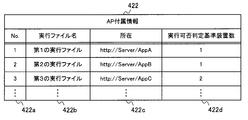
- FIG. 29 is a schematic diagram showing an example of AP attached information in the fourth embodiment.
- the AP attached information 422 is information in a table format having a No column 422a, an execution file name column 422b, a location column 422c, and an execution availability determination reference device number column 422d.
- the information stored in the No column 422a, the execution file name column 422b, and the execution possibility determination reference device number column 422d is the same as the information stored in the corresponding column of the AP attached information 122 in the first embodiment.
- the location column 422c stores information indicating the location of the execution file.
- a URL Uniform Resource Locator
- the AP ancillary information 422 in the fourth embodiment is information indicating the execution file that constitutes the AP, the location of the execution file, and the execution condition for executing the execution file.
- the AP division setting unit 432 determines whether or not the executable file with the executable file name written in the AP attached information 422 is executable, and the execution responsibility of the executable file determined to be executable is stored in the connection device information 124. Assigned to the registered information processing apparatus 410. Then, the AP division setting unit 432 generates the execution responsibility assignment information 125 and stores it in the storage unit 420.
- the AP division execution unit 433 refers to the execution responsibility assignment information 125 and the AP attached information 422, and acquires the execution file assigned to the own device from the cloud server 480 indicated by the location corresponding to the execution file.
- the acquired execution file is stored in the storage unit 420 and executed.
- the capacity of the flash memory 13 can be reduced by acquiring the AP execution file and the AP attached information 422 from the cloud server 480.
- the AP division setting unit 432 generates the execution responsibility assignment information 125 similar to that in the first embodiment, but the processing in the AP division setting unit 432 is limited to such an example.
- the AP division setting unit 432 may generate execution responsibility assignment information 425 as shown in FIG. 30 and store it in the storage unit 420.
- FIG. 30 is a schematic diagram illustrating an example of the execution responsibility assignment information 425.
- the execution responsibility assignment information 425 is information in a table format having a No column 425a, an execution file name column 425b, a location column 425c, and a device ID column 425d.
- Information stored in the No column 425a, the execution file name column 425b, and the device ID column 425d is the same as the information stored in the corresponding column of the execution responsibility assignment information 125 in the first embodiment.
- the location column 425c stores information indicating the location of the execution file.
- the execution responsibility assignment information 425 is information indicating the location of the execution file and the information processing apparatus 410 having the execution responsibility for each execution file.
- the AP division execution unit 433 refers to the execution responsibility assignment information 425, acquires the execution file assigned to the own apparatus from the cloud server 480 indicated by the location corresponding to the execution file, and executes the execution file. .
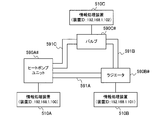
- FIG. 31 is a schematic diagram of an information processing system 500 according to the fifth embodiment.
- the information processing system 500 includes a plurality of information processing apparatuses 510A to 510D and a plurality of HEMS devices 590A to 590D.
- the information processing apparatus 510 is connected to a LAN 101 as a network, and data communication is possible between a plurality of information processing apparatuses 510.
- a HEMS device 590 when it is not necessary to particularly distinguish each of the HEMS devices 590A to 590D, it is referred to as a HEMS device 590.
- the hardware configuration of the information processing apparatus 510 in the fifth embodiment is the same as the hardware configuration of the information processing apparatus 110 in the first embodiment except that the serial communication device 16 is added.
- the serial communication device 16 performs serial communication with the HEMS device 590.
- the information processing device 510 is connected to the HEMS device 590 via the serial communication device 16.
- the information processing device 510 may be built in the HEMS device 590, or the information processing device 510 may be externally attached to the HEMS device 590.
- Each of the HEMS devices 590A to 590D is, for example, a household appliance such as a home TV, a refrigerator, or an IH cooking heater, an air conditioner such as an air conditioner, or a heat pump type hot / cold water system device.
- FIG. 32 is a block diagram schematically showing a functional configuration of the information processing apparatus 510 according to the fifth embodiment.
- the information processing apparatus 510 includes a storage unit 520, a control unit 530, a communication unit 140, an input unit 150, and a serial communication unit 560.
- the information processing apparatus 510 in the fifth embodiment is configured in the same manner as the information processing apparatus 110 in the first embodiment, except for the storage unit 520, the control unit 530, and the serial communication unit 560.
- the storage unit 520 stores information and programs necessary for processing of the information processing apparatus 510.
- the storage unit 520 stores the AP 121, AP attached information 122, device ID information 123, connection device information 124, execution responsibility assignment information 125, and resident AP 527.
- the storage unit 520 in the fifth embodiment stores the same information and program as the storage unit 120 in the first embodiment except for the resident AP 527.
- the resident AP 527 is composed of one or a plurality of execution files, and the information processing apparatus 510 always executes the resident AP 527 stored in the storage unit 520.
- the resident AP 527 is an application that is not distributed and executed.
- the resident AP 527 is an execution file that realizes a unique function of the information processing apparatus 510 or a control function of the HEMS device 590 connected via the serial communication apparatus 16.
- the control unit 530 controls processing of the information processing apparatus 510.
- the control unit 530 includes an execution device management unit 131, an AP division setting unit 132, an AP division execution unit 533, an API / F control unit 134, an inter-process communication unit 135, an inter-device communication unit 136, and an operation unit. 137.
- the control unit 530 in the fifth embodiment is configured in the same manner as the control unit 130 in the first embodiment except for the AP division execution unit 533.
- the AP division execution unit 533 acquires the execution file of the resident AP 527 from the flash memory 13 and executes it.
- the serial communication unit 560 performs serial communication with the HEMS device 590 and transmits / receives information.
- FIG. 33 is a schematic diagram showing a system configuration example in which the information processing apparatus 510 is applied to a heat pump type cold / hot water system.
- the HEMS device 590 constituting the heat pump type cold / hot water system, there are a heat pump unit 590A # for heating and supplying hot water, a radiator 590B # for radiating heat, and a valve 590C # for controlling the flow rate.
- Each of these HEMS devices 590 is connected to each of the information processing apparatuses 510.
- the heat pump unit 590A #, the radiator 590B #, and the valve 590C # are connected by pipes 591A to 591C.
- the room temperature optimum control AP of the heat pump type cold / hot water system is composed of, for example, an execution file indicated by AP attached information 122 # 5 in FIG. Then, the execution responsibility of each execution file is assigned to the information processing apparatuses 510A to 510C by the AP division setting unit 132, and, for example, execution responsibility assignment information 125 # 5 shown in FIG. 35 is generated.
- the resident AP 527 of the information processing apparatus 510A is, for example, an execution file that acquires the temperature information of the heat pump unit 590A # and sets the temperature.
- the resident AP 527 of the information processing apparatus 510B is an execution file that sets the operation mode of the radiator 590B #, for example.
- the resident AP 527 of the information processing apparatus 510C is an execution file that acquires temperature information of the valve 590C # and opens and closes the valve, for example.
- the execution operations of the AP 121 and the resident AP 527 of the information processing apparatus 510 in the heat pump type cold / hot water system are performed as follows.
- the AP division execution unit 533 of the information processing apparatus 510A executes an execution file for the scheduling function, an execution file for the rescheduling function, and an execution file for acquiring temperature information and setting the temperature of the heat pump unit 590A #.
- AP division execution unit 533 of information processing device 510B executes the execution file for the thermal sensation characteristic estimation function and the execution file for changing the operation mode of radiator 590B #.
- the AP division execution unit 533 of the information processing apparatus 510C executes an execution file for the set temperature control function and an execution file for acquiring temperature information of the valve 590C # and opening / closing the valve.
- the information processing apparatus 510 executes the execution file for controlling the connected HEMS device 590, so that the specific HEMS device 590 is executed even when the AP 121 is executed in a distributed manner. Can be controlled.
Landscapes
- Engineering & Computer Science (AREA)
- Software Systems (AREA)
- Theoretical Computer Science (AREA)
- Physics & Mathematics (AREA)
- General Engineering & Computer Science (AREA)
- General Physics & Mathematics (AREA)
- Computer Networks & Wireless Communication (AREA)
- Signal Processing (AREA)
- Computer And Data Communications (AREA)
- Information Retrieval, Db Structures And Fs Structures Therefor (AREA)
- Information Transfer Between Computers (AREA)
Abstract
Priority Applications (4)
| Application Number | Priority Date | Filing Date | Title |
|---|---|---|---|
| US16/071,419 US11226841B2 (en) | 2016-03-22 | 2016-08-23 | Information processing system, information processing device, and information processing method |
| CN201680083589.3A CN108885563B (zh) | 2016-03-22 | 2016-08-23 | 信息处理系统、信息处理装置和信息处理方法 |
| EP16895472.5A EP3435230B1 (fr) | 2016-03-22 | 2016-08-23 | Système de traitement d'informations, dispositif de traitement d'informations et procédé de traitement d'informations |
| JP2016572847A JP6143981B1 (ja) | 2016-03-22 | 2016-08-23 | 情報処理システム、情報処理装置及び情報処理方法 |
Applications Claiming Priority (2)
| Application Number | Priority Date | Filing Date | Title |
|---|---|---|---|
| JP2016056437 | 2016-03-22 | ||
| JP2016-056437 | 2016-03-22 |
Publications (1)
| Publication Number | Publication Date |
|---|---|
| WO2017163447A1 true WO2017163447A1 (fr) | 2017-09-28 |
Family
ID=59901069
Family Applications (1)
| Application Number | Title | Priority Date | Filing Date |
|---|---|---|---|
| PCT/JP2016/074482 Ceased WO2017163447A1 (fr) | 2016-03-22 | 2016-08-23 | Système de traitement d'informations, dispositif de traitement d'informations et procédé de traitement d'informations |
Country Status (3)
| Country | Link |
|---|---|
| EP (1) | EP3435230B1 (fr) |
| CN (1) | CN108885563B (fr) |
| WO (1) | WO2017163447A1 (fr) |
Families Citing this family (2)
| Publication number | Priority date | Publication date | Assignee | Title |
|---|---|---|---|---|
| JP7189104B2 (ja) * | 2019-05-28 | 2022-12-13 | 株式会社日立製作所 | 情報処理システム、及び情報処理システムの制御方法 |
| JP7488696B2 (ja) * | 2020-06-04 | 2024-05-22 | 株式会社東海理化電機製作所 | 処理装置、プログラム、およびシステム |
Citations (3)
| Publication number | Priority date | Publication date | Assignee | Title |
|---|---|---|---|---|
| JP2005528691A (ja) * | 2002-05-31 | 2005-09-22 | ベリタス オペレーティング コーポレーション | サーバ連結環境のための業務継続ポリシー |
| JP2007188456A (ja) | 2006-01-16 | 2007-07-26 | Sony Computer Entertainment Inc | データ処理システムおよびデータ処理方法 |
| JP2012504800A (ja) * | 2008-10-03 | 2012-02-23 | ザ ユニバーシティ オブ シドニー | 異種コンピューティング・システムにおいて実行するためのアプリケーションのスケジューリング |
Family Cites Families (6)
| Publication number | Priority date | Publication date | Assignee | Title |
|---|---|---|---|---|
| AU2003241771A1 (en) * | 2002-05-28 | 2003-12-12 | Dai Nippon Printing Co., Ltd. | Parallel processing system |
| JP5137434B2 (ja) * | 2007-03-28 | 2013-02-06 | 株式会社ソニー・コンピュータエンタテインメント | データ処理装置、分散処理システム、データ処理方法、及びデータ処理プログラム |
| CN104756075B (zh) * | 2012-10-29 | 2018-01-05 | 三菱电机株式会社 | 信息处理装置、广播接收装置以及软件数据更新方法 |
| CN104426953A (zh) * | 2013-08-28 | 2015-03-18 | 腾讯科技(深圳)有限公司 | 一种分配计算资源的方法及装置 |
| CN104978228B (zh) * | 2014-04-09 | 2019-08-30 | 腾讯科技(深圳)有限公司 | 一种分布式计算系统的调度方法和装置 |
| CN104052811B (zh) * | 2014-06-17 | 2018-01-02 | 华为技术有限公司 | 一种业务调度的方法、装置及系统 |
-
2016
- 2016-08-23 CN CN201680083589.3A patent/CN108885563B/zh active Active
- 2016-08-23 EP EP16895472.5A patent/EP3435230B1/fr active Active
- 2016-08-23 WO PCT/JP2016/074482 patent/WO2017163447A1/fr not_active Ceased
Patent Citations (3)
| Publication number | Priority date | Publication date | Assignee | Title |
|---|---|---|---|---|
| JP2005528691A (ja) * | 2002-05-31 | 2005-09-22 | ベリタス オペレーティング コーポレーション | サーバ連結環境のための業務継続ポリシー |
| JP2007188456A (ja) | 2006-01-16 | 2007-07-26 | Sony Computer Entertainment Inc | データ処理システムおよびデータ処理方法 |
| JP2012504800A (ja) * | 2008-10-03 | 2012-02-23 | ザ ユニバーシティ オブ シドニー | 異種コンピューティング・システムにおいて実行するためのアプリケーションのスケジューリング |
Non-Patent Citations (1)
| Title |
|---|
| See also references of EP3435230A4 |
Also Published As
| Publication number | Publication date |
|---|---|
| EP3435230A4 (fr) | 2019-04-03 |
| CN108885563A (zh) | 2018-11-23 |
| CN108885563B (zh) | 2021-09-14 |
| EP3435230B1 (fr) | 2024-08-21 |
| EP3435230A1 (fr) | 2019-01-30 |
Similar Documents
| Publication | Publication Date | Title |
|---|---|---|
| CN102119581B (zh) | 在家庭控制系统的遥控器中更新场景 | |
| CA2958934C (fr) | Methodes et systemes de mise a jour et copie de thermostat | |
| CN105308993B (zh) | 用于配置节点的方法和因此配置的节点 | |
| JP6502330B2 (ja) | ネットワークにおけるプロファイル間コミッショニングのための方法及び装置 | |
| CN106126332A (zh) | 分布式定时任务调度系统及方法 | |
| CN108781174B (zh) | 设备连接方法、装置、电子设备及可读存储介质 | |
| JP2010518503A (ja) | ネットワーク化された制御システム及びネットワーク化された制御システムの装置 | |
| CN106559473A (zh) | 控制方法和控制装置 | |
| CN111742610A (zh) | 利用受控加入模式的调试方法和装置 | |
| WO2017163447A1 (fr) | Système de traitement d'informations, dispositif de traitement d'informations et procédé de traitement d'informations | |
| JP6052126B2 (ja) | 複数のリモートコントローラーを初期設定するための方法、および制御システム | |
| JP6143981B1 (ja) | 情報処理システム、情報処理装置及び情報処理方法 | |
| CN112585906B (zh) | 配置待添加到无线网络系统的设备的方法 | |
| KR100962410B1 (ko) | 사용자 친화적 주거환경의 협업 네트워크 시스템 및 그네트워킹 방법 | |
| JP2016163450A (ja) | 機器制御システム | |
| JP5895043B1 (ja) | クラスタシステム、クラスタ管理サーバおよびクラスタ管理用プログラム | |
| JP2015033122A (ja) | 通信システム、サーバ装置、制御方法、およびプログラム | |
| JP7692735B2 (ja) | 制御装置、制御システム、機器制御方法およびプログラム | |
| JP2015133048A (ja) | ネットワークシステム、常時接続方法、サーバ、電子機器、プログラム | |
| JP6057879B2 (ja) | ネットワークシステム、常時接続方法、電子機器、サーバ、プログラム | |
| JP2025149521A (ja) | 管理システム | |
| CN114342323A (zh) | 用于电力分配的控制网络系统 | |
| KR20060071753A (ko) | 홈 네트워크 마스터의 어플리케이션과 라이브러리의인터페이싱 방법 | |
| KR20060071036A (ko) | 홈 네트워크 마스터의 어플리케이션과 라이브러리의인터페이싱 방법 | |
| KR20060071749A (ko) | 홈 네트워크 마스터의 어플리케이션과 라이브러리의인터페이싱 방법 |
Legal Events
| Date | Code | Title | Description |
|---|---|---|---|
| ENP | Entry into the national phase |
Ref document number: 2016572847 Country of ref document: JP Kind code of ref document: A |
|
| NENP | Non-entry into the national phase |
Ref country code: DE |
|
| WWE | Wipo information: entry into national phase |
Ref document number: 2016895472 Country of ref document: EP |
|
| ENP | Entry into the national phase |
Ref document number: 2016895472 Country of ref document: EP Effective date: 20181022 |
|
| 121 | Ep: the epo has been informed by wipo that ep was designated in this application |
Ref document number: 16895472 Country of ref document: EP Kind code of ref document: A1 |