WO2017164618A2 - Procédé et appareil de commande de dispositif au moyen d'une technologie bluetooth - Google Patents
Procédé et appareil de commande de dispositif au moyen d'une technologie bluetooth Download PDFInfo
- Publication number
- WO2017164618A2 WO2017164618A2 PCT/KR2017/003022 KR2017003022W WO2017164618A2 WO 2017164618 A2 WO2017164618 A2 WO 2017164618A2 KR 2017003022 W KR2017003022 W KR 2017003022W WO 2017164618 A2 WO2017164618 A2 WO 2017164618A2
- Authority
- WO
- WIPO (PCT)
- Prior art keywords
- control
- information
- request message
- role
- procedure
- Prior art date
- Legal status (The legal status is an assumption and is not a legal conclusion. Google has not performed a legal analysis and makes no representation as to the accuracy of the status listed.)
- Ceased
Links
Images




Classifications
-
- H—ELECTRICITY
- H04—ELECTRIC COMMUNICATION TECHNIQUE
- H04Q—SELECTING
- H04Q9/00—Arrangements in telecontrol or telemetry systems for selectively calling a substation from a main station, in which substation desired apparatus is selected for applying a control signal thereto or for obtaining measured values therefrom
- H04Q9/04—Arrangements for synchronous operation
-
- H—ELECTRICITY
- H04—ELECTRIC COMMUNICATION TECHNIQUE
- H04W—WIRELESS COMMUNICATION NETWORKS
- H04W76/00—Connection management
- H04W76/10—Connection setup
Definitions
- the present invention relates to a method and apparatus for forming a device-to-device connection using Bluetooth, which is a short-range technology in a wireless communication system, and more particularly, to a method and apparatus for forming a device-to-device connection using Bluetooth technology.
- Bluetooth is a short-range wireless technology standard that can transmit and receive data by wirelessly connecting various devices in a short distance.
- a user When performing wireless communication between two devices using Bluetooth communication, a user performs a procedure of searching for a Bluetooth device and requesting a connection. do.
- the device may mean an apparatus and an apparatus.
- the user may perform a connection after searching for the Bluetooth device according to the Bluetooth communication method to use using the Bluetooth device.
- the Bluetooth communication method includes a basic rate / enhanced data rate (BR / EDR) method and a low energy (LE) method, which is a low power method.
- the BR / EDR scheme may be referred to as Bluetooth Classic.
- the Bluetooth classic includes Bluetooth technology that has been adopted since Bluetooth 1.0 using Basic Rate and Bluetooth technology that has used Enhanced Data Rate supported since Bluetooth 2.0.
- Bluetooth Low Energy (hereinafter referred to as Bluetooth LE) technology has been applied since Bluetooth 4.0, and can consume hundreds of kilobytes (KB) of information stably with low power consumption.
- the Bluetooth low energy energy technology uses an attribute protocol to exchange information between devices. This Bluetooth LE method can reduce energy overhead by reducing the header overhead and simplifying the operation.
- Some Bluetooth devices do not have a display or a user interface.
- the complexity of connection / management / control / disconnection between various kinds of Bluetooth devices and similarly applied Bluetooth devices is increasing.
- Bluetooth can achieve a relatively high speed at a relatively low power, low cost, but the transmission distance is generally limited to a maximum of 100m, it is suitable for use in a limited space.
- An object of the present invention is to provide a method and apparatus for controlling connection / pairing between devices using Bluetooth technology.
- control point procedure in the easy pairing service, although the operations according to one role are closely related to each other, the control point procedure may be performed separately for each operation or procedure. Is required. Thus, there is a problem that unnecessary interaction between the client device and the server device is required to instruct the related operation.
- an object of the present invention is to propose a method of performing a control point procedure based on a GAP role to solve such a problem.
- an object of the present invention proposes a method for transmitting a configuration of a single command to the procedures that have been previously performed through a number of steps based on the role of the GAP.
- An aspect of the present invention provides a method for a control device to control a first device using Bluetooth communication, the method comprising: establishing a Bluetooth connection with the first device; Transmitting a read request message to the first device requesting characteristic information related to a controllable operation supported by the first device; Receiving a read response message from the first device that includes the characteristic information in response to the read request message, wherein the characteristic information includes an operation field indicating an operation supported by the first device; Transmitting a first write request message for requesting writing of a characteristic for instructing performance of a specific role to the first device based on the characteristic information, wherein the first write request message is associated with the specific role; Includes associated control information; And receiving a write response message from the first device in response to the first write request message, wherein the control information includes role information indicating the specific role and parameter information indicating an operation associated with the specific role. It may include.
- the operation field may include at least one of a connection type, role, mode or procedure supported by the first device.
- said parameter information can comprise a plurality of mode information and procedure information for said first device to perform operations requested from said control device with a peer device.
- forming a Bluetooth LE connection with a peer device of said first device And if the address of the peer device is a random address, obtaining an identity resolving key (IRK) of the peer device for resolving the random address from the peer device.
- the control information may further include a parameter indicating an identifier resolution key of the peer device.
- the address of the first device is a random address
- obtaining an identifier resolution key of the first device for resolving the random address from the first device And sending a second write request message to the peer device, the second write request message including the identifier resolution key of the first device.
- Another aspect of the present invention is a method in which a connection between a first device and a peer device is controlled by a control device using Bluetooth communication, wherein the method performed in the first device comprises: Establishing a Bluetooth connection; Receiving a read request message from the control device requesting characteristic information related to a controllable operation supported by the first device; Sending a read response message including the characteristic information in response to the read request message to the control device, the characteristic information including an operation field indicating an operation supported by the first device; Receiving a write request message requesting writing of a characteristic to instruct performance of a specific role from the control device based on the characteristic information, wherein the write request message includes control information related to the specific role; and; And transmitting a write response message to the control device in response to the write request message, wherein the control information may include role information indicating the specific role and parameter information indicating an operation related to the specific role. have.
- said parameter information may comprise a plurality of mode information and procedure information for said first device to perform operations requested from said control device with said peer device.
- the method may further include establishing a connection with a peer device based on the control information.
- the control information is an identity resolving key (IRK) of the peer device for resolving the random address from the peer device. It may further include.
- receiving an advertising message containing the random address from the peer device Resolving the random address using an identifier resolution key of the peer device; And establishing a connection with the peer device based on the analyzed random address and the control information.
- control device for controlling a first device using Bluetooth communication
- the control device comprising: a communication unit for wirelessly or wired communication with an external device; And a processor operatively connected to the communication unit, wherein the processor forms a Bluetooth connection with the first device and reads a request for characteristic information related to a controllable operation supported by the first device.
- a write response message may be received from the first device, and the control information may include role information indicating the specific role and parameter information indicating an operation related to the specific role.
- the operation field may include at least one of a connection type, role, mode or procedure supported by the first device.
- said parameter information can comprise a plurality of mode information and procedure information for said first device to perform operations requested from said control device with a peer device.
- the processor establishes a Bluetooth LE connection with a peer device of the first device, and if the address of the peer device is a random address, resolves the random address from the peer device.
- INK identity resolving key
- the processor when the address of the first device is a random address, obtains an identifier resolution key of the first device for resolving the random address from the first device, and sends the first device to the peer device.
- the second write request message that includes the identifier resolution key of the device may be sent.
- a bearer type subfield (1 byte) for indicating a connection type may be deleted from a control point characteristic.
- FIG. 1 is a schematic diagram illustrating an example of a wireless communication system using the Bluetooth low power energy technology proposed in the present specification.
- FIG. 2 shows an example of an internal block diagram of a device that can implement the methods proposed herein.
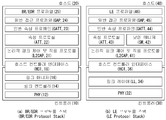
- FIG. 3 is a diagram illustrating an example of a Bluetooth communication architecture to which the methods proposed herein may be applied.
- FIG. 4 is a diagram illustrating an example of a structure of a GATT (Generic Attribute Profile) of Bluetooth low power energy.
- GATT Generic Attribute Profile
- FIG. 5 is a flowchart illustrating a method of forming a connection using Bluetooth Low Energy (LE) between devices.
- LE Bluetooth Low Energy
- FIG. 6 is a view briefly illustrating a method for controlling another device through a control device proposed in the present specification.
- FIGS. 7 and 8 are diagrams illustrating an example of a profile structure for providing a service for controlling a device proposed in the present specification.
- FIG. 9 is a diagram illustrating an operation of a control point characteristic as an embodiment to which the present invention may be applied.
- FIG. 10 is a flowchart illustrating a method of controlling a device-to-device connection using a control device according to an embodiment to which the present invention is applied.
- FIG. 11 is a flowchart illustrating a method of controlling an LE connection between devices using a control device according to an embodiment to which the present invention may be applied.
- FIG. 12 is a flowchart illustrating a method of controlling a device-to-device connection using a control device according to an embodiment to which the present invention is applied.
- FIG. 1 is a schematic diagram illustrating an example of a wireless communication system using the Bluetooth low power energy technology proposed in the present specification.
- the wireless communication system 100 includes at least one server device 120 and at least one client device 110.
- the server device and the client device perform Bluetooth communication using Bluetooth Low Energy (BLE) technology.
- BLE Bluetooth Low Energy
- BLE technology Compared to Bluetooth Basic Rate / Enhanced Data Rate (BR / EDR) technology, BLE technology has a relatively small duty cycle, enables low-cost production, and significantly reduces power consumption through low data rates. If you use a coin cell battery, it can operate for more than a year.
- BR / EDR Bluetooth Basic Rate / Enhanced Data Rate
- the BLE technology simplifies the connection procedure between devices, and the packet size is smaller than that of the Bluetooth BR / EDR technology.
- the number of RF channels is 40
- the data rate supports 1Mbps
- the topology is a scatternet structure
- latency is 3ms
- (6) output power is less than 10mW (10dBm)
- (7) is mainly used in applications such as mobile phones, watches, sports, healthcare, sensors, device control.
- the server device 120 may operate as a client device in relation to other devices, and the client device may operate as a server device in relation to other devices. That is, in the BLE communication system, any one device may operate as a server device or a client device, and if necessary, operate as a server device and a client device.
- the server device 120 may include a data service device, a slave device device, a slave, a server, a conductor, a host device, a gateway, and a sensing device. (Sensing Device), a monitoring device (monitoring device), the first device, the second device and the like.
- the client device 110 may be a master device, a master, a client, a member, a sensor device, a sink device, a collector, a third device, a fourth device, or the like. Can be expressed.
- the server device and the client device correspond to the main components of the wireless communication system, and the wireless communication system may include other components in addition to the server device and the client device.
- the server device When the server device receives data from the client device and directly communicates with the client device, and receives a data request from the client device, the server device provides the data to the client device through a response.
- the server device sends a notification message and an indication message to the client device to provide data information to the client device.
- the server apparatus transmits an instruction message to the client apparatus, the server apparatus receives a confirmation message corresponding to the instruction message from the client.
- the server device provides data information to the user through a display unit or receives a request input from the user through a user input interface in the process of transmitting and receiving notification, instruction, and confirmation messages with the client device. can do.
- the server device may read data from a memory unit or write new data to a corresponding memory in a process of transmitting and receiving a message with the client device.
- one server device may be connected to a plurality of client devices, and may be easily reconnected (or connected) with client devices by using bonding information.
- the client device 120 refers to a device for requesting data information and data transmission from a server device.
- the client device receives data from the server device through a notification message, an instruction message, and the like, and when receiving an instruction message from the server device, sends a confirmation message in response to the instruction message.
- the client device may provide information to the user through an output unit or receive an input from the user through an input unit in the process of transmitting and receiving messages with the server device.
- the client device may read data from a memory or write new data to a corresponding memory in a process of transmitting and receiving a message with the server device.
- Hardware components such as an output unit, an input unit, and a memory of the server device and the client device will be described in detail with reference to FIG. 2.
- the wireless communication system may configure Personal Area Networking (PAN) through Bluetooth technology.
- PAN Personal Area Networking
- the wireless communication system by establishing a private piconet between devices, files, documents, and the like can be exchanged quickly and securely.
- FIG. 2 shows an example of an internal block diagram of a device that can implement the methods proposed herein.
- the server device may include an output unit 111, a user input interface 112, a power supply unit 113, a processor 114, and a memory unit. , 115), a Bluetooth interface 116, another communication interface 117, and a communication unit (or a transceiver unit 118).
- the output unit 111, the input unit 112, the power supply unit 113, the processor 114, the memory 115, the Bluetooth interface 116, the other communication interface 117 and the communication unit 118 are proposed herein. It is functionally linked to perform the method.
- the client device may include a display unit 121, a user input interface 122, a power supply unit 123, a processor 124, a memory unit 125, and a Bluetooth interface. (Bluetooth Interface) 126 and a communication unit (or a transceiver unit 127).
- Bluetooth Interface Bluetooth Interface
- the output unit 121, the input unit 122, the power supply unit 123, the processor 124, the memory 125, the Bluetooth interface 126, and the communication unit 127 are used to perform the method proposed in this specification. Functionally connected
- the Bluetooth interface 116, 126 refers to a unit (or module) capable of transmitting data or request / response, command, notification, indication / confirmation message, etc. between devices using Bluetooth technology.
- the memories 115 and 125 are units implemented in various types of devices and refer to units in which various kinds of data are stored.
- the processor 114, 124 refers to a module that controls the overall operation of the server device or the client device, and controls to process a message request and a received message through a Bluetooth interface and another communication interface.
- the processors 114 and 124 may be represented by a controller, a control unit, a controller, or the like.
- the processors 114 and 124 may include application-specific integrated circuits (ASICs), other chipsets, logic circuits, and / or data processing devices.
- ASICs application-specific integrated circuits
- the processor 114, 124 controls the communication unit to receive an advertising message from a server device, transmits a scan request message to the server device, and scans in response to the scan request from the server device.
- the communication unit controls the communication unit to receive a scan response message, and controls the communication unit to transmit a connect request message to the server device for establishing a Bluetooth connection with the server device.
- the processor 114 and 124 may also read or write data from the server device using a property protocol after a Bluetooth LE connection is formed through the connection procedure. To control.
- the memories 115 and 125 may include read-only memory (ROM), random access memory (RAM), flash memory, memory cards, storage media, and / or other storage devices.
- ROM read-only memory
- RAM random access memory
- flash memory memory cards, storage media, and / or other storage devices.
- the communication unit 118 and 127 may include a baseband circuit for processing a radio signal.
- the above-described technique may be implemented as a module (process, function, etc.) for performing the above-described function.
- the module may be stored in memory and executed by a processor.
- the memories 115 and 125 may be inside or outside the processors 114 and 124, and may be connected to the processors 114 and 124 by various well-known means.
- the output units 111 and 121 refer to modules for providing device status information and message exchange information to a user through a screen.
- the power supply unit refers to a module for supplying power required for the operation of the components by receiving the external power, the internal power under the control of the controller.
- BLE technology has a small duty cycle, and the low data rate can significantly reduce power consumption.
- the input units 112 and 122 refer to a module that provides a user's input to the controller like a screen button so that the user can control the operation of the device.
- FIG. 3 is a diagram illustrating an example of a Bluetooth communication architecture to which the methods proposed herein may be applied.
- FIG. 3 shows an example of a protocol stack of Bluetooth Basic Rate (BR) / Enhanced Data Rate (EDR), and (b) shows a protocol stack of Bluetooth Low Energy (LE). An example is shown.
- BR Basic Rate
- EDR Enhanced Data Rate
- LE Bluetooth Low Energy
- the Bluetooth BR / EDR protocol stack has an upper controller stack 10 and a lower controller stack based on a host controller interface HCI 18. It may include a host stack (20) of.
- the host stack (or host module) 20 refers to a wireless transceiver module for receiving a 2.4 GHz Bluetooth signal and hardware for transmitting or receiving a Bluetooth packet. Control and perform actions.
- the controller stack 10 may include a PHY layer 12, a link controller layer 14, and a link manager layer 16.
- the PHY layer 12 is a layer that transmits and receives a 2.4 GHz radio signal.
- PFS layer Global System for Mobile Communications
- the PHY layer 12 may transmit data by hopping 79 RF channels.
- the link controller layer 14 is responsible for transmitting a digital signal, selects a channel sequence hopping 1400 times per second, and transmits a 625us length time slot for each channel.
- the link manager layer 16 controls the overall operation (link setup, control, security) of the Bluetooth connection by using a link manager protocol (LMP).
- LMP link manager protocol
- the link manager layer 16 may perform the following functions.
- the host controller interface layer 18 provides an interface between the host module and the controller module so that the host can provide commands and data to the controller, and the controller can provide events and data to the host.
- the host stack (or host module) 20 may include a logical link control and adaptation protocol (L2CAP, 21), an attribute protocol (Protocol, 22), a generic attribute profile (GATT, 23), and a generic access profile. Profile, GAP, 24), BR / EDR profile 25.
- L2CAP logical link control and adaptation protocol
- Protocol 22
- GATT generic attribute profile
- GAP BR / EDR profile
- the logical link control and adaptation protocol (L2CAP) 21 may provide one bidirectional channel for transmitting data to a specific protocol or profile.
- the L2CAP 21 may multiplex various protocols, profiles, etc. provided by a higher layer of Bluetooth.
- L2CAP of Bluetooth BR / EDR uses dynamic channel, supports protocol service multiplexer, retransmission, streaming mode, and provides segmentation, reassembly, per-channel flow control, and error control.
- the generic attribute profile (GATT) 23 may be operable as a protocol describing how the attribute protocol 22 is used in the construction of services.
- the general attribute profile 23 may be operable to specify how ATT attributes are grouped together into services, and may be operable to describe features associated with the services.
- the generic attribute profile 23 and the attribute protocol ATT 22 may use features to describe the state and services of a device and to describe how features relate to each other and how they are used.
- the attribute protocol 22 and the BR / EDR profile 25 define a service profile using Bluet BR / EDR and an application protocol for sending and receiving these data, and the Generic Access Profile. , GAP, 24) defines device discovery, connectivity, and security levels.
- the Bluetooth LE protocol stack is a controller stack 30 operable to handle timing-critical radio interface and a host operable to process high level data. It contains a stack (Host stack, 40).
- the controller stack 30 may be implemented using a communication module that may include a Bluetooth radio, for example, a processor module that may include a processing device such as a microprocessor.
- the host stack may be implemented as part of an OS running on a processor module, or as an instance of a package on the OS.
- controller stack and the host stack can be operated or executed on the same processing device in the processor module.
- the controller stack 30 includes a physical layer (PHY) 32, a link layer 34, and a host controller interface 36.
- PHY physical layer
- link layer 34 link layer
- host controller interface 36 host controller interface
- the physical layer (PHY) 32 is a layer that transmits and receives a 2.4 GHz radio signal and uses GFSK (Gaussian Frequency Shift Keying) modulation and a frequency hopping technique composed of 40 RF channels.
- GFSK Gausian Frequency Shift Keying
- the link layer 34 which transmits or receives a Bluetooth packet, creates a connection between devices after performing advertising and scanning functions using three advertising channels, and generates up to 257 bytes of data packets through 37 data channels. Provides the ability to send and receive.
- the host stack includes a logical link control and adaptation protocol (L2CAP, 41), a security manager (SM, 42), an attribute protocol (Attribute Protocol, ATT, 43), a generic attribute profile (GATT, 44). It may include a Generic Access Profile (45), LE Profile (46). However, the host stack 40 is not limited to this and may include various protocols and profiles.
- the host stack uses L2CAP to multiplex the various protocols, profiles, etc. provided by Bluetooth.
- L2CAP Logical Link Control and Adaptation Protocol 41 may provide one bidirectional channel for transmitting data to a specific protocol or profile.
- the L2CAP 41 may be operable to multiplex data among higher layer protocols, segment and reassemble packages, and manage multicast data transmission.
- Bluetooth LE In Bluetooth LE, three fixed channels (one for the signaling channel, one for the Security Manager, and one for the Attribute protocol) are used by default. And, if necessary, the dynamic channel may be used.
- BR / EDR Base Rate / Enhanced Data Rate
- SM (Security Manager) 42 is a protocol for authenticating devices and providing key distribution.
- Attribute Protocol (ATT) 43 defines a rule for accessing data of a counterpart device in a server-client structure. ATT has six message types (Request, Response, Command, Notification, Indication, Confirmation).
- the Request message is a message for requesting and delivering specific information from the client device to the server device
- the Response message is a response message for the request message, which can be used for transmission from the server device to the client device.
- Command message A message sent mainly from the client device to the server device to indicate a command of a specific operation.
- the server device does not transmit a response to the command message to the client device.
- Notification message This message is sent from the server device to the client device for notification such as an event.
- the client device does not transmit a confirmation message for the notification message to the server device.
- Indication and Confirm message This message is transmitted from the server device to the client device for notification such as an event. Unlike the notification message, the client device transmits a confirmation message for the Indication message to the server device.
- the present invention transmits a value for the data length when a long data request is made in the GATT profile using the attribute protocol (ATT, 43) so that the client can know the data length clearly, and from the server using the UUID (Characteristic) Can receive the value.
- ATT attribute protocol
- UUID Consumer User Data
- the generic access profile 45 is a newly implemented layer for Bluetooth LE technology and is used to control role selection and multi-profile operation for communication between Bluetooth LE devices.
- the general access profile 45 is mainly used for device discovery, connection creation, and security procedures, and defines a method of providing information to a user, and defines the type of an attribute as follows.
- UUID Universal Unique Identifier, value type
- the LE profile 46 is mainly applied to a Bluetooth LE device as profiles having a dependency on GATT.
- the LE profile 46 may include, for example, Battery, Time, FindMe, Proximity, Time, and the like. Details of GATT-based Profiles are as follows.
- the generic attribute profile GATT 44 may be operable as a protocol describing how the attribute protocol 43 is used in the construction of services.
- the generic attribute profile 44 may be operable to specify how ATT attributes are grouped together into services, and may be operable to describe features associated with the services.
- the generic attribute profile 44 and the attribute protocol may use features to describe the state and services of a device, and how features relate to each other and how they are used.
- the BLE procedure may be classified into a device filtering procedure, an advertising procedure, a scanning procedure, a discovery procedure, a connecting procedure, and the like.
- the device filtering procedure is a method for reducing the number of devices performing a response to a request, an indication, a notification, etc. in the controller stack.
- the controller stack can control the number of requests sent, reducing power consumption in the BLE controller stack.
- the advertising device or scanning device may perform the device filtering procedure to limit the device receiving the advertising packet, scan request or connection request.
- the advertising device refers to a device that transmits an advertising event, that is, performs an advertisement, and is also referred to as an advertiser.
- the scanning device refers to a device that performs scanning and a device that transmits a scan request.
- the scanning device when the scanning device receives some advertising packets from the advertising device, the scanning device should send a scan request to the advertising device.
- the scanning device may ignore the advertisement packets transmitted from the advertisement device.
- the device filtering procedure may also be used in the connection request process. If device filtering is used in the connection request process, it is not necessary to transmit a response to the connection request by ignoring the connection request.
- the advertising device performs an advertising procedure to perform a non-directional broadcast to the devices in the area.
- non-directional broadcast refers to broadcast in all directions rather than broadcast in a specific direction.
- Non-directional broadcasts refer to broadcasts in a particular direction. Non-directional broadcasts occur without a connection procedure between an advertising device and a device in a listening (or listening) state (hereinafter referred to as a listening device).
- the advertising procedure is used to establish a Bluetooth connection with a nearby initiating device.
- the advertising procedure may be used to provide periodic broadcast of user data to the scanning devices that are listening on the advertising channel.
- the advertising devices may receive a scan request from listening devices that are listening to obtain additional user data from the advertising device.
- the advertising device transmits a response to the scan request to the device that sent the scan request through the same advertising physical channel as the received advertising physical channel.
- Broadcast user data sent as part of an advertisement packet is dynamic data, while scan response data is generally static data.
- the advertising device may receive a connection request from the initiating device on the advertising (broadcast) physical channel. If the advertising device used a connectable advertising event and the initiating device was not filtered by the device filtering procedure, the advertising device stops the advertising and enters the connected mode. The advertising device may start advertising again after the connected mode.
- the device performing the scanning i.e., the scanning device, performs a scanning procedure to listen to the non-directional broadcast of the user data from the advertising devices using the advertising physical channel.
- the scanning device sends a scan request to the advertising device via the advertising physical channel to request additional data from the advertising device.
- the advertising device transmits a scan response that is a response to the scan request, including additional data requested by the scanning device over the advertising physical channel.
- the scanning procedure can be used while connected to other BLE devices in the BLE piconet.
- the scanning device If the scanning device is in an initiator mode that can receive the broadcasted advertising event and initiate a connection request, the scanning device sends the connection request to the advertising device via the advertising physical channel to the advertising device. You can start a Bluetooth connection with.
- the scanning device When the scanning device sends a connection request to the advertising device, the scanning device stops initiator mode scanning for further broadcast and enters the connected mode.
- Bluetooth devices Devices capable of Bluetooth communication (hereinafter referred to as “Bluetooth devices”) perform an advertisement procedure and a scanning procedure to find devices that are nearby or to be found by other devices within a given area.
- the discovery procedure is performed asymmetrically.
- a Bluetooth device that attempts to find another device around it is called a discovering device and listens for devices that advertise a scannable advertisement event.
- Bluetooth devices discovered and available from other devices are referred to as discoverable devices, and actively broadcast advertising events so that other devices can scan through an advertising (broadcast) physical channel.
- Both the discovering device and the discoverable device may already be connected with other Bluetooth devices in the piconet.
- connection procedure is asymmetric, and the connection procedure requires the other Bluetooth device to perform the scanning procedure while the specific Bluetooth device performs the advertisement procedure.
- the advertising procedure can be the goal, so that only one device will respond to the advertising.
- the connection may be initiated by sending a connection request to the advertising device via the advertising (broadcast) physical channel.
- the link layer LL enters the advertisement state by the instruction of the host (stack). If the link layer is in the advertisement state, the link layer sends advertisement packet data units (PDUs) in the advertisement events.
- PDUs advertisement packet data units
- Each advertising event consists of at least one advertising PDU, which is transmitted via the advertising channel indexes used.
- the advertisement event may terminate when the advertisement PDU is transmitted through each of the advertisement channel indexes used, or may terminate the advertisement event earlier when the advertisement device needs to make space for performing another function.
- the link layer enters the scanning state by the indication of the host (stack). In the scanning state, the link layer listens for advertising channel indices.
- scanning states There are two types of scanning states: passive scanning and active scanning, each scanning type being determined by the host.
- ScanInterval is defined as the interval (interval) between the starting points of two consecutive scan windows.
- the link layer must listen for completion of all scan intervals in the scan window as instructed by the host. In each scan window, the link layer must scan a different advertising channel index. The link layer uses all available advertising channel indexes.
- the link layer When passive scanning, the link layer only receives packets and does not transmit any packets.
- the link layer When active scanning, the link layer performs listening to rely on the advertising PDU type, which may request advertising PDUs and additional information related to the advertising device from the advertising device.
- the link layer enters the initiation state by the indication of the host (stack).
- the link layer When the link layer is in the initiating state, the link layer performs listening for the advertising channel indexes.
- the link layer listens for the advertising channel index during the scan window period.
- the link layer enters the connected state when the device performing the connection request, i.e., the initiating device, sends the CONNECT_REQ PDU to the advertising device or when the advertising device receives the CONNECT_REQ PDU from the initiating device.
- connection After entering the connected state, the connection is considered to be created. However, it does not need to be considered to be established at the time the connection enters the connected state. The only difference between the newly created connection and the established connection is the link layer connection supervision timeout value.
- the link layer that performs the master role is called a master, and the link layer that performs the slave role is called a slave.
- the master controls the timing of the connection event, and the connection event is the point in time when the master and the slave are synchronized.
- BLE devices use the packets defined below.
- the link layer has only one packet format used for both advertisement channel packets and data channel packets.
- Each packet consists of four fields: Preamble, Access Address, PDU, and CRC.
- the PDU When one packet is sent on an advertising physical channel, the PDU will be an advertising channel PDU, and when one packet is sent on a data physical channel, the PDU will be a data channel PDU.
- Advertising channel PDU (Advertising Channel PDU )
- the advertising channel PDU Packet Data Unit
- PDU Packet Data Unit
- the PDU type field of the advertising channel PDU included in the header indicates a PDU type as defined in Table 1 below.
- Advertising PDU (Advertising PDU )
- advertising channel PDU types are called advertising PDUs and are used in specific events.
- ADV_IND Connectable Non-Oriented Ads Event
- ADV_DIRECT_IND Connectable Directional Advertising Event
- ADV_NONCONN_IND Non-Connectable Non-Oriented Ads Event
- ADV_SCAN_IND Scannable Non-Oriented Ads Event
- the PDUs are transmitted at the link layer in the advertisement state and received by the link layer in the scanning state or initiating state.
- the advertising channel PDU type below is called a scanning PDU and is used in the state described below.
- SCAN_REQ Sent by the link layer in the scanning state and received by the link layer in the advertising state.
- SCAN_RSP Sent by the link layer in the advertising state and received by the link layer in the scanning state.
- the advertising channel PDU type below is called the initiating PDU.
- CONNECT_REQ Sent by the link layer in the initiating state and received by the link layer in the advertising state.
- the data channel PDU has a 16-bit header, payloads of various sizes, and may include a message integrity check (MIC) field.
- MIC message integrity check
- the procedure, state, packet format, etc. in the BLE technology may be applied to perform the methods proposed herein.
- FIG. 4 is a diagram illustrating an example of a structure of a GATT profile of Bluetooth low power energy.
- the GATT Generic Attribute Profile
- a peripheral device for example, a sensor device serves as a GATT server, and has a definition of a service and a characteristic.
- the GATT client sends a data request to the GATT server, and all transactions begin at the GATT client and receive a response from the GATT server.
- the GATT-based operating structure used in the Bluetooth LE is based on Profile, Service, and Characteristic, and may form a vertical structure as shown in FIG. 5.
- the profile consists of one or more services, and the service may consist of one or more features or other services.
- the service divides data into logical units and may include one or more characteristics or other services.
- Each service has a 16-bit or 128-bit identifier called the Universal Unique Identifier (UUID).
- UUID Universal Unique Identifier
- the characteristic is the lowest unit in the GATT based operation structure.
- the property contains only one data and has a UUID of 16 bits or 128 bits similar to the service.
- the property is defined as a value of various pieces of information and requires one attribute to contain each piece of information. Multiple properties of the above properties can be used.
- the attribute consists of four components and has the following meaning.
- Type the type of attribute
- the present invention proposes a method for controlling a device by acquiring information related to controllable operation and combination information of a device to be controlled by a control device through the GATT.
- FIG. 5 is a flowchart illustrating a method of forming a connection using Bluetooth Low Energy (LE) between devices.
- LE Bluetooth Low Energy
- the first device 300 transmits an advertising message to the second device for the Bluetooth LE connection between the first device 300 and the second device 400. (S5010).
- the advertisement message may be transmitted by a broadcast method or a unicast method.
- the advertisement message is used to provide its own information to other devices using Bluetooth LE, and may include various information such as service information and user information provided by the device.
- the second device 400 may discover the first device 300 through the advertisement message.
- the second device 400 After checking the information included in the advertisement message, the second device 400 transmits a connection request message for requesting a Bluetooth LE connection to the first device 300 (S5020).
- the first device 300 and the second device 400 form a Bluetooth Low Energy (LE) connection (S5030).
- LE Bluetooth Low Energy
- the present invention proposes a method for proposing the first device 300 and the second device 400 by using a third device to solve such a problem.
- FIG. 6 is a view briefly illustrating a method for controlling another device through a control device proposed in the present specification.
- a third device 500 is required, and the third device 500 is the first device.
- a new control protocol is needed to control the association of the device 300 and the second device 400.
- a control device for controlling the operations of the first device 300 and the second device 400 is referred to as the third device 500.
- the third device 500 needs to know information (eg, interface information, service information, etc.) of the devices in order to control the operation of the devices.
- information e.g, interface information, service information, etc.
- FIGS. 7 and 8 are diagrams illustrating an example of a profile structure for providing a service for controlling a device proposed in the present specification.
- a service for controlling another device by the control device may be included in a profile of other services or may be defined as a separate profile.
- an easy pairing service a service for controlling other devices by the control device.
- the third device 300 which is the control device may control other devices through the easy pairing service.
- the third device 300 may control operations related to coupling (eg, connection, pairing, or bonding) between the first device 300 and the second device 400 through the easy pairing service. Can be.
- the easy pairing service may be included in a profile of another service as shown in FIG. 7 or may be defined as a separate profile as shown in FIG. 8.
- the easy pairing service is not defined as a separate profile but included in a profile of a specific service, an operation of one application may be easily described.
- the easy pairing service cannot be applied to a service of a profile not including the easy pairing service, and roles between devices must be clearly defined.
- the server / client structure is compatible at the profile level, and the easy pairing service can be extended to another profile.
- This property is used to provide server controllable operation information for pairing and connection.
- the operation of the server is defined in the Generic Access Profile (GAP), which defines the general procedures for device discovery and link management aspects of connecting to Bluetooth devices.
- GAP Generic Access Profile
- the information provided by the property is used by the client to control the server operation of the procedure.
- Table 2 below shows the fields of the supported pairing function characteristics.
- Supported pairing function characteristics are identified using the UUID «Supported pairing functions».
- the GAP Action field identifies the general Bluetooth action supported by the server.
- the general operation is defined in the GAP part of the Bluetooth Core Specification.
- Bits of the GAP field may be defined as shown in Table 3 below.
- the server For each bit in Table 3, the server sets the bit to 1 if it supports the specified operation. Otherwise, the bit is set to zero.
- the server then sets the reserved bit for the future to zero.
- the Easy Pairing (EP) Operation field identifies an optional easy pairing function supported by the server.
- Bits of the EP operation field may be defined as shown in Table 4 below.
- bit 1 in Table 4 For each bit in Table 4, the server sets the bit to 1 if the server supports the specified function. Otherwise, the bit is set to zero. When bit 18 is set to 1 in Table 3, bit 1 in Table 4 is set to 1.
- the server then sets the reserved bit for the future to zero.
- the pairing control point feature is used by the client to manage the pairing / connection of the server.
- the structure of the pairing control point characteristic may be defined as shown in Table 5 below.
- FIG. 9 is a diagram illustrating an operation of a control point characteristic as an embodiment to which the present invention may be applied.
- the control device transmits an ATT write request message to the first device connected to the control device (S901).
- the write request message includes a control point operation code (OP code).
- OP code control point operation code
- the first device transmits an ATT write response message to the control device (S902).
- the write response message may include an ATT result value.
- the first device and the second device perform a GAP operation (S903).
- the first device and the second device perform the GAP operation requested by the control device.
- the first device transmits an ATT indication message to the control device (S904).
- the indication message may include a result code related to the result of the GAP operation.
- the control device transmits an ATT confirmation message to the first device (S905).
- the confirmation message may include an ATT result value.
- the operation of the control point characteristic is composed of two GATT procedures, Write Characteristic Value and Characteristic Value Indications.
- the first GATT procedure, the write characteristic value is a request for a GAP operation of the server, and the ATT write response protocol data unit (PDU) is a response PDU of an ATT write request, which may be an ATT error response.
- PDU ATT write response protocol data unit
- Some of the control point procedures may require the operation of the requested GAP. It requires additional link layer states such as Inquiry, Inquiry Scan, Paging, Paging Scan, Advertising, or Scanning. GAP operations are used to interact with other devices.
- C5 Required if more than 512 bytes are supported for all client list information.
- the pairing control point feature provides a mechanism for the client to command the server's behavior using the GATT Write Characteristic Value subprocedure.
- the procedure is triggered by writing a value containing an opcode representing the action following a valid parameter in the context of that opcode.
- the server should instruct the client using the control point response indication with a success result code. If the procedure did not complete successfully, the server should instruct the client using the control point response indication with an error response code.
- the acceptor role accepts the initiator's request for device discovery and connection establishment procedures.
- the acceptor is in Limited Discoverable Mode or General Discoverable Mode, the acceptor is discovered by the initiator device. Otherwise, the acceptor is not retrieved because it does not respond to the initiator's query.
- the acceptor accepts the link establishment procedure from the initiator and creates a BR / EDR link connection between them. Otherwise, the acceptor does not respond to the initiator and therefore does not associate with the initiator. When the acceptor performs a pairing process with the initiator, it creates a link connection and then one or more shared secret keys with the initiator.
- the server must store the generated key after the pairing process for subsequent connections to form a trusted device pair.
- control point messages need additional parameters to control the possible behavior of the server.
- the parameter consists of an operation field and an optional peer device ID field as shown in Table 7 below.
- the operation field is bit-based information for limited searchable mode, general searchable mode, connectable mode, bonding mode, Confirm Value Indication and Confirm Value Relay.
- the peer device ID field is an optional field for determining the peer device.
- the operation field may be defined as shown in Table 8.
- the server is set to searchable mode, connectable mode and bondable mode, as defined in bit 0, bit 1, bit 2 and bit 3 of the operation subfield of Table 8.
- the server MUST NOT be set to a value reserved for future use on these bits.
- bit 4 is set to 1, the server must perform the acceptor operation with the peer device with the device address of the next peer device ID field value. Otherwise, the peer device ID field does not exist and the server can accept the request of all devices.
- bit 5 is set to 1, the server must instruct the client to relay the confirmation value to the peer server. Otherwise, the server does not display a confirmation value.
- bit 6 is set to 1, the server receives the confirmation value of the peer server through the client along with the confirmation value relay. Otherwise, the server does not receive a confirmation value relay from the client.
- This procedure is supported if the server supports a known (obtained) initiator role in the GAP operation fields (bits 4 and 5) of the supported pairing capability.
- the initiator role initiates the Link Establishment Procedure and Bonding procedure on the acceptor device.
- This control procedure requires additional parameters to control the possible behavior of the server.
- the parameter may be composed of an operation field and a peer device ID field as shown in Table 9 below.
- the procedure uses the peer device ID field to identify what the server will connect to.
- the operation field is bit-based information about a link establishment procedure, a bonding procedure, a confirm value indication, and a confirm value relay. Each action is mapped to a separate bit in this field.
- the operation field may be defined as shown in Table 10 below.
- the server For each bit in Table 10, the server performs each task if each bit is set to 1. Otherwise, the server does not perform each task.
- bit is set to zero.
- This procedure is supported if the server supports a known (obtained) peripheral role in the GAP operation fields (bit 8, bit 9, bit 10 and bit 11) in the supported pairing function characteristics.
- the peripheral role device advertises the device in the central role to discover and accepts the connection request in the central role.
- the advertising operation is associated with a discoverable mode and a connectable mode. If the server is in a direct connectable advertising mode, the server receives a connection request from the central device identified in the advertising message. If the server is in undirected connectable advertising mode, the server can receive connection requests from all central devices.
- Advertising behavior of the server is controlled by the client.
- the duration of advertisements on the server is controlled by the client.
- the client controls whether the server uses direct connectable mode or undirect connectable mode while advertising.
- the client controls whether the server uses a random address during the advertisement.
- the client also controls pairing and bonding operations of the server after the server is connected to the peer device.
- this procedure requires a parameter including an operation field, an optional peer device ID field, and an optional peer device identifier resolving key (IRK) field as shown in Table 11.
- a parameter including an operation field, an optional peer device ID field, and an optional peer device identifier resolving key (IRK) field as shown in Table 11.
- the peer device ID is provided when the direct connection mode is selected in the operation field.
- the operation field is bit-based information about searchable mode, connectable mode, privacy mode, bondable mode, confirmation value indication, relay value indication, and identity analysis key operation.
- the operation field may be defined as shown in Table 12 below.
- the server may be set to a searchable mode as defined in bit 0 and bit 1 of the operation subfield.
- the server is not set to this reserved value for future use.
- the server may be set to the connectable mode as defined by bits 3 and 4 of the operation subfield. If the value is 01b, the server may operate in the direct connection mode by using the value of the peer device ID field as the initiator's address. The server is not set to this reserved value for future use.
- the server advertises the advertiser's address type as defined in bits 6 and 7 of the action subfield. If the server has a resolvable private address only characteristic, the server advertises with a resolvable private address. If the peer device does not have an Identity Resolvable Key, the peer device may ignore the advertisement of this server.
- the server may be set to a bondable mode as defined in bit 9 of the operation subfield. Otherwise, the server will not be set in bondable mode.
- bit 10 is set to 1, the server instructs the client to confirm (relay) the confirmation value to the peer server. Otherwise, the server does not indicate a confirmation value.
- bit 11 is set to 1, the server receives the confirmation value of the peer server through the client along with the confirmation value relay. Otherwise, the server does not receive confirmation value relay from the client.
- the server When bit 12 is set to 1, the server receives a peer device identity resolving key (IRK) field which is an IRK value of a peer device ID. The server adds the peer device ID, peer device IRK, and local IRK to the resolving list of the device. Otherwise, the server does not receive the peer device IRK field.
- IRK peer device identity resolving key
- Bits reserved for the future are set to zero.
- This procedure is supported if the server supports a known (obtained) central role in the GAP operation fields (bits 12 and 13) of the supported pairing capability.
- the central role device receives the peripheral's advertisement and sends a connection request to the peripheral to form a connection.
- Server operation procedures such as connection establishment procedure, bonding procedure, confirm value indication and confirm value relay are controlled by the client.
- the connection establishment procedure of the server is controlled by the client by an operation consisting of an Auto Connection Establishment or a General Connection Establishment Procedure.
- the automatic connection establishment procedure of the server allows the server to automatically connect to a specific LE device without client interaction after performing this procedure.
- the server can connect with a particular LE device once with this procedure.
- the operation of the server such as a bonding procedure, confirmation value indication or confirmation value relay, can then be controlled by the client after the link layer connection is established to the server.
- this procedure requires a parameter including an operation field, a peer device ID field, and an optional peer device IRK as shown in Table 13 below.
- the peer device ID field is a device address of a Bluetooth device to connect.
- the operation may be defined as shown in Table 14 below.
- the server may be configured as a connection establishment procedure as defined by bit 0 and bit 1 of the operation subfield. If the value is 00b (automatic connection establishment procedure), the server automatically establishes a connection with the specific device via the LE transport. This procedure works on the controller side without interacting with the host. Thus, after receiving this Control Point message, the server can automatically connect to a specific device without interacting with the client. If the value is 01b (general connection establishment procedure), the server creates a connection once according to this control point procedure. The server is not set to this reserved value for future use.
- bit 2 is set to 1, the server starts the bonding procedure to store the bonding information for the next connection with the peer device after the pairing process.
- the server may instruct the client to confirm the confirmation value to relay to the peer server. Otherwise, the server may not present a confirmation value to the client.
- bit 4 is set to 1, the server may receive the confirmation value of the peer server with the confirmation value relay from the client. Otherwise the server may not receive the confirmation value relay from the client.
- the server may initiate using the address type of the initiator, as defined in bits 5 and 6 of the operation subfield. If the server has a private address resolvable private property, the server should initialize with a resolvable private address. If the peer device does not have an identity resolvable key, the peer device may ignore the connection request from this server.
- the server may receive a peer device IRK field containing the IRK value of the peer device ID in this procedure.
- the server can add the peer device ID, peer device IRK, and local IRK to the analysis list. Otherwise, the server does not receive the ID resolution key field.
- control point procedures are performed based on actions. That is, the control point procedure is performed separately according to each mode or procedure based on the GAP operation.
- each step of the Discoverable Mode Setup Procedure, the Connectable Mode Setup Procedure, the Connection Request Procedure, and the Connection Termination Separate commands (or control point characteristics) are transmitted by the control device.
- the Discovery Mode Setup Procedure ie, Normal or Limited Searchable Mode
- the Connectable Mode Setup Procedure ie, Direct or Undirected Connectable Mode
- the present invention proposes a control point procedure based on a GAP role.
- an efficient control can be performed by transmitting a command that has been performed through several existing procedures (or steps) at once.
- GAP roles define the device's behavior from discovery to connection establishment.
- the GAP role may be defined as follows.
- Initiator (or Initiator): sends an inquiry message to initiate a search of the device and receives a response message.
- Acceptor Receives a query message from the initiator and sends a response message to the query message.
- Peripheral Sends an advertisement and receives a connection request from Central.
- Central Receives an advertisement from the peripheral and sends a connection request to the peripheral based on the received advertisement.
- control device ie, the client device
- the control device may control a plurality of operations of the first device (ie, the server device) with one command.
- a bearer field for indicating a connection type (BR / EDR transport or LE transport) may be deleted from the control point characteristic.
- the range of the opcode value may be 256.
- an operation code (or control point characteristic) may be defined for each role (BR / EDR initiator, BR / EDR acceptor, LE peripheral, LE central).
- the opcode may include a parameter indicating a GAP role and a plurality of operations based on each GAP role.
- the opcode may include a role field indicating a GAP role and a parameter field indicating a plurality of operations. Each operation may be indicated by an independent bit by parameters of the parameter.
- the procedure for controlling the BR / EDR acceptor role may consist of one opcode.
- the opcode may include an additional parameter for controlling possible operations of the first device (ie, the server device).
- the procedure may be supported if the first device is indicated to support the acceptor role in the GAP operation field of the supported pairing function characteristic.
- the opcode for controlling the role of the BR / EDR acceptor may include parameters indicating a discoverable mode operation, a connectable mode operation, and / or a bondable mode operation. have. In this case, each operation may be mapped to a separate bit.
- the discoverable mode may be divided into a non-discoverable mode, a limited discoverable mode, or a general discoverable mode.
- the acceptor may be discovered by the initiator device. Otherwise, the acceptor may not be retrieved because it does not respond to the initiator's query.
- the acceptor may accept the link establishment procedure from the initiator to form a BR / EDR link connection between them. Otherwise, the acceptor may not make a connection with the initiator because it does not respond to the initiator.
- the acceptor When the acceptor performs the pairing process, it can create one or more shared secret keys with the initiator after creating the link connection.
- the server may store the generated key after the pairing process for subsequent connections to form a trusted device pair.
- the procedure for controlling the BR / EDR initiator role may consist of one opcode.
- the opcode may include additional parameters for controlling possible operations of the first device (ie, the server device).
- the above procedure may be supported when the first device is indicated to support the initiator role in the GAP operation field of the supported pairing function characteristic.
- the opcode for controlling the BR / EDR initiator role may include parameters indicating operation of a link establishment procedure, a bonding procedure, and / or a pairing procedure. In this case, each operation may be mapped to a separate bit.
- control device may set a parameter field indicating a link establishment procedure to a value of 1 in an opcode indicating a BR / EDR initiator role, a parameter field representing a bonding procedure to a value of 1, and a device in an initiator role.
- the device in the initiator role may initiate a link establishment procedure and a bonding procedure to the acceptor device via the BR / EDR transport.
- the procedure for controlling the LE peripheral role may consist of one opcode.
- the opcode may include additional parameters for controlling possible operations of the first device (ie, the server device).
- the procedure may be supported when the first device is indicated to support the peripheral role in the GAP operation field of the supported pairing function characteristic.
- Opcodes for controlling LE peripheral roles are parameters that indicate discoverable mode operation, connectable mode operation, privacy mode operation, and / or bondable mode operation. Can include them. In this case, each operation may be mapped to a separate bit.
- the advertising behavior of the LE peripheral is associated with a discoverable mode and a connectable mode.
- the searchable mode may be divided into a general discoverable mode and a limited discoverable mode.
- the connectable mode may be classified into a direct connectable advertising mode and an undirected connectable advertising mode.
- the peripheral receives a connection request from the central device identified in the advertising message.
- the peripheral may receive a connection request from all central devices.
- Advertising behavior of peripherals such as Discoverable Mode, Connectable Mode, and Privacy Mode may be controlled by the client.
- the advertisement duration of the server in General Discoverable Mode and Limited Discoverable Mode may be controlled by the client.
- the client may control whether the server (ie, peripheral) uses direct connectable mode or undirect connectable mode while advertising. In addition, the client may control whether the server uses a random address while advertising. The client may also control pairing and bonding operations of the server after the server is connected to the peer device.
- a parameter including an operation field, an optional peer device ID field, and an optional peer device identification resolving key (IRK) field may be needed as shown in Table 11 described above.
- the peer device ID is provided when the direct connection mode is selected. The privacy mode operation using the IRK of the peer device will be described in detail later.
- the procedure for controlling the LE Central role can consist of one Opcode.
- the opcode may include additional parameters for controlling possible operations of the first device (ie, the server device).
- the procedure may be supported if the first device is indicated to support a central role in the GAP operation field of the supported pairing function characteristic.
- the opcode for controlling the LE central role may include parameters for indicating a connection establishment procedure and / or bondable procedure operation. In this case, each operation may be mapped to a separate bit.
- connection establishment procedure may be divided into an auto connection establishment procedure or an general connection establishment procedure.
- Central can automatically connect to a particular LE device without interaction with the client. In other words, after receiving the control point message indicating the automatic connection establishment procedure, Central may automatically connect to a specific device without further interaction with the client. However, if a generic connection establishment procedure is performed, after Central performs the generic connection establishment procedure, operations such as a bonding procedure may be controlled by the client after the link layer connection is established. In other words, after receiving the control point message indicating the general connection establishment procedure, the Central creates a connection once according to the control point procedure.
- this procedure may require parameters including an operation field, a peer device ID field, and an optional peer device IRK as shown in Table 13 above.
- the peer device ID field indicates a device address of the partner Bluetooth device to which the connection will be performed.
- the first device may start the bonding procedure to store bonding information for the next connection with the peer device after the pairing process.
- FIG. 10 is a flowchart illustrating a method of controlling a device-to-device connection using a control device according to an embodiment to which the present invention is applied.
- the control device may form a Bluetooth connection with the first device (S1001).
- the Bluetooth connection may be formed by Bluetooth BR / EDR or Bluetooth LE.
- the control device transmits a read request message requesting characteristic information related to an operation supported by the first device to the first device (S1002), and the first device reads the characteristic information in response to the read request message.
- the response message is transmitted to the control device (S1003).
- control device receives controllable operation information of the first device for pairing and connection from the first device (or server device).
- the information provided by the property is used by the control device to control the role and operation of the first device.
- the characteristic information may include an operation field indicating an operation supported by the first device.
- the operation field may include at least one of a connection type, a role, a mode, or a procedure supported by the first device.
- the control device transmits a write request message requesting the writing of a characteristic for instructing the performance of a specific role to the first device based on the characteristic information (S1004).
- the characteristic may be a pairing control point characteristic used by the client device to manage pairing and connection of the server.
- the write request message may include control information related to the specific role.
- the control information may include role information indicating the specific role and parameter information indicating an operation related to the specific role.
- the structure of the control point characteristic for controlling the first device may be configured to include role information indicating a role of the first device and parameters indicating operations related to the role.
- the specific role may be any one of an acceptor of a Bluetooth BR / EDR, an initiator of a Bluetooth BR / EDR, a peripheral of a Bluetooth LE, and a central of a Bluetooth LE.
- the parameter information may include a plurality of mode information and / or procedure information for the first device to perform operations requested from the control device with a peer device.
- the control information may include a discoverable mode operation, a connectable mode operation, and a bondable mode. It may include parameters indicating an operation.
- control information may include parameters indicating a link establishment procedure and a bonding procedure.
- the control information is a searchable mode operation (Discoverable mode operation, Connectable mode operation and Bondable mode operation (Bondable mode operation) It may include indicating parameters.
- control information may include parameters for instructing a connection establishment procedure and a bondable procedure.
- the first device transmits a write response message to the control device in response to the write request message (S1005).
- the write response message may include a result code indicating a result of performing a specific role according to the write request.
- a role and related operations into one command (e.g., a discoverable mode and a connectable mode, which are operations (or modes) related to an advertisement procedure of a Bluetooth LE).
- a command e.g., a discoverable mode and a connectable mode, which are operations (or modes) related to an advertisement procedure of a Bluetooth LE.
- a bearer type subfield (1 byte) for indicating a connection type (BR / EDR transport or LE transport) may be deleted from the control point characteristic. Can be.
- FIG. 11 is a flowchart illustrating a method of controlling an LE connection between devices using a control device according to an embodiment to which the present invention may be applied.
- the control device receives an advertisement message from the first device (S1101).
- the control device transmits a connection request message to the first device based on the advertisement message (S1102).
- the control device transmits a read request message requesting a pairing function characteristic to the first device (S1103).
- control device sends a read request message to the first device to request supportable operation information supported by the first device.
- the first device transmits a read response message including the pairing function characteristic to a control device (S1104).
- the first device transmits information related to operations supported by the first device to the control device.
- the read response message may include an operation field indicating an operation supported by the first device, and the operation field may include at least one of a connection type, a role mode, or a procedure supported by the first device. Can be.
- the control device transmits a write request message requesting writing of a pairing control point characteristic instructing to perform the central role and related operations to the first device (S1105), and the first device responds to the write request message.
- the write response message is transmitted (S1106).
- the opcode for controlling the LE central role may include parameters for indicating a connection establishment procedure and / or bondable procedure operation. In this case, each operation may be mapped to a separate bit.
- control point procedure may be performed by the same procedure as the above-described steps S1101 to S1106.
- the control device receives the advertisement message from the second device (S1107).
- the control device transmits a connection request message to the second device based on the advertisement message (S1108).
- the control device transmits a read request message requesting a pairing function characteristic to the second device (S1109).
- the second device transmits a read response message including the pairing function characteristic to a control device in operation S1110.
- the control device transmits a write request message requesting writing of a pairing control point characteristic instructing performance of the peripheral role and related operations to the second device (S1111), and the second device responds to the write request message.
- the write response message is transmitted (S1112).
- the Opcode for controlling the LE peripheral role indicates a discoverable mode operation, a connectable mode operation, a privacy mode operation, and / or a bondable mode operation. Parameters may be included, and each operation may be mapped to a separate bit.
- Steps S1107 to S1112 are optional steps and may be omitted. That is, the control device may perform a control point procedure for a device performing a LE central role or a device performing an LE peripheral role, but the first device (or server device) and the second device (or peer device) must be performed. It is not necessary to perform control point procedures for all.
- the first device and the second device perform a connection procedure based on the control point characteristic received from the control device.
- the second device transmits an advertisement message to the first device (S1113).
- the second device When the second device receives a write response request message of a control point characteristic indicating an LE peripheral role and related operations from a control device, the second device may transmit an advertisement message based on the control point. .
- the first device and the second device form a connection based on the advertisement message and the control point received from the control device (S1114).
- the first device and / or the second device transmits an indication message to the control device in operation S1115.
- the indication message may include a result code indicating a result of performing a connection procedure between the first device and the second device.
- control device can instruct the first device to operate in a privacy mode.
- control point procedure using the IRK will be described.
- the type of Bluetooth address in the LE transport can be divided into a public device address and a random device address.
- the arbitrary device address may be divided into a static device address and a private device address.
- the dedicated device address is divided into non-resolvable and resolvable.
- an identity resolving key IRST
- the IRK is necessary for generating or analyzing a resolvable private address (RPA).
- RPA resolvable private address
- the IRK pair may be used for the local device and the peer device to resolve each other's device address.
- the address of a device that is any address can be resolved only if there is an IRK.
- the first device may instruct the control device whether or not the privacy function is supported through a supported pairing feature characteristic to indicate a supportable operation of the first device (ie, the server device).
- pairing control points can be used to manage the connection / pairing of LE peripherals and LE Central.
- the peer device's IRK may be added to the pairing control point.
- the device in the LE peripheral role may advertise with a resolvable private address. If the peer device does not have an IRK, the peer device may ignore the advertisement of the device in the LE peripheral role.
- the first device receives the peer device IRK indicating the IRK value of the peer device ID.
- the peer device IRK field may be included in the control point opcode described above.
- the first device may add the peer device ID, the peer device IRK, and the local IRK to the resolving list of the device.
- FIG. 12 is a flowchart illustrating a method of controlling a device-to-device connection using a control device according to an embodiment to which the present invention is applied.
- the control device forms a Bluetooth LE connection with the first device and obtains an IRK of the first device (S1201). Similarly, the control device forms an LE connection with the second device and acquires an IRK of the second device (S1202).
- the control device may obtain an IRK from the first device and / or the second device after establishing a Bluetooth LE connection.
- control device may generate an RPA and receive (or obtain) an IRK with each device to control the connection through the privacy mode between the first device and the second device.
- the control device performs a pairing function procedure supported with the first device and the second device (S1203).
- control device transmits a read request message including a pairing function characteristic supported for requesting information relating to controllable operations to the first device and the second device, wherein the first device and the second device are configured to perform the The read response message is sent in response to the read request message.
- the control device transmits a write request message requesting the writing of the pairing control point characteristic including the IRK of the second device (ie, the peer device) to the first device (S1204).
- the write request message may include role information indicating to perform an LE central role for the first device.
- the control device transmits a write request message requesting writing of a pairing control point characteristic including the IRK of the first device to the second device (S1205).
- the write request message may include role information indicating to perform an LE peripheral role with respect to the second device.
- the second device transmits an advertisement message including the RPA to the first device (S1206).
- the first device may analyze the RPA (or arbitrary address).
- the first device transmits a connection request message including its RPA to the second device by using the advertisement message and the analyzed address of the second device (S1207).
- the second device may analyze the RPA (or any address).
- the first device and the second device form a connection (S1208), and transmit a write response message to the control device (S1209, 1210).
- the write response message may include a result code indicating a result of performing a specific role according to the write request.
- Orientation-based device discovery method is not limited to the configuration and method of the embodiments described as described above, the embodiments are all or part of each of the embodiments is optional so that various modifications can be made It may be configured in combination.
- the direction-based device search method of the present specification may be implemented as processor-readable code in a processor-readable recording medium provided in a network device.
- the processor-readable recording medium includes all kinds of recording devices that store data that can be read by the processor. Examples of the processor-readable recording medium include ROM, RAM, CD-ROM, magnetic tape, floppy disk, optical data storage device, and the like, and may also be implemented in the form of a carrier wave such as transmission over the Internet. .
- the processor-readable recording medium can also be distributed over network coupled computer systems so that the processor-readable code is stored and executed in a distributed fashion.
Landscapes
- Engineering & Computer Science (AREA)
- Computer Networks & Wireless Communication (AREA)
- Signal Processing (AREA)
- Mobile Radio Communication Systems (AREA)
Abstract
La présente invention concerne un procédé et un appareil permettant à un dispositif de commande de commander un premier dispositif au moyen d'une communication via Bluetooth Selon la présente invention, le procédé comprend les étapes consistant à : former une connexion Bluetooth avec le premier dispositif ; transmettre, au premier dispositif, un message de demande de lecture demandant des informations d'attribut relatives à une opération contrôlable prise en charge par le premier dispositif ; recevoir, du premier dispositif, un message de réponse de lecture contenant les informations d'attribut, en réponse au message de demande de lecture, les informations d'attribut comprenant un champ d'opération indiquant une opération prise en charge par le premier dispositif ; transmettre, au premier dispositif, un premier message de demande d'écriture demandant une écriture d'un attribut pour ordonner une exécution d'un rôle spécifique sur la base des informations d'attribut, le premier message de demande d'écriture contenant des informations de commande relatives au rôle spécifique ; et recevoir, du premier dispositif, un message de réponse d'écriture en réponse au premier message de demande d'écriture, le message de commande pouvant contenir des informations de rôle indiquant le rôle spécifique, et des informations de paramètre indiquant une opération associée au rôle spécifique.
Applications Claiming Priority (4)
| Application Number | Priority Date | Filing Date | Title |
|---|---|---|---|
| US201662310847P | 2016-03-21 | 2016-03-21 | |
| US62/310,847 | 2016-03-21 | ||
| US201662365345P | 2016-07-21 | 2016-07-21 | |
| US62/365,345 | 2016-07-21 |
Publications (2)
| Publication Number | Publication Date |
|---|---|
| WO2017164618A2 true WO2017164618A2 (fr) | 2017-09-28 |
| WO2017164618A3 WO2017164618A3 (fr) | 2018-09-07 |
Family
ID=59899583
Family Applications (1)
| Application Number | Title | Priority Date | Filing Date |
|---|---|---|---|
| PCT/KR2017/003022 Ceased WO2017164618A2 (fr) | 2016-03-21 | 2017-03-21 | Procédé et appareil de commande de dispositif au moyen d'une technologie bluetooth |
Country Status (1)
| Country | Link |
|---|---|
| WO (1) | WO2017164618A2 (fr) |
Cited By (4)
| Publication number | Priority date | Publication date | Assignee | Title |
|---|---|---|---|---|
| CN111540458A (zh) * | 2020-04-02 | 2020-08-14 | 出门问问信息科技有限公司 | 一种信息处理方法和装置、电子设备和计算机存储介质 |
| CN111800772A (zh) * | 2020-06-30 | 2020-10-20 | 深圳市中科蓝讯科技股份有限公司 | 蓝牙ble减少att信息再发现方法、装置和存储介质 |
| CN112217906A (zh) * | 2020-06-30 | 2021-01-12 | 北京来也网络科技有限公司 | 结合ai和rpa的通信方法、装置、设备及存储介质 |
| CN115134784A (zh) * | 2021-03-25 | 2022-09-30 | 苏州三六零智能安全科技有限公司 | 蓝牙通信参数解析方法、装置、设备及存储介质 |
Family Cites Families (5)
| Publication number | Priority date | Publication date | Assignee | Title |
|---|---|---|---|---|
| US6823186B2 (en) * | 2000-12-28 | 2004-11-23 | Nokia Corporation | Apparatus, and associated method, for allocating channel capacity in a wireless communication system |
| US20080240058A1 (en) * | 2007-04-02 | 2008-10-02 | Broadcom Corporation | Simultaneous wlan communications to carry personal area network communications |
| US20120052802A1 (en) * | 2010-08-24 | 2012-03-01 | Nokia Corporation | Advertisement of an existing wireless connection |
| KR101095412B1 (ko) * | 2010-08-31 | 2011-12-16 | 주식회사 비트컴퓨터 | 이종 프로파일 지원 블루투스 기기간 데이터 통신을 지원하는 블루투스 중계 장치, 시스템 및 그 방법 |
| US9813845B2 (en) * | 2013-11-11 | 2017-11-07 | Lg Electronics Inc. | Method and apparatus for bluetooth connection |
-
2017
- 2017-03-21 WO PCT/KR2017/003022 patent/WO2017164618A2/fr not_active Ceased
Cited By (4)
| Publication number | Priority date | Publication date | Assignee | Title |
|---|---|---|---|---|
| CN111540458A (zh) * | 2020-04-02 | 2020-08-14 | 出门问问信息科技有限公司 | 一种信息处理方法和装置、电子设备和计算机存储介质 |
| CN111800772A (zh) * | 2020-06-30 | 2020-10-20 | 深圳市中科蓝讯科技股份有限公司 | 蓝牙ble减少att信息再发现方法、装置和存储介质 |
| CN112217906A (zh) * | 2020-06-30 | 2021-01-12 | 北京来也网络科技有限公司 | 结合ai和rpa的通信方法、装置、设备及存储介质 |
| CN115134784A (zh) * | 2021-03-25 | 2022-09-30 | 苏州三六零智能安全科技有限公司 | 蓝牙通信参数解析方法、装置、设备及存储介质 |
Also Published As
| Publication number | Publication date |
|---|---|
| WO2017164618A3 (fr) | 2018-09-07 |
Similar Documents
| Publication | Publication Date | Title |
|---|---|---|
| WO2018074892A1 (fr) | Procédé et dispositif d'émission et de réception de données à l'aide de la technologie bluetooth | |
| WO2016167541A1 (fr) | Procédé et appareil pour connecter des dispositifs à l'aide de la technologie bluetooth à faible consommation d'énergie | |
| WO2016122186A1 (fr) | Procédé et dispositif de commande d'un dispositif en utilisant la technologie bluetooth | |
| WO2016182404A1 (fr) | Procédé et dispositif destinés à la connexion de moyens de communication de remplacement à l'aide de la technologie bluetooth à faible énergie | |
| WO2018048268A1 (fr) | Procédé et appareil de connexion de dispositif en utilisant la technologie bluetooth | |
| WO2018038459A1 (fr) | Procédé de commande de dispositif à l'aide d'une technologie bluetooth, et appareil | |
| WO2018169380A1 (fr) | Procédé et appareil de traitement de signal audio au moyen d'une technologie bluetooth | |
| WO2015194854A1 (fr) | Procédé et appareil d'établissement d'une connexion entre des dispositifs à l'aide d'une technologie bluetooth à faible énergie énergie (le) | |
| WO2016036139A2 (fr) | Procédé et dispositif de commande d'un dispositif à l'aide d'une technologie bluetooth à basse énergie (le) | |
| WO2017043869A1 (fr) | Procédé et appareil de commande de dispositifs au moyen de la technologie bluetooth | |
| WO2016039598A1 (fr) | Procédé et dispositif destinés à commander un dispositif en utilisant la technologie bluetooth | |
| WO2016178542A1 (fr) | Procédé et appareil pour envoyer et recevoir des données par bluetooth | |
| WO2016159678A1 (fr) | Procédé et dispositif de commande d'un dispositif à l'aide de la technologie bluetooth basse énergie | |
| WO2018021877A1 (fr) | Procédé et appareil d'établissement de connexion à un dispositif | |
| WO2016175454A1 (fr) | Procédé et dispositif de transmission/réception de données utilisant un réseau maillé bluetooth | |
| WO2016017907A1 (fr) | Procédé et appareil de commande d'un dispositif électronique dans un système de communication sans fil prenant en charge une communication bluetooth | |
| WO2016175638A1 (fr) | Procédé et dispositif pour attribuer une adresse de dispositif dans un réseau maillé bluetooth | |
| WO2016108646A1 (fr) | Procédé et appareil permettant de commander un dispositif à l'aide de la technique bluetooth le | |
| WO2016175575A1 (fr) | Procédé et dispositif pour transmettre/recevoir des données à l'aide d'un réseau maillé bluetooth | |
| WO2018097687A1 (fr) | Procédé et appareil d'émission/réception de données dans un réseau maillé au moyen de bluetooth | |
| WO2016017908A1 (fr) | Procédé et appareil de commande d'un dispositif électronique dans un système de communication sans fil prenant en charge une communication bluetooth | |
| WO2018135926A1 (fr) | Procédé et appareil de communication bluetooth | |
| WO2018222024A1 (fr) | Procédé et appareil permettant de connecter des dispositifs à l'aide de la technologie bluetooth à faible consommation d'énergie | |
| WO2016036206A2 (fr) | Procédé et dispositif de commande d'un dispositif à l'aide d'une technique bluetooth à basse énergie (le) | |
| WO2016017909A1 (fr) | Procédé et appareil de commande d'un dispositif électronique dans un système de communication sans fil prenant en charge une communication bluetooth |
Legal Events
| Date | Code | Title | Description |
|---|---|---|---|
| NENP | Non-entry into the national phase |
Ref country code: DE |
|
| 121 | Ep: the epo has been informed by wipo that ep was designated in this application |
Ref document number: 17770588 Country of ref document: EP Kind code of ref document: A2 |
|
| 122 | Ep: pct application non-entry in european phase |
Ref document number: 17770588 Country of ref document: EP Kind code of ref document: A2 |